
Article

Film Degradation, Soil Conditions, and Soybean and Maize Growth Under Polyethylene and Biodegradable Mulch Films

1
Department of Horticultural Biotechnology, Hankyong National University, Anseong-si 17579, Gyeonggi-do, Republic of Korea
2
International Agriculture, Technology and Information, Hankyong National University, Anseong-si 17579, Gyeonggi-do, Republic of Korea
3
Department of Horticultural Science, Kongju National University, Yesan-gun 32439, Chungcheongnam-do, Republic of Korea
4
Agricultural and Fisheries Life Science Research Institute, College of Industrial Sciences, Kongju National University, Yesan-gun 32439, Chungcheongnam-do, Republic of Korea
*
Author to whom correspondence should be addressed.
Agronomy 2026, 16(19), 1930; https://doi.org/10.3390/agronomy16191930
Submission received: 26 August 2026 / Revised: 27 September 2026 / Accepted: 28 September 2026 / Published: 3 October 2026
(This article belongs to the Section Soil and Plant Nutrition)

Abstract

This study evaluated mulch-film degradation, soil conditions, and the growth of soybean and maize under polyethylene film (PEF) and biodegradable (BD) mulch films in South Korea in 2023. Both crops received identical treatments: non-mulching (NM) and four black mulch films (PEF and three BD films: BFI, BFII, and BFIII). In the soybean field, film weight maintenance at 120 days after transplanting (DAT) was lowest for BFII (20.3%), followed by BFIII (29.4%) and BFI (46.1%). Soil water potential values were −136.2 kPa in BFII, −125.6 kPa in BFI, −75.3 kPa in NM, −70.4 kPa in PEF, and −62.2 kPa in BFIII. Soil electrical conductivity (EC) increased in PEF plots. Bulk density decreased under mulching treatments, corresponding to increased soil porosity. PEF significantly increased root and stem fresh weight (FW), and total FW. BFII increased pod number and seed FW, with the second-highest values in BFI- and BFIII-treated plants. In the maize field, film weight maintenance declined in BFII and BFIII or in BFI between 30 and 60 DAT. Soil moisture decreased in BFII plots and, on some June sampling dates, in BFI and BFIII plots. PEF significantly reduced soil hardness, with similarly low values in BD treatments. Mulching increased soil P2O5 and K2O concentrations. PEF produced the highest vegetative FW (817.2 g), while BD films increased ear height and ear length and FW. Overall, the BFII mulching film with readily decomposable PBAT and PBS components was likely to have influenced mild drought stress during the late growth stage of soybean, producing moderate vegetative growth and promoting yield.

1. Introduction

Polyethylene film (PEF) is the most widely used plastic mulch and is produced by polymerizing ethylene under high temperature and pressure to generate high-molecular-weight polymers [1,2]. Agricultural PEF has been used globally since the late 1950s as a ground mulch to improve crop productivity by suppressing weeds and pests and buffering soil conditions, including limiting water and nutrient losses, reducing soil erosion, and minimizing rapid shifts in soil pH [1,2,3]. However, PEF buried in soil requires more than 300 years to decompose, leading to long-term soil and environmental contamination [4,5]. In addition to landfill accumulation, disposal of non-degradable PEF can result in endocrine-disrupting chemical leakage, the release of highly toxic pollutants during incomplete combustion, and the emission of CO2, a greenhouse gas [4,5]. The disposal of waste mulch films also requires substantial labor and financial inputs, which is particularly challenging in South Korea, where rural populations are aging and agricultural productivity is constrained by worker shortages.
To mitigate environmental impacts and reduce labor demands, biodegradable (BD) plastic mulch films were introduced commercially in 2006 as alternatives to PEF and have since expanded in use worldwide [1,2,6]. BD mulch films can perform comparably to PEF for agricultural mulching and have received favorable evaluations from farmers [1,2,7,8,9]. Nonetheless, limitations remain, including higher cost, suboptimal mechanical properties, and difficulties in controlling decomposition rates across film types, soil characteristics, crop species, and environmental conditions [10]. BD mulch films are commonly produced by blending polybutylene adipate terephthalate (PBAT), polylactic acid (PLA), and/or polybutylene succinate (PBS) with carbon black, starch, cellulose, and mineral additives [11,12,13,14]. PLA degradation is driven primarily by microorganisms and is produced from biomass-derived polymers extracted from corn starch or sugarcane [15]. On the other hand, PBAT, a petroleum-derived polymer, is influenced by light, temperature, and microbial activity, typically decomposing faster than PLA [15] due to flexible aliphatic segments, with little practical on-farm evidence for these degradation behaviors.
BD mulching can stimulate soil microbial abundance and activity, promote nutrient cycling of C, N, and P, and increase nutrient availability to plants [16,17]. The amount and source of soil organic matter (OM) can shape soil microenvironments and microbial community structure, and these factors have been investigated extensively in studies evaluating microbial contributions to BD mulch fragmentation and decomposition [12,18]. Soybean (Glycine max (L.) Merr.) and maize (Zea mays L.) are major summer crops in South Korea and are frequently cultivated with mulch films to regulate topsoil conditions and manage crop environments under warm and humid conditions [19]. In a dry region, a moderately decomposable BD mulch film timed to coincide with maximal canopy leaf area was most effective for improving the growth of soybean, maize, and peppers and conserving soil OM [7,20,21]. BD film biodegradability and impact on the soil environment will vary depending on compositional differences (PBAT/PLA ratio, additives, etc.) [15,22], and region and crop species [6], consequently leading to differences in the growth and yield of major field crops [15,21]. However, there is little research investigating how the same BD mulching material degrades and affects crop growth when applied in locations with different latitudes and climatic conditions. This study evaluated film degradation, soil conditions, and the growth of two summer crops treated with PEF and different types of BD films during cultivation under hot and humid conditions in South Korea.

2. Materials and Methods

2.1. Treatment Plot

Field experiments were conducted at two farms in South Korea in 2023: soybean in a private farm of Gumi-si (36.10° N, 128.36° E) and maize in a university agriculture experiment station of Anseong-si (37.01° N, 127.33° E). The private farm in Gumi-si was leased and designated as an experimental area, and the experimental area in Anseong-si is a university-affiliated experimental farm. The Gumi-si plots had previously been used for pepper and onion experiments with similar mulching treatments [14,21]. Soil fertility at both farms was managed using fertilizers applied according to standard cultivation guidelines established by the RDA (Rural Development Administration) [23,24], and soil chemical fertilizer per ha was applied over the entire soil surface at 30 kg of T-N, 30 kg of P2O5, and 32 kg of K2O for soybean and at 158 kg of T-N, 79 kg of P2O5, and 79 kg of K2O for maize crops, with approximately 20 ton of manure compost for each crop to ensure optimal growth.
In Gumi-si, the mean air temperature and precipitation were 23.7 °C and 164.3 mm in June 2023, 25.9 °C and 481.3 mm in July, 27.0 °C and 498.3 mm in August, 22.8 °C and 219.0 mm in September, and 14.9 °C and 3.4 mm in October. In Anseong-si, the mean air temperature and precipitation were 23.1 °C and 156.0 mm in June 2023, 25.9 °C and 547.2 mm in July, and 26.4 °C and 253.9 mm in August [25]. Soil texture at 0–10 cm depth was predominantly sandy loam (clay 8.2%, sand 73.5%, and silt 18.4%) in Gumi-si and sandy loam (clay 11.3%, sand 72.1%, and silt 16.7%) in Anseong-si.
‘Daedu’ soybean seedlings were transplanted on 30 June 2023 (0 days after transplanting, DAT) and hand-harvested on 30 October 2023 (120 DAT). ‘Dongwon Eollugichal’ maize seedlings were transplanted on 7 June 2023 (0 DAT) and hand-harvested on 7 August 2023 (60 DAT). Planting soybean and maize was carried out by directly making circular holes approximately 5 cm in diameter in the mulching film. Because precipitation was sufficient during the growing period at both sites, all treatment plots were irrigated with a uniform amount of water by hose only when dry periods exceeded 7 consecutive days.

2.2. Mulch Treatments

The same treatments were applied to both soybean and maize experimental areas: non-mulching (NM) and black mulch films, PEF and three BD films. PEF was used as the reference for mulching film treatment. The most widely used BD films in Korea were selected based on the ratio of degradable components (PBAT, PBS, and cellulose), depending on whether there were components (PLA) that decompose slowly. The BFI film (I Co., Ltd., Ansan-si, Republic of Korea) consisted of approximately 80% of PBAT, PLA, and PBS, 14% of CaCO3, and 6% of Ca, Mg, and Si blend; BFII (S Co., Ltd., Pocheon-si, Republic of Korea) consisted of approximately 74% of PBAT and PBS, 25% of CaCO3, and 1% of Ca and Mg; and BFIII (G Co., Ltd., Icheon-si, Republic of Korea) consisted of approximately 98% PBAT plus cellulose and 2% of Mg and Si. Although the physical properties of the specific mulching film used in this experiment were not analyzed, a film composed of nearly 100% PBAT exhibited a tensile strength of 2740 N/cm2 lower than those of films made from a blend of PBAT, PLA, and CaCO3.
The study evaluated mulch-film degradability, soil conditions, and crop growth. Each treatment plot with 100 cm width and 320 cm length was entirely mulched on both field sites. Film thickness was 0.015 mm for PEF, BFI, and BFII and 0.020 mm for BFIII. Each treatment plot contained 10 soybean plants and 10 maize plants. Mulch films were applied to cover the entire ridge before transplanting.

2.3. Mulch Film Analysis

In soybean and maize fields, the mulching films were lifted, and the light transmittance beneath the films was measured at four different locations per plot by holding an illuminometer (FT3424; HIOKI Co., Ueda, Japan) horizontally. Measurements were taken between 12:00 and 14:00 at 30-day intervals. Light transmittance (%) was calculated as the ratio of illuminance beneath the film to atmospheric illuminance.
For film weight maintenance, two film pieces per treatment plot were collected from each field by cutting to 21.0 cm × 29.7 cm. To minimize sampling variability, the same film samples were non-destructively retrieved and repeatedly weighed at each sampling interval at 30-day intervals during the growing season. Film weight maintenance (%) was calculated relative to the initial film weight.

2.4. Soil Environment Analysis

Daily maximum and minimum of soil temperature and moisture were recorded at a depth of 10 cm using temperature and moisture data loggers (Efento Co., Seoul-si, Republic of Korea) at a single location in the center of the treatment plot. Measurements were collected in soybean plots from August to October and in maize plots during June, in the middle stages in growth of the two crops.
Soil bulk density, solid, liquid, and air phases, and total porosity were determined to investigate the precise structural properties of topsoils in soybean plots at 100 DAT, in the mid-to-late growth stage, using 100 cm3 core samples. Soil hardness was utilized in maize plots to rapidly assess field-scale soil compaction at 50 DAT, in the mid-to-late growth stage, using a soil hardness meter (DIK-5533; Daiki Co., Tokyo, Japan).
Soil pH and EC were measured at 10 cm depth using a portable pH meter (HI 99121; Hanna Instruments, Seoul, Republic of Korea) and EC meter (HI 98331; Hanna Instruments, Seoul, Republic of Korea). Measurements were obtained at 30-day intervals in soybean plots and at 30 DAT in maize plots.
Soils were sampled at 0–20 cm depth from each plot 30 days before harvest. Soil organic matter (OM) and macronutrients were analyzed according to the standard methods for research, survey, and analysis in agricultural science and technology [26]. Soil OM was quantified by the Tyurin method. Nitrate (NO3−) was determined by colorimetry after extraction with 2.0 M KCl. Available P2O5 was determined using the molybdenum blue method. Exchangeable K2O, CaO, and MgO were extracted with 1.0 N NH4OAc and quantified by atomic absorption spectroscopy.

2.5. Plant Growth and Yield Analysis

Two plants per experimental plot (replicated plot) were designated as data plants for soybean and maize measurements, respectively. Plant height, stem diameter, leaf number, and Soil–Plant Analysis Development (SPAD) values were measured at 30-day intervals using the same data plants throughout the study. Leaf SPAD values were measured with a SPAD-502 m (Konica Minolta Co., Tokyo, Japan) as an estimate of relative chlorophyll content. Weeds present in soybean plots before harvest were collected and measured for fresh weight (FW) and dry weight (DW).
At harvest, whole soybean and maize plants, including roots, were collected and measured for FW and DW. Soybean plants were separated into roots, stems, and leaves, and FW and DW were determined for each organ. Pod number and pod weight, as well as seed number and seed weight, were measured from the data plants per plot. For maize, ear height, ear length, and ear FW were measured from the data plants per plot.

2.6. Statistical Analysis

Soybean and maize field trials were arranged in a randomized complete block design with three replicates (plots) per treatment. The experimental field was blocked considering the soil moisture gradient along the slope, and each identical plot (3.3 m2) within a block was randomly allocated using a random number table. Treatment means were compared by analysis of variance (ANOVA). Statistical analyses were performed in SAS Version 14.1, and mean separation was conducted using Duncan’s multiple-range test at p < 0.05.

3. Results and Discussion

3.1. Film Biodegradability, Soil Environment, and Soybean Growth

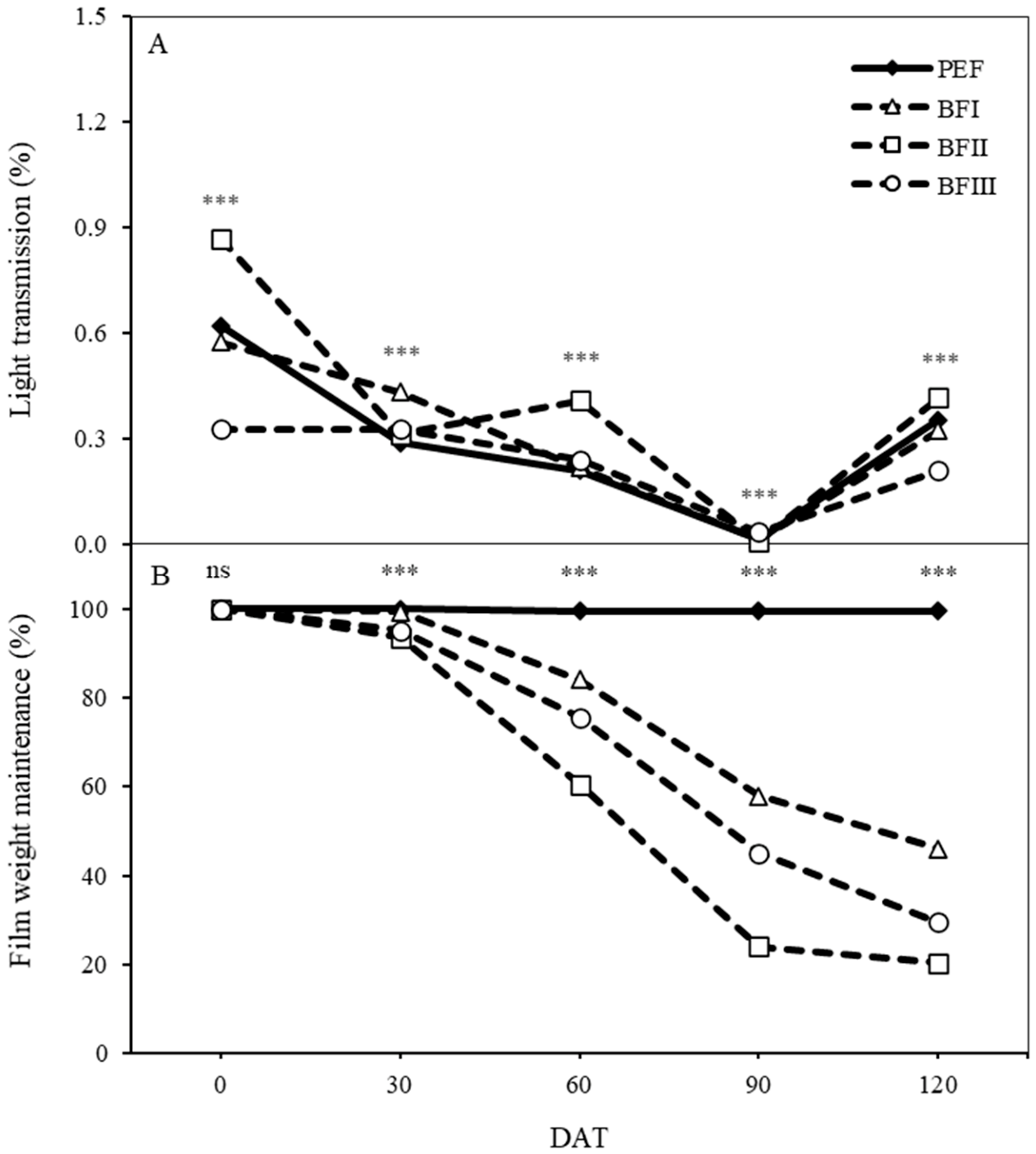
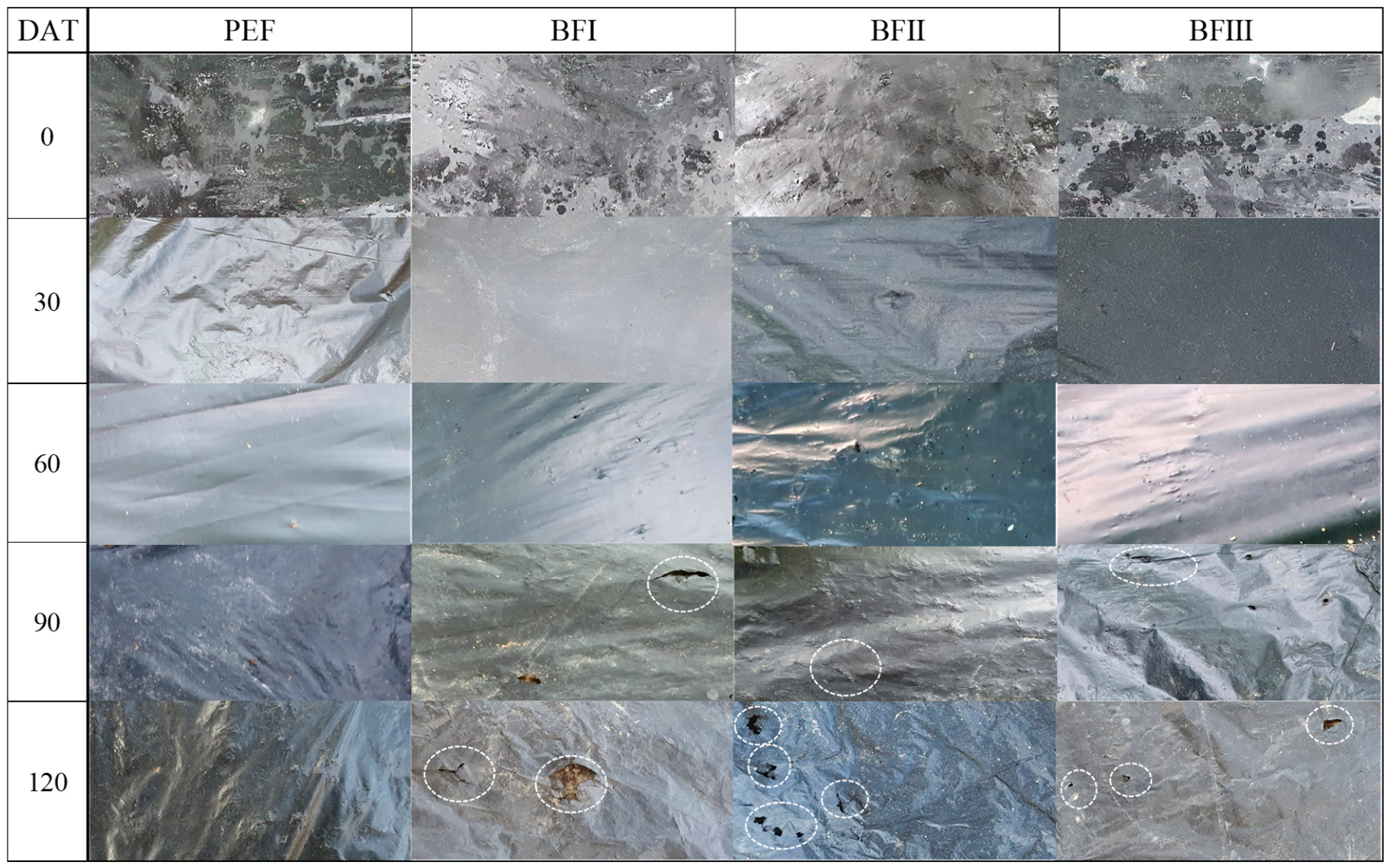
Light transmittance increased in BFII mulch films at 0, 60, and 120 DAT, whereas transmittance decreased in BFIII, which was manufactured with a slightly greater thickness (Figure 1A). Across treatments, mulch films underwent physical and chemical weathering, becoming more opaque and less transparent over time. Film weight maintenance declined rapidly in all BD films from 30 to 90 DAT (Figure 1B). At 120 DAT, weight maintenance was lowest in BFII (20.3%), followed by BFIII (29.4%) and BFI (46.1%). Visual assessments (Figure 2) indicated substantial deterioration of BD films at 90 and 120 DAT, following the onset of degradation at 60 DAT. BFI film including a PLA component in its blend is reported to degrade slowly in soil because it requires higher temperatures (above 60 °C) for initial decomposition than BFII composed mainly of PBAT + PBS [22,27]. Localized disintegration on portions of the BFI film surface at 120 DAT likely reflected mechanical tearing (for example, wind-driven stress) rather than microbial depolymerization.
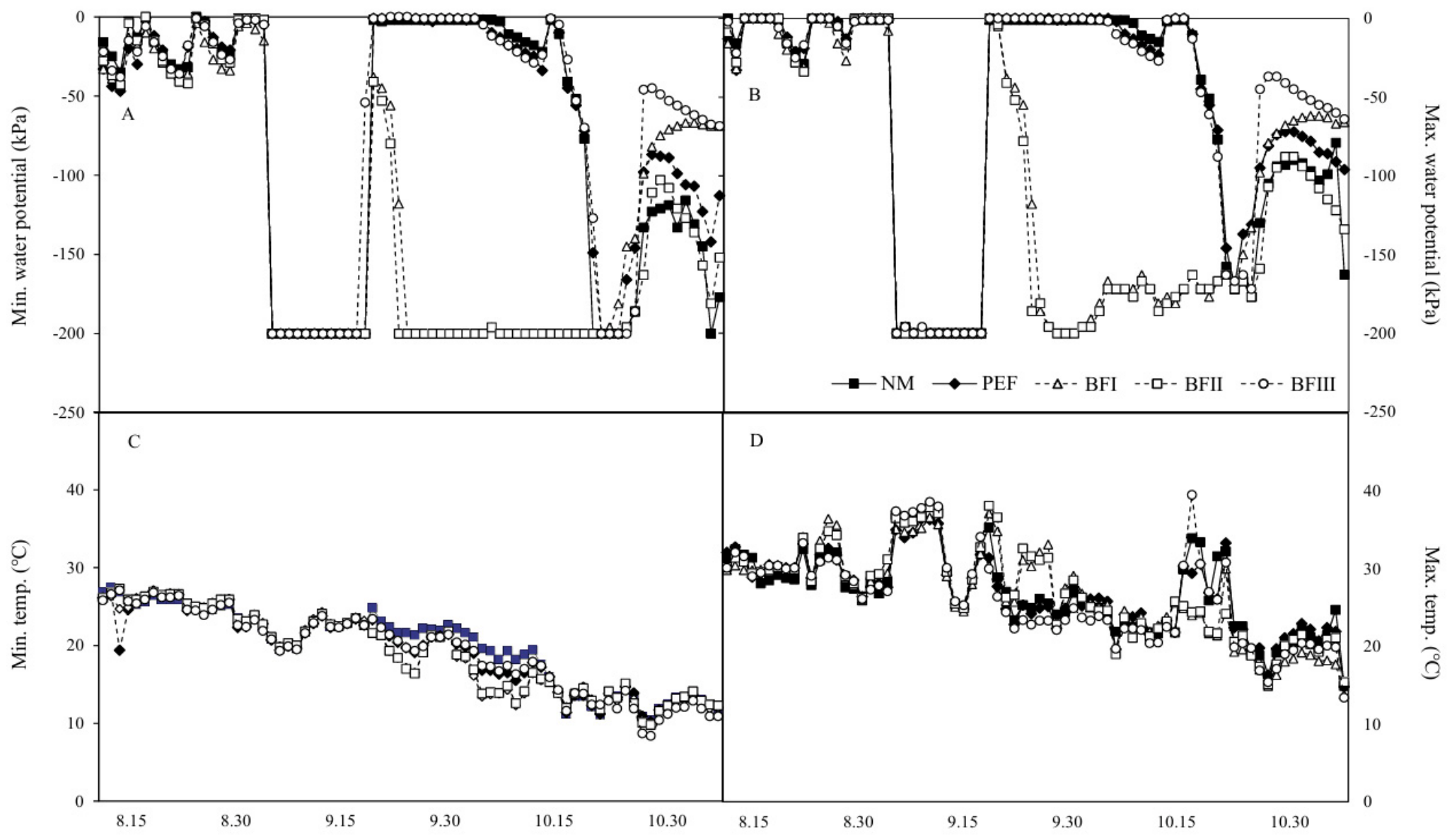
Soil water potential in all plots remained high (greater than −50 kPa) during August because of sustained rainfall and reduced temperature fluctuations during the rainy season (Figure 3A–D). Mean soil water potential decreased to approximately −200 kPa, corresponding to the initial wilting point for soybean [28], in early September. This drying period increased mean soil temperature, reaching 33.7 °C in BFIII plots and remaining near 38.0 °C for several days, followed by NM (33.0 °C). Soil water potential fluctuated markedly in September and October. Seasonal mean water potential was low in BFII plots (−136.2 kPa) due to the film degradation, followed by BFI (−125.6 kPa), NM (−75.3 kPa), PEF (−70.4 kPa), and BFIII (−62.2 kPa). BFIII films, which were cellulose-based and thicker, likely had higher hydrophobicity and stronger water-vapor barrier properties [13], thereby increasing soil moisture while raising the soil maximum temperature to 39.5 °C on 12 October. In contrast, PEF plots maintained comparatively stable soil water status and temperature, conditions that may support root elongation and rhizosphere activity during the growing season [3,19]. However, one should be careful in framing causation from a single-sensor, single-season dataset with no statistical link between degradation rate and water potential established.
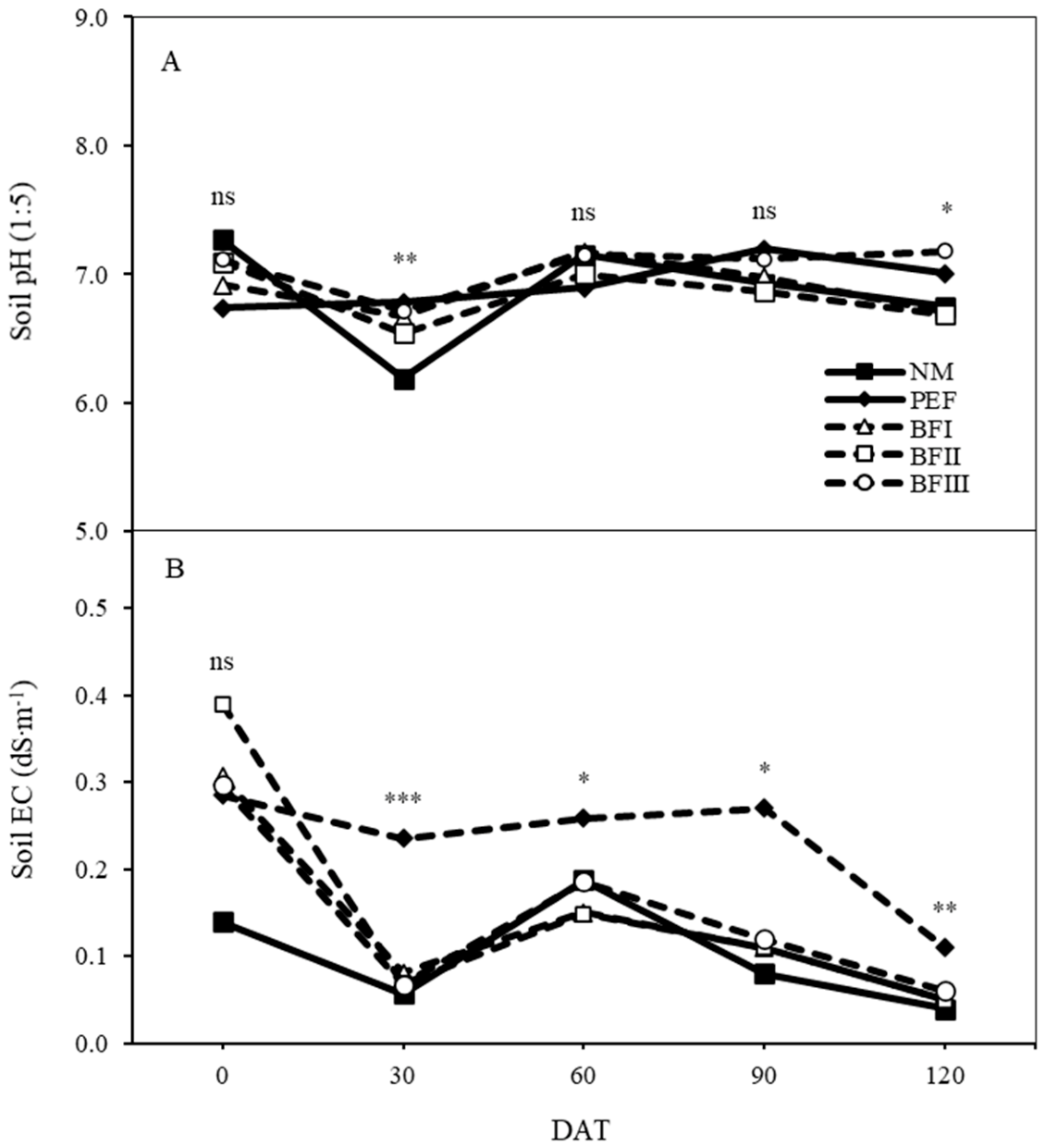
Soil pH decreased in NM at 30 DAT and in NM, BFI, and BFII at 120 DAT, whereas pH fluctuated less in PEF plots, consistent with more stable soil conditions (Figure 4A). This stability is consistent with mulch-driven regulation of soil moisture and temperature and with altered dynamics of mineral salts over time [3,29]. Soil EC was significantly higher in PEF plots than in BD and NM plots from 30 to 120 DAT (Figure 4B). Similar increases have been reported in soybean fields mulched with PEF, where improved soil moisture may increase salt solubility and thereby elevate EC, potentially supporting crop productivity when EC remains within the optimal range of 0.1–2.0 dS m−1 [30,31,32]. Across treatments, EC decreased over time, consistent with salt leaching and crop nutrient uptake.
Soil bulk density decreased in all mulched plots, with a corresponding increase in porosity (Table 1). NM plots exhibited a higher solid showed high bulk density and low porosity, which may limit oxygen diffusion to roots and aerobic soil microorganisms [3,13,33]. Bulk density and porosity are key indicators of soil physical status and influence water retention, nutrient cycling, gas exchange, and temperature stability, thereby affecting nutrient uptake in summer and winter crops [13,33]. NM conditions promoted greater weed biomass inputs and may have slowed carbon decomposition because of lower soil moisture and reduced aeration relative to mulched plots, which was shown for higher soil OM in NM than in PEF and BFII plots (Table 1). BFI and BFII may have supported aerobic microbial processes under higher soil oxygen availability and increased NO3− concentrations [8,17]. Soil P2O5 tended to increase in BFIII plots containing cellulose, potentially through enhanced phosphomonoesterase activity associated with Penicillium aculeatum [34]. Increased phosphate availability may have contributed to lower NO3− concentrations via anion competition and preferential phosphate uptake [35]. Plastic mulching did not substantially alter exchangeable cation concentrations, although CaO decreased in BFIII plots, potentially reflecting increased crop uptake [36]. No differences in soil K2O and MgO levels were observed among the treatments, although lower values were recorded in the NM and BFIII plots, respectively.
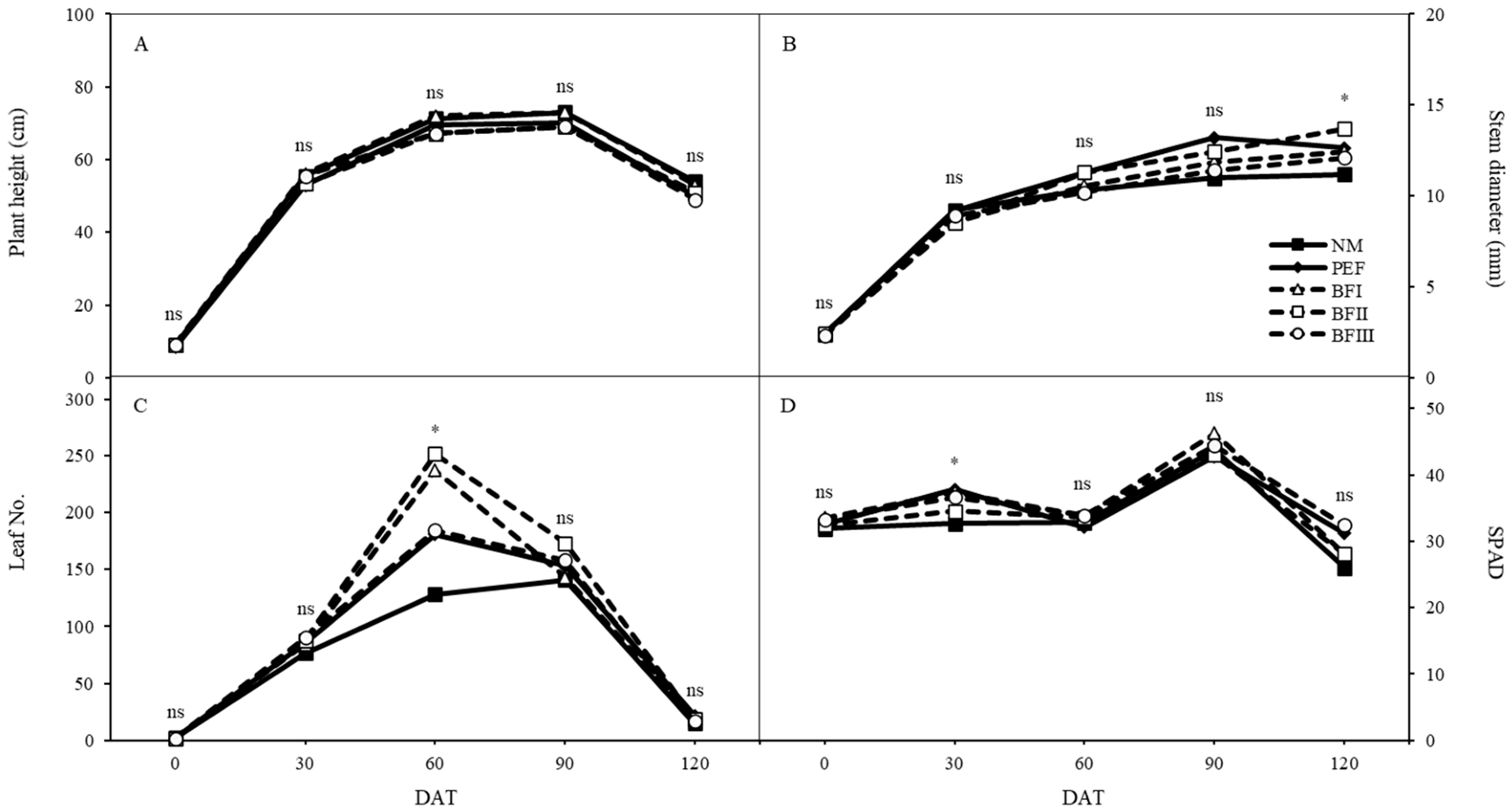
Soybean plant height did not differ significantly among treatments during the growing season (Figure 5A). NM plants had smaller stem diameters at 120 DAT (Figure 5B), fewer leaves at 60 DAT (Figure 5C), and lower SPAD values at 30 DAT (Figure 5D) than mulched plants. BFI and BFII treatments increased leaf formation at 60 DAT and may improve light interception and photosynthetic performance [37], which diminished differences among treatments after canopy development. Accelerated early leaf formation may also have contributed to reduced soil water conservation during dry periods (Figure 3), although BD mulches can still reduce runoff and promote gradual infiltration as observed in Eastern Asia [19,38,39].
Root and stem FW increased significantly under PEF and were lowest in NM, whereas DW did not differ significantly among treatments (Table 2). PEF also increased whole-plant FW and DW relative to NM. Excessive vegetative growth can reduce allocation to developing seeds because of sink competition between vegetative and reproductive organs [40], consistent with reduced flowering and pod and seed formation in PEF-treated plants [40]. BFII produced the highest pod number, seed FW, and yield (4021 kg per ha), with the second-highest yields in BFIII (3393 kg per ha) and BFI (3236 kg per ha). BFII also increased the leaf FW-to-whole-plant FW ratio (14.1%) relative to NM (11.7%), PEF (10.2%), BFI (11.1%), and BFIII (12.2%). This may have been due to enhanced carbon assimilation capacity induced from partial water stress in the BFII plots during the late growth stage.

3.2. Film Biodegradability, Soil Environment, and Maize Growth

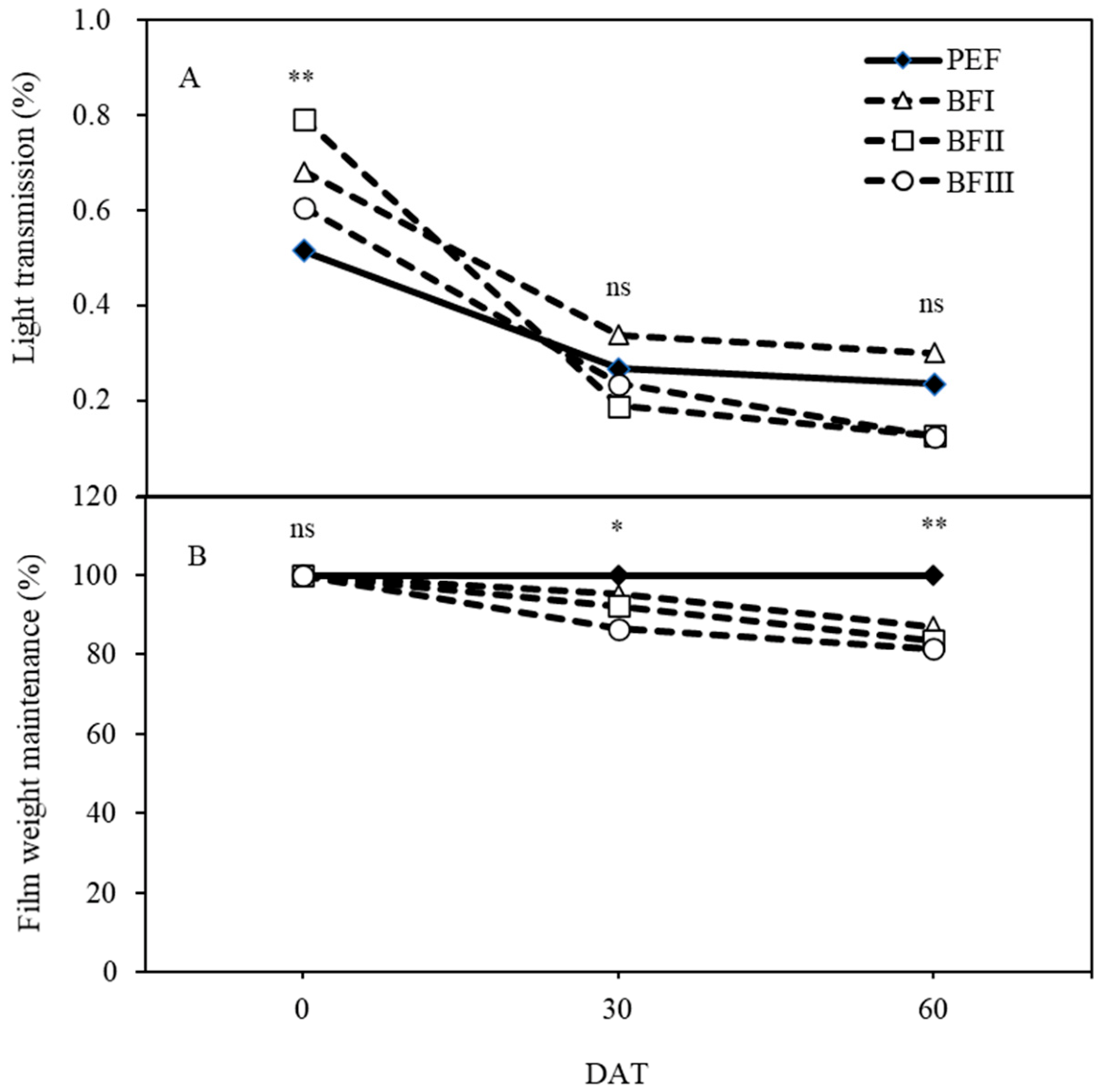
In the maize field, light transmittance was high at 0 DAT in BFII, BFI, and BFIII (Figure 6A), consistent with observations in the soybean field. No significant differences among films were detected at 30 or 60 DAT. Film weight maintenance declined in all BD films between 30 and 60 DAT, with the largest decreases in BFII and BFIII (Figure 6B), similar to the soybean field (Figure 1). However, the BD films decomposed slowly in the maize field compared to the soybean plots; this was attributed to the high clay contents and poor aeration, low levels of temperature, and precipitation in the maize field. PLA-based BD films such as BFI would slowly degrade aboveground because of their relatively high glass transition temperature and rigid structure [15,22]. Comparable patterns have been reported in soybean and cotton planting using BD films with high PLA content blended with other polymers in Eastern Asia [11,20,32].
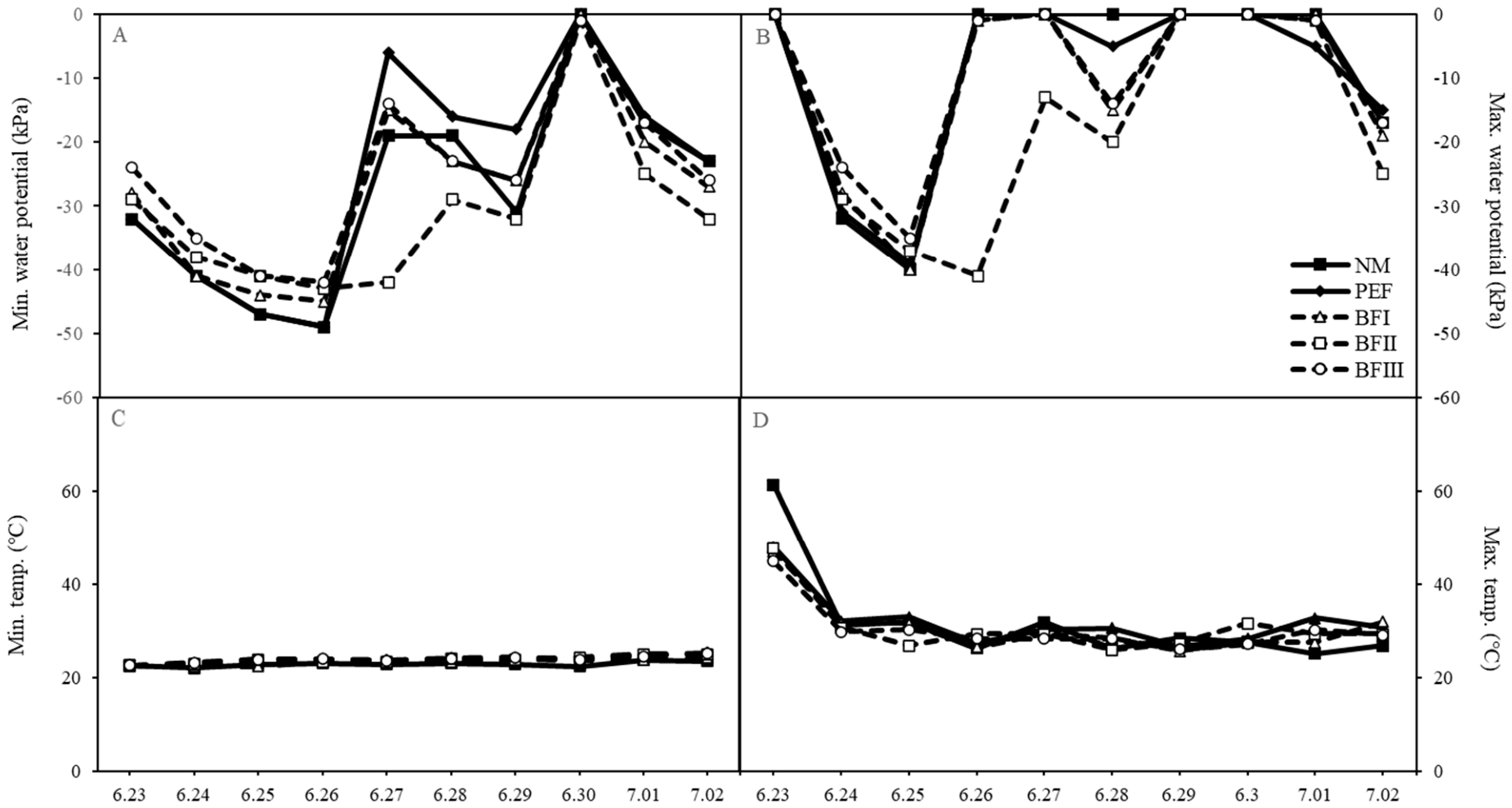
Soil moisture decreased on some June measurement dates in BFII plots and in BFI and BFIII plots; however, soil water potential remained above −50 kPa, indicating that drought stress was unlikely to limit maize growth (Figure 7A,B). As canopy cover developed, soil temperatures converged across treatments, consistent with increased shading of the soil surface (Figure 7C,D).
PEF significantly reduced soil hardness (Table 3), consistent with the higher bulk density observed in NM and the buffering effect of mulching against rainfall-driven compaction [10,13]. BD treatments showed similarly low soil hardness values. In addition to reducing bulk density and increasing porosity, BF mulching may increase macroaggregate proportion and provide binding agents that promote aggregate stability [10].
Soil pH increased significantly in PEF plots and decreased in NM plots (Table 3), consistent with the soybean field pattern at 30 and 120 DAT (Figure 4A). Increased pH under mulching has been reported in maize systems using PEF and BD films, potentially because mulching enhances cation retention relative to NM and reduces H+ loss during summer rainfall [14,41]. Soil EC did not differ significantly among treatments, although NM tended to show lower EC, as observed in soybean. Soil OM was lower in NM and PEF than in BD treatments. In PEF plots, greater root residue inputs combined with sustained soil moisture (Figure 7 and Table 4) may enhance mineralization and thereby offset potential increases in OM, consistent with patterns observed in soybean under PEF [8,42]. Soil NO3-N and CaO concentrations did not differ significantly among treatments. In contrast, mulching increased soil P2O5 and K2O concentrations, while MgO was lowest in BFI plots. In arid, irrigated maize systems, BD film surface area was associated with increased cation exchange capacity [10] compared to less pronounced mulching effects in the moderate-to-high-rainfall region that this study was conducted in.
Leaf SPAD values did not differ significantly among treatments (Table 4). NM plants had fewer leaves and reduced stem height and diameter, whereas BFII increased these vegetative traits. PEF produced the highest vegetative fresh weight (FW; 817.2 g), followed by BFII (752.4 g), BFI (683.9 g), and BFIII (635.9 g), consistent with the strong vegetative responses observed in soybean. Ear height, ear length and FW increased under mulching, with BD treatments showing trends similar to PEF but without significant differences, consistent with prior BD mulching studies [41]. Increased maize yield under mulching has been attributed to improved soil moisture conservation and enhanced nutrient cycling under BD films, PEF, or straw mulching in Eastern Aisa [41,43,44].

4. Conclusions

Compared with PEF, BD film mulching treatments did not maintain high soil moisture contents because they began to degrade relatively rapidly between 30 and 60 DAT during the summer season. However, BD film mulching treatments improved soil physical properties and produced nutrient concentration patterns that were comparable to those in PEF plots. PEF mulching resulted in a modest increase in dry matter accumulation, but it reduced allocation to reproductive organs in soybean and to ears and grains in maize under moderately high soil moisture, relatively stable soil temperature, and elevated soil EC. Based on differences in film composition (ratios of PBAT, PLA, and PBS, as well as types of additives) and thickness, the film degradation rate and the effects on soil and summer-season crop growth showed distinct variations in the soybean crop with longer growing season and slower canopy development than those of the maize crop. In particular, the BFII mulching film, with high levels of readily decomposable PBAT and PBS components, was likely to have influenced mild drought stress during the late growth stage of soybean, producing moderate vegetative growth and promoting yield. All BF films would contribute to earlier planting of subsequent crops through film biodegradation by 30 DAT in the weather of Korea, with its warm and rainy climate during the summer. However, even though the experiments were conducted at different locations, the use of two crop species (maize and soybean) makes it difficult to definitively attribute the effects of the BD mulching film on the crops to specific factors such as location, soil texture, or climatic conditions. Despite severe seasonal weather extremes overriding mulch effects, potential confounding from irrigation, weather anomalies, and their interactions with treatments must be considered. Further discussion is deemed necessary regarding the detailed mechanisms by which BD mulching films affect the soil environment and crop growth, based on an analysis of soil microbial community characteristics and data from repeated annual experiments.

Author Contributions

Conceptualization, H.-S.C. and S.-K.J.; Methodology, H.-S.C. and S.-K.J.; Formal Analysis, H.-S.C., S.-Y.G. and J.-H.K.; Investigation: J.-H.K.; Resources, H.-S.C.; Data Curation. H.-S.C., S.-Y.G. and J.-H.K.; Writing—Original Draft, H.-S.C.; Writing—Review and Editing, H.-S.C.; Visualization, S.-Y.G. and S.-K.J. All authors have read and agreed to the published version of the manuscript.

Funding

The authors declare that financial support was received for the research and/or publication of this article. This work was supported by the Rural Development Administration of Republic of Korea [Project No. RS-2022-RD010403].

Data Availability Statement

The original contributions presented in this study are included in the article. Further inquiries can be directed to the corresponding author.

Acknowledgments

The authors acknowledge Do-Won Park and Ji-Sik Jung for their assistance and technical support. We also thank Hankyong National University for its support and assistance.

Conflicts of Interest

The authors declare no conflicts of interest.

Abbreviations

The following abbreviations are used in this manuscript:
BDbiodegradable
DATdays after transplanting
NMnon-mulching
PEFpolyethylene film

References

  1. Mansoor, Z.; Tchuenbou-Magaia, F.; Kowalczuk, M.; Adamus, G.; Manning, G.; Parati, M.; Radecka, I.; Khan, H. Polymers use as mulch films in agriculture—A review of history, problems and current trends. Polymers 2023, 14, 5062. [Google Scholar] [CrossRef] [Scilit]
  2. Campanale, C.; Galafassi, S.; Pippo, F.D.; Pojar, I.; Massarelli, C.; Uricchio, V.F. A critical review of biodegradable plastic mulch films in agriculture: Definitions, scientific background and potential impacts. TrAC—Trends Anal. Chem. 2024, 170, 117391. [Google Scholar] [CrossRef] [Scilit]
  3. El-Beltagi, H.S.; Basit, A.; Mohamed, H.I.; Ali, I.; Ullah, S.; Kamel, E.A.R.; Shalaby, T.A.; Ramadan, K.M.A.R.; Alkhateeb, A.A.; Ghazzawy, H.S. Mulching as a sustainable water and soil saving practice in agriculture: A review. Agronomy 2022, 12, 1881. [Google Scholar] [CrossRef] [Scilit]
  4. Qiang, L.; Hu, H.; Li, G.; Xu, J.; Cheng, J.; Wang, J.; Zhang, R. Plastic mulching, and occurrence, incorporation, degradation, and impacts of polyethylene microplastics in agroecosystems. Ecotoxicol. Environ. Saf. 2023, 263, 115274. [Google Scholar] [CrossRef] [Scilit]
  5. Salama, K.; Geyer, M. Plastic mulch films in agriculture: Their use, environmental problems, recycling and alternatives. Environments 2023, 10, 179. [Google Scholar] [CrossRef] [Scilit]
  6. Kasirajan, S.; Ngouajio, M. Polyethylene and biodegradable mulches for agricultural applications: A review. Agron. Sustain. Dev. 2012, 32, 501–529. [Google Scholar] [CrossRef] [Scilit]
  7. Yin, M.; Li, Y.; Fang, H.; Chen, P. Biodegradable mulching film with an optimum degradation rate improves soil environment and enhances maize growth. Agric. Water Manag. 2019, 216, 127–137. [Google Scholar] [CrossRef] [Scilit]
  8. Huang, F.; Wang, B.; Li, Z.; Liu, Z.; Wu, P.; Wang, J.; Ye, X.; Zhang, P.; Jia, Z. Continuous years of biodegradable film mulching enhances the soil environment and maize yield sustainability in the dryland of northwest China. Field Crops Res. 2022, 288, 108698. [Google Scholar] [CrossRef] [Scilit]
  9. Mazzon, M.; Gioacchini, P.; Montecchio, D.; Rapisarda, S.; Ciavatta, C.; Marzadori, C. Biodegradable plastics: Effects on functionality and fertility of two different soils. Appl. Soil Ecol. 2022, 169, 104216. [Google Scholar] [CrossRef] [Scilit]
  10. Xiong, X.B.; Wang, P.Y.; Zhao, Z.Y.; Wang, J.; Liu, S.T.; Mei, F.J.; Wang, W.Y.; Wang, Y.B.; Fang, X.W.; Zhu, Y.; et al. Can biodegradable film replace polyethylene film to obtain similar mulching effects on soil functions and maize productivity in irrigation region? A three-year experimental appraisal. J. Clean. Prod. 2025, 486, 144473. [Google Scholar] [CrossRef] [Scilit]
  11. Liu, Q.; Wang, Y.; Liu, J.; Liu, X.; Dong, Y.; Huang, X.; Zhen, Z.; Lv, J.; He, W. Degradability and properties of PBAT- based biodegradable mulch films in field and their effects on cotton planting. Polymers 2022, 14, 3157. [Google Scholar] [CrossRef] [Scilit]
  12. Zhang, Y.; Gao, W.; Mo, A.; Jiang, J.; He, D. Degradation of polylactic acid/polybutylene adipate films in different ratios and the response of bacterial community in soil environments. Environ. Pollut. 2022, 313, 120167. [Google Scholar] [CrossRef] [Scilit]
  13. Riseh, R.S. Advancing agriculture through bioresource technology: The role of cellulose-based biodegradable mulches. Int. J. Biol. Macromol. 2024, 255, 128006. [Google Scholar] [CrossRef] [Scilit]
  14. Park, D.W.; Jung, J.S.; Choi, H.S. Effects of PBAT-PLA based biodegradable film mulch on soil environment, onion production, and the growth of following crop. Hortic. Environ. Biotechnol. 2025, 66, 347–360. [Google Scholar] [CrossRef] [Scilit]
  15. Xu, Y.; Peng, W.; Poli, V.; Lavagnolo, M.C.; Kalambura, S.; He, P.J.; Lü, F.; Zhang, H. A review of the degradation mechanisms of biodegradable PLA/PBAT films: Biological, chemical, and biochemical perspectives. Energy Environ. Sustain. 2026, 100071. [Google Scholar] [CrossRef] [Scilit]
  16. Tian, J.; Lou, Y.; Gao, Y.; Fang, H.; Liu, S.; Xu, M.; Blagodatskaya, E.; Kuzyakov, Y. Response of soil organic matter fractions and composition of microbial community to long-term organic and mineral fertilization. Biol. Fertil. Soils. 2017, 53, 523–532. [Google Scholar] [CrossRef] [Scilit]
  17. Zhang, H.; Shu, D.; Zhang, J.; Liu, X.; Wang, K.; Jiang, R. Biodegradable film mulching increases soil microbial network complexity and decreases nitrogen-cycling gene abundance. Sci. Total Environ. 2024, 933, 172874. [Google Scholar] [CrossRef] [Scilit]
  18. Gong, W.; Yan, X.; Wang, J.; Hu, T.; Gong, Y. Long-term manure and fertilizer effects on soil organic matter fractions and microbes under a wheat–maize cropping system in northern China. Geoderma 2009, 149, 318–324. [Google Scholar] [CrossRef] [Scilit]
  19. Kader, M.A.; Senge, M.; Mojid, M.A.; Nakamura, K. Mulching type-induced soil moisture and temperature regimes and water use efficiency of soybean under rain-fed condition in central Japan. Int. Soil Water Conserv. Res. 2017, 5, 302–308. [Google Scholar] [CrossRef] [Scilit]
  20. Kim, Y.G.; Woo, Y.H.; Park, H.H.; Lee, D.J.; Kuk, Y.I. Effects of various biodegradable mulching films on growth, yield, and soil environment in soybean cultivation. Korean J. Crop Sci. 2024, 69, 34–48. [Google Scholar] [CrossRef]
  21. Park, D.W.; Choi, H.S. Effects of biodegradable-film mulch and residue on the growth and yield of pepper and onion cultivated under a two-year crop rotation scheme. Hortic. Sci. Technol. 2025, 43, 327–342. [Google Scholar] [CrossRef] [Scilit]
  22. Ryu, Y.K.; Bouharras, F.E.; Cha, M.S.; Mudondo, J.; Kim, Y.H.; Ramakrishnan, S.R.; Shin, S.B.; Yu, Y.C.; Lee, W.J.; Park, J.Y.; et al. Recent advancements in the evolution, production, and degradation of biodegradable mulch films: A review. Environ. Res. 2025, 277, 121629. [Google Scholar] [CrossRef] [Scilit]
  23. RDA. Soybean; Rural Development Administration: Wanju, Republic of Korea, 2021. [Google Scholar]
  24. RDA. Maize; Rural Development Administration: Wanju, Republic of Korea, 2021. [Google Scholar]
  25. KMA. Statistical Analysis of Climate; Korea Meteorological Administration: Daejeon, Republic of Korea, 2023. [Google Scholar]
  26. RDA. Analysis Methods of Soil and Plant; Rural Development Administration: Jeonju-sim, Republic of Korea, 2000. [Google Scholar]
  27. Dissanayake, P.D.; Withana, P.A.; Sang, M.K.; Cho, Y.R.; Park, J.Y.; Oh, D.X.; Chang, S.X.; Lin, C.S.K.; Bank, M.S.; Hwang, S.Y.; et al. Effects of biodegradable poly (butylene adipate-co-terephthalate) and poly (lactic acid) plastic degradation on soil ecosystems. Soil Use Manag. 2024, 40, e13055. [Google Scholar] [CrossRef] [Scilit]
  28. Torres, L.C.; Keller, T.; de Lima, R.P.; Tormena, C.A.; de Lima, H.V.; Giarola, N.F.B. Impacts of soil type and crop species on permanent wilting of plants. Geoderma 2021, 384, 114798. [Google Scholar] [CrossRef] [Scilit]
  29. Man, X.; Gong, D.; Mei, X.; Chen, B.; Li, H.; Hao, W. Enhancing soil water stability and retention through plastic mulching under atypical climatic conditions on the Chinese loess plateau. Agric. Water Manag. 2024, 305, 109137. [Google Scholar] [CrossRef] [Scilit]
  30. Kitchen, N.R.; Sudduth, K.A.; Drummond, S.T. Soil electrical conductivity as a crop productivity measure for claypan soils. J. Prod. Agric. 1999, 12, 607–617. [Google Scholar] [CrossRef] [Scilit]
  31. Brevik, E.C.; Thomas, E.F.; Lazari, A. Soil electrical conductivity as a function of soil water content and implications for soil mapping. Precis. Agric. 2006, 7, 393–404. [Google Scholar] [CrossRef] [Scilit]
  32. Choi, H.S.; Jung, J.S. Effects of novel biodegradable film mulching on soil environment and soybean growth. Korean J. Crop Sci. 2025, 70, 151–159. [Google Scholar] [CrossRef]
  33. Yu, H.; Qi, W.; Cao, X.; Hu, J.; Li, Y.; Peng, J.; Hu, C.; Qu, J. Microplastic residues in wetland ecosystems: Do they truly threaten the plant-microbe-soil system? Environ. Int. 2021, 156, 106708. [Google Scholar] [CrossRef] [Scilit]
  34. Gómez-Muñoz, B.; Efthymiou, A.; Dubey, M.; Sølve, J.; Nicolaisen, M.; Jensen, D.F.; Nybroe, O.; Larsen, J. Cellulose amendment promotes P solubilization by Penicillium aculeatum in non-sterilized soil. Fungal Biol. 2022, 126, 356–365. [Google Scholar] [CrossRef] [Scilit]
  35. Wang, L.; Xu, Z.; Fu, Y.; Chen, Y.; Pan, Z.; Wang, R.; Tan, Z. Comparative analysis on adsorption properties and mechanisms of nitrate and phosphate by modified corn stalks. RSC Adv. 2018, 8, 36468–36476. [Google Scholar] [CrossRef] [Scilit]
  36. Kong, M.; Gu, Y.J.; Han, C.L.; Shi, X.P.; Kang, J.; Siddique, K.H.M.; Li, F.M.; Yuan, Z.Q. The prolonged effect of film mulch and P application on lucerne forage yield in a semiarid environment. Front. Plant Sci. 2023, 14, 1331704. [Google Scholar] [CrossRef] [Scilit]
  37. Shi, B.; Guo, L.; Yu, L. Accurate LAI estimation of soybean plants in the field using deep learning and clustering algorithms. Front. Plant Sci. 2025, 15, 1501612. [Google Scholar] [CrossRef] [Scilit]
  38. Fan, X.; Jia, G.; Wang, Y.; Yu, X. The effectiveness of mulching practices on water erosion control: A global meta-analysis. Geoderma 2023, 438, 116643. [Google Scholar] [CrossRef] [Scilit]
  39. Yang, D.; Wang, C.; Guo, Z.; Li, S.; Sun, Y.; Hou, X.; Wang, Z. Effect of film-mulching on soil evaporation and plant transpiration in a soybean field in arid Northwest China. Agronomy 2025, 15, 1089. [Google Scholar] [CrossRef] [Scilit]
  40. Poudel, S.; Magar, L.P.; Khatri, D.; Pandit, M.; Chiluwal, A. Identifying the most sensitive growth stages of soybean to defoliation. Sci. Rep. 2025, 15, 28268. [Google Scholar] [CrossRef] [Scilit]
  41. Park, P.P.; Kim, Y.G.; Woo, Y.H.; Lee, D.J.; Kuk, Y.I. Effects of biodegradable mulching films on maize growth, yield, and soil environment Auto-comp. Korean J. Crop Sci. 2024, 69, 170–180. [Google Scholar] [CrossRef]
  42. Wang, Y.P.; Li, X.G.; Fu, T.; Wang, L.; Turner, N.C.; Siddique, K.H.M.; Li, F.M. Multi-site assessment of the effects of plastic-film mulch on the soil organic carbon balance in semiarid areas of China. Agric. For. Meteorol. 2016, 228, 42–51. [Google Scholar] [CrossRef] [Scilit]
  43. Wang, X.; Wang, G.; Turner, N.C.; Xing, Y.; Li, M.; Guo, T. Determining optimal mulching, planting density, and nitrogen application to increase maize grain yield and nitrogen transloca tion efficiency in Northwest China. BMC Plant Biol. 2020, 20, 282. [Google Scholar] [CrossRef] [Scilit]
  44. Zhao, L.; Xie, G.; Fan, M.; Anwar, S.; Zhang, Q.; Lu, J.; Zhang, L.; Gao, F.; Wang, C. Mulching and planting density on photosynthesis, lodging resistance, and yield of maize. Int. J. Plant Prod. 2023, 17, 651–665. [Google Scholar] [CrossRef] [Scilit]
Figure 1. Light transmittance (A) and weight maintenance (B) of polyethylene film (PEF) and three biodegradable mulch films (BFI, BFII, and BFIII) in a soybean field (Gumi-si) from 0 to 120 days after transplanting (DAT). *** Adjacent symbols indicate significant differences at each DAT by Duncan’s multiple-range test (p < 0.001); ns, not significant.
Agronomy 16 01930 g001
Figure 2. Representative images of polyethylene film (PEF) and three biodegradable mulch films (BFI, BFII, and BFIII) in a soybean field (Gumi-si) from 0 to 120 days after transplanting (DAT).
Agronomy 16 01930 g002
Figure 3. Soil minimum (A) and maximum water potential (B) and soil minimum (C) and maximum temperature (D) under polyethylene film (PEF) and three biodegradable mulch films (BFI, BFII, and BFIII) in a soybean field (Gumi-si).
Agronomy 16 01930 g003
Figure 4. Soil pH (A) and electrical conductivity (EC; (B)) in non-mulched (NM) plots and plots mulched with polyethylene film (PEF) or biodegradable mulch films (BFI, BFII, and BFIII) in a soybean field (Gumi-si). *, **, and *** Adjacent symbols indicate significant differences at each DAT by Duncan’s multiple-range test (p < 0.05, p < 0.01, and p < 0.001, respectively); ns, not significant.
Agronomy 16 01930 g004
Figure 5. Plant height (A), stem diameter (B), number of leaves (C), and SPAD (D) of soybean under non-mulching (NM) and mulching with polyethylene film (PEF) or biodegradable mulch films (BFI, BFII, and BFIII) from 0 to 120 days after transplanting (DAT) in a soybean field (Gumi-si). *Adjacent symbols indicate significant differences at each DAT by Duncan’s multiple-range test (p < 0.05); ns, not significant.
Agronomy 16 01930 g005
Figure 6. Light transmittance (A) and weight maintenance (B) of polyethylene film (PEF) and three biodegradable mulch films (BFI, BFII, and BFIII) in a maize field (Anseong-si) from 0 to 120 days after transplanting (DAT). * and ** Adjacent symbols indicate significant differences at each DAT by Duncan’s multiple-range test (p < 0.05 and p < 0.01, respectively); ns, not significant.
Agronomy 16 01930 g006
Figure 7. Soil minimum (A) and maximum water potential (B) and soil minimum (C) and maximum temperature (D) under polyethylene film (PEF) and three biodegradable mulch films (BFI, BFII, and BFIII) in a maize field (Anseong-si).
Agronomy 16 01930 g007
Table 1. Soil properties and weed dry weight (DW) in non-mulched (NM) plots and plots mulched with polyethylene film (PEF) or biodegradable films (BFI, BFII, and BFIII) in a soybean field in Gumi-si.
TreatmentBulk density
(MG∙m−3)
Porosity
(%)
Weed DW
(g)
OMNO3-NP2O5
(mg∙kg−1)
CaOK2OMgO
(%)(cmolc∙kg−1)
NM1.24 a53.3 b194.1 a4.81 a0.20 b153.6 a19.1 ab0.24 a3.20 a
PEF1.18 b55.5 a43.4 b3.35 b0.21 b135.8 a18.1 ab0.26 a3.27 a
BFI1.21 ab54.3 ab39.9 b4.46 ab0.34 a150.3 a21.4 a0.29 a3.34 a
BFII1.21 ab54.2 ab44.1 b3.47 b0.34 a144.5 a18.0 ab0.30 a3.40 a
BFIII1.16 b56.1 a42.7 b4.49 ab0.19 b195.7 a16.7 b0.29 a2.94 a
Means were compared among treatments within each column using Duncan’s new multiple-range test. Values followed by different letters differ significantly at p < 0.05.
Table 2. Organ fresh weight (FW) and dry weight (DW) and yield components of soybean as affected by non-mulching (NM) and mulching with polyethylene film (PEF) or biodegradable films (BFI, BFII, and BFIII) in a soybean field in Gumi-si.
TreatmentRoot (g)Stem (g)Leaf (g)Whole (g)PodSeedYield
(kg∙ha−1)
FWDWFWDWFWDWFWDWNo.FW (g)Avg. No.FW(g)
NM5.9 b4.6 a71.0 b23.0 a10.2 a5.0 a87.1 b32.6 b54.2 c38.9 a2.1 a36.6 b2614.3 b
PEF9.7 a7.0 a103.2 a30.1 a12.8 a6.0 a125.7 a43.2 a53.5 c32.8 a2.2 a38.4 b2742.9 b
BFI8.4 ab6.0 a91.3 ab28.3 a12.5 a5.2 a112.2 a39.5 a61.2 bc39.6 a2.2 a45.3 ab 3235.8 ab
BFII7.5 ab5.5 a94.5 ab28.6 a16.7 a7.8 a118.7 a42.0 a83.0 a48.0 a2.2 a56.3 a4021.6 a
BFIII8.1 ab5.8 a83.6 ab25.1 a12.8 a5.8 a104.5 a36.7 a69.8 ab39.3 a2.1 a47.5 ab3393. 0 ab
Means were compared among treatments within each column using Duncan’s new multiple-range test. Values followed by different letters differ significantly at p < 0.05.
Table 3. Soil physical and chemical properties in non-mulched (NM) plots and plots mulched with polyethylene film (PEF) or biodegradable films (BFI, BFII, and BFIII) in a maize field in Anseong-si.
TreatmentHardness
(kg∙cm−2)
pH
1:5
EC
(dS∙m−1)
OM (%)NO3-N (%)P2O5
(mg∙kg−1)
CaOK2OMgO
(cmolc∙kg−1)
NM8.17 a5.58 b0.06 a3.36 b0.0020 a43.0 b3.63 a0.35 b1.21 ab
PEF4.27 c6.43 a0.10 a3.34 b0.0017 a270.8 a4.64 a0.77 a1.44 ab
BFI6.23 ab6.07 ab0.08 a4.04 a0.0023 a328.0 a3.62 a0.62 ab1.04 b
BFII5.40 b5.86 ab0.07 a3.56 ab0.0018 a276.9 a4.13 a0.57 ab1.30 ab
BFIII4.80 bc5.83 ab0.08 a3.51 ab0.0030 a99.5 b6.32 a0.78 a2.18 a
Means were compared among treatments within each column using Duncan’s new multiple-range test. Values followed by different letters differ significantly at p < 0.05.
Table 4. Leaf and stem traits, vegetative fresh weight (FW), and ear characteristics under non-mulching (NM) and mulching with polyethylene film (PEF) or biodegradable films (BFI, BFII, and BFIII) in a maize field in Anseong-si.
TreatmentLeafStemVegetative
FW (g)
Ear
SPADNumberHeight (cm)Diameter (cm)Fruiting ht (cm)Length (cm)FW (g)
NM43.8 a12.7 b135.4 b21.9 b389.1 c14.3 b5.0 b163.8 b
PEF45.7 a14.0 ab206.6 a26.7 ab817.2 a71.1 a27.0 a326.7 a
BFI48.2 a14.5 ab209.5 a26.3 ab683.9 b78.0 a29.8 a348.3 a
BFII48.1 a15.0 a219.5 a28.9 a752.4 ab77.3 a29.5 a350.8 a
BFIII44.4 a14.5 ab214.2 a27.1 ab635.9 b81.8 a30.1 a319.2 a
Means were compared among treatments within each column using Duncan’s new multiple-range test. Values followed by different letters differ significantly at p < 0.05.
Disclaimer/Publisher’s Note: The statements, opinions and data contained in all publications are solely those of the individual author(s) and contributor(s) and not of MDPI and/or the editor(s). MDPI and/or the editor(s) disclaim responsibility for any injury to people or property resulting from any ideas, methods, instructions or products referred to in the content.