


Abstract
To address the trade-off between the rapid setting time and low mechanical strength of fluoroaluminate-based liquid accelerating agents, this study investigated the combined effects of synthetic C-S-H seeds and a polycarboxylate superplasticizer (PCE) on their performance. The underlying mechanisms were explored using isothermal calorimetry, X-ray diffraction (XRD), thermogravimetric analysis (TG), and scanning electron microscopy (SEM). The results indicated that the incorporation of C-S-H further accelerated the setting process and significantly improved the 1 d and 3 d compressive strengths of the mortar, with a 1 d strength increase exceeding 30% at a dosage of 1.2%. When combined with PCE, the 1 d strength was further enhanced to 31.5% above the control. Microstructural analysis revealed that C-S-H provided additional nucleation sites for ettringite (AFt), accelerating the early hydration of C3A and increasing the volume of hydration products in the paste. Furthermore, the hydration of the C-S-H seeds themselves contributed to the formation of additional C-S-H gel. This helped alleviate the retarding effect of fluoride ions on C3S hydration, promoted the formation of more hydration products, filled structural pores, and ultimately enhanced the compactness of the paste. The synergistic effect of PCE promoted more complete hydration of C3S, further amplifying the benefits of C-S-H, and leading to a 30.9% increase in C-S-H gel content (reaching 46.1% at 3 days) compared to the control. Consequently, the shotcrete achieved higher mechanical properties and a denser internal structure. The findings demonstrate that a suspension containing 0.9% CSH-PCE significantly improves the performance of a fluoroaluminate-based liquid accelerator by enhancing the early hydration rate and mechanical properties. This provides a theoretical basis for the development of high-performance fluoroaluminate-based liquid accelerators.
1. Introduction
Shotcrete has been widely adopted as a construction material in infrastructure projects, including tunnel support, mining engineering, and slope reinforcement [1,2]. As a critical component of shotcrete, accelerating admixtures have undergone significant development, transitioning from early aluminate- and silicate powder-based products to contemporary systems primarily consisting of alkali-free liquid accelerators [3,4,5]. Within this category, fluoroaluminate-type liquid accelerators have emerged as one of the most prevalent choices in engineering practice owing to their superior accelerating performance and low production costs [6,7,8].
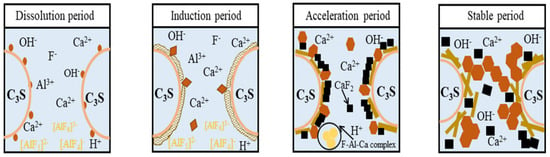
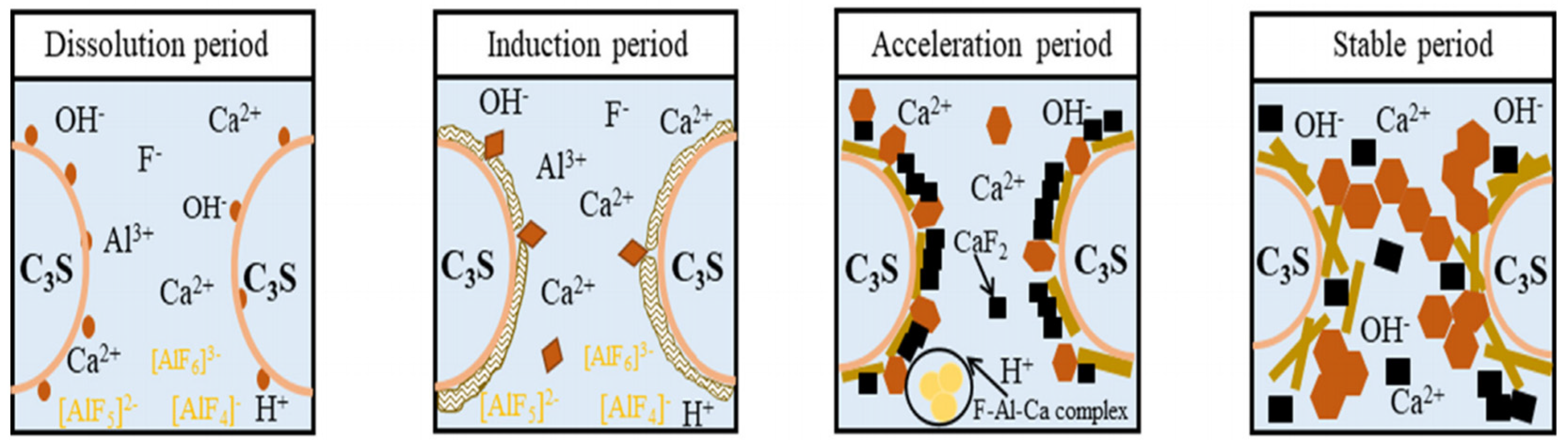
However, fluoroaluminate-based liquid accelerators still face several technical bottlenecks that limit their further application in high-performance shotcrete [9,10]. First, although these accelerators can achieve the setting and hardening of cement within minutes, their negative impact on the mechanical properties of cement—particularly early strength development—cannot be overlooked [11]. The fluoride ions (F−) introduced by the accelerator readily react with calcium ions (Ca2+) in the cement to form insoluble calcium fluoride (CaF2) crystals. These crystals adhere to the surface of tricalcium silicate (C3S), hindering its dissolution and hydration processes (as shown in Figure 1). Consequently, the early compressive strength of shotcrete, especially the 1 d strength, is significantly reduced and often fails to meet engineering design requirements [12,13,14].
Figure 1.
The effect of fluoride ions on the hydration of C3S.
Yang et al. [15] investigated the effect of fluoroaluminate accelerators on cement hydration and found that they primarily promote the rapid hydration of tricalcium aluminate (C3A) to form ettringite (AFt), thereby achieving rapid setting. However, their promoting effect on the hydration of C3S—the primary strength-contributing phase—is limited. This results in insufficient production of C-S-H gel in the hydration products, a loose internal structure of the hardened paste, and high porosity. Lin et al. [16] confirmed this observation, noting that accelerators prepared from fluoroacids delay the appearance of the hydration exothermic peak and reduce the exothermic rate, thereby significantly diminishing the early mechanical properties of shotcrete. Therefore, a key scientific challenge in shotcrete materials is how to effectively mitigate the adverse effects of fluoroaluminate accelerators on later-stage strength while preserving their rapid-setting advantage.
In recent years, research on the application of nanomaterials in the modification of cement-based materials has progressed significantly. Among these, C-S-H nanocrystalline nuclei, as a novel type of early-strength agent, have attracted widespread academic attention due to their unique physicochemical properties [17,18]. Luo et al. [19] incorporated C-S-H into ultra-high-performance concrete (UHPC) and found that it significantly accelerated early hydration, refined the pore structure, and greatly enhanced the 1 d compressive strength. Chand et al. [20] reported that, under the synergistic effect of PCE, C-S-H significantly accelerated the early hydration of cement, increasing compressive strength by up to 79%. Hou et al. [21] discovered that C-S-H accelerates water transport in gel pores, leading to more thorough hydration. Das et al. [22] found that adding C-S-H to precast concrete components improved both the rate of hydration product formation and early strength without reducing durability or later-age strength. Long et al. [23] analyzed the effect of C-S-H on cement hydration kinetics and found that it shortened the induction period, increased the hydration rate, and significantly improved the chemically bound water content and degree of hydration. Wu et al. [24] incorporated C-S-H into shotcrete mixtures and showed that it promotes the formation of AFt crystals, reduces porosity, and increases compressive strength.
In summary, C-S-H possesses an extremely high specific surface area and nanoscale particle size, enabling it to serve as nucleation sites for hydration products in cement. This reduces the nucleation barrier for these products and accelerates the hydration process of cement particles. Additionally, different morphologies of C-S-H can significantly influence the cement hydration process [20,25] (as shown in Figure 2). Incorporating C-S-H into the fluoroaluminate-based shotcrete system holds promise for compensating for the performance limitations of fluoroaluminate accelerators through the synergistic effects of nanoscale nucleation and chemical interactions [25,26]. Although preliminary studies have confirmed the beneficial effects of C-S-H on the early performance of cement-based materials, systematic research remains lacking regarding its incorporation form, dosage variation, and synergistic effects with polycarboxylate ether (PCE) on the performance of fluoroaluminate accelerators and their resulting properties of shotcrete.
Figure 2.
The effect of the liquid accelerator on the setting time of cement.
Against this background, this study investigates the effects of C-S-H content (0%, 0.3%, 0.6%, 0.9%, and 1.2%) and different doping methods—namely, powder single doping (AFC) and liquid synergistic doping with PCE (AFCP)—on the performance of cement modified by a fluoroaluminate-based liquid accelerator. The influence on shotcrete performance was evaluated by testing the setting time and compressive strength. Isothermal calorimetry was employed to monitor the hydration exothermic process and elucidate its regulatory mechanism in hydration kinetics. Microscopic characterization techniques, including X-ray diffraction (XRD), thermogravimetric analysis (TG-DTG), and scanning electron microscopy (SEM), were used to analyze the composition, content, and microstructural evolution of the hydration products. Based on these experimental results and supported by literature analysis, the mechanism by which C-S-H synergizes with PCE to enhance the performance of fluoroaluminate-based accelerators in shotcrete was explored. This work provides a theoretical basis and technical support for the development and application of high-performance shotcrete.
2. Raw Materials and Experimental Scheme
2.1. Raw Materials
P·O 42.5 was used as the experimental cementitious material, and the XRF analysis results of P·O 42.5 cement are shown in Table 1. The fine aggregate was ordinary washed river sand, and the liquid accelerator was self-made in the laboratory. During the preparation of the setting accelerator, the powdered CSH and liquid CSH were added at solid contents of 0.3%, 0.6%, 0.9%, and 1.2% by mass of cement, respectively. The setting accelerator with a dosage of 0% served as the control group, and their performance specifications are shown in Table 2. The powdered CSH seeds and the liquid CSH suspension were provided by Shanghai Sunrise Polymer Material Co., Ltd. (Shanghai, China), with their performance specifications as shown in Table 3 and Table 4, respectively.
Table 1.
XRF analysis of the P·O 42.5 cement.
Table 2.
Chemical composition and physical properties of the liquid accelerators.
Table 3.
XRF analysis of the CSH seeds.
Table 4.
Technical indicators of the CSH nanocrystal nucleus suspension.
2.2. Testing Methods
2.2.1. Materials and Specimen Preparation
Mortar mixtures were prepared with P·O 42.5 ordinary Portland cement, ISO standard sand, and a water-to-cement ratio of 0.50. A liquid alkali-free accelerator was added at a dosage of 7% by mass of cement immediately after mixing to simulate shotcrete application, following the general principles of GB/T 35159-2017 [27]. Mixing was performed in a planetary mortar mixer (Cangzhou Lushi Co., Ltd., Cangzhou, China). The fresh mortar was cast into three-gang steel moulds to form prismatic specimens with dimensions of 40 mm × 40 mm × 160 mm. Three prisms were cast for each mixture and testing age. After casting, the specimens were covered with a plastic sheet and kept in a curing room at 20 ± 1 °C and a relative humidity of ≥90%. For the 1-day compressive strength test, specimens were demoulded at 24 h and tested immediately. For the 3-day and 28-day strengths, specimens were demoulded after 24 h and subsequently cured in water at 20 ± 1 °C until the respective testing ages of 72 h and 28 d. A reference mortar without an accelerator was prepared and cured under identical conditions.
2.2.2. Compressive Strength Test
Compressive strength was determined in accordance with the method for mortar strength specified in GB/T 35159-2017. (Accelerators for shotcrete), which adopts the loading procedure and specimen geometry described in GB/T 17671-2021 (ISO 679:2009) [28]. A closed-loop servo-hydraulic testing machine (Shenzhen SANS Testing Machine Co., Ltd., Shenzhen, China) with a capacity of 300 kN and an accuracy of class 0.5 (ISO 7500-1:2018) [29] was used. The loading rate was maintained at 2400 ± 200 N/s until failure. Compression tests were carried out on the broken halves of the prisms obtained after the flexural test, giving a nominal bearing area of 40 mm × 40 mm. The lateral faces of the as-cast specimens were placed in contact with the loading platens.
For each mixture and age, three prisms were tested, yielding three compressive strength values. The compressive strength of each specimen group is reported as the mean of these three values, with the standard deviation also given.
2.2.3. Setting Time Test
The setting time of cement paste incorporating the accelerator was measured using a Vicat apparatus in accordance with the procedure detailed in GB/T 35159-2017. Cement paste was prepared with P.O 42.5 cement at a water-to-cement ratio of 0.35. The liquid accelerator was added and mixed rapidly into the paste. The initial and final setting times were recorded under standard laboratory conditions (20 ± 1 °C, with a relative humidity of ≥90%). Three independent replicates were performed for each measurement, and the results are expressed as the mean ± standard deviation.
2.2.4. Isothermal Calorimetry Test
The calorimetry curve of the paste within 72 h was measured by a TAM air microcalorimeter (TA/TAMAIR-8) (TA Instruments, New Castle, DE, USA). The water–cement ratio of the paste was 0.35, and the dosage of the fluoroaluminate liquid accelerator AFP was 7.0%. During the entire measurement process, the ambient temperature should be controlled at 25 ± 1 °C.
2.2.5. Microscopic Testing
The microscopic characterization methods mainly included X-ray diffraction (XRD, D/MAX2200, Rigaku Corporation, Akishima, Japan), thermogravimetric testing (TG-DTG, Netzsch STA 449 F3), and scanning electron microscopy (SEM, Quattro S; Thermo Scientific, Waltham, MA, USA). Among them, XRD and TG analysis were conducted on 3 d hydrated samples containing cement with different accelerators. The samples were ground to 200 mesh using agate grinding for XRD testing. For SEM analysis, cement blocks at the corresponding ages were used. The samples were crushed and sampled after reaching the designated age, and block samples with particle sizes ranging from 3.00 mm to 5.00 mm were selected. It should be emphasized that the above cement samples were soaked in a mixture of isopropanol and acetone (1:1 vol ratio) to terminate hydration and were then vacuum-dried at 45 °C.
3. Results and Discussion
3.1. Setting Time
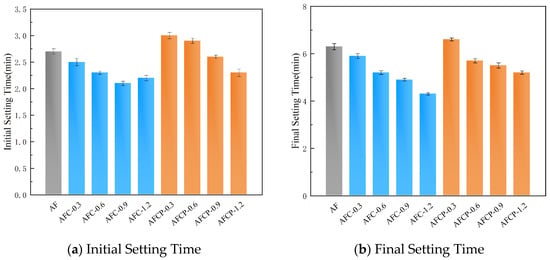
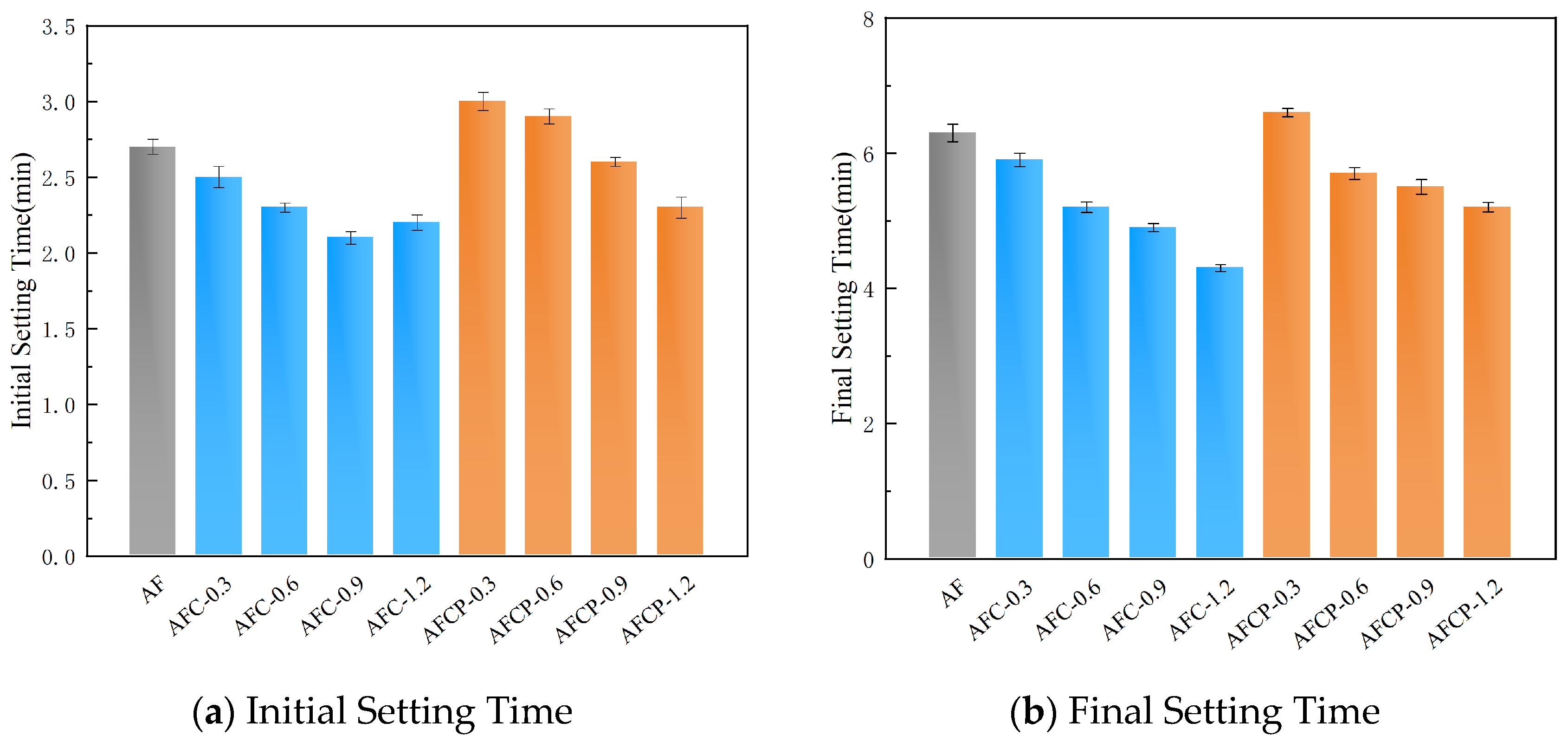
The influence of C-S-H content and PCE on the accelerating effect of the fluoroaluminate-based accelerator was evaluated by analyzing the setting time of cement, as shown in Figure 2. As presented in Figure 2a, under the action of the fluoroaluminate accelerator, the initial setting time of cement in all groups decreased to less than 3 min, indicating that the cement exhibited effective accelerating performance under the combined effect of the fluoroaluminate accelerator and C-S-H.
At a C-S-H content of 0.6%, a comparison of different incorporation methods revealed that the initial setting time of cement with liquid-form C-S-H was longer than that of the control group, whereas this increase was not observed for cement with powder-form C-S-H. This delay can be attributed to the presence of liquid polycarboxylic acid dispersant in the C-S-H suspension, which exerts a steric hindrance effect on cement particles, thereby delaying cement hydration and increasing paste fluidity. Consequently, at low C-S-H contents, the initial setting time increased. However, as the C-S-H content gradually increased, the initial setting time of cement containing C-S-H became shorter than that of the control group. On the one hand, the increased C-S-H content accelerated the hydration reaction of the paste and increased the volume of hydration products [24]. On the other hand, C-S-H itself served as a nucleation site, facilitating the formation of Aft. Thus, it synergized with the fluoroaluminate accelerator to further accelerate the dissolution and hydration of C3A in cement, thereby shortening the initial setting time.
As shown in Figure 2b, under the synergistic effect of C-S-H, the final setting time of cement was further shortened. Moreover, as the C-S-H content increased, the final setting time gradually decreased, a trend consistent with that observed for the initial setting time in Figure 2a, confirming that C-S-H further enhances the accelerating effect of fluoroaluminate-based accelerators. A comparison of the two incorporation methods revealed that, at the same C-S-H content, cement with powder-form C-S-H exhibited a shorter final setting time. This is because powder-form C-S-H, due to its higher water demand, consumes free water in the cement more rapidly, thereby accelerating setting. For liquid-form C-S-H, although the polycarboxylate dispersant present in the suspension may delay cement hydration to some extent, its dispersing effect simultaneously accelerates the hydration of C3S in the cement [21]. Therefore, as the C-S-H content increased, the difference in the final setting time between the two incorporation methods gradually diminished. At a C-S-H content of 1.2%, the final setting times for powder-form and liquid-form incorporation were 2.2 min and 2.3 min, respectively, indicating that the incorporation method has a negligible effect on the final setting time at higher dosages.
3.2. Compressive Strength
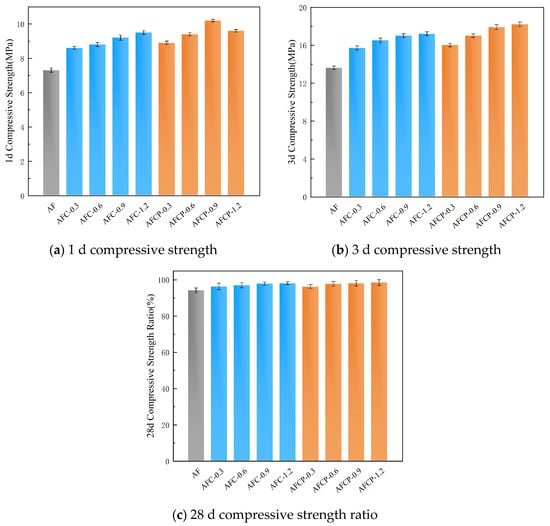
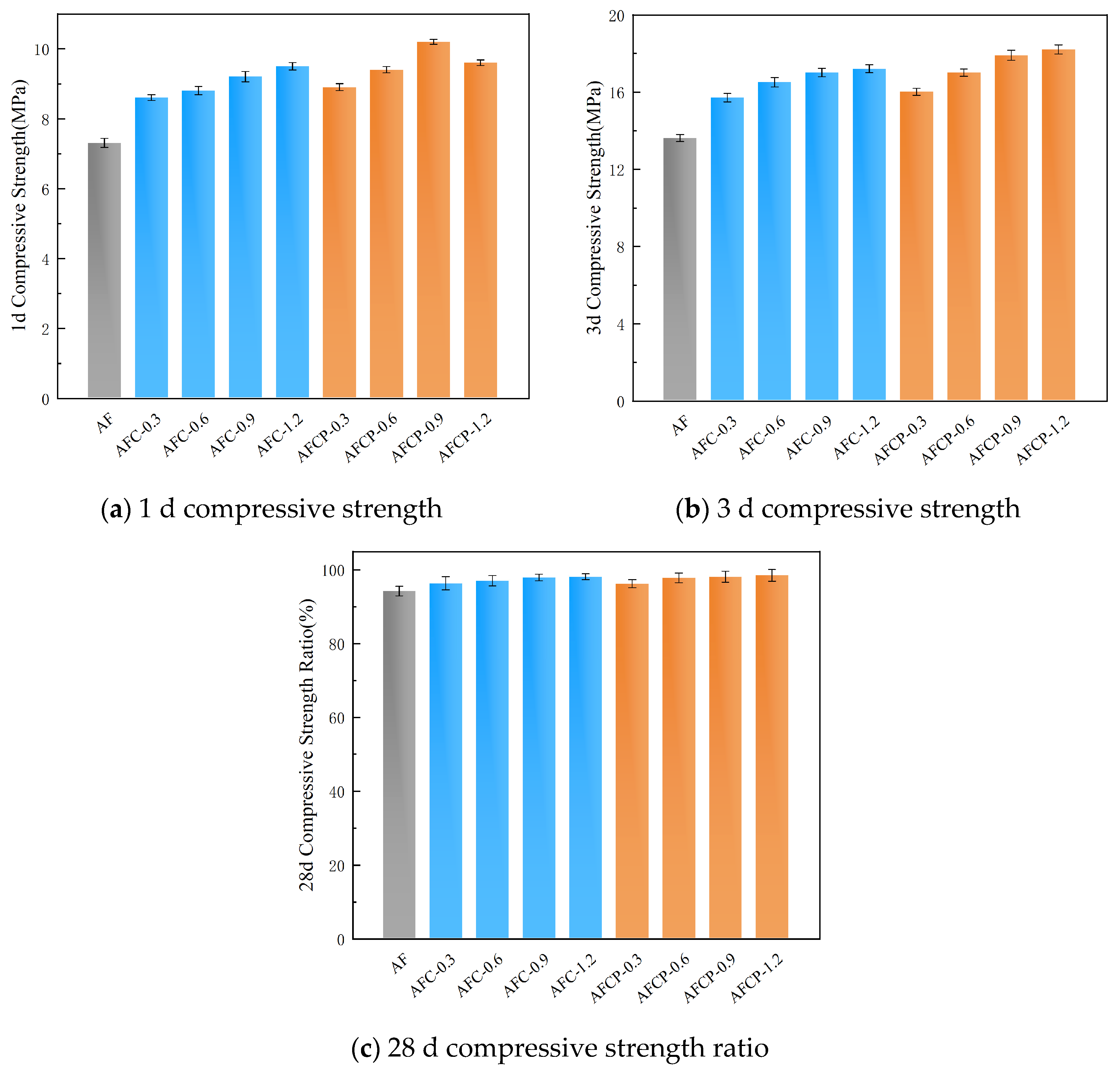
The influence of the incorporation method and dosage of C-S-H on the early and late hydration of fluoroaluminate-based shotcrete was analyzed by testing the compressive strength of mortars at 1 d, 3 d, and 28 d. The results are presented in Figure 3.
Figure 3.
The effect of the liquid accelerator on the compressive strength of mortar.
As shown in Figure 3a, the 1 d compressive strength of mortar containing only the fluoroaluminate accelerator was only 7.3 Mpa, indicating that the early strength development of shotcrete prepared with this accelerator was inferior to that of shotcrete without it. This is attributed to the reaction of F− with Ca2+ during cement hydration, which generates CaF2 crystals. These crystals hinder the dissolution of C3S and the formation of C-S-H gel, thereby reducing the 1 d compressive strength of the mortar [30].
After the addition of C-S-H to the mortar, the 1 d compressive strength was significantly enhanced, and this enhancement became more pronounced with increasing C-S-H content. At a C-S-H content of 1.2%, the 1 d compressive strengths of AFC and AFCP were 9.5 Mpa and 9.6 Mpa, respectively, representing increases of 30% and 31.5% compared to the control group. When more C-S-H was added, the hydration process itself produced additional C-S-H gel, which filled the interconnected pores within the Aft crystal network, thereby enhancing the compressive strength [31].
The 3 d compressive strength of the mortar is shown in Figure 3b. Compared with the results at 1 d, C-S-H had a more pronounced effect on enhancing the 3 d compressive strength. This is because, during the hydration period from 1 d to 3 d, cement primarily generates gel through the dissolution and hydration of C3S, which provides strength to the mortar [32]. Due to the high fluoride content in the fluoroaluminate accelerator, the hydration of C3S is partially hindered, resulting in a lower 3 d compressive strength in the control group [33]. When C-S-H was added to the paste, it supplemented the hydration products in the cement. Moreover, because C-S-H has a smaller particle size than cement particles, it provides nucleation sites for hydration products and reduces the hindering effect of CaF2 crystals on C3S particles. Therefore, C-S-H has a more significant effect on enhancing the compressive strength of mortar at this stage [34].
A comparison of the two incorporation methods reveals that mortar with liquid-form C-S-H and PCE exhibited higher compressive strength. At C-S-H contents of 0.3%, 0.6%, 0.9%, and 1.2%, the compressive strength of AFCP mortar was 2.0%, 3.1%, 5.3%, and 5.8% higher than that of AFC, respectively. Under the synergistic effect of PCE, C-S-H demonstrates a more significant enhancement of the compressive strength of fluoroaluminate-based accelerator-modified mortar. On the one hand, the polycarboxylate dispersant present in the liquid-form C-S-H exerts a steric hindrance effect, which disperses cement particles and accelerates the hydration rate [35]; on the other hand, C-S-H is less prone to agglomeration under the dispersing effect of PCE, facilitating a more complete hydration reaction and thereby providing additional C-S-H gel to the cement, which enhances compressive strength [36].
The 28 d compressive strength retention rates of mortars with different C-S-H contents are shown in Figure 3c. The retention rates ranged from 94% to 99%. The enhancement effect of C-S-H on the 28 d compressive strength was inferior to that observed at 1 d and 3 d, because the hydration-promoting effect of C-S-H is mainly concentrated in the early stages of hydration [37]. In mortar mixed with the fluoroaluminate accelerator, substantial amounts of Al3+ and SO42− were introduced into the paste, increasing the content of AFt crystals. As the hydration reaction progressed, the AFt phase gradually transformed into the AFm phase, leading to volume shrinkage and pore formation, which adversely affected the mechanical properties [38]. At this stage, the promoting effect of C-S-H on the hydration reaction was weaker than that in the early hydration stage, and insufficient gel was generated to fill the pores. Therefore, C-S-H did not significantly enhance the 28 d compressive strength of the mortar.
Based on the results obtained from the setting time and compressive strength tests, as well as cost considerations, cements with C-S-H contents of 0.6% and 0.9% were selected for further in-depth analysis. Subsequent research focused on the synergistic effect of C-S-H and PCE, as well as the mechanism by which the incorporation method enhances the performance of fluoroaluminate-based shotcrete.
3.3. Isothermal Calorimetry
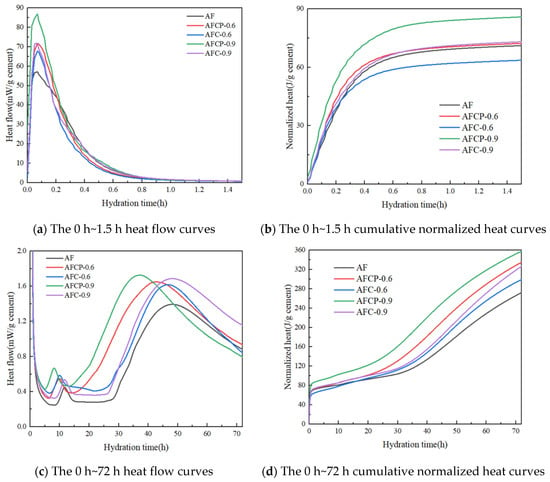
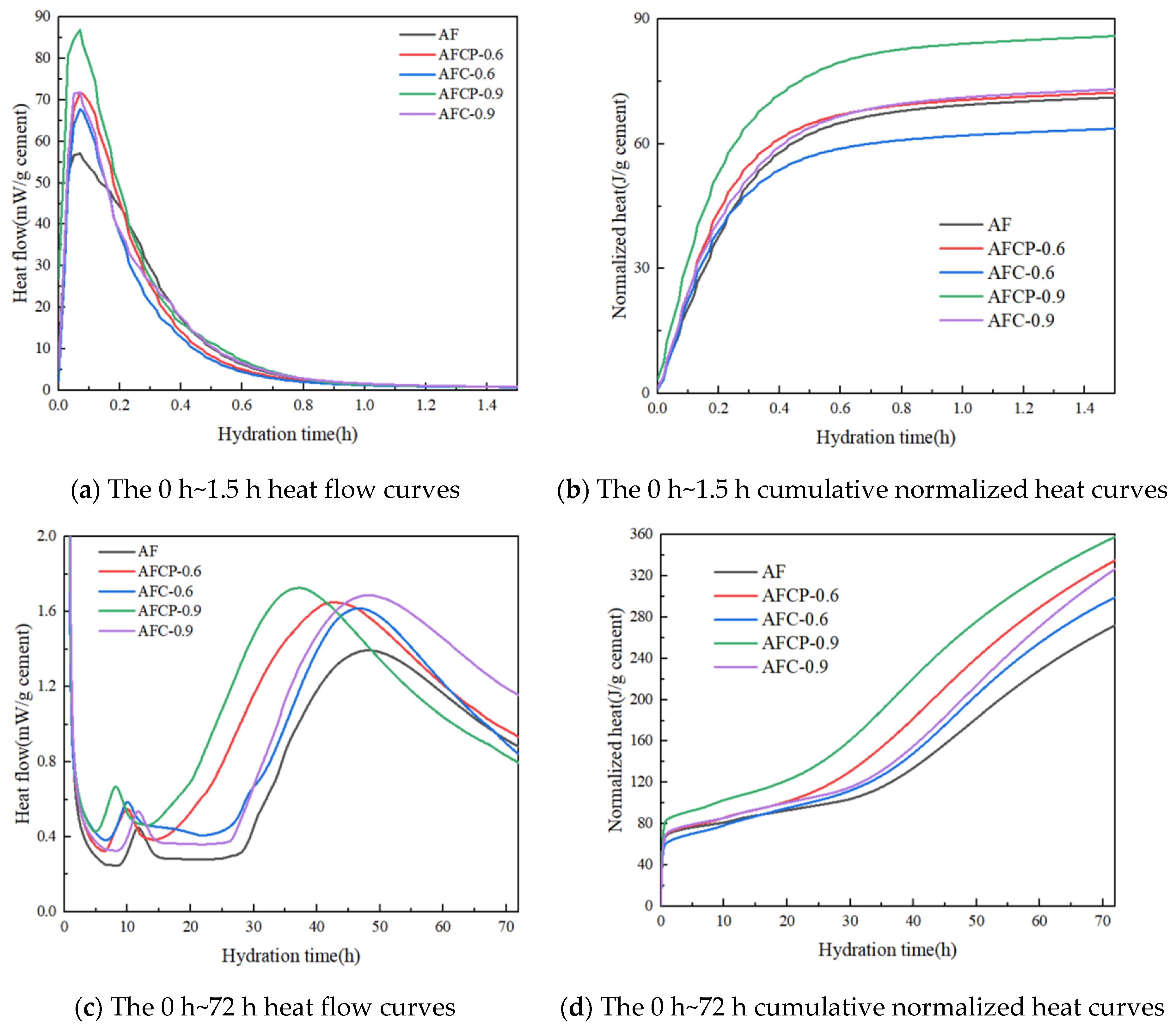
The incorporation of both the fluoroaluminate accelerator and C-S-H significantly alters the early hydration process of cement. Therefore, isothermal calorimetry was employed to analyze the impact of different C-S-H dosages and incorporation methods on cement hydration. The results are shown in Figure 4.
Figure 4.
Calorimetry curves of cement containing different accelerators.
As shown in Figure 4a, the first hydration exothermic peak of the cements appeared between 3.0 min and 4.2 min. This is attributed to the introduction of substantial amounts of Al3+ and SO42− into the cement by the fluoroaluminate accelerator, which promoted the rapid hydration of C3A and released a large amount of heat. Regarding the influence of C-S-H content on the hydration exothermic peak, an increase in C-S-H content enhanced the peak value of the first exothermic peak, with the maximum heat release reaching 86.93 mW/g. The incorporation of C-S-H synergized with the fluoroaluminate accelerator to further increase the hydration rate and enhance the accelerating effect in the early stage of hydration, which is consistent with the results obtained from the previous setting time analysis.
A comparison of the hydration exothermic peaks of AFC and AFCP cements reveals that, at a C-S-H content of 0.6%, the appearance time of the exothermic peak for AFCP was later than that for AFC. However, at a C-S-H content of 0.9%, the appearance times of the exothermic peaks for both were relatively close. When a lower content of C-S-H is incorporated, the polycarboxylate dispersant in AFCP delays cement hydration to some extent. As the C-S-H content increases, the powder-form AFC undergoes partial agglomeration due to the increased C-S-H content. In AFCP, the presence of the polycarboxylate dispersant enables C-S-H to promote hydration more effectively [39]. Therefore, at a C-S-H content of 0.9%, the appearance time of the first hydration exothermic peak for AFCP was closer to that for AFC.
As shown in Figure 4c, compared to the first exothermic peak, C-S-H has a more significant impact on the second exothermic peak of paste hydration. Relative to cement containing only the fluoroaluminate accelerator, the addition of C-S-H accelerated the appearance of the second exothermic peak. Among the five groups of cements, AFCP with 0.9% C-S-H exhibited the earliest second exothermic peak time (37 h) and the highest peak value (1.72 mW/g). This is because C-S-H provides additional nucleation sites for hydration products, facilitating the generation of hydration products and promoting the dissolution of C3S particles [40]. At the same time, it also reduces the hindering effect of CaF2 generated by the fluoroaluminate accelerator on C3S dissolution, thus accelerating the hydration exotherm of the cement. Under the same dosage conditions, the second exothermic peak time and peak value of AFCP were higher than those of AFC. This is because, under the action of the polycarboxylate dispersant, C-S-H and cement particles undergo more thorough hydration, reducing the adverse effects of agglomeration on the hydration reaction [41]. This explains why AFCP achieved a higher 3 d compressive strength, as mentioned earlier.
3.4. XRD
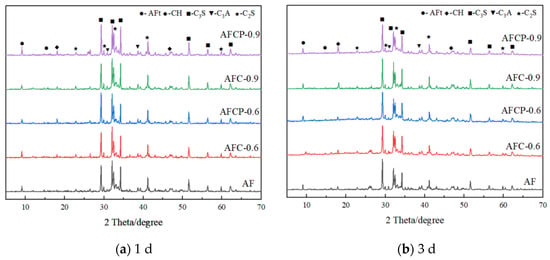
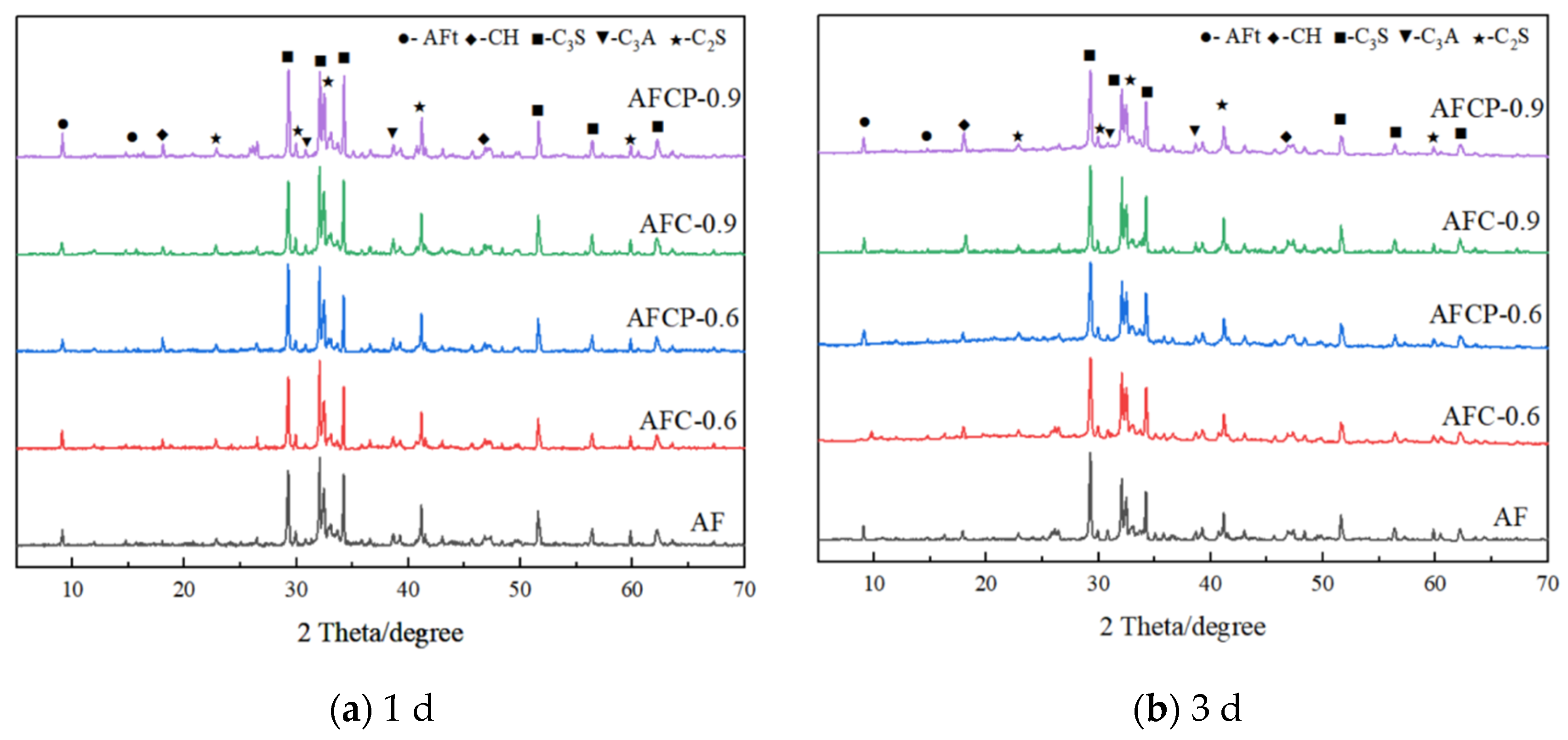
Figure 5 presents the phase composition of the hydration products after 1 and 3 days of hydration. As shown in Figure 5a, after 1 day of hydration the unhydrated minerals in the cement include C3S, C2S, C3A, and C4AF. Among these phases, the diffraction peak of C3A is weaker than those of the other unhydrated minerals, whereas distinct diffraction peaks of Aft and CH are observed. Under the action of the fluoroaluminate accelerator, C3A in the cement primarily hydrates to form Aft crystals within the first day, thereby accelerating the setting and contributing to early strength development. Under the action of C-S-H, the diffraction peak of Aft crystals increased to a certain extent, and with increasing C-S-H content, the Aft diffraction peak increased significantly. The hydration reaction of C-S-H nanocrystalline nuclei itself does not generate Aft crystals. Therefore, at this stage, C-S-H nanocrystalline nuclei mainly promote the formation of Aft by providing nucleation sites, reducing the nucleation barrier, and thus facilitating the generation of Aft [42].
Figure 5.
Mineral composition of cement containing different accelerators.
After further hydration, specifically at 3 d, the phase composition of the hydration products is shown in Figure 5b. Comparing cements at different ages, after 3 d of hydration, the diffraction peak of C3S in the cement gradually decreased, while the diffraction peak of CH crystals in the paste gradually increased. Combined with the previous analysis of hydration heat release, the second hydration heat release peak appeared in the cements between 33 h and 46 h, which was mainly caused by the dissolution and hydration of C3S to form C-S-H gel and CH crystals.
The diffraction peak of CH crystals in the cement containing only the fluoroaluminate accelerator was lower than that in the cement containing C-S-H, indicating that the fluoroaluminate accelerator affects the dissolution and hydration of C3S to some extent. The incorporation of C-S-H mitigated this adverse effect. A comparison of cements with different C-S-H dosages and incorporation methods reveals that the diffraction peak of CH crystals in AFCP cement was higher than that in AFC cement, while the diffraction peak of C3S was lower, suggesting a higher degree of C3S hydration in AFCP cement. This can be attributed to the dispersing effect of the polycarboxylate dispersant in AFCP on cement particles, which promoted more complete hydration of C3S.
3.5. TG
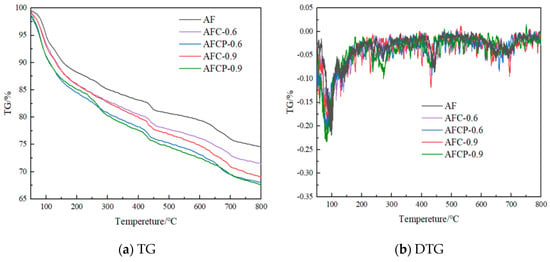
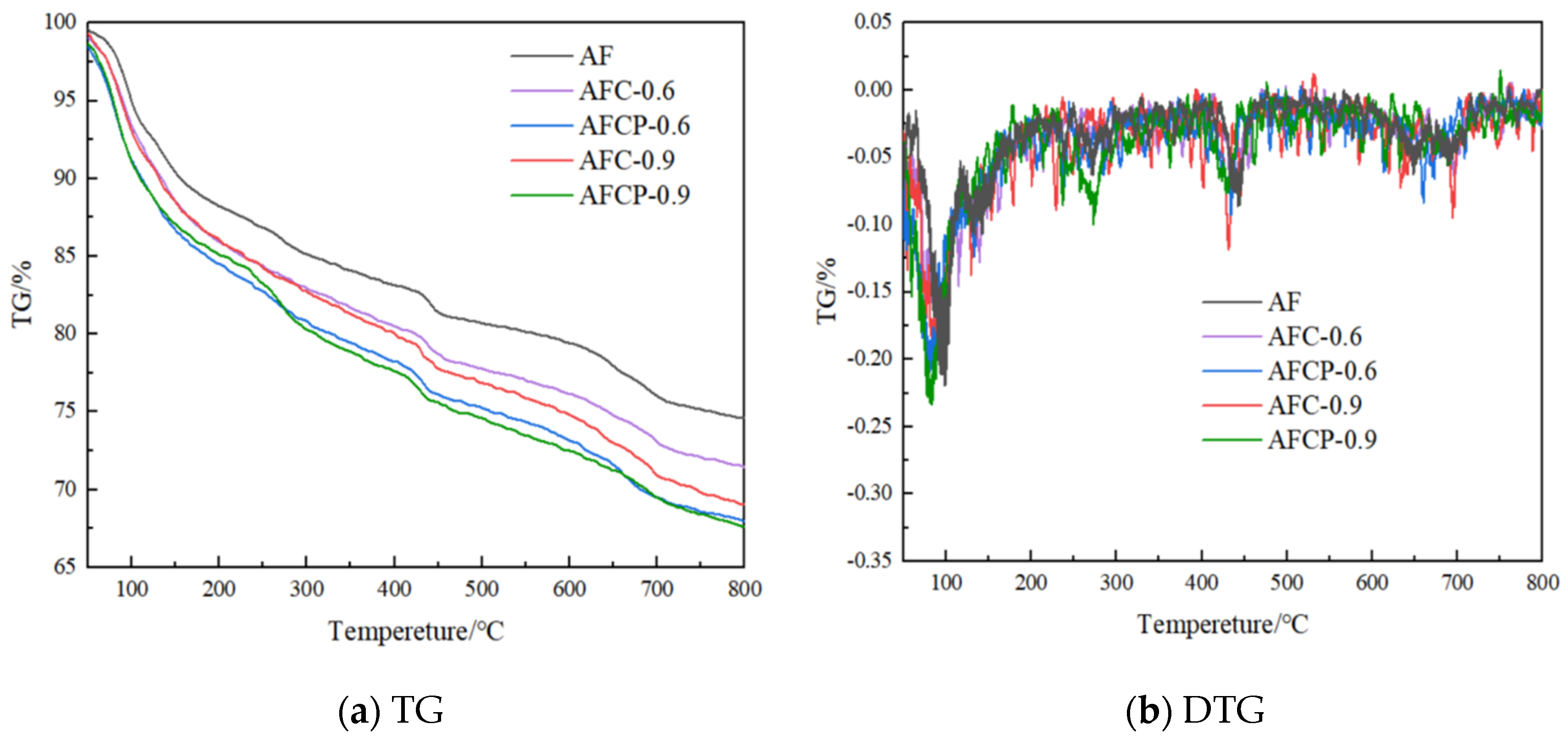
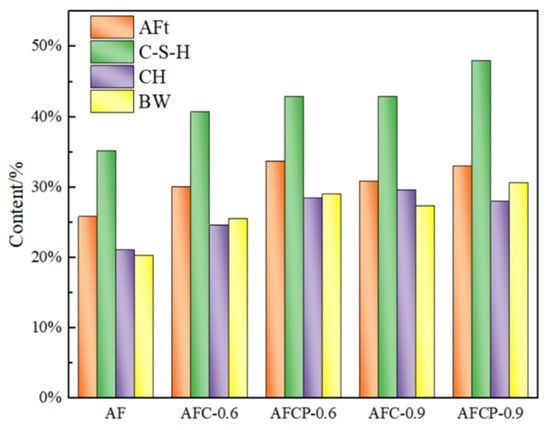
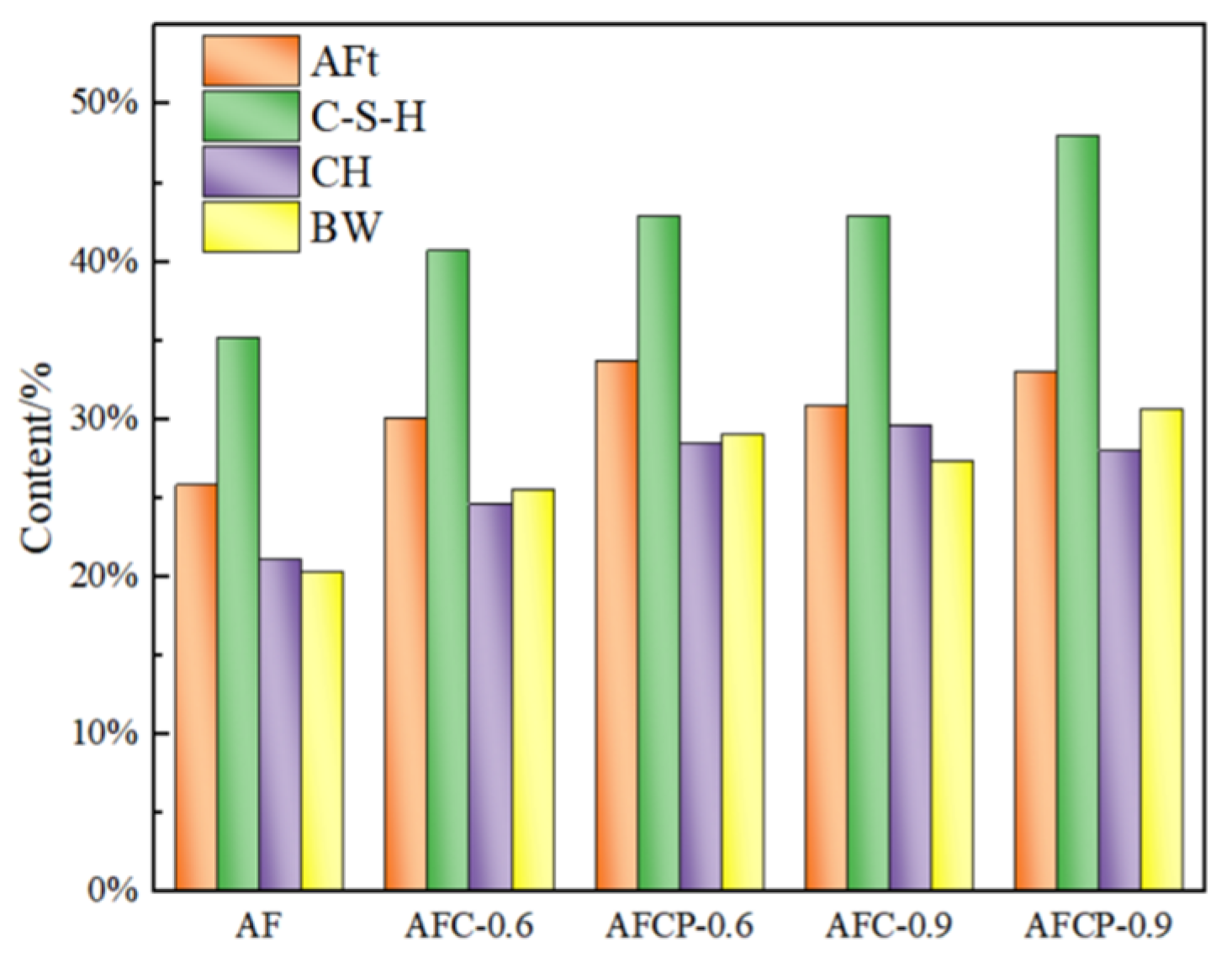
The TG-DTG results of the 3 d hydration products of cement are shown in Figure 6, and the content of hydration products in cements was calculated according to Formulas (1) to (4) [43], with the results presented in Figure 7.
Figure 6.
TG/DTG curves of hydration products of different accelerators.
Figure 7.
Composition of hydration products of cement with different accelerators.
As shown in Figure 6, significant mass loss occurred in the cements at 90 °C~120 °C, 300 °C~450 °C, and 600 °C~700 °C. The mass loss in the 90 °C~120 °C range was primarily due to the dehydration and decomposition of C-S-H gel and Aft crystals [44]. The mass loss rate of the cement with C-S-H incorporated exceeded 9%, which was higher than that of the control group with only the fluoroaluminate accelerator incorporated. C-S-H significantly enhanced the content of Aft crystals and C-S-H gel in the early hydration products of the paste. The mass loss in the 300 °C~450 °C range was primarily due to the dehydration of Ca(OH)2, and C-S-H also increased the mass loss rate of cement. The decomposition of CaCO3 was the main reason for the mass loss of the cements in the 500 °C~700 °C range. The mass loss rate of cements with C-S-H was higher than that of the control group with only fluoroaluminate accelerator. Due to the formation of CaCO3 from Ca(OH)2 absorbing CO2 from the air, CSH increased the content of Ca(OH)2 to some extent.
The content of hydration products of cements after 3 d is shown in Figure 7. After 3 d of hydration, the AFt crystal content of cements exceeded 25%, C3A was fully hydrated in the early stage under the action of fluoroaluminate accelerator. Furthermore, with the synergistic effect of C-S-H, the AFt crystal content would be further increased, and this effect became more pronounced as the amount of C-S-H increased. This also proves that CSH promotes the formation of AFt crystals. Although CSH did not chemically react with C3A to promote its hydration, the smaller particle size and higher specific surface area provided nucleation sites for the hydration products of C3A, thereby reducing the nucleation barrier [45]. Therefore, it also accelerated the dissolution and hydration of C3A, thereby increasing the AFt crystal content in the cement. Meanwhile, a comparison of cements prepared with different incorporation forms of C-S-H revealed that C-S-H also increased the AFt crystal content to a certain extent, but the increase was relatively limited. When the amount of C-S-H was 0.9%, its AFt content could reach 33.1%.
Regarding the content of C-S-H gel, the differences among the various cement groups were more pronounced. In the cement with only the fluoroaluminate accelerator, the content of C-S-H gel in its 3 d hydration products was only 35.2%, which was much lower than that in the cement with CSH added. This also explains the significant difference in 3 d compressive strength of mortar mainly due to the content of C-S-H gel in the hydration products in the previous compressive strength analysis. After the addition of CSH, the content of C-S-H gel in the 3 d hydration products of the cement increased significantly. When the amount of CSH was 0.9%, the content of C-S-H gel in the 3 d hydration products of AFCP reached the highest level, at 46.1%, which was 30.9% higher than that in the control group. Meanwhile, a comparison of the different CSH incorporation methods revealed that, at the same amount of addition, the content of C-S-H in the cement of AFCP was higher than that in the cement of AFC. The synergistic effect of PCE promoted the formation of C-S-H gel in the hydration products, further enhancing the 3 d compressive strength of the mortar, which was verified in the compressive strength analysis.
3.6. SEM
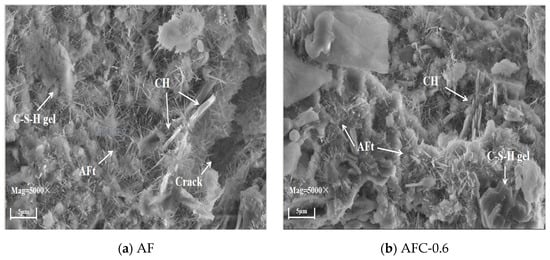
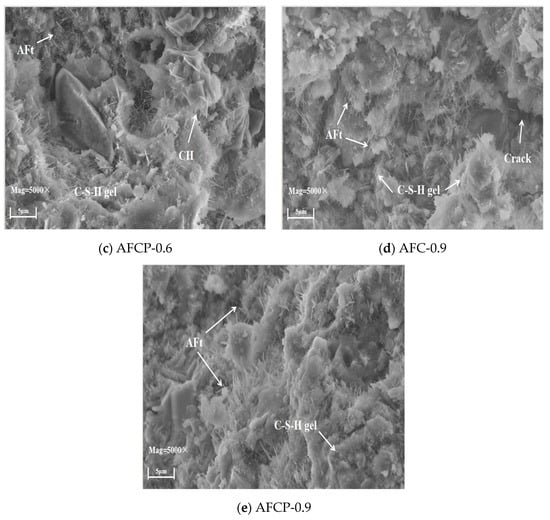
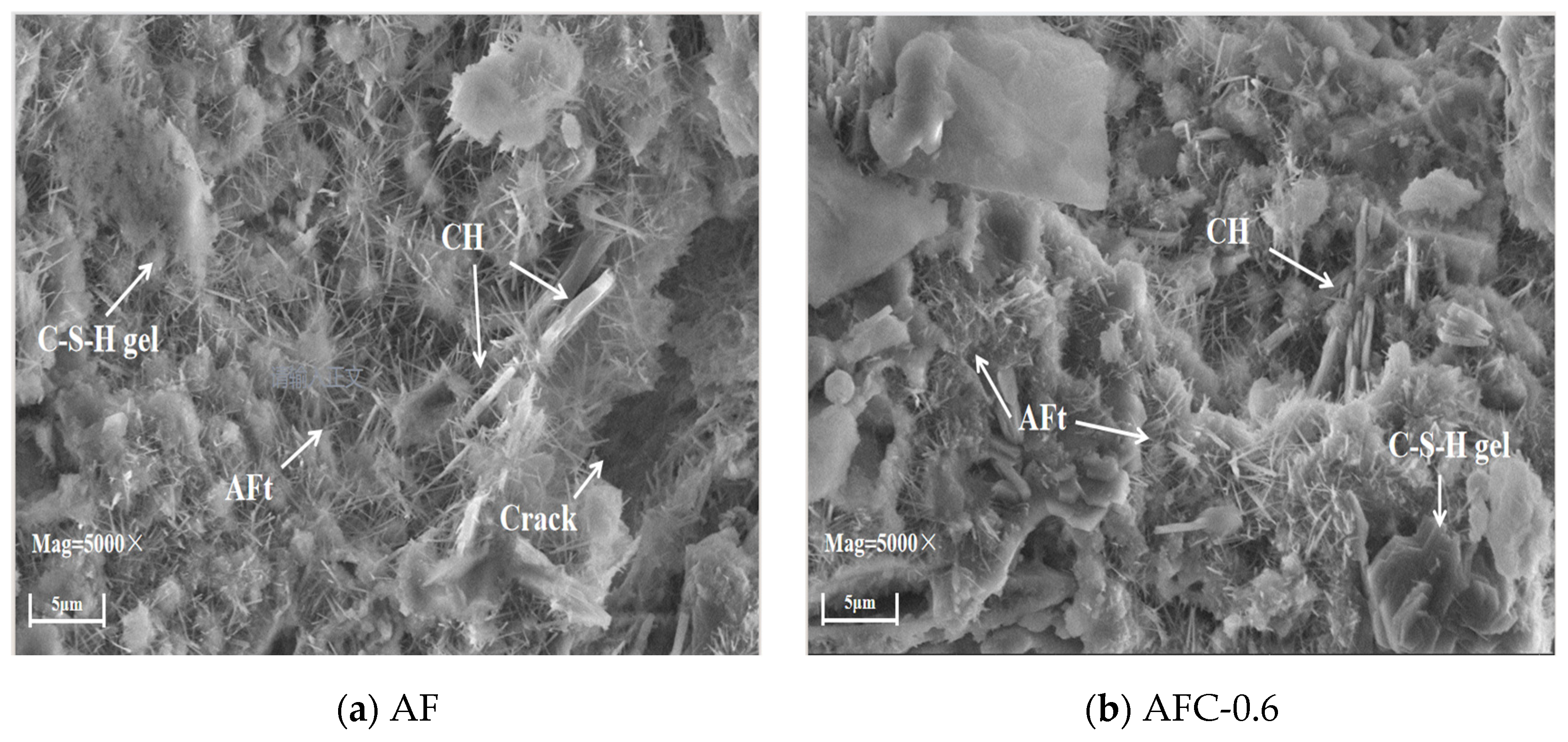
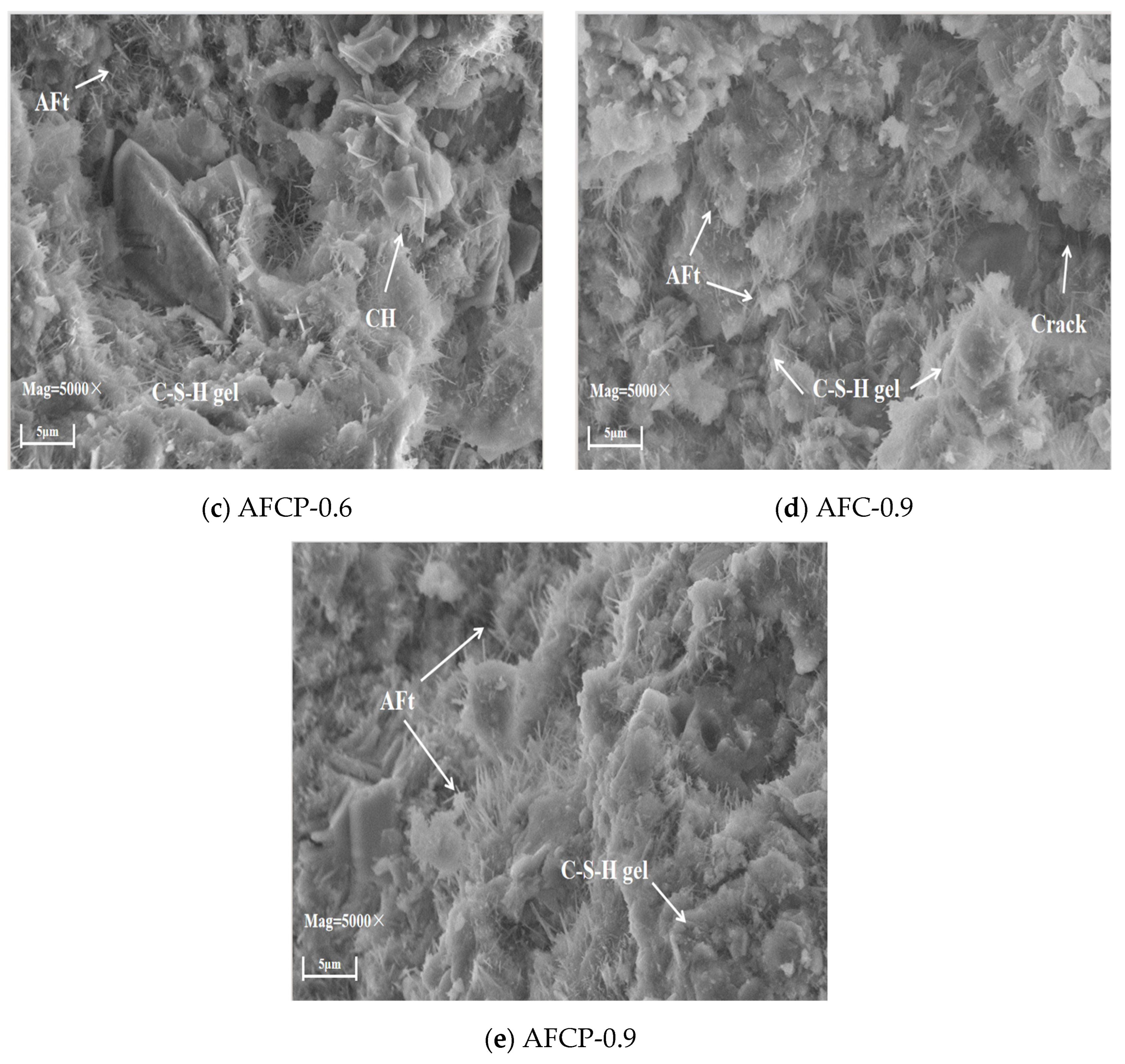
To further investigate the influence of CSH on the internal structure of the cement, the micro-morphology of 3 d hydration products of cement with different amounts and incorporation methods of CSH was analyzed. The results are shown in Figure 8.
Figure 8.
Microscopic morphology of cement.
As shown in Figure 8, the main hydration products of the cement after 3 d of hydration were AFt crystals, CH crystals, and C-S-H gel. In Figure 8a, the cement containing only the fluoroaluminate accelerator exhibited a large amount of Aft, forming a network structure, with some C-S-H gel filling the interior of the network. However, compared to the cements incorporating C-S-H, its internal structure was looser, which was an important factor contributing to its poor mechanical properties.
As illustrated in Figure 8b–e, when C-S-H participates in cement hydration, the amount of C-S-H gel formed is significantly greater than that in the control group (fluoroaluminate accelerator only). Moreover, with increasing C-S-H content, more hydration products can be observed in the cement [46], and the mortar becomes denser. C-S-H exhibits a higher hydration rate during the early stages of cement hydration, and the C-S-H gel produced can more effectively fill the network structure formed by AFt crystals, thereby improving the internal pore structure and increasing the compactness of the cement, ultimately enhancing its mechanical properties.
For C-S-H cements with different incorporation methods at the same dosage, the AFCP cement contained more C-S-H gel and plate-like CH crystals, which is consistent with the conclusions drawn from the thermogravimetric analysis of hydration product content mentioned earlier. Under the synergistic effect of PCE, C3S in the AFCP cement underwent more thorough hydration. The degree of C3S hydration plays a decisive role in the early compressive strength of the mortar. Therefore, under the synergistic effect of C-S-H and PCE, the mortar prepared with the fluoroaluminate accelerator achieved a denser structure and higher compressive strength.
3.7. Mechanism Analysis
Based on the preceding discussion regarding the influence of C-S-H on the performance of fluoroaluminate-based shotcrete, combined with the analysis of its effects on the hydration process, hydration products, and microstructure of the cement, as well as insights from the literature, the mechanism by which C-S-H synergizes with PCE to enhance the performance of fluoroaluminate-based shotcrete was elucidated.
When the fluoroaluminate accelerator is added, the high contents of Al3+ and SO42− introduced into the system lead to the hydrolysis of Al3+ to form [Al(OH)4]−. This ion subsequently reacts with Ca2+ and SO42− to form AFt crystals, which promote the dissolution and hydration of C3A and C3S [12,30]. Under the synergistic effect of C-S-H nanocrystalline nuclei, additional nucleation sites are provided for AFt crystals, thereby further accelerating the dissolution and hydration of C3A [31,33]. Consequently, the setting time of the cement is further shortened, and, as observed in the hydration heat analysis, C-S-H enhances the peak value of the first hydration exothermic peak.
As the hydration process progresses, the cement hydration reaction gradually transitions from the induction period to the acceleration period. During this stage, the substantial amount of F− introduced by the fluoroaluminate accelerator replaces OH− in Ca(OH)2, forming CaF2 crystals that cover the surface of C3S. This coating hinders the dissolution and hydration of C3S [15,18]. Therefore, compared to the cement without the fluoroaluminate accelerator, the second hydration exothermic peak appears later and exhibits a lower peak value. The production of the hydration products—C-S-H gel and CH crystals—from C3S hydration is also reduced, leading to insufficient filling of the interwoven network structure formed by AFt crystals.
When C-S-H is incorporated into the cement, it hydrates to produce additional C-S-H gel, supplementing the hydration products in the cement. Furthermore, when C-S-H synergizes with PCE, the polycarboxylate dispersant exerts a steric hindrance effect on the cement particles, reducing the inhibitory effect of CaF2 on C3S hydration and thereby accelerating the dissolution and hydration of C3S [22,24,31,34,36]. This further promotes the formation of C-S-H gel and CH crystals, resulting in a denser internal structure. Therefore, under the synergistic effect of C-S-H and PCE, the cement prepared with AFCP exhibits an accelerated hydration rate, an increased volume of hydration products, and an improved internal structure, ultimately achieving superior mechanical properties.
4. Conclusions
This study systematically investigated the influence of C-S-H, in conjunction with PCE, on the performance of a fluoroaluminate-based liquid accelerator. By measuring the setting time and compressive strength, and employing isothermal calorimetry, X-ray diffraction (XRD), thermogravimetric analysis (TG-DTG), and scanning electron microscopy (SEM), the effects and mechanisms of C-S-H with different dosages and incorporation methods—namely, powder incorporation (AFC) and synergistic liquid incorporation with PCE (AFCP)—on the performance of the fluoroaluminate liquid accelerator were analyzed. The following main conclusions were drawn:
- (1)
- C-S-H effectively enhanced the setting and hardening performance of cement containing the fluoroaluminate accelerator. Under the action of the fluoroaluminate accelerator, the initial setting time of cement was reduced to less than 3 min, and the addition of C-S-H further shortened the final setting time. Moreover, this accelerating effect became more pronounced with increasing C-S-H dosage. Simultaneously, C-S-H significantly mitigated the negative impact of the fluoroaluminate accelerator on early compressive strength. At a dosage of 1.2%, the 1 d compressive strengths of AFC and AFCP increased by 30% and 31.5%, respectively, compared to the control group. At 3 d, the compressive strength of AFCP with a dosage of 1.2% was 5.8% higher than that of AFC. The synergistic enhancement effect of PCE and C-S-H on the mechanical properties was significant.
- (2)
- Isothermal calorimetry and microscopic analysis revealed that C-S-H, acting as a nucleation site for hydration products, reduced the nucleation barrier, increased the peak value of the first hydration exothermic peak, and enhanced the formation of AFt. At the same time, C-S-H promoted the hydration of C3S. XRD analysis showed that in pastes containing C-S-H, the diffraction peak of C3S decreased while that of CH increased. TG analysis indicated a significant increase in the content of C-S-H gel; specifically, the C-S-H gel content in AFCP paste with 0.9% C-S-H reached 46.1% after 3 d, an increase of 30.9% compared to the control group. As the primary source of strength, the substantial increase in C-S-H gel content directly explained the improvement in compressive strength. This enhancement was attributed to the ability of C-S-H to effectively alleviate the encapsulation and hindrance of C3S particles by CaF2 crystals formed from the reaction of fluoride ions with Ca2+.
- (3)
- The incorporation method of C-S-H was crucial to its effectiveness, particularly its synergistic interaction with PCE in a liquid suspension. Although the PCE dispersant in AFCP slightly prolonged the initial setting time at low C-S-H dosages, this effect was overcome at higher dosages. More importantly, PCE exhibited significant synergistic enhancement with C-S-H during the first 3 d of hydration, resulting in substantially higher compressive strength for AFCP compared to AFC. This synergistic effect promoted more complete hydration of C3S, as confirmed by the higher CH diffraction peaks and greater C-S-H content observed in the hydration products of AFCP. SEM analysis revealed that the internal structure of AFCP paste was denser, with C-S-H gel thoroughly filling the network structure formed by interwoven AFt crystals.
In summary, the incorporation of C-S-H, particularly in the form of a liquid suspension mixed with PCE, proved to be an effective strategy for overcoming the performance limitations of fluoroaluminate-based liquid accelerators. C-S-H compensated for the insufficient production of C-S-H gel caused by fluoride ions by providing additional nucleation sites and promoting C3S hydration, while the PCE dispersant further amplified this effect by ensuring uniform dispersion of both the cement and C-S-H. Considering the setting time, compressive strength development, and cost factors, the fluoroaluminate accelerator prepared with 0.9% liquid C-S-H (AFCP-0.9) significantly improved early strength and optimized the microstructure without compromising later-age strength. This provides a basis for the development of high-performance fluoroaluminate-based shotcrete materials through nanomodification. Future research should further explore the performance of this optimized system under long-term durability conditions and in various on-site application scenarios.
Author Contributions
Y.L.: Writing—original draft, Writing—review and editing, Investigation. T.H.: Conceptualization, Validation, Methodology, Writing—review and editing. Y.D.: Conceptualization, Validation, Formal analysis. R.Y.: Conceptualization. X.M.: Conceptualization. All authors have read and agreed to the published version of the manuscript.
Funding
This research was funded by the National Natural Science Foundation of China (NSFC) under project No. 52172027 and 52302029. The authors appreciate financial support from China Postdoctoral Science Foundation No. 2023MD734200 as well.
Data Availability Statement
The data used to support the findings of this study are available from the corresponding author upon request.
Conflicts of Interest
The authors declare no conflict of interest.
References
- Zhang, Z.; Li, G.; Zhang, G.; Niu, M. Influence of liquid accelerators on shotcrete in karst area tunnels. Case Stud. Constr. Mater. 2022, 16, e01002. [Google Scholar] [CrossRef] [Scilit]
- Kaufmann, J.; Loser, R.; Winnefeld, F.; Leemann, A. Sulfate resistance testing of shotcrete-Sample preparation in the field and under laboratory conditions. Constr. Build. Mater. 2021, 276, 122233. [Google Scholar] [CrossRef] [Scilit]
- Yun, K.-K.; Choi, P.; Yeon, J.H. Microscopic investigations on the air-void characteristics of wet-mix shotcrete. J. Mater. Res. Technol. 2019, 8, 1674–1683. [Google Scholar] [CrossRef] [Scilit]
- Zhou, Z.; Qiao, P. Durability of air-entrained shotcrete exposed to cyclic freezing and thawing effect. Cold Reg. Sci. Technol. 2019, 164, 102778. [Google Scholar] [CrossRef] [Scilit]
- Liu, F.; Liu, J.; Zhong, B.; Sun, J. Optimization of the shotcrete spraying process in blast-based tunnel construction: Insights for enhancing spraying quality. Autom. Constr. 2025, 175, 106234. [Google Scholar] [CrossRef] [Scilit]
- Ikumi, T.; Salvador, R.P.; Aguado, A. Mix proportioning of sprayed concrete: A systematic literature review. Tunn. Undergr. Space Technol. 2022, 124, 104456. [Google Scholar] [CrossRef] [Scilit]
- Armengaud, J.; Casaux-Ginestet, G.; Cyr, M.; Husson, B.; Jolin, M. Characterization of fresh dry-mix shotcrete and correlation to rebound. Constr. Build. Mater. 2017, 135, 225–232. [Google Scholar] [CrossRef] [Scilit]
- Nobre, J.; Bravo, M.; de Brito, J.; Duarte, G. Durability performance of dry-mix shotcrete produced with coarse recycled concrete aggregates. J. Build. Eng. 2020, 29, 101135. [Google Scholar] [CrossRef] [Scilit]
- Yang, R.; Zhang, P.; Huang, T.; Wang, D.; Sun, Q.; Mao, Z.; Qie, F.; Wang, W.; Da, Y. The accelerating effect and mechanism of alkaline and alkali free liquid accelerators on high belite cement. J. Build. Eng. 2025, 106, 112598. [Google Scholar] [CrossRef] [Scilit]
- Wu, D.; Liu, X.; Liu, Y.; Yang, A.; Yang, L. Preparation and accelerating mechanism of alkali-free liquid accelerator made with silicon residue containing fluorine. Adv. Cem. Res. 2024, 36, 427–439. [Google Scholar] [CrossRef] [Scilit]
- Wan, Z.; He, T.; Chang, N.; Yang, R.; Qiu, H. Effect of silica fume on shrinkage of cement-based materials mixed with alkali accelerator and alkali-free accelerator. J. Mater. Res. Technol. 2023, 22, 825–837. [Google Scholar] [CrossRef] [Scilit]
- Wan, Z.; Zheng, B.; Xie, X.; Qiu, H.; Tao, H.; Zhang, M.; Li, H.; Shi, K. Influence of different liquid accelerators on permeability of shotcrete: Mechanisms and performance. Constr. Build. Mater. 2025, 496, 143609. [Google Scholar] [CrossRef] [Scilit]
- Yang, R.; He, T. The accelerating mechanism of alkali free liquid accelerator based on fluoroaluminate for shotcrete. Constr. Build. Mater. 2021, 274, 121830. [Google Scholar] [CrossRef] [Scilit]
- Li, X.; Zeng, F.; Guo, Z.; Wang, Q.; Wang, J.; He, W.; Xun, X. Influence of Different Fluorides on Alkali-Free Accelerator Based on Aluminum Sulfate. J. Build. Eng. 2025, 118, 114844. [Google Scholar]
- Yang, R.; He, T.; Xu, Y. Preparation of alkali free liquid accelerator for shotcrete with fluorosilicic acid waste liquid and its accelerating mechanism. Cem. Concr. Compos. 2022, 131, 104600. [Google Scholar] [CrossRef] [Scilit]
- Lin, Y.; He, T.; Da, Y.; Ma, X.; Yang, R.; Qu, Q. Performance Influence and Mechanism Analysis of Liquid Accelerator Prepared with Different Waste Fluorined Acids. Langmuir 2025, 42, 767–777. [Google Scholar] [CrossRef] [Scilit] [PubMed]
- Garba, M.J.; Tian, Y.; Shalaby, Y.; Chen, L.; Hu, C.; Yu, C.; Xie, Z.; Xu, Y.; Yuan, Q. Effects of liquid accelerators on long-term mechanical strength development and microstructural changes of wet-mixed shotcrete. J. Build. Eng. 2024, 97, 110926. [Google Scholar] [CrossRef] [Scilit]
- Lin, Y.; He, T.; Da, Y.; Ma, X.; Yang, R.; Qu, Q. Improvement of mineral admixtures on the properties of fluoroaluminic acid shotcrete and fluoride ion leaching behavior. Constr. Build. Mater. 2025, 477, 141384. [Google Scholar] [CrossRef] [Scilit]
- Luo, Z.; Zhi, T.; Liu, X.; Yin, K.; Pan, H.; Feng, H.; Song, Y.; Su, Y. Effects of different nanomaterials on the early performance of ultra-high performance concrete (UHPC): C–S–H seeds and nano-silica. Cem. Concr. Compos. 2023, 142, 105211. [Google Scholar] [CrossRef] [Scilit]
- Chand, A.B.; Kshitiz, R.C.; Dulal, S.; Rijal, Y.; Hari, R.; Madhavan, M.K. Effect of normal and PCE-Modified C-S-H seeds on cement properties: A statistical approach using local polynomial regression and functional ANOVA. Dev. Built Environ. 2025, 24, 100764. [Google Scholar] [CrossRef] [Scilit]
- Hou, D.; Zheng, H.; Wang, P.; Wan, X.; Wang, M.; Wang, H. Molecular insight in the wetting behavior of nanoscale water droplet on CSH surface: Effects of Ca/Si ratio. Appl. Surf. Sci. 2022, 587, 152811. [Google Scholar] [CrossRef] [Scilit]
- Das, S.; Ray, S.; Sarkar, S. Early strength development in concrete using preformed CSH nano crystals. Constr. Build. Mater. 2020, 233, 117214. [Google Scholar] [CrossRef] [Scilit]
- Long, Z.; Long, G.; Tang, Z.; Shangguan, M.; Wang, J.; Yi, M.; Zhang, Y.; Peng, L.; Wang, L. Analysis of hydration kinetics in high early-strength cementitious system with calcium sulphoaluminate cement and CSH seeds. Constr. Build. Mater. 2024, 448, 138222. [Google Scholar] [CrossRef] [Scilit]
- Wu, Z.; Wang, J.; Wang, J.; Pan, Y.; Peng, J.; Li, R.; Zhou, H. Effect of synergistic action of CSH seeds and liquid accelerator on early hydration of Portland cement. Constr. Build. Mater. 2025, 476, 141241. [Google Scholar] [CrossRef] [Scilit]
- Li, W.; Fan, Y.; Hong, J.; Shi, Y.; Yang, D.; Wang, P. Investigation on the early proceeding of cement hydration containing dispersed nano Calcium Silicate Hydrated (CSH) seeds. Constr. Build. Mater. 2024, 425, 136039. [Google Scholar] [CrossRef] [Scilit]
- Yu, C.; Xie, Z.; Zhou, X.; Garba, M.J.; Gao, Y.; Tian, Y.; Yuan, Q. Design of Ultraearly Strength of Shotcrete via Microstructure Optimization: Synergistic Effects of Chelating Acids and Nano C–S–H Seeds. Langmuir 2025, 41, 22668–22678. [Google Scholar] [CrossRef] [Scilit] [PubMed]
- GB/T 35159-2017; Flash Setting Admixtures for Shotcrete. Standards Press of China: Beijing, China, 2017.
- GB/T 17671-2021; Test Method of Cement Mortar Strength (ISO Method). Standards Press of China: Beijing, China, 2021.
- ISO 7500-1:2018; Metallic Materials–Calibration and Verification of Static Uniaxial Testing Machines. ISO: Geneva, Switzerland, 2018.
- Roumyantseva, V.E.; Goglev, I.N.; Loginova, S.A.; Truntov, P.S.; Burkov, A.A. Development and Research of Properties Cement Concrete Hardening Accelerator Additive Based on a Mixture of Inorganic Fluorine-Containing Salts. IOP Conf. Ser. Mater. Sci. Eng. 2020, 753, 052026. [Google Scholar] [CrossRef] [Scilit]
- Briendl, L.G.; Mittermayr, F.; Baldermann, A.; Steindl, F.R.; Sakoparnig, M.; Letofsky-Papst, I.; Galan, I. Early hydration of cementitious systems accelerated by aluminium sulphate: Effect of fine limestone. Cem. Concr. Res. 2020, 134, 106069. [Google Scholar] [CrossRef] [Scilit]
- Ke, Y.; Fang, Y.; Yang, H.; Liu, B.; Miao, D.; An, X.; He, C.; Dong, L. Performance evaluation of alkali-free accelerators with different supplementary cementitious materials. J. Phys. Conf. Ser. 2025, 3068, 012113. [Google Scholar] [CrossRef] [Scilit]
- Dorn, T.; Blask, O.; Stephan, D. Acceleration of cement hydration—A review of the working mechanisms, effects on setting time, and compressive strength development of accelerating admixtures. Constr. Build. Mater. 2022, 323, 126554. [Google Scholar] [CrossRef] [Scilit]
- Chen, X.; Yang, X.; Wu, K.; Chen, Q.; Yang, Z.; Xu, L.; Li, H. Understanding the role of C–S–H seed/PCE nanocomposites, triethanolamine, sodium nitrate and PCE on hydration and performance at early age. Cem. Concr. Compos. 2023, 139, 105002. [Google Scholar] [CrossRef] [Scilit]
- Zhang, J.; Wang, Z.; Liu, X.; Bai, X.; Zhou, W. Microstructure and properties of C–S–H synthesized in the presence of polycarboxylate superplasticizer. Arab. J. Sci. Eng. 2023, 48, 1041–1052. [Google Scholar] [CrossRef] [Scilit]
- Yin, W.; Yan, L.; Wu, H.; Lu, Y.; Zhang, C.; Zhong, H. Effects of nanoscale CSH seeds dispersed in PCE on rheological and early mechanical properties of mortar. Case Stud. Constr. Mater. 2024, 21, e04035. [Google Scholar] [CrossRef] [Scilit]
- Wang, K.; Kan, Y.; Zhu, Y.; Zhong, K.; Hu, J. Optimization of synthesis parameters for CSH/PCE nanocomposites: A comprehensive study using orthogonal experiments and multi-analysis approaches. Constr. Build. Mater. 2024, 417, 135332. [Google Scholar] [CrossRef] [Scilit]
- Kaufmann, J.; Loser, R.; Winnefeld, F.; Leemann, A. Sulfate resistance and phase composition of shotcrete. Tunn. Undergr. Space Technol. 2021, 109, 103760. [Google Scholar] [CrossRef] [Scilit]
- Du, Z.; Liu, P.; Wang, P.; Jiang, S.; Shi, Y.; Sun, M.; Gao, M.; Fu, H. CSH/PCE nanoparticle as a novel foam stabilizer: Highly efficient interfacial adsorption and enhanced performance in foam concrete. Constr. Build. Mater. 2025, 469, 140509. [Google Scholar] [CrossRef] [Scilit]
- Wang, J.; Zhang, Y.; Lu, L.; Luo, Q.; Ma, L.; Zhang, R.; Li, B.; Li, H.; Liu, F. Understanding the role of nano-CSH-polycarboxylate composites on compressive strength and frost resistance of Portland-sulfoaluminate cement blended concretes. Mater. Today Commun. 2023, 35, 106079. [Google Scholar] [CrossRef] [Scilit]
- Liu, X.; Feng, P.; Chen, J.; Liu, Q.; Yu, X.; Cai, Y.; Zhu, H.; Qing, L.; Hong, J. A critical review on the interaction between calcium silicate hydrate (C-S-H) and different ions. Constr. Build. Mater. 2024, 413, 134931. [Google Scholar] [CrossRef] [Scilit]
- Schönlein, M.; Plank, J. A TEM study on the very early crystallization of CSH in the presence of polycarboxylate superplasticizers: Transformation from initial CSH globules to nanofoils. Cem. Concr. Res. 2018, 106, 33–39. [Google Scholar] [CrossRef] [Scilit]
- Jin, R.; Xu, Q.; Yang, X. Hydrated Calcium Silicate (C–S–H) Improves the Performance of Stone Powder as Cement Admixtures. Langmuir 2025, 41, 10614–10624. [Google Scholar] [CrossRef] [Scilit] [PubMed]
- Sun, J.; Shi, H.; Qian, B.; Xu, Z.; Li, W.; Shen, X. Effects of synthetic C-S-H/PCE nanocomposites on early cement hydration. Constr. Build. Mater. 2017, 140, 282–292. [Google Scholar] [CrossRef] [Scilit]
- Fu, H.; Tian, L.; Wang, P.; Zuo, W.; Zhao, T.; Han, X. Microstructure, deformation and durability of high-strength non-steam-cured concrete with C-S-H seed. Constr. Build. Mater. 2023, 374, 130953. [Google Scholar] [CrossRef] [Scilit]
- Khooshechin, M.; Tanzadeh, J. Experimental and mechanical performance of shotcrete made with nanomaterials and fiber reinforcement. Constr. Build. Mater. 2018, 165, 199–205. [Google Scholar] [CrossRef] [Scilit]

Disclaimer/Publisher’s Note: The statements, opinions and data contained in all publications are solely those of the individual author(s) and contributor(s) and not of MDPI and/or the editor(s). MDPI and/or the editor(s) disclaim responsibility for any injury to people or property resulting from any ideas, methods, instructions or products referred to in the content. |
© 2026 by the authors. Licensee MDPI, Basel, Switzerland. This article is an open access article distributed under the terms and conditions of the Creative Commons Attribution (CC BY) license.