Article

Optofluidic Lens Refractometer

The Key Laboratory of Micro and Nano Photonic Structures, Department of Optical Science and Engineering, Fudan University, Shanghai 200438, China
*
Author to whom correspondence should be addressed.
Micromachines 2025, 16(10), 1160; https://doi.org/10.3390/mi16101160
Submission received: 12 September 2025 / Revised: 10 October 2025 / Accepted: 11 October 2025 / Published: 13 October 2025
(This article belongs to the Special Issue Optofluidic Devices and Their Applications)

Abstract

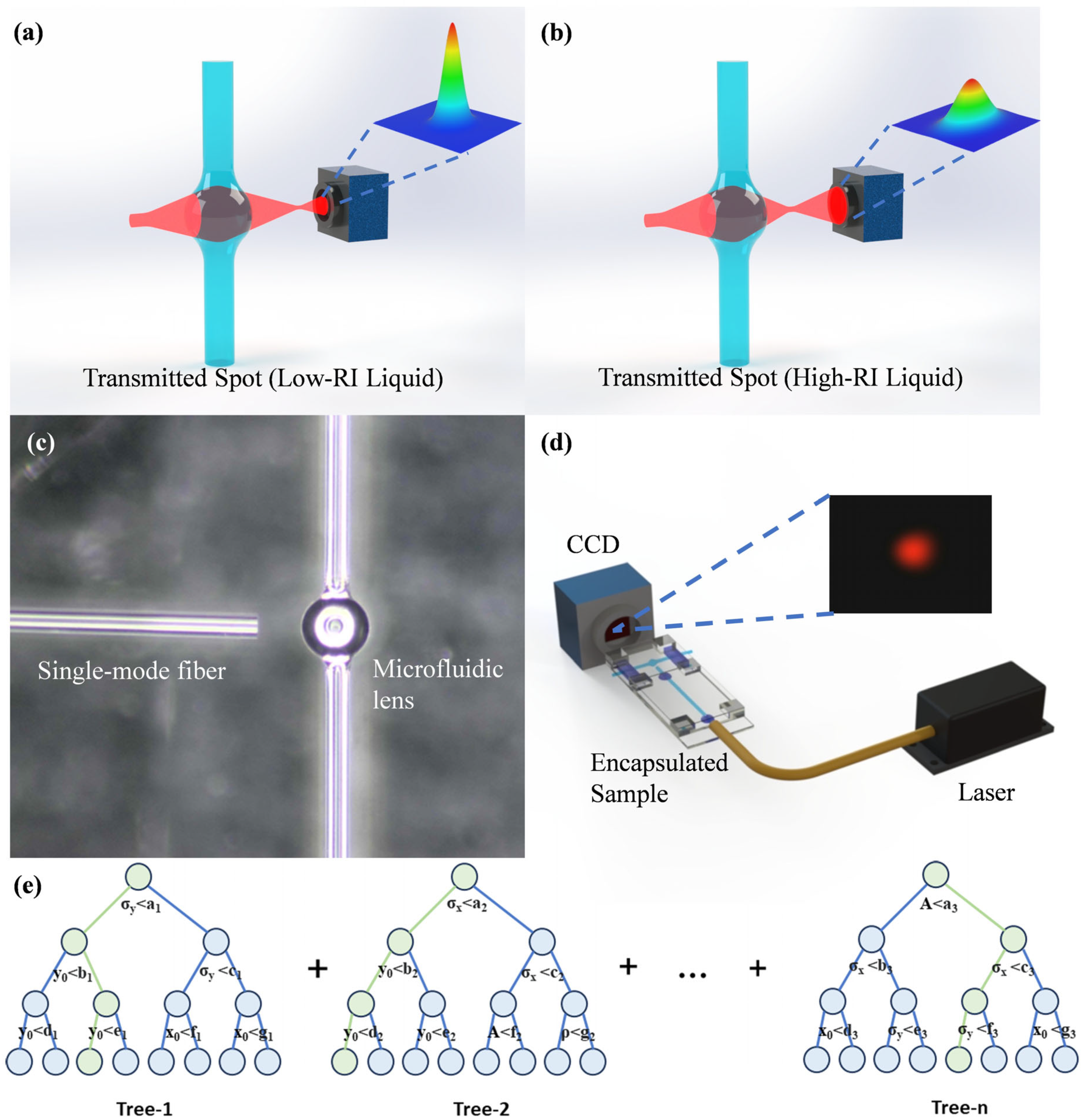
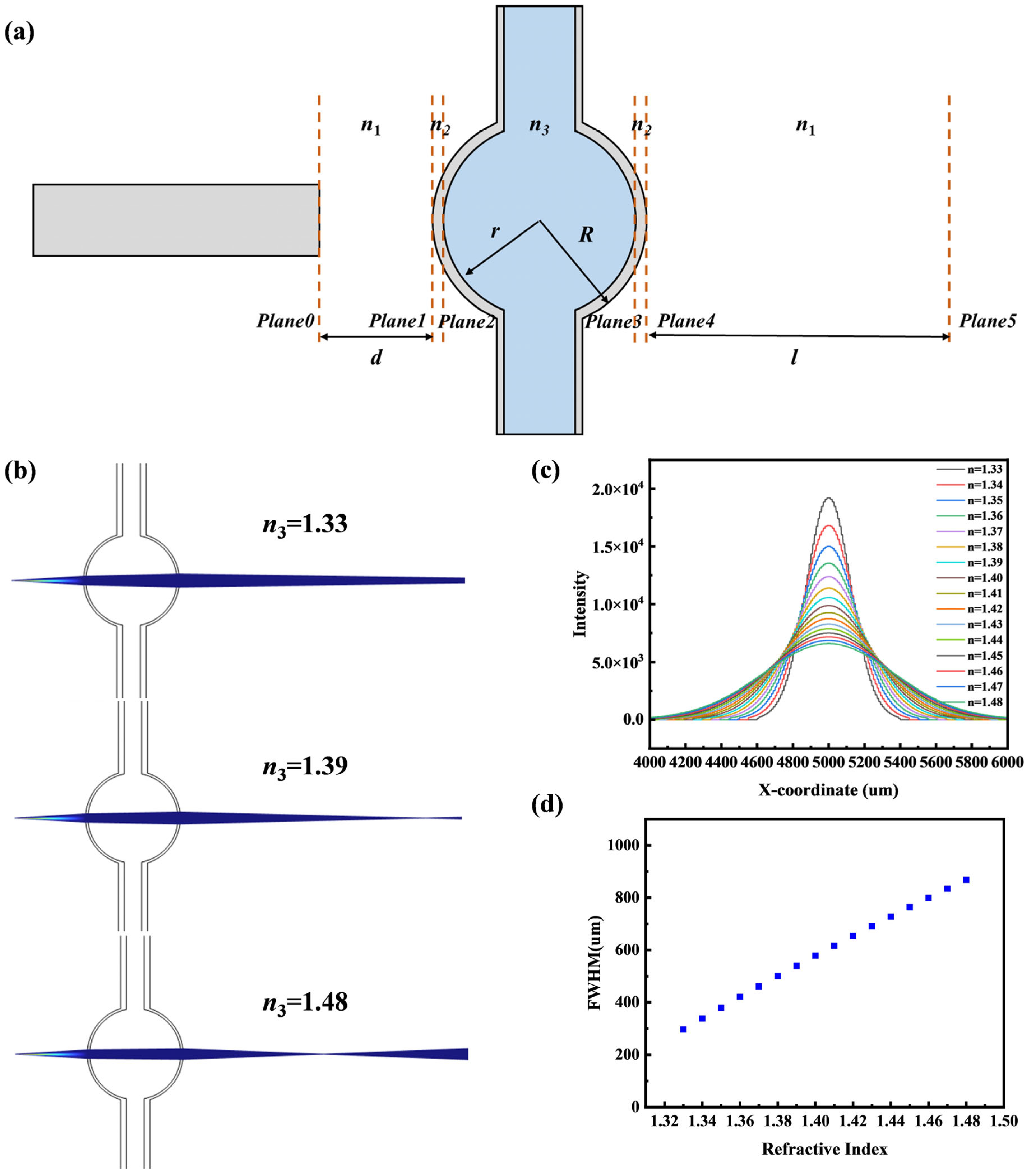
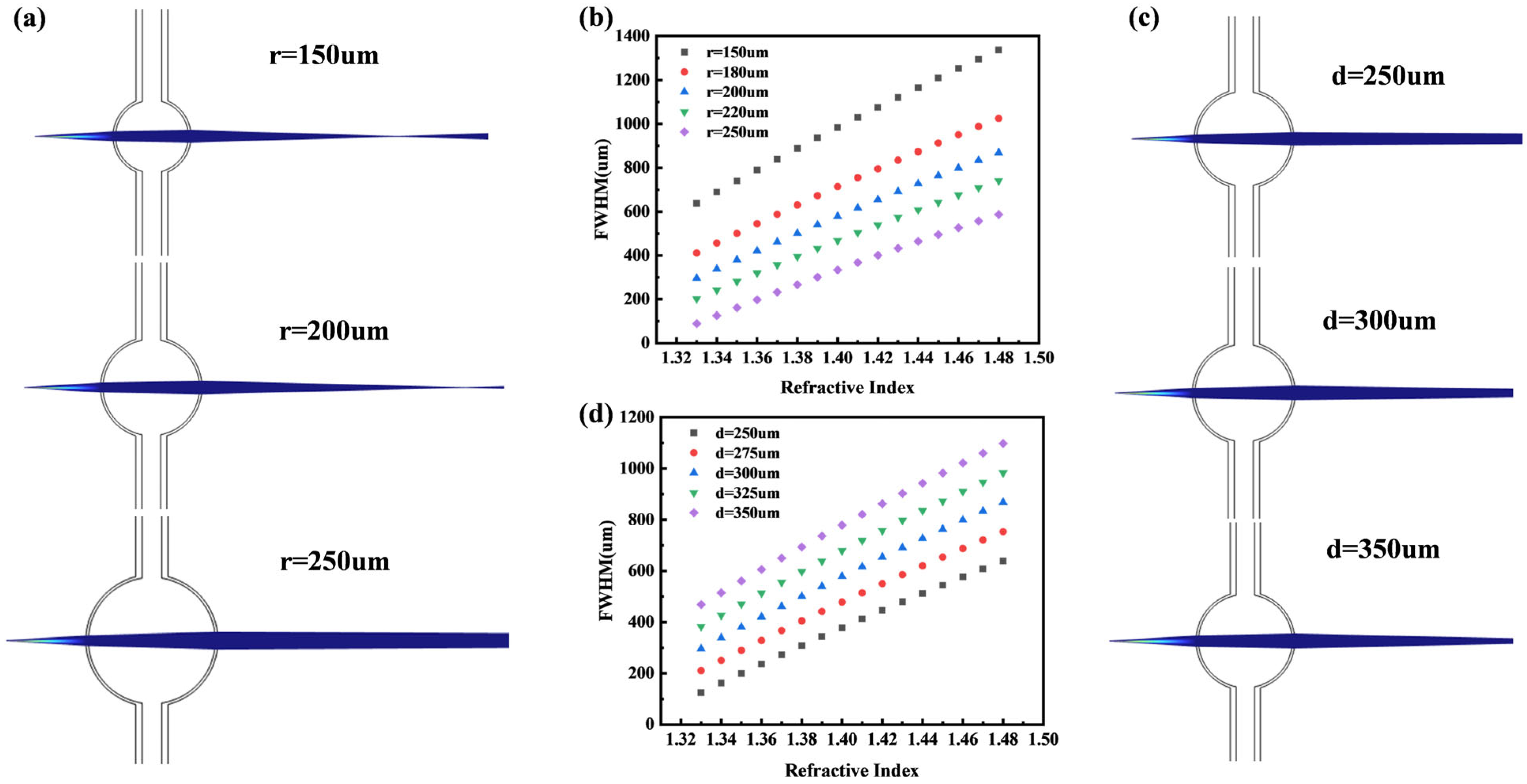
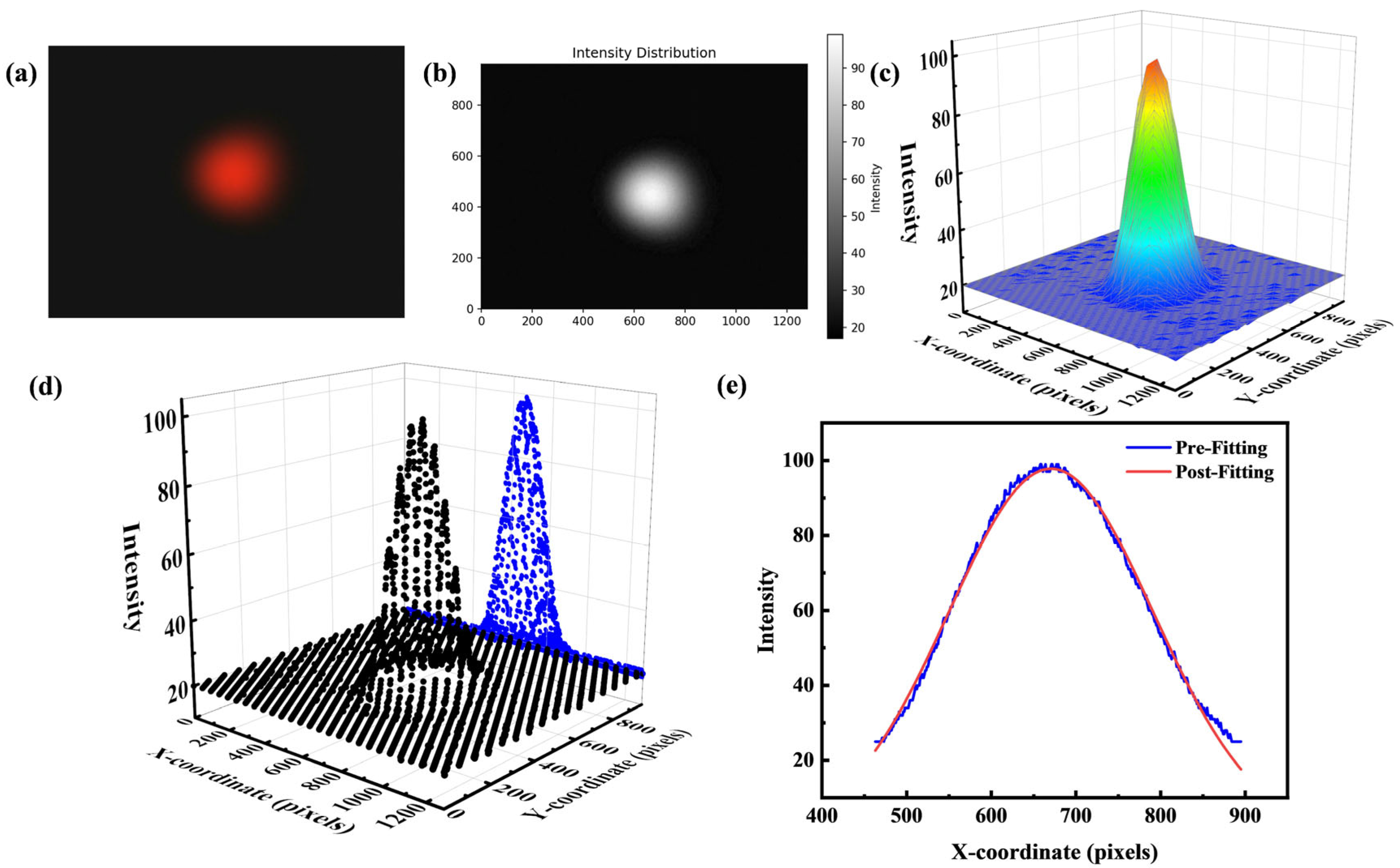
In the face of increasingly severe global environmental challenges, the development of low-cost, high-precision, and easily integrable environmental monitoring sensors is of paramount importance. Existing optical refractive index sensors are often limited in application due to their complex structures and high costs, or their bulky size and difficulty in automation. This paper proposes a novel optical microfluidic refractometer, consisting solely of a laser source, an optical microfluidic lens, and a CCD detector. Through an innovative “simple structure + algorithm” design, the sensor achieves high-precision measurement while significantly reducing cost and size and enhancing robustness. With the aid of signal processing algorithms, the device currently enables the detection of refractive index gradients as low as 1.4 × 10⁻⁵ within a refractive index range of 1.33 to 1.48.
Keywords: microlens; optofluidic; refractometer; sensors; gradient boosting decision tree; image-based signal processing; beam transformation microlens; optofluidic; refractometer; sensors; gradient boosting decision tree; image-based signal processing; beam transformation