


Abstract
Background/Objectives: Combat sports are characterised by successive high-intensity and short-duration episodes (rounds) interspersed with short rest periods (intermittent nature). Athletes’ body composition and dietary intake are closely related to physiological demands, and they are determining factors in athletic performance. The aim of this systematic review was to describe the body composition, dietary intake, and food habits of male and female combat sports athletes, and to verify whether they met nutritional recommendations. Methods: A search was performed in the PubMed, Web of Science, and Scopus databases following the PRISMA statement. The timeframe for the search included studies from the year 2000 until 2 February 2026. Risk of bias was assessed using the STROBE and the Newcastle–Ottawa checklists. Initially, 328 documents were identified. The research focused on amateur, semi-professional, or professional athletes in boxing, karate, kickboxing, jiu-jitsu, taekwondo, judo, muay thai, and mixed martial arts (MMA). Results: After screening, 23 studies met the inclusion criteria and were included in the review. Most of the athletes, both men and women, had normal body mass indices (BMIs), with low or normal fat percentages and adequate muscle mass during both reference and pre-competitive periods. Regarding dietary intake, most of the athletes, male and female, had energy and carbohydrate intakes below official recommendations. Energy and nutrient intake decreased during pre-competition periods as a strategy for achieving pre-competitive rapid weight loss, which mainly occurred at the expense of lean mass. Conclusions: Despite maintaining adequate body composition, combat sports athletes reported an inadequate dietary pattern, especially during pre-competitive periods, which may negatively affect athletic performance.
1. Introduction
Combat sports are a sporting practice that encompasses multiple disciplines characterised by encounters in which two competitors attempt to physically confront and defeat each other [1]. Some of these sports are well represented in the Olympic Games (boxing, judo, wrestling, and taekwondo) [2]. Combat sports can be classified into three groups: grappling sports, striking sports, and mixed martial arts. In grappling sports (e.g., judo, jiu-jitsu, and wrestling), the objective is to achieve a dominant position on the ground or a submission through holds, throws, ground fighting, chokeholds, and joint locks [1,3]. In striking sports, competitors strike each other with their limbs to earn points or achieve a knockout (KO). Striking sports involve punching (boxing), kicking (taekwondo), and combinations of punching and kicking (kickboxing). Finally, mixed-style sports, such as mixed martial arts (MMA), involve a combination of wrestling and striking, making them physiologically more complex and requiring a wide range of technical skills [4]. Combat sports require a diverse physical and physiological profile adapted to each discipline in order to be successful in competition.
Combat sports are characterised by successive episodes of high intensity and short duration (rounds) interspersed with breaks lasting from seconds to minutes depending on the modality, and both the rules and the conditions for victory vary from one sport to another [5]. The intermittent nature of combat sports (repeated high-intensity efforts interspersed with lower-intensity actions) involves a high degree of aerobic metabolism; however, the high-intensity component also plays an important role in anaerobic metabolism [3]. Due to these physiological demands, carbohydrates are the primary energy substrate for this type of sport, so an adequate and sufficient supply of energy and carbohydrates is crucial to maximise glycogen reserves and increase the ability to maintain exercise [6].
Athletes’ dietary intake is a key factor to consider, as it is closely related to the physiological demands of the sport [7]. It is therefore essential to ensure proper energy and nutritional intake in order to reduce the risk of injury and avoid performance declines [8] and also a crucial tool for modulating the body composition of athletes [9]. Body composition is another determining factor in athletic performance and competition results [10]. It is important to mention that combat sports are classified by weight categories, with the aim of reducing disparities between fighters and promoting fair competition [11]. Most athletes tend to aspire to compete in weight categories below their usual weight to gain an advantage over their opponent, for which they often resort to acute weight loss (weight cutting) [11,12,13]. Acute weight loss consists of a rapid reduction in body mass, around 5%, in a short period of time (usually one week or less) [14]. Although the effects of acute weight loss on athletic performance are still controversial [15,16,17], the impact on competitors’ health is clearly negative, potentially causing serious physical and psychological damage [14,18]. Therefore, it is essential to provide safe, evidence-based dietary protocols that help reduce weight gradually to prioritise the athlete’s health and safety [6]. Nutritional strategies that promote gradual, long-term weight loss from body fat are recommended, and rapid weight loss strategies should be avoided, as they can lead to depletion of glycogen stores, dehydration, electrolyte imbalances, fatigue, injuries, increased heart rate, etc. [19]. The effectiveness of diet for weight management depends on three elements: distribution of energy intake in line with energy expenditure, macronutrient composition after training sessions (intake rich in protein and carbohydrates), and moderate calorie restrictions only in meals away from training sessions to avoid a decline in performance and ensure proper muscle recovery [20]. In addition, it can also be very useful to rely on the use of sports supplements to influence body composition and other factors that determine performance [21]. To ensure the appropriateness of nutritional protocols and to establish suitable weight-loss strategies, it is necessary to assess the body composition of combat sports athletes at different time points throughout the season.
There are several methods by which body composition can be determined, including anthropometry, bioelectrical impedance analysis (BIA), and dual-energy X-ray absorptiometry (DXA). Anthropometry refers to the set of measurements taken of the size and proportions of the human body. These procedures are standardised by the International Society for the Advancement of Kinanthropometry (ISAK) [22]. BIA is a non-invasive method that allows for body water, fat mass, and fat-free mass to be determined, based on the principle that electrical conductivity varies between different body compartments [23]. Finally, DXA is a method that allows for the determination of muscle mass, fat mass, and bone mineral density (BMD) through photon attenuation [24]. DXA is highly accurate and is considered the gold standard for measuring body composition [24].
Therefore, based on the above, it is essential to assess the body composition and dietary intake of combat athletes in order to optimise athletic performance and ensure good health, but research on nutrition and performance in weight-category sports remains limited by insufficient sex-specific evidence and significant methodological heterogeneity. Most studies have focused on male athletes, leading to the unjustified generalisation of results to females despite established sex-based physiological and hormonal differences [25,26]. This imbalance undermines the validity and applicability of current recommendations, particularly for female competitors. Moreover, inconsistencies in study design, dietary assessment, and control of confounding factors further restrict the comparability of findings [27,28]. Therefore, a systematic review is warranted to critically evaluate existing evidence, address sex disparities, and establish a more rigorous foundation for evidence-based nutritional guidance in weight-category sports.
Given these limitations, the aim of this systematic review was to describe the body composition, dietary intake, and eating habits of male and female combat athletes and to verify whether they complied with dietary and nutritional recommendations. Consequently, the initial hypotheses were as follows:
Hypothesis 1 (H1).
There will be differences in various body composition variables among combat athletes depending on sex, competition level, and season phase.
Hypothesis 2 (H2).
There will be differences in dietary intake among combat athletes depending on sex, competition level, and season phase.
2. Materials and Methods
2.1. Study Design
This systematic review based on existing scientific knowledge will be conducted to describe the characteristic body composition and dietary intake in combat athletes, both male and female. The PRISMA statement guidelines for the publication of systematic reviews were adopted [29] (see Supplementary Material—Tables S1 and S2). The protocol has been prospectively registered in the PROSPERO international prospective register of systematic reviews (registration number: CRD420251208258).
2.2. Eligibility Criteria
The Population, Intervention, Comparison, and Outcome (PICO) criteria for study inclusion and exclusion are shown in Table 1.
Table 1.
The inclusion criteria applied in the study followed the Population, Intervention, Comparison, and Outcomes (PICO) strategy.
Regarding study design, this review includes both observational studies and intervention studies, provided they report relevant baseline or outcome data on either body composition, dietary intake, or both. Studies reporting on only one of these primary outcomes were intentionally included to ensure a comprehensive evaluation. This dual approach was necessary to independently verify the athletes’ physical status and their nutritional habits, ultimately allowing for a contrasted analysis of both domains. No limits will be applied regarding language, or publication status (pre-print, post-print, first online, or final) during the search phase, in order to maximise the sensitivity of the strategy. On the other hand, the exclusion criteria consisted of (i) subjects who were children (aged <12 years), older adults (aged >65 years), or injured or ill athletes; (ii) studies that did not specify measurement methods; and (iii) reviews, editorials, letters, and theses.
2.3. Data Sources and Search Strategy
The electronic databases consulted to obtain the most up-to-date information were PubMed, Web of Science (WOS), and Scopus. To find the largest number of articles related to the research aim, the words used in the search strategy were established considering the following: (i) combat sports; (ii) dietary intake; (iii) body composition; (iv) MeSH terms; (v) other terms described in MeSH as “synonyms” or free text terms; and (vi) the terms [Title/Abstract] attached to the “synonyms” or MeSH, which allow for the location of these terms in the title and abstract of the articles. For PubMed, a detailed strategy was constructed and adapted to the syntax of each database using the Polyglot Search Translator tool from the Systematic Review Accelerator platform [30]. The timeframe for the search included studies from the year 2000 until 2 February 2026, to ensure the inclusion of literature published after the establishment of the foundational evidence-based nutritional recommendations [31] and the subsequent implementation of structural safety regulations concerning rapid weight loss (RWL) and mandatory body composition assessment in weight-category sports [32]. Additionally, manual backward citation searches were conducted for all included studies. The search strategy is shown in Table 2 and the search was carried out in 2 February 2026.
Table 2.
Keywords and MeSH terms used in search strategy.
2.4. Study Selection and Article Management
The selection of studies was carried out in two phases. In the first phase, the titles and abstract were analysed to identify studies that were eligible following selection criteria by 2 authors (J.F.H.B. and M.C.M). During the identification and screening process, a third researcher was consulted (J.M.M.-S.) to resolve discrepancies regarding the inclusion or exclusion of specific documents. The studies selected in the first phase underwent a second screening in which the full text was evaluated by the same authors independently and in duplicate. Finally, those studies that met the eligibility requirements proceeded to the data analysis and extraction phase.
2.5. Data Extraction
A table was created to summarise the characteristics and findings of the studies included in the review. The data extraction protocol consisted of the following variables:
- Study: Author and year of publication.
- Study design: Type of study (e.g., cross-sectional, cohort, case–control, randomised controlled trial, etc.).
- Objective: Purpose for which the study was conducted.
- Description of the sample: Number of subjects, sport discipline, and sex.
- Analysis/intervention: Analytical method used to compare descriptive variables or the defined and implemented experimental protocol.
- Main outcomes: Main findings relating to nutritional intake and body composition.
- Conclusions: Concise summary of the relevant results of the study.
- Measurement instruments: Methods, protocols, and tools used to collect body composition and dietary intake data.
- Season phase: Included to differentiate values collected between different cycles of a natural season (if specified). “Reference period” means that the data were collected at times far removed from any competition. “Pre-competition period” means that the data were collected within one week prior to the competition.
- Body composition: Characteristics and values of body composition by different methods.
- Energy intake: Kcal consumed expressed in Kcal/day and Kcal/kg/day.
- Macronutrients intake: Carbohydrate and protein consumed, expressed in g/day and g/kg/day; fat (lipids) consumed, expressed in g/day or % diet.
- Compliance with dietary intake recommendations: Degree of compliance according to reference sport nutrition scientific institutions (International Society of Sports Nutrition AND American Academy of Nutrition and Dietetics).
2.6. Risk of Bias (Study Quality and Data Collection)
The quality of the studies was independently assessed by two researchers (J.F.H.B. and M.C.M.) using the Strengthening the Reporting of Observational Studies in Epidemiology (STROBE) guidelines [33] and the Newcastle–Ottawa scale (NOS) [34,35]. A third reviewer was consulted to resolve discrepancies (J.M.M.S.) (see Tables S3–S5).
For cohort studies, the original version of the NOS [34] was applied, which uses a nine-star scoring system to judge each study in three main areas: (i) selection of study groups, (ii) comparability of groups, and (iii) determination of outcome. Studies were classified as having a low (7–9 stars), moderate (4–6), or high (0–3) risk of bias.
For cross-sectional studies, the adapted versions NOS-xs for analytical cross-sectional studies and NOS-xs2 for descriptive studies were used [35]. Both scales adapt the items to the particularities of each type of design. The NOS-xs maintains the nine-star scoring system, while the NOS-xs2 scores up to 4 stars: low risk of bias (3–4 stars), moderate (2), or high (0–1).
3. Results
3.1. Study Selection
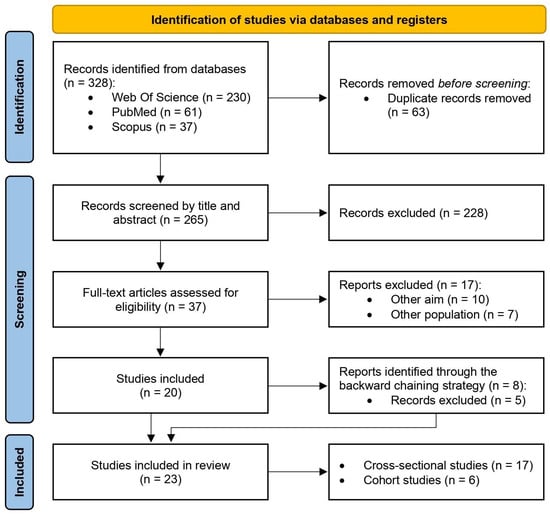
A total of 328 documents were identified (230 in Web of Science, 61 in PubMed, and 37 in Scopus). After removing duplicates, 265 documents were retained. An initial screening was performed based on the title and abstract, and 37 documents were selected for full-text evaluation. Following a thorough analysis of the complete text, a total of 20 studies were chosen for inclusion in the review. The backward citation chaining method was used to gather as many potentially relevant articles as possible. Finally, a total of 23 studies were included in the systematic review. Figure 1 illustrates the article selection process.
Figure 1.
PRISMA flowchart.
3.2. Characteristics and Results of the Included Studies
The characteristics of the included studies are shown in Table 3. Most of the studies included in this review used a cross-sectional design [36,37,38,39,40,41,42,43,44,45,46,47,48,49,50,51,52], while six used a cohort design [53,54,55,56,57,58]. In general, the objective of the cross-sectional studies was to determine the body composition and dietary intake of combat athletes at a specific point in the season, while those that used a longitudinal design had more ambitious objectives, such as analysing changes in the body composition and dietary intake of athletes over different points in time, as well as establishing comparisons between reference periods and pre-competitive periods.
Table 3.
Characteristics of the included studies.
Out of the 23 studies included, six provided information on athletes from different combat disciplines [36,37,43,48,50,52]. However, most focused on a single combat sport: six articles focused on judo [42,45,51,53,56,58], three on jiu-jitsu [38,39,41], three on taekwondo [46,49,55], two on karate [44,47], one on boxing [57], one on kickboxing [40], and one on MMA [54]. Of these, only eight included both male and female samples [36,44,45,46,47,48,49,56]; in the rest of the studies, the sample involved only men, except for one, which included only female athletes [58].
Most studies, it was common to find that they used small sample, considering they focused on studying athletes belonging to a single sports club [38,39,41,42,44,45,49,53,54,55,56]. This trend was present regardless of the athletes’ sex and level of competition.
3.2.1. Body Composition of Combat Athletes
The body composition results for combat athletes are shown in Table 4. In most studies that measure body composition, male and female athletes had normal body mass index (BMI) values, with low or normal fat percentages and adequate, and in some cases high, lean mass levels, both in reference periods and in pre-competitive periods [37,38,42,44,46,47,48,49,50,52,55,56,57,58]. On the other hand, in three of the studies [39,40,41], the athletes’ BMI was found to be above normal weight values while maintaining normal levels of body fat.
Table 4.
Outcomes of body composition of combat athletes.
Longitudinal studies, i.e., those that allow for variations in athletes’ body composition to be identified between several points in time [53,54,55,56,57,58], show that acute pre-competitive weight loss was common among combat athletes who had a competition weight (at weigh-in) lower than their usual weight. The reduction in body mass occurred mainly at the expense of lean mass, with no significant changes in fat mass [53,55,56,57]. On the other hand, one of the studies [56] reveals that, although in both sexes weight loss occurred mainly at the expense of lean mass, these losses of lean mass were greater in men.
In terms of sex, studies in which the sample consisted of athletes of both sexes [44,46,47,48,49,56] reveal differences between men and women in body characteristics, with men having greater average height and body weight, although with similar body mass indices, as well as greater lean mass and lower body fat percentage than women.
With regard to sporting discipline, jiu-jitsu athletes have the highest average BMI values, with no significant differences in terms of fat mass and lean mass percentages, which are similar to those of other athletes [38,39,41]. On the other hand, in terms of competition level, no differences in body composition were detected among combat sports athletes.
3.2.2. Dietary Intake and Eating Habits of Combat Athletes
The dietary intake results for combat athletes are shown in Table 5. Table 6 presents the degree of compliance with official intake recommendations [8,59] for the different combat athlete samples from the studies included in this review.
Table 5.
Outcomes of dietary intake of combat sports athletes.
Table 6.
Degree of achievement of dietary intake recommendations for athletes [8,59] from the samples of all studies included in this review.
After comparing the studies that reported intake values with the official recommendations, only two studies met the energy intake recommendation [39,48] and only one the carbohydrate intake recommendation [39]. In contrast, the rest reported lower values [36,38,42,43,44,45,46,47,48,49,51,53,54,55,57,58]. Low levels of energy and carbohydrate intake were observed both in reference periods, i.e., not necessarily close to a competition, and in pre-competitive periods. Regarding protein, most studies report adequate consumption [36,38,42,43,45,46,47,48,51,53,55,57], although two report an intake above the recommended level [39,44] and only one below [49]. On the contrary, there is considerable controversy regarding fat consumption: in some cases recommendations are met [36,39,43,45,47,57], in others high consumption is observed [46,48,51,53,55,57], and in two studies consumption is below the recommended level [42,44].
With regard to micronutrients, several studies refer to deficiencies in certain vitamins and minerals among combat athletes, especially in pre-competition periods [38,43,44,45,46,47,53,55,57]. However, two studies [44,45] report an intake above the recommendations for some micronutrients.
Five of the studies included in the review [37,41,43,46,47] also analysed the frequency of food consumption among athletes. All five observed fruit and/or vegetable consumption below the recommendations, with two cases [37,46] showing excessive meat consumption as well.
Longitudinal studies, which allow for variation in athletes’ nutritional intake to be identified across several points in time [53,54,55,56,57], report reduced energy and nutrient consumption in the pre-competitive period compared to usual intake.
In terms of sex, sport discipline, and level of competition, no differences in nutritional intake (energy and macronutrients) or eating habits were observed among combat athletes.
3.3. Risk of Bias
The methodological quality of the included studies was assessed using the STROBE checklist (Table 7) for observational studies, [33] the Newcastle–Ottawa scale (NOS) for cohort studies [34], and the adapted NOS-xs scale for analytical cross-sectional studies and NOS-xs2 for analytical cross-sectional studies [35] (Table 8 and Supplementary Tables S3–S5). The NOS and adapted scales assessment revealed heterogeneous distribution of methodological quality among the included studies. Of the 23 studies, nine [38,40,41,42,43,46,55,56,57] were classified as having a low risk of bias, indicating greater methodological rigour; 13 studies [36,37,39,44,45,47,48,49,50,52,53,54,58] were categorised as having a moderate risk of bias, suggesting some limitations in their study design; and one study was categorised as having a high risk of bias, suggesting strong limitations in its methodology [51].
Table 7.
STROBE checklist of the included studies.
Table 8.
Newcastle–Ottawa scale for risk-of-bias assessment of the included studies.
4. Discussion
The objective of this study was to review the body composition, dietary intake, and eating habits of male and female combat athletes, with the aim of analysing whether they have a body composition that is adequate for proper performance in sport and whether they comply with official dietary recommendations.
This systematic review compiled research on various combat sports, including judo, jiu-jitsu, karate, taekwondo, boxing, kickboxing, and MMA; covering adults or adolescents, men or women; and body composition and dietary intake of amateur, semi-professional, or professional athletes. After analysing the results of the 23 studies included in the review, a trend was observed in body composition and dietary intake among combat athletes. In most studies, athletes had a normal BMI, low or normal fat percentages, and adequate muscle mass. However, despite maintaining proper body composition, most athletes reported energy and carbohydrate intakes below official recommendations. To construct this comprehensive perspective, our methodology incorporated studies that assessed body composition exclusively, alongside those focused solely on dietary intake. Integrating independent evidence from both types of studies was crucial to robustly demonstrate this central paradox: combat athletes are successfully achieving the required physical standards of their sport, yet they are doing so despite following suboptimal and potentially harmful nutritional patterns.
The longitudinal studies included in the review [53,54,55,56,57,58] revealed variation in athlete’s body composition and dietary intake of athletes at different time points. The energy and nutrient intake of athletes was reduced in the pre-competition periods due to rapid weight loss, which occurred mainly at the expense of lean mass without significant changes in fat mass. The reduction in lean mass is mainly due to acute dehydration strategies, which can significantly disrupt electrolyte levels and increase the risk of acute cardiovascular complications, potentially affecting athletes’ health and performance [13].
4.1. Body Composition
Body composition assessment plays a key role in monitoring athletes’ performance and training strategies, especially in weight-class sports, where body composition significantly affects performance [10]. In combat sports, where competition is organised by weight class, it is important to maintain low levels of fat mass, as this makes it easier to compete in lower weight classes and increases the chances of success in competitions [60]. In addition, low body fat is associated with better results in various physical performance variables in combat athletes [61,62], as is adequate lean mass [62]. Therefore, taking the above into account, most of the studies included in this review [37,38,42,44,46,47,48,49,50,52,53,55,56,57,58] reveal that combat athletes have adequate body composition for proper athletic performance, regardless of sex, competition level, and sport discipline.
Regarding sex differences, male athletes had a higher BMI and greater lean mass, as well as lower body fat percentage than female athletes, a pattern that has already been reported in elite combat sport populations [63]. This pattern is not unique to combat sports but rather reflects the sexual dimorphism in body composition which has been extensively described in the general population, whereby women show a higher percentage of body fat and men higher fat-free mass [64].
Despite maintaining an adequate body composition, rapid pre-competitive weight loss was common among combat athletes [46,53,54,55,56,57,58]. Leaving aside the controversy regarding the consequences of rapid weight loss on athletic performance, the negative impact of these procedures on athletes’ health is well described in the scientific literature [65]. Therefore, there is a need to change the approach to nutritional interventions for combat athletes leading up to a competition. It is recommended to follow nutritional strategies that promote gradual weight loss from fat mass, and to avoid rapid weight loss strategies, which can lead to a multitude of negative consequences [22].
Regarding body mass index (BMI), although most athletes in this review presented values within the “normal” range, it is important to emphasise that BMI is not the most relevant index to consider in athletic populations. This is particularly critical in combat sports characterised by high musculoskeletal development, as BMI does not distinguish between different body compartments (fat, muscle, lean, or bone mass) [66]. Therefore, in these populations, a high BMI may reflect increased muscle mass rather than excess adiposity, which justifies the use of more precise methods like DXA, BIA, or skinfolds included in this review to accurately assess the athletes’ physical status [10,67].
4.2. Dietary Intake
The main finding regarding the dietary intake of combat athletes is that their energy and carbohydrate consumption falls below official recommendations [36,38,42,43,44,45,46,47,48,49,51,53,54,55,57,58]. This trend has been observed previously in other types of intermittent sports with similar physiological demands [68]. Low energy availability (LEA) is defined as an imbalance between dietary energy intake and energy expenditure during exercise, leading to a deterioration in the physiological function of multiple organ systems [69]. LEA affects both men and women, being particularly prevalent in the latter, and is very common among combat athletes in weight categories. Cyclical changes in body mass and composition, among other factors, are one of the main contributors to LEA [70]. The effects of LEA have been primarily described in female athletes, in whom it has a greater impact, and only recently in male athletes [70]. LEA negatively affects recovery, muscle mass, and neuromuscular function and increases the risk of injuries and illnesses that can compromise athletic performance [71].
The LEA has mainly been caused by suboptimal carbohydrate intake. Depletion of glycogen stores through reduced carbohydrate intake is a common tactic in rapid weight loss strategies [17]. These strategies of reducing carbohydrate intake in combat sports, which are intermittent sports involving high-intensity efforts, can lead to performance declines [72].
On the other hand, regarding protein intake, most studies report adequate consumption [36,38,42,43,45,46,47,48,51,53,55,57,58]. Adequate protein intake contributes to the maintenance of muscle mass [73] and prevents or reduces catabolic consequences of inadequate energy intake [74]. Likewise, the co-intake of adequate amounts of protein and carbohydrates in the post-exercise period may be beneficial for glycogen resynthesis [75], given that combat sports, which include aerobic and anaerobic metabolism, can deplete muscle glycogen stores during exercise [6].
With regard to fat consumption, there has been considerable controversy and diversity among combat athletes. Although carbohydrates are the main source of energy for combat sports athletes [6], fats also play many important roles. Very low fat diets can lower testosterone levels in men, but more studies are needed in this area [76]. Conversely, high fat consumption can compromise an athlete’s performance, especially during pre-competitive periods, as it can cause gastrointestinal discomfort [77].
Regarding sex, no significant differences in nutritional intake (energy and macronutrients) were observed among combat athletes, suggesting that inadequate energy and carbohydrate intake is common among both male and female athletes [78]. Basic combat sport nutrition (energy, macronutrients, and weight cutting) is similar for men and women, but women generally need stricter protection of energy availability, iron, calcium, vitamin D, and cycle-aware planning and may require more conservative weight-cut strategies and closer monitoring [79]. Despite these differences, most nutritional recommendations in combat sports are not sex-specific [8,80].
In terms of food, this review reveals a deficient consumption of fruit and/or vegetables by combat athletes [37,41,43,46,47]. Daily intake of fruit and vegetables can prevent major non-communicable diseases, such as cancer and cardiovascular disease, as well as providing the body with dietary fibre and a wide variety of micronutrients [81]. Studies that use only a single 24 h dietary recall or a one-day dietary record to assess dietary intake are not representative of habitual intake, and no conclusions can be drawn about their impact on health or performance.
Finally, the methods used to assess dietary intake in the included studies are validated, but they have some limitations that may lead to misreporting of dietary intake. Prospective methods (3–7-day diet records) may alter habitual intake patterns, whereas retrospective methods (24 h recalls or food frequency questionnaires) rely on athletes’ memory and may introduce recall bias in the type and quantity of foods consumed [82]. Athletes may change their eating habits over time, whether due to changes in their body composition goals, nutritional needs, or professional recommendations, among other reasons. The different methods may not capture these changes or require periodic updates to reflect changing consumption.
4.3. Limitations
The studies included in this systematic review involved some with small sample sizes, and their results may be difficult to extrapolate to other populations. The instruments used to measure body composition were diverse: some employed anthropometry, others BIA, and others DXA, so the accuracy of measurements may vary depending on sensitivity of these instruments. Additionally, each method relies on different assumptions and prediction models; consequently, the resulting body composition values are not directly comparable across studies, and any between-study differences should be interpreted cautiously [67]. Furthermore, not all studies that used the anthropometric method provide details about the measurement protocol they applied or the number of measurements performed, so the methodology and anthropometrists could be biased. Studies that used the ISAK protocol cite the first version of this protocol, which has been updated over time [22]. Similarly, the instruments used to measure dietary intake were dietary surveys (24 h recalls or 3- or 7-day records). These instruments have a large margin of error when estimating intake. In addition, to ensure that intake data are representative of habitual intake, at least three 24 h dietary recalls or a three-day dietary record (or longer) should be used. Another key limitation is the variability in assessment timing. In combat sports, proximity to competition can induce acute changes in body composition and dietary intake estimates; therefore, results from non-equivalent periods are not directly comparable.
Further research is needed to determine whether the current recommendations are adequate for combat sports, as athletes do not comply with them yet still have adequate body composition compatible with proper athletic performance. It would also be necessary to establish sex-specific nutritional recommendations.
5. Conclusions
This systematic review found that, despite maintaining adequate body composition, combat athletes reported an inadequate dietary pattern in accordance with official recommendations, especially in pre-competitive periods, which can negatively influence athletic performance. Considering the negative impact that the loss of lean mass associated with rapid weight loss can have on athletes’ health and performance, the authors highlight the importance of following safe nutritional strategies that do not lead to nutritional deficiencies and do not pose a risk to athletes’ health. It should also be noted that dietary intake recommendations for athletes are not differentiated by sex, highlighting the need for further research to establish specific dietary intake recommendations for each sex and type of combat sport.
Supplementary Materials
The following supporting information can be downloaded at https://www.mdpi.com/article/10.3390/nu18060884/s1, Table S1: PRISMA_2020_abstract_checklist; Table S2: PRISMA_2020_checklist; Table S3: Newcastle–Ottawa scale for risk-of-bias assessment of the included cohort studies; Table S4: NOS-xs: Adaptation of the NOS for risk-of-bias assessment of the included analytical cross-sectional studies; Table S5: NOS-xs2: Adaptation of the NOS for risk-of-bias assessment of the included descriptive ross-sectional studies.
Author Contributions
Conceptualisation, J.F.H.B. and M.C.M.; methodology, M.C.M.; validation, J.M.M.S. and M.C.M.; formal analysis, J.F.H.B.; writing—original draft preparation, J.F.H.B.; writing—review and editing, M.C.M. and J.M.M.S.; supervision, M.C.M. All authors have read and agreed to the published version of the manuscript.
Funding
This research received no external funding.
Institutional Review Board Statement
Not applicable.
Informed Consent Statement
Not applicable.
Data Availability Statement
The data presented in this study are available in the tables of this article. The PRISMA workflow data is available at https://doi.org/10.5281/zenodo.18262221, accessed on 5 March 2026.
Conflicts of Interest
The authors declare no conflicts of interest.
Abbreviations
The following abbreviations are used in this manuscript:
| ATP | Adenosine Triphosphate |
| BIA | Bioelectrical Impedance Analysis |
| BMD | Bone Mineral Density |
| BMI | Body Mass Index |
| DXA | Dual X-ray Absorptiometry |
| ISAK | International Society for the Advancement of Kinanthropometry |
| LEA | Low Energy Availability |
| MeSH | Medical Subject Headings |
| MMA | Mixed Martial Arts |
| NOS | Newcastle–Ottawa Scale |
| PCr | Phosphocreatine |
| PICO | Population/Intervention/Comparison/Outcomes |
| PRISMA | Preferred Reporting Items for Systematic Reviews and Meta-Analyses |
| STROBE | Strengthening the Reporting of Observational Studies in Epidemiology |
| WOS | Web Of Science |
Appendix A
| Web Of Science Search Strategy |
| (“Martial arts” OR “martial arts” OR Boxing OR boxing OR karate OR kickbox-ing OR “jiu jitsu” OR “brazilian jiu jitsu” OR taekwondo OR judo OR “muay thai”) AND (“Feeding behavior” OR “feeding behav-ior” OR “dietary habit” OR “food consump-tion” OR Diet) AND (Anthropometry OR anthropometry OR “anthropometric characteristics” OR “anthropometric variables” OR “Body composition” OR “body composition” OR “Skinfold Thickness” OR skin-fold) |
| WoS Advanced Search Strategy |
| (ALL = “Martial arts” OR (TI = “martial arts” OR AB = “martial arts”) OR ALL = Boxing OR (TI = boxing OR AB = boxing) OR (TI = karate OR AB = karate) OR (TI = kickbox-ing OR AB = kickbox-ing) OR (TI = “jiu jitsu” OR AB = “jiu jitsu”) OR (TI = “brazilian jiu jitsu” OR AB = “brazilian jiu jitsu”) OR (TI = taekwondo OR AB = taekwondo) OR (TI = judo OR AB = judo) OR (TI = “muay thai” OR AB = “muay thai”)) AND (ALL = “Feeding behavior” OR (TI = “feeding behav-ior” OR AB = “feeding behav-ior”) OR (TI = “dietary habit” OR AB = “dietary habit”) OR (TI = “food consump-tion” OR AB = “food consump-tion”) OR ALL = Diet) AND (ALL = Anthropometry OR (TI = anthropometry OR AB = anthropometry) OR (TI = “anthropometric characteristics” OR AB = “anthropometric characteristics”) OR (TI = “anthropometric variables” OR AB = “anthropometric variables”) OR ALL = “Body composition” OR (TI = “body composition” OR AB = “body composition”) OR ALL = “Skinfold Thickness” OR (TI = skin-fold OR AB = skin-fold)) |
| Scopus (Basic Search) Search Strategy |
| (“Martial arts” OR “martial arts” OR Boxing OR boxing OR karate OR kickbox-ing OR “jiu jitsu” OR “brazilian jiu jitsu” OR taekwondo OR judo OR “muay thai”) AND (“Feeding behavior” OR “feeding behav-ior” OR “dietary habit” OR “food consump-tion” OR Diet) AND (Anthropometry OR anthropometry OR “anthropometric characteristics” OR “anthropometric variables” OR “Body composition” OR “body composition” OR “Skinfold Thickness” OR skin-fold) |
| Scopus (Advanced Search) Search Strategy |
| (INDEXTERMS (“Martial arts”) OR TITLE-ABS (“martial arts”) OR INDEXTERMS (Boxing) OR TITLE-ABS (boxing) OR TITLE-ABS (karate) OR TITLE-ABS (kickbox-ing) OR TITLE-ABS (“jiu jitsu”) OR TITLE-ABS (“brazilian jiu jitsu”) OR TITLE-ABS (taekwondo) OR TITLE-ABS (judo) OR TITLE-ABS (“muay thai”)) AND (INDEXTERMS (“Feeding behavior”) OR TITLE-ABS (“feeding behav-ior”) OR TITLE-ABS (“dietary habit”) OR TITLE-ABS (“food consump-tion”) OR INDEXTERMS (Diet)) AND (INDEXTERMS (Anthropometry) OR TITLE-ABS (anthropometry) OR TITLE-ABS (“anthropometric characteristics”) OR TITLE-ABS (“anthropometric variables”) OR INDEXTERMS (“Body composition”) OR TITLE-ABS (“body composition”) OR INDEXTERMS (“Skinfold Thickness”) OR TITLE-ABS (skin-fold)) |
References
- Vasconcelos, B.B.; Protzen, G.V.; Galliano, L.M.; Kirk, C.; Del Vecchio, F.B. Effects of High-Intensity Interval Training in Combat Sports: A Systematic Review with Meta-Analysis. J. Strength Cond. Res. 2020, 34, 888–900. [Google Scholar] [CrossRef] [Scilit] [PubMed]
- Comité Olímpico Español (COE). Available online: https://www.coe.es/federaciones/#0 (accessed on 7 February 2024).
- Barley, O.R.; Chapman, D.W.; Guppy, S.N.; Abbiss, C.R. Considerations When Assessing Endurance in Combat Sport Athletes. Front. Physiol. 2019, 10, 205. [Google Scholar] [CrossRef] [Scilit] [PubMed]
- James, L.P.; Haff, G.G.; Kelly, V.G.; Beckman, E.M. Towards a Determination of the Physiological Characteristics Distinguishing Successful Mixed Martial Arts Athletes: A Systematic Review of Combat Sport Literature. Sports Med. 2016, 46, 1525–1551. [Google Scholar] [CrossRef] [Scilit] [PubMed]
- Coelho-E-Silva, M.J.; Sousa-E-Silva, P.; Morato, V.S.; Costa, D.C.; Martinho, D.V.; Rama, L.M.; Valente-Dos-Santos, J.; Werneck, A.O.; Tavares, Ó.M.; Conde, J.; et al. Allometric Modeling of Wingate Test among Adult Male Athletes from Combat Sports. Medicina 2020, 56, 480. [Google Scholar] [CrossRef] [Scilit]
- Januszko, P.; Lange, E. Nutrition, supplementation and weight reduction in combat sports: A review. AIMS Public Health 2021, 8, 485–498. [Google Scholar] [CrossRef] [Scilit]
- Rodriguez, N.R.; DiMarco, N.M.; Langley, S.; American Dietetic Association; Dietitians of Canada; American College of Sports Medicine: Nutrition and Athletic Performance. Position of the American Dietetic Association, Dietitians of Canada, and the American College of Sports Medicine: Nutrition and athletic performance. J. Am. Diet. Assoc. 2009, 109, 509–527. [Google Scholar]
- Kerksick, C.M.; Wilborn, C.D.; Roberts, M.D.; Smith-Ryan, A.; Kleiner, S.M.; Jäger, R.; Collins, R.; Cooke, M.; Davis, J.N.; Galvan, E.; et al. ISSN exercise & sports nutrition review update: Research & recommendations. J. Int. Soc. Sports Nutr. 2018, 15, 38. [Google Scholar] [CrossRef] [Scilit]
- Aragon, A.A.; Schoenfeld, B.J.; Wildman, R.; Kleiner, S.; VanDusseldorp, T.; Taylor, L.; Earnest, C.P.; Arciero, P.J.; Wilborn, C.; Kalman, D.S.; et al. International society of sports nutrition position stand: Diets and body composition. J. Int. Soc. Sports Nutr. 2017, 14, 16. [Google Scholar] [CrossRef] [Scilit]
- Ackland, T.R.; Lohman, T.G.; Sundgot-Borgen, J.; Maughan, R.J.; Meyer, N.L.; Stewart, A.D.; Müller, W. Current status of body composition assessment in sport: Review and position statement on behalf of the ad hoc research working group on body composition health and performance, under the auspices of the I.O.C. Medical Commission. Sports Med. 2012, 42, 227–249. [Google Scholar] [CrossRef] [Scilit]
- Reale, R.; Slater, G.; Burke, L.M. Individualised dietary strategies for Olympic combat sports: Acute weight loss, recovery and competition nutrition. Eur. J. Sport Sci. 2017, 17, 727–740. [Google Scholar] [CrossRef] [Scilit]
- Lakicevic, N.; Mani, D.; Paoli, A.; Roklicer, R.; Bianco, A.; Drid, P. Weight cycling in combat sports: Revisiting 25 years of scientific evidence. BMC Sports Sci. Med. Rehabil. 2021, 13, 154. [Google Scholar] [CrossRef] [Scilit] [PubMed]
- Barley, O.R.; Chapman, D.W.; Abbiss, C.R. The Current State of Weight-Cutting in Combat Sports-Weight-Cutting in Combat Sports. Sports 2019, 7, 123. [Google Scholar] [CrossRef] [Scilit] [PubMed]
- Baranauskas, M.; Kupčiūnaitė, I.; Stukas, R. The Association between Rapid Weight Loss and Body Composition in Elite Combat Sports Athletes. Healthcare 2022, 10, 665. [Google Scholar] [CrossRef] [Scilit] [PubMed]
- Lakicevic, N.; Roklicer, R.; Bianco, A.; Mani, D.; Paoli, A.; Trivic, T.; Ostojic, S.M.; Milovancev, A.; Maksimovic, N.; Drid, P. Effects of Rapid Weight Loss on Judo Athletes: A Systematic Review. Nutrients 2020, 12, 1220. [Google Scholar] [CrossRef] [Scilit]
- Mauricio, C.D.A.; Merino, P.; Merlo, R.; Vargas, J.J.N.; Chávez, J.Á.R.; Pérez, D.V.; Aedo-Muñoz, E.A.; Slimani, M.; Brito, C.J.; Bragazzi, N.L.; et al. Rapid Weight Loss of Up to Five Percent of the Body Mass in Less Than 7 Days Does Not Affect Physical Performance in Official Olympic Combat Athletes With Weight Classes: A Systematic Review With Meta-Analysis. Front. Physiol. 2022, 13, 830229. [Google Scholar] [CrossRef] [Scilit]
- Brechney, G.C.; Cannon, J.; Goodman, S.P. Effects of Weight Cutting on Exercise Performance in Combat Athletes: A Meta-Analysis. Int. J. Sports Physiol. Perform. 2022, 17, 995–1010. [Google Scholar] [CrossRef] [Scilit]
- Ranisavljev, M.; Kuzmanovic, J.; Todorovic, N.; Roklicer, R.; Dokmanac, M.; Baic, M.; Stajer, V.; Ostojic, S.M.; Drid, P. Rapid Weight Loss Practices in Grapplers Competing in Combat Sports. Front. Physiol. 2022, 13, 842992. [Google Scholar] [CrossRef] [Scilit]
- Martínez-Rodríguez, A.; Vicente-Salar, N.; Montero-Carretero, C.; Cervelló-Gimeno, E.; Roche, E. Weight Loss Strategies in Male Competitors of Combat Sport Disciplines. Medicina 2021, 57, 897. [Google Scholar] [CrossRef] [Scilit]
- Martinez-Rodriguez, A.; Vicente-Salar, N.; Montero-Carretero, C.; Cervello, E.; Roche, E. Nutritional strategies to reach the weight category in judo and karate athletes. Arch. Budo 2015, 11, 381–391. [Google Scholar]
- Vicente-Salar, N.; Fuster-Muñoz, E.; Martínez-Rodríguez, A. Nutritional Ergogenic Aids in Combat Sports: A Systematic Review and Meta-Analysis. Nutrients 2022, 14, 2588. [Google Scholar] [CrossRef] [Scilit]
- Esparza-Ros, F.; Vaquero-Cristóbal, R.; Marfell-Jones, M. International Standards for Anthropometric Assessment; International Society for Advancement of Kinanthropometry: Murcia, Spain, 2019. [Google Scholar]
- Alvero-Cruz, J.R.; Correas-Gómez, L.; Ronconi, M.; Fernández-Vázquez, R.; Porta i Manzañido, J. La bioimpedancia eléctrica como método de estimación de la composición corporal: Normas prácticas de utilización. Rev. Andal. Med. Deporte 2011, 4, 167–174. [Google Scholar]
- Moreira, O.C.; Aubin, D.A.A.; de Oliveira, C.E.P.; Luján, R.C. Métodos de evaluación de la composición corporal: Una revisión actualizada de descripción, aplicación, ventajas y desventajas. Arch. Med. Deporte 2015, 32, 387–394. [Google Scholar]
- Burke, L.M.; Close, G.L.; Lundy, B.; Mooses, M.; Morton, J.P.; Tenforde, A.S. Relative Energy Deficiency in Sport in Male Athletes: A Commentary on Its Presentation Among Selected Groups of Male Athletes. Int. J. Sport Nutr. Exerc. Metab. 2018, 28, 364–374. [Google Scholar] [CrossRef] [Scilit] [PubMed]
- Elliott-Sale, K.J.; Minahan, C.L.; de Jonge, X.A.K.J.; Ackerman, K.E.; Sipilä, S.; Constantini, N.W.; Lebrun, C.M.; Hackney, A.C. Methodological Considerations for Studies in Sport and Exercise Science with Women as Participants: A Working Guide for Standards of Practice for Research on Women. Sports Med. 2021, 51, 843–861. [Google Scholar] [CrossRef] [Scilit] [PubMed]
- Langan-Evans, C.; Reale, R.; Sullivan, J.; Martin, D. Nutritional Considerations for Female Athletes in Weight Category Sports. Eur J Sport Sci. 2022, 22, 720–732. [Google Scholar] [CrossRef] [Scilit] [PubMed]
- Capling, L.; Beck, K.L.; Gifford, J.A.; Slater, G.; Flood, V.M.; O’Connor, H. Validity of Dietary Assessment in Athletes: A Systematic Review. Nutrients 2017, 9, 1313. [Google Scholar] [CrossRef] [Scilit]
- Page, M.J.; McKenzie, J.E.; Bossuyt, P.M.; Boutron, I.; Hoffmann, T.C.; Mulrow, C.D.; Shamseer, L.; Tetzlaff, J.M.; Akl, E.A.; Brennan, S.E.; et al. The PRISMA 2020 statement: An updated guideline for reporting systematic reviews. BMJ 2021, 372, n71. [Google Scholar] [CrossRef] [Scilit]
- Clark, J.M.; Sanders, S.; Carter, M.; Honeyman, D.; Cleo, G.; Auld, Y.; Booth, D.; Condron, P.; Dalais, C.; Bateup, S.; et al. Improving the translation of search strategies using the Polyglot Search Translator: A randomized controlled trial. J. Med. Libr. Assoc. 2020, 108, 195–207. [Google Scholar] [CrossRef] [Scilit]
- Position of the American Dietetic Association. Dietitians of Canada, and the American College of Sports Medicine: Nutrition and athletic performance. J. Am. Diet Assoc. 2000, 100, 1543–1556. [CrossRef] [Scilit]
- Oppliger, R.A.; Case, H.S.; Horswill, C.A.; Landry, G.L.; Shelter, A.C. American College of Sports Medicine position stand. Weight loss in wrestlers. Med. Sci. Sports Exerc. 1996, 28, 135–138. [Google Scholar] [CrossRef] [Scilit]
- von Elm, E.; Altman, D.G.; Egger, M.; Pocock, S.J.; Gøtzsche, P.C.; Vandenbroucke, J.P.; STROBE Initiative. Strengthening the reporting of observational studies in epidemiology (STROBE) statement: Guidelines for reporting observational studies. J. Clin. Epidemiol. 2008, 61, 344–349. [Google Scholar] [CrossRef] [Scilit] [PubMed]
- Wells, G.A.; Shea, B.; O’Connell, D.; Peterson, J.; Welch, V.; Losos, M.; Tugwell, P. The Newcastle-Ottawa Scale (NOS) for Assessing the Quality of Nonrandomised Studies in Meta-Analyses. Available online: http://www.ohri.ca/programs/clinical_epidemiology/oxford.asp (accessed on 6 October 2025).
- Carra, M.C.; Romandini, P.; Romandini, M. Risk of Bias Evaluation of Cross-Sectional Studies: Adaptation of the Newcastle-Ottawa Scale. J. Periodontal Res. 2025. online ahead of print. [Google Scholar] [CrossRef] [Scilit] [PubMed]
- Pettersson, S.; Berg, C.M. Dietary intake at competition in elite Olympic combat sports. Int. J. Sport Nutr. Exerc. Metab. 2014, 24, 98–109. [Google Scholar] [CrossRef] [Scilit] [PubMed]
- Ubeda, N.; Palacios Gil-Antuñano, N.; Montalvo-Zenarruzabeitia, Z.; García Juan, B.; García, A.; Iglesias-Gutiérrez, E. Food habits and body composition of Spanish elite athletes in combat sports. Nutr. Hosp. 2010, 25, 414–421. [Google Scholar]
- da Luz, I.; da Rosa, R.L. Nutritional Profile of Jiu-Jitsu Athletes. RBNE 2019, 13, 1100–1109. [Google Scholar]
- Andreato, L.V.; Santos, J.F.; Esteves, J.V.; Panissa, V.L.; Julio, U.F.; Franchini, E. Physiological, Nutritional and Performance Profiles of Brazilian Jiu-Jitsu Athletes. J. Hum. Kinet. 2016, 53, 261–271. [Google Scholar] [CrossRef] [Scilit]
- Niewczas, M.; Wasacz, W.; Ambrozy, T.; Kucia, K.; Rydzik, L. The relationship between body composition before a sports fight and the technical and tactical performance of kickboxing athletes. Arch. Budo Sci. Martial Arts Extrem. Sports 2023, 19, 197–210. [Google Scholar]
- Villarroel, J.A.; Rossini, M.C.; Armenio, V.M.; Setaro, L. Anthropometric and dietetic evaluation in jiu-jitsu practitioners in an academy of Sao Bernardo do Campo-SP. RBNE 2018, 12, 135–142. [Google Scholar]
- Zonta, F.S.C.; Bergozza, F.C.B.; Liberali, R. Dietary and anthropometric profile of judo competitors from a team in western santa catarina. RBNE 2011, 5, 276–284. [Google Scholar]
- Anyżewska, A.; Dzierzanowski, I.; Wozniak, A.; Leonkiewicz, M.; Wawrzyniak, A. Rapid Weight Loss and Dietary Inadequacies among Martial Arts Practitioners from Poland. Int. J. Environ. Res. Public Health 2018, 15, 2476. [Google Scholar] [CrossRef] [Scilit]
- Ribas, M.R.; Furtuoso, C.A.Z.; Emerick, R.; Ramon, W.; Cordeiro, H.J.; Bassani, J.C. Dietary profile of karate athletes of the Brazilian team during the pre-competitive. RBNE 2017, 11, 826–835. [Google Scholar]
- Książek, A.; Karpala, J.; Slowinska-Lisowska, M. An evaluation of diets in the Polish national judo team during the pre-competition weight loss period. Arch. Budo 2017, 13, 101–106. [Google Scholar]
- Papadopoulou, S.K.; Dalatsi, V.A.; Methenitis, S.K.; Feidantsis, K.G.; Pagkalos, I.G.; Hassapidou, M. Nutritional Routine of Tae Kwon Do Athletes Prior to Competition: What Is the Impact of Weight Control Practices? J. Am. Coll. Nutr. 2017, 36, 448–454. [Google Scholar] [CrossRef] [Scilit] [PubMed]
- Teshima, K.; Imamura, H.; Yoshimura, Y.; Nishimura, S.; Miyamoto, N.; Yamauchi, Y.; Hori, H.; Moriwaki, C.; Shirota, T. Nutrient intake of highly competitive male and female collegiate karate players. J. Physiol. Anthropol. Appl. Hum. Sci. 2002, 21, 205–211. [Google Scholar] [CrossRef] [Scilit]
- Baranauskas, M.; Kupčiūnaitė, I.; Lieponienė, J.; Stukas, R. Dominant Somatotype Development in Relation to Body Composition and Dietary Macronutrient Intake among High-Performance Athletes in Water, Cycling and Combat Sports. Nutrients 2024, 16, 1493. [Google Scholar] [CrossRef] [Scilit]
- Samanipour, M.H.; Azizi, M.; Salehian, O.; Ceylan, H.I.; Mielgo-Ayuso, J.F.; Del Coso, J.; Muntean, R.I.; Bragazzi, N.L.; Herrera-Valenzuela, T. Exploring Gender-Specific Correlations Between Nutritional Intake, Body Composition, Psychological Skills, and Performance Metrics in Young Taekwondo Athletes. Nutrients 2025, 17, 1202. [Google Scholar] [CrossRef] [Scilit]
- Catikkas, F.; Kurt, C.; Atalag, O. Kinanthropometric attributes of young male combat sports athletes. Coll. Antropol. 2013, 37, 1365–1368. [Google Scholar]
- Książek, A.; Kopeć, A.; Słwińska-Lisowska, M. An assessment of diet among high—Rank professional judo athletes. J. Combat Sports Martial Arts 2014, 5, 37–41. [Google Scholar] [CrossRef] [Scilit]
- Dimitrijevic, M.; Paunovic, V.; Zivkovic, V.; Bolevich, S.; Jakovljevic, V. Body Fat Evaluation in Male Athletes from Combat Sports by Comparing Anthropometric, Bioimpedance, and Dual-Energy X-Ray Absorptiometry Measurements. BioMed Res. Int. 2022, 2022, 3456958. [Google Scholar] [CrossRef] [Scilit]
- Filaire, E.; Maso, F.; Degoutte, F.; Jouanel, P.; Lac, G. Food restriction, performance, psychological state and lipid values in judo athletes. Int. J. Sports Med. 2001, 22, 454–459. [Google Scholar] [CrossRef] [Scilit]
- Matthews, J.J.; Nicholas, C. Extreme Rapid Weight Loss and Rapid Weight Gain Observed in UK Mixed Martial Arts Athletes Preparing for Competition. Int. J. Sport Nutr. Exerc. Metab. 2017, 27, 122–129. [Google Scholar] [CrossRef] [Scilit] [PubMed]
- Fleming, S.; Costarelli, V. Nutrient intake and body composition in relation to making weight in young male Taekwondo players. Nutr. Food Sci. 2007, 37, 358–366. [Google Scholar] [CrossRef] [Scilit]
- Prouteau, S.; Ducher, G.; Serbescu, C.; Benhamou, L.; Courteix, D. Gender differences in response to weight cycling in elite judoists. Biol. Sport 2007, 24, 91–104. [Google Scholar]
- Reljic, D.; Jost, J.; Dickau, K.; Kinscherf, R.; Bonaterra, G.; Friedmann-Bette, B. Effects of pre-competitional rapid weight loss on nutrition, vitamin status and oxidative stress in elite boxers. J. Sports Sci. 2015, 33, 437–448. [Google Scholar] [CrossRef] [Scilit]
- Liang, Y.; Li, Y.; Chen, Y.; Meng, K.; Zhou, F.; Pei, Y.; Liu, Y.; Qiu, J. The impact of low energy availability risk on pre-competition physiological function in Chinese female combat athletes. J. Int. Soc. Sports Nutr. 2025, 22, 2490170. [Google Scholar] [CrossRef] [Scilit]
- Thomas, D.T.; Erdman, K.A.; Burke, L.M. Position of the Academy of Nutrition and Dietetics, Dietitians of Canada, and the American College of Sports Medicine: Nutrition and Athletic Performance. J. Acad. Nutr. Diet. 2016, 116, 501–528. [Google Scholar] [CrossRef] [Scilit]
- Chaabène, H.; Hachana, Y.; Franchini, E.; Mkaouer, B.; Chamari, K. Physical and physiological profile of elite karate athletes. Sports Med. 2012, 42, 829–843. [Google Scholar]
- Ojeda-Aravena, A.; Herrera-Valenzuela, T.; García-García, J.M. Relación entre las características de la Composición Corporal y el Rendimiento Físico en atletas hombres de karate: Un estudio observacional. RENHYD 2020, 24, 366–373. [Google Scholar] [CrossRef] [Scilit]
- Ojeda-Aravena, A.; Azocar-Gallardo, J.; Galle, F.; García-García, J.M. Relación entre las características de la composición corporal y el rendimiento físico general y específico en competidores de taekwondo chilenos de nivel nacional de ambos sexos: Un estudio observacional. RENHYD 2020, 24, 154–164. [Google Scholar] [CrossRef] [Scilit]
- Reale, R.; Burke, L.M.; Cox, G.R.; Slater, G. Body composition of elite Olympic combat sport athletes. Eur. J. Sport Sci. 2020, 20, 147–156. [Google Scholar] [CrossRef] [Scilit]
- Borrud, L.G.; Flegal, K.M.; Looker, A.C.; Everhart, J.E.; Harris, T.B.; Shepherd, J.A. Body composition data for individuals 8 years of age and older: U.S. population, 1999–2004. Vital Health Stat. 11 2010, 250, 1–87. [Google Scholar]
- Artioli, G.G.; Saunders, B.; Iglesias, R.T.; Franchini, E. It is Time to Ban Rapid Weight Loss from Combat Sports. Sports Med. 2016, 46, 1579–1584. [Google Scholar] [CrossRef] [Scilit] [PubMed]
- Okorodudu, D.O.; Jumean, M.F.; Montori, V.M.; Romero-Corral, A.; Somers, V.K.; Erwin, P.J.; Lopez-Jimenez, F. Diagnostic performance of body mass index to identify obesity as defined by body adiposity: A systematic review and meta-analysis. Int. J. Obes. 2010, 34, 791–799. [Google Scholar] [CrossRef] [Scilit] [PubMed]
- Kasper, A.M.; Langan-Evans, C.; Hudson, J.F.; Brownlee, T.E.; Harper, L.D.; Naughton, R.J.; Morton, J.P.; Close, G.L. Come Back Skinfolds, All Is Forgiven: A Narrative Review of the Efficacy of Common Body Composition Methods in Applied Sports Practice. Nutrients 2021, 13, 1075. [Google Scholar] [CrossRef] [Scilit]
- Castillo, M.; Lozano-Casanova, M.; Sospedra, I.; Norte, A.; Gutiérrez-Hervás, A.; Martínez-Sanz, J.M. Energy and Macronutrients Intake in Indoor Sport Team Athletes: Systematic Review. Nutrients 2022, 14, 4755. [Google Scholar] [CrossRef] [Scilit]
- Dave, S.C.; Fisher, M. Relative energy deficiency in sport (RED-S). Curr. Probl. Pediatr. Adolesc. Health Care 2022, 52, 101242. [Google Scholar] [CrossRef] [Scilit]
- Mountjoy, M.; Sundgot-Borgen, J.; Burke, L.; Ackerman, K.E.; Blauwet, C.; Constantini, N.; Lebrun, C.; Lundy, B.; Melin, A.; Meyer, N.; et al. International Olympic Committee (IOC) Consensus Statement on Relative Energy Deficiency in Sport (RED-S): 2018 Update. Int. J. Sport Nutr. Exerc. Metab. 2018, 28, 316–331. [Google Scholar] [CrossRef] [Scilit]
- Melin, A.K.; Heikura, I.A.; Tenforde, A.; Mountjoy, M. Energy Availability in Athletics: Health, Performance, and Physique. Int. J. Sport Nutr. Exerc. Metab. 2019, 29, 152–164. [Google Scholar] [CrossRef] [Scilit]
- Burke, L.M. Fueling strategies to optimize performance: Training high or training low? Scand. J. Med. Sci. Sports 2010, 20, 48–58. [Google Scholar] [CrossRef] [Scilit]
- Jäger, R.; Kerksick, C.M.; Campbell, B.I.; Cribb, P.J.; Wells, S.D.; Skwiat, T.M.; Purpura, M.; Ziegenfuss, T.N.; Ferrando, A.A.; Arent, S.M.; et al. International Society of Sports Nutrition Position Stand: Protein and exercise. J. Int. Soc. Sports Nutr. 2017, 14, 20. [Google Scholar] [CrossRef] [Scilit]
- Hoffman, J.R.; Maresh, C.M. Nutrition and Hydration Issues for Combat Sport Athletes. Strength Cond. J. 2011, 33, 10–17. [Google Scholar] [CrossRef] [Scilit]
- Mata-Ordoñez, F.; Grimaldi-Puyana, M.; Sánchez-Oliver, A.J. Reposición del Glucógeno Muscular en la Recuperación del Deportista. Sport TK 2019, 8, 57–66. [Google Scholar] [CrossRef] [Scilit]
- Whittaker, J.; Wu, K. Low-fat diets and testosterone in men: Systematic review and meta-analysis of intervention studies. J. Steroid Biochem. Mol. Biol. 2021, 210, 105878. [Google Scholar] [CrossRef] [Scilit]
- González-Gross, M.M. Nutrición Deportiva: Desde la Fisiología a la Práctica, 1st ed.; Editorial Médica Panamericana: Madrid, Spain, 2021. [Google Scholar]
- Logue, D.; Madigan, S.M.; Delahunt, E.; Heinen, M.; Mc Donnell, S.J.; Corish, C.A. Low Energy Availability in Athletes: A Review of Prevalence, Dietary Patterns, Physiological Health, and Sports Performance. Sports Med. 2018, 48, 73–96. [Google Scholar] [CrossRef] [Scilit]
- Sims, S.T.; Kerksick, C.M.; Smith-Ryan, A.E.; Janse de Jonge, X.A.K.; Hirsch, K.R.; Arent, S.M.; Hewlings, S.J.; Kleiner, S.M.; Bustillo, E.; Tartar, J.L.; et al. International society of sports nutrition position stand: Nutritional concerns of the female athlete. J. Int. Soc. Sports Nutr. 2023, 20, 2204066. [Google Scholar] [CrossRef] [Scilit]
- Ricci, A.A.; Evans, C.; Stull, C.; Peacock, C.A.; French, D.N.; Stout, J.R.; Fukuda, D.H.; La Bounty, P.; Kalman, D.; Galpin, A.J.; et al. International society of sports nutrition position stand: Nutrition and weight cut strategies for mixed martial arts and other combat sports. J. Int. Soc. Sports Nutr. 2025, 22, 2467909. [Google Scholar] [CrossRef] [Scilit]
- Promotion of Fruit and Vegetables for Health. Report of the Pacific Regional Workshop. Available online: https://www.fao.org/3/i4935e/i4935e.pdf (accessed on 15 May 2024).
- Bailey, R.L. Overview of dietary assessment methods for measuring intakes of foods, beverages, and dietary supplements in research studies. Curr. Opin. Biotechnol. 2021, 70, 91–96. [Google Scholar] [CrossRef] [Scilit]

Disclaimer/Publisher’s Note: The statements, opinions and data contained in all publications are solely those of the individual author(s) and contributor(s) and not of MDPI and/or the editor(s). MDPI and/or the editor(s) disclaim responsibility for any injury to people or property resulting from any ideas, methods, instructions or products referred to in the content. |
© 2026 by the authors. Licensee MDPI, Basel, Switzerland. This article is an open access article distributed under the terms and conditions of the Creative Commons Attribution (CC BY) license.