The Impact of Diet on Long-Term Oncological Outcomes: Investigating Nutritional Mechanisms in Cancer Prevention Management and Prognosis


 ,
, 
Abstract
1. Introduction
2. Diet and Cancer Prevention
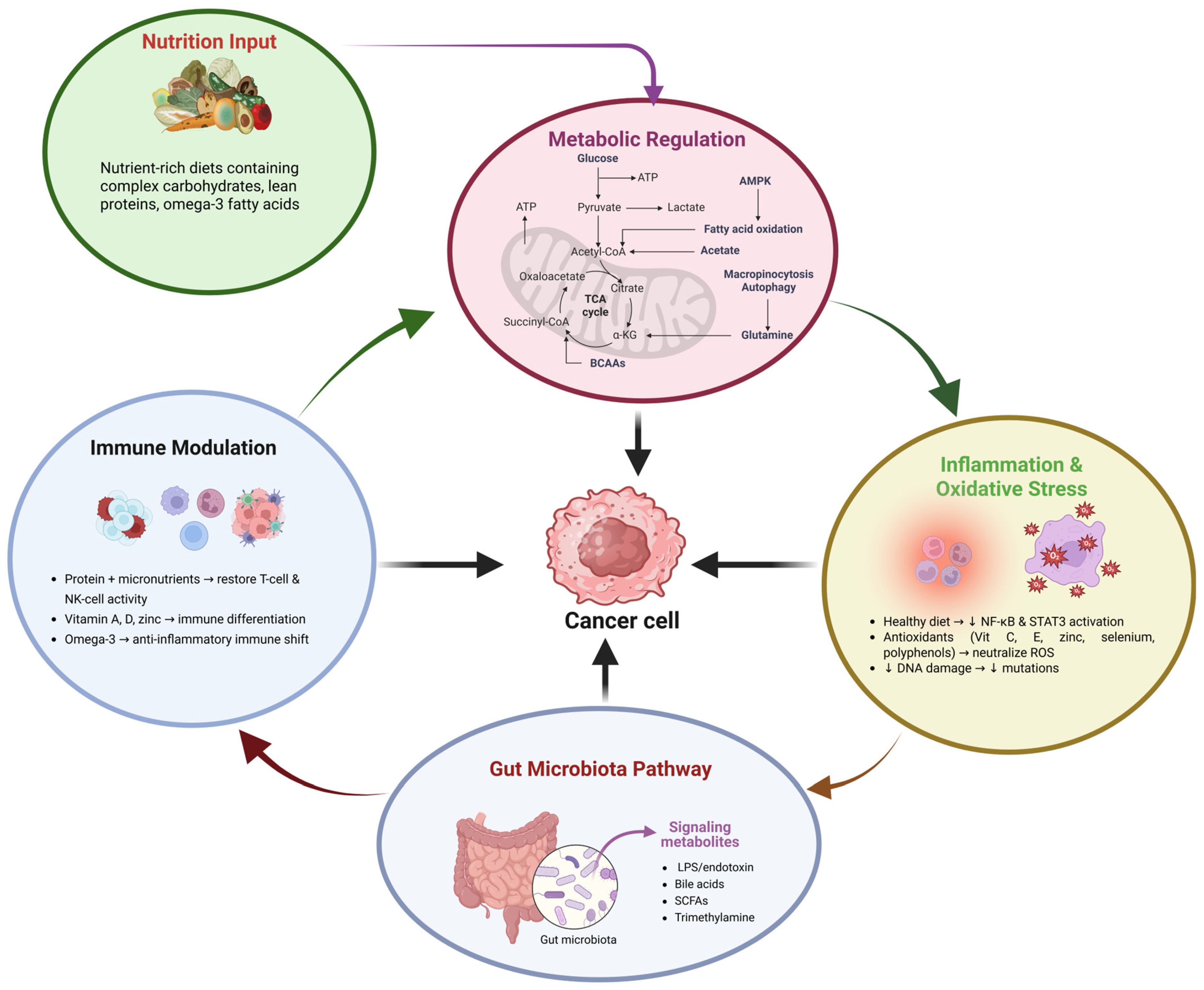
3. Nutritional Mechanisms in Cancer Progression
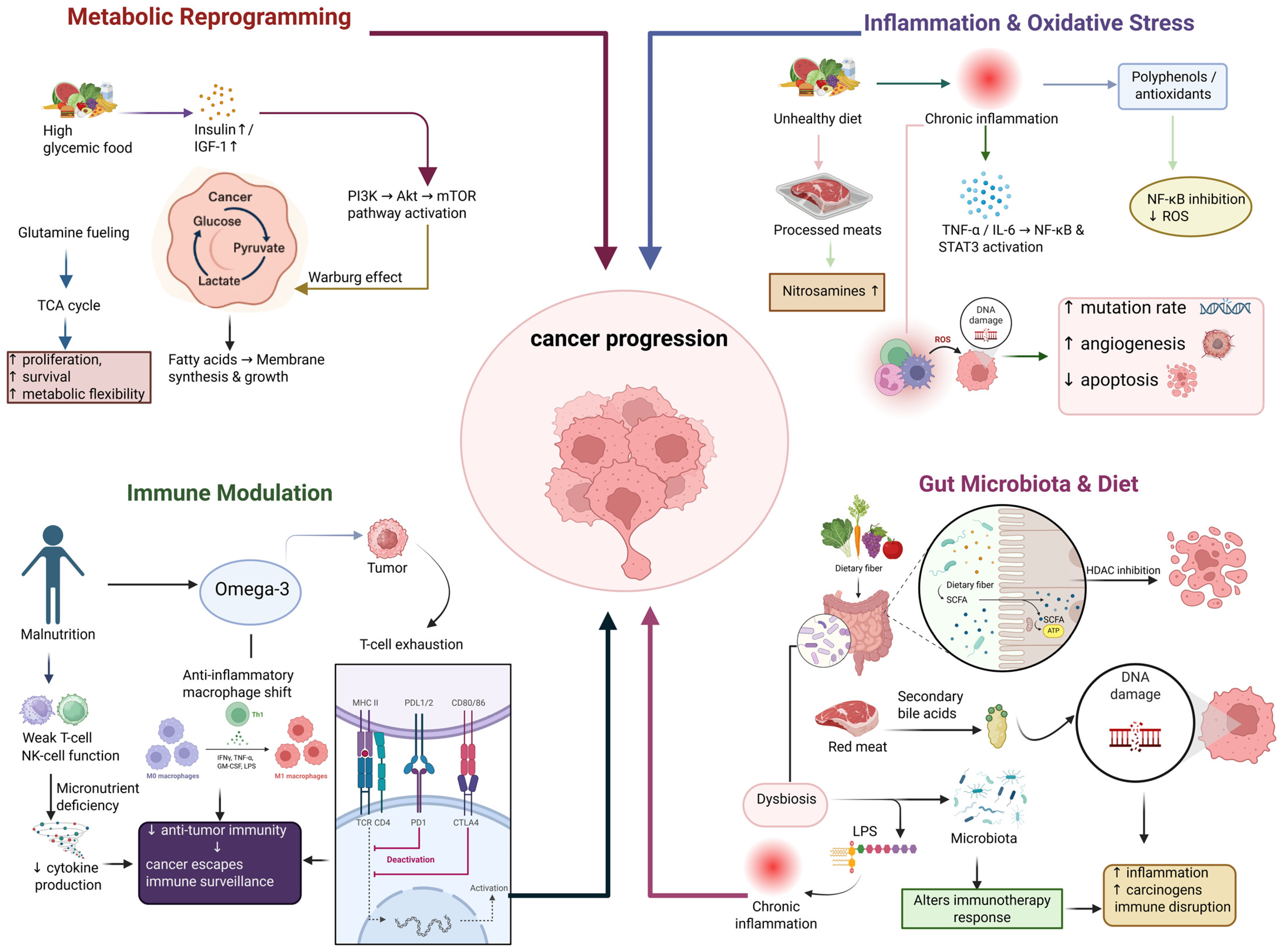
3.1. Metabolic Reprogramming and Dietary Factors
3.2. Inflammation, Oxidative Stress, and Immune Modulation

3.3. Gut Microbiota and Dietary Interactions
4. Dietary Management During Cancer Therapy
4.1. Nutritional Support During Chemotherapy and Radiotherapy
4.2. Protein–Energy Balance and Cachexia Prevention

| Clinical Focus Area | Recommended Energy Intake (kcal/kg/day) | Recommended Protein Intake (g/kg/day) | Key Nutrients/Functional Components | References |
|---|---|---|---|---|
| Overall Nutritional Goals During Active Cancer Treatment | 25–35 (adjusted to metabolic stress, inflammation, and treatment stage) | 1.0–1.2 | Essential micronutrients (A, C, D, E, selenium, zinc), balanced macronutrients, adequate fluids | [117,126] |
| Chemotherapy-Induced Nutritional Challenges | 25–35 | 1.2–1.5 | Vitamin D, zinc, selenium, glutamine, electrolytes | [133] |
| Radiotherapy-Induced Mucosal and GI Damage | 25–35 | 1.2–1.5 | Glutamine, omega-3 fatty acids, vitamin D, probiotics | [134] |
| Cancer Cachexia and Muscle Wasting Prevention | 30–35 (may increase up to 40 kcal/kg/day in severe catabolic states) | 1.5–2.0 | EPA (omega-3), high-quality proteins (egg, fish, poultry, dairy, soy), complex carbohydrates, monounsaturated fats | [135] |
| Management of Anorexia and Reduced Appetite | 35–40 from energy-dense foods | 1.2–1.5 | High-calorie supplements, dairy proteins, nut butters, omega-3s | [136] |
| Taste Alterations (Dysgeusia) | 25–30 | 1.0–1.2 | Zinc, citrus-free flavonoid-rich foods | [137] |
| Nausea and Vomiting Management | 25–30 depending on tolerance | 1.0–1.2 | Ginger, B-vitamins, hydration, electrolyte solutions | [138] |
| Diarrhea and GI Toxicity Management | 25–30 | 1.0–1.2 | Probiotics, soluble fiber (pectin), zinc, ORS solutions | [139] |
| Constipation (Often Opioid-Induced) | 25–30 | 1.0–1.2 | Insoluble fiber, magnesium, hydration | [140] |
| Bone Health in Hormone or Steroid Therapy | 25–30 | 1.0–1.2 | Vitamin D, calcium, magnesium, vitamin K2 | [141] |
| Immune System Strengthening | 25–35 | 1.2–1.5 | Vitamin C, zinc, selenium, probiotics, omega-3 fatty acids | [142] |
4.3. Functional Foods and Supplements in Treatment Outcomes
5. Diet and Prognosis in Long-Term Cancer Management
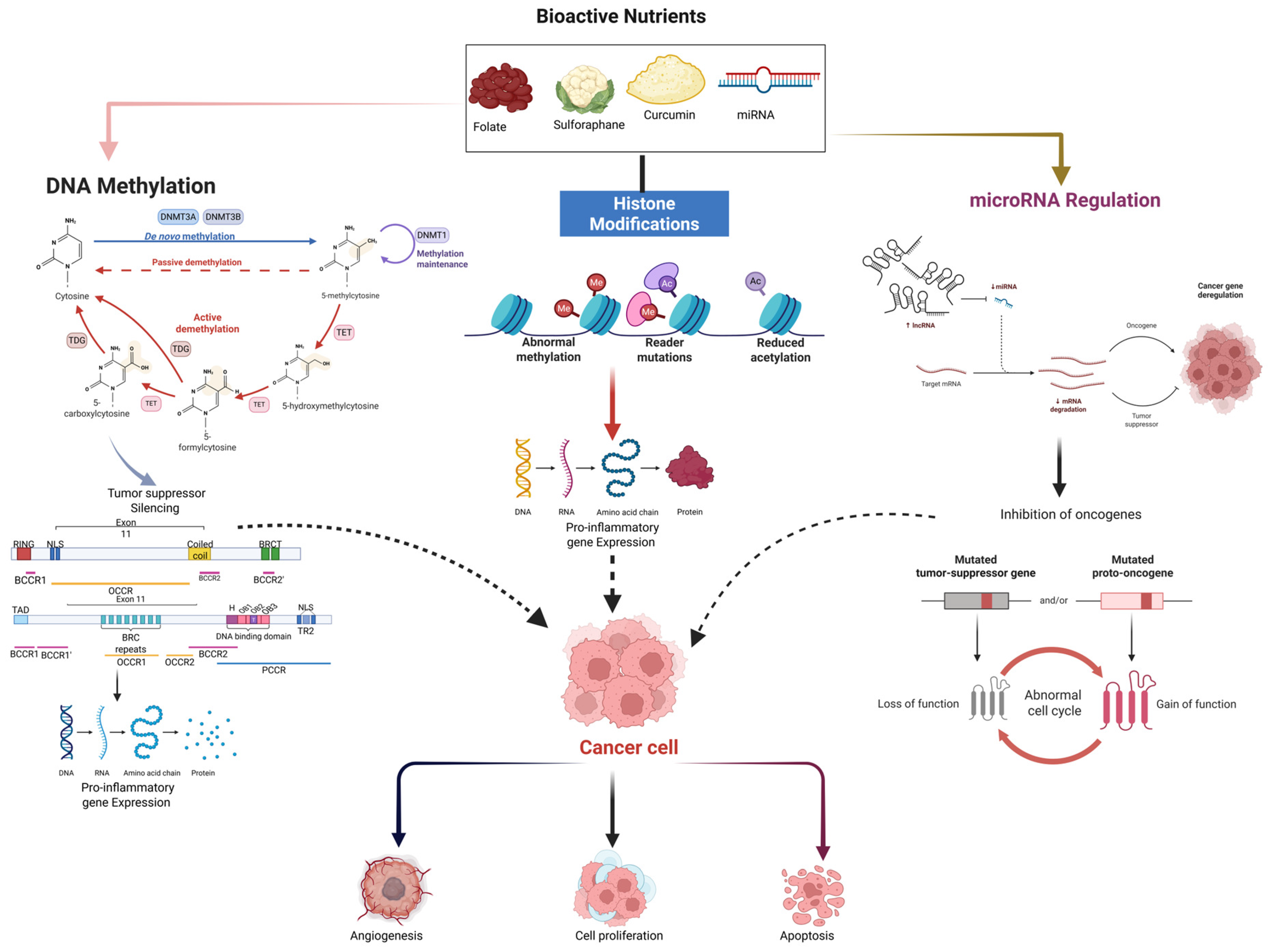
6. Epigenetic Regulation Through Diet
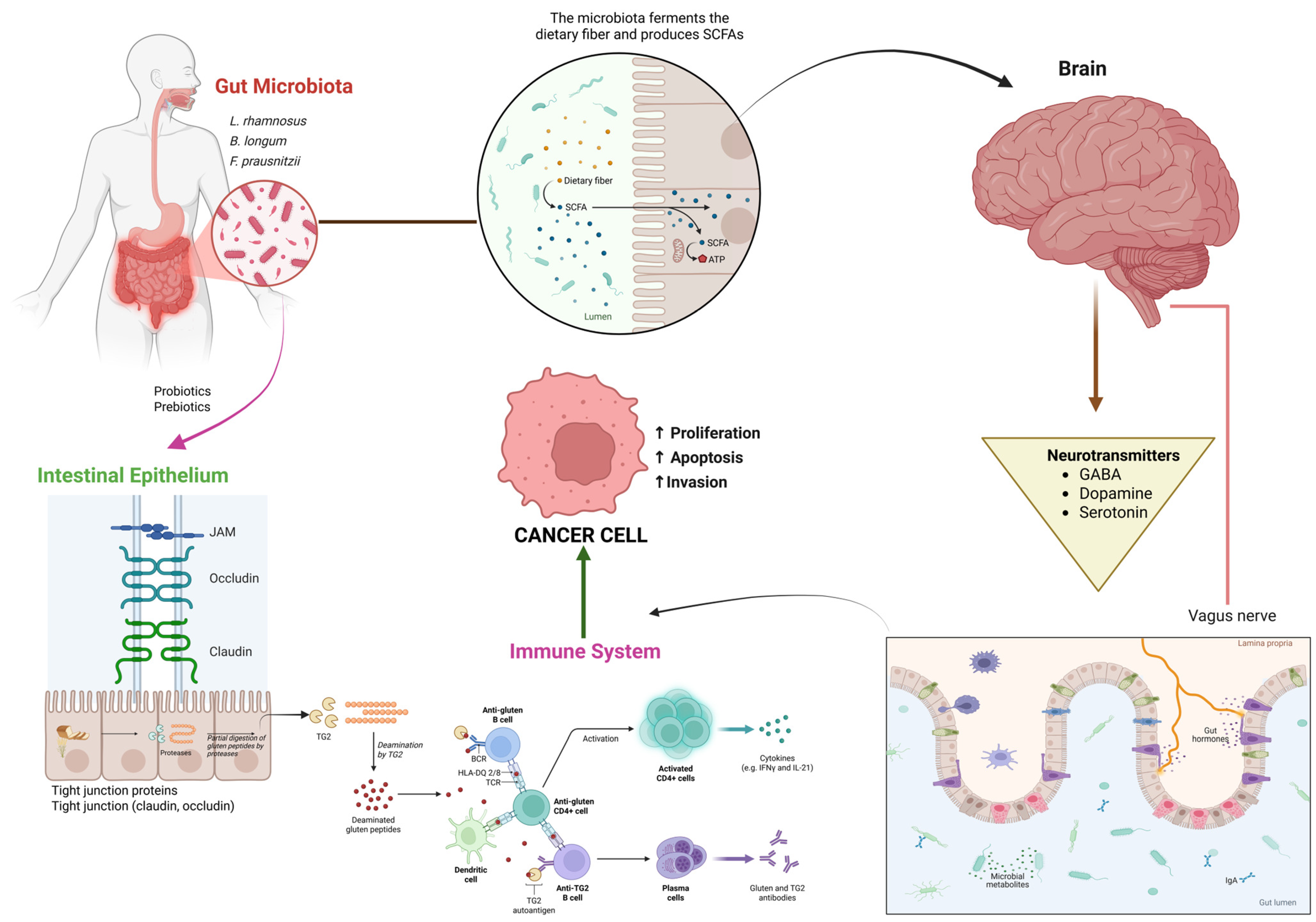
7. Gut–Brain–Immune Axis and Nutritional Modulation
7.1. Microbiota–Immune System Interactions and Metabolic Communication
7.2. Gut–Brain Communication, Neuroimmune Regulation, and Nutritional Influence
7.3. Therapeutic Modulation of the Gut–Brain–Immune Axis Through Nutritional Interventions
8. AI and Digital Innovation in Oncology Nutrition
9. Emerging Trends and Future Directions
10. Conclusions
- Chronic malignancy requires long-term, systemic management integrating metabolic, inflammatory, and immune considerations.
- Dietary patterns rich in fiber, plant bioactives, and omega-3 fatty acids are consistently associated with improved metabolic and inflammatory profiles in cancer contexts.
- Evidence supports nutritional modulation of tumor metabolism and the gut–immune axis, although much remains preclinical or observational.
- Nutrition should be viewed as a low-toxicity adjunct to standard oncology care, not a standalone anticancer therapy.
Author Contributions
Funding
Institutional Review Board Statement
Informed Consent Statement
Data Availability Statement
Conflicts of Interest
Abbreviations
| WHO | World Health Organization |
| COX-2 | Cyclooxygenase-2 inhibitor |
| ROS | Reactive oxygen species |
| IGF-1 | Insulin-like growth factor-1 |
| NF-κB | Nuclear factor kappa-light-chain-enhancer of activated B cells |
| PI3K/Akt/mTOR | Phosphatidylinositol-3-kinase/mechanistic target of rapamycin |
| EGCG | Epigallocatechin Gallate |
| RAS/MAPK | Rat sarcoma/Mitogen-activated protein kinases |
| EPA | Eicosapentaenoic acid |
| DHA | Docosahexaenoic acid |
| VDR | Vitamin D Receptor |
| SOD | Superoxide dismutase |
| GPx | Glutathione peroxidase |
| NK | Natural killer |
| GALT | Gut-associated lymphoid tissue |
| SCFAs | Short-chain fatty acids |
| HDAC | Histone deacetylase |
| LPS | Lipopolysaccharides |
| PD-L1 | Programmed death-ligand 1 |
| IL-6 | Interleukin-6 |
| TNF | Tumor necrosis factor alpha |
| IL-1 | Interleukin 1 beta |
| STAT-3 | Signal transducer and activator of transcription 3 |
| BCAAs | Branched-chain amino acids |
| TLR-4 | Toll-like receptor 4 |
| DNMTs | DNA methyltransferases |
| BRCA-1 | Breast cancer type 1 |
| HATs | Histone acetyltransferases |
| miRNAs | MicroRNAs |
| CBP | CREB-binding protein |
| EMT | Epithelial–mesenchymal transition |
| MAMPs | Microbial-associated molecular patterns |
| CD8+ | Cluster of differentiation 8 plus |
| GABA | γ-aminobutyric acid |
| FMT | Fecal microbiota transplantation |
| AI | Artificial intelligence |
| EHR | Electronic health record |
References
- Packel, L. Oncological Diseases and Disorders. In Acute Care Physical Therapy; Routledge: New York, NY, USA, 2024; pp. 539–588. [Google Scholar]
- Yeo, J.; Stewart, K.; Maniam, P.; Arman, S.; Srinivasan, D.; Wall, L.; MacNeill, M.; Strachan, M.; Nixon, I. Neoadjuvant tyrosine kinase inhibitor therapy in locally advanced differentiated thyroid cancer: A single centre case series. J. Laryngol. Otol. 2023, 137, 1237–1243. [Google Scholar] [CrossRef] [Scilit]
- Akif, A.; Qusar, M.S.; Islam, M.R. The impact of chronic diseases on mental health: An overview and recommendations for care programs. Curr. Psychiatry Rep. 2024, 26, 394–404. [Google Scholar] [CrossRef] [Scilit] [PubMed]
- Asiri, A.M.; Al Ali, A.; Abu-Alghayth, M.H. Understanding the role of genetics in tumour and cancer biology. Adv. Life Sci. 2025, 12, 35–48. [Google Scholar] [CrossRef] [Scilit]
- Agrawal, P.; Kaur, J.; Singh, J.; Rasane, P.; Sharma, K.; Bhadariya, V.; Kaur, S.; Kumar, V. Genetics, nutrition, and health: A new frontier in disease prevention. J. Am. Nutr. Assoc. 2024, 43, 326–338. [Google Scholar] [CrossRef] [Scilit] [PubMed]
- Zhang, J.; Yang, H.; Sun, Y.; Yan, B.; Chen, W.; Fan, D. The potential use of microalgae for nutrient supply and health enhancement in isolated and confined environments. Compr. Rev. Food Sci. Food Saf. 2024, 23, e13418. [Google Scholar] [CrossRef] [Scilit]
- Lacey, J.; Huston, A.; Lopez, G.; Vozmediano, J.R.; Lam, C.S.; Narayanan, S.; Lu, W.; Wolf, U.; Subbiah, I.M.; Richard, P. Establishing an integrative oncology service: Essential aspects of program development. Curr. Oncol. Rep. 2024, 26, 200–211. [Google Scholar] [CrossRef] [Scilit]
- Aslam, S.; Iqbal, R.; Saeed, R.F.; Akram, N.; Ijaz, F.; Liaqat, I.; Aslam, A.S. Nutritional Genomics and Cancer Prevention. In Nutrition and Dietary Interventions in Cancer; Springer: Berlin/Heidelberg, Germany, 2024; pp. 217–244. [Google Scholar]
- Virani, S.; Afreen, S.; Perthiani, A.; Sangster, E.; Lanka, N.; Acharya, P.; Yu, A.K. The impact of dietary unsaturated fat or the mediterranean diet on women diagnosed with breast cancer: A systematic review. Cureus 2024, 16, e65362. [Google Scholar] [CrossRef] [Scilit]
- Perrone, P.; De Rosa, C.; D’Angelo, S. Mediterranean Diet and Agri-Food By-Products: A Possible Sustainable Approach for Breast Cancer Treatment. Antioxidants 2025, 14, 789. [Google Scholar] [CrossRef] [Scilit]
- Elechi, J.O.G.; Sirianni, R.; Conforti, F.L.; Cione, E.; Pellegrino, M. Food system transformation and gut microbiota transition: Evidence on advancing obesity, cardiovascular diseases, and cancers—A narrative review. Foods 2023, 12, 2286. [Google Scholar] [CrossRef] [Scilit]
- Clemente-Suárez, V.J.; Beltrán-Velasco, A.I.; Redondo-Flórez, L.; Martín-Rodríguez, A.; Tornero-Aguilera, J.F. Global impacts of western diet and its effects on metabolism and health: A narrative review. Nutrients 2023, 15, 2749. [Google Scholar] [CrossRef] [Scilit]
- Ogunlakin, A.; Ihiasota, P.; Ojo, O.; Ogunlakin, M.; Ogunlakin, O.; Olujinmi, F.; Olagookun, F.; Ogunlakin, B.; Adeyeye, S. Effects of dietary modifications and physical activity on cancer prevention and treatment. Diet. Suppl. Nutraceuticals 2024, 3, 13–35. [Google Scholar] [CrossRef] [Scilit]
- Zeb, F.; Mehreen, A.; Naqeeb, H.; Ullah, M.; Waleed, A.; Awan, U.A.; Haider, A.; Naeem, M. Nutrition and dietary intervention in cancer: Gaps, challenges, and future perspectives. Nutr. Diet. Interv. Cancer 2024, 191, 281–307. [Google Scholar]
- Luo, G.; Zhang, Y.; Etxeberria, J.; Arnold, M.; Cai, X.; Hao, Y.; Zou, H. Projections of lung cancer incidence by 2035 in 40 countries worldwide: Population-based study. JMIR Public Health Surveill. 2023, 9, e43651. [Google Scholar] [CrossRef] [Scilit] [PubMed]
- Chen, S.; Cao, Z.; Prettner, K.; Kuhn, M.; Yang, J.; Jiao, L.; Wang, Z.; Li, W.; Geldsetzer, P.; Bärnighausen, T. Estimates and projections of the global economic cost of 29 cancers in 204 countries and territories from 2020 to 2050. JAMA Oncol. 2023, 9, 465–472. [Google Scholar] [CrossRef] [Scilit]
- Chhikara, B.S.; Parang, K. Global Cancer Statistics 2022: The trends projection analysis. Chem. Biol. Lett. 2023, 10, 451. [Google Scholar]
- Roca Ventura, A. Longitudinal multimodal data analysis and innovative digital solutions for studying trajectories of brain health. 2024. Available online: http://hdl.handle.net/10803/693869 (accessed on 7 January 2026).
- Pedretti, R.F.; Asteggiano, R.; Gevaert, A.B.; Bowen, T.S.; Caselli, S.; Cornelissen, V.A.; Christodorescu, R.; Derosa, G.; Dievart, F.; Kurpas, D. Cardiovascular risk factors management in older adults: A clinical consensus statement from the European Association of Preventive Cardiology of the ESC and the ESC Council for Cardiology Practice. Eur. J. Prev. Cardiol. 2025, zwaf175. [Google Scholar] [CrossRef] [Scilit]
- Bosch, A.A.v.d.; Pijnenborg, J.M.; Romano, A.; Winkens, B.; Putten, L.J.v.d.; Kruitwagen, R.F.; Werner, H.M. The impact of adipose tissue distribution on endometrial cancer: A systematic review. Front. Oncol. 2023, 13, 1182479. [Google Scholar] [CrossRef] [Scilit]
- Santoro, A.; Angelico, G.; Travaglino, A.; Inzani, F.; Arciuolo, D.; d’Amati, A.; D’Alessandris, N.; Scaglione, G.; Valente, M.; Urtueta, B.P. Beyond the WHO 2020 Classification of Female Genital Tumors: Types of Endometrial Cancer: A Pathological and Molecular Focus on Challenging Rare Variants. Int. J. Mol. Sci. 2024, 25, 10320. [Google Scholar] [CrossRef] [Scilit]
- Bashir, M.; Lone, M.R.; Sayeed, S.I. Cancer Prevention and Control: A Panoramic View. In Neglected and Underutilized Crops; CRC Press: Boca Raton, FL, USA, 2025; pp. 49–76. [Google Scholar]
- Lathigara, D.; Kaushal, D.; Wilson, R.B. Molecular mechanisms of western diet-induced obesity and obesity-related carcinogenesis—A narrative review. Metabolites 2023, 13, 675. [Google Scholar] [CrossRef] [Scilit]
- Norton, S.K. Toxic Superfoods: How Oxalate Overload is Making You Sick–And How to Get Better; Rodale Books: Emmaus, PA, USA, 2023. [Google Scholar]
- Liu, F.; Lv, Y.; Peng, Y.; Qiao, Y.; Wang, P.; Si, C.; Wang, X.; Gong, J.; Zhou, H.; Zhang, M. Plant-based dietary patterns, genetic predisposition and risk of colorectal cancer: A prospective study from the UK Biobank. J. Transl. Med. 2023, 21, 669. [Google Scholar] [CrossRef] [Scilit]
- Lee, H.; Ngoun, L.; Min, S.; Fu, J.; Shin, W.-K.; Kang, D.; Shin, S. Dietary factors and colorectal cancer risk in Asian populations: A systematic review and meta-analysis of cohort studies. Cancer Causes Control 2025, 36, 1647–1661. [Google Scholar] [CrossRef] [Scilit]
- Britten, O.; Tosi, S. The role of diet in cancer: The potential of shaping public policy and clinical outcomes in the UK. Genes Nutr. 2024, 19, 15. [Google Scholar] [CrossRef] [Scilit] [PubMed]
- Cortiana, V.; Abbas, R.H.; Nadar, S.; Mahendru, D.; Gambill, J.; Menon, G.P.; Park, C.H.; Leyfman, Y. Reviewing the landscape of cancer survivorship: Insights from dr. Lidia Schapira’s programs and beyond. Cancers 2024, 16, 1216. [Google Scholar] [CrossRef] [Scilit] [PubMed]
- Xiao, Y.-L.; Gong, Y.; Qi, Y.-J.; Shao, Z.-M.; Jiang, Y.-Z. Effects of dietary intervention on human diseases: Molecular mechanisms and therapeutic potential. Signal Transduct. Target. Ther. 2024, 9, 59. [Google Scholar] [CrossRef] [Scilit] [PubMed]
- Sanni, S.M. Nutrition Transition in West Africa: Public Health Challenges, Socioeconomic Impacts, And Regional Policy Interventions. Cent. Med. 2025, 1, 1–22. [Google Scholar] [CrossRef] [Scilit]
- Lobel, G.P.; Jiang, Y.; Simon, M.C. Tumor microenvironmental nutrients, cellular responses, and cancer. Cell Chem. Biol. 2023, 30, 1015–1032. [Google Scholar] [CrossRef] [Scilit]
- Fagbohun, O.F.; Gillies, C.R.; Murphy, K.P.; Rupasinghe, H.V. Role of antioxidant vitamins and other micronutrients on regulations of specific genes and signaling pathways in the prevention and treatment of cancer. Int. J. Mol. Sci. 2023, 24, 6092. [Google Scholar] [CrossRef] [Scilit]
- Wang, Y.; Liu, B.; Han, H.; Hu, Y.; Zhu, L.; Rimm, E.B.; Hu, F.B.; Sun, Q. Associations between plant-based dietary patterns and risks of type 2 diabetes, cardiovascular disease, cancer, and mortality–a systematic review and meta-analysis. Nutr. J. 2023, 22, 46. [Google Scholar] [CrossRef] [Scilit]
- Muscolo, A.; Mariateresa, O.; Giulio, T.; Mariateresa, R. Oxidative stress: The role of antioxidant phytochemicals in the prevention and treatment of diseases. Int. J. Mol. Sci. 2024, 25, 3264. [Google Scholar] [CrossRef] [Scilit]
- Habtemariam, S. Anti-Inflammatory therapeutic mechanisms of isothiocyanates: Insights from Sulforaphane. Biomedicines 2024, 12, 1169. [Google Scholar] [CrossRef] [Scilit]
- Mann, E.R.; Lam, Y.K.; Uhlig, H.H. Short-chain fatty acids: Linking diet, the microbiome and immunity. Nat. Rev. Immunol. 2024, 24, 577–595. [Google Scholar] [CrossRef] [Scilit] [PubMed]
- Dobroslavska, P.; Silva, M.L.; Vicente, F.; Pereira, P. Mediterranean dietary pattern for healthy and active aging: A narrative review of an integrative and sustainable approach. Nutrients 2024, 16, 1725. [Google Scholar] [CrossRef] [Scilit] [PubMed]
- Hasan, N.; Yazdanpanah, O.; Khaleghi, B.; Benjamin, D.J.; Kalebasty, A.R. The role of dietary sugars in cancer risk: A comprehensive review of current evidence. Cancer Treat. Res. Commun. 2025, 43, 100876. [Google Scholar] [CrossRef] [Scilit] [PubMed]
- Lu, W.-Y.; Rong, S.-J.; Liu, S.-W.; Yang, C.-L.; Liu, Y.-C.; Al-Siddiqi, H.H.; Sun, F.; Wang, C.-Y. High-Fat Diet: A Paradoxical Factor in the Setting of Type 1 Diabetes. Nutr. Rev. 2025, nuaf184. [Google Scholar] [CrossRef] [Scilit]
- Harwood, J.L. Polyunsaturated fatty acids: Conversion to lipid mediators, roles in inflammatory diseases and dietary sources. Int. J. Mol. Sci. 2023, 24, 8838. [Google Scholar] [CrossRef] [Scilit]
- Montecillo-Aguado, M.; Tirado-Rodriguez, B.; Huerta-Yepez, S. The involvement of polyunsaturated fatty acids in apoptosis mechanisms and their implications in cancer. Int. J. Mol. Sci. 2023, 24, 11691. [Google Scholar] [CrossRef] [Scilit]
- Wilson, K.M.; Mucci, L.A. Diet and Lifestyle in Prostate. In Prostate Cancer: Cellular and Genetic Mechanisms of Disease Development and Progression; Springer: Cham, Switzerland, 2020; Volume 1210, p. 1. [Google Scholar]
- Khadge, S.; Sharp, J.G.; Thiele, G.M.; McGuire, T.R.; Talmadge, J.E. Fatty acid mediators in the tumor microenvironment. Tumor Microenviron. Mol. Play. Part A 2020, 1259, 125–153. [Google Scholar]
- Mukerjee, S.; Saeedan, A.S.; Ansari, M.N.; Singh, M. Polyunsaturated fatty acids mediated regulation of membrane biochemistry and tumor cell membrane integrity. Membranes 2021, 11, 479. [Google Scholar] [CrossRef] [Scilit]
- Yang, J.-S.; Wang, H.-Y.; Zhang, X.-T.; Wang, S.-Y.; Duan, X.-T.; Zhao, Q.-T.; Wang, R.; Wang, Y.; Cao, H.-S. Supplemental n-3 polyunsaturated fatty acids: Clinical implications and best practices for adult patients with cancer. J. Nutr. Oncol. 2025, 10, 1–7. [Google Scholar] [CrossRef] [Scilit]
- Naghshi, S.; Aune, D.; Beyene, J.; Mobarak, S.; Asadi, M.; Sadeghi, O. Dietary intake and biomarkers of alpha linolenic acid and risk of all cause, cardiovascular, and cancer mortality: Systematic review and dose-response meta-analysis of cohort studies. BMJ 2021, 375, n2213. [Google Scholar] [CrossRef] [Scilit]
- Wang, Q.; Zhang, H.; Jin, Q.; Wang, X. Effects of dietary plant-derived low-ratio linoleic acid/alpha-linolenic acid on blood lipid profiles: A systematic review and meta-analysis. Foods 2023, 12, 3005. [Google Scholar] [CrossRef] [Scilit] [PubMed]
- Karabegovic, I. Disentangling the Impact of Lifestyle Factors on Health and Disease: A Molecular Epidemiology Approach. Ph.D. Thesis, Erasmus University Rotterdam, Rotterdam, The Netherlands, 2023. [Google Scholar]
- Xia, J.; Ding, L.; Liu, G. Metabolic syndrome and dermatological diseases: Association and treatment. Nutr. Metab. 2025, 22, 36. [Google Scholar] [CrossRef] [Scilit] [PubMed]
- Cheraghpour, M.; Hatami, B.; Singal, A.G. Lifestyle and Pharmacologic Approaches to Prevention of MASLD-related HCC. Clin. Gastroenterol. Hepatol. 2025, 23, 685–694.e6. [Google Scholar] [CrossRef] [Scilit] [PubMed]
- Ahmed, M. Targeting aging pathways with natural compounds: A review of curcumin, epigallocatechin gallate, thymoquinone, and resveratrol. Immun. Ageing 2025, 22, 28. [Google Scholar] [CrossRef] [Scilit]
- Ansari, F.; Lee, C.-C.; Rashidimehr, A.; Eskandari, S.; Ashaolu, T.J.; Mirzakhani, E.; Pourjafar, H.; Jafari, S.M. The role of probiotics in improving food safety; detoxification of heavy metals and chemicals. Toxin Rev. 2024, 43, 63–91. [Google Scholar] [CrossRef] [Scilit]
- Tufail, T.; Fatima, S.; Bader Ul Ain, H.; Ikram, A.; Noreen, S.; Rebezov, M.; Al-Farga, A.; Saleh, R.; Shariati, M.A. Role of phytonutrients in the prevention and treatment of chronic diseases: A concrete review. ACS Omega 2025, 10, 12724–12755. [Google Scholar] [CrossRef] [Scilit]
- Mubeen, B.; Hasnain, A.; Atif, S.; Hakim, F.; Sheharyar, S.; Hassan, M.; Iqbal, M.; Moustafa, M.; Alshaharni, M.; Duan, M. Phytochemicals as multi-target therapeutic agents for oxidative stress-driven pathologies: Mechanisms, synergies, and clinical prospects. Phyton 2025, 94, 1941. [Google Scholar] [CrossRef] [Scilit]
- Munteanu, C.; Schwartz, B. Interactions between dietary antioxidants, dietary Fiber and the gut microbiome: Their putative role in inflammation and Cancer. Int. J. Mol. Sci. 2024, 25, 8250. [Google Scholar] [CrossRef] [Scilit]
- Alahmari, L.A. Dietary fiber influence on overall health, with an emphasis on CVD, diabetes, obesity, colon cancer, and inflammation. Front. Nutr. 2024, 11, 1510564. [Google Scholar] [CrossRef] [Scilit]
- Tabaeifard, R.; Zare, M.; Zendehdel, A.; Ebrahimpour-Koujan, S. Omega 3-Induced Autophagy: A Two-Sided Sword in Cell Death from Historical Perspective in Clinical Application and Biological Mechanisms. Int. J. Nutr. Sci. 2025, 10, 395–405. [Google Scholar]
- Brito, M.; Sorbier, C.; Mignet, N.; Boudy, V.; Borchard, G.; Vacher, G. Understanding the impact of polyunsaturated fatty acids on age-related macular degeneration: A review. Int. J. Mol. Sci. 2024, 25, 4099. [Google Scholar] [CrossRef] [Scilit] [PubMed]
- Shanahan, C. The energy model of insulin resistance: A unifying theory linking seed oils to metabolic disease and cancer. Front. Nutr. 2025, 12, 1532961. [Google Scholar] [PubMed]
- Cristodoro, M.; Zambella, E.; Fietta, I.; Inversetti, A.; Di Simone, N. Dietary patterns and fertility. Biology 2024, 13, 131. [Google Scholar] [CrossRef] [Scilit] [PubMed]
- Rees, J. The Role of Micronutrients in Genetic Adaptation. Ph.D. Thesis, UCL (University College London), London, UK, 2023. [Google Scholar]
- Verma, H.; Gangwar, P.; Yadav, A.; Yadav, B.; Rao, R.; Kumari, S.; Kaur, S.; Dhiman, M.; Mantha, A.K. Phytochemicals in Life Style Associated Human Diseases. In Advancing Biotechnology: From Science to Therapeutics and Informatics: Technological Advancements in Biosciences and Biotechnology; Springer: Berlin/Heidelberg, Germany, 2025; pp. 223–250. [Google Scholar]
- Rosario, E.M. Gut Health Reset for Women: Heal Your Digestive System, Balance Hormones, and Boost Energy Naturally with Proven Microbiome Strategies. 2025. Available online: https://www.barnesandnoble.com/w/gut-health-reset-for-women-dr-evelyn-m-rosario/1148100944 (accessed on 7 January 2026).
- Hussain, M.B.; Albukhari, A.F.; Rafeeq, M.; Imran, M.; Albagholi, A.H.; Assedoodi, M.A. Anticancer potential of dietary fiber for colorectal carcinoma: A narrative review. Ann. Med. 2025, 57, 2583756. [Google Scholar] [CrossRef] [Scilit]
- Halverson, T.; Alagiakrishnan, K. The brain-gut-microbiome axis across the life continuum and the role of microbes in maintaining the balance of health. J. Integr. Neurosci. 2025, 24, 36616. [Google Scholar] [CrossRef] [Scilit]
- Faubert, B.; Solmonson, A.; DeBerardinis, R.J. Metabolic reprogramming and cancer progression. Science 2020, 368, eaaw5473. [Google Scholar] [CrossRef] [Scilit]
- Munteanu, C.; Dhanasekaran, D.N. Obesity as a Systems-Level Driver of Cancer: Mechanisms and Nutritional Reprogramming. Obes. Rev. 2025, e70075, Online ahead of print. [Google Scholar] [CrossRef] [Scilit]
- Zhang, A.M.; Wellberg, E.A.; Kopp, J.L.; Johnson, J.D. Hyperinsulinemia in obesity, inflammation, and cancer. Diabetes Metab. J. 2021, 45, 285–311. [Google Scholar] [CrossRef] [Scilit]
- Psara, E.; Poulios, E.; Papadopoulou, S.K.; Tolia, M.; Vasios, G.K.; Giaginis, C. Intermittent fasting against cancer development and progression: Highlighting potential anticancer molecular mechanisms. Anti-Cancer Agents Med. Chem. 2023, 23, 1889–1909. [Google Scholar] [CrossRef] [Scilit]
- Lilly, A.C.; Astsaturov, I.; Golemis, E.A. Intrapancreatic fat, pancreatitis, and pancreatic cancer. Cell. Mol. Life Sci. 2023, 80, 206. [Google Scholar] [CrossRef] [Scilit]
- Télessy, I.G. Promising Perspectives of Low Carbohydrate Diet in Cancer Adjuvant Therapy. J. Nutr. Oncol. 2020, 5, 50–58. [Google Scholar] [CrossRef] [Scilit]
- Zhu, H.; Bi, D.; Zhang, Y.; Kong, C.; Du, J.; Wu, X.; Wei, Q.; Qin, H. Ketogenic diet for human diseases: The underlying mechanisms and potential for clinical implementations. Signal Transduct. Target. Ther. 2022, 7, 11. [Google Scholar] [CrossRef] [Scilit] [PubMed]
- Marchio, V.; Augimeri, G.; Morelli, C.; Vivacqua, A.; Giordano, C.; Catalano, S.; Sisci, D.; Barone, I.; Bonofiglio, D. Omega-3 fatty acids: Molecular weapons against chemoresistance in breast cancer. Cell. Mol. Biol. Lett. 2025, 30, 11. [Google Scholar] [CrossRef] [Scilit] [PubMed]
- Chiscuzzu, F.; Crescio, C.; Varrucciu, S.; Rizzo, D.; Sali, M.; Delogu, G.; Bussu, F. Current Evidence on the Relation between Microbiota and Oral Cancer—The Role of Fusobacterium Nucleatum—A Narrative Review. Cancers 2025, 17, 171. [Google Scholar] [CrossRef] [Scilit]
- Wang, N.; Fang, J.-Y. Fusobacterium nucleatum, a key pathogenic factor and microbial biomarker for colorectal cancer. Trends Microbiol. 2023, 31, 159–172. [Google Scholar] [CrossRef] [Scilit]
- Olivas, A.; Price, R.S. Obesity, inflammation, and advanced prostate cancer. Nutr. Cancer 2021, 73, 2232–2248. [Google Scholar] [CrossRef] [Scilit]
- Drewa, J.; Lazar-Juszczak, K.; Adamowicz, J.; Juszczak, K. Periprostatic adipose tissue as a contributor to prostate cancer pathogenesis: A narrative review. Cancers 2025, 17, 372. [Google Scholar] [CrossRef] [Scilit]
- Soni, S.; Torvund, M.; Mandal, C.C. Omega-3 fatty acid treatment combined with chemotherapy to prevent toxicity, drug resistance, and metastasis in cancer. Curr. Drug Targets 2022, 23, 574–596. [Google Scholar] [CrossRef] [Scilit]
- Ghoche, M.T.; Miki, K.; Yuan, F.; Mantica, M.; Agnihotri, S.; McBrayer, S.K.; Abdullah, K.G. Metabolic Modulation of Glioblastoma by Dietary Intervention: A Systematic Review. medRxiv 2025. [Google Scholar] [CrossRef] [Scilit]
- Augustin, L.S.; Libra, M.; Crispo, A.; Grimaldi, M.; De Laurentiis, M.; Rinaldo, M.; D’Aiuto, M.; Catalano, F.; Banna, G.; Ferrau’, F. Low glycemic index diet, exercise and vitamin D to reduce breast cancer recurrence (DEDiCa): Design of a clinical trial. BMC Cancer 2017, 17, 69. [Google Scholar] [CrossRef] [Scilit]
- Theinel, M.H.; Nucci, M.P.; Alves, A.H.; Dias, O.F.; Mamani, J.B.; Garrigós, M.M.; Oliveira, F.A.; Rego, G.N.; Valle, N.M.; Cianciarullo, G. The effects of omega-3 polyunsaturated fatty acids on breast cancer as a preventive measure or as an adjunct to conventional treatments. Nutrients 2023, 15, 1310. [Google Scholar] [CrossRef] [Scilit]
- Kalu, C.; Woelke, S.; Zhang, J.; Belury, M.; Shen, R.; Clinton, S.K.; Yee, L. Omega-3 fatty acids and ERPR (-) and HER2/neu (+/-) breast cancer prevention. J. Clin. Oncol. 2019, 37, 15. [Google Scholar] [CrossRef] [Scilit]
- Li, C.; Cai, P.; Zeng, H.; Li, J.; Hu, H.; Zhang, J.; Wu, Z.; Qin, G.; Deng, Y. Glycolysis-Driven Immune Evasion in Microsatellite Instability-High Colorectal Cancer: An Integrated Single-Cell and Spatial Transcriptomics Study. OncoTargets Ther. 2025, 18, 1027–1042. [Google Scholar] [CrossRef] [Scilit] [PubMed]
- Incognito, D.; Ciappina, G.; Gelsomino, C.; Picone, A.; Consolo, P.; Scano, A.; Franchina, T.; Maurea, N.; Quagliariello, V.; Berretta, S. Fusobacterium Nucleatum in Colorectal Cancer: Relationship Among Immune Modulation, Potential Biomarkers and Therapeutic Implications. Int. J. Mol. Sci. 2025, 26, 9710. [Google Scholar] [CrossRef] [Scilit] [PubMed]
- Han, A.; Bennett, N.; Ahmed, B.; Whelan, J.; Donohoe, D.R. Butyrate decreases its own oxidation in colorectal cancer cells through inhibition of histone deacetylases. Oncotarget 2018, 9, 27280. [Google Scholar] [CrossRef] [Scilit]
- Wang, L.; Wu, L.; Qian, C.; Ju, Y.; Liu, T.; Chen, Y.; Wang, X. The beneficial effect of a healthy dietary pattern on androgen deprivation therapy-related metabolic abnormalities in patients with prostate cancer: A meta-analysis based on randomized controlled trials and systematic review. Metabolites 2022, 12, 969. [Google Scholar] [CrossRef] [Scilit]
- Robitaille, K.; Guertin, M.-H.; Jamshidi, A.; Xu, H.W.; Hovington, H.; Pelletier, J.-F.; Beaudoin, L.; Gevariya, N.; Lacombe, L.; Tiguert, R. A phase IIb randomized placebo-controlled trial testing the effect of MAG-EPA long-chain omega-3 fatty acid dietary supplement on prostate cancer proliferation. Commun. Med. 2024, 4, 56. [Google Scholar] [CrossRef] [Scilit]
- Amaral, L.; Gresham, G.; Kim, S.; Tighiouart, M.; Nelson, T.A.; Welborn, A.; Lockshon, L.; Noorvash, B.; Rudnick, J.D.; Irwin, S.A. A phase 1 safety and feasibility trial of a ketogenic diet plus standard of care for patients with recently diagnosed glioblastoma. Sci. Rep. 2025, 15, 21064. [Google Scholar] [CrossRef] [Scilit]
- Dharshini, L.C.P.; Rasmi, R.R.; Kathirvelan, C.; Kumar, K.M.; Saradhadevi, K.; Sakthivel, K.M. Regulatory components of oxidative stress and inflammation and their complex interplay in carcinogenesis. Appl. Biochem. Biotechnol. 2023, 195, 2893–2916. [Google Scholar] [CrossRef] [Scilit]
- Jiang, M.; Fang, H.; Tian, H. Metabolism of cancer cells and immune cells in the initiation, progression, and metastasis of cancer. Theranostics 2025, 15, 155. [Google Scholar] [CrossRef] [Scilit]
- Leziak, A.; Lipina, J.; Reclik, M.; Kocelak, P. Dietary Modulation of Metabolic Health: From Bioactive Compounds to Personalized Nutrition. Metabolites 2025, 15, 624. [Google Scholar] [CrossRef] [Scilit]
- Kocianova, E.; Piatrikova, V.; Golias, T. Revisiting the Warburg effect with focus on lactate. Cancers 2022, 14, 6028. [Google Scholar] [CrossRef] [Scilit] [PubMed]
- López-Lázaro, M. The warburg effect: Why and how do cancer cells activate glycolysis in the presence of oxygen? Anti-Cancer Agents Med. Chem. 2008, 8, 305–312. [Google Scholar] [CrossRef] [Scilit]
- Kasprzak, A. Insulin-like growth factor 1 (IGF-1) signaling in glucose metabolism in colorectal cancer. Int. J. Mol. Sci. 2021, 22, 6434. [Google Scholar] [CrossRef] [Scilit] [PubMed]
- Urzì, A.G.; Tropea, E.; Gattuso, G.; Spoto, G.; Marsala, G.; Calina, D.; Libra, M.; Falzone, L. Ketogenic diet and breast cancer: Recent findings and therapeutic approaches. Nutrients 2023, 15, 4357. [Google Scholar] [CrossRef] [Scilit] [PubMed]
- Li, X.; Zhang, H.S. Amino acid metabolism, redox balance and epigenetic regulation in cancer. FEBS J. 2024, 291, 412–429. [Google Scholar] [CrossRef] [Scilit]
- Kloubert, V.; Rink, L. Zinc as a micronutrient and its preventive role of oxidative damage in cells. Food Funct. 2015, 6, 3195–3204. [Google Scholar] [CrossRef] [Scilit]
- Wimalawansa, S.J. Vitamin D deficiency: Effects on oxidative stress, epigenetics, gene regulation, and aging. Biology 2019, 8, 30. [Google Scholar] [CrossRef] [Scilit]
- Vázquez-Lorente, H.; Herrera-Quintana, L.; Jiménez-Sánchez, L.; Fernández-Perea, B.; Plaza-Diaz, J. Antioxidant functions of vitamin D and CYP11A1-derived vitamin D, Tachysterol, and Lumisterol metabolites: Mechanisms, clinical implications, and future directions. Antioxidants 2024, 13, 996. [Google Scholar] [CrossRef] [Scilit]
- Abdulla, A.; Sadida, H.Q.; Jerobin, J.; Elfaki, I.; Mir, R.; Mirza, S.; Singh, M.; Macha, M.A.; Uddin, S.; Fakhro, K.J. Unraveling molecular interconnections and identifying potential therapeutic targets of significance in obesity-cancer link. Natl. Cancer Cent 2025, 5, 8–27. [Google Scholar] [CrossRef] [Scilit]
- Bandaru, N.; Noor, S.M.; Kammili, M.L.; Bonthu, M.G.; Gayatri, A.P.; Kumar, P.K. Methionine restriction for cancer therapy: From preclinical studies to clinical trials. Cancer Pathog. Ther. 2025, 3, E01–E12. [Google Scholar] [CrossRef] [Scilit]
- Chen, X.-W.; Zhou, S.-F. Inflammation, cytokines, the IL-17/IL-6/STAT3/NF-κB axis, and tumorigenesis. Drug Des. Dev. Ther. 2015, 9, 2941–2946. [Google Scholar]
- Kapoor, G.; Prakash, S.; Jaiswal, V.; Singh, A.K. Chronic inflammation and cancer: Key pathways and targeted therapies. Cancer Investig. 2025, 43, 1–23. [Google Scholar] [CrossRef] [Scilit] [PubMed]
- Grosso, G.; Laudisio, D.; Frias-Toral, E.; Barrea, L.; Muscogiuri, G.; Savastano, S.; Colao, A. Anti-inflammatory nutrients and obesity-associated metabolic-inflammation: State of the art and future direction. Nutrients 2022, 14, 1137. [Google Scholar] [CrossRef] [Scilit] [PubMed]
- Owczarek, K.; Lewandowska, U. The impact of dietary polyphenols on COX-2 expression in colorectal cancer. Nutr. Cancer 2017, 69, 1105–1118. [Google Scholar] [CrossRef] [Scilit]
- Bhattacharya, M. Antioxidants activity of micronutrients and macronutrients. In Micronutrients and Macronutrients as Nutraceuticals; Apple Academic Press: Palm Bay, FL, USA, 2024; pp. 47–88. [Google Scholar]
- Hamdana, T.A. Impact of Micronutrients and Macronutrients on NK Cells Immunity. Cell Physiol. Biochem. 2025, 59, 313–329. [Google Scholar] [CrossRef] [Scilit]
- Sassi, F.; Tamone, C.; D’Amelio, P. Vitamin D: Nutrient, hormone, and immunomodulator. Nutrients 2018, 10, 1656. [Google Scholar] [CrossRef] [Scilit]
- Lavy, M.; Gauttier, V.; Poirier, N.; Barillé-Nion, S.; Blanquart, C. Specialized pro-resolving mediators mitigate cancer-related inflammation: Role of tumor-associated macrophages and therapeutic opportunities. Front. Immunol. 2021, 12, 702785. [Google Scholar] [CrossRef] [Scilit]
- Colella, M.; Charitos, I.A.; Ballini, A.; Cafiero, C.; Topi, S.; Palmirotta, R.; Santacroce, L. Microbiota revolution: How gut microbes regulate our lives. World J. Gastroenterol. 2023, 29, 4368. [Google Scholar] [CrossRef] [Scilit]
- Nogal, A.; Valdes, A.M.; Menni, C. The role of short-chain fatty acids in the interplay between gut microbiota and diet in cardio-metabolic health. Gut Microbes 2021, 13, 1897212. [Google Scholar] [CrossRef] [Scilit]
- Rivas-Dominguez, A.; Pastor, N.; Martinez-Lopez, L.; Colon-Perez, J.; Bermudez, B.; Orta, M.L. The role of DNA damage response in dysbiosis-induced colorectal cancer. Cells 2021, 10, 1934. [Google Scholar] [CrossRef] [Scilit] [PubMed]
- Abrignani, V.; Salvo, A.; Pacinella, G.; Tuttolomondo, A. The Mediterranean diet, its microbiome connections, and cardiovascular health: A narrative review. Int. J. Mol. Sci. 2024, 25, 4942. [Google Scholar] [CrossRef] [Scilit] [PubMed]
- Bouferraa, Y.; Chedid, A.; Amhaz, G.; El Lakkiss, A.; Mukherji, D.; Temraz, S.; Shamseddine, A. The role of gut microbiota in overcoming resistance to checkpoint inhibitors in cancer patients: Mechanisms and challenges. Int. J. Mol. Sci. 2021, 22, 8036. [Google Scholar] [CrossRef] [Scilit] [PubMed]
- Alam, Z.; Shang, X.; Effat, K.; Kanwal, F.; He, X.; Li, Y.; Xu, C.; Niu, W.; War, A.R.; Zhang, Y. The potential role of prebiotics, probiotics, and synbiotics in adjuvant cancer therapy especially colorectal cancer. J. Food Biochem. 2022, 46, e14302. [Google Scholar] [CrossRef] [Scilit]
- O’Brien, K.; Ried, K.; Binjemain, T.; Sali, A. Integrative approaches to the treatment of cancer. Cancers 2022, 14, 5933. [Google Scholar] [CrossRef] [Scilit]
- Awuchi, C.G.; Igwe, V.S.; Amagwula, I.O. Nutritional diseases and nutrient toxicities: A systematic review of the diets and nutrition for prevention and treatment. Int. J. Adv. Acad. Res. 2020, 6, 1–46. [Google Scholar] [CrossRef] [Scilit]
- Lippi, L.; de Sire, A.; Folli, A.; Turco, A.; Moalli, S.; Marcasciano, M.; Ammendolia, A.; Invernizzi, M. Obesity and cancer rehabilitation for functional recovery and quality of life in breast cancer survivors: A comprehensive review. Cancers 2024, 16, 521. [Google Scholar] [CrossRef] [Scilit]
- Kumar, N.B. Nutritional Management of Cancer Treatment Effects; Springer Science & Business Media: Berlin/Heidelberg, Germany, 2012. [Google Scholar]
- Ravasco, P.; Monteiro-Grillo, I.; Camilo, M. Individualized nutrition intervention is of major benefit to colorectal cancer patients: Long-term follow-up of a randomized controlled trial of nutritional therapy. Am. J. Clin. Nutr. 2012, 96, 1346–1353. [Google Scholar] [CrossRef] [Scilit]
- Minocha, N.; Singh, A. Nutrition essentials: Building a foundation for optimal health through diet. In Impact of Yoga and Proper Diet on Cardiopulmonary Function; IGI Global Scientific Publishing: Hershey, PA, USA, 2025; pp. 119–160. [Google Scholar]
- Kaur, R.; Bhardwaj, A.; Gupta, S. Cancer treatment therapies: Traditional to modern approaches to combat cancers. Mol. Biol. Rep. 2023, 50, 9663–9676. [Google Scholar] [CrossRef] [Scilit]
- Shao, T.; Verma, H.K.; Pande, B.; Costanzo, V.; Ye, W.; Cai, Y.; Bhaskar, L. Physical activity and nutritional influence on immune function: An important strategy to improve immunity and health status. Front. Physiol. 2021, 12, 751374. [Google Scholar] [CrossRef] [Scilit]
- Demling, R.H. Nutrition, anabolism, and the wound healing process: An overview. Eplasty 2009, 9, e9. [Google Scholar] [PubMed]
- Stefanache, A.; Lungu, I.-I.; Butnariu, I.-A.; Calin, G.; Gutu, C.; Marcu, C.; Grierosu, C.; Bogdan Goroftei, E.R.; Duceac, L.-D.; Dabija, M.G. Understanding how minerals contribute to optimal immune function. J. Immunol. Res. 2023, 2023, 3355733. [Google Scholar] [CrossRef] [Scilit] [PubMed]
- Garutti, M.; Noto, C.; Pastò, B.; Cucciniello, L.; Alajmo, M.; Casirati, A.; Pedrazzoli, P.; Caccialanza, R.; Puglisi, F. Nutritional management of oncological symptoms: A comprehensive review. Nutrients 2023, 15, 5068. [Google Scholar] [CrossRef] [Scilit]
- Chuntrasakul, C.; Siltharm, S.; Sarasombath, S.; Sittapairochana, C.; Leowattana, W.; Chockvivatanavanit, S.; Bunnak, A. Metabolic and immune effects of dietary arginine, glutamine and omega-3 fatty acids supplementation in immunocompromised patients. J. -Med. Assoc. Thail. 1998, 81, 334–343. [Google Scholar]
- Baracos, V.E.; Martin, L.; Korc, M.; Guttridge, D.C.; Fearon, K.C. Cancer-associated cachexia. Nat. Rev. Dis. Primers 2018, 4, 17105. [Google Scholar] [CrossRef] [Scilit]
- Hegde, M.; Daimary, U.D.; Girisa, S.; Kumar, A.; Kunnumakkara, A.B. Tumor cell anabolism and host tissue catabolism-energetic inefficiency during cancer cachexia. Exp. Biol. Med. 2022, 247, 713–733. [Google Scholar] [CrossRef] [Scilit]
- Preedy, V.R. Protein Intake in Health and Disease; CRC Press: Boca Raton, FL, USA, 2025. [Google Scholar]
- Soliman, A.R.; Hegazy, M.; Ahmed, R.M.; Abdelghaffar, S.; Gomaa, M.; Alwakil, S.; Soliman, D.; Sedky, L.; Shaltout, I. Dietary recommendations for people with diabetes in special situations: A position statement report by Arabic Association for the Study of Diabetes and metabolism (AASD). J. Health Popul. Nutr. 2024, 43, 139. [Google Scholar] [CrossRef] [Scilit]
- Zhang, L.; Zhuo, W.L. Advances in Immunonutrient Application to Treat Cancer Cachexia Syndrome. J. Nutr. Oncol. 2020, 5, 1–13. [Google Scholar] [CrossRef] [Scilit]
- Dan, X.; He, Y.L.; Tian, Y.L.; Chen, T.L.; Yu, J.Y. Summary of evidence on nutritional management for patients undergoing chemotherapy. Cancer Med. 2024, 13, e70519. [Google Scholar] [CrossRef] [Scilit]
- Thomsen, M.; Vitetta, L. Adjunctive treatments for the prevention of chemotherapy-and radiotherapy-induced mucositis. Integr. Cancer Ther. 2018, 17, 1027–1047. [Google Scholar] [CrossRef] [Scilit]
- Prado, C.M.; Purcell, S.A.; Laviano, A. Nutrition interventions to treat low muscle mass in cancer. J. Cachexia Sarcopenia Muscle 2020, 11, 366–380. [Google Scholar] [CrossRef] [Scilit] [PubMed]
- Hasiri, S.H.; Gupta, N.; Garg, N.; Singh, A.K. (Eds.) Nutrition and Health: Emerging Perspectives for Sustainable Well-Being; Creative Publishers: Kota, India, 2024; ISBN 978-81-993258-0-7. [Google Scholar]
- Pugnaloni, S.; Vignini, A.; Borroni, F.; Sabbatinelli, J.; Alia, S.; Fabri, M.; Taus, M.; Mazzanti, L.; Berardi, R. Modifications of taste sensitivity in cancer patients: A method for the evaluations of dysgeusia. Support. Care Cancer 2020, 28, 1173–1181. [Google Scholar] [CrossRef] [Scilit] [PubMed]
- Al-Worafi, Y.M. Evidence-Based Complementary, Alternative, and Integrated Medicine and Efficacy and Safety: Nausea and Vomiting. In Handbook of Complementary, Alternative, and Integrative Medicine; CRC Press: Boca Raton, FL, USA, 2025; pp. 329–347. [Google Scholar]
- Shamir, R.; Makhoul, I.R.; Etzioni, A.; Shehadeh, N. Evaluation of a diet containing probiotics and zinc for the treatment of mild diarrheal illness in children younger than one year of age. J. Am. Coll. Nutr. 2005, 24, 370–375. [Google Scholar] [CrossRef] [Scilit] [PubMed]
- Kuhn, R.J.; Smith, K.M. Update on treatment options for constipation. Orthopedics 2008, 31, 570–574. [Google Scholar] [CrossRef] [Scilit]
- Capozzi, A.; Scambia, G.; Lello, S. Calcium, vitamin D, vitamin K2, and magnesium supplementation and skeletal health. Maturitas 2020, 140, 55–63. [Google Scholar] [CrossRef] [Scilit]
- Napiórkowska-Baran, K.; Treichel, P.; Dardzińska, A.; Majcherczak, A.; Pilichowicz, A.; Szota, M.; Szymczak, B.; Alska, E.; Przybyszewska, J.; Bartuzi, Z. Immunomodulatory Effects of Selected Non-Nutritive Bioactive Compounds and Their Role in Optimal Nutrition. Curr. Issues Mol. Biol. 2025, 47, 89. [Google Scholar] [CrossRef] [Scilit]
- Aghajanpour, M.; Nazer, M.R.; Obeidavi, Z.; Akbari, M.; Ezati, P.; Kor, N.M. Functional foods and their role in cancer prevention and health promotion: A comprehensive review. Am. J. Cancer Res. 2017, 7, 740. [Google Scholar]
- Mondal, S.; Soumya, N.P.P.; Mini, S.; Sivan, S.K. Bioactive compounds in functional food and their role as therapeutics. Bioact. Compd. Health Dis. 2021, 4, 24–39. [Google Scholar] [CrossRef] [Scilit]
- Troesch, B.; Eggersdorfer, M.; Laviano, A.; Rolland, Y.; Smith, A.D.; Warnke, I.; Weimann, A.; Calder, P.C. Expert opinion on benefits of long-chain omega-3 fatty acids (DHA and EPA) in aging and clinical nutrition. Nutrients 2020, 12, 2555. [Google Scholar] [CrossRef] [Scilit]
- Fakhri, S.; Moradi, S.Z.; Yarmohammadi, A.; Narimani, F.; Wallace, C.E.; Bishayee, A. Modulation of TLR/NF-κB/NLRP signaling by bioactive phytocompounds: A promising strategy to augment cancer chemotherapy and immunotherapy. Front. Oncol. 2022, 12, 834072. [Google Scholar] [CrossRef] [Scilit]
- Aggarwal, R.; Bains, K. Protein, lysine and vitamin D: Critical role in muscle and bone health. Crit. Rev. Food Sci. Nutr. 2022, 62, 2548–2559. [Google Scholar] [CrossRef] [Scilit]
- Calvani, M.; Pasha, A.; Favre, C. Nutraceutical boom in cancer: Inside the labyrinth of reactive oxygen species. Int. J. Mol. Sci. 2020, 21, 1936. [Google Scholar] [CrossRef] [Scilit] [PubMed]
- Finnegan, D.; Tocmo, R.; Loscher, C. Targeted application of functional foods as immune fitness boosters in the defense against viral infection. Nutrients 2023, 15, 3371. [Google Scholar] [CrossRef] [Scilit] [PubMed]
- Soldati, L.; Di Renzo, L.; Jirillo, E.; Ascierto, P.A.; Marincola, F.M.; De Lorenzo, A. The influence of diet on anti-cancer immune responsiveness. J. Transl. Med. 2018, 16, 75. [Google Scholar] [CrossRef] [Scilit] [PubMed]
- Mahmoud, S.A. Intermittent Fasting (IF) Reduces Tumor Metastasis via Ras/MAPK, PI3K/AKT/mTOR, Wnt/β-Catenin, and HGF/c-Met Pathways. Open J. Obstet. Gynecol. 2024, 14, 1827–1840. [Google Scholar] [CrossRef]
- Clemente-Suárez, V.J.; Peris-Ramos, H.C.; Redondo-Flórez, L.; Beltrán-Velasco, A.I.; Martín-Rodríguez, A.; David-Fernandez, S.; Yáñez-Sepúlveda, R.; Tornero-Aguilera, J.F. Personalizing nutrition strategies: Bridging research and public health. J. Pers. Med. 2024, 14, 305. [Google Scholar] [CrossRef] [Scilit]
- Vashi, P.; Fechtner, J.; Trukova, K. Nutrition Management in Oncology: Gastroenterology, Breast, Esophageal, Head and Neck, Gynecologic, Lung, Prostate Cancers, and Palliative Care. In Outpatient Nutrition Care: GI, Metabolic and Home Nutrition Support; CRC Press: Boca Raton, FL, USA, 2023; pp. 217–267. [Google Scholar]
- Manful, C.F.; Fordjour, E.; Subramaniam, D.; Sey, A.A.; Abbey, L.; Thomas, R. Antioxidants and reactive oxygen species: Shaping human health and disease outcomes. Int. J. Mol. Sci. 2025, 26, 7520. [Google Scholar] [CrossRef] [Scilit]
- Uddin, F.; Hoque, M. Non-flavonoids targeting cancer stem cells: A promising therapeutic avenue for cancer treatment. In Polyphenols-Based Nanotherapeutics for Cancer Management; Springer: Berlin/Heidelberg, Germany, 2021; pp. 289–334. [Google Scholar]
- Deldar Abad Paskeh, M.; Asadi, S.; Zabolian, A.; Saleki, H.; Khoshbakht, M.A.; Sabet, S.; Naghdi, M.J.; Hashemi, M.; Hushmandi, K.; Ashrafizadeh, M. Targeting cancer stem cells by dietary agents: An important therapeutic strategy against human malignancies. Int. J. Mol. Sci. 2021, 22, 11669. [Google Scholar] [CrossRef] [Scilit]
- Wang, M.; Wichienchot, S.; He, X.; Fu, X.; Huang, Q.; Zhang, B. In vitro colonic fermentation of dietary fibers: Fermentation rate, short-chain fatty acid production and changes in microbiota. Trends Food Sci. Technol. 2019, 88, 1–9. [Google Scholar] [CrossRef] [Scilit]
- Zhang, S.; Zhao, J.; Xie, F.; He, H.; Johnston, L.J.; Dai, X.; Wu, C.; Ma, X. Dietary fiber-derived short-chain fatty acids: A potential therapeutic target to alleviate obesity-related nonalcoholic fatty liver disease. Obes. Rev. 2021, 22, e13316. [Google Scholar] [CrossRef] [Scilit]
- Pravettoni, G.; Dell’Osso, B.; Bocci, T.; Cortese, F.; Ferrucci, R.; Lampis, V.; Rosci, C.; Priori, A. Psychiatric, behavioral, and cognitive disorders in patients with extracranial cancers. CNS Spectr. 2018, 23, 388–401. [Google Scholar] [CrossRef] [Scilit] [PubMed]
- Haussler, M.R.; Whitfield, G.K.; Kaneko, I.; Haussler, C.A.; Hsieh, D.; Hsieh, J.-C.; Jurutka, P.W. Molecular mechanisms of vitamin D action. Calcif. Tissue Int. 2013, 92, 77–98. [Google Scholar] [CrossRef] [Scilit]
- Stefanska, B.; Karlic, H.; Varga, F.; Fabianowska-Majewska, K.; Haslberger, A. Epigenetic mechanisms in anti-cancer actions of bioactive food components–the implications in cancer prevention. Br. J. Pharmacol. 2012, 167, 279–297. [Google Scholar] [CrossRef] [Scilit] [PubMed]
- Castilho, R.M.; Squarize, C.H.; Almeida, L.O. Epigenetic modifications and head and neck cancer: Implications for tumor progression and resistance to therapy. Int. J. Mol. Sci. 2017, 18, 1506. [Google Scholar] [CrossRef] [Scilit] [PubMed]
- Liu, H. Functional foods and exercise in breast cancer: Epigenetic modulation, chemotherapy tolerance, and fatigue management. Front. Nutr. 2025, 12, 1622597. [Google Scholar] [CrossRef] [Scilit]
- Keating, S.T.; El-Osta, A. Epigenetics and metabolism. Circ. Res. 2015, 116, 715–736. [Google Scholar] [CrossRef] [Scilit]
- Bakrim, S.; El Omari, N.; El Yaagoubi, O.M.; Khalid, A.; Abdalla, A.N.; Hamza, S.M.; Ibrahim, S.E.; Atifi, F.; Zaid, Y.; Bouyahya, A. Epi-nutrients for cancer prevention: Molecular mechanisms and emerging insights. Cell Biol. Toxicol. 2025, 41, 116. [Google Scholar] [CrossRef] [Scilit]
- Lobos, P.; Regulska-Ilow, B. Link between methyl nutrients and the DNA methylation process in the course of selected diseases in adults. Rocz. Państwowego Zakładu Hig. 2021, 72, 123–136. [Google Scholar] [CrossRef] [Scilit]
- Nasir, A.; Bullo, M.M.H.; Ahmed, Z.; Imtiaz, A.; Yaqoob, E.; Safdar, M.; Ahmed, H.; Afreen, A.; Yaqoob, S. Nutrigenomics: Epigenetics and cancer prevention: A comprehensive review. Crit. Rev. Food Sci. Nutr. 2022, 60, 1375–1387. [Google Scholar] [CrossRef] [Scilit]
- Vahid, F.; Zand, H.; Nosrat–Mirshekarlou, E.; Najafi, R.; Hekmatdoost, A. The role dietary of bioactive compounds on the regulation of histone acetylases and deacetylases: A review. Gene 2015, 562, 8–15. [Google Scholar] [CrossRef] [Scilit]
- Meeran, S.M.; Ahmed, A.; Tollefsbol, T.O. Epigenetic targets of bioactive dietary components for cancer prevention and therapy. Clin. Epigenetics 2010, 1, 101–116. [Google Scholar] [CrossRef] [Scilit]
- Srijyothi, L.; Ponne, S.; Prathama, T.; Ashok, C.; Baluchamy, S. Roles of non-coding RNAs in transcriptional regulation. Transcr. Post-Transcr. Regul. 2018, 55. [Google Scholar] [CrossRef] [Scilit]
- Proença, C.; Freitas, M.; Ribeiro, D.; Rufino, A.T.; Fernandes, E.; Ferreira de Oliveira, J.M.P. The role of flavonoids in the regulation of epithelial-mesenchymal transition in cancer: A review on targeting signaling pathways and metastasis. Med. Res. Rev. 2023, 43, 1878–1945. [Google Scholar] [CrossRef] [Scilit] [PubMed]
- Ruiz-Manriquez, L.M.; Estrada-Meza, C.; Benavides-Aguilar, J.A.; Ledesma-Pacheco, S.J.; Torres-Copado, A.; Serrano-Cano, F.I.; Bandyopadhyay, A.; Pathak, S.; Chakraborty, S.; Srivastava, A. Phytochemicals mediated modulation of microRNAs and long non-coding RNAs in cancer prevention and therapy. Phytother. Res. 2022, 36, 705–729. [Google Scholar] [CrossRef] [Scilit] [PubMed]
- Qian, H.; Maghsoudloo, M.; Kaboli, P.J.; Babaeizad, A.; Cui, Y.; Fu, J.; Wang, Q.; Imani, S. Decoding the promise and challenges of miRNA-based cancer therapies: An essential update on miR-21, miR-34, and miR-155. Int. J. Med. Sci. 2024, 21, 2781. [Google Scholar] [CrossRef] [Scilit]
- Nurzadeh, M.; Naemi, M.; Sheikh Hasani, S. A comprehensive review on oncogenic miRNAs in breast cancer. J. Genet. 2021, 100, 15. [Google Scholar] [CrossRef] [Scilit]
- Gerhauser, C. Cancer chemoprevention and nutri-epigenetics: State of the art and future challenges. Nat. Prod. Cancer Prev. Ther. 2012, 329, 73–132. [Google Scholar]
- D’Aquila, P.; Lynn Carelli, L.; De Rango, F.; Passarino, G.; Bellizzi, D. Gut microbiota as important mediator between diet and DNA methylation and histone modifications in the host. Nutrients 2020, 12, 597. [Google Scholar] [CrossRef] [Scilit]
- Zhao, Y.; Barrere-Cain, R.E.; Yang, X. Nutritional systems biology of type 2 diabetes. Genes Nutr. 2015, 10, 31. [Google Scholar] [CrossRef] [Scilit]
- Winkler, I. Function of miRNAs in Murine Liver Carcinogenesis. Doctorate Dissertation, Universität Tübingen, Tübingen, Germany, 2019. [Google Scholar]
- Wang, J.; Zhao, Q.; Zhang, S.; Liu, J.; Fan, X.; Han, B.; Hou, Y.; Ai, X. Microbial short chain fatty acids: Effective histone deacetylase inhibitors in immune regulation. Int. J. Mol. Med. 2025, 57, 16. [Google Scholar] [CrossRef] [Scilit]
- Méndez, L.; Medina, I. Polyphenols and fish oils for improving metabolic health: A revision of the recent evidence for their combined nutraceutical effects. Molecules 2021, 26, 2438. [Google Scholar] [CrossRef] [Scilit] [PubMed]
- Bekhet, O.H.; Eid, M.E. The interplay between reactive oxygen species and antioxidants in cancer progression and therapy: A narrative review. Transl. Cancer Res. 2021, 10, 4196. [Google Scholar] [CrossRef] [Scilit] [PubMed]
- Liu, Y.e.; Wu, G.; Feng, L.; Li, J.; Xia, Y.; Guo, W.; Zhao, K. Harnessing antioxidants in cancer therapy: Opportunities, challenges, and future directions. Antioxidants 2025, 14, 674. [Google Scholar] [CrossRef] [Scilit] [PubMed]
- Liang, J.; Zhao, Y.; Cheng, Y.; Hu, Z.; Yuan, Y.; Xiao, J.; Farag, M.A.; Cai, X.; Cao, H.; Yue, T. Polyphenols, epigenetics, and methionine metabolism: Unlocking therapeutic potential. Crit. Rev. Food Sci. Nutr. 2025, 66, 950–965. [Google Scholar] [CrossRef] [Scilit]
- Dargenio, V.N.; Sgarro, N.; La Grasta, G.; Begucci, M.; Castellaneta, S.P.; Dargenio, C.; Paulucci, L.; Francavilla, R.; Cristofori, F. Hidden Hunger in Pediatric Obesity: Redefining Malnutrition Through Macronutrient Quality and Micronutrient Deficiency. Nutrients 2025, 17, 3601. [Google Scholar] [CrossRef] [Scilit]
- Granholm, A.; Alhazzani, W.; Derde, L.P.; Angus, D.C.; Zampieri, F.G.; Hammond, N.E.; Sweeney, R.M.; Myatra, S.N.; Azoulay, E.; Rowan, K. Randomised clinical trials in critical care: Past, present and future. Intensive Care Med. 2022, 48, 164–178. [Google Scholar] [CrossRef] [Scilit]
- Kasarello, K.; Cudnoch-Jedrzejewska, A.; Czarzasta, K. Communication of gut microbiota and brain via immune and neuroendocrine signaling. Front. Microbiol. 2023, 14, 1118529. [Google Scholar] [CrossRef] [Scilit]
- Fung, T.C. The microbiota-immune axis as a central mediator of gut-brain communication. Neurobiol. Dis. 2020, 136, 104714. [Google Scholar] [CrossRef] [Scilit]
- Makris, A.P.; Karianaki, M.; Tsamis, K.I.; Paschou, S.A. The role of the gut-brain axis in depression: Endocrine, neural, and immune pathways. Hormones 2021, 20, 1–12. [Google Scholar] [CrossRef] [Scilit]
- Molloy, M.J.; Bouladoux, N.; Belkaid, Y. Intestinal microbiota: Shaping local and systemic immune responses. Semin. Immunol. 2012, 24, 58–66. [Google Scholar] [CrossRef] [Scilit]
- Sun, M.; He, C.; Cong, Y.; Liu, Z. Regulatory immune cells in regulation of intestinal inflammatory response to microbiota. Mucosal Immunol. 2015, 8, 969–978. [Google Scholar] [CrossRef] [Scilit] [PubMed]
- Molska, M.; Reguła, J. Potential mechanisms of probiotics action in the prevention and treatment of colorectal cancer. Nutrients 2019, 11, 2453. [Google Scholar] [CrossRef] [Scilit] [PubMed]
- Lamichhane, P.; Maiolini, M.; Alnafoosi, O.; Hussein, S.; Alnafoosi, H.; Umbela, S.; Richardson, T.; Alla, N.; Lamichhane, N.; Subhadra, B. Colorectal cancer and probiotics: Are bugs really drugs? Cancers 2020, 12, 1162. [Google Scholar] [CrossRef] [Scilit] [PubMed]
- Schaefer, A.K.; Melnyk, J.E.; He, Z.; Del Rosario, F.; Grimes, C.L. Pathogen-and microbial-associated molecular patterns (PAMPs/MAMPs) and the innate immune response in Crohn’s disease. In Immunity and Inflammation in Health and Disease; Elsevier: Amsterdam, The Netherlands, 2018; pp. 175–187. [Google Scholar]
- Arifuzzaman, M.; Collins, N.; Guo, C.-J.; Artis, D. Nutritional regulation of microbiota-derived metabolites: Implications for immunity and inflammation. Immunity 2024, 57, 14–27. [Google Scholar] [CrossRef] [Scilit]
- Alrafas, H.R.; Busbee, P.B.; Chitrala, K.N.; Nagarkatti, M.; Nagarkatti, P. Alterations in the gut microbiome and suppression of histone deacetylases by resveratrol are associated with attenuation of colonic inflammation and protection against colorectal cancer. J. Clin. Med. 2020, 9, 1796. [Google Scholar] [CrossRef] [Scilit]
- O’Sullivan, D.; Sanin, D.E.; Pearce, E.J.; Pearce, E.L. Metabolic interventions in the immune response to cancer. Nat. Rev. Immunol. 2019, 19, 324–335. [Google Scholar] [CrossRef] [Scilit]
- Dicks, L.M. Gut bacteria and neurotransmitters. Microorganisms 2022, 10, 1838. [Google Scholar] [CrossRef] [Scilit]
- Guzel, T.; Mirowska-Guzel, D. The role of serotonin neurotransmission in gastrointestinal tract and pharmacotherapy. Molecules 2022, 27, 1680. [Google Scholar] [CrossRef] [Scilit]
- Zinkow, A.; Grodzicki, W.; Czerwińska, M.; Dziendzikowska, K. Molecular Mechanisms Linking Omega-3 Fatty Acids and the Gut–Brain Axis. Molecules 2024, 30, 71. [Google Scholar] [CrossRef] [Scilit]
- Kabisch, S.; Hajir, J.; Sukhobaevskaia, V.; Weickert, M.O.; Pfeiffer, A.F. Impact of dietary fiber on inflammation in humans. Int. J. Mol. Sci. 2025, 26, 2000. [Google Scholar] [CrossRef] [Scilit]
- García-González, D.; Medino-Muñoz, J.; Romero-Elías, M.; García-Foncillas, J.; Ruiz-Casado, A. Biological mechanisms of cancer-related fatigue in breast cancer survivors after treatment: A scoping review. J. Cancer Surviv. 2025, 19, 414–444. [Google Scholar] [CrossRef] [Scilit] [PubMed]
- Silva, Y.P.; Bernardi, A.; Frozza, R.L. The role of short-chain fatty acids from gut microbiota in gut-brain communication. Front. Endocrinol. 2020, 11, 508738. [Google Scholar] [CrossRef] [Scilit] [PubMed]
- Sun, H.; Wang, T.; Jiang, X.; Li, M.; He, X.; Ma, Y.; Li, X.; Jin, W.; Jiao, Z. Integrating neuroscience and oncology: Neuroimmune crosstalk in the initiation and progression of digestive system tumors. Mol. Cancer 2025, 24, 215. [Google Scholar] [CrossRef] [Scilit]
- Heidari, H.; Lawrence, D.A. An integrative exploration of environmental stressors on the microbiome-gut-brain axis and immune mechanisms promoting neurological disorders. J. Toxicol. Environ. Health Part B 2024, 27, 233–263. [Google Scholar] [CrossRef] [Scilit] [PubMed]
- Yoo, S.; Jung, S.-C.; Kwak, K.; Kim, J.-S. The role of prebiotics in modulating gut microbiota: Implications for human health. Int. J. Mol. Sci. 2024, 25, 4834. [Google Scholar] [CrossRef] [Scilit]
- Sichetti, M.; De Marco, S.; Pagiotti, R.; Traina, G.; Pietrella, D. Anti-inflammatory effect of multistrain probiotic formulation (L. rhamnosus, B. lactis, and B. longum). Nutrition 2018, 53, 95–102. [Google Scholar] [CrossRef] [Scilit]
- Aththanayaka, M.; Buddika, T. Gut microbiota and psychobiotics: A novel approach in anxiety management-a comprehensive literature review. J. Ment. Health 2024, 2, 28–36. [Google Scholar] [CrossRef] [Scilit]
- Barrea, L.; Muscogiuri, G.; Frias-Toral, E.; Laudisio, D.; Pugliese, G.; Castellucci, B.; Garcia-Velasquez, E.; Savastano, S.; Colao, A. Nutrition and immune system: From the Mediterranean diet to dietary supplementary through the microbiota. Crit. Rev. Food Sci. Nutr. 2021, 61, 3066–3090. [Google Scholar] [CrossRef] [Scilit]
- Park, I.; Mannaa, M. Fermented Foods as Functional Systems: Microbial Communities and Metabolites Influencing Gut Health and Systemic Outcomes. Foods 2025, 14, 2292. [Google Scholar] [CrossRef] [Scilit]
- Bačić, A.; Gavrilović, J.; Rajilić-Stojanović, M. Polyphenols as a new class of prebiotics for gut microbiota manipulation. Arch. Pharm. 2023, 73, 535–553. [Google Scholar] [CrossRef] [Scilit]
- Elkrief, A.; Pidgeon, R.; Maleki Vareki, S.; Messaoudene, M.; Castagner, B.; Routy, B. The gut microbiome as a target in cancer immunotherapy: Opportunities and challenges for drug development. Nat. Rev. Drug Discov. 2025, 24, 685–704. [Google Scholar] [CrossRef] [Scilit] [PubMed]
- Dahiya, D.; Nigam, P.S. Antibiotic-therapy-induced gut dysbiosis affecting gut microbiota—Brain axis and cognition: Restoration by intake of probiotics and synbiotics. Int. J. Mol. Sci. 2023, 24, 3074. [Google Scholar] [CrossRef] [Scilit] [PubMed]
- Andreou, E.; Papaneophytou, C. Boosting Immunity Through Nutrition and Gut Health: A Narrative Review on Managing Allergies and Multimorbidity. Nutrients 2025, 17, 1685. [Google Scholar] [CrossRef] [Scilit] [PubMed]
- O’Riordan, K.J.; Moloney, G.M.; Keane, L.; Clarke, G.; Cryan, J.F. The gut microbiota-immune-brain axis: Therapeutic implications. Cell Rep. Med. 2025, 6, 101982. [Google Scholar] [CrossRef] [Scilit]
- Yao, B.; Wei, W.; Zhang, H. Efficacy of probiotics or synbiotics supplementation on chemotherapy-induced complications and gut microbiota dysbiosis in gastrointestinal cancer: A systematic review and meta-analysis. Eur. J. Clin. Nutr. 2025, 79, 616–626. [Google Scholar] [CrossRef] [Scilit]
- Ekong, M.; Agbiji, N.; Ekpenyong, G.; Nnaji, G. Microbiomes and immune checkpoint mechanisms in cancer progression: A structured narrative review: Microbiomes et mécanismes des points de contrôle immunitaires dans la progression du cancer: Une revue narrative structurée. Afr. J. Clin. Exp. Microbiol. 2025, 26, 307–315. [Google Scholar] [CrossRef] [Scilit]
- Poggioli, R.; Hirani, K.; Jogani, V.; Ricordi, C. Modulation of inflammation and immunity by omega-3 fatty acids: A possible role for prevention and to halt disease progression in autoimmune, viral, and age-related disorders. Eur. Rev. Med. Pharmacol. Sci. 2023, 27, 7380–7400. [Google Scholar]
- Gaur, A.; Chirmule, N. The promise of Immunotherapeutics and vaccines in the treatment of cancer. In Handbook of Oncobiology: From Basic to Clinical Sciences; Springer: Berlin/Heidelberg, Germany, 2023; pp. 1–43. [Google Scholar]
- Mundt, C.; Yusufoğlu, B.; Kudenko, D.; Mertoğlu, K.; Esatbeyoglu, T. AI-Driven Personalized Nutrition: Integrating Omics, Ethics, and Digital Health. Mol. Nutr. Food Res. 2025, 69, e70293. [Google Scholar] [CrossRef] [Scilit]
- Limketkai, B.N.; Mauldin, K.; Manitius, N.; Jalilian, L.; Salonen, B.R. The age of artificial intelligence: Use of digital technology in clinical nutrition. Curr. Surg. Rep. 2021, 9, 20. [Google Scholar] [CrossRef] [Scilit]
- Hillen, B.; Oestreicher, G.; Schwab, L.; Enders, K.; Simon, P.; Elme, A.; Ben-Aharon, I.; Goshenlago, T.; Neuzillet, C.; Sclafani, F. Digital and AI-assisted multimodal supportive care, combining physical activity, nutrition, and pain management during chemotherapy for advanced pancreatic cancer patients: Study protocol of the European multicenter randomized controlled trial of the RELEVIUM project. BMC Cancer 2025, 25, 1610. [Google Scholar] [CrossRef] [Scilit]
- Sguanci, M.; Palomares, S.M.; Cangelosi, G.; Petrelli, F.; Sandri, E.; Ferrara, G.; Mancin, S. Artificial Intelligence in the Management of Malnutrition in Cancer Patients: A Systematic Review. Adv. Nutr. 2025, 16, 100438. [Google Scholar] [CrossRef] [Scilit]
- Buchan, M.L.; Goel, K.; Schneider, C.K.; Steullet, V.; Bratton, S.; Basch, E. National implementation of an artificial intelligence–based virtual dietitian for patients with cancer. JCO Clin. Cancer Inform. 2024, 8, e2400085. [Google Scholar] [CrossRef] [Scilit]
- Ge, H.; Li, L.; Zhang, D.; Ma, F. Applications of digital medicine in oncology: Prospects and challenges. Cancer Innov. 2022, 1, 285–292. [Google Scholar] [CrossRef] [Scilit] [PubMed]
- Blendea, L.; Balmus, I.-M.; Petroaie, A.D.; Novac, O.; Novac, B.; Gurzu, I.-L.; Trifan, A.; Csabai, J.; Miler, A.A.; Timofte, D.V. From Traditional Medical Patterns to Artificial Intelligence: The Applicability of Digital Biomarkers in Reinventing Personalised Nutrition. BRAIN Broad Res. Artif. Intell. Neurosci. 2025, 16, 179–192. [Google Scholar] [CrossRef] [Scilit]
- Papachristou, N.; Kotronoulas, G.; Dikaios, N.; Allison, S.J.; Eleftherochorinou, H.; Rai, T.; Kunz, H.; Barnaghi, P.; Miaskowski, C.; Bamidis, P.D. Digital transformation of cancer care in the era of big data, artificial intelligence and data-driven interventions: Navigating the field. Semin. Oncol. Nurs. 2023, 39, 151433. [Google Scholar] [CrossRef] [Scilit] [PubMed]
- Scientific, L.L. Big Data and Artificial Intelligence in Higher Education: Impacts on Research into Nutrition of Cancer Patients. J. Theor. Appl. Inf. Technol. 2024, 102, 15. [Google Scholar]
- Tsolakidis, D.; Gymnopoulos, L.P.; Dimitropoulos, K. Artificial intelligence and machine learning technologies for personalized nutrition: A review. Informatics 2024, 11, 62. [Google Scholar] [CrossRef] [Scilit]
- Severinsen, F.; Varsi, C.; Andersen, L.F.; Henriksen, C.; Paulsen, M.M. Experiences with nutritional follow-up and barriers and opportunities of implementing digital seamless nutrition care in the head and neck cancer treatment course: A qualitative study from patient, family caregiver, and healthcare professional perspectives. BMC Health Serv. Res. 2025, 25, 1358. [Google Scholar] [CrossRef] [Scilit]
- Armand, T.P.T.; Nfor, K.A.; Kim, J.-I.; Kim, H.-C. Applications of artificial intelligence, machine learning, and deep learning in nutrition: A systematic review. Nutrients 2024, 16, 1073. [Google Scholar] [CrossRef] [Scilit]
- Ghosh, J.; Roy, A. Reframing Cancer as an Immunological Disorder Through Personalized Nutrition and AI Integration. In AI-Assisted Computational Approaches for Immunological Disorders; IGI Global Scientific Publishing: Hershey, PA, USA, 2025; pp. 323–352. [Google Scholar]
- Palomares, S.M.; Ferrara, G.; Sguanci, M.; Gazineo, D.; Godino, L.; Palmisano, A.; Paderno, A.; Vrenna, G.; Faraglia, E.; Petrelli, F. The Impact of Artificial Intelligence Technologies on Nutritional Care in Patients with Chronic Kidney Disease: A Systematic Review. J. Ren. Nutr. 2025, 36, 13–23. [Google Scholar] [CrossRef] [Scilit]
- Yurko-Mauro, K.; Van Elswyk, M.; Teo, L. A scoping review of interactions between omega-3 long-chain polyunsaturated fatty acids and genetic variation in relation to cancer risk. Nutrients 2020, 12, 1647. [Google Scholar] [CrossRef] [Scilit]
- Ramos-Lopez, O.; Assmann, T.S.; Astudillo Muñoz, E.Y.; Baquerizo-Sedano, L.; Barrón-Cabrera, E.; Bernal, C.A.; Bressan, J.; Cuevas-Sierra, A.; Dávalos, A.; De la Cruz-Mosso, U. Guidance and position of RINN22 regarding precision nutrition and nutriomics. Lifestyle Genom. 2025, 18, 1–19. [Google Scholar] [CrossRef] [Scilit]
- Lagoumintzis, G.; Patrinos, G.P. Triangulating nutrigenomics, metabolomics and microbiomics toward personalized nutrition and healthy living. Hum. Genom. 2023, 17, 109. [Google Scholar] [CrossRef] [Scilit]
- Colomer-Lahiguera, S.; Gentizon, J.; Christofis, M.; Darnac, C.; Serena, A.; Eicher, M. Achieving comprehensive, patient-centered cancer services: Optimizing the role of advanced practice nurses at the core of precision health. Semin. Oncol. Nurs. 2024, 40, 151629. [Google Scholar] [CrossRef] [Scilit]
- Schmidt, D.R.; Patel, R.; Kirsch, D.G.; Lewis, C.A.; Vander Heiden, M.G.; Locasale, J.W. Metabolomics in cancer research and emerging applications in clinical oncology. CA A Cancer J. Clin. 2021, 71, 333–358. [Google Scholar] [CrossRef] [Scilit]
- Wasilewski, T.; Kamysz, W.; Gębicki, J. AI-assisted detection of biomarkers by sensors and biosensors for early diagnosis and monitoring. Biosensors 2024, 14, 356. [Google Scholar] [CrossRef] [Scilit]


| Dietary Component | Main Sources | Mechanism of Action | Associated Cancer Effects/Findings | References |
|---|---|---|---|---|
| Plant-Based Foods and Antioxidants | Fruits, vegetables, legumes, whole grains, nuts, seeds | Rich in antioxidants and phytochemicals that neutralize ROS, protect DNA, regulate detox enzymes, and suppress inflammation | Lower risk of breast, colorectal, and prostate cancers; improved cellular repair and immune response | [53,54] |
| Dietary Fiber | Whole grains, legumes, vegetables, fruits | Promotes gut microbiota diversity and short-chain fatty acid (butyrate) production; reduces inflammation and enhances immune defense | Decreased risk of colorectal and gastric cancers; improved gut health | [55,56] |
| Healthy Fats (Omega-3 Fatty Acids) | Fish, flaxseed, chia seeds, walnuts | Anti-inflammatory and anti-proliferative effects; regulate eicosanoid synthesis and suppress angiogenesis | Reduced risk of breast, prostate, and colon cancers; improved metabolic balance | [57,58] |
| Unhealthy Fats (Saturated and Trans Fats) | Red meat, butter, processed and fried foods | Promote oxidative stress, inflammation, and insulin resistance | Increased risk of colorectal, pancreatic, and endometrial cancers | [59] |
| Refined Sugars and High-Glycemic Foods | White bread, sugary beverages, sweets | Elevate insulin and IGF-1 levels; stimulate abnormal cell growth and reduce apoptosis | Higher incidence of colorectal, pancreatic, and breast cancers | [60] |
| Micronutrients (Vitamins and Minerals) | Vitamin A (carrots), C (citrus), D (sunlight/fish), E (nuts), selenium (grains), zinc (legumes) | Support DNA repair, immune modulation, and antioxidant defense | Deficiencies linked with higher risk of breast, colorectal, and prostate cancers | [61] |
| Bioactive Compounds (Phytochemicals) | Curcumin (turmeric), resveratrol (grapes), EGCG (green tea), lycopene (tomatoes) | Regulate NF-κB, p53, and PI3K/Akt pathways; inhibit inflammation, angiogenesis, and metastasis | Chemopreventive action against multiple cancer types; enhanced apoptosis and reduced tumor growth | [51,62] |
| Probiotics and Prebiotics | Yogurt, kefir, fermented vegetables, fiber-rich foods | Balance gut microbiota, enhance detoxification, and strengthen mucosal barriers | Reduced colon inflammation and cancer-promoting bacterial metabolites | [63,64,65] |
| Tumor Type | Molecular/ Pathological Feature | Metabolic Dependency/ Vulnerability | Potential Dietary Strategy (Mechanism-Linked) | Clinical Evidence Level | Reference |
|---|---|---|---|---|---|
| Breast cancer (ER+/PR+) | Hormone receptor-positive tumors often associated with hyperinsulinemia/IGF-1 signaling relevance | Growth signaling via insulin/IGF-1 pathways (PI3K/Akt/mTOR) is a plausible co-driver | Low-glycemic Mediterranean-style diet (reduce postprandial insulin/IGF-1; improve metabolic milieu) | Moderate (human metabolic rationale + trials in progress/biomarker-focused designs; strong epidemiology for glycemic load associations) (PMC (https://pmc.ncbi.nlm.nih.gov/articles/PMC5259892/?utm_source=chatgpt.com, accessed on 5 January 2026)) | [80] |
| Breast cancer (TNBC) | Often more glycolytic and metabolically aggressive; potential chemo-sensitization window | Greater reliance on glucose flux and metabolic plasticity | Low-carb/ketogenic approaches (cautious positioning) as metabolic stressor; omega-3 (EPA/DHA) as adjuvant to modulate metabolism/inflammation and potentially chemo-sensitize | Emerging (clinical evidence limited; mechanistic + early-phase signals; omega-3 supportive evidence stronger than keto) (PMC (https://pmc.ncbi.nlm.nih.gov/articles/PMC10052714/?utm_source=chatgpt.com, accessed on 6 January 2026)) | [81] |
| Breast cancer (HER2+) | HER2 signaling linked to metabolic flexibility and inflammation-related pathways | Lipid signaling + inflammatory mediators may influence tumor biology and therapy response | Omega-3 (EPA/DHA) to shift inflammatory lipid mediators (resolvins; COX-related signaling) and explore subtype-specific biomarkers | Emerging–moderate (biomarker-driven clinical trials exist; clinical endpoints not yet definitive) (prevention.cancer.gov (https://prevention.cancer.gov/clinical-trials/clinical-trials-search/nct02295059?utm_source=chatgpt.com, accessed on 6 January 2026)) | [82] |
| Colorectal cancer (MSI-high vs. MSS) | MSI-high CRC can show glycolysis-linked immune effects; immune microenvironment is central | Tumor-intrinsic glycolysis may contribute to immune evasion/therapy resistance phenotypes | Low-glycemic load/metabolic targeting dietary patterns as adjunct concept (framed as hypothesis-supporting), potentially synergistic with immunotherapy strategies | Emerging (strong molecular evidence; dietary intervention outcomes by MSI status still limited) (PMC (https://pmc.ncbi.nlm.nih.gov/articles/PMC12452990/?utm_source=chatgpt.com, accessed on 6 January 2026)) | [83] |
| CRC (Fusobacterium nucleatum–enriched tumors) | F. nucleatum enrichment across adenoma–carcinoma sequence; linked with CRC biology and outcomes | Microbiome-driven inflammation and metabolite shifts impacting tumor–immune axis | Fiber-rich + probiotic/synbiotic strategies to reshape microbiota and reduce pro-tumor dysbiosis | Moderate (strong human association + plausible intervention direction; still needs stratified RCTs by F. nucleatum status) (PMC (https://pmc.ncbi.nlm.nih.gov/articles/PMC12525060/?utm_source=chatgpt.com, accessed on 7 January 2026)) | [84] |
| CRC (butyrate sensitivity; stage-context) | Butyrate is an HDAC inhibitor; cancer cells show altered butyrate handling/oxidation | SCFA signaling + epigenetic modulation; altered metabolism in cancerous colonocytes | High-fiber diet/targeted prebiotic–probiotic approaches to increase butyrate production; consider stage/biology nuance in discussion | Moderate (mechanism is strong; human intervention endpoints are still developing) (PMC (https://pmc.ncbi.nlm.nih.gov/articles/PMC6007476/?utm_source=chatgpt.com, accessed on 7 January 2026)) | [85] |
| Prostate cancer (androgen-sensitive/ADT-associated phenotype) | ADT commonly worsens insulin resistance, adiposity, cardiometabolic risk | Systemic metabolic dysfunction can worsen inflammation and overall resilience | Mediterranean/“healthy dietary pattern” + weight management to mitigate ADT metabolic toxicity (support survivorship outcomes) | Moderate (human evidence supports improving metabolic abnormalities in ADT populations) (PMC (https://pmc.ncbi.nlm.nih.gov/articles/PMC9611951/?utm_source=chatgpt.com, accessed on 7 January 2026)) | [86] |
| Prostate cancer (inflammatory microenvironment) | Inflammation and lipid mediators (COX-related) implicated in tumor biology | Eicosanoid balance and inflammation resolution pathways | Omega-3 supplementation (EPA-focused) to shift inflammatory mediators; explore proliferation endpoints pre-surgery | Moderate (clinical) (randomized pre-prostatectomy trial evidence exists for biological endpoints) (Nature (https://www.nature.com/articles/s43856-024-00456-4?utm_source=chatgpt.com, accessed on 8 January 2026)) | [87] |
| Glioblastoma | High glycolytic dependency (classic Warburg-like phenotype); limited metabolic flexibility in many cases | Glucose reliance → potential vulnerability to ketosis-mediated substrate restriction | Ketogenic diet as adjunct (positioned as feasibility/safety + hypothesis for efficacy; avoid overclaiming) | Emerging (phase I feasibility/safety published; efficacy trials still needed) (Nature (https://www.nature.com/articles/s41598-025-06675-6?utm_source=chatgpt.com, accessed on 8 January 2026)) | [88] |
Disclaimer/Publisher’s Note: The statements, opinions and data contained in all publications are solely those of the individual author(s) and contributor(s) and not of MDPI and/or the editor(s). MDPI and/or the editor(s) disclaim responsibility for any injury to people or property resulting from any ideas, methods, instructions or products referred to in the content. |
© 2026 by the authors. Licensee MDPI, Basel, Switzerland. This article is an open access article distributed under the terms and conditions of the Creative Commons Attribution (CC BY) license.
Share and Cite
Hayat, S.; Ahmad, J.; Naeem, S.; Yaseen, F.; Aamir, S.; Guida, F.; Luongo, L.; Maione, S. The Impact of Diet on Long-Term Oncological Outcomes: Investigating Nutritional Mechanisms in Cancer Prevention Management and Prognosis. Nutrients 2026, 18, 881. https://doi.org/10.3390/nu18060881
Hayat S, Ahmad J, Naeem S, Yaseen F, Aamir S, Guida F, Luongo L, Maione S. The Impact of Diet on Long-Term Oncological Outcomes: Investigating Nutritional Mechanisms in Cancer Prevention Management and Prognosis. Nutrients. 2026; 18(6):881. https://doi.org/10.3390/nu18060881
Chicago/Turabian StyleHayat, Shubana, Junaid Ahmad, Sara Naeem, Faiza Yaseen, Sania Aamir, Francesca Guida, Livio Luongo, and Sabatino Maione. 2026. "The Impact of Diet on Long-Term Oncological Outcomes: Investigating Nutritional Mechanisms in Cancer Prevention Management and Prognosis" Nutrients 18, no. 6: 881. https://doi.org/10.3390/nu18060881
APA StyleHayat, S., Ahmad, J., Naeem, S., Yaseen, F., Aamir, S., Guida, F., Luongo, L., & Maione, S. (2026). The Impact of Diet on Long-Term Oncological Outcomes: Investigating Nutritional Mechanisms in Cancer Prevention Management and Prognosis. Nutrients, 18(6), 881. https://doi.org/10.3390/nu18060881