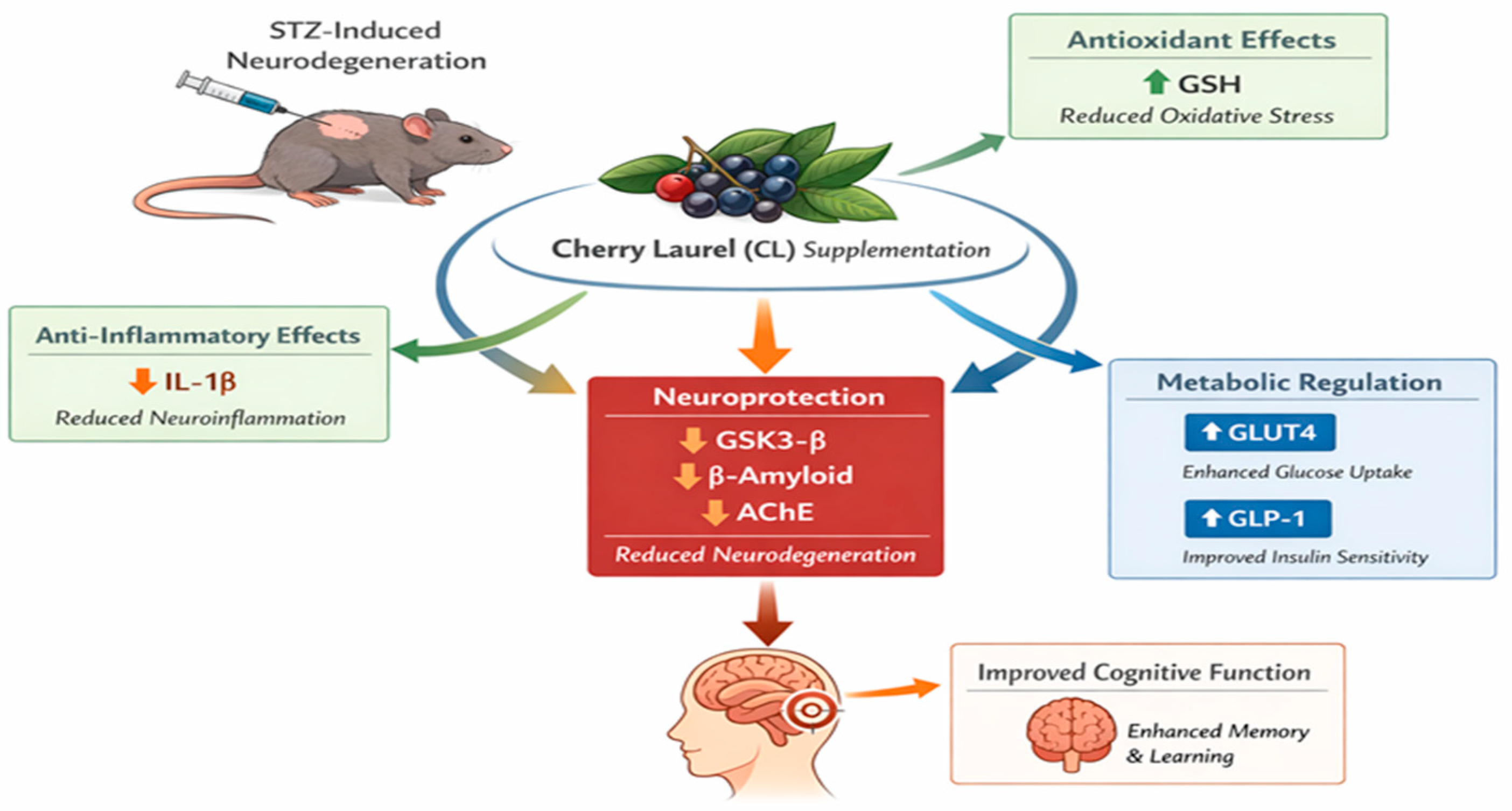
Effects of Laurocerasus Officinalis Roem (Cherry Laurel) on Cognitive Function and Neurobiochemical Pathways in a Streptozotocin-Induced Nontransgenic Alzheimer’s Disease Model


Abstract
1. Introduction
2. Materials and Methods
2.1. Cherry Laurel (CL) Preparation and Administration
2.2. Intracerebroventricular STZ INJECTION
2.3. Obtaining Blood and Tissue Samples from Animals
2.4. Tissue Homogenization
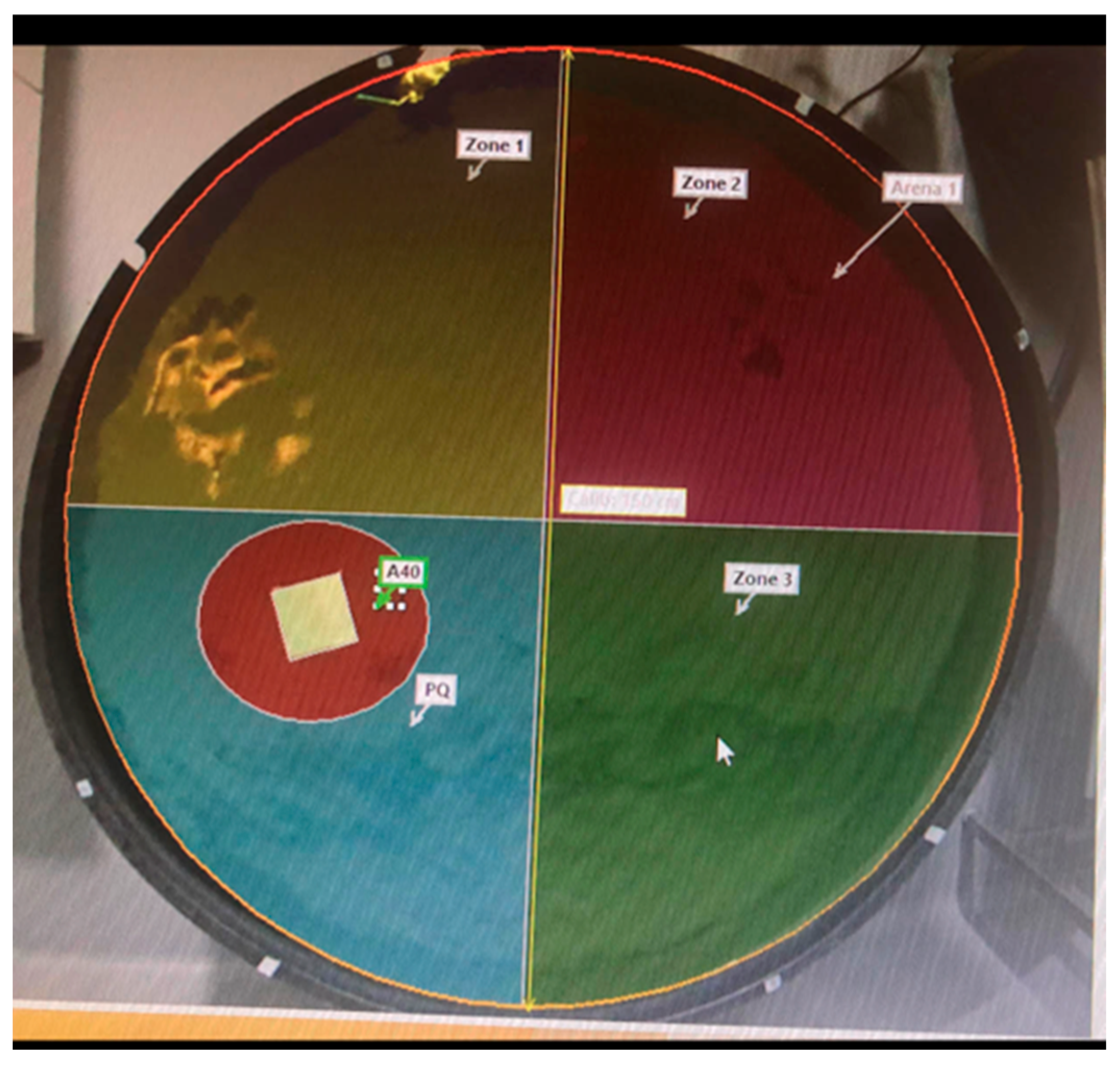
2.5. Morris Water Maze (MWM) Test
2.6. Intracerebroventricular (i.c.v) Injection with Streptozotocin (STZ)
2.7. Intraperitoneal (i.p.) Injection with Streptozotocin
2.8. Analysis of Serum Biochemical Tests
2.9. Statistical Analysis
3. Results
4. Discussion
4.1. Strengths and Limitations
4.2. Clinical Implications and Future Directions
4.3. Conclusions
Author Contributions
Funding
Institutional Review Board Statement
Data Availability Statement
Conflicts of Interest
References
- O’Brien, R.J.; Wong, P.C. Amyloid Precursor Protein Processing and Alzheimer’s Disease. Annu. Rev. Neurosci. 2011, 34, 185–204. [Google Scholar] [CrossRef] [PubMed]
- Da Silva, R.M.F.L.; Miranda, C.M.; Liu, T.; Tse, G.; Roever, L. Atrial Fibrillation and Risk of Dementia: Epidemiology, Mechanisms, and Effect of Anticoagulation. Front. Neurosci. 2019, 13, 18. [Google Scholar] [CrossRef] [PubMed]
- Llorens-Martín, M.; Jurado, J.; Hernández, F.; Ávila, J. GSK-3β, a pivotal kinase in Alzheimer’s disease. Front. Mol. Neurosci. 2014, 7, 46. [Google Scholar]
- Lee, S.J.; Chung, Y.H.; Joo, K.M.; Lim, H.C.; Jeon, G.S.; Kim, D.; Lee, W.B.; Kim, Y.S.; Cha, C.I. Age-related changes in glycogen synthase kinase 3beta (GSK3beta) immunoreactivity in the central nervous system of rats. Neurosci. Lett. 2006, 409, 134–139. [Google Scholar] [CrossRef]
- Casado, Á.; Encarnación López-Fernández, M.; Concepción Casado, M.; De La Torre, R. Lipid peroxidation and antioxidant enzyme activities in vascular and Alzheimer’s dementias. Neurochem. Res. 2008, 33, 450–458. [Google Scholar] [CrossRef]
- Hoyos, C.M.; Stephen Colagiuri Turner, A.; Ireland, C.; Naismith, S.L.; Duffy, S.L. Brain oxidative stress and cognitive function in older adults with diabetes and pre-diabetes who are at risk for dementia. Diabetes Res. Clin. Pract. 2022, 184, 109178. [Google Scholar] [CrossRef]
- Xie, L.; Lai, Y.; Lei, F.; Liu, S.; Liu, R.; Wang, T. Exploring the association between interleukin-1β and its interacting proteins in Alzheimer’s disease. Mol. Med. Rep. 2015, 11, 3219–3228. [Google Scholar] [CrossRef]
- Suwa, M.; Yamamoto, K.I.; Nakano, H.; Sasaki, H.; Radak, Z.; Kumagai, S. Brain-derived neurotrophic factor treatment increases the skeletal muscle glucose transporter 4 protein expression in mice. Physiol. Res. 2010, 59, 619–623. [Google Scholar] [CrossRef]
- Kontush, A. Amyloid-beta: An antioxidant that becomes a pro-oxidant and critically contributes to Alzheimer’s disease. Free Radic. Biol. Med. 2001, 31, 1120–1131. [Google Scholar] [CrossRef]
- Hansen, H.H.; Fabricius, K.; Barkholt, P.; Niehoff, M.L.; Morley, J.E.; Jelsing, J.; Pyke, C.; Knudsen, L.B.; Farr, S.A.; Vrang, N. The GLP1 Receptor Agonist Liraglutide Improves Memory Function and Increases Hippocampal CA1 Neuronal Numbers in a Senescence-Accelerated Mouse Model of Alzheimer’s Disease. J. Alzheimers Dis. 2015, 46, 877–888. [Google Scholar] [CrossRef]
- Rees, T.; Hammond, P.I.; Soreq, H.; Younkin, S.; Brimijoin, S. Acetylcholinesterase promotes beta-amyloid plaques in cerebral cortex. Neurobiol. Aging 2003, 24, 777–787. [Google Scholar] [CrossRef] [PubMed]
- Karabegović, I.T.; Stojicevic, S.S.; Velickovic, D.T.; Todorovic, Z.B.; Nikolic, N.C.; Lazic, M.L. The effect of different extraction techniques on the composition and antioxidant activity of cherry laurel (Prunus laurocerasus) leaf and fruit extracts. Ind. Crops Prod. 2014, 54, 142–148. [Google Scholar] [CrossRef]
- Munekata, P.E.S.; Yilmaz, B.; Pateiro, M.; Kumar, M.; Domínguez, R.; Shariati, M.A.; Hano, C.; Lorenzo, J.M. Valorization of by-products from Prunus genus fruit processing: Opportunities and applications. Crit. Rev. Food Sci. Nutr. 2023, 63, 7795–7810. [Google Scholar] [CrossRef] [PubMed]
- Orhan, I.E.; Akkol, E.K. Estimation of neuroprotective effects of Laurocerasus officinalis Roem. (cherry laurel) by in vitro methods. Food Res. Int. 2011, 44, 818–822. [Google Scholar] [CrossRef]
- Ayla, S.; Okur, M.E.; Günal, M.Y.; Özdemir, E.M.; Polat, D.Ç.; Yoltaş, A.; Biçeroğlu, Ö.; Karahüseyinoğlu, S. Wound healing effects of methanol extract of Laurocerasus officinalis roem. Biotech. Histochem. 2019, 94, 180–188. [Google Scholar] [CrossRef]
- Todorova, M.; Petkova, N.; Ivanov, I.; Tumbarski, Y.; Yanakieva, V.; Vasileva, I.; Barakova, Y.; Cherneva, E.; Nikolova, S. Chemical Characteristics and Biological Potential of Prunus laurocerasus Fruits. Life 2025, 15, 1847. [Google Scholar] [CrossRef]
- TürKomp. Ulusal Gıda Kompozisyon Veri Tabanı, Versiyon 1.0. Available online: https://turkomp.tarimorman.gov.tr/foodkarayemis-570 (accessed on 10 January 2024).
- Erdemoglu, N.; Küpeli, E.; Yeşilada, E. Anti-inflammatory and antinociceptive activity assessment of plants used as remedy in Turkish folk medicine. J. Ethnopharmacol. 2003, 89, 123–129. [Google Scholar] [CrossRef]
- Kolayli, S.; Küçük, M.; Duran, C.; Candan, F.; Dinçer, B. Chemical and antioxidant properties of Laurocerasus officinalis Roem. (cherry laurel) fruit grown in the Black Sea region. J. Agric. Food Chem. 2003, 51, 7489–7494. [Google Scholar] [CrossRef]
- Celep, E.; Aydın, A.; Yesilada, E. A comparative study on the in vitro antioxidant potentials of three edible fruits: Cornelian cherry, Japanese persimmon and cherry laurel. Food Chem. Toxicol. 2012, 50, 3329–3335. [Google Scholar] [CrossRef]
- Bakır, E.; Sarıözkan, S.; Endirlik, B.Ü.; Kılıç, A.B.; Yay, A.H.; Tan, F.C.; Eken, A.; Türk, G. Cherry laurel fruit extract counters dimethoate-induced reproductive impairment and testicular apoptosis. Arch. Ind. Hyg. Toxicol. 2020, 71, 329–338. [Google Scholar] [CrossRef]
- Senaylı, A. Evaluation the Anti-Diabetic Activity of Cherry Laurel (Laurocerasus officinalis). Open Conf. Proc. J. 2012, 3, 8–12. [Google Scholar] [CrossRef][Green Version]
- Yegin, S.Ç.; Güder, A. Laurocerasus officinalis Roem: Biochemical Parameters and Antioxidant Components in Diabetic Rat Model. Indian J. Anim. Res. 2022, 56, 290–297. [Google Scholar] [CrossRef]
- Uslu, H.; Uslu, G.A. Evaluating the effects of Prunus laurocerasus seed, fruit and leaf extracts on hyperglycaemia, insulin sensitivity and anti-oxidative activities in experimental diabetes in rat. Thai J. Vet. Med. 2021, 51, 667–673. [Google Scholar] [CrossRef]
- Orhan, N.; Damlaci, T.; Baykal, T.; Ozek, T.; Aslan, M. Hypoglycaemic effect of seed and fruit extracts of laurel cherry in different experimental models and chemical characterization of the seed extract. Rec. Nat. Prod. 2015, 9, 379–385. [Google Scholar]
- Pilipenko, V.; Narbute, K.; Pupure, J.; Langrate, I.K.; Muceniece, R.; Kluša, V. Neuroprotective potential of antihyperglycemic drug metformin in streptozocin-induced rat model of sporadic Alzheimer’s disease. Eur. J. Pharmacol. 2020, 881, 173290. [Google Scholar] [CrossRef]
- Plaschke, K.; Kopitz, J. In vitro streptozotocin model for modelling Alzheimer-like changes: Effect on amyloid prcursor protein secretases and glycogen synthase kinase-3. J. Neural Transm. 2015, 122, 551–557. [Google Scholar] [CrossRef]
- Rotermund, C.; Machetanz, G.; Fitzgerald, J.C. The Therapeutic Potential of Metformin in Neurodegenerative Diseases. Front. Endocrinol. 2018, 9, 400. [Google Scholar] [CrossRef]
- Keshavarzi, S.; Kermanshahi, S.; Karami, L.; Motaghinejad, M.; Motevalian, M.; Sadr, S. Protective role of metformin against methamphetamine-induced anxiety, depression, cognition impairment and neurodegeneration in rat: The role of CREB/BDNF and Akt/GSK3 signalling pathways. Neurotoxicology 2019, 72, 74–84. [Google Scholar] [CrossRef]
- Aoyama, K. Glutathione in the Brain. Int. J. Mol. Sci. 2021, 22, 5010. [Google Scholar] [CrossRef]
- Zhao, G.; Dharmadhikari, G.; Maedler, K.; Meyer-Hermann, M. Possible role of interleukin-1β in type 2 diabetes onset and implications for anti-inflammatory therapy strategies. PLoS Comput. Biol. 2014, 10, e1003798. [Google Scholar] [CrossRef]
- Lencioni, C.; Lupi, R.; Del Prato, S. Beta-cell failure in type 2 diabetes mellitus. Curr. Diab. Rep. 2008, 8, 179–184. [Google Scholar] [CrossRef]
- Mrak, R.E.; Griffin, W.S.T. Interleukin-1, neuroinflammation, and Alzheimer’s disease. Neurobiol. Aging 2001, 22, 903–908. [Google Scholar] [CrossRef] [PubMed]
- Waisman, A.; Hauptmann, J.; Regen, T. The role of IL-17 in CNS diseases. Acta Neuropathol. 2015, 129, 625–637. [Google Scholar] [CrossRef] [PubMed]
- Abdel-Moneim, A.; Bakery, H.H.; Allam, G. The potential pathogenic role of IL-17/Th17 cells in both type 1 and type 2 diabetes mellitus. Biomed. Pharmacother. 2018, 101, 287–292. [Google Scholar] [CrossRef] [PubMed]
- Küpeli Akkol, E.; Kirmizibekmez, H.; Küükboyaci, N.; Gören, A.C.; Yesilada, E. Isolation of active constituents from cherry laurel (Laurocerasus officinalis Roem.) leaves through bioassay-guided procedures. J. Ethnopharmacol. 2012, 139, 527–532. [Google Scholar] [CrossRef]
- Lim, G.P.; Yang, F.; Chu, T.; Chen, P.; Beech, W.; Teter, B.; Tran, T.; Ubeda, O.; Ashe, K.H.; Frautschy, S.A.; et al. Ibuprofen suppresses plaque pathology and inflammation in a mouse model for Alzheimer’s disease. J. Neurosci. 2000, 20, 5709–5714. [Google Scholar] [CrossRef]
- Frölich, L.; Blum-Degen, D.; Bernstein, H.G.; Engelsberger, S.; Humrich, J.; Laufer, S.; Muschner, D.; Thalheimer, A.; Türk, A.; Hoyer, S.; et al. Brain insulin and insulin receptors in aging and sporadic Alzheimer’s disease. J. Neural Transm. 1998, 105, 423–438. [Google Scholar] [CrossRef]
- Shah, K.; DeSilva, S.; Abbruscato, T. The role of glucose transporters in brain disease: Diabetes and Alzheimer’s Disease. Int. J. Mol. Sci. 2012, 13, 12629–12655. [Google Scholar] [CrossRef]
- Vannucci, S.J.; Koehler-Stec, E.M.; Li, K.; Reynolds, T.H.; Clark, R.; Simpson, I.A. GLUT4 glucose transporter expression in rodent brain: Effect of diabetes. Brain Res. 1998, 797, 1–11. [Google Scholar] [CrossRef]
- Hoyer, S. Is sporadic Alzheimer’s disease the brain type of non-insulin dependent diabetes mellitus? A challenging hypothesis. J. Neural Transm. 1998, 105, 415–422. [Google Scholar] [CrossRef]
- Mayeux, R.; Stern, Y. Epidemiology of Alzheimer’s disease. Cold Spring Harb Perspect. Med. 2012, 2, a006239. [Google Scholar]
- Moir, R.D.; Atwood, C.S.; Romano, D.M.; Laurans, M.H.; Huang, X.; Bush, A.I.; Smith, J.D.; Tanzi, R.E. Differential effects of apolipoprotein E isoforms on metal-induced aggregation of A beta using physiological concentrations. Biochemistry 1999, 38, 4595–4603. [Google Scholar] [CrossRef] [PubMed]
- Sayre, L.M.; Perry, G.; Harris, P.L.R.; Liu, Y.; Schubert, K.A.; Smith, M.A. In situ oxidative catalysis by neurofibrillary tangles and senile plaques in Alzheimer’s disease: A central role for bound transition metals. J. Neurochem. 2000, 74, 270–279. [Google Scholar] [CrossRef] [PubMed]
- Atwood, C.S.; Scarpa, R.C.; Huang, X.; Moir, R.D.; Jones, W.D.; Fairlie, D.P.; Tanzi, R.E.; Bush, A.I. Characterisation of copper interactions with alzheimer amyloid beta peptides: Identification of an attomolar-affinity copper binding site on amyloid beta1-42. J. Neurochem. 2000, 75, 1219–1233. [Google Scholar] [CrossRef]
- Amato, M.C.; Pizzolanti, G.; Torregrossa, V.; Pantò, F.; Giordano, C. Phenotyping of type 2 diabetes mellitus at onset on the basis of fasting incretin tone: Results of a two-step cluster analysis. J. Diabetes Investig. 2016, 7, 219–225. [Google Scholar] [CrossRef]
- Ahrén, B. Gut peptides and type 2 diabetes mellitus treatment. Curr. Diab Rep. 2003, 3, 365–372. [Google Scholar] [CrossRef]
- Demirpençe, M.; Demirpençe, N.; Tütüncüoğlu, P.; Örük, G.; Atalay, N.; Görgel, A.; Yılmaz, H.; Arslan, B.; Bahçeci, M. Does glucagon-like peptide-1 have a role in the etiopathogenesis of gestational diabetes? Turk. J. Endocrinol. Metab. 2016, 20, 26–30. [Google Scholar]
- Bonde, L.; Vilsbøll, T.; Nielsen, T.; Bagger, J.I.; Svare, J.A.; Holst, J.J.; Larsen, S.; Knop, F.K. Reduced postprandial GLP-1 responses in women with gestational diabetes mellitus. Diabetes Obes. Metab. 2013, 15, 713–720. [Google Scholar] [CrossRef]
- Gejl, M.; Brock, B.; Egefjord, L.; Vang, K.; Rungby, J.; Gjedde, A. Blood-Brain Glucose Transfer in Alzheimer’s disease: Effect of GLP-1 Analogue Treatment. Sci. Rep. 2017, 7, 17490. [Google Scholar] [CrossRef]
- Kappe, C.; Tracy, L.M.; Patrone, C.; Iverfeldt, K.; Sjöholm, Å. GLP-1 secretion by microglial cells and decreased CNS expression in obesity. J. Neuroinflammation 2012, 9, 276. [Google Scholar] [CrossRef]
- Andersen, A.; Lund, A.; Knop, F.K.; Vilsbøll, T. Glucagon-like peptide 1 in health and disease. Nat. Rev. Endocrinol. 2018, 14, 390–403. [Google Scholar] [CrossRef]
- Wu, P.; Zhao, Y.; Zhuang, X.; Sun, A.; Zhang, Y.; Ni, Y. Low glucagon-like peptide-1 (GLP-1) concentration in serum is indicative of mild cognitive impairment in type 2 diabetes patients. Clin. Neurol. Neurosurg. 2018, 174, 203–206. [Google Scholar] [CrossRef]
- Aluko, R.E. Food-derived Acetylcholinesterase Inhibitors as Potential Agents against Alzheimer’s Disease. eFood 2021, 2, 49–58. [Google Scholar] [CrossRef]
- Morris, R.G.M. Spatial localisation does not require the presence of local cues. Learn. Motiv. 1981, 12, 239–260. [Google Scholar] [CrossRef]
- Tian, H.; Ding, N.; Guo, M.; Wang, S.; Wang, Z.; Liu, H.; Yang, J.; Li, Y.; Ren, J.; Jiang, J.; et al. Analysis of Learning and Memory Ability in an Alzheimer’s Disease Mouse Model using the Morris Water Maze. J. Vis. Exp. 2019, 152, e60055. [Google Scholar]
- Bromley-Brits, K.; Deng, Y.; Song, W. Morris water maze test for learning and memory deficits in Alzheimer’s disease model mice. J. Vis. Exp. 2011, 20, 2920. [Google Scholar] [CrossRef]




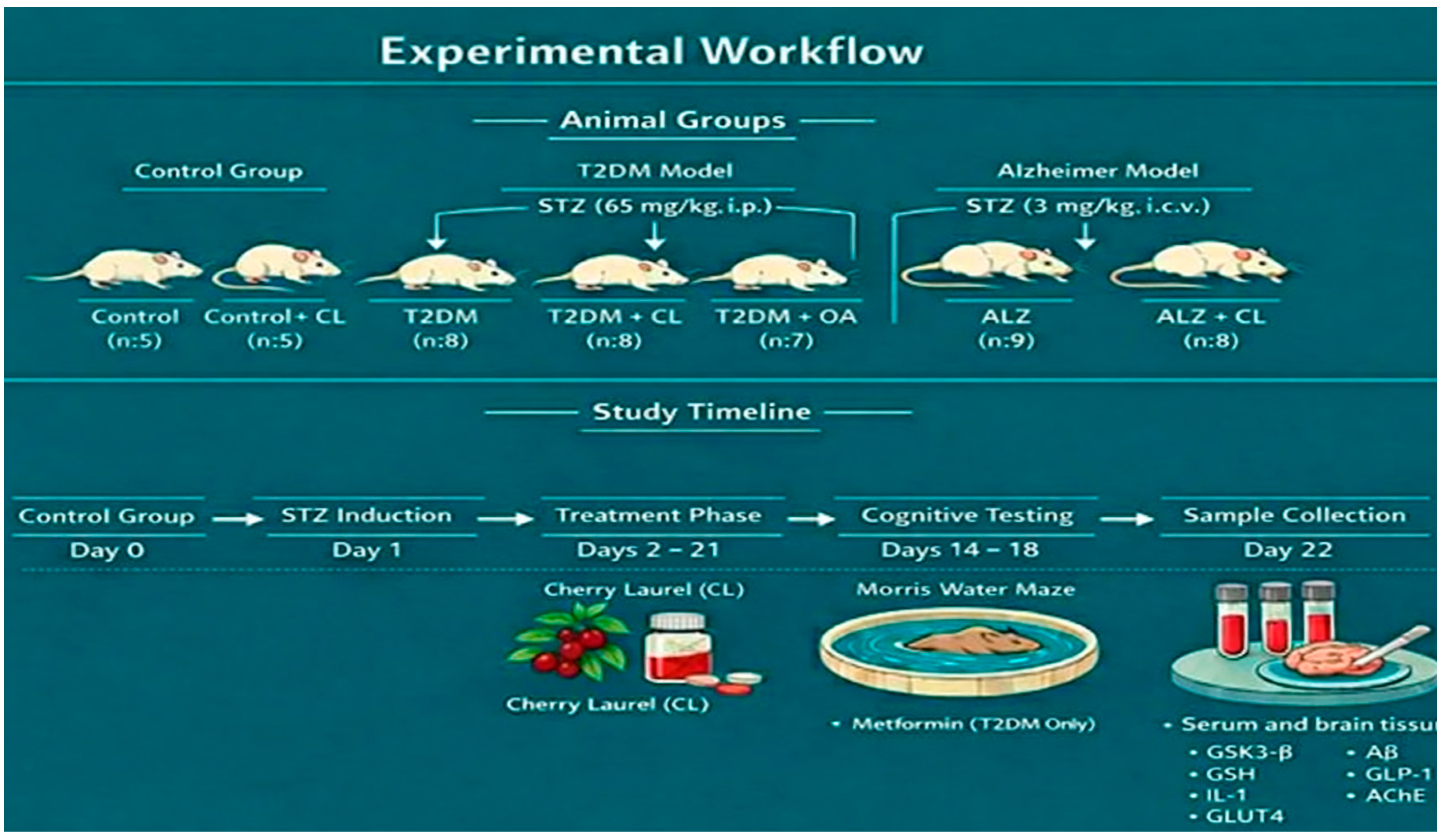
| Group | Final n (Analysed) | Model/Induction | Treatment (Route) | Dose | Schedule/Duration |
|---|---|---|---|---|---|
| Control | 5 | Sham i.c.v. (aCSF) | None | — | aCSF 20 µL total/day i.c.v. on Days 1 and 3 |
| Control + CL | 5 | Sham i.c.v. (aCSF) | Cherry laurel (gavage) | 0.37 g/mL | aCSF i.c.v. Days 1 and 3 + CL daily for 21 days |
| T2DM | 8 | T2DM model: STZ i.p. | None | STZ 65 mg/kg | STZ i.p. on Day 1; diabetes defined as glucose > 200 mg/dL |
| T2DM + CL | 8 | T2DM model: STZ i.p. | Cherry laurel (gavage) | STZ 65 mg/kg; CL 0.37 g/mL | STZ Day 1 + CL daily for 21 days |
| T2DM + OA | 7 | T2DM model: STZ i.p. | Metformin (gavage) | STZ 65 mg/kg; Metformin 300 mg/kg/day | STZ Day 1 + metformin daily for 21 days |
| ALZ | 9 | Nontransgenic sporadic AD model: STZ i.c.v. | None | STZ 3 mg/kg | STZ i.c.v. on Days 1 and 3 (10 µL/ventricle; 20 µL/day total) |
| ALZ + CL | 8 | AD model: STZ i.c.v. | Cherry laurel (gavage) | STZ 3 mg/kg; CL 0.37 g/mL | STZ i.c.v. Days 1 and 3 + CL daily for 21 days |
| Control (n:5) | Control + CL (n:5) | T2DM (n:8) | T2DM + CL (n8) | T2DM + OA (n:7) | ALZ (n:9) | ALZ + CL (n:8) | p Value * | |
|---|---|---|---|---|---|---|---|---|
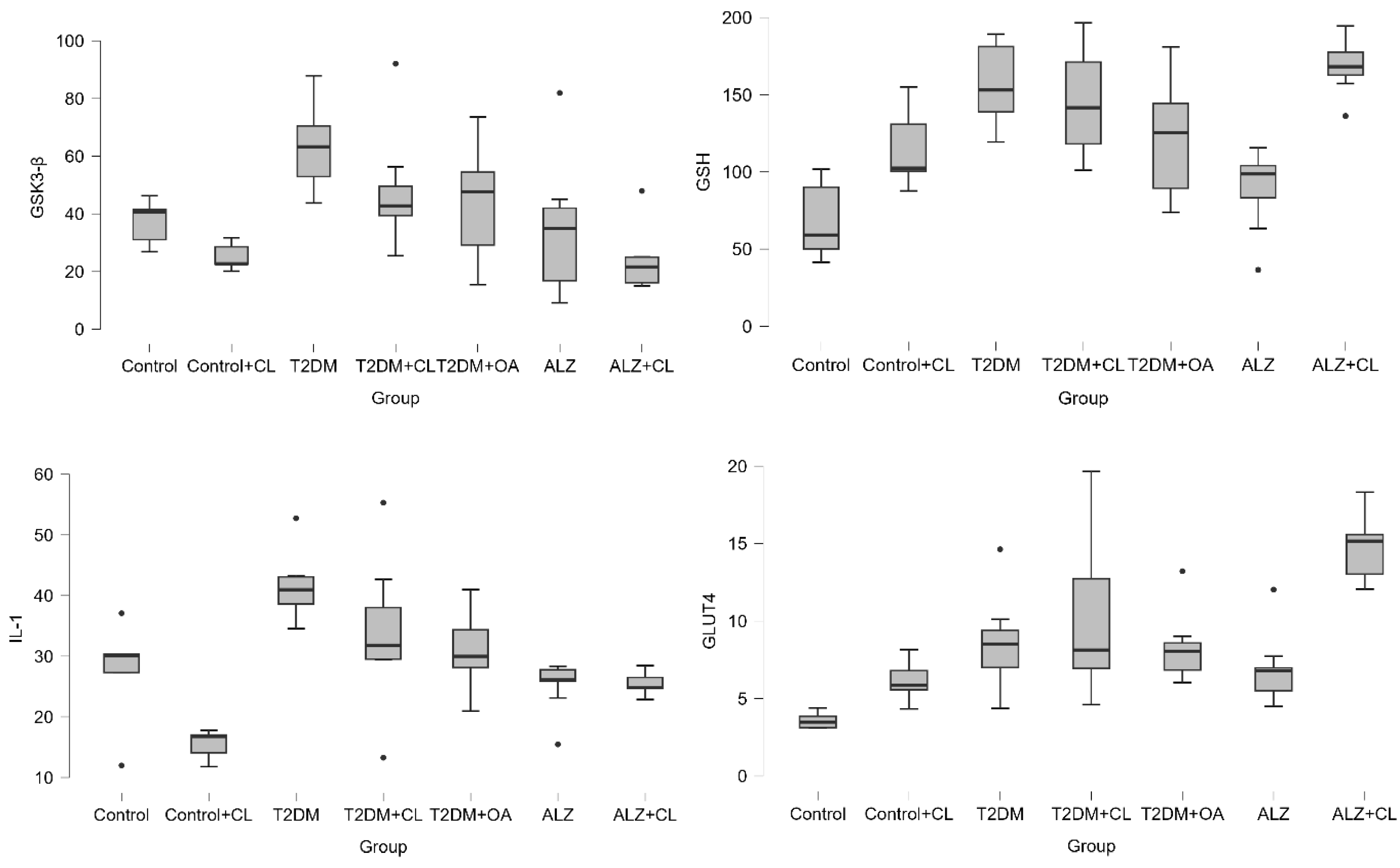
| GSK3-β (pmol/L) | 37.27 ± 8.03 c | 25.13 ± 4.81 | 63.88 ± 15.75 a.f.g | 48.13 ± 19.81 | 43.45 ± 21.34 | 33.82 ± 21.9 c | 23.54 ± 10.67 c | <0.001 |
| GSH (ng/L) | 68.48 ± 26.14 c.d.g | 115.25 ± 27.29 g | 157.1 ± 26.14 a.f | 145.59 ± 35.64 a.f | 121.09 ± 40.09 g | 89.21 ± 25.32 c.d.g | 168.76 ± 17.91 a.b.e.f | <0.001 |
| IL-1 (ng/L) | 27.37 ± 9.32 c | 15.49 ± 2.49 c.d.e | 41.54 ± 5.45 a.b.f.g | 33.79 ± 12.04 b | 31 ± 6.55 b | 25.35 ± 4.05 c | 25.48 ± 1.75 c | <0.001 |
| GLUT4 (µg/L) | 3.59 ± 0.54 d.g | 6.14 ± 1.43 g | 8.61 ± 3.03 g | 9.94 ± 5.02 a.g | 8.31 ± 2.41 g | 6.84 ± 2.19 g | 14.73 ± 2.13 a.b.c.d.e.f | <0.001 |
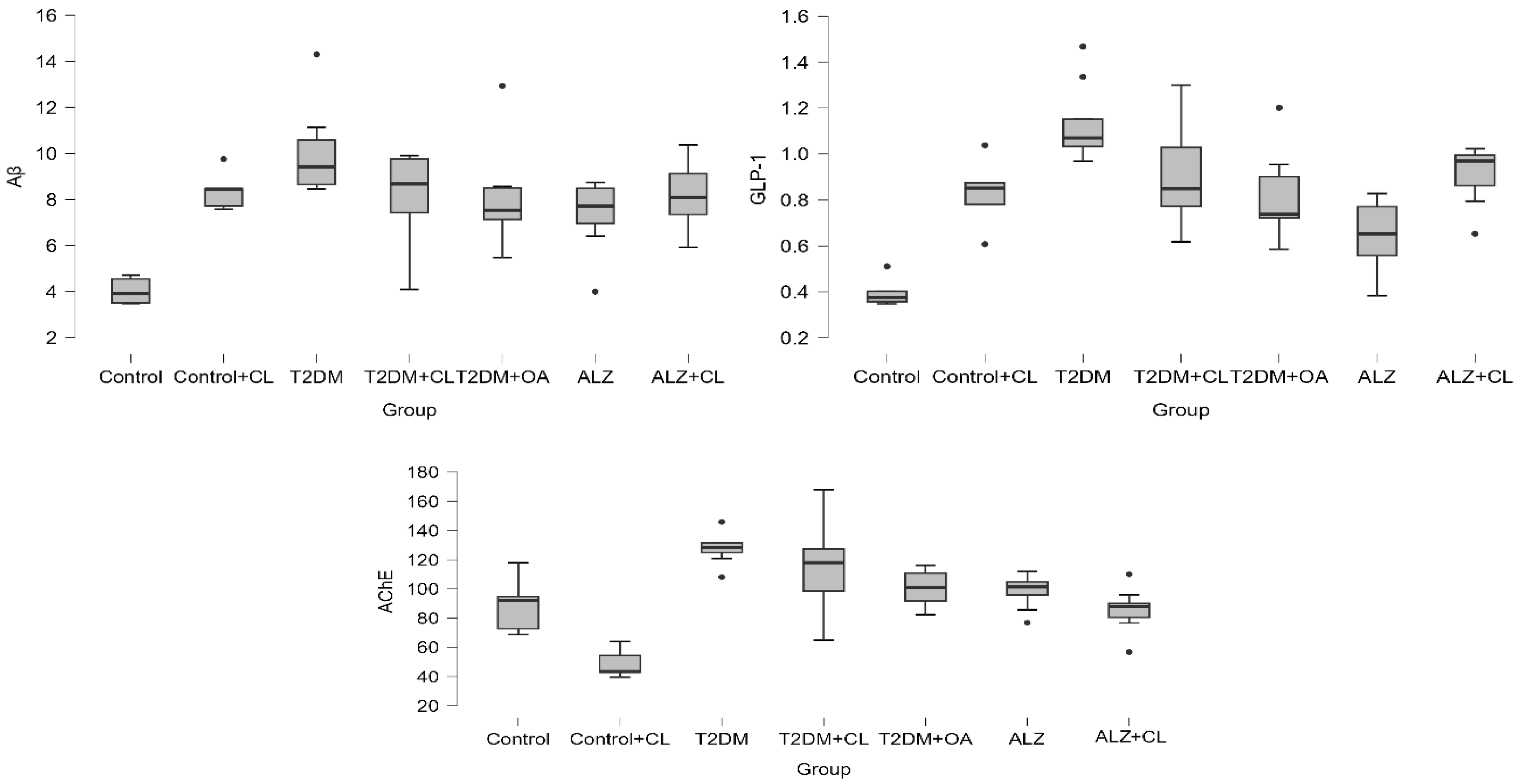
| Aβ(µg/L) | 4.04 ± 0.57 b.c.d.e.f.g | 8.4 ± 0.86 a | 10.05 ± 1.95 a.f | 8.15 ± 2.02 a | 8.18 ± 2.33 a | 7.36 ± 1.5 a.c | 8.2 ± 1.41 a | <0.001 |
| GLP-1 (pmol/L) | 0.4 ± 0.06 b.c.d.e.g | 0.83 ± 0.16 a | 1.13 ± 0.18 a.e.f | 0.92 ± 0.25 a.f | 0.82 ± 0.2 a.c | 0.65 ± 0.15 c.d.g | 0.91 ± 0.13 a.f | <0.001 |
| AChE (nmol/L) | 89.19 ± 19.77 b.c | 48.86 ± 10.15 a.c.d.e.f.g | 127.63 ± 10.68 a.b.f.g | 115.27 ± 30.84 b.f.g | 100.67 ± 13.06 b | 98.59 ± 11.79 b.c.d | 86.05 ± 14.51 b.c.g | <0.001 |
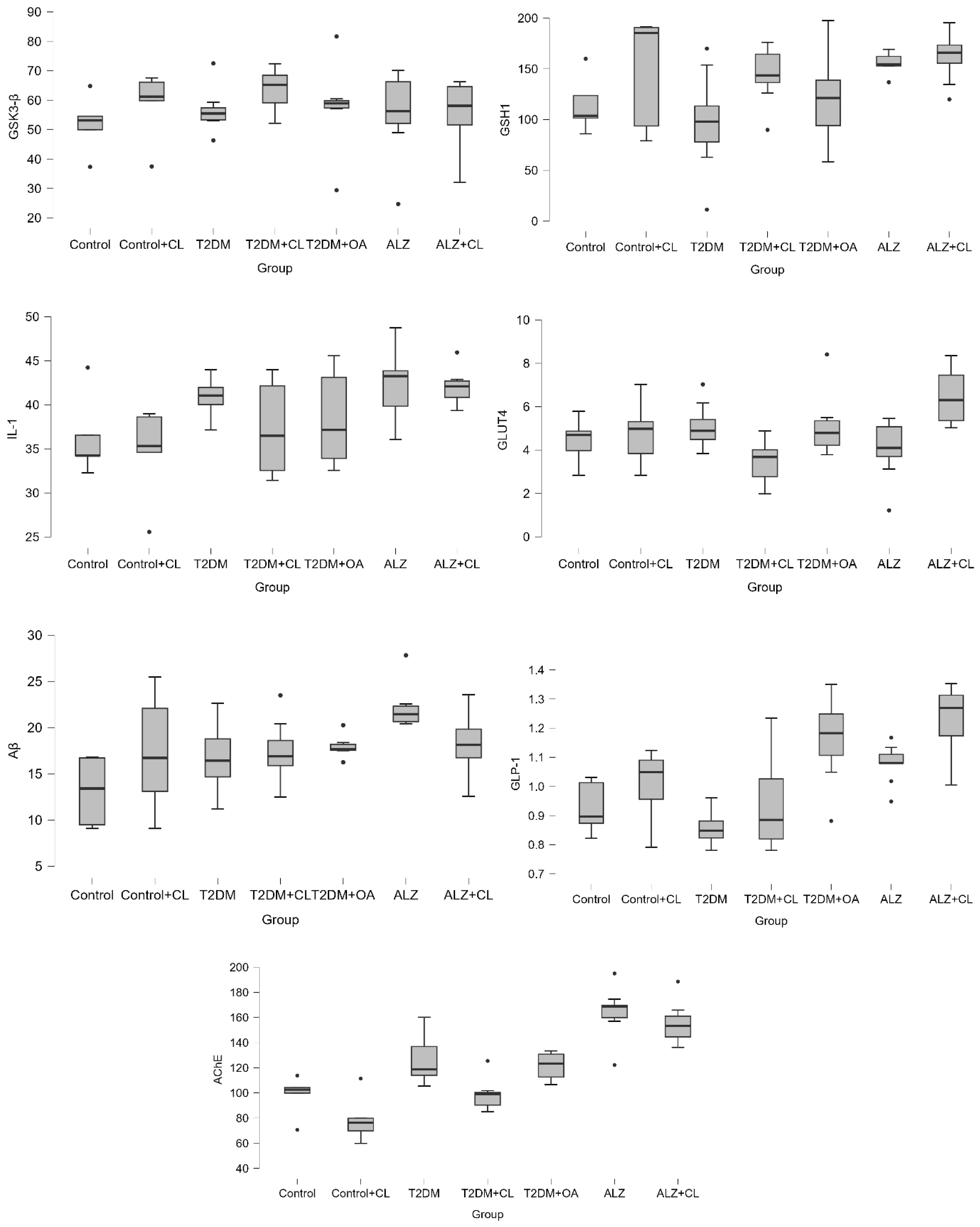
| Control (n:5) | Control + CL (n:5) | T2DM (n:8) | T2DM + CL (n:8) | T2DM + OA (n:7) | ALZ (n:9) | ALZ + CL (n:8) | p Value * | |
|---|---|---|---|---|---|---|---|---|
| GSK3-β (pmol/L) | 51.97 ± 9.89 | 58.45 ± 12.17 | 56.54 ± 7.49 | 63.58 ± 7.49 | 57.74 ± 15.21 | 55.43 ± 13.53 | 55.12 ± 12.35 | 0.668 |
| GSH (ng/L) | 114.92 ± 28.47 | 148 ± 56.53 | 97.08 ± 49.61 f.g | 143.55 ± 27.2 | 120.37 ± 44.54 | 154.06 ± 11.58 c | 161.95 ± 24.29 c | 0.009 |
| IL-1 (ng/L) | 36.3 ± 4.68 | 34.62 ± 5.42 f | 40.91 ± 2. 44 | 37.24 ± 5.25 | 38.48 ± 5.52 | 42.3 ± 3.9 b | 42.01 ± 2.04 | 0.01 |
| GLUT4 (µg/L) | 4.44 ± 1.1 | 4.8 ± 1.58 | 5.12 ± 1.02 | 3.45 ± 0.97 g | 5.16 ± 1.56 | 4.05 ± 1.32 g | 6.52 ± 1.35 d.f | 0.001 |
| Aβ (µg/L) | 13.1 ± 3.74 f | 17.29 ± 6.61 | 16.6 ± 3.58 f | 17.45 ± 3.34 | 17.95 ± 1.22 | 22.06 ± 2.31 a.c | 18.16 ± 3.63 | 0.004 |
| GLP-1 (pmol/L) | 0.93 ± 0.09 e.g | 1 ± 0.13 g | 0.86 ± 0.06 e.f.g | 0.93 ± 0.16 e.g | 1.16 ± 0.16 a.c.d | 1.08 ± 0.06 c | 1.23 ± 0.12 a.b.c.d | <0.001 |
| AChE (nmol/L) | 98.2 ± 16.3 f.g | 79.4 ± 19.43 e.f.g | 125.44 ± 18.59 d.f.g | 98.65 ± 12.43 c.e.f.g | 121.46 ± 10.8 b.d.f.g | 164.36 ± 19.27 a.b.c.d.e | 155.12 ± 16.92 a.b.c.d.e | <0.001 |
| Control (n:5) | Control + CL (n:5) | T2DM (n:8) | T2DM + CL (n:8) | T2DM + OA (n:7) | ALZ (n:9) | ALZ + CL (n:8) | p Value * | |
|---|---|---|---|---|---|---|---|---|
| Urea (mg/dL) | 34.4 ± 3.05 c.d.e | 44.6 ± 2.51 c.d.e.g | 63.5 ± 9.53 a.b.f.g | 70.88 ± 5.03 a.b.e.f.g | 60.57 ± 2.37 a.b.d.f.g | 39.11 ± 4.26 c.d.e | 32.75 ± 4.43 b.c.d.e | <0.001 |
| Creatinine (mg/dL) | 0.33 ± 0.01 | 0.45 ± 0.03 | 0.39 ± 0.04 | 0.35 ± 0.02 | 0.28 ± 0.04 | 4.28 ± 11.89 | 0.31 ± 0.03 | 0.631 |
| ALT (U/L) | 54.4 ± 3.36 c.d.e.g | 53 ± 3.16 c.d.e.g | 39.88 ± 4.91 a.b.f | 41.38 ± 4.07 a.b.f | 40.29 ± 5.65 a.b.f | 49 ± 6.2 c.d.e.g | 38.75 ± 3.49 a.b.f | <0.001 |
| AST (U/L) | 40.8 ± 3.42 | 42.6 ± 2.3 | 45.88 ± 2.64 d | 38.63 ± 4.47 c.e | 42.14 ± 7.2 d | 45.89 ± 5.82 | 43.75 ± 2.92 | 0.029 |
| Cholesterol (mg/dL) | 63.6 ± 3.36 d.f | 59.6 ± 2.07 f | 67.63 ± 3.2 d.f.g | 57.88 ± 4.22 a.c.e.f | 64.29 ± 2.93 d.f.g | 83.25 ± 3.37 a.b.c.d.e.g | 61 ± 3.67 c.e.f | <0.001 |
| TG (mg/dL) | 72.6 ± 18.72 b.c.d.g | 42.2 ± 2.77 a.e.f.g | 61.88 ± 3.94 a.d.g | 52 ± 3.21 a.c.e.f | 63.14 ± 3.48 b.d.g | 74.63 ± 3.25 b.d.g | 55.89 ± 4.26 a.b.c.e.f | <0.001 |
| HDL (mg/dL) | 38 ± 1.58 e.g | 42.8 ± 2.59 c.g | 35.5 ± 2.62 b.d.e.f.g | 40.75 ± 4.27 c.g | 44.86 ± 3.44 a.c.g | 41.78 ± 3.15 c.g | 60.5 ± 2.45 a.b.c.d.e.f | <0.001 |
| LDL (mg/dL) | 11.2 ± 1.92 b | 7 ± 2 a.c.d.e.f.g | 14.25 ± 2.25 b | 11.63 ± 1.77 b | 13.43 ± 2.51 b | 14.75 ± 2.66 b | 13.11 ± 2.03 b | <0.001 |
| Control (n:5) | Control + CL (n:5) | T2DM (n:8) | T2DM + CL (n:8) | T2DM + OA (n:7) | ALZ (n:9) | ALZ + CL (n:8) | p Value * | |
|---|---|---|---|---|---|---|---|---|
| 1. day | 46.01 (40.88–59.91) | 37.96 (9.93–59.83) | 44.36 (36.35–54.05) | 45.855 (34.81–58.68) | 51.87 (35.05–58.17) g | 44.35 (29.62–59.12) | 31.985 (15.92–44.41) e | 0.023 ‡ |
| 2. day | 57.46 (22.32–58.63) | 9.2 (4.47–60) | 43.65 (31.7–54.54) | 36.915 (8.32–58.17) | 43.45 (27.09–53.38) | 22.77 (11.93–60) | 18.275 (5.5–34.96) | 0.013 ‡ |
| 3. day | 29.85 (12.73–36.46) | 13.12 (4.64–59.84) | 36.185 (6.76–58.98) | 45.02 (22.65–55.21) g | 28.86 (20.84–51.55) | 17.87 (2.7–46.32) | 11.465 (5.2–31.26) d | 0.007 ‡ |
| 4. day | 10.32 (9.7–24.67) | 7.13 (4.23–50.78) | 32.03 (16.89–54.16) g | 23.155 (2.9–48.7) | 27.79 (12.97–34.88) | 20.9 (7.65–31.52) | 6.345 (1.41–17.32) c | 0.005 ‡ |
| 5. day | 4.1 (1.57–11.91) | 9.11 (3.48–18.59) | 17.49 (8.9–38) | 12.095 (5.78–50.72) | 14.6 (7.57–31.11) | 20.55 (0.64–40.35) | 13.43 (2.46–47.17) | 0.133 ‡ |
Disclaimer/Publisher’s Note: The statements, opinions and data contained in all publications are solely those of the individual author(s) and contributor(s) and not of MDPI and/or the editor(s). MDPI and/or the editor(s) disclaim responsibility for any injury to people or property resulting from any ideas, methods, instructions or products referred to in the content. |
© 2026 by the authors. Licensee MDPI, Basel, Switzerland. This article is an open access article distributed under the terms and conditions of the Creative Commons Attribution (CC BY) license.
Share and Cite
Ozsoy, F.; Yanar, K.; Sayili, U.; Atukeren, P.; Uzun, H. Effects of Laurocerasus Officinalis Roem (Cherry Laurel) on Cognitive Function and Neurobiochemical Pathways in a Streptozotocin-Induced Nontransgenic Alzheimer’s Disease Model. Nutrients 2026, 18, 867. https://doi.org/10.3390/nu18050867
Ozsoy F, Yanar K, Sayili U, Atukeren P, Uzun H. Effects of Laurocerasus Officinalis Roem (Cherry Laurel) on Cognitive Function and Neurobiochemical Pathways in a Streptozotocin-Induced Nontransgenic Alzheimer’s Disease Model. Nutrients. 2026; 18(5):867. https://doi.org/10.3390/nu18050867
Chicago/Turabian StyleOzsoy, Fulya, Karolin Yanar, Ugurcan Sayili, Pinar Atukeren, and Hafize Uzun. 2026. "Effects of Laurocerasus Officinalis Roem (Cherry Laurel) on Cognitive Function and Neurobiochemical Pathways in a Streptozotocin-Induced Nontransgenic Alzheimer’s Disease Model" Nutrients 18, no. 5: 867. https://doi.org/10.3390/nu18050867
APA StyleOzsoy, F., Yanar, K., Sayili, U., Atukeren, P., & Uzun, H. (2026). Effects of Laurocerasus Officinalis Roem (Cherry Laurel) on Cognitive Function and Neurobiochemical Pathways in a Streptozotocin-Induced Nontransgenic Alzheimer’s Disease Model. Nutrients, 18(5), 867. https://doi.org/10.3390/nu18050867