


Abstract
Background/Objectives: Rheumatic and musculoskeletal diseases (RMDs) are major global disability contributors, often prompting patients to seek dietary supplements (DSs) despite limited clinical evidence regarding their effectiveness. The objective of this study was to describe DS use among individuals with RMDs in Norway and explore associations of weekly use of various DSs with information sources, demographics, self-reported DS knowledge, health status, and dietary and lifestyle habits. Methods: In this cross-sectional study, 967 participants from five Norwegian user organizations completed an online survey. Multivariable logistic regression determined the odds of weekly DS use based on demographics, self-reported knowledge, and seven information sources. Results: DS use during the last year was reported by 86.5% of participants. High education and high self-reported knowledge were significantly associated with most weekly use categories. Utilizing alternative practitioners and health food stores as information sources was associated with higher odds of weekly omega-3 and non-vitamin supplement use. Advertising was only associated with the use of supplements marketed specifically for RMDs. Overall, weekly DS use was associated with informal information sources, but not with healthcare professionals or health authorities as sources for information. Conclusions: These findings suggest a need for improved health literacy and proactive counseling by healthcare professionals to support safe, informed patient choices about DSs.
1. Introduction
Rheumatic and musculoskeletal diseases (RMDs) are the leading contributor to disability worldwide, and include more than 150 different diseases/conditions affecting joints, bones, muscles, or multiple body areas or systems [1]. Moreover, data from the Global Burden of Disease (GBD) 2019 show that these conditions are the largest contributor worldwide to years lived with disability (YLDs), accounting for 17% [2]. Even though some of the RMDs have effective pharmacological treatments (e.g., rheumatoid arthritis, RA) [1], many of them do not (e.g., osteoarthritis, OA) [2], possibly prompting people suffering from these to seek complementary and alternative medicine (CAM), including dietary supplements, to control their disease symptoms [3]. In fact, several top ten priority settings for research within RMDs proposed by partnerships consisting of patients, caregivers, carers, and clinicians mention diet or lifestyle factors as important [3].
Dietary supplements (DSs) can be defined as “a product taken orally that contains one or more ingredients (…) that are intended to supplement one’s diet and are not considered food” [4]. A systematic review and meta-analysis informing the 2021 EULAR recommendations for lifestyle improvements in people with RMDs found moderate evidence for a few DSs in OA and RA, the two most studied RMDs [5]. However, the effect was small (OA: vitamin D, glucosamine, chondroitin; RA: fish oil/omega-3); thus, the review concluded that they are not of clinical relevance for RMD-related outcomes such as disease activity, pain, function, fatigue, depression, health-related quality of life, and radiographic damage [5]. Still, the global market for DSs was valued at more than 150 billion USD in 2021, with an estimated further annual growth of almost ten percent from 2022 to 2030 [6]. The legislation of DSs in Norway does not require DSs to demonstrate effectiveness; however, it is not allowed to claim or else give the impression that a DS prevents, cures, or alleviates disease, disease symptoms, or pain [7]. Nevertheless, a recent report found that 9 out of 10 DSs on the market in Norway used claims that were not allowed [8].
Patients suffering from chronic diseases such as RMDs are more likely to have a high prevalence of CAM use [9]. For instance, a scoping review from 2019 found that 47% of individuals with rheumatoid arthritis use “natural product dietary supplements”, defined as non-mineral, non-vitamin, and natural product-derived substances [10]. Of particular concern among this patient group are the possible adverse interaction effects of these products with commonly used medicines in this population [11]. Underreporting CAM use to their general practitioner is common; thus, trusting health information using unreliable claims may make individuals with RMDs particularly vulnerable [12]. Health literacy implies the ability to access, understand, appraise, and use health information, for example, related to DS use, to make informed choices [4]. To make informed choices, they need to be able to sort out which information sources are reliable, and preferably also be able to assess the reliability of health claims themselves. However, recent national surveys in Norway show that many people find it difficult to assess the reliability of health claims [13,14]. Thus, the information source they rely on to gain knowledge is of utmost importance to making informed choices regarding the use of DSs.
There is a need for more in-depth knowledge regarding the patterns of DS use among individuals with RMDs. Few studies have examined how different information sources are associated with the use of specific types of DSs in a broad RMD population, including DSs marketed specifically for RMDs. The objective of this study was to describe DS use among individuals with RMDs in Norway and explore associations of weekly use of various DSs with information sources, demographics, self-reported DS knowledge, health status, and dietary and lifestyle habits.
2. Materials and Methods
2.1. Study Design
This study is a cross-sectional study to assess the use of various DSs, sources of information about DSs, self-reported health status, self-reported knowledge about DSs, and self-reported dietary and lifestyle habits in a sample of DS users and non-users of DSs.
2.2. Study Population and Recruitment
Members from five different user organizations within musculoskeletal health and/or rheumatic disease in Norway were invited to participate. Invitations to participate were sent via member newsletters from the organizations’ e-mail with a link to the survey. For one of the organizations, it was additionally shared in a closed Facebook group for members. The invitation provided information on the purpose of the study. Participation was voluntary, and this study was based on a convenience sample. Inclusion criteria were being aged ≥ 18 years or older and answering “yes” to the question, “Do you have a rheumatic disease and/or a musculoskeletal disease?”. Respondents who did not report having an established RMD diagnosis were excluded, meaning those answering “no” or “diagnosis not confirmed” to the above question. As all diagnoses were self-reported, no clinical verification of the diagnosis was performed. In line with the WHO definition of musculoskeletal conditions [1], chronic back pain and chronic neck pain were included as RMDs, although these are symptom-based conditions that may overlap with other diagnoses, such as OA. The data were collected from 20th October 2020 to 13th January 2021. At the time of data collection, the number of registered members of the five organizations was 35,961.
2.3. Survey
The development of the anonymous online survey has been described previously [15]. Data collection was handled by a questionnaire created with nettskjema.no, and a survey solution developed and hosted by the University of Oslo (nettskjema@usit.uio.no). This study was conducted according to the guidelines of the Declaration of Helsinki and was preapproved by the Norwegian Centre for Research Data (NSD) (reference number 754857). This study was considered to be conducted anonymously by the NSD, since no direct or indirect information enabling the participant to be identified was included. All questions were mandatory, so there was no missing data.
2.4. Variables
The main outcome variables were the use of DSs that participants selected from a list consisting of 31 DSs. For each DS listed, participants reported those (1) not used during the last year, (2) used during the last year, (3) used monthly, or (4) used weekly. Furthermore, weekly users of the various DSs were categorized within the five categories; participants reporting weekly use of at least one DS within a category were classified as weekly users of that category: (1) omega-3 fatty acids or fish oil users, (2) multivitamin or mineral users, (3) single vitamin or mineral users, (4) non-vitamin or mineral users, and (5) users of DSs marketed specifically for RMDs. Thus, the main outcome variables were the dichotomous variables of weekly use/nonuse of the five DS categories.
2.5. Covariates
Covariates included in the analysis were four demographic variables: gender (male/female), age (continuous), higher education (no/yes), and married/cohabitant (no/yes) (Table A1). Furthermore, three variables assessing self-reported health (bad/good), self-reported knowledge about DSs (low/high), and self-reported dietary and lifestyle habits (bad/good) were included as covariates. Finally, seven variables assessing the various sources of knowledge about DSs used by the respondents were included as covariates. Participants were asked to give multiple choices to the question, “Which source(s) do you use to gain knowledge about nutritional supplements?” The alternatives given included the following: (1) General practitioner/health personnel, (2) Alternative practitioner (not health personnel), (3) Social media (e.g., Facebook, Instagram, Twitter, blogs), (4) The Health Authorities (e.g., the Directorate of Health and the Norwegian Food Safety Authority), (5) Advertising (e.g., on TV, print media, social media or e-mail), (6) Drugstores/pharmacies, and (7) Health food stores.
2.6. Statistical Analysis
Statistical Package for the Social Sciences (SPSS) version 27 (IBM Corp., Armonk, NY, USA) was used to conduct statistical analysis. To detect any associations between those who reported using DS and those who did not during the last year, a parametric t-test for independent samples was applied for continuous variables and presented as mean (SD), and the non-parametric Pearson’s chi-square test was applied for categorical variables and presented as n (%). Here, the three self-rated ordinal variables were assessed as continuous variables. Furthermore, before entering the direct logistic regression analysis, some of the variables were recoded into dichotomous variables (Table A1). Five separate multivariable logistic regression analyses were conducted to determine the odds of being a weekly user of (1) omega-3 fatty acids and/or fish oil, (2) multivitamins and/or multiminerals, (3) single vitamins and/or single minerals, (4) non-vitamins and/or non-minerals, and (5) DSs specifically marketed for RMDs. The multivariable logistic regression controlled for the independent variables gender, age, marital/cohabitant status, education, self-reported knowledge of DSs, self-reported health status, and self-reported dietary and lifestyle habits, in addition to seven predefined sources of information about DSs. Multicollinearity between the independent variables was negligible (r = −0.075 to 0.188, VIF = 1.017 to 1.178). The odds ratio (OR) was used to illustrate the strength of association between each independent variable and the likelihood of being a weekly user of DSs in the five given categories. A p ≤ 0.05 was set as the level of statistical significance.
3. Results
3.1. Study Population
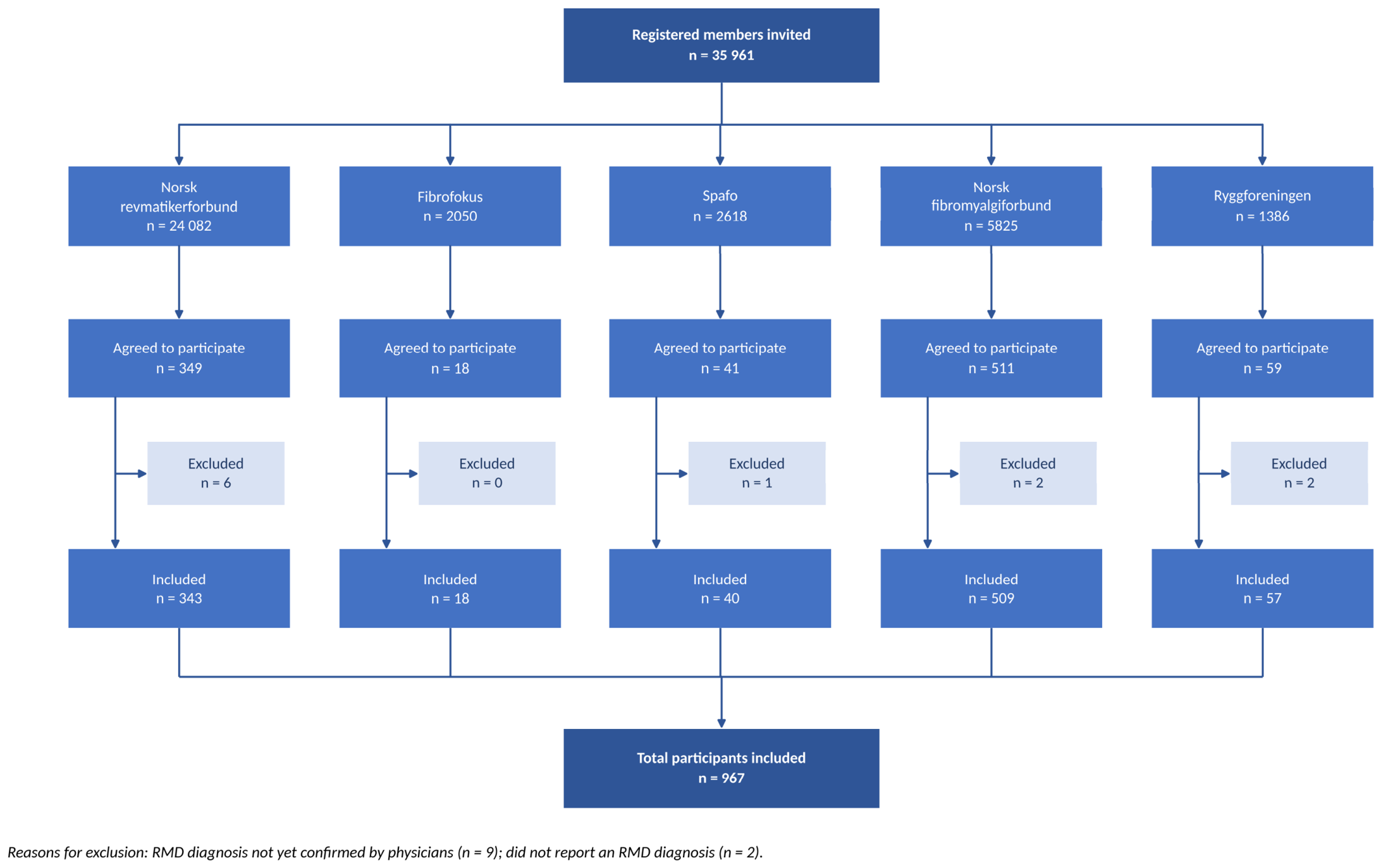
Of the 35,961 registered members in the five user organizations, 978 people agreed to participate, and of these, a total of 967 answered “yes” to the self-reported diagnosis question in the survey, “Do you have a rheumatic disease and/or a musculoskeletal disease?”, and were included in the analysis. Thus, nine were excluded since they, to the above question, answered, “diagnosis not yet confirmed”, implying they were still undertaking diagnostic assessments, and two were excluded due to not having any diagnosis of musculoskeletal and/or rheumatic disease, as indicated by not making any marking for any alternative in the questionnaire (including “other”) (Figure 1). Of the 967 included respondents, 836 (86.5%) reported use of DSs during the last year. The number of weekly users in the five DS groups was 563 (58.2%) for omega-3 fatty acids or fish oil, 295 (30.5%) for multivitamins or minerals, 712 (73.6%) for single vitamins or minerals, 289 (29.9%) for non-vitamins or non-minerals, and 108 (11.2%) for DSs marketed specifically for RMDs (Table 1 and Table 2). Participants could belong to more than one group.
Figure 1.
Flow diagram.
Table 1.
Demographic variables of the study population (N = 967) among those with (n = 836) versus those who did not report use (n = 131) of dietary supplements last year.
Table 2.
Characteristics of various groups of weekly users of dietary supplements (N = 967). Some individuals may belong to several groups.
The most prevalent diagnoses in the study population were fibromyalgia (64.7%), osteoarthritis (37.1%), chronic back pain (26.0%), and chronic pain in the neck (22.4%) (Table A2).
Most of the respondents (92%) were female (Table 1). A significantly higher share (92.9%, p = 0.009) of those reporting use of DSs last year were female compared to those who did not report DS use last year (86.3%). The reported number of self-reported diagnoses ranged from 1 to 8, with a mean number of diagnoses of 2.13 (SD 1.29). The largest group of respondents (n = 412, 42.6%) had only one diagnosis; however, almost one in four had two diagnoses (n = 246, 25.4%), and approximately one in three had three or more diagnoses (n = 309, 32.0%).
Furthermore, a higher percentage of those with higher education reported having used DSs during the last year, compared to those with a lower level of education (p < 0.001) (Table 1). Additionally, those reporting use of DSs last year reported having significantly higher knowledge about DSs and better dietary and lifestyle habits, compared with those reporting not to have used DSs last year (both p < 0.001). Interestingly, no significant difference was found regarding self-reported health status between those reporting DS use last year and those who did not.
3.2. Characteristics of the Various Groups of Weekly DS Users
Almost three-quarters of the study sample (n = 967) reported weekly use of single vitamins and/or single minerals, and more than half reported weekly use of omega-3 fatty acids and/or fish oil (Table 2). Approximately 1/10 of the study sample were weekly users of DSs marketed specifically for RMDs, and this group also seemed to be of higher age compared to the other DS user groups (Table 2). Those reporting weekly use of DSs marketed specifically for RMDs and those reporting weekly use of non-vitamins or non-minerals reported higher estimated yearly expenses on DS (Table 2).
3.3. Frequency and Use of Various DS Among Those with Reported Use Last Year
In total, 836 respondents reported having used DS in the last year (Table A3). The supplements with the highest frequency of weekly use were Vitamin D (63.1%), omega-3 fatty acids (50.0%), and Magnesium (46.3%), while the dietary supplements most often used less frequently than monthly during the last year were Vitamin C (13.0%), Vitamin B12 (11.4%), and omega-3 fatty acids (11.0%). For DSs in group 4, non-vitamins and non-minerals, the weekly frequency of use was mostly low (<2.8%); still, the weekly frequency of use for some DSs was higher, such as Garlic (16.8%), Probiotics/prebiotics (13.1%), and omega-6 fatty acids (7.7%) (Table A3). Also, for DSs in group 5, weekly use, in general, was low, but the highest frequency of weekly use was found for Collagen Plus (6.2%) and Medox (3.3%).
3.4. Sources of Knowledge About Dietary Supplements
In response to the question, “Which sources do you use to gain knowledge about nutritional supplements?”, the participants could give multiple responses from a list of predefined sources (Table 3). A significantly higher percentage of the respondents who reported the use of DSs last year used the general practitioner or other healthcare personnel as a source of knowledge about DSs, compared to those not using DSs last year. Those reporting the use of DSs last year were also more likely to report using alternative practitioners, drugstores/pharmacies, or health food stores as sources of knowledge about DSs (Table 3).
Table 3.
Sources for knowledge about DSs (N = 967). Multiple responses were possible.
3.5. Associations with Weekly Use Within Various Groups of DS Users
Direct logistic regression was performed to assess the association between various information sources of knowledge about DSs and the odds that respondents were weekly users of DSs in the five user categories (Table 4). The model contained four independent variables with background questions (gender, age, married/cohabitant status, and higher education), three self-reported variables (self-reported health, self-reported knowledge about DSs, and self-reported dietary and lifestyle habits), and seven sources of knowledge about DSs. The main results for the five user groups are given in Table 4, whereas details for each model are given in Appendix A, Table A4, Table A5, Table A6, Table A7 and Table A8.
Table 4.
Logistic regression of associations between information sources, demographics, self-reported DS knowledge, health status, and dietary and lifestyle habits, and the likelihood of being a weekly user of DSs in the five user groups (odds ratio (95% CI)). Significant associations are marked in bold (p ≤ 0.05).
3.5.1. Factors Associated with the Likelihood of Being a Weekly User of Omega-3 Fatty Acids and/or Fish Oil (Group 1)
Five independent variables made a unique statistically significant contribution to the model (Table 4). The strongest factor associated with being a weekly user of fish oil and/or omega-3 fatty acids was self-reported knowledge about DSs, recording an odds ratio of 1.70. This indicates that respondents who reported high knowledge of DSs had 1.70 times greater odds of being weekly users of fish oil and/or omega-3 fatty acids than those who reported low knowledge, controlling for all other factors in the model. Furthermore, the background variable higher education was associated with 1.60 times greater odds of being a weekly user of fish oil and/or omega-3 fatty acids. Additionally, two of the information sources of DSs made a statistically significant contribution to the model. Those who reported using alternative practitioners or health food stores as an information source for DSs had 1.59 and 1.40 times greater odds, respectively, of being a weekly user of fish oil and/or omega-3 fatty acids, controlling for other factors in the model. Higher age also showed a weak, but significant association with the likelihood of being a weekly user of omega-3 fatty acids and/or fish oil (OR 1.02 (1.01–1.03)).
The full model containing all factors was statistically significant, χ2 (14, N = 967) = 60.08, p < 0.001, indicating that the model was able to distinguish between respondents who reported using fish oil and/or omega-3-fatty acids weekly and those who did not. The model correctly classified 62.0% of the cases.
3.5.2. Factors Associated with the Likelihood of Being a Weekly User of Multivitamins and/or Minerals (Group 2)
The strongest factor associated with being a weekly user of multivitamins was the same as the strongest factor of being a weekly user of fish oil and/or omega-3-fatty acids, namely reporting high knowledge of DSs, which recorded 1.81 times greater odds, when controlling for all other factors (Table 4). Likewise, having higher education was associated with 1.79 times greater odds of being a weekly user of multivitamins. None of the information sources were significantly associated with being a weekly user of multivitamins. However, there was a statistical tendency toward higher odds of being a weekly user of multivitamins for those reporting using drugstores/pharmacies or health food stores as information sources of DSs, and a statistical tendency toward lower odds for those reporting using the health authorities as an information source.
The full model containing all factors was statistically significant, χ2 (14, N = 967) = 43.53, p < 0.001, indicating that the model was able to distinguish between respondents who reported using multivitamins weekly and those who did not. The model correctly classified 70.1% of the cases.
3.5.3. Factors Associated with the Likelihood of Being a Weekly User of Single Vitamins and/or Single Minerals (Group 3)
As for the models for weekly use of fish oil and/or omega-3-fatty acids and weekly use of multivitamins, high self-reported knowledge of DSs was the strongest factor associated with being a weekly user of single vitamins and/or single minerals, with 2.84 times greater odds (Table 4). Additionally, high education was associated with 1.68 times greater odds of being a weekly user of single vitamins and/or single minerals, while being married or cohabiting was associated with lower odds of being a weekly user (OR 0.63). Regarding the information sources of DSs, using alternative practitioners as an information source of DSs was the only factor showing statistical significance, where the use of alternative practitioners as an information source was associated with 2.56 times greater odds of being a weekly user of single vitamins and/or single minerals. Furthermore, using the general practitioner or health food stores as information sources for DSs showed a statistical tendency toward greater odds of being a weekly user of single vitamins and/or single minerals.
The full model containing all factors was statistically significant, χ2 (14, N = 967) = 87.59, p < 0.001, indicating that the model was able to distinguish between respondents who reported using single vitamins and/or single minerals weekly and those who did not. The model correctly classified 75.6% of the cases.
3.5.4. Factors Associated with the Likelihood of Being a Weekly User of Nonvitamins and/or Nonminerals (Group 4)
Here, the strongest factor associated with being a weekly user was the use of alternative practitioners as an information source for DSs, associated with 2.42 times greater odds (Table 4). Also, using health food stores as an information source of DSs showed 1.61 times greater odds of being a weekly user of non-vitamins and/or non-minerals. Additionally, as found for weekly users of fish oil and/or omega-3-fatty acids, multivitamins, and single vitamins and/or single minerals, higher education was associated with 1.89 times greater odds of being a weekly user of non-vitamins and/or non-minerals.
The full model containing all factors was statistically significant, χ2 (14, N = 967) = 66.59, p < 0.001, indicating that the model was able to distinguish between respondents who reported using non-vitamins and/or non-minerals weekly and those who did not. The model correctly classified 71.5% of the cases.
3.5.5. Factors Associated with the Likelihood of Being a Weekly User of DSs Marketed Specifically Toward RMDs (Group 5)
The significant factors of being a weekly user of DSs marketed toward muscle/joint were using health food stores as an information source of DSs, which was associated with 2.60 times greater odds, and using advertising as an information source of DSs, which was associated with 2.22 times greater odds for being a weekly user (Table 4). As found for weekly users of fish oil and/or omega-3 fatty acids, higher age was found to be associated with being a weekly user of DSs marketed toward muscle/joint, with 1.05 times greater odds. Reporting higher knowledge about DSs was close to statistical significance with being a weekly user of DSs marketed toward muscle/joint. Interestingly, using drugstores/pharmacies as an information source of DSs was associated with lower odds, although not significant, of being a weekly user of DSs marketed toward muscle/joint.
The full model containing all factors was statistically significant, χ2 (14, N = 967) = 72.80, p < 0.001, indicating that the model was able to distinguish between respondents who reported using DSs marketed toward muscle/joint weekly and those who did not. The model correctly classified 88.9% of the cases.
4. Discussion
This study explored associations between information sources about DSs and weekly DS use across user profiles. High age, high self-reported DS knowledge, high education, and using alternative practitioners and health food stores as information sources were associated with weekly omega-3/fish oil use. Weekly multivitamin use was associated with high self-reported DS knowledge and higher education, with a tendency toward higher odds for using drugstores/pharmacies or health food stores, and lower odds for using health authorities, as information sources. Weekly single vitamin/mineral use was associated with high self-reported DS knowledge, higher education, living alone, and using alternative practitioners as information sources. Weekly non-vitamin/mineral use was associated with high education and using alternative practitioners and health food stores as information sources. Weekly use of DSs for muscle/joint was associated with high age and using advertising and health food stores as information sources.
High education was associated with weekly use in all weekly user profiles, except for being a weekly user of DSs marketed for RMDs. This is supported by previous literature regarding the general use of DSs [16,17,18]. Additionally, the same studies found higher age to be associated with the use of DSs, which we, in contrast, only found for the omega 3/fish oil group and the DSs marketed for RMDs group. Use of omega-3 fatty acids has also been associated with higher socioeconomic status, education, and income in Asian and Australian populations [19,20]. In addition, its use is associated with musculoskeletal conditions in the Asian population [20]. However, in our study, when assessing associations between age and different DS user profiles, we found this association only for weekly users of omega-3 fatty acids and DSs marketed for RMDs.
Female gender has been associated with DS use [21]. In the present study, we also found that a significantly higher proportion of females reported having used DS last year; still, no gender differences were found in any of the user profile groups.
Self-reported knowledge about DSs was associated with weekly use of omega-3 fatty acids and/or fish oil, multivitamins, and single vitamins/minerals, but not with weekly use of non-vitamins/minerals or DSs marketed for RMDs. An association between higher self-reported knowledge and omega-3 use has also been reported previously [20]. However, self-reported knowledge may not reflect actual knowledge. People may overestimate their own knowledge, a phenomenon known as the Dunning–Kruger effect [22], and we could not assess whether participants’ knowledge was accurate.
Interestingly, no association was found in any of the user profiles between self-reported health and use of DSs. However, this is in line with the results of a previous study by Gwinnutt et al. [5]. Previous studies on DS have found that having a healthier lifestyle in general, i.e., being a non-smoker, drinking little alcohol, exercising more, eating a healthier diet, and maintaining a healthy weight, is associated with DS use [17]. It may seem paradoxical that those reporting the healthiest lifestyle in general are among those reporting a higher use of DSs. However, this inverse relationship has been identified in other studies [23,24]. Similarly, in our study, self-reported dietary and lifestyle habits were significantly higher among those reporting DS use during the last year, but showed no significant associations in any of the user groups.
Interestingly, the only user profile group where we found an association with the use of advertising (TV, print media, social media, or mail) was weekly users of DSs marketed for muscle/joint. Also, this is the only user profile group where higher education was not associated with use. Marketing of DSs often uses testimonials of personal experiences by celebrities in endorsing the product or labelling it with ungrounded health claims; however, it does not always comply with legislation. A Spanish study found that 40% of radio spot advertisements of DSs used health professionals, celebrities, or real or alleged patients to endorse DS in the radio commercial [25]. A Polish study found that after the introduction of self-regulation for advertisements of DSs, still 30% of TV and radio DS commercials made unproven health claims [26]. While social media may represent a fast information source for health information, the reliability of this information has been rated as low. A Canadian study that assessed the information quality of websites about CAM for the management of arthritis using the DISCERN instrument found that most websites were of “fair” quality; however, the majority of websites did not report potential risks regarding CAM treatment [27]. A recent US study found that 41% had solely used the internet as an information source on DSs [24].
None of the DS user profiles were significantly associated with the use of general practitioners (GPs), health personnel, or health authorities as information sources for DSs. This could indicate that DS consumers rely less on DS information from reliable sources as compared to less reliable information sources of DSs; however, this finding may also reflect that DS use in general is not recommended by Norwegian health authorities [28]. Still, previous studies have found that most people are not taking DSs upon their health care providers’ recommendations [16,24,29]. As individuals with RMDs often take medicines to control their condition, not consulting health personnel before taking DS may increase the risk of harmful interactions, such as increasing or reducing the effect of their medication.
None of the user profiles showed a significant association with the use of pharmacies as an information source about DSs. Pharmacists are health personnel and should be assessed as a reliable source of information about DSs. However, previous studies have revealed that pharmacists lack confidence in their own knowledge of DSs and, in addition, score lower on knowledge [24,30,31]. Most pharmacies today are commercial. A recent Iraqi qualitative study among pharmacists identified that dealings with pharmaceutical companies were a major trigger for prescribing DSs to patients, while few informed patients about possible side effects and interactions [32].
Using health food stores as an information source about DSs was associated with being a weekly user of omega-3 fatty acids, non-vitamin/minerals, and DSs marketed for muscle/joint, and showed a trend toward being associated with being a weekly user of multivitamins and single vitamins/minerals. Health food stores appear to serve as a significant venue for disseminating information regarding DSs. However, the quality of this information may lack an evidence-based foundation. A study conducted a comparative analysis of the responses and advice provided about DSs by staff in 192 health food stores and 56 pharmacies across Canada. The findings indicated that 88% of the recommendations provided in health food stores were supported by weak evidence, whereas in pharmacies, 23% of the recommendations were similarly weakly supported by evidence [33].
Being a weekly user of omega-3 fatty acids, single vitamins/minerals, and non-vitamins/minerals was associated with using an alternative health practitioner as an information source of DSs. The literature is scarce about the quality of information given by these non-medical therapists.
The reliance that people with RMDs show toward informal information sources rather than health authorities or medical professionals about DSs may highlight a potential patient-safety issue. This may be particularly relevant for weekly users of supplements marketed specifically for RMDs, whose use was associated with advertising as an information source. Due to possible risks of adverse herb–drug or supplement–drug interactions, people with RMDs are particularly vulnerable [34]. To mitigate these risks, educational interventions toward persons with RMDs should emphasize the limited clinical efficacy of most supplements for RMD outcomes and enhance their health literacy in order to improve the capacity to identify unproven marketing assertions. Healthcare personnel, including general practitioners and community pharmacists, should proactively screen for supplement use and guide patients toward safe, evidence-based decisions regarding the use of DSs. In practice, this means that DS use should be included when reviewing the medication list of patients with RMDs, so that possible interactions can be identified. Patients should also be guided toward reliable information sources about DSs. As advertising was associated with weekly use of DSs marketed specifically for RMDs, healthcare personnel should be aware that patients may have been exposed to health claims that are not allowed [8].
Strengths and Limitations
A strength of this study is the large sample that recruited participants from various major RMD user organizations, allowing us to capture a wide range of diagnoses. However, the convenience sampling and relatively low response rate (approximately 2.7%) among eligible members limit the generalization of the results. Our sample consisted mostly of females (92%), which reflects the fact that women have a higher prevalence of RMDs, particularly in fibromyalgia, osteoarthritis, and rheumatoid arthritis [35]. Still, due to the low number of men in our study, our findings may not be relevant for men. Almost two-thirds of the sample reported having fibromyalgia, a condition with limited treatment options where DS use is common. In a previous study among persons with fibromyalgia, 85% reported having used DSs [15]. The high prevalence of DS use and the observed associations in the present study may therefore largely reflect this group, and the results may be less applicable to persons with other RMDs, such as inflammatory arthritis. The sample also included clinically different RMDs, which may introduce a risk of bias. The cross-sectional design limits the possibility of establishing any causal relationships between the use of information sources, demographic factors, and weekly DS consumption. Furthermore, how often participants used each information source, how much they trusted it, or whether the information was for or against DS use was not assessed. Using an information source therefore does not necessarily mean that it influenced DS use. Moreover, the high number of statistical tests increases the risk that some of the significant associations are chance findings. Also, individuals already interested in nutrition, health and DS may have been more likely to answer the long and comprehensive survey. The prevalence of DS use in this study (86.5%) may therefore overestimate DS use among persons with RMDs in general. In comparison, 62% of women in the most recent national dietary survey in Norway reported using DS [36]. Such selection may also have influenced the observed associations, for example, if participants with a strong interest in DSs were more likely to use several information sources and to report high knowledge about DSs. The survey collected no information about members who did not respond; thus, reasons for non-attendance are missing. Additionally, all data were self-reported, which may introduce social desirability bias and/or potential recall bias. Of special concern is that the diagnoses were self-reported and not clinically verified, which may have led to some misclassification and may reduce the ability to generalize the results.
Future studies should explore how often different information sources are used, how much they are trusted, and whether the information encourages or discourages DS use. Studies in more representative samples and with clinically verified diagnoses are also needed.
5. Conclusions
Our cross-sectional survey of nearly one thousand Norwegian participants with various RMDs revealed high DS use, and that weekly DS use was associated with informal information sources, but not with healthcare professionals or health authorities. The findings indicate that higher education and high self-reported knowledge were associated with weekly DS use. Our results may call for more proactive counseling from medical professionals regarding potentially harmful interactions with drugs to ensure patient safety and informed decision-making. In clinical practice, healthcare personnel should ask patients with RMDs about their use of DSs and which information sources they rely on.
Author Contributions
Conceptualization, M.M., L.A.H.K.; methodology, M.M., L.A.H.K.; formal analysis, M.M.; writing—original draft preparation, M.M.; writing—review and editing, M.M., L.A.H.K.; project administration, M.M. All authors have read and agreed to the published version of the manuscript.
Funding
This research received no external funding.
Institutional Review Board Statement
This study was conducted in accordance with the Declaration of Helsinki and approved by the Norwegian Centre for Research Data (NSD) (reference number 754857, 7 July 2020). NSD considered the survey to be conducted anonymously, as no direct or indirect information that could identify the study participants was to be processed.
Informed Consent Statement
Informed consent was obtained from all subjects involved in this study.
Data Availability Statement
Data supporting the conclusions of this article will be made available by the authors on request.
Acknowledgments
We are thankful to the user organizations for the distribution of the survey among their members, thus assisting with the data collection.
Conflicts of Interest
The authors declare no conflicts of interest.
Abbreviations
The following abbreviations are used in this manuscript:
| DS | Dietary supplements |
| RMDs | Rheumatic and musculoskeletal diseases |
| CAM | Complementary and alternative medicine |
| OA | Osteoarthritis |
| RA | Rheumatoid arthritis |
| OR | Odds ratio |
| GBD | Global Burden of Disease |
| YLDs | Years lived with disability |
| GP | General practitioner |
| HCPs | Healthcare professionals |
Appendix A
Table A1.
Covariates included in the logistic regression model.
Table A2.
Overview of RMD diagnoses in the study population (n = 967). The same respondent could have had several diagnoses.
Table A3.
Frequency of use (and percentage of total) of various DSs among those with reported use last year (n = 836).
Table A4.
Logistic regression of associations between information sources, demographics, self-reported DS knowledge, health status, and dietary and lifestyle habits, and the likelihood of being a weekly user of omega-3 fatty acids and/or fish oils (Group 1).
Table A5.
Logistic regression of associations between information sources, demographics, self-reported DS knowledge, health status, and dietary and lifestyle habits, and the likelihood of being a weekly user of multivitamins (Group 2).
Table A6.
Logistic regression of associations between information sources, demographics, self-reported DS knowledge, health status, and dietary and lifestyle habits, and the likelihood of being a weekly user of a single vitamin and/or single mineral (Group 3).
Table A7.
Logistic regression of associations between information sources, demographics, self-reported DS knowledge, health status, and dietary and lifestyle habits, and the likelihood of being a weekly user of non-vitamins or minerals (Group 4).
Table A8.
Logistic regression of associations between information sources, demographics, self-reported DS knowledge, health status, and dietary and lifestyle habits, and the likelihood of being a weekly user of dietary supplements marketed for RMDs (Group 5).
References
- World Health Organization. Musculoskeletal Conditions. 2022. Available online: https://www.who.int/news-room/fact-sheets/detail/musculoskeletal-conditions (accessed on 18 November 2026).
- Cieza, A.; Causey, K.; Kamenov, K.; Hanson, S.W.; Chatterji, S.; Vos, T. Global estimates of the need for rehabilitation based on the Global Burden of Disease study 2019: A systematic analysis for the Global Burden of Disease Study 2019. Lancet 2021, 396, 2006–2017. [Google Scholar] [CrossRef] [Scilit] [PubMed]
- James Lind Alliance Priority Setting Partnerships. Top 10s of Priorities for Research. Available online: https://www.jla.nihr.ac.uk/top-10-priorities/ (accessed on 18 November 2026).
- Merriam-Webster. Dietary Supplements. 2022. Available online: https://www.merriam-webster.com/dictionary/dietary%20supplement (accessed on 22 November 2026).
- Gwinnutt, J.M.; Wieczorek, M.; Rodriguez-Carrio, J.; Balanescu, A.; Bischoff-Ferrari, H.A.; Boonen, A.; Cavalli, G.; de Souza, S.; de Thurah, A.; Dorner, T.E.; et al. Effects of diet on the outcomes of rheumatic and musculoskeletal diseases (RMDs): Systematic review and meta-analyses informing the 2021 EULAR recommendations for lifestyle improvements in people with RMDs. RMD Open 2022, 8, e002167. [Google Scholar] [CrossRef] [Scilit] [PubMed]
- Grand View Research. Dietary Supplements Market Size, Share & Trends Analysis Report by Ingredient (Vitamins, Minerals), by Form, by Application, by End User, by Distribution Channel, by Region, and Segment Forecasts, 2022–2030; Grand View Research: San Francisco, CA, USA, 2021; p. 200. ISBN 978-1-68038-919-7. [Google Scholar]
- Helse- og Omsorgsdepartementet. Forskrift om Kosttilskudd; FOR-2004-05-20-755; Lovdata: Oslo, Norway, 2004. [Google Scholar]
- Mattilsynet. Kosttilskuddprosjekt 2020—Ulovligepåstander om Kosttilskudd. Sluttrapport Januar 2022; Mattilsynet: Oslo, Norway, 2022. [Google Scholar]
- Falci, L.; Shi, Z.; Greenlee, H. Multiple Chronic Conditions and Use of Complementary and Alternative Medicine Among US Adults: Results From the 2012 National Health Interview Survey. Prev. Chronic Dis. 2016, 13, E61. [Google Scholar] [CrossRef] [Scilit] [PubMed]
- DeSalvo, J.C.; Skiba, M.B.; Howe, C.L.; Haiber, K.E.; Funk, J.L. Natural Product Dietary Supplement Use by Individuals with Rheumatoid Arthritis: A Scoping Review. Arthritis Care Res. 2019, 71, 787–797. [Google Scholar] [CrossRef] [Scilit] [PubMed]
- Lippert, A.; Renner, B. Herb-Drug Interaction in Inflammatory Diseases: Review of Phytomedicine and Herbal Supplements. J. Clin. Med. 2022, 11, 1567. [Google Scholar] [CrossRef] [Scilit] [PubMed]
- Austin, R.R.; Jantraporn, R.; Schulz, C.; Zhang, R. Navigating Online Health Information: Assessing the Quality and Readability of Dietary and Herbal Supplements for Chronic Musculoskeletal Pain. Comput. Inform. Nurs. 2024, 42, 547–554. [Google Scholar] [CrossRef] [Scilit] [PubMed]
- Dahlgren, A.; Furuseth-Olsen, K.; Rose, C.J.; Oxman, A.D. The Norwegian public’s ability to assess treatment claims: Results of a cross-sectional study of critical health literacy. F1000Research 2021, 9, 179. Available online: https://f1000research.com/articles/9-179/v2 (accessed on 22 November 2026). [CrossRef] [Scilit] [PubMed]
- Le, C.; Finbråten, H.S.; Pettersen, K.S.; Joranger, P.; Guttersrud, Ø. Health Literacy in the Norwegian Population. English Summary; The Norwegian Directorate of Health: Oslo, Norway, 2021. [Google Scholar]
- Kvael, L.A.H.; Lochting, I.; Molin, M. Use of Dietary Supplements and Perceived Knowledge among Adults Living with Fibromyalgia in Norway: A Cross-Sectional Study. Nutrients 2021, 14, 5. [Google Scholar] [CrossRef] [Scilit] [PubMed]
- Bailey, R.L.; Gahche, J.J.; Miller, P.E.; Thomas, P.R.; Dwyer, J.T. Why US Adults Use Dietary Supplements. JAMA Intern. Med. 2013, 173, 355–361. [Google Scholar] [CrossRef] [Scilit] [PubMed]
- Dickinson, A.; Blatman, J.; El-Dash, N.; Franco, J.C. Consumer usage and reasons for using dietary supplements: Report of a series of surveys. J. Am. Coll. Nutr. 2014, 33, 176–182. [Google Scholar] [CrossRef] [Scilit] [PubMed]
- Rock, C.L. Multivitamin-multimineral supplements: Who uses them? Am. J. Clin. Nutr. 2007, 85, 277–279. [Google Scholar] [CrossRef] [Scilit] [PubMed]
- Adams, J.; Sibbritt, D.; Lui, C.W.; Broom, A.; Wardle, J. Omega-3 fatty acid supplement use in the 45 and Up Study Cohort. BMJ Open 2013, 3, e002292. [Google Scholar] [CrossRef] [Scilit] [PubMed]
- Parmenter, B.H.; Bumrungpert, A.; Thouas, G.A. Socio-demographic factors, beliefs and health perceptions associated with use of a commercially available Ω-3 fatty acid supplement: A cross-sectional study in Asian countries. PharmaNutrition 2021, 15, 100237. [Google Scholar] [CrossRef] [Scilit]
- Alshehri, A.A.; Alqahtani, S.; Aldajani, R.; Alsharabi, B.; Alzahrani, W.; Alguthami, G.; Khawagi, W.Y.; Arida, H. Knowledge, Attitudes, and Practices of Dietary Supplement Use in Western Saudi Arabia: A Cross-Sectional Study. Nutrients 2025, 17, 1233. [Google Scholar] [CrossRef] [Scilit] [PubMed]
- Kruger, J.; Dunning, D. Unskilled and unaware of it: How difficulties in recognizing one’s own incompetence lead to inflated self-assessments. J. Pers. Soc. Psychol. 1999, 77, 1121–1134. [Google Scholar] [CrossRef] [Scilit] [PubMed]
- Kirk, S.F.L.; Cade, J.E.; Barrett, J.H.; Conner, M. Diet and lifestyle characteristics associated with dietary supplement use in women. Public Health Nutr. 1999, 2, 69–73. [Google Scholar] [CrossRef] [Scilit] [PubMed]
- Nathan, J.P.; Kudadjie-Gyamfi, E.; Halberstam, L.; Wright, J.T. Consumers’ Information-Seeking Behaviors on Dietary Supplements. Int. Q. Community Health Educ. 2020, 40, 171–176. [Google Scholar] [CrossRef] [Scilit] [PubMed]
- Muela-Molina, C.; Perello-Oliver, S.; Garcia-Arranz, A. Endorsers’ presence in regulation and endorsements in dietary supplements’ advertising on Spanish radio. Health Policy 2020, 124, 902–908. [Google Scholar] [CrossRef] [Scilit] [PubMed]
- Wierzejska, R.E.; Wiosetek-Reske, A.; Siuba-Strzelinska, M.; Wojda, B. Health-Related Content of TV and Radio Advertising of Dietary Supplements-Analysis of Legal Aspects after Introduction of Self-Regulation for Advertising of These Products in Poland. Int. J. Environ. Res. Public Health 2022, 19, 8037. [Google Scholar] [CrossRef] [Scilit] [PubMed]
- Ng, J.Y.; Vacca, A.; Jain, T. The quality of online consumer health information at the intersection of complementary and alternative medicine and arthritis. Adv. Rheumatol. 2021, 61, 6. [Google Scholar] [CrossRef] [Scilit] [PubMed]
- Helsedirektoratet. Treng eg Kosttilskot? 2025. Available online: https://www.helsenorge.no/nn/kosthold-og-ernaring/trygg-bruk-av-kosttilskudd/ (accessed on 18 November 2026).
- Ronis, M.J.J.; Pedersen, K.B.; Watt, J. Adverse Effects of Nutraceuticals and Dietary Supplements. Annu. Rev. Pharmacol. Toxicol. 2018, 58, 583–601. [Google Scholar] [CrossRef] [Scilit] [PubMed]
- Slavcheva, K.; Staynova, R.; Neycheva, N.; Kafalova, D. Community Pharmacists’ Knowledge, Attitudes, and Readiness to Provide Counseling on Food Supplements-A Scoping Review. Nutrients 2025, 17, 3754. [Google Scholar] [CrossRef] [Scilit] [PubMed]
- Bukic, J.; Kuzmanic, B.; Rusic, D.; Portolan, M.; Mihanovic, A.; Perisin, A.S.; Leskur, D.; Petric, A.; Bozic, J.; Tomic, S.; et al. Community pharmacists’ use, perception and knowledge on dietary supplements: A cross sectional study. Pharm. Pract.-Granada 2021, 19, 2251. [Google Scholar] [CrossRef] [Scilit] [PubMed]
- Al-Hadi, A.H.; Mikhael, E.M. Pharmacists’ perception about efficacy, safety, and quality of dietary supplements that used for rheumatic disorders in the Iraqi pharmaceutical market. PLoS ONE 2024, 19, e0306380. [Google Scholar] [CrossRef] [Scilit] [PubMed]
- Temple, N.; Eley, D.; Nowrouzi, B. Advice on Dietary Supplements: A Comparison of Health Food Stores and Pharmacies in Canada. J. Am. Coll. Nutr. 2009, 28, 674–677. [Google Scholar] [CrossRef] [Scilit] [PubMed]
- Sujitra, M.; Puthiyedath, R.; Pillai, Z.S. Drug-herb interactions: A challenge and clinical concern in primary healthcare. Front. Med. 2025, 12, 1657005. [Google Scholar] [CrossRef] [Scilit]
- Carmona, L.; Kloppenburg, M.; Nikiphorou, E.; Sharma, A.; Oancea, A.; Douglas Home, R.; Green, F. Invisible pain, visible impact: The urgent need to prioritise women’s health in rheumatic and musculoskeletal diseases. Ann. Rheum. Dis. 2026, 85, 1214–1217. [Google Scholar] [CrossRef] [Scilit]
- Myhre, J.B.; Brodin, M.M.A.; Andersen, L.F. Norkost 4. Available online: https://www.helsedirektoratet.no/rapporter/norkost-4 (accessed on 18 November 2026).

Disclaimer/Publisher’s Note: The statements, opinions and data contained in all publications are solely those of the individual author(s) and contributor(s) and not of MDPI and/or the editor(s). MDPI and/or the editor(s) disclaim responsibility for any injury to people or property resulting from any ideas, methods, instructions or products referred to in the content. |
© 2026 by the authors. Licensee MDPI, Basel, Switzerland. This article is an open access article distributed under the terms and conditions of the Creative Commons Attribution (CC BY) license.