


Abstract
Nutritional management in pediatric chronic kidney disease (CKD) must support growth while addressing metabolic complications and treatment-related demands. Multiple restrictions can reduce dietary variety and nutrient intake when suitable replacements are lacking. This focused narrative review examines food quality, nutrient bioavailability, and dietary patterns in children and adolescents with CKD stages 2–5, including those receiving dialysis. Pediatric clinical studies and practice recommendations are synthesized qualitatively, with selected adult and experimental evidence identified as indirect. Nutritional assessment should integrate actual consumption, growth trajectories, body composition, muscle function, and biochemical findings, since no single measure establishes nutritional adequacy. Food source, matrix, additives, portion size, and preparation influence nutrient exposure. Substitutions intended to lower phosphorus, potassium, or sodium require assessment of their effects on protein, calcium, fiber, energy, and micronutrient provision. Laboratory estimates of bioaccessibility cannot establish human absorption or clinical safety. Plant-forward and Mediterranean-style patterns may provide adaptable frameworks for family meals, but direct pediatric intervention evidence remains limited, particularly in dialysis. Observational associations and short-term biochemical tolerance do not establish sustained benefits for childhood growth or CKD progression. Individualized prescriptions should account for age, feeding abilities, residual kidney function, medications, dialysis, and family resources, with repeated assessment and shared decisions supported by a pediatric renal dietitian. Future pediatric trials should evaluate nutritional adequacy and electrolyte safety alongside growth, body composition, muscle function, acceptability, and family burden. Dietary quality and metabolic control should be pursued together within a feasible nutritional plan.
1. Introduction
Nutrition in children and adolescents with chronic kidney disease (CKD) must support growth and development while responding to altered nutrient handling and treatment-related demands. Electrolyte disturbances, mineral and bone abnormalities, acidosis, and fluid or blood pressure concerns can further influence the dietary prescription. Nutritional problems encompass undernutrition, protein-energy wasting, and excess adiposity, with body weight providing an incomplete account of these phenotypes [1]. Current pediatric guidance emphasizes sufficient energy and protein and avoidance of protein restriction that could impair growth [2,3]. Pediatric studies document muscle deficits in advanced CKD and suggest that growth should contribute to the assessment of protein-energy wasting [4,5].
At the level of everyday food choices, nutritional and metabolic goals can compete. Simultaneous restrictions on potassium, phosphorus, sodium, or fluid may narrow food variety and reduce energy intake when foods are removed without adequate replacement, particularly in children with poor appetite [6,7]. Families also describe difficulties with palatability, food preparation, and participation in ordinary social activities [8]. Pediatric surveys document heterogeneous intakes, including protein, sodium, or phosphorus above recommended levels alongside low consumption of important food groups and micronutrients [9,10]. These observations highlight the need to assess what the child actually eats and the nutritional consequences of prescribed changes.
Food source and composition are therefore central to dietary decisions. Nutrients occur within food matrices or as additives, and processing and preparation can change their content and accessibility during digestion. A substitution intended to lower one mineral may also alter protein, calcium, fiber, sodium, or energy provision, making its overall nutritional effect dependent on both the replacement and the remaining diet [6,11]. Plant-forward and Mediterranean-style patterns offer frameworks for examining combinations of foods, but their suitability must be evaluated against pediatric requirements and clinical tolerance; adult findings provide indirect evidence for growing children [12,13].
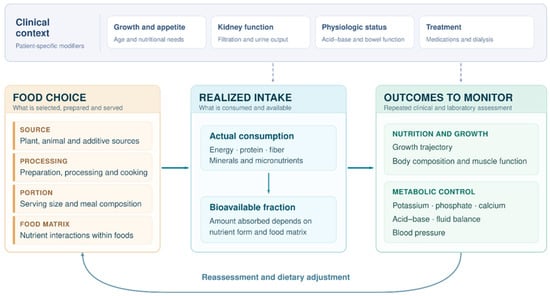
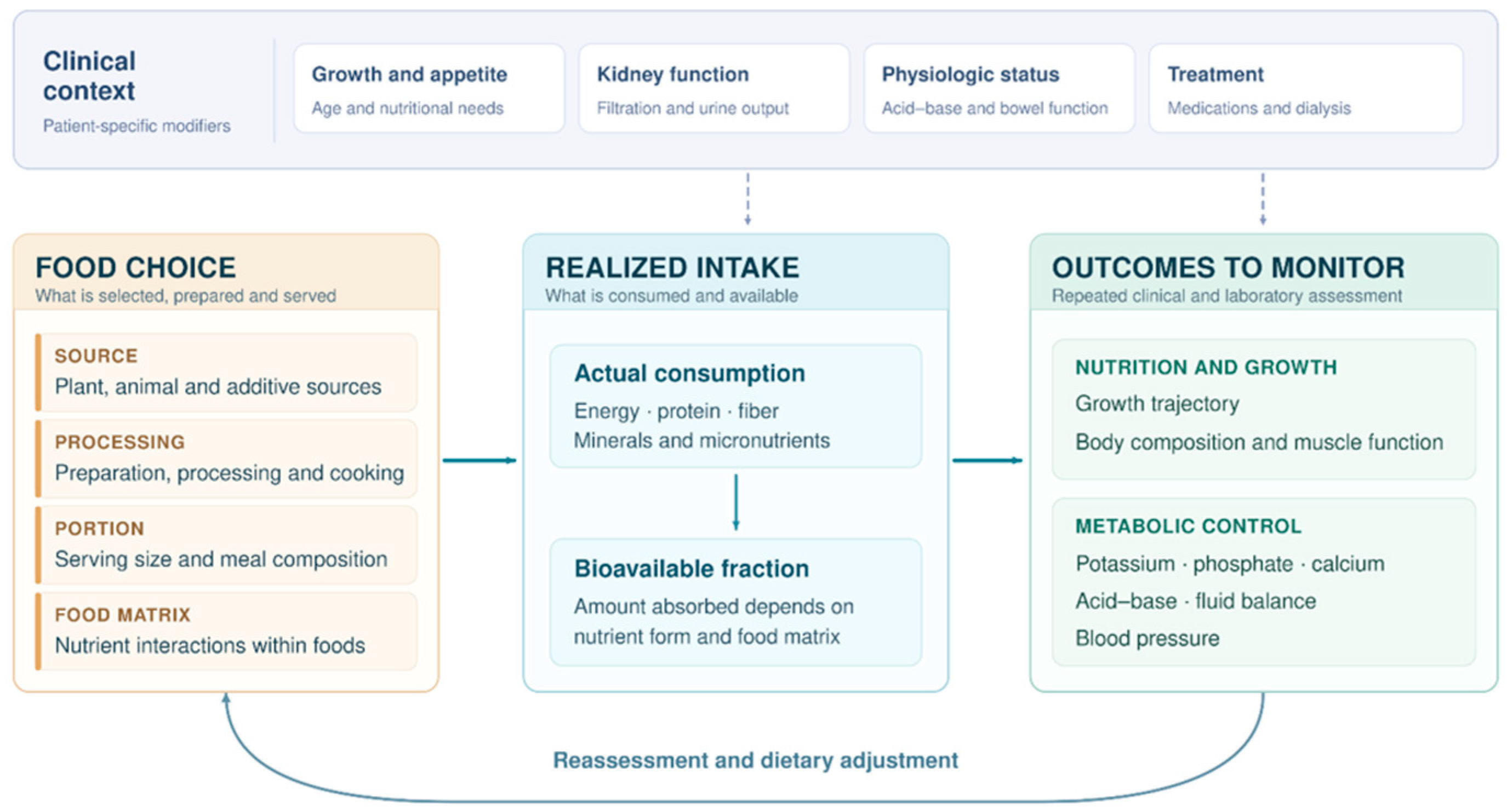
Existing pediatric recommendations address nutrient requirements and mineral management [2,6,7], and reviews discuss malnutrition and plant-based diets [1,12]. This focused narrative review integrates these perspectives by examining how food source, processing, preparation, and bioavailability alter the balance between metabolic control and nutritional adequacy in children with CKD stages 2–5, including dialysis. Its contribution is a framework for evaluating food substitutions: the clinical problem being addressed, the nutrients gained or displaced, and the nutritional and biochemical responses requiring monitoring. Direct pediatric findings are distinguished from selected adult and experimental evidence. This approach connects food-level decisions with growth requirements and the feasibility of family meals, while identifying questions requiring pediatric investigation. Figure 1 illustrates the relationships between food choices, nutrient availability, clinical context, and outcomes.
Figure 1.
From Food Choice to Nutritional and Metabolic Outcomes in Pediatric CKD. Food source, processing, portion size, and food matrix influence actual intake and nutrient bioavailability. Clinical context modifies nutritional and metabolic responses, while monitoring guides individualized dietary adjustments. Solid straight arrows represent the conceptual pathway, dashed lines denote clinical modifiers, and the curved arrow indicates the feedback loop. CKD, chronic kidney disease.
2. Review Scope and Approach to Evidence
2.1. Literature Search and Source Selection
This focused narrative review examines food quality, nutrient bioavailability, and the balance between metabolic control and nutritional adequacy in children with chronic kidney disease (CKD) stages 2–5, including those receiving dialysis.
Iterative searches were conducted in PubMed/MEDLINE, Scopus, and Google Scholar. Searches combined pediatric population terms (“child,” “children,” “pediatric,” and “adolescent”) with CKD and dialysis terms and topic-specific keywords, including “diet quality,” “food processing,” “food additives,” “bioavailability,” “phosphorus,” “potassium,” “protein,” “dietary fiber,” “plant-based diet,” and “Mediterranean diet.” Additional searches addressed energy and micronutrient adequacy, growth, body composition, muscle function, and nutritional assessment. Reference lists of relevant studies, reviews, guidelines, and consensus statements were examined to identify additional publications.
Targeted searches in PubMed/MEDLINE also addressed dietary sodium and calcium, using terms including “dietary sodium,” “salt intake,” “sodium intake,” “dietary calcium,” “calcium intake,” and “calcium balance.” Psychosocial aspects were explored by combining pediatric CKD and diet or food terms with “psychological,” “psychosocial,” “qualitative,” or “adherence.”
Selection was purposive, prioritizing pediatric clinical studies and practice recommendations relevant to dietary intake, food sources, nutritional status, and dietary interventions. Mixed-age studies were considered with attention to age ranges and the availability of pediatric-specific findings. Adult studies were selected to address specific gaps in pediatric evidence, while laboratory studies provided information on food composition and mechanisms. These sources were interpreted as indirect evidence and were not used to establish pediatric efficacy or safety.
2.2. Interpretation of Pediatric and Extrapolated Evidence
The qualitative appraisal considered study design, population, CKD severity, treatment, dietary assessment, and outcomes. Dietary intake, laboratory bioaccessibility, biochemical responses, and clinical outcomes were distinguished. Observational associations were not interpreted as dietary intervention effects.
This was a focused narrative review, not an exhaustive systematic review. Purposive selection and the absence of formal risk-of-bias assessment may introduce selection and interpretation bias and limit certainty. No pooled effect estimates or statistical heterogeneity tests were calculated. Differences in age, CKD stage, dialysis, interventions, comparators, and outcomes were evaluated qualitatively and prevent a single estimate of dietary efficacy. Pediatric observations, expert recommendations, adult interventions, and laboratory findings were considered separately. Potential confounding by kidney function, inflammation, hydration, puberty, activity, and concurrent treatment was examined; potentially overlapping cohorts were not treated as independent replication.
3. Nutritional Adequacy and Growth as the Basis for Dietary Decisions
3.1. Energy, Protein, and Micronutrient Adequacy
Preserving nutritional adequacy is the starting point for dietary management in pediatric CKD. Requirements must support ongoing growth while accommodating differences in physical activity, kidney function, and treatment. The Pediatric Renal Nutrition Taskforce (PRNT) recommends an initial energy prescription comparable to that of healthy children of the same chronological age, subsequently adjusted to the individual growth trajectory and nutritional status. Protein provision should generally target the upper end of the age-specific suggested dietary intake, with additional intake when needed to replace dialysis losses. Protein restriction below the minimum safe intake should be avoided, and glucose absorbed from peritoneal dialysate must be considered when estimating total energy provision [2].
Energy and protein intake should be evaluated separately. In a single-center study of 30 children with advanced CKD, including peritoneal dialysis, median intake reached 86.5% of estimated energy requirements and 127% of protein requirements [14]. Although dietary reporting and requirement estimation limit interpretation, these findings illustrate that adequate protein provision can coexist with insufficient energy intake.
Micronutrient provision requires similar attention to the nutritional consequences of food exclusions and substitutions. Restricting dairy products without suitable replacements may reduce calcium intake [6]. Limited dietary variety and dialysis losses can increase vulnerability to water-soluble vitamin inadequacy, whereas vitamin A may accumulate and should not be routinely supplemented [15]. Magnesium and trace element status also depend on kidney function, medications, losses, and supplemental intake [16]. Dietary intake and biochemical concentrations are consequently complementary measures. A low intake indicates potential risk, while an abnormal concentration may reflect altered handling or inflammation rather than dietary deficiency or excess alone. Supplementation should follow an individualized assessment rather than an assumption that all children with CKD have similar requirements [15,16].
3.2. Linear Growth, Body Composition, and Muscle Health
Serial measurements of height or length, interpreted alongside growth velocity and pubertal development, help determine whether the nutritional prescription supports development. A deteriorating growth trajectory warrants evaluation even when weight remains stable. Because growth impairment in CKD has nutritional, metabolic, and endocrine contributors, short stature alone cannot establish inadequate intake [17]. Nutritional intervention should address documented deficits alongside these other contributors.
Weight and body mass index (BMI) provide useful screening information but do not distinguish adipose tissue, muscle, and retained fluid. In a cross-sectional study of 41 children and adolescents with CKD, higher relative fat mass was associated with insulin resistance, including among participants with normal height-age BMI [18]. A satisfactory BMI can therefore conceal an unfavorable body composition. Hydration further complicates interpretation: in children receiving peritoneal dialysis, longitudinal bioimpedance-derived hydration changes tracked volume-related variations in blood pressure and serum albumin more closely than weight changes did [19]. Weight gain should consequently be interpreted in its clinical context before being considered evidence of nutritional recovery.
Muscle function adds a dimension that anthropometry cannot capture. In the Chronic Kidney Disease in Children (CKiD) study, 411 children contributed 699 grip-strength assessments, demonstrating lower strength than in matched healthy controls independently of BMI [20]. In another pediatric study, a frailty phenotype defined by the investigators was associated with advanced CKD and lower insulin-like growth factor 1 (IGF-1) and bone density measures [21]. These observational findings support considering muscle function and fatigue when assessing nutritional vulnerability. They do not establish that increasing intake or adopting a particular dietary pattern reverses functional impairment. The nutritional objective remains adequate growth and preservation of lean tissue and function, with avoidance of disproportionate fat accumulation.
3.3. Assessing Nutritional Status and Dietary Intake
Assessment should combine dietary evaluation, serial anthropometry, clinical examination, and selected laboratory measurements. A prospective three-day food record or repeated 24-h recalls should document actual consumption, including beverages, formulas, and supplements, rather than assuming adherence to the prescription [17]. Energy, protein, and micronutrient intakes should be evaluated separately.
Appetite and feeding difficulties require direct inquiry. Among 879 CKiD participants, poorer reported appetite was associated with lower kidney function, subsequent hospitalizations, and worse quality of life, but did not predict changes in anthropometric z-scores [22]. Appetite therefore complements rather than replaces intake assessment. Serum albumin also requires contextual interpretation because inflammation, protein losses, and hydration affect its concentration [17]. Associations between adipokines, inflammation, and muscle wasting remain exploratory and do not establish routine nutritional screening tests [23].
Reassessment after dietary changes should examine intake, tolerance, growth, and the intended biochemical response. Table 1 links common clinical problems to potential dietary adjustments, nutritional risks, and monitoring parameters.
Table 1.
Common Clinical Problems, Potential Dietary Adjustments, and Monitoring in Pediatric CKD.
4. Food Sources, Bioavailability, and Competing Nutritional Priorities
4.1. Phosphorus and Calcium: Balancing Absorbable Load and Nutritional Value
Foods supplying similar amounts of phosphorus can differ in the fraction available for absorption and in the nutrients lost when they are restricted. Naturally occurring phosphorus is present in animal and plant foods, whereas inorganic phosphates are added to many manufactured products. Phytate limits access to some plant phosphorus, while inorganic phosphate additives are generally more readily absorbed [6]. However, processing can modify phytate-bound phosphorus: phytase activity during food production can release phosphate, so plant origin alone does not establish a consistently low absorbed load [24].
Pediatric calcium data illustrate the risk of reducing phosphorus-rich foods. Among 46 children with CKD stages 4–5 or dialysis, 76% had dietary calcium below the United Kingdom reference intake; prescribed calcium-containing medications increased estimated total intake, while normal serum calcium did not establish adequacy [25]. In 41 preschool children, enteral calcium was below target in 149 of 234 dietary records, a record-level rather than patient-level estimate [26]. These observational studies support reviewing food, binders, and supplements together, without establishing absorbed calcium or the benefit of supplementation. Milk alternatives also require comparison of protein, energy, fortification, and additives [6].
Adult interventions provide indirect evidence for phosphorus-source effects. A one-week crossover study in nine adults with CKD found lower serum phosphorus and fibroblast growth factor 23 (FGF23) with vegetarian than meat protein [27]. Replacing phosphate-additive foods lowered serum phosphorus over three months in 134 adults receiving hemodialysis without measured nutritional deterioration [28]. These findings support the source-based rationale but do not demonstrate pediatric growth or skeletal benefits. Ingredient lists identify additives without reliably quantifying them [11].
Laboratory analysis showed that selected boiling conditions lowered the phosphorus-to-protein ratio of beef, suggesting that phosphorus reduction need not require an equivalent protein reduction [29]. This is compositional evidence and does not establish a clinical benefit.
4.2. Potassium: Food Matrix, Preparation, and Clinical Context
Potassium prescription requires assessment of intake alongside the child’s capacity to maintain potassium balance. Portion size, frequency, preparation, and the combined meal determine exposure more meaningfully than a food’s content per 100 g alone [7]. Bioaccessibility, meaning release from the food matrix during digestion, should be distinguished from human absorption and systemic handling. Across selected raw plant foods, in vitro potassium bioaccessibility ranged from 12% to 93% [30]. This variability argues against applying a single assumed absorption fraction to all plant foods and cannot establish safety at a particular intake.
Potassium additives warrant separate assessment. Sodium-reduced meat and poultry products contained more potassium than conventional products in a composition study [31]. The additive compound, amount, and consumed portion determine exposure; a small preservative contribution should not be equated with potassium chloride used as a salt replacement [11].
Boiling with subsequent disposal of the water can reduce potassium in selected foods. The reduction varies with the food, particle size, cooking conditions, and water volume; soaking alone does not provide a dependable universal reduction [32]. Because demineralization can also remove other minerals and water-soluble vitamins, preparation advice should be targeted. For children who are eating and require potassium reduction, pediatric recommendations prioritize potassium additives, followed by adjustment of selected high-potassium foods and preparation methods while maintaining nutritional adequacy [7].
Pediatric observations emphasize non-dietary contributors. In 52 non-dialysis children, including seven transplant recipients, potassium intake correlated with fiber intake but not serum potassium after adjustment [33]. In 41 children receiving dialysis, potassium intake was not associated with serum potassium; age, urea, and renin–angiotensin–aldosterone system inhibitor use predicted hyperkalemia [34]. These studies do not establish the safety of unrestricted intake. In contrast, a higher-potassium dietary trial in 29 adults with stage 3 CKD increased serum potassium, with confirmed hyperkalemia in two participants [35]. Differences in design and population preclude a direct age-group comparison. Review acidosis, constipation, medications, residual kidney function, and dialysis alongside intake [7].
4.3. Protein Sources: Growth Requirements and Metabolic Consequences
Once protein and energy needs have been established, source selection should aim to meet them with an appropriate accompanying mineral and metabolic load [2]. A randomized multicenter trial involving 191 children found that protein intake at the lowest safe age-adjusted level did not slow kidney function decline compared with the control diet [36]. Therefore, the rationale for changing protein sources should be distinguished from an intention to prescribe an adult-style low-protein diet.
Animal and plant proteins can contribute to an adequate prescription. Substitutions should account for essential amino acids, digestibility, energy density, accepted portions, and accompanying mineral loads [12]. Preparation and additives create substantial variation within both categories; their practical consequences are summarized in Table 2.
Dietary acid load is another consideration, although calculated load and measured metabolic acidosis are different outcomes. Positive potential renal acid loads were common in a pediatric observational study, but the calculation itself incorporates protein and mineral intake and cannot establish a causal effect of protein source [37]. A small metabolic study found greater protein breakdown in acidotic children with chronic renal failure, supporting the relevance of acid–base status to protein utilization [38]. This does not prove that a plant-for-animal substitution corrects acidosis or improves growth.
In 631 CKiD participants, plant-protein proportion was not associated with estimated glomerular filtration rate (eGFR) change or electrolyte abnormalities, although limited exposure variation constrained interpretation [39]. A related analysis of 484 children identified 60 metabolites associated with protein-rich foods; ten were also associated with subsequent CKD progression [40]. These related observational analyses do not demonstrate causal food effects: metabolite concentrations also reflect endogenous metabolism and kidney handling. Nutritional adequacy remains the basis for source selection.
4.4. Fiber: Dietary Adequacy, Bowel Function, and Microbial Metabolism
Assessing fiber intake helps identify whether mineral restrictions have narrowed the child’s diet unnecessarily. Fruits, vegetables, pulses, and whole grains provide fiber alongside micronutrients and dietary variety. Pediatric recommendations support age-appropriate fiber provision, with attention to constipation, feeding tolerance, and the nutritional consequences of replacing familiar foods [41]. Bowel symptoms should be assessed alongside fluid allowance, medications, and activity; increasing fiber alone may not resolve constipation.
Related observational reports from a 61-child non-dialysis cohort, including transplant recipients, found low fiber intake and associations with selected circulating uremic solutes [42,43]. Higher intake was associated longitudinally with lower free indoxyl sulfate and free p-cresyl sulfate. These are complementary analyses of a shared cohort, not independent evidence that fiber improves growth or slows CKD progression.
A six-week adult hemodialysis trial randomized 56 participants, of whom 40 completed follow-up; resistant starch reduced free indoxyl sulfate relative to control [44]. This supports a biomarker effect of a supplement and cannot establish the clinical benefit of whole-food substitutions in children.
Increase fiber gradually, monitoring bowel symptoms, appetite, and achieved energy intake [41]. Adapt portions and preparation to potassium requirements. In children with poor appetite, bulky additions should not displace energy-dense foods; an acceptable diet must retain sufficient energy and protein.
4.5. Food Processing, Sodium, Fat Quality, and Added Sugars
In 658 CKiD participants, fast foods were the largest contributors to sodium and fat intake and the second largest contributor to energy [45]. These observational data identify a target for dietary assessment without establishing harm from processing itself. Product review should consider consumed portions, sodium, mineral additives, fat composition, and added sugars, including snacks and drinks.
Sodium targets depend on blood pressure, volume status, and urinary or dialysis-related losses. Pediatric recommendations favor reducing sodium-rich foods when indicated, while children with salt wasting may require supplementation to support euvolemia and growth [46]. Potassium-containing salt replacements require the precautions discussed in Section 4.2.
Fat quality and added sugars should be considered within individualized energy targets. Favoring unsaturated fat sources and limiting sugar-sweetened beverages and foods rich in saturated fat is consistent with pediatric CKD obesity guidance [47]. However, a child with faltering growth may need energy-dense foods; the appropriate response is to improve their nutritional composition, rather than automatically reduce dietary fat or calories.
In the adult Chronic Renal Insufficiency Cohort (CRIC), ultra-processed food intake was associated with mortality, but the association was attenuated and no longer significant after adjustment for overall diet quality. The progression association differed by baseline kidney function [48]. These observational findings cannot establish pediatric effects.
Manufactured formulas, oral supplements, and modular fortifiers may be needed when ordinary foods are insufficient [49]. Assess these products by age suitability, nutrient composition, and tolerance; a processing classification alone cannot establish their clinical value. Table 2 summarizes how food sources, preparation, and substitutions affect nutrient availability and competing nutritional priorities.
Table 2.
Food Sources, Bioavailability, and Nutritional Trade-Offs.
5. Dietary Patterns in Pediatric CKD: Potential Benefits and Evidence Limits
5.1. Plant-Forward Dietary Patterns
Plant-forward describes a greater contribution from vegetables, fruit, pulses, whole grains, nuts, and seeds, with variable retention of animal foods. Partial substitutions, vegetarian diets, and vegan diets have different planning requirements. Potential advantages include greater variety, fiber intake, and a lower acid load, depending on the foods replaced [12]. Complete animal-food exclusion also requires assessment of protein, calcium, and vitamin B12 provision, with suitable replacements and supplementation where indicated [6,15].
A 12-month before–after study in CKD stages 2–4 analyzed 16 of 22 recruited children and reported increased fiber and plant-food consumption after dietitian-led counseling [50]. Its uncontrolled design and attrition limit causal inference; it tested individualized education rather than a defined dietary pattern. Larger pediatric protein-source analyses examine nutrient proportions rather than prescribed whole-diet interventions [39].
The adult interventions summarized in Table 3 combined food-source changes with other components. The New Nordic Renal Diet reduced protein and sodium and supplied food [51]. A short sequential study changed calculated acid load without correcting systemic acidosis [52]. Their results cannot isolate a plant-food effect or establish pediatric benefit.
5.2. Mediterranean-Style Dietary Patterns
Mediterranean-style patterns may guide adaptations of family meals [13,47]. Their application should use the food-level considerations in Section 4 and Table 2. No controlled trial establishing effects on growth or CKD progression in children was identified within the selected literature.
Adult evidence is indirect. Higher Mediterranean-diet adherence was associated with lower CKD progression risk in 2403 CRIC participants [53]. In a Korean crossover pilot, 46 of 50 randomized adults completed four weeks per diet; fiber intake increased without a significant serum potassium change during the adapted Mediterranean intervention [13]. Self-report and confounding limit the cohort findings, while selected participants and potassium-controlled menus limit the trial’s generalizability. Neither design establishes long-term pediatric efficacy or safety.
5.3. Interpreting Dietary Pattern Evidence
Dietary-pattern evidence must be interpreted by design and outcome. Observational associations cannot establish efficacy, and multicomponent interventions cannot isolate individual food effects. Proteinuria or urinary phosphorus changes do not establish slower long-term kidney function loss [51,53]. Table 3 sets direct pediatric findings beside selected adult evidence and specifies the limits of extrapolation.
A 15-day plant-based education pilot in 40 selected adults excluded and replaced three intervention withdrawals. The between-group systolic blood-pressure difference was not significant, and mild hyperkalemia occurred in both groups [54]. These findings cannot establish sustained safety or efficacy.
Pediatric trials require growth and nutritional outcomes alongside biochemical tolerance, with concurrent changes in alkali, binders, and dialysis documented. Section 7.2 specifies research priorities.
6. Individualizing Dietary Choices Across Childhood and CKD Settings
6.1. Infants and Children Requiring Nutritional Support
During infancy, feed selection must secure adequate nutrition within the volumes the child can tolerate. Breastfeeding should be supported; whey-dominant infant formula is an alternative or supplement when breastmilk is unavailable or insufficient. Complementary foods should be introduced according to developmental readiness, advancing textures and oral skills while maintaining adequate total energy, protein, and micronutrient provision as milk intake changes [55].
When volume limits intake, energy density can be increased gradually. Concentrating formulas also increases electrolyte and micronutrient concentrations and osmolality. Modular additions permit more selective adjustments but require calculation of the complete prescription. Adding energy alone can lower the protein-to-energy ratio, so adequacy must be checked at the volume actually consumed. Formulas used to lower potassium may also reduce calcium and phosphorus provision or increase sodium, depending on the product [2,7]. Laboratory experiments with resin pretreatment further illustrate that reducing selected electrolytes can alter other minerals, folate, pH, and osmolality. These findings concern formula composition and do not establish patient safety or improved clinical outcomes [56].
Enteral tube feeding should be considered promptly when oral intake remains insufficient or weight trajectory deteriorates. The choice between nasogastric and gastrostomy feeding depends on expected duration, clinical circumstances, and family preferences; oral experience should be preserved when feasible [57]. Retrospective studies report improvements in weight or BMI. One cohort also showed catch-up growth in height, whereas another found no significant improvement in height. These uncontrolled findings do not establish that enteral feeding alone normalizes linear growth [58,59]. Clear preparation instructions, review of actual delivered volumes, and reassessment of vomiting or feed intolerance are essential to implementing the prescription [55].
6.2. School-Age Children and Adolescents and the Psychosocial Burden of Dietary Restrictions
Dietary restrictions can reduce enjoyment of food and participation in meals with peers. Qualitative pediatric evidence describes frustration, cravings, constrained social participation, and conflict between caregiver responsibility and increasing autonomy [8]. Adolescence makes these concerns particularly relevant as food choices become more independent and meals extend beyond parental supervision. Dietary difficulties should therefore be explored as experiences of illness and social participation, alongside assessment of knowledge and intake.
A three-center mixed-methods study recruited 48 children aged 8–18 years with advanced CKD, dialysis, or transplantation and 43 caregivers. Participants described disruption of family and social life, distress around restrictions, and difficulties managing phosphate advice outside the home [60]. These findings support considering social and emotional barriers alongside nutritional knowledge; they do not quantify psychiatric diagnoses or prove the effectiveness of a psychological intervention.
Clinicians should ask adolescents directly about distress, fear of biochemical consequences, embarrassment, avoidance of shared meals, and conflict around food. Agree on workable choices for school, celebrations, and eating out, with flexibility tied to clinical needs and progressively shared responsibility. Persistent distress, social withdrawal, or food avoidance should prompt multidisciplinary assessment and psychological support where indicated. These are practical responses to reported experiences; evidence that a specific support strategy improves adherence or clinical outcomes remains limited [8,60].
Appetite and achieved intake still require direct assessment [22,61]. Child reports help characterize meals outside the home; brief dietary recalls may be more feasible than detailed records for some families [17].
6.3. CKD Stage, Dialysis, and Electrolyte or Nutrient Losses
Dietary planning should integrate CKD stage with residual kidney function, urine output, hydration, blood pressure, biochemical trends, medications, and dialysis. The problem-based adjustments in Table 1 complement this assessment [7,17].
In a prospective study of 41 children receiving dialysis, urine output was the strongest predictor of the calculated simplified sodium balance, and sodium-containing medications contributed to intake [62]. This supports assessment beyond food alone. Sodium restriction may be appropriate with hypertension and fluid retention, whereas polyuria and salt wasting may require replacement; serum sodium alone cannot establish balance [46]. Dialysis-related sodium removal or gain also requires consideration.
Peritoneal dialysis provides energy through absorbed glucose and causes protein losses, which can increase during peritonitis. These contributions should be incorporated into energy and protein planning. Hemodialysis also entails nutrient losses, but adult estimates should not be applied as established pediatric requirements [2]. Persistent hypokalemia associated with tubular losses or intensive dialysis may require dietary liberalization or supplementation. In selected children, insufficient phosphorus provision from specialized feeds may also require correction [7,63].
Micronutrient intake differed between children receiving feeds and those eating ordinary foods in a pediatric dialysis study; concentrations below and above laboratory reference ranges were also observed [63]. Food, formulas, and supplements should therefore be evaluated together, with laboratory findings interpreted alongside intake and clinical context [15,16]. Reassessment is needed after dialysis initiation, prescription changes, intercurrent illness, or changes in growth and appetite [49].
6.4. Family Resources and Shared Decisions
Food access and preparation demands affect implementation. A pediatric mixed-methods study identified budget, time, growth concerns, and social stigma as barriers; associations between food insecurity and the clinical outcomes examined were not demonstrated [64]. Among 266 children from low-income households, food assistance was associated with a trend toward lower risk of kidney replacement therapy, without establishing protection [65]. Assessment should therefore address affordability, access, and preparation demands and connect families with support where available.
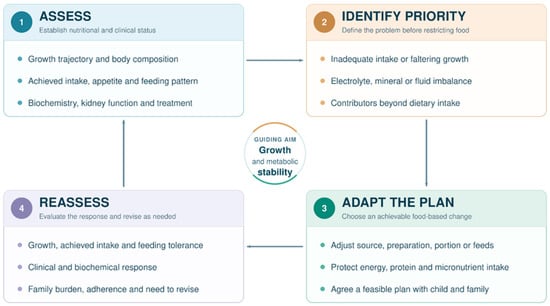
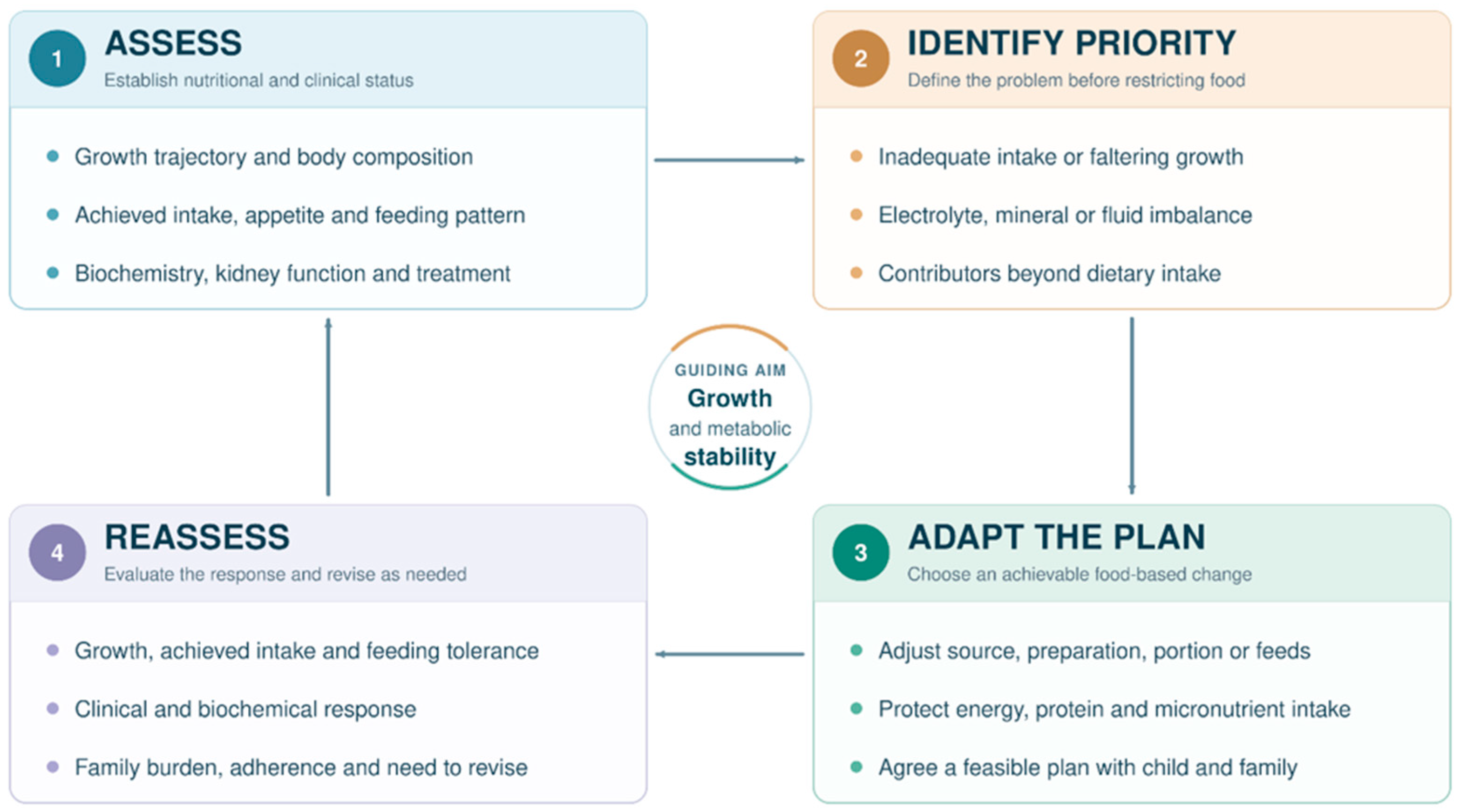
Caregiver interviews in China identified needs for reliable guidance and continuing support [66]. Educational evidence remains preliminary: virtual cooking classes improved food safety and storage scores but not the total food-skills score [67], while qualitative videoconsultation research supports acceptability [68]. Agree on feasible goals and review their implementation within the assessment–adjustment–reassessment process illustrated in Figure 2.
Figure 2.
Individualizing Food-Based Decisions in Pediatric Chronic Kidney Disease. The iterative framework integrates nutritional and clinical assessment, identification of priority problems, individualized food-based adjustments, and reassessment of nutritional and biochemical responses. Growth and metabolic stability remain the guiding objectives throughout the decision-making process. Arrows indicate the direction of the cycle, and colors visually distinguish the four stages.
7. Critical Synthesis and Research Priorities
7.1. What the Current Evidence Supports
Pediatric studies identify nutrient and food-group inadequacies that may be concealed by acceptable cohort averages or high protein intake [10,69,70]. They do not establish that restrictions caused these deficits or that dietary liberalization improves clinical outcomes.
Table 1 links clinical problems to dietary options and monitoring, while Table 2 summarizes food-level trade-offs. Table 3 compares direct pediatric findings with selected adult evidence by topic. The latter can explain plausible mechanisms or identify research questions, but cannot establish benefits for childhood growth or CKD progression [13,39,50].
Table 3.
Direct Pediatric Evidence and Selected Adult Findings Relevant to Food-Based Decisions in CKD.
7.2. Priorities for Pediatric Research
These gaps support pragmatic multicenter randomized trials comparing achievable food substitutions or dietary patterns with usual individualized dietetic care. Interventions should operate within ordinary family meals and document the foods replaced, actual intake, counseling intensity, and any provision of meals or financial assistance. Age, pubertal status, CKD stage, and dialysis modality should inform study design, with children receiving dialysis examined separately where feasible.
Outcomes should pair nutritional adequacy and electrolyte safety with height velocity, body composition, and age-appropriate muscle function over sufficient follow-up [20,23]. Safety reporting should capture adverse electrolyte events alongside energy, protein, fiber, and micronutrient intake [41]. Studies should document hydration, residual kidney function, dialysis prescriptions, medications and supplements, including alkali and binders, and report concurrent treatment changes to aid interpretation of dietary responses.
Dietary recording should specify portions, brands, ingredient lists, additives, recipes, and preparation methods, with uncertainty reported when additive quantities are unavailable [11]. Mechanistic substudies should evaluate how food processing and preparation affect mineral absorption in children, distinguishing actual absorption from gastrointestinal bioaccessibility estimated in laboratory models [27,30]. Educational content and delivery should also be documented, with materials assessed for consistency, clarity, and actionability in response to weaknesses identified in pediatric phosphate resources [71].
Acceptability, affordability, preparation time, quality of life, fatigue, participation in everyday activities, and family burden should be assessed alongside clinical outcomes. Child reports and caregiver perspectives should be distinguished, using developmentally appropriate measures and validating new or adapted instruments [8,72,73]. Families should help define feasible interventions and outcomes that reflect the demands of daily life.
8. Conclusions
Food-based decisions in pediatric CKD should address a defined clinical problem while preserving the energy, protein, and micronutrients needed for growth. Evaluating food source, processing, preparation, and bioavailability helps anticipate the nutritional consequences of substitutions. Table 1 connects common problems with dietary options and monitoring needs. Plant-forward and Mediterranean-style patterns may provide adaptable frameworks, but their long-term effects on pediatric growth and kidney outcomes remain unproven. Specialist dietetic support and shared decisions should translate these principles into feasible family meals, with reassessment of intake, growth, and biochemical response. Pediatric trials should establish whether specific substitutions or patterns improve outcomes valued by children and families without compromising nutritional adequacy.
Author Contributions
Conceptualization, J.D.; methodology, J.D. and V.K.; investigation, J.D. and V.K.; writing—original draft preparation, J.D.; writing—review and editing, J.D. and V.K.; visualization, J.D.; project administration, J.D. All authors have read and agreed to the published version of the manuscript.
Funding
This research received no external funding.
Institutional Review Board Statement
Not applicable. This narrative review is based on published literature and did not involve the collection of new data from human participants or animals.
Informed Consent Statement
Not applicable.
Data Availability Statement
No new data were created or analyzed in this study. Data sharing is not applicable to this article.
Acknowledgments
During the preparation of this manuscript, the authors used ChatGPT (GPT-6; OpenAI, San Francisco, CA, USA) solely to assist with the preparation of the figures. The authors reviewed and verified all resulting materials and take full responsibility for the content of the publication.
Conflicts of Interest
The authors declare no conflicts of interest.
Abbreviations
The following abbreviations are used in this manuscript:
| BMI | Body mass index |
| CKD | Chronic kidney disease |
| CKD 5D | Chronic kidney disease stage 5 treated with dialysis |
| CKiD | Chronic Kidney Disease in Children study |
| CRIC | Chronic Renal Insufficiency Cohort study |
| eGFR | Estimated glomerular filtration rate |
| FGF23 | Fibroblast growth factor 23 |
| IGF-1 | Insulin-like growth factor 1 |
| KDIGO | Kidney Disease: Improving Global Outcomes |
| PRNT | Pediatric Renal Nutrition Taskforce |
| PTH | Parathyroid hormone |
| UK | United Kingdom |
References
- Karava, V.; Dotis, J.; Kondou, A.; Printza, N. Malnutrition patterns in children with chronic kidney disease. Life 2023, 13, 713. [Google Scholar] [CrossRef] [Scilit] [PubMed]
- Shaw, V.; Polderman, N.; Renken-Terhaerdt, J.; Paglialonga, F.; Oosterveld, M.; Tuokkola, J.; Anderson, C.; Desloovere, A.; Greenbaum, L.; Haffner, D.; et al. Energy and protein requirements for children with CKD stages 2–5 and on dialysis—Clinical practice recommendations from the Pediatric Renal Nutrition Taskforce. Pediatr. Nephrol. 2020, 35, 519–531. [Google Scholar] [CrossRef] [Scilit] [PubMed]
- Stevens, P.E.; Ahmed, S.B.; Carrero, J.J.; Foster, B.; Francis, A.; Hall, R.K.; Herrington, W.G.; Hill, G.; Inker, L.A.; Kazancıoğlu, R.; et al. KDIGO 2024 Clinical Practice Guideline for the Evaluation and Management of Chronic Kidney Disease. Kidney Int. 2024, 105, S117–S314. [Google Scholar] [CrossRef] [Scilit] [PubMed]
- Foster, B.J.; Kalkwarf, H.J.; Shults, J.; Zemel, B.S.; Wetzsteon, R.J.; Thayu, M.; Foerster, D.L.; Leonard, M.B. Association of chronic kidney disease with muscle deficits in children. J. Am. Soc. Nephrol. 2011, 22, 377–386. [Google Scholar] [CrossRef] [Scilit] [PubMed]
- Abraham, A.G.; Mak, R.H.; Mitsnefes, M.; White, C.; Moxey-Mims, M.; Warady, B.; Furth, S.L. Protein energy wasting in children with chronic kidney disease. Pediatr. Nephrol. 2014, 29, 1231–1238. [Google Scholar] [CrossRef] [Scilit] [PubMed]
- McAlister, L.; Pugh, P.; Greenbaum, L.; Haffner, D.; Rees, L.; Anderson, C.; Desloovere, A.; Nelms, C.; Oosterveld, M.; Paglialonga, F.; et al. The dietary management of calcium and phosphate in children with CKD stages 2–5 and on dialysis—Clinical practice recommendation from the Pediatric Renal Nutrition Taskforce. Pediatr. Nephrol. 2020, 35, 501–518. [Google Scholar] [CrossRef] [Scilit] [PubMed]
- Desloovere, A.; Renken-Terhaerdt, J.; Tuokkola, J.; Shaw, V.; Greenbaum, L.A.; Haffner, D.; Anderson, C.; Nelms, C.L.; Oosterveld, M.J.S.; Paglialonga, F.; et al. The dietary management of potassium in children with CKD stages 2–5 and on dialysis—Clinical practice recommendations from the Pediatric Renal Nutrition Taskforce. Pediatr. Nephrol. 2021, 36, 1331–1346. [Google Scholar] [CrossRef] [Scilit] [PubMed]
- Zhang, A.; van Zwieten, A.; Hughes, A.; Kim, S.; Lambert, K.; Torrisi, L.G.; Jaure, A.; Guha, C. Patient and caregiver perspectives on diet and nutrition for children with CKD: A systematic review of qualitative studies. Am. J. Kidney Dis. 2026, 87, 345–363.e1. [Google Scholar] [CrossRef] [Scilit] [PubMed]
- Hui, W.F.; Betoko, A.; Savant, J.D.; Abraham, A.G.; Greenbaum, L.A.; Warady, B.; Moxey-Mims, M.M.; Furth, S.L. Assessment of dietary intake of children with chronic kidney disease. Pediatr. Nephrol. 2017, 32, 485–494. [Google Scholar] [CrossRef] [Scilit] [PubMed]
- Lindeback, R.; Abdo, R.; Schnabel, L.; Le Jambre, R.; Kennedy, S.E.; Katz, T.; Ooi, C.Y.; Lambert, K. Does the nutritional intake and diet quality of children with chronic kidney disease differ from healthy controls? A comprehensive evaluation. J. Ren. Nutr. 2024, 34, 283–293. [Google Scholar] [CrossRef] [Scilit] [PubMed]
- Biruete, A.; Anderson, C.; Bernier-Jean, A.; Clase, C.M.; Clegg, D.; Crews, D.C.; Denburg, M.; Gallant, K.M.H.; Gutierrez, O.M.; Ix, J.H.; et al. ASN Kidney Health Guidance on Potassium and Phosphorus Food Additives. J. Am. Soc. Nephrol. 2025, 36, 2244–2258. [Google Scholar] [CrossRef] [Scilit] [PubMed]
- Nhan, J.; Sgambat, K.; Moudgil, A. Plant-based diets: A fad or the future of medical nutrition therapy for children with chronic kidney disease? Pediatr. Nephrol. 2023, 38, 3597–3609. [Google Scholar] [CrossRef] [Scilit] [PubMed]
- Kwon, Y.-J.; Joo, Y.S.; Yun, H.-R.; Lim, L.R.; Yang, J.; Lee, H.S.; Kim, H.-M.; Lee, H.; Lee, J.E.; Lee, J.-W. Safety and impact of the Mediterranean diet in patients with chronic kidney disease: A pilot randomized crossover trial. Front. Nutr. 2024, 11, 1463502. [Google Scholar] [CrossRef] [Scilit] [PubMed]
- Apostolou, A.; Printza, N.; Karagiozoglou-Lampoudi, T.; Dotis, J.; Papachristou, F. Nutrition assessment of children with advanced stages of chronic kidney disease—A single center study. Hippokratia 2014, 18, 212–216. Available online: https://pubmed.ncbi.nlm.nih.gov/25694753/ (accessed on 20 November 2026). [PubMed]
- Anderson, C.E.; Tuokkola, J.; Qizalbash, L.; Harmer, M.; Nelms, C.L.; Stabouli, S.; Toole, B.; Polderman, N.; Desloovere, A.; Renken-Terhaerdt, J.; et al. Assessment and management of vitamin status in children with CKD stages 2–5, on dialysis and post-transplantation: Clinical practice points from the Pediatric Renal Nutrition Taskforce. Pediatr. Nephrol. 2024, 39, 3103–3124. [Google Scholar] [CrossRef] [Scilit] [PubMed]
- Tuokkola, J.; Anderson, C.E.; Collins, S.; Pugh, P.; Vega, M.R.W.; Harmer, M.; Harshman, L.A.; Nelms, C.L.; Toole, B.; Desloovere, A.; et al. Assessment and management of magnesium and trace element status in children with CKD stages 2–5, on dialysis and post-transplantation: Clinical practice points from the Pediatric Renal Nutrition Taskforce. Pediatr. Nephrol. 2025, 40, 3301–3323. [Google Scholar] [CrossRef] [Scilit] [PubMed]
- Nelms, C.L.; Shaw, V.; Greenbaum, L.A.; Anderson, C.; Desloovere, A.; Haffner, D.; Oosterveld, M.J.S.; Paglialonga, F.; Polderman, N.; Qizalbash, L.; et al. Assessment of nutritional status in children with kidney diseases—Clinical practice recommendations from the Pediatric Renal Nutrition Taskforce. Pediatr. Nephrol. 2021, 36, 995–1010. [Google Scholar] [CrossRef] [Scilit] [PubMed]
- Karava, V.; Dotis, J.; Kondou, A.; Christoforidis, A.; Liakopoulos, V.; Tsioni, K.; Kollios, K.; Papachristou, F.; Printza, N. Association between relative fat mass, uric acid, and insulin resistance in children with chronic kidney disease. Pediatr. Nephrol. 2021, 36, 425–434. [Google Scholar] [CrossRef] [Scilit] [PubMed]
- Karava, V.; Stabouli, S.; Dotis, J.; Liakopoulos, V.; Papachristou, F.; Printza, N. Tracking hydration status changes by bioimpedance spectroscopy in children on peritoneal dialysis. Perit. Dial. Int. 2021, 41, 217–225. [Google Scholar] [CrossRef] [Scilit] [PubMed]
- Hogan, J.; Schneider, M.F.; Pai, R.; Denburg, M.R.; Kogon, A.; Brooks, E.R.; Kaskel, F.J.; Reidy, K.J.; Saland, J.M.; Warady, B.A.; et al. Grip strength in children with chronic kidney disease. Pediatr. Nephrol. 2020, 35, 891–899. [Google Scholar] [CrossRef] [Scilit] [PubMed]
- Karava, V.; Dotis, J.; Christoforidis, A.; Liakopoulos, V.; Kondou, A.; Tsigaras, G.; Tsioni, K.; Kollios, K.; Printza, N. Association between insulin growth factor-1, bone mineral density, and frailty phenotype in children with chronic kidney disease. Pediatr. Nephrol. 2021, 36, 1861–1870. [Google Scholar] [CrossRef] [Scilit] [PubMed]
- Ayestaran, F.W.; Schneider, M.F.; Kaskel, F.J.; Srivaths, P.R.; Seo-Mayer, P.W.; Moxey-Mims, M.; Furth, S.L.; Warady, B.A.; Greenbaum, L.A. Perceived appetite and clinical outcomes in children with chronic kidney disease. Pediatr. Nephrol. 2016, 31, 1121–1127. [Google Scholar] [CrossRef] [Scilit] [PubMed]
- Karava, V.; Kondou, A.; Dotis, J.; Christoforidis, A.; Taparkou, A.; Farmaki, E.; Kollios, K.; Liakopoulos, V.; Printza, N. Association Between Adipokine Profile, Systemic Inflammation, Muscle and Protein Energy Wasting in Children With Chronic Kidney Disease. J. Ren. Nutr. 2023, 33, 629–638. [Google Scholar] [CrossRef] [Scilit] [PubMed]
- Biruete, A.; Gallant, K.M.H.; Lloyd, L.; Meade, A.; Moe, S.M.; St-Jules, D.E.; Kistler, B.M. ‘Phos’tering a clear message: The evolution of dietary phosphorus management in chronic kidney disease. J. Ren. Nutr. 2023, 33, S13–S20. [Google Scholar] [CrossRef] [Scilit] [PubMed]
- McAlister, L.; Silva, S.; Shaw, V.; Shroff, R. Dietary calcium intake does not meet the nutritional requirements of children with chronic kidney disease and on dialysis. Pediatr. Nephrol. 2020, 35, 1915–1923. [Google Scholar] [CrossRef] [Scilit] [PubMed]
- Schmitz, L.; Hoermann, P.; Trutnau, B.; Jankauskiene, A.; Zaloszyc, A.; Edefonti, A.C.; Schmitt, C.P.; Klaus, G. Enteral Ca-intake may be low and affects serum-PTH-levels in pre-school children with chronic kidney disease. Front. Pediatr. 2021, 9, 666101. [Google Scholar] [CrossRef] [Scilit] [PubMed]
- Moe, S.M.; Zidehsarai, M.P.; Chambers, M.A.; Jackman, L.A.; Radcliffe, J.S.; Trevino, L.L.; Donahue, S.E.; Asplin, J.R. Vegetarian compared with meat dietary protein source and phosphorus homeostasis in chronic kidney disease. Clin. J. Am. Soc. Nephrol. 2011, 6, 257–264. [Google Scholar] [CrossRef] [Scilit] [PubMed]
- de Fornasari, M.L.L.; Sens, Y.A.d.S. Replacing phosphorus-containing food additives with foods without additives reduces phosphatemia in end-stage renal disease patients: A randomized clinical trial. J. Ren. Nutr. 2017, 27, 97–105. [Google Scholar] [CrossRef] [Scilit] [PubMed]
- Ando, S.; Sakuma, M.; Morimoto, Y.; Arai, H. The effect of various boiling conditions on reduction of phosphorus and protein in meat. J. Ren. Nutr. 2015, 25, 504–509. [Google Scholar] [CrossRef] [Scilit] [PubMed]
- Ceccanti, C.; Guidi, L.; D’alessandro, C.; Cupisti, A. Potassium bioaccessibility in uncooked and cooked plant foods: Results from a static in vitro digestion methodology. Toxins 2022, 14, 668. [Google Scholar] [CrossRef] [Scilit] [PubMed]
- Parpia, A.S.; Goldstein, M.B.; Arcand, J.; Cho, F.; L’aBbé, M.R.; Darling, P.B. Sodium-reduced meat and poultry products contain a significant amount of potassium from food additives. J. Acad. Nutr. Diet. 2018, 118, 878–885. [Google Scholar] [CrossRef] [Scilit] [PubMed]
- Batista, R.A.B.; Japur, C.C.; Prestes, I.V.; Silva, J.F.; Cavanha, M.; Pena, G.d.G. Potassium reduction in food by preparation technique for the dietetic management of patients with chronic kidney disease: A review. J. Hum. Nutr. Diet. 2021, 34, 736–746. [Google Scholar] [CrossRef] [Scilit] [PubMed]
- El Amouri, A.; Delva, K.; Foulon, A.; Moortel, C.V.; Van Hoeck, K.; Glorieux, G.; Van Biesen, W.; Walle, J.V.; Raes, A.; Snauwaert, E.; et al. Potassium and fiber: A controversial couple in the nutritional management of children with chronic kidney disease. Pediatr. Nephrol. 2022, 37, 1657–1665. [Google Scholar] [CrossRef] [Scilit] [PubMed]
- Paglialonga, F.; Shroff, R.; Zagozdzon, I.; Bakkaloglu, S.A.; Zaloszyc, A.; Jankauskiene, A.; Gual, A.C.; Grassi, M.R.; McAlister, L.; Skibiak, A.; et al. Predictors of hyperkalemia in pediatric patients on dialysis: International prospective observational study. Pediatr. Nephrol. 2025, 40, 2611–2618. [Google Scholar] [CrossRef] [Scilit] [PubMed]
- Turban, S.; Juraschek, S.P.; Miller, E.R.; Anderson, C.A.M.; White, K.; Charleston, J.; Appel, L.J. Randomized trial on the effects of dietary potassium on blood pressure and serum potassium levels in adults with chronic kidney disease. Nutrients 2021, 13, 2678. [Google Scholar] [CrossRef] [Scilit] [PubMed]
- Wingen, A.-M.; Fabian-Bach, C.; Schaefer, F.; Mehls, O. European Study Group of Nutritional Treatment of Chronic Renal Failure in Childhood. Randomised multicentre study of a low-protein diet on the progression of chronic renal failure in children. Lancet 1997, 349, 1117–1123. [Google Scholar] [CrossRef] [Scilit] [PubMed]
- Sravani, M.; Collins, S.; Iyengar, A. Assessment of dietary acid load in children with chronic kidney disease: An observational study. Indian J. Nephrol. 2024, 34, 50–55. [Google Scholar] [CrossRef] [Scilit] [PubMed]
- Boirie, Y.; Broyer, M.; Gagnadoux, M.F.; Niaudet, P.; Bresson, J.-L. Alterations of protein metabolism by metabolic acidosis in children with chronic renal failure. Kidney Int. 2000, 58, 236–241. [Google Scholar] [CrossRef] [Scilit] [PubMed]
- Shah, L.N.; Matheson, M.B.; Furth, S.L.; Schwartz, G.J.; Warady, B.A.; Wong, C.J. Low variability of plant protein intake in the CKiD cohort does not demonstrate changes in estimated GFR nor electrolyte balance. Pediatr. Nephrol. 2022, 37, 1647–1655. [Google Scholar] [CrossRef] [Scilit] [PubMed]
- Ren, X.; Chen, J.; Abraham, A.G.; Xu, Y.; Siewe, A.; Warady, B.A.; Kimmel, P.L.; Vasan, R.S.; Rhee, E.P.; Furth, S.L.; et al. Plasma metabolomics of dietary intake of protein-rich foods and kidney disease progression in children. J. Ren. Nutr. 2024, 34, 95–104. [Google Scholar] [CrossRef] [Scilit] [PubMed]
- Desloovere, A.; Polderman, N.; Renken-Terhaerdt, J.; Shaw, V.; Anderson, C.; Greenbaum, L.A.; Nelms, C.L.; Qizalbash, L.; Stabouli, S.; Tuokkola, J.; et al. The management of dietary fiber intake in children with chronic kidney disease—Clinical practice recommendations from the Pediatric Renal Nutrition Taskforce. J. Ren. Nutr. 2025, 35, 207–220. [Google Scholar] [CrossRef] [Scilit] [PubMed]
- El Amouri, A.; Snauwaert, E.; Foulon, A.; Moortel, C.V.; Van Dyck, M.; Van Hoeck, K.; Godefroid, N.; Glorieux, G.; Van Biesen, W.; Walle, J.V.; et al. Dietary fibre intake is low in paediatric chronic kidney disease patients but its impact on levels of gut-derived uraemic toxins remains uncertain. Pediatr. Nephrol. 2021, 36, 1589–1595. [Google Scholar] [CrossRef] [Scilit] [PubMed]
- El Amouri, A.; Snauwaert, E.; Foulon, A.; Moortel, C.V.; Van Dyck, M.; Van Hoeck, K.; Godefroid, N.; Glorieux, G.; Van Biesen, W.; Walle, J.V.; et al. Dietary fibre intake is associated with serum levels of uraemic toxins in children with chronic kidney disease. Toxins 2021, 13, 225. [Google Scholar] [CrossRef] [Scilit] [PubMed]
- Sirich, T.L.; Plummer, N.S.; Gardner, C.D.; Hostetter, T.H.; Meyer, T.W. Effect of increasing dietary fiber on plasma levels of colon-derived solutes in hemodialysis patients. Clin. J. Am. Soc. Nephrol. 2014, 9, 1603–1610. [Google Scholar] [CrossRef] [Scilit] [PubMed]
- Chen, W.; Ducharme-Smith, K.; Davis, L.; Hui, W.F.; Warady, B.A.; Furth, S.L.; Abraham, A.G.; Betoko, A. Dietary sources of energy and nutrient intake among children and adolescents with chronic kidney disease. Pediatr. Nephrol. 2017, 32, 1233–1241. [Google Scholar] [CrossRef] [Scilit] [PubMed]
- Renken-Terhaerdt, J.; Desloovere, A.; Oosterveld, M.J.; Polderman, N.; Snauwaert, E.; Stabouli, S.; Walle, J.V.; Anderson, C.; Collins, S.; Greenbaum, L.A.; et al. The dietary management of sodium in children with kidney diseases—Clinical practice recommendations from the Pediatric Renal Nutrition Taskforce. Pediatr. Nephrol. 2026, 41, 1535–1556. [Google Scholar] [CrossRef] [Scilit] [PubMed]
- Stabouli, S.; Polderman, N.; Nelms, C.L.; Paglialonga, F.; Oosterveld, M.J.S.; Greenbaum, L.A.; Warady, B.A.; Anderson, C.; Haffner, D.; Desloovere, A.; et al. Assessment and management of obesity and metabolic syndrome in children with CKD stages 2–5 on dialysis and after kidney transplantation—Clinical practice recommendations from the Pediatric Renal Nutrition Taskforce. Pediatr. Nephrol. 2022, 37, 1–20. [Google Scholar] [CrossRef] [Scilit] [PubMed]
- Sullivan, V.K.; Appel, L.J.; Anderson, C.A.; Kim, H.; Unruh, M.L.; Lash, J.P.; Trego, M.; Sondheimer, J.; Dobre, M.; Pradhan, N.; et al. Ultraprocessed foods and kidney disease progression, mortality, and cardiovascular disease risk in the CRIC study. Am. J. Kidney Dis. 2023, 82, 202–212. [Google Scholar] [CrossRef] [Scilit] [PubMed]
- Polderman, N.; Shaw, V.; E Anderson, C.; Desloovere, A.; McAlister, L.; Nelms, C.L.; Paglialonga, F.; Pugh, P.; Qizalbash, L.; Snauwaert, E.; et al. Ten tips on how to optimize nutrition in children with chronic kidney disease or on dialysis. Clin. Kidney J. 2026, 19, sfag046. [Google Scholar] [CrossRef] [Scilit] [PubMed]
- Suárez-González, M.; Ordoñez-Álvarez, F.Á.; Gil-Peña, H.; Carnicero-Ramos, S.; Hernández-Peláez, L.; García-Fernández, S.; Santos-Rodríguez, F. Nutritional assessment and support in children with chronic kidney disease: The benefits of working with a registered dietitian. Nutrients 2023, 15, 528. [Google Scholar] [CrossRef] [Scilit] [PubMed]
- Hansen, N.M.; Kamper, A.-L.; Rix, M.; Feldt-Rasmussen, B.; Leipziger, J.; Sørensen, M.V.; Berg, P.; Astrup, A.; Salomo, L. Health effects of the New Nordic Renal Diet in patients with stage 3 and 4 chronic kidney disease, compared with habitual diet: A randomized trial. Am. J. Clin. Nutr. 2023, 118, 1042–1054. [Google Scholar] [CrossRef] [Scilit] [PubMed]
- Pedersen, A.E.W.; Rousing, A.Q.; Berg, P.; Christensen, J.F.; Hansen, H.W.; Brandi, L.C.; Sørensen, M.V.; Hansen, D.; Brandi, L.; Andersen, J.R.; et al. Effects of a low-PRAL modified New Nordic Renal Diet on acid-base status in patients with stage 4–5 chronic kidney disease and chronic metabolic acidosis. J. Ren. Nutr. 2026. [Google Scholar] [CrossRef] [Scilit] [PubMed]
- Hu, E.A.; Coresh, J.; Anderson, C.A.; Appel, L.J.; Grams, M.E.; Crews, D.C.; Mills, K.T.; He, J.; Scialla, J.; Rahman, M.; et al. Adherence to healthy dietary patterns and risk of CKD progression and all-cause mortality: Findings from the CRIC (Chronic Renal Insufficiency Cohort) Study. Am. J. Kidney Dis. 2021, 77, 235–244. [Google Scholar] [CrossRef] [Scilit] [PubMed]
- Liebman, S.E.; Baran, A.; Barnett, T.D.; Campbell, T.M.; Chen, L.; Friedman, S.M.; Hasan, S.; Le, T.H.; Monk, R.D.; Sabescumar, J.; et al. The effects of a whole-food plant-based nutrition education program on blood pressure and potassium in chronic kidney disease: A proof-of-concept study. Nutrients 2025, 17, 779. [Google Scholar] [CrossRef] [Scilit] [PubMed]
- Shaw, V.; Anderson, C.; Desloovere, A.; Greenbaum, L.A.; Haffner, D.; Nelms, C.L.; Paglialonga, F.; Polderman, N.; Qizalbash, L.; Renken-Terhaerdt, J.; et al. Nutritional management of the infant with chronic kidney disease stages 2–5 and on dialysis. Pediatr. Nephrol. 2023, 38, 87–103. [Google Scholar] [CrossRef] [Scilit] [PubMed]
- Bechara, R.; Chambon, V.; Naud, C.; Ranchin, B.; de Mul, A.; Bacchetta, J. The effects of resins added to the milk of children suffering from chronic kidney disease: A clinical relevance to control potassium and phosphate levels? Néphrologie Thérapeutique 2025, 21, 96–103. [Google Scholar] [CrossRef] [Scilit] [PubMed]
- Rees, L.; Shaw, V.; Qizalbash, L.; Anderson, C.; Desloovere, A.; Greenbaum, L.; Haffner, D.; Nelms, C.; Oosterveld, M.; Paglialonga, F.; et al. Delivery of a nutritional prescription by enteral tube feeding in children with chronic kidney disease stages 2–5 and on dialysis—Clinical practice recommendations from the Pediatric Renal Nutrition Taskforce. Pediatr. Nephrol. 2021, 36, 187–204. [Google Scholar] [CrossRef] [Scilit] [PubMed]
- Marlais, M.; Stojanovic, J.; Jones, H.; Cleghorn, S.; Rees, L. Catch-up growth in children with chronic kidney disease started on enteral feeding after 2 years of age. Pediatr. Nephrol. 2020, 35, 113–118. [Google Scholar] [CrossRef] [Scilit] [PubMed]
- Alshaiban, A.; Osuntoki, A.; Cleghorn, S.; Loizou, A.; Shroff, R. The effect of gastrostomy tube feeding on growth in children with chronic kidney disease and on dialysis. Pediatr. Nephrol. 2024, 39, 3049–3056. [Google Scholar] [CrossRef] [Scilit] [PubMed]
- McAlister, L.; Shaw, V.; Pugh, P.; Joyce, T.; Snauwaert, E.; Bathgate, F.; Holt, C.; Anderson, C.; Desloovere, A.; Renken-Terhaerdt, J.; et al. Barriers to and facilitators of phosphate control in children with CKD. Kidney Int. Rep. 2025, 10, 4252–4263. [Google Scholar] [CrossRef] [Scilit] [PubMed]
- Harmer, M.J.; Wootton, S.; Gilbert, R.D.; Anderson, C. Structured appetite assessment in children with chronic kidney disease. J. Ren. Nutr. 2026, 36, 725–729. [Google Scholar] [CrossRef] [Scilit] [PubMed]
- Paglialonga, F.; Shroff, R.; Zagozdzon, I.; Bakkaloglu, S.A.; Zaloszyc, A.; Jankauskiene, A.; Gual, A.C.; Consolo, S.; Grassi, M.R.; McAlister, L.; et al. Sodium intake and urinary losses in children on dialysis: A European multicenter prospective study. Pediatr. Nephrol. 2023, 38, 3389–3399. [Google Scholar] [CrossRef] [Scilit] [PubMed]
- Tuokkola, J.; Kiviharju, E.; Jahnukainen, T.; Hölttä, T. Differences in dietary intake and vitamin and mineral status of infants and children on dialysis receiving feeds or eating normal food. J. Ren. Nutr. 2021, 31, 144–154. [Google Scholar] [CrossRef] [Scilit] [PubMed]
- Krissberg, J.R.; Jones, M.; Guzman, Z.; Chen, W.; Sheehan, K.; Verghese, P.S. “I have to pick my battles”: A mixed-methods study exploring food insecurity and dietary restrictions in pediatric kidney disease. Pediatr. Nephrol. 2025, 40, 473–481. [Google Scholar] [CrossRef] [Scilit] [PubMed]
- Moin, A.; Schneider, M.F.; Matheson, M.B.; Warady, B.A.; Furth, S.; Akchurin, O. Food assistance to financially insecure children and adolescents with chronic kidney disease: Impact on disease progression. J. Ren. Nutr. 2026, 36, 520–523. [Google Scholar] [CrossRef] [Scilit] [PubMed]
- Luo, D.; Guan, Y.; Liu, L.; Zheng, Y. Primary caregivers’ perceptions, needs, and expectations regarding nutritional management of children with chronic kidney disease: A qualitative study. Front. Public Health 2026, 14, 1822018. [Google Scholar] [CrossRef] [Scilit] [PubMed]
- Cushing, M.; Dionne, J.; Matsuda-Abedini, M.; Gibson, K.; Walch, A.; Shen, Y. Assessment of food skills in caregivers of children with chronic kidney disease. J. Ren. Nutr. 2026, 36, 381–386. [Google Scholar] [CrossRef] [Scilit] [PubMed]
- Trace, S.L.; Collinson, A.; Searle, A.J.; Lithander, F.E. Using videoconsultations to deliver dietary advice to children with chronic kidney disease: A qualitative study of parent and child perspectives. J. Hum. Nutr. Diet. 2020, 33, 881–889. [Google Scholar] [CrossRef] [Scilit] [PubMed]
- Melhuish, E.; Lindeback, R.; Lambert, K. Scoping review of the dietary intake of children with chronic kidney disease. Pediatr. Nephrol. 2022, 37, 1995–2012. [Google Scholar] [CrossRef] [Scilit] [PubMed]
- Harmer, M.J.; Wootton, S.A.; Gilbert, R.D.; Anderson, C.E. Nutritional characterisation of childhood chronic kidney disease: Trace Element Malnutrition in Paediatric Renal Disease (TeMPeReD) Study. Nutrients 2025, 17, 535. [Google Scholar] [CrossRef] [Scilit] [PubMed]
- McAlister, L.; Shaw, V.; Shroff, R. Dietary phosphate educational materials for pediatric chronic kidney disease: Are confused messages reducing their impact? J. Ren. Nutr. 2024, 34, 401–409. [Google Scholar] [CrossRef] [Scilit] [PubMed]
- Karava, V.; Goutou, S.; Dotis, J.; Kondou, A.; Charela, E.; Dadoudi, O.; Eleftheriadis, T.; Stefanidis, I.; Printza, N. Fatigue and quality of life in children with chronic kidney disease. Children 2022, 9, 1414. [Google Scholar] [CrossRef] [Scilit] [PubMed]
- Hughes, A.; Gonzalez, A.M.; van Zwieten, A.; Guha, C.; Carter, S.; Coghlan, D.; Dominello, A.; Silva, J.R.; Craig, J.C.; Howell, M.; et al. Establishing a core outcome measure for life participation in children with chronic kidney disease: A Standardized Outcomes in Nephrology—Children and adolescents with chronic kidney disease (SONG-Kids) consensus workshop report. Kidney Int. 2026, 109, 273–282. [Google Scholar] [CrossRef] [Scilit] [PubMed]

Disclaimer/Publisher’s Note: The statements, opinions and data contained in all publications are solely those of the individual author(s) and contributor(s) and not of MDPI and/or the editor(s). MDPI and/or the editor(s) disclaim responsibility for any injury to people or property resulting from any ideas, methods, instructions or products referred to in the content. |
© 2026 by the authors. Licensee MDPI, Basel, Switzerland. This article is an open access article distributed under the terms and conditions of the Creative Commons Attribution (CC BY) license.