


Abstract
Background and Objectives: Walnuts have recognized health benefits but are fat-rich, raising the concern that regular consumption might increase adiposity. We investigated whether long-term walnut consumption is associated with changes in body composition. Subjects and Methods: The Walnuts And Healthy Aging (WAHA) study is a 2-year, two-center (Barcelona, Spain; Loma Linda, California), randomized controlled trial designed to assess the effects of walnuts on age-related health outcomes. Healthy older adults (63–79 years) were assigned to either a walnut-supplemented diet (15% daily energy) or a control diet (no walnuts). Changes in body weight, BMI, and total fat and fat-free mass, measured by dual-energy X-ray absorptiometry, were pre-specified endpoints. Other body composition variables were secondary endpoints. Changes in circulating leptin and adiponectin and effect modification by obesity-linked variants at the FTO and APOE gene loci were exploratory outcomes. Results: We included 326 participants (220 women) from the Barcelona node. After 2 years, total and android fat mass increased, whereas gynoid fat mass and fat-free mass decreased irrespective of sex and group allocation. There were no effects of walnut vs. control diets on any endpoints, except for a small increase of the android/gynoid ratio in women. On the walnut but not the control diet, men with the CC genotype for the FTO-rs1861868 C > T polymorphism disclosed adverse body composition changes compared to T-allele carriers. However, sample size was small. Effects did not vary by APOE genotype. Conclusions: Two-year walnut consumption had little effect on body composition in older adults. Genetic variability at FTO may modulate the response. The results support the overall harmlessness of walnuts regarding adiposity.
1. Introduction
Aging is accompanied by progressive changes in body composition, as studies have shown that fat mass increases and muscle mass decreases with age, and such changes are associated with heightened cardiometabolic risk, frailty, and reduced quality of life in older adults [1,2]. In this context, nutritional strategies mitigating these changes without promoting weight gain are of growing interest in geriatric health. Nuts, particularly walnuts, are rich in salutary nutrients and bioactive compounds and have emerged as promising dietary components with multiple beneficial health effects [3]. Given the aging population and the increasing prevalence of obesity at all ages worldwide [4], understanding how long-term walnut consumption influences body composition is of clinical relevance.
Despite the high energy density of nuts, studies have shown that their consumption does not lead to weight gain and may even support weight maintenance or modest weight loss, possibly due to increased satiety, incomplete energy absorption, and favorable metabolic effects [5]. Recent meta-analyses of studies that assessed exposure to nuts in relation to changes of body weight concluded that nuts were associated with a slightly lower incidence of overweight/obesity in cohort studies [6] and disclosed no adverse effects on body weight in randomized controlled trials (RCTs) [6,7]. Concerning walnuts and body weight, data from recent systematic reviews are conflicting [8,9]. Lockyer et al. [8] suggested a small benefit in cohort studies, while RCTs favored control over walnut diets. On the other hand, Hadi et al. [9] observed a small benefit of walnuts on body weight and no changes in body mass index (BMI). However, data on body composition after nut consumption are limited by indirect measurement methods, short study duration, or small sample size. Analysis of body composition in nut trials is rarely based on the gold standard method dual-energy X-ray absorptiometry (DXA) [7], and heretofore, no walnut study has used DXA to assess body composition [8]. Also, circulating markers of adiposity are seldom determined in walnut studies [10], while the contribution of obesity-related gene polymorphisms to body composition changes ensuing walnut consumption is unknown.
Genetic background plays a crucial role in determining individual responses to diet. The fat mass and obesity-associated (FTO) gene has been consistently linked to increased risk of obesity and higher BMI [11], and its effects might be influenced by specific dietary patterns, including those rich in unsaturated fats [12]. There is also emerging evidence that variation at the APOE gene locus may modulate the metabolic response to fat intake [13], although findings are inconsistent [14]. Understanding whether common polymorphisms of the FTO and APOE genes influence the effects of walnut consumption on body composition could provide insights into personalized nutrition strategies for aging populations.
The Walnuts and Healthy Aging (WAHA) study is a two-year RCT designed to evaluate the effects of daily walnut consumption vs. abstention of walnuts on age-related health outcomes in healthy older individuals [15]. Here we report the effects of the intervention on body weight, BMI, and percent body fat by DXA, prespecified secondary outcomes of the WAHA trial. As exploratory analyses, we measured changes in circulating leptin and adiponectin, and we examined whether genetic variation at the FTO and APOE loci modulated the response to the dietary intervention.
2. Materials and Methods
2.1. Subjects
This sub-study was conducted within the frame of the WAHA study (Approved by Clinicaltrials.gov on 6 July 2012 https://clinicaltrials.gov/ct2/show/NCT01634841, last accessed on 10 September 2026), a dual-center (Hospital Clínic, Barcelona, Spain, and Loma Linda University, CA) RCT aimed to assess whether supplementing the usual diet with walnuts at 15% of energy (ranging from 30 to 60 g per day) for 2 years would prevent or slow down age-related cognitive decline and macular degeneration compared to a control diet with abstention of walnuts in older subjects (63 to 79 years). Exclusion criteria were morbid obesity (BMI ≥ 40 kg/m2), uncontrolled diabetes (HbA1c > 8%), uncontrolled hypertension (on-treatment blood pressure ≥ 150/100 mm Hg), prior stroke or major head trauma, any relevant psychiatric illness, advanced cognitive deterioration (mild cognitive impairment or frank dementia), other neurodegenerative diseases (i.e., Parkinson’s disease), any chronic illness expected to shorten survival, bereavement, allergy to walnuts, and customary use of fish oil, flaxseed oil, or soy lecithin supplements. Disease criteria were based on the World Health Organization ICD-11 Classification. All participants were recruited between May 2012 and May 2014. The protocol, which has been described in detail elsewhere [15], was conducted according to the guidelines of the Declaration of Helsinki and was approved by the ethics committee of both institutions. Written informed consent was obtained from all subjects.
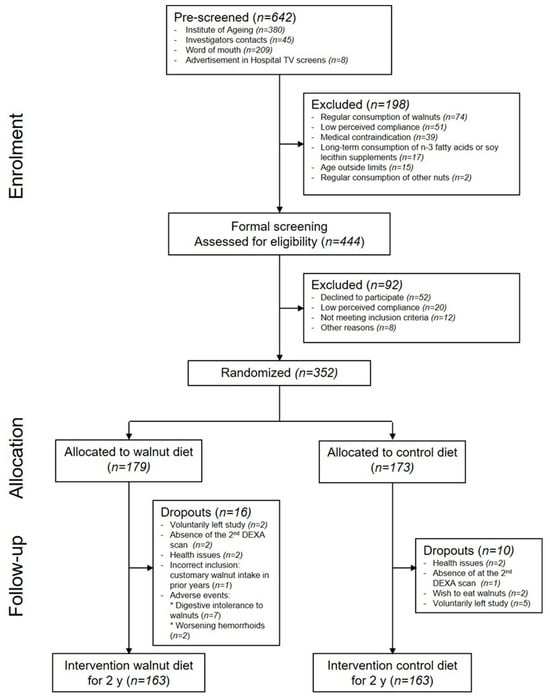
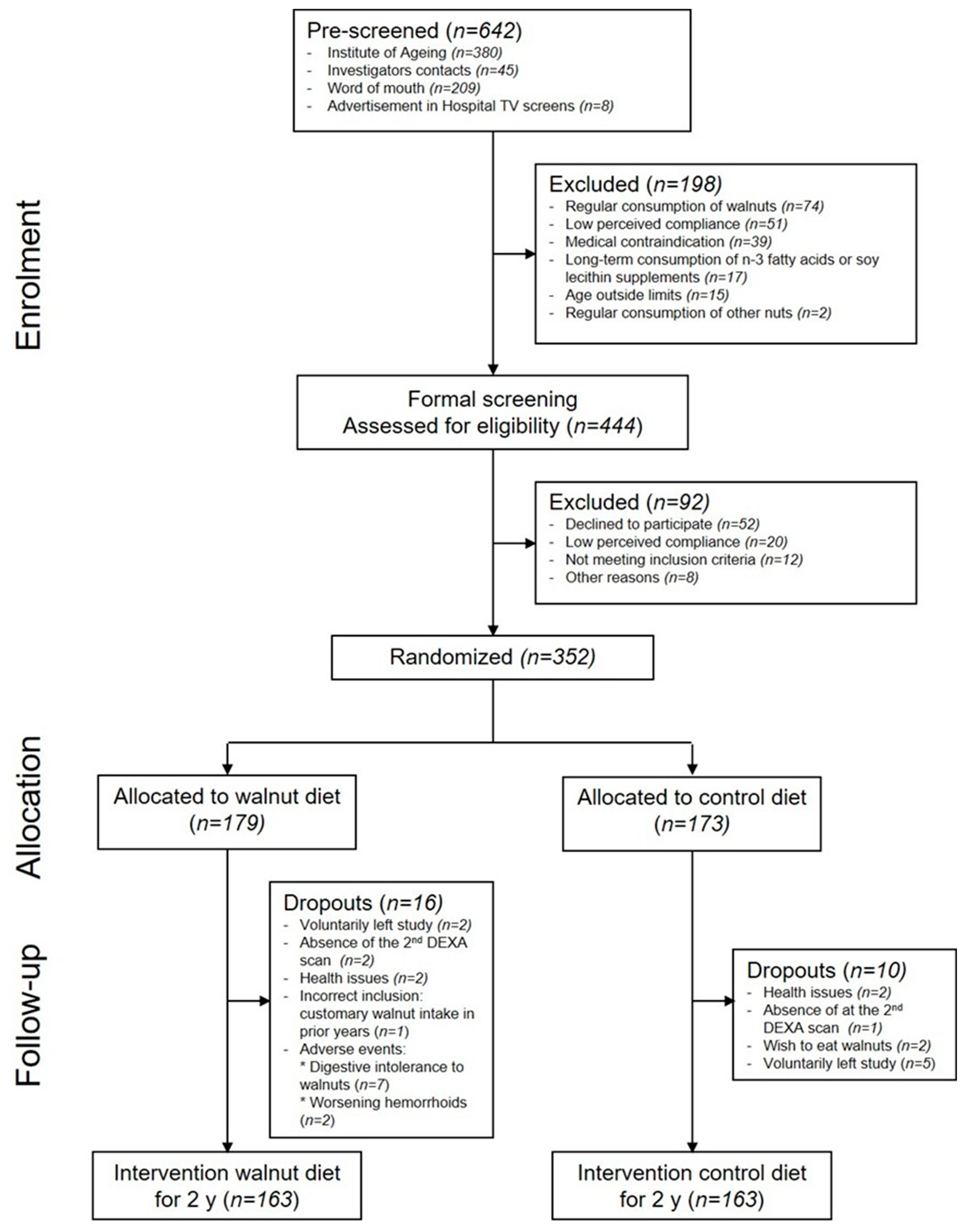
For this sub-study, we selected participants recruited at the Barcelona site, since DXA studies were only performed in this center based on prior expertise, availability, and cost. From April 2012 to December 2013, a total of 642 potential candidates were pre-screened by completing short questionnaires. Of them, 444 candidates were formally assessed for eligibility, and 92 were further excluded after a clinical visit and physical examination, resulting in 352 subjects recruited and randomly assigned to one of the two interventions (see flow-chart in Figure 1). At baseline and every 6 months during the 2-year intervention, socioeconomical, clinical, and medication data were collected. Participants were considered to have diabetes, hyperlipidemia, or hypertension if they had a previous diagnosis of these conditions and/or were treated with antidiabetic, cholesterol-lowering, or antihypertensive agents, respectively. Smoking status was categorized into never, current, or past smoking according to self-reports. Physical activity was assessed at baseline and the end of the study by a validated short version of the Minnesota questionnaire [16] and expressed in minutes at a given metabolic equivalent (MET-min) per day.
Figure 1.
Flow chart of the Walnuts and Healthy Aging (WAHA) study in the Barcelona Center.
2.2. Dietary Intervention
Participants were randomly assigned to either the control or intervention group by using a computerized, web-based random number table with stratification by gender and age range in a 1:1 ratio. Using the same stratification criteria, pairs of people (i.e., partners, spouses, or household members) who entered the study were assigned to the same group. Except for the dietitians handling nutritional assessments and walnut supply, study investigators were blinded to participants’ intervention group.
Participants in the walnut group received packaged walnuts (30–60 g/day), which accounted for approximately 15% of daily energy needs, to add to their regular diet; no advice on food substitutions for walnuts or energy restriction was given, and no recipes were provided. Instructions were given to eat walnuts daily, preferably as the raw product, either as a snack or by incorporating them into salads, breakfast cereals, yogurts, or shakes. Walnuts were provided for free to participants in the walnut group by the trial’s sponsor, the California Walnut Commission, Folsom, CA. Participants in the control group were instructed to avoid walnuts and follow their usual diet. The study dietitians scheduled in-person meetings with the participants every two months to assess compliance, monitor eventual changes in body weight, provide cues for retention, collect data on tolerance, and deliver the packaged walnuts to those assigned to the active treatment group. Three-day food records (2 weekdays and 1 weekend day) were used to obtain follow-up data on food consumption from all participants at baseline and at the 6-, 12-, and 24-month visits. Compliance was evaluated by recount of empty packages and by determination of red blood cell membrane changes in the proportion of α-linolenic acid (ALA), a fatty acid characteristic of walnuts [17]. Supplementary Table S1 presents the nutritional composition of walnuts.
2.3. Measures of Adiposity and Body Composition
At inclusion and at the end of the intervention, study dietitians measured height using a wall mounted stadiometer; body weight with calibrated scales; and waist circumference by using an anthropometric tape. BMI was calculated by dividing body weight (kg) by height in meters squared. Waist was measured at the midpoint between the lowest rib and iliac crest. Waist-to-height ratio (WTHR) was calculated by dividing waist circumference by height, both in centimeters.
DXA scans were performed at baseline and at the end of intervention by using the whole-body scanner GE Lunar iDXA (GE Healthcare, Madison, WI, USA) according to the manufacturer’s specifications. All the scans were performed by the same certified radiological technologist, who was blinded to clinical data and group allocation.
Total and regional scans were taken, and two regions (android and gynoid) were also considered of interest in this study. The android region was defined as the area between the top of the pelvis (lower boundary) to above the pelvis cut by 20% of the distance from pelvis cut line to neck cut line (upper boundary). The gynoid region was defined as the region among the 2 × android height, beginning at a distance of 1.5 × android height below the top of the iliac crest. The percentage of android and gynoid fat were assessed in each region. The android/gynoid ratio was defined as android fat (%) divided by gynoid fat (%) and was calculated as a measure of fat distribution. The percentage of total lean mass and total fat mass referred to total body mass (sum of total bone, fat, and lean mass). Lean mass (kg) was calculated as the sum of lean soft tissue and bone mineral content (both in kg), and lean mass index was calculated as lean mass (kg) divided by height2, expressed in kg/m2. Fat mass index was calculated as fat mass (kg) divided by height2, expressed in kg/m2. Supplementary Table S2 details how body composition parameters were defined according to current guidelines [18,19,20,21]. All measurements were performed at baseline and after two years of intervention by using the GE Lunar Body Composition Software, version 13.0. The results of DXA concerning bone mineral density in this WAHA cohort have been published [22].
2.4. Laboratory Measurements
Overnight fasting blood samples were collected at baseline and at the end intervention in EDTA tubes, and aliquots of plasma, red blood cells, and whole blood were stored at −80 °C until analysis.
2.4.1. Determination of α-Linolenic Acid in Red Blood Cell Membranes
The proportion of α-linolenic acid (ALA) in red blood cell membranes, considered an objective biomarker of walnut consumption [23], was determined at baseline and 2 years by gas chromatography, as described [24]. Briefly, fatty acid methyl esters were separated by gas chromatography using an Agilent 7890 Gas Chromatograph (Agilent España, Barcelona, Spain) equipped with a 30 m × 0.25 μm × 0.25 mm SupraWAX280 capillary column (Teknokroma, Sant Cugat del Vallès, Spain), an autosampler, and a flame ionization detector.
2.4.2. Quantification of Adiponectin and Leptin in Plasma
Plasma concentrations of adiponectin and leptin were measured with the EZHADP-61K and EZHL-80SK Millipore ELISA kits (Darmstadt, Germany), respectively, in 211 randomly selected participants (105 in the control group and 106 in the walnut group).
2.4.3. DNA Extraction and Genotyping
Genomic DNA was extracted from blood samples with the Puregene blood kit (Gentra Systems, Minneapolis, MN, USA). Genotyping was carried out at the Genetic and Molecular Epidemiology Unit, Valencia, Spain. The FTO rs1861868 C > T single nucleotide polymorphism (SNP) in the FTO gene (intron 1) and two APOE SNPs, rs429358 (Cys112Arg) and rs7412 (Arg158Cys), were genotyped on a 7900HT Sequence Detection System (Applied Biosystems, Foster City, CA, USA) using the corresponding fluorescent allelic discrimination TaqMan assays with a calling rate > 95%. The two APOE SNPs were further combined to derive the six APOE genotypes (ε2/ε2, ε2/ε3, ε3/ε3, ε3/ε4, ε4/ε4, and ε2/ε4). ε2/ε4, ε3/ε4, and ε4/ε4 were grouped as carriers of the ε4 allele (risk genotype). A total of 5% of samples were randomly selected and genotyped a second time and no discrepancies were found. Genotype frequencies did not deviate from Hardy–Weinberg equilibrium expectations.
2.5. Statistical Analyses
As pre-specified in the design of the WAHA trial [15], changes in body weight and BMI were the primary outcome, and changes in body composition by DXA were a secondary outcome at the Barcelona node, where 352 subjects were randomized. In this setting, statistical power calculation was performed post hoc with the ENE 3.0 statistical program (GlaxoSmithKline, Brentford, United Kingdom). Accepting an alpha risk of 0.05 and a beta risk of 0.2 in a two-sided test, and assuming a loss of 10% of participants, we would need 177 participants (89 per group of intervention) to have 80% power to detect significant differences of 0.4 ± 0.05 kg/m2 in BMI, indicating that our study was powered to detect potential adiposity changes after the walnut diet compared with the control diet.
Descriptive data are presented as means (95% confidence intervals [CI]) for continuous variables and frequency or proportions (%) for categorical variables. Values for continuous variables were examined for normality before analyses. Baseline differences between groups were assessed by the chi square test for categorical variables and t tests or Mann–Whitney tests for parametric and non-parametric numerical variables, respectively. Within-group and between-group differences in the outcome variables after 2 years of intervention were assessed by repeated measures ANCOVA adjusting by the baseline value of the variable and in-trial changes in physical activity. We evaluated differences in treatment effects according to sex, age at inclusion, educational level, presence of diabetes, changes in physical activity, and FTO (rs1861868 C > T) and APOE (rs429358 and rs7412) SNPs. Subgroup analyses were performed with repeated-measures ANCOVA with 3 factors: time (baseline vs. 2 years) as repeated measure, group (control diet vs. walnut diet), and the categories of the genetic variants at FTO or APOE. A 2-tailed p < 0.05 was considered significant. All analyses were performed using SPSS v. 29 (IBM Corp., Armonk, NY, USA).
3. Results
After removal of dropouts, 326 participants (220 women; 106 men) were available for analysis (n = 163 per intervention group), which represents a 92% retention rate (Figure 1). As shown in Table 1, baseline characteristics were similar between participants allocated to the walnut and control diet arms; nearly one-half participants were overweight, but only 18% were obese.
Table 1.
Baseline characteristics of the participants who completed the study by group of intervention.
3.1. Changes in Nutrient Intake and Compliance with the Intervention
Except for a minor increase in total carbohydrate and reciprocal decrease in total fat at the expense of both monounsaturated fatty acids and polyunsaturated fatty acids (PUFA) and linoleic acid intake and slight increases in total carbohydrate, sugar, and fiber intake, participants in the control diet exhibited little 2-year changes in energy or nutrient intake (Supplementary Table S3). In accordance with the nutritional composition of walnuts, as shown in Supplementary Table S1, participants in the walnut diet group increased their intake of total energy, total fat, and PUFA, with a reciprocal decrease in carbohydrate intake (Supplementary Table S3), and these changes were statistically significant compared with the control group. The median dose of walnuts was 43 g/d, equivalent to one and a half 28-g servings/d. Compliance with the intervention throughout the study was >98% according to the every-two-month recount of empty walnut packages. The proportion of ALA in red blood cell membranes increased more than twofold in the walnut group compared with the control group at 2 years, as shown in Supplementary Figure S1, objectively confirming the good compliance with the intervention.
3.2. Baseline Measures of Body Composition
At inclusion, men presented with higher BMI and waist perimeter and lower WTHR, despite being more physically active (Supplementary Table S4). Consequently, data is presented disaggregated by sex. Women assigned to the walnut intervention group presented with lower WTHR, percentage of total, android, and gynoid fat, fat mass index, and fat/fat-free mass ratio, compared to those allocated to the control diet (Table 2). In addition, a higher percentage of lean mass and lean/fat mass ratio was also observed in women in the walnut group compared to those allocated in the control group. As depicted in Table 2, anthropometric and body composition measures were similar in men allocated to the walnut and control groups. Women in the walnut diet disclosed lower adipokine concentrations compared to those in the control diet, while men in the two groups had similar values (Supplementary Table S5).
Table 2.
Baseline values and changes in anthropometry and body composition in completers by sex.
3.3. Main Effects on Body Composition
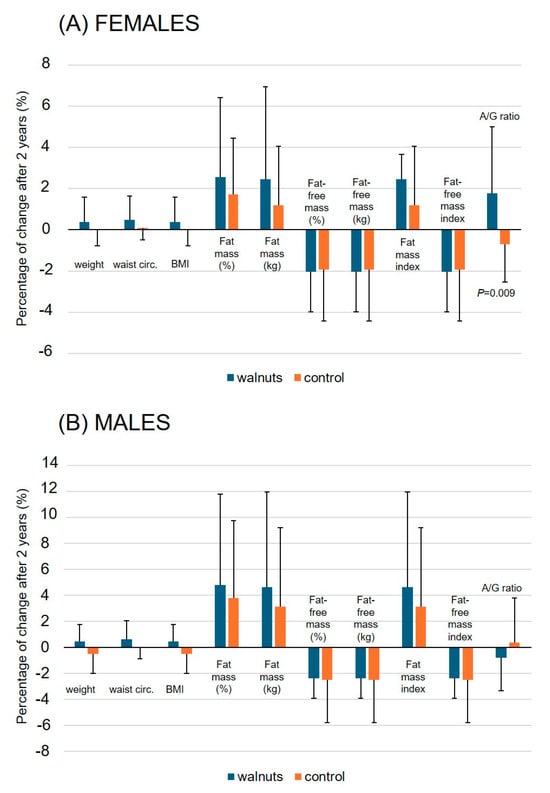
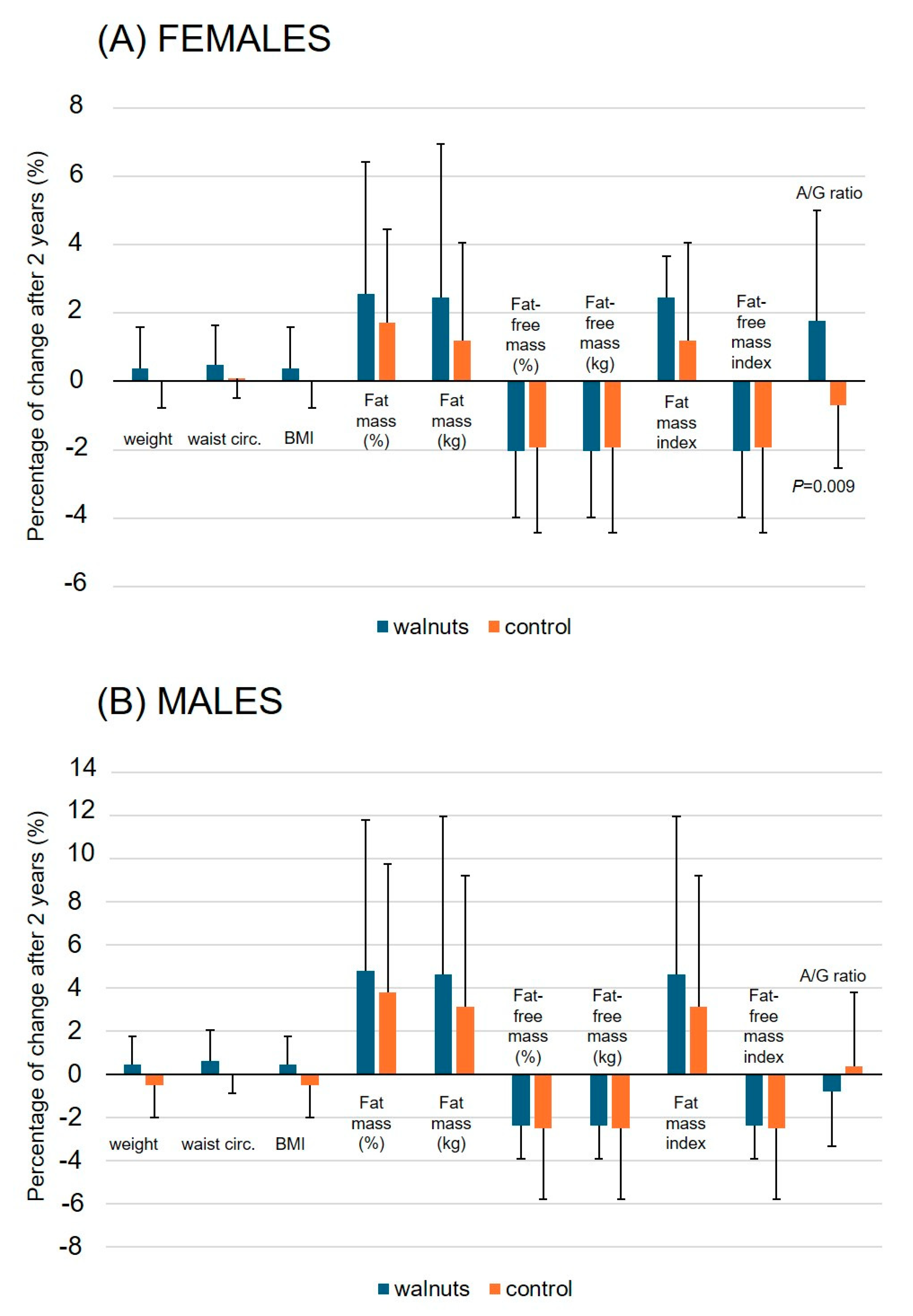
Mean body composition changes from baseline were all <3% in women and <5% in men. No significant differences were observed in either sex in the percentage changes in body weight, BMI, waist circumference, fat, or fat-free mass within or between groups (Figure 2). After 2 years, fat mass increased, and fat-free mass decreased in both groups. However, women allocated to the walnut diet group significantly increased their android/gynoid ratio compared to those in the control diet group (p= 0.009). No significant differences in the percentage of change of leptin, adiponectin, or its ratio were observed in either sex (Supplementary Figure S2).
Figure 2.
Percentage changes in body composition measures by sex after 2 years of intervention with a walnut diet vs. a control diet. Data are means (95% CI). Waist circ. indicates waist circumference; BMI, body mass index; A/G ratio, android/gynoid ratio. Between-groups differences were non-significant except for the A/G ratio in women (p = 0.009 by ANCOVA).
As depicted in Table 2, in women, no significant changes were observed in body weight, BMI or total fat mass, waist and WTHR, or fat mass index within or between groups of intervention. Women disclosed, however, an increased percentage of total fat and fat/fat-free mass ratio and decreased percentages of gynoid fat, lean mass, and fat-free mass index after 2 years, irrespective of group allocation. The android/gynoid ratio increased in women in the walnut group, while it remained unchanged in the control group.
Throughout the trial, men disclosed no meaningful changes of body weight, BMI, waist circumference, WTHR or DXA body composition measures in either intervention group (Table 2). No changes by sex were observed in adipokine concentrations (Supplementary Table S5).
3.4. Interaction of FTO rs1861868 SNP with Body Composition After Walnut Consumption
Supplementary Table S6 shows the genotype frequencies of the FTO rs1861868 SNP (C > T) in the study population. In this population, the minor allele T has a high frequency in accordance with other European populations. Data were evaluated under a dominant model (CC vs. CT/TT) [25]. No significant differences were observed in baseline body weight, BMI, waist perimeter, WTHR, or body composition in either sex bearing CC or CT/TT genotypes (Supplementary Table S7).
As displayed in Supplementary Table S8, women with the CC phenotype showed a decreased lean/fat mass ratio and increased leptin after the walnut intervention compared to T-allele carriers, while CC men increased body weight and BMI after walnut consumption compared to carriers of the T allele. Also, in men the CC genotype was associated with increased body weight, BMI, and waist circumference after walnut consumption compared with control group men participants carrying the same genotype.
3.5. Interaction of APOE Genotypes with Body Composition After Walnut Consumption
Supplementary Table S6 shows the genotype frequencies of APOE in our participants. No significant differences were observed in baseline BMI, waist perimeter, WTHR, or body composition in either sex between ε2, ε3, or ε4 carriers of the APOE gene (Supplementary Table S9). As depicted in Supplementary Table S10, no major differences were observed in either sex in body composition or adipokines by intervention group across APOE genotypes.
3.6. Subgroup Analyses of Changes in BMI and Fat Mass
Considering the total population, no differences between groups of intervention were observed in the primary outcomes BMI and percentage of fat mass according to sex, age, baseline BMI, educational level, presence of diabetes, APOE genotype, level of physical activity, or the proportion of ALA in red blood cells at 2 years (Table 3). However, subjects with the CC phenotype of the FTO genotype showed increased BMI after the walnut intervention compared to controls and compared to the CT/TT phenotype (p for interaction = 0.023).
Table 3.
Subgroup analyses of 2-year changes of BMI and total fat mass (%) by intervention group.
4. Discussion
The main findings of this study, a pre-specified secondary analysis of the WAHA RCT, demonstrate that incorporating walnuts at 15% of daily energy into the habitual diet of healthy older adults does not lead to meaningful changes in overall body weight, BMI, body fat, or body composition. In the overall study subjects, the effect of the intervention on the main outcomes BMI and body fat was not modified by sex, age, BMI, education, physical activity, common variability at the FTO and APOE gene loci, or enrichment of red blood cell membranes with ALA as objective evidence of compliance with walnut consumption. The FTO rs1861868 C > T polymorphism, may, however, influence the body composition changes resulting from the walnut diet in a sex-specific manner, although these findings are exploratory and limited by the small sample size. Our findings, derived from a long-term randomized clinical trial, provide evidence supporting the safety of including walnuts in dietary recommendations for the elderly, effectively dispelling the concern that their high energy density will lead to unwanted weight or fat gain.
Our results concur with those of cohort studies, randomized clinical trials, and meta-analyses thereof in which exposure to nuts in general [6,7,26,27] or walnuts in particular [8,9,28,29,30] had little effect on body weight. Examination of the California WAHA cohort also revealed the safety of long-term walnut consumption regarding anthropometry and body composition, as determined by bioelectrical impedance [30]. However, except for WAHA, most of these studies relied on small sample sizes, had a short duration of the intervention, and measured only standard anthropometric parameters, such as weight, BMI, and waist circumference. The utilization of DXA in our study strengthens the reliability of the observed effects. DXA is recognized as the gold standard for objective body composition assessment [18,19,20], providing detailed quantification of fat mass and fat-free mass, thereby overcoming the inherent limitations of relying solely on BMI.
As expected after 2 years of aging in elders [31], increased fat mass and decreased lean mass were observed in study subjects, irrespective of sex and treatment allocation, which is attributable to age-related shifts in energy regulation and body composition, such as sarcopenia and altered fat partitioning [32].
In fact, unlike most tree nuts, which contain predominantly monounsaturated fatty acids, walnuts possess a unique lipid matrix composed primarily of PUFA (~70% of total fat), mostly linoleic acid (C20:2), but also abundant ALA (18:3 n-3; ~10–15% of total lipid), which is the plant-derived essential n-3 fatty acid, and a remarkably high n-3 to n-6 PUFA ratio (~1:4 to 1:5) [3]. Despite the increase in energy intake in the walnut diet group due to its high fat content, body weight, BMI, and fat mass did not change in either sex. That no major between-group differences were observed in body composition suggests a homeostatic regulation counterbalancing the high-energy load of walnuts over 2 years. There were no changes of adipokine levels with the walnut diet, which suggests that this compensatory mechanism is independent of the leptin-adiponectin axis, evidencing that walnuts did not induce adipose tissue dysfunction. Our results are supported by a recent meta-analysis [33], showing that consumption of walnuts at doses ranging from 9 to 100 g/day had no effect on adiponectin or leptin circulating concentrations. However, another systematic review [10] indicated that walnut consumption increased both leptin and adiponectin levels, suggesting that α-linolenic acid might be a regulator in the synthesis of these adipokines. Nevertheless, this hypothesis is not confirmed in our study, as ALA in red blood cell membranes increased in the walnut group and changes were unrelated to those of adipokines after two years.
Besides food and nutrient compensation, as shown in the California cohort of the WAHA trial [34], alternative mechanisms to explain the lack of fattening effect of walnuts have been proposed, such as a lower than predictable metabolizable energy because of the complexity of the food matrix, which compromises fat digestibility, increased thermogenesis due to their high protein and fiber content, and increased oxidation of PUFAs, limiting fatty acid accumulation in the body [5]. In addition, their high content in polyphenols, specifically ellagitannins (primarily pedunculagin) and ellagic acid, as well as phytosterols [3], may act synergistically to modulate several biological pathways related to body weight and regional adiposity stability in older adults. More specifically, walnut polyphenols and circulating microbiota-derived urolithins [35] have the potential to directly regulate transcriptional circuits governing energy homeostasis by stimulating the cellular energy sensor AMP-activated protein kinase (AMPK) and silent information regulator 1 (SIRT1), thereby promoting mitochondrial β-oxidation while repressing master adipogenic and lipogenic regulators, including sterol regulatory element-binding protein-1c (SREB1c), peroxisome proliferator-activated receptor-gamma (PPAR-γ), and fatty acid synthase (FAS) [36]. Furthermore, urolithin A, a major microbiota-derived metabolite of ellagic acid, has been shown to enhance metabolic rate and systemic energy expenditure by upregulating uncoupling protein-1 (UCP-1) expression, inducing brown adipose tissue thermogenesis and the browning of white adipose depots [37].
The only between-group differences were changes in the android/gynoid fat mass ratio, which increased by 1.8% in the walnut group and decreased by 0.7% in the control group (p = 0.009) in women, but not in men. The high PUFA content of walnuts exerts depot-specific effects on substrate handling: it is described that in women, gluteofemoral subcutaneous adipose tissue exhibits higher basal fatty acid turnover and enhanced responsiveness to dietary PUFA oxidation compared to visceral depots [38,39]. Consequently, dietary PUFA enrichment may promote preferential lipid mobilization from the gynoid region, potentially explaining the low but statistically significant increase in the android/gynoid fat ratio among women in the walnut diet group. Although it has been reported that an increase in the android/gynoid ratio is associated with increased cardiometabolic risk [18], no sex-related differences in the health benefits of walnuts have been described [8], probably because their optimal nutrient composition overrides any potential adverse effect on adiposity. Importantly, because total body weight remained stable and this regional variation was not accompanied by deteriorations in systemic metabolic biomarkers (such as insulin resistance, blood pressure, or dyslipidemia [40]), this modest shift in the android/gynoid ratio reflects physiological tissue remodeling under postmenopausal status rather than adverse, clinically unsafe adiposity accumulation derived from walnut consumption.
Concerning the influence of genetic susceptibility at the FTO gene locus on obesity risk, the most studied variant has been the FTO-rs9939609. Here we analyzed the FTO-rs186186, in high linkage disequilibrium, but not perfectly. For the FTO-rs9939609 polymorphism, there is strong evidence that it can be overcome through increased physical activity [38,39,40,41,42,43,44] and also by diet [41]. For the FTO rs1861868 polymorphism, our results suggest that, even when accounting for changes in physical activity, the FTO rs1861868 variant allele (C > T) may condition the metabolic response to the walnut diet in a sex-specific manner, as also observed for other FTO variants [42,43]. Specifically, women with the CC genotype compared to those carrying the T allele showed a more pronounced decrease of the lean/fat mass ratio and a marked increase in circulating leptin after walnut consumption. On the other hand, men with the CC genotype showed a 1.9% increase in BMI and 1.7% increase in WTHR after the walnut diet, with opposite changes on the control diet, while T allele carriers disclosed minimal changes. However, these results are exploratory and limited by the small sample size.
Overall, the observed body composition and adipokine changes in carriers of the CC risk genotype reflect a status of metabolic and endocrine predisposition ensuing the increase in fat load provided by walnuts. Leptin, a hormone that correlates positively with total fat mass, is centrally involved in appetite and energy expenditure regulation, functions that are modulated by FTO expression in the hypothalamus [44]. The elevated leptin levels and decline of the adiponectin/leptin ratio in CC women may indicate leptin resistance or a failure of the central signaling pathway to register the energy balance accurately, potentially contributing to overall adverse body composition changes. Although it warrants replication, this nutrigenetic evidence of susceptibility to adverse body composition changes after intake of healthy fats such as those in walnuts by FTO variability may inform future precision nutrition advice.
In our study population, variability at the APOE gene locus had little influence on the anthropometric and body composition responses to the intervention. In individuals with diabetes, no associations were found between APOE variants and leptin concentrations [45]. The APOE ε4 genotype is a well-known risk factor for cardiovascular and neurodegenerative diseases, but its impact on body composition is controversial, with inconsistent findings of the few studies that have examined this topic [46]. Still, APOE variability has been implicated in modulating body composition and metabolic parameters in aging populations in a sex-dependent manner [47]. Other studies have reported diverse associations of APOE-ε4 carriership with body composition depending on fat intake [48] or adiposity status [49]. In older women with cognitive impairment, but not in men, the presence of the APOE-ε4 allele was associated with lower body and fat mass and higher lean mass [50]. The discrepancies between studies might be explained in part by the participants’ sex, age, ethnicity, and/or habitual diet. Further research is required to elucidate the role of the APOE gene locus on diet-related metabolism.
Our study has limitations. This was a secondary, pre-specified outcome limited to the Barcelona node of the WAHA trial, involving healthy elderly participants. Results might differ if the study was carried out in younger individuals or walnuts were added to a different regional diet. While the FTO interaction was statistically significant, our results might be considered exploratory; the constrained sample size demands confirmation across larger cohorts to ensure generalizability. Furthermore, the genetic variant rs1861868 is identified as a tag SNP with a high minor allele frequency. Given the complexity of the FTO locus and the paradoxical nature of the identified risk allele (CC), detailed functional genomics work is required to discern the mechanisms responsible for the observed effects during the walnut diet. Another limitation is the lack of specific, detailed regional adiposity data, particularly visceral adipose tissue, a metabolically distinct compartment associated with age-related complications that is preferentially accumulated by older men [51,52]. Future studies should prioritize its assessment to confirm whether the observed fat mass increase in susceptible men is driven by abdominal fat expansion.
There are also strengths to our study. Key among them is its randomized controlled design, long duration, and excellent retention rate. An additional strength is the objective measurement of body composition by DXA, which provides high-quality, quantitative data on fat mass and lean mass changes, reinforcing the precision of the findings. Our analysis also advances the science of nutritional genomics, shifting the focus from broad population-level associations to identifying specific, high-risk subgroups sensitive to otherwise healthy, whole-food dietary interventions.
5. Conclusions
In this substudy of the WAHA RCT, we found that, compared with a control (usual) diet, daily supplementation of the habitual diet with walnuts at 15% of energy for 2 years had no meaningful impact on body composition, as assessed by DXA, or on circulating adiposity markers. These findings support the safety of walnuts, a high-energy, high-fat food, suggesting that regular ad libitum consumption may not adversely impact weight maintenance [53] under the evaluated conditions. This study also provides exploratory evidence of the involvement of the FTO polymorphism to be replicated in other cohorts in order to increase the evidence for the development of personalized nutrition recommendations. Whether genetic variation at the FTO locus modulates individual adiposity responses to walnut consumption remains a preliminary hypothesis that requires replication in larger cohorts before any genotype-informed guidance can be considered. This research suggests the necessity of integrating robust metabolic genetics into nuanced, evidence-based dietary recommendations.
Supplementary Materials
The following supporting information can be downloaded at https://www.mdpi.com/article/10.3390/nu18223779/s1. Supplementary Table S1. Nutrient composition of walnuts (per 45 g serving). Supplementary Table S2. Definition of DXA body composition variables. Supplementary Table S3. Energy and nutrient intake at baseline and change after 2 years of intervention by randomization group. Supplementary Table S4. Baseline characteristics of the participants who completed the study by sex. Supplementary Table S5. Baseline values and changes in leptin and adiponectin concentrations in completers by sex. Supplementary Table S6. Genotype frequencies of the SNPs FTO rs1861868, and APOE genotypes in our study population according to sex and group of intervention. Supplementary Table S7. Baseline body composition, leptin and adiponectin concentrations in completers according to the FTO rs1861868 single nucleotide polymorphism. Supplementary Table S8. Changes in body composition, leptin and adiponectin concentrations in completers according to FTO rs1861868 genotype. Supplementary Table S9. Baseline body composition, leptin and adiponectin concentrations in completer women and men according to APOE genotypes. Supplementary Table S10. Changes in body composition, leptin and adiponectin concentrations in completer women and men according to APOE genotypes. Supplementary Figure S1. 2-Year changes in the percentage of α-linolenic acid in red blood cells by group allocation. Supplementary Figure S2. Percent changes in circulating leptin and adiponectin by sex after 2 years of intervention with a walnut diet vs. a control diet.
Author Contributions
J.S., E.R., and G.C.-B. designed research; S.L.-R., M.C., A.S.-V., M.S.-M., I.R., M.D., D.C., S.R., and G.C.-B. conducted research; S.L.-R., E.R., and G.C.-B. analyzed data and performed statistical analysis; E.R. and G.C.-B. wrote paper; E.R. and G.C.-B. had primary responsibility for final content. All authors have read and agreed to the published version of the manuscript.
Funding
This work was supported by a grant from the California Walnut Commission, Folsom, CA, US (to J.S. and E.R.), and by the grant 2022-25 from the Nutricia Research Foundation (to G.C-B.). This work was also supported by the Generalitat de Catalunya through the SGR grant 2025 SGR 00491 from the Agència de Gestió d’Ajuts Universitaris i de Recerca (AGAUR). These funding agencies had no input in the study design, data collection, analyses, or writing and submission of the manuscript.
Institutional Review Board Statement
The study was conducted in accordance with the Declaration of Helsinki and approved by the Ethics Committee of the Hospital Clínic de Barcelona (protocol code 2011/6958, approved 27 October 2011). This sub-study was conducted within the frame of the WAHA study (Approved by Clinicaltrials.gov on 6 July 2012 https://clinicaltrials.gov/ct2/show/NCT01634841 accessed on 30 September 2012).
Informed Consent Statement
Written informed consent has been obtained from the patients to publish this paper.
Data Availability Statement
The data that support the findings of this study are available from the corresponding author upon reasonable request.
Acknowledgments
We are indebted to all volunteers who agreed to participate in the study and to Josep Mena for his skillful performance of the DEXA studies. CIBEROBN is an initiative of ISCIII, Spain.
Conflicts of Interest
Dr. Sala-Vila has received research funding through his institution and support to attend professional meetings from the California Walnut Commission (CWC, Folsom, CA, USA). Dr. Sabaté reports research grants from the California Walnut Cognition awarded to his institution, Loma Linda University. Dr. Ros reports grants, personal fees, non-financial support, and other from CWC, and, outside the submitted work, grants, personal fees, non-financial support, and other from Alexion and speaker fees for lecture presentation and manuscript writing from Sociedad Española de Arteriosclerosis. The other authors declare no conflicts of interest.
Abbreviations
Alpha-linolenic acid (ALA), body mass index (BMI), fat mass and obesity-associated (FTO), polyunsaturated fatty acids (PUFA), randomized controlled trials (RCTs), single nucleotide polymorphism (SNP), waist-to-height ratio (WTHR), Walnuts And Healthy Aging (WAHA).
References
- St-Onge, M.-P.; Gallagher, D. Body composition changes with aging: The cause or the result of alterations in metabolic rate and macronutrient oxidation? Nutrition 2010, 26, 152–155. [Google Scholar] [CrossRef] [Scilit] [PubMed]
- Newman, A.B.; Visser, M.; Kritchevsky, S.B.; Simonsick, E.; Cawthon, P.M.; Harris, T.B. The Health, Aging, and Body Composition (Health ABC) Study-Ground-Breaking Science for 25 Years and Counting. J. Gerontol. A Biol. Sci. Med. Sci. 2023, 78, 2024–2034. [Google Scholar] [CrossRef] [Scilit] [PubMed]
- Ros, E.; Singh, A.; O’Keefe, J.H. Nuts: Natural pleiotropic nutraceuticals. Nutrients 2021, 13, 3269. [Google Scholar] [CrossRef] [Scilit] [PubMed]
- World Health Organization. Acceleration Plan to Stop Obesity; World Health Organization: Geneva, Switzerland, 2023. [Google Scholar]
- Baer, D.J.; Dalton, M.; Blundell, J.; Finlayson, G.; Hu, F.B. Nuts, energy balance and body weight. Nutrients 2023, 15, 1162. [Google Scholar] [CrossRef] [Scilit] [PubMed]
- Nishi, S.K.; Viguiliouk, E.; Blanco Mejia, S.; Kendall, C.W.C.; Bazinet, R.P.; Hanley, A.J.; Comelli, E.M.; Salas-Salvadó, J.; Jenkins, D.J.A.; Sievenpiper, J.L. Are fatty nuts a weighty concern? A systematic review and meta-analysis and dose-response meta-regression of prospective cohorts and randomized controlled trials. Obes. Rev. 2021, 22, e13330. [Google Scholar] [CrossRef] [Scilit] [PubMed]
- Fernández-Rodríguez, R.; Mesas, A.E.; Garrido-Miguel, M.; Martínez-Ortega, I.A.; Jiménez-López, E.; Martínez-Vizcaíno, V. The relationship of tree nuts and peanuts with adiposity parameters: A systematic review and network meta-analysis. Nutrients 2021, 13, 2251. [Google Scholar] [CrossRef] [Scilit] [PubMed]
- Lockyer, S.; De La Hunty, A.E.; Steenson, S.; Spiro, A.; Stanner, S.A. Walnut consumption and health outcomes with public health relevance-a systematic review of cohort studies and randomized controlled trials published from 2017 to present. Nutr. Rev. 2022, 81, 26–54. [Google Scholar] [CrossRef] [Scilit] [PubMed]
- Hadi, A.; Khosroshahi, M.Z.; Zwamel, A.H.; Asbaghi, O.; Naeini, F.; Miraghajani, M.; Nouri, M.; Ghaedi, E. Impact of walnut consumption on glycemic control and anthropometric indices: A systematic review and meta-analysis of randomized controlled trials. J. Diabetes Metab. Disord. 2025, 24, 62. [Google Scholar] [CrossRef] [Scilit] [PubMed]
- Yang, L.; Guo, Z.; Qi, S.; Fang, T.; Zhu, H.; Santos, H.O.; Khani, V.; Wong, C.H.; Qiu, Z. Walnut intake may increase circulating adiponectin and leptin levels but does not improve glycemic biomarkers: A systematic review and meta-analysis of randomized clinical trials. Complement. Ther. Med. 2020, 52, 102505. [Google Scholar] [CrossRef] [Scilit] [PubMed]
- Olmedo, L.; Luna, F.J.; Dopazo, H.; Pellon-Maison, M. Protein and total sugars intake modulate the rs9939609 single nucleotide polymorphism effect at the fat mass and obesity-associated gene on body composition. Clin. Nutr. ESPEN 2025, 68, 359–367. [Google Scholar] [CrossRef] [Scilit] [PubMed]
- Di Renzo, L.; Cioccoloni, G.; Falco, S.; Abenavoli, L.; Moia, A.; Sinibaldi Salimei, P.; De Lorenzo, A. Influence of FTO rs9939609 and Mediterranean diet on body composition and weight loss: A randomized clinical trial. J. Transl. Med. 2018, 16, 168. [Google Scholar] [CrossRef] [Scilit] [PubMed]
- Saleh, R.N.M.; West, A.L.; Ostermann, A.I.; Schebb, N.H.; Calder, P.C.; Minihane, A.M. APOE genotype modifies the plasma oxylipin response to omega-3 polyunsaturated fatty acid supplementation in healthy individuals. Front. Nutr. 2021, 8, 723813. [Google Scholar] [CrossRef] [Scilit] [PubMed]
- Fallaize, R.; Celis-Morales, C.; MacReady, A.L.; Marsaux, C.F.M.; Forster, H.; O’Donovan, C.; Woolhead, C.; San-Cristobal, R.; Kolossa, S.; Hallmann, J.; et al. The effect of the apolipoprotein E genotype on response to personalized dietary advice intervention: Findings from the Food4Me randomized controlled trial. Am. J. Clin. Nutr. 2016, 104, 827–836. [Google Scholar] [CrossRef] [Scilit] [PubMed]
- Rajaram, S.; Valls-Pedret, C.; Cofán, M.; Sabaté, J.; Serra-Mir, M.; Pérez-Heras, A.M.; Arechiga, A.; Casaroli-Marano, R.P.; Alforja, S.; Sala-Vila, A.; et al. The Walnuts and Healthy Aging Study (WAHA): Protocol for a nutritional intervention trial with walnuts on brain aging. Front. Aging Neurosci. 2017, 8, 234. [Google Scholar] [CrossRef] [Scilit] [PubMed]
- Elosua, R.; Marrugat, J.; Molina, L.; Pons, S.; Pujol, E. Validation of the Minnesota Leisure Time Physical Activity Questionnaire in Spanish men. Am. J. Epidemiol. 1994, 139, 1197–1209. [Google Scholar] [CrossRef] [Scilit] [PubMed]
- Griel, A.E.; Kris-Etherton, P.M.; Hilpert, K.F.; Zhao, G.; West, S.G.; Corwin, R.L. An increase in dietary n-3 fatty acids decreases a marker of bone resorption in humans. Nutr. J. 2007, 6, 2. [Google Scholar] [CrossRef] [Scilit] [PubMed]
- Messina, C.; Albano, D.; Gitto, S.; Tofanelli, L.; Bazzocchi, A.; Ulivieri, F.M.; Guglielmi, G.; Sconfienza, L.M. Body composition with dual energy X-ray absorptiometry: From basics to new tools. Quant. Imaging Med. Surg. 2020, 10, 1687–1698. [Google Scholar] [CrossRef] [Scilit] [PubMed]
- Petak, S.; Barbu, C.G.; Yu, E.W.; Fielding, R.; Mulligan, K.; Sabowitz, B.; Wu, C.H.; Shepherd, J.A. The official positions of the International Society for Clinical Densitometry: Body composition analysis reporting. J. Clin. Densitom. 2013, 16, 508–519. [Google Scholar] [CrossRef] [Scilit] [PubMed]
- Bennett, J.P.; Prado, C.M.; Gonzalez, M.C.; Heymsfield, S.B. Clarification and standardization of dual-energy X-ray absorptiometry terminology for accurate scientific communication and clinical diagnostic accuracy. Am. J. Clin. Nutr. 2025, 122, 661–670. [Google Scholar] [CrossRef] [Scilit] [PubMed]
- Heymsfield, S.B.; Brown, J.; Ramirez, S.; Prado, C.M.; Tinsley, G.M.; Gonzalez, M.C. Are lean body mass and fat-free mass the same or different body components? A critical perspective. Adv. Nutr. 2024, 15, 100335. [Google Scholar] [CrossRef] [Scilit] [PubMed]
- Oliver-Pons, C.; Sala-Vila, A.; Cofán, M.; Serra-Mir, M.; Roth, I.; Valls-Pedret, C.; Domènech, M.; Ortega, E.; Rajaram, S.; Sabaté, J.; et al. Effects of walnut consumption for 2 years on older adults’ bone health in the Walnuts and Healthy Aging (WAHA) trial. J. Am. Geriatr. Soc. 2024, 72, 2471–2482. [Google Scholar] [CrossRef] [Scilit] [PubMed]
- Cofán, M.; Checa, A.; Serra-Mir, M.; Roth, I.; Valls-Pedret, C.; Lopez-Illamola, A.; Doménech, M.; Rajaram, S.; Lázaro, I.; Sabaté, J.; et al. A walnut-enriched diet for 2 years changes the serum oxylipin profile in healthy older persons. J. Nutr. 2024, 154, 395–402. [Google Scholar] [CrossRef] [Scilit] [PubMed]
- Lindholt, J.S.; Kristensen, K.L.; Burillo, E.; Martinez-Lopez, D.; Calvo, C.; Ros, E.; Martin-Ventura, J.L.; Sala-Vila, A. Arachidonic acid, but not omega-3 index, relates to the prevalence and progression of abdominal aortic aneurysm in a population-based study of Danish men. J. Am. Heart Assoc. 2018, 7, e007790. [Google Scholar] [CrossRef] [Scilit] [PubMed]
- Flores, S.V.; Roco-Videla, Á.; Herrera-Soto, J.A.; Caviedes-Olmos, M.; Montaña, R.M. Worldwide genetic variability of the rs1861868 SNP in the FTO gene associated with obesity. Data Metadata 2024, 3, 453. [Google Scholar] [CrossRef] [Scilit]
- Nijssen, K.M.R.; Mensink, R.P.; Plat, J.; Joris, P.J. Longer-term mixed nut consumption improves brain vascular function and memory: A randomized, controlled crossover trial in older adults. Clin. Nutr. 2023, 42, 1067–1075. [Google Scholar] [CrossRef] [Scilit] [PubMed]
- Bersch-Ferreira, Â.C.; Weschenfelder, C.; Waclawovsky, G.; Da Silva, L.R.; Stein, E.; Machado, R.H.V.; Figueiro, M.F.; Suzumura, E.A.; Santos, R.H.N.; Duarte, G.B.S.; et al. Effect of nuts on anthropometric and glycemic indexes and blood pressure in secondary cardiovascular prevention: A systematic review and meta-analysis of randomized controlled trials. Nutr. Rev. 2025, 83, e144–e156. [Google Scholar] [CrossRef] [Scilit] [PubMed]
- Mateș, L.; Popa, D.S.; Rusu, M.E.; Fizeșan, I.; Leucuța, D. Walnut intake interventions targeting biomarkers of metabolic syndrome and inflammation in middle-aged and older adults: A systematic review and meta-analysis of randomized controlled trials. Antioxidants 2022, 11, 1412. [Google Scholar] [CrossRef] [Scilit] [PubMed]
- Wu, L.; Piotrowski, K.; Rau, T.; Waldmann, E.; Broedl, U.C.; Demmelmair, H.; Koletzko, B.; Stark, R.G.; Nagel, J.M.; Mantzoros, C.S.; et al. Walnut-enriched diet reduces fasting non-HDL-cholesterol and apolipoprotein B in healthy Caucasian subjects: A randomized controlled cross-over clinical trial. Metabolism 2014, 63, 382–391. [Google Scholar] [CrossRef] [Scilit] [PubMed]
- Bitok, E.; Rajaram, S.; Jaceldo-Siegl, K.; Oda, K.; Sala-Vila, A.; Serra-Mir, M.; Ros, E.; Sabaté, J. Effects of long-term walnut supplementation on body weight in free-living elderly: Results of a randomized controlled trial. Nutrients 2018, 10, 1317. [Google Scholar] [CrossRef] [Scilit] [PubMed]
- Pratt, J.; Narici, M.; Boreham, C.; De Vito, G. Dual-energy X-ray absorptiometry derived body composition trajectories across adulthood: Reference values and associations with body roundness index and body mass index. Clin. Nutr. 2025, 46, 137–146. [Google Scholar] [CrossRef] [Scilit] [PubMed]
- Li, C.W.; Yu, K.; Shyh-Chang, N.; Jiang, Z.; Liu, T.; Ma, S.; Luo, L.; Guang, L.; Liang, K.; Ma, W.; et al. Pathogenesis of sarcopenia and the relationship with fat mass: Descriptive review. J. Cachexia Sarcopenia Muscle 2022, 13, 781–794. [Google Scholar] [CrossRef] [Scilit] [PubMed]
- Mashayekhi, G.; Ashtary-Larky, D.; Karimi, M.; Asbaghi, O.; Kalajahi, A.K.; Shouhani, Z.; Moghadam, O.F.; Rezaeyeh, A.P.; Hosseini, A.; Naderian, M. Effects of Walnut Consumption on Inflammatory Cytokines and Adipokines in Adults: A Systematic Review and Dose-Response Meta-Analysis. J. Hum. Nutr. Diet. 2026, 39, e70354. [Google Scholar] [CrossRef] [Scilit] [PubMed]
- Bitok, E.; Jaceldo-Siegl, K.; Rajaram, S.; Serra-Mir, M.; Roth, I.; Freitas-Simoes, T.; Ros, E.; Sabaté, J. Favourable nutrient intake and displacement with long-term walnut supplementation among elderly: Results of a randomised trial. Br. J. Nutr. 2017, 118, 201–209. [Google Scholar] [CrossRef] [Scilit] [PubMed]
- Galkina, P.; Domínguez-López, I.; Cofán, M.; Pozzoli, C.; Vallverdú-Queralt, A.; Serra-Mir, M.; Chiva-Blanch, G.; Rajaram, S.; Sabaté, J.; Sala-Vila, A.; et al. Microbiota-derived urolithins and cortical thickness in cognitively healthy older adults: A longitudinal MRI analysis of the WAHA trial. Food Funct. 2026, 17, 9451–9461. [Google Scholar] [CrossRef] [Scilit] [PubMed]
- Sánchez -González, C.; Ciudad, C.J.; Noé, V.; Izquierdo-Pulido, M. Health benefits of walnut polyphenols: An exploration beyond their lipid profile. Crit. Rev. Food Sci. Nutr. 2017, 57, 3373–3383. [Google Scholar] [CrossRef] [Scilit] [PubMed]
- Xia, B.; Shi, X.C.; Xie, B.C.; Zhu, M.Q.; Chen, Y.; Chu, X.Y.; Cai, G.H.; Liu, M.; Yang, S.Z.; Mitchell, G.A.; et al. Urolithin A exerts antiobesity effects through enhancing adipose tissue thermogenesis in mice. PLoS Biol. 2020, 18, e3000688. [Google Scholar] [CrossRef] [Scilit] [PubMed]
- Blaak, E. Gender differences in fat metabolism. Curr. Opin. Clin. Nutr. Metab. Care 2001, 4, 499–502. [Google Scholar] [CrossRef] [Scilit] [PubMed]
- Jensen, M.D. Role of body fat distribution and the metabolic complications of obesity. J. Clin. Endocrinol. Metab. 2008, 93, S57–S63. [Google Scholar] [CrossRef] [Scilit] [PubMed]
- Rajaram, S.; Cofán, M.; Sala-Vila, A.; Haddad, E.; Serra-Mir, M.; Bitok, E.; Roth, I.; Freitas-Simoes, T.; Kaur, A.; Valls-Pedret, C.; et al. Effects of Walnut Consumption for 2 Years on Lipoprotein Subclasses Among Healthy Elders: Findings From the WAHA Randomized Controlled Trial. Circulation 2021, 144, 1083–1085. [Google Scholar] [CrossRef] [Scilit] [PubMed]
- Corella, D.; Arnett, D.K.; Tucker, K.L.; Kabagambe, E.K.; Tsai, M.; Parnell, L.D.; Lai, C.Q.; Lee, Y.C.; Warodomwichit, D.; Hopkins, P.N.; et al. A high intake of saturated fatty acids strengthens the association between the fat mass and obesity-associated gene and BMI. J. Nutr. 2011, 141, 2219–2225. [Google Scholar] [CrossRef] [Scilit] [PubMed]
- Wang, W.; Yang, K.; Wang, S.; Zhang, J.; Shi, Y.; Zhang, H.; Jin, D.; Gu, R.; Zeng, Q.; Hua, Q. The sex-specific influence of FTO genotype on exercise intervention for weight loss in adult with obesity. Eur. J. Sport Sci. 2022, 22, 1926–1931. [Google Scholar] [CrossRef] [Scilit] [PubMed]
- Saldaña-Alvarez, Y.; Salas-Martínez, M.G.; García-Ortiz, H.; Luckie-Duque, A.; García-Cárdenas, G.; Vicenteño-Ayala, H.; Cordova, E.J.; Esparza-Aguilar, M.; Contreras-Cubas, C.; Carnevale, A.; et al. Gender-dependent association of FTO polymorphisms with body mass index in Mexicans. PLoS ONE 2016, 11, e0145984. [Google Scholar] [CrossRef] [Scilit] [PubMed]
- Fawcett, K.A.; Barroso, I. The genetics of obesity: FTO leads the way. Trends Genet. 2010, 26, 266–274. [Google Scholar] [CrossRef] [Scilit] [PubMed]
- Wauters, M.; Considine, R.; Löfgren, A.; Van Broeckhoven, C.; Van der Auwera, J.C.; De Leeuw, I.; Van Gaal, L. Associations of leptin with body fat distribution and metabolic parameters in non-insulin-dependent diabetic patients: No effect of apolipoprotein E polymorphism. Metabolism 2000, 49, 724–730. [Google Scholar] [CrossRef] [Scilit] [PubMed]
- Ozen, E.; Lovegrove, J.A.; Jackson, K.G. Association between body composition and cardiometabolic disease risk—Role of dietary fat intake and APOLIPOPROTEIN E genotype on this relationship. Proc. Nutr. Soc. 2024, 83, E157. [Google Scholar] [CrossRef] [Scilit] [PubMed]
- Subramaniapillai, S.; Schindler, L.S.; Redmond, P.; Bastin, M.E.; Wardlaw, J.M.; Valdés Hernández, M.; Maniega, S.M.; Aribisala, B.; Westlye, L.T.; Coath, W.; et al. Sex-dependent effects of cardiometabolic health and APOE4 on brain age: A longitudinal cohort study. Neurology 2024, 103, e209744. [Google Scholar] [CrossRef] [Scilit] [PubMed]
- Hammad, S.S.; Eck, P.; Sihag, J.; Chen, X.; Connelly, P.W.; Lamarche, B.; Couture, P.; Guay, V.; Maltais-Giguère, J.; West, S.G.; et al. Common variants in lipid metabolism-related genes associate with fat mass changes in response to dietary monounsaturated fatty acids in adults with abdominal obesity. J. Nutr. 2019, 149, 1749–1756. [Google Scholar] [CrossRef] [Scilit] [PubMed]
- Ozen, E.; Mihaylova, R.G.; Lord, N.J.; Lovegrove, J.A.; Jackson, K.G. Association between APOE genotype with body composition and cardiovascular disease risk markers is modulated by BMI in healthy adults: Findings from the BODYCON study. Int. J. Mol. Sci. 2022, 23, 9766. [Google Scholar] [CrossRef] [Scilit] [PubMed]
- Ando, T.; Uchida, K.; Sugimoto, T.; Kimura, A.; Saji, N.; Niida, S.; Sakurai, T. ApoE4 is associated with lower body mass, particularly fat mass, in older women with cognitive impairment. Nutrients 2022, 14, 539. [Google Scholar] [CrossRef] [Scilit] [PubMed]
- Varghese, M.; Song, J.; Singer, K. Age and sex: Impact on adipose tissue metabolism and inflammation. Mech. Ageing Dev. 2021, 199, 111563. [Google Scholar] [CrossRef] [Scilit] [PubMed]
- Palmer, B.F.; Clegg, D.J. The sexual dimorphism of obesity. Mol. Cell. Endocrinol. 2015, 418, 101–109. [Google Scholar] [CrossRef] [Scilit] [PubMed]
- Stevens, J.; Truesdale, K.P.; McClain, J.E.; Cai, J. The definition of weight maintenance. Int. J. Obes. 2005, 30, 391–399. [Google Scholar] [CrossRef] [Scilit] [PubMed]

Disclaimer/Publisher’s Note: The statements, opinions and data contained in all publications are solely those of the individual author(s) and contributor(s) and not of MDPI and/or the editor(s). MDPI and/or the editor(s) disclaim responsibility for any injury to people or property resulting from any ideas, methods, instructions or products referred to in the content. |
© 2026 by the authors. Licensee MDPI, Basel, Switzerland. This article is an open access article distributed under the terms and conditions of the Creative Commons Attribution (CC BY) license.