Review

Monk Fruit Extract and Sustainable Health: A PRISMA-Guided Systematic Review of Randomized Controlled Trials


1
Department of Bioprocess Engineering, Wrocław University of Economics and Business, Komandorska 118/120, 53-345 Wrocław, Poland
2
Department of Micro, Nano and Bioprocess Engineering, Faculty of Chemistry, Wroclaw University of Science and Technology, Wybrzeże Wyspiańskiego 27, 50-370 Wrocław, Poland
*
Author to whom correspondence should be addressed.
Nutrients 2025, 17(9), 1433; https://doi.org/10.3390/nu17091433
Submission received: 25 February 2025 / Revised: 25 March 2025 / Accepted: 23 April 2025 / Published: 24 April 2025
(This article belongs to the Special Issue Functional Foods and Sustainable Health (2nd Edition))

Abstract

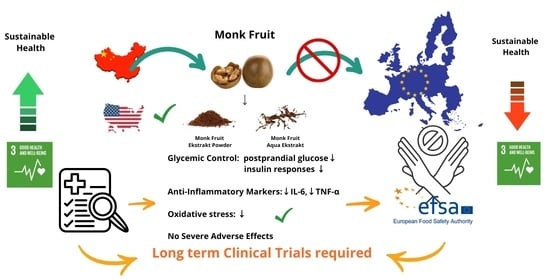
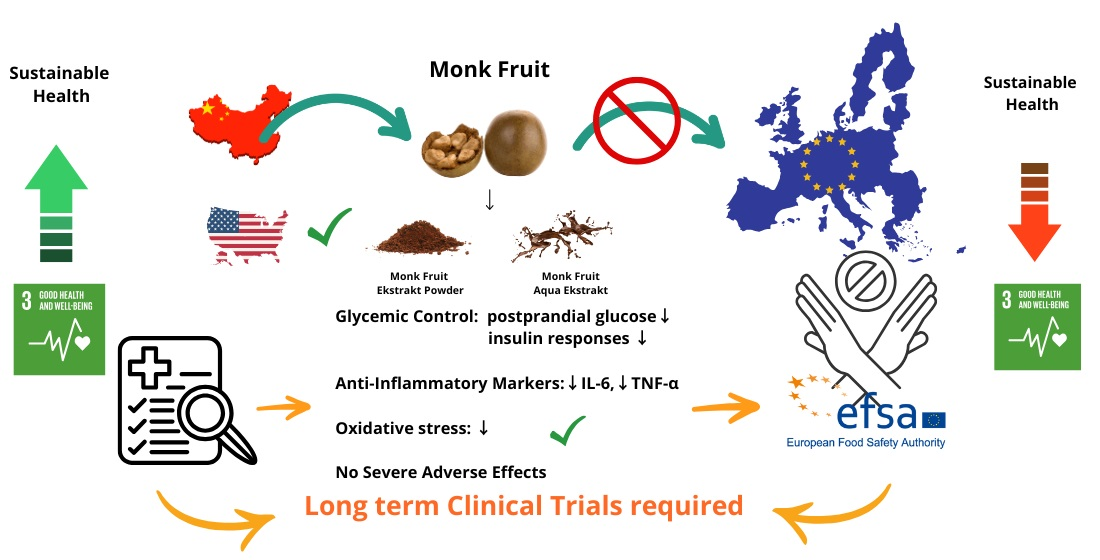
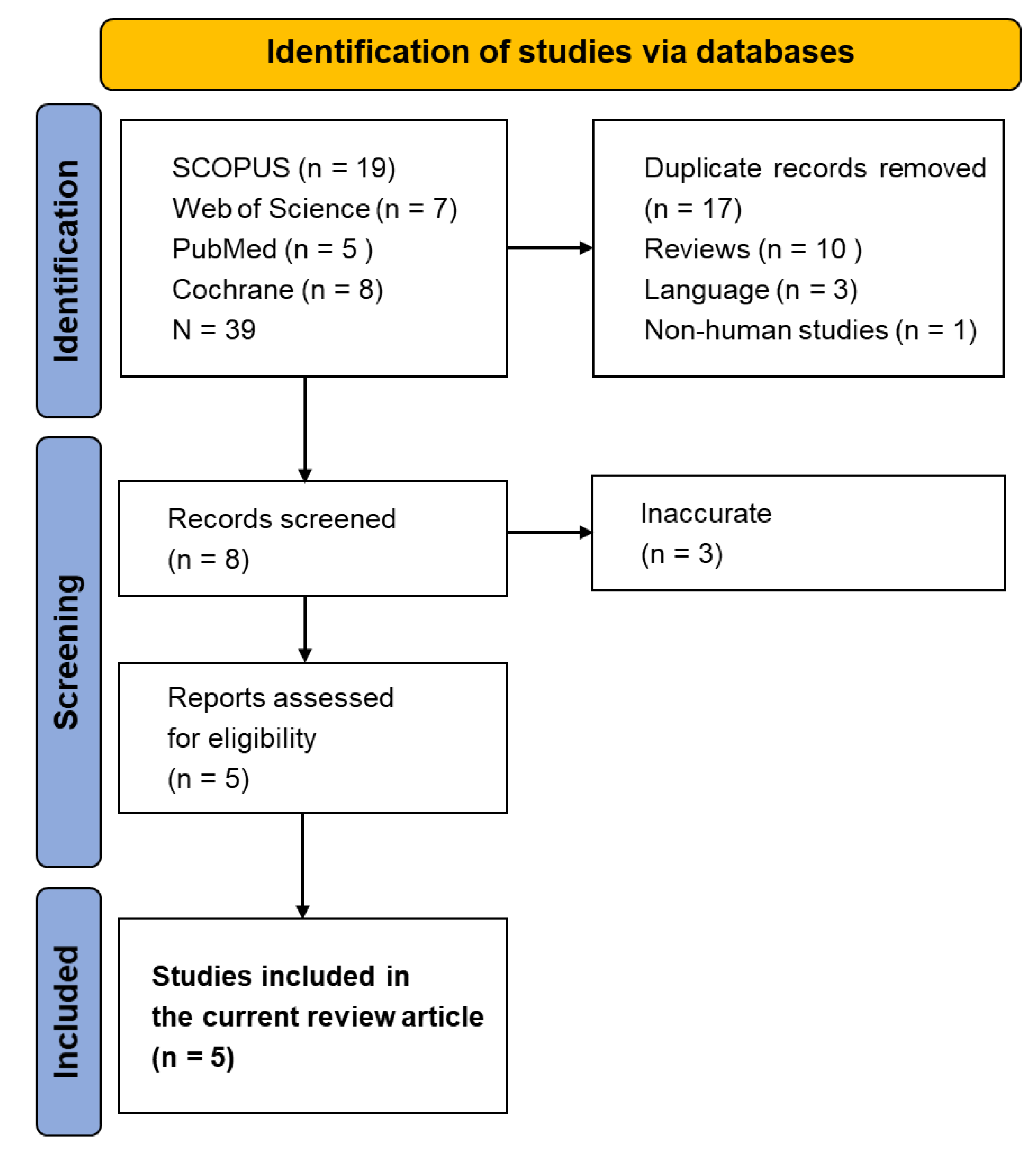
Sustainable health approaches promote functional food alternatives that support metabolic well-being while reducing reliance on added sugars and artificial sweeteners. Monk fruit extract (MFE), a natural, non-caloric sweetener, is gaining interest for its potential metabolic benefits, but its effects and regulatory status require further evaluation. Objective: This PRISMA-guided systematic review synthesizes findings from randomized controlled trials (RCTs) assessing the impact of MFE on metabolic health, lipid profiles, inflammation, and regulatory considerations. Methods: The literature search was conducted across PubMed, Scopus, Web of Science, and Cochrane Library, covering studies published between 2015 and 2025. Inclusion criteria were human RCTs evaluating MFE’s metabolic effects, while animal studies, reviews, and mixed-intervention trials were excluded. Study quality was assessed using the Cochrane risk of bias tool and the Jadad scale. Results: Five randomized controlled trials met the inclusion criteria, demonstrating that monk fruit extract (MFE) reduces postprandial glucose levels by 10–18% and insulin responses by 12–22%. No severe adverse effects were observed. Regulatory analysis indicated that MFE is approved for use in the United States and China, while its status remains under review in the European Union. Conclusions: MFE shows potential as a functional food ingredient for metabolic health. However, long-term clinical trials and a harmonized regulatory framework must confirm its safety and efficacy within sustainable health strategies
Keywords: monk fruit extract; sustainable health; randomized controlled trials (RCTs); metabolic health; non-nutritive sweeteners; glucose metabolism monk fruit extract; sustainable health; randomized controlled trials (RCTs); metabolic health; non-nutritive sweeteners; glucose metabolism
Graphical Abstract