Towards Precision Sports Nutrition for Endurance Athletes: A Scoping Review of Application of Omics and Wearables Technologies

 ,
,
Abstract
1. Introduction
- Map the existing literature;
- Summarize key findings and insights;
- Identify research gaps to guide the field.
2. Materials and Methods
2.1. Research Methods
2.2. Eligibility Criteria
2.3. Study Selection
2.4. Data Charting
3. Results
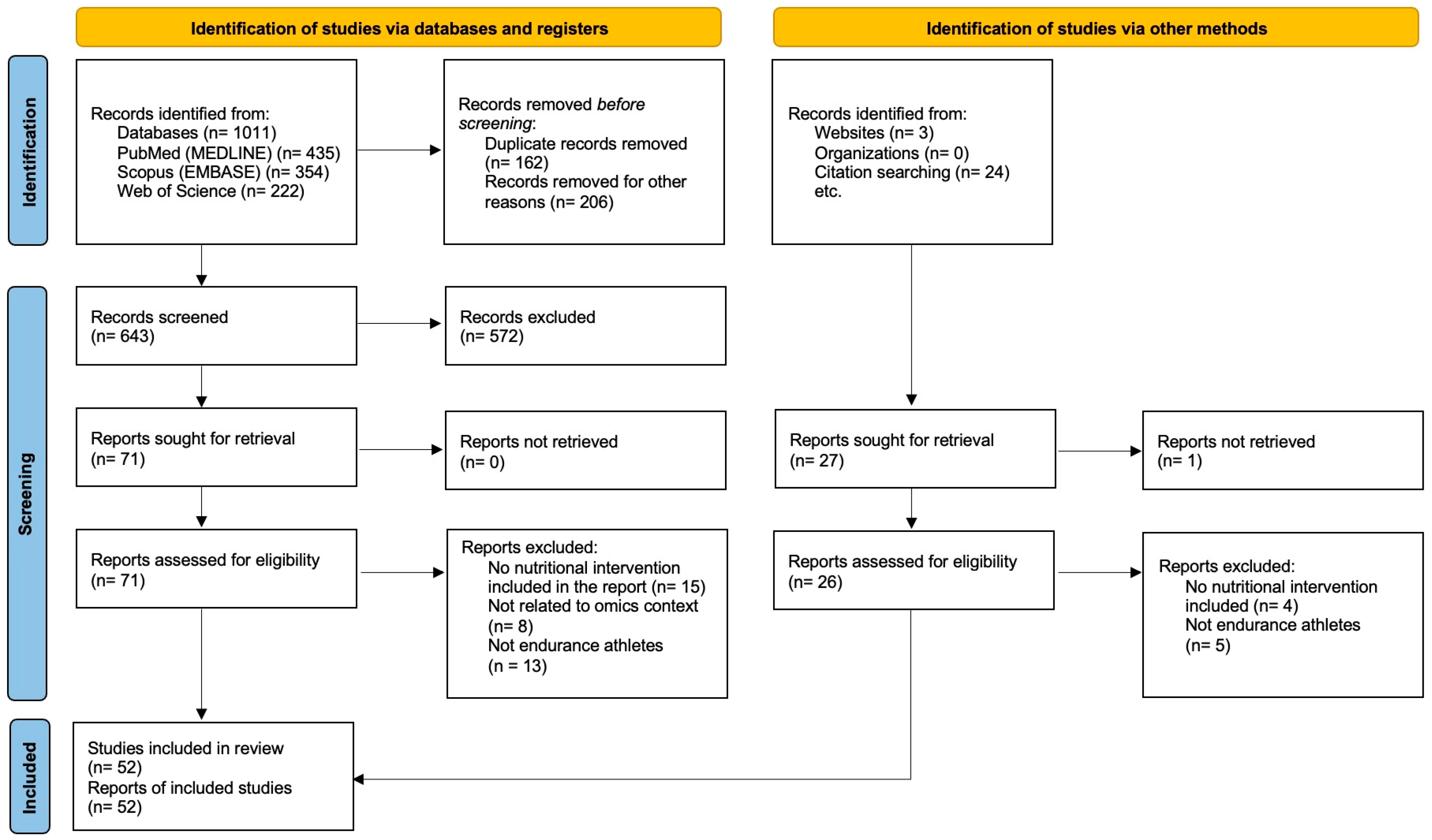
3.1. Literature Search and Study Selection
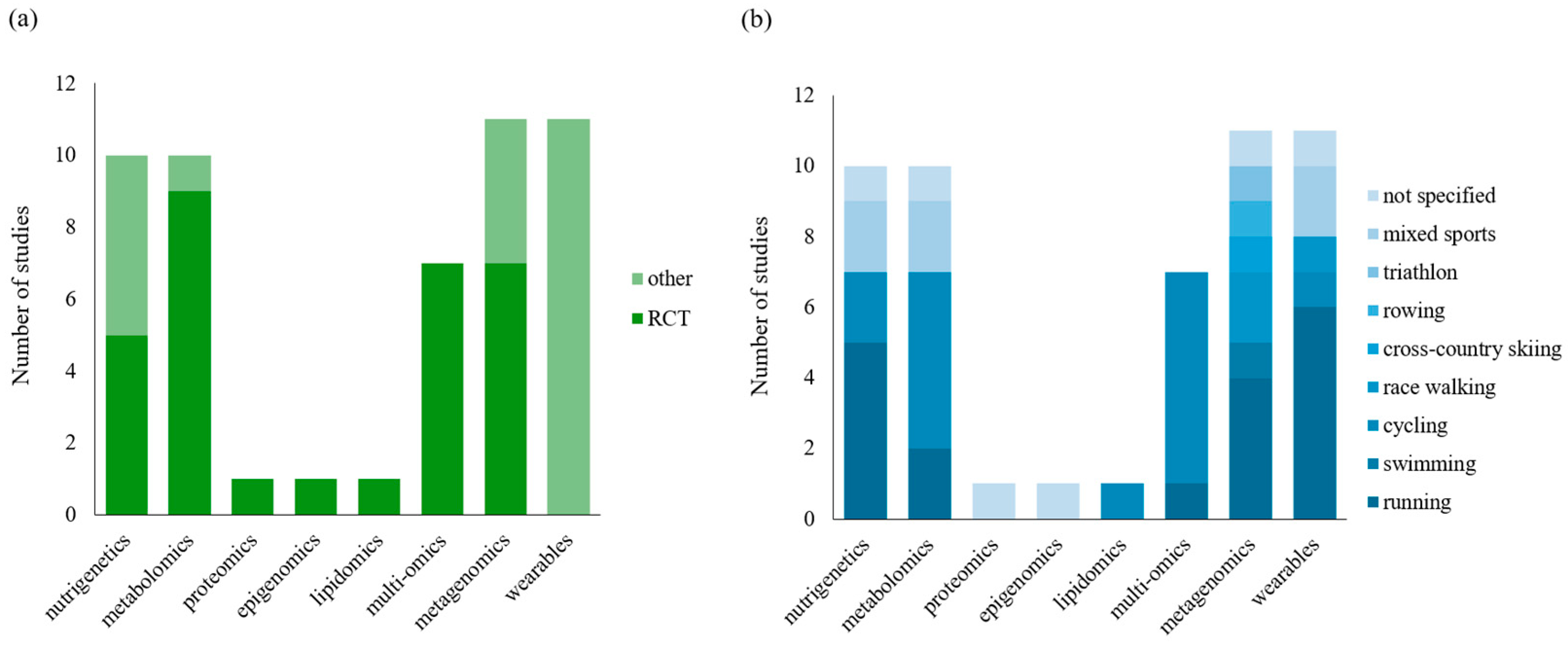
3.2. Characteristics of Studies
3.3. Nutrigenetics

| Authors, Publication Year | Study Design | Study Population | Analytical Platform; Matrix | Intervention | Key Findings |
|---|---|---|---|---|---|
| Miranda-Vilela et al., 2009 [26] | One-arm interventional design with a 14-day nutritional intervention between two running races; blood sample time points: after each race | 124 recreational runners; 75 males and 49 females (age range: 15–67 years) | Genotyping (PCR-RFLP), target SNPs: MnSOD Val9Ala (rs1799725), CAT -21A/T (rs7943316), GPX1 Pro198Leu (rs1050450); blood | Volunteers participated in two races under identical training and environmental conditions, before (control) and after (treatment) 14 days of daily supplementation with 400 mg of pequi oil. Athletes chose the distance (4–21 km) based on their weekly training. | MnSOD Val/Ala heterozygotes had the least DNA and tissue damage, lowest lipid peroxidation, and best response to pequi oil against exercise-induced damage. No significant effects for CAT or GPX1 genes. |
| Miranda-Vilela et al., 2010 [27] | Same as [26] | 119 recreational runners; 74 males and 45 females (age range: 15–67 years) | Genotyping (allele-specific PCR and PCR-RFLP), target polymorphisms: Hp, MnSOD Val9Ala (rs1799725), CAT -21A/T (rs7943316), GPX1 Pro198Leu (rs1050450); blood | Same as [26] | MnSOD Val/Val homozygotes, CAT A allele carriers, and GPX1 Pro allele carriers showed the best response to pequi oil for improving exercise-induced anisocytosis and blood oxygen-carrying capacity. |
| Miranda-Vilela et al., 2011 [28] | Same as [26] | 125 recreational runners; 76 males and 49 females (age range: 15–67 years) | Genotyping (allele-specific PCR and PCR-RFLP), target polymorphisms: Hp, MnSOD Val9Ala, CAT -21A/T, GPx-1 Pro198Leu, GSTT1-null, ACE I/D, GSTM1-null, CK-MM TaqI, CK-MM NcoI, CRP G1059C, MTHFR C677T, MTHFR A1298C; blood | Same as [26] | Post-supplementation, Hp, ACE, GSTT1, and MTHFR A1298C affected lipid profile; MTHFR A1298C impacted CRP levels; and Hp and MnSOD influenced lipid peroxidation. In before–after comparisons, differences between ACE genotypes in leukogram and cholesterol, Hp and MnSOD in lipid peroxidation, and MTHFR A1298C in CRP disappeared. |
| Miranda-Vilela et al., 2016 [29] | Same as [26] | 125 recreational runners; 76 males and 49 females (age range: 15–67 years) | Genotyping (allele-specific PCR), target SNP: IL-6 -174G/C (rs1800795); blood | Same as [26] | Pequi oil best protected against muscle damage in IL-6 GC genotypes; C allele carriers showed ↓ lipid peroxidation than GG homozygotes. |
| Womack et al., 2012 [30] | Randomized double-blind, placebo-controlled design with two separate time trials; blood sample time points: before each trial | 35 trained male cyclists (mean age: 25.0 ± 7.3 years, VO2max: 59.35 ± 9.72 mL kg−1 min−1) | Genotyping (PCR-RFLP), target SNP: CYP1A2 rs762551; blood | Participants consumed caffeine (6 mg/kg) or placebo 60 min before each time trial. 40 km time trials were performed on an indoor cycle trainer on two separate mornings after a 12 h fast and at least 24 h without caffeine. | Caffeine ↓ average cycling time to a greater degree in CYP1A2 AA homozygotes (4.9%) compared to C allele carriers (1.8%). |
| Ribeiro et al., 2013 [31] | Same as [26] | 123 recreational runners; 74 males and 49 females (age range: 15–58 years) | Genotyping (PCR-RFLP), target SNPs: ACTN3 R577X rs1815739, EPO rs1617640; blood | Same as [26] | Post-supplementation, the EPO TG genotype had ↓ CRP and GG had ↓ platelet count compared to TT; ACTN3 XX had ↓ MCH and ↑ lymphocyte count compared to RX. In before–after comparisons, ACTN3 RX showed ↓ AST, and XX showed ↓ CK. |
| Pataky et al., 2016 [32] | Randomized, counterbalanced, double-blind, placebo-controlled design with six cycling time trials, 3–7 days apart; blood sample time points: after the final time trial | 38 recreational trained cyclists (min 1 day of cycling per week); 25 males and 13 females (mean age: 21 ± 1 years, VO2max: 51 ± 6 mL kg−1 min−1) | Genotyping (PCR-RFLP), target SNP: CYP1A2 rs762551; blood | Subjects ingested a 6 mg/kg caffeine or placebo capsule 1 h before each cycling trial. Each trial started with a 5 min warm-up with two mouth rinses, followed by a 3 km time trial. Subjects received two 25 mL mouth rinses with either 300 mg caffeine or a placebo. The four treatments were (1) placebo capsule + placebo rinse, (2) placebo capsule + caffeine rinse, (3) caffeine capsule + caffeine rinse, and (4) caffeine capsule + placebo rinse. | ↑ power output in CYP1A2 AC heterozygotes by caffeine capsule (6.1%) and caffeine capsule + caffeine rinse (4.1%); AA homozygotes ↑ by 3.4% with the capsule + rinse but ↓ with the rinse alone (−0.4%); AC heterozygotes benefited more from caffeine capsule than AA genotypes. |
| Guest et al., 2018 [33] | Split-plot randomized, double-blinded, placebo-controlled design with three supplementation days, 1 week apart; saliva sample time point: before the intervention | 101 competitive male athletes; CYP1A2 rs762551 AA genotype (mean age: 24 ± 4 years, VO2max: 49 ± 8 mL kg−1 min−1), AC genotype (age: 25 ± 5 years, VO2max: 47 ± 12 mL kg−1 min−1), CC genotype (age: 25 ± 5 years, VO2max: 44 ± 12 mL kg−1 min−1) | Genotyping (Sequenom MassArray platform, Sequenom Inc., San Diego, CA, USA), target SNP: CYP1A2 rs762551; saliva | Participants received placebo or caffeine (2 mg/kg or 4 mg/kg) before a 10 km cycling time trial. | Caffeine ↓ cycling time in the CYP1A2 AA genotype at both 2 mg/kg (−4.8%) and 4 mg/kg (−6.8%) without a dose difference; 4 mg/kg ↑ cycling time by 13.7% in the CC genotype; no effect in the AC genotype. |
| Carswell et al., 2020 [34] | Randomized double-blind, placebo-controlled crossover design with 3–9-day washout period between each supplementation day; blood sample time points: pre-supplementation, pre-exercise, and post-exercise | 18 active adults (mean age: 24 ± 4 years); 12 males (VO2max: 49.5 ± 7.7 mL kg−1 min−1) and six females (VO2max: 43.2 ± 10.6 mL kg−1 min−1) | Genotyping (rhAmp assays), target SNPs: ADORA2A rs5751876, CYP1A2 rs762551; blood | Participants received caffeine (3 mg/kg) or placebo, with measures of endurance (15-min cycling, 70 min post-supplementation) and cognitive performance (pre-, 50-, and 95-min post-supplementation). | Caffeine ↑ performance similarly across CYP1A2 and ADORA2A genotypes. Faster reaction times and higher response speeds in CYP1A2 AA homozygotes with no differences in C-allele carriers or ADORA2A genotypes. |
| Guest et al., 2022 [35] | Whole-plot complete randomized block, double-blinded, placebo-controlled design with 3 supplementation days, 1 week apart; saliva sample time point: before the intervention | 100 competitive male athletes; HTR2A rs6313 CC genotype (mean age: 24 ± 4 years, VO2max: 49 ± 8 mL kg−1 min−1), CT genotype (mean age: 25 ± 5 years, VO2max: 47 ± 12 mL kg−1 min−1), TT genotype (mean age: 25 ± 5 years, VO2max: 44 ± 12 mL kg−1 min−1) | Genotyping (Sequenom MassArray platform, Sequenom Inc., San Diego, CA, USA), target SNPs: HTR2A rs6313, CYP1A2 rs762551; saliva | Participants received placebo or caffeine (2 mg/kg or 4 mg/kg) before a 10 km cycling time trial. | 4 mg/kg caffeine ↑ performance in individuals with both the HTR2A CC and CYP1A2 AA genotypes. Among CYP1A2 AA individuals, HTR2A CC genotypes outperformed T-allele carriers. No performance differences in CYP1A2 C allele carriers based on HTR2A genotype. |
3.4. Metabolomics, Proteomics, Epigenomics, Lipidomics, and Multi-Omics
| Authors, Publication Year | Study Design | Study Population | Analytical Platform; Matrix | Intervention | Key Findings |
|---|---|---|---|---|---|
| Chorell et al., 2009 [36] | Non-randomized controlled trial of four interventions; blood sample time points: before and post-exercise (0 h, 0.25 h, 0.5 h, 1 h, 1.5 h) | 24 non-elite male athletes (age: 25.7 ± 2.7 years, VO2max: 59.1 ± 7.3 mL kg−1 min−1) | Predictive metabolomics (GC−TOF MS, HMCR); plasma | Participants ingested one of four beverages after 90 min of cycling across four test sessions: LCHO (1 g CHO/kg), HCHO (1.5 g CHO/kg), LCHO-P (1 g/kg CHO, 0.5 g PROT/kg), or water; PROT included 90% casein and 10% whey protein; CHO included 37.5% maltodextrin, 31.25% sucrose, 15.6% glucose, and 15.6% galactose. | LCHO-P: ↑ amino acids, PSU, cholesterol, and 4-deoxyerythronic acid; ↓ 3-methylhistidine; water: ↑ fatty acids; LCHO and HCHO: ↑ sugar levels; PSU ↑ with LCHO-P, suggesting ↑ protein synthesis; ↑ adenine catabolism and metabolic stress in high VO2max individuals (↑ uric acid levels). |
| Nelson et al., 2012 [37]; Nelson et al., 2013 [38] | Randomized, double-blind, placebo-controlled, crossover design with a 14-day washout period; blood sample time points: before and post-exercise (0 h, 0.5 h, 1 h, 1.5 h, 2 h, 3 h) on days 1 and 6 | 12 well-trained male cyclists or triathletes (mean age, 35 ± 10 years; VO2max: 64.8 ± 6.8 mL kg−1 min−1) | Targeted metabolomics (GC–MS); plasma | Athletes ingested either LEUPRO (protein/leucine/carbohydrate/fat: 20/7.5/89/22 g/h) or CON (carbohydrate/fat: 119/22 g/h) for 1–3 h post-exercise during 6 days of high-intensity training. | LEUPRO altered amino acid and acylcarnitine metabolism (↓ muscle damage). No significant performance improvements [37]. LEUPRO ↑ neutrophil oxidative burst after 6 days of training. Acutely, LEUPRO ↓ neutrophil oxidative burst (↑ myristic acid levels) [38]. |
| Nieman et al., 2012 [39] | Randomized, crossover design with a 3-week washout period; blood sample time points: before and post-exercise (0 h, 1 h) | 14 trained non-elite male cyclists (mean age 37.0 ± 7.1 years; VO2max: 58.6 ± 5.2 mL kg−1 min−1) | Untargeted metabolomics (GC–MS); plasma | Subjects ingested 0.4 g/kg carbohydrate from bananas (BAN) or from a standard 6% CHO beverage (Gatorade™, Chicago, IL, USA) before exercise and 0.2 g/kg body weight every 15 min during the 75 km time trials. | No significant differences between groups in blood glucose and performance metrics. Exercise ↑ levels of multiple inflammatory and oxidative stress markers with different patterns for IL-10 and IL-8 between CHO and BAN and FRAP in BAN. Differences in dopamine levels between groups. |
| Nieman et al., 2013 [40] | Randomized, double-blind, placebo-controlled, parallel group design of 17 days supplementation period with 3-day periods of exercise test inserted at day 14; blood sample time points: before- and after 14-day supplementation, and immediately and 14 h after third day of running | 31 non-elite competitive long-distance runners: 18 males and 13 females, (mean age: 33.7 ± 6.8 years; VO2max: 50.0–64.4 mL kg−1 min−1) | Untargeted metabolomics (UHPLC/MS/MS2, GC–MS); plasma | 2 × 20 g daily of 3:1 blueberry–green tea–polyphenol soy protein complex over a 17-day period, including a 14-day pre-exercise period, and during each day of the 3-day intensified exercise period (2.5 h treadmill running at ~70% VO2max). | Exercise: significant physiological, inflammatory, and oxidative stress. Supplementation: no ↓ stress biomarkers post-exercise, ↑ gut-derived phenolic metabolites. Exercise-induced gut permeability led to ↑ fat oxidation and ketogenesis in recovery. |
| Nieman et al., 2014 [41] | Randomized, crossover design with 2-week supplementation period followed by a time trial and a 2-week washout period; blood sample time points: 45 min before and post-exercise (0 h, 1.5 h, 21 h) | 19 non-elite male competitive cyclists (mean age: 38.0 ± 1.6 years; VO2max: 51.7 ± 1.4 mL kg−1 min−1) | Untargeted metabolomics (UHPLC/MS/MS, GC–MS); plasma | 2 weeks of pistachio (3 oz/day) or no pistachio supplementation followed by 75 km time trial after an overnight fast. Participants also consumed 1.5 oz before and after the 1-h time trial. | Pistachio ↓ time trial performance by 4.8%. Exercise induced changes in inflammatory, oxidative stress, and metabolic markers; ↑ raffinose correlated with oxidative stress markers; ↑ specific bile acids, amino acids, fatty acid metabolites, and lysolipids. |
| Nieman et al., 2015 [42] | Randomized, crossover design with a 2-week washout period; blood sample time points: before and post-exercise (0 h, 1.5 h, 21 h) | 20 non-elite male competitive cyclists (mean age: 39.2 ± 1.9 years; VO2max: 51.0 ± 1.4 mL kg−1 min−1) | Metabolomics (UPLC–MS/MS); plasma | Participants completed three 75 km cycling time trials under three conditions: water only, bananas and water, and pears and water. CHO intake (0.4 g/kg pre-exercise, 0.15 g/kg every 15 min) was provided for banana and pear groups. | Banana and pear: ↑ cycling performance (5.0% and 3.3%), compared to water; ↓ cortisol, IL-10, and total leukocytes; ↑ blood glucose, insulin, and FRAP; Banana: ↑ fructose, dopamine, serotonin-related metabolites, and antioxidant markers (pear showed similar but less pronounced effects). Pear consumption associated with gastrointestinal discomfort. |
| Olsen et al., 2020 [43] | Double-blind, randomized, crossover design with at least a 6-day washout period between two experimental interventions; blood sample time points: day 1 post-exercise (0 h, 0.25 h, 0.5 h, 1 h, 1.5 h, 2 h); day 2 before exercise, during exercise (15 min, 30 min, and 70 min after the start of the time trial), and 15 min post-exercise exercise | Eight elite male cyclists (mean age: 22.7 ± 3.5 years; VO2max: 74.7 ± 4.01 mL kg−1 min−1) | Targeted metabolomics (LC–MS/MS); plasma and urine | Athletes cycled to exhaustion and received supplementation immediately after exercise and at 30 min intervals for 120 min: CHO+PROT: 0.8 g/kg/h CHO (glucose + maltodextrin, 1:1) and 0.4 g/kg/h PROT (whey); CHO: 1.2 g/kg/h (glucose + maltodextrin, 1:1). After an ~18 h recovery period, athletes completed a 60 min time trial | The CHO+ PROT group cycled 8.5% faster than the CHO group. Post-exercise: methionine ↓ by 55% in CHO vs. 33% in CHO + PROT (p < 0.001). The methionine/homocysteine ratio ↓ by 54% in CHO vs. 27% in CHO+PROT (p < 0.001). Cystathionine ↑ by 72% in CHO vs. 282% in CHO + PROT. Total cysteine, taurine, and glutathione ↑ by 12%, 85%, and 17%, (during exercise). |
| Stander et al., 2021 [44] | Randomized, placebo-controlled, participant groups were matched according to predicted marathon finishing times; blood sample time points: before the race and post-exercise (0 h, 24 h, 48 h) | 31 marathon athletes; 19 males and 12 females; placebo group (mean age: 39 ± 12 years, marathon finishing time 04:30:25 ± 00:36:48), beetroot group (mean age: 42 ± 10 years, marathon finishing time 04:07:08 ± 00:39:16) | Untargeted metabolomics (GC-GC-TOFMS); plasma | During the two consecutive days following the race, athletes received either beetroot juice or isocaloric placebo. Supplements were consumed as follows: 3 × 250 mL on marathon day (immediately after, ±3 h post-race, and at 20:00); 3 × 250 mL the day after (upon waking, with lunch, and supper); 250 mL upon waking on the second day post-marathon. | Both the beetroot and placebo groups returned to pre-marathon levels in metabolic profiles within 48 h. Random interindividual variation observed post-marathon in two metabolites deriving from CHO (arabitol and xylose) and two from odd-chain fatty acids (nonanoate and undecanoate). No immediate metabolic recovery benefits were identified. |
| Jin et al., 2023 [45] | Randomized, controlled, single-blinded, crossover trial with a 2-week washout period; blood sample time points: fasted, before and post-exercise (90 min after first exercise, after time trial), fasted after 19 h recovery | 16 male cyclists (mean age: 17.0 ± 1.0 years; VO2max: 56.3 ± 5.8 mL kg−1 min−1) | Quantitative metabolomics (UPLC–MS/MS); plasma | Athletes consumed two 6% CHO and electrolyte beverages, with or without 2.7% FOPS, across two test sessions involving intraday fasting, 30 min of sitting still, 85 min of prolonged exercise, a 5 min sprint, a 60 min recovery period, a 20 min time trial, and recovery until the next morning. FOPS provided 35 g of oligopeptides, including 7.5 g of essential amino acids and 1.5 g of leucine per athlete during the trial. | 101 TGs, 32 FAAs and their metabolites, and eight Krebs cycle metabolites were identified; five of twenty plasma FAAs ↑ 20 min after oligopeptide ingestion before exercise. Serum TGs and non-esterified fatty acids were ↓ in the experimental group post-exercise and post-time trial; ↓ plasma TGs post-exercise and during fasting in the experimental group, ↑ fat oxidation. |
| Jeppesen et al., 2024 [46] | Randomized, single-blinded crossover study with a 14-day dietary intervention followed by 3 days of refueling and an 11-day washout period; blood sample time points: before, 7 days into and after 14 days of both interventions, and after each 3-day refueling period | 12 female endurance athletes (mean age: 26.8 ± 3.4 years; VO2max: 55.2 ± 5.1 mL kg−1 min−1) | Proteomics (Olink Proteomics, Uppsala, Sweden, Target 96 Inflammation Panel); plasma | Participants completed two 14-day dietary phases: OEA (50 kcal/kg FFM/day) and LEA (22 kcal/kg FFM/day). After each phase, a 3-day OEA refueling period was implemented, with phases separated by an 11-day washout. Eight 20 min cycling time trials were performed: before the intervention, on day 7, after 14 days of OEA and LEA, and following each 3-day refueling period. | LEA ↑ NADPH oxidase and systemic cortisol, altered inflammatory proteins, and ↑ exercise-induced hydrogen peroxide emission in peripheral blood mononuclear cells. Performance ↓ after LEA with limited recovery post-refueling and impaired immune function; 78/96 plasma proteins quantifiable; LEA ↓ 5 and ↑ 2 proteins. |
| Gorski et al., 2023 [47] | Randomized, counterbalanced, cross-over design with a 1–2-week washout period; blood sample time points: before morning exercise, during exercise, and post-recovery; drink after morning exercise (0 h, 0.5 h, 1 h, 2 h, 3 h) | Nine well-trained male athletes; (mean age: 30 ± 7 years; VO2max: 66 ± 6 mL kg−1 min−1) | Epigenomics (Infinium Methylation EPIC BeadChip Array, Illumina, San Diego, CA, USA); plasma | Standardized diet for 24 h before the lab visit: 40 kcal/kg FFM (1.2 g/kg FFM fat, 6.0 g/kg FFM CHO, 1.35 g/kg FFM PROT). Post-exercise day 1: EB-HF: 30 kcal/kg FFM (73% fat, 16% CHO, 11% PROT); ED-LF: 9 kcal/kg FFM (10% fat, 53% CHO, 37% PROT). Day 2: Both groups consumed a recovery drink (1.2 g/kg FFM CHO and 0.38 g/kg FFM protein) 30 min post-morning exercise. | Baseline: EB-HF showed hypermethylated DNA (60%) compared to ED-LF. Post-exercise: EB-HF: significant hypomethylation in regulatory regions (CpG islands) and ↑ expression of HDAC2, MECR, IGF2, and c13orf16; ED-LF: ↑ expression of HDAC11; EB-HF: epigenetic and transcriptional changes that support exercise recovery and metabolism. |
| Nieman et al., 2019 [48] | Randomized, crossover, counterbalanced four-arm design with a 2-week washout period; blood sample time points: before and post-exercise (0 h, 0.75 h, 1.5 h, 3 h, 4.5 h, 24 h, 45 h) | 20 non-elite competitive cyclists: 14 males (mean age: 37.1 ± 2.5 years; VO2max: 47.0 ± 1.5 kg−1 min−1); six females (mean age: 43.7 ± 2.2 years; VO2max: 46.5 ± 2.8 mL kg−1 min−1) | Lipidomics (LC–MRM-MS); plasma | Overnight-fasted cyclists completed a 75 km time trial while ingesting either water (3 mL/kg), a 6% sugar beverage (0.2 g/kg CHO), Cavendish bananas (0.2 g/kg carbohydrate), or polyphenol-rich mini-yellow bananas (0.2 g/kg carbohydrate) every 15 min of exercise. | CHO intake ↓ ARA and DHA mobilization, and CYP-derived oxylipin generation after 75 km cycling. Oxylipin levels ↑ in the water trial, while CHO ↓ this rise, particularly for nine of twelve CYP-derived oxylipins. This effect was most pronounced in the first three hours of recovery, with most oxylipins coming from ARA, including over 15 eicosanoids from LOX and CYP pathways. |
| Nieman et al., 2018a [49] | Randomized, crossover, counterbalanced four-arm design with a 2-week washout period; blood sample time points: before and post-exercise (0 h, 0.75 h, 1.5 h, 3 h, 4.5 h, 24 h, 45 h) | 20 non-elite competitive cyclists: 14 males (mean age: 37.1 ± 2.5 years; VO2max: 47.0 ± 1.5 kg−1 min−1); six females (mean age: 43.7 ± 2.2 years; VO2max: 46.5 ± 2.8 mL kg−1 min−1) | Multi-omics: global metabolomics (UPLC–MS/MS)/lipidomics (LC–MRM-MS); plasma | Overnight-fasted cyclists completed a 75 km time trial while ingesting either water (3 mL/kg), a 6% sugar beverage (0.2 g/kg CHO), Cavendish bananas (0.2 g/kg carbohydrate), or polyphenol-rich mini-yellow bananas (0.2 g/kg carbohydrate) every 15 min of exercise. | CHO from bananas or sugar beverages ↓ exercise-induced stress responses (cortisol, inflammation, and lipid disturbances). Water-only group: 109 metabolites ↑ >2-fold, while 71 ↓ by >0.5-fold. Post-exercise: 65% of the ↓ metabolites were triacylglycerol esters; ↑ metabolic disruption in the water-only condition compared to the banana and sugar beverages. Banana: ↓ COX-2 mRNA expression in monocytes. |
| Nieman et al., 2018b [50] | Randomized, double-blind, placebo-controlled, crossover design | 59 participants from three studies [41,42,49] | Multi-omics: global metabolomics (UPLC–MS/MS)/lipidomics (LC–MRM-MS); plasma | Overnight-fasted participants were subjected to different nutritional interventions during a 75 km cycling time trial. Two trials: 3 mL/kg of water or water containing 0.15–0.20 g/kg of CHO every 15 min (CHO sources: bananas, pears, or a 6% sugar beverage). One trial: 3 oz of pistachio nuts per day for 2 weeks. On the day of the trial, they ingested 1.5 oz of pistachio nuts before and after the 1-h time trial. | 26 key metabolites associated with exercise-induced changes; CHO ingestion ↓ the metabolic impact of exercise by 28–47% compared to water-only, depending on CHO type and recovery time. |
| Nieman et al., 2020 [51] | Randomized, double-blind, placebo-controlled, parallel four group design with 2-week supplementation period followed by time trial and 2.5 days of recovery monitoring; blood sample time points: before and after supplementation, and post-exercise (0 h, 1.5 h, 3 h, 5 h, 24 h, 48 h) | 59 non-elite competitive cyclists; 40 males and 19 females (age range: 36–41 years; VO2max: 44.1–52.3 mL kg−1 min−1) | Multi-omics: metabolomics (UPLC–MS/MS)/lipidomics (LC–MRM-MS); plasma | Freeze-dried blueberry ingestion (26 g/d) vs. placebo for 2 weeks. Both groups were further randomized to ingestion of a water-only control or water with a CHO source (Cavendish bananas, 0.2 g/kg CHO every 15 min) during a 75 km cycling time trial. | Exercise ↑ 64 of 67 oxylipins; both blueberry and banana intake ↓ pro-inflammatory oxylipins within first 3 h of recovery. Blueberry intake ↑ 24 gut-derived phenolics and ↓ post-exercise oxylipins, while acute banana intake strongly ↓ 10 pro-inflammatory oxylipins. |
| Nieman et al., 2023 [52] | Randomized, double-blind, placebo-controlled, crossover design with two 4-week supplementation periods and a 2-week washout period; blood sample time points: before and after supplementation, and post-exercise (0 h, 1.5 h, 3 h, 24 h) | 18 recreational distance runners; 11 males (mean age: 40.7 ± 2.7 years; VO2max: 52.7 ± 2.9 mL kg−1 min−1) and seven females (mean age: 43.7 ± 2.9 years; VO2max: 52.7 ± 2.9 mL kg−1 min−1) | Multi-omics: untargeted proteomics (MS-DIA)/targeted oxylipins profiling (LC–MRM-MS); plasma | 4 weeks of 8 mg astaxanthin supplementation prior to 2.25 h treadmill running test. | No effect on exercise-induced muscle soreness and muscle damage, and no elevation in six plasma cytokines and 42 oxylipins. Supplementation countered exercise-induced ↓ in 82 plasma proteins related to immune functions (restoration of IgM). Significant between-subject variability observed in 500 identified plasma proteins. |
| Nieman et al., 2024a [53] | Randomized, double-blind, placebo-controlled, crossover design with two 2-week supplementation periods and a 2-week washout period; blood sample time points: before and after supplementation, and post-exercise (0 h, 1.5 h, 3 h, 24 h) | 20 non-elite recreational cyclists; 14 males (mean age: 46.5 ± 2.6 years; VO2max: 41.2 ± 1.6 mL kg−1 min−1) and six females (mean age: 51.3 ± 4.3 years; VO2max: 40.9 ± 2.9 mL kg−1 min−1) | Multi-omics: untargeted proteomics (MS-DIA)/targeted oxylipins profiling (LC–MRM-MS); plasma | 2 weeks of BEET supplementation prior to a 2.25 h cycling test in a fasted state. The BEET supplement contained 212 mg of nitrates; 200 mg caffeine; 44 mg vitamin C; 40% RDA of thiamine, riboflavin, niacin, and vitamin B6; and 2.5 g of a mushroom blend (Cordyceps sinensis and Inonotus obliquus). | Cycling ↑ 41 of 67 oxylipins, with BEET supplementation further ↑ two anti-inflammatory oxylipins (18-HEPE, 4-HDoHE); BEET impacted 66 of 616 proteins, ↓ 45 and ↑ 21 compared to placebo; BEET ↓ inflammation-related proteins, involved in complement activation, acute phase response, and immune function. |
| Sakaguchi et al., 2024 [54] | Randomized, crossover design with a 2-week washout period; blood and urine sample time points: pre- and post- supplementation and blood sampling post-exercise (0 h, 1.5 h, 3 h, 24 h) | 22 cyclists; 13 males (mean age: 43.2 ± 2.1 years; VO2max: 43.4 ± 2.3 mL kg−1 min−1) and nine females (mean age: 37.9 ± 3.2 years; VO2max: 37.9 ± 2.9 mL kg−1 min−1) | Multi-omics: targeted lipidomics (LC–MRM-MS)/metabolomics (UPLC–ESI-TOF); plasma and urine | Cyclists ingested 330 g of mango/day with 0.5 L water or 0.5 L of water alone for 2 weeks, followed by a 2.25 h cycling bout challenge; 1.5 h after exercise, mango group consumed 165 g of mango, while water-only group drank 0.45 L of a 6% CHO sports drink. | After supplementation, mango-derived phenolic metabolites ↑; no effect on post-exercise oxylipin patterns or inflammation; significant post-exercise ↑ in 49 oxylipins and inflammation. Mango supplementation did not alter these responses compared to water. |
| Nieman et al., 2024b [55] | Randomized, double-blind, placebo-controlled, crossover design with two 4-week supplementation periods and a 2-week washout period; blood sample time points: before and after supplementation, and post-exercise (0 h, 1.5 h, 3 h, 24 h), stool and urine samples collected pre- and post supplementation. | 25 non-elite cyclists; 17 males (mean age: 43.2 ± 2.2 years; VO2max: 46.2 ± 2.1 mL kg−1 min−1) and eight females (mean age: 41.8 ± 2.9 years; VO2max: 37.4 ± 2.1 mL kg−1 min−1) | Multi-omics: untargeted proteomics (MS-DIA)/targeted oxylipins profiling (LC–MRM-MS)/untargeted metabolomics (UHPLC–HRMS)/metagenomics (WGS; plasma, urine and stool | In random order, the cyclists supplemented their diets with 240 mL/d of cranberry or a 240 mL/d placebo beverage for 4 weeks, followed by the 2.25 h cycling challenge. The cranberry beverage included 317 ± 19 mg of polyphenols, 294 ± 26 mg proanthocyanidins, 41 ± 5 mg anthocyanins, and 9 g of intrinsic sugars per 240 mL serving. | Cycling ↑ 53 of 75 oxylipins in both groups,); 595 plasma proteins detected with two clusters differing between both groups. Proteins related to innate immunity ↑, whereas proteins related to platelets degranulation ↓ in supplementation group; 5719 taxa identified via WGS with no genus or species-level differences between supplementation and placebo group. |
3.5. Metagenomics
| Authors, Publication Year | Study Design | Study Population | Analytical Platform; Matrix | Intervention | Key Findings |
|---|---|---|---|---|---|
| Moreno-Pérez et al., 2018 [56] | Randomized, double-blind, placebo-controlled pilot design with a 10-week supplementation period; stool sample time points: before and after the intervention | 18 male cross-country runners who regularly engaged in endurance training (240 min/week); PRO group (mean age: 34.90 ± 9.49 years), CHO group (mean age: 35.38 ± 9.00 years) | Amplicon metagenomic sequencing (MiSeq platform, llumina, San Diego, CA, USA) and targeted metabolomics (GC–MS); stool | The PRO group received a blend of whey isolate (10 g) and beef hydrolysate (10 g) daily for 10 weeks. The control (CHO) group received maltodextrin | PRO group: ↓ Bifidobacterium longum, Roseburia, Blautia, Coprococcus; PRO vs. CHO groups: ↑ Bacteroides, ↓ Citrobacter and Klebsiella; no significant differences in fecal SCFA levels. |
| Murtaza, et al., 2019a [57], Murtaza et al., 2019b [58] | Non-randomized, controlled design with three dietary intervention groups during a 3-week period of intensified training; stool sample time points: before and after intervention | 21 male elite race walkers (age range: 20–35 years); HCHO group (VO2max: 61.6 ± 6.8 mL kg−1 min−1), PCHO group (VO2max: 64.6 ± 5.3 mL kg−1 min−1), LCHF group (VO2max: 66.3 ± 4.8 mL kg−1 min−1) | Amplicon metagenomic sequencing (MiSeq platform, Illumina, San Diego, CA, USA); stool [57] and saliva [58] | HCHO diet: 60% carbohydrate (~8.5 g/kg/day), 16% protein (~2.1 g/kg/day), 20% fat; PCHO diet: similar macronutrient composition as HCHO but periodized in consumption across the day and throughout the week; LCHF diet: 78% fat, 17% protein (~2.2 g/kg/day), 3.5% carbohydrate (<50 g/day) | PCHO diet: ↑ Ruminococcaceae, Coprococcus, Bifidobacterium, Streptococcus, and Akkermansia muciniphila; ↓ Bilophila; HCHO diet: ↑ Clostridiaceae, Lachnospiraceae, Ruminococcaceae, ↓ Sutterella; LCHF diet: ↑ Dorea, Bacteroides, Akkermansia, ↑ Faecalibacterium, Veillonella, Streptococcus, Succinivibrio, Odoribacter, Lachnospira, Bifidobacterium [57]; LCHF diet: ↑ Gram-positive bacteria (Streptococcus, Faecalibacterium, Peptostreptococcus, Rothia), ↓ Gram-negative bacteria (Neisseria and Prevotella); HCHO/PCHO diets: ↑ Gram-negative bacteria (Haemophilus, Leptotrichia) [58]. |
| Huang et al., 2020 [59] | Randomized, double-blind, placebo-controlled design with a 4-week probiotic supplementation period; stool sample time points: after intervention | 20 male triathletes; L. plantarum group (mean age: 21.6 ± 1.3 years, VO2max: 55.5 ± 8.6 mL kg−1 min−1), placebo group (mean age: 21.9 ± 1.4 years, VO2max: 56.6 ± 9.0 mL kg−1 min−1) | Amplicon metagenomic sequencing (Roche 454 GS FLX, LabX, Ontario, ON, Canada); stool | Daily supplementation of Lactobacillus plantarum PS128 at a dose of 3 × 10¹⁰ CFU for 4 weeks | PS128 group: ↓ Anaerotruncus, Caproiciproducens, Coprobacillus, Desulfovibrio, Dielma, Holdemania and Oxalobacter, ↑ Akkermansia, Bifidobacterium, Butyricimonas and Lactobacillus. |
| Lin et al., 2020 [60] | Randomized, double-blind, placebo-controlled design with a 5-week probiotic supplementation period (3 weeks training, 2 weeks de-training). Stool sample time points: before and after intervention | 21 well-trained middle- and long-distance runners; 14 males and seven females (age range: 20–30 years) | Amplicon metagenomic sequencing (HiSeq2500 platform, llumina, San Diego, CA, USA); stool | Daily supplementation of Bifidobacterium longum subsp. longum OLP-01 at a dose of 1.5 × 10¹⁰ CFU for 5 weeks. 12 min Cooper’s running test was conducted before and after the supplementation period; distance traveled was recorded every 3 min (thirdrd, sixth, ninth, and twelfth min) | The OLP-01 group: ↑ Bifidobacterium genus and the specific probiotic strain Bifidobacterium longum subsp. longum. |
| Jaago et al., 2021 [61] | Case study of an athlete over an 8-month period with a 30-day supplementation period; stool sample time points: preseason, at week 27, and at week 31 after 30 days of supplementation. | 18-year-old male academic rower | Amplicon metagenomic sequencing (MiSeq platform, llumina, San Diego, CA, USA); stool | Daily supplementation with 20 g of prebiotic mix containing 8.79 g dietary fiber, consisting of resistant starch (2.25 g), arabinoxylan (2.05 g), citrus fiber (2 g), beta-glucans (1.03 g), inulin (1.03 g), and rye fiber (0.57 g) for 30 days | ↓ Firmicutes/Bacteroidetes ratio during period of intense competition and ↑ after fiber consumption. |
| Tabone et al., 2022 [62] | Randomized, placebo-controlled design with a 10-week intervention period and two exercise bouts; stool sample time points: pre- and post-exercise session; blood sample time points: pre- and post-exercise bout (T1, T2, T3, T4) | 42 male cross-country athletes (mean age: 36.5 ± 9.0 years; VO2max: 59.7 ± 5.1 mL kg−1 min−1) | Amplicon metagenomic sequencing (MiSeq Illumina, San Diego, CA, USA) and targeted and untargeted metabolomics (LC–HRMS); stool and blood | Supplementation with 5 g of fat-reduced cococa (425 mg flavonols, CO group) or placebo; exercise test pre- and post- supplementation (10 min treadmill warm-up at 60% max HR, run at 1% slope at 10 km/h until exhaustion); training session during 10-week supplementation (5–6 x/week) | Serum: ↑ I-FABP (intestinal permeability) after exercise in both groups, no change in LPS; no change in metabolic profiles after consumption; four metabolites differed in T3 CO/T4 CO group. Stool: no significant changes in gut microbiota post-supplementation; two polyphenol metabolites differed between CO and placebo post-supplementation, with no change in metabolic profiles. |
| Gaskell et al., 2023 [63] | Randomized, double-blind, crossover design with 24 h diet intervention and 1-week washout period; stool sample time points: pre-EHS; blood sample time ponts: pre- and post-EHS | 13 non-heat acclimatized recreationally competiteve endurance and ultra-endurance runners with a history of Ex-GIS; eight males and five females (mean age: 34 ± 7 years; VO2max: 63.9 ± 9.7 mL kg−1 min−1) | Amplicon metagenomic sequencing (MiSeq Illumina, San Diego, CA, USA) and targeted metabolomics (GC); stool and blood | HFOD (energy 2762 ± 844 kcal/day, PRO 104 ± 32 g/day, CHO 409 ± 139 g/day, fat 70 ± 19 g/day, fibre 54 ± 17 g/day, total FODMAP 51 ± 30 g/day) or LFOD diet (energy 2503 ± 640 kcal/day, protein 92 ± 26 g/day, carbohydrate 352 ± 94 g/day, fat 68 ± 17 g/day, fibre 50 ± 11 g/day, total FODMAP 2 ± 1 g/day) 24 h prior exercise (2 h run at 60% VO2max in Tmax 35.6 °C, 22.6% RH) | Plasma: ↑ microbial DNA post-EHS in LFOD and HFOD; ↑ Delftia and ↓ Serratia post-EHS (LFOD); ↑ Bacillus post-exercise (HFOD); ↑ total plasma SCFA and acetate in HFOD vs. LFOD (pre-EHS). Stool: ↑ Ruminococcaceae, ↑ Firmicutes and ↓ Bacteroidota (LFOD vs. HFOD); ↑ total plasma SCFA, acetate, propionate and butyrate in HFOD vs. LFOD (pre-EHS) |
| Gross et al., 2023 [64] | Randomized, double-blind, placebo-controlled, crossover design with two 2-week supplementation periods and a 3-week washout period; stool sample time points: before and after each supplementation period | Seven recreational athletes; three males and four females (age: 30.7 ± 7.5 years; VO2max: 49.2 ± 8.4 mL kg−1 min−1) | Shotgun metagenomic sequencing (NovaSeq 6000, llumina, San Diego, CA, USA), untargeted metabolomics (UHPLC–HRMS); stool | Daily supplementation of Veillonella atypica FB0054 at a dose of 1 × 10¹⁰ CFU for 14 days. Treadmill time to exhaustion run test was conducted before and after each supplementation period | No changes in specific taxa or functions observed after placebo use, the washout, or FB0054 use. 14 metabolites differed significantly between the FB0054 use and both baseline and placebo. |
| Li et al., 2023a [65] | Randomized, single-blind, placebo-controlled design with an 8-week probiotic supplementation period; stool sample time points: before and after intervention | 16 male national top-level cross-country skiers; control group (mean age: 19.3 ± 0.7 years, VO2max: 55.9 ± 4.4 mL kg−1 min−1), probiotic group (mean age: 19.6 ± 1.1 years, VO2max: 55.8 ± 5.4 mL kg−1 min−1) | Shotgun metagenomic sequencing (sequencing platform using a high-intensity DNA nanochip technique) and untargeted metabolomics (LC–MS); stool | Yoghurt with the addition of 1 × 10⁹ CFU of Bifidobacterium animalis subsp. lactis BL-99, four times per day for 8 weeks. VO2max and isokinetic muscle strength test were assessed before and after the intervention | 40-fold ↑ of B. animalis in the BL-99 group, 2-fold ↑ in the placebo group; BL-99 combined with training improved lipid metabolism (↓ TGs and LDL) and ↑ VO2max and knee extensor strength); BL-99 ↑ DHA, adrenic, linoleic, and acetic acids, and ↓ glycocholic and glycodeoxycholic acids. |
| Li et al., 2023b [66] | One-arm interventional study with a 5-day probiotic supplementation period; stool sample time points: on a regular training day and post-intervention | 15 elite open-water swimmers; eight males (mean age: 18.32 ± 4.41 years) and seven females (mean age: 18.04 ± 2.96 years) | Amplicon metagenomic sequencing (NovaSeq 6000, Illumina, San Diego, CA, USA) and untargeted metabolomics (HPLC–HRMS); stool | 2 g of probiotic formula (inulin, oligofructose, lactitol, solid sterilized fermented carrot juice, Bifidobacterium lactis HN019, Lactobacillus acidophilus NCFM, Lactobacillus plantarum Lp-115, Bifidobacterium longum Bl-05) were administered twice daily over five training days | Female athletes: ↓ Firmicutes (positive correlation with organic acids and derivatives). Pusillimonas, Acinetobacter, Aeromonas, and Stenotrophomonas (Proteobacteria) associated with phenylpropanoids, polyketides, organic oxygen compounds, and organic acids. Male athletes: Proteobacteria (positive correlation with organosulfur compounds), bacteroidetes (negative correlation with alkaloids), Lactobacillus (Firmicutes) (positive association with organophosphorus compounds). Athletes ↓ pathways related to endocrine resistance, sphingolipid metabolism, and estrogen signaling. |
3.6. Wearables: Continuous Glucose Monitoring
| Authors, Publication Year | Study Design | Study Population | Analytical Platform; Matrix | Intervention | Key Findings |
|---|---|---|---|---|---|
| Yardley et al., 2015 [67] | Prospective observational cohort during an endurance cycling race; interstitial glucose measured continuously from the day before the race, through the race, and overnight after the race | Six male athletes with T1D (mean age: 36.3 ± 9.3 years) | CGM (various devices); Interstitial fluid | Participants were asked to maintain their regular prerace routines for insulin dosage and food intake and to record their food intake before, during, and after the race. | Three participants experienced mild to moderate hypoglycemia during the event; all experienced hyperglycemia 3 h post-exercise; ↓ insulin administration pre-race and 40–60 g/h of CHOs ↓ the occurrence of hypoglycemia and avoided hyperglycemia during the race. |
| Ishihara et al., 2020 [68] | Prospective observational cohort study during a 160 km ultra-marathon race; interstitial glucose measured continuously during the race | Seven experienced ultramarathon runners; four males (mean age: 41.5 ± 6.2 years), three females (mean age: 42.6 ± 1.2 years) | CGM (FreeStyle Libre, Abbott Diabetes Care, Alameda, CA, USA); Interstitial fluid | Participants were asked to record their food and drink intake throughout the race. Running time and speed for each of 11 race segments were also collected. | Runners consuming <0.8 g/kg/h of CHOs had ↓ speed; the lowest and average glucose ↑ from resting levels correlated positively with running speed. |
| Ishihara et al., 2021 [69] | Case study during a 438 km ultramarathon; interstitial glucose measured continuously from 1 day before the race, during the 7-day ultra-marathon, and 3 days after | 44-year-old female professional trail runner | CGM (FreeStyle Libre, Abbott Diabetes Care, Alameda, CA, USA); Interstitial fluid | Participant’s food and drink intake was recorded by accompanying runners. Running speed was measured via 33 timing gates. | Minimal diurnal glucose fluctuations and slight total glucose ↑ during the ultramarathon (limited sleep); glucose levels were not associated with running pace; ↑ pace was associated with ↑ nutrient and solid food intake. |
| Kinrade and Galloway, 2021 [70] | Prospective observational cohort study during a competitive 24 h event; interstitial glucose measured continuously during the race. | 18 amateur ultra-endurance runners; 11 males (mean age: 39.3 ± 4.1 years, VO2max: 52.0 ± 5.1 mL kg−1 min−1) and seven females (mean age: 45.0 ± 4.7 years, VO2max: 47.1 ± 7.2 1 mL kg−1 min−1) | CGM (FreeStyle Libre, Abbott Diabetes Care, Alameda, CA, USA); Interstitial fluid | Dietary intake for 48 h pre-race and during the race was recorded using a weighed food intake method. | No association between mean interstitial glucose and dietary intake, or with race distance; runners who consumed ≥40 g/h CHO covered a greater distance compared to <40 g/h. |
| Kulawiec et al., 2021 [71] | Prospective observational cohort study with a monitoring and testing period; interstitial glucose measured continuously during the endurance test | 10 sub-elite athletes; seven males and three females (age range: 22–50 years, VO2max: 37–67 mL kg−1 min−1) | CGM (Ipro2, Medtronic Minimed, Northridge, CA, USA; Guardian Real-time device, Medtronic Minimed, Northridge, CA, USA; Optium Xceed, Abbott Diabetes Care, Alameda, CA); Interstitial fluid | Glucose levels, exercise, and nutrition were monitored for 4–6 days. Athletes performed an endurance exercise test to exhaustion after 1–2 days of monitoring. | Glycemic variability and response to CHO intake ↑ on the testing day and normalized the next day; overnight glucose levels remained ↑ up to 3–4 days post-test. |
| Clavel et al., 2022 [72] | Prospective interventional study assessing the validity of CGM against finger prick measures in 4 days over 2 weeks; interstitial glucose measured every 10 min, finger-prick blood glucose measured over four different periods (post-breakfast, pre-exercise, exercise, and post-exercise). | Eight recreational athletes regularly participating in running and resistance-based training (8 ± 2 h per week); five males and three females (mean age 30.8 ± 9.5 years) | CGM (FreeStyle Libre, Abbott, France) and finger prick measures (FreeStyle Optium, Abbott, France); Interstitial fluid and capillary blood | Two breakfasts were provided before exercise: CHO (65 ± 7 g of carbohydrates, 9 ± 1 g of proteins and 1 ± 0 g of fat, 311 ± 31 kcal) and PROT (1 ± 0 g of carbohydrates, 30 ± 0 g of proteins and 23 ± 0 g of, 311 ± 31 kcal). The exercise routine included a 10 min low-intensity run, high-intensity intervals, and a 10 min walk. | The CGM device is accurate at rest but not reliable during exercise, especially when CHOs are consumed beforehand. |
| Takayama and Mori, 2022 [73] | Case study during a 24 h marathon; interstitial glucose measured continuously during the race | 32-year-old male ultra-marathon runner (VO2max: 67.6 mL kg−1 min−1) | CGM (FreeStyle Libre, Abbott Diabetes Care, Alameda, CA, USA); Interstitial fluid | Nutrition intake during the week leading up to the 24 h ultramarathon was recorded using MyFitnessPal App (MyFitnessPal, Inc., San Francisco, CA, USA). Speed was calculated from laps per hour. | Glucose levels remained stable during the race due to adequate CHO intake prior and during the race. No significant correlation with running speed. |
| Coates et al., 2023 [74] | Prospective observational cohort study during 5-week training block | 11 endurance athletes; eight males and three females (mean age: 28 ± 6 years, VO2max: 56.5 ± 7.3 mL kg−1 min−1) | CGM (Supersapiens, Atlanta, GA, USA; Abbott Libre Sense, Abbott Park, IL, USA); Interstitial fluid | Glucose levels monitored during 5-week training block (1 week reduced training, 3 weeks high- intensity overload, 1 week recovery). After each block, a cycling test and 5 km time-trial were conducted, followed by 50 g glucose ingestion and glucose levels recorded each minute starting 15 min after ingestion. | Glucose levels and carbohydrate oxidation ↓ during submaximal cycling test, but not 5 km time-trial after high-intensity overlaod week; CGMs during submaximal exercise following standardized nutrition could be employed as a monitoring tool to detect overreaching in endurance athletes. |
| van Weenen et al., 2023 [75] | Prospective observational cohort study during an entire competitive season, including during competitive- (CE) and non-competitive exercise (NCE) | 12 professional male cyclists with type 1 diabetes (mean age: 25.6 ± 4.4 years, VO2max: 70.6 ± 4.0 mL kg−1 min−1) | CGM (Dexcom G6, Dexcom, San Diego, CA, USA); Interstitial fluid | Participants were monitored the entire competitive season. Duration, intensity factor, variability index, heart rate/power zones were also measured during exercise. | Time spent in hypoglycemia was ↓ in CE vs, NCE. Time in hyperglycemia ↑ in CE vs. NCE; In CE: time in range ↓ to 60.4 ± 13.0%, time in hyperglycemia ↑ (38.5 ± 12.9%), hypoglycemias not significant in CE phase (1.1 ± 1.4%). |
| Bowler et al., 2024 [76] | Non-randomized, controlled design with two 4-day trial periods, separated by three days; interstitial glucose measured continuously during the two trials | 12 elite race walkers; seven males and five females (mean age: 22.5 ± 3.5 years, VO2max: 61.6 ± 7.3 mL kg−1 min−1) | CGM (Freestyle Libre 2, Abbott Diabetes Care, Alameda, CA, USA); Interstitial fluid | Participants were provided a standardized diet (225 kJ/kg/day, 8.5 g/kg/day CHO, 2.1 g/kg/day protein, 1.2 g/kg/day fat) during each trial. Exercise routine included steady state race-walk on day 1, economy and biomechanical testing on day 2, resistance training on day 3, and a 10 km race walk on day 4. | Glycemic variability in athletes was comparable to healthy individuals and ↓ than T2D, despite a high-CHO diet and intense training. Males had ↑ 24 h mean glucose levels than females, even with standardized diet and exercise. |
| Parent et al., 2024 [77] | Prospective observational cohort study during a 156 km ultra-trail race; interstitial glucose measured continuously from a day before the race until 10 days after | 55 ultra-endurance runners; 34 males and seven females (mean age: 43.7 ± 9.6 years) | CGM (Freestyle Libre Pro IQ, Abbott, Alameda, CA, USA); Interstitial fluid | Food intake data were collected the day before, during, and the day after the race. | No major glycemic events occurred during the race. Significant hyperglycemia risk was observed during recovery, up to 48 h. Glycemic metrics did not affect performance or behavioral alertness. |
4. Discussion
4.1. Nutrigenetics
4.2. Proteomics, Metabolomics, Epigenomics, Lipidomics, and Multi-Omics
4.3. Metagenomics
4.4. Wearables: Continuous Glucose Monitoring
4.5. Limitations, Knowledge Gaps, and Future Directions
- Study design: Implement adequately powered RCTs employing replicated crossover designs to elucidate the sources of variability in responses to nutritional interventions. These studies should focus on the diet-by-person interaction by analyzing within-person variance [91]. In addition, a multivariate N-of-1 and aggregated N-of-1 clinical trial should be conducted to assess individual responses [92].
- In situ research: Bridge the gap between laboratory findings and practical applications by conducting exercise interventions that accurately resemble the physiological demands of endurance sports. Ensure that nutritional strategies, particularly those implemented during exercise, are standardized, feasible, and applicable in real-world settings.
- CGM: Conduct studies with larger cohorts and clearly defined dietary protocols to elucidate the relationships between diet, glucose levels, and variability, and their effects on athletic performance, recovery, and health.
- Metagenomics: Initiate large-scale, multi-center shotgun sequencing studies to elucidate the microbiome’s role in athletic performance. Although cost-prohibitive, such studies are crucial for advancing the understanding of gut microbiota and developing tailored nutrition strategies. Additionally, investigate the effects of peri-workout sugar intake on oral health and microbiota, and its implications for long-term health.
- Multi-omics integration: Employ comprehensive multi-omics approaches to investigate the direct effects of dietary interventions on recovery and performance, accounting for individual metabolic differences.
- Nutrigenetics: Validate the impact of genetic variations on the effectiveness of nutritional interventions, especially supplements, on sports performance in larger, independent cohorts of athletes.
5. Conclusions
Supplementary Materials
Author Contributions
Funding
Data Availability Statement
Acknowledgments
Conflicts of Interest
References
- Pitsiladis, Y.P.; Tanaka, M.; Eynon, N.; Bouchard, C.; North, K.N.; Williams, A.G.; Collins, M.; Moran, C.N.; Britton, S.L.; Fuku, N.; et al. Athlome Project Consortium: A Concerted Effort to Discover Genomic and Other “Omic” Markers of Athletic Performance. Physiol. Genom. 2016, 48, 183–190. [Google Scholar] [CrossRef] [PubMed]
- Amawi, A.; AlKasasbeh, W.; Jaradat, M.; Almasri, A.; Alobaidi, S.; Hammad, A.A.; Bishtawi, T.; Fataftah, B.; Turk, N.; Al Saoud, H.; et al. Athletes’ Nutritional Demands: A Narrative Review of Nutritional Requirements. Front. Nutr. 2024, 10, 1331854. [Google Scholar] [CrossRef] [PubMed]
- Thomas, D.T.; Erdman, K.A.; Burke, L.M. American College of Sports Medicine Joint Position Statement. Nutrition and Athletic Performance. Med. Sci. Sports Exerc. 2016, 48, 543–568. [Google Scholar] [CrossRef] [PubMed]
- Vitale, K.; Getzin, A. Nutrition and Supplement Update for the Endurance Athlete: Review and Recommendations. Nutrients 2019, 11, 1289. [Google Scholar] [CrossRef] [PubMed]
- Nieman, D.C. Multiomics Approach to Precision Sports Nutrition: Limits, Challenges, and Possibilities. Front. Nutr. 2021, 8, 796360. [Google Scholar] [CrossRef]
- van Ommen, B.; van den Broek, T.; de Hoogh, I.; van Erk, M.; van Someren, E.; Rouhani-Rankouhi, T.; Anthony, J.C.; Hogenelst, K.; Pasman, W.; Boorsma, A.; et al. Systems Biology of Personalized Nutrition. Nutr. Rev. 2017, 75, 579–599. [Google Scholar] [CrossRef]
- Zupanic, A.; Bernstein, H.C.; Heiland, I. Systems Biology: Current Status and Challenges. Cell Mol. Life Sci. 2020, 77, 379–380. [Google Scholar] [CrossRef]
- Marcus, L. Smart Sensors and Wearables Revolutionizing Data Collection for Systems Biology Studies. J. Comput. Sci. Syst. Biol. 2024, 17, 1–2. [Google Scholar] [CrossRef]
- Bouchard, C.; Ordovas, J.M. Fundamentals of Nutrigenetics and Nutrigenomics. Prog. Mol. Biol. Transl. Sci. 2012, 108, 1–15. [Google Scholar] [CrossRef]
- Dong, Z.C.; Chen, Y. Transcriptomics: Advances and Approaches. Sci. China Life Sci. 2013, 56, 960–967. [Google Scholar] [CrossRef]
- Wang, K.C.; Chang, H.Y. Epigenomics-Technologies and Applications. Circ. Res. 2018, 122, 1191. [Google Scholar] [CrossRef] [PubMed]
- Sobsey, C.A.; Ibrahim, S.; Richard, V.R.; Gaspar, V.; Mitsa, G.; Lacasse, V.; Zahedi, R.P.; Batist, G.; Borchers, C.H. Targeted and Untargeted Proteomics Approaches in Biomarker Development. Proteomics 2020, 20, e1900029. [Google Scholar] [CrossRef]
- McGhie, T.K.; Rowan, D.D. Metabolomics for Measuring Phytochemicals, and Assessing Human and Animal Responses to Phytochemicals, in Food Science. Mol. Nutr. Food Res. 2012, 56, 147–158. [Google Scholar] [CrossRef] [PubMed]
- Zivkovic, A.M.; German, J.B. Metabolomics for Assessment of Nutritional Status. Curr. Opin. Clin. Nutr. Metab. Care 2009, 12, 501–507. [Google Scholar] [CrossRef] [PubMed]
- Yang, K.; Han, X. Lipidomics: Techniques, Applications, and Outcomes Related to Biomedical Sciences. Trends Biochem. Sci. 2016, 41, 954–969. [Google Scholar] [CrossRef] [PubMed]
- Fontana, F.; Longhi, G.; Tarracchini, C.; Mancabelli, L.; Lugli, G.A.; Alessandri, G.; Turroni, F.; Milani, C.; Ventura, M. The Human Gut Microbiome of Athletes: Metagenomic and Metabolic Insights. Microbiome 2023, 11, 1–12. [Google Scholar] [CrossRef]
- Bowler, A.L.; Whitfield, J.; Marshall, L.; Coffey, V.G.; Burke, L.M.; Cox, G.R. The Use of Continuous Glucose Monitors in Sport: Possible Applications and Considerations. Int. J. Sport. Nutr. Exerc. Metab. 2022, 33, 121–132. [Google Scholar] [CrossRef]
- Muniz-Pardos, B.; Angeloudis, K.; Guppy, F.M.; Keramitsoglou, I.; Sutehall, S.; Bosch, A.; Tanisawa, K.; Hosokawa, Y.; Ash, G.I.; Schobersberer, W.; et al. Wearable and Telemedicine Innovations for Olympic Events and Elite Sport. J. Sports Med. Phys. Fit. 2021, 61, 1061–1072. [Google Scholar] [CrossRef]
- Mitchelson, K.A.J.; Ni Chathail, M.B.; Roche, H.M. Systems Biology Approaches to Inform Precision Nutrition. Proc. Nutr. Soc. 2023, 82, 208–218. [Google Scholar] [CrossRef]
- Jonvik, K.L.; King, M.; Rollo, I.; Stellingwerff, T.; Pitsiladis, Y. New Opportunities to Advance the Field of Sports Nutrition. Front. Sports Act. Living 2022, 4, 852230. [Google Scholar] [CrossRef]
- Mak, S.; Thomas, A. Steps for Conducting a Scoping Review. J. Grad. Med. Educ. 2022, 14, 565. [Google Scholar] [CrossRef] [PubMed]
- Tricco, A.C.; Lillie, E.; Zarin, W.; O’Brien, K.K.; Colquhoun, H.; Levac, D.; Moher, D.; Peters, M.D.J.; Horsley, T.; Weeks, L.; et al. PRISMA Extension for Scoping Reviews (PRISMA-ScR): Checklist and Explanation. Ann. Intern. Med. 2018, 169, 467–473. [Google Scholar] [CrossRef] [PubMed]
- Peters, M.D.J.; Godfrey, C.; McInerney, P.; Munn, Z.; Tricco, A.C.; Khalil, H. Scoping Reviews. In JBI Manual for Evidence Synthesis; Aromataris, E., Lockwood, C., Porritt, K., Pilla, B., Jordan, Z., Eds.; JBI: Philadelphia, PA, USA, 2020. [Google Scholar] [CrossRef]
- Matos, A.P.; Pegorari, M.S. How to Classify Clinical Trials Using the PEDro Scale? J. Lasers Med. Sci. 2020, 11, 1–2. [Google Scholar] [CrossRef] [PubMed]
- Page, M.J.; McKenzie, J.E.; Bossuyt, P.M.; Boutron, I.; Hoffmann, T.C.; Mulrow, C.D.; Shamseer, L.; Tetzlaff, J.M.; Akl, E.A.; Brennan, S.E.; et al. The PRISMA 2020 Statement: An Updated Guideline for Reporting Systematic Reviews. BMJ 2021, 372, 71. [Google Scholar] [CrossRef]
- Miranda-Vilela, A.L.; Akimoto, A.K.; Alves, P.C.; Pereira, L.C.; Gonçalves, C.A.; Klautau-Guimarães, M.N.; Grisolia, C.K. Dietary Carotenoid-Rich Pequi Oil Reduces Plasma Lipid Peroxidation and DNA Damage in Runners and Evidence for an Association with MnSOD Genetic Variant -Val9Ala. Genet. Mol. Res. 2009, 8, 1481–1495. [Google Scholar] [CrossRef]
- Miranda-Vilela, A.L.; Akimoto, A.K.; Alves, P.C.Z.; Pereira, L.C.S.; Klautau-Guimarães, M.N.; Grisolia, C.K. Dietary Carotenoid-Rich Oil Supplementation Improves Exercise-Induced Anisocytosis in Runners: Influences of Haptoglobin, MnSOD (Val9Ala), CAT (21A/T) and GPX1 (Pro198Leu) Gene Polymorphisms in Dilutional Pseudoanemia (Sports Anemia). Genet. Mol. Biol. 2010, 33, 359–367. [Google Scholar] [CrossRef]
- Miranda-Vilela, A.L.; Lordelo, G.S.; Akimoto, A.K.; Alves, P.C.Z.; Pereira, L.C.D.S.; Klautau-Guimarães, M.D.N.; Grisolia, C.K. Genetic Polymorphisms Influence Runners’ Responses to the Dietary Ingestion of Antioxidant Supplementation Based on Pequi Oil (Caryocar Brasiliense Camb.): A before-after Study. Genes Nutr. 2011, 6, 369–395. [Google Scholar] [CrossRef]
- Miranda-Vilel, A.L.; Ribeiro, I.F.; Grisolia, C.K. Association between Interleukin 6 -174 G/C Promoter Gene Polymorphism and Runners’ Responses to the Dietary Ingestion of Antioxidant Supplementation Based on Pequi (Caryocar Brasiliense Camb.) Oil: A before-after Study. Genet. Mol. Biol. 2016, 39, 554–566. [Google Scholar] [CrossRef]
- Womack, C.J.; Saunders, M.J.; Bechtel, M.K.; Bolton, D.J.; Martin, M.; Luden, N.D.; Dunham, W.; Hancock, M. The Influence of a CYP1A2 Polymorphism on the Ergogenic Effects of Caffeine. J. Int. Soc. Sports Nutr. 2012, 9, 7. [Google Scholar] [CrossRef]
- Ribeiro, I.F.; Miranda-Vilela, A.L.; Klautau-Guimarães, M.D.N.; Grisolia, C.K. The Influence of Erythropoietin (EPO T → G) and α-Actinin-3 (ACTN3 R577X) Polymorphisms on Runners’ Responses to the Dietary Ingestion of Antioxidant Supplementation Based on Pequi Oil (Caryocar Brasiliense Camb.): A before-after Study. J. Nutr. Nutr. 2013, 6, 283–304. [Google Scholar] [CrossRef]
- Pataky, M.W.; Womack, C.J.; Saunders, M.J.; Goffe, J.L.; D’Lugos, A.C.; El-Sohemy, A.; Luden, N.D. Caffeine and 3-Km Cycling Performance: Effects of Mouth Rinsing, Genotype, and Time of Day. Scand. J. Med. Sci. Sports 2016, 26, 613–619. [Google Scholar] [CrossRef] [PubMed]
- Guest, N.; Corey, P.; Vescovi, J.; El-Sohemy, A. Caffeine, CYP1A2 Genotype, and Endurance Performance in Athletes. Med. Sci. Sports Exerc. 2018, 50, 1570–1578. [Google Scholar] [CrossRef] [PubMed]
- Carswell, A.T.; Howland, K.; Martinez-Gonzalez, B.; Baron, P.; Davison, G. The Effect of Caffeine on Cognitive Performance Is Influenced by CYP1A2 but Not ADORA2A Genotype, yet Neither Genotype Affects Exercise Performance in Healthy Adults. Eur. J. Appl. Physiol. 2020, 120, 1495–1508. [Google Scholar] [CrossRef] [PubMed]
- Guest, N.S.; Corey, P.; Tyrrell, P.N.; El-Sohemy, A. Effect of Caffeine on Endurance Performance in Athletes May Depend on HTR2A and CYP1A2 Genotypes. J. Strength Cond. Res. 2022, 36, 2486–2492. [Google Scholar] [CrossRef]
- Chorell, E.; Moritz, T.; Branth, S.; Antti, H.; Svensson, M.B. Predictive Metabolomics Evaluation of Nutrition-Modulated Metabolic Stress Responses in Human Blood Serum during the Early Recovery Phase of Strenuous Physical Exercise. J. Proteome Res. 2009, 8, 2966–2977. [Google Scholar] [CrossRef]
- Nelson, A.R.; Phillips, S.M.; Stellingwerff, T.; Rezzi, S.; Bruce, S.J.; Breton, I.; Thorimbert, A.; Guy, P.A.; Clarke, J.; Broadbent, S.; et al. A Protein-Leucine Supplement Increases Branched-Chain Amino Acid and Nitrogen Turnover but Not Performance. Med. Sci. Sports Exerc. 2012, 44, 57–68. [Google Scholar] [CrossRef]
- Nelson, A.R.; Jackson, L.; Clarke, J.; Stellingwerff, T.; Broadbent, S.; Rowlands, D.S. Effect of Post-Exercise Protein-Leucine Feeding on Neutrophil Function, Immunomodulatory Plasma Metabolites and Cortisol During a 6-Day Block of Intense Cycling. Eur. J. Appl. Physiol. 2013, 113, 2211–2222. [Google Scholar] [CrossRef]
- Nieman, D.C.; Gillitt, N.D.; Henson, D.A.; Sha, W.; Shanely, R.A.; Knab, A.M.; Cialdella-Kam, L.; Jin, F. Bananas as an Energy Source during Exercise: A Metabolomics Approach. PLoS ONE 2012, 7, e37479. [Google Scholar] [CrossRef]
- Nieman, D.C.; Gillitt, N.D.; Knab, A.M.; Shanely, R.A.; Pappan, K.L.; Jin, F.; Lila, M.A. Influence of a Polyphenol-Enriched Protein Powder on Exercise-Induced Inflammation and Oxidative Stress in Athletes: A Randomized Trial Using a Metabolomics Approach. PLoS ONE 2013, 8, e72215. [Google Scholar] [CrossRef]
- Nieman, D.C.; Scherr, J.; Luo, B.; Meaney, M.P.; Dréau, D.; Sha, W.; Dew, D.A.; Henson, D.A.; Pappan, K.L. Influence of Pistachios on Performance and Exercise-Induced Inflammation, Oxidative Stress, Immune Dysfunction, and Metabolite Shifts in Cyclists: A Randomized, Crossover Trial. PLoS ONE 2014, 9, e113725. [Google Scholar] [CrossRef]
- Nieman, D.C.; Gillitt, N.D.; Sha, W.; Meaney, M.P.; John, C.; Pappan, K.L.; Kinchen, J.M. Metabolomics-Based Analysis of Banana and Pear Ingestion on Exercise Performance and Recovery. J. Proteome Res. 2015, 14, 5367–5377. [Google Scholar] [CrossRef] [PubMed]
- Olsen, T.; Sollie, O.; Nurk, E.; Turner, C.; Jernerén, F.; Ivy, J.L.; Vinknes, K.J.; Clauss, M.; Refsum, H.; Jensen, J. Exhaustive Exercise and Post-Exercise Protein Plus Carbohydrate Supplementation Affect Plasma and Urine Concentrations of Sulfur Amino Acids, the Ratio of Methionine to Homocysteine and Glutathione in Elite Male Cyclists. Front. Physiol. 2020, 11, 609335. [Google Scholar] [CrossRef] [PubMed]
- Stander, Z.; Luies, L.; van Reenen, M.; Howatson, G.; Keane, K.M.; Clifford, T.; Stevenson, E.J.; Loots, D.T. Beetroot Juice—A Suitable Post-Marathon Metabolic Recovery Supplement? J. Int. Soc. Sports Nutr. 2021, 18, 1–10. [Google Scholar] [CrossRef] [PubMed]
- Jin, A.; Kan, Z.; Tan, Q.; Shao, J.; Han, Q.; Chang, Y.; An, N.; Yi, M. Supplementation with Food-Derived Oligopeptides Promotes Lipid Metabolism in Young Male Cyclists: A Randomized Controlled Crossover Trial. J. Int. Soc. Sports Nutr. 2023, 20, 2254741. [Google Scholar] [CrossRef] [PubMed]
- Jeppesen, J.S.; Caldwell, H.G.; Lossius, L.O.; Melin, A.K.; Gliemann, L.; Bangsbo, J.; Hellsten, Y. Low Energy Availability Increases Immune Cell Formation of Reactive Oxygen Species and Impairs Exercise Performance in Female Endurance Athletes. Redox Biol. 2024, 75, 103250. [Google Scholar] [CrossRef]
- Gorski, P.P.; Turner, D.C.; Iraki, J.; Morton, J.P.; Sharples, A.P.; Areta, J.L. Human Skeletal Muscle Methylome after Low-Carbohydrate Energy-Balanced Exercise. Am. J. Physiol. Endocrinol. Metab. 2023, 324, E437–E448. [Google Scholar] [CrossRef]
- Nieman, D.C.; Gillitt, N.D.; Chen, G.Y.; Zhang, Q.; Sakaguchi, C.A.; Stephan, E.H. Carbohydrate Intake Attenuates Post-Exercise Plasma Levels of Cytochrome P450-Generated Oxylipins. PLoS ONE 2019, 14, e0213676. [Google Scholar] [CrossRef]
- Nieman, D.C.; Gillitt, N.D.; Sha, W.; Esposito, D.; Ramamoorthy, S. Metabolic Recovery from Heavy Exertion Following Banana Compared to Sugar Beverage or Water Only Ingestion: A Randomized, Crossover Trial. PLoS ONE 2018, 13, e0194843. [Google Scholar] [CrossRef]
- Nieman, D.C.; Gillitt, N.D.; Sha, W. Identification of a Select Metabolite Panel for Measuring Metabolic Perturbation in Response to Heavy Exertion. Metabolomics 2018, 14, 147. [Google Scholar] [CrossRef]
- Nieman, D.C.; Gillitt, N.D.; Chen, G.Y.; Zhang, Q.; Sha, W.; Kay, C.D.; Chandra, P.; Kay, K.L.; Lila, M.A. Blueberry and/or Banana Consumption Mitigate Arachidonic, Cytochrome P450 Oxylipin Generation During Recovery from 75-Km Cycling: A Randomized Trial. Front. Nutr. 2020, 7, 121. [Google Scholar] [CrossRef]
- Nieman, D.C.; Woo, J.; Sakaguchi, C.A.; Omar, A.M.; Tang, Y.; Davis, K.; Pecorelli, A.; Valacchi, G.; Zhang, Q. Astaxanthin Supplementation Counters Exercise-Induced Decreases in Immune-Related Plasma Proteins. Front. Nutr. 2023, 10, 1143385. [Google Scholar] [CrossRef] [PubMed]
- Nieman, D.C.; Sakaguchi, C.A.; Williams, J.C.; Mulani, F.A.; Shivprasad Suresh, P.; Omar, A.M.; Zhang, Q. Beet Supplementation Mitigates Post-Exercise Inflammation. Front. Nutr. 2024, 11, 1408804. [Google Scholar] [CrossRef] [PubMed]
- Sakaguchi, C.A.; Nieman, D.C.; Omar, A.M.; Strauch, R.C.; Williams, J.C.; Lila, M.A.; Zhang, Q. Influence of 2 Weeks of Mango Ingestion on Inflammation Resolution after Vigorous Exercise. Nutrients 2024, 16, 36. [Google Scholar] [CrossRef] [PubMed]
- Nieman, D.C.; Sakaguchi, C.A.; Williams, J.C.; Woo, J.; Omar, A.M.; Mulani, F.A.; Zhang, Q.; Pathmasiri, W.; Rushing, B.R.; McRitchie, S.; et al. A Multiomics Evaluation of the Countermeasure Influence of 4-Week Cranberry Beverage Supplementation on Exercise-Induced Changes in Innate Immunity. Nutrients 2024, 16, 3250. [Google Scholar] [CrossRef] [PubMed]
- Moreno-Pérez, D.; Bressa, C.; Bailén, M.; Hamed-Bousdar, S.; Naclerio, F.; Carmona, M.; Pérez, M.; González-Soltero, R.; Montalvo-Lominchar, M.G.; Carabaña, C.; et al. Effect of a Protein Supplement on the Gut Microbiota of Endurance Athletes: A Randomized, Controlled, Double-Blind Pilot Study. Nutrients 2018, 10, 337. [Google Scholar] [CrossRef]
- Murtaza, N.; Burke, L.M.; Vlahovich, N.; Charlesson, B.; O’ Neill, H.; Ross, M.L.; Campbell, K.L.; Krause, L.; Morrison, M. The Effects of Dietary Pattern during Intensified Training on Stool Microbiota of Elite Race Walkers. Nutrients 2019, 11, 261. [Google Scholar] [CrossRef]
- Murtaza, N.; Burke, L.M.; Vlahovich, N.; Charlesson, B.; O’neill, H.M.; Ross, M.L.; Campbell, K.L.; Krause, L.; Morrison, M. Analysis of the Effects of Dietary Pattern on the Oral Microbiome of Elite Endurance Athletes. Nutrients 2019, 11, 614. [Google Scholar] [CrossRef]
- Huang, W.C.; Pan, C.H.; Wei, C.C.; Huang, H.Y. Lactobacillus Plantarum PS128 Improves Physiological Adaptation and Performance in Triathletes through Gut Microbiota Modulation. Nutrients 2020, 12, 2315. [Google Scholar] [CrossRef]
- Lin, C.L.; Hsu, Y.J.; Ho, H.H.; Chang, Y.C.; Kuo, Y.W.; Yeh, Y.T.; Tsai, S.Y.; Chen, C.W.; Chen, J.F.; Huang, C.C.; et al. Bifidobacterium Longum Subsp. Longum OLP-01 Supplementation During Endurance Running Training Improves Exercise Performance in Middle- and Long-Distance Runners: A Double-Blind Controlled Trial. Nutrients 2020, 12, 1972. [Google Scholar] [CrossRef]
- Jaago, M.; Timmusk, U.S.; Timmusk, T.; Palm, K. Drastic Effects on the Microbiome of a Young Rower Engaged in High-Endurance Exercise After a Month Usage of a Dietary Fiber Supplement. Front. Nutr. 2021, 8, 654008. [Google Scholar] [CrossRef]
- Tabone, M.; García-Merino, J.A.; Bressa, C.; Rocha Guzman, N.E.; Herrera Rocha, K.; Chu Van, E.; Castelli, F.A.; Fenaille, F.; Larrosa, M. Chronic Consumption of Cocoa Rich in Procyanidins Has a Marginal Impact on Gut Microbiota and on Serum and Fecal Metabolomes in Male Endurance Athletes. J. Agric. Food Chem. 2022, 70, 1878–1889. [Google Scholar] [CrossRef] [PubMed]
- Gaskell, S.K.; Henningsen, K.; Young, P.; Gill, P.; Muir, J.; Henry, R.; Costa, R.J.S. The Impact of a 24-h Low and High Fermentable Oligo- Di- Mono-Saccharides and Polyol (FODMAP) Diet on Plasma Bacterial Profile in Response to Exertional-Heat Stress. Nutrients 2023, 15, 3376. [Google Scholar] [CrossRef] [PubMed]
- Gross, K.; Santiago, M.; Krieger, J.M.; Hagele, A.M.; Zielinska, K.; Scheiman, J.; Jäger, R.; Kostic, A.; Kerksick, C.M. Impact of Probiotic Veillonella Atypica FB0054 Supplementation on Anaerobic Capacity and Lactate. iScience 2023, 27, 108643. [Google Scholar] [CrossRef] [PubMed]
- Li, T.; Rui, Z.; Mao, L.; Chang, Y.; Shao, J.; Chen, Y.; Han, Q.; Sui, X.; An, N.; Li, H.; et al. Eight Weeks of Bifidobacterium Lactis BL-99 Supplementation Improves Lipid Metabolism and Sports Performance through Short-Chain Fatty Acids in Cross-Country Skiers: A Preliminary Study. Nutrients 2023, 15, 4554. [Google Scholar] [CrossRef] [PubMed]
- Li, X.; Lin, Y.; Chen, Y.; Sui, H.; Chen, J.; Li, J.; Zhang, G.; Yan, Y. The Effects of Race and Probiotic Supplementation on the Intestinal Microbiota of 10-Km Open-Water Swimmers. Heliyon 2023, 9, e22735. [Google Scholar] [CrossRef]
- Yardley, J.E.; Zaharieva, D.P.; Jarvis, C.; Riddell, M.C. The “Ups” and “Downs” of a Bike Race in People with Type 1 Diabetes: Dramatic Differences in Strategies and Blood Glucose Responses in the Paris-to-Ancaster Spring Classic. Can. J. Diabetes 2015, 39, 105–110. [Google Scholar] [CrossRef]
- Ishihara, K.; Uchiyama, N.; Kizaki, S.; Mori, E.; Nonaka, T.; Oneda, H. Application of Continuous Glucose Monitoring for Assessment of Individual Carbohydrate Requirement during Ultramarathon Race. Nutrients 2020, 12, 1121. [Google Scholar] [CrossRef]
- Ishihara, K.; Inamura, N.; Tani, A.; Shima, D.; Kuramochi, A.; Nonaka, T.; Oneda, H.; Nakamura, Y. Contribution of Solid Food to Achieve Individual Nutritional Requirement during a Continuous 438 Km Mountain Ultramarathon in Female Athlete. Int. J. Environ. Res. Public. Health 2021, 18, 5153. [Google Scholar] [CrossRef]
- Kinrade, E.J.; Galloway, S.D.R. Dietary Observations of Ultra-Endurance Runners in Preparation for and During a Continuous 24-h Event. Front. Physiol. 2021, 12, 765888. [Google Scholar] [CrossRef]
- Kulawiec, D.G.; Zhou, T.; Knopp, J.L.; Chase, J.G. Continuous Glucose Monitoring to Measure Metabolic Impact and Recovery in Sub-Elite Endurance Athletes. Biomed. Signal Process Control 2021, 70, 103059. [Google Scholar] [CrossRef]
- Clavel, P.; Tiollier, E.; Leduc, C.; Fabre, M.; Lacome, M.; Buchheit, M. Concurrent Validity of a Continuous Glucose-Monitoring System at Rest and During and Following a High-Intensity Interval Training Session. Int. J. Sports Physiol. Perform. 2022, 17, 627–633. [Google Scholar] [CrossRef] [PubMed]
- Takayama, F.; Mori, H. The Relationship between 24 h Ultramarathon Performance and the “Big Three” Strategies of Training, Nutrition, and Pacing. Sports 2022, 10, 162. [Google Scholar] [CrossRef] [PubMed]
- Coates, A.M.; Thompson, K.M.A.; Grigore, M.M.; Baker, R.E.; Pignanelli, C.; Robertson, A.A.; Frangos, S.M.; Cheung, C.P.; Burr, J.F. Altered Carbohydrate Oxidation during Exercise in Overreached Endurance Athletes Is Applicable to Training Monitoring with Continuous Glucose Monitors. Scand. J. Med. Sci. Sports 2024, 34, 14551. [Google Scholar] [CrossRef] [PubMed]
- van Weenen, E.; Banholzer, N.; Föll, S.; Zueger, T.; Fontana, F.Y.; Skroce, K.; Hayes, C.; Kraus, M.; Feuerriegel, S.; Lehmann, V.; et al. Glycaemic Patterns of Male Professional Athletes with Type 1 Diabetes During Exercise, Recovery and Sleep: Retrospective, Observational Study over an Entire Competitive Season. Diabetes Obes. Metab. 2023, 25, 2616–2625. [Google Scholar] [CrossRef] [PubMed]
- Bowler, A.L.M.; Burke, L.M.; Coffey, V.G.; Cox, G.R. Day-to-Day Glycemic Variability Using Continuous Glucose Monitors in Endurance Athletes. J. Diabetes Sci. Technol. 2024. [Google Scholar] [CrossRef] [PubMed]
- Parent, C.; Mauvieux, B.; Lespagnol, E.; Hingrand, C.; Vauthier, J.C.; Noirez, P.; Hurdiel, R.; Martinet, Q.; Delaunay, P.L.; Besnard, S.; et al. Glycaemic Effects of a 156-Km Ultra-Trail Race in Athletes: An Observational Field Study. Sports Med. 2024, 54, 2169–2184. [Google Scholar] [CrossRef]
- Gomez-Cabrera, M.C.; Domenech, E.; Viña, J. Moderate Exercise Is an Antioxidant: Upregulation of Antioxidant Genes by Training. Free Radic. Biol. Med. 2008, 44, 126–131. [Google Scholar] [CrossRef]
- Auton, A.; Abecasis, G.R.; Altshuler, D.M.; Durbin, R.M.; Bentley, D.R.; Chakravarti, A.; Clark, A.G.; Donnelly, P.; Eichler, E.E.; Flicek, P.; et al. A Global Reference for Human Genetic Variation. Nature 2015, 526, 68–74. [Google Scholar] [CrossRef]
- Martín-Rodríguez, A.; Belinchón-deMiguel, P.; Rubio-Zarapuz, A.; Tornero-Aguilera, J.F.; Martínez-Guardado, I.; Villanueva-Tobaldo, C.V.; Clemente-Suárez, V.J. Advances in Understanding the Interplay between Dietary Practices, Body Composition, and Sports Performance in Athletes. Nutrients 2024, 16, 571. [Google Scholar] [CrossRef]
- Guest, N.S.; Horne, J.; Vanderhout, S.M.; El-Sohemy, A. Sport Nutrigenomics: Personalized Nutrition for Athletic Performance. Front. Nutr. 2019, 6, 8. [Google Scholar] [CrossRef]
- Tanisawa, K.; Wang, G.; Seto, J.; Verdouka, I.; Twycross-Lewis, R.; Karanikolou, A.; Tanaka, M.; Borjesson, M.; Di Luigi, L.; Dohi, M.; et al. Sport and Exercise Genomics: The FIMS 2019 Consensus Statement Update. Br. J. Sports Med. 2020, 54, 969–975. [Google Scholar] [CrossRef] [PubMed]
- Furrer, R.; Hawley, J.A.; Handschin, C. The Molecular Athlete: Exercise Physiology from Mechanisms to Medals. Physiol. Rev. 2023, 103, 1693–1787. [Google Scholar] [CrossRef] [PubMed]
- Sellami, M.; Elrayess, M.A.; Puce, L.; Bragazzi, N.L. Molecular Big Data in Sports Sciences: State-of-Art and Future Prospects of OMICS-Based Sports Sciences. Front. Mol. Biosci. 2022, 8, 815410. [Google Scholar] [CrossRef] [PubMed]
- van der Zwaard, S.; Brocherie, F.; Jaspers, R.T. Under the Hood: Skeletal Muscle Determinants of Endurance Performance. Front. Sports Act. Living 2021, 3, 719434. [Google Scholar] [CrossRef] [PubMed]
- Contrepois, K.; Wu, S.; Moneghetti, K.J.; Hornburg, D.; Ahadi, S.; Tsai, M.S.; Metwally, A.A.; Wei, E.; Lee-McMullen, B.; Quijada, J.V.; et al. Molecular Choreography of Acute Exercise. Cell 2020, 181, 1112–1130.e16. [Google Scholar] [CrossRef]
- Sakaguchi, C.A.; Nieman, D.C.; Signini, E.F.; Abreu, R.M.; Catai, A.M. Metabolomics-Based Studies Assessing Exercise-Induced Alterations of the Human Metabolome: A Systematic Review. Metabolites 2019, 9, 164. [Google Scholar] [CrossRef]
- Merry, T.L.; Ristow, M. Do Antioxidant Supplements Interfere with Skeletal Muscle Adaptation to Exercise Training? J. Physiol. 2016, 594, 5135–5147. [Google Scholar] [CrossRef]
- Mohr, A.E.; Jäger, R.; Carpenter, K.C.; Kerksick, C.M.; Purpura, M.; Townsend, J.R.; West, N.P.; Black, K.; Gleeson, M.; Pyne, D.B.; et al. The Athletic Gut Microbiota. J. Int. Soc. Sports Nutr. 2020, 17, 1–33. [Google Scholar] [CrossRef]
- Flockhart, M.; Larsen, F.J. Continuous Glucose Monitoring in Endurance Athletes: Interpretation and Relevance of Measurements for Improving Performance and Health. Sports Med. 2024, 54, 247–255. [Google Scholar] [CrossRef]
- Senn, S. Mastering Variation: Variance Components and Personalised Medicine. Stat. Med. 2016, 35, 966–977. [Google Scholar] [CrossRef]
- Schork, N.J.; Beaulieu-Jones, B.; Liang, W.S.; Smalley, S.; Goetz, L.H. Exploring Human Biology with N-of-1 Clinical Trials. Camb. Prism. Precis. Med. 2023, 1, 1–33. [Google Scholar] [CrossRef] [PubMed]

Disclaimer/Publisher’s Note: The statements, opinions and data contained in all publications are solely those of the individual author(s) and contributor(s) and not of MDPI and/or the editor(s). MDPI and/or the editor(s) disclaim responsibility for any injury to people or property resulting from any ideas, methods, instructions or products referred to in the content. |
© 2024 by the authors. Licensee MDPI, Basel, Switzerland. This article is an open access article distributed under the terms and conditions of the Creative Commons Attribution (CC BY) license (https://creativecommons.org/licenses/by/4.0/).
Share and Cite
Bedrač, L.; Deutsch, L.; Terzić, S.; Červek, M.; Šelb, J.; Ašič, U.; Verstraeten, L.M.G.; Kuščer, E.; Cvetko, F. Towards Precision Sports Nutrition for Endurance Athletes: A Scoping Review of Application of Omics and Wearables Technologies. Nutrients 2024, 16, 3943. https://doi.org/10.3390/nu16223943
Bedrač L, Deutsch L, Terzić S, Červek M, Šelb J, Ašič U, Verstraeten LMG, Kuščer E, Cvetko F. Towards Precision Sports Nutrition for Endurance Athletes: A Scoping Review of Application of Omics and Wearables Technologies. Nutrients. 2024; 16(22):3943. https://doi.org/10.3390/nu16223943
Chicago/Turabian StyleBedrač, Leon, Leon Deutsch, Sanja Terzić, Matej Červek, Julij Šelb, Urška Ašič, Laure M. G. Verstraeten, Enej Kuščer, and Filip Cvetko. 2024. "Towards Precision Sports Nutrition for Endurance Athletes: A Scoping Review of Application of Omics and Wearables Technologies" Nutrients 16, no. 22: 3943. https://doi.org/10.3390/nu16223943
APA StyleBedrač, L., Deutsch, L., Terzić, S., Červek, M., Šelb, J., Ašič, U., Verstraeten, L. M. G., Kuščer, E., & Cvetko, F. (2024). Towards Precision Sports Nutrition for Endurance Athletes: A Scoping Review of Application of Omics and Wearables Technologies. Nutrients, 16(22), 3943. https://doi.org/10.3390/nu16223943