Article

Peptide Characterization and Functional Stability of a Partially Hydrolyzed Whey-Based Formula over Time

1
Gastrointestinal Health Department, Nestlé Institute of Health Sciences, Nestlé Research, Société des Produits Nestlé S.A., Vers-chez-les-Blanc, 1000 Lausanne, Switzerland
2
Analytical Sciences Department, Nestlé Institute of Food Safety & Analytical Sciences, Nestlé Research, Société des Produits Nestlé S.A., Vers-chez-les-Blanc, 1000 Lausanne, Switzerland
3
Biometrics, Clinical Development Unit, Nestlé Research, Société des Produits Nestlé S.A., Vers-chez-les-Blanc, 1000 Lausanne, Switzerland
4
Cultivate: Nutrition Content + Strategy, Decatur, TX 76234, USA
5
Nestlé Health Science, 1000 Lausanne, Switzerland
*
Author to whom correspondence should be addressed.
Nutrients 2021, 13(9), 3011; https://doi.org/10.3390/nu13093011
Submission received: 15 July 2021 / Revised: 23 August 2021 / Accepted: 25 August 2021 / Published: 28 August 2021
(This article belongs to the Special Issue Dietary Intake and Nutrition for Pediatric Allergic Diseases)

Abstract

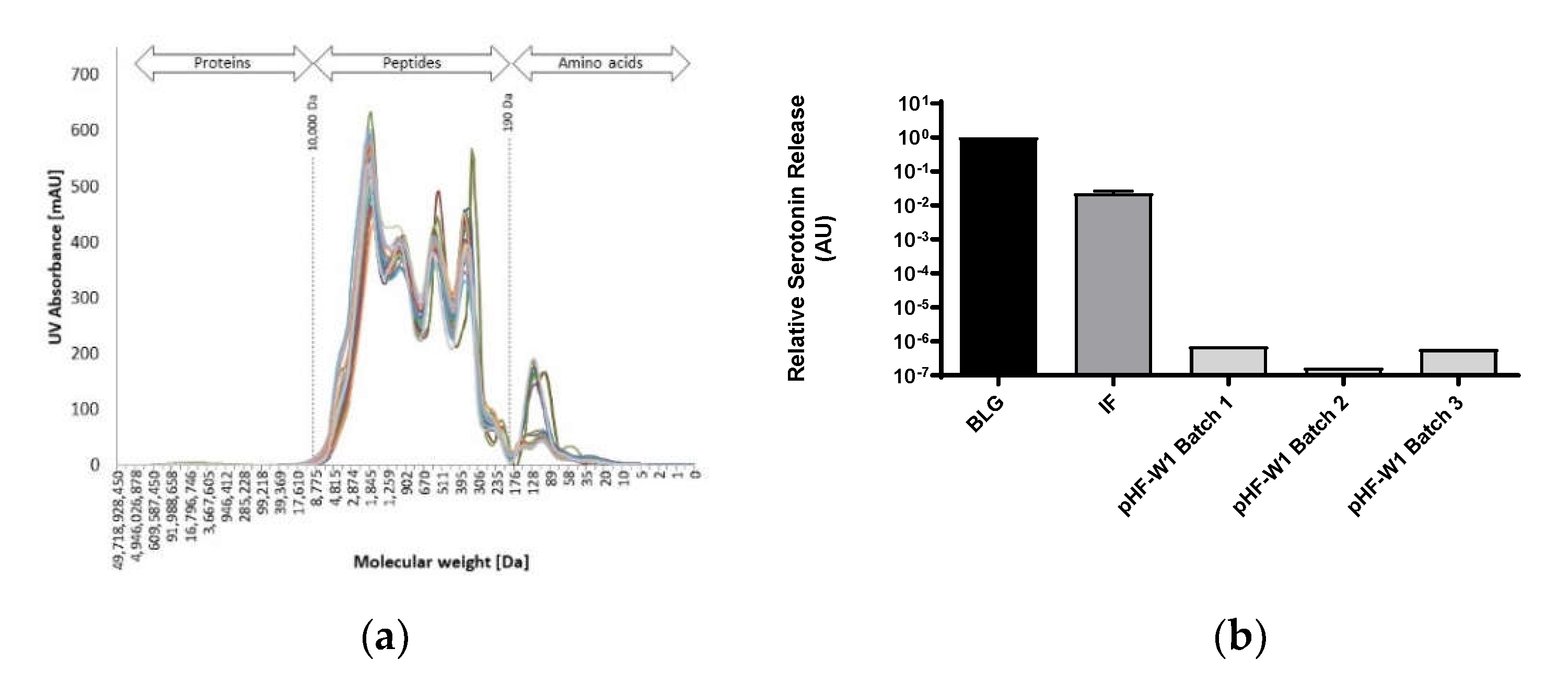
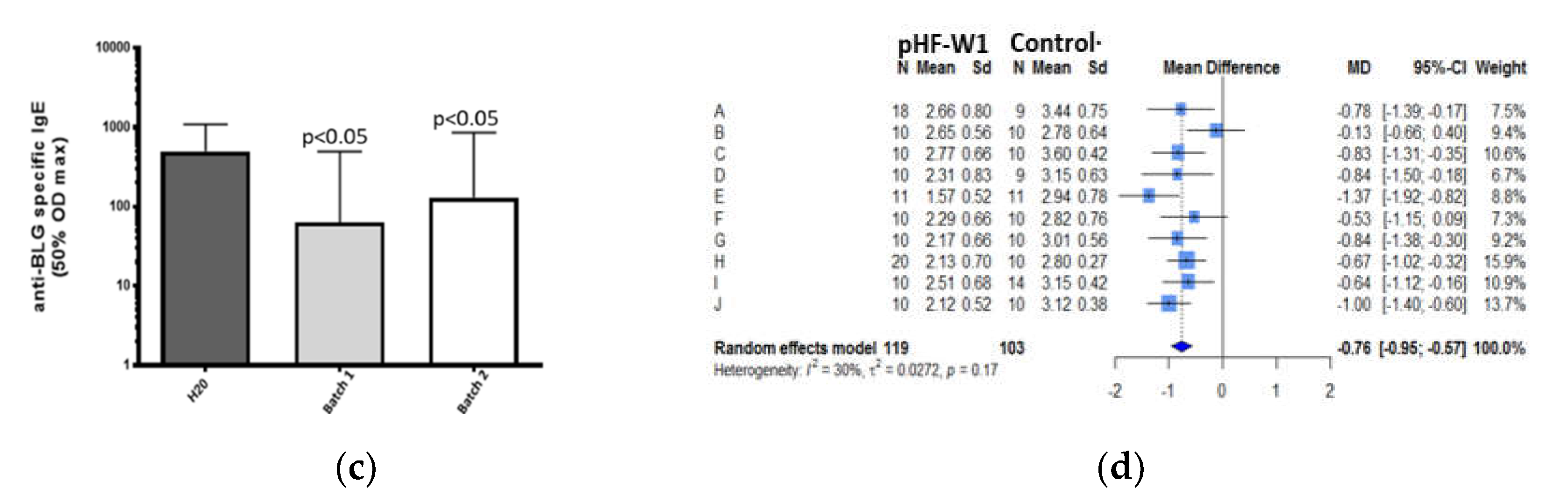
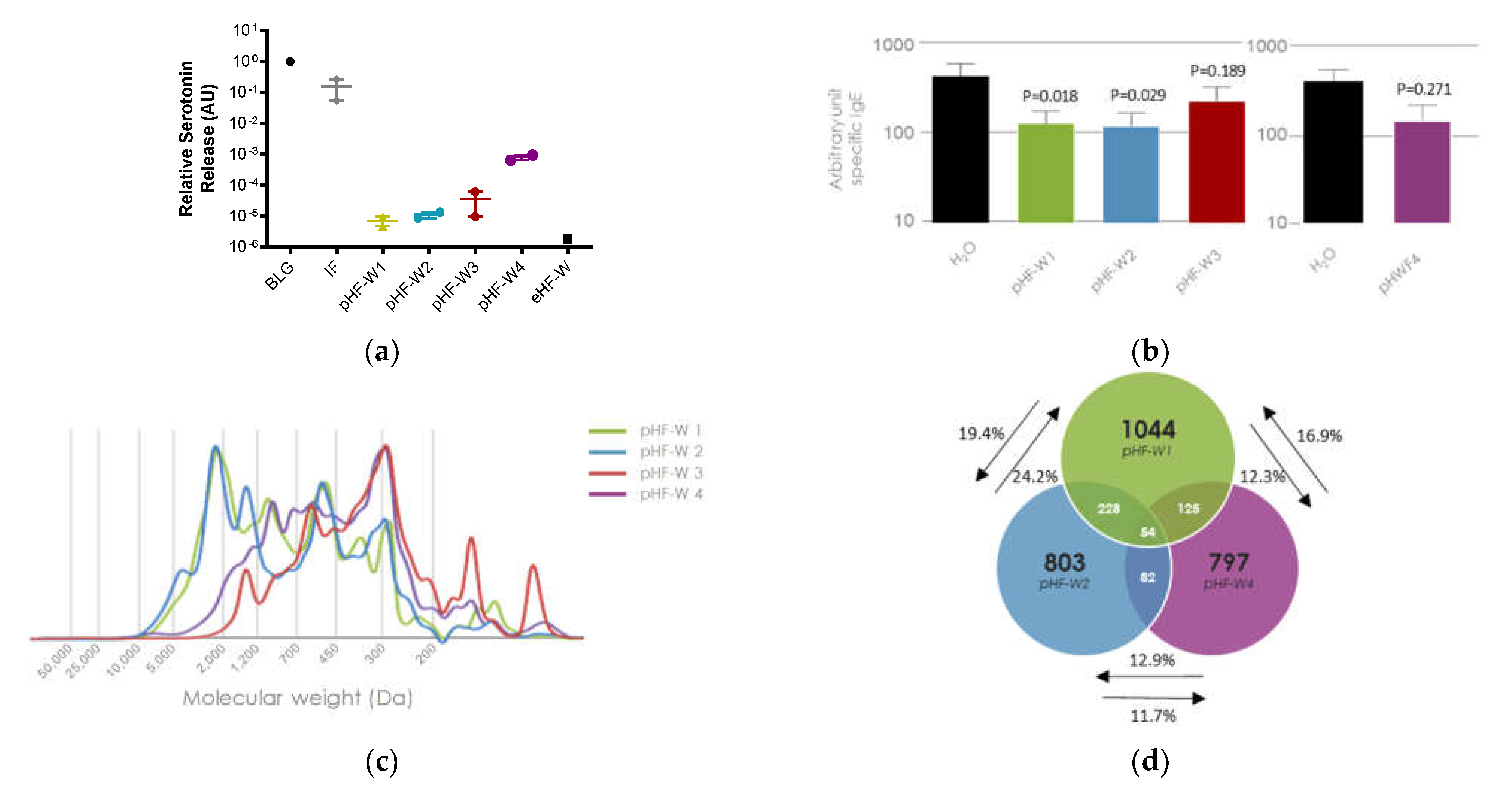
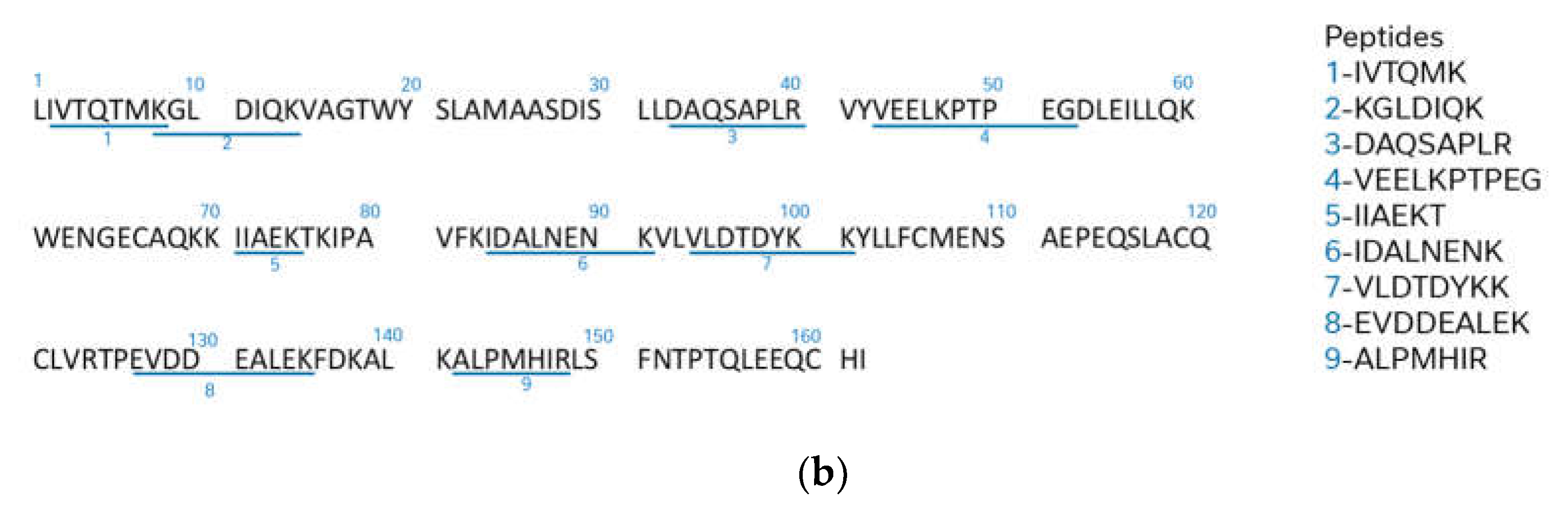
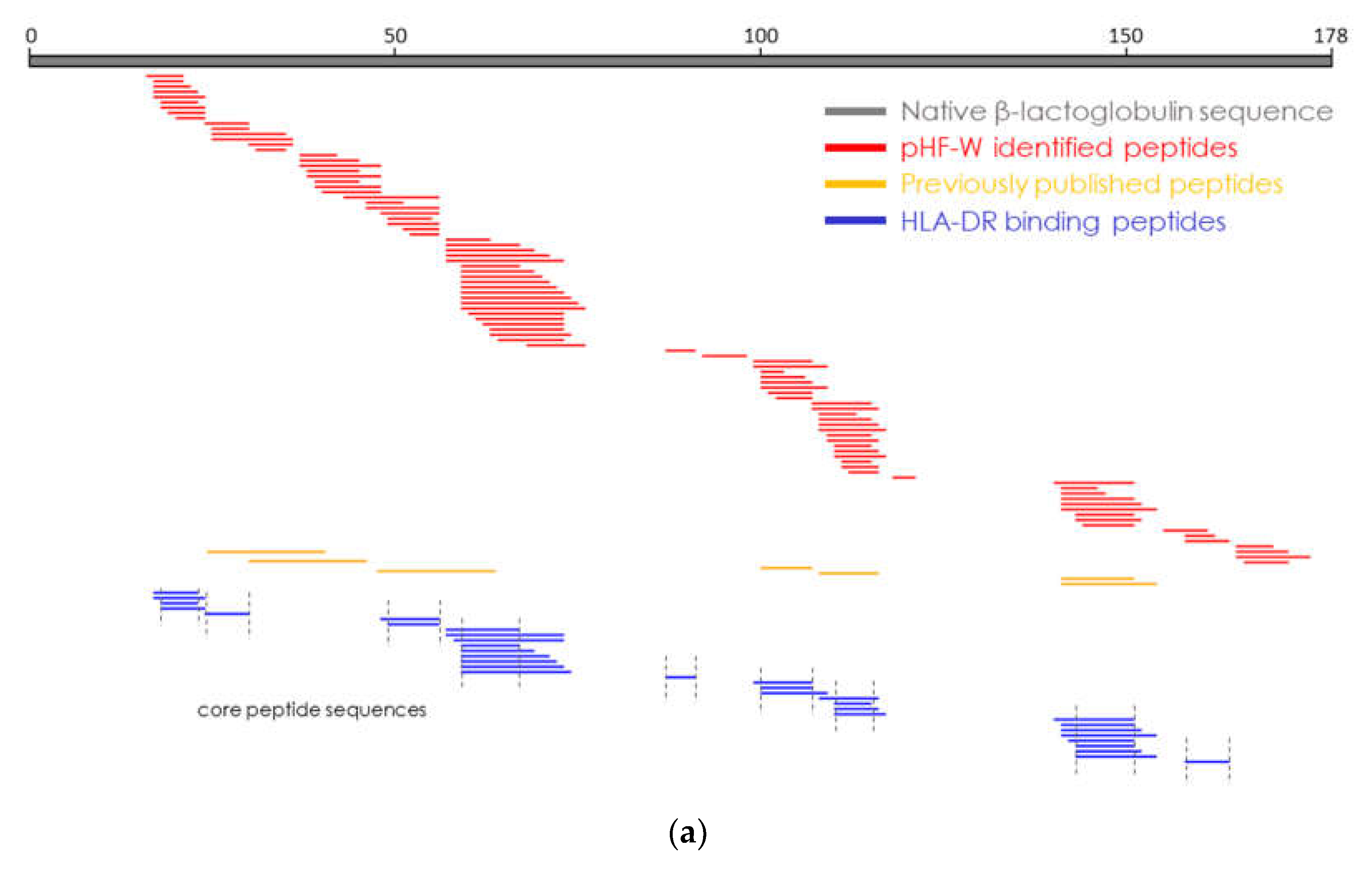
Human clinical trials have shown that a specific partially hydrolyzed 100% whey-based infant formula (pHF-W) reduces AD risk in the first yeast of life. Meta-analyses with a specific pHF-W (pHF-W1) confirm a protective effect while other meta-analyses pooling different pHF-W show conflicting results. Here we investigated the molecular composition and functional properties of the specific pHF-W1 as well as the stability of its manufacturing process over time. This specific pHF-W1 was compared with other pHF-Ws. We used size exclusion chromatography to characterize the peptide molecular weight (MW), a rat basophil degranulation assay to assess the relative level of beta-lactoglobulin (BLG) allergenicity and a preclinical model of oral tolerance induction to test prevention of allergic sensitization. To analyze the exact peptide sequences before and after an HLA binding assay, a mass cytometry approach was used. Peptide size allergenicity and oral tolerance induction were conserved across pHF-W1 batches of production and time. The median MW of the 37 samples of pHF-W1 tested was 800 ± 400 Da. Further oral tolerance induction was observed using 10 different batches of the pHF-W1 with a mean reduction of BLG-specific IgE levels of 0.76 log (95% CI = −0.95; −0.57). When comparing pHF-W1 with three other formulas (pHF-W2 3 and 4), peptide size was not necessarily associated with allergenicity reduction in vitro nor oral tolerance induction in vivo as measured by specific IgE level (p < 0.05 for pHF-W1 and 2 and p = 0.271 and p = 0.189 for pHF-W3 and 4 respectively). Peptide composition showed a limited overlap between the formulas tested ranging from 11.7% to 24.2%. Furthermore nine regions in the BLG sequence were identified as binding HLA-DR. In conclusion, not all pHF-Ws tested have the same peptide size distribution decreased allergenicity and ability to induce oral tolerance. Specific peptides are released during the different processes used by different infant formula producers.
Keywords: partially hydrolyzed whey-based infant formula; oral tolerance induction; hypoallergenic; peptide; atopic dermatitis risk reduction; allergy prevention partially hydrolyzed whey-based infant formula; oral tolerance induction; hypoallergenic; peptide; atopic dermatitis risk reduction; allergy prevention