


Abstract
A potential role of vitamin D in some components of mental health is currently suggested, but the analyses are conducted mainly for adults, while for young individuals mental health is especially important, due to its lifelong effects. The aim of the study was to analyze the association between vitamin D intake or status and mental health in children within a systematic review of literature, including both intervention and observational studies. The literature search was conducted according to the PRISMA guidelines and it covered peer-reviewed studies included in databases of PubMed and Web of Science until October 2019. The studies presenting either vitamin D intake, or vitamin D status in human subjects were allowed (excluding subjects with intellectual disabilities, eating disorders and neurological disorders), while for mental health the various methods of assessment and wide scope of factors were included. The bias was assessed using the Newcastle–Ottawa Scale (NOS). The review was registered in the PROSPERO database (CRD42020155779). A number of 7613 studies after duplicate removing were extracted by two independent researchers, followed by screening and assessment for eligibility, conducted by two independent researchers in two steps (based on title and abstract). Afterwards, the full texts were obtained and after reviewing, a number of 24 studies were included. The synthetic description of the results was prepared, structured around exposure (vitamin D supplementation/status) and outcome (components of mental health). The included studies were conducted either in groups of healthy individuals, or individuals with mental health problems, and they assessed following issues: behavior problems, violence behaviors, anxiety, depressive symptoms/depression, aggressive disorder, psychotic features, bipolar disorder, obsessive compulsive disorder, suicidal incident, as well as general patterns, as follows: mental health, level of distress, quality of life, well-being, mood, sleep patterns. The vast majority of assessed studies, including the most prominent ones (based on the NOS score) supported potential positive influence of vitamin D on mental health in children. As a limitation of the analysis, it should be indicated that studies conducted so far presented various studied groups, outcomes and psychological measures, so more studies are necessary to facilitate comparisons and deepen the observations. Nevertheless, vitamin D intake within a properly balanced diet or as a supplementation, except for a safe sun exposure, should be indicated as an element supporting mental health in children, so it should be recommended to meet the required 25(OH)cholecalciferol blood level in order to prevent or alleviate mental health problems.
1. Introduction
The number of studies analyzing vitamin D status, relevance of its supplementation, as well as a link between this nutrient and clinical outcomes is currently increasing [1]. The knowledge about vitamin D is still broadening [2], but various serum 25-hydroxyvitamin D (25(OH)D) level thresholds are defined by prominent authorities as vitamin D deficiency, namely lower than 30 nmol/L [3,4] and lower than 50 nmol/L [5,6]. The prevalence of vitamin D deficiency, depending on 25(OH)D level threshold is estimated as 13.0% and 40.4%, respectively for 30 and 50 nmol/L, irrespective of age group, ethnic mix, and latitude of study population [7]. In a vast majority of European countries, there is a common problem with achieving the recommended vitamin D status [8], except for Finland, due to high fish intake in this country, combined with food fortification and supplementation [9], which is applied within national program since 2003 in this country [10].
Such insufficient intake of vitamin D may result in a number of health-related consequences, including not only osteoporosis [11], but also other diseases and conditions. Recent meta-analyses indicated that vitamin D may reduce cancer mortality [12], as well as all-cause mortality [13]. Similarly, other meta-analyses emphasized its role for cardiac outcomes in coronary artery disease patients [14], prevention of diabetes [15] and prevention of acute respiratory infections [16], as well as experienced pain [17] and migraines [18]. Even for the COVID-19 it was stated that vitamin D may be associated with the risk [19] and severity of infection [20].
Among other diseases which are studied, as potentially influenced by vitamin D status, are those associated with broad area of mental health. The meta-analysis of randomized controlled trials by Cheng et al. [21] indicated that vitamin D supplementation can reduce negative emotions. Similarly, the systematic review by Hoffmann et al. [22] indicated that vitamin D supplementation may have a small to moderate effect on health-related quality of life, which was hypothesized by authors as resulting from widespread roles of this nutrient throughout the body and its association with many chronic diseases and mental health. At the same time, the meta-analyses by Gowda et al. [23] and by Li et al. [24] indicated that vitamin D supplementation did not cause significant reduction in depression. However, the meta-analysis by Spedding [25] indicated that such observations may result from biological flaws of primary studies, as in case of studies which he identified as those without biological flaws, he observed that vitamin D supplementation caused statistically significant improvement in depression. Similarly, the meta-analysis of randomized controlled trials by Vellekkatt and Menon [26] indicated that vitamin D supplementation favorably impacted depression ratings in major depression. Also the meta-analyses by Anglin et al. [27] and by Ju et al. [28] demonstrated that low vitamin D blood concentration may be associated with depression. At the same time, for the depressive symptoms, the meta-analysis by Shaffer et al. [29] indicated that vitamin D supplementation may be effective in reducing depressive symptoms in patients with clinically significant depression.
As indicated, there were some analysis conducted for effects of vitamin D on depression or depressive symptoms [23,24,25,26,27,28,29], as well as single studies for negative emotions [21] and for quality of life [22], but not for other aspects of the broad spectrum of mental health. According to the definition by the World Health Organization (WHO), mental health is interpreted as a state of well-being in which the individuals realize their own abilities, can cope with the normal stresses of life, can work productively and fruitfully, and are able to make a contribution to their community [30]. Based on the indicated scope of mental health, not only depression, negative emotions, or quality of life are commonly included while analyzing mental health, but also symptoms such as stress, nervousness, anxiety, self-efficacy, self-esteem, happiness, or general well-being, life satisfaction, and mood [31]. Moreover, it should be indicated that while there are some studies for adults, there are no such analysis conducted for children or adolescents, in spite of the fact that their mental health is especially important, as it has lifelong effects on individuals and society [32]. Some studies conducted so far revealed that children with psychiatric disorders might have higher prevalence of hypovitaminosis D than the general pediatric population [33] and that the association observed in adults may be also noticed in children and adolescents [34].
Based on the presented background, the aim of the study was to analyze the association between vitamin D intake or status and mental health in children within a systematic review of literature, including both intervention and observational studies.
2. Materials and Methods
2.1. Design
The literature search was conducted according to the guidelines of the Preferred Reporting Items for Systematic Reviews and Meta-Analyses (PRISMA) [35] and it covered peer-reviewed studies included in databases of PubMed and Web of Science until October 2019. The review was registered in the International Prospective Register of Systematic Reviews (PROSPERO) database (CRD42020155779).
2.2. Inclusion and Exclusion Criteria
The included observational studies presented association between vitamin D intake (either from diet or supplementation) and mental health in children. The inclusion criteria were as follows:
- (1)
- studies conducted in children/adolescents;
- (2)
- studies presenting vitamin D intake (either from diet or supplementation), or vitamin D status assessed (e.g., 25(OH)cholecalciferol blood level);
- (3)
- studies presenting mental health, while various methods of assessment (e.g., medical diagnosis, questionnaire) and wide scope of factors associated with mental health were allowed.
The exclusion criteria were as follows:
- (1)
- animal model studies;
- (2)
- studies presenting influence of maternal vitamin D intake/status on mental health of their offspring;
- (3)
- studies presenting influence of broad spectrum of nutrients combined;
- (4)
- studies in participants with intellectual disabilities;
- (5)
- studies in participants with eating disorders;
- (6)
- studies in participants with neurological disorders (e.g., epilepsy).
The studies to be included were to be published in English in a peer-reviewed journal and were allowed to be conducted in any country, with no other criteria based on location or characteristics of the studied sample.
2.3. Searching Strategy
The literature searching covered intervention and observational studies included in databases of PubMed and Web of Science until October 2019. The search was based on the potential outcomes, commonly included to the systematic reviews [31]. The applied detailed electronic search strategy is presented in Table 1. As various outcomes were studied, the results of the systematic review were impossible to be reanalyzed as a meta-analysis, so synthetic description of results was prepared and structured around exposure (vitamin D intake/status) and outcome (components of mental health).
Table 1.
The applied detailed electronic search strategy for databases of PubMed and Web of Science.
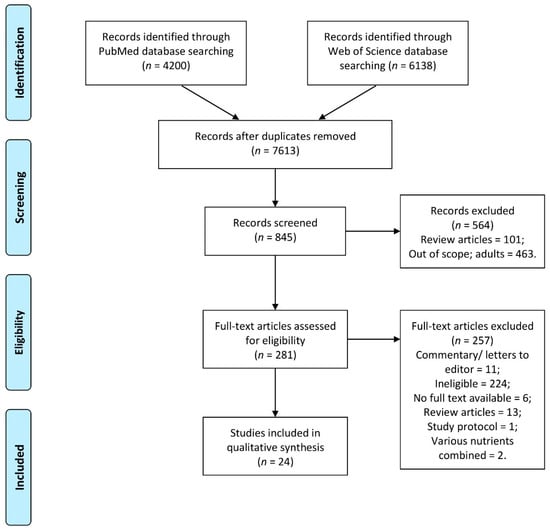
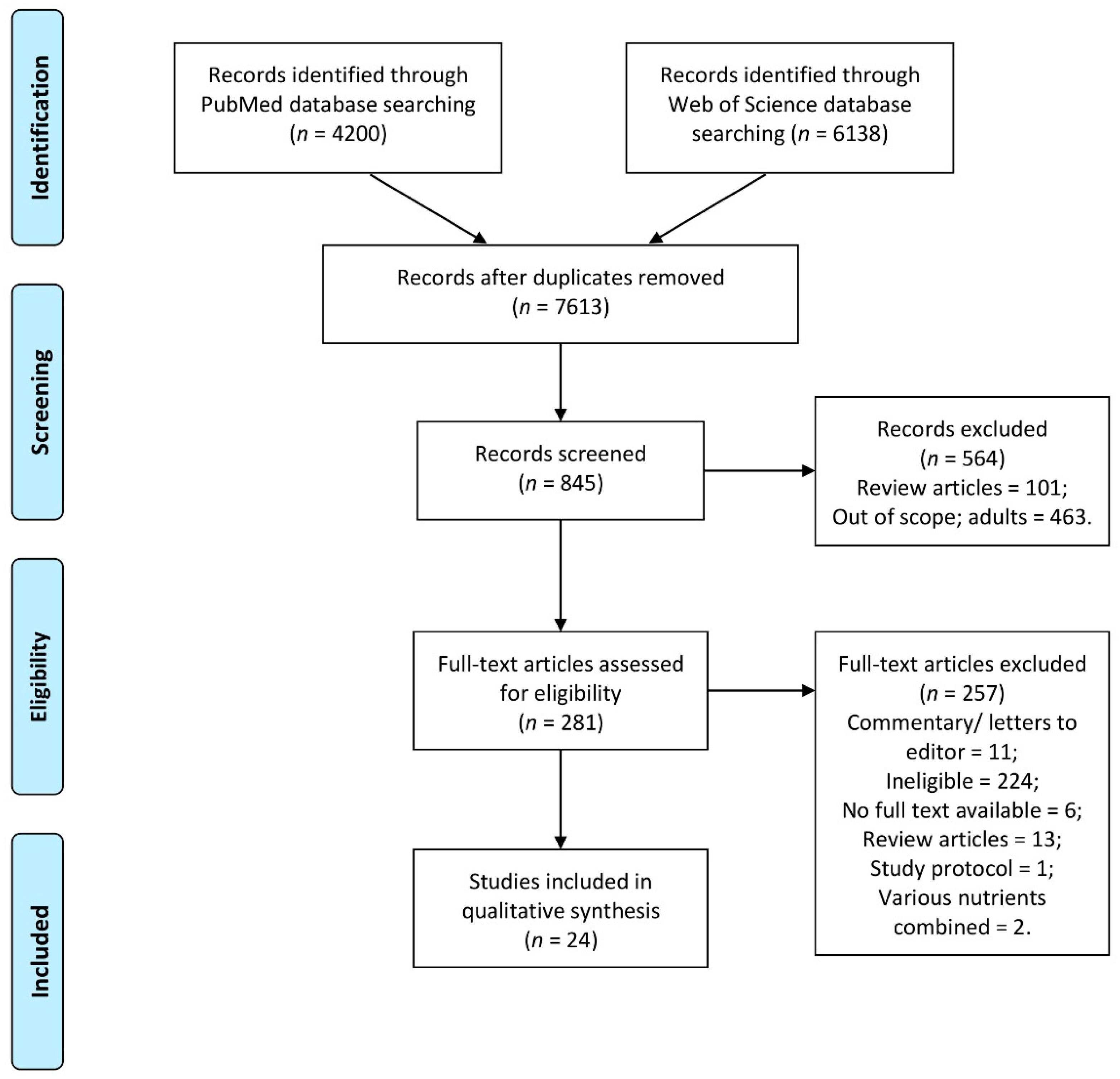
Identified studies after duplicate removing were extracted by two independent researchers followed by screening and assessment for eligibility, conducted by two independent researchers in two steps (to verify it separately based on title and in case of included, also based on abstract). If any disagreement appeared it was discussed with other researchers. Meanwhile, potentially eligible studies which were unavailable, were obtained by contacting the corresponding author of the study to ask them for a full text. Finally, the full texts were analyzed by two independent researchers. If any disagreement appeared it was discussed with other researchers. The detailed inclusion procedure is presented in Figure 1.
Figure 1.
The detailed inclusion procedure in a systematic review of the literature.
In case of one included study, due to the fact that it was presented as an abstract only [36], the manual search for the full text article was conducted to replace abstract by full text [37].
2.4. Data Extraction Procedure
The data extracting was conducted by two independent researchers. If any disagreement appeared it was discussed with other researchers. If any data were missing, they were requested by contacting the corresponding authors of the study to ask them for a detailed information. In case of data provided on request, they are referred in Results section as provided on request. The data were extracted based on the common approach to extract the following information:
- (1)
- general characteristics of the study, including: authors, design of the study, country or region; studied group; studied period;
- (2)
- participants of the study, including: number of participants, sex, age, inclusion and exclusion criteria;
- (3)
- assessment of vitamin D intake, or status, including: applied supplementation, or method of assessment of vitamin D status;
- (4)
- assessment of mental health, including: method of assessment, applied psychological measure;
- (5)
- findings of the study, including: observations described by authors of the study; findings formulated by the authors of the study.
The risk of bias and methodological quality of the included studies was assessed as recommended based on the Cochrane guidelines [38] using the Newcastle-Ottawa Scale (NOS) [39]. The case control studies were assessed, including the following criteria: selection, comparability, and exposure, while cohort studies were assessed, including the following criteria: selection, comparability, and outcome. The total score was described while compared with the following categories: very high (from 0 to 3 points), high (from 4 to 6 points), and low risk of bias (from 7 to 9 points), as it is commonly applied [40].
3. Results
3.1. Intervention Studies
The basic characteristics of the included intervention studies [37,41,42,43,44,45,46], including design of study, location, studied group and time are described in Table 2. The included intervention studies were conducted in various countries—United States of America [37,45], Nordic countries [43,46], Iran [41,42] and Turkey [44]. Only one study described a single sex sample of adolescent girls [42], while other studies were conducted in a mixed populations of boys and girls of various age [37,41,43,44,45,46]. Moreover, a majority of intervention studies assessed a specific populations of children with a sickle cell disease [37], attention deficit hyperactivity disorder (ADHD) [41], autism spectrum disorders [44], bipolar spectrum disorders [45] and depression [46], being in some studies compared with control groups.
Table 2.
The basic characteristics of the included intervention studies, including study design, location, studied group and time.
The characteristics of the subjects of the included intervention studies are described in Table 3. The included intervention studies were conducted in samples of various size, differing from 35 [45] to 940 participants [42], while the inclusion and exclusion criteria were formulated to obtain required samples. For the vast majority of studies, the exclusion criteria included any condition that would interfere with planned vitamin D supplementation, including the previously applied supplementation [37,41,42,43,44], participation in any other study impacting serum 25(OH)cholecalciferol blood level [37], and any disorder interfering with the action, absorption, distribution, metabolism or excretion of vitamin D [45], or required being stably medicated if taking daily supplementation [45].
Table 3.
The characteristics of the subjects of the included intervention studies.
The exposure, intervention and outcome of the included intervention studies are described in Table 4. The included studies presented various models of intervention, mainly conducted for 3 months [37,41,43,44,46], but also 2 months [45] and 9 weeks [42], while applied vitamin D doses differed from 25 µg per day [41] to 1250 µg per week (179 µg per day) [42,44]. The observed outcomes were associated with depressive symptoms/depression [42,45], aggressive disorder [42], suicidal incident [45], as well as general patterns, as follows: mental health [41,43], quality of life [37], well-being [46], mood [45,46], sleep patterns [44], which were assessed while using dedicated psychological measures.
Table 4.
The exposure, intervention and outcome of the included intervention studies.
The findings presented in the intervention studies are described in Table 5, based on the data presented by authors of the refereed studies as the most important ones.
Table 5.
The findings presented in the intervention studies included to the systematic review.
3.2. Observational Studies
The basic characteristics of the included observational studies [47,48,49,50,51,52,53,54,55,56,57,58,59,60,61,62,63], including study design, location, studied group and time are described in Table 6. The included observational studies were conducted in various countries—United States of America [51,59,60,61], United Kingdom [62,63], Germany [54,57], Turkey [52,53,56], China [48,49,50], as well as Colombia [47], Canada [55] and Iran [58]. All the studies were conducted in a mixed populations of boys and girls of various age [47,48,49,50,51,52,53,54,55,56,57,58,59,60,61,62,63]. Some observational studies assessed a specific populations of children with a stable asthma [48], on chronic hemodialysis or peritoneal dialysis [49], with depressive disorders [50], mood symptom changes and elevated symptoms of mania [51], obsessive-compulsive disorder [52,53], established mental health diagnosis [55], cystic fibrosis [59], major depressive disorder [60], and on acute mental health treatment [61], being in some studies compared with control groups.
Table 6.
The basic characteristics of the included observational studies, including study design, location, studied group and time.
The characteristics of the participants of the included observational studies are described in Table 7. The included observational studies were conducted in the samples of various size, differing from 36 [51] to 9068 participants [54], while the inclusion and exclusion criteria were formulated to obtain homogenic samples to obtain the aim of the study. In case of some studies, the exclusion criteria included the previously applied vitamin D supplementation [48,49,52].
Table 7.
The characteristics of the subjects of the included observational studies.
The exposure, intervention and outcome of the included observational studies are described in Table 8. The included studies presented the influence of 25(OH)cholecalciferol blood level on various mental health related outcomes. The observed outcomes were associated with behavior problems [47], violence behaviors [58], anxiety [49,53], depressive symptoms/depression [50,51,52,53,56,59,60,63], psychotic features [61], bipolar disorder [51], obsessive compulsive disorder [52,53], as well as general patterns, as follows: mental health [54,55,62], level of distress [57,58], quality of life [48,57], which were assessed while using dedicated psychological measures.
Table 8.
The exposure, intervention and outcome of the included observational studies.
The findings presented in the observational studies are described in Table 9, based on the data presented by authors of the refereed studies as the most important ones.
Table 9.
The findings presented in the observational studies included to the systematic review.
3.3. Summary
The summary of observations and conclusions for included studies of association between vitamin D and mental health, with the total NOS score are described in Table 10. It was observed that for the vast majority of included studies, both intervention and observational ones, the results supported beneficial association. Only in case of 2 studies, no effect of vitamin D was stated for bipolar disorder and major depressive disorder [51] and mental health (assessed using DSM-V criteria) [55]. In case of three studies the effect of vitamin D was inconclusive, as it was observed only for some of applied analysis [50,60] or depending on the studied component of obsessive compulsive disorder [52]. However, while the total NOS score is taken into account, it should be indicated that all the studies of low risk of bias support the positive effect of vitamin D [47,62,63].
Table 10.
The summary of observations and conclusions for the included studies of association between vitamin D and mental health, with the total Newcastle-Ottawa Scale (NOS) score.
4. Discussion
In spite of the fact that studies of association between vitamin D and mental health present various studied groups, outcomes and psychological measures, the observed results are consistent and they suggest potential beneficial effect of vitamin D blood level or applied supplementation on mental health. Taking this into account, it may be indicated that regardless of the studied group and studied effect associated with mental health, the vitamin D is crucial for mental health.
The association between vitamin D and mental health was so far studied mainly for depression or depressive symptoms [23,24,25,26,27,28,29] and some potential mechanisms explaining the influence of vitamin D were supposed [64]. Vitamin D has potential to cross the blood-brain barrier, to activate receptors in brain cells and to exert its direct impact in the central nervous system [65]. Moreover, there is some evidence for the link between vitamin D and Vitamin D Receptors (VDRs) and the regulation of human behavior, that is strongly suggested by the presence of VDRs in such brain areas as cortex, cerebellum and limbic system [66]. At the same time, Eyles et al. [67] reported that the mechanism potentially important in neuroendocrine functioning may be associated with the VDRs in the hypothalamus. However, it should be also mentioned that VDR genes are polymorphic and their variations occur frequently, what can cause various vitamin D-related dysfunctions [68].
Moreover, studies in animal models indicated potential anti-inflammatory effects of vitamin D administration in hippocampus and hypothalamus and its modulating effects on brain-derived neurotropic factor (BDNF) [65] which may also play a role. Simultaneously, the role of vitamin D may be attributed to its neuroprotective role in the brain which is reflected in modulating neurotrophic signaling [69], and in regulating inflammation by inhibiting proinflammatory cytokines [70].
Taking into account the potential mechanisms described above and the results of the recent studies suggesting beneficial effect of vitamin D on mental health, this area is indicated within the current research perspectives associated with vitamin D [71]. Regardless of the fact, that biological mechanisms linking vitamin D and mental health are still not fully understood [72], it should be indicated that vitamin D may have beneficial effects, which is important considering high prevalence of mental health problems which is not decreasing, despite a substantial increases in the provision of treatment [73]. Taking this into account, improving vitamin D status by applying adequate intake either within a properly balanced diet or as a supplementation, may be beneficial also for the prevention and treatment of mental health problems in children.
The included studies analyzing the association between vitamin D intake or status and mental health in children assessed various aspects of mental health, so based on the presented observations, it may be suggested that vitamin D is associated with the broad area of mental health with all its elements. However, the limitations of the presented systematic review must be also described. The most important fact results from the limited number of studies published so far, while included studies presented various studied groups, outcomes and psychological measures, so more studies are necessary to deepen the observations. Moreover, since the studies assessed a wide range of possible effects, meta-analysis was impossible [74], so only the systematic review was conducted. Last but not least, only peer-reviewed studies included in databases of PubMed and Web of Science are presented in the systematic review which may have caused that some interesting results are not presented.
At the same time, it should be indicated that some researchers suggest the possible reverse causality in the association between vitamin D and mental health [75]. It results from the fact that some individuals with mental health problems, including depression, may avoid outdoor activity and have poor appetite, resulting in reduced sunlight exposure and consequently reduced endogenous vitamin D synthesis, as well as reduced dietary vitamin D intake [76]. At the same time, they may have increased demand for vitamin D resulting from the disturbed calcium homeostasis [64] observed in patients with mental health problems [77].
Based on the prepared systematic review, vitamin D intake within a properly balanced diet or as a supplementation, except for a safe sun exposure, should be indicated as an element supporting mental health in children, so it should be recommended to meet the required 25(OH)cholecalciferol blood level in order to prevent or alleviate mental health problems.
5. Conclusions
The vast majority of assessed studies, including the most prominent ones (based on the NOS score) supported potential positive influence of vitamin D on mental health in children. Vitamin D intake within a properly balanced diet or as a supplementation, except for a safe sun exposure, should be indicated as an element supporting mental health in children, so it should be recommended to meet the required 25(OH)cholecalciferol blood level in order to prevent or alleviate mental health problems.
Author Contributions
Conceptualization, D.G. (Dominika Głąbska) and D.G. (Dominika Guzek); methodology, D.G. (Dominika Głąbska) and D.G. (Dominika Guzek); formal analysis, D.G. (Dominika Głąbska), A.K., K.L., D.S., M.S. and D.G. (Dominika Guzek); investigation, D.G. (Dominika Głąbska), A.K., K.L., D.S., M.S. and D.G. (Dominika Guzek); writing—original draft preparation, D.G. (Dominika Głąbska), A.K., K.L., D.S., M.S. and D.G. (Dominika Guzek); writing—review and editing, D.G. (Dominika Głąbska), A.K., K.L., D.S., M.S. and D.G. (Dominika Guzek). All authors have read and agreed to the published version of the manuscript.
Funding
The Polish Ministry of Science and Higher Education within funds of Institute of Human Nutrition Sciences, Warsaw University of Life Sciences (WULS-SGGW).
Institutional Review Board Statement
The literature search was conducted according to the guidelines of the Preferred Reporting Items for Systematic Reviews and Meta-Analyses (PRISMA) and the review was registered in the International Prospective Register of Systematic Reviews (PROSPERO) database (CRD42020155779). The included studies obtained individual approvals from the respective local research ethics committee.
Informed Consent Statement
Not applicable.
Acknowledgments
Nothing to declare.
Conflicts of Interest
The authors declare no conflict of interest.
References
- Amrein, K.; Scherkl, M.; Hoffmann, M.; Neuwersch-Sommeregger, S.; Köstenberger, M.; Berisha, A.T.; Martucci, G.; Pilz, S.; Malle, O. Vitamin D deficiency 2.0: An update on the current status worldwide. Eur. J. Clin. Nutr. 2020, 74, 1498–1513. [Google Scholar] [CrossRef] [Scilit]
- Cashman, K.D. Vitamin D deficiency: Defining, prevalence, causes, and strategies of addressing. Calcif. Tissue Int. 2020, 106, 14–29. [Google Scholar] [CrossRef] [Scilit]
- Institute of Medicine (US). Committee to Review Dietary Reference Intakes for Vitamin D and Calcium. In Dietary Reference Intakes for Calcium and Vitamin D; The National Academies Collection: Reports funded by National Institutes of Health; Ross, A.C., Taylor, C.L., Yaktine, A.L., Del Valle, H.B., Eds.; National Academies Press (US): Washington, DC, USA, 2011. [Google Scholar]
- Aspray, T.J.; Bowring, C.; Fraser, W.; Gittoes, N.; Javaid, M.K.; Macdonald, H.; Patl, S.; Selby, P.; Tanna, N.; Francis, R.M. National osteoporosis society vitamin D guideline summary. Age Ageing 2014, 43, 592–595. [Google Scholar] [CrossRef] [Scilit] [PubMed]
- Holick, M.F.; Binkley, N.C.; Bischoff-Ferrari, H.A.; Gordon, C.M.; Hanley, D.A.; Heaney, R.P.; Murad, M.H.; Weaver, C.M. Evaluation, treatment, and prevention of vitamin d deficiency: An endocrine society clinical practice guideline. J. Clin. Endocrinol. Metab. 2011, 96, 1911–1930. [Google Scholar] [CrossRef] [Scilit] [PubMed]
- EFSA Panel on Dietetic Products, Nutritions and Allergies (NDA). Dietary reference values for vitamin D. EFSA J. 2016, 14, e04547. [Google Scholar] [CrossRef] [Scilit]
- Cashman, K.D.; Dowling, K.G.; Škrabáková, Z.; Gonzalez-Gross, M.; Valtueña, J.; De Henauw, S.; Moreno, L.; Damsgaard, C.T.; Michaelsen, K.F.; Mølgaard, C.; et al. Vitamin D deficiency in Europe: Pandemic? Am. J. Clin. Nutr. 2016, 103, 1033–1044. [Google Scholar] [CrossRef] [Scilit]
- Spiro, A.; Buttriss, J.L. Vitamin D: An overview of vitamin D status and intake in Europe. Nutr. Bull. 2014, 39, 322–350. [Google Scholar] [CrossRef] [Scilit] [PubMed]
- Palaniswamy, S.; Hyppönen, E.; Williams, D.M.; Jokelainen, J.; Lowry, E.; Keinänen-Kiukaanniemi, S.; Herzig, K.H.; Järvelin, M.R.; Sebert, S. Potential determinants of vitamin D in Finnish adults: A cross-sectional study from the Northern Finland birth cohort 1966. Br. Med. J. Open 2017, 7, e013161. [Google Scholar] [CrossRef] [Scilit]
- Jääskeläinen, T.; Itkonen, S.T.; Lundqvist, A.; Erkkola, M.; Koskela, T.; Lakkala, K.; Dowling, K.G.; Hull, G.L.; Kröger, H.; Karppinen, J.; et al. The positive impact of general vitamin D food fortification policy on vitamin D status in a representative adult Finnish population: Evidence from an 11-y follow-up based on standardized 25-hydroxyvitamin D data. Am. J. Clin. Nutr. 2017, 105, 1512–1520. [Google Scholar] [CrossRef] [Scilit]
- Eleni, A.; Panagiotis, P. A systematic review and meta-analysis of vitamin D and calcium in preventing osteoporotic fractures. Clin. Rheumatol. 2020, 39, 3571–3579. [Google Scholar] [CrossRef] [Scilit]
- Zhang, Y.; Fang, F.; Tang, J.; Jia, L.; Feng, Y.; Xu, P.; Faramand, A. Association between vitamin D supplementation and mortality: Systematic review and meta-analysis. Br. Med. J. 2019, 366. [Google Scholar] [CrossRef] [Scilit]
- Garland, C.F.; Kim, J.J.; Mohr, S.B.; Gorham, E.D.; Grant, W.B.; Giovannucci, E.L.; Baggerly, L.; Hofflich, H.; Ramsdell, J.W.; Zeng, K.; et al. Meta-analysis of all-cause mortality according to serum 25-hydroxyvitamin D. Am. J. Public Health 2014, 104, e43–e50. [Google Scholar] [CrossRef] [Scilit] [PubMed]
- Bahrami, L.S.; Ranjbar, G.; Norouzy, A.; Arabi, S.M. Vitamin D supplementation effects on the clinical outcomes of patients with coronary artery disease: A systematic review and meta-analysis. Sci. Rep. 2020, 10, 1–10. [Google Scholar] [CrossRef] [Scilit]
- Zhang, Y.; Tan, H.; Tang, J.; Li, J.; Chong, W.; Hai, Y.; Feng, Y.; Lunsford, L.D.; Xu, P.; Jia, D.; et al. Effects of vitamin D supplementation on prevention of type 2 diabetes in patients with prediabetes: A systematic review and meta-analysis. Diabetes Care 2020, 43, 1650–1658. [Google Scholar] [CrossRef] [Scilit] [PubMed]
- Jolliffe, D.A.; Camargo, C.A.; Sluyter, J.D.; Aglipay, M.; Aloia, J.F.; Ganmaa, D.; Bergman, P.; Borzutzky, A.; Damsgaard, C.T.; Dubnov-Raz, G.; et al. Vitamin D supplementation to prevent acute respiratory infections: Systematic review and meta-analysis of aggregate data from randomised controlled trials. MedRxiv 2020. [Google Scholar] [CrossRef] [Scilit]
- Wu, Z.; Malihi, Z.; Stewart, A.W.; Lawes, C.M.; Scragg, R. Effect of vitamin D supplementation on pain: A systematic review and meta-analysis. Pain Physician 2016, 19, 415–427. [Google Scholar] [PubMed]
- Liampas, I.; Siokas, V.; Brotis, A.; Dardiotis, E. Vitamin D serum levels in patients with migraine: A meta-analysis. Rev. Neurol. 2020, 176, 560–570. [Google Scholar] [CrossRef] [Scilit]
- Liu, N.; Sun, J.; Wang, X.; Zhang, T.; Zhao, M.; Li, H. Low vitamin D status is associated with coronavirus disease 2019 outcomes: A systematic review and meta-analysis. Int. J. Infect. Dis. 2021, 2, 58–64. [Google Scholar] [CrossRef] [Scilit]
- Pereira, M.; Dantas Damascena, A.; Galvão Azevedo, L.M.; de Almeida Oliveira, T.; da Mota Santana, J. Vitamin D deficiency aggravates COVID-19: Systematic review and meta-analysis. Crit. Rev. Food Sci. Nutr. 2020, 4, 1–9. [Google Scholar] [CrossRef] [Scilit]
- Cheng, Y.C.; Huang, Y.C.; Huang, W.L. The effect of vitamin D supplement on negative emotions: A systematic review and meta-analysis. Depress. Anxiety 2020, 37, 549–564. [Google Scholar] [CrossRef] [Scilit]
- Hoffmann, M.R.; Senior, P.A.; Mager, D.R. Vitamin D supplementation and health-related quality of life: A systematic review of the literature. J. Acad. Nutr. Diet. 2015, 115, 406–418. [Google Scholar] [CrossRef] [Scilit] [PubMed]
- Gowda, U.; Mutowo, M.P.; Smith, B.J.; Wluka, A.E.; Renzaho, A.M. Vitamin D supplementation to reduce depression in adults: Meta-analysis of randomized controlled trials. Nutrition 2015, 31, 421–429. [Google Scholar] [CrossRef] [Scilit] [PubMed]
- Li, G.; Mbuagbaw, L.; Samaan, Z.; Falavigna, M.; Zhang, S.; Adachi, J.D.; Cheng, J.; Papaioannou, A.; Thabane, L. Efficacy of vitamin D supplementation in depression in adults: A systematic review. J. Clin. Endocrinol. Metab. 2014, 99, 757–767. [Google Scholar] [CrossRef] [Scilit]
- Spedding, S. Vitamin D and depression: A systematic review and meta-analysis comparing studies with and without biological flaws. Nutrients 2014, 6, 1501–1518. [Google Scholar] [CrossRef] [Scilit]
- Vellekkatt, F.; Menon, V. Efficacy of vitamin D supplementation in major depression: A meta-analysis of randomized controlled trials. J. Postgrad. Med. 2019, 65, 74–80. [Google Scholar] [CrossRef] [Scilit]
- Anglin, R.E.S.; Samaan, Z.; Walter, S.D.; McDonald, S.D. Vitamin D deficiency and depression in adults: Systematic review and meta-analysis. Br. J. Psychiatry 2013, 202, 100–107. [Google Scholar] [CrossRef] [Scilit] [PubMed]
- Ju, S.Y.; Lee, Y.J.; Jeong, S.N. Serum 25-hydroxyvitamin D levels and the risk of depression: A systematic review and meta-analysis. J. Nutr. Health Aging 2013, 17, 447–455. [Google Scholar] [CrossRef] [Scilit]
- Shaffer, J.A.; Edmondson, D.; Taggart Wasson, L.; Falzon, L.; Homma, K.; Ezeokoli, N.; Li, P.; Davidson, K.W. Vitamin D supplementation for depressive symptoms: A systematic review and meta-analysis of randomized controlled trials. Psychosom. Med. 2014, 76, 190–196. [Google Scholar] [CrossRef] [Scilit]
- World Health Organization. Promoting Mental Health. Concepts, Emerging, Evidence. Practice Summary Report; World Health Organization: Geneva, Switzerland, 2004. [Google Scholar]
- Głąbska, D.; Guzek, D.; Groele, B.; Gutkowska, K. Fruit and vegetable intake and mental health in adults: A systematic review. Nutrients 2020, 12, 115. [Google Scholar] [CrossRef] [Scilit]
- García-Carrión, R.; Villarejo-Carballido, B.; Villardón-Gallego, L. Children and adolescents mental health: A systematic review of interaction-based interventions in schools and communities. Front. Psychol. 2019, 10, 918. [Google Scholar] [CrossRef] [Scilit]
- Zhang, M.; Cheng, K.; Rope, R.; Martin, E.; Jetmalani, A. Do children with mental disorders have higher prevalence of hypovitaminosis D? F1000Res 2013, 17, 159. [Google Scholar] [CrossRef] [Scilit]
- Föcker, M.; Antel, J.; Ring, S.; Hahn, D.; Kanal, Ö.; Öztürk, D.; Hebebrand, J.; Libuda, L. Vitamin D and mental health in children and adolescents. Eur. Child. Adolesc. Psychiatry 2017, 26, 1043–1066. [Google Scholar] [CrossRef] [Scilit]
- Moher, D.; Liberati, A.; Tetzlaff, J.; Altman, D.G.; PRISMA Group. Preferred reporting items for systematic reviews and meta-analyses: The PRISMA statement. PLoS Med. 2009, 6, e1000097. [Google Scholar] [CrossRef] [Scilit] [PubMed]
- Dougherty, K.A.; Bertolaso, C.; Schall, J.I.; Smith-Whitley, K.; Stallings, V.A. Vitamin D supplementation improves health related quality of life in children with sickle cell disease. Med. Sci. Sports. Exerc. 2018, 50, 729–730. [Google Scholar] [CrossRef] [Scilit]
- Dougherty, K.A.; Schall, J.I.; Bertolaso, C.; Smith-Whitley, K.; Stallings, V.A. Vitamin D supplementation improves health-related quality of life and physical performance in children with sickle cell disease and in healthy children. J. Pediatr. Health Care 2020, 34, 424–434. [Google Scholar] [CrossRef] [Scilit]
- Assessing Risk of Bias in Non-Randomized Studies. Chapter 13.5.2.3. Available online: http://handbook-5-1.cochrane.org/ (accessed on 4 February 2021).
- Wells, G.A.; Shea, B.; O’Connell, D.; Peterson, J.; Welch, V.; Losos, M.; Tugwell, P. The Newcastle-Ottawa Scale (NOS) for Assessing the Quality of Nonrandomised Studies in Meta-Analyses. Available online: http://www.ohri.ca/programs/clinical_epidemiology/oxford.asp (accessed on 4 February 2021).
- You, S.; Kong, T.H.; Han, W. The Effects of short-term and long-term hearing changes on music exposure: A systematic review and meta-analysis. Int. J. Environ. Res. Public Health 2020, 17, 2091. [Google Scholar] [CrossRef] [Scilit] [PubMed]
- Naeini, A.A.; Fasihi, F.; Najafi, M.; Ghazvini, M.R.; Hasanzadeh, A. The effects of vitamin D supplementation on ADHD (Attention Deficit Hyperactivity Disorder) in 6–13 year-old students: A randomized, double-blind, placebo-controlled study. Eur. J. Integr. Med. 2019, 25, 28–33. [Google Scholar] [CrossRef] [Scilit]
- Bahrami, A.; Mazloum, S.R.; Maghsoudi, S.; Soleimani, D.; Khayyatzadeh, S.S.; Arekhi, S.; Arya, A.; Mirmoosavi, S.J.; Ferns, G.A.; Bahrami-Taghanaki, H.; et al. High dose vitamin D supplementation is associated with a reduction in depression score among adolescent girls: A nine-week follow-up study. J. Diet. Suppl. 2018, 15, 173–182. [Google Scholar] [CrossRef] [Scilit] [PubMed]
- Grung, B.; Sandvik, A.M.; Hjelle, K.; Dahl, L.; Frøyland, L.; Nygård, I.; Hansen, A.L. Linking vitamin D status, executive functioning and self-perceived mental health in adolescents through multivariate analysis: A randomized double-blind placebo control trial. Scand. J. Psychol. 2017, 58, 123–130. [Google Scholar] [CrossRef] [Scilit] [PubMed]
- Guler, S.; Yesil, G.; Ozdil, M.; Onal, H. Sleep disturbances and serum vitamin D levels in children with autism spectrum disorder. Int. J. Clin. Exp. Med. 2016, 9, 14691–14697. [Google Scholar]
- Sikoglu, E.M.; Navarro, A.A.; Starr, D.; Dvir, Y.; Nwosu, B.U.; Czerniak, S.M.; Rogan, R.C.; Castro, M.C.; Edden, R.A.; Frazier, J.A.; et al. Vitamin D3 supplemental treatment for mania in youth with bipolar spectrum disorders. J. Child Adolesc. Psychopharmacol. 2015, 25, 415–424. [Google Scholar] [CrossRef] [Scilit] [PubMed]
- Högberg, G.; Gustafsson, S.A.; Hällström, T.; Gustafsson, T.; Klawitter, B.; Petersson, M. Depressed adolescents in a case-series were low in vitamin D and depression was ameliorated by vitamin D supplementation. Acta Paediatr. 2012, 101, 779–783. [Google Scholar] [CrossRef] [Scilit] [PubMed]
- Robinson, S.L.; Marín, C.; Oliveros, H.; Mora-Plazas, M.; Lozoff, B.; Villamor, E. Vitamin D deficiency in middle childhood is related to behavior problems in adolescence. J. Nutr. 2020, 1, 140–148. [Google Scholar] [CrossRef] [Scilit] [PubMed]
- Bai, Y.J.; Dai, R.J. Serum levels of vitamin A and 25-hydroxyvitamin D3 (25OHD3) as reflectors of pulmonary function and quality of life (QOL) in children with stable asthma: A case-control study. Medicine 2018, 97, e9830. [Google Scholar] [CrossRef] [Scilit] [PubMed]
- Han, B.; Zhu, F.X.; Yu, H.F.; Liu, S.; Zhou, J.L. Low serum levels of vitamin D are associated with anxiety in children and adolescents with dialysis. Sci. Rep. 2018, 8, 5956. [Google Scholar] [CrossRef] [Scilit]
- Huang, W.; Gong, D.; Bao, Y. Urinary iodine and serum 25-hydroxyvitamin D are associated with depression in adolescents. Trop. J. Pharm. Res. 2018, 17, 2471–2476. [Google Scholar] [CrossRef] [Scilit]
- Petrov, B.; Aldoori, A.; James, C.; Yang, K.; Algorta, G.P.; Lee, A.; Zhang, L.; Lin, T.; Awadhi, R.A.; Parquette, J.R.; et al. Bipolar disorder in youth is associated with increased levels of vitamin D-binding protein. Transl. Psychiatry 2018, 8, 61. [Google Scholar] [CrossRef] [Scilit]
- Yazici, K.U.; Percinel Yazici, I.; Ustundag, B. Vitamin D levels in children and adolescents with obsessive compulsive disorder. Nord. J. Psychiatry 2018, 72, 173–178. [Google Scholar] [CrossRef] [Scilit]
- Esnafoğlu, E.; Yaman, E. Vitamin B12, folic acid, homocysteine and vitamin D levels in children and adolescents with obsessive compulsive disorder. Psychiatry Res. 2017, 254, 232–237. [Google Scholar] [CrossRef] [Scilit]
- Husmann, C.; Frank, M.; Schmidt, B.; Jöckel, K.H.; Antel, J.; Reissner, V.; Libuda, L.; Hebebrand, J.; Föcker, M. Low 25(OH)-vitamin D concentrations are associated with emotional and behavioral problems in German children and adolescents. PLoS ONE 2017, 12, e0183091. [Google Scholar] [CrossRef] [Scilit]
- MacDonald, K.; Godziuk, K.; Yap, J.; LaFrance, R.; Ansarian, M.; Haqq, A.; Mager, D.R. Vitamin D status, cardiometabolic, liver, and mental health status in obese youth attending a pediatric weight management center. J. Pediatr. Gastroenterol. Nutr. 2017, 65, 462–466. [Google Scholar] [CrossRef] [Scilit] [PubMed]
- Karabel, M.; Şimşek, S.; Haspolat, Y.K.; Kelekçi, S.; Karabel, D.; Tuncel, T.; Şen, V.; Uluca, U.; Tan, I.; Şahin, C. The association between depression and vitamin D and parathyroid hormone levels in adolescents. Int. J. Pediatr. 2016, 4, 1365–1372. [Google Scholar]
- Schäfer, T.K.; Herrmann-Lingen, C.; Meyer, T. Association of circulating 25-hydroxyvitamin D with mental well-being in a population-based, nationally representative sample of German adolescents. Qual. Life Res. 2016, 25, 3077–3086. [Google Scholar] [CrossRef] [Scilit] [PubMed]
- Ataie-Jafari, A.; Qorbani, M.; Heshmat, R.; Ardalan, G.; Motlagh, M.E.; Asayesh, H.; Arzaghi, S.M.; Tajadini, M.H.; Nejatinamini, S.; Poursafa, P.; et al. The association of vitamin D deficiency with psychiatric distress and violence behaviors in Iranian adolescents: The CASPIAN-III study. J. Diabetes Metab. Disord. 2015, 22, 62. [Google Scholar] [CrossRef] [Scilit]
- Smith, B.A.; Cogswell, A.; Garcia, G. Vitamin D and depressive symptoms in children with cystic fibrosis. Psychosomatics 2014, 55, 76–81. [Google Scholar] [CrossRef] [Scilit] [PubMed]
- Fazeli, P.K.; Mendes, N.; Russell, M.; Herzog, D.B.; Klibanski, A.; Misra, M. Bone density characteristics and major depressive disorder in adolescents. Psychosom. Med. 2013, 75, 117–123. [Google Scholar] [CrossRef] [Scilit] [PubMed]
- Gracious, B.L.; Finucane, T.L.; Friedman-Campbell, M.; Messing, S.; Parkhurst, M.N. Vitamin D deficiency and psychotic features in mentally ill adolescents: A cross-sectional study. BMC Psychiatry 2012, 9, 38. [Google Scholar] [CrossRef] [Scilit]
- Tolppanen, A.M.; Sayers, A.; Fraser, W.D.; Lewis, G.; Zammit, S.; Lawlor, D.A. The association of 25-hydroxyvitamin D3 and D2 with behavioural problems in childhood. PLoS ONE 2012, 7, e40097. [Google Scholar] [CrossRef] [Scilit]
- Tolppanen, A.M.; Sayers, A.; Fraser, W.D.; Lewis, G.; Zammit, S.; Lawlor, D.A. The association of serum 25-hydroxyvitamin D3 and D2 with depressive symptoms in childhood—A prospective cohort study. J. Child. Psychol. Psychiatry. 2012, 53, 757–766. [Google Scholar] [CrossRef] [Scilit]
- Menon, V.; Kar, S.K.; Suthar, N.; Nebhinani, N. Vitamin D and Depression: A Critical Appraisal of the Evidence and Future Directions. Indian J. Psychol. Med. 2020, 42, 11–21. [Google Scholar] [CrossRef] [Scilit]
- Farhangi, M.A.; Mesgari-Abbasi, M.; Nameni, G.; Hajiluian, G.; Shahabi, P. The effects of vitamin D administration on brain inflammatory markers in high fat diet induced obese rats. BMC Neurosci. 2017, 18, 81. [Google Scholar] [CrossRef] [Scilit]
- Walbert, T.; Jirikowski, G.F.; Prufer, K. Distribution of 1,25-dihydroxyvitamin D3 receptor immunoreactivity in the limbic system of the rat. Horm. Metab. Res. 2001, 33, 525–531. [Google Scholar] [CrossRef] [Scilit]
- Eyles, D.W.; Smith, S.; Kinobe, R.; Hewison, M.; McGrath, J.J. Distribution of the vitamin D receptor and 1 alpha-hydroxylase in human brain. J. Chem. Neuroanat. 2005, 29, 21–30. [Google Scholar] [CrossRef] [Scilit]
- Kim, J.S.; Kim, Y.I.; Song, C.; Yoon, I.; Park, J.W.; Choi, Y.B.; Kim, H.T.; Lee, K.S. Association of vitamin D receptor gene polymorphism and Parkinson’s disease in Koreans. J. Korean Med. Sci. 2005, 20, 495–498. [Google Scholar] [CrossRef] [Scilit]
- Bernd, P. The role of neurotrophins during early development. Gene Expr. 2008, 14, 241–250. [Google Scholar] [CrossRef] [Scilit]
- Barker, T.; Martins, T.B.; Hill, H.R.; Kjeldsberg, C.R.; Dixon, B.M.; Schneider, E.D.; Henriksen, V.T.; Weaver, L.K. Circulating proinflammatory cytokines are elevated and peak power output correlates with 25-hydroxyvitamin D in vitamin D insufficient adults. Eur. J. Appl. Physiol. 2013, 113, 1523–1534. [Google Scholar] [CrossRef] [Scilit] [PubMed]
- Zhang, R.; Naughton, D.P. Vitamin D in health and disease: Current perspectives. Nutr. J. 2010, 8, 65. [Google Scholar] [CrossRef] [Scilit] [PubMed]
- Hossein-Nezhad, A.; Holick, M.F. Vitamin D for health: A global perspective. Mayo Clin. Proc. 2013, 88, 720–755. [Google Scholar] [CrossRef] [Scilit]
- Jorm, A.F.; Patten, S.B.; Brugha, T.S.; Mojtabai, R. Has increased provision of treatment reduced the prevalence of common mental disorders? Review of the evidence from four countries. World Psychiatry 2017, 16, 90–99. [Google Scholar] [CrossRef] [Scilit] [PubMed]
- Campbell, M.; McKenzie, J.E.; Sowden, A.; Katikireddi, S.V.; Brennan, S.E.; Ellis, S.; Hartmann-Boyce, J.; Ryan, R.; Shepperd, S.; Thomas, J.; et al. Synthesis without meta-analysis (SWiM) in systematic reviews: Reporting guideline. Br. Med. J. 2020, 368, l6890. [Google Scholar] [CrossRef] [Scilit] [PubMed]
- Bertone-Johnson, E.R. Vitamin D and the occurrence of depression: Causal association or circumstantial evidence? Nutr. Rev. 2009, 67, 481–492. [Google Scholar] [CrossRef] [Scilit] [PubMed]
- Penckofer, S.; Kouba, J.; Byrn, M.; Estwing Ferrans, C. Vitamin D and depression: Where is all the sunshine? Issues Ment. Health Nurs. 2010, 31, 385–393. [Google Scholar] [CrossRef] [Scilit] [PubMed]
- Steardo, L., Jr.; Luciano, M.; Sampogna, G.; Carbone, E.A.; Caivano, V.; Di Cerbo, A.; Giallonardo, V.; Palummo, C.; Vece, A.; Del Vecchio, V.; et al. Clinical severity and calcium metabolism in patients with bipolar disorder. Brain Sci. 2020, 10, 417. [Google Scholar] [CrossRef] [Scilit] [PubMed]

Publisher’s Note: MDPI stays neutral with regard to jurisdictional claims in published maps and institutional affiliations. |
© 2021 by the authors. Licensee MDPI, Basel, Switzerland. This article is an open access article distributed under the terms and conditions of the Creative Commons Attribution (CC BY) license (http://creativecommons.org/licenses/by/4.0/).