Article

Influence of Lens Distortion Correction and Image Resampling on Vehicle Detection in UAV Imagery


1
Division of Earth Environmental System Science (Major of Spatial Information Engineering), Pukyong National University, Busan 48513, Republic of Korea
2
Department of Civil and Geomatics Engineering, Lyles College of Engineering, California State University, Fresno, CA 93740, USA
3
National Agricultural Satellite Center, National Institute of Agricultural Sciences, Rural Development Administration, Jeonju 55365, Republic of Korea
*
Author to whom correspondence should be addressed.
Remote Sens. 2026, 18(15), 2486; https://doi.org/10.3390/rs18152486
Submission received: 10 June 2026 / Revised: 19 July 2026 / Accepted: 24 July 2026 / Published: 30 July 2026

Abstract

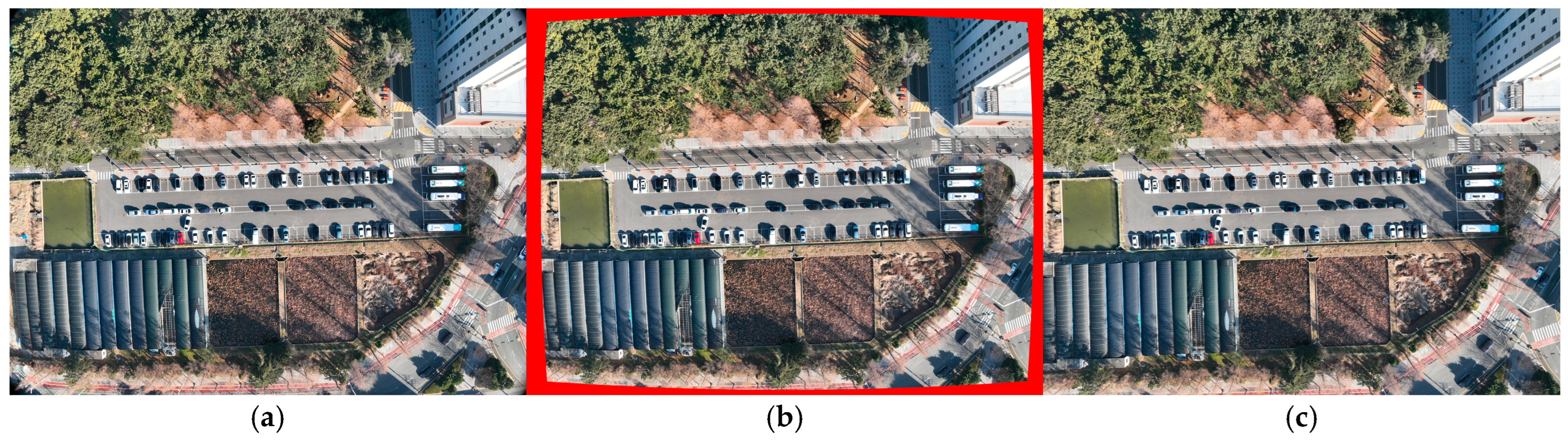
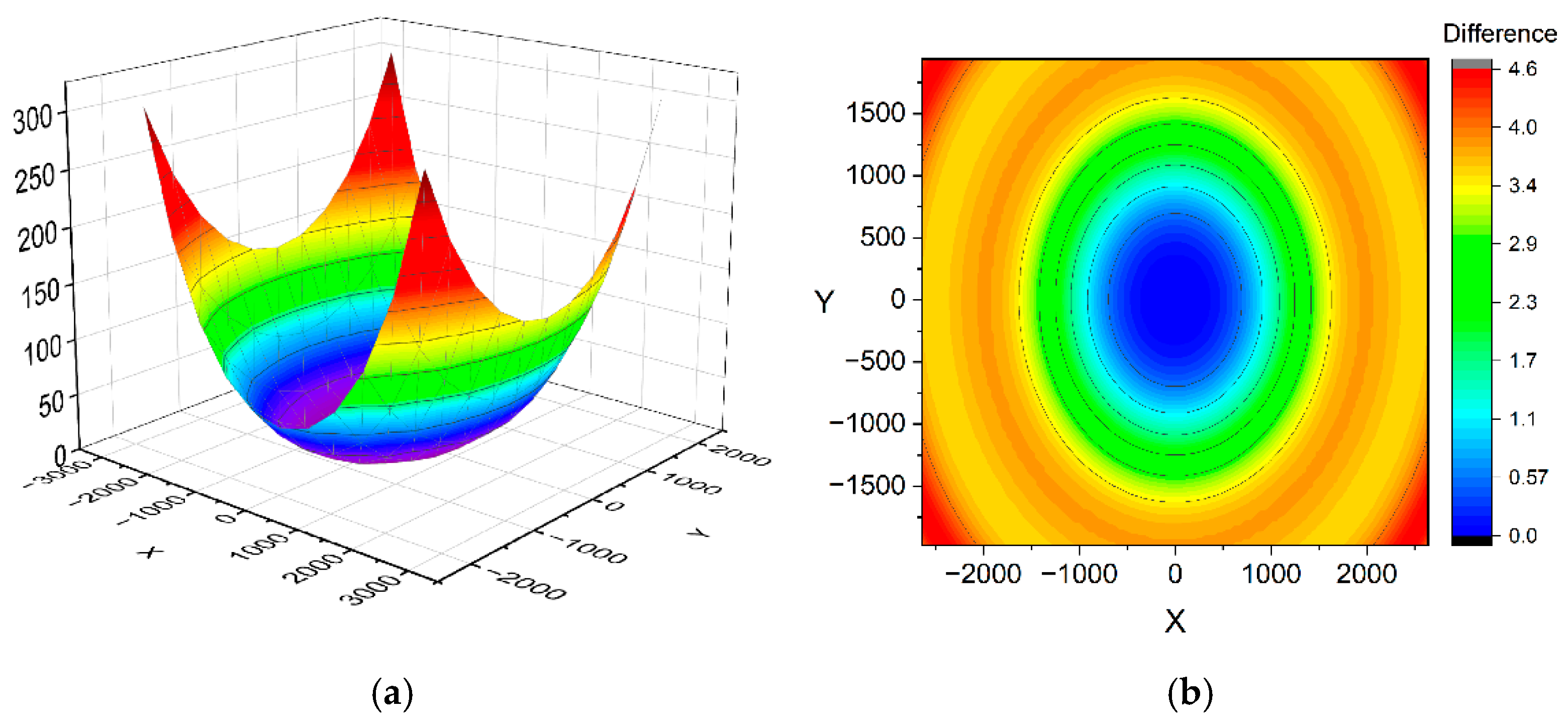
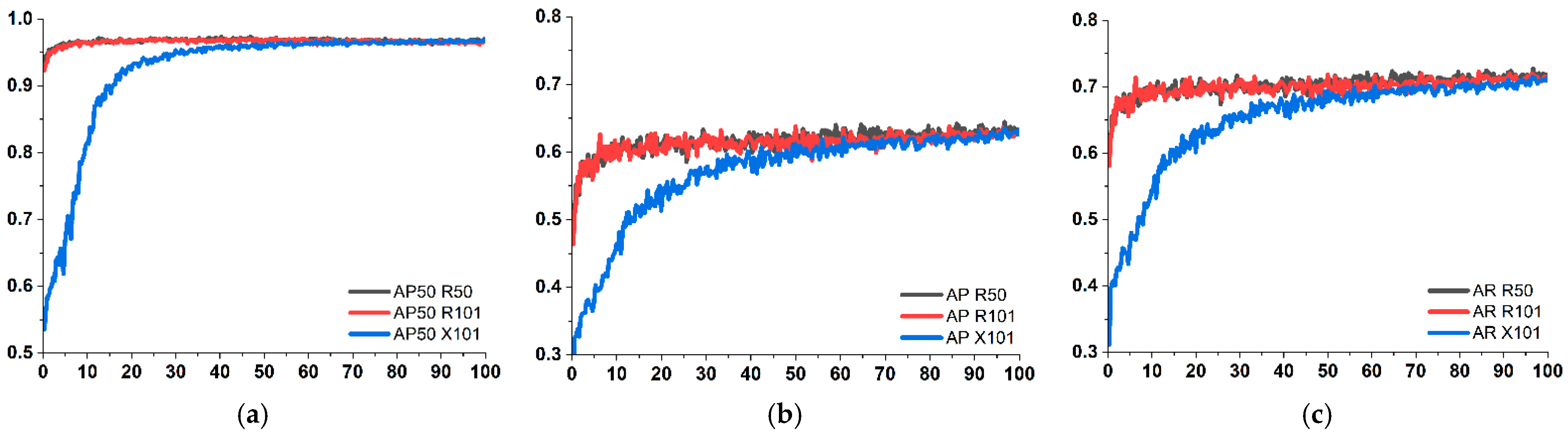
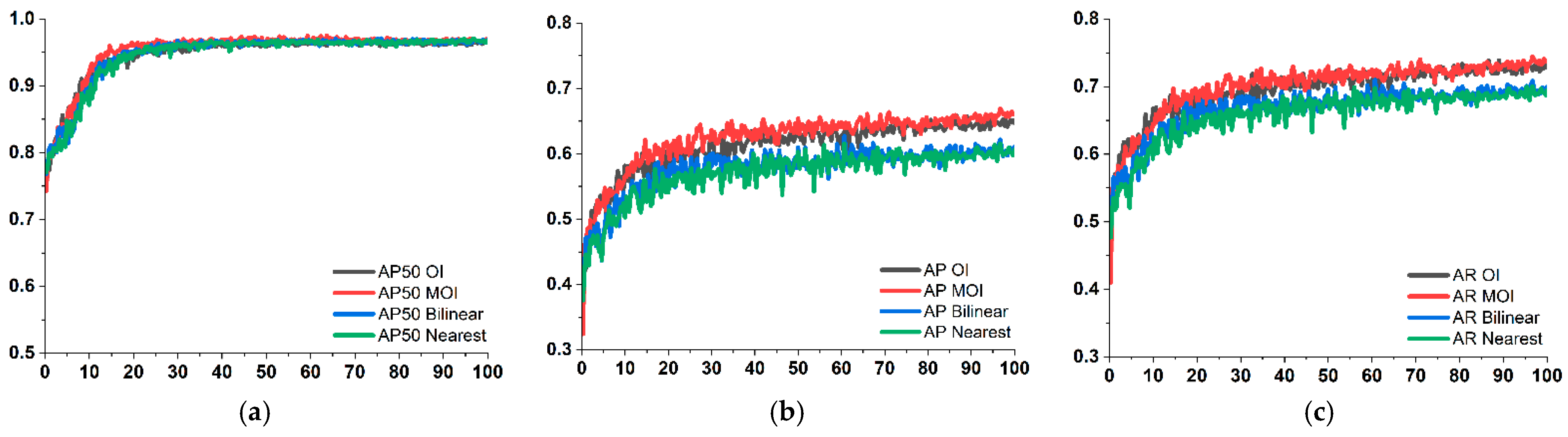
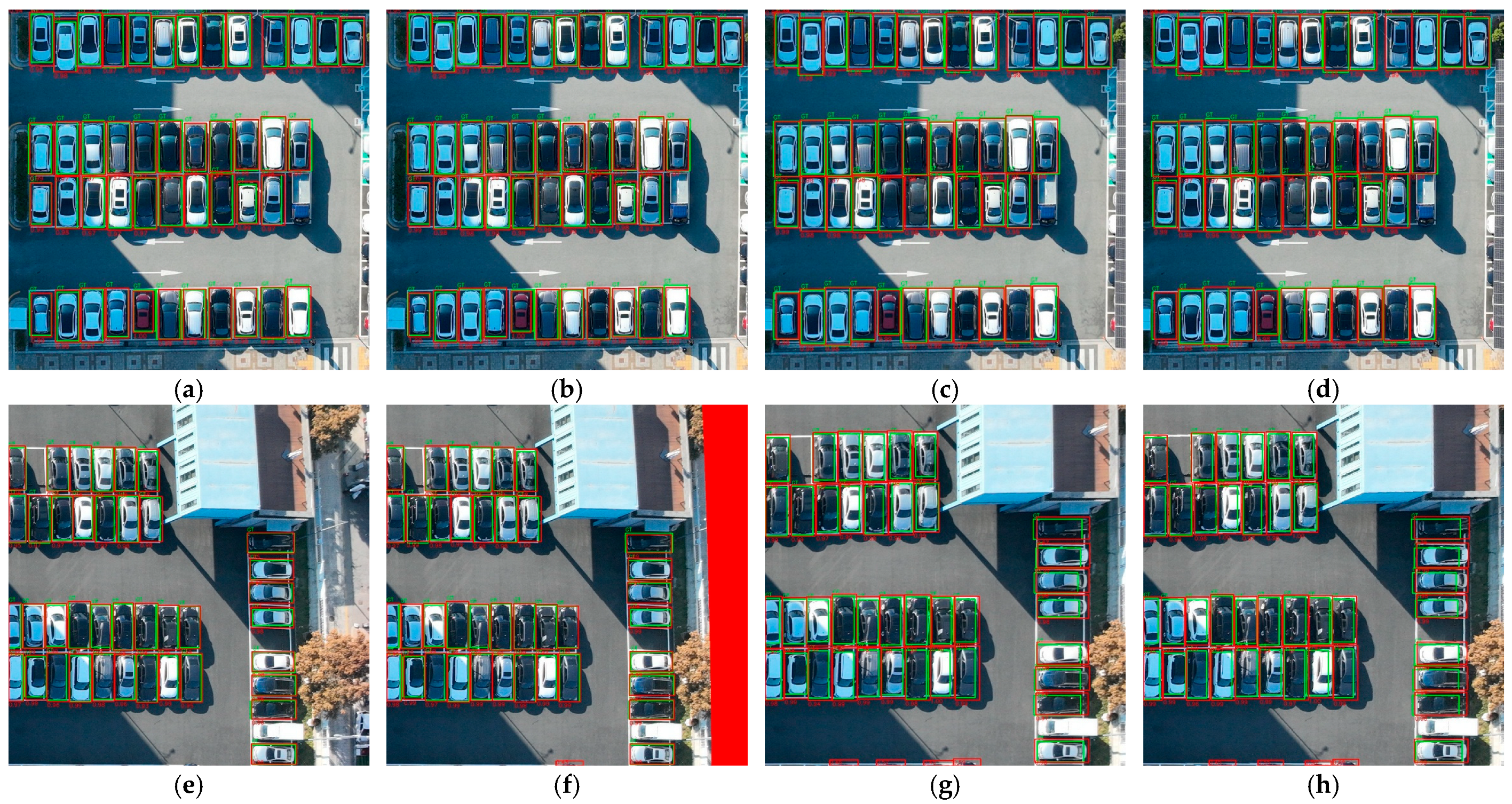
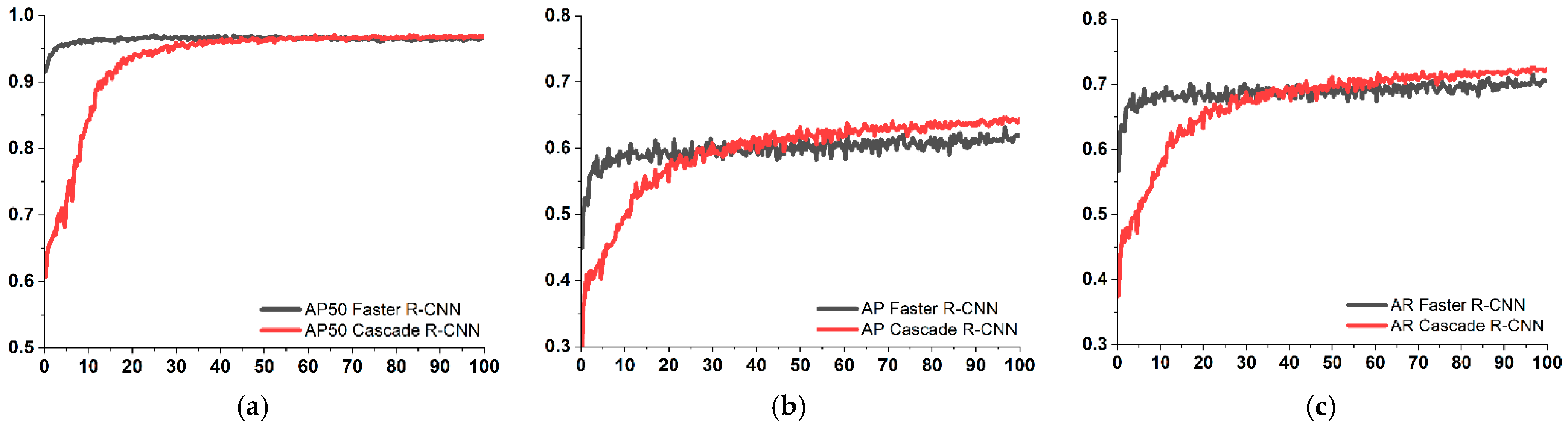
Unmanned Aerial Vehicles (UAVs) provide high-resolution imagery for detailed object detection, but wide-angle lenses can introduce radial and tangential distortions that affect object geometry and detection performance. This study evaluated the effects of lens distortion correction and image preprocessing on UAV-based vehicle detection. Four preprocessing conditions were compared: Original Image (OI), Modified Original Image (MOI), Bilinear, and Nearest, where Bilinear and Nearest denote lens-corrected images generated using bilinear and nearest-neighbor interpolation. Two convolutional neural network (CNN)-based two-stage object detectors, Faster R-CNN and Cascade R-CNN, were combined with three backbone networks, ResNet-50 (R50), ResNet-101 (R101), and ResNeXt-101 (X101). In total, 24 experimental conditions were evaluated using COCO-based AP and AR metrics. At the final checkpoint, Cascade R-CNN achieved AP and AR values of 0.644 and 0.724, respectively, compared with 0.619 and 0.706 for Faster R-CNN. Among the backbones, R50 showed the most favorable balance between detection accuracy and training time. For image preprocessing, MOI achieved the highest final AP and AR values of 0.662 and 0.737, followed by OI, Bilinear, and Nearest. Bilinear and Nearest retained only 0.944 and 0.938 of the final AP of OI, respectively. These findings indicate that lens distortion correction does not necessarily improve UAV-based vehicle detection and that preprocessing strategies should be selected by considering both geometric correction and downstream detection performance.
Keywords: UAV; object detection; lens distortion correction; convolutional neural network; image preprocessing UAV; object detection; lens distortion correction; convolutional neural network; image preprocessing