


Abstract
Against the backdrop of Supply Chain 4.0, social networks play an increasingly critical role in enterprises’ knowledge management and innovation. However, existing studies have not thoroughly explored how social networks affect knowledge management and innovation performance, nor clarified the differentiated roles of internal and external social networks in knowledge transmission. This research gap, combined with enterprises’ practical demand for improving innovation efficiency and reducing knowledge management costs, forms the core basis of this study. To fill these gaps, this study focuses on the relationship between social network, knowledge management, and innovation performance, with three specific objectives: (1) explore how internal and external social networks affect enterprise innovation performance through knowledge management; (2) clarify the differentiated mediating roles of various knowledge management capabilities in this relationship; (3) explore the moderating role of strategic orientation in this process. Based on a sample of 324 Chinese technology manufacturing enterprises, this study uses structural equation modeling and bootstrap methods to empirically test the research hypotheses. The results indicate that internal social networks enhance innovation performance through the mediating role of knowledge inventive, transformative, and innovative capability. External social network exerts a positive influence on innovation performance via the mediating mechanism of knowledge absorptive, connective, and desorptive capability. Furthermore, entrepreneurial orientation moderates the relationship between knowledge innovative capability and innovation performance, while market orientation plays a moderating role in the link between knowledge desorptive capability and innovation performance. This study’s primary academic contribution lies in unpacking the “black box” of knowledge management capability and delineating its multifaceted role in driving innovation performance, thereby offering a novel perspective on the underlying mechanism through which enterprise social networks influence innovation performance.
1. Introduction
Supply Chain 4.0, centered on digitalization, intelligence and collaboration, breaks down information and process barriers within traditional supply chains, facilitates efficient linkage and optimal resource allocation across supply chain participants, and provides solid technical support and extensive cooperation space for enterprise innovation [1,2]. Within this context, the value of social networks has become increasingly prominent. As a vital bridge for enterprises to access external resources and advance cooperative partnerships, enterprise social networks enable firms to leverage the collaborative advantages of Supply Chain 4.0, integrate upstream and downstream innovation resources, and mitigate innovation constraints such as resource shortages and technical bottlenecks, thereby offering essential support for the improvement of innovation performance [3,4].
From the lens of social network theory, technology-based firms are inherently embedded within a complex and dynamic network ecosystem. Close, reciprocal interactions with suppliers, customers and other stakeholders are essential to facilitate inter-organizational knowledge transfer, resource integration and collaborative innovation [5,6]. Although a growing body of literature has examined the antecedents and mechanisms of enterprise innovation from this theoretical perspective [7,8], current research still exhibits notable shortcomings. Most studies adopt a holistic view to examine the overall influence of social networks on innovation [7], or merely focus on single network attributes such as network density and tie strength [8], while neglecting heterogeneous outcomes across distinct network dimensions (i.e., internal vs. external social network) and their unique innovation-related pathways. Such research insufficiency highlights the theoretical and practical necessity to further explore how different types of social network correlate with innovation performance, which constitutes the core focus of this study.
Guided by the knowledge-based view (KBV), knowledge is regarded as the most vital strategic resource for sustaining long-term innovation activities, and knowledge management serves as the core mechanism whereby firms identify, integrate and deploy heterogeneous knowledge resources to correlate with innovation outcomes [9]. Knowledge management capability is specifically defined as a firm’s dynamic capacity to restructure its knowledge base systematically through continuous knowledge exploration, retention, utilization and renewal processes [10]. Existing empirical evidence has consistently confirmed the vital relevance of this capability to innovation performance [11,12,13], yet most studies conceptualize knowledge management capability as an undifferentiated and holistic construct. Such simplification overlooks its multi-dimensional substructure and sequential pathways among sub-capabilities, which restricts in-depth understanding of its mediating role in the social network–innovation linkage. This constitutes another critical research gap addressed in the present study.
Rooted in strategic fit theory, strategic orientation refers to an enterprise’s core business philosophy that shapes operational norms, decision-making principles and resource allocation priorities [14]. Strategic orientation exerts a fundamental guiding effect on innovation activities. A wealth of scholarly works has verified the significant relevance of strategic orientation to corporate innovation behaviors and performance outcomes [15,16]. Nevertheless, limited research focuses on the fit between strategic orientation and knowledge management capability, a core proposition of strategic fit theory. Enterprise performance depends not merely on internal capability level, but also on the alignment between organizational capability and strategic orientation [17]. Accordingly, exploring the fit between knowledge management capability and strategic orientation, and its combined relevance to innovation performance, carries important theoretical significance and practical value, and fills an unaddressed gap in the current literature.
Current scholarship has extensively investigated factors associated with enterprise innovation, particularly the independent and interactive roles of social network, knowledge management capability and strategic orientation. Even so, several key theoretical and empirical deficiencies remain in existing research frameworks, restricting comprehensive understanding of innovation antecedents. First, mainstream studies generally treat enterprise social network as a monolithic and unified construct, and mainly examine its direct linear correlation with innovation performance. Few studies systematically distinguish internal from external social networks, or compare their differentiated associations with innovation activities. Second, prior research often conceptualizes knowledge management capability as an aggregate and overarching capability, without detailed deconstruction of its multi-layered internal structure. This leaves the knowledge management “black box” insufficiently unpacked, and its specific mediating pathways in the network–innovation linkage remain understudied. Third, while existing literature recognizes the foundational function of strategic orientation in innovation governance, it seldom incorporates strategic orientation as a key contingent factor. In particular, insufficient attention has been paid to its boundary effects on the association between knowledge management capability and innovation performance, ignoring contextual conditions under which knowledge management capability better links to innovation advantages.
Against the above research context, this study focuses on the correlation between enterprise social network and innovation performance, with knowledge management capability as the mediating factor and strategic orientation as the contingent factor. To further unpack the internal black box of knowledge management capability, this study divides it into six relatively independent dimensions from internal and external knowledge management perspectives: knowledge inventive capability, knowledge transformative capability, knowledge innovative capability, knowledge absorptive capability, knowledge connective capability, and knowledge desorptive capability. This study also explores the synergistic fit between knowledge innovative capability, knowledge desorptive capability and strategic orientation, so as to clarify how coordinated interaction among multiple factors jointly links to enterprise innovation performance.
The remainder of this paper is structured as follows. First, on the basis of systematic literature review, this study proposes a series of research hypotheses. Second, it elaborates the research design, including data collection, sample screening and variable measurement. Third, it conducts quantitative empirical analysis to test the theoretical model and research hypotheses. Afterwards, this study discusses the empirical results, covering core findings, theoretical contributions, practical implications, research limitations and future research directions. Finally, overall research conclusions are summarized comprehensively to ensure the integrity and rigor of this study.
2. Literature Review and Research Hypothesis
2.1. Enterprise Social Network, Knowledge Inventive and Absorptive Capability
As a critical carrier of social capital, the enterprise social network plays an indispensable role in facilitating the accumulation and circulation of social capital within and outside the organization. From the perspective of whether it transcends organizational boundaries, the enterprise social network can be categorized into two distinct dimensions: internal social network and external social network [18]. Meanwhile, knowledge management capability refers to the comprehensive level of an enterprise’s ability to manage knowledge resources throughout the entire process, including acquisition, integration, and application. From the dual perspectives of intra-organizational knowledge management and inter-organizational knowledge exchange, this capability can also be divided into internal knowledge management capability and external knowledge management capability [10].
Internal knowledge management capability is defined as an enterprise’s core capacity to govern and manage knowledge resources within its organizational boundaries, which encompasses three key dimensions: knowledge inventive capability, knowledge transformative capability, and knowledge innovative capability [10]. Specifically, knowledge inventive capability refers to an enterprise’s inherent ability to internally explore, develop, and generate new knowledge assets [19]. As a relational network established among employees within an enterprise, the internal social network can exert a significant influence on the development of knowledge inventive capability. Employees embedded in the internal social network generally work toward the common strategic goals formulated by the enterprise, and these shared objectives can effectively facilitate the exchange and sharing of implicit and explicit knowledge among employees, thereby creating favorable conditions for knowledge invention [20]. Furthermore, the internal social network can effectively reduce the transaction costs and collaboration frictions associated with knowledge exchange among employees, which further stimulates and fosters the process of knowledge invention [21]. Based on the above analysis, we propose the following hypothesis:
H1:
Internal social network exerts a positive effect on knowledge inventive capability.
External knowledge management capability, by contrast, refers to an enterprise’s core capacity to govern and manage knowledge resources derived from outside its organizational boundaries, which includes three key dimensions: knowledge absorptive capability, knowledge connective capability, and knowledge desorptive capability [10]. Among these, knowledge absorptive capability is defined as an enterprise’s inherent ability to explore, identify, and acquire valuable knowledge resources from external entities [22]. As a relational network formed between an enterprise’s employees and external organizations (such as suppliers, partners, and research institutions), the external social network can enhance the enterprise’s knowledge absorptive capability through three core dimensions: network scale, network centrality, and network connectivity [23].
First, a larger scale of external social network means enterprises have more diverse channels to access external knowledge resources, expanding the scope and breadth of knowledge available for absorption. Second, a higher centrality of the external social network endows enterprises with stronger access to core and cutting-edge external knowledge, enhancing their ability to identify and acquire high-value knowledge [24]. Third, more frequent and in-depth contacts between enterprises and external organizations via the external social network accelerate the speed of knowledge transfer, shortening the cycle of external knowledge absorption and further facilitating the exploration and absorption of external knowledge [25]. Based on the above analysis, we propose the following hypothesis:
H2:
External social network exerts a positive effect on knowledge absorptive capability.
2.2. Knowledge Inventive, Transformative and Innovative Capability
In the process of internal knowledge management within an enterprise, knowledge invention acts as the initial link and fundamental prerequisite for subsequent knowledge transformation and innovation activities. Specifically, the newer the knowledge an enterprise invents internally, the more likely it is to expand its internal knowledge stock, which in turn tends to enhance the enterprise’s knowledge transformative capability [26]. In addition, an enterprise’s knowledge invention process is closely associated with employees’ pursuit of creativity: the stronger the employees’ motivation to pursue creativity, the more frequent internal knowledge exchange and interaction activities will be, accelerating the conversion of tacit knowledge into explicit knowledge and further facilitating the improvement of knowledge transformative capability.
Zhao et al. [18] proposed that knowledge invention serves as a core link in the process of new product development, laying a solid foundation for the smooth implementation of subsequent knowledge transformative activities. In addition, Dibiaggio et al. [27] empirically verified that an enterprise’s knowledge inventive capability is largely dependent on its existing knowledge base, and this capability can further exert a potential regulatory effect on its knowledge transformative capability. Based on the above theoretical analysis and empirical findings, we propose the following hypothesis:
H3:
Knowledge inventive capability exerts a positive effect on knowledge transformative capability.
Knowledge transformative capability serves as the intermediate link between knowledge invention and innovation, with its core task being the selection, reconfiguration, and effective application of knowledge resources. It can be divided into four key processes: knowledge socialization, externalization, combination, and internalization [28]. All four processes jointly promote the improvement of knowledge innovation capability. First, knowledge socialization enables enterprises to effectively summarize practical experience, extract new methodological insights from past successes and failures, and further facilitate the generation of innovative knowledge [29]. Second, knowledge externalization encourages in-depth exploration of knowledge, promotes the systematization of scattered knowledge, and reduces the costs associated with knowledge innovation [30]. Third, knowledge combination helps enterprises adapt to the rapid changes in the external environment, adopt advanced management methods, and enhance the efficiency of knowledge innovation. Finally, knowledge internalization allows enterprises to anticipate and respond to potential challenges and difficulties in advance, thereby strengthening their ability to innovate [31].
Ji and Tian [32] demonstrated that knowledge-based dynamic capabilities play a crucial transformative role in green innovation. Meanwhile, Huang et al. [31] further revealed that knowledge transformative capability exerts a mediating effect on the relationship between resource complementarity and enterprise innovation performance. Based on the above theoretical analysis and empirical findings, we propose the following hypothesis:
H4:
Knowledge transformative capability exerts a positive effect on knowledge innovative capability.
2.3. Knowledge Absorptive, Connective and Desorptive Capability
Knowledge absorptive capability is defined as an enterprise’s inherent capacity to explore, identify, and acquire valuable external knowledge resources, which serves as a core driving force for the development and enhancement of knowledge connective capability [22]. A high level of knowledge absorptive capability enables enterprises to proactively scout for, identify, and assimilate external knowledge pools, thereby providing strong impetus for the cultivation and upgrading of knowledge connective capability [33]. Specifically, the stronger an enterprise’s knowledge absorptive capability, the more proficient it is in identifying high-value external knowledge, capturing potential knowledge integration opportunities, and establishing stable, resilient knowledge linkages with external stakeholders [34]. It is worth noting that knowledge connective capability not only involves the efficient application of existing knowledge resources but also emphasizes the continuous acquisition and absorption of new knowledge to adapt to the dynamic changes in the external market environment.
Accordingly, there is a positive correlation between knowledge absorptive capability and knowledge connective capability, namely, a stronger knowledge absorptive capability contributes to a more robust knowledge connective capability. Based on the above analysis, we propose the following hypothesis:
H5:
Knowledge absorptive capability exerts a positive effect on knowledge connective capability.
Knowledge connective capability is defined as an enterprise’s core capacity to sort out, integrate, and retain knowledge resources within inter-organizational collaborative networks, which in turn enables enterprises to establish stable and cohesive knowledge alliances with external stakeholders [35]. In contrast, knowledge desorptive capability refers to an enterprise’s professional proficiency in externalizing internal knowledge assets and gaining corresponding economic and strategic returns from such externalization activities [31]. It is noteworthy that knowledge connective capability promotes the enhancement of knowledge desorptive capability through two key dimensions of inter-organizational knowledge connections: connection diversity and connection depth.
First, the diversity of knowledge connections helps enterprises access and acquire heterogeneous knowledge portfolios, which not only enriches their internal knowledge stock but also lays a solid foundation for the development and cultivation of knowledge desorptive capability. Second, the depth of knowledge connections strengthens the relational embeddedness between enterprises and external collaborative organizations, while improving the sophistication and comprehensiveness of the enterprise’s knowledge base, thereby providing effective channels and practical possibilities for the advancement of knowledge desorptive capability [26]. Based on the above theoretical deduction and empirical support, we propose the following hypothesis:
H6:
Knowledge connective capability exerts a positive effect on knowledge desorptive capability.
2.4. Knowledge Innovative, Desorptive Capability and Innovation Performance
Knowledge innovative capability refers to an enterprise’s core capacity to transform newly acquired knowledge into innovative products, processes, and service solutions [36]. As the most prominent embodiment of an enterprise’s overall innovation capacity, knowledge innovative capability acts as a critical and decisive factor affecting its innovation performance. Knowledge innovation is inherently a continuous and iterative dynamic process, characterized by the mutual transformation and spiral evolution of explicit knowledge and tacit knowledge. This process empowers enterprises to efficiently leverage knowledge resources that transcend organizational boundaries, thereby accelerating the development of new products while reducing the cost of innovation [26]. Only when enterprises achieve a sufficient level of knowledge innovative capability—enabling them to effectively assimilate, absorb, and exploit newly acquired knowledge, and further convert this knowledge into tangible innovative outputs—can their innovation performance be significantly improved.
Han [37] further argued that knowledge innovative capability equips enterprises with the ability to quickly identify and respond to changes in the market environment, align their technological innovation activities with the evolving market demands, and ultimately promote the improvement of overall innovation performance. Therefore, we propose the following hypothesis:
H7:
Knowledge innovative capability exerts a positive effect on innovation performance.
Knowledge desorptive capability is conceptualized as an enterprise’s strategic capacity to diffuse internal knowledge assets to externally oriented organizations that align with its core value appropriation goals [38]. This core capability drives improvements in innovation performance through two differentiated, value-creating mechanisms.
Firstly, enterprises equipped with strong knowledge desorptive capability exhibit enhanced acuity in identifying latent customer needs. Such organizations can develop highly tailored solutions, streamline the efficiency of intellectual property commercialization, and ultimately enhance innovation performance by ensuring that output offerings are precisely aligned with unmet market demands. Secondly, firms endowed with substantial knowledge desorptive capability are more adept at recognizing emerging technological paradigms. This heightened awareness facilitates the strategic externalization of proprietary IP assets, thereby amplifying overall innovation performance [22].
Extending this logic, Laursen and Salter [39] further postulated that desorptive capability enhances innovation performance by enabling the strategic conveyance of a firm’s proprietary technological resources to external collaboration partners. Based on the preceding theoretical analysis and empirical support, we propose the following hypothesis:
H8:
Knowledge desorptive capability exerts a positive effect on innovation performance.
2.5. The Moderating Effect of Strategic Orientation
Based on the perspective of strategic fit theory, knowledge innovative capability and knowledge desorptive capability represent two distinctive sub dimensions of knowledge management capability, whose influences on innovation performance are subject to the contingent role played by strategic orientation [17]. Against this theoretical backdrop, this study classifies strategic orientation into entrepreneurial orientation and market orientation, and further investigates their respective moderating effects on the link between knowledge innovative capability and innovation performance, as well as the association between knowledge desorptive capability and innovation performance.
Entrepreneurial orientation reflects an enterprise’s inherent strategic tendency to implement innovation-oriented, risk-taking, and proactive behaviors in competitive environments [40]. Firms with a strong entrepreneurial orientation usually attach greater importance to internal R&D activities and the accumulation of technological knowledge. Within such organizational contexts, the communication and sharing of knowledge among internal members can be carried out more smoothly, effectively accelerating the process of knowledge innovation [41]. In particular, the innovative, proactive, and risk-tolerant characteristics embedded in entrepreneurial orientation can strengthen enterprises’ knowledge innovative capability, thereby further promoting the improvement of innovation performance [42].
Furthermore, corporate innovation activities are inherently accompanied by substantial risks and uncertainties. The risk-taking propensity embedded in entrepreneurial orientation helps to cultivate an inclusive and tolerant organizational atmosphere for innovation, which can reduce employees’ psychological resistance and avoidance toward innovative practices [43]. This conducive environment effectively improves the frequency and efficiency of knowledge interaction and sharing among internal employees. Accordingly, the marginal impact of knowledge innovative capability on enterprise innovation performance will be further strengthened. Based on the above reasoning, we propose the following hypothesis:
H9:
Entrepreneurial orientation positively moderates the effect of knowledge innovative capability on innovation performance.
Market orientation reflects an enterprise’s strategic tendency to focus on identifying customer needs and tracking the behaviors and actions of competitors [40,44]. Firms with a strong market orientation tend to attach great importance to customer demands and competitive dynamics when exploring and identifying external development opportunities [45]. Such a strategic focus allows enterprises to effectively obtain critical market information and valuable knowledge resources from customers and competitors in a timely manner [46]. After absorbing such key external market information, enterprises can carry out a comprehensive integration and reconfiguration of internal resources, and further launch new products and services that match the changing demands of customers [47]. In this continuous and interactive process, enterprises’ knowledge desorptive capability can be continuously improved, thereby effectively promoting the enhancement of innovation performance [48].
Moreover, market orientation requires enterprises to strengthen cross-functional coordination and communication mechanisms, which helps to reduce cognitive differences and potential conflicts of interest among different departments. In this way, all functional units can move toward consistent strategic objectives, thereby lowering internal organizational friction [49]. In such a supportive organizational context, the positive driving effect of knowledge desorptive capability on innovation performance will become more significant. Based on the above analysis, we propose the following hypothesis:
H10:
Market orientation positively moderates the effect of knowledge desorptive capability on innovation performance.
3. Methods
3.1. Data and Sampling
This research primarily collects quantitative empirical data through well-structured, professionally designed questionnaires distributed to targeted respondents. The research subjects are specifically focused on technology manufacturing enterprises across diverse industries and development stages, given that such innovation-driven enterprises maintain a stronger intrinsic willingness and practical demand to engage in technological upgrading, product iteration and innovation activities. Only one respondent was selected from each enterprise to fill out the questionnaire, and the respondents were mainly technical department managers or deputy managers who were familiar with the innovation activities of their enterprises. Before launching the formal investigation, a pilot test was carried out among 15 technology manufacturing enterprises, and some measurement items were further revised and optimized according to the feedback obtained. The formal questionnaire was distributed to technology-based firms through two independent channels.
First, an online distribution method was employed. Electronic questionnaires were used to expand the coverage of the sample, accompanied by clear explanations of core variables such as enterprise social network and knowledge management capability. A total of 155 questionnaires were initially collected through this channel. Due to the large number of items included in the questionnaire, the normal response time was 5 to 6 min; therefore, questionnaires with a response time of less than 120 s were excluded. Meanwhile, we also excluded questionnaires with missing values. After these screening operations, a total of 136 valid questionnaires were retained.
Second, a face-to-face distribution approach was adopted. Before the survey, investigators delivered detailed instructions on the purpose and content of the questionnaire, and clarified the connotation of key constructs. A total of 300 questionnaires were distributed offline, and 228 were returned. After removing samples with missing values, repetitive responses, or obvious straight lining, 188 valid questionnaires were obtained. Overall, 324 valid questionnaires were finally gathered for the subsequent empirical analysis.
To verify whether systematic differences exist between the data collected from the two distribution channels, a one-way analysis of variance (ANOVA) was conducted. The results indicate no significant differences in key firm-level characteristics, including firm ownership (F = 0.558, p = 0.446), annual sales revenue (F = 0.621, p = 0.506), firm size measured by the number of employees (F = 0.834, p = 0.627), and R&D intensity (F = 0.644, p = 0.523).
To ensure the reliability of the research sample, this study evaluated the non-response bias by comparing the two core classification dimensions (location and industry) of the responding sample and the non-responding sample. The results show that there is no significant difference in the distribution of location (p = 0.36 > 0.05) and industry affiliation (p = 0.42 > 0.05) between the valid responding sample and the non-responding sample. This indicates that there is no non-response bias in the research sample, and the sample has good representativeness, which can effectively reflect the actual situation of high-tech manufacturing enterprises.
In addition, Harman’s single-factor test was performed to evaluate the potential threat of common method variance (CMV), which is commonly encountered in cross-sectional self-report data. The exploratory factor analysis (EFA) results show that the first unrotated factor accounts for 25.37% of the total variance, well below the 50% critical threshold. This result suggests that common method bias is not a serious concern in this study, and the data satisfy the required reliability and validity standards [50].
The distribution of the sample is shown in Table 1.
Table 1.
Distribution of sample.
3.2. Measurement
All measurement scales used in this study were derived from established and validated scales in prior literature, and were appropriately revised to fit the specific research context. We conducted multiple rounds of Chinese–English back-translation of the scale to ensure the accuracy and consistency of the scale’s content, avoid translation deviations, and ensure that the core meaning of each measurement item is accurately conveyed without ambiguity. All items were measured on a 5-point Likert scale ranging from 1 (strongly disagree) to 5 (strongly agree). Detailed information about the measurement items is presented in Appendix A.
In particular, the scales for internal social network and external social network were adapted from Perin et al. [51]. Knowledge inventive capability was measured using the scale developed by Forés and Camisón [52], and the measurement of knowledge transformative capability was adapted from Huang et al. [31]. The scale for knowledge innovative capability was adopted from Tamayo-Torres et al. [53], and knowledge absorptive capability was operationalized based on Forés and Camisón [52]. Knowledge connective capability was measured using the instrument developed by Mudambi and Tallman [54], while knowledge desorptive capability was adapted from Bravo et al. [55]. Furthermore, entrepreneurial orientation and market orientation were measured based on Cheng and Huizingh [15]. Finally, innovation performance was assessed using the scale developed by Huang et al. [56].
For the reverse-scored items in the market orientation scale, reverse coding was completed in this study, converting the scores of reverse-worded items into a logic consistent with positive items to ensure the rationality of scale scoring and the validity of data. In addition, enterprise nature, sales revenue, number of employees, and R&D intensity are potential influencing factors of innovation performance. Therefore, this research controlled for the above variables.
4. Empirical Analysis and Results
4.1. Correlation Analysis
As shown in Table 2, the correlation coefficients between the core variables are all statistically significant, which provides preliminary evidence for the research hypotheses. In addition, all pairwise correlation coefficients are below the 0.7 critical value, which initially rules out severe multicollinearity. This study will further integrate model fitting indices, factor loadings and the rationality of path coefficients for comprehensive evaluation, so as to ensure that the model estimation results are not affected by multicollinearity.
Table 2.
Results of correlation analysis and descriptive statistics.
4.2. Reliability and Validity Test
The reliability of the measurement constructs was evaluated using Cronbach’s α coefficients. As shown in Table 3, the Cronbach’s α values for all variables were higher than 0.7, demonstrating satisfactory internal consistency reliability [57].
Table 3.
Results of reliability and validity test.
Convergent validity was assessed according to three commonly accepted criteria proposed by Cheung et al. [58]: standardized factor loadings, construct reliability (CR), and average variance extracted (AVE). As displayed in Table 3, all standardized factor loadings were above 0.6, CR values were greater than 0.7, and AVE values exceeded 0.5. All these indicators met the corresponding critical thresholds, providing strong support for adequate convergent validity. Moreover, all scales used in this study have been repeatedly verified and widely applied in previous studies, ensuring sufficient content validity.
Discriminant validity was tested by comparing the square roots of AVE values with the correlation coefficients between different constructs [58]. As presented in Table 2, the square root of the AVE for each construct was higher than its correlations with all other constructs, confirming acceptable discriminant validity.
To further assess the discriminant validity of the eleven latent variables and resolve structural confusion arising from the high conceptual similarity of social network and diverse knowledge capability constructs, multiple competitive measurement models are adopted for comparative examination. Table 4 presents the CFA results. The 11-factor model exhibits superior fit over all combined alternative models, verifying sound discriminant validity among all constructs and a stable measurement structure, which lays a solid foundation for subsequent structural path analysis.
Table 4.
Comparative fit of competing measurement models.
4.3. Hypothesis Test
4.3.1. Structural Equation Model Analysis
This study adopted structural equation modeling (SEM) to test the research hypotheses, following the analytical procedures recommended by Yang and Chen [59]. Data analysis was performed using Stata 19, and the maximum likelihood estimation method was applied for parameter fitting. The overall model fit indices were as follows: χ2 = 729.803, df = 392, χ2/df = 1.862, RMSEA = 0.049, CFI = 0.912, TLI = 0.914, and SRMR = 0.077. All these indicators met the commonly accepted criteria for satisfactory model fit. The detailed results of the SEM estimation are illustrated in Figure 1.
Figure 1.
Result of structural equation model analysis. Note: *** p < 0.01, ** p < 0.05, * p < 0.1.
Internal social network was found to have a significantly positive relationship with knowledge inventive capability (γ = 0.727, p < 0.01), thereby supporting H1. External social network exerted a positive and significant effect on knowledge absorptive capability (γ = 0.364, p < 0.01), providing support for H2. Wang et al. [60] demonstrated that each dimension of knowledge networks improves firms’ innovation performance, and that firms’ knowledge integration capability has a fully mediating effect on the relationship between knowledge cognition and innovation performance. Shan et al. [21] indicated that an internal social network can enhance firms’ absorptive capacity. Previous research conclusions and this study’s empirical results are mutually supportive, which further validates and enriches relevant research findings.
Knowledge inventive capability positively and significantly influenced knowledge transformative capability (γ = 0.886, p < 0.01), which supports H3. Knowledge transformative capability had a positive and significant impact on knowledge innovative capability (γ = 0.347, p < 0.01), thus validating H4.
A significantly positive relationship was observed between knowledge absorptive capability and knowledge connective capability (γ = 0.495, p < 0.01), supporting H5. Knowledge connective capability was positively and significantly associated with knowledge desorptive capability (γ = 0.462, p < 0.01), providing support for H6.
Knowledge innovative capability exerted a positive and significant effect on innovation performance (γ = 0.192, p < 0.05), which supports H7. Finally, knowledge desorptive capability also had a marginally positive and significant effect on innovation performance (γ = 0.145, p < 0.1), which provides limited support for H8.
By complementing the concept of absorptive capacity, Lichtenthaler and Lichtenthaler [10] advanced towards a capability-based framework for open innovation processes. They identify the following six “knowledge capacities” as a firm’s critical capabilities of managing internal and external knowledge in open innovation processes: inventive, absorptive, transformative, connective, innovative, and desorptive capacity. Lichtenthaler and Lichtenthaler [10] theoretically explored the relationships among these six capabilities and their impacts on innovation performance. This paper serves as an extension of their work, empirically examining the interrelationships between these capabilities and opening the black box of knowledge management capability.
4.3.2. Moderating Effect Test
As illustrated in Figure 1, entrepreneurial orientation plays a marginally significant positive moderating role in the link between knowledge innovative capability and innovation performance (γ = 0.146, p < 0.1), which provides partial support for H9. Furthermore, the follow-up simple slope test shown in Figure 2 further verifies this moderating effect: the positive association of knowledge innovative capability with innovation performance becomes significantly stronger when entrepreneurial orientation is at a high level. These results offer solid empirical evidence for H9.
Figure 2.
Moderating effect of entrepreneurial orientation.
As displayed in Figure 1, market orientation positively and significantly moderates the relationship between knowledge desorptive capability and innovation performance (γ = 0.178, p < 0.05), thus supporting H10. The additional simple slope analysis presented in Figure 3 further confirms this moderating mechanism: the positive association of knowledge desorptive capability with innovation performance is notably enhanced under a high level of market orientation. This supplementary finding provides strong support for H10.
Figure 3.
Moderating effect of market orientation.
Wu et al. [47] indicated that market orientation positively moderates the impact of entrepreneurial bricolage on business model innovation and entrepreneurial performance, and it also positively moderates the impact of business model innovation on entrepreneurial performance. Hernández-Ramírez et al. [61] showed that the positive effect of entrepreneurial orientation on innovative performance was greater in MSMEs paying attention to environmental trends and capturing market and product opportunities. The above research findings collectively indicate that entrepreneurial orientation and market orientation play notable moderating roles in the formation process of innovation performance, which is consistent with the empirical results of this study.
4.3.3. Further Analysis
Internal knowledge management capability was constructed by combining knowledge inventive capability, knowledge transformative capability, and knowledge innovative capability. Similarly, external knowledge management capability was formed by integrating knowledge absorptive capability, knowledge connective capability, and knowledge desorptive capability. The bootstrap method was then adopted to further test the mediating effects of internal and external knowledge management capability in the relationship between enterprise social network and innovation performance. The bootstrap method was applied with 5000 repeated samples to ensure the stability and statistical validity of the estimation results. The detailed outcomes of the mediation analysis are reported in Table 5.
Table 5.
Bootstrap test of mediating effect.
The indirect effect of internal social network on innovation performance via internal knowledge management capability was 0.468, with a 95% confidence interval excluding zero [CI = (0.149, 0.892)]. This result indicates that internal knowledge management capability plays a significant mediating role in the link between internal social network and innovation performance.
Likewise, the indirect impact of external social network on innovation performance through external knowledge management capability was 0.265, and its 95% confidence interval also excluded zero [CI = (0.037, 0.589)]. This finding suggests that external knowledge management capability exerts a significant mediating effect on the relationship between external social network and innovation performance.
5. Discussion
5.1. Main Findings
This study yields several key findings. First, internal social network exhibits an enabling association through the sequential mediating pathway of internal knowledge management capability, which is specifically manifested as the transmission mechanism of “internal social network → knowledge inventive capability → knowledge transformative capability → knowledge innovative capability → innovation performance”. It is worth noting that internal knowledge management capability is not a single-dimensional construct, but a complex and multi-level internal knowledge governance system, which includes three interrelated and sequentially progressive sub-capabilities: knowledge creation capability, knowledge transformation capability, and knowledge innovation capability [26,31]. The core value of internal social network lies in activating the sequential cumulative effect of these three sub-capabilities. Through smooth cross-level and cross-departmental communication network connections, internal information silos are broken, and the endogenous creation, efficient transformation and innovative application of knowledge are facilitated, thereby systematically improving corporate innovation performance.
Second, the contribution of external social network to corporate innovation performance also relies on the sequential mediating role of external knowledge management capability, with the specific transmission path being “external social network → knowledge absorptive capability → knowledge connective capability → knowledge desorptive capability → innovation performance”. Similar to internal knowledge management capability, external knowledge management capability is a multi-dimensional capability set rather than a single-dimensional concept, which is composed of three sequentially developed and interrelated sub-capabilities: knowledge absorption capability, knowledge connection capability, and knowledge desorption capability [22]. The value of external social network lies in activating the sequential cumulative effect of these three sub-capabilities by establishing stable cooperative connections with upstream suppliers, downstream distributors, research institutions and other subjects, realizing the efficient acquisition, accurate connection and in-depth transformation of external knowledge, and thus promoting the improvement of corporate innovation performance.
Third, the synergistic compatibility between entrepreneurial orientation and knowledge innovation capability can effectively strengthen the output of corporate innovation achievements. Enterprises with a high level of entrepreneurial orientation often have stronger innovation awareness and risk-taking willingness, take innovation orientation as their core development strategy [42], and strive to build a flexible, inclusive and innovation-supportive organizational atmosphere, actively encouraging employees to participate in knowledge creation, technological R&D and other innovative practices [62]. Within such an organizational atmosphere, corporate knowledge innovation activities can be fully empowered, and knowledge innovation capability can be continuously improved, thereby significantly promoting the optimization of innovation performance.
Fourth, the coordinated fit between market orientation and knowledge desorption capability can also effectively improve corporate innovation performance. Enterprises with a strong market orientation take customer needs as the core orientation, focus on capturing potential customer needs and monitoring industry competitive dynamics [45], excel at integrating and utilizing key information and knowledge resources obtained from customers and competitors, and convert them into new products and services that meet market needs, promoting the external transfer and value release of internal knowledge [48]. This market-oriented strategic positioning can provide clear direction guidance for the exertion of knowledge desorption capability, make knowledge desorption activities between enterprises and external partners more targeted and effective, and further enhance knowledge desorption capability. Meanwhile, robust knowledge desorption capability strengthens corporate absorption and transformation of market knowledge, ultimately promoting the improvement of corporate innovation performance.
5.2. Theoretical Contributions
Compared with existing related research, the theoretical contributions of this study are mainly reflected in the following three aspects. First, this study refines corporate social network’s research dimensions and breaks the “homogenization” limitation. While Martínez Pérez et al. [7] confirmed social network’s positive impact on innovation from an integrated perspective, most studies treat social network as a single construct, failing to distinguish internal and external heterogeneity or their differentiated mechanisms and leading to general conclusions.
This study’s breakthrough lies in decomposing social network into internal and external dimensions, exploring their distinct paths to innovation performance, and revealing their differentiated mediating mechanisms (relying on internal and external knowledge management capabilities respectively). This refined framework clarifies their unique value and logic, enriches related research, and provides a more accurate perspective for future studies.
Second, this study disassembles the internal structure of knowledge management capability and opens the “black box” of its impact on innovation. Existing research recognizes knowledge management’s mediating role but treats it as an overall construct, ignoring sub-dimensions’ interactive and sequential mechanisms and resulting in unclear core logic and vague dimension division.
This study subdivides knowledge management capability into internal and external dimensions, further disassembles their sub-capabilities, and confirms their sequential relationship. It clarifies the transmission mechanism “social network → knowledge management sub-capabilities → innovation performance”, making up for existing research gaps and deepening understanding of knowledge management and innovation.
Third, this study refines strategic orientation’s dimensions, reveals differentiated moderating mechanisms, and addresses the “simplification” defect. Yun et al. [16] and Cheng and Huizingh [15] confirmed strategic orientation’s positive moderating role but treated it as a single construct, failing to distinguish different types’ effects or their synergistic adaptation with knowledge management sub-capabilities.
This study decomposes strategic orientation into entrepreneurial and market orientations, confirming their differentiated moderating effects: entrepreneurial orientation synergizes with knowledge innovation capability, while market orientation fits with knowledge desorption capability. This clarifies their synergistic mechanisms, deepens understanding of strategic orientation, knowledge management, and innovation, and provides theoretical guidance for enterprises to choose appropriate strategic orientations.
5.3. Practical Implications
This study provides practical and targeted managerial implications for enterprises seeking to improve innovation performance.
First, enterprises must attach importance to the construction and iterative optimization of internal and external social networks with feasible and operable measures. For internal social network building, smooth cross-departmental and cross-level communication serves as the fundamental guarantee for effective knowledge circulation [63]. Specifically, firms can arrange regular weekly cross-departmental coordination meetings to synchronize work progress, resolve collaborative barriers, and share frontline experience in a timely manner. In addition, regular offline activities, including skill sharing salons, internal innovation brainstorming, and mentor–apprentice knowledge inheritance programs, should be organized to strengthen interpersonal trust, break information silos, and accelerate the efficient transfer and internal replication of core professional knowledge [20].
In terms of external social network development, enterprises need to maintain long-term and stable cooperative relationships with upstream suppliers, downstream distributors, research institutions and key customers [24]. Practical measures include participating in high-end industry summits and technical exchange conferences to connect with peer firms and professional experts. Meanwhile, enterprises can build a stable external partner resource pool, carry out regular communication and docking, and jointly realize technological iteration, information sharing and collaborative product innovation.
Moreover, firms should establish a scientific indicator system to quantitatively evaluate the operational efficiency of internal and external social network in supporting knowledge management. Indicators such as knowledge transfer speed, knowledge sharing frequency, collaborative knowledge creation quality, and the conversion rate of network-based knowledge into innovation outputs can be adopted for systematic assessment. By monitoring these indicators regularly, enterprises can identify deficiencies in network-based knowledge management and optimize the overall structure and operation of social networks [64].
Second, enterprises need to improve institutional arrangements and steadily upgrade internal and external knowledge management capability through practical measures. In terms of internal knowledge management, firms should formulate reasonable incentive mechanisms to encourage employee knowledge sharing and dissemination. Specifically, quantifiable knowledge-sharing indicators can be incorporated into daily performance appraisal, such as counting uploaded technical documents and innovative cases, evaluating the practical value of shared content, and tracking the actual benefits brought by cross-departmental knowledge replication [65]. Enterprises may also apply intelligent digital tools to boost internal knowledge flow, including knowledge recommendation systems, collaborative platforms and big data analytics, so as to break internal information barriers, match employees with complementary expertise, and support real-time knowledge interaction and learning [66].
For external knowledge management, enterprises should set up a professional market intelligence team to dynamically track policy updates, peer technological progress, supply chain changes and customer demand feedback, and compile regular trend briefings and industry analysis reports. Meanwhile, firms should adjust relevant management processes in a timely manner, standardize the whole process of external knowledge collection, connection, absorption and internal transformation, and streamline approval procedures for cooperative R&D and information sharing with external partners [67]. Furthermore, intelligent technologies can be utilized to promote cross-organizational knowledge flow, identify complementary external resources, integrate heterogeneous expertise, and reduce the cost of external knowledge search and absorption [66].
Third, enterprises should fully value the synergistic matching effect between knowledge management capability and strategic orientation via targeted arrangements. For enterprises with strong knowledge innovative capability, an entrepreneurial-oriented strategy should be emphasized. Firms may allocate stable special R&D funds to support exploratory research and technological trials, build standardized internal innovation incubation platforms, and grant appropriate decision-making autonomy to R&D teams [68].
For enterprises with prominent knowledge desorptive capability, a market-oriented strategy centered on customer demand should be implemented. Regular customer interviews, online demand surveys and user experience testing help accurately capture latent needs and core pain points. In addition, a cross-functional market response team, composed of marketing, R&D and after-sales staff, can be established to efficiently organize market information and customer feedback, convert effective external information into actionable innovation plans, and ensure that products and services closely fit market demand, so as to fully release the value of external knowledge transfer [69].
5.4. Research Limitations and Prospects
This study offers meaningful theoretical contributions to the literature on enterprise social network and knowledge management capability. Notwithstanding these contributions, several limitations remain, which may be addressed in future research through more refined research designs.
First, this study examines the moderating role of strategic orientation yet omits other potential moderators. From the perspective of contingency theory, future research may further incorporate environmental factors, such as environmental turbulence and competitive intensity, as additional moderators, given that the effectiveness of social network and knowledge management activities is often constrained by external contextual conditions. Methodologically, a mixed-methods approach is recommended: quantitative research can compare moderating effects across diverse industries, while in-depth case analysis of representative enterprises can further reveal how environmental factors shape the relationships among social network, knowledge management, and innovation performance.
Second, this study only regards knowledge management capability as a single mediator linking enterprise social network and innovation performance. Based on the resource-based view and dynamic capability theory, subsequent research can expand the current analytical framework and explore alternative mediating mechanisms, such as organizational learning capability and inter-organizational trust, which may also act as critical bridges between social network and innovation. In empirical design, scholars may adopt multi-stage longitudinal data to capture the dynamic evolution of multiple mediation paths, and apply structural equation modeling to examine parallel or serial mediating effects simultaneously, so as to achieve a more comprehensive understanding of the underlying transmission mechanism.
Third, this study unpacks the internal black box of knowledge management capability and investigates the functional pathways among six knowledge capabilities, namely inventive, absorptive, transformative, connective, innovative, and desorptive capacity. However, the correlations among these six capabilities are not limited to unidirectional paths; reverse causality and reciprocal interactions may also exist. Future research can further explore such complex connections to clarify the intrinsic association among different dimensions of knowledge management capability.
In addition, constrained by data accessibility and model constraints, this study does not adopt typical robustness approaches, including the common latent factor approach and marker variable method, which may leave potential measurement bias unaddressed. Future research may conduct multi-method cross-validation to further enhance the reliability and stability of the empirical findings.
6. Conclusions
The main research objective of this paper is to systematically explore the correlation mechanism by which internal and external social networks are associated with innovation performance through multi-dimensional knowledge capability chains, as well as the moderating role of synergistic matching between strategic orientations and knowledge capabilities, so as to provide theoretical support and practical guidance for enterprises to optimize their innovation strategies and upgrade Supply Chain 4.0. Based on the above research objectives, combined with empirical analysis of 324 technology manufacturing enterprises and rigorous testing of the theoretical model, the research conclusions of this paper can be summarized into the following four main points.
First, internal social network is positively correlated with innovation performance through the sequential mediating chain of knowledge inventive capability, knowledge transformative capability, and knowledge innovative capability. Specifically, as an important carrier of internal knowledge exchange and resource integration, internal social network is closely linked with the generation of original knowledge (knowledge inventive capability), the conversion of original knowledge into practical technical or managerial knowledge (knowledge transformative capability), and the commercialization of transformed knowledge into tangible innovation outcomes (knowledge innovative capability), forming a complete sequential association pathway linked to improved innovation performance.
Second, external social network is positively correlated with innovation performance via the sequential chain of knowledge absorptive capability, knowledge connective capability, and knowledge desorptive capability. Unlike internal social network, external social network focuses on connections and interactions between enterprises and external stakeholders, and is significantly linked with enterprises’ identification, acquisition and integration of valuable external knowledge (knowledge absorptive capability), the establishment of effective knowledge links between internal and external knowledge systems (knowledge connective capability), and the decomposition, adaptation and application of external knowledge in specific innovation activities (knowledge desorptive capability)—all of which collectively correlate with continuous optimization of enterprise innovation performance.
Third, the synergistic matching mechanism between entrepreneurial orientation and knowledge innovative capability shows significant positive linkages with superior innovation performance. Characterized by proactiveness, risk-taking and innovativeness, entrepreneurial orientation is closely strategically associated with the effective exertion of knowledge innovative capability; high synergistic matching between the two correlates with more active resource allocation for innovative knowledge commercialization and lower innovation operation risks, jointly strengthening the linkage between knowledge innovative capability and innovation performance.
Fourth, the synergistic matching of market orientation and knowledge desorptive capability also demonstrates positive associations with innovation performance. Focused on understanding and meeting market needs, market orientation has distinct correlational linkages with enterprises’ identification of market pain points, demand trends, and the operational direction of knowledge desorptive capability; their synergistic matching enables enterprises to better combine desorbed external knowledge with market demands, linking to improved market adaptability of innovation achievements and better overall innovation performance.
Collectively, the core findings of this study highlight that internal social network has sequential associational linkages with innovation performance via inventive, transformative, and innovative knowledge capabilities, while external social network correlates with innovation performance through progressive absorptive, connective, and desorptive knowledge capabilities. Furthermore, the synergistic alignment between entrepreneurial orientation and knowledge innovative capability, as well as the complementary matching of market orientation and knowledge desorptive capability, show additional positive associations with innovation outcomes. These findings not only enrich the theoretical system of the correlation among social network, knowledge capabilities and innovation performance, but also carry profound implications for advancing innovation practices, providing a clear theoretical framework and practical path for enterprises to leverage social network, integrate knowledge capabilities and optimize strategic orientations to achieve high-quality innovation development.
Author Contributions
Conceptualization, Z.Y. and H.Y.; methodology, Z.X.; software, H.Y.; validation, Z.Y. and H.Y.; formal analysis, H.Y.; investigation, Z.X.; resources, Z.X.; data curation, Z.Y.; writing—original draft preparation, H.Y. and Z.X.; writing—review and editing, Z.Y.; visualization, Z.X.; supervision, H.Y.; project administration, Z.Y.; funding acquisition, Z.Y. All authors have read and agreed to the published version of the manuscript.
Funding
This research was funded by the Humanities and Social Sciences Foundation of Changchun University (grant number: 2025SKQ005), Jilin Province Postdoctoral Researcher Retention Support Project (grant number: 25JBQ009L012), and Changchun University Doctoral Research Initiation Project (grant number: SKQD202507).
Institutional Review Board Statement
Ethical review and approval were waived for this study by the Institution Committee due to Article 32 of the Ethical Review Measures for Human-Related Life Science and Medical Research.
Informed Consent Statement
Informed consent was obtained from all subjects involved in the study.
Data Availability Statement
Data are contained within the article.
Conflicts of Interest
The funders had no role in the design of the study; in the collection, analyses, or interpretation of data; in the writing of the manuscript; or in the decision to publish the results.
Appendix A
| Items (Strongly Disagree/1–Strongly Agree/5) |
| Internal social network |
| Our employees are encouraged to conduct cross-functional collaboration to develop innovative solutions and capture potential opportunities. |
| Our employees’ decision-making processes fully integrate dispersed knowledge from different organizational departments. |
| Our employees are motivated to optimize their ideas through knowledge communication and interaction with colleagues holding heterogeneous perspectives. |
| Our employees cooperate closely to jointly interpret and process complex information within the organization. |
| External social network |
| Our employees are actively encouraged to build connections with external experts to develop innovative solutions and identify potential opportunities. |
| Our firm’s decision-making processes incorporate external knowledge and professional specialized expertise. |
| Our firm motivates employees to exchange ideas with external stakeholders with diverse perspectives. |
| Our employees proactively collaborate with cross-boundary knowledgeable professionals to collectively interpret and analyze complex information. |
| Knowledge inventive capability |
| Our enterprise can continuously generate original specialized knowledge through internal independent exploration. |
| Our team has the capacity to create new professional knowledge and original insights autonomously. |
| The organization is adept at developing unique knowledge outputs rather than merely relying on existing knowledge reserves. |
| Knowledge absorptive capability |
| We often analyze external knowledge. |
| We are able to integrate internal knowledge with external knowledge. |
| We are able to apply new knowledge to a specific application quickly. |
| We are able to identify and use relevant knowledge from external network. |
| Knowledge transformative capability |
| We have the ability to retain the knowledge obtained from external sources. |
| We are able to integrate existing knowledge with new knowledge. |
| We have the ability to maintain the technology acquired from external sources. |
| We are able to smoothly utilize the new technologies that have been introduced. |
| Knowledge connective capability |
| We can effectively build stable knowledge connections with external cooperative affiliates. |
| We are able to realize efficient docking and linkage of diverse knowledge among network partners. |
| Knowledge innovative capability |
| We have the ability to expand our product range. |
| The percentage of our new product sales revenue is growing fast. |
| We have valuable knowledge in innovative manufacturing and technology processes. |
| Compared to our competitors, we are more innovative. |
| Knowledge desorptive capability |
| We are able to identify knowledge that is transferred from us to external network. |
| The process of knowledge transfer from our company to external network is well organized. |
| We provide adequate support for the process of knowledge transfer to external network. |
| Entrepreneurial orientation |
| We attach great importance to technological and organizational innovation to maintain developmental vitality. |
| We proactively foresee market trends and seize potential emerging opportunities in advance. |
| We are willing to bear reasonable operational risks to explore new development directions. |
| Market orientation |
| We are slow to realize the need of customers in product design. |
| We frequently review the likely effect of changes in our business environment on customers. |
| When something important happens to a major customer or market, the whole organization is informed about it within a short period. |
| When one department finds out something important about competitors, it is slow to alert other departments. |
| Innovation performance |
| Compared to major competitors, we have developed more new products in the last three years. |
| Compared to major competitors, we have developed new products faster in the last three years. |
| Compared to major competitors, we have had a higher success rate of innovation projects in the last three years. |
| Compared to major competitors, we have applied for more patents in the last three years. |
| Compared to major competitors, we have had a higher proportion of new product sales revenue in the last three years. |
References
- Khan, T.; Emon, M.M.H. Supply Chain Performance in The Age of Industry 4.0: Evidence from Manufacturing Sector. Braz. J. Oper. Prod. Manag. 2025, 22, e20252434. [Google Scholar] [CrossRef] [Scilit]
- Wang, S.F.; Zhang, H. Artificial intelligence digital employees and sustainable innovation in online retail: The mediating role of ambidextrous green innovation and the moderating role of ethical anxiety. J. Retail. Consum. Serv. 2025, 84, 104235. [Google Scholar] [CrossRef] [Scilit]
- Li, Z.J.; Zhang, R.Z.; Li, Q.Y.; Wang, Y.C. How Does a Closed Social Network Facilitate the Impact of Blockchain on Corporate Digital Innovation Performance? J. Bus. Res. 2025, 191, 115269. [Google Scholar] [CrossRef] [Scilit]
- Muller, E.; Peres, R. The Effect of Social Network Structure on Innovation Performance: A Review and Directions for Research. Int. J. Res. Mark. 2019, 36, 3–19. [Google Scholar] [CrossRef] [Scilit]
- Berraies, S. The Effect of Enterprise Social Network Use on Exploitative and Exploratory Innovations: Mediating Effect of Sub-Dimensions of Intellectual Capital. J. Intellect. Cap. 2019, 20, 426–452. [Google Scholar] [CrossRef] [Scilit]
- Xiao, L.; Xu, S.H.; Zeng, X.X. Design and Analysis of Knowledge Transfer in the Process of University-Industry Collaborative Innovation Based on Social Network Theory. J. Internet Technol. 2018, 19, 1155–1167. [Google Scholar]
- Martínez-Pérez, Á.; García-Villaverde, P.M.; Elche, D. The Mediating Effect of Ambidextrous Knowledge Strategy between Social Capital and Innovation of Cultural Tourism Clusters Firms. Int. J. Contemp. Hosp. Manag. 2016, 28, 1454–1507. [Google Scholar] [CrossRef] [Scilit]
- Chung, H.F.L.; Yen, D.A.; Wang, C.L. The Contingent Effect of Social Networking Ties on Asian Immigrant Enterprises’ Innovation. Ind. Mark. Manag. 2020, 88, 414–425. [Google Scholar] [CrossRef] [Scilit]
- Lu, Q.; Zhou, Y.H.; Chen, J.L.; Deng, Y. How Do Director Networks Improve Digital Innovation in China? An Explanation Grounded in Knowledge-Based View. Int. J. Technol. Manag. 2025, 97, 242–274. [Google Scholar] [CrossRef] [Scilit]
- Lichtenthaler, U.; Lichtenthaler, E. A Capability-Based Framework for Open Innovation: Complementing Absorptive Capacity. J. Manag. Stud. 2009, 46, 1315–1338. [Google Scholar] [CrossRef] [Scilit]
- Martinez-Conesa, I.; Soto-Acosta, P.; Carayannis, E.G. On the Path towards Open Innovation: Assessing the Role of Knowledge Management Capability and Environmental Dynamism in SMEs. J. Knowl. Manag. 2017, 21, 553–570. [Google Scholar] [CrossRef] [Scilit]
- Ding, W.; Choi, E.; Aoyama, A. Relational Study of Wise (Phronetic) Leadership, Knowledge Management Capability, and Innovation Performance. Asia Pac. Manag. Rev. 2019, 24, 310–317. [Google Scholar] [CrossRef] [Scilit]
- Sun, Y.; Liu, J.; Ding, Y. Analysis of the Relationship between Open Innovation, Knowledge Management Capability and Dual Innovation. Technol. Anal. Strateg. Manag. 2020, 32, 15–28. [Google Scholar] [CrossRef] [Scilit]
- Jiang, W.; Mavondo, F.; Zhao, W. The Impact of Business Networks on Dynamic Capabilities and Product Innovation: The Moderating Role of Strategic Orientation. Asia Pac. J. Manag. 2020, 37, 1239–1266. [Google Scholar] [CrossRef] [Scilit]
- Cheng, C.C.J.; Huizingh, E.K.R.E. When Is Open Innovation Beneficial? The Role of Strategic Orientation. J. Prod. Innov. Manag. 2014, 31, 1235–1253. [Google Scholar] [CrossRef] [Scilit]
- Yun, J.J.; Park, K.; Kim, J.; Yang, J. Open Innovation Effort, Entrepreneurship Orientation and Their Synergies onto Innovation Performance in SMEs of Korea. Sci. Technol. Soc. 2016, 21, 366–390. [Google Scholar] [CrossRef] [Scilit]
- Slater, S.F.; Olson, E.M.; Hult, G.T.M. The Moderating Influence of Strategic Orientation on the Strategy Formation Capability-Performance Relationship. Strateg. Manag. J. 2006, 27, 1221–1231. [Google Scholar] [CrossRef] [Scilit]
- Zhao, Y.; Li, Q.Y.; Lyu, J.; Du, H. Intrafirm Collaboration Network Dynamics, External Cooperation Network Embeddedness, and Firm Knowledge Search. Technol. Anal. Strateg. Manag. 2025, 37, 4199–4215. [Google Scholar] [CrossRef] [Scilit]
- Su, Z.; Ahlstrom, D.; Li, J.; Chen, D.J. Knowledge Creation Capability, Absorptive Capacity, and Product Innovativeness. R&D Manag. 2013, 43, 473–485. [Google Scholar] [CrossRef] [Scilit]
- Engelbrecht, A.; Gerlac, J.P.; Benlian, A.; Buxmann, P. How Employees Gain Meta-Knowledge Using Enterprise Social Network: A Validation and Extension of Communication Visibility Theory. J. Strateg. Inf. Syst. 2019, 28, 292–309. [Google Scholar] [CrossRef] [Scilit]
- Shan, W.; Zhang, C.; Wang, J. Internal Social Network, Absorptive Capacity and Innovation: Evidence and New Ventures in China. Sustainability 2018, 10, 1094. [Google Scholar] [CrossRef] [Scilit]
- Denford, J.S.; Ferriss, A. Absorption, Combination and Desorption: Knowledge-Oriented Boundary Spanning Capacities. J. Knowl. Manag. 2018, 22, 1425–1441. [Google Scholar] [CrossRef] [Scilit]
- Yang, D.D.; Liao, X.W.; Wei, J.J. Modeling Information Diffusion with the External Environment in Social Network. J. Internet Technol. 2019, 20, 369–377. [Google Scholar]
- Wang, B.C.; Zhang, Q. How Does External Social Network Affect Business Model Innovation in the Context of Digital Transformation: A Moderated Mediation Model. J. Knowl. Econ. 2024, 15, 4265–4283. [Google Scholar] [CrossRef] [Scilit]
- Wu, T.; Liu, X.W.; Liu, F. The Solution for Fuzzy Large-Scale Group Decision Making Problems Combining Internal Preference Information and External Social Network Structures. Soft Comput. 2019, 23, 9025–9043. [Google Scholar] [CrossRef] [Scilit]
- Shin, K.; Kim, E.; Jeong, E.S. Structural Relationship and Influence between Open Innovation Capacities and Performances. Sustainability 2018, 10, 2787. [Google Scholar] [CrossRef] [Scilit]
- Dibiaggio, L.; Nasiriyar, M.; Nesta, L. Substitutability and Complementarity of Technological Knowledge and the Inventive Performance of Semiconductor Companies. Res. Policy 2014, 43, 1582–1593. [Google Scholar] [CrossRef] [Scilit]
- Nonaka, I. A Dynamic Theory of Organizational Knowledge Creation. Organ. Sci. 1994, 5, 14–37. [Google Scholar] [CrossRef] [Scilit]
- Ronceros, C.; Medina, J.; Leon, P.; Mendieta, A.; Fernandez, J.; Martinez, Y. Knowledge Management Model for the Generation of Innovative Capacities in Organizations That Provide Services. Int. J. Adv. Comput. Sci. Appl. 2023, 14, 423–430. [Google Scholar] [CrossRef] [Scilit]
- Perez-Luno, A.; Alegre, J.; Valle-Cabrera, R. The Role of Tacit Knowledge in Connecting Knowledge Exchange and Combination with Innovation. Technol. Anal. Strateg. Manag. 2018, 31, 186–198. [Google Scholar] [CrossRef] [Scilit]
- Huang, H.C.; Lai, M.C.; Huang, W.W. Resource Complementarity, Transformative Capacity, and Inbound Open Innovation. J. Bus. Ind. Mark. 2015, 30, 842–854. [Google Scholar] [CrossRef] [Scilit]
- Ji, Z.; Tian, F. Why AI Adoption Fails to Create Digital Green Innovation: The Transformative Role of Knowledge-Based Dynamic Capabilities. Sustainability 2026, 18, 2560. [Google Scholar] [CrossRef] [Scilit]
- Ramadhan, A.; Iyiola, K.; Alzubi, A.B. Linking Absorptive Capacity to Project Success via Mediating Role of Customer Knowledge Management Capability: The Role of Environmental Complexity. Bus. Process Manag. J. 2024, 30, 939–962. [Google Scholar] [CrossRef] [Scilit]
- Li, H.M.; Zhang, Q.P.; Zheng, Z.L. A Mediating Effect of Knowledge Integration and Moderating Effect of Organizational Task Environment. Enterp. Inf. Syst. 2019, 13, 1323–1346. [Google Scholar] [CrossRef] [Scilit]
- Kale, P.; Singh, H. Building Firm Capabilities through Learning: The Role of the Alliance Learning Process in Alliance Capability and Firm-Level Alliance Success. Strateg. Manag. J. 2007, 28, 981–1000. [Google Scholar] [CrossRef] [Scilit]
- Avila, M.M. Competitive Advantage and Knowledge Absorptive Capacity: The Mediating Role of Innovative Capability. J. Knowl. Econ. 2022, 13, 185–210. [Google Scholar] [CrossRef] [Scilit]
- Han, J. Exploitation of Architectural Knowledge and Innovation. J. Open Innov. Technol. Mark. Complex. 2017, 3, 15. [Google Scholar] [CrossRef] [Scilit]
- Lichtenthaler, U. The Drivers of Technology Licensing: An Industry Comparison. Calif. Manag. Rev. 2007, 49, 67–89. [Google Scholar] [CrossRef] [Scilit]
- Laursen, K.; Salter, A.J. The Paradox of Openness: Appropriability, External Search and Collaboration. Res. Policy 2014, 43, 867–878. [Google Scholar] [CrossRef] [Scilit]
- Cheng, P.; Wu, S.; Xiao, J. Exploring the Impact of Entrepreneurial Orientation and Market Orientation on Entrepreneurial Performance in the Context of Environmental Uncertainty. Sci. Rep. 2025, 15, 1913. [Google Scholar] [CrossRef] [Scilit]
- Huang, S.; Pickernell, D.; Battisti, M.; Soetanto, D.; Huang, Q. When Is Entrepreneurial Orientation Beneficial for New Product Performance? The Roles of Ambidexterity and Market Turbulence. Int. J. Entrep. Behav. Res. 2020, 27, 79–98. [Google Scholar] [CrossRef] [Scilit]
- Zhang, J.A.; O’Kane, C.; Chen, G. Business Ties, Political Ties, and Innovation Performance in Chinese Industrial Firms: The Role of Entrepreneurial Orientation and Environmental Dynamism. J. Bus. Res. 2020, 121, 254–267. [Google Scholar] [CrossRef] [Scilit]
- Onwe, C.C.; Ogbo, A.; Ameh, A. Entrepreneurial Orientation and Small Firm Performance: The Moderating Role of Environmental Hostility. Entrep. Bus. Econ. Rev. 2020, 8, 67–84. [Google Scholar] [CrossRef] [Scilit]
- Khan, I.; Bashir, T. Market Orientation, Social Entrepreneurial Orientation and Organizational Performance: The Mediating Role of Learning Orientation. Iran. J. Manag. Stud. 2020, 13, 673–703. [Google Scholar]
- Gangwani, K.K.; Bhatia, M.S. The Effect of Market Orientation and Technology Orientation on Industry 4.0 Technologies and Market Performance: Role of Innovation Capability. Ind. Mark. Manag. 2024, 118, 231–241. [Google Scholar] [CrossRef] [Scilit]
- Na, Y.K.; Kang, S.; Jeong, H. The Effect of Market Orientation on Performance of Sharing Economy Business: Focusing on Marketing Innovation and Sustainable Competitive Advantage. Sustainability 2019, 11, 729. [Google Scholar] [CrossRef] [Scilit]
- Wu, S.L.; Luo, Y.J.; Zhang, H.; Cheng, P. Entrepreneurial Bricolage and Entrepreneurial Performance: The Role of Business Model Innovation and Market Orientation. Heliyon 2024, 10, e26600. [Google Scholar] [CrossRef] [Scilit] [PubMed]
- Ullah, I.; Mirza, B.; Kashif, A.R.; Abbas, F. Examination of Knowledge Management and Market Orientation, Innovation and Organizational Performance: Insights from Telecom Sector of Pakistan. Knowl. Manag. E-Learn. 2019, 11, 522–551. [Google Scholar]
- Dabrowski, D.; Kukier, W.; Tybinkowska, A. Responsive and Proactive Market Orientation and Hospital Financial Performance: The Mediating Effect of Service Program Innovativeness. J. Entrep. Manag. Innov. 2025, 21, 5–23. [Google Scholar] [CrossRef] [Scilit]
- Podsakoff, P.M.; Podsakoff, N.P.; Williams, L.J.; Huang, C.Q.; Yang, J.H. Common Method Bias: It’s Bad, It’s Complex, It’s Widespread, and It’s Not Easy to Fix. Annu. Rev. Organ. Psychol. Organ. Behav. 2024, 11, 17–61. [Google Scholar] [CrossRef] [Scilit]
- Perin, M.G.; Sampaio, C.H.; Jiménez-Jiménez, D.; Cegarra-Navarro, J.G. Network Effects on Radical Innovation and Financial Performance: An Open-Mindedness Approach. Braz. Adm. Rev. 2016, 13, e160057. [Google Scholar] [CrossRef] [Scilit]
- Forés, B.; Camisón, C. Does Incremental and Radical Innovation Performance Depend on Different Types of Knowledge Accumulation Capabilities and Organizational Size. J. Bus. Res. 2016, 69, 831–848. [Google Scholar] [CrossRef] [Scilit]
- Tamayo-Torres, I.; Ruiz-Moreno, A.; Verdú, A.J. The Moderating Effect of Innovative Capacity on the Relationship between Real Options and Strategic Flexibility. Ind. Mark. Manag. 2010, 39, 1120–1127. [Google Scholar] [CrossRef] [Scilit]
- Mudambi, S.M.; Tallman, S. Make, Buy or Ally? Theoretical Perspectives on Knowledge Process Outsourcing through Alliances. J. Manag. Stud. 2010, 47, 1434–1456. [Google Scholar] [CrossRef] [Scilit]
- Bravo, M.I.R.; Moreno, A.R.; Llorens-Montes, F.J. Supply Network-Enabled Innovations. An Analysis Based on Dependence and Complementarity of Capabilities. Supply Chain Manag. Int. J. 2016, 21, 642–660. [Google Scholar] [CrossRef] [Scilit]
- Huang, S.; Chen, J.; Liang, L. How Open Innovation Performance Responds to Partner Heterogeneity in China. Manag. Decis. 2018, 56, 26–46. [Google Scholar] [CrossRef] [Scilit]
- Edelsbrunner, P.A.; Simonsmeier, B.A.; Schneider, M. The Cronbach’s Alpha of Domain-Specific Knowledge Tests before and after Learning: A Meta-Analysis of Published Studies. Educ. Psychol. Rev. 2025, 37, 4. [Google Scholar] [CrossRef] [Scilit]
- Cheung, G.W.; Cooper-Thomas, H.D.; Lau, R.S.; Wang, L.C. Reporting Reliability, Convergent and Discriminant Validity with Structural Equation Modeling: A Review and Best-Practice Recommendations. Asia Pac. J. Manag. 2024, 41, 745–783. [Google Scholar] [CrossRef] [Scilit]
- Yang, L.; Chen, H.Y. Research on Factors Influencing Total Carbon Emissions of Construction Based on Structural Equation Modeling: A Case Study from China. Build. Environ. 2025, 275, 112396. [Google Scholar] [CrossRef] [Scilit]
- Wang, M.C.; Chen, P.C.; Fang, S.C. A critical view of knowledge networks and innovation performance: The mediation role of firms’ knowledge integration capability. J. Bus. Res. 2018, 88, 222–233. [Google Scholar] [CrossRef] [Scilit]
- Hernández-Ramírez, M.; Mora-Esquivel, R.; Leiva, J.C. Entrepreneurial orientation and innovation performance in MSMEs: The moderating role of strategic orientation. Estud. Gerenc. 2022, 38, 95–108. [Google Scholar] [CrossRef] [Scilit]
- Mabula, J.B.; Han, D.; Chivundu-Ngulube, C.D. SME Manager’s Perceived Cooperative Support, Commitment and Trust on Learning and Entrepreneurship Orientation for Firm Innovation. Hum. Syst. Manag. 2020, 39, 233–250. [Google Scholar] [CrossRef] [Scilit]
- Takamatsu, S.; Shah, E.J.; Kawata, Y. Relationships between Coach Servant Leadership, Internal Team Environment, and Shared Athlete Leadership: A Social Network Approach. Psychol. Sport Exerc. 2025, 80, 102866. [Google Scholar] [CrossRef] [Scilit]
- Chen, F.Z.; Chen, F.W.; Liao, F.N.; Zhang, L.; Zhang, J. Dynamic governance of social network based on dynamic optimisation algorithm: A new perspective of AI system. Int. J. Technol. Manag. 2020, 84, 25–49. [Google Scholar] [CrossRef] [Scilit]
- Fahmi, M.R.A.; Iqbal, M.; Raharjo, K. Uncovering SMEs’ Knowledge Management Capability in Innovation Adoption and Business Performance: The Moderating Role of Environmental Turbulence. Hum. Syst. Manag. 2025, 44, 268–286. [Google Scholar] [CrossRef] [Scilit]
- Liu, Q. Analysis of Collaborative Driving Effect of Artificial Intelligence on Knowledge Innovation Management. Sci. Program. 2022, 2022, 8223724. [Google Scholar] [CrossRef] [Scilit]
- Yu, Z.Y.; Zhao, K.X.; Yu, H.Q. Enterprise Openness and Open Innovation Performance: The Dual Mediation of Knowledge Management Capability and Organizational Learning. Sustainability 2025, 17, 9993. [Google Scholar] [CrossRef] [Scilit]
- Zhang, J.S.; Sun, T.S.; Yang, T.T. Balance or Combine? Ambidextrous Innovation Strategy Selection of International Entrepreneurial-Oriented Enterprises in China. Systems 2025, 12, 207. [Google Scholar] [CrossRef] [Scilit]
- Frimpong, K.; Adomako, S.; Nguyen, N.P.; Shuridah, O. Sustainability Orientation and Post-Entry Performance: The Role of Brand and Market-Oriented Capabilities. Bus. Strategy Environ. 2025, 34, 1189–1205. [Google Scholar] [CrossRef] [Scilit]
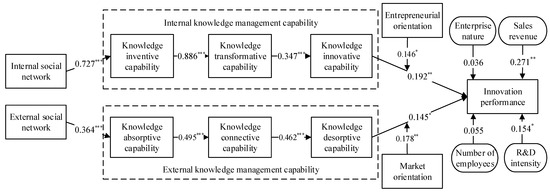
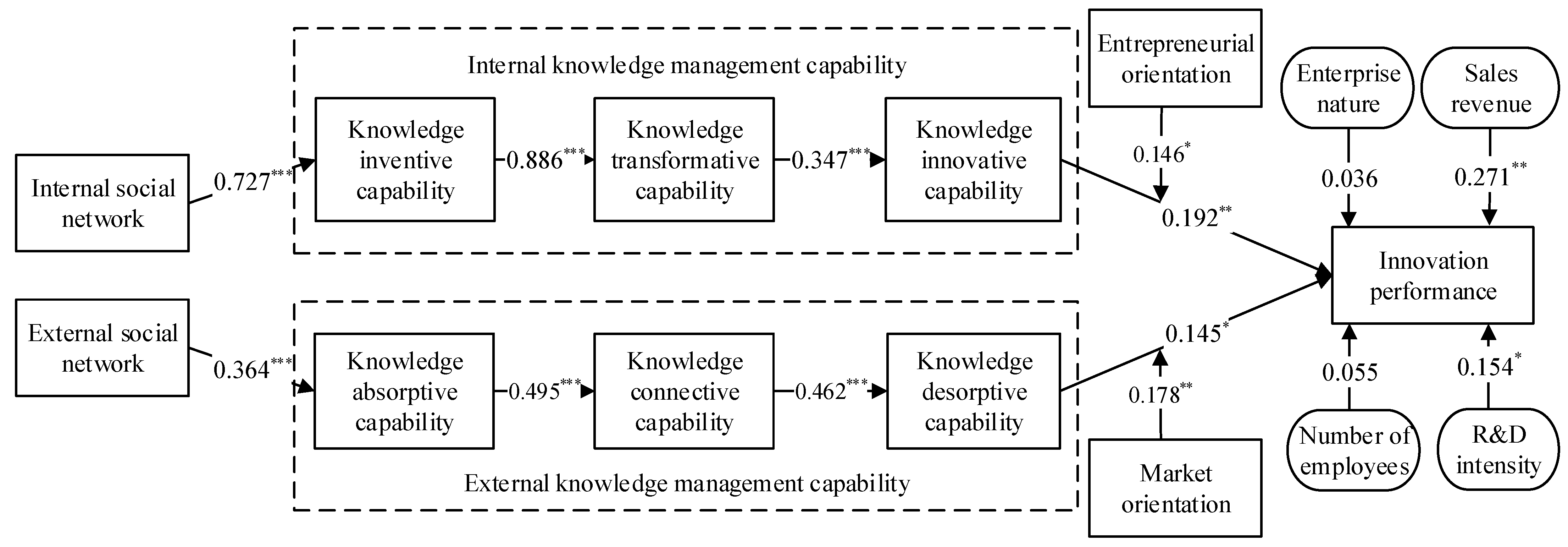
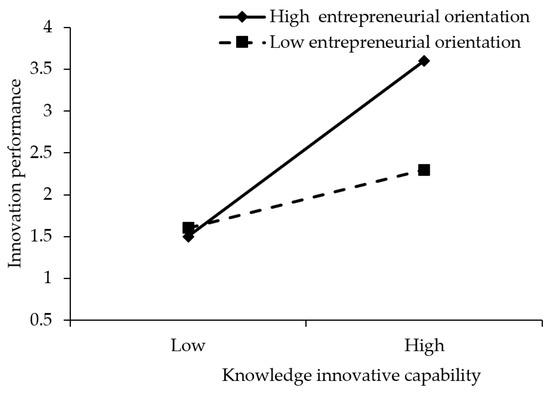
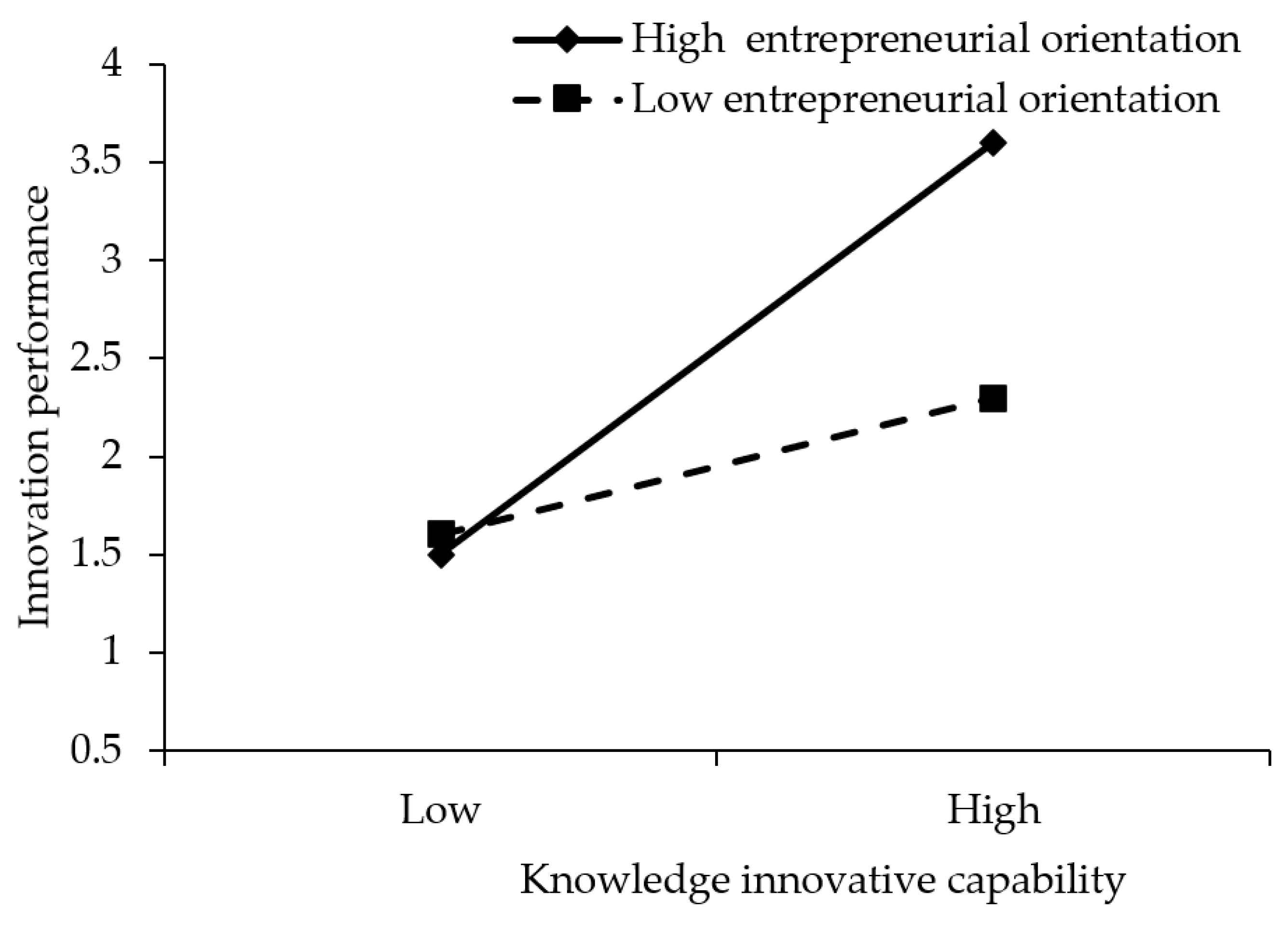
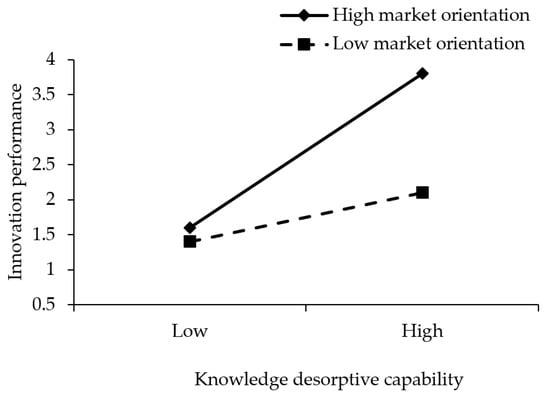
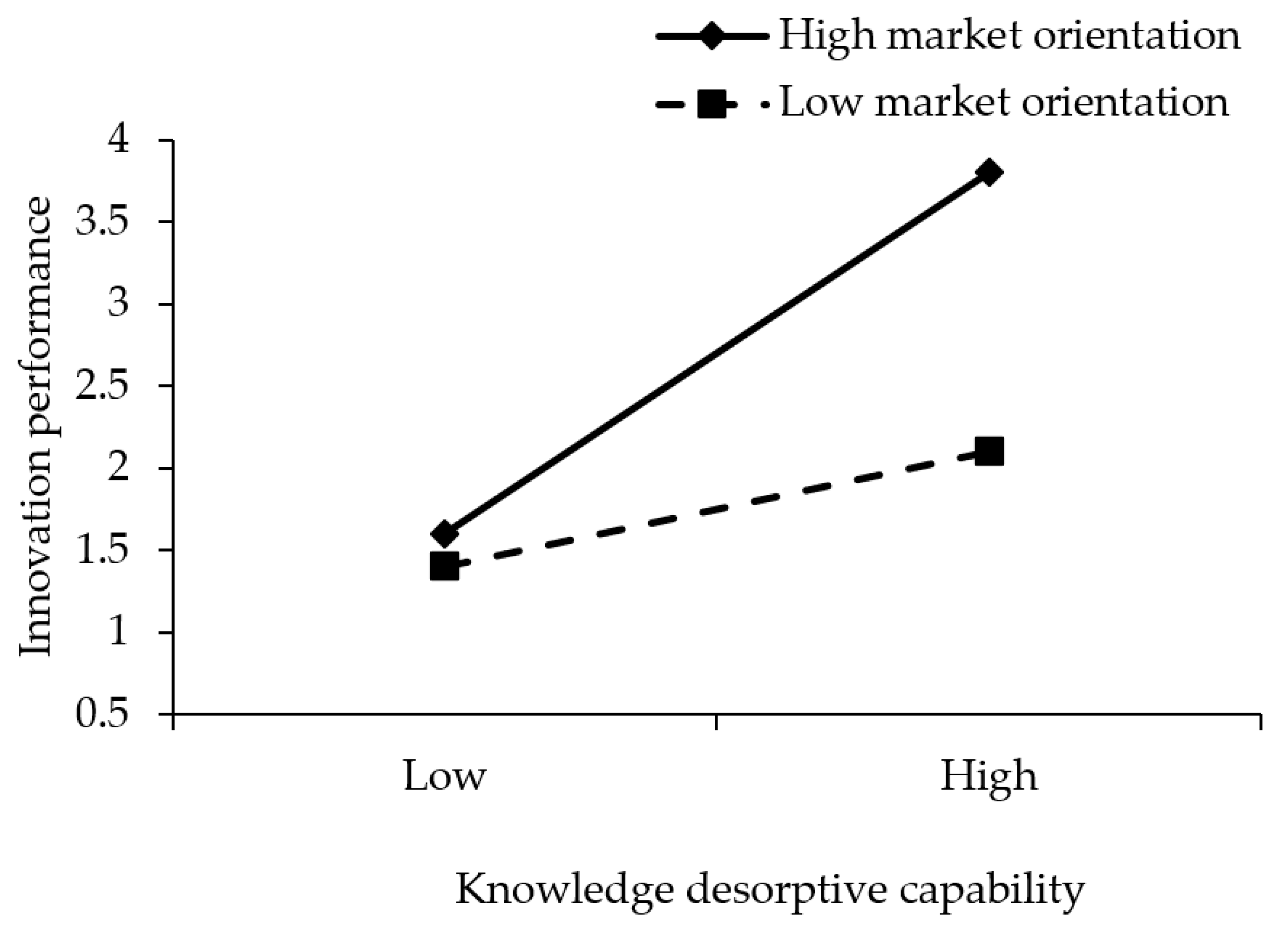

Disclaimer/Publisher’s Note: The statements, opinions and data contained in all publications are solely those of the individual author(s) and contributor(s) and not of MDPI and/or the editor(s). MDPI and/or the editor(s) disclaim responsibility for any injury to people or property resulting from any ideas, methods, instructions or products referred to in the content. |
© 2026 by the authors. Licensee MDPI, Basel, Switzerland. This article is an open access article distributed under the terms and conditions of the Creative Commons Attribution (CC BY) license.