


Abstract
The current industrial production model faces major environmental, economic, and social challenges due to resource depletion, increasing energy demand, and climate change. Manufacturing significantly contributes to emissions, material consumption, and waste, making sustainable manufacturing (SM) essential for transitioning toward more resource-efficient, circular, and socially responsible systems. This study provides a structured overview of SM, focusing on enabling technologies and emerging research trends. Sustainability is analyzed through approaches such as sustainable development, cleaner production, eco-efficiency, and the circular economy. The role of key technologies—including additive manufacturing, artificial intelligence, big data analytics, the Internet of Things, digital twins, and cyber-physical systems—is examined in improving efficiency, reducing waste, and supporting circular production. A scoping review was conducted following the PRISMA-ScR guidelines using the Web of Science database, focusing on recent publications. The results highlight a growing integration of digital technologies, energy-efficient systems, and circular strategies, alongside the increasing importance of data-driven decision-making. A strong convergence between artificial intelligence, energy transition, circular economy approaches, and digital transformation is also identified. Overall, achieving sustainable manufacturing requires an integrated approach addressing environmental, economic, and social dimensions. This review maps the field and identifies key directions for future research and practice.
1. Introduction
The current model of industrial production and consumption is facing unprecedented challenges driven by the depletion of natural resources, the continuous growth of the world population and the accelerating effects of climate change. Industrial activities are responsible for a substantial share of global energy consumption, greenhouse gas (GHG) emissions and environmental pollution, including air, water and soil contamination, as well as the generation of large amounts of waste. According to Eurostat data [1], industry is one of the main consumers of energy worldwide, which highlights the reported urgent need to transform manufacturing systems towards more sustainable models. This is consistent with previous studies highlighting the significant environmental impact of manufacturing activities and their contribution to global resource consumption and emissions [2,3].
One of the most critical environmental consequences of industrial activity is the intensification of the greenhouse effect, caused by the massive emission of gases such as CO2, CH4, and N2O. These gases retain part of the long-wave radiation emitted by the Earth, leading to a progressive increase in global surface temperatures. Scientific evidence consistently suggests that human activities are the primary driver of this phenomenon, which has resulted in rising global and ocean temperatures and the accelerated melting of polar ice caps.
Recent climate data point toward the severity of this situation. According to the ERA5 climate reanalysis dataset developed by the European Centre for Medium-Range Weather Forecasts (ECMWF) [4], the year 2024 has been reported as the warmest on record since systematic measurements began, with new global temperature records being set. Global average temperatures were significantly higher than pre-industrial levels, potentially illustrating the magnitude and urgency of climate change.
Equally concerning are the trends related to global resource consumption. The Global Footprint Network annually calculates the Earth Overshoot Day, an indicator that compares the planet’s biocapacity with humanity’s ecological footprint [5]. Since the 1970s, this date has occurred progressively earlier, reflecting what many researchers describe as an unsustainable pattern of production and consumption.
These environmental pressures have contributed to a growing social awareness regarding sustainability and have reinforced the need to rethink traditional production models. Concepts such as the circular economy have gained prominence, promoting the extension of product life cycles through reuse, repair, remanufacturing, and recycling to potentially minimize waste generation and environmental impacts.
Meanwhile, sustainability is receiving increasing attention within policy frameworks. The European Green Deal represents one of the most ambitious strategies to combat climate change while ensuring economic growth and social well-being [6]. Achieving these objectives requires a profound transformation of industrial systems, particularly in energy-intensive sectors such as steel, cement, and chemicals.
In this context, sustainable manufacturing is inherently cross-sectoral, involving a wide range of industries with different sustainability challenges and maturity levels. Energy-intensive sectors such as steel, cement, and chemical industries are currently under strong regulatory pressure due to their high energy consumption and greenhouse gas emissions, and are actively adopting decarbonization and energy-efficiency strategies. The automotive and transportation industries are undergoing a transition toward electrification, lightweight materials, and digitalized production systems. Similarly, the electronics and high-tech manufacturing sectors focus on resource efficiency, waste reduction, and lifecycle management due to rapid product obsolescence and material criticality. In addition, emerging areas such as additive manufacturing are gaining relevance due to their potential to reduce material waste and enable decentralized production. Small and medium-sized enterprises (SMEs) also play a key role, although they face significant barriers related to resource constraints and technological adoption. Overall, the analyzed literature suggests that industries are transitioning from linear production models toward circular and data-driven manufacturing systems.
In this context, sustainable manufacturing (SM) has emerged as a comprehensive approach that integrates environmental protection, economic viability, and social responsibility across the entire product life cycle. SM builds upon earlier concepts such as sustainable development, cleaner production, and eco-efficiency, and is closely linked to the principles of the circular economy [2].
Advanced manufacturing and digital technologies play a key enabling role in this transformation. The adoption of Industry 4.0–related technologies, such as additive manufacturing (AM), artificial intelligence (AI), big data analytics (BDA), the Internet of Things (IoT), and Cyber-Physical Systems (CPS), offers new opportunities to potentially improve resource efficiency, optimize energy use, reduce waste generation, and enhance decision-making in manufacturing systems [7].
In recent years, research in sustainable manufacturing has expanded significantly, particularly at the intersection of digital technologies, energy efficiency and circular production systems. However, the rapid growth of the field has led to a fragmented body of knowledge, making it necessary to provide a structured scoping mapping of existing research [3,8]. This study aims to address this need by focusing specifically on the most recent developments and emerging trends within the field.
To address this need, this study adopts a scoping review approach following the PRISMA-ScR guidelines. Unlike traditional review methods, a scoping review aims to map the breadth of research activity, identify key themes, and highlight emerging trends, rather than providing an exhaustive critical synthesis.
Therefore, the objective of this work is to provide a structured overview of sustainable manufacturing by integrating its conceptual foundations with an analysis of enabling technologies and current research trends. This includes identifying dominant research areas, emerging technological directions, and potential gaps in the literature.
This study contributes by bridging the gap between fragmented research on sustainability and digital manufacturing technologies.
2. Methodology
2.1. Research Design
This study adopts a scoping review methodology to systematically map the recent body of knowledge on sustainable manufacturing and its enabling technologies. Scoping reviews are particularly suitable for emerging and multidisciplinary research fields, where the objective is to identify key concepts, research trends, and knowledge gaps within a specific scope rather than to provide a comprehensive critical appraisal of all individual studies ever published in the field [9,10].
This scoping review was conducted in accordance with the Preferred Reporting Items for Systematic Reviews and Meta-Analyses extension for Scoping Reviews (PRISMA-ScR) guidelines, which provide a structured framework to ensure transparency, consistency, and reproducibility in the review process [11]. The PRISMA-ScR Checklist is available in the Supplementary Materials. The choice of a scoping review approach allows for the inclusion of a broad range of recent studies to provide a descriptive overview of the current state of the art.
The methodology was designed to address the following research questions (RQ):
- RQ1: What are the current research trends in sustainable manufacturing identified in recent literature?
- RQ2: Which enabling technologies are most frequently associated with sustainable manufacturing within the analyzed timeframe?
- RQ3: What are the emerging research directions and gaps observed in the field?
2.2. Search Strategy
The literature search was conducted using the Web of Science (WoS) Core Collection database, selected due to its high-quality indexing standards and its widespread use in bibliometric and review studies within engineering and sustainability research [12].
The search strategy was designed to capture the most relevant and recent publications related to sustainable manufacturing and its associated enabling technologies. To ensure comprehensive coverage, a combination of keywords related to manufacturing, sustainability, and digital technologies was employed.
The search query was constructed using Boolean operators (AND, OR) and applied to the title, abstract, and keywords fields. In addition, a keyword-based classification approach was used to identify major technological themes within the selected studies, supporting the analysis of research trends. The final search query used in the Web of Science database is presented in Figure 1:
Figure 1.
Structure of the Boolean search query used on the Web of Science database, combining manufacturing terms, sustainability concepts, and Industry 4.0 and 5.0 enabling technologies.
TS = ((“sustainable manufacturing” OR “green manufacturing” OR “sustainable production” OR “sustainable production systems” OR “circular manufacturing” OR “remanufacturing”)
AND
(“sustainability” OR “sustainable development” OR “environmental sustainability” OR “environmental impact” OR “green transition” OR “industrial sustainability” OR “circular economy” OR “eco-efficiency” OR “resource efficiency” OR “energy efficiency” OR “cleaner production” OR “life cycle assessment” OR “LCA” OR “low-carbon” OR “decarbonization” OR “carbon neutrality”)
AND
(“Industry 4.0” OR “Industry 5.0” OR “advanced manufacturing” OR “smart manufacturing” OR “digital manufacturing” OR “digital technologies” OR “industrial digitali*” OR “additive manufacturing” OR “3D printing” OR “artificial intelligence” OR “AI” OR “machine learning” OR “deep learning” OR “big data analytics” OR “big data” OR “Internet of Things” OR “IoT” OR “Industrial Internet of Things” OR “IIoT” OR “cyber-physical systems” OR “CPS” OR “digital twin*” OR “smart factory” OR “cloud computing” OR “edge computing” OR “blockchain” OR “data-driven systems”))
To ensure the relevance and timeliness of the results, the search was limited to publications from 2024 to 2026, capturing a representative sample of the most recent developments and emerging trends in the field. The last search was conducted in March 2026.
This temporal restriction was intentionally applied to capture specifically the most recent developments and emerging research trends in sustainable manufacturing, particularly those related to the rapid evolution of Industry 4.0 and Industry 5.0 technologies. While previous review studies [2,3] have addressed the conceptual foundations of sustainable manufacturing, they may not fully reflect the latest advances in digitalization, artificial intelligence, and human-centric manufacturing paradigms. Therefore, this study is intended to complement existing literature by providing an updated perspective focused on recent technological and research developments.
Furthermore, only peer-reviewed journal articles written in English were considered. Conference papers, book chapters, reports, and other non-peer-reviewed documents were excluded to ensure the scientific quality and consistency of the selected studies.
This approach enhances the robustness of the classification and reduces the risk of misclassification due to heterogeneous terminology in the literature.
2.3. Inclusion and Exclusion Criteria
The selection of studies was guided by a set of predefined inclusion and exclusion criteria to ensure the relevance, consistency, and methodological rigor of the review. These criteria were established prior to the screening phase and applied systematically to all retrieved records, following established recommendations for scoping reviews [9,10].
2.3.1. Inclusion Criteria
Studies were included in the review if they met the following conditions:
- Addressing sustainable manufacturing or closely related concepts, such as green manufacturing, sustainable production, sustainable production systems, circular manufacturing or remanufacturing, while explicitly incorporating sustainability-related aspects (e.g., sustainability, sustainable development, environmental sustainability, environmental impact, green transition, industrial sustainability, circular economy, eco-efficiency, resource and energy efficiency, cleaner production, life cycle assessment (LCA), low-carbon strategies, decarbonization and carbon neutrality), as identified in the current research landscape.
- Involving the application or analysis of digital or advanced manufacturing technologies, including but not limited to Industry 4.0– and Industry 5.0–related technologies (e.g., artificial intelligence, big data analytics, Internet of Things, cyber-physical systems, additive manufacturing, digital twins, smart manufacturing systems, as well as human-centric and sustainable technologies such as human–robot collaboration and resilience-oriented systems).
- Published in peer-reviewed scientific journals.
- Written in English.
- Published between 2024 and 2026, in order to capture contemporary developments and emerging trends.
2.3.2. Exclusion Criteria
Studies were excluded if they met any of the following conditions:
- Not focusing on manufacturing contexts (e.g., studies exclusively related to energy systems, agriculture, or construction without a manufacturing perspective).
- Addressing sustainability in a general context without a clear link to manufacturing processes or industrial systems.
- Not involving enabling or digital technologies relevant to Industry 4.0 or Industry 5.0.
- Not being published as peer-reviewed journal articles (e.g., conference papers, book chapters, reports, editorials, or theses).
- Full text not being accessible.
2.4. Study Selection Process
The study selection process was conducted following the PRISMA-ScR framework to ensure transparency, consistency, and reproducibility. The procedure comprised four main stages: identification, screening, eligibility, and inclusion.
During the identification phase, a total of 1141 records were retrieved from the Web of Science Core Collection database using the defined search query, applying initial filters related to publication year (2024–2026), document type (articles and review articles), and language (English). Subsequently, a duplicate removal process was conducted, resulting in the exclusion of 148 records identified as duplicates. After this step, a total of 993 unique records remained and were carried forward to the screening phase, as illustrated in Figure 2.
Figure 2.
PRISMA-ScR flow diagram illustrating the study selection process, including identification, screening, eligibility, and inclusion phases.
In the screening phase, a two-step approach was adopted to refine the selection. First, a preliminary screening based on titles was performed to exclude studies clearly unrelated to manufacturing systems. These included papers focused on areas such as healthcare, agriculture, pure energy systems, material science without an industrial application, and general sustainability studies lacking a manufacturing or production perspective.
Subsequently, a more detailed screening based on titles and abstracts was carried out. In this stage, particular attention was given to the alignment of the studies with the scope of sustainable manufacturing and the integration of enabling technologies associated with Industry 4.0 and Industry 5.0, such as artificial intelligence, Internet of Things, digital twins, additive manufacturing, and data-driven systems. Studies that did not explicitly address manufacturing processes, industrial environments, or production systems, or that lacked a clear connection between sustainability and technological implementation, were excluded. Additionally, highly conceptual or generic studies without specific application to manufacturing contexts were also removed.
The screening process was conducted independently by the four authors to enhance consistency and reduce potential bias. Discrepancies in study selection were discussed collectively and resolved through consensus. In addition, the keyword-based filtering strategy was complemented by manual validation to ensure that relevant studies were not excluded due to variations in terminology.
As a result of the screening process, 492 papers were excluded, resulting in 501 articles being selected for full-text assessment.
In the eligibility phase, the full texts of the remaining articles were analyzed in detail to verify their alignment with the scope of the review and their compliance with the established inclusion criteria. Based on the full-text assessment, 376 records were excluded because they did not sufficiently align with the specific scoping focus of the review, were overly sector-specific or peripheral to manufacturing systems, or did not meet the document-type eligibility criteria.
Finally, in the inclusion phase, the remaining 125 studies were included in the thematic synthesis and data extraction process. The selection of these studies represents a focused mapping of the field rather than an exhaustive compendium of all historical manufacturing research.
The entire selection procedure is summarized in the PRISMA-ScR flow diagram (Figure 2), which presents the number of records identified, screened, excluded, and included at each stage of the review process.
2.5. Data Charting Process
Data extraction (data charting) was carried out using a structured framework defined by the research team. The process included the collection of key information from each study, such as publication year, journal, enabling technologies, sustainability dimensions, and main research themes. To mitigate potential bias and ensure accuracy, the data charting process was conducted collaboratively by the authors to ensure consistency and accuracy.
2.6. Critical Appraisal of Sources of Evidence
A critical appraisal of the included sources of evidence was not conducted, as this is not a mandatory requirement for scoping reviews, and the primary objective of which is to map the existing literature rather than to assess the quality of individual studies. Consequently, the findings presented herein reflect the content of the identified literature without weighing the evidence based on methodological quality.
3. Results
3.1. Descriptive Analysis of the Selected Studies
A total of 125 articles were included in the final sample after the screening and eligibility phases. The selected studies were published between 2024 and 2026, reflecting recent developments identified in the field of sustainable manufacturing [7,8]. The number of publications observed in this sample increased significantly in 2025 compared to 2024, which may indicate a growing research interest and an acceleration of academic attention toward the integration of sustainability and advanced manufacturing technologies. This trend appears to continue in 2026, although the data for this year are currently partial, suggesting a potential continuation—and even a possible intensification—of research interest in this field.
This trend suggests a possible consolidation of sustainable manufacturing as a research field, potentially driven by the convergence of digital transformation and sustainability objectives. The growth observed in 2025 is particularly associated with a reported rising interest in artificial intelligence, circular economy strategies, and data-driven manufacturing systems.
The selected studies are distributed across a wide range of journals related to sustainable manufacturing, sustainability, environmental management, technological innovation and manufacturing processes, including publications such as Sustainability, Journal of Cleaner Production, Journal of Environmental Management, Resources, Conservation and Recycling, International Journal of Production Research, Journal of Manufacturing Systems, Journal of Manufacturing and Materials Processing, International Journal of Advanced Manufacturing Technology, Technological Forecasting and Social Change, Production & Manufacturing Research and Process Integration and Optimization for Sustainability. This diversity highlights the multidisciplinary nature of the identified sustainable manufacturing research, which combines technological innovation with environmental and economic considerations.
References are grouped sequentially according to their thematic relevance within each subsection to ensure consistency with the thematic classification presented in Table 1.
3.2. Main Research Themes in Sustainable Manufacturing
The analysis of the selected articles reveals a set of prevalent research themes that structure this scoping review. These themes should be viewed as a representative mapping of recent literature rather than an exhaustive categorization of the entire field.
The most prominent research area within the sample is Industry 4.0 and Industry 5.0 within smart manufacturing systems, which represents the core of current research. The reviewed studies frequently focus on digital transformation, cyber-physical systems, intelligent factories, and human-centric production environments [13,14,15,16,17,18,19,20,21,22,23,24,25,26,27,28,29,30,31,32,33,34,35,36,37,38,39,40,41,42,43,44,45,46,47].
Closely linked to this paradigm, artificial intelligence (AI) emerges as a frequently identified enabling technology, widely applied to process optimization, predictive maintenance, and decision-making [15,36,48,49,50,51,52,53,54,55,56,57,58,59,60,61,62,63,64,65,66,67,68,69,70,71,72,73,74,75,76,77,78].
Another frequently explored research stream is additive manufacturing (AM), often analyzed for its potential to reduce material waste, enable flexible production, and support sustainable design strategies [61,63,65,68,69,70,74,79,80,81,82,83,84,85,86,87,88,89,90,91,92,93,94,95,96].
In parallel, circular economy (CE) approaches focus on recycling, remanufacturing, and closed-loop systems to enhance resource efficiency [23,55,62,83,90,93,97,98,99,100,101,102,103,104,105,106,107,108,109].
From a sustainability perspective, energy efficiency and environmental performance are also widely studied, addressing cleaner production, emission reduction, and resource optimization [24,54,57,68,77,95,110,111,112,113,114,115,116].
At the operational level, production planning and optimization aim to improve manufacturing efficiency through advanced decision-making models [18,29,30,58,94,111,117,118,119,120,121,122,123].
Additionally, digital twins (DT) enable simulation and real-time monitoring of manufacturing systems, enhancing lifecycle management and system optimization [67,72,97,99,100,102,108,110,116,124].
Similarly, the Internet of Things (IoT) facilitates connectivity and real-time data acquisition, improving system performance and resource efficiency [35,48,54,58,73,104,105,108].
At the system level, sustainable supply chains (SSC) address logistics optimization, resilience, and environmental performance across value chains [55,64,76,80,85,110,119,125,126,127,128].
Furthermore, sustainability assessment and life cycle analysis (LCA) are widely used to evaluate environmental performance and support decision-making [22,36,39,42,44,67,81,87,111,125].
Within the scope of this review, human-centric and social sustainability aspects are gaining attention, particularly in Industry 5.0 contexts [14,15,22,25,31,38,53,127,129].
Finally, some references were not explicitly assigned to the main research themes, as they represent transversal or conceptual contributions that span multiple domains without a clear dominance in any single category. These include studies focused on theoretical frameworks, digitalization strategies, and emerging computational paradigms. Their inclusion highlights the complexity and interdisciplinary character of current sustainable manufacturing research, where many contributions can be strictly categorized within predefined thematic boundaries [130,131,132,133,134,135,136,137,138].
Table 1 presents a cross-classification of references according to their primary and secondary thematic contributions, highlighting the interconnections between enabling technologies and sustainability dimensions.
The reference ranges represent groups of studies classified under each thematic category, as detailed in Table 1.
Table 1.
Proposed thematic classification of identified research on sustainable manufacturing (2024–2026).
Table 2 presents a heatmap illustrating the perceived strength of relationships between key enabling technologies and sustainability dimensions as identified within the selected literature. The results highlight a reported prevalence of AI, IoT, and Digital Twins in operational and environmental performance topics, while additive manufacturing and circular economy approaches appear frequently associated with material efficiency and life cycle impacts in the analyzed sample.
Table 2.
Indicative cross-thematic heatmap of research focus between enabling technologies and sustainability dimensions.
The heatmap was developed based on the cross-analysis of thematic co-occurrence among the selected studies, with intensity levels derived from the frequency of co-occurrence between technologies and sustainability dimensions. These intensity levels reflect research trends and thematic focus within the specific scope of this review and should be interpreted as indicative of current academic attention rather than as a definitive measure of technological impact across all industrial contexts.
These research themes can be conceptually structured within a proposed holistic framework that integrates the environmental, economic, and social dimensions of sustainability, supported by key enabling technologies associated with Industry 4.0 and Industry 5.0, as illustrated in Figure 3.
Figure 3.
Framework of Sustainable Manufacturing integrating the three sustainability dimensions (environmental, economic, and social) with key enabling technologies, including artificial intelligence (AI), Internet of Things (IoT), digital twin, additive manufacturing (AM), big data analytics, and cyber-physical systems (CPS).
This framework complements the cross-thematic analysis presented in Table 1 and Table 2, providing a conceptual perspective of how enabling technologies are reported to interact with sustainability dimensions within the analyzed literature. While the heatmap highlights the observed strength of these relationships, the framework emphasizes their potential systemic and directional nature.
The framework suggests a directional relationship between enabling technologies and sustainability dimensions, where digital technologies act as drivers that may influence environmental, economic, and social performance, ultimately generating potential impacts on manufacturing systems. It should be noted that this conceptual structure serves as a representative mapping of current research trends and may require further empirical validation across different industrial contexts.
3.3. Enabling Technologies in Sustainable Manufacturing
The results of this scoping review indicate that sustainable manufacturing is strongly driven by enabling technologies associated with Industry 4.0 and Industry 5.0, which are frequently identified as key facilitators of digital transformation and sustainability integration across manufacturing systems.
Among these technologies, artificial intelligence (AI) emerges as a central enabler within the reviewed studies, widely applied to process optimization, predictive analytics, intelligent decision-making, and performance improvement in manufacturing systems. The analyzed literature suggests that AI-based approaches support data-driven optimization and contribute to enhanced efficiency, adaptability, and sustainability outcomes [15,52,65,89,92,104,108].
The Internet of Things (IoT) also plays a significant role in the identified research by enabling real-time monitoring, connectivity, and data exchange across manufacturing environments. IoT-based systems are reported to facilitate improved resource management, operational transparency, and process control, contributing to what authors describe as more efficient and responsive production systems [35,48,54,58,73,104,105,108].
Another key enabling technology is the digital twin (DT), which allows for the virtual representation, simulation, and optimization of manufacturing systems. Digital twins appear to support lifecycle management, predictive maintenance, and system-level analysis, potentially enabling more informed decision-making and improved operational performance [67,72,97,99,100,102,108,110,116,124].
In parallel, additive manufacturing (AM) represents a major technological advancement in sustainable production within the analyzed sample, offering reported benefits in terms of material efficiency, waste reduction, and production flexibility. AM technologies show potential to enable decentralized and customized production systems, contributing to both environmental and economic sustainability [61,63,65,68,69,70,74,79,80,81,82,83,84,85,86,87,88,89,90,91,92,93,94,95,96].
Furthermore, big data analytics (BDA) and cyber-physical systems (CPS) play a crucial role in integrating physical and digital manufacturing environments. These technologies are shown to enable advanced data processing, system interoperability, and intelligent automation, aiming to enhance decision-making capabilities and supporting adaptive and resilient manufacturing systems [16,26,32,37,64].
Overall, these enabling technologies are often described not as isolated tools but as components integrated within complex digital ecosystems. Their combined application is suggested to enhance the environmental, economic, and operational performance of manufacturing systems, reinforcing the theoretical transition toward smart, sustainable, and human-centric production paradigms.
In terms of reported technological maturity, within the literature, artificial intelligence and Internet of Things are currently among the most widely adopted technologies discussed for industrial environments, particularly for process optimization and real-time monitoring. Digital twins, although rapidly evolving, are often presented as being still under development in many applications and may require further integration with physical systems. Additive manufacturing appears to have reached a relatively mature stage in specific sectors identified in the studies, especially where material efficiency and customization are critical. Meanwhile, big data analytics and cyber-physical systems are highlighted for their role in enabling data-driven and interconnected manufacturing environments. However, the results suggest that despite these advances, most technologies are still frequently implemented in isolation, and their large-scale integration into unified digital ecosystems remains limited in the reported cases. Furthermore, the analyzed sample indicates that empirical validation in real industrial environments is still insufficient, highlighting the need for more applied research.
Table 3 provides a structured overview of the main enabling technologies identified in this study and their reported impact on the key dimensions of sustainability in manufacturing systems. Specifically, it illustrates how the analyzed research links artificial intelligence, Internet of Things, digital twins, additive manufacturing, big data analytics, and cyber-physical systems to environmental, economic, and social performance. The table highlights the differentiated roles attributed to these technologies, showing that while some are primarily associated with environmental and operational improvements, others also support economic efficiency and, to a lesser extent, human-centric and social sustainability aspects. Overall, this classification reinforces the conceptual interconnected and complementary nature of enabling technologies in advancing sustainable manufacturing as observed in recent research.
Table 3.
Reported enabling technologies and their potential impact on sustainability dimensions according to the reviewed literature.
The impact levels were qualitatively assigned based on the frequency and perceived relevance of references identified in each thematic category within the current sample.
3.4. Integration of Sustainability and Digitalization
The results of this mapping indicate a notable convergence between sustainability and digital transformation within the reviewed manufacturing systems.
Digital technologies are frequently identified as key enablers of sustainability strategies by potentially improving visibility, traceability, and resource efficiency across production processes [23,55,62,97,102,108]. In particular, the analyzed studies suggest that the integration of digital solutions supports the implementation of circular economy practices, including recycling, remanufacturing, and lifecycle management [35,97,102,108].
This convergence appears to be closely aligned with the transition toward Industry 5.0, where sustainability, resilience, and human-centricity are becoming central objectives of manufacturing systems in the current academic discourse. This paradigm emphasizes the conceptual integration of advanced technologies with human and societal values [14,25,31,38,53,129].
3.5. Emerging Trends and Research Directions
The analysis reveals several emerging trends within the scope of recent sustainable manufacturing research.
One of the most relevant trends is the increasing integration of artificial intelligence with sustainability assessment tools, which may enable more accurate and data-driven environmental evaluations [36,44,67,87,111,125].
Additionally, there is growing attention toward low-carbon and energy-efficient manufacturing systems, focusing on reported strategies for reducing emissions and improving resource utilization [24,54,57,110,111,112,113,114,115,116].
Another significant trend observed in the sample is the shift toward human-centric manufacturing systems, aligned with Industry 5.0 principles, where human well-being, collaboration, and social sustainability are increasingly emphasized as future priorities [14,25,31,38,53,127,129].
Furthermore, the literature shows a gradual move toward integrated approaches combining multiple enabling technologies, such as AI, IoT, and digital twins. However, within the analyzed timeframe, these integrated solutions remain relatively limited and are often reported as still under development [48,58,67,72,102,108,110].
Looking ahead, the analyzed trends suggest that sustainable manufacturing is expected by many researchers to evolve toward more integrated, intelligent, and human-centric systems. Forthcoming developments will likely be driven by the potential convergence of enabling technologies such as artificial intelligence, Internet of Things, and digital twins into unified digital ecosystems. At the same time, the literature points toward a stronger emphasis on Industry 5.0 principles, focusing on human well-being, resilience, and social sustainability. Decarbonization and energy transition appear to remain central priorities, promoting low-carbon manufacturing and the integration of renewable energy sources. In addition, circular economy models are projected to continue to expand, fostering closed-loop systems, remanufacturing, and recycling strategies. Another key trend identified is the increasing use of data-driven sustainability assessment tools, including AI-enhanced life cycle assessment methods. Finally, this review indicates that subsequent research efforts will need to address the development of standardized and holistic frameworks capable of evaluating sustainability across environmental, economic, and social dimensions.
3.6. Research Gaps
Despite the rapid development of the field, several research gaps have been identified within the analyzed literature.
First, the social dimension of sustainability remains comparatively underexplored within the sample compared to environmental and economic aspects, particularly regarding worker well-being, human–machine interaction, and organizational factors [14,15,22,25,31,38,53,127,129].
Second, there is a reported lack of standardized frameworks and methodologies for evaluating sustainability in digital manufacturing systems, especially when multiple technologies are integrated [22,36,39,42,44,67,81,87,111,125,138].
Third, many studies identified in this scoping review remain at a conceptual or simulation level, highlighting the suggested need for more empirical validation in real industrial environments [18,29,30,58,94,111,117,118,119,120,121,122,123].
Finally, the integration of multiple technologies with sustainability strategies is still limited in the reviewed cases, indicating the potential need for more holistic and system-level approaches [35,48,54,58,67,72,97,102,108,110].
The main research gaps identified in this review and their corresponding future research directions are summarized in Table 4, representing a thematic synthesis of the analyzed literature.
Table 4.
Identified research gaps and proposed future research directions in sustainable manufacturing (2024–2026).
4. Discussion, Contributions, and Implications
4.1. Discussion of Findings
The results of this scoping review suggest that sustainable manufacturing is evolving into a highly multidisciplinary and technology-driven field, where digital transformation appears to play a central role in achieving sustainability objectives [13,14,15,16,17,18,19,20,21,22,23,24,25,26,27,28,29,30,31,32,33,34,35,36,37,38,39,40,41,42,43,44,45,46,47]. These aspects are further clarified by explicitly addressing the industrial scope, technological maturity, and future research directions identified within the selected literature.
One of the main findings is the prominent influence of Industry 4.0 and Industry 5.0 technologies, particularly artificial intelligence, IoT, and digital twins, as potential key enablers of sustainable manufacturing [15,35,52,54,65,67,72,73,89,92,97,100,104,110]. The reviewed studies indicate that these technologies can significantly improve operational efficiency, resource utilization, and decision-making capabilities.
Another important finding is the strong emphasis on circular economy principles and resource efficiency, reflecting a reported transition from linear to circular production systems [23,55,62,83,90,93,97,98,99,100,101,102,103,104,105,106,107,108,109].
However, the results also indicate that the integration of sustainability and digitalization is still evolving. While many studies propose technological solutions, fewer provide empirical validation in real industrial environments [18,29,30,58,94,111,117,118,119,120,121,122,123].
Compared to previous studies, this scoping review provides a more integrated and up-to-date perspective focused on recent developments (2024–2026), capturing emerging trends such as advanced artificial intelligence and the transition toward Industry 5.0 [15,25,31,38,53,127,129]. Nonetheless, these findings should be interpreted within the specific context of the timeframe and databases analyzed.
4.2. Theoretical Contributions
This study contributes to the literature in several ways.
First, it provides an updated and structured mapping of recent sustainable manufacturing research, identifying key themes such as Industry 4.0/5.0, artificial intelligence, additive manufacturing, and circular economy.
Second, it integrates sustainability and digitalization perspectives, offering a more nuanced understanding of manufacturing systems and their evolution within the current research landscape.
Third, it identifies emerging trends and research gaps, providing a structured foundation for future research directions, particularly in areas such as human-centric manufacturing, integrated digital systems, and sustainability assessment.
4.3. Practical and Managerial Implications
The findings of this scoping study offer preliminary implications for industry practitioners and policymakers.
From an industrial perspective, the literature suggests that companies could leverage digital technologies such as artificial intelligence, IoT, and digital twins to improve efficiency, reduce waste, and enhance sustainability performance [15,52,65,104,108,110].
The adoption of circular economy practices may further improve environmental performance while increasing competitiveness through resource efficiency and closed-loop systems [23,55,62,97,103].
From a managerial perspective, organizations should consider adopting human-centric approaches aligned with Industry 5.0, balancing technological innovation with employee well-being and social sustainability [25,31,38,53,127].
For policymakers, the results highlight the importance of supporting digital and sustainable transformation through regulatory frameworks, incentives, and innovation policies [16,26,32,64].
4.4. Limitations and Future Research
Despite its contributions, this study has several limitations inherent to its scoping nature.
First, it is limited to publications indexed in the Web of Science Core Collection, which may exclude relevant studies from other databases.
Second, the study focuses specifically on recent years (2024–2026), which, while capturing emerging trends, does not constitute a comprehensive historical review of the entire field.
Third, the selection process involves a degree of subjectivity during the screening phase, despite the use of predefined inclusion and exclusion criteria. Finally, the qualitative nature of the thematic synthesis requires caution when generalizing the comparative implications across different industrial contexts.
Future research should focus on addressing the identified research gaps by:
- Developing standardized sustainability assessment frameworks.
- Increasing empirical validation in real industrial environments.
- Expanding research on social sustainability and human-centric manufacturing.
- Investigating the integration of multiple enabling technologies in complex manufacturing systems.
5. Conclusions
This study provides a comprehensive overview of sustainable manufacturing by systematically analyzing recent research trends, enabling technologies, and emerging directions in the field. Using a scoping review methodology based on the PRISMA-ScR framework, a total of 125 articles published between 2024 and 2026 were examined to map the current state of knowledge.
The findings of this scoping review suggest that sustainable manufacturing is an increasingly important and rapidly evolving research area, driven by the need to address environmental challenges, resource scarcity, and industrial transformation. The results highlight the relevance of resource efficiency, circular economy strategies, and sustainable production systems as key pillars identified within the analyzed literature.
In addition, the study indicates that digital and advanced manufacturing technologies, particularly those associated with Industry 4.0 and Industry 5.0, can act as critical enablers of sustainability. Within the scope of the reviewed cases, technologies such as artificial intelligence, Internet of Things, digital twins, and additive manufacturing show potential to contribute to improving operational efficiency, reducing environmental impact, and supporting data-driven decision-making in manufacturing systems.
The analysis also reveals a growing convergence between sustainability and digitalization, as well as an increasing shift toward human-centric and resilient manufacturing systems aligned with Industry 5.0 principles. However, despite these advances, several challenges remain, including the limited integration of the social dimension of sustainability, the lack of standardized evaluation frameworks, and the need for more empirical validation in real industrial environments.
Overall, this recent scoping review contributes to the literature by providing a structured and up-to-date mapping of specific sustainable manufacturing research trends, identifying key technological drivers, and highlighting future research directions. The findings offer valuable insights for researchers, industry practitioners, and policymakers seeking to support the transition toward more sustainable, intelligent, and human-centric manufacturing systems.
In conclusion, within the timeframe and scope investigated, sustainable manufacturing appears to be a key pillar for the transition toward resilient, intelligent, and environmentally responsible industrial systems.
Supplementary Materials
The following supporting information can be downloaded at: https://www.mdpi.com/article/10.3390/su18094602/s1, Table S1: Preferred Reporting Items for Systematic reviews and Meta-Analyses extension for Scoping Reviews (PRISMA-ScR) Checklist.
Author Contributions
Conceptualization, A.M.; methodology, A.M., E.M.R., A.G.-D. and J.C.; validation A.M., E.M.R., A.G.-D. and J.C.; formal analysis, A.M.; investigation, A.M.; resources, A.M., E.M.R., A.G.-D. and J.C.; data curation, A.M., E.M.R., A.G.-D. and J.C.; writing—original draft preparation, A.M.; writing—review and editing, A.M., E.M.R., A.G.-D. and J.C.; visualization, A.M.; supervision, A.M., E.M.R., A.G.-D. and J.C.; project administration, A.M., E.M.R., A.G.-D. and J.C. All authors have read and agreed to the published version of the manuscript.
Funding
This research received no external funding.
Institutional Review Board Statement
Not applicable.
Informed Consent Statement
Not applicable.
Data Availability Statement
The original contributions presented in this study are included in the article. Further inquiries can be directed to the corresponding author.
Acknowledgments
The authors would like to acknowledge the support of the Industrial Production and Manufacturing Engineering (IPME) Research Group, the Innovation and Teaching Group for Industrial Technologies in Productive Environments (TIA Plus UNED), and the PTI FAB3D, Consejo Superior de Investigaciones Científicas (CSIC), Spain.
Conflicts of Interest
The authors declare no conflicts of interest.
References
- Eurostat. Final Energy Consumption in Industry—Detailed Statistics; European Commission: Brussels, Belgium, 2025; Available online: https://ec.europa.eu/eurostat/statistics-explained/index.php/Final_energy_consumption_in_industry_-_detailed_statistics (accessed on 15 March 2026).
- Moldavska, A.; Welo, T. The concept of sustainable manufacturing and its definitions: A content-analysis-based literature review. J. Clean. Prod. 2017, 166, 744–755. [Google Scholar] [CrossRef] [Scilit]
- Bhatt, Y.; Ghuman, K.; Dhir, A. Sustainable manufacturing: Bibliometrics and content analysis. J. Clean. Prod. 2020, 260, 120988. [Google Scholar] [CrossRef] [Scilit]
- European Centre for Medium-Range Weather Forecasts (ECMWF). ERA5 Reanalysis Dataset; ECMWF: Reading, UK, 2026; Available online: https://www.ecmwf.int/en/forecasts/dataset/ecmwf-reanalysis-v5 (accessed on 15 March 2026).
- Global Footprint Network. Earth Overshoot Day; Global Footprint Network: Oakland, CA, USA, 2026; Available online: https://www.footprintnetwork.org/ (accessed on 15 March 2026).
- European Commission. The European Green Deal; COM (2019) 640 Final; European Commission: Brussels, Belgium, 2019. [Google Scholar]
- Ma, S.; Ding, W.; Liu, Y.; Zhang, Y.; Ren, S.; Kong, X.; Leng, J. Industry 4.0 and cleaner production: A comprehensive review of sustainable and intelligent manufacturing for energy-intensive manufacturing industries. J. Clean. Prod. 2024, 467, 142879. [Google Scholar] [CrossRef] [Scilit]
- Punj, N.; Ahmi, A.; Tanwar, A.; Rahim, S.A. Mapping the field of green manufacturing: A bibliometric review of the literature and research frontiers. J. Clean. Prod. 2023, 423, 138729. [Google Scholar] [CrossRef] [Scilit]
- Arksey, H.; O’Malley, L. Scoping studies: Towards a methodological framework. Int. J. Soc. Res. Methodol. 2005, 8, 19–32. [Google Scholar] [CrossRef] [Scilit]
- Levac, D.; Colquhoun, H.; O’Brien, K.K. Scoping studies: Advancing the methodology. Implement. Sci. 2010, 5, 69. [Google Scholar] [CrossRef] [Scilit] [PubMed]
- Peters, M.D.J.; Marnie, C.; Tricco, A.C.; Pollock, D.; Munn, Z.; Alexander, L.; McInerney, P.; Godfrey, C.M.; Khalil, H. Scoping reviews: Reinforcing and advancing the methodology and application. Syst. Rev. 2021, 10, 263. [Google Scholar] [CrossRef] [Scilit]
- Mongeon, P.; Paul-Hus, A. The journal coverage of Web of Science and Scopus. Scientometrics 2016, 106, 213–228. [Google Scholar] [CrossRef] [Scilit]
- Agarwal, A.; Ojha, R. Prioritizing implications of Industry 4.0 on the sustainable development goals: A perspective from the analytic hierarchy process in manufacturing operations. J. Clean. Prod. 2024, 444, 141189. [Google Scholar] [CrossRef] [Scilit]
- Shabur, M.A.; Shahriar, A.; Ara, M.A. From automation to collaboration: Exploring the impact of Industry 5.0 on sustainable manufacturing. Discov. Sustain. 2025, 6, 341. [Google Scholar] [CrossRef] [Scilit]
- Chen, S.C.; Chen, H.M.; Chen, H.K.; Li, C.L. Multi-objective optimization in Industry 5.0: Human-centric AI integration for sustainable and intelligent manufacturing. Processes 2024, 12, 2723. [Google Scholar] [CrossRef] [Scilit]
- Mangla, S.K.; Luthra, S.; Garza-Reyes, J.A.; Jabbour, C.J.C.; Brem, A. Sustainability and Industry 4.0: The role of social, environmental and technological factors in the development of digital manufacturing. Technol. Forecast. Soc. Change 2024, 201, 123223. [Google Scholar] [CrossRef] [Scilit]
- Adithya, M.A.; Geetha, R.; Sundar, S.; Varghese, M.A.; Velmurugan, P.R. Bibliometric analysis of the evolution of smart factories and sustainable manufacturing in Industry 4.0. Discov. Sustain. 2025, 6, 1179. [Google Scholar] [CrossRef] [Scilit]
- Paraschos, P.D.; Koulinas, G.K.; Koulouriotis, D.E. Reinforcement learning-based optimization for sustainable and lean production within the context of Industry 4.0. Algorithms 2024, 17, 98. [Google Scholar] [CrossRef] [Scilit]
- Aljuaid, A.A.; Masood, S.A.; Tipu, J.A. Integrating Industry 4.0 for sustainable localized manufacturing to support Saudi Vision 2030: An assessment of the Saudi Arabian automotive industry model. Sustainability 2024, 16, 5096. [Google Scholar] [CrossRef] [Scilit]
- Sajadieh, S.M.M.; Noh, S.D. Towards sustainable manufacturing: A maturity assessment for urban smart factory. Int. J. Precis. Eng. Manuf. Green. Technol. 2024, 11, 909–937. [Google Scholar] [CrossRef] [Scilit]
- Sankar, M.S.K.; Gupta, S.; Luthra, S.; Kumar, A.; Jagtap, S.; Samadhiya, A. Empowering sustainable manufacturing: Unleashing digital innovation in spool fabrication industries. Heliyon 2024, 10, e29994. [Google Scholar] [CrossRef] [Scilit]
- Marecek-Kolibisky, M.; Janik, S.; Mikva, M.; Szabo, P.; Czifra, G. Human-machine co-working for socially sustainable manufacturing in Industry 4.0. Acta Polytech. Hung. 2024, 21, 2. [Google Scholar] [CrossRef] [Scilit]
- Elnadi, M.; Gheith, M.H.; Troise, C.; Bresciani, S.; Abdallah, Y.O. Examining the interplay of Industry 4.0, lean, agile, and circular manufacturing practices on sustainability performance. Technovation 2025, 146, 103290. [Google Scholar] [CrossRef] [Scilit]
- Yurtay, Y. Carbon footprint management with Industry 4.0 technologies and ERP systems in sustainable manufacturing. Appl. Sci. 2025, 15, 480. [Google Scholar] [CrossRef] [Scilit]
- Yanytska, L. The rise of human-centric manufacturing in the Industry 5.0 era. Int. J. Adv. Manuf. Technol. 2025, 139, 5067–5077. [Google Scholar] [CrossRef] [Scilit]
- De Felice, F.; Salzano, C.; Baffo, I.; Forcina, A.; Petrillo, A. Towards a sustainable digital manufacturing: A state of the art. Procedia Comput. Sci. 2024, 232, 1918–1929. [Google Scholar] [CrossRef] [Scilit]
- Sharma, N.K.; Kumar, V.; Verma, P.; Sharma, M.; Al Khalil, A.; Daim, T. Industry 4.0 factors affecting SMEs towards sustainable manufacturing. Technol. Soc. 2024, 79, 102746. [Google Scholar] [CrossRef] [Scilit]
- Batwara, A.; Sharma, V.; Makkar, M. Prioritization of the approaches for overcoming smart sustainable manufacturing barriers using stochastic fuzzy EDAS method. Int. J. Interact. Des. Manuf. 2025, 19, 1927–1949. [Google Scholar] [CrossRef] [Scilit]
- Fallahiarezoudar, E.; Ahmadipourroudposht, M.; Rafi, M.H.B.; Ngadiman, N.H.A. A systematic approach of Maintenance 4.0 towards a sustainable manufacturing policy: A case study on an automobile company. Process Integr. Optim. Sustain. 2025, 9, 1229–1251. [Google Scholar] [CrossRef] [Scilit]
- Guerrero, B.; Mula, J.; Poler, R. Sustainable optimisation approaches for production planning and control to evolve towards Industry 5.0. Int. J. Prod. Res. 2025, 63, 8091–8123. [Google Scholar] [CrossRef] [Scilit]
- Ndanguza, A.P.I. Managerial competence in integrating Industry 4.0 with corporate social responsibility for enhanced safety culture in manufacturing. Sustainability 2025, 17, 4678. [Google Scholar] [CrossRef] [Scilit]
- Kandarkar, P.C.; Ravi, V.; Subramoniam, S.; Bijulal, D. Integrating Industry 4.0 and sustainability toward attaining smart manufacturing systems. Sustainability 2025, 17, 10674. [Google Scholar] [CrossRef] [Scilit]
- Zhang, W.; Zhang, P.; Zhang, W.; Grebinevych, O. Towards digital intelligence: A sustainable approach for green and intelligent manufacturing. J. Environ. Manag. 2025, 393, 126925. [Google Scholar] [CrossRef] [Scilit]
- Ahmadi-Gh, Z.; Bello-Pintado, A. Towards sustainable manufacturing: How does digitalization and development affect sustainability barriers? J. Clean. Prod. 2024, 476, 143792. [Google Scholar] [CrossRef] [Scilit]
- Abd Elghany, M.; Elessawi, N. The role of Industry 5.0 Internet of Things adoption on sustainable performance of manufacturing SMEs through the integration of supply chain. Discov. Comput. 2026, 29, 28. [Google Scholar] [CrossRef] [Scilit]
- Rani, S.; Karnati, R.; Patel, V.; Ranganathaswamy, M.K.; Tomar, P.; Kataria, A.; Pal, A. AI-driven optimization techniques for smart sustainable manufacturing in Industry 5.0 ecosystem: A comprehensive review. Alex. Eng. J. 2026, 137, 133–158. [Google Scholar] [CrossRef] [Scilit]
- Shaban, I.A.; Ajaj, R.; Elshimy, H.; Hegab, H. Industry 4.0 enabled sustainable manufacturing. Sustainability 2025, 18, 156. [Google Scholar] [CrossRef] [Scilit]
- Djebbouri, K.; Alofaysan, H.; Alanzi, E.; Mohammed, K.S. I5.0-MM: Beyond automation toward human-centric sustainable manufacturing. Sustain. Dev. 2025. [Google Scholar] [CrossRef] [Scilit]
- Gholami, H.; Delorme, X.; Garza-Reyes, J.A.; Salameh, A.A.; Berger-Douce, S. Industry 4.0 technologies performance for sustainable manufacturing processes. Process Integr. Optim. Sustain. 2025. [Google Scholar] [CrossRef] [Scilit]
- Díaz Martínez, M.A.; Fuentes Rubio, Y.A.; Román Salinas, R.V.; Grande Ramírez, J.R.; Delgado Maciel, J. A systematic review of Industry 5.0 and sustainability in manufacturing: Clustering of concepts, characteristics, and technological enablers. Discov. Sustain. 2026, 7, 175. [Google Scholar] [CrossRef] [Scilit]
- Joshi, S.; Sharma, M.; Gunasekaran, A.; Joshi, T. Sustainable smart manufacturing through digital Servitization: A systematic literature review using use cases. Int. J. Comput. Integr. Manuf. 2026, 1–38. [Google Scholar] [CrossRef] [Scilit]
- Kumar, S.; Mehdi, H.; Saroha, M. Reconfigurable manufacturing systems and Industry 4.0: Transforming the future of manufacturing. J. Adv. Manuf. Syst. 2025, 24, 471–484. [Google Scholar] [CrossRef] [Scilit]
- Jamwal, A.; Palit, N.; Kumari, S.; Agrawal, R.; Sharma, M. A decision framework for SMEs to address sustainability issues with Industry 4.0 technologies. Ann. Oper. Res. 2026, 359, 615–643. [Google Scholar] [CrossRef] [Scilit]
- Lei, Z.; Shi, J.; Luo, Z.; Cheng, M.; Wan, J. Intelligent manufacturing from the perspective of Industry 5.0: Application review and prospects. IEEE Access 2024, 12, 167436–167451. [Google Scholar] [CrossRef] [Scilit]
- Martin-Gomez, A.M.; Agote-Garrido, A.; Lama-Ruiz, J.R. A framework for sustainable manufacturing: Integrating Industry 4.0 technologies with Industry 5.0 values. Sustainability 2024, 16, 1364. [Google Scholar] [CrossRef] [Scilit]
- Ibrahim, A.; Kumar, G. Identification and prioritization of critical success factors of a Lean Six Sigma-Industry 4.0 integrated framework for sustainable manufacturing using TOPSIS. Sustainability 2025, 17, 1331. [Google Scholar] [CrossRef] [Scilit]
- Qureshi, K.M.; Mewada, B.G.; Yadav, A.; Almakayeel, N.; Alghamdi, S.Y.; Qureshi, M.R.N.M. Analysing Lean 4.0 adoption factors towards manufacturing sustainability in SMEs: A hybrid ANN-fuzzy ISM framework. Sci. Rep. 2025, 15, 17265. [Google Scholar] [CrossRef] [Scilit]
- Rashid, A.; Rasheed, R.; Ngah, A.H.; Amirah, N.A. Unleashing the power of cloud adoption and artificial intelligence in optimizing resilience and sustainable manufacturing supply chain in the USA. J. Manuf. Technol. Manag. 2024, 35, 1329–1353. [Google Scholar] [CrossRef] [Scilit]
- Wang, S.; Zhang, H. Leveraging generative artificial intelligence for sustainable business model innovation in production systems. Int. J. Prod. Res. 2025, 63, 6732–6757. [Google Scholar] [CrossRef] [Scilit]
- Madzik, P.; Falat, L.; Yadav, N.; Lizarelli, F.L.; Carnogursky, K. Exploring uncharted territories of sustainable manufacturing: A cutting-edge AI approach to uncover hidden research avenues in green innovations. J. Innov. Knowl. 2024, 9, 100498. [Google Scholar] [CrossRef] [Scilit]
- Zeng, H.; Yu, C.; Zhang, G. How does green manufacturing enhance corporate ESG performance? Empirical evidence from machine learning and text analysis. J. Environ. Manag. 2024, 370, 122933. [Google Scholar] [CrossRef] [Scilit]
- Mahanti, R.; Das, M. Sustainable EDM production of micro-textured die-surfaces: Modeling and optimizing the process using machine learning techniques. Measurement 2025, 242, 115775. [Google Scholar] [CrossRef] [Scilit]
- Amirkhizi, P.J.; Pedrammehr, S.; Pakzad, S.; Shahhoseini, A. Generative artificial intelligence in adaptive social manufacturing: A pathway to achieving Industry 5.0 sustainability goals. Processes 2025, 13, 1174. [Google Scholar] [CrossRef] [Scilit]
- Zhang, L.; Innab, N.; Shuhidan, S.M.; Pan, Y.; Zhang, Y.; Som, H.M.; Alasbali, N. Artificial intelligence-driven internet of things-based green supply chain for carbon reduction in sustainable manufacturing. J. Environ. Manag. 2025, 389, 126170. [Google Scholar] [CrossRef] [Scilit] [PubMed]
- Shafiq, M.; Ayub, S.; Muthevi, A.K.; Prabhu, M.R. AI-driven life cycle assessment for sustainable hybrid manufacturing and remanufacturing. Int. J. Adv. Manuf. Technol. 2024. [Google Scholar] [CrossRef] [Scilit]
- Srivastava, M.; Aftab, J.; Tyll, L. The influence of artificial intelligence and additive manufacturing on sustainable manufacturing practices and their effect on performance. Sustain. Futures 2025, 10, 100820. [Google Scholar] [CrossRef] [Scilit]
- Altarazi, F. Optimizing waste reduction in manufacturing processes utilizing IoT data with machine learning approach for sustainable production. Scalable Comput. Pract. Exp. 2024, 25, 4192–4204. [Google Scholar] [CrossRef] [Scilit]
- Sarkar, P.; Khanapuri, V.B.; Tiwari, M.K. Strategic decision-making for sustainable production and distribution in automotive industry: A machine learning enabled dynamic multi-objective optimisation. Int. J. Prod. Res. 2025, 63, 2339–2362. [Google Scholar] [CrossRef] [Scilit]
- Xue, X.; Dhumras, H.; Thakur, G.; Shukla, V. Integrating artificial intelligence and sustainable materials for smart eco innovation in production. Sci. Rep. 2025, 15, 36942. [Google Scholar] [CrossRef] [Scilit]
- Shahin, M.; Hosseinzadeh, A.; Chen, F.F. AI-enabled sustainable manufacturing: Intelligent package integrity monitoring for waste reduction in supply chains. Electronics 2025, 14, 2824. [Google Scholar] [CrossRef] [Scilit]
- Shehbaz, W.; Peng, Q. Evaluation of machine learning models for enhancing sustainability in additive manufacturing. Technologies 2025, 13, 228. [Google Scholar] [CrossRef] [Scilit]
- Paraschos, P.D.; Koulinas, G.K.; Koulouriotis, D.E. Model-driven deep learning for joint control and decision-making in failure-prone circular multistage manufacturing systems. Int. J. Comput. Integr. Manuf. 2026, 39, 383–404. [Google Scholar] [CrossRef] [Scilit]
- Ko, M.; Yoon, Y.; Kim, J.; Kim, S.; Kwon, S. D-ECOmposer: Sustainable part decomposition for additive manufacturing using machine learning based life cycle assessment. Addit. Manuf. 2025, 103, 104759. [Google Scholar] [CrossRef] [Scilit]
- Aldrini, J.; Chihi, I. A multi-dimensional framework and novel indices for sustainable assessment of intelligent fault detection and diagnosis in smart manufacturing. Int. J. Adv. Manuf. Technol. 2026, 143, 5547–5570. [Google Scholar] [CrossRef] [Scilit]
- Warin, T.; d’Anglade, P.M.; de Marcellis-Warin, N. Optimising industrial efficiency: Integrating K-means clustering and data science for sustainable manufacturing and waste reduction. Int. J. Sustain. Eng. 2025, 18, 2527300. [Google Scholar] [CrossRef] [Scilit]
- Mahajan, A.; Singh, G.; Devgan, S.; Singh, G.; Kaur, P. Next-generation manufacturing: Leveraging AI for industrial innovation and growth. Comput. Ind. Eng. 2026, 211, 111618. [Google Scholar] [CrossRef] [Scilit]
- Nguyen, P.; Kim, M.; Nichols, E.; Yoon, H.-S. AI-driven digital twins for manufacturing: A review across hierarchical manufacturing system levels. Sensors 2026, 26, 124. [Google Scholar] [CrossRef] [Scilit]
- Hauck, S.; Greif, L.; Benner, N.; Ovtcharova, J. Advancing sustainable additive manufacturing: Analyzing parameter influences and machine learning approaches for CO2 prediction. Sustainability 2025, 17, 3804. [Google Scholar] [CrossRef] [Scilit]
- Fianko, S.K.; Nooni, I.K.; Dzogbewu, T.; Agbemava, E.; de Beer, D.J. AI as an enabler of sustainable additive manufacturing: Environmental impact and circular design. Int. J. Adv. Manuf. Technol. 2026, 143, 3531–3550. [Google Scholar] [CrossRef] [Scilit]
- Mondal, M.; Singh, V.; Sharma, H.; Goyal, S.; Majumdar, J.D.; Goel, S.; Sahu, K.K.; Basak, S. Precision meets intelligence in AI-driven LPBF: Transforming design, flexibility, quality, and sustainability in additive manufacturing. Int. J. Adv. Manuf. Technol. 2026. [Google Scholar] [CrossRef] [Scilit]
- Jena, M.C.; Sahoo, J.M.; Iqbal, S.; Sahoo, R. Application of artificial intelligence in sustainable manufacturing. Environ. Prog. Sustain. Energy 2026, e70361. [Google Scholar] [CrossRef] [Scilit]
- Li, M.; Yang, C.M.; Lo, W.; Kao, Y.W. A digital-twin-enabled AI-driven adaptive planning platform for sustainable and reliable manufacturing. Machines 2026, 14, 197. [Google Scholar] [CrossRef] [Scilit]
- Alheet, A.F. AI-driven metaverse integration for sustainable manufacturing: The mediating role of digital supply chain resilience in Jordan’s industrial sector. Logistics 2026, 10, 15. [Google Scholar] [CrossRef] [Scilit]
- Ulkir, O.; Karadag, A. Sustainable additive manufacturing with FDM: Taguchi-based parameter optimization and AI-driven prediction of mechanical and environmental metrics. J. Thermoplast. Compos. Mater. 2026, 13, 2718. [Google Scholar] [CrossRef] [Scilit]
- Youssef, A.B.; Omrani, N.; Zeqiri, A. AI for good: Advancing sustainability in smart manufacturing. IEEE Trans. Eng. Manag. 2026, 73, 27–38. [Google Scholar] [CrossRef] [Scilit]
- Nwagwu, C.C.; Ogorodnyk, O.; Sølvsberg, E.; Eleftheriadis, R.J.; Meskers, C. Integrating artificial intelligence into life cycle assessment: A framework for balancing automation and human expertise. J. Sustain. Metall. 2025, 11, 3590–3605. [Google Scholar] [CrossRef] [Scilit]
- Rojek, I.; Mikolajewski, D.; Mrozinski, A.; Macko, M. Green energy management in manufacturing based on demand prediction by artificial intelligence: A review. Electronics 2024, 13, 3338. [Google Scholar] [CrossRef] [Scilit]
- Joshi, S.; Sharma, M. Intelligent algorithms and methodologies for low-carbon smart manufacturing: Review on past research, recent developments and future research directions. IET Collab. Intell. Manuf. 2024, 6, e12094. [Google Scholar] [CrossRef] [Scilit]
- Graziosi, S.; Faludi, J.; Stankovic, T.; Borgianni, Y.; Meisel, N.; Hallstedt, S.I.; Rosen, D.W. A vision for sustainable additive manufacturing. Nat. Sustain. 2024, 7, 698–705. [Google Scholar] [CrossRef] [Scilit]
- Rahmani, R.; Bashiri, B.; Lopes, S.I.; Hussain, A.; Maurya, H.S.; Vilu, R. Sustainable additive manufacturing: An overview on life cycle impacts and cost efficiency of laser powder bed fusion. J. Manuf. Mater. Process. 2025, 9, 18. [Google Scholar] [CrossRef] [Scilit]
- Agrawal, K.; Bhat, A.R. Advances in 3D printing with eco-friendly materials: A sustainable approach to manufacturing. RSC Sustain. 2025, 3, 2582–2604. [Google Scholar] [CrossRef] [Scilit]
- Wu, T.; Sugiarto, S.; Yang, R.; Sathasivam, T.; Weerasinghe, U.A.; Chee, P.L.; Yap, O.; Nystrom, G.; Kai, D. From 3D to 4D printing of lignin towards green materials and sustainable manufacturing. Mater. Horiz. 2025, 12, 2789–2819. [Google Scholar] [CrossRef] [Scilit]
- Al Rashid, A.; Koc, M. Additive manufacturing for sustainability, circularity and zero-waste: 3DP products from waste plastic bottles. Compos. Part C Open Access 2024, 14, 100463. [Google Scholar] [CrossRef] [Scilit]
- Dipta, S.D.; Rahman, M.M.; Ansari, M.J.; Uddin, M.N. A comprehensive review of sustainable and green additive manufacturing: Technologies, practices, and future directions. J. Manuf. Mater. Process. 2025, 9, 269. [Google Scholar] [CrossRef] [Scilit]
- Yadav, A.; Garg, R.K.; Sachdeva, A.; Qureshi, M.R.N.M. Comparing environmental sustainability of additive manufacturing and investment casting: Life cycle assessment of aluminium LM04 (Al-Si5-Cu3). Mater. Sci. Eng. A 2025, 923, 147765. [Google Scholar] [CrossRef] [Scilit]
- Mohammadkamal, H.; Ajabshir, S.Z.; Mostafaei, A. Additive manufacturing at the crossroads: Costs, sustainability, and global adoption. J. Manuf. Mater. Process. 2025, 10, 5. [Google Scholar] [CrossRef] [Scilit]
- Daareyni, A.; Pagone, E.; Thayapararajah, S.; Mokhtarian, H.; Tosello, G.; Ituarte, I.F. Intelligent manufacturing paradigms: Linking design optimization and sustainability in large-area additive manufacturing. Int. J. Adv. Manuf. Technol. 2025. [Google Scholar] [CrossRef] [Scilit]
- Atzeni, E.; Priarone, P.C.; Salmi, A. An appraisal of integrating multi-jet fusion (MJF) additive manufacturing into automotive production lines. Prog. Addit. Manuf. 2024, 10, 4689–4703. [Google Scholar] [CrossRef] [Scilit]
- Gebre, N.M.; Gallo, P.; Rossi, S. Design for sustainability by additive manufacturing: A study of PLA-based door handle redesign. Sustainability 2025, 17, 4969. [Google Scholar] [CrossRef] [Scilit]
- Chea, J.D.; Ruiz-Mercado, G.J.; Smith, R.L.; Gonzalez, M.A.; Meyer, D.E. Sustainability assessment of additive manufacturing end-of-life material management. Next Sustain. 2025, 5, 100085. [Google Scholar] [CrossRef] [Scilit]
- Zhang, Q.; Shahzad, F.; Wattoo, M.U. Sustainability-driven adoption of additive manufacturing and its impact on manufacturing performance. J. Manuf. Technol. Manag. 2026, 37, 657–680. [Google Scholar] [CrossRef] [Scilit]
- Chaudhary, B.; Gaur, B.; Mishra, N.K.; Shrivastava, A.; Mujumdar, S. Comparative assessment of fusion-based and solid-state additive manufacturing of Ti6Al4V: Microstructure, properties, and sustainability. Prog. Addit. Manuf. 2025, 10, 11533–11556. [Google Scholar] [CrossRef] [Scilit]
- Sharma, K.; Saxena, D.; Mishra, D.K.; Pandey, A.; Gupta, D.; Pati, P.R. IoT-driven circular solutions for 3D printed composite fibre production: Advancing SDG 9. Green Mater. 2025, 13, 289–302. [Google Scholar] [CrossRef] [Scilit]
- Kokare, S.; Oliveira, J.P.; Godina, R. Advancing sustainable manufacturing decision-making through an online life cycle assessment tool for wire-based directed energy deposition. Int. J. Adv. Manuf. Technol. 2026, 143, 391–419. [Google Scholar] [CrossRef] [Scilit]
- Liu, X.; Wang, Y.; Fang, T.; Wang, W.; Hu, Z.; Meng, Y.; Huang, B.; Fang, Y.; Hua, L.; Chen, M. Sustainable additive manufacturing of IN718 blades: Powder recycling strategies for reduced carbon footprint. Materials 2025, 18, 1344. [Google Scholar] [CrossRef] [Scilit] [PubMed]
- Dehghan, S.; Karganroudi, S.S.; Echchakoui, S.; Barka, N. The integration of additive manufacturing into Industry 4.0 and Industry 5.0: A bibliometric analysis (trends, opportunities, and challenges). Machines 2025, 13, 62. [Google Scholar] [CrossRef] [Scilit]
- Psarommatis, F.; May, G.; Tsai, W.H. Digital product passport: A pathway to circularity and sustainability in modern manufacturing. Sustainability 2024, 16, 396. [Google Scholar] [CrossRef] [Scilit]
- Sasso, R.A.; Godinho Filho, M.; Ganga, G.M.D. Synergizing lean management and circular economy: Pathways to sustainable manufacturing. Corp. Soc. Responsib. Environ. Manag. 2025, 32, 543–562. [Google Scholar] [CrossRef] [Scilit]
- Timperi, M.; Kokkonen, K.; Hannola, L. Digital twins for environmentally sustainable and circular manufacturing sector: Visions from industry professionals. Prod. Manuf. Res. 2024, 12, 2428249. [Google Scholar] [CrossRef] [Scilit]
- Ali, Z.A.; Zain, M.; Hasan, R.; Pathan, M.S.; AlSalman, H.; Almisned, F.A. Digital twins: Cornerstone to circular economy and sustainability goals. Environ. Dev. Sustain. 2025. [Google Scholar] [CrossRef] [Scilit]
- Amjad, M.S.; Diaz-Elsayed, N. Smart and sustainable urban manufacturing for a circular economy. Environ. Dev. Sustain. 2024, 26, 31789–31815. [Google Scholar] [CrossRef] [Scilit]
- Juarez Juarez, M.G.; Giret Boggino, A.; Botti Navarro, V. Digital twin creation for circular manufacturing: A behavioral modeling approach. IFAC-PapersOnLine 2024, 58, 670–675. [Google Scholar] [CrossRef] [Scilit]
- Liu, Y.; Tian, G.; Sheng, H.; Zhang, X.; Yuan, G.; Zhang, C. Batch EOL products human-robot collaborative remanufacturing process planning and scheduling for Industry 5.0. Robot. Comput.-Integr. Manuf. 2026, 97, 103098. [Google Scholar] [CrossRef] [Scilit]
- Debnath, B.; Chattopadhyay, A.K.; Kumar, T.K. An economic optimization model of an e-waste supply chain network: Machine learned kinetic modelling for sustainable production. Sustainability 2024, 16, 6491. [Google Scholar] [CrossRef] [Scilit]
- De Felice, F.; Rehman, M.; Petrillo, A.; Barrios, M.A.O.; Baffo, I. Integrating IoT and circular economy in textile supply chains: A closed-loop model for sustainable production using recycled PET and spent coffee grounds. J. Clean. Prod. 2025, 501, 145277. [Google Scholar] [CrossRef] [Scilit]
- Maldonado-Romo, J.; Ahmad, R.; Ponce, P.; Mendez, J.I.; Mata, O.; Rojas, M.; Montesinos, L.; Molina, A. Advancing sustainable manufacturing: A case study on plastic recycling. Prod. Manuf. Res. 2024, 12, 2425672. [Google Scholar] [CrossRef] [Scilit]
- Mora-Contreras, R.; Carrillo-Hermosilla, J. Revealing the effects of circular economy, eco-innovation and Industry 4.0 on sustainability performance and competitive advantage in manufacturing companies. Sustain. Dev. 2025, 33, 1249–1270. [Google Scholar] [CrossRef] [Scilit]
- Abdallah-Ou-Moussa, S.; Wynn, M.; Rouaine, Z. Leveraging blockchain and digital twins for low-carbon, circular supply chains: Evidence from the Moroccan manufacturing sector. Sustainability 2026, 18, 991. [Google Scholar] [CrossRef] [Scilit]
- Chien, F.; Nisar, Q.A.; Haider, S.; Umrani, W.A.; Zhang, Y.; Leong, M.K. Sustainable manufacturing in Chinese semiconductor enterprises: The mediating role of green circular economy and recycling and remanufacturing between Industry 4.0 and green HRM. J. Enterp. Inf. Manag. 2025, 39, 1200–1223. [Google Scholar] [CrossRef] [Scilit]
- Piron, M.; Bovo, E.; Lucchetta, G.; Manzardo, A. Soft-sensors to drive manufacturing toward clean production: LCA based on digital twin. J. Clean. Prod. 2025, 498, 145192. [Google Scholar] [CrossRef] [Scilit]
- Hong, T.Y.; Chen, C.A.; Chien, C.F. Towards sustainable production with resource efficiency: An empirical study of steelmaking continuous casting scheduling. Resour. Conserv. Recycl. 2024, 209, 107806. [Google Scholar] [CrossRef] [Scilit]
- Saqib, Z.A.; Xu, G.; Luo, Q. Green manufacturing for a green environment from manufacturing sector in Guangdong Province: Mediating role of sustainable operations and operational transparency. Appl. Sci. 2024, 14, 10637. [Google Scholar] [CrossRef] [Scilit]
- Jawjit, S.; Jawjit, W.; Pibul, P.; Wongcharee, S.; Suwannahong, K. Enhancing the sustainability of the sawn rubberwood industry through resource-efficient and cleaner production approaches. J. Clean. Prod. 2024, 479, 143913. [Google Scholar] [CrossRef] [Scilit]
- Tsai, W.H.; Su, P. A dynamic approach to sustainable knitted footwear production in Industry 4.0: Integrating short-term profitability and long-term carbon efficiency. Sustainability 2024, 16, 7120. [Google Scholar] [CrossRef] [Scilit]
- Khan, S.B.; Alojail, M.; Ramakrishna, M.T.; Sharma, H.A. A hybrid WSVM-Levy approach for energy-efficient manufacturing using big data and IoT. CMC-Comput. Mater. Contin. 2024, 81, 4895–4914. [Google Scholar] [CrossRef] [Scilit]
- Xiao, J.; Li, J.; Ma, S.; Wang, S.; Huang, G.Q. A new solution for sustainable manufacturing: The dynamics of digital twins and carbon futures under emission reduction targets. Int. J. Prod. Econ. 2026, 295, 109971. [Google Scholar] [CrossRef] [Scilit]
- Psarommatis, F.; Azamfirei, V. Zero defect manufacturing: A complete guide for advanced and sustainable quality management. J. Manuf. Syst. 2024, 77, 764–779. [Google Scholar] [CrossRef] [Scilit]
- Lo, H.W. A novel interval neutrosophic-based group decision-making approach for sustainable development assessment in the computer manufacturing industry. Eng. Appl. Artif. Intell. 2024, 132, 107984. [Google Scholar] [CrossRef] [Scilit]
- Saad, M.; Zhang, Y.; Jia, J.; Tian, J. Decision tree-based approach to extrapolate life cycle inventory data of manufacturing processes. J. Environ. Manag. 2024, 360, 121152. [Google Scholar] [CrossRef] [Scilit] [PubMed]
- Yang, J.; Zheng, Y.; Wu, J. Towards sustainable production: An adaptive intelligent optimization genetic algorithm for solid wood panel manufacturing. Sustainability 2024, 16, 3785. [Google Scholar] [CrossRef] [Scilit]
- Mokhtari-Moghadam, A.; Nguyen, T.T.; Mohsendokht, M. Energy-aware flexible flow-shop scheduling for sustainable manufacturing: A multi-objective approach. Process Integr. Optim. Sustain. 2026. [Google Scholar] [CrossRef] [Scilit]
- Ferras, A.F.; De Almeida, F.; Costa e Silva, E.; Correia, A. Sustainable and optimized production in an aluminum extrusion process. Sustainability 2025, 17, 4179. [Google Scholar] [CrossRef] [Scilit]
- Ouahabi, N.; Chebak, A.; Kamach, O.; Laayati, O.; Zegrari, M. Leveraging digital twin into dynamic production scheduling: A review. Robot. Comput.-Integr. Manuf. 2024, 89, 102778. [Google Scholar] [CrossRef] [Scilit]
- Resman, M.; Herakovič, N.; Debevec, M. Integrating digital twin technology to achieve higher operational efficiency and sustainability in manufacturing systems. Systems 2025, 13, 180. [Google Scholar] [CrossRef] [Scilit]
- Roy, M.; Jha, M.K.; Chakrabarti, A.; Goswami, A. Green internet of things: A critical enabler for sustainable manufacturing. Environ. Prog. Sustain. Energy 2025, e70190. [Google Scholar] [CrossRef] [Scilit]
- Bernhard, O.; Brandstetter, J.; Zaeh, M.F. A multidimensional holistic sustainability model for production systems. Prod. Manuf. Res. 2024, 12, 2423064. [Google Scholar] [CrossRef] [Scilit]
- Firescu, V.; Filip, D. Human factors and ergonomics in sustainable manufacturing systems: A pathway to enhanced performance and wellbeing. Machines 2025, 13, 595. [Google Scholar] [CrossRef] [Scilit]
- Omer, M.A.E.; Ibrahim, A.M.M.; Elsheikh, A.H.; Hegab, H. A framework for integrating sustainable production practices along the product life cycle. Environ. Sustain. Indic. 2025, 26, 100606. [Google Scholar] [CrossRef] [Scilit]
- Blandino, G.; Montagna, F. Social sustainability in manufacturing: Where are we? Int. J. Prod. Res. 2025, 63, 6178–6201. [Google Scholar] [CrossRef] [Scilit]
- Bi, Z.; Mikkola, A.; Ip, A.W.H.; Yung, K.L.; Luo, C. Virtual verification and validation to enhance sustainability of manufacturing systems. IEEE Trans. Autom. Sci. Eng. 2025, 22, 1738–1747. [Google Scholar] [CrossRef] [Scilit]
- Brochado, Â.F.; Rocha, E.M.; Pimentel, C. A big data-driven system for smart continuous improvement. Discov. Appl. Sci. 2025, 7, 1213. [Google Scholar] [CrossRef] [Scilit]
- Hoang, D.; Patel, A.; Chen, R.; Malhotra, R.; Imani, F. Hyperdimensional computing for sustainable manufacturing: An initial assessment. Manuf. Lett. 2026, 47, 89–93. [Google Scholar] [CrossRef] [Scilit]
- Kirchherr, J.; Reike, D.; Hekkert, M. Conceptualizing the circular economy: An analysis of 114 definitions. Resour. Conserv. Recycl. 2017, 127, 221–232. [Google Scholar] [CrossRef] [Scilit]
- Matias, F.; Miranda, S.; Yildiz, O.; Chavez, P.; Alvarez, J.C. A data-driven approach to lean and digital process re-modeling for sustainable textile production: A case study. Sustainability 2025, 17, 8888. [Google Scholar] [CrossRef] [Scilit]
- Nazir, S.; Mehmood, S.; Junxia, L.; Rong, G. Improving environmental performance in manufacturing through sustainability with digitalization: A mediation and moderation study. Sustain. Cities Soc. Adv. 2026, 2, 100029. [Google Scholar] [CrossRef] [Scilit]
- Polo, S.; Rubio, E.M.; Ayllon, J.; de Agustina, B. Emerging advances in sustainable manufacturing. Processes 2025, 13, 1549. [Google Scholar] [CrossRef] [Scilit]
- Umar, M.; Ahmad, A.; Sroufe, R.; Muhammad, Z. The nexus between green intellectual capital, blockchain technology, green manufacturing, and sustainable performance. Environ. Sci. Pollut. Res. 2024, 31, 15026–15038. [Google Scholar] [CrossRef] [Scilit] [PubMed]
- Yadav, V.; Das Gidwani, B.; Nimawat, D. Assessment of cause-and-effect relationships among enablers of Sustainability 4.0 in the perspective of manufacturing industries. Clean. Technol. Environ. Policy 2026, 28, 60. [Google Scholar] [CrossRef] [Scilit]
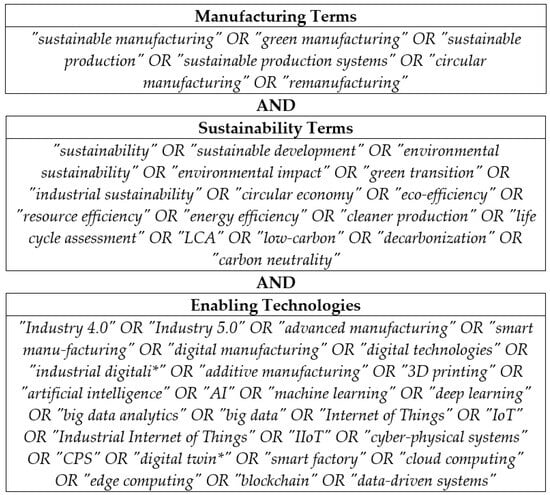
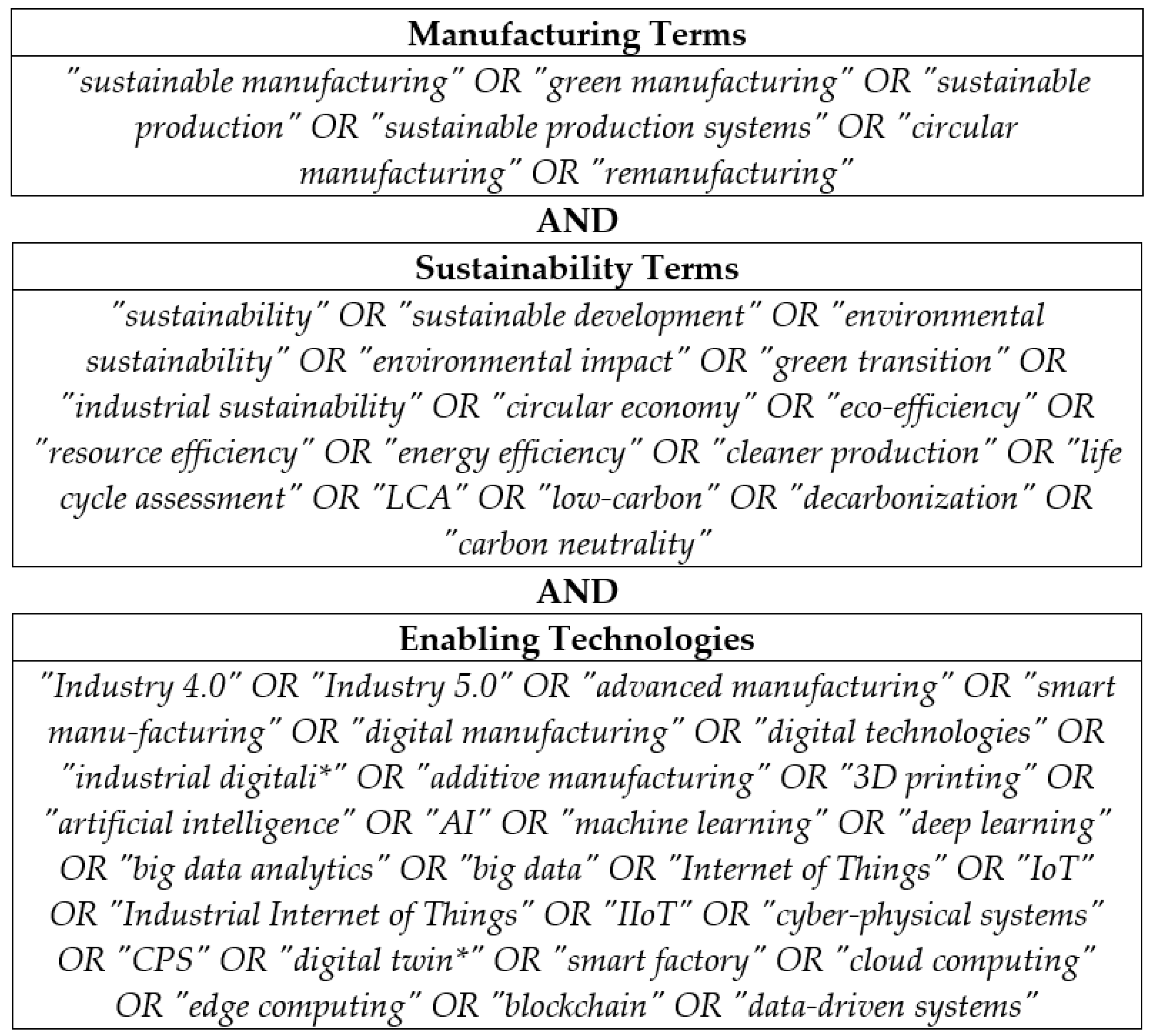
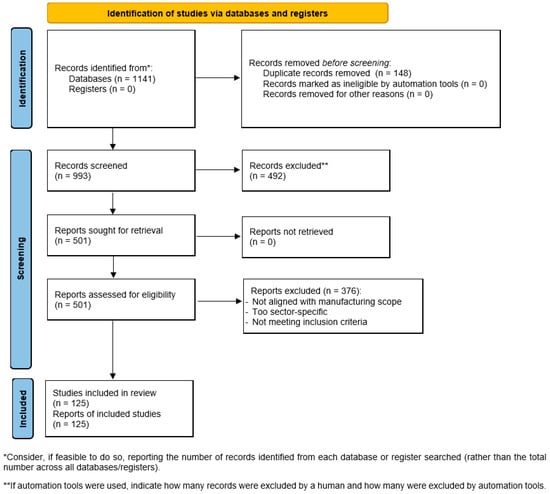
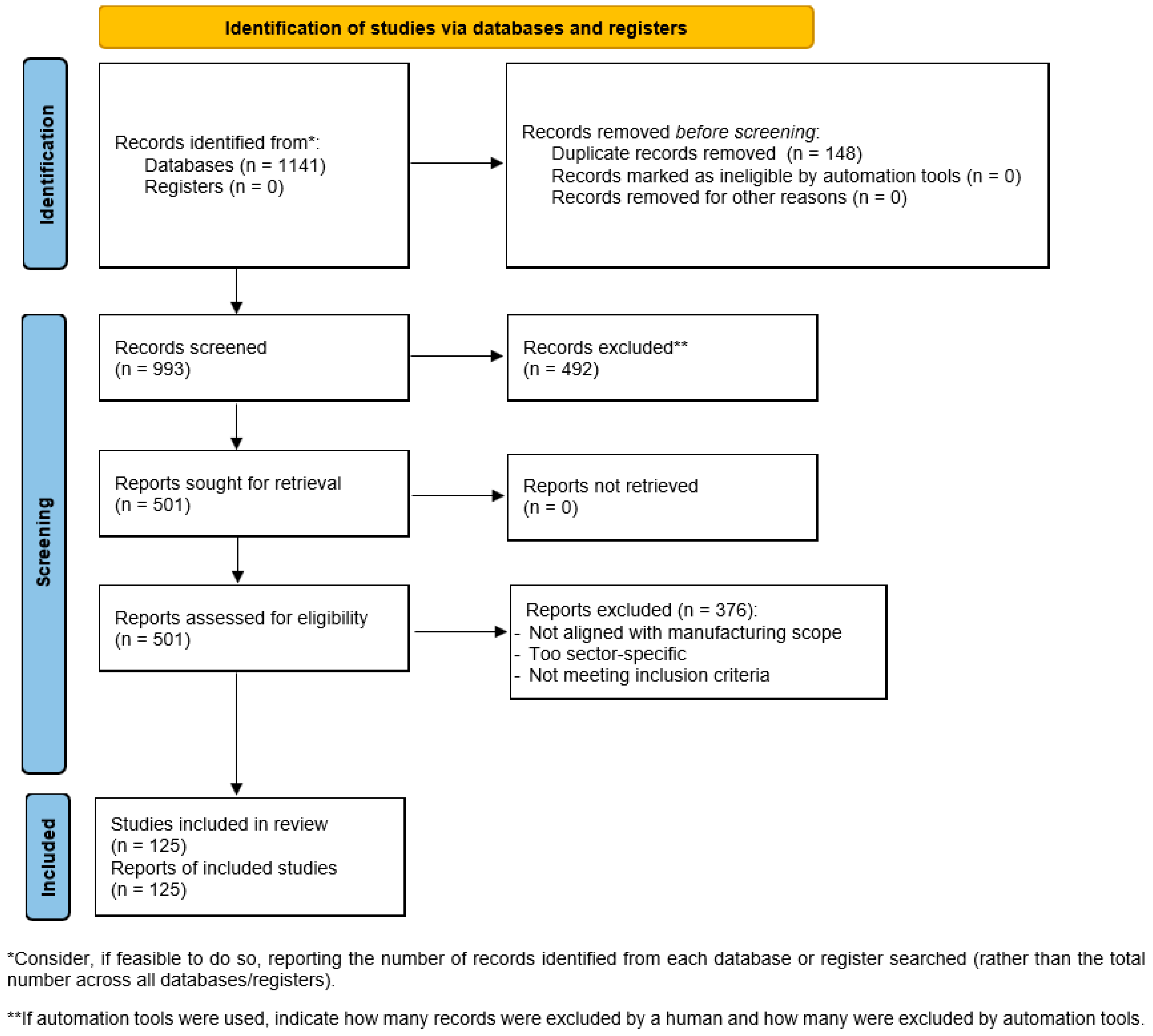
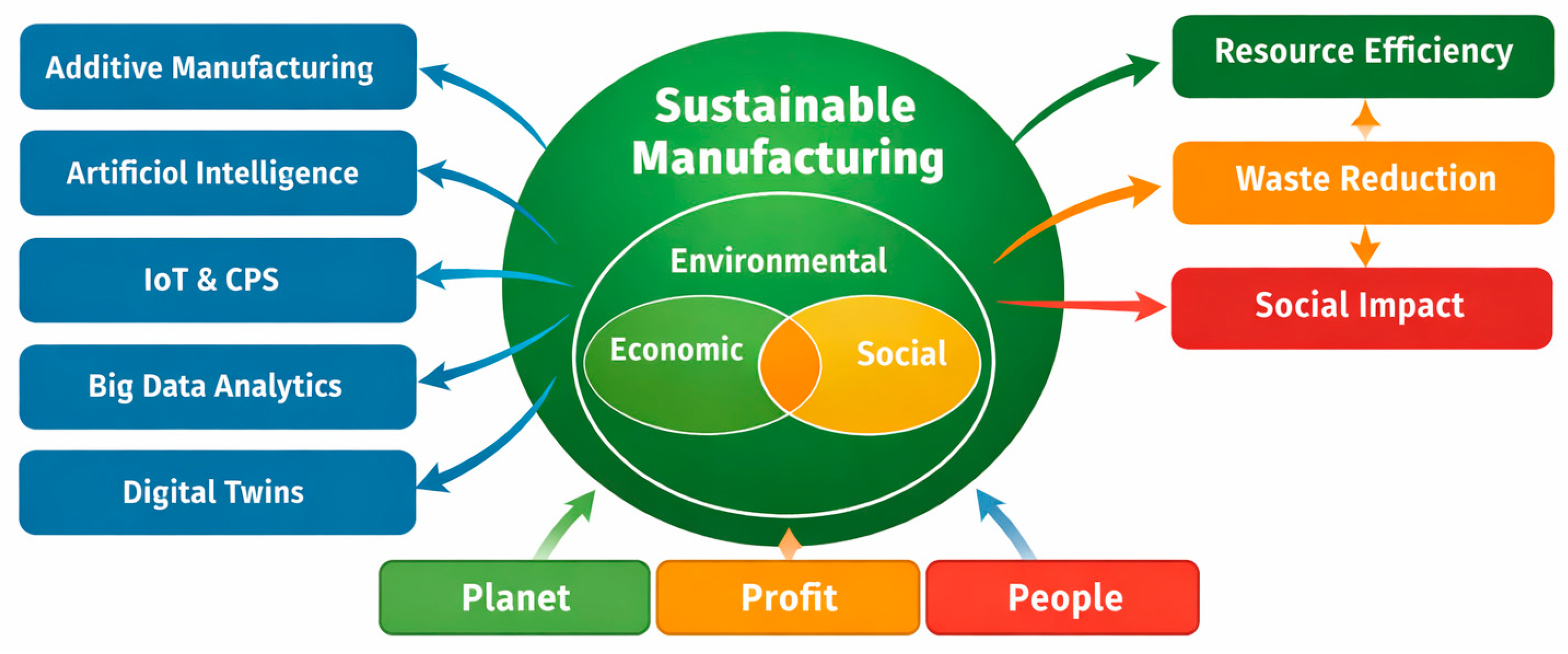

Disclaimer/Publisher’s Note: The statements, opinions and data contained in all publications are solely those of the individual author(s) and contributor(s) and not of MDPI and/or the editor(s). MDPI and/or the editor(s) disclaim responsibility for any injury to people or property resulting from any ideas, methods, instructions or products referred to in the content. |
© 2026 by the authors. Licensee MDPI, Basel, Switzerland. This article is an open access article distributed under the terms and conditions of the Creative Commons Attribution (CC BY) license.