


Abstract
Higher education institutions (HEIs) play a central role in fostering sustainability competencies to address environmental challenges. Within Education for Sustainable Development (ESD) and Sustainable Development Goal (SDG) 4 frameworks, universities must cultivate not only knowledge but also attitudes and behaviours promoting environmental responsibility. This study examines environmental attitudes as sustainability learning outcomes among undergraduate students, analysing differences by gender, age, and discipline in six Andalusian universities. Sustainable Education is defined as an approach integrating environmental, social, and economic sustainability dimensions into teaching to develop active competencies for sustainable development. A cross-sectional survey (n = 1471) used the validated CASEM questionnaire (see previous validation studies) to assess environmental knowledge, environmental education knowledge, and pro-environmental behaviour. The results show significant differences: women outperformed men across all dimensions, students aged over 25 exhibited stronger profiles, and Education Sciences students outperformed Engineering students. A persistent knowledge–behaviour gap emerged, especially in technical fields. These findings reveal curricular inequalities in sustainability integration. Mandatory, discipline-specific ESD—particularly in engineering—may help bridge these gaps and enhance uniform learning outcomes. By employing a multidimensional instrument and stratified sample, this study offers robust evidence of structural disparities, informing policy for equitable Higher Education for Sustainability.
1. Introduction
Higher education institutions (HEIs) play a central role in addressing global sustainability challenges. Beyond the transmission of disciplinary knowledge, universities are increasingly expected to develop competencies that enable students to understand and respond to complex environmental, social, and economic issues [1,2]. Within this framework, Education for Sustainable Development (ESD) promotes key competencies such as systems thinking, anticipatory competence, normative competence, and strategic action skills, which are widely recognised as essential for fostering sustainability-oriented graduates [3,4].
In the context of the 2030 Agenda, Sustainable Development Goal 4 (SDG4) emphasises the importance of quality education that equips learners with the knowledge, skills, values, and attitudes required to promote sustainable development [5]. Consequently, universities are challenged not only to incorporate sustainability-related content into their curricula, but also to transform teaching and learning processes in ways that foster critical thinking and behavioural change [6,7]. This shift involves moving beyond traditional content-based instruction towards more integrated, student-centred, and transformative learning approaches.
Despite increasing institutional commitment to sustainability, recent research (2024–2026) shows that the integration of sustainability competencies in higher education remains uneven and often fragmented across disciplines, particularly in technical fields [8,9,10]. This uneven implementation raises important questions about how sustainability is actually experienced and internalised by students in different academic contexts.
Furthermore, a growing body of literature highlights the persistence of the knowledge–behaviour gap, whereby high levels of environmental awareness do not necessarily translate into consistent pro-environmental behaviour [9,10]. This gap suggests that sustainability education cannot rely solely on cognitive approaches, but must also address motivational, ethical, and action-oriented dimensions of learning [11,12,13]. In addition, emerging research points to the increasing influence of digital learning environments in shaping students’ environmental awareness and engagement [8].
Taken together, these challenges underscore the need to examine sustainability learning outcomes from a multidimensional perspective that considers not only knowledge acquisition, but also attitudes and behaviours [14,15]. In this regard, environmental attitudes—encompassing cognitive, affective, and behavioural components—can be understood as meaningful indicators of how effectively higher education institutions implement Sustainable Education.
Building on this perspective, the present study analyses environmental attitudes among undergraduate students in six Andalusian universities, examining differences by gender, age, and academic discipline. By adopting a multidimensional approach and a large, stratified sample, this study provides robust empirical evidence on how sustainability is being learned across higher education contexts and identifies structural inequalities in the development of sustainability competencies.
1.1. Sustainable Education and University Curricula
Sustainable Education increasingly emphasises transformative integration beyond traditional awareness, developing competencies through problem-based learning, service-learning, and interdisciplinary projects [16,17]. Unlike traditional environmental education, which typically focuses on knowledge transmission, Sustainable Education emphasises student engagement, reflection, and the application of knowledge in real-world contexts, employing pedagogies such as problem-based learning, service-learning, and interdisciplinary project work [18,19].
This paradigm shift requires moving away from isolated sustainability modules towards institution-wide strategies where sustainability becomes an integral dimension of curriculum design, teaching practices, and assessment criteria [20]. A growing body of research indicates that such curricular integration is uneven: programmes rooted in education and social sciences often embed sustainability more deeply than technical or engineering degrees, where sustainability continues to be marginalised [21,22,23]. Such disparities have implications for the development of sustainability competencies across student populations.
Embedding sustainability holistically is also supported by international frameworks such as UNESCO’s Education for Sustainable Development Roadmap [24] and the Sustainable Development Solutions Network’s global competency framework [25], which call for comprehensive integration of sustainability learning outcomes across all fields of study.
Recent systematic reviews indicate that students’ sustainability learning outcomes are strongly influenced by institutional commitment, curriculum coherence, and teaching approaches. Universities that adopt whole-institution sustainability strategies tend to report higher student engagement and stronger behavioural outcomes. Conversely, fragmented or optional sustainability provision is associated with superficial learning and limited behavioural change [17,18].
Recent scholarship has increasingly emphasised the transformative potential of higher education institutions as drivers of systemic sustainability transitions. Universities are not only knowledge producers, but also socio-ecological actors embedded within regional and global sustainability networks [26,27]. This expanded role requires institutions to move beyond disciplinary silos and adopt transdisciplinary and participatory models of sustainability learning.
Research has demonstrated that students exposed to interdisciplinary sustainability education exhibit stronger systems thinking and greater capacity to navigate complexity [28]. Interdisciplinary learning environments foster integrative reasoning, enabling students to connect environmental, social, and economic dimensions of sustainability challenges. Such integrative competence is widely recognised as central to Education for Sustainable Development [29].
Moreover, experiential learning approaches—including living labs, community partnerships, and real-world sustainability projects—have been shown to significantly enhance students’ pro-environmental engagement and sustainability competencies [30,31]. These approaches create authentic learning contexts where students can apply theoretical knowledge, collaborate across disciplines, and develop agency in addressing real sustainability problems.
Recent European and global assessments further indicate that while many universities have formally adopted sustainability strategies, the depth of curricular integration remains uneven [32,33]. In many cases, sustainability is still confined to specific programmes or elective courses, rather than embedded systematically across all disciplines. This uneven implementation contributes to disparities in sustainability learning outcomes among student populations.
Additionally, digitalisation and hybrid learning environments introduce new opportunities and challenges for sustainability education. While online learning can expand access and facilitate global collaboration, it may also limit experiential and community-based learning components if not carefully designed [34,35]. Designing digitally supported sustainability pedagogies that preserve participatory and transformative elements is therefore an emerging priority.
Collectively, these studies reinforce the need to conceptualise environmental attitudes as institutional performance indicators. Differences observed across gender, age, and discipline should not be interpreted solely as individual variations, but as reflections of how effectively universities operationalise Higher Education for Sustainability within specific curricular and pedagogical contexts.
1.2. Environmental Attitudes in Higher Education
Environmental attitudes, including knowledge, beliefs, and behavioural intentions, have been widely studied as indicators of sustainability learning outcomes [25,27]. Research demonstrates that environmental knowledge and positive attitudes can serve as precursors to pro-environmental behaviours, although the translation from knowledge to action is not always guaranteed [23,24,25]. This so-called “knowledge–action gap” highlights the need for pedagogical approaches that connect cognitive understanding with motivational and behavioural dimensions.
Sociodemographic variables such as gender and age have been identified as predictors of environmental attitudes. Numerous studies report that women tend to express higher concern for environmental issues and show greater engagement in pro-environmental behaviours compared to men [25,26,27]. Age has also been associated with stronger environmental attitudes, potentially reflecting life experience and cumulative exposure to sustainability content [28,29].
Recent meta-analyses and systematic reviews indicate that sustainability-related attitudes among university students are strongly influenced by institutional context, curriculum coherence, and pedagogical design. Universities that explicitly articulate sustainability as a core educational objective and embed it across programmes tend to report higher student engagement and more consistent pro-environmental behaviours. Conversely, fragmented or optional sustainability provision is often associated with superficial learning and limited behavioural impact.
Empirical studies further suggest that students’ environmental attitudes are shaped by the extent to which sustainability is framed as personally meaningful and professionally relevant. When sustainability is presented as peripheral to disciplinary identity, students are less likely to internalise sustainability values or perceive themselves as agents of change. In contrast, pedagogical approaches that connect sustainability challenges to students’ future professional roles foster stronger motivation and behavioural commitment.
The role of the learning environment is also critical. Supportive learning climates characterised by open dialogue, participatory learning, and opportunities for real-world application have been associated with stronger sustainability learning outcomes. Such environments enable students to explore ethical dimensions of sustainability, reflect on their own values, and experiment with sustainable practices in authentic contexts.
Moreover, emerging evidence highlights the importance of assessment practices in shaping sustainability learning. When sustainability competencies are explicitly assessed, students are more likely to engage seriously with sustainability-related content and activities. Assessment signals institutional priorities and communicates that sustainability is a legitimate and valued learning outcome.
Together, these findings underscore that environmental attitudes should be understood not merely as individual dispositions, but as outcomes of complex interactions between institutional structures, curricula, pedagogy, and assessment. This perspective reinforces the relevance of examining environmental attitudes as indicators of how effectively Higher Education Institutions are implementing Sustainable Education.
Academic discipline similarly shapes environmental attitudes. Students in education, environmental science, and social science programmes often demonstrate stronger sustainability awareness than those in engineering and technical fields [16,17,30]. These disciplinary patterns may be linked to differences in curricular content, pedagogical emphasis, and professional identity formation.
Recent longitudinal and cross-sectional research indicates that sustainability-related attitudes developed during university studies may exert long-term influence on graduates’ professional practices and civic engagement [1,6]. Higher education institutions therefore represent a critical leverage point for shaping future decision-makers’ orientations towards sustainability.
Evidence suggests that when sustainability is integrated only superficially or through isolated optional modules, students tend to develop fragmented understandings and limited behavioural commitment [1,7]. In contrast, coherent and curriculum-wide integration of sustainability competencies is associated with stronger internalisation of sustainability values and more consistent pro-environmental behaviour [11,18]. This reinforces the argument that sustainability learning outcomes are not solely the product of individual predispositions, but are deeply influenced by institutional design and pedagogical coherence.
Moreover, the so-called “hidden curriculum”—the implicit messages conveyed through institutional culture, teaching practices, campus operations, and assessment—plays a significant role in shaping students’ sustainability orientations [28]. When universities visibly prioritise sustainability through governance structures, sustainability strategies, and alignment with the Sustainable Development Goals, students are more likely to perceive sustainability as central rather than peripheral to their academic formation [5,19].
Whole-institution approaches conceptualise sustainability as a cross-cutting principle embedded in governance, curriculum, pedagogy, research, and community engagement [7,18]. Such approaches move beyond isolated educational interventions and instead create learning ecosystems that consistently reinforce sustainability-oriented knowledge, values, and practices. From this perspective, examining environmental attitudes provides valuable empirical insight into how effectively Higher Education Institutions are advancing Sustainable Education in practice.
1.3. Research Gap, Objectives and Hypotheses
Despite the growing body of international research on sustainability education and environmental attitudes in higher education, several important gaps remain. Although numerous studies have examined students’ sustainability-related knowledge, attitudes, and behaviours, much of this literature has focused on single dimensions or specific academic contexts, limiting the development of an integrated understanding of sustainability learning outcomes across diverse student populations [30,31,32]. Recent reviews highlight the need for multidimensional approaches that simultaneously consider cognitive, affective, and behavioural components of sustainability learning [33].
Furthermore, gender- and age-related differences in environmental concern have been widely documented [34,35,36,37], yet these variables are often analysed independently of academic discipline. This limits understanding of how sociodemographic characteristics intersect with disciplinary cultures and curricular structures to shape sustainability learning outcomes. From the perspective of Higher Education for Sustainability, such intersectional analysis is essential for identifying structural inequalities in the provision of Sustainable Education [37].
Geographical imbalances also persist in the literature. While a substantial proportion of empirical research has been conducted in Northern Europe, North America, and East Asia, Southern European and Mediterranean contexts remain comparatively underrepresented [37]. This gap is significant, as educational traditions, policy frameworks, and socio-environmental challenges differ across regions, potentially influencing how sustainability education is conceptualised and implemented.
In addition, although international policy frameworks emphasise the development of sustainability competencies across all disciplines, empirical evidence on how effectively these competencies are being fostered within different academic fields remains limited [38,39,40]. Disciplinary differences are particularly relevant given the central role that future professionals—especially in engineering, technology, and related fields—will play in addressing climate change, energy transitions, and sustainable infrastructure.
Responding to these gaps, the present study analyses environmental attitudes as indicators of sustainability learning outcomes among a large sample of undergraduate students from six Andalusian universities. By examining environmental knowledge, environmental education knowledge, and pro-environmental behaviour across gender, age, and academic discipline, this study seeks to provide empirical insight into how Sustainable Education is currently being experienced within higher education institutions and to identify priority areas for curricular and pedagogical transformation.
Accordingly, the following hypotheses were tested:
H1.
Female students will exhibit higher environmental knowledge and pro-environmental behaviour than males.
H2.
Older students will demonstrate more positive environmental attitudes.
H3.
Students enrolled in Education Sciences will outperform Engineering students across all dimensions.
2. Materials and Methods
2.1. Study Design
A descriptive cross-sectional study was conducted using a quantitative approach based on a self-administered questionnaire. Data were collected during regular class sessions across several Andalusian universities between 2023 and 2024, ensuring comparable conditions across institutions and academic disciplines. Participation was voluntary and anonymous, and all participants provided informed consent prior to completing the questionnaire.
The study followed a multi-site design, allowing for the inclusion of students from different universities and academic fields. Prior to data analysis, the assumptions of normality and homogeneity of variances were assessed using the Kolmogorov–Smirnov and Levene tests.
2.2. Participants
The sample consisted of 1471 undergraduate students enrolled at six public Andalusian universities: the University of Seville, Pablo de Olavide University, the University of Málaga, the University of Córdoba, the University of Cádiz, and the University of Granada. A stratified sampling procedure was applied to ensure adequate representation of the main academic disciplines.
Participants were distributed across different fields of study, including Education Sciences, Natural Sciences, and Engineering. The sample included 892 women (60.6%) and 579 men (39.4%). Regarding age, 46.5% of participants were between 18 and 20 years old, 38.5% between 21 and 25 years old, and 14.9% were older than 25 years. The main sociodemographic characteristics of the sample are presented in Table 1.
Table 1.
Sociodemographic characteristics of the sample (N = 1471).
The sample included students from different stages of undergraduate education, ranging from first- to fourth-year courses. Although most participants corresponded to traditional university-age students, the group older than 25 years likely included a proportion of mature or non-traditional students combining studies with professional or family responsibilities.
2.3. Instrument
Environmental attitudes were assessed using the CASEM questionnaire, a validated instrument composed of 37 items rated on a four-point Likert scale (1 = strongly disagree; 4 = strongly agree). The CASEM questionnaire was designed to evaluate environmental attitudes among university students by capturing cognitive, educational, and behavioural dimensions of environmental engagement. The Environmental Knowledge dimension assesses students’ understanding of environmental problems and sustainability concepts, the Environmental Education Knowledge dimension evaluates awareness of educational strategies and sustainability learning processes, and the Environmental Behaviour dimension examines self-reported pro-environmental practices in everyday life. The CASEM questionnaire has previously been validated in studies examining environmental attitudes among university students, demonstrating satisfactory psychometric properties. The questionnaire comprises three dimensions:
- Environmental Knowledge (15 items; Cronbach’s α = 0.87).
- Environmental Education Knowledge (12 items; Cronbach’s α = 0.85).
- Environmental Behaviour (10 items; Cronbach’s α = 0.82).
The overall internal consistency of the instrument in the present study was high (Cronbach’s α = 0.89).
This section clarifies the distinction between Environmental Knowledge and Environmental Education Knowledge. Environmental Knowledge refers to students’ understanding of environmental problems, ecological processes, and sustainability concepts (e.g., climate change, biodiversity loss). In contrast, Environmental Education Knowledge focuses on awareness of educational strategies, pedagogical approaches, and learning processes related to sustainability (e.g., the role of education in promoting sustainable behaviours or the integration of sustainability into curricula).
Previous studies have reported satisfactory psychometric properties of the instrument in university populations, supporting its validity for assessing environmental attitudes in higher education contexts.
2.4. Data Analysis
Descriptive statistics were calculated for all variables. Differences by gender, age group, and academic discipline were examined using one-way analysis of variance (ANOVA) with LSD post hoc tests. Effect sizes were estimated using partial eta squared (η2p), interpreted as small (0.01), medium (0.06), and large (0.14). Statistical analyses were performed using IBM SPSS Statistics version 26.0 (IBM Corp., Armonk, NY, USA)
To strengthen the robustness of the analysis, additional factorial ANOVA models were conducted to explore potential interaction effects between gender, age, and academic discipline. The results indicated that interaction effects were small and did not substantially modify the main effects observed, supporting the stability of the findings.
Although more complex models such as ANCOVA could provide further control of covariates, the present study adopts an exploratory and descriptive approach, prioritising interpretability and clarity of results.
3. Results
The results are presented in three stages. First, overall descriptive statistics for the three analysed dimensions are reported. Second, differences by gender and age group are examined. Finally, disciplinary differences are analysed in order to identify structural variations across academic fields.
Table 2 presents the overall descriptive statistics for Environmental Knowledge, Environmental Education Knowledge, and Environmental Behaviour.
Table 2.
Descriptive statistics of environmental attitude dimensions (N = 1471).
Overall, students reported moderately high levels across all three dimensions. Environmental Knowledge obtained the highest mean score, whereas Environmental Behaviour showed comparatively lower values, suggesting the existence of a potential knowledge–behaviour gap.
Recent studies (2025) confirm that this knowledge–behaviour gap remains a persistent challenge in sustainability education, as environmental awareness does not always translate into consistent pro-environmental behaviour among university students [41,42].
3.1. Gender Differences
Women obtained significantly higher scores in Environmental Knowledge, Environmental Education Knowledge, and Environmental Behaviour (p < 0.001), with medium to large effect sizes. Results are presented in Table 3.
Table 3.
Gender differences in environmental attitude dimensions.
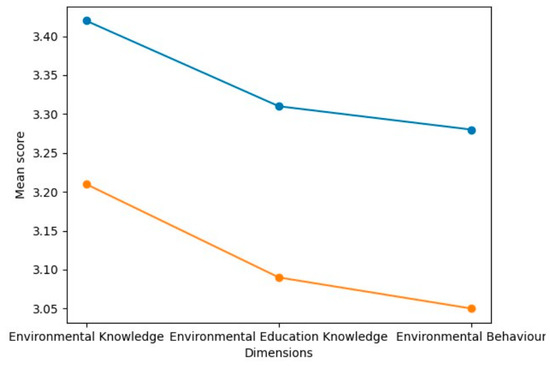
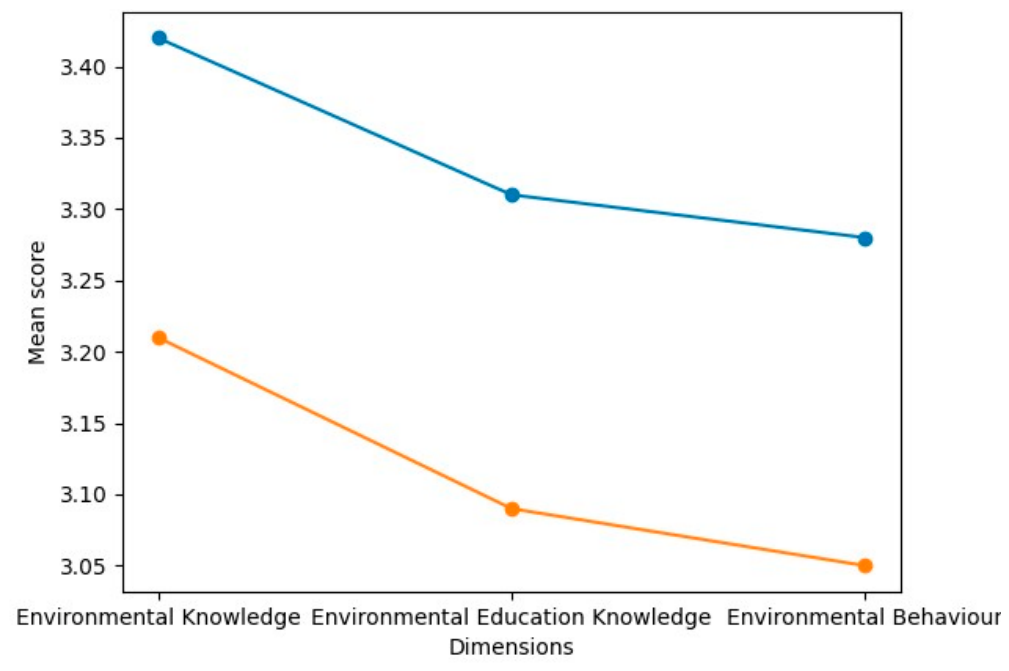
As illustrated in Figure 1, women obtained higher mean scores than men across all dimensions.
Figure 1.
Gender differences in environmental attitude dimensions. Note: Lines represent mean scores for male and female students across the three dimensions: Environmental Knowledge, Environmental Education Knowledge, and Environmental Behaviour. (blue = female; orange = male).
These results support Hypothesis 1 and indicate that female students exhibit more favourable environmental attitudes across all analysed dimensions. These findings are consistent with recent research (2025), which highlights the significant role of gender in shaping sustainability perceptions and pro-environmental behaviour among university students [43,44].
3.2. Age Differences
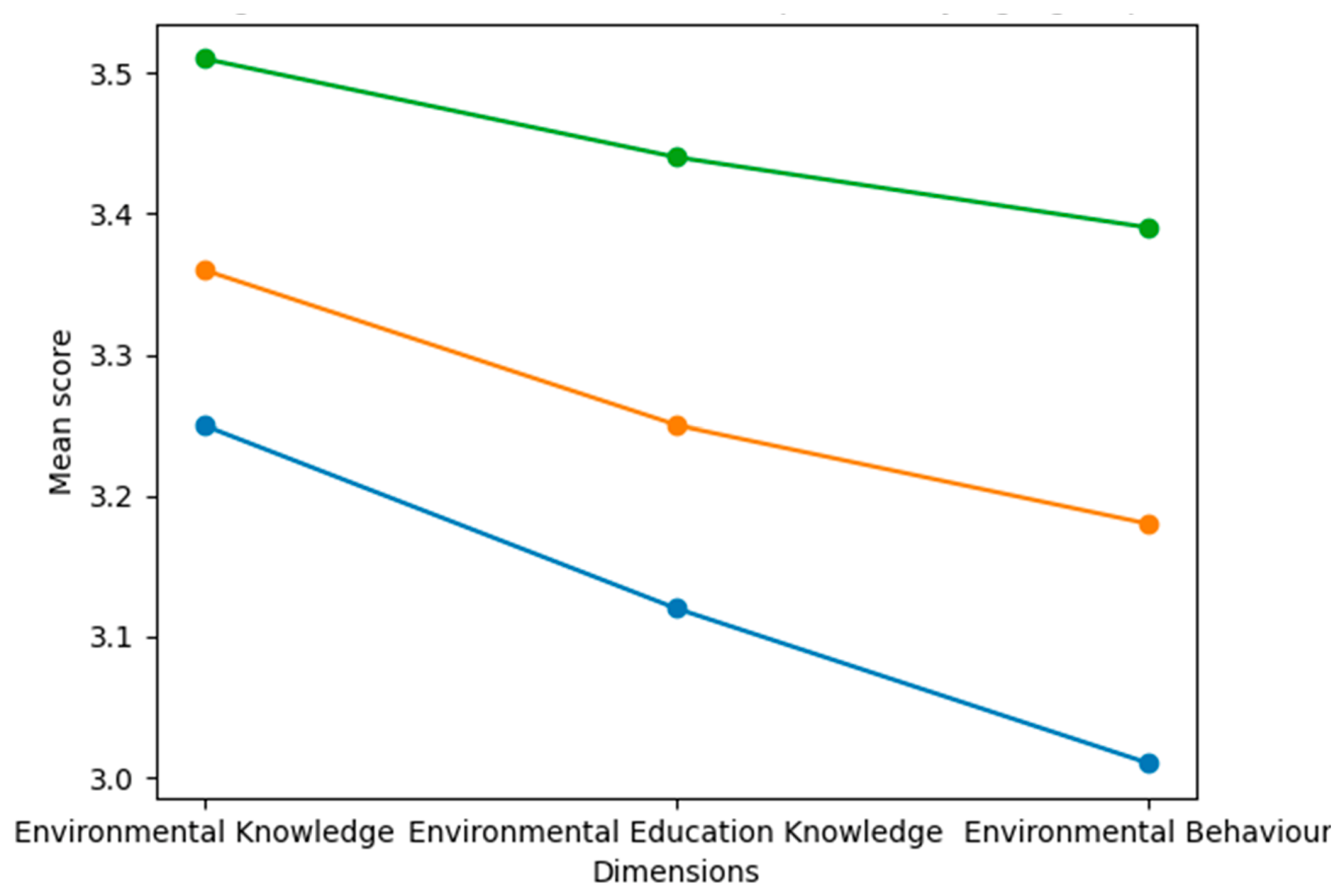
Students older than 25 years showed significantly higher scores across all dimensions (p < 0.01), indicating more consolidated environmental attitudes. Mean scores by age group are presented in Table 4 and Figure 2.
Table 4.
Environmental attitude dimensions by age group.
Figure 2.
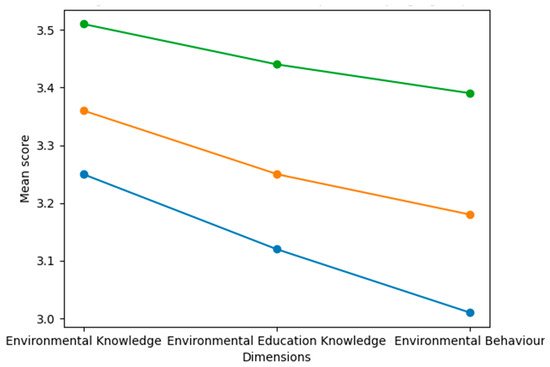
Environmental attitude profiles by age group. Lines represent mean scores for each age group across the three dimensions (blue = 18–20; orange = 21–25; green = >25). Note: Lines represent mean scores for each age group across the three dimensions: Environmental Knowledge, Environmental Education Knowledge, and Environmental Behaviour.
These findings support Hypothesis 2 and suggest that environmental attitudes tend to strengthen with age and accumulated academic or life experience. Recent research (2025) suggests that sustainability engagement tends to increase with age and accumulated educational experience, reinforcing observed differences between younger and older students [45,46].
3.3. Disciplinary Differences
Education Sciences students presented the highest scores across dimensions, whereas Engineering students obtained the lowest, with significant differences (p < 0.01). Results are shown in Table 5.
Table 5.
Environmental attitude dimensions by academic discipline.
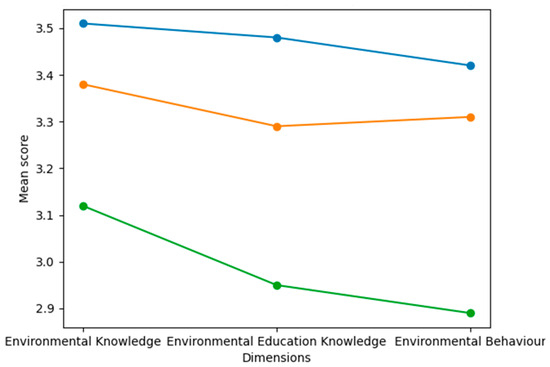
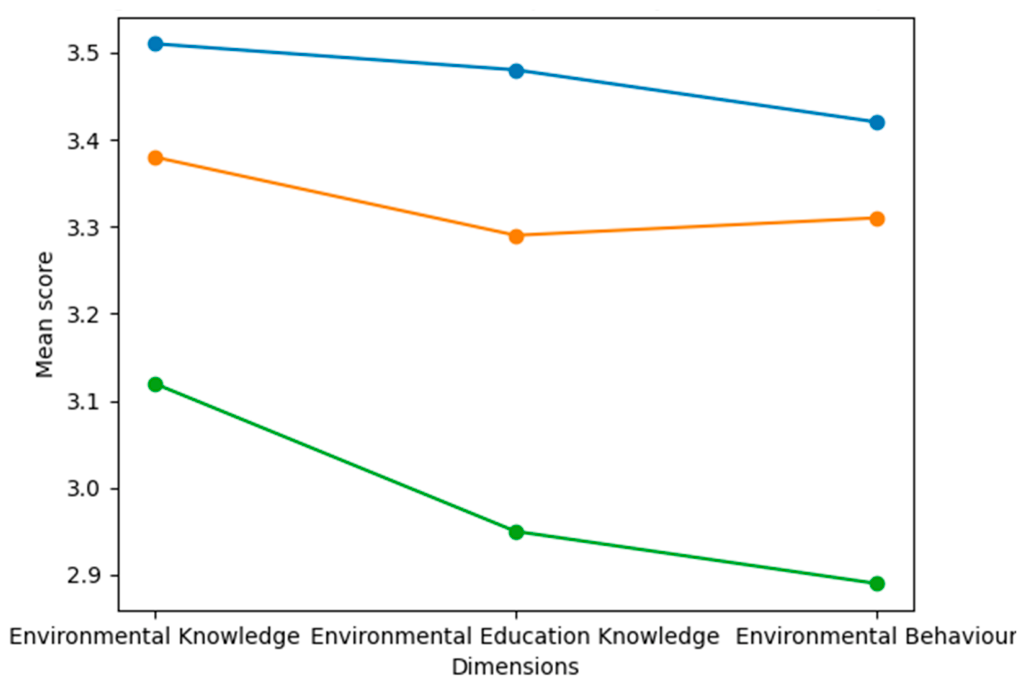
Figure 3 illustrates disciplinary profiles across dimensions.
Figure 3.
Environmental attitude profiles by academic discipline. Lines represent mean scores for each discipline (blue = Education Sciences; orange = Natural Sciences; green = Engineering). Note: Lines represent mean scores for each academic discipline across the three dimensions: Environmental Knowledge, Environmental Education Knowledge, and Environmental Behaviour.
The pronounced gap between Education Sciences and Engineering students supports Hypothesis 3 and highlights structural disciplinary differences in the integration of sustainability within university curricula. This pattern is consistent with recent studies (2025), which indicate that sustainability education adoption remains uneven across disciplines, with lower levels of integration typically observed in engineering and technical programmes [44,47].
4. Discussion
This study offers a comprehensive and multidimensional analysis of environmental attitudes as sustainability learning outcomes in higher education. By examining environmental knowledge, environmental education knowledge, and pro-environmental behaviour simultaneously, the findings provide robust evidence of systematic differences across gender, age, and academic discipline. Importantly, these differences should not be interpreted merely as individual variations, but rather as indicators of how effectively sustainability is embedded within higher education curricula and pedagogical practices.
4.1. Gender and Environmental Attitudes
The results show clear and statistically significant gender differences across all analysed dimensions, with female students reporting higher levels of environmental knowledge, environmental education knowledge, and pro-environmental behaviour. These findings are consistent with previous research highlighting stronger environmental concern and behavioural engagement among women [1,2,3,25,26,27,43,44].
Beyond confirming existing evidence, these results suggest that gender differences may also reflect variations in how sustainability is experienced within higher education contexts. From a theoretical perspective, such differences can be linked to value orientations and socialisation processes, where care-related values, empathy, and responsibility—more frequently associated with female students—are positively related to pro-environmental attitudes [25,26]. In addition, differences in risk perception may contribute to higher levels of environmental concern among women, reinforcing their behavioural engagement [5].
From an educational perspective, these findings highlight the need to design sustainability learning environments that actively engage male students. Rather than viewing gender differences as fixed, they should be understood as socially constructed and therefore modifiable through pedagogical strategies. Approaches that connect sustainability with technological innovation, problem-solving, and professional practice may be particularly effective in increasing engagement among male students, especially in technical fields [47].
4.2. Age and Maturity Effects
The findings indicate that students older than 25 years exhibit significantly stronger environmental attitudes across all dimensions, supporting previous research linking age with increased environmental awareness and engagement [6,7,28,29,45,46]. This pattern can be explained by accumulated academic and life experiences, which may contribute to more developed environmental worldviews and greater capacity for ethical reflection.
From a developmental perspective, older students are likely to possess stronger systems thinking abilities and a greater capacity for long-term reasoning—both key competencies in sustainability education [3,4]. These skills enable a deeper understanding of the interconnections between environmental, social, and economic systems, as well as the long-term consequences of unsustainable practices.
These results suggest that sustainability learning evolves over time, reinforcing the importance of adopting a developmental approach to curriculum design. Introducing sustainability early in undergraduate programmes and reinforcing it progressively through experiential and participatory methodologies—such as project-based learning and community engagement—may help strengthen environmental attitudes among younger students.
4.3. Disciplinary Cultures and Sustainability
One of the most significant findings of this study is the presence of strong disciplinary differences. Students in Education Sciences consistently achieved higher scores across all dimensions compared to Engineering students, confirming previous research on uneven sustainability integration across disciplines [11,12,13,14,16,17,18,44]. However, the present results go beyond descriptive comparison by highlighting the structural nature of these disparities.
These differences can be explained by of disciplinary cultures and curricular priorities. Education programmes typically incorporate ethical reflection, social responsibility, and pedagogical perspectives that facilitate engagement with sustainability issues. In contrast, engineering curricula often prioritise technical efficiency and problem-solving, with comparatively limited emphasis on environmental ethics and broader societal implications.
This imbalance has important implications for higher education systems. Given the central role of engineers in addressing sustainability challenges—such as energy transitions, infrastructure development, and climate adaptation—the relatively weaker environmental profiles observed among Engineering students are particularly concerning. The findings suggest that sustainability is not yet fully embedded within technical education, but rather remains peripheral or fragmented.
From a curricular perspective, these results point to the need for structural reform. Sustainability should be integrated into core disciplinary subjects rather than confined to optional modules. Embedding concepts such as life-cycle analysis, eco-design, renewable energy systems, and environmental impact assessment within engineering curricula may help bridge this gaps and foster more holistic professional competencies.
These findings suggest that disciplinary differences are not simply driven by individual student characteristics, but are structurally embedded in curriculum design and educational priorities. This reinforces the need to conceptualise sustainability education as an institutional responsibility rather than an individual outcome.
4.4. Curriculum and Policy Implications
The results of this study have important implications for curriculum design and institutional policy in higher education. The observed differences across gender, age, and academic discipline indicate that sustainability competencies are not being developed equitably across student populations.
First, sustainability education should move beyond optional or peripheral initiatives and become a mandatory component of all degree programmes. The findings suggest that many students—particularly in technical fields—complete their studies without adequate exposure to sustainability-related content, which contradicts international recommendations advocating for the integration of sustainability competencies across higher education [7,18].
Second, sustainability competencies should be embedded within core disciplinary subjects rather than confined to stand-alone courses. In engineering programmes, this may include integrating sustainability through project-based learning activities focused on eco-design, life-cycle assessment, renewable energy systems, and environmental impact analysis within core technical subjects.
Third, universities should promote interdisciplinary learning environments. Complex sustainability challenges require collaboration across disciplines, and students benefit from exposure to diverse perspectives. Interdisciplinary projects can foster integrative thinking and strengthen students’ sense of agency in addressing real-world problems.
Fourth, faculty development is essential. Many university lecturers have limited training in Education for Sustainable Development. Providing professional development opportunities focused on sustainability pedagogy can enhance teaching quality and facilitate meaningful curricular change.
Finally, universities should establish mechanisms to monitor sustainability learning outcomes at programme and institutional levels. The use of validated instruments, such as the CASEM questionnaire, allows institutions to identify strengths and weaknesses and to evaluate the impact of curricular reforms over time [3,18].
4.5. Limitations and Future Research
Several limitations should be acknowledged. First, the cross-sectional design does not allow causal inferences regarding the relationships between sociodemographic variables and environmental attitudes. Longitudinal studies are needed to examine how sustainability learning outcomes evolve over time [30,31].
Second, the use of self-report measures may introduce social desirability bias. Although the CASEM instrument demonstrated strong reliability, future research could incorporate behavioural observations or performance-based assessments of sustainability competencies [32,33].
Third, while the sample includes students from six Andalusian universities, the findings are context-specific and may not be fully generalisable to other regions. Comparative studies across different national and institutional contexts would strengthen external validity [34].
Future research should also examine the effectiveness of specific pedagogical interventions—such as compulsory sustainability modules, interdisciplinary projects, and service-learning—in reducing the disciplinary and gender gaps identified in this study [35,36,37]. In addition, qualitative approaches could provide deeper insights into students’ perceptions and experiences of sustainability education [38].
4.6. The Knowledge–Behaviour Gap and Transformative Learning
A key finding of this study is the persistence of the knowledge–behaviour gap across all disciplines, particularly among Engineering students. Although students report relatively high levels of environmental knowledge, this does not consistently translate into pro-environmental behaviour, confirming previous research [23,24,25,41,42].
This gap highlights a fundamental limitation of knowledge-based approaches to sustainability education. Awareness alone appears insufficient to generate behavioural change without the integration of motivational, ethical, and experiential dimensions of learning. These findings are consistent with transformative learning theory, which emphasises the importance of critical reflection, dialogue, and action-oriented engagement in fostering sustainable behaviour [4].
Addressing this gap requires pedagogical strategies that move beyond information transmission towards active and experiential learning. Approaches such as service-learning, real-world sustainability projects, and interdisciplinary collaboration have been shown to enhance behavioural engagement and may play a key role in closing the knowledge–action gap.
Overall, the findings suggest that sustainability education must be understood as a transformative process that integrates cognitive, affective, and behavioural dimensions. Environmental attitudes can therefore be interpreted as observable indicators of how effectively higher education institutions are fostering sustainability competencies.
4.7. Implications for Higher Education for Sustainability
The results reinforce the need to conceptualise sustainability education as a core institutional responsibility. The observed disparities across disciplines indicate that opportunities for developing sustainability competencies are not evenly distributed across student populations.
From this perspective, higher education institutions must move beyond declarative commitments to sustainability and adopt coherent, institution-wide strategies that integrate sustainability into curriculum design, pedagogy, assessment, and governance. Ensuring that all students—regardless of discipline—develop the competencies needed to think and act sustainably represents a fundamental challenge for contemporary higher education.
Overall, this study highlights the importance of aligning institutional policies, teaching practices, and assessment systems in order to advance Higher Education for Sustainability in a consistent and equitable manner.
Overall, a knowledge–behaviour gap was observed across all disciplines, being particularly pronounced among Engineering students (Table 6). This pattern suggests that possessing environmental knowledge does not necessarily translate into consistent pro-environmental behaviour, reinforcing the importance of pedagogical approaches that promote experiential and action-oriented learning. Table 6 is included to explicitly illustrate the magnitude of the knowledge–behaviour gap across disciplines, complementing the descriptive results presented in Table 5.
Table 6.
Differences between Environmental Knowledge and Environmental Behaviour by discipline.
5. Conclusions
This study provides robust empirical evidence that environmental attitudes—operationalised through environmental knowledge, environmental education knowledge, and pro-environmental behaviour—vary significantly according to gender, age, and academic discipline among Andalusian university students. These differences demonstrate that sustainability learning outcomes are not being developed uniformly across higher education, despite international and national commitments to Education for Sustainable Development and Higher Education for Sustainability.
From a theoretical perspective, the findings contribute to sustainability education research by positioning environmental attitudes as meaningful indicators of sustainability learning outcomes within university contexts. The study reinforces the multidimensional nature of sustainability competencies, encompassing cognitive, affective, and behavioural components that must be cultivated through coherent curricular and pedagogical strategies.
From an educational and institutional perspective, the consistently weaker environmental profiles observed among Engineering students reveal a structural gap in the integration of sustainability within technical curricula. Given the central role that future engineers and technical professionals will play in addressing climate change, energy transitions, and sustainable infrastructure, embedding sustainability as a core element of disciplinary education is no longer optional but essential.
The gender- and age-related differences identified in this study further highlight the importance of inclusive and developmentally sensitive approaches to Sustainable Education. Universities should ensure that sustainability learning opportunities are introduced early in degree programmes and progressively reinforced throughout students’ academic trajectories.
At the institutional level, these findings support the adoption of whole-institution approaches that align curriculum design, teaching practices, assessment systems, and governance with sustainability goals. Becoming a sustainable higher education institution requires moving beyond isolated initiatives towards systematic integration of sustainability competencies across all academic fields.
Finally, this study underscores the value of empirical evidence for guiding educational policy and curriculum reform. By identifying where sustainability learning outcomes are strongest and weakest, higher education institutions can design targeted interventions that contribute to more equitable and effective Higher Education for Sustainability.
In this sense, the results highlight the importance of moving from aspirational sustainability statements towards evidence-informed institutional strategies. Universities that systematically monitor sustainability learning outcomes and use such evidence to inform curriculum design, staff development, and quality assurance processes will be better positioned to fulfil their educational responsibility in the context of global sustainability challenges. Strengthening sustainability learning outcomes in higher education requires coordinated institutional strategies that align curriculum design, teaching practices, and assessment systems with sustainability competencies across all academic disciplines.
Author Contributions
Conceptualization, M.E.I.; methodology, M.E.I. and L.V.A.M.; formal analysis, M.E.I.; investigation, M.E.I.; writing—original draft preparation, M.E.I.; writing—review and editing, M.E.I., L.V.A.M. and F.M.C.; supervision, L.V.A.M. and F.M.C. All authors have read and agreed to the published version of the manuscript.
Funding
This research received no external funding.
Institutional Review Board Statement
According to Spanish legislation (Organic Law 3/2018 on Personal Data Protection and guarantee of digital rights), ethical review and approval were not required for this study, as it involved anonymous data collection and did not include sensitive personal data.
Informed Consent Statement
Informed consent was obtained from all subjects involved in the study prior to participation.
Data Availability Statement
The data presented in this study are available on reasonable request from the corresponding author. The data are not publicly available due to privacy considerations.
Conflicts of Interest
The authors declare no conflicts of interest.
References
- Lozano, R.; Ceulemans, K.; Alonso-Almeida, M.; Huisingh, D.; Lozano, F.J.; Waas, T.; Lambrechts, W.; Lukman, R.; Hugé, J. A review of commitment and implementation of sustainable development in higher education. J. Clean. Prod. 2015, 108, 1–18. [Google Scholar] [CrossRef] [Scilit]
- Wals, A.E.J. Sustainability in higher education in the context of the UN DESD: A review of learning and institutionalization processes. J. Clean. Prod. 2014, 62, 8–15. [Google Scholar] [CrossRef] [Scilit]
- Wiek, A.; Withycombe, L.; Redman, C. Key competencies in sustainability: A reference framework for academic program development. Sustain. Sci. 2011, 6, 203–218. [Google Scholar] [CrossRef] [Scilit]
- Sterling, S. Transformative learning and sustainability: Sketching the conceptual ground. Learn. Teach. High. Educ. 2011, 5, 17–33. [Google Scholar]
- United Nations. Transforming Our World: The 2030 Agenda for Sustainable Development; United Nations: New York, NY, USA, 2015. [Google Scholar]
- Leal Filho, W.; Shiel, C.; Paço, A. Implementing integrative approaches to sustainability in higher education: The role of project-oriented learning. J. Clean. Prod. 2016, 133, 126–135. [Google Scholar] [CrossRef] [Scilit]
- Lozano, R.; Barreiro-Gen, M.; Lozano, F.J.; Sammalisto, K. Teaching sustainability in European higher education institutions. Sustainability 2019, 11, 1602. [Google Scholar] [CrossRef] [Scilit]
- Cortés-Florín, E.M.; Ferrer-Aracil, J.; Cuenca-Silvestre, M.; Pérez-Belda, M.C. Percepciones y actitudes hacia el medioambiente en estudiantes de Trabajo Social. Prospectiva 2025, 40, e21414756. [Google Scholar] [CrossRef] [Scilit]
- Walsh, Z.; Böhme, J.; Lavelle, B.D.; Wamsler, C. Transformative education: Towards a relational, justice-oriented approach to sustainability. Int. J. Sustain. High. Educ. 2020, 21, 1587–1606. [Google Scholar] [CrossRef] [Scilit]
- Leal Filho, W.; Eustachio, J.H.P.P.; Caldana, A.C.F.; Will, M.; Salvia, A.L.; Rampasso, I.S.; Anholon, R.; Platje, J.; Kovaleva, M. Sustainability Leadership in Higher Education Institutions: An Overview of Challenges. Sustainability 2020, 12, 3761. [Google Scholar] [CrossRef] [Scilit]
- UNESCO. Education for Sustainable Development: A Roadmap; UNESCO: Paris, France, 2020. [Google Scholar]
- Leicht, A.; Heiss, J.; Byun, W.J. Issues and Trends in Education for Sustainable Development; UNESCO: Paris, France, 2018. [Google Scholar]
- Brundiers, K.; Wiek, A. Do we teach what we preach? Sustainability 2013, 5, 1725–1746. [Google Scholar] [CrossRef] [Scilit]
- Evans, T.L. Competencies and pedagogies for sustainability education. Sustainability 2019, 11, 5526. [Google Scholar] [CrossRef] [Scilit]
- Barth, M.; Godemann, J.; Rieckmann, M.; Stoltenberg, U. Developing key competencies for sustainable development. Int. J. Sustain. High. Educ. 2007, 8, 416–430. [Google Scholar] [CrossRef] [Scilit]
- Mulder, K.F.; Segalàs, J.; Ferrer-Balas, D. How to Educate Engineers for/in Sustainable Development: Ten Years of Discussion, Remaining Challenges. Int. J. Sustain. High. Educ. 2012, 13, 211–218. [Google Scholar] [CrossRef] [Scilit]
- CRUE. Directrices para la Sostenibilidad en el Curriculum; CRUE: Madrid, Spain, 2012. [Google Scholar]
- Sá, P.; Lourenço, M.; Carlos, V. Sustainability Competencies in Higher Education Research: An Analysis of Doctoral Theses in Portugal. Sustainability 2022, 12, 28. [Google Scholar] [CrossRef] [Scilit] [PubMed]
- UNESCO. Education for Sustainable Development Goals; UNESCO: Paris, France, 2017. [Google Scholar]
- SDSN. Getting Started with the SDGs in Universities; SDSN: New York, NY, USA, 2019. [Google Scholar]
- Zsóka, Á.; Szerényi, Z.M.; Széchy, A.; Kocsis, T. Greening due to environmental education? J. Clean. Prod. 2013, 48, 126–138. [Google Scholar] [CrossRef] [Scilit]
- Vicente-Molina, M.A.; Fernández-Sáinz, A.; Izagirre-Olaizola, J. Environmental knowledge and behaviour: Comparison of university students from emerging and advanced countries. J. Clean. Prod. 2013, 61, 130–138. [Google Scholar] [CrossRef] [Scilit]
- Kollmuss, A.; Agyeman, J. Mind the gap: Why do people act environmentally and what are the barriers to pro-environmental behaviour? Environ. Educ. Res. 2002, 8, 239–260. [Google Scholar] [CrossRef] [Scilit]
- Otto, S.; Pensini, P. Nature-based environmental education of children: Environmental knowledge and connectedness to nature, together, are related to ecological behaviour. Glob. Environ. Change 2017, 47, 88–94. [Google Scholar] [CrossRef] [Scilit]
- Xiao, C.; McCright, A.M. Gender differences in environmental concern: Revisiting the institutional trust hypothesis in the USA. Environ. Behav. 2015, 47, 17–37. [Google Scholar] [CrossRef] [Scilit]
- Zelezny, L.C.; Chua, P.P.; Aldrich, C. New ways of thinking about environmentalism: Elaborating on gender differences in environmentalism. J. Soc. Issues 2000, 56, 443–457. [Google Scholar] [CrossRef] [Scilit]
- Meyer, A. Does Education Increase Pro-Environmental Behavior? Evidence from Europe. Ecol. Econ. 2015, 116, 108–121. [Google Scholar] [CrossRef] [Scilit]
- Shephard, K.; Furnari, M. Exploring what university teachers think about education for sustainability. Stud. High. Educ. 2013, 38, 1577–1590. [Google Scholar] [CrossRef] [Scilit]
- Redman, A.; Wiek, A.; Barth, M. Current practice of assessing students’ sustainability competencies: A review of tools. Sustain. Sci. 2021, 16, 117–135. [Google Scholar] [CrossRef] [Scilit]
- Ibáñez, M.E.; Muñoz, L.V.A.; Claros, F.M. Digital leisure and environmental education. Sustainability 2026, 18, 564. [Google Scholar] [CrossRef] [Scilit]
- Podsakoff, P.M.; MacKenzie, S.B.; Lee, J.-Y.; Podsakoff, N.P. Common method biases in behavioral research: A critical review. J. Appl. Psychol. 2003, 88, 879–903. [Google Scholar] [CrossRef] [Scilit]
- Tójar-Hurtado, J.-C.; Lechuga-Jiménez, C.; Esteban-Ibáñez, M. Evaluating and developing sustainability competencies in university classrooms. Educ. Sci. 2024, 14, 877. [Google Scholar] [CrossRef] [Scilit]
- Aleixo, A.M.; Leal, S.; Azeiteiro, U.M. Conceptualization of sustainable higher education institutions. Int. J. Sustain. High. Educ. 2018, 19, 1075–1096. [Google Scholar] [CrossRef] [Scilit]
- Van der Wee-Bedeker, M.; Tassone, V.; Wals, A.E.J.; Troxler, P. Characteristics and challenges of teaching and learning in sustainability-oriented living labs within higher education: A literature review. Int. J. Sustain. High. Educ. 2024, 25, 255–277. [Google Scholar] [CrossRef] [Scilit]
- Esteban Ibáñez, M.; Musitu Ferrer, D.; Amador Muñoz, L.V.; Mateos Claros, F.; Olmedo Ruiz, F.J. University as Change Manager of Attitudes towards Environment (The Importance of Environmental Education). Sustainability 2020, 12, 4568. [Google Scholar] [CrossRef] [Scilit]
- Cotton, D.; Winter, J. “It’s Not Just Bits of Paper and Light Bulbs”: A Review of Sustainability Pedagogies and Their Potential for Use in Higher Education. In Sustainability Education; Routledge: London, UK, 2010; pp. 16–33. [Google Scholar]
- Trencher, G.; Yarime, M.; McCormick, K.B.; Doll, C.N.H.; Kraines, S.B. Beyond the third mission: Co-creation for sustainability. Sci. Public Policy 2014, 41, 151–179. [Google Scholar] [CrossRef] [Scilit]
- Leal Filho, W.; Brandli, L.L.; Becker, D.; Skanavis, C.; Kounani, A.; Sardi, C.; Papaioannidou, D.; Paço, A.; Azeiteiro, U.; de Sousa, L.O.; et al. Sustainable development policies as indicators for universities. Int. J. Sustain. High. Educ. 2018, 19, 85–113. [Google Scholar] [CrossRef] [Scilit]
- Leal Filho, W.; Azul, A.M.; Brandli, L.; Özuyar, P.G.; Wall, T. (Eds.) Universities as Living Labs for Sustainable Development: Supporting the Implementation of the Sustainable Development Goals; World Sustainability Series; Springer: Cham, Switzerland, 2020. [Google Scholar] [CrossRef] [Scilit]
- Purcell, W.M.; Henriksen, H.; Spengler, J.D. Transformational sustainability. Int. J. Sustain. High. Educ. 2019, 20, 1243–1267. [Google Scholar] [CrossRef] [Scilit]
- Benzehaf, B.; Razkane, H.; Benzehaf, O. Environmental awareness in university students. Discov. Environ. 2025, 3, 247. [Google Scholar] [CrossRef] [Scilit]
- Malik, A.; Abrar, D.; Khan, N.A.; Alhussami, A.M. SDGs and student perception. Discov. Sustain. 2025, 6, 410. [Google Scholar] [CrossRef] [Scilit]
- Castaño, C.; Caballero, R.; Noguera, J.C.; Chen Austin, M.; Bernal, B.; Jaén-Ortega, A.A.; Ortega-Del-Rosario, M.D.L.A. Developing sustainability competencies through active learning strategies. Sustainability 2025, 17, 8886. [Google Scholar] [CrossRef] [Scilit]
- Qi, S.; Niu, M.; Guan, Z. Promoting Pro-Environmental Behavior Among University Students Through Sustainability Education and Institutional Support: A Mediated Moderation Model. Sustainability 2025, 17, 10069. [Google Scholar] [CrossRef] [Scilit]
- Esteban Ibáñez, M.; Lucena Cid, I.V.; Amador Muñoz, L.V.; Mateos Claros, F. Environmental Education, an Essential Instrument to Implement the Sustainable Development Goals in the University Context. Sustainability 2020, 12, 7883. [Google Scholar] [CrossRef] [Scilit]
- Mulder, K.F.; Segalàs, J.; Ferrer-Balas, D. Educating engineers for/in sustainable development? Therm. Sci. 2010, 14, 625–639. [Google Scholar] [CrossRef] [Scilit]
- Concina, E.; Frate, S. Assessing University Students’ Beliefs and Attitudes towards Sustainability and Sustainable Development: A Systematic Review. Trends High. Educ. 2023, 2, 705–717. [Google Scholar] [CrossRef] [Scilit]

Disclaimer/Publisher’s Note: The statements, opinions and data contained in all publications are solely those of the individual author(s) and contributor(s) and not of MDPI and/or the editor(s). MDPI and/or the editor(s) disclaim responsibility for any injury to people or property resulting from any ideas, methods, instructions or products referred to in the content. |
© 2026 by the authors. Licensee MDPI, Basel, Switzerland. This article is an open access article distributed under the terms and conditions of the Creative Commons Attribution (CC BY) license.