


Abstract
Currently, Large Language Models (LLMs), exemplified by ChatGPT, are accelerating technological development across various domains, including the environmental domain, owing to their powerful text-generation and information-processing capabilities. With changes in global climate and environmental conditions, environmental sustainability has emerged as a major global challenge. Leveraging LLMs to advance environmental sustainability and mitigate current environmental problems is considered a valuable and effective approach. This study aims to systematically synthesize research progress and core challenges in current LLMs for promoting sustainability-related fields, and to comprehensively analyze the application contexts, impacts, and development potential of various LLMs within the environmental sector. Following the PRISMA-ScR guidelines, a comprehensive search was conducted across six databases: Web of Science (WOS), Scopus, ACM Digital Library, IEEE Xplore, ScienceDirect, and Google Scholar. A total of 20 articles were ultimately included for analysis. The findings indicate that LLMs play a positive role in maintaining environmental sustainability and promoting the low-carbon energy transition. The applications of LLMs span six core domains: the green transition, carbon emission management, air quality assessment, smart city operations, map analysis, and human cognition and behavioral observation. However, the training and operation of current LLMs consume considerable resources, which creates an inherent conflict with the goals of sustainable development. Future efforts must focus on developing a secure, equitable, and scalable LLM support system to advance environmental sustainability. This requires optimizing model energy efficiency and ensuring a balance between performance, reliability, and environmental impact. These endeavors are crucial for addressing environmental problems and guaranteeing the sustainable progression of LLMs across diverse environmental contexts.
1. Introduction
Large Language Models (LLMs) refer to deep learning models trained on vast amounts of textual data, enabling them to generate or comprehend natural language text [1]. By undergoing unsupervised training on large-scale datasets, LLMs learn the patterns and structures of natural language, thereby simulating human language cognition and generation processes to some extent [2]. In recent years, LLMs have experienced a process of rapid development, marked by advancements from Generative artificial intelligence’s (GenAI) GPT-3 with 175 billion parameters to the multimodal architecture of GPT-4, and the continuous emergence of open-source and closed-source models such as LLaMA and DeepSeek. These improvements signify major progress in artificial intelligence technology [3]. Leveraging their remarkable capabilities in complex reasoning, cross-modal integration, and unstructured data processing, current LLMs are no longer confined to being mere language processing tools but are gradually becoming highly versatile intelligent systems, Generative Pre-Trained Transformers (GPTs), providing a critical technological foundation for the digital transformation of various industries, including the environmental domain [4]. GenAI serves as the broadest category, referring to AI systems capable of creating new content. Underpinning GenAI are Foundation Models, which are large-scale models trained on vast datasets that can be adapted to a wide range of downstream tasks. LLMs represent a specific subset of foundation models optimized for processing and generating human language. Among these, GPTs refer to a specific architectural class of LLMs based on the Transformer framework. Concurrently, the global environment is facing severe challenges, ranging from extreme weather events triggered by climate change and the rapid loss of biodiversity to the severe exacerbation of resource depletion and environmental pollution. Environmental sustainability is a process of change in which the exploitation of resources, the direction of investments, the orientation of technological development and institutional change are all in harmony and enhance both current and future potential to meet human needs and aspirations, which is no longer a single-disciplinary issue but a systemic and challenging one involving global governance, economic transition, and social equity [5]. The international community has placed the Sustainable Development Goals (SDGs) and nation-level “Carbon Neutrality” strategies in a vital position [6]. In this pressing context, traditional environmental decision-making methods based on manual analysis and single models have increasingly shown their limitations. There is now an urgent need for intelligent systems capable of processing massive, high-dimensional, and heterogeneous data to accelerate the implementation of sustainability initiatives smoothly.
Due to their ability to efficiently integrate multi-source and heterogeneous data, LLMs are regarded as vital potential instruments for advancing environmental sustainability. Their value lies primarily in two dimensions: enhanced efficiency and expanded impact. At the application level, the value of LLMs has extended across multiple domains: they can automatically extract structured and validated KPIs and compliance information from massive amounts of scientific literature, policy documents, and corporate Environmental, Social, and Governance (ESG) reports, fundamentally improving the efficiency of environmental monitoring and reporting [7]. Concurrently, in urban operations, LLMs can process real-time traffic and energy sensor data to optimize power dispatch in low-carbon grids and route planning for intelligent transportation systems, thereby directly reducing carbon emissions [8]. In terms of climate risk communication, LLMs can translate complex climate model outputs and scientific findings into narratives that are easily understandable and highly targeted for the public, effectively fostering climate education, public engagement, and behavioral change, thereby bridging the knowledge gap between science and society [9].
The introduction of LLMs into research within the environmental sustainability domain holds profound significance for both environmental governance and advancing sustainability initiatives. LLMs are more than just efficiency tools; they represent an expansion of research methodologies and perspectives. Environmental sustainability issues are inherently highly complex, non-linear systems. The powerful reasoning capabilities of LLMs enable them to efficiently address and handle variable relationships that are difficult for traditional statistical models to manage, thereby allowing for more precise simulation and prediction of environmental intervention measures and policy outcomes [10]. Furthermore, LLMs have lowered the application threshold for specialized data analysis and geospatial remote sensing technologies, making it easier for policymakers, business managers, and citizen scientists without professional backgrounds to participate in environmental monitoring and protection efforts through natural language interaction [11]. However, the environmental impact of LLMs has far surpassed that of traditional computing tasks, with their carbon footprint spanning the entire lifecycle from hardware manufacturing, model training, and inference services to the disposal of retired equipment. Relevant research indicates that training the GPT-3 model alone consumed approximately 190,000 kWh of electricity and generated 85,000 kg of carbon dioxide [12]. Of greater concern is that the energy consumption during the inference stage often exceeds the training itself, and as the model is called upon billions of times daily, the environmental load resulting from its continuous operation presents a rapid growth trend [13].
Facing the dual role of LLMs in environmental sustainability—as a potential solution and as a source of its own environmental burden, current research is characterized by fragmentation and rapid evolution, lacking a systematic synthesis and assessment of its overall benefits, technical bottlenecks, and limitations. Therefore, this study adopts the rigorous PRISMA-ScR methodology to conduct a systematic scoping review aimed at comprehensively examining the current application status of LLMs in the field of environmental sustainability research. It is important to note that while some individual obstacles identified in this review align with existing fragmented research, the primary contribution of this study does not lie solely in discovering entirely new barriers. Rather, the contribution is providing a systematic, objective, and reproducible taxonomy of these challenges using a scoping review framework and Natural Language Processing (NLP) techniques. This comprehensive mapping transitions the field from anecdotal, isolated qualitative observations to a structured landscape, clearly illustrating the relative weight, interconnectedness, and current research focus or technical bias, regarding LLMs in environmental sustainability. By adopting a systematic approach, we move beyond a simple descriptive summary to critically analyze the methodological rigor and citation impact of the current literature, and addressing the following research questions:
- (1)
- What are the geographical and temporal trends of research utilizing LLMs for environmental sustainability?
- (2)
- Which LLMs are most widely applied in the environmental sustainability domain?
- (3)
- Which environmental sustainable development domains can LLMs be used in?
- (4)
- What are the roles and impacts of LLMs in the field of environmental sustainability?
- (5)
- What are the future potential and development trends for the process of environmental sustainability supported by current LLMs?
2. Methods
2.1. Search Strategy
This study screened relevant papers from six electronic databases: WOS, Scopus, ACM Digital Library, IEEE Xplore, ScienceDirect, and Google Scholar. We selected the above six databases as our primary databases to ensure that the collected information is comprehensive, as they include major publishers’ repositories, including SpringerLink, Wiley Online Library, and Taylor & Francis. The search was conducted on 18 October 2025. Search terms included “LLMs,” “ChatGPT,” “Large Foundation Models,” “AIGC,” “GPT,” “Sustainability,” “Environmental Sustainability,” and “Green Economy,” among others (see Table 1). The PRISMA-ScR checklist is provided in Supplementary Materials.
Table 1.
Selected Databases and Search Strategy.
2.2. Data Selection and Extraction
All retrieved records were exported to the Zotero software (version 6.0), and duplicate entries were removed. Two independent authors (XS and TL) conducted the initial screening of article titles and abstracts based on pre-determined inclusion criteria. Any discrepancies between the two authors were resolved through consultation with a third author (PP). The inclusion criteria were as follows: (1) Research specifically focusing on environmental sustainability; (2) Research on LLM technology within the environmental sustainability domain; (3) Applied research utilizing LLM technology, defined operationally in this review as studies that (a) deploy, test, evaluate, or implement a specific LLM or LLM-based system within an environmental sustainability context; (b) report concrete input/output configurations, system architectures, or measurable performance outcomes; and (c) extend beyond theoretical argumentation or narrative description of LLM capabilities without empirical demonstration. Studies that rely solely on secondary data synthesis without applying an LLM as an active analytical or operational tool were assessed on a case-by-case basis by two independent reviewers. Discrepancies were resolved through consensus with a third reviewer, and the rationale for borderline decisions was documented in the data extraction table; (4) Research articles, full texts, and conference papers; and (5) Published in English. The design of the inclusion and exclusion criteria was primarily focused on the application of LLMs. Priority was given to empirical studies investigating the application of LLMs in environmental governance and sustainability implementation methods, thereby excluding research that primarily discussed the impacts and changes in environmental sustainability itself. Additionally, review articles (e.g., narrative or systematic reviews) were excluded as they synthesize existing literature rather than presenting original applications. The inclusion criteria covered qualitative, quantitative, and mixed-methods studies to ensure comprehensive coverage of evidence regarding the practical implementation of LLMs. Interrater reliability revealed substantial to perfect agreement (κ = 0.703–0.815) between two independent reviewers for data selection, data extraction. These criteria are summarized in Table 2.
Table 2.
Inclusion and exclusion criteria.
2.3. Data Charting, Synthesis, and Reporting
A data extraction table was created based on the scoping review methodological guidelines provided by the PRISMA-ScR checklist [14]. The data extraction items included: author, year, country, research methodology, types of input and output, application domain, target population, significance, impact, potential, and future trends. All data were independently extracted by two authors. Any discrepancies encountered during the extraction process were resolved through consultation with a third reviewer. To synthesize the reliability and validity of the evidence, we conducted a rigorous assessment of the methodology and quality of each included study using the Mixed Methods Appraisal Tool (MMAT) [15]. The study findings were collected, summarized, and analyzed, with descriptive statistics employed to characterize the features of the sample articles. The descriptive findings are presented through figures and tables. The results were interpreted through a narrative synthesis to address the research questions posed in the review, and these interpretations were validated by all authors.
To address potential methodological inconsistencies arising from the heterogeneous nature of included studies, we introduced an additional classification dimension to distinguish between empirical studies, those directly applying an LLM system to real-world environmental data with verifiable inputs and outputs, and conceptual-applied studies, defined here as studies that engage LLMs as a central subject of applied analysis (e.g., evaluating an LLM’s carbon footprint, assessing its output quality on domain-specific tasks, or analyzing its behavior through structured data collection), even where the primary data are partially secondary in origin. This distinction was documented in the data extraction table and informed our narrative synthesis. Studies classified as conceptual-applied were retained in the review because they address concrete operational dimensions of LLM deployment; however, their findings are interpreted with explicit acknowledgment of the inferential limitations associated with secondary data reliance. This classification procedure was independently applied by two reviewers, with inter-rater agreement documented (κ = 0.703–0.815).
2.4. Quality Assessment of Included Studies
The methodological quality of the 20 included studies was evaluated using the MMAT. As shown in Appendix A, the overall quality of the literature is high. Among the included studies, 11 studies (55%) achieved a perfect score of 100%, while the remaining 9 studies (45%) scored 85.71%.
Specifically, within the category of Randomized Controlled Trials, common minor limitations were related to the blinding of outcome assessors (Criterion 2.4). For Qualitative Studies, most met all criteria except for occasional ambiguity regarding the influence of the researcher on the study (Criterion 1.5). For Non-Randomized Studies, all 8 included publications demonstrated robust methodology, each achieving a 100% score except for one study [16]. This high overall scoring suggests that the evidence synthesized in this review is derived from methodologically sound research.
3. Results
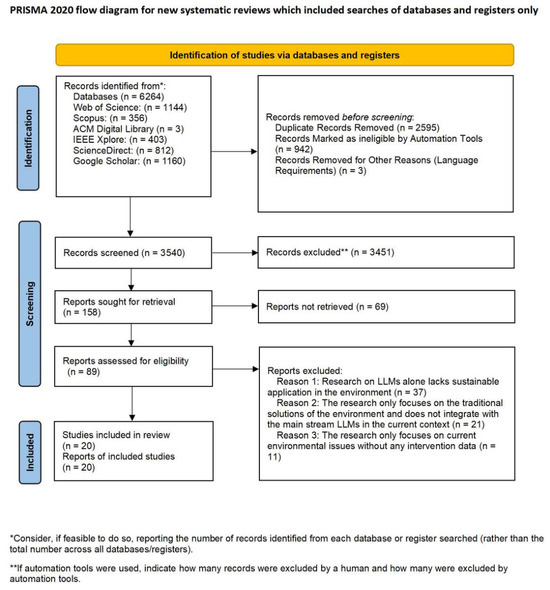
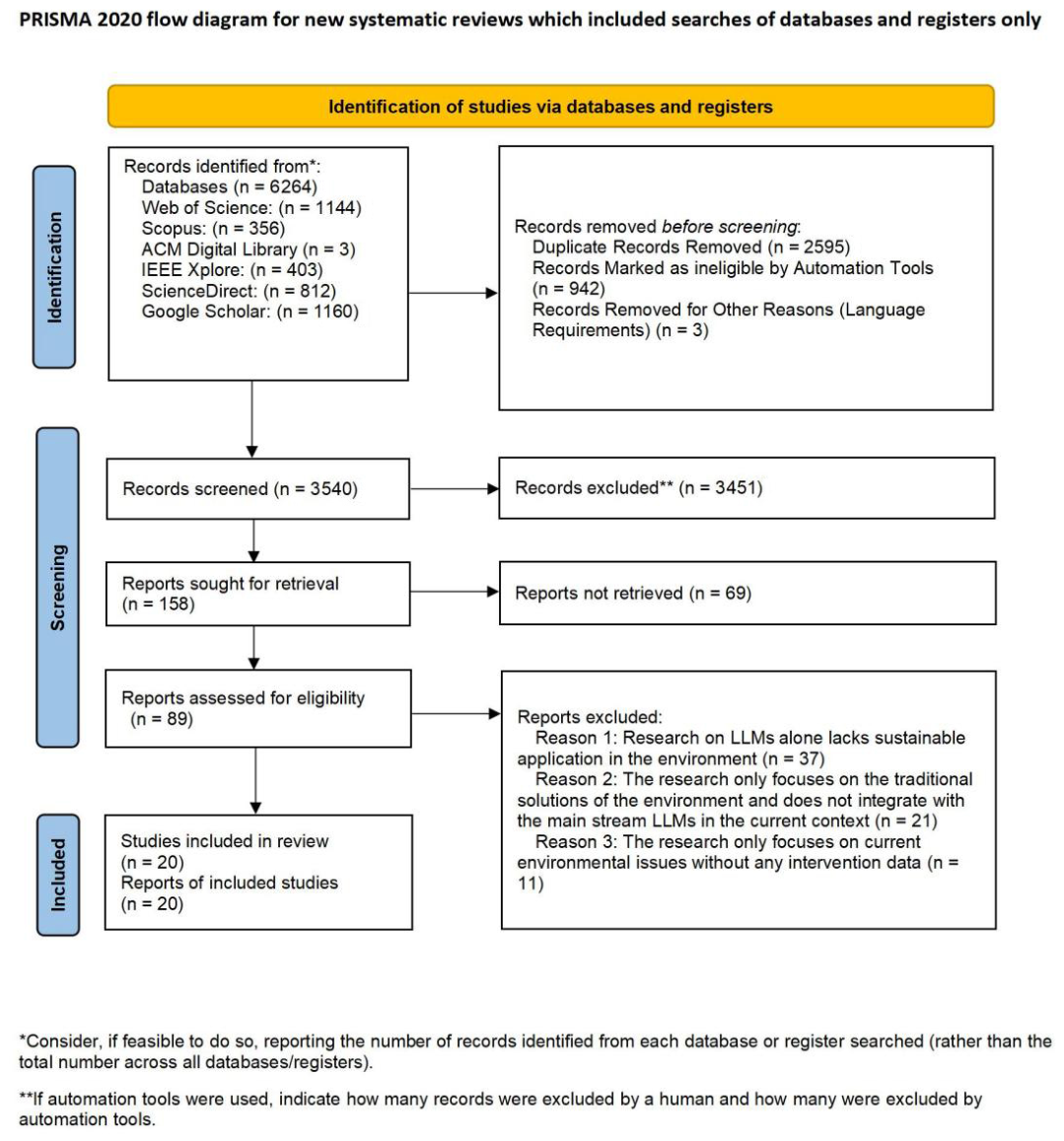
The systematic search initially retrieved a total of 6264 documents, as illustrated in Figure 1. After removing duplicate entries using the Zotero software, 3540 articles remained. Two reviewers independently screened the article titles and abstracts, resulting in the exclusion of 3451 articles deemed not directly relevant to the research topic, along with 3 non-English articles. Subsequently, the remaining 158 articles were comprehensively assessed by the two reviewers. Of these, 69 articles were excluded due to the inaccessibility of the full text. The final remaining 89 articles were then reviewed. Among these, 69 articles focused on opinions, expectations, and attitudes rather than specific technological applications. Since these studies were not the focus of the current research, they were excluded. Consequently, a final total of 20 documents were included in the scope of this systematic review (see Table 3).
Figure 1.
PRISMA flowchart.
Table 3.
Overview of Study Characteristics.
To ensure the transparency, reproducibility, and rigor of our findings, this review was conducted in strict accordance with the PRISMA-ScR statement. We intentionally chose the PRISMA-ScR framework over scoping review methodologies (Arksey and O’Malley) because our research objective is to synthesize specific outcomes and evaluate the academic impact of included studies rather than merely mapping the conceptual boundaries of the field. The PRISMA-ScR guidelines provide a structured four-phase flow (Identification, Screening, Eligibility, and Inclusion), which allows for a more controlled and bias-reduced selection process, ensuring that only the most relevant and high-quality studies are synthesized.
3.1. Characteristics of Studies
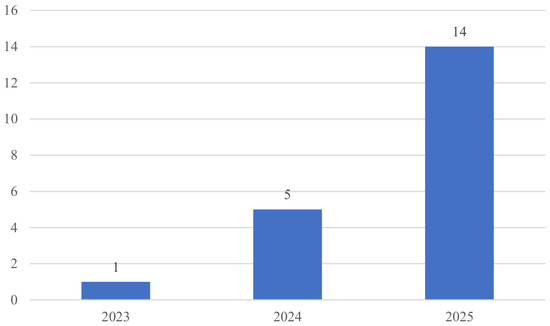
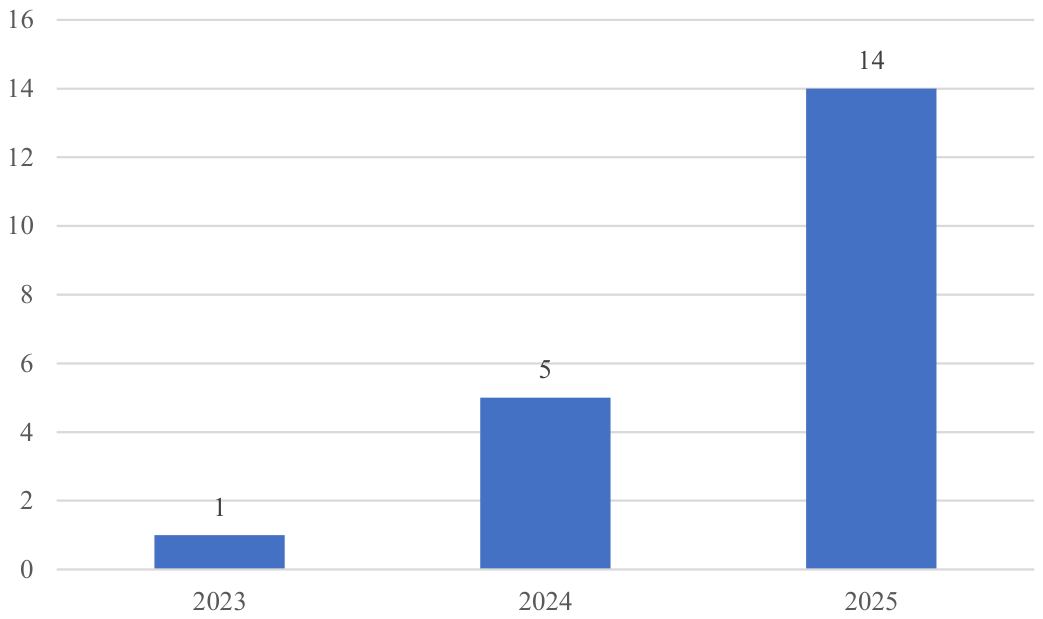
This study included 20 final research documents for analysis, examining the publication trends and regional distribution characteristics of GenAI research in environmental sustainability (Figure 2 and Figure 3). Temporally, these studies exhibit a significant exponential growth trend: the average publication volume increased from just 1 in 2023 to 5 in 2024, and then surged to 14 in 2025, with the 2025 output accounting for 70% of the total publications. This data signifies that the application of GenAI in the environmental sustainability domain has entered a rapid development phase. The low publication rate in the initial period (2023) can be attributed to the limited maturity and relatively low adoption rate of early GenAI technologies. The marked increase in 2025 is the result of a confluence of three major factors: LLM technological breakthroughs, the continuous aggravation of environmental challenges, and the gradual implementation of strategic national policies emphasizing urban environmental improvement.
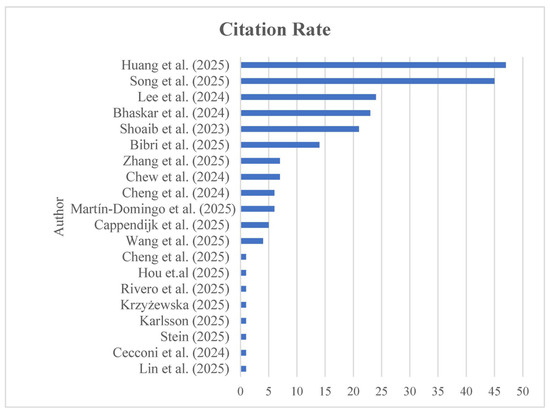
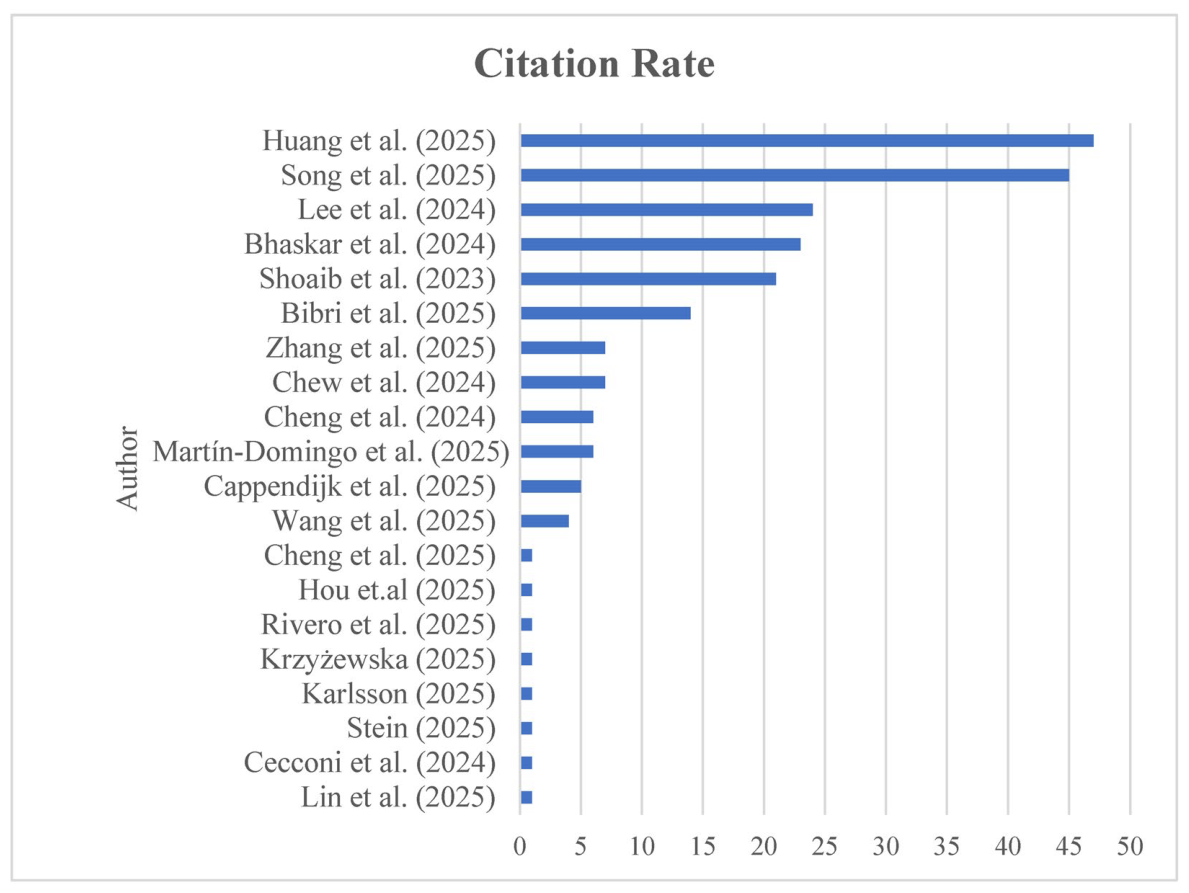
Figure 2.
Citation Rate [7,16,17,18,19,20,21,22,23,24,25,26,27,28,29,30,31,32,33,34].
Figure 3.
Annual number of publications.
Specifically, the recent LLM technological breakthroughs include the shift from purely text-based processing to multimodal architectures (e.g., GPT-4 and beyond) and the significant enhancement of contextual reasoning and specialized fine-tuning techniques (such as RAG). These advancements enable LLMs to efficiently integrate and interpret the diverse data sources required for environmental monitoring and governance, including text, real-time sensor streams, and geospatial imagery, making them more practical, reliable, and cost-effective for professional environmental tasks. Simultaneously, this surge in research is driven by the intensifying global environmental crisis, characterized by the escalating frequency and severity of extreme weather events and the implementation of increasingly stringent ESG disclosure regulations. These urgent, high-stakes challenges create a robust demand for capabilities such as real-time monitoring, complex scenario modeling, and automated compliance reporting, which the latest generation of LLMs are uniquely positioned to address. The alignment of technological feasibility, the urgent necessity for environmental sustainability, and supportive governmental policy drivers collectively fuels the acceleration of research in this domain.
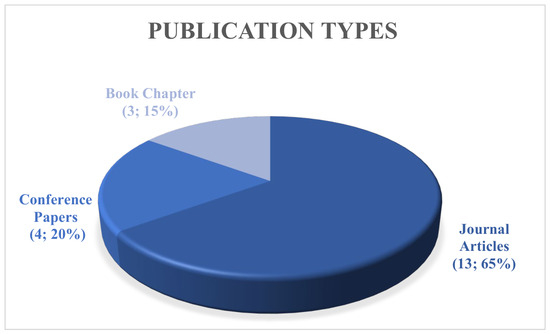
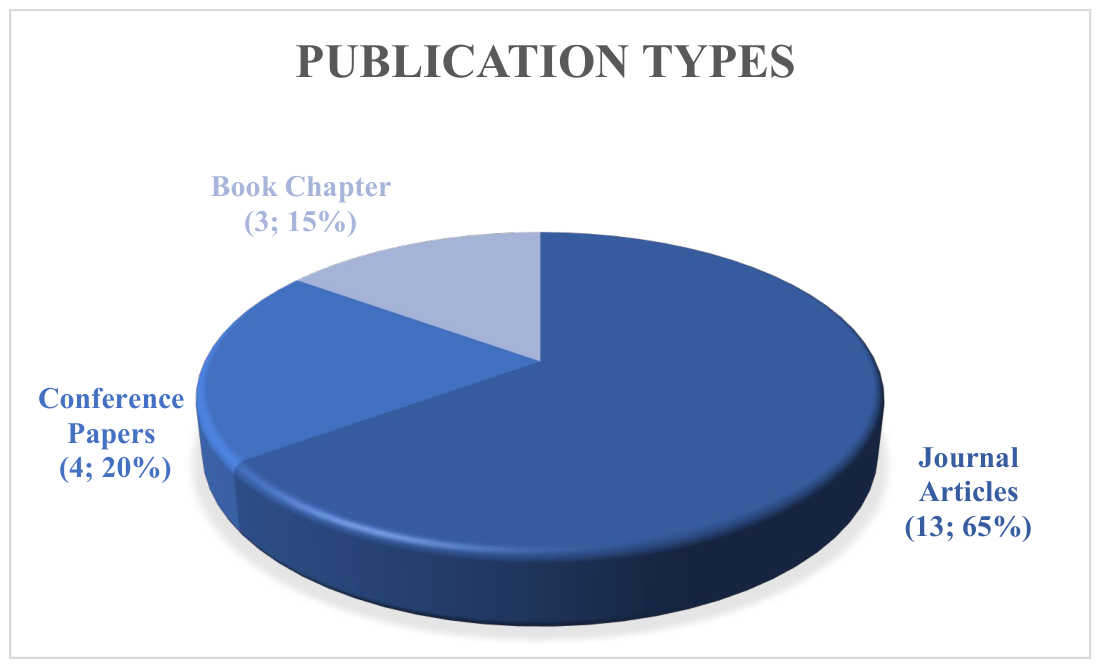
It should be noted that the bibliometric data presented in this section, including the publication types distribution (Figure 4), are intended to descriptively map the current literature landscape rather than to establish statistical correlations or evaluate the substantive efficacy of LLMs in environmental contexts.
Figure 4.
Publication types.
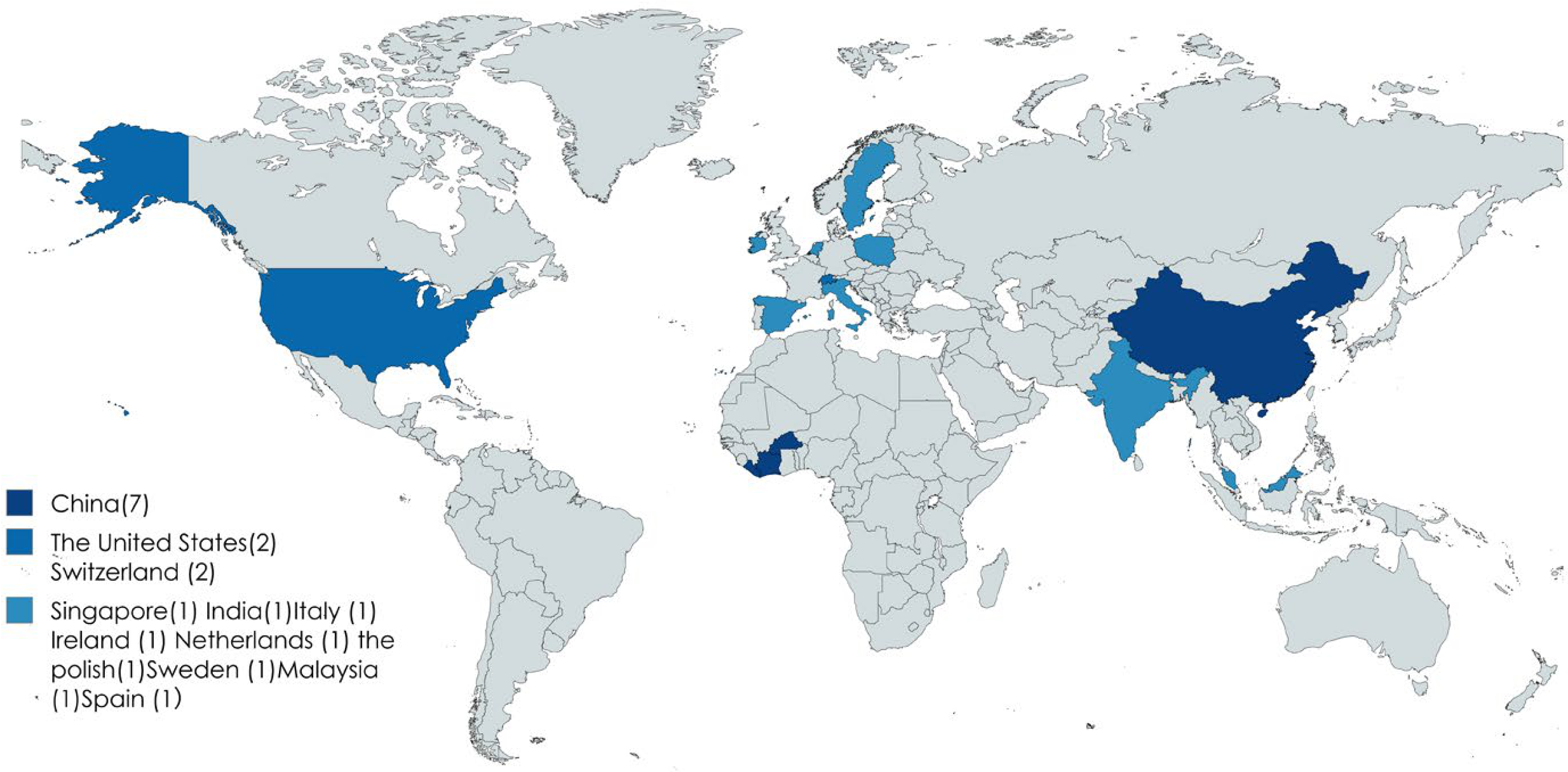
From a geographical perspective (Figure 5), China and the United States, as the world’s two largest economies and technological leaders, collectively contributed nearly half of the publications, establishing their dominant position in the field of environmental sustainability. China’s emergence as a crucial research front for LLM-enabled sustainability solutions is underpinned by its rapidly developing digital technology industry, robust national policies like the “Dual Carbon” strategy, and increasing governmental emphasis on environmental issues and the advancement of sustainability initiatives. The United States, leveraging its deep foundation in basic AI research, its mature green technology innovation ecosystem, and long-term experience in addressing climate change and promoting sustainable development, has taken the lead in exploring how LLMs can serve environmental, social, and governance goals. Although smaller in size, Switzerland also published two articles, demonstrating strong competitiveness in specific frontier areas due to its reputation in sustainable finance, environmental protection technology, and an excellent research system.
Figure 5.
Countries of publication.
The remaining countries, including Singapore, India, Italy, Ireland, the Netherlands, Poland, Sweden, Malaysia, and Spain, each contributed one article. While the overall research volume from these nations is not comparable to China, the US, or Switzerland, they each present unique regional research characteristics. Certain developed European countries, such as Sweden, the Netherlands, Italy, Spain, and Ireland, often link their research closely with stringent EU environmental regulations and the Green Transition strategy, focusing on the cutting-edge exploration of LLMs in niche areas like the circular economy, sustainable supply chain management, climate modeling, and ethical alignment. Singapore, as a smart city and technology hub, naturally focuses its research on utilizing LLMs to optimize urban energy efficiency and resource management. Conversely, emerging economies like India and Malaysia, although their research is nascent, reflect the gradual diffusion of LLM applications in the environmental and sustainability domains towards the Global South. These countries are more concerned with leveraging LLMs as a cost-effective tool to solve localized sustainability challenges, such as addressing environmental pollution, enhancing natural disaster warning capabilities, or mitigating deficits in environmental regulatory capacity. Research from Eastern European nations like Poland is likely closely tied to its own energy structure transformation and the overall policy direction of the EU, hence its focus on the intersection of LLMs and environmental sustainability.
The global distribution pattern of LLM and sustainability research is collectively shaped by a multitude of factors, including technological research and development strength, the urgency of national sustainable development strategies, economic and research resources, and specific societal needs. The recent surge in research output correlates with actual breakthroughs in LLM technology and the growing global concern over the climate crisis.
3.2. Research Methodology
Regarding the research methodologies employed, this study primarily adopted quantitative methods, supplemented by qualitative and mixed-methods designs (see Table 4). According to the literature statistics, quantitative research methods were widely utilized, appearing a total of 13 times. Specific quantitative techniques included atmospheric simulation systems, RAG models, the AirGPT framework, carbon emission formulas, IES models, machine learning data analysis, time series analysis, and regression analysis, among others. These methods were mainly used for model construction, environmental impact assessment, energy consumption forecasting, or simulating the effects of policy interventions, which reflects the environmental sustainability domain’s emphasis on data-driven validation and model performance verification. Quantitative research serves as the primary evaluation framework for GenAI applications in environmental sustainability, leveraging structured data (e.g., descriptive statistics, relevant indicators) to directly verify the efficacy and underlying mechanisms of the tools. Specific statistical techniques included data analysis, POI calculation, descriptive statistics, MAPE, Coefficient of Determination, and the A20 index. Notably, assessment and validation methods (including MAPE, comparative discussions, and sampling surveys) appeared in three studies, highlighting a focus on standardized quantification of effects.
Table 4.
Research Methodologies.
In contrast, only 4 studies adopted qualitative research methods, mainly covering predictive modeling, NLP, and theoretical and comparative analysis. These studies typically focus on theoretical construction, comparison of technical pathways, or the in-depth exploration of the potential impacts of LLMs in sustainable governance. Mixed methods, utilized in 3 studies, combine the strengths of both quantitative and qualitative approaches. Typical implementations include combining sampling surveys with systematic reviews, or analyzing text data via LLMs supplemented by manual verification. This approach demonstrates good adaptability in assessing sustainable behavior, analyzing corporate environmental reports, or integrating multi-source data, with the combination of multiple methodologies enhancing the comprehensiveness and persuasiveness of the research. The cross-sectional research between LLMs and sustainability is currently in its nascent stage, with a methodological preference clearly leaning towards technical implementation and quantitative assessment, emphasizing model construction, simulation, and empirical analysis.
3.3. Types of Input and Output Data
In the included studies, the input data required by the models exhibit characteristics of diversification, massiveness, and high specialization. These data form the knowledge base for LLMs to conduct training, analysis, and decision-making in the sustainability domain (see Table 5).
Table 5.
Types of Input and Output Data.
The data type with the highest proportion (40%) is the text corpus, which includes academic papers, policy documents, corporate sustainability reports, news, and social media content. The composition of this data reflects the LLMs’ reliance on vast amounts of human knowledge text to comprehend complex concepts, policy frameworks, and social dynamics within the sustainability sector. Structured professional data accounts for 35%, covering environmental parameters such as NDVI, soil moisture, energy data, geospatial information, and professional formula models. This type of data is the cornerstone for LLMs to perform precise analysis, simulation, and scientific decision-making when applied to specific scenarios, such as carbon emission calculation and energy system optimization. Real-time data streams (15%) and problem-defining data (10%), while representing a relatively smaller proportion, are critically important. Their existence represents the frontier direction of this research area: utilizing LLMs to process dynamic data from real-time meteorology, urban operations, and electricity markets, and providing real-time, dynamic solutions for specific optimization problems like building energy efficiency and grid dispatch.
The application of LLMs in the sustainability domain is gradually shifting from mere knowledge processing toward dynamic, complex system analysis that integrates multi-source data (text, professional data, real-time data). This composition of input data underscores the high demands placed on models by the environmental sustainability field: they must not only understand natural language but also possess the comprehensive ability to handle professional data, respond to real-time dynamics, and solve specific industry challenges.
3.4. Application Domains
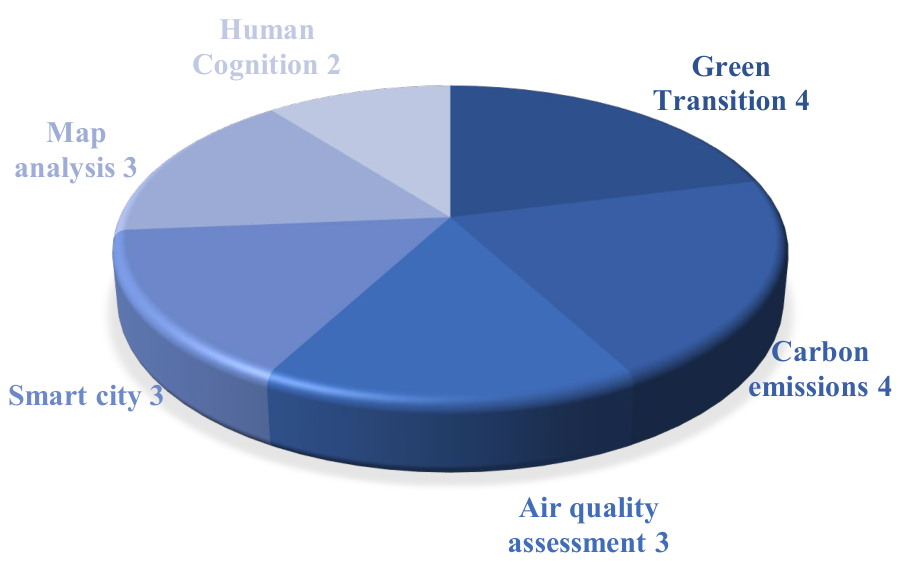
The current application areas can be synthesized into six core domains: Green transition, carbon emission management, air quality assessment, smart city operations, map analysis, and human cognition and behavioral observation (Figure 4). Green transition (4 articles): Researchers utilize the powerful information integration and simulation capabilities of LLMs to provide decision support for national and regional sustainable development pathways. The core focus here is processing massive volumes of policy documents, scientific reports, and market data to efficiently assess the impact of climate mitigation policies, plan innovative urban development solutions, and conduct climate risk assessments, thereby assisting in the formulation of scientific and forward-looking low-carbon development strategies. Carbon emission management (3 articles): As a core quantifiable dimension of sustainability, global carbon emission management requires high precision. LLMs in this domain serve a “Measurement, Reporting, and Verification” role. Researchers achieve precise calculation and dynamic monitoring of product carbon footprints and Greenhouse Gas emissions by interpreting and applying complex models like traffic carbon emission formulas, and integrating real-time operational data provided by government agencies. They can also simulate low-carbon power scenarios and carbon market dynamics, providing critical data support for emission reduction optimization. Air quality assessment (3 articles): Given the increasing severity of global environmental quality issues, air quality serves as a key indicator of environmental health. LLMs are applied here by fusing environmental parameters such as wind speed with geospatial information to achieve precise atmospheric assessment and in-depth attribution analysis. The application scenarios extend beyond routine air quality evaluation to tracing atmospheric Greenhouse Gas emission sources, incorporating the impact of sudden environmental events like forest fires into comprehensive analysis, and generating insightful assessment reports. Smart city operations (3 articles): Within the smart city paradigm, LLMs often function as the “central nervous system” of urban operations. Studies in this area focus on processing real-time data streams from ITS, vehicle technologies, and urban sensors to analyze and optimize the built environment and public transit ridership. This synergy enhances the resource efficiency of systems like traffic and energy utilization, facilitating efficient, low-carbon urban operation models.
As illustrated in Figure 6, the role of LLMs in environmental sustainability is inherently paradoxical. On the enabling side, the six core application domains identified in this review, green transition, carbon emission management, air quality assessment, smart city operations, geospatial mapping, and human cognition, collectively demonstrate LLMs’ capacity to accelerate environmental governance at multiple scales. Conversely, the same models impose measurable constraints through high energy consumption, substantial carbon footprints during training and inference, hallucination risks in high-stakes environmental decisions, embedded algorithmic biases, and data privacy concerns. This dual-role structure necessitates a lifecycle-aware cost–benefit analysis when deploying LLMs for sustainability purposes, a methodological direction that future research should operationalize with domain-specific benchmarking.
Figure 6.
Application Domains.
4. Discussion
4.1. Main Findings and Results of Studies
LLMs demonstrate significant potential and application value in advancing sustainability across multiple domains. In the domains of environmental quality management and disaster risk response, LLMs enhance the prediction and response capabilities for natural or public health disasters, such as earthquakes, dengue fever, and forest fires, by improving geographical monitoring autonomy, optimizing data processing efficiency, and visual analysis. This saves researchers considerable time and labor costs and increases research efficiency. Maps generated by LLMs allow researchers to clearly understand the distribution and clustering of disasters in different regions. This substantially improves the timeliness, consistency, scalability, and standardization of data processing while automating repetitive tasks and assisting in data analysis.
In the process of urban and energy system transitions, LLMs provide critical technical support for the development of sustainable smart cities. By integrating GenAI and the AIoT system, they optimize energy management, traffic planning, and low-carbon grid operations, thereby contributing to the construction of more efficient, resilient, and sustainable urban environmental frameworks. They hold potential for driving sustainable smart city development, enabling researchers to cultivate smarter, more energy-efficient, adaptive, secure, robust, and autonomous AIoT ecosystems through the strategic application of Generative intelligence. Furthermore, LLMs show reliability in automatically extracting KPIs from corporate reports, providing a new pathway for evidence-based policymaking and corporate environmental performance assessment.
The credibility of this synthesis is supported by the high quality of the included literature. The predominant MMAT scores of 85.71% to 100% across various research designs (qualitative, RCTs, non-randomized, etc.) indicate a low risk of bias in the foundational data. Although some studies lacked detailed reporting on specific appraisal criteria (e.g., assessor blinding in RCTs), the consistency of findings across these high-quality studies strengthens the overall robustness of our conclusions.
Despite existing global concerns about the energy consumption and carbon footprint generated by these models, current LLMs can still effectively support climate model interpretation, public communication, and education, and, in specific contexts, assist in analyzing public attitudes and beliefs towards global warming. Relevant research in the carbon emission and transition domain has demonstrated the complexity and challenges of carbon emission calculation, emphasizing the importance of comparing and validating formulas from different sources. The potential of LLMs as an NLP technology is thus demonstrated in the context of carbon emission calculation. LLMs are both powerful tools for achieving environmental and social sustainability goals, and their own development must be integrated into the scope of global environmental sustainability considerations. In the following sections, we will focus on the implications, implications, limitations and future trends of LLMs on Environmental Sustainability.
While the NLP-based clustering successfully maps the most frequently discussed obstacles, such as data constraints, computational costs, hallucination, and security, frequency-driven methods may inadvertently overshadow barriers that are less frequently mentioned but possess profound socio-psychological impacts. To address this methodological limitation and provide a more holistic view, a supplementary qualitative analysis of the included studies was conducted.
Beyond technical and economic hurdles, significant socio-psychological barriers exist in deploying LLMs for environmental sustainability. Foremost is the “trust deficit” and public skepticism toward AI-driven environmental policies. Environmental decision-making often involves high stakes and ethical trade-offs; public acceptance is severely hindered when AI models operate as “black boxes” lacking human-like moral accountability. Furthermore, there is an emerging concern of “deskilling” and over-reliance on AI, which could lead to the gradual erosion of traditional, indigenous ecological knowledge and human intuition in conservation efforts. Although these socio-psychological and socio-ethical factors show lower co-occurrence frequencies in the current NLP analysis, reflecting a technical bias in the existing literature, they are critical bottlenecks that must be addressed for the successful real-world adoption of LLMs in sustainability.
4.2. Impact of LLMs on Environmental Sustainability
LLMs exhibit remarkable capabilities in the field of environmental science, enabling researchers to provide accurate regulatory information, perform data analysis, and generate location-specific management recommendations [11]. By strictly adhering to scientific sources, they are used in areas such as air quality policy, disaster monitoring, and forest fire factor analysis, offering strong data support for precise and efficient environmental governance [35]. LLMs show significant potential in optimizing code for lower energy consumption, optimizing grid operations to integrate renewable energy, and reducing urban traffic carbon emissions by promoting land use and public transportation, providing innovative pathways for smart city traffic transition and low-carbon energy management [36]. The gradual iteration of various LLMs has greatly lowered the application threshold for data analysis and remote sensing technologies, allowing non-professionals to quickly handle complex scientific datasets, thereby accelerating the popularization and application of sustainability knowledge and lowering the entry barrier for researchers [37]. Concurrently, LLMs can simulate public opinions; despite certain algorithmic fidelity issues, they can still translate complex climate model results into easily understandable narratives, thereby improving policy formulation and promoting public participation in climate action, fostering the fusion of technology and environmental science [20]. By optimizing resource allocation, accelerating technological innovation, and enhancing governance capacity, LLMs are becoming key accelerators in achieving sustainability goals. Nevertheless, the models’ inherent resource consumption, ethical risks, and technical uncertainties also introduce new, unresolved issues for sustainable development.
While this study acknowledges the environmental costs associated with deploying large language models, a more rigorous treatment of this trade-off is warranted. Drawing on lifecycle assessment (LCA) frameworks, the environmental burden of LLM usage in sustainability can be situated within a broader sustainability calculus. Critically, however, these costs must be weighed against the efficiency gains and reduced resource consumption that LLM-assisted approaches offer compared to conventional alternatives in sustainability. We therefore propose framing this tension using a cost–benefit lens informed by LCA principles: while the per-query carbon footprint of LLM inference is non-trivial, the aggregate benefit may yield a net positive environmental or economic outcome under certain deployment conditions. Future work should operationalize this comparison with domain-specific benchmarking data to provide a more definitive assessment.
4.3. Role and Significance of LLMs for Environmental Sustainability
LLMs demonstrate powerful data parsing and automation capabilities in the fields of environmental governance and disaster response. They can process satellite remote sensing images, sensor data, and various environmental parameters, not only significantly improving the automation level of dengue fever epidemic monitoring and earthquake risk assessment but also accurately identifying the dominant factors of forest fires [24], establishing a scientific basis for disaster warning and resource allocation [38]. In carbon emission and energy management, LLMs serve as key quantification and optimization tools [39]. They can automatically extract carbon emission KPIs from corporate sustainability reports, assist in complex carbon footprint calculation [40], and optimize grid operations and forecast energy demand patterns in low-carbon energy management [28], continuously promoting the green transition of energy systems. In the dimension of information dissemination, LLMs play the vital role of a “translator [41].” They can convert complex climate model outputs into expressions easily understood by the public, effectively aiding the popularization of climate education and enhancing public participation [42]. They can also quickly gain insight into public attitudes towards global warming by analyzing text data from social media, providing support for formulating more targeted climate communication strategies [43]. As intelligent decision-making hubs, LLMs integrate GenAI and AIoT technology to optimize intelligent transportation systems and improve resource utilization efficiency [44], thereby providing strong support for building more efficient and resilient urban development strategies [45]. However, the training and operation of LLMs are accompanied by significant energy consumption and carbon footprints, creating an intrinsic conflict with the sustainability goals they aim to promote [39]. Furthermore, challenges such as inconsistent performance, limited accuracy in specific tasks, and latent security risks exist in the application of these models [46]. This necessitates prudent management of the technology’s ecological footprint, seeking a dynamic balance between driving technological innovation and ensuring environmental sustainability.
4.4. Limitations of LLMs Applications in Environmental Sustainability
Currently, the primary tasks for LLMs are to address the issues of accuracy and hallucination in generated content and to enhance their ability to parse structured scientific data [47], such as time series and gridded weather data [48]. Their training and operation processes consume vast amounts of water and energy, generate a substantial carbon footprint, and impose pressure on land resources, forming a direct conflict with the core goals of sustainable development [49]. To address this, there is a need to establish specialized domain evaluation benchmarks and systematically validate model performance through simulation testing, prototyping, and real-world deployment [50].
A core development trend involves squarely addressing and quantifying the energy consumption and environmental footprint generated by LLMs during training and operation [49]. Currently, LLMs still suffer from insufficient algorithmic fairness and data dimensionality limitations [51]. The use of commercial LLM APIs may also lead to data public disclosure outside the jurisdiction, potentially violating relevant regulations and posing a risk of sensitive information leakage to external systems [52]. Therefore, a cautious approach is essential to address the embedded algorithmic biases in LLMs, specifically by proactively conducting sustainable algorithm audits, implementing bias mitigation measures, and striving to collect higher-quality, more representative data [53]. It is particularly important to strengthen research across cultural and institutional contexts to break through the limitations of relying on secondary data in the environmental sustainability domain [54]. A clear future development trend is that LLMs will be positioned as “decision support tools,” rather than “substitutes for human judgment [55].” For researchers, the key lies in establishing effective human–machine collaboration frameworks, allowing users to verify model outputs with professional discretion and combining tool capabilities with human insights to jointly drive the green transition process.
To provide a more granular understanding of LLM efficacy, we categorized the findings into key environmental sustainability sub-topics, revealing distinct application patterns: LLMs demonstrate high efficacy in carbon accounting and climate policy synthesis. By automating the extraction of ESG metrics and emissions data from vast corporate reports, models like GPT-4 and DeepSeek-R1 enable more transparent monitoring of decarbonization efforts. In the context of energy and materials, LLMs are primarily utilized for optimization. The evidence suggests that LLMs can significantly reduce energy consumption in built environments by integrating with Digital Twins to provide proactive climate control and adaptive lighting solutions. The application of domain-specific models, such as AirGPT, highlights a shift toward specialized AI. These models are particularly effective in interpreting complex air quality indices and providing actionable policy recommendations, outperforming general-purpose models in technical accuracy. While less prevalent than urban-focused studies, LLMs are emerging as powerful tools for ecological documentation and remote sensing data interpretation. They facilitate the analysis of land-use changes and assist in mapping disaster-prone areas, though spatial–temporal reasoning remains a challenge.
4.5. Potential and Future Trends of LLMs Applications in Environmental Sustainability
The potential of LLMs in the environmental sustainability domain is reflected in the ability to expand their application scope to broader sustainability indicators, different industries, and multilingual scenarios [56]. Especially when deeply integrated with structured data extraction tools, they will strongly promote the automation process of ESG data, thereby better adapting to rapidly changing regulatory requirements [57]. This also inspires researchers to adopt such methods in the future, further optimizing research paradigms and exploring the integration pathways of LLMs with cutting-edge technologies like the AIoT and digital twins to build more powerful intelligent systems [58]. Simultaneously, efforts should focus on unlocking the potential of LLMs in real-time decision-making scenarios, such as dynamic traffic management and complex climate modeling [59]. By incorporating a wider range of impact factors and analyzing their associated effects, LLMs are expected to upgrade from mere analytical tools to intelligent decision support systems capable of handling complex systemic problems [60]. NLP tasks have been improved greatly by LLMs. However, numerous parameters make their execution computationally expensive and difficult on resource-constrained devices. For this problem, as well as maintaining accuracy, Zheng, etc. also proposed a novel distilled lightweight model for BERT named MicroBERT, and have observed that this method significantly reduces the model size and inference time as well as without sacrificing high accuracy [61]. The future development of LLMs in the sustainability domain is inseparable from the support of interdisciplinary collaboration, it requires continuously enhancing their technical capabilities, reliability, and application scope, while simultaneously addressing the environmental impacts, ethical risks, and data limitations they introduce, ultimately guiding them to become responsible tools for promoting the sustainability process.
4.6. Comparative Synthesis of Performance and Efficacy
A critical synthesis of the evidence reveals significant performance gradients across different LLM architectures and applications. Quantitative data from the included studies suggest that the efficacy of LLMs is not uniform. In document-heavy domains like ESG reporting and policy analysis, models such as GPT-4o and DeepSeek-R1 demonstrate near-human accuracy in information extraction, significantly reducing labor time.
However, a comparative analysis shows that domain-specific fine-tuned models consistently outperform general-purpose models in specialized environmental tasks, reducing hallucination rates. This evidence provides the necessary quantitative support for our conclusion that LLMs are a positive driver for sustainability, provided they are appropriately calibrated to the specific technical demands of the environmental sub-domain.
4.7. Patterns of Success and Failure: An Interpretative Analysis
Beyond simple descriptions, our analysis identifies distinct patterns that determine the success or failure of LLM deployment.
LLMs exhibit maximum efficacy in tasks involving unstructured text synthesis, code generation for energy optimization, and multi-criteria decision support. These successes are characterized by the models’ ability to bridge the gap between complex climate data and public communication. Conversely, LLM efficacy diminishes in tasks requiring precise spatial–temporal reasoning, or physics-based causal modeling. These “failure modes” are primarily due to numerical hallucinations and a lack of inherent physical world knowledge.
Recognizing these patterns is crucial: the “positive role” of LLMs is most robust in their capacity as cognitive assistants and information aggregators, while their role as autonomous environmental decision-makers is still constrained by fundamental reasoning limitations.
4.8. Limitations
This systematic scoping review aims to comprehensively synthesize the application practices of LLMs in the field of environmental sustainability; however, the study still presents several limitations. Firstly, despite employing an extensive set of search terms and covering six core academic databases, the search strategy may not exhaust all relevant literature. Specifically, gray literature not indexed in databases and newly published research in non-core journals may have been missed. Secondly, the literature included in this review is predominantly in English, which may lead to the omission of research published in other languages that holds significant practical value in specific geographical regions. Finally, due to the obvious heterogeneity in the research designs and application domains of the included literature, this review primarily utilizes a narrative synthesis approach rather than a meta-analysis, which to some extent limits the in-depth quantitative comparison of the effects of related interventions. Based on these limitations, future research can be improved by expanding database coverage, conducting multilingual literature searches, and regularly updating the review content.
Another important limitation to acknowledge is the exclusion of 69 studies due to the inaccessibility of their full texts. Although their titles and abstracts suggested potential relevance during the initial screening phase, the inability to review their complete methodologies and empirical data necessitated their exclusion to maintain the rigorous standards of this scoping review. Given the consistent trends and overarching patterns identified among the 20 fully assessed and highly representative studies, we assess that the absence of these inaccessible records is unlikely to fundamentally skew the core findings of this review.
One of further methodological limitation concerns the operationalization of “applied research” as an inclusion criterion. While review articles were systematically excluded, a subset of included studies rely substantially on secondary data or adopt a conceptual-analytical orientation that does not constitute fully independent empirical investigation in the traditional sense. Although these studies were retained on the grounds that they deploy LLMs as an active subject of structured analysis and contribute evidence directly relevant to the review’s research questions, their inclusion introduces a degree of heterogeneity in the empirical rigor of the evidence base. To mitigate this, we have introduced a post hoc empirical/conceptual-applied classification, which is reflected in the interpretive framing of the synthesis. Future scoping reviews in this domain are encouraged to adopt a pre-registered, more granular typology of research designs, distinguishing, for instance, between system-level implementation studies, evaluation studies, and applied analytical studies—to enhance selection reproducibility and evidence coherence.
Furthermore, it is critical to acknowledge that the quantitative data and visual mappings presented in this study, e.g., publication trends, geographic distribution, and publication types, are inherently descriptive. Due to the nascent stage of this intersectional field and the high heterogeneity of current studies, standardized statistical interpretation or rigorous uncertainty analysis, such as confidence intervals or effect sizes, could not be robustly performed. Consequently, claims regarding the transformative impact of LLMs should be interpreted with caution, as they currently lack the rigorous empirical and statistical backing required to definitively establish their efficacy in complex, real-world environmental systems.
5. Conclusions
This study systematically synthesized and analyzed the current application status of LLMs in the field of environmental sustainability. The systematic synthesis indicates that while LLMs show emerging potential in environmental governance, energy system optimization, and public environmental cognition, comprehensive empirical validation remains limited. Based on the currently available literature, LLMs appear to offer operational advantages in multimodal data integration and low-carbon transition pathway modeling; however, these findings are primarily derived from early-stage conceptual or controlled applications rather than large-scale, real-world deployments. However, the training and operation processes of LLMs consume substantial energy, creating a certain intrinsic conflict with the sustainable development goals they promote. Given that LLMs have lowered the threshold for complex data processing to the level of natural language interaction, their development potential is concentrated in expanding their application scope to broader sustainability indicators, different industries, and multilingual scenarios. This also inspires researchers to adopt such technological pathways in the future, focusing on unlocking the potential of LLMs in real-time decision-making scenarios such as dynamic traffic management and complex climate modeling. The future development of LLMs in the sustainability domain is inseparable from the support of interdisciplinary collaboration; it requires continuously enhancing their technical capabilities, reliability, and application scope, while simultaneously addressing the environmental impacts, ethical risks, and data limitations they introduce, ultimately positioning them as responsible tools for promoting the sustainability process.
Supplementary Materials
The following supporting information can be downloaded at: https://www.mdpi.com/article/10.3390/su18094327/s1, Table S1: Preferred Reporting Items for Systematic reviews and Meta-Analyses extension for Scoping Reviews (PRISMA-ScR) Checklist.
Author Contributions
X.S., T.L. and Y.T.L. proposed the idea to conceive and design this study. X.S. analyzed the data. X.S. completed the manuscript with the assistance of T.L., P.P. and D.W. supervised students and oversaw this work. All authors discussed the results and contributed to the final manuscript. All authors have read and agreed to the published version of the manuscript.
Funding
This research was funded by the Macao Science and Technology Development Fund (FDCT; funding ID: 0029/2025/AIJ) and Macao Polytechnic University research grant (project code: RP/FCA-24/2025).
Institutional Review Board Statement
Not applicable.
Informed Consent Statement
Not applicable.
Data Availability Statement
The data used and/or analyzed during the current study are available from the corresponding author on reasonable request.
Conflicts of Interest
The authors declare no competing interests.
Appendix A
| Type of Research Design | ||||||||||
| 1. QUALITATIVE STUDIES | ||||||||||
| NO. | Authors (year) | S1. | S2. | 1.1. | 1.2. | 1.3. | 1.4. | 1.5. | Score | Study Quality |
| [17] | Shoaib et al. (2023) | + | + | + | + | + | + | ? | 85.71% | Good |
| [21] | Cecconi et al. (2024) | + | + | + | + | + | + | ? | 85.71% | Good |
| [24] | Stein (2025) | + | + | + | + | + | + | + | 100% | Good |
| [31] | Rivero et al. (2025) | + | + | + | + | + | + | − | 85.71% | Good |
| 2. RANDOMIZED CONTROLLED TRIALS | ||||||||||
| NO. | Authors (year) | S1. | S2. | 2.1. | 2.2. | 2.3. | 2.4. | 2.5. | Score | Study Quality |
| [22] | Bhaskar et al. (2024) | + | + | + | + | + | ? | + | 85.71% | Good |
| [26] | Bibri et al. (2025) | + | + | + | + | + | ? | + | 85.71% | Good |
| [28] | Cheng et al. (2024) | + | + | + | + | + | ? | + | 85.71% | Good |
| [33] | Cheng et al. (2025) | + | + | + | + | + | ? | + | 85.71% | Good |
| 3. NON-RANDOMIZED STUDIES | ||||||||||
| NO. | Authors (year) | S1. | S2. | 3.1 | 3.2. | 3.3. | 3.4. | 3.5. | Score | Study Quality |
| [18] | Song et al. (2025) | + | + | + | + | + | + | + | 100% | Good |
| [19] | Cappendijk et al. (2025) | + | + | + | + | + | + | + | 100% | Good |
| [16] | Lin et al. (2025) | + | + | + | + | + | ? | + | 85.71% | Good |
| [23] | Wang et al. (2025) | + | + | + | + | + | + | + | 100% | Good |
| [24] | Chew et al. (2024) | + | + | + | + | + | + | + | 100% | Good |
| [27] | Huang et al. (2025) | + | + | + | + | + | + | + | 100% | Good |
| [30] | Krzyżewska (2025) | + | + | + | + | + | + | + | 100% | Good |
| [34] | Zhang et al. (2025) | + | + | + | + | + | + | + | 100% | Good |
| 4. QUANTITATIVE DESCRIPTIVE STUDIES | ||||||||||
| NO. | Authors (year) | S1. | S2. | 4.1. | 4.2. | 4.3. | 4.4. | 4.5. | Score | Study Quality |
| [32] | Hou et al. (2025) | + | + | + | + | + | + | + | 100% | Good |
| 5. MIXED METHODS STUDIES | ||||||||||
| NO. | Authors (year) | S1. | S2. | 5.1. | 5.2. | 5.3. | 5.4. | 5.5. | Score | Study Quality |
| [20] | Lee et al. (2024) | + | + | + | + | + | + | + | 100% | Good |
| [7] | Martín-Domingo et al. (2025) | + | + | + | + | + | + | + | 100% | Good |
| [29] | Karlsson (2025) | + | + | + | + | + | ? | + | 85.71% | Good |
| “+” = Yes; “−” = No; “?”= Can’t tell. | ||||||||||
References
- Luo, Y.; Pang, P.C.-I.; Chang, S. Enhancing exploratory learning through exploratory search with the emergence of large language models. arXiv 2024, arXiv:2408.08894. [Google Scholar]
- Mao, C.; Li, J.; Pang, P.C.-I.; Zhu, Q.; Chen, R. Identifying Kidney Stone Risk Factors Through Patient Experiences with a Large Language Model: Text Analysis and Empirical Study. J. Med. Internet Res. 2025, 27, e66365. [Google Scholar] [CrossRef] [Scilit] [PubMed]
- Annepaka, Y.; Pakray, P. Large language models: A survey of their development, capabilities, and applications. Knowl. Inf. Syst. 2025, 67, 2967–3022. [Google Scholar] [CrossRef] [Scilit]
- Han, S.; Wang, M.; Zhang, J.; Li, D.; Duan, J. A review of large language models: Fundamental architectures, key technological evolutions, interdisciplinary technologies integration, optimization and compression techniques, applications, and challenges. Electronics 2024, 13, 5040. [Google Scholar] [CrossRef] [Scilit]
- Peduzzi, P. The disaster risk, global change, and sustainability nexus. Sustainability 2019, 11, 957. [Google Scholar] [CrossRef] [Scilit]
- Salmi, A.; Jussila, J.; Hämäläinen, M. The role of municipalities in transformation towards more sustainable construction: The case of wood construction in Finland. Constr. Manag. Econ. 2022, 40, 934–954. [Google Scholar] [CrossRef] [Scilit]
- Martín-Domingo, L.; Fernandez, J.B.; Efthymiou, M.; Ali, M.I. Extracting airline emission KPIs from sustainability reports using large language models (LLMs). Transp. Res. Interdiscip. Perspect. 2025, 33, 101599. [Google Scholar] [CrossRef] [Scilit]
- Taheri Hosseinkhani, N. Artificial Intelligence and Large Language Models in Energy Systems and Climate Strategies: Economic Pathways to Cost-Effective Emissions Reduction and Sustainable Growth. SSRN Electron. J. 2025. Available online: https://papers.ssrn.com/sol3/papers.cfm?abstract_id=5385513 (accessed on 12 January 2026).
- Al Khourdajie, A. The role of artificial intelligence in climate change scientific assessments. PLoS Clim. 2025, 4, e0000706. [Google Scholar] [CrossRef] [Scilit]
- Cao, C.; Zhuang, J.; He, Q. LLM-Assisted Modeling and Simulations for Public Sector Decision-Making: Bridging Climate Data and Policy Insights. In Proceedings of the AAAI—2024 Workshop on Public Sector LLMs: Algorithmic and Sociotechnical Design, Vancouver, BC, Canada, 27 February 2024. [Google Scholar]
- Van de Weghe, N.; De Sloover, L.; Cohn, A.; Huang, H.; Scheider, S.; Sieber, R.; Timpf, S.; Claramunt, C. Opportunities and challenges of integrating geographic information science and large language models. J. Spat. Inf. Sci. 2025, 30, 93–116. [Google Scholar] [CrossRef] [Scilit]
- Everman, B.; Villwock, T.; Chen, D.; Soto, N.; Zhang, O.; Zong, Z. Evaluating the carbon impact of large language models at the inference stage. In Proceedings of the 2023 IEEE International Performance, Computing, and Communications Conference (IPCCC), Anaheim, CA, USA, 17–19 November 2023; IEEE: Piscataway, NJ, USA, 2023; pp. 150–157. [Google Scholar]
- Alizadeh, N.; Castor, F. Green AI: A preliminary empirical study on energy consumption in dl models across different runtime infrastructures. In Proceedings of the IEEE/ACM 3rd International Conference on AI Engineering-Software Engineering for AI, Lisbon, Portugal, 14–15 April 2024; pp. 134–139. [Google Scholar]
- McGowan, J.; Straus, S.; Moher, D.; Langlois, E.V.; O’Brien, K.K.; Horsley, T.; Aldcroft, A.; Zarin, W.; Garitty, C.M.; Hempel, S. Reporting scoping reviews—PRISMA ScR extension. J. Clin. Epidemiol. 2020, 123, 177–179. [Google Scholar] [CrossRef] [Scilit]
- Hong, Q.N. Revision of the Mixed Methods Appraisal Tool (MMAT): A Mixed Methods Study. Ph.D. thesis, McGill University, Montréal, QC, Canada, 2018. [Google Scholar]
- Lin, W.-C.; Tseng, M.-H. Autonomous Epidemic and Geographic Disaster Mapping: Assessing the Performance of Large Language Models in Spatial Information Integration. J. Disaster Res. 2025, 20, 386–395. [Google Scholar] [CrossRef] [Scilit]
- Shoaib, M.R.; Emara, H.M.; Zhao, J. A survey on the applications of frontier ai, foundation models, and large language models to intelligent transportation systems. In Proceedings of the 2023 International Conference on Computer and Applications (ICCA), Cairo, Egypt, 28–30 November 2023; IEEE: Piscataway, NJ, USA, 2023; pp. 1–7. [Google Scholar]
- Song, J.; Ma, C.; Ran, M. AirGPT: Pioneering the convergence of conversational AI with atmospheric science. npj Clim. Atmos. Sci. 2025, 8, 179. [Google Scholar] [CrossRef] [Scilit]
- Cappendijk, T.; de Reus, P.; Oprescu, A. An exploration of prompting LLMs to generate energy-efficient code. In Proceedings of the 2025 IEEE/ACM 9th International Workshop on Green and Sustainable Software (GREENS), Ottawa, ON, Canada, 29 April 2025; IEEE Computer Society: Washington, DC, USA, 2025; pp. 31–38. [Google Scholar]
- Lee, S.; Peng, T.-Q.; Goldberg, M.H.; Rosenthal, S.A.; Kotcher, J.E.; Maibach, E.W.; Leiserowitz, A. Can large language models estimate public opinion about global warming? An empirical assessment of algorithmic fidelity and bias. PLoS Clim. 2024, 3, e0000429. [Google Scholar] [CrossRef] [Scilit]
- Cecconi, F.; Marconi, L.; Barazzetti, A. Climate Change Mitigation Policies Using GPT-4; MISC: Berlin/Heidelberg, Germany, 2024. [Google Scholar]
- Bhaskar, P.; Seth, N. Environment and sustainability development: A ChatGPT perspective. In Applied Data Science and Smart Systems; CRC Press: Boca Raton, FL, USA, 2024; pp. 54–62. [Google Scholar]
- Wang, Z.; Zheng, X.; Meng, F.; Wang, K.; Wu, X.; Yu, D. Exploring the Joint Influence of Built Environment Factors on Urban Rail Transit Peak-Hour Ridership Using DeepSeek. Buildings 2025, 15, 1744. [Google Scholar] [CrossRef] [Scilit]
- Chew, Y.J.; Ooi, S.Y.; Pang, Y.H.; Lim, Z.Y. Framework to create inventory dataset for disaster behavior analysis using google earth engine: A Case Study in Peninsular Malaysia for historical forest fire behavior analysis. Forests 2024, 15, 923. [Google Scholar] [CrossRef] [Scilit]
- Stein, A.L. Generative AI and Sustainability. In The Oxford Handbook of the Foundations and Regulation of Generative AI; Hacker, P., Engel, A., Hammer, S., Mittelstadt, B., Eds.; Oxford University Press: Oxford, UK, 2025. [Google Scholar] [CrossRef] [Scilit]
- Bibri, S.E.; Huang, J. Generative AI of Things for sustainable smart cities: Synergies in cognitive augmentation, resource efficiency, network traffic, and anomaly and threat detection for environmental optimization. Sustain. Cities Soc. 2025, 133, 106826. [Google Scholar] [CrossRef] [Scilit]
- Huang, J.; Bibri, S.E.; Keel, P. Generative spatial artificial intelligence for sustainable smart cities: A pioneering large flow model for urban digital twin. Environ. Sci. Ecotechnol. 2025, 24, 100526. [Google Scholar] [CrossRef] [Scilit]
- Cheng, Y.; Zhou, X.; Zhao, H.; Gu, J.; Wang, X.; Zhao, J. Large Language Model for Low-Carbon Energy Transition: Roles and Challenges. In Proceedings of the 2024 4th Power System and Green Energy Conference (PSGEC), Shanghai, China, 22–24 August 2024; IEEE: Piscataway, NJ, USA, 2024; pp. 810–816. [Google Scholar]
- Karlsson, J.; Käck, J. Targeting Green Prospects: Identifying Environmentally Conscious Prospects Using AI-driven Tools Within the Swedish Energy Sector. 2025. Available online: https://www.diva-portal.org/smash/get/diva2:1964601/FULLTEXT01.pdf (accessed on 8 January 2026).
- Krzyżewska, A. The applications of ai tools in the fields of weather and climate—Selected examples. Atmosphere 2025, 16, 490. [Google Scholar] [CrossRef] [Scilit]
- Rivero, S.; Chinarro Vadillo, D.; Prieto Andres, A. The green algorithm: Can sustainability define the winner in the AI race? Front. Political Sci. 2025, 7, 1629914. [Google Scholar] [CrossRef] [Scilit]
- Hou, Y.; Yang, S.; Li, L.; Chen, L. Unlocking Environmental Sustainability with Generative Artificial Intelligence: Insights from Resource Orchestration Theory. IEEE Trans. Eng. Manag. 2025, 72, 3080–3093. [Google Scholar] [CrossRef] [Scilit]
- Cheng, Y.H.; Wang, Y.W.; Kuo, C.N. The Potential and Applications of Utilizing the ChatGPT Model for Comparative Analysis of Carbon Emission Calculation Formulas in Public Transportation. In Proceedings of the 2023 12th International Conference on Awareness Science and Technology (iCAST), Taichung, Taiwan, 9–11 November 2023; pp. 31–34. [Google Scholar]
- Zhang, L.; Yue, D.; Hancke, G.P.; Dou, C.; Yu, L.; Chen, Z. Optimization of Energy and Carbon Emissions in Integrated Energy System Based on Deep Reinforcement Learning Assisted by Large Language Model. IEEE Trans. Ind. Inf. 2025, 21, 8186–8197. [Google Scholar] [CrossRef] [Scilit]
- Ncube, M.M.; Ngulube, P. Enhancing environmental decision-making: A systematic review of data analytics applications in monitoring and management. Discov. Sustain. 2024, 5, 290. [Google Scholar] [CrossRef] [Scilit]
- Wen, J.; Zhang, R.; Niyato, D.; Kang, J.; Du, H.; Zhang, Y.; Han, Z. Generative AI for low-carbon artificial intelligence of things with large language models. IEEE Internet Things Mag. 2024, 8, 82–91. [Google Scholar] [CrossRef] [Scilit]
- Tao, L.; Zhang, H.; Jing, H.; Liu, Y.; Yan, D.; Wei, G.; Xue, X. Advancements in vision–language models for remote sensing: Datasets, capabilities, and enhancement techniques. Remote Sens. 2025, 17, 162. [Google Scholar] [CrossRef] [Scilit]
- Lei, Z.; Dong, Y.; Li, W.; Ding, R.; Wang, Q.R.; Li, J. Harnessing large language models for disaster management: A survey. In Proceedings of the Findings of the Association for Computational Linguistics: ACL 2025, Vienna, Austria, 27 July–1 August 2025; ACL: San Diego, CA, USA, 2025; pp. 14528–14551. [Google Scholar]
- Jiang, P.; Sonne, C.; Li, W.; You, F.; You, S. Preventing the immense increase in the life-cycle energy and carbon footprints of LLM-powered intelligent chatbots. Engineering 2024, 40, 202–210. [Google Scholar] [CrossRef] [Scilit]
- Folke, O.; Ivan Erik Troedsson, A. How Effectively Can AI Be Applied to Extract ESG-Related KPIs from Annual Reports? 2025. Available online: https://www.diva-portal.org/smash/get/diva2:1985641/FULLTEXT01.pdf (accessed on 29 January 2026).
- Zhong, Y.; Zhao, K. Application and Research of Large Language Model in Foreign Language Translation. In Proceedings of the 2024 International Conference on Information Technology, Comunication Ecosystem and Management (ITCEM), Bangkok, Thailand, 20–22 December 2024; IEEE: Piscataway, NJ, USA, 2024; pp. 63–68. [Google Scholar]
- Bina, R.; Luong, K.; Mehta, S.; Pang, D.; Xie, M.; Chou, C.; Kimbrough, S.O. On Large Language Models as Data Sources for Policy Deliberation on Climate Change and Sustainability. arXiv 2025, arXiv:2503.05708. [Google Scholar] [CrossRef] [Scilit]
- Rahman, G.; Fitriyah, A. Harnessing AI for Climate Change Communication: Analyzing Public Perception through NLP and Machine Learning. Sinergi Int. J. Commun. Sci. 2025, 3, 87–98. [Google Scholar] [CrossRef] [Scilit]
- Sharif, S.; Zeadally, S.; Ejaz, W. Resource optimization in UAV-assisted IoT networks: The role of generative AI. IEEE Internet Things Mag. 2024, 8, 34–41. [Google Scholar] [CrossRef] [Scilit]
- Vivekanandan, V.; Sureshkumar, R.; Manikandan, S.; Ram Kumar, R.; Das, M.S.; Kumar, G.R.; Nandakumar, S. Environmental Monitoring and Sustainability: LLMs for Climate-Responsive Urban Design. In Large Language Models for Sustainable Urban Development; Springer: Berlin/Heidelberg, Germany, 2025; pp. 89–109. [Google Scholar]
- Das, B.C.; Amini, M.H.; Wu, Y. Security and privacy challenges of large language models: A survey. ACM Comput. Surv. 2025, 57, 1–39. [Google Scholar] [CrossRef] [Scilit]
- Gao, C.; Fan, G.; Chong, C.Y.; Chen, S.; Liu, C.; Lo, D.; Zheng, Z.; Liao, Q. A Systematic Literature Review of Code Hallucinations in LLMs: Characterization, Mitigation Methods, Challenges, and Future Directions for Reliable AI. arXiv 2025, arXiv:2511.00776. [Google Scholar] [CrossRef] [Scilit]
- Mirshekali, H.; Shadi, M.R.; Ladani, F.G.; Shaker, H.R. A Review of Large Language Models for Energy Systems: Applications, Challenges, and Future Prospects. IEEE Access 2025, 13, 163162–163188. [Google Scholar] [CrossRef] [Scilit]
- Leon, M. The escalating AI’s energy demands and the imperative need for sustainable solutions. WSEAS Trans. Syst. 2024, 23, 444–457. [Google Scholar] [CrossRef] [Scilit]
- Agoro, H.; Llorient, M. Methodologies for Testing the Performance and Reliability of Large Language Models in Real-World AI Applications. 2025. Available online: https://www.researchgate.net/publication/391986163_Methodologies_for_Testing_the_Performance_and_Reliability_of_Large_Language_Models_in_Real-World_AI_Applications (accessed on 7 February 2026).
- Hadi, M.U.; Al-Tashi, Q.; Qureshi, R.; Shah, A.; Muneer, A.; Irfan, M.; Zafar, A.; Shaikh, M.B.; Akhtar, N.; Al-Garadi, M.A. Large Language Models: A Comprehensive Survey of Applications, Challenges, Datasets, Models, Limitations, and Future Prospects. TechRxiv 2024, techrxiv.23589741. [Google Scholar] [CrossRef] [Scilit]
- Feretzakis, G.; Verykios, V.S. Trustworthy AI: Securing sensitive data in large language models. AI 2024, 5, 2773–2800. [Google Scholar] [CrossRef] [Scilit]
- Afreen, J.; Mohaghegh, M.; Doborjeh, M. Systematic literature review on bias mitigation in generative AI. AI Ethics 2025, 5, 4789–4841. [Google Scholar] [CrossRef] [Scilit]
- Piwowar-Sulej, K. Sustainable development and national cultures: A quantitative and qualitative analysis of the research field. Environ. Dev. Sustain. 2022, 24, 13447–13475. [Google Scholar] [CrossRef] [Scilit]
- Svoboda, I.; Lande, D. Enhancing multi-criteria decision analysis with ai: Integrating analytic hierarchy process and gpt-4 for automated decision support. arXiv 2024, arXiv:2402.07404. [Google Scholar] [CrossRef] [Scilit]
- Huang, Y. Advancing industrial sustainability research: A domain-specific large language model perspective. Clean. Technol. Environ. Policy 2025, 27, 1899–1901. [Google Scholar] [CrossRef] [Scilit]
- Zou, Y.; Shi, M.; Chen, Z.; Deng, Z.; Lei, Z.; Zeng, Z.; Yang, S.; Tong, H.; Xiao, L.; Zhou, W. ESGReveal: An LLM-based approach for extracting structured data from ESG reports. J. Clean. Prod. 2025, 489, 144572. [Google Scholar] [CrossRef] [Scilit]
- Amangeldy, B.; Tasmurzayev, N.; Imankulov, T.; Baigarayeva, Z.; Izmailov, N.; Riza, T.; Abdukarimov, A.; Mukazhan, M.; Zhumagulov, B. AI-Powered Building Ecosystems: A Narrative Mapping Review on the Integration of Digital Twins and LLMs for Proactive Comfort, IEQ, and Energy Management. Sensors 2025, 25, 5265. [Google Scholar] [CrossRef] [Scilit] [PubMed]
- Ullah, A.; Qi, G.; Hussain, S.; Ullah, I.; Ali, Z. The role of llms in sustainable smart cities: Applications, challenges, and future directions. arXiv 2024, arXiv:2402.14596. [Google Scholar] [CrossRef] [Scilit]
- Peykani, P.; Ramezanlou, F.; Tanasescu, C.; Ghanidel, S. Large language models: A structured taxonomy and review of challenges, limitations, solutions, and future directions. Appl. Sci. 2025, 15, 8103. [Google Scholar] [CrossRef] [Scilit]
- Zheng, D.; Li, J.; Yang, Y.; Wang, Y.; Pang, P.C.-I. MicroBERT: Distilling MoE-based Knowledge from BERT into a Lighter Model. Appl. Sci. 2024, 14, 6171. [Google Scholar] [CrossRef] [Scilit]

Disclaimer/Publisher’s Note: The statements, opinions and data contained in all publications are solely those of the individual author(s) and contributor(s) and not of MDPI and/or the editor(s). MDPI and/or the editor(s) disclaim responsibility for any injury to people or property resulting from any ideas, methods, instructions or products referred to in the content. |
© 2026 by the authors. Licensee MDPI, Basel, Switzerland. This article is an open access article distributed under the terms and conditions of the Creative Commons Attribution (CC BY) license.