


Abstract
Singapore’s AI sustainability discourse has intensified around data centre energy demand and ESG finance, yet how public attention and affect co-evolve in response to policy events remains poorly understood. This study analyses 3305 Singapore-related Reddit documents (709 original posts, 2596 comments) from 2022 to 2025 using Structural Topic Modelling (K = 15) and transformer-based emotion classification. Topic prevalence is modelled as a function of year; emotion classification is restricted to original posts as discourse-initiating units. Three focal events structure the analysis: ChatGPT-3.5’s launch (November 2022), Singapore’s National AI Strategy 2.0 (December 2023), and intensified ESG attention (March 2024). Results reveal pronounced event-linked topical restructuring, most notably a 345% surge in Energy Markets discourse following ChatGPT-3.5, alongside compositional shifts confirmed by ILR-transformed Welch t-tests and Euclidean distance analysis. However, the affective register of original posts remains stable and predominantly neutral throughout, with intermittent fear (mean classifier confidence 71.3%) and no evidence of sustained directional change in emotion intensities. Latent dimensional analysis identifies three affective structures, namely Pragmatic Neutrality, Evaluative Engagement, and Affective Valence, with AI energy topics clustering in the pragmatic-curiosity region. These findings suggest that Singapore’s technocratic governance culture and affective saturation from chronic environmental exposure produce a discourse in which topical reconfiguration unfolds without corresponding emotional mobilisation.
1. Introduction
1.1. Background
The rapid proliferation of Artificial Intelligence (AI) technologies has fundamentally reshaped industrial landscapes and societal governance, precipitating a complex debate regarding their ecological footprint. This discourse is increasingly characterized by a fundamental tension often described as the “Red AI vs. Green AI” paradox [1]. On one hand, “Green AI” or applied AI offers transformative potential for ecological sustainability by optimizing energy grids, enhancing climate modeling, and facilitating precision resource management [2,3]. Conversely, the training and deployment of large-scale models, often referred to as “Red AI”, entail substantial ecological costs, including high electricity consumption, sizable carbon footprints, and extensive water use for cooling infrastructure [1,4]. Projections suggest that large language models (LLMs) and associated technologies could account for a significant portion of global energy consumption by 2030, with the carbon footprint of AI systems intertwined with broader issues of extractivism and infrastructure manufacturing [4,5,6].
This contradiction has drawn growing attention to how AI should be evaluated under Environmental, Social, and Governance (ESG) frameworks, particularly regarding its environmental footprint and long-term sustainability performance. AI has been widely promoted as a driver of environmental solutions, from optimizing carbon capture technologies to enhancing carbon footprint monitoring through large-scale data analytics. Yet these same technologies contribute substantially to carbon emissions and resource depletion, creating a paradox at the heart of contemporary sustainability governance.
In this context, the Republic of Singapore occupies a unique strategic position. As a city-state with high technological ambitions, Singapore has prioritized AI development through initiatives like the National AI Strategy 2.0 [7,8]. Simultaneously, the nation positions itself as a regional leader in sustainability governance through the Singapore Green Plan 2030 [9]. This dual positioning as both a technological innovator and a sustainability frontrunner makes Singapore an ideal site for exploring how AI’s ecological effects are perceived by citizens. The convergence of these national priorities makes citizen perceptions a crucial factor in policy legitimacy, because the “social legitimacy” of technology, defined as its perceived appropriateness and desirability, is strongly shaped by how different social groups evaluate these competing priorities [7].
Affective framings play a pivotal role in shaping public discourse about these issues. While technical assessments of AI’s carbon intensity are growing [3], the social and affective dimensions of this transition are constructed within digital discourse. Digital social networks have expanded the scale of human interaction, facilitating the propagation of “collective emotions” regarding climate change [10]. Media and public narratives often emphasize either optimism, portraying AI as a green solution, or skepticism, highlighting its ecological risks [7]. These emotional framings are consequential because they influence public trust, policy acceptance, and the perceived legitimacy of AI as a technology of the future. Platforms like Reddit act as vital spaces where distinct emotive framings, such as fear about resource depletion or hope in technological salvation, are amplified. These platforms can foster “digital empathy” or, conversely, eco-anxiety, which in turn shapes collective action and policy support [4,10].
The wider sustainability discourse suggests that linguistic and emotional framings directly impact consumption and governance outcomes. For example, consumer discourse studies show that sentiments toward “green” products strongly mediate willingness to adopt environmentally friendly practices [11]. Similarly, analyses of online climate and AI debates reveal how emotional intensity, ranging from optimism and admiration to fear and skepticism, propagates across digital communities, amplifying public perceptions and reinforcing social divides [4,10]. As Galaz et al. [10] argue, AI and digital networks not only transform how climate data are monitored but also shape collective climate emotions, which in turn influence political mobilization and collective action.
1.2. Problem Statement
Despite the growing urgency of the AI-sustainability nexus and mounting evidence of AI’s environmental costs, a significant gap exists in understanding how publics effectively frame these issues, particularly within specific geopolitical contexts like Singapore. Existing research has largely focused on technical quantifications of AI’s carbon footprint or broad analyses of media framing. However, recent studies indicate that public awareness of the “Sustainability of AI” (the environmental cost of the technology itself) remains limited compared to the enthusiasm for “AI for Sustainability” (using AI to solve climate problems) [12].
Global studies demonstrate divergent discourses: while AI-oriented communities often construct AI as a problem-solver in climate challenges, climate-oriented groups maintain a more critical stance, emphasizing extractivism, energy consumption, and systemic contradictions [4,13,14]. These differences reflect broader dynamics of affective framing in which optimism, trust, and hope coexist uneasily with skepticism, fear, and critique [7]. First, the specific affective mechanisms, meaning how emotional intensities such as optimism, skepticism, and urgency evolve and interact with thematic clusters such as ESG (Environmental, Social, and Governance), remain under-theorized. For instance, while governance applications of AI often enjoy positive sentiment due to perceived improvements in transparency, environmental and social applications face increasing ambivalence or hostility due to ethical concerns and resource consumption [1]. Public sentiment toward AI is highly heterogeneous and domain-specific. This “legitimacy paradox” suggests that public trust is fractured; while AI communities on Reddit may frame environmental challenges as solvable technical problems, climate-focused communities often express fear and skepticism regarding the systemic environmental costs of AI infrastructure [4].
Second, there is a lack of longitudinal insight into how these sentiments shift in response to technological milestones. Research indicates a structural break in public sentiment regarding AI’s environmental impact following the proliferation of generative AI in 2022, marking a shift from techno-optimism to critical scrutiny of energy costs [1]. However, little is known about how Singaporean digital publics navigate this shift while living in a hub that aggressively promotes both AI innovation and green governance. Without understanding these affective framings, policymakers risk a “legitimacy gap” where technical advancements are met with public resistance due to unaddressed anxieties regarding energy consumption and corporate greenwashing [1,7].
This problem is particularly salient in Singapore, where public opinion is not merely of academic interest but has practical implications, as discursive alignments between technological optimism and environmental responsibility are central to the success of ESG implementation in both state policy and corporate practice. What is known from existing scholarship highlights critical gaps. First, sentiment and topic-modeling studies on green consumption demonstrate how consumer evaluations and linguistic expressions of satisfaction and dissatisfaction drive market outcomes [11]. Second, research on AI framing in news and social media shows that narratives oscillate between celebratory and cautionary tones, with journalists and social groups using affective frames to negotiate AI’s legitimacy [7]. Third, perspectives on climate emotions illustrate how digital networks amplify collective affective responses to environmental crises, making emotions a driver of climate action as well as polarization [10]. Finally, emotion and sentiment analysis of online communities reveal measurable divergences in affective intensity when discussing AI’s environmental footprint, with the AI community tending toward techno-optimism and climate communities remaining consistently critical [4].
However, these studies are predominantly situated in global or regional contexts, with little empirical attention to Singaporean discourse. There is a lack of linguistic evidence about how participants in Singapore-related Reddit discourse frame and emotionally evaluate AI’s ecological footprint, particularly in connection to ESG evaluation, carbon capture, and carbon footprint accountability. Moreover, existing research has not systematically traced how these affective framings have evolved over time. Given that the years 2022–2025 coincide with both the global proliferation of generative AI systems and Singapore’s intensifying sustainability commitments, this gap is both timely and consequential.
Reddit provides a strong methodological foundation for addressing this problem. Unlike closed platforms, Reddit’s open API access allows for transparent data collection, reproducibility, and fine-grained sentiment and topic analysis at scale. Prior work has already shown that Reddit communities reveal nuanced emotional and evaluative differences in discussing AI’s environmental footprint, with patterns ranging from skepticism to cautious optimism [4]. However, no study has yet applied this approach specifically to Singaporean ESG discourse. Focusing on Reddit enables this research to capture both what is said (topics) and how it is felt (affective framings), offering linguistic evidence to fill this gap.
Therefore, this study investigates the thematic evolution and affective framing of AI’s ecological impacts among users in Singapore-related Reddit communities between 2022 and 2025, narrowing its scope to the linguistic construction of Singapore-related AI sustainability discourse among English-language online communities, with particular attention to affective framings embedded in ESG discourse. By integrating computational text analysis with discourse-oriented perspectives through topic modeling and sentiment analysis, the research aims to clarify how digital publics construe the intersection of AI and sustainability, addressing both thematic structures and diachronic emotional intensity, and contributing to a deeper understanding of how “climate emotions” structure public opinion and policy legitimacy in a digital age [10].
1.3. Objectives and Research Questions
This study aims to investigate how attitudes expressed in Singapore-related Reddit discourse toward AI’s ecological impact are discursively and affectively constructed on Reddit, with a focus on ESG evaluation, carbon capture, and carbon footprint. Using topic modeling and sentiment analysis, the study examines thematic developments and emotional intensity in public discourse from 2022 to 2025:
The objectives are as follows:
- To identify the dominant themes in Reddit discourse related to AI’s ecological impacts, particularly in connection with ESG evaluation and carbon accountability.
- To analyze the affective framings (sentiments and emotions) embedded in these discussions, assessing optimism, skepticism, fear, and trust.
- To trace the evolution of thematic emotional intensity across the period 2022–2025, situating changes in relation to AI adoption and sustainability policy developments in Singapore.
The following research questions (RQs) guide the study:
- RQ1: How are attitudes expressed in Singapore-related Reddit discourse toward AI’s ecological impacts linguistically constructed through topic framing and affective evaluation?
- RQ2: How has the thematic emotional intensity surrounding AI’s ecological footprint evolved in Reddit discussions between 2022 and 2025, particularly with respect to ESG evaluation, carbon capture, and carbon footprint?
- RQ3: What are the underlying structural relationships among affective frames (optimism, skepticism, fear, and trust) in Singapore-related Reddit discourse on AI’s ecological impacts, and how do these affective dimensions cluster in relation to ESG themes?
2. Literature Review
2.1. AI Discourse as Structured Framing
Environmental discourse analysis has long recognized that ecological problems do not exist as self-evident material facts but are constituted through language, metaphor, and narrative [15]. Dryzek’s influential typology [16] identifies competing “environmental discourses”, ranging from Promethean optimism about technological solutions to survivalist framings centered on planetary limits, with each discourse constructing nature, humanity, and environmental problems in distinct ways. More recently, scholars have examined how climate discourse operates through affective registers. Norgaard’s ethnographic work [17] describes “organized climate denial” as functioning not through factual rejection but through emotional management, sustained by a collective agreement to avoid distress about climate change. Similarly, Anderson [18] theorizes “affective atmospheres” of climate anxiety that circulate beyond individual psychological states, shaping what can be said and felt about environmental futures.
Hence, public attitudes toward AI’s ecological impact do not emerge as pre-formed, stable opinions that individuals simply express. Rather, they are actively constructed through discursive framing, that is, the processes by which issues are categorized as problems or opportunities and causal agents are identified and assigned responsibility (Big Tech corporations, governments, consumers, data center operators), solutions are legitimized or delegitimized (efficiency improvements, mandatory disclosure, carbon capture deployment), and uncertainty and responsibility are linguistically managed [19,20,21,22]. The framing literature provides robust theoretical justification for treating AI discourse as a structured, recurring set of interpretive packages rather than an unorganized stream of spontaneous comments [1,23].
A consistent finding across AI framing studies is that media texts and public discourse do not merely report AI developments neutrally; they select and deploy interpretive lenses that cue public judgment and shape governance expectations [24]. Empirical research demonstrates that ethical AI coverage organizes discussion around recognizable issue clusters and moral concern categories, indicating that “AI ethics” discourse is systematically patterned rather than incidental [25]. Beyond ethics, AI is also framed through competing future visions, that is, narratives that define what kind of society AI is creating and what forms of governance are necessary. This framing reveals how political and media discourses work to stabilize particular “AI futures” as dominant frames [21]. Similarly, framing analyses in social media news environments empirically link frame selection to legitimacy evaluations and technology adoption dynamics [19,26,27,28,29].
Large-scale comparative research reinforces that AI framing is systematically variable across national, cultural, and platform contexts, and is frequently studied in conjunction with sentiment trends [30]. Cross-national analysis of global AI news coverage explicitly integrates frames, sentiments, and temporal evolution, providing methodological precedent and theoretical rationale for mixed computational approaches that connect topic modeling (frames) with affective analysis [31]. Multinational content analysis during the COVID-19 pandemic demonstrates that AI can be framed in substantially different ways across regions even within the same global event context, underscoring that frames are sensitive to specific political, cultural, and institutional settings [32]. Sector-specific framing research further shows that AI’s meaning shifts when anchored to particular application domains such as healthcare, implying that ecological impact discourse will exhibit its own domain-specific framing structure rather than merely replicating generic “AI in general” frames [33,34,35].
2.2. Affect Theory and Public Discourse
Drawing on affect theory’s distinction between emotion (discrete, categorizable feeling states) and affect (pre-personal intensities and bodily capacities), we approach online discourse as manifesting both dimensions [36,37]. Emotions are culturally intelligible and linguistically expressible, making them amenable to computational detection. Affect, however, operates at a more diffuse register, shaping the “structures of feeling” [38] that undergird emotional expression. In climate discourse specifically, Hoggett and Randall [39] identify defensive emotional strategies, including splitting, projection, and disavowal, that enable subjects to acknowledge climate change while avoiding affective engagement. Recent computational approaches have enabled scaled analysis of emotional patterns in environmental discourse. Kirilenko and Stepchenkova [40] analyzed Twitter climate discussions, finding that skeptic tweets manifested more negative emotion than believer tweets, suggesting affective polarization. Similarly, Pearce et al. [41] examined emotional dynamics in climate change YouTube videos, identifying anger as predominant among both activists and denialists, though directed toward different targets.
Structural Topic Modeling represents a significant methodological advance over earlier topic modeling approaches by explicitly incorporating document-level covariates into the generative model [42,43]. Unlike standard Latent Dirichlet Allocation, STM allows researchers to examine how topic prevalence and content vary with observable document characteristics—in our case, time and geographic specificity. This capability proves particularly valuable for analyzing evolving discourse, enabling the detection of structural breaks associated with specific events.
Recent applications of Structural Topic Modeling (STM) to environmental discourse underscore its analytic value. Tvinnereim and Fløttum [44] applied STM to climate change editorials and identified clear cross-national differences in framing. Vu et al. [45] used STM to analyze discussions of COVID-19’s environmental impacts. Complementing these applications, Loewe and Ott [46] discuss topic construction using STM with topical prevalence contrasts to identify bridge topics that connect otherwise disparate domains (e.g., linking AI discourse with ecological concerns).
2.3. Taxonomy of AI Frames in Public Discourse
Building on this framing literature, research has identified five dominant meta-frames through which AI is discursively constructed in public debate [31,32]. These frames are not mutually exclusive; they frequently compete, overlap, or hybridize within the same discursive space (e.g., within individual Reddit threads or news articles).
The Utilitarian and Economic Progress Frame (“AI as Engine”) is the most globally prevalent frame, particularly dominant in Global South media coverage and business-oriented discourse. Comparative analysis of global news media reveals a significant geopolitical split: media in the Global South (e.g., China Daily, Times of India) predominantly frame AI through an economic lens, emphasizing business impacts, jobs, and innovative solutions, while Global North media focus more on regulatory and ethical concerns, suggesting that the “AI as Engine” frame is strategically utilized in developing economies to promote technological catch-up [31]. This frame foregrounds economic growth, labor market transformation, and operational efficiency gains. Within this meta-frame, AI is constructed as a business and economic driver, with coverage emphasizing market impacts, stock valuations, and industrial competitiveness. A crucial environmental sub-frame within this category is “Applied AI” or “Green Efficiency”, which positions AI as a tool for decarbonization through industrial robots, smart grid optimization, and intelligent city systems, explicitly distinguishing emission-reducing “Applied AI” from emission-intensive “Innovative AI” (model training and development) [2]. Empirical evidence from Chinese cities demonstrates that Applied AI consistently reduces carbon emissions by optimizing production efficiency [2], supporting findings that AI development can suppress carbon emission intensity through technological innovation and industrial structure upgrading [3]. Other sub-variants include “AI as Panacea” (presenting AI as a cure-all for societal challenges from disease to scientific discovery, as identified in social media news analysis by Deng & Ahmed [7]) and “AI as Helpful Assistant” (depicting AI as augmenting rather than replacing human labor, common in educational contexts).
The Ecological and Material Frame (“Red vs. Green AI”) specifically targets the environmental materiality of AI systems, generating polarized discourse between techno-optimism and eco-skepticism. The “Red AI” or “Ecological Threat” sub-frame constructs AI as a resource-intensive extractor, foregrounding the carbon footprint of training large language models, water consumption in data center cooling, and electronic waste generation. Computational analysis of Reddit communities reveals a distinct emotional divergence: tech-focused communities (e.g., r/artificial) frame environmental issues as solvable technical challenges (“Green AI”), while climate-focused communities (e.g., r/climatechange) express systematic fear and skepticism toward the resource extraction required for AI infrastructure (“Red AI”) [4]. This divergence is further evidenced by longitudinal sentiment analysis identifying a structural break termed the “Environmental Reversal”, while environmental sentiment toward AI was generally positive prior to 2022, it experienced a statistically significant downturn following the proliferation of generative AI, reflecting growing anxiety over the energy intensity of large language models [1]. Despite this shift, research indicates a persistent gap: the public often supports “AI for Sustainability” (using AI to solve climate problems) while lacking awareness of the “Sustainability of AI” (the environmental cost of the technology itself) [12]. Conversely, the “Green AI” or “Sustainable Transition” sub-frame positions AI as a critical enabler of the energy transition, highlighting applications in grid optimization, battery material discovery, and renewable energy forecasting. This frame frequently appears in what research terms “bridge topics”, discursive spaces where technology funding narratives intersect with climate policy goals [46]. A third sub-variant, the “Carbon Inequality” frame, argues that AI, particularly industrial robotics applications, could narrow emissions gaps between high- and low-income populations and between countries by enabling more equitable energy-infrastructure transitions and supporting industrial restructuring [47].
The Risk and Governance Frame (“AI as Public Issue”) centers on questions of control, regulation, and societal risk management. Within this frame, two opposing sub-frames are theoretically and empirically significant. The “High Threat/Low Efficacy” or “Fatalism” frame depicts AI as an uncontrollable force (invoking concepts like technological singularity or loss of human control) against which no effective societal countermeasures exist, triggering fear responses and potentially maladaptive behaviors [48]. The release of ChatGPT-3.5 in late 2022 served as a critical “risk event”. Analysis of YouTube discourse shows that videos emphasizing “High Threat/Low Efficacy” narratives, which depict AI as an uncontrollable force, increased significantly following this technological milestone [49]. Related work finds that social media content often foregrounds threats without offering credible societal solutions, a pattern that can encourage public fatalism [48]. In contrast, the “High Threat/High Efficacy” or “Mobilization” frame acknowledges severe risks (algorithmic bias, safety failures) but emphasizes the availability of effective governance solutions such as regulation and ethical standards; this frame is considered optimal for productive risk communication but remains less prevalent in social media environments than in policy documents. Conversely, corporate discourse often employs what researchers term a “Governance Shield”, where sentiment toward AI in governance contexts (e.g., compliance, auditing) remains consistently positive, buffering against negativity in social domains and potentially deflecting substantive regulatory reform [1]. Media analysis has also identified “Bridge Topics”, such as government funding and legal considerations, that discursively link distinct domains like AI development and regulatory sandboxes, thereby enabling narratives of controlled experimentation [46]. Additional sub-variants include “National Security and Geopolitics” frames (more common in Global North media like The New York Times and The Guardian, focusing on strategic competition, as documented in comparative media analyses by Ittefaq et al. [31]).
The Socio-Ethical Frame (“AI as Hazard”) scrutinizes moral implications and power asymmetries in AI deployment. The “AI as Ethical Hazard” sub-frame emphasizes algorithmic bias, discrimination, data privacy violations, and opacity in automated decision-making (“black box” problem), and is significantly more prominent in Global North discourse than in Global South coverage [25,31]. This “ethics gap” is mirrored in what researchers term the “Social Deficit”, where sentiment toward the social implications of AI (e.g., labor displacement, bias) remains persistently negative [1]. Analysis of education sector discourse on Twitter reveals specific fears about “the future of artistic and intellectual jobs” due to generative AI, framing the technology as a threat to human creativity and assessment integrity [50]. The broader “Undesired Results” category encompasses unintended consequences including job loss, human over-reliance on automated systems, and the amplification of existing social prejudices. A related “Social Justice/Divide” sub-frame foregrounds digital inequality, questioning whether AI will exacerbate or alleviate structural disparities.
The Ontological Frame (“Nature of AI”) concerns how AI is defined in relation to humanity and human capability. Research on Technological Frames of Reference (TFR) demonstrates that these ontological constructions shape how publics evaluate AI’s legitimacy and appropriate governance [7]. Analysis of healthcare news coverage identifies a growing trend of “personification”, where AI is anthropomorphically addressed as a person (e.g., “The AI Doctor will see you now”) and framed as “outperforming” human experts, often obscuring technical limitations and placing the technology beyond critique or accountability [33]. Conversely, the “AI as Embryo Tech” counter-frame constructs AI as nascent, imperfect, and prone to errors like hallucinations, highlighting the technology’s fallibility and challenging super-human narratives [7].
2.4. Affective Inertia and Emotional Stability on Reddit
Affective inertia refers to the tendency for emotional states to persist over time, demonstrating resistance to change even when circumstances shift [51]. Formally operationalized at the individual level, affective inertia is measured as the lag-1 autocorrelation of an individual’s time series of emotional states: high autocorrelation indicates that affect at time t strongly predicts affect at t + 1. In the context of aggregated affect on social media platforms like Reddit, affective inertia manifests as a collective emotional stability that dampens extreme fluctuations and gravitates toward neutrality.
We adapt the concept of affective inertia from individual psychology [51] to characterize aggregate discourse patterns, explicitly treating this as a ‘community-level analogue’ hypothesis subject to empirical test rather than a direct operationalization. We test it using three complementary criteria: (1) absence of sustained monotonic trends (Mann–Kendall test); (2) absence of significant step-changes at focal events (t-tests with Bonferroni correction); and (3) low lag-1 autocorrelation across quarterly aggregations. All three criteria must converge to warrant the ‘stability’ characterisation; ‘inertia’ as a label is reserved for the Discussion and treated as an interpretive hypothesis. Where not all criteria converge, we use the more conservative term ‘aggregate affective stability’ rather than ‘affective inertia’.
At the individual level, affective inertia refers to the temporal autocorrelation of emotional states, indicating a tendency for emotions to persist and change slowly across adjacent time points. At the community discourse level, we observe a distinct but related phenomenon: emotional stability in which aggregate affect maintains consistent mean levels despite topical restructuring and external events, without necessarily exhibiting quarter-to-quarter persistence. This pattern suggests not that emotional states carry over between periods (technical inertia), but rather that discourse communities maintain characteristic emotional registers that resist event-driven perturbation.
Koval et al. [52] distinguished between emotional inertia and emotional variability, noting that high inertia indicates poor emotional regulation and difficulty recovering from affective episodes. However, when examining aggregated affect across large communities, this individual-level pathology transforms into a collective regulatory mechanism. Reddit’s voting system and community norms may contribute to what Gross [53] characterizes as distributed emotion regulation, insofar as highly affective expressions can be socially filtered through visibility dynamics and community feedback mechanisms.
The stability observed in Reddit’s aggregated sentiment is consistent with several plausible mechanisms, although these mechanisms are not directly examined in the present study. First, the platform’s architecture may contribute to regression toward the mean through crowd-sourced content moderation. Second, community guidelines and subreddit cultures may help establish affective baselines that resist dramatic shifts [54]. Third, the sheer volume of contributions may produce statistical dampening effects in which individual emotional extremes are absorbed into a more neutral aggregate. These are offered as plausible interpretive hypotheses, not established causal claims.
This collective neutrality is consistent with defensive emotional management [55], though whether it actively functions as such cannot be established without experimental or vote-level data. We observe that the pattern is compatible with community cohesion and dampened contagion dynamics [56], but resist causal interpretation in the absence of direct mechanism tests.
Understanding affective inertia in digital communities reveals how collective emotion regulation differs fundamentally from individual processes, with aggregated patterns displaying stability that would be considered maladaptive at the individual level.
3. Research Methodology
3.1. Data Collection and Corpus Construction
We collected Reddit posts and comments from ten subreddits selected for relevance to climate, sustainability, technology, and Singapore contexts. Data scraping and cleaning details are provided in Supplementary Materials Section S1. Data collection employed the Reddit API through the PRAW v7.7.1 (Python Reddit API Wrapper) library, extracting posts published between 1 January 2022 and 9 August 2025. Initial retrieval yielded 709 posts meeting relevance criteria (containing keywords related to AI, climate, energy, or sustainability) and their associated 2596 comments, totaling 3305 documents for analysis.
For emotion and sentiment analysis, two analytically distinct corpora are employed. The STM (v1.3.7) corpus comprises all 3305 documents (posts and comments), enabling topic modeling to capture the full dialogic character of Reddit discourse. The emotion and sentiment corpus is restricted to original posts only (n = 709) for three reasons: (a) posts function as discourse-initiating units that establish the thematic and evaluative frame for subsequent discussion; (b) Mixing posts and comments would combine two different communicative functions, with posts setting the agenda and comments providing responsive elaboration, into one affective profile.; and (c) posts provide a temporally anchored unit suitable for longitudinal trend analysis, whereas comment threads aggregate across multiple authors and interaction cycles. All affective claims reported in Section 4.2, Section 4.3 and Section 4.4 therefore characterize original-post affect, not discourse-wide affect. The implications of this boundary for interpretation are addressed in Section 6.
A robustness check applying the same classifier to a stratified random subsample of 250 comments yielded a highly concordant emotion profile (Spearman ρ = 0.943 across the six clusters), with both distributions dominated by Neutral affect (posts: M = 0.506; comments: M = 0.463), confirming that the post-only restriction does not systematically distort the affective picture of the corpus (see Section S7).
Post text combined title and body content, with minimum length filtering (>10 characters) removing null entries.
3.2. Structural Topic Modeling
We implemented Structural Topic Modeling (STM) in R using the stm package [42]. The model included two covariate specifications. Prevalence was modelled as a function of subreddit geography (is_singapore) and a smooth temporal spline (s(year)), allowing topic proportions to vary over time and across geographic contexts. A content covariate (~is_singapore) allowed lexical distributions within each topic to differ between Singapore-focused and global subreddits, permitting the STM to estimate separate word distributions per topic for each subgroup; without this specification, the model would force a single lexical distribution per topic and risk confounding geographic register differences with topical variation.
Inspection of topic prevalence distributions in the combined-corpus model confirms that topics are broadly balanced across document types: post-to-comment prevalence ratios range from 0.77 to 1.61 across all 15 topics, with only Topic 10 (General Discussion) showing a mild skew toward posts and no topic predominantly driven by a single document type, supporting the validity of combined-corpus topic interpretation.
Topic initialisation used spectral methods and model estimation proceeded via the EM algorithm until convergence (tolerance 1 × 10⁻⁵). Separate STM analyses were conducted for the posts-only corpus (K = 15), comments-only corpus (K = 15), and combined post-comment corpus (K = 15), enabling comparison of discourse patterns across communication levels. The topical structure reported in Section 4.1 derives from the combined-corpus model; the posts-only emotion analysis in Section 4.2 characterises the affective register of discourse initiation rather than of discourse as a whole.
We evaluated candidate models across K = 10, 12, 14, 15, 17, and 20 using the searchK() function (Section S1.7), extracting held-out likelihood, semantic coherence, and exclusivity for each value. As searchK() does not accommodate content covariates, these diagnostics were computed under a prevalence-only specification; the retained model additionally includes the content covariate described above.
K = 12 achieved the highest held-out likelihood (−7.23) and the highest semantic coherence (−81.0) across all evaluated values, representing the statistical optimum on both metrics. However, qualitative inspection of the K = 12 solution revealed that it conflates substantively distinct domains required by the research questions: ESG finance and personal carbon footprinting collapsed into a single topic, as did climate-general and energy-specific infrastructure discussions. These conflations directly undermine the capacity to address RQ1, which asks how AI ecological impacts are linguistically constructed across distinct thematic domains. K = 10 exhibited similar merging to a greater degree.
At K = 15, all conflated domains were separated into distinct, interpretable topics. Coherence at K = 15 (−85.0) was lower than at K = 12 but notably recovered from the sharp drop observed at K = 14 (−91.1), making K = 15 a local coherence optimum within the higher-K range. Beyond K = 15, coherence deteriorated through K = 17 (−94.1) and K = 20 (−100.0), and at K = 20 several topics exhibited overlapping high-probability terms consistent with over-splitting.
Exclusivity scores were tightly clustered across all values (range: 9.24 to 9.32), indicating that topic distinctiveness was not sensitive to K within this range. All 15 topics in the retained solution received stable thematic labels from two raters. K = 15 was therefore retained as the solution that best balances coherence, thematic distinctiveness, and substantive interpretability, consistent with guidance that interpretability should take precedence when quantitative metrics do not converge on a single optimum [42].
Semantic coherence scores for each of the 15 topics are reported for the posts-only, comments-only, and combined corpora in Supplementary Tables S8–S10, comments-only topics exhibit lower lexical specificity, consistent with comments functioning as responsive elaboration rather than discourse initiation). We do not report exclusivity because a single per-topic exclusivity metric is not defined under a content-covariate specification; this is a known constraint of STM content models [42]. As a compositional sensitivity check, we note that topic proportions within each document sum to 1 and are therefore not independent. We computed pairwise Euclidean distances between quarterly topic-mixture vectors and conducted per-topic t-tests as indicative comparisons; additionally, isometric log-ratio (ILR) transformations were applied before Welch t-tests to address the constant-sum constraint directly. Results are reported in Sections S3.1 and S3.2 (Euclidean distances) and Section S3.4 (ILR tests); conclusions regarding topical restructuring are consistent across all three approaches.
3.3. Sentiment and Emotion Detection
Sentiment classification employed the Cardiff NLP Twitter-RoBERTa model (cardiffnlp/twitter-roberta-base-sentiment-latest), a transformer (Hugging Face Transformers v4.36.0) architecture fine-tuned on social media text for three-class sentiment [57]. Emotion detection utilised monologg/bert-base-cased-goemotions-original, a BERT model trained on approximately 58,000 English-language Reddit comments to identify 28 discrete emotions [58]. The shared Reddit training domain provides direct platform-level compatibility with our corpus. Text was truncated to 512 tokens and processed in batches of 32 (sentiment) and 16 (emotion) documents. Both classifiers were applied exclusively to original posts (n = 709), consistent with the analytical rationale in Section 3.1.
The 28 GoEmotions labels were aggregated into six clusters following two criteria: (a) theoretical coherence with dimensional affect theory [4,59,60] and (b) sufficient cluster-level frequency for reliable trend analysis. The resulting clusters are: Positive Affect (joy, gratitude, admiration, approval, love, optimism, relief, caring, excitement, amusement, pride, n = 11 labels); Negative Affect (sadness, grief, disappointment, remorse, embarrassment, disgust, n = 6); Fear-Anxiety (fear, nervousness); Anger (anger, annoyance, disapproval); Surprise (surprise, realization, confusion, curiosity); and Neutral (neutral).
The Surprise cluster groups emotions sharing an epistemic-uncertainty and novelty response function: surprise and realization reflect reactions to unexpected information, while confusion and curiosity represent information-seeking states triggered by knowledge gaps [60]. These four labels co-occur empirically in the GoEmotions taxonomy under conditions of novelty and incomplete understanding, and all occupy the low-arousal, cognitively oriented region of circumplex affect space [59], distinguishing them from the high-arousal threat appraisal that characterises Fear-Anxiety. Importantly, because the alternative three-cluster scheme reported below collapses Surprise into the broader Negative-combined category, any sensitivity of results to the inclusion of curiosity in this cluster would manifest as divergence between the six-cluster and three-cluster findings; the consistency of conclusions across both schemes (see Section S5) provides indirect evidence that results are not contingent on the precise composition of this cluster.
All reported analyses operate at the cluster level rather than on individual emotion labels. As a robustness check, we tested an alternative three-cluster solution collapsing to Positive, Negative, and Neutral following Longo and Longo [4]. Trend test conclusions are qualitatively unchanged under this alternative scheme (see Section S5 for full comparison).
To assess classification accuracy in this domain, two annotators independently labelled a stratified random sample of 200 posts (covering all 15 topics proportionally) for both sentiment and dominant emotion. Inter-annotator agreement was κ = 0.72 for sentiment and κ = 0.64 for dominant emotion (substantial agreement [61]). Treating the majority-vote human label as reference, the Cardiff NLP model achieved accuracy = 0.74 and macro-F1 = 0.71 on the sentiment task.
The GoEmotions classifier achieved top-1 exact-emotion accuracy = 0.61 and top-3 accuracy = 0.84. The top-3 figure is the more relevant benchmark because the analysis aggregates to the cluster level: even when the classifier selects the wrong specific emotion, the correct label typically falls within the same cluster, preserving the accuracy of cluster-level inference. The more modest top-1 accuracy is consistent with known ambiguity at fine-grained emotion boundaries [58] and does not affect any reported results, which are exclusively cluster-based. As a further robustness check, sentiment was also classified using the VADER lexicon [62] and the Hu–Liu opinion lexicon [63]. Sentiment distributions across the three approaches are compared in Section S4; rank-order patterns (neutral > negative > positive) are consistent, supporting the reliability of the primary model’s conclusions.
3.4. Structural Break Analysis
To assess discourse shifts around focal events, we used a three-part design. First, we split the corpus into pre-/post-event windows and ran two-sample Welch t-tests on mean topic prevalences and emotion-cluster scores. Because topic proportions are compositional (summing to 1 within documents), these t-tests are treated as indicative; the compositional context is provided by the Euclidean-distance comparison of mean topic-mixture vectors across event windows reported in Section S3. Second, we estimated interrupted time-series (ITS) models for each emotion cluster using segmented OLS with event indicators, a post-event trend term, and quarter-level time controls, yielding estimates of both level and slope changes while accounting for temporal structure. Third, we complemented emotion-cluster comparisons with permutation tests (10,000 permutations) that randomly shift the event date within ±2 quarters to evaluate whether observed differences exceed chance expectations under a null of no event effect. Effect sizes are reported as Cohen’s d throughout, alongside 95% confidence intervals.
We analyzed three theoretically motivated events: (1) ChatGPT-3.5’s public release (30 November 2022), expected to crystallize concerns about AI energy use; (2) Singapore’s National AI Strategy 2.0 announcement [8], reflecting a state-level articulation of AI priorities; and (3) heightened ESG scrutiny in global investment discourse (1 March 2024), associated with rising regulatory attention to sustainability reporting. For each event, we compare pre-/post-period means (Welch t-tests; p < 0.05) and report d and 95% CIs. Following Amrhein et al. [64], we describe non-significant findings as “no robust evidence of change under this design,” not “no effect,” given limited quarterly observations (n = 15) and potential temporal dependence that can bias nominal p-values.
3.5. Analytical Strategy
Analysis proceeded in three stages. First, linguistic construction of AI-ecological attitudes was examined through topic interpretation (FREX words, representative documents, topic-specific emotion patterns), addressing RQ1. Second, temporal evolution of thematic emotional intensity was traced through quarterly aggregation of emotion cluster scores from original posts, supplemented by Mann–Kendall trend tests, ITS regression, and structural break analysis (RQ2). Third, PCA on emotion-topic associations identified latent affective dimensions (RQ3).
To be more specific, PCA was performed on the document-level emotion matrix (703 posts × 6 emotion clusters; 6 posts with no detectable non-zero emotion signal across all clusters were excluded from PCA, leaving n = 703), where each row represents one original post’s mean score on each of the six clusters. Variables were standardised to a zero mean and unit variance before PCA to prevent high-prevalence clusters (especially Neutral) from dominating the solution. Rotation was set to none (PCA on the correlation matrix).
Three components were retained. Although four components exceeded the Kaiser criterion (eigenvalue > 1.0), inspection of the scree plot indicated a clear elbow after the third component; the fourth component added only marginal variance and lacked substantive interpretability. The three retained components collectively explain 67.7% of the variance and represent orthogonal affective dimensions along which posts vary. We report eigenvalues, the scree plot, and loadings for the retained components (see Section S6.2).
To link these dimensions to thematic content, we computed each topic’s mean score on each component, enabling interpretation of how topics cluster in the three-dimensional affective space. As a robustness check, we replicated PCA using (a) the topic-level mean emotion matrix (15 × 6), which yielded a qualitatively consistent three-component structure with higher cumulative variance (83.1%), and (b) a varimax-rotated solution; interpretation was stable across these alternatives (Section S6.1).
3.6. Use of Generative AI Tools
During the implementation of data analysis pipelines in Python 3.10.12 and R 4.3.1, the first author used the built-in Gemini 1.5 LLM (Google DeepMind, London, UK) in Google Colab (v20250101, Google LLC, Mountain View, CA, USA) as a coding assistant. When analysis scripts produced runtime errors or unexpected outputs, Gemini 1.5 LLM (Google DeepMind, London, UK) was consulted to diagnose the issue and suggest corrections; the suggested code was then reviewed, tested, and modified by the first author before incorporation. No AI-generated code was adopted without manual verification of its logic and output against expected results.
Lastly, Gemini 1.5 LLM (Google DeepMind, London, UK) was not used to select analytical methods, design the study, generate or fabricate data, produce figures, or interpret results. All analytical decisions, including model specification, covariate selection, topic number evaluation, classifier choice, and statistical test design, were made independently by the authors.
4. Results
4.1. Thematic Structure of Singapore ESG Discourse
4.1.1. Topic Landscape and Semantic Coherence
Structural Topic Modeling identified fifteen distinct thematic clusters exhibiting substantial variation in semantic coherence, measured from −64.99 (highly coherent) to −206.51 (fragmented). The most coherent topics center on concrete, domain-specific subjects: Personal Finance and ESG Investing (−64.99), Military and Industrial Emissions (−71.99), and Data Centers and Energy Infrastructure (−91.30), signaling that Singapore’s sustainability discourse operates primarily through economic and technical frames rather than moral or political registers. These market-oriented topics maintain a consistent presence throughout the study period, suggesting their structural role in how AI-ecological relationships are understood, as shown in Table 1.
Table 1.
Topic structure of Singapore ESG discourse.
Environmental discourse is distributed across multiple sub-themes, including data centers, personal carbon footprints, agricultural emissions, and plastic waste, and rarely consolidates into an integrated environmental framework. Discussions of ESG investment and energy infrastructure tend to remain structured and analytical, whereas moral and behavioral questions of environmental responsibility are articulated more diffusely, with less coherent framing and weaker thematic integration.
4.1.2. AI-Energy Nexus: The Emerging Technical Problem
Data Centers and Energy Infrastructure emerged as the primary site for discussing AI’s material environmental footprint, achieving 7.36% prevalence with FREX terms including “data center”, “carbon dioxide”, “tree”, “amazon”, and “gas”. Representative posts describe data center energy consumption, compare AI training costs to household electricity use, and debate whether renewable energy can adequately power expanding computational infrastructure. The topic’s moderate semantic coherence score of −91.30 suggests that it reflects a recognizable theme, but one that had not fully stabilized as a coherent discursive object. This pattern is consistent with an emerging concern that became salient during the study period while still developing clearer definitions and boundaries.
This topical emergence carries particular significance for Singapore’s unique constraints. As a city-state with limited land area and one of the world’s highest population densities, Singapore faces acute spatial limitations that intensify the data center dilemma. The discourse’s focus on “cooling demand” and “grid impacts” reflects material realities: Singapore’s equatorial climate necessitates energy-intensive cooling systems, while its limited renewable energy potential (minimal hydropower, constrained solar capacity due to land scarcity) means data centers draw heavily from natural gas-fired generation [65].
The prominence of corporate actors (“Amazon”, references to major cloud providers) in the FREX terms further signals Singapore’s positioning as a regional data hub. The city-state hosts over 70 data centers and serves as Southeast Asia’s digital infrastructure anchor, a strategic role that creates economic benefits while concentrating environmental costs, which also corroborates Liu et al.’s research findings [65]. Discussion of “carbon dioxide” and “trees” suggests publics are negotiating the tension between Singapore’s aspirations as both a technological leader (Smart Nation initiative, National AI Strategy 2.0 [8]) and sustainability frontrunner (Green Plan 2030 [9], carbon tax regime).
To provide further detail, Energy Markets and Corporate Action (8.51%) and Personal Carbon Footprint (8.52%) provide complementary perspectives that reveal the financialization of environmental concern characteristic of Singapore’s market-oriented governance model [66]. The former situates AI’s energy demands within financial market logics, framing energy consumption as an investment consideration rather than primarily an environmental problem. This aligns with Singapore’s position as one of Asia’s leading financial centres. Related discussions interpret data centre energy use through ESG investment criteria, carbon credit markets, and corporate sustainability reporting requirements. Overall, this framing reflects a regulatory emphasis on disclosure and price-based mechanisms rather than direct restrictions.
The Personal Carbon Footprint topic emphasizes individual responsibility for measuring and reducing emissions, consistent with Singapore’s cultural emphasis on personal responsibility and civic duty. Yet this individualized frame creates a scalar mismatch: while residents calculate personal emissions, a single large-scale AI training run can consume more electricity than 100 Singaporean households use annually. Individual-level discourse about climate responsibility persists even as AI-related environmental burdens are increasingly shaped by decisions made at large organizational and infrastructural scales. This mismatch may be consistent with analyses of Singapore’s technocratic governance and eco-governmentality, which emphasize responsibilized subjects optimizing behavior within expert-defined planning parameters, with comparatively limited scope for contentious participation in development trajectories [67,68].
4.2. Affective Mapping of ESG Themes
The affective register of original posts in Singapore-related Reddit threads on AI’s ESG implications reveals itself first in the aggregate sentiment distribution. As noted in the Methodology, emotion and sentiment classification throughout this section is restricted to original posts (n = 709), which serve as discourse-initiating units; reply comments are excluded from all affective analyses reported below (Figure 1b). Among 709 posts discussing AI’s environmental and societal impacts, 419 carry neutral sentiment, 183 lean negative, and just 107 register as positive. This 59.1% neutrality is consistent with a mode of engagement that privileges assessment over outcry, though we cannot establish from text-level data alone whether this reflects affective absence, strategic self-presentation, or platform norms.
Figure 1.
Aggregate affective profile of original posts (n = 709) in Singapore-related Reddit ESG discourse (2022–2025). (a) Dominant discrete emotion counts in original posts. (b) Sentiment distribution (positive/negative/neutral) in original posts.
Beneath this neutral surface, fear emerges as the dominant discrete emotion. Seventy-seven posts express fear, far exceeding surprise (41), disgust (39), anger (36), sadness (28), and joy (21) (Figure 1a). This pattern suggests that, in the discourse-initiating layer of these communities, AI’s environmental impacts are framed primarily as risks requiring vigilance rather than as moral transgressions demanding condemnation. Whether this framing reflects underlying attitudes or is shaped by genre and platform norms cannot be determined from posts alone.
The emotion detection model assigns these labels with considerable confidence (Figure 2a). Dominant emotion classifications achieve a mean confidence of 0.713 and a median of 0.739, indicating that the patterns we observe reflect stable regularities in expression rather than algorithmic uncertainty. For analytical purposes, emotions were aggregated into theoretically meaningful clusters: Positive Affect (joy), Negative Affect (sadness, disgust), Fear–Anxiety, Anger, Surprise, and Neutral. More importantly, neutral sentiment proves affectively complex rather than empty (Figure 2b). Posts classified as neutral exhibit the highest Neutral cluster scores while retaining non-trivial levels of Fear–Anxiety and Surprise. Neutrality here coexists with vigilance and uncertainty: a kind of watchful pragmatism that acknowledges problems without succumbing to alarm.
Figure 2.
(a) Distribution of dominant-emotion classification confidence scores for original posts; (b) mean emotion-cluster scores by sentiment class.
When we disaggregate by topic (Figure 3), affect becomes systematically structured rather than randomly distributed. Market-oriented discussions (personal finance, ESG investing, sustainable ETFs, energy trading) maintain the highest neutrality levels, ranging from 72% to 78%. These conversations treat sustainability as portfolio optimization, emphasizing returns and risk management rather than environmental anxiety. The discourse has been financialized: environmental concerns become quantifiable risks and investable opportunities, legitimizing capital reallocation and risk assessment while foreclosing space for confronting catastrophic implications or defending non-market values.
Figure 3.
Topic–emotion association matrix showing mean emotion-cluster scores by topic (K = 15).
AI infrastructure topics occupy a distinct affective zone. Discussions of data centers and energy infrastructure combine high neutrality (72%) with elevated surprise (12% versus a corpus average of 5.8%). This configuration suggests “curious concern”: AI’s energy demands appear as novel technical puzzles prompting informational interest rather than moral condemnation. The question becomes one of feasibility and optimization: Can renewable energy scale sufficiently? Where should data centers be located? How might cooling systems improve? This framing differs fundamentally from traditional environmental responsibility discourse, where norm violation and accountability provide ready interpretive frames.
Topics related to climate impacts and local environmental conditions generate sharper emotional responses. When discussions touch on heat extremes and environmental vulnerability, neutrality drops to 44% while fear surges to 30%. Proximity to climate impacts transforms environmental concern from distant abstraction to proximate threat, producing sustained anxiety absent from market-technical discussions. Traditional environmental responsibility topics (carbon footprints, plastic waste, agricultural emissions) carry yet another affective signature. These themes exhibit elevated disgust (20–30%) and anger (8–12%), drawing upon established repertoires of behavioral judgment and accountability. Decades of environmental advocacy have rendered certain behaviors morally unacceptable: using plastic bags, consuming excessive meat, and wasting resources.
AI energy consumption has not undergone comparable moral construction. No advocacy tradition condemns training large language models, no cultural narrative frames data center expansion as selfish waste. The infrastructure remains primarily a technical and managerial concern rather than an ethical one.
4.3. Affective Stability Amid Technological and Policy Shifts
Figure 4 displays quarterly emotion-cluster scores from 2022 to 2025. While individual quarters show modest fluctuations, we do not observe sustained directional change across the study period. Consistent with this visual pattern, trend tests do not indicate monotonic increases or decreases in any cluster. These results support a claim of aggregate affective stability in original posts, even as topical attention shifts substantially. We do not treat null trend tests as evidence of autoregressive ‘inertia’ in the technical sense, but rather as evidence that event-linked topical restructuring is not accompanied by comparably large shifts in post-level affect aggregates.
Figure 4.
Quarterly emotion-cluster scores in original posts (2022Q1–2025Q3).
Statistical formalization confirms visual inspection. Mann–Kendall trend tests (see Section S2.1 for complete results) detect no robust evidence of significant monotonic trends for any emotion cluster (all τ < 0.15, all p > 0.20). Interrupted time-series regressions similarly indicate no robust level changes or post-event slope changes at any of the three focal events (all ITS coefficients |b| < 0.03, all p > 0.12; see Section S2.7). Permutation tests confirm that observed window differences do not exceed those expected under a shuffled-event-date null (all permutation p > 0.15).
Across all three event-window comparisons (Table 2), we find no robust evidence of statistically significant shifts in emotion cluster levels in original posts. We caution that these null results do not establish the absence of effects; the small number of quarterly observations (n = 15) limits statistical power, particularly for detecting changes in small-to-moderate size (d < 0.3). Power calculations indicate that the current design provides approximately 35% power to detect an effect size of d = 0.20 at α = 0.05, which is below conventional thresholds for adequate statistical power. We therefore characterize findings as ‘no robust evidence of change detected under this design’ and report 95 % CIs alongside p-values. Practically, this means that none of the three focal events (ChatGPT-3.5’s launch, Singapore’s National AI Strategy 2.0, or the onset of intensified ESG attention) detectably altered the emotional register of discourse-initiating posts, a finding that directly speaks to RQ2 by suggesting that major technological and policy milestones reorganize what is discussed without proportionately changing how communities feel.
Table 2.
Structural break analysis of emotion clusters. ILR-transformed results reported in Section S3.4 yield qualitatively identical conclusions.
The largest observed change was a 3.5 pp increase in Fear–Anxiety at the ESG event (95% CI: −0.1 to 7.1 percentage points). This corresponds to Cohen’s d = 0.149, which is below the conventional threshold for a small effect (d = 0.20). Around the release of ChatGPT-3.5, Neutral affect changed by 2.8 percentage points (95% CI: −3.8 to 9.4 percentage points; p = 0.403). After applying a Bonferroni correction for 18 simultaneous comparisons (corrected α = 0.00278), none of the results reached statistical significance. Lag 1 autocorrelation coefficients for the quarterly emotion cluster series were uniformly low (|r| < 0.27; p > 0.35), suggesting weak temporal dependence across quarters. This pattern is inconsistent with strong affective inertia and instead aligns with relatively stable baseline affect levels. To clarify the conceptual distinction elaborated in Section 5, we use ‘aggregate affective stability’ as a descriptive label for the observed temporal constancy of emotion-cluster proportions, and reserve ‘affective inertia’ as a tentative theoretical framing—one that implies autoregressive dependence—which the low lag-1 autocorrelations do not strongly support.
In stark contrast, topic prevalence shows pronounced changes around focal events (Figure 5). The stacked area visualization reveals pronounced compositional shifts at each of the three focal events marked by vertical dashed lines: ChatGPT-3.5’s launch (November 2022), Singapore’s National AI Strategy 2.0 announcement (December 2023), and ESG intensification (March 2024). The dominance of pink (representing Daily Life and Heat topics) during early 2022 gives way to the increasing presence of purple and blue tones (Data Centers, Energy Markets) following ChatGPT-3.5’s release, while yellow-green segments (Personal Finance, ESG Investing) expand notably after March 2024. These visual patterns indicate that focusing events can crystallize previously diffuse concerns: what was once abstract worry about AI’s environmental footprint became concrete discussion of electricity grids, cooling systems, and data center siting.
Figure 5.
Topic prevalence trajectories over time (STM K = 15) with focal events marked (ChatGPT-3.5 launch, Singapore National AI Strategy 2.0, ESG intensification).
ChatGPT-3.5’s November 2022 launch restructured Singapore’s environmental discourse (Table 3). Energy Markets discussions increased from 1.90% to 8.44% of the conversation (+345%, p < 0.001), the only statistically significant topical shift across all three focal events. Personal Finance discussions rose from 10.19% to 14.37% (+41%, p = 0.139). Traditional environmental topics showed modest declines: Plastic Waste decreased by 2.51 points (−23%, p = 0.112), Carbon Footprint decreased by 0.42 points (−5%, p = 0.832). Data Centers, despite their relevance to AI infrastructure, increased only 0.31 points (+9%, p = 0.819).
Table 3.
Topic prevalence changes around focal events. ILR-transformed Welch t-tests (Section S3.4) confirm qualitatively identical patterns.
Singapore’s National AI Strategy 2.0 announcement (December 2023) and ESG intensification (March 2024) produced no significant shifts. Energy Markets maintained its elevated prevalence (9.74% post-Strategy, 10.15% post-ESG), but no topics showed significant change at either event. Policy announcements and regulatory changes did not replicate ChatGPT-3.5’s disruptive effect.
This pattern, in which topic structure shifts while emotional responses in the original posts remain stable, is consistent with an affective inertia account. However, the present design cannot exclude alternative explanations, including limited sensitivity of the emotion measures, platform-level homogenization effects, or the restriction of emotion analysis to posts only.
Singaporeans now discuss energy infrastructure and market mechanisms far more than three years ago, but process these concerns through the same emotionally restrained register applied to earlier environmental issues. The discourse shifted from individual virtue to systemic costs without escalating emotional intensity.
This pattern reveals how focusing events function in technocratic contexts. ChatGPT-3.5 made AI’s environmental footprint visible and redirected attention toward energy infrastructure, but did so without generating the affective response that might challenge AI’s development trajectory. Awareness increased without urgency, visibility without mobilization. The discourse framed AI’s environmental implications as analytical variables to be optimized rather than as crises requiring intervention, acknowledging them through calculation rather than through confrontation.
4.4. Analysis of Affective Structures
4.4.1. Three Latent Dimensions Organizing Emotional Responses
This section reports results from the document-level PCA described in Section 3.5, in which the 703 × 6 emotion matrix was decomposed into three orthogonal components collectively explaining 67.7% of variance (Figure 6). Each component captures a distinct affective dimension. To illuminate thematic patterns, we report each topic’s mean score on these dimensions, showing how topics cluster in affective space.
Figure 6.
PCA biplots of document-level emotion profiles across three component planes: (a) PC1–PC2, (b) PC1–PC3, and (c) PC2–PC3, with loading vectors representing six emotion clusters (Positive Affect, Negative Affect, Neutral, Fear-Anxiety, Anger, Surprise). (d) Scree plot indicating variance explained by each component (PC1 = 29.0%, PC2 = 19.9%, PC3 = 18.9%; cumulative = 67.7%), with four components exceeding the Kaiser criterion (eigenvalue = 1).
Principal Component 1: Pragmatic Neutrality (29.0% variance). High positive loading on Neutral (+0.75) and strong negative loading on Surprise (−0.61) characterize this dimension as a contrast between analytic detachment and curiosity-driven engagement. Topics scoring highest include Carbon Footprint and Capture (+0.42), Climate Change General (+0.37), and Markets and China (+0.35). Topics scoring lowest, Personal Finance (−0.78) and ETF and Portfolio (−0.78), exhibit elevated Surprise, reflecting exploratory discourse around investment decisions.
Principal Component 2: Evaluative Engagement (19.9% variance). High positive loadings on Positive Affect (+0.60), Negative Affect (+0.38), and Anger (+0.34), with strong negative loading on Surprise (−0.54), capture the contrast between emotionally engaged and informationally oriented discourse. Climate Awareness scores highest (+0.50), indicating evaluative engagement with policy implications. Investment and Growth (−0.39), Daily Life and Heat (−0.20), and ESG Investing (−0.18) score lowest, reflecting informational rather than evaluative registers.
Principal Component 3: Affective Valence (18.9% variance). Positive Affect loads positively (+0.64), while Negative Affect (−0.55) and Anger (−0.53) load negatively, separating positive from negative emotional tone. ETF and Portfolio (+0.20) and Energy and Nuclear (+0.18) carry a modestly positive tone. Personal Sustainability (−0.28) and Data Centers and Tech (−0.26) carry more negative valence. Data Centers thus combine analytic neutrality on PC1 (+0.23) with negative valence on PC3 (−0.26), suggesting that when emotions do emerge in AI infrastructure discourse, they lean toward concern rather than optimism.
As a robustness check, we replicated PCA on the topic-level mean matrix (15 × 6); the three-component structure was qualitatively retained with higher cumulative variance (83.1%), confirming that the affective dimensions are not artefacts of within-topic heterogeneity (Section S6).
Critically, AI-energy topics score near zero on PC3: Data Centers and Energy Infrastructure (−0.15), Energy Markets (−0.22). This placement indicates AI energy consumption has not acquired the moral charge characterizing traditional environmental harms. Environmental harms acquire moral weight not through objective magnitude but through established advocacy, cultural familiarity, and constructed narratives of responsibility. Plastic bags became morally unacceptable through decades of campaigning, making their use shameful; excessive meat consumption acquired guilt through animal welfare advocacy, linking consumption to harm.
AI energy consumption lacks a comparable moral architecture. No advocacy tradition condemns training large language models, no cultural narrative frames data center construction as selfish waste, and no social movement shames AI usage comparable to plastic bag shaming. AI energy demands are framed primarily as a technical concern, addressable through efficiency improvements, renewable energy procurement, and improved cooling, rather than as a moral issue requiring fundamental reconsideration. This moral absence matters practically. Historical environmental victories often required moral reframing: CFCs were banned not merely because alternatives existed but because ozone depletion became a moral catastrophe. If AI energy consumption remains morally neutral, it may evade the public pressure that constrained other environmental harms.
4.4.2. The Joy Deficit and Mobilization Constraints
Across all topics, time periods, and events, joy remained minimal (2–4%), with no topic exceeding 2% positive affect. This joy deficit proves particularly consequential given social movement research emphasizing positive emotions’ mobilizing capacity. Movements sustain engagement through solidarity, community, hope, celebration, affective experiences largely absent from Singapore ESG discourse.
The absence may reflect AI-climate discussions’ technical character, dominated by policy analysts and financially oriented audiences for whom celebration seems inappropriate. Or it may indicate broader cultural pessimism about reconciling technological modernity with ecological sustainability. Either way, discourse that perpetually oscillates between neutral analysis and anxious concern, never achieving joy or hope, struggles to generate sustained collective engagement. Without positive emotional registers, ESG discourse risks becoming depleting rather than mobilizing, generating fatigue rather than action.
5. Discussion
The pattern observed across the three focal events is consistent: discourse undergoes substantial topical reconfiguration while aggregate emotional tone remains largely unchanged. This divergence suggests that, in this Reddit sample and at the level of original posts, large shifts in what is discussed can occur without equally large shifts in aggregate affective scoring. The present design cannot adjudicate whether this stability reflects broader ‘Singapore environmental talk’ across media and institutions, or whether it is specific to platform norms, sampling, and measurement choices. We therefore frame the finding as a platform-anchored pattern that motivates comparative extensions to other Singapore-linked arenas (mainstream news comments, forums, or survey free-text) and to interactional dynamics within threads.
5.1. Explaining the Paradox: Mechanisms of Affective Stability
Why does awareness increase without emotional intensification? Integrating the dimensional structures identified in Section 4.4 with temporal patterns from Section 4.3, we propose two interrelated mechanisms operating within Singapore’s specific sociopolitical context.
5.1.1. Affective Habitus in Technocratic Governance
Singapore’s political culture privileges technical expertise, evidence-based policy-making, and managerial problem-solving over emotive appeals and activist mobilization. This technocratic habitus structures what counts as legitimate public speech. Environmental concerns, to be taken seriously, must be articulated through analytic frames emphasizing data, optimization, and technical feasibility rather than moral urgency or collective outrage.
The document-level PCA shows that analytically oriented topics, including Carbon Footprint (+0.42), Climate Change General (+0.37), and Markets and China (+0.35), score positively on PC1 (Pragmatic Neutrality), maintaining high Neutral affect and low Surprise. This pattern is consistent with a technocratic framing of sustainability, but the analysis does not identify institutional causation. We therefore present the PCA as an organising lens for co-variation in topics and affect, and we position ‘technocratic habitus’ as an interpretive account that remains to be tested with institutional data and cross-platform comparisons.
This pattern reflects institutional socialization. Singapore’s education system emphasizes STEM competencies, meritocratic achievement, and pragmatic problem-solving. Media discourse is shaped by government-linked outlets that favour factual reporting over investigative criticism. Civil society is circumscribed by regulatory frameworks requiring political societies to register and limiting foreign funding. These structures channel environmental concern into analytic rather than mobilizational registers. Importantly, Reddit’s demographic skew toward younger, educated, and technology-literate users may amplify this technocratic register; the pattern should therefore be interpreted as reflecting both governance culture and platform self-selection.
Critically, AI infrastructure topics occupy this pragmatic space. As established in Section 4.4, Data Centers and Tech scores +0.23 on PC1 (Pragmatic Neutrality) and −0.26 on PC3 (Affective Valence), indicating they are discussed through technical-curiosity frames rather than evaluative judgment. The 12% surprise in data center discussions (versus 5.8% corpus average) reflects “curious concern” prompting informational interest rather than moral condemnation.
5.1.2. Temporal Anchoring and Baseline Affect
Singapore residents experience climate impacts as chronic stressors rather than acute shocks. Heat extremes, flooding during monsoons, and sea-level vulnerability constitute ongoing background conditions that have anchored baseline fear levels. The dimensional analysis in Section 4.4 reveals this empirically: Daily Life and Heat scores low on PC2 (Evaluative Engagement, −0.20), indicating that heat-related discourse is processed through informational rather than evaluative registers, consistent with normalization of continuous environmental stressors.
This differs fundamentally from the “focusing event” logic often assumed in risk communication research. Models like Witte’s Extended Parallel Process Model [69] predict that threat perception should intensify following salient events. Yet ChatGPT-3.5’s launch, while restructuring topical attention, produced no measurable increase in fear (+0.8%, p = 0.724).
We interpret this as affective saturation: when environmental vulnerability is already high and continuously experienced, additional information about new threats (AI energy consumption) gets assimilated into existing emotional structures rather than generating new affective responses. Residents already fearful about heat extremes simply extend their existing concern to encompass data center cooling demands, maintaining aggregate fear levels even as the specific object of fear shifts.
5.2. Broader Implications for Discourse and Mobilisation
The finding challenges the common assumption that heightened problem recognition should entail heightened emotional mobilization. One plausible account is temporal: emotional orientations are often formed through long-term lived experience and institutional socialization, crystallizing before specific AI-ecology concerns emerge. Singapore’s prolonged exposure to environmental constraints and climate vulnerability may stabilize baseline affective frames, particularly analytic concern and low-grade fear, such that emerging issues are more often incorporated into existing orientations than emotionally reconfigured. Singapore’s technocratic governance culture may further normalize restrained expression and rational problem-solving, reinforcing affective muting as an interactional norm. The persistence of neutral, analytical frames even as AI’s energy demands become more salient therefore suggests that prevailing discursive structures may dampen the collective emotional activation that material risks might otherwise generate.
At the same time, the prominence of market-oriented themes points to a broader financialization of sustainability discourse. Market frames maintain analytical distance by converting harms into quantified risks and opportunities. This pattern is consistent with financialization potentially narrowing the moral and political register of debate, though the causal direction cannot be established from observational text data.
Most striking, however, is what the discourse lacks. Joy is rare (about 3.0% of detected emotions), hope is largely implicit, and collective efficacy narratives appear minimal. Posts seldom articulate “we can solve this” or “change is possible” as shared social projects; instead, they diagnose problems, note solution constraints, express concern, and return to analysis. This enables sustained attention without generating motivation for transformation. Environmental movements that endure typically cultivate not only awareness and concern but also solidarity, efficacy, and a positive vision that justifies sacrifice and coordination. The Singapore climate–AI discourse examined here appears comparatively thin on these mobilizing affective resources, consistent with an expert-led governance model that emphasizes technical fixes over grassroots agency.
The implications are both practical and theoretical. First, the present data suggest that emotional responses in original posts may be only weakly associated with increases in informational intensity. However, it remains unclear whether this pattern reflects genuine affective decoupling or results from the study’s measurement scope, which focused only on original posts. Further investigation is therefore warranted. Second, embodied climate vulnerability may help sustain a stable background of fear without translating into intensified emotional dynamics over time. Third, governance culture may contribute to shaping what kinds of feelings are publicly speakable, privileging analytic neutrality.
6. Conclusions
This longitudinal analysis of Singapore ESG discourse reveals three critical patterns. First, thematic recognition of AI climate tensions has grown substantially through market-oriented rather than morally urgent framings. Energy Markets discussions increased 345% after ChatGPT-3.5’s November 2022 launch (p < 0.001), representing a fundamental restructuring from personal responsibility narratives toward financial implications and infrastructure costs. This shift occurred within emotionally restrained, pragmatically neutral frames rather than generating moral urgency or anxious mobilization. Notably, data centers, despite their material centrality to AI infrastructure, showed minimal change (9%, p = 0.819). This suggests that the discourse responds to perceived salience rather than technical necessity. Second, affective responses display strong temporal stability despite substantial topical reorganization. Structural break analyses across three focal events, the ChatGPT-3.5 launch, AI Strategy 2.0, and ESG enhancement, indicate that no emotion cluster changes significantly after stringent multiple comparison correction using a Bonferroni-adjusted alpha of 0.00278. All 18 effect sizes remain trivial, with absolute d values below 0.16. Even the largest observed effect, anger at the ESG event (d = 0.158, p = 0.043), falls below conventional thresholds for small effects and does not survive correction. Overall, the findings align with the notion of affective inertia in the weak sense that aggregate emotional profiles remain stable while topical content shifts. However, the low lag 1 autocorrelations, with all absolute r values below 0.27, suggest that the pattern is more accurately described as aggregate affective stability rather than classical inertia in a strict dynamic sense. We therefore retain ‘affective inertia’ only as a heuristic label for the observed pattern of stability amid topical change, not as a claim about the underlying psychological or sociological mechanism producing that stability; the term is offered as a hypothesis for future longitudinal designs with finer temporal resolution and individual-level tracking.
Together, these patterns indicate that rising awareness of AI’s ecological impacts has been channeled through market rationality rather than moral urgency. The discourse shifted from individual virtue to systemic costs without an increase in emotional intensity. This reflects a change in what is being discussed rather than a change in how it is discussed. Notably, substantial topic restructuring occurred only during the ChatGPT-3.5 period; subsequent policy interventions (Singapore’s National AI Strategy 2.0 in December 2023, SGX ESG Enhancement in March 2024) produced no comparable shifts. This pattern is consistent with the possibility that viral technological adoption, rather than institutional governance signals, may reorganize AI sustainability discourse. The resulting configuration renders AI’s environmental footprint intelligible and open to discussion through spreadsheets and market mechanisms, yet this visibility is not accompanied by the affective formations often associated with environmental mobilization, including sustained fear, moral outrage, or collective hope. Problems multiply and morph while the emotional apparatus for processing them remains oddly, persistently unchanged.
The affective terrain documented here is therefore not merely descriptive. It defines the context within which the environmental politics of artificial intelligence will unfold in Singapore, and potentially in other settings pursuing similar development trajectories. The coexistence of market-oriented neutrality around AI energy demand, embodied anxiety among those confronting direct climate impacts, and limited moral framing of emerging technological harms shapes how publics interpret trade-offs, how institutions justify governance choices, and how policy narratives gain or lose legitimacy. This discursive terrain enables recognition without requiring action. It offers a form of acknowledgement that keeps AI’s environmental implications within analytical frames, treating them as variables to be optimized rather than as crises that demand intervention. Mapping this configuration is essential for understanding why awareness growth does not reliably translate into policy pressure, how technocratic governance maintains legitimacy amid escalating environmental costs, and what communicative strategies might bridge the gap between topical salience and affective mobilization.
This study analyzes discourse in self-selected English-language Reddit communities discussing Singapore-related AI sustainability issues. It combines Singapore-focused subreddits (r/singapore, r/singaporefi, r/askSingapore) with global forums where Singapore is referenced (e.g., r/investing, r/PersonalFinance, r/SecurityAnalysis). Findings are therefore not representative of Singapore’s public opinion, but indicate how these issues circulate in online financial and technology discourse.
Reddit’s user base skews younger, male, technologically literate, and disproportionately drawn from higher-education and professional backgrounds relative to the general population. In the Singapore context, this demographic profile likely over-represents participants with direct exposure to technology and finance sectors and under-represents older adults, lower-income residents, and non-English-dominant speakers. The technocratic and analytically restrained affective register documented in this study may therefore partly reflect platform self-selection rather than broader Singaporean public sentiment. The prominence of financially oriented topics (ESG Investing, Energy Markets, Personal Finance) is consistent with this demographic composition. Findings should be interpreted as characterising discourse within these digitally active, financially engaged communities rather than as representative of Singapore’s public opinion at large.
Key methodological limits apply. Emotion classification covers only original posts (n = 709), capturing discourse-initiating moves rather than full threads. A robustness check applying the same classifier to a random subsample of 250 comments found a highly concordant emotion profile (Spearman ρ = 0.943 across clusters), with both distributions dominated by Neutral affect, confirming that the post-only restriction does not systematically distort the affective picture of the corpus (see Section S7).
“Affective inertia” is used descriptively, not as a formally operationalized time-series construct; aggregate autocorrelation was low, so it remains a hypothesis for future work. Event-window tests are constrained by only 15 quarterly observations, limiting sensitivity to small effects; null results are reported as no robust evidence of change under this design, with effect sizes and 95% CIs.
Quarterly binning was selected over monthly aggregation because monthly cells in the earlier study period (2022) would contain on average fewer than 15 posts, rendering within-cell sentiment averages unstable; quarterly intervals represent the coarsest granularity at which all cells yield sufficient observations for reliable trend estimation (monthly cells in 2022 contain on average fewer than 15 posts, with six of twelve months containing fewer than 10 posts). We additionally verified that aggregating to monthly bins and re-running Mann–Kendall and ITS analyses does not alter substantive conclusions, though confidence intervals widen considerably in sparse cells.
Classifiers were validated on a 200-post human-labeled subsample (κ = 0.72 sentiment; κ = 0.64 emotion) and triangulated against lexicon baselines and an alternative clustering, though domain-specific misclassification may persist. Topic proportions are compositional; the Euclidean-distance sensitivity analysis (Section S3) yields conclusions consistent with the t-test results, but individual prevalence shifts should nonetheless be interpreted cautiously given the sum-to-1 constraint. Future work should replicate across platforms/languages, extend to comparative settings, and test interventions targeting the neutral–analytic affective register observed here.
Supplementary Materials
The following supporting information can be downloaded at https://www.mdpi.com/article/10.3390/su18084117/s1, Supplementary Materials Sections S1–S7 (as described in the manuscript), including data collection and preprocessing details, STM diagnostics and robustness checks, classification validation outputs, and PCA loadings. References [70,71,72,73,74,75,76,77] are cited in the Supplementary Materials.
Author Contributions
Conceptualization, Y.X. and T.M. Methodology, Y.X.; Software, Y.X. and Y.C.; Validation, Y.X., T.M. and Y.C.; Formal analysis, Y.X.; Resources, T.M.; Data curation, Y.X.; Writing—original draft, Y.X.; Writing—review and editing, T.M. and Y.C.; Supervision, T.M. and Y.C.; Project administration, T.M.; Funding acquisition, T.M. All authors have read and agreed to the published version of the manuscript.
Funding
This research received no external funding.
Institutional Review Board Statement
Not applicable.
Informed Consent Statement
Not applicable.
Data Availability Statement
Code and analysis materials supporting the findings of this study are available via the Open Science Framework (OSF) at: https://osf.io/ygb9m/. Access to any underlying Reddit content should follow Reddit’s terms and applicable privacy considerations (e.g., retrieval via post/comment IDs rather than redistribution of full text).
Acknowledgments
While preparing this manuscript, one of the authors used the built-in Gemini LLM in Google Colab to refine the coding. All authors reviewed and revised the generated content where applicable and take full responsibility for the content of this publication. The authors also thank the anonymous reviewers for their constructive comments, which helped sharpen the analytical boundaries, conceptual distinctions, and interpretive framing of the manuscript.
Conflicts of Interest
The authors declare no conflicts of interest.
Abbreviations
The following abbreviations are used in this manuscript:
| Abbreviation | Full Term |
| AI | Artificial Intelligence |
| API | Application Programming Interface |
| BERT | Bidirectional Encoder Representations from Transformers |
| CFCs | Chlorofluorocarbons |
| EM | Expectation-Maximization |
| ESG | Environmental, Social, and Governance |
| ETF | Exchange-Traded Fund |
| FREX | FREquency and EXclusivity |
| GoEmotions | Google Emotions |
| ILR | Isometric Log-Ratio Transformation |
| ITS | Interrupted Time-Series |
| LDA | Latent Dirichlet Allocation |
| LLM | Large Language Model |
| MCI | Ministry of Communications and Information |
| MRT | Mass Rapid Transit |
| NLP | Natural Language Processing |
| OLS | Ordinary Least Squares |
| OSF | Open Science Framework |
| PC1/PC2/PC3 | Principal Component 1/2/3 |
| PCA | Principal Component Analysis |
| PRAW | Python Reddit API Wrapper |
| RoBERTa | Robustly Optimized BERT Pretraining Approach |
| RQ | Research Question |
| SGX | Singapore Exchange |
| STEM | Science, Technology, Engineering, and Mathematics |
| STM | Structural Topic Modeling |
| T1-T15 | Topic 1 through Topic 15 |
| TFR | Technological Frames of Reference |
| VADER | Valence Aware Dictionary and sEntiment Reasoner |
| Statistical Notation | |
| CI | Confidence Interval |
| d | Cohen’s d |
| K | Number of Topics |
| pp | Percentage Points |
| κ | Cohen’s Kappa |
| τ | Kendall’s Tau |
References
- Laviola, F.; Cucari, N. From promise to concern: Public perceptions of AI in ESG frameworks over time. Technol. Soc. 2026, 85, 103219. [Google Scholar] [CrossRef] [Scilit]
- Dong, M.; Wang, G.; Han, X. Impacts of artificial intelligence on carbon emissions in China, in terms of artificial intelligence type and regional differences. Sustain. Cities Soc. 2024, 113, 105682. [Google Scholar] [CrossRef] [Scilit]
- Yan, X.; Sun, T. Artificial intelligence development and carbon emission intensity: Evidence from industrial robot application. Sustainability 2025, 17, 3867. [Google Scholar] [CrossRef] [Scilit]
- Longo, A.; Longo, A.Y. No AI on a dead planet: Sentiment and emotion analysis across Reddit communities on AI and the environment. In Proceedings of the 1st Workshop on Ecology, Environment, and Natural Language Processing (NLP4Ecology2025), Tallinn, Estonia, 2 March 2025; pp. 77–83. [Google Scholar]
- Yongtie, C.; Zhimin, Z.; Guang, Z.; Wen, W.; Lei, L.; Wenming, Y. Quantitative phase analysis and rietveld texture determination of minerals in ash deposits in a 11.2 MW moving grate boiler. Energy 2022, 255, 124571. [Google Scholar] [CrossRef] [Scilit]
- Yongtie, C.; Zhimin, Z.; Zhenwei, L.; Anqi, Z.; Wen, W.; Lei, L.; Wenming, Y. Morphology, mineralogy and rietveld texture analysis of ash deposits from a moving grate boiler. Fuel 2022, 314, 122737. [Google Scholar] [CrossRef] [Scilit]
- Deng, R.; Ahmed, S. Perceptions and Paradigms: An Analysis of AI Framing in trending Social Media News. Technol. Soc. 2025, 81, 102858. [Google Scholar] [CrossRef] [Scilit]
- Ministry of Communications and Information (MCI). National AI Strategy 2.0. 2023. Available online: https://file.go.gov.sg/nais2023.pdf (accessed on 3 March 2026).
- Government of Singapore. Singapore Green Plan 2030. 2021. Available online: https://www.greenplan.gov.sg (accessed on 3 March 2026).
- Galaz, V.; Metzler, H.; Schill, C.; Lindahl, T.; Daume, S.; Arvid, M.; Castro, A.J.; Bard, J.; McPhearson, T.; Galafassi, D.; et al. Artificial intelligence, digital social networks, and climate emotions. npj Clim. Action 2025, 4, 23. [Google Scholar] [CrossRef] [Scilit]
- Li, C.; Niu, Y.; Wang, L. How to win the green market? Exploring the satisfaction and sentiment of Chinese consumers based on text mining. Comput. Hum. Behav. 2023, 148, 107890. [Google Scholar] [CrossRef] [Scilit]
- Cho, Y.; Wang, S.; Kinoshita, S.; Ikkatai, Y.; Yokoyama, H.M. Linking public awareness to RRI pathways for sustainable AI: A survey from Japan and South Korea. AI Ethics 2025, 5, 6139–6150. [Google Scholar] [CrossRef] [Scilit]
- Cai, Y.; Tay, K.; Zheng, Z.; Yang, W.; Wang, H.; Zeng, G.; Li, Z.; Keng Boon, S.; Subbaiah, P. Modeling of ash formation and deposition processes in coal and biomass fired boilers: A comprehensive review. Appl. Energy 2018, 230, 1447–1544. [Google Scholar] [CrossRef] [Scilit]
- Yongtie, C.; Wenming, Y.; Zhimin, Z.; Mingchen, X.; Boon, S.K.; Subbaiah, P. Modelling of ash deposition in biomass boilers: A review. Energy Procedia 2017, 143, 623–628. [Google Scholar] [CrossRef] [Scilit]
- Hajer, M.A. The Politics of Environmental Discourse: Ecological Modernization and the Policy Process; Oxford University Press: Oxford, UK, 1995. [Google Scholar]
- Dryzek, J.S. The Politics of the Earth: Environmental Discourses; Oxford University Press: Oxford, UK, 2013. [Google Scholar]
- Norgaard, K.M. Living in Denial: Climate Change, Emotions, and Everyday Life; MIT Press: Cambridge, MA, USA, 2011. [Google Scholar] [CrossRef] [Scilit]
- Anderson, B. Affect and biopower: Towards a politics of life. Trans. Inst. Br. Geogr. 2011, 37, 28–43. [Google Scholar] [CrossRef] [Scilit]
- Brewer, P.R.; Cuddy, L.; Dawson, W.; Stise, R. Artists or art thieves? Media use, media messages, and public opinion about artificial intelligence image generators. AI Soc. 2025, 40, 77–87. [Google Scholar] [CrossRef] [Scilit]
- Bush, A. Twin transition or competing interests? In Proceedings of the CHI EA ‘25: Proceedings of the Extended Abstracts of the CHI Conference on Human Factors in Computing Systems, New York, NY, USA, 26 April–1 May 2025; pp. 1–6. [Google Scholar]
- Köstler, L.; Ossewaarde, R. The making of AI society: AI futures frames in German political and media discourses. AI Soc. 2022, 37, 249–263. [Google Scholar] [CrossRef] [Scilit]
- Naeeni, S.K.; Nouhi, N. The environmental impacts of AI and digital technologies. AI Tech. Behav. Soc. Sci. 2023, 1, 11–18. [Google Scholar] [CrossRef] [Scilit]
- Amore, G.; Gentili, A. AI and climate: An ethical sustainability framework for balancing risks and responsibilities. AI Soc. 2025. Epub ahead of printing. [Google Scholar] [CrossRef] [Scilit]
- Brewer, P.R.; Bingaman, J.; Paintsil, A.; Wilson, D.C.; Dawson, W. Media use, interpersonal communication, and attitudes toward artificial intelligence. Sci. Commun. 2022, 44, 559–592. [Google Scholar] [CrossRef] [Scilit]
- Ouchchy, L.; Coin, A.; Dubljević, V. AI in the headlines: The portrayal of the ethical issues of artificial intelligence in the media. AI Soc. 2020, 35, 927–936. [Google Scholar] [CrossRef] [Scilit]
- Asif, M.; Gouqing, Z. Innovative application of artificial intelligence in a multi-dimensional communication research analysis: A critical review. Discov. Artif. Intell. 2024, 4, 37. [Google Scholar] [CrossRef] [Scilit]
- Korneeva, E.; Salge, T.O.; Teubner, T.; Antons, D. Tracing the legitimacy of Artificial Intelligence: A longitudinal analysis of media discourse. Technol. Forecast. Soc. Change 2023, 192, 122467. [Google Scholar] [CrossRef] [Scilit]
- Nguyen, D.; Hekman, E. The news framing of artificial intelligence: A critical exploration of how media discourses make sense of automation. AI Soc. 2024, 39, 437–451. [Google Scholar] [CrossRef] [Scilit]
- Palm, R.; Kingsland, J.T.; Bolsen, T. Framing affects support for the development of artificial intelligence in the United States. Sci. Commun. 2025, 47, 730–752. [Google Scholar] [CrossRef] [Scilit]
- Khare, S.K.; Blanes-Vidal, V.; Nadimi, E.S.; Acharya, U.R. Emotion recognition and artificial intelligence: A systematic review (2014–2023) and research recommendations. Inf. Fusion 2024, 102, 102019. [Google Scholar] [CrossRef] [Scilit]
- Ittefaq, M.; Zain, A.; Arif, R.; Ala-Uddin, M.; Ahmad, T.; Iqbal, A. Global news media coverage of artificial intelligence (AI): A comparative analysis of frames, sentiments, and trends across 12 countries. Telemat. Inform. 2025, 96, 102223. [Google Scholar] [CrossRef] [Scilit]
- Duberry, J.; Hamidi, S. Contrasted media frames of AI during the COVID-19 pandemic: A content analysis of US and European newspapers. Online Inf. Rev. 2021, 45, 758–776. [Google Scholar] [CrossRef] [Scilit]
- Bunz, M.; Braghieri, M. The AI doctor will see you now: Assessing the framing of AI in news coverage. AI Soc. 2021, 37, 9–22. [Google Scholar] [CrossRef] [Scilit]
- Xing, Z.; Meng, Z.; Zheng, G.; Yang, L.; Guo, X.; Tan, L.; Jiang, Y. Human-computer interactive rehabilitation: A 3D graph deep learning method for non-contact gesture recognition in post-epidemic and aging societies. Measurement 2026, 257, 118794. [Google Scholar] [CrossRef] [Scilit]
- Xing, Z.; Li, L.; Yang, Y.; Zhou, W.; Ma, G.; Chen, S.; Lyu, L.; Li, X. A lightweight model for indoor object detection in unstructured scenes based on joint attention and prior knowledge in the context of home rehabilitation. J. King Saud Univ. Comput. Inf. Sci. 2026. Epub ahead of printing. [Google Scholar] [CrossRef] [Scilit]
- Massumi, B. Parables for the Virtual: Movement, Affect, Sensation; Duke University Press: Durham, NC, USA, 2002. [Google Scholar] [CrossRef] [Scilit]
- Ahmed, S. The Cultural Politics of Emotion; Routledge: London, UK, 2013. [Google Scholar] [CrossRef] [Scilit]
- Williams, R. Marxism and Literature; Oxford University Press: Oxford, UK, 1977. [Google Scholar]
- Hoggett, P.; Randall, R. Engaging with climate change: Comparing the cultures of science and activism. Environ. Values 2018, 27, 223–243. [Google Scholar] [CrossRef] [Scilit]
- Kirilenko, A.P.; Stepchenkova, S.O. Public microblogging on climate change: One year of Twitter worldwide. Glob. Environ. Change 2014, 26, 171–182. [Google Scholar] [CrossRef] [Scilit]
- Pearce, W.; Holmberg, K.; Hellsten, I.; Nerlich, B. Climate Change on Twitter: Topics, Communities and Conversations about the 2013 IPCC Working Group 1 Report. PLoS ONE 2014, 9, e94785. [Google Scholar] [CrossRef] [Scilit]
- Roberts, M.E.; Stewart, B.M.; Tingley, D.; Lucas, C.; Leder-Luis, J.; Gadarian, S.K.; Albertson, B.; Rand, D.G. Structural topic models for open-ended survey responses. Am. J. Political Sci. 2014, 58, 1064–1082. [Google Scholar] [CrossRef] [Scilit]
- Roberts, M.E.; Stewart, B.M.; Tingley, D. STM: An R package for structural topic models. J. Stat. Softw. 2019, 91, 1–40. [Google Scholar] [CrossRef] [Scilit]
- Tvinnereim, E.; Fløttum, K. Explaining topic prevalence in answers to open-ended survey questions about climate change. Nat. Clim. Change 2015, 5, 744–747. [Google Scholar] [CrossRef] [Scilit]
- Vu, H.T.; Blomberg, M.; Seo, H.; Liu, Y.; Shayesteh, F.; Do, H.V. Social Media and Environmental Activism: Framing Climate Change on Facebook by Global NGOs. Sci. Commun. 2021, 43, 91–115. [Google Scholar] [CrossRef] [Scilit]
- Loewe, M.; Ott, I. Bridging robotics/AI and real-world labs: A quantitative approach based on mining German newspaper articles. Technol. Soc. 2025, 82, 102897. [Google Scholar] [CrossRef] [Scilit]
- Zhao, C.; Li, Y.; Liu, Z.; Ma, X. Artificial intelligence and carbon emissions inequality: Evidence from industrial robot application. J. Clean. Prod. 2024, 438, 140817. [Google Scholar] [CrossRef] [Scilit]
- Schwarz, A.; Janina Jacqueline, U. Rage against the machine? Framing societal threat and efficacy in YouTube videos about artificial intelligence. Risk Anal. 2024, 44, 2377–2395. [Google Scholar] [CrossRef] [Scilit]
- Schwarz, A. The mediated amplification of societal risk and risk governance of artificial intelligence: Technological risk frames on YouTube and their impact before and after ChatGPT. J. Risk Res. 2024, 1–23. [Google Scholar] [CrossRef] [Scilit]
- Stracqualursi, L.; Agati, P. Twitter users perceptions of AI-based e-learning technologies. Sci. Rep. 2024, 14, 5927. [Google Scholar] [CrossRef] [Scilit] [PubMed]
- Kuppens, P.; Allen, N.B.; Sheeber, L.B. Emotional inertia and psychological maladjustment. Psychol. Sci. 2010, 21, 984–991. [Google Scholar] [CrossRef] [Scilit]
- Koval, P.; Pe, M.L.; Meers, K.; Kuppens, P. Affect dynamics in relation to depressive symptoms: Variable, unstable or inert? Emotion 2013, 13, 1132–1141. [Google Scholar] [CrossRef] [Scilit]
- Gross, J.J. Emotion regulation: Current status and future prospects. Psychol. Inq. 2015, 26, 1–26. [Google Scholar] [CrossRef] [Scilit]
- Chandrasekharan, E.; Pavalanathan, U.; Srinivasan, A.; Glynn, A.; Eisenstein, J.; Gilbert, E. You Can’t Stay Here: The Efficacy of Reddit’s 2015 Ban Examined Through Hate Speech. Proc. ACM Hum. Comput. Interact. 2017, 1, 31. [Google Scholar] [CrossRef] [Scilit]
- Koole, S.L. The psychology of emotion regulation: An integrative review. Cogn. Emot. 2009, 23, 4–41. [Google Scholar] [CrossRef] [Scilit]
- Kramer, A.D.I.; Guillory, J.E.; Hancock, J.T. Experimental evidence of massive-scale emotional contagion through social networks. Proc. Natl. Acad. Sci. USA 2014, 111, 8788–8790. [Google Scholar] [CrossRef] [Scilit]
- Barbieri, F.; Camacho-Collados, J.; Espinosa Anke, L.; Neves, L. TweetEval: Unified benchmark and comparative evaluation for Tweet classification. In Findings of the Association for Computational Linguistics: EMNLP 2020, Online, 16–20 November 2020; Association for Computational Linguistics: Stroudsburg, PA, USA, 2020; pp. 1644–1650. [Google Scholar]
- Park, J. Monologg/Bert-Base-Cased-Goemotions-Original·Hugging Face; Huggingface. Co., Ltd.: New York, NY, USA, 2020. [Google Scholar]
- Russell, J.A. A circumplex model of affect. J. Personal. Soc. Psychol. 1980, 39, 1161–1178. [Google Scholar] [CrossRef] [Scilit]
- Watson, D.; Clark, L.A. On traits and temperament: General and specific factors of emotional experience and their relation to the five-factor model. J. Personal. 1992, 60, 441–476. [Google Scholar] [CrossRef] [Scilit]
- Landis, J.R.; Koch, G.G. The Measurement of Observer Agreement for Categorical Data. Biometrics 1977, 33, 159–174. [Google Scholar] [CrossRef] [Scilit] [PubMed]
- Hutto, C.; Gilbert, E. VADER: A Parsimonious Rule-Based Model for Sentiment Analysis of Social Media Text. Proc. Int. AAAI Conf. Web Soc. Media 2014, 8, 216–225. [Google Scholar] [CrossRef] [Scilit]
- Hu, M.; Liu, B. Mining and summarizing customer reviews. In Proceedings of the KDD ‘04: Proceedings of the Tenth ACM SIGKDD International Conference on Knowledge Discovery and Data Mining, Seattle, WA, USA, 22–25 August 2004; pp. 168–177. [Google Scholar]
- Amrhein, V.; Greenland, S.; McShane, B. Scientists rise up against statistical significance. Nature 2019, 567, 305–307. [Google Scholar] [CrossRef] [Scilit] [PubMed]
- Liu, F.H.M.; Lai, K.P.Y.; Seah, B.; Chow, W.T.L. Decarbonising digital infrastructure and urban sustainability in the case of data centres. npj Urban Sustain. 2025, 5, 15. [Google Scholar] [CrossRef] [Scilit]
- Veerasamy, V.; Sampath, L.P.M.I.; Qiu, H.; Huang, H.; Li, Y.; Nguyen, H.D.; Ramachandaramurthy, V.K.; Gooi, H.B. Grid infrastructure and renewables integration for singapore energy transition. Sci. Rep. 2025, 15, 34405. [Google Scholar] [CrossRef] [Scilit]
- Pey, P.; Islam, M.S. Eco-Governmentality: A discursive analysis of State-NGOs-Youth relations in Singapore. Soc. Sci. 2017, 6, 133. [Google Scholar] [CrossRef] [Scilit]
- Cheang, B. The Political Economy of Technocratic Rationalism in Singapore. In Southeast Asia’s Development: Towards Liberal Individualism and Inclusive Governance; Cheang, B., Ed.; Oxford University Press: Oxford, UK, 2025; pp. 169–208. [Google Scholar] [CrossRef] [Scilit]
- Witte, K. Putting the fear back into fear appeals: The extended parallel process model. Commun. Monogr. 1992, 59, 329–349. [Google Scholar] [CrossRef] [Scilit]
- Cohen, J. Statistical Power Analysis for the Behavioral Sciences, 2nd ed.; Lawrence Erlbaum Associates: Hillsdale, NJ, USA, 1988. [Google Scholar] [CrossRef] [Scilit]
- Hedges, L.V.; Olkin, I. Statistical Methods for Meta-Analysis; Academic Press: Orlando, FL, USA, 1985. [Google Scholar] [CrossRef] [Scilit]
- Kendall, M.G. Rank Correlation Methods, 4th ed.; Charles Griffin: London, UK, 1975. [Google Scholar]
- Mann, H.B. Nonparametric tests against trend. Econometrica 1945, 13, 245–259. [Google Scholar] [CrossRef] [Scilit]
- Mimno, D.; Wallach, H.M.; Talley, E.M.; Leenders, M.; McCallum, A. Optimizing semantic coherence in topic models. In Proceedings of the 2011 Conference on Empirical Methods in Natural Language Processing, Edinburgh, UK, 27–31 July 2011; pp. 262–272. [Google Scholar]
- Qi, W.; Pan, J.; Lyu, H.; Luo, J. Excitements and concerns in the post-ChatGPT era: Deciphering public perception of AI through social media analysis. Telemat. Inform. 2024, 92, 102158. [Google Scholar] [CrossRef] [Scilit]
- Shapiro, S.S.; Wilk, M.B. An analysis of variance test for normality (complete samples). Biometrika 1965, 52, 591–611. [Google Scholar] [CrossRef] [Scilit]
- Welch, B.L. The generalization of ‘Student’s’ problem when several different population variances are involved. Biometrika 1947, 34, 28–35. [Google Scholar] [CrossRef] [Scilit] [PubMed]
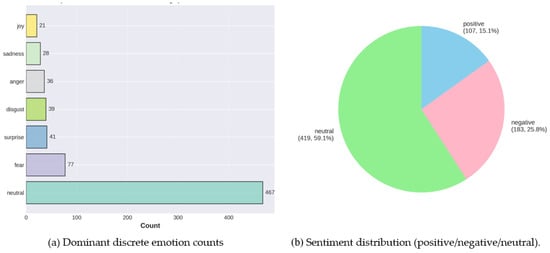
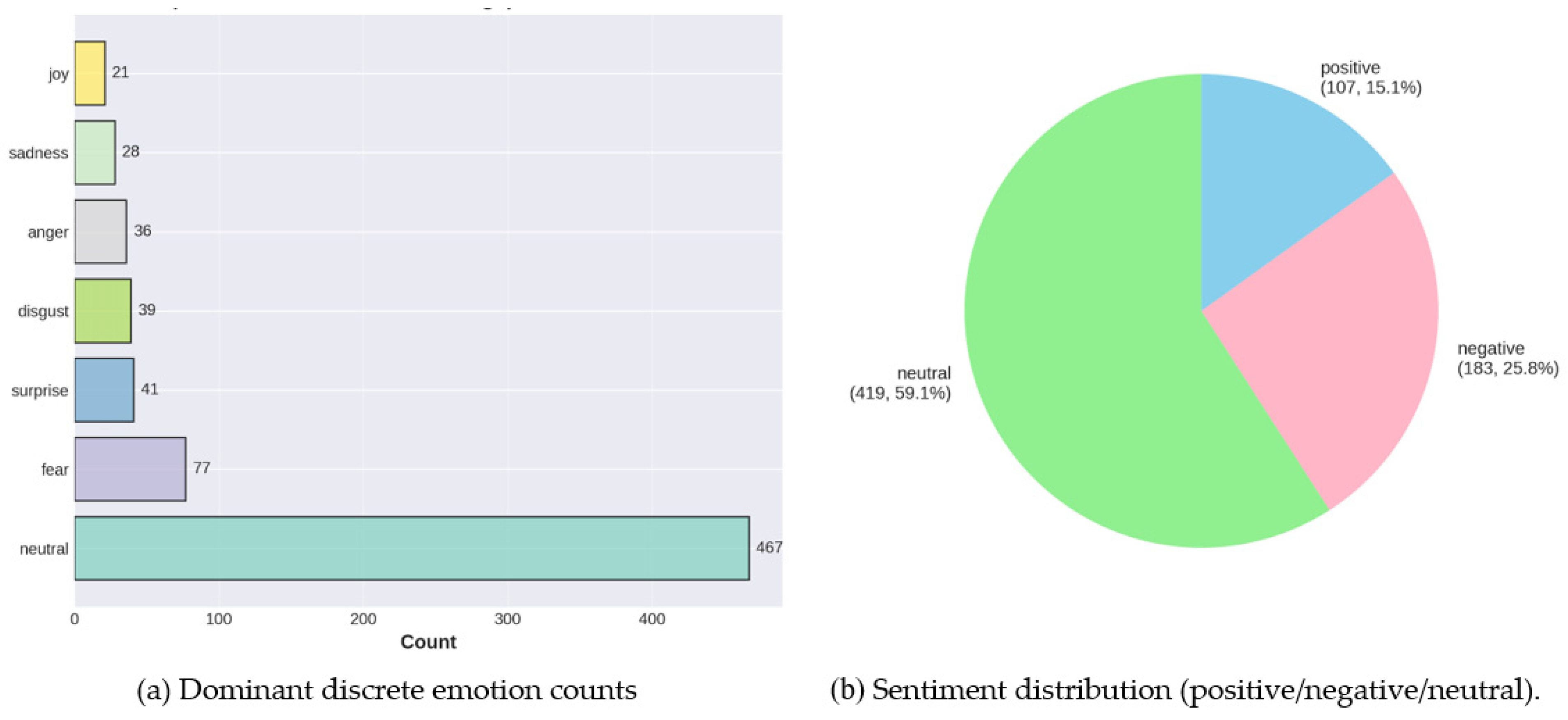
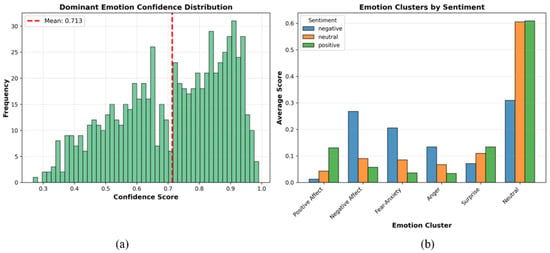
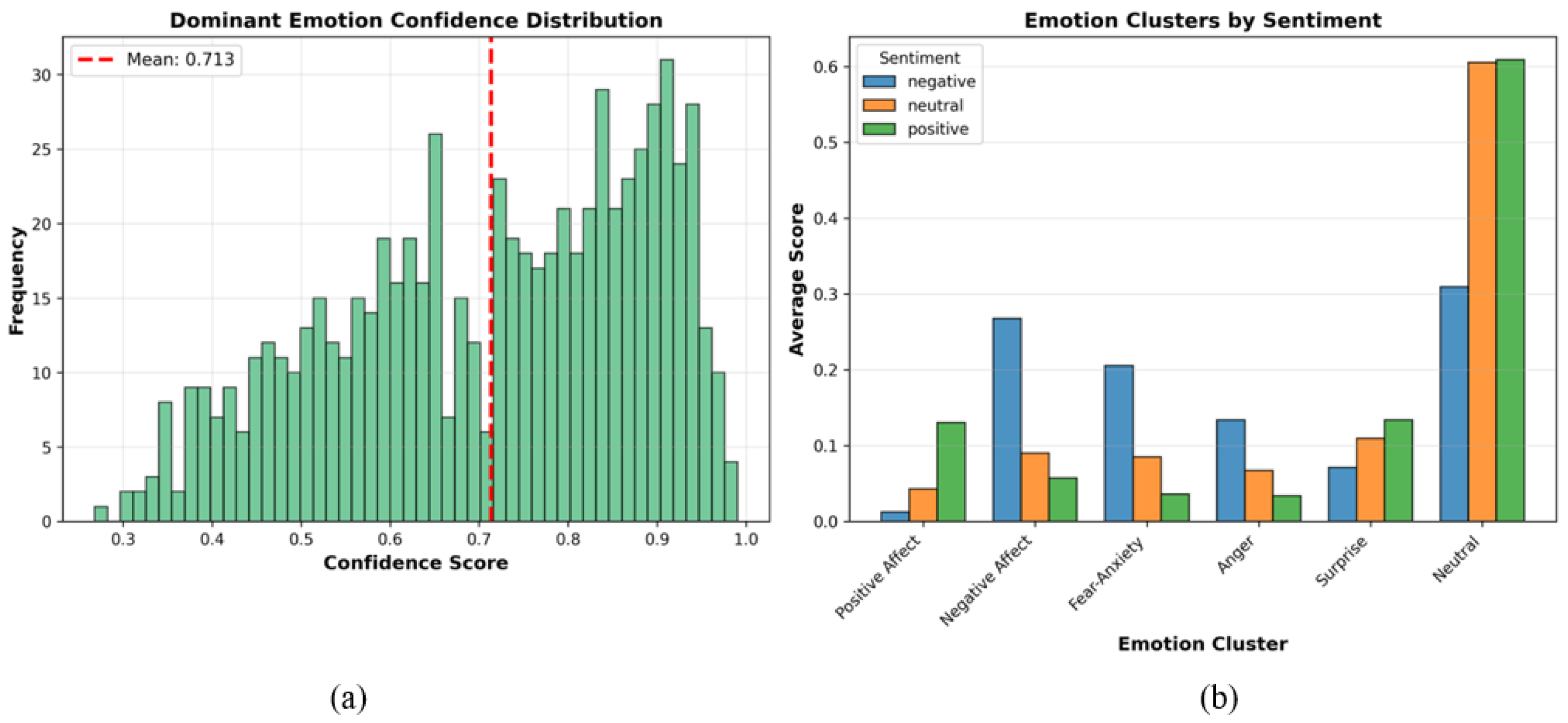
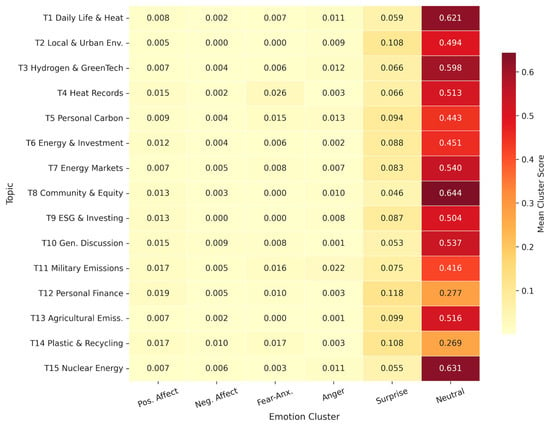
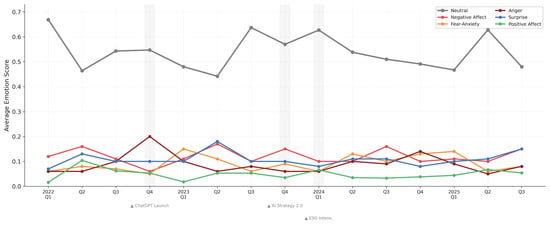
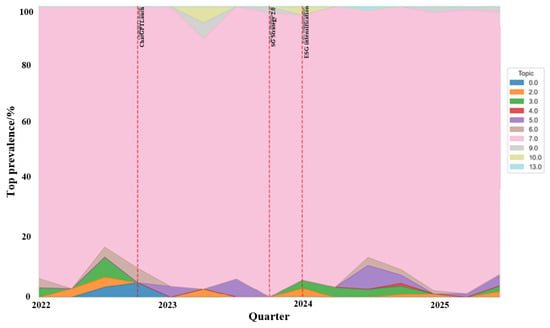
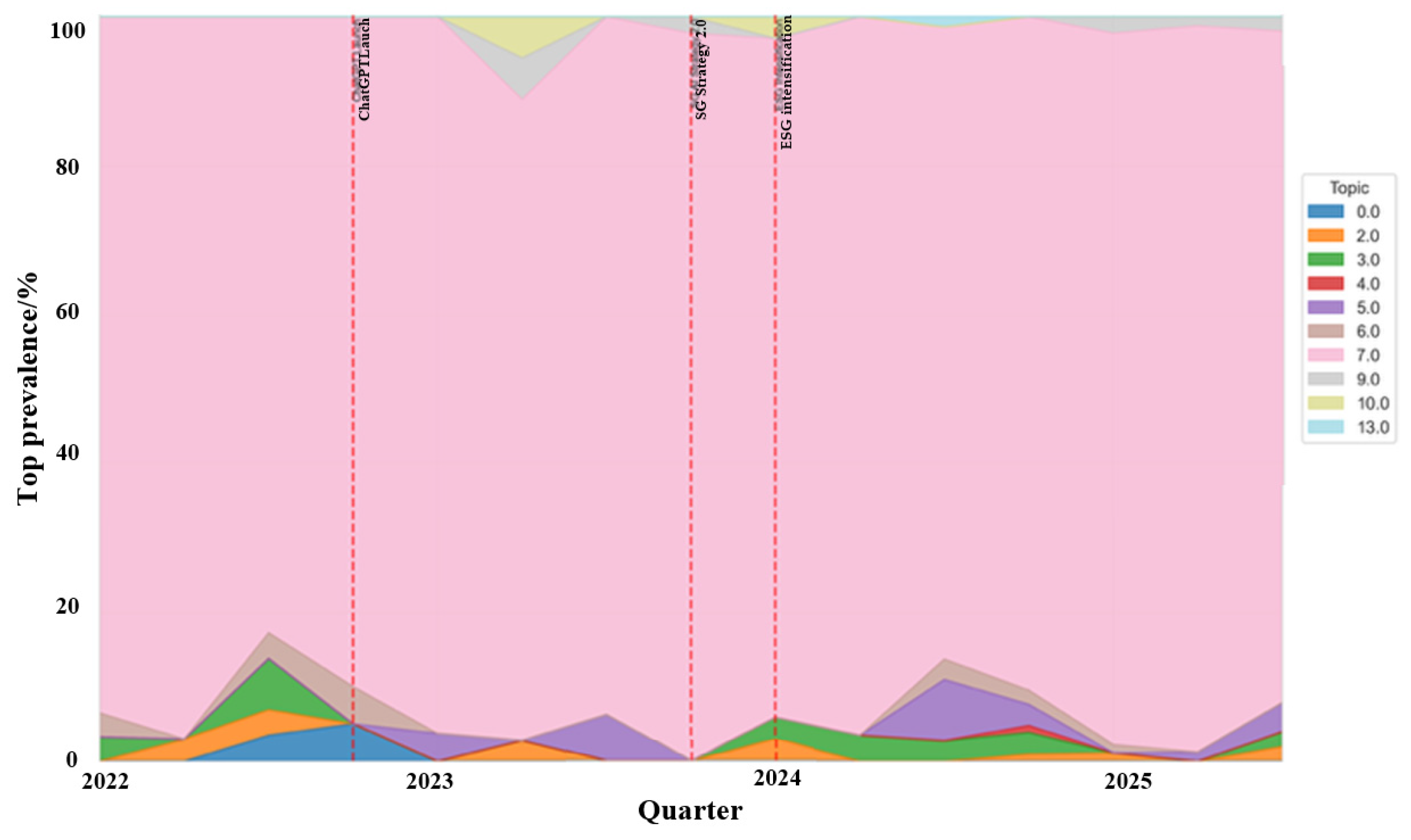
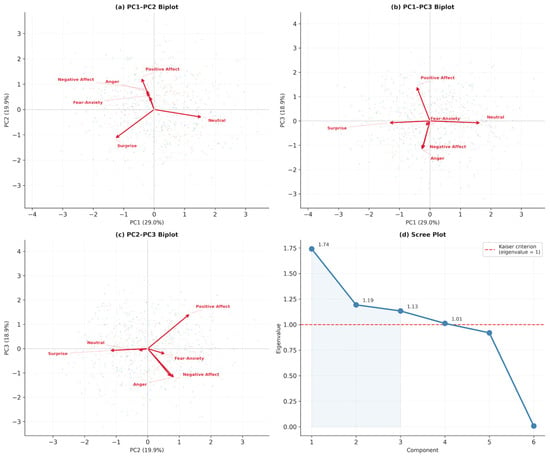
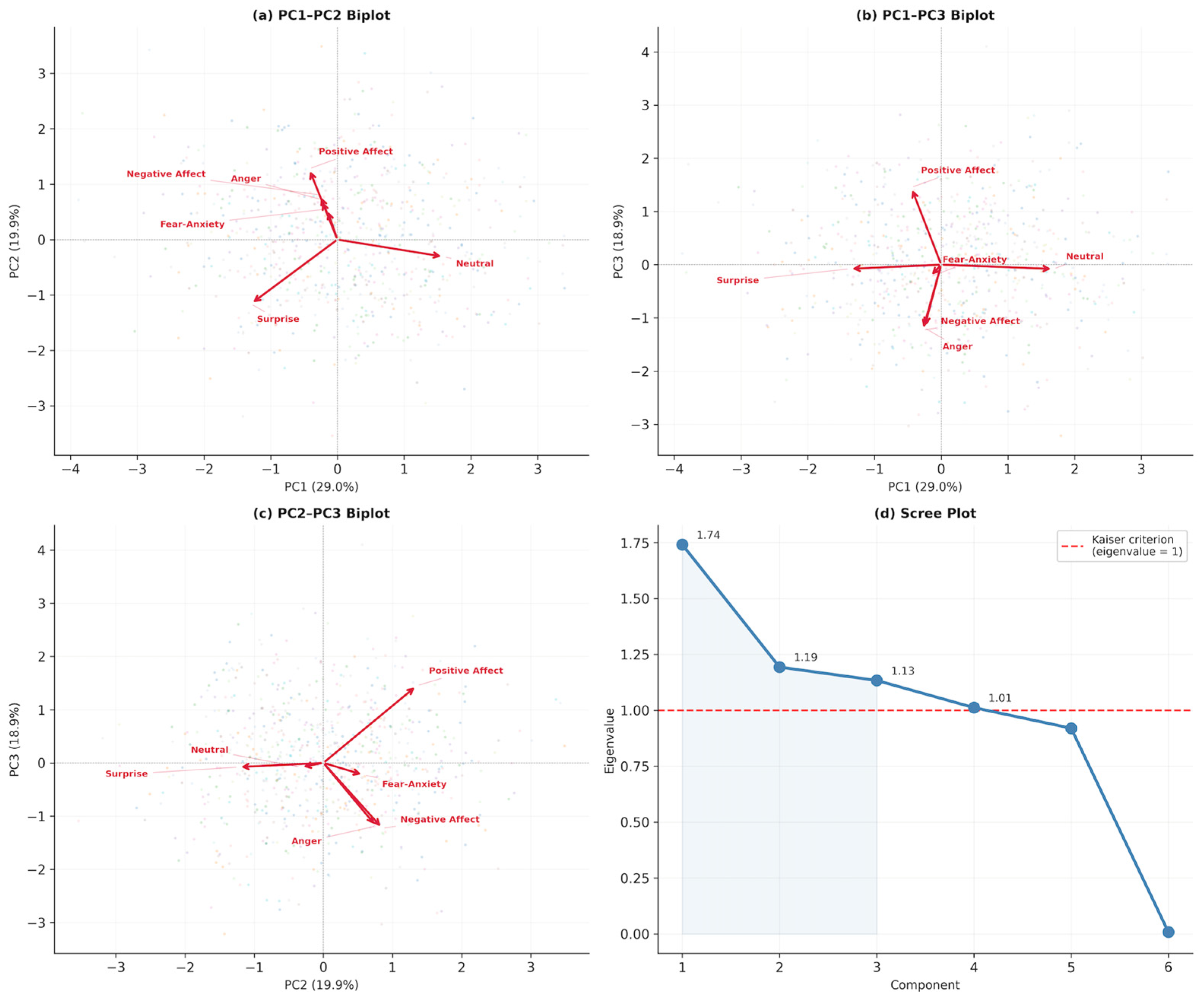

Disclaimer/Publisher’s Note: The statements, opinions and data contained in all publications are solely those of the individual author(s) and contributor(s) and not of MDPI and/or the editor(s). MDPI and/or the editor(s) disclaim responsibility for any injury to people or property resulting from any ideas, methods, instructions or products referred to in the content. |
© 2026 by the authors. Licensee MDPI, Basel, Switzerland. This article is an open access article distributed under the terms and conditions of the Creative Commons Attribution (CC BY) license.