


Abstract
Maritime Autonomous Surface Ships (MASS) are progressing from proof-of-concept to engineering test and initial application phases due to advancements in intelligent sensing, automatic control, and communication technologies. However, numerous studies have shown that the improvement of automation level does not linearly reduce human factor risks. Instead, it exhibits more complex evolutionary characteristics at the medium automation level. In particular, MASS Level 2 (MASS L2) features a “system-dominated, human-supervised” operational mode, and its human factor risks have become one of the key factors restricting the safe operation, large-scale application and sustainable long-term deployment of autonomous ships. This study employs a systematic literature review to analyze 89 core articles (2020–2025) and summarizes the theoretical basis, risk characteristics, and evolutionary trends of human factor risk research in MASS L2. The review results indicate that the current research consensus has gradually shifted from the traditional “human error”-centered explanatory paradigm to a systematic understanding of “information mismatches, opacity, and coupling failures in the human-machine-shore collaborative system”. Typical human factor risks in MASS L2 are mainly manifested as the degradation of supervisory cognition and situation awareness, imbalance in trust in automation, vulnerability in mode switching and takeover, skill degradation, and structural risks in ship-shore collaboration. Based on these findings, this study constructs a classification system and a comprehensive analysis framework for human factor risks in MASS L2, reveals the interaction relationships and dynamic evolution mechanisms among different risk types from a system-level perspective, and further discusses the limitations of existing research in terms of methods, data, and engineering applicability. Finally, considering the development trends of autonomous ship technology, this study proposes future research directions in human factor theoretical modeling, dynamic risk assessment, system design, and operation management. This study aims to provide a systematic knowledge framework for human factor risk research in MASS L2 and offer references for the safety design, safety management, and development of higher-level automation of autonomous ships, while supporting the sustainable and safe advancement of the global intelligent shipping industry.
1. Introduction
Maritime Autonomous Surface Ships (MASS) [1] are advancing from conceptual validation to practical engineering testing and demonstration applications due to the swift progress in critical technologies like artificial intelligence, sensor fusion, communication, and automatic control [2,3]. In recent years, many countries have conducted autonomous navigation tests to varying degrees in coastal waters, inland waterways, and specific scenarios [4,5,6,7,8], indicating that core technologies such as autonomous perception, path planning, and navigation control have initial engineering feasibility [9]. Against this background, the focus of autonomous ship research is shifting from “whether autonomous navigation can be achieved” to “how to achieve safe, reliable, and regulatory-compliant operation in complex and open maritime environments” [10]. The human factor risk issue has gradually become one of the key factors restricting the large-scale application of autonomous ships [11,12,13].
To promote global technical discussions and rule coordination on autonomous ships, the International Maritime Organization (IMO) [14] proposed a classification framework for autonomous navigation based on the degree of human participation [15,16]. This framework provides a unified reference for defining human roles and system functions at different automation stages. Kim et al. [17] point out that fully unmanned and highly autonomous ships still face multiple challenges such as technical reliability in current engineering practices, regulatory adaptation, and liability definition. In contrast, medium-level automation has become the main form of current autonomous ship trials and applications as it strikes a certain balance between risk controllability and practical feasibility [18,19]. MASS L2 is usually defined as an operation mode of “system-led with human supervision” [15]. The automation system undertakes the main navigation decision-making and maneuvering tasks, while humans continuously monitor the system operation status through on-board or shore-based control centers and intervene when necessary [19,20,21,22,23,24].
Li et al. [25] shows that an increase in automation does not necessarily lead to a linear reduction in human factor risks. More than 80% of traditional accidents are attributed to human factors, far exceeding those caused by technical or mechanical issues [26,27]. The role of human beings has shifted from traditional direct operators to system supervisors and interveners during abnormal scenarios in MASS L2 [28]. Concurrently, there have been fundamental alterations in their workload composition, cognitive processes, and decision—making approaches [29].
The human factor risk interpretation framework centered on operational errors, judgment biases, or violations in traditional maritime safety research [30,31,32] is difficult to fully reveal the new safety problems caused by this role transformation [33,34]. Research and practice have gradually demonstrated that high-risk situations in MASS L2 typically do not originate from the erroneous actions of a single entity, but rather from information discrepancies, ambiguous functional demarcations, and collaborative breakdowns among humans, automated systems, and organizational frameworks [35,36,37].
Over the past five years, both domestic and international scholars have carried out exploratory and empirical investigations from multiple perspectives regarding the human factor issues in MASS L2. The research topics predominantly converge on aspects including automation trust and reliance [38,39], situation awareness distribution [13,40,41], perils of operation mode transition [14,42,43], human-machine interface configuration [29,44,45,46,47,48,49], capabilities of remote operators [3,15,17,20,21,50,51,52,53], as well as ship-shore cooperation and shore-based support systems [22,35,54,55,56]. Fan et al. [57] indicates that in highly automated operation, human understanding of a system’s capability boundaries, calibration of trust in automated decision-making process, and the ability to achieve the transition from supervision to takeover at critical moments are determinant factors influencing the overall safety level. Zhang et al. [58] posits that this research tendency has facilitated the transformation of human factors risk research from the “human error” paradigm to the viewpoint of “human-machine-shore collaborative system risk”.
Despite the continuous accumulation of relevant research results, the existing literature still presents issues such as fragmented research perspectives, insufficient differentiation of scenario risk disparities [59], inconsistent risk classification criteria, and inadequate systematic summarization of the evolutionary laws of human factor risks [10]. Particularly in MASS L2, Tao et al. [60] indicates that human roles and automated functions are in a continuous process of adjustment and adaptation. Human factors risk often exhibit significant dynamism and context dependence, making it difficult for single theoretical models or localized case analyses to reveal their overall structure and development trends. Traditional risk assessment methods (such as FSA, FMEA, and HAZOP) struggle to address the nonlinear interactions and dynamic evolution processes among complex systems [61,62,63]. Therefore, it is necessary to synthesize the existing research results, to extract the common understanding, to identify the research gaps, and to construct a clear evolution of human factors risk.
In light of the above context, the study utilizes a systematic review approach to analyze core research concerning human factor risks in MASS L2 from 2020 to 2025. The main objectives of this study include:
- Adapting human factor risk concerns as autonomous ships shift from manual operation to automated supervision operation;
- Summarizing structure and evolution of typical human factor risks in MASS L2;
- Based on the previous studies, establishing human factor risk classification for MASS L2 and considering future development directions.
The study is organized as follows: Section 2 describes the retrieval and review of literature; Section 3 summarizes MASS technical background and human factors theory; Section 4 summarizes the progress in human factor risks for MASS L2; Section 5 presents systematic risk classification and framework for MASS L2; Section 6 discusses the key mechanisms, challenges and issues, Section 7 summarizes future directions, Section 8 conducts conclusion.
2. Methods of Literature Collection and Review
To ensure systematicity, transparency and reproducibility of review, this study follow the standard procedure for review studies in conducting a systematic retrieval, screening, and analysis of literature related to human factors risks in MASS L2. Research process consists of four steps (literature retrieval, screening and inclusion, subject codification and analysis. Literature collection and processing workflow are depicted in Figure 1.
Figure 1.
Literature collection and processing workflow.
2.1. Database Selection and Literature Sources
Since MASS human factors risk research is intertwined, this review obtains our data from most well-known academic databases such as Web of Science Core Collection, Scopus, IEEE Xplore, ScienceDirect, SpringerLink, and Taylor & Francis Online. These databases cover the following topics: autonomous ships, human-machine interaction, risk analysis, etc. They are representative and credible. To reduce bias from relying solely on a single source, this review excludes industry reports, white papers, and other non-peer-reviewed materials from its main analysis. Nevertheless, representative engineering practices and policy documents are cited in the Discussion as necessary to enhance the practical relevance of the conclusions.
2.2. Search Strategy and Time Range
The literature search adopted a strategy integrating subject terms and keywords, and multiple sets of search formulas were formulated around the human factors risk issues in MASS L2. The core search terms encompassed “Maritime Autonomous Surface Ships” or “MASS”, which were combined with keywords such as “human factors”, “human-machine interaction”, “risk”, “safety”, “remote operation”, “situation awareness”, “trust in automation”, “cognitive workload”, and “decision-making”. Boolean logic operations (AND/OR) were utilized during the search process to enhance the search quality. To focus on the latest stage of rapid development of autonomous ships, this study limits the publication time of literature to 2020 to 2025. After an initial search, a total of 1248 relevant articles were obtained.
2.3. Literature Screening and Inclusion Criteria
The literature screening process follows a three-stage workflow of “duplicate elimination-preliminary screening-full-text assessment” to guarantee a high level of relevance between the ultimately included literature and the research objectives. Initially, duplicate papers were eliminated through the combined application of literature management software and manual verification, resulting in the exclusion of a total of 312 articles. Subsequently, the remaining papers were firstly reviewed, excluding:
- Papers not directly related to MASS or autonomous navigation;
- Papers dealing exclusively with algorithms, equipment testing, engineering implementation and human factors without taking human factors into account;
- Conference abstracts, posters and papers without peer review;
- papers with no full text.
214 articles were selected for the next stage after the initial screening. The full texts of the candidates were reviewed and evaluated based on well-defined inclusion and exclusion criteria:
- Subjects dealing with MASS L2 or automated navigation stages with high similarity in operation;
- Subjects discussing the influence of human factors, cognition, trust, human-machine cooperation or organizational factors on safety;
- Use reproducible research methods such as experiments, simulation analysis, model construction, or systematic analysis;
- Substantial studies of composition or evolution of human factor risk.
Exclusion criteria were: solely conceptual, studies without methodological description or data, and papers concerned solely with future scenarios without analytic results. Eventually, 89 articles were included in this review.
2.4. Literature Coding and Thematic Analysis Methods
In order to integrate the published literature, this study employs content analysis to code the main papers on 89 articles. The content analysis follows the Bottom-up approach: First, this study identifies the types of human factors issues, research approaches and application scenarios covered. Second, this study compares and consolidates the topics in several rounds. Then this study classifies the literature into two related dimensions: First, the main research topics are human factor risks in MASS L2, situation awareness, automation trust, human-machine interface, mode switching, ship-shore collaboration. Second, structural dimension is the evolution of the research focus. This study analyzes how the research transitions from a single operational error perspective to the “human-machine-shore collaborative system risk” perspective.
2.5. Methodological Reliability and Limitations
Although the selection bias is minimized by multi-database search and explicit screening criteria, it is also affected by language of research publication, database size and public data availability. As real operation and accident data in MASS L2 are very limited, most existing studies use simulation and experimental methods and can only generalize results a bit. In the following this study would investigate these limitations.
3. Background and Fundamental Concepts
This section is not meant to summarize all the concepts but rather a brief review to identify the boundaries of discussion and the theoretical conditions for review. This study also emphasizes the applicability challenges of existing theories in MASS L2.
3.1. MASS and Automation Classification Framework
MASS are generally defined as vessels that, to varying extents, rely on automation and intelligent systems to execute perception, decision-making, and manipulation tasks, and crew members may or may not be present during their operation. To facilitate global technical exchanges and rule coordination concerning autonomous ships, the International Maritime Organization (IMO) put forward an automation grading framework based on the level of human involvement. Yang et al. [14] categorizes MASS into multiple levels from low to high (refer to Table 1), which has become the primary reference for depicting the technological maturity and operation modes of autonomous ships in current academic research and engineering practice (refer to Table 2 and Table 3).
Table 1.
Automation levels classification (IMO 2018) [6].
Table 2.
Stages and application status of autonomous ships [64].
Table 3.
Comparison of Classification Society’s Classification of autonomous ships [64].
Cheng et al. [18] suggests that the lower-tier stage is predominantly characterized by human operation, and within this framework, automated systems mainly perform auxiliary perception or decision-support functions. Conversely, the higher-tier stage is centered around system autonomy, where humans primarily undertake supervisory or emergency intervention roles. Li et al. [15] points out that although specific formulations differ among countries and research institutions (as shown in Table 3), the core consensus of the classification framework is that as the level of automation rises, the role of humans in safety systems does not vanish but gradually transitions from direct operation to supervision, coordination, and decision support.
3.2. Operational Characteristics of MASS L2 and the Transformation of Human Roles
Human factor risks evolve with increasing levels of ship autonomy. The fundamental difference between MASS L2 and conventional manual navigation is not in the enhancement of automated functions but in the structure of mission control, decision making hierarchy, and responsibility boundaries. In traditional ships, risks mainly arise from manual operation factors such as fatigue, workload, and human error. In MASS L1, decision-support systems assist operators, and risks are often related to misinterpretation of system information or overreliance on advisory functions. In MASS L2, operators shift from direct control to supervisory control, introducing distinctive risks such as reduced situational awareness, supervisory cognition degradation, and imbalance in trust in automation. In MASS L3, human involvement may shift to remote supervision, where risks are associated with communication delays and human–machine coordination. Therefore, MASS L2 represents a critical transitional stage where human–automation interaction becomes a key source of emerging risks.
First, within the established operating parameters, the automation system can independently perform basic tasks such as route planning, collision-avoiding decision-making, and maneuvering control. Humans do not perform continuous operation anymore but monitor the system’s performance via interface information. This reduces the frequency of direct operation, and increases the need for system comprehension and supervisory judgment.
Second, the operating system of MASS L2 has changed from the traditional “single vessel-crew” paradigm to the “human-machine-shore collaborative system” which including onboard systems, shore-based control centers, communication links and support algorithms. Humans may be on the vessel or at the shore-based control center and may even supervise multiple vessels simultaneously. Decisions are strongly dependent on indirect information and feedback rather than direct environmental perception.
Third, the intervention responsibilities and control boundaries are dynamic. In the case of complex traffic conditions, extreme weather conditions or system performance degradation, humans must transition from monitoring state to active intervention state within a limited time frame. The takeover trigger conditions, information prompting methods and responsibility definitions are often jointly determined by system design and organization rather than fixed rules. This makes the human factor risks context dependent at MASS L2.
These operational features suggest that MASS L2 is not a transition between traditional navigation and high-level autonomy but rather an autonomous navigation mode with independent operational logic and risk structure, and its human factor issues have stage specific features.
3.3. Basic Framework of Traditional Maritime Human Factor Theories
Human factors theory has been applied for many years to maritime accidents, safety risks, and safety management. Representative theoretical models can be primarily classified as follows.
The first category includes accident causation models based on “human error” such as “the Swiss Cheese model” and “the Human Factors Analysis and Classification System (HFACS)”. These models describe causal relationships among organizational failures, environmental factors, and individual behavior using a multilevel structure and have been applied widely in traditional maritime accident analysis [12,65,66,67].
The second group consists of systems based on human-machine interactions such as SHELL model and interface usability theory, which emphasize the interface relationships between humans, equipment, software, environment. These models highlight interface relationships between humans, equipment, software and environment for bridge layout, information presentation modes, and operation processes.
The third group consists of human factors models based on cognitive mechanisms such as Situation Awareness, workload assessment, and automation trust. Wang et al. [68] posits that these models focus on human information processing, attention allocation and decision-making behaviors in complex task environments and are widely used for operational performance in high-risk scenarios.
The above model assumes humans control the system and determine safety outcomes through actions in operational scenarios of traditional manual ships. Under this assumption human risks are often associated with individual incompetence, operational errors or organizational management shortcomings.
3.4. Applicability and Limitations of Existing Theories in MASS L2
With the advancement of autonomous navigation technology, researchers have commenced applying the aforementioned human factor theories to the human-machine collaboration issues at MASS L2. Nevertheless, numerous studies have indicated that traditional theories possess structural limitations in highly automated supervision scenarios (refer to Table 4).
On one hand, accident models founded on “human error” encounter difficulties in precisely portraying the proactive role of automated systems within the decision-making chain. Risks in MASS L2 are frequently not directly instigated by operational errors but instead originate from system behavior deviations, human misunderstanding, or failed collaborative relationships, which complicates ex-post attribution and risk interpretation.
On the other hand, many classic models take the cognitive and decision-making processes of a single agent as the object of analysis [69]. However, MASS L2 typically entails a distributed decision-making structure among ship-borne systems, shore-based operators, and supporting algorithms. Traditional single-agent models struggle to characterize the situation sharing, disparities in understanding, and collaborative behaviors among multiple agents.
Table 4.
Limitations of traditional maritime human factor theories in MASS L2.
Moreover, some theories stem from aviation or land-based automation systems. There are substantial differences between the application prerequisites of these theories and the maritime navigation environment in terms of task continuity, environmental uncertainty, and organizational structure. Direct application may result in the oversimplification or misjudgment of the risk mechanism.
Wu et al. [76] put forward that recent research on human factor risks has begun to introduce perspectives such as systems engineering, resilience engineering, and Human Machine Organization (HMO). It emphasizes that human factor risks should be regarded as the outcome of the evolution of coupling relationships between system elements rather than the attributes of isolated individuals.
4. Current Research Progress on Human Factors in MASS L2
This section undertakes a systematic review of the included literature in accordance with the aforementioned methodological framework. Beginning with the evolution of research focuses, it summarizes the main advancements and common understandings of current human factor risk research at MASS L2.
4.1. Overall Shift in the Research Focus of Human Factor Risks
In the recent 5 years, there has a notable rise in the number of relevant studies focusing on human factor issues at MASS L2. The research perspective has gradually shifted from the traditional “operational error analysis” to a comprehensive exploration of supervisory cognition, human-machine collaboration, and system coupling risks. Based on the analysis in Section 2.4, existing research generally posits that as autonomous navigation functions gradually assume core decision-making and maneuvering tasks at MASS L2, the manifestations of human factors risk have undergone structural transformations. Distinct from the risk model centered on operational skills and immediate reaction capabilities in traditional ship navigation, Størkersen [2] suggests that human factor risks in MASS L2 are more prominently reflected in aspects such as misunderstandings of the behavior of automated systems, ineffective supervision, and poor collaboration.
Multiple studies, through the analysis of simulation experiments, test voyages, and accident cases, have demonstrated that at MASS L2, human operators do not consistently operate under high loads. Instead, they exhibit the characteristics of “low operation frequency-high cognitive requirements” [18]. This operating mode can lead to a decrease in attention, a decrease in situational awareness and slow response to changes in the state of the system, increasing the risk impact at critical times. The research focus has shifted from “How to reduce human errors” to “How to understand the role of humans in automated systems” [77,78].
4.2. Lag in Supervision Cognition and Situational Awareness
Supervised cognition and situation awareness lag are considered to be the most important human factor risk in MASS L2 [79]. Li et al. [15] indicates that in highly automated environments humans perceive the outside environment much less directly, and situation awareness depends heavily on the information provided by the system interface [6]. Experimental studies have shown that when the interface information is incomplete, inconsistent or too complex, operators may misunderstand traffic situations, system intentions, and possible risks [19,22]. In particular, opacity of the system decision making logic will inhibit the operator to understand the overall situation in multi-target collision avoidance or complex traffic environment.
Yoshida et al. [52] found operators under long term supervision tend to form empirical expectations of system behavior, which often require more time to restore situation awareness. This “cognitive lag” is particularly dangerous in situations where rapid takeover is required. It is also recognized as an amplifying factor for accident risks at MASS L2.
4.3. Automation Trust and Dependence
Automatic trust has become another important human factor issue on MASS L2 in recent years. Various studies have shown that very low and high trust can lead to unsafe systems [18,80].
On the one hand, Li et al. [81] shows that low trust may lead operators to interfere frequently with system operation, increasing the work load and reducing the benefits of automated systems. On the other hand, high trust could lead crew members and remote operators to neglect system limitations, delay or even abandon their supervision duties in abnormal situations [5,19]. Fan et al. [82] shows that remote operators’ subjective judgments about system reliability often depend on early usage experience and interface feedback methods rather than solely on the objective performance.
Chan et al. [19] explored ways to adjust the trust level of remote operators through explainable design, transparent information feedback, adaptive prompting. The majority of relevant studies focus on a single system or task, and their universality and long-term effects are still awaiting further verification.
4.4. Human-Machine Interface Design and Information Presentation
Zhang et al. [64] believes that the human-machine interface links operators and autonomous navigation systems, and its design has a direct impact on supervision efficiency and risk perception. Ventikos et al. [45] argues that current studies focus on the effect of information integration, warnings, and multi-modal interactions on operators’ cognitive load and decision- making performance. Superimposing information fails to improve situational awareness; instead, it can lead to information overload [22,74]. Conversely, information classification and key prompts based on task context are more conducive to operators’ rapid comprehension of system status and potential risks.
Moreover, with the advent of the shore-based control mode, interface design should also consider the characteristics of remote operation, including communication delay, uncertain feedback, and information organization in the context of multi-ship supervision [16]. This makes the traditional design concept of the interface face new challenges in MASS L2.
4.5. Mode Switching and Takeover Performance
Mode switching and takeover performance are widely recognized topics in the research on human factor risks at MASS L2 [57]. Yang et al. [4] posits that the transition from the monitoring state to the active control state represents a critical phase characterized by a high concentration of risks.
During dynamic mode transition, issues such as communication delay, data inconsistency, network attacks, the crew’s emergency response capabilities, and decision-making authority are likely to emerge [14,83]. Veith et al. [9] shows that takeover performance depends on many factors including takeover warning time, correct information, current task load of operator, understanding of system state, etc. If takeover requests lack clear context description or unclear trigger logic, operators cannot always be fully aware of the situation promptly and thus experience more errors.
Takeover risk is not merely a matter of reaction time, but rather a holistic process of cognitive restructuring and responsibility transfer [1,29,84], which has prompted researchers to re-examine takeover behavior from a system design and organizational perspective.
4.6. Ship-Shore Collaboration
Ship-shore collaboration has emerged as a novel focal point in human factor risk research with the progressive implementation of shore-based control centers in MASS L2. Information transmission delays, indistinct demarcation of responsibility boundaries, and ambiguous definition of organizational roles may all potentially affect safe operations [25,85].
Kari et al. [54] reveals through scenario analysis that in multi-agent collaborative environments, risks generally stem from different interpretations of the same situation rather than individual decision-making errors. Moreover, the scenario in which shore-based operators simultaneously supervise multiple vessels makes traditional single-ship-based human factors analysis approaches inapplicable.
However, compared with shipboard human-machine interaction, research on ship-shore collaboration remains in its nascent stage, lacking a unified analytical framework and well-established evaluation methodologies [86,87]. This shortcoming has been emphasized in multiple publications and is regarded as one of the key research directions for future investigations.
5. Risk Classification and Integrated Framework for Human Factors in MASS L2
This section would summarize fragmented research results, develop a human factor risk classification system according to the operational characteristics of MASS L2, and develop a risk analysis framework for future risk assessment and prevention research.
5.1. Construction Principles of the Risk Classification Framework
In order to cope with the operational characteristics of MASS L2, the risk classification must satisfy engineering applicability and theoretical explanation power. Based on the existing literature, the following basic principles should be taken into account:
First, the classification should reflect the main operation logic of “system dominance with human supervision” of MASS L2, rather than the simple continuation of traditional risk classification based on manipulation behaviors.
Second, the classification dimensions should encompass different levels, ranging from individual cognition to system collaboration, to elucidate the interaction relationships among multi-sourced risks.
Third, the classification results should possess a certain degree of extensibility to accommodate the needs of future technological evolution and operational mode changes.
Based on the aforementioned principles, this study construes the human factor risks at MASS L2 as a dynamically evolving systematic issue rather than a straightforward superposition of several isolated risk factors.
5.2. Classification of Core Human Factor Risk Types
Building upon prior research, this study conducts scenario-based refinement of core human factors risks by integrating typical operational scenarios at MASS L2, including routine navigation [88], anchoring, mooring, low-speed operation, sudden environmental changes, system performance degradation or sensor anomalies, and shore-based remote support.
5.2.1. Risks of Supervisory Cognition and Comprehension Deviation
In MASS L2, remote operators primarily perceive the navigation environment indirectly via the system interface, and the quality of their supervisory cognition is highly contingent upon the information presentation mode and the system feedback logic.
In the scenarios of waterborne navigation and encounter avoidance [89], these risks are mainly manifested as follows: Remote operators excessively rely on the system-integrated information to comprehend the surrounding traffic situation and pay inadequate attention to risk targets that are not conspicuously marked by the system (e.g., small vessels or temporary obstacles). Simultaneously, their understanding of the automatic collision avoidance or path-planning results mostly remains at the result level, and they lack profound knowledge of the system’s decision-making assumptions and their applicable boundaries.
In scenarios of anchoring, mooring, and low-speed operation, continuous supervision may be readily attenuated due to the low operation load. Remote operators are confronted with the risk of a lag in recognizing abnormal signals such as changes in sensor performance, a decline in positioning accuracy, or gradual changes in environmental conditions.
5.2.2. Risks of Imbalanced Automation Trust
The risk of imbalance in automation trust serves as a crucial regulatory factor for human factor issues at MASS L2. Its formation is intricately associated with the quality of supervisory cognition and the historical operational performance of the system.
In regular navigation scenarios, the long-term stable operation of the system has a tendency to gradually induce operators to develop excessive trust. This is characterized by a decrease in the frequency of active supervision and a reduction in the verification behavior of the system’s output results. Traffic dense or complex encounter scenarios, abnormality or decisions that are far from operator expectations can cause rapid decline of trust, which leads to frequent manual intervention or the absence of automation functions.
At anchoring or mooring, trust imbalance often manifests as passive dependence: remote operators presume that the system is safe and ignore the changes in environment and system performance.
5.2.3. Mode Switching and Risks of Takeover Failure
Mode switching and takeover failure occur often when system is reaches capacity boundary or some other situation occurs. It is a typical low frequency but high consequence risk in MASS L2. Such event as sudden changes in environment, system performance or sensor malfunction require remote operators to shift from supervisory function to control function within a limited time. If takeover request is initiated at wrong time, takeover information support is not adequate, remote operators do not understand current state and remaining safety margin in the first step of takeover, it may delay takeover actions or control.
This type of risk is not only related to reaction time, but also strongly associated with premonitory cognitive bias and trust imbalance, particularly in complex encounters or restricted waters.
5.2.4. Structural Risks of Human-Machine-Shore Collaboration
With the introduction of shore-based support or remote monitoring in MASS L2, human-machine-shore collaborative structure becomes an important systematic factor for human risk management. In multi-vessel monitoring or remote support stage, the navigation situation and system status may differ between crew members and remote operators. In bad weather, the decision-making dominance and responsibility boundary may not be clear and thus a crew member or remote operator may easily lose judgment and operate. In the anchoring or mooring stage, a mismatch between the intervention rhythm of remote operators and the actual operation state of the vessel may also compromise the overall risk response.
This category of risks usually does not cause accident directly but has a constant influence on the overall system safety by amplification of supervisory cognitive biases, trust imbalances, takeover difficulties.
5.3. Interaction Relationships Between Different Risk Types
These four types of human factor risks are not mutually exclusive. They are coupled in actual operations. Supervisory cognitive bias may affect operators’ ability to detect system abnormalities, which may increase trust imbalance. Trust imbalance may affect takeover decisions. In ship-shore collaboration, communication delays and unclear responsibilities may increase these problems. Therefore, if treat human factor risks in MASS L2 as a dynamic system arising from interactions of several elements, that can better understand the accident mechanism and risk evolution.
5.4. Comprehensive Analysis Framework for Human—Factors Risks in MASS L2
Based on the aforementioned risk classification and its operational characteristics, this study further establishes a comprehensive analytical framework for human factor risks in MASS L2. Moreover, it systematically expounds on its structural logic, hierarchical relationships of risks, and graphical representation methods (see Figure 2).
Figure 2.
Comprehensive analysis framework for human-related risks in MASS L2.
5.4.1. Hierarchy and Sequential Logic of Risk Evolution
A comprehensive review of extant literature and practical operational experience indicates that the four categories of core human factor risks manifest distinct hierarchical and evolutionary patterns during actual operations. The risk of cognitive and comprehension bias in supervision generally emerges first. Subsequently, the operator’s level of trust in automation fluctuates in line with the quality of cognition, giving rise to a risk of trust disequilibrium. When the system encounters boundary conditions or abnormal circumstances, the previously identified risks exert a significant influence on the performance of mode switching and takeover. Further, structural risks associated with human-machine-shore collaboration continue to increase or decrease these risks. This implies that accidents in MASS L2 are often not directly caused by one “takeover failure”, but rather by accumulation of basic risks released in critical takeover scenarios.
5.4.2. Graphical Expression Logic of the Comprehensive Framework
The overall analysis presented in Figure 2 shows that human factor risks in MASS L2 arise through multiple layers of association and interaction. This model depicts the systematic and evolutionary nature of risk types and illustrates their mutual effects. Monitoring cognitive biases, when information displays are incomplete or system feedback is slowing, remote operators may misperceive navigation environment or system status and make biased judgments about possible hazards. Trust differences between the operator and system can result from long-term operating period. Larger reliance on automation reduces the level of supervision, while distrust leads to frequent interventions, which increase operational complexity. Takeover and mode switch failures, when marginal operations or unexpected events, operators must rapidly transition from passive supervision to active control. Incorrect timing, incomplete information support, or unclear understanding of the state of the system can result in takeover failures and hazard navigation safety. Risks arise from inconsistent collaboration between crew members, automated systems and remote operators at human-machine-shore collaboration level. Different interpretation of risk perception and response can lead to deviations in information transfer and decision timing, which result in deviations in information transfer and decision timing.
As a result of the different types of risk interactions, the framework emphasizes how different risk types influence each other and generate feedback effects. A supervisor cognitive bias can directly reduce trust and thus increase the takeover risk. Similarly, system complexity and information opacity can further reinforce cognitive biases, and thus alter operator decisions and responses. The framework emphasizes the dynamic relationships among risk factors in MASS L2 and shows how these factors interact and co-exist during operations, and how the effects of these factors continue to impact the security of the system.
5.4.3. Longitudinal and Horizontal Correlation Relationships in the Framework
Figure 2 shows that human factor risk at MASS L2 has large longitudinal and transverse correlations. The correlations reveal the relationship between risks and cross-system interactions driving risk evolution. Vertically, the framework implies that risk types evolve over time. Supervisory cognitive bias usually occurs first and spreads slowly into trust imbalance and takeover failure. Misperceptions of system behavior and cognitive biases can alter the operator’s trust in automation and make him less confident in decision making at critical points. As the operation progresses, these biases can lead to more complex failures such as takeover failure. When system malfunctions, the operator’s misplaced trust or incomplete knowledge of system status can lead to delayed takeover or operational errors which can lead to safety incidents. In horizontal correlation, system-level interactions also include system-level interactions, i.e., external factors that influence risk evolution such as information transmission, communication conditions and organizational processes affect risk at a single level, but also risk types of risk at different levels and systems. Insufficient or delayed information transmission can increase supervisory cognitive biases, which cause the operator’s understanding of system status to drift. Changing trust in automated systems can diminish trust and prevent timely takeover decisions in emergencies. In human-machine-shore collaborative framework, inconsistent collaboration and unclear responsibility boundaries can transmit risk across levels. For example, different assessments of the situation of remote operators and crew members may lead to decision delay or error that severely hamper the system response.
Combining these two levels shows how human factor risks evolve at MASS L2 and the complexity of multiparty collaboration. This multilevel cross-system risk-communication model reveals that human factor risk is not derived from one factor but from the effects of several factors. Thus, effective risk management requires a system analysis that emphasizes interactions among levels and elements to detect and control potential risks.
5.4.4. Significance at the Engineering and Research Levels
This framework supports future work in three ways:
- distinct variable stratification and explicit assumptions of relational relationships for quantitative risk assessment;
- priority intervention targets for system design and interface optimization, focusing on low-level high frequency risk reduction;
- phased and context specific foundation for capacity building in personnel training and operations management; Figure 2 summarizes existing results but also serves as an instrument for studying evolution mechanism of human factors risk in MASS L2.
6. Mechanisms, Challenges, and Critical Issues in Human Factors of MASS L2
This section would study why risk types form in MASS L2, their evolution and main problems and challenges of current research and engineering practice.
6.1. System Mechanism of Human Factor Risk Formation
Many studies have shown that human risk in MASS L2 does not arise from single cause but from coupling mismatches between human cognition, automated behavior and organizational and environment context. Mechanistically, risk formation at this stage is characterized by three main aspects.
First, the supervisory control that replaces direct control modifies human behavior. When tasks occur rarely, operators are unable to maintain continuous and stable situational awareness, and cognition tends towards intermittent monitoring and reactive responses. This pattern may not be seen during normal smooth operations, but it easily leads to inadequate comprehension and delayed reaction in abrupt or complex situations.
Second, the automated system not only performs operations but also participates in risk assessment and decision making at MASS L2. Due to the often-opaque decision-making logic of the system and lack of state feedback, humans cannot quickly form accurate mental models of the behavior of the system, which causes misunderstood and trust imbalances.
Third, the human-machine-shore collaborative structure consists of multiple decision-makers and information transfer links, meaning risks are no longer limited to individuals, but propagate and amplify through communication channels, organizational processes and division of responsibility.
These mechanisms collectively determine that the human factors risk in MASS L2 exhibit distinct systemic and dynamic characteristics.
6.2. Dynamic Evolution Characteristics and Coupling Mechanism of Human Factor Risks
Unlike the relatively stable human factor issues in manual operations, the human factor risk of MASS L2 changes dynamically. The risk levels differ continuously depending on the stage of operation, the status of the system, and operator experience, and exhibit coupling and amplification effects. Supervisory cognitive bias and automation trust state are interrelated and mutually reinforced over time. Operators gradually reduce the active verification of system outputs over long periods of stable system performance. Supervisory behavior switches from “active verification” to “passive acceptance”, and cognitive bias accumulates accordingly. If the system later suffers under complex or edge conditions, deep cognitive and trust states can hinder the timely recognition of anomalies. This dynamic phenomenon shows the differences between the risk discussed in Section 5.2.1 and Section 5.2.2 across different stages of operation.
When the system exceeds its capacity limits or abruptly changes its state, the prior cognitive and trust states directly affect mode switching and manual takeover. Lack of supervisory intervention or low trust often fails to get an accurate and timely idea of the current state of the system and remaining safety margin. The early takeover often has unstable control, hesitant decision making, or excessive corrective actions. These characteristics are especially relevant in mode switching and manual takeover and provide context for low frequency, high-consequence risks discussed in Section 5.2.3.
Further, when the operation is run with shore support, the human-machine-shore collaborative relationship further complicates risk evolution. Information transmission delay, situation awareness gap, or a mismatch between the rhythms of collaborative decision making can increase the cognitive load and decision pressure on crew members at critical times, making previously controllable human factors systemic safety hazards. This coupling characteristic is consistent with the structural collaborative risk of Section 5.2.4 and shows the “amplification” role of the collaborative mechanism in risk evolution.
Finally, the human factor risks of autonomous vessels in MASS L2 are not static, but evolve continuously as they operate and are linked through supervised cognition, trust calibration, takeover behavior and collaboration. Knowledge of this dynamic evolution is essential for the risk assessment modeling and intervention planning.
6.3. Key Challenges at the Methodological and Data Levels
Although the number of related studies in MASS L2 has increased in recent years, human factor risks still face significant methodological challenges. First, real operational and accident data are not available. Most studies use simulations and scenario inferences. Therefore, the relevance of their conclusions to engineering contexts needs to be further confirmed. Second, the lack of common definition standards for key concepts and indicators limits comparison between studies. For instance, in supervised-cognition studies, “situation awareness” is used inconsistently (sometimes referring to the perception level of traffic elements and sometimes referring to understanding system state and decision logic) and “trust” (stability, dependence or calibration) is used inconsistently (sometimes as stability, dependence or calibration) and in automated-trust studies, “trust” is used inconsistently (either as stability, dependence or calibration) of “trust” is referred to variously defined as stability, dependence or calibration) and in Takeover performance studies, there is no consensus on selecting metrics and weighting metrics (takeover response time, control stability, decision rationality). These differences on conceptual and indicator levels prevent horizontal comparisons and synthesize results.
The scope of subjects and operations are also restricted. Most studies are focused on a single vessel, a single operator, or short-term experiments. This limitation makes it difficult to capture human factor risk evolution under multi-vessel supervision, complex flows and long-term operations. In particular, it is hard to describe accumulation and amplitude of risks under human-machine-shore collaboration, which decreases practical application of the results.
6.4. Realistic Constraints and Institutional Challenges in Engineering Practice
In addition to the technical and methodological issues, institutional constraints in engineering practice also pose significant challenges for human factor risk management in MASS L2. Presently, the majority of autonomous vessel trials are only demonstration- or restricted-operation trials and the operational regulations, responsibility distribution and emergency response protocols are not fully developed. Under ship-shore collaboration, the responsibility, workload and training requirements of shore-based operators have not been standardized. Thus, a singular technical solution is not enough for human factor risk management. Moreover, the existing regulations are based on ship operations and are not flexible to changes in human roles in MASS L2. These institutional and organizational uncertainty increases human factor risks and hinder translation of research results in practice.
6.5. Key Scientific Questions and Research Gaps
Based on the current research progress, several important scientific issues concerning human factor risk at MASS L2 remain unsolved. First, there is no unified theoretical model or quantitative approach to characterize dynamic coupling between human supervisory behavior and system performance. Second, human factor risk integration into the overall safety design (from “post-event analysis” to “feed-forward prevention”) still poses a challenge. Finally, under multi-agent cooperation and long-term operation, there is no systematic study on evolution and cumulative effects of human factor risk and how these effects affect the safety boundary. These issues should be addressed in future research.
7. Future Research Directions and Implications
This section would aim to identify the research questions which are important for progressing the field and examine the implications of our research results for design, management and formulation of policy relevant autonomous ship systems.
7.1. Research Directions at the Theoretical Level
First, there is a necessity for the further development of human factor risk models customized to the operational characteristics of MASS L2 systems at the theoretical level, with a core focus on aligning risk assessment frameworks with long-term system sustainability and sustainable operational resilience. The majority of existing models presuppose static conditions or single agents, which restricts their capacity to capture the dynamic coupling among human supervisory behavior, automated-system performance, and organizational structure. Future research should focus on multi-agent decision-making and information-sharing mechanisms within human-machine-shore collaborative systems, and develop a unified analytical framework based on systems engineering and complex-systems theory to represent the process of risk evolution.
Second, the cognitive mechanisms underlying human supervision call for a more in-depth theoretical elucidation. Different from traditional manual tasks, supervisory tasks involve complex processes such as attention allocation, mental-model updating, and trust regulation, and currently, there is no mature theoretical explanation integrating these processes. A systematic synthesis of findings from cognitive psychology, human factors engineering, and automation research will clarify the root causes of supervisory and takeover failures in MASS L2.
7.2. Research Directions at the Method and Technology Level
Future research should transition from a paradigm predominantly characterized by simulation and short-term experiments to multi-source data-driven and long-term operational analysis at the methodological level. As the scale of autonomous-vessel trials expands, the systematic collection and analysis of real operational data, log records, and human-machine interaction traces will become achievable and will offer a crucial basis for dynamic risk assessment and model validation. That also need to define some methods for human factors risk to be integrated into system design. Digital twins, virtual testing, explainable AI might be used during development to predict human factors risks and evaluate safety implications of alternative design choices, e.g., “post-event analysis”, “forward prevention”.
To enhance the operability of future studies, dynamic risk assessment methods should be further explored for MASS L2 human factor analysis. For instance, probabilistic graphical models such as Bayesian networks can be applied to represent the causal relationships among human supervisory behavior, automation performance, and environmental conditions, enabling continuous updating of risk levels as operational data evolve. Combined with multi-source data (e.g., operational logs, human–machine interaction records, and monitoring data), such approaches may support dynamic modeling of risk propagation and provide more practical methodological support for safety evaluation and decision-making.
7.3. Insights for Engineering Practice and Operation Management
The results of these studies show that only improving automation performance fails to eliminate human-factor risks at MASS L2. Human factors should be considered as a necessary part of the system safety architecture. Interface design, operation process and takeover should consider human cognitive characteristics and capacities. In ship-shore collaboration precisely the roles, workloads, and responsibility limits of shore-based operators is needed to reduce collaboration risk. The results can be used to design decisions, personnel allocations and training programs for shore-based control centers.
7.4. Implications at the Policy, Standard, and Regulatory Levels
The human factors risk research in MASS L2 also provides important insights for policy-making and standardization work. Existing maritime regulations and safety management systems are derived from traditional ship operation models and fail to adequately consider the transformed roles of humans in MASS L2. Future rule-making should regard human-machine-shore collaboration as an integrated system and delineate requirements for supervision tasks, takeover mechanisms, and shore—based operations. Moreover, the establishment of a unified human factors risk assessment framework and indicator set will enhance the comparability among trial projects and operational scenarios, and offer more reliable technical support for regulators and industry decision-making.
8. Conclusions
As the technology of MASS progresses from concept validation to engineering trials and demonstrations, MASS L2 is currently the most practical mode, has elevated human-related risks to a central determinant of system safety and long-term viability and overall sustainability. This study discusses the human factor risks for MASS L2, summarizes the major advancements in the last five years and analyzes risk composition, evolution and challenges from the systems perspective.
In the model of “system-led human-supervised” operations, the human factor risks involve a loss of supervisory ability, mistrust in automation, mode switching and takeover failures, mismatches of information and responsibility in human-machine-shore cooperations, and a new class of system-driven and context-dependent security problems.
Based on this review, this study proposes a human factor risk classification system for MASS L2 and develops an analysis system for the human-machine-shore collaborative system. This approach transcends single subject or single factor analyses, allowing to look at the evolution of human factor risks and provide the basis for systematic risk assessment and safety design.
Further analysis shows that human factor risk research at MASS L2 still faces many problems at methodological, data and institutional level, such as the lack of real data, lack of common standards for methods and indicators, lack of adaptation of current regulations and organizational models to changing human role, impede the translation of research findings into engineering practice, and argues for cooperation and systems engineering approaches.
The review findings suggest that human factor risk in MASS L2 is not a temporary problem in automation development but a structural challenge that necessitates long-term solutions in system design, operational management, and regulatory oversight. Future research should advance dynamic risk modeling, multi-agent collaborative analysis, and feed-forward safety design to support the safe transition of autonomous ships to higher automation levels.
Author Contributions
Conceptualization, Z.G., H.F. and Z.W.; methodology, H.F.; validation, Z.G.; formal analysis, Z.G.; investigation, Z.G.; resources, Z.W.; data curation, Z.G.; writing—original draft preparation, Z.G.; writing—review and editing, H.F.; supervision, Y.L.; project administration, Z.G.; funding acquisition, C.L. and K.Z. All authors have read and agreed to the published version of the manuscript.
Funding
This work was partly supported by the National Key Research and Development Program of China (Grant No. 2024YFB4303105).
Institutional Review Board Statement
Not applicable.
Informed Consent Statement
Not applicable.
Data Availability Statement
The original contributions presented in this study are included in the article. Further inquiries can be directed to the corresponding author.
Conflicts of Interest
The authors declare no conflicts of interest.
References
- Cheng, T.; Veitch, E.A.; Utne, I.B.; Ramos, M.A.; Mosleh, A.; Alsos, O.A.; Wu, B. Analysis of Human Errors in Human-Autonomy Collaboration in Autonomous Ships Operations through Shore Control Experimental Data. Reliab. Eng. Syst. Saf. 2024, 246, 110080. [Google Scholar] [CrossRef] [Scilit]
- Størkersen, K.V. Safety Management in Remotely Controlled Vessel Operations. Mar. Policy 2021, 130, 104349. [Google Scholar] [CrossRef] [Scilit]
- Belabyad, M.; Kontovas, C.; Pyne, R.; Shi, W.; Li, N.; Szwed, P.; Chang, C. The human element in autonomous shipping: A study on skills and competency requirements. WMU J. Marit. Aff. 2025, 24, 575–605. [Google Scholar] [CrossRef] [Scilit]
- Yang, X.; Zhou, T.; Utne, I.B.; Zhang, W. A framework for quantification of coupling risk in the transition between operational modes of MASS. Reliab. Eng. Syst. Saf. 2025, 264, 111436. [Google Scholar] [CrossRef] [Scilit]
- Zhou, X.Y.; Liu, Z.J.; Wang, F.W.; Wu, Z.L. A System-Theoretic Approach to Safety and Security Co-Analysis of Autonomous Ships. Ocean Eng. 2021, 222, 108569. [Google Scholar] [CrossRef] [Scilit]
- Palbar, J.D.; Hopcraft, R.; Tam, K.; Jones, K. Future of maritime autonomy: Cyber security, trust and mariner’s situational awareness. J. Mar. Eng. Technol. 2024, 23, 224–235. [Google Scholar] [CrossRef] [Scilit]
- Ramos, M.A.; Thieme, C.A.; Utne, I.B.; Mosleh, A. Human-System Concurrent Task Analysis for Maritime Autonomous Surface Ship Operation and Safety. Reliab. Eng. Syst. Saf. 2020, 195, 106697. [Google Scholar] [CrossRef] [Scilit]
- Zhou, X.Y.; Liu, Z.J.; Wang, F.W.; Wu, Z.L.; Cui, R.D. Towards Applicability Evaluation of Hazard Analysis Methods for Autonomous Ships. Ocean Eng. 2020, 214, 107773. [Google Scholar] [CrossRef] [Scilit]
- Veitch, E.; Alsos, O.A.; Cheng, T.; Senderud, K.; Utne, I.B. Human Factor Influences on Supervisory Control of Remotely Operated and Autonomous Vessels. Ocean Eng. 2024, 299, 117257. [Google Scholar] [CrossRef] [Scilit]
- Huang, Y.; Chen, L.; Negenborn, R.R.; Van Gelder, P.H.A.J.M. A Ship Collision Avoidance System for Human-Machine Cooperation during Collision Avoidance. Ocean Eng. 2020, 217, 107913. [Google Scholar] [CrossRef] [Scilit]
- Veitch, E.; Alsos, O. A Systematic Review of Human-AI Interaction in Autonomous Ship System. Saf. Sci. 2022, 152, 105778. [Google Scholar] [CrossRef] [Scilit]
- Liu, P.; Dong, X.; Wang, P. An enhanced fuzzy cognitive map for human risk assessment in maritime transportation: Integrating causal mining and expert elicitation. Adv. Eng. Inform. 2025, 68, 103624. [Google Scholar] [CrossRef] [Scilit]
- Liu, C.; Chu, X.; Wu, W.; Li, S.; He, Z.; Zheng, M.; Zhou, H.; Li, Z. Human–Machine Cooperation Research for Navigation of Maritime Autonomous Surface Ships: A Review and Consideration. Ocean Eng. 2022, 246, 110555. [Google Scholar] [CrossRef] [Scilit]
- Yang, X.; Zhou, T.; Zhou, X.; Zhang, W.; Mu, C.; Xu, S. A Framework to Identify Failure Scenarios in the Control Mode Transition Process for Autonomous Ships with Dynamic Autonomy. Ocean Coast. Manag. 2024, 249, 107003. [Google Scholar] [CrossRef] [Scilit]
- Li, X.; Yuen, K.F. A Human-Centred Review on Maritime Autonomous Surfaces Ships: Impacts, Responses, and Future Directions. Transp. Rev. 2024, 44, 791–810. [Google Scholar] [CrossRef] [Scilit]
- Hwang, T.; Youn, I.H. A minimum remote operator demand estimation model for collision risk response: Manpower planning for remote operation centers. Ocean Eng. 2025, 319, 120276. [Google Scholar] [CrossRef] [Scilit]
- Kim, J. A Fundamental Study of the Sustainable Key Competencies for Remote Operators of Maritime Autonomous Surface Ships. Sustainability 2024, 16, 4875. [Google Scholar] [CrossRef] [Scilit]
- Cheng, T.; Utne, I.; Wu, B.; Wu, Q. A Novel System-Theoretic Approach for Human-System Collaboration Safety: Case Studies on Two Degrees of Autonomy for Autonomous Ships. Reliab. Eng. Syst. Saf. 2023, 237, 109388. [Google Scholar] [CrossRef] [Scilit]
- Chan, J.P.; Norman, R.; Pazouki, K.; Golightly, D. Autonomous maritime operations and the influence of situational awareness within maritime navigation. WMU J. Marit. Aff. 2022, 21, 121–140. [Google Scholar] [CrossRef] [Scilit]
- Kuntasa, T.; Lirn, T.C. A conceptual model of autonomous ship remote operators’ competency. J. Navig. 2023, 76, 653–674. [Google Scholar] [CrossRef] [Scilit]
- Fan, S.; Yang, Z. Analysing Seafarer Competencies in a Dynamic Human-Machine System. Ocean Coast. Manag. 2023, 240, 106662. [Google Scholar] [CrossRef] [Scilit]
- Fan, S.; Shi, K.; Weng, J.; Yang, Z. Letting losses be lessons: Human-machine cooperation in maritime transport. Reliab. Eng. Syst. Saf. 2025, 253, 110547. [Google Scholar] [CrossRef] [Scilit]
- Hwang, T.; Youn, I.H. Navigation Scenario Permutation Model for Training of Maritime Autonomous Surface Ship Remote Operators. Appl. Sci. 2022, 12, 1651. [Google Scholar] [CrossRef] [Scilit]
- Li, Z.; Zhang, D.; Han, B.; Wan, C. Risk and Reliability Analysis for Maritime Autonomous Surface Ship: A Bibliometric Review of Literature from 2015 to 2022. Accid. Anal. Prev. 2023, 187, 107090. [Google Scholar] [CrossRef] [Scilit]
- Li, X.; Oh, P.; Zhou, Y.; Yuen, K.F. Operational risk identification of maritime surface autonomous ship: A network analysis approach. Transp. Policy 2023, 130, 1–14. [Google Scholar] [CrossRef] [Scilit]
- Adumene, S.; Afenyo, M.; Salehi, V.; William, P. An adaptive model for human factors assessment in maritime operations. Int. J. Ind. Ergon. 2022, 89, 103293. [Google Scholar] [CrossRef] [Scilit]
- Ma, X.; Shi, G.; Li, W.; Shi, J. Identifying the Most Probable Human Errors Influencing Maritime Safety. J. Mar. Sci. Eng. 2023, 11, 14. [Google Scholar] [CrossRef] [Scilit]
- Fan, S.; Blanco-Davis, E.; Yang, Z.; Zhang, J.; Yan, X. Incorporation of Human Factors into Maritime Accident Analysis Using a Data-Driven Bayesian Network. Reliab. Eng. Syst. Saf. 2020, 203, 107070. [Google Scholar] [CrossRef] [Scilit]
- Hoem, Å.S.; Veitch, E.; Vasstein, K. Human-Centred Risk Assessment for a Land-Based Control Interface for an Autonomous Vessel. WMU J. Marit. Aff. 2022, 21, 179–211. [Google Scholar] [CrossRef] [Scilit]
- Coraddu, A.; Oneto, L.; de Maya, B.N.; Kurt, R. Determining the most influential human factors in maritime accidents: A data-driven approach. Ocean Eng. 2020, 211, 107588. [Google Scholar] [CrossRef] [Scilit]
- Rodseth, O.J.; Wennersberg, L.A.L.; Nordahl, H. Improving Safety of Interactions between Conventional and Autonomous Ships. Ocean Eng. 2023, 284, 115206. [Google Scholar] [CrossRef] [Scilit]
- Chen, Y.; Liu, Z.; Zhang, M.Y.; Yu, H.C.; Fu, X.J.; Xiao, Z. Dynamics collision risk evaluation and early alert in busy waters: A spatial-temporal coupling approach. Ocean Eng. 2024, 300, 117315. [Google Scholar] [CrossRef] [Scilit]
- Bolbot, V.; Theotokatos, G.; Wennersberg, L.A.; Faivre, J.; Vassalos, D.; Boulougouris, E.; Rødseth, Ø.J.; Andersen, P.; Pauwelyn, A.; Coillie, A.V. A novel risk assessment process: Application to an autonomous inland waterways ship. Proc. Inst. Mech. Eng. Part O J. Risk Reliab. 2023, 237, 436–458. [Google Scholar] [CrossRef] [Scilit]
- Luo, J.; Geng, X.; Li, Y.; Yu, Q. Study on the Risk Model of the Intelligent Ship Navigation. Wirel. Commun. Mob. Comput. 2022, 2022, 3437255. [Google Scholar] [CrossRef] [Scilit]
- Bolbot, V.; Theotokatos, G.; Mccloskey, J.; Vassalos, D.; Boulougouris, E.; Twomey, B. A methodology to define risk matrices–Application to inland water ways autonomous ships. Int. J. Nav. Arch. Ocean Eng. 2022, 14, 100457. [Google Scholar] [CrossRef] [Scilit]
- Jovanović, I.; Perčić, M.; Vladimir, N. Assessment of human contribution to cargo ship accidents using Fault Tree Analysis and Bayesian Network Analysis. Ocean Eng. 2025, 323, 120628. [Google Scholar] [CrossRef] [Scilit]
- Wróbel, K.; Gil, M.; Chae, C.J. On the Influence of Human Factors on Safety of Remotely-Controlled Merchant Vessels. Appl. Sci. 2021, 11, 1145. [Google Scholar] [CrossRef] [Scilit]
- Lee, C.; Lee, S. A Risk Identification Method for Ensuring AI-Integrated System Safety for Remotely Controlled Ships with Onboard Seafarers. J. Mar. Sci. Eng. 2024, 12, 1778. [Google Scholar] [CrossRef] [Scilit]
- Chaal, M.; Bahootoroody, A.; Basnet, S.; Banda, O.A.V.; Goerlandt, F. Towards system-theoretic risk assessment for future ships: A framework for selecting Risk Control Options. Ocean Eng. 2022, 259, 111797. [Google Scholar] [CrossRef] [Scilit]
- Fan, C.; Wróbel, K.; Montewka, J.; Gil, M.; Wan, C.; Zhang, D. A Framework to Identify Factors Influencing Navigational Risk for Maritime Autonomous Surface Ships. Ocean Eng. 2020, 202, 107188. [Google Scholar] [CrossRef] [Scilit]
- Hwang, T.; Youn, I.H. Navigation Situation Clustering Model of Human-Operated Ships for Maritime Autonomous Surface Ship Collision Avoidance Tests. J. Mar. Sci. Eng. 2021, 9, 1458. [Google Scholar] [CrossRef] [Scilit]
- Chang, C.; Kontovas, C.; Yu, Q.; Yang, Z. Risk Assessment of the Operations of Maritime Autonomous Surface Ships. Reliab. Eng. Syst. Saf. 2021, 207, 107324. [Google Scholar] [CrossRef] [Scilit]
- Huck, T.P.; Münch, N.; Hornung, L.; Ledermann, C.; Wurll, C. Risk assessment tools for industrial human-robot collaboration: Novel approaches and practical needs. Saf. Sci. 2021, 141, 105288. [Google Scholar] [CrossRef] [Scilit]
- Park, H.; Kim, J. STPA analysis for safe operation of maritime autonomous surface ship under degradation state. Front. Mar. Sci. 2025, 12, 1601515. [Google Scholar] [CrossRef] [Scilit]
- Ventikos, N.P.; Siokouros, P.; Koimtzoglou, A. Application of the EAST-BL method on a MASS system for Hazard Identification and Risk Assessment. J. Phys. Conf. Ser. 2023, 2618, 012014. [Google Scholar] [CrossRef] [Scilit]
- Liu, J.; Aydin, M.; Akyuz, E.; Arslan, O.; Uflaz, E.; Kurt, R.E.; Turan, O. Prediction of human–machine interface (HMI) operational errors for maritime autonomous surface ships (MASS). J. Mar. Sci. Technol. 2021, 27, 293–306. [Google Scholar] [CrossRef] [Scilit]
- Zeng, S.; You, Q.; Guo, J.; Che, H. Situation Awareness-Based Safety Assessment Method for Human–Autonomy Interaction Process Considering Anchoring and Omission Biases. J. Mar. Sci. Eng. 2025, 13, 158. [Google Scholar] [CrossRef] [Scilit]
- Xiao, Y.; Xiao, G.N.; Li, J.P. Photovoltaic-energy storage systems empowered: Low-carbon and economic scheduling for electric buses. Transp. Res. Part D Transp. Environ. 2026, 150, 105082. [Google Scholar] [CrossRef] [Scilit]
- Kennard, A.; Zhang, P.; Rajagopal, S. Technology and training: How will deck officers transition to operating autonomous and remote-controlled vessels? Mar. Policy 2022, 146, 105326. [Google Scholar] [CrossRef] [Scilit]
- Hwang, H.; Hwang, T.; Youn, I.H. Effect of Onboard Training for Improvement of Navigation Skill under the Simulated Navigation Environment for Maritime Autonomous Surface Ship Operation Training. Appl. Sci. 2022, 12, 9300. [Google Scholar] [CrossRef] [Scilit]
- Emad, G.R.; Ghosh, S. Identifying essential skills and competencies towards building a training framework for future operators of autonomous ships: A qualitative study. WMU J. Marit. Aff. 2023, 22, 427–445. [Google Scholar] [CrossRef] [Scilit]
- Yoshida, M.; Shimizu, E.; Sugomori, M.; Umeda, A. Regulatory Requirements on the Competence of Remote Operator in Maritime Autonomous Surface Ship: Situation Awareness, Ship Sense and Goal-Based Gap Analysis. Appl. Sci. 2020, 10, 8751. [Google Scholar] [CrossRef] [Scilit]
- Chaal, M.; Ren, X.; BahooToroody, A.; Basnet, S.; Bolbot, V.; Banda, O.A.V.; Gelder, P.V. Research on risk, safety, and reliability of autonomous ships: A bibliometric review. Saf. Sci. 2023, 167, 106256. [Google Scholar] [CrossRef] [Scilit]
- Kari, R.; Steinert, M. Human Factor Issues in Remote Ship Operations: Lesson Learned by Studying Different Domains. J. Mar. Sci. Eng. 2021, 9, 385. [Google Scholar] [CrossRef] [Scilit]
- Zhang, W.; Zhang, Y. Research on Coupling Mechanism of Intelligent Ship Navigation Risk Factors Based on N-K Model. J. Mar. Sci. Technol. 2023, 28, 195–207. [Google Scholar] [CrossRef] [Scilit]
- Li, C.; Zhao, J.; Ding, G.; Zhang, K.; Li, W.; Li, Y.; Wang, Y.; Wen, J. The Study of Risk Assessment Method for Ship Berthing Based on the “Human-Ship-Environment” Synergy. J. Mar. Sci. Eng. 2024, 12, 2022. [Google Scholar] [CrossRef] [Scilit]
- Fan, C.; Montewka, J.; Zhang, D. Towards a Framework of Operational-Risk Assessment for a Maritime Autonomous Surface Ship. Energies 2021, 14, 3879. [Google Scholar] [CrossRef] [Scilit]
- Zhang, W.; Ma, X.; Zhang, Y. Research on Navigation Risk Assessment Index System of Intelligent Ships. Ocean Eng. 2025, 322, 120435. [Google Scholar] [CrossRef] [Scilit]
- Chou, C.; Wang, C.; Hsu, H. A Novel Quantitative and Qualitative Model for Forecasting the Navigational Risks of Maritime Autonomous Surface Ships. Ocean Eng. 2022, 248, 110852. [Google Scholar] [CrossRef] [Scilit]
- Tao, J.; Liu, Z.; Wang, X.; Cao, Y.; Zhang, M.; Loughney, S.; Wang, J.; Yang, Z. Hazard Identification and Risk Analysis of Maritime Autonomous Surface Ships: A Systematic Review and Future Directions. Ocean Eng. 2024, 307, 118174. [Google Scholar] [CrossRef] [Scilit]
- Zhang, W.; Zhang, Y.; Zhang, C. Research on Risk Assessment of Maritime Autonomous Surface Ships Based on Catastrophe Theory. Reliab. Eng. Syst. Saf. 2024, 244, 109946. [Google Scholar] [CrossRef] [Scilit]
- Li, W.; Chen, W.; Guo, Y.; Hu, S.; Xi, Y.; Wu, J. Risk Performance Analysis on Navigation of MASS via a Hybrid Framework of STPA and HMM: Evidence from the Human–Machine Co-Driving Mode. J. Mar. Sci. Eng. 2024, 12, 1129. [Google Scholar] [CrossRef] [Scilit]
- Yu, H.C.; Meng, Q.; Fang, Z.X.; Liu, J.X.; Xu, L. A Review of Ship Collision Risk Assessment, Hotspot Detection and Path Planning for Maritime Traffic Control in Restricted Waters. J. Navig. 2022, 75, 1337–1363. [Google Scholar] [CrossRef] [Scilit]
- Zhang, W.; Zhang, Y. Research on Classification and Navigational Risk Factors of Intelligent Ship. Brodogradnja 2023, 74, 105–128. [Google Scholar] [CrossRef] [Scilit]
- Ma, L.; Ma, X.; Wang, T.; Zhao, Y.; Lan, H. A data-driven approach to determine the distinct contribution of human factors to different types of maritime accidents. Ocean Eng. 2024, 295, 116874. [Google Scholar] [CrossRef] [Scilit]
- Ma, L.; Ma, X.; Wang, T.; Zhao, Y.; Lan, H. A data-driven method for modeling human factors in maritime accidents by integrating DEMATEL and FCM based on HFACS: A case of ship collisions. Ocean Eng. 2022, 266, 112699. [Google Scholar] [CrossRef] [Scilit]
- Fan, S.; Yang, Z. Accident data-driven human fatigue analysis in maritime transport using machine learning. Reliab. Eng. Syst. Saf. 2024, 241, 109675. [Google Scholar] [CrossRef] [Scilit]
- Wang, Y.; Gao, Z.; Li, C.; Ge, F.; Wei, C.; Xu, J. Research on Maritime Navigation Perception Requirements of Intelligent Ships. J. Phys. Conf. Ser. 2022, 2356, 012033. [Google Scholar] [CrossRef] [Scilit]
- Cao, Y.; Wang, X.; Yang, Z.; Wang, J.; Wang, H.; Liu, Z. Research in marine accidents: A bibliometric analysis, systematic review and future directions. Ocean Eng. 2023, 284, 115048. [Google Scholar] [CrossRef] [Scilit]
- Maternová, A.; Materna, M.; Dávid, A.; Török, A.; Švábová, L. Human Error Analysis and Fatality Prediction in Maritime Accidents. J. Mar. Sci. Eng. 2023, 11, 2287. [Google Scholar] [CrossRef] [Scilit]
- Yildiz, S.; Uğurlu, Ö.; Wang, J.; Loughney, S. Application of the HFACS-PV approach for identification of human and organizational factors (HOFs) influencing marine accidents. Reliab. Eng. Syst. Saf. 2021, 208, 107395. [Google Scholar] [CrossRef] [Scilit]
- Qiao, W.; Yang, J.; Zhao, Y.; Deng, W.; Ma, X. On the determination of the maritime-specific EPC values in reducing human factors based on maritime foundering accidents in China. Ocean Eng. 2024, 307, 118192. [Google Scholar] [CrossRef] [Scilit]
- Shi, X.; Zhuang, H.; Xu, D. Structured survey of human factor-related maritime accident research. Ocean Eng. 2021, 237, 109561. [Google Scholar] [CrossRef] [Scilit]
- Fan, S.; Blanco-Davis, E.; Fairclough, S.; Zhang, J.; Yan, X.; Wang, J.; Yang, Z. Incorporation of Seafarer Psychological Factors into Maritime Safety Assessment. Ocean. Coast. Manag. 2023, 237, 106515. [Google Scholar] [CrossRef] [Scilit]
- Li, Z.; Zhang, D.; Lyu, W.; Nazir, S.; Mao, Z.; Wan, C. A multi-source physiological data-driven method for evaluating the mental workload of operators in remote control environment. Saf. Sci. 2025, 187, 106864. [Google Scholar] [CrossRef] [Scilit]
- Wu, B.; Yip, T.L.; Yan, X.; Guedes Soares, C. Review of Techniques and Challenges of Human and Organizational Factors Analysis in Maritime Transportation. Reliab. Eng. Syst. Saf. 2022, 219, 108249. [Google Scholar] [CrossRef] [Scilit]
- Li, W.; Chen, W.; Hu, S.; Xi, Y.; Guo, Y. Risk evolution model of marine traffic via STPA method and MC simulation: A case of MASS along coastal setting. Ocean Eng. 2023, 281, 114673. [Google Scholar] [CrossRef] [Scilit]
- Li, P.; Wang, Y.; Yang, Z. Risk Assessment of Maritime Autonomous Surface Ships Collisions Using an FTA-FBN Model. Ocean Eng. 2024, 309, 118444. [Google Scholar] [CrossRef] [Scilit]
- Zhou, Y.; Liu, Z.; Wang, X.; Xie, H.; Tao, J.; Wang, J.; Yang, Z. Human Errors Analysis for Remotely Controlled Ships during Collision Avoidance. Front. Mar. Sci. 2024, 11, 1473367. [Google Scholar] [CrossRef] [Scilit]
- Gulen, M.F.; Arslan, O. Holistic risk assessment approach for seafarers’ adaptation to digital transformation. Ocean Eng. 2025, 328, 121024. [Google Scholar] [CrossRef] [Scilit]
- Li, W.; Cheng, K.; Shi, G.; Desrosiers, R.; Wang, X. Ship domain models: Reviewing the advancements and exploring the future directions in the maritime autonomous surface ships. Ocean Eng. 2025, 326, 120935. [Google Scholar] [CrossRef] [Scilit]
- Fan, S.; Yang, Z. Towards Objective Human Performance Measurement for Maritime Safety: A New Psychophysiological Data-Driven Machine Learning Method. Reliab. Eng. Syst. Saf. 2023, 233, 109103. [Google Scholar] [CrossRef] [Scilit]
- Fan, C.; Montewka, J.; Bolbot, V.; Zhang, Y.; Qiu, Y.; Hu, S. Towards an analysis framework for operational risk coupling mode: A case from MASS navigating in restricted waters. Reliab. Eng. Syst. Saf. 2024, 248, 110176. [Google Scholar] [CrossRef] [Scilit]
- Fan, C.; Montewka, J.; Zhang, D. A Risk Comparison Framework for Autonomous Ships Navigation. Reliab. Eng. Syst. Saf. 2022, 226, 108709. [Google Scholar] [CrossRef] [Scilit]
- Li, Z.; Mao, Z.; Zhang, D.; Fan, S.; Lyu, W.; Zhou, J.; Yang, H. Mental workload-performance relationships in maritime autonomous surface ship remote control scenarios. Ocean Eng. 2025, 339, 122094. [Google Scholar] [CrossRef] [Scilit]
- Yang, X.; Zhu, Y.; Zhou, T.; Xu, S.; Zhang, W.; Zhou, X.; Meng, X. Integrating Software FMEA and STPA to Develop a Bayesian Network-Based Software Risk Model for Autonomous Ships. J. Mar. Sci. Eng. 2024, 12, 4. [Google Scholar] [CrossRef] [Scilit]
- Yuzui, T.; Kaneko, F. Toward a hybrid approach for the risk analysis of maritime autonomous surface ships: A systematic review. J. Mar. Sci. Technol. 2025, 30, 153–176. [Google Scholar] [CrossRef] [Scilit]
- Wang, Z.W.; Shao, F.; Zhang, C.; Yu, H.C.; Chen, S.Z.; Wu, L. Collision Avoidance Pattern with Collective Wisdom: Ship Action Decision-Making Azimuth Map Construction Based on COLREGs. J. Mar. Sci. Eng. 2025, 13, 2240. [Google Scholar] [CrossRef] [Scilit]
- Yu, H.; Murray, A.T.; Fang, Z.; Liu, J.; Peng, G.; Solgi, M.; Zhang, W. Ship Path Optimization That Accounts for Geographical Traffic Characteristics to Increase Maritime Port Safety. IEEE Trans. Intell. Transp. Syst. 2022, 23, 5765–5776. [Google Scholar] [CrossRef] [Scilit]
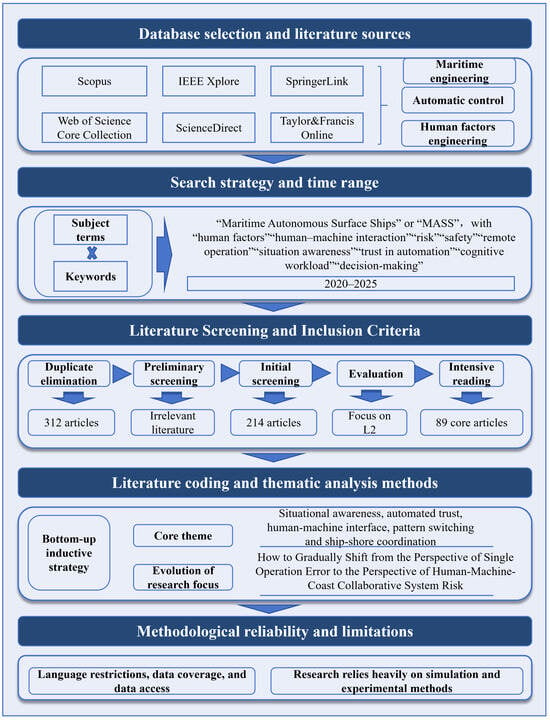
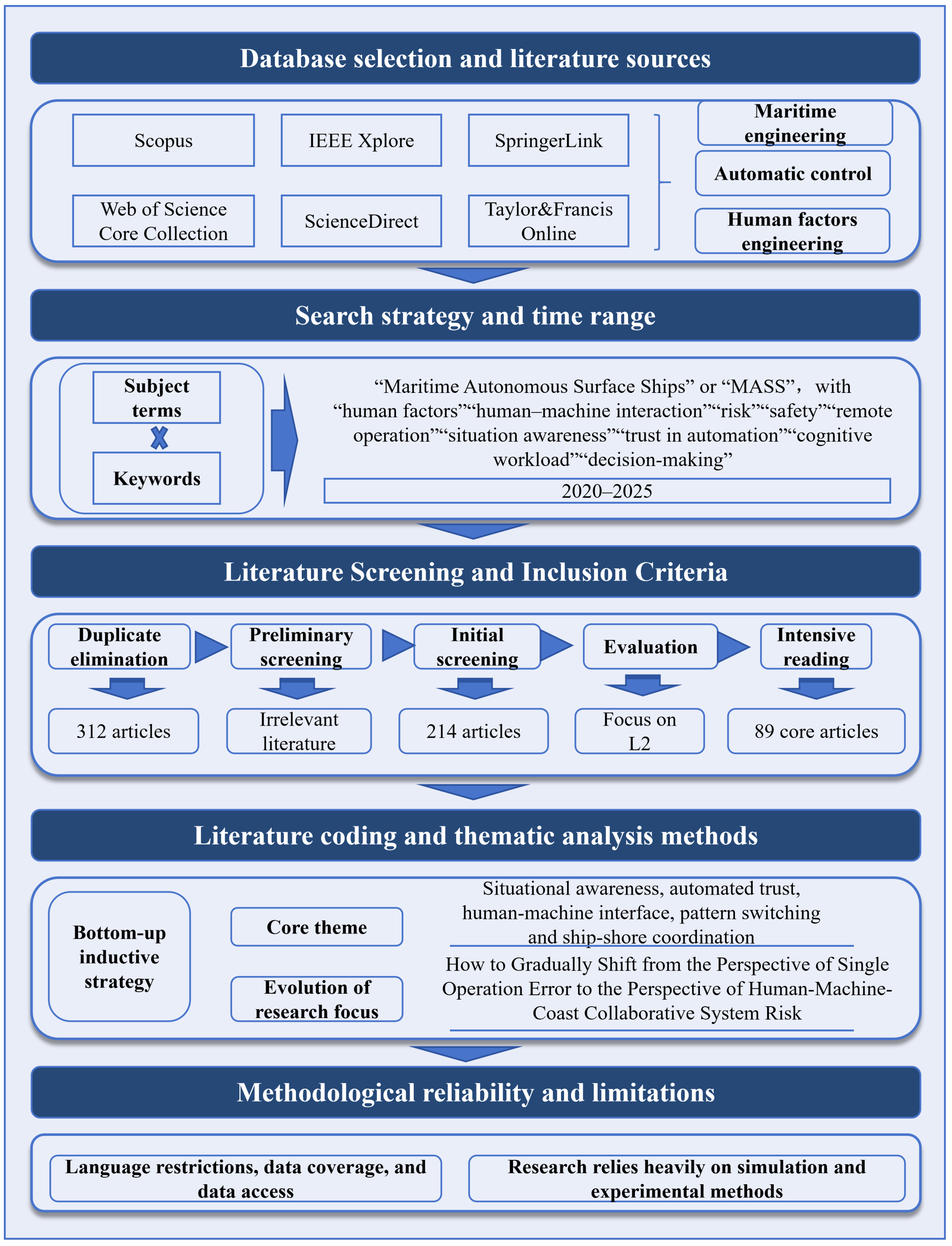
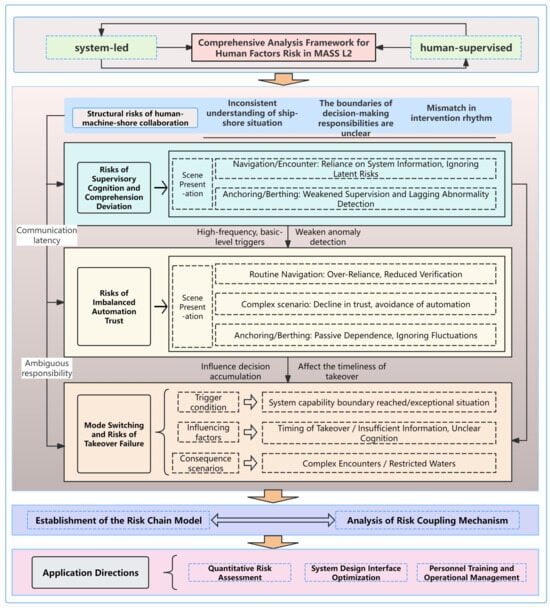
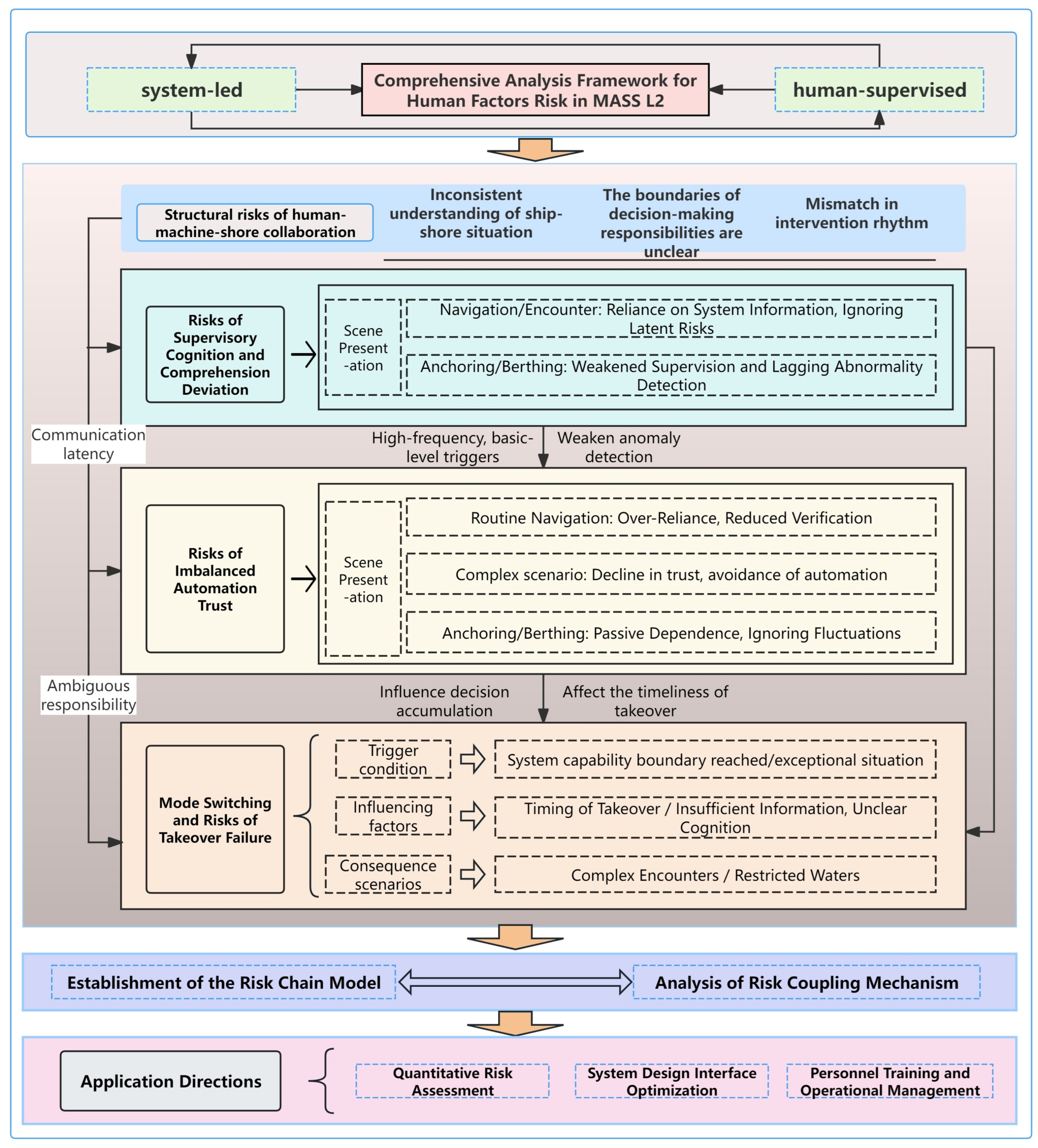

Disclaimer/Publisher’s Note: The statements, opinions and data contained in all publications are solely those of the individual author(s) and contributor(s) and not of MDPI and/or the editor(s). MDPI and/or the editor(s) disclaim responsibility for any injury to people or property resulting from any ideas, methods, instructions or products referred to in the content. |
© 2026 by the authors. Licensee MDPI, Basel, Switzerland. This article is an open access article distributed under the terms and conditions of the Creative Commons Attribution (CC BY) license.