1. Introduction
Intangible Cultural Heritage (ICH) serves as a crucial carrier of national cultural identity, collective memory, and value systems, and is widely recognized as a strategic resource for promoting cultural sustainability and innovation within cultural industries [
1]. In recent years, driven by the rise in cultural consumption, ICH-related brands have increasingly emerged as one of the most publicly visible and commercially viable categories of cultural consumption. These brands commonly encompass craftsmanship-based heritage practices such as traditional cuisine, food processing, brewing, and tea-making techniques [
2]. As of the end of 2024, China has officially recognized 1557 national-level ICH representative items. Among them, time-honored heritage brands such as Wufangzhai and Quanjude have become prominent cultural vehicles through which younger consumers reconstruct emotional attachment and cultural identity. Against this backdrop, how ICH brands can effectively communicate cultural meanings through visual systems and activate consumers’ cultural identification and brand preference has become a central issue in the modernization of ICH brand communication [
3].
However, empirical observations reveal that many ICH brands continue to face persistent challenges, including homogenized visual representations, insufficient articulation of cultural meanings, and weak brand distinctiveness. Such visual expression strategies often fail to align with contemporary consumers’ esthetic expectations and culturally grounded modes of interpretation [
4]. Particularly within digital media environments and emerging consumption contexts, the development of cognitively effective pathways—centered on cultural visual symbols—that enhance both cultural expressiveness and consumer engagement has become an urgent challenge for ICH brands.
Although existing research has increasingly acknowledged the role of cultural identity in brand communication—especially in studies of local brands, ethnic branding, and culturally contextualized consumption—several limitations remain. First, much of the literature has concentrated on brand narratives, linguistic symbols, and social identity construction, while systematic theoretical discussions on how cultural visual symbols activate cultural identity and subsequently shape brand preference remain scarce [
5]. Second, as the primary perceptual interface of brands, visual symbols play a critical role in emotional arousal, symbolic translation, and meaning construction [
6]. Nevertheless, prior studies have yet to adequately explain the differentiated effects of specific visual elements—such as color, imagery, typography, and packaging—on cultural cognition and cultural identity formation. Moreover, while semiotic theory provides a foundational explanation of cultural meaning generation in visual communication, it has rarely been systematically integrated with consumer behavior frameworks such as Perceived Value Theory, Social Cognitive Theory, Cultural Identity Theory, and the Theory of Reasoned Action. As a result, quantitative evidence delineating the influence pathways of cultural visual symbols remains limited.
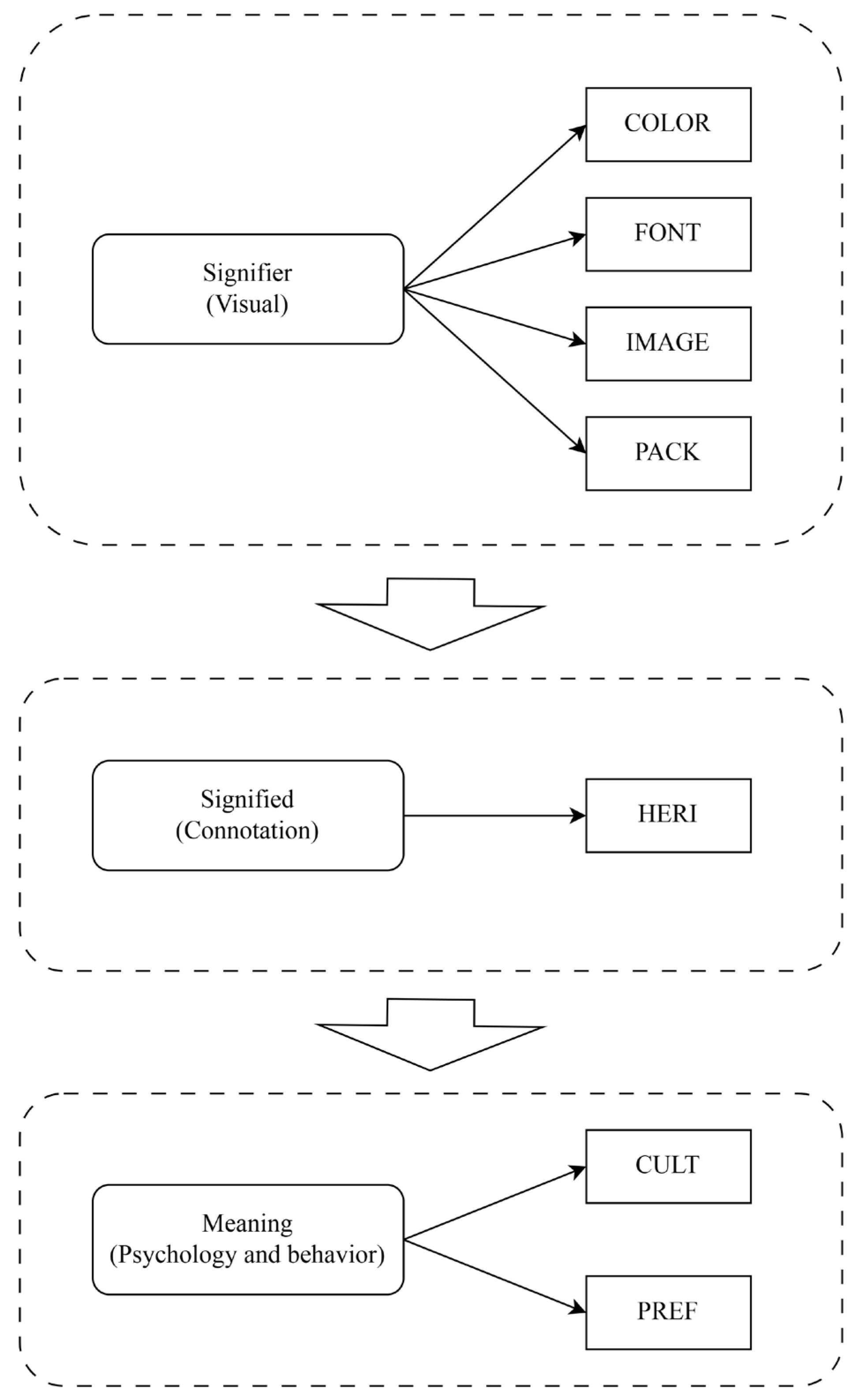
In response to these gaps, this study adopts Peircean semiotics, specifically the triadic framework of sign–object–interpretant, as its core theoretical foundation and proposes a research model linking cultural visual symbol perception, ICH cultural cognition, brand cultural identity, and brand preference. Within this framework, semiotics explains how visual brand elements function as cultural signifiers that initiate meaning construction. Perceived value theory is introduced to explain why visual cues can activate consumers’ initial judgments of cultural relevance and symbolic value [
7]. Social cognitive theory further clarifies how such symbolic stimuli are interpreted through prior cultural knowledge, social experience, and contextual understanding, thereby contributing to ICH cultural cognition [
8]. Cultural identity theory explains how this cognitive understanding develops into identity-related affiliation with the brand [
9], while the theory of reasoned action provides the attitudinal logic through which cultural identity is translated into brand preference [
10]. In this way, semiotics serves as the principal interpretive framework, whereas the other theories provide complementary support for specific stages of the proposed mechanism.
This study makes three main contributions. First, from a theoretical perspective, it develops a semiotics-informed framework to explain how visual symbols in ICH branding influence cultural cognition, cultural identity, and brand preference. By integrating visual communication theory with cultural branding research, the study provides a clearer understanding of the psychological mechanisms through which heritage-related visual symbols shape consumer perceptions.
Second, from a methodological perspective, the study constructs and empirically tests a structural equation model that captures the perceptual pathway linking visual symbols, cultural cognition, identity formation, and brand preference. This approach provides a systematic analytical framework for examining the role of visual symbols in cultural brand communication.
Third, from a practical perspective, the study offers insights for the design and communication of ICH brands by identifying how culturally meaningful visual symbols can enhance consumers’ cultural understanding and identity engagement. These findings contribute to discussions on the sustainable communication and development of heritage-based brands.
Based on the identified research gaps, this study proposes the following research questions:
RQ1: How do different dimensions of cultural visual symbol perception—namely color, typography, imagery, and packaging—affect consumers’ ICH cultural cognition?
RQ2: To what extent do ICH cultural cognition and brand cultural identity function as mediating constructs linking cultural visual symbol perception to brand preference?
RQ3: How can the overall structural mechanism among visual symbol perception, cultural cognition, cultural identity, and brand preference be explained within a semiotic framework and empirically validated through PLS-SEM?
2. Literature Review
2.1. Cultural Visual Communication and Semiotic Characteristics of ICH Brands
Cultural visual communication plays a critical role in the development of ICH brands by facilitating the symbolic translation of cultural meanings, the construction of shared significance, and the activation of cultural identity. Its function extends well beyond the requirements of conventional commercial brand visual identification systems [
11]. As the primary interface through which consumers encounter a brand, cultural visual symbols not only convey esthetic form but also embody historical memory, cultural archetypes, and region-specific symbolic meanings, thereby constituting the core semantic foundation of ICH brand contexts [
12]. Within ICH branding, multiple visual elements—including color, imagery, typography, and packaging—collectively form a visually articulated language rich in cultural depth. The cultural signification of these elements is often expressed through traditional festival imagery, ethnic esthetic styles, and symbolically encoded narrative forms [
13].
In the present study, symbol perception refers to consumers’ integrated perceptual evaluation of culturally embedded visual signifiers in ICH branding. Rather than denoting isolated technical design attributes, it captures how consumers holistically perceive and interpret visual elements such as color, typography, imagery, and packaging as carriers of cultural meaning. In this sense, symbol perception represents the perceptual entry point of the semiotic process, through which visual cues are recognized not merely as esthetic forms, but as culturally significant signs that may activate heritage-related cognition and identity responses.
Existing studies have examined the cultural encoding and semiotic characteristics of brand visuals from diverse theoretical perspectives. From the viewpoint of communication semiotics, the cultural meaning of visual symbols is not naturally given but is constructed through the interaction of communicative contexts, narrative frameworks, and modes of media representation. For example, Jiang and Kuang (2023) [
14], based on a data analysis of 1265 textual sources, found that the visual construction of urban cultural brands exhibits a pronounced distinction between localization and globalization. Local media tend to emphasize historical memory, everyday lifestyles, and regional culture in visual representation, whereas international media place greater emphasis on artistic presentation and the symbolic significance of cultural landscapes [
14]. This finding suggests that the communicative effectiveness of cultural visual symbols is highly context-dependent, with symbolic meanings shifting according to the identity of communicators and the cultural background of audiences. Such insights offer important implications for the visual strategy design of ICH brands in cross-media and cross-cultural communication environments.
From the perspectives of cultural symbolism and psychological mechanisms, the cultural communicative functions of symbols have also been widely discussed in anthropology and consumer behavior research. Lloyd and Woodside (2013) proposed two symbolic pathways in brand visual communication—totemic symbolism and fetish symbolism—arguing that cultural symbols can enhance consumer engagement and cultural attachment by activating collective memory, cultural schemas, and emotional affiliation [
15]. This symbolic mechanism is particularly salient in ICH branding contexts. For instance, in the Wufangzhai brand, visual elements such as dragon boat imagery, the color system associated with the Dragon Boat Festival, and traditional decorative patterns are culturally encoded to reinforce the brand’s identification with festival customs, thereby forming intergenerational emotional and cultural bonds.
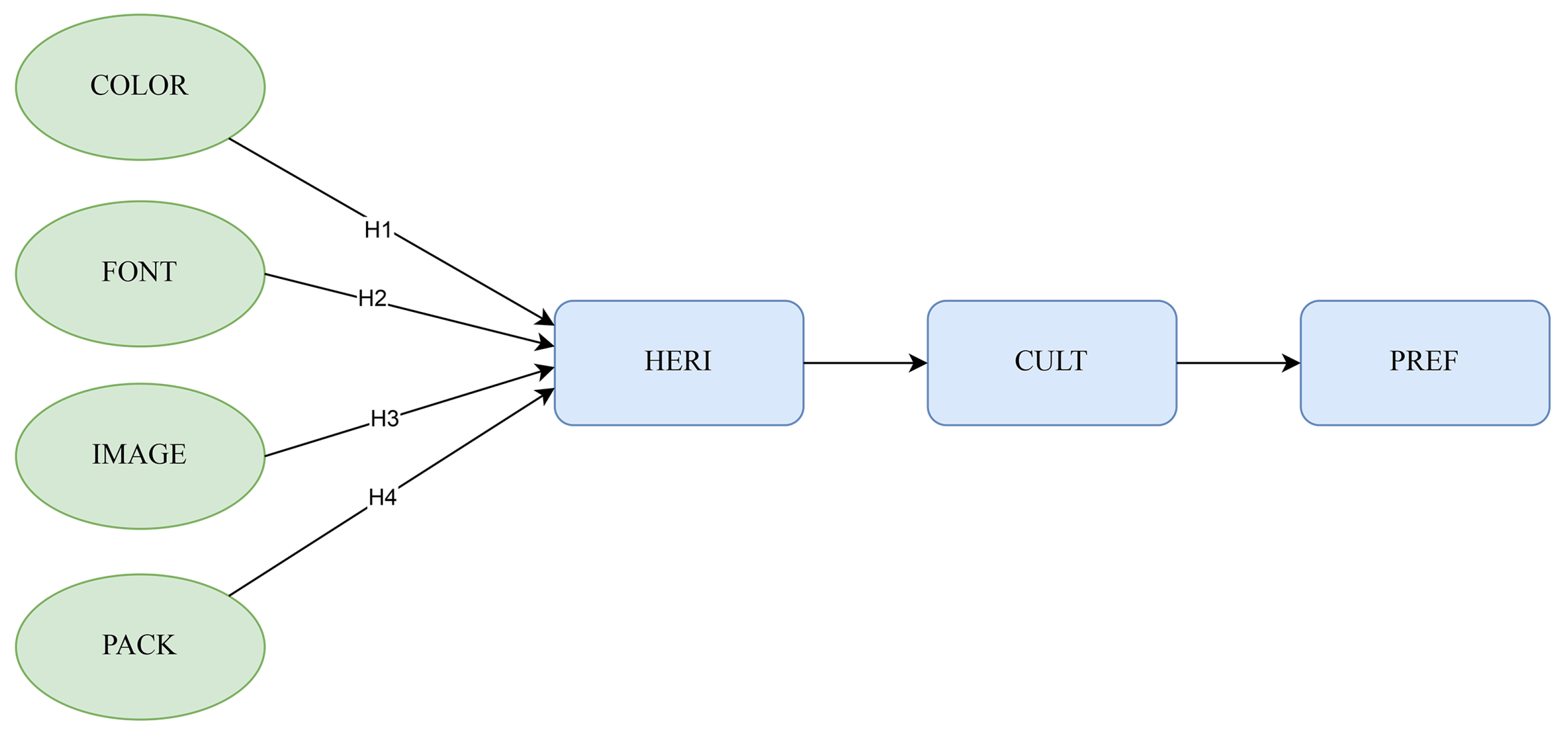
Overall, existing research provides an important theoretical foundation for understanding the cultural characteristics of visual communication in ICH branding. Prior studies emphasize the symbolic functions of cultural visual symbols in cultural transmission, emotional activation, and identity construction, while also highlighting the influence of cultural context, narrative strategies, and symbolic structures on visual communication processes. Nevertheless, despite extensive discussions of the cultural attributes of visual symbols, several critical issues remain insufficiently explored. Specifically, there is a lack of systematic investigation into how cultural visual symbols activate cultural identity during consumer cognitive processing, whether different visual elements exert structurally differentiated effects on cultural cognition and brand preference, and how the symbolic meanings of visual symbols are translated into behavioral intention through a cognition–identity linkage. These questions have not yet been quantitatively examined through structured analytical models, thereby establishing a clear research gap that underpins the present study’s proposed integrative pathway model: cultural visual symbol perception → ICH cultural cognition → ICH brand cultural identity → brand preference.
2.2. Cultural Identity Construction in ICH Branding
Cultural identity refers to an individual’s emotional sense of belonging to a specific cultural group, value system, or traditional practice, and it represents a critical psychological mechanism for understanding cultural product consumption and the formation of brand preference [
16]. In the context of ICH brand communication, consumers do not merely evaluate the functional value of products; rather, they affirm their self-identity through the cultural symbols, emotional memories, and social meanings embedded in the brand. Consequently, cultural identity has emerged as a key mediating variable linking brand communication and consumer behavior, exerting a significant influence on the acceptance of ICH products and the formation of brand preference.
Existing studies have explored the role of cultural identity within cultural consumption processes from multiple theoretical perspectives. For instance, Zhang et al. (2023), through experimental research, demonstrated that cultural identity significantly enhances consumers’ purchase intentions toward ICH products, with this effect becoming more pronounced under conditions of higher cultural knowledge and stronger perceptions of scarcity [
17]. This finding suggests that cultural identity functions as an amplifying mechanism within the “cultural cognition–attitude–behavior” chain, and that its impact is moderated by both individual cultural background and product attributes. Similarly, Guo and Zhu (2023), drawing on object congruence theory, proposed that perceived consistency between ICH inheritors and product imagery enhances consumers’ evaluations of brand authenticity, which in turn strengthens brand identification and increases purchase intention [
18]. This study elucidates a sequential relationship of “authenticity–identity–purchase”.
Moreover, Sousa and Rodrigues (2024) [
19], in their research on World Heritage tourism contexts, further revealed that brand trust and cultural authenticity jointly influence tourists’ cultural identity. Their findings indicate that authenticity and cultural congruence become particularly critical conditions for activating cultural identity in cross-cultural settings [
19]. This insight provides valuable implications for ICH brand communication strategies in emerging consumption scenarios.
Beyond traditional cultural contexts, the mechanisms through which cultural identity operates in advertising, digital communities, and interactive content have also received increasing scholarly attention. In the domain of advertising, Kuang et al. (2024) found that emotionally framed ICH-themed advertisements are more effective in eliciting cultural resonance and strengthening brand attitudes in gift-giving consumption contexts, whereas rational appeals perform better in situations emphasizing functional attributes [
20]. This suggests that the activation of cultural identity is highly context-dependent. Additionally, Huangfu et al. (2022), through their study of OPPO’s virtual brand community, demonstrated that informational, entertaining, and interactive experiences enhance brand loyalty by fostering community identification [
21]. These findings indicate that the pathways through which cultural identity is constructed have expanded beyond traditional cultural content to encompass digital community participation, emotional engagement, and interactive behaviors. Collectively, these studies underscore cultural identity as a central psychological nexus emerging from the integration of cultural communication, brand experience, and social interaction mechanisms.
In summary, cultural identity plays a pivotal role across cultural communication, authenticity perception, symbolic congruence, and digital participation behaviors. However, despite the growing body of research elucidating the multidimensional construction of cultural identity, several research gaps remain. First, existing literature predominantly focuses on the influence of cultural content, advertising appeals, or social interaction on cultural identity, while insufficient attention has been paid to how brand cultural visual symbols activate cultural identity during consumers’ cognitive processing. Second, there is a lack of structural models that integrate the symbolic structure of cultural visual elements with the “cultural cognition–cultural identity–behavioral intention” chain. Third, few studies have systematically examined the pathway of “symbol perception–cultural cognition–brand identity–behavioral intention” within a semiotic theoretical framework. Therefore, it is necessary to conduct a systematic quantitative analysis of the role of cultural visual symbols in cultural identity construction, supported by semiotic theory and structural equation modeling.
2.3. Effects of Cultural Visual Symbols on Cultural Identity and Brand Preference
Cultural visual symbols are not merely external forms of brand communication; rather, they constitute a semiotic system of socio-cultural meanings [
22]. Through a pathway of “symbolization–perception–identification,” such symbols can influence consumers’ cultural identity construction and the formation of brand attitudes [
23]. In the context of ICH branding, cultural visual elements are often embedded with multiple layers of cultural coding, including festive imagery, regional symbols, and historical memories. Their influence on consumers’ cultural identity and brand preference has therefore become an increasingly important topic in brand semiotics research [
3]. From a semiotic perspective, cultural visual symbols function as intermediaries linking the “world of cultural meanings” with the “world of market consumption,” enabling consumers to complete processes of self-positioning and value identification through the interpretation of images, colors, and visual forms [
24].
Within the semiotic theoretical framework, Peirce’s triadic sign structure—comprising the representamen, the object, and the interpretant—provides a foundational paradigm for understanding symbolic construction in brand visual communication [
25]. For example, Agarwala et al. (2021), through a series of three experiments, demonstrated that advertisements incorporating religious imagery in a Hindu cultural context significantly enhance consumers’ brand attitudes and purchase intentions compared with abstract graphic designs, with this effect being more pronounced among individuals with higher levels of religious identification [
26]. Grounded in symbolic interactionism, this study reveals a chain mechanism through which cultural symbols influence consumer responses via “cultural congruence–attitude–behavior.” Importantly, it highlights not only the significance of symbolic content itself but also the moderating role of consumers’ pre-existing cultural identities.
From a digital communication perspective, Almaguer et al. (2024) proposed the concept of “emoji as brand paralanguage,” developing a semiotic framework that distinguishes between pictographic and symbolic emojis to explain how visual elements establish informational intimacy and cultural relevance in multicultural contexts [
27]. Their findings indicate that the combination of emojis and verbal text functions as an “affective symbol bundle,” enhancing message clarity while simultaneously strengthening consumers’ emotional identification with and perceived closeness to a brand. This suggests that the symbolic boundaries of visual communication have expanded beyond traditional static graphic elements to include dynamic, human–computer interactive, and multimodal expressions.
Beyond symbolic content, preferences for visual form and the presence of institutionalized symbolic labels also exert significant influence on cultural identity and brand preference. Using a multi-image sorting method, Bresciani and Del Ponte (2017) found that consumers generally prefer logo designs combining graphic elements with brand names and respond more favorably to black-and-white symbolic compositions [
28]. This finding nuances traditional designer-centered esthetic assumptions by highlighting consumers’ perceptual preferences for symbolic style, structural simplicity, and ease of recognition. It also provides practical insights for ICH brands seeking to balance cultural complexity with visual clarity in logo and packaging design.
Furthermore, experimental research by Huang et al. (2025) [
3] demonstrated that “ICH labels,” as institutionalized certification symbols, significantly enhance consumers’ perceived quality and trust in the context of local brand communication. Similarly, Santamarina (2023) [
29], drawing on cases such as the Fallas Festival and UNESCO branding, argued that ICH labels have gradually evolved into symbolic tools through which local governments engage in global cultural brand competition. These visual symbols not only reinforce local cultural identity but also carry layered intentions related to national image, political discourse, and market strategy [
29]. Collectively, these studies reveal that cultural visual symbols—across multiple levels including imagery content, formal structure, and institutional labeling—can influence identity and preference through mechanisms such as trust, authenticity, and cultural congruence, thereby providing an important theoretical foundation for the present study.
In summary, cultural visual symbols play a significant symbolic role in the construction of cultural identity and the formation of brand preference, with their influence operating primarily through three mechanisms. First, symbolic imagery and representational content activate cultural meanings and pre-existing cultural schemas. Second, visual style and structural coherence enhance recognition efficiency and esthetic identification. Third, institutionalized cultural labels strengthen perceptions of authenticity, trust, and value judgment. However, existing studies have largely focused on specific types of symbols (e.g., religious imagery, emojis, certification labels) or particular communication contexts, and there remains a lack of systematic modeling and quantitative testing of how diverse visual elements jointly operate within the structural pathway of “symbol perception–cultural cognition–brand identity–behavioral intention” in the ICH branding context. In particular, the extent to which perceptual dimensions of cultural visual symbols influence brand preference through the sequential mediation of cultural cognition and cultural identity has yet to be validated within an integrated framework. This gap provides the theoretical space for the present study to construct and test a structural equation model linking “perception of ICH cultural visual symbols → ICH cultural cognition → ICH brand cultural identity → ICH brand preference.”
2.4. Path Logic Among Visual Symbols, ICH Cultural Cognition, Cultural Identity, and Brand Preference
Based on the above literature, this study proposes a sequential causal path in which visual symbol perception influences ICH cultural cognition, which in turn strengthens brand cultural identity and ultimately leads to brand preference [
30]. To strengthen the theoretical coherence of this model, the present study does not treat the selected theories as parallel frameworks of equal analytical status [
31]. Instead, semiotics serves as the overarching interpretive foundation, while perceived value theory, social cognitive theory, cultural identity theory, and the theory of reasoned action are used to explain specific transitions within the proposed psychological pathway.
First, Perceived Value Theory provides the foundational logic for the relationship between visual symbols and cultural cognition. As “representamens” in the semiotic sense, cultural visual symbols do not merely evoke esthetic responses but also activate consumers’ emotional reactions and value judgments regarding the cultural meanings embedded in the brand, thereby initiating preliminary understanding and cognitive processing of cultural information [
32]. In the ICH branding context, visual elements such as patterns, colors, typography, and packaging structures are often closely associated with regional culture, festive symbolism, and traditional craftsmanship. This symbolic embeddedness facilitates cultural associations and meaning extraction, enabling visual perception to be transformed into structured cognition of ICH culture [
33].
In the present study, the visual variables included in the model—color, typography, imagery, and packaging—are conceptualized as perceptual-level constructs rather than isolated design parameters. In practical visual design, each of these elements is composed of multiple lower-level design features. For example, color perception may derive from chromatic harmony, saturation, contrast, and balance; typography perception may involve text size, readability, typographic hierarchy, and spacing; imagery perception may reflect visual clarity, recognizability, and compositional coherence; and packaging perception may relate to visual standardization, structural form, and symbolic consistency.
From the perspective of consumer cognition, individuals rarely evaluate these detailed parameters independently. Instead, these design features are integrated into holistic perceptual impressions during visual processing. Accordingly, the constructs used in this study represent aggregated perceptual interpretations of multiple design parameters. This abstraction is consistent with common practice in consumer research and structural equation modeling, where higher-level perceptual constructs are used to capture how individuals cognitively process complex visual environments.
Within the semiotic framework adopted in this study, these perceptual constructs correspond to the visual signifier level, which provides the initial symbolic stimuli that activate cultural cognition and identity-related interpretations.
Second, Social Cognitive Theory emphasizes that cultural cognition is not formed solely through individual internal processing but is jointly shaped by cultural contexts, social experience, and collective memory [
34]. In ICH branding, cultural visual symbols interact with consumers’ pre-existing cultural schemas and social experiences, allowing cultural cognition to acquire deeper contextualized meaning. Consequently, the pathway from cultural visual symbol perception to cultural cognition represents not only a perceptual mechanism but also a socialization process through which consumers establish a sense of cultural belonging. The formation of cultural cognition thus provides a necessary cognitive foundation for the development of cultural identity [
35].
Third, Cultural Identity Theory conceptualizes cultural identity as a process of identity construction based on cultural belonging, self-projection, and emotional resonance. Within this process, cultural cognition functions as a transitional mechanism of “perception–understanding–acceptance–identification,” enabling consumers to align brand symbols with their cultural self-concepts and thereby strengthen emotional attachment and identity affiliation with the brand [
36]. This mechanism is particularly salient in the ICH branding context, where brands are often perceived as symbolic carriers of national traditions, regional cultures, and everyday cultural practices. Accordingly, consumers’ cultural identity is derived not only from evaluations of product attributes but also from the affirmation of their cultural self-identity [
37].
Finally, Theory of Reasoned Action provides the decision-making logic for the transformation from cultural identity to brand preference. Once cultural identity is established, it significantly enhances consumers’ brand attitudes and is further translated into stronger purchase intentions and behavioral tendencies [
38]. For ICH brands, cultural identity not only promotes brand preference but also fosters long-term loyalty, thereby supporting the formation of sustainable cultural consumption relationships.
Accordingly, the theoretical structure of the proposed model can be understood as follows: semiotics explains the symbolic nature of visual brand elements as the initial signifying input; perceived value theory supports the transition from visual symbol perception to preliminary cultural understanding; social cognitive theory clarifies how cultural cognition is shaped through contextualized interpretation; cultural identity theory explains how cultural understanding develops into emotional and identity-based affiliation with the brand; and the theory of reasoned action provides the behavioral-attitudinal basis for the transformation of cultural identity into brand preference. This theoretically differentiated structure helps ensure that the model is not merely a combination of theories, but an integrated explanation of the symbolic, cognitive, identity-based, and attitudinal processes involved in ICH brand communication.
To avoid theoretical fragmentation, the present study clearly distinguishes between the core interpretive theory and the supporting explanatory theories within the model. Semiotics provides the central logic for understanding how visual brand elements function as cultural signifiers. The remaining theories are introduced not as competing frameworks, but as stage-specific explanatory perspectives that support the transitions from perception to cognition, from cognition to identity, and from identity to preference. This arrangement enhances the internal coherence of the model and clarifies the theoretical basis of its empirical application.
4. Data Analysis
4.1. Sample Characteristics
Before conducting the main statistical analyses, the potential influence of common method variance (CMV) was examined, as the data were collected using a single questionnaire. Harman’s single-factor test was performed by entering all measurement items into an exploratory factor analysis. The results showed that the first unrotated factor accounted for 36.27% of the total variance, which is below the commonly recommended threshold of 50% [
48]. This result suggests that common method variance is unlikely to significantly bias the findings of this study. In addition, several procedural remedies were adopted during questionnaire design, including anonymous participation and clear instructions emphasizing that there were no right or wrong answers, which further reduced potential method bias.
A total of 274 valid questionnaires were included in the analysis. Descriptive statistics were conducted to examine the demographic characteristics of the sample. As shown in
Table 1, the gender distribution was relatively balanced, with 48.2% male respondents (
n = 132) and 51.8% female respondents (
n = 142).
In terms of age, the sample was primarily concentrated in the 18–44 age range. Specifically, respondents aged 18–24 accounted for 25.5% (n = 70), those aged 25–34 accounted for 28.5% (n = 78), and those aged 35–44 accounted for 25.5% (n = 70). Together, these three groups comprised 79.5% of the total sample, indicating that the respondents were mainly young and middle-aged consumers. In addition, respondents aged 45–55 accounted for 15.3% (n = 42), while those aged over 55 accounted for 3.6% (n = 10), reflecting a relatively well-distributed age structure.
Regarding occupational background, university students constituted 28.5% (n = 78) of the sample, followed by company employees at 23.4% (n = 64), company managers at 13.9% (n = 38), freelancers at 10.2% (n = 28), and public-sector employees at 8.0% (n = 22). Respondents from other occupations accounted for 16.1% (n = 44). Overall, the sample covered a diverse range of occupational groups, suggesting an adequate level of heterogeneity and representativeness.
In terms of brand awareness, 69.3% of respondents (n = 190) reported that they had heard of Wufangzhai, while 30.7% (n = 84) indicated that they were unfamiliar with the brand, suggesting a relatively high level of brand recognition among the general public. With regard to awareness of the associated ICH craftsmanship, 27.4% (n = 75) of respondents reported that they were aware that Wufangzhai’s zongzi-making technique is recognized as a national-level ICH, 43.8% (n = 120) indicated that they had heard of it, and 28.8% (n = 79) reported no prior knowledge.
Compared with the relatively high level of brand awareness, public awareness of the underlying ICH cultural value appeared to be comparatively limited. This discrepancy reflects a potential cognitive gap between brand recognition and cultural understanding, further highlighting the practical relevance and necessity of examining ICH brand communication mechanisms from the perspective of cultural visual symbols.
4.2. Descriptive Statistics and Normality Assessment
Descriptive statistical analyses were conducted for the 21 measurement items, including the minimum value, maximum value, mean, and standard deviation. The results are presented in
Table 2. All items ranged from 1 to 5, consistent with the five-point Likert scale employed in this study. No out-of-range values or missing data were detected, indicating satisfactory overall data quality and providing a reliable foundation for subsequent analyses.
With respect to central tendency, the mean values of all measurement items ranged from 3.06 to 3.26, clustering around the midpoint of the scale. This distribution suggests that respondents generally expressed neutral to moderately positive evaluations of the brand’s visual design elements and related cultural perceptions. The differences in mean values across items were relatively small, and no extreme high or low values were observed, indicating a stable overall attitudinal pattern within the sample. Specifically, item C1 exhibited the highest mean value (M = 3.26), whereas item F2 showed the lowest mean value (M = 3.06). However, the magnitude of this difference was limited, and both values remained within a moderate range; therefore, no further interpretation of inter-item mean differences was conducted at this stage.
In terms of dispersion, the standard deviations of the measurement items ranged from 1.024 to 1.366, indicating a moderate level of response variability within the sample. Overall, the observed standard deviation levels fell within the typical range reported in consumer behavior and branding research. This suggests that the data neither suffered from excessive response concentration that could reduce informational value, nor exhibited overly high dispersion that might compromise model stability. A small number of items (e.g., H1 and C1) displayed relatively higher standard deviations, reflecting individual differences in respondents’ evaluations of certain visual and cultural attributes; nevertheless, these values remained within theoretically and methodologically acceptable limits.
Overall, the descriptive statistics indicate that the distributions of all measurement items were reasonable, with no evident ceiling effects or floor effects. These results satisfy the basic prerequisites for conducting reliability and validity assessments, as well as subsequent structural equation modeling analyses.
To examine the distributional characteristics of the measurement data, skewness and kurtosis analyses were conducted for the 21 measurement items, with the results reported in
Table 3. The findings indicate that the skewness values ranged from −0.180 to 0.224, while kurtosis values ranged from −1.306 to −0.628, suggesting an overall approximately symmetric and relatively flat distribution of the data.
In terms of skewness, the absolute values for all items were small, with no pronounced positive or negative skewness observed. This indicates that respondents’ ratings were relatively evenly distributed across the scale, rather than being concentrated at one extreme. Regarding kurtosis, all items exhibited negative values, implying slightly platykurtic distributions; however, no sharp peaks or abnormal clustering of responses were detected.
According to commonly adopted statistical criteria, skewness and kurtosis values within the range of ±2 are generally considered indicative of data that do not substantially deviate from normality assumptions [
49]. As shown in
Table 3, all measurement items fell well within this recommended range, suggesting the absence of serious distributional abnormalities in the data.
Overall, the skewness and kurtosis results demonstrate that the distributions of the measurement items were acceptable, with no evidence of extreme values or problematic distribution patterns. In structural equation modeling (SEM)–related research, such levels of skewness and kurtosis are typically regarded as adequate to support subsequent reliability and validity assessments, as well as structural model path analyses. Therefore, the distributional properties of the data satisfy the basic prerequisites for further statistical analyses.
4.3. Reliability and Validity Assessment and Confirmatory Factor Analysis
4.3.1. Reliability and Convergent Validity
To ensure the internal consistency and convergent validity of the latent constructs in the structural equation model, this study conducted a systematic assessment of reliability indicators—including Cronbach’s α, composite reliability (rho_A and rho_C), and average variance extracted (AVE)—based on the outputs generated by SmartPLS. The results are presented in
Table 4.
Regarding internal consistency reliability, the Cronbach’s α values of all latent constructs exceeded the recommended threshold of 0.70, indicating satisfactory internal consistency. Specifically, Cronbach’s α values ranged from 0.831 to 0.930, with the lowest value observed for IMAGE and the highest for COLOR. Overall, the reliability levels fall within an acceptable and desirable range commonly reported in consumer behavior and branding research, with no indications of insufficient or excessively inflated reliability.
In addition, both composite reliability indices, rho_A and rho_C, exceeded the recommended criterion of 0.80 across all constructs, demonstrating strong measurement stability and consistency under different reliability estimation approaches. The values of rho_A ranged from 0.849 to 0.935, while rho_C ranged from 0.864 to 0.939, fully satisfying the methodological requirements for measurement reliability in PLS-SEM analysis.
With respect to convergent validity, the average variance extracted (AVE) values for all latent constructs surpassed the minimum threshold of 0.50, with values ranging from 0.755 to 0.885. These results indicate that each construct explains a substantial proportion of variance in its corresponding indicators, thereby demonstrating adequate convergent validity. Notably, COLOR and HERI exhibited relatively higher AVE values, suggesting strong conceptual coherence between the measurement items and their underlying constructs. The AVE value of PREF also fell within a robust range, consistent with the characteristics of attitudinal outcome variables commonly examined in consumer research.
In summary, all latent constructs in this study successfully passed the tests for internal consistency reliability and convergent validity, confirming that the measurement model is both stable and reliable. These results provide a solid methodological foundation for subsequent discriminant validity assessments and structural path analyses.
4.3.2. Discriminant Validity Assessment
To assess the discriminant validity among the latent constructs, this study employed the Heterotrait–Monotrait Ratio (HTMT) as the primary evaluation criterion. Compared with the traditional Fornell–Larcker criterion, the HTMT approach provides a more stringent and sensitive test for detecting potential construct overlap or conceptual redundancy, and has therefore been widely adopted in structural equation modeling research [
50]. Discriminant validity is generally considered satisfactory when HTMT values are below 0.85 (strict criterion) or 0.90 (liberal criterion) [
51].
As shown in
Table 5, all HTMT values are well below the conservative threshold of 0.85. Specifically, the lowest HTMT value was observed between Brand Preference (PREF) and Image Perception (IMAGE) (HTMT = 0.272), while the highest value occurred between ICH Cognition (HERI) and Brand Cultural Identity (CULT) (HTMT = 0.444). Overall, the HTMT values ranged from 0.272 to 0.444, indicating no evidence of excessive correlations or conceptual overlap among the latent constructs.
The consistently low HTMT values confirm that discriminant validity is well established across all constructs. At the same time, the relatively low inter-construct correlations suggest that the psychological layers examined in this study—namely visual perception, cultural cognition, cultural identity, and brand preference—remain conceptually distinct. This structural independence may also partly account for the moderate explanatory power (R2 values) observed in the structural model, which is theoretically consistent with the multi-stage and incremental nature of cultural meaning construction in ICH branding contexts.
In summary, the results demonstrate that all latent constructs exhibit clear conceptual boundaries and strong discriminant validity, indicating that the measurement model effectively differentiates among different psychological dimensions. This provides a robust methodological foundation for subsequent structural path analysis and mediation effect testing.
4.4. Mediation Effect Testing (Bootstrap Analysis)
To further examine the mediating roles of ICH Cognition (HERI) and Brand Cultural Identity (CULT) in the relationships between visual perception variables and Brand Preference (PREF), this study employed a bootstrap resampling procedure to test the direct effects, indirect effects, and total effects within the structural model. The bootstrap analysis was conducted with 5000 resamples, and the statistical significance of mediation effects was evaluated based on path coefficients (β),
t-values, and
p-values. Detailed results for direct effects, indirect effects, and total effects are reported in
Appendix B,
Appendix C, and
Appendix D, respectively.
Given that the primary objective of this study is to verify the key psychological mechanisms proposed by the semiotic framework, rather than to exhaustively test all possible mediating relationships, the mediation analysis distinguishes between confirmatory mediation results and exploratory mediation results. Confirmatory mediation effects correspond to mediation paths explicitly proposed in the theoretical framework and research hypotheses, whereas exploratory mediation effects are reported to supplement the understanding of potential indirect relationships within the model. These exploratory findings are interpreted cautiously and are not subjected to strong causal claims. This distinction allows the study to maintain methodological rigor while avoiding overinterpretation of marginal or context-dependent mediation effects.
As shown in
Table 6, the bootstrap results indicate that the mediation path HERI → CULT → PREF is statistically significant. Specifically, ICH Cognition (HERI) has a significant positive effect on Brand Cultural Identity (CULT) (β = 0.233,
t = 3.926,
p < 0.001), and Brand Cultural Identity (CULT), in turn, exerts a significant positive effect on Brand Preference (PREF) (β = 0.221,
t = 3.840,
p < 0.001). Further indirect effect testing confirms that HERI influences PREF indirectly through CULT (HERI → CULT → PREF: β = 0.051,
t = 2.502,
p = 0.012). These results suggest that heritage cognition does not directly drive brand preference, but instead exerts its influence primarily by strengthening brand cultural identity, through which brand preference is formed at the attitudinal level. This mediation pathway is statistically supported and represents the most robust and central mediating mechanism in the structural model.
When extending the analysis to include visual perception variables in a multi-stage sequential mediation framework, the bootstrap results show that the indirect effect of COLOR on PREF via HERI and CULT does not reach the conventional 0.05 significance level (COLOR → HERI → CULT → PREF: β = 0.009, t = 1.687, p = 0.092). Accordingly, this sequential mediation pathway is not statistically confirmed in the present study and is interpreted as an exploratory trend rather than a validated mediation effect.
In contrast, the sequential mediation paths involving FONT, IMAGE, and PACK through HERI and CULT do not achieve statistical significance. These findings indicate that, under the current sample conditions and model specification, these visual perception variables are insufficient to generate stable indirect effects on brand preference through a consistent mediation mechanism, and their proposed mediation paths are not empirically supported.
Taken together, the bootstrap mediation results reveal a clear hierarchical pattern in the proposed mediation mechanisms. Among all tested paths, HERI → CULT → PREF emerges as the only mediation pathway that receives statistical confirmation, whereas sequential mediation paths initiated by visual perception variables fail to demonstrate stable and replicable mediation effects.
These findings suggest that the influence of ICH brand visual symbols on brand preference is not transmitted through direct or linear effects of individual visual elements, but rather relies heavily on brand cultural identity as a higher-order attitudinal mediator. Visual perception factors appear to function primarily as antecedent conditions for cultural cognition, rather than as independent or dominant mediating drivers of brand preference formation.
4.5. Effect Size Analysis (f2)
To further assess the practical contribution of each structural path within the model, this study supplemented the significance testing and mediation analysis by examining effect sizes (f2). The f2 index evaluates the extent to which the explanatory power of an endogenous variable changes when a specific exogenous variable is removed from the model, thereby reflecting the relative importance of each predictor within the structural framework.
According to the criteria proposed by Cohen (1988), f
2 values of 0.02, 0.15, and 0.35 represent small, medium, and large effects, respectively [
52]. Based on the output generated by SmartPLS, the f
2 values observed in this study fall within theoretically meaningful ranges and provide additional insight into the contribution patterns of the proposed paths.
As shown in
Table 7, among the paths linking visual symbols to HERI, COLOR exhibits an effect size of f
2 = 0.033, which corresponds to a small effect. This finding suggests that color, as the most immediate visual stimulus, possesses a modest yet meaningful explanatory role in activating consumers’ cultural atmosphere perception and emotional associations related to ICH. By contrast, FONT and IMAGE both demonstrate very small effect sizes (f
2 = 0.002), while PACK shows a slightly higher but still limited effect (f
2 = 0.010). These results indicate that these visual elements primarily serve auxiliary or complementary functions in the formation of cultural cognition, with relatively constrained explanatory strength.
Regarding the core mediating paths of the model, the effect size of HERI on CULT is f2 = 0.057, while the effect size of CULT on PREF is f2 = 0.051, both reaching the small-to-moderate effect range. These findings indicate that, compared with individual visual symbol elements, cultural cognition and cultural identity exert a more substantive influence on shaping consumers’ attitudes and brand preferences, and thus function as central psychological drivers within the value transmission mechanism of ICH brands.
Overall, the effect size analysis is highly consistent with the results of the path significance testing and mediation analysis. Visual symbol variables do not exhibit dominant or decisive effects within the model; instead, they exert influence in a gradual and indirect manner, shaping consumers’ cultural cognition, which in turn affects brand preference through the mediating role of cultural identity. This pattern further supports the conclusion that ICH brand visual communication does not rely on strong stimulation from individual design elements, but rather operates through multi-layered, low-intensity yet stable psychological pathways that progressively construct consumers’ cultural understanding and attitudinal orientation.
4.6. Structural Model Path Analysis
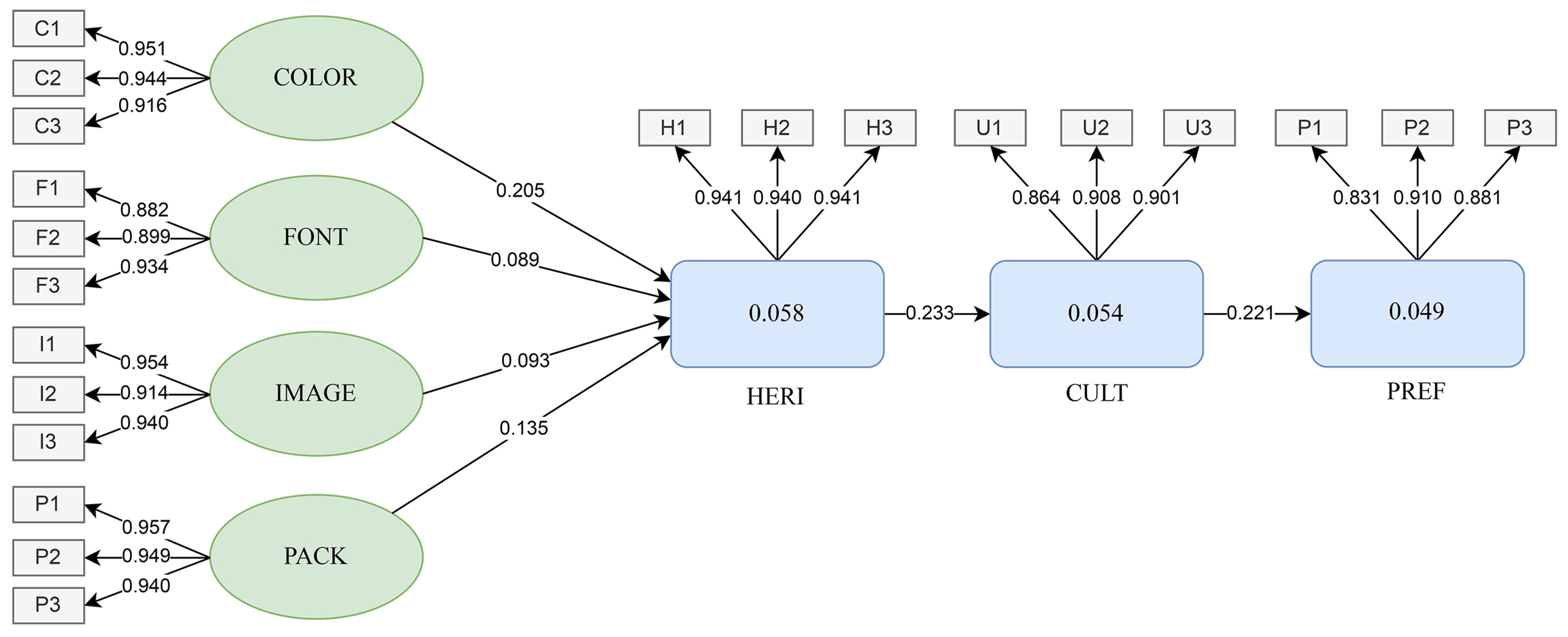
This study constructed a structural equation model in which visual perception variables—including COLOR, FONT, IMAGE, and PACK—served as exogenous variables, HERI and CULT functioned as mediating variables, and PREF was specified as the endogenous variable. The estimated results of the structural model are presented in
Figure 3.
In terms of overall explanatory power, the coefficients of determination (R2) for HERI, CULT, and PREF are 0.058, 0.054, and 0.049, respectively. These values indicate that the explained variance of the endogenous constructs is modest. Rather than suggesting that the proposed mechanism is unimportant, this result indicates that consumer responses to ICH brands are shaped by a broader set of influences beyond the focal variables included in the present model. In particular, brand preference in ICH contexts is likely to be jointly affected by prior brand familiarity, product experience, perceived authenticity, trust, nostalgic attachment, social interaction, and communication context, many of which were intentionally not included in the current parsimonious framework.
This study therefore interprets the model as a theory-driven mechanism model designed to isolate the symbolic pathway linking visual perception, cultural cognition, cultural identity, and brand preference, rather than as a comprehensive predictive model of consumer behavior. Within this scope, the directional consistency of the significant paths remains theoretically meaningful. The results suggest that visual symbols may function as distal and context-sensitive antecedents whose effects emerge indirectly through cognition and identity formation, rather than through strong direct prediction of preference. Accordingly, the relatively low R2 values should be understood as reflecting both the complexity of ICH brand consumption and the intentionally bounded explanatory scope of the present research design. At the same time, these findings underscore the need for future studies to incorporate additional contextual and individual-level variables in order to enhance the explanatory and predictive power of the model.
At the “signifier” level, the path coefficients from visual perception variables to HERI are generally positive, though their statistical significance varies. Among them, COLOR exhibits a statistically significant effect on HERI (based on Bootstrap testing), indicating that color—characterized by immediacy and strong affective activation—more readily triggers consumers’ cultural associations and perceptions of cultural atmosphere under conditions of relatively low-cognitive load. In contrast, the direct paths from FONT and IMAGE to HERI do not reach statistical significance, while the effect of PACK on HERI is marginal or non-significant (depending on the p-value). These findings suggest that the influence strength of different visual elements is not uniform within the present sample, and that their effects may depend on more explicit contextual cues or stronger cultural narratives.
At the “object” level, HERI has a significant positive effect on CULT (β = 0.233), indicating that consumers’ understanding and cognition of the ICH-related cultural content embedded in the brand can be further transformed into psychological identification with the brand’s cultural values. This result supports the theoretical proposition that cultural cognition serves as a necessary antecedent to cultural identity formation.
At the “meaning” level, CULT exerts a significant positive influence on PREF (β = 0.221), confirming that brand cultural identity functions as a key psychological driver in the formation of brand preference. In addition, HERI also shows a direct effect on PREF, though the magnitude of this effect is relatively small. When considered alongside the mediation analysis results, the indirect pathway through CULT is more stable, further highlighting the pivotal role of cultural identity in translating cultural understanding into brand attitudes and preferences.
In summary, the structural model identifies a robust core mechanism (HERI → CULT → PREF), while revealing heterogeneity in the extent to which different visual elements contribute to the front-end activation of this mechanism. These findings provide empirical evidence for understanding the psychological processes through which ICH brand visual symbols influence consumer attitudes and preferences. At the same time, they indicate that this mechanism alone cannot fully account for the formation of brand preference, suggesting that future research should incorporate additional contextual and individual-level variables to enhance the explanatory and predictive power of the model.
5. Discussion
Grounded in the semiotic triadic structure of “signifier–object–meaning,” this study employed a structural equation modeling approach to examine the mechanisms through which visual symbols of ICH brands influence consumer brand preference via cultural cognition and brand cultural identity. Using Wufangzhai, a representative food-related ICH brand, as the empirical context, the findings—despite the model’s limited explanatory power—validate a statistically supported and theoretically coherent psychological pathway that is consistent with semiotic logic.
The empirical results of this study provide answers to the three research questions proposed in the Introduction. First, regarding RQ1, which concerns how cultural visual symbols influence consumers’ cultural cognition of intangible cultural heritage (ICH), the results show that visual design elements—particularly color perception—play a significant role in activating consumers’ recognition of heritage-related cultural meanings. This finding supports the view that visual symbols function as important signifiers in cultural brand communication.
Second, concerning RQ2, which examines how cultural cognition contributes to the formation of brand cultural identity, the analysis indicates that ICH cognition significantly enhances consumers’ identification with the cultural values represented by the brand. This result highlights the role of cultural understanding as a key psychological mechanism linking visual symbols to identity formation.
Third, regarding RQ3, which focuses on how cultural identity influences brand preference, the findings demonstrate that brand cultural identity significantly strengthens consumers’ preference for the heritage brand. This suggests that cultural identity serves as an important pathway through which symbolic meanings are transformed into positive brand attitudes.
Together, these findings establish a coherent mechanism through which visual symbols influence consumer perception and preference in the context of ICH branding.
It is important to clarify that the purpose of this study is not to verify the effects of all visual design elements with equal strength. The visual variables included in the model—COLOR, FONT, IMAGE, and PACK—are conceptualized as perceptual constructs that capture respondents’ integrated perception of multiple underlying design parameters. This approach does not imply that visual design can be reduced to a few isolated features; rather, it reflects the way in which consumers cognitively integrate various design attributes into holistic perceptual impressions when evaluating brand visual systems.
Within this framework, semiotics serves as the primary explanatory perspective for understanding how visual symbols operate as signifiers in cultural communication processes, while other theoretical perspectives provide complementary interpretations of the observed differences in path significance and underlying psychological mechanisms. Accordingly, the present study focuses on examining how visual symbols influence ICH cultural cognition (HERI) and brand cultural identity (CULT), as well as the mechanisms through which HERI and CULT subsequently shape brand preference (PREF).
Another issue that merits clarification concerns the case-specific nature of the empirical context. The present study focuses on Wufangzhai, a well-established Chinese ICH brand with a long cultural history and a relatively mature visual identity system. The selection of such a representative heritage brand provides a stable context in which culturally meaningful visual symbols are clearly recognizable and consistently communicated. This helps ensure that respondents are able to interpret the symbolic cues associated with the brand’s visual elements.
However, the symbolic communication mechanisms of less prominent or emerging ICH brands may differ in important ways. Smaller heritage brands may possess less standardized visual systems, lower levels of brand recognition, or weaker symbolic associations, which could influence how consumers interpret visual cues and form cultural identity perceptions. Therefore, while the present findings provide evidence for the proposed perceptual mechanism within a representative heritage brand context, the results should be interpreted with caution when applied to other types of ICH brands.
An additional issue that merits conceptual clarification concerns the non-significant relationships observed in several model paths. While some visual elements show meaningful effects in the proposed mechanism, others do not produce statistically significant influences on cultural cognition or identity formation. This pattern suggests that visual symbols may not operate as universally interpretable signals across all design dimensions.
From a semiotic perspective, the meaning of visual symbols is often context-dependent and culturally mediated. The interpretation of typography, imagery, or packaging cues may rely on consumers’ prior cultural knowledge, familiarity with heritage symbols, and interpretative engagement with the brand’s cultural narrative. When such background knowledge or symbolic associations are limited, certain visual elements may not effectively activate deeper cultural cognition or identity-related responses.
Furthermore, different visual elements may operate at different levels of perceptual immediacy. Some cues—such as color—can function as rapid perceptual signals that are easily processed at the sensory level, while others require more elaborate cognitive interpretation. Consequently, the absence of statistically significant effects for some visual variables does not necessarily imply that these elements lack communicative value. Instead, it highlights the limited universality of visual symbols and suggests that their effectiveness may vary depending on cultural familiarity, brand context, and interpretative conditions.
The results indicate that among the visual elements, only the path from COLOR to HERI receives stable statistical support, whereas no significant direct effects are observed for the other visual elements. At the same time, the paths HERI → CULT and CULT → PREF are both supported and together constitute the key mediating chain through which HERI affects PREF. Overall, although the explanatory power of the model is limited, the findings confirm the mechanistic consistency of the semiotic “signifier–object–meaning” structure. They also suggest that the effects of visual elements are differential rather than uniform, indicating the need for future research to incorporate factors such as brand familiarity, product experience, and communication context to further enhance the model’s explanatory power.
5.1. Differential Roles of Visual Symbols as “Signifiers”
The results show that among multiple visual perception elements, color perception exhibits a relatively stable effect on ICH cultural cognition, whereas the direct effects of font, image, and packaging perception are comparatively weaker or fail to reach statistical significance. This finding is consistent with prior research on color–semantic association mechanisms. Guilbeault et al. (2020) demonstrate that color can form stable associations with abstract semantic and cultural concepts with less reliance on contextual cues or complex symbolic decoding, thereby activating relevant meaning structures at an early cognitive stage [
53].
Accordingly, in the context of ICH brands, color is more likely to function as a low-cognitive-load yet high-associative visual cue, enabling consumers to rapidly grasp cultural atmosphere and implied meanings. Within the Chinese cultural context, traditional colors such as red and gold are strongly associated with festivities, rituals, family values, and historical memory, making them particularly effective as “signifiers” that directly activate cultural associations.
This result is also aligned with empirical findings in sensory marketing and packaging design research. Previous studies have shown that color and form in packaging serve as critical visual cues that significantly shape consumers’ sensory and emotional expectations, thereby influencing their overall evaluation processes. For example, Sousa et al. (2020) find that color design on packaging labels can shape consumers’ sensory expectations and hedonic judgments prior to actual product experience, participating in value assessment at an early cognitive stage [
54].
In the context of ICH brands, color—being highly perceptible and culturally encoded—may similarly prime consumers’ expectations regarding cultural atmosphere and cultural value, thus facilitating the activation of ICH-related cultural cognition. By contrast, the direct paths from font, image, and packaging perception to ICH cultural cognition do not reach statistical significance in the present study. This does not negate their potential cultural significance; rather, it suggests that their effects may depend more strongly on richer narrative contexts, cross-modal information integration, or prolonged brand exposure.
At the hypothesis-testing level, among the proposed effects of visual elements on HERI, only the COLOR-related path is supported, while the remaining paths do not receive statistical confirmation under the current sample and measurement conditions.
5.2. ICH Cultural Cognition as the Mediating “Object”
The results further confirm that HERI plays a critical mediating role between visual symbols and CULT. The path from HERI to CULT is stable and statistically significant, indicating that consumers do not form cultural identity directly from visual stimuli. Instead, cultural identity emerges through processes of cultural understanding, interpretation, and value judgment, whereby perceived visual information is transformed into meaning-oriented cognitive structures, which subsequently develop into affective cultural identification.
This finding is consistent with the core assumptions of Social Cognitive Theory and the value–attitude–behavior research paradigm. Social Cognitive Theory posits that individuals’ attitudes and value judgments arise from processes of observing, interpreting, and internalizing social and cultural information [
55]. Furthermore, Nazirova and Borbala (2024), in their systematic review, argue that human values are activated through cognitive processing mechanisms across different contexts and influence attitudes and behavioral tendencies both directly and indirectly [
56].
In the context of ICH brands, consumers’ cognition of ICH culture can thus be understood as a process of cultural value comprehension, through which subjective recognition of cultural meaning is strengthened and subsequently translated into brand cultural identity. Only when such cognitive processing occurs can visual symbols be further transformed into cultural identification. Although HERI and CULT exhibit a progressive relationship both theoretically and statistically, they remain clearly differentiated at the measurement level. This distinction reflects the psychological difference between cognitive understanding and affective identification.
It should be emphasized that while HERI and CULT are sequentially related, they are not interchangeable constructs. Rather, they represent continuous but distinct psychological layers, underscoring that cultural understanding and cultural identity occupy different levels within the consumer’s meaning-making process.
This result confirms previous research indicating that cultural identity is grounded in processes of cultural understanding and value recognition rather than arising directly from surface-level stimuli [
17]. More importantly, the present study extends this line of research by showing that, in the ICH branding context, visual symbols influence cultural identity indirectly through the mediating role of heritage-related cultural cognition. This helps specify the psychological pathway through which symbolic visual communication contributes to identity construction.
5.3. Brand Cultural Identity as the Core Hub of “Meaning”
At the level of meaning, the results show that CULT exerts a relatively stable influence within the proposed model, with a stronger effect on PREF than any other single-path variable. This finding suggests that, in the context of ICH brands, consumer brand preference is driven primarily by affective identification with cultural values and identity resonance, rather than by rational evaluations of functional or sensory product attributes alone.
This result aligns with prior findings in research on cultural branding and attitude formation. Drawing on attitude theory and the Elaboration Likelihood Model, Naseem and Yaprak (2023) demonstrate that consumers’ purchase intentions toward cultural or value-oriented brands are predominantly driven by the affective and value-based components of attitudes, while perceived value influences behavioral intention mainly through attitudinal mechanisms [
57].
In the ICH brand context, brand cultural identity can therefore be regarded as a symbolic and affective core dimension of brand attitude. The meaning carried by the brand extends beyond product attributes to encompass cultural continuity and identity symbolism. Within the present model, the relatively stable effect of CULT on PREF reflects the central role of cultural meaning in consumers’ decision-making processes.
From a semiotic perspective, consumers complete the psychological process of understanding and internalizing cultural meaning by identifying with the cultural values represented by the brand. This process can be interpreted as the outcome of meaning construction that emerges upon the foundation of the “signifier–object” relationship. Accordingly, brand cultural identity in ICH brand communication functions not only as an attitudinal variable but also as a key mechanism for the translation and stabilization of cultural meaning.
In this respect, the findings confirm prior studies suggesting that affective and value-based identification plays a central role in shaping consumer attitudes toward culturally meaningful brands. At the same time, the present study extends previous research by demonstrating this mechanism specifically within an ICH branding framework and by positioning brand cultural identity as a key interpretive outcome in a semiotic meaning-construction process.
5.4. Multi-Stage Mediation, Limited Explanatory Power, and the Theoretical Significance of Small Effects
The mediation analysis indicates that visual symbols influence brand preference primarily through the sequential pathway of “ICH cultural cognition → brand cultural identity.” At the same time, the structural model shows relatively low R2 values and generally small effect sizes. This pattern deserves explicit theoretical interpretation. In the context of ICH branding, consumer preference is rarely determined by visual symbolic cues alone. Instead, it emerges from the interaction of symbolic perception with broader psychological, cultural, and situational conditions, including prior familiarity with the brand, perceived authenticity, consumption habits, festive memory, and social communication environment.
From a semiotic perspective, the visual elements examined in this study should be understood as signifying cues rather than exhaustive determinants of behavioral outcomes. Their function is to initiate meaning construction, not to fully determine preference at the behavioral level. In this sense, limited explanatory power is not inconsistent with the theoretical framework; rather, it reflects the fact that symbolic communication operates through indirect, cumulative, and context-dependent processes. Cultural cognition and brand cultural identity act as intermediate mechanisms through which symbolic cues gradually become psychologically meaningful.
Therefore, the contribution of this study lies less in maximizing variance explained and more in identifying a theoretically coherent mechanism through which ICH visual symbols become culturally effective. The findings show that even under conditions of modest explanatory power, the pathway from cultural cognition to cultural identity and then to brand preference remains stable and meaningful. This supports the view that the sustainability of ICH branding depends not on strong immediate stimulation from isolated visual elements, but on the gradual cultivation of cultural understanding and identity-based attachment.
Nevertheless, the low R2 values also indicate that the present model captures only part of the brand preference formation process, and future research should extend the framework by incorporating authenticity-related, experiential, and media-context variables.
Another important boundary of the present study concerns the sensory scope of brand signifiers. The analytical framework deliberately focuses on the visual modality of branding, which is treated as the primary symbolic interface through which ICH brands communicate cultural meaning in contemporary market contexts. Visual elements such as color, typography, imagery, and packaging often constitute the most immediate and widely accessible channel through which consumers encounter cultural brand symbols.
Accordingly, non-visual brand signifiers—including auditory cues, scent, tactile elements, and other forms of non-traditional trademarks—are not incorporated into the present model. This restriction reflects both theoretical and methodological considerations. Theoretically, the study adopts a semiotic perspective centered on visual signification processes, where visual symbols act as primary signifiers that trigger cultural cognition and identity-related interpretations. Methodologically, limiting the scope to visual constructs enables a more focused examination of the psychological mechanism linking visual perception, cultural cognition, and brand preference.
Nevertheless, branding in cultural consumption contexts may involve multisensory experiences, and non-visual elements may also contribute to cultural meaning construction and consumer engagement. Future research could therefore extend the present framework by integrating auditory, tactile, or olfactory brand cues in order to explore the role of multisensory branding in cultural heritage communication.
Beyond the perceptual mechanisms examined in this study, it is also important to situate ICH branding within its broader institutional and cultural governance context. Unlike conventional commercial brands, many ICH brands operate within formal systems of cultural recognition, protection, and regulation. Official ICH designations, heritage certification programs, and cultural policy frameworks often serve as mechanisms of cultural legitimation that shape how heritage-based brands are positioned and interpreted in the marketplace.
These institutional arrangements may influence the symbolic environment in which visual brand elements are perceived. For example, official heritage labels, certification marks, or government-endorsed cultural designations can function as symbolic signals of authenticity and cultural authority, which may reinforce consumers’ interpretations of visual symbols associated with heritage identity. In this sense, the visual communication of ICH brands does not occur in a purely market-driven context but is embedded within broader structures of cultural governance and heritage protection.
While the present study focuses on the consumer-level perceptual pathway linking visual symbols, cultural cognition, identity, and brand preference, recognizing this institutional background helps situate the findings within wider discussions of heritage sustainability and cultural governance. Future research may further explore how institutional signals—such as official heritage certification, cultural policy frameworks, or regulatory environments—interact with visual branding strategies to influence consumer perception and cultural value formation.
Therefore, the present findings extend previous studies on visual branding by showing that, in heritage-oriented communication contexts, the effects of visual symbols may operate less through strong direct influence and more through gradual, mediated processes of cognition and identity formation. This pattern also differs from more conventional consumer research in which visual stimuli are often expected to exert immediate and relatively strong attitudinal effects. In the present study, the symbolic influence of visual elements is shown to be cumulative, interpretive, and context-sensitive.
5.5. Limitations
Despite these contributions, the limitations of this study should be more explicitly acknowledged. First, the explanatory power of the proposed model is limited, as reflected in the relatively low R2 values for HERI, CULT, and PREF. This suggests that the formation of consumer preference toward ICH brands cannot be sufficiently explained by visual symbolic perception, cultural cognition, and cultural identity alone. Other relevant determinants—such as brand familiarity, prior consumption experience, perceived authenticity, trust, nostalgia, social influence, and digital communication exposure—are also likely to play important roles and should be incorporated in future research. Second, this study focuses on a single food-related ICH brand (Wufangzhai), which limits the generalizability of the findings across other ICH categories and cultural settings. Third, the use of cross-sectional self-reported survey data may not fully capture the dynamic and situated nature of symbolic interpretation in real consumption environments. Fourth, although the study adopts a semiotic perspective, it does not yet account for more complex contemporary communication conditions, such as platform-based interaction, user-generated content, and multimodal digital experience.
Another limitation lies in the sensory scope of the model. The present study focuses exclusively on visual brand symbols, while other sensory signifiers—such as sound, scent, or tactile elements—are not considered. Although visual communication represents the most prominent symbolic interface in many ICH brand contexts, future studies may incorporate multisensory branding perspectives to provide a more comprehensive understanding of cultural brand experience.
At the same time, the generalizability of the findings should be interpreted with caution. The empirical evidence in this study is derived from a single, well-established Chinese food-related ICH brand with a mature and highly recognizable visual identity system. Less prominent heritage brands, other categories of ICH, or brands operating in cross-cultural and transnational contexts may exhibit different symbolic communication dynamics and consumer interpretation patterns. Accordingly, the present findings should be understood as mechanism-oriented evidence derived from a specific heritage branding context rather than as universally generalizable conclusions.
6. Conclusions
Grounded in the semiotic triadic structure of “signifier–object–meaning,” this study developed and empirically tested a structural model centered on the pathway “visual perception → ICH cultural cognition → brand cultural identity → brand preference,” with the aim of examining how visual design elements of ICH brands influence consumers’ cultural psychology and brand attitude formation. Using Wufangzhai, a representative food-related ICH brand, as the empirical case, this study integrated key visual symbols—color, typography, imagery, and packaging—and employed SmartPLS to conduct path analysis and mediation testing. The main conclusions are summarized as follows.
From a practical perspective, the findings of this study provide actionable insights for multiple stakeholders involved in ICH branding and cultural communication. For brand managers and designers, the results highlight the importance of strategically integrating culturally meaningful visual elements—such as color, imagery, typography, and packaging—to enhance consumers’ cultural cognition and identity resonance. Rather than focusing solely on esthetic appeal, visual design should emphasize symbolic depth and cultural authenticity to strengthen emotional engagement and long-term brand preference. For cultural institutions and heritage practitioners, the study suggests that effective ICH communication should prioritize the translation of cultural meanings into accessible visual narratives. By leveraging digital media platforms and interactive design approaches, ICH symbols can be more effectively interpreted and internalized by younger audiences, thereby promoting sustainable cultural transmission. For policymakers, the results underscore the need to support the development of culturally grounded branding strategies within the ICH sector. Policy initiatives could encourage the integration of traditional cultural elements into modern design practices, provide funding for digital innovation in heritage communication, and foster cross-sector collaboration among designers, cultural organizations, and industry stakeholders to enhance the societal impact and sustainability of ICH brands.
First, at the level of visual symbols as signifiers, different visual elements exhibited differentiated effects in activating ICH cultural cognition. Among them, color perception demonstrated a relatively stable positive influence on ICH cultural cognition within the research context, whereas the direct effects of typography, imagery, and packaging perception were comparatively limited. This finding suggests that, in ICH brand communication, not all visual elements are equally effective in translating into cultural cognition. Instead, the strength and pathway of influence depend on factors such as cultural conventionality, emotional salience, and contextual specificity of the symbols. From a sustainability perspective, this differentiation implies that culturally resonant visual cues may function as more efficient carriers of heritage meaning, reducing the reliance on excessive visual complexity while supporting the continuity of cultural interpretation.
Second, at the level of the object, ICH cultural cognition exerted a significant positive effect on brand cultural identity, highlighting the mediating value of cultural understanding in the construction of identity. Consumers do not develop cultural identity directly from visual stimuli alone; rather, they internalize visual information as cultural meaning through processes of interpretation and comprehension of the ICH values embedded in the brand. This result empirically supports the social cognitive logic that cognition precedes attitude, and further confirms the critical role of the “object” in meaning generation within the semiotic framework. Such a cognition-based pathway suggests that sustainable cultural transmission relies less on immediate visual impact and more on consumers’ accumulated understanding of cultural values.
Third, at the level of meaning, brand cultural identity showed a relatively stable and stronger influence on brand preference than other single-path variables. This indicates that, in the context of ICH brands, consumer preference is not primarily driven by individual visual design elements or cultural cognition alone, but is instead grounded in affective identification and psychological affiliation with cultural values. Although ICH cultural cognition also exhibited a direct effect on brand preference, this effect was comparatively modest and was more robustly transmitted through brand cultural identity as an attitudinal mediator. This finding highlights cultural identity as a key mechanism through which ICH brands can cultivate long-term consumer attachment, rather than short-term preference shifts.
Further mediation analysis confirmed that “ICH cultural cognition → brand cultural identity → brand preference” constitutes a statistically supported mediating pathway, while visual perception variables mainly influenced brand preference indirectly through this multi-stage mechanism. This finding reveals that ICH brand visual communication is more likely to operate through gradual and cumulative psychological processes, rather than through immediate or stimulus-driven behavioral transformation. Such a gradual mechanism aligns with the long-term nature of cultural sustainability, which depends on stable identity formation rather than rapid consumption responses.
From an integrative perspective, this study proposes and validates a semiotic-based analytical framework for understanding ICH brand visual communication: visual elements function as signifiers that provide cultural cues; ICH cultural cognition serves as the object through which meaning is interpreted; and brand cultural identity acts as a key mediating mechanism at the meaning level, ultimately shaping consumers’ brand preference and attitudinal orientation. The framework emphasizes that the value of ICH brand visual design lies not in short-term visual stimulation or isolated formal innovation, but in the construction of coherent and culturally continuous symbolic systems that progressively cultivate consumers’ cultural understanding and emotional identification. In this sense, effective visual branding can be understood as a mechanism that supports the sustainable presence of ICH in contemporary consumer culture.
Overall, this study addresses the core research question of whether and how ICH brand visual symbols influence consumer brand preference, demonstrating that such influence is not realized through direct perceptual pathways, but through a sequential psychological mechanism involving cultural cognition and cultural identity.
At the theoretical level, this study develops and empirically tests a structural equation model that connects visual design perception, cultural cognition, brand cultural identity, and brand preference. This provides a systematic analytical framework for examining the role of visual symbols in cultural brand communication, which has rarely been operationalized quantitatively in previous semiotics-oriented branding studies.
Second, from a methodological perspective, the study develops and empirically tests a structural equation model that connects visual design perception, cultural cognition, brand cultural identity, and brand preference. This provides a systematic analytical framework for examining the role of visual symbols in cultural brand communication, which has rarely been operationalized quantitatively in previous semiotics-oriented branding studies.
Third, from a contextual perspective, the study extends semiotic and branding research into the field of intangible cultural heritage (ICH) branding. By examining how cultural visual symbols influence consumer perception within a heritage brand context, the findings contribute to a better understanding of how visual communication strategies can support the sustainable development and cultural transmission of ICH brands.
Future research may extend this work in several directions. First, the empirical scope may be broadened by incorporating multiple ICH brands and cultural product categories, enabling cross-category or cross-cultural comparative analyses that can strengthen the external validity and generalizability of the findings. Second, longitudinal research designs could be adopted to examine the dynamic influence of ICH visual symbols on cultural cognition, identity formation, and brand attitudes over time. Third, future studies may integrate behavioral experiments, eye-tracking technologies, or neurophysiological measurements to capture more precisely the cognitive and affective processes through which visual symbols shape consumer perception [
58].
Fourth, further research may explore the meaning-construction mechanisms of ICH visual symbols within emerging digital and interactive environments, such as AIGC-assisted design systems, immersive media, and interactive cultural communication platforms, in order to better understand how evolving visual communication technologies contribute to cultural sustainability. Finally, future studies may also examine how institutional factors—including official heritage recognition systems, cultural certification programs, and regulatory frameworks—interact with visual branding strategies to shape consumer interpretations of cultural authenticity and to influence the long-term sustainability of ICH brands.