


Abstract
Biochar presents an opportunity for soil productivity enhancement and carbon sequestration, yet its adoption in Neotropics remains limited. This study assessed biochar production feasibility, chemical composition, and structural constraints influencing adoption among farmers in Costa Rica. Biochar was produced using a Kon-Tiki kiln from Vochysia guatemalensis and Vochysia ferruginea, achieving carbon stability levels of 85.3% and 82.5%, respectively. A survey of 39 farmers examined biochar knowledge, farm characteristics, and perceived barriers to adoption. Logistic regression was used to identify key predictors of adoption, and Multiple Correspondence Analysis (MCA) examined relationships among categorical survey responses. Results showed that 68.4% of farmers lacked prior biochar knowledge, education levels varied, and farm sizes were predominantly small (64.1% < 10 ha). Logistic regression revealed significant associations between farm size and woody residues as a primary waste product (p = 0.017) and between education level and biochar awareness (p = 0.048). MCA explained 55% of the total variance, with adoption potential and structural barriers represented along separate dimensions. Interest in biochar, particularly for fertilizer use and carbon sequestration, aligned with adoption potential. These findings highlight the need for training, cooperative equipment-sharing models, and financial incentives to support biochar adoption and Costa Rica’s carbon neutrality objectives.
1. Introduction
Soil degradation and climate change significantly challenge land productivity and ecosystem sustainability worldwide [1]. Human activities have degraded approximately 75% of the Earth’s land surface, affecting the well-being of over 3.2 billion people [2]. Between 2015 and 2019, the world lost at least 100 million ha of healthy, productive land annually, equivalent to an area twice the size of Greenland [3]. If current trends continue, projections suggest that up to 95% of Earth’s land could be degraded by 2050, posing severe risks to food security, biodiversity, and forest ecosystem function [4].
In response, landholders and farmers worldwide are increasingly adopting sustainable soil and land management practices. Biochar, a carbon-rich material derived from biomass pyrolysis, has gained attention for its potential to improve soil quality while sequestering stable carbon [1]. Although biochar is a focus of contemporary research, its application aligns with traditional soil management practices developed by Indigenous communities. For example, farmers in Ghana’s Guinea Savanna zone have long relied on plant growth patterns, soil colour, and texture indicators to assess soil fertility [5]. Empirical studies support these approaches, showing that biochar can enhance soil properties, increase water-holding capacity, raise pH in acidic soils by 1–2 units, and improve nutrient availability [6,7]. In tropical systems, biochar has been associated with increased soil moisture retention of 15–30% [8], reduced nitrogen leaching of up to 50% [9], and lower fertilizer requirements [1]. However, responses vary across species, with functional-trait analyses indicating that species identity is a dominant driver of biochar performance [10].
Biochar’s agronomic effects have been documented across diverse land-use systems [11]. In Brazil, biochar derived from sugarcane filter cake improved soil pH, nutrient retention, and crop biomass in nutrient-poor soils [12]. In Ecuador, farmer cooperatives have used coffee husks to produce biochar, reducing agricultural waste while improving soil quality through low-technology production systems [13]. In Mauritius, biochar has shown potential in forest restoration by promoting native tree growth and suppressing invasive species [14]. Enhanced terrestrial carbon sinks, such as biochar application, may therefore provide co-benefits by improving soil fertility while contributing to atmospheric carbon sequestration and supporting landholder livelihoods [15].
Feasibility studies underscore biochar’s potential for operational adoption in tropical and resource-limited regions. Tropical reforestation projects have demonstrated that biochar dosages as low as 1.1 t/ha can improve tree survival and growth, offering scalable pathways for degraded land restoration [16]. Likewise, in moisture-limited environments, biochar has been shown to enhance survival, water-use efficiency, and early establishment [17]. Small-scale systems using agricultural waste as feedstocks have also shown economic viability by reducing waste management costs and enabling site-level implementation [18]. Under favourable market conditions, biochar production can be profitable; for example, swine manure biochar projects in China achieved an internal rate of return of 41% and a payback period of 4.6 years [19]. At the nursery level, however, profitability remains species-dependent, with greater benefits observed for fast-growing species than for slower-growing ones [20].
Despite these advantages, widespread biochar deployment faces multiple operational and socioeconomic barriers. High-quality biochar production typically requires controlled pyrolysis technologies that remain inaccessible to resource-limited landholders [21]. Financial and socioeconomic barriers, including limited access to resources and knowledge, hinder adoption in tropical regions [22]. Low-technology methods such as Kon-Tiki kilns offer accessible entry points for biochar production but may reduce biochar effectiveness as a soil amendment [23]. Addressing these barriers requires improved accessibility, outreach, and capacity building to increase biochar awareness and implementation.
Beyond technical constraints, successful biochar adoption depends on multi-stakeholder dynamics. Interactions among formal and informal stakeholders play a central role in fostering innovation and overcoming barriers to bioeconomic transitions [24]. Evidence from Caldas, Colombia, revealed that informal collaborations often generate creative solutions to sustainability challenges, while formal institutions focus on income generation, constraining transformative innovation [24]. In Costa Rica, this perspective aligns with policy instruments such as the Payment for Ecosystem Services (PES) program, which incentivizes sustainable land-use practices and stakeholder engagement.
In Costa Rica, agriculture faces pronounced soil degradation, particularly from monoculture farming of export crops such as pineapples. Between 1990 and 2009, the area dedicated to pineapple cultivation expanded by 675%, reaching nearly 50,000 ha, and increased to approximately 60,000 ha by 2015 [25]. This expansion has contributed to nutrient depletion, increased erosion, and reliance on chemical fertilizers, exacerbating soil acidification and reducing long-term productivity [26]. At the same time, Costa Rica has established itself as a leader in sustainable agriculture and environmental governance. Its commitment to carbon neutrality by 2050 and programs such as PES, which has generated USD 524 million for conservation projects covering 1.3 million ha [27], highlight the potential role of biochar in supporting national climate and agricultural objectives.
While existing research documents biochar’s agronomic benefits and identifies socioeconomic barriers, limited studies examine low-technology biochar production in tropical contexts such as Costa Rica. Moreover, landholder perceptions of biochar remain underexplored in regions where sustainable agriculture is a national priority. This study addresses these gaps by evaluating the technical feasibility of low-technology biochar production and the socioeconomic factors influencing landholder engagement decisions in Costa Rica.
Research Question and Hypothesis
This study evaluates the operational viability of widespread biochar deployment in Costa Rica. Here, viability refers to landholders’ willingness to adopt biochar practices and the feasibility of producing acceptable-quality biochar using accessible, low-technology methods such as the Kon-Tiki kiln. Together, these two dimensions are central to understanding whether biochar production can be practical for landholders and sustainable in the long term.
Specifically, the study addresses the following research questions:
- Can biochar produced via low-technology methods, such as the Kon-Tiki kiln, provide initial evidence of its potential to support carbon sequestration and improvement of agroforestry system function based on its chemical composition and physical properties?
- What factors influence the viability of large-scale biochar integration, particularly those shaping landholders’ willingness to engage in its production and application?
- How can landholder perspectives and biochar’s technical attributes guide policy recommendations and practical strategies for scaling low-technology biochar production within agricultural and restoration contexts?
This study hypothesizes that biochar adoption among Costa Rican farmers is primarily influenced by level of awareness, financial incentives, and access to technical knowledge. By integrating a technical biochar trial and a statistical evaluation of a landholder perceptions, this research provides insights into the potential of low-technology biochar production and the factors needed to promote its use in Costa Rica.
2. Materials and Methods
This study employed a dual-method approach to assess the feasibility of low-technology biochar production and the socioeconomic factors influencing biochar engagement in rural Costa Rica. The first component evaluated biochar production using Kon-Tiki kilns (Industrias Roli, Alajuela, Costa Rica), while the second component involved a farmer survey to assess biochar perceptions, willingness to adopt, and implementation barriers.
2.1. Biochar Production Methodology
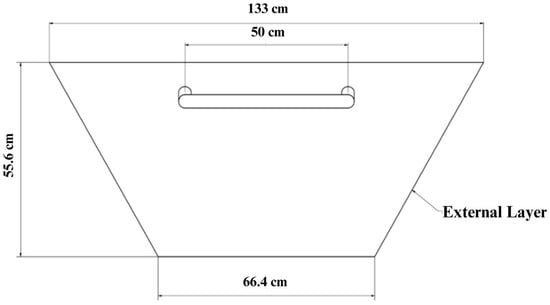
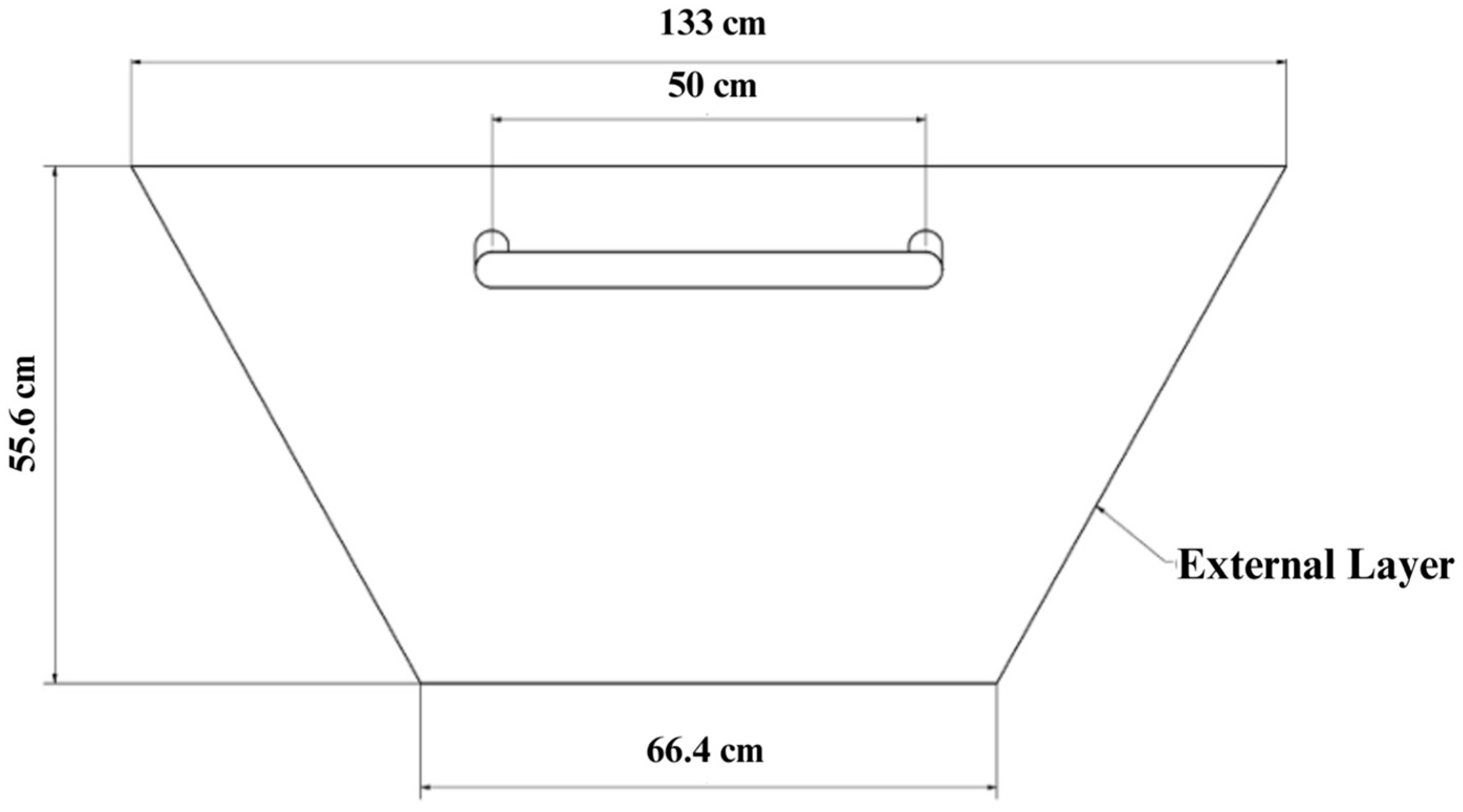
Biochar was produced using a Kon-Tiki kiln, an affordable, low-technology method suitable for small-scale biochar production [23]. The kiln features an inverted pyramid design that promotes oxygen-limited pyrolysis by reducing oxygen exposure in the lower layers (Figure 1). This configuration facilitates efficient carbonization, uniform heat distribution, and sequential biomass loading.
Figure 1.
Schematic design of the Kon-Tiki kiln used for biochar production, illustrating the inverted pyramid geometry and sequential biomass layering.
Vochysia guatemalensis (Cebo) and Vochysia ferruginea (Botarrama) were selected as feedstocks due to their availability in the region. Logs were cut into uniform sizes to promote consistent carbonization and weighed prior to kiln loading. Biomass-to-biochar conversion efficiency was monitored throughout the production process.
The kiln was ignited at the base using dry kindling, and additional biomass was added in layers to maintain a consistent pyrolysis process. The target pyrolysis temperature was approximately 500 °C, which is associated with high carbon content and structural stability in biochar (Moya et al. 2024, [28]). To maintain oxygen-limited conditions, new biomass layers were added once a white ash layer formed on the biochar surface. This layering approach promotes carbonization rather than complete combustion, producing biochar suitable for soil enhancement and carbon sequestration.
After the biomass was converted into biochar, the kiln was allowed to cool. The biochar was quenched with water to halt further combustion and rinsed to remove excess ash. Samples were sent to TEC University in Cartago for analysis. Analyses included elemental composition (carbon, hydrogen, oxygen, nitrogen, and sulphur) and physical properties such as ash content and volatile matter.
2.2. Survey Design
The survey explored farmers’ perceptions of biochar, focusing on their willingness to adopt it and the barriers preventing its use. It was carefully designed to address six key areas influencing biochar adoption.
Demographic information, including age, education level, and farm size, was collected to characterize participant diversity and explore patterns in biochar awareness and adoption. Farming practices were assessed through questions on crop types, fertilizer use, and participation in the Payment for Ecosystem Services (PES) program. Example questions included “What products does your farm produce?” (open-ended) and “What types of fertilizers do you currently use?” (multiple selection).
Data on biomass waste generation were collected by asking farmers about waste type, estimated annual volume, and disposal methods. Respondents selected from predefined waste categories (e.g., wood, crop residues, manure), annual quantity ranges (<1000 kg to >50,000 kg), and disposal practices such as burning, composting, or disposal.
Knowledge and perception-based questions assessed familiarity with biochar and willingness to adopt it. Participants were asked whether they had heard of biochar prior to the survey, followed by Likert-scale questions evaluating the likelihood of producing or using biochar for purposes such as fertilizer application or carbon sequestration. Responses ranged from “Very Likely” to “Very Unlikely”.
Financial considerations were examined through questions assessing price sensitivity and willingness to pay. Farmers were asked how much they would be willing to spend per 50 kg of biochar, with response options ranging from less than 6000 CRC to more than 60,000 CRC. Potential barriers to biochar adoption were assessed through predefined and open-ended responses addressing knowledge limitations, financial constraints, equipment availability, and other challenges.
The survey employed a combination of Likert-scale, categorical, and open-ended questions to capture both quantitative trends and qualitative insights. Forty farmers from northern Costa Rica participated, primarily from San Ramón de Sarapiquí and surrounding areas. Participants were recruited using convenience sampling through personal and professional networks, including contacts from TEC University and FUNDECOR.
Data were collected over four weeks through in-person interviews, phone calls, and Google Forms. For interviews conducted in Spanish, translation support was provided by a bilingual student from TEC University to ensure accurate communication.
Ethical protocols were implemented to ensure voluntary participation and protect participant confidentiality. Participants were informed of the study objectives and given the option to receive the final study results. Personal information was collected solely for follow-up purposes and was not shared with third parties. The data supporting this study are available from the author upon reasonable request, with access restricted to protect participant confidentiality.
2.3. Data Analysis
Data analysis began by converting open-ended survey responses into categorical variables to ensure consistency across the dataset (see survey questions in Supplementary Materials). This process reduced response variability and facilitated subsequent statistical analyses. The dataset was examined for missing values and inconsistencies, and incomplete surveys were removed to maintain data integrity. All preprocessing and analyses were conducted in RStudio (version 2024.04.0) following data cleaning and transformation procedures.
Binary logistic regression was used to evaluate how demographic characteristics influenced responses related to biochar. Independent variables included age, education level, and farm size, while dependent variables captured responses related to biochar awareness, willingness to adopt, and perceived feasibility. Dependent variables were coded as binary (e.g., yes/no) or ordinal response categories. One-hot encoding was applied to categorical demographic variables to convert them into binary indicators, allowing comparisons across groups without assuming ordinal relationships between categories. Statistical significance was assessed using a p-value threshold of 0.05.
To explore relationships among categorical variables, Multiple Correspondence Analysis (MCA) was employed. MCA is well suited for categorical datasets and enables dimensionality reduction while preserving associations between variables. Variables included farm size, fertilizer use, biochar knowledge, adoption likelihood, intended application objectives, and perceived barriers to implementation. For interpretability, variables were grouped into broader thematic categories, while low-variance variables and subcategories were excluded during preprocessing.
MCA generated multiple dimensions representing proportions of total variability. A scree plot was used to identify and retain the first two dimensions, which accounted for the largest share of variance and captured the most relevant structural relationships within the data. Results were visualized using two-dimensional scatter plots, in which each point represented a high-level category positioned according to its contributions to Dimensions 1 and 2. Categories were colour-coded by thematic group to aid interpretation.
3. Results
3.1. Biochar Production Results
The chemical and physical properties of biochar produced from Vochysia guatemalensis and Vochysia ferruginea were analyzed to assess suitability for carbon sequestration and soil enhancement (Table 1).
Table 1.
Chemical composition of biochar produced from Vochysia guatemalensis and Vochysia ferruginea. Results are expressed as mean ± standard deviation (95% confidence level) and compared with typical ranges for wood-based biochar [29,30,31].
Carbon content for both species fell within the typical range reported for wood-based biochars, indicating a high degree of carbon stability. V. guatemalensis exhibited slightly higher carbon content than V. ferruginea. Hydrogen and oxygen contents for both species were below typical ranges, indicating low volatile retention, which is associated with increased biochar stability.
Differences were observed in nutrient composition between species. Biochar derived from V. guatemalensis showed higher nitrogen and sulphur concentrations than V. ferruginea. These properties suggest potential differences in nutrient contribution when applied as a soil amendment.
Both biochars exhibited elevated ash and volatile matter contents relative to typical ranges for wood-based biochars. Increased ash content may reduce agronomic effectiveness, while higher volatile matter indicates incomplete pyrolysis, which may affect biochar performance. These results reflect potential trade-offs associated with low-technology production methods.
3.2. Survey Results
3.2.1. Key Survey Insights
The survey gathered responses from forty participants involved in various agricultural activities, focusing on their biochar knowledge, implementation potential, and barriers. One response was excluded due to missing data, resulting in thirty-nine valid entries for analysis.
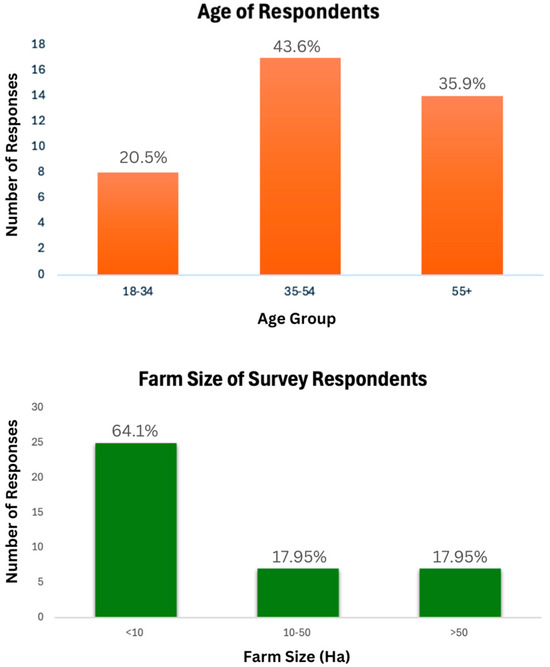
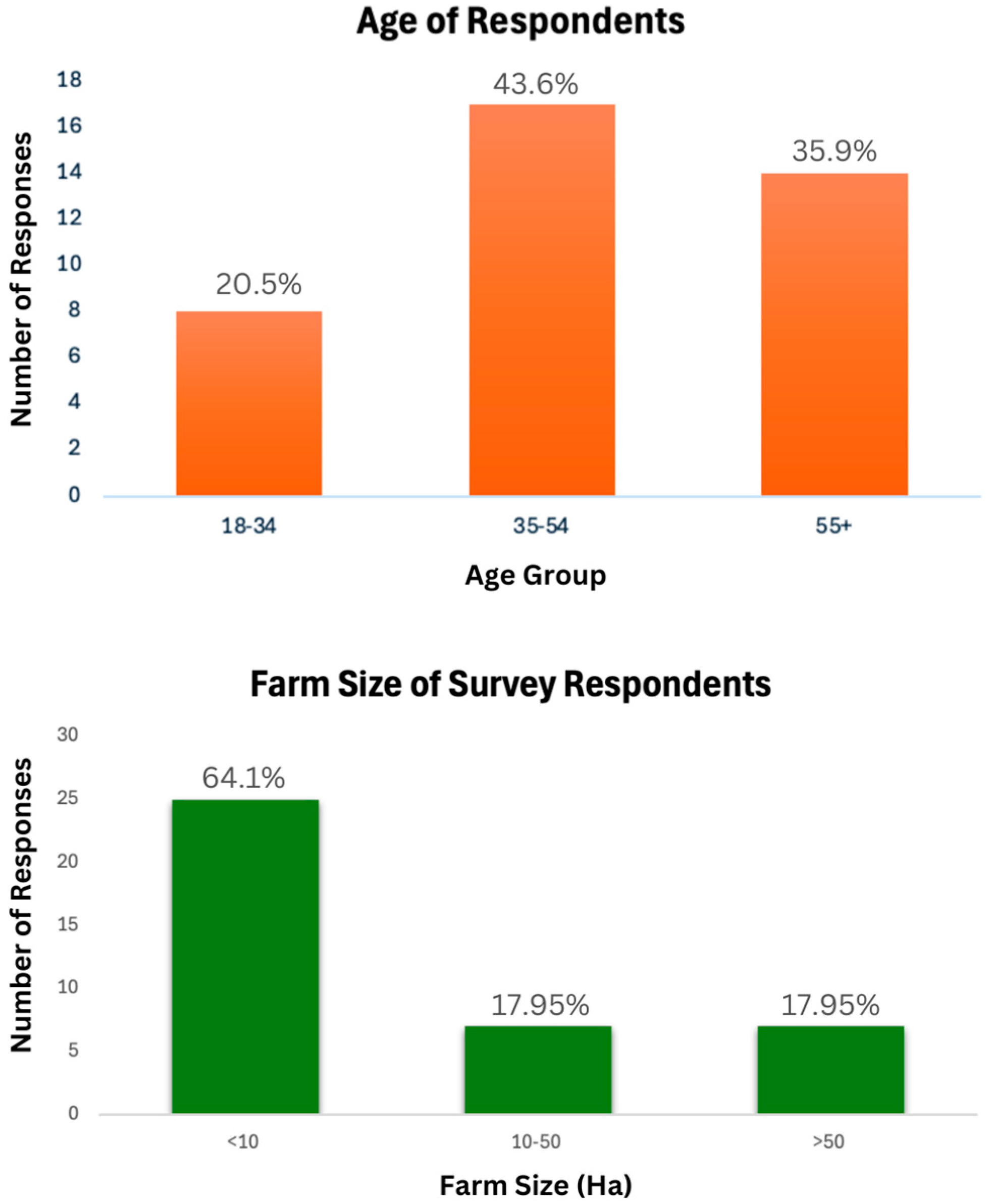
Participants represented a broad age distribution. The largest group (43.6%) was aged 35–54, followed by participants aged 55 and above (35.9%). Farmers aged 18–34 represented the smallest group (20.5%), indicating a predominance of older participants (Figure 2).
Figure 2.
Distribution of survey respondents by age group and farm size.
Education levels also showed notable variability. The largest group (35.9%) reported no formal education or primary school level education, while 30.8% had secondary or vocational education. Participants with undergraduate or postgraduate education accounted for 25.6%, and 7.7% did not specify their education level or marked “N/A”.
Farm size distribution indicated a predominance of small-scale operations. Most participants (64.1%) managed farms under 10 ha, while 17.95% operated farms between 10 and 50 ha. An equal proportion (17.95%) managed farms exceeding 50 ha (Figure 2).
Crop production was the primary activity for most participants (68.4%), while 31.6% were involved in animal farming. A smaller proportion (7.9%) reported involvement in forestry, either independently or within agroforestry systems.
Knowledge of biochar was limited, with 68.4% of participants reporting no prior familiarity. Reported barriers to adoption included knowledge gaps (41.5%), resource constraints (24.4%), and lack of equipment (17.1%). Financial concerns were reported by 4.9% of participants, while 7.3% indicated that biochar was not relevant to their operations. Some respondents identified multiple barriers.
Interest in biochar application varied by intended use. Most participants (52.6%) expressed interest in using biochar as a fertilizer, while 10.5% reported low willingness. Interest in biochar for carbon sequestration was lower, with 42.1% indicating they were somewhat or very likely to use it for this purpose, and 15.8% reporting neutral responses.
3.2.2. Logistic Regression Analysis
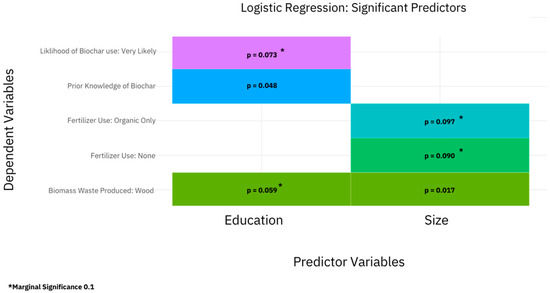
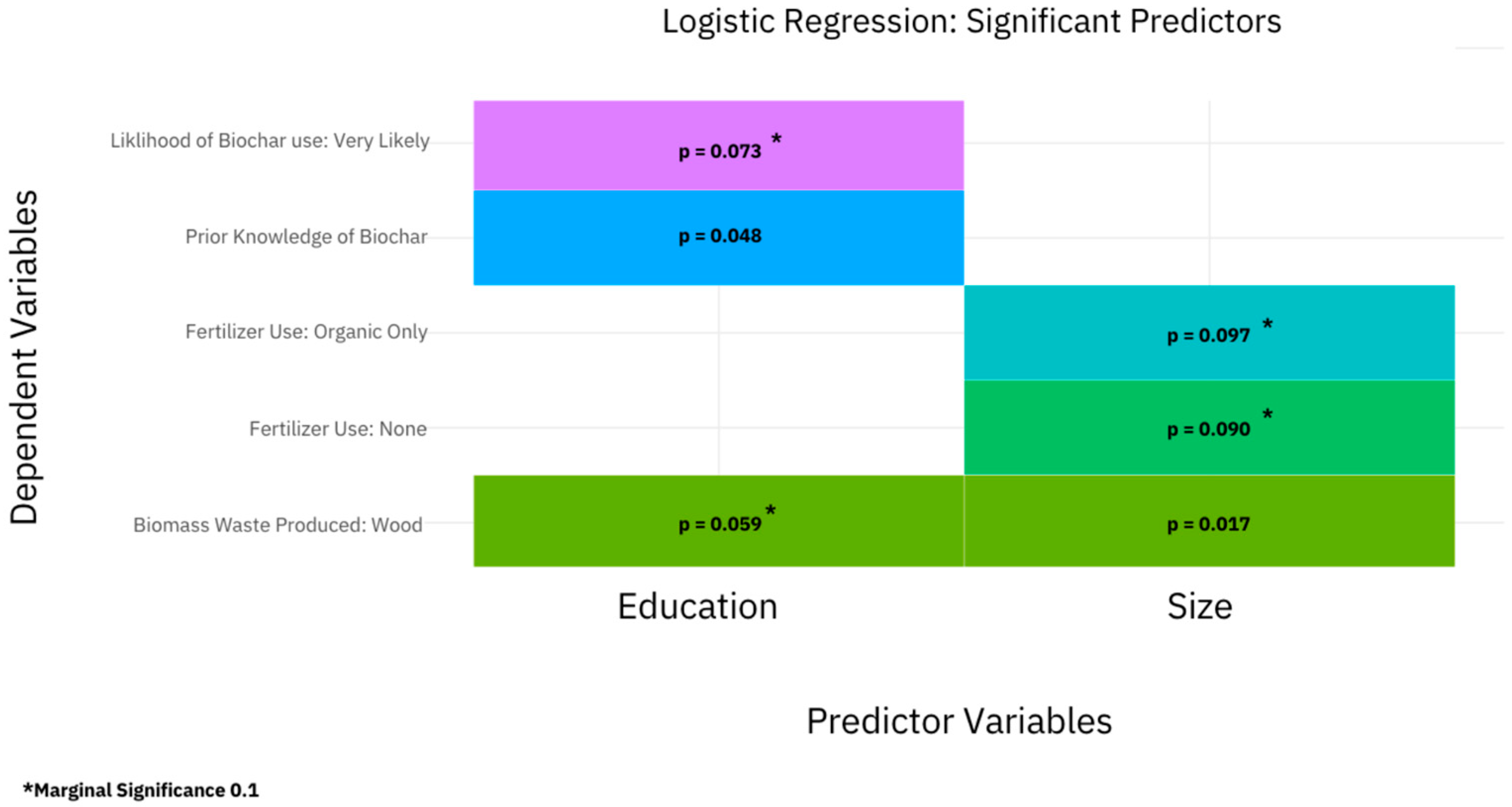
This section presents results from the logistic regression analysis examining associations between demographic variables including education level, farm size, and age and biochar-related outcomes, including awareness, implementation potential, spending, and perceived barriers (Figure 3). Only statistically significant and contextually relevant results are reported here; full model outputs are provided in Appendix A.
Figure 3.
Logistic regression results identifying significant and marginally significant demographic predictors of biochar-related variables. Marginal significance is denoted by (*), with p-values ≤ 0.1.
A significant association was observed between prior knowledge of biochar and education level (p = 0.048), indicating that respondents with higher education were more likely to be aware of biochar and its potential applications. Farm size was significantly associated with the production of woody biomass waste (p = 0.017), suggesting that larger farms, including forestry and agroforestry systems, may have greater access to feedstocks suitable for biochar production.
No significant associations were found between age and biochar adoption, spending, or perceived barriers, indicating that age did not play a determining role in these outcomes. Participation in the Payment for Environmental Services (PES) program also showed no significant associations with the demographic variables examined, suggesting that factors beyond farm characteristics or farmer demographics may influence participation in the program.
All statistically significant and marginally significant logistic regression results are presented in Appendix A (Table A1); full model outputs are provided in the Supplementary Materials (Full Logistic Regression).
3.2.3. Multiple Correspondence Analysis (MCA) Results
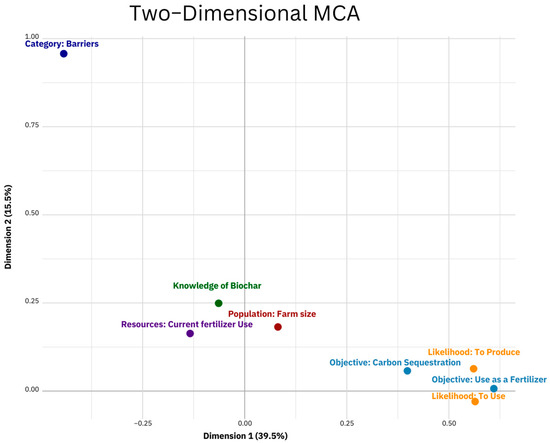
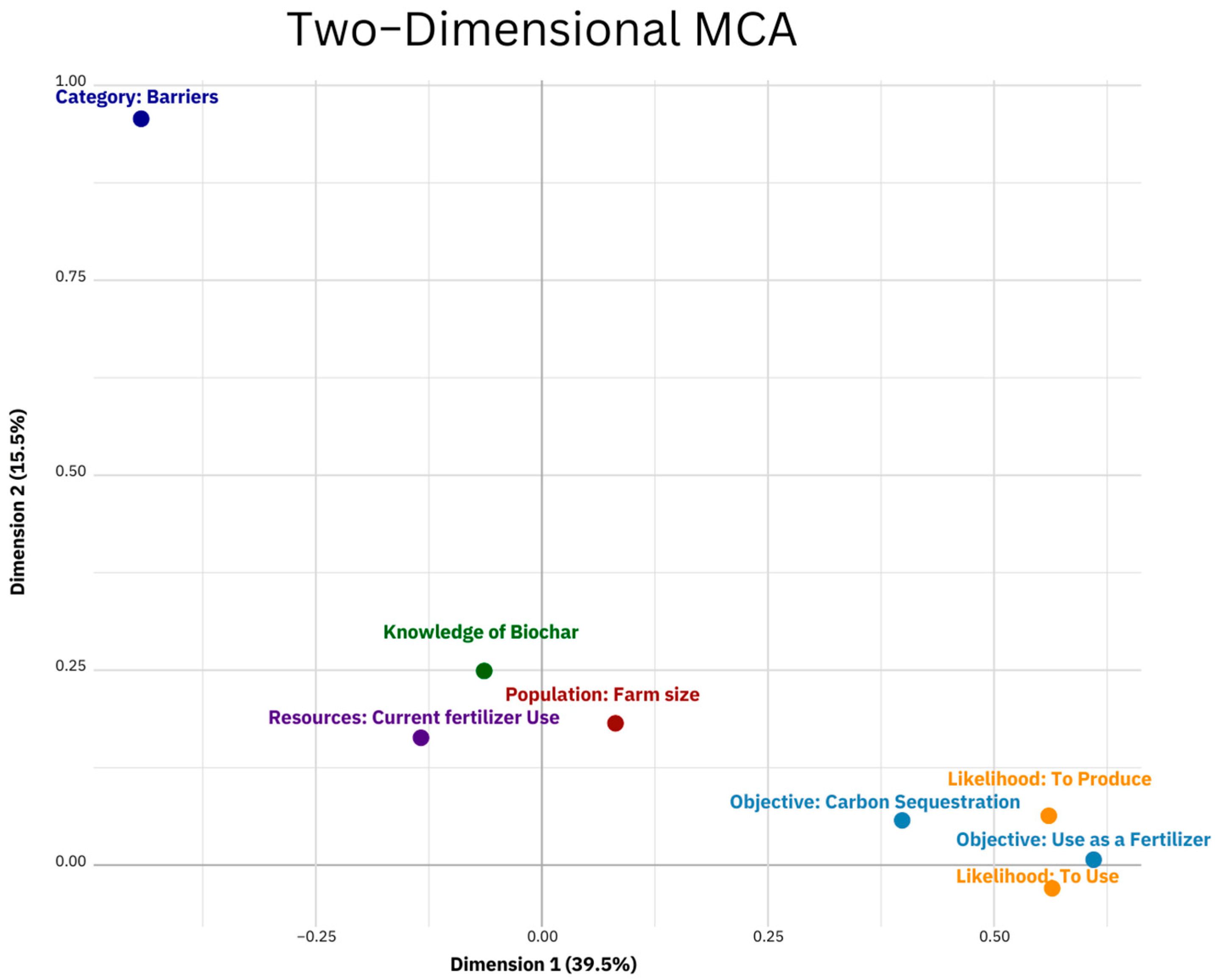
The Multiple Correspondence Analysis (MCA) examined relationships among eight high-level categorical variables related to biochar adoption (Figure 4). The first two dimensions were retained, explaining 55.0% of the total variance. Dimension 1 accounted for 39.5% of the variance and Dimension 2 explained 15.5% (See more details in Supplementary Figure S1).
Figure 4.
Multiple Correspondence Analysis (MCA) illustrating relationships among high-level categories. Dimension 1 (39.5% variance explained) captures implementation-related goals, while Dimension 2 (15.5% variance explained) reflects barriers to adoption.
- Intra-dimensional relationships.
Dimension 1 was characterized by implementation-related dynamics and actionable goals. Categories such as Objective: Use as a Fertilizer, Objective: Carbon Sequestration, and Likelihood: To Use and To Produce clustered strongly along this dimension, indicating close associations among behavioural intention and intended biochar applications.
Dimension 2 reflected structural and informational constraints. The Category: Barriers aligned strongly with this dimension, while variables such as Knowledge of Biochar, Resources: Current Fertilizer Use, and Population: Farm Size were positioned closer to the origin, indicating weaker but present associations with barrier-related dynamics.
- Interdimensional Relationships.
The positioning of categories across the two dimensions highlights key interdimensional patterns. The Category: Barriers is distinctly located in the upper left quadrant, showing a strong positive association with Dimension 2 but minimal connection to Dimension 1. This separation indicates its independent role in influencing biochar implementation, driven primarily by barriers and knowledge-related factors.
In contrast, Objective: Use as a Fertilizer, Objective: Carbon Sequestration, and Likelihood: To Use and To Produce form a compact cluster in the lower-right quadrant. These categories display strong positive associations with Dimension 1 and moderate associations with Dimension 2, emphasizing the interconnectedness of actionable goals and behavioural intentions in biochar-related decisions.
Central categories, such as Knowledge of Biochar, Current Fertilizer Use, and Farm Size, act as bridging factors, connecting the actionable dynamics of Dimension 1 with the knowledge-driven considerations of Dimension 2. While their influence on the dimensions is relatively lower, they still contribute meaningfully to the broader context and variance captured by the MCA.
Supporting MCA results, including eigenvalues and category contributions, are reported in Appendix A (Table A2 and Table A3).
4. Discussion
4.1. Biochar Production
Biochar produced using Kon-Tiki kilns demonstrates that accessible, low-technology production methods can yield biochar of acceptable quality for land management applications, particularly with respect to carbon content. The measured carbon contents of 85.26% for V. guatemalensis and 82.46% for V. ferruginea fall within the typical range reported for wood-based biochars (70–90%) [31]. These results indicate that, when appropriate feedstocks and operating conditions are used, low-technology systems can produce biochar with carbon characteristics comparable to those reported for more advanced pyrolysis systems.
Hydrogen and oxygen contents further indicate relatively efficient carbonization. Lower hydrogen concentrations are generally associated with greater biochar stability, supporting suitability for long-term soil application and carbon sequestration [29]. Stable biochar has been consistently linked to improvements in soil function and plant growth across forest restoration and agroforestry contexts [11]. In addition, low sulphur contents (0.19% for V. guatemalensis and 0.06% for V. ferruginea) reduce the risk of sulphur-related emissions during soil application [29]. Enhanced carbon sinks such as biochar may therefore contribute to both carbon sequestration and soil productivity, with potential economic implications through emerging carbon markets [15].
In contrast, elevated ash contents (12.33% for V. guatemalensis and 11.75% for V. ferruginea) and high volatile matter (78.37% and 75.01%, respectively) highlight limitations associated with low-technology production. Typical wood-based biochars contain 1–9% ash and 20–40% volatile matter, reflecting more complete carbonization [30]. The open-air configuration of the Kon-Tiki kiln may increase oxygen exposure during pyrolysis, contributing to incomplete combustion and higher ash fractions [23]. Despite these constraints, Kon-Tiki kilns remain relevant for rural landholders due to their affordability and accessibility. Previous studies indicate that biochar production can be economically viable under favourable market conditions, with short payback periods and high internal rates of return reported in some systems [19]. Profitability may be further influenced by species selection, with fast-growing species often associated with higher economic returns [20].
Feedstock characteristics likely influenced the observed biochar properties. V. guatemalensis and V. ferruginea are fast-growing and widely available in Costa Rica, making them practical feedstocks for rural contexts, though they may contribute to higher ash contents under less optimized pyrolysis conditions [10,23,28]. Environmental conditions, including high ambient humidity during the rainy season, may also have increased biomass moisture content, reducing carbonization efficiency and elevating volatile matter [17,32].
Despite these quality limitations, the biochar produced met key benchmarks for carbon content, indicating that low-technology approaches can be viable for landholders seeking to improve soil health and participate in carbon sequestration efforts. The use of fast-growing, locally available feedstocks further supports the practicality of this approach in rural settings. Beyond farm-level applications, these findings support the role of biochar within circular bioeconomy frameworks by transforming agricultural residues into a value-added resource that addresses both waste management and soil degradation challenges [33]. Consistent with broader bioeconomic case studies, effective biochar adoption may be strengthened through collaborative stakeholder networks that support sustainable innovation and regional bioeconomic transitions [24].
4.2. Survey Analysis and Implementation Patterns
The survey results, logistic regression analysis, and Multiple Correspondence Analysis (MCA) provide insight into the socioeconomic and practical factors shaping biochar implementation among Costa Rican farmers. Overall, the findings highlight persistent barriers related to knowledge, resources, and equipment availability, consistent with challenges reported in resource-limited agricultural systems [21,22].
MCA has been widely applied in agricultural and environmental research to examine multidimensional relationships between technological constraints, socioeconomic conditions, and adoption feasibility [34,35,36]. In this study, MCA identified interdependencies between financial constraints, resource access, and biochar awareness, providing a structured representation of farmer decision-making. Dimension 1, explaining 39.5% of the total variance, was associated with implementation-oriented motivations, particularly biochar use for soil enhancement and carbon sequestration. This pattern suggests that adoption interest is more strongly linked to perceived agronomic benefits than to immediate economic returns, aligning with findings from other MCA-based sustainability studies [34,36]. Dimension 2, accounting for 15.5% of the variance, was more closely associated with structural barriers, including equipment limitations, financial constraints, and knowledge gaps, reflecting both monetary and non-monetary influences on adoption decisions [35,37].
A substantial proportion of participants (68.4%) reported no prior familiarity with biochar, underscoring a pronounced knowledge gap that may constrain wider adoption. Given Costa Rica’s emphasis on sustainable agriculture within national climate strategies, limited awareness represents a key implementation challenge [38]. Logistic regression results indicated a significant association between educational attainment and biochar knowledge (p = 0.048), suggesting that education plays an important role in shaping awareness and openness to biochar-related practices [39]. These findings indicate that outreach and extension efforts may be more effective if they emphasize biochar’s co-benefits, including soil fertility improvement and potential participation in carbon markets [15].
Farmers identified multiple barriers to biochar implementation, most notably knowledge gaps (41.5%), resource constraints (24.4%), and equipment shortages (17.1%), as well as perceptions that biochar is not necessary for current operations (7.3%). These patterns are consistent with prior research on sustainable technology adoption in resource-limited contexts [22]. MCA results further suggest that these barriers are interconnected rather than independent, with knowledge availability, financial capacity, and resource access jointly influencing decision-making. Similar interdependencies have been documented in studies of bioeconomy transitions, where economic feasibility and stakeholder participation are central to scaling sustainability interventions [34,36].
Within circular bioeconomy frameworks, biochar offers opportunities to link waste management with local resource utilization [33]. However, the findings indicate that technical feasibility alone is insufficient to ensure adoption. Informal collaborations among farmers, cooperatives, and institutions have been shown to facilitate innovation and reduce financial and logistical barriers to biochar production [24], a dynamic also observed in other sustainability sectors examined using MCA [35].
In Costa Rica, where monoculture practices have contributed to soil degradation [25], cooperative resource-sharing models may help address constraints related to cost and technical capacity. While Kon-Tiki kilns provide an accessible low-technology option [23], the feasibility trial indicates that variability in biochar quality, including elevated ash content, may limit broader uptake. Cooperative production hubs could help mitigate these challenges by pooling resources, standardizing practices, and facilitating knowledge exchange across farm scales.
Perceptions that biochar is unnecessary highlight a disconnect between its documented benefits and its perceived relevance within specific farming systems. Targeted outreach may therefore be needed to demonstrate biochar’s applicability under local conditions, particularly in systems affected by soil degradation or with high carbon sequestration potential. Previous studies emphasize that adoption is more likely when educational efforts align with farmers’ operational priorities and lived experiences [39]. In addition, evidence from biochar projects suggests that economic considerations can motivate adoption when benefits are clearly communicated and accessible [19].
Farm size also emerged as an influential factor. Logistic regression indicated that larger farms were more likely to generate woody biomass as a primary waste stream (p = 0.017) and showed marginal associations with fertilizer use patterns, favouring either no fertilizer inputs (p = 0.090) or exclusively organic fertilizers (p = 0.097). These patterns suggest that forestry and agroforestry systems may have greater capacity to integrate biochar production, though equitable access for small and medium-sized farms remains important. Consistent with previous bioeconomy research, the relationships between farm size, resource availability, and economic feasibility underscore the need for differentiated strategies and incentives tailored to farm scale [37].
Finally, feedstock availability remains a key consideration for scaling biochar adoption. As demonstrated in the feasibility trial, biomass type influences biochar characteristics, reinforcing the importance of aligning outreach and training programs with locally available feedstocks [17]. Although the technical feasibility of biochar production is well established, the combined MCA and regression results indicate that practical, economic, and informational constraints continue to limit widespread implementation. Addressing these interconnected factors through education, cooperative resource-sharing, and targeted financial support will be central to expanding biochar use.
4.3. Future Developments
The findings highlight the importance of adopting a multi-faceted approach to biochar development that addresses both production constraints and the socioeconomic factors identified through the survey, logistic regression, and MCA analyses. While low-technology systems such as the Kon-Tiki kiln can produce biochar with carbon contents suitable for sequestration, effective implementation depends on addressing persistent knowledge gaps, equipment availability, and resource constraints.
Educational initiatives may play a central role in supporting broader adoption. Outreach efforts that emphasize practical applications aligned with existing farming practices could improve awareness and relevance. At the same time, the elevated ash and volatile matter observed in the feasibility trial indicate opportunities to optimize low-technology pyrolysis conditions to improve biochar quality and consistency without compromising accessibility.
Strategies to support biochar adoption should account for variation across agricultural systems and farm scales. The MCA results identified barriers as a key factor shaping adoption dynamics, suggesting that cooperative equipment-sharing models may help alleviate cost and access constraints. Financial support mechanisms, including subsidies or partnerships with non-governmental organizations, could further reduce entry barriers. Environmental factors, such as high humidity that affects biomass combustion efficiency, may also need to be considered when developing context-specific production guidelines.
Policy alignment represents an additional pathway for scaling biochar use. In regions where climate and agricultural objectives are closely linked, integrating biochar into existing sustainability programs may enhance adoption potential. In Costa Rica, where sustainable agriculture underpins national climate targets, incorporating biochar-related practices into the Payment for Ecosystem Services program could support soil restoration and carbon sequestration objectives. Evidence from other contexts indicates that economic valuation of sequestration benefits can strengthen policy support for such interventions [37], though localized assessments would be required to determine feasibility.
Beyond direct incentives, addressing knowledge transfer gaps will remain critical. Extension services and training programs tailored to different farm sizes and production systems may help ensure that information is accessible and operationally relevant [34]. Public–private partnerships could further facilitate knowledge exchange and improve access to best practices and market [36]. Cooperative production hubs, where equipment and expertise are shared, may offer a practical mechanism for reducing financial and logistical constraints in rural settings.
The regression results underscore the role of education in shaping biochar awareness and perceptions of viability. Training programs that combine technical instruction with basic financial literacy, such as cost–benefit analysis and business planning, may help farmers more effectively evaluate adoption decisions. Tailored outreach that reflects local production contexts may also reduce perception gaps regarding biochar’s relevance.
Finally, equipment-related barriers and certification requirements represent ongoing challenges. Simplified access to shared equipment and incremental financial incentives may encourage participation in emerging carbon markets. Experiences from VERRA-certified low-technology biochar projects illustrate how streamlined certification pathways can lower transaction costs and broaden participation [40]. Adapting similar approaches within Costa Rica could support biochar adoption in regions affected by soil degradation while improving the economic viability of low-technology production systems.
5. Conclusions
This study demonstrates that biochar produced using low-technology methods such as the Kon-Tiki kiln can achieve carbon contents suitable for soil amendment and carbon sequestration applications. The findings indicate that, despite some variability in quality, accessible production systems can generate biochar with characteristics comparable to typical wood-based biochars, supporting their potential use in rural and resource-limited contexts.
At the same time, the results highlight key challenges that constrain wider adoption, including limited biochar awareness, financial constraints, equipment access, and variability in production conditions. Survey results show that a substantial proportion of farmers are unfamiliar with biochar, underscoring the importance of targeted education and extension efforts. Environmental factors, such as humidity and pyrolysis control, were also shown to influence biochar properties, indicating that further optimization of low-technology production methods is needed to improve consistency and agronomic performance.
For biochar to contribute meaningfully to Costa Rica’s sustainability and climate objectives, implementation strategies should align with existing agricultural and environmental initiatives and address sector-specific barriers. Cooperative resource-sharing models, financial incentives, and technical support may help improve feasibility across different farm scales. Future research should expand sample representation, refine low-technology production practices, and evaluate long-term soil and productivity impacts. Integrating biochar into broader sustainability frameworks may support soil restoration, agricultural resilience, and climate mitigation efforts in Costa Rica and similar tropical regions.
Supplementary Materials
The following supporting information can be downloaded at: https://www.mdpi.com/article/10.3390/su18052662/s1, Figure S1: Scree plot of MCA dimensions; Table S1: Full Logistic Regression; Survey: Biocarbon.
Author Contributions
Conceptualization, R.Y. and E.P.; methodology, R.Y. and E.P.; software, E.P.; validation, R.Y. and E.P.; formal analysis, E.P.; investigation, E.P.; resources, R.Y. and E.P.; data curation, E.P.; writing—original draft preparation, E.P.; writing—review and editing, R.Y. and E.P.; visualization, E.P.; supervision, R.Y.; project administration, R.Y.; funding acquisition, R.Y. All authors have read and agreed to the published version of the manuscript.
Funding
This work was supported by the Natural Sciences and Engineering Research Council of Canada (NSERC Discovery Grant Nr. 04855) and the Marie Skłodowska-Curie Actions RISE Project “DecisionES” [grant agreement ID 101007950].
Institutional Review Board Statement
This study is waived for ethical review as “Standard Professional Practice” that may involve research-like activities that are within acceptable standard practice of the respective profession. Typically, professional ethics codes cover these activities" by Institution Committee.
Informed Consent Statement
Informed consent was obtained from all subjects involved in the study.
Data Availability Statement
The data that support the findings of this study are available from the corresponding author upon reasonable request. The data are not publicly available due to privacy or ethical restrictions.
Acknowledgments
We would like to express our sincere gratitude to all those who contributed to the completion of this project. We are deeply thankful to Roger Moya and Universidad TEC for conducting the biochar chemical analysis, which was integral to this research. We extend our appreciation to Christina Estrada, a student at Universidad TEC in Costa Rica, for her invaluable assistance with the survey process. Special thanks to Fundecor for their support in connecting us with local farmers, which greatly expanded the reach of the survey. We are also grateful to Guillermo Arturo Navarro Monge for sharing his insights into Costa Rican culture and forestry, which provided valuable context to the study. Finally, we acknowledge the generous financial and technical support from Baum Invest, without which this project would not have been possible.
Conflicts of Interest
The authors declare no conflicts of interest. The funders had no role in the design of the study; in the collection, analyses, or interpretation of data; in the writing of the manuscript; or in the decision to publish the results.
Abbreviations
The following abbreviations are used in this manuscript:
| CRC | Costa Rican colón |
| MCA | Multiple Correspondence Analysis |
| PES | Payment for Ecosystem Services |
Appendix A. Logistic Regression Results
Table A1.
Significant Logistic regression results for prior knowledge of biochar.
Table A2.
Cos2 contributions of categories to MCA dimensions.
Table A3.
Eigenvalues and variance explained by MCA dimensions.
References
- Lehmann, J.; Joseph, S. (Eds.) Biochar for Environmental Management: Science, Technology and Implementation, 3rd ed.; Routledge: London, UK, 2024. [Google Scholar] [CrossRef] [Scilit]
- Intergovernmental Science-Policy Platform on Biodiversity and Ecosystem Services (IPBES). The IPBES Assessment Report on Land Degradation and Restoration; IPBES Secretariat: Bonn, Germany, 2018. [Google Scholar] [CrossRef]
- United Nations Convention to Combat Desertification. At Least 100 Million Hectares of Healthy Land Now Lost Each Year. 2023. Available online: https://www.unccd.int/news-stories/press-releases/least-100-million-hectares-healthy-land-now-lost-each-year (accessed on 16 November 2024).
- Save Soil. 95% of the Earth’s Soil on Course to be Degraded by 2050. Earth.org. 2024. Available online: https://earth.org/95-of-the-earths-soil-on-course-to-be-degraded-by-2050/ (accessed on 11 November 2024).
- Omari, R.A.; Bellingrath-Kimura, S.D.; Addo, E.S.; Oikawa, Y.; Fujii, Y. Exploring farmers’ indigenous knowledge of soil quality and fertility management practices in selected farming communities of the Guinea Savannah agro-ecological zone of Ghana. Sustainability 2018, 10, 1034. [Google Scholar] [CrossRef] [Scilit]
- Ding, Y.; Liu, Y.; Liu, S.; Li, Z.; Tan, X.; Huang, X.; Zeng, G.; Zhou, L.; Zheng, B. Biochar to improve soil fertility: A review. Agron. Sustain. Dev. 2016, 36, 36. [Google Scholar] [CrossRef] [Scilit]
- Jeffery, S.; Verheijen, F.G.A.; van der Velde, M.; Bastos, A.C. A quantitative review of the effects of biochar application to soils on crop productivity using meta-analysis. Agric. Ecosyst. Env. 2017, 144, 175–187. [Google Scholar] [CrossRef] [Scilit]
- Singh, H.; Northup, B.K.; Rice, C.W.; Prasad, P.V.V. Biochar applications influence soil physical and chemical properties, microbial diversity, and crop productivity: A meta-analysis. Biochar 2022, 4, 8. [Google Scholar] [CrossRef] [Scilit]
- Hossain, M.Z.; Bahar, M.M.; Sarkar, B.; Donne, S.W.; Ok, Y.S.; Palansooriya, K.N.; Kirkham, M.B.; Chowdhury, S.; Bolan, N. Biochar and its importance on nutrient dynamics in soil and plant. Biochar 2020, 2, 379–420. [Google Scholar] [CrossRef] [Scilit]
- Lanuza, O.R.; Peñuelas, J.; Espelta, J.M.; Peguero, G. Above- and belowground functional trait response to biochar addition in seedlings of six tropical dry forest tree species. New For. 2025, 56, 3. [Google Scholar] [CrossRef] [Scilit]
- Thomas, S.C.; Gale, N. Biochar and forest restoration: A review and meta-analysis of tree growth responses. New For. 2015, 46, 931–946. [Google Scholar] [CrossRef] [Scilit]
- Speratti, A.B.; Johnson, M.S.; Sousa, H.M.; Dalmagro, H.J.; Couto, E.G. Biochars from local agricultural waste residues contribute to soil quality and plant growth in a Cerrado region (Brazil) Arenosol. GCB Bioenergy 2017, 10, 272–286. [Google Scholar] [CrossRef] [Scilit]
- Heredia Salgado, M.A.; Säumel, I.; Cianferoni, A.; Tarelho, L.A.C. Potential for farmers’ cooperatives to convert coffee husks into biochar and promote the bioeconomy in the North Ecuadorian Amazon. Appl. Sci. 2021, 11, 4747. [Google Scholar] [CrossRef] [Scilit]
- Sujeeun, L.; Thomas, S.C. Biochar rescues native trees in the biodiversity hotspot of Mauritius. Forests 2022, 13, 277. [Google Scholar] [CrossRef] [Scilit]
- Frank, S.; Augustynczik, A.L.D.; Havlík, P.; Boere, E.; Ermolieva, T.; Fricko, O.; Di Fulvio, F.; Gusti, M.; Krisztin, T.; Lauri, P.; et al. Enhanced agricultural carbon sinks provide benefits for farmers and the climate. Nat. Food 2024, 5, 742–753. [Google Scholar] [CrossRef] [Scilit]
- Lefebvre, D.; Román-Dañobeytia, F.; Soete, J.; Cabanillas, F.; Corvera, R.; Ascorra, C.; Fernandez, L.E.; Silman, M. Biochar effects on two tropical tree species and its potential as a tool for reforestation. Forests 2019, 10, 678. [Google Scholar] [CrossRef] [Scilit]
- Yaebiyo, G.; Birhane, E.; Tadesse, T.; Kiros, S.; Hadgu, K.M.; Egziabher, Y.G.; Habtu, S. The survival growth of Faidherbia albida, A. Chev seedlings using biochar and deficit irrigation in drylands of Tigray, Ethiopia. New For. 2025, 56, 75. [Google Scholar] [CrossRef] [Scilit]
- Shackley, S.; Hammond, J.; Gaunt, J.; Ibarrola, R. The feasibility and costs of biochar deployment in the UK. Carbon. Manag. 2011, 2, 335–356. [Google Scholar] [CrossRef] [Scilit]
- Hu, M.; Guo, K.; Zhou, H.; Zhu, W.; Deng, L.; Dai, L. Techno-economic assessment of swine manure biochar production in large-scale piggeries in China. Energy 2024, 308, 133037. [Google Scholar] [CrossRef] [Scilit]
- Lanuza, O.R.; Peñuelas, J.; Espelta, J.M.; Peguero, G. Economic potential of biochar for the nursery production of two tropical agroforestry species (Eucalyptus grandis and Dacryodes edulis). New For. 2025, 56, 76. [Google Scholar] [CrossRef] [Scilit]
- Smebye, A.B.; Sparrevik, M.; Schmidt, H.P.; Cornelissen, G. Life-cycle assessment of biochar production systems in tropical rural areas: Comparing flame curtain kilns to other production methods. Biomass Bioenergy 2017, 101, 35–43. [Google Scholar] [CrossRef] [Scilit]
- Rogers, P.M.; Fridahl, M.; Yanda, P.; Hansson, A.; Pauline, N.; Haikola, S. Socio-economic determinants for biochar deployment in the Southern Highlands of Tanzania. Energies 2022, 15, 144. [Google Scholar] [CrossRef] [Scilit]
- Namaswa, T.; Burslem, D.; Smith, J. Emerging trends in appropriate kiln designs for small-scale biochar production in low to middle income countries. Bioresour. Technol. Rep. 2023, 24, 101641. [Google Scholar] [CrossRef] [Scilit]
- González Escobar, C.H.; Granobles Torres, J.C.; Villa Rodríguez, A.O. A critical analysis of the dynamics of stakeholders for bioeconomy innovation: The case of Caldas, Colombia. Sustainability 2024, 16, 10370. [Google Scholar] [CrossRef] [Scilit]
- Environmental Justice Atlas. No a la Piñería en Costa Rica. 2022. Available online: https://ejatlas.org/conflict/no-a-la-pineria-en-costa-rica (accessed on 16 November 2024).
- Basak, B.B.; Sarkar, B.; Saha, A.; Sarkar, A.; Mandal, S.; Biswas, J.K.; Wang, H.; Bolan, N.S. Revamping highly weathered soils in the tropics with biochar application: What we know and what is needed. Sci. Total. Environ. 2022, 822, 153461. [Google Scholar] [CrossRef] [Scilit] [PubMed]
- United Nations Framework Convention on Climate Change. Payments for Environmental Services Program. 2020. Available online: https://unfccc.int/climate-action/momentum-for-change/financing-for-climate-friendly-investment/payments-for-environmental-services-program (accessed on 11 November 2024).
- Moya, R.; Tenorio, C.; Quesada-Kimzey, J.; Másis-Meléndez, F. Pyrogenic carbonaceous materials production of four tropical wood produced by slow pyrolysis at different temperatures: Charcoal and biochar properties. Energies 2024, 17, 1953. [Google Scholar] [CrossRef] [Scilit]
- Ippolito, J.A.; Cui, L.; Kammann, C.; Wrage-Mönnig, N.; Estavillo, J.M.; Fuertes-Mendizabal, T.; Cayuela, M.L.; Sigua, G.; Novak, J.; Spokas, K.; et al. Feedstock choice, pyrolysis temperature and type influence biochar characteristics: A comprehensive meta-data analysis review. Biochar 2020, 2, 421–438. [Google Scholar] [CrossRef] [Scilit]
- Saletnik, B.; Bajcar, M.; Saletnik, A.; Zaguła, G.; Puchalski, C. Effect of the pyrolysis process applied to waste branches biomassfrom fruit trees on the calorific value of the biochar and dust explosivity. Energies 2021, 14, 4898. [Google Scholar] [CrossRef] [Scilit]
- World Biochar Certificate. Guidelines for a Sustainable Production of Biochar and Its Certification (Version 1.1). European Biochar. 2023. Available online: https://www.carbon-standards.com/docs/transfer/4000036EN.pdf (accessed on 13 October 2024).
- Sadegh, F.; Sadegh, N.; Wongniramaikul, W.; Apiratikul, R.; Choodum, A. Adsorption of volatile organic compounds on biochar: A review. Process Saf. Env. Prot. 2024, 182, 559–578. [Google Scholar] [CrossRef] [Scilit]
- Abbas, F.; Hammad, H.M.; Anwar, F.; Farooque, A.A.; Jawad, R.; Bakhat, H.F.; Naeem, M.A.; Ahmad, S.; Qaisrani, S.A. Transforming a valuable bioresource to biochar, its environmental importance, and potential applications in boosting circular bioeconomy while promoting sustainable agriculture. Sustainability 2021, 13, 2599. [Google Scholar] [CrossRef] [Scilit]
- Chopin, P.; Bergkvist, G.; Hossard, L. Modelling biodiversity change in agricultural landscape scenarios: A review and prospects for future research. Biol. Conserv. 2019, 235, 1–17. [Google Scholar] [CrossRef] [Scilit]
- Di Letizia, G.; De Lucia, C.; Pazienza, P.; Cappelletti, G.M. Forest bioeconomy at regional scale: A systematic literature revie and future policy perspectives. Policy Econ. 2023, 155, 103052. [Google Scholar] [CrossRef] [Scilit]
- Teotónio, I.; Cruz, C.O.; Silva, C.M.; Lopes, R.F.R. Bridging CBA and MCA for evaluating green infrastructure: Proposal of a new evaluation model (MAGICA). Socioecon. Plan. Sci. 2023, 85, 101446. [Google Scholar] [CrossRef] [Scilit]
- Mäntymaa, E.; Artell, J.; Forsman, J.T.; Juutinen, A. Is it more important to increase carbon sequestration, biodiversity, or jobs? A case study of citizens’ preferences for forest policy in Finland. Policy Econ. 2023, 154, 103023. [Google Scholar] [CrossRef] [Scilit]
- Government of Costa Rica. National Decarbonization Plan 2018–2050. United Nations Framework Convention on Climate Change. 2019. Available online: https://unfccc.int/documents/204474 (accessed on 1 November 2024).
- Koné, S.; Galiegue, X. Potential development of biochar in Africa as an adaptation strategy to climate change impact on agriculture. Env. Manag. 2023, 72, 1189–1203. [Google Scholar] [CrossRef] [Scilit]
- Verra. Verra Registers First Biochar Project. 2024. Available online: https://verra.org/verra-registers-first-biochar-project/ (accessed on 13 October 2024).

Disclaimer/Publisher’s Note: The statements, opinions and data contained in all publications are solely those of the individual author(s) and contributor(s) and not of MDPI and/or the editor(s). MDPI and/or the editor(s) disclaim responsibility for any injury to people or property resulting from any ideas, methods, instructions or products referred to in the content. |
© 2026 by the authors. Licensee MDPI, Basel, Switzerland. This article is an open access article distributed under the terms and conditions of the Creative Commons Attribution (CC BY) license.