1. Introduction
For decades, engineering education has emphasized the development of technical competence in core disciplines such as mechanics, thermodynamics, and materials science [
1]. This focus has produced graduates with analytical skills that are essential to engineering practice [
2,
3]. The effectiveness of this traditional approach in building foundational knowledge is well documented, and it remains the dominant model for engineering instruction worldwide. However, the emergence of global challenges including climate change, resource depletion, and social inequality has led to fundamental shifts in expectations for the engineering profession in recent years [
4]. Engineering solutions are now expected to address not only technical performance requirements but also their environmental and social implications throughout the lifecycle of designed systems [
5]. Accreditation bodies, including the Accreditation Board for Engineering and Technology (ABET) in the United States and the European Accredited Engineer (EUR-ACE) framework, have incorporated sustainability and broader societal impact criteria into their program outcomes, prompting revisions to engineering curricula [
6].
Despite these policy-level changes at the program level, the extent to which sustainability considerations are meaningfully integrated into core technical courses remains uncertain [
7,
8,
9,
10]. A common strategy involves adding standalone sustainability courses or modules to existing curricula, a strategy intended to address accreditation requirements without disrupting established course sequences. Educational researchers characterize this as the two skins phenomenon, where sustainability concepts remain separate from the core analytical and design knowledge that defines engineering work [
11,
12,
13]. In such cases, students typically encounter sustainability as an external consideration rather than as an element integrated into engineering decision-making, where criteria such as efficiency and cost dominate [
14]. This separation between technical and sustainability content may limit students’ ability to develop the integrated judgment required for addressing complex real-world problems where multiple objectives must be negotiated simultaneously. This situation suggests the need for pedagogical approaches that integrate technical and sustainability considerations within engineering curricula rather than treating them as separate domains.
Mechanical vibration education offers one particularly relevant context for examining this integration. This field requires students to master abstract mathematical formalisms and connect them to physical phenomena involving dynamic systems [
15]. Students must understand concepts such as natural frequency, resonance, and modal analysis, and apply these concepts to predict and control vibration in mechanical systems. Traditional instruction often leads to procedural competence in solving well-defined problems, but may not fully prepare students for open-ended challenges encountered in practice, where technical performance must be considered alongside other factors such as cost, manufacturability, and environmental impact [
16,
17]. The system-level nature of vibration analysis, where design choices affecting one component propagate through interconnected elements, makes this domain a suitable context for exploring educational approaches that connect technical learning with broader professional and societal considerations.
Problem-Based Learning is an instructional approach that has been extensively examined in engineering education contexts [
18,
19]. Grounded in constructivist and situated learning theories, PBL uses authentic complex problems as the starting point for learning, promoting active inquiry, collaboration, and knowledge construction, a process that aligns with social constructivist principles of learning through social interaction [
20,
21,
22,
23]. Iterative problem-solving in PBL can support the development of metacognitive skills relevant to professional practice [
24]. Because PBL is organized around authentic problems, it offers opportunities for students to engage with multiple objectives, including those related to sustainability [
25]. The approach has been shown to enhance students’ ability to frame problems, integrate knowledge from multiple sources, and justify design decisions.
Reviews of PBL implementations in engineering suggest that while the approach can be effective for developing complex problem-solving skills, sustainability considerations are often peripheral when they appear [
26]. In many documented cases, sustainability is introduced as an additional constraint applied to a technically defined problem or addressed only after technical decisions have been made, rather than being embedded as an integral dimension of the problem around which learning is organized [
27]. This pattern reflects the broader challenge of integration identified earlier and raises a specific pedagogical question, i.e., would an approach that places sustainability characteristics such as material use, energy consumption, and end-of-life implications at the center of the problem from the outset lead to different learning outcomes than approaches where sustainability remains peripheral?
To investigate this question, the present study developed and tested an instructional approach in a mechanical vibration course. The approach, termed Sustainability-Integrated Problem-Based Learning (SI-PBL), used a semester-long project in which students redesigned a compressor balancing system for a marine application where vibration affects both operational performance and acoustic stealth. The project required students to address vibration reduction alongside sustainability considerations including added mass, part count, and embodied energy. The study employed a quasi-experimental design comparing students in this approach with students in a traditional lecture-based version of the same course. It measured changes in technical competencies conceptual understanding, mathematical proficiency, and complex problem-solving and in sustainability-oriented engineering decision-making. It also examined whether changes in technical and sustainability competencies were related, and documented learning mechanisms observed during the project process.
Guided by these objectives, the study addressed the following research questions. The first question examined how changes in conceptual understanding, mathematical proficiency, and complex problem-solving compared between students in the SI-PBL approach and those in traditional lecture-based instruction. The second question investigated changes in sustainability-oriented engineering decision-making among students in the two conditions. The third question explored whether a relationship existed between changes in technical problem-solving abilities and changes in sustainability reasoning and whether this relationship differed between instructional conditions. These questions collectively guided the investigation of both the outcomes and the underlying processes of the SI-PBL approach.
The remainder of this article proceeds as follows:
Section 2 describes the background and design of the SI-PBL approach.
Section 3 presents the research methodology including the study design, participants, instructional interventions, and assessment instruments.
Section 4 reports the quantitative and qualitative results organized by research question.
Section 5 discusses the findings including possible explanations, implications for practice and research, and limitations.
Section 6 summarizes the main findings and suggests directions for future research.
2. Theoretical Background: Sustainability-Integrated Problem-Based Learning
This section presents the theoretical foundations, core principles, and operational structure of the Sustainability-Integrated Problem-Based Learning (SI-PBL) approach. The approach embeds sustainability at the center of learning by engaging students with engineering problems that demand simultaneous attention to technical and sustainability goals, directly addressing the integration gap highlighted in
Section 1.
2.1. Conceptual Foundations
The SI-PBL approach draws on several established educational and design theories. Its primary epistemological foundation is constructivism, which holds that learners actively construct knowledge through experience and reflection rather than passively receiving it [
17]. This principle supports the use of authentic problem-centered learning activities in which students engage in sense-making to develop viable solutions. The approach also draws on situated learning theory, which argues that learning is most effective when embedded in the social and physical context of its application [
28]. In SI-PBL, the engineering project provides this authentic situated context, contributing to the development of professional identity and tacit knowledge through participation in a community of practice.
Reconciling technical optimization with multiple sustainability criteria imposes significant cognitive demands on learners [
29,
30]. Cognitive Load Theory informs the approach’s design for addressing these demands. The approach explicitly acknowledges the cognitive load associated with navigating trade-offs between technical performance and sustainability objectives. To address this, SI-PBL incorporates instructional scaffolds such as structured multi-criteria decision matrices and guided reflection protocols. These scaffolds are designed to help learners organize complex information, manage extraneous cognitive load, and develop systematic approaches to multi-objective problem-solving.
The approach also draws on value-sensitive design [
31] and the literature on engineering ethics. It proceeds from the premise that engineering decisions inherently involve socio-environmental consequences and value judgments [
32]. Traditional engineering education often fails to make these value dimensions explicit. SI-PBL provides students with structured processes and analytical tools to identify, analyze, and negotiate value tensions, thereby supporting decision-making that consciously integrates both technical and sustainability criteria. These conceptual foundations directly inform the design principles described in the following subsection.
2.2. Core Design Principles of the SI-PBL Approach
The conceptual foundations described above translate into four core design principles that directly guided the development and implementation of the SI-PBL intervention in this study. These principles address the integration challenge identified in the introduction and establish the basis for the learning mechanisms examined in this study.
The first principle requires that problems incorporate inherent technical-sustainability trade-offs. The approach uses authentic ill-structured engineering problems designed to contain inherent tensions between technical performance metrics and quantifiable sustainability indicators such as material mass, energy consumption, and part count. These trade-offs are central rather than peripheral to the problem definition, requiring student attention and negotiation throughout the project lifecycle. This principle operationalizes the constructivist premise that meaningful learning emerges from engagement with authentic complexity.
The second principle holds that scaffolding supports multi-criteria decision-making. To address the cognitive demands of evaluating multiple competing objectives, the approach includes explicit scaffolding tools that structure the decision-making process. These scaffolds, including multi-criteria decision analysis matrices and sequenced reflection prompts, focus student attention on integrative evaluation while managing extraneous cognitive load. Their use aims to help students develop systematic and justifiable approaches to complex engineering choices.
The third principle states that learning occurs through iterative cycles of analysis and reflection. SI-PBL supports an iterative process in which students engage in repeated cycles of problem framing, solution development, analysis, prototyping, and evaluation. Each cycle is informed by feedback and structured reflection on both technical outcomes and sustainability trade-offs. This iterative structure supports the progressive integration of knowledge from different domains and the refinement of problem-solving strategies over time.
The fourth principle asserts that collaboration facilitates knowledge construction and value negotiation. Collaboration is treated as both a pedagogical strategy and an intended learning outcome. Team-based work provides opportunities for students to encounter diverse perspectives, examine their own assumptions, and develop solutions that integrate multiple viewpoints. In the context of sustainability integration, collaborative dialogue is essential for surfacing differing values and priorities relevant to negotiating acceptable trade-offs.
Together, these four principles establish the design parameters for the instructional intervention and directly inform the scaffolding mechanisms, iterative structure, and collaborative activities. They collectively address the integration challenge by ensuring that sustainability considerations are embedded in the problem, supported by structured tools, reinforced through iteration, and negotiated through collaboration.
2.3. Sustainability Characteristics as a Central Organizing Element
A defining feature of the SI-PBL approach is the use of a project’s sustainability characteristics as the central focus around which all learning activities are organized. This focus operationalizes the design principles through four key aspects of the learning experience.
The first aspect is problem definition that explicitly includes sustainability dimensions. The project goal is defined as a multi-dimensional challenge that addresses the system’s sustainability profile. For example, the goal shifts from reducing vibration to redesigning the system to achieve target performance while simultaneously improving material efficiency, reducing energy footprint, and enhancing end-of-life recoverability. This reframing encourages students to conceptualize an engineering artefact as part of interconnected technical, ecological, and social systems.
The second aspect is knowledge construction organized around inherent trade-offs. Students acquire and integrate knowledge from two interconnected domains: core engineering science and context-specific sustainability principles. Sustainability principles are taught in direct relation to the project’s physical attributes. Embodied energy is discussed specifically in the context of selecting materials for a counterweight. This situates learning at the intersection of domains where students encounter and must resolve tensions such as a technically optimal solution that requires greater resource consumption.
The third aspect is design processes that require explicit negotiation among competing sustainability attributes. Students evaluate alternatives using quantified sustainability criteria such as added mass, part count, and manufacturing complexity. Design iteration is driven by the search for a solution that balances these features with technical performance requirements, directly enacting the principle of iterative learning cycles.
The fourth aspect is evaluation based on multi-dimensional performance criteria. Assessment criteria include both the quality of the final solution and the quality of the decision-making process. Significant weight is assigned to students’ ability to articulate a sustainability rationale, demonstrate appropriate use of multi-criteria decision tools, and provide evidence of reflection on broader implications. Technical validation remains necessary but is not sufficient for success. The final deliverable must include a functional prototype and a comprehensive report justifying its sustainability profile.
Together, these four aspects operationalize the design principles articulated in
Section 2.2: problem definition embeds inherent trade-offs, knowledge construction enables multi-criteria deliberation, design processes enact iterative cycles, and evaluation criteria reflect collaborative value negotiation. This integrated structure constitutes the operational expression of the SI-PBL approach.
2.4. Operational Structure of the SI-PBL Approach
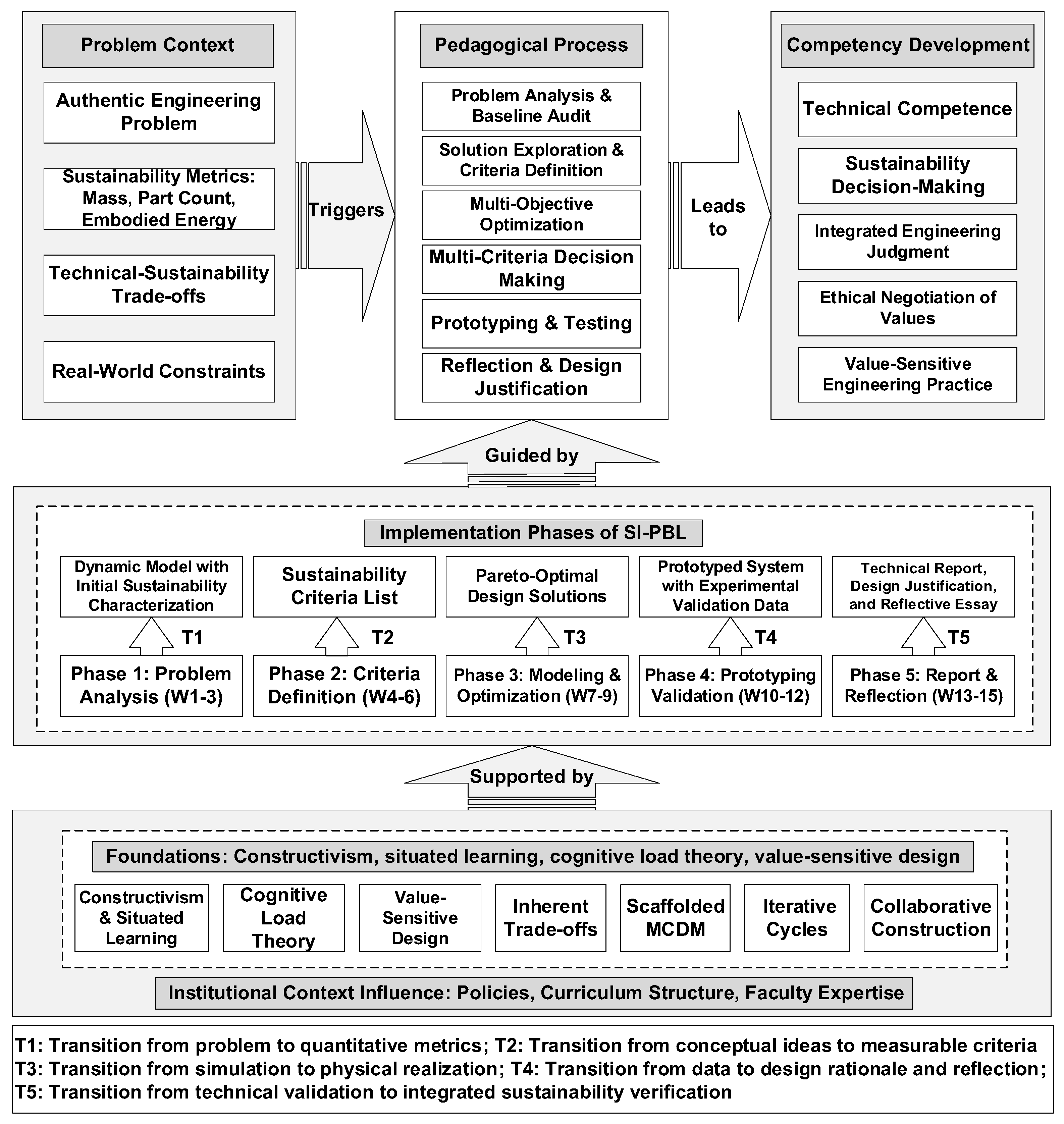
Figure 1 illustrates the operational structure of the SI-PBL approach, showing how the core principles and components interact. This structure conceptualizes the learning environment as three interacting domains situated within a broader institutional context. The relationships depicted reflect the theoretical foundations discussed in
Section 2.1 and operationalize the design principles described in
Section 2.2.
The Problem Context provides the starting point for learning. It consists of the compressor redesign problem designed to include inherent tensions between technical and sustainability objectives. Its defining elements are quantifiable sustainability characteristics such as material mass and embodied energy and the inherent trade-offs among them. These elements directly reflect the first design principle requiring problems to incorporate inherent technical-sustainability trade-offs.
The Pedagogical Process domain represents the structured learning cycle. It involves iterative phases including problem analysis, solution exploration, multi-criteria decision making, prototyping, and reflective synthesis. Scaffolding mechanisms including decision matrices and instructor feedback maintain student engagement with sustainability characteristics throughout the project. These mechanisms operationalize the second design principle concerning scaffolding for multi-criteria decision-making and the third principle emphasizing iterative cycles of analysis and reflection.
The Competency Development domain represents the target learning outcomes. Sustained engagement in the scaffolded pedagogical process organized around sustainability characteristics leads to the development of technical competence, sustainability literacy, and integrative engineering judgment. Integrative engineering judgment is defined as the ability to synthesize multi-dimensional information and make value-conscious decisions that balance technical and sustainability considerations. These outcomes correspond directly to the competencies measured in this study and addressed in the first three research questions.
The entire approach is governed by the four core principles and is enacted within a specific institutional context encompassing curriculum structures, faculty development, and resource availability. These contextual factors may influence implementation fidelity and outcomes, a consideration addressed in the discussion of limitations in
Section 5. The operational structure depicted in
Figure 1 provides the basis for the methodological design described in the following section, which details how each component was implemented and assessed.
2.5. Distinguishing SI-PBL from Related Pedagogical Approaches
To clarify the unique contribution of the SI-PBL approach, it is useful to distinguish it from other established pedagogical frameworks that address sustainability in engineering education. The CDIO (Conceive-Design-Implement-Operate) initiative provides a comprehensive process model for engineering education, structuring curricula around the lifecycle of systems [
33]. While CDIO has been adapted to include sustainability considerations, it does not inherently mandate the integration of sustainability as a core design anchor; sustainability, when present, is often treated as an additional constraint rather than the central organizing principle of the learning experience.
Education for Sustainable Development (ESD) frameworks, such as those articulated by UNESCO, specify the competencies students should develop. These include systems thinking, normative competence, and anticipatory competence. However, such frameworks are typically pedagogical agnostic, offering guidance on what to teach rather than how to structure learning experiences [
34]. SI-PBL operationalizes these ESD competencies through a specific pedagogical mechanism: anchoring the entire learning process on the inherent sustainability characteristics of an engineering problem.
Design-thinking pedagogies emphasize human-centered ideation, empathy, and iterative prototyping [
35], yet they do not explicitly require the quantitative trade-off analysis between technical performance and environmental characteristics that is central to SI-PBL. In contrast, SI-PBL requires students to engage in multi-objective optimization, explicit value negotiation through structured decision tools, and evidence-based justification of trade-offs—processes that are not guaranteed by CDIO, ESD, or design-thinking approaches alone.
Thus, SI-PBL is not merely a combination of existing ideas but a synthesis that integrates sustainability into core technical learning, offering a pedagogical mechanism that addresses both the process and competency dimensions of sustainable engineering education.
3. Methodology
This section describes the research design and methods used to evaluate the SI-PBL approach introduced in
Section 2. A mixed-methods quasi-experimental design was adopted, combining quantitative measures of learning outcomes with qualitative data from the learning process to capture both the extent and nature of competency development [
36]. The section details the participant recruitment and group assignment procedures, the instructional interventions implemented in both experimental and control conditions, the instruments used to assess technical and sustainability competencies, and the procedures for data collection and analysis.
3.1. Research Design and Participants
A quasi-experimental pretest–posttest control group design was used to evaluate the SI-PBL approach [
37,
38,
39]. This design is appropriate in educational settings where random assignment of individual students to conditions is often logistically constrained. The quantitative component compared learning gains between the experimental group receiving SI-PBL instruction and the control group receiving traditional lecture-based instruction. The qualitative component, comprising reflective journals, project artifacts, and classroom observations, provided information about how competencies developed and what learning mechanisms were evident during the process [
40].
The study was conducted in a third-year undergraduate course titled Mechanical Vibration and Dynamics at a university in northeastern China. A total of 121 mechanical engineering students provided informed consent to participate. Participants were assigned to instructional conditions based on their pre-enrolled laboratory sections to minimize disruption to the course schedule. This resulted in an experimental group of 61 students across two sections and a control group of 60 students across two separate sections.
To establish baseline equivalence between groups, multiple pre-intervention measures were collected and compared. These included cumulative grade point average, scores on a standardized mathematics placement test administered at university entry, final exam scores from two prerequisite courses in dynamics and mathematics, and scores on the study’s own pre-test instruments. Independent-samples
t-tests showed no statistically significant differences between the groups on any of these measures, with all
p-values exceeding
[
41].
3.2. Instructional Interventions
The experimental intervention replaced approximately
of traditional course activities with a semester-long scaffolded project designed according to the SI-PBL principles in
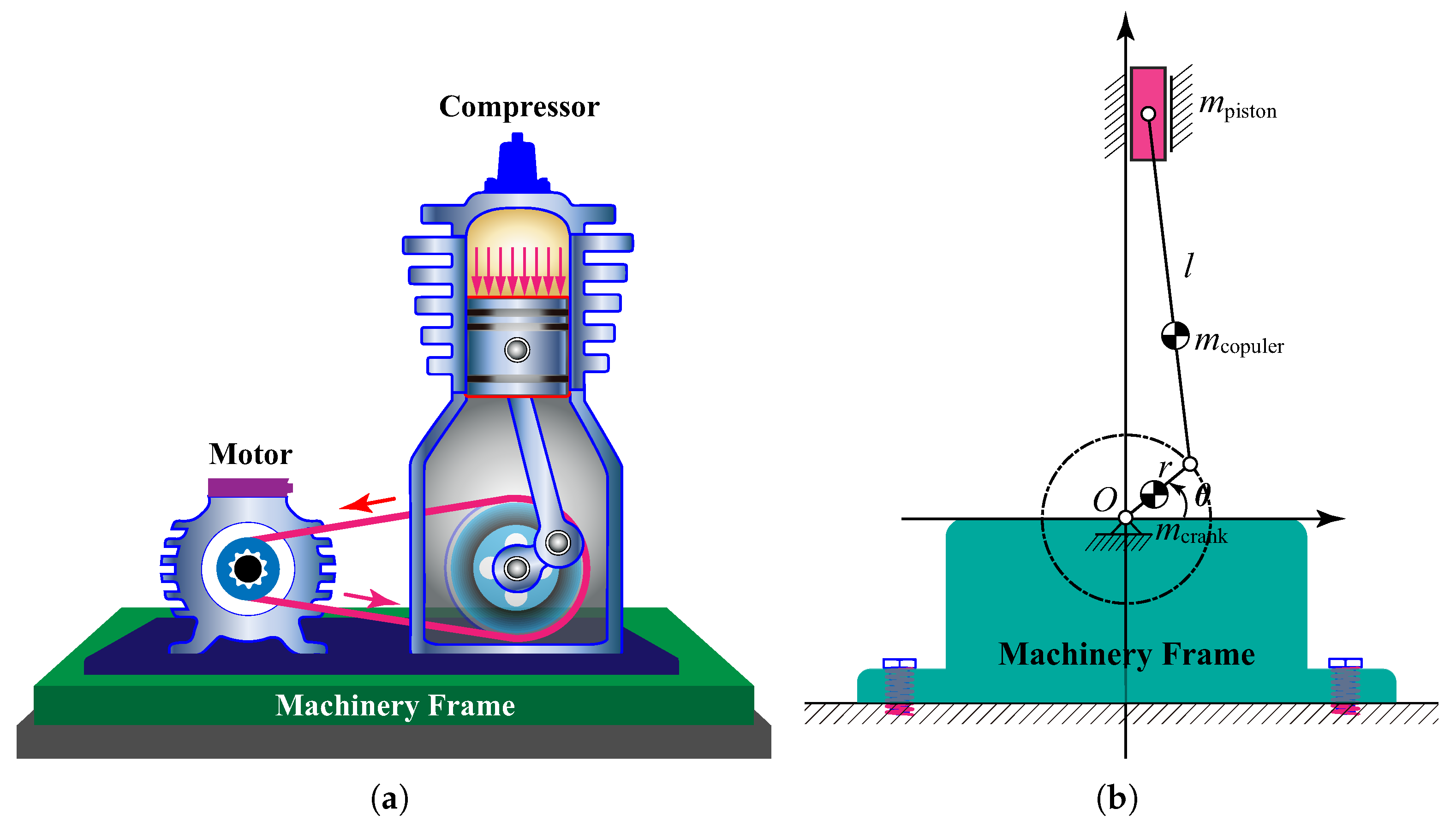
Section 2.2. Core theoretical content remained identical to that covered in the control group but was delivered through a problem-based approach in which concepts were introduced as needed to complete project tasks. Students worked on an engineering challenge to redesign the balancing system of a single-stage air compressor for marine applications to reduce vibration transmission, as illustrated in
Figure 2. The problem was situated in a submarine environment where excessive vibration affects both operational performance and acoustic stealth. The redesign task explicitly required consideration of the system’s material footprint, manufacturability, and lifecycle implications, directly enacting the first design principle concerning inherent technical-sustainability trade-offs.
Core vibration concepts were introduced in direct relation to project requirements. Harmonic analysis was taught in the context of modeling periodic excitation forces from the slider-crank mechanism. Multi-degree-of-freedom system modeling was introduced to analyze the coupled compressor-mounting structure. This just-in-time delivery of content supported knowledge construction organized around the project’s inherent trade-offs, as described in
Section 2.3.
The project was structured into five sequential phases, each with specific deliverables and scaffolding mechanisms designed to address sustainability characteristics. In the first phase covering weeks one through three, students analyzed the original unbalanced system, built a dynamic model, and conducted a simplified sustainability audit to identify material components and environmental hotspots. This established a baseline for comparison and operationalized the problem definition aspect of the SI-PBL approach.
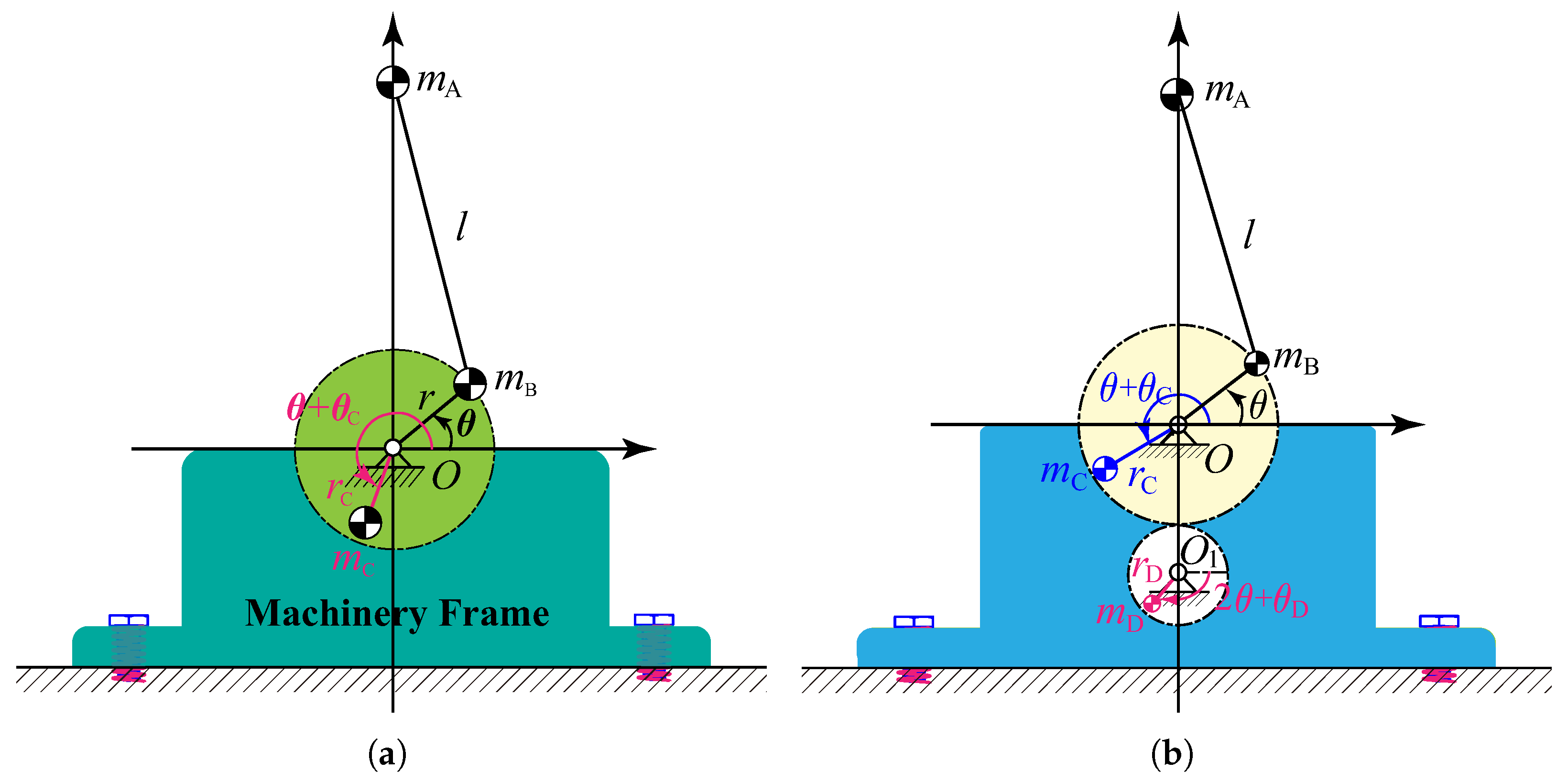
In the second phase covering weeks four through six, students examined two distinct balancing approaches: a three-mass counterweight system and a supplementary gear system, shown in
Figure 3. Students collaboratively defined measurable sustainability criteria including added mass, part count, and estimated embodied energy, enacting the principle of collaboration facilitating knowledge construction and value negotiation.
In the third phase covering weeks seven through nine, students developed mathematical models of both balancing approaches and framed the design task as a multi-objective optimization problem. They used computational algorithms to simultaneously minimize vibration amplitude, added mass, and a manufacturing complexity index, directly engaging with the cognitive demands of multi-criteria decision-making supported by structured optimization frameworks.
In the fourth phase covering weeks ten through twelve, selected designs were prototyped using three-dimensional printing and workshop components. Physical testing measured technical performance in terms of vibration reduction and sustainability-related metrics including actual mass and part count, enacting the principle of iterative learning cycles through prototyping and empirical validation.
In the fifth phase covering weeks thirteen through fifteen, students prepared a final report and presentation including a design decision rationale section. They used a multi-criteria decision matrix (MCDM) to justify their final choice and discuss how sustainability characteristics were weighted against technical performance, addressing the evaluation aspect of the SI-PBL approach by requiring reflective justification and communication of their decision-making process.
Together, these five phases formed a complete learning cycle in which students progressively integrated technical analysis with sustainability considerations, moving from problem definition and criteria development through optimization and prototyping to final justification. This structured progression operationalized the four design principles by embedding inherent trade-offs in the problem, providing scaffolding for multi-criteria decisions, supporting iterative learning cycles, and fostering collaborative knowledge construction. For educators seeking to implement this approach, the fifteen-week semester accommodates five sequential phases including problem analysis, solution exploration, modeling and optimization, prototyping and testing, and synthesis and reporting. A balanced assessment structure includes project deliverables, technical examinations, reflective journals, and peer evaluation. Essential resources include three-dimensional printing for prototyping, computational software for optimization, and scaffold templates for decision matrices and reflection prompts.
Specifically, the control group received the course in its standard lecture-based format, which represented common practice in engineering education and served as a baseline for comparison. Instruction consisted of three fifty-minute lectures per week delivered by the same instructor who taught the experimental sections, covering the identical theoretical syllabus including free and forced vibration, multi-degree-of-freedom systems, and vibration control methods. Laboratory exercises were prescribed with predetermined outcomes such as measuring natural frequencies of simple systems and included no open-ended design components or explicit sustainability considerations. Assessment comprised weekly homework assignments contributing of the final grade, two midterm examinations contributing , and a comprehensive final examination contributing .
3.3. Assessment Instruments
To address the first research question concerning technical competency development, three instruments were used to measure conceptual understanding, mathematical proficiency, and complex problem-solving. The Mechanics Baseline Test, a thirty-item multiple-choice instrument, measured conceptual understanding of dynamics and vibration principles [
42,
43]. The Engineering Mathematics Assessment Tool required students to formulate and solve equations of motion for a two-degree-of-freedom system. The Problem-Solving Ability Scale presented a vibration diagnosis scenario in which students identified causes of excessive vibration in a rotating machine and proposed solutions.
To measure sustainability-oriented engineering decision-making corresponding to the second research question, a custom instrument was developed. The Sustainability in Engineering Decision-making Test presented two engineering scenarios unrelated to vibration: material selection for a structural component and system selection for a pumping application. Responses were scored from zero to ten per scenario using a rubric that assessed identification of relevant sustainability criteria, use of evidence to support claims, and explicit reasoning about trade-offs between competing objectives [
44].
Qualitative data were collected through reflective journals and project reports to examine the learning mechanisms underlying observed competency development. Students in the SI-PBL condition maintained structured reflective journals with prompts administered at three stages: the end of phase two, the end of phase four, and project completion. The prompts asked students to describe challenges encountered, explain how they navigated trade-offs between technical and sustainability objectives, and articulate what they learned from the process. Coding of journal entries followed a dual approach: deductive coding informed by the SI-PBL approach, including recognition of sustainability characteristics and depth of trade-off analysis, and inductive coding allowing themes to emerge from the data [
45]. Final project reports from both groups were analysed using a coding scheme that assessed depth of technical reasoning, use of multi-criteria decision tools, evidence of integrative thinking connecting technical and sustainability considerations, and quality of reflective justification.
Student surveys administered at the end of the semester collected perceptions of engagement, relevance of course content to engineering practice, confidence in addressing open-ended problems, and overall course satisfaction using five-point Likert scales. These surveys provided complementary information about student experiences in the two instructional conditions.
Together, these instruments provided quantitative evidence of competency development across technical domains and sustainability-oriented decision-making, while qualitative data captured the learning processes through which these competencies developed. The combination of standardized tests, performance-based assessments, and qualitative analyses enabled triangulation of findings across multiple data sources.
To ensure transparency and alignment between the study objectives and the assessment methods,
Table 1 presents a systematic mapping of each research question to the corresponding assessment instruments. The table specifies the targeted competency, the type of assessment (direct or indirect), and, where applicable, the cognitive level addressed based on Bloom’s Taxonomy [
46]. For research questions involving derived measures (RQ3) or process-oriented qualitative data, Bloom’s cognitive taxonomy does not apply; these are indicated as “Not applicable” with further details provided in the text.
Each instrument was selected or designed to target specific cognitive levels appropriate for the competency being measured, ensuring that the assessment strategy was both comprehensive and aligned with the study’s objectives. The use of established instruments with documented reliability and validity further supports the robustness of the assessment design.
3.4. Data Collection and Analysis
Quantitative data consisting of pre-test and post-test scores from all four assessment instruments were collected at the beginning of week one and the end of week sixteen of the fifteen-week semester. Qualitative data including reflective journals, project reports, and classroom observation notes were collected throughout the semester.
Quantitative data were analysed with Analysis of Covariance using pre-test scores as covariates to compare adjusted post-test means between groups, addressing the first and second research questions [
47]. Effect sizes were calculated using partial
for the ANCOVA results and Cohen’s
d for within-group and between-group differences. Assumptions of normality, homogeneity of variance, and homogeneity of regression slopes were checked and met for all analyses. Pearson correlations were used to examine relationships between gain scores in different competency domains within each group, addressing the third research question.
Qualitative data were analysed to address learning mechanisms. Thematic analysis was conducted following the procedures outlined by Braun and Clarke [
45]. Coding involved both deductive coding informed by the SI-PBL approach and its four design principles and inductive coding allowing additional themes to emerge from the data. The analysis focused on identifying learning mechanisms evident in student reflections and project work. Themes were reviewed and refined through discussion among the research team.
4. Results
This section presents the results organized according to the three research questions stated in
Section 1. Baseline participant characteristics and group equivalence are first reported. The results for the first research question examine gains in conceptual understanding (MBT), mathematical proficiency (EMAT), and complex problem-solving (PSAS). The results for the second research question address sustainability-oriented engineering decision-making (SED). The results for the third research question present correlations between gains in technical and sustainability competencies. Qualitative analysis of reflective journals, project artifacts, and classroom observations was conducted to identify learning mechanisms. Technical validation of student designs and student perception survey results are then reported as contextual information.
4.1. Participant Characteristics and Baseline Equivalence
Before analyzing intervention outcomes, baseline equivalence between the experimental group receiving SI-PBL instruction and the control group receiving traditional instruction was assessed to ensure that any observed post-intervention differences could be attributed to the instructional approach rather than to pre-existing participant characteristics. As shown in
Table 2, the two groups showed no statistically significant differences across all measured demographic variables.
Chi-square tests were used to compare gender and academic standing distributions between groups. The results indicated no significant differences in gender distribution (, ) or academic standing (, ). Independent samples t-tests conducted with a significance level of showed no significant differences in age (, ) or cumulative grade point average (, ). These results indicate that the groups were demographically comparable at baseline.
Baseline equivalence on the primary outcome measures was also examined. As shown in
Table 3, independent samples
t-tests revealed no statistically significant differences between groups on any pre-test instrument. Specifically, no differences were found for the Mechanics Baseline Test measuring conceptual understanding (
,
), the Engineering Mathematics Assessment Tool measuring mathematical proficiency (
,
), the Problem-Solving Ability Scale measuring complex problem-solving (
,
), or the Sustainability in Engineering Decision-making test measuring sustainability-oriented engineering judgment (
,
). These results indicate that the two groups were comparable on all measured competencies before the intervention.
4.2. Effects on Technical Competency Development
To assess the effects of the SI-PBL approach on technical competency development corresponding to the first research question, Analysis of Covariance was performed on post-test scores for each instrument using the corresponding pre-test score as a covariate. All analyses used a significance level of
. This approach controls for initial differences in ability and increases statistical power by reducing error variance [
48].
Table 4 presents the results for conceptual understanding measured by the Mechanics Baseline Test. The SI-PBL group achieved a post-test mean of
(SD =
) representing a mean gain of
points, while the control group achieved a post-test mean of
(SD =
) representing a mean gain of 6.56 points. ANCOVA controlling for pre-test scores revealed a statistically significant main effect of instructional condition on post-test performance (
,
). Adjusted post-test means were
for the SI-PBL group and
for the control group, yielding an adjusted mean difference of
points. The partial eta squared value of 0.22 indicates a large effect size. The between-group Cohen’s
d of
represents a medium to large effect favoring the SI-PBL group. Within-group effect sizes were
for the SI-PBL group and
for the control group.
Table 5 presents the results for mathematical proficiency measured by the Engineering Mathematics Assessment Tool. The SI-PBL group achieved a post-test mean of
(SD
) representing a mean gain of
points, while the control group achieved a post-test mean of
(SD
) representing a mean gain of
points. ANCOVA revealed a statistically significant main effect of instructional condition on post-test performance (
,
). Adjusted post-test means were
for the SI-PBL group and
for the control group, yielding an adjusted mean difference of
points. Partial eta squared of
indicates a large effect size. The between-group Cohen’s d of
represents a medium to large effect favoring the SI-PBL group. Within-group effect sizes were
for the SI-PBL group and
for the control group.
Table 6 presents the results for complex problem-solving measured by the Problem-Solving Ability Scale. The SI-PBL group achieved a post-test mean of
(SD
) representing a mean gain of
points, while the control group achieved a post-test mean of
(SD
) representing a mean gain of
points. ANCOVA revealed a statistically significant main effect of instructional condition on post-test performance (
,
). Adjusted post-test means were
for the SI-PBL group and
for the control group, yielding an adjusted mean difference of
points. Partial eta squared of
indicates a medium effect size. The between-group Cohen’s
represents a medium effect favoring the SI-PBL group. Within-group effect sizes were
for the SI-PBL group and
for the control group.
4.3. Effects on Sustainability-Oriented Decision-Making
Table 7 presents the results for sustainability-oriented engineering decision-making measured by the Sustainability in Engineering Decision-making test. Both groups showed improvement from pre-test to post-test. The SI-PBL group achieved a post-test mean of
(SD
) representing a mean gain of
points, while the control group achieved a post-test mean of
(SD
) representing a mean gain of
points.
Analysis of covariance controlling for pre-test SED scores revealed a statistically significant main effect of instructional condition on post-test performance (, ). Adjusted post-test means were for the SI-PBL group and for the control group, yielding an adjusted mean difference of points. Partial eta squared of 0.25 indicates a large effect size. The between-group Cohen’s represents a medium to large effect favoring the SI-PBL group. Within-group effect sizes were for the SI-PBL group and for the control group, indicating that the SI-PBL group showed substantially larger gains in sustainability-oriented engineering judgment.
4.4. Relationship Between Technical and Sustainability Competency Gains
To examine the relationship between changes in complex problem-solving and changes in sustainability reasoning corresponding to the third research question, Pearson correlation analyses were conducted within each experimental condition. Gain scores were calculated for each student by subtracting pre-test scores from post-test scores on both the Problem-Solving Ability Scale and the Sustainability in Engineering Decision-making test. These gain scores represent the magnitude of change during the instructional period.
A positive correlation was observed between PSAS gain scores and SED gain scores within the SI-PBL group (, , ). This indicates that students with larger gains in complex problem-solving tended to have larger gains in sustainability-oriented decision-making. In the control group, the correlation was not statistically significant (, , ). The difference between these correlations suggests that the relationship between technical and sustainability competency development was specific to the SI-PBL instructional condition. This pattern of results provides evidence for synergistic competency development within the SI-PBL learning environment.
4.5. Learning Mechanisms in the SI-PBL Process
Qualitative analysis of student reflective journals, project artifacts, and classroom observations identified three distinct mechanisms that contributed to observed competency development. The first mechanism involved encountering and articulating trade-offs. Analysis of reflective journals from the initial project phase revealed that students experienced cognitive dissonance when first required to consider sustainability criteria alongside technical performance. Journal entries from week five frequently described this experience. One student noted that it felt counterintuitive to choose a design slightly less effective at reducing vibration because it used less material, observing that in all previous courses the best answer was always the one with the highest efficiency. This mechanism reflects students’ initial confrontation with the inherent trade-offs designed into the problem as specified by the first design principle. The second mechanism concerned scaffolded deliberation using multi-criteria decision tools. Analysis of journals from the mid-project phase revealed that students used structured decision matrices to organize their thinking about competing objectives. Journal entries from week ten described how the decision matrix prompted explicit consideration of values and priorities. One student observed that assigning weights to vibration reduction and added mass was not just mathematics but a statement about priorities as engineers-in-training. Analysis of project artifacts confirmed widespread use of these tools, with
of the SI-PBL reports employing a structured multi-criteria decision framework comparable to the exemplar shown in
Table 8. This mechanism operationalizes the second design principle concerning scaffolding for multi-criteria decision-making.
Journals from the final project phase indicated internalized integrative judgment. Students described shifts in their engineering mindset, viewing design as explicit negotiation of trade-offs rather than single-point optimization. One student noted automatic consideration of material source, energy required for production, and end-of-life implications, describing the best solution as the most responsible compromise among competing objectives rather than a single-point optimum on a performance graph. This progression from initial dissonance through scaffolded deliberation to internalized judgment reflects the third and fourth design principles concerning iterative learning cycles and collaborative knowledge construction.
Quantitative coding of project artifacts provided additional evidence. Among the SI-PBL reports, explicitly defined and discussed project-specific sustainability characteristics including added mass, part count, and embodied energy. A dedicated section analyzing trade-offs between vibration reduction and material or resource use appeared in of the reports, and addressed lifecycle stages beyond operational performance including manufacturing implications and end-of-life scenarios. In contrast, the control group reports focused predominantly on the technical methodology and quantitative results, with only mentioning any non-technical factors and none employing structured multi-criteria decision tools.
4.6. Technical Validation of Student Designs
To verify that designs produced by SI-PBL students met technical requirements while addressing sustainability constraints, optimization and prototyping outcomes were analyzed.
Table 9 presents representative optimized parameters for the three-mass counterweight design across a range of operational speeds.
Multi-objective optimization was a phase within the SI-PBL project in which students generated solution sets trading off vibration reduction against sustainability-related metrics including added mass. The parameters in
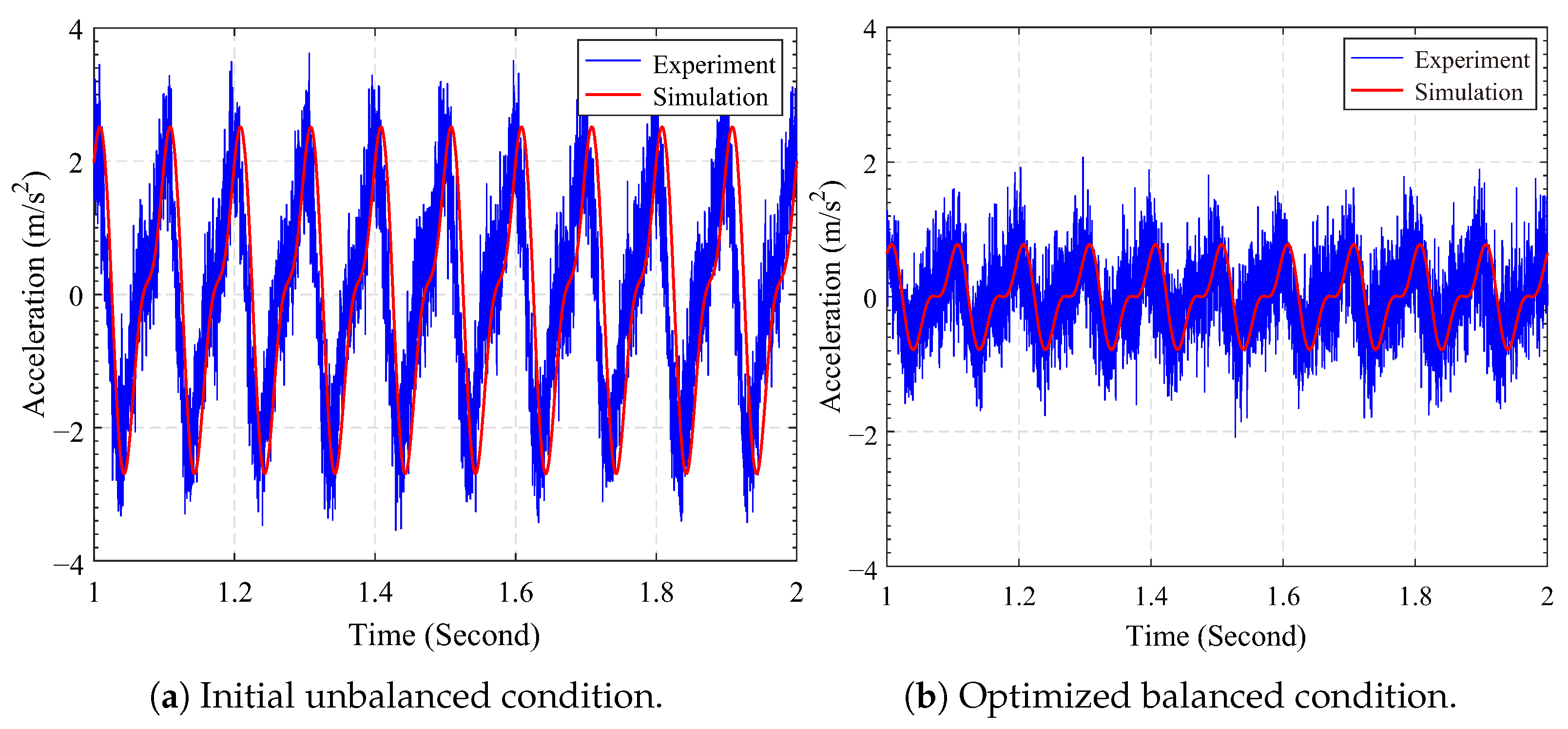
Table 9 show that designs maintained consistent counterweight positioning across all operational speeds. Experimental validation using physical prototypes compared computational model predictions with measured outcomes. Across the tested speed range from 600 to 3000 rpm, optimized designs achieved vibration reductions ranging from
to
.
Figure 4 shows the structural acceleration response at 600 rpm before and after optimization, demonstrating that technical performance targets were achieved while sustainability constraints were addressed.
4.7. Student Perceptions
End-of-semester survey responses provided contextual information about student experiences in the two instructional conditions. Independent samples t-tests revealed that the SI-PBL students reported significantly higher levels of engagement than the control group students (SI-PBL: , Control: ; , , ). They also rated course content as more relevant to engineering practice (SI-PBL: , Control: ; , , ) and reported greater confidence in their ability to address open-ended problems (SI-PBL: , Control: ; , , ). These perceptual differences are consistent with the quantitative findings on competency development and qualitative findings on learning mechanisms.
In summary, the SI-PBL group demonstrated significantly larger gains than the control group in conceptual understanding, mathematical proficiency, and complex problem-solving. The approach also yielded significantly larger gains in sustainability-oriented engineering decision-making. A positive correlation between gains in complex problem-solving and sustainability reasoning was observed within the SI-PBL group (
,
), while no such relationship existed in the control group. Qualitative analysis identified three learning mechanisms including encountering and articulating trade-offs, scaffolded deliberation using multi-criteria decision tools, and internalization through iterative reflection. These mechanisms corresponded directly to the four design principles articulated in
Section 2, i.e., problems incorporating inherent technical-sustainability trade-offs, scaffolding for multi-criteria decision-making, iterative learning cycles, and collaborative knowledge construction.
5. Discussion
This study investigated whether a Sustainability-Integrated Problem-Based Learning approach that places sustainability characteristics at the center of an engineering project could lead to different learning outcomes than traditional instruction. The findings provide affirmative evidence organized around the three research questions stated in
Section 1. This section interprets these findings, discusses the learning mechanisms that may explain them, considers implications for practice and research, and acknowledges limitations.
5.1. Integration of Technical and Sustainability Competency Development
The SI-PBL group demonstrated significantly larger gains than the control group across all technical competencies measured. For conceptual understanding assessed by the MBT, the between-group effect size was
. For mathematical proficiency assessed by the EMAT, the effect size was
. For complex problem-solving assessed by the PSAS, the effect size was
. These gains indicate that integrating sustainability considerations did not detract from technical learning. The SI-PBL approach enhanced technical competency development compared to traditional instruction, addressing the concern raised in
Section 1 that adding sustainability requirements might compromise technical rigor.
Sustainability-oriented engineering decision-making measured by the SED test also showed significantly larger gains for the SI-PBL group (), with a within-group effect size of indicating substantial development. The SED test used scenarios unrelated to the vibration project, suggesting that students developed generalizable ability to identify sustainability criteria, use evidence, and reason about trade-offs rather than merely recalling project content.
A positive correlation emerged between gains in complex problem-solving and gains in sustainability reasoning within the SI-PBL group (, ), while no significant correlation existed in the control group (, ). This finding suggests that under the SI-PBL approach, these competencies developed in related rather than separate ways. The cognitive demands of navigating technical-sustainability trade-offs may foster higher-order problem-solving skills that are transferable. The multi-objective optimization tasks required students to consider multiple criteria simultaneously, evaluate alternatives systematically, and justify decisions with evidence, processes that align closely with the dimensions assessed by the PSAS.
5.2. Learning Mechanisms and Theoretical Contributions
Three learning mechanisms emerged from the qualitative analysis. The first mechanism, encountering and articulating trade-offs, reflects the principle that problems must incorporate inherent technical-sustainability trade-offs. Student journals documented initial cognitive dissonance when first confronting these trade-offs, indicating that the problem design created conditions for meaningful engagement with complexity rather than simplified textbook exercises.
The second mechanism, scaffolded deliberation using multi-criteria decision tools, reflects the principle that scaffolding supports multi-criteria decision-making. Project artifacts showed widespread use of decision matrices, with of SI-PBL reports employing such tools. Journal entries described how these tools prompted explicit value deliberation. Students used matrices not mechanically but to surface and negotiate differing priorities within their teams, enacting the principle of collaborative knowledge construction.
The third mechanism, internalization through iterative reflection, reflects the principle that learning occurs through iterative cycles of analysis and reflection. Journals documented progression from initial dissonance through scaffolded deliberation to internalized judgment, suggesting that the five-phase project structure with embedded reflection points supported progressive integration of technical and sustainability considerations. By the final phase, students described automatic consideration of lifecycle implications and viewed design as negotiation of trade-offs rather than single-point optimization, indicating development of integrative engineering judgment.
In summary, the two skins phenomenon identified in the literature may be addressed not by adding sustainability content to existing courses but by reorganizing learning around problems whose sustainability characteristics are central to the task. The mechanisms identified provide empirical grounding for the claim that authentic problems with inherent trade-offs can support the simultaneous development of technical and sustainability competencies.
5.3. Implications and Limitations
The findings of this study carry implications for various groups. For educators, the study provides a replicable instructional template. The five-phase project structure, sustainability characteristics embedded in the problem including added mass, part count, and embodied energy, and scaffolding tools such as multi-criteria matrices and reflection prompts can be adapted to other core engineering courses. Key design elements include problems with measurable sustainability dimensions, structured decision tools that make trade-offs explicit, and iterative cycles combining technical analysis with reflective synthesis. For institutions, the findings demonstrate that integrating sustainability into existing courses is feasible without additional resources or reduced technical coverage. The SI-PBL approach replaced approximately of traditional activities while maintaining or enhancing outcomes across all measured competencies, suggesting that pedagogical redesign rather than curriculum expansion can address accreditation criteria for sustainability and complex problem-solving. For researchers, this study documents associations between technical and sustainability competency development. The correlation between gains in complex problem-solving and sustainability reasoning (, ) raises questions about causality and generalizability across engineering domains. Longitudinal studies could assess whether gains persist over time, and research examining which scaffolding elements are essential could guide efficient implementation.
Several limitations temper these findings. The single-institution, single-discipline context limits generalizability; replication in structural, chemical, or electrical engineering is needed. Outcomes were measured immediately post-intervention; longitudinal assessment of retention and transfer is necessary. Implementation requires instructor facilitation skills and upfront resource investment in problem design, scaffolding tools, and rubrics, which may not be available in all contexts. A shared library of validated case studies could reduce individual instructor burden, and research identifying minimum training requirements could support broader adoption. In summary, the study provides empirical evidence that sustainability can serve as an integrating context for developing both technical and sustainability competencies in engineering education.
6. Conclusions
This study developed and tested a Sustainability-Integrated Problem-Based Learning approach in an undergraduate mechanical vibration course to address the integration of sustainability into core technical curricula. A quasi-experimental design with 121 students compared the SI-PBL approach to traditional lecture-based instruction. The intervention required students to redesign a compressor balancing system, negotiating trade-offs between vibration reduction and sustainability considerations including added mass, part count, and embodied energy.
Regarding the first research question, students in the SI-PBL group demonstrated significantly larger gains than the control group across all technical competencies: conceptual understanding measured by the MBT (), mathematical proficiency measured by the EMAT (), and complex problem-solving measured by the PSAS (). Regarding the second research question, the SI-PBL group demonstrated significantly larger gains in sustainability-oriented engineering decision-making measured by the SED test (). Regarding the third research question, a positive correlation was found between gains in complex problem-solving and sustainability reasoning within the SI-PBL group (, ), while no such correlation existed in the control group (, ).
The study provides empirical evidence that sustainability considerations can be incorporated into a core technical course without compromising technical learning. The instructional design, including problem selection, scaffolded phases, multi-criteria decision matrices, and reflective justification, offers a template adaptable by engineering educators across disciplinary contexts. For practice, the findings illustrate a sequence of activities for integrating sustainability into the existing curricula, assisting institutions in addressing accreditation criteria through integrated rather than additive approaches. For research, the observed correlation between technical and sustainability competency gains suggests directions for investigating how these competencies develop together.
The study was conducted in one course at one institution, and outcomes were measured immediately after the intervention. Nonetheless, the findings contribute empirical evidence that sustainability can serve as a context for developing both technical and sustainability competencies in engineering education.