Review

Modern Energy Storage Methods and Technologies: Comparison, Case Study and Analysis of the Impact on Power Grid Stabilization


1
Department of Renewable Energy Engineering, West Pomeranian University of Technology in Szczecin, 71-459 Szczecin, Poland
2
Faculty of Electrical Engineering, Automatic Control and Informatics, Opole University of Technology, 45-758 Opole, Poland
3
Vivende sp. z o.o, 16-070 Porosły, Poland
*
Author to whom correspondence should be addressed.
Sustainability 2026, 18(5), 2659; https://doi.org/10.3390/su18052659
Submission received: 8 December 2025 / Revised: 23 February 2026 / Accepted: 3 March 2026 / Published: 9 March 2026

Abstract

This review synthesizes recent progress in modern energy storage technologies and proposes a selection-oriented comparison for power-system stabilization. Technologies are grouped into electrochemical, mechanical, chemical, and thermal storage, and evaluated using harmonized criteria (power and energy capability, response time, round-trip efficiency, lifetime, cost proxies, and maturity level). A comparative dataset and use-case mapping are used to link technology characteristics to grid services, with emphasis on voltage support, operational durability, and waste-heat utilization. The analysis highlights pumped-storage hydropower as the most robust option for long-duration, high-capacity applications, while battery energy storage systems are best suited for fast ancillary services, provided that cycle life, safety, and system integration constraints are met. Finally, the review discusses current technology trends (e.g., LFP and sodium-ion deployment, solid-state development, and commercialization barriers for lithium-sulfur) and identifies evidence-based directions for future research and deployment.

1. Introduction

The development of energy storage technologies is essential to adapt energy systems to meet the growing demand for energy while achieving the goals of reducing greenhouse gas emissions, protecting the environment, and supporting the energy transition [1]. Several key aspects should be pointed out to better understand the importance of modern energy storage methods in the context of growing energy demand [2,3,4,5,6]:
  • Effectiveness and Efficiency: Traditional energy storage methods, such as pumped hydro, can generate energy losses during the conversion and storage process. Modern technologies, such as Lithium-ion batteries with higher energy density and lower losses, are becoming increasingly attractive.
  • Grid Integration: Modern energy storage systems must integrate with existing power grids. Intelligent energy management systems and advanced algorithms optimize energy delivery and withdrawal from storage facilities, ensuring stability and reliability of supply.
  • Innovations in Materials and Technology: The battery and energy storage field is rapidly developing, driven by research efforts to create new materials for storage facilities. Innovations like Lithium-sulfur cathode materials or silicon-based anodes can significantly increase battery performance and durability. Additionally, advancements in fuel cell technologies, which convert hydrogen to electricity, are notable.
  • Integration with Transportation: The growing number of electric vehicles necessitates efficient energy storage solutions. Advanced vehicle energy storage technologies, including fuel cell batteries, are crucial for achieving longer ranges and shorter charging times.
  • Sustainability and Ecology: Developing modern energy storage methods must consider sustainability aspects. Sustainable sourcing of materials, such as lithium, cobalt, and nickel, is essential, and battery recycling technologies must reduce environmental impacts.
All these aspects are crucial in the context of growing energy demand and require the involvement of scientists, engineers, industry, and government in the research, development, and implementation of modern energy storage methods [7]. Ultimately, efficient and sustainable energy storage methods will play a critical role in shaping the future of energy and will contribute to the achievement of greenhouse gas emission reduction targets.
The main purpose of this article is to conduct a detailed analysis and identification of various energy storage technologies available on the market. In this context, their main features will be defined, such as types of energy carriers, storage mechanisms, and technical characteristics. The study will analyze the energy efficiency of various energy storage technologies, taking into account energy conversion processes, energy losses, and efficiency. The article will also present a comparative analysis of the costs associated with implementing and maintaining various energy storage technologies, including life-cycle cost analysis and cost-effectiveness ratios. In addition, an assessment will be made of the environmental impact of various energy storage technologies, including an analysis of greenhouse gas emissions, raw material consumption, and possible threats to ecosystems. Based on the analysis, conclusions will be drawn on the most promising energy storage technologies in terms of stabilizing electricity grids.
The paper identifies several research problems in the field of energy storage technologies. These issues highlight the existing gaps and the need for further exploration and innovation to improve current systems and develop new solutions. The key research problems addressed in the paper are as follows:
(1)
Comprehensive Solutions:
The inability of current energy storage technologies to fully address all the challenges they face. Each technology has distinct advantages and limitations, requiring detailed analysis and selection based on specific applications and energy needs.
(2)
Technological Efficiency and Development:
The significant variation in efficiency and development status among different energy storage technologies. For instance, while Lithium-ion and Lithium-sulfur batteries offer high efficiency, their high costs and space requirements restrict their large-scale application. Mechanical energy storage systems, such as Compressed Air Energy Storage (CAES) and Pumped Hydro Energy Storage (PHES), provide high power and capacity but are limited by geographical and site-specific requirements.
(3)
Integration with Renewable Energy Sources:
The intermittent nature of renewable energy sources like solar and wind, necessitating the development of more reliable and efficient storage solutions to stabilize electricity grids and ensure a consistent energy supply. The underexplored potential of integrating waste heat recovery with storage solutions to enhance overall energy efficiency.
(4)
Environmental and Sustainability Considerations:
The need for greater attention to the environmental impact and sustainability of energy storage technologies. This includes a comprehensive assessment of the lifecycle of these technologies, from production to disposal, ensuring the use of sustainable and recyclable materials. The challenge of balancing economic viability with ecological sustainability to support long-term environmental goals. The critical need for ongoing research into new materials to enhance the capacity, lifespan, and sustainability of energy storage technologies. Promising innovations, such as solid-state electrolytes, silicon anodes, and sulfur cathodes, require further development. The need for more exploration into nanomaterials and their application in improving the conductivity and structural properties of storage technologies.
These research problems emphasize the necessity of a multifaceted approach, combining improvements in existing technologies, innovative material integration, environmental impact mitigation, and seamless integration with renewable energy sources. Addressing these issues through focused research and development will help advance the field of energy storage and support the transition to a sustainable and reliable energy system [8,9,10,11].

2. Modern Methods of Energy Storage

2.1. Definition and Importance of Energy Storage

Energy storage involves converting and storing energy in a specific form, which can be released and used to meet energy needs. It balances distributed sources like solar or wind power, ensuring continuous electricity access during fluctuating supply periods [8,9,10,11]. Energy storage technologies include batteries, fuel cells, thermal energy storage, pressure pumps, supercapacitors, and more. They aim to store energy efficiently, minimize losses, and release energy at the right time and amount [12,13,14,15,16,17].
Importance of Energy Storage (see Figure 1):
  • Stabilizing electricity grids: With the increasing share of renewable sources, energy storage balances fluctuations in power generation, minimizing the risk of grid overloading during peak consumption or supply interruptions [18,19,20].
  • Integration of renewable sources: Energy storage accumulates electricity during excess generation periods for use during energy lows, increasing the efficiency and reliability of a renewable-based grid [20].
  • Energy efficiency: Advanced batteries offer greater efficiency in storing and releasing energy, minimizing losses during conversion and storage, contributing to overall system efficiency [21].
  • Environmental protection: Energy storage allows the use of electricity generated during periods of low greenhouse gas emissions, promoting emission reductions.
  • Sustainable mobility: In electric mobility, energy storage in vehicles, through fuel cell technology or advanced batteries, achieves greater range and reduces charging times, reducing transportation sector emissions.
  • Increasing energy independence: Energy storage offers households and businesses increased energy independence, allowing them to store energy during abundance or use low-cost energy sources and then use stored energy during rising prices or supply failures.
Energy storage plays a key role in the sustainable, efficient and reliable provision of electricity [22,23,24,25]. The development of advanced energy storage technologies and investments in storage infrastructure are essential for transforming the energy sector and achieving greenhouse gas reduction targets.

2.2. Electrochemical Storage Facilities

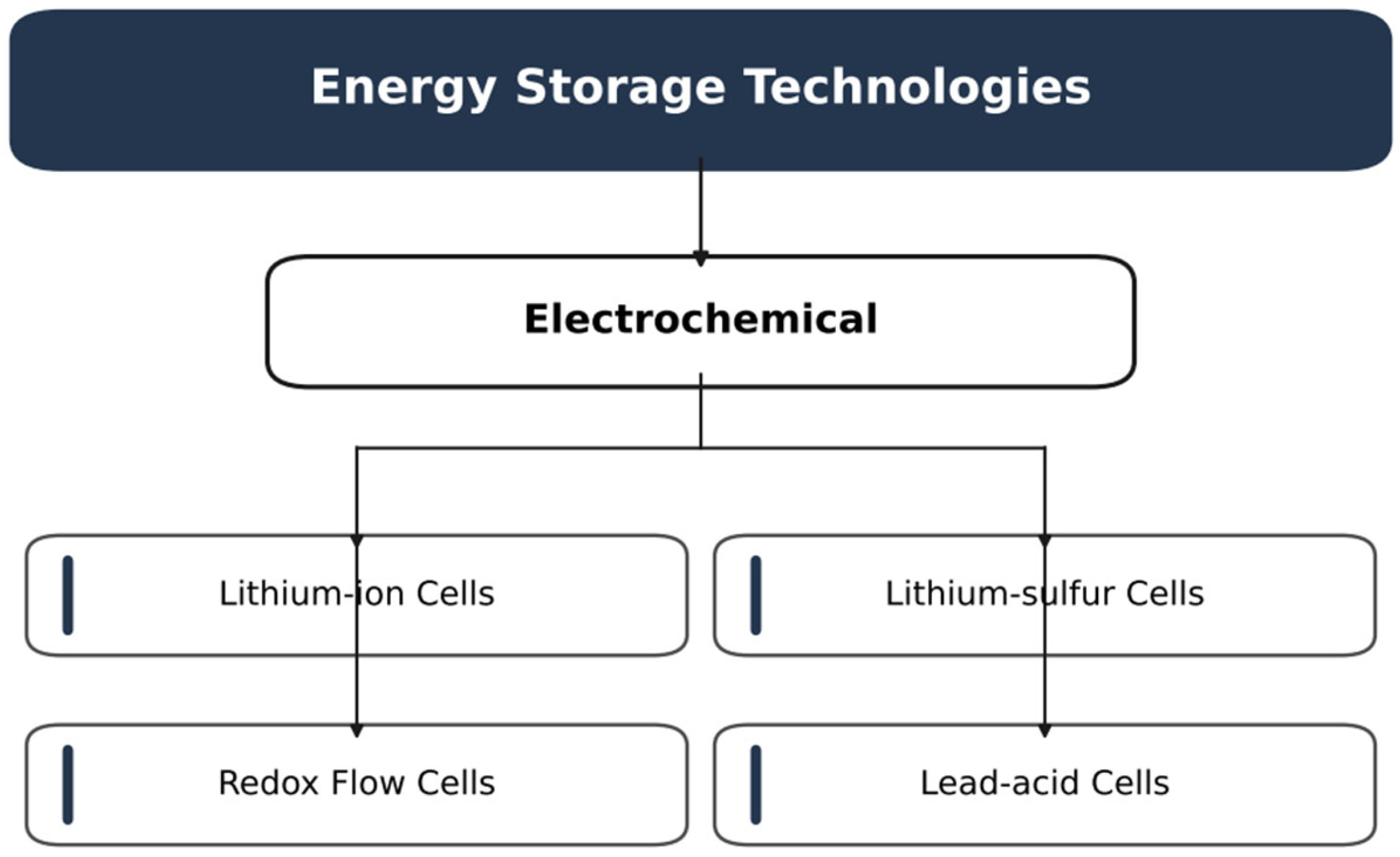
Electrochemical storage systems, like batteries, are key elements in managing electricity in power systems. These systems store excess electricity in chemical form and release it when needed. Electrochemical storage involves converting electrical energy into chemical energy during charging and vice versa during discharging [26,27,28]. Batteries contain two electrodes (an anode and a cathode) and an electrolyte that allows ion flow between electrodes during chemical reactions. Electrochemical storage is crucial in electrical energy storage, using battery technology to collect and release electricity, with applications ranging from renewable energy to grid stabilization. Their high efficiency and durability make them vital tools in the growing global energy infrastructure [27]. A breakdown of energy storage technologies using electrochemical storage is shown in Figure 2.
Beyond batteries, electrochemical storage also includes electrostatic devices such as supercapacitors. Supercapacitors offer very high-power density and millisecond-scale response, but low energy density; therefore, they are most effective for short bursts of power (e.g., power quality, ride-through, and hybrid storage systems that combine batteries with high-power buffers) [29].

Description of Technologies and Applications

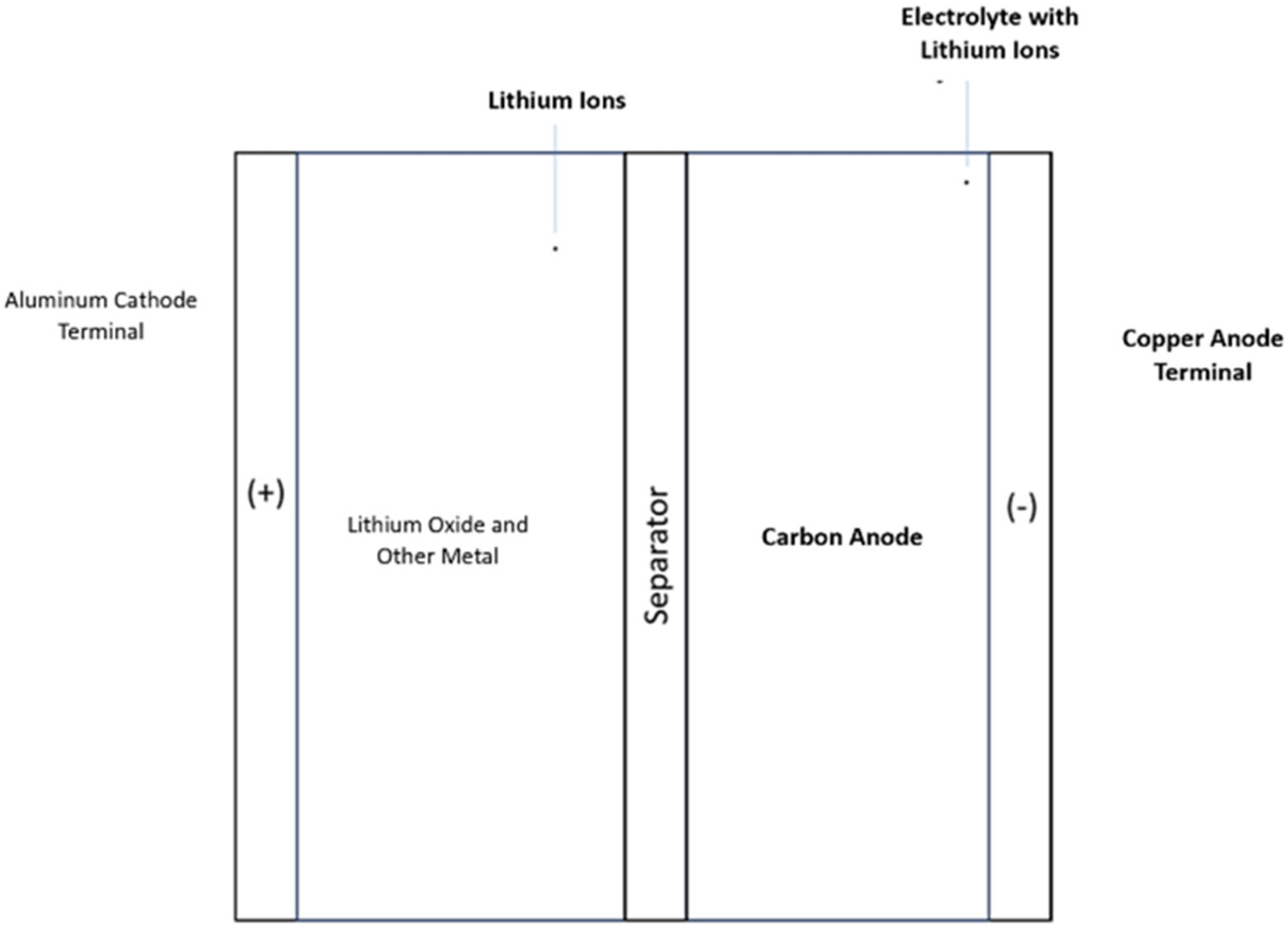
A detailed description of Lithium-ion cell technology and its wide range of applications is provided below. A key development in electrochemistry and energy storage, this innovative technology plays an irreplaceable role in today’s world, offering efficient and reliable solutions for a wide variety of applications. From mobile devices to electric vehicles, Lithium-ion cells are the cornerstone of many modern technologies, with their unique properties and functionalities contributing significantly to advances in the storage and use of electricity. Throughout the following sections, the construction, mechanism of operation, advantages and challenges of these versatile devices are described as the Lithium-ion cells are the cornerstone of modern energy storage technologies, playing a key role in a variety of applications, from mobile devices to electric vehicles and large-scale energy storage systems. One of the most important developments in electrochemistry, this technology has revolutionised the way we store and use electricity [30]. Lithium-ion cells are based on the principle of converting electrical energy into chemical energy and vice versa. Their unique structure consists of two main electrodes: a cathode and an anode, separated by an electrolyte. The cathode usually uses lithium oxide, while the anode consists of a carbonaceous material such as graphite. The electrolyte, which is an organic solution of lithium salts, acts as an ionic conductor, allowing lithium ions to flow between the electrodes [31]. The development and optimisation of Lithium-ion cells have brought significant benefits in terms of performance, lifetime and safety. Their versatile use, from portable electronic devices to emergency power systems, underlines their importance in today’s technology-dominated world. It is Lithium-ion cells that are facilitating the development of sustainable and energy-efficient solutions, being a key element in the move towards a greener and more electrified future. The electrolyte, which is usually an organic solution of lithium salts, acts as an ionic conductor between the electrodes [32]. Figure 3 shows the structure of a Lithium-ion cell, together with a description of the individual cell components.
Operating principle:
During charging, lithium ions migrate from the cathode through the electrolyte and intercalate into the anode, storing energy in chemical form. During discharge, the process is reversed, and the electrochemical potential drives electron flow through the external circuit to supply electrical power [32].
Properties of a Lithium-ion cell:
Lithium-ion cells exhibit high gravimetric and volumetric energy density, high coulombic efficiency, and low self-discharge. They do not suffer from a classical memory effect, enabling partial state-of-charge operation, which is advantageous for grid services and mobility applications.
Lithium-ion technology is widely deployed in consumer electronics, electric vehicles, and stationary Battery Energy Storage Systems (BESSs) for renewable integration, peak shaving, and frequency/voltage support.
From a sustainability perspective, Li-ion supply chains depend on critical materials (e.g., lithium, nickel, cobalt) and their environmental and social impacts depend on mining practices and regional context. End-of-life management therefore requires high collection rates and scalable recycling routes to recover valuable materials and reduce lifecycle impacts.
Environmental impact:
Recycling and second-life pathways are increasingly important for stationary applications, where system-level design (pack architecture, diagnostics, and safe dismantling) strongly affects recyclability and cost.
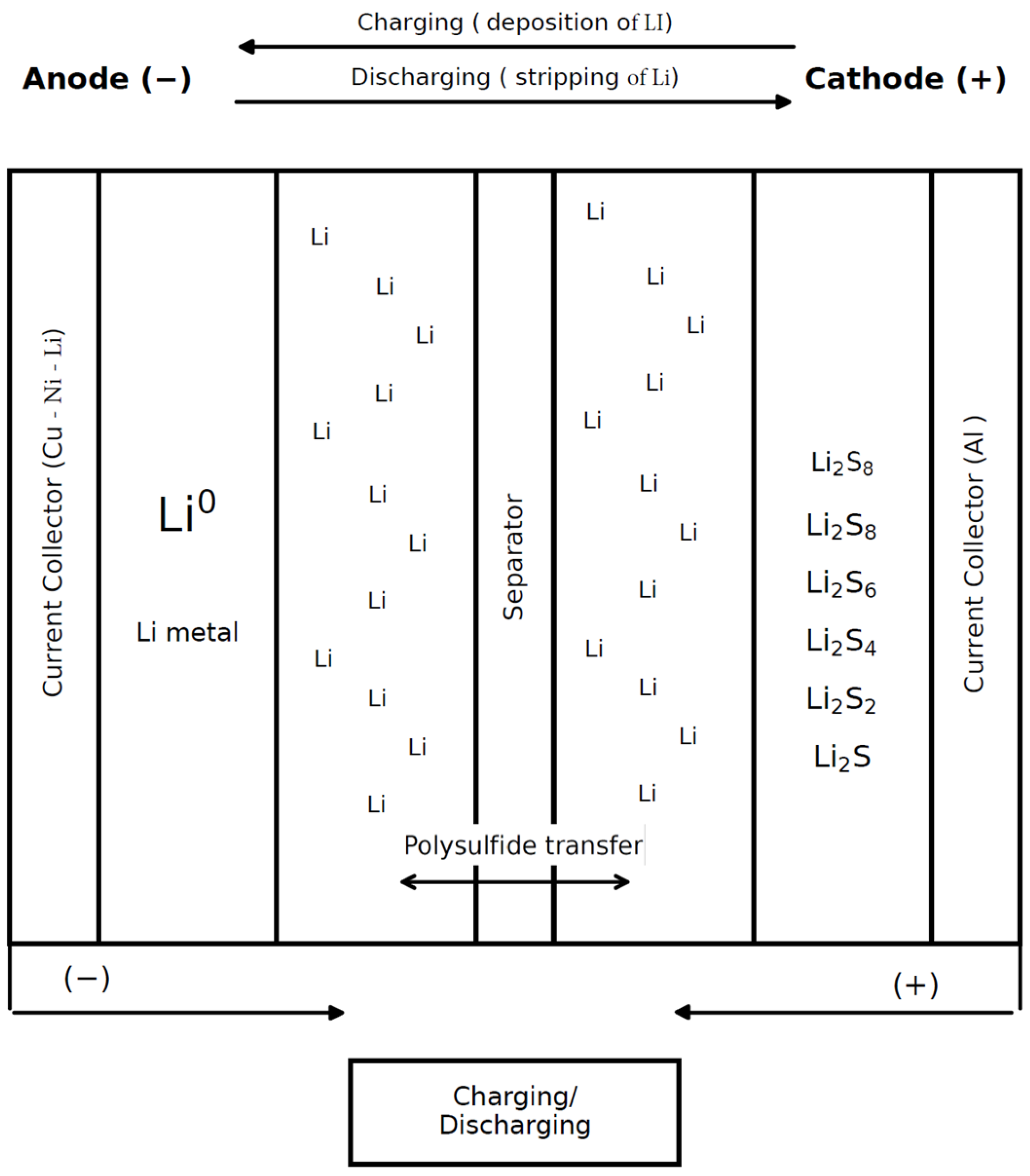
Lithium-sulfur (Li-S) batteries are a next-generation electrochemical storage technology that couples a lithium metal anode with a sulfur-based cathode (see Figure 4). Li-S offers very high theoretical specific energy and relies on the reversible conversion of sulfur to lithium polysulfides and lithium sulfide during cycling [33]. However, practical deployment remains limited due to well-known barriers, including the polysulfide shuttle effect, cathode volume changes, lithium-metal anode instability (dendrites), and challenges in achieving long cycle life at high sulfur loading and lean electrolyte conditions [34,35].
Li-S cells can achieve high specific energy at the cell level under optimized conditions; however, cycle life and rate capability are strongly dependent on electrode design, electrolyte formulation, and protection of the lithium-metal anode. Consequently, Li-S is often discussed as a promising option for applications where high specific energy is prioritized, but it is not yet a mature, broadly commercial technology [35].
Lithium-sulfur cells have an extremely high energy density, meaning they can store a large amount of energy in a relatively small mass. They are known for their long-lasting charge cycles, allowing them to be charged and discharged repeatedly without a significant drop in performance. The electrochemical process occurring in a lithium-sulfur cell is characterized by high efficiency, resulting in minimal energy loss during the conversion of electrical energy into chemical energy and vice versa.
Potential application areas include niche mobility segments and stationary storage, where weight is critical or where cost targets could benefit from sulfur-based cathodes. At present, most grid deployments rely on commercial Li-ion chemistries (notably LFP) due to established supply chains, proven safety concepts, and bankability.
Due to their high energy density and long-lasting charge cycles, lithium-sulphur cells are considered a promising battery type for large-scale electricity storage. They can be used in electricity systems to store energy during periods of surplus and release it during periods of deficit. Electromobility: Although Lithium-ion batteries dominate the field of electromobility, lithium-sulphur cells are being explored as a potential alternative energy source for electric vehicles due to their extremely high energy density.
Key limitations include polysulfide migration (capacity fade), limited cycle stability under practical cell designs, and safety/handling constraints associated with lithium metal. Ongoing research focuses on cathode confinement, electrolyte engineering, and anode protection to close the gap between laboratory performance and industrial-scale pouch cells [35].
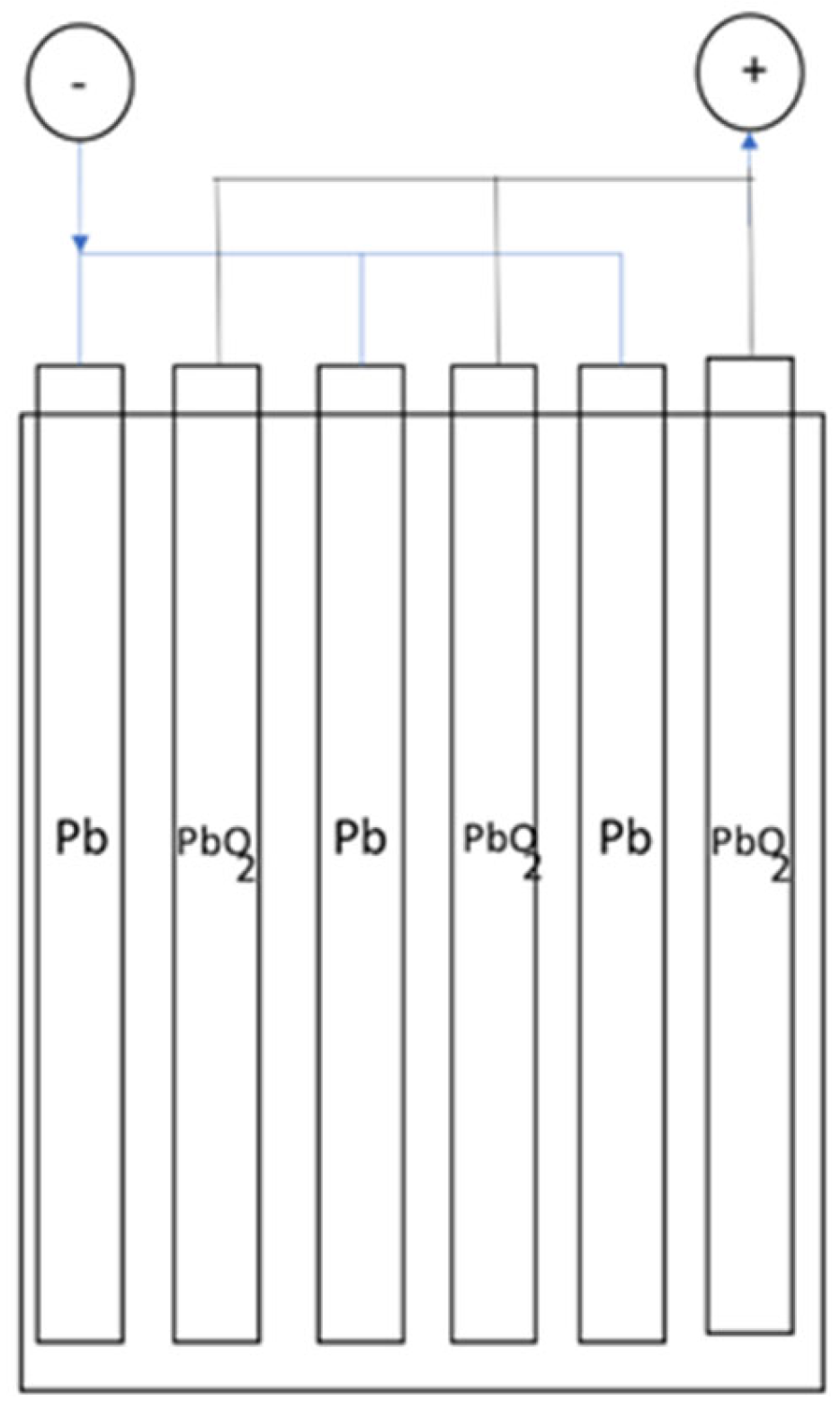
Lead-acid cells, also known as lead-acid batteries, are a traditional type of lead-acid battery using lead electrodes and sulfuric acid as the electrolyte. Compared to more advanced battery technologies such as Lithium-ion, they have their own unique characteristics and applications. Lead-acid cells have a relatively low energy density, which means they can store a limited amount of energy relative to their mass and volume. However, their unique feature is their ability to deliver high surge currents, which leads to a relatively high power-to-weight ratio [32]. Figure 5 shows the structure of a lead-acid cell, along with a description of the cell’s individual components.
This makes them attractive in applications that require rapid delivery of high current, such as starting motors in motor vehicles. Lead-acid cells are relatively inexpensive to produce, which makes them economically attractive in some applications, especially in mass production. Nevertheless, they have limited cycle life, typically less than 500 deep charge and discharge cycles. This means that their life in applications that require frequent charging and discharging is limited. One of the main problems associated with lead-acid cells is the emission of lead, which is a toxic heavy metal. These emissions pose a threat to both human health and the environment. Therefore, recycling and proper disposal of these cells are of utmost importance. Lead-acid cells can be recycled up to several hundred times, helping to reduce lead emissions and disposal.
Lead-acid cells are used in many areas, such as:
They are used in motor vehicles, as they can deliver high current, which is necessary to start engines. Backup power supply (UPS) systems are used in equipment that requires emergency power in the event of loss of the main power source. Lead-acid cells are used in mobile devices where an efficient and safe energy supply is required.
Lead-acid cells have their place in a variety of applications, especially where there is a need to deliver high current. However, their limitations, such as low energy density and short cycle life, make them less suitable for advanced applications in large-scale energy storage. It is also important to properly manage lead emissions and the recycling of these cells due to their toxicity and environmental impact.
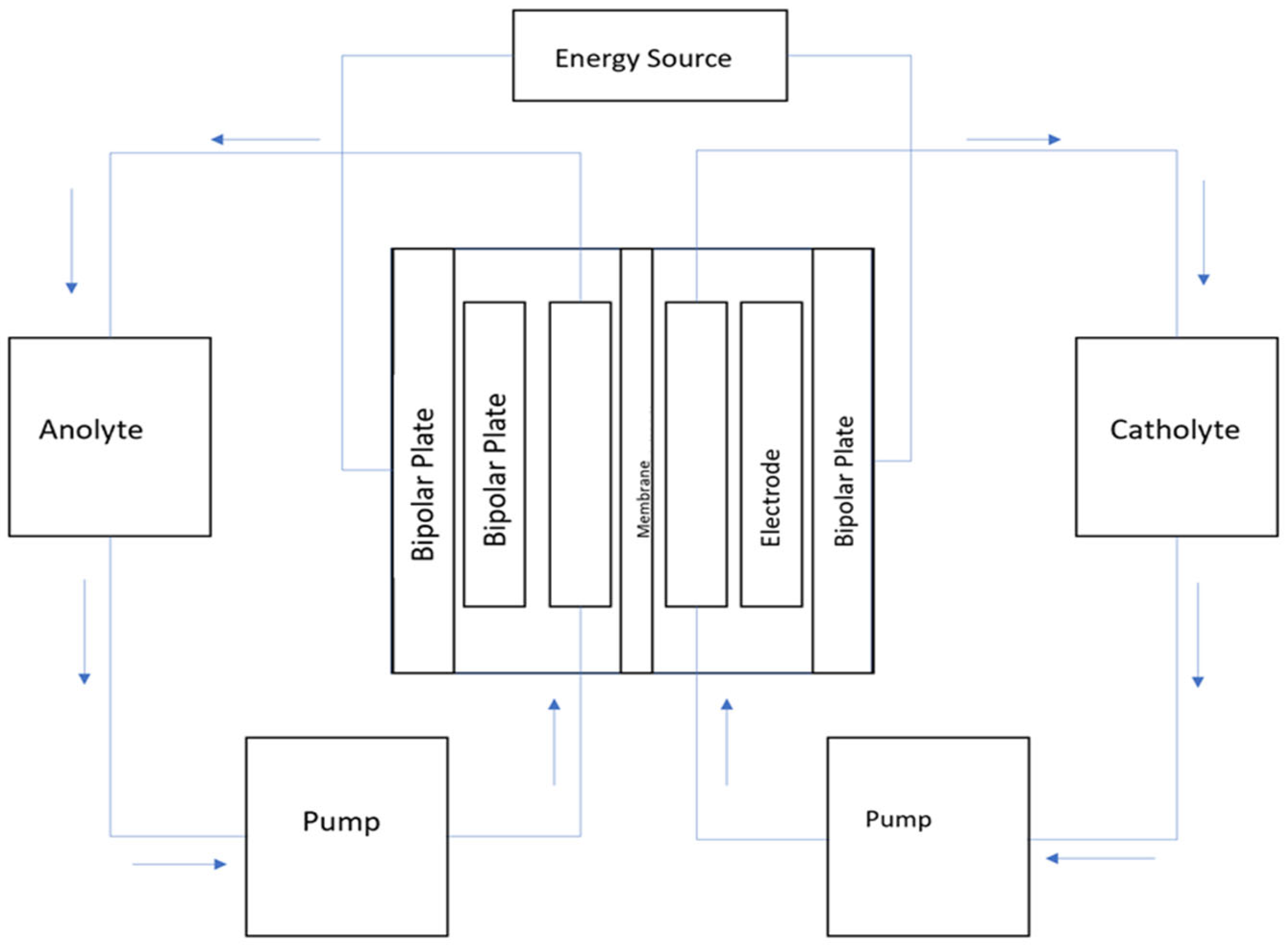
Redox flow cells are advanced electrochemical devices that use two separate chambers with electrolytes that are pumped into opposite chambers to store electricity [36]. These electrolytes contain dissolved metal ions, which act as active masses and remain in dissolved form in the liquid electrolyte, avoiding phase transformation. These cells consist of negative and positive poles, which are separated by an ion-selective membrane. The ion-selective membrane enables transport of charge-balancing ions while limiting crossover of redox-active species, thereby maintaining electroneutrality and the cell potential.
These cells have an extremely high efficiency of converting electrical energy to chemical energy during charging and vice versa during discharging. This makes them an effective tool for storing electricity. Figure 6 shows the structure of a redox cell, along with a description of the individual components of the cell.
Features of the Redox flow cell:
Long life: Redox flow cells are known for their long life and ability to perform multiple charge and discharge cycles without significant performance degradation, making them durable solutions. Design flexibility: They are flexible devices, meaning that they can be adapted to different applications and capacities by adjusting the amount of electrolyte and cell capacity. Large energy capacity: these cells are capable of storing significant amounts of electricity, making them suitable for large energy storage and power plant applications.
Redox flow cell design is complex because it requires auxiliary systems such as electrolyte tanks, pumps, an ion-selective membrane, as well as sensors and control units. Consequently, redox flow batteries are typically deployed in large-scale, stationary applications (e.g., grid-scale energy storage), where long duration and high cycle life are particularly valuable for supporting power-system operation.
Recent deployment trends in stationary BESS increasingly favor lithium iron phosphate (LFP) cells due to their thermal stability, long cycle life, and reduced reliance on nickel and cobalt, which improves supply-chain robustness for grid-scale applications [37,38]. In parallel, sodium-ion batteries are progressing toward early commercial deployment for cost- and supply-constrained stationary markets, albeit with lower energy density than Li-ion [39,40]. Solid-state batteries remain largely at the development and early industrialization stage, with active research on solid electrolytes and interfacial engineering to improve safety and energy density [41].
Redox flow cells represent an advanced energy storage solution and have the potential for further development, especially in the context of increasingly advanced energy applications such as sustainable energy storage and distributed power generation.

2.3. Mechanical Storage

Mechanical energy storage stores mechanical energy to generate electricity or other energy forms. This process uses various mechanisms and technologies to store mechanical energy and convert it back into other forms, like electricity [42].
The main advantages of mechanical energy storage include:
  • Long-term Storage: Stores energy for extended periods, allowing supply even when renewable sources are unavailable.
  • High Efficiency: Efficiently converts mechanical energy to electrical or other forms, minimizing energy losses.
  • Durability: Durable systems can carry out many charges and discharge cycles without significant performance drops.
Challenges:
Siting: Pumped storage power plants require suitable geographical sites, and compressed air energy storage is not universally available. Despite challenges, new technologies are improving the availability and efficiency of mechanical energy storage.
Technologies:
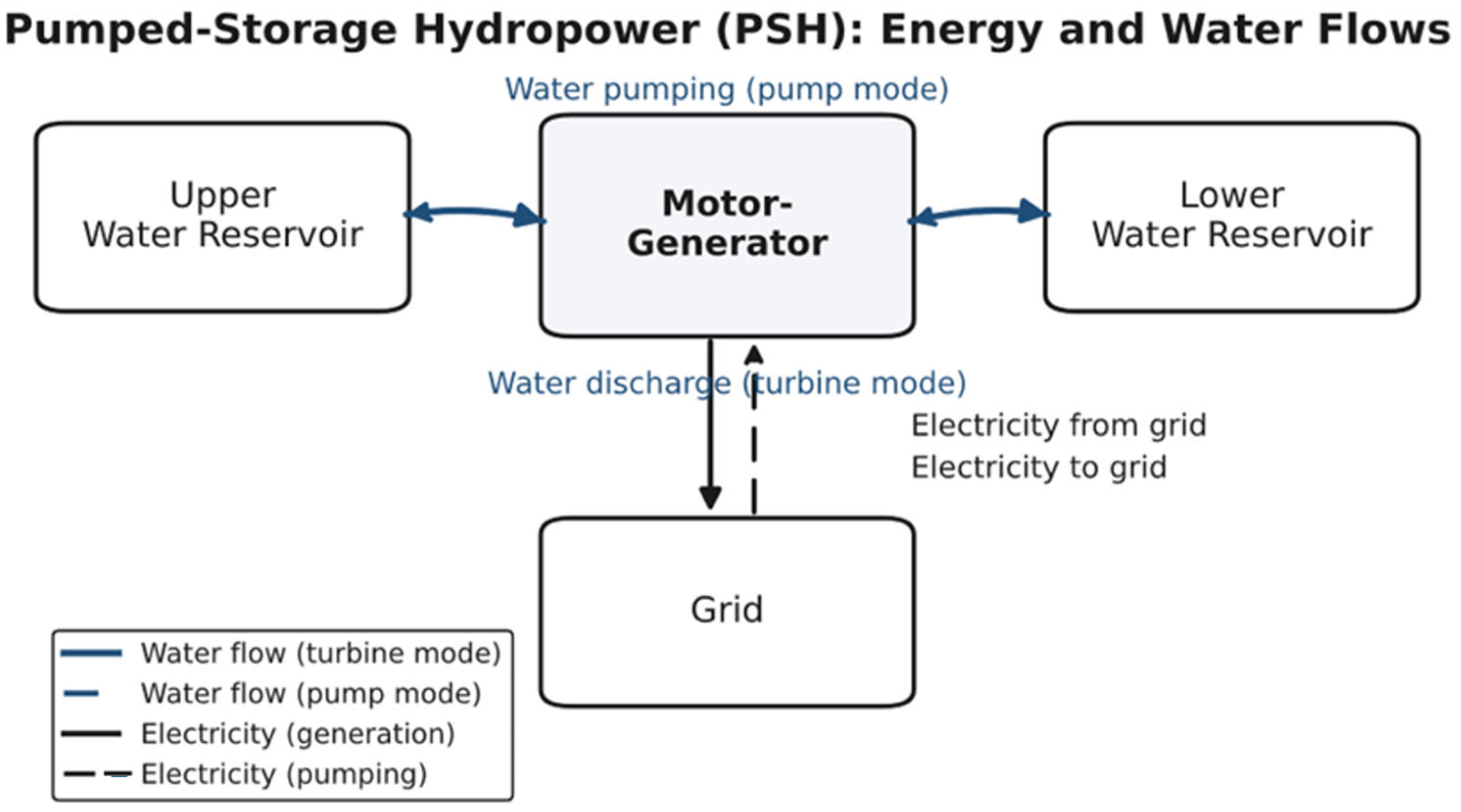
Compressed Air Energy Storage (CAES): Electrical energy converts to mechanical energy by compressing air and storing it in tanks or caverns. During high demand, compressed air is released to generate electricity using turbines and generators. CAES has adiabatic (storing heat) and diabatic (requiring fuel) methods. Pumped Hydro Energy Storage (PHES): Uses the gravitational energy of water to generate electricity. Water is pumped to a higher elevation during low demand and released to generate electricity during high demand.
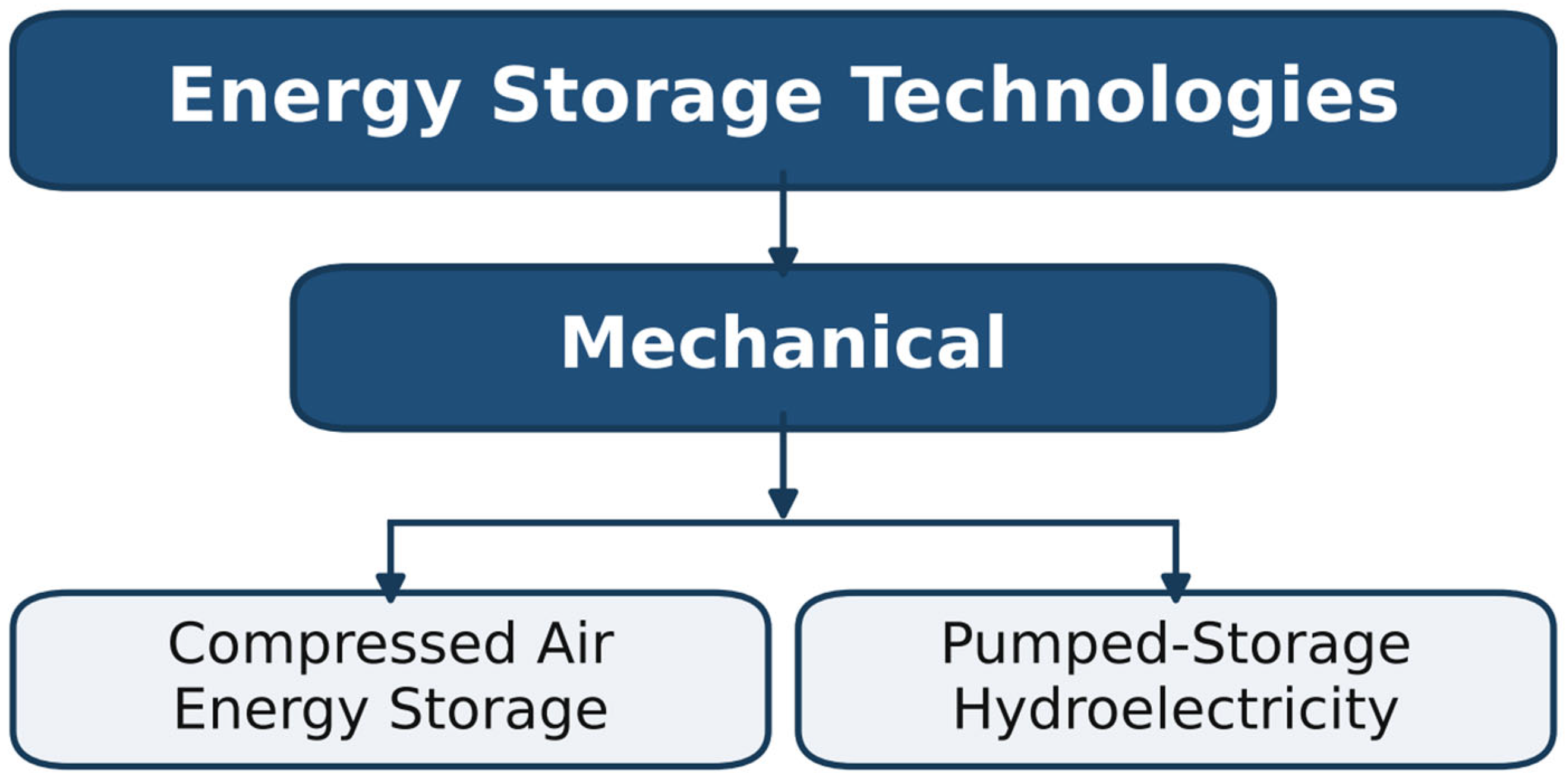
However, there are some challenges, such as sitting, as pumped storage power plants require suitable geographical sites, and compressed air energy storage is not universally available [43]. Despite these challenges, new technologies and innovations are being developed to improve the availability and efficiency of mechanical energy storage, which may increase the importance of these solutions in the context of sustainable electricity storage and support for renewable energy sources. Figure 7 provides a breakdown of energy storage technologies using mechanical storage.

Description of Technologies and Applications

The following is a detailed description of compressed air energy storage (CAES), pumped storage (PHES) technologies, and the use of large hydroelectric dams. These innovative technologies, which are key developments in energy storage, play an irreplaceable role in ensuring energy stability and efficiency in a dynamically changing world. From the flexible management of electricity during periods of changing demand, to harnessing the potential gravitational energy of water, to the efficient use of excess energy, these technologies are the foundation of modern energy systems. Their unique properties and functionalities have had a significant impact on advances in electricity storage and utilisation. The following sections of the paper will discuss in detail the designs, operating mechanisms, advantages and challenges of these versatile energy storage technologies.
Compressed air energy storage (CAES) is a process in which electrical energy is converted to mechanical energy by compressing air to high pressure and then stored in special tanks or caverns underground. Later, at times of high energy demand, the compressed air is released and used to generate electricity using turbines and generators.
There are two main methods of energy storage in CAES systems [44]: adiabatic and diabatic:
  • Adiabatic storage: In adiabatic storage, the compressed air is heated during the compression process and stored as thermal energy in specially designed caverns. During the discharge process, this stored heat is used to heat the compressed air before it expands into the turbines and is converted into electricity. This process is efficient and environmentally friendly as it does not require the burning of fossil fuels.
  • Diabatic storage: In diabatic storage, the compressed air is stored without heat recovery, leading to cooling during storage. During discharge, the cold compressed air must be warmed up by means of the combustion of a fuel, such as natural gas, to recover its temperature and allow expansion into the turbines. This process is less efficient and has an environmental impact due to the use of fuel.
There are only two significant CAES power plants worldwide. One, commissioned in 1978 in Huntorf, Germany, has a capacity of 320 MW, while the other, commissioned in 1991 in McIntosh, USA, has a capacity of 110 MW. Both CAES systems use diabatic storage and natural gas as the heat source during discharge, which affects their overall efficiency (currently around 42% and 54%, respectively). Adiabatic storage is currently becoming a focus of research and development due to its potential to improve efficiency and reduce environmental impact. However, due to its low storage density, CAES [45] requires large areas for compressed air storage. Nevertheless, it remains a promising technology in the context of electricity storage, especially in support of renewable energy sources and grid stability (see Figure 8).
PHES power plants can deliver electricity within minutes of start-up, which is extremely valuable when the power grid is unstable. These power plants are capable of both load frequency control and emergency start-up during power outages. Pumped storage power plants represent some of the most efficient and cost-effective energy storage solutions, making them an important element in the context of sustainable energy systems and the use of renewable energy sources [46]. Large hydroelectric dams can be used to provide peak demand for electricity during periods of peak demand. The water is stored in the upper reservoirs, and the energy of the water is stored there. If more electricity is required on the grid, then the water is drained from the upper reservoir to the lower reservoir [47]. The net effect is the same as for a pumped storage power station, but without the pumping losses. Depending on the reservoir capacity of the power station, the plant can provide daily, weekly or seasonal energy storage. A hydroelectric dam originally built to provide baseload power will have a turbine adapted to the average water flow. Expanding such a dam with additional generators increases its peak power, thereby being able to act as an energy storage facility. Upgraded dams are one of the most efficient forms of energy storage, as there are no pumping losses to fill the reservoir, only increased evaporation and leakage losses. Dams that include large reservoirs can store and release a correspondingly large amount of energy by controlling the river outflow and raising or lowering the reservoir level. Restrictions apply to the operation of dams, and their release is usually subject to government-regulated water rights to limit the impact on downstream rivers. For example, there are situations where thermal, nuclear or wind power plants produce excess energy at night, and dams are still required to release enough water to maintain adequate river levels.

2.4. Chemical Storages

The storage of energy in chemical storage represents an advanced method of accumulating energy in potential form, enabling its subsequent release and use in a wide range of applications. This process uses chemical reactions or phase changes in chemicals or materials that allow energy to be stored in chemical or thermal form. The main purpose of this storage is to provide a flexible energy source that can be activated when energy demand is higher or when traditional energy sources are not available or inefficient. In the case of energy storage in chemical form, chemical reactions take place in a controlled manner, during which chemicals are transformed into more or less energetic compounds. During the charging or storage process, energy is supplied and consumed to convert substances into more energetic chemical compounds that are stored. When needed, during discharge, these compounds are chemically reacted back to release the stored energy in the form of heat or electricity. Energy storage in thermal form is based on temperature or phase changes in the substance [48].
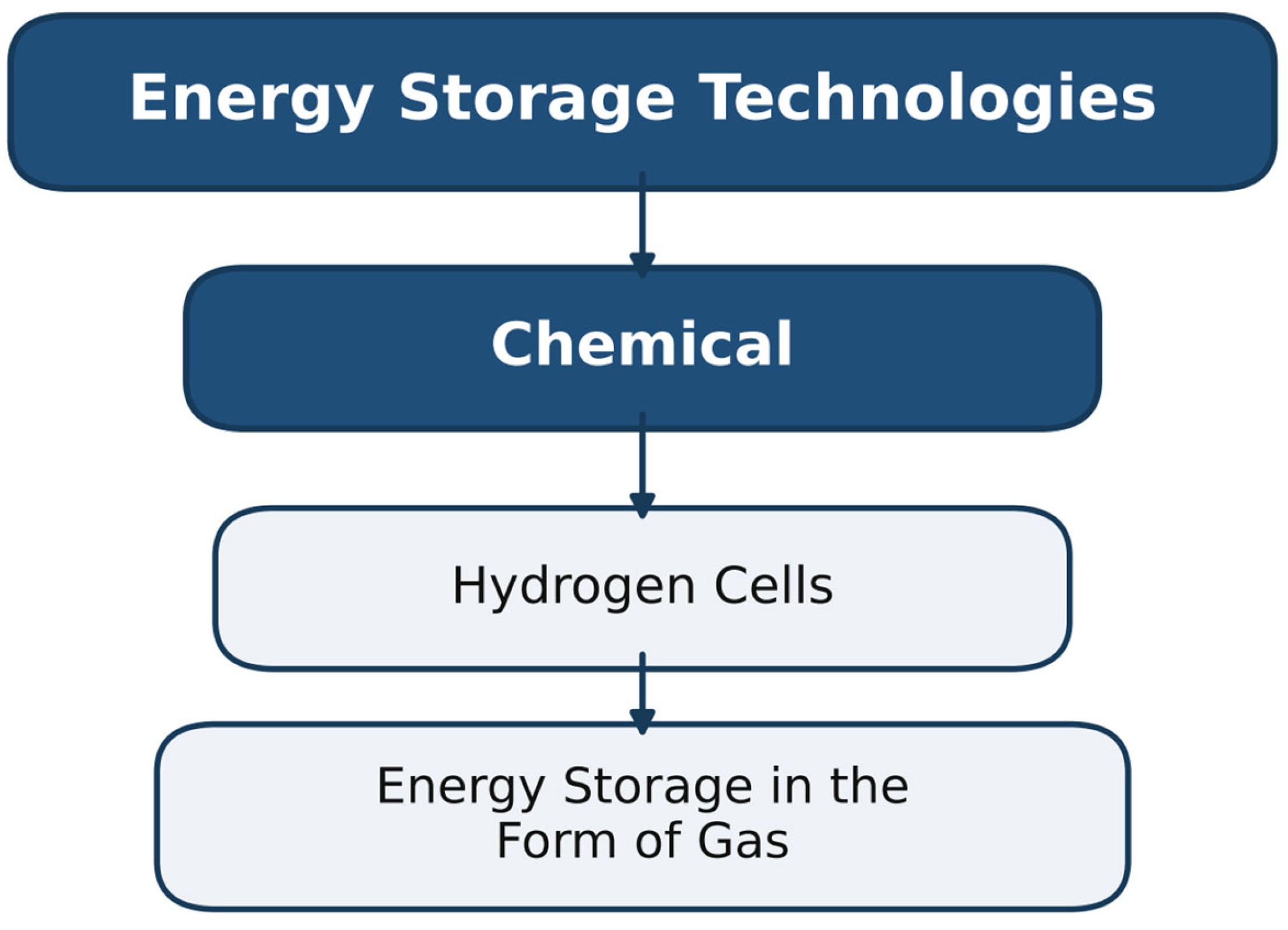
For example, phase-change materials can be heated to capture thermal energy during a phase transformation, such as melting or evaporation. This thermal energy is stored and can later be released for heating or power generation through, for example, the Rankine cycle. Chemical storage facilities can be used in a variety of areas, including renewable energy production, grid management, electric cars and many other areas. These technologies allow energy to be stored in sustainable substances or materials that can be stored for long periods of time and used when needed, contributing to a more efficient and sustainable use a bnreakof energy resources [49]. Figure 9 provides a breakdown of energy storage technologies by means of chemical storage facilities.

Description of Technologies and Applications

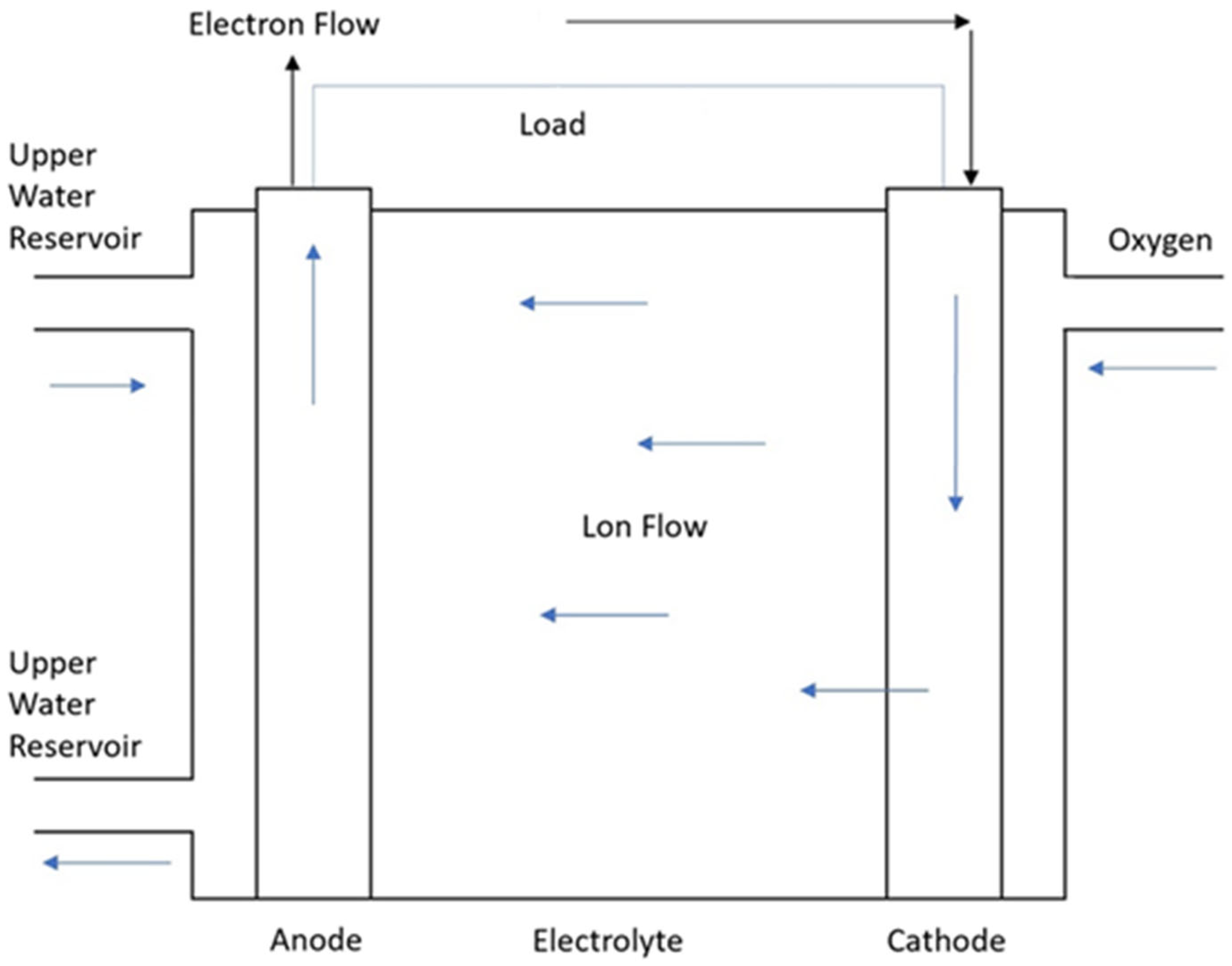
The following is a detailed description of hydrogen energy storage technology, which represents a breakthrough in energy storage and utilisation. Hydrogen, being a highly efficient energy carrier, opens up new possibilities in the field of energy, especially in the context of the increasing role of sustainable energy sources. Hydrogen energy storage technology is based on the use of hydrogen as an energy carrier that can be stored and later used to generate electricity or heat. There are various methods for producing hydrogen, including water electrolysis (the breakdown of H2O into H2 and O2 under the influence of an electric current), steam reforming (a chemical reaction with hydrogen as a result of heating) and thermolysis (the breakdown of hydrogen at high temperatures). Water electrolysis is one of the most widely used and most sustainable ways to produce hydrogen, especially if renewable energy is used to drive the process. Figure 10 is intended to explain the construction of a hydrogen cell [50].
Hydrogen is difficult to store in the gaseous state due to its low density, so various storage technologies are used. These include pressure vessels, liquefied hydrogen (stored in liquid form), carbon nanotubes, metallic hydrides and underground salt tanks. Each of these methods has its own unique characteristics and applications. Hydrogen as an energy carrier plays a key role in the generation of electricity and heat. In electricity generation, hydrogen is used in fuel cells, where its chemical energy is efficiently converted into electricity and heat. Fuel cells are efficient and clean, as the main by-product is water.
Hydrogen storage facilities, using hydrogen energy storage technology, find a variety of applications in the fields of energy, transport and industry. Transport: Hydrogen storage facilities are a key component of the infrastructure for hydrogen vehicles such as cars, buses, trains and ships. Hydrogen can be used as a clean fuel to power these vehicles via fuel cells. When driving, hydrogen is delivered from the storage facility to the fuel cells, where it is converted into electricity, powering the vehicle. This application allows for a significant reduction in harmful gas emissions, especially in urban and long-distance transport [51]. Hydrogen can be used as a source of electricity produced from renewable sources such as wind and solar power plants. At times when there is an overproduction of energy, such as during high wind or sunny weather, the electricity is used to electrolyse water and produce hydrogen, which is stored.
During periods of low access to renewable sources, hydrogen can be reused to produce electricity or heat, providing a stable and flexible power grid. Hydrogen has many industrial applications, including ammonia production, oil refining and metallurgy. Hydrogenation of coal in the steel industry can reduce CO2 emissions and contribute to greener steel production. Hydrogen storage facilities in industry allow the efficient use of heat and electricity in production processes. Hydrogen technology can be particularly valuable in remote areas or areas with limited access to traditional energy sources. Microgrids or consumers remote from central energy systems can use hydrogen for local electricity and heat production, independent of external energy sources. Hydrogen can be used in buildings as a source of heat and electricity. Hydrogen storage facilities allow buildings to produce energy in an environmentally friendly way, which can contribute to reducing greenhouse gas emissions and saving energy. Hydrogen energy storage technology has wide applications in the transformation of energy and industry towards more sustainable and efficient systems. Its use in transport, renewable energy storage, industry and other areas can contribute to reducing greenhouse gas emissions and improving energy efficiency [52].

2.5. Thermal Storage Facilities

Thermal energy storage is implemented using various technologies. Depending on the selected approach, excess thermal energy can be stored and used later. Storage media include water or ice reservoirs; native soil or bedrock coupled with borehole heat exchangers; deep aquifers confined between impermeable layers; gravel-water pits with thermal insulation; eutectic solutions; and phase-change materials.
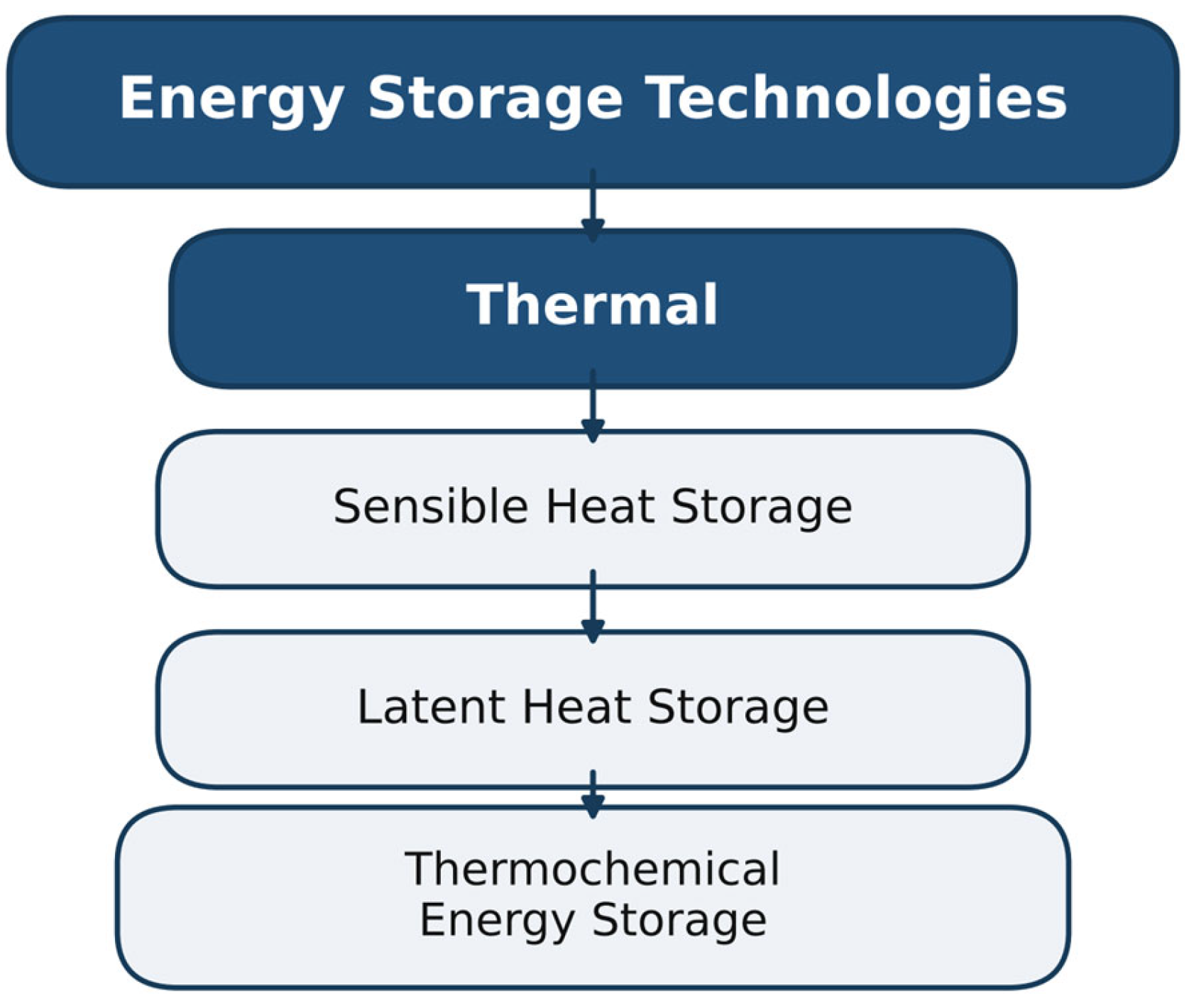
Other sources of thermal energy for storage include heat or cooling generated by off-peak heat pumps, cheaper electricity, a practice known as ‘peak-saving’ heat from cogeneration plants; heat generated by renewable electricity that exceeds grid demand; and waste heat from industrial processes [53]. Heat storage, both seasonal and short-term, is considered an important way to cheaply offset the high share of variable electricity generation from renewable sources and the integration of the electricity and heating sectors into energy systems that are almost or entirely powered by renewable energy [54]. A breakdown of energy storage technologies by means of chemical storage is made in Figure 11.

Description of Technologies and Applications

With the growing challenges of efficient energy storage, sensible and latent heat storage technologies are becoming increasingly important. The following is a detailed description of energy storage technologies using sensible heat storage, which is based on the accumulation of thermal energy by changing the temperature of a medium, using various substances such as water, gravel or clay bricks. Latent heat storage, on the other hand, is based on the use of phase change materials, which store energy through phase transformations occurring at a constant temperature. The characteristics of both technologies, their advantages, challenges and potential applications in different sectors, from heating systems to energy storage, are discussed below. The different types of phase-change materials and their specific properties that make these technologies highly attractive for sustainability and efficient use of energy resources will also be presented. In this context, materials that are economical and environmentally friendly are used [55]. Energy storage can take place underground or in a special fluid that flows through U-shaped or horizontal tubes. Another method involves storing energy in deposits (e.g., gravel) where the working medium, usually air, is passed through loosely packed materials such as rocks, gravel or clay bricks to allow heat transfer. The capacity of such a system depends on the thermal properties of the storage substance used. Water is particularly advantageous in this context as it has a high specific heat. Therefore, two popular energy storage systems are based on water: water reservoirs and aquifer-based systems. In the case of water reservoirs, cold water sinks to the bottom of the reservoir and is then heated in solar collectors using solar energy. The water naturally stratifies, where hot water rises to the top and cold water is retained at the bottom, creating zones of different temperatures.
To minimize thermal losses during energy storage in sensible heat storage systems, underground storage facilities are often used. These storage facilities require large amounts of storage substances and appropriate designs due to the low energy density and the need to minimize thermal losses. The effectiveness of these systems can vary, depending on the thermal properties of the storage substance and the thermal insulation technology that is used to minimize thermal losses.
Latent heat storage is an advanced technology that allows energy to be stored in specially designed materials that undergo phase transformations under appropriate temperature conditions. It is a process in which heat is absorbed or released without significantly affecting the temperature of the material. This phenomenon is made possible using phase-change materials. Phase-change materials are substances that are characterized by the ability to change their state of aggregation (e.g., from solid to liquid) in response to temperature changes [56]. These materials have unique properties that enable them to store significant amounts of energy in the form of heat. The main benefits associated with latent heat storage are:
  • High latent heat capacity: phase-change materials can store large amounts of energy through phase transformation, which means that they can store more heat than traditional materials.
  • Isothermicity: Phase transformations in these materials occur at a constant temperature, which means that the storage process is stable and controllable.
  • Precise temperature control: It is possible to fine-tune the phase-change material to specific temperature ranges, allowing temperature control during storage and energy release.
  • Compact storage units: Because volume changes during phase transformation are typically small, storage units can be more compact than with other technologies.
Phase change materials can be of various types, including organic, inorganic and eutectic. Organic phase-change materials are less susceptible to corrosion and phase separation, which makes them attractive in some applications. Inorganic materials, on the other hand, are often more efficient, cheaper and more readily available, and have higher storage capacity and thermal conductivity. Eutectic materials, being mixtures of different substances, can be tailored to specific needs, but typically have lower latent and specific heat capacities. Latent heat storage technology makes it possible to control temperature by taking advantage of sudden changes in storage capacity at specific temperature points. This can be achieved by using different phase transitions, such as solid–solid, gas-solid and gas-liquid, as needed. As a result, latent heat storage is a promising technology that has many potential applications, including energy storage, heating, air conditioning and ventilation systems, and other fields, where precise temperature control and efficient energy storage are key.

3. Comparison of Energy Storage Technologies

This section compares representative energy storage technologies using harmonized metrics and a maturity-level taxonomy. The objective is not to rank technologies universally, but to clarify trade-offs between power capability, energy capacity, response time, efficiency, lifetime, cost proxies, and deployment constraints that determine suitability for specific grid services [57].
Current initiatives and activities in this area reflect an ongoing energy transition that is necessary to reduce greenhouse gas emissions and to meet sustainable development targets.
For maturity, the following qualitative levels are used:
  • Mature technology—widely deployed at utility scale for more than a decade with established supply chains.
  • Commercialized—commercially available with increasing deployment but still evolving.
  • Demonstration/early commercialized—limited deployments and active scale-up.
  • Technology development—laboratory to pilot stage without bankable commercial products.
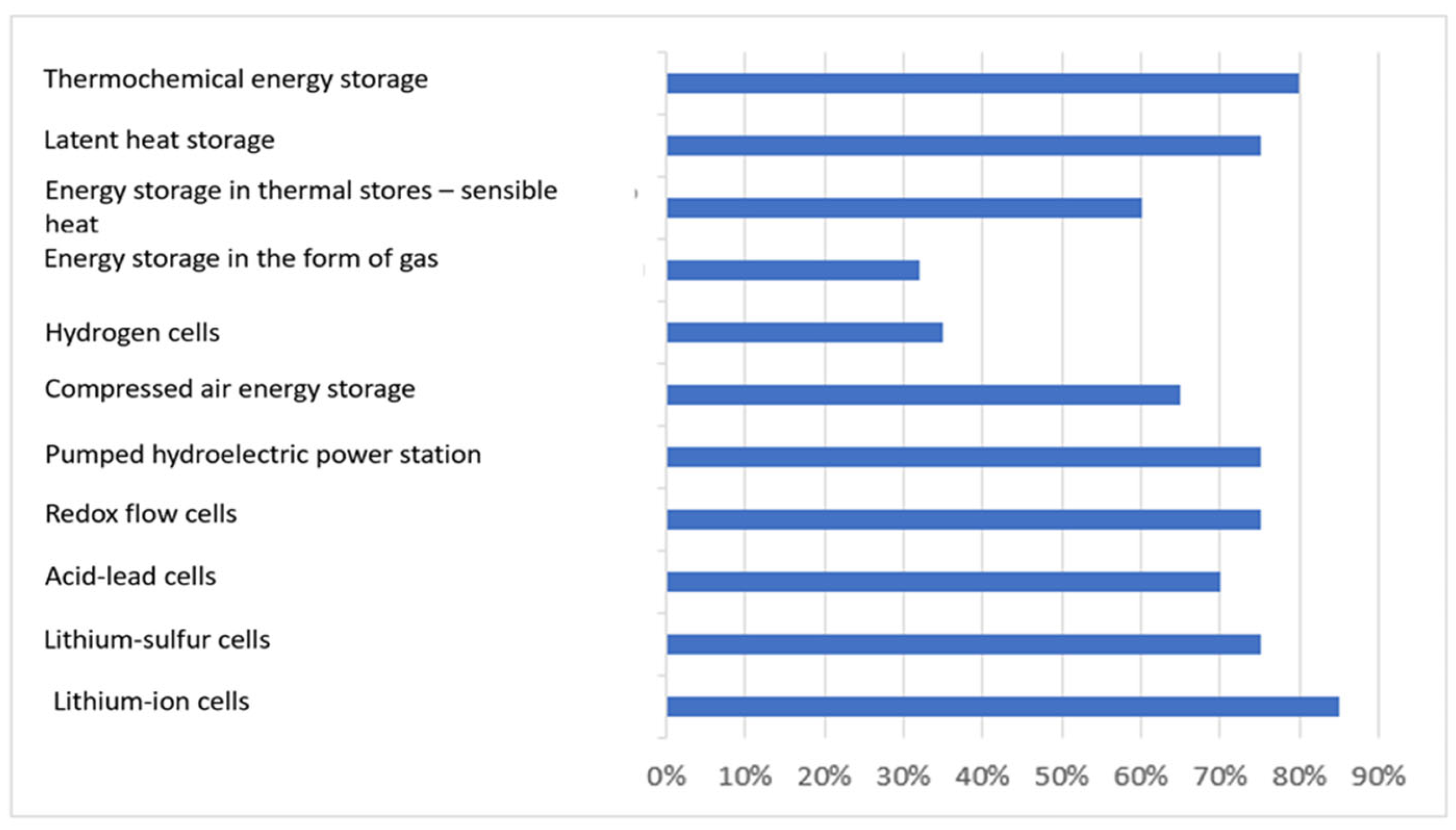
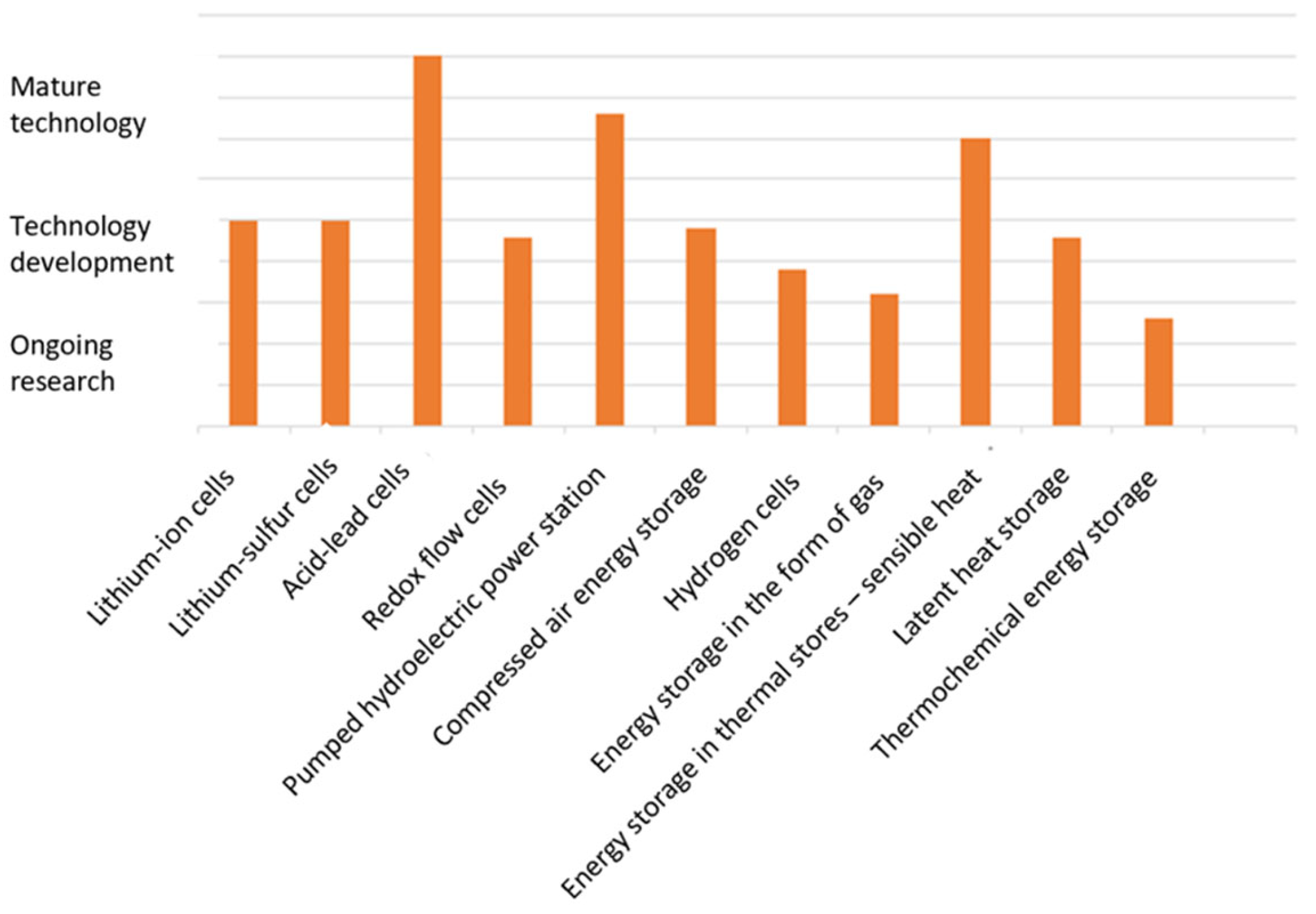
Figure 12 summarizes the maturity assessment using the qualitative levels defined above (mature, commercialized, demonstration/early commercialized, and technology development). The classification reflects the extent of utility-scale deployment, supply-chain maturity, and the availability of bankable performance data rather than laboratory metrics alone.
Figure 13 visualizes representative round-trip efficiency ranges for the reviewed technologies to support quick comparisons. The plotted values are consistent with the ranges reported in Table 1 and should be interpreted as indicative, because efficiency depends on system design and operating conditions.
Table 1 summarizes indicative performance ranges for the reviewed technologies. Electrochemical systems (Li-ion, lead-acid, and flow batteries) typically achieve high round-trip efficiency (often ~70–95%, technology- and operating-condition dependent), which makes them well suited to high-cycling services such as frequency and voltage regulation. By contrast, large-scale mechanical systems such as pumped-storage hydropower generally offer lower but still competitive efficiency and exceptional lifetime and scalability, making them attractive for long-duration storage. Chemical pathways such as power-to-hydrogen can enable very long storage durations, but with comparatively lower round-trip efficiency and higher system complexity [37]. Consequently, technology selection should be based on the target service (power vs. energy), cycling profile, siting constraints, and whole-life cost rather than efficiency alone.
When analysing the second type of energy storage technology, i.e., storage technologies in mechanical storage, there are several important aspects that need to be understood in detail. First of all, an important aspect is the high power and capacity that are characteristic of this type of technology, which is a definite advantage in the context of storing significant amounts of energy.
  • Power refers to the ability of an energy storage system to both accept and deliver energy in the short term. In the case of mechanical storage technologies, such as block-weighted storage or systems using compressed air, they can exhibit significant energy-delivery capacity, which is important in situations where a large amount of stored energy needs to be released quickly, for example, in the event of a sudden energy demand.
  • Capacity refers to the ability of a storage system to store energy for an extended period of time. In mechanical technologies, capacity can be much higher than in other types of energy storage, such as batteries. This means that these technologies are capable of collecting and storing large amounts of energy for long periods, which is extremely valuable in applications where stability of energy access is crucial.
Mechanical storages are uniquely capable of storing large amounts of energy, both in terms of power (the rate at which energy can be delivered or extracted) and capacity (the total amount of energy that can be stored). This makes them attractive for applications requiring large amounts of energy to be stored or delivered in a short period of time. Unfortunately, mechanical stores are less efficient compared to some other energy storage technologies, such as electrochemical storage. This means that some energy is lost during the storage and retrieval process, which can affect overall system performance. One of the main challenges associated with mechanical storage facilities is the significant initial costs associated with their construction and installation. These costs include the purchase and installation of mechanical components, such as flywheels or springs, as well as the construction of the relevant infrastructure. On the other hand, mechanical magazines have a long service life, which makes them more cost-effective in the medium to long term. This means that they can be an attractive solution for long-term investors. It is also worth noting that, despite the high investment costs, the operating costs of mechanical warehouses are relatively low. This can make long-term operating costs more predictable and controllable. Due to their large capacity and ability to provide energy in a short time, mechanical storage is particularly suitable for hybrid systems. These systems combine different energy sources, such as electricity grids and renewable sources. Mechanical storage can help to balance fluctuations in energy access from these different sources.
Mechanical storage is an energy storage technology with high power and capacity potential but requires investments with high initial costs. They are particularly attractive for medium- to long-term investments and in the context of hybrid systems, where their ability to store large amounts of energy can be effectively used to balance energy availability. However, their less efficient performance needs to be factored into the analysis of overall system energy efficiency. When analysing the third type of energy storage technology in chemical storage, it can be seen that they have the lowest energy storage efficiency. Chemical storages tend to have lower energy efficiency compared to some other energy storage technologies. This lower efficiency is often due to the need to convert electrical energy to chemical energy and vice versa, which involves the loss of energy in the conversion processes. The efficiency factor is therefore an important parameter to analyse in the context of chemical storage facilities. One of the unique features of chemical storage is its ability to store energy for long periods of time. This is due to the use of chemicals that are able to retain energy within their structure for a significant period of time. It is this property that makes chemical storage attractive for applications requiring long-term energy storage, such as seasonal storage. Chemical storages are particularly suitable for seasonal energy storage applications. Thanks to their ability to store energy for long periods, they can store surplus electricity generated during periods of abundance, for example, from renewable energy sources such as solar panels and wind farms. This energy can then be used during periods of scarcity, helping to stabilise the energy supply. Despite these advantages, chemical storage facilities have their challenges and limitations. They can require sophisticated control and management to ensure the safe storage of chemicals. There is also a risk of leakage or contamination, which can pose a risk to the environment and human health. In addition, the processes of converting chemical energy into electrical energy and vice versa can be fraught with energy losses, affecting the overall efficiency of the chemical storage facility. Therefore, it is necessary to continuously improve and monitor these technologies in order to minimise drawbacks and improve their efficiency. Chemical storages are one of the three main types of energy storage technologies that offer long-term energy storage capacity, particularly useful for seasonal storage. However, like any technology, they have their advantages and disadvantages, which require careful analysis and management.
After analysing the fourth type of energy storage technology in thermal storage, it can be seen that they differ significantly from the other technologies, both in terms of performance and in their ability to store only thermal energy. In addition, the three thermal energy storage technologies differ significantly from each other, making it difficult to analyse about these technologies. However, these technologies do offer some unique advantages. First and foremost, they are characterised by their long lifetimes, meaning that they can be used for many years without significant performance degradation.
In addition, thermal technologies often achieve high efficiency in energy conversion, particularly for heat and power generation applications and waste heat recovery. It is important to understand that the efficiency of thermal energy storage technologies can vary significantly depending on the type of energy carrier that is used. The carrier can be, for example, a hot liquid, a phase change material (e.g., salt or phase change thermal material), or other thermal storage material. The choice of carrier is crucial for the performance and efficiency of the system. These technologies are diverse and tailored to different applications, and it is difficult to compare them accurately without considering the specific context. Therefore, conducting a case study becomes a key tool to accurately assess which technology will be most suitable for a specific application. A case study allows the specific requirements and conditions of a particular project to be taken into account, enabling a more precise analysis and selection of the appropriate technology. The analysis of energy storage technologies in thermal storage is a complex process that requires many factors to be taken into account. The case study is a useful tool that allows a more accurate comparison and evaluation of these technologies in a specific context.

4. Energy Storage Case Studies

In the first of the four cases discussed, we focus on voltage support, an important aspect of stabilisation in electricity systems. This process is necessary to maintain a balance between electricity supply and demand, which is a key element in the efficient management of the power system. Energy storage facilities, such as advanced battery systems, capacitors and electromechanical devices, have a regulatory function, compensating for fluctuations in load and energy production, which contributes to maintaining voltage at an acceptable level. In the context of critical institutions such as hospitals or priority facilities, voltage support is absolutely crucial to ensure operational continuity in the event of a power failure or instability in the electricity supply.
In the second case, we look at the lifetime of energy storage, which plays a key role in reducing the time required to install these systems. Reducing this time is important for increasing the cost-effectiveness of energy storage projects, which directly translates into reducing the time from the investment decision to the expected economic benefits. In the context of energy efficiency, this aspect has significant implications for energy resource management. Long installation processes can lead to higher costs, design delays and increased risks, which affect the cost-effectiveness of energy storage. Reduced explantation times are usually the result of more advanced technology, efficient engineering processes and project management skills, which in turn encourages faster market adoption of the technology [58].
The third case given to the analysis is that the use of waste heat in thermal stores makes a significant contribution to reducing greenhouse gas emissions through the efficient recovery and storage of thermal energy. Thermal storages make it possible to reduce thermal waste from industrial processes or cooling systems by converting this heat into useful thermal energy. The use of waste heat for energy storage is in line with the concept of sustainable development, contributing to reducing the negative environmental impact of industry [59].
The last of the cases given for analysis are the environmental, social and ethical aspects, which in today’s energy storage projects are assessed not only from an economic point of view, but also in terms of their environmental impact, social acceptability and compliance with ethical standards. Environmental impact assessment takes into account the entire life cycle of energy storage technologies, including production, operation and disposal, to minimise negative environmental consequences. Public involvement and acceptance are important, especially when siting energy storage projects, as they can influence the level of public support and the success of the project (see Table 2).
(a)
Voltage support:
Voltage support in modern power systems typically requires fast active-power response, the ability to provide or absorb reactive power via power-electronic converters, and high cycling capability for frequent control actions. Therefore, the most relevant technical attributes are response time, power capability, round-trip efficiency, and degradation under high cycle throughput [60].
Considering commercially available options, lithium-ion BESS (particularly LFP-based systems) are currently the dominant technology for distribution- and transmission-level voltage support because they combine high efficiency, fast response (sub-second), mature inverter integration, and bankable supply chains. Lead-acid batteries can also provide voltage support in cost-sensitive applications, but their lower cycle life and energy density increase replacement and footprint requirements. High-power devices such as supercapacitors and flywheels are effective for very short-duration voltage and power-quality events, and are often deployed as part of hybrid energy storage systems rather than as stand-alone solutions [29].
Li-S batteries remain an emerging option for this application: while their high theoretical specific energy is attractive, current limitations (polysulfide shuttle, cycle stability, and limited commercial availability) prevent a robust cost–benefit advantage over established Li-ion chemistries for grid voltage support at present [35].
(b)
Lifetime:
The analysis of the criterion “Lifetime“ taking into account the different energy storage technologies leads to the following conclusions:
The first condition for the analysis is the type of output energy provided by the different energy storage technologies. We exclude thermal energy storage technologies because their output energy is in the form of thermal energy, which is inappropriate in the context of providing electricity. We focus therefore focus on technologies that convert energy into electrical or mechanical form. The second key aspect is the power delivered. Analysis shows that most energy storage technologies are unable to deliver sufficient power to effectively maintain voltage in the electricity system. Exceptions are mechanical energy storage technologies, which are capable of delivering adequate power. Another aspect is the duration of energy storage. In the case of the other two technologies, compressed air energy storage (CAES) and pumped hydro (PHES), both are adequate in this respect, but there are differences in their ability to deliver power.
Based on the above analysis, it can be concluded that only mechanical energy storage technologies such as CAES and PHES meet the power criterion, which is relevant in the context of lifetime. In the end, pumped storage hydroelectric plants (PHES) appear to be the most suitable technology for maintaining voltage in the electricity system due to their significantly higher efficiency, longer lifetime and more favourable installation costs. In view of the above, it can be concluded that pumped storage hydropower (PHES) is the most suitable energy storage technology for power system lifetime purposes. It is also worth noting that the assumption of smaller-scale PHES systems may be necessary to maintain comparability with other technologies, which will affect the reduction in power and capacity, but will still retain the advantage in other aspects.
(c)
Use of waste heat:
Analysis of the “Waste Heat” criterion for various energy storage technologies leads to the following conclusions. to the following conclusions:
The first key aspect is the type of energy output provided by different energy storage technologies. We reject energy storage technologies, which provide energy in a form other than thermal, because in this case, we are analyzing the use of waste heat. So, we focus on thermal energy storage technologies. Another important aspect is the power delivered. After careful analysis, two of the three thermal energy storage technologies, namely latent heat storage and thermochemical energy storage, can be ruled out. This is because these two technologies are currently unable to deliver sufficient power, which is crucial in the context of voltage support in the power system. The only technology that meets this condition is sensible heat storage. Sensible heat storage technology appears to be the most suitable energy storage technology for the use of waste heat for the purpose of the power system’s runtime. This is due to its ability to provide adequate power and use the heat in an efficient manner. It is also worth noting that the choice of energy storage technology depends on the specific conditions and needs of the installation, so a thorough analysis is essential before making investment decisions in this regard.
(d)
Other aspects:
An introduction to the analysis of various energy storage technologies, taking into account a variety of factors, is key to finding the most suitable solution. The analysis of these technologies must take into account the interaction between the various parameters, as well as environmental, social, ethical aspects and local geographic and geological conditions lead to the following conclusions:
Interaction of parameters: It is worth noting that various parameters of energy storage technologies, such as power, capacity, efficiency and cost, are interrelated. This means that a change in one parameter can affect others. Therefore, it is necessary to determine these parameters holistically in order to find the optimal solution, which will meet specific needs.
Environmental, social and ethical aspects: The modern approach to energy storage technologies takes into account not only economic issues, but also the impact on the environment, social acceptability and compliance with ethical standards. When selecting technologies, it is necessary to consider environmental and social impacts. For example, technologies that are more friendly to the environment and human health may have an advantage.
Geographic and geological conditions: The location of the project is important, as geographic and geological conditions can affect the choice of technology. For example, areas with different climatic conditions may require different energy storage solutions, such as solar energy storage in warm areas and snow energy storage in cold areas.
Balancing economics and ecology: When considering different technologies, it is important to find a balance between economic benefits and environmental protection. The most expensive technology is not always the best, and sometimes greener solutions can be more cost-effective in the long run.
Energy transport and exchange: As energy storage projects develop on a larger scale, it is necessary to consider the possibility of transporting and exchanging energy between areas with varying conditions. This can influence the choice of technology that enables efficient distribution of stored energy.
Analysis of energy storage technologies must consider the overall context, taking into account the many variables and factors that interact. Choosing the right technology depends on the specific needs, location and goals of the project, as well as taking into account social, environmental and ethical considerations. As energy storage technologies evolve and adapt to changing conditions, it is important to continue research and analysis to ensure sustainable energy development and environmental protection.

5. Analysis of the Impact of Energy Storage on the Stabilization of Electricity Grids

In recent years, the levelized cost of electricity from renewable sources has declined substantially. Recent global assessments report weighted-average costs on the order of ~0.03–0.05 USD/kWh for newly commissioned utility-scale solar PV and onshore wind (with strong regional variability) [61]. At the same time, variable renewable energy (VRE) sources are intrinsically intermittent and weather-dependent, which introduces short-term and seasonal imbalances between generation and demand [62]. Energy storage is therefore a key flexibility option that can mitigate VRE variability and support grid operation. For example, in regions with high photovoltaic penetration, generation often peaks around midday, which increases the need for fast balancing and voltage/frequency control. Traditionally, system operators regulate dispatchable plants to follow demand and maintain stability; storage provides an additional control degree of freedom by absorbing surplus energy and delivering it during deficits [63].
Energy storage, however, offers an alternative solution, allowing energy to be stored during periods of overproduction and delivered during periods of peak demand. The implementation of energy storage benefits both grid operators and consumers. For consumers who pay for electricity based on time-of-use tariffs, energy storage allows them to optimize consumption to avoid high electricity prices during peak demand periods. Large commercial and industrial electricity consumers who pay power charges based on individual peak usage can also benefit from energy storage to mitigate these charges [64]. For electric grid operators, reducing peak loads can benefit by delaying costly upgrades to grid infrastructure. As a result, a stable power grid benefits both energy suppliers and consumers. However, grids with frequent peaks in production and consumption generate higher operating costs, which ultimately translate into higher electricity bills for consumers. Analysis of available data indicates that a deep transformation of the national power system (NPS) is needed to achieve power system stability. One of the solutions to improve system stability is to implement energy storage technology, which allows energy consumption peaks to be shifted beyond peak periods during the day and night [65]. In the current situation, when the energy crisis in the European Union is linked to the geopolitical situation in Ukraine, energy storage is becoming a key factor in enabling more sustainable development of renewable energy sources and energy storage technologies [66].

6. Future Directions in Energy Storage

Future progress in energy storage is expected to be driven by system-level integration needs rather than by single-metric optimization. The most impactful directions relate to (i) higher-value grid services (grid-forming and ancillary support), (ii) improved safety and lifecycle performance, and (iii) reduced reliance on critical raw materials through chemistry diversification and recycling.
Efficiency and control: Beyond cell-level efficiency, system efficiency increasingly depends on power-electronic conversion, thermal management, and advanced control strategies that allow a single asset to deliver multiple grid services (e.g., frequency regulation, voltage support, ramping) while respecting degradation constraints [60].
Chemistry and materials: LFP-based systems are expanding in stationary markets due to safety and cycle-life advantages and reduced reliance on nickel and cobalt, while sodium-ion is approaching early commercialization for cost- and supply-chain-resilient storage applications [37,38,39,40]. In parallel, solid-state batteries remain a major research and industrialization focus as a route to improved safety and higher energy density, but interfacial stability nd manufacturability are still key challenges [41].
Hybridization and long-duration storage: Hybrid energy storage systems that combine high-power buffers (e.g., supercapacitors or flywheels) with high-energy components (batteries, flow batteries, hydrogen) can decouple power and energy sizing and improve both lifetime and service quality [29]. For multi-hour to multi-day balancing, mechanical (pumped storage) and chemical (power-to-hydrogen) pathways remain important, particularly where siting and infrastructure enable large capacities [37].
Circularity and heat integration: Battery reuse, safe dismantling, and recycling are becoming essential to reduce lifecycle impacts and supply risks. In parallel, thermal storage and waste-heat recovery can improve overall system efficiency in industry and district heating, provided that temperature levels and transport losses are managed in the system design [61].
Cost Reduction: Lowering the costs of energy storage technologies is vital for their widespread adoption. Achieving economies of scale through large-scale production and establishing robust supply chains will drive cost reductions. Innovative manufacturing processes that reduce material waste and financial incentives to make storage solutions more affordable for consumers and businesses will further support this goal.
Environmental Impact: Minimizing the environmental impact of storage technologies through sustainable practices and recycling is essential for long-term viability. Comprehensive lifecycle analyses will be conducted to understand the environmental impact of different technologies and identify improvement areas. Efficient recycling and reuse processes for battery components and other materials will be established to reduce waste. Green manufacturing practices will be adopted to minimize the environmental footprint of producing energy storage systems.
By addressing these areas, the field of energy storage can significantly contribute to a sustainable and resilient energy future. These advancements will support the transition to renewable energy sources and ensure a stable, reliable, and environmentally friendly energy system [67].

7. Summary and Conclusions

This review compared modern energy storage technologies across electrochemical, mechanical, chemical, and thermal categories using harmonized evaluation criteria and maturity definitions. The comparison confirms that no single technology is optimal for all applications: fast ancillary services are typically best served by power-electronic BESS solutions with high cycle capability, whereas long-duration and large-capacity storage favors mechanical technologies such as pumped-storage hydropower, where siting allows. Chemical pathways enable very long storage durations but require careful assessment of round-trip efficiency and infrastructure needs.
For grid stabilization, voltage and frequency services depend strongly on response time, converter capabilities, and degradation under cycling. Consequently, commercially mature Li-ion chemistries (notably LFP) and, in selected cases, lead-acid systems remain the most practical options today, while emerging technologies such as Li-S and solid-state batteries should be treated as medium-term opportunities pending demonstrated lifetime, safety, and bankability. Future work should prioritize quantitative, service-specific cost–benefit analyses, standardized reporting of techno-economic metrics, and lifecycle considerations (recycling, critical materials, and social acceptance) to support evidence-based deployment decisions.

Author Contributions

Conceptualization, T.K.; methodology, T.K.; validation, T.K.; formal analysis, T.K. and M.K.; data curation, T.K., M.K., A.K. and K.T.; writing—original draft preparation, T.K.; writing—review and editing, M.K.; visualization, T.K.; supervision, M.K., A.K. and K.T. All authors have read and agreed to the published version of the manuscript.

Funding

This research received no external funding.

Institutional Review Board Statement

Not applicable.

Informed Consent Statement

Not applicable.

Data Availability Statement

No new data were created or analyzed in this study.

Conflicts of Interest

Author Krzysztof Tkaczyk was employed by the Vivende sp. z o.o. The remaining authors declare that the research was conducted in the absence of any commercial or financial relationships that could be construed as a potential conflict of interest.

References

  1. Rzempała, J.; Borkowski, D.; Rzempała, A.P. Risk Identification in Cogeneration (Combined Heat and Power) Projects: A Polish Case Study. Energies 2022, 15, 42. [Google Scholar] [CrossRef]
  2. Ministerstwo Gospodarki, Departament Energetyki. Projekt Dokumentu “Polityka Energetyczna Polski do 2030 Roku”; Ministerstwo Gospodarki, Departament Energetyki: Warszawa, Poland, 2021. [Google Scholar]
  3. Soliński, J. Energetyka Świata i Polski. Ewolucja, Stan Obecny, Perspektywy do 2030 r; Polski Komitet Światowej Rady Energetycznej (WEC): Warszawa, Poland, 2007. [Google Scholar]
  4. Reński, A. Ocena wpływu nowych technologii wytwarzania energii elektrycznej na bezpieczeństwo energetyczne kraju. In Raport z Realizacji Tematu 1.2.1.B Projektu Badawczego Zamawianego nr PBZ- 1/2/2006 “Bezpieczeństwo elektroenergetyczne kraju”; Politechnika Gdańska: Gdańsk, Poland, 2007. [Google Scholar]
  5. Wojciechowski, H. Technologie wytwarzania oraz magazynowania energii elektrycznej i ciepła w aspekcie bezpieczeństwa elektroener-getycznego kraju. In Zadanie nr 5. PBZ-MEiN-1/2/2006; Ministry of Education and Science, MEiN: Wrocław, Poland, 2008. [Google Scholar]
  6. Mirek, P. Technika magazynowania energii w ciekłym powietrzu. Energy Policy J. 2016, 19, 73–86. [Google Scholar]
  7. Klimstra, J.; Hotakain, M. Smart Power Generation—Inteligentna Energetyka Przyszłości; Avain Publishers: Helsinki, Finland, 2012. [Google Scholar]
  8. Parol, M. Magazynowanie energii w sieciach dystrybucyjnych niskich napięć. In Proceedings of the Materiały IX Konferencji Naukowo-Technicznej “Optymalizacja w Elektroenergetyce OPE’15”, Konstancin-Jeziorna, Poland; 7 October 2015; pp. 201–211. [Google Scholar]
  9. Paska, J. Wytwarzanie Rozproszone Energii Elektrycznej i Ciepła; Oficyna Wydawnicza Politechniki Warszawskiej: Warszawa, Poland, 2010. [Google Scholar]
  10. Kowalak, R. Voltage Conditions in a Low Voltage Grid with Connected Microgeneration; Acta Energetica: Nagpur, India, 2017. [Google Scholar]
  11. Zarębski, T. Problemy magazynowania energii elektrycznej z odnawialnych źródeł. Energetyka 2008, 3, 193–194. [Google Scholar]
  12. Paska, J.; Surma, T. Rozwój Energetyki Odnawialnej a Gospodarka; Polityka Energetyczna Tom 16, Zeszyt 4; Wydawnictwo Instytut Gospodarki Surowcami Mineralnymi I Energią Pan: Kraków, Poland, 2013. [Google Scholar]
  13. Ministerstwo Gospodarki. Ocena Skutków Regulacji Projektu Ustawy o Odnawialnych Ÿród3ach Energii; Ministerstwo Gospodarki: Warszawa, Poland, 2012. [Google Scholar]
  14. Luta, M.; Wyrwa, A.; Mirowski, T.; Zyœk, J. 2012—Wyniki wstępnych badań nad długookresowi rozwojem krajowego systemu wytwarzania energii elektrycznej w Polsce. In Polityka Energetyczna t. 15, z. 4; Wyd. IGSMiE PAN: Kraków, Poland, 2012. [Google Scholar]
  15. Paska, J.; Surma, T. 2013—Korzyœci i koszty rozwoju energetyki odnawialnej. In Proceedings of the XIX Konferencja Naukowo-Techniczna Rynek Energii Elektrycznej “Nowe regulacje prawne a rzeczywistość”, Kazimierz Dolny, Poland, 7–9 May 2013. [Google Scholar]
  16. Paska, J.; Surma, T. 2012—Energetyka Wiatrowa w Unii Europejskiej—Stan Obecny Oraz Perspektywa Roku 2020; Nr 2; Rynek Energii: Warsaw, Poland, 2020. [Google Scholar]
  17. Ministerstwo Klimatu i Środowiska. Polityka Energetyczna Polski do 2040 r; Ministerstwo Klimatu i Środowiska: Warszawa, Poland, 2021. [Google Scholar]
  18. Instytut Energetyki Odnawialnej. Raport “Rynek Fotowoltaiki w Polsce”; Edycja X; Instytut Energetyki Odnawialnej: Warsaw, Poland, 2022. [Google Scholar]
  19. Luchter, L. Przemiany strukturalne i przestrzenne sektora elektroenergetyki w Polsce w latach 1990–2005. In Procesy Transformacji Społeczno-Ekonomicznych i Przyrodniczych Struktur Przestrzennych; Lach, J., Borowiec, M., Rachwał, T., Eds.; Wydawnictwo Naukowe Akademii Pedagogicznej: Kraków, Poland, 2007. [Google Scholar]
  20. Zaporowski, B. Wykorzystanie technologii wytwórczych na polskiej mapie bezpieczeństwa elektroenergetycznego. In Stabilizacja Bezpieczeństwa Energetycznego Polski w Okresie 2008–2020; KPE PAN i IEiSU Politechniki Śląskiej: Warszawa, Poland, 2008. [Google Scholar]
  21. IEA. Technology Roadmap: Energy Storage; OECD: Paris, France; IEA: Paris, France, 2014. [Google Scholar]
  22. Brandt, T.; Wagner, S.; Neumann, D. Evaluating a business model for vehicle-grid integration: Evidence from Germany. Transp. Res. Part D 2017, 50, 488–504. [Google Scholar]
  23. Szczerbowski, R. Instalacje fotowoltaiczne—Aspekty technicznoekonomiczne. In Przegląd Elektrotechniczny; nr 10/2014; Wydawnictwo SIGMA-NOT: Warsaw, Poland, 2014. [Google Scholar]
  24. Harasimczuk, M. Hybrydowy System Magazynowania Energii Fotowoltaicznej, “Electrical Engineering”. Pozn. Univ. Technol. Acad. J. Electr. Eng. 2016, 87, 109–118. [Google Scholar]
  25. Wojciechowski, H. Technologie Magazynowania Energii Cz. II, “Instal”; nr 3/2017; SIGMA-NOT: Warsaw, Poland, 2017. [Google Scholar]
  26. Shahan, Z. Tesla Powerwall & Powerpacks Per-kWh Lifetime Prices vs. Aquion Energy, Eos Energy, & Imergy; CleanTechnica: El Cerrito, CA, USA, 2015. [Google Scholar]
  27. Kamath, H.; Tarascon, J.-M.; Dunn, B. Electrical Energy Storage for Grid: A battery of choices. Science 2011, 334, 928. [Google Scholar] [CrossRef]
  28. Amereller, M.; Schedlbauer, T.; Moosbauer, D.; Schreiner, C.; Stock, C.; Wudy, F.; Zugmann, S.; Hammer, H.; Maurer, A.; Gschwind, R.M.; et al. Electrolytes for lithium and lithium-ion batteries: From synthesis of novel lithium borates and ionic liquids to development of novel measurement methods. Prog. Solid State Chem. 2014, 42, 39–56. [Google Scholar] [CrossRef]
  29. U.S. Department of Energy (DOE). Technology Strategy Assessment—Supercapacitors (Findings from Storage Innovations 2030); U.S. Department of Energy (DOE): Washington, DC, USA, 2023. [Google Scholar]
  30. Wagner, R.; Preschitschek, N.; Passerini, S.; Leker, J.; Winter, M. Current research trends and prospects among the various materials and designs used in lithium-based batteries. J. Appl. Electrochem. 2013, 43, 481–496. [Google Scholar] [CrossRef]
  31. Osada, I.; de Vries, H.; Scrosati, B.; Passerini, S. Ionic-liquid-based polymer electrolytes for battery applications. Angew. Chem. Int. Ed. 2015, 55, 500–513. [Google Scholar] [CrossRef]
  32. Wu, T.-Y.; Hao, L.; Chen, P.-R.; Liao, J.-W. Ionic conductivity and transporting properties in LiTFSI-doped bis(trifluoromethanesulfonyl)imide-based ionic liquid electrolyte. Int. J. Electrochem. Sci. 2013, 8, 2606–2624. [Google Scholar] [CrossRef]
  33. Battery Technology. A Whiff of Brimstone. The Economist. 30 December 2014. Available online: https://www.economist.com/science-and-technology/2014/12/30/a-whiff-of-brimstone (accessed on 3 January 2015).
  34. Al Essa, M.J.M. Applications and Challenges of Lithium–Sulfur Batteries for Commercialization. J. Electrochem. Sci. Technol. 2024, 15, 1–13. [Google Scholar] [CrossRef]
  35. Chen, S.; Miao, K.; Zhou, J. Advances in lithium–sulfur batteries for commercialization. Sustain. Mater. Technol. 2025, 45, e01500. [Google Scholar]
  36. Skyllas-Kazacos, M.; Tomazic, G. Redox Flow Battery. In Electrochemical Energy Storage for Renewable Sources and Grid Balancing; Elservier: Durham, NC, USA, 2014; Volume 1, pp. 309–336. [Google Scholar]
  37. International Energy Agency (IEA). Energy Storage—Grid-Scale Storage (Technology Deployment and Outlook). 2024. Available online: https://www.iea.org/energy-system/electricity/grid-scale-storage (accessed on 3 February 2026).
  38. Motion Rho; Faraday Institution. UK Battery Energy Storage System (BESS) Report; Rho Motion: London, UK; Faraday Institution: Oxford, UK, 2023. [Google Scholar]
  39. Yao, A.; Benson, S.M.; Chueh, W.C. Critically assessing sodium-ion technology roadmaps and scenarios for techno-economic competitiveness against lithium-ion batteries. Nat. Energy 2025, 10, 404–416. [Google Scholar]
  40. Ge, H.; Kong, F.; Jiang, S.; Huang, H.; He, D.; Huang, X.; Mu, X.; Xia, H. Advancing sodium-ion batteries toward commercialization: A review on phosphate and sulfate-based polyanionic cathodes. Energy Storage Mater. 2025, 81, 104468. [Google Scholar]
  41. Joshi, A.; Mishra, D.K.; Singh, R.; Zhang, J.; Ding, Y. A comprehensive review of solid-state batteries. Appl. Energy 2025, 386, 125546. [Google Scholar] [CrossRef]
  42. Diken, A. Innovative uses of Phase Change Materials (PCMs) for renewable heating & cooling. In Proceedings of the 7th TESSe2b Workshop & B2B Meeting, Warszawa, Poland, 12 June 2019. [Google Scholar]
  43. Liu, J.; Liu, Y.; Liu, N.; Han, Y.; Zhang, X.; Huang, H.; Lifshitz, Y.; Lee, S.T.; Zhong, J.; Kang, Z. Metal-free efficient photocatalyst for stable visible water splitting via a twoelectron pathway. Science 2015, 347, 970–974. [Google Scholar] [CrossRef]
  44. Cutler, C.M.; Cleveland, J. Dictionary of Energy, 1st ed.; Elsevier: Oxford, UK, 2006. [Google Scholar]
  45. Bentkowska-Senator, K.; Kordel, Z.; Gis, W.; Waśkiewicz, J.; Balke, I.; Pawlak, P. Polski Transportu Samochodowy Ładunków; ITS: Warszawa, Poland, 2016. [Google Scholar]
  46. Botterud, A.; Levin, T.; Koritarov, V. Pumped Storage Hydropower: Benefits for Grid Reliability and Integration of Variable Renewable Energy; Report ANL/DIS-14/10; Argonne National Laboratory: Lemont, IL, USA, 2014. [Google Scholar]
  47. Hunt, J.D.; Freitas, M.A.V.D.; Pereira Junior, A.O. A review of seasonal pumped storage combined with dams in cascade in Brazil. Renew. Sustain. Energy Rev. 2017, 70, 385–398. [Google Scholar] [CrossRef]
  48. ENTSO-E (European Network of Transmission System Operators for Electricity). Survey on Ancillary Services Procurement, Balancing Market Design 2014; ENTSO-E: Brussels, Belgium, 2015. [Google Scholar]
  49. Renner, R.H.; Van Hertem, D. Ancillary services in electric power systems with HVDC grids. IET Gener. Transm. Distrib. 2015, 9, 1179–1185. [Google Scholar] [CrossRef]
  50. Bartosik, M.; Kamrat, W.; Kaźmierkowski, M.; Lewandowski, W.; Pawlik, M.; Peryt, T.; Skoczkowski, T.; Strupczewski, A.; Szeląg, A. Polityka i Porządek Prawny w Polskiej Energetyce na Tle Polityki Unii Europejskiej; Przegląd Elektrotechniczny: Warsaw, Poland, 2016. [Google Scholar]
  51. Paska, J.; Kłos, M.; Antos, P.; Błajszczak, G. Koncepcja Zasobnika Energii Elektrycznej o Zdolności Magazynowania 50 MWh; Acta Energetica: Nagpur, India, 2012; pp. 32–37. [Google Scholar]
  52. Bednarek, K.; Kasprzyk, L. Zasobniki energii w systemach elektrycznych—Część 1. Charakterystyka problem. Acad. J. Electr. Eng. 2012, 69, 199–207. [Google Scholar]
  53. Ghate, M.; Raj, P.; Singh, A.; Pradhan, S.; Hussain, M.M.; Abdulla, K.K. Design, development and fabrication of indigenous 30 kA NbTi CICC for fusion relevant superconducting magnet. Cryogenics 2014, 63, 166–173. [Google Scholar] [CrossRef]
  54. Chmielewski, A. The Use of the Battery-Supercapacitor Module in Distributed Generation Devices and Vehicle Drives; OWPW: Warsaw, Poland, 2019. [Google Scholar]
  55. Howell, G. Borehole Field in the The Drake Landing Solar Community Okotoks, Alberta; American Association of Physics Teachers: College Park, MD, USA, 2008. [Google Scholar]
  56. Abedin, A.H.; Rosen, M.A. Krytyczne spojrzenie na systemy magazynowania energii cieplnej. Renew. Energy J. 2011, 4, 42–46. [Google Scholar]
  57. Rogalev, N.; Rogalev, A.; Kindra, V.; Naumov, V.; Maksimov, I. Comparative Analysis of Energy Storage Methods for Energy Systems and Complexes. Energies 2022, 15, 9541. [Google Scholar] [CrossRef]
  58. Huang, J.; Lin, X.; Sun, J.; Xu, H. A Stabilization Control Strategy for Wind Energy Storage Microgrid Based on Improved Virtual Synchronous Generator. Energies 2024, 17, 2567. [Google Scholar] [CrossRef]
  59. Xu, K.; Guo, Y.; Lei, G.; Zhu, J. A Review of Flywheel Energy Storage System Technologies. Energies 2023, 16, 6462. [Google Scholar] [CrossRef]
  60. Mushid, F.C.; Khan, M.F. Battery Energy Storage for Ancillary Services in Distribution Networks: Technologies, Applications and Deployment Challenges—A Comprehensive Review. Energies 2025, 18, 5443. [Google Scholar] [CrossRef]
  61. International Renewable Energy Agency (IRENA). Renewable Power Generation Costs in 2023; International Renewable Energy Agency (IRENA): Abu Dhabi, United Arab Emirates, 2024. [Google Scholar]
  62. Biczel, P.; Świątek, J. Magazyny energii z akumulatorami chemicznymi, ich funkcje w systemie elektroenergetycznym. In Wiadomości Elektrotechniczne; Wydawnictwo Czasopism i Książek Technicznych SIGMA-NOT Sp. z o.o.: Warszawa, Poland, 2017; pp. 58–67. [Google Scholar] [CrossRef]
  63. Bronk, L.; Czarnecki, B.; Magulski, R. Elastyczność Krajowego Systemu Elektroenergetycznego, Diagnoza, Potencjał, Rozwiązania; Forum Energii: Warsaw, Poland, 2019; Available online: www.forum-energii.eu (accessed on 24 October 2024).
  64. Ministry of Climate and Environment. Sprawozdanie z Eyników Monitorowania Bezpieczeństwa Dostaw Energii Elektrycznej, za Okres od Dnia 1 Stycznia 2019 do Dnia 31 Grudnia 2020 r; Ministry of Climate and Environment: Warszawa, Poland, 2021. Available online: www.gov.pl (accessed on 20 July 2021).
  65. Jędra, M. Transformacja Energetyczna w Polsce, Edycja 2021; Forum Energii: Warsaw, Poland, 2021. [Google Scholar]
  66. International Renewable Energy Agency. Electricity Storage and Renewables: Battery Storage for Renewables: Market Status and Technology Outlook; International Renewable Energy Agency: Masdar City, Abu Dhabi, United Arab Emirates, 2015; Available online: www.irena.org (accessed on 15 October 2015).
  67. Lazard. Levelized Cost of Energy+ (LCOE+)—June 2025; Lazard: New York, NY, USA, 2025. [Google Scholar]
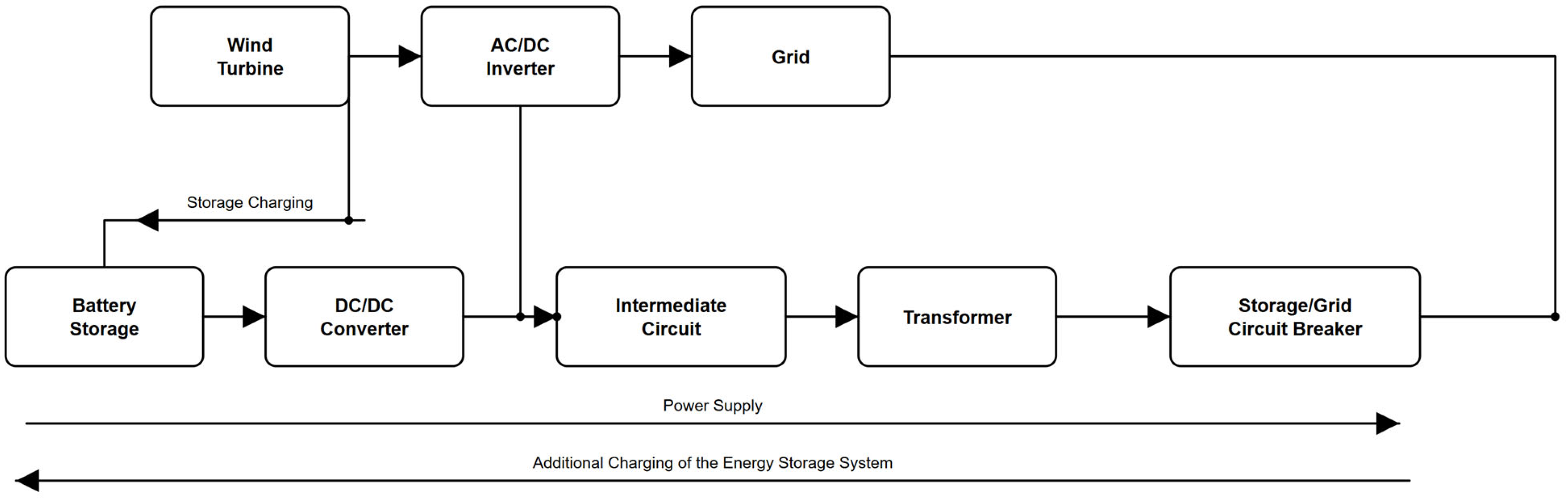
Figure 1. Diagram of direct connection of the storage facility to the power grid.
Sustainability 18 02659 g001
Figure 2. Energy storage technologies: Electrochemical storage.
Sustainability 18 02659 g002
Figure 3. Schematic of the construction of a Lithium-ion cell.
Sustainability 18 02659 g003
Figure 4. Lithium sulphur cell construction diagram.
Sustainability 18 02659 g004
Figure 5. Schematic of the construction of a lead-acid cell.
Sustainability 18 02659 g005
Figure 6. Schematic of the redox flow cell construction.
Sustainability 18 02659 g006
Figure 7. Energy storage technologies: Mechanical storage.
Sustainability 18 02659 g007
Figure 8. PHES diagram with combined turbine and electric generator.
Sustainability 18 02659 g008
Figure 9. Energy storage technologies: Chemical storage.
Sustainability 18 02659 g009
Figure 10. Schematic of hydrogen cell construction.
Sustainability 18 02659 g010
Figure 11. Energy storage technologies: Thermal storage.
Sustainability 18 02659 g011
Figure 12. The level of development of energy storage technologies.
Sustainability 18 02659 g012
Figure 13. Efficiency of energy storage facilities.
Sustainability 18 02659 g013
Table 1. Indicative comparison of selected energy storage technologies based on reported ranges from literature and public technical sources; values are technology- and site-specific and should be interpreted as order-of-magnitude guidance rather than design data.
Energy Storage TechnologyOutput FormPower Range [MW]Energy Capacity [MWh]Discharge DurationSpecific Energy [kWh/ton]Volumetric Energy Density/Storage ParameterRound-Trip Efficiency [%]Lifetime [Cycles or Years]Power Cost [PLN/kW]Energy Cost [PLN/MWh]Maturity Level
Lithium-ion cellsElectricity0.001–0.10.25–25Day/Month75–200300851000–4500755–17,2622157–10,788Commercialized
Lithium-sulfur cellsElectricity1–50<300Day150150–2507525004315–12,9461294–2157Commercialized
Lead-acid cellsElectricity0–400.25–50Day/Month207070500–10001294–2589863–1726Mature technology
Redox flow cellsElectricity0.03–7<10Day/Month10–3025–357512,0002589–6473647–4315Demonstration
/early
commercialized
Compressed air energy storageElectricity5–300<250Day30–602–6 do 70–200 bar658000–12,0005394215–431Demonstration
/early commercialized
Pumped storage power plantElectricity<3100Small < 5000
large
< 140,000
Day/Month0.28 do
100 m
0.28 do
100 m
7510,000–30,0002589–8631345–863Mature technology
Hydrogen cellsElectricity and thermal energyVariable valueVariable valuehour/month33,3302.7–160 do
1–700 bar
35--25–86Technology development
Energy storage in the form of gasElectricityVariable valueVariable value-10,000360–1200 do 200 bar32---Technology development
Thermal storage energy storage—sensible heatThermal energy0.001–10-Day-year10–502560--0.43–56Commercialized
Storage of latent heatThermal energy0.001–1-Hourly-daily50–15010075--43–241Commercialized
Thermochemical energy storageThermal energy0.01–1-Hourly-daily120–250120–25080---Technology development
Note: Power values in Table 1 are expressed in megawatts (MW); for example, 0.001 MW corresponds to 1 kW. Where a directly comparable volumetric energy density is not meaningful (e.g., pumped storage head or compressed-air pressure), a technology-specific storage parameter is provided instead.
Table 2. Case studies of use in energy systems.
ApplicationEnergy OutputPower
[MW]
Discharge DurationCyclesDefinition
Frequency controlElectrical energy1–20001–15 min20–40/dayContinuous balancing of supply and demand within a control area to stabilize system frequency.
LoadElectrical and thermal energy1–200015 min–1 day1–29/dayBalancing net-load fluctuations through manual dispatch or automatic generation control over minutes to hours.
Voltage supportElectrical energy1–401 s–1 min10–100/dayInjection or absorption of reactive power to maintain voltage levels in transmission and distribution networks.
Demand shift
& peak
Electrical and thermal energy0.001–11 min–1 h1–29/dayShifting flexible demand in time to align with supply, reduce peak load, and facilitate integration of variable sources.
Off-gridElectrical and thermal energy0.001–0.013 h–1 day0.75–1.5/dayProviding reliable standalone supply by buffering the mismatch between local generation and demand.
Variable supply ResourcesElectrical and thermal energy1–4001 min–1 h0.5–2/daySmoothing and firming variable generation (e.g., wind/solar) to improve power quality and to better match demand.
Waste heatThermal energy1–101 h–1 day1–20/dayTemporal or geographical decoupling of heat supply and demand by capturing, storing, and reusing waste heat.
Disclaimer/Publisher’s Note: The statements, opinions and data contained in all publications are solely those of the individual author(s) and contributor(s) and not of MDPI and/or the editor(s). MDPI and/or the editor(s) disclaim responsibility for any injury to people or property resulting from any ideas, methods, instructions or products referred to in the content.