


Abstract
This paper aims to develop a comprehensive conceptual framework for sustainable economic development in small and medium-sized cities, based on a critical review of the global literature addressing the relationship between economic growth, spatial justice, and urban transformation. The importance of small and medium-sized cities lies in their growing role in supporting regional balance, stimulating local economies, and enhancing urban resilience in the face of economic and environmental transformations. Despite the abundant literature on sustainable development in general, there remains a knowledge gap in building an integrated theoretical model that illustrates how economic, social, environmental, and governance factors interact in these types of cities. The paper presents a conceptual framework comprising five main axes: institutional structure and urban governance, local economy and economic diversification, smart infrastructure, environmental dimensions, and local community. In addition, the study demonstrates the applicability of the proposed framework through its application to Abqaiq City in Saudi Arabia as a representative resource-based small and medium-sized city, illustrating how the five pillars can be operationalized in a specific local context and how their interdependencies influence development outcomes. The proposed framework aims to provide a theoretical foundation that can guide public policies and urban planning in small and medium-sized cities, while also supporting future applied research.
1. Introduction
In recent decades, development thinking has undergone a significant transformation, shifting from a narrow focus on economic growth toward more comprehensive approaches that integrate economic, social, environmental, and institutional dimensions. Economic growth alone has proven insufficient to explain the dynamics of urban development or to effectively guide public policy, particularly in the context of small and medium-sized cities (SMCs). The existing literature highlights that, despite often being overlooked in favor of large metropolitan areas, SMCs play a critical role in supporting national development, promoting regional balance, and enhancing spatial equity [1,2]. This shift reflects a broader recognition that sustainable development requires territorially balanced growth strategies that account for the diversity of urban systems rather than privileging large cities alone [3,4].
At the global level, reports by the United Nations indicate that small and medium-sized cities accommodate a substantial share of the urban population and form a fundamental component of urban systems in both developed and developing countries [5]. However, these cities frequently face structural constraints, including limited infrastructure, restricted financial resources, economic dependence on a narrow range of sectors, and disparities in access to opportunities compared to larger urban centers. Empirical research further indicates that the development trajectories of small cities are highly heterogeneous, characterized by complex pathways of growth, stagnation, or decline depending on local economic structures, connectivity, and governance capacities [4]. This heterogeneity reflects the fact that SMCs are not a homogeneous category, but rather include diverse typologies such as industrial cities, tourism-based cities, and agricultural service centers, each of which requires context-specific development strategies.
Despite these challenges, emerging research suggests that SMCs possess significant untapped potential for achieving sustainable and inclusive growth when supported by appropriate planning strategies that reflect their unique socio-economic and spatial characteristics [6]. For instance, studies on the creative economy demonstrate that small cities can leverage local cultural assets and creative industries as drivers of economic development, challenging traditional assumptions that innovation is concentrated only in large metropolitan areas [7]. Similarly, research on innovation systems highlights that small towns and rural areas can foster forms of “open innovation” through localized networks, social capital, and knowledge exchange, enabling them to compete in broader economic systems despite their size [8].
Nevertheless, the body of literature addressing sustainable development in SMCs remains fragmented across disciplinary and thematic boundaries. Existing studies often focus on specific aspects, such as governance, environmental sustainability, or community engagement, without adequately capturing the complex interdependencies among economic, social, environmental, and institutional factors [9,10]. This fragmentation is also reflected in policy approaches, where small towns are often treated either as simplified versions of large cities or as peripheral spaces, overlooking their distinct development dynamics and institutional contexts [3,11].
This fragmentation limits the development of comprehensive models capable of guiding integrated planning and policy interventions. Furthermore, empirical studies indicate that governance structures, institutional capacity, and spatial connectivity play decisive roles in shaping development outcomes in small cities, particularly in contexts where centralized decision-making constrains local adaptability [4,12].
The relationship between city size and economic performance further complicates the understanding of SMCs. While larger cities often benefit from agglomeration economies, recent evidence suggests that smaller cities can achieve comparable or even superior growth under certain conditions, particularly when supported by effective governance, diversification strategies, and regional integration [13].
In the context of Saudi Arabia, empirical studies highlight that small cities face challenges related to infrastructure provision, limited economic diversification, and constrained local governance capacity, while also offering opportunities to support regional development and population redistribution [12]. These challenges are particularly evident in single-industry cities, where economic dependence on a dominant sector creates structural vulnerabilities while also offering opportunities for targeted diversification strategies.
These findings underscore the importance of adopting a holistic and integrated perspective that accounts for governance, infrastructure, economic diversification, innovation, and spatial relationships within a unified analytical framework. Consequently, there is a clear need for an integrative conceptual framework that systematically synthesizes these dimensions and explains their interactions within the context of SMCs. Such a framework is particularly relevant in rapidly transforming economies, where national development strategies increasingly emphasize balanced regional development and the strategic role of smaller cities.
In response to this gap, this study adopts a conceptual and theory-building approach aimed at developing a comprehensive framework for sustainable economic development in small and medium-sized cities. The framework is derived from a critical and structured review of the interdisciplinary literature, including sustainable development theory, urban economics, governance, and regional planning. It integrates insights from empirical studies on innovation, governance, and economic diversification in small cities to ensure that the proposed model reflects real-world dynamics.
The proposed framework seeks to contribute to the literature in two main ways. First, it provides an integrative perspective that connects multiple dimensions of sustainability within a unified analytical structure tailored to the context of SMCs. Second, it offers a conceptual basis that can inform policy formulation and urban planning practices by identifying key leverage points for achieving sustainable economic development. By bridging theoretical synthesis with empirical insights, the framework aims to enhance its relevance for both academic research and practical planning. To strengthen its practical applicability and respond to recent calls for empirical grounding, the framework is further applied to the case of Abqaiq city in Saudi Arabia, a small-sized city characterized by a single-industry economic base centered on the oil sector. This application serves as an illustrative case to examine how the proposed interaction mechanisms between governance, economic diversification, infrastructure, environmental sustainability, and quality of life operate within a real urban context. It also demonstrates how the framework can be adapted to cities with distinct structural characteristics, thereby reinforcing its flexibility and policy relevance.
While the present study is primarily conceptual, it also lays the groundwork for future empirical validation. The framework can be operationalized through various methodological approaches, including case studies, survey-based analysis, multi-criteria decision-making techniques, and statistical modeling, to assess its applicability across different regional contexts. This aligns with the growing demand for evidence-based planning tools capable of supporting sustainable development strategies in diverse urban settings.
The remainder of the paper is structured as follows. The next section reviews the evolution of sustainable development concepts and their relevance to urban systems. This is followed by an analysis of the characteristics and roles of small and medium-sized cities in national and regional development. Subsequently, key determinants of sustainable economic development are examined, leading to the formulation of the proposed conceptual framework. The paper then presents an empirical application of the framework to Abqaiq city, illustrating its practical relevance and analytical value. Finally, the paper concludes with implications for policy and directions for future research.
2. Materials and Methods
The methodological framework of this study is based on a systematic qualitative literature review and conceptual synthesis aimed at developing an integrative framework for sustainable economic development in SMCs. The approach is designed to ensure analytical rigor, transparency, and replicability in the process of selecting and analyzing the literature. The research process began with a structured and comprehensive literature search using major academic databases, including Scopus, Web of Science, and Google Scholar. To ensure relevance and diversity, the review focused on studies addressing small and medium-sized cities across different geographic regions, emphasizing transferable insights, patterns, and identified gaps rather than attempting an exhaustive global survey. This was complemented by key institutional publications from international organizations such as the UN-Habitat, the OECD, and the World Bank to ensure the inclusion of policy-oriented perspectives. The search strategy employed a combination of keywords and Boolean operators to ensure comprehensive coverage of relevant studies. Key search terms included small and medium-sized cities, sustainable urban development, urban governance, economic resilience, spatial justice, regional development, and circular economy. The search was limited to English-language publications and primarily covered the period from 2005 to 2026 to ensure relevance to contemporary sustainability debates, while seminal earlier works were retained where necessary to provide theoretical grounding.
To ensure the quality and relevance of the selected literature, explicit inclusion and exclusion criteria were applied. Studies were included if they were peer-reviewed journal articles, academic books, or official reports addressing themes related to sustainable development, urban governance, economic development, or infrastructure within urban or regional contexts. Particular emphasis was placed on studies focusing on small and medium-sized cities or those offering transferable insights. Both empirical and theoretical contributions were considered. Studies were excluded if they were not directly related to urban or regional development, focused exclusively on large metropolitan areas without transferable implications, lacked methodological rigor, or were duplicate records identified across databases.
The screening and selection of the literature followed a multi-stage process to enhance transparency and replicability. Initially, approximately 126 documents were identified through database searches. These records were subjected to a preliminary screening based on titles and abstracts, resulting in the exclusion of 43 documents that did not meet the inclusion criteria. The remaining 83 studies were then assessed through full-text review, during which 22 additional studies were excluded due to limited relevance or insufficient methodological robustness. Ultimately, a total of 61 documents were selected for in-depth analysis. This structured selection process improves the transparency and reproducibility of the review.
The analytical phase of the study involved a thematic synthesis of the selected literature using a combined deductive and inductive approach. In the deductive phase, existing theoretical frameworks, including sustainable development models, urban resilience paradigms, and regional competitiveness theories, were used to establish initial analytical categories. In the inductive phase, these categories were refined through iterative coding of the literature, allowing new themes and relationships to emerge. Each study was systematically analyzed based on key variables, including governance structures, economic systems, infrastructure provision, environmental sustainability, and quality of life. A cross-case comparison was subsequently conducted to identify recurring patterns, interdependencies, and gaps across the literature. This process enabled the identification of five core pillars: Institutional Governance, Local Economy, Smart Infrastructure, Environmental Sustainability, and Community Quality of Life, which form the foundation of the proposed conceptual framework. These pillars were derived from both empirical evidence and theoretical gaps identified in previous studies [14,15,16,17], rather than being arbitrarily defined.
The development of the conceptual framework was conducted through an iterative synthesis process that integrates insights from multiple disciplines, including urban planning, regional economics, and environmental science. A gap analysis was undertaken to identify limitations in existing models, particularly their large-city bias, and to adapt key concepts to the context of small and medium-sized cities. The framework adopts a systems-thinking perspective, emphasizing interdependencies and feedback mechanisms among the identified pillars rather than treating them as isolated components.
To address the lack of empirical validation, a conceptual validation process was incorporated to strengthen the robustness of the proposed framework. This included its application to Abqaib City, a resource-based small city, which provided a practical context to examine the interactions among the five pillars. Validation was achieved through theoretical triangulation, cross-checking relationships across multiple disciplines to ensure consistency between governance, economy, infrastructure, environment, and community variables.
A pattern-matching approach compared the proposed relationships with empirical findings from prior studies, ensuring alignment with observed urban development dynamics. Internal logical consistency analysis was applied to verify coherence in causal links, such as the influence of governance on infrastructure provision and economic performance. Furthermore, qualitative comparative reasoning, inspired by Qualitative Comparative Analysis, explored how different combinations of conditions in Abqaib could lead to varying development outcomes, recognizing that multiple pathways to sustainability exist. This multi-step validation enhances the credibility of the framework and demonstrates its applicability beyond purely theoretical modeling.
Despite this systematic approach, the study has limitations. As a primarily conceptual study, it relies on secondary data, and the Abqaib application provides only a preliminary empirical illustration. Further empirical testing across different small and medium-sized cities is necessary to fully assess the framework’s generalizability and context-specific applicability.
3. Theoretical Background
3.1. Historical Development of the Concept of Development
The concept of development, particularly in the post-World War II era, was widely framed as an economic project centered on industrial expansion and growth, with Gross Domestic Product (GDP) becoming the dominant proxy for national progress [18,19]. Over time, however, this growth-centric approach faced extensive criticism for its limited ability to capture distributional outcomes, environmental costs, and the sustainability of resource use [18,20,21,22]. These critiques helped shift development thinking toward broader, people-centred and sustainability-oriented perspectives, emphasizing that development cannot be reduced to national income or output growth alone. More recently, this shift is reflected in urban policy debates that stress financing resilient and low-carbon urbanization as a prerequisite for equitable urban growth [23]. While this approach succeeded in achieving high growth rates in many countries, it later faced widespread criticism for failing to address social disparities, protect the environment, or ensure the responsible use of resources.
With the emergence of environmental degradation in the 1970s, especially after the 1972 Stockholm Conference, there arose a need for a more balanced framework integrating environmental considerations into the development process. The 1987 Brundtland Report, which defined sustainable development as “development that meets the needs of the present without compromising the ability of future generations to meet their own needs”, has marked a pivotal shift in global development thinking [24]. This shift later informed urban planning scholarship, leading to the adoption of environmentally integrated models aimed at promoting sustainable communities [25]. In the decades that followed, the concept expanded to encompass social equity, resource efficiency, community participation, and climate resilience. Key global milestones, including the 1992 Rio Earth Summit, the 2000 Millennium Development Goals, and the 2015 Sustainable Development Goals, further broadened the scope of sustainable development. Sustainable development was no longer confined to environmental protection but became a comprehensive framework embedding economic growth, human well-being, and ecosystem preservation into a unified framework [26,27].
3.2. Key Dimensions of Sustainable Development
Sustainable development is widely conceptualized as an integrated framework that links economic prosperity, social inclusion, and environmental protection, emphasizing the interdependence of these dimensions rather than treating them as separate policy silos [27,28]. While this integrated perspective highlights potential synergies, the recent literature also emphasizes that the relationships among these dimensions are often characterized by inherent trade-offs, particularly in the short to medium term, requiring careful policy balancing rather than assuming automatic alignment. Economically, sustainability focuses on enabling long-term growth by improving productivity, supporting investment and business dynamism, and fostering innovation and quality job creation, while strengthening resilience to shocks [29].
It is also important to note that sustainability is not inherently synonymous with continuous economic growth; rather, it emphasizes balanced development that respects ecological limits, enhances resource efficiency, and prioritizes long-term well-being over short-term expansion.
For small and medium-sized cities in particular, economic sustainability is closely tied to reducing vulnerability through diversification and adaptive capacity, as reliance on narrow sectoral bases can intensify exposure to downturns [6], and broader evidence links diversification to more resilient development trajectories [30]. However, in resource-dependent or single-industry cities, efforts to diversify or introduce stricter environmental regulations may initially impose constraints on existing economic activities, particularly where local economies rely heavily on carbon-intensive or extractive sectors.
Socially, sustainable development prioritizes equity and quality of life through inclusive access to services (e.g., health, education, housing, and mobility) and stronger community cohesion; empirical work also links social capital to civic engagement and community participation, which can reinforce local sustainability capacity [31]. At the same time, social objectives may also generate trade-offs, as policies aimed at improving equity and service provision often require substantial public investment, which may compete with limited municipal budgets needed for economic development or environmental protection, especially in resource-constrained small and medium-sized cities.
Environmentally, sustainability requires responsible resource governance, emissions reduction, and green infrastructure; energy efficiency is consistently highlighted as a key pathway for lowering emissions and supporting sustainable transitions [32,33], and empirical evidence shows that investments in energy-efficiency can contribute to reducing CO2 emissions [34]. Nevertheless, stringent environmental policies, such as emissions controls or land-use restrictions, may in the short term increase production costs or limit industrial expansion, particularly in cities with economies dependent on natural resources or heavy industry. This highlights the need to view sustainability not only as a synergistic framework but also as a process of managing trade-offs over time, where short-term economic adjustments may be necessary to achieve long-term environmental and social benefits.
Accordingly, sustainable development in small and medium-sized cities should be understood as a dynamic balancing process, where policy decisions must carefully negotiate these trade-offs while seeking long-term complementarities between economic resilience, social well-being, and environmental integrity. This perspective is particularly relevant for cities with constrained resources, where prioritization and sequencing of interventions play a critical role in achieving sustainable outcomes.
3.3. The Relationship Between Sustainable Development and Urban Transformation
Cities have become central arenas for achieving sustainable development, as they concentrate population, economic activity, and resource use. Globally, cities host more than half of the population and account for around 80% of global GDP, roughly two-thirds of energy consumption, and over 70% of annual carbon emissions [33]. This concentration makes sustainable urban transformation, particularly urban climate action, a global priority, with recent global assessments emphasizing that city-level interventions can generate multiple co-benefits, including improved public health, resilient infrastructure, ecosystem restoration, employment creation, and poverty reduction [35]. Within this agenda, small and medium-sized (intermediary) cities are increasingly recognized as strategic spaces to steer rapid growth toward low-carbon and resilient pathways and to avoid carbon lock-in; when adequately resourced and supported by targeted policies, they can also function as laboratories for innovative solutions [5,36].
4. Small and Medium-Sized Cities in the Global Literature
4.1. Definition of Small and Medium-Sized Cities
Definitions of SMCs vary between international institutions and researchers, but most studies adopt a population range between 50,000 and 500,000 inhabitants, with considerable flexibility depending on the national context [37,38,39]. These cities, despite their medium size, possess social and economic dynamics that differ from larger cities and require specific planning and development models [40]. Several studies highlight that small and medium-sized cities represent the largest share of urban agglomerations globally and act as a middle level between rural and advanced urban structures [37,38,41].
Importantly, small and medium-sized cities are not a homogeneous category; rather, they differ substantially in terms of economic structure, functional roles, and development pathways, including industrial, tourism-based, and agricultural systems. Accordingly, their planning and development require flexible and context-sensitive approaches that reflect these variations. This diversity is explicitly acknowledged in the conceptual framework proposed in Section 7, which is designed as a flexible and adaptive model rather than a rigid structure.
The five pillars of governance, local economy and diversification, smart infrastructure, environmental sustainability, and community and quality of life can be operationalized differently depending on the dominant economic function and local context of each city. For example, economic diversification strategies in industrial cities may focus on innovation and value chain upgrading, while in tourism-based cities, they may emphasize cultural assets and service industries, and in agricultural cities they may prioritize agro processing and resource efficiency.
In addition to functional diversity, SMCs also differ significantly in their spatial positioning within the urban system. Some operate as satellite cities located within the influence of large metropolitan areas, benefiting from proximity, labor mobility, and access to broader markets, while others function as remote regional hubs that serve as primary centers for services, governance, and economic activities within their hinterlands. These spatial differences fundamentally shape development trajectories, as satellite cities often rely on integration with metropolitan economies, whereas remote SMCs require greater self-sufficiency, local capacity building, and infrastructure investment to sustain growth. Recognizing this distinction is essential for avoiding generalized planning approaches and for designing strategies that are responsive to both functional and spatial contexts.
These cities are not small enough to be tied solely to the rural economy, nor large enough to have the capabilities of advanced cities in attracting global investments, placing them in a unique position with distinct needs and opportunities.
4.2. Economic Importance of Small and Medium-Sized Cities
The literature confirms that small and medium-sized cities play a pivotal role in national and regional development systems, as they act as intermediaries between major urban centers and rural areas. They contribute to enhancing regional integration by functioning as hubs that facilitate the flow of goods and services, strengthening economic ties across different areas, which supports the creation of more cohesive economic networks at the regional level [42]. Additionally, these cities effectively alleviate pressure on larger cities by absorbing some of the population growth, reducing infrastructure congestion, and consequently minimizing traffic bottlenecks, lowering living costs, and reducing environmental pollution [43,44].
Economically, small and medium-sized cities support local economies by providing an incubator for small and medium-sized enterprises (SMEs), which are key drivers of economic development and job creation [39]. They also support light industries, trade, and logistics services, helping to boost the economic cycle in their surroundings. Moreover, they play an essential role in achieving spatial equity by reducing developmental disparities between urban and rural regions, contributing to a more balanced and fair distribution of development gains [3,45].
Small and medium-sized cities are also vital in terms of resilience and adaptability. They are generally more flexible in making planning and administrative changes compared to larger cities, which often suffer from higher levels of bureaucracy. This flexibility makes these cities better positioned to respond rapidly to technological and economic shifts, enhancing their effectiveness in meeting the demands of contemporary development [6]. With these combined roles, it is clear that small and medium-sized cities have become a vital component in building balanced and sustainable urban systems.
4.3. Challenges Facing Small and Medium-Sized Cities
Despite the promising potential of small and medium-sized cities, they face several structural challenges that hinder their ability to achieve sustainable development. One of the main challenges is limited infrastructure. Studies indicate that transportation networks, public transport systems, digital infrastructure, as well as water and sewage systems, are often less developed compared to those in larger cities [35]. This gap directly impacts the quality of life and limits the attractiveness of these cities for investment. Many of these cities also struggle with weak institutional capacities. Poor urban planning, along with a lack of technical and administrative expertise, reduces their ability to implement development projects or attract strategic investments [21,46].
Moreover, reliance on a single economic sector, such as industry, agriculture, or energy, makes these cities more vulnerable to economic shocks and market fluctuations [47]. Resource constraints, particularly the lack of financing, present another major obstacle. Local governments often lack the financial resources required to launch large-scale development projects or adopt sustainable solutions [29]. These cities also face environmental challenges, including pollution, limited green spaces, poor waste management, and the impacts of climate change, which are exacerbated by the inadequate environmental infrastructure available [48,49]. Therefore, overcoming these challenges is essential for enabling small and medium-sized cities to perform their developmental role efficiently and sustainably.
5. Sustainable Economic Development in Cities: A Theoretical Perspective
In the context of urban development, sustainable economic development aims to build a robust economy capable of providing job opportunities and achieving growth without harming the environment or society in the long term. The literature emphasizes the importance of providing a supportive economic environment that promotes diversification, innovation, and sustainability, as these are essential for the success of cities in facing future challenges [10]. Below are five key areas that outline the main pillars of this approach:
5.1. Economic Diversification and Its Role in Sustainability
Economic diversification is one of the main drivers of sustainable development. Relying on a single sector increases cities’ vulnerability to economic shocks. Studies indicate that small and medium-sized cities need to expand their economic base by developing new sectors such as light industries, logistics services, creative industries, digital economy, and green economy [47]. Innovation and the adoption of modern technologies also play a pivotal role in building a diversified and competitive economy.
5.2. Circular Economy and Resource Efficiency
The circular economy focuses on reusing resources, reducing waste, and maximizing the economic value of materials throughout their lifecycle. This model has gained global attention for its role in reducing environmental impacts and enhancing the efficiency of cities [50]. The literature suggests that small and medium-sized cities have a significant opportunity to adopt this model due to their smaller size and ability to quickly implement environmental management strategies compared to larger cities [49].
5.3. Urban Governance as a Foundation for Sustainable Development
Effective governance is a central element in the success of sustainable economic development, including community participation, transparency, accountability, and coordination between government agencies, as well as strengthening the capacity of local institutions [36,51]. Comparative studies show that cities with higher governance levels achieve higher growth and sustainability rates, while cities with weak institutions face slow progress in achieving development goals [42].
5.4. Spatial Justice and Its Role in Sustainability
The literature indicates that spatial justice is a fundamental pillar of sustainable development, ensuring that all regions receive fair economic opportunities and balanced access to basic services. Studies have shown that spatial inequality leads to lower quality of life and higher poverty levels, which weakens the ability of small and medium-sized cities to achieve long-term growth and sustainability [52,53].
5.5. Smart Infrastructure and Digital Transformation
Smart infrastructure and digital transformation have become a key element in contemporary economic development in cities [54]. It includes modern communication networks, smart transportation systems, renewable energy, big data, and artificial intelligence [43]. International institutions believe that small and medium-sized cities can enhance their competitiveness through the adoption of smart infrastructure, provided that the necessary technical resources and skilled workforce are available [21].
6. Literature Review and Global Models of Sustainable Economic Development
The literature on sustainable economic development in cities has seen notable evolution in recent decades, but theoretical approaches remain diverse in their focus and methodology. Some studies have approached sustainable development purely from an economic perspective, while others have focused on the environmental or social dimension alone. Few studies have attempted to integrate all three dimensions into a cohesive framework. Recent reviews show that most global models have been designed with larger cities in mind, leading to the marginalization of small and medium-sized cities in proposed analyses and policies [35,36]. Additionally, the literature reveals a variation in trends, focusing on economic competitiveness, institutional environments, digital transformation, and urban resilience, which highlights the need for an integrated framework tailored to the unique characteristics of smaller cities.
6.1. UN Sustainable Development Model (UN-Habitat)
The United Nations model represents one of the most comprehensive frameworks for sustainable development, linking land management, social inclusion, infrastructure, environmental protection, and economic growth. This model emphasizes viewing cities as engines of development rather than mere population hubs [5]. The UN framework focuses on efficient land use, equitable access to services, improving quality of life, and integrating local communities into planning and digital transformation processes. Despite the model’s comprehensiveness, its application in small and medium-sized cities requires adjustments to account for resource limitations and institutional capacities in these cities.
6.2. OECD Regional Competitiveness Model
The OECD framework focuses on enhancing regional competitiveness as a cornerstone of sustainable development. The model emphasizes innovation and entrepreneurship, infrastructure efficiency, multi-level governance, connecting small cities with their regional environments, and improving productivity in small and medium-sized enterprises [29]. It also stresses the importance of local capacity building, human capital, and linking local markets to national and international markets. However, this framework has been criticized for placing too much emphasis on economic aspects, often neglecting the social and environmental dimensions, which may not meet the needs of smaller cities requiring a more balanced approach.
6.3. Urban Resilience Model
The urban resilience model emerged in response to economic crises, natural disasters, and climate change. It focuses on the ability of cities to absorb shocks, adapt, and recover quickly [55]. This model emphasizes risk management, building strong community networks, developing adaptive infrastructure, using clean energy, and diversifying income sources. However, its primary focus on crisis management makes it insufficient for achieving long-term development without being integrated with other models [56].
6.4. Smart Cities Model
The smart cities model aims to use digital technologies, artificial intelligence, and the Internet of Things (IoT) to improve municipal services, transportation, waste management, energy management, and environmental monitoring [43]. Small and medium-sized cities are seen as capable of benefiting from this approach through cost-effective and more flexible solutions. However, challenges remain related to the high costs of digital transformation, lack of technical expertise, and weak supporting institutional frameworks [21,47].
6.5. Critical Comparison and Need for a New Conceptual Framework
The comparison of global models reveals several gaps that limit their applicability to small and medium-sized cities. The first gap is resource-related, stemming from limited funding and technical capacities [42]. The second gap is institutional flexibility, as advanced models require strong urban governance systems that are often lacking in smaller cities. Additionally, there is a gap in spatial justice, due to an overemphasis on economic growth without equitable distribution of development benefits [51,53]. Furthermore, the complete integration of economic, social, environmental, and institutional dimensions remains absent in most models.
Thus, the literature highlights the need for a new conceptual framework that is flexible and adaptable to diverse contexts. This framework should account for the limited resources of small and medium-sized cities while balancing the environmental, social, and economic dimensions. It should be based on participatory governance, economic diversification, smart infrastructure, spatial justice, and resource sustainability to ensure comprehensive and sustainable development.
7. The Proposed Conceptual Framework for Sustainable Economic Development in Small and Medium-Sized Cities
The recent literature emphasizes that developing a cohesive conceptual framework is a crucial step in understanding the dynamics of sustainable economic development in small and medium-sized cities, particularly given their distinct characteristics compared to larger cities, including institutional capabilities, economic structure, infrastructure levels, and the challenges and opportunities they face [36,47]. The proposed framework integrates various global models to offer a theoretical vision that explains how social, economic, environmental, and institutional elements interact within these cities, enabling the creation of a sustainable development pathway. The framework comprises five interconnected pillars that form the core of this interaction: institutional governance, local economy and diversification, smart infrastructure, environmental sustainability, and community and quality of life, as illustrated in Figure 1.
Figure 1.
A Conceptual Framework for Sustainable Development in Small and Medium-Sized Cities and its Key Pillars.
7.1. Pillar One: Institutional Governance
The literature agrees that governance is the cornerstone of successful sustainable development, especially in small and medium-sized cities that often struggle with limited organizational capacity [42]. Effective governance is manifested through clear role distribution among local authorities, promoting transparency and accountability, building administrative capacities, and establishing data-driven policies. The importance of multi-level governance enables these cities to function within a supportive network of national and regional policies, ensuring decision-making stability and access to funding [29]. Community participation plays a crucial role in enhancing policy effectiveness by leveraging the strong social cohesion typical of smaller cities [37].
7.2. Pillar Two: Local Economy and Its Diversification
Economic diversification is a key element in enhancing the resilience of small and medium-sized cities, directly influencing their ability to achieve stable and sustainable growth. Recent studies have shown that cities that diversify their activities through light industries, the digital economy, eco-tourism, or renewable energy achieve higher and more sustainable growth rates [47]. Entrepreneurship and SMEs play a significant role in this diversification, with their support through incentives, funding, and innovation hubs contributing to the city’s ability to create new economic opportunities [36]. Regional connectivity enhances the ability of small cities to integrate into wider production networks, increasing their competitiveness [42].
7.3. Pillar Three: Smart Infrastructure and Digital Transformation
Smart infrastructure is a fundamental element that enables small cities to overcome the limitations of traditional infrastructure. Digital transformation through fiber optic networks, smart transportation systems, digital meters, and data-driven urban management provides the foundation for improving urban services at a relatively lower cost [43]. Big data and artificial intelligence open up opportunities to enhance urban planning, energy management, waste handling, and traffic management, all of which are directly related to quality of life and the efficiency of the local economy [21].
Importantly, in the context of resource-constrained small and medium-sized cities, investments in smart infrastructure must be carefully prioritized to account for opportunity costs, ensuring that spending on advanced digital systems does not crowd out essential investments in basic infrastructure maintenance and service provision.
Despite technical and financial challenges, the literature stresses the importance of adopting a gradual digital transformation that aligns with the resources and needs of small cities. Accordingly, smart infrastructure in this framework is conceptualized as a context-sensitive and incremental approach that complements existing infrastructure systems through cost-effective and scalable solutions, rather than a capital-intensive technological upgrade.
7.4. Pillar Four: Environmental Sustainability and Resource Management
Small cities face significant environmental challenges such as water scarcity, poor waste management, lack of green spaces, and the impacts of climate change [49]. The circular economy model emerges as a promising approach for these cities due to the simplicity of their logistical networks, allowing more effective recycling mechanisms, water reuse, and waste-to-energy processes [50,57]. Renewable energy, especially solar and wind, offers a critical opportunity to enhance energy security and reduce emissions, aligning with long-term sustainability goals.
7.5. Pillar Five: Community and Quality of Life
The success of any developmental framework depends on the strength of the local community, as small cities often exhibit higher social capital, reflected in strong social ties and mutual trust [38]. Quality of life, including access to education, health, housing, transportation, and safety, is a key indicator of development effectiveness [43]. Achieving social and spatial justice is essential to ensure equitable distribution of opportunities and services among different neighborhoods and groups, preventing the creation of disparities within the urban fabric [52,53].
7.6. Interaction Between the Five Pillars
None of the aforementioned pillars operates in isolation. Rather, the proposed framework is based on a systems-thinking approach, where each pillar interacts through dynamic and mutually reinforcing relationships that have been widely documented in the urban sustainability literature. This systemic perspective has been advocated as necessary for understanding the interdependencies among economic, social, environmental, and governance dimensions in urban systems, as it reveals opportunities to maximize co-benefits and address trade-offs in sustainability planning [58]. Strong institutional governance enhances the ability of the city to attract investment, implement policies, and develop infrastructure, while smart infrastructure improves economic efficiency and service delivery.
For instance, effective governance mechanisms, such as transparent regulations and strategic planning, have been shown to facilitate private sector participation and economic diversification in small cities [36]. In turn, a diversified local economy generates financial resources that can be reinvested in infrastructure and environmental initiatives, creating a positive feedback loop.
Environmental sustainability has a direct impact on quality of life, as improved air quality, green spaces, and efficient resource management enhance public health and social well-being. Empirical studies indicate that cities investing in environmental infrastructure, such as renewable energy and waste management systems, often experience improved livability and increased attractiveness for investment and skilled labor. The local community plays a crucial role in the success of policies through participation and trust. High levels of social capital, which are characteristic of many small and medium-sized cities, can significantly enhance policy implementation by fostering cooperation between citizens and local authorities [12]. Community engagement also strengthens governance by promoting accountability and ensuring that development strategies reflect local needs.
Furthermore, digital transformation acts as an enabling layer across all pillars. Smart infrastructure supports data-driven governance, enhances economic productivity, optimizes environmental resource use, and improves service delivery, thereby reinforcing the interconnected nature of the framework.
These interactions can be understood as a set of feedback loops rather than linear relationships. For example, improved quality of life attracts human capital, which stimulates economic growth, further strengthening governance capacity and increasing demand for sustainable infrastructure. Conversely, weak governance can hinder economic diversification and environmental management, demonstrating the interdependent nature of the system.
Thus, the proposed framework presents an integrated network vision, demonstrating how these pillars interact to produce a sustainable and integrated development pathway for small and medium-sized cities.
8. Application and Illustrative Validation of the Conceptual Framework
To address the need for empirical grounding and to examine the practical relevance of the proposed conceptual framework, this section applies the model to a real-world case study. The objective is not to provide full empirical validation, but to demonstrate the applicability of the framework and to illustrate how the proposed interaction mechanisms operate in practice. This approach strengthens the analytical robustness of the study by linking theoretical constructs with observable urban conditions.
8.1. Case Study Selection: Abqaiq City
Abqaiq city in Saudi Arabia is selected as an illustrative case due to its distinctive characteristics as a small city with a predominantly mono-functional economic structure. The city has an estimated population of approximately 64,632, placing it within the category of small cities according to both international and national classification systems. According to the United Nations Statistical Commission, the Degree of Urbanisation classifies cities with populations between 50,000 and 99,999 as small urban centers [59]. In contrast, the Saudi Ministry of Municipal and Rural Affairs classifies cities with populations below 300,000 as small cities [60]. Based on the integration of these frameworks, Abqaiq is considered a representative example of small cities within the scope of this study.
The selection of Abqaiq is further justified by its economic structure, which is heavily centered on the oil industry, as well as its strategic location within the Eastern Province. These characteristics make the city a suitable case for examining how a resource-dependent urban system can transition towards a more diversified and sustainable development pathway. In addition, the city reflects many of the structural challenges and opportunities identified in the literature on small and medium-sized cities, including institutional dependency, economic concentration, and the need for integrated planning.
8.2. Application of the Framework
The conceptual framework is applied to Abqaiq through an analysis of its five core pillars, namely institutional governance, local economy and diversification, smart infrastructure, environmental sustainability, and community and quality of life. This application allows for a systematic assessment of the city’s current conditions, as well as its potential for sustainable transformation.
In terms of institutional governance, Abqaiq is characterized by a dual governance structure involving both municipal authorities and Aramco. While the municipality holds formal administrative authority, Aramco provides substantial operational, financial, and technical support that shapes service delivery and infrastructure development. This arrangement has contributed to high-quality infrastructure and service provision.
However, it has also limited the autonomy of local governance institutions and their capacity to independently formulate long-term development strategies. This pattern reflects broader observations in the literature, where external institutional actors play a dominant role in shaping development trajectories in smaller cities [42]. Strengthening governance in Abqaiq, therefore, requires enhancing institutional capacity, clarifying roles, and promoting participatory decision-making processes.
The local economy of Abqaiq is heavily dependent on the oil sector, which represents both strength and a structural vulnerability. While the presence of a globally significant energy industry provides economic stability, it also limits diversification and exposes the city to external economic fluctuations. The conceptual framework highlights diversification as a key driver of sustainable development. In this context, Abqaiq has the potential to expand into energy-supporting industries, small and medium-sized enterprises, logistics, and emerging sectors such as renewable energy and the digital economy. The city’s strategic location between Al Ahsa and Dammam further enhances its potential to integrate into regional economic networks. Moreover, leveraging the innovation capacity of Aramco could facilitate the development of knowledge-based activities, aligning with global trends in transforming industrial cities into innovation hubs [61].
With regard to smart infrastructure, Abqaiq benefits from advanced industrial infrastructure designed to support oil production. However, the development of civil and urban infrastructure remains limited, particularly in relation to digital transformation and smart service delivery. The framework emphasizes the importance of integrating data-driven technologies, including big data analytics and smart management systems, to improve efficiency and service quality. The application of these technologies can enhance urban management, optimize resource use, and support economic diversification. The presence of advanced technological expertise within Aramco provides a unique opportunity for Abqaiq to adopt innovative infrastructure solutions and position itself as a pilot city for smart urban development [21].
Environmental sustainability represents a critical dimension of development in Abqaiq, given its location in an arid desert environment and the environmental pressures associated with industrial activities. The framework highlights the importance of adopting sustainable resource management strategies, including water conservation, the use of native vegetation, and the reduction in emissions through technological innovation. The circular economy model offers a practical approach to enhancing resource efficiency through recycling, reuse, and waste-to-energy processes [50]. Given its industrial base, Abqaiq has the potential to implement circular practices at scale, contributing to both environmental sustainability and economic efficiency.
The dimension of community and quality of life focuses on the social aspects of development. Despite its strong industrial base, Abqaiq exhibits gaps in the provision of social infrastructure and urban amenities. Enhancing quality of life requires investments in education, healthcare, housing, public spaces, and recreational facilities. As a small city with relatively low congestion, Abqaiq has the potential to offer a high-quality living environment characterized by safety and social cohesion. Strengthening community engagement and expanding social services can contribute to more inclusive and balanced development outcomes.
8.3. Discussion of Interaction Mechanisms
A key contribution of the proposed framework lies in its emphasis on the interaction between different development pillars. The application of the framework to Abqaiq demonstrates that these pillars are not independent but are interconnected components of a broader urban system. The analysis reveals that governance plays a central role in enabling or constraining progress across other dimensions. For example, effective governance structures are essential for facilitating economic diversification, attracting investment, and implementing infrastructure projects. In the case of Abqaiq, the dominance of a single institutional actor influences both economic and infrastructural development, highlighting the need for more balanced governance arrangements.
Similarly, the relationship between the local economy and infrastructure is evident in the way industrial development has driven infrastructure investment, while the lack of diversified economic activities has limited the expansion of civil and digital infrastructure. Enhancing smart infrastructure can, in turn, support economic diversification by improving connectivity, efficiency, and access to services.
Environmental sustainability is also closely linked to economic and infrastructural systems. Industrial activities contribute to environmental pressures, while sustainable technologies and circular economy practices can reduce these impacts and create new economic opportunities. In Abqaiq, integrating environmental strategies with industrial processes can enhance both sustainability and economic resilience.
The quality-of-life dimension interacts with all other pillars, as improvements in governance, infrastructure, and environmental conditions directly influence social well-being. Conversely, a strong and engaged community can support the successful implementation of development policies and initiatives.
In conclusion, the application of the framework demonstrates that sustainable development in Abqaiq depends on the dynamic interaction between governance, economic, environmental, infrastructural, and social factors. This confirms the relevance of the proposed network-based perspective and provides initial support for the validity of the interaction mechanisms described in the framework.
8.4. Implications for Policy and Planning
The findings from the application of the conceptual framework to Abqaiq offer important insights for policymakers and urban planners. First, the analysis highlights the need for a comprehensive and integrated approach to urban development, where policies are coordinated across multiple sectors rather than implemented in isolation. Second, the study emphasizes the importance of economic diversification as a central objective for small cities that rely on a single economic sector. In the case of Abqaiq, diversification strategies should be aligned with the city’s existing strengths, particularly its industrial base and strategic location.
Third, strengthening institutional governance and enhancing local capacity are essential for achieving sustainable development outcomes. This includes promoting participatory governance, improving institutional coordination, and enabling local authorities to play a more active role in development planning. Fourth, the integration of smart infrastructure and digital technologies can significantly enhance urban efficiency and support broader development goals. Leveraging existing technological capabilities can facilitate this transition.
Finally, improving quality of life and ensuring social inclusion are critical components of sustainable development. Investments in social infrastructure and community development can enhance the attractiveness and livability of small cities. In the context of Saudi Arabia, these findings align with the objectives of Vision 2030, which emphasizes economic diversification, sustainable development, and improved quality of life. While the application presented in this study is illustrative in nature, it provides a practical demonstration of how the proposed framework can be used as a diagnostic and planning tool in small and medium-sized cities.
9. Discussion
This section discusses the proposed conceptual framework in light of the global literature and its practical application in Abqaiq City. It highlights how the framework addresses key gaps identified in previous sustainable development models and demonstrates its relevance to small and medium-sized cities. The international literature confirms that small and medium-sized cities require tailored development approaches that consider limited resources, institutional constraints, and distinct economic structures compared to large cities [35,36]. In this context, the proposed framework provides an integrated model that combines economic, social, environmental, and governance dimensions within a unified system. The application to Abqaiq City illustrates how this integration can be translated into practical planning directions, particularly in resource-dependent urban contexts.
9.1. Alignment with the Global Literature
The literature highlights a persistent lack of integration between economic, social, and environmental dimensions, which often leads to fragmented policies and ineffective outcomes [42]. The proposed framework addresses this gap by structuring these dimensions within an interconnected system supported by governance and smart infrastructure. Governance is emphasized as a central pillar, particularly in addressing challenges related to funding, planning, and technical capacity, which are widely reported in small and medium-sized cities [42]. The framework adopts a multi-level governance perspective aligned with OECD [29], linking local actions to national strategies.
In addition, digital transformation is positioned as an enabling mechanism rather than an independent objective. This aligns with recent studies [43], which emphasize that digitization should support service delivery, economic diversification, and institutional efficiency. The application to Abqaiq City demonstrates how digital solutions can enhance service provision and economic opportunities without being detached from local development needs.
9.2. Applicability to Small and Medium-Sized Cities
Small and medium-sized cities vary significantly in terms of economic base, institutional capacity, and geographic context. Therefore, the framework is designed to be flexible and adaptable to local conditions. This adaptability is demonstrated herein, where the framework is applied to Abqaiq City, a resource-based city with specific economic and environmental characteristics. The framework also emphasizes the interdependence between its five pillars. Weak governance limits infrastructure development, insufficient infrastructure constrains economic diversification, economic decline affects environmental quality, and environmental degradation reduces the quality of life. This confirms that urban development is a networked process rather than a linear one. Importantly, the framework explicitly recognizes resource constraints and the concept of opportunity cost, highlighting that investments in smart infrastructure and digital transformation should be balanced with essential maintenance of basic infrastructure to avoid crowding out critical services in resource-constrained cities.
Furthermore, the framework supports decision-making by providing a structured approach to analyzing priorities and understanding relationships between development factors. This role of conceptual models in guiding policy decisions has been highlighted by Roberts et al. [38] and Li et al. [47].
9.3. Advantages of the Framework Compared to Previous Models
The proposed framework offers several advantages over existing models. First, it provides a comprehensive structure that integrates economic, social, environmental, infrastructure, and governance dimensions within a single system. Second, it is flexible and applicable across different urban contexts, including cities with limited resources. Third, the framework is practical, as it considers real challenges such as financial constraints, institutional limitations, and capacity gaps. This makes it more applicable than idealized models that are difficult to implement. Finally, the framework adopts a dynamic perspective, recognizing that development processes evolve over time and must respond to changing local conditions.
9.4. Potential Challenges in Applying the Framework
Despite its strengths, the implementation of the framework may face several challenges, including limited financial resources, weak institutional capacity, data constraints, and resistance to change. These challenges are particularly significant in small and medium-sized cities where governance systems may be less developed. The UN-Habitat [23,35] highlights that such constraints are common but can be addressed through multi-level governance, capacity building, and partnerships with private sector and civil society actors. The application to Abqaiq City also indicates that external support and strategic planning are essential for overcoming these barriers.
9.5. Added Value of the Proposed Framework
The main contribution of the framework lies in its ability to provide an integrated and adaptable approach to sustainable urban development. It addresses key gaps identified in the literature, particularly the lack of integration between development dimensions and the limited applicability of existing models to small and medium-sized cities. In addition, the framework serves as a practical tool for policymakers and planners by offering a structured basis for analysis, prioritization, and decision-making. It also provides a foundation for future empirical studies and the development of performance indicators tailored to small and medium-sized cities.
10. Conclusions
This paper presented a conceptual framework for sustainable economic development in small and medium-sized cities based on a critical review of the global literature. It examined the role of these cities within the broader urban system, identified their key challenges and opportunities, and analyzed existing development models. The findings show that small and medium-sized cities differ from large cities in terms of economic structure, institutional capacity, and resource availability. These differences limit the applicability of traditional development models and highlight the need for more flexible and context-specific approaches.
In response, the proposed framework integrates five key pillars: governance, local economy and diversification, smart infrastructure, environmental sustainability, and community and quality of life. These pillars are interconnected and operate within a dynamic system that aims to balance economic growth, social equity, and environmental sustainability. The framework addresses several gaps identified in the literature. It emphasizes the integration of development dimensions, strengthens the role of governance in ensuring policy effectiveness, and positions digital transformation as a supporting tool for development. Its flexibility allows it to be applied across different urban contexts, including cities with limited resources.
The application of the framework to Abqaiq City demonstrates its practical relevance and adaptability. It shows how the framework can guide urban planning decisions, support economic diversification, and improve environmental and social outcomes within a resource-dependent city. However, successful implementation requires strong coordination between different levels of government, as well as collaboration with private sector and civil society actors. Small and medium-sized cities need to adopt innovative approaches that build on their local strengths rather than replicating large city models.
Inclusively, the proposed framework provides a useful theoretical and practical foundation for understanding and guiding sustainable economic development in small and medium-sized cities. It also opens avenues for future research to test and refine the framework through empirical applications and the development of context-specific indicators.
Author Contributions
Conceptualization, M.A.A.-Y., A.M.A. and U.L.D.; methodology, M.A.A.-Y. and A.M.A.; software, M.A.A.-Y.; validation, M.A.A.-Y., A.M.A. and U.L.D.; formal analysis, M.A.A.-Y. and A.M.A.; investigation, M.A.A.-Y.; re-sources, M.A.A.-Y. and U.L.D.; data curation, M.A.A.-Y.; writing—original draft preparation, M.A.A.-Y. and A.M.A.; writing—review and editing, M.A.A.-Y. and U.L.D.; visualization, M.A.A.-Y.; supervision, A.M.A. and U.L.D.; project administration, M.A.A.-Y.; funding acquisition, M.A.A.-Y. All authors have read and agreed to the published version of the manuscript.
Funding
This research received no external funding.
Institutional Review Board Statement
Not applicable.
Informed Consent Statement
Not applicable.
Data Availability Statement
The datasets generated and analyzed during the research are available with the corresponding author and can be furnished upon request.
Conflicts of Interest
The authors declare no conflicts of interest.
References
- Medeiros, E.; Rauhut, D. Territorial cohesion cities: A policy recipe for achieving territorial cohesion? Reg. Stud. 2020, 54, 120–128. [Google Scholar] [CrossRef] [Scilit]
- ESPON. Role of Small and Medium-Sized Towns and Cities in Territorial Development and Cohesion; Policy Brief; ESPON: Luxembourg, 2024. [Google Scholar]
- Servillo, L.; Atkinson, R.; Hamdouch, A. Small and medium-sized towns in Europe: Conceptual, methodological and policy issues. Tijdschr. Econ. Soc. Geogr. 2017, 108, 431–445. [Google Scholar] [CrossRef] [Scilit]
- Grossmann, K.; Mallach, A. The small city in the urban system: Complex pathways of growth and decline. Geogr. Ann. Ser. B Hum. Geogr. 2021, 103, 169–175. [Google Scholar] [CrossRef] [Scilit]
- UN-Habitat. World Cities Report 2020: The Value of Sustainable Urbanization; United Nations Human Settlements Programme: Nairobi, Kenya, 2020. [Google Scholar]
- Zheng, S.; Gu, Q. Modeling and measuring economic resilience of small and medium-sized cities: Taking Chengdu-Chongqing economic circle city as an example. In Proceedings of the 4th International Conference on Economic Management and Model Engineering (ICEMME 2022); EAI: Ghent, Belgium, 2023. [Google Scholar]
- Waitt, G.; Gibson, C. Creative small cities: Rethinking the creative economy in place. Urban Stud. 2009, 46, 1223–1246. [Google Scholar] [CrossRef] [Scilit]
- Meili, R.; Shearmur, R. Diverse diversities—Open innovation in small towns and rural areas. Growth Change 2019, 50, 492–514. [Google Scholar] [CrossRef] [Scilit]
- Wagner, M.; Growe, A. Research on small and medium-sized towns: Framing a new field of inquiry. World 2021, 2, 105–126. [Google Scholar] [CrossRef] [Scilit]
- Guaraldo, E. Multistakeholder governance and community engagement in urban greening: Interview with Simone Borelli. Interações 2024, 25, e4035. [Google Scholar]
- Mainet, H. The paradoxical place of small towns in sustainable development policies: What is beyond the images of “places where the living is easy”? Ann. Univ. Paedagog. Crac. Stud. Geogr. 2015, 8, 5–11. [Google Scholar]
- Alarabi, S.; Alasmari, F. Challenges and opportunities for small cities in the Kingdom of Saudi Arabia: A study of expert perceptions. Sustainability 2023, 15, 6960. [Google Scholar] [CrossRef] [Scilit]
- Frick, S.A.; Rodríguez-Pose, A. Big or small cities? On city size and economic growth. Growth Change 2018, 49, 4–32. [Google Scholar] [CrossRef] [Scilit]
- Das, D.K. Exploring the symbiotic relationship between digital transformation, infrastructure, service delivery, and governance for smart sustainable cities. Smart Cities 2024, 7, 806–835. [Google Scholar] [CrossRef] [Scilit]
- Almulhim, A.I.; Yigitcanlar, T. Understanding smart governance of sustainable cities: A review and multidimensional framework. Smart Cities 2025, 8, 113. [Google Scholar] [CrossRef] [Scilit]
- De Guimarães, J.C.F.; Severo, E.A.; Júnior, L.A.F.; Da Costa, W.P.L.B.; Salmoria, F.T. Governance and quality of life in smart cities: Towards sustainable development goals. J. Clean. Prod. 2020, 253, 119926. [Google Scholar] [CrossRef] [Scilit]
- Yang, F.; Wen, X.; Aziz, A.; Luhach, A.K. The need for local adaptation of smart infrastructure for sustainable economic management. Environ. Impact Assess. Rev. 2021, 88, 106565. [Google Scholar] [CrossRef] [Scilit]
- UN Trade and Development (UNCTAD). UNCTAD’s Inclusive Growth Index Underscores Need to Move Beyond GDP. Available online: https://unctad.org/news/unctads-inclusive-growth-index-underscores-need-move-beyond-gdp (accessed on 24 November 2025).
- Widuto, A.; Evroux, C.T.; Spinaci, S. From Growth to ‘Beyond Growth’: Concepts and Challenges; Briefing; European Parliamentary Research Service: Brussels, Belgium, 2023. [Google Scholar]
- Stiglitz, J.E.; Sen, A.; Fitoussi, J.P. Report by the Commission on the Measurement of Economic Performance and Social Progress; Commission on the Measurement of Economic Performance and Social Progress: Paris, France, 2009. [Google Scholar]
- World Bank. Smart and Inclusive Cities: Digital Transformation for Sustainable Growth; World Bank: Washington, DC, USA, 2024. [Google Scholar]
- Reddy, V.R.; Behera, B. Post-growth approaches and well-being: A critique. In Understanding the Current Global Socio-Economic and Ecological Crises: In Search of an Alternative Integrated System; Springer Nature: Cham, Switzerland, 2025; pp. 39–50. [Google Scholar]
- Deuskar, C.; Murray, S.; Leiva Molano, J.S.; Khan, I.A.; Maria, A. Banking on Cities: Investing in Resilient and Low-Carbon Urbanization; Urban Development Series; World Bank: Washington, DC, USA, 2025. [Google Scholar]
- Watson, V. ‘The planned city sweeps the poor away…’: Urban planning and 21st century urbanisation. Prog. Plan. 2009, 72, 151–193. [Google Scholar] [CrossRef] [Scilit]
- Melnyk, L.; Koblianska, I.; Dehtyarova, I.; Kubatko, O. Navigating sustainability and ecosystem management through a systemic lens: Core principles. In Ecosystem Management: Climate Change and Sustainability; Scrivener Publishing LLC: Beverly, MA, USA, 2024; pp. 353–396. [Google Scholar]
- Shrivastava, P.; Smith, M.S.; O’Brien, K.; Zsolnai, L. Transforming sustainability science to generate positive social and environmental change globally. One Earth 2020, 2, 329–340. [Google Scholar] [CrossRef] [Scilit]
- United Nations Department of Economic and Social Affairs (UN DESA). The Sustainable Development Goals Report 2024; United Nations: New York, NY, USA, 2024. [Google Scholar]
- United Nations General Assembly. Transforming Our World: The 2030 Agenda for Sustainable Development; Resolution A/RES/70/1; United Nations: New York, NY, USA, 2015. [Google Scholar]
- OECD. The OECD’s Contribution to Securing Strong, Sustainable, Inclusive and Resilient Growth; Document C/MIN(2024)8; OECD: Paris, France, 2024. [Google Scholar]
- International Monetary Fund (IMF). Economic Diversification in Developing Countries: Lessons from Country Experiences, Challenges and Ways Forward; Departmental Paper No. 2024/006; IMF: Washington, DC, USA, 2024. [Google Scholar]
- Fu, T.; Mao, S. Individual social capital and community participation: An empirical analysis of Guangzhou, China. Sustainability 2022, 14, 6966. [Google Scholar] [CrossRef] [Scilit]
- Alyami, S.H.; Almutlaqa, A.A.; Alqahtany, A.M.; Ashraf, N. Likelihood of reaching zero energy building design in hot dry climate: Saudi Arabia. IEEE Access 2021, 9, 167054–167066. [Google Scholar] [CrossRef] [Scilit]
- International Energy Agency (IEA). Empowering Cities for a Net Zero Future; IEA: Paris, France, 2021. [Google Scholar]
- Bilgili, F.; Balsalobre-Lorente, D.; Kuşkaya, S.; Alnour, M.; Önderol, S.; Hoque, M.E. Are research and development on energy efficiency and energy sources effective in the level of CO2 emissions? Fresh evidence from EU data. Environ. Dev. Sustain. 2024, 26, 24183–24219. [Google Scholar] [CrossRef] [Scilit]
- UN-Habitat. World Cities Report 2024: Cities and Climate Action; United Nations: Nairobi, Kenya, 2024. [Google Scholar]
- OECD. OECD Regions and Cities at a Glance 2024; OECD Publishing: Paris, France, 2024; Available online: https://www.oecd.org/en/publications/oecd-regions-and-cities-at-a-glance-2022_14108660-en.html (accessed on 28 February 2026).
- Roberts, B.H. Managing Systems of Secondary Cities: Policy Responses in International Development; Cities Alliance/UNOPS: Brussels, Belgium, 2014. [Google Scholar]
- Roberts, B.; Iglesias, B.M.; Llop, J.M. Intermediary Cities: The Nexus Between the Local and the Global; United Cities and Local Governments: Barcelona, Spain, 2016. [Google Scholar]
- OECD. Urban Population by City Size (Indicator). Available online: https://www.oecd.org/en/data/indicators/urban-population-by-city-size.html (accessed on 16 October 2025).
- UN-Habitat. UN-Habitat Strategic Plan 2020–2023: A Better Quality of Life for All in an Urbanizing World; United Nations: Nairobi, Kenya, 2019. [Google Scholar]
- United Nations. World Urbanization Prospects: The 2018 Revision-Key Facts; UN DESA, Population Division: New York, NY, USA, 2018. [Google Scholar]
- Medeiros, E.; van der Zwet, A. Sustainable and integrated urban planning and governance in metropolitan and medium-sized cities. Sustainability 2020, 12, 5976. [Google Scholar] [CrossRef] [Scilit]
- Adapa, V.R.K. AI for climate action: Leveraging artificial intelligence to address climate change challenges. Int. J. Multidiscip. Res. 2024, 6, 29015. [Google Scholar]
- Alobaidallah, A.M.; Alqahtany, A.; Maniruzzaman, K.M. Safety effectiveness of automated traffic enforcement systems: A critical analysis of existing challenges and solutions. Future Transp. 2025, 5, 25. [Google Scholar] [CrossRef] [Scilit]
- Dijkstra, L.; Garcilazo, E.; McCann, P. The economic performance of European cities and city regions: Myths and realities. Eur. Plan. Stud. 2013, 21, 334–354. [Google Scholar] [CrossRef] [Scilit]
- Kahn, M.E. Sustainable and Smart Cities; Policy Research Working Paper No. 6878; World Bank: Washington, DC, USA, 2014. [Google Scholar]
- Li, Y.; Kong, X.; Li, R. High-end street vendor economy and sustainable urban development: A comprehensive analysis of policy, planning, and social engagement. Front. Bus. Econ. Manag. 2024, 13, 114–120. [Google Scholar] [CrossRef] [Scilit]
- Maniruzzaman, K.M.; Alqahtany, A.; Abou-Korin, A.; Al-Shihri, F.S. An analysis of residents’ satisfaction with attributes of urban parks in Dammam city, Saudi Arabia. Ain Shams Eng. J. 2021, 12, 3365–3374. [Google Scholar] [CrossRef] [Scilit]
- Shahzadi, H.N.; Sheikh, S.M.; Sadiq, A.; Rahman, S.U. Effect of financial development, economic growth on environment pollution: Evidence from G-7 based ARDL cointegration approach. Pak. J. Humanit. Soc. Sci. 2023, 11, 68–79. [Google Scholar] [CrossRef] [Scilit]
- Korhonen, J.; Honkasalo, A.; Seppälä, J. Circular economy: The concept and its limitations. Ecol. Econ. 2018, 143, 37–46. [Google Scholar] [CrossRef] [Scilit]
- Alismail, A.A.A.; Alqahtany, A.; Alhamoudi, A.M.; Aljoaib, S.I.; Almazroua, S.M. Framework for improvement of national urban strategy model of Saudi Arabia by logical comparison with best practices in the world. J. Sustain. Res. 2025, 7, e250001. [Google Scholar] [CrossRef] [Scilit]
- Dijkstra, L.; Poelman, H. A Harmonised Definition of Cities and Rural Areas: The New Degree of Urbanisation; Regional Working Paper 2014/01; European Commission: Brussels, Belgium, 2014. [Google Scholar]
- OECD. OECD Regional Outlook 2019: Leveraging Megatrends for Cities and Regions; OECD Publishing: Paris, France, 2019. [Google Scholar]
- Alam, T.; Gupta, R.; Ahamed, N.N.; Ullah, A.; Almaghthwi, A. Smart mobility adoption in sustainable smart cities to establish a growing ecosystem: Challenges and opportunities. MRS Energy Sustain. 2024, 11, 304–316. [Google Scholar] [CrossRef] [Scilit]
- United Nations Office for Disaster Risk Reduction (UNDRR). Global Assessment Report on Disaster Risk Reduction 2019; United Nations: Geneva, Switzerland, 2019. [Google Scholar]
- Sharifi, A.; Yamagata, Y. Urban Resilience Assessment: Multiple Dimensions, Criteria, and Indicators. In Urban Resilience: A Transformative Approach; Yamagata, Y., Maruyama, H., Eds.; Springer International Publishing: Cham, Switzerland, 2016; pp. 259–276. [Google Scholar]
- Mu’azu, N.D.; Blaisi, N.I.; Naji, A.A.; Abdel-Magid, I.M.; AlQahtany, A. Food waste management current practices and sustainable future approaches: A Saudi Arabian perspectives. J. Mater. Cycles Waste Manag. 2019, 21, 678–690. [Google Scholar] [CrossRef] [Scilit]
- Bai, X.; Surveyer, A.; Elmqvist, T.; Gatzweiler, F.W.; Güneralp, B.; Parnell, S.; Webb, R. Defining and advancing a systems approach for sustainable cities. Curr. Opin. Environ. Sustain. 2016, 23, 69–78. [Google Scholar] [CrossRef] [Scilit]
- Saudi Cities Report. Future Saudi Cities Programme; Ministry of Municipal and Rural Affairs: Riyadh, Saudi Arabia, 2019.
- United Nations Statistical Commission. A Recommendation on the Method to Delineate Cities, Urban and Rural Areas for International Statistical Comparisons; United Nations: New York, NY, USA, 2020; Available online: https://unstats.un.org/unsd/statcom/51st-session/documents/BG-Item3j-Recommendation-E.pdf (accessed on 15 February 2026).
- Liu, H.; Wang, L.; Wang, J.; Ming, H.; Wu, X.; Xu, G.; Zhang, S. Multidimensional spatial inequality in China and its relationship with economic growth. Humanit. Soc. Sci. Commun. 2024, 11, 3. [Google Scholar] [CrossRef] [Scilit]
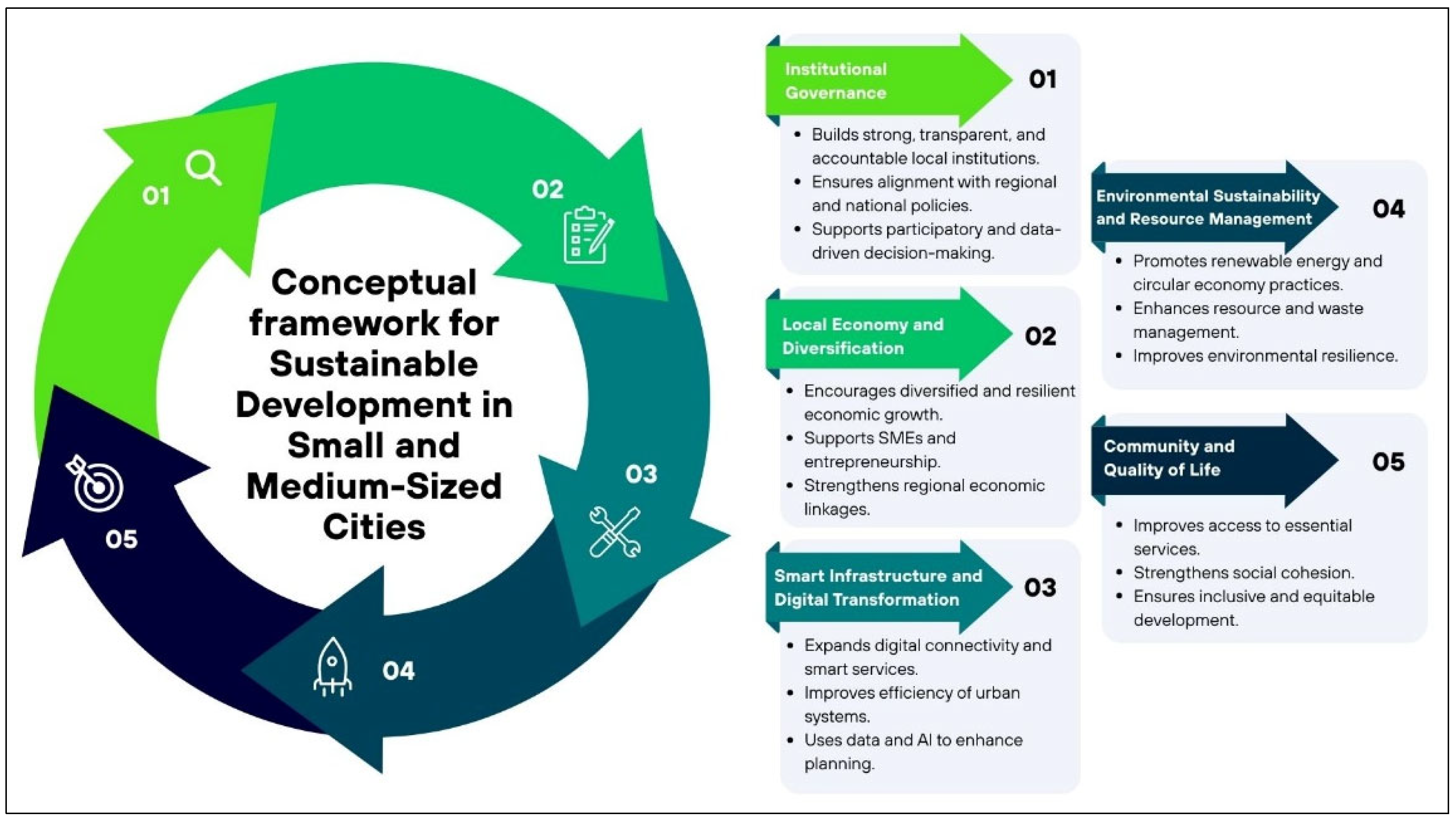
Disclaimer/Publisher’s Note: The statements, opinions and data contained in all publications are solely those of the individual author(s) and contributor(s) and not of MDPI and/or the editor(s). MDPI and/or the editor(s) disclaim responsibility for any injury to people or property resulting from any ideas, methods, instructions or products referred to in the content. |
© 2026 by the authors. Licensee MDPI, Basel, Switzerland. This article is an open access article distributed under the terms and conditions of the Creative Commons Attribution (CC BY) license.