


Abstract
Traditional sports and physical education programs often generate substantial carbon footprints through facility operation, equipment production, and activity-related energy consumption. While physical education offers unique opportunities for experiential environmental learning, limited research has examined how contextualized cooperative challenges specifically enhance pre-service teachers’ low-carbon awareness. This quasi-experimental study investigated whether situational cooperative environmental challenges within a low-carbon physical education program could more effectively develop environmental awareness compared to non-situational cooperative approaches. A pre–post quasi-experimental comparative design involved 143 Spanish pre-service teachers (ages 21–26, 58.9% female) from the University of Girona during 2022–2024. The Experimental Group (n = 104) received situational cooperative environmental challenges with 20 h of preparatory seminars, while the Control Group (n = 39) received traditional reciprocal teaching without preparatory training. Environmental awareness was assessed through reflective narrative portfolios. Despite significant baseline differences between groups, both demonstrated significant pre–post improvements (EG: 105% improvement; CG: 93% improvement). ANCOVA controlling for baseline differences confirmed EG’s superior performance, with a large effect size. The study provides preliminary evidence for integrating contextualized low-carbon concepts into physical education teacher preparation.
1. Introduction
1.1. Research Background and Policy Context
In order to cultivate ecologically conscious individuals towards sustainability, the climate crisis related to climate change necessitates a new paradigm in teaching methods [1,2]. Primary, secondary, and tertiary educational systems are under increasing pressure to incorporate sustainability concepts across disciplines to address the understanding of global CO2 emissions that continue to climb despite international agreements [2]. Because physical education (PE) emphasizes experience-grounded learning, embodied cognition, and social interaction, it offers special opportunities for improving sustainability education when integrated with environmental discourse [3,4].
However, a critical gap exists in understanding how to effectively integrate the basic concepts of environmental education into PE teacher preparation. While Education for Sustainable Development (ESD) frameworks emphasize interdisciplinary integration [5], three persistent challenges remain: (1) PE curricula’s traditional focus on skill movement development with limited attention to social and global issues [6], (2) insufficient chronic environmental literacy among PE teachers associated with synthetic academic curricula [7], and (3) a lack of educational paradigms that genuinely link responsibility for the environment and physical activity [8].
Low-carbon physical education represents a non-described, underdeveloped pedagogical innovation within physical education curricula. However, low-carbon initiatives might be featuring the EU Green Deal Educational Framework and the Spain’s National Strategy for Environmental Education and Sustainability. Low-carbon educational programs may be defined as a situated educational approach that intentionally integrates carbon footprint reduction principles into physical education curricula. The goal of implementing low carbon strategies is to concurrently improve university students’ environmental literacy, pro-environmental behaviors, and physical skills. The Sustainable Development Goals (SDGs) 4 (inclusive quality education), 12 (sustainable consumption and production), and 13 (climate action) are directly addressed by low-carbon physical education. These three interrelated goals are essential to global efforts to develop environmentally conscious citizens.
In this regard, the necessity of incorporating low-carbon principles and environmental consciousness into a variety of fields, especially education, is becoming increasingly apparent [9]. Ding et al. (2024) [10] found that the promotion of sustainable interventions can effectively promote both physical activity and the understanding of the carbon crisis.
1.2. Literature Review and Research Gaps
Physical education (PE), with its unique combination of experiential learning, physical activity, and social interaction, offers an ideal platform for fostering environmental consciousness and sustainable behaviors [3]. However, traditional PE programs often involve significant energy consumption and carbon emissions [8], highlighting the need for innovative educational approaches that align with sustainability goals.
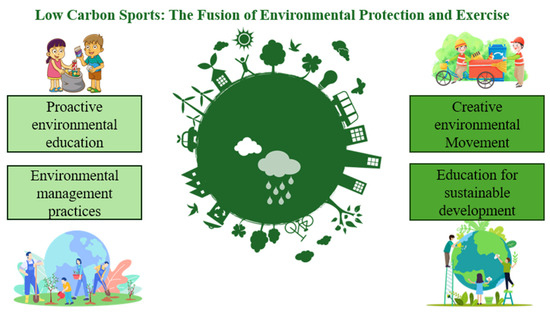
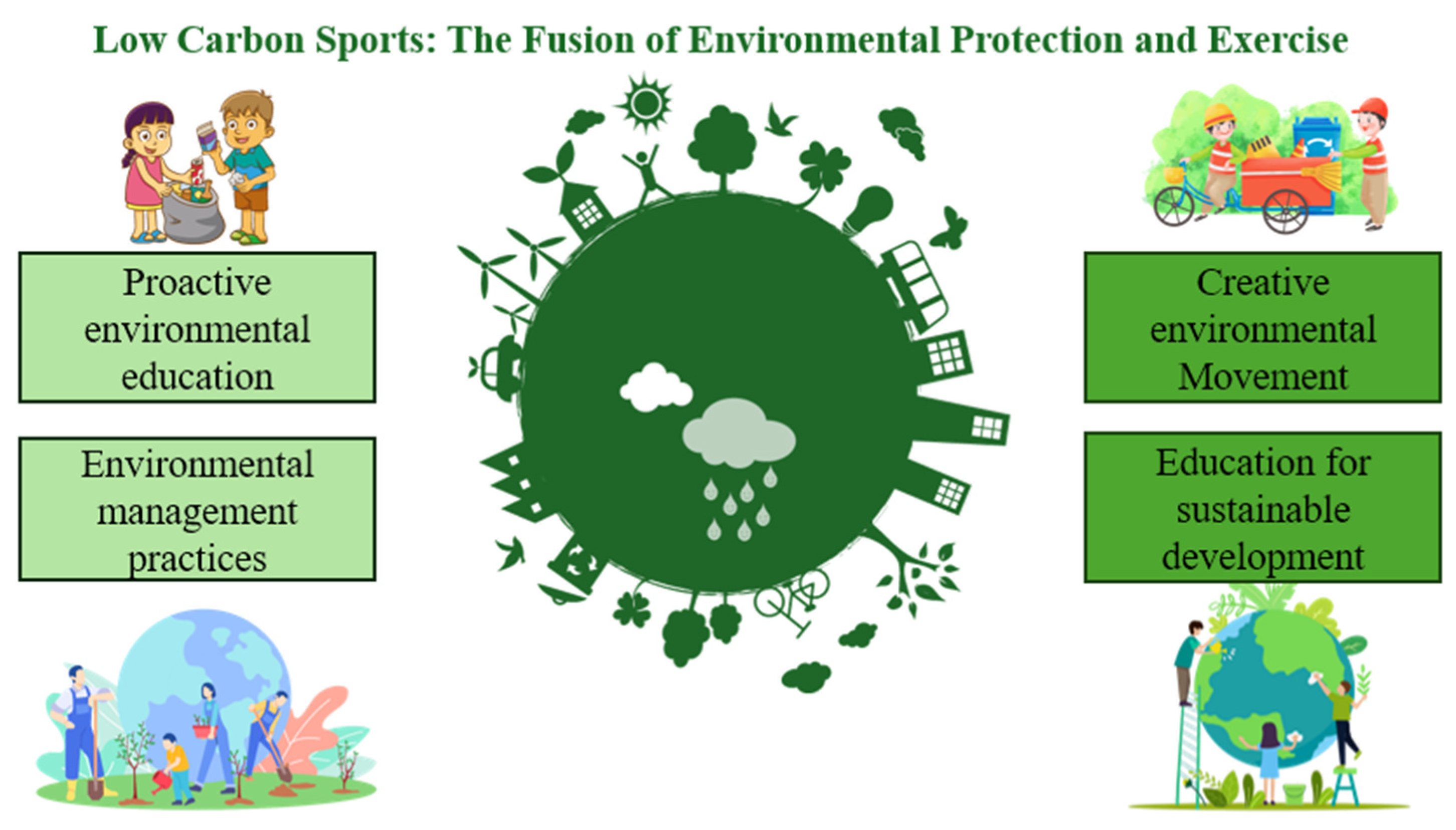
A number of significant issues in modern physical education may be addressed by the implementation of low-carbon activities, which is a ground-breaking pedagogical innovation. These issues include the overemphasis of traditional physical education on skill development at the expense of global issues, teachers’ lack of low-carbon knowledge, students’ low environmental awareness, and the absence of situated content curriculum development [6,7]. Promoting low-carbon approaches uniquely integrates environmental education with physical activity through three core implementation strategies (see Figure 1): Active environmental education (AEE; e.g., eco-walking challenges); Creative environmental movement (CEM; e.g., waste-based movement games); and Environmental managemental practices (EMP; e.g., facility maintenance). This integration of the three strategies may create a powerful synergy that traditional single-discipline approaches cannot achieve. Low-carbon physical education addresses the need for education for sustainable development (ESD) and offers students cooperative learning opportunities through multidisciplinary integration [11,12].
Figure 1.
Components of low-carbon environmental physical education. Illustrates the three core implementation strategies: Active Environmental Education (AEE), Creative Environmental Movement (CEM), and Environmental Management Practices (EMP). This framework operates on how physical activities can simultaneously address health and environmental goals.
The urgency of implementing low-carbon physical education programs is underscored by the significant environmental impact of contemporary sport activities, particularly among the younger generations, in traditional school programs [7]. Due to facility operations, equipment manufacturing, and activity-related energy consumption, traditional sports and physical education programs can produce significant carbon footprints. Physical education’s special role in forming students’ daily habits and awareness makes it a perfect vehicle for developing sustainable behaviors and environmental consciousness, yet current practices contribute to environmental concerns. This reality poses both a challenge and an opportunity [3]. Moreover, addressing global environmental challenges requires collective action and cooperation [13]. Low-carbon sports education not only cultivates individual environmental awareness but also promotes collaborative learning environments where students develop individual sustainable skills and social competencies addressed to develop competencies for sustainable development.
This study presents a novel theoretical integration, contending that the development of low-carbon literacy necessitates the simultaneous activation of environmental cognition processes and social learning mechanisms, a synergy made possible only by cooperative environmental challenges in PE scenarios.
1.3. Theoretical Framework and Research Objectives
Cooperative learning theory posits that positive interdependence where individuals’ success depends on collective achievement drives motivation and deep processing [14,15]. In low-carbon PE, environmental challenges create authentic interdependence: teams must collectively strategize resource use, distribute responsible tasks, and reflect on the impact of actions on the environment. This transforms theoretical environmental concepts into concrete social experiences, addressing a core limitation of traditional environmental education: the gap between knowledge and action [16].
Environmental education theory emphasizes situated, experiential learning where learners develop ecological understanding through direct interaction with environments [17,18]. However, much environmental education remains decontextualized teaching about low knowledge of ecosystems or abstract processes on sustainable concepts [19]. By placing learning in the students’ immediate physical surroundings (sports facilities, campus grounds, movement activities), low-carbon physical education creates cognitive environmental knowledge that may improve knowledge transfer and retention [20].
This study’s pedagogical innovation aligns with the Competency-Based Approach (CBA) advocated by UNESCO (2017) and OECD (2018), which emphasizes developing integrated competencies and combining knowledge, skills, attitudes, and values, all of them addressing sustainable development to tackle environmental challenges. The OECD Learning Compass 2030 specifies competencies for sustainable development, arguing that learners must develop agency through transformative learning experiences [5,21]. In the context of low-carbon PE, situational cooperative environmental challenges operationalize this competency framework: students must anticipate the environmental consequences of physical activities (knowledge activation), take collaborative action to reduce carbon footprints (skill application), and engage in structured reflection on outcomes (situated knowledge). By offering an innovative pedagogical paradigm that clearly connects individual learning processes (cooperative and environmental theories) with societal sustainability goals (SDGs 4, 12, and 13), this competency-based perspective enhances our theoretical integration. Furthermore, our use of reflective narrative portfolios as the main assessment method aligns with the CBA’s emphasis on learner agency and authentic assessment through performance-based tasks, placing this study within current international frameworks for transformative sustainability education.
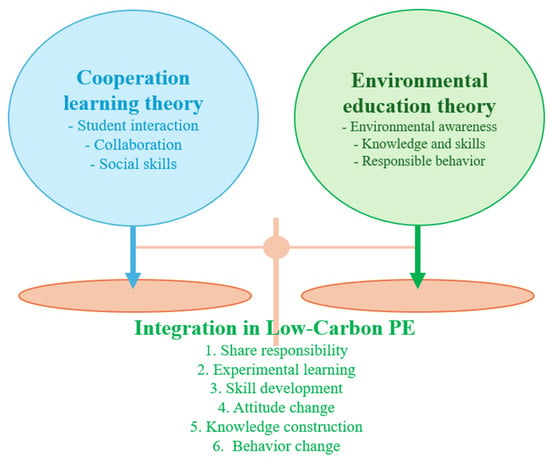
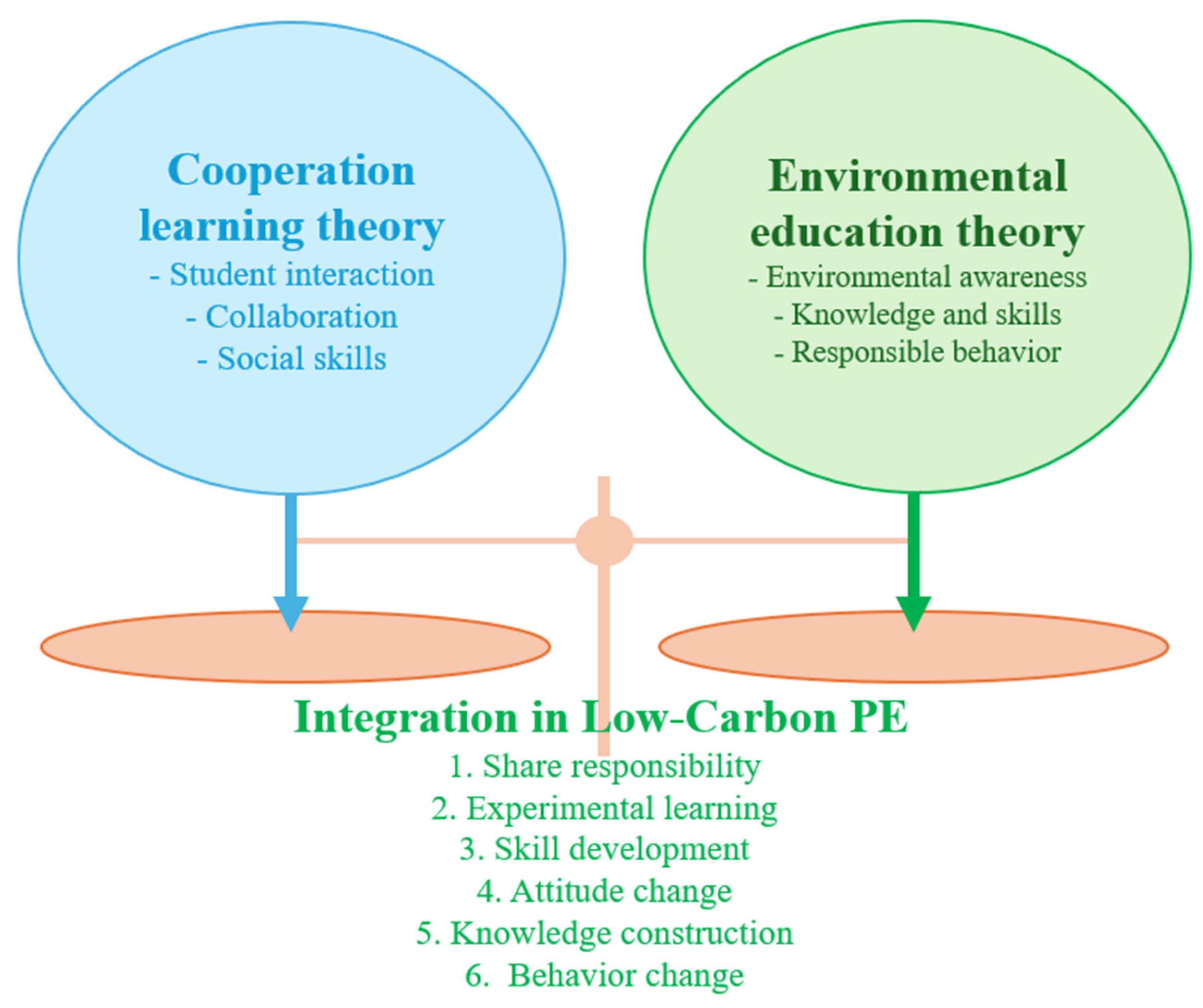
Developing both cooperative action and environmental awareness for tertiary students requires reflective practice. Building on the reflective practitioner model [22] and transformative learning theory [23], we argue that structured reflection on cooperative environmental experiences triggers perspective transformation shifting from viewing the environment as external to recognizing the self as an embedded agent (Figure 2). This identity shift is critical for developing sustainable pro-environmental competencies [24].
Figure 2.
Balanced theoretical framework for low-carbon physical education.
The model depicted in Figure 2 develops the following flow hypothesis: cooperative structures create social interdependence → place-based environmental challenges provide authentic context → reflective practice facilitates individual environmental identity → sustained pro-environmental behavior emerges. The model flow innovation lies in positioning reflection as the critical mediator transforming group experience into individual commitment.
This integrated framework addresses educational limitations for practical implementation. Traditional environmental education often treats learners as passive recipients low in ecological knowledge [25], while cooperative learning studies in PE rarely examine outcomes beyond social skills [15]. By theorizing their intersection, we propose that situational cooperative environmental challenges where environmental problems are embedded in authentic PE contexts requiring collective action may represent an optimal configuration for developing environmental awareness among pre-service teachers.
Despite growing interest in ESD within higher education [26,27], three critical gaps may persist: 1. Limited Pedagogical Models for Environmental PE: While scholars advocate integrating sustainability into PE [8,26], few empirical studies have tested specific pedagogical approaches, with even fewer examining situated environmental contexts. 2. Insufficient Understanding of Context Effects: Cooperative learning research demonstrates varied effectiveness depending on task structure [28,29], yet no studies have compared situational versus non-situational cooperative approaches specifically for environmental learning in PE. 3. Weak Evidence on Reflection as a Mediating Role: Although reflection is theorized as essential for transformative learning [23], empirical evidence linking reflective practice quality to environmental awareness development in PE contexts remains scarce.
Based on the identified gaps in current research and practice, this study addresses the following research questions.
RQ1: Is there a difference in environmental awareness development between pre-service teachers receiving contextualized cooperative environmental challenges and those receiving non-contextualized cooperative approaches in physical education?
RQ2: What is the relationship between reflective practice quality (assessed through narrative analysis) and environmental awareness gains across different instructional approaches?
This study’s main goal is to compare how well contextualized and non-contextualized cooperative environmental challenges induce pre-service physical education teachers to become environmentally conscious and responsible. It also looks at the mediating function of reflective practice quality in the promotion of pro-environmental behaviors. This investigation addresses a critical gap in teacher education research by providing empirical evidence on pedagogical approaches that can prepare future educators to integrate environmental sustainability into physical education curricula, thereby contributing to broader national and international environmental education goals.
2. Methods
2.1. Research Design and Ethical Considerations
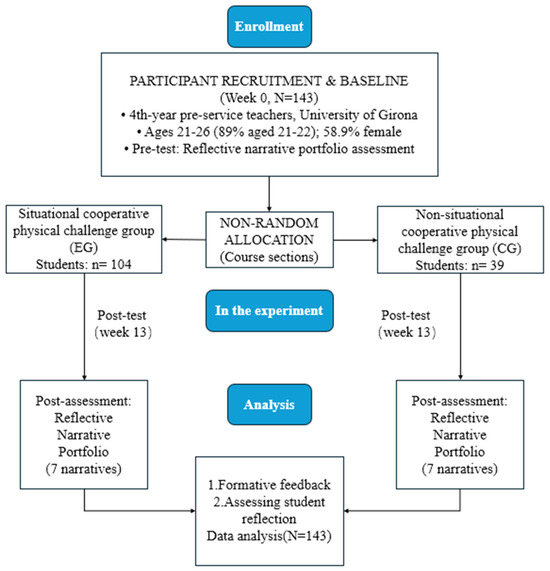
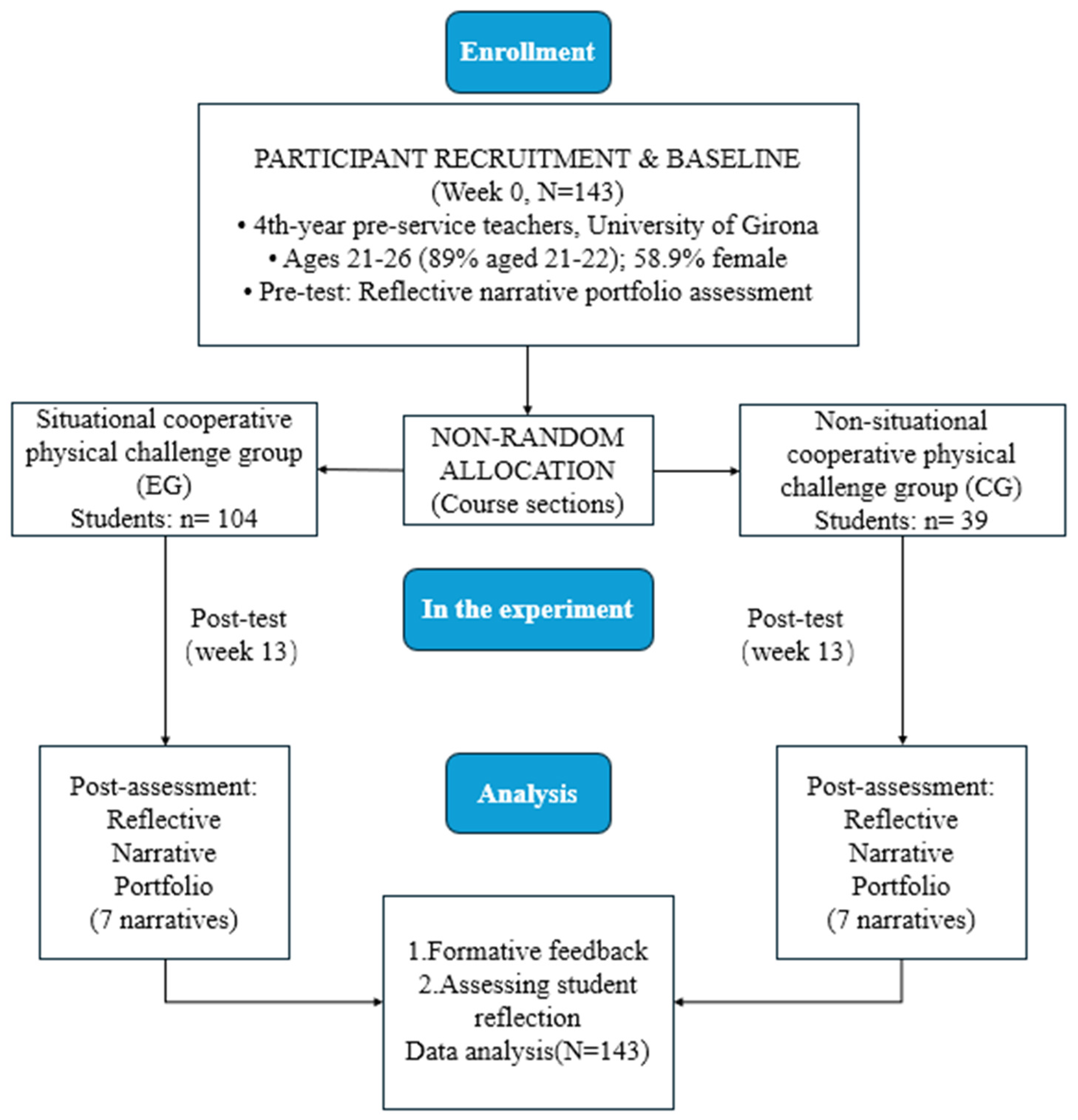
This study employed a quasi-experimental pre–post comparative design with non-equivalent groups [30]. We acknowledge this is not a true experimental design due to non-random assignment and baseline group differences. The design compared the Experimental Group (EG), with situational cooperative environmental challenges + 20-h preparatory seminars; and the Control Group (CG), with non-situational reciprocal teaching without preparatory seminars. The study design is in Figure 3.
Figure 3.
Quasi-experimental study design and participant flow.
Study Variables and Intervention Duration
Independent Variable: The primary independent variable was an instructional approach, operationalized as two distinct conditions:
- (1)
- Experimental condition: Situational cooperative environmental challenges integrated with 20 h of preparatory seminars on low-carbon literacy, cooperative learning principles, and reflective practice
- (2)
- Control condition: Non-situational reciprocal teaching following a standard PE pedagogy curriculum without preparatory seminars
Dependent Variable: Environmental awareness, operationalized as the level of reflective thinking demonstrated in narrative portfolios. This variable was measured using Kember et al.’s four-level reflection rubric, yielding continuous scores ranging from 0 (non-reflective description) to 4 (critical reflection with community application), assessed at pre-test (Week 0) and post-test (Week 13).
Intervention Duration: The study spanned 12 weeks during one academic semester (2022–2023 and 2023–2024 cohorts). The EG received ten 2 h preparatory seminars (Weeks 1–10, total 20 h) followed by seven situational cooperative environmental challenges (Weeks 3–12, integrated within regular PE coursework). The CG participated in seven non-situational cooperative activities (Weeks 1–12) without preparatory seminars, following the standard PE pedagogy curriculum. Both groups completed weekly reflective narrative assignments throughout the intervention period and submitted final portfolios at Week 13.
Ethical approval was obtained from the University of Girona’s Quality Commission (Protocol: XINTERAC03UdG24, approved 8 September 2024). All participants provided written informed consent after receiving detailed information about the study’s purpose, voluntary nature, data confidentiality, and right to withdraw. No personal identifying information was collected beyond demographic variables. The study adhered to the Declaration of Helsinki.
2.2. Context and Setting
The study was conducted at the University of Girona, Spain, during the 2022–2023 and 2023–2024 academic years. The participants were fourth-year pre-service teachers enrolled in Bachelor’s degrees in Primary School Teacher Education or double degrees in Primary and Early Childhood Teacher Education, all fulfilling mandatory PE pedagogy coursework requirements.
The participants were self-selected into EG or CG based on course section enrollment determined by university scheduling constraints, not researcher assignment. This non-random allocation constitutes a critical limitation, as discussed in Section 4.4. The resulting groups differed significantly at baseline (detailed in Section 3.1), necessitating statistical controls in analysis. Students completed the questionnaire by means of self-evaluation and were able to withdraw from the project at any time during the experiment.
The EG received substantially more instructional time (20 additional hours of seminars) than CG, confounding “situational context” with “instructional dosage.” Therefore, superior EG outcomes could reflect either (a) the effectiveness of situational cooperative challenges, (b) the benefit of additional instruction time, or (c) both factors. This design limitation prevents definitive causal attribution.
The EG group was informed that they would be participating in a low-carbon research project in which the teaching method would be based on both cooperative and reflective learning activities. The EG group participated in ten two-hour seminars. Five of these focused on describing low-carbon literacy, four focused on cooperative learning for sustainable development, and one focused on reflective learning: (1) the goals of the 2030 Agenda and the 17 Sustainable Development Goals (SDGs), (2) higher education in the context of the Sustainable Development Goals [31], (3/4) successful case studies of low-carbon physical education teaching activities [32], (5) core competencies for sustainable student development [33], (6/7) cooperative learning principles and competencies for sustainable development [34,35], (8) cooperative learning in physical education domains [36], (9) successful case studies of cooperative learning experiences [29], and (10) reflective learning principles and dimensions [37,38].
The research context and setting were designed to control for extraneous variables while distinguishing the experimental and control conditions. Table 1 details the key contextual factors and group-specific differences.
Table 1.
Research Context and Setting: Group-Specific Details.
The CG group did not attend the seminars, instead choosing formal sessions based on traditional reciprocal education, a technique that consists of students working in groups of three: two undertake the job/activity, while the third observes, takes notes, and assesses.
2.3. Participants
Following the application of the inclusion and exclusion criteria, the final sample comprised 143 pre-service teachers (retention rate: 97.3% of initial 147 consenting participants). Participants’ ages ranged from 21 to 26 years (M = 21.4, SD = 0.8), with the majority (89.5%) aged 21–22 years. The sample included more female students (n = 84, 58.9%) than male students (n = 59, 41.1%), reflecting the gender distribution typical of teacher education programs in Spain.
Group allocation resulted in unequal sample sizes: 104 students (72.7%) in the Experimental Group (EG) and 39 students (27.3%) in the Control Group (CG), determined by pre-existing course section assignments rather than random allocation. This 2.67:1 ratio represents a limitation of the quasi-experimental design (see Section 4.4 Limitations).
Post hoc power analysis using G*Power 3.1 [39] indicated that with α = 0.05, the observed effect size for the primary outcome (Cohen’s d = 1.161 for EG pre–post improvement), and the actual sample sizes (n1 = 104, n2 = 39), the study achieved >99% statistical power for detecting between-group differences, substantially exceeding the conventional 80% threshold. However, the unequal group sizes reduced statistical efficiency compared to balanced designs, requiring larger effect sizes to detect group differences at equivalent power levels.
All participants were native Spanish speakers enrolled in Catalan-medium instruction programs. None reported prior formal training in environmental education pedagogy beyond general undergraduate sustainability content.
Participant Selection Criteria
Inclusion Criteria. Participants were eligible for inclusion if they met all of the following criteria:
- (1)
- Enrolled in the mandatory fourth-year Physical Education Pedagogy course (PEED4001) at the University of Girona during the 2022–2023 or 2023–2024 academic year
- (2)
- Pre-service teacher status in either the Bachelor’s degree in Primary School Teacher Education or the double degree in Primary and Early Childhood Teacher Education
- (3)
- Aged between 18 and 30 years at the time of enrollment
- (4)
- Provided written informed consent after receiving detailed study information
- (5)
- Completed both pre-test (Week 0) and post-test (Week 13) reflective narrative assessments
- (6)
- No prior formal training in environmental education pedagogy (verified through self-report questionnaire)
Exclusion Criteria. Participants were excluded if any of the following applied:
- (1)
- Previous participation in environmental education research studies (to avoid contamination effects)
- (2)
- Professional teaching experience exceeding 6 months (to ensure homogeneity as pre-service teachers)
- (3)
- Incomplete narrative portfolio submission, defined as fewer than 5 of 7 required reflective narratives (71% completion threshold)
- (4)
- Withdrawal of consent at any point during the study period
- (5)
- Extended absence (>3 consecutive weeks) during the intervention period due to medical or personal reasons
2.4. Low-Carbon Situational Cooperative Environmental Challenges
Cooperative environmental challenges [40] represent purpose-driven cooperative learning activities within environmental physical education. In these challenges, students work collectively to organize themselves, define the problem, and devise strategies, fostering a sense of co-responsibility for group learning outcomes. Each team not only determines strategies for task completion but also evaluates and utilizes individual member strengths. While one team’s approach may prove effective, another’s may not, prompting critical reflection and adaptive strategies. Cooperative environmental challenges serve as vehicles for acquiring competencies through teamwork, fostering intrapersonal professional identity development, and honing strategic decision-making skills. The PSTs were conscious of the need to shift consumption and production patterns to separate human well-being from environmental deterioration.
The EG group actively participated in the design of, implementation of, and reflection on seven situational cooperative low-carbon challenges, providing insights into activity content, objectives, student tasks, and expected educational outcomes.
2.5. Instruments and Measures
2.5.1. Reflective Narratives
The students presented a reflective narrative portfolio consisting of seven narratives, one for each of the seven low-carbon cooperative challenges (Table S1). The portfolio provided quantitative evidence on Kolb’s experiential learning cycle’s abstract–concrete component and active–reflective dimension, where the former refers to how we acquire new knowledge or experiences and the latter to how we process or modify what we observe [20].
The low-carbon physical education program comprises three primary categories encompassing seven distinct activity themes. The first category, Active Environmental Education (AEE), consists of three components: plogging activities, ecological walking challenges, and the Green Olympic relay. This category primarily aims to facilitate environmental education through direct physical activity experiences while promoting students’ physical fitness and health development. The AEE activities are specifically designed to integrate cardiovascular exercise with environmental stewardship, creating a synergistic approach to health and ecological awareness.
The second category, Creative Environmental Sports (CES), encompasses two main activities: creative sports games utilizing recycled materials and environmental protection-themed recreational activities. The fundamental objective of this category is to emphasize innovative thinking and problem-solving capabilities while cultivating students’ environmental consciousness. Through CES, students engage in creative processes that transform waste materials into functional sports equipment, thereby developing both their innovative capacity and environmental awareness simultaneously.
The third category, Environmental Stewardship Activities (ESA), incorporates two key components: sports facility maintenance and ecological conservation trail activities. The primary purpose of this category is to foster students’ practical action orientation and sense of responsibility while promoting sustainable development skills. ESA activities are structured to provide hands-on experience in environmental management and conservation, enabling students to develop tangible skills in sustainability practices while engaging in physical activity.
This comprehensive program structure demonstrates a methodical approach to integrating environmental education with physical education, where each category serves distinct yet complementary pedagogical objectives. The program’s design ensures that students not only develop physical competencies but also acquire environmental awareness and practical sustainability skills through structured, purposeful activities. The low-carbon sport program enables students to engage in end-of-day reflective activities to develop their physical, emotional, cognitive, and social development. This integrated approach represents a novel paradigm in physical education, where traditional fitness objectives are seamlessly combined with environmental stewardship goals, creating a holistic educational experience that addresses both physical development and environmental consciousness. Narratives can encourage introspection in several ways. The first step involves considering the focus of the reflection (identifying, characterizing, and judging it); previous conceptions and beliefs (describing, analyzing, and elaborating on ideas or beliefs about oneself, the context, or the discipline/profession); questions and hypotheses about the professional action (asking about the focus of the professional action, the context, or the reflection); defining, debating, and applying new learning objectives; and how to carry out action plans and strategies in the future in order to start a new reflective cycle [41].
According to [38], the second step involves reflecting on one’s self-identity, which can be determined by factors such as self-esteem (which refers to the professional appreciation of job performance and feedback received), task perception (which describes, analyzes, and elaborates on ideas, beliefs, and moral considerations regarding low-carbon tasks), job motivation (which refers to motivating factors in the profession), and future perspectives on developing low-carbon strategies in schools.
Third, when every team member can accomplish a task, good interdependence develops [14]. Group members must work together (in person) at some point during the process to fulfill their particular responsibilities. Students encouraged to not only look for deeper relationships within the group but also to improve their social and adaptive skills as a result. Promotive interaction makes up a new dimension in which team members’ success cannot be solely dependent on the success of a part of the team.
The appropriate application of social skills in a small group context is the fourth component. To achieve shared objectives, students need to acquire several abilities, including getting to know their fellow group members, speaking clearly, offering support to one another, and constructively resolving conflicts. Group processing is the fifth category of processing. Following the completion of every written reflection narrative, formative feedback was given to each PST. In other words, each written narrative was carefully analyzed and at least five comments were made by the study’s authors.
To ensure consistent implementation across EG sections, all preparatory seminars were delivered by the same instructor team (authors T.S. and J.C.) using standardized PowerPoint presentations and activity protocols. Challenge facilitation followed detailed implementation guides specifying (1) environmental problem presentation, (2) team formation procedures, (3) time allocations, (4) reflection prompts, and (5) assessment criteria. CG sections were taught by regular course instructors (not study authors) following standard PE pedagogy curricula.
Fidelity checks included (a) instructor self-report checklists confirming protocol adherence (completed after each session) and (b) random classroom observations by research team members (15% of sessions, κ = 0.87 agreement on protocol adherence). No significant fidelity deviations were documented.
2.5.2. Assessment of the Students’ Reflections
To assess the level of reflection in written reflective narratives, the four scales proposed by [42] were used. The level of reflection in writing is likely to be divided into four categories: description, argumentation, reflection, and critical reflection [42]. Using this model ensures consistency in evaluating the levels of reflection in students’ narratives.
The descriptive level (Level 1, description) is when contextualized low-carbon challenges are described in a very simple sentence or scheme that is just descriptive and without reflection. Although not reflective, this level demonstrates the students’ grasp of the underlying concepts and cooperative components of the challenges. In the argumentation level (Level 2, argumentation), students demonstrate an understanding of low-carbon science and its application to activities.
In the reflection level (Level 3, reflection), students’ perspectives become intricately linked to the learning process, indicating a sense of belonging and competence. Through a process of reflection in which the low-carbon challenges are analyzed in relation to what was taught, the student is able to suggest high levels of reasoning involving the layout and development of some of the challenges. There was also personal involvement in designing the activity that went beyond theory, as students critically and reflectively analyzed all they had learned. Finally, at the critical reflection level (Level 4, critical reflection), students shift their perspective to propose community and social applications for low-carbon scientific concepts or exhibit collectively acquired competencies. They apply their own reasoning to describe methods, provide contextualization, focus on low-carbon science and physical education characteristics, develop direct questions based on experiments, and create role models to explain them. Moreover, they use personal criteria to develop creative and inclusive methods to enhance environmental protection. To evaluate the reflective narratives, two members of the study team conducted the equivalent evaluation using the technique described in [43], after which they agreed on the information units to code. The remaining writers then modified the narratives, with 92.7% agreement on the methodological analysis for the EG challenges and 88.4% for the normal CG tasks. Each narrative portfolio was graded on a scale of 0 to 4 with intervals of 0.25. Level 1 (description) included scores ranging from 0 to 1; level 2 (argumentation) included scores ranging from 1.25 to 2; level 3 (reflection) included scores ranging from 2.25 to 3; and critical reflection scores from 3.25 to 4 correspond to level 4.
2.6. Data Analysis
Statistical analyses were conducted using SPSS 26.0 [44] and R 4.3.1 [45]. The significance level was α = 0.05 (two-tailed). Missing data (<3% of narratives due to illness-related absences) were handled via listwise deletion. Kolmogorov–Smirnov and Shapiro–Wilk tests confirmed normal distributions for pre- and post-test scores in both groups (all p > 0.05); Levene’s test assessed variance equality for t-tests; Independent samples t-tests compared groups on demographics and pre-test scores. Cohen’s d was calculated for within-group pre–post comparisons and between-group comparisons using pooled standard deviations. For ANCOVA analyses, partial eta-squared (partial η2) was computed to quantify the proportion of variance in post-test scores attributable to group membership after controlling for pre-test scores. Effect sizes were interpreted using the following [46] conventions: Cohen’s d (small: 0.2, medium: 0.5, large: 0.8) and partial η2 (small: 0.01, medium: 0.06, large: 0.14). Post hoc power analysis was conducted using G*Power 3.1 [39] to determine achieved statistical power based on observed effect sizes and sample sizes.
3. Results
3.1. Preliminary Analyses: Baseline Group Comparisons
As reported in Section 2.2, groups did not differ significantly in terms of age (t = 1.65, p = 0.101), gender (χ2 = 0.13, p = 0.722), program enrollment (χ2 = 0.28, p = 0.597), or prior environmental education (χ2 = 0.84, p = 0.359). This demographic similarity suggests selection bias related to individual characteristics is unlikely, though self-selection into course sections remains a confound in Table 2.
Table 2.
Baseline (Pre-Test) Environmental Awareness Comparison Between the EG and CG groups.
EG demonstrated significantly higher baseline environmental awareness than CG (d = 1.09, very large effect), violating the assumption of group equivalence in quasi-experimental designs. This 0.81-point difference (nearly one full reflection level) indicates EG started substantially more advanced.
3.2. Main Analyses: Environmental Awareness Development
3.2.1. Within-Group Changes (Pre–Post Comparisons)
Table 3 used paired t-tests to analyze the differences between pre–post test scores for EG and CG. Both groups demonstrated statistically significant and practically meaningful improvements: EG improved 1.84 points (105% increase from baseline), from a low argumentation level (M = 1.75) to a high reflection level (M = 3.59); CG improved 0.87 points (93% increase from baseline), from a habitual description level (M = 0.94) to an argumentation level (M = 1.81).
Table 3.
Within-Group Pre–Post Environmental Awareness Changes for both the EG and CG groups.
Effect sizes were exceptionally large for both groups (EG: d = 1.96; CG: d = 2.40), surpassing typical educational intervention effects [47]. However, the larger Cohen’s d for CG is partially artifactual; it reflects lower baseline variability (SD = 0.37) rather than necessarily greater improvement.
3.2.2. Between-Group Comparisons: Addressing Baseline Differences
Table 4 shows that EG scored 1.78 points higher than CG at post-test (d = 2.98, extremely large effect). However, this estimate is confounded by baseline differences (EG started 0.81 points higher). The unadjusted difference (1.78) includes both baseline advantages (0.81).
Table 4.
Post-Test Score Comparison Without Baseline Adjustment for the EG and CG Groups.
After statistically equating groups on baseline awareness, EG still outperformed CG by 1.64 points at post-test (partial η2 = 0.610, indicating 61% of post-test variance was explained by group membership after controlling for pre-test). This adjusted difference is smaller than the unadjusted difference (1.78 vs. 1.64), confirming that the baseline advantage inflated raw comparisons in Table 5.
Table 5.
ANCOVA Results: Post-Test Scores Controlling for Pre-Test. *** p < 0.001, * p < 0.05.
However, this 1.64-point advantage represents a difference of approximately 1.5 reflection levels, translating to EG reaching critical reflection (Level 4) versus CG reaching argumentation (Level 2). This is both statistically and educationally significant.
To further address baseline non-equivalence, we used nearest-neighbor propensity score matching (PSM) on pre-test scores to create balanced sub-samples.
After matching (n = 39 per group), pre-test scores were statistically equivalent (p = 0.517, d = 0.16). In this balanced sub-sample, the post-test difference was 1.62 points (95% CI [1.35, 1.89]), similar to the ANCOVA-adjusted estimate (1.64); and the gain score difference was 1.56 points (95% CI [1.28, 1.84]), as shown in Table 6. This convergence across methods strengthens confidence that EG’s superiority is not solely attributable to baseline differences. However, PSM reduced the EG sample to its lowest-performing 39 participants, potentially underestimating EG’s full effectiveness.
Table 6.
PSM Matched Sample Analysis (EG, n = 104; CG, n = 39).
3.2.3. Qualitative Findings: Mechanisms of Perspective Transformation
Among the 36 participants (25% of EG, 8% of CG) who achieved Level 4 (critical reflection) at post-test, thematic analysis of their narratives identified three transformation mechanisms.
- Mechanism 1: Embodied Cognition to Conceptual Understanding
“Before, ‘carbon footprint’ was just abstract numbers. But when we calculated how much CO2 we saved by creating sports equipment from waste cardboard versus buying new and felt the physical work of transforming trash into functional objects the concept became real. Now I understand sustainability through my body, not just my brain.” (EG Participant 47, Post-Narrative 4)
- Mechanism 2: Social Accountability to Individual Commitment
“In our plogging team, when one person didn’t bring reusable bags, we all felt the inconvenience. That collective disappointment made me realize: as a future teacher, my low-carbon habits will affect not just me, but my entire class. I’m accountable to a community.” (EG Participant 82, Post-Narrative 1)
- Mechanism 3: Role Experimentation → Identity Shift
“Designing the ecological trail, I wasn’t ‘student completing assignment’ I was ‘environmental educator creating learning space.’ Playing that role, even temporarily, showed me: this is who I want to be. PE teachers aren’t just skill instructors; we’re shapers of values.” (EG Participant 29, Post-Narrative 7)
Notably, CG narratives rarely (7.7% vs. EG’s 34.6%) mentioned these identity-shift or collective accountability themes, instead focusing on skill execution and task completion, supporting the theory that situational contexts activate deeper transformative processes.
4. Discussion
4.1. Principal Findings and Theoretical Implications
This quasi-experimental study provides preliminary evidence that integrating situational cooperative environmental challenges into physical education, supported by theoretical preparation in low-carbon literacy and cooperative learning, significantly enhances pre-service teachers’ environmental awareness and responsibility compared to traditional sport teaching approaches without explicit environmental framing.
Situational contexts amplify cooperative learning’s environmental benefits. The 1.6-reflection-level advantage of EG over CG (after baseline adjustment) supports our theoretical proposition that situational cooperative challenges where environmental problems are embedded in authentic PE contexts create more powerful learning conditions than generic cooperation. This aligns with situated cognition theory [48] and place-based education research [17] suggesting that situated and grounded environmental problems provide individual and social awareness. Concrete foundations for abstract environmental concepts are provided via physical education contexts (e.g., witnessing waste-to-equipment transformation makes “circular economy” tangible). In situational challenges, cooperative strategies foster realistic interdependence; teams must work together to address actual environmental challenges. This extends [15] the cooperative learning framework beyond traditional PE outcomes (motor skills, social competence) to demonstrate potential for cultivating environmental consciousness, a novel contribution.
Reflection quality mediates transformation toward environmental challenges awareness. The strong correlation between reflection quality and awareness development (r = 0.831), combined with the significant group reflection interaction, empirically supports transformative learning theory: experiencing alone is insufficient; critical reflection is the mechanism translating experience into perspective transformation [23].
However, our finding that situational contexts strengthen this reflection–awareness link (EG: r = 0.794 vs. CG: r = 0.723) suggests an important nuance: what students reflect upon matters. Compared to generic tasks that replicate the emphasis on reflection-in-action within complex, authentic professional contexts, authentic environmental challenges offer deeper, more relevant meaning for reflection [22].
Both groups improved but achieved different developmental endpoints. That is, even the CG, receiving only reciprocal teaching without environmental framing, showed significant improvement (d = 2.40). This suggests that merely engaging in structured physical activities with peer feedback develops some baseline reflective capacity—consistent with research on reflective practice in teacher education [37].
However, EG progressed to qualitatively different levels: CG reached “argumentation” (understanding low-carbon concepts); EG reached “critical reflection” (perspective transformation and societal application).
This dichotomy is important for teacher education because, while critical reflection allows pre-service teachers to embody environmental principles and motivate students to take action toward a broader educational aim, argumentation may allow them to teach about the environment [25].
Qualitative analysis revealed that EG participants frequently described professional identity shifts redefining a “PE teacher” as an “environmental educator.” This identity transformation is theoretically significant: environmental behavior research consistently shows that identity-based motivations, e.g., “I am an environmentally responsible person”, predict sustained pro-environmental action more powerfully than knowledge or attitudes alone [24,49].
By designing environmental challenges requiring role experimentation, e.g., “environmental educator creating trail”, the intervention developed in this study activated identity formation processes and promoted critical knowledge for teacher education where professional identity development is central [43].
4.2. Situating Findings in Existing Literature
Our findings partially align with studies [32,50,51] on low-carbon school programs in Malaysia and Singapore, which reported positive impacts on students’ environmental literacy. However, those studies examined K-12 students using pre–post surveys without control groups, limiting causal inference. Our quasi-experimental design with comparison group and controlled analyses provides stronger (though still preliminary) causal evidence specifically for teacher education contexts, a gap in prior literature.
Bores-García et al. [36] systematic review of cooperative learning in PE (2015–2020) found consistent benefits for social skills, motivation, and achievement but noted that only 3 of 47 reviewed studies examined environmental outcomes. Our study directly addresses this gap, demonstrating that cooperative learning’s benefits can extend to environmental consciousness when challenges are designed with explicit environmental goals expanding the scope of what PE educators consider achievable outcomes.
4.3. Practical Implications: A Multi-Scale Implementation Framework
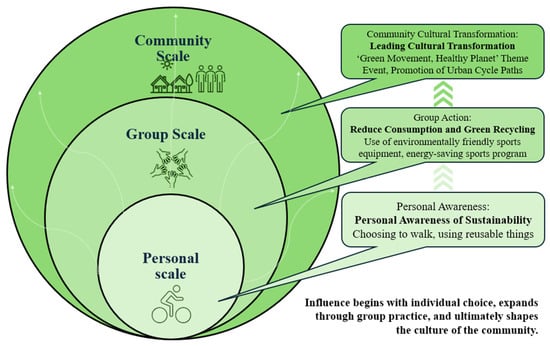
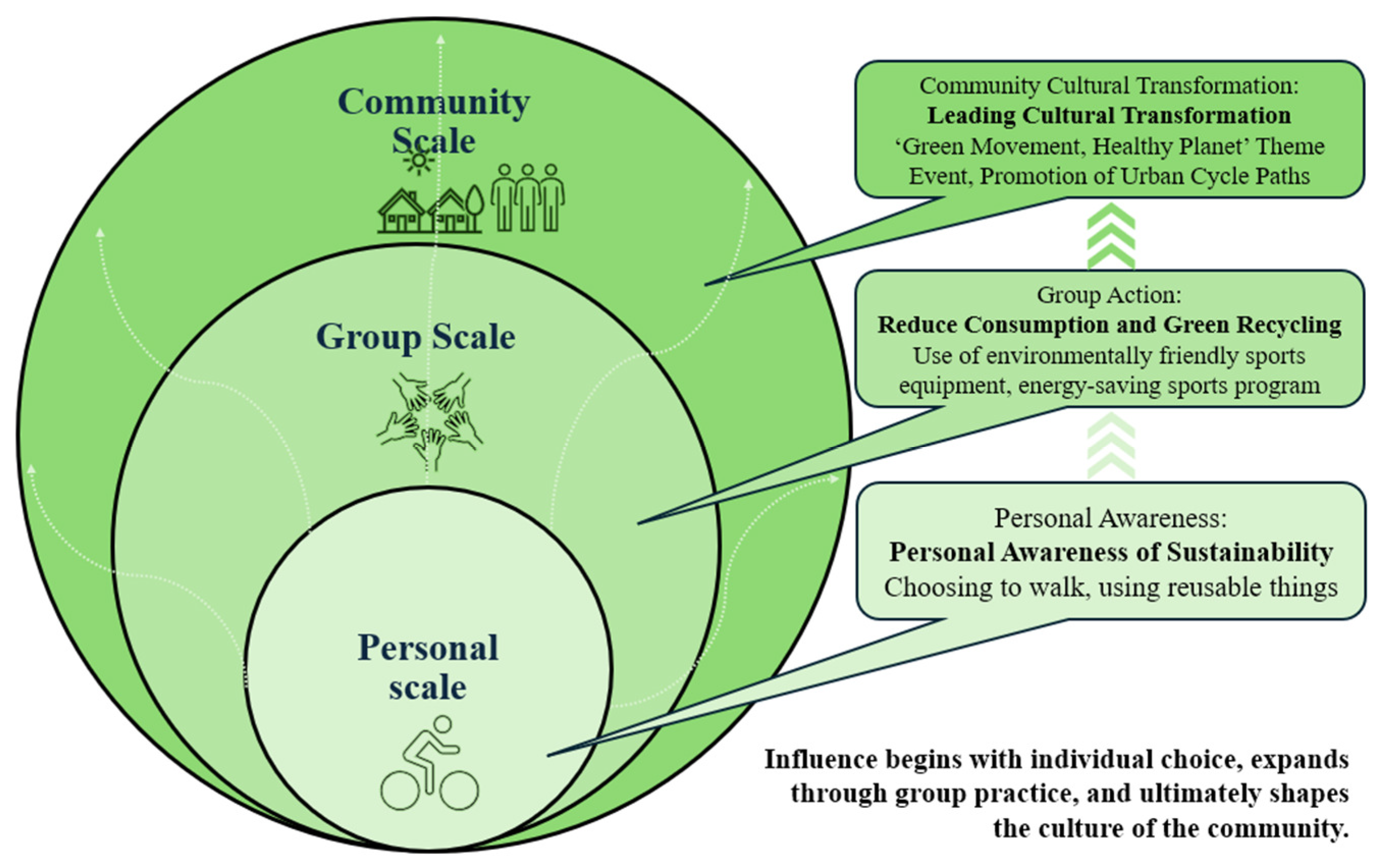
Building on our findings, we propose a Three-Scale Implementation Framework for low-carbon physical education (Figure 4), addressing the following question: How can PE educators translate these findings into practice?
Figure 4.
The key elements of low-carbon sport radiate from the individual to the group and from the group to the community.
- (1)
- Personal scale: Personal awareness of sustainable development [52]. This element operates at the most central level: the individual level. Through low-carbon sports, students can cultivate their personal green awareness, gradually form a low-carbon lifestyle, and reduce greenhouse gas emissions at the source. This inherent shift gradually shapes their daily choices, leading to the adoption of low-carbon lifestyles and the reduction in greenhouse gas emissions from the most basic sources of personal behavior.
- (2)
- Group scale: Reduce consumption and green recycling [53]. Extending outwards, this element works at the group or class level. School sports activities have a high demand for venues and facilities, and the traditional construction and operation mode will consume a lot of energy and resources [54]. Low-carbon physical education advocates follow the concept of environmental protection in the construction of facilities and the selection of equipment, giving priority to the use of renewable materials and clean energy, promoting the sustainable use of resources, and reducing damage to the environment.
- (3)
- Community scale: Leading cultural transformation. At the broadest level, this element extends to the entire school community and beyond. Physical education is important for public sports health and spreading the concept of healthy living [55]. Through the creation of green campuses, the concept of low carbon can be diffused in the campus. For example, low-carbon slogans are posted in playgrounds and gymnasiums; sports and cultural activities with low-carbon themes are organized; low-carbon content is incorporated into school publicity materials, etc., so as to form a strong low-carbon cultural atmosphere.
In addition, as the teaching of low-carbon knowledge and environmental awareness has been neglected in general education programs [56], it is necessary to incorporate low-carbon and environmental protection knowledge into physical education by combining sports programs so that students can understand the importance of a low-carbon lifestyle. For example, the concepts of climate change, energy saving, and emission reductions are introduced in theory classes, and low-carbon sports programs, such as walking, cycling and hiking, are taught in practical classes. Through course content, students’ low-carbon awareness is continuously enhanced. The cultivation of such mindfulness requires the strengthening of physical education teachers’ awareness of low-carbon environmental protection so that they can naturally convey low-carbon concepts in the teaching process. It is therefore necessary to provide relevant lectures or training to enhance teachers’ awareness of the importance of low-carbon sports and to master the corresponding teaching methods [7].
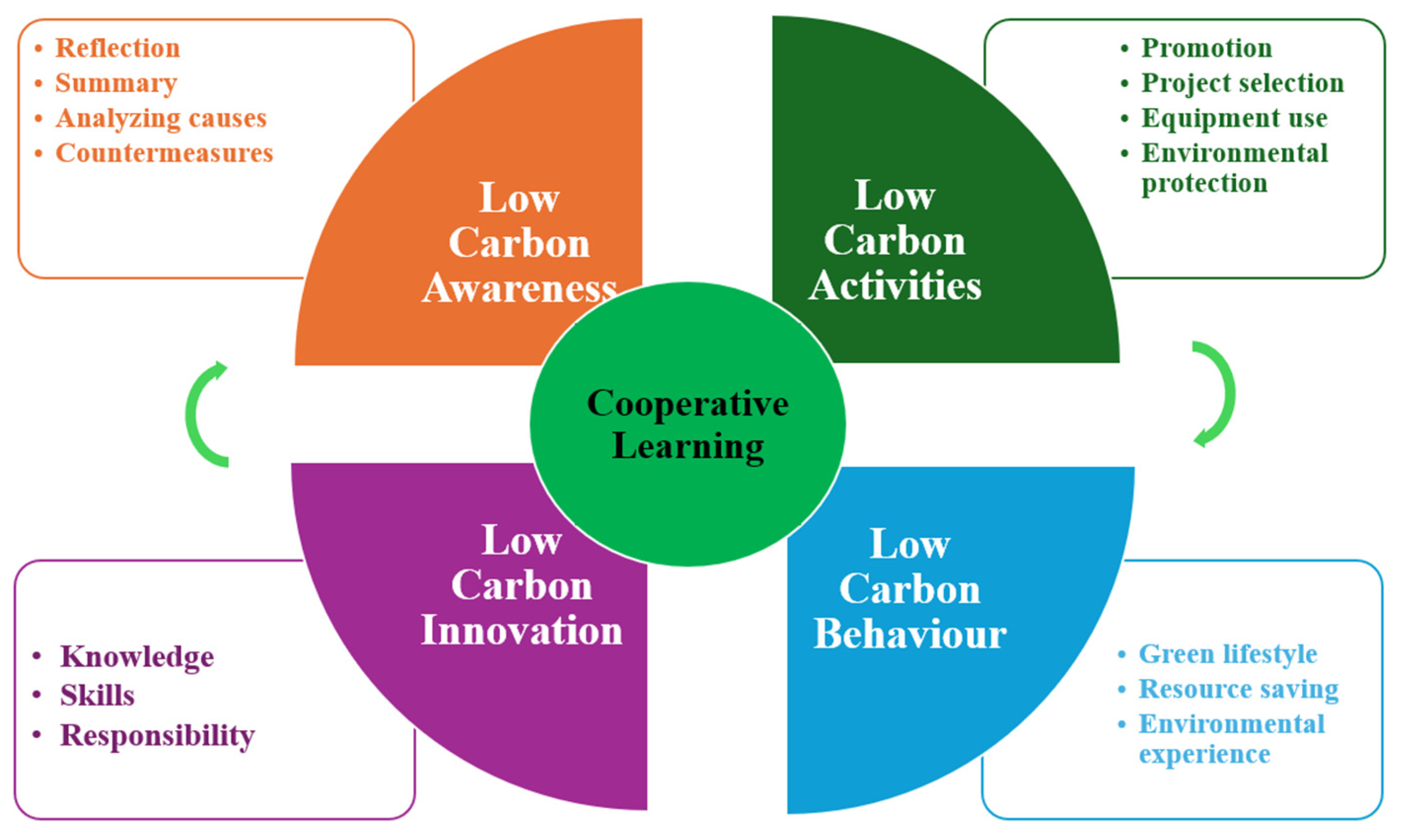
4.4. Low-Carbon Literacy Based on Cooperative Learning
Students’ low-carbon literacy may be enhanced through cooperative learning. It may promote student engagement, develop critical thinking, strengthen teamwork abilities, and produce observable results in low carbon [57]. Within cooperative learning, low-carbon strategies are designed to immerse students in cooperative challenges, thereby yielding critical and situated educational outcomes compared to traditional non-challenging teaching challenges [58]. The foundations and structure of low-carbon literacy based on collaborative learning are shown in Figure 5.
Figure 5.
Cooperative learning for low-carbon literacy. The cooperative learning scenario, designed through low-carbon innovative activities, induces personal changes in individual behavior and promotes environmental awareness.
Our findings corroborate the pivotal role of low-carbon awareness and behavioral practices in nurturing students’ low-carbon literacy and validate the feasibility of low-carbon literacy projects in tertiary educational settings [51]. Promoting interaction in cooperative learning not only raises individual awareness but also promotes sustainable development through cooperative action [26]. Responsible pre-service teachers will impact the growth of students’ low-carbon consciousness as responsible leaders that may impact the environmental awareness of their followers [59]. Individual commitment to sustainable development is essential for promoting global sustainable development [60].
4.5. Research Limitations
This study has several limitations to acknowledge. First, non-random group assignment led to significant baseline differences in environmental awareness. The experimental group included 20 additional hours of preparatory seminars confounding instructional context with dosage. Second, the sample was restricted to pre-service teachers from a single university in Spain, limiting generalizability. Third, environmental awareness was solely measured via reflective narratives without objective behavioral assessments. Fourth, the absence of long-term follow-up prevents conclusions about the sustainability of observed improvements. We may consider that such instructional practice and the level of innovation necessitate a reformulation of specific physical competencies for positioning students on a situational real domain in which the actual conditions can limit the results.
4.6. Future Research Trends
Research into environmental protection and education has focused mainly on raising the environmental awareness and practice of the public through educational initiatives. A growing body of research emphasizes the importance of integrating the concept of sustainable development into education across disciplines in order to develop low-carbon literacy among students [61,62,63]. Departing from traditional didactic teaching approaches, contemporary environmental education advocates for participatory and experiential pedagogical methods, enriching understanding and honing environmental competencies through hands-on activities and case studies.
Moreover, this study found that increasing the number of challenging scenarios has a more positive effect on promoting individuals’ awareness of low-carbon and environmental protection. Likewise, it calls for creating a low-carbon and green learning environment on campus to cultivate students’ environmental habits; for schools, families, and communities join forces to create an environmentally friendly atmosphere [64]; and for promoting the formulation of relevant policies and regulations to institutionalize and standardize environmental education [65].
The focus of the study on the integration of sport and the environment was to assess the environmental impact of outdoor sports and to explore the greening of sports facilities, the life-cycle management of sports equipment, and environmental protection measures for major events, with the aim of achieving sustainable development in sport and the environment. It is necessary to actively explore effective ways of integrating environmental protection elements into sports curricula and training, promoting low-carbon lifestyles, and disseminating the concept of environmental protection [66]. Whether it is environmental education or research on the integration of sport and the environment, the overarching goal is the promotion of sustainable development and the mitigation of environmental pressures. These endeavors collectively contribute to humanity’s ongoing pursuit of harmonizing the economy, society, and natural ecosystems.
5. Conclusions
This quasi-experimental study investigated whether situational cooperative environmental challenges combined with specific seminars could develop environmental awareness among pre-service PE teachers compared to non-situational cooperative approaches. Addressing our first research question, both groups demonstrated significant pre–post improvements with large effect sizes, though ANCOVA revealed the Experimental Group achieved significantly higher post-test reflection levels. However, this superior performance cannot be attributed solely to situational contextualization, as the EG received additional preparatory instruction preventing definitive conclusions about the independent effect of contextualized cooperative challenges. Regarding our second research question, narrative analysis indicated that the EG more frequently achieved critical reflection (Level 4) towards environmental awareness in situated physical education settings, while the CG predominantly remained at the argumentation level (Level 2), suggesting that deeper reflective practice quality correlates with enhanced environmental awareness when combined with intensive theoretical grounding and contextualized experiences.
These results offer preliminary evidence that incorporating contextualized low-carbon cooperative challenges with extensive preparatory seminars shows promise for enhancing pre-service teachers’ environmental awareness, which is a crucial first step in producing educators who can raise future generations of environmentally conscious learners. However, significant limitations constrain generalizability: non-random allocation created substantial baseline inequivalence, unequal instructional time confounds causal interpretation, and teaching seminars effects remain uncontrolled.
Future research should employ randomized controlled designs with equivalent theoretical instruction to isolate the specific contribution of situational contextualization, alongside longitudinal studies tracking whether enhanced awareness could translate into innovative teaching practices and student pro-environmental outcomes. Physical education, with its inherent connection to outdoor environments and embodied learning, offers underutilized opportunities for environmental education. This study, as a whole, represents an initial exploration of that potential, inviting replication and refinement to determine whether the low-carbon pedagogical approach can meaningfully contribute to global sustainability education.
Supplementary Materials
The following supporting information can be downloaded at: https://www.mdpi.com/article/10.3390/su18052563/s1, Table S1: Low-carbon sports project program.
Author Contributions
Conceptualization, T.Z., T.S., and J.C.; methodology, T.Z. and D.C.; formal analysis, T.Z.; investigation, T.Z., T.S., and J.C.; resources, J.C. and D.C.; data curation, T.Z., T.S., and J.C.; writing—original draft preparation, T.Z. and J.C.; writing—review and editing, T.S. and J.C.; visualization, T.Z.; supervision, T.S. and J.C.; project administration, J.C. All authors have read and agreed to the published version of the manuscript.
Funding
This research received no external funding.
Institutional Review Board Statement
The study was conducted in accordance with the Declaration of Helsinki and approved by the Institutional Review Board of the University of Girona (protocol code UdG-Quality commission on 08/09/2024, with code XINTERAC03UdG24).
Informed Consent Statement
Informed consent was obtained from all subjects involved in the study.
Data Availability Statement
Data will be available upon request.
Acknowledgments
During the preparation of this manuscript, the authors used ChatGPT-5.2 in order to improve the language and grammar. After using this AI tool, the authors reviewed and edited the content as needed and took full responsibility for the content of the publication. The use of the AI tool did not change any consideration, result, or discussion previously determined by the authors. The authors also used AI to verify the grammar and language of the letter of consent in English, since it was administered in Catalan to the participants.
Conflicts of Interest
The authors declare no conflicts of interest.
References
- Patz, J.A.; Frumkin, H.; Holloway, T.; Vimont, D.J.; Haines, A. Climate change: Challenges and opportunities for global health. JAMA 2014, 312, 1565–1580. [Google Scholar] [CrossRef] [Scilit]
- Sachs, J.D.; Schmidt-Traub, G.; Mazzucato, M.; Messner, D.; Nakicenovic, N.; Rockström, J. Six Transformations to achieve the Sustainable Development Goals. Nat. Sustain. 2019, 2, 805–814. [Google Scholar] [CrossRef] [Scilit]
- Cañabate, D.; Bubnys, R.; Hernández, E.; Colomer, J. A rubric for pre-service teachers to evaluate meaningful physical education. Front. Educ. 2024, 8, 1324349. [Google Scholar] [CrossRef] [Scilit]
- Wicker, P. The carbon footprint of active sport participants. Sport Manag. Rev. 2019, 22, 513–526. [Google Scholar] [CrossRef] [Scilit]
- UNESCO (United Nations Educational, Scientific and Cultural Organization). Education for Sustainable Development Goals Learning Objectives; UNESCO: Paris, France; Available online: https://unesdoc.unesco.org/ark:/48223/pf0000247444 (accessed on 23 April 2025).
- Ernst, A.; Fischer-Hotzel, A.; Schumann, D. Transforming knowledge for sustainability: Insights from an inclusive science-practice dialogue on low-carbon society in Germany. Energy Res. Soc. Sci. 2017, 29, 23–35. [Google Scholar] [CrossRef] [Scilit]
- Ferguson, T. Envisioning low-carbon futures: Possibility and hope as part of climate change teacher education. Environ. Educ. Res. 2022, 28, 1191–1208. [Google Scholar] [CrossRef] [Scilit]
- Collins, A.; Jones, C.; Munday, M. Assessing the environmental impacts of mega sporting events: Two options? Tour. Manag. 2009, 30, 828–837. [Google Scholar] [CrossRef] [Scilit]
- Bettencourt, S.; Freitas, D.N.; Lucas, C.; Costa, S.; Caeiro, S. Marine litter education: From awareness to action. Mar. Pollut. Bull. 2023, 192, 114963. [Google Scholar] [CrossRef] [Scilit] [PubMed]
- Ding, D.; Luo, M.; Infante, M.F.P.; Gunn, L.; Salvo, D.; Zapata-Diomedi, B.; Smith, B.; Bellew, W.; Bauman, A.; Nau, T.; et al. The co-benefits of active travel interventions beyond physical activity: A systematic review. Lancet Planet. Health 2024, 8, e790–e803. [Google Scholar] [CrossRef] [Scilit]
- Mahat, H.; Hashim, M.; Saleh, Y.; Nayan, N.; Norkhaidi, S.B. Transformation of Education for Sustainable Development through Low Carbon Schools Community Program. J. Turk. Sci. Educ. 2020, 17, 429–442. [Google Scholar] [CrossRef] [Scilit]
- Ramchunder, S.J.; Ziegler, A.D. Promoting sustainability education through hands-on approaches: A tree carbon sequestration exercise in a Singapore green space. Sustain. Sci. 2021, 16, 1045–1059. [Google Scholar] [CrossRef] [Scilit] [PubMed]
- World Health Organization. Global Action Plan on Physical Activity 2018–2030: More Active People for a Healthier World; World Health Organization: Geneva, Switzerland, 2019. [Google Scholar]
- Johnson, D.W.; Johnson, R.T. An Educational Psychology Success Story: Social Interdependence Theory and Cooperative Learning. Educ. Res. 2009, 38, 365–379. [Google Scholar] [CrossRef] [Scilit]
- Dyson, B.; Casey, A. Cooperative Learning in Physical Education; Taylor & Francis: New York, NY, USA, 2012. [Google Scholar]
- Kollmuss, A.; Agyeman, J. Mind the Gap: Why do people act environmentally and what are the barriers to pro-environmental behavior? Environ. Educ. Res. 2002, 8, 239–260. [Google Scholar] [CrossRef] [Scilit]
- Ardoin, N.M.; Biedenweg, K.; O’cOnnor, K. Evaluation in Residential Environmental Education: An Applied Literature Review of Intermediary Outcomes. Appl. Environ. Educ. Commun. 2015, 14, 43–56. [Google Scholar] [CrossRef] [Scilit]
- Knight, A.T.; Cook, C.N.; Redford, K.H.; Biggs, D.; Romero, C.; Ortega-Argueta, A.; Norman, C.D.; Parsons, B.; Reynolds, M.; Eoyang, G.; et al. Improving conservation practice with principles and tools from systems thinking and evaluation. Sustain. Sci. 2019, 14, 1531–1548. [Google Scholar] [CrossRef] [Scilit]
- Toomey, A.H.; Knight, A.T.; Barlow, J. Navigating the Space between Research and Implementation in Conservation. Conserv. Lett. 2017, 10, 619–625. [Google Scholar] [CrossRef] [Scilit]
- Kolb, A.Y.; Kolb, D.A. Learning Styles and Learning Spaces: Enhancing Experiential Learning in Higher Education. Acad. Manag. Learn. Educ. 2005, 4, 193–212. [Google Scholar] [CrossRef] [Scilit]
- OECD. The Future of Education and Skills: Education 2030; OECD Publishing: Paris, France, 2018. [Google Scholar]
- Schön, D.A. The Reflective Practitioner: How Professionals Think in Action; Routledge: Abingdon-on-Thames, UK, 1983. [Google Scholar]
- Mezirow, J. Transformative Dimensions of Adult Learning; Jossey-Bass: San Francisco, CA, USA, 1991. [Google Scholar]
- Stets, J.E.; Burke, P.J. Identity Theory and Social Identity Theory. Soc. Psychol. Q. 2000, 63, 224–237. [Google Scholar] [CrossRef] [Scilit]
- Hungerford, H.R.; Volk, T.L. Changing Learner Behavior Through Environmental Education. J. Environ. Educ. 1990, 21, 8–21. [Google Scholar] [CrossRef] [Scilit]
- Lozano, R.; Lozano, F.J.; Mulder, K.; Huisingh, D.; Waas, T. Advancing Higher Education for Sustainable Development: International insights and critical reflections. J. Clean. Prod. 2013, 48, 3–9. [Google Scholar] [CrossRef] [Scilit]
- Yarime, M.; Trencher, G.; Mino, T.; Scholz, R.W.; Olsson, L.; Ness, B.; Frantzeskaki, N.; Rotmans, J. Establishing sustainability science in higher education institutions: Towards an integration of academic development, institutionalization, and stakeholder collaborations. Sustain. Sci. 2012, 7, 101–113. [Google Scholar] [CrossRef] [Scilit]
- Mandrillon, K.; Desplanques, F.; Gottsmann, L. Towards an integration of physical activity and environmental awareness: Analysis of students’ activity in physical education. Phys. Educ. Sport Pedagog. 2024, 31, 219–240. [Google Scholar] [CrossRef] [Scilit]
- Gillies, R. Cooperative Learning: Review of Research and Practice. Aust. J. Teach. Educ. 2016, 41, 39–54. [Google Scholar] [CrossRef] [Scilit]
- Campbell, D.T.; Stanley, J.C. Experimental and Quasi-Experimental Designs for Research; Rand McNally: Chicago, IL, USA, 1963. [Google Scholar]
- Colglazier, W. Sustainable development agenda: 2030. Science 2015, 349, 1048–1050. [Google Scholar] [CrossRef] [Scilit]
- Hanifah, M.; Mohmadisa, H.; Yazid, S.; Nasir, N.; Saiyidatina Balkhis, N. Developing Low Carbon Schools Model through Students Involvement in Sustainability Activities. Int. J. Asian Soc. Sci. 2018, 8, 591–602. [Google Scholar] [CrossRef] [Scilit]
- Wiek, A.; Withycombe, L.; Redman, C.L. Key competencies in sustainability: A reference framework for academic program development. Sustain. Sci. 2011, 6, 203–218. [Google Scholar] [CrossRef] [Scilit]
- Lozano, R.; Merrill, M.Y.; Sammalisto, K.; Ceulemans, K.; Lozano, F.J. Connecting Competences and Pedagogical Approaches for Sustainable Development in Higher Education: A Literature Review and Framework Proposal. Sustainability 2017, 9, 1889. [Google Scholar] [CrossRef] [Scilit]
- González-Salamanca, J.C.; Agudelo, O.L.; Salinas, J. Key Competences, Education for Sustainable Development and Strategies for the Development of 21st Century Skills. A Systematic Literature Review. Sustainability 2020, 12, 10366. [Google Scholar] [CrossRef] [Scilit]
- Bores-García, D.; Hortigüela-Alcalá, D.; Fernandez-Rio, F.J.; González-Calvo, G.; Barba-Martín, R. Research on Cooperative Learning in Physical Education: Systematic Review of the Last Five Years. Res. Q. Exerc. Sport 2021, 92, 146–155. [Google Scholar] [CrossRef] [Scilit] [PubMed]
- Alsina, Á.; Ayllón, S.; Colomer, J.; Fernández-Peña, R.; Fullana, J.; Pallisera, M.; Pérez-Burriel, M.; Serra, L. Improving and evaluating reflective narratives: A rubric for higher education students. Teach. Teach. Educ. 2017, 63, 148–158. [Google Scholar] [CrossRef] [Scilit]
- Engelbertink, M.M.; Colomer, J.; Mittendorff, K.M.W.; Alsina, Á.; Kelders, S.M.; Ayllón, S.; Westerhof, G.J. The reflection level and the construction of professional identity of university students. Reflective Pr. 2021, 22, 73–85. [Google Scholar] [CrossRef] [Scilit]
- Faul, F.; Erdfelder, E.; Lang, A.-G.; Buchner, A. G*Power 3: A flexible statistical power analysis program for the social, behavioral, and biomedical sciences. Behav. Res. Methods 2007, 39, 175–191. [Google Scholar] [CrossRef] [Scilit]
- Cañabate, D.; Serra, T.; Bubnys, R.; Colomer, J. Pre-Service Teachers’ Reflections on Cooperative Learning: Instructional Approaches and Identity Construction. Sustainability 2019, 11, 5970. [Google Scholar] [CrossRef] [Scilit]
- Fullana, J.; Pallisera, M.; Colomer, J.; Fernández Peña, R.; Pérez-Burriel, M. Reflective learning in higher education: A qualitative study on students’ perceptions. Stud. High. Educ. 2016, 41, 1008–1022. [Google Scholar] [CrossRef] [Scilit]
- Kember, D.; Leung, D.Y.P.; Jones, A.; Loke, A.Y.; McKay, J.; Sinclair, K.; Tse, H.; Webb, C.; Wong, F.K.Y.; Wong, M.; et al. Development of a Questionnaire to Measure the Level of Reflective Thinking. Assess. Eval. High. Educ. 2000, 25, 381–395. [Google Scholar] [CrossRef] [Scilit]
- Beauchamp, C.; Thomas, L. Understanding teacher identity: An overview of issues in the literature and implications for teacher education. Camb. J. Educ. 2009, 39, 175–189. [Google Scholar] [CrossRef] [Scilit]
- Chamoso, J.; Cáceres, M. Analysis of the reflections of student-teachers of mathematics when working with learning portfolios in Spanish university classrooms. Teach. Teach. Educ. 2009, 25, 198–206. [Google Scholar] [CrossRef] [Scilit]
- International Business Machines Corporation (IBM). IBM SPSS Statistics for Windows, Version 27.0; International Business Machines Corporation (IBM): Armonk, NY, USA, 2020. [Google Scholar]
- R Core Team. R: A Language and Environment for Statistical Computing. R Foundation for Statistical Computing. 2023. Available online: https://www.r-project.org/ (accessed on 27 April 2025).
- Cohen, J. Statistical Power Analysis for the Behavioral Sciences, 2nd ed.; Lawrence Erlbaum Associates: Mahwah, NJ, USA, 1988. [Google Scholar]
- Hattie, J. Visible Learning: A Synthesis of Over 800 Meta-Analyses Relating to Achievement; Routledge: Abingdon-on-Thames, UK, 2009. [Google Scholar]
- Brown, J.S.; Collins, A.; Duguid, P. Situated Cognition and the Culture of Learning. Educ. Res. 1989, 18, 32–42. [Google Scholar] [CrossRef]
- van der Werff, E.; Steg, L.; Keizer, K. The value of environmental self-identity: The relationship between biospheric values, environmental self-identity and environmental preferences, intentions and behaviour. J. Environ. Psychol. 2013, 34, 55–63. [Google Scholar] [CrossRef] [Scilit]
- Phang, F.A.; Wong, W.Y.; Ho, C.S.; Musa, A.N.; Fujino, J.; Suda, M. Iskandar Malaysia Ecolife Challenge: Low-carbon education for teachers and students. Clean Technol. Environ. Policy 2016, 18, 2525–2532. [Google Scholar] [CrossRef] [Scilit]
- Manolis, E.N.; Manoli, E.N. Raising awareness of the Sustainable Development Goals through Ecological Projects in Higher Education. J. Clean. Prod. 2021, 279, 123614. [Google Scholar] [CrossRef] [Scilit]
- Hole, G.; Hole, A.S. Recycling as the way to greener production: A mini review. J. Clean. Prod. 2019, 212, 910–915. [Google Scholar] [CrossRef] [Scilit]
- Dong, Y.; Qin, T.; Zhou, S.; Huang, L.; Bo, R.; Guo, H.; Yin, X. Comparative Whole Building Life Cycle Assessment of Energy Saving and Carbon Reduction Performance of Reinforced Concrete and Timber Stadiums—A Case Study in China. Sustainability 2020, 12, 1566. [Google Scholar] [CrossRef] [Scilit]
- Reiner, M.; Niermann, C.; Jekauc, D.; Woll, A. Long-term health benefits of physical activity—A systematic review of longitudinal studies. BMC Public Health 2013, 13, 813. [Google Scholar] [CrossRef] [Scilit] [PubMed]
- Hu, M.-L.M.; Horng, J.-S.; Teng, C.-C.C.; Yen, C.-D. Assessing students’ low carbon literacy by Ridit IPA approach. J. Hosp. Leis. Sport Tour. Educ. 2013, 13, 202–212. [Google Scholar] [CrossRef] [Scilit]
- Daneri, D.R.; Trencher, G.; Petersen, J. Students as change agents in a town-wide sustainability transformation: The Oberlin Project at Oberlin College. Curr. Opin. Environ. Sustain. 2015, 16, 14–21. [Google Scholar] [CrossRef] [Scilit]
- Rustanuarsi, R.; Karyati, K. The effectiveness of collaborative learning model with challenging task on students mathematical problem-solving skills. J. Phys. Conf. Ser. 2019, 1157, 042058. [Google Scholar] [CrossRef] [Scilit]
- Zhang, Y.; Liu, X.; Zhang, X. How responsible leadership shapes followers’ low-carbon behavior: A dual-mediation model. Front. Psychol. 2023, 13, 1086504. [Google Scholar] [CrossRef] [Scilit]
- Bouman, T.; Steg, L.; Dietz, T. Insights from early COVID-19 responses about promoting sustainable action. Nat. Sustain. 2021, 4, 194–200. [Google Scholar] [CrossRef] [Scilit]
- Goldman, D.; Yavetz, B.; Pe’er, S. Student Teachers’ Attainment of Environmental Literacy in Relation to Their Disciplinary Major during Undergraduate Studies. Int. J. Environ. Sci. Educ. 2014, 9, 369–383. Available online: https://eric.ed.gov/?id=EJ1048076 (accessed on 27 April 2025).
- Molthan-Hill, P.; Blaj-Ward, L.; Mbah, M.F.; Ledley, T.S. Climate change education at universities: Relevance and strategies for every discipline. In Handbook of Climate Change Mitigation and Adaptation; Springer: Berlin/Heidelberg, Germany, 2022; pp. 3395–3457. [Google Scholar]
- Winter, J.; Cotton, D. Making the hidden curriculum visible: Sustainability literacy in higher education. Environ. Educ. Res. 2012, 18, 783–796. [Google Scholar] [CrossRef] [Scilit]
- Epstein, J.L.; Sanders, M.G.; Sheldon, S.B.; Simon, B.S.; Salinas, K.C.; Jansorn, N.R.; Van Voorhis, F.L.; Martin, C.S.; Thomas, B.G.; Greenfeld, M.D. School, Family, and Community Partnerships: Your Handbook for Action; Corwin Press: Thousand Oaks, CA, USA, 2018. [Google Scholar]
- Geng, Y.; Fu, J.; Sarkis, J.; Xue, B. Towards a national circular economy indicator system in China: An evaluation and critical analysis. J. Clean. Prod. 2012, 23, 216–224. [Google Scholar] [CrossRef] [Scilit]
- Mascarenhas, M.; Pereira, E.; Rosado, A.; Martins, R. How has science highlighted sports tourism in recent investigation on sports’ environmental sustainability? A systematic review. J. Sport Tour. 2021, 25, 42–65. [Google Scholar] [CrossRef] [Scilit]

Disclaimer/Publisher’s Note: The statements, opinions and data contained in all publications are solely those of the individual author(s) and contributor(s) and not of MDPI and/or the editor(s). MDPI and/or the editor(s) disclaim responsibility for any injury to people or property resulting from any ideas, methods, instructions or products referred to in the content. |
© 2026 by the authors. Licensee MDPI, Basel, Switzerland. This article is an open access article distributed under the terms and conditions of the Creative Commons Attribution (CC BY) license.