


Abstract
Heavy metal pollution is characterized by long-term accumulation and recalcitrance to degradation, which poses a serious threat to soil ecosystems and groundwater environments. To improve the remediation efficiency of biochar for cadmium (Cd)-contaminated soil, this study took unmodified biochar (BC) as the control and systematically explored the remediation potential of NaOH–KMnO4–FeCl3 composite-modified biochar (GBC). Combined with a Brassica napus L. pot experiment, the effects of modified biochar on soil Cd passivation, soil physicochemical properties, and B. napus biomass were analyzed. After composite modification, GBC had its surface ash removed and exhibited a more regular pore structure, with successful loading of iron–manganese oxides. Although partial changes in the microporous structure caused a decrease in CO2 adsorption, the number of surface-active sites increased. Both biochars significantly increased soil carbon content, nitrogen and phosphorus nutrient levels, and electrical conductivity, while promoting B. napus biomass accumulation and reducing its Cd enrichment. Among them, the GBC-1.5 treatment group exhibited the most significant increase in B. napus biomass, which was 33.66% higher than that of the control group (CK). However, soil pH increased with the increase in BC but decreased with the increase in GBC application rate. In terms of Cd passivation effect, both biochars showed excellent remediation performance. When the application rate was 3%, the Cd passivation rate of the GBC-3 treatment group reached 35.87%, which was 5.29% higher than that of the BC-3 treatment group. The loading of iron–manganese oxides further enhanced the effectiveness and stability of chemical adsorption. This study provides an important reference for achieving sustainable utilization of soil heavy metal remediation.
1. Introduction
With the changes in agricultural production methods, the extensive use of pesticides and fertilizers has led to severe environmental pollution [1]. Heavy metal pollution has been characterized by long-term accumulation and difficulty in removal, which poses a significant threat to soil, groundwater, and biodiversity [2]. Heavy metals (Cd, Pb, Cr, and As) are particularly hazardous due to their high toxicity and bioaccumulation [3]. Heavy metals can affect human body health through the food chain [4]. The Cd pollution in soil has become increasingly severe due to industrialization, urban pollution, and improper fertilizer use in agriculture [5]. Effectively removing or reducing the Cd content in soil has received special attention. Due to the difficulty of degrading and transforming heavy metals, adsorption and immobilization technologies have become one of the main approaches for remediation [6].
Biochar exhibits excellent adsorption performance for heavy metals, and biochar significantly improves soil structure and enhances soil fertility [7,8]. The primary sources for biochar production include crop straw, manure, and municipal waste. Among these, the annual output of crop straw in China is as high as 1 billion tons [9]. Burning straw leads to severe air pollution [10,11]. Converting crop straw into biochar to modify polluted soil has significant economic and environmental benefits and has gained widespread attention [12]. Biochar can be modified to enhance its passivation effect on heavy metals [13]. The modification process can increase the specific surface area (SSA) of biochar and regulate the distribution of functional groups, thereby effectively improving biochar adsorption efficiency for heavy metals [14,15]. Currently, common biochar modification techniques mainly include acid, metal ion loading, redox, and composite modification combining multiple methods [16]. Among them, single-condition modification is difficult to achieve the ideal removal of heavy metals.
Acid modification can effectively remove the mineral components in the pores of biochar, which reduces its ash content, thereby improving its SSA and pore structure [17,18]. It also introduces more -COOH and C=O, which can enhance the biochar’s adsorption capacity for heavy metals through complexation [19]. The release of a large number of hydrogen ions during the acid modification process increases the number of positively charged groups in biochar, which helps it adsorb negatively charged substances. Since heavy metal generally exists in the form of cations, NaOH-modified biochar has much better adsorption of Cd than HNO3-modified biochar, as HNO3 causes the corn straw biochar’s pores to carry a positive charge [20]. While acid-modified biochar can improve its SSA and pore structure and introduce more polar functional groups, the positive charge on the pores makes it more suitable for adsorbing negatively charged pollutants. Alkali-modified biochar can also remove ash content from the biochar pores, which enhances its adsorption capacity. NaOH-modified biochar has increased SSA, -OH groups, and C=C groups, which further strengthen the biochar’s adsorption of Cd and Pb [21,22]. For alkali-modified biochar, excessively high concentrations of alkali can strongly corrode the surface of the biochar, leading to partial pore blockage or damage, which in turn affects its SSA and adsorption performance [23].
Biochar modified by metal impregnation can load a large amount of metal oxides, which can provide more adsorption sites, thereby enhancing the biochar’s passivation ability for heavy metals [24]. Ordinary biochar often has its pores clogged by ash, which usually leads to low efficiency of metal assistance. Materials loaded with a single metal tend to cause metal particles or metal oxides to aggregate due to interactions, which form larger particles or clusters. This agglomeration significantly reduces the effective surface area of the material and decreases the number of active adsorption sites, which limits the biochar’s ability to remove pollutants [25]. By oxidative modification of biochar with KMnO4, MnOx is loaded onto the surface of biochar and increases the adsorption of biochar [26]. The surface of biochar modified with KMnO4 typically becomes rougher, and the large number of -OH and C=C groups provides a good foundation for binding with other substances, which makes it easier for biochar to load metal oxides onto its surface [27]. Composite-modified biochar can effectively overcome the limitations of single modification techniques and further enhance the heavy metal passivation effect. The adsorption capacity of biochar modified with strong alkali and magnetic composite modification for Cd increases by approximately 1.5 times [28]. The rice straw biochar modified by combining NaOH and iron ions shows a significant loading of metal oxides, and its adsorption capacity for heavy metal Cd increases by 16 times [29]. The mechanism of composite-modified biochar in remediating Cd-contaminated soil is influenced by multiple factors and lacks in-depth elucidation.
To improve the stability of composite-modified biochar on Cd, reduce plant absorption of Cd, and realize sustainable utilization of farmland soil, corn straw as the raw material was used to prepare biochar through pyrolysis and simulate Cd-contaminated farmland soil with a concentration of 5 mg·kg−1. NaOH, KMnO4, and FeCl3 composite-modified biochar were used to passivate and remediate Cd-contaminated soil, and Brassica napus L. was planted to observe the effects of modified biochar on Cd. The purposes of this study are to (1) investigate the influence of modified biochar on soil physicochemical properties, plant, and Cd, and (2) reveal the mechanism of modified biochar’s impact on the content of bioavailable Cd. This study is of great significance for improving heavy metal pollutant control in soil.
2. Materials and Methods
2.1. Materials
Surface farmland soil (black earth soil, 0–200 mm) was collected from farmland on the outskirts of Hulan District, Harbin City, China. The physicochemical characteristics of the soil are shown in Table 1. The B. napus variety used was Jinzhi 30, and the seeds were obtained from Tianjin Gengyun Seed Industry Co., Ltd. (Tianjin, China) Seeds were first soaked in warm water at 25 °C for 10 min, then disinfected by soaking in a 1% potassium permanganate solution for 30 min. After thorough rinsing with deionized water, the seeds were sown.
Table 1.
Physicochemical properties of the soil.
The raw material was corn straw, collected from cornfields on the outskirts of Hulan District, Harbin City, Heilongjiang Province, China. The reagents included Cd acetate dihydrate (C4H6CdO4·2H2O, analytical grade, Tianjin Zhiyuan Chemical Reagent Co., Ltd.) (Tianjin, China), KMnO4 (analytical grade, Beijing Chemical Factory Co., Ltd.) (Beijing, China), FeCl3 (analytical grade, Guangzhou Jinyuan Chemical Co., Ltd.) (Guangzhou, China), and NaOH (analytical grade, Tianjin Xinbote Chemical Co., Ltd.) (Tianjin, China).
2.2. Preparation of Unmodified/Modified Biochar
Corn straw was collected from a certain farmland and pyrolyzed in a muffle furnace at a length of 10 mm (N2, 10 °C·min−1, 300 °C, 2 h) to obtain biochar (Abbreviation BC). The modified biochar was prepared using NaOH, KMnO4, and FeCl3 for composite modification. The modification process was as follows:
(1) Corn straw was crushed to approximately 10 mm and pyrolyzed in a muffle furnace (N2, 10 °C·min−1, 300 °C, 1.5 h). After carbonization, 100 g of biochar was placed in a polyethylene experimental box and immersed in 2 L of solution (0.1 mol·L−1 NaOH, 48 h). During the modification process, the solution was stirred every 2 h and subjected to ultrasonic oscillation for 10 min. After modification, the biochar was washed until neutral, then dried to a constant weight at 70 °C. The modified biochar was labeled as NBC.
(2) NBC was then further modified by placing it in a solution (0.05 mol·L−1 KMnO4, 24 h). The above procedure was repeated during the modification process. After modification, the biochar was washed until the filtrate was neutral and then dried to constant weight. The modified biochar was labeled as NKBC.
(3) NKBC was placed in a solution for the final step of modification (1 mol·L−1 FeCl3, 24 h). During the modification process, the above procedure was repeated. After modification, the biochar was dried to a constant weight at 70 °C, then placed in a muffle furnace, where it was pyrolyzed at a constant temperature for 0.5 h under an N2 atmosphere according to the previous heating program. The final composite-modified biochar was obtained and labeled as NKFBC. In subsequent cultivation experiments, it was referred to as GBC.
In order to fully mix biochar with soil, unmodified biochar and modified biochar were uniformly crushed to less than 1 mm. Mixing for more than 5 min was used to achieve uniformity between biochar and Cd in the soil. The statistical experimental results showed that the pH of BC was 8.12 ± 0.11, while the pH of NBC, NKBC, and NKFBC was 7.06 ± 0.09.
2.3. Biochar Characterization Methods
The morphology and structure of corn straw biochar and modified biochar were observed using a scanning electron microscope (SEM), and the elemental content of biochar was determined using energy dispersive spectroscopy (EDS). The elemental content was measured using an elemental analyzer (Flash2000, Thermofisher Scientific, Waltham, MA, USA). The crystalline state and mineral composition of the biochar surface were determined by X-ray diffraction (XRD) by scanning within the 10–90° (2θ) range. The surface functional groups were analyzed using Fourier-transform infrared spectroscopy (FT-IR) by scanning biochar in the range of 400–4000 cm−1 and examining the distribution of FT-IR peaks. The total pore size and maximum CO2 adsorption capacity of biochar were measured using a porosity analyzer (ASAP2460, Micromeritics, Norcross, GA, USA).
2.4. Experimental Design
After naturally air-drying the soil, it was sieved through a 1.0 mm sieve. The biochar was mixed uniformly with the soil. Then, Cd acetate dihydrate (C4H6CdO4·2H2O) was added to the soil as a water solution (Cd added at 5 mg·kg−1) to simulate farmland heavily contaminated with Cd. Finally, the biochar was added to the soil, and the mixture was repeatedly stirred to ensure thorough mixing. Each pot contained 1 kg of soil. On 9 September 2024, B. napus seeds were sown. One week after germination, thinning was performed to leave 9 seedlings in each pot, which ensured they were in similar growth stages. The growth period lasted 45 days, and water was added to maintain the water content at approximately 60%.
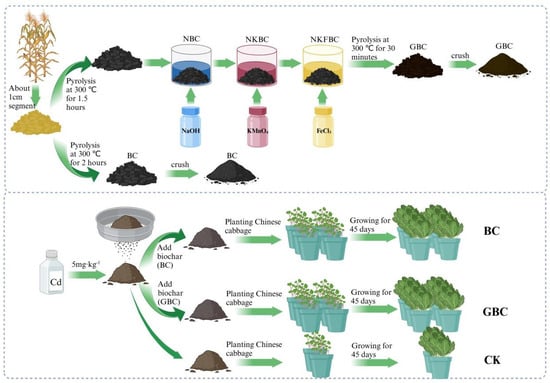
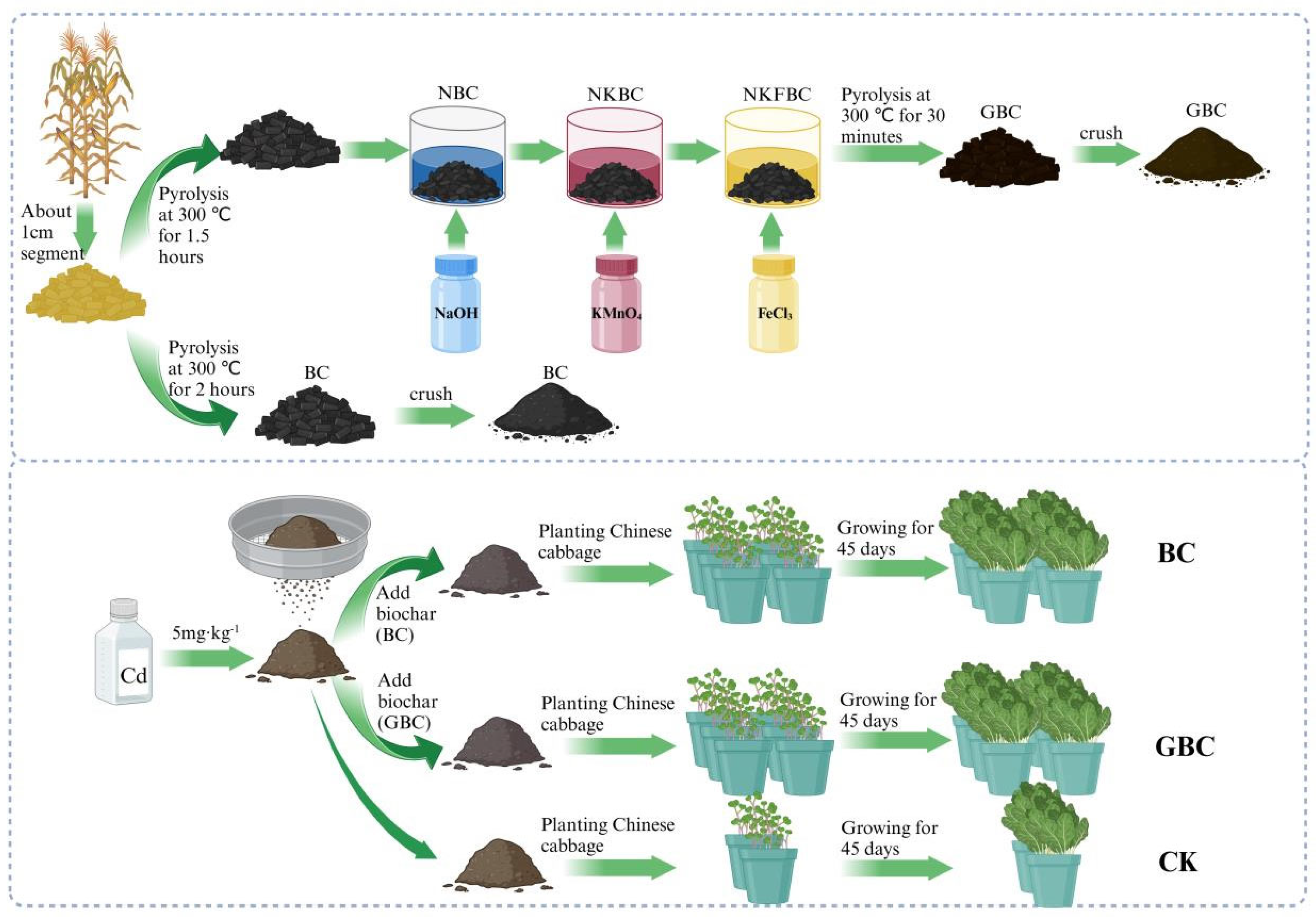
The experimental groups were set as follows CK experimental group (Cd added), BC-0.5 experimental group (Cd added + 0.5% biochar by soil mass), BC-1.5 experimental group (Cd added + 1.5% biochar), BC-3 experimental group (Cd added + 3% biochar), GBC-0.5 experimental group (Cd added + 0.5% modified biochar), GBC-1.5 experimental group (Cd added + 1.5% modified biochar), GBC-3 experimental group (Cd added + 3% modified biochar). Two replicate groups were set for each experiment. The research procedure is shown in Figure 1.
Figure 1.
Experimental flow chart.
2.5. Measurement Methods
Soil was sieved using 10- and 100-mesh sieves. After the plant samples were excavated, they were washed with ultrapure water, placed in an oven at 105 °C (30 min), dried at 60 °C until constant weight, and subsequently ground. TN in soil was determined using the SAN++ flow injection automatic analyzer. TP was measured using the Lambda 35 UV/VIS spectrophotometer. TSC and SOC in soil were analyzed with the Element analyzer and the Multi N/C 3100 analyzer, respectively. pH was measured using a pH meter after treatment with a 1:2.5 (soil:water) ratio. EC was measured with an electrical conductivity meter after filtering the sample through a 0.45 μm membrane with a 1:5 soil-to-water ratio. Total Cd in soil was determined by digestion with HNO3/HCl/HF and measured using ICP-MS. The content of soil bioavailable Cd was determined by diethylenetriaminepentaacetic acid extraction (DTPA/TEA/CaCl2) [30] and measured by ICP-OES. Background levels of available Cd in soil were measured using ICP-MS. Cd content in plants was determined after digestion with (HNO3/H2O2) and measured by ICP-MS.
2.6. Data Processing
Each group consists of 3 parallel samples. All data were analyzed using Excel 2016 and SPSS 26.0. The XRD spectra of the biochar were analyzed using MDI Jade 6. Graphs were created using Prism 10.2, Origin 2021, and BioRender (2024).
3. Results
3.1. Structural Characteristics and Elemental Content of Biochar
3.1.1. Surface Morphology and Elemental Content of Biochar
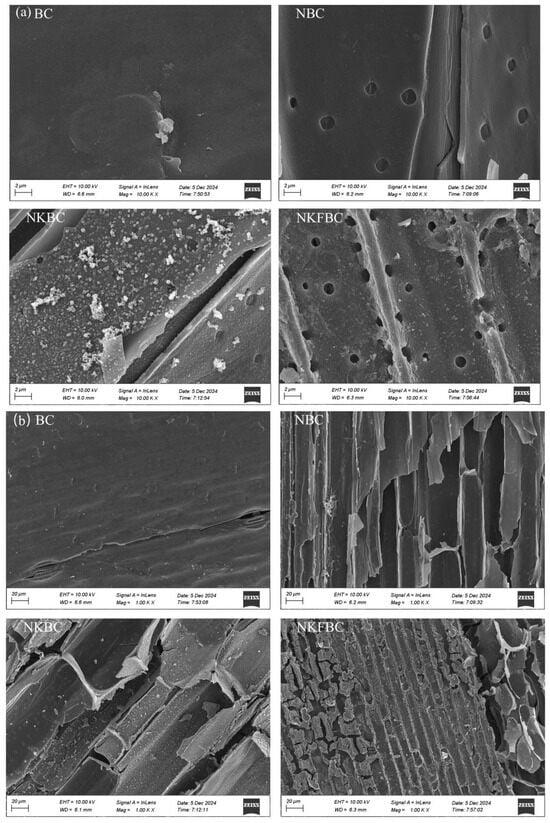
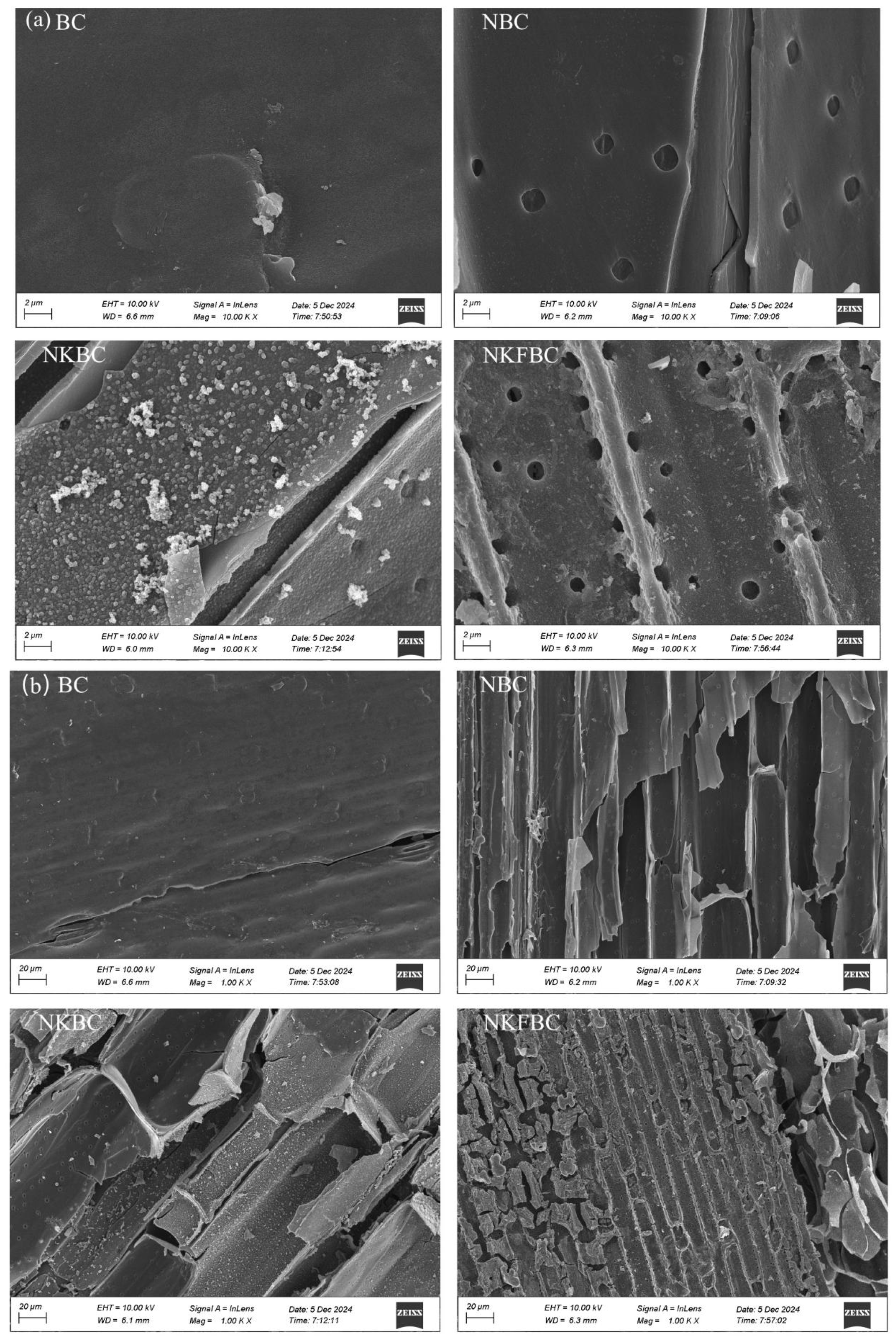
Biochar modification was carried out using NaOH, KMnO4, and FeCl3 in sequence, which was followed by secondary pyrolysis to obtain the final composite-modified biochar. The modified and unmodified biochars were observed for their microstructure using SEM, and their elemental composition and changes were investigated through EDS. The microscopic morphology of the straw biochar at 1000× and 10,000× magnification is shown in Figure 2. The results of nonmetal and metal elements in the biochar are listed in Table 2.
Figure 2.
SEM images of biochar under different modification conditions ((a) ×1.0 k, (b) ×10.0 k).
Table 2.
Nonmetal element content of biochar.
The surface of the unmodified BC experimental group biochar had more ash and clogged pores (Figure 2). After NaOH modification, the biochar surface was clean and exhibited distinct pore structures. The Si content in the biochar significantly decreased after NaOH modification, while the O content in the biochar significantly increased (Table 2). After KMnO4 modification, the biochar surface was covered with dense granular material, and the Mn content in the biochar significantly increased. Finally, after FeCl3 modification, Fe elements were introduced into the biochar.
From the changes in nonmetal element content in biochar, NaOH and KMnO4 modifications introduced more oxygen elements into the biochar, while the content of N and S elements significantly decreased after NaOH modification (Table 2). After FeCl3 modification and secondary pyrolysis, the C content in biochar significantly increased, as more volatile components were decomposed. After NaOH and KMnO4 modifications, a certain number of Na and K remained in the biochar. After FeCl3 modification, the contents of Na and K significantly decreased. After the final modification and secondary pyrolysis, the biochar had more Mn and Fe elements attached to its surface.
3.1.2. Biochar Structure and CO2 Adsorption
The pore volume and maximum CO2 adsorption capacity of biochar are shown in Table 3. Both NaOH and KMnO4 modifications further increased the pore volume of biochar. This was primarily because NaOH and KMnO4 removed ash from the biochar pores, which significantly increased the pore volume. The CO2 adsorption performance of the NBC and NKBC experimental groups was slightly lower than that of the BC group, while the maximum CO2 adsorption capacity of NKFBC was significantly reduced compared to the BC experimental group. Therefore, biochar modification did not significantly improve CO2 adsorption capacity. Due to the small overall difference in CO2 adsorption among different modified biochars, adsorption was not the main cause of enhanced carbon reduction.
Table 3.
Total pore volume and CO2 adsorption of composite-modified biochar at different stages.
3.1.3. Crystal Structure and Surface Functional Groups of Biochar
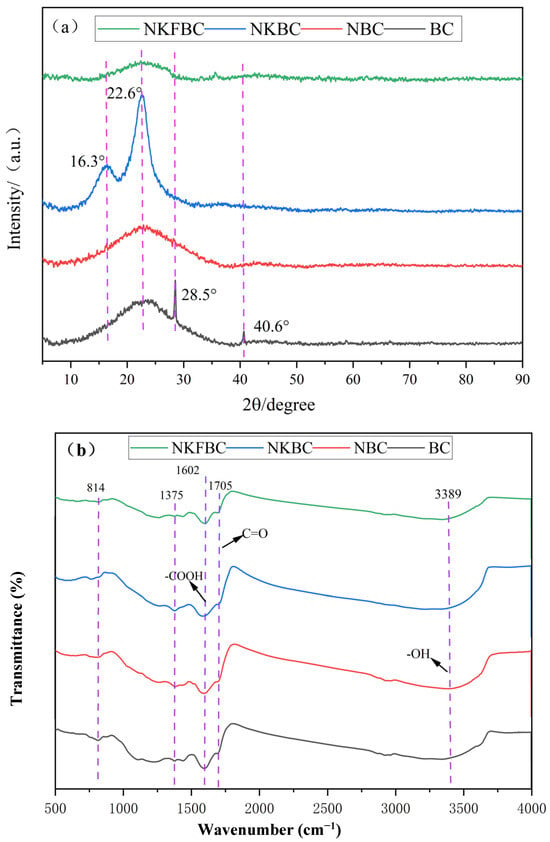
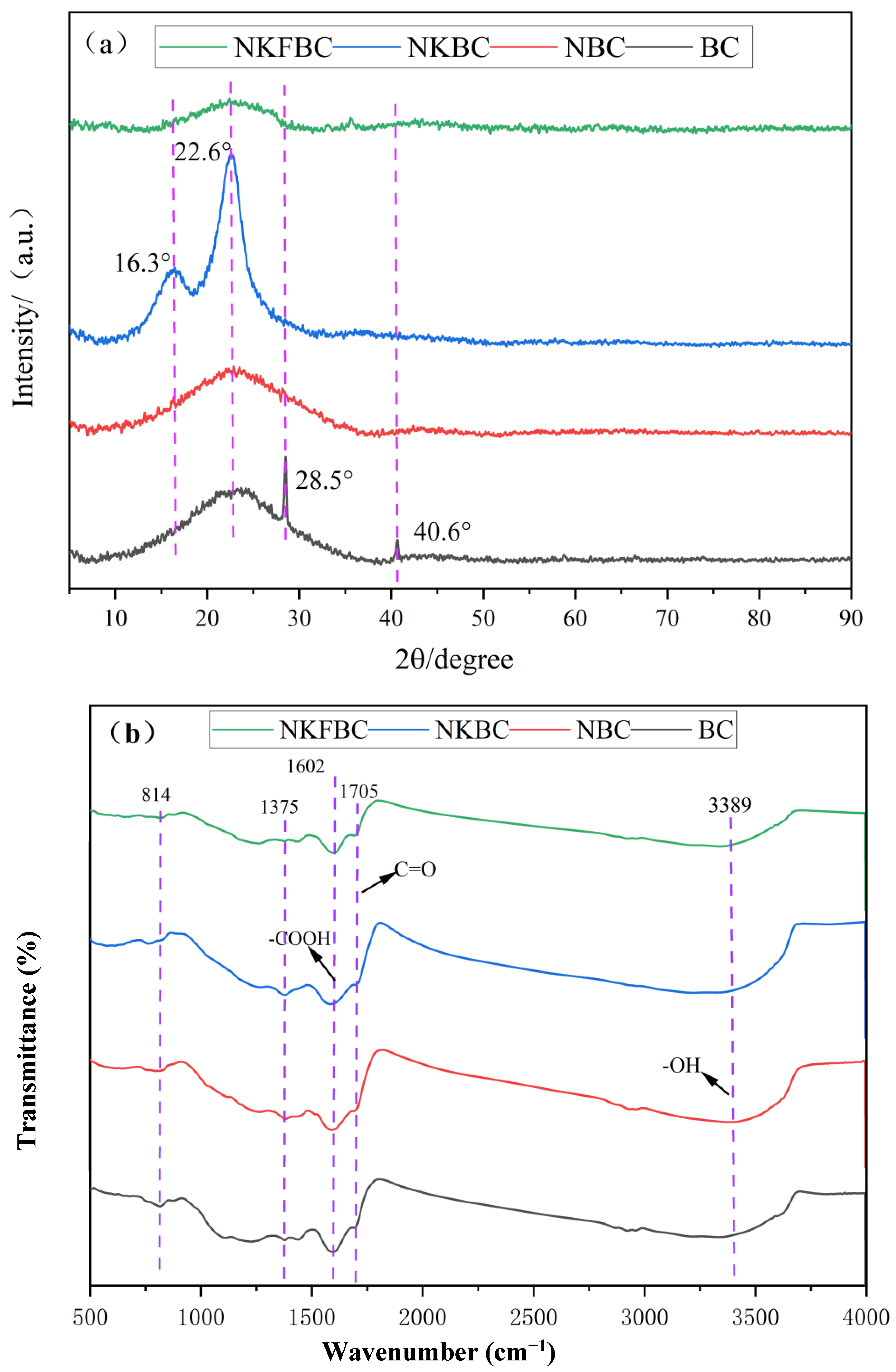
All experimental groups exhibited a prominent, broad diffraction peak near 2θ = 22.6°, indicating that a significant amount of graphite-like structure (amorphous carbon) was present in these biochars (Figure 3a). Among them, the biochar modified with KMnO4 showed a sharper peak at 2θ = 22.6°, indicating a higher degree of graphitization. The unmodified biochar BC had a relatively sharp diffraction peak at 2θ = 40.6°, which indicated a small amount of graphite crystalline structure in the BC. The BC exhibited a less sharp diffraction peak at 2θ = 28.5°, corresponding to a silicate diffraction peak, indicating that the unmodified biochar contained a significant amount of ash. Figure 3b shows the FT-IR spectra of biochar under different modification conditions during the composite modification process. The types of functional groups in biochar before and after modification did not change significantly. Multiple characteristic absorption peaks were observed at 814, 1375, 1602, 1705, and 3389 cm−1.
Figure 3.
(a) XRD patterns and (b) FT-IR spectra of biochar under different modification conditions.
3.2. Effect of Modified Biochar on Soil Properties
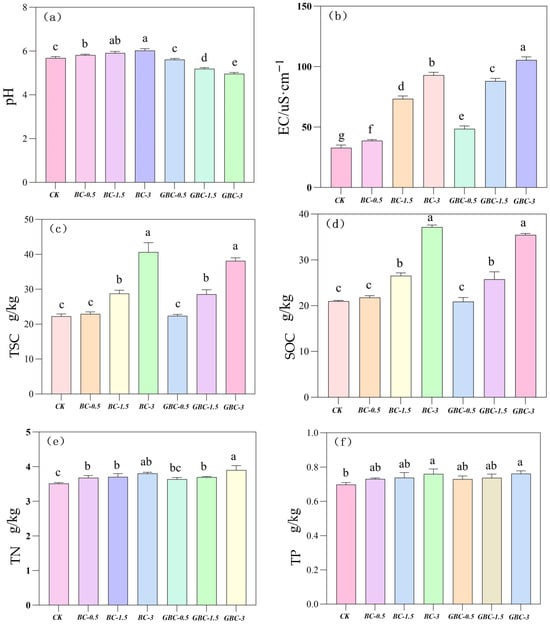
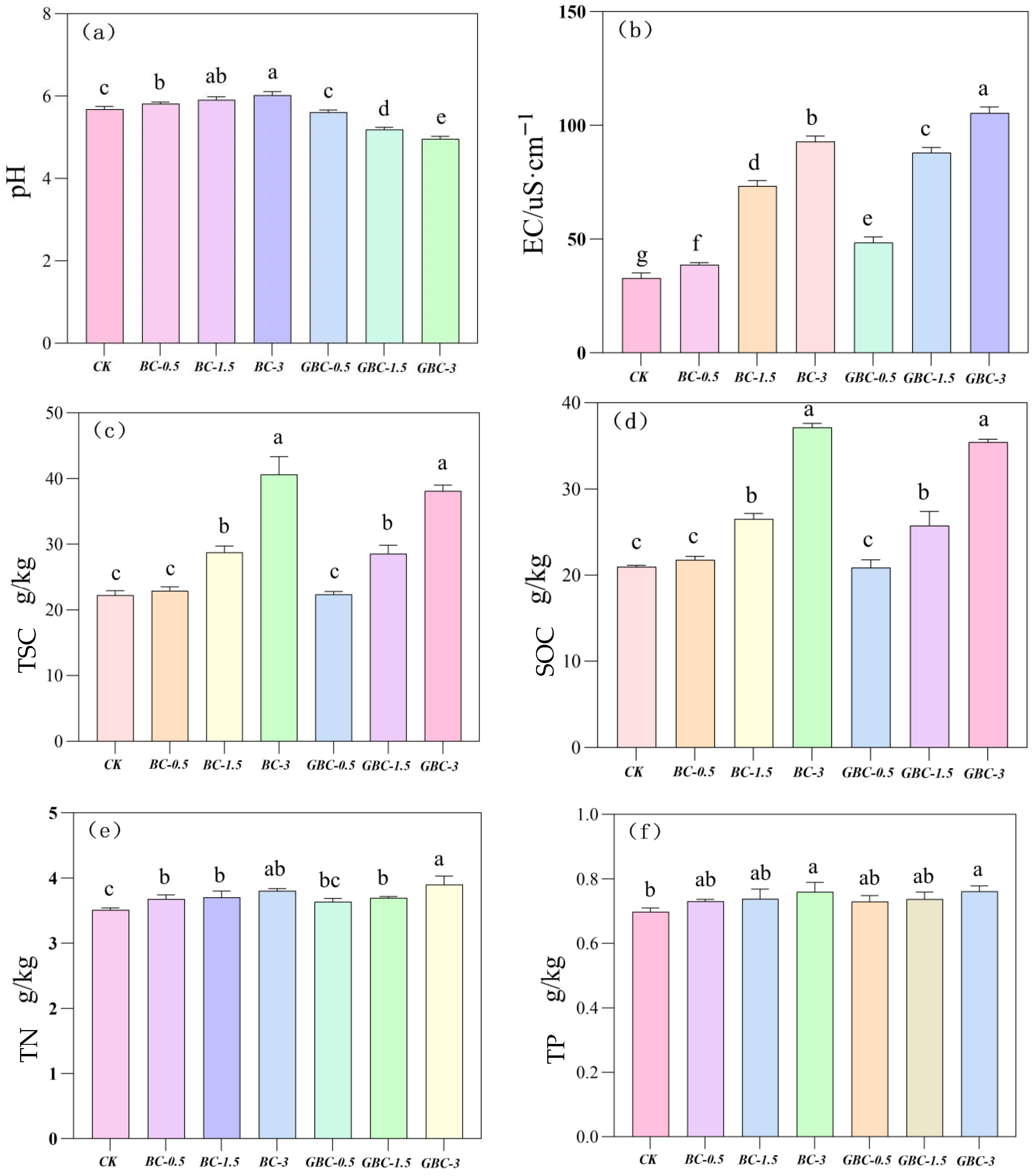
The pH has an important impact on the forms of soil heavy metals and plant growth. When the concentration of H+ was high, H+ competed with heavy metal ions (Cd2+, Pb2+, Cu2+, Zn2+, etc.) for adsorption sites and caused heavy metal ions to desorb from soil particles, which increased their solubility and bioavailability. The availability of nutrients (P, Ca, and Mg) was lower in acidic soils, while the solubility of trace elements like Fe, Zn, and Cu decreased in alkaline soils. Changes in soil pH led to a deficiency of these essential elements for plants. The pH increased with the addition of unmodified biochar, whereas the soil pH decreased with the addition of modified biochar (GBC) (Figure 4a). The pH with BC addition was higher than that of the CK experimental group (p < 0.5), with the highest pH increase observed in the group with 3% biochar addition, which showed a 6.16% increase compared to the CK.
Figure 4.
Soil (a) pH, (b) EC, (c) TSC, (d) SOC, (e) TN, and (f) TP (a, b, c, d, e, f, g, ab and bc represent the differences between different groups).
A moderate number of soluble salts promoted plant growth, but excessive salt levels increased soil osmotic pressure, hindering the plant roots’ ability to absorb water, which led to physiological drought and inhibited plant growth. Both modified and unmodified biochar significantly increased soil EC because biochar typically contains a certain number of soluble salts (Figure 4b). The biochar used in this experiment mainly contained ions such as K+, Na+, Ca2+, Mn2+, Fe3+, Hg2+, and Cl−. After these salts dissolved in the soil, they increased the ion concentration, thereby raising the soil’s EC. Modified biochar introduced a large amount of Fe3+, Mn2+, and Cl−, so the soil EC of the modified biochar group was higher than that of the unmodified biochar group with the same addition amount.
SOC, by promoting the formation of soil aggregates, improved soil aeration, water retention, and the growth environment for plant roots. Biochar not only directly provided SOC but also, through its rich porous structure on the surface, created a favorable habitat for soil microorganisms, which promoted microbial activity in the soil. The addition of both BC and GBC biochars increased the TSC and SOC in the soil (p < 0.5) (Figure 4c,d). Among them, the increases were most noticeable in the BC-3 and GBC-3 experimental groups. In the BC-3 experimental group, the TSC in the soil increased by 82.89% compared to the CK, and the SOC increased by 69.67%. In the GBC-3 experimental group, the TSC in the soil increased by 71.68%, and the SOC increased by 61.95%. The effects of both biochars on TSC and SOC in the soil were similar. After adding the same amount of biochar, the unmodified BC biochar led to a slightly greater increase in TSC and SOC than the modified GBC biochar, and the difference was not significant (p < 0.5). The biochar increased the nitrogen and phosphorus content in the soil (Figure 4e,f). Although the increases were relatively small, they still showed significant differences compared to the CK (p < 0.5).
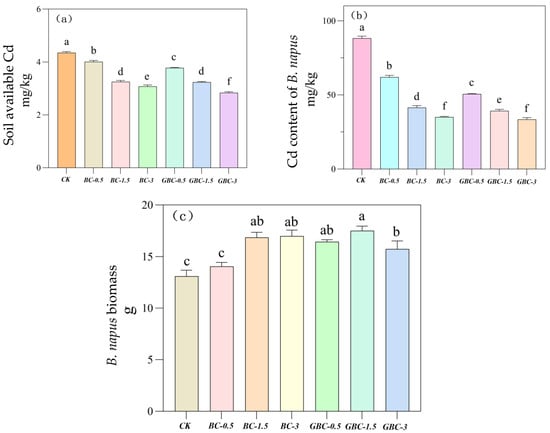
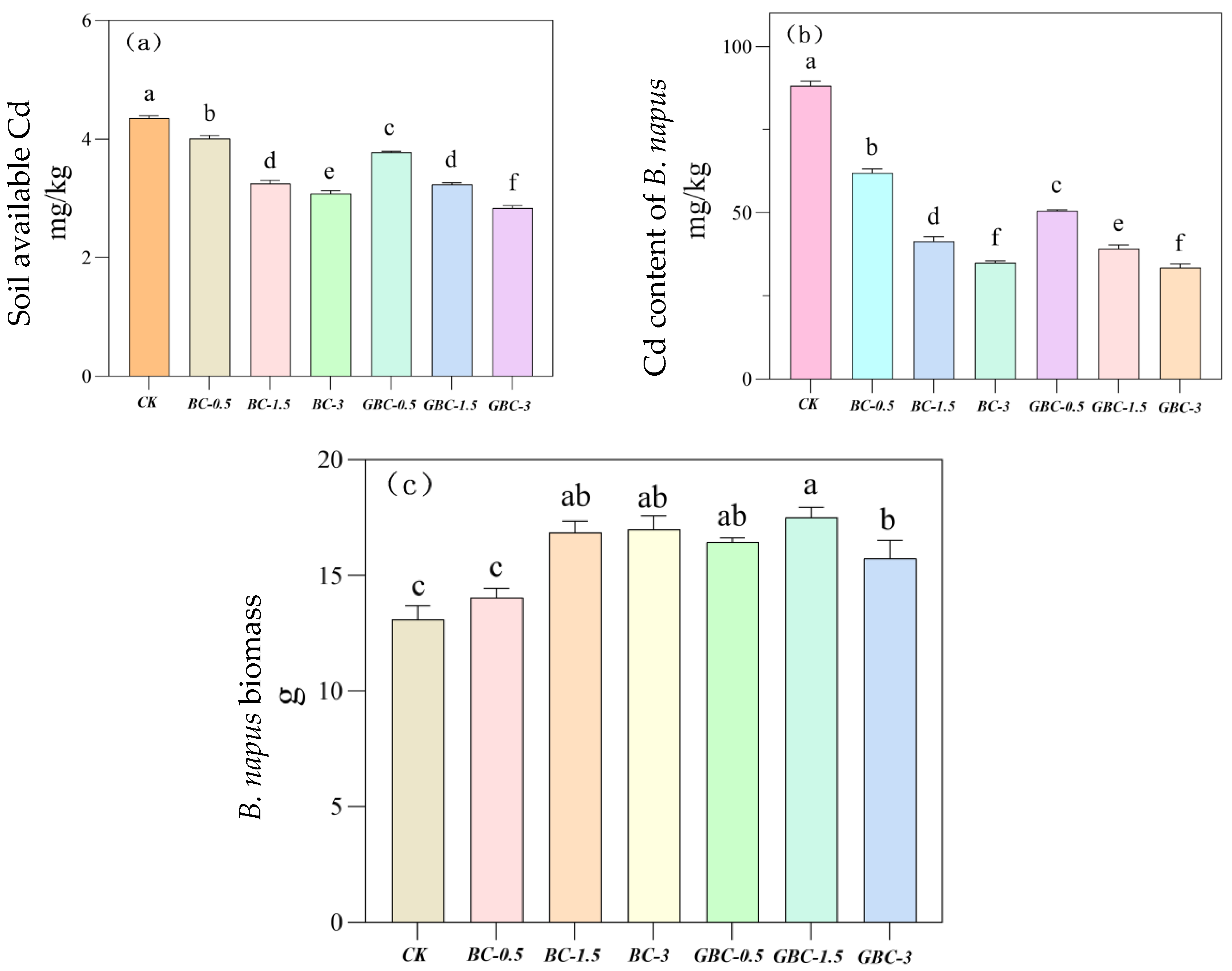
The changes in bioavailable Cd in soil after the application of modified/unmodified biochar are shown in Figure 5a. Both modified and unmodified biochar effectively reduced the bioavailable Cd content. When the biochar application rate reached 3% of the soil mass, the bioavailable Cd content in the soil was at its lowest. For unmodified biochar, when the application rates were 0.5%, 1.5%, and 3% of soil mass, the bioavailable Cd content of soil was reduced by 9.36%, 24.97%, and 30.58%, respectively, compared to the CK experimental group. For modified biochar (GBC), when the application rates were 0.5%, 1.5%, and 3% of soil mass, the bioavailable Cd content of soil was reduced by 13.51%, 25.74%, and 35.87%, respectively, compared to the CK experimental group. GBC had a better immobilization effect on heavy metal Cd compared to unmodified biochar, and the most significant effects were observed in the 0.5% and 3% application rate groups (p < 0.5). When the biochar application rate was 3%, the immobilization effect of the GBC experimental group was 5.29% higher than that of BC.
Figure 5.
(a) Soil available Cd, (b) Cd content, and (c) biomass of B. napus (a, b, c, d, e, f, and ab represent the differences between different groups).
3.3. Effect of Biochar on Soil Bioavailable Cd Content, B. napus Biomass, and Cd Content
The Cd content of B. napus significantly decreased with the increase in biochar application rates for both types of biochar (p < 0.5) (Figure 5b). In the unmodified biochar trial groups, when the biochar was 0.5%, 1.5%, and 3% of soil mass, the Cd content of B. napus was reduced by 29.79%, 53.06%, and 60.43%, respectively, compared to the CK. When the biochar application rates were 0.5%, 1.5%, and 3% of soil mass in the GBC group, the Cd content of B. napus was reduced by 42.78%, 55.59%, and 62.14%, respectively, compared to the CK experimental group. When the biochar was 0.5% and 1.5%, the Cd accumulation in B. napus was significantly lower in the modified biochar (GBC) trial groups compared to the unmodified biochar groups. Except for the BC-0.5 experimental group, the B. napus biomass significantly increased compared to the CK (p < 0.5) in all trial groups that applied BC or GBC biochar (Figure 5c). Among them, the GBC-1.5 experimental group showed the most significant increase in B. napus biomass, with a 33.66% increase compared to the CK experimental group.
4. Discussion
4.1. Characteristic Changes of Modified Biochar
Through the SEM microscopy analysis and elemental analysis of the biochar, the surface of the unmodified biochar contained a large amount of ash with many pores blocked by this ash. After NaOH modification, the surface of the biochar became cleaner and exhibited distinct pore structures. The ash in the biochar pores mainly consisted of inorganic substances such as silicates and metal oxides. The Si content in the biochar significantly decreased after NaOH modification, as NaOH dissolves the silicate ash on the surface and in the pores, forming soluble sodium silicate, which reduced the ash on the biochar surface [31]. After NaOH modification, the O element content in the biochar significantly increased. After further modification with KMnO4, the biochar surface was covered with dense MnOX [32]. The biochar surface became more favorable for loading metal oxides. Both manganese and iron were simultaneously loaded onto the biochar surface by modifying the biochar with KMnO4, followed by FeCl3 modification, which effectively reduced the agglomeration effect of loading a single metal.
Maximum CO2 adsorption capacity decreased after biochar modification, particularly after the biochar was modified with FeCl3 and subjected to secondary pyrolysis, where the CO2 adsorption ability significantly declined. Typically, the adsorption of biochar was determined by its SSA, porosity, and surface functional groups of biochar. Physical interactions governed the ability of biochar to capture CO2, which made the pore structure the primary factor influencing its CO2 adsorption capacity [33,34]. Although the total pore volume reflected the pore quantity of biochar, different types of pores (micropores, mesopores, and macropores) have varying adsorption capacities for gases. CO2 adsorption typically depended on the micropore and mesopore structures of biochar, especially the micropores, as they have a larger SSA and interact more strongly with gas molecules through van der Waals forces [35]. NaOH and KMnO4 modifications further increased the pore volume of biochar, which increased the number of mesopores and macropores. This ultimately caused a decrease in the maximum CO2 adsorption capacity compared to BC. After FeCl3 modification, the biochar’s surface micropores were partially blocked by a large number of iron–manganese oxides, which reduced the pore volume. The maximum CO2 adsorption capacity of composite-modified biochar was lower than that of BC.
The XRD patterns showed that the biochar after composite modification and secondary pyrolysis exhibited no sharp peaks; therefore, the composite-modified biochar lacked a distinct crystalline structure, and the iron and manganese oxides existed in an amorphous form. FT-IR was used to analyze the types of functional groups in the biochar, so there were no changes in the functional group types. Several characteristic absorption peaks appeared at 814, 1375, 1602, 1705, and 3389 cm−1, which mostly corresponded to active functional groups (carboxyl, hydroxyl, and anhydride) naturally present in biochar [36].
4.2. Effects of Biochar on Soil Properties
When unmodified biochar was applied to the soil, the pH increased significantly, whereas the soil pH decreased with increasing GBC application rates. Biochar had a high pH, and its alkalinity generally originates from carbonates and ash content. Biochar increases soil pH [37]. The decrease in soil pH caused by modified biochar was attributed to partially soluble Fe3+ released from the biochar into the soil solution. These iron ions reacted with water and precipitated, which led to acidification of the solution and subsequently lowered the soil pH. The Fe3+ exchanged with alkaline cations in soil, such as Ca2+ and Mg2+, which resulted in a reduction of alkaline ions and further contributed to the decrease in pH [38]. FeCl3-modified biochar introduced more carboxyl and phenolic hydroxyl groups that released H+ ions, thereby lowering the pH [39].
Both types of biochar significantly increased the soil EC because the salt ions carried by the biochar dissolved in the soil, which increased the ion concentration and raised the EC. The modified biochar introduced additional Fe3+, Mn2+, and Cl− ions, which further enhanced the EC. Biochar improved the soil’s pore structure, promoted the migration and diffusion of ions in the soil, increased ion concentration, and ultimately raised the EC [40].
The addition of both types of biochar increased the N and P content, because biochar contained a certain amount of nitrogen and phosphorus. Biochar effectively reduced nitrogen loss in the soil. Due to its high SSA and abundant pore structure, biochar adsorbed NH4+ and NO3− in the soil. Its surface usually carried a negative charge, which allowed it to adsorb NH4+ through cation exchange, thereby reducing nitrogen loss [41]. Biochar also improved soil permeability, reduced localized anaerobic conditions, which inhibited denitrification and decreased the emissions of N2 and N2O [42,43].
4.3. Influence of Biochar on Bioavailable Soil Cd and Cd Content in B. napus
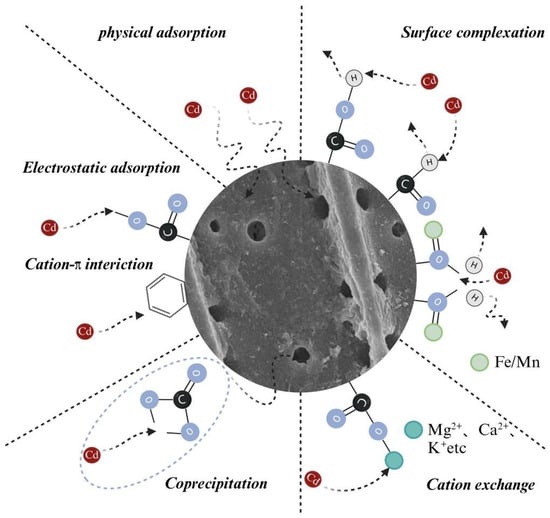
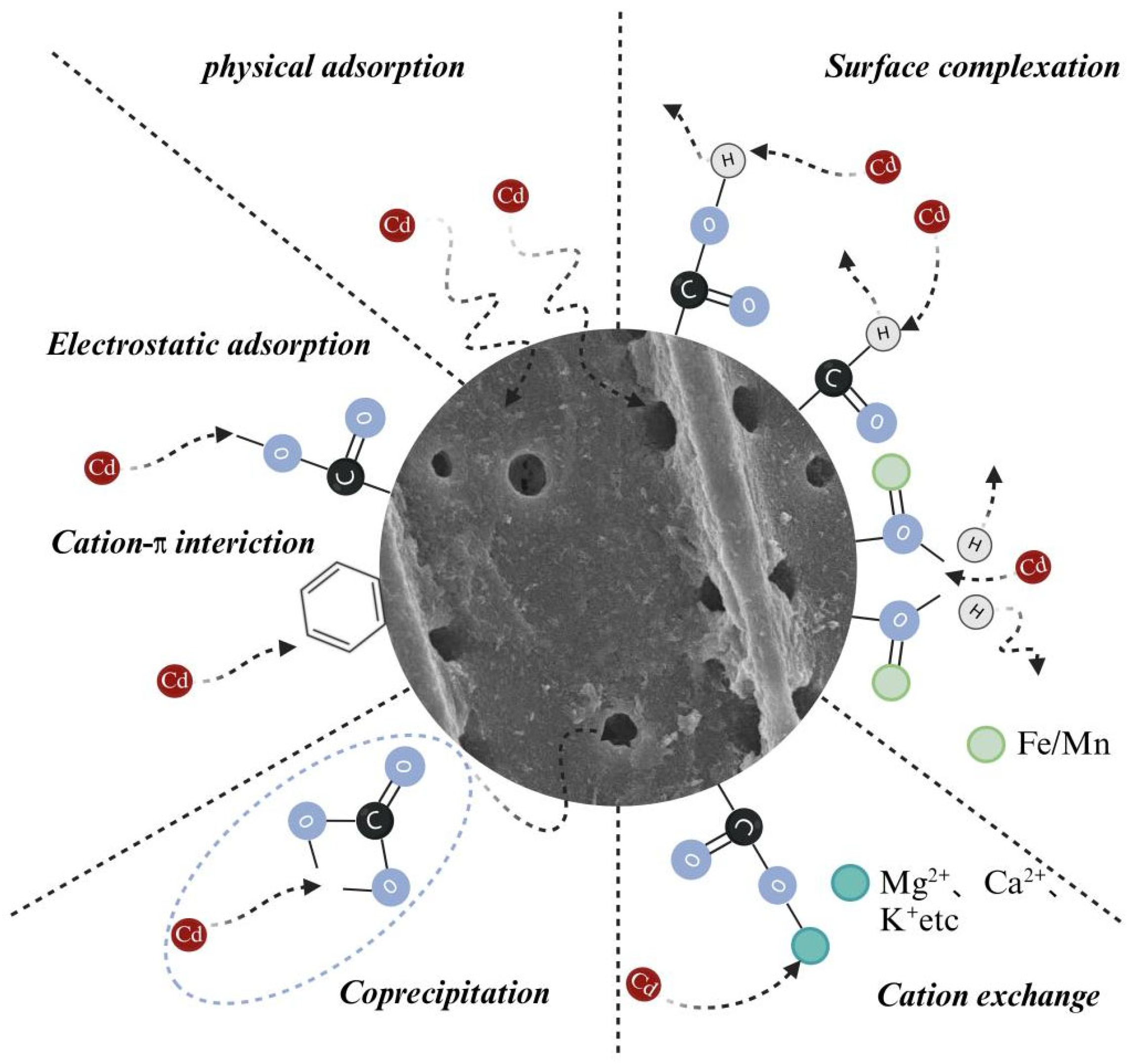
In the biochar-assisted remediation of soil heavy metals, both modified and unmodified biochars demonstrated good passivation effects, with biochar loaded with metal oxides showing a significantly enhanced passivation effect. The mechanism of biochar adsorbing heavy metals and other pollutants was typically divided into physical adsorption and chemical adsorption [44]. Heavy metals were adsorbed on the surface of iron-based materials or diffused into the pores. Physical adsorption mainly relied on van der Waals forces, with a fast and reversible adsorption process. Chemical adsorption occurred through the functional groups, where metal oxides or metal salts provided additional coordination sites, which facilitated the chemical adsorption of heavy metal ions [45]. Chemical adsorption was generally more robust and difficult to reverse compared to physical adsorption. The adsorption mechanism of heavy metals by metal oxide-loaded biochar included functional group complexation, electrostatic adsorption, ion exchange, precipitation reaction, etc. Functional group complexation refers to the O atoms in functional groups providing lone pairs of electrons to form stable coordination bonds with heavy metal ions. The biochar surface contained functional groups (hydroxyl, carboxyl, and amino groups). Heavy metal ions were directly adsorbed onto deprotonated functional groups [46].
The main mechanisms by which metal oxide-loaded biochar adsorbs heavy metals included the following. Electrostatic adsorption occurred primarily through the negative charge groups and its π-conjugated aromatic structure, which interacted with metal ions electrostatically to immobilize metal ions. Biochar loaded with Fe3O4 further enhanced its electrostatic adsorption of Cd2+ by introducing Fe-O and Fe-OH on its surface [47]. Biochar loaded with Mg, after adsorbing Cd, Cu, and Pb heavy metals, consumed a large amount of -OH, -C-H, and -COOH groups, so the adsorption process mainly involved H+ exchange. The reduction in Mg content suggested that Mg ion exchange was also one of the adsorption mechanisms [48]. Fe2+/Fe3+ formed Fe3O4 and γ-Fe2O3 on the biochar surface, which were bound to surface groups of biochar to synthesize iron-containing functional groups like Fe-R-COOH and -Fe-R-OH or combined with inorganic ash ions to generate stable mineral crystals XiFeYjOk. These structures exhibited a certain adsorption effect on Cd ions [29]. Ion exchange involved heavy metal ions exchanging positions with iron-based ions. When iron-manganese composite-modified biochar was used to treat Cd in aqueous solutions, redox reactions occurred between Fe and Mn during the adsorption process, which led to their release from the biochar surface. Fe and Mn then underwent ion exchange reactions with Cd, where Fe was converted to Fe(III) and Mn to Mn(IV), respectively [10].
In addition, Cd2+ replaced Ca2+ in biochar [49]. Precipitation reactions refer to processes in which anions on the surface of biochar (such as OH−, CO32−, SO42−, etc.) react with metal ions to form insoluble metal salts [50]. The Cd on the surface of biochar is mainly precipitated in the biochar pores in the forms of CdCO3 (44.5%) and Cd(NO3)2 (35.2%) [10]. Generally, Cd mostly reacted with soluble CO32− in biochar to form precipitates [51]. When the pH of the solution was relatively high, Cd(OH)2 precipitation was also likely to occur. However, the soil pH used in this study was low, so most of the precipitates existed in the form of CdCO3. The mechanism diagram of GBC adsorbing heavy metal Cd is shown in Figure 6.
Figure 6.
Mechanism of modified biochar adsorption of heavy metal Cd.
Biochar was a soil amendment that promoted plant growth in most cases. Biochar improved soil physicochemical properties. Its porous structure increased soil porosity, enhanced soil aeration, and improved water permeability. Biochar was typically alkaline and neutralized the pH of acidic soils, thereby improving the soil environment and promoting plant growth [52]. Biochar had cation exchange capacity, which adsorbed and released more nutrient ions (such as K+, Ca2+, Mg2+, etc.), thereby enhancing soil fertility [53]. Biochar provided a habitat for microorganisms, promoting the growth and proliferation of soil microbes [54]. Biochar adsorbed heavy metal ions, thereby reducing their bioavailability [55]. The addition of biochar significantly increased the biomass of B. napus; this was primarily because biochar mitigated the heavy metal Cd, which reduced its stress on B. napus growth. The biomass of B. napus in the GBC-3 experimental group was higher than that of the CK experimental group, but lower than in the GBC-0.5 and GBC-1.5 experimental groups. This was because the modified biochar decreased soil pH, which affected B. napus growth.
Both biochars effectively reduced the soil available Cd. When the application rate reached 3%, the BC group reduced it by 30.58% and the GBC group by 35.87%. Modification further strengthened the physicochemical adsorption capacities of biochar. Biochar effectively improved the soil environment and increased plant biomass, while reducing the Cd content in B. napus. At an application rate of 3%, the Cd content in B. napus decreased by 60.43% in the BC group and 62.14% in the GBC group. This was mainly attributed to the passivation of Cd by biochar, as well as the nutrients it brought to the soil and the improvement of soil structure, which promoted better growth of B. napus and reduced metal accumulation. Both biochars had good effects, and the modified biochar showed a significant improvement compared with the unmodified one.
Biochar has been proven to promote plant growth [56,57]. The biomass of B. napus increased with biochar addition to the soil, with the BC-1.5 experimental group showing the most significant increase (Figure 5c). After adding modified biochar to the soil, the biomass of B. napus was higher than that with unmodified biochar under the same conditions. The GBC-1.5 experimental group showed the most significant increase in the biomass of B. napus, indicating that modified biochar promoted the increase in biomass of B. napus under certain addition conditions. The modification process removed salts in biochar that were detrimental to plant growth [58]. In addition, the ability of modified biochar to absorb Cd was enhanced, thereby reducing the stress of Cd on plant growth. Modified biochar enhanced the absorption of N, P, and K, which also improved the nutritional requirements for plant growth [59]. This study used a new NaOH–KMnO4–FeCl3 composite-modified biochar to reduce Cd content in soil, promote plant growth, and reduce plant uptake of Cd, thereby promoting the rapid and safe development of agriculture.
5. Conclusions
The composite modified corn straw biochar was prepared using NaOH, KMnO4, and FeCl3. Modified/unmodified biochars were added to Cd-contaminated farmland soil, and a B. napus cultivation experiment was conducted to investigate the passivation mechanisms of the biochar for Cd. The conclusions are as follows:
(1) Biochar modified with NaOH, KMnO4, and FeCl3 was loaded with a large amount of iron and manganese oxides, which provided more adsorption sites for Cd.
(2) Modified biochar increased soil carbon, nitrogen, and phosphorus levels, and soil EC. Soil pH increased as the BC addition amount increased. The dissolution and precipitation of Fe3+ and the exchange of Fe3+ with alkaline cations (such as Ca2+, Mg2+) in the soil caused a decrease in pH with the increasing addition of GBC.
(3) Both types of biochar (BC-3 and GBC-3) exhibited good Cd passivation effects. When the amount of modified biochar was 3%, the passivation rate of Cd reached 35.87%, which was 5.29% higher than the passivation effect of unmodified biochar under the same conditions. Therefore, modification played an important role in enhancing Cd passivation.
(4) The addition of both types of biochar (BC-1.5 and GBC-1.5) significantly increased the biomass of B. napus. The GBC-1.5 experimental group showed the most significant increase in B. napus biomass, which was a 33.66% increase compared with CK. The GBC-3 group had the lowest Cd content in B. napus, which was a 62.14% reduction compared to CK. Composite-modified biochar reduced Cd content in soil, promoted plant growth, and reduced plant uptake of Cd, thereby promoting the safe development of agriculture.
Author Contributions
Conceptualization, H.W.; methodology, H.C., S.Z. and H.W.; software, H.C. and H.W.; validation, S.Z. and H.W.; formal analysis, H.C. and H.W.; investigation, H.C.; resources, H.W. and S.Z.; data curation, H.C. and S.Z.; writing—original draft preparation, H.C.; writing—review and editing, S.Z. and H.W.; visualization, H.C. and S.Z.; supervision, H.C. and H.W.; project administration, H.W.; funding acquisition, H.W. All authors have read and agreed to the published version of the manuscript.
Funding
The present study was gratefully supported by the High-level Talent Foundation Project of Harbin Normal University (No. 1305124219) and the National Science Fund of Heilongjiang Province of China for Excellent Young Scholars (Grant No. YQ2023D009).
Institutional Review Board Statement
Not applicable.
Informed Consent Statement
Not applicable.
Data Availability Statement
Data used in this research are available upon request from the corresponding author.
Acknowledgments
The authors appreciate the efforts made by the editor and reviewers for this article.
Conflicts of Interest
The authors declare no conflicts of interest.
Abbreviations
The following abbreviations are used in this manuscript:
| SEM | Scanning electron microscope |
| EDS | Energy dispersive spectroscopy |
| XRD | X-ray diffraction |
| FT-IR | Fourier-transform infrared spectroscopy |
| TSC | Total soil carbon |
| SOC | Soil organic carbon |
| TN | Total nitrogen |
| SSA | Specific surface area |
| NH4+ | Ammonium nitrogen |
| NO3− | Nitrate nitrogen |
| TP | Total phosphorus |
| EC | Electrical conductivity |
References
- Saxena, V. Water quality, air pollution, and climate change: Investigating the environmental impacts of industrialization and urbanization. Water Air Soil Pollut. 2025, 236, 73. [Google Scholar] [CrossRef] [Scilit]
- Jayakumar, M.; Surendran, U.; Raja, P.; Kumar, A.; Senapathi, V. A review of heavy metals accumulation pathways, sources and management in soils. Arab. J. Geosci. 2021, 14, 2156. [Google Scholar] [CrossRef] [Scilit]
- Kravchenko, E.; Minkina, T.; Mandzhieva, S.; Bauer, T.; Lacynnik, E.; Wong, M.H.; Nazarenko, O. Ecological and health risk assessments of heavy metal contamination in soils surrounding a coal power plant. J. Hazard. Mater. 2025, 484, 136751. [Google Scholar] [CrossRef] [Scilit]
- Suhani, I.; Sahab, S.; Srivastava, V.; Singh, R.P. Impact of cadmium pollution on food safety and human health. Curr. Opin. Toxicol. 2021, 27, 1–7. [Google Scholar] [CrossRef] [Scilit]
- Suciu, N.A.; De Vivo, R.; Rizzati, N.; Capri, E. Cd content in phosphate fertilizer: Which potential risk for the environment and human health? Curr. Opin. Environ. Sci. Health 2022, 30, 100392. [Google Scholar] [CrossRef] [Scilit]
- Wang, L.; Wang, Y.; Ma, F.; Tankpa, V.; Bai, S.; Guo, X.; Wang, X. Mechanisms and reutilization of modified biochar used for removal of heavy metals from wastewater: A review. Sci. Total Environ. 2019, 668, 1298–1309. [Google Scholar] [CrossRef] [Scilit]
- Wang, H.; Wang, X.; Teng, H.; Xu, J.; Sheng, L. Purification mechanism of city tail water by constructed wetland substrate with NaOH-modified corn straw biochar. Ecotox. Environ. Saf. 2022, 238, 113597. [Google Scholar] [CrossRef] [Scilit] [PubMed]
- Bayar, J.; Ali, N.; Dong, Y.; Ahmad, U.; Anjum, M.M.; Khan, G.R.; Zaib, M.; Jalal, A.; Ali, R.; Ali, L. Biochar-based adsorption for heavy metal removal in water: A sustainable and cost-effective approach. Environ. Geochem. Health 2024, 46, 428. [Google Scholar] [CrossRef] [Scilit] [PubMed]
- Alengebawy, A.; Ran, Y.; Ghimire, N.; Osman, A.I.; Ai, P. Rice straw for energy and value-added products in China: A review. Environ. Chem. Lett. 2023, 21, 2729–2760. [Google Scholar] [CrossRef] [Scilit]
- Tan, W.; Zhou, H.; Tang, S.; Zeng, P.; Gu, J.; Liao, B. Enhancing Cd(II) adsorption on rice straw biochar by modification of iron and manganese oxides. Environ. Pollut. 2022, 300, 118899. [Google Scholar] [CrossRef] [Scilit]
- Lai, W.; Li, S.; Li, Y.; Tian, X. Air pollution and cognitive functions: Evidence from straw burning in China. Am. J. Agric. Econ. 2022, 104, 190–208. [Google Scholar] [CrossRef] [Scilit]
- Liang, L.; Xi, F.; Tan, W.; Meng, X.; Hu, B.; Wang, X. Review of organic and inorganic pollutants removal by biochar and biochar-based composites. Biochar 2021, 3, 255–281. [Google Scholar] [CrossRef] [Scilit]
- Lee, H.S.; Shin, H.S. Competitive adsorption of heavy metals onto modified biochars: Comparison of biochar properties and modification methods. J. Environ. Manag. 2021, 299, 113651. [Google Scholar] [CrossRef] [Scilit]
- Zhao, W.; Fan, L.; Guo, Y.; Wu, H.; Zang, S.; Wang, H. Study on the carbon source stability of constructed wetland prepared from modified aged straw. J. Environ. Manag. 2025, 373, 123708. [Google Scholar] [CrossRef] [Scilit] [PubMed]
- Wang, H.; Xu, J.; Liu, X.; Sheng, L. Preparation of straw activated carbon and its application in wastewater treatment: A review. J. Clean. Prod. 2021, 283, 124671. [Google Scholar] [CrossRef] [Scilit]
- Lu, Z.; Su, W.; Wu, R.; Tan, J. Research progress on adsorption of water pollutants by modified corn cob biochar. Guangzhou Chem. Ind. 2020, 48, 16–17+20. [Google Scholar] [CrossRef]
- Wang, H.; Xu, J.; Sheng, L. Preparation of straw biochar and application of constructed wetland in China: A review. J. Clean. Prod. 2020, 273, 123131. [Google Scholar] [CrossRef] [Scilit]
- Wang, H.; Teng, H.; Wang, X.; Xu, J.; Sheng, L. Physicochemical modification of corn straw biochar to improve performance and its application of constructed wetland substrate to treat city tail water. J. Environ. Manag. 2022, 310, 114758. [Google Scholar] [CrossRef] [Scilit]
- Wang, S.; Wang, N.; Yao, K.; Fan, Y.; Li, W.; Han, W.; Yin, X.; Chen, D. Characterization and interpretation of Cd(II) adsorption by different modified rice straws under contrasting conditions. Sci. Rep. 2019, 9, 17868. [Google Scholar] [CrossRef] [Scilit]
- Tuerhong, T.; Yikemu, P.; Dawuti, A.; Eminiyaz, A. Adsorption capacity of modified corn straw based activated biocarbon to Cd. Environ. Pollut. Control 2018, 40, 189–192+197. [Google Scholar] [CrossRef]
- Cai, T.; Du, H.; Liu, X.; Tie, B.; Zeng, Z. Insights into the removal of Cd and Pb from aqueous solutions by NaOH–EtOH-modified biochar. Environ. Technol. Innov. 2021, 24, 102031. [Google Scholar] [CrossRef] [Scilit]
- Ding, Z.; Hu, X.; Wan, Y.; Wang, S.; Gao, B. Removal of lead, copper, cadmium, zinc, and nickel from aqueous solutions by alkali-modified biochar: Batch and column tests. J. Ind. Eng. Chem. 2016, 33, 239–245. [Google Scholar] [CrossRef] [Scilit]
- Wang, L.; Bolan, N.S.; Tsang, D.C.W.; Hou, D. Green immobilization of toxic metals using alkaline enhanced rice husk biochar: Effects of pyrolysis temperature and KOH concentration. Sci. Total Environ. 2020, 720, 137584. [Google Scholar] [CrossRef] [Scilit] [PubMed]
- Rosales, E.; Meijide, J.; Pazos, M.; Sanromán, M.A. Challenges and recent advances in biochar as low-cost biosorbent: From batch assays to continuous-flow systems. Bioresour. Technol. 2017, 246, 176–192. [Google Scholar] [CrossRef] [Scilit]
- Peng, Y.; Tang, H.; Yao, B.; Gao, X.; Yang, X.; Zhou, Y. Activation of peroxymonosulfate (PMS) by spinel ferrite and their composites in degradation of organic pollutants: A Review. Chem. Eng. J. 2021, 414, 128800. [Google Scholar] [CrossRef] [Scilit]
- Lu, M.; Ma, J.; Zhang, X.; Li, Y.; Wang, N. The properties and mechanism of Cu2+ and Zn2+ sorption by MnOx-loaded biochar. J. Agro-Environ. Sci. 2018, 37, 2297–2303. [Google Scholar] [CrossRef]
- Liang, J.; Li, X.; Yu, Z.; Zeng, G.; Luo, Y.; Jiang, L.; Yang, Z.; Qian, Y.; Wu, H. Amorphous MnO2 modified biochar derived from aerobically composted swine manure for adsorption of Pb (II) and Cd (II). ACS Sustain. Chem. Eng. 2017, 5, 5049–5058. [Google Scholar] [CrossRef] [Scilit]
- Cui, Z.; Ren, Y.; Wang, W.; Zhang, L.; Zhang, L.; Wang, X.; He, J. Adsorption characteristics and mechanism of Cadmium in Water by alkali and magnetic composite modified wheat straw biochar. Environ. Sci. 2020, 41, 3315–3325. [Google Scholar] [CrossRef]
- Yuan, S.; Hong, M.; Li, H.; Ye, Z.; Gong, H.; Zhang, J.; Huang, Q.; Tan, Z. Contributions and mechanisms of components in modified biochar to adsorb cadmium in aqueous solution. Sci. Total Environ. 2020, 733, 139320. [Google Scholar] [CrossRef] [Scilit]
- Wang, Y.; Xing, W.; Liang, X.; Xu, Y.; Wang, Y.; Huang, Q.; Li, L. Effects of exogenous additives on wheat Cd accumulation, soil Cd availability and physicochemical properties in Cd-contaminated agricultural soils: A meta-analysis. Sci. Total Environ. 2022, 808, 152090. [Google Scholar] [CrossRef] [Scilit] [PubMed]
- Shen, Y.; Fu, Y. KOH-activated rice husk char via CO2 pyrolysis for phenol adsorption. Mater. Today Energy 2018, 9, 397–405. [Google Scholar] [CrossRef] [Scilit]
- Sun, C.; Chen, T.; Huang, Q.; Wang, J.; Lu, S.; Yan, J. Enhanced adsorption for Pb (II) and Cd (II) of magnetic rice husk biochar by KMnO4 modification. Environ. Sci. Pollut. Res. 2019, 26, 8902–8913. [Google Scholar] [CrossRef] [Scilit]
- Chatterjee, R.; Sajjadi, B.; Chen, W.; Mattern, D.L.; Hammer, N.; Raman, V.; Dorris, A. Effect of pyrolysis temperature on physicochemical properties and acoustic-based amination of biochar for efficient CO2 adsorption. Front. Energy Res. 2020, 8, 85. [Google Scholar] [CrossRef] [Scilit]
- Chatterjee, R.; Sajjadi, B.; Mattern, D.L.; Chen, W.Y.; Zubatiuk, T.; Leszczynska, D.; Leszczynski, J.; Egiebor, N.O.; Hammer, N. Ultrasound cavitation intensified amine functionalization: A feasible strategy for enhancing CO2 capture capacity of biochar. Fuel 2018, 225, 287–298. [Google Scholar] [CrossRef] [Scilit]
- Shafawi, A.N.; Mohamed, A.R.; Lahijani, P.; Mohammadi, M. Recent advances in developing engineered biochar for CO2 capture: An insight into the biochar modification approaches. J. Environ. Chem. Eng. 2021, 9, 106869. [Google Scholar] [CrossRef] [Scilit]
- Ma, W.; Li, L.; Cheng, A.; Liu, J.; Jiang, J.; Xue, Q.; Deng, B. Passivation of modified biochar on copper and zinc in contaminated soil and its control of crop accumulation. J. Yangzhou Univ. (Agric. Life Sci. Edit.) 2021, 42, 119–126. [Google Scholar] [CrossRef]
- Dai, Z.; Wang, Y.; Muhammad, N.; Yu, X.; Xiao, K.; Meng, J.; Liu, X.; Xu, J.; Brookes, P.C. The effects and mechanisms of soil acidity changes, following incorporation of biochars in three soils differing in initial pH. Soil Sci. Soc. Am. J. 2014, 78, 1606–1614. [Google Scholar] [CrossRef] [Scilit]
- Xu, X.; Cao, X.; Zhao, L. Comparison of rice husk-and dairy manure-derived biochars for simultaneously removing heavy metals from aqueous solutions: Role of mineral components in biochars. Chemosphere 2013, 92, 955–961. [Google Scholar] [CrossRef] [Scilit]
- Zhang, M.; Gao, B.; Varnoosfaderani, S.; Hebard, A.; Yao, Y.; Inyang, M. Preparation and characterization of a novel magnetic biochar for arsenic removal. Bioresour. Technol. 2013, 130, 457–462. [Google Scholar] [CrossRef] [Scilit] [PubMed]
- Atkinson, C.J.; Fitzgerald, J.D.; Hipps, N.A. Potential mechanisms for achieving agricultural benefits from biochar application to temperate soils: A review. Plant Soil 2010, 337, 1–18. [Google Scholar] [CrossRef] [Scilit]
- Chen, M.; Wang, F.; Zhang, D.; Yi, W.; Liu, Y. Effects of acid modification on the structure and adsorption NH4+-N properties of biochar. Renew. Energy 2021, 169, 1343–1350. [Google Scholar] [CrossRef] [Scilit]
- Cayuela, M.L.; Van Zwieten, L.; Singh, B.P.; Jeffery, S.; Roig, A.; Sánchez-Monedero, M.A. Biochar’s role in mitigating soil nitrous oxide emissions: A review and meta-analysis. Agric. Ecosyst. Environ. 2014, 191, 5–16. [Google Scholar] [CrossRef] [Scilit]
- Wu, H.; Zang, S.; Wang, H.; Guo, D. Impact of biochar on carbon sequestration in permafrost region of Northeast China. Carbon Balance Manag. 2025, 20, 44. [Google Scholar] [CrossRef] [Scilit]
- Chang, H.; Zhang, C.; Zang, S.; Zhu, Y.; Zhao, W.; Qu, Y.; Wang, H. Study on the influencing mechanism of biochar and ethylenediaminetetraacetic acid combination on the remediation of Cd polluted soil by Sedum alfredii Hance. Environ. Technol. Innov. 2024, 36, 103875. [Google Scholar] [CrossRef] [Scilit]
- Tian, Y.; Qu, G.; Xu, R.; Liu, X.; Jin, C. Iron-based materials for immobilization of heavy metals in contaminated soils: A critical review. J. Environ. Chem. Eng. 2024, 12, 113741. [Google Scholar] [CrossRef] [Scilit]
- Liu, K.; Li, F.; Cui, J.; Yang, S.; Fang, L. Simultaneous removal of Cd (II) and As (III) by graphene-like biochar-supported zero-valent iron from irrigation waters under aerobic conditions: Synergistic effects and mechanisms. J. Hazard. Mater. 2020, 395, 122623. [Google Scholar] [CrossRef] [Scilit]
- Chen, M.; Tao, X.; Wang, D.; Xu, Z.; Xu, X.; Hu, X.; Xu, N.; Cao, X. Facilitated transport of cadmium by biochar-Fe3O4 nanocomposites in water-saturated natural soils. Sci. Total Environ. 2019, 684, 265–275. [Google Scholar] [CrossRef] [Scilit]
- Li, A.; Deng, H.; Jiang, Y.; Ye, C.; Yu, B.; Zhou, X.; Ma, A. Superefficient removal of heavy metals from wastewater by Mg-loaded biochars: Adsorption characteristics and removal mechanisms. Langmuir 2020, 36, 9160–9174. [Google Scholar] [CrossRef] [Scilit]
- Deng, J.; Cheng, Y.; Liu, M.; Tu, B.; Xue, S.; Tao, H. Fe-Mn co-embed carbon spheres for aqueous divalent Cd removal. Colloids Surf. A Physicochem. Eng. Asp. 2021, 612, 126013. [Google Scholar] [CrossRef] [Scilit]
- Cao, Y.; Xiao, W.; Shen, G.; Ji, G.; Zhang, Y.; Gao, C.; Han, L. Carbonization and ball milling on the enhancement of Pb (II) adsorption by wheat straw: Competitive effects of ion exchange and precipitation. Bioresour. Technol. 2019, 273, 70–76. [Google Scholar] [CrossRef] [Scilit]
- Han, R.; Gao, Y.; Jia, Y.; Wang, S. Heterogeneous precipitation behavior and mechanism during the adsorption of cationic heavy metals by biochar: Roles of inorganic components. J. Hazard. Mater. 2024, 480, 136322. [Google Scholar] [CrossRef] [Scilit]
- Bu, X.; Xue, J. Biochar effects on soil habitat and plant growth: A review. Ecol. Environ. Sci. 2014, 23, 535–540. [Google Scholar] [CrossRef]
- Van Zwieten, L.; Kimber, S.; Morris, S.; Chan, K.Y.; Downie, A.; Rust, J.; Joseph, S.; Cowie, A. Effects of biochar from slow pyrolysis of papermill waste on agronomic performance and soil fertility. Plant Soil 2010, 327, 235–246. [Google Scholar] [CrossRef] [Scilit]
- Ameloot, N.; De Neve, S.; Jegajeevagan, K.; Yildiz, G.; Buchan, D.; Nkwain Funkuin, Y.; Prins, W.; Bouckaert, L.; Sleutel, S. Short-term CO2 and N2O emissions and microbial properties of biochar amended sandy loam soils. Soil Biol. Biochem. 2013, 57, 401–410. [Google Scholar] [CrossRef] [Scilit]
- Mao, X.; Zhai, S.; Jiang, X.; Sun, J.; Yu, H. Effect of modified biochar on physico-chemical properties of farmland soil and immobilization of Pb and Cd and the mechanisms. Environ. Eng. 2023, 41, 113–121+139. [Google Scholar] [CrossRef]
- Sarfraz, R.; Hussain, A.; Sabir, A.; Ben Fekih, I.; Ditta, A.; Xing, S. Role of biochar and plant growth promoting rhizobacteria to enhance soil carbon sequestration—A review. Environ. Monit. Assess. 2019, 191, 251. [Google Scholar] [CrossRef] [Scilit]
- Huang, X.; Xia, Y.; Wang, H.; Wang, L. Utilization of crop straw biochar in China from the perspective of enhancing carbon sink function. Biomass Convers. Biorefin. 2025, 15, 30759–30773. [Google Scholar] [CrossRef] [Scilit]
- Lin, Y.; Yu, C.; Zhang, Y.; Lu, L.; Xu, D.; Peng, X. Biochar modification methods and mechanisms for salt-affected soil and saline-alkali soil improvement: A review. Soil Use Manag. 2024, 40, e12992. [Google Scholar] [CrossRef] [Scilit]
- Hou, J.; Pugazhendhi, A.; Sindhu, R.; Vinayak, V.; Thanh, N.C.; Brindhadevi, K.; Lan Chi, N.; Yuan, D. An assessment of biochar as a potential amendment to enhance plant nutrient uptake. Environ. Res. 2022, 214, 113909. [Google Scholar] [CrossRef] [Scilit]

Disclaimer/Publisher’s Note: The statements, opinions and data contained in all publications are solely those of the individual author(s) and contributor(s) and not of MDPI and/or the editor(s). MDPI and/or the editor(s) disclaim responsibility for any injury to people or property resulting from any ideas, methods, instructions or products referred to in the content. |
© 2026 by the authors. Licensee MDPI, Basel, Switzerland. This article is an open access article distributed under the terms and conditions of the Creative Commons Attribution (CC BY) license.