Aberrant Driver Behavior, Poor Sleep, Fatigue Among Bus Rapid Transit Drivers and Sustainable Traffic Safety

Abstract
1. Introduction
1.1. Fatigue and Sleepiness
1.2. The Driver Behavior Questionnaire (DBQ)
- RQ1: What is the underlying factor structure of the BRT–Aberrant Driver Behavior Questionnaire (BRT-ADBQ)? Past research suggests either a two- or three-factor structure (violation, error, positive). Is the structure of the BRT-ADBQ in the present study, using a BRT operator sample, consistent with this previous research?
- RQ2: What aberrant driver behavior factors predict the likelihood that BRT drivers would report that they have been involved in an accident?
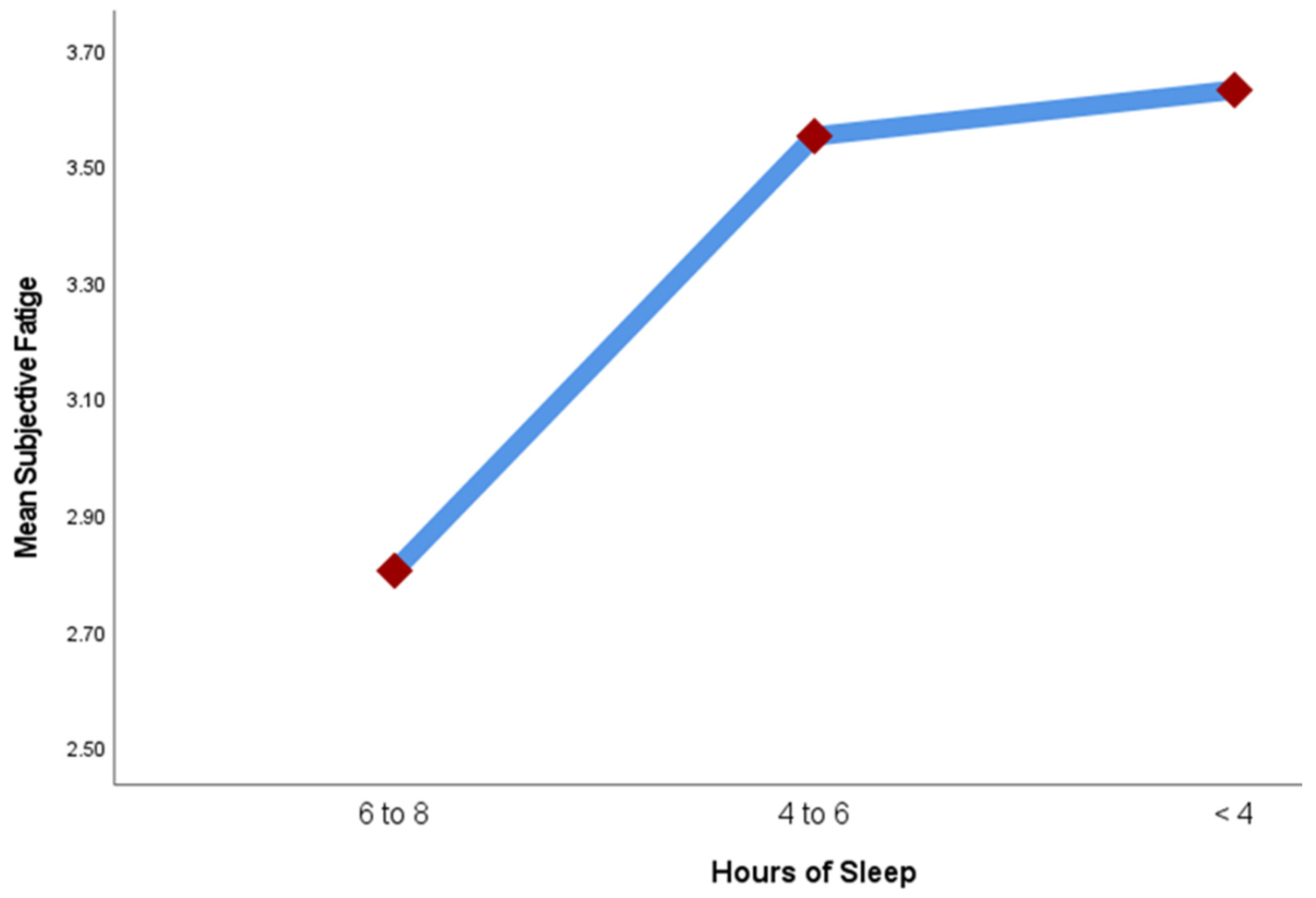
- RQ3: Is there a difference in BRT drivers’ fatigue scores for <4, 4–6, and 6–8 h of sleep per night?
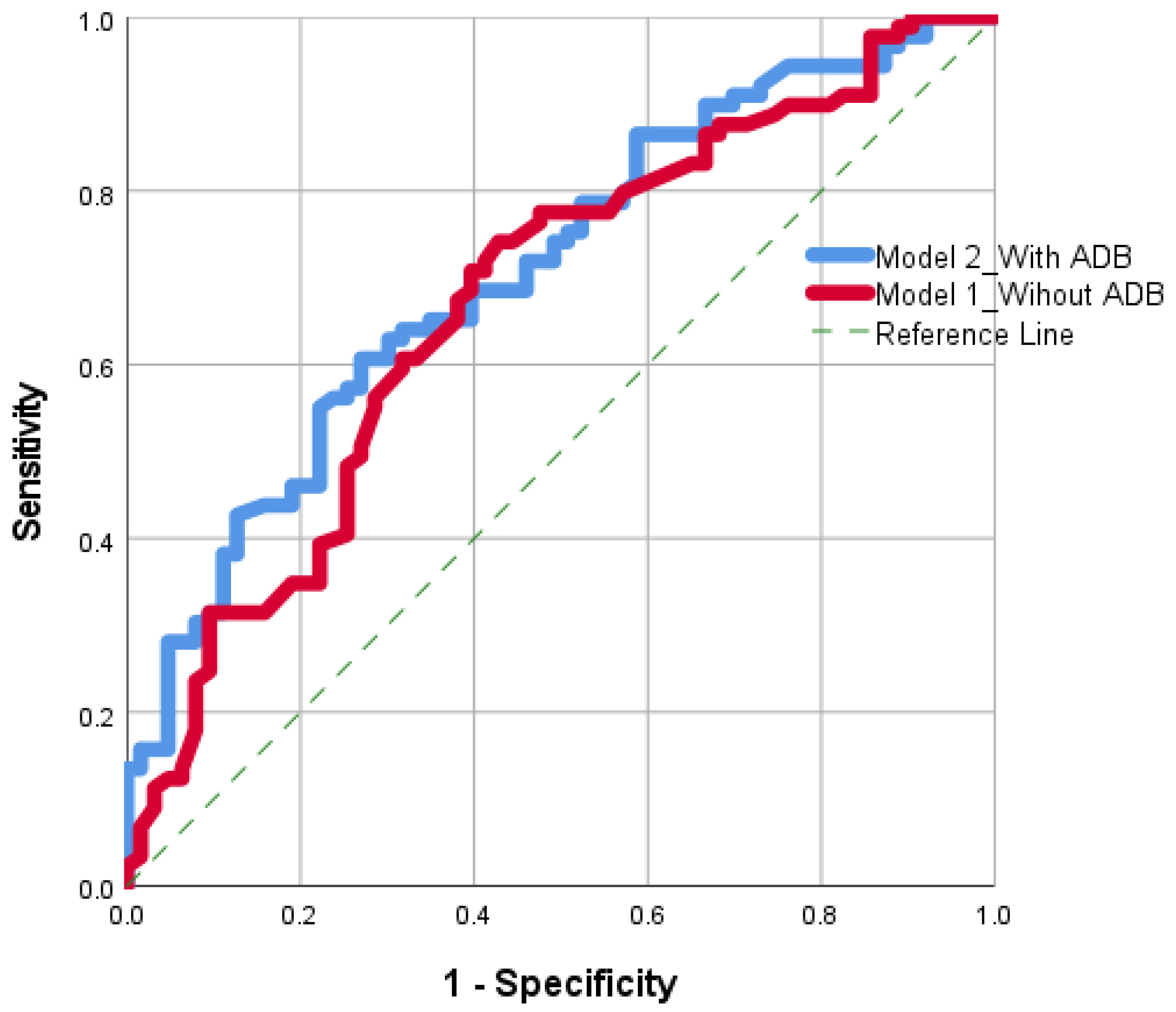
- RQ4: How well does subjective fatigue predict accident involvement?
2. Materials and Methods
2.1. Participants and Data Collection
2.2. Measures
2.2.1. The BRT–Aberrant Driver Behavior Questionnaire (BRT-ADBQ)
2.2.2. BRT Drivers’ Accident History
2.2.3. Checklist Individual Strength (CIS) Scale
2.3. Data Analysis
3. Results
3.1. Demographics
3.2. Factor Analysis
3.3. Aberrant Driving Behavior and Accident Involvement
3.4. Fatigue and Aberrant Driver Behavior
3.4.1. Fatigue and ADB as Predictors of Accident Involvement
3.4.2. Hours of Sleep and Subjective Experience of Fatigue
4. Discussion
4.1. BRT–Aberrant Driver Behavior (BRT-ADBQ)
4.2. Aberrant Driver Behaviors and Accident Involvement
4.3. Fatigue, Poor Sleep and Accident Involvement
4.4. Limitations of the Study and Future Research
- First, the presented results should be taken with caution. It was a cross-sectional study with a sample for convenience; therefore, there is a possibility of bias given that participants came from one of the BRT line operators from the existing seven across the megacity; hence, the results apply only to this BRT line operator. Hence, the results should not be generalized to all the BRT drivers of the capital city. Further research aims at increasing the sample size by conducting a random sample and by considering the seven existing BRT lines operating in the megacity. It is hoped to be able to replicate the results presented herein.
- Second, some data bias, i.e., it is possible that some participants were not honest due to the fear of being dismissed or reprimanded from their employer. As such, it may be the case that the frequency of self-reported accident involvement, among others, is also an underestimation.
- Third, the present study employed subjective information on self-reported alcohol consumption and hours of sleep per night that may have induced bias. Further studies should include objective data, e.g., on BMI, sleep disorders (e.g., acute/chronic sleep [90]), hours of sleep, mileage, yearly income, smoking, and disease diagnosed (e.g., diabetes mellitus, hypertension, among others [13]). (In fact, this kind of data was requested but not provided by the BRT operator.) Scales such as Epworth Sleeping Scale, Pittsburgh Sleep Quality [13], or similar should also be included for future research.
- Fourth, the self-reported accident involvement may be inaccurate, i.e., there is a need to distinguish between those crashes where the BRT drivers’ actions contributed to them and those due to the violations of other road users (e.g., motor cars, taxis, buses, cyclists, motorbikes, pedestrians) that invade BRT lanes. Hence, in future research, this distinction should be clearly stated and considered when conducting the analysis.
5. Conclusions
Funding
Institutional Review Board Statement
Informed Consent Statement
Data Availability Statement
Acknowledgments
Conflicts of Interest
Appendix A

| Characteristics | Description |
|---|---|
| Training | Drivers receive professional training and certifications for operating BRT buses, training for providing quality service to passengers, among others. |
| Articulated buses | Driving four types of bus: articulated, 18 to 23 m long (160 passengers); bi-articulated, 24 to 27 m long (240–270 passengers); double-decker (12–13 m long and 90–130 passengers); and standard buses, 12 m long with a capacity of 60–80 passengers. |
| Driving dedicated lanes | Driving in exclusive lanes demands a high level of discipline to adhere to tight schedules and manage internal traffic within the corridor. This requires drivers to maintain a high level of concentration to avoid collisions with vehicles that “turn-left” or invade the BRT lane, while maintaining a constant speed of 30–50 km/h. |
| Stop and docking precision | Drivers must align articulated or bi-articulated buses with high precision at stations to allow the bus doors to match those of the station. |
| Safe driving | Due to the size of the buses and the high volume of passengers, drivers concentrate on passengers’ safety and ensuring continuous operation. |
| Work shift | Drivers face different working hours (morning shift from 4:30 p.m. to 1:00 a.m.; afternoon from 12:00 p.m. to 7:00 p.m.; night from 6:00 p.m. to 1:00 a.m.). |
| Use of technology | They are trained to handle new technologies, such as electric buses, and rely on automated payment systems, among others. |
| Challenges/Difficulties | Description |
|---|---|
| Invasion exclusive lane | Drivers face the challenge of performing emergency maneuvers and sudden braking and often result in injuries to passengers and accidents due to other road users (e.g., cyclists, motorcyclists, motorists, and pedestrians) invading the lane daily. |
| Traffic and critical maneuvers | Drivers require high skills to align capacity buses with precision at stations to allow these buses’ doors to match those of the stations; moreover, they also must maneuver in very dense pedestrian areas, narrow streets, among others. |
| Limited visibility | Due to the size of the buses, it creates ‘blind spots’, which hinder the visibility of pedestrians, cyclists and small vehicles, thus complicating operations at busy intersections. |
| Occupational Health | They face high levels of stress due to tight schedules, long working hours, and the responsibility for the safety of passengers. Prolonged exposure to vibrations, engine noise, among others. |
| Conflicts and road coexistent | Drivers not only have to deal with lane invaders, but they also must coexist with other modes of transport that try to overtake or do not follow traffic regulations. |
| External factors | Weather conditions and unexpected obstacles on the road, such as slippery roads when it rains, ground subsidence in certain sections of the lane, unsynchronized traffic lights, and reckless pedestrian behavior, among others. |
| Time pressure and passenger behavior | They deal with time pressure, which sometimes creates tension with passengers regarding door closing or boarding/descending, in addition to dealing with cases of passengers’ misconducts. |
| Unexpected events | Earthquakes, pedestrians or cyclists who refuse to leave the confined lane, among others. |
Appendix B
| Original Items | Final Items Considered in the Analysis (Modified/Created If Needed) |
|---|---|
| 1. “How often do you disregard speed limit to catch up or avoid being late to bus station from bus depot?” a (V) | Q1. “How often do you disregard speed limit to catch up or avoid being late to bus station from bus depot?” |
| 2. “Check your speedometer and discover that you are unknowingly travelling faster that the legal limit.” b (V) | Q2. “Check your speedometer and discover that you are unknowingly travelling faster that the legal limit.” |
| 3. “Crossing a junction knowing that the traffic lights have already turned against you.” b (V) | Q3. “Crossing a junction knowing that the traffic lights have already turned against you.” |
| 4. “Disregard red lights when driving late at night along empty roads.” b (V) | Q4. “Pay attention to red lights when driving late at night along empty roads.” |
| 5. “Driving with one hand on the steering wheel.” c (E) | Q5. “Driving with one hand on the steering wheel.” |
| 6. “Use the cellular (mobile) phone while driving.” d (E) | Q6. “Use the cellular (mobile) phone while driving.” |
| 7. “Take more passengers than allowed.” d (V) | Q7. “Take more passengers than allowed.” |
| 8. “Missing stop due to no passenger present in station.” d (V) | Q8. “Missing stops due to no passengers present in station.” |
| 9. “Intend to switch on the windscreen wipers, but switch on the lights instead, or vice versa.” b (E) | Q9. “Intend to switch on the windscreen wipers, but switch on the lights instead, or vice versa.” |
| 10. “Misjudge your gap while parking and nearly (or actually) hit adjoining vehicle.” b (E) | Q10. “Misjudge your gap while parking and nearly (or actually) hit adjoining vehicle.” |
| 11. “While driving on the road, you fall asleep and wake up to realize that you have no clear recollection of the road along which you have just travelled.” a (E) | Q11. “While driving on the road, you fall asleep and wake up to realize that you have no clear recollection of the road along which you have just travelled.” |
| 12. “Lost in thought, you forget that your lights are on full beam until ‘flashed’ by other drivers.” b (E) | Q12. “Lost in thought, you forget that your lights are on full beam until ‘flashed’ by other drivers.” |
| 13. “Try to drive away despite the back doors being open.” d (E) | Q13. “Try to drive away despite the door is open.” |
| 14. “I fail to check my rear-view mirror before pulling out from a bus stop.” d (E) | Q14. “I check my rear-view mirror before pulling out from a bus stop.” |
| 15. “Braking suddenly at bus stop.” c (E) | Q15. “Braking suddenly at bus stop.” |
| 16. “Lost in thought or distracted, you fail to notice someone waiting at a zebra crossing, or a pelican crossing light that has just turned red.” b (V) | Q16. “Lost in thought or distracted, you fail to notice someone waiting at a zebra crossing, or a pelican crossing light that has just turned red.” |
| 17. “While closing the vehicle doors, how often the passengers or objects gets struck in between the vehicle door.” a (E) | Q17. “While closing the vehicle doors, how often the passengers or objects get struck in between the vehicle door.” |
| 18. “Try to keep minimum safe distance from the vehicle in front.” a (P) | Q18. “Try to keep minimum safe distance from the vehicle in front.” |
| 19. “Try not to honk unnecessarily, so as to avoid affecting others.” a (P) | Q19. Try using your horn to alert cyclists/motorcyclists/pedestrians when they invade your lane. |
| 20. “Angered by another driver’s behavior, you give chase with the intention of giving him/her a piece of your mind.” b (V) | Q20. “Angered by another driver’s behavior, you give chase with the intention of giving him/her a piece of your mind.” |
| 21. “Fail to notice someone stepping out from behind a bus or parked vehicle until it is nearly too late.” b (E) | Q21. “Fail to notice someone stepping out from behind a bus or parked vehicle until it is nearly too late.” |
| 22. “To leave much clear gap between vehicle and station.” a (E) | Q22. “To leave much clear gap between vehicle and station.” |
| 23. “Not able to precisely stop the bus at bus stop with the bus door exactly parallel to the stop door at station.” a (E) | Q23. “Not able to precisely stop the bus at bus stop with the bus door exactly parallel to the stop door at station.” |
| 24. “Avoid braking too hard considering passenger discomfort.” a (P) | Q24. “Avoid braking too hard considering passenger discomfort.” |
| 25. “Drive especially close or flash the car in front as a signal for that driver to go faster or get out of your way.” b (V) | Q25. Drive especially close or flash at vehicles (cars/motorcycle/bicycle users, pedestrians) that invade your lane to go faster or get out of your way. |
| 26. “Fail to notice pedestrians crossing when turning into a side-street from a main road.” b (E) | Q26. “Fail to notice pedestrians crossing when turning into a side-street from a main road.” |
| 27. “Get into the wrong lane at a roundabout or approaching a road junction.” d (E) | Q27. “Get into the wrong lane at a roundabout or approaching a road junction.” |
| 28. “Invade a junction or intersection, causing a bottleneck for incoming vehicles.” c (V) | Q28. Invade the lanes assigned to pedestrians and cyclists. |
| 29. Same as above. | Q29. “Invade a junction or intersection, causing a bottleneck for incoming vehicles.” |
| 30. “Miss “Yield” or “Stop” signs; narrowly avoiding a collision.” d (V) | Q30. “Miss “Yield” or “Stop” signs; narrowly avoiding a collision.” |
| 31. “Turn or change lanes suddenly.” c (E) | Q31. “Suddenly turn or change lanes.” |
| 32. “Driving more than 30 km/h in garages or portals.” c (V) | Q32. “Driving at over 30 km/h on the main road.” |
| 33. “Driving even though you have consumed alcohol.” c (V) | Q33. “Driving even though you have consumed alcohol.” |
| 34. “Driving without a seat belt on.” e (V) | Q34. “Driving without a seat belt on.” |
Appendix C
Appendix C.1. Trend Contrast
| Group | N | Mean | SD | Std. Error | 95% CI for the Mean [Lower–Upper] |
|---|---|---|---|---|---|
| 1 (6–8 h) | 31 | 2.8018 | 1.31277 | 0.23578 | [2.3203–3.2834] |
| 2 (4–6 h) | 94 | 3.5502 | 1.33897 | 0.13810 | [3.2759–3.8244] |
| 3 (≤4 h) | 27 | 3.6296 | 1.35715 | 0.26118 | [3.0928–4.1665] |
| Total | 152 | 3.4117 | 1.36400 | 0.11064 | [3.1931–3.6302] |
| Group | Levene Test | df1 | df2 | df3 |
|---|---|---|---|---|
| Subjective fatigue | 0.024 | 2 | 149 | 0.977 |
| Sum of Squares | df | Mean Square | F | Sig. | |||
|---|---|---|---|---|---|---|---|
| Between groups | Combined | 2.8018 | 14.614 | 2 | 7.307 | 4.09 | 0.019 |
| Linear term | Contrast | 10.614 | 1 | 10.614 | 5.938 | 0.016 | |
| Deviations | 3.999 | 1 | 3.999 | 2.238 | 0.137 | ||
| Quadratic term | Contrast | 3.999 | 1 | 3.999 | 2.238 | 0.137 | |
| Within groups | 266.322 | 149 | 1.787 | ||||
| Total | 280.936 | 151 |
Appendix C.2. Planned Comparison
| Contrast | Group 1 (6–8) | Group 2 (4–6) | Group 3 (<4) |
|---|---|---|---|
| 1 | −1 | 0 | 1 |
| Contrast | Value of Contrast | Std. Error | Mean Square | t | Sig. (Two-Tailed) | ||
|---|---|---|---|---|---|---|---|
| Fatigue | Assume equal variances | 1 | 0.8278 | 0.35193 | 2.352 | 149 | 0.020 |
References
- WHO (World Health Organization). Global Status Report on Road Safety; IGO: Geneva, Switzerland, 2023; Available online: https://iris.who.int/bitstream/handle/10665/375016/9789240086517-eng.pdf?sequence=1 (accessed on 25 July 2025).
- EU-OSHA (European Agency for Safety and Health at Work). A Review of Accidents and Injuries to Road Transport Drivers; Publications Office of the European Union: Luxembourg, 2010; Available online: https://osha.europa.eu/sites/default/files/Road-transport-accidents.pdf (accessed on 25 July 2025).
- Nordfjærn, T.; Jørgensen, S.H.; Rundmo, T. Safety attitudes, behaviour, anxiety and perceived control among professional and non-professional drivers. J. Risk Res. 2012, 15, 875–896. [Google Scholar] [CrossRef]
- Dement, W.C.; Carskadon, M.A. Current perspectives on daytime sleepiness: The issues. Sleep 1982, 5, 56–66. [Google Scholar] [CrossRef]
- Bartley, S.H.; Chute, E. Fatigue and Impairment in Man; McGraw-Hill Book Company: New York, NY, USA, 1947. [Google Scholar]
- Nilsson, T.; Nelson, T.M.; Carlson, D. Development of fatigue symptoms during simulated driving. Accid. Anal. Prev. 1997, 29, 479–488. [Google Scholar] [CrossRef] [PubMed]
- Brown, I.D. Driver fatigue. Hum. Factors 1994, 36, 298–314. [Google Scholar] [CrossRef] [PubMed]
- Williamson, A. Fatigue and coping with driver distraction. In Distracted Driving; Faulks, I.J., Regan, M., Stevenson, M., Brown, J., Porter, A., Irwin, J.D., Eds.; Australasian College of Road Safety: Sydney, Australia, 2007; pp. 611–622. [Google Scholar]
- Zhang, H.; Yan, X.; Wu, C.; Qiu, T.Z. Effect of circadian rhythms and driving duration on fatigue level and driving performance of professional drivers. Transp. Res. Rec. 2014, 2402, 19–27. [Google Scholar] [CrossRef]
- Kocoglu-Tanyer, D.; Bardak, F.; Koc, E. The effects of taxi drivers’ chronotype characteristics on daily life: Daytime sleepiness, stress, fatigue, social relationships, traffic accident experience, and general health. Chronobiol. Int. 2025, 43, 219–228. [Google Scholar] [CrossRef]
- Odeleye, U.A.; Taiwo, O.A.; Farah, B.S.; Adamu, A.I.; Farah, S.M. Assessment of driver fatigue as a contributory factor in articulated truck accidents in Nigeria. Afr. Transp. Stud. 2025, 3, 100053. [Google Scholar] [CrossRef]
- Radun, I.; Barić, D. Driver fatigue: Crashes, the law, and traffic police officers’ experiences and views. Transp. Res. Part F Traffic Psychol. Behav. 2026, 117, 103442. [Google Scholar] [CrossRef]
- Kwon, S.; Kim, H.; Kim, G.S.; Cho, E. Fatigue and poor sleep are associated with driving risk among Korean occupational drivers. J. Transp. Health 2019, 14, 100572. [Google Scholar] [CrossRef]
- Philip, P.; Åkerstedt, T. Transport and industrial safety, how are they affected by sleepiness and sleep restriction? Sleep Med. Rev. 2006, 10, 347–356. [Google Scholar] [CrossRef]
- de Vries, J.D.; Michielsen, H.J.; Van Heck, G.L. Assessment of fatigue among working people: A comparison of six questionnaires. Occup. Environ. Med. 2003, 60, i10–i15. [Google Scholar] [CrossRef] [PubMed]
- Åkerstedt, T. Psychological and psychophysiological effects of shift work. Scand. J. Work Environ. Health 1990, 16, 67–73. [Google Scholar] [CrossRef] [PubMed]
- Chalder, T.; Berelowitz, G.; Pawlikowska, T.; Watts, L.; Wessely, S.; Wright, D.; Wallace, E.P. Development of a fatigue scale. J. Psychosom. Res. 1993, 37, 147–153. [Google Scholar] [CrossRef] [PubMed]
- Whoqol Group. Development of the World Health Organization WHOQOL-REF Quality of Life Assessment. Psychol. Med. 1998, 28, 551–558. [Google Scholar] [CrossRef]
- Michielsen, H.J.; De Vries, J.; Van Heck, G.L. Psychometric qualities of a brief self-rated fatigue measure: The Fatigue Assessment Scale (FAS). J. Psychosom. Res. 2022, 54, 345–352. [Google Scholar] [CrossRef]
- van Veldhoven, M.; Broersen, S. Measurement quality and validity of the “need for recovery scale”. Occup. Environ. Med. 2003, 60, i3–i9. [Google Scholar] [CrossRef]
- Anund, A.; Ihlström, J.; Fors, C.; Kecklund, G.; Filtness, A. Factors associated with self-reported driver sleepiness and incidents in city bus drivers. Ind. Health 2016, 54, 337–346. [Google Scholar] [CrossRef]
- Anund, A.; Fors, C.; Ihlström, J.; Kecklund, G. An on-road study of sleepiness in split shifts among city bus drivers. Acc. Anal. Prev. 2018, 114, 71–76. [Google Scholar] [CrossRef]
- Wang, S.Y.; Wu, K.F. Reducing intercity bus crashes through driver rescheduling. Acc. Anal. Prev. 2019, 122, 25–35. [Google Scholar] [CrossRef]
- Reason, J.; Manstead, A.; Stradling, S.; Baxter, J.; Campbell, K. Errors and violations on the roads: A real distinction? Ergonomics 1990, 33, 1315–1332. [Google Scholar] [CrossRef]
- Parker, D.; Reason, J.T.; Manstead, A.S.R.; Stradling, S.G. Driving errors, driving violations and accident involvement. Ergonomics 1995, 38, 1036–1048. [Google Scholar] [CrossRef] [PubMed]
- Singh, H.; Kathuria, A. Self-reported aberrant driving behavior among Bus Rapid Transit drivers. J. Public Transp. 2023, 25, 100040. [Google Scholar] [CrossRef]
- Han, W.; Zhao, J. Driver behaviour and traffic accident involvement among professional urban bus drivers in China. Transp. Res. Part F Traffic Psychol. Behav. 2020, 74, 184–197. [Google Scholar] [CrossRef]
- af-Wåhlberg, A.E.; Barraclough, P.; Freeman, J. The Driver Behaviour Questionnaire as accident predictor; a methodological re-meta-analysis. J. Saf. Res. 2015, 55, 185–212. [Google Scholar] [CrossRef]
- Lawton, R.; Parker, D.; Manstead, A.S.R.; Stradling, S.G. The role of affect in predicting social behaviors: The case of road traffic violations. J. Appl. Soc. Psychol. 1997, 27, 1258–1276. [Google Scholar] [CrossRef]
- Elliott, M.A.; Baughan, C.J.; Sexton, B.F. Errors and violations in relation to motorcyclists’ crash risk. Accid. Anal. Prev. 2007, 39, 491–499. [Google Scholar] [CrossRef]
- af-Wåhlberg, A.L.; Kline, T. The Manchester Driver Behaviour Questionnaire as a predictor of road traffic accidents. Theor. Issues Ergon. Sci. 2011, 12, 66–86. [Google Scholar] [CrossRef]
- de Winter, J.C.F.; Dodou, D. The driver behaviour questionnaire as a predictor of accidents: A meta-analysis. J. Saf. Res. 2010, 41, 463–470. [Google Scholar] [CrossRef]
- Sullman, M.J.M.; Meadows, M.L.; Pajo, K.B. Aberrant driving behaviours amongst New Zealand truck drivers. Transp. Res. Part F Traffic Psychol. Behav. 2002, 5, 217–232. [Google Scholar] [CrossRef]
- Cordazzo, S.T.D.; Scialfa, C.T.; Bubric, K.; Ross, R.J. The driver behaviour questionnaire: A North American analysis. J. Saf. Res. 2014, 50, 99–107. [Google Scholar] [CrossRef]
- Maslac, M.; Antić, B.; Lipovac, K.; Pešić, D.; Milutinović, N. Behaviours of drivers in Serbia: Non-professional versus professional drivers. Transp. Res. Part F Traffic Psychol. Behav. 2018, 52, 101–111. [Google Scholar] [CrossRef]
- Özkan, T.; Lajunen, T.; Chliaoutakis, J.E.; Parker, D.; Summala, H. Cross-cultural differences in driving behaviours: A comparison of six countries. Transp. Res. Part F Traffic Psychol. Behav. 2006, 9, 227–242. [Google Scholar] [CrossRef]
- Pylkkönen, M.; Tolvanen, A.; Hublin, C.; Kaartinen, J.; Karhula, K.; Puttonen, S.; Sihvola, M.; Sallinen, M. Effects of alertness management training on sleepiness among long-haul truck drivers: A randomized controlled trial. Acc. Anal. Prev. 2018, 121, 301–313. [Google Scholar] [CrossRef] [PubMed]
- Connor, J.; Norton, R.; Ameratunga, S.; Robinson, E.; Civil, I.; Dunn, R.; Bailey, J.; Jackson, R. Driver sleepiness and risk of serious injury to car occupants: Population-based case control study. BMJ 2002, 324, 1125. [Google Scholar] [CrossRef]
- Harma, M.; Sallinen, M.; Ranta, R.; Mutanen, P.; Müller, K. The effect of an irregular shift system on sleepiness at work in train drivers and railway traffic controllers. J. Sleep Res. 2002, 11, 141–151. [Google Scholar] [CrossRef]
- Sallinen, M.; Sihvola, M.; Puttonen, S.; Ketola, K.; Tuori, A.; Harma, M.; Kecklund, G.; Åkerstedt, T. Sleep, alertness and alertness management among commercial airline pilots on short-haul and long-haul flights. Acc. Anal. Prev. 2017, 98, 320–329. [Google Scholar] [CrossRef]
- Onninen, J.; Hakola, T.; Puttonen, S.; Tolvanen, A.; Virkkala, J.; Sallinen, M. Sleep and sleepiness in shif-working tram drivers. Appl. Ergon. 2020, 88, 103153. [Google Scholar] [CrossRef]
- Hussain, Z.; Hussain, Q.; Soliman, A.; Mohammed, S.; Mamo, W.G.; Alhajyaseen, W.K.M. Aberrant driving behaviors as mediators in the relationship between driving anger patterns and crashes among taxi drivers: An investigation in a complex cultural context. Traffic Inj. Prev. 2023, 24, 393–401. [Google Scholar] [CrossRef]
- Cheng, A.S.K.; Ng, C.K.T. Development of a Chinese motorcycle rider driving violation questionnaire. Acc. Anal. Prev. 2010, 42, 1250–1256. [Google Scholar] [CrossRef]
- Useche, S.A.; Gómez Ortiz, V.; Cendales, V.E. Stress-related psychosocial factors at work, fatigue, and risky driving behavior in bus rapid transport (BRT) drivers. Acc. Anal. Prev. 2017, 104, 106–114. [Google Scholar] [CrossRef]
- Öz, B.; Özkan, T.; Lajunen, T. Professional and non-professional drivers’ stress reactions and risky driving. Transp. Res. Part F Traffic Psychol. Behav. 2010, 13, 32–40. [Google Scholar] [CrossRef]
- SARACS. Analysis of BRT Accidents and Traffic Congestion in Mexico City; SEPI-ESIME, Instituto Politecnico Nacional: Mexico City, Mexico, 2025. [Google Scholar]
- Kontogiannis, T.; Kossiavelou, Z.; Marmaras, N. Self-reports of aberrant behaviour on the roads: Errors and violations in a sample of Greek drivers. Acc. Anal. Prev. 2022, 34, 381–399. [Google Scholar] [CrossRef] [PubMed]
- Hussain, M.; Shi, J. Predictors of aberrant driving of Pakistani drivers by using proportional odds (PO) model. Asian Transp. Stud. 2020, 6, 100005. [Google Scholar] [CrossRef]
- Rowe, R.; Roman, G.D.; McKenna, F.P.; Barker, E.; Poulter, D. Measuring errors and violations on the road: A bifactor modelling approach to the driver bahvior questionnaire. Acc. Anal. Prev. 2015, 74, 118–125. [Google Scholar] [CrossRef]
- Vercoulen, J.H.M.M.; Swanink, C.M.A.; Fennis, J.F.M.; Galama, J.M.D.; van der Meer, J.W.M.; Bleijenbergh, G. Dimensional assessment of chronic fatigue syndrome. J. Psychosom. Res. 1994, 38, 383–392. [Google Scholar] [CrossRef]
- Beurskens, A.J.H.M.; Bultmann, U.; Kant, I.; Vercoulen, J.H.M.M.; Bleijenbergh, G.; Swaen, G.M.H. Fatigue among working people: Validity of a questionnaire measure. Occup. Environ. Med. 2000, 57, 353–357. [Google Scholar] [CrossRef]
- Ergin, G.; Yildirim, Y. A validity and reliability study of the Turkish Checklist Individual Strength (CIS) questionnaire in musculoskeletal physical therapy patients. Physiother. Theory Pract. 2012, 28, 624–632. [Google Scholar] [CrossRef]
- Marques, M.; De Gucht, V.; Gouveia, M.J.; Cordeiro, A.; Leal, I.; Maes, S. Psychometric properties of the Portuguese version of the Checklist of Individual Strength (CIS20-P). Psychol. Community Health 2013, 2, 11–18. [Google Scholar] [CrossRef]
- Panitz, S.; Kornhuber, M.; Hanisch, F. The checklist individual strength (CIS20-R) in patients with amyotrophic lateral sclerosis a longitudinal study. Acta Neurol. Scand. 2015, 131, 372–380. [Google Scholar] [CrossRef]
- Tabachnick, B.G.; Fidell, L.S. Using Multivariate Statistics, 7th ed.; Pearson: London, UK, 2017. [Google Scholar]
- Field, A. Discovering Statistics Using IBM SPSS Statistics, 3rd ed.; SAGE Publications: Thousand Oaks, CA, USA, 2013. [Google Scholar]
- Watkins, M.W. Monte Carlo PCA for Parallel Analysis (Computer Software); Ed & Psych Associates: State College, PA, USA, 2000. [Google Scholar]
- Freeman, J.; Wishart, D.; Davey, J.; Rowland, B.; Williams, R. Utilising the driver behaviour questionnaire in an Australian organisational fleet setting: Can it identify risky drivers? J. Australas. Coll. Road Saf. 2009, 20, 38–45. [Google Scholar]
- Stradling, S.G.; Parker, D.; Lajunen, T.; Meadows, M.L.; Xie, C.Q. Normal behavior and traffic safety: Violations, errors, lapses and crashes. In Transportation, Traffic Safety, and Health. Human Behavior; von Holst, H., Nygren, Å., Anderson, Å.E., Eds.; Springer: Berlin/Heidelberg, Germany; New York, NY, USA, 2000; pp. 279–295. [Google Scholar]
- El Hafidy, A.; Rachad, T.; Idri, A. Understanding aberrant driving intentions based on the Theory of Planned Behavior: Literature review and Meta-Analysis. J. Saf. Res. 2024, 90, 225–243. [Google Scholar] [CrossRef]
- Gupta, A.; Choudhary, P.; Parida, M. Examining risky driving behaviours: A comparative analysis of SUVs and other car types. Transp. Policy 2024, 152, 9–20. [Google Scholar] [CrossRef]
- Qian, Q.; Qi, Y.; Shi, J. Description and analysis of aberrant riding behaviors of pedal cyclists, e-bike riders and motorcyclists: Based on a self-report questionnaire. Transp. Res. Part F Traffic Psychol. Behav. 2024, 107, 969–984. [Google Scholar] [CrossRef]
- Warner, H.W.; Özkan, T.; Lajunen, T.; Tzamalouka, G. Cross-cultural comparison of drivers’ tendency to commit different aberrant driving behaviours. Transp. Res. Part F Traffic Psychol. Behav. 2011, 14, 390–399. [Google Scholar] [CrossRef]
- Santos-Reyes, J.; Padilla-Pérez, D. Temporal accident trends of Bus Rapid Transit Line 1 in Mexico City. In Handbook of Research on Decision Sciences and Applications in the Transport Sector; Hassan, S., Mohamed, W., Eds.; IGI Global: Hershey, PA, USA, 2021; pp. 159–177. [Google Scholar]
- Gras, M.E.; Sullman, M.J.M.; Cunill, M.; Planes, M.; Aymerich, M.; Font-Mayolas, S. Spanish drivers and their aberrant driving behaviours. Transp. Res. Part F Traffic Psychol. Behav. 2006, 9, 129–137. [Google Scholar] [CrossRef]
- Meadows, M.L.; Stradling, S.G.; Lawson, S. The role of social deviance and violations in predicting road traffic accidents in a sample of young offenders. Br. J. Psychol. 1998, 89, 417–431. [Google Scholar] [CrossRef]
- Mesken, J.; Lajunen, T.; Summala, H. Interpersonal violations, speeding violations and their relation to accident involvement in Finland. Ergonomics 2002, 45, 469–483. [Google Scholar] [CrossRef]
- DeLucia, P.R.; Bleckley, M.K.; Meyer, L.E.; Bush, J.M. Judgments about collision in younger and older drivers. Transp. Res. Part F Traffic Psychol. Behav. 2003, 6, 63–80. [Google Scholar] [CrossRef]
- Davey, J.; Wishart, D.; Freeman, J.; Watson, B. An application of the driver behaviour questionnaire in an Australian organisational fleet setting. Transp. Res. Part F Traffic Psychol. Behav. 2007, 10, 11–21. [Google Scholar] [CrossRef]
- Abdolrazaghi, A.; Zarabadi Pour, S. A machine learning model to predict the severity of road traffic injury based on aberrant driving behaviors and driver characteristics. Traffic Inj. Prev. 2026, 1–7. [Google Scholar] [CrossRef]
- Ferenchak, N.N.; Woods, B.A. Changes in crash types and contributing factors after bus rapid transit (BRT) infrastructure installation in Albuquerque, New Mexico. Multimodal Transp. 2025, 4, 100192. [Google Scholar] [CrossRef]
- Singh, H.; Kathuria, A. Behind the wheel: Probing into personality, skills, and driving behavior’s role in bus rapid transit crashes. Traffic Inj. Prev. 2024, 25, 604–611. [Google Scholar] [CrossRef] [PubMed]
- Xie, S.; Jia, W.; Zhu, T. Identifying patterns and profiles of rule-violation behaviors among bus drivers: A framework for targeted interventions. Transp. Res. Interdiscip. Perspect. 2025, 34, 101748. [Google Scholar] [CrossRef]
- Soliani, R.D.; Brito Lopes, A.V.; Santiago, F.; da Silva, L.B.; Emekwuru, N.; Loren, A.C. Risk of crashes among self-employed truck drivers: Prevalence evaluation using fatigue data and machine learning prediction models. J. Saf. Res. 2025, 92, 68–80. [Google Scholar] [CrossRef]
- Zhao, Y.; Kang, K.; Jia, W.; Guo, Z.; Zhang, J.; Zhu, T. Examining traffic violations in severe casualty truck crashes: A text mining and reliable network analysis of narrative reports. Traffic Inj. Prev. 2025, 1–10. [Google Scholar] [CrossRef]
- Baikejuli, M.; Li, R. Quantifying truck crash risk under the combined effects of multi-type aberrant driving behaviors: Two probabilistic approaches. J. Transp. Saf. Secur. 2025, 18, 204–240. [Google Scholar] [CrossRef]
- Miller, K.A.; Filtness, A.J.; Anund, A.; Maynard, S.E.; Pilkington-Cheney, F. Contributory factors to sleepiness amongst London bus drivers. Transp. Res. Part F Traffic Psychol. Behav. 2020, 73, 415–424. [Google Scholar] [CrossRef]
- Mahajan, K.; Velaga, N.R. Effects of partial sleep deprivation: Speed management ability and associated crash risk. Transp. Lett. 2023, 15, 527–536. [Google Scholar] [CrossRef]
- Bioulac, S.; Micoulaud-Franchi, J.A.; Arnaud, M.; Sagaspe, P.; Moore, N.; Salvo, F.; Philip, P. Risk of motor vehicle accidents related to sleepiness at the wheel: A systematic review and meta-analysis. Sleep 2017, 40, zsx134. [Google Scholar] [CrossRef]
- Miyama, G.; Fukumoto, M.; Kamegaya, R.; Hitosugi, M. Risk factors for collisions and near-miss incidents caused by drowsy bus drivers. Int. J. Environ. Res. Public Health 2020, 17, 4370. [Google Scholar] [CrossRef]
- Liendo, G.R.; Castro, C.L.; de Castro, J.R. Fatigue and sleepiness in interprovincial road bus drivers: Comparative study between formality and informality. Rev. Peru. Med. Exp. Salud Publica 2010, 27, 187–194. [Google Scholar] [CrossRef]
- Obst, P.; Armstrong, K.; Smith, S.; Banks, T. Age and gender comparisons of driving while sleepy: Behaviours and risk perceptions. Transp. Res. Part F Traffic Psychol. Behav. 2011, 14, 539–542. [Google Scholar] [CrossRef]
- Lowden, A.; Moreno, C.; Holmbäck, U.; Lennernäs, M.; Tucker, P. Eating and shift work-effects on habits, metabolism, and performance. Scand. J. Work Environ. Health 2010, 36, 150–162. [Google Scholar] [CrossRef]
- Filtness, A.J.; Reyner, L.A.; Horne, J.A. Driver sleepiness—Comparisons between young and older men during a monotonous afternoon simulated drive. Biol. Psychol. 2012, 89, 580–583. [Google Scholar] [CrossRef]
- Summala, H.; Mikkola, T. Fatal accidents among car and truck drivers: Effects of fatigue, age, and alcohol consumption. Hum. Factors 1994, 36, 315–326. [Google Scholar] [CrossRef] [PubMed]
- Xu, M.; Shuai, B.; Wang, X.; Liu, H.; Zhou, H. Analysis of the accessibility of connecting transport at high-speed rail stations from the perspective of departing passengers. Transp. Res. A Policy Pract. 2023, 173, 103714. [Google Scholar] [CrossRef]
- Schrank, D.; Eisele, B.; Lomax, T. Urban Mobility Report 2019; The Texas A&M Transportation Institute: College Station, TX, USA, 2019; Available online: https://static.tti.tamu.edu/tti.tamu.edu/documents/umr/archive/mobility-report-2019.pdf (accessed on 30 November 2025).
- Liao, X.; Wu, G.; Yang, L.; Barth, M.J. A real-world data-driven approach for estimating environmental impacts of traffic accidents. Transp. Res. D Trans. Environ. 2023, 117, 103664. [Google Scholar] [CrossRef]
- TomTom. Ranking of the World’s Most Congested Cities. 2025. Available online: https://www.tomtom.com/traffic-index/ranking/ (accessed on 30 November 2025).
- Riethmeister, V.; Matthews, R.W.; Dawson, D.; de Boer, M.; Brouwer, S.; Bültmann, U. Time-of-day and days-on-shift predict increased fatigue over two-week offshore day-shifts. Appl. Ergon. 2019, 78, 157–163. [Google Scholar] [CrossRef]
- Official Gazette of the Federation. Regulations of the General Health Law Regarding Health Research; Chamber of Members of the Parliament of the H; Congress of the Union: Mexico City, Mexico, 2014. [Google Scholar]
- NOM-012-SSA3-2012; Establishing Criteria for the Execution of Health Research Projects in Human Beings. Official Gazette of the Federation: Mexico City, Mexico, 2013.


| Variable | Category | N | % |
|---|---|---|---|
| Age group | ≤29 | 19 | 12.5 |
| 30–39 | 42 | 27.6 | |
| 40–49 | 51 | 33.6 | |
| ≥50 | 40 | 26.3 | |
| Total = 152 | 100.0 | ||
| Education | Elementary | 19 | 12.5 |
| Secondary | 77 | 50.7 | |
| College and above | 56 | 36.8 | |
| Total = 152 | 100.0 | ||
| Marital status | Married | 104 | 68.4 |
| Single | 48 | 31.6 | |
| Total = 152 | 100.0 | ||
| Alcohol consumption [13] | Yes | 74 | 48.7 |
| No | 78 | 51.3 | |
| Total= 152 | 100.0 | ||
| Driving experience (years) | <4 | 104 | 68.4 |
| 5–9 | 34 | 22.4 | |
| >10 | 14 | 9.2 | |
| Total= 152 | 100.0 | ||
| Hours of sleep (h) [27] | <4 | 27 | 17.8 |
| 4–6 | 94 | 61.8 | |
| 6–8 | 31 | 20.4 | |
| Total= 152 | 100.0 | ||
| Self-reported accidents | Yes | 89 | 58.6 |
| No | 63 | 41.4 | |
| Total = 152 | 100.0 |
| Item No. | Category | Median | IQR |
|---|---|---|---|
| 1 | “I feel tired” | 5.0 | (3.0–7.0) |
| 4 | “Physically, I feel exhausted” | 4.0 | (2.0–6.0) |
| 6 | “I feel fit” * | 2.0 | (1.0–4.0) |
| 9 | “I feel weak” | 1.0 | (1.0–2.0) |
| 12 | “I feel rested” * | 4.0 | (2.0–5.0) |
| 14 | “Physically I am in bad shape” | 2.0 | (1.0–5.0) |
| 16 | “I get tired very quickly” | 2.0 | (1.0–4.0) |
| 20 | “Physically I feel in a good shape” * | 3.0 | (2.0–5.0) |
| BRT-ADBQ Items | Mean (SD) | Components | |
|---|---|---|---|
| 1 (Error) | 2 (Violations) | ||
| Q9. “Intend to switch on the windscreen wipers, but switch on the lights instead, or vice versa.” | 1.4803 (1.0733) | 0.843 | |
| Q11. “While driving on the road, you fall asleep and wake up to realize that you have no clear recollection of the road along which you have just travelled.” | 1.6053 (1.2772) | 0.819 | |
| Q12. “Lost in thought, you forget that your lights are on full beam until ‘flashed’ by other drivers.” | 1.5263 (1.1155) | 0.761 | |
| Q10. “Misjudge your gap while parking and nearly (or actually) hit adjoining vehicle.” | 1.4605 (1.1032) | 0.740 | 0.370 |
| Q21. “Fail to notice someone stepping out from behind a bus or parked vehicle until it is nearly too late.” | 2.1250 (1.4797) | 0.493 | |
| Q28. Invade the lanes assigned to pedestrians and cyclists. | 1.5329 (0.9344) | 0.305 | 0.743 |
| Q1. “How often do you disregard speed limit to catch up or avoid being late to bus station from bus depot.” | 2.2171 (1.3515) | 0.626 | |
| Q29. “Invade a junction or intersection, causing a bottleneck for incoming vehicles.” | 1.8421 (1.3026) | 0.622 | |
| Q30. Ignore “Yield” or “Stop” signs; narrowly avoiding a collision. | 1.8750 (1.4526) | 0.575 | |
| Q20. “Angered by another driver’s behavior, you give chase with the intention of giving him/her a piece of your mind.” | 1.6382 (1.0582) | 0.564 | |
| Q34. “Driving without a seat belt.” | 1.3224 (1.0007) | 0.489 | |
| Q25. Drive especially close or flash at vehicles (motorcars/motorcycle/bicycle users, pedestrians) that invade your lane to go faster or get out of your way. | 2.4342 (1.6823) | 0.484 | |
| Q16. “Lost in thought or distracted, you fail to notice someone waiting at a zebra crossing, or a pelican crossing light that just turned red.” | 1.7763 (1.3480) | 0.351 | |
| % of variance explained | 12.00 | 33.36 | |
| Number of items | 5 | 8 | |
| Cronbach α | 0.801 | 0.707 | |
| M | 1.6395 | 1.8298 | |
| SD | 0.9097 | 0.7378 | |
| Variable | 1 | 2 | 3 | |
|---|---|---|---|---|
| 1. | Aberrant driver behavior | 1.000 | ||
| 2. | Errors | 0.798 ** | 1.000 | |
| 3. | Violations | 0.845 ** | 0.504 ** | 1.000 |
| Predictor Variable | Measures | β | SE | df | p | OR | 95% CI [Lower–Upper] |
|---|---|---|---|---|---|---|---|
| Error | Continuous | 0.089 | 0.330 | 1 | 0.778 | 1.093 | [0.572–2.087] |
| Violation | Continuous | 0.912 | 0.334 | 1 | 0.008 | 2.490 | [1.268–4.887] |
| Hours of sleep | <4 | 1.117 | 0.479 | 1 | 0.020 | 3.055 | [1.194–7.816] |
| Age | 30–39 | 0.607 | 0.415 | 1 | 0.143 | 1.836 | [0.815–4.138] |
| Marital status | Married | 0.624 | 0.386 | 1 | 0.106 | 1.867 | [0.875–3.981] |
| Alcohol consumption | Yes | 0.666 | 0.369 | 1 | 0.071 | 1.947 | [0.945–4.012] |
| Experience (years) | 5–9 | 0.676 | 0.490 | 1 | 0.168 | 1.966 | [0.752–5.140] |
| >10 | 0.567 | 0.458 | 1 | 0.215 | 1.764 | [0.719–4.327] | |
| Education | Elementary and Secondary | −0.378 | 0.380 | 1 | 0.319 | 0.685 | [0.325–1.442] |
| Constant | −3.618 | 0.980 | 1 | <0.001 | 0.027 |
| Predictor Variable | Measures | β | SE | df | p | OR | 95% CI [Lower–Upper] |
|---|---|---|---|---|---|---|---|
| Subjective fatigue | Continuous | 0.361 | 0.134 | 1 | 0.007 | 1.435 | [1.104–1.866] |
| Age | 30–39 | 0.839 | 0.387 | 1 | 0.030 | 2.314 | [1.083–4.942] |
| Hours of sleep | <4 | 0.957 | 0.458 | 1 | 0.037 | 2.603 | [1.061–6.385] |
| Constant | −2.249 | 0.732 | 1 | 0.002 | 0.105 |
| Predictor Variable | Measures | p | Unstandardized 1 | Standardized 2 | ||
|---|---|---|---|---|---|---|
| β | OR | β | OR | |||
| Subjective fatigue | Continuous | 0.032 | 0.295 | 1.343 | 0.216 | 1.241 |
| ADB | Continuous | 0.018 | 0.838 | 2.311 | 1.569 | 4.803 |
| Age | 30–39 | 0.049 | 0.777 | 2.176 | 0.777 | 2.176 |
| Hours of sleep | <4 | 0.028 | 1.05 | 2.845 | 1.05 | 2.845 |
| Constant | <0.001 | −3.468 | 0.031 | −3.468 | 0.031 | |
Disclaimer/Publisher’s Note: The statements, opinions and data contained in all publications are solely those of the individual author(s) and contributor(s) and not of MDPI and/or the editor(s). MDPI and/or the editor(s) disclaim responsibility for any injury to people or property resulting from any ideas, methods, instructions or products referred to in the content. |
© 2026 by the author. Licensee MDPI, Basel, Switzerland. This article is an open access article distributed under the terms and conditions of the Creative Commons Attribution (CC BY) license.
Share and Cite
Santos-Reyes, J. Aberrant Driver Behavior, Poor Sleep, Fatigue Among Bus Rapid Transit Drivers and Sustainable Traffic Safety. Sustainability 2026, 18, 2384. https://doi.org/10.3390/su18052384
Santos-Reyes J. Aberrant Driver Behavior, Poor Sleep, Fatigue Among Bus Rapid Transit Drivers and Sustainable Traffic Safety. Sustainability. 2026; 18(5):2384. https://doi.org/10.3390/su18052384
Chicago/Turabian StyleSantos-Reyes, Jaime. 2026. "Aberrant Driver Behavior, Poor Sleep, Fatigue Among Bus Rapid Transit Drivers and Sustainable Traffic Safety" Sustainability 18, no. 5: 2384. https://doi.org/10.3390/su18052384
APA StyleSantos-Reyes, J. (2026). Aberrant Driver Behavior, Poor Sleep, Fatigue Among Bus Rapid Transit Drivers and Sustainable Traffic Safety. Sustainability, 18(5), 2384. https://doi.org/10.3390/su18052384