


Abstract
Green finance is increasingly promoted as a lever for sustainable development, yet policy debates still lack clear causal evidence on whether it can deliver inclusive economic gains alongside environmental progress, especially in oil-dependent economies where transition pathways may differ across cities. This study investigates whether green finance intensity causally affects three interrelated dimensions of sustainable development—entrepreneurship, employment, and the energy pillar of the just transition (energy transition/decarbonization)—and how these effects vary across local contexts. We compile a balanced city–year panel for eight major Saudi cities over 2000–2024 and estimate both average and heterogeneous impacts using a causal machine-learning approach (Causal Forests) to recover context-dependent treatment effects in an observational setting. Results show that green finance is most consistently associated with improvements in the energy-transition dimension (average effect ≈ 0.81 in standardized units), whereas spillovers to entrepreneurship are smaller (≈0.36) and employment effects are more uneven and less precisely identified across cities. This heterogeneity reveals distinct local pathways, including “integrated” profiles where environmental and economic gains align and “eco-specialization” profiles where transition progress is not matched by comparable local economic diffusion, as illustrated by Hail. We further derive a policy-relevant city typology that helps diagnose where green finance is likely to generate broad-based benefits and where complementary interventions (e.g., skills development or SME support) may be required to translate transition gains into entrepreneurship and jobs. Overall, our findings highlight that green finance effectiveness is strongly context-dependent and support place-based strategies to convert energy-transition progress into inclusive development.
1. Introduction
The global shift toward a low-carbon economy is far from simple, especially for nations whose growth has long depended on natural resources. These countries are confronted with a dual challenge: they must unwind carbon-intensive structures that have underpinned their growth for decades while simultaneously constructing new, sustainable development paths. Against this backdrop, green finance has taken on a central and growing role. Recent figures show that annual climate finance flows reached about $1.3 trillion in 2021/2022, almost twice as much as in 2019/2020 [1]. Current flows amount to only about 1% of global GDP, well below the estimated annual need of $8–9 trillion by 2030 [1]. Furthermore, these resources are still concentrated largely in advanced economies and China, whereas many developing and emerging countries face persistent difficulties in securing comparable access [2]. China’s experience with green reform zones underscores how uneven such progress can be across regions.
These disparities are even more pronounced in oil-dependent economies, where hydrocarbon-based fiscal systems and persistent subsidy regimes make structural change particularly challenging. In Saudi Arabia, Vision 2030 has initiated an ambitious transformation of both the economy and society. While attention often centers on major metropolitan hubs such as Riyadh and Jeddah, the more demanding test of an inclusive and balanced transition may be found in intermediate regions. Accordingly, this study focuses on the Hail region and compares it with seven other major Saudi cities (Riyadh, Jeddah, Mecca, Medina, Dammam, Tabuk, and Taif). For regions like Hail—geographically distant from principal financial centers—the central question is whether it is possible to bypass the conventional, carbon-intensive development pathway and move directly toward a more sustainable model. The concept of “leapfrogging,” understood as skipping outdated development stages by adopting newer and cleaner technologies, offers one potential route [3]. Hail is distinctive in combining substantial renewable energy potential with enduring structural constraints, making it a particularly informative setting for examining how green finance can support development beyond the Kingdom’s primary economic centers.
The connection to Vision 2030 is direct and multidimensional. On the economic side, we examine whether green finance supports entrepreneurship and employment, two pillars of diversification away from oil and a more dynamic private sector [4]. On the territorial side, focusing on Hail allows us to test Vision 2030s objective of spreading opportunities beyond the largest metropolitan areas rather than concentrating them in a few hubs [4]. Institutionally, our empirical approach aligns with Saudi Arabia’s Green Finance Framework and the Circular Carbon Economy (CCE) strategy, both intended to steer capital toward lower-carbon investment [5], and it is consistent with the Saudi and Middle East Green Initiatives aimed at strengthening environmental protection and regional sustainability [6].
The social dimension matters just as much. Green finance can open employment opportunities, but it can also trigger worker reallocation, which is often disruptive in practice [7]. Likewise, green entrepreneurship does not diffuse evenly across cities because local institutions and informal norms shape incentives and capabilities [8,9]. These frictions are especially visible in mid-sized regions, where innovation ecosystems are still maturing.
Despite a rapidly expanding literature, several gaps remain, particularly for resource-dependent economies such as Saudi Arabia. Much of the evidence is still correlational, so it remains difficult to know whether green finance causes improvements in entrepreneurship, employment, and just-transition outcomes, or whether it mainly flows to places that were already on stronger trajectories [10,11]. In addition, subnational heterogeneity is rarely measured directly, even though city-level institutional capacity, sectoral structure, and local constraints can condition both the allocation of green finance and its ability to translate into inclusive development. Finally, entrepreneurship, employment, and the energy pillar of the just transition are often examined separately, limiting what we can learn about complementarities and trade-offs.
These gaps are particularly consequential for intermediate regions such as Hail, where the central policy challenge is not only mobilizing green capital but also converting environmental progress into broad-based economic opportunity. To address this, we use a causal framework to estimate the effects of green finance on entrepreneurship, employment, and energy pillar just-transition outcomes across eight Saudi cities. Using the Causal Forest approach [12] and a city-year panel spanning 2000–2024, we move beyond correlations to recover both average effects and how they vary across local contexts, treating Hail as a substantive test case rather than an afterthought.
Finally, we unpack three channels through which green finance may operate: energy transition (Alternative and Nuclear Energy, ANE) as a driver of entrepreneurial activity, circular-economy dynamics (Combustible Renewables and Waste, CRW) as a potential support for employment, and low-carbon efficiency (Logged CO2 Emissions, LCDE) as a pathway related to equity. This channel-based view links the empirical analysis to Vision 2030 priorities and highlights how targeted financial tools may allow even structurally constrained regions to build durable comparative advantages.
2. Literature Review
2.1. Green Finance and Low-Carbon Transition: Mechanisms, Differential Effects, and Implications for Just Transition
Green finance has become a key instrument in the low-carbon transition by directing capital toward cleaner technologies, improving energy efficiency, and enabling longer-term industrial restructuring [13]. However, its effects vary markedly across countries and regions, because institutional arrangements, financial-system architecture, and local economic conditions shape both how resources are mobilized and how they are allocated across projects [14].
Evidence from China illustrates the importance of spatial context: Zhang et al. [15] show that pilot green reform zones significantly reduced emissions in the Eastern and Central regions, but produced no statistically meaningful effect in the West, highlighting pronounced regional disparities. More broadly, bank-based financial systems often appear to support the energy transition more effectively than capital-market-centered systems, an asymmetry that is particularly salient in emerging economies where financial markets remain relatively underdeveloped [14].
In the Gulf context, Morshed [16] emphasizes the role of coordinated governance in combination with innovative instruments, notably green bonds and green sukuk. Lee et al. [17] identify two principal channels through which green finance can advance decarbonization—raising energy efficiency and reshaping the energy mix—while noting that impacts depend on the pace of technological innovation and exposure to climate-related risks. In practice, deploying complementary tools (e.g., green bonds alongside concessional or low-interest lending) can improve the efficiency of resource allocation and strengthen the integration of environmental considerations into economic decision-making [13].
Ben Belgacem et al. [18] show that financial innovation combined with green finance has encouraged greater use of renewable energy and contributed to lowering emissions in oil-dependent economies undergoing structural transition. Green finance exhibits non-linear characteristics, encompassing periods of inertia, acceleration, and saturation within specific areas, potentially amplified by spatial spillover effects [19]. A bond “green premium” can expand access to sustainable finance, with implications extending beyond specific research settings [20]. Policy stability and consistency of local climate policies are central to sustaining green finance impacts, particularly in developing countries [21].
2.2. Green Finance and Employment: Sectoral Dynamics and Territorial Implications
Green finance has prompted an expanding debate over its implications for employment, with effects that often depend on sectoral composition and territorial context, moving beyond simple job creation to become a key objective of public policy [22]. In Chinese manufacturing regions, green finance policies have been linked to higher employment in non-public firms and in less-polluting industries [22]. Evidence from Romania points to comparable dynamics, including hydropower-related job growth and rising demand for green skills [23]. At the same time, the transition can be disruptive: adjustment and reallocation pressures frequently concentrate in more polluting industries, where firms may cut employment to absorb the costs of complying with greener production and regulatory requirements [7].
In the Saudi context, national banks are increasingly integrating environmental, social, and economic criteria into green-finance decisions, indicating a gradual alignment of the financial sector with sustainable development objectives [24]. Green finance, in this perspective, is not simply a catalyst for aggregate economic expansion; it can also promote inclusive green growth by producing beneficial spillovers to neighboring cities and less-developed regions, potentially strengthening innovation, social inclusion, and overall living standards [25]. In addition, green municipal bonds have been highlighted as a promising instrument to help meet the financing needs of low-carbon urban development in Saudi Arabia. However, persistent regulatory fragmentation and the limited maturity of local markets remain binding constraints, reinforcing the case for a differentiated, place-based approach, particularly for medium-sized cities such as Hail [26].
Although urban employment is favored, some traditional companies see their staff reduced, making support policies imperative to assist workers in transitioning sectors [27]. Green credits promote access to jobs in green sectors and improve job quality by directing workers toward high-value-added industries [28], yet the sustainability of “green jobs” depends on continuous adaptation of skills and qualifications, with a risk of job losses in less structured regions [29]. Combining inclusive finance with green finance enables green SMEs to grow sustainably [30], while employees in financial institutions play a key role in enhancing the effectiveness of green policies [31].
2.3. The Role of Green Finance in the Emergence of Sustainable Entrepreneurship
Green entrepreneurship has gained prominence as firms increasingly embed environmental considerations into their products, processes, and overall strategy [9]. SMEs make up the backbone of most economies; however, the diffusion of green practices among them remains uneven and, in many developing contexts, still limited [9]. Evidence from SMEs in Karachi suggests that green initiatives are often at an early, experimental stage, constrained by coordination failures and weak enabling conditions; stronger alignment among public and private stakeholders—supported by well-designed tax incentives and more accessible financial infrastructure—appears essential for scaling adoption [9]. Sustainability-oriented practices can improve operational outcomes while strengthening firms’ longer-term competitive position [32].
In Saudi Arabia, green entrepreneurship is shaped by both formal policy and local context: city-level evidence suggests that informal cultural norms can encourage environmentally oriented venturing, highlighting the role of local institutions in legitimizing and sustaining sustainable business practices [8]. University incubators—through networks, funding, and training—strengthen entrepreneurial intentions, largely via shifts in individual attitudes [33], yet converting intent into scalable ventures depends on adequate finance and a regulatory environment that supports early-stage growth and industrialization aligned with Vision 2030 [34]. Studies in developing economies document persistent constraints on green entrepreneurs—especially financial fragility and limited public support—implying the need for context-specific policy design complemented by green finance instruments [35]. Integrating green finance into Saudi public–private partnerships has been proposed as a practical mechanism to align infrastructure delivery with Vision 2030 while mobilizing private capital [36]. Post-pandemic evidence portrays green finance as catalytic for sustainable entrepreneurship by strengthening corporate reputation and employee engagement [37], while an integrated financial ecosystem and closer public–private coordination are needed to reduce information asymmetries facing green start-ups [38].
2.4. Territorial Heterogeneity, Green Finance, and Just Transition: Toward Spatial and Sectoral Justice
A just transition requires recognizing that the green transformation does not progress uniformly: opportunities, adjustment costs, and policy effectiveness vary substantially across regions and sectors [39]. Sustained investment can generate durable increases in renewable energy uptake, but these gains frequently cluster in places where innovation capacity and absorptive capabilities are already stronger [39]. Within the GCC, clean-energy equities can move closely with the financial markets of the UAE, Qatar, and Saudi Arabia, whereas climate-aligned bonds may provide stronger diversification benefits, especially outside the UAE, pointing to a regional green-finance architecture that is expanding but still unevenly integrated [40].
In Saudi Arabia, technological ranking exercises can shape the allocation of green investment by directing attention toward sectors perceived to offer the highest transition potential [41]. The literature cautions that green finance does not generate symmetric benefits across space: gains can be limited to particular phases and locations, and spillovers may reinforce existing disparities, strengthening the argument for differentiated transition policies that broaden the territorial reach of green-finance effects [19]. Transition finance can be effective without encouraging greenwashing when it relies on credible instruments—such as green debt—and verifiable ESG-based criteria [42]. Scaling green finance in Saudi Arabia will require stronger regulation and higher market preparedness, a challenge especially acute in oil-based economies attempting to reorient financial systems toward transition objectives [43]. Research on external shocks highlights increasingly tight linkages among clean-energy markets, critical metals, and green finance, raising important questions about systemic resilience when crises disrupt the broader macro-financial environment [44].
2.5. Critical Synthesis, Methodological Innovation, and Research Positioning
2.5.1. Critical Assessment of Literature Limitations and Methodological Gaps
The green finance literature has grown rapidly and offers substantial insight into how financial mechanisms may contribute to sustainable development. Three interdependent shortcomings define the current frontier of the field and become especially salient in transitioning oil economies such as Saudi Arabia.
The Causal Inference Deficit. Empirical work is still largely built on approaches that document correlations, yet often fall short of robust causal identification. Innovative contributions such as [10] demonstrate the value of machine learning (XGBoost–SHAP) for predictive modeling, but these tools are not designed to recover causal effects. Conventional econometric strategies (e.g., fixed effects, difference-in-differences) frequently struggle with complex confounding and reverse causality, for instance, whether green finance creates green jobs or instead concentrates in regions already positioned for sustainable growth. Even high-performing predictive algorithms do not yield valid counterfactuals or confidence intervals for causal treatment effects; moreover, SHAP-based explanations describe contributions to model predictions rather than causal relationships.
The Homogeneity Assumption. A second limitation lies in the pervasive focus on average treatment effects, which can conceal the heterogeneity most relevant for design and implementation. Regional and institutional disparities are well documented—[14,15], for example, uncover substantial regional and international heterogeneity—yet most studies lack the methodological tools to quantify how effects vary systematically with concrete city-level characteristics such as industrial structure, institutional quality, or innovation ecosystems. When this heterogeneity remains unmodelled, policy recommendations tend to stay generic and may be poorly matched to diverse territorial realities, ranging from established industrial hubs to emerging regions such as Hail.
The Contextual and Theoretical Fragmentation. Empirical research is still weighted toward developed economies and large emerging markets—most notably China [22,25]—which leaves a limited understanding of how green finance mechanisms function in GCC oil economies, despite the pioneering contribution of [18]. Scholarship on entrepreneurship [8], employment [28], and just transition [11] has tended to evolve in largely separate conversations, with insufficient integration into a shared analytical framework. This fragmentation makes it difficult to evaluate, in a unified way, the potential complementarities and trade-offs across these dimensions.
Focusing on Saudi Arabia and the GCC directly addresses the contextual fragmentation identified above. Oil-dependent Gulf economies combine a distinctive institutional configuration—hydrocarbon-based fiscal structures, state-led transition agendas, and rapidly evolving green-finance architectures—through which green finance is mobilized and transmitted to the real economy in ways that may differ from benchmark settings. This makes the Saudi/GCC case a theoretically informative setting to test whether the mechanisms documented elsewhere generalize to resource-dependent transitions. Moreover, because Saudi cities operate under a common national framework while exhibiting sharp cross-city differences in productive structure and institutional capacity, the context enables an internally comparable assessment of how entrepreneurship, employment, and just-transition outcomes interact, thereby helping to reconnect strands of scholarship that are often examined separately.
This study addresses these three gaps as a single research agenda. Building on the predictive insights of [10], it strengthens identification by moving beyond correlational evidence toward causal inference, models contextual heterogeneity rather than relying on average effects alone, and reconnects currently segmented strands of scholarship within an integrated assessment of the Saudi urban context. Beyond Saudi Arabia, the proposed framework illustrates how causal machine learning can inform the design of place-based green finance policies in resource-dependent economies.
2.5.2. Methodological Innovation: The Causal Forest Framework
To address the methodological gaps identified above, this study employs Causal Forests, a machine-learning approach tailored to estimating heterogeneous causal effects in complex urban and institutional settings. Grounded in the potential outcomes framework and building on the seminal contribution of [12], the method supports treatment-effect estimation while explicitly allowing impacts to vary across contexts. Causal Forests offer four key advantages: heterogeneous treatment effects (explicitly estimating Conditional Average Treatment Effects, allowing green finance impacts to vary across city contexts); robust confounding control (controlling for observed confounders non-parametrically, thereby mitigating selection bias more effectively than parametric specifications); valid statistical inference (supporting inference for treatment effects, which addresses the limits of prediction-focused pipelines such as XGBoost–SHAP); and non-linear relationship capture (accommodating non-linearities and interactions without requiring pre-specified functional forms).
Methodologically, this study contributes by demonstrating how Causal Forests can be operationalized in an urban green finance context to jointly identify heterogeneous treatment effects, causal mechanisms, and complementarities, an application that remains largely absent from the green finance literature. Theoretically, the study bridges the entrepreneurship, employment, and just transition literature by conceptualizing green finance as a multi-dimensional policy lever whose effects depend on local institutional and economic configurations, rather than as a homogeneous financial aggregate. This perspective helps to connect previously separate debates on green credit, labor market outcomes, and just transition into a single, place-based analytical framework.
2.5.3. Research Positioning, Framework, and Hypothesis Development
Our research positioning responds to the identified gaps through an integrated strategy that combines methodological innovation, contextual specificity, and theoretical integration. We develop a comprehensive framework that simultaneously examines entrepreneurship, employment, and just transition outcomes, capturing both synergies and potential trade-offs that characterize sustainable development pathways in Saudi Arabia’s transitioning economy. Hail is treated not as a simple illustrative add-on but as a critical test case for assessing whether green finance can generate sustainable development outcomes beyond major metropolitan hubs.
Based on the critical synthesis above, we formulate the following hypotheses:
H1. Global Causal Impact Hypothesis.
Green finance investments exert positive and statistically significant causal effects on entrepreneurial development, job creation, and just transition in Saudi cities. In line with [25] on inclusive green growth and [22] on employment effects, this hypothesis is tested using the Causal Forest approach to obtain robust causal estimates of average treatment effects, extending the predictive contributions of [10] into the causal domain.
H2. Contextual Heterogeneity Hypothesis.
The magnitude and intensity of green finance effects vary systematically according to cities’ structural, institutional, and economic characteristics. Consistent with [14,15], who document regional and international disparities, the analysis quantifies city-specific conditional effects; unlike national-level assessments such as [18], it focuses explicitly on sub-national variation across Saudi cities.
H3. Differentiated Mechanisms Hypothesis.
Green finance affects sustainable development through distinct channels that condition treatment-effect heterogeneity related to energy transition (ANE), circular economy dynamics (CRW), and carbon efficiency (LCDE). Building on the mechanisms suggested by [17], this hypothesis is examined using the Causal Forest framework to assess heterogeneous causal effects and channel-related heterogeneity, examining these channels jointly in contrast to studies that focus on a single pathway, such as [28].
H4. Synergy and Complementarity Hypothesis.
Interactions between entrepreneurship, employment, and just transition generate positive synergy effects, so that their joint evolution can produce “triple-win” dynamics, although the intensity of these synergies varies across urban configurations. This hypothesis translates the conceptual expectation of synergies in [25] and the territorial concentration highlighted by [39] into an empirically testable proposition, moving from postulation to measurement via a synergy matrix.
H5. Regional Specialization Hypothesis (Hail Case).
Emerging regions such as Hail develop specialized comparative advantages in specific dimensions of sustainable development, enabling strategic compensation between dimensions through green specialization trajectories. Inspired by the analyses of [43] and [26] on Saudi territorial specificities, this hypothesis shifts the focus from regulatory constraints to emerging comparative advantages and complements studies on major cities such as [8] by emphasizing the role of intermediate regions.
Together, these hypotheses allow the analysis to test not only whether green finance matters, but also how, for whom, and under which conditions it shapes sustainable development outcomes. The Causal Forest framework provides the empirical basis for estimating heterogeneous treatment effects and for testing mechanisms across Saudi cities, yielding both academic contributions and policy-relevant insights for Vision 2030 implementation and, more broadly, for green finance strategies in resource-dependent economies.
3. Methodology and Analysis
3.1. Research Design and Causal Identification
This study adopts a quasi-experimental design to estimate the causal effects of green finance investments on sustainable development outcomes across Saudi Arabian cities. Identification exploits cross-city and intertemporal variation in IGF (Investment in Green Finance) intensity under a selection-on-observables framework: conditional on observed covariates Xit and common time shocks, treatment assignment is assumed approximately independent of potential outcomes.
The analysis is grounded in Rubin’s potential outcomes framework [45]. For each city i in year t, we define Yit(1) and Yit(0) as the potential outcomes under treatment and control, respectively. The individual treatment effect is
τit = Yit(1) − Yit(0)
The fundamental challenge of causal inference is addressed through the conditional independence assumption (unconfoundedness):
(Yit(1), Yit(0)) ⊥ Wit|Xit
This states that conditional on a rich set of observed covariates Xit, treatment assignment Wit is independent of potential outcomes.
In the Saudi context, IGF is constructed from verified green financial instruments and attributed to city–years using the beneficiary/project-location principle from official sources. This operationalization implies that cross-city variation in IGF is closely linked to the presence and timing of eligible green project pipelines and reporting constraints, rather than being mechanically driven by contemporaneous changes in entrepreneurship or employment. As with any observational design, residual bias from unobserved time-varying factors cannot be fully ruled out; we therefore report identification diagnostics on overlap and temporal ordering.
Under this assumption, we identify the Average Treatment Effect (ATE):
and the Conditional Average Treatment Effect (CATE):
τ = E[Yit(1) − Yit(0)]
τ(x) = E[Yit(1) − Yit(0) | Xit = x]
3.2. Core Empirical Model, Panel Construction, and Variable Definitions
3.2.1. Core Empirical Model
This study estimates the causal impact of green finance intensity on sustainable development outcomes using a causal machine learning framework. The core empirical model is:
Yit = β(Xit) IGFit + Γ′Xit + θi + τt + εit
Here, IGFit denotes green finance investment (% of GDP), Xit is a vector of observed covariates for confounding adjustment, θi captures time-invariant city heterogeneity, τt captures common time shocks, and εit is an idiosyncratic error term. The Causal Forest approach estimates heterogeneous causal effects by recovering β(Xit), interpreted as the CATE for covariate profiles x.
3.2.2. Panel Construction, Data Sources, and Variable Definitions
We compile a balanced panel dataset spanning 25 years (2000–2024) for eight major Saudi cities: Riyadh, Jeddah, Mecca, Medina, Dammam, Tabuk, Taif, and Hail, selected based on data coverage and comparability. All variables are from official sources.
Variables are selected to (i) measure green finance intensity (IGF), (ii) capture sustainable development outcomes (New Businesses Registered, NBR; Employment, Em), and (iii) control for energy/environmental context (Alternative and Nuclear Energy, ANE; Combustible Renewables and Waste, CRW; CO2 Emissions, CDE) and baseline infrastructure access (Access To Electricity, ATE). Baseline infrastructure is retained to isolate green-finance effects from basic-access conditions and reduce omitted-variable bias; empirically, ATE exhibits residual variation and is negatively correlated with IGF (≈−0.244), consistent with green funds targeting advanced sustainability projects in already electrified cities.
3.2.3. Standardization
All continuous variables are standardized into z-scores prior to estimation to ensure comparability and avoid scale-driven distortions in tree-based learning.
3.3. Model Specification
We estimate three causal models corresponding to distinct dimensions of sustainable development:
Model 1 (Entrepreneurship Impact):
NBRit = f(IGFit, CRWit, ATEit, CDEit, ANEit) + εit
Model 2 (Employment Impact):
Emit = f(IGFit, CRWit, ATEit, CDEit, ANEit) + εit
Model 3 (Energy Pillar Impact):
where f(.) is a non-parametric function estimated using the Causal Forest methodology.
ANEit = f(IGFit, CRWit, ATEit, CDEit) + εit
3.4. Causal Forest Estimation Framework
To model heterogeneous treatment effects and complex interaction structures, this study implements the Causal Forest algorithm [12], which follows an honest-splitting strategy [46]. The CATE at covariate value x is estimated via a doubly robust, weighted estimator. We estimate Causal Forests using the “grf” package with num.trees = 1000, sample.fraction = 0.8, min.node.size = 5, city-level clustering, and hyperparameter tuning.
3.5. Statistical Inference
We compute asymptotically valid confidence intervals using the infinitesimal jackknife variance estimator [47]. Statistical significance is assessed using two-sided hypothesis tests.
3.6. Heterogeneity Analysis
City-level average CATEs are obtained by aggregating yearly estimates. Cities are classified according to their response patterns across outcomes. A global synergy score is defined as the average of standardized city-level CATEs across the three outcome dimensions.
3.7. Mechanism-Related Effect Heterogeneity
Permutation-based variable importance measures identify covariates driving treatment effect heterogeneity. We use the term ‘mechanisms/channels’ in the Causal Forest sense, covariates that shape treatment-effect heterogeneity.
3.8. Robustness Validation
Robustness is assessed through four complementary checks. First, we estimate conventional panel regressions with city fixed effects as a benchmark. Second, we perform a leave-one-city-out (LOCO) exercise, and the ATE remains qualitatively stable when each city is excluded iteratively. Third, we quantify interactions via products of standardized effects and compute a unit-free triple-synergy index; statistical uncertainty is assessed using a city-level bootstrap (mean = 0.0586; 95% CI [0.0401, 0.0743]) and a delta-method approximation (p < 0.001). Finally, we report two identification diagnostics (Table 1): an overlap assessment based on propensity scores (confirming common support despite some extreme-propensity cases) and a temporal precedence test using lagged treatment (IGFt−1), yielding a stable ATE of 0.358 consistent with the main estimate.
Table 1.
Identification diagnostics for causal inference.
3.9. Visualization Framework
Four visualizations are employed: city-level CATE profiles with confidence intervals, variable importance charts, synergy mapping, and multidimensional city classification displays.
3.10. Methodological Contributions
This framework contributes by: (1) enabling simultaneous estimation of average and heterogeneous effects in a unified non-parametric setting; (2) accommodating complex, nonlinear interactions; (3) supporting statistically valid inference for ML-based causal estimates; (4) integrating analysis of complementarities and trade-offs across outcomes; and (5) facilitating a policy-relevant city classification. Anchored in Saudi Arabia’s Vision 2030, it delivers granular, spatially differentiated evidence while adhering to rigorous causal identification standards.
4. Empirical Analysis
4.1. Data Sources, Variable Construction, and Descriptive Statistics
4.1.1. Data Sources and Panel Structure
We construct a balanced city–year panel covering 2000–2024 for eight major Saudi cities (Riyadh, Jeddah, Mecca, Medina, Dammam, Tabuk, Taif, and Hail). The dataset merges information from official Saudi institutions. Green finance aggregates are compiled from the Saudi Central Bank (SAMA) and official financial-sector reporting; business demography indicators are obtained from the General Authority for Statistics (GASTAT); and energy/environment indicators are sourced from the Ministry of Energy and the National Center for Environmental Compliance. The city–year is used as the unique merging key across all sources, and unit consistency is enforced prior to analysis.
4.1.2. Construction of the Treatment Variable (IGF)
The key explanatory variable, Investment in Green Finance (IGF), captures the annual intensity of green finance mobilized at the city level and is used as the treatment variable in the causal models. IGF is operationalized as the total annual capital flow through verified green financial instruments attributable to each city-year, including green bonds, green sukuk, sustainability-linked loans, and dedicated green investment funds. Instrument classification follows the Saudi Green Finance Taxonomy (SAMA, 2022) and is cross-checked for consistency with the International Capital Market Association (ICMA) Green Bond Principles to strengthen labeling reliability. City attribution relies on the geographic tag available in official reporting and follows the beneficiary/project location principle (i.e., the city where the financed activity is implemented or where the primary beneficiary is located); when reporting is available only at higher aggregation levels, the allocation rules provided by the institutional sources are applied consistently across the panel. For empirical estimation, IGF is used as a GDP-normalized treatment-intensity measure to improve comparability across heterogeneous city sizes, while descriptive reporting retains raw units.
4.1.3. Construction of Outcome Variables (NBR and Em)
New businesses registered (NBR). NBR is measured as the annual number of newly registered businesses in each city, as reported by the national statistical system. It captures local entrepreneurial dynamism and serves as the entrepreneurship outcome in the causal models.
Employment (Em). Em is measured as the employment indicator reported by the national statistical system for each city-year. In descriptive reporting, it is presented in the original unit available in the dataset (Table 2), while the empirical analysis relies on the harmonized/standardized form required for learning-based estimation.
Table 2.
Variable definitions, sources, and justification.
4.1.4. Construction of Context and Control Variables (ANE, CRW, CDE/LCDE, ATE)
Alternative and nuclear energy (ANE). ANE captures the share of alternative and nuclear energy in total energy use and is included to control for heterogeneity in energy-transition structure across cities and years.
Combustible renewables and waste (CRW). CRW proxies circular-economy/renewable-waste energy dynamics and is used as an energy-system context variable and a mechanism-relevant indicator. Descriptive statistics report CRW in the original unit available in the dataset (Table 2), while the empirical analysis relies on the harmonized representation used in the models.
CO2 emissions (CDE) and carbon-efficiency proxy (LCDE). CO2 emissions are compiled as city-level total emissions (excluding LULUCF where applicable in the underlying reporting definition). For modeling, we use LCDE, defined as the natural logarithm of total CO2 emissions, to reduce skewness, facilitate proportional interpretation, and mitigate the influence of extreme values.
Electricity access (ATE). ATE measures the percentage of the population with access to electricity. Although it is near-universal, it is retained as a baseline infrastructure control to separate green-finance effects from basic-access conditions; it also shows residual variation across city-years and is empirically negatively correlated with IGF, consistent with green finance being oriented toward advanced sustainability projects rather than basic electrification.
4.1.5. Data Harmonization and Preprocessing
Before estimation, all variables are harmonized to a common city–year structure and checked for unit consistency across sources. Continuous variables used in learning-based estimation are standardized (z-scores), as described in Section 3.2.3, to avoid scale-driven distortions in tree-based learning and to improve comparability across indicators expressed in different units. Descriptive statistics are reported in original units, whereas the empirical models use the transformed versions required for estimation (including GDP normalization for IGF and standardization where applicable).
4.1.6. Descriptive Statistics
Descriptive statistics (means, standard deviations, minima/maxima) and simple correlations with IGF are reported in Table 3 to document cross-city and intertemporal variation and provide an initial assessment of covariate relationships and potential targeting patterns. Table 3 reports variables in their original units, while the causal estimates in the empirical section rely on the normalized/standardized versions described above.
Table 3.
Descriptive statistics and correlations of key variables.
Table 3 summarizes the key variables used in our analysis over 2000–2024 and shows substantial variation across Saudi cities. Green finance investment (IGF) differs sharply across the sample, ranging from 5.7 to 4092.8 million SAR, which points to persistent regional differences in access to finance and in institutional maturity. Such disparities echo the institutional-capacity gaps discussed by [16] for the Gulf states.
Our results show that entrepreneurial activity exhibits a strong, statistically significant association with green finance investment (r = 0.647, p < 0.01). This result positions green capital as a key enabler of new venture creation and offers empirical, urban-scale support for the link proposed by [9] between green finance and entrepreneurship. The connections seen with employment (r = 0.522, p < 0.01) and alternative and nuclear energy (ANE, r = 0.621, p < 0.01) extend [22] sectoral insights to a geographical context. In essence, green finance appears to be contributing not only to business creation but also to job growth and energy diversification in varied urban settings.
Conversely, access to electricity (ATE) is nearly universal (mean = 99.99%) and correlates negatively with IGF. This pattern affirms Alhejaili’s [43] view that foundational infrastructure in Saudi Arabia has largely matured. It suggests green capital is now being directed toward innovation-led projects rather than basic service provision.
Overall, these statistics mark a shift from a model of infrastructure-driven growth toward one centered on green innovation. Within this transition, financial instruments are increasingly acting as strategic tools for building sustainable regional competitiveness, a trajectory consistent with the innovation-energy-environment nexus described by [18] for oil economies in transition.
4.2. Causal Impact Analysis
4.2.1. Average Treatment Effects
The Causal Forest estimates provide causal support for the Global Causal Impact Hypothesis (H1), indicating that green finance has heterogeneous—yet statistically significant—effects across sustainability dimensions, in contrast to correlational approaches such as [10], which document associations without causal attribution. The present design identifies treatment effects through counterfactual comparison.
The largest and most precisely estimated effect concerns the energy pillar of the just transition (ATE 0.813, p < 0.001), as reported in Table 4. This estimate is notably larger than the effects reported by [15] for Chinese regions and offers causal support to Ben Belgacem et al.’s [18] discussion of the innovation–energy nexus in Saudi Arabia. Substantively, the result suggests that green finance is particularly effective at accelerating cleaner energy adoption and advancing structural energy diversification.
Table 4.
Average treatment effects (ATE) are estimated by Causal Forest Models.
Entrepreneurship exhibits a positive and statistically significant treatment effect (ATE = 0.363, p = 0.033), which provides causal corroboration of Hussain’s [9] qualitative account and clarifies the magnitude of the finance-to-entry link in this context. The smaller effect size relative to the energy-transition outcome suggests that, even when green capital expands, firm creation may remain partially constrained by entry barriers or by frictions in credit intermediation and allocation, consistent with [26].
The employment effect is economically meaningful (ATE = 0.646) but estimated with considerable uncertainty and is therefore not statistically significant (p = 0.216). This finding contrasts with evidence from Fu et al. [22] on Chinese manufacturing, yet it aligns with Xie, Jiang, and Wang’s [27] emphasis on transitional labor-market adjustment costs. A plausible interpretation is that employment adjusts more slowly than investment or environmental indicators, with short-run job gains likely dampened by skills mismatches and occupational reallocation frictions in Saudi cities.
The results of this study suggest that green finance has the potential to serve as a catalyst for environmental and energy transformation. However, the economic spillovers resulting from green finance initiatives exhibit disparities across various dimensions. This pattern suggests a role for complementary policies—such as training and targeted entrepreneurship support—to help convert environmental progress into broader-based and inclusive growth, thereby offering nuanced support for H1 while emphasizing dimension-specific variation.
Figure 1 provides a concise, aggregated view of CATE effects by sustainability dimension, highlighting differences in overall magnitude across entrepreneurship, employment, and the just-transition outcome. Tabuk, Riyadh, and Medina exhibit the strongest and most balanced effects, consistent with the “triple-win” logic discussed by [25] in the context of inclusive green growth. By contrast, Hail and Taif show weaker responses in employment and entrepreneurship despite strong environmental effects, suggesting a pattern of green specialization with limited local economic diffusion, in line with Muhammad and Hoffmann’s [39] evidence on concentrated territorial impacts.
Figure 1.
Average causal effects of green finance by dimension (CATE means).
4.2.2. Heterogeneous Treatment Effects Across Cities
Table 5 provides compelling evidence for the contextual heterogeneity hypothesis (H2), revealing marked spatial variation in how Saudi cities respond to green finance. This analysis moves past the regional disparities documented by [15] to uncover systematic urban-level variations.
Table 5.
Heterogeneous CATE estimates by city.
Tabuk ranks first (overall score = 0.486), demonstrating a balanced and system-wide ability to transform financial inflows into both economic and environmental progress, a sign of institutional coordination and policy integration that surpasses the more fragmented approaches noted by [26] in other intermediate cities.
Riyadh and Medina follow, benefiting from more diversified economic structures and relatively strong infrastructure, which allow green-finance impacts to diffuse across multiple channels. This pattern is consistent with [8], who underline how institutional conditions in large urban centers can foster green entrepreneurship.
Hail presents a particularly revealing case. It shows the strongest effect on just transition (0.753), yet more modest impacts on entrepreneurship and employment. This pattern of green energy specialization confirms the Regional Specialization Hypothesis (H5). We characterize this as an “eco-specialization trap”: strong environmental performance does not automatically generate broad-based economic benefits locally.
By contrast, Mecca demonstrates a relatively stronger entrepreneurial response, which appears to stem from its ability to attract both capital and skilled labor through service-oriented sectors, notably religious tourism. This pattern aligns with [33], who emphasize the critical role of localized economic ecosystems in shaping entrepreneurial outcomes.
Overall, the rankings reveal a spectrum of distinct, place-specific green development pathways, ranging from more integrated ecosystems (e.g., Tabuk and Riyadh) to environmentally advanced yet economically lagging profiles (e.g., Hail and Taif). Thus, the results empirically ground Zhang et al.’s [14] argument on financial system heterogeneity while adding finer-grained, city-level evidence.
Figure 2 corroborates this interpretation by showing city-specific profiles. These city-level CATE profiles are exploratory summaries of heterogeneity (with uncertainty varying across outcomes) and should not be interpreted as precise rankings. Broadly, Riyadh, Tabuk, and Medina exhibit more balanced effects across dimensions, whereas Mecca and Jeddah show intermediate profiles, and Hail and Taif appear environmentally advanced but less integrated in entrepreneurship and employment. In combination, the figure provides suggestive multidimensional evidence consistent with contextual heterogeneity (H2) and regional specialization (H5).
Figure 2.
Profiles of CATE effects by city and sustainability dimension. Note: City-level CATE patterns are reported as exploratory evidence of heterogeneity; given the limited number of cities and varying estimation uncertainty, they should not be read as precise city rankings.
4.2.3. Robustness Validation and Mechanism-Related Effect Heterogeneity
We use the term ‘mechanisms/channels’ in the Causal Forest sense—covariates that shape treatment-effect heterogeneity—rather than in the formal mediation sense of indirect effects.
Table 6 reports fixed-effects panel estimates that serve as a benchmark against which the main causal results can be judged. The coefficient on IGF_std remains positive and statistically significant in each of the three outcome equations, indicating that the sign and salience of green finance are not sensitive to this alternative, parametric specification. In that sense, the fixed-effects results converge with the machine-learning estimates and provide a familiar econometric point of reference.
Table 6.
Fixed effects panel models–robustness tests.
The Just Transition equation achieves the highest explanatory power (R2 = 0.905), suggesting that variation in energy transformation is captured particularly well by the covariates and fixed effects included in the model. This pattern accords with [17], who emphasize changes in energy structure as a key pathway through which green finance operates. The entrepreneurship and employment equations also display substantial fit (R2 = 0.46 and 0.60), which indicates that the baseline panel framework and the Causal Forest results tell a broadly consistent story, thereby responding to the causal-inference limitations highlighted in earlier work.
The variable-importance scores (Table 7) help interpret these results by identifying which covariates are most relevant for explaining treatment-effect heterogeneity in the Causal Forest (CATE variation). They therefore provide mechanism-consistent, channel-related evidence for H3, rather than a formal mediation (indirect-effect) test. For entrepreneurship, alternative and nuclear energy (ANE) is the dominant driver (importance = 0.432). These findings suggest that the clean-energy context (ANE) is particularly relevant in shaping/conditioning the estimated entrepreneurship treatment effects, consistent with a channel interpretation, especially in sectors closely linked to technology and services. In performing so, our study provides a causal elaboration of the association first documented by [10].
Table 7.
Variable importance (Causal Forest models).
For employment, the circular economy variable CRW dominates (importance = 0.557), implying that job creation is predominantly linked to activities in recycling, waste management, and green infrastructure. This offers a substantive explanation for Liu and Wang’s [28] observations regarding how green credits influence employment quality. Finally, carbon efficiency (LCDE) emerges as a significant cross-cutting determinant (importance ≈ 0.54 in just transition), indicating that environmental efficiency has become a foundational competitiveness factor, consistent with Wang et al.’s [13] analysis of resource allocation.
Figure 3 summarizes channel-related heterogeneity patterns based on variable importance. The predominance of ANE for entrepreneurship, CRW for employment, and LCDE for the just transition suggests that the estimated effects of green finance are shaped by specialized—yet potentially complementary—channels, rather than providing formal mediation proof. Collectively, these drivers form an integrated system in which energy innovation, circularity, and carbon efficiency interact. This system lends concrete empirical form to the conceptual frameworks advanced by [13,17].
Figure 3.
Variable importance across Causal Forest models.
4.2.4. Synergy Analysis and Urban Development Patterns
The synergy matrix (Table 8)provides an exploratory diagnostic summary consistent with the Synergy and Complementarity Hypothesis H4, highlighting cross-dimensional alignment patterns in the estimated green-finance effects across Saudi cities. Riyadh exhibits the highest triple synergy (0.088), confirming its position as an integrated innovation hub where environmental, economic, and social dynamics reinforce one another, exemplifying Xu et al.’s [25] concept of inclusive green growth at the urban scale.
Table 8.
Synergy matrix of sustainable development dimensions.
Tabuk follows closely (triple synergy = 0.085) and is distinguished by a strong employment–transition linkage (0.351), suggesting that energy reforms are translating more effectively into green job creation; thereby, easing the skills-mismatch concerns raised by [27]. Medina and Mecca exhibit moderate but stable synergies between entrepreneurship and the transition outcome, consistent with more diversified innovation ecosystems and with Hussain’s [9] emphasis on stakeholder coordination.
In contrast, Hail exhibits balanced but modest interactions (triple synergy = 0.037), suggesting a transitional ecosystem in which environmental leadership has not yet translated into broader economic spillovers, consistent with an “eco-specialization trap.” Taif records the lowest triple synergy (0.008), pointing to fragmented implementation and limited system-wide coordination, in line with Alhowaish’s [26] concerns regarding regulatory fragmentation in intermediate cities.
Figure 4 graphically represents these synergy patterns and provides an exploratory visual summary of cross-dimensional alignment discussed in H4. The plot suggests that Riyadh and Tabuk tend to display more aligned effects across entrepreneurship, employment, and the transition outcome, whereas Medina and Mecca appear intermediate, and Hail and Taif show weaker alignment. These patterns should be interpreted cautiously as descriptive diagnostics rather than definitive system rankings, and they motivate further work using formal interaction tests and richer datasets.
Figure 4.
Patterns of Synergies among the Three Dimensions of Sustainable Development. Note: The synergy visualization is an exploratory diagnostic summary of alignment across estimated effects; it does not establish structural complementarities or causal interactions.
4.3. Hail’s Distinctive Profile in Comparative Analysis
Hail offers a useful case for examining the Regional Specialization Hypothesis (H5), because its pattern of results partly matches—and partly qualifies—what theory would predict for intermediate regions. Its strongest performance is observed in the energy pillar dimension of the just transition (0.753), suggesting that the city has been able to translate specific local endowments into early progress on renewable deployment. In particular, abundant solar resources and the availability of agricultural residues appear to underpin this trajectory, consistent with the solar-oriented priorities discussed by [41] in the Saudi context.
By contrast, the city’s record on entrepreneurship (0.222) and employment (0.224) is much less impressive. The gap between strong environmental outcomes and weaker economic indicators points to what can be described as an “eco-specialization trap,” in which environmental gains have not yet translated into industrial diversification or robust job creation. In this respect, Hail tempers the more optimistic projections of [22] and resonates with the transitional labor-market frictions discussed by [27].
Still, the modest but persistent synergies visible in Figure 2 and Figure 4 suggest that this configuration is not locked in. Hail appears as a setting where policy interventions actually matter: targeted support for green entrepreneurs, vocational training that tracks emerging green activities, and efforts to embed local value chains could all help turn environmental achievements into more durable routes toward sustainable industrialization. These directions closely mirror the support needs for green entrepreneurs in developing economies identified by [35].
Seen from this angle, Hail operates as a subnational “living laboratory” for the just transition. Its trajectory highlights both how far natural endowments can carry green development and where green-finance-led strategies fall short when productive linkages remain thin or incomplete. In performing so, the case gives concrete empirical backing to Alhowaish’s [26] argument for territorially differentiated approaches to the design and roll-out of green finance initiatives.
5. Discussion
One original scientific contribution of this research is the integration of Causal Forest causal inference with a multidimensional, city-level framework to estimate and interpret heterogeneous green-finance effects across entrepreneurship, employment, and the energy pillar of the just transition. Empirical support for H1–H5 indicates that green finance is consistently associated with stronger environmental performance across Saudi cities, while economic and social payoffs remain more uneven. This asymmetry suggests that environmental upgrading is the most immediate response to green financial instruments, whereas improvements in entrepreneurship and employment depend more strongly on whether local ecosystems—institutional capacity, skills, and sectoral linkages—can absorb and redeploy green capital.
The heterogeneity observed across cities in the estimates is unlikely to reflect random fluctuation. It is more plausibly associated with differences in institutional capacity, sectoral structure, and locally specific comparative advantages, which condition the pathways through which green finance feeds into innovation, employment, and welfare improvements. By explicitly quantifying these city-specific profiles (and the resulting typology), the analysis supports the view that green finance is most effective when anchored in place-based strategies rather than deployed as a uniform national template [15,25].
5.1. Theoretical Contributions
This study makes two contributions. First, it treats cross-city heterogeneity as a core empirical finding rather than a secondary complication. In line with this objective, Causal Forest models are used to recover city-varying causal effects instead of collapsing impacts into a single average estimate, consistent with their purpose in heterogeneous treatment-effect estimation and inference. Relative to purely correlational approaches [10], this strengthens the credibility of the evidence and provides a replicable template for evaluating place-based sustainability policies under realistic implementation conditions.
Second, these results motivate a conceptual refinement embodied in the “eco-specialization trap.” Hail illustrates that a city can achieve substantial environmental gains without a corresponding process of economic upgrading, highlighting that “green success” does not automatically translate into inclusive development. Extending Muhammad and Hoffmann’s [39] discussion of territorial concentration, our findings suggest that green specialization may generate asymmetric transition pathways, particularly in resource-dependent economies where absorptive capacity and sectoral diversification remain limited.
To operationalize this argument, the study proposes a typology of Saudi cities based on responsiveness to green finance. Riyadh and Tabuk align with an “Integrated Innovators” profile, characterized by joint progress across environmental, economic, and social dimensions. Mecca and Jeddah resemble “Economic Catalysts,” where entrepreneurial dynamism coexists with moderate environmental gains. Hail and Taif fit an “Eco-Specialists” profile, combining comparatively strong environmental gains with weaker economic performance. This typology shifts attention from “access to finance” toward the binding constraints that determine whether finance generates broad spillovers, governance quality, sectoral structure, and the depth of local production networks.
5.2. Hail: From Evidence to Mechanism
Hail provides the clearest empirical anchor for the eco-specialization trap. Environmental improvements are substantial, yet economic outcomes remain modest. Unlike Riyadh and Jeddah—where dense financial networks and diversified productive structures support diffusion—Hail’s transition is anchored in solar potential, an agricultural base, and emerging circular-economy activities. Its strong performance on the just transition dimension (H1) indicates that green finance can facilitate environmental restructuring; however, weaker gains in entrepreneurship and employment (H2) point to a bottleneck in the transmission of green capital into private-sector dynamism.
This pattern challenges a common assumption in transition research: environmental leadership does not automatically lead to economic prosperity. The case of Hail illustrates that the economic benefits of green investment depend critically on whether local institutional and sectoral conditions can transform environmental assets into scalable firms, integrated supply chains, and sustained labor demand, in line with Alhejaili’s [43] institutional analysis. In other words, investment alone is unlikely to generate broad economic spillovers when local “conversion capacity”—including capabilities, supplier networks, workforce skills, and coordination mechanisms—remains limited.
A staged policy trajectory appears more realistic than a single, one-off intervention. In the short term (0–2 years), priorities could focus on developing solar equipment hubs, agri-technology parks targeting water efficiency, and circular-economy zones for waste management and recycling, supported by a regional green finance task force to improve coordination and limit fragmentation. In the medium term (2–5 years), a dedicated “Hail Green Fund” could broaden SME access to finance in sustainable agriculture, tourism, and renewables, alongside green bonds for enabling infrastructure and Islamic finance instruments tailored to the local sectoral profile. Over the longer term (beyond five years), moving from project-based activity to an ecosystem would likely require special economic zones with targeted incentives for green technology firms, regulatory sandboxes that reduce experimentation costs, workforce development in renewables and eco-tourism, and international partnerships in areas such as green hydrogen and energy storage.
5.3. Policy and Managerial Implications
To improve readability for decision-makers, the implications are summarized as a practical toolkit organized by city profile (H2) and cross-cutting implementation levers (H3–H4). Linking the toolkit to our estimates, we highlight a clear asymmetry: the average impact is strongest and most robust for the energy pillar (ATE 0.813), entrepreneurship is smaller (ATE 0.363), and employment is less precisely identified (ATE 0.646, not statistically significant). This implies that broader inclusion and diversification require complementary place-based capabilities beyond the availability of green finance alone.
For an exploratory overview of city profiles and alignment patterns, see Figure 2 and Figure 4 (and Table 5 and Table 8); we therefore keep the discussion here focused on policy-relevant, high-level implications rather than city-by-city restatement.
- Policy toolkit for city types (H2)
- Industrial cities (e.g., Dammam, Hail, Taif): upgrade + protect
- -
- Prioritize industrial upgrading financed by green credit (retrofitting, cleaner production, energy efficiency).
- -
- Build circular-economy supply chains (waste-to-input, recycling networks) supported by targeted finance and procurement pull.
- -
- Implement just-transition packages for legacy-sector workers (reskilling, placement support, and transition income protection where needed).
- Financial hubs (e.g., Riyadh, Jeddah): scale innovation + replication
- -
- Expand green fintech to improve screening, monitoring, and standardization of green projects.
- -
- Strengthen venture-capital channels for green start-ups and scale-ups, with clearer pathways from seed to growth financing.
- -
- Institutionalize knowledge-sharing and implementation-learning mechanisms so successful pilots diffuse rapidly across cities.
- Emerging regions (e.g., Tabuk): crowd-in investment through bankable pipelines
- -
- Combine strong environmental performance with renewables-driven development, sustainable tourism, and related value chains.
- -
- Use public–private partnerships (PPPs) for green urban infrastructure, supported by blended finance when necessary.
- -
- Prioritize project bankability (pipeline governance from pre-feasibility to procurement) to mobilize private capital at scale.
- Cross-cutting levers (H3)
Given that the estimated average effects are most consistent for the energy-transition pillar, cross-cutting instruments should prioritize measurable transition outputs and be paired with targeted mechanisms that increase the likelihood of entrepreneurship and employment spillovers.
- -
- Deploy tiered green finance instruments calibrated to local risk profiles and backed by credible project pipelines to reduce product–demand mismatches.
- -
- Use blended finance and green credit guarantees to reduce downside exposure for SMEs, especially in smaller and intermediate cities.
- -
- Establish city-level green finance task forces with substantive private-sector participation to strengthen coordination and accountability.
- -
- Implement standardized monitoring frameworks to track environmental, social, and economic outcomes consistently across jurisdictions.
- -
- Invest in capacity building, including regional training centers in green finance and entrepreneurship, plus city-specific technical assistance aligned with renewables, circular economy activities, and eco-tourism.
- Managerial implications and decision logic (H4)
- -
- Avoid a one-size-fits-all approach under Vision 2030: while the strategic objective can be framed as a triple dividend (environmental improvement, economic diversification, and social inclusion), the operational pathways differ by city type.
- -
- Green finance is most likely to become a durable lever for diversification and job creation when coordinated with industrial policy, workforce/skills systems, and local governance capacity, rather than deployed as a standalone intervention.
- -
- Use the synergy matrix as a decision aid:
- -
- Where integrated strategies are feasible (e.g., Riyadh, Tabuk), prioritize coordinated packages across environmental upgrading, entrepreneurship support, and job creation.
- -
- Where bridging policies are needed (e.g., Hail, Taif), prioritize measures that connect environmental performance to entrepreneurship, employment, and value-chain development to reduce the risk that eco-specialization traps become self-reinforcing.
Cost-effectiveness is a central policy question, but a formal assessment of returns per unit of spending is not directly feasible within our current dataset. Our treatment variable captures green finance intensity (IGF) as a share of GDP, while outcomes are standardized (z-scores), which supports comparability across heterogeneous indicators but does not provide a direct mapping from estimated effects to monetary benefits without project-level expenditure data and monetization of outcomes. We therefore frame the toolkit as effect-size-informed guidance (what tends to respond most reliably, and where, rather than as an optimized spending rule.
5.4. Limitations and Future Research
Several limitations should be acknowledged when interpreting our results, and they define clear directions for future research. First, although the Causal Forest framework flexibly controls for a rich set of observed covariates, identification remains grounded in the conditional ignorability (unconfoundedness) assumption; therefore, bias from unobserved, time-varying city-level factors may persist. Consistent with this concern, we report identification diagnostics on overlap and temporal ordering (Table 1), which support plausibility but do not fully rule out bias from unobserved time-varying factors. In particular, changes in local political priorities, regulatory enforcement, or undocumented federal transfers could simultaneously affect green finance allocation and local outcomes, generating omitted-variable bias in an observational setting. Second, the analysis focuses on eight major Saudi cities, which may limit external validity: smaller municipalities could exhibit different institutional capacity, financing constraints, and transition dynamics, and thus different treatment-effect patterns. The limited number of cities constrains the granularity and stability of heterogeneous-effect summaries. We therefore treat detailed CATE patterns, mechanism rankings, and synergy indices as exploratory evidence within major Saudi cities.
More broadly, external validity is inherently constrained by Saudi Arabia’s institutional setting (state-led transition agenda, hydrocarbon fiscal structure, rapidly evolving green-finance architecture, and a common national policy framework across cities). Nevertheless, several elements may travel to other oil-dependent economies: (i) the finding that green finance effects are heterogeneous and place-conditioned rather than uniform, (ii) the empirical asymmetry whereby energy-transition outcomes respond more consistently than employment outcomes, and (iii) the policy implication that complementary capabilities (skills, supplier networks, project bankability and coordination) are needed to translate transition finance into broad-based entrepreneurship and jobs. Cross-country replication in other resource-dependent contexts is needed to assess how stable the city typology and synergy patterns are.
Beyond these core limitations, several avenues can strengthen causal credibility and broaden scope. Future work could leverage quasi-experimental strategies—such as instrumental variables, policy discontinuities, or natural experiments tied to the timing or eligibility rules of green finance programs—to improve identification against time-varying unobservables. Additional research could expand geographic coverage to include smaller cities and municipalities, enabling a more comprehensive assessment of spatial heterogeneity and external validity. Moreover, impacts may be non-linear over time, warranting tests for thresholds or tipping points in urban sustainability trajectories; firm-level evidence could clarify heterogeneous effects across sectors, and whether inter-sectoral linkages amplify spillovers; and mixed-method, longitudinal designs could provide micro-level evidence on how green finance translates into entrepreneurship, employment, and environmental innovation, thereby strengthening an explicit theory of change in resource-dependent economies.
Finally, our analysis does not constitute a cost–benefit or cost-effectiveness evaluation. IGF is observed as an intensity measure (share of GDP), and we do not observe project-level program budgets, financing terms, or monetized benefit measures that would be required to compute “returns per unit of spending”.
6. Conclusions
This study demonstrates that green finance should not be conceptualized as a monolithic policy lever; instead, its impacts are conditioned by city-level structural conditions, institutional capacity, and territorial endowments that jointly shape how capital is translated into environmental, economic, and social outcomes. By applying a Causal Forest causal-inference framework to a 25-year panel of Saudi urban data (2000–2024), the analysis moves beyond correlational evidence and provides a stronger basis for causal interpretation in a setting where effects are expected to vary across places.
Empirically, the findings confirm a positive overall causal contribution of green finance while documenting substantial heterogeneity in the intensity of effects and in the channels through which these effects materialize. The just transition—particularly the adoption of alternative energy—emerges as the most finance-sensitive dimension, but the associated economic spillovers in entrepreneurship and employment are neither automatic nor evenly distributed across cities. The mechanism results (H3) clarify this structure: entrepreneurship is chiefly driven by the energy-transition channel (ANE), employment is more closely linked to circular-economy dynamics (CRW), and environmental performance improvements are anchored in gains in carbon efficiency (LCDE). Read together, these channels form an interdependent system, implying that policy effectiveness depends on how coherently green finance is connected to complementary industrial, skills, and governance arrangements that enable diffusion beyond project-level gains.
The proposed urban typology—ranging from “Integrated Innovators” (Riyadh, Tabuk) to “Eco-Specialists” (Hail, Taif)—and the synergy matrix provide an operational framework for diagnosing constraints and tailoring interventions. Within this framework, Hail is not a peripheral case but the key theoretical and policy-relevant illustration: the “eco-specialization trap” shows that environmental leadership can coexist with limited economic upgrading, challenging linear narratives that assume the transition will generate uniform triple-win outcomes. In Hail, the evidence points to a specific bottleneck—translation of environmental upgrading into firm dynamics and sustained labor demand—which reframes the policy problem from “mobilizing finance” to “strengthening conversion capacity” (capabilities, supplier networks, coordination, and skills) so that green investments generate scalable local value creation.
From a strategic standpoint, the results speak directly to Vision 2030 implementation. They underscore the need for differentiated policy packages: integrated strategies in mature hubs, and targeted bridging interventions in intermediate regions—especially Hail—to connect environmental performance to entrepreneurship, employment, and value-chain development. More broadly, by combining a city-level lens with causal methods explicitly designed to recover heterogeneous effects, the study offers a replicable model for designing place-based green finance strategies in resource-dependent and emerging economies confronting regional disparities and the practical challenge of turning transition finance into inclusive, resilient development.
Finally, our empirical ‘just transition’ outcome captures the energy pillar (energy structure/decarbonization) and does not directly measure distributional, labor, or broader social-justice dimensions of a just transition; these remain key avenues for future research using worker-, household-, or firm-level data.
Author Contributions
Conceptualization, methodology, writing—Original draft and validation, writing—review and editing, I.A.; data curation, software, writing—Original draft and validation, writing—review and editing, H.Y.A. and G.R. All authors have read and agreed to the published version of the manuscript.
Funding
This research has been funded by the Scientific Research Deanship at the University of Ha’il—Saudi Arabia through project number <<RCP-25 018>>.
Institutional Review Board Statement
Not applicable.
Informed Consent Statement
Not applicable.
Data Availability Statement
The datasets used during the current study are available from the corresponding author on reasonable request.
Conflicts of Interest
The authors declare no conflicts of interest.
References
- Buchner, B.; Naran, B.; Padmanabhi, R.; Stout, S.; Strinati, C.; Wignarajah, D.; Miao, G.; Connolly, J.; Marini, N. Global Landscape of Climate Finance 2023. Climate Policy Initiative. 2023. Available online: https://www.climatepolicyinitiative.org/publication/global-landscape-of-climate-finance-2023/ (accessed on 19 November 2025).
- Al-Harbi, A. Green financing for sustainable development in Saudi Arabia. J. Environ. Manag. Tour. 2025, 16, 95–105. [Google Scholar] [CrossRef] [Scilit] [PubMed]
- Bu, K. Leapfrogging in Asia Can Drive Clean Energy Transitions. Global Energy Alliance for People and Planet. 2024. Available online: https://energyalliance.org/leapfrogging-in-asia/ (accessed on 19 November 2025).
- Alshuwaikhat, H.M.; Mohammed, I. Sustainability matters in national development visions—Evidence from Saudi Arabia’s Vision for 2030. Sustainability 2017, 9, 408. [Google Scholar] [CrossRef] [Scilit]
- Kingdom of Saudi Arabia. Ministry of Finance. Green Financing Framework. 2024. Available online: https://www.mewa.gov.sa//en/InformationCenter/DocsCenter/RulesLibrary/Docs/Environmental%20Law.pdf (accessed on 19 November 2025).
- Ghanem, A.M.; Alamri, Y.A. The impact of the Green Middle East initiative on sustainable development in the Kingdom of Saudi Arabia. J. Saudi Soc. Agric. Sci. 2023, 22, 35–46. [Google Scholar] [CrossRef] [Scilit]
- Xin, B.; Zhou, L.; Santibanez Gonzalez, E.D.R. Does green finance reform hit urban employment?—Evidence from China’s green finance pilot policy. Cities 2024, 152, 105239. [Google Scholar] [CrossRef] [Scilit]
- Aparicio, S.; Urbano, D.; Audretsch, D. Institutional factors, opportunity entrepreneurship and economic growth: Panel data evidence. Technol. Forecast. Soc. Change 2016, 102, 45–61. [Google Scholar] [CrossRef] [Scilit]
- Hussain, Z. Green entrepreneurial practices among small and medium enterprises in Karachi, Pakistan. In Entrepreneurship and Green Finance Practices; Emerald Publishing Limited: Leeds, UK, 2023; pp. 47–76. [Google Scholar] [CrossRef] [Scilit]
- Abidi, I.; Alaraby, H.Y.; Rabaiah, G. Green finance path to improve entrepreneurship, employment, and circular economy: New insights using XGBoost–SHAP analysis. Sustainability 2025, 17, 9400. [Google Scholar] [CrossRef] [Scilit]
- Sovacool, B.K.; Hess, D.J.; Amir, S.; Geels, F.W.; Hirsh, R.; Rodriguez Medina, L.; Miller, C.; Alvial Palavicino, C.; Phadke, R.; Ryghaug, M.; et al. Sociotechnical agendas: Reviewing future directions for energy and climate research. Energy Res. Soc. Sci. 2020, 70, 101617. [Google Scholar] [CrossRef] [Scilit]
- Athey, S.; Wager, S. Estimating treatment effects with causal forests: An application. Obs. Stud. 2019, 5, 36–51. [Google Scholar] [CrossRef] [Scilit]
- Wang, Y.; Han, L.; Sun, J.; Sun, Z. Financing the green transition: Mobilizing resources for efficient natural resource management. Resour. Policy 2024, 89, 104522. [Google Scholar] [CrossRef] [Scilit]
- Zhang, D.; Guo, Y.; Taghizadeh-Hesary, F. Green finance and energy transition to achieve net-zero emission target. Energy Econ. 2023, 126, 106936. [Google Scholar] [CrossRef] [Scilit]
- Zhang, Z.; Wang, J.; Feng, C.; Chen, X. Do pilot zones for green finance reform and innovation promote energy savings? Evidence from China. Energy Econ. 2023, 124, 106763. [Google Scholar] [CrossRef] [Scilit]
- Morshed, A. Sustainable energy revolution: Green finance as the key to the Arab Gulf States’ future. Int. J. Energy Sect. Manag. 2025, 20, 556–577. [Google Scholar] [CrossRef] [Scilit]
- Lee, C.-C.; Xuan, C.; Wang, F.; Wang, K. Path analysis of green finance on energy transition under climate change. Energy Econ. 2024, 139, 107891. [Google Scholar] [CrossRef] [Scilit]
- Ben Belgacem, S.; Khatoon, G.; Alzuman, A. Role of renewable energy and financial innovation in environmental protection: Empirical evidence from UAE and Saudi Arabia. Sustainability 2023, 15, 8684. [Google Scholar] [CrossRef] [Scilit]
- Zhang, C.; Wang, C.; Jin, H.; Xu, M.; Balezentis, T.; Agnusdei, L. The impact of green finance on energy transition and carbon emission targets: Exploring the double threshold and spatial spillover effects among the regions. Struct. Change Econ. Dyn. 2025, 73, 1–10. [Google Scholar] [CrossRef] [Scilit]
- Peng, W.; Xiong, L. Managing financing costs and fostering green transition: The role of green financial policy in China. Econ. Anal. Policy 2022, 76, 820–836. [Google Scholar] [CrossRef] [Scilit]
- Gao, W. Green finance reform under climate policy uncertainty: Implications for energy transition and security. Energy Policy 2025, 202, 114607. [Google Scholar] [CrossRef] [Scilit]
- Fu, B.; Zhang, Y.; Maani, S.; Wen, L. Green finance and job creation: Analyzing employment effects in China’s manufacturing industry within green finance innovation and reform pilot zones. Energy Econ. 2025, 141, 108090. [Google Scholar] [CrossRef] [Scilit]
- Tănasie, A.V.; Năstase, L.L.; Vochița, L.L.; Manda, A.M.; Boțoteanu, G.I.; Sitnikov, C.S. Green economy—Green jobs in the context of sustainable development. Sustainability 2022, 14, 4796. [Google Scholar] [CrossRef] [Scilit]
- Belouadah, F.; Abdallah, A.S.R.; Mohammed, M.O.M. Dimensions of sustainable development in rationalizing decisions to grant green finance in Saudi banks. Financ. Credit Act. Probl. Theory Pract. 2023, 6, 32–41. [Google Scholar] [CrossRef] [Scilit]
- Xu, A.; Dai, Y.; Hu, Z.; Qiu, K. Can green finance policy promote inclusive green growth? Based on the quasi-natural experiment of China’s green finance reform and innovation pilot zone. Int. Rev. Econ. Financ. 2025, 100, 104090. [Google Scholar] [CrossRef] [Scilit]
- Alhowaish, A.K. Green municipal bonds and sustainable urbanism in Saudi Arabian cities: Toward a conceptual framework. Sustainability 2025, 17, 3950. [Google Scholar] [CrossRef] [Scilit]
- Xie, Y.; Jiang, J.; Wang, D. Green finance policy and labor demand: Evidence from China. Pac. -Basin Financ. J. 2024, 86, 102434. [Google Scholar] [CrossRef] [Scilit]
- Liu, X.; Wang, X. How green finance reshapes employment structure: Evidence from green credit. Pol. J. Environ. Stud. 2024, 33, 289–301. [Google Scholar] [CrossRef] [Scilit]
- Cui, Y.; Wang, G.; Irfan, M.; Wu, D.; Cao, J. The effect of green finance and unemployment rate on carbon emissions in China. Front. Environ. Sci. 2022, 10, 887341. [Google Scholar] [CrossRef] [Scilit]
- Zhang, S.; Cheung, A. Are green finance and inclusive finance complements or substitutes for MSMEs?—Evidence from China’s green finance reform and innovation pilot zone. Energy Econ. 2024, 141, 108125. [Google Scholar] [CrossRef] [Scilit]
- Suhardjo, I.; Suparman, M. Employee engagement and green finance: An analysis of Indonesian banking sustainability reports. J. Risk Financ. Manag. 2024, 17, 575. [Google Scholar] [CrossRef] [Scilit]
- Nair, S.R.; Mohd Amin, M.R.; Sivakumaran, V.M.; Piaralal, S.K. Green practice implementation among SMEs’ logistics in Malaysia: A conceptual research model of determinants, outcome, and opportunities for future research. In Entrepreneurship and Green Finance Practices: Avenues for Sustainable Business Start-Ups in Asia; Raza, S.A., Tunio, M.N., Ali, M., Puah, C.H., Eds.; Emerald Publishing Limited: Leeds, UK, 2023; Chapter 4. [Google Scholar] [CrossRef] [Scilit]
- Ayad, T.H.; Sobaih, A.E.E.; Elshaer, I. University incubator support and entrepreneurial intention among tourism graduates: Mediating role of personal attitude. Sustainability 2022, 14, 16045. [Google Scholar] [CrossRef] [Scilit]
- Jeet, V. Entrepreneurial intention of Saudi students: Role of Saudi Arabian universities in achieving the goal of Vision 2030. Entrep. Sustain. Issues 2023, 10, 173–188. [Google Scholar] [CrossRef] [Scilit]
- Sultan, M.F.; Saleem, M.F.; Shaikh, S.; Shaikh, E. Understanding green entrepreneurship: Concept implications and practices. In Entrepreneurship and Green Finance Practices; Raza, S.A., Tunio, M.N., Ali, M., Puah, C.H., Eds.; Emerald Publishing Limited: Leeds, UK, 2023; pp. 285–297. [Google Scholar] [CrossRef] [Scilit]
- Farooqi, S.A. Green financing in public-private partnership (PPP) projects: A strategic framework for sustainable infrastructure in the Kingdom of Saudi Arabia. Int. J. Innov. Res. Eng. Multidiscip. Phys. Sci. 2025, 13. [Google Scholar] [CrossRef] [Scilit]
- Sadiq, M.; Nonthapot, S.; Mohamad, S.; Keong, O.C.; Ehsanullah, S.; Iqbal, N. Does green finance matter for sustainable entrepreneurship and environmental corporate social responsibility during COVID-19? China Financ. Rev. Int. 2022, 12, 317–333. [Google Scholar] [CrossRef] [Scilit]
- Mukherjee, A.; Owen, R.; Scott, J.M.; Lyon, F. Financing green innovation startups: A systematic literature review on early-stage SME funding. Ventur. Cap. 2024, 1–27. [Google Scholar] [CrossRef] [Scilit]
- Muhammad, S.; Hoffmann, C. From investment to impact: The role of green finance and technological innovation on German energy transition. Renew. Energy 2024, 237, 121665. [Google Scholar] [CrossRef] [Scilit]
- Naeem, M.A.; Karim, S.; Tiwari, A.K. Quantifying systemic risk in US industries using neural network quantile regression. Res. Int. Bus. Financ. 2022, 61, 101648. [Google Scholar] [CrossRef] [Scilit]
- Alghassab, M. A computational case study on sustainable energy transition in the Kingdom of Saudi Arabia. Energies 2023, 16, 5133. [Google Scholar] [CrossRef] [Scilit]
- Wang, Y. Greenwashing or green evolution: Can transition finance empower green innovation in carbon-intensive enterprise? Int. Rev. Financ. Anal. 2025, 97, 103826. [Google Scholar] [CrossRef] [Scilit]
- Alhejaili, M.O. Integrating climate change risks and sustainability goals into Saudi Arabia’s financial regulation: Pathways to green finance. Sustainability 2024, 16, 4159. [Google Scholar] [CrossRef] [Scilit]
- Lin, B.; Zhang, Z. Extreme spillovers among green finance, energy, and energy metals markets in China: Evidence under the dilemma of energy transition. Renew. Energy 2025, 241, 122403. [Google Scholar] [CrossRef] [Scilit]
- Rubin, D.B. Estimating causal effects of treatments in randomized and nonrandomized studies. J. Educ. Psychol. 1974, 66, 688–701. [Google Scholar] [CrossRef] [Scilit]
- Athey, S.; Imbens, G. Recursive partitioning for heterogeneous causal effects. Proc. Natl. Acad. Sci. USA 2016. [Google Scholar] [CrossRef] [Scilit] [PubMed]
- Wager, S.; Athey, S. Estimation and inference of heterogeneous treatment effects using random forests. J. Am. Stat. Assoc. 2018, 113, 1228–1242. [Google Scholar] [CrossRef] [Scilit]
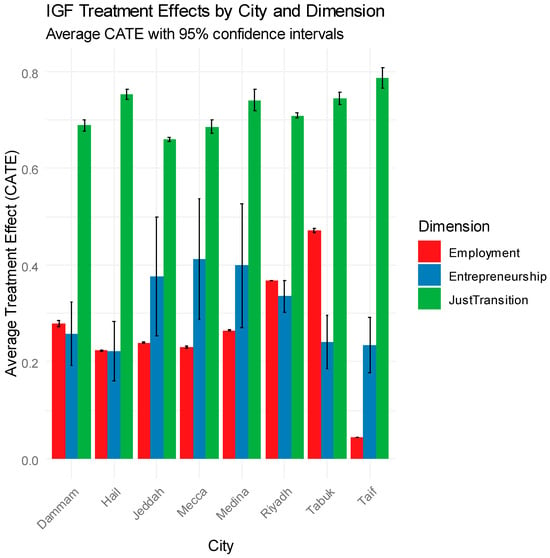
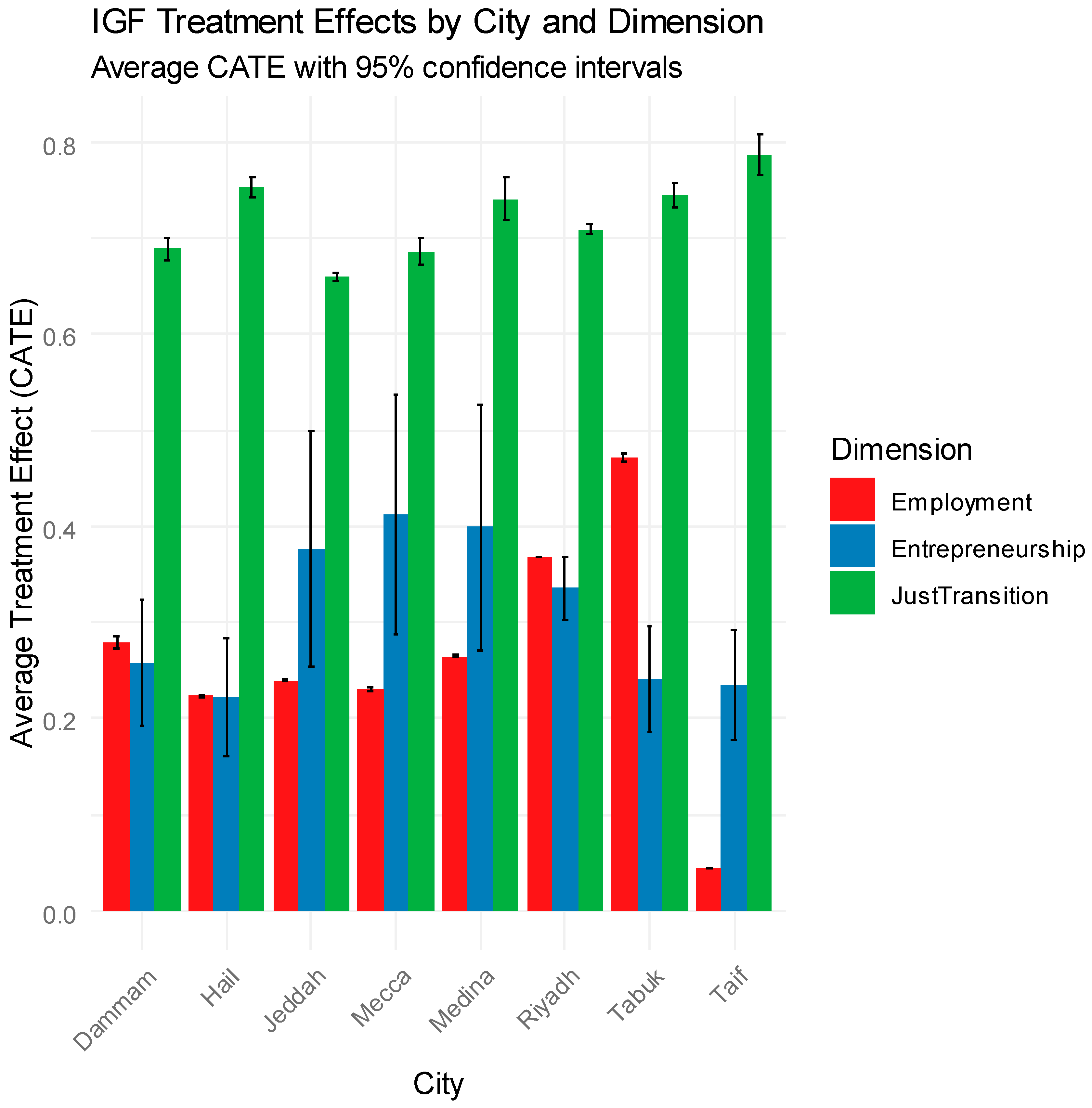
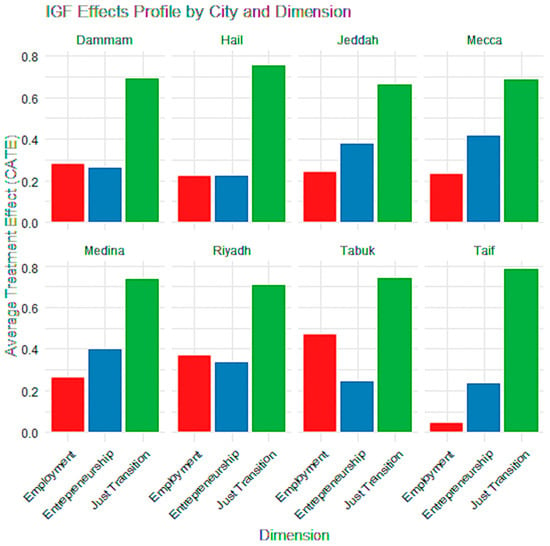
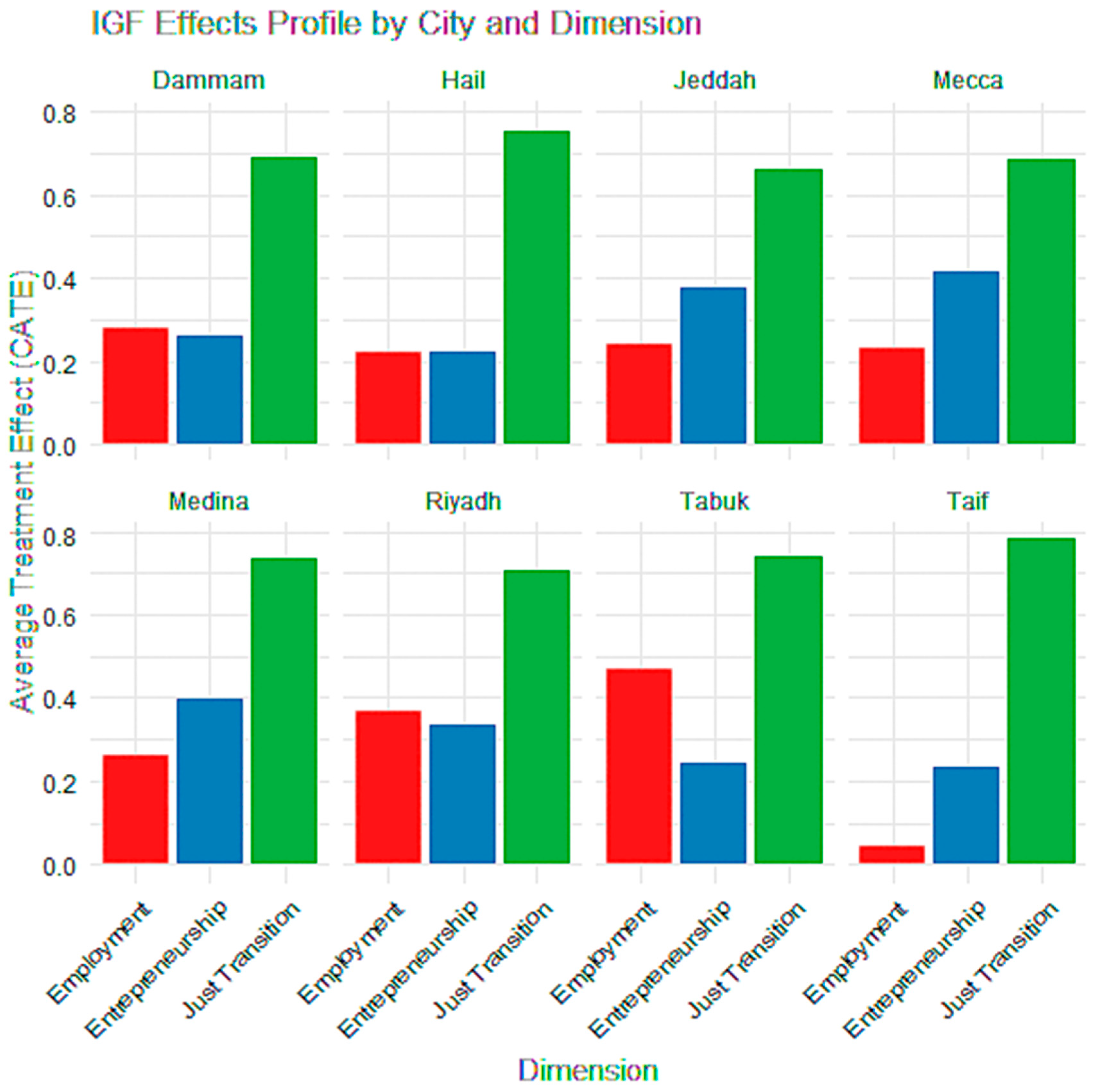
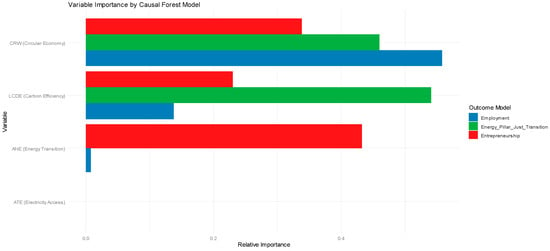
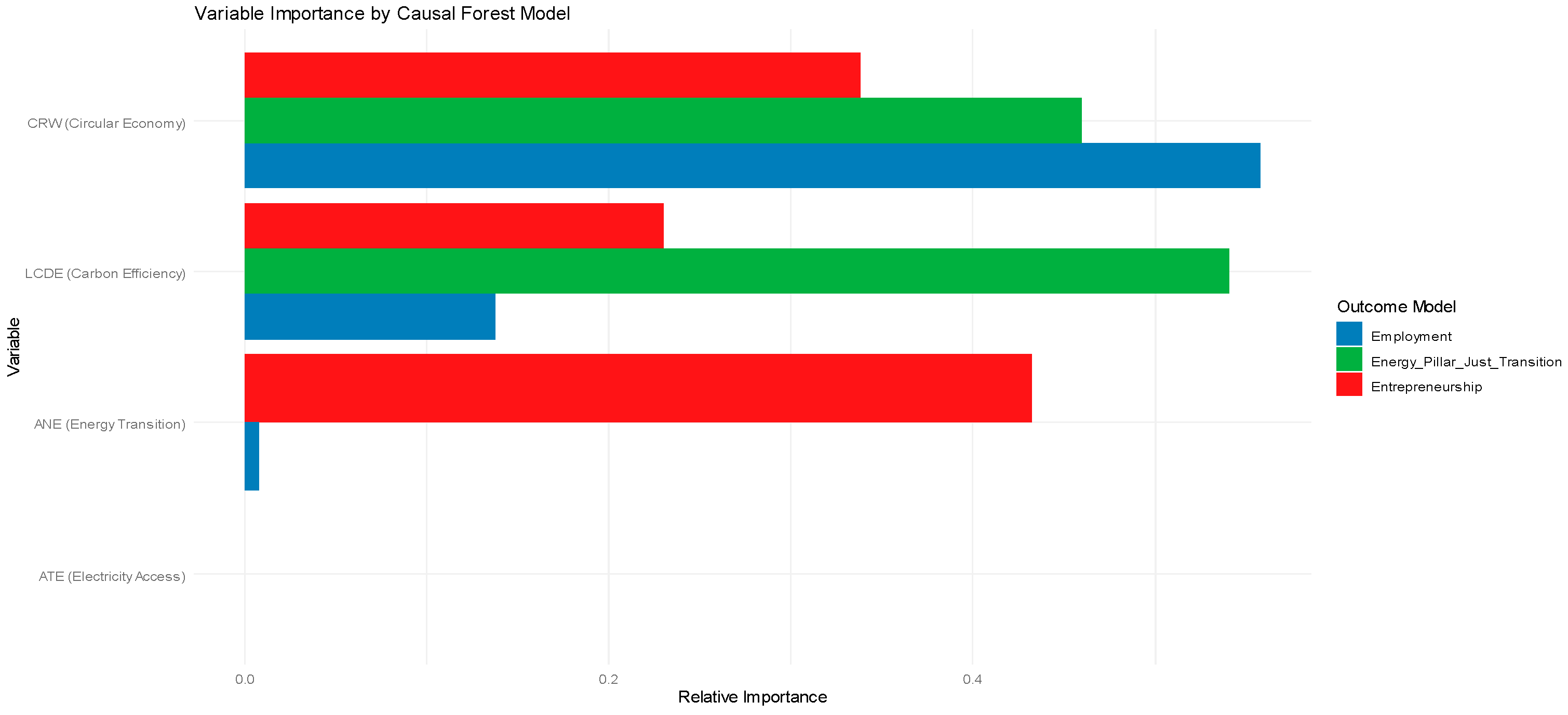
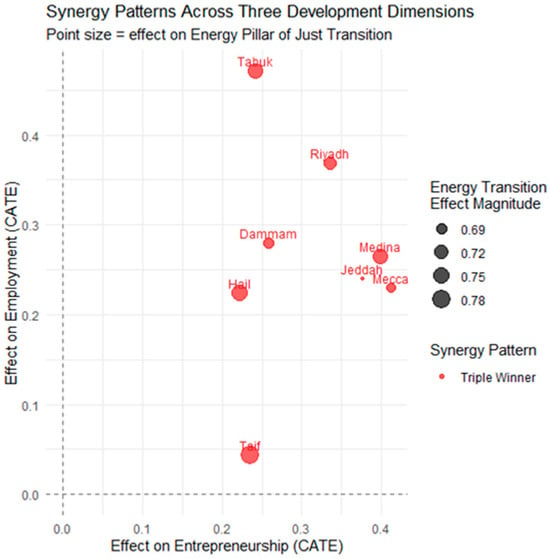
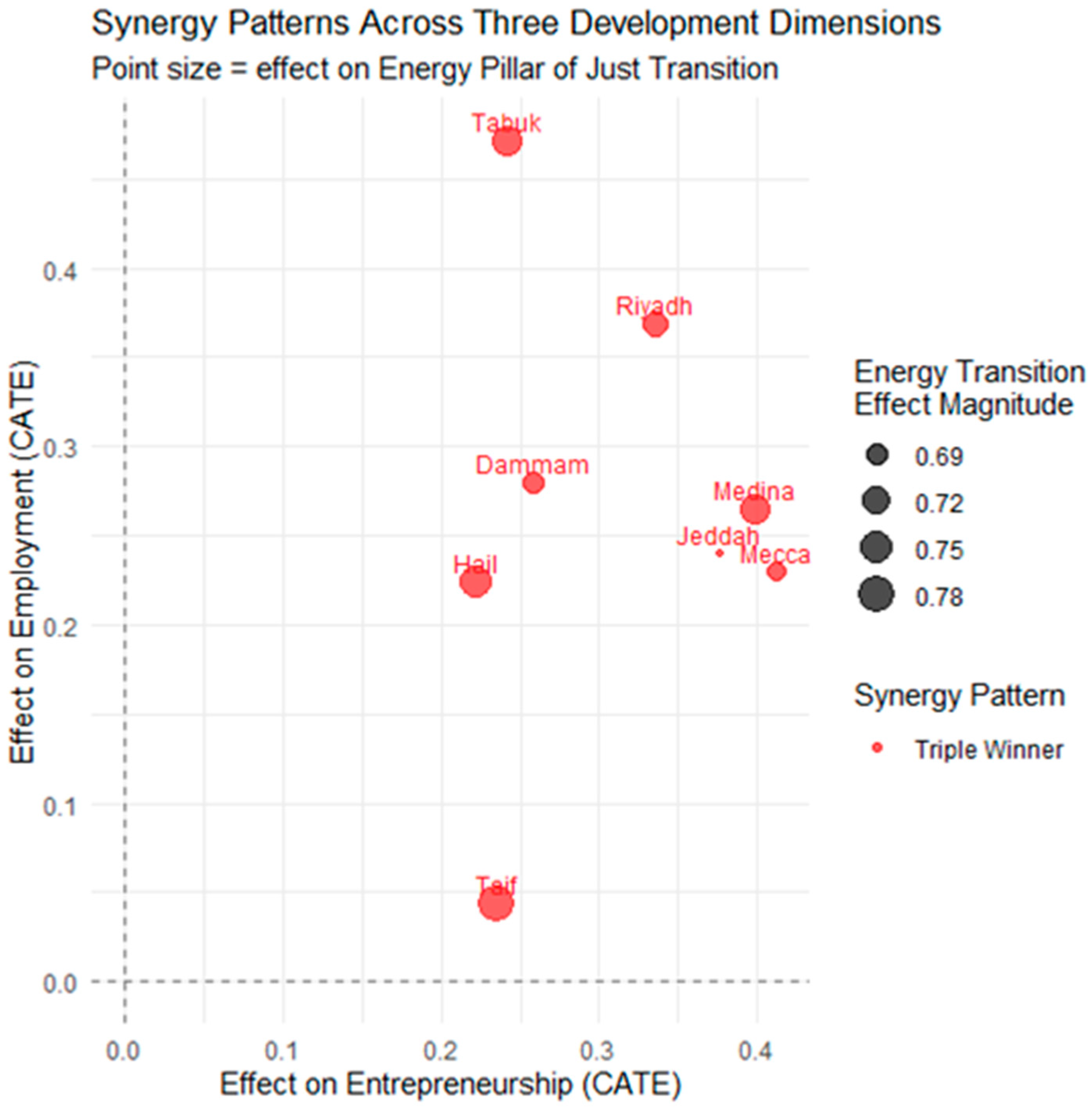

Disclaimer/Publisher’s Note: The statements, opinions and data contained in all publications are solely those of the individual author(s) and contributor(s) and not of MDPI and/or the editor(s). MDPI and/or the editor(s) disclaim responsibility for any injury to people or property resulting from any ideas, methods, instructions or products referred to in the content. |
© 2026 by the authors. Licensee MDPI, Basel, Switzerland. This article is an open access article distributed under the terms and conditions of the Creative Commons Attribution (CC BY) license.