


Abstract
Mountain pastoralism in the Pyrenees has undergone significant transformations in recent decades due to socioeconomic change, rural depopulation, and the adoption of new technologies. This study assesses the current status and management dynamics of mountain pastures in the Jacetania region, Spanish Western Pyrenees, focusing on land tenure, demographic trends, livestock management, and the integration of digital tools. Data were collected through a structured online questionnaire addressed to sheep farmers using high-altitude communal pastures (puertos). Results showed that communal grazing systems persist, seasonal transhumance remains a voluntary and culturally significant practice, and technologies such as GPS tracking are increasingly used to enhance flock management efficiency. Key challenges include predation by large carnivores, limited infrastructure, and high grazing costs, which may affect long-term sustainability. Our findings highlight the potential of technology to mitigate socioeconomic pressures and support generational renewal, while emphasizing that maintaining resilient and sustainable mountain pastoral systems requires a careful balance between traditional practices and innovation. This study provides insights for policymakers and stakeholders aiming to ensure the ecological, cultural, and economic sustainability of high-altitude pastoralism.
1. Introduction
Traditionally, sheep production in the Pyrenees has followed a transhumant pattern, with flocks moving to alpine pastures in summer and returning to the valleys in autumn to exploit other forage resources [1]. In the region, this mobility takes two main forms: long-distance transhumance, involving movements between lowland wintering areas such as the Ebro Valley and high-altitude communal pastures [2], and trasterminance, which refers to shorter, local-scale movements between nearby villages and the puertos. This system, shaped by local ecological knowledge, customary land use regulations, and adaptations to changing socioeconomic conditions has maintained a delicate balance between livestock production, pasture conservation, and sustainable landscape management, while influencing both the cultural identity and the ecological structure of the region [1].
In many Pyrenean valleys, as in other mountain regions, sheep farming represents not only an economic activity but also a key socioeconomic pillar that supports employment, local services, and cultural cohesion where alternative livelihoods are limited. In less touristic and high-altitude areas, it often constitutes one of the few viable economic activities, playing a crucial role in sustaining population, land management, and territorial cohesion. In mountain municipalities, the daily care of flocks requires the continuous presence of farmers and their families, thereby supporting year-round residence and local social life. By contrast, the decline of pastoral activities tends to accelerate rural depopulation, demographic imbalance, and the loss of services, particularly in already marginal mountain areas [3,4].
In addition, extensive sheep farming delivers a wide range of ecosystem services that are essential for the sustainability of mountain socio-ecological systems. These include provisioning services through the production of meat and dairy products; supporting services linked to soil conservation, nutrient cycling, and the maintenance of semi-natural grasslands with high biodiversity value; and regulating services such as the maintenance of open landscapes [5,6]. This regulating function also helps reduce wildfire risk in sparsely populated mountain areas, by limiting the accumulation of combustible shrub biomass and maintaining open grasslands [7,8].
However, in the last half-century, these age-old practices have undergone profound transformations driven by socioeconomic, demographic, and political changes [9]. Rural depopulation, the decline in agricultural profitability, and changing labor market dynamics have all contributed to a sharp reduction in the number of active shepherds [10]. As a result, livestock in many high-mountain areas of the Pyrenees now graze more independently, with less direct human oversight. In some regions, flocks are left to roam freely during the summer, receiving only periodic visits for health checks or supplemental feeding [11,12]. These changes threaten the long-term sustainability of traditional pastoral systems, underscoring the need for sustainable management practices that balance the conservation of mountain grasslands, the viability of livestock production, and the socioeconomic well-being of local communities.
In parallel with these socio-cultural shifts, the last two decades have witnessed a rapid emergence of precision livestock farming (PLF) technologies that can be applied for mountain pastoralism. PLF encompasses a suite of information and communication technologies—such as GPS tracking, accelerometers, remote sensing, and automated health monitoring—that provide continuous, high-resolution data on animal location, movement, and well-being [13,14,15,16,17,18]. Among these innovations, GPS tracking has proven especially transformative; together with virtual geofencing technology [19,20], it enables remote monitoring and flexible management, reducing the need for constant physical supervision while providing valuable insights into grazing behavior and pasture use [17].
Despite the growing attention to precision livestock farming and technological innovations in agriculture, few studies have specifically examined their implementation, advantages, and limitations within mountain pastoral systems at a regional scale. This gap highlights the need for research that evaluates how new technologies are being integrated into such unique socio-ecological contexts.
Similar extensive sheep grazing and transhumant systems occur in other mountainous regions of Europe, including the Alps, the Apennines, the Carpathians, the Scandinavian mountains, and the Scottish Highlands, where livestock farming underpins vulnerable rural economies and provides key ecosystem services [6,21,22,23,24]. In Spain, previous studies have specifically addressed the challenges facing sustainable mountain sheep pastoralism, documenting economic pressures such as insufficient profitability and dependence on subsidies, social constraints related to limited generational renewal, and environmental threats including climate-induced forage scarcity and pasture abandonment in areas such as the Sierra Nevada [25], and Cantabrian ranges [26]. However, studies on new technology adoption remain scarce, highlighting the need for case-specific research to explore technological innovation as a pathway to support the resilience of mountain pastoralism in comparable socio-ecological contexts.
The present study assesses the current status of mountain pastures grazed by sheep in the Jacetania region (Spanish Western Pyrenees), integrating socioeconomic data and the extent of new technology adoption in pastoral systems. This approach provides a holistic view of how traditional pastoral practices are adapting to technological innovations, and offers insights for the sustainable management of high-altitude grazing systems in the context of environmental and demographic change, by supporting environmental sustainability through grassland and biodiversity conservation, economic sustainability via viable livestock production, and social sustainability by preserving cultural heritage and fostering generational renewal.
2. Materials and Methods
2.1. Study Area
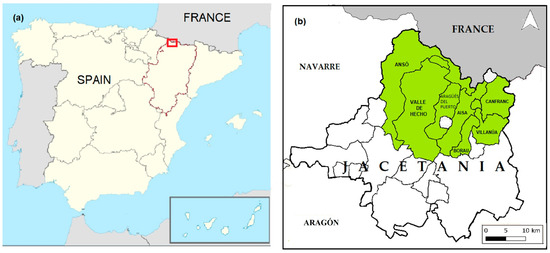
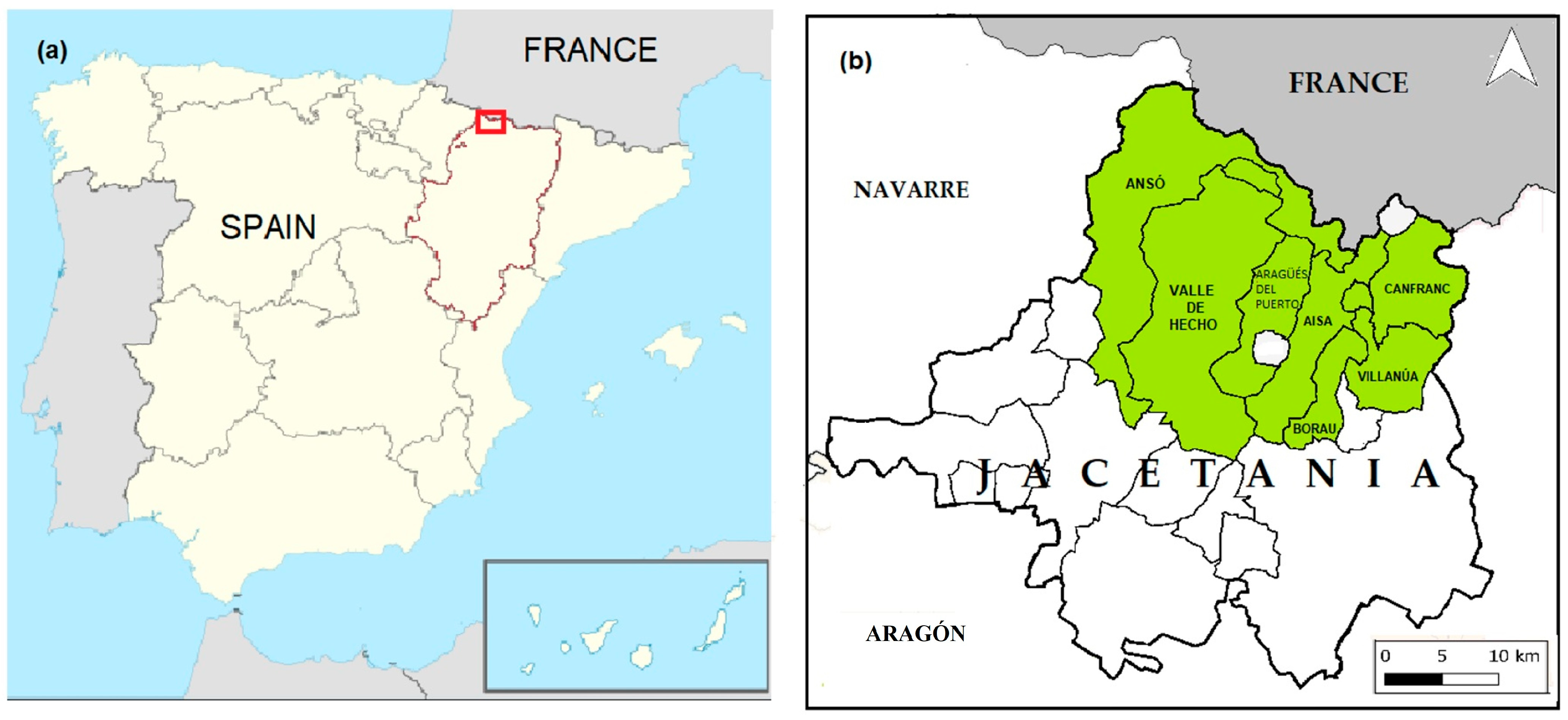
This study was conducted in the high-mountain pastures of the Jacetania region, which cover approximately 43,000 ha [27]. The Jacetania is located in the Western Pyrenees within the province of Huesca, Spain (Figure 1). The region includes a diverse mountainous landscape shaped by the Aragón River and its tributaries. Elevations range from approximately 800 m in the valley bottoms to over 2500 m in the surrounding peaks, with the highest summit being Collarada at 2886 m. The climate in Jacetania is predominantly temperate and mountainous, characterized by cold winters and mild summers. The average annual temperature in Jaca, the administrative center of the region, is around 11.7 °C, with August typically being the warmest month and January the coldest. The annual precipitation in Jaca averages approximately 857 mm, with higher elevations receiving increased precipitation, often exceeding 1300 mm [15].
Figure 1.
Location of the area of study. The red box indicates the specific location of the study area (a). Municipalities in the Jacetania region (Western Pyrenees, Spain) where the studied mountain pastures are located (in green) (b).
This climatic variability significantly influences pasture availability and livestock management strategies, particularly in summer when livestock are moved to high-altitude communal pastures, known locally as “puertos”. The Pyrenean alpine grasslands, located above approximately 1800 meters above sea level (m a.s.l.), are characterized by high floristic richness and ecological heterogeneity. Gómez et al. [28] reported more than 500 plant species within these ecosystems. The dominant biomass is composed of grasses (50–60%), including Festuca rubra, F. eskia, F. gautieri, and Nardus stricta. Leguminous species such as Trifolium alpinum, Anthyllis vulneraria, and Lotus alpinus, together with forbs such as Plantago spp., account for approximately 10–20% and 5–10% of the biomass, respectively [29,30]. This botanical diversity ensures both high forage quality and ecological resilience, supporting sustainable grazing practices that have persisted for centuries in the Pyrenean highlands. These mountain grasslands are included within the Natura 2000 Network [31], a European ecological framework established under the EU Habitats and Birds Directives to ensure the long-term conservation of valuable and threatened species and habitats. The main herbaceous habitats of community interest represented in these pastures are provided in Table S1 in the Supplementary Materials [32]. These grasslands are managed collectively, ensuring pasture sustainability and preventing overgrazing [1,2].
The agricultural and livestock sector remains a key part of the local economy in the Jacetania region. According to the National Statistics Institute (INE) [33], in 2020, there were approximately 200 sheep farms with around 80,000 head of livestock, and about 150 cattle farms with a total of 12,000 head in the area. Further details on the structural characteristics, production orientation, and management systems of sheep farms in the study area are provided in Table S2 in the Supplementary Materials. Ongoing challenges, including rural depopulation, climate change, and shifts in agropastoral policies [9], make the Jacetania a relevant case study for understanding the resilience and transformation of traditional grazing systems in the Pyrenean context.
2.2. Data Collection
A structured questionnaire was designed using Google Forms (Google LLC, Mountain View, CA, USA) to gather information about the current situation of the puertos grazed by sheep in the Jacetania region. The questionnaire included questions about pasture location, ownership type, payment system, number of users, and its socio-demographic characteristics. It also collected information on livestock species and breeds, seasonal migration patterns, transportation methods, supervision strategies, and the available infrastructure. Furthermore, the questionnaire examined farmers’ motivations for utilizing these high mountain pastures and the main challenges they face. Lastly, it explored how technology is integrated into sheep management in these puertos. The survey consisted of 34 questions, and included both closed and open-ended questions. Some items required the selection of a single answer, while others allowed multiple responses from predefined options.
Through personal and familial connections with local livestock producers, the main researcher was referred to farmers who currently move their sheep flocks to high-altitude pastures during the summer in the Jacetania region. Given the collective management of these areas, one representative farmer was selected for each puerto. As the survey was collected online, preference was given to participants familiar with digital technologies. Each farmer was contacted and informed about the survey’s objective, who would carry it out, and the confidentiality of their responses. A total of 15 farmers—2 women and 13 men—with an average age of 47 years, agreed to participate. Each respondent acted as a representative informant for their respective puerto, providing insights based on collective management practices, although questions on perceptions reflected individual viewpoints Consequently, the dataset for the 15 puertos encompasses 38 sheep farmers and their flocks, totaling around 14,000 sheep, which represent approximately 43% of the sheep grazing in the region’s summer mountain pastures in 2020 —based on official animal movement records and INE livestock census data [33] (own elaboration). The puertos analyzed are distributed across seven of the nine municipalities in the Jacetania region that manage high-mountain pastures, accounting for approximately 22% of the total area of such pastures in the region, The area of each puerto, determined using spatial data from a Geographic Information System (GIS) project on the mountain pastures of the Province of Huesca [27], averages approximately 650 ha. All puertos are included within the Natura 2000 Network [31]; thirteen belong to Site ES2410003 “Los Valles” [34], and two to Site ES2410023 “Collarada y Canal de Ip” [35].
A Google Form questionnaire was distributed to the farmers during September 2020 via WhatsApp (Meta Platforms, Menlo Park, CA, USA) or email. One farmer preferred oral responses and was interviewed by telephone. The survey responses were compiled and organized in a Microsoft Excel spreadsheet (Microsoft Corp., Redmond, WA, USA) for subsequent analysis. Responses in closed questions were analyzed by counting the frequency of selection for each option and calculating the percentage of respondents who chose each. Open-ended responses were qualitatively reviewed and grouped to complement the quantitative findings.
3. Results
Based on the survey results, a comprehensive analysis of the current situation in high-mountain pastures grazed by sheep, and the use of new technologies for sheep pastoralism in the Jacetania region was conducted.
3.1. Current Status of the Mountain Pastures
The 15 mountain pastures studied belong either to local municipalities or communal organizations (Mancomunidades). Access to these grazing areas is either granted by paying a fixed fee for the entire mountain pasture (in 9 cases, 60%, n = 15) or by a per-sheep fee in the other 6 mountains pastures (40%). Regarding allocation methods, 6 mountain pastures (40%, n = 15) are accessed through auction, another 6 (40%, n = 15) by grazing rights granted to farmers from the municipalities where the mountain pastures are located, and 3 (20%, n = 15) by direct allocation or leasing agreements.
3.2. Demographics of the Farmers Using the Mountain Pastures
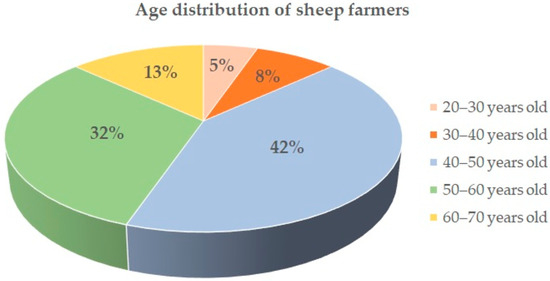
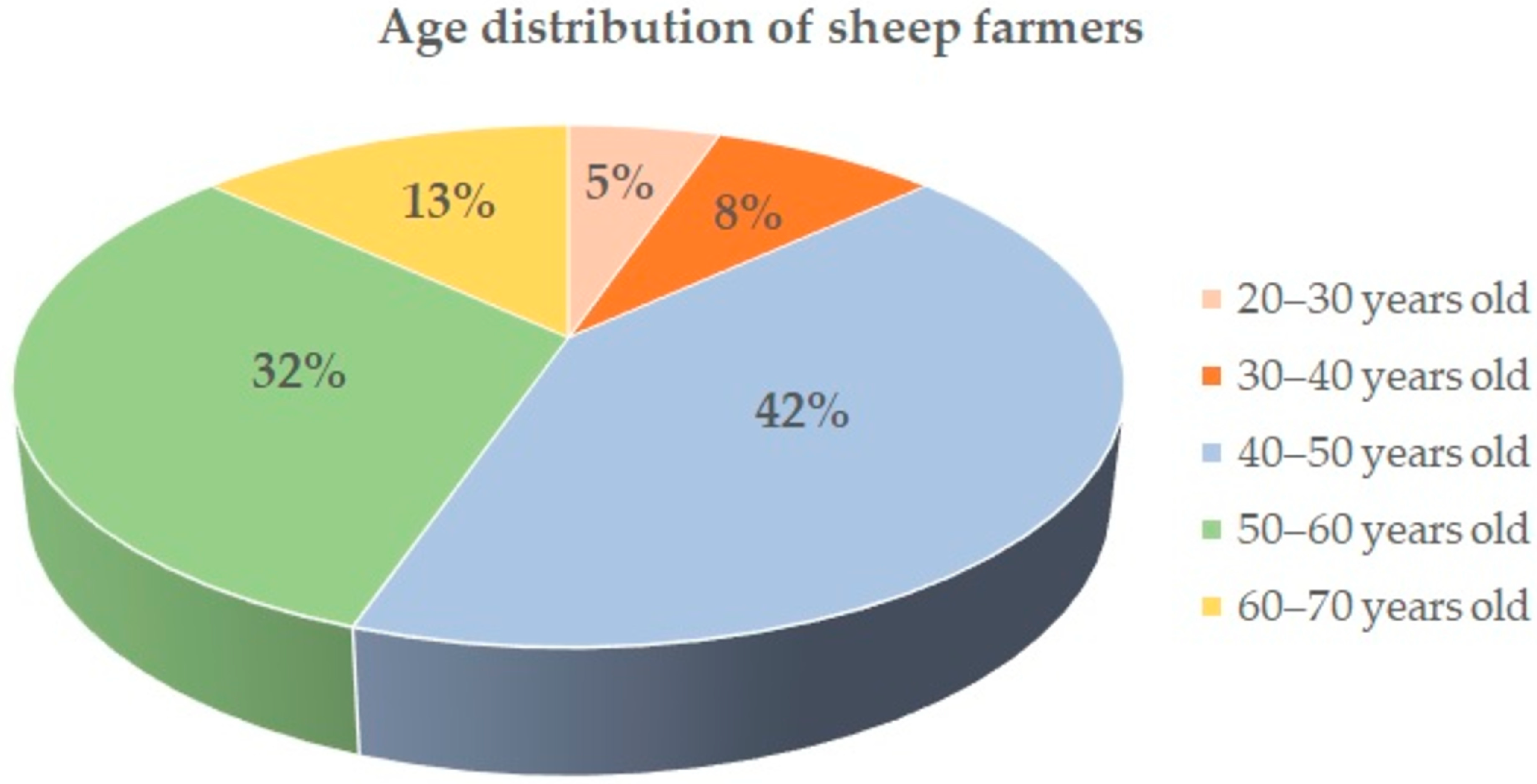
The number of sheep farmers utilizing each puerto ranges from 1 to 5, with an average of 2.46 (±1.19) farmers per puerto, resulting in a total of 38 farmers. Among them, only 3 are women (8%, n = 38) and 35 are men (92%, n = 38). The average age of the farmers is 48 years (n = 38), with the youngest being 23 years old and the oldest 69 years old. As shown in Figure 2, most of the farmers fall within the 40–50 age range, whereas 13% (n = 38) are younger than 40 and another 13% (n = 38) are older than 60 years.
Figure 2.
Age distribution of farmers (n = 38) utilizing 15 mountain pastures in the Jacetania region (Western Pyrenees, Spain).
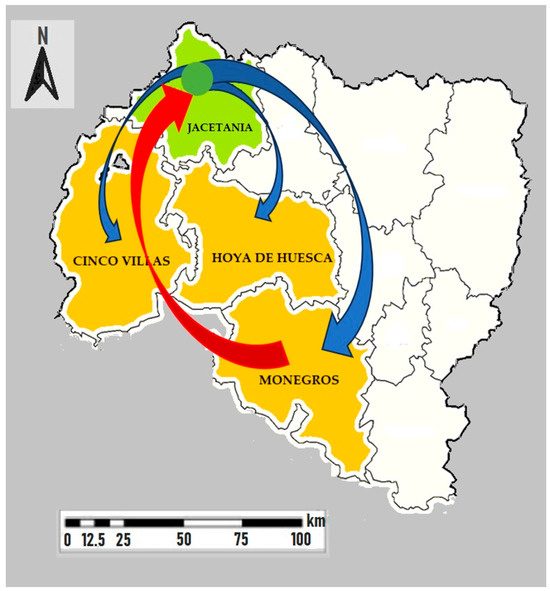
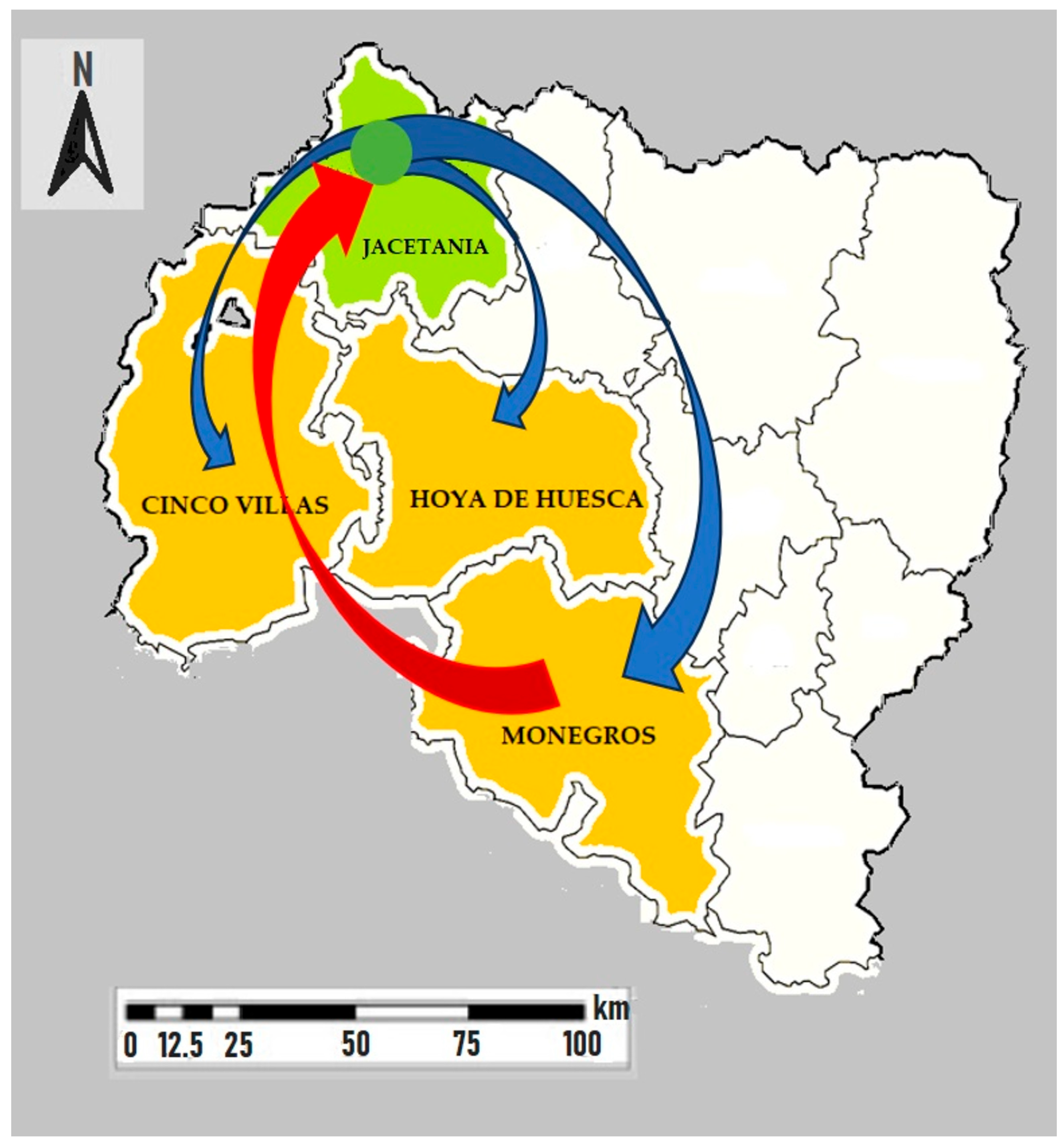
Of the 38 sheep farmers using the puertos, 5 (13%) have their base farms in a distant region about 150 km away (Los Monegros) and practice ascending transhumance, 28 (74%, n = 38) are based in the Jacetania region and practice local transhumance (trasterminance), covering distances of less than 50 km, and 5 farmers (13%, n = 38) are double transhumants, with their home farms in the Jacetania, moving their flocks to the mountain pastures in summer and descending during winter to other regions 150–200 km away—Cinco Villas, Hoya de Huesca, and Los Monegros regions. The location of these regions is shown in Figure 3.
Figure 3.
Map of the province of Huesca, (Spain), and its administrative regions (comarcas). The Jacetania region, where the summer mountain pastures included in this study are located, is highlighted in green, whereas the regions used as wintering areas by transhumant farmers are highlighted in yellow. The red arrow indicates ascending transhumance (13%, n = 38), and the blue arrows indicate descending transhumance (13%, n = 38). The remaining farmers in the study (74%, n = 38) practice local transhumance (trasterminance), remaining within the Jacetania region throughout the year.
3.3. Seasonal Management and Flock Characteristics
3.3.1. Seasonal Management
The ascent to the mountain pastures occurs between June 20th and July 15th, with the timing of descent influenced by weather conditions, and the reproductive cycle of the sheep, as flocks are managed to ensure that ewes do not give birth while in the high pastures or during transhumance movements. The earliest descent happens around mid-September, while the latest is in mid-October, depending on the first snowfall. Among the local farmers, 7 (21%, n = 33) transport their sheep to the mountain pastures by truck, while the rest move the animals on foot. Among the ascending transhumant farmers, 3 (60%, n = 5) use trucks, and 2 (40%, n = 5) drive their flocks on foot. Farmers move their flocks in the same way during both the ascent to and the descent from the mountain pastures. All the descending transhumants move their flocks on foot when they go to the wintering regions.
3.3.2. Livestock Composition and Flock Structure
Although this study focuses on mountain pastures used by sheep, other livestock species are also grazing in some areas. In all but two of the puertos (87%, n = 15), sheep coexist with goats belonging to the same group of farmers, as it is traditional to keep a few goats and chotos (castrated male goats); when referring to sheep, these few goats are included. In 10 (67%) of the 15 puertos only sheep graze. Cattle are also present in 3 puertos (20%, n = 15), and in 1 (7%, n = 15), equines share the pasture with the sheep. In 1 puerto (7%, n = 15), all three species—sheep, cattle, and equines—are present.
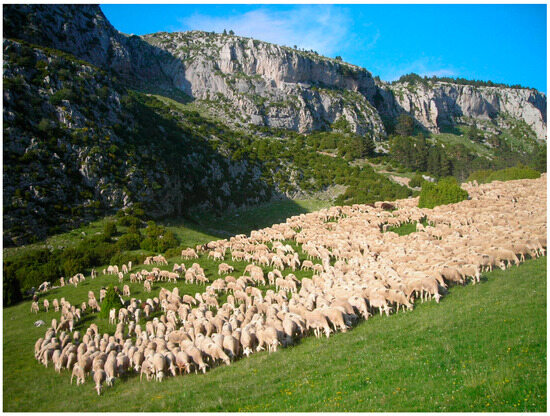
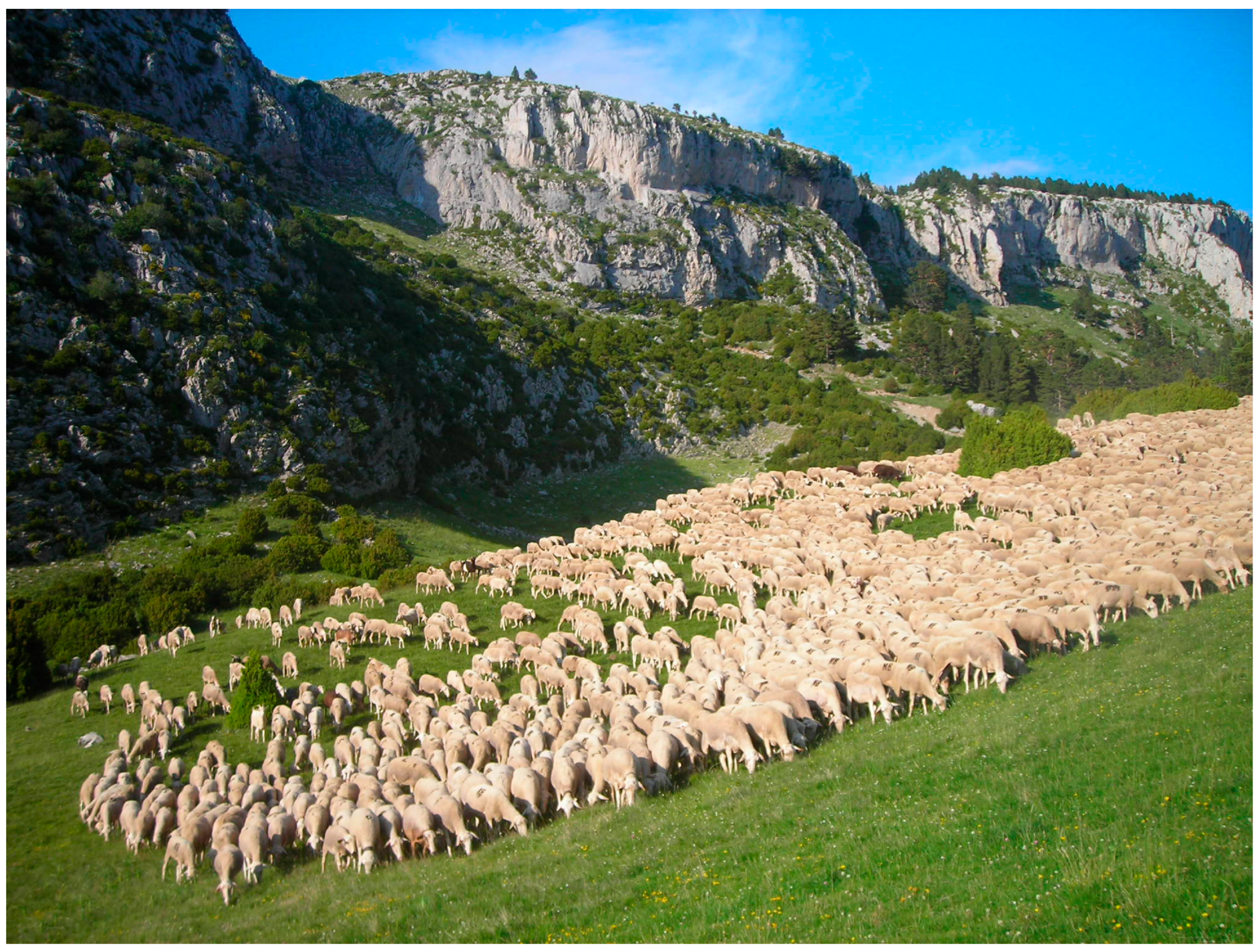
Several sheep breeds coexist in these communal flocks. The primary sheep breed using these pastures is Rasa aragonesa (Figure 4), present in 10 out the 15 puertos (67%), followed by the Ansotana breed, found in 5 (33%, n = 15). Small proportions correspond to Churra Tensina and Navarra (each present in two puertos), and crossbreeds (in one). Regarding sheep livestock types, rams are excluded from two of the mountain pastures (13%, n = 15) and replacement ewe lambs (aged 9 to 12 months), are taken to all the mountain pastures.
Figure 4.
A flock of Rasa aragonesa sheep grazing in the Collarada mountain pastures (Jacetania, Western Pyrenees, Spain).
3.3.3. Stocking Rate
The average number of sheep per puerto is approximately 1500 (n = 15), ranging from 500 to 3000. Each individual farmer’s flock (n = 38) consists of an average of 677 (±461) sheep, with flock sizes varying from 50 to 2200. The mean stocking rate of the mountain pastures studied is 3.2 sheep per hectare.
3.4. Farmers’ Perceptions on the Evolution of Number of Sheep at Each Puerto and Pasture Quality
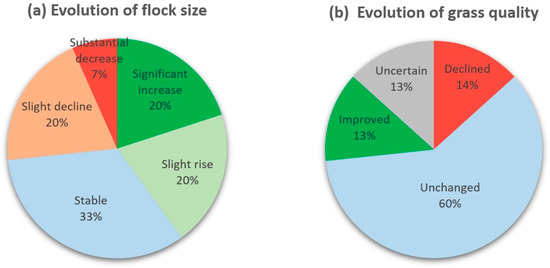
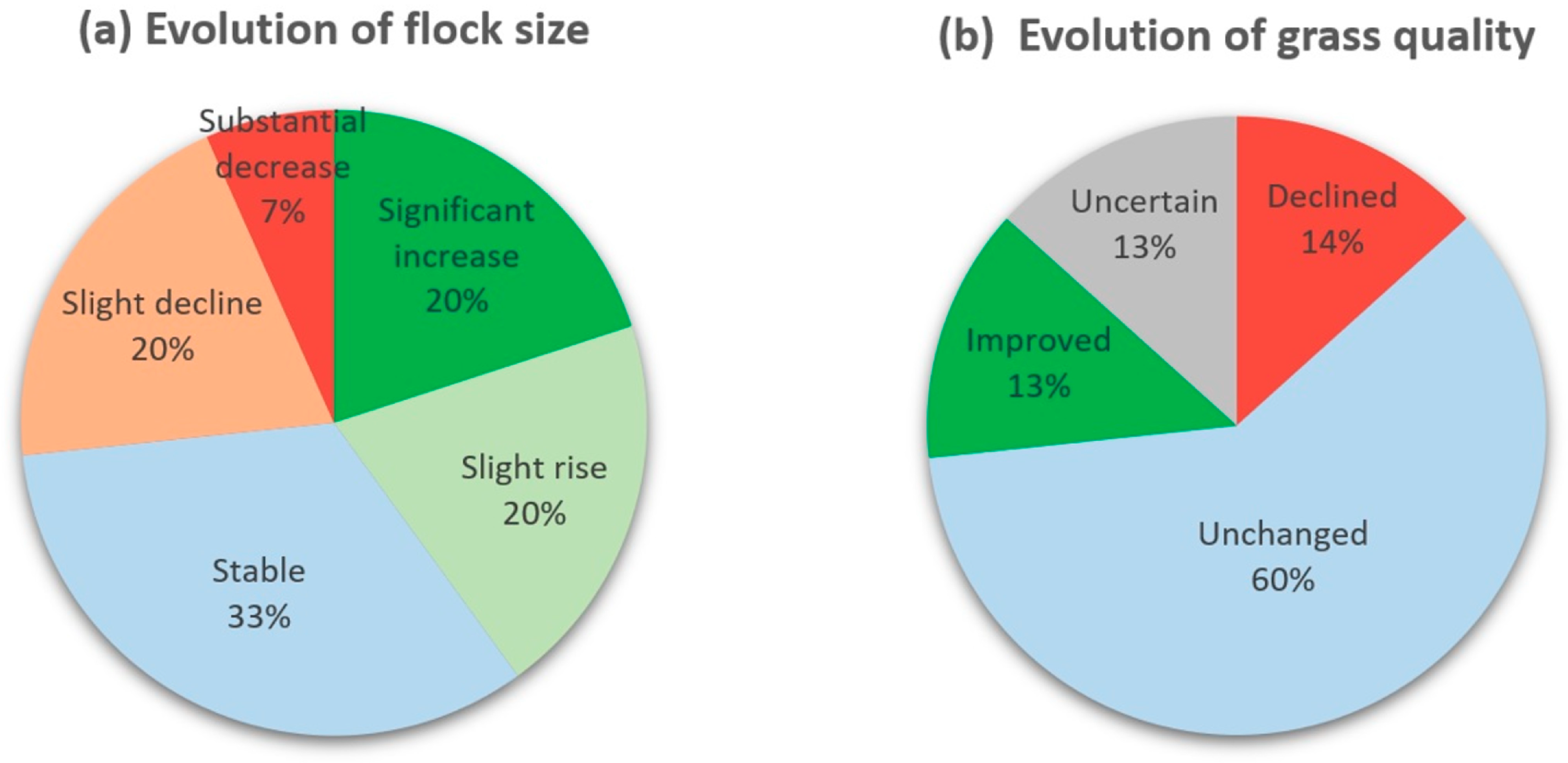
Perceptions of recent trends over the past 20 years in both flock size and pasture condition at each puerto vary notably among farmers. As illustrated in Figure 5, opinions regarding the evolution of sheep numbers in the mountain pastures are mixed. While some farmers perceive a moderate slight or significant increase in flock size, others report a slight or substantial decline, and a third of respondents consider that flock numbers have remained stable. Similarly, when assessing the quality of the mountain pastures, most respondents believe that pasture conditions have remained unchanged, whereas only a few perceive either improvement or deterioration.
Figure 5.
Farmers’ perceptions of change in (a) flock size and (b) pasture quality in mountain pastures (puertos) of the Jacetania (Western Pyrenees, Spain). Data are expressed as the percentage of respondents (n = 15) selecting each option in the survey.
3.5. Flock Management and Supervision
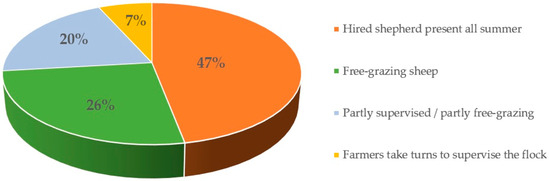
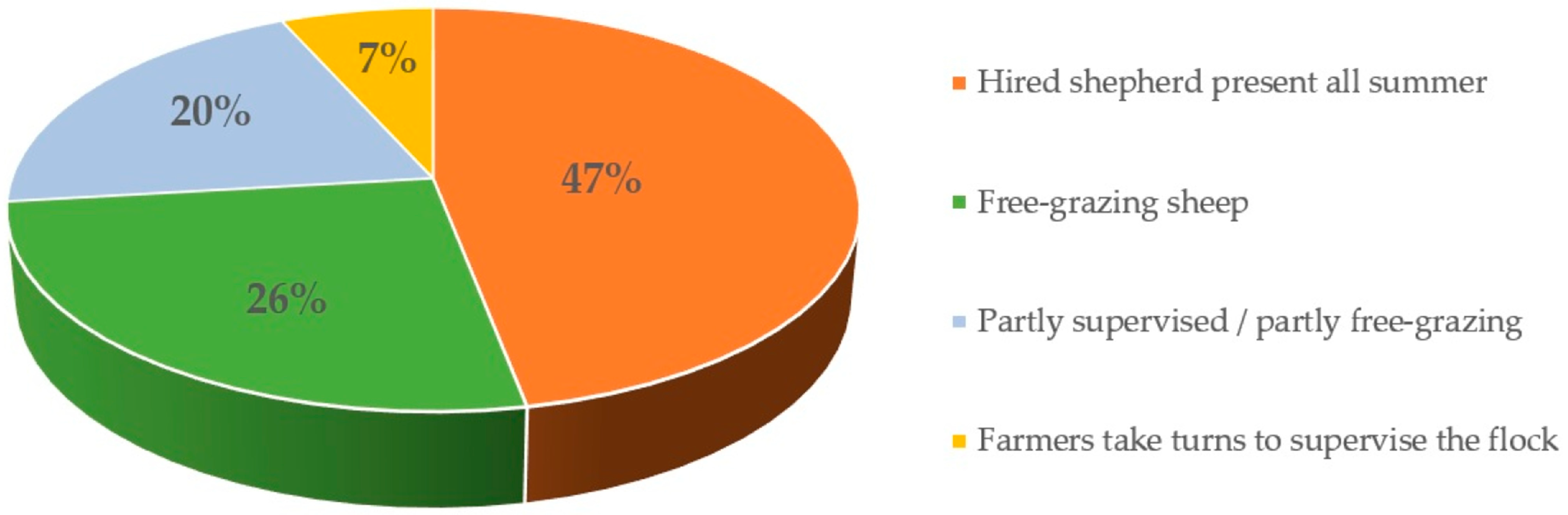
The different systems of flock supervision identified in the 15 mountain pastures studied in the Jacetania region are summarized in Figure 6. The supervision of sheep flocks in the mountain pastures varies widely among management systems. In nearly half of the puertos (47%), a hired shepherd is present throughout the summer, ensuring continuous monitoring of the animals. This typically occurs in areas where bears are present. In a quarter of the cases (26%), sheep graze freely without permanent supervision. In some pastures (20%), flocks are only supervised for part of the summer and graze freely for the rest of the season. In a smaller number of puertos (7%) farmers take turns supervising the animals, maintaining near-continuous presence in the grazing area.
Figure 6.
Flock supervision systems in 15 mountain pastures in the Jacetania region (Western Pyrenees, Spain).
3.6. Motivations for Utilizing High-Altitude Mountain Pastures
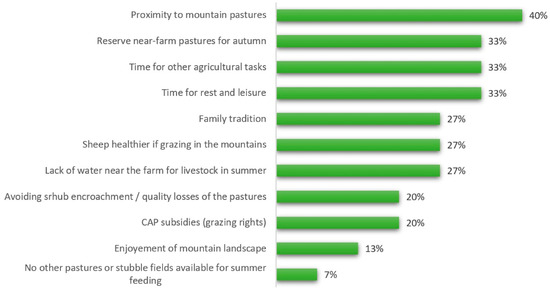
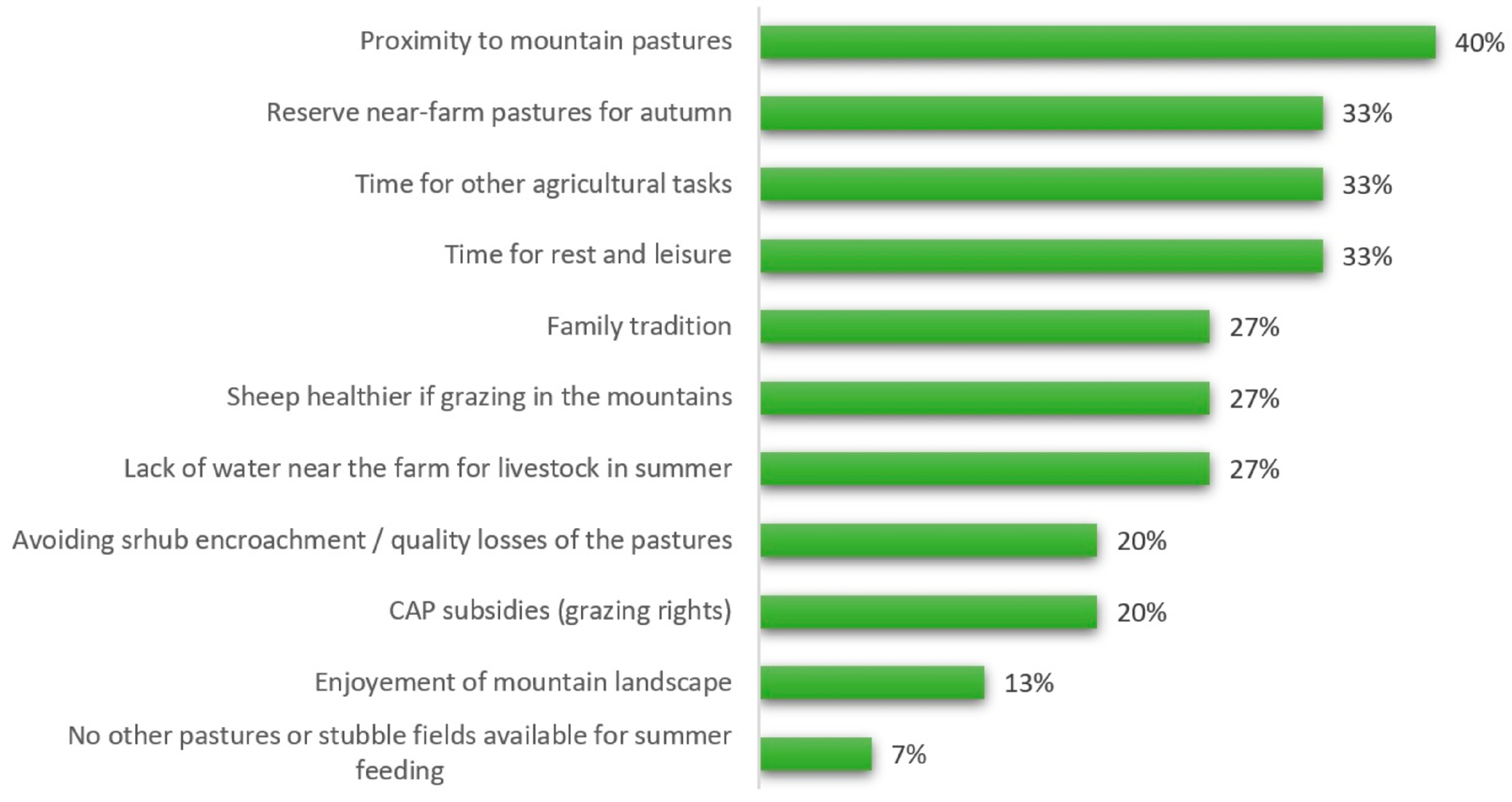
Sheep farmers (n = 15) identified several key reasons for utilizing high-altitude mountain pastures, based on responses to a multiple-choice survey question (Figure 7).
Figure 7.
Farmers’ motivations for utilizing high-altitude mountain pastures during the summer grazing season (n = 15), in Jacetania region (Western Pyrenees, Spain).
The motivations for utilizing high-altitude mountain pastures during the summer grazing season are diverse, reflecting both practical and strategic considerations among sheep farmers. The most frequently cited reason is the proximity of their farms to the mountain pasture areas, followed by the preference to reserve the pastures located near the farm for use in the autumn, the need to allocate time to other agricultural tasks during summer, and the opportunity to gain time for rest and leisure. Additionally, adherence to family tradition, the perception that sheep remain healthier if grazing in the puertos, and the lack of water near the farm during summer, were also reasons selected by about one quarter of the respondents.
Other motivations, mentioned less frequently, include preventing shrub encroachment or quality losses of the pastures, and the receipt of subsidies under the European Union’s Common Agricultural Policy (CAP), particularly those linked to grazing rights. Farmers’ responses revealed contrasting situations regarding who benefits from these payments. In nearly half of the puertos, only the farmers who actually move their flocks to the mountain pastures receive CAP support for those areas, whereas in almost the other half, additional farmers—who do not necessarily graze livestock there—also claim part of the eligible land. In one case, none of the farmers received CAP payments for grazing in that puerto, as all the eligible hectares were claimed by farmers who do not bring their animals to those mountain pastures.
A smaller number of farmers referred to additional reasons such as the enjoyment of the mountain landscape or the lack of alternative pastures, fallows or crop residues as driving factors for bringing their sheep to the mountain pastures.
3.7. Management Resources and Facilities in Mountain Pastures
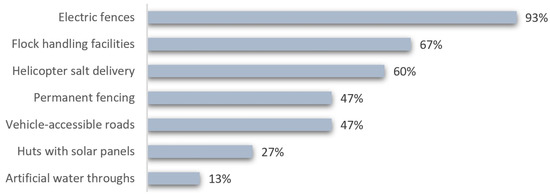
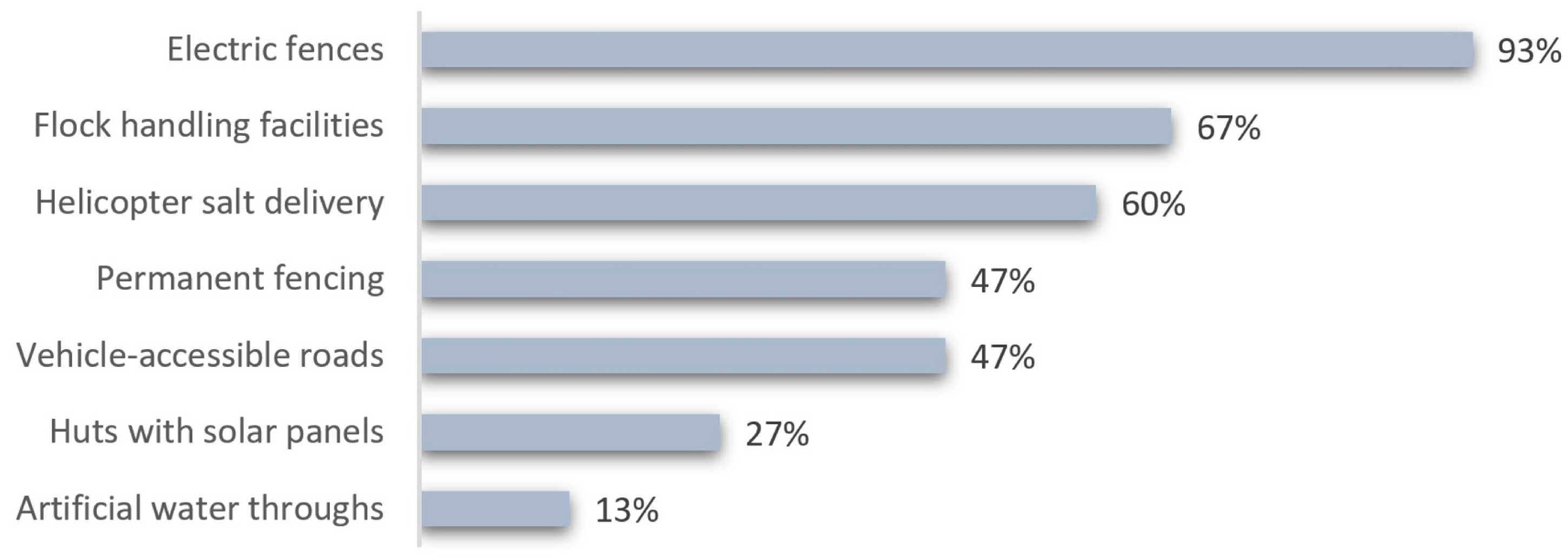
The main management infrastructure present in the studied puertos is shown in Figure 8.
Figure 8.
Infrastructure and management resources available in 15 mountain pastures in the Jacetania region (Western Pyrenees, Spain).
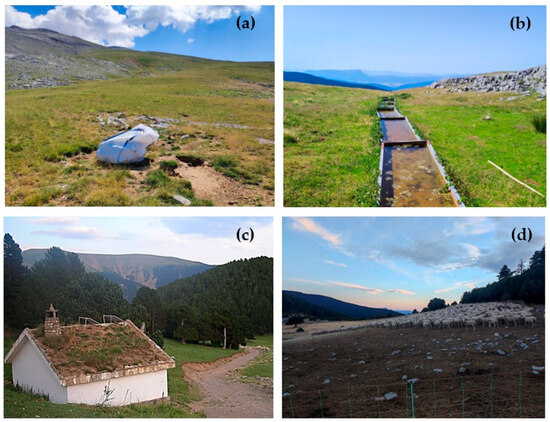
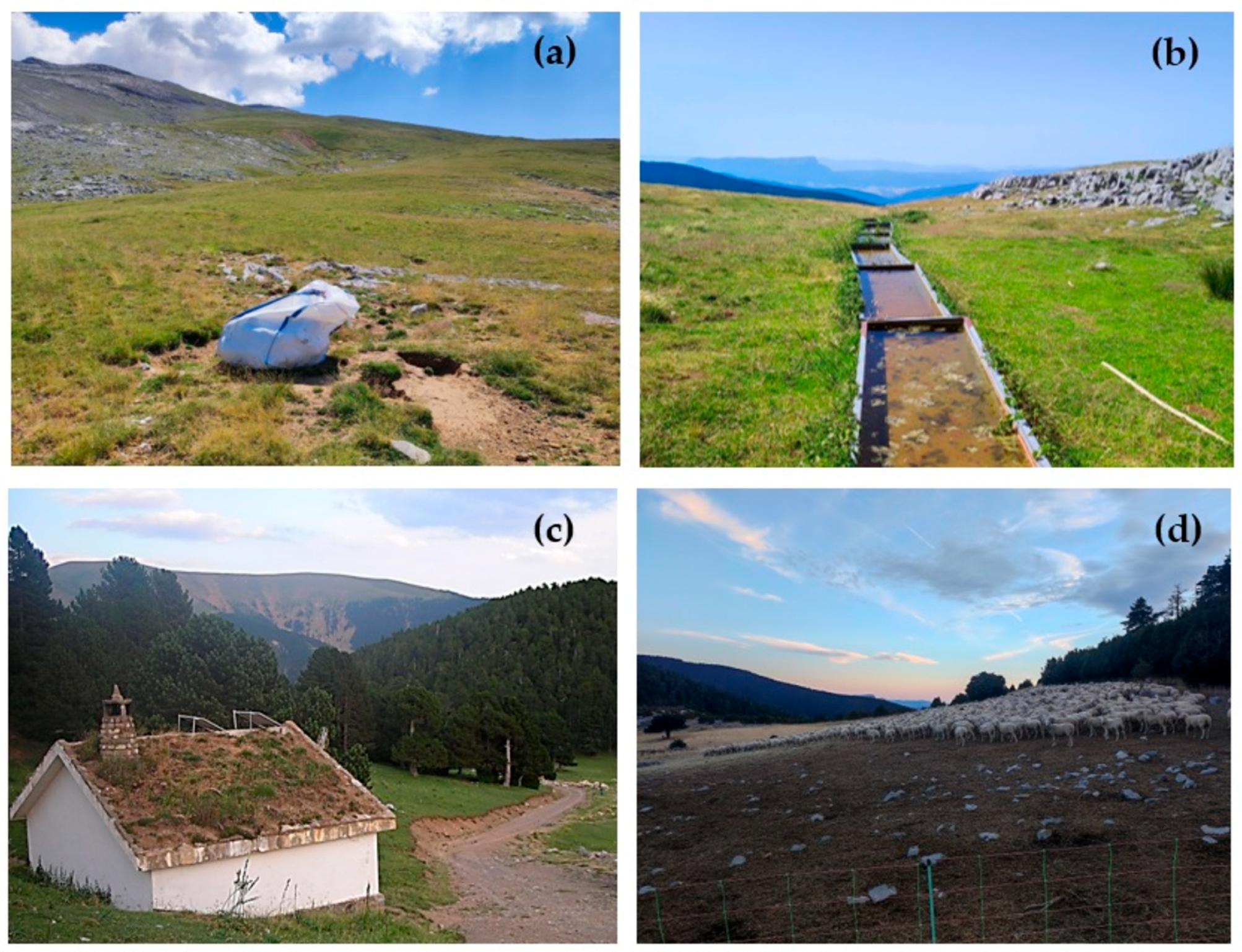
Almost all mountain pastures are equipped with electric fences. Flock handling facilities were present in over two-thirds of the mountain pastures, while helicopters are frequently employed for the delivery of salt to remote grazing areas. About half of the puertos have permanent fencing and are accessible, at least in part, by 4 × 4 vehicle. In contrast, solar-equipped shepherd huts and artificial water throughs were less common. Some of these facilities are illustrated in Figure 9.
Figure 9.
Flock management facilities present in the Collarada mountain pastures (Villanúa, Jacetania, Western Pyrenees, Spain). (a) Sack containing 750 kg of salt blocks for sheep supplementation, delivered by helicopter; (b) artificial water troughs; (c) shepherd’s hut equipped with solar panels and accessible by 4 × 4 vehicle via an unpaved mountain road; (d) flock guarded at night with an electric fence. Images (a,b) were taken at 1960 m a.s.l., while images (c,d) were taken at 1750 m a.s.l.; Photographs by V. Larraz.
In addition to these, most farmers (87%, n = 15) rely on shepherding dogs to ensure effective animal management. Defense dogs, specifically mastiffs, were used in 40% of the mountain pastures (n = 15), particularly in areas where bears are present.
3.8. Challenges Faced by Sheep Farmers in Mountain Pastures
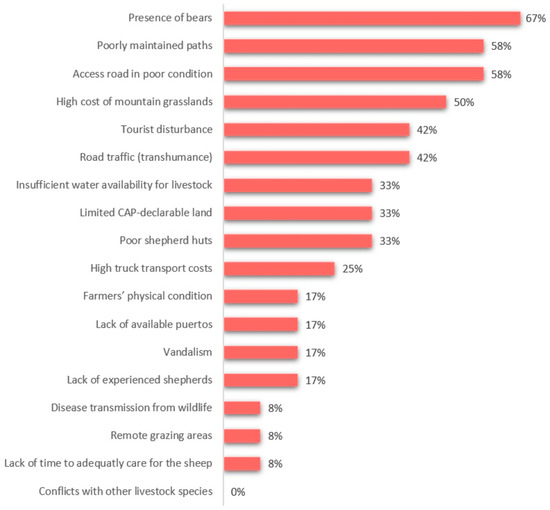
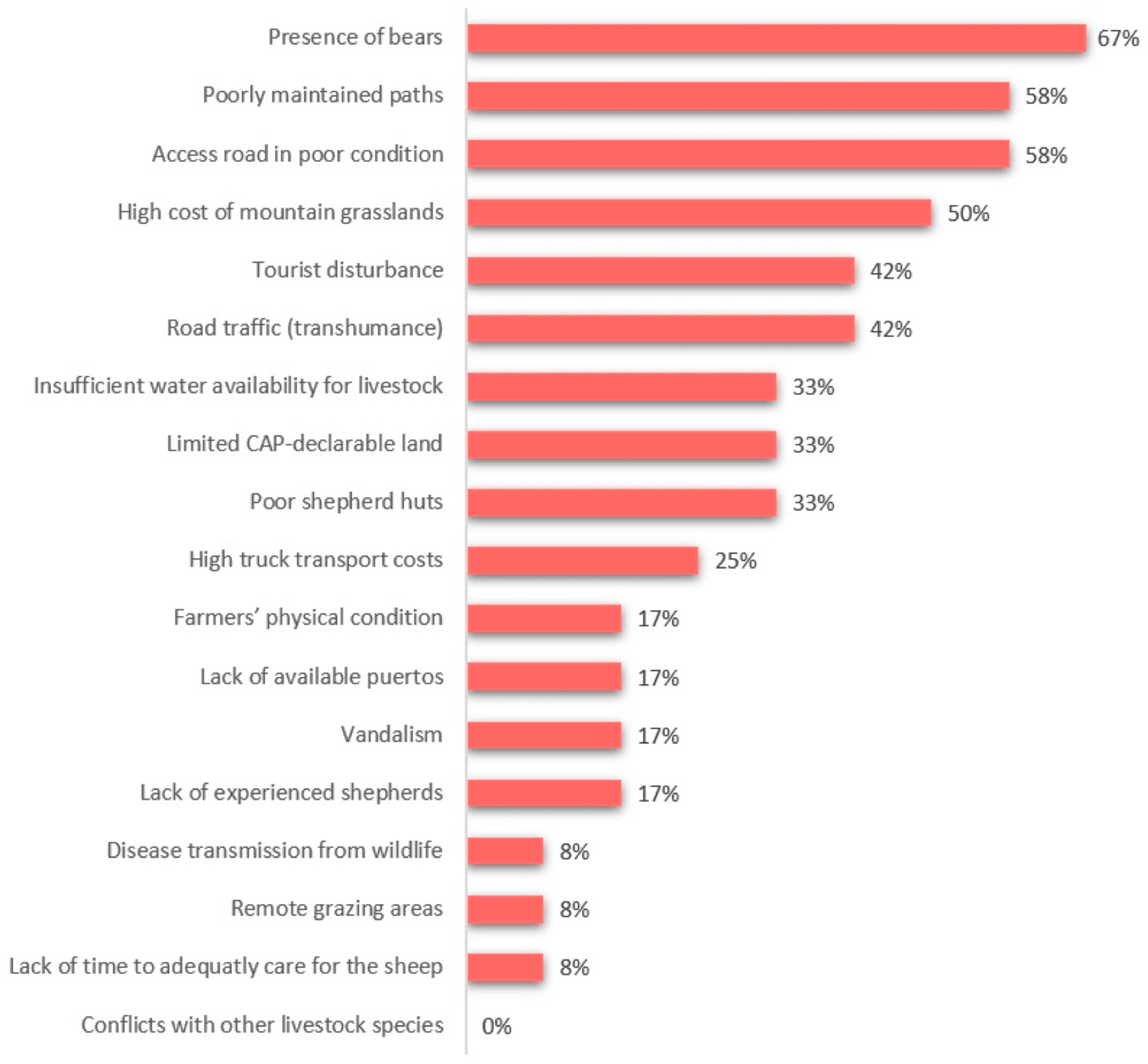
The main difficulties selected by the sheep farmers participating in the survey (n = 15) through a multiple-choice question are shown in Figure 10.
Figure 10.
Main difficulties perceived by sheep farmers (% of respondents selecting each option according to multiple-choice question, n = 15) at high-mountain pastures in the Jacetania region (Western Pyrenees, Spain).
The most frequently reported concern among sheep farmers (n = 15) is the presence of bears in two-thirds of the mountain pastures, corresponding to all those located in areas where these animals are known to inhabit (Ansó, Valle de Hecho, and Aragués del Puerto; Figure 1b). Poorly maintained drove roads (cabañeras) for moving flocks to the mountain pastures, and vehicle access road in poor condition are frequently mentioned as major obstacles, while the high costs of grassland use is also a common constraint. Tourist activity causing disturbances to the flocks is also frequently cited, along with road traffic during transhumance for those that move the flocks on foot.
Other common issues are insufficient water availability for the sheep at the mountain pastures—particularly during dry years and late summer, limited availability of land eligible for declaration under the Common Agricultural Policy (CAP), and inadequate conditions in some shepherds’ huts. The high cost of transportation by truck was cited by a few farmers, although this concern only applies to those who use this method to move their flocks. Less frequently mentioned problems include farmers’ physical limitations in navigating the demanding mountain terrain, the scarcity of available puertos, vandalism of infrastructure (e.g., fences, water troughs, shepherd huts), and the difficulty of finding skilled and experienced shepherds willing to work in these environments—a concern likely less widespread because not all puertos employ hired shepherds. Other occasional concerns include the risk of disease transmission from wildlife, particularly cervids, the remoteness of some grazing areas, and limited time to adequately manage the flock at the puerto. Notably, no problems are reported regarding conflicts arising from shared grazing with other livestock species.
3.9. Use of New Technologies in the Mountain Pastures
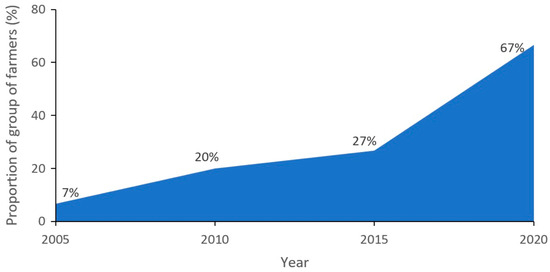
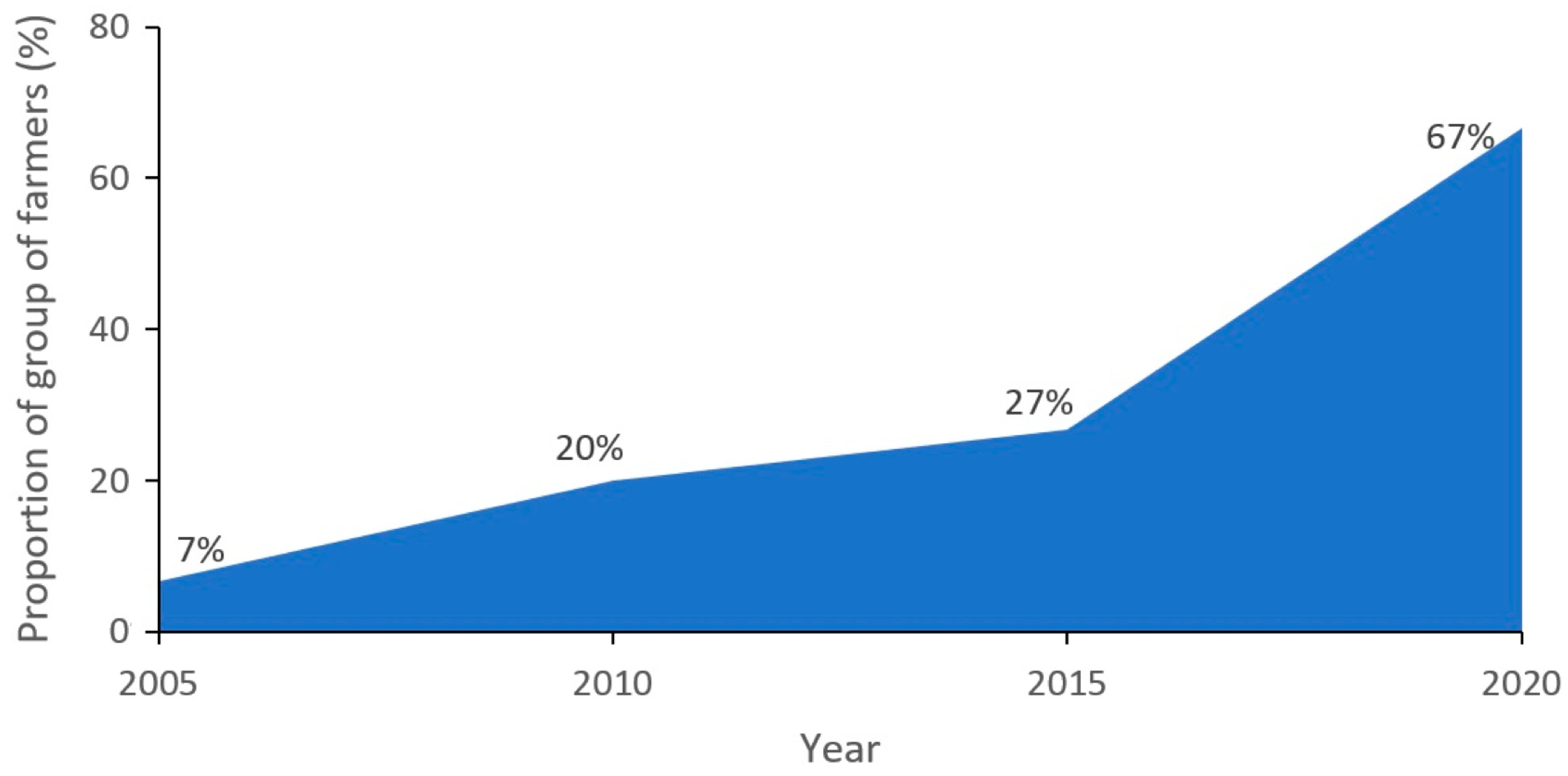
The cumulative adoption of GPS technology for flock tracking over time across the mountain pastures studied is shown in Figure 11.
Figure 11.
Cumulative adoption of GPS technology for flock tracking across 15 mountain pastures (puertos) of the Jacetania region (Western Pyrenees, Spain).
Only a small proportion of farmer groups had incorporated GPS collars before 2010, and adoption remained limited until 2015. Since then, usage has expanded rapidly, with two-thirds of farmer groups (n = 15) employing GPS collars to monitor their flocks by 2020. Among the farmer groups that use GPS collars (n = 10), one third use a single GPS unit per flock, another third use two units, and the remaining third employ four units in total. On average, this corresponds to approximately one GPS collar per 1000 sheep. Regarding how these devices are used, 73% of the farmers in these groups actively check the GPS tracks themselves, while the remaining farmers receive the information through their fellow group members. The frequency of GPS signal updates varies, ranging from 5 min to 90 min.
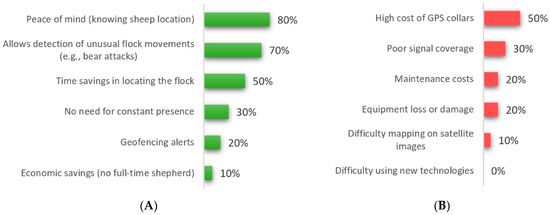
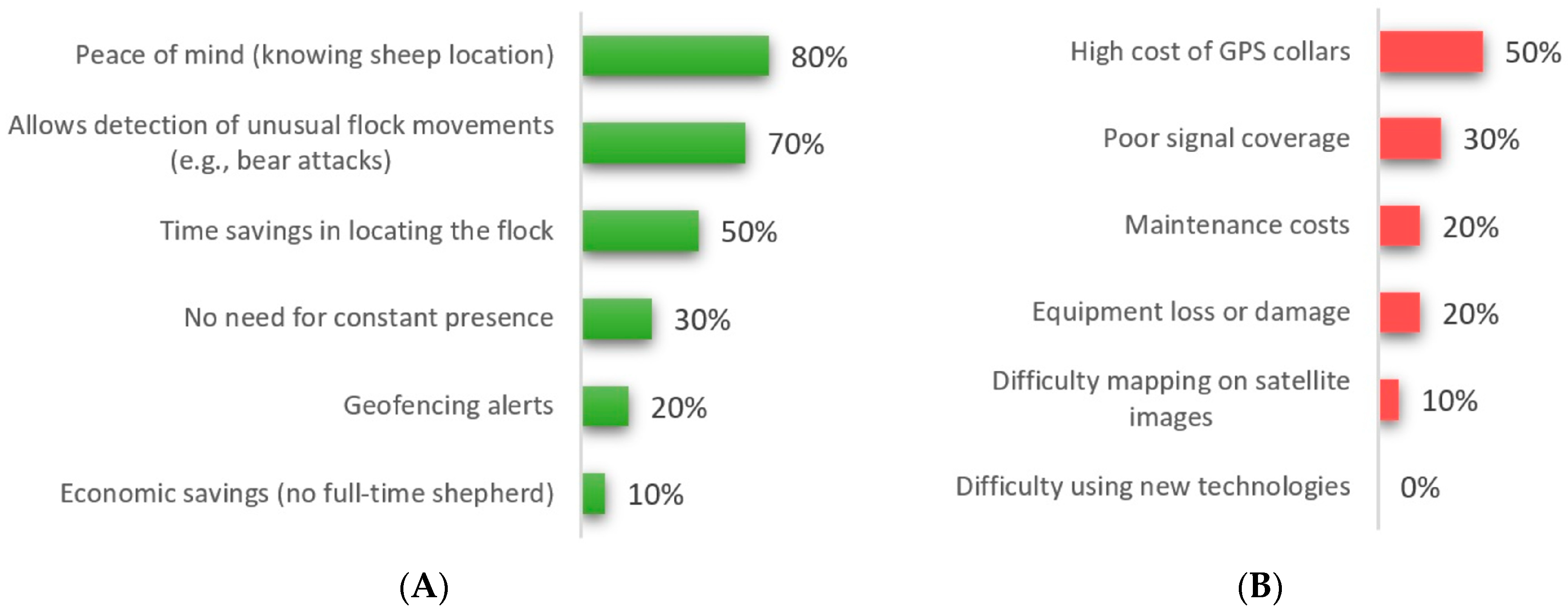
The perceived benefits and challenges of GPS technology for flock tracking in mountain pastures, identified by farmers (n = 10) through a multiple-choice question, are presented in Figure 12.
Figure 12.
Perceived benefits (A) and challenges (B) of GPS tracking technology in sheep management at mountain pastures, according to survey responses from ten farmers in the Jacetania region (Western Pyrenees, Spain).
The main benefits of GPS technology selected by farmers include the peace of mind of knowing the location of their animals, and the possibility of detecting unusual flock movements after reviewing the GPS track, for instance after attacks by bears or dogs. Half of the respondents highlighted time savings in locating livestock, and some valued the possibility of not having to remain permanently in the mountain pastures. A small proportion of respondents had used the geo-fencing function, which notifies them when the flock moves outside a designated area, and few mentioned that GPS provides economic savings by eliminating the need to hire a full-time shepherd.
Despite these advantages, several challenges were also identified, mainly the high cost of GPS equipment, and weak signal coverage in some areas. A few respondents also selected other concerns, such as maintenance costs, device loss or damage, and difficulties in mapping the mountain pastures using satellite images.
Although GPS technology is widely used, the adoption of other emerging technologies remains very limited. Drone use for livestock surveillance and virtual fencing systems involving electric stimuli have not yet been implemented in any of the studied puertos.
4. Discussion
4.1. Socio-Demographic Characteristics and Governance Structure of Mountain Pastoral Systems
This study provides an integrated perspective on the current status and management dynamics of mountain pastures in the Jacetania region, highlighting the interplay between traditional governance structures and technological innovation. Land tenure remains communal, with grazing rights allocated through auctions, residency-based entitlements, and leasing arrangements. Such diversification reflects long-standing models of pastoral resource-sharing, consistent with observations in other European mountain regions [36].
Demographic data show that farmers utilizing the mountain pastures have an average of 48 years, with only 13% younger than 40, and an overwhelming male majority. This aligns with broader trends of aging agricultural populations across Europe [37] and raises concerns about generational renewal. Low female participation suggests structural barriers, including training and support networks, which may constrain women’s engagement in high-altitude pastoralism [38]. Most farmers in the study area practice short-distance transhumance, or trasterminancia, involving relatively limited seasonal movements between lowland and high-altitude pastures. This pattern reflects a broader trend observed across Spain and other Mediterranean mountain regions, where simplified forms of transhumance have gradually replaced traditional long-distance routes [39,40]. Despite this, a small number of farmers continue to practice long-distance transhumance, a tradition that is undergoing a gradual revitalization, particularly in the western valleys. A recent study in this area by Fernández-Giménez [41] found that pastoral mobility in this region remains an important adaptation to take advantage of varying forage availability over space and time, using a production system that is more profitable than semi-extensive management with winter stable feeding. Seasonal transhumance patterns observed in this study align closely with Pyrenean traditions, with timing influenced by lambing schedules, forage and snow dynamics [1].
The livestock composition and management observed across the studied puertos reflect the persistence of traditional mixed-grazing systems in the southern Pyrenees. Although sheep dominate, the coexistence of goats, cattle, and occasionally equines remain common. Such multi-species grazing enhances vegetation utilization and contributes to environmental sustainability by maintaining biodiversity, as species differ in diet and foraging behavior [42,43,44]. The predominance of the Rasa Aragonesa breed highlights its adaptability to harsh mountain conditions and its key role in sustaining transhumant systems in Aragón. The coexistence of other local breeds such as Ansotana and Churra Tensina—both at risk of extinction—indicates the persistence of genetic diversity shaped by long-term adaptation to specific environments [45,46]. Overall, these findings underline the resilience of traditional pastoral systems, where multi-species grazing and local breeds remain essential for maintaining ecological functionality and cultural continuity in mountain landscapes.
Supervision practices in mountain pastures vary widely, reflecting differences in ecological conditions and labor organization. Continuous shepherd presence—recorded in nearly half of the puertos—is mainly associated with areas inhabited by bears, highlighting the importance of human oversight for flock protection [47]. In contrast, about one quarter of the pastures operate without permanent supervision, reducing labor costs but increasing vulnerability to predation and uneven grazing [48,49]. Intermediate systems, where farmers alternate or share monitoring duties, represent adaptive responses to labor shortages and changing socioeconomic contexts. This diversity of management strategies illustrates how herders balance labor constraints, predator risk, and grazing efficiency in maintaining viable transhumant systems.
4.2. Livestock Management Practices and Ecological Implications in High-Mountain Pastures
Farmers’ perceptions of flock dynamics and pasture quality reveal heterogeneous trends shaped by both environmental and socioeconomic factors in Pyrenean pastoral systems. While farmers perceptions about changes in flock size have not been uniform across the study area, most farmers perceive no decline in pasture quality, contrasting with widespread concerns about shrub encroachment in other mountain areas [50,51,52]. This apparent stability likely reflects the continued grazing pressure in the studied puertos, which helps maintain herbaceous cover and prevents shrub expansion [53]. Moreover, many high-elevation pastures are naturally resilient alpine grasslands that require limited grazing to sustain their structure, with wild herbivores such as chamois contributing to vegetation dynamics [54]. Overall, the prevailing management regime—moderate stocking rates and regular seasonal use—appears consistent with long-term grassland conservation and highlights the role of active grazing in maintaining ecological and socioeconomic sustainability in mountain landscapes.
The motivational drivers identified in this study show that farmers primarily rely on practical considerations—proximity to the puertos, the need to free time for other tasks, the reservation of lowland pastures for autumn, and summer water shortages near their farms—while perceived benefits for flock health and family tradition also play an important role. The receipt of subsidies as a motivation was less common among respondents. These findings are consistent with previous research: a survey in the French Southern Alps showed that attachment to place and cultural values strongly influence the continuation of mountain farming [55], and a study in a mountainous region of Portugal similarly highlighted that a sense of belonging motivates shepherds to remain in mountain pastoralism [56]. That study also noted that shepherds respond mainly to non-monetary incentives and that increasing Common Agricultural Policy payments alone is insufficient to promote the use of high-mountain grasslands. Notably, only 7% of the respondents cited lack of alternatives, suggesting that mountain grazing remains a voluntary and strategic practice. These results highlight that the decision to move flocks to mountain pastures is shaped by a combination of environmental, economic, logistical, and cultural factors. Understanding these motivations provides key insights into the persistence of traditional pastoral practices in the Pyrenees and their adaptation to contemporary socioeconomic realities.
4.3. Socioeconomic Constraints, Infrastructure, and Technological Adaptation in Mountain Pastoralism
Despite these positive aspects, pastoralists face substantial challenges. Predation risk from bears affects about two-thirds of the puertos, corroborating previous research identifying coexistence with large carnivores as a primary constraint on extensive livestock systems in the Pyrenees [57,58]. Nowadays, economic support from public administrations is being provided in areas where large carnivores are present, enabling the implementation of protective measures such as fencing, GPS tracking systems, mastiff guardian dogs, and the hiring of shepherds. Such subsidies are essential for maintaining livestock activity in these challenging environments. Reported disturbances from tourism align with studies showing that interactions between pastoralism and recreation frequently generate conflicts in space and time [59,60]. Poorly maintained transhumant routes and deteriorated access roads further constrain flock mobility and increase the labor intensity of seasonal movements, a challenge also observed in other regions [56,61,62].
Additional issues such as the rising costs of pasture use and limited CAP-eligible land illustrate how policy frameworks interact to shape the viability of transhumant systems [63]. All the farmers in this study pay to access communal mountain pastures, either through a fixed fee or on a per-head basis, despite extensive grazing being explicitly recognized in Natura 2000 management plans as the main—and often the only—effective tool for maintaining herbaceous habitats of Community interest [54,64]. By sustaining open grasslands, limiting shrub encroachment, and preserving plant diversity, sheep grazing provides a key ecosystem service that directly supports Natura 2000 conservation objectives [3,5]. However, pastoralists currently receive no compensation for these services and instead bear the costs of pasture access, revealing a clear mismatch between conservation goals and governance mechanisms. The survey results indicate that some farmers who do not graze their livestock on the mountain pastures still benefit from CAP payments for those hectares. Recent CAP reforms [65], which now require that animals be effectively brought to the declared pastures, may help to reduce such discrepancies by strengthening the link between payments and genuine land use. This regulation could ensure that access to mountain pastures is prioritized for active pastoralists, thereby supporting the continuity of traditional transhumant systems. However, the persistence of a hectare-based subsidy model may discourage adequate stocking rates, leading to under-grazing and potential alterations in pasture structure and biodiversity [66]. Furthermore, since the allocation of these areas ultimately depends on municipal decisions, this can lead to inequalities in cases where grazing rights and eligible land are unevenly distributed. These inconsistencies underscore the need for policy adjustments to better align CAP payments with actual grazing activity and to ensure a fairer distribution of support among active pastoralists, thereby promoting their economic sustainability.
Finally, the declining availability of skilled shepherds confirms a broader trend across Europe. In response, several “shepherd schools” have been established in different Spanish regions and other European mountain areas [67,68], aiming to provide technical training, promote generational renewal, and ensure the transfer of traditional ecological knowledge essential for the sustainability of pastoral systems [69,70].
Infrastructure challenges are also major barriers. Although many mountain pastures are equipped with essential facilities such as electric fencing and flock-handling infrastructure, basic amenities remain limited. About half of the puertos have permanent fencing and vehicle access, and helicopters are commonly used to deliver salt to remote areas; however, solar-powered huts are rare. The main infrastructural shortfall concerns water availability—only about 13% of the pastures have artificial watering troughs, a serious limitation in the calcareous Pyrenean areas where karstic soils prevent surface water retention [71], thereby constraining livestock distribution and the sustainable use of grazing resources [72]. Technological adoption emerges as a key factor influencing contemporary pastoral management. GPS tracking is now used by two-thirds of farmer groups in our study, with farmers appreciating its value in enhancing peace of mind, efficiency, and flock management, although concerns regarding cost, technical reliability, and usability persist. These findings align with previous research demonstrating GPS’s benefits and limitations in extensive livestock systems. Although most studies focus on animal movement and spatial distribution rather than on farmer-oriented outcomes, they consistently show that GPS tracking is effective for monitoring grazing patterns and habitat use. At the same time, several technical challenges have been reported, including limited battery lifespan, constraints in data transmission, and issues related to measurement accuracy [13,73,74].
Furthermore, emerging technologies, though still scarcely implemented, hold significant promise for improving labor efficiency in mountain grazing systems. Virtual fencing could facilitate better control of grazing distribution and prevent livestock escapes [19], while the use of drones represents a valuable tool for rapid supervision in remote or rugged terrain and could even partially replicate the role of trained herding dogs [75].
The integration of technology into mountain grazing systems could also address some of the socioeconomic drivers of pastoral decline. By lowering physical workload of the shepherd, and improving time management, digital tools may make shepherding more compatible with contemporary lifestyles and thus more attractive to new entrants and generational renewal [8,76,77]. Effective integration, however, requires training and adaptation, particularly among older herders accustomed to traditional methods.
Moreover, climate change is expected to increasingly influence mountain pastoral systems, adding new pressures on sheep farming and pastoral communities in the Pyrenees. Rising temperatures, altered precipitation patterns, and more frequent summer droughts may reduce forage availability and exacerbate water scarcity, particularly in many calcareous mountain areas of the central-western Pyrenees, such as parts of the Jacetania. Changes in snow cover duration and timing could also disrupt traditional transhumance calendars, increasing uncertainty in pasture access and management [78,79]. These pressures may intensify labor demands and management risks, especially for smaller farms with limited adaptive capacity. In this context, resilience will depend on the combined role of traditional ecological knowledge, adaptive management strategies, and supportive technological and policy frameworks.
Overall, the Jacetania region case illustrates a pastoral system in transition, increasingly shaped by technological innovation which may provide essential tools to confront demographic, infrastructural, and ecological challenges. Effectively addressing issues such as predator management and generational renewal, will be crucial to ensuring the long-term sustainability and resilience of mountain pastoralism. Future research could explore the social and economic impacts of adopting new technologies on local communities, investigate strategies to enhance intergenerational knowledge transfer, and evaluate the ecological outcomes of different management practices.
5. Conclusions
This study highlights the current status and evolving dynamics of mountain pastoralism in the Jacetania region, Spanish Western Pyrenees, revealing a system shaped by both tradition and innovation. Communal land tenure and diversified grazing arrangements continue to support sustainable pasture management, while seasonal transhumance remains a voluntary practice guided by practical, cultural, and livestock health considerations. Key challenges include predation by large carnivores, limited infrastructure (access, water, shelters), and difficulties in generational renewal. The adoption of technologies such as GPS tracking has improved flock management and efficiency, while also helping to address socioeconomic barriers for generational renewal.
In summary, the Jacetania case illustrates that maintaining resilient and sustainable mountain pastures requires a careful balance between preserving traditional practices, such as transhumance or trasterminance, and embracing innovation to adapt to contemporary social and environmental challenges, ensuring the long-term ecological and socioeconomic sustainability of these systems.
Supplementary Materials
The following supporting information can be downloaded at: https://www.mdpi.com/article/10.3390/su18041791/s1, Table S1. Main herbaceous habitats of Community interest (Natura 2000) identified in the pastures of the study area. Table S2. Overview of the main characteristics of sheep farms located in the Jacetania region (Spanish western Pyrenees). File S1. Questionnaire.
Author Contributions
Conceptualization, V.L., R.R. and O.B.; methodology, V.L., R.R. and O.B.; formal analysis, V.L.; investigation, V.L.; resources, V.L., R.R. and O.B.; data curation, V.L.; writing—original draft preparation, V.L.; writing—review and editing, V.L., R.R. and O.B.; supervision, R.R. and O.B. All authors have read and agreed to the published version of the manuscript.
Funding
This research received no external funding.
Institutional Review Board Statement
Ethical review and approval were waived for this study by Institution Committee as per the University of Zaragoza.
Informed Consent Statement
Informed consent was obtained from all subjects involved in the study.
Data Availability Statement
The raw data supporting the conclusions of this article will be made available by the authors on request.
Acknowledgments
We would like to express our sincere gratitude to the farmers for their willingness to participate in the surveys and to Federico Fillat for his valuable comments and helpful revisions.
Conflicts of Interest
The authors declare no conflict of interest.
References
- Montserrat, P.; Fillat, F. The Systems of Grassland Management in Spain. In Managed Grasslands; Elsevier Science Publisher: Amsterdam, The Netherlands, 1990; pp. 37–70. [Google Scholar]
- O’Flanagan, P.; Martínez, T.L.; Errea abad, M.P. Restoration of Sheep Transhumance in The Ebro Valley, Aragon, Spain. Geogr. Rev. 2011, 101, 556–575. [Google Scholar] [CrossRef] [Scilit]
- Garmendia, E.; Aldezabal, A.; Galan, E.; Andonegi, A.; Del Prado, A.; Gamboa, G.; Garcia, O.; Pardo, G.; Aldai, N.; Barron, L.J.R. Mountain Sheep Grazing Systems Provide Multiple Ecological, Socio-Economic, and Food Quality Benefits. Agron. Sustain. Dev. 2022, 42, 47. [Google Scholar] [CrossRef] [Scilit]
- Oteros-Rozas, E.; González, J.A.; Martín-López, B.; López, C.A.; Montes, C. Ecosystem Services and Social–Ecological Resilience in Transhumance Cultural Landscapes: Learning from the Past, Looking for a Future. In Resilience and the Cultural Landscape; Plieninger, T., Bieling, C., Eds.; Cambridge University Press: Cambridge, UK, 2012; pp. 242–260. [Google Scholar]
- Bernués, A.; Rodríguez-Ortega, T.; Ripoll-Bosch, R.; Alfnes, F. Socio-Cultural and Economic Valuation of Ecosystem Services Provided by Mediterranean Mountain Agroecosystems. PLoS ONE 2014, 9, e102479. [Google Scholar] [CrossRef] [Scilit] [PubMed]
- Primi, R.; Bernabucci, G.; Evangelista, C.; Viola, P.; Girotti, P.; Spina, R.; Compagnucci, S.; Ronchi, B. Ecosystem Services Linked to Extensive Sheep and Goat Farming in Mountain Areas: A Global Literature Analysis Using Text Mining and Topic Analysis. Animals 2025, 15, 350. [Google Scholar] [CrossRef] [Scilit]
- Lasanta, T.; Cortijos-López, M.; Errea, M.P.; Llena, M.; Sánchez-Navarrete, P.; Zabalza, J.; Nadal-Romero, E. Shrub Clearing and Extensive Livestock as a Strategy for Enhancing Ecosystem Services in Degraded Mediterranean Mid-Mountain Areas. Sci. Total Environ. 2024, 906, 167668. [Google Scholar] [CrossRef] [Scilit]
- Xu, S.; Zhu, X.; Ren, H.; Yan, X.; Fang, X.; Ahmed, S.; Wang, Q. How Can Grazing Mitigate Wildfires? A Review of Fuel Management, Ecological Trade-Offs, and Adaptive Frameworks. Sustainability 2026, 18, 718. [Google Scholar] [CrossRef] [Scilit]
- Garcia-Ruiz, J.M.; Lasanta-Martinez, T. Land-Use Changes in the Spanish Pyrenees. Mt. Res. Dev. 1990, 10, 267. [Google Scholar] [CrossRef] [Scilit]
- Farinella, D.; Nori, M.; Ragkos, A. Change in Euro-Mediterranean Pastoralism: Which Opportunities for Rural Development and Generational Renewal? Grassl. Sci. Eur. 2017, 22, 23–36. [Google Scholar]
- Barrantes, O.; Reiné, R.; Ferrer, C. Changes in Land Use of Pyrenean Mountain Pastures—Ski Runs and Livestock Management—Between 1972 and 2005 and the Effects on Subalpine Grasslands. Arct. Antarct. Alp. Res. 2013, 45, 318–329. [Google Scholar] [CrossRef] [Scilit]
- Larraz, V.; Barrantes, O.; Reiné, R. Habitat Selection by Free-Grazing Sheep in a Mountain Pasture. Animals 2024, 14, 1871. [Google Scholar] [CrossRef] [Scilit]
- Aquilani, C.; Confessore, A.; Bozzi, R.; Sirtori, F.; Pugliese, C. Review: Precision Livestock Farming Technologies in Pasture-Based Livestock Systems. Animal 2022, 16, 100429. [Google Scholar] [CrossRef] [Scilit]
- Marchegiani, S.; Gislon, G.; Marino, R.; Caroprese, M.; Albenzio, M.; Pinchak, W.E.; Carstens, G.E.; Ledda, L.; Trombetta, M.F.; Sandrucci, A.; et al. Smart Technologies for Sustainable Pasture-Based Ruminant Systems: A Review. Smart Agric. Technol. 2025, 10, 100789. [Google Scholar] [CrossRef] [Scilit]
- Tzanidakis, C.; Tzamaloukas, O.; Simitzis, P.; Panagakis, P. Precision Livestock Farming Applications (PLF) for Grazing Animals. Agriculture 2023, 13, 288. [Google Scholar] [CrossRef] [Scilit]
- Silva, S.R.; Sacarrão-Birrento, L.; Almeida, M.; Ribeiro, D.M.; Guedes, C.; González Montaña, J.R.; Pereira, A.F.; Zaralis, K.; Geraldo, A.; Tzamaloukas, O.; et al. Extensive Sheep and Goat Production: The Role of Novel Technologies towards Sustainability and Animal Welfare. Animals 2022, 12, 885. [Google Scholar] [CrossRef] [Scilit] [PubMed]
- Bailey, D.W.; Trotter, M.G.; Tobin, C.; Thomas, M.G. Opportunities to Apply Precision Livestock Management on Rangelands. Front. Sustain. Food Syst. 2021, 5, 611915. [Google Scholar] [CrossRef] [Scilit]
- Stevens, D.R.; Thompson, B.R.; Johnson, P.; Welten, B.; Meenken, E.; Bryant, J. Integrating Digital Technologies to Aid Grassland Productivity and Sustainability. Front. Sustain. Food Syst. 2021, 5, 602350. [Google Scholar] [CrossRef] [Scilit]
- Goliński, P.; Sobolewska, P.; Stefańska, B.; Golińska, B. Virtual Fencing Technology for Cattle Management in the Pasture Feeding System—A Review. Agriculture 2022, 13, 91. [Google Scholar] [CrossRef] [Scilit]
- Marini, D.; Llewellyn, R.; Belson, S.; Lee, C. Controlling Within-Field Sheep Movement Using Virtual Fencing. Animals 2018, 8, 31. [Google Scholar] [CrossRef] [Scilit]
- Herzog, F.; Seidl, I. Swiss Alpine Summer Farming: Current Status and Future Development under Climate Change. Rangel. J. 2018, 40, 501–511. [Google Scholar] [CrossRef] [Scilit]
- Liechti, K.; Biber, J.-P. Pastoralism in Europe: Characteristics and Challenges of Highland–Lowland Transhumance. Rev. Sci. Tech. OIE 2016, 35, 561–575. [Google Scholar] [CrossRef] [Scilit]
- Sa Rego, J.; Cabo, P.; Castro, M. Pastoralism, Multifunctionality, and Environmental Agency: Insights from Mountain Sheep Pastoralists in Northern Portugal. J. Agrar. Change 2022, 22, 766–786. [Google Scholar] [CrossRef] [Scilit]
- Probo, M.; Lonati, M.; Ravetto Enri, S.; Mariotte, P.; Pauler, C. Influence de La Gestion Pastorale Sur La Conservation de La Biodiversité Des Pâturages de Montagne. INRAE Prod. Anim. 2025, 38, 8436. [Google Scholar] [CrossRef] [Scilit]
- Ruiz, F.A.; Vázquez, M.; Camuñez, J.A.; Castel, J.M.; Mena, Y. Characterization and Challenges of Livestock Farming in Mediterranean Protected Mountain Areas (Sierra Nevada, Spain). Span. J. Agric. Res. 2020, 18, e0601. [Google Scholar] [CrossRef] [Scilit]
- Fernández-Guisuraga, J.M.; Fernández-García, V.; Tárrega, R.; Marcos, E.; Valbuena, L.; Pinto, R.; Monte, P.; Beltrán, D.; Huerta, S.; Calvo, L. Transhumant Sheep Grazing Enhances Ecosystem Multifunctionality in Productive Mountain Grasslands: A Case Study in the Cantabrian Mountains. Front. Ecol. Evol. 2022, 10, 861611. [Google Scholar] [CrossRef] [Scilit]
- García, C. Sistema de Información Geográfica de Los Pastos de Puerto de La Provincia de Huesca. Bachelor’s Thesis, Trabajo Fin de Carrera, Escuela Politécnica Superior de Huesca, Huesca, Spain, 2005. [Google Scholar]
- Gómez, D.; Castro, O.; Aldezábal, A. Species Richness, Biomass and Plant Production in Subalpine Plant Communities in the Spanish Pyrenees. In Proceedings of the 36th IAVS Symposium; Universidad de La Laguna: Tenerife, Spain, 1997; pp. 101–112. [Google Scholar]
- Montserrat, P. La Jacetania y su Vida Vegetal; Caja de Ahorros y Monte de Piedad de Zaragoza, Aragón y Rioja: Zaragoza, Spain, 1967. [Google Scholar]
- Marinas, A.; García-González, R.; Fondevila, M. The Nutritive Value of Five Pasture Species Occurring in the Summer Grazing Ranges of the Pyrenees. Anim. Sci. 2003, 76, 461–469. [Google Scholar] [CrossRef] [Scilit]
- The Natura 2000 Protected Areas Network—European Environment Agency. Available online: https://www.eea.europa.eu/themes/biodiversity/natura-2000/the-natura-2000-protected-areas-network (accessed on 9 December 2025).
- Tipos de Hábitat de Interés Comunitario de España. Available online: https://www.miteco.gob.es/es/biodiversidad/temas/espacios-protegidos/red-natura-2000/rn_tip_hab_esp_espana.html (accessed on 9 December 2025).
- Censo Agrario 2020. Available online: https://www.ine.es/censoagrario2020/presentacion/index.htm (accessed on 2 December 2025).
- Natura 2000 SDF—ES2410003. Available online: https://natura2000.eea.europa.eu/Natura2000/sdf/#/sdf?site=ES2410003&release=55&nav=7 (accessed on 12 November 2025).
- Natura 2000 SDF—ES2410023. Available online: https://natura2000.eea.europa.eu/Natura2000/sdf/#/sdf?site=ES2410023&release=55 (accessed on 12 November 2025).
- García-Ruiz, J.M.; Lasanta, T.; Ruiz-Flano, P.; Ortigosa, L.; White, S.; González, C.; Martí, C. Land-Use Changes and Sustainable Development in Mountain Areas: A Case Study in the Spanish Pyrenees. Landsc. Ecol. 1996, 11, 267–277. [Google Scholar] [CrossRef] [Scilit]
- Farmers and the Agricultural Labour Force—Statistics. Available online: https://ec.europa.eu/eurostat/statistics-explained/index.php?title=Farmers_and_the_agricultural_labour_force_-_statistics (accessed on 15 August 2025).
- Fernández-Giménez, M.; Oteros-Rozas, E.; Ravera, F. Co-Creando Conocimientos Para la Acción Con Mujeres del Entorno Pastoralista en España; Asociación Trashumancia y Naturaleza: Cabezón de la Sal, Cantabria, Spain, 2019. [Google Scholar]
- Daugstad, K.; Mier, M.F.; Peña-Chocarro, L. Landscapes of Transhumance in Norway and Spain: Farmers’ Practices, Perceptions, and Value Orientations. Nor. Geogr. Tidsskr.-Nor. J. Geogr. 2014, 68, 248–258. [Google Scholar] [CrossRef] [Scilit]
- Alonso, E.V.; Sal, A.G. The Current Status of Transhumance Systems in the Province of León (Spain), towards a Multi-Dimensional Evaluation. In Mountain Pastures and Livestock Farming Facing Uncertainty: Environmental, Technical and So-Cio-Economic Challenges; CIHEAM: Zaragoza, Spain, 2016; pp. 63–67. [Google Scholar]
- Fernández-Giménez, M.E. The Decline and Revitalisation of Transhumance in the Valles Occidentales of Spain’s Aragonese Pyrenees. Nomadic Peoples 2024, 28, 217–241. [Google Scholar] [CrossRef] [Scilit]
- Garcia-Gonzalez, R.; Hidalgo, R.; Montserrrat, C. Patterns of Livestock Use in Time and Space in the Summer Ranges of the Western Pyrenees: A Case Study in the Aragon Valley. Mt. Res. Dev. 1990, 10, 241. [Google Scholar] [CrossRef] [Scilit]
- Liu, J.; Feng, C.; Wang, D.; Wang, L.; Wilsey, B.J.; Zhong, Z. Impacts of Grazing by Different Large Herbivores in Grassland Depend on Plant Species Diversity. J. Appl. Ecol. 2015, 52, 1053–1062. [Google Scholar] [CrossRef] [Scilit]
- Fraser, M.D.; Vallin, H.E.; Roberts, B.P. Animal Board Invited Review: Grassland-Based Livestock Farming and Biodiversity. Animal 2022, 16, 100671. [Google Scholar] [CrossRef] [Scilit]
- Leroy, G.; Baumung, R.; Boettcher, P.; Besbes, B.; From, T.; Hoffmann, I. Animal Genetic Resources Diversity and Ecosystem Services. Glob. Food Secur. 2018, 17, 84–91. [Google Scholar] [CrossRef] [Scilit]
- Teston, M.; Orsi, M.; Bittante, G.; Cecchinato, A.; Gallo, L.; Gatto, P.; Macedo Mota, L.F.; Ramanzin, M.; Raniolo, S.; Tormen, A.; et al. Added Value of Local Sheep Breeds in Alpine Agroecosystems. Sustainability 2022, 14, 4698. [Google Scholar] [CrossRef] [Scilit]
- Durá-Alemañ, C.J.; Almarcha, F.; Sánchez-Zapata, J.A.; Pérez-Ibarra, I.; Morales-Reyes, Z. Land of Wolves, School of Shepherds: The Importance of Pastoral Knowledge on Co-Existence with Large Carnivores. Ecosyst. People 2024, 20, 2422910. [Google Scholar] [CrossRef] [Scilit]
- Meuret, M.; Provenza, F.D. When Art and Science Meet: Integrating Knowledge of French Herders with Science of Foraging Behavior. Rangel. Ecol. Manag. 2015, 68, 1–17. [Google Scholar] [CrossRef] [Scilit]
- Godoy-Sepúlveda, F.; Sanosa-Cols, P.; Parra, S.A.; Peña-Enguix, A.; Pérez-Luque, A.J.; Ramos-Font, M.E.; Robles, A.B.; Tognetti, M.J.; González-Robles, A.; Ravera, F.; et al. Governance, Mobility, and Pastureland Ecology. An Eco-Anthropological Study of Three Pastoral Commons in Northeastern Andalusia. Hum. Ecol. 2024, 52, 303–318. [Google Scholar] [CrossRef] [Scilit]
- Gartzia, M.; Alados, C.L.; Pérez-Cabello, F. Assessment of the Effects of Biophysical and Anthropogenic Factors on Woody Plant Encroachment in Dense and Sparse Mountain Grasslands Based on Remote Sensing Data. Prog. Phys. Geogr. 2014, 38, 201–217. [Google Scholar] [CrossRef] [Scilit]
- Gómez-García, D.; Aguirre de Juana, Á.J.; Jiménez Sánchez, R.; Manrique Magallón, C. Shrub Encroachment in Mediterranean Mountain Grasslands: Rate and Consequences on Plant Diversity and Forage Availability. J. Veg. Sci. 2023, 34, e13174. [Google Scholar] [CrossRef] [Scilit]
- Fernández-Giménez, M.E.; Fillat, F. Pyrenean Pastoralists’observations of Environmental Change: An Exploratory Study in Los Valles Occidentales of Aragón. Pirineos 2012, 167, 143–163. [Google Scholar] [CrossRef] [Scilit]
- Lasanta-Martínez, T.; Vicente-Serrano, S.M.; Cuadrat-Prats, J.M. Mountain Mediterranean Landscape Evolution Caused by the Abandonment of Traditional Primary Activities: A Study of the Spanish Central Pyrenees. Appl. Geogr. 2005, 25, 47–65. [Google Scholar] [CrossRef] [Scilit]
- Goñi, D.; Reiné, R.; Roig, S. Selección y Descripción de Variables Ecológicas que Permitan Diagnosticar el Estado de Conservación del Parámetro ‘Estructura y Función’ de los Diferentes Tipos de Hábitat de Prados y Pastizales Sensu Lato; Metodologías para el Seguimiento del Estado de Conservación de los Tipos de Hábitat; Ministerio para la Transición Ecológica: Madrid, Spain, 2019. [Google Scholar]
- Hinojosa, L.; Lambin, E.F.; Mzoughi, N.; Napoléone, C. Place Attachment as a Factor of Mountain Farming Permanence: A Survey in the French Southern Alps. Ecol. Econ. 2016, 130, 308–315. [Google Scholar] [CrossRef] [Scilit]
- Esgalhado, C.; Pinto-Correia, T.; Targetti, S.; Napoléone, C.; Rivera, M. Sustaining Altitude Pastures in Mountain Landscapes—A Fuzzy Cognitive Model Approach. Sci. Total Environ. 2024, 931, 172930. [Google Scholar] [CrossRef] [Scilit]
- Herrero, J.; García-Serrano, A.; Reiné, R.; Ferrer, V.; Azón, R.; López-Bao, J.V.; Palomero, G. Challenges for Recovery of Large Carnivores in Humanized Countries: Attitudes and Knowledge of Sheep Farmers towards Brown Bear in Western Pyrenees, Spain. Eur. J. Wildl. Res. 2021, 67, 105. [Google Scholar] [CrossRef] [Scilit]
- Ballarín, J.; García-Serrano, A.; Herrero, J.; Reiné, R. Shepherds View of Large Carnivore Recovery in the Pyrenees, Spain. Animals 2023, 13, 2088. [Google Scholar] [CrossRef] [Scilit]
- Ribert, M.; Crouzat, É.; Bourdeau, P.; Andrade, V.; Dodier, H. Cohabitation in Mountain Pastures: Tensions, Fantasies and Realities of Shepherds, Hut Caretakers and Outdoor Recreationists. J. Alp. Res. Rev. Géographie Alp. 2024, 112-3. [Google Scholar] [CrossRef] [Scilit]
- Tsegaye, D.; Pedersen, C.; Olav Krøgli, S.; Bryn, A.; Potthoff, K.; Dramstad, W.E. Grazing and Recreation: Spatial Cooccurrences and Conflicting Aims in Norwegian Mountain Landscapes. Catena 2024, 244, 108271. [Google Scholar] [CrossRef] [Scilit]
- Barrantes, O.; Reiné, R.; Blasco, I.; Betrán, R.; Olaizola, A.; Mora, J.L.; Ramo, M.; Ferrer, C. Transhumant GPS Tracked Sheep Flocks from Lowlands to Highlands in Spain: Grazing Resources Use and Difficulties of Walking/Herding. Options Méditerranéennes Série A Séminaires Méditerranéens 2016, 116, 347–351. [Google Scholar]
- Oteros-Rozas, E.; Martín-López, B.; López, C.A.; Palomo, I.; González, J.A. Envisioning the Future of Transhumant Pastoralism through Participatory Scenario Planning: A Case Study in Spain. Rangel. J. 2013, 35, 251–272. [Google Scholar] [CrossRef] [Scilit]
- Galán, E.; Garmendia, E.; García, O. The Contribution of the Commons to the Persistence of Mountain Grazing Systems under the Common Agricultural Policy. Land Use Policy 2022, 117, 106089. [Google Scholar] [CrossRef] [Scilit]
- European Commission Directorate General for Environment. Farming for Natura 2000: Guidance on How to Support Natura 2000 Farming Systems to Achieve Conservation Objectives, Based on Member States Good Practice Experiences; Publications Office of the European Union: Luxembourg, 2018. [Google Scholar]
- CAP at a Glance—European Commission. Available online: https://agriculture.ec.europa.eu/common-agricultural-policy/cap-overview/cap-glance_en (accessed on 9 August 2025).
- Cuadros-Casanova, I.; Cristiano, A.; Biancolini, D.; Cimatti, M.; Sessa, A.A.; Mendez Angarita, V.Y.; Dragonetti, C.; Pacifici, M.; Rondinini, C.; Di Marco, M. Opportunities and Challenges for Common Agricultural Policy Reform to Support the European Green Deal. Conserv. Biol. 2023, 37, e14052. [Google Scholar] [CrossRef] [Scilit]
- Myers, K.A. 6. The Scaffolding for the Future of Pastoralism: Collectives and Training. In A Country of Shepherds: Cultural Stories of a Changing Mediterranean Landscape; Open Book Publishers: Cambridge, UK, 2024; pp. 174–199. [Google Scholar] [CrossRef] [Scilit]
- University of Turin—DCPS (Italia); Membretti, A. The Young Shepherds School: Training for Restanza in the Italian Alps. Martor. Rev. d’Anthropol. Musée Paysan Roum. 2024, 29, 161–169. [Google Scholar] [CrossRef] [Scilit]
- Oteros-Rozas, E.; Ontillera-Sánchez, R.; Sanosa, P.; Gómez-Baggethun, E.; Reyes-García, V.; González, J.A. Traditional Ecological Knowledge among Transhumant Pastoralists in Mediterranean Spain. Ecol. Soc. 2013, 18, art33. [Google Scholar] [CrossRef] [Scilit]
- Fernández-Giménez, M.E.; Fillat Estaque, F. Pyrenean Pastoralists’ Ecological Knowledge: Documentation and Application to Natural Resource Management and Adaptation. Hum. Ecol. 2012, 40, 287–300. [Google Scholar] [CrossRef] [Scilit]
- Jódar, J.; Custodio, E.; Lambán, L.J.; Martos-Rosillo, S.; Herrera-Lameli, C.; Sapriza-Azuri, G. Vertical Variation in the Amplitude of the Seasonal Isotopic Content of Rainfall as a Tool to Jointly Estimate the Groundwater Recharge Zone and Transit Times in the Ordesa and Monte Perdido National Park Aquifer System, North-Eastern Spain. Sci. Total Environ. 2016, 573, 505–517. [Google Scholar] [CrossRef] [Scilit] [PubMed]
- Errea, P.; Lasanta, T.; Zabalza-Martínez, J.; Cortijos-López, M.; Nadal-Romero, E. Rethinking Extensive Livestock Grazing to Revive Mediterranean Mountain Landscapes. J. Environ. Manag. 2025, 391, 126541. [Google Scholar] [CrossRef] [Scilit] [PubMed]
- Swain, D.L.; Friend, M.A.; Bishop-Hurley, G.J.; Handcock, R.N.; Wark, T. Tracking Livestock Using Global Positioning Systems—Are We Still Lost? Anim. Prod. Sci. 2011, 51, 167. [Google Scholar] [CrossRef] [Scilit]
- Bailey, D.W.; Trotter, M.G.; Knight, C.W.; Thomas, M.G. Use of GPS Tracking Collars and Accelerometers for Rangeland Livestock Production Research1. Transl. Anim. Sci. 2018, 2, 81–88. [Google Scholar] [CrossRef] [Scilit]
- Yaxley, K.J.; Reid, A.; Kenworthy, C.; Hossny, M.; Baxter, D.P.; Allworth, M.B.; McGrath, S.R.; Joiner, K.F.; Abbass, H. Building a Sky Shepherd for the Future of Agriculture. Smart Agric. Technol. 2023, 3, 100137. [Google Scholar] [CrossRef] [Scilit]
- Campi, M.; Asai, M.; McFadden, J.; Pindado, E.; Rosburg, A. The Evolving Profile of New Entrants in Agriculture and the Role of Digital Technologies; OECD Food, Agriculture and Fisheries Papers; OECD: Paris, France, 2024; Volume 209. [Google Scholar]
- Fuetsch, E. What Drives Innovation in Family Farms? The Roles of Socioemotional Wealth and Diverse Information Sources. Eur. J. Fam. Bus. 2022, 12, 184–204. [Google Scholar] [CrossRef] [Scilit]
- Terrádez, J.; Arauzo, I. Climate Change in the Pyrenees: Impacts, Vulnerabilities and Adaptation; Observatorio Pirenaico del Cambio Climático: Jaca, Spain, 2018. [Google Scholar]
- Muñoz-Ulecia, E.; Martín-Collado, D.; Bernués, A.; Peral, A.T.; Casasús, I.; Villalba, D. Can Traditional Management Practices Help Mountain Livestock Farms in the Spanish Pyrenees Cope with Climate Change? Reg. Environ. Change 2024, 24, 15. [Google Scholar] [CrossRef] [Scilit]
Disclaimer/Publisher’s Note: The statements, opinions and data contained in all publications are solely those of the individual author(s) and contributor(s) and not of MDPI and/or the editor(s). MDPI and/or the editor(s) disclaim responsibility for any injury to people or property resulting from any ideas, methods, instructions or products referred to in the content. |
© 2026 by the authors. Licensee MDPI, Basel, Switzerland. This article is an open access article distributed under the terms and conditions of the Creative Commons Attribution (CC BY) license.