


Abstract
The aim of this study is to ascertain whether digitalization and sustainability engender higher revenues, by identifying the differences between IT firms vs. non-IT firms when confronted with the COVID-19 pandemic. We postulate that firms operating in fields related to information technology face different challenges and performance requirements than non-IT firms due to the disparity of technological absorption capacity, compatibility with the business model, necessary infrastructure, and also in terms of the marginal effect of growth. A quantitative analysis is conducted utilizing the Pooled Ordinary Least Squares method on a sample of companies retrieved from the Refinitiv Eikon database. The results reveal a significant positive relationship between digitalization and performance, and also sustainability and performance. Intersectoral analysis pointed out that digitalization had a significant negative impact for non-IT firms during the COVID-19 pandemic due to the critical function of digital technologies in empowering businesses to overcome adversity. Significant relationships are observed between sustainability and revenues, positive in the case of non-IT firms, and negative in the case of IT firms. The contributions of this study are relevant for companies, in the development of strategies, for scholars in deepening the research, and for policymakers in enabling the formulation of legal frameworks and the establishment of necessary infrastructure for sustainable development and digitalization.
1. Introduction
Increasing societal demands and structural transformations generate new challenges for companies, amplified by situational circumstances such as the COVID-19 pandemic. The design of any business model is centered on performance as a key objective to achieve. The concept of performance has evolved, meaning not only outstanding results in terms of revenue, cashflow, and efficiency of the allocation and use of resources, but also brand awareness, customer satisfaction, and sustainable growth. When financial information demonstrates positive trends, greater attention is allocated to non-financial performance indicators [1]. Each company strives to achieve such objectives and maintain its long-term relevancy in the market through the most efficient means. The areas of innovation of the business models cover: value proposition (Why?), operational value (What?), human capital (Who?), and financial value (How?) [2]. By extending the area of interest to all categories of stakeholders, the business model must also include a sustainability perspective. The issue of sustainability has attracted significant attention, becoming a central focus for a considerable number of organizations, including governments and institutions, as well as companies. The success of companies in this context involves understanding the challenges and opportunities related to society’s transition to sustainability and innovating, designing, and building appropriate business models [3]. Additionally, digitalization has emerged as a key strategic focus in the business context that fundamentally transforms company operations, thereby elevating customer value delivery and consequently increasing profitability, efficiency, and business progress. However, it is important to consider the potential risks associated with the efforts of entrepreneurs who seek to incorporate design elements focused on efficiency and innovation into their business models. These efforts may, in some cases, lead to unintended consequences and may even be counterproductive [4].
Several scholars have investigated the digitalization–sustainability nexus. The findings highlight a predominant worldview of weak or business-centered sustainability on digitalization, which leads to increased pressure on sustainable development [5]. The digital economy and technological innovation generate heterogeneous impacts on sustainable development. Technological innovation proves to be an influential catalyst for promoting sustainability in general, whereas digitalization turns out to be a priority catalyst at the highest level of sustainability, with significant positive effects in the long term, but negligible in the short run [6]. The promotion of eco-process innovations based on digitalization, such as the introduction of intelligent control systems leading to material and energy savings, leads to more sustainable production, with different marginal effects between measures such as artificial intelligence, machine learning, or the use of smart devices and intelligent sensors for the various sustainability-related activities of the firms [7]. Valuable insights were pointed out by the investigation of the link between digitalization and SDG 4 (Quality Education), SDG 5 (Gender Equality), SDG 8 (Decent Work and Economic Growth), SDG 9 (Industry, Innovation, and Infrastructure), and SDG 12 (Responsible Consumption and Production) [8]. Additionally, the link between sustainability and performance was investigated, yielding varied and divergent results. Some empirical evidence pointed out that the ESG score, as a measure of sustainability performance, has a positive effect on financial performance [9]. Meanwhile, different impacts have been highlighted: a positive relationship between ESG and financial performance, a neutral impact, or a negative relationship [10].
From the perspective of social impact, better ESG performance enhances company financial performance, the effectiveness of social responsibility being reflected in customer satisfaction and retention, and in client portfolio expansion [11,12]. Also, it raises employee’s engagement with a fostered sense of belonging to their workforce, leading to greater trust and productivity. In terms of the optimal social responsibility, there is an inverted U-shaped curve rather than a simple linear graph between sustainability and financial performance. This is because ESG investment is associated with an increase or even decrease in financial performance [9]. Other studies pointed out that businesses spending excessively on ESG reported declining financial performance. Moreover, different combinations of ESG pillars may have a differential impact on financial performance [13].
A topic of interest in research is also represented by the relationship between digitalization and performance, with direct influences at the organizational, operational, and financial levels. Human resources, business processes, marketing and sales, external stakeholders, supply chain and logistics, as well as strategic decision-making are enhanced through digitalization [14]. The main measures of digitization performance results are structured as follows: customer base, degree of attractiveness, market share, and sales growth; cost, cost efficiency, growth prediction, profitability, and value market ratio; degree of agility speed and degree of flexibility; degree of encouragement, increased innovation effectiveness, and increased innovation efficiency; availability, reliability, responsiveness, and satisfaction; degree of autonomy, efficiency, efficiency/integration, and productivity [15]. The degree of digitization, which affects both perceived benefits and business success, is strongly influenced by the size of the company. The advantages of digitalization and FP are significantly impacted by increased digital tool implementation and integration, which is evident as a company grows in scale [16].
The literature analysis discloses apprehensions with regard to the association between digitization, sustainability, and performance. A plethora of studies have previously indicated that the process of digitization has the capacity to enhance financial performance and promote sustainable initiatives [17,18,19]. Moreover, profitable companies are more likely to be sustainable [20]. Drawing upon the particular context of the COVID-19 pandemic, it has been observed that the digitization process has weakened its effectiveness in terms of financial and sustainable performance, thereby underscoring the necessity for resilient digital strategies [17]. Despite the literature on digitalization and sustainability being extensive, certain aspects require additional analysis. The gap that will be addressed in this research refers to the consideration of sustainability as a determining factor of performance, correlated with digitalization, and not as a dependent variable of this process. Consequently, the purpose of this study is to determine if both the investment in digitalization and sustainability can be regarded as performance drivers of a company. In relation to this, the objective of this study is to ascertain whether the investment in technology can provide a competitive advantage for a company and whether sustainability can produce favorable outcomes in the long term when confronted with a global crisis such as the COVID-19 pandemic. Furthermore, this study contributes to the understanding of the impact of digitalization and sustainability on firms’ performance by identifying the differences between IT firms vs. non-IT firms. Based on our current knowledge, there are no other studies that explore this subject from this particular perspective. It is reasonable to presume that firms operating in fields related to information technology face different challenges and performance requirements compared to non-IT firms. Debates have been conducted on these topics of interest due to the disparity of technological absorption capacity, compatibility with the business model, necessary infrastructure, and also in terms of the marginal effect of growth. In this regard, a quantitative analysis is conducted utilizing a multiple linear regression model, with pertinent indicators from the dimensions of technology information, sustainability, and performance, incorporating the challenges posed by the pandemic context. The results reveal a statistically significant positive relationship between digitalization and performance, and between sustainability and performance. Intersectoral analysis highlights that digitalization had a significant negative impact on non-IT firms during the pandemic due to the critical function of digital technologies in empowering businesses to overcome adversity. Significant relationships are observed between sustainability and revenues, positive in the case of non-IT firms, and negative in the case of IT firms. The contributions of this study are evident in several key areas. Firstly, the findings provide a robust evidence base for companies, offering a comprehensive framework to support their strategic decision-making processes. Secondly, benchmarks are provided for scholars in deepening the research of the context, consequences, and implications of crises on the performance of companies. Thirdly, this study offers valuable insights to policymakers, assisting them in the formulation of legal frameworks and the establishment of necessary infrastructure for sustainable development.
The structure of this paper is as follows. The subsequent sections focus on the research context design, allowing the formulation of the hypotheses, subsequent to the material and methods. The ensuing section is devoted to the description of empirical results and their discussion. The study’s primary conclusions and the proposed future research directions are outlined in the final section.
2. Research Context and Hypotheses
2.1. Structural Change Caused by Digitalization
Digitalization is an essential vector of contemporary transformations, profoundly influencing economic and social processes. The adoption of digital technologies is instrumental in the reconfiguration of a company’s business model, thereby unveiling opportunities that engender value creation and effect a favorable transformation in business conduct [21] by mitigating risk and optimizing processes [22], particularly in labor-intensive tasks [23]. The complexity of the digitalization issue requires a particular approach to the scope function. In this sense, the general concept of digitalization can be analyzed focusing on industrial digitalization, aiming to produce relevant results regarding the concrete technologies involved and the concrete effects on innovation and industrial production that can be expected [24]. A digitized industry involves the implementation of cyber–physical systems, smart factories, and cloud-based management systems [25]. Digital tools have been shown to promote the acceleration of business growth by accelerating the development of new products and services, optimizing their operations [21], automating manual, repetitive tasks, thereby eliminating the possibility of human error, boosting efficiency, and reducing costs [26]. Furthermore, it facilitates decision-making by processing large amounts of data and offering valuable information for management purposes, whilst simultaneously enhancing the customer experience and engagement [21]. Companies allocate substantial financial resources to maintain their competitive edge in the face of technological advancement. By understanding the functionality of digital tools and utilizing them in a sustainable manner, companies can achieve their strategic objectives in a competitive marketplace.
Consequently, the relationship between digitalization and business performance has become a topic of interest for business owners, employees, and specialists in the field. The relationship between business digitalization and performance is moderated by innovation [27], through novelty, applicability, and value. Notwithstanding the deployment process’s high financial cost, the results obtained appear to surpass the efforts expended, thereby contributing to long-term enhancement in performance across all business levels. The results of research have demonstrated that digitalization functions as a catalyst for growth, playing an active role in the process of a company’s expansion and reflecting in its outcomes [23,28]. This process is concomitant with the emergence of novel market opportunities and the augmentation of growth potential. The role played through the growing process is evident in market penetration, product innovation, market development, and diversification. Moreover, the process of digitalization in the context of organizational growth necessitates a comprehensive understanding of the concept of growth. It is imperative to establish explicit digitalization objectives, adopt a pioneering approach by allocating resources to competence development and continuous learning, facilitate management evolution, and create reputation capital [29]. Knowledge-intensive industries and services have the potential to be reconfigured through the implementation of fundamental changes and big data analytics. Digitalization has been demonstrated to enhance business performance and competitiveness, particularly through the augmentation of network cybersecurity and the robust verification of personal certificates [30].
Whilst the extant literature indicates that digitalization has generally yielded satisfactory outcomes and enhanced competitiveness in the business environment, it also provides an analysis of its potential negative impacts [31,32]. A number of studies have been conducted on the relationship between digitalization and money laundering. The findings of these studies have revealed a negative correlation between the two phenomena. However, it should be noted that this correlation is influenced by the ethical behavior of companies within a given country. This conviction is underpinned by the understanding that systems and technologies are designed and utilized by humans. Failure to adhere to business ethics may result in grave consequences, including erroneous decision-making and the commission of illegal acts [33].
Furthermore, the rapid progression of digitalization has generated considerable challenges across diverse domains of activity, requiring organizations and individuals to adapt their procedures and routines accordingly.
When it comes to identifying the main barriers of digitalization, one of the most critical steps is represented by the integration process coming with risks and costs. Among these, the most relevant are: lack of techniques, insufficient resources, absence of suitable skills to manage the data, time consumption, data quality (poor data or lack of information), a limiting business model, lack of integration, privacy and security concerns, and low internal acceptance [16]. Considering these aspects, a matrix can be designed to represent the six types of risks imposed by the integration of information technology: technical competence, acceptance by staff, customers, and partners, data privacy and security, as well as the financial risks [34]. All of these are in correlation with the following variables: key partners, activities and resources, value proposition, customer relationships, channels and segments, revenue stream, and last but not least, cost structure. The results show that the customer channels, key resources, revenue stream, and customer segmentation face the strongest effects, while the lowest effect is encountered by key partners.
2.2. Sustainability in the Context of Emergent Exigencies and the Redefining Perspective
In 2015, United Nations Member States adopted the 2030 Agenda for Sustainable Development, persuading companies to align their business models with a primary criterion: sustainability. At the company level, sustainability entails balancing short-term profitability goals with long-term negative impacts on the outside world, simultaneously ensuring positive organizational performance and development.
The environmental dimension is targeted, considering the responsible use of natural resources, reducing the impact on ecosystems, combating climate change, and protecting biodiversity. Additionally, adopting socially responsible business practices is an endeavor that contributes to sustainability. These principles encompass the promotion of fair working conditions, the respect of employees’ rights, and their active involvement in the community. Corporate governance is considered to be a component of responsibility. This concept encompasses the organizational structure of the company, shareholding, board of directors, and compensation of the non-executives. The implementation of the environmental, social, and corporate governance (ESG) practices by companies is driven by the objective of achieving both direct and indirect benefits. The direct benefits are represented by excellent scores for the performance indicators, such as return-on-equity or return-on-assets, and increased market value. As [35] demonstrates, a company’s indirect benefits are reflected in a better reputation, leading to greater profits, as well as a higher importance on the market. The ESG score has been shown to have a positive effect on financial performance [9]. This is due to the fact that it encourages companies to consult a wide range of stakeholders and adhere to their requirements, thereby gaining market credibility, managing periods of crisis, and acting in accordance with the competitive standards of their particular business sector. Research has shown that the incorporation of sustainability into business models through the implementation of gas emission prevention measures, innovation, the responsible consumption of resources, an emphasis on human rights, and corporate governance strategies can result in a substantial enhancement of a company’s financial performance [9,36]. The promotion of ethical business behavior by corporate governance stimulates financial performance. This suggests that the company should be led in an impartial manner, with neutrality and independence being maintained to ensure fairness and reliability [37,38].
The complexity of the current issues requires an integrative approach to sustainability in the context of the fundamental changes induced by digitalization. Considering the requirements for implementing digitalization and the opportunities created, understanding digitalization and sustainability determines how different actors, including business managers and policymakers, are able to create unique opportunities to strategically address the challenges imposed by the Sustainable Development Goals of the United Nations to ensure higher productivity, education, and an equality-oriented society. This perspective describes the potential of digitalization for the society and businesses of the future [8]. Incorporating ESG requirements into the strategies of entities requires an appropriate attitude from economic entities. Unsustainable economic patterns are reproduced when stakeholders are not included and when digitalization is not viewed as a more efficient tool for business conduct. While “Pioneer” businesses can influence policy, “Intermediates,” “Indecisive,” and “Laggards” might be handled by information sharing, assistance, and regulation to advance a more sustainable perspective on corporate digitalization. The most challenging form of digitization to handle with soft policy tools is “unsustainable,” which calls for a more controlled strategy [5].
Regarding environmental issues, digitalization creates pressure through its direct impact on resources. The main drivers of the depletion of fossil resources, abiotic resources, global warming, freshwater eutrophication, soil acidification, human toxicity, freshwater toxicity, marine toxicity, and terrestrial toxicity are the mining and extraction of raw materials (such as cobalt, palladium, tantalum, silver, gold, indium, copper, lithium, and magnesium) and the manufacturing of microelectronic components, particularly integrated circuits. Additionally, digitalization has indirect effects on the environment as a result of how it changes social characteristics, economic processes, and lifestyles, as well as the ways in which they interact [39].
Additionally, the link between digitalization, sustainability, and performance presents particularities generated by the COVID-19 pandemic. Despite digitalization bolstering firm value, profitability, and green initiatives, the COVID-19 pandemic weakened its effectiveness in strengthening its economic and environmental role, highlighting the need for resilient digital strategies. A stronger impact on financial performance in smaller firms and greater sustainability gain in larger firms is identified, with a short-term impact on firm value and nonlinear effects on financial performance and green initiatives [17].
2.3. COVID-19 Period
Given the analyzed period, which spans from 2019 to 2024, this paper addresses the pre-pandemic, pandemic, and post-pandemic effects on the economy and society. The period preceding the pandemic can be regarded as the “world before COVID-19”, a period which, in contrast to the other significant historical events, was not prepared for a major global crisis, as it occurred abruptly and after a considerable amount of time. The period under discussion was one of silence and peace, during which time the populace enjoyed their lives without concern for the future.
With regard to the pandemic phase of COVID-19, many studies have been published attempting to identify the most damaging effects of the virus and the actions taken by governments to mitigate the situation. From an economic point of view, two categories of effects can be identified: on supply and on demand. Supply effects encompass the loss of working hours and the decline in income generated by the lockdown period in which people were encouraged to stay home, and many places of work and jobs were ceased to limit physical presence. The demand effects refer to lower capital needs due to unemployment, the increase in costs of imports and exports of goods leading to trade reduction and productivity loss, the downfall of travel-dependent economies, and also the reduced demand for services requiring proximity between people [37].
The post-pandemic phase is an ongoing period characterized by unprecedented transformations. These include globalization, the war between Russia and Ukraine, fluctuating prices, and the emergence of additional social crises. It is asserted by scholars that the post-pandemic era will be characterized by a paradigm shift in cognitive frameworks, with an embrace of an inclusive epistemology. Consequently, subjects such as health and wellbeing, food, sustainable livelihoods, resilient ecologies, resource access, inclusive governance, and citizen rights have garnered serious attention and become central topics of interest in today’s business environment [40,41].
Moreover, the experience of the pandemic has given rise to novel approaches to the creation of value within the economy. Consequently, the emphasis on domestic production and markets, the establishment of networks to strengthen community bonds, the minimal carbon footprint, and the sustainable procurement of goods have prompted a re-evaluation of the value and purpose of the economy by businesses. The concept of economic growth underwent a reinterpretation, shifting its focus from mere direct gains and profits to a more comprehensive perspective that encompasses the interests of both nature as the primary provider of resources and economic agents. This shift in perspective enables the pursuit of objectives that are beneficial to all parties involved, fostering a symbiotic relationship between economic development and environmental sustainability [42].
In accordance with the existing literature as well as the current business environment, the following hypotheses were developed to analyze the relationships between the three dimensions of interest—financial performance, digitalization, and sustainability:
H1.
Firm performance is positively influenced by the increase in investments in digitalization and sustainability.
H1a.
Firms with higher levels of digitalization achieve higher financial performance.
H1b.
Firms with higher sustainability engagement achieve higher financial performance.
Grounded in diverse theoretical perspectives and also radical changes faced by the global economy during the COVID-19 pandemic, the hypotheses were tested through the regression model in order to demonstrate their relevance and interconnections.
2.4. IT Firms vs. Non-IT Firms
It is reasonable to presume that firms operating in fields related to information technology face different challenges and performance requirements than non-IT firms. Referring to the problem of digitalization, non-IT firms are using the products developed by IT firms in order to optimize their operations and enhance their overall benefits. On the other hand, IT firms can internally produce the required software, subcontract, or purchase technological services and products. Also, IT and non-IT companies can deal differently with the sustainability issues depending on the nature of their activities and the engaged resources. Human capacity, environmental conditions, and government policies need to be aligned according to the desired objectives. IT firms will always present an accentuated use of energy and human resources, while non-IT firms such as industrial ones will prioritize the impact on the environment due to their potentially polluting activities. The unexpected COVID-19 pandemic influenced both IT and non-IT firms in such a way that they had to rethink their business strategies and systems. From the digitalization perspective, the action plan involved teleworking and the automation of processes, while sustainability was gradually introduced by prioritizing employees’ health and wellbeing, keeping the workspace clean and sanitized, and later on by the recycling and environmental projects. Digitalization and sustainability entail costs for the companies, which need to be controlled in order to protect the revenue. Technology enhancement leads to higher efficiency and greater work flexibility, but at the same time, it implies significant expenses. Similarly, sustainability fosters stakeholders’ trust through its strong focus on people and nature, but it also compels the company to deviate from its planned objectives in order to achieve profit.
Debates regarding the differences in the meaning and intensity of the impact of digitalization and sustainability on performance between IT and non-IT companies can be conducted. On one hand, high compatibility with the business model, organizational culture, necessary employee skills, and appropriate technological infrastructure allows an efficient implementation of digital and sustainability solutions in IT firms. Furthermore, practices and digital solutions can be scaled at a relatively low marginal cost, thereby amplifying their effect on performance. On the other hand, it can be argued that the impact of digitalization and sustainability on performance may be more favorable for non-IT firms than for IT firms, due to significant marginal gains when initiating digitalization processes, substantial cost reductions, and more efficient resource utilization. By integrating sustainability initiatives related to energy, raw materials, supply chains, and compliance with regulations, non-IT firms are perceived more strongly by stakeholders as having an enhanced reputation, which in turn positively affects their performance. Accordingly, the following hypotheses were proposed:
H2.
IT companies investing in digitalization and sustainability obtained different results in terms of performance compared to non-IT companies during the COVID-19 pandemic.
H2a.
The impact of digitalization on performance was different for IT vs. non-IT companies during COVID-19.
H2b.
The impact of sustainability on performance was different for IT vs. non-IT companies during COVID-19.
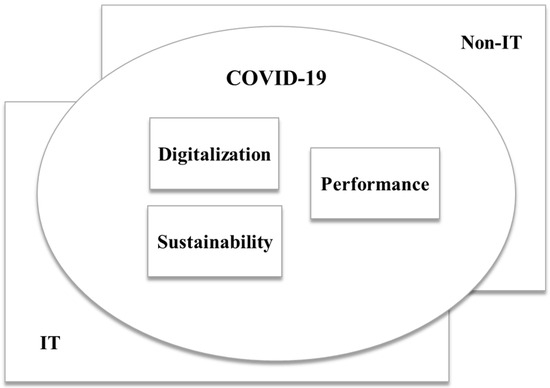
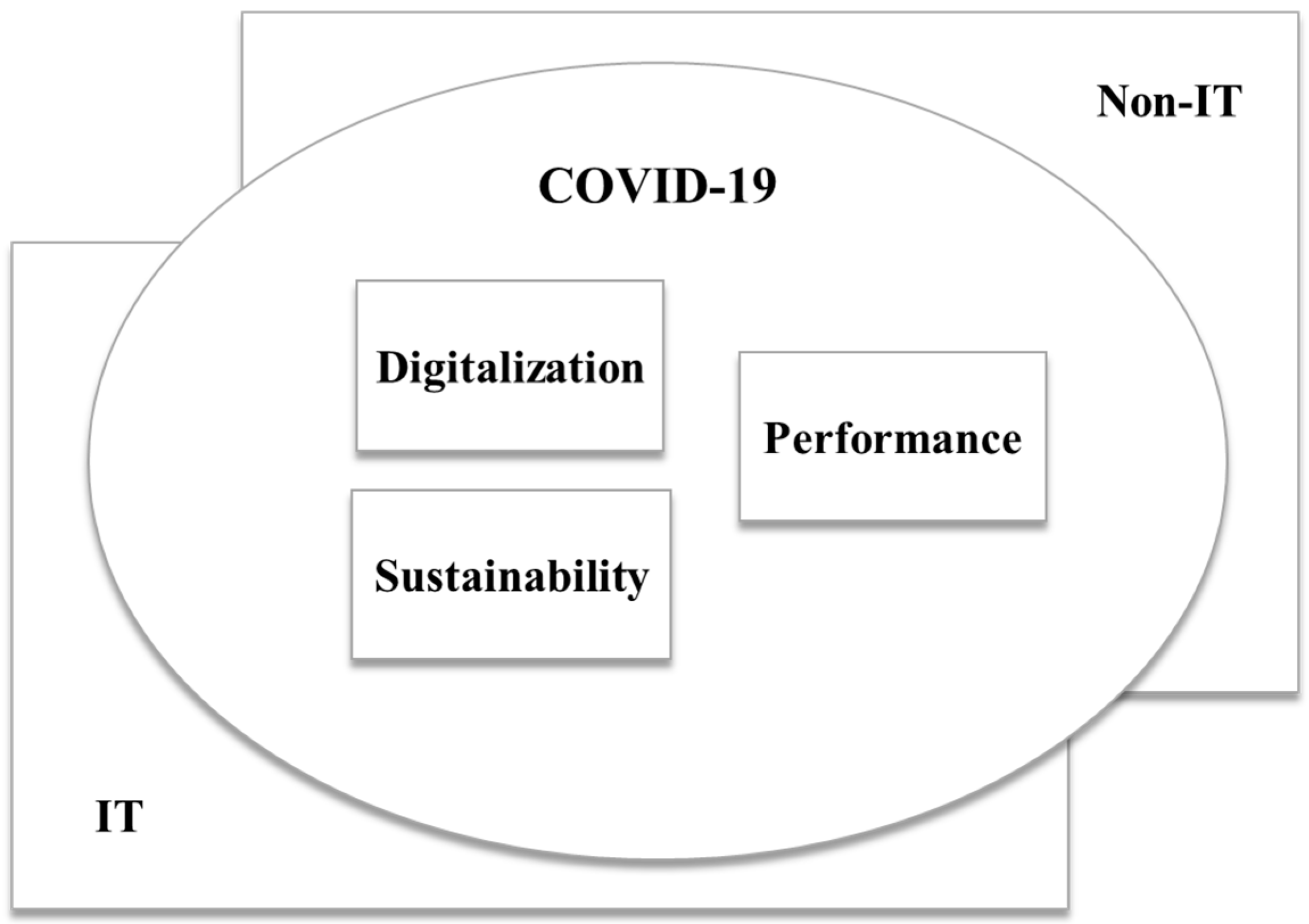
The conceptual model that we propose for research is represented in Figure 1.
Figure 1.
The conceptual model.
The model analyzes the interactions between digital processes and sustainable strategies, identifying synergies that may arise, with effects on financial performance. The correlated effect of digitization and sustainability manifests itself through the optimization of operational processes, and the reduction in ecological impact, simultaneously contributing to increased organizational efficiency and improved long-term financial performance. Technological innovations in line with sustainability requirements allow for the continuous monitoring of resources, identification of areas of waste, and rapid intervention to save resources (energy, water, materials). The consideration of the social component of sustainability, focused on human resources, and the technology of processes at the company level, creates the context for assessing the impact on financial performance. Operational efficiency is thus ensured through technology according to sustainability objectives, which generates a reduction in resource waste and allows data analysis to optimize demand planning and forecasting, which increases the efficiency of production and resource use. By combining digitization with sustainability, companies can develop new products and services that are both innovative and ecological, thus generating added value in the market and improving competitiveness.
The COVID-19 pandemic has been a disruptive factor in the activities of companies, generating interruptions in supply chains, an increase in remote work, and changes in consumer behavior. New conditions are being created that make the integration of digitization and sustainability necessary for survival and performance.
Considering that digitization offers transparency, speed, and accuracy in communication with stakeholders and that sustainability increases stakeholder trust through responsible practices towards the environment, employees, and community, the model includes the stakeholders’ value dimension.
In IT companies, digitization is already a competitive advantage, with sustainability contributing more to reducing indirect costs and the company’s image. In non-IT companies, digitization and sustainability combine to generate significant efficiency by reducing losses, optimizing production, and increasing organizational resilience. During the COVID-19 period, IT companies adapted more quickly to telecommuting and digitization, while non-IT companies had to accelerate the adoption of digital technologies to maintain operational efficiency.
3. Materials and Methods
In order to assess the impact of digitalization and sustainability on companies’ performance, the research adopts a quantitative approach. Data were collected from the Refinitiv Eikon database over a period of six years (2019–2024) and analyzed using Stata 14.2 statistical software. Refinitiv Eikon is a globally recognized provider of financial and ESG data, which guarantees the reliability and consistency of the information. In order to ensure completeness, only companies that reported all required variables over the period studied were included in the analysis. Variables were chosen to directly reflect the aspects of digitalization and sustainability that are key to the research questions. Software development costs represent costs accumulated and capitalized for software development, reflecting a company’s investment in digital systems and technologies. The ESG score evaluates the environmental, social, and governance dimensions of a business, with all three representing essential aspects of sustainability.
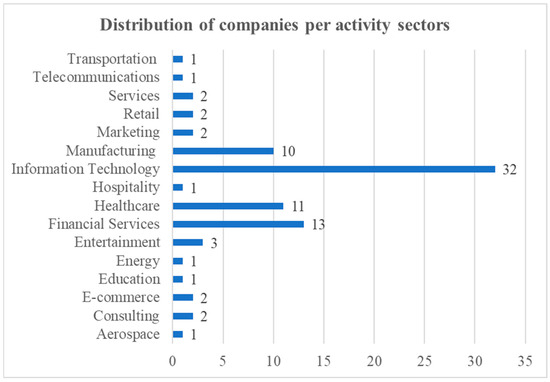
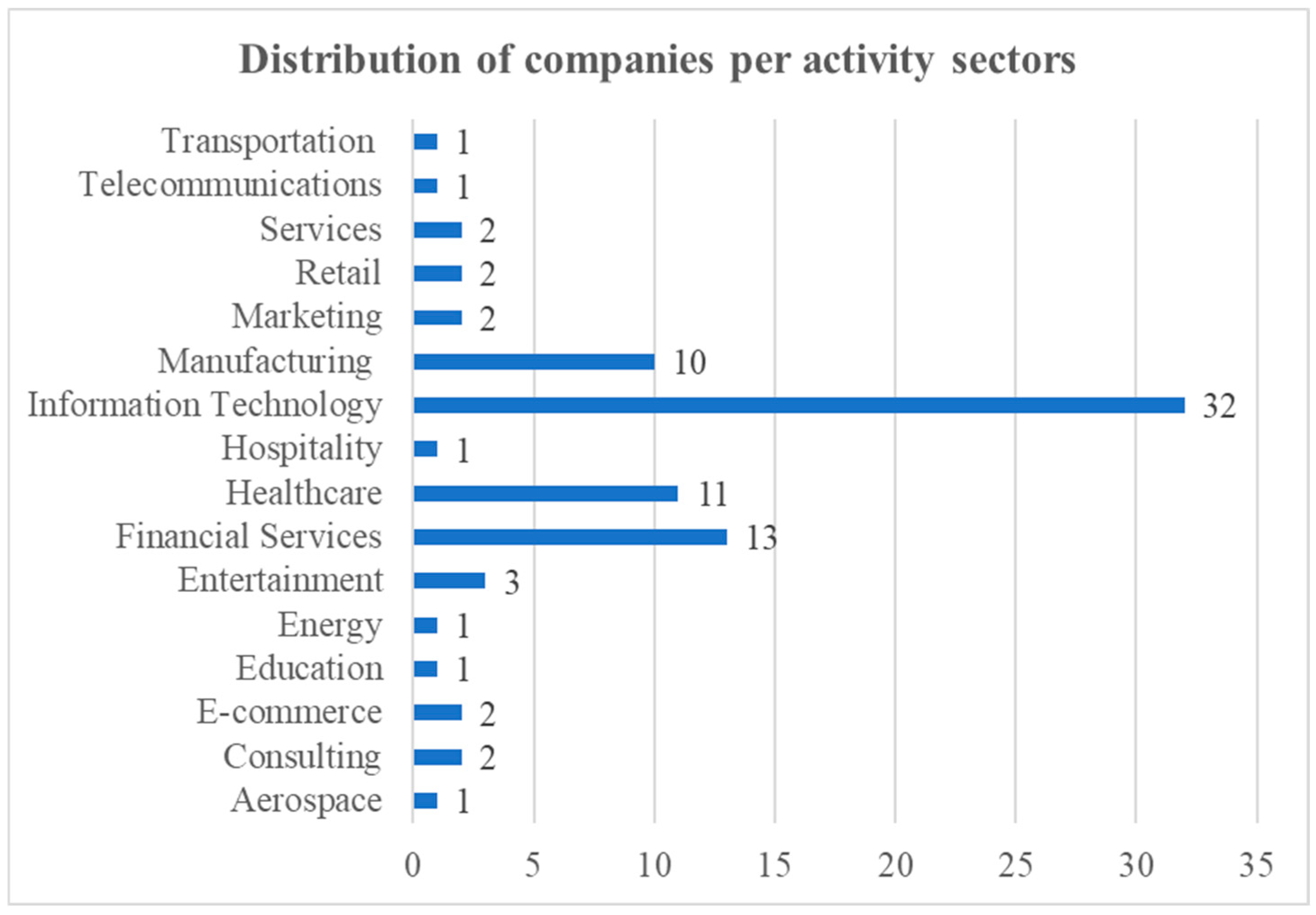
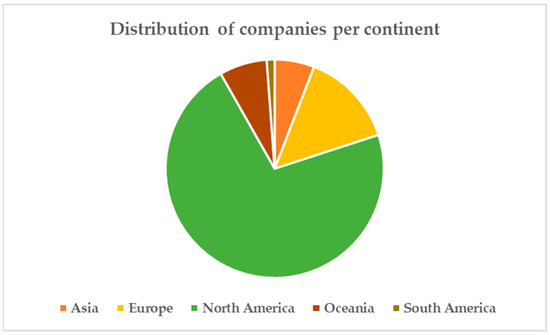
The sample consists of 85 public and private companies worldwide that are active in the information technology, financial services, and healthcare sectors. As 38% of the selected companies are operating in the IT sector, this study aims to examine if these companies benefited differently from the digitalization and ESG initiatives during the COVID-19 crisis, compared to the non-IT firms. The structure of the sample, categorized according to field of activity and continent, is illustrated in Figure 2 and Figure 3. The majority of companies are headquartered in the North American region, with a notable presence in the information technology, financial services, healthcare, and manufacturing sectors.
Figure 2.
The distribution of companies per activity sectors.
Figure 3.
The distribution of companies per continent.
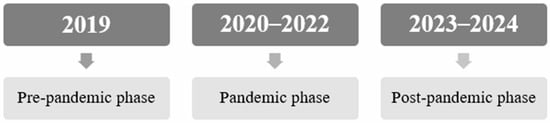
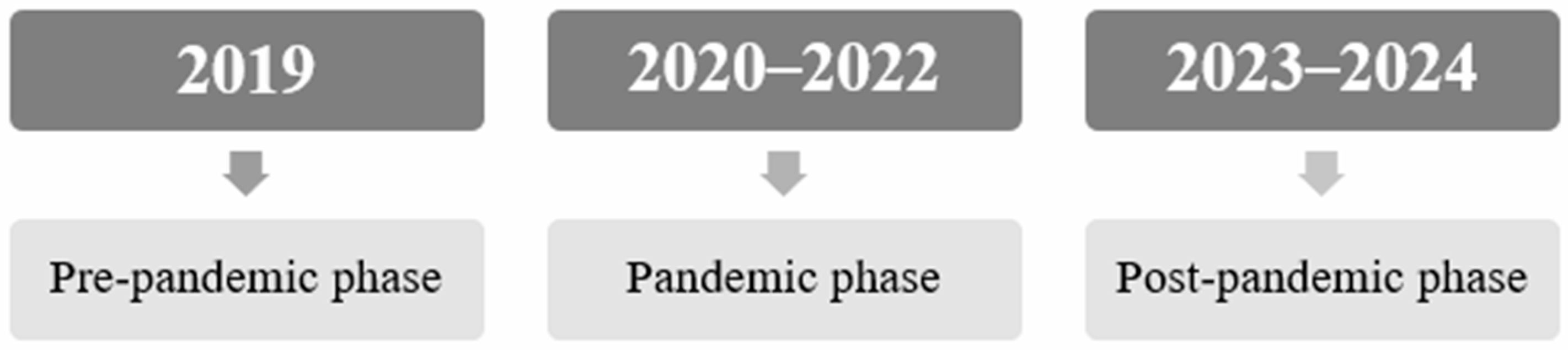
The six-year period under scrutiny was segmented in accordance with Figure 4, thereby facilitating an exhaustive understanding of the outcomes concerning performance and their temporal variability.
Figure 4.
Timeline of pandemic phases.
The chosen timeframe, spanning from 2019 to 2024, comprises the period preceding the COVID-19 outbreak as well as the post-pandemic recovery phase.
This contributes significantly to the accurate evaluation of the way different sectors were affected by the pandemic, their major difficulties, and it also reflects the obstacles faced in decision-making towards investments and the preservation of stakeholders’ trust during that time. Also, given the selected period, we can analyze how the strategic behavior of companies has undergone a significant change, moving from profitability-centered objectives to action plans related to environmental protection and social responsibility.
Therefore, the panel data model was developed by taking into consideration variables representing three dimensions of interest: performance, digitalization, and sustainability. Total revenue was designated as the dependent variable, with investment in software development and the ESG score serving as the independent variables. Total revenue is an indicator of business performance, whereas the software development costs are used to measure the level of digitalization, and the ESG score conveys the social and environmental awareness and the governance issue.
The estimation in the regression model was done by using the Pooled Ordinary Least Squares method, the standard errors being calculated based on the Driscoll–Kraay estimator to correct the possible autocorrelation and heteroskedasticity inaccuracies. To improve data comparability and reduce skewness, total revenue and software development costs were normalized using a natural logarithm transformation. Also, the econometric analysis was refined by engaging control and dummy variables in the regression model. The control variables that were taken into consideration were the size of the company, quantified through the total assets, and the country where each company operates. The regression model includes two dummy variables: the first one referring to the operating industry (IT/non-IT firms) and the second one to the pandemic context (fiscal year was/was not impacted by COVID-19). The industry dummy variable has the purpose of determining if the results obtained during the pandemic due to investing in digitalization and ESG engagement were perceived differently by the IT firms in comparison to the non-IT firms. The COVID-19 dummy variable is meant to spot the pandemic presence in 2020, 2021, and 2022 and connect it to digitalization and ESG practices increasing during that period of time.
Furthermore, to capture the delayed effects arising in the panel data model (digitalization and ESG efforts characterizing the last available fiscal year), the econometric analysis utilizes lagged independent variables. Also, interactions between the lagged and dummy variables were conducted in order to best address the researched problem of performance obtained by IT and non-IT companies through the inclusion of digitalization and ESG. Accordingly, the following three interactions were created: software development cost and the industry dummy, ESG score and the industry dummy, and lastly, the COVID-19 dummy and industry dummy. The description and scope of each variable are presented in Table 1 below:
Table 1.
Description of the variables.
Additionally, the unit root test was applied to the series in order to verify the stationarity of the data used in the model, which is required to ensure the correct estimation and validity of the links between the variables. Therefore, the Fisher method was applied with the two specific unit root tests for panel data (Augmented Dickey–Fuller and Phillips–Perron) to determine whether the series are stationary or non-stationary, as presented in Table 2 below.
Table 2.
Unit root test.
The obtained p-value below 0.05 for both tests provides evidence against the null hypothesis of a unit root, indicating that the panel data series are stationary.
4. Results
The summary statistics of the sample studied are presented in Table 3 below:
Table 3.
Summary statistics.
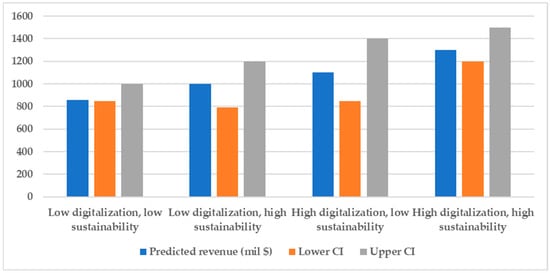
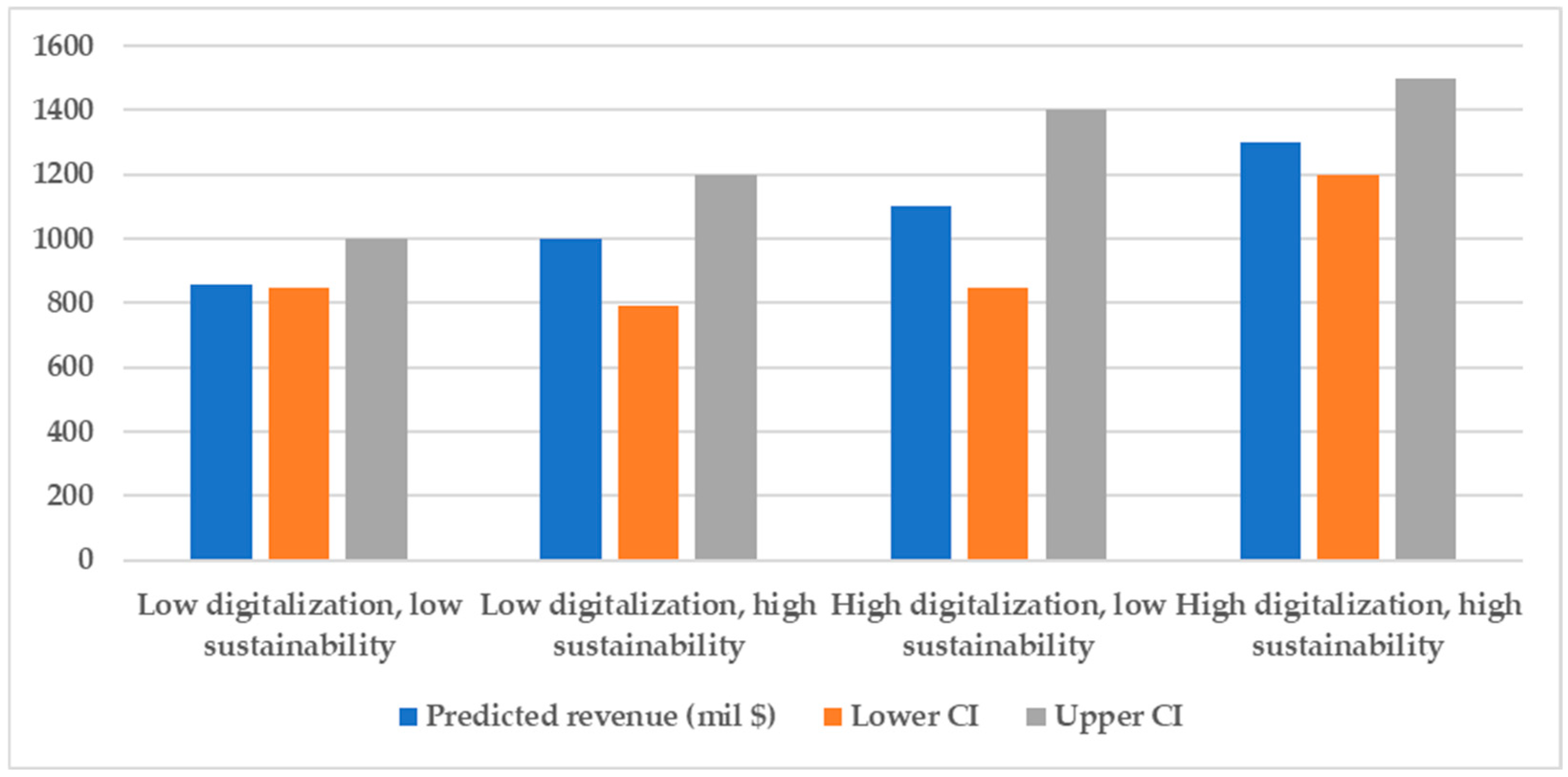
Results suggest that the sample appears to be highly heterogeneous. Total revenue and company size show wide ranges and large standard deviations, denoting the presence of both small and large companies. The level of digitalization and sustainability also differs between firms, which can be attributed to factors such as industry, regulatory environments, or cultural approaches. As mentioned before, about 38% of the companies analyzed operate in the IT sector, while COVID-19 and non-COVID-19 observations are distributed evenly. For a better understanding of the combined impact of digitalization and sustainability efforts, predicted revenue was calculated for companies with low (25th percentile) and high (75th percentile) software development costs and ESG scores. Results are shown in Figure 5 below, including lower and upper confidence intervals (95%).
Figure 5.
Combined effect of digitalization and sustainability on revenue.
As expected, the graph supports the main hypothesis that investment in digitalization and sustainability improves firm performance. Higher software development costs increase revenue consistently, which also amplifies the positive effect of the ESG score.
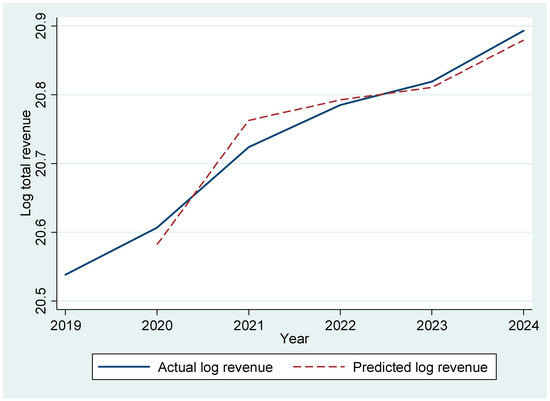
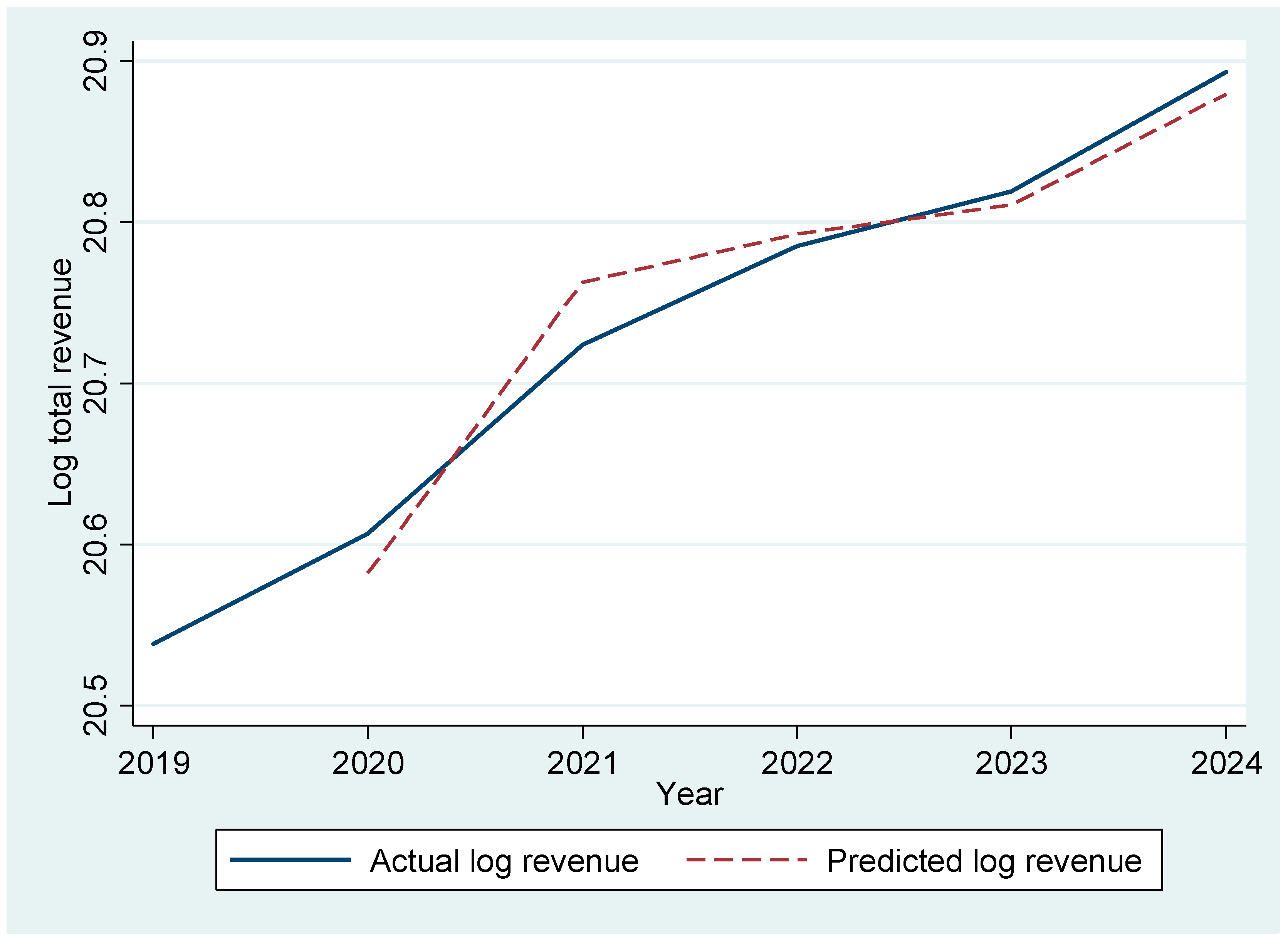
Figure 6 plots the actual and predicted revenue values, based on lagged software development costs and ESG scores, by using Driscoll–Kraay standard errors.
Figure 6.
Actual vs. predicted revenue over time.
The predicted revenue closely follows the upward trend in actual revenue, which suggests that lagged software investments and ESG scores explain much of the overall performance increase over time. During the pandemic (around 2022–2021), the gap between actual and predicted values slightly widened, which indicates temporary shocks that are not fully captured by the explanatory variables used.
Table 4 reports the results of the regression model analyzing the effects of digitalization and sustainability on companies’ performance expressed through the level of total revenue.
Table 4.
Results of the pooled OLS regression.
4.1. Main Effects
Findings show an increase in the current year’s revenue for companies with higher software investment in the previous year, which proves the hypothesis that investment in digitalization enhances overall firm performance (H1a). Our results are consistent with those of previous studies, which have demonstrated that the implementation of digitalization is associated with a number of key benefits for organizations. From a financial perspective, the direct effect is reflected in the increasing of profitability (ROA and net profit margin), sales growth, and stock performance [43]. The effect of investment in digitalization on revenue growth is strong and follows an inverted S-shaped relationship, with a similar but weaker effect between revenue growth and company performance [44]. The correlation between digitalization and performance is substantiated by the enhancement of competitiveness, the optimization of the quality of goods and services, and the improvement of customer experience [16]. Furthermore, the process of digitalization is conducive to enhancing organizational performance through the cultivation of employees’ distinct competencies. The importance of employee training is essential for the ongoing growth of companies’ intangible assets [45] and is integral to ensuring sustainable human resource management. Furthermore, it is considered that the increase in employee motivation strengthens team cohesion and elevates the levels of consideration [46]. Additionally, the increased utilization of digitalization in professional and business environments has also contributed to the enhancement of women managers’ access to equal opportunities when it comes to business development [47]. In order to capitalize on the considerable potential of digital technology and achieve truly transformative empowerment that challenges traditional gender roles, a coordinated effort across stakeholders is required. This effort must address the gendered nature and the gendered socio-cultural and economic environment [48].
A similar conclusion can be drawn when taking into account sustainability practices. The coefficient for the lagged ESG score is positive and statistically significant, suggesting that companies who prioritized socially and environmentally responsible practices capitalized in terms of income (H1b). The link can be explained through improved brand reputation and investment attractiveness that a business with a high ESG score benefits from. A greater engagement in sustainability practices is conducive to increased innovation performance, which in turn engenders financial and market performance [49]. Two alternative theories have been postulated to explain the impact of sustainability on company value. The value-creating theory states that the integration of environmental and social responsibility into corporate strategies and practices will reduce firm risk and promote long-term value creation. The value-destroying theory on sustainability states that managers may engage in socially responsible activities that are detrimental to shareholders [50]. Sustainable practices are related to reducing waste and using resources more efficiently, ensuring the growth and performance of companies [51]. In the contemporary socio-economic climate, consumers are becoming increasingly cognizant of the environmental and societal implications of their purchasing decisions. Consequently, businesses that adopt sustainable strategies are able to enhance their image and cultivate customer loyalty, differentiate themselves from competitors, and achieve long-term financial gains [52]. The practice of sustainable business principles fosters organizational resilience, thus mitigating the impact of market fluctuations and economic conditions having higher sales growth and higher chances of survival [53]. Jointly, these findings provide support for H1, which suggests that strategic investments in digitalization and sustainability enhance overall firm performance.
4.2. Interaction Effects
The findings reinforce the regression results, suggesting a clear differentiation between sectors. For non-IT companies, increased investment in software development is associated with a negative marginal effect on revenue, which suggests that digitalization represents a short-term cost burden under pandemic conditions. At the same time, for IT companies, the marginal effect was slightly positive, which indicates a higher capability to capitalize on digital investments due to their already existing organizational readiness.
The results of the interaction effects provide support for H2, indicating significant differences in the impact of digitalization and sustainability for the performance of IT and non-IT firms during the COVID-19 pandemic. For companies that are not operating in the IT sector, the interaction between lagged software investment and COVID-19 is negative, illustrating that increased digitalization costs during the pandemic affected short-term revenue. This does not necessarily reflect a failure of digital technology, but more of a pattern highlighting the differences between how IT and non-IT firms implement digital investments. Research conducted by [54] states that the successful implementation of a digital transformation requires the availability of adequate resources, including financial, human, and technological resources. For companies outside of the IT sector, digital projects call for supplementary efforts for integrating new enterprise systems, retraining staff, or redesigning business processes. These changes coincided with the challenges brought on by the pandemic (remote work, supply chain issues, or reduced demand), which might have made software investments less effective, or even a short-term cost burden. Past studies also confirmed that companies with higher IT capabilities experience an increase in firm performance through the development of a digital orientation and the digital transformation of the organization [55], while traditional industries might deal with limited IT resources, budget constraints, or organizational readiness when trying to increase the level of digitalization. These findings are supported by previous research stating that digital transformations initially reduce profitability due to upfront costs and organizational friction, while increasing research and development investments without immediate returns [56].
In contrast, for companies operating in the IT sector, results suggest a slight benefit from software investment during the pandemic. Although not statistically significant (p-value = 0.150), this finding has an economic reasoning: IT companies already have their core business models and competitive advantages linked to digital products and services; therefore, an additional investment during the pandemic might not create a measurable short-term effect on performance (H2a). Therefore, by having a higher baseline maturity compared to non-IT firms, additional digital investments do not determine revenue spikes, but at the same time, they do not enforce short-term disruptions. Previous research states that a high degree of digitalization increases a company’s ability to reconfigure resources and adapt during shocks such as COVID-19 [57]. The pandemic accelerated digital adoption globally and IT firms already had an advantage in this field, being able to leverage their digital capabilities more efficiently during the crisis [58].
Results related to the sustainability dimension reveal an intriguing divergence between IT and non-IT firms. Firms outside the IT industry experienced a positive effect on performance expressed as level of income correlated with increased sustainability efforts. This result does not come as a surprise considering the fact that a strong ESG score is correlated with stakeholder trust, which becomes crucial during a crisis such as COVID-19. Previous findings reveal that ESG firms were more resilient during the pandemic and faced lower downside risks during the crisis [59]. On the other hand, for companies that operate in the IT industry, the outcome of the sustainability dimension contradicts the positive effect for non-IT firms: higher ESG scores for digital companies during COVID-19 reduced revenue to a limited extent. One plausible explanation for this result is that IT firms could have shifted resources away from short-term revenue while trying to emphasize ESG efforts during the pandemic in order to focus on building long-term resilience. More precisely, IT companies that recorded high ESG scores may have reallocated internal resources with the scope of enforcing sustainability initiatives during COVID-19, such as the development of data privacy procedures, support of impartial remote work practices, and acceleration of environmental protection actions (H2b). These findings are supported by previous research. While ESG investments initially exert negative impact on stock returns as [60] reveals, these negative effects diminish over time, transitioning into significant long-term benefits through improved firm resilience and enhanced market valuation. On the other hand, high ESC scores may not always mean low financial risk, and that the long-term benefits of ESG investments will increase short-term costs, as [61] enforces.
The pandemic context brought restrictions and operational changes that impacted businesses differently. In terms of digitalization, it helped IT firms maintain stability, while non-IT faced increased costs and implementation difficulties. Taking into consideration the level of sustainability, this brought a positive impact for non-digital companies who benefited more from stakeholder relationships, while digital companies had to make a short-term compromise.
4.3. Control and Dummy Variables
Total assets were used as a measure for firm size. As expected, it revealed a positive and highly significant coefficient, which points out that bigger companies usually bring in more revenue. The dummy variable for the IT sector captures the base difference between digital and non-digital companies. Its coefficient reveals that, independent of COVID-19 or other interactions, IT companies have about 21.5% lower revenues in comparison with non-IT ones. To help manage shifts over time and variations across countries, specific fixed effects were added to the model. As a result, the impact of software investment and the ESG score remains clear of influences such as particular national frameworks.
4.4. Model Fit
The coefficient of determination (R-squared = 0.8536) was obtained from the estimated panel regression model. This indicates that approximately 85.4% of the variation in the total revenue is explained by the included independent variables. Such a significant explanatory value suggests that both digitalization and sustainability, jointly with the control variable for company size and the interaction terms, have a notable role in explaining performance dynamics.
The F-statistic (Prob > F = 0.000) proves the overall statistical significance of the model by testing the joint significance of all explanatory variables, supporting the reliability of the results.
4.5. Model Diagnosis
Multicollinearity was tested only for the main continuous predictors by using the variance inflation factors. This was to avoid the expected high values for the IT dummy and interactions as a result of their nature, which did not affect the reliability of the model. Results are presented in Table 5 below:
Table 5.
Variance inflation factors.
All VIF values are below 5, which indicates that there is no concern for multicollinearity in the regression model.
4.6. Robustness Checks
Several additional tests were conducted to ensure the robustness of the model. Firstly, the model was re-estimated using firm-clustered standard errors in order to prove that the results are not affected by similarities within the same company over time. Since the scope of this test is to focus on the reliability of the standard errors, interactions were not included. Results of the alternative standard errors model are presented below in Table 6:
Table 6.
Alternative standard errors.
The results are robust to the choice of standards errors, as the magnitude and sign of the coefficients remain the same as the Driscoll–Kraay estimate. In order to verify the consistency of digitalization and sustainability effects on performance over time, a lag robustness check test was performed. For this test, the regression was re-run using alternative lags: 1-year lag (L1), 2-year lag (L1), and the cumulative effect of both (L1 + L2). Interactions were not added to the additional models as this check targets the stability of the main effects. The outcome for the lag robustness check test is presented in Table 7.
Table 7.
Lag robustness check.
Findings indicate that the main results are not sensitive to the choice of lag, as digitalization still has a positive effect on total revenue, while the ESG score coefficient remains above zero, reinforcing the credibility of the primary results.
5. Conclusions
Digital transformation and sustainability have been identified as key drivers of corporate performance. The findings show a strong positive correlation between sustainability and performance as well as between digitalization and performance. Because digital technologies play a crucial role in enabling businesses to surmount adversity, intersectoral analysis revealed that digitalization had a considerable negative impact on non-IT organizations during the COVID-19 pandemic. There are notable correlations between sustainability and revenue, which are negative for IT enterprises and positive for non-IT firms. This study enriches the literature, addressing a current and challenging topic: the correlation between digitalization, sustainability, and performance. The findings are of particular relevance to managers. They can understand how investments in digital technologies and sustainability initiatives contribute to increased financial performance, not just regulatory compliance. It is identified how combining digitization with sustainability creates sustainable competitive advantages (efficiency, differentiation, reputation), with direct effects on financial performance. The profitability supported by digitization and sustainable practices is increasingly relevant, improving the relationship with investors and stakeholders. Companies that have developed a business model that integrates digitization with sustainable practices show a greater degree of resilience in the face of disruptions generated by adverse effects, such as the COVID-19 pandemic. The contributions of the study are significant among researchers interested in capturing cause–effect relationships in increasing the value of companies, as well as the long-term economic effects of the COVID-19 pandemic. Furthermore, the results present interests for policymakers in the development of a regulatory framework and necessary infrastructure for sustainable development and digitalization. Legal measures to support sustainable development have to be integrated within a holistic approach, encompassing not only environmental protection but also economic and social aspects. The implementation of coherent policies in this regard supports the transition to a green and fair economy, ensuring a sustainable future. To illustrate this point, the policies in this field could aim at: regulations for reducing carbon emissions, promoting renewable energies, imposing minimum energy efficiency standards; circular economy regulations; laws to stimulate green investments; rules on waste management; legal measures to promote social responsibility of companies; legislation on reporting; and transparency in the field of sustainability. With reference to the digitization policies, a high degree of flexibility and adaptability, in order to facilitate a rapid response to technological changes and societal needs, is necessary. The policies must not only encourage economic growth but also promote inclusivity, security, and sustainability across all sectors. In an era of increasing digital connectivity, an adequate legal framework has the potential to transform digitization into a driver for progress. Policies in the field could aim at: creation of a legal framework for data protection and privacy; fiscal incentives and subsidies such as tax reductions in the case of investments in technology, subsidies for the digitization of SMEs and the implementation of non-reimbursable fund schemes that support digital transformation; expanding fast and stable internet access; promoting and supporting digital education; encouraging public–private partnerships for the development of accessible digital solutions for SMEs; digital transformation of public institutions; providing non-repayable funding or financial incentives for companies that develop innovative digitization solutions, as well as financial support for companies that implement smart projects.
Future research aims to include a system of representative indicators for company performance, digitization, and sustainability, as well as addressing the research problem in different industrial or regional contexts.
The primary constraints imposed on this research were due to the limited number of digitalization and sustainability indicators provided by the companies. Many firms also do not provide data regarding the indicators used in this study, such as software development costs and ESG scores, which limited the samples available. The companies do not report indicators that allow a complex evaluation of the degree of digitization, aspects such as digital infrastructure, skills, or process integration cannot be investigated. There are also certain indicators regarding digitization reported at the macroeconomic level. Including them in the analysis would distort the results, as there is no correlation between a company’s performance and data on digitization at the country level. At the same time, the analysis between sectors would no longer be necessary. It would be of interest to study other conditions related to the degree of digitalization and to conduct a similar study considering different sustainable practices. Moreover, there are a multitude of extraneous variables that may still exert an influence on the observed relationships, including economic factors engendered by the global pandemic. Future research could explore larger samples or conduct robustness checks by sector if more extensive data becomes available.
Author Contributions
Conceptualization, M.I.S.-D., R.-A.P.-P., A.M.P. and A.T.; methodology, M.I.S.-D., R.-A.P.-P., A.M.P. and A.T.; software, M.I.S.-D., R.-A.P.-P., A.M.P. and A.T.; validation, M.I.S.-D., R.-A.P.-P., A.M.P. and A.T.; formal analysis, M.I.S.-D., R.-A.P.-P., A.M.P. and A.T.; investigation, M.I.S.-D., R.-A.P.-P., A.M.P. and A.T.; resources, M.I.S.-D., R.-A.P.-P., A.M.P. and A.T.; data curation, M.I.S.-D., R.-A.P.-P., A.M.P. and A.T.; writing—original draft preparation, M.I.S.-D., R.-A.P.-P., A.M.P. and A.T.; writing—review and editing, M.I.S.-D., R.-A.P.-P., A.M.P. and A.T.; visualization, M.I.S.-D., R.-A.P.-P., A.M.P. and A.T.; supervision, M.I.S.-D., R.-A.P.-P., A.M.P. and A.T.; funding acquisition, M.I.S.-D., R.-A.P.-P., A.M.P. and A.T. All authors have read and agreed to the published version of the manuscript.
Funding
This research received no external funding.
Institutional Review Board Statement
Not applicable.
Informed Consent Statement
Not applicable.
Data Availability Statement
The raw data supporting the conclusion of this article will be made available by the authors on request.
Conflicts of Interest
The authors declare no conflicts of interest.
References
- Coram, P.J.; Mock, T.J.; Monroe, G.S. Financial analysts’ evaluation of enhanced disclosure of non-financial performance indicators. Br. Account. Rev. 2011, 43, 87–101. [Google Scholar] [CrossRef] [Scilit]
- Ramdani, B.; Binsaif, A.; Boukrami, E. Business model innovation: A review and research agenda. N. Engl. J. Entrep. 2019, 22, 89–108. [Google Scholar] [CrossRef] [Scilit]
- França, C.L.; Broman, G.; Robert, K.H.; Basile, G.; Trygg, L. An approach to business model innovation and design for strategic sustainable development. J. Clean. Prod. 2017, 140, 155–166. [Google Scholar] [CrossRef] [Scilit]
- Zott, C.; Amit, R. Business model design and the performance of entrepreneurial firms. Organ. Sci. 2007, 18, 181–199. [Google Scholar] [CrossRef] [Scilit]
- Niehoff, S. Aligning digitalisation and sustainable development? Evidence from the analysis of worldviews in sustainability reports. Bus. Strategy Environ. 2022, 31, 2546–2567. [Google Scholar] [CrossRef] [Scilit]
- Wang, X.; Wang, K.; Xu, B.; Jin, W. Digitalisation and technological innovation: Panaceas for sustainability? Int. J. Prod. Res. 2025, 63, 6071–6088. [Google Scholar] [CrossRef] [Scilit]
- Horbach, J. Digitalisation and sustainability measures at the firm level. Digit. Econ. Sustain. Dev. 2024, 2, 19. [Google Scholar] [CrossRef] [Scilit]
- Burinskienė, A.; Seržantė, M. Digitalisation as the Indicator of the Evidence of Sustainability in the European Union. Sustainability 2022, 14, 8371. [Google Scholar] [CrossRef] [Scilit]
- Chen, S.; Song, Y.; Gao, P. Environmental, social, and governance (ESG) performance and financial outcomes: Analyzing the impact of ESG on financial performance. J. Environ. Manag. 2023, 345, 118829. [Google Scholar] [CrossRef] [Scilit] [PubMed]
- Whelan, T.; Atz, U.; Van Holt, T.; Clark, C. ESG and financial performance. Uncovering Relatsh. Aggregating Evid. 2021, 1, 10. [Google Scholar]
- Sheth, J.N.; Sethia, N.K.; Srinivas, S. Mindful consumption: A customer-centric approach to sustainability. J. Acad. Mark. Sci. 2011, 39, 21–39. [Google Scholar] [CrossRef] [Scilit]
- Strenitzerová, M.; Gaňa, J. Customer satisfaction and loyalty as a part of customer-based corporate sustainability in the sector of mobile communications services. Sustainability 2018, 10, 1657. [Google Scholar] [CrossRef] [Scilit]
- Liu, P.; Zhu, B.; Yang, M.; Chu, X. ESG and financial performance: A qualitative comparative analysis in China’s new energy companies. J. Clean. Prod. 2022, 379, 13472114. [Google Scholar] [CrossRef] [Scilit]
- Latha, K.; Patro, A.; Lathabhavan, R.; Sulaiman, E.; Varghese, R. Effect of digitalisation on performance: Evidence from dairy cooperatives of South India. Int. J. Product. Perform. Manag. 2025, 1–26. [Google Scholar] [CrossRef] [Scilit]
- Alsufyani, N.; Gill, A.Q. Digitalisation performance assessment: A systematic review. Technol. Soc. 2022, 68, 1018. [Google Scholar] [CrossRef] [Scilit]
- Truant, E.; Broccardo, L.; Dana, L.P. Digitalisation boosts company performance: An overview of Italian listed companies. Technol. Forecast. Soc. Change 2021, 173, 121173. [Google Scholar] [CrossRef] [Scilit]
- Duong, H.K.; Nguyen, H.C. The impact of digitalisation on firm value, financial performance, and green initiatives: Evidence from Vietnam, an emerging economy. J. Appl. Account. Res. 2026, 27, 110–140. [Google Scholar] [CrossRef] [Scilit]
- Dias, S.N.; Dewasiri, N.J.; Perera, K.L. Digitalisation and Its Impact on the Organisation Performance and Sustainability: A Systematic Literature Review. In Sustainable Innovations and Digital Circular Economy; Springer: Singapore, 2025; pp. 165–188. [Google Scholar]
- Broccardo, L.; Truant, E.; Dana, L.P. The interlink between digitalization, sustainability, and performance: An Italian context. J. Bus. Res. 2023, 158, 113621. [Google Scholar] [CrossRef] [Scilit]
- Trueba-Castañeda, L.; Somohano-Rodríguez, F.M.; Torre-Olmo, B. Does digitalisation enable small and medium-sized enter-prises to become more sustainable? Corp. Soc. Responsib. Environ. Manag. 2024, 31, 4893–4909. [Google Scholar] [CrossRef] [Scilit]
- Wang, Z.; Lin, S.; Chen, Y.; Lyulyov, O.; Pimonenko, T. Digitalisation effect on business performance: Role of business model innovation. Sustainability 2023, 15, 9020. [Google Scholar] [CrossRef] [Scilit]
- Sotamaa, T.; Reiman, A.; Kauppila, O. Manufacturing SME risk management in the era of digitalisation and artificial intelligence: A systematic literature review. Contin. Resil. Rev. 2025, 7, 1–28. [Google Scholar] [CrossRef] [Scilit]
- Drydakis, N. Artificial Intelligence and reduced SMEs’ business risks. A dynamic capabilities analysis during the COVID-19 pandemic. Inf. Syst. Front. 2022, 24, 1223–1247. [Google Scholar] [CrossRef] [Scilit] [PubMed]
- Kroll, H.; Horvat, D.; Jäger, A. Effects of Automatisation and Digitalisation on Manufacturing Companies’ Production Efficiency and Innovation Performance (No. 58). Fraunhofer ISI Discussion Papers Innovation Systems and Policy Analysis. Available online: https://www.econstor.eu/handle/10419/176701 (accessed on 15 December 2025).
- Chen, G.; Wang, P.; Feng, B.; Li, Y.; Liu, D. The framework design of smart factory in discrete manufacturing industry based on cyber-physical system. Int. J. Comput. Integr. Manuf. 2020, 33, 79–101. [Google Scholar] [CrossRef] [Scilit]
- Ahmad, M.U.; Murray, J. Understanding the connect between digitalisation, sustainability and performance of an organisation. Int. J. Bus. Excell. 2019, 17, 83–96. [Google Scholar] [CrossRef] [Scilit]
- Fernández-Portillo, A.; Almodóvar-González, M.; Sánchez-Escobedo, M.C.; Coca-Pérez, J.L. The role of innovation in the relationship between digitalisation and economic and financial performance. A company-level research. Eur. Res. Manag. Bus. Econ. 2022, 28, 100190. [Google Scholar] [CrossRef] [Scilit]
- Olan, F.; Arakpogun, E.O.; Suklan, J.; Nakpodia, F.; Damij, N.; Jayawickrama, U. Artificial intelligence and knowledge sharing: Contributing factors to organizational performance. J. Bus. Res. 2022, 145, 605–615. [Google Scholar] [CrossRef] [Scilit]
- Matalamäki, M.J.; Joensuu-Salo, S. Digitalisation and strategic flexibility—A recipe for business growth. J. Small Bus. Enterp. Dev. 2022, 29, 380–401. [Google Scholar] [CrossRef] [Scilit]
- Ribeiro-Navarrete, S.; Botella-Carrubi, D.; Palacios-Marqués, D.; Orero-Blat, M. The effect of digitalisation on business performance: An applied study of KIBS. J. Bus. Res. 2021, 126, 319–326. [Google Scholar] [CrossRef] [Scilit]
- Mekhdiev, E.; Sokolova, E.; Guliev, I.; Mammadova, P. Major Risks and Consequences of Corporate Sector Digitalisation. Iran. Econ. Rev. 2023, 27, 561–582. [Google Scholar]
- Trittin-Ulbrich, H.; Scherer, A.G.; Munro, I.; Whelan, G. Exploring the dark and unexpected sides of digitalisation: Toward a critical agenda. Organization 2021, 28, 8–25. [Google Scholar] [CrossRef] [Scilit]
- Khelil, I.; El Ammari, A.; Bouraoui, M.A.; Khlif, H. Digitalisation and money laundering: The moderating effects of ethical behaviour of firms and corruption. J. Money Laund. Control 2023, 26, 1203–1220. [Google Scholar] [CrossRef] [Scilit]
- Kovaitė, K.; Stankevičienė, J. Risks of Digitalisation of Business Models. Contemporary Issues in Business, Management and Economics Engineering. 2019. Available online: https://etalpykla.vilniustech.lt/handle/123456789/155763 (accessed on 20 November 2025).
- Weston, P.; Nnadi, M. Evaluation of strategic and financial variables of corporate sustainability and ESG policies on corporate finance performance. J. Sustain. Financ. Investig. 2023, 13, 1058–1074. [Google Scholar] [CrossRef] [Scilit]
- Aydogmuș, M.; Gülay, G.; Ergun, K. Impact of ESG performance on firm value and profitability. Borsa Istanb. Rev. 2022, 22, S119–S127. [Google Scholar] [CrossRef] [Scilit]
- Armstrong, C.S.; Blouin, J.L.; Jagolinzer, A.D.; Larcker, D.F. Corporate governance, incentives, and tax avoidance. J. Account. Econ. 2015, 60, 1–17. [Google Scholar] [CrossRef] [Scilit]
- Salin, A.S.A.P.; Ismail, Z.; Smith, M.; Nawawi, A. The influence of a board’s ethical commitment on corporate governance in enhancing a company’s corporate performance. J. Financ. Crime 2019, 26, 496–518. [Google Scholar] [CrossRef] [Scilit]
- Liu, R.; Gailhofer, P.; Gensch, C.O.; Köhler, A.; Wolff, F.; Monteforte, M.; Urrutia, C.; Cihlarova, P.; Williams, R. Impacts of the digital transformation on the environment and sustainability. Issue Pap. Task 2019, 3, 2019. [Google Scholar]
- Padhan, R.; Prabheesh, K.P. The economics of COVID-19 pandemic: A survey. Econ. Anal. Policy 2021, 70, 220–237. [Google Scholar] [CrossRef] [Scilit]
- Wilkes, J. Reconnecting with nature through good governance: Inclusive policy across scales. Agriculture 2022, 12, 382. [Google Scholar] [CrossRef] [Scilit]
- Leach, M.; MacGregor, H.; Scoones, I.; Wilkinson, A. Post-pandemic transformations: How and why COVID-19 requires us to rethink development. World Dev. 2021, 138, 105233. [Google Scholar] [CrossRef] [Scilit]
- Winata, R.K.; Sukarno, S. Literature review on digitalization and financial performance. Econ. Bus. Q. Rev. 2024, 7, 148–165. [Google Scholar] [CrossRef] [Scilit]
- Zaman, S.A.A.; Vilkas, M.; Rauleckas, R.; Zaman, S.I. Uncovering the digitalization paradox: How investment in digitalization affects revenue enhancement and firm performance. Benchmarking Int. J. 2025, 2, 92–98. [Google Scholar] [CrossRef] [Scilit]
- Bokek-Cohen, Y.A. Conceptualizing employees’ digital skills as signals delivered to employers. Int. J. Organ. Theory Behav. 2018, 21, 17–27. [Google Scholar] [CrossRef] [Scilit]
- Dziubek, S.; Fuchs, O.; Schwarz, S. Effects of workplace digitalisation on the motivation of German office employees. Int. J. Bus. Manag. 2022, 6, 39–48. [Google Scholar] [CrossRef] [Scilit]
- Rajahonka, M.; Villman, K. Women managers and entrepreneurs and digitalisation: On the verge of a new era or a nervous breakdown? Technol. Innov. Manag. Rev. 2019, 9, 14–24. [Google Scholar] [CrossRef] [Scilit]
- Samanta, P. Impact of Digitalisation on Efficiency and Effectiveness of Women—A Case Study. Int. J. Financ. Entrep. Sustain. 2022, 2, 92–98. [Google Scholar]
- Maletic, M.; Maletic, D.; Dahlgaard, J.; Dahlgaard-Park, S.M.; Gomišcek, B. Do corporate sustainability practices enhance organizational economic performance? Int. J. Qual. Serv. Sci. 2015, 7, 184–200. [Google Scholar] [CrossRef] [Scilit]
- Yu, M.; Zhao, R. Sustainability and firm valuation: An international investigation. Int. J. Account. Inf. Manag. 2015, 23, 289–307. [Google Scholar] [CrossRef] [Scilit]
- United Nations Environment Programme. Available online: https://www.unep.org/resources/report/resource-efficiency-potential-and-economic-implications-international-resource (accessed on 15 April 2025).
- Agu, E.E.; Iyelolu, T.V.; Idemudia, C.; Ijomah, T.I. Exploring the relationship between sustainable business practices and increased brand loyalty. Int. J. Manag. Entrep. Res. 2024, 6, 2463–2475. [Google Scholar] [CrossRef] [Scilit]
- Ortiz-de-Mandojana, N.; Bansal, P. The long-term benefits of organizational resilience through sustainable business practices. Strateg. Manag. J. 2016, 37, 1615–1631. [Google Scholar] [CrossRef] [Scilit]
- Rizana, A.F.; Wiratmadja, I.I.; Akbar, M. Exploring Capabilities for Digital Transformation in the Business Context: Insight from a Systematic Literature Review. Sustainability 2025, 17, 4222. [Google Scholar] [CrossRef] [Scilit]
- Barba-Sánchez, V.; Meseguer-Martínez, A.; Gouveia-Rodrigues, R.; Raposo, M.L. Effects of digital transformation on firm performance: The role of IT capabilities and digital orientation. Heliyon 2024, 10, e27725. [Google Scholar] [CrossRef] [Scilit] [PubMed]
- Huang, T.L. Digital transformation and business performance in China. Asia Pac. Manag. Rev. 2025, 30, 100400. [Google Scholar] [CrossRef] [Scilit]
- Guo, H.; Yang, Z.; Huang, R.; Guo, A. The digitalization and public crisis responses of small and medium enterprises: Implications from a COVID-19 survey. Front. Bus. Res. China 2020, 14, 19. [Google Scholar] [CrossRef] [Scilit]
- Avalos, E.; Cirera, X.; Cruz, M.; Iacovone, L.; Medvedev, D.; Nayyar, G.; Reyes Ortega, S. Firms’ digitalization during the COVID-19 pandemic: A tale of two stories. Sci. Public Policy 2024, 51, 1241–1256. [Google Scholar] [CrossRef] [Scilit]
- Albuquerque, R.; Koskinen, Y.; Yang, S.; Zhang, C. Resiliency of environmental and social stocks: An analysis of the exogenous COVID-19 market crash. Rev. Corp. Financ. Stud. 2020, 9, 593–621. [Google Scholar] [CrossRef] [Scilit] [PubMed]
- Naseer, M.M.; Guo, Y.; Zhu, X. Short-term costs and long-term gains of ESG initiatives in high-risk environments: Evi-dence from UK firms. Dev. Sustain. Econ. Financ. 2025, 7, 100075. [Google Scholar] [CrossRef] [Scilit]
- Ererdi, E.; Geng, E.G. Short-Term Costs and Long-Term Benefits of Environmental, Social, and Governance Performance on Corporate Credit Ratings. Int. J. Financ. Bank. Stud. 2025, 14, 90–97. [Google Scholar] [CrossRef] [Scilit]

Disclaimer/Publisher’s Note: The statements, opinions and data contained in all publications are solely those of the individual author(s) and contributor(s) and not of MDPI and/or the editor(s). MDPI and/or the editor(s) disclaim responsibility for any injury to people or property resulting from any ideas, methods, instructions or products referred to in the content. |
© 2026 by the authors. Licensee MDPI, Basel, Switzerland. This article is an open access article distributed under the terms and conditions of the Creative Commons Attribution (CC BY) license.