Article

Integrating Land Cover Change Analysis and Innovative Monitoring for Soil Degradation Assessment in Areas Under High Anthropogenic Pressure

1
Institute of Methodologies for Environmental Analysis, Italian National Research Council IMAA CNR, UDR Napoli, Corso Nicolangelo Protopisani IT, I-80146 Naplesi, Italy
2
Institute of Methodologies for Environmental Analysis, Italian National Research Council IMAA CNR, Contrada Santa Loja, I-85050 Tito, Italy
3
National Biodiversity Future Center (NBFC), I-90133 Palermo, Italy
4
Independent Researcher, I-85100 Potenza, Italy
5
Advanced Biomedical Science Department, University of Naples Federico II, I-80128 Naples, Italy
6
Laboratory of Radioactivity (Lab. RAD), Center for Advanced Metrological and Technological Services (CeSMA), University of Naples Federico II, I-80146 Naples, Italy
7
National Institute for Nuclear Physics (INFN)–Section of Naples, I-80126 Naples, Italy
8
Department of Health Sciences, University of Basilicata, Viale dell’ Ateneo Lucano 10, I-85100 Potenza, Italy
*
Author to whom correspondence should be addressed.
Sustainability 2026, 18(4), 1789; https://doi.org/10.3390/su18041789
Submission received: 11 December 2025 / Revised: 19 January 2026 / Accepted: 27 January 2026 / Published: 10 February 2026

Abstract

Soil monitoring is increasingly important for environmental sustainability and biodiversity protection, as urbanization and industrial development expose fertile land to pollution risks. Soil quality can be assessed through physical–chemical parameters and by analyzing land use evolution, highlighting the need for integrated procedures that jointly address land use transitions and soil health. This study assesses temporal soil changes (2004–2019) in an area affected by impactful industrial activities (Tito Scalo, Southern Italy), alongside major land use transformations. We explore the potential of a procedure based on a combination of standard techniques: analysis of land use/cover changes, magnetic susceptibility measurements from two field surveys (2004 and 2019) as a proxy for heavy metal concentrations, and 226Ra soil concentration measurements, proving to be a decisive factor in better interpreting the evolution of magnetic susceptibility values. Results show that, despite increased industrial activities and expanded sealed areas, magnetic susceptibility values decrease in the second survey. This suggests that policy measures, including temporary suspension of certain industrial activities and remediation efforts, positively influenced environmental quality. The proposed procedure is low-cost, time-efficient, and independent of local geological, bioclimatic, or socio-economic conditions, making it suitable for monitoring areas under high anthropogenic pressure and for evaluating the effectiveness of remediation and recovery strategies supporting mitigation or remediation actions and enabling functional redevelopment of remediated sites.

1. Introduction

Soil is a finite and fragile resource that sustains many fundamental functions for human and ecosystem health, including carbon sequestration, the provision of raw materials, support for vegetation and infrastructures, maintenance of biological diversity, and food production [1,2]. Soil provides important functions such as biomass production (e.g., agriculture and forestry), the storage and transformation of nutrients and water, and the maintenance of biodiversity [3]. It is also the physical and cultural environment for humans and their activities [4]. Moreover, it is a source of natural gases such as nitrogen, oxygen, and GHGs (GreenHouse Gases).
In the transitional areas between industrial, agricultural, and natural zones, high environmental impact dynamics can be triggered. Sustainability of the changes caused by these dynamics became a crucial task to counteract the progressive consumption of soil, the decrease in the availability of environmental resources, and the fragmentation of natural areas.
An important task for scientists is to identify the best strategies to preserve, improve, and monitor natural ecosystems by limiting soil damage and losses (e.g., [5,6,7]). Among all global changes, land use intensification is one of the strongest drivers of soil biodiversity loss and directly affects food quality [8,9]. Numerous papers attest that soil quality is negatively affected not only by the presence of industrial and urban settlements but also by the intensification in agricultural practices (livestock, cultivated fields, etc.; see e.g., [10,11,12]). Growing anthropogenic pressure and agricultural practices aimed at intensifying productivity therefore pose a threat to soil quality due to increased nutrient load, GHG emissions, and decreased biodiversity [13,14,15]. In light of this, soil monitoring remains one of the main tools for safeguarding the environment [16,17,18,19].
The relationship between soil functional performance and soil quality can be assessed not only through chemical and physical soil parameters but also by examining the evolution of land use. Therefore, there is an urgent need to develop procedures that simultaneously take into account land use transitions and soil characteristics, and to define geo-spatial soil parameters suitable for monitoring soil health over time. The lack of a comprehensive policy framework for soil protection within the EU hinders the effectiveness of existing measures. So, there are projects aimed to propose soil monitoring law, with a focus on the benefits of harmonized soil monitoring [20]. At the same time, we find recent works aimed at finding the complex interplay between soil contamination and biodiversity or changes in soil quality driven by land use changes such as agricultural expansion, deforestation, and urbanization [21,22]. These works consider a wide range of soil parameters.
One of the most widely used indicators for studying soil pollution is heavy metals concentration in soil. This indicator is useful because it takes into account soil pollution due to industrial, agricultural, and traffic emissions. For measuring heavy metal contamination in soil, chemical techniques are generally used: Atomic Absorption Spectroscopy (AAS), Inductively Coupled Plasma/Optical Emission Spectrometry (ICP-OES), and so on [23]. In recent years, magnetic susceptibility measurements have been widely used as proxy variables for monitoring heavy metal pollution in soils [24].
In this framework, we propose a procedure aimed at evaluating soil degradation over time by integrating land use changes, soil magnetic susceptibility measurements, used as a proxy variable for heavy metals in soils, and 226Ra soil concentration measurements. The analysis of land use changes is useful for accounting for the dynamism of the area, given that it hosts important commercial and industrial activities [25]. Magnetic susceptibility is a physical parameter largely used and well assessed as a proxy variable for heavy metal monitoring. It is particularly useful for monitoring the presence of heavy metals in soil across large areas by means of low-cost and in situ measurements [26,27,28,29,30]. 226Ra soil concentration in transitional areas with complex geological characteristics is a useful parameter for characterizing the past pollutant patterns because 226Ra is a long-lived radionuclide (half-life of approximately 1600 years), and therefore its activity is not expected to vary significantly on decadal timescales due to radioactive decay alone. Multi-proxy approaches integrating geophysical, geochemical, and radiometric measurements are widely used to discriminate between natural and anthropogenic sources of contamination in industrial and post-industrial contexts. In this context, naturally occurring radioactive materials (NORM), in particular 226Ra and its decay products, are established tracers of industrial activities and soil disturbance processes [31,32]. Consequently, it can become a key for data interpretation and integration. The novelty of this work stems from the unconventional approach adopted, which consists of complementing land-use/cover change analyses with the assessment of magnetic susceptibility soil measurements and measurements of 226Ra soil concentrations. Although the data, procedures, and statistical analyses, taken individually, may be considered standard, the innovation lies in their original combination, contributing to creating a novel framework.
We selected for our study the industrial area of Tito Scalo (Basilicata—Southern Italy), included in the list of the Contaminated Sites of National Interest, experiencing intense anthropogenic pressure, yet bordered by ecologically valuable areas and agricultural land impacted by the proximity of industrial facilities (https://www.isprambiente.gov.it/en/activities/soil-and-territory/contaminated-sites/contaminated-sites-of-national-interest-sin, accessed on 27 January 2026).
This study examines data from two field surveys (October 2004 and October 2019), representing a period during which many land changes occurred in both industrial plants and existing infrastructures, and during which extensive efforts have been undertaken to environmentally rehabilitate the area.
This procedure is able to follow the changes in soil in a fast and cheap way. Moreover, it is not linked to a specific geographical context, but it can be profitably applied in areas with different local pollution phenomena and diverse geomorphological and land use features.

2. Study Area

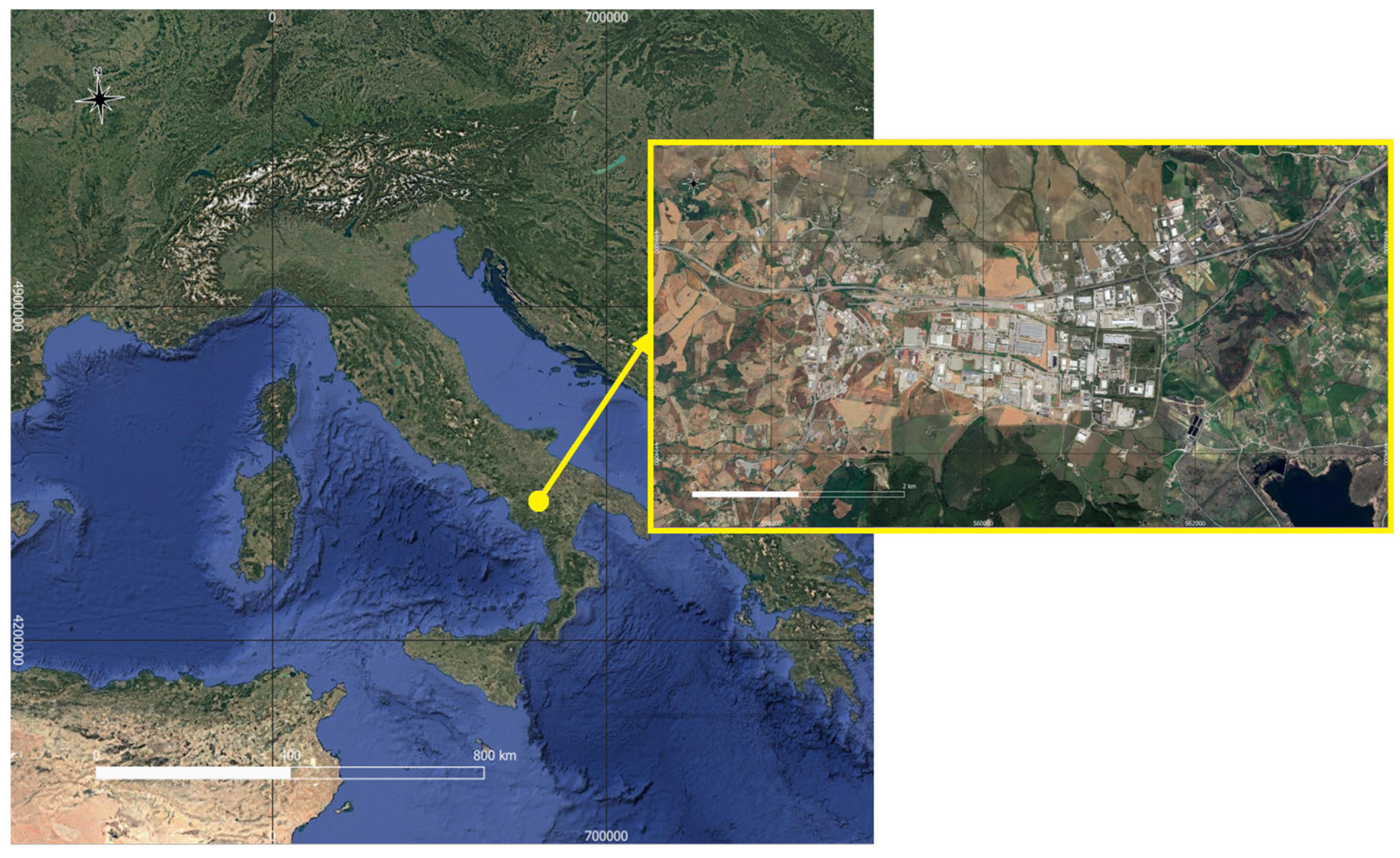
The industrial area of Tito Scalo is located in the northwestern part of the Basilicata region (Nomenclature of Territorial Units for Statistics (NUTS)—Level 2) in Southern Italy. Since the 1970s, this area has acted as the main hub for most of the industrial activities of the city of Potenza, i.e., the regional capital of Basilicata, located just a few kilometers away. Located at altitudes ranging from 650 m to 800 m a.s.l., the industrial area of Tito Scalo currently covers over 400 hectares, including about 170 enterprises. In addition to the dominant sealed areas (production plants, infrastructures, and residential and commercial areas), the industrial site encapsulated a composite landscape characterized also by bare soils, heterogeneous agricultural areas, and the last remnants of natural vegetation cores (Figure 1).
The area was declared a Site of National Interest (SIN) by the Ministerial Decree n.468 of 18 September 2001 and subsequently redefined by Decree No. 352 of 30 October 2023, issued by the Minister of the Environment and Energy Security, reducing its extent from an initial area of 315 hectares to the current 57 hectares. In light of this, the management of the industrial area is entrusted to national authorities [33]. The inclusion of the site within the list of the Contaminated Sites of National Interest is mostly due to the presence of groundwater containing chlorinated solvents, metals (mainly As, Fe, and Mn), and sulfates at concentrations exceeding the reference threshold (CSC—Contamination Threshold Concentrations) in a landscape where there are many abandoned industrial plants, silos, vats, depuration mud, and waste products [28,30]. At the time of the site’s delimitation (2002), the area was already almost entirely abandoned, with buildings and facilities partially demolished or in a state of neglect and scattered waste piles (https://bonifichesiticontaminati.mite.gov.it/sin-20/, last accessed on 15 January 2026). Many of the companies established since the 1970s were either producing substances that were already obsolete by the early 2000s (e.g., Liquichimica) or employing chemical processes potentially harmful to the environment (e.g., Daramic, now under bankruptcy proceedings, whose main activity consisted of the production of battery separators). Among the specific industrial processes suspected of having contributed to the contamination of the examined area, the “Liquichimica” industrial plant has played a prominent role [33]. This plant produced chemical phosphate fertilizers from 1969 to 1989. The core business of Liquichimica was the production of phosphoric acid using phosphorite as raw material. At the end of the industrial process, the so-called phosphogypsum was obtained. Phosphogypsum can be considered as the radioactive waste originating from this process. Phosphogypsum contains naturally occurring radionuclides, mainly belonging to the uranium-238 series. Among these, 226Ra was chosen as the primary indicator for assessing soil contamination, as it represents the most abundant and radiologically significant radionuclide in phosphogypsum residues and therefore could be considered as a parameter in environmental monitoring protocols [34]. Large quantities of the produced phosphogypsum were stored in a sort of “phosphogypsum landfill” located inside the industrial area covering approximately 3 hectares. Since 2005, the Consortium for Industrial Development of the Province of Potenza has been the public authority responsible for the site remediation, including the phosphogypsum landfill. In general, the entire industrial area has been subdivided into several lots. In the areas most affected by water and soil contamination, remediation activities are being carried out (https://www.isprambiente.gov.it/en/publications/reports/status-of-contaminated-sites-management-in-italy-regional-data, accessed on 27 January 2026), while some areas, less affected by pollution, have been allocated to different operators and are currently used for various purposes (tertiary, commercial, industrial).

3. Materials and Methods

3.1. Geological Setting of the Study Area

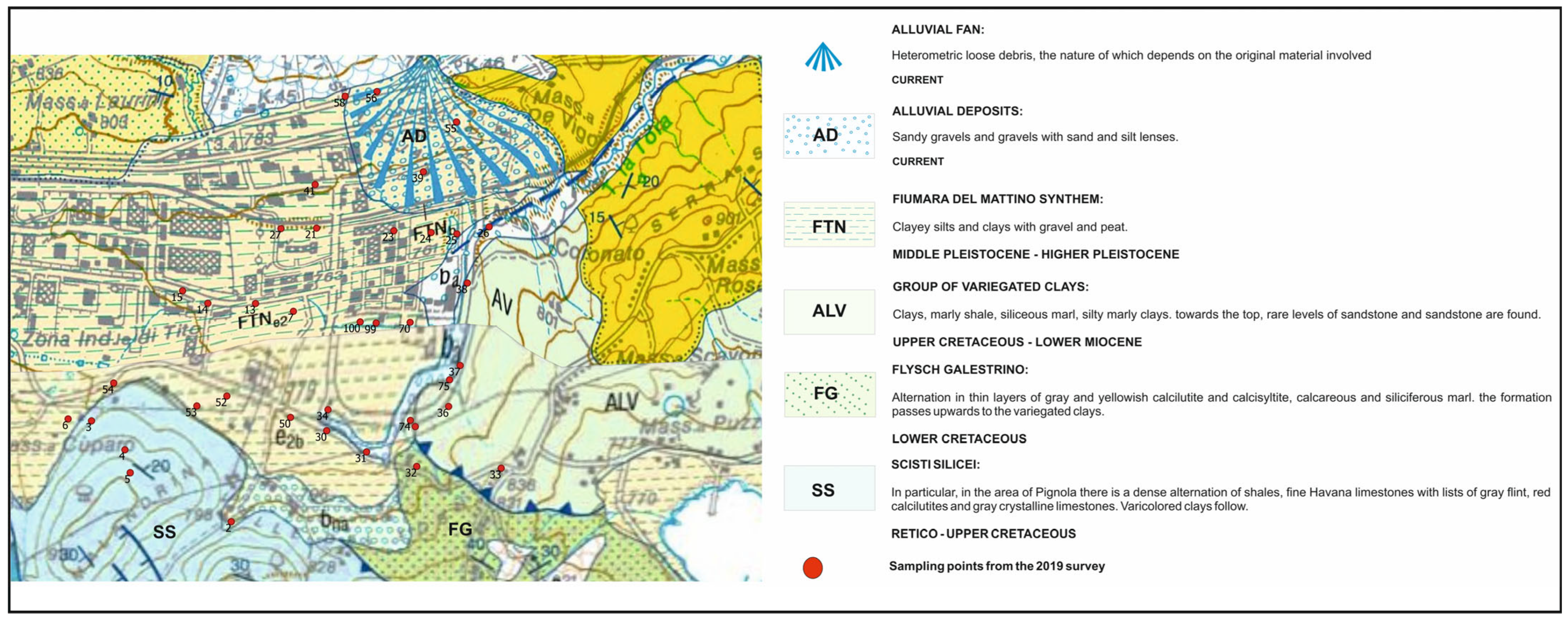
Figure 2 shows the main formations emerging in the study area. The studied area is confined on the North by the Li Foj mount, on the West by the Arioso mount and Pierfaone mount, on the South by the Passo della Sellata Relief, and on the North-West by the South-West border of Potenza Basin. The S. Loja basin deposit, placed on the axial zone of the Lucano Apennine, consists of soils derived from the paleogeographic Mesozoic of the Lagonegro basin [35]. In this zone outcropping the Lagonegro and Sannio Units representing the Trias—Miocene stratigraphic succession of the Lagonegro-Molise Basin. This sector represents a WE-trending morph-structural depression [36] filled by Pleistocene—Olocene lacustrine and fluvial deposits that consist of gravel, sand, and clay sediments, some tens of meters thick. These deposits are organized in lenses and channels with spatial variability. From the observation of some wells executed in the area and, in particular, from the well located in the center of the examined sector, the most superficial layer is made up of gravel material and sand, with a thickness of several meters. Downwards an alternation of terrains with different permeability consisting of silty clay with gravel and sand, clay silts and silty clay alternating with beds made of sandy gravel and gravelly sand. The bedrock consists of an alternation of over-consolidated clays and sandstones from centimetric to decimetre thick. It is found at a depth of about 30 m. This stratigraphic interval presumably corresponds to the medium-high lower Miocene stratigraphic interval of the succession of the Sannio Unit. The area of the industrial zone of Tito falls into the river basin of the Tora stream and develops on a flat surface in an east-west direction that falls into the upper part of the Basento river basin. The morphology is typical of the gentle hills that connect the valley floor with the surrounding mountain ranges, characterized by an increase of 20–30%.

3.2. Experimental Procedure

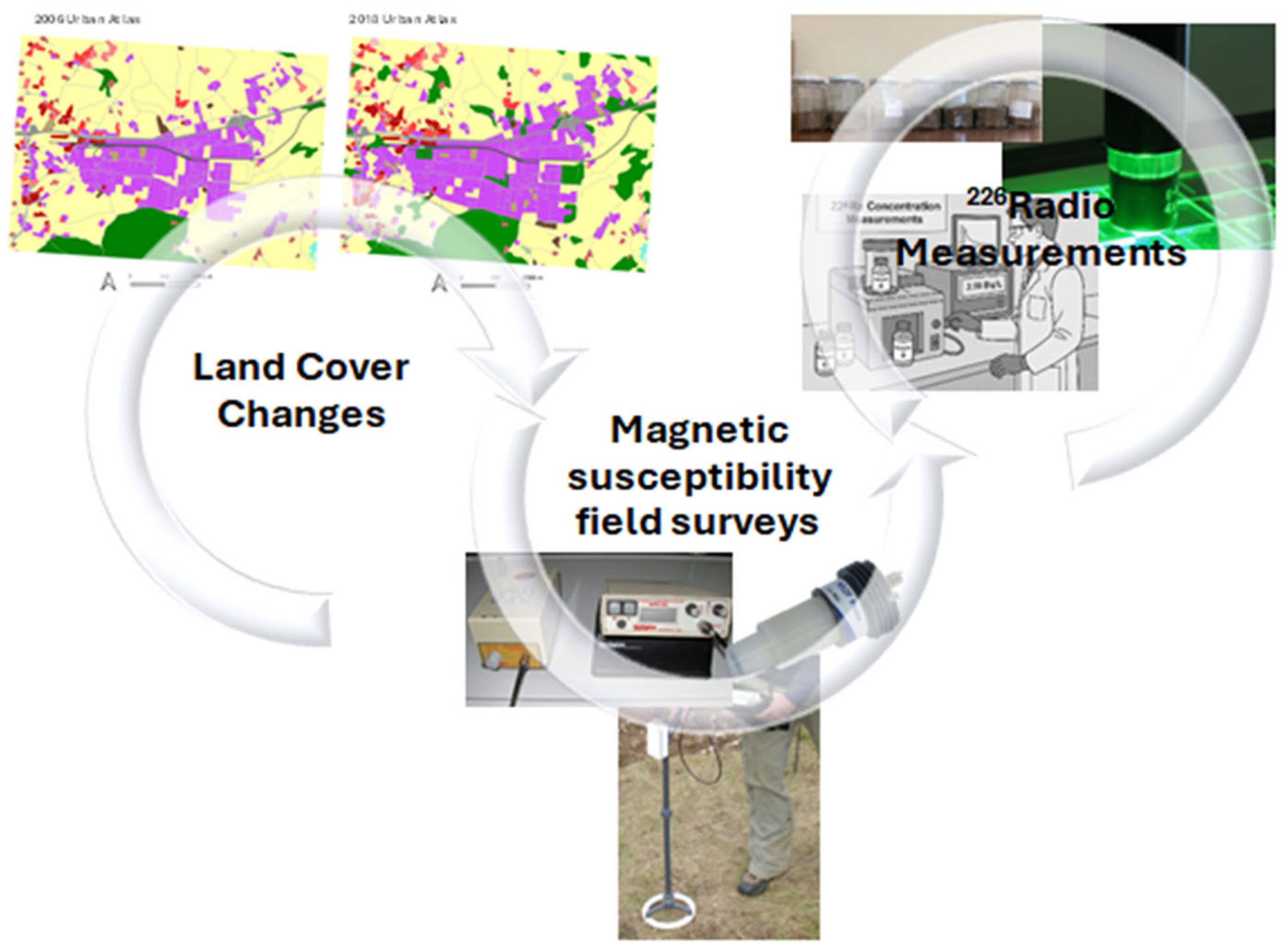
The study was conducted following a structured methodological framework, detailed in the subsequent sections:
The roadmap of the overall methodological workflow is provided in Figure 3.

3.2.1. Land Cover Change Analysis

Dataset
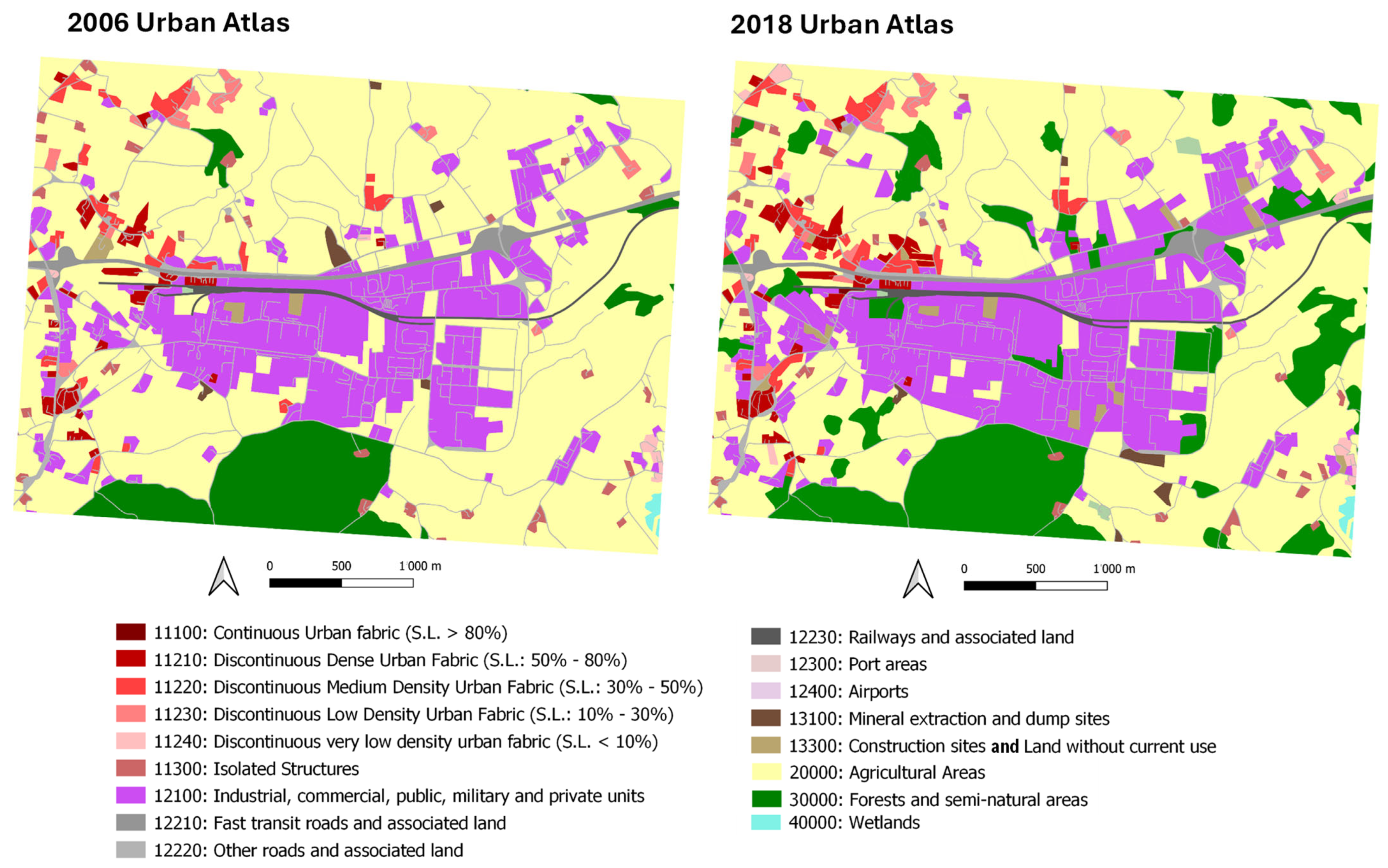
We analyzed land use/cover changes that occurred between 2006 and 2018 in the study area, highlighting its high dynamism and the significant transformations that took place within a short time frame. In this aim, we used data from the 2006 and 2018 Copernicus Urban Atlas (https://land.copernicus.eu/local/urban-atlas, accessed on 27 January 2026) which is considered a high-resolution land use/cover database (whose accuracy is consistently above 80%) including 17 urban land classes with an MMU (minimum mapping unit) of 0.25 ha and 10 rural land classes with a MMU of 1 ha, enabling reliable comparisons among functional urban areas (FUAs) (e.g., [37]). The different versions of the Urban Atlas have been widely adopted for a variety of studies encompassing GHG studies linked to land use intensity, ecological, urban, and socio-economic applications (for further details, see https://land.copernicus.eu/en/products/urban-atlas?tab=applications__use_cases, accessed on 27 January 2026). Specifically, these datasets have been used to characterize soil pollution phenomena [38,39], complementing in situ measurements. The function of the Urban Atlas is generally to classify/stratify areas (e.g., urban classes, industrial zones, roads, agricultural uses, forested areas) to establish a link between soil sampling points and land use categories, with the aim of better understanding the potential drivers (traffic, industrial activities, abandoned areas) of the observed contaminants. Regarding the land cover maps, the detailed spatial and thematic reference of the Copernicus Urban Atlas includes three maps for the selected area, referring to the years 2006, 2012, and 2018. We used the 2006 land cover map as a reference for the 2004 field campaign and the 2018 land cover map for the 2019 campaign (Figure 4 and Table 1). To demonstrate temporal lag insignificance, we conducted a visual assessment, with the help of a photo interpretation expert, using high-resolution orthophotos from the years 2006 and 2020 provided by the Basilicata Region geoportal (https://rsdi.regione.basilicata.it/sync/#, last accessed on 27 January 2026). This analysis indicates that there were no significant changes in land cover in the study area between the time windows 2004–2006 and 2018–2020 that could affect the classes analyzed or exceed the minimum mapping unit of the Urban Atlas. The small changes detected were below the Minimum Mapping Unit (0.25–1 ha) of the Urban Atlas and therefore did not affect the final detection, being mostly related to temporary construction sites.
Geospatial Analyses
Initially, the labeling of the two maps was harmonized: the 2006 map aggregated all agricultural and natural areas into only two classes, whereas the 2018 map distinguished agricultural and natural areas across multiple categories. Furthermore, construction sites were combined with transitional areas lacking defined land use. By adopting the 2006 nomenclature, this simplification enables a clearer focus on the primary changes occurring within urban land uses, while simultaneously highlighting both transitions from natural or agricultural areas to urban and industrial uses and changes from agricultural to natural covers. Once the two land cover datasets were harmonized in terms of labeling, land use/land cover changes were carried out in a GIS environment (QGIS version 3.40) using the MOLUSCE plugin (https://docs.nextgis.com/docs_ngqgis/source/molusce.html, accessed on 27 January 2026). The output includes the changes (positive or negative) for each land cover class and the transition matrix, which identifies the most significant flows from losing to gaining classes.

3.2.2. Definition of the Sampling Grid

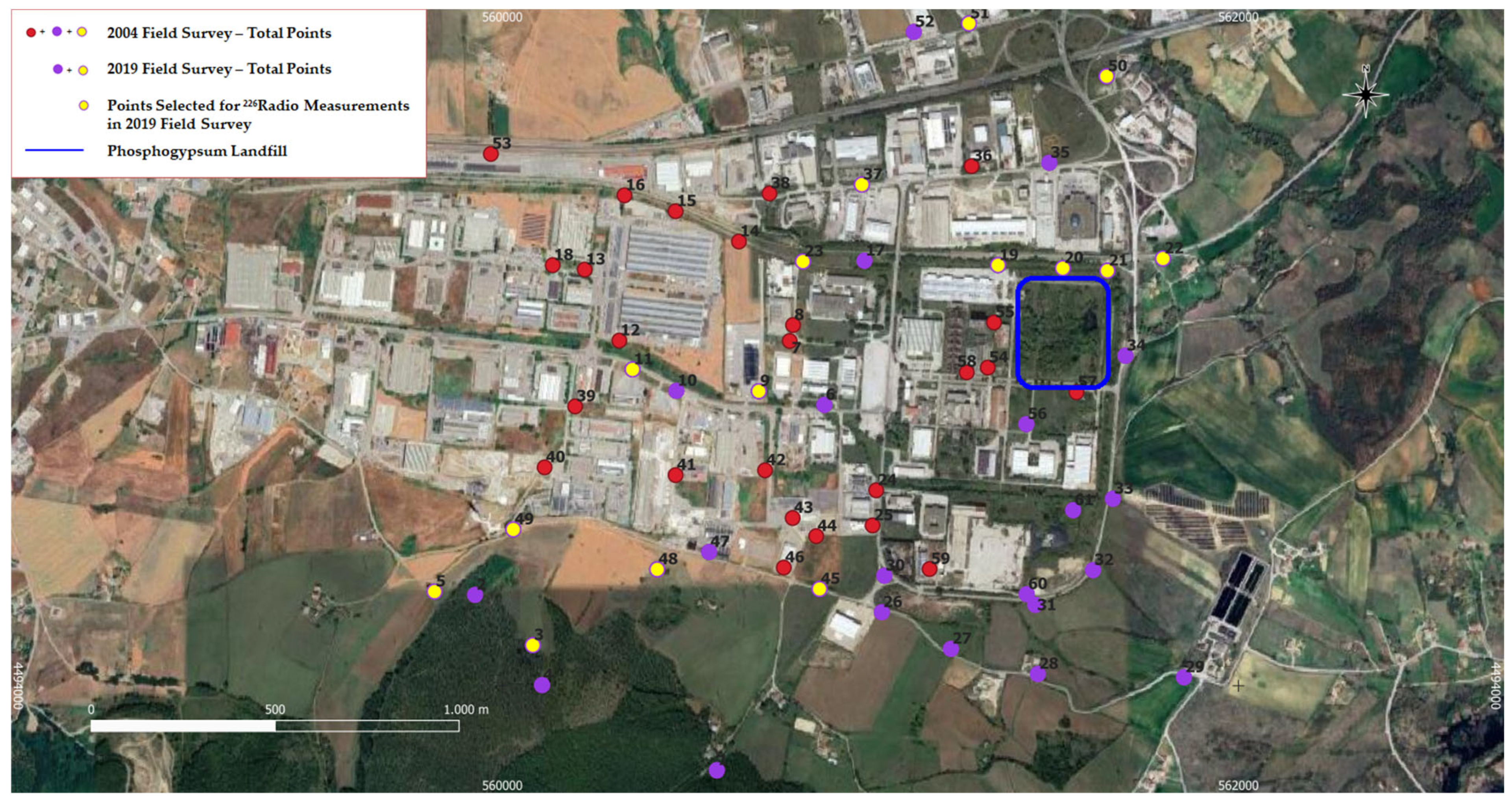
Starting from the 2000 orthophoto provided by Basilicata Region geoportal (https://rsdi.regione.basilicata.it/sync/, last accessed on 27 January 2026) and the geological map, an irregular georeferenced sampling grid was established. The spatial distribution of the 61 selected sampling locations was determined considering lithological features, proximity to major contamination sources, and representation of soils under distinct land-use classes (agricultural areas, sparsely vegetated zones, fallow lands, and forested sectors). All sampling points were precisely georeferenced, and the resulting grid layout is illustrated in Figure 5.

3.2.3. Magnetic Susceptibility Measurements

Magnetic susceptibility measurements (K) were performed using a Bartington MS2 m with two field survey probes, MS2D (penetration depth of about 10 cm) and MS2F (effective penetration depth of about 1 cm), and with MS2B laboratory dual frequency sensor (MS2B LF and MS2B HF). The probes measure volume magnetic susceptibility, expressed as a dimensionless value × 10−5 SI, and the accuracy of measurements is 5%. We used the protocol developed in [40].

3.2.4. 226Ra Concentration Measurements

The Canister (CAN) technique was used for the 226Ra measurement in a soil sample from Tito Scalo. This technique is based on the principle of secular equilibrium. In this case, the 222Rn concentration is estimated, which is in equilibrium with the 226Ra present in the sample, as both belong to the same radioactive decay chain of 238U. Consequently, the concentration of radium is indirectly deduced from 222Rn.
The CAN technique is representative of the actual 226Ra content in the sample because, acting in a closed system, it allows the accumulation of the generated 222Rn, preventing losses and environmental interferences, thus allowing the achievement of secular equilibrium.
The samples were dried in an oven at a temperature of 50 °C. Then they were ground and sieved with a 2 mm sieve. An about 150 g mass was inserted in a glass jar with a volume of 300 mL, closed with a stopper, and sealed with a polyethylene sheet for 8 days. In each jar, one SSNTD CR 39 type detector was attached below the stopper at a distance of 6 cm from the surface of the sample. After exposure, CR 39 detectors were chemically etched using a solution of 6.25 M NaOH at (98 ± 1) °C for 60 min. The automatic counting of track density was performed by the Politrack system (mi.am s.r.l., Rivergaro, PC, Italy). The radon concentration (in Bq/m3) was calculated as follows (1):
C R n = N E T
where N is the track density corrected by background track density, E is the calibration factor, and T is the exposure time. The background track density was estimated to be 10 tracks/cm2, and it was determined by counting the tracks of a significant number of unexposed CR-39 detectors.
The value of Effective Concentration (EC) of 226Ra (Bq/kg) was then obtained as follows (2):
E C ( R a ) = V a C ( R n ) m ( 1 e λ t )
where Va is the free volume of the jar, C(Rn) is the radon concentration (Bq/m3), m is the sample mass (in kg), and λ is the Rn decay constant.

3.2.5. Field Surveys

In October 2004, we carried out soil magnetic susceptibility measurements along this sampling grid, and at each sampling point, we collected soil samples for laboratory analysis of magnetic susceptibility. Using the same sampling grid as in 2004, a new field campaign was conducted in 2019 to measure soil magnetic susceptibility in situ and to collect soil samples. Due to substantial land cover changes within the study area in the period 2004–2019, measurements could be carried out at only 36 locations, as opposed to the 61 points surveyed in 2004. Many of the points that were previously sampleable, as they were located on bare soil, agricultural, or semi-natural areas, have been sealed due to the urban/industrial growth of the area. The 36 sampling points still represent the original environment variability because they cover all lithological features, proximity to major contamination sources, and representation of soils under distinct land-use classes. Among all the points sampled in 2019, 15 points were selected for the measurements of 226Ra concentrations. Since 226Ra measurements are very time-consuming, we selected points that represent the different geological characteristics while also taking into account the different types of land uses. Particularly, the spatial sampling frequency around the phosphogypsum basin is approximately 250 m (Figure 5).

4. Results and Discussion

4.1. Land Cover Change Analysis

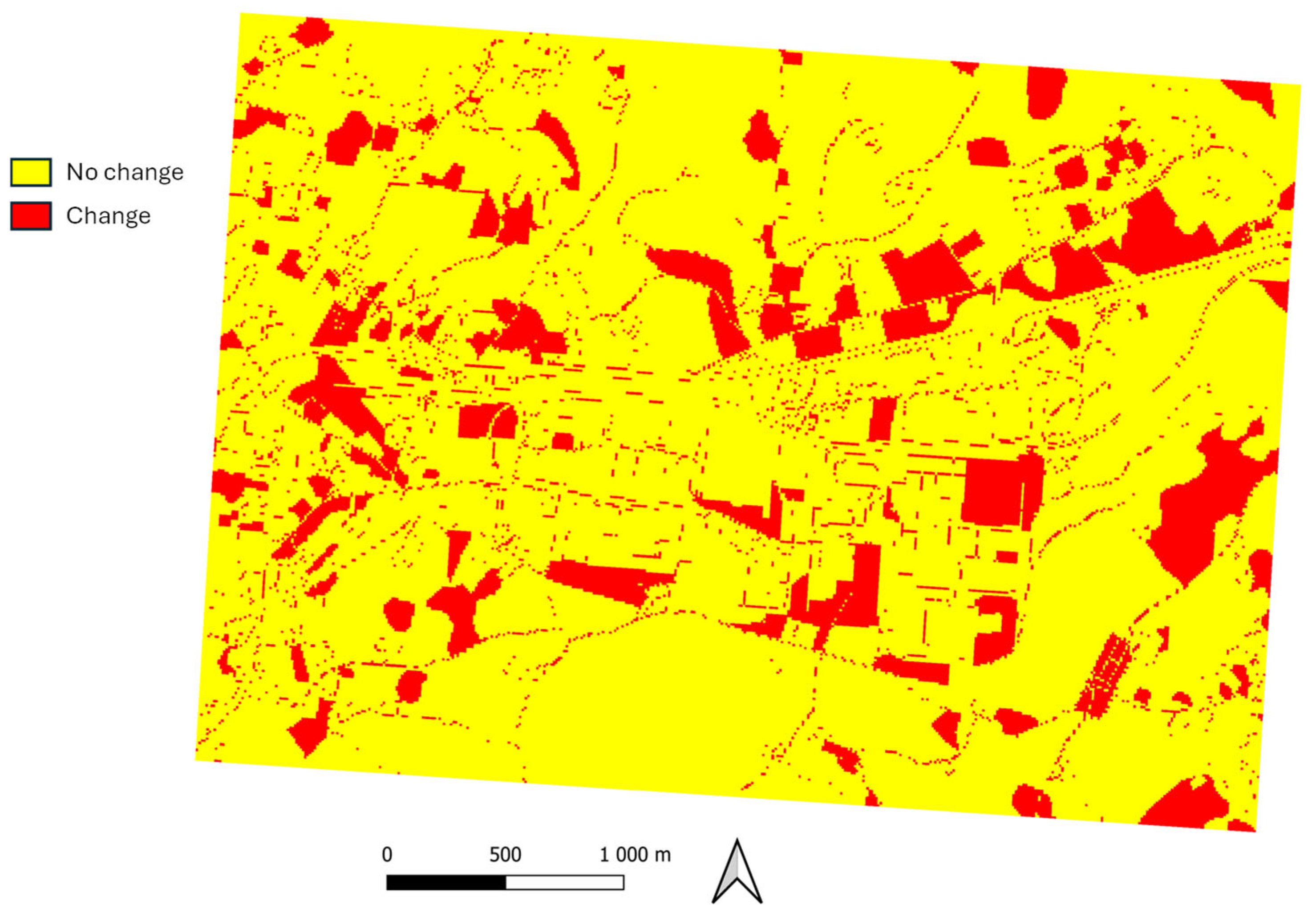
We studied land use/cover changes during the period 2006–2018 in the industrial area of Tito Scalo. The specific portion of the study site on which this analysis was carried out was defined based on the locations of the sampling points collected in 2004 and 2019, but its boundaries were slightly extended to provide a more comprehensive view of how the area’s morphology changed noticeably over a relatively short time window. The issue of error propagation was addressed through an expert-based validation procedure. All changes detected were visually inspected using a sequence of orthophotos made available by the Basilicata Region portal, covering a time series spanning from 1988 to 2023 (https://rsdi.regione.basilicata.it/viewGis/?project=C5E7A17D-92E8-4DAB-FF83-D79F568CFE6F, accessed on 27 January 2026). In this case, we used high-resolution orthophotos from 2006 and 2017, which coincide or are close in time to the reference years of the adopted Urban Atlas maps (2006 and 2018). Given the small spatial extent of the investigated area and the availability of local expertise, this approach allowed us to confirm the actual occurrence of the mapped changes and mitigate the impact of potential classification errors. Figure 6 shows the areas that undergo changes in land use/land cover during the examined time period.
Out of a total area of over 1420 hectares, as much as 174 hectares experienced land use/cover changes, representing 12.25% of the entire area, thus indicating that the site was highly dynamic during the period of interest (Table 2).
The main observed phenomena include increasing soil sealing and the abandonment of agricultural land (see Table S1 in the Supplementary Materials section, representing the Transition Matrix). These trends reflect the evolution of a territory progressively shaped by urban and industrial development, increasingly diverging from agricultural exploitation. This latter phenomenon is primarily due to several factors: the area’s designation as a contaminated site (SIN), the increasing concentration of industrial and commercial developments, and the site’s elevated hillside location, which makes it poorly suited for profitable crop cultivation. This dynamic reflects a more general trend observed in many Italian and European areas (see e.g., [41,42,43,44]). More specifically, the class that experienced the greatest increase in surface area in 2018 was 12,100 ‘Industrial, commercial, public, military, and private units’, with over 50 hectares of growth (representing an increase of more than 20% compared to 2006). This perfectly encapsulates the area’s increasingly marked vocation to host facilities and industries, particularly in the mechanical, metalworking, and transportation sectors [45] (see https://www.apibas.it/area-industriale-di-tito/, accessed on 27 January 2026). This process of industrial and commercial development inevitably entails the expansion of other sealed areas. For instance, all categories of urban fabric (ranging from class 11,000 to class 11,240) exhibited increases in surface area, with class 11,240 showing particularly pronounced growth in relative terms (exceeding 20%). This trend highlights a distinct pattern of low-density development that is advancing at a faster rate than other types of urban fabric. Further evidence of the area’s dynamic nature is provided by the overall expansion of road networks—particularly class 12,220—‘Other roads and associated land’, as well as the doubling of construction sites and areas still lacking a specific land use (class 13,350 ‘Construction sites and areas without land use’). Finally, the anticipated consequence of this urban-industrial expansion is a significant loss of agricultural land (over 170 hectares). Conversely, this process is also fostering an initial spontaneous recolonization by herbaceous species, resulting in an increase of more than 90 hectares in class 31,000—Natural areas. The ecological implications are certainly, on the one hand, the fragmentation of the landscape due to the growing number of patches of sealed soil or the expansion of previously sealed nuclei. This leads to the interruption of ecological corridors for species that inhabit the investigated area [46]. Although heavily anthropized, the study area is adjacent to areas of particular interest in terms of flora and fauna, such as the Pignola Lake Regional Reserve and the Monte Li Foi Special Conservation Area (belonging to the Natura 2000 network, see [47]). Furthermore, this implies the increasing presence of interlocked soils with limited ecological functions, which in the future could easily become the “prey” for the expansion of urban/industrial land uses [48]. At the same time, the progressive abandonment of agricultural activities with partial recolonization by spontaneous species is leading to a simplification of the landscape, in which the fundamental elements of the agricultural landscape, such as crop differentiation, crop rotation, ditches, hedges, etc., are disappearing [49]. They are replaced by areas with a more homogeneous cover (e.g., herbaceous cover), so essentially there is a reduction in spatial heterogeneity linked to the fact that specialized agricultural patches are replaced by less differentiated land cover classes. However, this confirms the process of functional marginalization of peri-urban agriculture [50].

4.2. Magnetic Susceptibility Surveys and 226Ra Concentration Measurements

Along with the defined sampling grid (Section 3.2.2), we measured soil magnetic susceptibility in situ by means of MS2D and MS2F sensors and collected soil samples for measuring magnetic susceptibility by means of the MS2B sensor. Table 3 and Table 4 report the statistical analysis of soil magnetic susceptibility data collected during the 2004 and 2019 field surveys by means of in situ and laboratory-based sensors. As described in Section 3.2.5, the number of sampling points in the 2019 field survey is lower than in 2004. This reduction is due to the significant land cover changes that occurred in the study area, as outlined in the previous paragraph, which rendered many of the original grid points inaccessible (many areas that were formerly rural have since been sealed). Table 3 shows that the magnetic susceptibility (K) mean value ranges for the 2004 field survey from 77 × 10−5 SI measured by means of MS2F to 142 × 10−5 SI measured by means of MS2B LF. Minimum value is measured by the MS2F sensor, and it is 9 × 10⁻⁵ SI, while the maximum value is 661 × 10−5 SI measured by the MS2B LF sensor (Bartington Instruments, UK).
Table 4 shows that the magnetic susceptibility (K) mean value ranges for the 2019 field survey, from 61 × 10−5 SI measured by means of MS2D to 107 × 10−5 SI measured by means of MS2B HF. Minimum value is measured by MS2D sensor, and it is 7 × 10⁻⁵ SI, while the maximum value is 538 × 10−5 SI measured by MS2F sensor (Bartington Instruments, UK).
For both field surveys and for all the sensors used, we note that the percentage variation coefficient is high (around 100%), indicating that the points of the sampling grid fall in areas characterized by different geological features and highly variable anthropogenic impacts. Table 5 shows the exploratory statistical analysis of 226Ra. Given the required time intensity for 226Ra measurements, the number of sampling points was limited to 15. The selection of these points was based on the geological variability of the area, with a higher density of measurements near the phosphogypsum ponds, an area considered at risk for radioactive contamination.
Table 5 shows that the percentage variation coefficient (76%) is lower than the magnetic susceptibility percentage variation coefficient, indicating low variability in 226Ra measurements. Moreover, measured values are comparable with those found in other industrial areas [51,52].
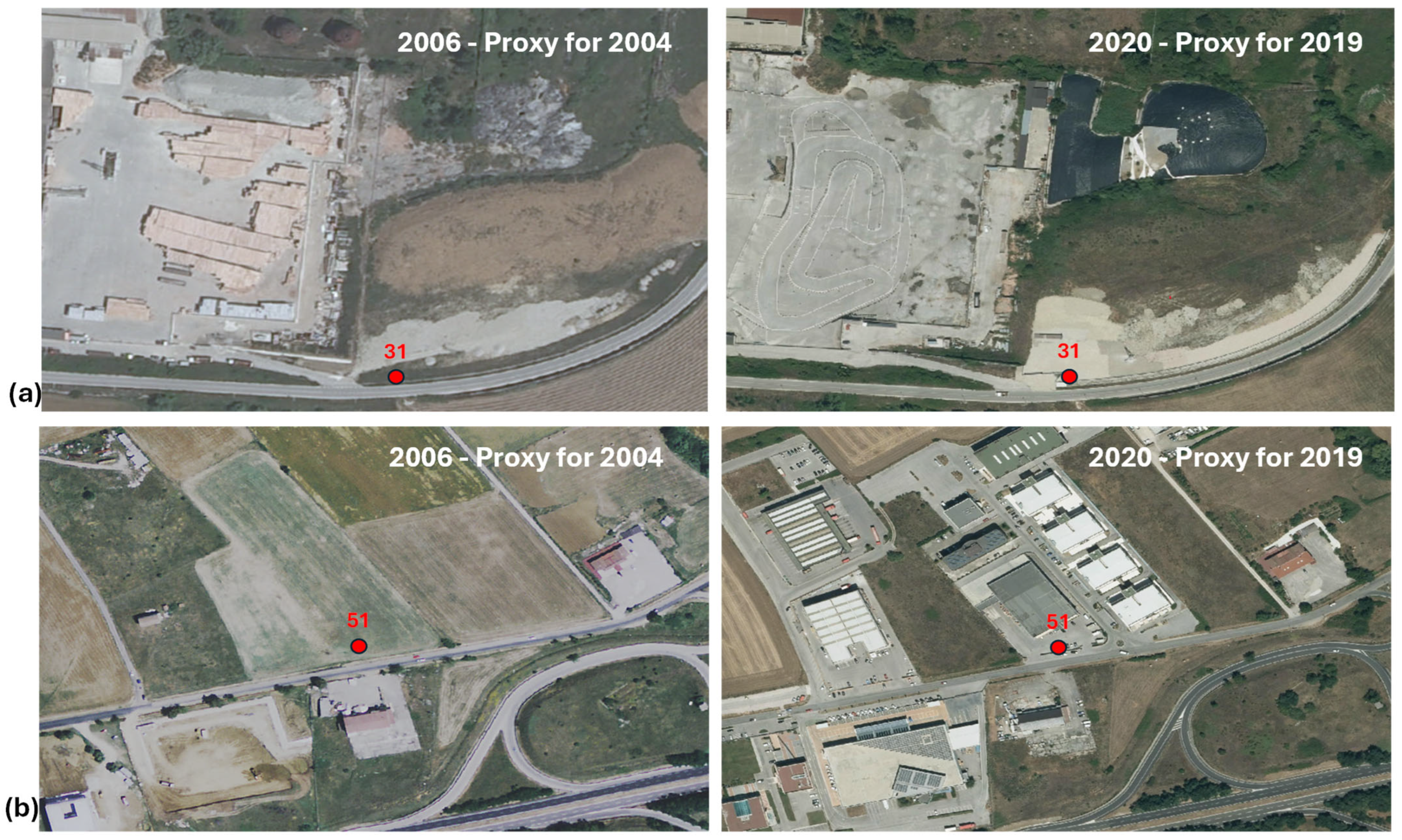
The 2004 field survey involved in situ measurements of soil magnetic susceptibility and the collection of soil samples at each sampling point for subsequent magnetic susceptibility measurements with the laboratory double-frequency sensor. During 2019, the field survey was repeated using in situ magnetic susceptibility sensors, and soil samples were collected for further analyses with the laboratory magnetic susceptibility sensor and for 226Ra measurements. It is important to emphasize that in the 2019 field survey, the number of sampling points is lower than in 2004 (36/61) because many of the points defined in the first survey were found to be unreachable or occupied by new infrastructures (Figure 7). However, we measured the concentration of 226Ra in a limited number of sampling points (15/36), including all the soil samples collected in an area at risk of radioactive contamination (Phosphogypsum Landfill, see Figure 5).
To compare the two field surveys, 2004 and 2019, for all susceptibility sensors (MS2B HF, MS2B LF, MS2D, and MS2F), we applied a two-tailed t-test taking into account, point by point, the samples collected both in 2004 and in 2019. We tested, for all the sensors, the null hypothesis H0:m2004(K) = m2019(K) with α = 5% with the alternative hypothesis H1:m2004(K) ≠ m2019(K). We observe that for magnetic susceptibility mean values measured with MS2B HF, MS2D, and MS2F sensors, the null hypothesis is satisfied, while with the MS2B LF sensor, we measure different mean values (the null hypothesis was rejected). This result is particularly interesting because magnetic susceptibility, measured by means of a laboratory sensor working at low frequency, is the most sensitive proxy indicator of the presence of heavy metals in soils [28]. The decrease of this parameter (m2004[K(MSBLF)] = 142 ± 146 and m2019[K(MSBLF)] = 88 ± 91) indicates that, despite the significant land cover changes indicating an urban expansion described in Section 4.1, the adoption of best emission reduction technologies used in the industrial sector and recovery strategies, which are still being implemented today in the analyzed area, have proven effective in improving environmental quality (see http://www.pongovernance1420.gov.it/wp-content/documenti/Report/Report%20di%20verifica%20e%20Scheda%20di%20rilevazione%20BAS_SIN%20Tito.pdf, accessed on 27 January 2026).
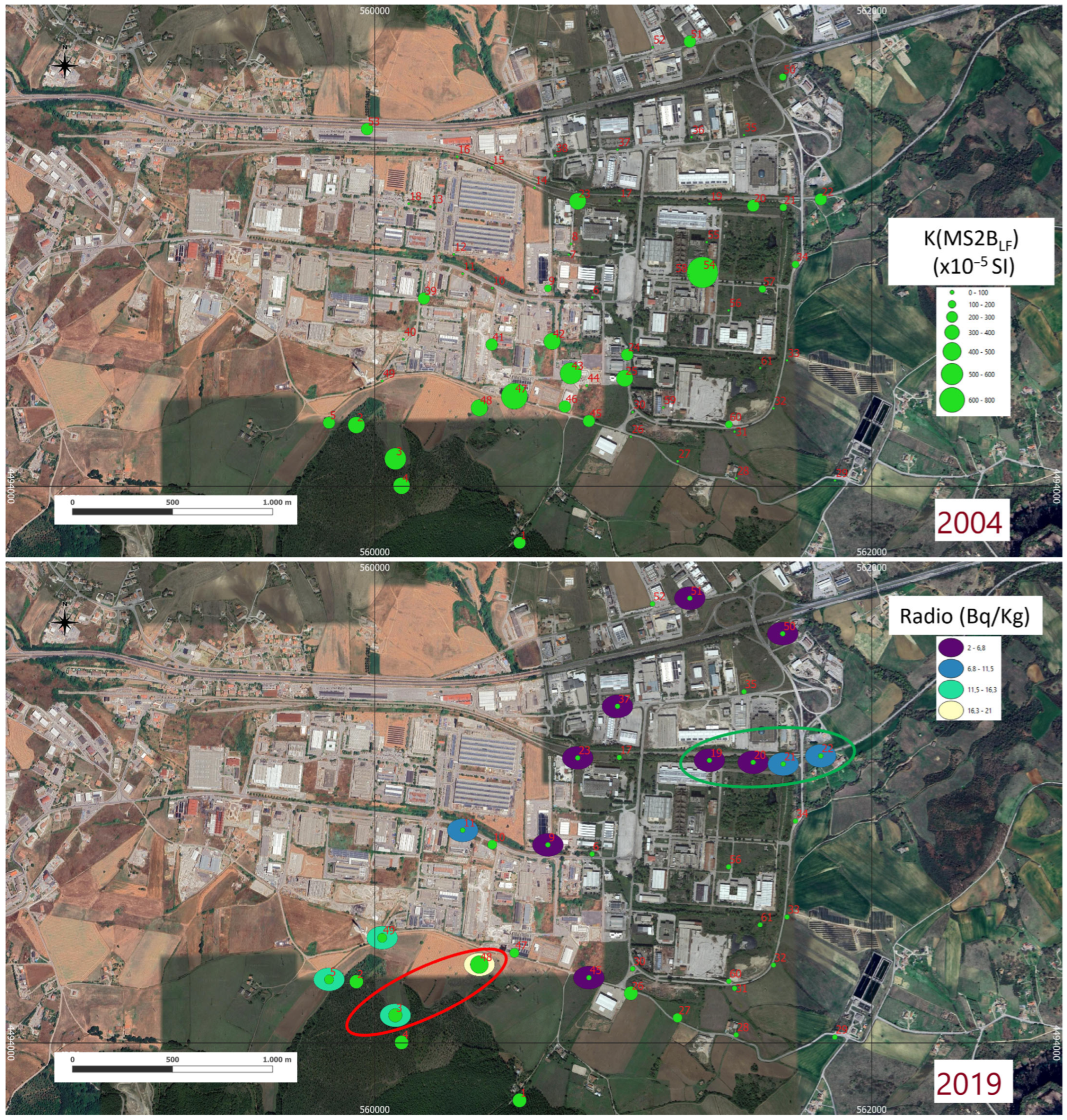
226Ra concentration measurements were carried out only during the 2019 field survey. The lowest values of 226Ra concentration are measured in the phosphogypsum area (see Figure 5 and the points highlighted in green in the 2019 map of Figure 8). These recorded values are consistent with those reported in an official study conducted by Basilicata Region entitled “Plan for the Radiological Characterization of the Phosphogypsum Landfill” to monitor the presence of Naturally Occurring Radioactive Materials (NORM) resulting from past industrial fertilizer production activities (https://www.regione.basilicata.it/?temi-ate=bonifiche/s-i-n-tito-e-val-basento-2, accessed on 27 January 2026). The highest 226Ra values are recorded in the area highlighted in red, which is far from faults or fractures and has geological characteristics that are not able to justify these values. In this area, both measurement campaigns recorded high values of magnetic susceptibility with all sensors. Figure 8 shows the values of K (MS2BLF). The values measured by means of other sensors are available in Supplementary Materials. This area is far from emission sources such as industrial sites and traffic emissions, and it is devoted to agricultural uses. Moreover, the geological characteristics of this area are not compatible with the measured high values of magnetic susceptibility due to its natural origin. As a consequence, the simultaneous presence of high values of magnetic susceptibility of soil and high concentrations of 226Ra suggests potential anthropogenic soil contamination. Since the area in question is associated with forest or extensive agricultural use, it is possible that there were other exogenous sources of disturbance, potentially related to illegal dumping or unauthorized landfills containing ferrous materials. The presence of unauthorized landfills is inferred from the collective memory of people who previously lived in those areas. To strengthen this hypothesis, future studies should include direct measurements of heavy metal concentrations using chemical analytical techniques, thereby providing quantitative data rather than relying on proxy indicators. We highlight that the 226Ra measurements have supported the interpretation of magnetic susceptibility data to assert that the area highlighted in red has been subjected to past anthropogenic pressure, not detected by our land use study, which has led to an increase in both susceptibility and radio concentrations.

5. Conclusions

In an area of Southern Italy affected by significant industrial pollution, we developed a procedure based on an original framework integrating complementary standard procedures to monitor soil degradation over time. Two field surveys of soil magnetic susceptibility carried out in 2004 and 2019 were used to assess temporal changes, while measurements of 226Ra concentrations collected during the second campaign support data interpretation. A careful study of land cover changes allowed us to understand land system transformations: sharp expansion of industrial areas, land abandonment, and natural recolonization of former agricultural plots.
Despite the increase in industrial activities and the expansion of sealed areas, which could indicate unsustainable land use practices, the magnetic susceptibility values observed in the second survey were lower than those from the first. This result suggests an overall improvement in soil quality, likely related to territorial policies such as the temporary suspension of high-impact industrial activities and the implementation of remediation measures. The 226Ra data allowed the identification of localized anthropogenic contributions, refining the interpretation of magnetic anomalies. The combined application of these methods has contributed to defining a framework integrating in situ magnetic susceptibility measurements, radon measurements, and the quantification of land use/cover changes. This approach can be suitable for monitoring areas under high anthropogenic pressure and evaluating the effectiveness of implemented recovery strategies, thereby supporting further mitigation/remediation efforts or the functional redevelopment of remediated areas. This procedure, not being tied to the specific geological, biogeographical, and socio-economic characteristics of the area under examination, can be applied to assess the evolution of soil characteristics over large areas characterized by industrial or urban expansion.

Supplementary Materials

The following supporting information can be downloaded at: https://www.mdpi.com/article/10.3390/su18041789/s1, Table S1: Transition Matrix; Figure S1: Magnetic Susceptibility Values (K) measured in 2004 and 2019 by means of all sensors overlapped on the study area.

Author Contributions

Conceptualization, M.D., V.I., F.L., M.Q. and M.R.; Data curation, M.D., R.C., V.I., F.L., A.L. and M.R.; Formal analysis, M.D., V.I. and M.R.; Investigation, M.D., A.F., V.I., F.L., M.Q. and M.R.; Methodology, R.C., V.I., M.Q. and M.R.; Software, R.C. and V.I.; Writing—original draft, M.D., R.C., V.I., F.L., M.Q. and M.R.; Writing—review and editing, M.D., R.C., V.I., M.Q. and M.R. All authors have read and agreed to the published version of the manuscript.

Funding

This research received no external funding.

Institutional Review Board Statement

Not applicable.

Informed Consent Statement

Not applicable.

Data Availability Statement

The original contributions presented in this study are included in the article/Supplementary Materials. Further inquiries can be directed to the corresponding author.

Conflicts of Interest

The authors declare no conflicts of interest.

References

  1. Romero-Freire, A.; Sierra-Aragón, M.; Qiu, H.; He, E. Editorial for the Special Issue “Phytotoxicity of Heavy Metals in Contaminated Soils”. Toxics 2023, 11, 536. [Google Scholar] [CrossRef]
  2. Ganga, A.; Roder, L.R.; Paganini, E.A.; Jani, A.D.; Abreu-Junior, C.H.; Nogueira, T.A.R.; Capra, G.F. Filming a Hidden Resource: The Soil in the Seventh Art Narrative. Geoderma 2023, 440, 116710. [Google Scholar] [CrossRef]
  3. Greiner, L.; Keller, A.; Grêt-Regamey, A.; Papritz, A. Soil Function Assessment: Review of Methods for Quantifying the Contributions of Soils to Ecosystem Services. Land Use Policy 2017, 69, 224–237. [Google Scholar] [CrossRef]
  4. Ibáñez, J.-J.; Sánchez-Díaz, J.; Rodríguez-Rodríguez, A.; Effland, W.R. Preservation of European Soils: Natural and Cultural Heritage. Adv. Geoecol. 2008, 39, 37–59. [Google Scholar]
  5. Lal, R. Restoring Soil Quality to Mitigate Soil Degradation. Sustainability 2015, 7, 5875–5895. [Google Scholar] [CrossRef]
  6. Cicco, N.; Candido, V.; Coluzzi, R.; Imbrenda, V.; Lanfredi, M.; Larocca, M.; Lorusso, A.; Benelli, C.; Sofo, A. Revitalizing Marginal Areas of Basilicata (Southern Italy) with Saffron: A Strategy Approach Mixing Alternative Cultivation System and Land Suitability Analysis. Land 2025, 14, 902. [Google Scholar] [CrossRef]
  7. Karlen, D.L.; Cambardella, C.A. Conservation Strategies for Improving Soil Quality and Organic Matter Storage. In Structure and Organic Matter Storage in Agricultural Soils; CRC Press: Boca Raton, FL, USA, 1995. [Google Scholar]
  8. Tscharntke, T.; Clough, Y.; Wanger, T.C.; Jackson, L.; Motzke, I.; Perfecto, I.; Vandermeer, J.; Whitbread, A. Global Food Security, Biodiversity Conservation and the Future of Agricultural Intensification. Biol. Conserv. 2012, 151, 53–59. [Google Scholar] [CrossRef]
  9. Kopittke, P.M.; Menzies, N.W.; Wang, P.; McKenna, B.A.; Lombi, E. Soil and the Intensification of Agriculture for Global Food Security. Environ. Int. 2019, 132, 105078. [Google Scholar] [CrossRef]
  10. Horvat, C.; Blanchard-Wrigglesworth, E.; Petty, A. Observing Waves in Sea Ice with ICESat-2. Geophys. Res. Lett. 2020, 47, e2020GL087629. [Google Scholar] [CrossRef]
  11. Squire, G.R.; Hawes, C.; Valentine, T.A.; Young, M.W. Degradation Rate of Soil Function Varies with Trajectory of Agricultural Intensification. Agric. Ecosyst. Environ. 2015, 202, 160–167. [Google Scholar] [CrossRef]
  12. Bedolla-Rivera, H.I.; Negrete-Rodríguez, M.d.l.L.X.; Gámez-Vázquez, F.P.; Álvarez-Bernal, D.; Conde-Barajas, E. Analyzing the Impact of Intensive Agriculture on Soil Quality: A Systematic Review and Global Meta-Analysis of Quality Indexes. Agronomy 2023, 13, 2166. [Google Scholar] [CrossRef]
  13. Dupas, R.; Delmas, M.; Dorioz, J.-M.; Garnier, J.; Moatar, F.; Gascuel-Odoux, C. Assessing the Impact of Agricultural Pressures on N and P Loads and Eutrophication Risk. Ecol. Indic. 2015, 48, 396–407. [Google Scholar] [CrossRef]
  14. Filonchyk, M.; Peterson, M.P.; Zhang, L.; Hurynovich, V.; He, Y. Greenhouse Gases Emissions and Global Climate Change: Examining the Influence of CO2, CH4, and N2O. Sci. Total Environ. 2024, 935, 173359. [Google Scholar] [CrossRef]
  15. Keck, F.; Peller, T.; Alther, R.; Barouillet, C.; Blackman, R.; Capo, E.; Chonova, T.; Couton, M.; Fehlinger, L.; Kirschner, D.; et al. The Global Human Impact on Biodiversity. Nature 2025, 641, 395–400. [Google Scholar] [CrossRef]
  16. Kotschik, P.; Princz, J.; Silva, C.d.L.E.; Renaud, M.; Marti-Roura, M.; Brooks, B.; Pieper, S.; Rijk, I.; Simini, M.; Andres, S.; et al. The Upcoming European Soil Monitoring Law: An Effective Instrument for the Protection of Terrestrial Ecosystems? Integr. Environ. Assess. Manag. 2024, 20, 316–321. [Google Scholar] [CrossRef]
  17. Burghardt, W. 25 Years of SUITMAs: Urban Soils—A New Research Field in Soil Science. What Makes These Soils and the Interest in These Soils so Special? J. Soils Sediments 2025, 25, 374–389. [Google Scholar] [CrossRef]
  18. Shang, E.; Ma, Y.; Yao, W.; Zhang, S. Trends in Heavy Metal Pollution in Agricultural Land Soils of Tropical Islands in China (2000–2024): A Case Study on Hainan Island. Toxics 2024, 12, 934. [Google Scholar] [CrossRef]
  19. Tagkas, C.F.; Rizos, E.C.; Markozannes, G.; Karalexi, M.A.; Wairegi, L.; Ntzani, E.E. Fertilizers and Human Health—A Systematic Review of the Epidemiological Evidence. Toxics 2024, 12, 694. [Google Scholar] [CrossRef]
  20. Panagos, P.; Jones, A.; Lugato, E.; Ballabio, C. A Soil Monitoring Law for Europe. Glob. Chall. 2025, 9, 2400336. [Google Scholar] [CrossRef]
  21. Agbeshie, A.A.; Awuah, R.; Amoako, V.; Akurugu, R.A.; Ofori-Adjei, N.B.; Abugre, S.; Sarfo, D.A. Soil Quality Response to Land Use Change in a Tropical Semi-Deciduous Forest Zone of Ghana. Sustain. Environ. 2025, 11, 2464389. [Google Scholar] [CrossRef]
  22. El-Sharkawy, G.; Alotaibi, M.O.; Zuhair, R.; Mahmoud, E.; El Baroudy, A.; Omara, A.E.-D.; El-Sharkawy, M. Ecological Assessment of Polluted Soils: Linking Ecological Risks, Soil Quality, and Biota Diversity in Contaminated Soils. Sustainability 2025, 17, 1524. [Google Scholar] [CrossRef]
  23. Hanif, S.; Ali, S.; Chaudhry, A.H.; Sial, N.; Marium, A.; Mehmood, T. A Review on Soil Metal Contamination and Its Environmental Implications. Nat. Environ. Pollut. Technol. 2025, 24, D1684. [Google Scholar] [CrossRef]
  24. Zhao, X.; Zhang, J.; Ma, R.; Luo, H.; Wan, T.; Yu, D.; Hong, Y. Worldwide Examination of Magnetic Responses to Heavy Metal Pollution in Agricultural Soils. Agriculture 2024, 14, 702. [Google Scholar] [CrossRef]
  25. Gavrilidis, A.; Gradinaru, S.; Ioja, C.; Carstea, E.; Stupariu, I. Land Use and Land Cover Dynamics in the Periurban Area of an Industrialized East-European City an Overview of the Last 100 Years. Carpathian J. Earth Environ. Sci. 2015, 10, 29–38. [Google Scholar]
  26. Morales, J.; Hernández-Bernal, M.d.S.; Corona-Chávez, P.; Gogichaishvili, A.; Bautista, F. Further Evidence for Magnetic Susceptibility as a Proxy for the Evaluation of Heavy Metals in Mining Wastes: Case Study of Tlalpujahua and El Oro Mining Districts. Environ. Earth Sci. 2016, 75, 309. [Google Scholar] [CrossRef]
  27. Ghobadi, F.; Khoramnejadian, S.; Alipour, S. Correlation of Soil Magnetic Susceptibility with Heavy Metals and Physico-Chemical Profile. J. Environ. Eng. Sci. 2024, 19, 255–261. [Google Scholar] [CrossRef]
  28. Kiruba, T.; Lakshmi Narasimhan, C.; Jayaprakash, P.; Juliet Josephine Joy, J.; Vidyasakar, A.; Ravisankar, R. Investigation of the Relation between Heavy Metal and Magnetic Susceptibility of Sediment from Kerala Coast for Contamination Study with Statistical Approach. Int. J. Environ. Anal. Chem. 2025, 105, 8056–8074. [Google Scholar] [CrossRef]
  29. D’Emilio, M.; Coluzzi, R.; Macchiato, M.; Imbrenda, V.; Ragosta, M.; Sabia, S.; Simoniello, T. Satellite Data and Soil Magnetic Susceptibility Measurements for Heavy Metals Monitoring: Findings from Agri Valley (Southern Italy). Environ. Earth Sci. 2018, 77, 63. [Google Scholar] [CrossRef]
  30. Schmidt, A.; Yarnold, R.; Hill, M.; Ashmore, M. Magnetic Susceptibility as Proxy for Heavy Metal Pollution: A Site Study. J. Geochem. Explor. 2005, 85, 109–117. [Google Scholar] [CrossRef]
  31. International Atomic Energy Agency—IAEA. Management of naturally occurring radioactive material (norm) in industry. In Proceedings of the International Conference Vienna; IAEA: Wien, Austria, 2020; p. 92. [Google Scholar]
  32. Chandra, K.; Proshad, R.; Dey, H.C.; Idris, A.M. A Review on Radionuclide Pollution in Global Soils with Environmental and Health Hazards Evaluation. Environ. Geochem. Health 2023, 45, 9245–9266. [Google Scholar] [CrossRef]
  33. ISPRA S.I.N. Siti di Interesse Nazionale—Stato Delle Procedure per la Bonifica (Sites of National Interest—State of the Remediation Procedures); ISPRA: Roma, Italy, 2018.
  34. Korany, A.; Masoud, A.M.; Rushdy, O.E.; Alrowaili, Z.A.; Hassanein, F.H.; Taha, M.H. Phosphate, Phosphoric Acid and Phosphogypsum Natural Radioactivity and Radiological Hazards Parameters. J. Radioanal. Nucl. Chem. 2021, 329, 391–399. [Google Scholar] [CrossRef]
  35. Cavallaro, A.; Grasso, S.; Maugeri, M. Site Response Analysis for Tito Scalo Area (PZ) in the Basilicata Region, Italy. In Geotechnical Earthquake Engineering and Soil Dynamics IV; ASCE: Reston, VA, USA, 2012; pp. 1–11. [Google Scholar] [CrossRef]
  36. Schiattarella, M. Tettonica Della Catena Del Pollino (Confine Calabro-Lucano). Mem. Soc. Geol. Ital. 1996, 51, 543–566. [Google Scholar]
  37. Oliveira, A.; Lopes, A.; Niza, S. Local Climate Zones in Five Southern European Cities: An Improved GIS-Based Classification Method Based on Copernicus Data. Urban Clim. 2020, 33, 100631. [Google Scholar] [CrossRef]
  38. Todorova, E.R.; Zhiyanski, M.K. Study on Soil Quality in Different Functional Zones of Sofia Region. One Ecosyst. 2023, 8, e101381. [Google Scholar] [CrossRef]
  39. Chandramohan, M.S.; Martinho da Silva, I.; Ribeiro, R.P.; Jorge, A.; Esteves da Silva, J. Screening Urban Soil Contamination in Rome: Insights from XRF and Multivariate Analysis. Environments 2025, 12, 126. [Google Scholar] [CrossRef]
  40. D’Emilio, M.; Caggiano, R.; Coppola, R.; Macchiato, M.; Ragosta, M. Magnetic Susceptibility Measurements as Proxy Method to Monitor Soil Pollution: The Case Study of S. Nicola Di Melfi. Environ. Monit. Assess. 2010, 169, 619–630. [Google Scholar] [CrossRef]
  41. Imbrenda, V.; Munoz-Gomez, C.; D’Emilio, M.; Samela, C.; Salvati, L.; Matarazzo, N.; Lanfredi, M.; Coluzzi, R. Remote Sensing and Spatial Databases for Investigating Latent Urban-Rural Dynamics in Rural, Inland Districts of Southern Italy. Cuad. Investig. Geogr. 2023, 49, 143–162. [Google Scholar] [CrossRef]
  42. Ragosta, M.; Daniele, G.; Imbrenda, V.; Coluzzi, R.; D’Emilio, M.; Lanfredi, M.; Matarazzo, N. Land Transformations in Irpinia (Southern Italy): A Tale on the Socio-Economic Dynamics Acting in a Marginal Area of the Mediterranean Europe. Sustainability 2024, 16, 8724. [Google Scholar] [CrossRef]
  43. Zambon, I.; Benedetti, A.; Ferrara, C.; Salvati, L. Soil Matters? A Multivariate Analysis of Socioeconomic Constraints to Urban Expansion in Mediterranean Europe. Ecol. Econ. 2018, 146, 173–183. [Google Scholar] [CrossRef]
  44. González Díaz, J.A.; Celaya, R.; Fernández García, F.; Osoro, K.; Rosa García, R. Dynamics of Rural Landscapes in Marginal Areas of Northern Spain: Past, Present, and Future. Land Degrad. Dev. 2019, 30, 141–150. [Google Scholar] [CrossRef]
  45. Murgante, B.; Vergari, L.; Sabia, C.A.; Vecchio, G.L.; Micucci, M.; Scorza, F. Implementing a Development Strategy for Revitalizing Industrial Areas in Crisis. The Experience of the Tito Industrial Area in the Basilicata Region (Southern Italy). In International Conference on Computational Science and Its Applications; Springer: Cham, Switzerland, 2023; pp. 560–574. [Google Scholar]
  46. Pili, S.; Serra, P.; Salvati, L. Landscape and the City: Agro-Forest Systems, Land Fragmentation and the Ecological Network in Rome, Italy. Urban For. Urban Green. 2019, 41, 230–237. [Google Scholar] [CrossRef]
  47. Imbrenda, V.; Lanfredi, M.; Coluzzi, R.; Simoniello, T. A Smart Procedure for Assessing the Health Status of Terrestrial Habitats in Protected Areas: The Case of the Natura 2000 Ecological Network in Basilicata (Southern Italy). Remote Sens. 2022, 14, 2699. [Google Scholar] [CrossRef]
  48. Colantoni, A.; Grigoriadis, E.; Sateriano, A.; Venanzoni, G.; Salvati, L. Cities as Selective Land Predators? A Lesson on Urban Growth, Deregulated Planning and Sprawl Containment. Sci. Total Environ. 2016, 545–546, 329–339. [Google Scholar] [CrossRef]
  49. Vallés, M.; Galiana, F.; Torrijos, I. Agricultural Abandonment and Resilience in a Mediterranean Periurban Traditional Agroecosystem: A Landscape Approach. Ecol. Soc. 2020, 25, 5. [Google Scholar] [CrossRef]
  50. Drescher, A.; Isendahl, C.; Cruz, M.; Karg, H.; Menakanit, A. Urban and Peri-Urban Agriculture in the Global South. In Urban Ecology in the Global South; Springer: Cham, Switzerland, 2021; pp. 293–324. [Google Scholar]
  51. Zubair, M.; Khan, M.; Verma, D. Measurement of Radium Concentration and Radon Exhalation Rates of Soil Samples Collected from Some Areas of Bulandshahr District, Uttar Pradesh, India Using Plastic Track Detectors. Iran. J. Radiat. Res. (IJRR) 2012, 10, 83–87. [Google Scholar]
  52. Girault, F.; Perrier, F.; Poitou, C.; Isambert, A.; Théveniaut, H.; Laperche, V.; Clozel-Leloup, B.; Douay, F. Effective Radium Concentration in Topsoils Contaminated by Lead and Zinc Smelters. Sci. Total Environ. 2016, 566–567, 865–876. [Google Scholar] [CrossRef] [PubMed]
Figure 1. Territorial layout of the industrial area of Tito Scalo (Basilicata, Southern Italy).
Sustainability 18 01789 g001
Figure 2. Geological map of the industrial area of Tito Scalo (1:50,000 modified) sourced from ISPRA—Italian Institute for Environmental Protection and Research (2014) available at https://progetto-carg.isprambiente.it/cartografiaCARG/index.php?source=cartageologica, accessed on 27 January 2026.
Sustainability 18 01789 g002
Figure 3. Roadmap of the developed procedure.
Sustainability 18 01789 g003
Figure 4. Land cover map provided by Copernicus Urban Areas for the study site of Tito Scalo (Southern Italy) for the years 2006 and 2018. The labelling was slightly modified to merge natural and agricultural classes.
Sustainability 18 01789 g004
Figure 5. Soil sampling grid of surveys conducted in October 2004 and 2019 in the Tito Scalo industrial area. Red dots indicate sampling points from the 2004 survey only; violet dots represent locations sampled in both 2004 and 2019, while yellow dots mark the sampling points selected for 226Ra analysis during the 2019 field campaign.
Sustainability 18 01789 g005
Figure 6. Land use/cover changes occurred in the time frame 2006–2018 within the industrial area of Tito Scalo (Southern Italy).
Sustainability 18 01789 g006
Figure 7. Examples of soil sealing occurred between 2004 and 2019, making it impossible to carry out in situ measurements in 2019. Red dots represent soil measurements. The orthophotos used are provided by Basilicata Region (RSDI-Basilicata, accessed on 15 January 2026). They refer to the 2006 and 2020 years (proxy for 2004 and 2019), with a spatial resolution of less than 1 m (https://rsdi.regione.basilicata.it/viewGis/?project=C5E7A17D-92E8-4DAB-FF83-D79F568CFE6F, accessed on 27 January 2026), facilitating the detection of urban/industrial expansion in areas that were once barren or enclosed soils—(a), or meadow zones—(b).
Sustainability 18 01789 g007
Figure 8. Magnetic Susceptibility Values (K) measured in 2004. 226Ra measurements and Magnetic Susceptibility Values (k) conducted in 2019. The highest 226Ra values and Magnetic Susceptibility values are recorded in the area highlighted in red; the lowest 226Ra values are recorded in the area highlighted in green.
Sustainability 18 01789 g008
Table 1. Main features of the adopted maps of the Copernicus Urban Atlas.
NameYearSpatial ResolutionAccuracyPrimary Purpose
2006 Urban Atlas200610 m>80%Land use monitoring
2018 Urban Atlas201810 m>80%Land use monitoring
Table 2. Detailed land cover changes that occurred in the period 2006–2018, within the industrial area of Tito Scalo (Southern Italy), are presented for each class of the Urban Atlas. (S.L. = Sealing Level).
Classes2006 Land Cover (ha)2018 Land Cover (ha)Δ (ha)Δ (%)
Continuous urban fabric (S.L. > 80%)0.220.250.0313.64
Discontinuous dense urban fabric (S.L. 50–80%)16.5421.334.7928.96
Discontinuous medium-density urban fabric (S.L. 30–50%)19.2223.974.7524.71
Discontinuous low-density urban fabric (S.L. 10–30%)11.0412.551.5113.68
Discontinuous very low-density urban fabric (S.L. < 10%)2.706.413.71137.41
Isolated structures13.7313.59−0.14−1.02
Industrial, commercial, public, military, and private units254.11306.1752.0620.49
Fast transit roads and associated land19.2819.21−0.07−0.36
Other roads and associated land76.0479.723.684.84
Railways and associated land10.6210.860.242.26
Mineral extraction and dump sites4.474.710.245.37
construction sites and areas without land use 5.1711.356.18119.54
Sports and leisure facilities0.273.172.901074.07
Agricultural areas875.11701.32−173.79−19.86
Natural areas110.33204.2993.9685.16
Water1.801.75−0.05−2.78
Table 3. Exploratory statistical analysis of magnetic susceptibility values (×10−5 SI) measured during the 2004 field survey. K: magnetic susceptibility values (×10−5 SI), N: number of samples; m: mean value; Sd: standard deviation; Min: minimum value; Max: maximum value; CV%: percentage variation coefficient.
2004K(MS2BHf)
(×10−5 SI)
K(MS2BLF)
(×10−5 SI)
K(MS2D)
(×10−5 SI)
K(MS2F)
(×10−5 SI)
N61616161
m1391429477
Sd1421469392
Min1213119
Max659661366499
CV%10210399120
Table 4. Exploratory statistical analysis of magnetic susceptibility values (×10−5 SI) measured during the 2019 field survey. K: magnetic susceptibility values (×10−5 SI), N: number of samples; m: mean value; Sd: standard deviation; Min: minimum value; Max: maximum value; CV%: percentage variation coefficient.
2019K (MS2BHf)
(×10−5 SI)
K (MS2BLF)
(×10−5 SI)
K (MS2D)
(×10−5 SI)
K (MS2F)
(×10−5 SI)
N36363635
m107886176
Sd1099159109
Min131076
Max431359218538
CV%10210397145
Table 5. Exploratory statistical analysis of Effective Concentration of 226Ra (Bq/kg) measured during the 2019 field survey. EC: Effective Concentration of 226Ra, N: number of samples; m: mean value; Sd: standard deviation; Min: minimum value; Max: maximum value; CV%: percentage variation coefficient.
2019EC (Ra)
(Bq/kg)
N15
m8
Sd6
Min2
Max21
CV%76
Disclaimer/Publisher’s Note: The statements, opinions and data contained in all publications are solely those of the individual author(s) and contributor(s) and not of MDPI and/or the editor(s). MDPI and/or the editor(s) disclaim responsibility for any injury to people or property resulting from any ideas, methods, instructions or products referred to in the content.