


Abstract
In this study, we employed a constructed wetland-microbial fuel cell (CW-MFC) for the treatment of agricultural non-point source pollution, and the impacts of CW-MFC, constructed wetland (CW), and microbial fuel cell (MFC) on agricultural non-point source pollution processing performance, electrical performance, and changes in the microbial community within the system were compared and analyzed to explore the synergistic effect of CW-MFC coupling. The findings indicated that the coupling of CW and MFC effectively enhanced the processing performance, electrical performance, and enzyme activity of CW-MFC. The electric field’s promotion of the removal rate of chemical oxygen demand (COD) and total nitrogen (TN) was greater than that of plants, while the electric field’s promotion of the removal rate of total phosphorus (TP) was smaller than that of plants. The promoting effect on the removal rate of atrazine was greater than that of plants at a low concentration of atrazine, but smaller than that of plants at medium and high concentrations of atrazine. The promoting effect of the electric field on urease (UE) and catalase (CAT) activities was generally greater than that of plants, while the promoting effect on alkaline phosphatase (ALP) activity was greater in plants. Affected by the coupling of CW and MFC, the microbial community diversity of CW-MFC and the abundance of bacterial phyla, classes, and genera such as Acidobacteria, Deltaproteobacteria, Aquabacterium, Geobacter, and Subgroup_6 were detected. The abundance of terpenoids and polyketides increased to varying extents. The results of this study laid a solid theoretical foundation for the advancement of agricultural non-point source pollution control technology and provided strong support for the expansion of CW to new application fields. It has profound significance for effectively controlling agricultural non-point source pollution and ensuring the sustainable development of agriculture.
1. Introduction
The constructed wetland (CW) is an ecological wastewater treatment technology featuring simple construction, low construction and operation costs, and convenient management and maintenance. Due to its favorable ecological and environmental benefits, it has garnered widespread attention both domestically and internationally [1,2,3]. As the core technology for environmental protection in new rural construction, CW is the key recommended sewage treatment technology in small and medium-sized cities and rural areas in China. Currently, CW is extensively applied in various fields such as agricultural non-point source pollution, industrial wastewater, mining wastewater, and landfill leachate [4,5]. Particularly in the domain of agricultural non-point source pollution control, CW has drawn considerable attention on account of its strong applicability, low treatment cost, and excellent treatment effect [6].
In the domain of agricultural non-point source pollution control, research regarding the utilization of CW for treating nitrogen, phosphorus, and other nutrient-rich salt pollutants is more vigorous, yet research on pesticide treatment is initiated relatively late [7]. According to the studies, CW possesses a certain capacity to treat pesticides [8,9]; however, the majority of these studies focus on a single pesticide. Most pesticides in the environment exist in the form of compound exposure of multiple pesticides, and the compound exposure of pesticides will impact the traditional treatment effect of CW [10,11]. Hence, enhancing the treatment effect of CW to achieve “quality” has emerged as a new challenge for CW in the field of agricultural non-point source pollution control.
Microbial fuel cell (MFC) is a process where microorganisms decompose pollutants and convert the chemical energy within the pollutants into electricity, thereby obtaining energy. It is a new combined technology of pollutant degradation and capacity for sewage treatment that has been widely valued and applied in the sewage treatment field [12]. Microorganisms at the anode of MFC oxidize pollutants to generate electrons, and these electrons are transferred to the cathode to be consumed by the final acceptor [13,14]. The electrons form a closed loop during continuous generation and transmission, creating a current. Essentially, the anode of MFC undergoes anaerobic treatment. Increasing its surface area can enhance the electrochemical activity of the system. Meanwhile, CW occupies a large area and has a high specific surface area. The anaerobic and aerobic environments at the bottom and surface of CW also provide favorable conditions for the construction of the anode and cathode regions of MFC, making it easy and feasible to transform CW with MFC technology.
Consequently, in 2012, Yadav et al. [15] coupled CW with MFC and put forward the concept of a constructed wetland-microbial fuel cell (CW-MFC), which drew significant attention immediately upon its proposition. It also gave rise to a fresh concept for wastewater treatment technology. CW-MFC integrates the advantages of CW and MFC, enhancing the treatment effect of CW concurrently and generating energy. Against the context of environmental pollution and energy crisis, it constitutes an ideal sewage treatment technology. CW-MFC has been extensively employed in diverse water treatment domains, such as nitrogen, antibiotics, and azo dyes [16]. However, its research on the control of agricultural non-point source pollution is scarcely reported.
In light of this, this study will employ CW-MFC to treat agricultural non-point source pollution and conduct a comparison and analysis of the treatment effect and electricity generation performance of CW-MFC, CW, and MFC on agricultural non-point source pollution, thereby clarifying the synergy effect of CW and MFC in CW-MFC. Simultaneously, the impacts of the combination of CW and MFC on microbial community diversity, structure, and functional genes were analyzed from the microbiological perspective in order to provide a basis for the application of CW-MFC in the field of agricultural non-point source pollution control.
2. Materials and Methods
2.1. Experimental Equipment
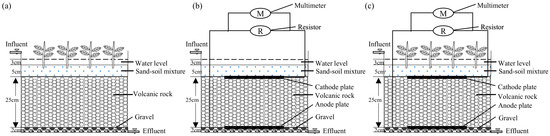
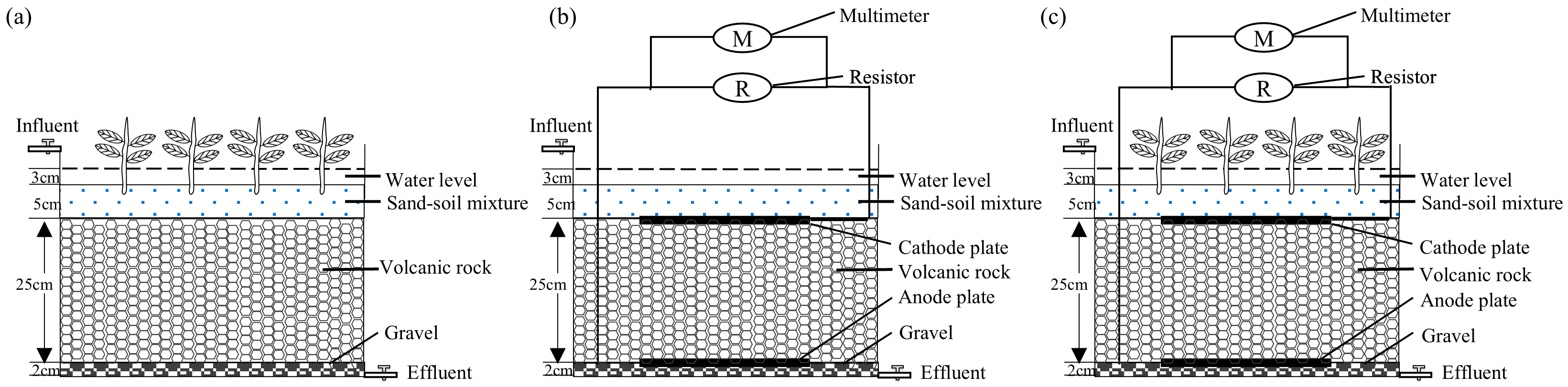
As presented in Figure 1, the CW-MFC device is fabricated with a plastic bucket, and the effective volume of the device amounts to 37 L. The device was filled with gravel, volcanic stone, and a sand and soil mixture from the bottom to the top. The filling heights of each filler were 2 cm, 25 cm, and 5 cm, respectively. The particle sizes of the gravel and volcanic stone were 12 mm–20 mm and 6 mm–12 mm, respectively. The surface and bottom of the device are horizontally arranged with graphite electrode plates. The area of the electrode plate constitutes 30% of the surface area of the device. The vertical distance between the two electrode plates is 21 cm, and the two electrode plates and the 1000 Ω external resistor are connected via a wire to form a closed circuit. The experiment adopted a vertical flow constructed wetland operation mode, with the water level maintained 3 cm above the substrate. According to previous studies, AC exhibits high tolerance to aqueous pollutants and develops an extensive root system that readily establishes an active rhizosphere microbial zone, thereby enhancing the stability of pollutant removal within the system. Furthermore, the radial oxygen loss (ROL) from AC roots can supply dissolved oxygen to the cathode region, which improves the electricity-generating performance of the system. Therefore, AC was uniformly planted around the cathode electrode plate inside the device. In this study, the device dimensions, filler arrangement, and electrode plate configuration of the CW and MFC setups were identical to those of the CW-MFC system. However, no electrode plates or associated circuitry were installed in the CW system, and no AC was planted in the MFC system.
Figure 1.
Experimental installation of CW-MFC ((a): CW; (b): MFC; (c): CW-MFC).
2.2. Experimental Design
Three experimental groups, namely CW-MFC, CW, and MFC, were established in the experiment. Through a comparative analysis of the treatment effect of CW-MFC, CW, and MFC on agricultural non-point source pollution, and the electricity generation performance of CW-MFC and MFC, the synergy effect of CW and MFC in CW-MFC was clarified. Simultaneously, the diversity, structure, and functional genes of the microbial communities in the three experimental groups were analyzed, and the effects of the combination of CW and MFC on the microbial communities were analyzed from a microbiological perspective. A sequential batch operation mode was adopted in the experiment, with a processing capacity of 17 L each time and a processing cycle of 8 days. The device ran for a total of five experimental cycles. The inoculum was activated sludge obtained from a municipal wastewater treatment plant. This sludge was first acclimated in the laboratory with simulated wastewater for a period of two weeks. System operation was initiated by transplanting the acclimated sludge together with pre-cultured AC into the experimental setup. A two-week stabilization period was implemented, after which the official experiment commenced. To ensure the reliability of the experimental results, triplicate experimental setups were established under each tested condition, and the data presented are the average values obtained from the three parallel units.
2.3. Experimental Water Consumption
The experiment adopts simulated wastewater, which is prepared using glucose as the carbon source, KNO3 and NH4Cl as the nitrogen source, and K2HPO4 as the phosphorus source, along with trace elements required for microbial growth. At this point, the average initial concentrations of chemical oxygen demand (COD), total nitrogen (TN), and total phosphorus (TP) in the simulated wastewater were 256.0 mg/L, 7.3 mg/L, and 2.44 mg/L, respectively. Additionally, to better simulate the issue of pesticide pollution in agricultural non-point source pollution, the common pesticide atrazine was added to the simulated wastewater. Simultaneously, to understand the treatment effect and electricity generation performance of the system under different pesticide pollution conditions, the concentration of atrazine in the simulated wastewater was set at three low, medium, and high concentration gradients, such as 2 mg/L, 4 mg/L, and 8 mg/L, respectively.
2.4. Index and Method of Analysis
In this study, the measured water quality indicators comprise COD, TN, TP, and atrazine, which were analyzed in turn by the potassium dichromate method, the alkaline potassium persulfate digestion-UV spectrophotometric method, the ammonium molybdate spectrophotometric method following potassium persulfate digestion, and gas chromatography [17]. The water quality indicators are determined by taking water samples after each experimental period.
The measured electrochemical indicators are voltage. The system voltage is measured daily throughout the entire experiment, and the current density and power density of the system are calculated based on the voltage. The polarization curve and power density curve were plotted by the gradient change external method in the fifth experimental period.
The activities of the measured stromal enzymes were urease (UE), alkaline phosphatase (ALP), and catalase (CAT), which were analyzed sequentially by the indigo colorimetric method [18], the phenyldisodium phosphate colorimetric method, and the potassium permanganate titration method [19]. The activity of stromal enzymes was determined by sampling at the end of the experiment.
2.5. DNA Extraction, Quantitative PCR (qPCR), and Illumina Sequencing
Microbial community analysis was performed on soil samples collected from the anode of CW-MFC and MFC, as well as from the same matrix height in CW, at the conclusion of the experiment under the 2 mg/L atrazine condition, using 16S rRNA gene high-throughput sequencing. The specific procedures were as follows: Genomic DNA was extracted from the samples using the OMEGA Soil DNA Kit (M5635-02) (Omega Bio-Tek, Norcross, GA, USA). The quantity and quality of extracted DNAs were measured using a NanoDrop NC2000 spectrophotometer (Thermo Fisher Scientific, Waltham, MA, USA) and agarose gel electrophoresis, respectively.
PCR amplification of the bacterial 16S rRNA genes V3–V4 region was performed using the forward primer 338F (5′-ACTCCTACGGGAGGCAGCA-3′) and the reverse primer 806R (5′-GGACTACHVGGGTWTCTAAT-3′). The amplification products were purified by gel extraction, quantified using a microplate reader (BioTek, FLX800T, Winooski, VT, USA), and then subjected to sequencing library construction following the standard Illumina TruSeq DNA library preparation protocol. Finally, the libraries were sequenced via high-throughput sequencing.
3. Results and Discussion
3.1. Processing Performance
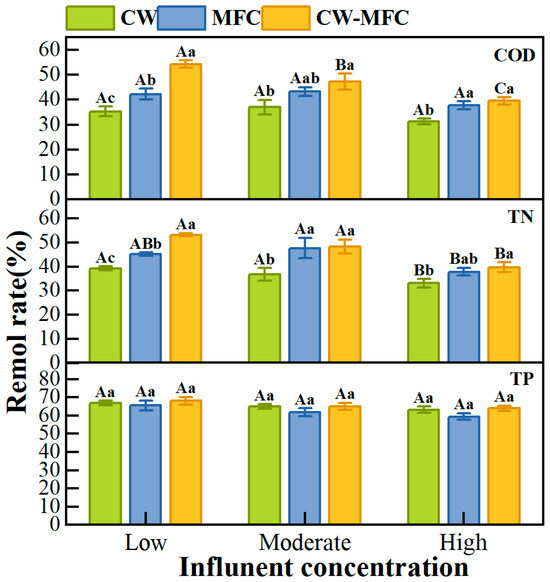
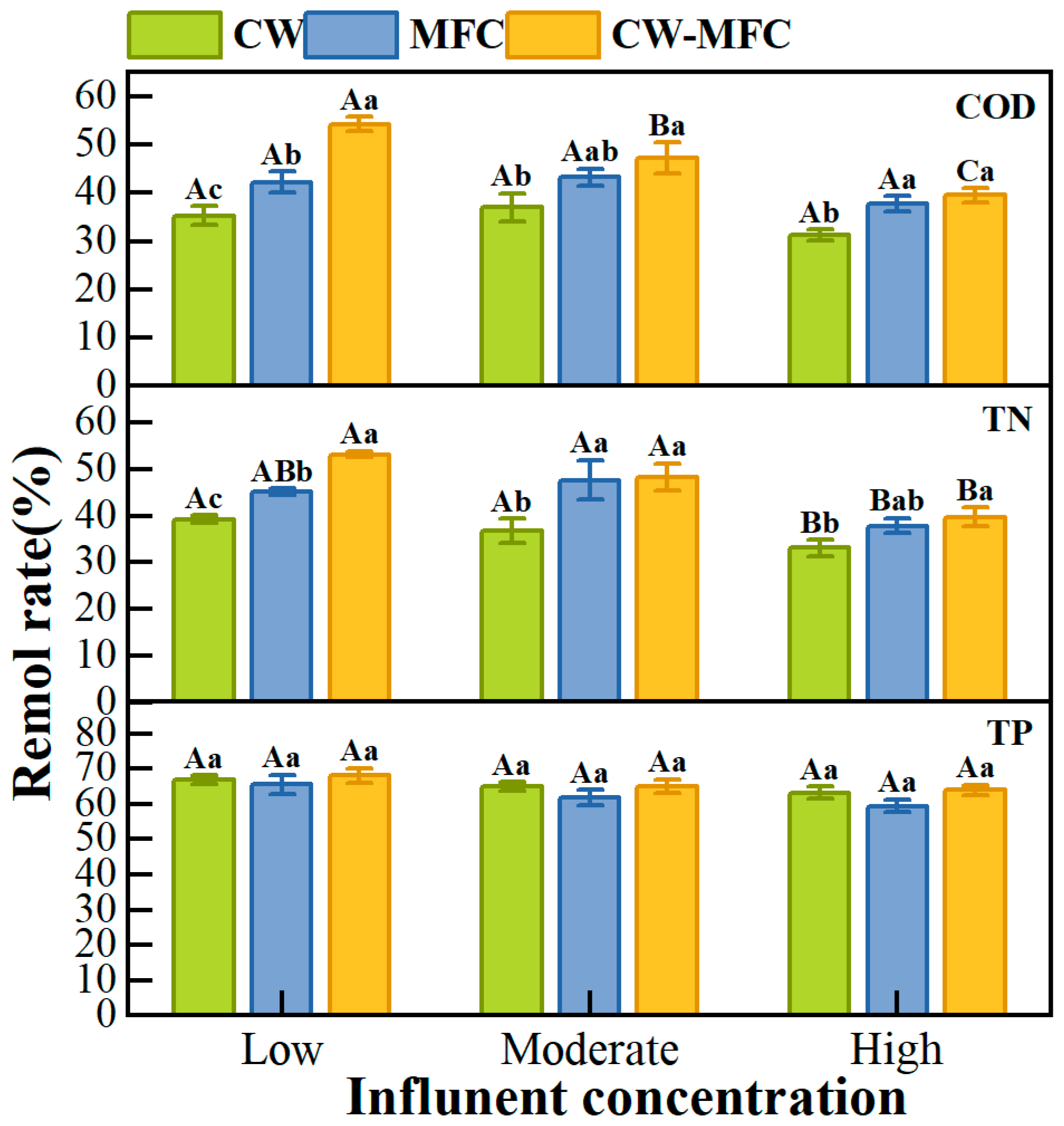
As depicted in Figure 2, under the conditions of low, medium, and high atrazine concentrations, the removal rates of COD and TN were highest for CW-MFC, followed by MFC, and lowest for CW. Meanwhile, the removal rates of TP were the highest for CW-MFC, followed by CW, and the lowest for MFC; that is, the coupling of CW and MFC effectively enhanced the removal rates of COD, TN, and TP. While the electric field had a greater promoting effect on the removal rates of COD and TN than that of plants, on the contrary, it had a smaller promoting effect on the removal rate of TP than that of plants. The removal of COD and TN in CW mainly relies on microbial degradation [20,21,22], and the coupling with MFC generates a micro-electric field in the system. Under the stimulation of the micro-electric field, microbial metabolism and activity can be improved [23,24], thereby promoting the degradation of pollutants. At the same time, the micro-electric field facilitates the enrichment and strengthening of electrochemically active bacteria within the system, thereby promoting nitrification and denitrification therein [25,26]. Additionally, the micro-electric field is directly implicated in the degradation of pollutants, thereby further enhancing the removal of COD and TN in the system. Hence, the electric field in CW-MFC exerts a greater promotional effect on the removal rate of COD and TN than that of plants. In CW, TP removal primarily relies on the phosphorus removal by the matrix and plants. Plants in CW can release enzymes into the environment or directly absorb TP for enrichment and decomposition to achieve TP removal [27]. Therefore, the promotional effect of plants in CW-MFC on the TP removal rate is greater than that of the electric field.
Figure 2.
Removal rates of COD, TN, and TP in different systems. Error bars represent the standard deviation. Capital letters indicate significant differences (p < 0.05) within the same system across different atrazine concentrations, while lowercase letters denote significant differences (p < 0.05) among different systems at the same atrazine concentration. The same convention is used for significance labeling in all subsequent figures.
Under the conditions of low, medium, and high atrazine concentrations, the COD removal rates of CW-MFC were 54.3%, 46.8%, and 39.5%, respectively, which increased by 19.0%, 9.8%, and 8.2% in comparison with CW. The removal rates of TN were 53.2%, 48.3%, and 39.7%, respectively, which rose by 13.9%, 11.5%, and 6.6% compared to CW. The removal rates of TP were 68.0%, 65.0%, and 64.4%, respectively, which increased by 1.1%, 0.1%, and 1.2% in contrast to CW. In other words, the promoting effect of the electric field on the removal rate of COD and TN gradually decreased with the increase of atrazine concentration, but there was no significant difference in the promoting effect on the removal rate of TP. In comparison with MFC, the COD removal rate of CW-MFC rose by 12%, 3.5%, and 1.7%; the TN removal rate ascended by 8.0%, 0.7%, and 1.9%; and the TP removal rate climbed by 2.5%, 3.3%, and 5.0%. In other words, the promoting effect of plants on the COD removal rate gradually decreased with the increase of atrazine concentration, and the promoting effect on the TN removal rate showed no significant difference under the conditions of medium and high atrazine concentrations. Meanwhile, the promoting effect on the TP removal rate gradually increased with the increase of atrazine concentration, but the difference was insignificant. As the atrazine concentration increases, the microbial activity within the system is inhibited, thereby causing the promoting effect of the coupling of CW and MFC on the removal rate of COD and TN to also decrease. In CW-MFC, the removal of TP mainly relies on the phosphorus removal by the matrix and plants, with the removal of phosphorus by microorganisms as a supplement. In wastewater containing pesticides, the microbial activity is inhibited, resulting in the inhibition of the removal of phosphorus by microorganisms, which further reinforces the removal of phosphorus by the matrix and plants [28]. Therefore, the effect of the coupling of CW and MFC on the removal rate of TP shows no significant difference under different atrazine concentrations.
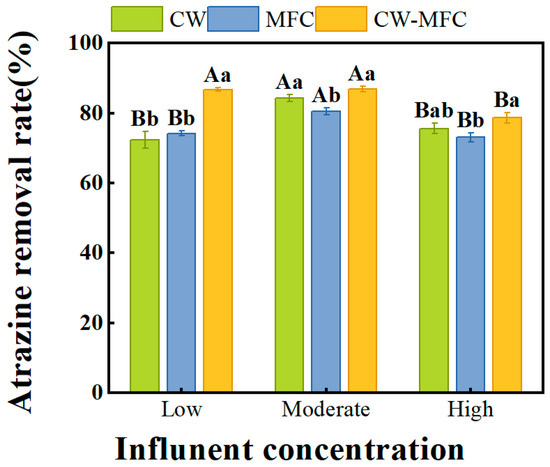
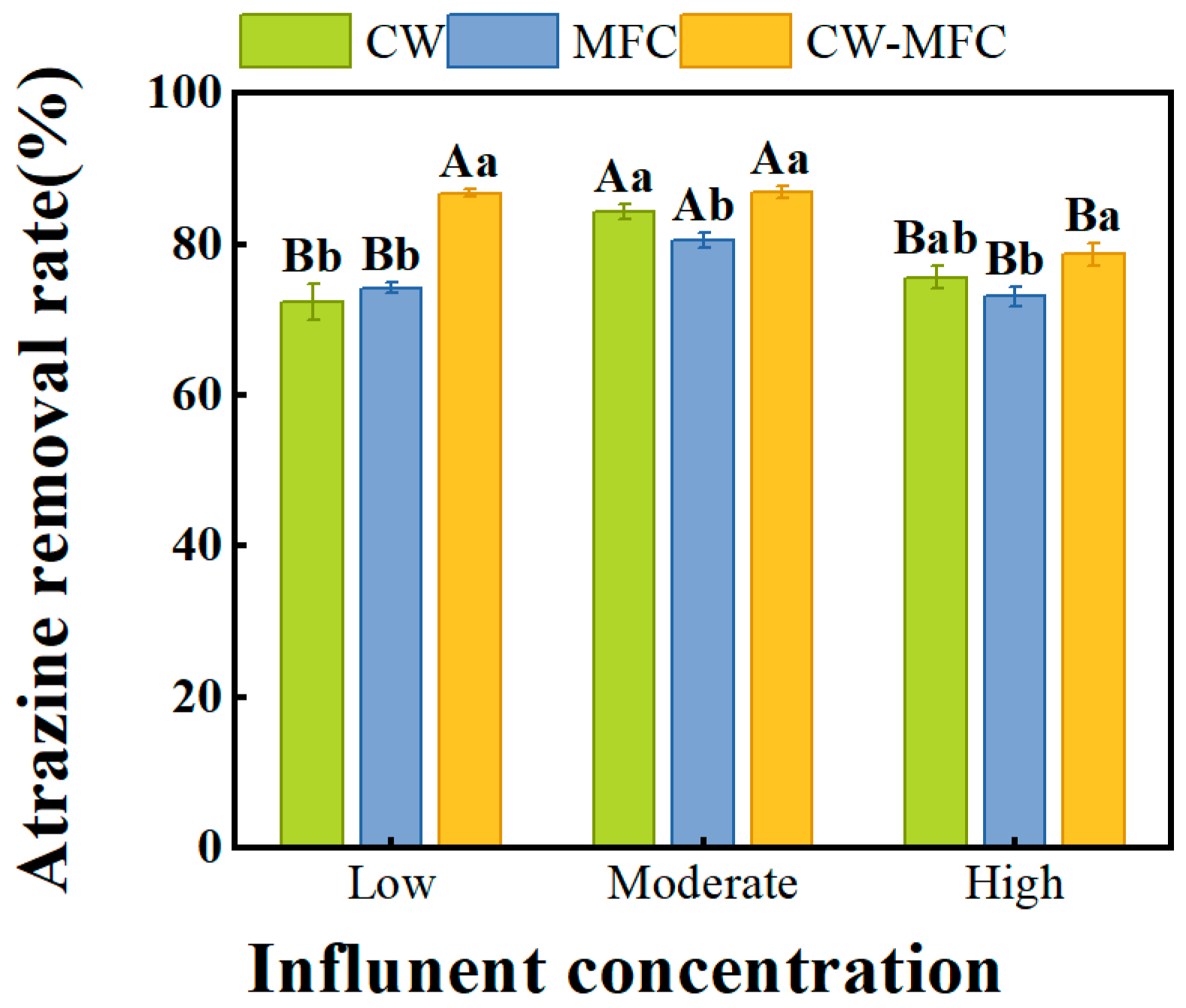
As depicted in Figure 3, under the conditions of low, medium, and high atrazine concentrations, the atrazine removal rates of CW-MFC were 86.8%, 86.9%, and 78.7%, respectively, increasing by 14.0%, 2.6%, and 3.1%. In combination with the analysis of the microbial community structure, it was observed that the relative abundance of electrochemically active bacterial groups, including Acidobacteria, Deltaproteobacteria, and the Geobacter, was higher in CW-MFC than in CW. These bacterial groups utilize atrazine or its metabolic intermediates as electron donors, achieving oxidation and degradation of the pollutant while simultaneously generating electricity via extracellular electron transfer. Concurrently, the electric field itself facilitates the electrochemical conversion of recalcitrant atrazine into more biodegradable intermediates [29], thereby promoting the degradation of the pollutant.
Figure 3.
Atrazine removal rate in different systems.
Compared to the MFC system, the CW-MFC system achieved enhancements in removal rate by 12.6%, 6.4%, and 5.6%, respectively. In the CW-MFC system, in addition to directly removing pollutants through uptake and adsorption, the plant roots provided a favorable growth environment for functional bacterial groups such as proteobacteria and aquabacterium. These plant-regulated microbial communities effectively contributed to the improved treatment performance of the system. Thus, the coupling of CW and MFC can effectively enhance the removal rate of atrazine.
Additionally, a dynamic transition was observed in the contributions of the electric field and plants to enhance atrazine removal, dependent on its concentration [30]. At low concentrations, where microbial inhibition by atrazine was mild, electrochemical stimulation effectively boosted the metabolic activity of degrading bacteria, thus favoring a higher removal efficiency [31]. Meanwhile, the low stress level failed to sufficiently activate plant detoxification pathways, rendering their promotive effect relatively limited. Therefore, the electric field exerted a greater influence than plants. At higher concentrations, the enhanced toxicity of atrazine intensified its suppression of microorganisms, leading to a saturation of the electrochemical enhancement. On the contrary, plants activated a pronounced stress response under high-concentration exposure, resulting in a substantially increased promotive effect that surpassed the electric field and became the overriding factor.
In conclusion, while the governance efficacy of CW-MFC exceeded that of either standalone CW or MFC, it did not surpass their combined performance. This suggests that internal competitive effects within the system likely counteracted some of the potential synergy. Despite this, CW-MFC effectively integrated the phytoremediation-microbial functions with electrochemical intensification, establishing a stable and high-performing hybrid treatment system superior to traditional singular technologies.
3.2. Electrical Performance
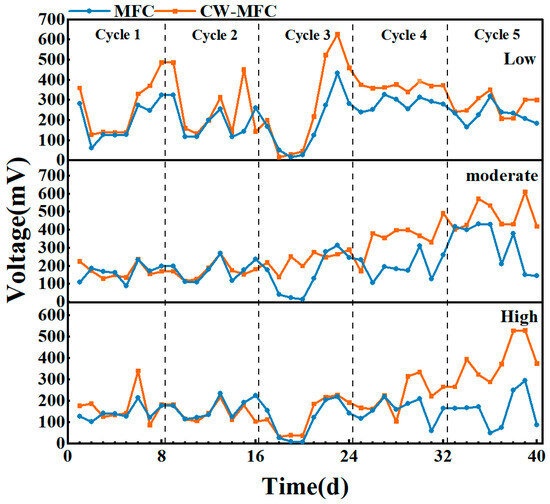
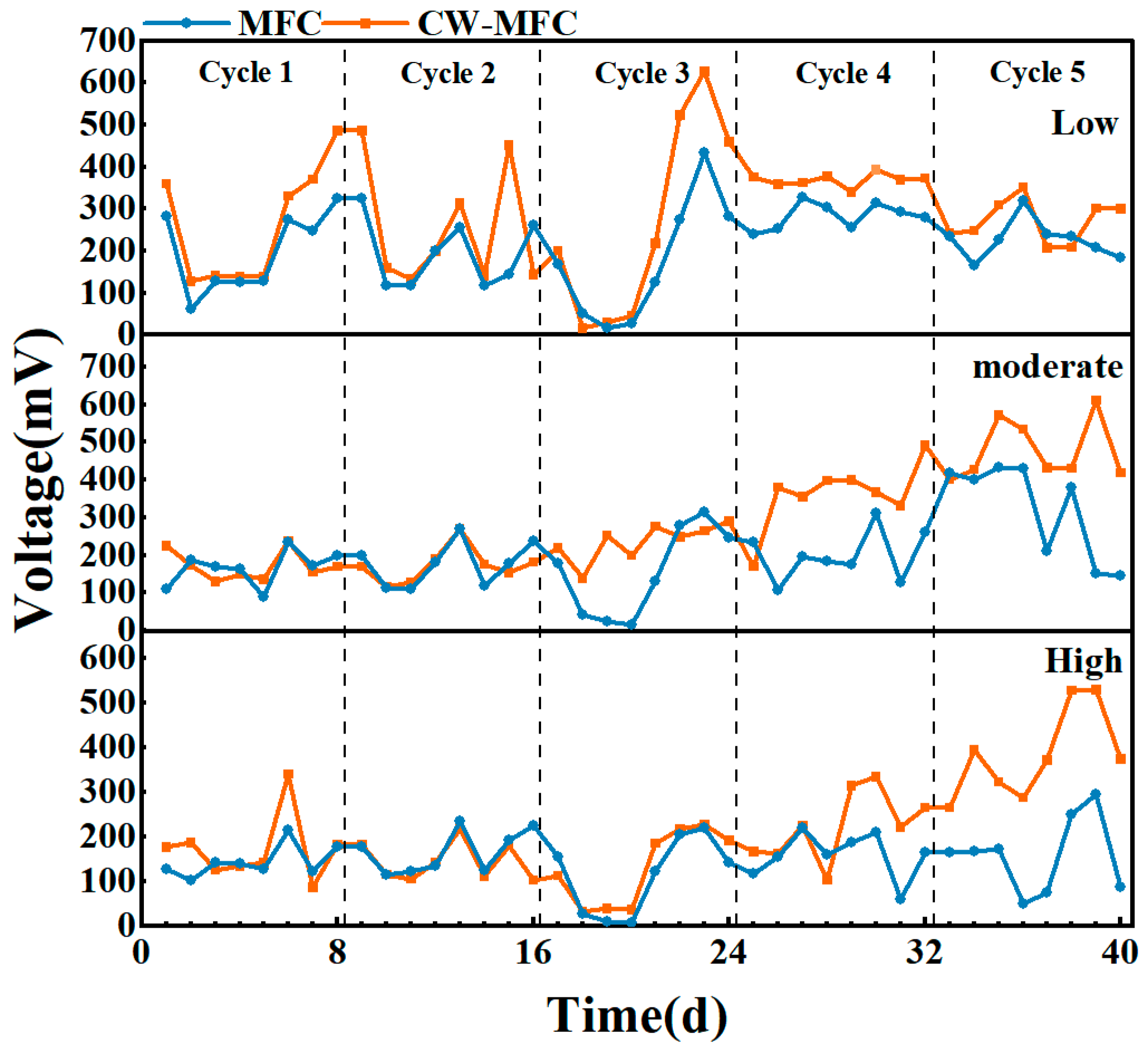
As shown in Figure 4, under stress from different atrazine concentrations, the CW-MFC and MFC systems exhibited distinct dynamic responses in daily voltage, with the CW-MFC system demonstrating overall superior voltage output and stability compared to MFC. Under low atrazine concentration conditions, both systems showed considerable voltage fluctuations during the initial and middle experimental phases, suggesting that the microbial communities were undergoing self-regulation in response to atrazine toxicity. In the later operational phase, as electrogenic consortia with enhanced tolerance was gradually established, the voltage stabilized in both systems.
Figure 4.
Average daily voltages in different systems.
Under medium atrazine concentration conditions, the voltage in the CW-MFC group exhibited an overall steady increasing trend, whereas the MFC group showed considerable fluctuations during the middle and later stages. This reflects that, in the absence of plant-mediated buffering, the metabolic pathways in MFC were more susceptible to the effects of substrate depletion and intermediate accumulation. Under high atrazine concentration conditions, although the voltages of both groups increased overall, the fluctuations in the MFC group were significantly greater than those in the CW-MFC group. This indicates that the synergistic interaction between plants and the substrate in CW-MFC effectively mitigated the inhibitory effect of toxicity on electrogenic microorganisms, thereby maintaining a more stable electron transfer process.
Under low, medium, and high atrazine concentration conditions, the average daily output voltages of MFC were measured at 214.4 mV, 203.3 mV, and 147.6 mV, respectively, which were lower than those of CW-MFC by 69.6 mV, 81.1 mV, and 63.5 mV. These results demonstrate that the CW-MFC system exhibits superior electricity generation performance.
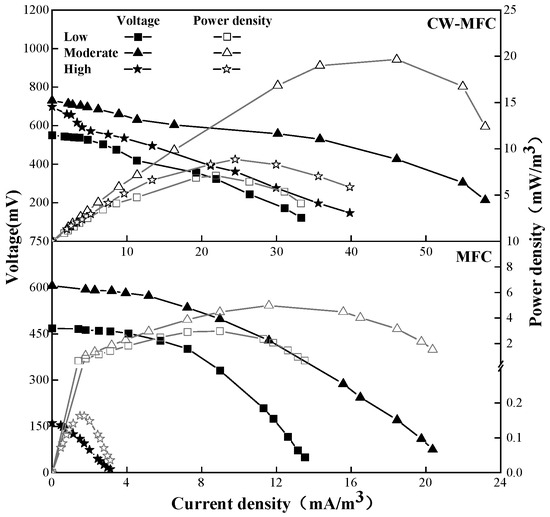
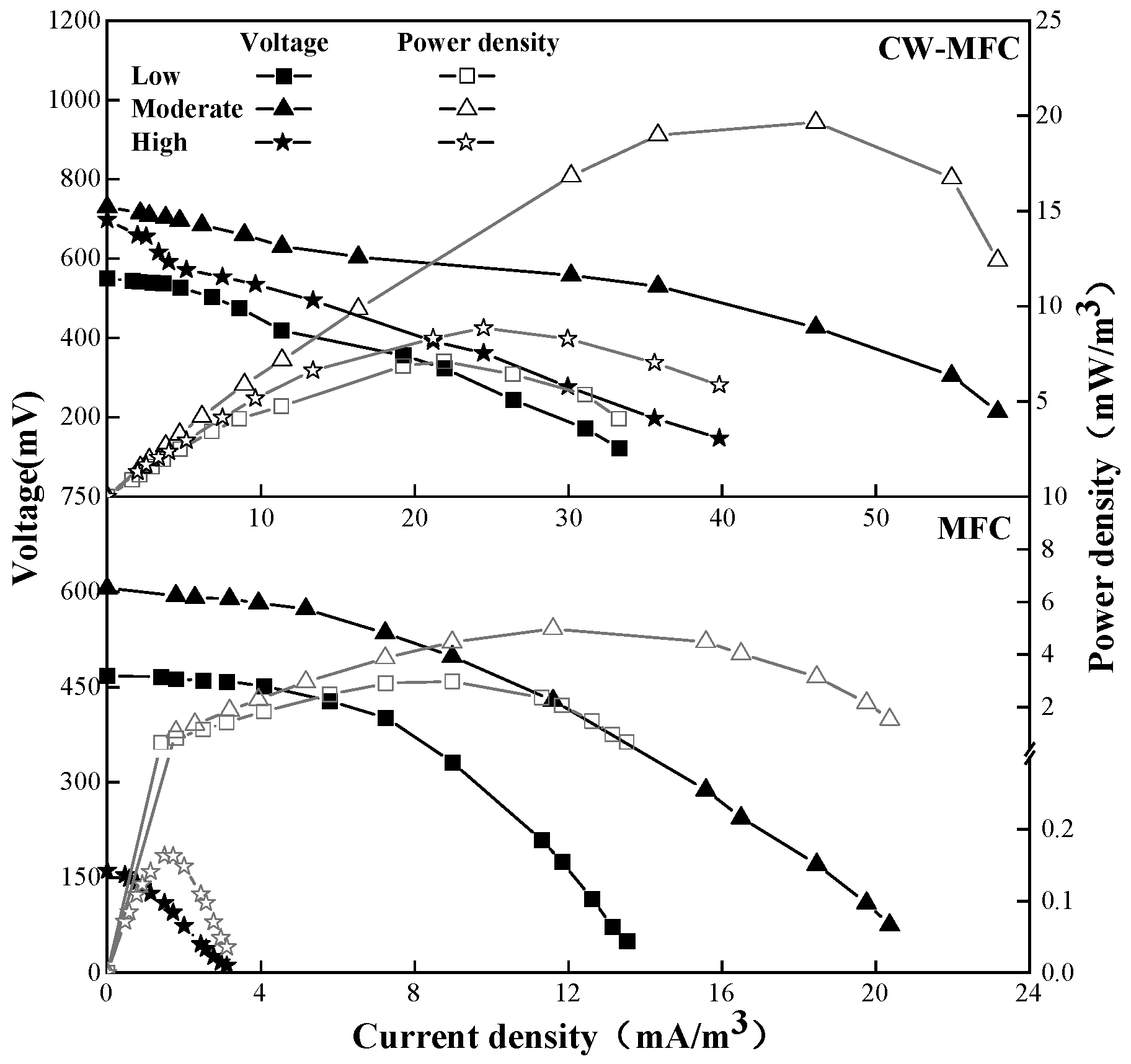
Additionally, as shown in Figure 5, the maximum power densities of MFC under low, medium, and high atrazine concentrations were recorded at 2.98 mW/m3, 4.98 mW/m3, and 0.16 mW/m3, respectively, which were lower than those of CW-MFC by 3.87 mW/m3, 14.66 mW/m3, and 8.70 mW/m3. The corresponding current densities of MFC were observed to be 8.97 mA/m3, 11.60 mA/m3, and 1.49 mA/m3, respectively, which were lower than those of CW-MFC by 10.28 mA/m3, 34.49 mA/m3, and 22.97 mA/m3. These findings align with those reported by Di et al. [32], indicating that the coupling of CW and MFC can significantly enhance electricity generation performance, particularly under medium concentration conditions. Wang [33] and Li et al. [20] demonstrated that an increase in dissolved oxygen concentration within the cathode region of the MFC system can enhance its electrical production performance. The oxygen released by plant roots in CW-MFC contributes additional oxygen content to the cathode region, thereby elevating the reduction–oxidation (REDOX) potential of the system, increasing the concentration of electron acceptors at the cathode, and ultimately improving the overall electric production efficiency. Furthermore, plant stems and leaves contribute additional organic matter to the roots through the processes of photosynthesis and respiration, thereby enhancing the activity of electrochemical microorganisms in proximity to the roots and increasing electricity production efficiency [34]. Consequently, the electrical production performance of CW-MFC surpasses that of traditional MFC systems, with the coupling of CW and MFC significantly promoting overall system performance.
Figure 5.
Polarization curve and power density curve in different systems.
3.3. Matrix Enzyme Activity
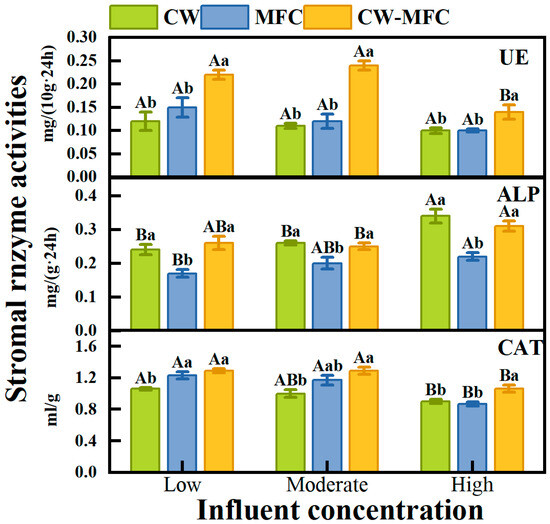
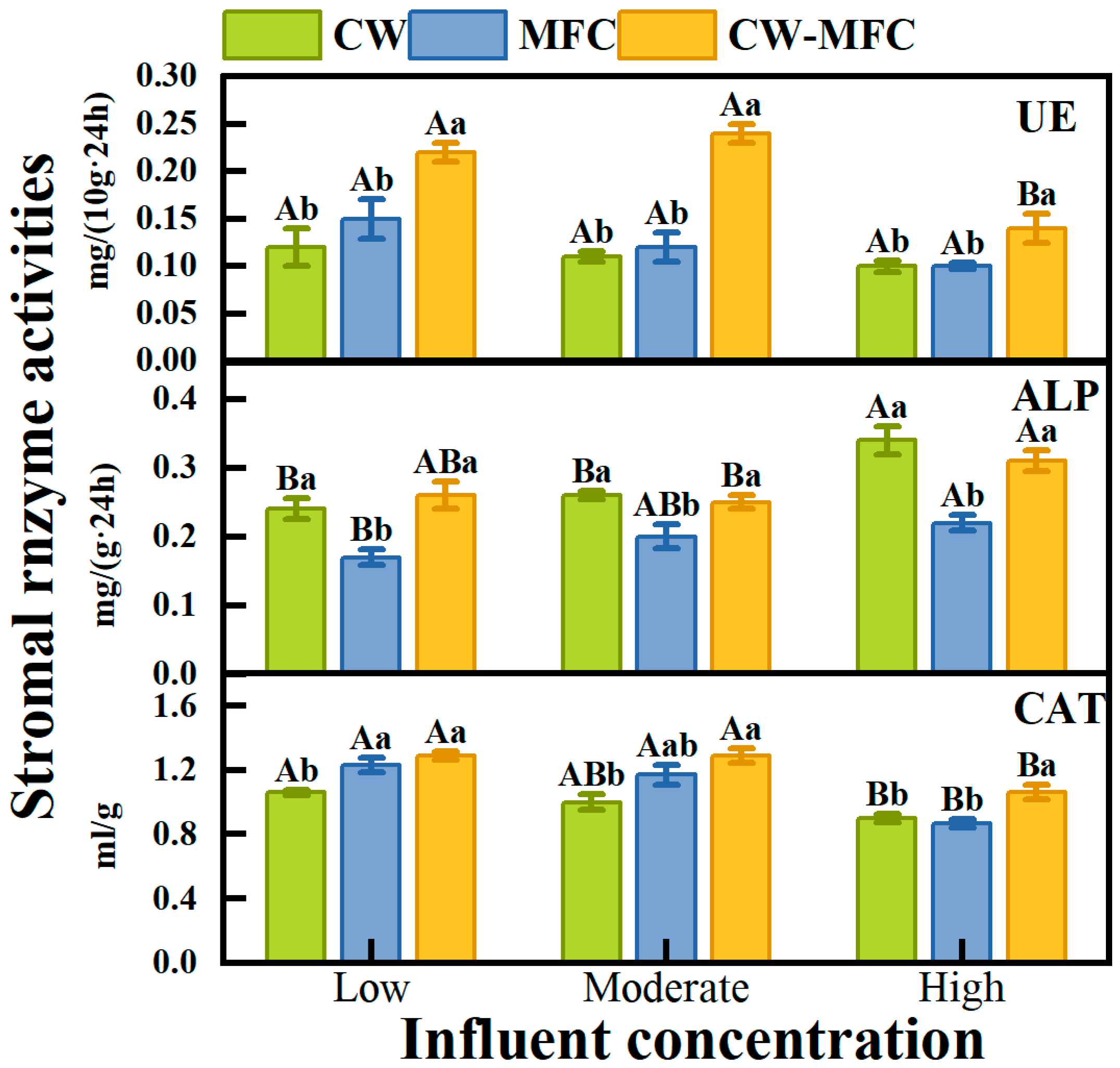
Enzyme activity serves as an indicator of microbial activity within the system, as well as the cycling characteristics of nitrogen, phosphorus, and other elements [35]. As illustrated in Figure 6, the activities of UE and CAT in CW-MFC were significantly higher than those observed in CW and MFC across low, medium, and high concentrations of atrazine. This indicates that the coupling of CW and MFC effectively enhances UE and CAT activities within the matrix. UE activities of CW-MFC at low, medium, and high atrazine concentrations were measured at 0.22 mg/(10 g·24 h), 0.24 mg/(10 g·24 h), and 0.14 mg/(10 g·24 h), respectively, reflecting increases of 0.10 mg/(10 g·24 h), 0.13 mg/(10 g·24 h), and 0.04 mg/(10 g·24 h) compared to CW. In comparison to MFC, UE activity increased by 0.07 mg/(10 g·24 h), 0.12 mg/(10 g·24 h), and 0.04 mg/(10 g·24 h). The CAT activity of CW-MFC was recorded at 1.29 mL/g, 1.29 mL/g, and 1.06 mL/g, respectively; this represents an increase of 0.24 mL/g, 0.29 mL/g, and 0.16 mL/g compared to CW and an increase of 0.06 mL/g, 0.12 mL/g, and 0.19 mL/g relative to MFCs—indicating that the promoting effect of the electric field on UE and CAT activities generally surpasses that exerted by plants; furthermore, this enhancement is particularly pronounced under conditions involving elevated atrazine concentrations in China.
Figure 6.
Stromal enzyme activities in different systems.
Regarding ALP activity, the performance of CW-MFC was superior to that of CW and MFC at low atrazine concentrations. However, at medium and high atrazine concentrations, CW exhibited the highest ALP activity, followed by CW-MFC, while MFC demonstrated the lowest activity. Specifically, at low, medium, and high atrazine concentrations, the ALP activities of CW-MFC were measured at 0.26 mg/(g·24 h), 0.25 mg/(g·24 h), and 0.31 mg/(g·24 h), reflecting increases of 0.02 mg/(g·24 h), −0.01 mg/(g·24 h), and −0.03 mg/(g·24 h) compared to those observed in CW. In comparison to the MFC, which exhibited increases of 0.09 mg/(g·24 h), 0.05 mg/(g·24 h), and 0.09 mg/(g·24 h), the coupling of CW and MFC demonstrated a certain promotional effect on ALP activity; however, this enhancement was more pronounced in plants. Furthermore, the influence of the electric field was not significant, with effects being particularly notable under low and high atrazine concentration conditions.
Türker et al. [36] evaluated the boron removal performance of CW-MFC and found that the matrix enzyme activity in the system was positively correlated with energy production. Ni Lixiao et al. [37] analyzed the correlation between the activity of stromal enzymes and the water purification effect in constructed wetlands and found that the activity of stromal enzymes in the system had a significant positive correlation with the water purification effect, which was basically consistent with the results of this study; that is, the coupling of CW and MFC effectively promoted the electricity generation performance and treatment effect of CW-MFC, so the stromal enzyme activity of CW-MFC was generally higher than that of CW and MFC.
3.4. Microbial Community
3.4.1. Microbial Community Diversity
Operational taxonomic units (OTUs), Chao1, Shannon, and Simpson are all capable of characterizing microbial diversity [38]. The microbial community diversity of CW-MFC, CW, and MFC is presented in Table 1, which is approximately in the order of CW-MFC > MFC > CW system; that is, the coupling of CW and MFC significantly enhances the microbial community diversity of CW-MFC. This is in line with the research findings of Meng Neitao et al. [39], indicating that there are significant differences in microbial communities among CW-MFC, CW, and MFC, and that closed-circuit electrodes and plants have significant effects on the microbial community structure in the system.
Table 1.
Microbial community diversity.
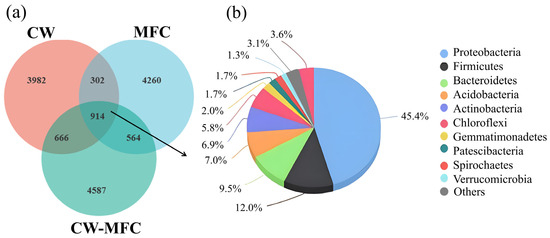
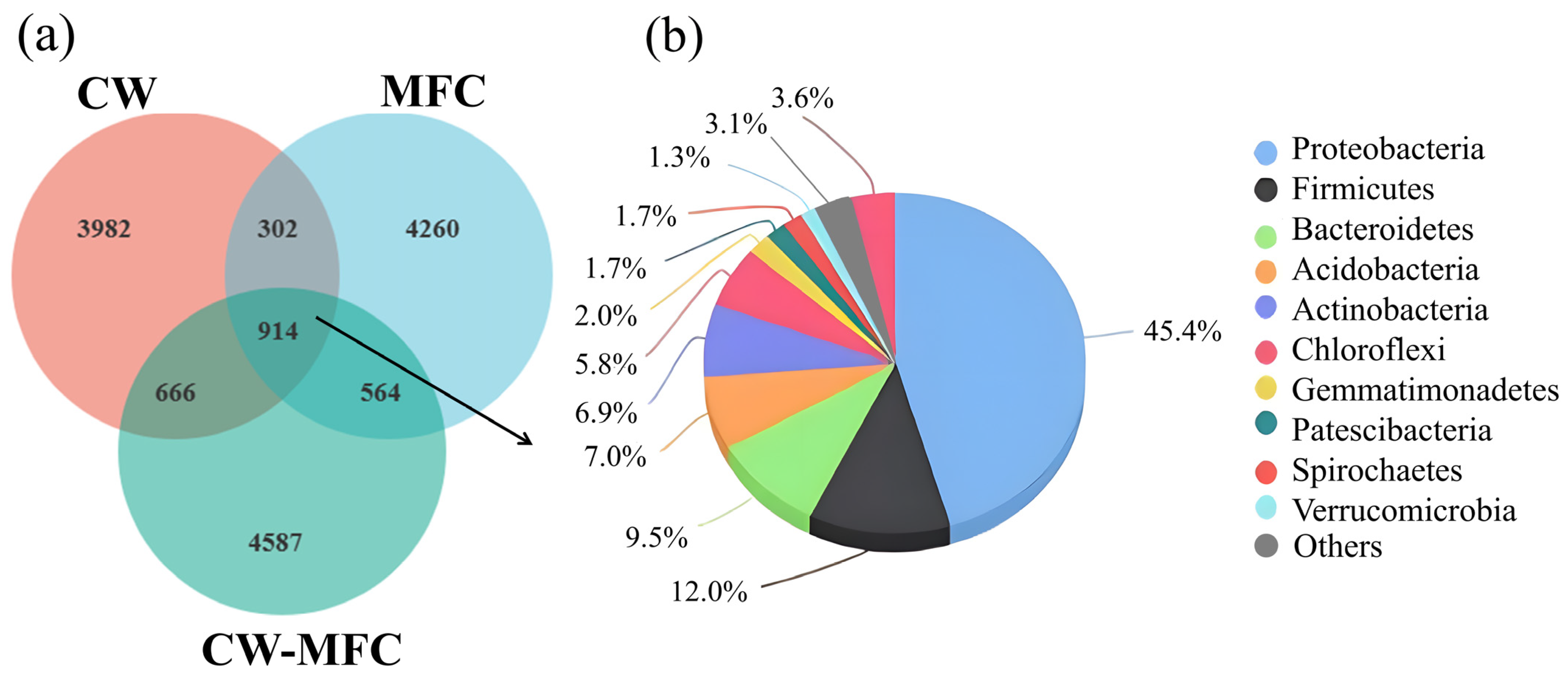
To analyze the microbial community composition among CW-MFC, CW, and MFC, the OTUs Venn diagram was drawn, and the results are presented in Figure 7. The total number of OTUs of CW-MFC, CW, and MFC is 914, accounting for 13%, 15%, and 15% of the total number of OTUs of CW-MFC, CW, and MFC, respectively. The similarity of OTUs is low; that is, the coupling of CW and MFC significantly influences the microbial community composition of the system. Among the total OTUs, the dominant bacteria accounting for more than 5% are Proteobacteria (45.4%), Firmicutes (12.0%), Bacteroidetes (9.5%), Acidobacteria (7.0%), Actinobacteria (6.9%), and Chloroflexi (5.8%). By analyzing the total number of OTUs between the two samples, the total number of OTUs between CW-MFC and CW is 1580, while the total number of OTUs between CW-MFC and MFC is 1478, indicating that the influence of plants on the microbial community diversity of CW-MFC is greater than that of the electric field.
Figure 7.
OTUs Venn diagram. (a) Venn diagram of OTUs in the CW, MFC, and CW-MFC systems. (b) Composition of the top 10 dominant phyla among OTUs shared by the three systems.
3.4.2. Microbial Community Structure
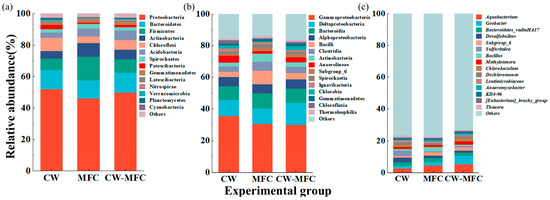
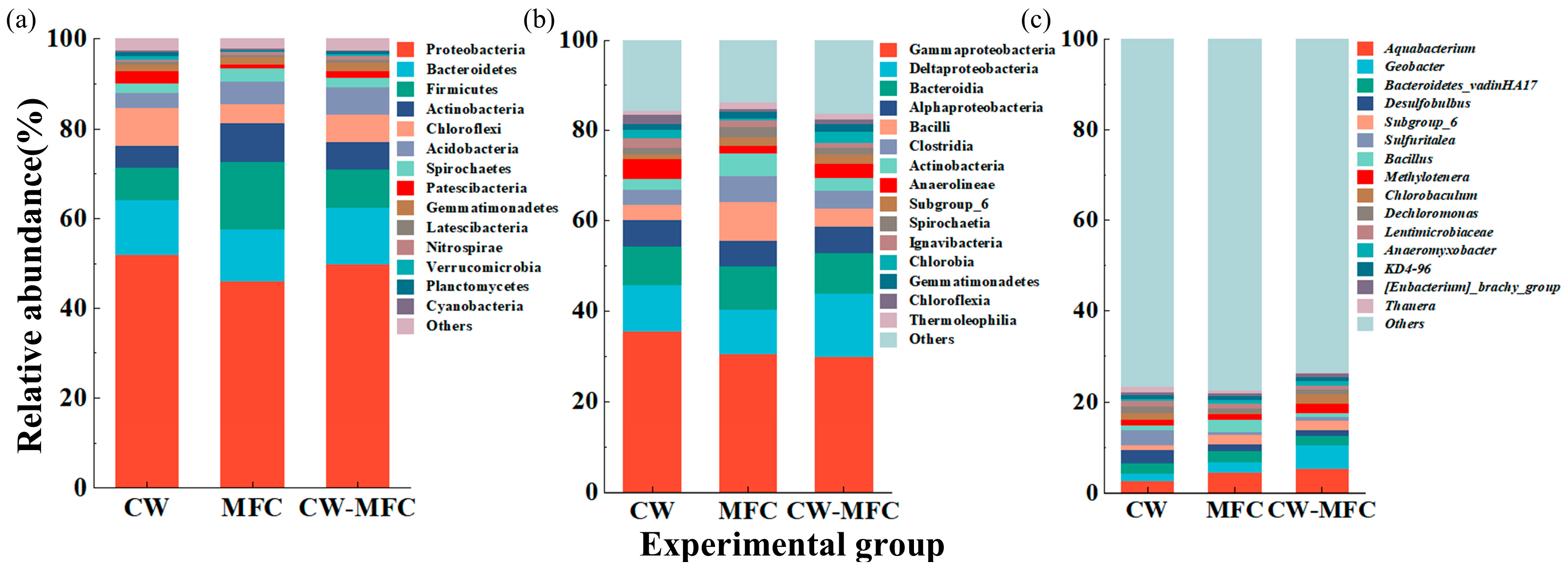
To intuitively comprehend the alterations of the microbial community structure in CW-MFC, CW, and MFC, this study analyzed the microbial community structure at the phylum, class, and genus levels. As depicted in Figure 8, the dominant bacteria in CW-MFC, CW, and MFC are Proteobacteria, and their relative abundances are 49.8%, 51.9%, and 46.2%, respectively, with a considerable difference. Proteobacteria encompasses numerous microorganisms related to the metabolism of organic and inorganic substances. Plants can enhance the relative abundance of Proteobacteria, and the abundance of Proteobacteria in CW-MFC and CW with plants is higher than that of MFC, which is in accordance with the research findings of Di Liyan et al. [32]. Conversely, the generation of the electric field reduced the abundance of Proteobacteria. Gammaproteobacteria is the dominant bacteria in CW-MFC, CW, and MFC, and its relative abundance is 29.9%, 35.6%, and 30.7%, respectively. The disparity is rather significant. The combined effect of the electric field and the plants decreased its abundance in CW-MFC, while the effect of the electric field is greater than that of the plants. The predominant bacterial genera in CY-MFC, CW, and MFC were Aquabacterium (5.26%), Sulfuritalea (3.24%), and Aquabacterium (4.5%), respectively. The predominant bacterial genera in different systems were conspicuously different. The abundance of Aquabacterium in CW-MFC was higher than that in MFC under the influence of the plant.
Figure 8.
Microbial community structure at phylum, class, and genus levels in different systems. Microbial community structure at phylum (a), class (b), and genus (c) levels in different systems.
Furthermore, under the coupling of CW and MFC, the relative abundance of Acidobacteria, Deltaproteobacteria, and genera Aquabacterium, Geobacter, and Subgroup_6 in CW-MFC was higher than that of CW and MFC; that is, the coupling of CW and MFC enhanced the relative abundance of the aforementioned bacteria phylum, bacteria class, and bacteria genus levels. Acidobacteria, an electrogenic bacterium, possess electrochemical properties and can consume pollutants through respiration [40]. Deltaproteobacteria belong to Proteobacteria. Studies have demonstrated that Deltaproteobacteria have been confirmed as an electrochemically active bacterium, playing a crucial role in the catalysis and Redox of pollutants [41]. Geobacter, which belongs to the Deltaproteobacteria group, is also a highly efficient electrogenic bacterium and has a considerable impact on the electrogenic performance of the system [42]. At the same time, Geobacter plays a dual role of both electrogenic and decontamination, participating in the denitrification process of the system while decomposing organic matter in an anaerobic environment [43]. Aquabacterium belonging to Betaproteobacteria is a genus of iron-oxidizing bacteria. While oxidizing Fe2+, Aquabacterium is capable of coupling with the denitrifying metabolic pathway in nitrogen metabolism to reduce nitrate nitrogen, which has a considerable impact on the removal of TN. In conclusion, the enhancement of the relative abundance of the aforementioned phylum, class, and genus can effectively promote the treatment effect and electricity generation performance of CW-MFC.
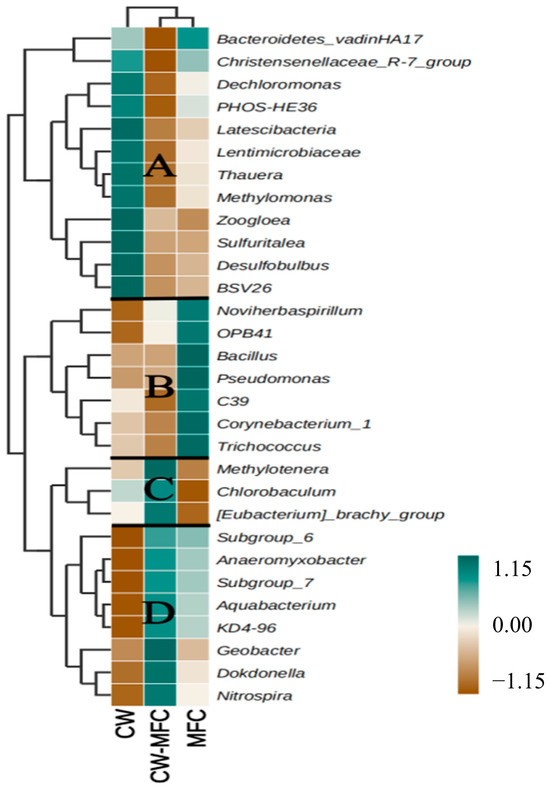
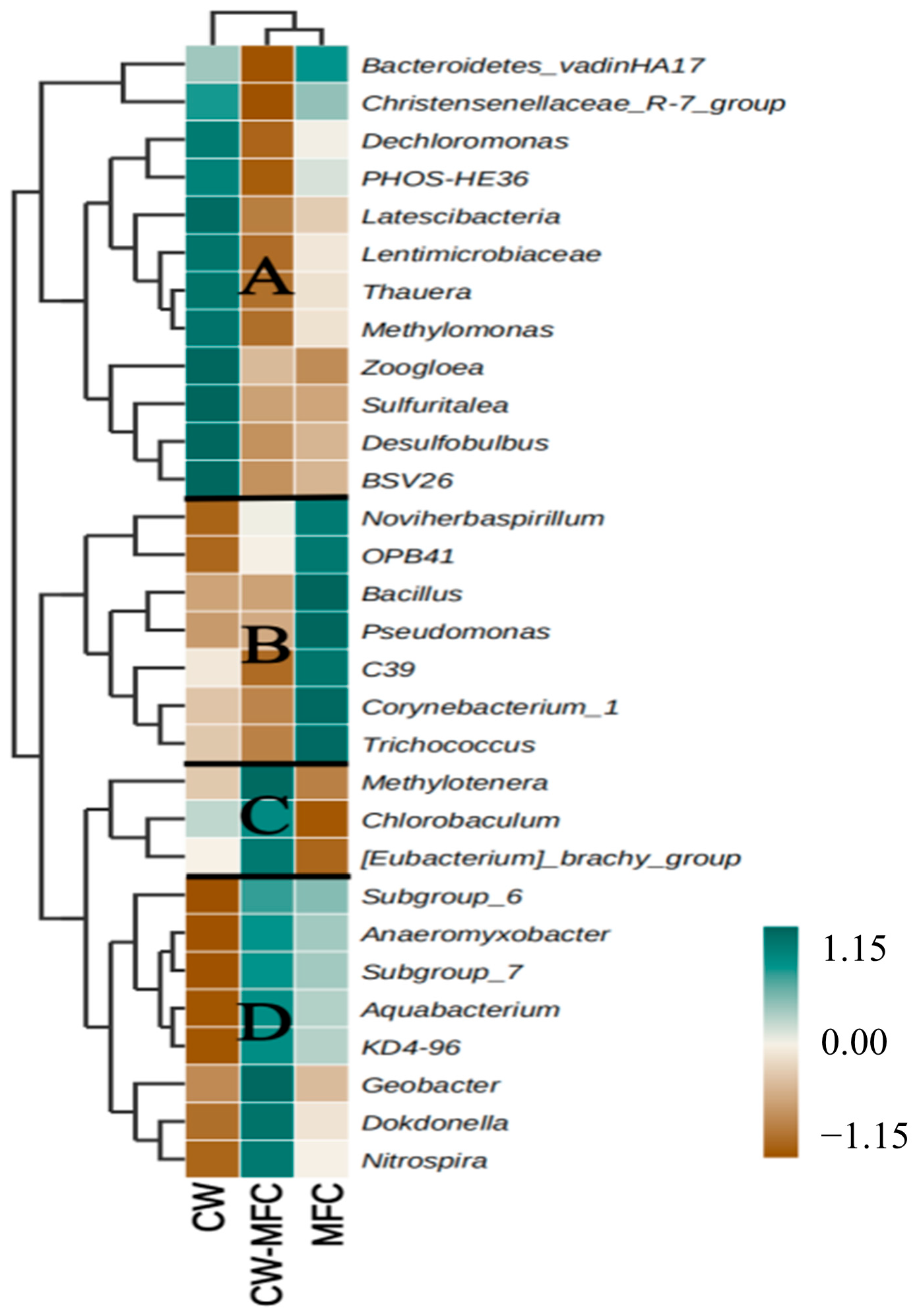
The clustering analysis results of CW-MFC, CW, and the top 30 dominant bacterial genera with MFC abundance were combined as presented in Figure 9. Under the influence of the electric field, CW-MFC and MFC were clustered into one group, while CW was clustered into one group independently; that is, the influence of the electric field on microbial genera was greater than that on plants. All bacterial genera can be divided into four groups, namely A, B, C, and D, and the abundances of the four groups of bacteria in each system are significantly different. The abundance of group D bacteria is relatively high in CW-MFC and MFC; that is, the electric field is conducive to the growth of this type of bacteria. The abundance of group A was the highest in CW; that is, the electric field was not conducive to the growth of this type of bacteria. The abundance of group C was higher in CW-MFC and CW; that is, the plants were favorable to the growth of this type of bacteria. The abundance of group B bacteria was the highest in MFC; that is, plants were not conducive to the growth of this type of bacteria. Additionally, the coupling of CW and MFC significantly increased the abundance of groups C and D, but decreased the abundance of groups A and B.
Figure 9.
Cluster analysis of microbial community structure at genus level. All bacterial genera can be divided into four groups, namely A, B, C, and D.
3.4.3. Microbial Community Function
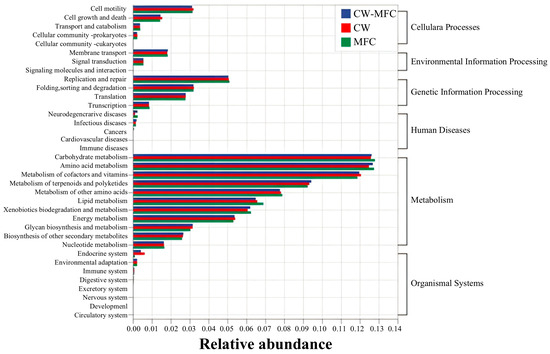
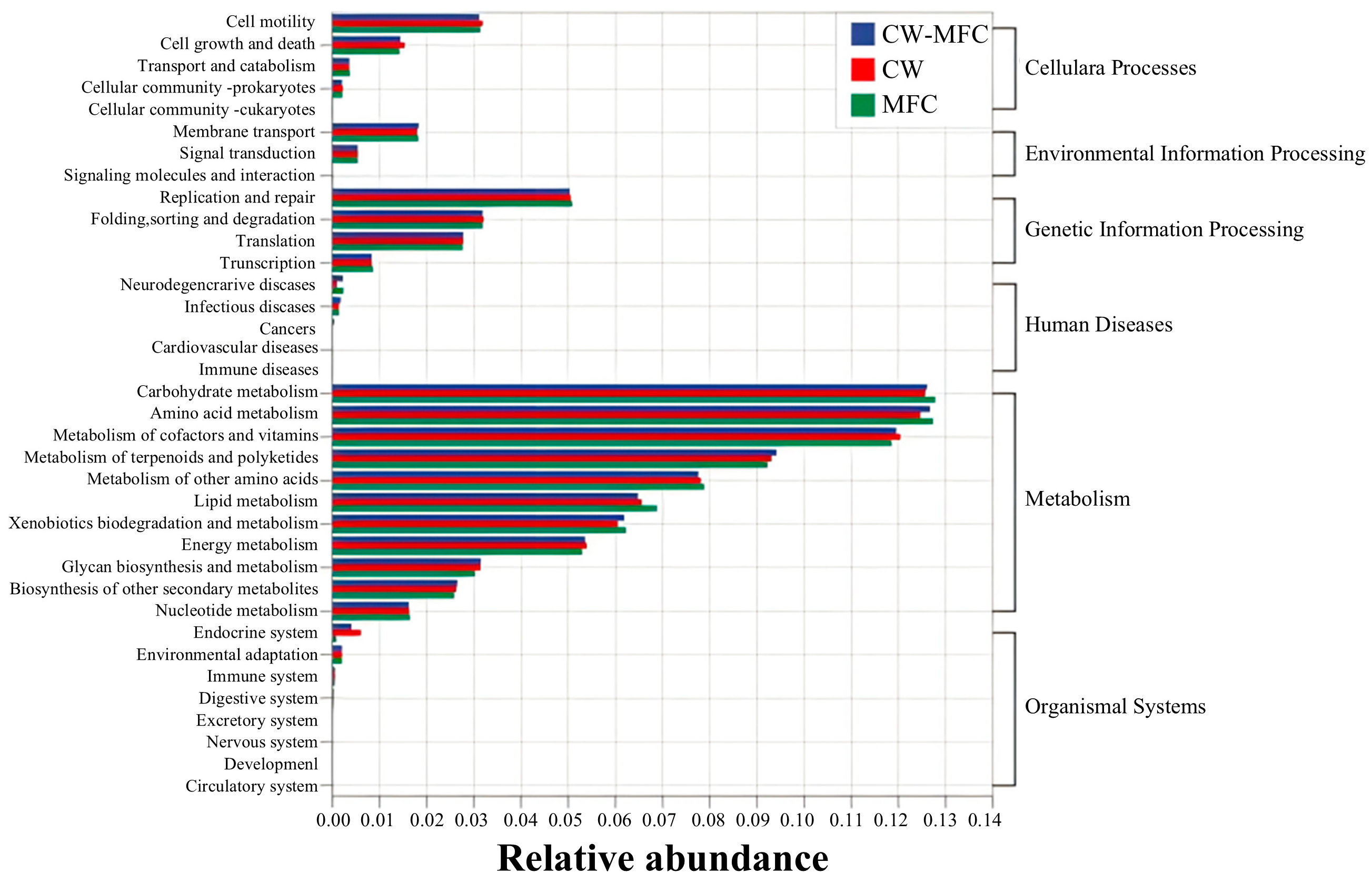
To understand the functional characteristics of CW-MFC, CW, and MFC microbial communities, the PICRUSt2 analysis method was employed in this study to predict the functions of the microbial communities, and the results are presented in Figure 10. Metabolism was the predominant microbial functional gene in CW-MFC, CW, and MFC, accounting for 79.7%, 79.4%, and 80.0% of the total functional abundance of each system, respectively. The secondary functions with high abundance in metabolism include carbohydrate metabolism, amino acid metabolism, metabolism of cofactors and vitamins, metabolism of terpenoids and polyketides, metabolism of other amino acids, and lipid metabolism, among others. The metabolism of terpenoids and polyketides is influenced by the coupling of CW and MFC, and its abundance is higher than that of CW and MFC.
Figure 10.
Secondary functional abundance based on KEGG.
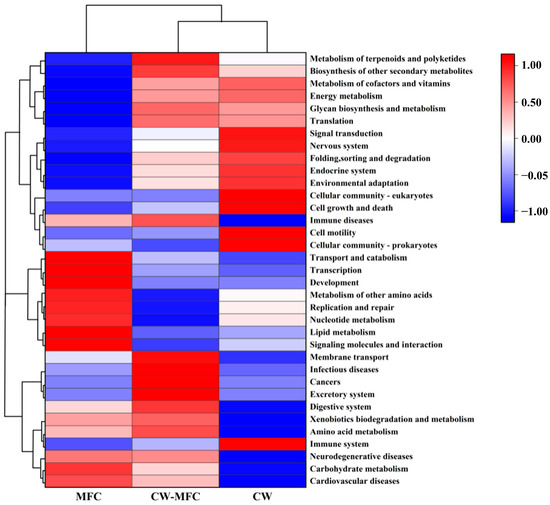
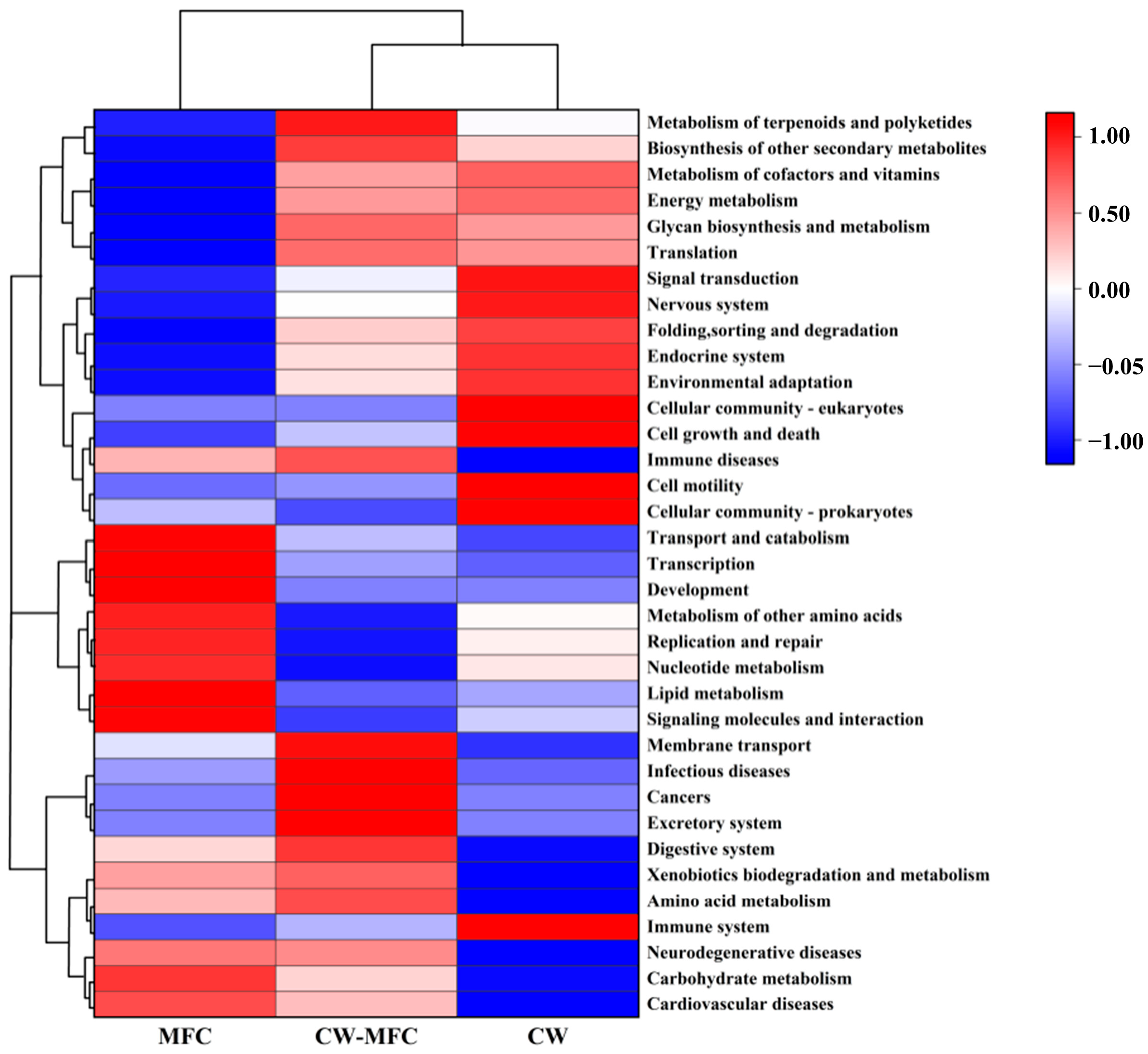
Furthermore, this study carried out cluster analysis on 36 sub-functions of 6 major metabolic pathways of CW-MFC, CW, and MFC, and the results are presented in Figure 11. Under the influence of plants, the microbial community functions of CW-MFC and CW with planted plants were classified into one category, while MFC was classified alone into one category; that is, the influence of plants on microbial community functions was greater than that of the electric field, which was contrary to the results of clustering at the level of the microbial community.
Figure 11.
Clustering analysis of microbial community function.
4. Conclusions
In this study, the impacts of CW-MFC, CW, and MFC on agricultural non-point source pollution processing performance, electrical performance, and changes in the microbial community within the system were compared and analyzed to explore the synergistic effect of CW-MFC coupling. The results are as follows:
- (1)
- The coupling of CW and MFC effectively enhanced the processing performance, electrical performance, and enzyme activity of CW-MFC. Within the experimental range of this study, the removal rates of COD, TN, TP, and atrazine increased by an average of 9.03%, 7.10%, 2.20%, and 7.83%, respectively, through the coupling of CW and MFC. The average output voltage, maximum power density, and current density increased by 71.4 mV, 9.08 mW/m3, and 22.58 mA/m3, respectively. The activities of UE, CAT, and ALP increased by an average of 0.08 mg/(10 g·24 h), 0.18 mL/g, and 0.04 mg/(g·24 h), respectively. The electric field’s promotion of the removal rate of COD and TN was greater than that of plants, while the electric field’s promotion of the removal rate of TP was smaller than that of plants. The promoting effect on the removal rate of atrazine was greater than that of plants at a low concentration of atrazine, but smaller than that of plants at medium and high concentrations of atrazine. The promoting effect of the electric field on UE and CAT activities was generally greater than that of plants, while the promoting effect on ALP activity was greater in plants. The increase of the influent concentration of atrazine to a certain extent inhibited the coupling effect on the processing performance of CW-MFC, the electrical performance, and the enzyme activity.
- (2)
- Affected by the coupling of CW and MFC, the microbial community diversity of CW-MFC and the abundance of bacterial phylum, class, and genus such as Acidobacteria, Deltaproteobacteria, Aquabacterium, Geobacter, and Subgroup_6 were detected. The abundance of terpenoids and polyketides increased to varying extents. The effect of the electric field on the microbial community structure at the genus level was greater than that of plants, and the effect of plants on the microbial community function was greater than that of the electric field.
In conclusion, the coupling of CW and MFC not only enhances the effect of CW control but also outputs energy to the exterior, which is an ideal technology for agricultural non-point source pollution control in the context of environmental pollution and energy crisis. The results of this study laid a theoretical foundation for the advancement of agricultural non-point source pollution control technology and provided strong support for the expansion of CW to new application fields. It has profound significance for effectively controlling agricultural non-point source pollution and ensuring the sustainable development of agriculture.
However, several challenges remain for the practical application of CW-MFC systems. The limited electricity production necessitates research into its effective utilization to achieve genuine resource recycling, which represents a key direction for future breakthroughs. Furthermore, as this study relies on laboratory-scale simulations to reveal the synergistic mechanisms, the long-term stability, resilience under real-field interference, and feasibility for broader implementation of the system in actual agricultural settings still require further verification.
Author Contributions
Conceptualization, M.J. and Y.Q.; methodology, S.J. and Y.Q.; software, S.J.; validation, S.J.; formal analysis, Q.D.; investigation, Q.D.; resources, Y.Q.; data curation, Q.D.; writing—original draft preparation, Q.D.; writing—review and editing, Q.D., S.J., M.J. and Y.Q.; visualization, Q.D.; supervision, M.J. and Y.Q.; project administration, M.J.; funding acquisition, M.J. and Y.Q. All authors have read and agreed to the published version of the manuscript.
Funding
This study was supported by the Science and Technology Development Plan Project of Jilin Province, China (Grant No. YDZJ202501ZYTS403). The project is entitled “Study on the Performance and Mechanism of the Coupling System of Microbial Electrolysis Cell-Constructed Wetland-Microbial Fuel Cell for Treating Return Flow from Rice Paddies.”
Institutional Review Board Statement
Not applicable.
Informed Consent Statement
Not applicable.
Data Availability Statement
The datasets generated and analyzed during the current study are available from the corresponding author on reasonable request.
Conflicts of Interest
The authors declare no conflicts of interest.
References
- Li, X.; Cheng, M.; Jiao, X.; Zhao, Z.; Zhang, Y.; Gao, X. Advances in Microbial Electrochemistry-Enhanced Constructed Wetlands. World J. Microbiol. Biotechnol. 2022, 38, 239. [Google Scholar] [CrossRef] [Scilit]
- Singh, K.K.; Vaishya, R.C. Municipal Wastewater Treatment Uses Vertical Flow Followed by Horizontal Flow in a Two-Stage Hybrid-Constructed Wetland Planted with Calibanus Hookeri and Canna Indica (Cannaceae). Water Air Soil Pollut. 2022, 233, 510. [Google Scholar] [CrossRef] [Scilit]
- Liu, H.; Hu, Z.; Zhang, Y.; Zhang, J.; Xie, H.; Liang, S. Microbial Nitrogen Removal of Ammonia Wastewater in Poly (Butylenes Succinate)-Based Constructed Wetland: Effect of Dissolved Oxygen. Appl. Microbiol. Biotechnol. 2018, 102, 9389–9398. [Google Scholar] [CrossRef] [Scilit] [PubMed]
- Dai, S.; Wang, R.; Lin, J.; Zhang, G.; Chen, Z.; Li, L.; Shi, Q. Study on Physical Clogging Process and Practical Application of Horizontal Subsurface Flow Constructed Wetland. Sci. Rep. 2025, 15, 523. [Google Scholar] [CrossRef] [Scilit]
- Hu, S.; Zhu, H.; Bañuelos, G.; Shutes, B.; Wang, X.; Hou, S.; Yan, B. Factors Influencing Gaseous Emissions in Constructed Wetlands: A Meta-Analysis and Systematic Review. Int. J. Environ. Res. Public Health 2023, 20, 3876. [Google Scholar] [CrossRef] [Scilit]
- Tang, M.; Li, Z.; Yang, Y.; Chen, J.; Jiang, J. Effects of the Inclusion of a Mixed Psychrotrophic Bacteria Strain for Sewage Treatment in Constructed Wetland in Winter Seasons. R. Soc. Open Sci. 2018, 5, 172360. [Google Scholar] [CrossRef] [Scilit]
- Nsenga Kumwimba, M.; Meng, F.; Iseyemi, O.; Moore, M.T.; Zhu, B.; Tao, W.; Liang, T.J.; Ilunga, L. Removal of Non-Point Source Pollutants from Domestic Sewage and Agricultural Runoff by Vegetated Drainage Ditches (VDDs): Design, Mechanism, Management Strategies, and Future Directions. Sci. Total Environ. 2018, 639, 742–759. [Google Scholar] [CrossRef] [Scilit]
- Budd, R. Use of Constructed Wetlands as Best Management Practice to Reduce Pesticide Loads. In ACS Symposium Series; Goh, K.S., Bret, B.L., Potter, T.L., Gan, J., Eds.; American Chemical Society: Washington, DC, USA, 2011; Volume 1075, pp. 39–50. [Google Scholar]
- Brunhoferova, H.; Venditti, S.; Schlienz, M.; Hansen, J. Removal of 27 Micropollutants by Selected Wetland Macrophytes in Hydroponic Conditions. Chemosphere 2021, 281, 130980. [Google Scholar] [CrossRef] [Scilit] [PubMed]
- Huber, C.; Nijssen, R.; Mol, H.; Philippe Antignac, J.; Krauss, M.; Brack, W.; Wagner, K.; Debrauwer, L.; Maria Vitale, C.; James Price, E.; et al. A Large Scale Multi-Laboratory Suspect Screening of Pesticide Metabolites in Human Biomonitoring: From Tentative Annotations to Verified Occurrences. Environ. Int. 2022, 168, 107452. [Google Scholar] [CrossRef] [Scilit] [PubMed]
- Zarrouk, E.; El Balkhi, S.; Saint-Marcoux, F. Critical Evaluation of High-Resolution and Low-Resolution Mass Spectrometry for Biomonitoring of Human Environmental Exposure to Pesticides. Environ. Technol. Innov. 2024, 36, 103834. [Google Scholar] [CrossRef] [Scilit]
- Mohyudin, S.; Farooq, R.; Jubeen, F.; Rasheed, T.; Fatima, M.; Sher, F. Microbial Fuel Cells a State-of-the-Art Technology for Wastewater Treatment and Bioelectricity Generation. Environ. Res. 2022, 204, 112387. [Google Scholar] [CrossRef] [Scilit] [PubMed]
- Tang, K.; Li, S.; Luo, Y.; Feng, W.; Zhang, Z.; Wang, L.; Zhao, H.; Chen, X.; Li, X.; Wu, Z. Integrating Metagenomics and Untargeted Metabolomics to Analyze the Relationship between Microbial Dynamics and Non-Volatile Metabolomic Profiles in Plant-Derived Microbial Fuel Cells (MFCs). RSC Adv. 2025, 15, 19582–19597. [Google Scholar] [CrossRef] [Scilit]
- Kieu, T.Q.H.; Nguyen, T.Y.; Do, C.L. Effect of Different Catholytes on the Removal of Sulfate/Sulfide and Electricity Generation in Sulfide-Oxidizing Fuel Cell. Molecules 2023, 28, 6309. [Google Scholar] [CrossRef] [Scilit] [PubMed]
- Yadav, A.K.; Dash, P.; Mohanty, A.; Abbassi, R.; Mishra, B.K. Performance Assessment of Innovative Constructed Wetland-Microbial Fuel Cell for Electricity Production and Dye Removal. Ecol. Eng. 2012, 47, 126–131. [Google Scholar] [CrossRef] [Scilit]
- Gupta, S.; Srivastava, P.; Patil, S.A.; Yadav, A.K. A Comprehensive Review on Emerging Constructed Wetland Coupled Microbial Fuel Cell Technology: Potential Applications and Challenges. Bioresour. Technol. 2021, 320, 124376. [Google Scholar] [CrossRef] [Scilit]
- American Public Health Association. Standard Methods for the Examination of Water and Waste Water, 22nd ed.; American Public Health Association: Washington, DC, USA, 2012. [Google Scholar]
- Hoult, E.H.; McGarity, J.W. The Measurement and Distribution of Urease Activity in a Pasture System. Plant Soil 1986, 93, 359–366. [Google Scholar] [CrossRef] [Scilit]
- Wu, J.; Feng, Y.; Dai, Y.; Cui, N.; Anderson, B.; Cheng, S. Biological Mechanisms Associated with Triazophos (TAP) Removal by Horizontal Subsurface Flow Constructed Wetlands (HSFCW). Sci. Total Environ. 2016, 553, 13–19. [Google Scholar] [CrossRef] [Scilit]
- Li, T.; Yang, P.; Yan, J.; Chen, M.; You, S.; Bai, J.; Yu, G.; Ullah, H.; Chen, J.; Lin, H. Effects of Hydraulic Retention Time on Removal of Cr (VI) and p-Chlorophenol and Electricity Generation in L. hexandra-Planted Constructed Wetland–Microbial Fuel Cell. Molecules 2024, 29, 4773. [Google Scholar] [CrossRef] [Scilit]
- Leng, C.; Yuan, Y.; Zhang, Z.; Shi, Q.; Li, F.; Wang, H. Decomposition of Phosphorus Pollution and Microorganism Analysis Using Novel CW-MFCs under Different Influence Factors. Molecules 2023, 28, 2124. [Google Scholar] [CrossRef] [Scilit]
- Mu, C.; Wang, L.; Wang, L. Performance of Lab-Scale Microbial Fuel Cell Coupled with Unplanted Constructed Wetland for Hexavalent Chromium Removal and Electricity Production. Environ. Sci. Pollut. Res. Int. 2020, 27, 25140–25148. [Google Scholar] [CrossRef] [Scilit]
- Wang, X.; Wan, G.; Shi, L.; Gao, X.; Zhang, X.; Li, X.; Zhao, J.; Sha, B.; Huang, Z. Direct Micro-Electric Stimulation Alters Phenanthrene-Degrading Metabolic Activities of Pseudomonas Sp. Strain DGYH-12 in Modified Bioelectrochemical System. Environ. Sci. Pollut. Res. Int. 2019, 26, 31449–31462. [Google Scholar] [CrossRef] [Scilit] [PubMed]
- Zhang, Y.-Q.; Han, J.-L.; Cheng, H.-Y.; Wang, H.-C.; Liu, T.-J.; Liang, B.; Wang, A.-J. Hypersaline Organic Wastewater Treatment: Biotechnological Advances and Engineering Challenges. Environ. Sci. Ecotechnol. 2025, 24, 100542. [Google Scholar] [CrossRef] [Scilit]
- Fu, G.; Han, J.; Yu, T.; Huangshen, L.; Zhao, L. The Structure of Denitrifying Microbial Communities in Constructed Mangrove Wetlands in Response to Fluctuating Salinities. J. Environ. Manag. 2019, 238, 1–9. [Google Scholar] [CrossRef] [Scilit]
- Liu, X.; Zhu, H. Treatment of Low C/N Ratio Wastewater by a Carbon Cloth Bipolar Plate Multicompartment Electroenhanced Bioreactor (CBM-EEB). ACS Omega 2020, 5, 27823–27832. [Google Scholar] [CrossRef] [Scilit]
- Wang, Y.; Shang, Z.; Lan, W.; Liang, S.; Kang, X.; Hu, Z. Optimization of Nutrient Removal Performance of Magnesia-Containing Constructed Wetlands: A Microcosm Study. Environ. Sci. Pollut. Res. Int. 2021, 28, 58583–58591. [Google Scholar] [CrossRef] [Scilit]
- Nani, G.; Sandoval-Herazo, M.; Martínez-Reséndiz, G.; Marín-Peña, O.; Zurita, F.; Sandoval Herazo, L.C. Influence of Bed Depth on the Development of Tropical Ornamental Plants in Subsurface Flow Treatment Wetlands for Municipal Wastewater Treatment: A Pilot-Scale Case. Plants 2024, 13, 1958. [Google Scholar] [CrossRef] [Scilit]
- Raffa, C.M.; Chiampo, F. Bioremediation of Agricultural Soils Polluted with Pesticides: A Review. Bioengineering 2021, 8, 92. [Google Scholar] [CrossRef] [Scilit]
- Sánchez, V.; López-Bellido, F.J.; Cañizares, P.; Rodríguez, L. Can Electrochemistry Enhance the Removal of Organic Pollutants by Phytoremediation? J. Environ. Manag. 2018, 225, 280–287. [Google Scholar] [CrossRef] [Scilit]
- Zhang, L.; Xu, L.; Zhang, Z.; Li, J.; Ren, L.; Liu, Z.; Zhang, Y.; Chen, Y. Influence Mechanism of Vermicompost with Different Maturity on Atrazine Catabolism and Bacterial Community. Toxics 2025, 13, 30. [Google Scholar] [CrossRef] [Scilit] [PubMed]
- Di, L.; Li, Y.; Nie, L.; Wang, S.; Kong, F. Influence of Plant Radial Oxygen Loss in Constructed Wetland Combined with Microbial Fuel Cell on Nitrobenzene Removal from Aqueous Solution. J. Hazard. Mater. 2020, 394, 122542. [Google Scholar] [CrossRef] [Scilit] [PubMed]
- Wang, H.; Zhai, P.; Long, X.; Ma, J.; Li, Y.; Liu, B.; Xu, Z. Research Progress on Using Biological Cathodes in Microbial Fuel Cells for the Treatment of Wastewater Containing Heavy Metals. Front. Microbiol. 2023, 14, 1270431. [Google Scholar] [CrossRef] [Scilit]
- Liao, L.; Yu, D.; Xu, L.; Hu, Q.; Liang, T.; Chen, L.; Zhu, Q.; Liu, S.; Zhong, A. Submersed Macrophytes Vallisneria Natans and Vallisneria Spinulosa Improve Water Quality and Affect Microbial Communities in Sediment and Water Columns. Heliyon 2024, 10, e25942. [Google Scholar] [CrossRef] [Scilit] [PubMed]
- Jiang, C.; Zhao, J.; Ding, Y.; Li, G. Vis–NIR Spectroscopy Combined with GAN Data Augmentation for Predicting Soil Nutrients in Degraded Alpine Meadows on the Qinghai–Tibet Plateau. Sensors 2023, 23, 3686. [Google Scholar] [CrossRef] [Scilit] [PubMed]
- Türker, O.C.; Yakar, A. A Hybrid Constructed Wetland Combined with Microbial Fuel Cell for Boron (B) Removal and Bioelectric Production. Ecol. Eng. 2017, 102, 411–421. [Google Scholar] [CrossRef] [Scilit]
- Ni, L.; Xu, J.; Chu, X.; Li, S.; Wang, P.; Li, Y.; Li, Y.; Zhu, L.; Wang, C. Correlation Among Soil Enzyme Activities, Root Enzyme Activities, and Contaminant Removal in Two-Stage In Situ Constructed Wetlands Purifying Domestic Wastewater. Bull. Environ. Contam. Toxicol. 2016, 97, 131–137. [Google Scholar] [CrossRef] [Scilit]
- He, C.; Liu, C.; Liu, H.; Wang, W.; Hou, J.; Li, X. Dual Inoculation of Dark Septate Endophytes and Trichoderma viride Drives Plant Performance and Rhizosphere Microbiome Adaptations of Astragalus mongholicus to Drought. Environ. Microbiol. 2022, 24, 324–340. [Google Scholar] [CrossRef] [Scilit]
- Tao, M.; Guan, L.; Jing, Z.; Tao, Z.; Wang, Y.; Luo, H.; Wang, Y. Enhanced Denitrification and Power Generation of Municipal Wastewater Treatment Plants (WWTPs) Effluents with Biomass in Microbial Fuel Cell Coupled with Constructed Wetland. Sci. Total Environ. 2020, 709, 136159. [Google Scholar] [CrossRef] [Scilit]
- Khan, Z.; Jain, K.; Soni, A.; Madamwar, D. Microaerophilic Degradation of Sulphonated Azo Dye—Reactive Red 195 by Bacterial Consortium AR1 through Co-Metabolism. Int. Biodeterior. Biodegrad. 2014, 94, 167–175. [Google Scholar] [CrossRef] [Scilit]
- Lin, Y.; Yin, J.; Wang, J.; Tian, W. Performance and Microbial Community in Hybrid Anaerobic Baffled Reactor-Constructed Wetland for Nitrobenzene Wastewater. Bioresour. Technol. 2012, 118, 128–135. [Google Scholar] [CrossRef] [Scilit]
- Abadikhah, M.; Rodriguez, M.D.C.; Persson, F.; Wilén, B.-M.; Farewell, A.; Modin, O. Evidence of Competition between Electrogens Shaping Electroactive Microbial Communities in Microbial Electrolysis Cells. Front. Microbiol. 2022, 13, 959211. [Google Scholar] [CrossRef] [Scilit]
- Abadikhah, M.; Liu, M.; Persson, F.; Wilén, B.-M.; Farewell, A.; Sun, J.; Modin, O. Effect of Anode Material and Dispersal Limitation on the Performance and Biofilm Community in Microbial Electrolysis Cells. Biofilm 2023, 6, 100161. [Google Scholar] [CrossRef] [Scilit] [PubMed]

Disclaimer/Publisher’s Note: The statements, opinions and data contained in all publications are solely those of the individual author(s) and contributor(s) and not of MDPI and/or the editor(s). MDPI and/or the editor(s) disclaim responsibility for any injury to people or property resulting from any ideas, methods, instructions or products referred to in the content. |
© 2026 by the authors. Licensee MDPI, Basel, Switzerland. This article is an open access article distributed under the terms and conditions of the Creative Commons Attribution (CC BY) license.