


Abstract
There are practical gaps and issues in the implementation of maritime transport decarbonization, and the industry is still lagging in comprehensive implementation. In scholarly terms, this is exacerbated by a lack of research on pathways to implementation and a lack of research on the integration of relevant theories. This study employs a narrative (theoretical) review with respect to all the schools of implementation theory. It aims to investigate the applicability of implementation theory and to apply its insights to maritime transport decarbonization implementation, particularly with respect to shipping and ports. The findings, firstly, structure the literature into three schools of implementation theory. Secondly, the applicability of implementation theory and its parameters has been overlaid on maritime transport, resulting in two frameworks for shipping and ports. Thirdly, the determinants of maritime transport decarbonization implementation, derived from top-down and bottom-up theories (i.e., what impedes or leads to successful implementation), have been discussed, supported by literature from the theory and from port and shipping environmental implementation. The determinants include seven policy and management tools, including behavioural, institutional, organizational, and characteristic determinants related to implementing agencies and implementers (here called implementing agencies’ drivers for successful implementation). While this study enriches the literature by highlighting pathways and determinants of maritime transport decarbonization, it also has managerial implications. The findings envision and inspire shipping and port practitioners and policy and decision makers by showing the process of decarbonization implementation, factors for success or failure, and what is needed to reconfigure and improve them.
1. Introduction
According to Webster’s dictionary, implementation means to “carry out, accomplish, fulfil, produce, and complete something”. Implementation is always associated with a policy that responds to a particular societal problem [1], while a policy is defined as the programmatic activities formulated in response to an authoritative decision (by a legitimizing organization), and policy designers plan to carry out these activities through a legislature, a judicial agent, or an executive body [2]. Public policies are those developed by governmental bodies and officials in the form of a series or pattern of activities or decisions, which are themselves a product of the initial stages of a policy process that need to be implemented to remedy some social problem [3]. Implementation researchers have defined policy implementation as carrying out a basic policy decision (translating a policy into action), while decisions are incorporated in statutes, executive orders, or court decisions [4]. Wittrock defined policy implementation as translating policy commitments and societal aspirations into real-world effects [5], while O’Toole referred to it as the connection between the expression of governmental intention and actual results [6].
The exploration of an implementation approach is multi-disciplinary and interconnects the frontiers and sub-disciplines of public administration, organizational theory, public management, public policy, and political science research [1,7,8]. In fact, the study of implementation is part of the policy cycle (i.e., agenda setting, policy formulation, legitimation, implementation, evaluation, policy maintenance, and succession or termination) [9]. It is worth noting that implementation originally grew out of evaluation research. Implementation studies attempt to deal with essential questions of policy analysis, i.e., content, causes, and consequences of public policies [8]. In this sense, Parson differentiates between implementation and evaluation; while evaluation examines how public policy and its implementers can be appraised, audited, valued, and controlled, the study of implementation, on the other hand, is about how a policy is put into action and practice, and what contributes to successful implementation [10]. In this context, this study aims to demonstrate how port and shipping decarbonization policies can be put into practice and what factors (determinants) contribute to their successful implementation.
While much focus has been on policy formulation and analysis, the implementation phase often falls short, leading to policies that fail to meet their objectives [6,11]. Despite governments’ efforts to address social problems, interventions are frequently perceived as ineffective, with the link between policy creation and outcomes remaining unclear [1]. This gap in implementation means that resources, time, and expertise are wasted, undermining leaders’ credibility and squandering public resources [11]. The study of implementation is vital to the field of port and shipping decarbonization, as it aims to bridge the gap between decarbonization policy and successful implementation, ensuring that decarbonization efforts are effective and impactful. Maritime transport decarbonization is defined as “the process of eliminating ships’ CO2 and other GHG emissions through mitigation measures or balance of surplus emissions by removal leading eventually to net zero CO2 emission by 2050” while port decarbonization is defined as “the utilization of mitigation measures (technical and operational emission reduction measures) to reduce, neutralize and offset CO2 emissions from various port emission sources (port operation, ships, and land transport), while surplus CO2 emissions are offset by sinks or sequestration, that is reach net zero emissions by 2050 in line with Article 2 of Paris Agreement” [12].
The impact of climate change is hitting hard, influencing every aspect of our lives [13]. Given this, there is a growing concern regarding the decarbonization of industries and transport, including maritime transport [14]. This concern gives rise to pressure from international regulations and global awareness, with some of the primary motivations being the Paris Agreement and the Sustainable Development Goals (SDGs), including regional polices such as the EU green deal, and climate law [15]. The Paris Agreement, a recent international accord, leads the effort in greenhouse gas (GHG) reduction, aiming to mitigate climate change impacts and reach net zero emission by 2050: that is “to strengthen the global response to the threat of climate by keeping a global temperature rise this century well below 2 °C the industrial levels and to pursue efforts to limit the temperature increase even further to 1.5 °C” [16]. Although most countries have signed this agreement and theoretically transformed it into domestic rules that align with its goals, the implementation of these commitments varies significantly within and among countries [17].
Despite these international agreements and treaties, the efficiency of their implementation has been questioned. According to reports from the Conference of the Parties (COP) and the Intergovernmental Panel on Climate Change (IPCC), many countries have not efficiently implemented the Paris Agreement or achieved their targets towards zero emissions. This issue is particularly evident in the maritime industry (The Talanoa Dialogue in 2018 (a facilitative dialogue under the UNFCCC on ways to increase ambition) included the emissions of international shipping), including ports and shipping, and these industries are thus not in line with the Paris Agreement goals [12,18,19]. The reduction in GHG emissions in maritime transport is still slow, and the desired targets have not yet been accomplished by either shipping [20] or ports [21]. Ships emit around 3% [22] and ports around 2% [23] of global CO2 emissions. While shipping decarbonization is led by the International Maritime Organization (IMO), port decarbonization is led by national authorities.
Studies that address the implementation of shipping and port decarbonization remain scarce and fragmented. The extant literature is predominantly focused on the “what” of decarbonization: technical and operational measures [24], alternative fuels [25], policy prescriptions [26], decarbonization frameworks [27], renewable energy [28,29] and life cycle assessments of technologies and fuels [30,31,32]. Similarly, port literature concentrates on technologies [21], policies [12,33], modelling and optimization [34], stakeholders [35], determinants of implementation [36], and energy management [37]. However, studies that address the implementations of shipping and port decarbonization fall short, and this is a gap that this study fills. While invaluable, this body of work largely treats implementation as a logical, automatic outcome of policy design or technological availability. A critical gap exists in understanding the ‘how’, i.e., the theoretical pathways, actor interactions, and managerial determinants that explain why well-intentioned decarbonization policies succeed or fail in practice. This gap is exacerbated by a lack of integration with established implementation theories from public policy and management sciences.
Extant research suggests that successful implementation can be driven by the use of laws and regulations. However, considering theoretical perspectives and models, other factors influencing implementation must also be accounted for. From a research standpoint, a significant problem lies in the variety of implementation models based on theories, yet the application of these models to inform policymakers, especially in the maritime industry, remains underutilized. In addition, the factors influencing implementation are scattered and not systematically studied. Given this introduction and the relevance of this research, this study, by reviewing the schools of the implementation theory, aims to address the gap in the implementation of shipping and port decarbonization policies by demonstrating how the implementation theory works as a guideline for decarbonization implementation. Within this context, this study also identifies the determinants of successful implementation using the lens of implementation theory. This helps in understanding what influences the implementation of decarbonization policies from the perspective of ports and shipping, rather than on how the Paris Agreement is domesticated or translated into national policies.
The theoretical contribution of this study is threefold. First, it systematically integrates and structures the three generations of implementation theory into the maritime decarbonization discourse. Second, it constructs two dedicated frameworks by overlaying these theoretical parameters onto the distinct contexts of port and shipping decarbonization. Third, it refines the analytical dimensions of implementation by synthesizing and categorizing the determinants into policy tools and agency drivers. By moving beyond cataloguing barriers to offering a dynamic, theory-grounded diagnostic toolkit, this work provides a novel lens for researchers and actionable insights for practitioners and policymakers, such as port authorities, government agencies, managing bodies, planners, managers, and ship and land transport operating companies.
The plan of the study is as follows. Section 2 is the review methodology, followed by a review of implementation theory, and then by details of its generations and development. Section 4 discusses the applicability of implementation theory to maritime transport and develops a theoretical framework to guide this study and future research. Section 5 introduces the synthesis determinants, retrieved from the top-down and bottom-up implementation theory frameworks and applied to maritime transport decarbonization implementation, and Section 6 is the conclusion.
2. Review Methodology
To achieve its aims, this study employs a narrative (theoretical) review methodology. Unlike a systematic review, which seeks to aggregate all empirical evidence concerning a tightly defined question using a replicable protocol, a narrative review is suited to synthesizing broad topics, integrating perspectives from different disciplines, and developing new conceptual frameworks [38,39]. This approach is explicitly chosen and justified for three reasons aligned with our research objectives:
- Objective Scope: Our goal is not to quantify findings (e.g., the prevalence of certain barriers) but to qualitatively explore and structure the entire landscape of implementation theory schools and overlay their parameters onto the maritime transport domain.
- Theoretical Synthesis: The study requires the integration of diverse theoretical constructs from political science, public administration, and management (i.e., top-down, bottom-up, and synthesis implementation theories) to build a novel analytical lens for maritime decarbonization.
- Framework Development: The primary output is a new conceptual framework (two frameworks for shipping and ports) derived from theory, necessitating an iterative, interpretative process of analysis rather than a linear screening and data extraction process.
With respect to the operational process, the review was conducted iteratively over a two-year period (2023 and 2024) to ensure the incorporation of emerging literature. The process involved the following key stages:
- Scoping and Identification: An initial broad search was performed in scholarly databases (including Scopus, Web of Science, and Google Scholar) using combinations of keywords such as “implementation theory,” “policy implementation,” “top-down theory,” “bottom-up theory,” “decarbonization,” “shipping,” “ports,” and “maritime transport.” This scoping phase helped map the core theoretical schools and identify seminal works.
- Literature Gathering and Snowballing: Given the focus on foundational theories, we prioritized identifying key textbooks, seminal journal articles, and highly cited reviews in the fields of implementation science and policy studies. The reference lists of these core works were examined using backward snowballing to capture influential literature. Similarly, for the maritime application, we searched for literature on environmental governance, energy transition, and decarbonization challenges in shipping and ports.
- Analysis and Framework Construction: The analysis was not based on a pre-defined inclusion/exclusion count but on thematic synthesis and conceptual alignment. Literature was organized according to the three identified schools of implementation theory. The parameters and determinants from these theories were then analytically “overlaid” onto the context of maritime transport decarbonization. This involved an iterative process of comparing theoretical concepts with empirical evidence and discussions from the maritime literature to develop, refine, and justify the proposed determinants and frameworks presented in Section 3, Section 4 and Section 5.
Overall, the value of this review lies in its conceptual contribution—structuring theoretical knowledge and providing a new lens for analysis—rather than in a systematic census of all empirical data on the topic.
3. Implementation Theory Generations
Implementation researchers are not in agreement about what constitutes the subject of their inquiry once they handle implementation. Some take implementation to refer to all that is part of the process between an initial statement of policy and its ultimate impact in the world, while others restrict implementation to the actions of those charged with handling a policy [40]. Therefore, we explain all the theoretical views (design and implementation, including those involved in the investigation) and tailor a theoretical framework that enables the investigation of the implementation of maritime transport decarbonization.
Most implementation studies trace their origins to Jeffrey Pressman and Aron Wildavsky’s 1973 book, “Implementation” [41]. They examined an economic development program in Oakland, California, aimed at boosting minority employment, questioning how effectively the authoritative mandate was implemented. Since the 1970s, goal achievement has been a key variable in implementation research [8]. However, the field lacks a universally accepted and practical implementation theory. Instead, it comprises multiple generations of schools offering various concepts and models that contribute to theory building. As can be seen in Figure 1, we cluster all three generations of implementation based on implementation research, each representing different theoretical approaches. This segmentation is recognized by many scholars and theorists, i.e., [1,7,8,11,42,43,44]. Researchers (theorists) can belong to more than one of these generations at any stage [45].
Figure 1.
The three generations of Implementation theory. Source: Adopted from [46].
3.1. First Generation Theories (The Pioneers)
The first generation, grounded in inductive case studies, fundamentally challenged the assumption of automatic policy execution. The seminal work by Pressman and Wildavsky (1973) demonstrated how complexity and multiple decision points could lead to implementation failure [41]. This generation produced several foundational frameworks that catalogued influencing variables. Notably, Van Meter and Van Horn (1975) proposed a model where policy performance depends on six interlinked factors: policy standards, resources, interorganizational communication, implementing agency characteristics, the external environment, and implementer disposition [47]. Other significant contributions included Hargrove (1975) [48], Williams and Elmore (1976) [49], Bardach’s (1977) “Implementation Games” [50], and the early work of Sabatier and Mazmanian [17,51,52].
3.2. Second Generation Theories
The second generation, the builders, advanced more structured theoretical models, crystallizing into two dominant—and often conflicting—perspectives [11,45,53]. It included three approaches.
The Top-Down Approach views implementation as a process controlled by central policymakers. It emphasizes the importance of clear statutory objectives, sufficient resources, and limiting the number of involved actors to ensure compliance at lower levels [2,54,55]. Key models include those by Sabatier [54], Mazmanian and Sabatier [55], Smith (1973) [56], and Nakamura and Smallwood (1980) [57]. A primary criticism is its potential neglect of local political dynamics and street-level discretion [53,58].
The Bottom-Up Approach argues that policy outcomes are ultimately shaped by those at the “front lines,” such as street-level bureaucrats and the target groups themselves [59,60]. This perspective, exemplified by Lipsky’s (1980) theory of street-level bureaucracy [60], focuses on the goals, resources, and practices of implementing agencies and their staff [61,62,63,64]. It is often considered more applicable to social than regulatory policies [1,8,11].
The Synthesis Models integrate these perspectives. Recognizing the limitations of purely top-down or bottom-up views, a third strand sought synthesis. This approach, crucial for this study, integrates variables from both levels, acknowledging that implementation involves continuous interaction across governance tiers [65,66]. It employs both forward mapping (from policy design) and backward mapping (from street-level action) [53,67]. Influential synthetic frameworks include Mazmanian and Sabatier’s expanded model [4], Goggin et al.’s (1990) communication model [66], and the Integrated Implementation Model [68,69].
3.3. Third Generation: Quantitative Research Designs
The first and second generations produced rich insights but were critiqued for generating long checklists of variables without establishing their relative explanatory power [53]. For example, one review of over 100 articles identified more than 300 significant variables [40]. This compromised theoretical robustness, leading Goggin et al. (1990) to call for a third generation emphasizing theory testing, frequent case comparisons, and statistical research designs to increase observations [66,70]. This generation shifted the focus toward measuring immediate achievements and treating the main policy goal as the dependent variable [45,53]. It encouraged developing and testing partial theories about specific implementation problems. Key contributions included Hogwood and Gunn’s (1984) ten preconditions for perfect implementation (e.g., adequate time and resources) [71] and Najam’s (1995) synthesis into the 5C protocol: content, context, commitment, capacity, and coalition support [17]. This drive for conceptual clarification and empirical testing directly informs the structured identification and categorization of implementation determinants in Section 5 of this study. Given the above explained generations, implementation occurs on two levels: macro and micro. At the macro level, centrally located actors design and devise government programs. At the micro level, local organizations and agencies develop their own programs based on the macro-level plans and implement them [2,11].
4. Implementation Theory: Understanding Policy Implementation in Ports and Shipping
There are four forms of policy implementation: administrative implementation, political implementation, experimental implementation, and symbolic implementation, all of which entail ambiguity and conflict in relative levels [11]. Every policy, thus, should be designed and then properly implemented. A public policy is seen as a deliberate course of action taken by an actor or group of actors to address a problem [72]. While administrative agencies primarily implement public policies, other actors can also be involved or influence these agencies. Nonetheless, implementation research focuses on the gap between policy expectations and results, examining both the process and factors affecting outcomes. Indeed, comparing objectives with outcomes reveals potential implementation gaps and failures [1]. Given this, the implementation theory seeks to bridge the gap between policy design and the actual outcomes of those policies by examining the factors and processes that influence successful implementation.
The theory facilitates the investigation of reasons that ensure policies not only look good on paper but also achieve their intended objectives in practice. Figure 2 and Figure 3 show, respectively, the theoretical framework for port and shipping decarbonization implementation based on the implementation theory review, i.e., a synthesis of the top-down and bottom-up theories, bearing in mind that red fonts are derived from the implementation theory while black fonts are the overlay of shipping and port constructs on these frameworks. The following subsections first explain and introduce the main concept based on the implementation theory, in line with the frameworks, and then the applicability and interpretation are discussed from the perspective of ports and shipping, respectively.
Figure 2.
Framework for ports’ decarbonization implementation.
Figure 3.
Framework for ships’ decarbonization implementation.
4.1. The Goal
Ports fall under national jurisdiction, providing a unique framework for implementing decarbonization measures effectively. Decarbonization policies for ports can be developed independently or in conjunction with other environmental policies, but the primary goal remains a reduction in GHG emissions from port operations. Port authorities can align themselves with the Paris Agreement, which aims to reach net-zero emissions by 2050 and limit global warming to well below 2 degrees Celsius. Recently, ports have started focusing on sustainability and greening by initiating goals and policy directives to set themselves on the environmentally friendly side [73,74]. The ultimate objective of these policies is to achieve a complete decarbonization of ports. This can be realized through proactive planning and investment by port authorities in decarbonization measures or by public and port authorities driving port polluters—including port operators, land transport, and ships—to adopt both technical and operational decarbonization measures. This adoption is facilitated by utilizing various policy and management tools, such as regulations, economic and punitive measures.
In shipping, the IMO has outlined an ambitious strategy to address greenhouse gas (GHG) emissions from international shipping, contributing significantly to global efforts against climate change, including the Paris Agreement and the United Nations 2030 Agenda for Sustainable Development. The 2023 IMO GHG Strategy aims to phase out GHG emissions from shipping as soon as possible while promoting a just and equitable transition [19]. The 2023 IMO GHG Strategy sets specific levels of ambition to guide the decarbonization efforts in the shipping sector: these are goals and measures to achieve these goals in the short, medium, and long terms, respectively.
- Short-term goals (by 2030)
- Carbon Intensity Reduction: Reduce CO2 emissions in transport work by at least 40% by 2030 compared to 2008 levels.
- Uptake of Zero or Near-Zero GHG Emission Technologies: Ensure that at least 5%, striving for 10%, of the energy used by international shipping comes from zero or near-zero GHG emission technologies, fuels, and energy sources.
- Total Annual GHG Emission: Reduce the total annual GHG emissions from international shipping by at least 20%, striving for 30%, by 2030 compared to 2008 levels.
- Medium-term goals (by 2040)
- Total Annual GHG Emissions: Reduce the total annual GHG emissions from international shipping by at least 70%, striving for 80%, by 2040 compared to 2008 levels.
- Long-term goals (by 2050)
- Net-Zero GHG Emissions: Achieve net-zero GHG emissions by or around 2050, considering different national circumstances, and align with the long-term temperature goal of the Paris Agreement.
- Short-term measures
- Energy Efficiency Design Index (EEDI): Ensures new ships are designed to meet specific energy efficiency levels.
- Ship Energy Efficiency Management Plan (SEEMP): Requires ships to implement plans to improve energy efficiency.
- Energy Efficiency Existing Ship Index (EEXI): Applies energy efficiency standards to existing ships.
- Carbon Intensity Indicator (CII): Measures and incentivizes improvements in the operational carbon intensity of ships.
- Medium-term measures
- Alternative Fuels and Technologies: Promote the adoption of low-carbon and zero-carbon fuels like LNG, hydrogen, and ammonia.
- Market-Based Measures (MBMs): Implement economic incentives such as carbon pricing, emission trading schemes, or levies to encourage a reduction in GHG emissions and investment in cleaner technologies.
The IMO, in the recent MEPC 83 (2025), formally approved the draft IMO Net-Zero Framework to be incorporated into a new Chapter 5 of MARPOL Annex VI, establishing a Global Fuel Intensity Standard (GFI) as its technical pillar and a complementary GHG pricing mechanism as its economic pillar. Under the GFI, ships must progressively reduce their annual GHG emissions per unit of energy using a well-to-wake (WtW) lifecycle methodology. Vessels failing to meet set intensity thresholds are required to purchase Remedial Compliance Units from better-performing ships, while those under stricter “Direct Compliance” targets can generate Surplus Units to trade or bank. Revenues collected feed into an IMO Net-Zero Fund, which supports innovation, just transition initiatives, and incentives for low-emission fuel adoption
- Long-term measures
- Innovation and research and development (R&D): Encourage continuous innovation in ship design and propulsion technologies to achieve zero emissions.
- Advanced Technologies: Utilize cutting-edge technologies like wind-assisted propulsion and renewable energy sources to enhance fuel efficiency and reduce emissions.
4.2. Top-Level Policy Makers and Designers (Government/Intergovernmental Entities)
As shown in Figure 2 and Figure 3, this top-level design directly determines the goal (Section 4.1) and shapes the policy instruments (Section 5.1) available to implementing agencies. At the top level, policymakers are responsible for designing policies that include structuring a set of intentions (objectives) or a goal, a mix of instruments or means for accomplishing these intentions, a designation of implementing agencies charged with carrying out the intentions (policy implementation), and an allocation of resources for the required tasks [43]. The characteristics of the policy influence the implementation outcome, and thus should be clear and easier to implement. Researchers warn that ambiguity in policy characteristics causes conflict in implementation [2].
With respect to ports, they are strategic national assets, often involving government decision-making at various levels [75]. Policy makers in port decarbonization include top-level governmental bodies, such as ministries of transport, environment, and trade, as well as middle-level local and municipal authorities [46]. Generally, the central government establishes a national port policy that supports national economic objectives and creates a reasonable framework for port development. Ports, particularly public ones, can be under the direct jurisdiction of public agencies, such as the Ministry of Transport or Maritime, with the presence of a Chair (or Director-General), and a Board of Directors, in addition to civil servants appointed to the public agency, and thus directly reporting to that agency [76]. The Ministry of Transport, for example, develops the transport policies and legislation, and implements transport laws, national regulations, and decrees [76]. In addition, the ministry incorporates relevant elements of international conventions into national legislation (e.g., the International Convention of Safety for Life at Sea (SOLAS), United Nations Convention on the Law of the Sea (UNCLOS), the International Convention for the Prevention of Pollution from Ships (MARPOL), and the Paris Agreement. Overall, governments and public authorities at the top set the overarching decarbonization policies, defining emission and energy targets and employing various instruments and intervention mechanisms, such as financial incentives, to achieve these goals (called the implementation schemes) [33,77].
For shipping, according to Stopford [14], the top-level policy makers in shipping decarbonization belong to two tiers of the four-tier maritime governance system. At the top level (Tier 1) exist the International Maritime Organization (IMO) and the International Labour Organization (ILO). These organizations coordinate the direction of international regulation in accordance with the wishes of their member states. The IMO, a specialized agency of the United Nations, regulates international shipping. It sets global standards through conventions like SOLAS and MARPOL, addresses legal matters, and provides technical cooperation to developing countries. The IMO’s efforts focus on enhancing maritime safety and security while preventing marine pollution (environmental protection) and ensuring effective compliance with international regulations. The ILO focuses on labour standards and rights at work, particularly for maritime workers (seafarers). It established the Maritime Labour Convention (MLC), 2006, ensuring decent working conditions and fair treatment for seafarers. The ILO also improves occupational safety and health standards, develops training and certification standards for seafarers, and collaborates with the IMO to ensure the fair treatment of seafarers in maritime accidents.
4.3. Bottom-Level Implementing Agencies
At the bottom level, implementing agencies, which may include both governmental and non-governmental bodies, play a crucial role in the success or failure of policy implementation [53]. These agencies can be federal, regional, state, or local government actors, as well as private sector entities. As shown in Figure 2 and Figure 3, implementing agencies at the bottom level participate in shaping the policy and management tools (Section 5.1) with top-level implementers, while they are also influenced by the determinants identified in Section 5.2.
While port policies are primarily determined by governments and public authorities at the top, port authorities play a crucial role, at the operational level, in the implementation of port decarbonization policies [78]. The role of port authorities varies depending on their governance model, whether they are public (government-run), a mixed public–private partnership (landlord), or private (private company) [79]. They may provide basic infrastructure to operators as landlords; set tariffs, environmental standards, and regulations for tenants and operators as regulators; own and operate cargo handling equipment and oversee operations as operators; collaborate with port stakeholders to enhance performance and operations as community managers [80]; and act as developers, innovation drivers, and centres for knowledge sharing [81].
Port authorities, as key implementing agencies, respond to top-level directives by enforcing international conventions and national laws, and by making their own regulations governing port operators and vessel behaviour and port area usage [76]. They drive port users to adopt decarbonization measures through policy and management tools initiated by higher authorities, or by them in cooperation with top-level authorities. This includes implementing rules and regulations that promote environmental management and monitoring compliance [82]. Port authorities often possess extensive police powers and are supported by entities like the Harbour Master or coastguard for specific regulations related to navigation and law enforcement [76]. In the context of decarbonization, which is driven by international agreements like the Paris Agreement or the response to MARPOL, port authorities execute policies aimed at climate change mitigation [82]. They ensure that ports meet defined emission and energy targets and facilitate the transition towards greener maritime supply chains [12,15,78]. Thus, with governments and public authorities at the upper level and port authorities at the operational level, they ensure that decarbonization policies are effectively translated into actionable measures within ports [33].
In shipping, the bottom-level implementing agencies are the nation-states (Flag States), shipping companies, and maritime and port authorities, who play a pivotal role in pushing the decarbonization agenda within the maritime industry. Flag states (ships’ home administrations) enact the regulatory framework developed at the top level, register ships and shipping companies, and control maritime activities in their territorial waters. They are responsible for ensuring that ships comply with the IMO decarbonization goals and measures—such as the GHG Strategy and the forthcoming Net-Zero Framework—through certification and monitoring [83].
This compliance work is often conducted by third-party classification societies, bearing in mind that many ships operate under open registries, where Flag States primarily reach vessels through classification society certification, particularly if the Flag State is a signatory to MARPOL Annex VI. In this context, classification societies carry out inspections, issue compliance documents, and verify adherence to technical regulations, including those related to emissions and fuel standards. They ensure compliance through regular monitoring, reporting, and verification processes. Flag states are also responsible for integrating decarbonization strategies into shipping companies’ business models and operational practices. This involves instigating the adoption of decarbonization measures and providing the institutional structure for implementation at the ship level.
In the same context, shipping companies also explore and adopt alternative fuels, including LNG, biofuels, and hydrogen, to reduce their carbon footprint. While shipping companies invest in new technologies, retrofit existing vessels, and adopt alternative fuels, they also implement a comprehensive SEEMP, which includes measures for optimizing voyage planning, speed reduction, and regular maintenance to ensure optimal performance. The same is true regarding the CII. Companies are required to set internal targets for carbon reduction, aligning with or even exceeding flag states’ regulations. These efforts by shipping companies are crucial in driving the broader industry towards achieving global decarbonization goals.
Coastal states, including maritime and port authorities, play a vital role in enforcing decarbonization measures in the shipping industry. These authorities ensure that ships comply with both international agreements and national regulations related to environmental standards. Upon entering ports, ships undergo inspections by maritime and port authorities to verify adherence to protocols such as MARPOL Annex VI. Authorities also check the ships’ energy efficiency certificates, confirm compliance with the SEEMP, and assess the CII (future IMO measure) to ensure that ships meet the required efficiency and emission standards. By reviewing certificates of compliance and emission reports, these authorities ensure that ships are aligned with international and national decarbonization policies.
Coastal States also incorporate international maritime conventions into their national legislation, creating a unified regulatory framework and enabling domestic enforcement of decarbonization measures within their jurisdiction. Additionally, port authorities may implement local initiatives, such as providing and incentivising the use of cleaner fuels and shore power to minimize emissions while ships are docked. They will need to have a role in regulating emissions in ports and territorial waters.
In the future, coastal states and their maritime and port authorities will play a critical role in implementing the IMO GHG strategy, including regional implementation of IMO measures like the Carbon Intensity Indicator (CII) and the forthcoming Net-Zero Framework. They will need to be involved in rigorous checking of ship documents for compliance with energy efficiency and emission standards, ensure the use of alternative fuels and oversee fuel standards, verify the accuracy of submitted data, and oversee the collection and distribution of revenues generated by market-based measures. Additionally, they will have a role in facilitating international engagements, such as green corridors.
It is worth noting that implementing agencies engage enforcers in shipping and ports, called intermediaries or street-level bureaucrats, who are essential for the frontline implementation of policies [59]. The shipping companies include ship officers, including captains and superintendents, while ports have various officers that interact with port operators, and ships directly, and perform the required check-ups and report compliance. Lipsky reported that the outcome of implementation is determined at the “street level” [60]. Thus, policymakers, including the implementing agencies, need to incentivize compliance, build their capacity, and increase their commitment so they can carry out the policy effectively [43].
4.4. Output (Policy Instruments)
The policy makers at the top level, and implementing agencies to some extent, structure the implementation process using various decision instruments and policy tools, referred to as outputs [53]. These outputs are the means to implement the policy goal. For example, instruments (outputs) facilitate the implementation of policy objectives, such as reducing crime levels, air pollution, or unemployment [1]. The effectiveness of these outputs depends on the compliance of the target groups. As can be seen in Figure 2 and Figure 3, these instruments are the primary means for implementing agencies (Section 4.3) to engage with and influence the behaviour of target groups (Section 5.5). In ports, both the top-level policy makers (key players) and the bottom-level implementing agencies contribute to the construction of these tools (called the implementation schemes). In shipping, the top-level policy and decision makers in national agencies (flag states) initiate such tools. These tools are seen as determining factors for successful implementation. Further details about these tools are in the section that addresses the determinants of implementation (Section 4.1).
4.5. Target Groups
The target groups are at the bottom, and those are the citizens or firms whose behaviour the policy seeks to influence. The compliance of these groups is essential for the successful implementation of the policy [8]. Mazmanian and Sabatier emphasized studying the impact of agency decisions (i.e., outputs) on target groups—both intended and unintended—including the perceived impact, to revise such policies and basic statutes if possible [4]. As can be seen in Figure 2 and Figure 3, the response of target groups to policy instruments is the critical step that generates the policy outcome (Section 4.6), creating a feedback loop to policymakers.
With respect to ports, their operations encompass various logistical functions such as cargo handling, transport, warehousing, and storage, along with industrial activities like assembly and disassembly [78]. Port authorities or managing bodies oversee these operations, utilizing equipment that predominantly relies on fossil fuels, thus becoming significant sources of emissions. These sources are categorized as either mobile or stationary [84]. Mobile sources include cargo-handling equipment like quay and yard cranes, terminal tractors, straddle carriers, forklifts, port vehicles, and marine services such as tugs and pilot boats. Stationary sources encompass generators, refrigerated containers, warehouses, buildings, docks, lighting, and air conditioning systems. Additionally, emissions stem from land transport modes such as trucks and railways, inland waterways, and vessels at the ship–port interface [85,86]. The primary target groups for port decarbonization include private and public port operators, who are required to decarbonize based on established policies. While publicly owned port authorities, acting as owners and operators, need to directly decarbonize their operations, port authorities can encourage tenants to adopt decarbonization strategies, such as including relevant clauses in new lease agreements. Many existing leases span 20 to 50 years, limiting the ability to introduce new requirements. In such cases, leverage is often weak, especially in privatized or corporatized port systems where the authority may no longer hold regulatory power. This is particularly relevant in the Global South and in jurisdictions where ports are governed locally by municipalities or regional bodies rather than at the national level. These fragmented governance structures pose challenges to enforcing uniform decarbonization standards. Nevertheless, authorities may reopen dialogue with operators, propose amendments, or use incentive mechanisms to engage long-term tenants in voluntary decarbonization efforts.
Other significant polluters include ships, land transport, domestic inland waterways vessels, and marine services (tugs, pilots, tows). These groups need to reduce their carbon emissions while operating within port areas. Port authorities implement measures to reduce emissions from port operations, ships at the port interface, and land transport. These measures can extend to domestic and inland waterway emissions as well as marine services. The measures include the use of an onshore power supply and alternative fuel bunkering, among others. The port authorities at the bottom level target ships and land transport through implementation schemes, such as incentives to adopt these measures and punitive measures penalizing those who do not do so, potentially reducing emissions beyond port areas. However, these target groups are often reluctant to invest in decarbonization due to profit motives [87], meaning that port and public authorities must use policy tools and management strategies to drive these polluters to adopt decarbonization measures. Port authority is frequently emphasized in that ports play a crucial role in environmental upgrades to both seaside and landside operations, justifying the broad scope of decarbonization targets [78]. Ports are capable of decarbonizing port operations, hinterland transport, oceangoing vessels, and maritime supply chains [15,88].
As regards shipping, the actual implementation of decarbonization strategies occurs onboard ships, where the ship’s master and crew play a critical role. They are responsible for optimizing vessel performance, adhering to maintenance schedules, and implementing best practices for fuel consumption and energy efficiency. The ship’s master and crew ensure compliance with international regulations and shipping company policies by conducting regular monitoring, reporting, and verification of emissions data. They use advanced technologies and follow operational guidelines to minimize fuel use and reduce emissions. Effective training and engagement of seafarers is essential, as these front-line operators must be proficient in the latest technologies and practices aimed at reducing emissions. By adhering to the procedures outlined in the SEEMP and monitoring their compliance with the EEXI and CII, they ensure that their vessels meet both regulatory and company-specific targets. Thus, while top-level policymakers establish the framework and regulations, it is the ship’s master and crew who operationalize these directives, translating policy into practice on the high seas. Their adherence to these measures not only fulfils their shipping company’s targets but also contributes to the broader goal of maritime decarbonization. It is worth noting that while shipping companies fall under the implementing agencies in the theoretical framework (Figure 3), they are also target groups that the decarbonization policy targets and thus need to respond by adopting decarbonization strategies and measures.
4.6. The Outcome
The ultimate measure of policy implementation success is the outcome, which is the degree to which the policy’s goals are achieved [66]. The distinction between outputs (the actions taken) and outcomes (the results achieved) is critical. Outputs reflect the performance of the policy makers and implementers, while outcomes reflect the behaviour change in the target groups [53]. Dunn notes that outputs contribute to the desired outcomes [89]. The outcome is consistent with the policy objectives (goal) at a much more operational level than a law [43]. Overall, implementation results from the interactions among street-level bureaucrats, the organizations they work within, and the target groups. These interactions are influenced by broader policy design, political processes, and socio-economic environments [8]. As can be seen in Figure 2 and Figure 3, this outcome feeds back into the system, informing potential revisions to the goal and policy design by top-level policymakers, thus closing the implementation cycle.
In ports, the primary outcome of decarbonization efforts is the adoption of low and near-zero-carbon measures by port polluters, including private and public operators. Ports themselves often initiate these measures to reduce emissions from port operations, ships, and land transport within port areas. Key shipping and land transport measures include providing onshore power supplies and alternative fuels for ships, as well as banning older, polluting trucks and enforcing booking times to reduce congestion [33,85]. As highlighted earlier, the implementation of these measures is driven by implementation schemes [33]. Concerning the port decarbonization outcome, it includes multiple measures such as the electrification of equipment, enhancing energy efficiency, adopting cleaner fuels, and utilizing renewable energy sources. Ports may replace old equipment with new, more efficient models, repower or retrofit engines, and implement smart grids and microgrids to optimize energy use [85,90]. Operational measures, including automation and terminal operating systems and digitalization, further improve efficiency and reduce emissions. These comprehensive efforts, often conducted in collaboration with industrial associations and private firms, aim to create a sustainable and efficient port environment.
The needed shipping decarbonization outcome is to achieve zero emissions through the adoption of advanced technologies and alternative fuels. Also, shipping companies must invest in energy-efficient ship designs, including advanced hull designs, air lubrication systems, energy-saving devices, retrofits of existing vessels, and the utilization of cleaner fuels such as hydrogen, ammonia, and biofuels, and other measures, such as carbon capture and electrification, using batteries [91,92,93,94,95,96]. Various studies have presented measures that decarbonize ships, e.g., [24,97,98,99]. Onboard, the ship’s master and crew optimize performance and adhere to best practices for fuel efficiency, playing a crucial role in implementing decarbonization measures. Compliance with international regulations and company policies is ensured through rigorous monitoring and reporting. However, shipping decarbonization measures are not a silver bullet, as they cannot be implemented independently considering maturity level, supply and sustainability constraints, and cost issues, among others. There are still inherent issues with current shipping decarbonization measures, such as the safety of new alternative fuels, the sustainability of their production, and whether their supply will be sufficient [100,101,102]. In addition, emerging technologies like carbon capture require further verification, as well as the development of a functional market for trading captured emissions [103,104].
5. Determinants of Successful Implementation of Port and Shipping Decarbonization
A review of the various generations of implementation theory, including their models and frameworks, reveals that implementation is influenced by a multitude of factors. The core aspect of implementation studies involves identifying how different agencies, organizations, and institutions shape and carry out policies using various instruments (outputs). However, research has also focused on other factors that influence implementation outcomes and ultimately goal achievement, such as the implementation framework [43] and Najam’s 5C protocol [17]. Hogwood and Gunn list ten preconditions for perfect implementation, such as avoiding crippling external constraints, ensuring sufficient time and resources, and securing perfect compliance [71]. Hill and Hupe argue that successful implementation depends on more than just the policy itself [1]. Their review of 88 articles identified various factors influencing the policy process from formation to outcome, beyond just policy tools and instruments.
The determinants, which extend beyond implementation outputs, are crucial in identifying the causes of success or failure in policy implementation. These determinants can either obstruct or expedite effective policy implementation. In this study, they are divided into determinants that encompass policy and management tools (outputs) and other policy-related, behavioural, institutional, organizational, and characteristic factors of implementers and implementing agencies (called implementing agencies’ drivers for successful implementation). Such categorization and typologies of factors are required, as these shift the study of implementation from the general identification of complexity towards a specific understanding of key processes [9] and further facilitate empirical data collection. The following section explains these categories of the determinants, i.e., the policy instruments and tools (output), and the other implementing agencies’ determinants of implementation (drivers for successful implementation). Each subsection provides firstly a theoretical background based on implementation theory, then discusses its applicability and issues related to ports and shipping.
5.1. Policy Instruments and Tools
Policy tools or instruments are devices used to turn broad policy aims into specific actions [9]. Instruments describe a wide range of measures, while tools refer to key categories [9]. Policy instruments are identified as techniques employed by governmental authorities to support or prevent social change [105]. In policy implementation, these instruments or tools are the outputs of a policy (see Figure 2 and Figure 3) and reflect the performance of implementers, whether at the agency level or by street-level bureaucrats [53]. Overall, the policy instruments are administrative tools used by implementers to influence the behaviour of target groups, steering them toward desired outcomes and achieving policy objectives [8,44]. They are considered the building blocks of implementation [43,105]. Between 1970 and 1990, implementation research shifted to focus on policy instruments rather than solely on policy making and formulation. This shift allowed for better theorization of policy implementation [43]. Researchers suggested that policy tools could be categorized into one or a mix of generic instruments [8]. However, there is no consensus on the typology, relevance, or number of such instruments [105].
A basic taxonomy of tools includes various enforcement measures such as mandates, coercive programs, provision of information, capacity building, assistance, and economic incentives and disincentives. Vedung categorized policy instruments into regulations (sticks), economic means (carrots), and information (sermons) [105]. Similarly, these instruments are grouped into three types of power: coercive, remunerative, and normative [11,106]. The mix of instruments should be carefully considered, as the implementation efforts and costs can vary, and contradictions may arise [9,43]. For example, mandates require inspections and sanctions by implementing agencies, while sharing information and implementing economic tools may need fewer staff and be less costly [8,9]. Additionally, the selection of policy instruments may involve trade-offs. Powerful target groups are more likely to receive subsidies or inducements, whereas powerless groups may face penalties and coercive programs [6,43]. While shipping (IMO, flag states, and companies) and public and port authorities may combine various tools, e.g., regulations and disincentives (harsh), and incentives (sweet but not enough), it is essential that they combine other tools to guarantee wider- and larger-scale implementation (voluntary agreements, capacity building, and information sharing). Port and shipping implementation schemes were discussed and clustered, respectively, in [12,33]. Following is an explanation of policy tools and instrument taxonomies from the implementation theory perspective, followed by their application to ports and shipping in the same subsection.
5.1.1. Regulations (Sticks—Coercive)
Regulations are measures undertaken by the government (public authorities) to influence target groups (citizens, corporations, or sub-governments) through the formulation of rules and directives that mandate recipients to act accordingly [105]. Regulations are regularly connected with threats of negative sanctions, but some other tools are not coupled with threats, for example, limiting the choices available to target groups, e.g., banning, and restrictions. While it could be argued that regulation acts as the ultimate backstop for any policy, a study of states’ environmental policies found that regulation is not a necessary condition for robust implementation [43,45]. Other tools can also help in implementation.
Port authorities play a crucial role in implementing international regulations and standards related to climate change and environmental protection. They enforce the provisions of the Paris Agreement and domesticate conventions like the IMO’s International Convention for the Prevention of Pollution from Ships (MARPOL). These regulations are made legally binding for port operators, tenants, ships in ports, and land transport (Acciaro, Vanelslander et al., 2014; Boile et al., 2016) [80,107]. Public authorities, such as national governments and municipalities, manage these regulations due to their jurisdiction over port authorities [33,108]. In this sense, they establish rules and regulations to drive decarbonization efforts in response to regulatory pressure, such as banning fossil-fuel-powered cargo handling equipment, which promotes the use of low-carbon technologies [109]. Port authorities themselves are also subject to these regulations, especially if they operate polluting activities.
In the shipping sector, ships generally follow the jurisdiction of their flag states and must implement and adhere to IMO regulations for decarbonization. Shipping companies are responsible for ensuring compliance with these regulations, particularly in international waters, and must do so transparently and ethically. As mentioned above, port and maritime authorities, as well as coastal states, play a significant role in the implementation of shipping regulations, especially if they are signatories to IMO provisions and when ships are within their territorial waters or ports. This multi-tiered regulatory framework ensures that international standards are upheld, promoting consistent and effective decarbonization practices across the global shipping industry. Indeed, regulation implementation is the backstop tool for shipping decarbonization (Bouman et al., 2017) [110].
5.1.2. Economic Disincentives (Sticks—Coercive)
Economic disincentives are forms of penalties and sanctions (coercive programs) that are imposed legally by authorities on target groups for violations of the policy or law [111]. These disincentives can be negative, restraining, and discouraging market mechanisms, e.g., taxes, charges, fees, customs duties, and tariffs [42,105,112].
Ports utilize various disincentives to drive decarbonization efforts among tenants, operators, ships, and land transport. These measures include charging polluters based on the polluter pays principle, adjusting tariffs and rates, and implementing market-based mechanisms such as emission trading schemes, carbon taxes, and levies [113,114]. Disincentives not only encourage higher energy efficiency and reduced carbon emissions but also generate funds that can be reinvested in cleaner technologies and the management and offsetting of GHG emissions elsewhere [33]. Such financial strategies are essential for fostering a sustainable environment within port operations.
In the shipping industry, disincentives are crucial for ensuring compliance with decarbonization regulations and promoting the adoption of cleaner technologies. Flag states and port states implement these measures to encourage shipping companies to reduce their carbon emissions. States at the IMO have proposed various market-based measures, but there are ongoing discussions about their implementation, particularly regarding revenue collection, recycling, and dissemination. These mid-term measures are expected to be finalized and agreed upon by the end of 2025, with implementation potentially extending to 2030. One significant measure is the European Union Emissions Trading System (EU ETS), which extended to maritime transport starting in January 2024, targeting ships of over 5000 gross tonnage and potentially expanding to include ships of over 400 gross tonnage by 2026. This system requires shipping companies to purchase allowances for their emissions, effectively putting a price on carbon and incentivizing the use of energy-efficient practices. The IMO, in its MEPC 83 Session, announced the Global Fuel Intensity Standard (GFI) as a technical pillar and a complementary GHG pricing mechanism (levy) as an economic pillar requiring ships to shift gradually to alternative fuels until reaching zero emissions by 2050. Despite the current uncertainties at the international level, shipping and port authorities will play a key role in implementing these disincentives, ensuring compliance, and managing the transition towards more sustainable maritime operations.
5.1.3. Compulsory Agreements (Sticks—Coercive)
The implementing agencies may sign an agreement with target groups (beyond regulations) to fulfil the policy objectives [9]. This instrument is coercive [2,43,106]. While this can be used as a tool, it is argued that it cannot be considered a policy tool in its own right [105].
Within the context of ports, authorities sign compulsory agreements with port polluters, binding them to decarbonization commitments. For instance, concession agreements designed by them can mandate decarbonization efforts from port concessionaires, including private operators, tenants, and industrial firms [115,116]. Port authorities need to negotiate the inclusion of technical terms in these agreements, ensuring port operators and tenants adopt decarbonization measures [80,117,118]. Similar stipulations apply to leases, agreements, and “license to operate” certifications for trucking companies, dredgers, and barges. Evidence indicates that port managing bodies can include terms in contracts with port and truck operators to facilitate modal split while negotiating consequences and solutions [119]. For example, the Tokyo Port Terminal Corporation includes GHG emission reduction terms in concession agreements with port operators (Fahdi et al., 2019) [120]. If ports have already granted concessions and no decarbonization efforts were included, discussions with concessionaires need to be initiated in order to include decarbonization efforts.
In the shipping industry, compulsory agreements are less prevalent compared to ports, with decarbonization primarily driven by international regulations set by the IMO and enforced by flag states and port states. While specific compulsory agreements similar to those in ports may not be widespread, the regulatory framework established by the IMO and enforced by various national (flag states) and local authorities (port and coastal states) acts as a de facto compulsory agreement, ensuring that shipping companies adopt necessary decarbonization measures.
5.1.4. Voluntary Agreements (Sermons–Normative)
This instrument is normative in nature [2,6,43,106]. The implementing agencies negotiate with the target group to sign voluntary agreements, that is, to adopt measures (take actions in favour of the policy implementation) that fulfil the policy objectives. It is also called voluntary regulation [9]. With such instruments, the target groups may be rewarded (administratively) by certification or by reduced inspection frequency, permit extensions, or public recognition (reputation), such as receiving awards, recognition schemes, and certificates. Similarly to the compulsory agreements, it is argued that this tool cannot be considered a policy tool in its own right [105].
Ports often engage in voluntary agreements with polluters to reduce carbon emissions without legal obligations or compensation. Such agreements have proven to be effective in carbon reduction efforts [121]. One notable example is the voluntary vessel speed reduction program at the Port of Long Beach. This program encourages ships to reduce their speed to 12 knots within 20 or 40 nautical miles of the port, which significantly decreases fuel consumption and emissions. Between 2002 and 2007, this initiative helped reduce CO2 emissions by 26,000 tonnes (Ahl et al., 2017) [122]. Similar initiatives include modal shifts and truck replacements in ports like Rotterdam and various US ports [123,124].
In the shipping industry, voluntary agreements play a significant role in reducing carbon emissions. Currently, such agreements are not widely implemented, but they have the potential to significantly enhance decarbonization efforts. There is potential for broader voluntary agreements between flag states and shipping companies to enhance decarbonization efforts. These agreements could involve commitments from shipping companies to adopt greener technologies and practices, with flag states providing support and incentives. Establishing such voluntary frameworks would require collaboration and a strong commitment to environmental sustainability from all parties involved, potentially setting a new standard for global maritime operations. Authorities need to recognize voluntary efforts by giving certifications and plaques and featuring compliant companies as front-runners on their websites, thereby enhancing their reputation and green image and encouraging others to follow suit.
5.1.5. Economic Incentives (Carrots—Remunerative)
Incentives are used to affirm, promote, and encourage something that target groups need to do to achieve the policy objective (outcome). Incentives can be either in cash, e.g., cash grants, subsidies, reduced-interest loans, loan guarantees and insurances, rebates, discounts, and tax exemptions and write-offs (reduction), or in kind, e.g., the provision of services, goods, and vouchers [2,105,111,125].
As regards ports, their managers often prioritize economic sustainability over environmental sustainability, focusing on short-term economic goals rather than long-term sustainability advantages [126]. However, ports use incentives such as environmentally differentiated port fees, grants, and subsidies to stimulate decarbonization efforts. These incentives assist ports, ships, and land transport operators in offsetting the costs of decarbonization measures [15]. A major barrier to sustainability implementation in ports is the lack of capital, high operational costs, tight budgets, and poor financial assistance from the government or relevant authorities [127,128]. Consequently, the lack of incentives is identified as an inhibitor to the implementation of sustainability solutions in ports. Implementing incentives helps mitigate the high costs of decarbonization technologies incurred by port polluters [109]. Thus, it is recommended that governments provide initial funding and launch publicly funded development programs to lower the cost and risk of starting innovation projects in ports. It is worth noting that port authorities commonly incentivize ships based on environmental indices and certifications such as the Environmental Shipping Index (ESI), Clean Shipping Index (CSI), Green Award (GA), and GHG Emission Rating (GHG ER) [15]. These indices certify ships for being environmentally friendly and partially target CO2 reduction. Additional incentives include vessel speed reduction, the use of Onshore Power Supply, energy audits, and the utilization of renewable energies by ports and ships [122,129]. Public authorities, particularly in public port models, typically provide these incentives because they have the ability to fund such programs [33].
Shipping companies, on the other hand, often face significant financial and operational barriers to implementing decarbonization measures, similar to the challenges seen in ports [97,130,131]. To address these issues, various incentives can be utilized to stimulate decarbonization efforts within the shipping industry. For instance, Singapore’s Maritime and Port Authority (MPA) under the Maritime Singapore Green Initiative, provides significant incentives, such as up to 100% reduction in initial registration fees and annual tonnage taxes for Singapore-flagged ships that exceed IMO’s environmental regulatory standards or adopt engines capable of using low-carbon or zero-carbon fuels [15]. Similarly, Finland offers green shipping subsidies to support the adoption of cleaner technologies and practices in the maritime sector. These incentives help offset the high costs associated with adopting cleaner technologies and improving energy efficiency. Overall, authorities will need to play a key role in implementing these incentives, ensuring transparency, and promoting ethical compliance among shipping companies and ships operating in international waters. Recognizing compliant shipping companies through certifications and public listings on websites as frontrunners can further encourage widespread adoption of decarbonization measures.
5.1.6. Sharing Information (Sermons—Normative)
Sharing and provision of information can be an important tool for mobilizing attention [43]. The sharing of information aims to influence the target group—persuade them to or dissuade them from doing something—through the transfer of knowledge, the communication of reasoned argument, and persuasion [105,132]. This also includes sharing the nature of the problem, actions to mitigate it, and an explanation of how such actions help address the problem [53]. Importantly, sharing information is essential for the functioning of all other policy instruments; for example, information about the regulations, laws, incentives, and disincentives can be shared to raise the awareness of target groups [105]. Information sharing needs to utilize all forms of communication campaigns. Thus, sharing information can be conducted through mediated transmission, e.g., television, radio, film, newspapers, printed matter (books, brochures, booklets, leaflets, folders), labels and posters, or interpersonal transmission such as direct and personal advice, classroom or on-site education, workshops, conferences, demonstrations, exhibitions, etc. [105].
As regards ports, they can serve as central points of knowledge, sharing crucial information on decarbonization technologies and measures with stakeholders [133]. Acting as community managers, port authorities have an entrepreneurial role, disseminating emission inventories, best practices, and information on the feasibility and abatement potential of advanced decarbonization technologies to port operators and neighbouring ports [134]. This helps polluters understand their energy consumption and better plan for implementing decarbonization measures [78]. Information can be shared through various channels, including formal conversations, sustainability reports, face-to-face meetings, telephone conversations, e-mail, SMS, banners, and social media platforms like WeChat, Line, Twitter, and Facebook [135]. It is worth noting that a lack of information on the benefits and costs of energy efficiency measures and the low perceived benefits are significant barriers to ports’ implementation of decarbonization measures [46,109]. Therefore, sharing information about decarbonization is crucial for mobilizing polluters’ attention toward adopting these measures. Systematic data collection and sharing can help demonstrate the economic and societal advantages of decarbonization, promoting a better understanding and reducing implementation costs.
Like port decarbonization, shipping decarbonization relies heavily on effective information sharing among various stakeholders, including flag states, shipping companies, port authorities, and international bodies like the IMO. Flag states and shipping companies must ensure that information about decarbonization measures, technologies, and best practices is effectively communicated to ships, captains, and crews. Many shipping companies, especially single-purpose ones registered under open registries, may not have optimal information-sharing mechanisms comparable to those of large fleets, and thus have a limited focus on decarbonization.
The IMO plays a critical role in disseminating information through guidelines, reports, and workshops, ensuring that all maritime actors are well-informed about the latest decarbonization strategies and regulatory requirements. The IMO also facilitates information sharing through platforms like the Global Maritime Energy Efficiency Partnerships (GloMEEP) and the IMO-Norway GreenVoyage2050 project, which aim to enhance the dissemination of best practices and technical knowledge. Ports and coastal states can facilitate information sharing by providing updates on local and international regulations, organizing training sessions, and setting up collaborative platforms for stakeholders to exchange information. So too, classification societies can support this effort by offering certification services, conducting audits, and providing technical advice on compliance with environmental standards. The lack of information on the benefits and costs of energy efficiency measures is a significant barrier to the implementation of energy efficiency measures in the shipping sector [136]. It is worth noting that several international research and innovation centres have emerged to advocate and boost maritime decarbonization through knowledge sharing, technology development, and industry collaboration. The Maersk Mc-Kinney Møller Centre for Zero Carbon Shipping (https://www.zerocarbonshipping.com/) is an example that aims to bring together industry, academia, and authorities to develop scalable decarbonization solutions and share research openly. The NextGEN Initiative (https://www.imo.org/en/ourwork/partnershipsprojects/pages/nextgen.aspx, accessed on 22 October 2025) (Next Generation Green Maritime Technologies), jointly launched by the IMO and the Maritime and Port Authority of Singapore, serves as a global information-sharing platform for green projects and stakeholders. Similarly, the Global Centre for Maritime Decarbonization (GCMD) (https://www.gcformd.org/) in Singapore conducts real-world pilots and promotes best practices to reduce GHG emissions across the maritime supply chain. These centres play a vital role in aligning fragmented efforts, disseminating practical knowledge, and de-risking innovation across the shipping sector. To this end, sharing information and knowledge is essential to mobilize the attention of shipping companies and their crews toward adopting decarbonization measures, ultimately contributing to the global effort to reduce greenhouse gas emissions from the maritime sector.
5.1.7. Capacity Building, Technical Assistance, and Training (Sermons—Normative)
The implementing agencies utilize such instruments to enable the target groups to fulfil policy objectives by building their capacities, which ultimately improves their outcomes and achieves the policy goal [43]. This includes education and training programs, and technical assistance [42,45,53,105,125].
Capacity building, including training, awareness-raising, and technical support, is essential for achieving sustainable development in ports. The lack of expertise in ports is a significant challenge [137]. Capacity building is thus one of the key solutions that contributes to sustainability implementation in ports (including climate change mitigation) [84,138]. Port authorities can engage in capacity-building programs that educate and train tenants, stakeholders, and employees to reduce their carbon footprint [80,139,140]. Enhancing the expertise and raising the awareness of port polluters have been recognized as crucial steps in overcoming barriers to decarbonization [141]. Indeed, port authorities play a critical role in raising capacity and awareness about decarbonization technologies and measures. Acting as community managers, they share information and training about emission inventories, best practices, and technology abatement potential with port operators and neighbouring ports [142]. Training and technical support are also vital in addressing cybersecurity issues and other technical barriers associated with digitalization and energy efficiency [108]. The same is true regarding the operation and management of new technologies and alternative fuels.
In the shipping sector, the capacity and competence of implementing agencies, such as shipping companies and flag states, are crucial for the effective adoption of decarbonization measures. Lack of technical skills and expertise in shipping is a significant barrier [143,144]. Training and upskilling are thus essential to ensure seafarers can operate new technologies efficiently and safely [14]. A recent report emphasized that the transition to greener shipping technologies requires a comprehensive approach to training and skills development, focusing on areas such as alternative fuels, digital technologies, and safety protocols [145]. Flag states and shipping companies must collaborate to provide necessary training programs that address the unique challenges of decarbonization. This includes technical support for the implementation of advanced technologies, safety training for handling alternative fuels, and digital skills development for data management and software use [145]. By sharing information on decarbonization technologies and their benefits, stakeholders can overcome misconceptions and outdated data that hinder policy effectiveness [136]. Additionally, classification societies can play a supportive role by certifying training programs and ensuring that seafarers meet the required competency standards. The IMO can also facilitate the dissemination of best practices and technological advancements through platforms like the Global Maritime Technology Cooperation Centres (MTCCs). Furthermore, initiatives such as the Green Shipping Programme in Norway and the Maritime Singapore Green Initiative provide support to shipping companies to adopt greener practices. Given this, building the capacity of seafarers and shipping companies through targeted training, technical support, and information sharing is essential for the successful implementation of decarbonization measures in the maritime sector. International technology transfer from developed to developing countries ensures that all stakeholders are equipped with the knowledge and skills needed to navigate the transition to a sustainable future.
5.2. Clarity of Goals and Objectives
There is an ongoing debate among researchers about the causes of implementation failure. Some attribute it to flaws in the policy formulation process and design, while others blame the implementation aspects [8]. Often, implementation failures can be traced back to the policy’s initial phases, where ambiguous goals lead to policies that seem to address an issue but lack the necessary tools and means to achieve their objectives. Clarity of goals and objectives is vital for successful policy implementation. Policies must have clearly stated goals and objectives [40], as these elements are essential for guiding implementation efforts [8,43]. The content of the policy should explicitly outline the goals [17]. Ambiguous goals that are not clear, well-defined, or compatible can lead to misconceptions among implementers [41], resulting in tools that appear to address a problem but fail to achieve the intended objectives [8]. Confusion over goals is a significant implementation issue [146], whereas clear goals enhance commitment to implementation [40]. Many researchers have confirmed the positive effects of goal clarity on policy implementation [2,47,52].
In both ports and shipping, the successful implementation of decarbonization policies hinges on the clarity of goals and objectives set at the top level. The International Maritime Organization (IMO) and flag states play a pivotal role in the shipping sector, while ministries and public authorities, including port authorities, are crucial for port operations. Clear and well-defined goals, such as those outlined in the Paris Agreement and the IMO’s GHG strategy, are essential. The IMO’s GHG strategy sets specific targets for reducing carbon intensity and for achieving net-zero emissions by around 2050. The maritime decarbonization objectives should be clear, SMART (Specific, Measurable, Achievable, Realistic, Time-bound), and provide a solid foundation for implementation. In shipping, this involves compliance with regulations like SEEMP, EEXI, and CII, while in ports, it requires coordinated actions by public authorities to drive the adoption of decarbonization measures among port operators, land transport, and ships.
5.3. Policy Characteristics
Some characteristics of policies are inherently harder to implement than others, i.e., weakly designed [17]. Therefore, researchers have warned that ambiguity in policy characteristics causes conflict in implementation [2]. Policies may not be successfully implemented because of phenomena over which implementing agencies can have little or no influence, e.g., changes in the moral climate of a nation, demography, and global economic forces [1]. Therefore, the characteristics of the policy influence its implementation outcome, i.e., clear and easier to implement policies contribute to successful implementation. These factors mainly concern the policy-making and formulation process in the upper levels (initial phases of policy) rather than in the ensuing implementation.
In ports and shipping, the successful implementation of decarbonization policies relies on the clarity of and characteristics of the policies set at the top level. The IMO provides clear and specific goals, such as those in the Paris Agreement and the IMO’s GHG strategy, aiming for net-zero emissions by 2050. However, port decarbonization is more complex due to variations in national jurisdictions and policy characteristics, including the impact on Least Developed Countries (LDCs) and Small Island Developing States (SIDS). At the local level, each country’s approach may differ, leading to different policy characteristics and implementation challenges. Port authorities must exhibit clear policy characteristics to ensure successful decarbonization. While the IMO’s clear objectives guide shipping companies effectively, port authorities and flag states must navigate varying national contexts and ensure their policies are equally specific and actionable to drive significant reductions in GHG emissions.
5.4. Multi-Level Governance (Vertical Public Administration)
Governance involves shared decision-making among various formal and informal sources of authority, including national governments, other governmental levels, and non-governmental actors such as the private and non-profit sectors, as well as quangos [9]. It contrasts with the narrower concept of government and involves the application of power and authority to commit actors to managerial decisions [1]. Governance, as defined by the World Bank, is the method by which power is exercised in the management of a nation’s socioeconomic assets for growth [147].
The dispersal of power and authority among various units, from national governments to local entities, and the shared responsibility for policymaking and implementation among different levels of government, is known as multi-level governance. This concept shifts policymaking from being a state-centred activity to a complex mix of political–administrative layers and hierarchies [1,9]. The involvement of numerous agencies at various levels, whose relationships vary over time and across policy issues, makes the implementation process messy and complex [9]. When implementation involves multiple actors, decision points, and levels, it can become constrained due to complex actions, indirect control, intractability, and unsupportive political environments [4,17,50]. This complexity is particularly evident in federal/state or state/local government relationships, where the vertical layering of governance processes at different institutional levels complicates policy implementation [53]. While researchers argue that multi-level governance can be efficient, it may also create a ‘coordination dilemma,’ making significant policy changes difficult [9,148]. Therefore, O’Toole emphasizes the need to incorporate the multi-level character of institutional contexts in implementation research designs [40]. Indeed, understanding the levels of decision-making is crucial for implementers to interpret policy outcomes [11,40]. On this basis, to facilitate effective policy implementation, it is crucial for agencies to gain more control over the implementation process [149]. This involves simplifying the structure of implementation and minimizing the number of actors in governance [40]. Also, decentralizing authority from upper to lower levels ensures that actions are not impeded by vertical communication flows and that those most knowledgeable and capable have the authority to act [132]. Ultimately, decentralized agencies are generally more successful in policy implementation than centralized ones.
In the context of multi-level governance, port decarbonization requires effective coordination among various governance tiers, each with distinct characteristics. National ministries and public authorities, including port authorities, effectively implement various policies. Port authorities play a crucial role in facilitating this process by planning and investing in decarbonization measures and driving port polluters to adopt both technical and operational measures. This necessitates working with various ministries, authorities, and even public entities at the local and national levels. Therefore, cooperation and collaboration with these authorities are required for successful implementation. In terms of the port governance model, the landlord model, which balances public and private interests, has been identified as particularly effective in driving the adoption of green measures [134,150]. This model allows for the inclusion of technical terms in contracts that require tenants and operators to limit their environmental impact, ensuring a more cohesive and efficient approach to achieving decarbonization goals. Thus, ports that follow the landlord model will have better implementation.
The implementation of shipping decarbonization policies, according to Stopford, relies on a multi-level governance framework involving four tiers of authority (see Section 4.2) [14]. At the top level, the International Maritime Organization (IMO) sets global standards and regulatory frameworks aimed at reducing GHG emissions, in line with the Paris Agreement’s goal of achieving net-zero emissions by 2050. National governments, or flag states, at the bottom level (second tier), are responsible for enacting these policies within their jurisdictions, ensuring compliance through maritime authorities. Shipping companies form the third tier (target group), managing their fleets to adhere to these regulations by implementing technical and operational measures such as energy efficiency improvements and alternative fuels. The fourth tier consists of the ship’s master and crew (target groups), who operationalize these measures daily, ensuring compliance and efficiency. This structure is supported by other stakeholders, including ministries, ports, and maritime authorities, who play crucial roles in the governance and facilitation of decarbonization efforts. Effective collaboration and clear, well-defined policies across these governance levels are essential for achieving ambitious decarbonization goals and navigating the complexities of sustainable shipping.
5.5. Interorganizational Relationships
Interorganizational relationships are crucial for effective policy implementation, involving various organizations such as governmental departments, ministries, subnational agencies, non-profit and for-profit units, civil society, and the private sector [47,149,151]. Early implementation research indicated that a large number of organizations involved in implementation could lead to complexity and delays, thereby influencing the implementation process, highlighting the importance of understanding and recognizing the actors in the governing process to ensure better policy implementation [1,9,40,41,53,65,152]. Implementation researchers have segmented the interorganizational relationships that help in the successful implementation of policies into three forms: vertical cooperation with multi-level governance actors, horizontal coordination and collaboration with various stakeholders, and the establishment of coalitions and network relationships with other implementing agencies and organizations.
Vertical cooperation involves working with governance actors across different levels, such as federal, state, and local governments. Effective policy implementation requires implementing agencies to engage with these actors to ensure alignment and support [1]. Formal and informal linkages between implementing agencies and policy-making bodies are vital for successful implementation [47]. Thus, enhancing cooperation, communication, and coordination across governance levels is crucial for overcoming the complexities of multi-level governance [53,153]. Horizontal coordination involves working with a range of stakeholders, including courts, interest groups, private firms, media, and other non-governing layers [1,9,53]. Emphasizing intraorganizational cooperation (both horizontal and vertical) is necessary for successful implementation, especially when multiple organizations must coordinate to implement a policy [8,41,43,47,149,151]. Effective coordination among organizations to deliver implementation outputs can enhance the overall implementation process [8]. With respect to establishing networks and relationships (coalitions), this involves negotiations between various actors and stakeholders, considering their interests and strategies [17,47]. Effective communication and coordination within these networks are vital for implementation [153]. Coalitions can provide resources such as funds, goods, skills, information, and services, facilitating mutual interests and making policy implementation easier [151]. Furthermore, interorganizational networks and relationships that pool capabilities to address challenges, build mutual trust, and facilitate policy implementation are key factors for successful outcomes [45,151,154]. Given this, implementation research has emphasized that cooperation and coordination with multi-level governance actors, various stakeholders, and strong interorganizational relationships significantly enhance the chances of successful policy implementation. The greater the interorganizational cooperation, coordination, and relationships, the higher the likelihood of achieving successful implementation outcomes.
In practice, effective port decarbonization implementation relies heavily on similar robust interorganizational relationships, i.e., vertical cooperation, horizontal coordination, and the establishment of networks and coalitions. Vertical cooperation should involve the collaboration of ports with various governance bodies at multiple levels, including ministries of environment, transport, trade, and maritime, as well as regional and local authorities. This cooperation helps in aligning decarbonization policies across different tiers of government, mitigating bureaucratic complexities that often hinder decision-making and policy implementation [115,142,155]. Horizontal coordination requires ports to work closely with a diverse range of stakeholders, including port operators, shipping lines, land transport entities, neighbouring ports, and city authorities. Effective collaboration with these stakeholders facilitates the adoption of green measures and ensures the success of sustainability goals by addressing the specific needs and challenges of each group [156,157]. Additionally, establishing and joining strong networks and coalitions with organizations such as the International Association of Ports and Harbors (IAPH), the World Port Climate Initiative (WPCI), and the European Sea Ports Organization (ESPO) enhances the ability of ports to implement decarbonization measures through shared resources, knowledge, and best practices. These networks help standardize decarbonization technologies and practices, promoting innovation and ensuring a consistent approach across the industry. Overall, the combination of vertical and horizontal cooperation, along with strong interorganizational networks, creates a supportive environment for ports to successfully implement decarbonization strategies, achieving sustainability and economic benefits while maintaining competitiveness
In shipping, achieving effective decarbonization requires robust multi-level governance and strong interorganizational relationships. Shipping governance operates across four tiers [14]. Vertically, shipping companies need to engage various stakeholders such as governing bodies that include the Imo, flag states, ministries of environment and transport, and classification societies. More importantly, horizontally, shipping companies need to cooperate with other shipping companies, maritime authorities, port authorities, terminal operators, manufacturers, energy providers, shipyards, and the private sector, among others. Successful decarbonization is contingent upon the interactions of these stakeholders, with each recognizing and fulfilling its role. Collaboration among a range of stakeholders and other entities has been emphasized as a determinant of the implementation of maritime decarbonization [46]. Such horizontal and vertical cooperation is crucial for implementing decarbonization policies and ensuring compliance across the industry. Key strategies include enhancing communication and coordination among different actors and fostering partnerships within the maritime supply chain to address cross-sectoral challenges and drive innovation in decarbonization technologies. In terms of establishing or joining coalitions and networks, there are numerous coalitions and international partnerships that ships and shipping companies can join to accelerate the implementation of decarbonization measures. For instance, the Getting to Zero Coalition (www.globalmaritimeforum.org/getting-to-zero-coalition, accessed on 23 November 2024) (a partnership between the Global Maritime Forum, the World Economic Forum, and Friends of Ocean Action) promotes commercially viable zero-emission vessels by 2030. Similarly, the Green Shipping Challenge (https://greenshippingchallenge.org/), launched at COP27, encourages concrete announcements and collaborative initiatives by governments and industry stakeholders to advance maritime decarbonization. These coalitions offer not only strategic alignment and knowledge exchange but also access to pilot projects, financial platforms, and shared technological innovation that offer critical components for scaling up sector-wide transformation.
5.6. Engagement with Target Groups
Recognition of the individuals and groups affected by a policy (target groups) is crucial for successful implementation. Effective policy implementation is enhanced when implementing agencies engage in negotiation and bargaining with these target groups, whether they are powerful or weak, and involve them in the coproduction and cocreation of a policy [1,43,151]. Securing the support of those whose interests may be threatened by the policy is essential [17,40]. For example, considering polluters’ perspectives can improve the implementation of pollution control policies [158]. Similarly, understanding how policy instruments (outputs) affect target groups through feedback is equally important for achieving the desired outcomes [1]. This involves evaluating the appropriateness and effectiveness of policy implementation tools [9]. Additionally, feedback on the impact of policy implementation helps correct failures and design more effective policies [45]. Thus, involving target groups—by collaborating during the formulation of policy tools and seeking their feedback after implementation—positively influences successful policy implementation [8,43,52].
In ports, the lack of engagement with customers and suppliers (polluters) significantly hinders the implementation of port sustainability measures [137]. Effective policy implementation requires ports to consider the capabilities and willingness of these target groups to adopt decarbonization measures [33,35]. This involves assessing the readiness and feasibility of decarbonization technologies, the complexity and technical issues of adoption, and the associated costs [85]. Recognizing potential challenges, such as stakeholders’ resistance to modal splits due to added costs and reduced transport flexibility, helps in creating practical and acceptable decarbonization pathways [35,87]. Feedback mechanisms are crucial for understanding why certain targets may fail and for refining policies based on stakeholder input [35,142]. This iterative process of collecting and integrating feedback ensures that decarbonization policies are aligned with the priorities and preferences of stakeholders, ultimately enhancing the effectiveness of environmental objectives.
With respect to shipping, the top-level policy makers include the IMO and ILO, including regional policy-making entities such as the European Union (EU), while the bottom-level implementing agencies are the shipping companies and flag states. Like ports, shipping decarbonization implementation relies heavily on engaging target groups and stakeholders. The IMO grants consultative status to numerous non-governmental and intergovernmental organizations. These include the International Chamber of Shipping (ICS), the International Transport Workers’ Federation (ITF), the Baltic and International Maritime Council (BIMCO), and environmental groups such as Greenpeace. These organizations submit documents, participate in meetings, and offer technical expertise during IMO deliberations. In the same context, the EU engages different stakeholders that represent shipping target groups, such as the European Sustainable Shipping Forum (ESSF) and representative bodies such as the European Community Shipowners’ Associations (ECSA), which advocates for European shipping companies, and the European Sea Ports Organisation (ESPO), which represents the perspectives of port authorities with respect to ports and the ship–port interface.
Shipping companies, the ships’ masters, and crews are key and direct target groups. Effective implementation requires policy makers in the upper and lower levels to provide clear guidelines and actively seek feedback from these target groups. Shipping companies must ensure that their vessels and crews are equipped and trained to comply with new regulations and technologies aimed at reducing emissions [145]. Masters and crews play a critical role in the daily application of these measures, optimizing vessel performance and adhering to best practices. National and port states, including recognized third party organization such as classification societies, facilitate this process by creating feedback mechanisms that help identify and address challenges, ensuring that policies are practical and achievable. This iterative feedback loop enhances policy effectiveness by aligning decarbonization measures with the operational realities and capabilities of the shipping industry [159]. Engaging shipping target groups in both the formulation and implementation stages ensures that decarbonization efforts are not only theoretically sound but also practically viable, leading to successful environmental outcomes.
5.7. Capacity and Economic Conditions of Implementing Agencies
The capacity of implementing actors and agencies, defined as their administrative ability and resources, is critical for successful policy implementation. Capacity encompasses both monetary and human resources [17]. Implementation efforts can be hindered by poorly trained staff, insufficient information, and inadequate financial resources [47]. Agencies must identify the necessary resources required for effective implementation, as a lack of capacity is a major reason for implementation ineffectiveness [17]. Resources include financial assets (adequate budget), competent human resources (well-trained staff), managerial resources (administrative leaders), necessary equipment, service delivery infrastructure, and technical capabilities [47,60,61,160]. For instance, a program may stall or be disrupted if sufficient budget is not allocated. In a management model of implementation, it is indicated that frontline implementers with the required skills and competencies are key to successful implementation [161]. Therefore, successful implementation is often a function of the implementing agency’s capacity to meet its objectives [47]. The capacity of implementers enhances the organization’s capability, making it a crucial independent variable positively impacting implementation [40,47,52,149].
Port authorities play a crucial role in implementing decarbonization policies, requiring adequate capacity and economic resources to be effective. This involves not only incentivizing polluters through regulations and incentives but also ensuring that the port authorities themselves have the necessary capacity to manage and implement decarbonization measures. Port authorities must secure sufficient capital and technical expertise to support these initiatives [15,33]. Four main aspects are critical for the capacity of port authorities: financial resources, budget allocation, managerial and employee competency, and quality infrastructure [35,46]. It has been emphasized that achieving sustainability in ports requires substantial financial investment and technical expertise, considering that high costs and capacity shortages often hinder decarbonization efforts [33,109]. Allocating budgets for green technologies, such as Onshore Power Supply (OPS), is a key aspect of port capacity, as demonstrated in European ports and Taiwanese case studies [113,162]. It is worth noting that a lack of competent human resources, including skilled managers and technical staff, poses significant barriers to energy efficiency and sustainability measures [143]. Furthermore, quality infrastructure also enhances port sustainability and economic performance, with high-quality port infrastructure being a crucial driver for the adoption of emission abatement measures [163]. Thus, the capacities of port authorities directly influence the successful implementation of port decarbonization policies, and the identified pillars should be considered by policymakers and implementing agencies. Strengthening the capacities of port authorities through funding, training, and technology transfer is essential for successful decarbonization.
In shipping, the capacity and economic conditions of implementing agencies, namely shipping companies and flag state managers, are equally crucial for successful decarbonization. Shipping companies need adequate financial resources, skilled human capital, and robust infrastructure in order to adopt and implement new decarbonization technologies effectively. The administrative ability and resources of these agencies play a significant role in determining the success of decarbonization policy implementation [136,164,165,166]. Poorly trained masters and seafarers, insufficient information, and inadequate financial resources can severely hinder decarbonization efforts. Therefore, shipping companies must invest in training programs to enhance the skills and knowledge of their crews and managers, including chief engineers and deck/engine crews, ensuring they can effectively manage and operate new technologies aimed at reducing emissions [14,167]. Financial resources are also vital, as implementing energy efficiency measures and adopting alternative fuels often requires significant capital investment [168,169,170]. An empirical study has found that the economic capacity of shipping companies is a limiting factor, particularly under tax burdens or technology compliance costs [171]. The said study suggests that cooperative frameworks, where governments share financial risks and provide support, are more stable and effective. Given this, adequate funding, training, and infrastructure development are essential for achieving the decarbonization goals set by international and national authorities. The commitment of target groups and implementing agencies to provide sufficient capacity and economic support is key to overcoming the barriers to effective decarbonization in the shipping industry.
5.8. Disposition of Implementing Agencies
The disposition of implementing agencies and actors, including their tendencies and motivations, significantly influences their response to policy implementation [47]. This disposition involves three key elements, particularly relevant to top-level managers, which are crucial for successful implementation [1,47]. The first element is managers’ cognition, which is vital and includes their comprehension, understanding, and interpretation of the policy. This means that clear and well-defined goals and objectives must be articulated to avoid misconceptions among implementers [40] considering that ambiguous goals can lead to confusion and ineffective tools that fail to achieve intended objectives [8]. The second element is the direction of managers’ response to the policy—whether they show acceptance, neutrality, or rejection—which greatly impacts implementation success. Managers who accept the policy’s standards and objectives significantly enhance the likelihood of successful implementation, whereas rejection can lead to implementation failure [47]. Rejection often stems from a perception that the policy violates the agency’s self-interest or disrupts desired agency features and procedures [172]. The third element is the intensity of managers’ response to the policy, which critically reflects their positive or negative preferences. Intense negative preferences can result in outright defiance of policy objectives and even refusal to participate in the policy program [47]. Thus, disposition reflects the implementing agency’s support for policies and serves as a precursor for effective policy delivery. It is worth noting that the importance of disposition is acknowledged by both bottom-up and top-down scholars [4,40,47,61].
From the port perspective, decarbonization is similar to lean practices, i.e., it is a current and not well-rooted issue, which may face inherent resistance from port managers at the initial stages of implementation. Positive management orientation toward sustainability is crucial for a sustainable supply chain [173]. The perception, understanding, and awareness of ports regarding the value of decarbonization are therefore vital for effective implementation [109]. Specifically, port managers with deficient sustainability perception and knowledge can inhibit the implementation of sustainable measures [127]. Empirical research underscores the importance of port managers’ attitudes toward decarbonization [174]. Thus, it can be argued that the disposition of public or port authorities—the managing bodies—significantly influences the successful implementation of port decarbonization measures.
In the context of shipping decarbonization, the disposition of implementing agencies—namely, shipping companies and flag state managers—plays a critical role in the successful adoption of sustainability measures. Like port managers, shipping company executives and flag state authorities must have a positive orientation toward decarbonization to drive effective implementation. The perception, understanding, and awareness of these managers regarding the importance of decarbonization are crucial. Managers with a limited disposition toward sustainability can hinder the adoption of necessary measures [109]. Even going down to target groups at the ship level, such as masters and crews, their disposition is vital. If they do not fully comprehend or support decarbonization policies, the implementation process can be significantly impeded. Empirical studies have highlighted the importance of managerial attitudes [165], and those of ships’ seafarers [167] toward sustainability in shipping. Thus, improving the disposition of managers helps mitigate behavioural and organizational barriers such as inertia and cultural resistance, which are significant inhibitors of energy efficiency measures’ implementation [175,176]. The attitude of shipping companies toward emission reduction was investigated, revealing that company enthusiasm for decarbonization is influenced by factors such as the attitude of the managers and, importantly, the shippers’ low-carbon preferences [177]. On this basis, fostering a positive disposition among all levels of management within shipping companies and flag state authorities is essential for overcoming resistance and ensuring the successful implementation of decarbonization policies.
5.9. Commitment of Implementing Agencies
The commitment of managers and front-line employees is crucial for the successful implementation of policy [17,60]. Commitment indicates whether implementers feel obligated and are willing to fulfil policy goals, with or without strong enforcement from higher authorities [178]. This commitment reflects the discretion officials have in meeting policy objectives and is particularly critical at both the agency and street levels [66,178] [17]. Even if government or public authorities develop the most logical policy plans, successful implementation is unlikely to succeed if those responsible for carrying it out lack commitment [178]. This underscores the importance of ensuring that implementing agencies are dedicated to achieving the policy’s goals, as their commitment directly impacts the effectiveness and success of the implementation process.
Within the context of ports, they are primary nodes in supply chains and heavily rely on managerial commitment to implement sustainability goals [179]. It was revealed that commitment from port managers to environmental improvements significantly affects port environmental management [156] and the greening of hinterland transport [180]. A lack of managerial commitment was identified as a behavioural barrier that impedes the implementation of energy efficiency measures in maritime transport [175,181]. For instance, in the Port of Gävle, Sweden, managers’ lack of commitment to sustainability was identified as a barrier to its implementation [182]. Therefore, commitment from management is crucial for the successful integration of port policies and frameworks to manage environmental impacts and ensure compliance with decarbonization regulations and thus implementation.
In shipping, the concept of commitment from managers and front-line employees is akin to the idea of managerial disposition. The sustainability of maritime operations hinges on the dedication of shipping company executives, flag state authorities, and ships’ crews to decarbonization goals. Research underscores the importance of managerial commitment in achieving environmental improvements within the shipping supply chain [167,173]. A lack of commitment from shipping managers impedes the implementation of energy efficiency measures and broader decarbonization initiatives [164,171,176]. Ensuring that ships’ captains and crews are committed to these goals is equally critical, as their dedication directly influences the success of policy implementation. Thus, fostering strong commitment across all levels of shipping management and among front-line implementers is essential for effective decarbonization and environmental sustainability in the shipping industry.
To consolidate the synthesis of determinants and to explicitly map the theoretical constructs to their practical application, Table 1 provides a summary overview. It links each determinant from the implementation theory frameworks (Figure 2 and Figure 3) to its key theoretical sources and illustrative examples from the maritime decarbonization literature discussed in this section.
Table 1.
Mapping of implementation determinants with theoretical sources and maritime illustrations.
6. Conclusions
This study addressed the practical gaps and issues in the implementation of maritime transport decarbonization via a comprehensive review of implementation theory schools. An investigation into the applicability of implementation theory to maritime transport decarbonization, particularly shipping and ports, was discussed.
The results are multifaceted. First, the literature review of implementation theory was structured into three distinct schools, providing a clear theoretical foundation for understanding the complexities of implementation in the maritime context. Second, the applicability of implementation theory to maritime transport was demonstrated by overlaying its parameters onto the sector, resulting in two specific frameworks for shipping and ports. These frameworks offer a structured approach to understanding and improving decarbonization efforts. Third, by synthesizing the top-down and bottom-up elements, the determinants of successful implementation were identified and discussed from the perspective of maritime transport decarbonization implementation.
The determinants highlighted what impedes or facilitates successful implementation at the top level (policy makers and implementers) and the bottom level (the implementation agency and target groups). This analysis was supported by literature from both a theoretical perspective and practical examples of port and shipping environmental implementation. The determinants include seven policy and management tools (i.e., regulations, economic disincentives, compulsory agreements, voluntary agreements, economic incentives, sharing information and capacity building) and seven policy-related, behavioural, institutional, organizational, and characteristic factors that influence the success of implementing agencies in their implementation (i.e., clarity of goals and objectives, policy characteristics, multi-level governance, interorganizational relationships, engagement with target groups, capacity and economic conditions of implementing agencies, disposition of implementing agencies and commitment of implementing agencies).
There are multifaceted implications arising from this study for shipping and port managers, as well as policymakers. The framework elements explain how decarbonization policy functions across both top (regulatory) and bottom (operational) levels, underlining the key elements of implementation. Using the implementation theory lens, the comprehensive framework can be used by port and shipping managing bodies to assess the required approaches and determine which policies and management tools can be employed to implement decarbonization and environmental policies. They can identify where targeted interventions are most needed, whether through stakeholder engagement, capacity building, finance, or technical readiness, among other compliance strategies.
The framework and determinants work for different ocean and maritime policy issues (e.g., environment, education, population), and levels of economic development (industrialized and developing countries). Results also alert policymakers to the determinants that can be manipulated to improve the delivery of decarbonization policies while suggesting pathways for port managing bodies to integrate decarbonization into shipping and port operations, ultimately improving the transition to low and near-zero-carbon emission practices. Additionally, this study discusses implementation schemes that port and shipping managing bodies and policymakers can use to drive the adoption of decarbonization measures. By identifying key determinants and illustrating how decarbonization policies can be implemented, this work provides valuable insights for researchers and practitioners.
The contribution of this study is in extending the application of implementation theory into a new field, in addition to addressing both practical and scholarly gaps and highlighting what determines successful decarbonization implementation. This application provides a novel analytical toolkit that moves beyond listing barriers to modelling the dynamic process of implementation, offering structured frameworks for diagnosing failure and leveraging success for practitioners. The main limitation of this study is its purely theoretical nature, which calls for future empirical testing of the proposed implementation determinants. Additionally, as a literature-based review, there is potential for subjective interpretation. However, this risk was mitigated through a rigorous and continuously updated review process conducted over the course of two years. Future research should explore specific case studies of successful implementation, examine the impact of emerging technologies, and develop detailed guidelines for policymakers in the maritime industry.
Funding
This research received no external funding.
Institutional Review Board Statement
Not applicable.
Informed Consent Statement
Not applicable.
Data Availability Statement
No new data were created or analyzed in this study.
Acknowledgments
The author is thankful for the editor’s support and reviewers’ constructive comments.
Conflicts of Interest
The author declares no conflicts of interest.
Abbreviations
| IMO | International Maritime Organisation |
| CO2 | Carbon Dioxide |
| CII | Carbon Intensity Indicator |
| EEXI | Energy Efficiency Existing Ship Index |
| GHG | Greenhouse Gas |
| MARPOL | International Convention for the Prevention of Pollution from Ships |
| SEEMP | Ship Energy Efficiency Management Plan |
References
- Hill, M.; Hupe, P. Implementation Public Policy: Governance in Theory and in Practice; SAGE Publications: London, UK, 2002. [Google Scholar]
- Matland, R.E. Synthesizing the implementation literature: The ambiguity-conflict model of policy implementation. J. Public Adm. Res. Theory 1995, 5, 145–174. [Google Scholar] [CrossRef] [Scilit]
- Anderson, J.E. Public Policy-Making; Praeger: New York, NY, USA, 1975. [Google Scholar]
- Mazmanian, D.A.; Sabatier, P.A. Implementation and Public Policy; Scott and Foresman: Glenview, IL, USA, 1983. [Google Scholar]
- Wittrock, B. Beyond organizational design: Contextuality and the political theoryof public policy. In Policy Implementation in Federal and Unitary Systems: Questions of Analysis and Design; Hanf, K., Toonen, T.A.J., Eds.; Martinus Nijhoff Publishers: Dordrecht, The Netherlands, 1985; pp. 17–28. [Google Scholar]
- O’Toole, L.J. Research on Policy Implementation: Assessment and Prospects. J. Public Adm. Res. Theory 2000, 10, 263–288. [Google Scholar] [CrossRef] [Scilit]
- Pülzl, H.; Treib, O. Implementing public policy. In Handbook of Public Policy Analysis: Theory, Politics, and Methods; Ficher, F., Miller, G.J., Sidney, M.S., Eds.; CRC Press/Tylor & Francis: Boca Raton, FL, USA, 2007; pp. 89–108. [Google Scholar]
- Winter, S.C. Implementation Introduction. In Handbook of Public Administration; Peters, B.G., Pierre, J., Eds.; Sage Publications: London, UK, 2003. [Google Scholar]
- Cairney, P. Understanding Public Policy: Theories and Issues, 2nd ed.; Macmillan Education Limited: London, UK, 2020. [Google Scholar]
- Parsons, W. Public Policy; Edward Elgar: Aldershot, UK, 1995. [Google Scholar]
- Mugambwa, J.; Nabeta, N.; Ngoma, M.; Rudaheranwa, N.; Kaberuka, W.; Munene, J.C. Policy Implementation: Conceptual Foundations, Accumulated Wisdom and New Directions. J. Public Adm. Gov. 2018, 8, 211. [Google Scholar] [CrossRef] [Scilit]
- Alamoush, A.S.; Dalaklis, D.; Ballini, F.; Ölcer, A.I. Consolidating Port Decarbonisation Implementation: Concept, Pathways, Barriers, Solutions, and Opportunities. Sustainability 2023, 15, 14185. [Google Scholar] [CrossRef] [Scilit]
- IPCC. The Sixth Assessment Report of the IPCC—Climate Change 2021: The Physical Science Basis. 2021. Available online: https://www.ipcc.ch/report/ar6/wg1/ (accessed on 22 December 2024).
- Stopford, M. Maritime governance: Piloting maritime transport through the stormy seas of climate change. Marit. Econ. Logist. 2022. Epub ahead of print. [Google Scholar] [CrossRef] [Scilit]
- Alamoush, A.S.; Ölçer, A.I.; Ballini, F. Ports’ role in shipping decarbonisation: A common port incentive scheme for shipping greenhouse gas emissions reduction. Clean. Logist. Supply Chain 2022, 3, 100021. [Google Scholar] [CrossRef] [Scilit]
- United Nations. The Paris Agreement; Taylor & Francis Group: Oxfordshire, UK, 2015. [Google Scholar] [CrossRef] [Scilit]
- Najam, A. Learning from the Literature on Policy Implementation: A Synthesis Perspective; International Institute for Applied Systems Analysis: Laxenburg, Austria, 1995; Available online: http://pure.iiasa.ac.at/4532/ (accessed on 22 December 2024).
- IMO. Fourth IMO Greenhouse Gas Study; International Maritime Organization: London, UK, 2020. [Google Scholar]
- IMO. 2023 IMO Strategy on Reduction Of GHG Emissions From Ships; Resolution MEPC.377(80); International Maritime Organisation: London, UK, 2023. [Google Scholar]
- Smith, T.W.P.; Jalkanen, J.P.; Anderson, B.A.; Corbett, J.; Faber, J.; Hanayama, S.; O’Keeffe, E.; Parker, S.; Johansson, L.; Aldous, L.; et al. Third IMO GHG Study 2014; International Maritime Organization (IMO): London, UK, 2014. [Google Scholar]
- Sifakis, N.; Tsoutsos, T. Planning zero-emissions ports through the nearly zero energy port concept. J. Clean. Prod. 2021, 286, 125448. [Google Scholar] [CrossRef] [Scilit]
- IMO. Fourth IMO GHG Study: Reduction of GHG Emissions from Ships; MEPC 75/7/15; International Maritime Organization (IMO): London, UK, 2020. [Google Scholar]
- ITF. The ITF Transport Outlook 2021; Organisation for Economic Co-operation and Development (OECD) and International Transport Forum: Paris, France, 2021. [Google Scholar]
- Ampah, J.D.; Yusuf, A.A.; Afrane, S.; Jin, C.; Liu, H. Reviewing two decades of cleaner alternative marine fuels: Towards IMO’s decarbonization of the maritime transport sector. J. Clean. Prod. 2021, 320, 128871. [Google Scholar] [CrossRef] [Scilit]
- Kim, H.; Koo, K.Y.; Joung, T.H. A study on the necessity of integrated evaluation of alternative marine fuels. J. Int. Marit. Safety Environ. Aff. Shipp. 2020, 4, 26–31. [Google Scholar] [CrossRef] [Scilit]
- Balcombe, P.; Brierley, J.; Lewis, C.; Skatvedt, L.; Speirs, J.; Hawkes, A.; Staffell, I. How to decarbonise international shipping: Options for fuels, technologies and policies. Energy Convers. Manag. 2019, 182, 72–88. [Google Scholar] [CrossRef] [Scilit]
- Spinelli, F.; Mancini, S.; Vitiello, L.; Bilandi, R.N.; De Carlini, M. Shipping Decarbonization: An Overview of the Different Stern Hydrodynamic Energy Saving Devices. J. Mar. Sci. Eng. 2022, 10, 574. [Google Scholar] [CrossRef] [Scilit]
- Rehmatulla, N.; Parker, S.; Smith, T.; Stulgis, V. Wind technologies: Opportunities and barriers to a low carbon shipping industry. Mar. Policy 2017, 75, 217–226. [Google Scholar] [CrossRef] [Scilit]
- Thies, F.; Ringsberg, J.W. Wind-assisted, electric, and pure wind propulsion–the path towards zero-emission RoRo ships. Ships Offshore Struct. 2023, 18, 1229–1236. [Google Scholar] [CrossRef] [Scilit]
- Wang, Z.; Zhao, F.; Dong, B.; Wang, D.; Ji, Y.; Cai, W.; Han, F. Life cycle framework construction and quantitative assessment for the hydrogen fuelled ships: A case study. Ocean Eng. 2023, 281, 114740. [Google Scholar] [CrossRef] [Scilit]
- Sullivan, B.P.; Ansaloni, G.M.M.; Bionda, A.; Rossi, M. A life cycle perspective to sustainable hydrogen powered maritime systems—Functional and technical requirements. Int. J. Prod. Lifecycle Manag. 2022, 14, 282. [Google Scholar] [CrossRef] [Scilit]
- Lee, G.N.; Kim, J.M.; Jung, K.H.; Park, H.; Jang, H.S.; Lee, C.S.; Lee, J.W. Environmental Life-Cycle Assessment of Eco-Friendly Alternative Ship Fuels (MGO, LNG, and Hydrogen) for 170 GT Nearshore Ferry. J. Mar. Sci. Eng. 2022, 10, 755. [Google Scholar] [CrossRef] [Scilit]
- Alamoush, A.S.; Ölçer, A.I.; Ballini, F. Port greenhouse gas emission reduction: Port and public authorities’ implementation schemes. Res. Transp. Bus. Manag. 2022, 43, 100708. [Google Scholar] [CrossRef] [Scilit]
- Buonomano, A.; Del Papa, G.; Giuzio, G.F.; Palombo, A.; Russo, G. Future pathways for decarbonization and energy efficiency of ports: Modelling and optimization as sustainable energy hubs. J. Clean. Prod. 2023, 420, 138389. [Google Scholar] [CrossRef] [Scilit]
- Alamoush, A.S.; Ballini, F.; Ölçer, A.I. Management of stakeholders engaged in port energy transition. Energy Policy 2024, 188, 101–117. [Google Scholar] [CrossRef] [Scilit]
- Alamoush, A.S. Harboring change: Exploring the multifaceted and complex determinants of decarbonizing ports. Energy Res. Soc. Sci. 2024, 118, 103751. [Google Scholar] [CrossRef] [Scilit]
- Attanasio, G.; Battistella, C.; Chizzolini, E. The future of energy management: Results of a Delphi panel applied in the case of ports. J. Clean. Prod. 2023, 417, 137947. [Google Scholar] [CrossRef] [Scilit]
- Green, B.N.; Johnson, C.D.; Adams, A. Writing narrative literature reviews for peer-reviewed journals: Secrets of the trade. J. Chiropr. Med. 2006, 5, 101–117. [Google Scholar] [CrossRef] [Scilit] [PubMed]
- Snyder, H. Literature review as a research methodology: An overview and guidelines. J. Bus. Res. 2019, 104, 333–339. [Google Scholar] [CrossRef] [Scilit]
- O’Toole, L.J. Policy Recommendations for Multi-Actor Implementation: An Assessment of the Field. J. Public Policy 1986, 6, 181–210. [Google Scholar] [CrossRef] [Scilit]
- Pressman, J.; Wildavsky, A. Implementation; University of California Press: Berkeley, CA, USA, 1973. [Google Scholar]
- Goggin, M.L. The “Too Few Cases/Too Many Variables” Problems in Implementation Research. West. Polit. Q. 1986, 39, 328–347. [Google Scholar] [CrossRef] [Scilit]
- May, P.J. Policy Design and Implementation. In Handbook of Public Administration; Peters, B.G., Pierre, J., Eds.; Sage Publications: London, UK, 2003. [Google Scholar]
- Howlett, M. Moving policy implementation theory forward: A multiple streams/critical juncture approach. Public Policy Adm. 2019, 34, 405–430. [Google Scholar] [CrossRef] [Scilit]
- Winter, S.C. Implementation perspectives: Status and reconsideration. In The SAGE Handbook of Public Administration; Peters, B.G., Pierre, J., Eds.; SAGE Publications Ltd.: London, UK, 2012; pp. 265–278. [Google Scholar]
- Alamoush, A.S.; Ballini, F.; Ölçer, A.I. Investigating determinants of port decarbonisation implementation using the lens of Implementation Theory. Transp. Econ. Manag. 2024, 2, 90–111. [Google Scholar] [CrossRef] [Scilit]
- Van Meter, D.S.; Van Horn, C.E. The Policy Implementation Process: A Conceptual Framework. Adm. Soc. 1975, 6, 445–488. [Google Scholar] [CrossRef] [Scilit]
- Hargrove, E.C. The Missing Link: The Study of the Implementation of Social Policy; The Urban Institute: Washington, DC, USA, 1975. [Google Scholar]
- Williams, W.; Elmore, R.F. Social Program Implementation; Academic Press: New York, NY, USA, 1976. [Google Scholar]
- Bardach, E. The Implementation Game; Prentice Hall: Upper Saddle River, NJ, USA, 1977. [Google Scholar]
- Sabatier, P.A.; Mazmanian, D. The Conditions of Effective Implementation. Policy Anal. 1979, 5, 481–504. [Google Scholar]
- Sabatier, P.A.; Mazmanian, D. A Framework of Analysis. Policy Stud. J. 1980, 5, 538–560. [Google Scholar] [CrossRef] [Scilit]
- Peters, B.G.; Pierre, J. (Eds.) Handbook of Public Administration; Sage Publications: London, UK, 2003. [Google Scholar]
- Sabatier, P.A. Top-Down and Bottom-Up Approaches to Implementation Research: A Critical Analysis and Suggested Synthesis. J. Public Policy 1986, 6, 21–48. [Google Scholar] [CrossRef] [Scilit]
- Mazmanian, D.A.; Sabatier, P. Effective Policy Implementation; Lexington Books: Lexington, MA, USA, 1981. [Google Scholar]
- Smith, T.B. Policy Implemntaion Process. Policy Sci. 1973, 4, 197–209. [Google Scholar] [CrossRef] [Scilit]
- Nakamura, R.; Smallwood, F. The Politics of Policy Implementaion; St. Martin’s Press: New York, NY, USA, 1980. [Google Scholar]
- Moe, T.M. The Politics of Bureaucratic Structure. In Can the Government Govern? Chubb, J.E., Peterson, P.E., Eds.; Brookings Institution: Washington, DC, USA, 1989; pp. 267–329. [Google Scholar]
- Meyers, M.K.; Vorsanger, S. Street-Level Bureaucrats and the Implementation of Public Policy. In Handbook of Public Administration; Peters, B.G., Pierre, J., Eds.; Sage Publications: London, UK, 2003. [Google Scholar]
- Lipsky, M. Street-Level Bureaucracy: The Dilemmas of the Individual in Public Services; Russell Sage Foundation: New York, NY, USA, 1980. [Google Scholar]
- Edwards, G.C., III. Implementing Public Policy; Congressed Quarterly Press: Washington, DC, USA, 1980. [Google Scholar]
- Grindle, M.S. Policy content and context in implementaion. In Politics and Policy Implementation in the Third World; Grindle, M.S., Ed.; University Press: Princeton, NJ, USA, 1980; pp. 3–34. [Google Scholar]
- Elmore, R.F. Backward Mapping: Implementation Research and Policy Decisions. In Studying Implementation; Williams, W., Elmore, R.F., Hall, J.S., Eds.; Chatham House: Chatham, NJ, USA, 1982; pp. 18–35. [Google Scholar]
- Bogason, P. Public Policy and Local Governance: Institutions in Postmodern Society; Edward Elgar: Cheltenham, UK, 2000. [Google Scholar]
- Cerna, L. The Nature of Policy Change and Implementation: A Review of Different Theoretical Approaches; Organisation for Economic Cooperation and Development (OECD): Paris, France, 2013. [Google Scholar]
- Goggin, M.L.; Bowman, A.O.; Lester, J.P.; O’Toole, J.L.J. Implementation Theory and Practice: Toward a Third Generation; Herper Collins: New York, NY, USA, 1990. [Google Scholar]
- Elmore, R.F. Forward and Backward Mapping: Reversible Logic in the Analysis of Public Policy. In Policy Implementation in Federal and Unitary Systems; Hanf, K., Toonen, T.A.J., Eds.; Martinus Nijhoff: Dordrecht, The Netherlands, 1985; pp. 33–70. [Google Scholar]
- Winter, S. Integrating Implementation Research. In Implementation and the Policy Process; Palumbo, D.J., Calista, D.J., Eds.; Greenwood Press: New York, NY, USA, 1990; pp. 19–38. [Google Scholar]
- Winter, S. Implementering og Effektivitet; Systime: Aarhus, Denmark, 1994. [Google Scholar]
- Lester, J.P.; Goggin, M.L. Back to the Future: The Rediscovery of Implementation Studies. Policy Curr. 1998, 8, 1–9. [Google Scholar]
- Hogwood, B.W.; Gunn, L. Policy Analysis for the Real World; Oxford University Press: Oxford, UK, 1984. [Google Scholar]
- Anderson, J.E. Public Policy Making: An Introduction, 2nd ed.; Houghton Mifflin Company: Princeton, NJ, USA, 1994. [Google Scholar]
- ESPO. Environmnetal Report: EcoPortsinSights 2019; European Sea Port Organization: Brussels, Belguim, 2019. [Google Scholar]
- Davarzani, H.; Fahimnia, B.; Bell, M.; Sarkis, J. Greening ports and maritime logistics: A review. Transp. Res. Part D Transp. Environ. 2016, 48, 473–487. [Google Scholar] [CrossRef] [Scilit]
- Lam, J.; Van De Voorde, E. Green port strategy for sustainable growth and development. In Transport Logistics for Sustainable Growth at a New Level, Proceedings of the International Forum on Shipping, Ports and Airports (IFSPA), Hong Kong, China, 27 May 2012; The National Academies of Sciences, Engineering, and Medicine: Washington, DC, USA, 2012; pp. 417–427. [Google Scholar]
- The World Bank. Port Reform Toolkit Module 3: Alternative Port Management Structures and Owneship Models; The World Bank: Washington, DC, USA, 2007. [Google Scholar]
- Cui, H.; Notteboom, T. Modelling emission control taxes in port areas and port privatization levels in port competition and co-operation sub-games. Transp. Res. Part D Transp. Environ. 2017, 56, 110–128. [Google Scholar] [CrossRef] [Scilit]
- Notteboom, T.; van der Lugt, L.; van Saase, N.; Sel, S.; Neyens, K. The role of seaports in green supply chain management: Initiatives, attitudes, and perspectives in Rotterdam, Antwerp, North Sea Port, and Zeebrugge. Sustainability 2020, 12, 1688. [Google Scholar] [CrossRef] [Scilit]
- Brooks, M.R. The Governance Structure of Ports. Rev. Netw. Econ. 2004, 3, 168–183. [Google Scholar] [CrossRef] [Scilit]
- Acciaro, M.; Vanelslander, T.; Sys, C.; Ferrari, C.; Roumboutsos, A.; Giuliano, G.; Lam, J.S.L.; Kapros, S. Environmental sustainability in seaports: A framework for successful innovation. Marit. Policy Manag. 2014, 41, 480–500. [Google Scholar] [CrossRef] [Scilit]
- PIANC. Sustainable Ports: A Guide for Port Authorities; The World Association for Waterborne Transport Infrastructure; PIANC Maritime Navigation Commission: Brussels, Belguim, 2014. [Google Scholar]
- Psaraftis, H.N.; Zis, T. Shipping decarbonization and green ports. Marit. Transp. Res. 2022. Epub ahead of print. [Google Scholar] [CrossRef] [Scilit]
- Lloyd’s Register. Summary Report: IMO Marine Environment Protection Committee (MEPC 83). Available online: https://www.lr.org/globalassets/pdfs/mepc_83_summary_report_rev3.pdf (accessed on 20 November 2025).
- Alamoush, A.S.; Ballini, F.; Ölçer, A.I. Revisiting port sustainability as a foundation for the implementation of the United Nations Sustainable Development Goals (UN SDGs). J. Shipp. Trade 2021, 6, 19. [Google Scholar] [CrossRef] [Scilit]
- Alamoush, A.S.; Ballini, F.; Ölçer, A.I. Ports’ technical and operational measures to reduce greenhouse gas emission and improve energy efficiency: A review. Mar. Pollut. Bull. 2020, 160, 111508. [Google Scholar] [CrossRef] [Scilit]
- IMO. Port Emission Toolkit Guide No.1: Assessment of Port Emission; GloMeep Project Coordination Unit and the International Maritime Organization: London, UK, 2018. [Google Scholar]
- Bjerkan, K.Y.; Seter, H. Reviewing tools and technologies for sustainable ports: Does research enable decision making in ports? Transp. Res. Part D Transp. Environ. 2019, 72, 243–260. [Google Scholar] [CrossRef] [Scilit]
- Fenton, P. The role of port cities and transnational municipal networks in efforts to reduce greenhouse gas emissions on land and at sea from shipping—An assessment of the World Ports Climate Initiative. Mar. Policy 2017, 75, 271–277. [Google Scholar] [CrossRef] [Scilit]
- Dunn, W.N. Public Policy Analysis; Routledge: New York, NY, USA, 2011. [Google Scholar] [CrossRef] [Scilit]
- Iris, Ç.; Lam, J.S.L. A review of energy efficiency in ports: Operational strategies, technologies and energy management systems. Renew. Sustain. Energy Rev. 2019, 112, 170–182. [Google Scholar] [CrossRef] [Scilit]
- Brynolf, S.; Grahn, M.; Hansson, J.; Korberg, A.D.; Malmgren, E. Sustainable Fuels for Shipping; Elsevier Inc.: Amsterdam, The Netherlands, 2022. [Google Scholar]
- Maersk Mc-Kinney. Fuel Cell Technologies and Applications for Deep-Sea Shipping; Mærsk Mc-Kinney Møller Center: Copenhagen, Denmark, 2024. [Google Scholar]
- Cuéllar-Franca, R.M.; Azapagic, A. Carbon capture, storage and utilisation technologies: A critical analysis and comparison of their life cycle environmental impacts. J. CO2 Util. 2015, 9, 82–102. [Google Scholar] [CrossRef] [Scilit]
- The Royal Society. Ammonia: Zero-Carbon Fertiliser, Fuel and Energy Store [Policy Briefing]; The Royal Society: London, UK, 2020; Available online: https://royalsociety.org/-/media/policy/projects/green-ammonia/green-ammonia-policy-briefing.pdf (accessed on 22 October 2025).
- Solakivi, T.; Paimander, A.; Ojala, L. Cost competitiveness of alternative maritime fuels in the new regulatory framework. Transp. Res. Part D Transp. Environ. 2022, 113, 103500. [Google Scholar] [CrossRef] [Scilit]
- Mærsk Mc-Kinney Møller Center for Zero Carbon Shipping. Bio-oils as Marine Fuel: Prospects for the Shipping Industry Documentation of Assumptions for NavigaTE 1.0 (2021). 2022. Available online: https://www.zerocarbonshipping.com/ (accessed on 22 November 2025).
- Bilgili, L. A systematic review on the acceptance of alternative marine fuels. Renew. Sustain. Energy Rev. 2023, 182, 113367. [Google Scholar] [CrossRef] [Scilit]
- DNV. Maritime Forecast to 2050. 2023. Available online: https://www.dnv.com/maritime/maritime-forecast/ (accessed on 22 October 2025).
- ClassNK. Pathway to Zero-Emission in International Shipping: Undertanding the 2023 IMO GHG Strategy; ClassNK: Jeddah, Saudi Arabia, 2023. [Google Scholar]
- Zincir, B. Environmental and economic evaluation of ammonia as a fuel for short-sea shipping: A case study. Int. J. Hydrogen Energy 2022, 47, 18148–18168. [Google Scholar] [CrossRef] [Scilit]
- Lloyd’s Register & UMAS. Zero-Emission Vessels: Transition Pathways; Lloyd’s Register & UMAS: London, UK, 2019. [Google Scholar]
- Lindstad, E.; Lagemann, B.; Rialland, A.; Gamlem, G.M.; Valland, A. Reduction of maritime GHG emissions and the potential role of E-fuels. Transp. Res. Part D Transp. Environ. 2021, 101, 103075. [Google Scholar] [CrossRef] [Scilit]
- Naeem, M.A.; Appiah, M.; Taden, J.; Amoasi, R.; Gyamfi, B.A. Transitioning to clean energy: Assessing the impact of renewable energy, bio-capacity and access to clean fuel on carbon emissions in OECD economies. Energy Econ. 2023, 127, 107091. [Google Scholar] [CrossRef] [Scilit]
- MAN. Future Fuels for Maritime Shipping: Survey Report 2022; MAN Energy Solutions: Augsburg, Germany, 2022. [Google Scholar]
- Vedung, E. Policy Instruments: Typologies and Theories. In Carrots, Sticks and Sermons: Policy Instruments and Their Evaluation; Bemelmans-Videc, M.-L., Rist, R.C., Vedung, E., Eds.; Transaction Publishers: New Brunswick, QC, Canada; London, UK, 1998; pp. 21–58. [Google Scholar]
- Etzioni, A. A Comparative Analysis of Complex Organizations: On Power, Involvement, and Their Correlates; Free Press: New York, NY, USA, 1975. [Google Scholar]
- Boile, M.; Theofanis, S.; Sdoukopoulos, E.; Plytas, N. Developing a port energy management plan: Issues, challenges, and prospects. Transp. Res. Rec. J. Transp. Res. Board 2016, 2549, 19–28. [Google Scholar] [CrossRef] [Scilit]
- Densberger, N.L.; Bachkar, K. Towards accelerating the adoption of zero emissions cargo handling technologies in California ports: Lessons learned from the case of the Ports of Los Angeles and Long Beach. J. Clean. Prod. 2022, 347, 131255. [Google Scholar] [CrossRef] [Scilit]
- Notteboom, T.; Lam, J.S.L. The greening of terminal concessions in seaports. Sustainability 2018, 10, 3318. [Google Scholar] [CrossRef] [Scilit]
- Bouman, E.A.; Lindstad, E.; Rialland, A.I.; Strømman, A.H. State-of-the-art technologies, measures, and potential for reducing GHG emissions from shipping—A review. Transp. Res. Part D Transp. Environ. 2017, 52, 408–421. [Google Scholar] [CrossRef] [Scilit]
- Brigham, J.; Brown, D.W. Introduction. In Policy Implementation: Penalties or Incentives? Brigham, J., Brown, D.W., Eds.; SAGE: Beverly Hills, CA, USA, 1980; pp. 7–17. [Google Scholar]
- Weimer, D.L.; Vining, A.R. Policy Analysis: Concepts and Practice; Pearson Prentice Hall: Saddle River, NJ, USA, 2005. [Google Scholar]
- Tseng, P.-H.; Pilcher, N. Evaluating the key factors of green port policies in Taiwan through quantitative and qualitative approaches. Transp. Policy 2018, 82, 127–137. [Google Scholar] [CrossRef] [Scilit]
- Van Den Berg, R.; De Langen, P.W.; Van Zuijlen, P.C.J. Revisiting port pricing; a proposal for seven port pricing principles. WMU J. Marit. Aff. 2017, 16, 421–438. [Google Scholar] [CrossRef] [Scilit]
- Lam, J.S.L.; Notteboom, T. The greening of ports: A comparison of port management tools used by leading ports in Asia and Europe. Transp. Rev. 2014, 34, 169–189. [Google Scholar] [CrossRef] [Scilit]
- Poulsen, R.T.; Ponte, S.; Sornn-Friese, H. Environmental upgrading in global value chains: The potential and limitations of ports in the greening of maritime transport. Geoforum 2018, 89, 83–95. [Google Scholar] [CrossRef] [Scilit]
- Van Den Berg, R.; De Langen, P.W. An exploratory analysis of the effects of modal split obligations in terminal concession contracts. Int. J. Shipp. Transp. Logist. 2014, 6, 571–592. [Google Scholar] [CrossRef] [Scilit]
- Bermúdez, F.M.; Laxe, F.G.; Aguayo-Lorenzo, E. Assessment of the tools to monitor air pollution in the Spanish ports system. Air Qual. Atmos. Health 2019, 12, 651–659. [Google Scholar] [CrossRef] [Scilit]
- Langenus, M.; Dooms, M.; Haezendonck, E.; Notteboom, T.; Verbeke, A. Modal shift ambitions of large North European ports: A contract-theory perspective on the role of port managing bodies. Marit. Transp. Res. 2022, 3, 100049. [Google Scholar] [CrossRef] [Scilit]
- Fahdi, S.; Elkhechafi, M.; Hachimi, H. Green port in blue ocean: Optimization of energy in Asian ports. In Proceedings of the 2019 5th International Conference on Optimization and Applications (ICOA), Kenitra, Morocco, 25–26 April 2019; pp. 1–4. [Google Scholar]
- Gibbs, D.; Rigot-Muller, P.; Mangan, J.; Lalwani, C. The role of sea ports in end-to-end maritime transport chain emissions. Energy Policy 2014, 64, 337–348. [Google Scholar] [CrossRef] [Scilit]
- Ahl, C.; Frey, E.; Steimetz, S. The effects of financial incentives on vessel speed reduction: Evidence from the Port of Long Beach green flag incentive program. Marit. Econ. Logist. 2017, 19, 601–618. [Google Scholar] [CrossRef] [Scilit]
- ITF/OECD. Reducing Shipping Greenhouse Gas Emissions: Lessons from Port-Based Incentives; International Transport Forum and Organisation for Economic Cooperation and Development: Paris, France, 2018. [Google Scholar]
- Norsworthy, M.; Craft, E. Emissions reduction analysis of voluntary clean truck programs at US ports. Transp. Res. Part D Transp. Environ. 2013, 22, 23–27. [Google Scholar] [CrossRef] [Scilit]
- Salamon, L. The New Governance: An Introduction. In The Tools of Government: A Guide to the New Governance; Salamon, L., Ed.; Oxford University Press: New York, NY, USA, 2002. [Google Scholar]
- Becker, A.; Caldwell, M.R. Stakeholder Perceptions of Seaport Resilience Strategies: A Case Study of Gulfport (Mississippi) and Providence (Rhode Island). Coast. Manag. 2015, 43, 1–34. [Google Scholar] [CrossRef] [Scilit]
- Katuwawala, H.C.; Bandara, Y.M. System-based barriers for seaports in contributing to Sustainable Development Goals. Marit. Bus. Rev. 2022, 7, 255–269. [Google Scholar] [CrossRef] [Scilit]
- Kuznetsov, A.; Dinwoodie, J.; Gibbs, D.; Sansom, M.; Knowles, H. Towards a sustainability management system for smaller ports. Mar. Policy 2015, 54, 59–68. [Google Scholar] [CrossRef] [Scilit]
- Kotrikla, A.M.; Lilas, T.; Nikitakos, N. Abatement of air pollution at an Aegean island port utilizing shore side electricity and renewable energy. Mar. Policy 2017, 75, 238–248. [Google Scholar] [CrossRef] [Scilit]
- Al-Enazi, A.; Okonkwo, E.C.; Bicer, Y.; Al-Ansari, T. A review of cleaner alternative fuels for maritime transportation. Energy Rep. 2021, 7, 1962–1985. [Google Scholar] [CrossRef] [Scilit]
- World Liquid Gas Association. LPG. 2024. Available online: https://www.worldliquidgas.org/key-focus-areas/marine/ (accessed on 6 May 2024).
- Ellis, S.C.; Shockley, J.; Henry, R.M. Making sense of supply disruption risk research: A conceptual framework grounded in enactment theory. J. Supply Chain Manag. 2011, 47, 65–96. [Google Scholar] [CrossRef] [Scilit]
- Wilmsmeier, G. Climate change adaptation and mitigation in ports: Advances in Colombia. In Maritime Transport and Regional Sustainability; Ng, A.K.Y., Monios, J., Jiang, C., Eds.; Elsevier Inc.: Amsterdam, The Netherlands, 2020; pp. 133–150. [Google Scholar]
- Van Der Lugt, L.; De Langen, P.; Hagdorn, L. Beyond the landlord: Worldwide empirical analysis of port authority strategies. Int. J. Shipp. Transp. Logist. 2015, 7, 570–596. [Google Scholar] [CrossRef] [Scilit]
- Tsai, H.-L.; Lu, C.-S.; Chang, C.-C. The influence of organisational green climate on employees’ green behaviours: Evidence from the Eco Port of Kaohsiung. Int. J. Shipp. Transp. Logist. 2017, 9, 696–723. [Google Scholar] [CrossRef] [Scilit]
- Johnson, H.; Andersson, K. Barriers to energy efficiency in shipping. WMU J. Marit. Aff. 2014, 15, 79–96. [Google Scholar] [CrossRef] [Scilit]
- Beleya, P.; Veerappan, G.; Ding, W.J.; Tan, J. Challenges in attaining sustainable development goals in port Klang: Port management perspective. Int. J. Supply Chain Manag. 2020, 9, 349–355. [Google Scholar]
- Fleming, A.; Wise, R.M.; Hansen, H.; Sams, L. The sustainable development goals: A case study. Mar. Policy 2017, 86, 94–103. [Google Scholar] [CrossRef] [Scilit]
- Cuilian, L.; Baojun, G. Analysis of energy-saving measures in ports. In Proceedings of the 2010 Asia-Pacific Power and Energy Engineering Conference, Chengdu, China, 28–31 March 2010; pp. 1–4. [Google Scholar]
- Di Vaio, A.; Varriale, L. Management innovation for environmental sustainability in seaports: Managerial accounting instruments and training for competitive green ports beyond the regulations. Sustainability 2018, 10, 783. [Google Scholar] [CrossRef] [Scilit]
- Sciberras, L.; Silva, J.R. The UN’s 2030 Agenda for sustainable development and the maritime transport domain: The role and challenges of IMO and its stakeholders through a grounded theory perspective. WMU J. Marit. Aff. 2018, 17, 435–459. [Google Scholar] [CrossRef] [Scilit]
- Notteboom, T.; Pallis, A.; Rodrigue, J.-P. Port Economics, Management and Policy; Routledge: New York, NY, USA, 2022. [Google Scholar]
- Thollander, P.; Dotzauer, E. An energy efficiency program for Swedish industrial small- and medium-sized enterprises. J. Clean. Prod. 2010, 18, 1339–1346. [Google Scholar] [CrossRef] [Scilit]
- UNEP. Barriers to Energy Efficiency in Industry in Asia; United Nations Environmental Program: Nairobi, Kenya, 2006. [Google Scholar]
- Ölçer, A.I.; Kitada, M.; Lagdami, K.; Ballini, F.; Alamoush, A.S.; Peyman Masodzadeh, G. Transport 2040: Impact of Technology on Seafarers—The Future of Work; World Maritime University: Malmö, Sweden, 2023. [Google Scholar]
- Palumbo, D.; Harder, M. Implementing Public Policy; Lexington Books: Lexington, MA, USA, 1981. [Google Scholar]
- World Bank. Managing Development—The Governance Dimension; World Bank: Washington, DC, USA, 1991. [Google Scholar]
- Hooghe, L.; Marks, G. Unraveling the central state, but how? Types of multi-level governance. Am. Polit. Sci. Rev. 2003, 97, 233–243. [Google Scholar] [CrossRef] [Scilit]
- Choi, Y.-C. The Dynamics of Public Service Contracting: The British Experience; Policy Press: Bristol, UK, 1999. [Google Scholar]
- Brooks, M.R.; Cullinane, K. Governance Models Defined. Res. Transp. Econ. 2006, 17, 405–435. [Google Scholar] [CrossRef] [Scilit]
- O’Toole, L.J. Interorganizational Relations in Implementation. In Handbook of Public Administration; Peters, B.G., Pierre, J., Eds.; Routledge: London, UK, 2003. [Google Scholar]
- Smith, A. Comparative and International Administration Studying Multi-Level Governance. Examples From French Translations of the Structural Funds. Public Adm. 1997, 75, 711–729. [Google Scholar] [CrossRef] [Scilit]
- Cheema, G.S.; Rondinelli, D.A. Decentralization and Development: Policy Implementation in Developing Countries; Sage Publications: Thousand Oaks, CA, USA, 1983. [Google Scholar]
- Bryson, J.M.; Crosby, B.C.; Stone, M.M. The design and implementation of cross-sector collaborations: Propositions from the literature. Public Adm. Rev. 2006, 66, 44–55. [Google Scholar] [CrossRef] [Scilit]
- Pallis, A.A.; Vaggelas, G.K. A Greek prototype of port governance. Res. Transp. Bus. Manag. 2017, 22, 49–57. [Google Scholar] [CrossRef] [Scilit]
- Lun, Y.H.V. Green management practices and firm performance: A case of container terminal operations. Resour. Conserv. Recycl. 2011, 55, 559–566. [Google Scholar] [CrossRef] [Scilit]
- Lu, C.-S.; Shang, K.-C.; Lin, C.-C. Examining sustainability performance at ports: Port managers’ perspectives on developing sustainable supply chains. Marit. Policy Manag. 2016, 43, 909–927. [Google Scholar] [CrossRef] [Scilit]
- Chan, H.S.; Wong, K.-K.; Cheung, K.C.; Lo, J.M.-K. The implementation gap in environmental management in China: The case of Guangzhou, Zhengzhou, and Nanjing. Public Adm. Rev. 1995, 55, 333–340. [Google Scholar] [CrossRef] [Scilit]
- Psaraftis, H.N. Sustainable Shipping: A Cross-Disciplinary View; Springer: Berlin/Heidelberg, Germany, 2019. [Google Scholar] [CrossRef] [Scilit]
- Grindle, M.S.; Baltimore, T. Public Choices and Policy Change: The Political Economy of Reform in Developing Countries. Am. Polit. Sci. Rev. 1991, 86, 827–829. [Google Scholar]
- Chandarasorn, V. An Integrated Theory of Public Policy Implementation; TURA: Bangkok, Thailand, 2005. [Google Scholar]
- Chen, Z.; Pak, M. A Delphi analysis on green performance evaluation indices for ports in China. Marit. Policy Manag. 2017, 44, 537–550. [Google Scholar] [CrossRef] [Scilit]
- Sornn-Friese, H.; Poulsen, R.T.; Nowinska, A.U.; de Langen, P. What drives ports around the world to adopt air emissions abatement measures? Transp. Res. Part D Transp. Environ. 2021, 90, 102644. [Google Scholar] [CrossRef] [Scilit]
- Jafarzadeh, S.; Utne, I.B. A framework to bridge the energy efficiency gap in shipping. Energy 2014, 69, 603–612. [Google Scholar] [CrossRef] [Scilit]
- Dewan, M.H.; Yaakob, O.; Suzana, A. Barriers for adoption of energy efficiency operational measures in shipping industry. WMU J. Marit. Aff. 2018, 17, 169–193. [Google Scholar] [CrossRef] [Scilit]
- Johnson, H.; Johansson, M.; Andersson, K. Barriers to improving energy efficiency in short sea shipping: An action research case study. J. Clean. Prod. 2014, 66, 317–327. [Google Scholar] [CrossRef] [Scilit]
- Dewan, M.H.; Godina, R. Roles and challenges of seafarers for implementation of energy efficiency operational measures onboard ships. Mar. Policy 2023, 155, 105746. [Google Scholar] [CrossRef] [Scilit]
- Maddox Consulting. Analysis of Market Barriers to Cost Effective GHG Emission Reductions in the Maritime Transport Sector. 2012. Available online: https://op.europa.eu/en/publication-detail/-/publication/b641a090-04c8-4459-99fe-4302bb5b9176 (accessed on 22 October 2025).
- Rehmatulla, N.; Smith, T.; Paul, W. Implementation Barriers to Low Carbon Shipping. In Proceedings of the Low Carbon Shipping Conference, London, UK, 9–10 September 2013; UCL Energy Institute: London, UK, 2013. [Google Scholar]
- Rehmatulla, N.; Smith, T. Barriers to energy efficiency in shipping: A triangulated approach to investigate the principal agent problem. Energy Policy 2015, 84, 44–57. [Google Scholar] [CrossRef] [Scilit]
- Ye, J.; Chen, J.; Shi, J.; Jiang, X.; Zhou, S. Novel synergy mechanism for carbon emissions abatement in shipping decarbonization. Transp. Res. Part D Transp. Environ. 2024, 127, 104059. [Google Scholar] [CrossRef] [Scilit]
- Kaufman, H. The Limits of Organizational Change; University of Alabama Press: Tuscaloosa, AL, USA, 1971. [Google Scholar]
- Pagell, M.; Wu, Z. Building a more complete theory of sustainable supply chain management using case studies of 10 exemplars. J. Supply Chain Manag. 2009, 45, 37–56. [Google Scholar] [CrossRef] [Scilit]
- Mellin, A.; Rydhed, H. Swedish ports’ attitudes towards regulations of the shipping sector’s emissions of CO2. Marit. Policy Manag. 2011, 38, 437–450. [Google Scholar] [CrossRef] [Scilit]
- Sorrell, S.; Mallett, A.; Nye, S. Barriers to Industrial Energy Efficiency: A Literature Review; United Nations Industrial Development Organization (UNIDO): Vienna, Austria, 2011; 98p. [Google Scholar]
- Sathaye, S.; Bouille, D.; Biswas, D.; Crabbe, P.; Geng, L.; Hall, D.; Imura, H.; Jaffe, A.; Michaelis, L.; Pezko, G.; et al. Barriers, Opportunities and Market Potential of Technologies and Practices, Chapter in IPCC Third Assessment Report—Climate Change 2001. In IPCC Third Assessment Report; Cambridge University Press: Cambridge, UK, 2001. [Google Scholar]
- Sun, Z.; Shi, B. Dynamic Emission Reduction Strategy for Shipping Company Considering Shipper’s Cancellation of Cabin Space. Stud. Soc. Sci. Res. 2024, 5, 221. [Google Scholar] [CrossRef] [Scilit]
- Warwick, D.P. Bitter Pills: Population Policies and Their Implementation in Eight Developing Countries, 1st ed.; Cambridge University Press: Cambridge, UK, 1982. [Google Scholar] [CrossRef] [Scilit]
- Beske, P.; Land, A.; Seuring, S. Sustainable supply chain management practices and dynamic capabilities in the food industry: A critical analysis of the literature. Int. J. Prod. Econ. 2014, 152, 131–143. [Google Scholar] [CrossRef] [Scilit]
- Gonzalez Aregall, M.; Bergqvist, R.; Monios, J. A global review of the hinterland dimension of green port strategies. Transp. Res. Part D Transp. Environ. 2018, 59, 23–34. [Google Scholar] [CrossRef] [Scilit]
- Brown, M.A. Market failures and barriers as a basis for clean energy policies. Energy Policy 2001, 29, 1197–1207. [Google Scholar] [CrossRef] [Scilit]
- Lozano, R.; Fobbe, L.; Carpenter, A.; Sammalisto, K. Analysing sustainability changes in seaports: Experiences from the Gävle Port Authority. Sustain. Dev. 2019, 27, 409–418. [Google Scholar] [CrossRef] [Scilit]
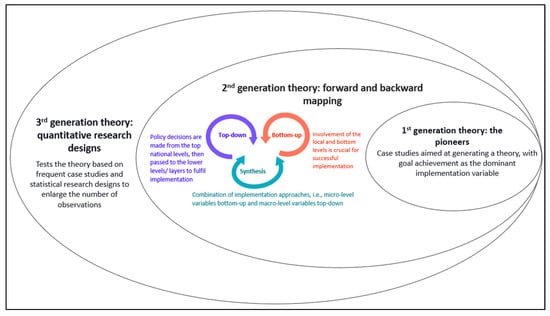
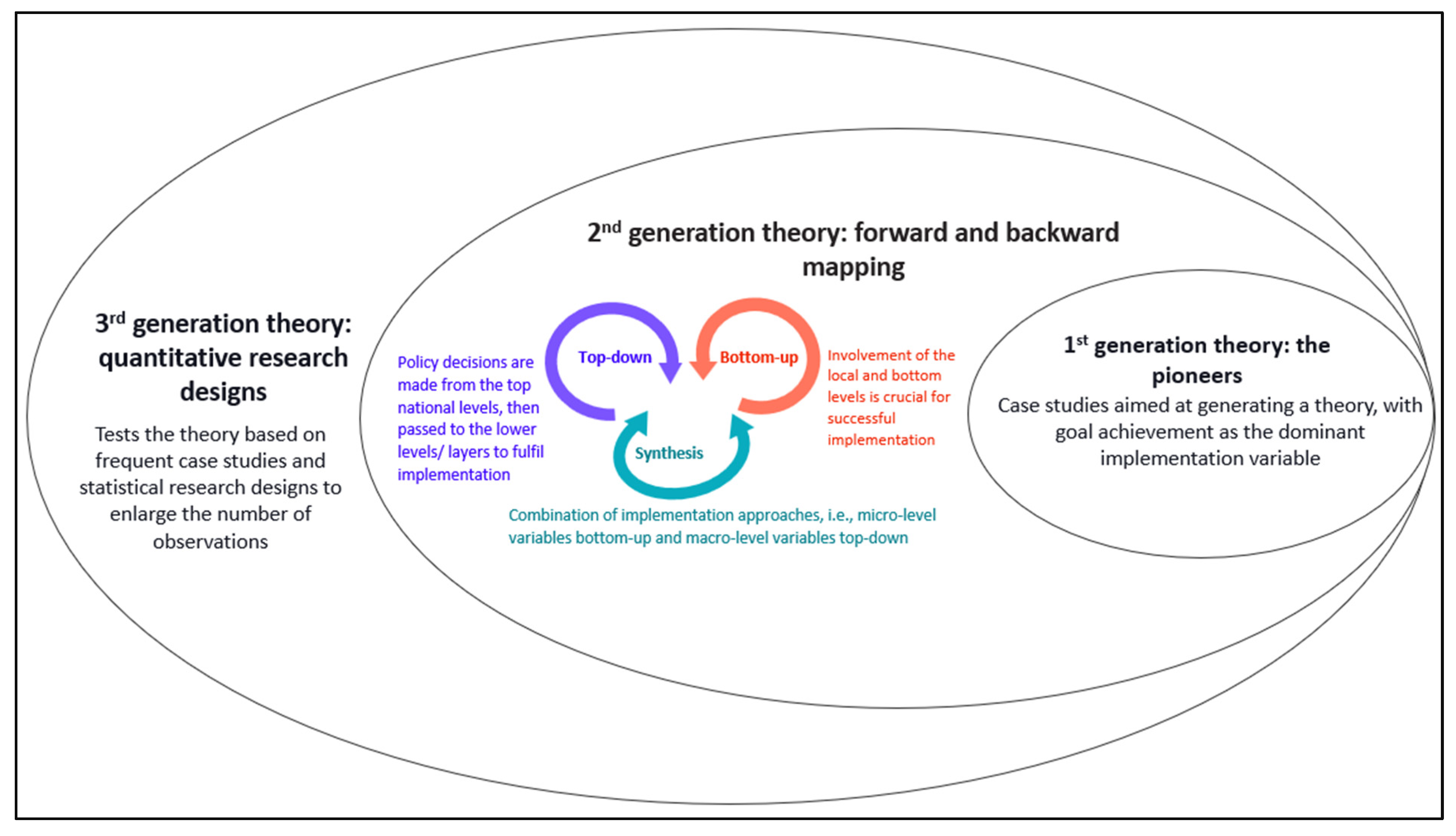
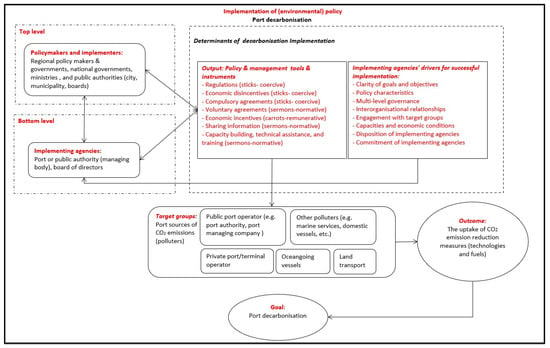
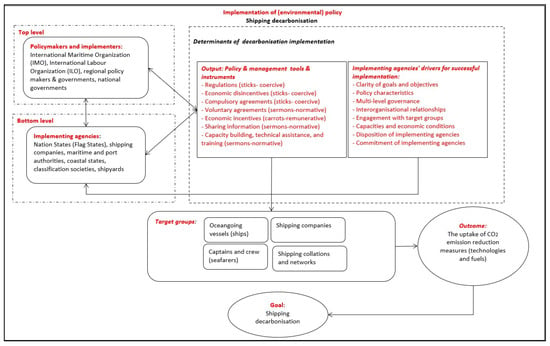
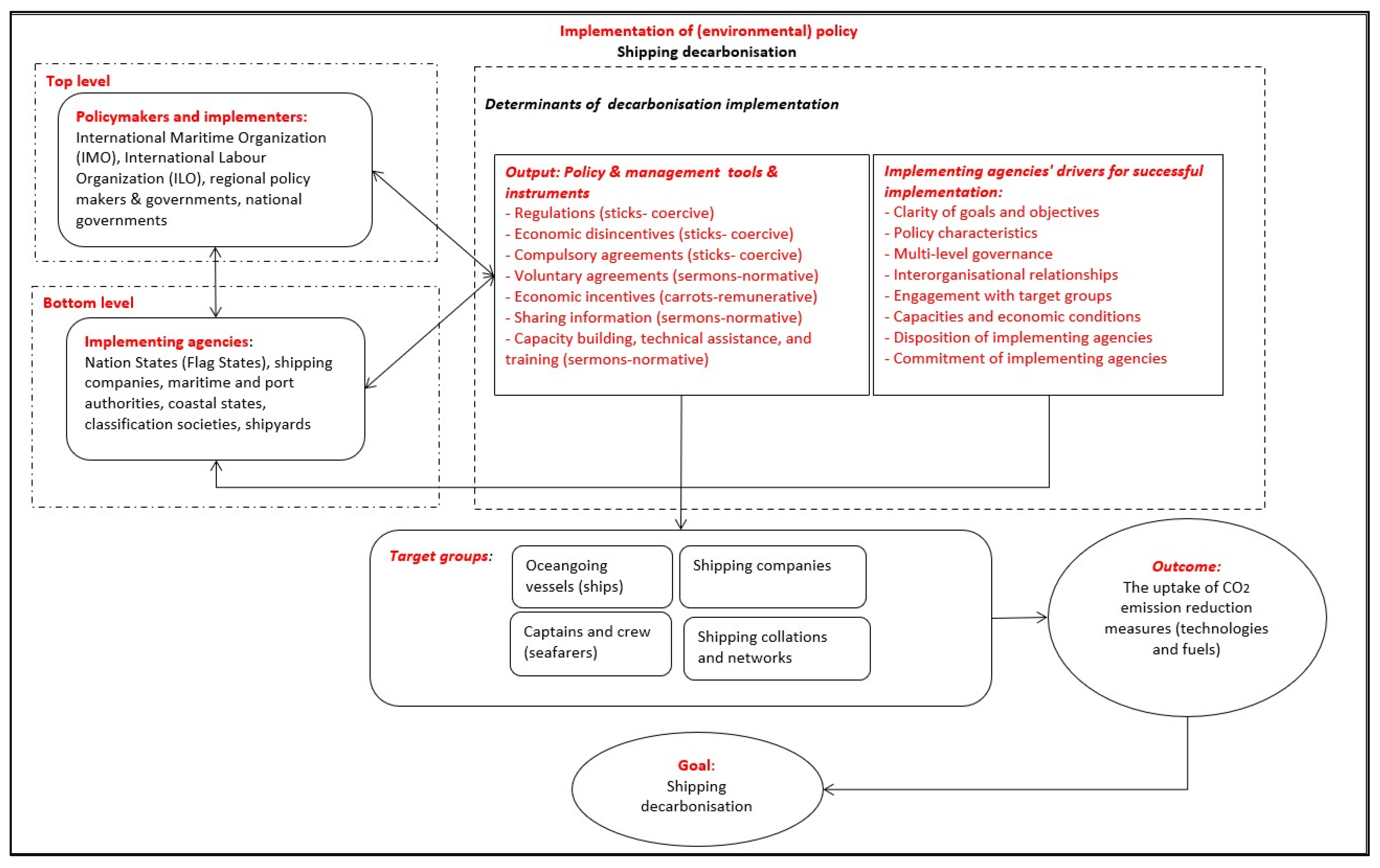

Disclaimer/Publisher’s Note: The statements, opinions and data contained in all publications are solely those of the individual author(s) and contributor(s) and not of MDPI and/or the editor(s). MDPI and/or the editor(s) disclaim responsibility for any injury to people or property resulting from any ideas, methods, instructions or products referred to in the content. |
© 2026 by the author. Licensee MDPI, Basel, Switzerland. This article is an open access article distributed under the terms and conditions of the Creative Commons Attribution (CC BY) license.