


Abstract
Organic amendments, including biochar and compost, are widely recognized for their potential to improve soil health, but their linkage to soil water functions (e.g., storage, infiltration, plant availability) is not clear. Over two years (2024–2025), we investigated soil water infiltration and associated soil health properties in response to soil amendment application under no-tillage conditions in semi-arid agroecosystems of the southwestern USA. Soil water infiltration was measured in biochar, compost, biochar and compost, and control plots using the SATURO dual-head infiltrometer. Soil physical and chemical properties, including bulk density (BD), soil moisture content (SMC), water-filled pore space (WFPS), residue cover, mean weight diameter (MWD) of dry aggregates, water-stable aggregates (WSA), pH, soil organic carbon (SOC), and total nitrogen (TN), were assessed at 0–15 cm soil depth. The results show a 31.5% higher infiltration rate along with, a small but statistically significant (3.7% lower) bulk density, and 119% greater wet aggregate stability in the biochar-amended plots than in the control plots. Compost with biochar also improved soil health, but infiltration responses were variable. Infiltration was positively correlated with residue cover and soil pH, whereas it was negatively correlated or not correlated with other soil properties. This study demonstrates that biochar under no-tillage conditions can enhance soil health and resilience of semi-arid agroecosystems by improving soil water functions.
Keywords:
organic amendments; biochar; compost; soil health; soil water infiltration; sustainability 1. Introduction
Quantifying soil water infiltration capacity is critical to soil health and ecosystem resilience in dry environments [1]. Soil water infiltration is more important in arid and semi-arid regions than in other areas because it replenishes the root-zone soil moisture and supports crop production. Arid and semi-arid regions, characterized by low, irregular, and high-intensity rainfall coupled with high evapotranspiration rates, are vulnerable to water stress [2]. Low fertility and poor soil structure further hinder water infiltration, leading to surface runoff and soil erosion, while frequent high winds detach and remove fertile topsoil, resulting in substantial economic losses for farmers [3]. Rapid soil erosion and land degradation further diminish soil productivity [4] and resilience to extreme weather variability [5,6]. Moreover, this region is projected to become increasingly arid within a few decades, with more sporadic and intense rainfall events contributing to an overall decline in water availability and storage [7,8]. Therefore, agricultural strategies that enhance soil health and water storage are critical to maintain agricultural productivity and sustainability in these regions [9]. Improving soil water infiltration can enhance water storage and root water uptake [10,11], supporting long-term agricultural sustainability in dry regions [12].
Although soil physical properties are considered a major influencer of water infiltration and other hydraulic properties [13,14], it is regulated by the complex interaction of all physical, chemical, and biological processes. Soil water infiltration primarily depends on the distribution of pore size and the connectivity of pores or flow pathways. [15]. Organic amendments, such as biochar and compost, application can be an effective management practice for enhancing water infiltration by improving soil structure [16,17,18,19]. Biochar is a charcoal-like material produced through the thermal decomposition of organic biomass such as agricultural residues, animal manures, wood, and municipal waste in a low-oxygen environment at temperatures between 300 and 1000 °C [20]. In addition to its major components—carbon, hydrogen, and oxygen—it also contains essential macronutrients like nitrogen, phosphorus, and potassium [21]. Biochar plays a crucial role in enhancing soil health and strengthening the resilience of the agroecosystem against drought [22]. Its porous nature, with an extensive surface area, improves water-holding capacity and helps to maintain optimum moisture levels for plant growth [23]. Furthermore, it helps to lower the emissions of potential greenhouse gases and improve resilience to climate variability [24]. The stability of biochar, or its resistance to microbial and environmental degradation, suggests long-term carbon storage through biochar amendment [25]. Additionally, biochar enhances the water-holding capacity and various physicochemical properties of soil [26]. Their extensive surface area enables them to retain more water per unit volume of soil, while their porous structure enhances overall water retention [27]. The feedstock for biochar, along with its pyrolysis temperature, can regulate hydrophobicity and enhance water retention [28]. Therefore, improved water infiltration and storage with biochar amendments offer opportunities to reduce irrigation water use in water-scarce regions, including arid and semi-arid southwestern USA [29].
Compost amendments have been widely known as an effective strategy to improve soil health by increasing soil organic carbon, enhancing nutrient availability, and promoting microbial activity, while also minimizing nutrient leaching [30,31]. In addition, several studies have clearly demonstrated the role of compost in improving soil structure and water-holding capacity and are considered crucial, especially in areas where water resources are limited [32,33]. Biochar, when combined with other organic materials such as manure or compost, can be more effective in improving soil health benefits through its positive influence on major soil properties [34]. This includes enhancing soil aggregation and the incorporation of labile organic materials, which bind inorganic soil particles to organic materials, thereby developing stable soil aggregates [35]. However, field studies quantifying the effect of biochar, compost, and biochar–compost interaction on infiltration rates and associated soil health and resiliency under a no-tillage cropping system remain limited in semi-arid regions. To bridge the research gap, this study evaluated the impact of biochar and compost amendments on soil health, particularly soil physical and chemical properties and soil water infiltration, in a semi-arid environment. We hypothesized that biochar would enhance soil water function by improving soil structure, lowering bulk density, and increasing soil aggregation. In addition, compost, as a source of labile organic matter, would increase soil organic carbon and total nitrogen. Together, these soil amendments in combination with no-tillage management are expected to support the long-term sustainability of agriculture in water-limited environments.
2. Materials and Methods
2.1. Study Site and Treatments
A study was conducted for two years (2024 and 2025) at the New Mexico State University Agricultural Science Center in Clovis, NM (34°35′ N, 103°12′ W; elevation 1368 m) on an Olton clay loam (fine, mixed, superactive, thermic Paleustolls) soil. The site has a semi-arid climate, characterized by hot, dry summers with limited, irregular rainfall events. The average annual precipitation at the experimental site was 445 mm, with mean monthly maximum and minimum air temperatures of 22 °C and 7 °C, respectively [36].
The experiment had a randomized complete block design (RCBD) with four treatments: biochar, biochar–compost, compost, and control, each replicated three times. Sorghum (Sorghum bicolor (L.) Moench) was maintained under limited irrigation conditions (~50% of the total crop water requirement). Pinewood biochar (C: 78.8%, N 0.267%, S = 0.013%, ash content = 18.5%, volatile matter: 11.9%, and surface area = 364 m2 g−1) pyrolyzed at 600–700 °C and locally available cattle manure compost (C: 98.6 g kg−1, Nitrogen (N) = 13.92 g kg−1, NO3-N = 932 mg kg−1, and available p = 368 mg kg−1) were applied to the plots once at a rate of 5 Mg ha−1 on 21 March 2024. The individual plot size was 12 m × 18 m with sorghum as a main crop managed under a no-tillage system. Following the application, light surface tillage (0.05 m) was performed to ensure uniform incorporation into the soil. In both cropping years, 2024 and 2025, grain sorghum (Pioneer 86P20) was planted in mid-June at a rate of 123,553 seeds ha−1 and harvested in mid-October. Fertilization was applied at rates of 112 kg N, 39 kg P, and 18 kg S per hectare following sorghum planting for both years. Irrigation totaling 36.5 cm of water was applied at critical growth stages of sorghum. Herbicides were applied as needed to control weeds prior to sorghum establishment.
2.2. Soil Water Infiltration Measurements, Soil Sampling, and Laboratory Analysis
Dual-head infiltrometers (SATURO; Meter Group Inc., Pullman, WA, USA) were used to quantify field saturated hydraulic conductivity (Kfs), a metric indicating the soil’s ability to transmit water through its profile under near-saturated conditions (cm s−1) [37]. The resulting values were converted to vertical flow rates (cm h−1) and referred to as the water infiltration rate. The infiltrometer was installed according to the manufacturer’s instructions in three replications for each treatment. An insertion ring with a height of 10 cm and a diameter of 14.4 cm was inserted into the topsoil after removing the visible residues from the soil surface. The infiltrometer head was mounted to the top of the insertion ring and connected to the SATURO unit. Water was continuously supplied to the infiltrometer through a hose connected to the water source. For our medium-textured (clay loam) soil, the test setting included a soak time of 30 min, a hold time of 20 min, and low- and high-pressure heads of 5 cm and 10 cm, respectively, with two pressure cycles. The test settings were selected based on multiple field trials conducted within the same soil type in the region, following the manufacturer’s recommended settings. Once the infiltrometer was set up, it ran for 110 min, maintaining a constant water level of 5 cm above the insertion ring. The values generated by the infiltrometer at the end of the test were recorded. The measurements were taken within 3–4 weeks of sorghum planting in both years, with the SATURO unit positioned between the 5th and 6th sorghum rows within each treatment plot.
Along with infiltration measurements, soil samples were collected within a 30 cm radius of the SATURO unit. From each plot, two soil cores (0–15 cm depth) were taken using a 2.30 cm diameter core sampler. These samples were used to determine soil moisture content (SMC), water-filled pore space (WFPS), and bulk density (BD). SMC was calculated by dividing the soil moisture by oven-dried soil weight. The field soil sample was oven-dried at 105 °C for 24 h. The WFPS was assessed by dividing the gravimetric water content by the total porosity of the soil. For this, BD was determined by dividing the oven-dry soil weight by the soil core volume. The soil particle density was assumed to be 2.65 g cm−3 to calculate the soil porosity. In addition, soil samples (0–15 cm depth) were collected using a shovel to analyze additional physical and chemical properties. Field-moist soil samples were gently broken apart at natural break points and air-dried at room temperature after removing the visible residues. These air-dried soils were then used to evaluate the mean weight diameter (MWD) of dry aggregates, water-stable aggregates (WSA), pH, soil organic carbon (SOC), and total nitrogen (TN). Additionally, a 0.25 × 0.25 m2 quadrant was used to measure the above-ground residue cover in plots where soil water infiltration was measured. The collected residue was oven-dried at 65 °C for 72 h, and the dry weight was recorded.
The air-dried soil sample was passed through a series of sieves with varying mesh sizes to separate the aggregate fractions. Approximately 600 g of each air-dried subsample was evenly spread on the top sieve surface, where four other sieves with opening diameters of 4 mm, 2 mm, 0.25 mm, and 0.053 mm were stacked and mounted on a sieve shaker (Tyler Ro-Tap, Gilson Inc., Lewis Center, OH, USA). Once the sieves were set up, the shaker was allowed to run for 5 min to separate the soil into five distinct aggregate fractions: large macroaggregates (4–8 mm and 2–4 mm), small macroaggregates (0.25–2 mm), microaggregates (0.053–0.25 mm), and mineral fractions (˂0.053 mm). The aggregates collected on each sieve were weighed, and the MWD was determined [38].
where Xi = average diameter (mm) of each aggregate size fraction.
Wi = weight of aggregates in a size class of mean diameter Xi.
W = total weight of sample.
WSA was assessed using a Cornell rainfall simulator, which delivers uniform and steady rainfall onto a sieve containing dried soil aggregates sized between 2 mm and 4 mm. A single layer of soil aggregates, weighing 60 g, was uniformly spread on a 2 mm sieve. The sieve was placed 50 cm below a rainfall simulator, and the simulator was calibrated to discharge water of 570–600 mL in 5 min of run time. Simulated rainfall applies 2.5 J of energy to the soil aggregates [38]. The slaked soil particles that passed through the sieve and those remaining on the sieve were collected separately, dried, and weighed. The percentage of the aggregates that remained on the 2 mm sieve after the test was considered the WSA fractions [39].
where Wtotal = Wstable + Wslaked.
The air-dried subsample of soil size (<2 mm) was finely ground and analyzed for SOC and TN using the dry combustion method at 950 °C with a LECO CN analyzer (LECO Corporation, St. Joseph, MI, USA). Soil pH was determined in a 1:5 soil-to-deionized water suspension using an electrode meter calibrated with standard buffer solutions.
2.3. Statistical Analysis
All data were tested to ensure that they met the assumptions of normality of residuals and homogeneity of variance. Soil properties—BD, WFPS, residue cover, MWD of dry aggregates, pH, SOC, and TN—followed a normal distribution. However, infiltration rate, SMC, and WSA data were not normally distributed and were therefore log-transformed before statistical analysis. A two-way ANOVA was performed to evaluate the effects of treatments, sampling year, and their interaction on soil physical and chemical properties. A linear mixed-effects model was fitted using the lmer() function from the lme4 package in R (4.4.2), with treatments and sampling year specified as fixed effects, and replication included as a random effect. The significance of fixed effects was tested using an F-test that used the type III sum of squares to estimate the best linear unbiased marginal means. Post hoc comparisons among the treatment means were conducted using Tukey’s HSD at p ≤ 0.05. Pearson’s correlation coefficient (r) among all variables was computed using the cor() function in R, and the results were visualized with the corrplot() function from the corrplot package. Principal component analysis (PCA) was performed using the prcomp() function in R to assess the variation in soil properties across different treatment groups and their association with infiltration rate. A simple linear regression analysis was used to predict infiltration rate as a function of major soil properties.
3. Results
3.1. Response of Soil Water Infiltration and Soil Properties to Organic Amendments
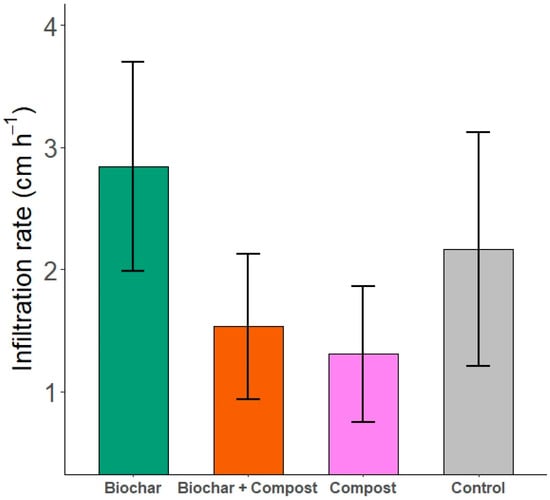
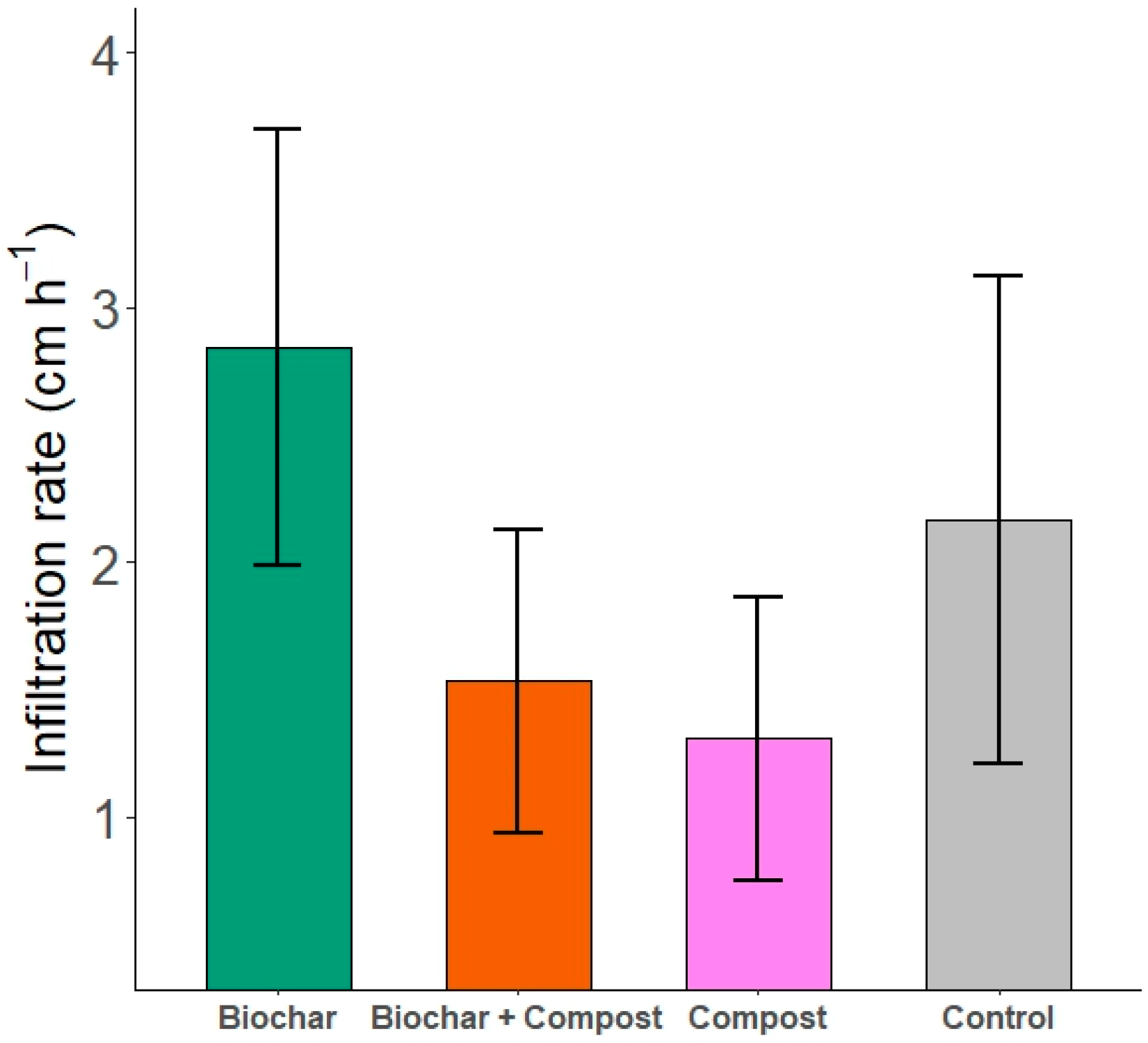
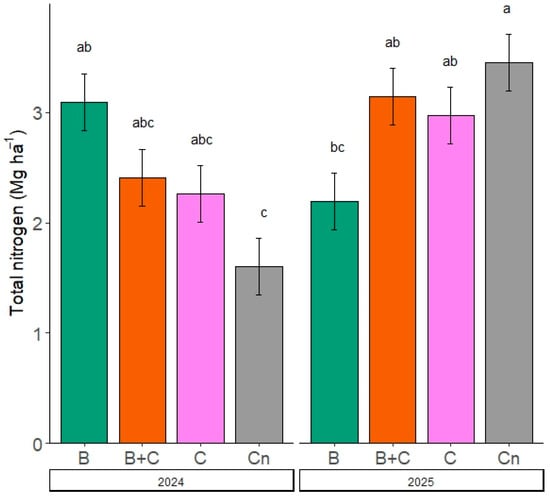
Soil physical and chemical properties responded differently to treatments, year of sampling, and their interactions (Table 1). Biochar treatment exhibited significant differences compared to the control in BD and WSA at p ≤ 0.05. Soil BD and WSA differed significantly among the treatment groups, whereas no significant interaction between treatment and year was observed. The average BD in biochar treatment (1.29 g cm−3) was significantly lower than the control (1.34 g cm−3). In contrast, the mean WSA for biochar treatment (21.22%) was significantly greater than that for the control (9.70%). Similarly, SMC, WFPS, MWD of dry aggregates, WSA, and TN were 26.9%, 26.7%, 12.7%, 48.3%, and 25.6% greater in 2025 than in 2024, respectively, regardless of the treatment. The mean water infiltration rate was numerically higher in the biochar-amended plot (2.84 cm h−1) than in the control (2.16 cm h−1) (Figure 1) Although not statistically significant, we observed 3.1% greater water infiltration in 2025 than in 2024, regardless of treatment. Similarly, the residue cover was numerically greater in 2025 than in 2024. Likewise, the SOC content was numerically higher in the biochar and biochar–compost plots than in the control plots, despite no significant differences among treatments, years, or the treatment × year interaction. TN was greatest in biochar–compost plots compared to other plots and was significantly different between years and between treatment × year interactions (Table 1, Figure 2).
Table 1.
Soil physical and chemical properties analysis under various treatments in 2024 and 2025.
Figure 1.
Soil water infiltration (cm h−1) response under different treatments (2024 and 2025). Vertical lines above the bars represent standard errors of the mean for each category.
Figure 2.
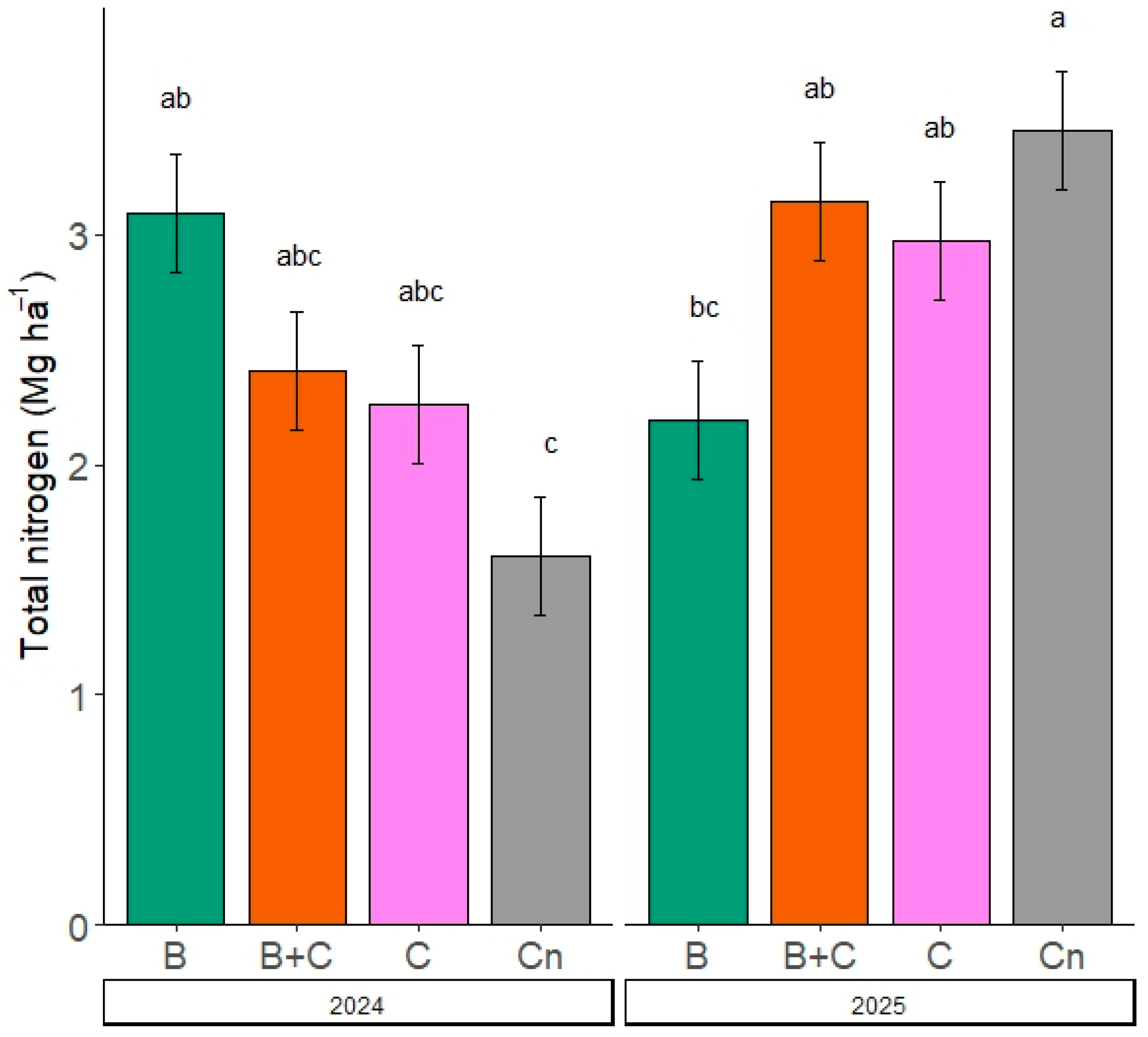
Interaction effect of year and treatment on total nitrogen. Error bars represent the standard error of the means. Different letters above bars indicate significant differences among treatments within each year at p ≤ 0.05. Abbreviations: B: biochar; B + C: biochar and compost; C: compost; Cn: control.
A significant interaction between year and treatment was observed for TN (Table 1). In 2024, TN was highest in the biochar-amended plots and lowest in the control. However, the TN values in the biochar–compost and compost-only treatments were not statistically different from those in other treatments. In contrast, in 2025, TN was highest under the control, while it was lowest in the biochar-amended plots (Figure 2).
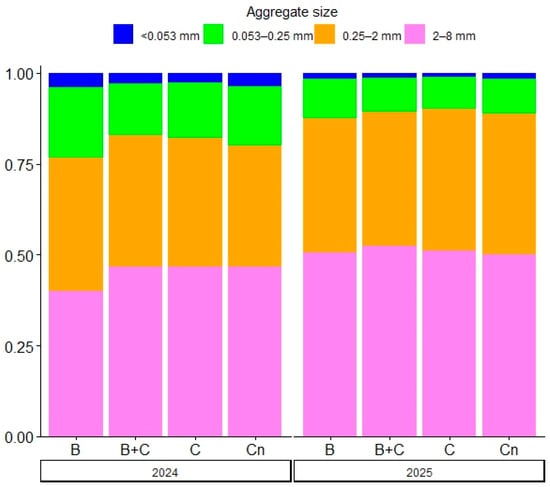
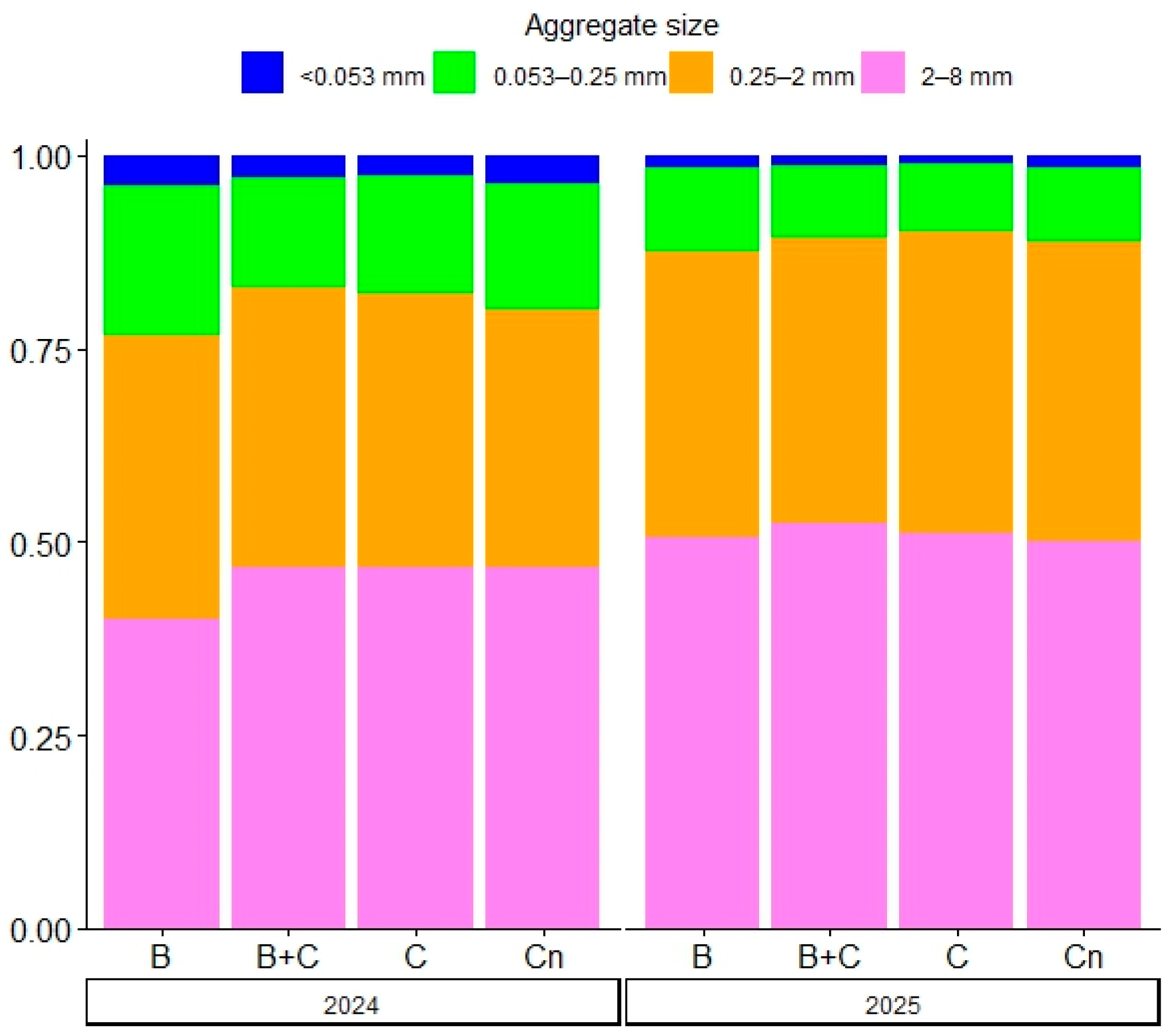
The proportion of large macroaggregate size fractions (2–8 mm) was significantly greater in 2025 than in 2024, although no significant differences were observed among treatments. However, the microaggregates (0.053–0.25 mm) and mineral fractions (<0.053 mm) were significantly greater in 2024 than in 2025 (Figure 3).
Figure 3.
Aggregate size proportion at 0–15 cm depth under different treatments. Abbreviations: B: biochar; B + C: biochar and compost; C: compost; Cn: control.
3.2. Relationship Between Soil Properties and Water Infiltration Rates
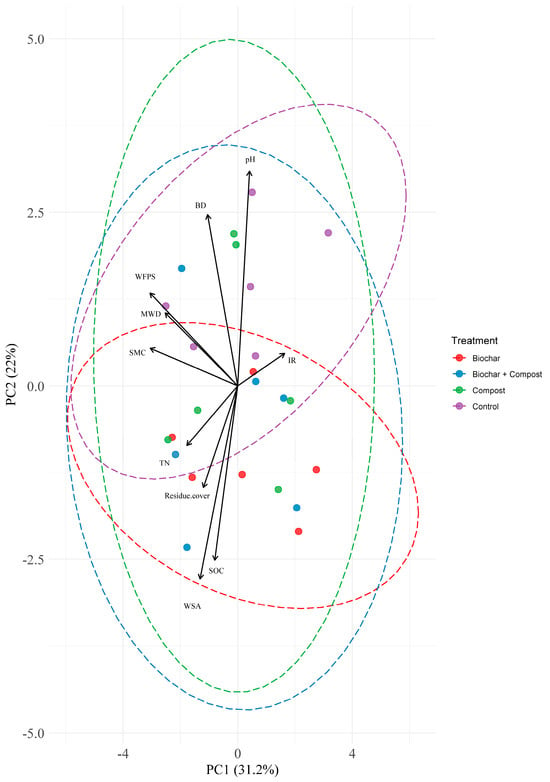
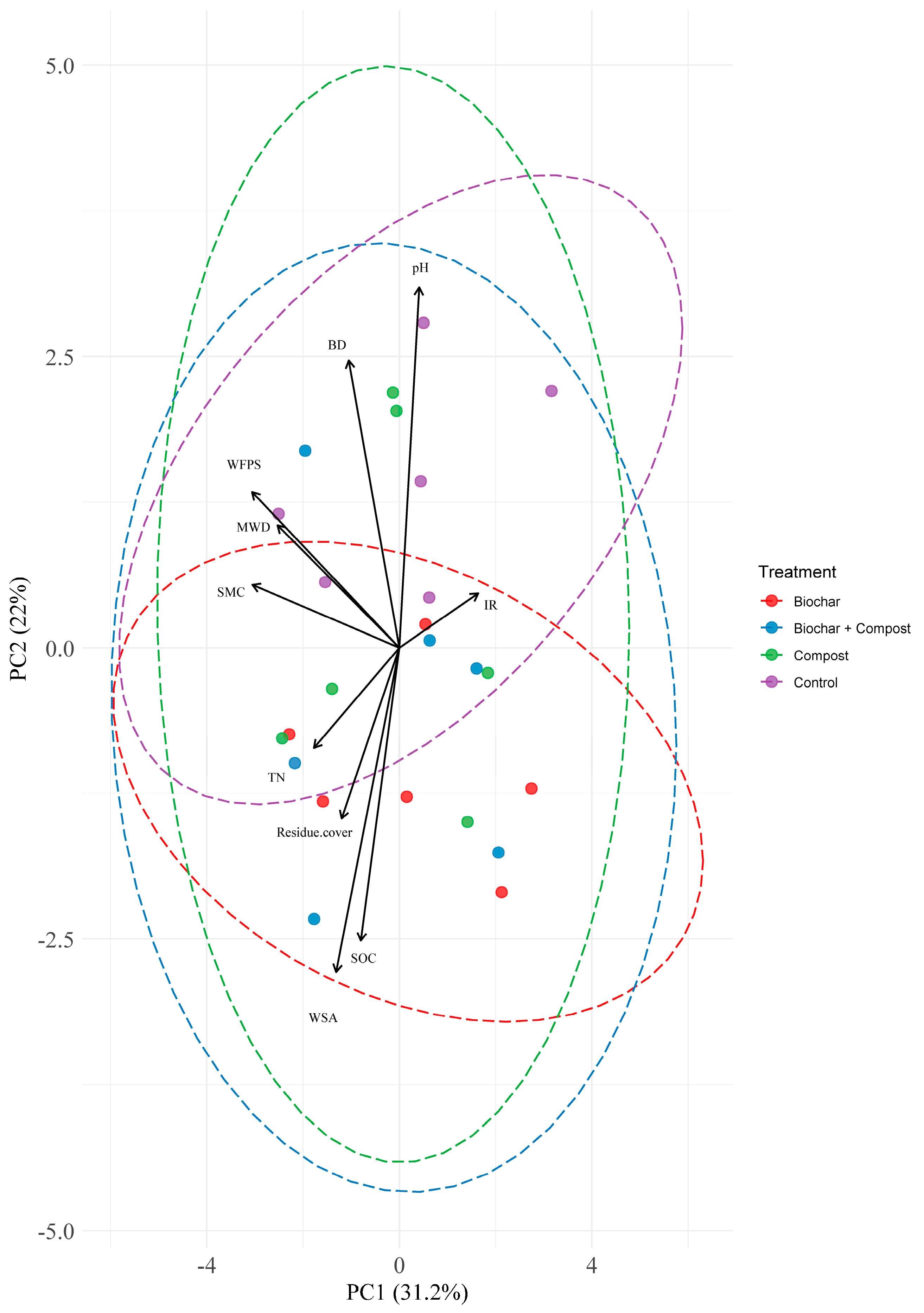
The PCA biplot illustrates the distribution of soil properties across four treatment groups, within the first two principal components (PC1 = 31.2%, PC2 = 22%) accounting for over half of the variation in soil properties due to organic amendments (Figure 4). Although treatments show partial overlap, some separation is evident, specifically between the biochar and control treatments, suggesting that soil properties responded differently to the organic amendments. The infiltration rate was positively associated with PC1 and negatively associated with water-related properties, such as SMC and WFPS. Soil properties, including residue cover, SOC, WSA, and TN, jointly contributed to the variability explained by PC1. BD and pH were positively associated with PC2, contrasting with the aggregate-associated soil properties. Therefore, management practices that promoted SOC accumulation, residue cover, and aggregate stability explained the greater variability in the infiltration data.
Figure 4.
Principal component analysis (PCA) biplots of soil physical and chemical properties in response to various soil amendment treatments in 2024 and 2025. The 95% confidence dashed ellipse illustrates the spread and overlap of treatments.
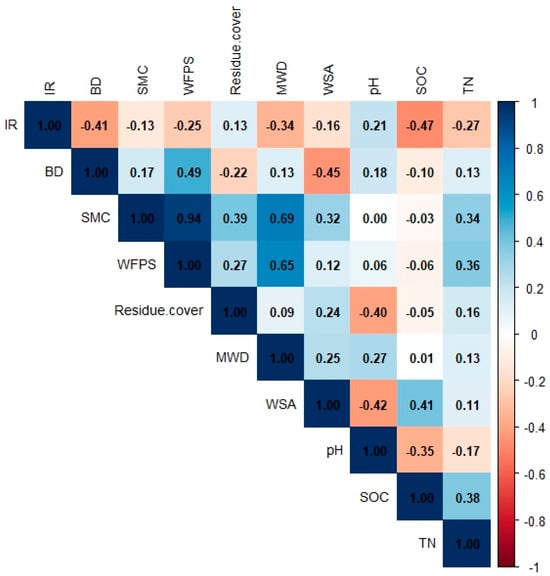
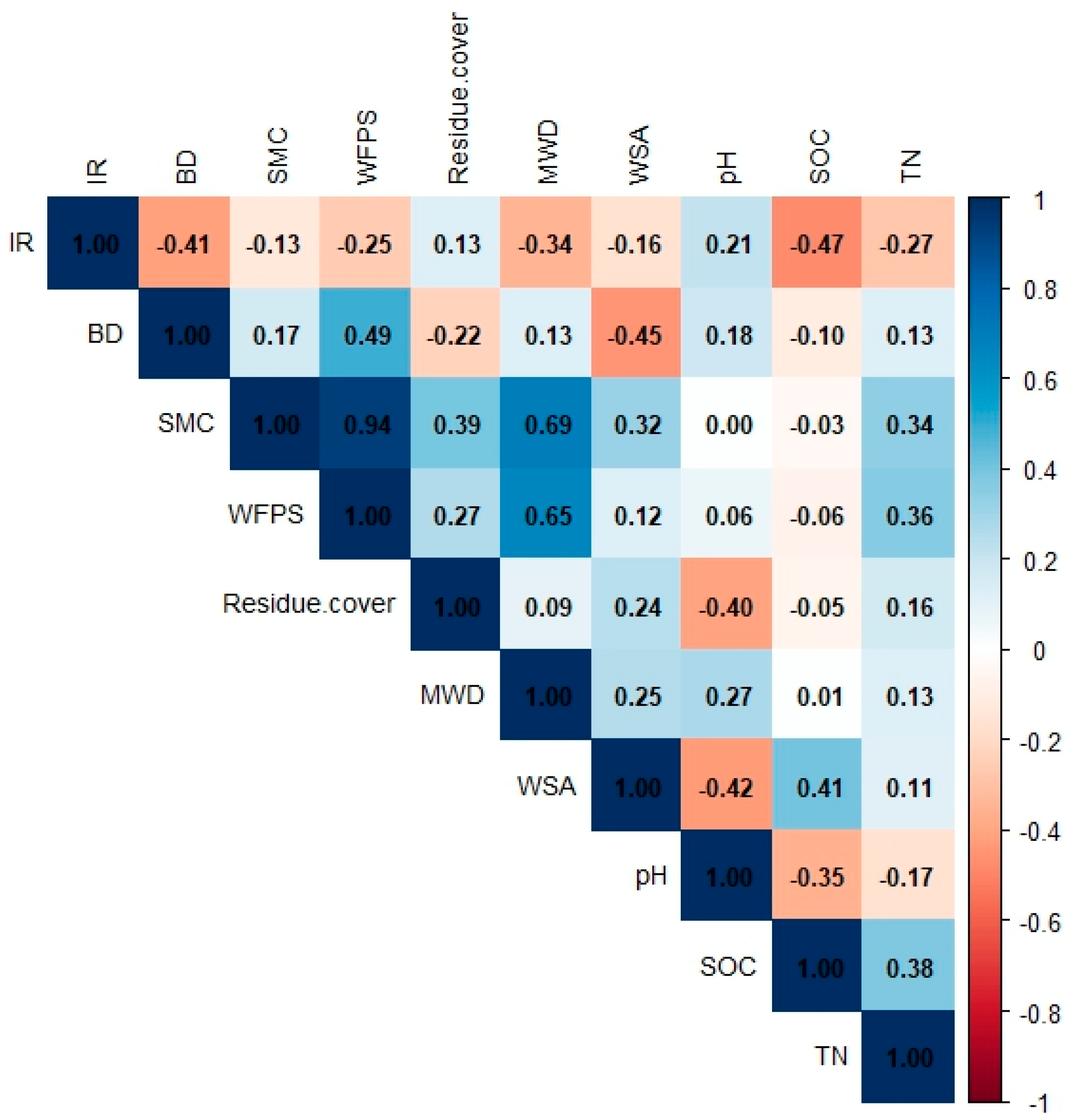
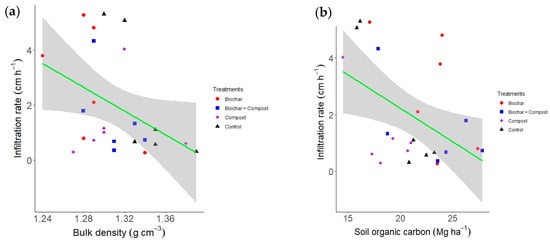
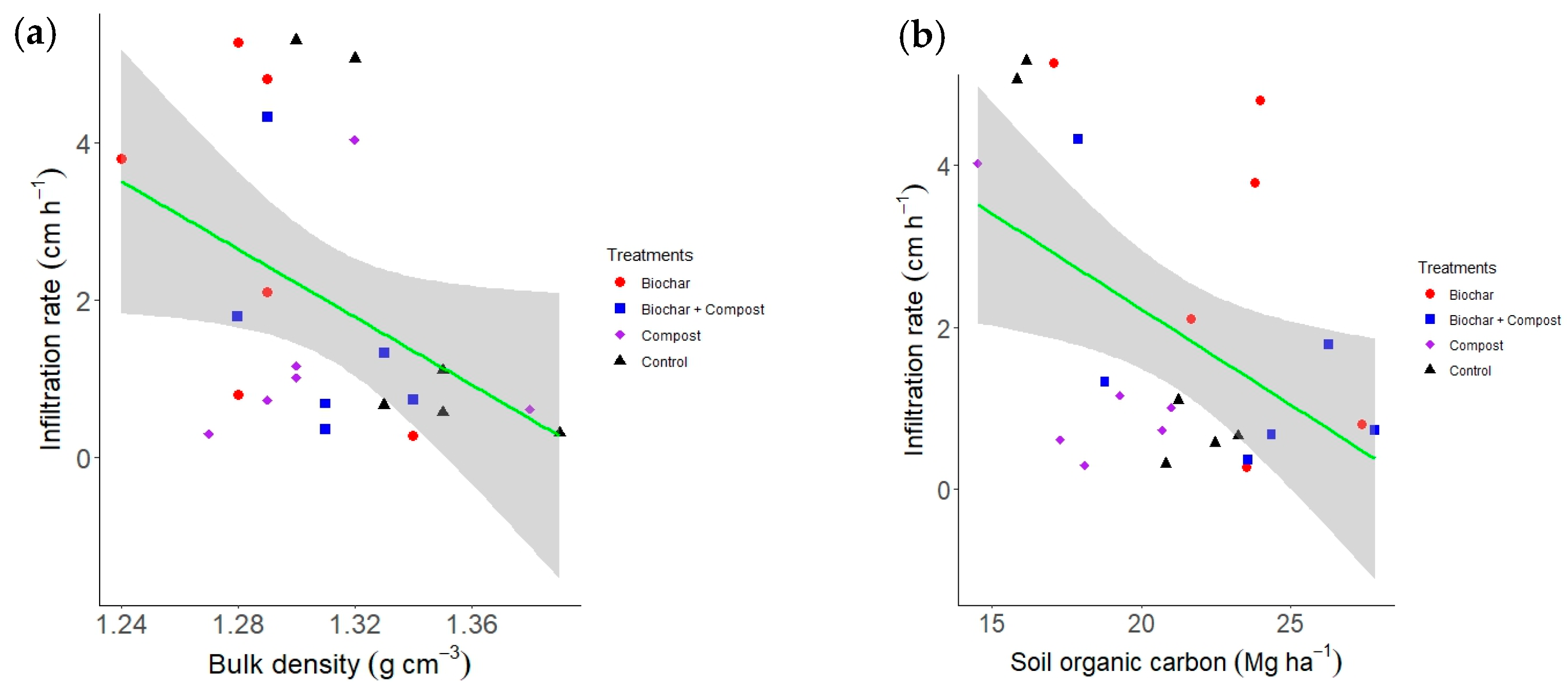
The correlation analysis showed that infiltration rate was positively correlated with residue cover and pH and negatively correlated with BD, SMC, WFPS, MWD of dry aggregates, WSA, SOC, and TN (Figure 5). Significant negative correlation was observed between infiltration rate and BD (r = −0.41) and infiltration rate and SOC (r = −0.47). However, a significant positive correlation was observed between SMC and MWD (r = 0.69); WFPS and MWD (r = 0.65); SMC and WFPS (r = 0.94); and WSA and SOC (r = 0.41). Simple linear regression analysis of infiltration rate and BD showed an increase in infiltration rate with a decrease in BD. It appears biochar application significantly decreased bulk density, which in turn improved water infiltration rates. Similarly, regression analysis shows a decrease in infiltration rate with an increase in SOC (Figure 6).
Figure 5.
Correlation matrix between the soil properties in 2024 and 2025 (n = 24). Positive values indicate a positive relation, whereas negative values indicate a negative relation.
Figure 6.
Illustration of the association between infiltration rate and bulk density (a), and infiltration rate and soil organic carbon (b). Shaded areas around the regression line indicate 95% confidence intervals, and green line represents the best-fit line.
4. Discussion
4.1. Soil Organic Amendments Improved Water Infiltration and Soil Health
The results from this study indicate that the application of organic amendments, such as biochar, compost, and biochar combined with compost, under no-tillage management influences soil water infiltration and key soil health attributes, with potential implications for long-term agricultural sustainability and ecosystem resilience in dry regions. Soil health, defined as the soil’s continued capacity to function as a living system, is assessed using a suite of physical, chemical, and biological indicators, which are closely linked to soil water dynamics in water-limited arid and semi-arid environments [40]. This study primarily focused on soil physical and chemical indicators related to soil water functions and did not directly measure soil biological properties. However, soil properties such as soil aggregate stability and bulk density are strongly mediated by soil microbial processes, thereby linking the physicochemical measurements to underlying biological activity. Furthermore, examining how soil management induced changes in soil properties regulate ecosystem function (water infiltration), this study highlights the relevance of these metrics for broader soil health assessment and management in semi-arid and arid regions.
Soil amendments like biochar can alter soil porosity and pore distributions, thereby directly affecting infiltration, residence time, and water flow pathways [40,41]. The increased water infiltration in biochar-amended plots compared to the control could be attributed to biochar’s effects on improving soil hydraulic properties. We observed reduced bulk density and increased water-stable aggregates with biochar application; however, infiltration rates were highly variable across treatments (Table 1, Figure 1). Previous studies have reported that the impact of biochar on water infiltration rates may be transient and mixed, and it primarily depends on the soil type and biochar characteristics [42]. Although we had the same soil type and applied the same biochar across treatments, the high variability in infiltration measurements resulted in only a numerical difference, with no statistical significance between the biochar and control treatments. Repeated field measurements and a long-term study are needed to further understand biochar’s impact on soil water infiltration and assess its potential as a soil amendment for long-term agricultural sustainability. Nevertheless, with early indications of soil health improvement in our study, the strategic application of biochar alone or in combination with compost holds promise for enhancing water functions in clay loam soils of the semi-arid southern High Plains of the USA, thereby contributing to agricultural resilience in the face of depleting water resources in the region.
Soil properties such as bulk density and porosity are major influencers of soil water dynamics, and these can be improved with the application of biochar and compost. Our observation of a significant reduction in bulk density (i.e., 3.7% less) in biochar-amended plots compared to the control within 2 years of application (Table 1), which may be due to the dilution effect, i.e., the incorporation of low-density biochar into denser mineral soil, lowering the overall bulk density of soil, or improved soil aggregation [43], indicates the potential of biochar to improve soil health and ecosystem services. A meta-analysis of 1–10 years of field experimental data from 61 peer-reviewed publications [44] reported significantly greater total porosity and available water capacity, and lower bulk density, with biochar application. We observed significantly higher SMC and WFPS in 2025 compared to 2024, but there were no notable differences in these water-related properties among the treatments. Precipitation between January–August of 2025 (471 mm) was more than double that of the rainfall received during the same duration of 2024 (261 mm), which may have increased the overall SMC and WFPS in the soil profile. We also found that the residue cover was 41.6% more in 2025 than in 2024 (Table 1). Although the difference was not statistically significant, residue cover was numerically greater in plots receiving soil amendment compared to controls. Positive correlation between residue cover and water infiltration highlights the role of soil cover in the soil-building process (Figure 4). Soil amendments such as compost and biochar increase crop biomass production [17]. When this biomass is returned to the soil as crop residue, it helps to protect the soil from wind and water erosion, reduces evaporative losses, and is linked to improved water infiltration and retention [34].
Dry aggregate stability, an important indicator of soil structural components, assessed using the MWD of different soil size fractions, showed no notable differences among treatments. Among them, biochar–compost had the numerically highest MWD. Previous research findings show mixed effects of biochar amendment on improving soil dry aggregate stability [43,44]. Biochar particles could oxidize and react with soil particles over time, thereby improving soil aggregation. However, it warrants further investigation through long-term field experiments across different biochar application rates and soil types. We found significantly higher WSA in biochar-amended soil as compared to other treatments, with the control having the least proportion of WSA. Also, in 2025, both the MWD of dry aggregates and WSA were significantly higher, indicating the capacity of organic amendments to improve soil structural stability. The higher MWD in 2025 corresponds to improved macroaggregate stability with organic amendments over time. The proportion of large macroaggregates (2–8 mm) in biochar-amended soil was 27.5% greater in 2025 than in 2024 (Figure 3). Consistent with our findings, another study [45] reports increased macroaggregate formation after biochar application, attributed to biochar’s ability to bind to inorganic soil particles, forming stable soil aggregates through combined physical, chemical, and biological mechanisms [46]. When applied together, compost and biochar may act synergistically to improve soil aggregation. Compost supplies readily available organic substrates that simulate microbial activity, nutrient cycling, and promote root growth [18,34], while the high porosity and surface area of biochar provide habitats for macro- and microorganisms [26,40], collectively enhancing aggregate formation and stability.
Biochar application has been considered as a promising tool for improving SOC and an important strategy for restoring degraded lands and enhancing ecosystem services [23,47]. We did not observe any significant differences in SOC among the treatments at p ≤ 0.05; however, the value was numerically greater in the biochar–compost plots than in the other treatments. The observed 25.6% higher TN in 2025 compared to 2024 was expected, as precipitation during January–August was substantially greater in 2025 (417 mm) than in 2024 (214 mm, likely enhancing plant growth, microbial activity, and nutrient cycling. Very high precipitation can lead to nitrogen loss through nitrate leaching or denitrification in saturated soils. However, in our water-limited semi-arid region, the rainfall received in early 2025 likely improved above- and below-ground biomass production, thereby increasing the soil N inputs. Consequently, at the same level of fertility management, higher TN levels were observed in 2025 than in 2024. Among treatments, the biochar–compost treatment had the highest TN concentration. Biochar application can help to reduce nitrate leaching, enhance nitrogen retention in soils, and ultimately improve crop nitrogen use efficiency [48]. The reduction in nitrate leaching not only increases soil TN content but also lowers nutrient loads in downstream water resources, thereby improving water quality and other ecosystem services [49]. Despite a higher overall TN in 2025, TN was lower in the biochar-amended plot, likely due to the positive priming effect, which may have triggered microbial activity, thereby accelerating the decomposition of native SOC and organic nitrogen in the biochar plots [50]. This priming effect likely increased microbial demand for N during the decomposition of native soil organic matter, leading to microbial N immobilization and reduced soil TN levels in biochar-amended plots. The significantly higher SMC in 2025 possibly favored the positive priming effect. Although biochar is commonly applied in acidic soils for its liming potential [51], no measurable changes in soil pH were observed at the 0–15 cm depth, likely due to the relatively low application rate (5 Mg ha−1) and the initial neutral soil pH. Furthermore, previous studies have demonstrated that the extent of soil pH modification by biochar application depends on multiple factors, including pyrolysis temperature, feedstock type, application timing, and depth of incorporation [52]. Interestingly, the slightly lower pH observed in biochar- and biochar–compost-amended soil compared to the control may be attributed to acid production resulting from biochar oxidation in calcareous soils [53].
Unlike in a conventional tillage system, where soil amendments can be mixed deeper into the soil, in our no-tillage system, soil amendments are limited to the top 5 cm. Despite this, biochar and compost application improved soil physical and chemical properties, including soil aggregation, in the 0–15 cm layer. These improvements are likely driven by multiple mechanisms: no-tillage management reduces soil disturbance and creates a favorable habitat, while soil organic amendments supply food for microbes; together these practices enhance microbial diversity, particularly fungal communities and soil fauna [17,26]. Soil fauna, such as earthworms and termites, can transport organic matter and mineral soil into deeper soil layers through bioturbation [54]. Additionally, biochar and compost can promote root proliferation, enhancing above- and below-ground biomass and nutrient cycling [18,34]. Root-derived carbon and rhizosphere inputs provide substrates for soil organisms and act as binding agents, further stabilizing aggregates and increasing soil carbon. Dissolved organic matter from amendments or residue decomposition can percolate downward, while the porous biochar offers habitats for macro- and microorganisms, collectively improving soil structure and the health of the profile [23,54].
4.2. Major Soil Properties Driving Soil Water Infiltration
It has been well established that agricultural management practices exert a greater impact on soil structure and soil health, which can influence soil hydraulic conductivity and, hence, water infiltration [55]. However, water infiltration is a complex soil hydraulic property that exhibits high spatiotemporal variability and is influenced by factors such as the growing season, weather events, site-specific conditions, crop type, and other environmental variables, which can obscure even the long-term effects of management practices [37,56]. Although we observed numerically higher mean infiltration rates in biochar-applied plots, these plots showed greater variability within treatments, as indicated by larger standard errors (Figure 1), likely due to low replication (three per treatment) and a short study duration (2 years). The significant negative correlation between infiltration rates and BD in our study provides evidence for the benefits of biochar in improving soil structural and hydrological properties. Similarly, we observed a negative correlation between water-related properties, such as SMC and WFPS, and the infiltration rate, which is not unexpected, as lower infiltration is observed in soils with higher SMC [57,58]. Although several factors regulate water infiltration, a higher initial SMC decreases the hydraulic gradient and reduces the driving force responsible for water movement into the soil profile [59]. The negative correlations between MWD, WSA, and SOC and infiltration rates were counterintuitive. This contrasts with soil structure and water infiltration studies, where high SOC and soil aggregation improved water infiltration [60], as well as with the general understanding of soil water infiltration and its regulating factors. Despite high SOC and improved aggregate stability with organic amendments, a plausible explanation for the negative association between infiltration rate and MWD, WSA, and SOC may be due to the clay loam soil in our field, where fine soil particles may have resulted in pore clogging and discontinuity in soil structure, resulting in greater variability in the infiltration rates. Previous studies [61] reported that the shrink–swell properties of clay soils, influenced by their initial SMC, can also slow down the water movement in the soil profile. Additionally, some hydrophobicity may have occurred with fresh biochar application, leading to water repellency and variable infiltration [28]. Similarly, the negative correlation between infiltration rate and TN in biochar and compost-amended soil, despite the higher TN content, may also be associated with the intertwined effects of initial water content and soil shrinkage, which limit preferential flow and reduce water infiltration [62].
5. Conclusions
The depletion of irrigation water for agricultural production and increased weather variability in semi-arid regions necessitate the search for and adoption of management practices that can enhance soil health while improving soil water functions for long-term agricultural sustainability. Therefore, crop management practices that enhance water use efficiency, improve soil water retention, and increase crop productivity are essential. Organic amendments are emphasized as a promising tool for improving soil health and enhancing water infiltration and storage. This study investigated the effect of organic amendments, including biochar and compost, under no-tillage management on key soil physical, chemical, and hydrological properties in a semi-arid environment. Biochar and biochar with compost treatments had more pronounced effects on water infiltration and soil health compared to compost-only treatments within 2 years of amendment. This short-term study has shown some positive signs of the impact of a one-time application of organic amendments on soil health and water infiltration. However, fully elucidating the roles of organic amendments in soil health and water functions will require long-term observation incorporating multiple application rates and repeated additions of diverse biochar and composts. Overall, organic amendments could be an important strategy for conserving water, reducing irrigation water demand, and revitalizing degraded croplands to enhance resilience in semi-arid agroecosystems.
Author Contributions
Conceptualization, R.G. and P.B.; methodology, P.B.; software, S.P.; validation, S.P., P.B., R.G. and S.A.; formal analysis, S.P.; investigation S.P., P.B. and R.G.; resources, P.B. and R.G.; data curation, S.P.; writing-original draft preparation, S.P. and P.B.; writing-review and editing, R.G. and S.A.; visualization, S.P.; supervision, P.B., R.G. and S.A.; project administration, R.G.; funding acquisition, R.G. All authors have read and agreed to the published version of the manuscript.
Funding
This collaborative work was funded by the National Science Foundation (2316278) and the United States Department of Agriculture (USDA) Natural Resources Conservation Service (GR0007378).
Institutional Review Board Statement
Not applicable.
Informed Consent Statement
Not applicable.
Data Availability Statement
All data used in the project are presented in tables and figures.
Conflicts of Interest
The authors declare no conflicts of interest.
References
- Liu, Y.; Cui, Z.; Huang, Z.; López-Vicente, M.; Wu, G.-L. Influence of Soil Moisture and Plant Roots on the Soil Infiltration Capacity at Different Stages in Arid Grasslands of China. Catena 2019, 182, 104147. [Google Scholar] [CrossRef] [Scilit]
- Tilahun, K. Analysis of Rainfall Climate and Evapo-Transpiration in Arid and Semi-Arid Regions of Ethiopia Using Data over the Last Half a Century. J. Arid. Environ. 2006, 64, 474–487. [Google Scholar] [CrossRef] [Scilit]
- Angadi, S.V.; Gowda, P.H.; Cutforth, H.W.; Idowu, O.J. Circles of Live Buffer Strips in a Center Pivot to Improve Multiple Ecosystem Services and Sustainability of Irrigated Agriculture in the Southern Great Plains. J. Soil. Water Conserv. 2016, 71, 44A–49A. [Google Scholar] [CrossRef] [Scilit]
- Verheijen, F.G.A.; Jones, R.J.A.; Rickson, R.J.; Smith, C.J. Tolerable versus Actual Soil Erosion Rates in Europe. Earth-Sci. Rev. 2009, 94, 23–38. [Google Scholar] [CrossRef] [Scilit]
- Layek, J.; Narzari, R.; Hazarika, S.; Das, A.; Rangappa, K.; Devi, S.; Balusamy, A.; Saha, S.; Mandal, S.; Idapuganti, R.G.; et al. Prospects of Biochar for Sustainable Agriculture and Carbon Sequestration: An Overview for Eastern Himalayas. Sustainability 2022, 14, 6684. [Google Scholar] [CrossRef] [Scilit]
- Lal, R. Managing Soils and Ecosystems for Mitigating Anthropogenic Carbon Emissions and Advancing Global Food Security. BioScience 2010, 60, 708–721. [Google Scholar] [CrossRef] [Scilit]
- Cano, A.; Núñez, A.; Acosta-Martinez, V.; Schipanski, M.; Ghimire, R.; Rice, C.; West, C. Current Knowledge and Future Research Directions to Link Soil Health and Water Conservation in the Ogallala Aquifer Region. Geoderma 2018, 328, 109–118. [Google Scholar] [CrossRef] [Scilit]
- Seager, R.; Ting, M.; Held, I.; Kushnir, Y.; Lu, J.; Vecchi, G.; Huang, H.-P.; Harnik, N.; Leetmaa, A.; Lau, N.-C.; et al. Model Projections of an Imminent Transition to a More Arid Climate in Southwestern North America. Science 2007, 316, 1181–1184. [Google Scholar] [CrossRef] [Scilit]
- Ghimire, R.; Ghimire, B.; Mesbah, A.O.; Sainju, U.M.; Idowu, O.J. Soil Health Response of Cover Crops in Winter Wheat–Fallow System. Agron. J. 2019, 111, 2108–2115. [Google Scholar] [CrossRef] [Scilit]
- Joyce, B.A.; Wallender, W.W.; Mitchell, J.P.; Huyck, L.M.; Temple, S.R.; Brostrom, P.N.; Hsiao, T.C. Infiltration and soil water storage under winter cover cropping in californias sacramento valley. Trans. ASAE 2002, 45, 315–326. [Google Scholar] [CrossRef] [Scilit]
- Yu, M.; Zhang, L.; Xu, X.; Feger, K.-H.; Wang, Y.; Liu, W.; Schwärzel, K. Impact of Land-Use Changes on Soil Hydraulic Properties of Calcaric Regosols on the Loess Plateau, NW China. J. Plant Nutr. Soil Sci. 2015, 178, 486–498. [Google Scholar] [CrossRef] [Scilit]
- Baumhardt, R.L.; Stewart, B.A.; Sainju, U.M. North American Soil Degradation: Processes, Practices, and Mitigating Strategies. Sustainability 2015, 7, 2936–2960. [Google Scholar] [CrossRef] [Scilit]
- Luna, L.; Vignozzi, N.; Miralles, I.; Solé-Benet, A. Organic Amendments and Mulches Modify Soil Porosity and Infiltration in Semiarid Mine Soils. Land Degrad. Dev. 2018, 29, 1019–1030. [Google Scholar] [CrossRef] [Scilit]
- Wang, H.; Zhang, G.; Liu, F.; Geng, R.; Wang, L. Temporal Variations in Infiltration Properties of Biological Crusts Covered Soils on the Loess Plateau of China. Catena 2017, 159, 115–125. [Google Scholar] [CrossRef] [Scilit]
- Kutílek, M. Soil Hydraulic Properties as Related to Soil Structure. Soil Tillage Res. 2004, 79, 175–184. [Google Scholar] [CrossRef] [Scilit]
- Abbas, T.; Rizwan, M.; Ali, S.; Adrees, M.; Mahmood, A.; Zia-ur-Rehman, M.; Ibrahim, M.; Arshad, M.; Qayyum, M.F. Biochar Application Increased the Growth and Yield and Reduced Cadmium in Drought Stressed Wheat Grown in an Aged Contaminated Soil. Ecotoxicol. Environ. Saf. 2018, 148, 825–833. [Google Scholar] [CrossRef] [Scilit]
- Adebayo, O.; Singh, A.; Bista, P.; Angadi, S.; Ghimire, R. Compost Addition Improves Soil Water Storage and Crop Water Productivity in Cover Crop Integrated Sorghum Production System under a Limited Irrigation Management. Irrig. Sci. 2025, 43, 1559–1573. [Google Scholar] [CrossRef] [Scilit]
- Hargreaves, J.C.; Adl, M.S.; Warman, P.R. A Review of the Use of Composted Municipal Solid Waste in Agriculture. Agric. Ecosyst. Environ. 2008, 123, 1–14. [Google Scholar] [CrossRef] [Scilit]
- Liu, X.; Zhang, A.; Ji, C.; Joseph, S.; Bian, R.; Li, L.; Pan, G.; Paz-Ferreiro, J. Biochar’s Effect on Crop Productivity and the Dependence on Experimental Conditions—A Meta-Analysis of Literature Data. Plant Soil 2013, 373, 583–594. [Google Scholar] [CrossRef] [Scilit]
- Diatta, A.A.; Fike, J.H.; Battaglia, M.L.; Galbraith, J.M.; Baig, M.B. Effects of Biochar on Soil Fertility and Crop Productivity in Arid Regions: A Review. Arab. J. Geosci. 2020, 13, 595. [Google Scholar] [CrossRef] [Scilit]
- Alkharabsheh, H.M.; Seleiman, M.F.; Battaglia, M.L.; Shami, A.; Jalal, R.S.; Alhammad, B.A.; Almutairi, K.F.; Al-Saif, A.M. Biochar and Its Broad Impacts in Soil Quality and Fertility, Nutrient Leaching and Crop Productivity: A Review. Agronomy 2021, 11, 993. [Google Scholar] [CrossRef] [Scilit]
- Edeh, I.G.; Mašek, O.; Buss, W. A Meta-Analysis on Biochar’s Effects on Soil Water Properties–New Insights and Future Research Challenges. Sci. Total Environ. 2020, 714, 136857. [Google Scholar] [CrossRef] [Scilit]
- Lehmann, J.; Gaunt, J.; Rondon, M. Bio-Char Sequestration in Terrestrial Ecosystems–A Review. Mitig. Adapt. Strat. Glob. Change 2006, 11, 403–427. [Google Scholar] [CrossRef] [Scilit]
- Sapkota, S.; Ghimire, R.; Bista, P.; Hartmann, D.; Rahman, T.; Adhikari, S. Greenhouse Gas Mitigation and Soil Carbon Stabilization Potential of Forest Biochar Varied with Biochar Type and Characteristics. Sci. Total Environ. 2024, 931, 172942. [Google Scholar] [CrossRef] [Scilit]
- Leng, L.; Huang, H.; Li, H.; Li, J.; Zhou, W. Biochar Stability Assessment Methods: A Review. Sci. Total Environ. 2019, 647, 210–222. [Google Scholar] [CrossRef] [Scilit] [PubMed]
- Acharya, B.S.; Dodla, S.; Wang, J.J.; Pavuluri, K.; Darapuneni, M.; Dattamudi, S.; Maharjan, B.; Kharel, G. Biochar Impacts on Soil Water Dynamics: Knowns, Unknowns, and Research Directions. Biochar 2024, 6, 34. [Google Scholar] [CrossRef] [Scilit]
- Mclennon, E.; Solomon, J.K.Q.; Neupane, D.; Davison, J. Biochar and Nitrogen Application Rates Effect on Phosphorus Removal from a Mixed Grass Sward Irrigated with Reclaimed Wastewater. Sci. Total Environ. 2020, 715, 137012. [Google Scholar] [CrossRef] [Scilit] [PubMed]
- Kinney, T.J.; Masiello, C.A.; Dugan, B.; Hockaday, W.C.; Dean, M.R.; Zygourakis, K.; Barnes, R.T. Hydrologic Properties of Biochars Produced at Different Temperatures. Biomass Bioenergy 2012, 41, 34–43. [Google Scholar] [CrossRef] [Scilit]
- Singh, M.; Singh, S.; Parkash, V.; Ritchie, G.; Wallace, R.W.; Deb, S.K. Biochar Implications Under Limited Irrigation for Sweet Corn Production in a Semi-Arid Environment. Front. Plant Sci. 2022, 13, 853746. [Google Scholar] [CrossRef] [Scilit]
- Lakhdar, A.; Rabhi, M.; Ghnaya, T.; Montemurro, F.; Jedidi, N.; Abdelly, C. Effectiveness of Compost Use in Salt-Affected Soil. J. Hazard. Mater. 2009, 171, 29–37. [Google Scholar] [CrossRef] [Scilit]
- Singh, T.B.; Ali, A.; Prasad, M.; Yadav, A.; Shrivastav, P.; Goyal, D.; Dantu, P.K. Role of Organic Fertilizers in Improving Soil Fertility. In Contaminants in Agriculture: Sources, Impacts and Management; Naeem, M., Ansari, A.A., Gill, S.S., Eds.; Springer International Publishing: Cham, Switzerland, 2020; pp. 61–77. [Google Scholar]
- Gross, A.; Glaser, B. Meta-Analysis on How Manure Application Changes Soil Organic Carbon Storage. Sci. Rep. 2021, 11, 5516. [Google Scholar] [CrossRef] [Scilit]
- Suvendran, S.; Johnson, D.; Acevedo, M.; Smithers, B.; Xu, P. Effect of Irrigation Water Quality and Soil Compost Treatment on Salinity Management to Improve Soil Health and Plant Yield. Water 2024, 16, 1391. [Google Scholar] [CrossRef] [Scilit]
- Bista, P.; Ghimire, R.; Machado, S.; Pritchett, L. Biochar Effects on Soil Properties and Wheat Biomass Vary with Fertility Management. Agronomy 2019, 9, 623. [Google Scholar] [CrossRef] [Scilit]
- Khademalrasoul, A.; Naveed, M.; Heckrath, G.; Kumari, K.G.I.D.; de Jonge, L.W.; Elsgaard, L.; Vogel, H.-J.; Iversen, B.V. Biochar Effects on Soil Aggregate Properties Under No-Till Maize. Soil Sci. 2014, 179, 273. [Google Scholar] [CrossRef] [Scilit]
- Singh, A.; Bista, P.; Deb, S.K.; Ghimire, R. Simulating Cover Crops Impacts on Soil Water and Nitrogen Dynamics and Silage Yield in the Semi-Arid Southwestern United States. Agric. Water Manag. 2025, 307, 109246. [Google Scholar] [CrossRef] [Scilit]
- Garg, A.; Kwakye, S.; Cates, A.; Peterson, H.; LaBine, K.; Olson, G.; Sharma, V. Field-Saturated and near-Saturated Soil Hydraulic Conductivity as Influenced by Conventional and Soil Health Management Systems. Soil Tillage Res. 2025, 248, 106467. [Google Scholar] [CrossRef] [Scilit]
- Idowu, O.J.; Kircher, P. Soil Quality of Semi-Arid Conservation Reserve Program Lands in Eastern New Mexico. Arid. Land Res. Manag. 2016, 30, 153–165. [Google Scholar] [CrossRef] [Scilit]
- Omer, M.; Idowu, O.J.; Ulery, A.L.; VanLeeuwen, D.; Guldan, S.J. Seasonal Changes of Soil Quality Indicators in Selected Arid Cropping Systems. Agriculture 2018, 8, 124. [Google Scholar] [CrossRef] [Scilit]
- Atkinson, C.J.; Fitzgerald, J.D.; Hipps, N.A. Potential Mechanisms for Achieving Agricultural Benefits from Biochar Application to Temperate Soils: A Review. Plant Soil 2010, 337, 1–18. [Google Scholar] [CrossRef] [Scilit]
- Anyebe, O.; Sadiq, F.K.; Manono, B.O.; Matsika, T.A. Biochar Characteristics and Application: Effects on Soil Ecosystem Services and Nutrient Dynamics for Enhanced Crop Yields. Nitrogen 2025, 6, 31. [Google Scholar] [CrossRef] [Scilit]
- Novak, J.; Sigua, G.; Watts, D.; Cantrell, K.; Shumaker, P.; Szogi, A.; Johnson, M.G.; Spokas, K. Biochars Impact on Water Infiltration and Water Quality through a Compacted Subsoil Layer. Chemosphere 2016, 142, 160–167. [Google Scholar] [CrossRef] [Scilit]
- Blanco-Canqui, H. Biochar and Soil Physical Properties. Soil Sci. Soc. Am. J. 2017, 81, 687–711. [Google Scholar] [CrossRef] [Scilit]
- Jiang, Z.; Huang, S.; Meng, Z. Long-Term Effects of Biochar on the Hydraulic Properties of Soil: A Meta-Analysis Based on 1–10 Years Field Experiments. Geoderma 2025, 458, 117318. [Google Scholar] [CrossRef] [Scilit]
- Şeker, C.; Manirakiza, N. Effectiveness of compost and biochar in improving water retention characteristics and aggregation of a sandy clay loam soil under wind erosion. Carpathian J. Earth Environ. Sci. 2020, 15, 5–18. [Google Scholar] [CrossRef] [Scilit]
- Hua, L.; Lu, Z.; Ma, H.; Jin, S. Effect of Biochar on Carbon Dioxide Release, Organic Carbon Accumulation, and Aggregation of Soil. Environ. Progress Sustain. Energy 2014, 33, 941–946. [Google Scholar] [CrossRef] [Scilit]
- Smith, P. Soil Carbon Sequestration and Biochar as Negative Emission Technologies. Glob. Change Biol. 2016, 22, 1315–1324. [Google Scholar] [CrossRef] [Scilit]
- Borchard, N.; Schirrmann, M.; Cayuela, M.L.; Kammann, C.; Wrage-Mönnig, N.; Estavillo, J.M.; Fuertes-Mendizábal, T.; Sigua, G.; Spokas, K.; Ippolito, J.A.; et al. Biochar, Soil and Land-Use Interactions That Reduce Nitrate Leaching and N2O Emissions: A Meta-Analysis. Sci. Total Environ. 2019, 651, 2354–2364. [Google Scholar] [CrossRef] [Scilit]
- Blanco-Canqui, H. Biochar and Water Quality. J. Environ. Qual. 2019, 48, 2–15. [Google Scholar] [CrossRef] [Scilit] [PubMed]
- Singh, B.P.; Cowie, A.L. Long-Term Influence of Biochar on Native Organic Carbon Mineralisation in a Low-Carbon Clayey Soil. Sci. Rep. 2014, 4, 3687. [Google Scholar] [CrossRef] [Scilit] [PubMed]
- Huang, K.; Li, M.; Li, R.; Rasul, F.; Shahzad, S.; Wu, C.; Shao, J.; Huang, G.; Li, R.; Almari, S.; et al. Soil Acidification and Salinity: The Importance of Biochar Application to Agricultural Soils. Front. Plant Sci. 2023, 14, 1206820. [Google Scholar] [CrossRef] [Scilit]
- Geng, N.; Kang, X.; Yan, X.; Yin, N.; Wang, H.; Pan, H.; Yang, Q.; Lou, Y.; Zhuge, Y. Biochar Mitigation of Soil Acidification and Carbon Sequestration Is Influenced by Materials and Temperature. Ecotoxicol. Environ. Saf. 2022, 232, 113241. [Google Scholar] [CrossRef] [Scilit]
- Zhang, M.; Riaz, M.; Zhang, L.; El-desouki, Z.; Jiang, C. Biochar Induces Changes to Basic Soil Properties and Bacterial Communities of Different Soils to Varying Degrees at 25 Mm Rainfall: More Effective on Acidic Soils. Front. Microbiol. 2019, 10, 1321. [Google Scholar] [CrossRef] [Scilit]
- Lorenz, K.; Lal, R. The depth distribution of soil organic carbon in relation to land use and management and the potential of carbon sequestration in subsoil horizons. Adv. Agron. 2005, 88, 35–66. [Google Scholar]
- Basche, A.D.; DeLonge, M.S. Comparing Infiltration Rates in Soils Managed with Conventional and Alternative Farming Methods: A Meta-Analysis. PLoS ONE 2019, 14, e0215702. [Google Scholar] [CrossRef] [Scilit] [PubMed]
- Schlüter, S.; Großmann, C.; Diel, J.; Wu, G.-M.; Tischer, S.; Deubel, A.; Rücknagel, J. Long-Term Effects of Conventional and Reduced Tillage on Soil Structure, Soil Ecological and Soil Hydraulic Properties. Geoderma 2018, 332, 10–19. [Google Scholar] [CrossRef] [Scilit]
- Alaoui, A. Modelling Susceptibility of Grassland Soil to Macropore Flow. J. Hydrol. 2015, 525, 536–546. [Google Scholar] [CrossRef] [Scilit]
- Archer, N.A.L.; Quinton, J.N.; Hess, T.M. Below-Ground Relationships of Soil Texture, Roots and Hydraulic Conductivity in Two-Phase Mosaic Vegetation in South-East Spain. J. Arid. Environ. 2002, 52, 535–553. [Google Scholar] [CrossRef] [Scilit]
- Liu, H.; Lei, T.W.; Zhao, J.; Yuan, C.P.; Fan, Y.T.; Qu, L.Q. Effects of Rainfall Intensity and Antecedent Soil Water Content on Soil Infiltrability under Rainfall Conditions Using the Run Off-on-out Method. J. Hydrol. 2011, 396, 24–32. [Google Scholar] [CrossRef] [Scilit]
- Franzluebbers, A.J. Water Infiltration and Soil Structure Related to Organic Matter and Its Stratification with Depth. Soil Tillage Res. 2002, 66, 197–205. [Google Scholar] [CrossRef] [Scilit]
- Lin, H.S.; Mclnnes, K.J.; Wilding, L.P.; Hallmark, C.T. Macroporosity and initial moisture effects on infiltration rates in vertisols and vertic intergrades. Soil Sci. 1998, 163, 2. [Google Scholar] [CrossRef] [Scilit]
- Jarvis, N.J. A Review of Non-Equilibrium Water Flow and Solute Transport in Soil Macropores: Principles, Controlling Factors and Consequences for Water Quality. Eur. J. Soil Sci. 2007, 58, 523–546. [Google Scholar] [CrossRef] [Scilit]

Disclaimer/Publisher’s Note: The statements, opinions and data contained in all publications are solely those of the individual author(s) and contributor(s) and not of MDPI and/or the editor(s). MDPI and/or the editor(s) disclaim responsibility for any injury to people or property resulting from any ideas, methods, instructions or products referred to in the content. |
© 2026 by the authors. Licensee MDPI, Basel, Switzerland. This article is an open access article distributed under the terms and conditions of the Creative Commons Attribution (CC BY) license.