


Abstract
In today’s corporate environment, employees’ proactive engagement in environmental behaviors is crucial for the effective implementation of corporate environmental regulations. Leadership is crucial in motivating such behaviors. This study, grounded in self-determination theory, explores how Environmental Responsible Leadership enhances employees’ Organizational Citizenship Behavior for the Environment through Psychological Empowerment. Additionally, we analyze the moderating role of Green Culture. Using a multi-wave survey design, data were collected from 262 corporate employees in China via the Credamo platform and analyzed through structural equation modeling (SEM) with AMOS 24.0 and hierarchical regression analysis with SPSS 26.0. The results reveal that Environmental Responsible Leadership significantly promotes the enhancement in Organizational Citizenship Behavior for the Environment. Psychological Empowerment serves as a significant mediator in this relationship, while Green Culture, as a supportive organizational context, amplifies the positive effects of Environmental Responsible Leadership on employees’ environmental behaviors. By elucidating the mechanisms and boundary conditions of Environmental Responsible Leadership, this study provides practical insights for organizations seeking to advance ecological conservation through leadership development and cultural nurturing.
1. Introduction
As global climate change issues continue to gain prominence, organizations are increasingly advocating for corporate sustainability initiatives, such as green supply chain management, waste management, green office practices, and green procurement [1,2]. Although these policies and systems provide clear guidelines for organizational environmental actions, it is undeniable that employees, as the primary executors and participants, serve as a pivotal function in the smooth execution of enterprise environmental initiatives [3,4]. Amid increasingly stringent environmental regulations in China (e.g., the Environmental Protection Law and the Law on the Prevention and Control of Atmospheric Pollution), corporate environmental compliance has become a fundamental requirement. Nevertheless, merely meeting the minimum legal standards is insufficient to achieve genuine sustainable development. Addressing this critical issue, this study shifts the research perspective from macro-level strategies to the micro-level behavioral mechanisms of employees, thereby providing an innovative lens for understanding how leadership and organizational culture shape employees’ pro-ecological behaviors. Organizational Citizenship Behavior for the Environment (OCBE) refers to employees’ voluntary behaviors that go beyond formal job requirements and are oriented toward environmental protection, which plays a pivotal role in enabling enterprises to achieve green competitiveness. While existing studies have mostly focused on environmental strategies and performance at the macro level, research into employees’ proactive behaviors remains relatively limited [5]. Specific manifestations of OCBE include taking the initiative to address environmental problems, putting forward suggestions for resource conservation, actively participating in environmental protection projects, and practicing daily activities such as conservation and recycling [6,7,8]. Given its significance in reducing resource waste and advancing sustainable development, exploring the antecedents of OCBE continues to be a crucial research agenda [9,10].
Leaders play a critical role in shaping employees’ environmental behavior [11]. However, identifying which leadership style is most effective in fostering employees’ OCBE remains an area worthy of further exploration. Environmental transformational leadership, spiritual leadership, and sustainable leadership—three distinct types of leadership styles—have all been shown to significantly influence employees’ proactive environmental behavior [5,12,13]. Yet, existing leadership perspectives do not fully capture a responsibility- and stakeholder-oriented approach to environmental challenges [14]. For organizational environmental commitments and actions to take root, they must be grounded in the well-being of society [15]. Environmental responsible leadership (ERL) is a distinct leadership approach anchored in responsibility and stakeholder orientation, which explicitly recognizes the natural environment as a key stakeholder alongside employees, society, and other groups [9,16,17]. Unlike other leadership perspectives that focus on driving change or broad sustainability goals, ERL’s core lies in integrating environmental concerns into decision-making through a balance of economic, social, and environmental objectives [18]. This unique focus makes ERL particularly well-suited to fostering employees’ voluntary pro-environmental behaviors (OCBE), yet research on the ERL-OCBE linkage remains limited. ERL is conceptually distinct from other closely related theoretical frameworks. Specifically, environmentally transformative leadership primarily motivates subordinates through vision inspiration, whereas sustainable development leadership focuses on achieving long-term ecological and economic balance. In contrast, the essence of ERL is rooted in the logics of responsibility orientation and stakeholder orientation, with its core lying in explicitly incorporating the natural environment as a key stakeholder into the decision-making process. This distinction highlights the unique theoretical value of ERL in explaining employees’ voluntary OCBE.
Despite these advances, several important research gaps remain to be addressed. First, a body of study has underscored the significance of responsible leadership’s support for environmental issues in encouraging employees’ commitment to this domain [19,20]. However, research on the relationship between ERL and employees’ OCBE remains relatively scarce. Second, self-determination theory (SDT) posits that providing an autonomy-supportive environment leads to high-quality forms of motivation, which are conducive to fostering individuals’ voluntary participation [21,22]. ERL significantly impacts employees’ attitudes and the extent to which their needs are met, which in turn affects their motivation [23]. Based on this, enhancing PE—an intrinsic motivational state reflecting perceived control and impact at work [24]—encourages discretionary, extra-role behaviors such as OCBE [25,26]. Third, few studies have linked responsible leadership with employees’ PE. Furthermore, leaders’ behaviors are constrained or supported by organizational contexts [27,28]. Green culture (GC)—as a contextual factor that aligns organizational values with environmental protection—may moderate the effectiveness of ERL in enhancing PE and OCBE, yet existing research has not fully explored this boundary condition [29]. Therefore, PE and GC can act as core mechanisms and situational elements through which ERL influences employees’ proactive environmental behavior, but this integrated perspective has been largely overlooked.
To conclude, this study, drawing on SDT, clarifies the internal pathways and situational constraints through which ERL exerts its influence on OCBE. This study makes three key advances to the existing literature: first, incorporating ERL into OCBE-related studies enhances the understanding of predictive variables influencing employees’ OCBE. Second, uncovering the intermediary role of PE under the theoretical framework of SDT deepens insights into the mechanism through which ERL translates into employees’ pro-environmental extra-role behaviors. Finally, by uncovering GC’s moderating effect, this study broadens the scope of boundary conditions related to ERL’s influence on employee-level actions and attitudes, and identifies the organizational contexts in which ERL can more efficiently boost OCBE.
Grounded in SDT, this study puts forward three core research questions: First, how does ERL impact OCBE via employees’ intrinsic motivational states? Specifically, does PE mediate the relationship between ERL and OCBE? Second, how does GC moderate the relationship between ERL and PE? That is, under what cultural conditions is ERL more effective in enhancing employees’ PE? Third, does GC moderate the mediating pathway linking ERL to OCBE via PE, thereby affecting the strength of the overall indirect effect?
2. Theoretical Review and Hypothesis Formulation
2.1. Environmental Responsible Leadership (ERL)
ERL may be conceptualized as an ethics- and social relationship-based leadership approach, with the core objective of promoting the achievement of social and environmental goals, creating sustainable value, and driving positive change through interactions with multiple stakeholders [30,31]. Based on Voegtlin’s three-role model of responsible leadership, ERL encompasses three key roles: environmental citizen, environmental expert, and environmental promoter [32]. As an environmental citizen, leaders regard the natural environment as a critical stakeholder, addressing societal demands for green development and advocating for the organization’s active role in green production and sustainable development [33]. As environmental experts, ERL leaders create the necessary conditions for employees’ environmental behaviors through effective management and resource allocation. This includes setting clear green development goals, defining task responsibilities, optimizing workflows, and providing resources and institutional support [34]. In the role of environmental promoter, ERL leaders focus on employees’ needs and emotions, offering emotional support and motivation to enhance their willingness to engage in environmental behaviors, thereby encouraging proactive participation in the organization’s green development initiatives [35]. Through these interconnected roles, ERL comprehensively fosters employees’ environmental behaviors [31,36].
ERL is rooted in environmental ethics and values, demonstrating respect and responsibility for the environment in decision-making and actions [37]. Moreover, by engaging in communication and collaboration with multiple stakeholders, ERL balances the needs of different groups and facilitates the organization’s green transformation [38]. This leadership style not only emphasizes internal efficiency and employee well-being but also strives to achieve broader social and environmental sustainability goals, providing both theoretical support and practical guidance for organizations pursuing green development.
2.2. Psychological Empowerment (PE)
PE denotes employees’ subjective perceptions regarding the significance, capability, autonomy, and influence associated with their work roles [39]. This concept comprises four dimensions: meaning, which reflects the value of work goals and their alignment with personal values; competence, denoting employees’ belief in their capability to perform job duties effectively; self-determination, which reflects employees’ autonomy in shaping their work actions and operational processes; and impact, which denotes the degree to which employees feel capable of shaping an organization’s strategic directions and performance outcomes. Together, these dimensions capture employees’ intrinsic motivation and sense of control over their work, indicating whether they believe they can manage their tasks and positively impact the organization. In the context of rapidly changing business environments and ongoing organizational transformations, it has been emphasized that employees need to be empowered both structurally and psychologically to develop the mental resources required to adapt to change [40]. Structural empowerment focuses on organizational behaviors such as decentralizing power, providing access to resources, and supporting activities, while PE relates to employees’ intrinsic beliefs about their competence and autonomy [41]. PE is considered a prerequisite for social empowerment and broader economic inclusion, leading to positive changes in individuals’ value orientations and enhancing self-efficacy, self-esteem, and psychological well-being [42]. Furthermore, empirical evidence has confirmed that PE is strongly linked to various positive organizational consequences, such as employee agility, work performance, employee creativity, organizational commitment, and organizational citizenship behavior [39,43,44].
In recent years, organizations have increasingly emphasized empowering employees in environmental contexts, recognizing it as a critical strategy to improve organizational environmental performance [45]. Green empowerment focuses on granting employees greater autonomy and a sense of responsibility, motivating them to take on environmental tasks and thereby enhancing organizational environmental performance [46]. Research indicates that the success of organizational green management largely relies on employees being granted sufficient authority to independently implement and manage environmental tasks. Employees who possess a high degree of green empowerment are more likely to engage in environmental programs designed to advance organizational sustainability [47]. By fostering PE in environmental contexts, employees can internalize environmental responsibilities as their own and exhibit more proactive environmental behaviors.
2.3. ERL and OCBE
OCBE is generally considered a voluntary, non-mandatory, extra-role behavior [6,8]. It is worth emphasizing that employees’ environmental behaviors are not isolated individual actions but rather prosocial behaviors rooted in social welfare, aimed at promoting the overall benefit of society [48]. Lülfs pointed out that employees’ OCBE is markedly shaped by external factors such as perceived needs and social norms [49]. Therefore, ERL, characterized by its strong social attributes, has an unparalleled impact on employees’ OCBE compared to other leadership styles. Additionally, ERL transcends the traditional “leader-employee” interaction perspective by adopting a comprehensive “leader-stakeholder” interaction perspective [50]. ERL not only views employees as stakeholders but also regards the natural environment as a key stakeholder [9,17]. By incorporating environmental protection into decision-making processes and emphasizing social embeddedness and environmental sustainability, ERL provides broader support for employees’ environmental behaviors [37].
Social Learning Theory posits that individuals regulate their own actions by observing the behavioral patterns exhibited by role models [51]. In organizations, leaders are seen as highly visible role models whose behaviors and attitudes have a significant demonstrative effect on employees. Leaders who are environmentally responsible often exhibit optimism, empathy, and alignment with universal values, setting a positive example for employees’ values [32]. Leaders’ OCBE not only inspires employees to engage in similar environmental actions but may also drive more formal environmental initiatives within the organization [9]. Moreover, Stahl and Sully emphasized that responsible leaders excel in environmental initiatives by adopting responsible behaviors, such as avoiding actions that could harm the public through environmental pollution, thereby reinforcing their exemplary role in environmental actions [18]. The consistency between leaders’ environmental values and their actual behaviors significantly drives employees’ environmental actions [52].
Leadership style is a critical factor influencing employees’ OCBE, and ERL, through its focus on social embeddedness and environmental sustainability, overcomes the limitations of traditional leadership styles. As early as 2015, Miska and Mendenhall proposed that responsible leadership could influence followers’ organizational citizenship behavior and identified this as a key topic for future research [14]. Voegtlin further pointed out that responsible leaders serve as positive role models for employees’ citizenship behaviors by considering stakeholders’ needs within the social and political environment, thereby exerting a direct and notable influence on employees’ mindsets and viewpoints [50]. However, while the above studies provide some evidence for linkage between responsible leadership and employees’ OCBE, research specifically on ERL from an environmental perspective remains limited, with theoretical arguments still insufficient. Therefore, this study builds on the existing literature to offer a more comprehensive understanding. Drawing on the discussions outlined earlier, we advance the following research hypothesis:
H1.
ERL is positively correlated with employees’ OCBE.
2.4. The Mediating Role of PE
PE consists of four dimensions: employees’ personal understandings of work meaning, competence, autonomy, and impact. This construct is consistent with the three fundamental psychological needs posited in SDT—namely, relatedness, competence, and autonomy [53]. SDT suggests that environments supporting autonomy lead to high-quality forms of motivation, which are closely related to employees’ proactive behaviors [5,21]. As a critical environmental factor, ERL significantly influences the fulfillment of employees’ psychological needs [23] and boosts staff’s perception of purpose and worth in their work tasks [17]. Furthermore, ERL treats employees as key stakeholders, focusing on their capability development while encouraging their participation in decision-making, in turn strengthening staff’s sense of ownership and independence in their roles [54,55]. By pursuing shared goals and values, ERL fosters a partnership with employees, enabling them to perceive their work as not only meaningful but also impactful while simultaneously experiencing competence and autonomy at the operational level [56]. Therefore, ERL plays a significant role in enhancing employees’ PE.
In accordance with SDT, the satisfaction of individuals’ fundamental psychological needs (e.g., competence, autonomy, and relatedness) can significantly enhance their intrinsic motivation [22,57]. PE is not an end in itself but rather an essential means to achieve organizational green performance [47]. By enhancing employees’ perceptions of PE, ERL can indirectly improve the organization’s overall environmental performance, as PE is closely linked to increased employee OCBE [58]. Employees who experience PE typically adopt a proactive rather than passive approach to their work roles, shaping their work roles and environment [21]. When employees recognize that their green initiatives significantly contribute to achieving the organization’s green goals and have a profound impact on societal sustainability, they develop high-quality intrinsic motivation, which drives them to engage in more environmental behaviors [59]. Consequently, employees who possess PE are more likely to participate in proactive, discretionary, and unrewarded work behaviors, exhibiting higher levels of OCBE [60,61].
ERL, by advocating for an organizational vision of environmental protection and sustainable development, implementing green management practices, and creating a supportive and motivational work environment, enables employees to perceive meaning and impact in their environmental tasks while experiencing autonomy and competence in execution. This sense of PE enhances employees’ intrinsic motivation, further promoting their OCBE. Therefore, PE acts as a key intermediary variable in the association between ERL and employees’ environmental behaviors. Drawing on the analytical discussions above, we put forward the following research hypothesis:
H2.
PE mediates the relationship between ERL and employees’ OCBE.
2.5. The Moderating Role of GC
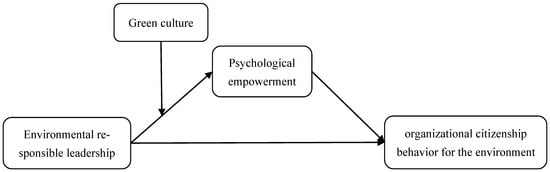
The functions of organizational leaders are often influenced by the organizational environment, which can either facilitate or constrain their efforts to empower employees [8,27]. GC, as a critical contextual factor, reflects an organization’s collective commitment to environmental protection through shared values, beliefs, and behaviors [62,63]. Within the “leader–employee” framework, GC acts as a supportive context that amplifies leaders’ environmental signals and strengthens employees’ interpretations of those signals [64]. Consequently, we posit that GC plays a vital moderating role in shaping how ERL influences employees’ PE.
In organizations with a strong GC, ERL is more likely to successfully empower employees, as leaders receive cultural support during the empowerment process. Specifically, GC amplifies the influence of ERL, further enhancing employees’ positive perceptions of PE. Under the guidance of ERL, employees are more motivated and confident, willing to contribute greater creativity and responsibility to their work [65]. GC embeds environmental values into the core principles of the organization, enabling employees to better understand the intentions of environmental responsible leaders and recognize the environmental value of their own work [66]. Moreover, GC tightly connects employees’ daily behaviors with environmental goals, thereby strengthening their sense of meaning in environmental tasks [67,68]. When employees recognize that the organization in its entirety is actively practicing environmental values, they tend to be more inclined to recognize and endorse the value inherent in their work, further enhancing the sense of meaning within PE [69]. Kumari pointed out that when organizations fulfill their social responsibilities, employees perceive this as a unique source of pride [70]. In companies with a strong GC, organizations often provide environmental resources and training to help employees acquire environmental knowledge and skills [71]. This cultural atmosphere offers employees comprehensive support and learning opportunities, improving their competence in environmental tasks [62,72]. Under the guidance of ERL, the support of GC further boosts employees’ confidence, enabling them to excel in environmentally related tasks and significantly enhancing their perceptions of PE.
GC strengthens the impact of ERL on employees’ PE by reinforcing values, providing a supportive environment, encouraging autonomy, and instilling a sense of meaning. This culture not only helps environmental responsible leaders better exercise their leadership but also enhances employees’ intrinsic motivation, prompting them to take part in more sustainable practices in the workplace. Accordingly, we formulate the subsequent hypothesis for empirical examination:
H3.
GC moderates the indirect relationship between ERL and employees’ OCBE through PE. Specifically, compared with organizations with a low level of GC, the indirect positive effect of ERL on employees’ OCBE via PE is more pronounced in organizations characterized by a high level of GC.
Building on the aforementioned theoretical assumptions, this study presents the model depicted in Figure 1.
Figure 1.
The conceptual research model.
3. Research Methods
3.1. Sample and Method
A sample of 262 respondents participated in this empirical study, all of whom were full-time employees across various industries in Anhui Province, China. Focusing on a single province helps reduce potential confounding from broad regional institutional and socioeconomic differences while retaining a heterogeneous employee sample across industries. The participants represented different organizations from industries such as manufacturing, internet, and services. The majority of the participants were from the younger demographic (66.4%), whose mean age stood at 30.5 years old. With respect to gender distribution, female participants accounted for a larger proportion (64.9%). Regarding educational background, 201 participants (76.7%) possessed an undergraduate diploma, while 44 participants (16.8%) held a master’s degree or above. As for work experience, 66% of the participants possessed over five years of professional experience.
The research questionnaire was disseminated through a web-based survey platform called “Credamo”, one of the largest professional online survey platforms in China. The platform screened potential participants to ensure that they had been working for their current organization for at least six months, deeming them eligible for the survey. This study leveraged the panel/tracking sampling functionality of Credamo to re-survey the same cohort of respondents during the second and third waves of data collection. Data across the three waves were matched longitudinally using the unique participant IDs provided by Credamo, thereby ensuring the temporal continuity of the sample while preserving respondent anonymity. Respondents completed three rounds of questionnaires via an online link, with a two-week interval between consecutive waves (i.e., T2 = T1 + 2 weeks; T3 = T2 + 2 weeks). This time-separated design helps mitigate concerns about common method variance and provides a reasonable temporal window for the development of psychological empowerment and the subsequent occurrence of pro-environmental voluntary behaviors. Each individual was provided with an information document detailing this study’s objectives, privacy guarantees, and clarifications of the key constructs. Demographic variables and independent variables (environmental responsible leadership) were gathered in the initial phase. Information related to the mediating variable (PE) and the moderating variable (GC) was obtained in the second phase. The outcome variable (OCBE) was collected in the final phase. We received 321, 301, and 280 submissions in the first, second, and third survey waves, respectively. After excluding invalid responses, we obtained 262 valid questionnaires. The non-valid submissions were excluded due to reasons such as excessively short response times, high consistency in answers, or missing responses to certain items.
3.2. Measurement Tools
The web-based survey consisted of four core parts (the ERL Scale, OCBE Scale, PE Scale, and GC Scale) plus a segment covering demographic information. All scales were modified based on research works from Western academia and translated into Chinese using a bidirectional translation method. To ensure the accuracy of the measurement items, two bilingual experts with relevant field expertise were involved in the forward and back-translation process, thereby guaranteeing the reliability and validity of the translated scales. Respondents scored the questionnaire items by drawing on their actual professional experiences, with responses measured on a five-point Likert-type scale where “strongly disagree” was assigned a value of 1 and “strongly agree” a value of 5. Furthermore, prior to the formal data collection, we conducted a small-scale pilot test involving 30 participants to assess the comprehensibility and relevance of the questionnaire content. The participants provided favorable feedback, indicating that all items were consistent with their work experience.
3.3. Environmental Responsible Leadership
ERL was assessed via a 5-item scale created by Voegtlin (2012) [38]. The scale was adapted to include an environmental context, with statements including “My manager thoroughly evaluates how decisions about environmental tasks affect stakeholders.” The Cronbach’s α coefficient of this scale amounted to 0.839.
3.4. Green Culture
GC was assessed via a 6-item, dual-dimension scale created by Banerjee et al. (2002) [73]. Items included statements such as “Our organization has formulated explicit policy statements that advocate for enhanced environmental awareness across all operational domains”. This scale’s Cronbach’s α coefficient reached 0.867.
3.5. Psychological Empowerment
PE was evaluated with a revised 4-dimension scale designed by Spreitzer (1995) [39]. The scale consisted of 10 items, including “The environmental work I do is very meaningful to me personally”. The Cronbach’s α of this scale stood at 0.855.
3.6. Organizational Citizenship Behavior for the Environment
The OCBE scale was adapted from the revised version developed by Boiral et al. (2012) [6], which consists of 10 items assessing employees’ voluntary pro-environmental behaviors. First, we retained the core items and structure of the original scale. Then, we incorporated more specific elements of environmental initiatives into each item to reflect the emphasis on environmental responsibility. For instance, the original item “Before I start working, I weigh whether my actions are conducive to environmental protection” was revised to “At work, I evaluate the potential environmental impacts of my actions before taking any steps”. This adaptation process underwent expert review by three scholars with professional expertise in organizational behavior and environmental management, so as to ensure the content validity and reliability of the scale. Prior to the distribution of the final questionnaire, we conducted a pre-test with 30 employees to evaluate the clarity and relevance of the items. This scale’s Cronbach’s α coefficient was 0.840.
3.7. Control Variables
Previous studies have indicated that demographic traits may affect employees’ OCBE [74,75]. Accordingly, we selected gender, age, level of education, length of work experience, and industry type as control variables in order to minimize their interference with the research findings.
4. Analysis of Data and Presentation of Results
4.1. Common Method Bias Test
Since every item on the questionnaire was completed via self-report by the respondents, there is a possibility that variations in the dependent variable could be attributed to the same measurement method rather than the influence of the independent variable. Therefore, it is necessary to test the extent of common method bias. Harman’s single-factor test was adopted in this research to assess the severity of common method bias. All items underwent unrotated principal component factor analysis. The results showed that factors with eigenvalues exceeding 1 were identified, and the largest factor accounted for 28.006% of the variance (a proportion below 40%). This indicates that common method bias did not exert a significant impact on the results. Furthermore, a validated factor analysis model (M1) was constructed, followed by the establishment of an alternative model incorporating a methodological factor (M2). Comparing the key fit indices of M1 and M2 yielded the following results: Δχ2/df = 0.549, ΔCFI = 0.010, ΔTLI = 0.016, ΔRMSEA = 0.018. The changes in CFI and TLI were less than 0.1, and the variation in RMSEA was below 0.05, demonstrating that including the common method factor did not lead to a significant improvement in the model fit. Thus, we can determine that this research does not have notable same-source response bias, and its influence on the final measurement outcomes is negligible.
4.2. Confirmatory Factor Analysis
SPSS 26.0 and AMOS24.0 software were employed to test the proposed theoretical model, including internal consistency, construct validity, convergent validity, and discriminant validity. Key outcomes (including Cronbach’s α, composite reliability [CR], average variance extracted [AVE], maximum shared variance [MSV], and AVE’s square root) are presented in Table 1. All variables in this study achieved acceptable Cronbach’s alpha values (α > 0.70), indicating satisfactory reliability levels. As shown in Table 2, for construct validity, the fit indices of the model met the required standards (χ2(262) = 278.358, χ2/df = 2.209, CFI = 0.944, TLI = 0.932, RMSEA = 0.068), and the model performed significantly better than the alternative three-factor model (χ2(262) = 485.526, χ2/df = 3.764, CFI = 0.868, TLI = 0.844, RMSEA = 0.103) and two-factor model (χ2(262) = 879.671, χ2/df = 6.715, CFI = 0.723, TLI = 0.677, RMSEA = 0.148). Next, further verification of discriminant validity was performed through a comparison among the square root of the AVE and the inter-construct correlation coefficients. For all four variables, the square root of the AVE exceeded the corresponding correlation coefficients of these constructs, with MSV values being lower than AVE values; these results indicate strong construct validity and discriminant validity. Finally, the scores for composite reliability (where CR surpasses 0.7) and average variance extracted (with AVE exceeding 0.5) fell within the suggested thresholds, with all item factor loadings exceeding 0.5, demonstrating ideal convergent validity. In conclusion, the hypothesized model passed the reliability and validity tests.
Table 1.
Reliability and validity.
Table 2.
Comparison of Measurement Models.
4.3. Correlation Analysis
The descriptive statistics and inter-construct correlations for this research’s constructs are presented in Table 3. ERL exhibited a positive association with OCBE (r = 0.431, p < 0.01); ERL also showed a positive correlation with PE (r = 0.349, p < 0.01); and PE displayed a positive linkage with OCBE (r = 0.501, p < 0.01). Additionally, all continuous variables (i.e., ERL, GC, PE, and OCBE) were significantly correlated at the p < 0.01 level. These results provide support for the subsequent regression analysis.
Table 3.
Descriptive statistics and inter-correlations among study variables.
4.4. Hypothesis Testing
Regression modeling was adopted to verify the positive impact of ERL on OCBE (H1), along with the associations between ERL, PE, and staff’s OCBE. The findings indicated a positive association existed between ERL and PE (β = 0.29, p < 0.05) and OCBE (β = 0.31, p < 0.01). Moreover, a positive linkage was identified between PE and OCBE (β = 0.35, p < 0.01).
For the purpose of validating the mediating role that PE plays in the association between ERL and OCBE, this study used Hayes’ (2017) [76] SPSS PROCESS macro Model 4 (a simple mediation model) and regression analysis to test the above relationship. The test results are shown in Table 4 and Table 5. After including PE, ERL still had a significant indirect effect (β = 0.21, p < 0.01) and direct effect on OCBE. Furthermore, the results derived from the bootstrap method further indicated that PE partially mediated the positive link between ERL and OCBE (B = 0.10, LLCI = 0.05, ULCI = 0.20). Therefore, Proposition 2 is verified.
Table 4.
Hierarchical regression findings’ summary.
Table 5.
Direct and indirect effects and 95% confidence intervals.
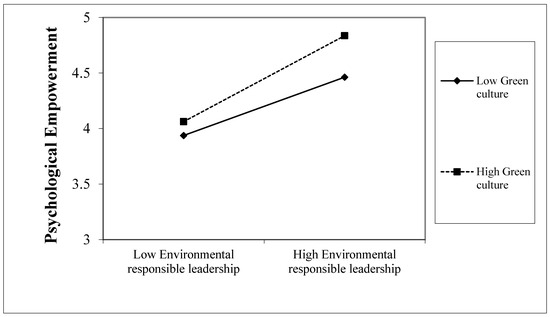
For the purpose of verifying the moderated mediation mechanism proposed in Hypothesis 3, hierarchical regression analysis and Model 7 of the SPSS PROCESS macro developed by Hayes (2017) [76] were utilized to examine the relevant associations. First, we tested the moderating role of GC in the relationship between ERL and PE. The results are shown in Table 4. In Model 1, control variables and ERL were entered; in Model 2, GC was added; and in Model 3, the interaction term between ERL and GC was included. The regression results showed that the interaction term was significant (β = 0.13, p < 0.05). For the purpose of more clearly demonstrating the moderating role of GC, the interaction was plotted at +1 SD and −1 SD from the mean of GC, as illustrated in Figure 2. The results from the simple slope test demonstrated that the association was significant under the condition of high GC levels; although the relationship was also significant at a low level of GC, its effect was weaker. Compared to a low-level GC environment (−1 SD), the relationship between ERL and employees’ green PE was stronger in a high-level GC environment (+1 SD). Therefore, GC moderates the relationship between ERL and PE.
Figure 2.
The moderating effect of GC.
Next, we used Hayes’(2017) [76] SPSS PROCESS macro Model 7 to assess the influence of GC on the intermediary linkage between ERL and employees’ OCBE. The results are shown in Table 6. When GC was at a low level (i.e., one standard deviation beneath the average value), ERL exerted an indirect effect of 0.0662 on employees’ OCBE via PE, with the associated 95% confidence interval [0.0166, 0.1422] not containing zero. At a high level of GC (one standard deviation above the average), the indirect effect of ERL on employees’ OCBE through PE was 0.117, with a corresponding 95% confidence interval of [0.0434, 0.2363] that similarly excluded zero. These findings show that the indirect influence of ERL on staff’s OCBE is more pronounced in firms with elevated GC levels. Therefore, we conclude that Hypothesis 3 is supported. From a practical perspective, this finding suggests that in organizations with a stronger GC, the PE inspired by ERL is more readily translated into employees’ voluntary pro-environmental behaviors. Conversely, in organizations with a weaker GC, such a “transformation effect” is relatively attenuated.
Table 6.
Analysis of interactive mediation pathways.
5. Discussion
Based on survey data from 262 corporate employees in Anhui Province, China, this study examines the impact of ERL on employees’ OCBE. The results support a significant positive relationship. PE plays a significant mediating role between ERL and OCBE. Bootstrap analysis shows that the indirect effect of ERL on OCBE via PE is 0.10 (95% CI [0.05, 0.20]), indicating a statistically significant mediating pathway. Furthermore, GC significantly moderates the effect of ERL on PE. The hierarchical regression results indicate that the interaction between ERL and GC has a significant positive impact on PE (β = 0.13, p < 0.05), demonstrating that GC strengthens the positive influence of ERL on employees’ PE. Moderated mediation analysis further reveals that under a high level of GC, the indirect effect of ERL on OCBE via PE is stronger (effect = 0.117, 95% CI [0.0434, 0.2363]) than under a low level of GC (effect = 0.066). These findings support the hypothesis that GC enhances the mediating role of PE.
Grounded in SDT, these findings provide explicit answers to our three core research questions. First, regarding how ERL impacts OCBE via employees’ intrinsic motivational states, the results show that PE significantly mediates the ERL–OCBE relationship. Second, regarding how GC moderates the relationship between ERL and PE (i.e., under what cultural conditions ERL is more effective), the significant ERL × GC interaction on PE indicates that ERL is more effective in enhancing employees’ PE when GC is high rather than low. Third, regarding whether GC moderates the mediating pathway linking ERL to OCBE via PE, the moderated mediation results indicate that the indirect effect is stronger under high GC than under low GC, suggesting that the overall indirect effect of ERL on OCBE via PE is contingent on GC. By integrating the organizational context of GC and the mediating mechanism of PE, this study provides a comprehensive framework for understanding how ERL fosters OCBE. Specifically, ERL, through environmental moral orientation and role modeling, enables employees to perceive the meaning, impact, autonomy, and competence in their environmental work, thereby significantly improving their OCBE. At the same time, GC enhances employees’ PE by creating a supportive environment, reinforcing environmental values, and providing resources and training. This dual-path mechanism offers important theoretical support and practical insights for organizations aiming to promote sustainable development and environmental management practices. Derived from a Chinese sample, the findings provide contextualized evidence on leadership and employee pro-environmental behavior, with targeted implications for Chinese enterprises to advance sustainable practices through developing ERL and cultivating GC.
5.1. Theoretical Significance
This study explores the relationships among ERL, PE, and OCBE, offering several important theoretical insights, as outlined below.
First, this study reveals that PE serves as a critical motivational mechanism in explaining the linkage between ERL and employees’ OCBE. Although existing research has illustrated a positive correlational link between responsible leadership and employees’ pro-environmental behavior or OCBE, few studies have examined the role of PE in this relationship [20,31]. To our knowledge, this research is the first to conceptualize and empirically confirm PE’s mediating role in the relationship between ERL and employees’ OCBE. Grounded in the SDT of autonomous motivation, this study clarifies how ERL enhances employees’ PE, thereby fostering greater positivity and proactivity in their work. This finding not only expands the theoretical structure of responsible leadership but also offers a novel angle for PE-related investigations. As a form of autonomous motivation characterized by a positive orientation, PE enables employees to proactively shape their work roles and environments [77]. This study further demonstrates that ERL can significantly enhance employees’ pro-environmental behavior by activating this autonomous motivation. This outcome delivers a meaningful addition to PE theory research and enhances our comprehension of the pathways through which ERL drives staff’s eco-friendly actions.
Second, the outcomes of this research demonstrate that GC provides a supportive organizational environment that enhances the empowering influence of responsible leadership, offering both leaders and employees greater support and positive psychological experiences. Previous research has suggested that organizational environmental factors can either facilitate or constrain leaders’ efforts to empower employees, and GC serves as a core function within this procedure [28]. GC strengthens the linkage between managerial conduct and staff actions and is closely associated with positive employee outcomes, such as creativity, competence, and performance [29,78]. However, research on how GC moderates the relationship between responsible leadership and PE remains limited, particularly regarding how GC influences the dynamic effects of responsible leadership on employee empowerment. By identifying GC as a contextual constraint within the linkage between accountable leadership and PE, this study advances the existing literature. The findings demonstrate that within organizations where GC is high, the impact of accountable leadership on employees’ PE becomes significantly more prominent. This result not only presents an innovative viewpoint for the contextualized study of responsible leadership but also offers a theoretical foundation for future research exploring the mechanisms of responsible leadership in different organizational environments.
5.2. Practical Implications
First, the results indicate that ERL positively influences employees’ OCBE. Gaining an in-depth understanding of ERL’s characteristics and its influence on employees’ PE holds significant practical value for organizations’ sustainable development. Therefore, enterprises can strengthen environmental responsibility in their leadership systems from two aspects: first, by incorporating the assessment of environmental responsibility awareness and green management capabilities into managers’ selection and evaluation processes, with a focus on their tendency to consider environmental impacts in decision-making and their demonstration of environmental values in practice; second, by designing leadership training programs that include environmental responsibility content, focusing on how to integrate environmental concepts into daily management—particularly on supporting teams in conducting environmental protection work through effective empowerment and communication.
Second, PE mediates the relationship between ERL and employees’ OCBE. This suggests that leaders can foster environmental behaviors by supporting employees’ psychological needs, with specific actions falling into three areas: articulating the value of environmental protection-related work when initiating such tasks—highlighting its positive impacts on the organization, society, and the environment—to help employees grasp the meaning of their work; granting employees a certain degree of autonomy during the implementation of environmental initiatives, allowing teams to participate in designing specific implementation plans to enhance their sense of control and influence over their work; and providing employees with the necessary training and resource support to accomplish environmental tasks, thereby helping them build work confidence and improve their sense of competence.
Finally, this study finds that GC enhances the positive impact of ERL on employees’ PE, indicating that the organizational context moderates leadership effectiveness. In response, enterprises can integrate green concepts into daily operations by formulating environmental behavior norms and creating eco-friendly workplace environments, thereby fostering an organizational climate that supports environmental behaviors. Meanwhile, systematic measures such as conducting environmental theme-based training, establishing environmental reward mechanisms, and incorporating selected environmental indicators into team performance appraisals can continuously strengthen the organization’s environmental orientation. Additionally, the study data reveal that the facilitative effect of ERL on employees’ PE is more pronounced in organizations with a high level of GC, which further suggests that enterprises need to synergistically advance leadership development and organizational culture building to more effectively promote employees’ OCBE.
5.3. Research Limitations and Future Directions
5.3.1. Methodological Limitations
First, the study findings were mainly gathered via self-assessment surveys from personnel, which may introduce social desirability effects or common method bias. Given that our variables are mainly related to employees’ states and behaviors, collecting data from participants themselves is reasonable. Additionally, findings from confirmatory factor analysis and AVE analysis indicate that the constructs are distinct. However, future research could strive to gather information from diverse origins. For instance, data on GC could be collected from the perspective of leaders. Second, this study did not conduct a refined analysis of the multidimensionality of PE. Although we verified the overall mediating role of PE in the relationship between ERL and employees’ pro-environmental behaviors, we failed to further explore the potential differential mechanisms underlying its four dimensions—meaning, competence, self-determination, and impact. According to Spreitzer’s (1995) [39] theory, different dimensions may exert distinct impacts on employee behaviors across varying contexts. For instance, ERL may primarily convey environmental values through the dimension of meaning, grant decision-making latitude via self-determination, provide resource support by virtue of competence, and strengthen behavioral feedback through impact. Future research could attempt to decompose the construct of PE, explore the differentiated mediating pathways of each dimension in the link between ERL and employees’ pro-environmental behaviors, and thereby reveal the underlying mechanisms in greater detail, so as to provide more targeted managerial implications for organizations. Finally, the complexity of the causal relationship between ERL and employees’ PE may influence causal inferences. Dust noted in their research that employees with strong PE may, in turn, perceive their supervisors as transformational leaders because they are experiencing PE [77]. We believe that a similar issue may exist in the study of responsible leadership. To address this, we used a three-timepoint lagged design instead of a cross-sectional design to clarify the temporal sequence of variables. However, we encourage future researchers to employ experimental designs to further validate the proposed relationships. Moreover, although the sample size (N = 262) is adequate for preliminary analyses, larger samples would improve statistical power for testing moderated mediation models.
5.3.2. Contextual Limitations (Chinese Sample)
The limitations of the research sample have compromised the generalizability of the findings. The sample in this study was primarily drawn from Anhui Province, China, with a high proportion of young female participants, which restricts its extension to groups from other regions, age brackets, and genders. While the sample covered multiple industries, including manufacturing, internet services, and the service sector, and industry type was controlled for in the analysis, differences across industries in environmental pressures, organizational structures, and employee roles may imply unexamined boundary conditions for the mechanism underlying ERL. Furthermore, this study did not explicitly examine whether sample diversity influences response consistency in its theoretical hypotheses, nor did it conduct moderation effect tests for industry, age, or gender. This limitation constrains our understanding of the model’s generalizability across different groups. Future research should expand the sample across broader geographical, demographic, and industrial contexts to enhance the robustness and external validity of the conclusions.
To address these contextual boundary conditions and strengthen external validity, future research could pursue the following directions: First, future studies could be conducted in different countries and regions to explore whether GC functions as an adjuster within the association between ERL and staff’s PE across diverse cultural contexts. For example, comparisons could be made among collectivism-dominant societies (e.g., the Asian continent) and individualism-prominent communities (e.g., the European continent and the United States of America) to examine differences in the role of GC. Second, future research could explore the contextualized manifestations of ERL, analyzing how responsible leadership differs across organizations of varying sizes and industry backgrounds. For instance, the effectiveness of responsible leadership may vary between small and large enterprises or across industries with differing environmental demands and cultural atmospheres.
5.4. Conclusions
This study underscores the function of accountable leadership within promoting employees’ OCBE and emphasizes the supportive roles of green PE and GC in this process. PE functions as an important motivational pathway that links responsible leadership to employees’ OCBE, and suggests practical avenues for enhancing employees’ pro-environmental behaviors within organizations. However, given that the research sample was derived primarily from China and thus subject to the influences of specific cultural and social contexts, the generalizability of these findings remains to be validated against broader cultural and industrial backgrounds. GC fosters a supportive climate, which appears to strengthen the positive impacts of responsible leadership on employees’ sense of meaning, competence, autonomy, and influence, thereby further facilitating environmentally friendly behaviors. Although these results were significant within the scope of our study, future research should be conducted across diverse cultural and geographical contexts to further verify the validity and applicability of our theoretical framework. In conclusion, this study uncovers the intrinsic mechanism through which ERL motivates employees’ OCBE via PE while also clarifying the catalytic role of GC. These findings not only make contributions to academic theory but also provide enterprises with a clear and actionable management framework to unlock employees’ green potential and translate sustainability into tangible competitive advantages.
Author Contributions
Formal analysis, Z.H.; Data curation, Q.L.; Writing—original draft, Q.L.; Writing—review and editing, X.D. and Y.H.; Visualization, Z.H.; Supervision, X.D. and Y.H. All authors have read and agreed to the published version of the manuscript.
Funding
This research received no external funding.
Institutional Review Board Statement
This study was conducted in accordance with the Declaration of Helsinki, and approved by the Institutional Review Board (or Ethics Committee) of Anhui University of Finance and Economics (date 28 June 2024).
Informed Consent Statement
Informed consent was obtained from all subjects involved in this study.
Data Availability Statement
Data are unavailable due to privacy or ethical restrictions. The data presented in this study are available on request from the corresponding author.
Conflicts of Interest
The authors declare no conflicts of interest.
References
- Bashar, S.; Wang, D.; Rafiq, M. Adoption of green supply chain management in developing countries: Role of consumer cooperation, eco-design, and green marketing. Environ. Sci. Pollut. Res. 2023, 30, 92594–92610. [Google Scholar] [CrossRef] [Scilit]
- Saetang, W.; Chai-Arayalert, S.; Kajornkasirat, S.; Kongcharoen, J.; Saeliw, A.; Puangsuwan, K.; Puttinaovarat, S. Eco-friendly office platform: Leveraging machine learning and GIS for carbon footprint management and green space analysis. Sustainability 2024, 16, 9424. [Google Scholar] [CrossRef] [Scilit]
- Haugh, H.M.; Talwar, A. How do corporations embed sustainability across the organization? Acad. Manag. Learn. Educ. 2010, 9, 384–396. [Google Scholar] [CrossRef] [Scilit]
- Ones, D.S.; Dilchert, S. Environmental sustainability at work: A call to action. Ind. Organ. Psychol. 2012, 5, 444–446. [Google Scholar] [CrossRef] [Scilit]
- Graves, L.M.; Sarkis, J.; Zhu, Q. How transformational leadership and employee motivation combine to predict employee proenvironmental behaviors in China. J. Environ. Psychol. 2013, 35, 81–91. [Google Scholar] [CrossRef] [Scilit]
- Boiral, O.; Paillé, P. Organizational citizenship behaviour for the environment: Measurement and validation. J. Bus. Ethics 2012, 109, 431–445. [Google Scholar] [CrossRef] [Scilit]
- Boiral, O.; Raineri, N.; Talbot, D. Managers’ citizenship behaviors for the environment: A developmental perspective. J. Bus. Ethics 2018, 149, 395–409. [Google Scholar] [CrossRef] [Scilit]
- Khan, A.N.; Khan, N.A. The nexuses between transformational leadership and employee green organisational citizenship behaviour: Role of environmental attitude and green dedication. Bus. Strategy Environ. 2022, 31, 921–933. [Google Scholar] [CrossRef] [Scilit]
- Boiral, O.; Talbot, D.; Paillé, P. Leading by example: A model of organizational citizenship behavior for the environment. Bus. Strategy Environ. 2015, 24, 532–550. [Google Scholar] [CrossRef] [Scilit]
- Jayabalan, N.; Zafir, M.M.; Kumar, R.M.; Hayati, Y.; Mai, F.M. The role of OCBE on green HRM towards performance sustainability. Int. J. Innov. Creat. Change 2020, 13, 388–399. [Google Scholar]
- Mulder, L.B.; Nelissen, R.M.A. When rules really make a difference: The effect of cooperation rules and self-sacrificing leadership on moral norms in social dilemmas. J. Bus. Ethics 2010, 95, 57–72. [Google Scholar] [CrossRef] [Scilit]
- Afsar, B.; Badir, Y.; Kiani, U.S. Linking spiritual leadership and employee pro-environmental behavior: The influence of workplace spirituality, intrinsic motivation, and environmental passion. J. Environ. Psychol. 2016, 45, 79–88. [Google Scholar] [CrossRef] [Scilit]
- Iqbal, Q.; Piwowar-Sulej, K. Organizational citizenship behavior for the environment decoded: Sustainable leaders, green organizational climate and person-organization fit. Balt. J. Manag. 2023, 18, 300–316. [Google Scholar] [CrossRef] [Scilit]
- Miska, C.; Mendenhall, M.E. Responsible leadership: A mapping of extant research and future directions. J. Bus. Ethics 2018, 148, 117–134. [Google Scholar] [CrossRef] [Scilit]
- Unsworth, K.L.; Davis, M.C.; Russell, S.V.; Bretter, C. Employee green behaviour: How organizations can help the environment. Curr. Opin. Psychol. 2021, 42, 1–6. [Google Scholar] [CrossRef] [Scilit]
- Waldman, D.A.; Balven, R.M. Responsible leadership: Theoretical issues and research directions. Acad. Manag. Perspect. 2014, 28, 224–244. [Google Scholar] [CrossRef] [Scilit]
- Chang, T.W.; Chen, K.H.; Lee, Y.S.; Yen, S.J. How does environmental leadership cause adoption of environmental policy? Front. Environ. Sci. 2022, 10, 928463. [Google Scholar] [CrossRef] [Scilit]
- Stahl, G.K.; Sully de Luque, M. Antecedents of responsible leader behavior: A research synthesis, conceptual framework, and agenda for future research. Acad. Manag. Perspect. 2014, 28, 235–254. [Google Scholar] [CrossRef] [Scilit]
- Afsar, B.; Maqsoom, A.; Shahjehan, A.; Afridi, S.A.; Nawaz, A.; Fazliani, H. Responsible leadership and employee’s proenvironmental behavior: The role of organizational commitment, green shared vision, and internal environmental locus of control. Corp. Soc. Responsib. Environ. Manag. 2020, 27, 297–312. [Google Scholar] [CrossRef] [Scilit]
- Xiao, X.; Zhou, Z.; Yang, F.; Qi, H. Embracing responsible leadership and enhancing organizational citizenship behavior for the environment: A social identity perspective. Front. Psychol. 2021, 12, 632629. [Google Scholar] [CrossRef] [Scilit]
- Deci, E.L.; Olafsen, A.H.; Ryan, R.M. Self-determination theory in work organizations: The state of a science. Annu. Rev. Organ. Psychol. Organ. Behav. 2017, 4, 19–43. [Google Scholar] [CrossRef] [Scilit]
- Vallerand, R.J.; Pelletier, L.G.; Koestner, R. Reflections on self-determination theory. Can. Psychol. 2008, 49, 257–262. [Google Scholar] [CrossRef] [Scilit]
- Forner, V.W.; Jones, M.; Berry, Y.; Eidenfalk, J. Motivating workers: How leaders apply self-determination theory in organizations. Organ. Manag. J. 2020, 18, 76–94. [Google Scholar] [CrossRef] [Scilit]
- Spreitzer, G.M.; Kizilos, M.A.; Nason, S.W. A dimensional analysis of the relationship between psychological empowerment and effectiveness, satisfaction, and strain. J. Manag. 1997, 23, 679–704. [Google Scholar]
- Kurniawan, I.S.; Daeli, F. Uji Moderasi Pemberdayaan Psikologis pada Pengaruh Kepemimpinan Transformasional terhadap Organizational Citizenship Behavior Karyawan UKM Industri Makanan. J. Inspirasi Bisnis Dan Manaj. 2021, 5, 1. [Google Scholar] [CrossRef] [Scilit]
- Saira, S.; Mansoor, S.; Ali, M. Transformational leadership and employee outcomes: The mediating role of psychological empowerment. Leadersh. Organ. Dev. J. 2021, 42, 130–143. [Google Scholar] [CrossRef] [Scilit]
- House, R.; Rousseau, D.M.; Thomashunt, M. The meso paradigm—A framework for the integration of micro and macro organizational-behavior. Res. Organ. Behav. Annu. Ser. Anal. Essays Crit. Rev. 1995, 17, 71–114. [Google Scholar]
- Katz, D.; Kahn, R. The social psychology of organizations. In Organizational Behavior 2; Routledge: Abingdon, UK, 2015; pp. 152–168. [Google Scholar]
- Rizvi, Y.S.; Garg, R. The simultaneous effect of green ability-motivation-opportunity and transformational leadership in environment management: The mediating role of green culture. Benchmarking Int. J. 2021, 28, 830–856. [Google Scholar] [CrossRef] [Scilit]
- Pless, N.M.; Maak, T. Responsible leadership: Pathways to the future. In Responsible Leadership; Pless, N.M., Maak, T., Eds.; Springer: Dordrecht, The Netherlands, 2012; pp. 3–13. [Google Scholar]
- Zhao, C.; Liang, L. A study on the influence of environmental responsible leadership on employee pro-environmental behavior. Front. Environ. Sci. 2023, 11, 1135482. [Google Scholar] [CrossRef] [Scilit]
- Voegtlin, C.; Frisch, C.; Walther, A.; Schwab, P. Theoretical development and empirical examination of a three-roles model of responsible leadership. J. Bus. Ethics 2020, 166, 411–431. [Google Scholar] [CrossRef] [Scilit]
- Patzer, M.; Voegtlin, C.; Scherer, A.G. The normative justification of integrative stakeholder engagement: A Habermasian view on responsible leadership. Bus. Ethics Q. 2018, 28, 325–354. [Google Scholar] [CrossRef] [Scilit]
- Wang, Y.; Shen, T.; Chen, Y.; Carmeli, A. CEO environmentally responsible leadership and firm environmental innovation: A socio-psychological perspective. J. Bus. Res. 2021, 126, 327–340. [Google Scholar] [CrossRef] [Scilit]
- Sahar, N.E.; Zawawi, D.; Jaharuddin, N.S.; Abbasi, M.A. Responsible leadership and organisational citizenship behaviour for the environment: Mediated by environmental corporate social responsibility. Int. J. Ethics Syst. 2025, 41, 353–371. [Google Scholar] [CrossRef] [Scilit]
- Faraz, N.A.; Ahmed, F.; Xiong, Z. How firms leverage corporate environmental strategy to nurture green behavior: Role of multi-level environmentally responsible leadership. Corp. Soc. Responsib. Environ. Manag. 2024, 31, 243–259. [Google Scholar] [CrossRef] [Scilit]
- Li, Y.; Jiang, L.; Yang, P. How to drive corporate responsible innovation? A dual perspective from internal and external drivers of environmental protection enterprises. Front. Environ. Sci. 2023, 10, 1091859. [Google Scholar] [CrossRef] [Scilit]
- Voegtlin, C. Development of a scale measuring discursive responsible leadership. In Responsible Leadership; Pless, N.M., Maak, T., Eds.; Springer: Dordrecht, The Netherlands, 2012; pp. 57–73. [Google Scholar]
- Spreitzer, G.M. Psychological empowerment in the workplace: Dimensions, measurement, and validation. Acad. Manag. J. 1995, 38, 1442–1465. [Google Scholar] [CrossRef] [Scilit]
- Siegall, M.; Gardner, S. Contextual factors of psychological empowerment. Pers. Rev. 2000, 29, 703–722. [Google Scholar] [CrossRef] [Scilit]
- Li, H.; Shi, Y.; Li, Y.; Xing, Z.; Wang, S.; Ying, J.; Zhang, M.; Sun, J. Relationship between nurse psychological empowerment and job satisfaction: A systematic review and meta-analysis. J. Adv. Nurs. 2018, 74, 1264–1277. [Google Scholar] [CrossRef] [Scilit]
- Oladipo, S.E. Psychological empowerment and development. Edo J. Couns. 2009, 2, 118–126. [Google Scholar] [CrossRef] [Scilit]
- Cyfert, S.; Szumowski, W.; Dyduch, W.; Zastempowski, M.; Chudzinski, P. The power of moving fast: Responsible leadership, psychological empowerment and workforce agility in energy sector firms. Heliyon 2022, 8, e11188. [Google Scholar] [CrossRef] [Scilit]
- Sarwar, U.; Aslam, M.K.; Khan, S.A.; Shenglin, S. Optimizing human resource strategies: Investigating the dynamics of high-performance practices, psychological empowerment, and responsible leadership in a moderated-mediation framework. Acta Psychol. 2024, 248, 104054. [Google Scholar] [CrossRef] [Scilit] [PubMed]
- Rashid, S.A.R.; Al Qaseer, M.A. Testing the mediating role of green psychological empowerment of employees in enhancing the relationship between green human resource management practices and organizational sustainability. J. Posit. Sch. Psychol. 2022, 6, 3138–3153. [Google Scholar]
- Amrutha, V.N.; Geetha, S.N. Green employee empowerment for environmental organization citizenship behavior: A moderated parallel mediation model. Curr. Psychol. 2024, 43, 5685–5702. [Google Scholar] [CrossRef] [Scilit]
- Tariq, S.; Jan, F.A.; Ahmad, M.S. Green employee empowerment: A systematic literature review on state-of-art in green human resource management. Qual. Quant. 2016, 50, 237–269. [Google Scholar] [CrossRef] [Scilit]
- Ahmad, N.; Ullah, Z.; Arshad, M.Z.; Kamran, H.W.; Scholz, M.; Han, H. Relationship between corporate social responsibility at the micro-level and environmental performance: The mediating role of employee pro-environmental behavior and the moderating role of gender. Sustain. Prod. Consum. 2021, 27, 1138–1148. [Google Scholar] [CrossRef] [Scilit]
- Lülfs, R.; Hahn, R. Corporate greening beyond formal programs, initiatives, and systems: A conceptual model for voluntary pro-environmental behavior of employees. Eur. Manag. Rev. 2013, 10, 83–98. [Google Scholar] [CrossRef] [Scilit]
- Voegtlin, C.; Patzer, M.; Scherer, A.G. Responsible leadership in global business: A new approach to leadership and its multi-level outcomes. J. Bus. Ethics 2012, 105, 1–16. [Google Scholar] [CrossRef] [Scilit]
- Brown, M.E.; Treviño, L.K.; Harrison, D.A. Ethical leadership: A social learning perspective for construct development and testing. Organ. Behav. Hum. Decis. Process. 2005, 97, 117–134. [Google Scholar] [CrossRef] [Scilit]
- Metcalf, L.; Benn, S. Leadership for sustainability: An evolution of leadership ability. J. Bus. Ethics 2013, 112, 369–384. [Google Scholar] [CrossRef] [Scilit]
- Taylor, J. Goal setting in the Australian public service: Effects on psychological empowerment and organizational citizenship behavior. Public Adm. Rev. 2013, 73, 453–464. [Google Scholar] [CrossRef] [Scilit]
- Doh, J.P.; Stumpf, S.A.; Tymon, W.G., Jr. Responsible leadership helps retain talent in India. In Responsible Leadership; Springer: Dordrecht, The Netherlands, 2011; pp. 85–100. [Google Scholar]
- Han, Z.; Wang, Q.; Yan, X. How responsible leadership motivates employees to engage in organizational citizenship behavior for the environment: A double-mediation model. Sustainability 2019, 11, 605. [Google Scholar] [CrossRef] [Scilit]
- Han, Z.; Chen, M.; Jiang, C. Influence of responsible leadership on employee green behavior: The role of green role identity and green human resource management. Environ. Dev. Sustain. 2025, 27, 2985–3001. [Google Scholar] [CrossRef] [Scilit]
- Zhao, H.; Chen, Y.; Liu, W. Socially responsible human resource management and employee moral voice: Based on the self-determination theory. J. Bus. Ethics 2023, 183, 627–643. [Google Scholar] [CrossRef] [Scilit]
- Mi, L.; Gan, X.; Xu, T.; Long, R.; Qiao, L.; Zhu, H. A new perspective to promote organizational citizenship behaviour for the environment: The role of transformational leadership. J. Clean. Prod. 2019, 239, 118002. [Google Scholar] [CrossRef] [Scilit]
- Hooi, L.W.; Liu, M.S.; Lin, J.J.J. Green human resource management and green organizational citizenship behavior: Do green culture and green values matter? Int. J. Manpow. 2022, 43, 763–785. [Google Scholar] [CrossRef] [Scilit]
- Spreitzer, G.M. Taking stock: A review of more than twenty years of research on empowerment at work. In The SAGE Handbook of Organizational Behavior; Barling, J., Cooper, C.L., Eds.; SAGE: London, UK, 2008; pp. 54–72. [Google Scholar]
- Turnipseed, D.L.; VandeWaa, E.A. The little engine that could: The impact of psychological empowerment on organizational citizenship behavior. Int. J. Organ. Theory Behav. 2020, 23, 281–296. [Google Scholar] [CrossRef] [Scilit]
- Roscoe, S.; Subramanian, N.; Jabbour, C.J.; Chong, T. Green human resource management and the enablers of green organisational culture: Enhancing a firm’s environmental performance for sustainable development. Bus. Strategy Environ. 2019, 28, 737–749. [Google Scholar] [CrossRef] [Scilit]
- Chang, C.H. Proactive and reactive corporate social responsibility: Antecedent and consequence. Manag. Decis. 2015, 53, 451–468. [Google Scholar] [CrossRef] [Scilit]
- Soewarno, N.; Tjahjadi, B.; Fithrianti, F. Green innovation strategy and green innovation: The roles of green organizational identity and environmental organizational legitimacy. Manag. Decis. 2019, 57, 3061–3078. [Google Scholar] [CrossRef] [Scilit]
- Pan, C.; Abbas, J.; Álvarez-Otero, S.; Khan, H.; Cai, C. Interplay between corporate social responsibility and organizational green culture and their role in employees’ responsible behavior towards the environment and society. J. Clean. Prod. 2022, 366, 132878. [Google Scholar] [CrossRef] [Scilit]
- Fu, Q.; Abdul Rahman, A.A.; Jiang, H.; Abbas, J.; Comite, U. Sustainable supply chain and business performance: The impact of strategy, network design, information systems, and organizational structure. Sustainability 2022, 14, 1080. [Google Scholar] [CrossRef] [Scilit]
- Choong, Y.O.; Ng, L.P.; Tee, C.W.; Kuar, L.S.; Teoh, S.Y.; Chen, I.C. Green work climate and pro-environmental behaviour among academics: The mediating role of harmonious environmental passion. Int. J. Manag. Stud. 2019, 26, 77–97. [Google Scholar] [CrossRef] [Scilit]
- Piwowar-Sulej, K. Pro-environmental organizational culture: Its essence and a concept for its operationalization. Sustainability 2020, 12, 4197. [Google Scholar] [CrossRef] [Scilit]
- Mendis, M.V.S.; Welmilla, I. Green consciousness of employees. Hum. Resour. Manag. Challenging Environ. 2021, 11, 88–106. [Google Scholar]
- Kumari, K.; Abbas, J.; Rashid, S. Role of corporate social responsibility in corporate reputation via organizational trust and commitment. Rev. Manag. Sci. 2021, 3, 42–63. [Google Scholar] [CrossRef] [Scilit]
- Ren, S.; Tang, G.; Jackson, S.E. Effects of green HRM and CEO ethical leadership on organizations’ environmental performance. Int. J. Manpow. 2021, 42, 961–983. [Google Scholar] [CrossRef] [Scilit]
- Fernández, E.; Junquera, B.; Ordiz, M. Organizational culture and human resources in the environmental issue: A review of the literature. Int. J. Hum. Resour. Manag. 2003, 14, 634–656. [Google Scholar] [CrossRef] [Scilit]
- Banerjee, S.B. Corporate environmentalism: The construct and its measurement. J. Bus. Res. 2002, 55, 177–191. [Google Scholar] [CrossRef] [Scilit]
- Al Ahad, A.; Khan, M.R. Exploring the mediating effect of demographic attributes on the relationship between employee engagement and organizational citizenship behavior. Int. J. Manag. Sustain. 2020, 9, 11–23. [Google Scholar] [CrossRef] [Scilit]
- Sari, D.P.; Ali, H. Literature review measurement model of individual behavior and organizational citizenship behavior: Individual characteristics, work culture and workload. Dinasti Int. J. Manag. Sci. 2022, 3, 647–656. [Google Scholar]
- Hayes, A.F. Introduction to Mediation, Moderation, and Conditional Process Analysis: A Regression-Based Approach; Guilford Publications: New York, NY, USA, 2017. [Google Scholar]
- Dust, S.B.; Resick, C.J.; Mawritz, M.B. Transformational leadership, psychological empowerment, and the moderating role of mechanistic–organic contexts. J. Organ. Behav. 2014, 35, 413–433. [Google Scholar] [CrossRef] [Scilit]
- Qu, X.; Khan, A.; Yahya, S.; Zafar, A.U.; Shahzad, M. Green core competencies to prompt green absorptive capacity and bolster green innovation: The moderating role of organization’s green culture. J. Environ. Plan. Manag. 2022, 65, 536–561. [Google Scholar] [CrossRef] [Scilit]

Disclaimer/Publisher’s Note: The statements, opinions and data contained in all publications are solely those of the individual author(s) and contributor(s) and not of MDPI and/or the editor(s). MDPI and/or the editor(s) disclaim responsibility for any injury to people or property resulting from any ideas, methods, instructions or products referred to in the content. |
© 2026 by the authors. Licensee MDPI, Basel, Switzerland. This article is an open access article distributed under the terms and conditions of the Creative Commons Attribution (CC BY) license.