


Abstract
The farmland protection compensation system plays a pivotal role in addressing the dual global crises of food insecurity and ecological degradation, as well as in overcoming persistent challenges in China’s agricultural governance. By internalizing the opportunity costs borne by stakeholders fulfilling statutory obligations for farmland protection, this mechanism offers effective incentives for their active engagement, thereby establishing a societal-level interest-balancing framework conducive to sustainable land management. Existing research in China has mainly concentrated on empirical analyses of implementation models, regional disparities, and policy effectiveness evaluations of farmland protection compensation schemes. Nevertheless, systematic exploration of the normative construction and improvement pathways of the compensation rules themselves remains relatively underdeveloped. Based on the practical requirements and institutional constraints of China’s current farmland protection compensation regime, this study adopts an integrated approach that combines comparative legal analysis, textual review of regulatory documents, and empirical research to critically examine feasible paths for institutional improvement. The research findings emphasize that the optimization of China’s farmland protection compensation rules should be guided by three core principles: market orientation, ecological sustainability, and precision-based targeting. Specifically, the establishment of scientifically sound methods for calculating compensation amounts is crucial for reconciling the interests of conservation actors with inter-regional development disparities. Meanwhile, the compensation mechanism should be strategically utilized to strengthen positive incentives for ecosystem conservation. Ultimately, such institutional improvement aims to ensure the sustainable utilization of farmland resources while safeguarding global food security and maintaining the Earth’s ecological balance.
1. Introduction
The simultaneous attainment of food security and planetary ecological security is increasingly emerging as a global challenge [1]. As reported by the Committee on World Food Security (CFS), food security continues to be compromised by persistent issues associated with land degradation and water scarcity. Concurrently, Earth’s ecosystems are confronted with an escalating crisis characterized by the impending threat of systemic collapse, as forewarned by the Paris Agreement, the accelerating rate of global species extinction, and significant setbacks in the achievement of the Sustainable Development Goals (SDGs) [2]. Specifically, the widening socioeconomic disparities, both between the rich and the poor and between urban and rural populations, have impelled farmers to gradually abandon cultivated land, thereby further endangering global food security [3]. This exodus of impoverished farmers from agricultural livelihoods has simultaneously eroded the critical ecosystem functions provided by farmland, including carbon sequestration, oxygen generation, water retention, soil conservation, and biodiversity maintenance, resulting in a substantial decline in the ecosystem service value of arable land [4]. In China, this trend is particularly pronounced. Data from the Third National Land Survey indicate that the country’s total cultivated land area decreased by 18.615 million acres between 2010 and 2021. Although the State Council’s “Report on the Status of Farmland Protection” suggests that China still retains approximately 318 million acres of farmland, this resource base remains severely constrained by low per capita availability, generally sub-optimal soil quality, insufficient reserve land for future cultivation, shrinking agricultural profit margins, and widespread farmland abandonment. The persistent decline in farmers’ income is a crucial factor contributing to both the scarcity of actively managed farmland and the prevalence of land abandonment [5], which fundamentally impede the sustainability of human survival and planetary ecological integrity. Ma Yonghuan et al. have emphasized the critical significance of establishing a long-term compensation mechanism for farmland protection that adequately reflects grain prices, labor remuneration, and grain quality [6]. To this end, it is essential to refine the legal and policy frameworks governing farmland protection compensation, thereby addressing at their core the intertwined challenges of farmland loss, food insecurity, and inadequate ecological benefits.
Farmland protection compensation is of crucial significance in promoting the sustainability of human survival and meeting ecological requirements. It effectively reduces the income disparity between urban and rural areas, thereby motivating farmers to reclaim uncultivated land, increase grain production, and enhance the ecological benefits of farmland. This mechanism for internalizing positive externalities guarantees a stable funding source and long-term effectiveness of compensation. Legal regulations such as the Food Security Assurance Law of People’s Republic of China (2023) [7], the Implementing Regulations of the Land Administration Law, Opinions on Improving the Ecological Protection Compensation Mechanism, and Opinions on Deepening Reform of the Ecological Protection Compensation System provide the institutional foundation for the implementation of farmland protection compensation. However, the existing regulations are still controversial and insufficient. Specifically, there are ambiguities in the definitions of compensation, standards, and quantification rules. Moreover, there is a shortage of provisions specifying the priority allocation rights when both rural collective organizations and farmers are regarded as compensation beneficiaries, and there is an absence of market-oriented compensation mechanisms. In the absence of market-driven approaches and quantifiable capabilities, the farmland protection compensation system often encounters issues such as arbitrary implementation, inadequate subsidies, and insignificant results. The United States was one of the first countries to incorporate market-based mechanisms into farmland protection compensation. For example, in the case of Penn Central Transportation Co. v. City of New York, the United States established Transferable Development Rights (TDRs) based on land development value. After purchasing TDRs according to the market-determined land development value, the government can prevent farmland from being used for real estate development or industrial purposes. In Ontario, Canada, “crop residue coverage” has been adopted as a compensation standard, which facilitates the accurate measurement of land-related matters and ultimately enables the precise calculation of financial subsidies, resulting in clear legal provisions. As an ancient agricultural country that has long regarded agriculture as a fundamental industry, China faces significant challenges due to the shortage of farmland. This not only undermines the material foundation for agricultural development and ecological conservation but also indicates deficiencies in the food security assurance system and public governance objectives related to social order. This study not only aims to improve the farmland protection compensation system but also represents the first systematic attempt to precisely quantify the compensation calculation rules involving multiple interests. By adopting dual approaches-the marketization of land development value and the precise calculation of the economic value of agricultural products, this approach seeks to establish a clear basis for determining the amount of farmland protection compensation.
From the perspective of ensuring human survival and maintaining ecological integrity, this study is in line with major international sustainability frameworks. It directly corresponds to Goal 2 of the UN 2030 Agenda for Sustainable Development, which aims to eradicate hunger, attain food security, enhance nutrition, and promote sustainable agriculture. It also resonates with the goals outlined in “Our Common Future” (the Brundtland Report) regarding the conservation of biodiversity and ecosystem integrity, as well as the vision presented in the World Conservation Strategy for the long-term and sustainable utilization of species and ecosystems. This research conducts a systematic investigation of China’s current farmland protection compensation system. Through a comprehensive analysis of crucial aspects, such as the conceptual definition of compensation, compensation standards, quantification methods, the prioritization among eligible beneficiaries, market-based compensation mechanisms, and incentive programs for organic farming, it addresses the persistent uncertainties and institutional deficiencies in the existing system. On this foundation, the study proposes a coherent reform path that explicitly integrates the dual imperatives of human livelihood and ecological sustainability through the reconfiguration or creative generation of rights and obligations, thereby advancing a more equitable, efficient, and ecologically rational framework for farmland protection compensation in China.
2. Literature Review and Theoretical Basis
In 1991, the International Union for Conservation of Nature (IUCN), the United Nations Environment Programme (UNEP), and the World Wide Fund for Nature (WWF) collaboratively issued the publication Caring for the Earth: A Strategy for Sustainable Living, which initially presented the concept of “sustainable survival”, namely, the sustainability of human existence. This concept pertains to the continuous development of human survival modes and capabilities, the co-prosperity of humanity and natural systems, as well as the stable inter-generational transfer of resources and well-being from the present generation to future generations [8]. Simultaneously, the sustainability of Earth’s ecosystems constantly emphasizes that human development must be maintained within the planet’s ecological carrying capacity [9,10]. Therefore, the sustainability of human survival and that of Earth’s ecosystems are inherently interconnected: survival serves as both the starting point and the ultimate objective of ecological considerations, whereas ecology offers the essential conditions and approaches for survival. Consequently, discussions regarding the sustainability of Earth’s ecosystems inherently mirror a profound concern for the sustainability of human existence.
The effort of farmland protection is closely associated with the sustainability of human survival and the Earth’s ecosystems. Farmland not only guarantees the production of food that is indispensable for human existence but also provides crucial ecosystem services, such as carbon sequestration and oxygen generation, water retention, soil conservation, and biodiversity preservation. Therefore, an effective compensation mechanism must be formulated in response to the continuous loss of farmland. The compensation for farmland protection originated in the United States with the 1946 “Farmland Protection Program,” which was implemented to counteract the conversion of farmland driven by excessive economic development and introduced the concept of Transferable Development Rights (TDRs). Subsequently, through legislation like the Federal Agriculture Improvement and Reform Act (FAIR Act) in the 1980s, the United States institutionalized economic compensation policies, including subsidies for agricultural land set-asides [11]. This signified the formal establishment of farmland protection compensation as a legally binding and policy-driven institutional tool. This study defines farmland protection compensation as a series of measures, including financial, technical, or other means, provided to farmers or relevant collective entities to ensure that the land remains dedicated to agricultural use. Such compensation addresses the divergence between private and social net products highlighted by Pigou, which results from uncompensated services or uncompensated losses, thereby internalizing positive externalities [12]. It also enhances farmers’ willingness to continue cultivating land by improving their financial or technical returns [13]. This approach stimulates farmers’ motivation for cultivation, promotes social equity and justice, maintains the quantity of farmland necessary for human development, enhances the benefits of ecosystem services, and advances ecological civilization, effectively bridging the goals of sustainable survival and ecological integrity with specific legal institutions.
To optimize China’s farmland protection compensation system, it is essential for research to explore, through systematic comparative legal analysis, the institutional logics and regulatory frameworks embedded in different legal traditions.
2.1. Market-Based Pricing and Fiscal Compensation Models in Common Law Systems: Public–Private Negotiated Pricing Under Market Dominance
In common law jurisdictions, such as the United Kingdom and the United States, Transferable Development Rights (TDRs) have been established, which are endowed with real monetary value. Governments implement programs like the Agricultural Conservation Easement Program (ACEP) to guarantee the permanent protection of farmland for which TDRs consideration has been paid. The value of TDRs is predominantly determined through market-driven negotiations [14]. For example, in New York State, the government acquires the permanent legal interest in the agricultural use of land by paying a TDRs price mutually consented to by the government and the landowner. The resultant covenant explicitly enforces the prohibition of non-agricultural uses of the land, thereby establishing a binding legal consequence [15]. In this way, common law systems convert farmland protection into quantifiable property rights transactions, effectively balancing the landowners’ economic interests with the public’s ecological conservation requirements. This approach adroitly circumvents the complex challenges related to evaluating the multifaceted value of farmland, including its economic productivity, labor inputs, and ecological services, and avoids potential monopolistic injustices that may occur when governments unilaterally assess land value. It should be recognized that, considering the difficulty in fully quantifying the positive externalities generated by farmland, relying on the land transaction market to establish a price acceptable to all stakeholders is both practical and essential. Such a mechanism helps prevent numerous pricing disputes that could otherwise emerge in farmland protection compensation schemes.
Currently, apart from the typical market-based Transfer of Development Rights (TDRs) strategy, the farmland protection measures implemented by the U.S. federal and state governments consist of a variety of instruments. These include mandatory land-use planning controls, tax incentive programs, farming rights incentives, and provisions related to eminent domain. For instance, the state of Oregon established the Land Conservation and Development Commission (LCDC) specifically to supervise farmland protection issues. Within this framework, if land is designated as agricultural, the sale of development rights is not obligatory; if it is classified as non-agricultural, the government may acquire development rights, which are non-transferable. In the meantime, Canada has enacted protective legislation such as the Agricultural Land Commission Act and the Land Use Planning and Development Act. At the local level, these laws emphasize the protection of privately owned farmland through tax and transaction regulations, identify and designate prime agricultural areas for special protection, implement land-use controls, and restrict the conversion or transfer of agricultural land [16].
Through the legal and policy instruments of the Agricultural Conservation Easements Program (ACEP), the United States has achieved remarkable success in farmland protection. According to the official data released by the U.S. Department of Agriculture (USDA), from 2014 to 2023, the ACEP invested $2.5 billion to safeguard 1.8 million acres of farmland [17,18], and nearly 3 million acres have been conserved nationwide to date. However, as pointed out by Brenda Bass, the implementation of ACEP still encounters limitations: agricultural easements cannot fully compensate for all losses of agricultural land. This shortfall is particularly acute under the prevailing principle of self-financing of the farm, which expects agricultural operations to remain economically self-sustaining without long-term public support. Although the case of Masonite Corp. v. County of Mendocino affirmed the legality of agricultural conservation easements as a form of farmland protection compensation, their application is still conditional upon meeting the criterion of being “economically feasible”. The term “feasible” lacks a clear statutory definition, leading to interpretive ambiguity and operational uncertainty, which may still cause farmers to decline negotiations [19]. Moreover, ACEP may allow easements that permit “destruction of other significant conservation interests,” such as the use of pesticides that damage native ecosystems [20]. This suggests that while ACEP effectively increases the quantity of protected farmland through compensation, it may inadequately address the intrinsic ecological quality of farmland and biodiversity conservation. Its market-driven pricing mechanism, although economically efficient, may have difficulty in fully accounting for the precision, comprehensiveness, and long-term integrity of ecological benefits.
2.2. Technical Compensation Models in Civil Law Systems: Augmenting Production Efficiency, Ecological Benefits, and Compensation Precision
Germany adopts an indirect approach to farmland protection compensation, specifically via ecological compensation measures. In the 1970s, the extensive utilization of chemical fertilizers led to a severe deterioration of German farmland, resulting in diminished soil fertility and decreased farmer incomes, which in turn dampened farmers’ enthusiasm for continued agricultural production. In response, Germany launched a series of agro-ecological compensation policies in the 1990s, aiming to transform agricultural practices to preserve farmland while safeguarding its ecological environment. Subsidies are mainly allocated to organic farming, extensive grassland management, and farms that abstain from using herbicides. The compensation amount is calculated based on the income prior to the adoption of ecological conservation measures and the costs incurred in implementing these measures [21]. Depending on the land area and crop types, subsidies can reach up to €450 to €900 per hectare [22]. Through this indirect farmland protection compensation, Germany has steered farmers from traditional agricultural practices towards ecologically friendly methods, reducing the damage caused by fertilizers and pesticides, enhancing long-term productivity, and improving ecosystem services. Precise cost calculation standards ensure accurate compensation, effectively protecting farmers’ economic interests and encouraging greater participation in farmland ecological conservation.
France, apart from promoting organic agriculture, emphasizes enhancing agricultural mechanization to increase productivity and maintain farmland. France has established dedicated funds such as the Future Development Fund for Organic Agriculture and specific subsidies for organic farming. These funds offer certification and financial support to farmers who adopt green and organic agricultural practices and invest in agricultural machinery. As a result, the mechanization rate in French organic farms is remarkably high, with farm workers earning approximately €3500 per month, exceeding the national average wage [23]. This approach not only supports sustainable agricultural development but also ensures the economic viability of farmers, contributing to the overall sustainability of farmland and rural economies.
2.3. China’s Policy-Dominated and Government-Priced Model: A Public-Interest-Oriented, Incremental Exploration and Institutional Constraints
Since its establishment, China’s ecological compensation system has derived its authority from both policy tools and legal norms. Generally, policies are first piloted and then gradually incorporated into formal legal frameworks. Initially concentrating on single environmental elements such as forests and water resources, the scope of application has gradually expanded to cover comprehensive, basin-wide compensation schemes, particularly in the Yellow River and Yangtze River basins (see Table 1). The system was formally institutionalized with the promulgation of the Regulations on Ecological Protection Compensation in 2024. Article 9 of these regulations explicitly identifies seven categories of compensation: forests, grasslands, wetlands, deserts, oceans, watercourses, and farmland. Despite these developments, the Regulations have not yet provided specific provisions for market-based mechanisms in ecological compensation, as stipulated in their general principles. As a result, government-determined pricing remains the dominant approach in farmland protection compensation. Academic research has mainly focused on defining the institutional nature of compensation and analyzing its structural components, with relatively limited attention given to the development of market-oriented mechanisms or their integration with the existing government-pricing model. Inconsistent perspectives persist across related studies:
Table 1.
Key Milestones in the Establishment and Development of China’s ecological compensation system.
Foundations for Marketization: Wang Lei et al. propose leveraging public or quasi-public trust models to develop diversified trust-based financial products, such as credit instruments linked to carbon or water rights, to expand financing channels [24]. In contrast, Zheng Zhousheng et al. argue that marketization should be based on the private economic value derived from high-quality ecological products and services generated by ecological resources [25]. Market Mechanisms and Stakeholder Engagement: Wang Zhikai et al. suggest that enterprises located near ecological service areas establish dedicated ecological funds to finance compensation payments [26]. Gu Ling advocates for an inclusive ecological trading platform involving governments, domestic enterprises, foreign capital, and local residents within river basins to initiate compensation projects [27]. Hu Dajian recommends granting relevant stakeholders the right to use ecological assets as collateral for bank loans [28]. Quantification and Measurement: Wang Jiangui attempts to clarify the relationship between providers and beneficiaries in watershed ecological compensation to derive applicable quantitative formulas [29]. Fu Hua employs dynamic game-theoretic analysis to establish a tiered calculation method for inter-jurisdictional watershed compensation [30].
From a political ecology perspective, the central-local dynamics, interdepartmental conflicts, and urban–rural power structures present inherent resistance to the implementation of farmland protection compensation mechanisms. The central government plays a pivotal role in policy formulation, financial coordination, and macro-level supervision in farmland protection compensation. It has enacted laws and regulations and established special funds for farmland protection compensation to promote the implementation of compensation policies from top to bottom. However, local governments often face the dilemma of “mismatch between fiscal authority and administrative responsibilities” during the execution process. When local fiscal pressures are high, phenomena such as low compensation standards, delayed fund disbursements, or even misappropriation may occur, leading to discrepancies between the actual compensation received by grassroots farmers and policy expectations. Interdepartmental conflicts manifest in the overlapping responsibilities among multiple departments such as agriculture and rural affairs, natural resources, and ecological environment in farmland protection. For instance, in the calculation of ecological value of farmland and the allocation of compensation funds, different departments may propose divergent schemes based on their own functions and interests, resulting in high coordination costs and affecting the efficiency of compensation. The resistance within urban–rural power structures is evident in the context of rapid urbanization, where the demand for farmland expansion by cities conflicts with rural farmland protection. Rural collectives and farmers are often at a disadvantage in the distribution of land appreciation benefits. As a mechanism for redistributing interests, the strength and fairness of farmland protection compensation are profoundly influenced by the urban–rural dual structure. In some regions, inadequate compensation has led to reduced farmer willingness to protect farmland, resulting in abandonment or illegal land transfers. These deep-seated institutional constraints indicate that while China’s farmland protection compensation system is oriented towards public welfare, it still requires more in-depth progressive exploration in terms of policy coordination, balancing interests, and introducing market-based mechanisms.
In light of the above, although discussions concerning market-oriented mechanisms for ecological protection compensation have emerged, no consensus has been reached. Moreover, these discussions have not specifically addressed farmland protection compensation, raising questions about their applicability in this context. At the same time, research remains notably scarce on key aspects of farmland protection compensation rules, particularly regarding the priority order among recipients and compensation mechanisms tailored to organic agriculture. From a political ecology perspective, inherent institutional resistances, including tensions between central and local governments, conflicts of interest among administrative departments, and power imbalances within the urban–rural structure urgently require attention. These unresolved issues threaten to undermine the fairness, ecological effectiveness, and administrative efficiency of farmland protection compensation rules.
2.4. Comparative Analysis of Reform Pathways for China’s Farmland Protection Compensation Rules: Marketization, Greening, and Precision
The improvement of China’s farmland protection compensation regulations requires the execution of reforms that are firmly grounded in domestic contexts and strategically draw on international experiences. These include the well-developed market-oriented mechanisms of common law systems and the effective organic agriculture compensation frameworks and precise quantification models of civil law systems. Such cross-jurisdictional rule emulation can substantially enhance the efficacy of farmland protection compensation implementation in China.
In the realm of marketization, China can draw inspiration from common law jurisdictions, especially the United States. The United States has established Transferable Development Rights (TDRs) through landmark case law and institutional design that precisely assigns monetary value to TDRs. By scrutinizing the factors influencing TDRs valuation and analyzing the government-led operation of programs such as the Agricultural Conservation Easements Program (ACEP), China can acquire crucial insights to guide its own market-oriented transformation of farmland protection compensation. With respect to greening, the organic agriculture compensation mechanism is a distinctive feature of civil law approaches. China could adopt Germany’s model, which calculates subsidies based on actual ecological investments and verified income losses. This approach would enable China to closely associate farmland protection compensation with specific ecological practices, such as organic farming, crop rotation, fallowing, and biodiversity conservation, thereby aligning financial incentives with environmental achievements. Regarding precision, the rigorous quantification methodologies employed in civil law systems offer valuable lessons. Compensation should not be solely reliant on basic variables such as land area or geographic location. Instead, it must take into account the differential costs and ecological benefits generated by various farmland conservation measures. Establishing a more scientific, dynamic, and context-sensitive compensation calculation system will prevent resource misallocation and inadequate incentives, ensuring that limited public funds are directed towards farmers or agricultural enterprises that exert greater conservation efforts and yield higher ecological returns. Collectively, these reform directions-marketization, greening, and precision-are oriented towards the overarching objective of sustaining both human survival and planetary ecological integrity, providing an empirical and normative basis for the refinement of China’s farmland protection compensation rules.
Although there are differences in land property rights systems and farmer organizational structures between China and countries like the United States and Germany, China can still achieve conditional institutional grafting. For instance, within a market-oriented pathway, China can explore pilot programs for the market-based trading of farmland development rights while adhering to the principle of public land ownership. Drawing on the core logic of Transfer of Development Rights (TDRs) in the United States, the development rights generated from farmland protection could be treated as tradable commodities, and such practices must be conducted under clear legal frameworks, authorized by relevant authorities, piloted on a small scale at the local level, and guided by regulatory documents before they can be gradually implemented in China. In terms of green improvements, given China’s agricultural landscape dominated by smallholder farming, it is possible to design more inclusive compensation standards based on Germany’s ecological investment accounting model. For example, farmers practicing organic cultivation should not only be compensated for yield losses due to the prohibition of chemical fertilizers and pesticides but also receive subsidies for additional investments in soil improvement and biological pest control. When constructing a precise compensation calculation system, considering China’s vast territory and diverse types of farmland, a composite model combining “basic compensation plus performance rewards” could be established. The basic compensation component would take into account factors such as the location conditions of farmland (whether it is located in permanent basic farmland protection zones or major grain-producing areas) and differences in farmland quality, setting differentiated baseline compensation standards across regions. The performance reward component would introduce a dynamic evaluation mechanism to regularly assess the effectiveness of farmland protection measures implemented by farmers or agricultural enterprises. Additional rewards would be granted based on assessment results such as increments in ecological benefits and improvements in farmland quality, creating a positive incentive mechanism where better protection leads to greater compensation. This form of conditional institutional grafting does not simply replicate foreign systems. Instead, it involves adapting advanced international experiences to suit China’s realities, including its land system and agricultural management structure, thereby fostering innovative applications. This approach aims to achieve substantial breakthroughs in the direction of marketization, greening, and precision in China’s farmland protection compensation rules.
3. Examination of Current Rules on Farmland Protection Compensation
3.1. Implementation Status of Farmland Protection Compensation Rules Across Regions
3.1.1. Research Sample and Methodology
The farmland protection compensation system can be traced back to 2008, when Chengdu City in Sichuan Province emerged as the first pilot location for the establishment of a farmland protection fund. Subsequently, the system was officially institutionalized in Article 12 of the Regulation on the Implementation of the Land Administration Law of the People’s Republic of China (2021) [31]. Nevertheless, owing to the ambiguous phrasing of the regulations, district governments have been endowed with substantial discretion in the implementation of the compensation scheme. Therefore, an examination of representative district legal documents pertaining to farmland protection compensation holds significant academic and practical value.
According to the research conducted by Dang Yuxuan et al., the total expenditure on farmland protection compensation in China amounted to 857.372 billion RMB in 2019. Nevertheless, only seven provincial-level administrative regions, namely Zhejiang, Shanghai, Guangdong, Beijing, Fujian, Jiangsu, and Tianjin, each accounted for more than 5% of the national total, while all other provincial-level administrative regions contributed less than 2%, respectively [32]. To ensure statistical significance and acquire reliable data regarding key elements such as funding sources, eligible compensation recipients, compensation standards, and payment amounts, this study centers on collecting and analyzing district legal documents within these seven administrative regions.
To ensure the comprehensiveness and representativeness of the sample and avoid redundant or non-informative cases, five county (district)-level local regulations were chosen from each of the aforementioned seven provincial-level administrative regions as research objects. The final selection of representative county (district) samples was grounded in multiple indicators obtained from local statistical yearbooks and legal documents, such as per-unit-area compensation rates, farmland resource endowments, the quantity of farming households, per capita income levels, and the degree of policy implementation maturity. For instance, in Zhejiang Province, an economically highly developed region, the study encompasses Shangyu of Shaoxing City, where the farmland protection compensation mechanism was launched early and has reached a high level of policy maturity; Zhuji of Shaoxing City, which is endowed with abundant farmland resources; and Xihu District of Hangzhou, which registers the highest per capita income. In total, owing to the overlapping representativeness of certain areas, 28 county (district) samples were ultimately selected (see Table 2).
Table 2.
County (district) samples and selection criteria.
Notably, certain urban cores, such as Siming in Fujian, Kunshan in Jiangsu, Nanshan in Guangdong, Dongcheng in Beijing, Heping in Tianjin, and Huangpuin Shanghai, have entirely lost their farmland due to urban development and no longer implement any form of farmland protection compensation. Consequently, the subsequent multidimensional analysis solely relies on regulatory documents from the remaining 22 valid samples. This approach aims to explore refined institutional designs for farmland protection compensation, utilizing well-calibrated economic incentives to encourage farmers to maintain agricultural land use, thereby promoting the stable and long-term conservation of farmland resources and enhancing the sustainability of both human survival and the Earth’s ecosystems.
3.1.2. Analysis of Basic Sample Characteristics
Through a systematic review of local legal documents, including municipal and county (district)-level Measures for Farmland Protection Compensation, Implementation Rules, and Fund Management Regulations, the core information regarding compensation providers, recipients, standards, and amounts was extracted to analyze the fundamental characteristics of the selected samples.
- (1)
- Funding Sources
Classified according to funding sources (see Figure 1A), all current farmland protection compensation funds are exclusively derived from government budgets at various administrative levels. Among the 22 valid samples, compensation jointly funded by municipal and district-level finances accounts for the largest proportion (8 regions, 36%), followed by compensation solely funded by municipal finances (7 regions, 32%). In these 15 regions (68%) relying solely on municipal or municipal-district fiscal resources, local economies are generally more developed. For example, Jintan (Jiangsu), Haining (Zhejiang), and Zhuji (Zhejiang) all have per capita GDPs approaching RMB 150,000. In contrast, only a few regions rely on co-financing from central and local governments, a pattern typically observed in areas with weaker economic capabilities that require central fiscal support, such as Pucheng (Fujian), where the per capita GDP is merely RMB 60,000.
Figure 1.
Distribution of compensation stakeholders and payment structures.
- (2)
- Compensation Recipients
As depicted in Figure 1B, the majority of compensation payments are not directly allocated to individual farmers holding Land Contract Rights or agricultural operators actively engaged in farming. Instead, village collective economic organizations are predominantly designated as the primary recipients: 10 regions (45%) designate them as the sole eligible recipients, and an additional 4 regions (18%) list them as co-recipients along with other entities. Only approximately 6 regions (28%) explicitly identify active agricultural operators as direct compensation recipients. And these districts typically impose more specific obligations on farmers in terms of farmland protection, such as strict compliance with land-use controls and the maintenance of soil quality.
- (3)
- Compensation Standards
Figure 1C reveals that 15 regions (71%) adopt fixed compensation standards established by higher-level governments. The 2 regions (10%) that differentiate payments by farmland type also primarily do so in accordance with directives from superior authorities. This indicates that higher-level governments, which control the funding, exercise substantial discretion in determining compensation standards. Only 4 regions (19%) implement performance-based adjustments to compensation amounts, a practice closely associated with China’s Field Chief System (Tianzhang Zhi). Under this system, local officials serving as “Field Chiefs” bear direct political accountability for farmland protection outcomes, incentivizing them to allocate higher subsidies to parcels demonstrating superior conservation performance.
- (4)
- Compensation Amounts
Figure 1D compiles data from 21 regions that provide fixed annual subsidies for farmland protection. Among these, 12 regions (58%) offer fixed subsidies in the range of RMB 500–1000 per acre per year. This range includes both lower-income areas like Pucheng (Fujian) and high-income areas like Zhuji (Zhejiang), suggesting that this range has broad representativeness. Notably, all 4 regions (18%) offering compensation exceeding RMB 1500 per acre per year are located in affluent municipalities, namely Beijing or Shanghai, indicating a positive correlation between compensation levels and regional economic development.
3.1.3. Calculation Rules for Farmland Protection Compensation Amounts
- (1)
- Relationship Between Compensation Amounts and Farmers’ Income
In Germany, farmland protection compensation is directly linked to farmers’ income, aiming to offset the economic losses incurred by adhering to conservation requirements. In contrast, to examine whether a similar linkage exists in China, a linear regression analysis was conducted using data on “farmers’ income” (as reported in local yearbooks or statistical bulletins) and corresponding “compensation amounts” across sample regions. Observations from three districts—Xihu (Zhejiang), Longwen (Fujian), and Songjiang (Shanghai)—were excluded due to unavailability of published farmer income data.
The resulting scatter plot is shown in Figure 2. The regression analysis reveals no statistically significant correlation between compensation amount and farmers’ income (R2 = 0.0780, p = 0.2617), indicating that current compensation levels in China have limited income-replacement effects. This suggests that, in practice, local governments in China generally do not use local farmers’ income as a reference when determining farmland protection compensation amounts.
Figure 2.
Scatter plot of farmers’ income against compensation amount, with fitted linear regression line.
- (2)
- Relationship Between Compensation Amounts and Fiscal Revenue
Given that farmland protection compensation is entirely funded by fiscal subsidies, it is also valuable to analyze the relationship between compensation amounts and local fiscal revenue. To assess the financial drivers behind compensation schemes, we examined the correlation between compensation amounts and government revenues at the provincial, municipal, and local levels, excluding central government revenue due to its minimal direct role in farmland protection payments.
After removing data-deficient regions such as Xihu (Zhejiang) and Longwen (Fujian), a correlation matrix heatmap was generated (Figure 3). The analysis shows a strong positive correlation between farmland protection compensation amounts and municipal government revenue (Pearson’s r = 0.822), while there is only a very weak positive correlation with district-level fiscal revenue (Pearson’s r = 0.088) and a weak negative correlation with provincial fiscal revenue (Pearson’s r = −0.136). These findings suggest that farmland protection compensation is primarily and strongly associated with municipal government revenue rather than local or provincial fiscal resources. This regression outcome robustly supports the claim that current farmland protection compensation schemes heavily rely on municipal fiscal resources, providing empirical evidence for the observed institutional design.
Figure 3.
Pearson correlation matrix among farmland conservation compensation (CNY/acre/year) and subnational government revenues (billion CNY), n = 18. Red indicates positive, blue negative correlations; diagonal values are 1.000.
Figure 4 further illustrates the close relationship between compensation amounts and municipal government revenue. The best-fit linear model is given by:
where Y represents the farmland protection compensation amount (in CNY per acre per year), and X denotes municipal government revenue (in billion CNY). This model achieves a high coefficient of determination (R2 = 0.6751, p < 0.001), indicating a good fit and suggesting that municipal fiscal capacity explains over 67% of the variation in compensation levels. This model reflects, to some extent, the current calculation rules for farmland protection compensation across different regions.
Y = 0.1588X + 67.1
Figure 4.
Scatter plot of Municipal Government Revenue against compensation amount, with fitted linear regression line.
3.2. Deficiencies in the Current Farmland Protection Compensation Rules
3.2.1. Controversial Nature Definition
Determining the legal nature of farmland protection compensation is fundamental to refining its regulatory framework. However, scholarly debate remains unsettled, with three dominant theoretical perspectives currently prevailing:
Regulatory Taking Theory: This view holds that when the government imposes land-use restrictions on agricultural land for public interest purposes, it inflicts economic losses on the rights holders of such land, thereby constituting a form of regulatory taking. Proponents argue that as long as administrative authorities act in the name of public interest, they may lawfully impose constraints on the exercise of private property rights, requiring individuals to sacrifice personal property benefits for societal development—provided that affected individuals receive reasonable compensation for the curtailment of their property rights [33]. This approach closely resembles Germany’s Sonderopfer doctrine applied in the context of land expropriation.
Restricted Land Development Rights Theory: Advocates of this theory contend that strict regulatory controls prohibiting the conversion of farmland to non-agricultural uses or its diversion from grain production constitute a restriction on the land development rights inherently held by farmland rights holders. They propose that a compensation system aligned with such stringent use controls should be established through mechanisms like transferable development rights (TDRs). According to this perspective, since development rights originally belong to the landholders, state-imposed legal or policy restrictions on converting farmland into construction land or altering its designated grain-producing function effectively deprive or limit these rights. Consequently, compensation is necessary to offset the losses arising from such rights restrictions [34]. This theory is closely linked to market-oriented approaches in farmland protection compensation, emphasizing the role of development rights trading and economic incentives.
Interest Balancing Theory: This theory is grounded in the positive externalities generated by farmland protection—particularly its contributions to food security and ecological conservation—which result in regional benefits spilling over to areas that do not directly bear the costs of protection. It posits that regions benefiting from these externalities should compensate those tasked with implementing farmland protection, thereby achieving inter-regional equity and balanced development [35]. The theoretical foundation rests on three key premises: the externality inherent in farmland’s dual functions of grain production and ecosystem services; institutional constraints that effectively “deprive” protection-bearing regions of alternative land-use opportunities, leading to benefit spillovers; and the existence of interdependence among regional stakeholders. Under this framework, beneficiary regions are expected to provide compensation commensurate with the level of benefits they receive.
Moreover, current farmland protection compensation rules fail to conceptually distinguish between “compensation” (as an incentive-based payment) and “reparation” or “indemnification” (as liability-based redress for losses). For example, Article 10 of the Food Security Assurance Law of the People’s Republic of China (2023) [7] stipulates that farmland protection compensation is intended to incentivize responsible entities to actively protect farmland. However, Article 50 of the same law provides that when losses are incurred by individuals or entities due to the implementation of emergency grain-related measures, the government shall provide “reasonable compensation”. Legally speaking, such payments arise from state-imposed actions that cause harm and thus fall within the category of reparation or indemnification, which presupposes legal liability and wrongful or injurious conduct.
The question of the legal nature of farmland protection compensation is pivotal to refining its regulatory design. It fundamentally shapes the source of compensation obligations, the criteria for determining compensation standards, and the delineation of eligible recipients. Without conceptual clarity, efforts to establish a coherent, equitable, and effective compensation system remain inherently constrained.
3.2.2. Inconsistent and Underdeveloped Calculation Rules for Farmland Protection Compensation
First, there is no nationally unified standard for calculating farmland protection compensation. Although the Food Security Assurance Law of the People’s Republic of China (2024) [7] formally established a farmland protection compensation system for the first time—Article 12 stipulating that detailed implementation measures shall be formulated jointly by the Ministry of Natural Resources with the Ministry of Agriculture and Rural Affairs, the Ministry of Finance, and other relevant departments—in practice, compensation schemes remain entirely decentralized. Local governments independently design their own rules without any binding national calculation framework, quantification methodology, or even guiding principles regarding policy objectives and implementation requirements [36]. This absence of uniformity has led to substantial disparities in compensation levels across regions. For instance, economically advanced municipalities such as Beijing and Shanghai offer annual compensation exceeding RMB 1500 per acre, whereas less affluent areas like Pucheng County in Fujian provide only RMB 500–1000 per acre. Critically, these discrepancies are neither linked to market-based valuation mechanisms nor correlated with the actual social benefits generated in terms of food security or ecological conservation.
Second, current compensation calculations fail to adequately account for variations in farmland quality, ecological value, or the difficulty of protection. Existing ecological compensation mechanisms can broadly be categorized into two models: government-set pricing and market-based negotiation (see Table 3). The market-based negotiation model, however, remains in its nascent stage, characterized by unclear procedural guidelines and significant practical implementation challenges [37]. Consequently, the dominant approach remains government-determined fixed subsidies. Among the sampled jurisdictions, the vast majority apply flat-rate payments irrespective of land characteristics. Only a few differentiate compensation based on land classification (e.g., between permanent basic farmland and general farmland) or performance outcomes. Crucially absent from most compensation formulas are key variables such as soil fertility, irrigation capacity, locational advantages, and ecosystem service functions—including water retention, climate regulation, and biodiversity support. As a result, farmers or regions bearing higher conservation responsibilities or managing higher-quality farmland do not receive commensurate financial recognition. This undermines the foundational principle of “those who benefit pay, and those who protect receive compensation,” weakening both equity and incentive alignment in farmland conservation efforts.
Table 3.
Legal Foundations of Ecological Compensation Mechanisms in China.
Furthermore, the current calculation rules for compensation are disconnected from the opportunity costs incurred by farmers due to farmland protection. Empirical evidence indicates a lack of statistically significant correlation between compensation levels and farmers’ income, indicating that prevailing compensation standards likely fail to offset the forgone economic gains farmers sacrifice by refraining from converting farmland to non-agricultural or non-grain uses—activities that could yield substantially higher returns. This misalignment significantly weakens the incentive effect of the compensation mechanism, potentially leading, over time, to land abandonment or covert changes in land use driven by economic pressures [38].
Legally and institutionally, compensation amounts for farmland protection are predominantly tied to municipal fiscal revenues. While this approach may ensure short-term funding availability, it does not reflect a scientifically grounded assessment of the actual value, cost, or societal contribution of farmland protection activities. Consequently, compensation levels are largely contingent on local government financial capacity rather than on the real needs, ecological benefits, or conservation burdens associated with farmland stewardship.
This results in a paradoxical situation: economically advanced regions—despite not necessarily bearing the heaviest protection responsibilities or managing the highest-quality farmland—can afford generous compensation simply because of their robust municipal revenues. Conversely, less developed regions, which may safeguard farmland of greater ecological significance or shoulder disproportionately large conservation duties, often offer only minimal compensation due to fiscal constraints.
Such a system undermines both the fairness and efficiency of the compensation regime. It fails to establish a performance-linked, incentive-compatible mechanism that rewards effective protection and encourages broad participation from farmers and local governments alike. In sum, the current calculation rules for farmland protection compensation remain underdeveloped and urgently require systematic refinement to align payments with actual conservation costs, ecological contributions, and opportunity losses—thereby fostering a sustainable, equitable, and effective institutional framework.
3.2.3. Ambiguity in the Designation and Priority of Compensation Recipients
Although the Food Security Assurance Law of the People’s Republic of China (2023) [7] has established a national farmland protection compensation system with the aim of “motivating responsible entities to protect farmland”, it notably fails to clearly define who can be regarded as legitimate compensation recipients.
In practice, local regulations predominantly designate village collective economic organizations as the primary- and often the sole-recipients of compensation payments. Among the sampled districts, 10 regions (45%) exclusively allocate compensation to these collectives, explicitly excluding individual farmers with land contract rights or actual agricultural operators directly involved in farmland management. This institutional design raises significant concerns regarding both equity and effectiveness. Moreover, once village collectives receive compensation funds, existing local legal regulations generally lack detailed and enforceable provisions governing the internal allocation of these funds. There are no clear stipulations on whether the funds must be specifically used to incentivize farmland protection, how distribution decisions are to be made, or what safeguards are in place to ensure transparency and fairness. Empirical research by Jin Jiaqi et al. reveals that most farmers are reluctant to transfer control of compensation payments to village collective organizations [39], reflecting widespread distrust and a preference for directly receiving benefits related to their conservation efforts. This misalignment between the recipients of funds and the actual on-site protectors leads to a disconnection between compensation distribution and conservation outcomes. By marginalizing the very actors who bear the daily responsibility for maintaining agricultural land use, namely farmers and agricultural operators, the current framework neglects their preferences and weakens their incentive to fulfill protection obligations. Compounding this issue is the absence of robust and direct oversight mechanisms to ensure that compensation funds are ultimately used for their intended purpose.
Consequently, the existing rules risk undermining the core objective of the compensation system: to effectively mobilize responsible parties in safeguarding farmland. There is an urgent need to redefine and prioritize compensation recipients, improve the precision of fund allocation, and ensure that financial incentives reach those who directly undertake protection activities [40]. Only by aligning payment flows with actual conservation behavior can the system meaningfully enhance farmers’ willingness to preserve farmland and improve the overall efficiency of farmland protection efforts [41].
3.2.4. Overreliance on Cash-Based Compensation
Currently, the compensation for farmland protection in China solely depends on direct cash subsidies. Both Article 11 of the Food Security Assurance Law of the People’s Republic of China (2023) [7] and the prevalent local practices implement compensation only through monetary payments. Academic discussions have also predominantly centered on calculating the appropriate cash amount, while paying scant attention to exploring diversified compensation instruments or complementary incentive mechanisms.
This exclusive reliance on cash-based compensation exhibits two significant limitations: First, cash subsidies alone cannot fundamentally improve farmland quality or agricultural productivity. Whether the funds are distributed to individual farmers or village collective organizations, there is no institutional guarantee that the money will be invested in long-term conservation activities, such as enhancing soil fertility, maintaining irrigation infrastructure, or adopting sustainable farming technologies. In practice, compensation payments are frequently absorbed into household consumption or distributed as lump-sum income without being reinvested in productive agricultural activities, thus failing to establish enduring farmland protection capacity [42]. Second, in economically advanced regions where farmers have diverse income sources and higher opportunity costs associated with maintaining agricultural land use, flat-rate cash subsidies have limited motivational effects. Given that these areas often face greater pressure for land conversion and higher forgone development gains, compensation amounts restricted by municipal fiscal ceilings are insufficient to offset the real economic trade-offs [43]. A one-size-fits-all cash transfer thus fails to address the specific issues in high-opportunity-cost contexts. The inflexibility of this monolithic compensation model renders the system ill-suited to address the heterogeneous and complex realities of farmland protection across China’s diverse regions. It restricts the mechanism’s ability to promote sustainable land use, improve ecological outcomes, and adapt to local socio-economic conditions.
In an era that demands more diversified, long-term, and precisely targeted incentives for farmland conservation, the over-reliance on cash payments represents a significant institutional shortcoming, which urgently calls for innovation in compensation modalities, such as in-kind support, technical assistance, access to credit, development rights trading, or ecosystem service payment schemes.
3.2.5. Absence of Concrete Market-Oriented Rules for Farmland Protection Compensation
The current farmland protection compensation framework lacks effective integration with market mechanisms. This situation may exacerbate farmland abandonment as the economic incentives for agricultural cultivation diminish. Neither the Food Security Assurance Law of the People’s Republic of China (2023) [7] nor the Draft Farmland Protection Law (2023, open for public comment) puts forward the establishment of a market-based compensation system. Although Article 20 of the Ecological Conservation Compensation Regulation (2024) stipulates that “the state shall fully utilize market mechanisms in ecological conservation compensation and promote its market-oriented development,” it assigns the responsibility of designing such mechanisms to local governments, most of which have shown limited initiative in this regard [44].
Consequently, compensation funding remains highly dependent on fiscal appropriations. This not only places a substantial burden on local government budgets but also fails to reflect the multi-dimensional social value of farmland protection. Scholars have put forward different proposals to address this issue:
According to the Land Development Rights-Based Theory, market-oriented compensation should align with the opportunity cost associated with restricted land development. By appraising the forgone non-agricultural uses through market evaluation, this approach aims to sustain farmers’ willingness to engage in agricultural production [45].
The Compensatory Index Trading Theory suggests that farmland protection efforts in certain regions can generate transferable “offset indicators”, which economically developed cities can purchase to fulfill their farmland balance obligations in other areas. This mechanism aims to enhance the efficiency of agricultural resource allocation and increase farmers’ incomes. However, it does not set a mandatory floor price for such credits, leaving room for undervaluation [46].
This study supports the land development rights-based theory within the marketization rules. The marketization rules for farmland protection compensation must establish a price floor for the subject based on development rights. Completely free trading of offset indicators may lead to situations where farmers sell their offset indicators at low prices during special periods, exacerbating wealth disparities and contradicting the original intention of farmland protection compensation. The key issue at present is the urgent need to establish a systematic market rule framework based on land development rights, clarifying issues such as the ownership of Land Development Rights, how to assess their value, how to construct a trading platform to facilitate the transfer of development rights between protected and beneficiary areas, and how to safeguard the legitimate rights and interests of both trading parties.
4. Improving the Rules on Farmland Protection Compensation to Advance the Sustainability of Human Existence and Earth’s Ecosystem
4.1. Clarifying the Nature of Farmland Protection Compensation
Farmland protection compensation exhibits a dual characteristic: the restriction of land development rights and interest balancing. The valuation of land development rights is ascertained through the measurement of opportunity cost [47]. Specifically, within the context of farmland protection compensation, opportunity cost refers to the maximum net benefit sacrificed when a limited resource with multiple potential uses is allocated to a specific utilization, namely agricultural production, thereby forfeiting alternative, potentially more lucrative uses. This can be formulated as follows: Opportunity Cost = Net Benefit from Alternative Use−Net Benefit from Agricultural Use [48]. When farmers are legally mandated to safeguard their contracted farmland and are prohibited from arbitrarily altering its designated use, the exercise of their property rights is partially restricted, particularly their right to convert farmland to non-agricultural or non-grain uses for higher economic returns. When such restrictions lead to legitimate losses for the rights holders, farmers should receive fair and reasonable compensation that is no less than the opportunity cost [49], thus ensuring that they do not surreptitiously change land use or abandon cultivation.
However, any attempt to introduce provisions on land development rights into legislation must be accompanied by a clearer clarification of the jurisprudential relationships among land development rights, land ownership, contractual rights, and management rights. Land development rights constitute an independent property right whose exercise is both connected to and distinct from land ownership, contractual rights, and management rights. Land ownership refers to the legally protected rights of the landowner to possess, use, derive income from, and dispose of the land, serving as the cornerstone of the land property rights system. Contractual rights and management rights are derivative rights that arise from land ownership; they grant the contracting or managing party, based on a contract, the rights to possess, use, and derive income from collectively owned land. By contrast, land development rights specifically concern the entitlement to benefits generated by changes in land use designation or increases in development intensity. Although these rights may be separated in practice from ownership, contractual rights, and management rights, they remain subordinate rights embedded within the bundle of those primary land rights. In the context of farmland protection, this relationship can be articulated as follows. For the sake of public interest, the state or the collective, as the holder of land ownership, may lawfully restrict land development rights by prohibiting the conversion of farmland to construction land or other non-agricultural uses. At the same time, compensation must be provided to farmers or agricultural operators who actually exercise the income-generating rights over the land. This principle forms the jurisprudential foundation for the market-based application of land development rights and for establishing the priority order in farmland protection compensation.
In addition, farmland offers a multitude of ecosystem services, including air purification, water conservation, climate regulation, soil erosion prevention, and biodiversity maintenance, as well as crucial social functions such as ensuring national food security and maintaining social stability [50]. In accordance with the fundamental principle of “beneficiaries compensate, protectors receive payment” [51], regions that benefit from these positive externalities, as the primary recipients of ecological public goods and surplus grain, should compensate farmland protectors for both the costs of ecological conservation and the forgone development opportunities. Such compensation is indispensable for maintaining an equitable balance of interests between farming households and beneficiary regions and for incentivizing the continuous provision of ecosystem services.
Conversely, the regulatory taking theory is inconsistent with the objectives of farmland protection compensation. Although this theory emphasizes that excessive government restrictions on private property rights may constitute a taking that necessitates just compensation, its core focus lies in legitimizing public-interest-based compromises and lawful deprivation of land [52]. It centers on land control rather than compensation design and lacks institutional arrangements to actively stimulate agricultural activities. Article 1 of the Food Security Assurance Law of the People’s Republic of China (2023) [7] stipulates that the farmland protection compensation system shall “motivate responsible entities to actively protect farmland.” Evidently, the regulatory taking theory, which primarily aims to justify land-use restrictions in the name of public interest, is inadequate to fulfill the comprehensive purposes of farmland protection compensation and should therefore not be adopted.
Meanwhile, it is essential to clearly distinguish between farmland protection compensation and farmland protection indemnification (or reparation). Farmland protection compensation should be explicitly confined to measures designed to incentivize duty-bearing entities to actively engage in farmland protection and exclude any liabilities arising from unlawful acts or legal violations.
4.2. Establishing Clear Standards and Quantitative Guidelines for Compensation in Farmland Protection
Fair, reasonable, balanced, and operationally feasible calculation rules constitute the core component for ensuring the effective functioning of the farmland protection compensation mechanism. The design of such rules should aim to achieve two objectives simultaneously: compensating for the opportunity cost arising from restrictions on land development rights, and realizing the multiple values embedded in farmland, thereby incentivizing farmland retention and agricultural development.
4.2.1. Establishing Unified Criteria for Compensation Determination
The amount of farmland protection compensation should be determined by a unified standard to avoid both under-compensation and over-compensation. This standard should encompass both the opportunity cost incurred due to restrictions on farmland use and the social benefits generated by farmland. Specifically, opportunity cost should serve as the lower bound of compensation, with this opportunity cost grounded in land development rights, thereby ensuring that farmers do not suffer economic losses merely by maintaining farmland [53]. Beyond this floor, additional agricultural costs may be incorporated into compensation according to incentive requirements.
Moreover, given that market prices for grain often fail to reflect the full societal benefits of farmland, efforts should be made to internalize positive externalities as much as possible [54]. Where feasible, quantifiable actual benefits derived from farmland—such as contributions to food security, ecological services, and regional stability—should serve as the upper bound of compensation, thereby enhancing farmers’ motivation to maintain agricultural land use.
This approach enables the preliminary establishment of a compensation range structure (see Figure 5) and a corresponding quantification framework (see Table 4). Defining a rational compensation interval aligns with the theoretical foundations of public goods theory, ecosystem services theory, and benefit-value theory [55]. It allows for the valuation of ecological conservation based on the scarcity of farmland resources and marginal utility, thereby helping to prevent the “tragedy of the commons.”
Figure 5.
Framework for Determining the Compensation Range in Farmland Protection.
Table 4.
Framework for Bounding Compensation Standards in Farmland Conservation: Key Determinants and Measurement Approaches.
Furthermore, the compensation baseline should not be unduly constrained by local fiscal capacity. Instead, it should be determined according to the quantified compensation range and used to promote fiscal transfer payments from regions benefiting from farmland protection to farmland functional zones, thereby addressing the fiscal gaps of these zones. This approach is grounded in Article 28 of the Food Security Assurance Law of the People’s Republic of China (2023) [7], which explicitly stipulates the need to “strengthen the interest compensation mechanism for major grain-producing areas” and “improve the fiscal transfer payment system for major grain-producing areas and key grain-producing counties.” The provision already designates the fiscal transfer payment system as a supplementary mechanism to local government revenues. Therefore, this institutional instrument should be fully utilized to balance inter-regional interest disparities and avoid reducing compensation amounts or formulating unreasonable compensation schemes.
The aforementioned compensation standards should also integrate a practical standard-setting mechanism that combines a “national baseline and local adjustments” approach to enhance feasibility. Specifically, the national level should establish a baseline formula based on the lower bound of opportunity costs and adjusted by an ecological value coefficient; provincial authorities may moderately adjust this baseline according to their fiscal capacity and the degree of farmland scarcity; and city and county governments should link compensation directly to performance under the Field Chief System. Concretely, the national baseline formula is defined as: Compensation Baseline Amount = Land Development Rights Opportunity Cost × Farmland Quality Coefficient × Ecological Adjustment Coefficient, where the land development rights opportunity cost is calculated as the present value of the difference between the regional average benchmark land price over the past three years and the annual net income per unit area of farmland, the farmland quality coefficient is determined in accordance with the national standard Farmland Quality Grades with higher grades yielding higher coefficients, and the ecological adjustment coefficient is set in tiers according to the type of ecological function zone in which the farmland is located, such as water conservation areas or biodiversity protection zones. Building on this national baseline amount, provinces may introduce a regional economic development level coefficient, derived from the ratio of provincial per capita GDP to the national average, and a farmland protection intensity coefficient, determined by the province’s performance in fulfilling its assigned farmland protection targets and the share of permanently protected basic farmland within its jurisdiction. The product of these two coefficients serves as the provincial adjustment factor, allowing for upward or downward adjustments to the national baseline, though the adjustment range should not exceed 20 percent to ensure relative stability in compensation standards. At the city and county levels, 30 to 50 percent of compensation funds should be directly tied to Field Chief System performance, with a quantitative evaluation framework established that includes indicators for farmland quantity protection, such as area of illegal conversion and abandoned farmland, farmland quality improvement, such as changes in soil organic matter content and completion rate of high-standard farmland construction tasks, and ecological effectiveness, such as reductions in chemical fertilizer and pesticide use and progress in constructing farmland ecological corridors. Evaluation results are classified into four grades (excellent, good, satisfactory, and unsatisfactory), each corresponding to a specific performance-based compensation coefficient, thereby reinforcing the implementation of farmland protection responsibilities at the grassroots level.
4.2.2. Standardizing the Quantification Methods for Compensation Ranges
It is essential to standardize the methods for quantifying compensation ranges. To address the current lack of unified quantification methods and issues related to opaque implementation, the following measures should be considered:
(1) Promote Joint Guidelines by Relevant Ministries: The State Council’s Ministry of Ecology and Environment and the Ministry of Natural Resources should jointly issue detailed guidelines specifying the standards to be examined, acceptable quantification methods, and the competent government departments authorized to conduct quantification. This would ensure the authority and universal applicability of quantification methods under law, preventing confusion arising from disparate local practices.
(2) Establish a Multidisciplinary Quantification Assessment Technical Committee [56]: this committee should include experts in land resource management, agricultural economics, ecological environment, and finance. Utilizing technologies such as remote sensing monitoring, big data analysis, and field sampling, they should develop scientifically consistent quantification indicators and calculation models. For instance, in calculating the “net benefit difference” within opportunity costs, it is necessary to specify the reference period for benchmark land prices (e.g., the average industrial or commercial-residential land prices over the past 3–5 years), parameters for calculating the net present value of agricultural output (including types of crops, yield per unit area, market price fluctuation coefficients, discount rates, etc.).
(3) Establish a Performance Assessment System Based on the Theory of Promotion Championship: Drawing on the promotion championship theory, reform the performance assessment system and explore an interregional compensation arbitration mechanism. Specifically, the effectiveness of farmland protection compensation should be incorporated into the local government performance evaluation system for high-quality development. Regions that actively implement compensation policies and achieve notable outcomes in farmland protection should receive bonus points in evaluations and fiscal rewards, while regions with inadequate compensation implementation and severe farmland loss should face official interviews, accountability measures, and downgraded evaluation ratings. Meanwhile, to address potential disputes over benefit allocation between beneficiary and protecting regions in interregional compensation arrangements, an interregional compensation arbitration committee should be established, led by relevant central ministries and involving representatives from multiple provinces and subject-matter experts. This committee would be responsible for mediating and adjudicating disputes concerning compensation standards and fund disbursement, thereby ensuring both scientific rigor in the quantification process and fairness in dispute resolution.
(4) Conduct Unified Training Sessions: Led by the Ministry of Ecology and Environment and the Ministry of Natural Resources, training programs should be organized for staff at provincial and municipal levels. These programs should cover the theoretical foundations of quantification methods, operational procedures, data collection standards, and case study analyses. Training can be divided into three stages:
Theoretical Learning Stage: Systematically explain core theories such as land development rights assessment principles and ecosystem service value quantification models, combined with policy interpretations based on relevant legal documents.
Practical Exercise Stage: Demonstrate the entire process of compensation range calculations through simulated data cases, focusing on practical steps like adjusting benchmark land prices, calculating net present values of agricultural outputs, and assessing carbon sequestration volumes.
Assessment Stage: Combine written exams with practical operations to ensure that staff members can independently complete compensation quantification calculations. Those who pass should receive specialized qualification certificates, which are prerequisites for subsequent work on farmland protection compensation quantification.
(5) Enhance Transparency and Traceability [57]: Local governments should be required to publicly disclose quantification methods, data sources, calculation processes, and results when formulating specific compensation plans, subjecting them to public scrutiny. Establish mechanisms for handling objections to ensure farmers’ rights to information and appeal regarding quantification outcomes.
(6) Increase Democratic Participation: When formulating and adjusting quantification methods, extensive consultations should be conducted through hearings, expert consultations, online announcements, etc., soliciting opinions from farmers, local governments, research institutions, and the general public [58]. Detailed explanations should be provided concerning the basis, calculation process, and results of quantification to enhance the credibility and acceptability of compensation rules.
(7) Establish a Dynamic Adjustment Mechanism for Quantification Results: Based on economic development levels, fluctuations in land market prices, improvements in agricultural production efficiency, and advancements in ecological value assessment technologies, the Quantification Assessment Technical Committee should periodically (e.g., every 3–5 years) review and update various parameters of the compensation range. This ensures the timeliness and scientific accuracy of compensation standards.
4.3. Clarifying the Recipients and Prioritization of Farmland Protection Compensation
4.3.1. Identifying Reasonable Recipients
The key to identifying appropriate recipients lies in distinguishing between those whose rights are adversely affected and those who bear the costs of farmland protection, ensuring that compensation benefits are accurately directed towards individuals and organizations that contribute to farmland conservation. This approach aims to prevent the interception, misappropriation, or misalignment of compensation funds with intended beneficiaries. From the perspective of China’s current land tenure system and farmland protection practices, farmers, as holders of contracted management rights over farmland, are the most common users and protectors of farmland, and their rights to possess, use, and derive benefits from contracted farmland are materially impaired by farmland protection policies (such as prohibitions on non-agricultural conversion and restrictions on non-grain uses) [59]. Therefore, laws should designate farmers or actual agricultural operators as the core and primary recipients of compensation. Failure to do so would significantly diminish the incentive effects of compensation and could lead to a disconnection between farmland protection responsibilities and compensation benefits, thereby failing to achieve spatial distributive justice for those engaged in farmland protection [60].
Collective economic organizations, as landowners, also play a crucial role in organizing and implementing farmland protection and safeguarding collective land rights. In particular, in cases where farmland is managed collectively or where collective land development rights are universally restricted, these organizations should be included among the recipients of compensation. For state-owned farms and agricultural reclamation enterprises that legally hold usufruct rights over state-owned agricultural land and undertake farmland protection duties, their opportunity costs and investments incurred in fulfilling these obligations should likewise be compensated [61]. In specific regions, such as ecologically fragile areas or important water source conservation zones, local governments or authorized management entities responsible for implementing stricter protection measures may also be considered recipients if regional development is constrained or public fiscal expenditures increase as a result [62]. However, when collective economic organizations serve as recipients, it is imperative that compensation funds are specifically allocated to farmland protection and regional agricultural development, with detailed plans for fund usage made public and subject to collective oversight. This ensures that farmland protection compensation ultimately benefits the direct implementers of farmland conservation or fulfills the constitutional obligation of national environmental protection on behalf of the state [63].
It should also be noted that, although China operates under specific institutional constraints, whereby collective economic organizations frequently hold ownership rights to local farmland while farmers engaged in protection only possess contractual rights, ownership itself is not the legitimate basis for claiming compensation. Within the framework of farmland protection compensation systems, it must be explicitly stipulated that only entities genuinely undertaking protection activities are entitled to compensation. Failure to do so would render it impossible to achieve the intended purpose of such compensation mechanisms: to incentivize duty-bearing entities to actively engage in farmland protection.
4.3.2. Prioritization of Recipients for Farmland Protection Compensation
On the basis of identifying multiple recipients, it is necessary to further establish a prioritization system to ensure that limited compensation resources are preferentially allocated to those who make greater contributions to protection, face higher opportunity costs, or require more significant incentives. This approach aims to achieve optimal allocation of compensation and maximize incentive effectiveness.
First Priority: Farmers or agricultural operators (such as family farms and specialized cooperatives) [64] who bear the responsibility for farmland protection and face substantial opportunity costs due to restrictions on land use should be given the highest priority. These entities are the most direct implementers and stakeholders in farmland protection, and the sustainability of their protective actions directly depends on the timeliness and adequacy of compensation. Additionally, under equal conditions, preference should be given to farmers cultivating staple crops critical for national food security (e.g., rice, wheat, corn), rather than those growing cash crops or engaging in non-agricultural activities. Moreover, farmers who invest heavily in improving soil fertility, enhancing farmland quality, and adopting eco-friendly agricultural technologies face greater uncertainties but generate additional ecological benefits and long-term sustainable use value for farmland [65]. Their contributions should be reflected in the compensation prioritization.
Second Priority: Collective economic organizations or specific regions (such as permanent basic farmland protection zones, grain production functional zones, and important agricultural protection zones) [66] that undertake special farmland protection tasks and implement stringent protection measures, including mandatory crop rotation systems to maintain soil fertility and ecological balance, thereby leading to restricted regional development should be placed in the second tier. These collectives or regions sacrifice part of their development rights to safeguard national interests and food security, incurring significant overall opportunity costs and public investments. Compensating them helps mitigate regional developmental disparities, ensures collective members’ common interests, and encourages enhanced organizational and management efforts at the collective level for farmland protection. To ensure that compensation funds directly benefit actual cultivators or farmland protection efforts and to prevent interception or misappropriation, a preliminary supervision and distribution mechanism must also be established. Collective economic organizations should be required to formulate a detailed fund distribution plan within 30 working days of receiving the compensation funds. This plan must clearly specify the recipients (listing each farmer’s name, area of contracted land, and protection contribution score), distribution criteria (such as proportional allocation based on farmland area, protection grade coefficient, and weighting for staple grain cultivation area), and the corresponding allocation amounts. The plan must then be publicly posted on village notice boards for no fewer than seven days. During the public posting period, suggestion boxes and consultation hotlines must be set up, with designated staff from township-level agricultural and rural affairs departments assigned to collect and address farmers’ objections. Any distribution plan found to contain errors must be corrected within a specified timeframe. Once the public comment period ends without objections, compensation funds should be disbursed directly to individual farmers’ bank accounts via secure payment channels. Documentation, including the distribution plan, public posting records, payment vouchers, and farmer acknowledgments, must be systematically archived to form a complete chain of records consisting of the distribution plan, public notice materials, payment vouchers, and farmer receipts. These records shall be available for audit by higher authorities and accessible to farmers upon request. For compensation funds allocated to collectively organized farmland quality improvement projects, the collective economic organization must prepare a separate project budget and fund utilization plan. This plan must be approved by the members’ representative assembly and submitted to the township government for formal approval. During project implementation, third-party supervision shall be introduced. Upon completion, joint acceptance inspections shall be conducted by county-level agricultural and rural affairs and finance departments. Only after passing inspection may the remaining funds be disbursed. The project implementation status and fund utilization effectiveness must also be disclosed to all members.
Third Priority: Local governments and state-owned farms that incur increased fiscal expenditures or additional management costs due to their roles in supervising farmland protection and providing public services should be categorized as third-priority recipients. These entities play indispensable roles in implementing farmland protection policies, monitoring farmland quality, maintaining infrastructure, and promoting agricultural technologies. Reasonable compensation for their expenditures supports effective administrative management and public service provision related to farmland protection, but strict oversight of fund usage is essential to ensure that resources are genuinely directed toward relevant public affairs. Specific rules may refer to the supervision mechanism applicable to collective economic organizations.
Furthermore, a dynamic evaluation and adjustment mechanism [67] should be established to periodically assess the contributions, opportunity cost changes, and economic conditions of different recipients. Based on these evaluations, adjustments should be made to the prioritization order. When recipients demonstrate significant achievements and exemplary effects in large-scale, standardized, and green farming practices, their prioritization may be appropriately elevated. Conversely, if recipients fail to fulfill their farmland protection responsibilities adequately, exhibit tendencies towards abandonment or misuse of farmland, their prioritization should be lowered or even suspended. This dynamic adjustment mechanism ensures that recipient prioritization remains aligned with the actual needs and incentive objectives of farmland protection, thereby better guiding various entities to actively participate in and commit to farmland protection efforts.
4.4. Diversification of Farmland Protection Compensation Methods
Article 2 of the Ecological Conservation Compensation Regulation (2024) [68] proposes that ecological conservation compensation can be implemented through various methods, including financial compensation, counterpart collaboration, industrial transfer, talent training, co-construction of industrial parks, and the purchase of ecological products and services. However, these provisions remain too broad [69] to address the rigidity and lack of flexibility inherent in relying solely on fiscal funds for compensation [70]. Drawing inspiration from civil law jurisdictions, a composite compensation model combining ecological agriculture compensation with intellectual compensation could enhance the specificity, effectiveness, and sustainability of compensation mechanisms.
Ecological Agriculture Compensation involves supporting recipients in developing eco-friendly agricultural industries, thereby linking compensation with the transformation of agricultural production methods and the greening of industrial upgrades. This approach aims to achieve dual benefits of ecological protection and agricultural profitability, promoting sustainable agricultural development. Specific measures include:
Establishment of Special Funds: Central and beneficiary regional governments should establish special funds dedicated to ecological agriculture development. These funds would prioritize support for farmers or agricultural operators within farmland functional zones to develop organic agriculture, circular agriculture, and green farming practices. Subsidies would be provided for the construction of certified organic agricultural product bases, covering both conversion certification and full organic certification fees. Financial support would also be extended to brand building and market promotion for certified organic products.
Promotion of Ecological Agricultural Technologies: Governments should facilitate partnerships between agricultural research institutions, technology extension agencies, and farmland functional zones to offer free technical guidance and consulting services. Techniques such as soil testing and formula fertilization, straw incorporation, green manure planting, and biological pest control should be promoted. Farmers adopting these technologies should receive subsidies based on the complexity of the technology, ecological benefits, and farmer investment costs.
Mechanisms for Realizing the Value of Ecological Agricultural Products: Implement a preferential procurement system where government agencies, public institutions, and state-owned enterprises prioritize purchasing ecological agricultural products from farmland functional zones. The proportion of such purchases should be included in annual performance evaluations. Explore premium pricing mechanisms for ecological products by scientifically assessing their ecological value and guiding the market to recognize reasonable premiums, encouraging consumers to pay higher prices for eco-friendly agricultural products [71]. This ensures that those engaged in farmland protection derive sustained economic benefits from ecological agriculture.
Intellectual Compensation focuses on enhancing the overall competence and developmental capacity of recipients through technical training, information services, and scientific dissemination. Establishing a regularized agricultural science and technology training system tailored to ordinary farmers, family farm owners, and heads of village collective economic organizations is essential. Training programs should cover advanced planting techniques, agricultural product safety, and farm management. Additionally, an agricultural science and technology information service platform should be developed using modern information technologies like the internet and mobile terminals to provide comprehensive services, including market information, weather warnings, technical guidance, and policy regulations. Encouraging agricultural research institutes and universities to directly apply advanced and applicable agricultural scientific achievements to production practice will improve farmland quality and agricultural productivity, fundamentally increasing the income of recipients.
In terms of allocating compensatory fiscal resources, after local governments have paid cash compensation corresponding to the compensation floor to farmers or operators, they should reasonably distribute funds transferred from beneficiary regions into ecological agriculture compensation and intellectual compensation. This approach encourages recipients to enhance their self-development capabilities while protecting farmland, fostering a virtuous cycle of “protection-compensation-development.”
4.5. Refinement of Market-Oriented Rules for Farmland Protection Compensation
Market mechanisms for farmland protection compensation can supplement often insufficient government fiscal resources [72], expand funding sources, and stimulate the participation of social capital in farmland protection. This approach aims to establish a funding structure characterized by government leadership, market operation, and diverse participation.
The establishment of market-oriented rules for farmland protection compensation should adhere to the following principles:
Firstly, clarify the Subject of Market Transactions: The subject of transactions is the land development right, specifically the right to restrict land use to agricultural purposes, excluding land ownership, contracting rights, and management rights. This ensures that land ownership and usage rights remain unchanged, safeguarding the livelihoods of farmers or operators, in accordance with Chapter XI of the Civil Code (2020) [73] regarding land rights.
Secondly, Determine Minimum Transaction Prices Based on Opportunity Costs: Land development rights should be priced based on the opportunity cost of farmland protection to prevent irrational price drops caused by malicious short-selling, which could undermine farmland protection efforts.
Thirdly, Define Market Participants: Sellers in the market are actual entities engaged in farmland protection, such as farmers, agricultural operators, or collective economic organizations authorized by farmers/operators. Buyers are local governments needing to offset excessive local land development through off-site indicators.
Fourth, Integrate Financial Needs with Fiscal Compensation Plans: After land development rights are traded, local governments can save on some farmland protection compensation expenditures. These savings can be used to meet financial needs arising from market transactions, with proceeds reinvested into ecological agriculture to enhance sustainability.
Fifth, Implement Dual-Level Oversight: The first level involves expert and public supervision of land use, while the second level includes comprehensive oversight by a joint coordination group composed of relevant government departments. This ensures fair and transparent transactions and proper use of financial gains.
Based on these principles, an initial framework for a market-based transaction system for farmland protection compensation can be established (see Figure 6). Vertically, it consists of three platforms: a Land Development Rights Pricing Platform, a farmland indicator trading platform, and a farmland use monitoring and supervision platform. Land Development Rights Pricing Platform: Experts can assess the ecological value and locational conditions of farmland using AI remote sensing data to scientifically set minimum indicative prices for land indicator trading [74], preventing undervaluation or market failure. Farmland Indicator Trading Platform: Here, governments (as demanders) trade farmland balance indicators with farmers, agricultural operators, or collective economic organizations (as suppliers), adhering to the principle of “those who benefit pay, and those who protect receive compensation” [75]. Farmland Use Monitoring and Supervision Platform: Experts, volunteers, grassroots officials, and the public jointly monitor land use, utilizing dynamic remote sensing monitoring to ensure compliance and prevent misuse or abandonment of farmland post-sale.
Figure 6.
Market-Oriented Institutional Framework for Farmland Protection Compensation.
Horizontal, a credit support and sustainable circulation mechanism is formed, consisting of a Farmland Indicator Trading Financing Platform and an Agricultural Development Fund Pool. The Farmland Indicator Trading Financing Platform is primarily established with surplus funds from the region’s farmland protection compensation and is managed by state-owned financial institutions. It provides escrow services, credit guarantees, liquidity support, reduces transaction risks, enhances market efficiency for both parties involved in the trading process, and critically contributes to ensuring the food supply of humanity. For example, entities holding land development rights can issue Green Bonds for Farmland Protection, using the land development rights established by the pricing platform as underlying assets. This allows them to realize future income in advance. Through structured design, their anticipated compensation or indicator trading revenue is converted into bond cash flows. These bonds are then enhanced by state-owned financial institutions and issued on the interbank market or stock exchange. Investors purchasing these bonds receive regular stable interest payments, and upon maturity, the bonds are redeemed using actual compensation funds or completed indicator transactions, thereby enhancing land liquidity and improving capital utilization efficiency. The Agricultural Development Fund Pool is jointly funded by premium income generated from farmland indicator trading and additional special fiscal allocations from the government. It is specifically used to support long-term development projects within farmland functional areas, such as ecological agricultural technology research and development, ecological agricultural product brand cultivation, agricultural infrastructure upgrades, and the fostering of new types of agricultural operating entities. Additionally, it attracts social capital through ESG investments. The operation of the fund pool adopts a market-oriented management model, with professional fund management companies responsible for investment decisions and project supervision, ensuring that the allocation of funds aligns closely with the goals of farmland protection and sustainable agricultural development. Through this horizontal funding support and sustainable circulation mechanism, not only does it provide stable financial security and innovative financial instruments for the market-based trading of Farmland protection compensation, but it also transforms short-term compensation funds into long-term capital aimed at promoting agricultural industrial upgrading and improving farmland quality. Consequently, this achieves deeper synergy between farmland protection and regional economic development, while reinforcing its foundational role in safeguarding global food security.
Finally, the entire transaction system is coordinated and supervised by a joint task force comprising the Ministry of Ecology and Environment, the Ministry of Natural Resources, the People’s Bank of China, and other relevant departments. This ensures policy coherence, compliance with financial regulations, and effective oversight, avoiding fragmentation and overlapping functions among departments. To address these concerns, supporting contract clauses and regulatory mechanisms can be designed to prevent capital involvement from leading to non-agricultural use of farmland or infringing upon farmers’ rights. Specifically, transaction contracts should clearly define the specific responsibilities and obligations for farmland protection. For example, they should prohibit non-agricultural construction on the traded farmland, forbid abandonment of farmland, and prevent degradation of farmland quality and ecological environment. Strict liability for breach of contract should also be stipulated. If the compensated party breaches the contract, they must return the received transaction benefits and bear corresponding economic compensation liabilities, with the compensation amount sufficient to cover losses incurred due to the breach. At the same time, the contract should specify the use of funds obtained from land development rights transactions. It should require that a certain percentage (such as no less than 70 percent) of the transaction income be used exclusively for farmland protection and agricultural production investments, such as purchasing agricultural production materials, improving soil quality, and constructing irrigation systems, ensuring that funds truly serve farmland protection goals. A special supervision account for transaction funds should be established, monitored by a third-party institution designated by the coordination group (such as a state-owned bank or a professional trust company). This institution would oversee the flow of funds to ensure they are primarily used for purchasing agricultural production materials, advancing agricultural technology, developing ecological agriculture, and other areas directly related to farmland protection. For violations of contract terms, unauthorized changes in farmland use, or improper use of transaction funds, severe penalty mechanisms should be set up. These may include recovering already paid transaction amounts, revoking future transaction eligibility, imposing fines, and pursuing legal responsibility in serious cases. In terms of regulatory mechanisms, independent third-party auditing institutions should be introduced to periodically audit and evaluate the entire market transaction process, fund usage, and farmland protection outcomes. Audit results should be made public to accept social supervision. Additionally, channels for complaints and reporting should be opened to encourage public participation in supervision, offering appropriate rewards for verified reports. This creates a multi-layered and comprehensive supervision network to effectively protect farmers’ rights, uphold the red line for farmland protection, and prevent capital’s profit-seeking nature from interfering with or eroding farmland protection objectives.
5. Discussion
To promote the sustainability of human existence and Earth’s ecology, this study systematically analyzes deficiencies in China’s current farmland protection compensation system and proposes five improvement suggestions: clarifying the legal nature of farmland protection compensation, unifying compensation standards and quantification rules, identifying recipients and prioritization of compensation, introducing agricultural ecological compensation and intellectual compensation to enrich compensation methods, and perfecting market-oriented rules for farmland protection compensation by constructing a land development rights trading system. To reinforce the feasibility of these recommendations, further analysis is required regarding policy dynamics, market acceptance willingness, scientific and technological support, potential challenges, and scalability.
The proposed improvement pathways align closely with China’s recent vigorous promotion of rural revitalization strategies, ecological civilization construction, and food security assurance strategies, thereby possessing solid policy foundations and clear directional guidance. The Central Document No. 1 has continuously focused on “agriculture, rural areas, and farmers” issues over the years, emphasizing strict farmland protection and the perfection of farmland protection compensation mechanisms. This provides strong policy expectations for the Chinese government to reform the rules on farmland protection compensation. With the public solicitation of opinions on the Ecological Conservation Compensation Regulation (2024) [68] and the Draft Law of Farmland Protection and Quality Improvement, incorporating farmland protection into the broader framework of ecological conservation compensation and exploring market-based, diversified compensation paths aligns with the country’s overall ecological governance logic and can receive positive responses at the policy-making level. Additionally, the national emphasis on food security and farmland ecosystems, particularly stringent requirements against converting farmland to non-grain or non-agricultural uses, urgently necessitates improving the compensation system to stabilize farmers’ expected returns and incentivize their enthusiasm for protection and cultivation. The farmland protection compensation system can serve precisely as a policy lever to narrow the urban–rural income gap and guide the green transformation of rural industries, thereby advancing national strategies such as rural revitalization, common prosperity, and the construction of grain security industrial belts. For instance, by securing the economic returns of farmers and agricultural operators in designated farmland functional zones, the system enhances their intrinsic motivation to engage in agricultural production and farmland protection, which in turn stabilizes the sown area and output of grain and strengthens the foundation of the national grain security industrial belt. Under the goal of common prosperity, the farmland protection compensation system channels a portion of the benefits generated by urban development toward rural areas through multiple channels, including fiscal transfers, support for ecological agriculture, and market-based transactions. This increases farmers’ property and operating incomes and narrows the development gap between urban and rural regions, promoting coordinated urban–rural and regional development. With regard to the rural revitalization strategy, directing compensation funds toward research and development of ecological agricultural technologies and rural infrastructure investment can optimize the rural industrial structure, enhance the level of agricultural modernization, and improve the rural living environment, ultimately realizing the vision of a strong agricultural sector, beautiful countryside, and prosperous farmers.
The introduction and refinement of market mechanisms for farmland protection compensation already have certain practical foundations and latent demands. For beneficiary regions supplying compensation funds, obtaining farmland balance indicators or other ecological products through market transactions may be more cost-effective and flexible compared to simple fiscal transfers. Especially in economically developed and land-scarce eastern coastal areas, there is relatively high demand for the ecological benefits and offset indicators generated by farmland protection, which market mechanisms can promptly satisfy. For recipients and entities engaged in farmland protection, under the premise of ensuring basic compensation, they exhibit significant willingness and motivation to participate in market-based compensation methods that offer higher returns and development opportunities, such as premium pricing for ecological agricultural products and profit-sharing from Land Development Rights trading. From the perspective of social capital, with the rise of green finance and socially responsible investment concepts, some enterprises and investment institutions focusing on sustainable development may show interest in participating in market-based projects related to farmland protection, especially in areas closely linked with farmland protection like ecological agriculture, organic foods, and rural tourism, where there exists potential to transform ecological values into economic benefits. Nevertheless, cultivating market acceptance requires time; initially, governments should reduce market risks and boost participant confidence through policy guidance, demonstration project construction, and incentive measures.
The aforementioned improvement proposals place higher demands on the current level of scientific and technological capabilities. With the rapid advancement of modern information technology, agricultural science and ecological valuation methodologies, the precise and intelligent implementation of farmland protection compensation rules has already acquired an initial scientific and technological foundation. For instance, remote sensing monitoring, Geographic Information Systems (GIS), and big data analysis can dynamically and precisely monitor and assess the quantity, quality, ecological status of farmland, and protective actions, providing credible data support for determining compensation standards and measuring protection contributions. The establishment of a Land Development Rights trading system also relies on technical systems such as property registration, value assessment, and online trading platforms. Blockchain technology holds potential applications in confirming property rights and tracing transactions, enhancing transparency and credibility. In terms of ecological agricultural compensation and intellectual compensation, the application of technologies like soil testing and formula fertilization, biological pest control, and smart agriculture can effectively improve farmland quality and agricultural productivity.
Despite the aforementioned advantages of the improved farmland protection compensation rules, four potential challenges remain. First, the definition of land development rights is still unclear: the current legal system lacks clear distinctions between land development rights and land contracting or management rights, potentially creating institutional barriers in practice. Subsequently, it will be necessary for a fundamental law at the level of the Land Administration Law of the People’s Republic of China (2019) [76] to formally define land development rights to avoid property disputes and legal risks. Second, coordinating regional interests is difficult: given China’s vast and complex territory, farmland protection compensation involves intricate interest distributions among protected areas, beneficiary regions, central and local governments, and different levels of local governments. Farmland issues may also intertwine with other developmental interests, even leading to conflicts. Establishing cross-regional coordination mechanisms and leveraging central fiscal subsidies as levers to balance local government interests is essential. Third, the execution capabilities of local governments vary widely, particularly in economically underdeveloped areas, where local fiscal pressures are significant, grassroots governments may struggle with understanding, operating, and regulating complex compensation rules, affecting the timely and full disbursement of compensation funds and the effective operation of market mechanisms. It is advisable to encourage developed regions to assist in conducting business training, establishing cross-regional experience-sharing and talent cooperation platforms, and introducing third-party professional institutions to address these shortcomings. Fourth, fluctuations in land development rights trading prices pose risks: such fluctuations could have a chain reaction on commodity prices like agricultural products. Appropriate risk prevention and price regulation mechanisms need to be established to maintain relative stability in land development rights prices over time and promptly investigate malicious interference with trading prices. Fifth, land development rights trading may trigger land speculation: Speculators could exploit price fluctuations in land development rights for short-term arbitrage, such as purchasing farmland conversion quotas at low prices and reselling them at high prices, or hoarding development rights in anticipation of future appreciation. Such behavior may cause transaction prices to deviate from their true economic value and disrupt market order. To address this, transaction eligibility thresholds may be established, trading frequency limited, and a mechanism for monitoring abnormal transactions implemented to prevent excessive capital speculation from distorting prices. Furthermore, a price stabilization fund, mandatory arbitration procedures, and market-based hedging instruments such as price options should be introduced to mitigate the risks of price volatility and uphold both market integrity and the public-interest character of farmland protection. Sixth, the disproportionate shifting of conservation responsibilities onto underdeveloped regions: Areas rich in farmland resources but relatively underdeveloped economically may end up bearing an excessive share of conservation obligations. To prevent this, a dynamic interregional balancing mechanism should be established. When defining the geographic scope of land development rights trading and allocating quotas, full consideration must be given to each region’s strategic national value, resource endowments, and capacity for protection. Regional protection quotas should be set accordingly, and a centrally managed interregional compensation coordination fund should be created to guide the equitable allocation of protection responsibilities across regions, thereby promoting fairness and coordinated regional development. These measures can effectively mitigate known and emerging potential challenges during the implementation process.
The improvement proposals presented in this study are not only applicable to farmland protection but also offer insights for ecological compensation systems concerning forests, wetlands, and watersheds, demonstrating a degree of universality and transferability. Importantly, the framework emphasizes not only the transfer of financial resources but also the need to ensure synergistic interactions among terrestrial forest, agricultural, and agroforestry ecosystems, recognizing that integrated landscape management is essential for long-term food security and ecological resilience. As the system continues to improve and accumulate practical experience, adaptive adjustments can be made based on regional resource endowments, socio-economic development levels, and specific goals of farmland protection, enhancing the resilience and sustainability of the entire farmland protection compensation system. Moreover, for many developing countries facing challenges in farmland protection, food shortages, and wealth disparity, the framework provided by this study offers valuable guidance on institutional improvements and technological pathways. According to The State of Food Security and Nutrition in the World 2025, the global number of people facing hunger in 2024 ranged between 638 million and 720 million. Countries like India and Brazil, which have transitioned from food exporters to importers due to increasing agricultural dependency and supply shortages, face international balance of payments crises, developmental dilemmas, and political stability issues [77]. Under these circumstances, the proposed framework for farmland protection compensation rules can provide assistance in institutional reform and technical guidance. Developing countries can adopt a hybrid compensation model characterized by “policy dominance and market supplementation,” defining elements such as compensation subjects, standards, funding sources, and recipients based on their own land ownership systems and fiscal capacities, avoiding the dilution of farmland protection responsibilities. Such models should explicitly promote cross-sectoral coordination, such as by aligning farmland protection incentives with forest conservation programs and agroforestry expansion, to maximize co-benefits for biodiversity, carbon sequestration, and soil health. Leveraging market-based mechanisms to guide social responsibility in farmland protection can help alleviate wealth disparities caused by industrial imbalances. Technologically, developing countries can gradually introduce cost-effective and user-friendly farmland monitoring and assessment technologies, starting with basic field surveys, farmer self-reporting combined with grassroots verification, and progressively promoting the use of GIS and remote sensing systems for farmland spatial management. Advanced digital monitoring methods can be introduced once economic and technical conditions mature.
Specifically, in many Global South countries, where land ownership is vested in the state or collectives yet characterized by fragmented smallholder farming, the design of land development rights trading requires more nuanced institutional arrangements regarding eligible transacting parties, transaction mechanisms, and benefit-sharing frameworks. One viable approach is to consolidate fragmented land development rights at the level of village collectives or farmers’ cooperatives, thereby creating scalable transaction units that reduce transaction costs and enhance market bargaining power. Crucially, benefit-sharing arrangements must explicitly guarantee a fair share for smallholders. This can be achieved through democratic decision-making processes within cooperatives to determine allocation ratios, culminating in legally binding resolutions that ensure compensation genuinely reaches those who actively protect farmland. Moreover, both intellectual compensation and eco-agricultural compensation models should be localized in accordance with local farming practices, technological adoption capacity, and market demand. Intellectual compensation, in particular, could focus on disseminating simple, accessible ecological farming techniques and pest management methods tailored to smallholder operations, thereby improving practical applicability. For developing countries with limited fiscal capacity, the establishment of market-based compensation mechanisms should prioritize attracting international green investment and philanthropic funding. Concurrently, regulatory frameworks could adopt a dual-layer oversight model combining expert assessment and public participation. However, this must be adapted to the local context by taking into account the maturity of civil society organizations and grassroots governance structures, in order to cultivate indigenous monitoring capacities that ensure both the proper use of compensation funds and the verifiable effectiveness of farmland protection outcomes.
Moreover, refining the compensation rules for farmland protection can offer a valuable reference for other developing countries seeking to better integrate ecological considerations into their food security strategies. By incorporating ecological value into the compensation framework, these rules can incentivize farmers and agricultural operators to adopt eco-friendly practices, including reduced use of chemical fertilizers and pesticides, implementation of crop rotation and fallow systems, and establishment of farmland shelterbelts. Such measures contribute to biodiversity conservation, maintenance of soil fertility, and improved water retention, thereby mitigating land degradation, desertification, and ecological imbalances resulting from over-cultivation and extractive land management. This approach not only enhances the long-term productivity of farmland and ensures the sustainability of food production but also strengthens ecological security in developing countries, reducing the vulnerability of agricultural systems and rural livelihoods to natural disasters triggered by environmental degradation. Ultimately, it fosters the synergistic advancement of global food security and ecological balance.
China’s experience holds significant reference value for refining the international agrifood governance system, which includes institutions such as the Food and Agriculture Organization of the United Nations (FAO), multinational corporations, and mechanisms established under the United Nations Convention to Combat Desertification (UNCCD). For instance, it could inform the development of transnational ecological compensation mechanisms and the integration of market-oriented, green, and precision-based farmland protection compensation measures into the design of international technical assistance programs. A concrete example lies in formulating cross-border compensation rules for farmland protection within shared river basins. Drawing on China’s institutional framework for land development rights trading, an international platform for ecosystem service valuation-based transactions could be established. Such a mechanism would enable upstream countries, whose farmland conservation efforts generate transboundary ecological benefits, to receive compensation from downstream beneficiary nations via market-based instruments, thereby fostering a mutually beneficial model of international cooperation. Moreover, technological tools employed in China’s farmland protection compensation system, such as remote sensing and Geographic Information Systems (GIS), can be disseminated to developing countries through FAO-led or other multilateral technical assistance initiatives. This would enhance the scientific and data-driven management capacity of Global South nations in farmland conservation, collectively addressing global challenges of farmland degradation and food insecurity. Furthermore, current scholarship on global agrifood governance tends to focus narrowly on isolated domains such as food security or agricultural trade, with limited integrative or holistic analysis [78]. China’s practical experience in balancing grain production and ecological conservation thus offers valuable insights for the international community in designing globally coordinated agrifood governance strategies that simultaneously advance food security and ecological sustainability. This contribution can help steer international agrifood governance toward a more comprehensive paradigm that recognizes and integrates the multifaceted values of farmland, including its productive, ecological, and socio-cultural dimensions.
6. Conclusions
This study integrates China’s progress in ecological civilization construction with the current global food and ecological crises, emphasizing the sustainability of human survival and planetary ecology. It addresses five critical challenges faced by China’s existing farmland protection compensation system: ambiguous legal nature of compensation, inconsistent compensation standards, unclear definition and prioritization of recipients, singular compensation methods, and the absence of market mechanisms. At the jurisprudential level, it clarifies that farmland protection compensation has a dual nature—compensating for restricted land development rights and balancing interests—and is characterized by both public and private law attributes, forming a composite legal relationship. Based on this, the study proposes compensation standards and quantification methods centered on the actual protection contributions of farmland, taking into account the quantity, quality, and ecological value of farmland, as well as the input costs and opportunity costs of protection entities. Emphasis is placed on establishing a standardized foundation, expert support, unified training, and creating a fair, democratic, and dynamic compensation quantification mechanism. The study also defines a recipient system comprising farmers, agricultural operators, and village collective economic organizations, prioritizing compensation based on actual contributions to farmland protection, thereby fairly and sustainably incentivizing all types of entities to actively participate in farmland protection. In terms of compensation methods, it suggests moving beyond sole monetary compensation to establish a diversified compensation system encompassing “monetary compensation + ecological compensation + intellectual compensation.” This approach supports recipients in developing organic agriculture and eco-circular agriculture, providing them with agricultural technology training, policy consultation, market information services, and guidance on advanced agricultural management models, thus transitioning from “blood transfusion-style” to “hemopoiesis-style” compensation. Finally, the recommendations for improving compensation mechanisms focus on market rules, systematically constructing a land development rights market trading system that includes vertical full-cycle closed-loop management and horizontal sustainable financial circulation. This system, through multi-platform collaborative operations and multi-level supervision, aims to incorporate the ecological, economic, and social values of farmland into a unified compensation framework, transitioning from a “government-led” model to one of “government-guided, market-operated.”
Ultimately, this study firmly grounds itself in China’s local practices while looking towards international realities, constructing a theoretical framework for farmland protection compensation that integrates “market-based pricing–diversified compensation–full-cycle supervision–sustainable circulation.” This enriches research perspectives on realizing the value of ecological products and provides universally applicable reference paths for the establishment of farmland protection compensation systems in developing countries. The proposed market trading system and accompanying mechanisms offer operational solutions for relevant departments to formulate specific implementation details of farmland protection compensation, aiding in enhancing the efficiency of compensation fund usage, strengthening the intrinsic motivation for farmland protection, promoting ecological agricultural development and rural sustainable revitalization, and serving the fundamental goal of sustainable human survival and planetary ecology. Indeed, effective global cooperation in farmland and ecosystem governance may represent a paradigm shift away from the Neolithic legacy of land exploitation, paving the way for a biosphere-centered model of ecological development.
Future research could further focus on differentiated design of compensation standards across different regions, micro-simulation of market transaction price formation mechanisms, and empirical assessment of compensation policy effects using long-term tracking data. Most importantly, future research must conduct empirical analyses in representative regions to concretely demonstrate how models such as InVEST or the Ecosystem Service Equivalent Factor (ESEF) method can be applied to precisely quantify key ecological functions of cultivated land, such as carbon sequestration, water conservation, and soil retention. In addition, this quantification process is not a purely technical exercise; it is deeply embedded in what scholars term “technopolitics.” Choices regarding model parameters, the authority of data sources, and the selection of monetization approaches all implicitly reflect political judgments about what counts as “value” and whose values are recognized. Subsequent work will focus on three interrelated directions: selecting ecologically vulnerable farmland types, such as those experiencing black soil degradation or rocky desertification, for comparative empirical valuation using multiple methodologies; employing participatory observation and expert interviews to uncover the knowledge-power structures embedded within valuation models; and exploring hybrid assessment frameworks that integrate scientific data with community-based ecological knowledge to enhance the scientific rigor, inclusiveness, and distributive justice of compensation schemes. Only through such reflexive and pluralistic approaches can we avoid disguising political choices as technical inevitabilities and move toward genuinely equitable governance of cultivated land conservation.
Author Contributions
Conceptualization, R.X. and X.Z.; methodology, R.X. and X.Z.; validation, R.X.; formal analysis, R.X.; investigation, R.X.; resources, R.X.; data curation, R.X.; writing—original draft preparation, R.X. and X.Z.; writing—review and editing, R.X.; visualization, R.X.; supervision, X.Z.; funding acquisition, X.Z. All authors have read and agreed to the published version of the manuscript.
Funding
This study was funded by the National Social Science Fund of China—Research on the Legal Jurisprudential Challenges of Environmental Public Interest Litigation Based on Environmental Rights (Grant No. 18BFX175).
Institutional Review Board Statement
No applicable.
Informed Consent Statement
No applicable.
Data Availability Statement
The original contributions presented in this study are included in the article. Further inquiries can be directed to the corresponding author.
Conflicts of Interest
The authors declare no conflicts of interest.
References
- Willetts, L.; Tsioumani, E. World food security. Envtl. Pol’y L. 2015, 45, 256–259. Available online: https://heinonline.org/HOL/Page?public=true&handle=hein.journals/envpola45&div=74&start_page=256&collection=journals&set_as_cursor=1&men_tab=srchresults (accessed on 25 December 2025).
- Zou, L.; Jiang, W. Improving the Rules on Punitive Damages for Environmental Tort in China: Toward Ecological Sustainability. Sustainability 2025, 17, 10298. [Google Scholar] [CrossRef] [Scilit]
- Eisenberg, A.M. Rural Disaffection and the Regulatory State. Penn St. L. Rev. 2022, 126, 739–808. Available online: https://heinonline.org/HOL/Page?public=true&handle=hein.journals/dlr126&div=26&start_page=739&collection=usjournals&set_as_cursor=0&men_tab=srchresults (accessed on 25 December 2025).
- Wang, J.; Zhang, X. To Cooperate Proactively or Pay Fines? Unpacking the Dual Effects of Government Intervention and Market Incentives on Carbon EmissionsIntensity in Power Enterprises. Sustainability 2025, 17, 10826. [Google Scholar] [CrossRef] [Scilit]
- Jing, D.Q.; Wang, X.D.; Wang, Y.L.; Li, Z.; Tang, Z.W.; Xiao, H. The Exploration Path to Realize the Value of Ecological Products of Abandoned Cultivated Land in Mountainous Area. Nat. Resour. Econ. China 2023, 36, 53–59. [Google Scholar] [CrossRef]
- Ma, Y.H.; Xu, J.Q.; Guo, R.X.; Chen, P.X.; Wang, N. China’s Grain Production Situation and Farmland Protection. Macroecon. Manag. 2023, 9, 61–70. [Google Scholar] [CrossRef]
- Food Security Assurance Law of the People’s Republic of China. Available online: https://www.gov.cn/yaowen/liebiao/202312/content_6923387.htm (accessed on 27 January 2026).
- IUCN—The World Conservation Union; UNEP; WWF. Caring for the Earth: A Strategy for Sustainable Living, 1st ed.; Routledge: London, UK, 2010; pp. 5–20. [Google Scholar] [CrossRef] [Scilit]
- Safa’at, R.; Nurjaya, I.N.; Istislam; Laksminarti. Regulation of Regional Plan Based on Ecological Sustainability. J. Law Policy Glob. 2017, 65, 70. Available online: https://heinonline.org/HOL/Page?public=true&handle=hein.journals/jawpglob65&div=13&start_page=70&collection=journals&set_as_cursor=2&men_tab=srchresults (accessed on 25 December 2025).
- Wang, C.F. On Establishment for Legal Guarantee System of Ecological Civilization Construction. China Leg. Sci. 2014, 3, 34–53. [Google Scholar] [CrossRef]
- Yang, Q.Y.; Wang, H.H.; Yang, K.Y.; Wang, W.X.; Li, Y. Research on Cultivated Land Protection Compensation System. J. Southwest Univ. (Nat. Sci. Ed.) 2024, 46, 15–29. [Google Scholar] [CrossRef]
- Chen, H.G.; Wu, Y.J.; Ou, M.H. Theoretical Construction of Compensation Mechanism for Farmland Protection. J. Nanjing Agric. Univ. (Soc. Sci. Ed.) 2009, 9, 62–66. Available online: https://kns.cnki.net/kcms2/article/abstract?v=VqE8_zhXCqXkRNCDoUdM4cWASWmngw-BawtxGfAGd8k9PfmOlM8cnnO2-x3-EdIuNOVR7VDEdSsSHcA9RG5UmMRyRzhFBXhu7WSFXn2fI8OyEu6U_D_Z-Qbs1YK8Pq3kbdlnTqVejV4nPkbKJM_b3jVBOLuu42JBuEJlCGMK9fKOK-E914dJw8fpRuqHRAH9&uniplatform=NZKPT (accessed on 25 December 2025).
- Zhu, L.L.; Can, Y.Y. Satisfaction Research in Farmland Compensation Region. J. South China Agric. Univ. (Soc. Sci. Ed.) 2014, 13, 53–63. Available online: https://link.cnki.net/urlid/44.1559.C.20140109.0836.003 (accessed on 25 December 2025).
- Harman, B.P.; Pruetz, R.; Houston, P. Tradeable Development Rights to Protect Peri-urban Areas: Lessons from the United States and Observations on Australian Practice. J. Environ. Plan. Manage. 2015, 58, 357–381. [Google Scholar] [CrossRef] [Scilit]
- Pedowitz, J.M. Transferable Development Rights. Real Prop. Prob. Tr. J. 1984, 19, 604–624. Available online: https://heinonline.org/HOL/P?h=hein.journals/rpptj19&i=614 (accessed on 25 December 2025).
- Guan, W.H.; Jiang, X. Practice and Inspiration of Farmland Compensation at Home and Abroad. Planners 2021, 37, 80–86. Available online: https://kns.cnki.net/kcms2/article/abstract?v=VqE8_zhXCqWtq13VhRynBvGP2LAlXkG6PoMllGtEAr_Im8cFJFZgT1s0GamMOGdRU3x80WettsnWrgeldULwrSR464o3V_8_8sKnjA2plnaAr7eGgaImAZRllZ0YuKCuCxhd6ucwTP_5FmVLZY0BFtTJPIN0WofjxRnIbXQBjSfFT2VFfSecFQ==&uniplatform=NZKPT&languag (accessed on 25 December 2025).
- U.S. Department of Agriculture. Natural Resources Conservation Service. ACEP Agricultural Land Easements Accomplishments. 2023. Available online: https://www.nrcs.usda.gov/programs-initiatives/agricultural-conservation-easement-program (accessed on 31 October 2025).
- American Farmland Trust. Farms Under Threat: The State of America’s Farmland. Available online: https://farmlandinfo.org/publications/farms-under-threat-the-state-of-americas-farmland/ (accessed on 25 December 2025).
- Bass, B. Acre by Acre: Providing Standards for Agricultural Mitigation Using Agricultural Conservation Easements. McGeorge L. Rev. 2014, 46, 213–237. Available online: https://heinonline.org/HOL/Page?public=true&handle=hein.journals/mcglr46&div=16&start_page=213&collection=usjournals&set_as_cursor=3&men_tab=srchresults (accessed on 25 December 2025).
- Phelps, J.R. Defining the Role of Agriculture in Agricultural Conservation Easements. Ecol. L. Q. 2018, 45, 647–702. Available online: https://heinonline.org/HOL/Page?public=true&handle=hein.journals/eclawq45&div=33&start_page=647&collection=usjournals&set_as_cursor=2&men_tab=srchresults (accessed on 25 December 2025).
- Wang, Y.Q.; Dong, H. On the policy for agricultural eco-compensation in Germany and its implications to China. J. Yunnan Minzu Univ. (Philos. Soc. Sci. Ed.) 2016, 33, 141–144. Available online: https://link.cnki.net/doi/10.13727/j.cnki.53-1191/c.2016.05.021 (accessed on 25 December 2025).
- Wan, X.H.; Qin, W. Enlightenment from the Practice of Agricultural Ecological Compensation in Germany. Jiangsu Rural Econ. 2010, 3, 71–73. Available online: https://kns.cnki.net/kcms2/article/abstract?v=VqE8_zhXCqUS3Ng99dHuAthwtNhLvNCp16AFF1x4i9HZ8muygpPFkjVS9yjvCEaK40fR3i615Sbnn4YnOlT2vUHxDktNUGh4TE4lhvURmPKbXZ4akoI-5VA8mYf7NYT9dFmBoAxNPiQ6Icj30lb2_aKbt_-eiGLKUXHzkFN4bAZj5M0gt56hQA==&uniplatform=NZKPT&languag (accessed on 25 December 2025).
- Development and Regulation of Organic Agriculture in France—Training Report on Sustainable Agricultural Development in France (excerpt). Agric. Compr. Dev. China 2024, 3, 47–49. Available online: https://kns.cnki.net/kcms2/article/abstract?v=VqE8_zhXCqVcFXbreWNYqfh9npaxmPBVOun9A2aEkGMGWQZ_N9TyEy7uULsEnADBR9tFCcFT9P4UgeSQNIarHdbBaJ4YgyF7bID_lrHpHPSRtDVHiNhFL5_v6X9JuaAaBxC9vgNECB7gV_fvo79pQxzUvgx7KLTCrhNTgFNrazrbsqxuq8sx1w==&uniplatform=NZKPT&languag (accessed on 25 December 2025).
- Wang, L.; Zhang, P.J.; Liu, Z.Q. Analysis of the Market-oriented Operation Model of Wetland Ecological Compensation in China. J. West China For. Sci. 2025, 54, 96–104. Available online: https://kns.cnki.net/kcms2/article/abstract?v=1UNTTfPTmO_ThaS67Y2rPbi95hmaYMCwNwiM58IuKqXOJ7xSJMWMeiss5C6zLjcSI7098GcYPTMFToCOKLavJlKpttlrGAScvgbnA7RuqYMQNTeoI1jHpbjnmNnq7NFMnrrBOj5tnMLkp_5GE9DFYZMlsWBzOj4k82GekjVwQfKNb4KflDqJLQ==&uniplatform=NZKPT&languag (accessed on 25 December 2025).
- Zheng, Z.S.; Jiang, J.J. International experience reference for market-oriented financing of ecological compensation. Gansu Financ. 2025, 3, 45–49. Available online: https://kns.cnki.net/kcms2/article/abstract?v=A8ynNhXZdPnTPEtilml1MhJDm306U1C3x0SPNQMkykyHhr9emykOqOoCjaNznGlY2m1Ei2HrYgqaO7gXIS70I0dkAkbeFHDVLCWHEKrMj7p-Hhj5LQd3K7S0bjMtuzIc7QbR_OTqHPMioqguwPEL8XGoaYG3Zw-3MTQA_8Rp-HiM6VQ_3VTW_g==&uniplatform=NZKPT&languag (accessed on 25 December 2025).
- Wang, Z.K.; Lu, J. Innovative exploration of market-oriented ecological protection compensation fund—Reflections on establishing the Chishui River Ecological Fund. Gov. Financ. 2024, 9, 34–36. Available online: https://navi.cnki.net/knavi/detail?p=pruoeKlGcwnO969XMb9hJuOFHz-1dpOHJbD5oinXF4vaVzh1m7SMjnmd8VziwlDdKrgu0sZVLvBcZdzl5CifH3ZQK9DpiHC7bY_nCSee0Fs=&uniplatform=NZKPT (accessed on 25 December 2025).
- Gu, L. Analysis on Marketization Mechanism of Basin Ecological Compensation in the Era Post the Law on Yellow River Conservation. Henan Water Resour. South-to-North Water Divers. 2024, 53, 94–96. Available online: https://kns.cnki.net/kcms2/article/abstract?v=1UNTTfPTmO_26eLKFJUW5ww8b_Fa3DGvfll2ecFZFzAuQSObKE2WLOhIUx_YD52US_Cel77F6toXRtsPGg5Ms8PYkAllAAbaheWdUgOKlKCDZ22sH0T6NGcpMrZqLOY18L--ViuiI6KOuzu3qJ3GvN3GmDSzXg2qWl2TiCDQBfz9sJjrX7dvIA==&uniplatform=NZKPT&languag (accessed on 25 December 2025).
- Hu, D.J. Discussion on the Marketization Path and Countermeasures of Ecological Compensation Mechanism in the New Era. Mark. Circ. 2022, 12, 29–31. Available online: https://kns.cnki.net/kcms2/article/abstract?v=A-1EuXenf_qKXz-bu2Qo-uijQ4dABj7durMxx3HxTKMa2Rgkx_-o52E5uhr5pKaXT8NHODf-h0etRzXLB0khv7uVuPBk20Mq5whYoEPUN2_LJopv8CAQ04wDyWv0ZuvU63XNccR5c9A29ASVQP2ULyGgFZRU6yTQQ8gIbRIfKGXP9fJEOc5qKA==&uniplatform=NZKPT&language=CHS (accessed on 25 December 2025).
- Wang, J.G. Research on the calculation of ecological compensation standards and market-oriented compensation models for water source areas in Guangze County. China Natl. Knowl. Infrastruct. 2022. [Google Scholar] [CrossRef]
- Fu, H. Research on the market-oriented mechanism of stepwise ecological compensation in river basins. China Natl. Knowl. Infrastruct. 2017. Available online: https://kns.cnki.net/kcms2/article/abstract?v=A8ynNhXZdPlZCLLtCACwg1NC_HsGYWA5VU6AYsgaqdjFnzs_Pv43rnl2z_-po2h334e8rhQ5LvfqDbfAKoq2CtR9uiPlsyvSPgbIcfNmtVtFK2c_cQiLl0nB1XQs-GcNOcHX5dIPVeNezw_o5uTPrFg7T2xhXyhlVs5x5H3GemgU50dVbbj0oQ==&uniplatform=NZKPT&languag (accessed on 25 December 2025).
- Regulation on the Implementation of the Land Administration Law of the People’s Republic of China. Available online: https://www.gov.cn/zhengce/content/2021-07/30/content_5628461.htm (accessed on 27 January 2026).
- Dang, Y.X.; Kong, X.B.; Wen, L.Y.; Zhang, B.B.; Xie, Z.; Lun, F. Provincial eco-compensation zonings and standards of cultivated land in China. Trans. Chin. Soc. Agric. Eng. 2022, 34, 254–263. [Google Scholar] [CrossRef]
- Peng, T. Compensation for Regulatory Takings of Agricultural Land. J. Southwest Minzu Univ. (Humanit. Soc. Sci. Ed.) 2017, 38, 102–106. Available online: https://kns.cnki.net/kcms2/article/abstract?v=yMPH0GTGyFAHaodXLLhx4onChs-4kir99_wT8z1gdFHaGPJs_Rx9aAfAjFTdhhrOgHX5f0var-KRXaBXwbPyHNYOrFbepUC9PHCDj24M0lBrO2do5cySxfyatreVb4ec6LuPg7nnb7AIE-Zf5p-Fmd0ispbG4M6Mnm2ybfCHiIokvazpyLNPkw==&uniplatform=NZKPT&languag (accessed on 25 December 2025).
- Liu, R.; Fang, Y.Y. Study on Institutional Construction of Cultivated Land Development Right. China Land Sci. 2023, 37, 23–31. Available online: https://kns.cnki.net/kcms2/article/abstract?v=NitQnVYDOcp2mU1abbs4ehzPdwLCFFKXlJmNF5YGinG2gjlS8FF107G1rmyiL9nvCk3vQwd7QiCf4SQzjOrVX2cd8diJh6f4sF8hAW3zQSFbwDBo_pOKHDcoW5mmSPft9qUY7SpSBKUTt6Y39DObsdrZXHv3j-0yoFVAVp1-nBhr7odDyDDaCw==&uniplatform=NZKPT&languag (accessed on 25 December 2025).
- Ren, Y.D. The Jurisprudential Interpretation and Normative Structureof the Cultivated Land Protection Compensation System. Contemp. Law Rev. 2025, 39, 16–26. Available online: https://kns.cnki.net/kcms2/article/abstract?v=yMPH0GTGyFD-sBGxT2WvF71eenzXcCg4B39dPHLHOC3_UfQUbRWPd_q3DS1zYenWehAQxzZ-J9pXf4AOUa_xGGRBov-hBEovguC6tSa9UJtjpMILScc3fUBZFQg5hcU9hoXJJs9Wg_3rNFRkL_gIiCbeW4RYYYbeVBKnCOg5zdeyQWrlgEx1wg==&uniplatform=NZKPT&languag (accessed on 25 December 2025).
- Wang, S.J.; Wang, J.Q. Current situation, problems and suggestions on construction of compensation and incentive mechanism for China’s cultivated land protection. Jiangsu Agric. Sci. 2020, 48, 324–328. [Google Scholar] [CrossRef]
- Zhou, X. Legal Optimization of Horizontal Ecological Compensation in the Yangtze River Basin from an Holistic Perspective. Theory Mon. 2025, 9, 144–157. [Google Scholar] [CrossRef]
- Ma, A.H.; Li, H. Factors influencing farmers’ willingness to accept compensation. Shanghai Land Resour. 2015, 36, 44–48. Available online: https://kns.cnki.net/kcms2/article/abstract?v=yMPH0GTGyFBPaVV1q5rLRNr6-lk3oYSBFhNul0Y7eBsFvno9NgV2txApRSRndugx-c-Nn3IArPO7yc9j71WiGn89xPgZ9DPvUi1BvBp8qT_ZjQ6YfAt7tJdIjAN7EpDO3Zlq_hsVmevCB-PPG73GkD8LWWDXdi8mFokxyD6NKwiqUWuD19gJwvFz6iPhp4L4&uniplatform=NZKPT (accessed on 25 December 2025).
- Jin, J.Q.; Wang, H.; Fang, L.Z.; Lian, L.; Zhai, W.W.; Chen, X.L. Analysis of Satisfaction with Farmland Protection Compensation for Farmers in Zhejiang Province and Selection of Compensation Methods. Agric. Jilin 2019, 19, 34–35. [Google Scholar] [CrossRef]
- Mao, C.T.; Hong, Q.N. Thoughts on Improving the Compensation and Incentive Mechanism for Farmland Protection: A Case Study of Ningbo City. Ningbo Econ. 2025, 6, 7–9. Available online: https://kns.cnki.net/kcms2/article/abstract?v=yMPH0GTGyFAae4fZOauXalxW2eeKiO2MTtkaM8-GzNeug4VCwvfpO8rLI031rrKcD4uXXnjDa617pITSilJaQ70keZB9VpaOvv_OQIV7wNtmKJ9xVYFMbWP0pzzrEWghqQJ0aDtsFBZwJBtIPOpPipeToiRH2I5RWbkKv7YKVlD02zs9brBCAw==&uniplatform=NZKPT&languag (accessed on 25 December 2025).
- Tong, Y.L.; Zhang, Y.B. Thoughts on Improving the Compensation and Incentive Mechanism for Farmland Protection in Zhejiang Province. Zhejiang Land Resour. 2022, 4, 31–34. [Google Scholar] [CrossRef]
- Li, S.F.; Yin, C.B. Optimization Strategy of Ecological Compensation Policy for Green Manure Planting: Accurate Matching of Compensation Standard and Compensation Mode. J. Admin. Mgmt. Inst. 2022, 13, 46–57. Available online: https://kns.cnki.net/kcms2/article/abstract?v=zYSMMY9t1sd51ZKo13Q2FDZqNwLnVhTO631gvv3If5aHvuSW1BqJLZYwBRFPakVoPedxIDq_S5H4Azte3k9DwZWCgwSxKweTQerdHjGnDIq7FCDTXhJSvdPBxa4WMWFDXvWuzu35D0WrhlwA3IHF6WcoGQg8baiMD_9-AMF3IDnoyXpXOLfPzhpbWeUIuT4a&uniplatform=NZKPT (accessed on 25 December 2025).
- Liu, W. Legal Doctrinal Construction of Incentive System for Cultivated Land Protection Compensation. China Land Sci. 2025, 39, 39–48. Available online: https://kns.cnki.net/kcms2/article/abstract?v=f0DSObGwzqhLmw_2_Aqu-D1-tuuTW0UnyE9JqhuHdoYKacL6gmjfIn2qhuS_vYDhi54cX2NSDzEe2vgV82bEFPHcqsrb6SBISjjyRDgRlvSPun3nLmPzj2HDcSIc66t3Rh6pJr7j2VJjv0I4FH4bGNcqbsYqN1GAGCR8LR3jZ9r4Buq9Q0Jaqw==&uniplatform=NZKPT&languag (accessed on 25 December 2025).
- Geng, Z.; Wang, H.G. The Way Forward for the Rule of Law in the Protection of Arable Land in the New Era—Taking the Draft of Law on the Protection of Arable Land (Draft for Public Comments) as the Object of Analysis. Gansu Soc. Sci. 2024, 1, 124–134. [Google Scholar] [CrossRef]
- Li, J.M.; Hu, S.G.; Wu, S.; Xia, C. Theoretical Mechanism and Empirical Division of the Horizontal Cultivated Land Protection Compensation System from the Perspective of Land Development Rights. China Land Sci. 2024, 38, 41–51. Available online: https://kns.cnki.net/kcms2/article/abstract?v=zYSMMY9t1sfP8tLH6bGxY1Qj6rr0LBj_180ZvVXoi8pKABf0f-xx3mvHaSOGoKEm0xj8MhfxmEAaI6TSsgsAIpRK86qm_JowxpY4ukw123GHkpGfMqH9TPsfdCuYpD3NzmLlIwrNR-YmHHhhHkGiJK6rwUlK4NUJ0N1Ai96Wx9HFIi9r_dFJEf8Kt3PHwuTG&uniplatform=NZKPT (accessed on 25 December 2025).
- Jiang, H.Z.; Xu, W.X. Economic Analysis and Improvement Suggestions for the Farmland Utilization System in Zhejiang Province. Mod. Agric. 2013, 11, 19–22. Available online: https://kns.cnki.net/kcms2/article/abstract?v=zYSMMY9t1sdDDIvnHCUCRkqMpLBdOCjeVdv5HPCOcL3x9exWhI9EggHLZvWNS5WYmZCYuKwD4Y3buGf1z44bTEbr7ylAFBanjHM9OZnYEaD3wiuSKQ8jEPr-dOhH7bhnMAr5gN4HITm9OTLRAp3sq6l_YQA5w62LCL9N5WpF8AXpWUFHXuQ_e58lfUFDYAiR&uniplatform=NZKPT (accessed on 25 December 2025).
- Yang, Y.Z. Analysis and Reconstruction of Cultivated Land Protection Compensation System. Chin. Real Estate L. Res. 2024, 1, 18–42. Available online: https://kns.cnki.net/kcms2/article/abstract?v=zYSMMY9t1sdCdTBiHDc1ZcgcgtlRAlDQ8QKlekzNdq93A5AoWd6UF5z0BPLar7KJuZscb6Xx-KOl18lHwT3WcTOCryPnmbCS6kQrL7pEMgKvo3x7J8laSVpQmIsBR4gN90JgmYP2lUtPHimcAil-sAD6_VkS2t4mPGbgZl7DbiQDA6Oww9ha4Q==&uniplatform=NZKPT&languag (accessed on 25 December 2025).
- Fu, W.F.; Guo, J.; Ou, M.H.; Yi, J.L. Research on compensation standard of quitting rural residential land based on opportunity cost. China Popul. Resour. Environ. 2018, 28, 60–66. Available online: https://kns.cnki.net/kcms2/article/abstract?v=zYSMMY9t1scoRm7jUPC-KKaduLsMfx2VZK3EvSqzda8cBcH-iXP1hCoCITdzR7KeT9nOj9OZKOz-VOTFkjyb5zxhgwhNgKFP3AxUJILr0eJHm7z-Yn96iptAk2TAPk9I_7n5zx_fwCo-aiw30tVo9a5oGoA_eW345z-ID5v1NzyCxJJW-Q8l4w==&uniplatform=NZKPT&languag (accessed on 25 December 2025).
- Wu, N.; Song, X.Y.; Kang, W.H.; Deng, X.H.; Hu, X.Q.; Shi, P.J.; Liu, Y.Q. Standard of payment for ecosystem services in a watershed based on InVEST model under different standpoints: A case study of the Weihe River in Gansu Province. Acta Ecol. Sin. 2018, 38, 2512–2522. Available online: https://kns.cnki.net/kcms2/article/abstract?v=zYSMMY9t1scid4ex9m9KoaXQCSszt00FMTwL2i6CSCssP3uwK5A5qUSNPoWwEzJS8vBMVVqpgPpG4l6X6dqEX4Es4KhDzlT9aNEkTzZBEJaBvE-xjfd1HGVCeeBSnL2ZjTFm-i8lzM5fjI4ZjgV13wvyhbWtmoviG4O5lYoJPdnbm1LY3YoITw==&uniplatform=NZKPT&languag (accessed on 25 December 2025). [CrossRef] [Scilit]
- Ma, A.H.; Cai, Y.Y.; Zhang, A.L. Practice and the research progress on eco-compensation for cultivated land. Acta Ecol. Sin. 2011, 31, 2321–2330. [Google Scholar] [CrossRef]
- Zhong, X.Y.; Lyu, B. Research Status and Construction Assumption of Horizontal Eco-compensation Mechanism for Arable Land. Nat. Resour. Econ. China 2023, 36, 35–41. [Google Scholar] [CrossRef]
- Hu, D.W.; Xiang, Y.K. Research on the Restriction Compensation of Public Interest in Land Property Rights Under Regulatory Justice. Trib. Study 2022, 6, 128–136. [Google Scholar] [CrossRef]
- Cai, J.M.; Cao, Y.Y.; Liu, M.X. On Agricultural Land Development Rights and the Reason behind Its Rising Price: A Comparative Study between China and the West. Hebei Acad. J. 2023, 43, 108–118. Available online: https://kns.cnki.net/kcms2/article/abstract?v=f0DSObGwzqgbhgTaMl-8UT-ZtHgDbnTUjfeFyeoPJiOeOME3RUUkgmQY0JYFFiyIjDCiVZDkmb7He6f2kZwQklT10yOzD2CD6lfz1Md6xz-OjqHwWLbztqsjvLq6z2SsZEbytQc-M_syhGUAv13EpU98PqsqOVPUMn0CR0jZ847vEnUpQeWzag==&uniplatform=NZKPT&languag (accessed on 25 December 2025).
- Li, W.H.; Liu, M.C. Several Strategic Thoughts on China’s Eco-compensation Mechanism. Resour. Sci. 2010, 32, 791–796. Available online: https://kns.cnki.net/kcms2/article/abstract?v=zYSMMY9t1sedX9SS31bHg-NilDo1YpJYJhM3VQc9Ff_usigdguiRnctTxELniV-wGhctx3ufu2MjouZ8DzQD1VFdecZ2LdkqUmLf9zCZ4LuysKlkjL_LL7YfDGK0PoYMHUTU4z0S4y8qqL3ImZpahVTvNQzw-LdlTu2PXXOTmw4nNqGWW0OaY20f9We1oStz&uniplatform=NZKPT (accessed on 25 December 2025).
- Wu, Y.Z.; Qian, T.N.; Guo, Z. On the Ecological Compensation Mechanism of Cultivated Land Protection under the Background of Rehabilitation System. J. Zhengzhou Univ. (Philos. Soc. Sci.) 2020, 53, 27–31. Available online: https://kns.cnki.net/kcms2/article/abstract?v=zYSMMY9t1sfbnENe3D_WDj83xUIQp_JAwPxzv_O6zJaFzO3DMf2brjhBJJ0bHSaeCruyV1KrinF4kPqafVS1DLh_IMOQzKdy-NPeCgRjhXmElt-nzIdftPal6mKBrmkIEvIgLg3an9MdWEj5wV_SXxRxax9WtxWZ5EmafZ_SzvOh8sw56I1h9w==&uniplatform=NZKPT&languag (accessed on 25 December 2025).
- Zhao, K.; Zhang, R.; Cao, H. Study on the operating mechanism of economic compensation fund for cultivated land protection. Res. Agric. Mod. 2015, 36, 960–967. [Google Scholar] [CrossRef]
- Li, K.X. Institutional Logic, Normative Interpretation, and Institutional Optimization of the Cultivated Land Use Regulation. J. Shandong Acad. Gov. 2025, 3, 109–120. Available online: https://kns.cnki.net/kcms2/article/abstract?v=f0DSObGwzqh6ntJS-vvZcFWf79FwQpburD0SMtETZ2L8adOaRJ6tdAUrDvzdu2aPTJ6wvdzk0BkQs3diyehBm9OToIV5zFRNXvX6FViHhi-W3H2tINVlcmeTSqLNnTfCEjA6Ch1t73j8SOoWtr1o3_pIxUOJ1iKCNMuLtYKepUaHVIvzCkxHKA==&uniplatform=NZKPT&languag (accessed on 25 December 2025).
- Liu, G. Construction of Legal System of Interest Compensation for Ecological Protection of Cultivated Lands. J. Chang. Univ. 2025, 35, 81–88. Available online: https://kns.cnki.net/kcms2/article/abstract?v=zYSMMY9t1scw9R_r7gUjnz6PYjXisSGCUl8GO6dbOcz21r7PUAW22cRG6WZlhdtb52PNMm6Z6-CqAbi_bXhFstLQgUZgfszMuCkkoHqs8xs6udZLtF8ICVUvnsKjN1ZUqDMCKzbuYxlPs9PxRxifu934-X9stlq7Du87M0OmV6pcmDOQ7zpIKw==&uniplatform=NZKPT&languag (accessed on 25 December 2025).
- Wang, A.T.; Wu, Y.L. Factors Influencing Farmers’ Willingness for Farmland Preservation Compensation. Sci. Technol. Manag. Land Resour. 2013, 30, 78–83. Available online: https://kns.cnki.net/kcms2/article/abstract?v=zYSMMY9t1sfJS6PK5NEVVmP9S22X30hpBqS4mQhUej4g7rANjnaAzGVulv0HVoymf91OKgvZiT1GT9ac50FAL99wf4BUnpWpr_fihcnb2HJZxHRgPBAMhpKOP5jxDn3066PTY_H8gL2bxmErtnBiVGyYB7p3qMmWsrUH67zorSFVNgDomG8SZQ==&uniplatform=NZKPT&languag (accessed on 25 December 2025).
- Li, B.Q.; Zhang, X.K. Reflection and Reformation of the Positioning of Farmland Protection Compensation Mechanism. China Land Sci. 2024, 38, 10–17. Available online: https://kns.cnki.net/kcms2/article/abstract?v=zYSMMY9t1seEXWwN71J_W8EUUCY9PXHInfqOnadzd_7H1bRjqyezMy6a_YPMsQnOsyNywerSDA7gkn0Zu7tPHPBSD6Q9g55H5Q9dhth6kUZKT2RVybe1kzihlAQF_u5VfXd3r5OT40fwYqPMamPChSEAy6kmsZq1ccJJgTMLYjFuAXnM6t1YBPlKH-JSuJ9Z&uniplatform=NZKPT (accessed on 25 December 2025).
- Hu, D.W. Two-tiered jurisprudential logic and legal response to farmland protection compensation. J. Nat. Resour. 2023, 38, 2569–2580. Available online: https://kns.cnki.net/kcms2/article/abstract?v=zYSMMY9t1sfCvINnCHOv-mjDRknvrEkvmnvy1jbSWVB2meT35PxOP8WpzjElpYbHafW3ivz27aXfuyN3_bpCj2wAmpXu8imwEUw1SHTMJgg60f4a-70jTIclyYPVpo93Czh8ToeZtolPU5E5fzobgII1IBSBoUKTDzZVjBKdmhaf3s1iUjzOhC_CQRp2M5r_&uniplatform=NZKPT (accessed on 25 December 2025). [CrossRef] [Scilit]
- Li, G.D.; Qiu, D.C.; Wang, P. Assessing Non-market Value of Cultivated Land in Ecologically Fragile Areas of Three Gorges Reservoir. Acta Geogr. Sin. 2011, 66, 562–575. Available online: https://kns.cnki.net/kcms2/article/abstract?v=zYSMMY9t1scJl80DVeH9ZK8ufEJYpgg95lnYrXqkcD9v9ifiOb8zGa68iobuWKYoGLbfzWCwN-RPPlywh4T2A75fEeH82F8cmGxoxQEwz8V3MPYMwlRumcfZzEzUdWq8n9YrzdwrnBlrL2O8Qi7zlll-HI4atEXnD84Obfo5WAQpvtfQSNPuxw==&uniplatform=NZKPT&languag (accessed on 25 December 2025).
- Ma, L. Problems and Countermeasures in the Compensation Mechanism for Farmland Protection. Huabei Nat. Resour. 2012, 4, 55–56. Available online: https://kns.cnki.net/kcms2/article/abstract?v=zYSMMY9t1sf-VCuZ9K5wz3U_pU4jZHwZJjHxlJ1s4GyqddyAorsMsaXto0RMLBBswEcQkgVBt2l-Q33n6onvVezlKKB1dbXBkP_CmmxSwSoOeXIzcDLyXjGdNuEYy4uK5-KdibAz3Dsoq-fCjLBjmY8_7NCv92P-5plrQ1XuPKii-BswWPEI4A==&uniplatform=NZKPT&languag (accessed on 25 December 2025).
- Cui, N.B.; Sheng, S.Y.; Fang, Y.Y.R. Standard quantification and mechanism construction of inter-provincial cultivated land ecological compensation from the perspective of food security. J. China Agric. Univ. 2021, 26, 232–243. Available online: https://kns.cnki.net/kcms2/article/abstract?v=zYSMMY9t1sd5cHEFTWMVgluyoknzfZbu2VTspTD8RcOrNBCKl6v6geIoNAVMfR0eETE_9upPWT040ybL8ibiaLxTH4wr1f9VpslXy-7uAiW20SwCq7JeGM7p7NREY_VYBawXoF6ok0R-V5h0VIJMRhomgXqns9MOeqTiPZMeZdfUUA0OfxZZCgrc_BBF7a7p&uniplatform=NZKPT (accessed on 25 December 2025).
- Zhang, Y.X.; Lu, X.H. The impact of differentiated policy tools on cultivated land protection. Resour. Sci. 2022, 44, 660–673. Available online: https://kns.cnki.net/kcms2/article/abstract?v=f0DSObGwzqjTcs9zOvhX3yqvcrJWzFiKvW-hQsdtItLjMLK_eKQvDTVCqyKHn7qLap9Xv_T7XVwMoQWmLalJD2DMVLHHReSN0uenUY2O9duldTlMUgycGqOyS_agNAVcWDHDVrJArUFNDb-XZZQuiPgkrYF4EW-TR-W2B9UhhLtDWB859Bl-ig==&uniplatform=NZKPT&languag (accessed on 25 December 2025). [CrossRef] [Scilit]
- Fang, J.; Ran, Q.B. Compensatory Certificate of Demarcation of Permanent Basic Farmland from the Perspective of “Inverse Condemnation”. China Land Sci. 2024, 38, 58–65. Available online: https://kns.cnki.net/kcms2/article/abstract?v=f0DSObGwzqhpWOBv2cgNR-WzXNGQ2TzjDz52TOEUR1qfeye_AgSnhsiGdYBbuL2i5iNuZ2YENwmxovqTLy2ViCAJ2VfEOFhRTP80r7lxdK1qEzJb-s2_zkaU94dhYE8M3gxvxaj1F3Sf_5cZHwsGT1HxJn4fbN8noNv7hRq6TFGJ-joebPW_Yw==&uniplatform=NZKPT&languag (accessed on 25 December 2025).
- Guan, W.H. Practice and standardization of compensation system for farmland protection in China. Coop. Econ. Sci. 2025, 21, 52–55. [Google Scholar] [CrossRef]
- Regulation on Ecological Conservation Compensation of the People’s Republic of China. Available online: https://www.mee.gov.cn/zcwj/gwywj/202404/t20240410_1070369.shtml (accessed on 27 January 2026).
- Liu, Q.Y.; Sun, Y.M.; Ding, X.T.; Xie, L.F. Analysis and Optimization Strategies of the Agricultural Ecological Compensation Policy System in Guangdong Province. Rural Econ. Sci. Technol. 2025, 36, 23–26. Available online: https://kns.cnki.net/kcms2/article/abstract?v=8Znygsi0fdZEOKcQNbpA3vtoLWWCR1eeVBph5zZUm-LPye0k1GFfQKLmtudO3AT1EeSAylFcHH3H6OLG6vfYWgqkRRQ53EZKkFr7X0c8aJtJViqJMuz-TnQ7fIk6JGlGOLVdsg_ElQIaG0fl47Q50HxSaLwkpo3nINQ__Mg6vc9P1rq_iOlAMQ==&uniplatform=NZKPT&languag (accessed on 25 December 2025).
- Lian, F.; Huang, Y. The path to improving the legal system of ecological compensation for cultivated land from the perspective of rural revitalization. Agric. Econ. 2023, 2, 97–99. Available online: https://kns.cnki.net/kcms2/article/abstract?v=8Znygsi0fdau0OQT7BAIFrbPLeqVWNhMxNPHJ6S52d4DuLygM00BxgZLlSwUryKHoowglONzO76WsS26PLfkLeyjVGTIhCQQ8YzUaOwxPzd4yBlUK1kF_SoYO3rASq7r4ai5IMcdQ8mnpT9KlVlNIy7acyCf-sc_TkWeMW4cIyp7spVXU2qFog==&uniplatform=NZKPT&languag (accessed on 25 December 2025).
- Zhang, Y.; Wu, Q.X. Breaking down the Green Premium: How Green Consumption Settles into Green Wealth. Mod. Commer. Bank. 2025, 18, 56–59. Available online: https://kns.cnki.net/kcms2/article/abstract?v=8Znygsi0fdYggbM-hFwAafc5P81R_2YsqONlCxDNPSV8zWjVOLrJE4QGNxYXomZivWNaN0FcUdnwJ7PsDZKgKxTYpUx4vcgCoXeRmBe4ylTpaUZbly8Vsckv6RutFnu6cIcHmJq85M32snVqcFXCmL11kLz4vHrdyiWYI4hjUV7UDgdagI6rVQ==&uniplatform=NZKPT&languag (accessed on 25 December 2025).
- Feng, Y.Y.; Liu, J.; Song, R.; Wei, T.D. How to Pay for “the Ecological Debt Owed to Agriculture”: Based on the Horizontal Compensation of Agricultural Implicit Carbon in Large Cities. Issues Agric. Econ. 2024, 3, 20–35. [Google Scholar] [CrossRef]
- Civil Code of the People’s Republic of China. Available online: https://www.court.gov.cn/zixun/xiangqing/233181.html (accessed on 27 January 2026).
- Hu, K.; Wang, C. On Rural Land Digital Governance Innovation under the Background of Rural Revitalization—Policies·Difficulties·Paths. J. Shandong Agric. Univ. (Soc. Sci. Ed.) 2023, 25, 11–17. Available online: https://kns.cnki.net/kcms2/article/abstract?v=8Znygsi0fdbaRJDP8-owC3gKj9LtaAOzr_MKfnKLvsly3XtVtfY8WZ5zjW5XgFSh5ZmGPLfejvVVLNKZq3K3Zzy2Pv1r4CdKJyxn6KzalzZ2ftK43JJi1sZy82p8bC_23p3kM5njRDSGMIgXZI9pOksClg1h1rrPhmOQ4FcyQhSUlE_fyW0NTg==&uniplatform=NZKPT&languag (accessed on 25 December 2025).
- Chen, Y.; Wang, Q.; Feng, S.H. Thoughts on Innovating the Ecological Protection and Restoration Mechanism of Territorial Space—Thoughts on Innovating the Ecological Protection and Restoration Mechanism of Territorial Space. Nat. Resour. Econ. China 2021, 34, 47–55. [Google Scholar] [CrossRef]
- Land Administration Law of the People’s Republic of China. Available online: https://www.mee.gov.cn/ywgz/fgbz/fl/201904/t20190428_701293.shtml (accessed on 27 January 2026).
- Ejrnæs, M.; Persson, K.G.; Rich, S. Feeding the British: Convergence and Market Efficiency in the Nineteenth Century Grain Trade. Econ. Hist. Rev. 2008, 61, 140–171. [Google Scholar] [CrossRef] [Scilit]
- Zhao, W.J.; Xu, X.L.; Li, X.Y. The Governance Dilemma of Food and Agriculture in the Global South: Causes Analysis, Reform Explorations, and China’s Responses. Pac. J. 2025, 33, 15–28. [Google Scholar] [CrossRef]
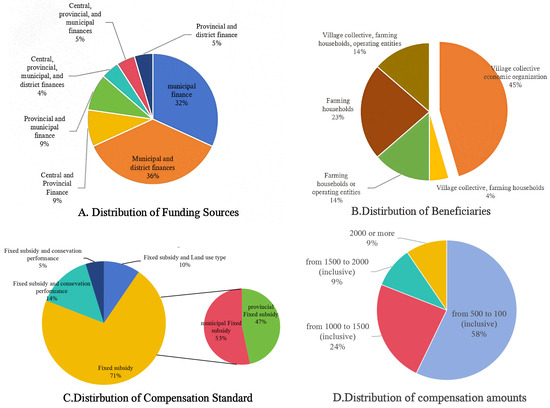
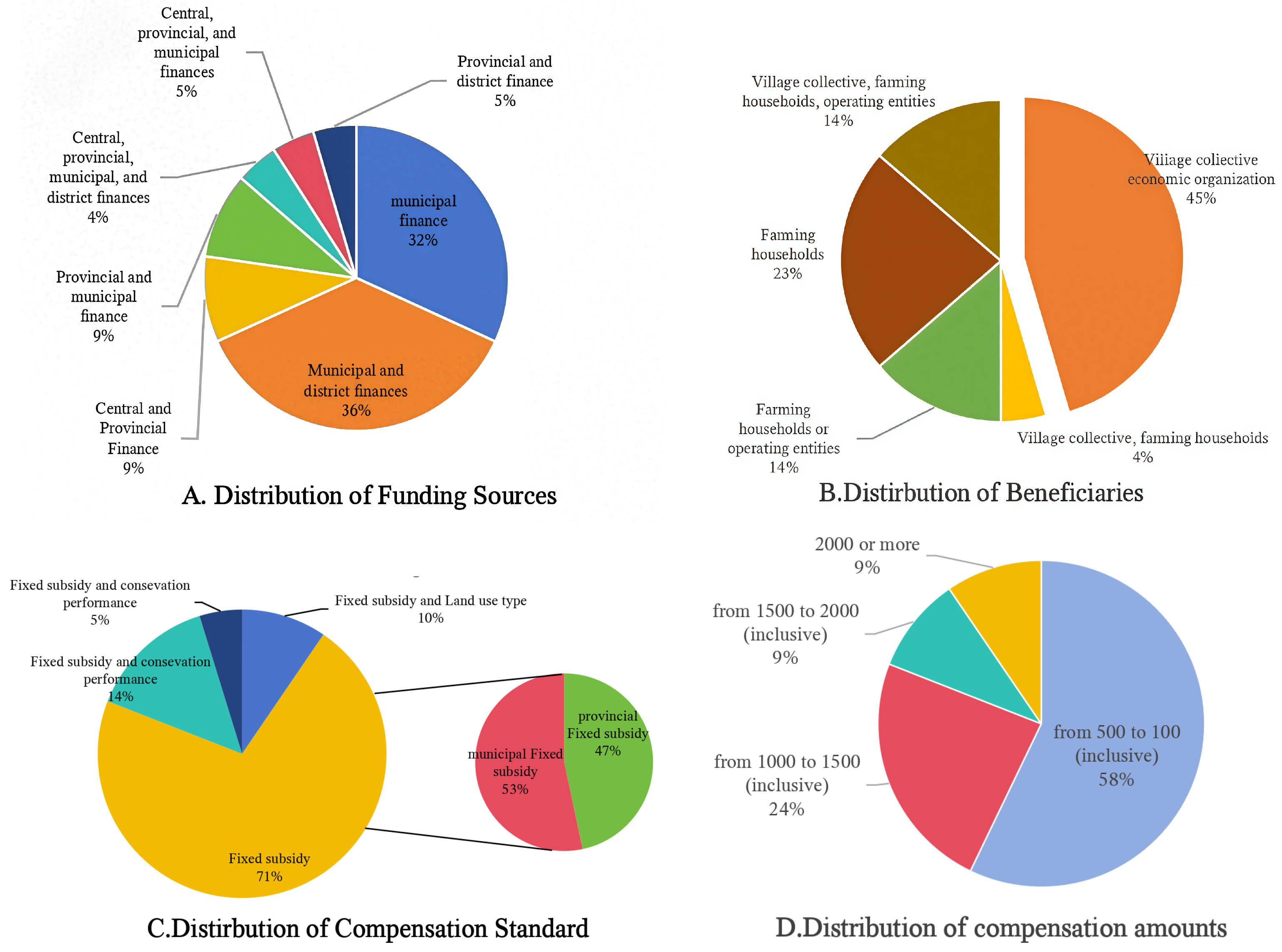
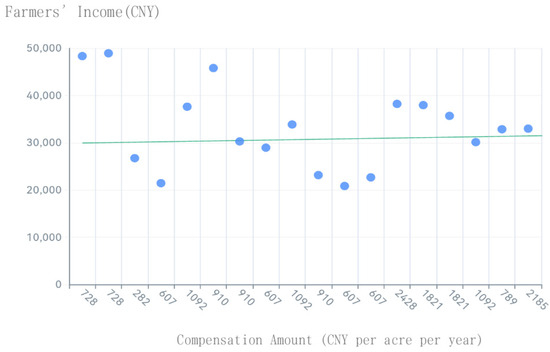
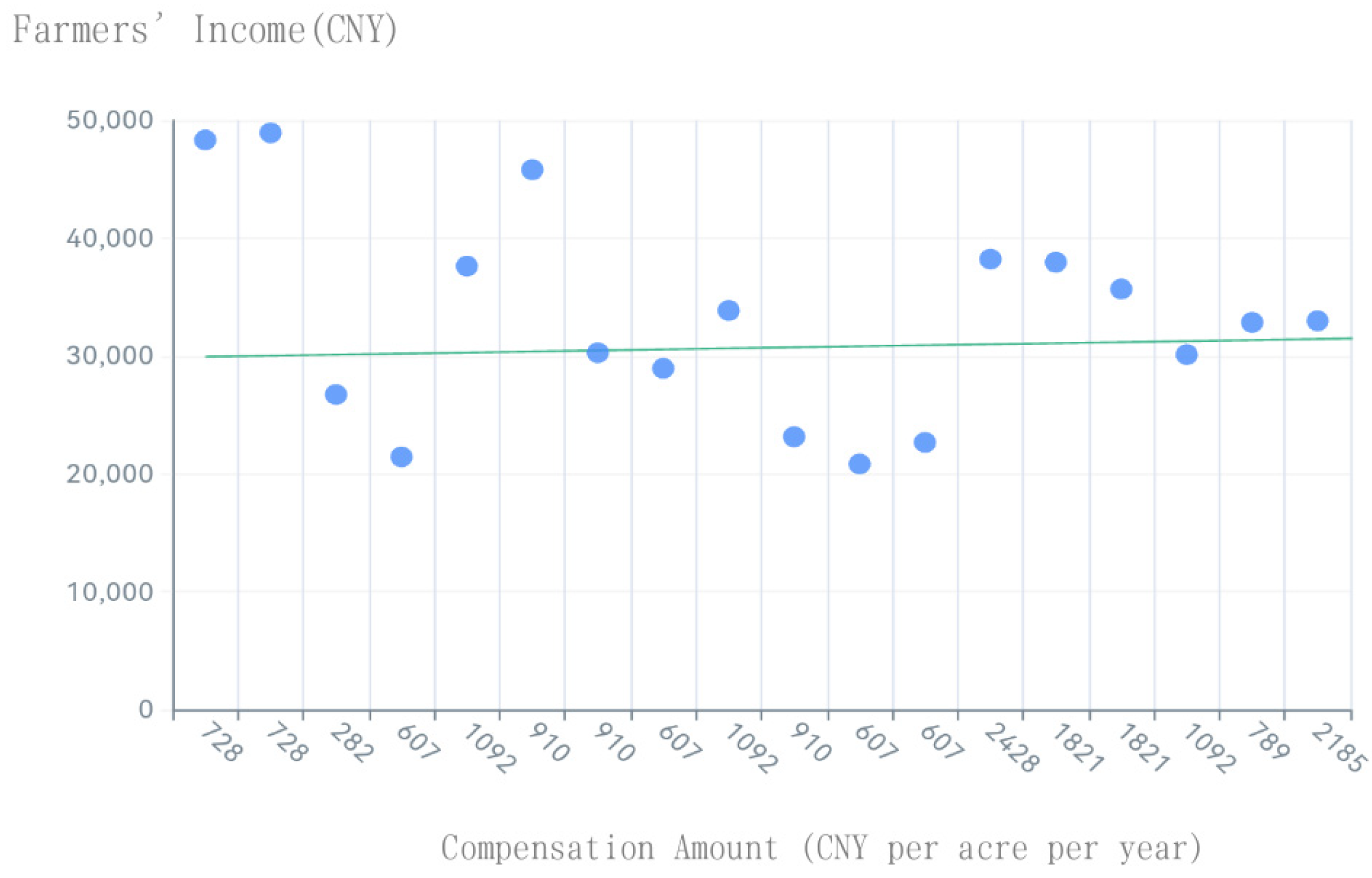
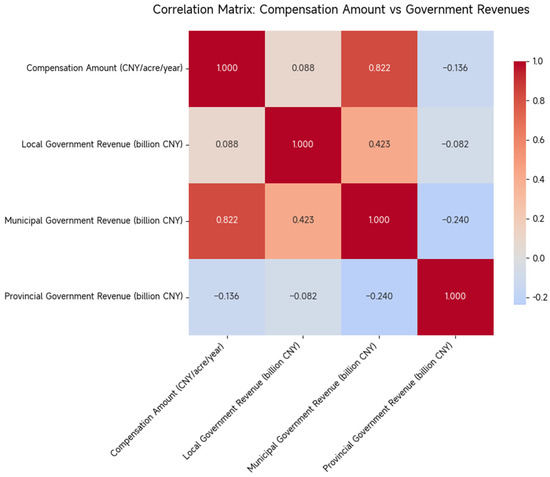
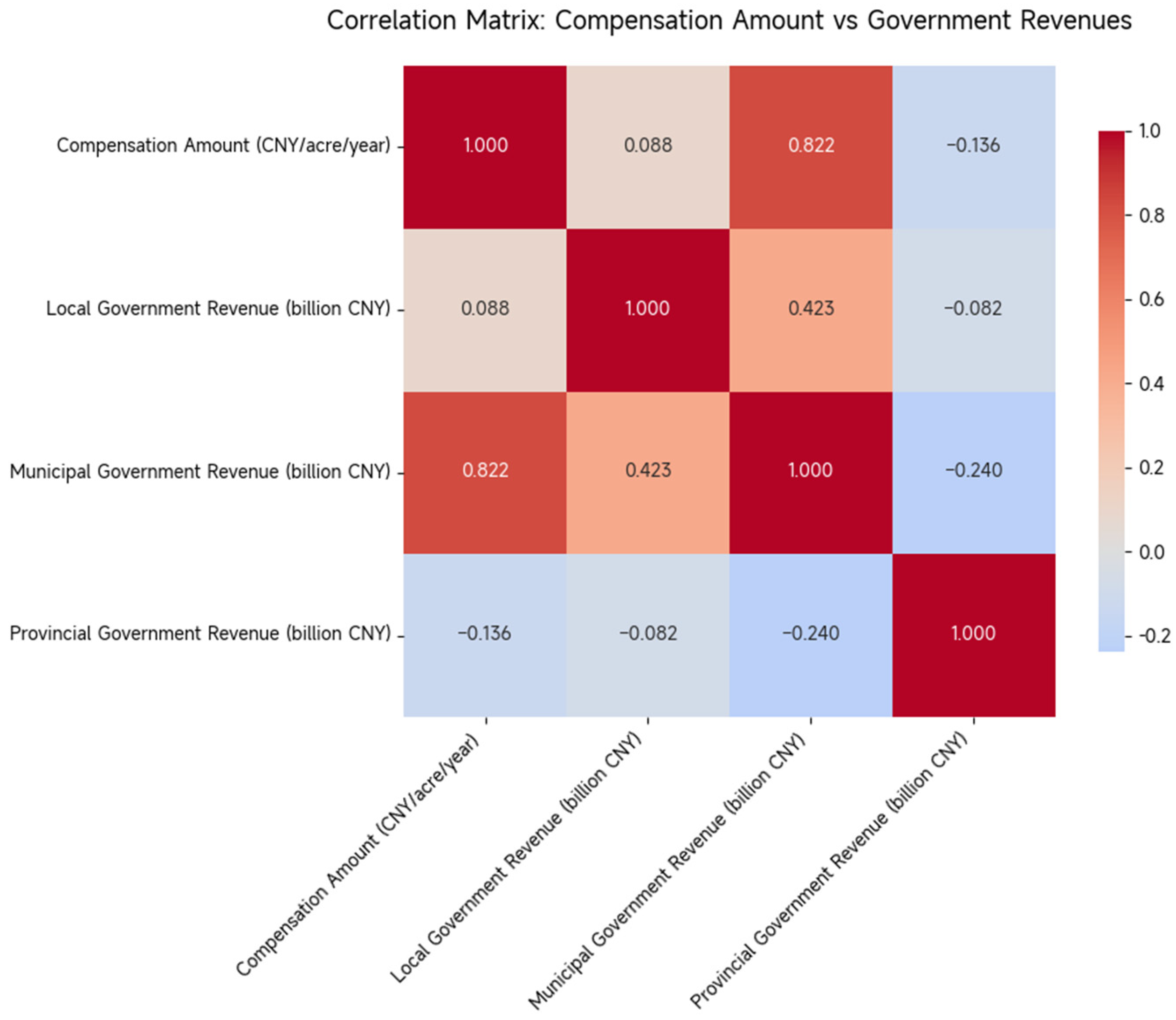
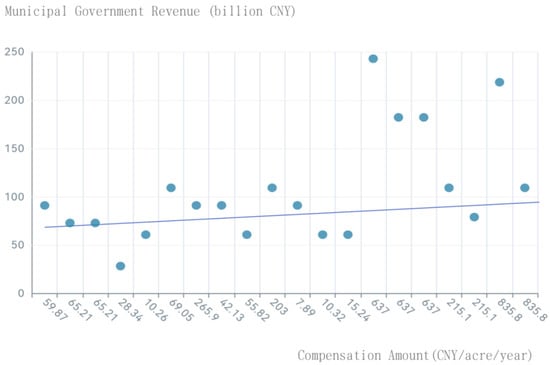
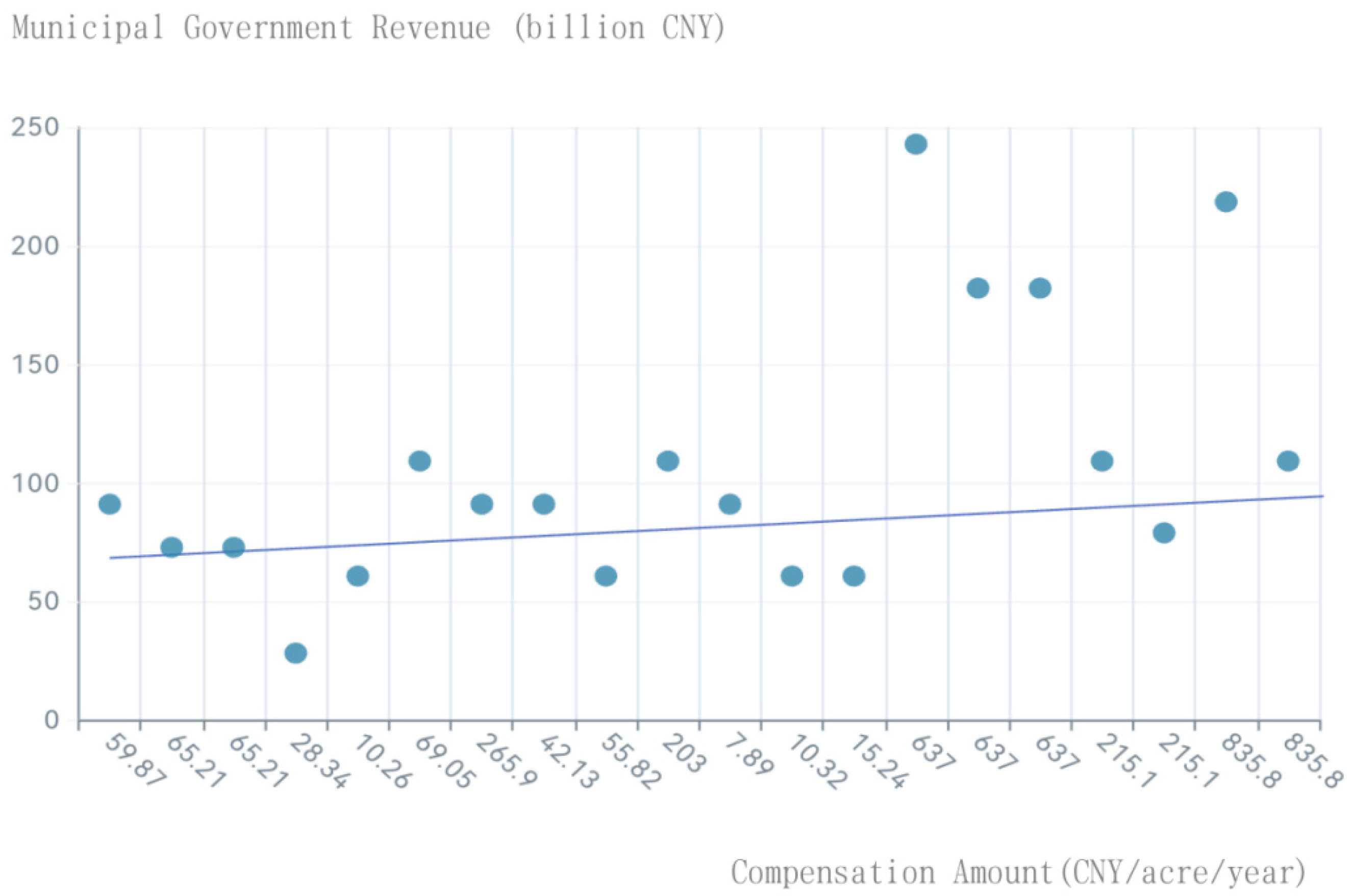
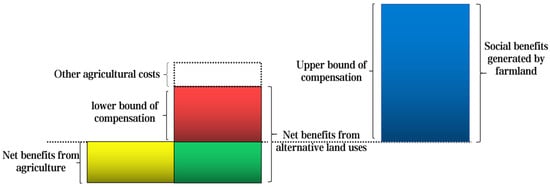
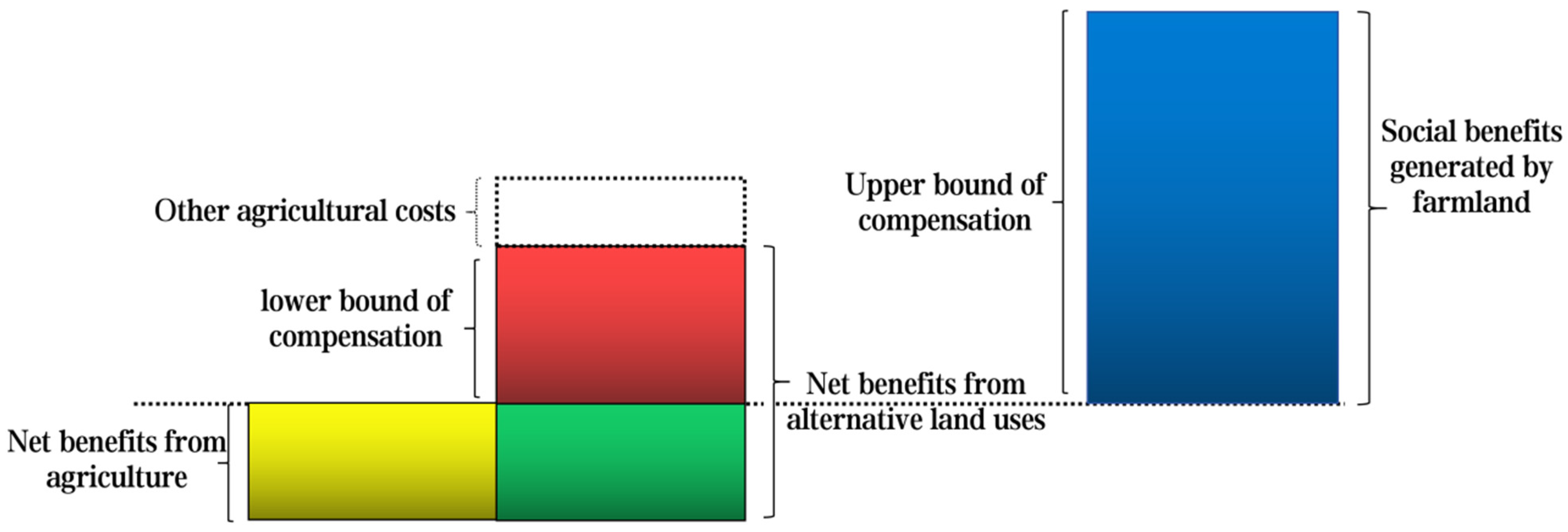
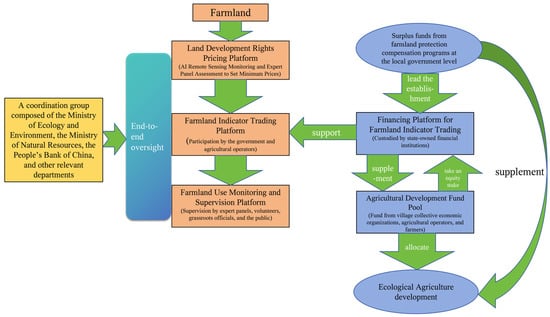
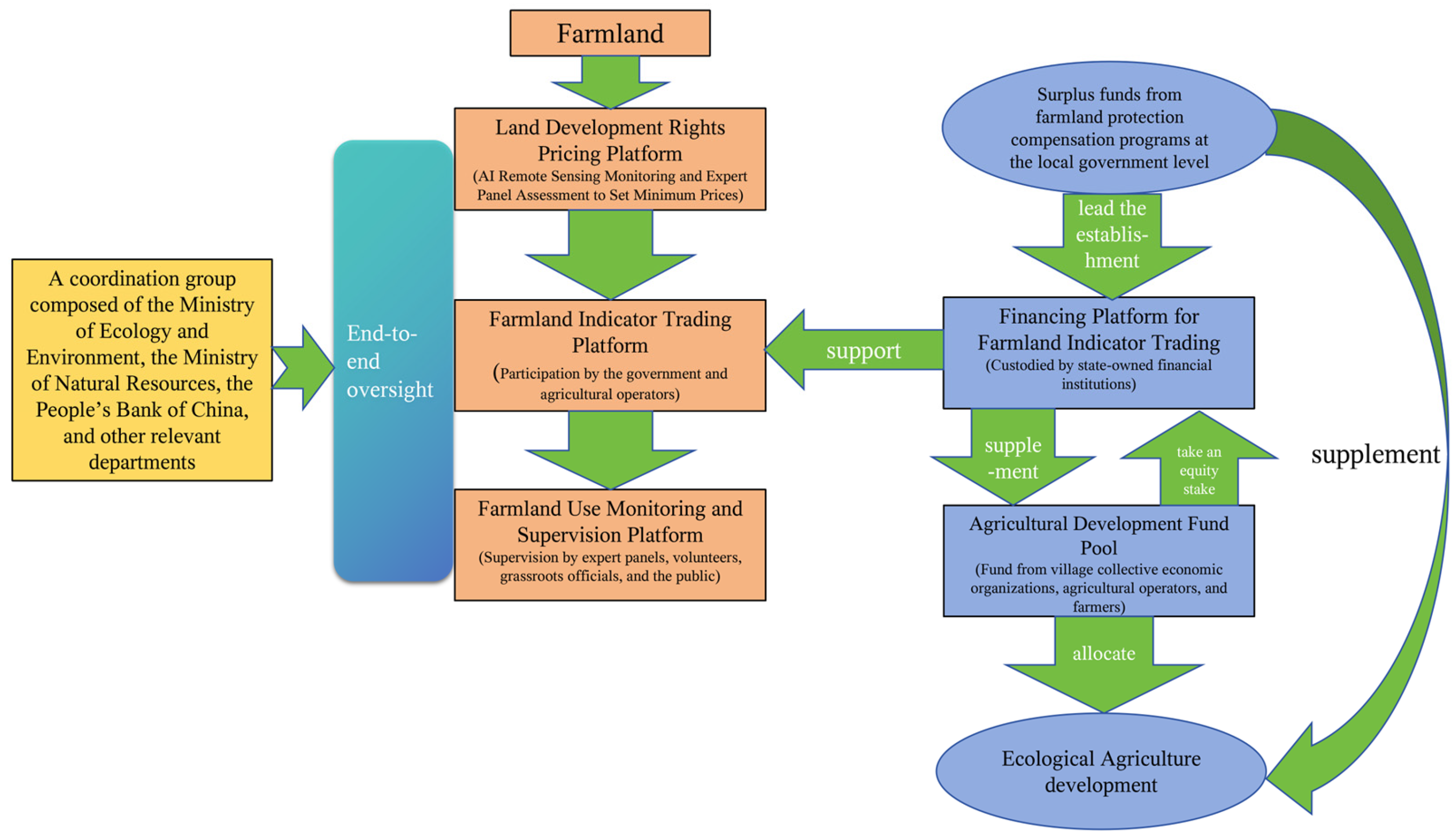

Disclaimer/Publisher’s Note: The statements, opinions and data contained in all publications are solely those of the individual author(s) and contributor(s) and not of MDPI and/or the editor(s). MDPI and/or the editor(s) disclaim responsibility for any injury to people or property resulting from any ideas, methods, instructions or products referred to in the content. |
© 2026 by the authors. Licensee MDPI, Basel, Switzerland. This article is an open access article distributed under the terms and conditions of the Creative Commons Attribution (CC BY) license.