


Abstract
Art museums play a critical role in sustaining cultural heritage, promoting lifelong learning, and supporting sustainable urban and tourism development. In this study, we identify the key attributes of art museums that shape visitor satisfaction and clarify how each attribute contributes to satisfaction or dissatisfaction. By drawing on the Kano model, we argue that not all attributes play the same role in influencing visitor evaluations, which holds important implications for the sustainable management of cultural institutions. To empirically test this, we analyze user-generated online reviews from a major immersive museum in South Korea using a two-stage approach: first, the main experiential attributes were extracted through topic modeling; second, the relationship between topic mentions and overall review ratings was evaluated through regression analysis. The findings reveal eight core attributes of the art museum experience, with one functioning as a satisfier and the others as dissatisfiers, demonstrating the asymmetric effects proposed by the Kano model. This study contributes to sustainability research in hospitality and tourism by conceptualizing art museums as service products with distinct attribute structures and by showing how optimized management of these attributes can strengthen the long-term sustainability of cultural tourism destinations. Practically, our results provide guidance for museum managers on which attributes require strategic prioritization to enhance visitor satisfaction and support sustainable operational practices.
1. Introduction
Art museums are a major tourist attraction [1]. People can enjoy observing artworks, develop artistic knowledge through guided tours, or participate in workshops in art museums. Such educational and entertaining experiences encourage tourists to choose destinations with museums over their counterparts [2]. While there are other attractions, many global cities attract tourists through art museums, for example, the Louvre Museum in Paris, the British Museum in London, and the Metropolitan Museum of Art in New York [3]. The global museum market has grown steadily and is expected to continue to grow until 2034. The market size was approximately USD 34 billion in 2024 and is expected to exceed USD 88 billion in 2034 [4]. Art museums play a dominant role in the market (over 30% of the market share) that is expected to be maintained [4].
These museums provide artistic, educational, and entertainment experiences that other attractions or museums cannot provide; that is, what tourists expect from art museums is unique [5]. The attributes considered important for tourist satisfaction at other attractions may not be important in an art museum, or vice versa. For example, while staff service is frequently a serious consideration for tourists when evaluating their experience, this does not apply to art museums as staff interaction with customers is limited [1]. By contrast, although it is not frequently mentioned as a main attribute of other types of attractions, facility layout could be a critical attribute for art museum visitors because it determines how they can easily move and observe artworks [2]. To understand art museums as a unique type of attraction and to examine visitor satisfaction, it is necessary to explain their attributes and determine visitor satisfaction. However, these explanations have rarely been provided in the hospitality and tourism literature on art museums [6].
To guide readers through the structure of this manuscript, the remainder of the paper is organized as follows. First, we review the relevant literature on tourist satisfaction and service-product attributes, with particular emphasis on the Kano model. Next, an overview of the empirical approach is provided. The subsequent part presents Study 1, which identifies the key attributes of art museums using topic modeling, followed by Study 2, which examines how these attributes affect visitor satisfaction. The manuscript concludes with a discussion of theoretical and practical implications, along with suggestions for future research.
In this study, we aim to address this knowledge gap by identifying the attributes of art museums that visitors consider important for their satisfaction. In addition, we examine how these attributes affect visitor satisfaction. Specifically, the research addresses the following questions: Which attributes of an art museum are most important to visitors? How do these attributes affect visitor satisfaction? Following the argument of the Kano model [7], we categorize the identified attributes into different types: attributes important for increasing and decreasing visitor satisfaction, called satisfiers and dissatisfiers, respectively. To achieve these goals, we collected online reviews of an art museum, extracted the main topics mentioned in them using a topic modeling approach, and examined the relationship between the frequency of topic mentions and review writers’ overall ratings using a regression approach. Theoretically, this research contributes to the hospitality and tourism literature by defining the unique aspects of art museums. Practically, the findings offer guidelines for art museums regarding which attributes need to be prioritized for management.
2. Literature Review
Museums have long been recognized as key cultural institutions within cultural tourism, providing opportunities for cultural learning, identity formation, and meaningful visitor engagement [8,9]. As cultural tourism increasingly shifts toward experience-oriented, creative, and participatory forms of engagement, museums have expanded their role beyond traditional display-centered exhibitions to include experiential, narrative-driven, and technologically mediated forms of interpretation [10]. Within this shift, immersive museums—defined by their multisensory, spatial, and technologically enhanced environments—have gained growing prominence.
Immersive exhibitions often utilize digital technologies such as virtual reality (VR), augmented reality (AR), and projection mapping to create narrative environments that encourage visitors to become active participants in constructing meaning [11,12]. Prior research on digital and immersive museum technologies shows that such experiences enhance presence, deepen emotional engagement, and improve learning outcomes for visitors [13,14]. Additionally, multisensory stimuli—such as visual immersion, soundscapes, or interactive interfaces—have been found to increase visitor enjoyment and memorability, thereby reinforcing the experiential value of cultural tourism attractions [15,16]. Thus, immersive museums are not merely technological innovations but function as meaningful cultural tourism spaces in which multisensory and narrative-driven experiences shape visitors’ emotional, cognitive, and cultural engagement.
In the hospitality and tourism literature, satisfaction is an essential concept for understanding tourists’ perceptions and behaviors, and it has been an important question to determine what satisfies them [17]. To answer this question, previous studies have identified different factors that determine tourist satisfaction. A stream of research has discussed cognitive and emotional perceptions of a service product, including expectations [18], perceived image or value [19], and emotional attachment [20], among others. Another stream of research has suggested situational factors, such as the availability of a service product [21], access to it [22], and the emergence of safety issues associated with it [23], among others. Finally, many studies have focused on the various attributes of a service product as determinants of tourist satisfaction [24,25].
Considering that not every attribute of a service product affects tourist satisfaction, the last stream of research explains which attributes are important to tourists when evaluating a service product [26,27]. Many studies have focused on hotel products and identified a range of attributes critical for customers to evaluate their experience in a hotel, including staff service, facility, location, price, and amenities [28,29,30]. Restaurants have also been widely discussed, and various attributes have been examined as important determinants of customer satisfaction, including food quality, staff service, cleanliness, atmosphere, and price [31,32,33]. Attributes that determine tourists’ satisfaction have been identified for other types of service products, including cruises [34], incentive events [35], lectures on hospitality for students majoring in tourism [36], and the overall travel experience [37].
This stream of research has improved the explanation of the role of service-product attributes in tourist satisfaction by categorizing these attributes into different types. Following the arguments of the Kano model [7], previous studies have explored the relationship between an attribute’s performance and tourist satisfaction, finding that the relationship differs across attributes [26,27]. When some attributes are positively evaluated, tourist satisfaction increases, but their poor performance does not decrease it; these attributes are called satisfiers.
The opposite cases are known as dissatisfiers; the negative evaluation of certain attributes reduces tourist satisfaction, but their positive evaluation does not increase it [7]. The nonlinear relationship between an attribute’s performance and tourist satisfaction, as proposed by the Kano model, has been confirmed in different contexts such as hotels [38], restaurants [39], events and festivals [40], theme parks [41], and airlines [42].
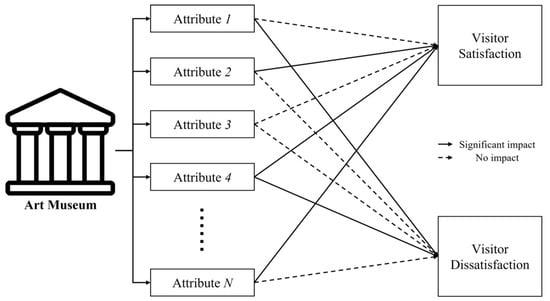
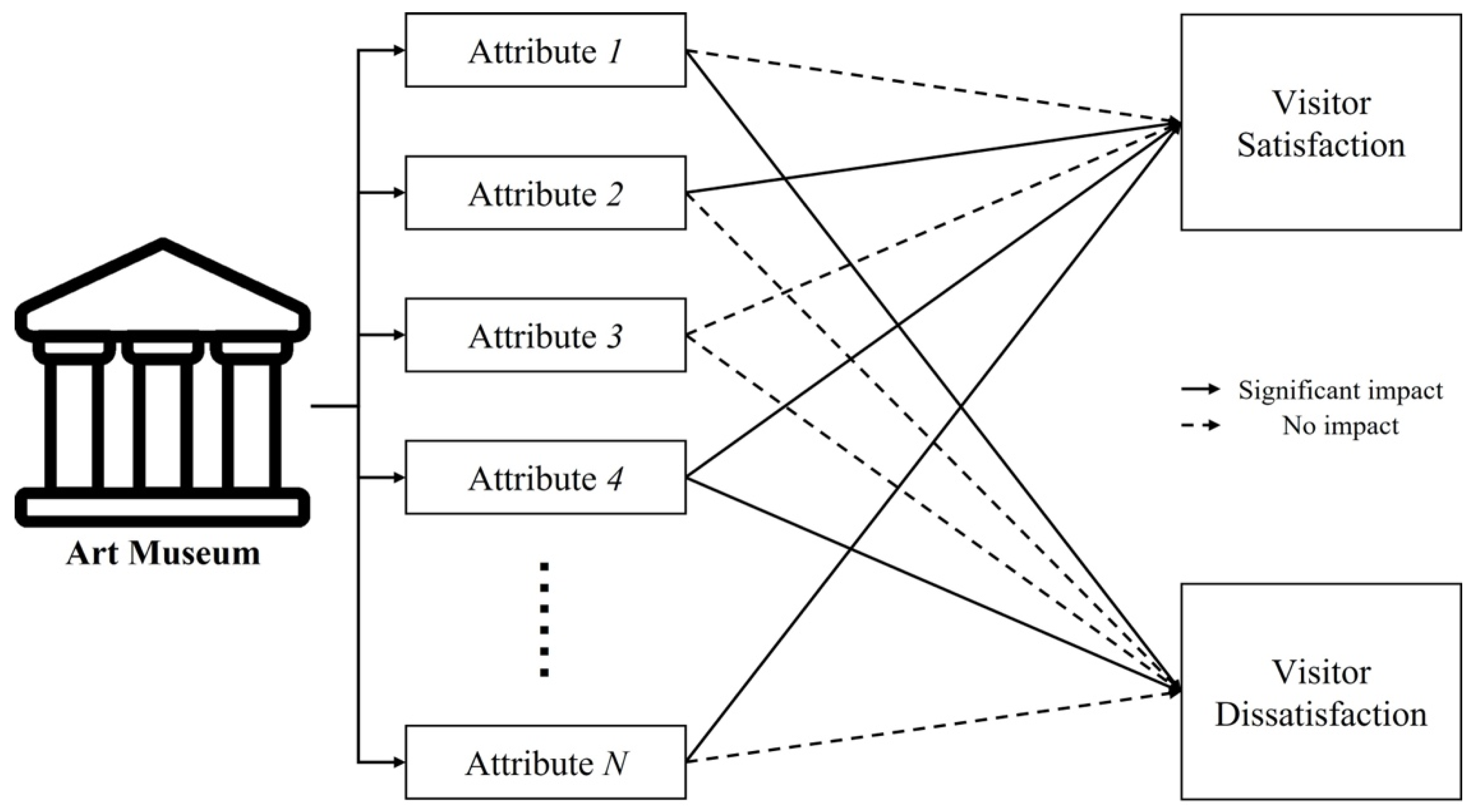
However, while art museums are major tourist attractions, and their importance is increasing for travel experiences [6], they have rarely been discussed in terms of which attributes are important for museum visitors and how they determine visitor satisfaction [1,2]. This research fills the literature gap by identifying the attributes of an art museum that visitors recognize when evaluating their experience, and by examining the attributes’ nonlinear effects on visitor satisfaction. As illustrated in Figure 1, following the previous findings about the relationship between attributes and satisfaction [43], this research assumes that the hospitality and tourism service comprises multiple attributes and some of them either increase or decrease customer satisfaction.
Figure 1.
Conceptual model.
3. Empirical Overview
Two studies were conducted to address two research objectives. In Study 1, the key attributes of art museums were identified using a topic modeling approach. Building on these findings, Study 2 examined the effects of the identified attributes on visitor satisfaction through a regression analysis. Specifically, Study 1 explores which attributes of art museums are most important to visitors, while Study 2 investigates how these attributes influence visitor satisfaction.
4. Study 1
4.1. Data Collection and Preprocessing
In this study, we analyzed reviews of visitors who experienced media art content to extract qualitative insights. User reviews were collected from Google Maps, a location-based global platform, using Python (3.12.12) and PlayWright (1.56.1) for web scraping. Google Maps was selected as the primary review platform due to its high usage frequency, accessibility, and broad user base comprising both tourists and locals. Its metadata and widespread adoption in location-based services make it a reliable source for content generated by users. A future study may apply topic modeling to cross-lingual reviews and incorporate other review platforms beyond Google Maps to minimize potential biases resulting from specific characteristics of the platform. “ARTE Museum” was selected as the primary keyword for data collection among various media art-themed destinations because it is one of the most prominent immersive media-art venues in Jeju Island and generates a substantial volume of user-generated reviews. This provides a rich and information-dense corpus suitable for the present analysis. Consequently, 1500 reviews were retrieved and sorted in descending order by date. Each review included metadata, such as review ID, author name, posting date, star rating, and number of likes. The entire dataset was stored in CSV format for further analysis.
For topic modeling, we preprocessed the textual components of the collected data to match the analytical goals and model specifications. As an initial step, unnecessary characters, such as symbols, numbers, emojis, and redundant spaces, were removed from the text. To retain only Korean text, we normalized the content accordingly. The cleaned text was tokenized using whitespace to extract word-level units. Because the reviews were generally short, conversational, and often informal, we used a simple whitespace-based segmentation method instead of a morphological analyzer to improve efficiency and clarity.
The removal of stop words is an important step for reducing noise and improving topic coherence. To complement standard stop word dictionaries, we built a domain-specific list to reflect the unique characteristics of the review data. This list included function words—such as particles, conjunctions, and interjections—as well as frequently occurring but semantically uninformative domain terms such as “Jeju,” “travel,” and “hotel”. Emotionally charged evaluation words (e.g., “great,” “not good,” “highly recommend”) were also excluded, as they tend to obscure topic boundaries in the BERTopic model, which emphasizes semantic similarity. Finally, geographic terms and location-specific expressions were removed, as they provided limited semantic contributions to topic modeling.
Although reviews were available in multiple languages, only Korean-language reviews were retained. This decision was made to ensure embedding consistency and to avoid potential semantic distortions caused by cross-lingual embeddings, which may compromise topic coherence [44].
4.2. Topic Modeling
Topic modeling is a text-mining method that identifies latent topics by clustering similar semantic content within a corpus of textual documents [45,46,47]. In this study, BERTopic was selected as the topic model based on the characteristics of the data and research objective. Reviews typically consist of short, unstructured texts containing emotional expressions and evaluative language [48]. Given the short and unstructured nature of reviews, an embedding-based approach is more suitable for capturing contextual meaning beyond surface-level word frequency [49]. Traditional probabilistic models based on word frequency, such as Latent Dirichlet Allocation (LDA) and Non-negative Matrix Factorization (NMF), were not used in this study, because our objective required capturing contextual meaning in short, informal reviews [48].
BERTopic operates by integrating document embedding, dimensionality reduction, density-based clustering, and class-based topic representation [50]. This model was found effective in extracting contextually rich and semantically coherent topics from noisy and short tourism reviews, especially when compared to traditional models like LDA and differing from newer embedding-based approaches such as Top2Vec, ETM, and BERT-LDA [51].
In this study, we adopted a RoBERTa-based Korean multitask pretrained model for downstream topic modeling tasks to obtain contextual document embeddings [52]. UMAP was applied to reduce dimensionality and embedding space, and these reduced embeddings were clustered using HDBSCAN, which applies clustering, enabling density-based autonomous cluster formation without requiring a predefined number of clusters [53]. To enhance the robustness of clustering results, K-means analysis could be considered, given its sensitivity to predefined cluster numbers and its effectiveness in segmenting structured embedding [54,55].
The model employed the class-based TF-IDF (c-TF-IDF) method to generate representative keywords for each topic cluster. Additionally, the KeyBERT-inspired model was used to enhance semantic expressiveness and clarify topic labels. Finally, each document was assigned a probability distribution over the topics, which served as input to assess the influence of each topic through variable importance in a regression model.
4.3. Result of Topic Modeling
4.3.1. Topic Distribution and Thematic Structure
Following preprocessing and the removal of non-substantive content, 779 reviews were retained from the initially collected 1500. BERTopic was then applied to this dataset, resulting in nine main topics (Topic 1–9) and one noise topic (Topic −1) (Table 1). The noise group (Topic −1) consisted of reviews with no discernible theme, often limited to brief exclamations such as “Good,” “Nice,” or “Recommended”. Because these lacked thematic coherence within the topic modeling process, they were excluded from further analysis. Topic 9 was excluded from the validation stage because of its semantic overlap with other topics and insufficient thematic coherence.
Table 1.
Topic distribution.
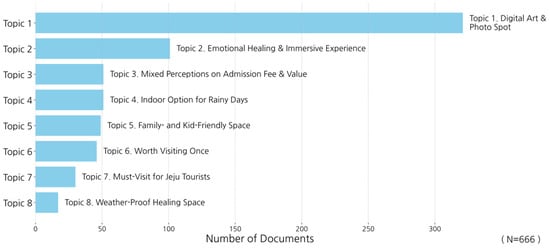
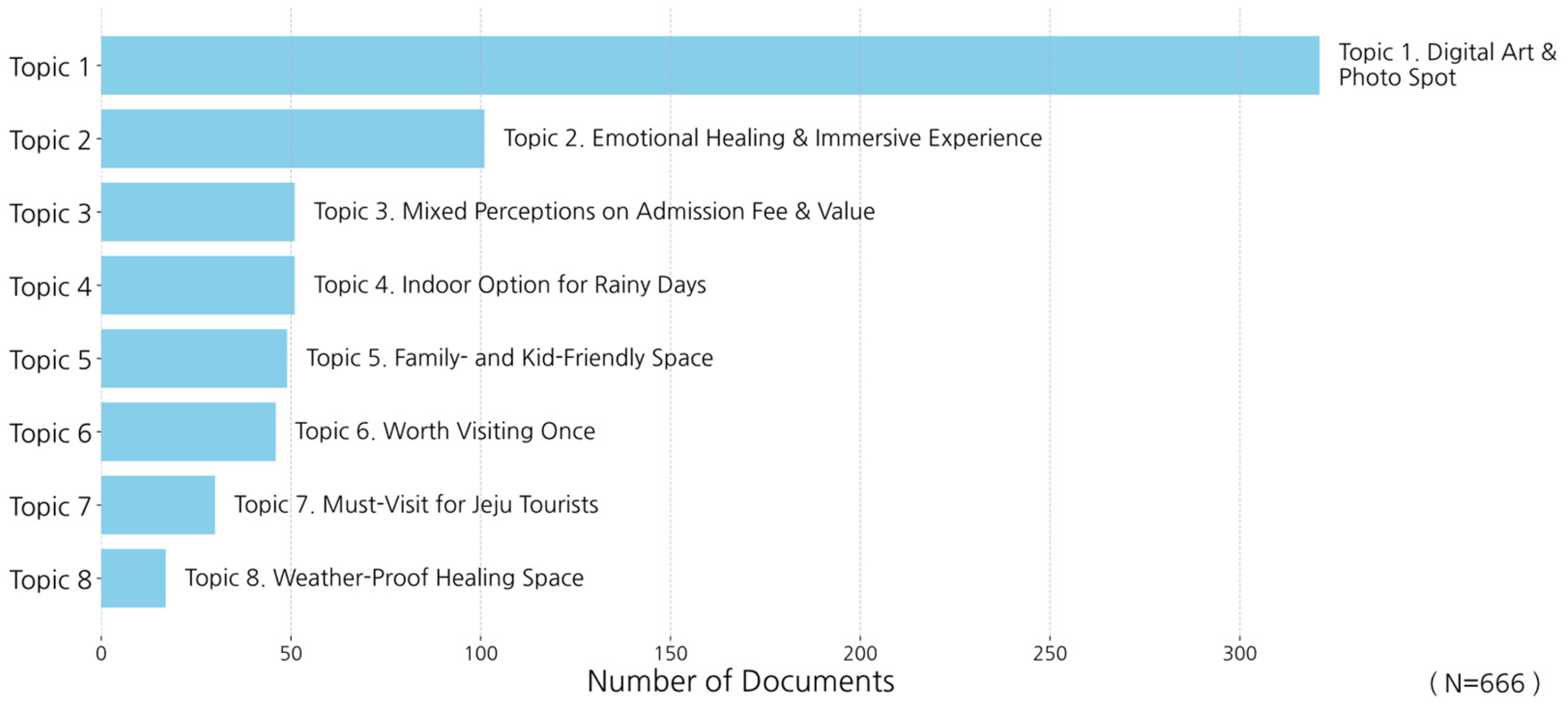
Figure 2 shows a bar chart displaying the number of documents and representative keywords for each topic. Topic 1 (Digital Art & Photo Spot) and Topic 2 (Emotional Healing & Immersive Experience) together comprised over 50% of reviews, suggesting that visitors’ reviews of the “ARTE Museum” primarily focused on artistic and sensory experiences. Specifically, Topic 1 accounted for more than 40% of all reviews (321 documents) and was characterized by representative keywords such as “Beautiful,” “Art,” “Photo,” and “Appreciation”. This topic reflects an esthetic and emotional narrative highlighting the visual appeal of a digital art exhibition and its appeal as a photogenic tourist destination.
Figure 2.
Topic counts and representative keywords.
Topic 2 comprised reviews emphasizing emotional healing and immersive experiences, with visitors often describing exhibitions as psychological or emotional therapy. Meanwhile, Topic 3 (Mixed Perceptions on Admission Fee & Value) captured conflicting sentiments about the exhibition’s cost, revealing both favorable and critical perspectives on price satisfaction. Topic 4 (Indoor Option for Rainy Days) consisted of reviews describing the exhibition as an alternative indoor activity on rainy days, whereas Topic 5 (Family and Kid-Friendly Space) focused on the exhibition’s appeal as a space suitable for families and children. Other topics included Topic 6 (Worth Visiting Once), reflecting mild recommendations, especially for first-time visitors; Topic 7 (Must-Visit for Jeju Tourists), which emphasized its strong recommendations as a must-see attraction in Jeju; and Topic 8 (Weather-Proof Healing Space), highlighting the exhibition’s value as a comfortable indoor healing space that could be enjoyed regardless of weather conditions.
4.3.2. Analysis of Semantic Relationships Between Topics
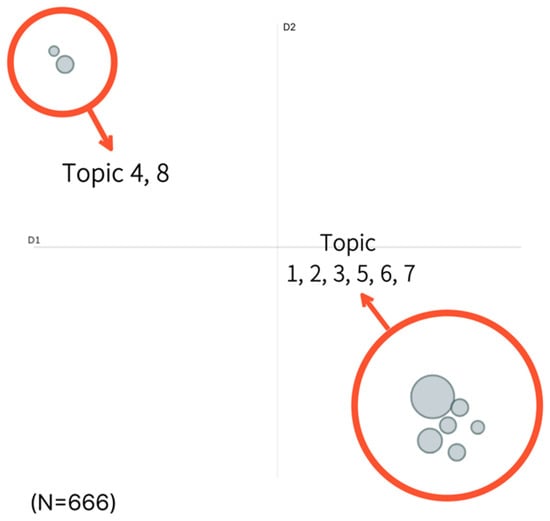
BERTopic offers two key visualization tools for analyzing the semantic relationships among the topics generated by the model. The first is an intertopic distance map, which shows the statistical distances between topics based on the c-TF-IDF representation in a two-dimensional embedding space and illustrates semantic relationships. The second is a dendrogram illustrating higher-level conceptual relationships in the form of a hierarchical structure, allowing conceptual similarities between topics to be identified. By integrating these two outputs, affective accessibility and conceptual hierarchy can be represented complementarily, providing a multi-layered understanding of intertopic relationships [56].
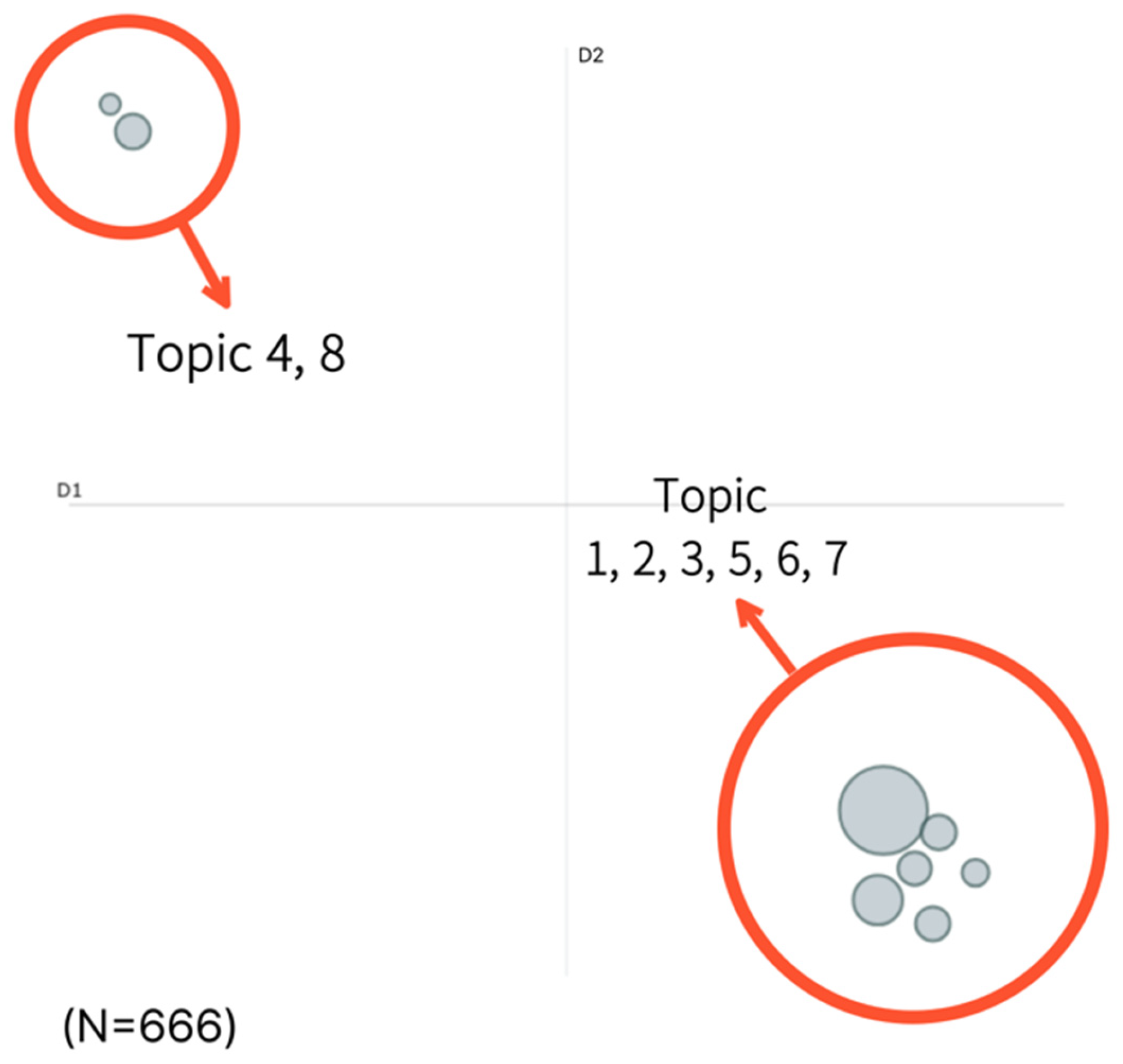
In Figure 3, which presents the intertopic distance map generated by the model, bubbles represent individual topics, and their sizes correspond to the number of review documents associated with that topic, indicating its relative proportion within the entire corpus. The map revealed two distinct clusters clearly separated within the two-dimensional space. The larger cluster consisted of Topics 1, 2, 3, 5, 6, and 7, which collectively reflect a thematic group centered on sensory immersion and experiential value, including digital art appreciation, immersive healing experiences, and family-oriented participation.
Figure 3.
Intertopic distance map.
By contrast, the smaller cluster—Topics 4 and 8—captured themes emphasizing environmental and practical aspects rather than the exhibition content itself. Specifically, Topic 4 reflected the exhibition’s practical appeal as a tourist option on rainy days, whereas Topic 8 highlighted the emotional context of comfort and psychological healing in an indoor environment. Although both topics share weather-related motivations, Topic 4 emphasizes spatial substitutability, whereas Topic 8 underscores emotional healing experiences. As a result, the coexistence of a cluster centered on affective and esthetic experiences and another focused on environmental and practical perceptions suggests that media content is experienced not merely as esthetic consumption, but as an expression of varied motivations and perceived values. Weather conditions emerged as a key factor in structuring intertopic relationships and distinguishing themes based on indoor practicality versus emotional engagement.
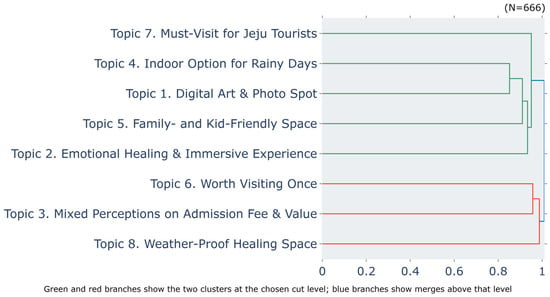
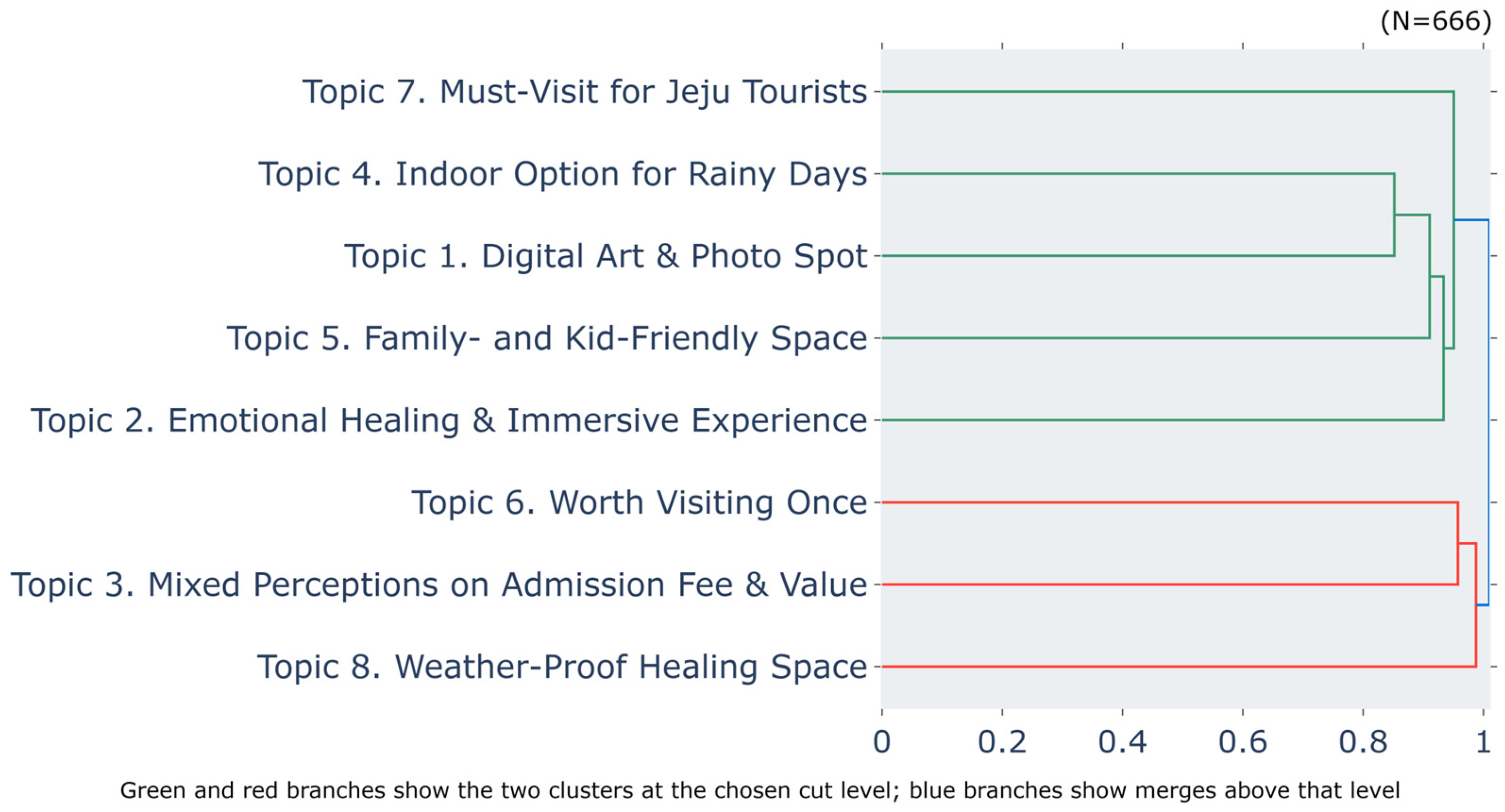
Figure 4 shows the hierarchical relationships among topics derived from the BERTopic model. Branch colors are used to indicate membership at the selected dendrogram cut level: topics connected by green branches form one major cluster, while those connected by red branches form the other. Blue branches denote merges above the cut level, where the two clusters begin to join into a higher-level grouping. The clustering results show that topics progressively merged into two major clusters according to their semantic similarities; however, unlike the previous visualization, the clusters identified here differ in thematic composition and interpretive meaning. The first cluster was formed by the sequential merging of Topics 1 and 4, followed by Topics 5, 2, and 7, highlighting the themes of emotional immersion and practical involvement. The second cluster began with merging Topics 3 and 6, followed by Topic 8, centering on evaluations of cost-effectiveness and environmental suitability. Ultimately, the two clusters—affective satisfaction factors and practical evaluation factors—remained separate throughout the hierarchy. These findings suggest the coexistence of affective and functional dimensions in audience interpretations of media art exhibitions.
Figure 4.
Hierarchical clustering.
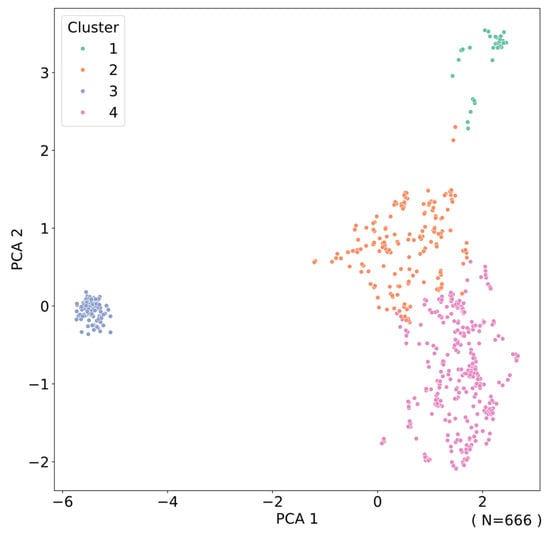
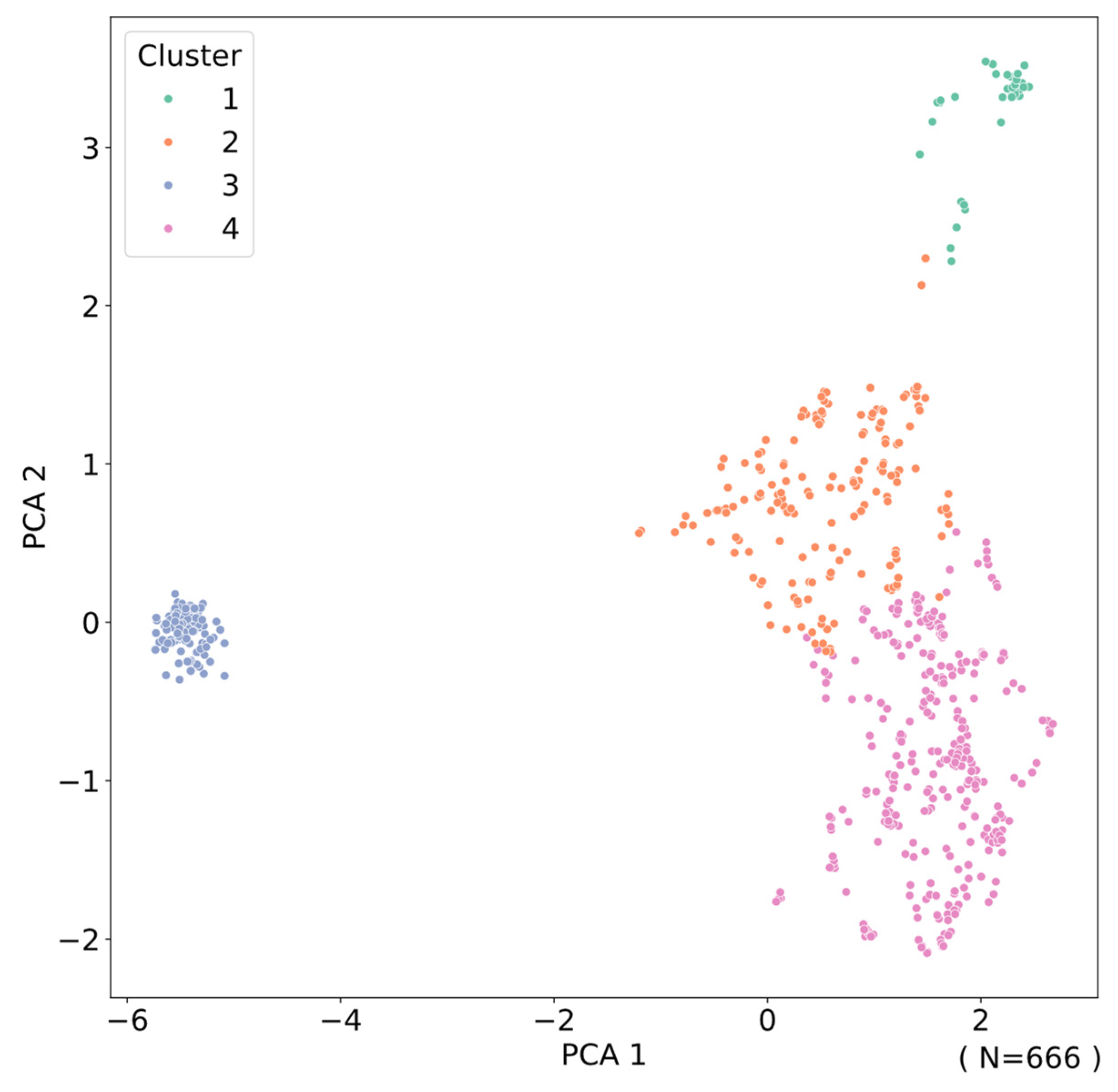
We conducted K-means clustering analysis using the same dimensionality-reduced representations and embeddings to further assess the structural coherence of the topic space. The optimal number of clusters was identified as four based on the Elbow method and validity metrics (Silhouette Score = 0.487; Davies–Bouldin Index = 0.776; Calinski–Harabasz Index = 1504.431). These values fall within empirically accepted thresholds, suggesting that the clustering results are both reliable and substantively interpretable [57]. As visualized in Figure 5, the PCA projection of the K-means analysis revealed a dominant cluster that contained the majority of documents, while the remaining clusters were more evenly distributed.
Figure 5.
K-means clustering.
The clusters generated by K-means analysis resulted in a smaller number of clusters than BERTopic results, indicating a more generalized grouping of review content. While this led to some semantic redundancy between some topics, this outcome highlighted a convergence in how audiences interpreted the content at a thematic level. Table 2 shows that Cluster 4 included the most reviews, many of which described tranquil, immersive experiences featuring elements like soothing sounds, cascading water, and atmospheric depth. This dominant cluster aligns closely with BERTopic topics related to immersive experiences and esthetic satisfaction. Cluster 2, although smaller, captured motivations by practical considerations like avoiding bad weather, though often coupled with unexpected delight—resonating with BERTopic topics about situational satisfaction. Cluster 3 reflected emotionally mixed or underwhelmed reactions, including reviews that expressed unmet expectations, while Cluster 1 consisted of brief, generally positive but thematically shallow responses. Despite fewer clusters, the presence of affective and functional dimensions remained observable, indicating that user interpretations still revolve around emotional immersion and practical context, even in coarser clustering.
Table 2.
K-means clustering distribution.
4.3.3. Analysis of Topic-Wise Rating Pattern
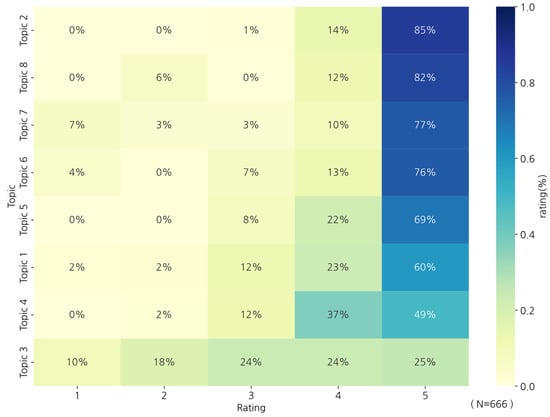
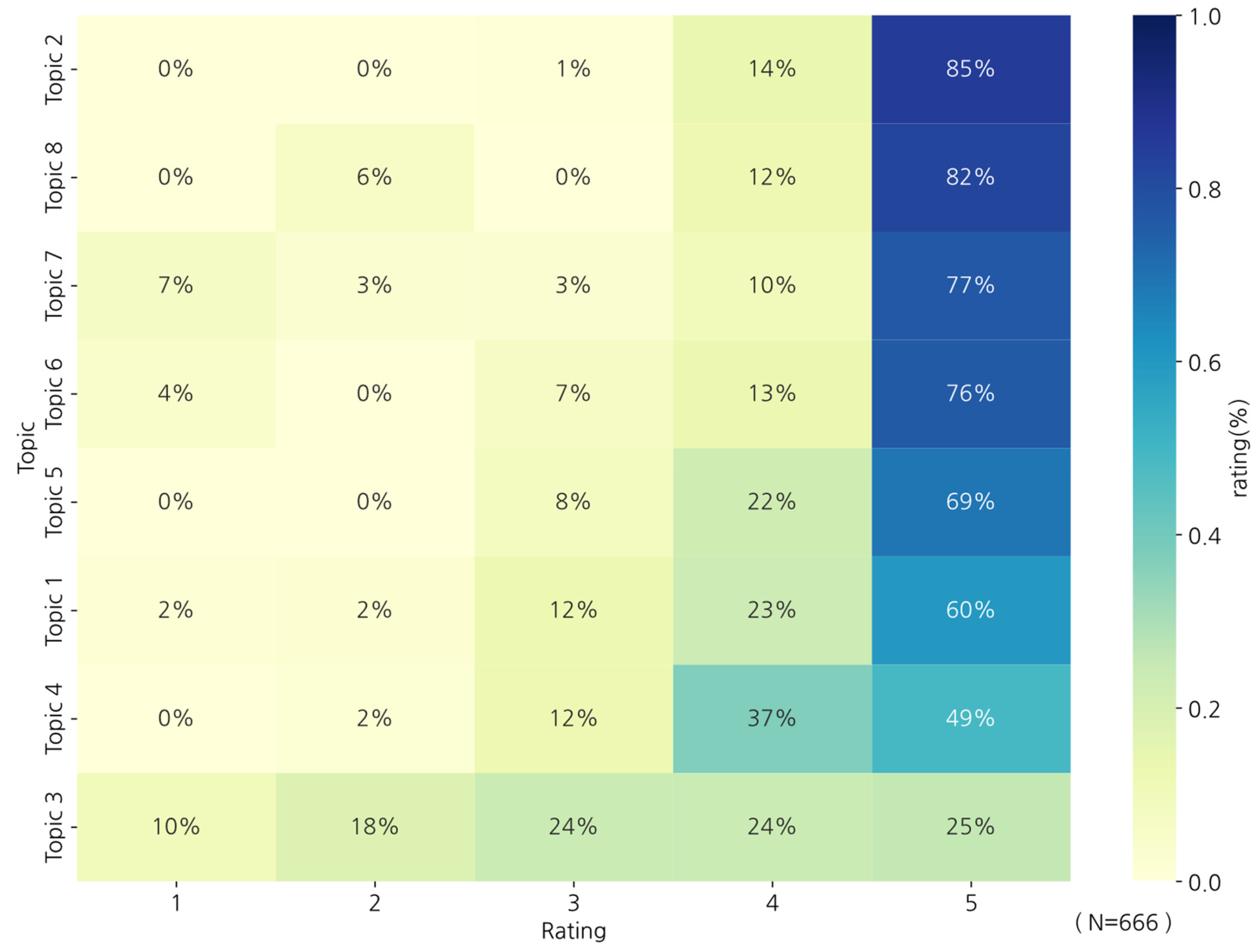
Figure 6 illustrates the distribution of review ratings across topics identified by the BERTopic model, highlighting the relationship between topic content and user satisfaction. The overall rating proportions show that the majority of reviews received ratings of four or higher, indicating that visitors positively evaluated the digital art experience.
Figure 6.
Topic-wise rating distribution.
Topic 2 recorded the highest proportion of five-star ratings, comprising approximately 85% of all reviews within that cluster. This finding suggests that immersive media art experiences are both satisfactory and highly beneficial. Topics 8, 7, and 6 also showed high ratings, suggesting that the exhibition was widely perceived as a positive indoor healing space, media art attraction, and a recommended tourist destination in Jeju.
Although Topic 5 was generally evaluated positively, approximately 30% of the reviews were rated below four stars. This indicates that subfactors—such as ticket price or perceived safety—may have undermined its otherwise positive image as a family-oriented attraction. Similarly, Topic 1, which captures the core media art content, received overall positive reviews but showed variability in ratings, reflecting individual differences in perception.
While most topics generally received positive ratings, Topics 4 and 3 exhibited a more evenly distributed range of scores. Topic 3 exhibited the most balanced distribution, indicating mixed views on whether the exhibition was perceived as worth the cost. A closer examination of the reviews under this topic indicates that, while many visitors appreciated the content and overall experience, others expressed concerns about the high admission fee or limited content relative to the price. This indicates a pragmatic viewing attitude, whereby visitors assess the exhibition based more on its economic utility than its artistic value. Topic 4 exhibited a comparable pattern, implying that evaluations were influenced more by the exhibition’s role as an alternative tourist destination than by its artistic or immersive aspects.
5. Study 2
Focusing on the eight attributes identified in the art museum in Study 1, Study 2 examined the role of these attributes in visitor satisfaction. Based on the Kano model, Study 2 addressed which of the eight attributes are important for visitor satisfaction or dissatisfaction.
5.1. Measurement Development
The overall rating of an online review (hereafter referred to as the review rating) was used as an independent variable, ranging from 1 (poor) to 5 (excellent). The extent to which words in a certain topic group were mentioned in the text of an online review (topic mention) was used as the dependent variable. For each of the eight topic groups, the number of appearances of words in the group in the review text was divided by the total number of words in the text, and this ratio was used as a measure of topic mentions. Thus, eight dependent variables were generated. Table 3 presents the descriptive statistics.
Table 3.
Descriptive statistics.
5.2. Model Development
Using eight dependent variables, we developed eight ordinary least squares (OLS) regression models. When a certain topic was used as the dependent variable, the other topics were included as control variables. Review rating was included as an independent variable in all models. When people wrote online reviews on the website where our data were collected (i.e., Naver), they expressed overall satisfaction by determining review ratings and then wrote the text. That is, visitors must indicate their satisfaction first and then justify it. Considering this process, we tested the impact of review ratings on topic mentions to explain which attributes were recognized when visitors justified their level of satisfaction [58].
5.3. Results
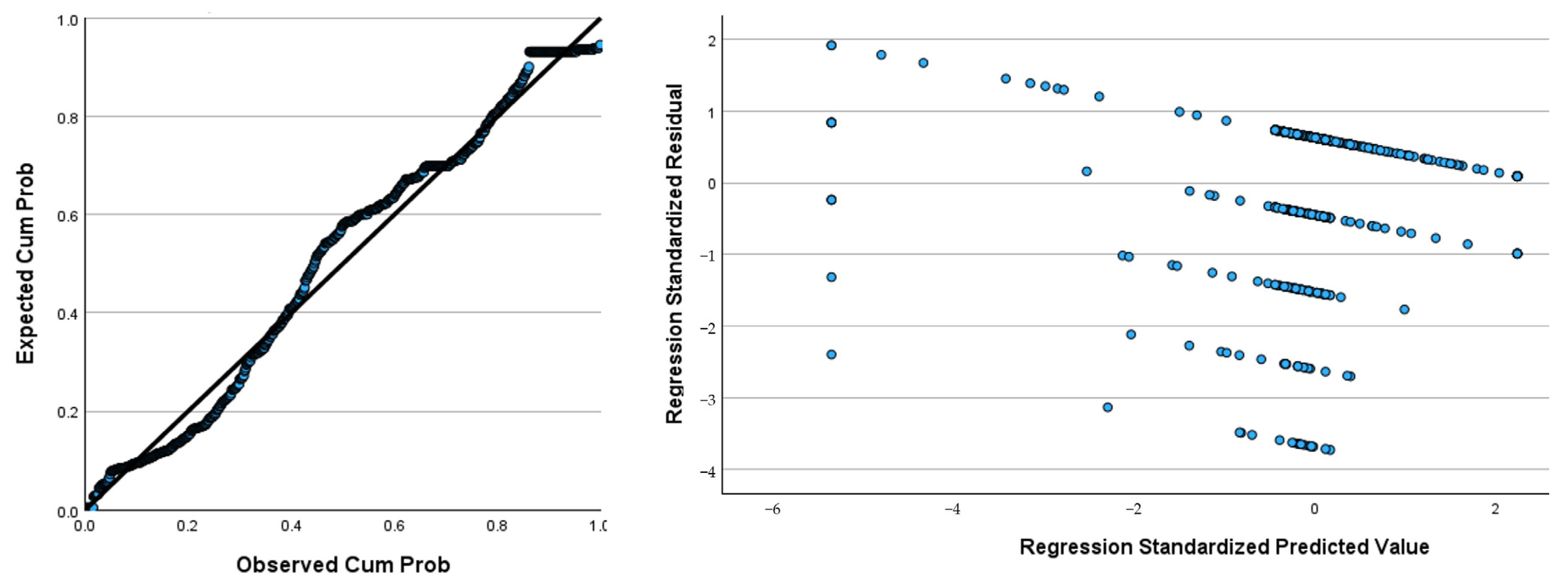
First, we tested the normality and heteroscedasticity of each regression model. For normality, we examined the probability–probability plots for all models and found no significant deviations between the data distributions and the reference lines (Figure 7). For heteroscedasticity, we reviewed plots of standardized residuals versus standardized predicted values for each model and observed no discernible patterns (Figure 7) [59].
Figure 7.
Normality (Left) and heteroscedasticity (Right) tests: The plots for all models were similar; therefore, only the plot for Model 1 is presented as a reference for brevity.
Table 4 presents the results of eight regression models. The impact of a review rating was positively significant when topic-mention for Topic 2 was the dependent variable (β = 0.023, p < 0.01) and negatively significant for Topic 3 (β = −0.022, p < 0.001). The mentions of Topic 2 (price or monetary value) increased when the review rating increased, and vice versa for Topic 3 (family- or kid-oriented experience). That is, while the price of an art museum was well recognized when visitors justified their satisfaction, the family-oriented experience was well recognized when visitors justified their dissatisfaction.
Table 4.
Effect of review rating on topic mention for eight topic groups.
6. Discussion
In this study, we identified the attributes of an art museum that are important for visitors when evaluating their experiences and examining their role in visitor satisfaction. To achieve the first goal, online reviews of an art museum were analyzed using a topic modeling approach, and the results showed that eight groups of topics were often mentioned by visitors when explaining their evaluation: exhibition quality, photo-taking facility, price, family-oriented experience, crowdedness, exhibition facility, location, and staff service. While several attributes were similar to those of other service products (e.g., price, location, and staff service) [60], in this study, we found unique attributes of an art museum (e.g., photo-taking facility, family-oriented experience, and crowdedness), confirming the importance of identifying attributes specific to each type of service product [61]. The identification of a ‘photo-taking facility’ highlights how art museum visitors engage with artworks through photography, confirming the important role of esthetic engagement in visitor satisfaction [62]. Similarly, the identification of ‘family-oriented experience’ demonstrates that art museum visitors, like those at other attractions, are influenced by their experiential consumption [63]. Lastly, since visitors may not be fully immersed in artwork appreciation when the museum is crowded, the identification of ‘crowdedness’ suggests that the option of immersive experiences is important for art museum visitors [64].
For the second goal, the impact of review ratings on topic mentions for the eight groups was examined using a regression approach, revealing that price played an important role in increasing visitor satisfaction (satisfier), and family-oriented experiences increased visitor dissatisfaction (dissatisfier). Similarly to previous studies adopting the Kano model, this research confirms its core premise by finding satisfiers and dissatisfiers for an art museum, indicating the model’s applicability and validity in an art museum context [26,27].
6.1. Theoretical Implications
First, this study contributes to hospitality and tourism literature by advancing our understanding of art museums as service products. Previous research has conceptualized a range of hospitality and tourism businesses as service products by explaining the attributes that constitute these products, including hotels [29], restaurants [33], events [35], and cruises [34]. However, while art museums are one of the main tourist attractions, they are rarely discussed in the literature [6] and, specifically, their attribute composition is scarcely documented [1,2]. In this study, we address this gap by identifying the major attributes of art museums that visitors consider important for satisfaction. This research serves as a reference for future research examining art museums or similar domains (e.g., museums or galleries) as service products or in relation to customer satisfaction.
Second, it contributes to the literature on the Kano model by confirming its validity in an art museum context. Previous research has confirmed the validity of the Kano model in different contexts by testing whether its main argument is valid for various product types [26,27]. In the hospitality and tourism field, the Kano model has been applied to different service products and its argument has been confirmed, including hotels [38], restaurants [39], airlines [42], theme parks [41], and festivals [40]. In this study, we applied the Kano model to a service product that has rarely been targeted (i.e., an art museum) and confirmed that the model’s argument is correct by categorizing the product’s attributes based on their effects on visitor satisfaction. We also extended the Kano model by demonstrating its applicability and identifying other potential contexts.
Third, in this study, we refined the theoretical understanding of attribute–satisfaction asymmetry in cultural attractions by demonstrating that the same attribute class can exert distinct motivational effects, depending on evaluative valence and visitor goals. Consistent with the logic of the Kano model [7], our findings reveal that price/value operates as a satisfier and becomes more salient when visitors justify their high satisfaction, whereas family-friendliness operates as a dissatisfier and emerges more prominently when visitors explain their dissatisfaction. This pattern aligns with prior tourism research showing that attribute performance does not exert uniform effects on satisfaction across product categories [26,27]. Conceptually, these results suggest that art museum experiences integrate both hedonic esthetic appraisals, which are central to immersive exhibitions [65,66,67], and functional or role-based obligations, such as navigating visits with children. Thus, asymmetry arises when certain attributes primarily prevent negative outcomes rather than enhance positive ones, clarifying how hygiene and excitement factors materialize in cultural venues. This refined understanding offers a transferable analytical lens for related settings, including science centers, heritage museums, and immersive digital exhibitions [68].
Fourth, the findings highlight the theoretical importance of contextualizing attribute structures within specific cultural attraction types. While prior studies in the hospitality field have emphasized attributes such as staff service, facility quality, or location in hotels and restaurants [28,29,33], our results show that art museum visitors value qualitatively different dimensions—such as photo-taking opportunities, immersive healing experiences, weather-proof indoor utility, and “once-only” novelty value. These dimensions echo the argument that art museums provide unique multisensory and participatory experiences beyond those provided by other tourism services [1,2,5]. Theoretically, this supports the need for category-specific attribute ontologies as foundational inputs for valid satisfaction modeling in tourism. Future research can build upon these findings to develop art-museum-specific measurement scales, explore heterogeneous visitor segments (e.g., esthetes, families, and digital-immersive seekers), and examine dynamic goal shifts, such as transitions between esthetic immersion and pragmatic weather-related motivations, across the museum visit cycle. Furthermore, unlike previous tourism studies that relied on predefined attribute ontologies, we adopt a data-driven approach by extracting attributes directly from user-generated content. By comparing these fine-grained topics with review ratings, we offer a clearer understanding of how organically emerging attribute structures shape visitor satisfaction in art museum settings.
Finally, this research contributes to the literature by demonstrating how advanced text-mining techniques can be used to investigate nonlinear attribute–satisfaction relationships beyond traditional surveys or manual content analysis. Whereas most earlier studies relied heavily on self-reported evaluations, we adopt BERTopic—an embedding-based model well suited for short and emotionally expressive reviews—to extract contextually coherent attributes from user-generated content [47,48,49]. By linking these topic-derived attributes to satisfaction using visitors’ rating–text sequencing [58], we present a robust analytic framework for detecting satisfiers and dissatisfiers directly from naturally occurring narratives. This combined exploratory–confirmatory approach offers a scalable methodological alternative for future hospitality and tourism studies seeking to examine attribute asymmetry in complex service environments without relying solely on structured questionnaires.
6.2. Practical Implications
First, art museums must be aware of the diverse motivations that drive visitor engagement, such as emotional healing, weather avoidance, and family-friendly experiences. By understanding these varied motivations, museums can develop a multi-layered positioning strategy that caters to different visitor needs rather than relying on a single promotional message. This strategic approach allows museums to allocate resources effectively to enhance visitor experiences by focusing on key service attributes that significantly impact satisfaction.
Second, museums should recognize that visitor evaluations are structured around affective satisfaction and practical evaluation factors. This understanding highlights the importance of simultaneously managing emotional immersion and practical values, such as price fairness and environmental suitability, in service design. By striking a balance between these factors, museums can optimize visitor satisfaction and reduce dissatisfaction, thereby ensuring a more comprehensive and engaging visitor experience.
Finally, it is essential for museum management to identify which experiential factors promote exceptionally high satisfaction and which practical factors create variability in ratings. By prioritizing the enhancement of immersive elements that boost satisfaction, while clarifying price–value perceptions and improving practical usability, museums can effectively address both the emotional and practical needs of visitors. This approach not only enhances the overall visitor experience but also contributes to achieving the museum’s institutional goals.
6.3. Limitations and Future Research Directions
To address the limitations of this study, it is important to acknowledge the constraints that may affect the generalizability of the findings. First, we focus on reviews from a single museum in South Korea, which may not fully represent the diverse experiences and expectations of visitors in different cultural or geographic contexts. This suggests that the findings may be specific to the Korean context and may not be directly applicable to museums in other countries or regions. In addition, the regression model used in this study did not feature control variables, which could have influenced the relationships between the variables studied. The absence of control variables may limit the robustness of the conclusions derived from the model because other unexamined factors could contribute to variations in visitor satisfaction and experience. Future research should expand the scope to include multiple museums across different cultures to enhance the generalizability of the results.
Author Contributions
Conceptualization, J.K.; methodology, S.-B.K. and S.S.; software, S.-B.K.; formal analysis (Study 1), S.-B.K.; formal analysis (Study 2), S.S.; investigation, S.-B.K. and S.S.; data cu-ration, S.-B.K.; writing—original draft preparation, S.S., S.-B.K. and J.K.; writing—review and editing, S.S., S.-B.K. and J.K.; supervision, J.K.; project administration, S.S. and J.K.; funding acquisition, J.K. All authors have read and agreed to the published version of the manuscript.
Funding
This research was supported by the Regional Innovation System & Education (RISE) program through the Jeju RISE center, funded by the Ministry of Education (MOE) and the Jeju Special Self-Governing Province, Republic of Korea (2025-RISE-17-001).
Institutional Review Board Statement
Not applicable.
Informed Consent Statement
Not applicable.
Data Availability Statement
The key findings and original contributions of this study are presented within the article; any additional questions may be addressed to the corresponding author.
Conflicts of Interest
The authors declare no conflict of interest.
References
- Zhao, X.; Mao, R. Are visitors’ satisfaction reliable? A perspective from museum visitor behavior. Mus. Manag. Curatorship 2025, 40, 96–112. [Google Scholar] [CrossRef] [Scilit]
- Zanibellato, F.; Rosin, U.; Casarin, F. How the attributes of a museum experience influence electronic word-of-mouth valence: An analysis of online museum reviews. Int. J. Arts Manag. 2018, 21, 76–90. [Google Scholar]
- Lee, C.; Elena, G. The World’s Most-Visited Museums 2024: Normality Returns—For Some. The Art Newspaper, 1 April 2025. Available online: https://www.theartnewspaper.com/2025/04/01/the-worlds-most-visited-museums-2024- (accessed on 1 April 2025).
- MarketUS. Global Museums Tourism Market Size, Share, Growth Analysis by Museum Type, by Tourist Type, by Tour Type, by Consumer Orientation, by Region and Companies—Industry Segment Outlook, Market Assessment, Competition Scenario, Statistics, Trends and Forecast 2025–2034. 2025. Available online: https://market.us/report/museums-tourism-market/#:~:text=Key%20Takeaways,often%20showcase%20internationally%20recognized%20masterpieces (accessed on 1 July 2025).
- Stylianou-Lambert, T. Gazing from home: Cultural tourism and art museums. Ann. Tour. Res. 2011, 38, 403–421. [Google Scholar] [CrossRef] [Scilit]
- Slak Valek, N.; Mura, P. Art and tourism—A systematic review of the literature. Tour. Rev. 2023, 78, 273–290. [Google Scholar] [CrossRef] [Scilit]
- Kano, N.; Seraku, N.; Takahashi, F.; Tsuji, S. Attractive quality and must-be quality. Hinshitsu J. Jpn. Soc. Qual. Control 1984, 14, 39–48. [Google Scholar]
- McKercher, B.; du Cros, H. Cultural Tourism: The Partnership Between Tourism and Cultural Heritage Management; Routledge: Oxfordshire, UK, 2002. [Google Scholar]
- Richards, G. Cultural tourism: A review of recent research and trends. J. Tour. Futures 2018, 4, 203–211. [Google Scholar] [CrossRef] [Scilit]
- Richards, G. Rethinking Cultural Tourism; Edward Elgar: Worcester, UK, 2021. [Google Scholar]
- Carrozzino, M.; Bergamasco, M. Beyond virtual museums: Experiencing immersive virtual reality in real museums. J. Cult. Herit. 2010, 11, 452–458. [Google Scholar] [CrossRef] [Scilit]
- Tussyadiah, I.; Wang, D.; Jia, C. Virtual reality and tourism experience. Tour. Manag. 2018, 67, 540–551. [Google Scholar] [CrossRef] [Scilit]
- Sylaiou, S.; Mania, K.; Karoulis, A.; White, M. Exploring the relationship between presence and enjoyment in virtual museums. Int. J. Hum.–Comput. Stud. 2010, 68, 243–253. [Google Scholar] [CrossRef] [Scilit]
- Höllerer, T.; Feiner, S. Mobile augmented reality. Found. Trends Hum.–Comput. Interact. 2016, 2, 1–112. [Google Scholar]
- Pine, B.J.; Gilmore, J.H. The Experience Economy; Harvard Business School Press: Brighton, MA, USA, 1999. [Google Scholar]
- Benford, S.; Giannachi, G.; Kolly, J.; Rodden, T. Uncomfortable interactions. In Proceedings of the SIGCHI Conference on Human Factors in Computing Systems; ACM Press: New York, NY, USA, 2012; pp. 2005–2014. [Google Scholar] [CrossRef] [Scilit]
- Nunkoo, R.; Sharma, A.; So, K.K.F.; Hu, H.; Alrasheedi, A.F. Two decades of research on customer satisfaction: Future research agenda and questions. Int. J. Contemp. Hosp. Manag. 2025, 37, 1465–1496. [Google Scholar] [CrossRef] [Scilit]
- Del Bosque, I.A.R.; San Martín, H.; Collado, J. The role of expectations in the consumer satisfaction formation process: Empirical evidence in the travel agency sector. Tour. Manag. 2006, 27, 410–419. [Google Scholar] [CrossRef] [Scilit]
- Song, Z.; Su, X.; Li, L. The indirect effects of destination image on destination loyalty intention through tourist satisfaction and perceived value: The bootstrap approach. J. Travel Tour. Mark. 2013, 30, 386–409. [Google Scholar] [CrossRef] [Scilit]
- Joo, D.; Cho, H.; Woosnam, K.M. Exploring tourists’ perceptions of tourism impacts. Tour. Manag. Perspect. 2019, 31, 231–235. [Google Scholar] [CrossRef] [Scilit]
- Bilgihan, A.; Smith, S.; Ricci, P.; Bujisic, M. Hotel guest preferences of in-room technology amenities. J. Hosp. Tour. Technol. 2016, 7, 118–134. [Google Scholar] [CrossRef] [Scilit]
- Yang, Y.; Qiu, Y.; Wang, Y.; Zheng, Q. Impact of comprehensive distance on inbound tourist satisfaction. Tour. Rev. 2022, 77, 1418–1435. [Google Scholar] [CrossRef] [Scilit]
- Tasci, A.D.; Boylu, Y. Cultural comparison of tourists’ safety perception in relation to trip satisfaction. Int. J. Tour. Res. 2010, 12, 179–192. [Google Scholar] [CrossRef] [Scilit]
- Ladeira, W.J.; Santini, F.D.O.; Araujo, C.F.; Sampaio, C.H. A meta-analysis of the antecedents and consequences of satisfaction in tourism and hospitality. J. Hosp. Mark. Manag. 2016, 25, 975–1009. [Google Scholar] [CrossRef] [Scilit]
- Xu, J.B. Perceptions of tourism products. Tour. Manag. 2010, 31, 607–610. [Google Scholar] [CrossRef] [Scilit]
- Gregory, A.M.; Parsa, H.G. Kano’s model: An integrative review of theory and applications to the field of hospitality and tourism. J. Hosp. Mark. Manag. 2013, 22, 25–46. [Google Scholar] [CrossRef] [Scilit]
- Pandey, A.; Sahu, R.; Joshi, Y. Kano model application in the tourism industry: A systematic literature review. J. Qual. Assur. Hosp. Tour. 2022, 23, 1–31. [Google Scholar] [CrossRef] [Scilit]
- Chang, K.C.; Chen, M.C. Applying the Kano model and QFD to explore customers’ brand contacts in the hotel business: A study of a hot spring hotel. Total Qual. Manag. 2011, 22, 1–27. [Google Scholar] [CrossRef] [Scilit]
- Park, H.; Bitaab, M.; Lee, M.; Back, K.J. The two sides of hotel green practices in customer experience: An integrated approach of the Kano model and business analytics. J. Travel Tour. Mark. 2024, 41, 659–671. [Google Scholar] [CrossRef] [Scilit]
- Park, H.; Lee, M.; Back, K.J. Exploring the roles of hotel wellness attributes in customer satisfaction and dissatisfaction: Application of Kano model through mixed methods. Int. J. Contemp. Hosp. Manag. 2021, 33, 263–285. [Google Scholar] [CrossRef] [Scilit]
- Chen, H.T.; Chen, B.T. Integrating Kano model and SIPA grid to identify key service attributes of fast food restaurants. J. Qual. Assur. Hosp. Tour. 2015, 16, 141–163. [Google Scholar] [CrossRef] [Scilit]
- Pai, F.Y.; Yeh, T.M.; Tang, C.Y. Classifying restaurant service quality attributes by using Kano model and IPA approach. Total Qual. Manag. Bus. Excell. 2018, 29, 301–328. [Google Scholar] [CrossRef] [Scilit]
- Wu, T.H.; Weng, S.J.; Lin, Y.T.; Kim, S.H.; Gotcher, D. Investigating the importance and cognitive satisfaction attributes of service quality in restaurant business—A case study of TASTy steakhouse in Taiwan. J. Foodserv. Bus. Res. 2020, 23, 263–284. [Google Scholar] [CrossRef] [Scilit]
- Chua, B.L.; Goh, B.; Huffman, L.; Jai, C.; Karim, S. Cruise passengers’ perception of key quality attributes of cruise lines in North America. J. Hosp. Mark. Manag. 2016, 25, 346–371. [Google Scholar] [CrossRef] [Scilit]
- Lee, J.S.; Choi, Y.; Chiang, C.H. Exploring the dynamic effect of multi-quality attributes on overall satisfaction: The case of incentive events. Int. J. Hosp. Manag. 2017, 64, 51–61. [Google Scholar] [CrossRef] [Scilit]
- Meeprom, S.; Fakfare, P. Blended learning: Examining must-have, hybrid, and value-added quality attributes of hospitality and tourism education. J. Hosp. Tour. Educ. 2024, 36, 281–295. [Google Scholar] [CrossRef] [Scilit]
- Golmohammadi, A.; Shams Ghareneh, N.; Keramati, A.; Jahandideh, B. Importance analysis of travel attributes using a rough set-based neural network: The case of Iranian tourism industry. J. Hosp. Tour. Technol. 2011, 2, 155–171. [Google Scholar] [CrossRef] [Scilit]
- Dominici, G.; Palumbo, F. The drivers of customer satisfaction in the hospitality industry: Applying the Kano model to Sicilian hotels. Int. J. Leis. Tour. Mark. 2013, 3, 215–236. [Google Scholar] [CrossRef] [Scilit]
- Kwon, W.; Lee, M.; Bowen, J.T. Exploring customers’ luxury consumption in restaurants: A combined method of topic modeling and three-factor theory. Cornell Hosp. Q. 2022, 63, 66–77. [Google Scholar] [CrossRef] [Scilit]
- Velikova, N.; Slevitch, L.; Mathe-Soulek, K. Application of Kano model to identification of wine festival satisfaction drivers. Int. J. Contemp. Hosp. Manag. 2017, 29, 2708–2726. [Google Scholar] [CrossRef] [Scilit]
- Fotiadis, A.K.; Vassiliadis, C.A. Service quality at theme parks. J. Qual. Assur. Hosp. Tour. 2016, 17, 178–190. [Google Scholar] [CrossRef] [Scilit]
- Park, S.; Lee, J.S.; Nicolau, J.L. Understanding the dynamics of the quality of airline service attributes: Satisfiers and dissatisfiers. Tour. Manag. 2020, 81, 104163. [Google Scholar] [CrossRef] [Scilit]
- Mikulić, J.; Prebežac, D. A critical review of techniques for classifying quality attributes in the Kano model. Manag. Serv. Qual. Int. J. 2011, 21, 46–66. [Google Scholar] [CrossRef] [Scilit]
- Artetxe, M.; Schwenk, H. Massively multilingual sentence embeddings for zero-shot cross-lingual transfer and beyond. Trans. Assoc. Comput. Linguist. 2019, 7, 597–610. [Google Scholar] [CrossRef] [Scilit]
- Blei, D.M.; Ng, A.Y.; Jordan, M.I. Latent dirichlet allocation. J. Mach. Learn. Res. 2003, 3, 993–1022. [Google Scholar]
- Roberts, M.E.; Stewart, B.M.; Tingley, D. Stm: An R package for structural topic models. J. Stat. Softw. 2019, 91, 1–40. [Google Scholar] [CrossRef] [Scilit]
- Tiwari, H. Clustering and topic modeling of phishing texts: A multi-visualization approach. TechRxiv 2025. [Google Scholar] [CrossRef] [Scilit] [PubMed]
- Egger, R.; Yu, J. A topic modeling comparison between lda, nmf, top2vec, and bertopic to demystify twitter posts. Front. Sociol. 2022, 7, 886498. [Google Scholar] [CrossRef] [Scilit] [PubMed]
- Egger, R. Topic modelling: Modelling hidden semantic structures in textual data. In Applied Data Science in Tourism: Interdisciplinary Approaches, Methodologies, and Applications; Springer International Publishing: Cham, Switzerland, 2022; pp. 375–403. [Google Scholar] [CrossRef] [Scilit]
- Das, P.; Mandal, S.; Nedungadi, P.; Raman, R. Unveiling sustainable tourism themes with machine learning based topic modeling. Discov. Sustain. 2025, 6, 280. [Google Scholar] [CrossRef] [Scilit]
- Kirilenko, A.P.; Stepchenkova, S. Facilitating Topic Modeling in Tourism Research: Comprehensive Comparison of New AI Technologies. Tour. Manag. 2025, 106, 105007. [Google Scholar] [CrossRef] [Scilit]
- Park, S.; Moon, J.; Kim, S.; Cho, W.I.; Han, J.; Park, J.; Song, C.; Kim, J.; Song, Y.; Oh, T.; et al. Klue: Korean language understanding evaluation. arXiv 2021, arXiv:2105.09680. [Google Scholar] [CrossRef] [Scilit]
- Grootendorst, M. BERTopic: Neural topic modeling with a class-based TF-IDF procedure. arXiv 2022, arXiv:2203.05794. [Google Scholar] [CrossRef] [Scilit]
- Jain, A.K. Data clustering: 50 years beyond K-means. Pattern Recognit. Lett. 2010, 31, 651–666. [Google Scholar] [CrossRef] [Scilit]
- Xu, R.; Wunsch, D. Survey of clustering algorithms. IEEE Trans. Neural Netw. 2005, 16, 645–678. [Google Scholar] [CrossRef] [Scilit]
- Jung, W.; Cho, K. Deep Learning and NLP-Based Trend Analysis in Actuators and Power Electronics. Actuators 2025, 14, 379. [Google Scholar] [CrossRef] [Scilit]
- Ikotun, A.M.; Habyarimana, F.; Ezugwu, A.E. Cluster validity indices for automatic clustering: A comprehensive review. Heliyon 2025, 11, e41953. [Google Scholar] [CrossRef] [Scilit]
- Shin, B.; Ryu, S.; Kim, Y.; Kim, D. Analysis on review data of restaurants in Google Maps through text mining: Focusing on sentiment analysis. J. Multimed. Inf. Syst. 2022, 9, 61–68. [Google Scholar] [CrossRef] [Scilit]
- Schützenmeister, A.; Jensen, U.; Piepho, H.P. Checking normality and homoscedasticity in the general linear model using diagnostic plots. Commun. Stat.-Simul. Comput. 2012, 41, 141–154. [Google Scholar] [CrossRef] [Scilit]
- Slevitch, L. Kano model categorization methods: Typology and systematic critical overview for hospitality and tourism academics and practitioners. J. Hosp. Tour. Res. 2025, 49, 449–479. [Google Scholar] [CrossRef] [Scilit]
- Shin, S.; Hwang, Y.; Kim, T. Attributes of satisfaction and dissatisfaction with online travel experiences in peer-to-peer platforms. Int. J. Hosp. Manag. 2025, 124, 103972. [Google Scholar] [CrossRef] [Scilit]
- Brida, J.G.; Pulina, M.; Riaño, E.M.M. Measuring visitor experiences at a modern art museum and linkages to the destination community. J. Herit. Tour. 2012, 7, 285–299. [Google Scholar] [CrossRef] [Scilit]
- Luo, D.; Doucé, L.; Nys, K. Immersive Art Exhibitions: Sensory Intensity Effects on Visitor Satisfaction via Visitor Attention and Visitor Experience. Visit. Stud. 2025, 28, 272–293. [Google Scholar] [CrossRef] [Scilit]
- Cotter, K.N.; Crone, D.L.; Rodriguez-Boerwinkle, R.M.; Boerwinkle, M.; Silvia, P.J.; Pawelski, J.O. Examining the flourishing impacts of repeated visits to a virtual art museum and the role of immersion. Behav. Sci. 2022, 12, 500. [Google Scholar] [CrossRef] [Scilit]
- Mortensen, M.F. Designing immersion exhibits as border-crossing environments. Museum Manag. Curatorship 2010, 25, 323–336. [Google Scholar] [CrossRef] [Scilit]
- Annechini, C.; Menardo, E.; Hall, R.; Pasini, M. Aesthetic attributes of museum environmental experience: A pilot study with children as visitors. Front. Psychol. 2020, 11, 508300. [Google Scholar] [CrossRef] [Scilit]
- Li, H.; Ito, H. Visitor’s experience evaluation of applied projection mapping technology at cultural heritage and tourism sites: The case of China Tangcheng. Herit. Sci. 2023, 11, 1. [Google Scholar] [CrossRef] [Scilit]
- Liu, Q.; Sutunyarak, C. The impact of immersive technology in museums on visitors’ behavioral intention. Sustainability 2024, 16, 9714. [Google Scholar] [CrossRef] [Scilit]

Disclaimer/Publisher’s Note: The statements, opinions and data contained in all publications are solely those of the individual author(s) and contributor(s) and not of MDPI and/or the editor(s). MDPI and/or the editor(s) disclaim responsibility for any injury to people or property resulting from any ideas, methods, instructions or products referred to in the content. |
© 2026 by the authors. Licensee MDPI, Basel, Switzerland. This article is an open access article distributed under the terms and conditions of the Creative Commons Attribution (CC BY) license.