


Abstract
Soil salinization remains a critical constraint on global land sustainability, severely limiting agricultural output and ecosystem resilience. To address this issue, a field trial was implemented to investigate the interactive benefits of vermicompost (VC) and a novel soil conditioner derived from coal gasification slag-based soil conditioner (CGSS) in mitigating saline–alkali stress. The perennial forage grass Leymus chinensis, valued for its ecological robustness and economic potential under adverse soil conditions, served as the test species. Five treatments were established: CK (unamended), T1 (CGSS alone), T2 (VC alone), T3 (CGSS:VC = 1:1), T4 (CGSS:VC = 1:2), and T5 (CGSS:VC = 2:1). Study results indicate that the combined application of CGSS and VC outperformed individual amendments, with the T4 treatment demonstrating the most effective results. Compared to CK, T4 reduced soil electrical conductivity (EC) by 12.00% and pH by 5.17% (p < 0.05), while markedly enhancing key fertility indicators—including soil organic matter and the availability of nitrogen, phosphorus, and potassium. Thus, these improvements translated into superior growth of L. chinensis, reflected in significantly greater dry biomass, expanded leaf area, and increased plant height. Additionally, the T4 treatment increased soil microbial richness (Chao1 index) by 21.5% and elevated the relative abundance of the Acidobacteria functional group by 16.9% (p < 0.05). Hence, T4 treatment (CGSS: 15,000 kg·ha−1; VC: 30,000 kg·ha−1) was identified as the optimal remediation strategy through a fuzzy comprehensive evaluation that integrated multiple soil and plant indicators. From an economic perspective, the T4 treatment (corresponding to a VC-CGSS application ratio of 2: 1) exhibits a lower cost compared to other similar soil conditioners and organic fertilizer combinations for saline–alkali soil remediation. This study not only offers a practical and economically viable approach for reclaiming degraded saline–alkali soils but also advances the circular utilization of coal-based solid waste. Furthermore, it deepens our understanding of how integrated soil amendments modulate the soil–microbe–plant nexus under abiotic stress.
1. Introduction
Saline–alkali soil is a major global challenge that threatens natural resources, ecological sustainability, and agricultural productivity [1]. Globally, salt-affected soils (defined as soils with total salt content > 1 g·kg−1, including saline, sodic, and saline–sodic soils of all severity levels) cover approximately 1.3 × 10⁹ hectares (ha) [2,3,4]. In China, the extent of such degraded lands reaches approximately 99 million hectares (9.9 × 10⁷ ha), constituting over 10% of the nation’s terrestrial area [5,6]. Notably, a disproportionate share—about 60%—is concentrated in the arid and semi-arid zones of northwestern China, where climatic vulnerability and unsustainable agricultural practices accelerate secondary salinization [7]. Saline–alkali soil expands globally at 1–2 million ha annually, driven by improper irrigation and sea-level rise, threatening agricultural sustainability and ecological stability [8]. While traditional chemical amendments (e.g., gypsum and humic acid) temporarily regulate salt migration, they suffer from high costs and secondary contamination risks [9,10]. Single organic amendments like compost improve soil fertility but lack effective saline ion adsorption [11,12]. Therefore, there is an urgent need for composite materials that synergistically enhance soil physicochemical properties and microbial activity.
China’s coal consumption reached 4.35 × 10⁹ tons in 2023, projected to peak at 4.37 × 10⁹ tons by 2025 [13], generating over 3.3 × 10⁷ tons of coal gasification slag annually [14]. Mostly disposed of via open-air stockpiling or mine backfilling, this slag has inherent potential for saline–alkali soil remediation—its porous structure and high CaO and MgO content (>30%) enable Na+ displacement and improved soil permeability [15,16]—though existing research focuses primarily on its physical effects [17]. In contrast, vermicompost (VC)—a stabilized organic amendment produced through earthworm-mediated decomposition—is rich in humic substances and beneficial microbes (e.g., Pseudomonas and Streptomyces), which activate soil enzymes, promote root development, and enhance halophyte stress tolerance [18,19,20]. Despite their individual merits, standalone use has limitations: CGSS may cause nutrient imbalances [21], while VC efficacy depends on initial soil conditions [22]. Though recent studies have explored CGSS–organic material combinations for saline soil improvement on the Loess Plateau [23], micro-scale mechanistic interactions—especially regarding soil microbial community structure and function—remain unclear.
To address these limitations, this study proposes a synergistic remediation approach through the co-application of CGSS and VC. The objectives were to evaluate their synergistic effects on saline–alkali soil and establish a practical reclamation framework. Specifically, we aimed to (i) elucidate how the co-application of CGSS and VC affects soil physicochemical properties and microbial communities, and (ii) quantify its effects on plant growth and stress resilience. The study was based on the hypothesis that co-application of CGSS and VC would lead to improvements in soil physicochemical properties, optimization of microbial community structure, and enhancement of plant physiological functions.
2. Materials and Methods
2.1. Study Area Description
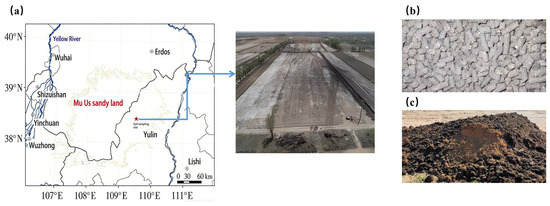
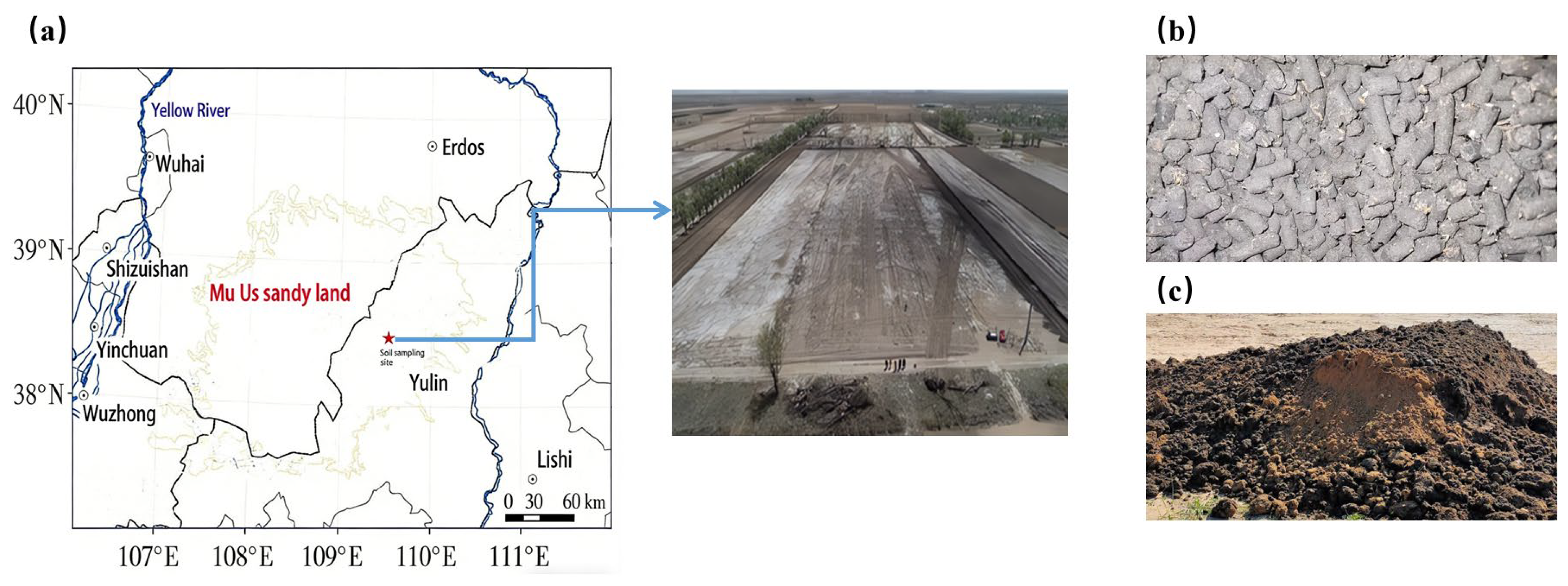
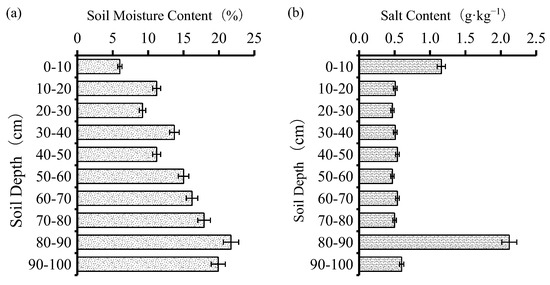
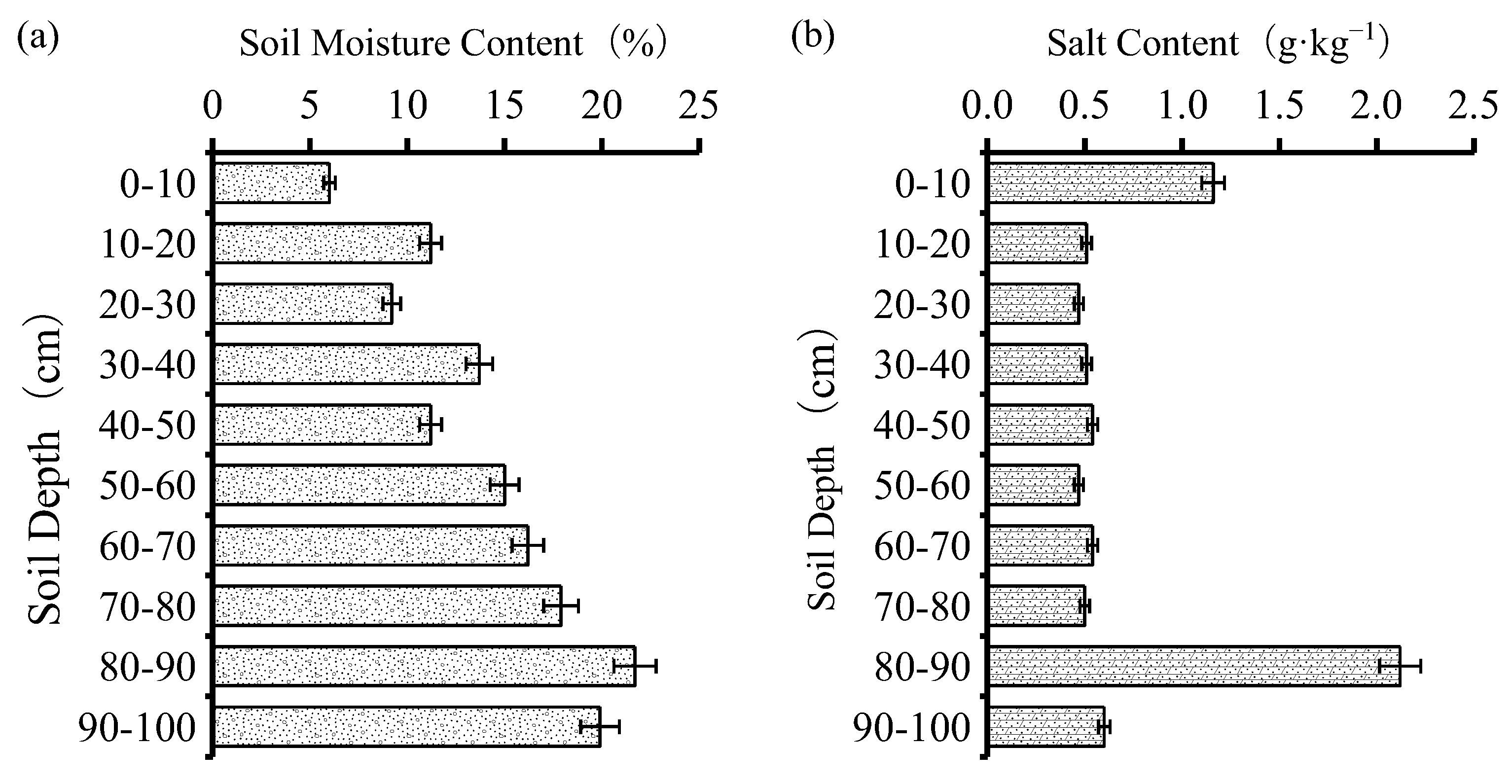
The field trial was carried out at a site located in Huangshaqidun Village, Yulin City, Shaanxi Province (geographic coordinates: 38°12′22″ N, 109°32′52″ E), with an elevation of 1125 m above sea level. The detailed geographical location and field view are presented in Figure 1. The local climate is classified as temperate and semi-arid, featuring a long-term mean annual temperature of 10.1 °C, total annual precipitation of 427.5 mm, and an average frost-free interval of 151 days. Soil classification under the WRB [24,25] designated the sample as silty loam, consistent with its measured particle size composition (21.1% sand, 61.7% silt, and 17.2% clay). This classification aligns with WRB criteria, where silty loam is defined by a dominant silt fraction (>50%) and subordinate sand and clay contents, matching the particle size distribution observed in the study. The site exhibited typical salinization characteristics. Figure 2 shows variations in soil water content and salinity along the 0–100 cm profile. Specifically, Figure 2a depicts the salt content in different soil layers, with the topsoil (0–20 cm) exhibiting a total salinity of 1.67 g·kg−1—classified as mildly saline–alkali soil according to the grading standards in Table 1—and Figure 2b illustrates the dynamic water across the same soil profile. Groundwater depth varied seasonally: it was as shallow as 30–40 cm during the salt return period and increased to 1.5–2.0 m on average in the salt spraying period.
Figure 1.
Specific geographic positioning of the study site and photographic documentation of the coal gasification slag-based soil conditioner and vermicompost substrates. Notes: (a) detailed geographic information of the area and study site; (b) CGSS; (c) VC. Red five-pointed stars indicate soil sampling sites; blue arrows indicate aerial photographs of soil sampling sites.
Figure 2.
Variation in soil water content and salt content in the 0–100 cm profile of the test site. Notes: (a) saline–alkali soil moisture content; (b) salt content of saline–alkali soil.
Table 1.
Classification standards of saline–alkali soil.
The test plant was L. chinensis (Zhongke No. 1), a premium forage cultivar. Commercial vermicompost (VC), w supplied by an environmental technology company in Shaanxi Province, served as the organic amendment; its composition comprised 50% earthworm castings, 30% sewage sludge, and 20% cattle manure by volume. The coal gasification slag-based soil conditioner (CGSS), independently developed by the research team, primarily consists of coal gasification slag (80%), fly ash (10%), citric acid (5%), and sheep manure (5%). Before implementation in the trial, VC and CGSS underwent identical pre-treatment involving 15 days of indoor fermentation under controlled conditions (55.0 °C, 65.0% relative humidity; see Figure 1b,c). Testing confirmed that the heavy metal content in both amendments used in this study met national standards. Key physicochemical properties of soil (0–20 cm), CGSS, and VC are systematically presented in Table 2.
Table 2.
Physicochemical properties of saline–alkali soil, vermicompost, and coal gasification slag-based soil conditioner.
2.2. Experimental Design
A randomized complete block design was employed with five experimental treatments: T1 was the sole application of coal gasification slag-based soil conditioner (CGSS) at 45,000 kg·ha−1; T2 was the sole application of vermicompost (VC) at 45,000 kg·ha−1; T3 was CGSS-VC co-application (1:1 ratio), both applied at 22,500 kg·ha−1; T4 was CGSS-VC co-application (1:2 ratio), applied at 15,000 kg·ha−1 and 30,000 kg·ha−1, respectively; and T5 was CGSS-VC co-application (2:1 ratio), applied at 30,000 kg·ha−1 and 15,000 kg·ha−1, respectively, each replicated five times [27,28]. Amendments were uniformly broadcast and incorporated to 30 cm using a rotary tiller. Experimental plots measured 10.0 m × 4.5 m (45 m2), with adjacent plots separated by 1.5 m-wide buffer zones planted with L. chinensis to prevent cross-contamination of soil amendments and reduce competition from surrounding native vegetation. To mitigate animal disturbances, each plot was enclosed with 50 cm-high plastic fencing (buried 20 cm into the soil). L. chinensis was drill-seeded at 6.0 g·m−2 with 1 cm sowing depth and 25 cm row spacing [29]. Throughout the growing season, drip irrigation maintained water supply (20 m3·ha−1), weeds were manually controlled, and no additional fertilizers were applied. The experiment was established on 23 May 2021; soil and plant samples were collected on 20 September 2023. Detailed distribution of plots in the test site are shown in Figure S1.
2.3. Soil Physicochemical Properties
Within each experimental plot, five soil cores (0–20 cm depth) were collected randomly along an S-shaped transect to ensure uniform coverage of the plot. The five cores were homogenized thoroughly and composited into one mixed sample to minimize spatial variability. Samples were sealed in zip-lock polyethylene bags, stored at 4 °C, and transported to the laboratory. Soil bulk density was determined in the field using undisturbed core sampling: 100 cm3 stainless steel rings (5.0 cm diameter × 5.1 cm height) were employed to collect intact soil samples [30]. Soil water content was measured by constant-weight drying: samples were oven-dried at 105 °C for 48 h until constant mass [31]. The potentiometric method was used to determine soil pH, with measurements conducted in a 1:2.5 (w/v) soil–water suspension using a pre-calibrated PHSJ-4F pH meter (Leici, China) [32]. The modified Walkley–Black approach was adopted to quantify soil organic matter (SOM), utilizing potassium dichromate oxidation-spectrophotometry [33,34].
Available potassium (AK) was retrieved through extraction with 1 mol·L−1 ammonium acetate, maintaining a water-to-soil ratio of 5:1 [35]. Quantification of available phosphorus (AP) was conducted following the Olsen extraction protocol, utilizing 0.5 mol·L−1 sodium bicarbonate (pH 8.5) [36]. Alkali-hydrolyzable nitrogen (AN) was measured via 1.0 mol·L−1 NaOH alkaline hydrolysis diffusion [37]. Enzyme activities were quantified as follows: catalase (CAT) with titanium sulfate termination colorimetry, expressed as H2O2 decomposition per unit time [38]; sucrase (SUC) with the 3,5-Dinitrosalicylic acid (DNS) chromogenic method, calculated as glucose-equivalent reducing sugar production [39]; Alkaline phosphatase (ALP) with phenol production from disodium phenyl phosphate substrate using 4-aminoantipyrine in a chromogenic reaction [40]; and polyphenol oxidase (PPO) with quinone formation via a pyrocatechol oxidation–condensation reaction measured calorimetrically [41].
2.4. Plant Traits
In plant trait measurements, each experimental plot was subdivided into five representative 1.0 × 1.0 m quadrats (also arranged in an S-shaped pattern to mitigate edge effects). Within each quadrat, 15 randomly selected erect plants were measured for natural height (from base to uppermost leaf tip; accuracy ± 1 mm). All aboveground biomass was harvested at ground level, bagged, and labeled; root systems (0–20 cm depth) were collected in situ using a 10 cm-diameter soil auger and rinsed with distilled water to preserve intact root biomass. For biomass processing, aboveground and belowground biomass were subjected to 30 min enzyme inactivation at 105 °C, followed by oven-drying at 75 °C to constant weight. Dry weights were recorded with 0.01 g precision. The physiological assays were as follows: superoxide dismutase (SOD) used the pyrogallol autoxidation assay [42]; peroxidase (POD) used the benzidine chromogenic method [43]; and malondialdehyde (MDA) used thiobarbituric acid reaction spectrophotometry [44].
2.5. Soil Microbial Communities
Soil samples were collected using sterilized spades after removing surface litter. From each plot, five sampling points along an S-shaped transect were selected per soil layer (0–20 cm). W collected all samples into sterile polyvinyl chloride bags, stored them on ice packs, and delivered them to the laboratory within 6 h for subsequent use. After removing roots, debris, and stones, samples were homogenized and sieved (2 mm mesh) to ensure uniformity for DNA extraction.
Extraction of genomic DNA was conducted from homogenized composite soil samples (0.25 g per sample) with 5 biological replicates per treatment, employing the PowerSoil® DNA Isolation Kit produced by Mo Bio Laboratories (Carlsbad, CA, USA). DNA quality was assessed via NanoDrop spectrophotometry, with the following acceptance criteria: OD260/OD280 = 1.8–2.0, OD260/OD230 > 1.5, and concentration ≥ 5 ng/μL. Libraries were prepared from 30 ng of qualified DNA per replicate using the Illumina TruSeq® DNA Library Prep Kit (San Diego, CA, USA). The V4 fragment of bacterial 16S rRNA genes was subjected to PCR amplification with specific primers: 338F (5′-ACTCCTACGGGAGGCAGCA-3′) and 806R (5′-GGACTACHVGGGTWTCTAAT-3′).
PCR reactions contained deoxynucleotide triphosphates (dNTPs), Mg2+, and high-fidelity DNA polymerase. Amplicons were subjected to purification with Agencourt AMPure® XP beads (Beckman Coulter, Brea, CA, USA) for the elimination of primer dimers, followed by dissolution in Elution Buffer. The subsequent procedures involved end repair, A-tailing, and adapter ligation, and the amplicon libraries were then subjected to sequencing on an Illumina MiSeq platform with the application of 2 × 250 bp paired-end chemistry. This sequencing effort yielded an average of 60,000 high-quality reads per sample, providing sufficient depth for subsequent microbial community analysis.
2.6. Data Analysis
All data analyses required prior verification of data normality (Shapiro–Wilk test) and homogeneity of variance (Levene’s test) using SPSS 23.0 software. Results indicated that all data were normally distributed (Shapiro–Wilk test, p > 0.05) and exhibited homogeneous variances (Levene’s test, p > 0.05), satisfying the assumptions for one-way ANOVA. A subsequent one-way ANOVA was conducted to compare differences among treatments, with significance set at p < 0.05. Tukey’s HSD test was used for post hoc mean separation, as it is robust for balanced sample sizes and homogeneous variances [45]. Redundancy analysis (RDA) based on Pearson correlation coefficients was performed in CANOCO 5.0 to visualize the relationships between variables and quantify the influence of various soil indicators on soil microbial communities at the phyla level [46]. Membership function analysis was applied to comprehensively evaluate the reclamation efficacy across treatments, integrating soil physicochemical properties and plant agronomic traits using the following formula [47]:
where equal weight was assigned to each indicator, and the comprehensive score was calculated as the average membership degree of all indicators. Equation (1) calculates the membership degrees for positive directional indicators (where higher values indicate better outcomes), for example soil water content, porosity, SOM, AvP, AvN, AvK, enzyme activities (CAT, SUC, PPO, and ALP), plant growth traits (height, biomass, and leaf area), and microbial α-diversity indices; Equation (2) applies to negative directional indicators (where lower values are desirable), for example soil pH, EC, and plant MDA content. Here, Xi denotes the measured value of the indicator, while Xmin and Xmax represent the minimum and maximum values of that indicator’s dataset across all treatments.
3. Results
3.1. Growth Parameters and Enzyme Activities of the Plant
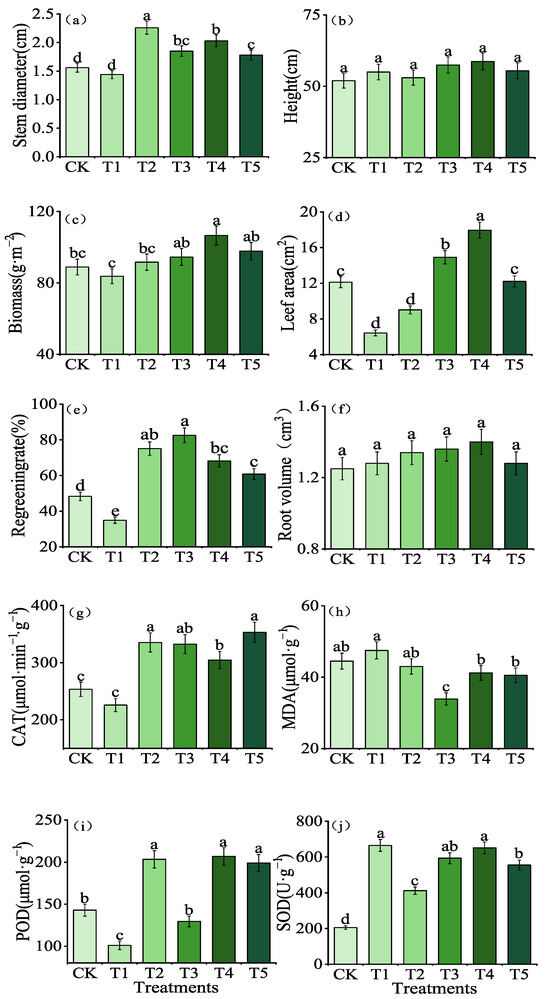
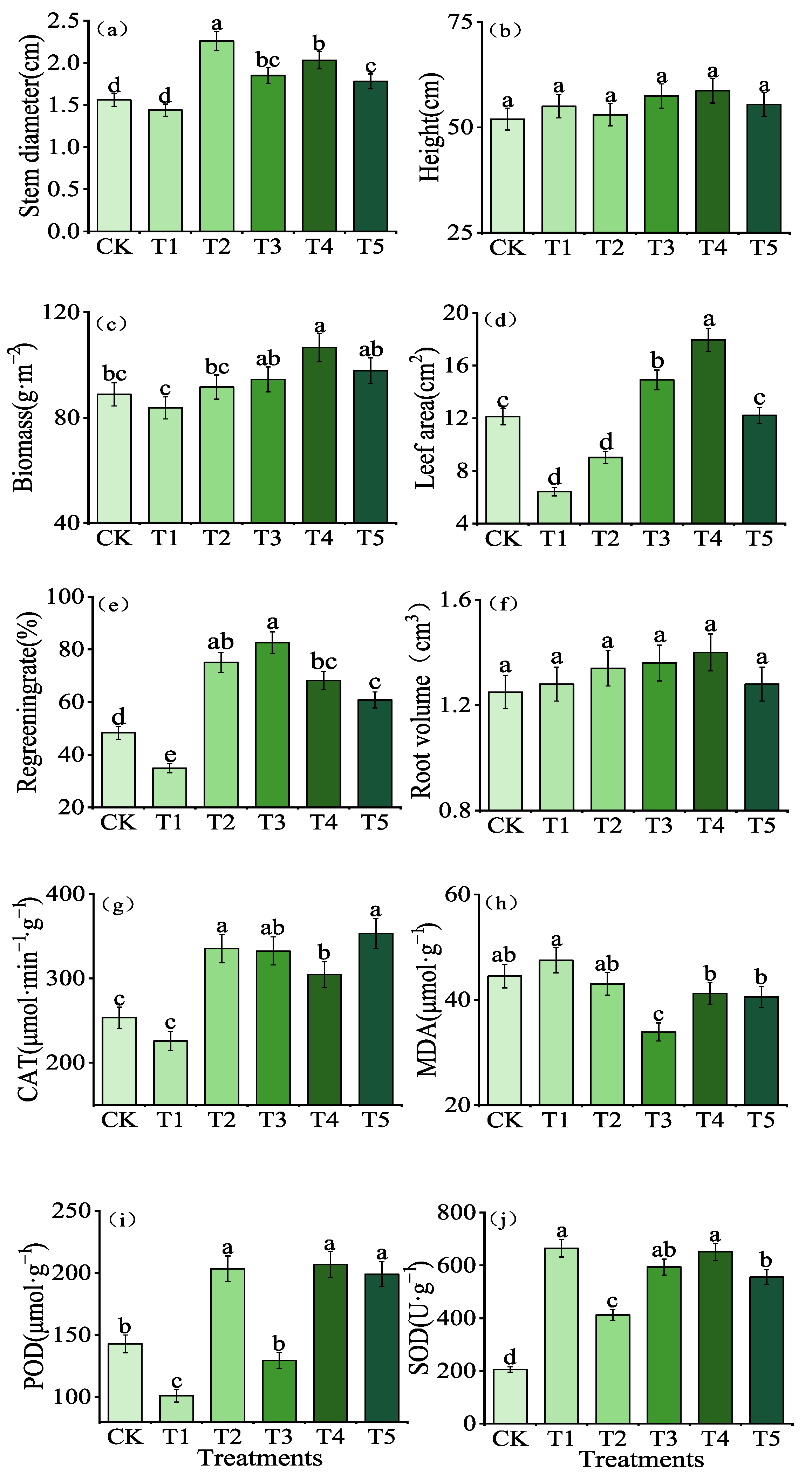
Different soil amendment combinations effectively enhanced the physiological and biochemical indices of L. chinensis (Figure 3), with CGSS-VC co-application outperforming single amendments and T4 (CGSS:VC = 1:2) as the optimal treatment. Compared with other treatments, T4 treatment significantly increased leaf area (48.14%) and biomass (19.89%) (p < 0.05). Compared with the CK treatment, plant height and root volume in the T4 treatment significantly increased by 12.93% and 12.00%, respectively, while other treatment groups showed smaller gains. T3 and T2 treatments, respectively, achieved significant increases in regreening rate (70.81%) and stem diameter (44.87%) (p < 0.05), and T3 also reduced MDA content by 23.78% (33.91 μmol/g, p < 0.05). Although CAT, POD, and SOD activities were slightly enhanced across treatments, no significant differences were observed among groups.
Figure 3.
Effects of treatments on growth and physiological parameters of L. chinensis. Letters denote significant differences among samples within the same parameter (p < 0.05, n = 5). Note: CAT stands for catalase; MDA stands for malondialdehyde; POD stands for peroxidase. (a) Stem diameter; (b) plant height; (c) biomass; (d) leaf area; (e) regreening rate; (f) root volume; (g) catalase activity; (h) malondialdehyde enzyme activity; (i) peroxidase activity; (j) superoxide dismutase activity. Material consumption for each treatment group: T1 is sole application of coal gasification slag-based soil conditioner (CGSS) at 45,000 kg·ha−1; T2 is sole application of vermicompost (VC) at 45,000 kg·ha−1; T3 is CGSS-VC co-application (1:1 ratio), both applied at 22,500 kg·ha−1; T4: is CGSS-VC co-application (1:2 ratio), applied at 15,000 kg·ha−1 and 30,000 kg·ha−1, respectively; T5 is CGSS-VC co-application (2:1 ratio), applied at 30,000 kg·ha−1 and 15,000 kg·ha−1, respectively.
3.2. Soil Properties and Ecological Multifunctionality
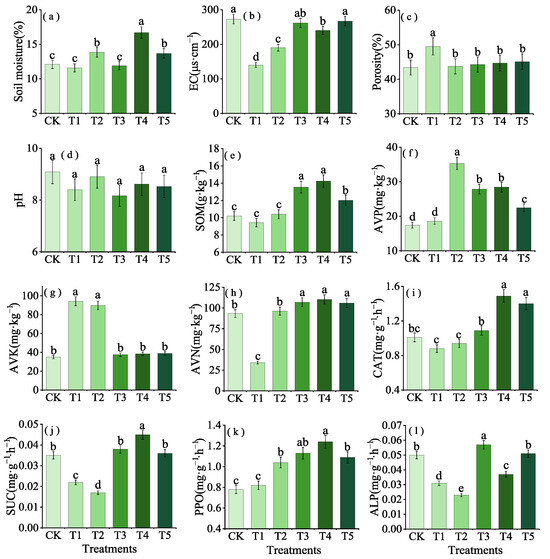
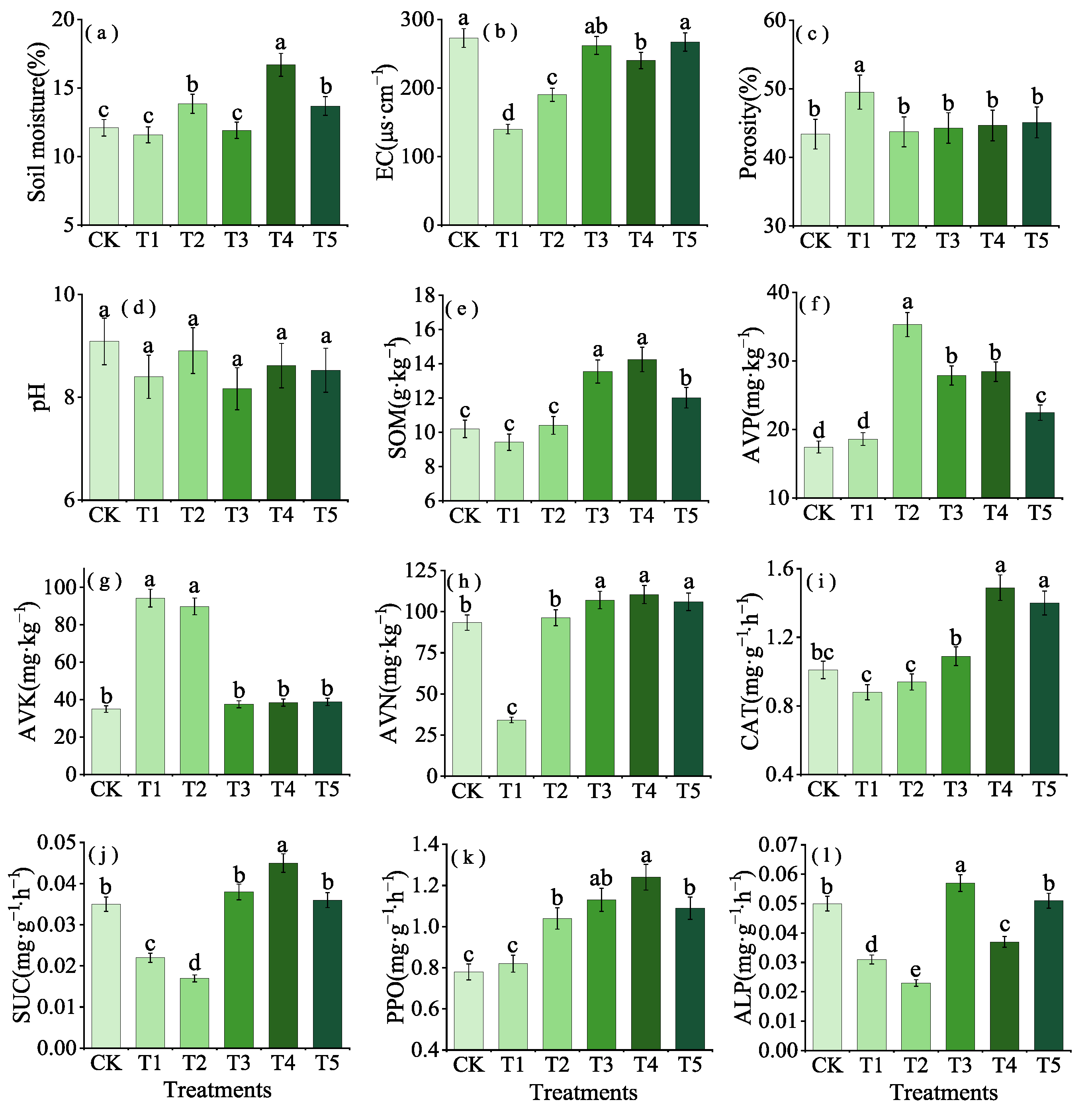
Compared to CK, all treatments enhanced both soil physicochemical properties and enzyme activities, with T4 demonstrating superior overall efficacy (Figure 4). The water content and organic matter in T4 treatment reached significant difference levels (p < 0.05), increasing by 38.05% and 39.67%, respectively; meanwhile, T1 treatment showed a 63.29% reduction compared to CK treatment, reaching a level of statistical significance. The soil porosity of each treatment increased with the gradient of coal gasification slag-based soil conditioner application, and T1 treatment significantly increased by 14.10%, more than other treatments (p < 0.05). Relative to CK, the activities of PPO, CAT, and SUC in T4 treatment increased by 65.33%, 47.52%, and 25.00%, respectively.
Figure 4.
Physicochemical properties of saline–alkali soil. Letters denote significant differences among replicates within each parameter (p < 0.05, n = 5). Note: (a) soil moisture content; (b) electrical conductance (EC); (c) soil porosity; (d) soil pH; (e) soil organic matter; (f) available phosphorus (AvP); (g) available potassium (AvK); (h) alkaline-hydrolyzable nitrogen (AvN); (i) catalase (CAT) activity; (j) sucrase (SUC) activity; (k) polyphenol oxidase (PPO); (l) alkaline phosphatase (ALP) activity.
3.3. Membership Function Evaluation for Plant–Soil Systems
Membership function analysis was applied to evaluate plant physio-biochemical indicators and soil parameters across treatments. For the vegetation assessment, normalized values of physiological traits were calculated using membership functions (inverse calculation for malondialdehyde, MDA); for soil evaluation, key properties (water content, porosity, SOM, AP, AK, AN, and enzyme activities, including PPO, CAT, SUC, and ALP) were normalized with inverse functions applied to pH and EC. Higher comprehensive scores indicate superior improvement: T4 (CGSS:VC = 1:2) achieved the highest aggregate reclamation score for vegetation (8.47, Figure S2a) and integrated soil quality (8.05, Figure S2b). All amendment treatments outperformed CK, confirming the positive effects of amendments, while T4’s top scores highlight its superiority in enhancing L. chinensis physio-biochemical properties, soil fertility, physical structure, and enzyme activities.
The dual analysis demonstrates that the CGSS-VC co-application at a 1:2 ratio (15,000 kg·hm−2 CGSS and 30,000 kg·hm−2 VC) delivers exceptional performance in both vegetation improvement and soil remediation. T4’s highest scores in vegetation physiology (8.47) and soil quality (8.05) provide dual validation of its efficacy in mitigating saline–alkali stress, promoting plant growth, and comprehensively restoring the saline–alkali soil ecosystem. This establishes the 1:2 CGSS:VC ratio as the optimal strategy for synergistic ecological restoration.
3.4. Soil Microbial Community Diversity
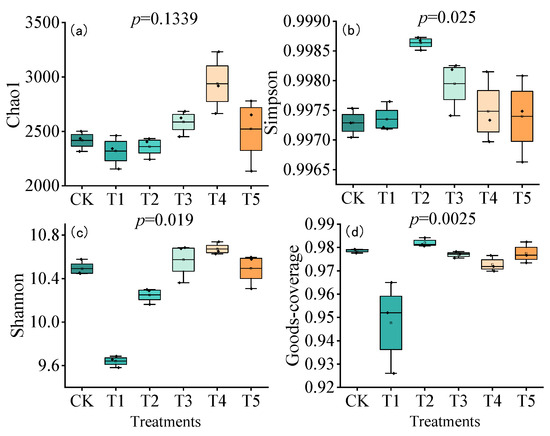
Microbial community analysis revealed that combined CGSS and VC application significantly enhanced Chao1 and Shannon indices, with T4 demonstrating superior performance (Figure 5). Compared to CK, levels increased by 21.53% and 1.72%, respectively (p < 0.05). Additionally, the Simpson index in the T2 treatment group was significantly higher than other treatment groups at 0.9986, and other treatment groups also demonstrated varying degrees of improvement compared to the control group.
Figure 5.
Alpha diversity of the soil microorganisms. Note: (a) intergroup comparison of the Chao1 index; (b) intergroup comparison of the Simpson diversity index; (c) intergroup comparison of the Shannon diversity index; (d) intergroup comparison of Goods-coverage.
Membership function analysis of soil microbial α-diversity indices (Chao1, Simpson, Shannon, and Goods-coverage) revealed that higher composite scores correlated with enhanced microbial community robustness (Figure S3). The T4 treatment (CGSS:VC = 1:2) achieved the maximum score of 2.88, significantly outperforming other amendments. These findings further emphasized the superiority of the T4 treatment in optimizing the soil microbial community structure, which is essential for the long-term reclamation and sustainable utilization of saline–alkali soils.
3.5. Integrated Analysis of Microbial Community Structure and Environmental Drivers
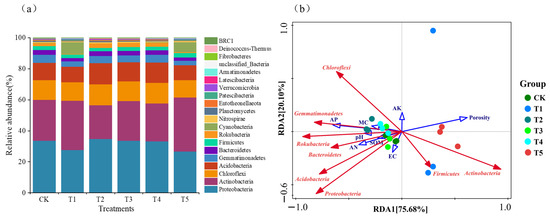
Bacterial community composition differed significantly among treatments at the phylum level, with 16S rDNA sequencing identifying 38 phyla—20 of which were dominant (mean relative abundance > 0.05%) (Figure 6a). Proteobacteria dominated across all samples (26.73–34.84%), with the highest relative abundance (34.84%) in T2. The ranking of major phyla by relative abundance was as follows: Actinobacteria > Chloroflexi > Acidobacteria > Gemmatimonadetes > Bacteroidetes > Firmicutes > Rokubacteria > Cyanobacteria. Compared to amended treatments, unamended CK soils had higher relative abundances of Gemmatimonadetes, Bacteroidetes, Verrucomicrobia, Latescibacteria, Armatimonadetes, and BRC1. In contrast, CGSS-VC co-amended soils showed enriched relative abundances of Actinobacteria, Firmicutes, Nitrospirae, Entotheonellaeota, Patescibacteria, and Deinococcus-Thermus compared to CK.
Figure 6.
(a) Top 20 phyla of soil microorganisms at the phylum level; (b) redundancy analysis of microbial taxa and environmental factors. Blue arrows denote dominant environmental factors, with arrow length indicating correlation strength between factors and soil microorganisms.
To assess the relationships between soil physicochemical characteristics and phylum-level microbial community structure, redundancy analysis (RDA) was carried out (Figure 6b). Axes 1 and 2 collectively explained 95.78% of total variance, with Axis 1 alone accounting for 75.68%. MC, porosity, pH, EC, SOM, AN, AP, and AK were identified as environmental factors associated with microbial community structure. AP showed high overlap with Gemmatimonadetes in the RDA plot. The arrow representing porosity formed small angles with Firmicutes and Actinobacteria, and T1 and T5 treatments exhibited greater changes in soil porosity compared to other treatments.
3.6. Relationships Between Soil Physicochemical and Biological Properties
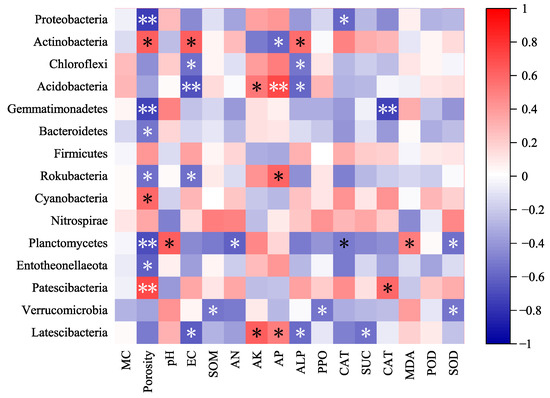
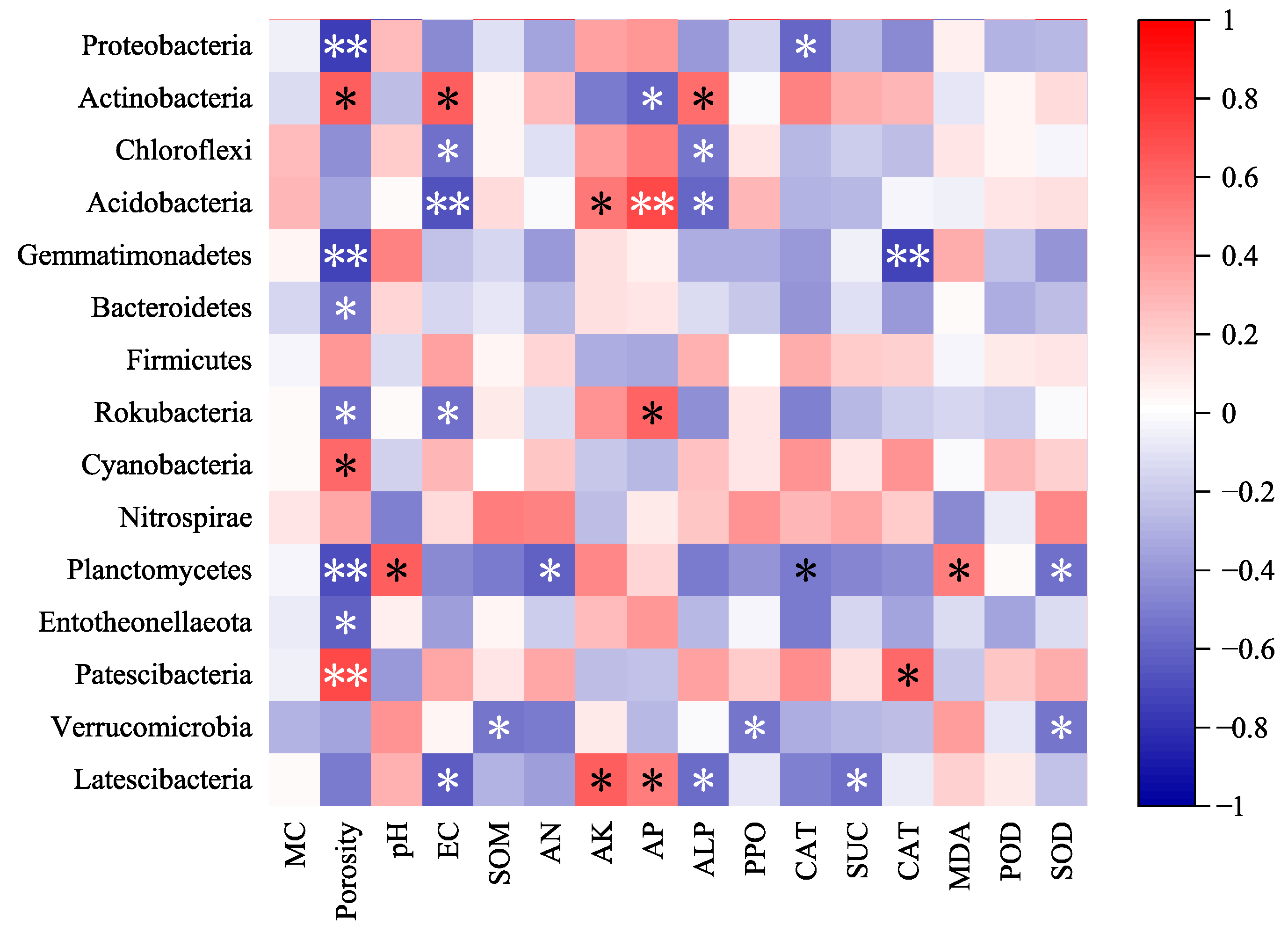
Figure 7 illustrates the influence of environmental factors and plant enzyme activities on phylum-level microbial communities. Correlation analysis revealed that soil porosity and EC were key factors shaping the microbial community. Proteobacteria, Gemmatimonadetes, and Planctomycetes were negatively correlated with porosity, whereas Patescibacteria and Actinobacteria showed a positive correlation. Acidobacteria and Chloroflexi were negatively associated with EC, while Actinobacteria increased with EC. Several phyla, including Acidobacteria and Planctomycetes, also showed significant correlations with nutrient availability (AP, AN, and AK) and plant enzyme activities (ALP, CAT, SOD, and MDA).
Figure 7.
Analysis of correlations between phylum-level microbial abundance and soil physicochemical characteristics, along with soil enzyme activities. * and ** indicate the significance levels of p < 0.05 and p < 0.01, respectively.
4. Discussion
Saline–alkali soils feature elevated salinity, high pH, nutrient scarcity, and compromised structural integrity, all of which significantly limit plant growth [48]. Global population growth and land scarcity, exacerbated by unsustainable agricultural practices, have accelerated secondary salinization. This degradation now represents a major constraint on agricultural sustainability [49]. Effective reclamation of saline–alkali soils therefore addresses dual imperatives: alleviating land shortages while enhancing soil quality and ecosystem stability [50]. The results of this study validate a strategic approach to achieving these goals by repurposing coal gasification slag, which successfully altered soil porosity and chemistry, leading to an enhanced soil microbiome. When combined with organic amendments such as VC, they not only achieve resource utilization by converting waste into valuable materials but also synergistically enhance saline–alkali soil improvement through physical structure regulation, chemical ion fixation, and biological activity promotion [51]. This integration thus creates a win–win scenario, mitigating the environmental pressure from solid waste accumulation while providing a sustainable pathway for saline–alkali soil reclamation.
4.1. Application of Vermicompost and Coal Gasification Slag-Based Soil Conditioner on Plant Growth
This study demonstrates that co-application of VC and CGSS significantly enhances L. chinensis growth in saline–alkali soils. Among the various treatments, T4 treatment (CGSS:VC = 1:2) demonstrated the best growth performance. This result was consistent with findings from other researchers [52]. Key agronomic traits (leaf area, plant height, biomass, and stem diameter) increased proportionally with VC dosage. VC-derived organic matter improved soil aggregation, enhancing nutrient availability while creating favorable rhizosphere conditions [53]. T3 treatment (CGSS:VC = 1:1) reduced soil pH and expanded root volume, indicating ratio-specific stimulation of root proliferation. This morphological shift inhibits capillary rise in alkaline ions (OH−) from silicate hydrolysis, thereby mitigating high-pH stress [54]. L. chinensis root activity modified microbial communities through nutrient dynamics [55]. The VC-CGSS synergy simultaneously enhanced soil properties and plant growth, establishing an integrated physicochemical–biological framework for the ecological restoration of saline–alkali soils.
4.2. Application of Vermicompost and Coal Gasification Slag-Based Soil Conditioner on Soil Physicochemical Properties
This study elucidates the impacts of varying VC-CGSS ratios on soil physicochemical properties and nutrient cycling, with distinct synergistic mechanisms driving remediation efficacy. Key findings reveal that T4 (CGSS:VC = 1:2) achieved the highest soil water content and organic matter (SOM) (39.67% increase vs. CK), while soil porosity showed a linear positive correlation with CGSS dosage—reflecting a clear dose-dependent structural improvement. High sodium ion concentrations in saline–alkali soils disrupt aggregate stability [56], reducing porosity and impairing water–air exchange [57]. CGSS mitigates this via its honeycomb macroporous structure, enhancing adsorption, water retention, and salt leaching, while VC supplements humic acids to bind saline ions, effectively lowering electrical conductivity (EC)—a mechanism validated by our empirical data.
Soil pH regulation, a critical remediation indicator [58], was most pronounced in T3 (CGSS:VC = 1:1), despite CGSS (pH 5.79) being more acidic than VC (pH 6.78). This counterintuitive result stems from synergistic physicochemical–microbiological interactions: CGSS provides rapid but transient acidity via mineral components (e.g., hematite), while VC sustains proton release through microbial decomposition of organic acids (e.g., citric and oxalic acids) and CO2 respiration by functional taxa (e.g., Pseudomonas spp.) [59]. Low-molecular-weight organic acids from VC further accelerate acidic mineral dissolution in CGSS [60], extending pH buffering duration beyond single-amendment effects. SOM sequestration in T4 is driven by two synergistic mechanisms: (1) direct organic input from VC (SOM = 88.57 g·kg−1, Table 2), which supplies humic acids and plant residues [61]; and (2) CGSS-mediated microbial regulation—15,000 kg·ha−1 CGSS optimizes soil porosity (11.8% increase) and pH (reduced to 8.62), enriching functional taxa like Acidobacteria (16.9% higher than the control group) and increasing microbial richness (Chao1 increased by 21.5%) (Figure 5a and Figure 6a). Acidobacteria promote recalcitrant organic matter stabilization [62,63], while elevated sucrase (SUC increased by 25.00%) and polyphenol oxidase (PPO increased by 65.33%) activities (Figure 4j,k) enhance the microbial conversion of labile carbon to stable SOM [64].
Intrinsic linkages between soil enzyme activities and physicochemical properties further clarify remediation mechanisms: PPO activity is tightly associated with SOM transformation, as VC and CGSS elevate SOM content and stimulate microbial metabolism [65], promoting organic nitrogen and phosphorus mineralization. The paradoxical negative correlation between porosity and alkali-hydrolyzable nitrogen (AN) in saline–alkali soils [66] is mitigated by VC-CGSS synergy—CGSS improves macroporosity and aeration, while VC provides labile carbon to activate aerobic microorganisms, facilitating organic nitrogen mineralization. In the saline–alkali soil studied (initial electrical conductivity 272.76 μS·m−1), the combined CGSS-VC amendment significantly reduced soil electrical conductivity through ion leaching and immobilization. The T4 treatment decreased EC by 12.00% compared to the control, effectively alleviating the inhibition of microbial metabolism caused by salt stress. Notably, the moderate reduction in EC created favorable conditions for soil nutrient cycling. This was reflected in the T4 treatment, where alkaline-hydrolyzable nitrogen (AN) content increased significantly by 18.3% compared to the CK, indicating enhanced nitrogen transformation processes [67,68]. However, alkaline phosphatase (ALP) activity in T4-treated plants decreased by approximately 26% compared to CK, likely because ALP responds more sensitively to soil phosphorus availability, pH, or specific microbial communities rather than being directly regulated by salinity. Future studies should further investigate the relationship between ALP activity and key processes in phosphorus cycling. Additionally, VC-derived organic acids and CGSS’s porous matrix chelate competing cations (e.g., Na+ and Ca2+), modulating K+ leaching–fixation equilibrium to ameliorate available potassium (AK) deficiency under saline–alkali stress.
In summary, VC-CGSS co-application achieves comprehensive remediation through three interconnected tiers: (i) physical optimization of soil pore structure; (ii) chemical rebalancing of saline ions; (iii) biological activation of microbial functions and enzyme-mediated nutrient cycling. This multi-mechanism synergy enhances carbon, nitrogen, and phosphorus cycling, establishing a robust foundation for saline–alkali soil ecosystem restoration.
4.3. Modulatory Effects of Vermicompost and Coal Gasification Slag-Based Soil Conditioner on Soil Microbial Communities
Soil microbial communities are core regulators of ecological functions in saline–alkali ecosystems, with their structure and functionality are tightly linked to amendment properties and soil environmental conditions [69]. This study clarifies that the synergistic co-application of CGSS and VC (T4 ratio) is critical for optimizing microbial communities—far exceeding the effects of single amendments—through a unified mechanism: CGSS ameliorates physical habitats (porosity and pH), while VC provides nutritional resources (organic matter and carbon sources), creating a niche that supports functional diversity rather than simply maximizing individual phylum abundance.
Proteobacteria dominated across all treatments (26.73–34.84%) due to their metabolic versatility in carbon, nitrogen, and phosphorus cycling, peaking at 34.84% in T2 (sole VC) as a direct response to VC-derived carbon sources [70]. In contrast, T4 did not prioritize a single phylum but fostered a balanced, functionally coherent microbiome. This is evidenced by its highest microbial α-diversity membership function value (2.88), whereas T1 (sole CGSS) scored only 0.04—reflecting CGSS’s limitation in providing sufficient nutrients and microenvironmental optimization, which compromised community integrity and key functional groups. T4, by integrating CGSS’s physical improvement and VC’s organic matter supply, enriched functional phyla, including Actinobacteria (which facilitate complex organic compound decomposition and organic phosphorus mineralization via extracellular enzymes [71]) and Nitrospirae (drives nitrification), while reducing oligotrophic, stress-tolerant phyla (Gemmatimonadetes and Bacteroidetes) prevalent in unamended CK soil [72]. This shift signals a transition from a survival-focused to a function-oriented microbial community, enhancing nutrient cycling efficiency.
Redundancy analysis (RDA) and correlation heatmap analysis further delineated the linkage between soil environmental factors and microbial community structure. Our results showed that available phosphorus (AP) and alkali-hydrolyzable nitrogen (AN) emerged as key drivers. Another study also demonstrated that Actinobacteria, Proteobacteria, and Acidobacteria groups were significantly associated with AP/AN content [73]. VC optimized nutrient cycling to boost the relative abundance of these functional phyla [74], while CGSS’s porous structure shaped bacterial communities by providing aerobic microhabitats for taxa like Patescibacteria (highly positively correlated with porosity) and modulating pH to favor salt-adapted groups. Notably, Acidobacteria exhibited a strong positive correlation with AP, confirming targeted enrichment of phosphorus-cycling taxa under T4’s high-AP environment.
In summary, the co-application of VC and CGSS exerts multifaceted regulatory effects on saline–alkali soil via a synergistic cascade in soil–plant systems: improvement of soil physicochemical properties, activation of soil enzymatic activities, and optimization of soil microbial structure and function. Future research should focus on three priorities: (i) elucidating interactions between soil aggregate stability and microbial colonization dynamics; (ii) delineating linkage pathways between functional microbial consortia and plant stress resistance; and (iii) decoding microbial metabolic regulation governing nutrient cycling. These advancements will provide targeted theoretical frameworks for precision ecological restoration of saline–alkali soils.
5. Conclusions
Our study demonstrated that the co-application of VC and VC-CGSS significantly enhanced the physicochemical properties of soil and growth characteristics of plants under saline–alkali soil conditions. The amendments improved soil physicochemical properties, with pH and EC decreasing by 1.98–10.12% and 2.10–48.68%, respectively, while organic matter, available phosphorus (AP), and alkali-hydrolyzable nitrogen (AN) levels increased, leading to enhanced soil quality and nutrient availability. In addition, the physiological adaptability of L. chinensis to saline–alkali stress was substantially strengthened, as evidenced by the comprehensive improvement of key growth-related traits and stress resistance mechanisms. Specifically, core physiological indicators (including leaf development, biomass accumulation, plant elongation, regreening capacity, and root growth) were synergistically promoted, and the enhanced activities of antioxidant enzymes (POD, SOD, and CAT) further reinforced its tolerance to oxidative damage caused by saline–alkali stress. Moreover, soil enzyme activities (PPO, CAT, and SUC) improved considerably, while microbial community composition shifted toward functionally beneficial taxa, such as Proteobacteria and Actinobacteria, contributing to greater ecological functional stability. Based on a fuzzy membership function analysis, the T4 treatment (15,000 kg·ha−1 CGSS and 30,000 kg·ha−1 VC) achieved a higher integrated score than the others, confirming its superior remediation efficacy. From an economic perspective, the application ratio of VC-CGSS at 2:1 demonstrates lower costs compared to other similar conditioners and organic fertilizers for soil amendment. Therefore, the combined application of VC-CGSS represents a resource-efficient and highly effective ecological restoration strategy for rehabilitating degraded saline–alkali land.
Supplementary Materials
The following supporting information can be downloaded at: https://www.mdpi.com/article/10.3390/su18031180/s1. Table S1 Cost assessment of soil amendment with different fertilizers ($/ha). Figure S1. Distribution of plots in the test site. Figure S2. (a) Comprehensive score of vegetation; (b) Comprehensive evaluation of soil. Lowercase letters indicate whether the samples of the same index are significantly different from each other (p < 0.05). Figure S3. Comprehensive score of soil microbial activity. Lowercase letters indicate whether the samples of the same index are significantly different from each other (p < 0.05). References [75,76] are cited in the Supplementary Materials.
Author Contributions
Methodology, Q.L. (Qing Liu); Software, K.Z.; Formal analysis, H.Y. and L.K.; Data curation, Q.L. (Qiang Li); Writing–original draft, H.Y.; Visualization, K.D.; Supervision, X.Z.; Project administration, F.A. All authors have read and agreed to the published version of the manuscript.
Funding
National Natural Science Foundation of China (42267071, 32360316); Key Research and Development Project of Shaanxi Province (2024CY2-GJHX-39); Shaanxi Provincial Technology Innovation Guidance Program (2024ZC-YYDP-58); Qinchuangyuan “Challenge-Based Recruitment—Application and Demonstration of Synergistic Sandland Ecological Restoration through Gasification and Slag Modification” (2024-JBGS-GY-001); Multi-source Solid Waste Collaborative Ecological Restoration Innovation Team Project (2023-02); Shaanxi Provincial Youth Innovation Team Project (24JP219, 25JP211).
Institutional Review Board Statement
Not applicable.
Informed Consent Statement
Not applicable.
Data Availability Statement
The original contributions presented in this study are included in the article/Supplementary Material. Further inquiries can be directed to the corresponding author.
Conflicts of Interest
The authors declare no conflicts of interest.
References
- Liu, M.; Wang, C.; Liu, X.; Lu, Y.; Wang, Y. Saline-alkali soil applied with vermicompost and humic acid fertilizer improved macroaggregate microstructure to enhance salt leaching and inhibit nitrogen losses. Appl. Soil Ecol. 2020, 156, 103705. [Google Scholar] [CrossRef] [Scilit]
- Du, Y.; Liu, X.; Zhang, L.; Zhou, W. Drip irrigation in agricultural saline-alkali land controls soil salinity and improves crop yield: Evidence from a global meta-analysis. Sci. Total Environ. 2023, 880, 163226. [Google Scholar] [CrossRef] [Scilit] [PubMed]
- Clay, D.E.; DeSutter, T.M.; Clay, S.A.; Nleya, T. Salinity and Sodicity: A Global Challenge to Food Security, Environmental Quality and Soil Resilience; John Wiley & Sons. Inc.: Hoboken, NJ, USA, 2024. [Google Scholar] [CrossRef] [Scilit]
- Chang, F.; Zhang, H.; Zhao, N.; Zhao, P.; Song, J. Green manure removal with reduced nitrogen improves saline-alkali soil organic carbon storage in a wheat-green manure cropping system. Sci. Total Environ. 2024, 926, 171827. [Google Scholar] [CrossRef] [Scilit] [PubMed]
- Li, J.; Pu, L.; Han, M.; Zhu, M.; Zhang, R. Soil salinization research in China: Advances and prospects. J. Geogr. Sci. 2014, 24, 943–960. [Google Scholar] [CrossRef] [Scilit]
- Xing, J.; Li, X.; Li, Z.; Wang, X.; Hou, N. Remediation of soda-saline-alkali soil through soil amendments: Microbially mediated carbon and nitrogen cycles and remediation mechanisms. Sci. Total Environ. 2024, 924, 171641. [Google Scholar] [CrossRef] [Scilit]
- Li, J.; Pu, L.; Zhu, M.; Zhang, R. Research status and future research hotspots of soil salinization. Acta Geogr. Sin. 2012, 67, 1233–1245. Available online: https://kns.cnki.net/kcms2/article/abstract?v=PZRn9VlzpTZS-hBXv8h3r0XlvYUGWapbCSem2M24U3PcAEqmBJRP1LvB3n7hMw7e_Q_P9wIifN34-oN2uE541U6XgqIuGEAPIV9EZIDW7JZApXxYBuWhV0ZOuQ6jSS8jxCOvYhGvsofoLmMxFH-5_WT3zZJe5C7vIh7UhOjsC5pXv_3Huqthig==&uniplatform=NZKPT&language=CHS (accessed on 20 January 2025).
- Yousuf, J.; Zhang, W.; Tahira, S.; Muhammad, A.; Abdullah, S.; Zulfikar, K.; Ansar, F. Utilization of sewage sludge to manage saline–alkali soil and increase crop production: Is it safe or not? Environ. Technol. Innov. 2023, 32, 103266. [Google Scholar] [CrossRef] [Scilit]
- Deng, H.; Song, Y.; Li, W.; Fatima, M.; Hamida, B.; Ye, S. Performance and economy of antibiotic adsorption by the composite of plant decomposed liquid, chemical modifier, and clay. Process. Saf. Environ. Prot. 2024, 192, 1408–1419. [Google Scholar] [CrossRef] [Scilit]
- Múčka, V.; Čuba, V. Radiation sensitivity of biological systems, its modification by chemical modifiers and its quantitative evaluation. J. Radioanal. Nucl. Chem. 2024, 333, 4443–4469. [Google Scholar] [CrossRef] [Scilit]
- Yang, Z. Progress in Techniques of Improvement and Utilization of Saline-Alkali Land in China and Its Future Trend. Open J. Soil Water Conserv. 2014, 2, 1–11. [Google Scholar] [CrossRef]
- Stepanov, A.; Yakimenko, S. Humic Soil Modifiers from Peat and Coal: Effect on Chemical and Biological Properties of Model Soil Mixtures. Russ. Agric. Sci. 2024, 49, S174–S179. [Google Scholar] [CrossRef] [Scilit]
- Sinopec Economics & Development Research Institute Company Limited. China Energy Outlook 2060; Springer Nature: Singapore, 2024. [Google Scholar] [CrossRef] [Scilit]
- Zhu, J.; Li, J.; Yan, L.; Shang, A.; Wang, Y.; Li, Q.; Wang, J. Research progress and application prospects of coal gasification slag resource utilization. Clean Coal Technol. 2021, 27, 11–21. [Google Scholar] [CrossRef]
- Irin, J.; Hasanuzzaman, M. Organic Amendments: Enhancing Plant Tolerance to Salinity and Metal Stress for Improved Agricultural Productivity. Stresses 2024, 4, 185–209. [Google Scholar] [CrossRef] [Scilit]
- Zhang, K.; Liao, C.; Wang, J.; Jin, P.; Wang, K.; Xu, W. Research progress on characteristic analysis and utilization technology of coal gasification coarse slag. Clean Coal Technol. 2024, 30, 13–29. [Google Scholar] [CrossRef]
- Gao, H.; Liang, L.; Jin, K.; Tan, J. Review on Resource Utilization of Coal Gasification Slag. Coal Sci. Technol. 2024, 52, 192–208. Available online: https://link.cnki.net/urlid/11.2402.TD.20231108.1153.001 (accessed on 20 January 2025).
- Berhe, S.; Seid, A.; Tsegay, B.; Sato, T.; Lule, G. Effect of Charcoal on the Quality of Vermicompost Produced with Water Hyacinth and Cow Manure. Sci. World J. 2025, 2025, 1086347. [Google Scholar] [CrossRef] [Scilit] [PubMed]
- Banerjee, S.; Ghosh, S.; Jha, S.; Bhattacharyya, P. Innovative green vermi-remediation of chromite-asbestos mine waste: From toxicity reduction to soil-crop-microbe health improvement utilizing novel multimodal statistical approach. J. Environ. Chem. Eng. 2025, 13, 116019. [Google Scholar] [CrossRef] [Scilit]
- Pendke, M.; Asewar, B.; Gourkhede, P.; Narkhede, W.; Abdulraheem, M.; Alghamdi, A.; Singh, C.; Abdi, G. Impact of tillage and fertilizer management on Soybean-Cotton rotation system: Effects on yield, plant nutrient uptake, and soil fertility for sustainable agriculture. Sci. Rep. 2025, 15, 9991. [Google Scholar] [CrossRef] [Scilit] [PubMed]
- Tejada, M.; Garcia, C.; Gonzalez, J.; Hernandez, M. Use of organic amendment as a strategy for saline soil remediation: Influence on the physical, chemical and biological properties of soil. Soil Biol. Biochem. 2005, 38, 1413–1421. [Google Scholar] [CrossRef] [Scilit]
- Howell, C.; Jenkins, S.; Abbott, L.; Mickan, B. Amelioration of a saline-alkaline soil using biochar and compost: Impacts on plant growth, soil biological and chemical characteristics. Land Degrad. Dev. 2023, 35, 142–155. [Google Scholar] [CrossRef] [Scilit]
- Yılmaz, F.; Kurt, S. Effect of biochar and vermicompost applications on some biological properties of soil. Toprak Bilimi Bitki Bes. Derg. 2018, 2, 143–150. Available online: https://kns.cnki.net/kcms2/article/abstract?v=PZRn9VlzpTYcjGsLBJEqZTN0dBS36b9AO34hGHAhFVoH3AVskxxlgYFSOOzHzoGKbChB03_PkfhB-pk4l2xnroVSW50TKJ1N0swqwV3jcfI0lVJh_qGtfxCdO1yEp1BCmYEiJTyVAU0yx6SSxwAx8dABYmMkloiURvnqLc2UGSPUHIlaB5FbPzZk337TsPWXYeQ-CtjR_2I9tZjs (accessed on 20 January 2025).
- Nikodemus, O.; Kārkliņš, A.; Dirnēna, B.; Afanasjeva, K.; Anufrijevs, A.; Brūmelis, G.; Kasparinskis, R.; Krievāns, M.; Kukuļs, I.; Lāce, B.; et al. Soil cover on complex glacial terrain and challenges for large-scale soil mapping using the World Reference Base (WRB) classification system. CATENA 2024, 245, 108305. [Google Scholar] [CrossRef] [Scilit]
- Sorokin, A.; Owens, P.; Láng, V.; Jiang, Z.; Michéli, E.; Krasilnikov, P. “Black soils” in the Russian Soil Classification system, the US Soil Taxonomy and the WRB: Quantitative correlation and implications for pedodiversity assessment. CATENA 2021, 196, 104824. [Google Scholar] [CrossRef] [Scilit]
- GB15618-2018; Soil Environmental Quality, Agricultural Land Soil Pollution Risk Management and Control Standard. China Standards Press: Beijing, China, 2018.
- Ai, F.; Zhang, S.; Li, Q.; Chen, Z.; Zhang, X.; Zhao, Y.; Zhang, K. Effects of vermicompost combined with soil conditioner on soil properties of saline-alkali land and growth of Leymus chinensis ‘Zhongke’. J. Shanxi Agric. Sci. 2023, 51, 531–538. Available online: https://link.cnki.net/urlid/14.1113.S.20230505.1404.006 (accessed on 20 January 2025).
- Ai, F. Effects of Vermicompost Combined with Soil Conditioner on Soil Properties of Saline-Alkali Land and Growth of Leymus Chinensis. Master’s Thesis, Yulin University, Yulin, China, 2024. Available online: https://kns.cnki.net/kcms2/article/abstract?v=PZRn9VlzpTal_ruvtJf54mpWbrz-Bt8p6ya5H1cNXkD3i_mGaLNWS43eXorQM-am1zy1e7lxR7ZjZhwheniG9Y1LtONZzFi7vuM3gy-t-AfruNks0blht7ReawHKOE72MfWUHlqUYvfiP0hkgQ6dgHTA5Xc5uzCWuRJjpzIEpthzCl_0lIfswitb6DH-Qzlx&uniplatform=NZKPT&language=CHS (accessed on 20 January 2025).
- Wallace, J.M.; Isbell, S.; Hoover, R.; Barbercheck, M.; Kaye, J.; Curran, W.S. Drill and broadcast establishment methods influence interseeded cover crop performance in organic corn. Renew. Agric. Food Syst. 2020, 36, 77–85. [Google Scholar] [CrossRef] [Scilit]
- Yongde, H. Determination and calculation of soil permeability coefficient. Trans. Chin. Soc. Agric. Eng. 2011, 27, 68–72. Available online: https://kns.cnki.net/kcms2/article/abstract?v=PZRn9VlzpTb4fuXOv_c4Et_vXAks3NJoLLw_tmFt4MgsQkOdQ4aUFFLwXIcWarHKV43EETFYnom4aCaf4dSm5kzOocG0J8ptWr-SBQWbl5NqnnwpgVNdqyQFxWoA18BpMVQjKjV1JpuFhnjuuAPLEGPZ9ljy9qLVpYTVbzWfFzZHI-aXpyN2p4gIqAnVND7hwqAlx8ZoTbVYNykk (accessed on 20 January 2025).
- Li, Y.; Yang, X.; Yang, G.; Lin, Y.; Ye, M. Characteristics of Shallow Moisture Changes in Unsaturated Soil Slopes Covered with Vegetation under Different Rainfall Rates. J. Hydrol. Eng. 2025, 30, 181210. [Google Scholar] [CrossRef] [Scilit]
- Caselles, L.; Balsamo, B.; Trincal, V.; Benavent, V.; Bertin, M.; Lahalle, H.; Samson, G.; Cyr, M. Carbonation of alkali-activated materials: Changes in mineralogical composition and pH, and qualitative estimation of corrosion risk. Mater. Struct. 2025, 58, 112. [Google Scholar] [CrossRef] [Scilit]
- Jarosz, R.; Kowalska, J.; Gondek, K.; Bejger, R.; Mielnik, L.; Lahori, A.; Hersztek, M. The Effect of New Zeolite Composites from Fly Ashes Mixed with Leonardite and Lignite in Enhancing Soil Organic Matter. Agriculture 2025, 15, 786. [Google Scholar] [CrossRef] [Scilit]
- Irshad, S.; Soukup, K.; Klusoň, P.; Frouz, J. The effect of clay minerals, litter quality, and earthworms on soil organic matter storage; clay macro-porosity is more important than surface area. CATENA 2025, 252, 108872. [Google Scholar] [CrossRef] [Scilit]
- Ghosh, S.; Banerjee, S.; Basak, K.; Prajapati, J.; Majumder, S.; Bhattacharyya, P. Identifying an Appropriate Extractant for Assessing the Presence of Available Potassium in Soils with High Mica Content: A Comprehensive Statistical Analysis. Commun. Soil Sci. Plant Anal. 2025, 56, 1145–1161. [Google Scholar] [CrossRef] [Scilit]
- Sudadi; Maro’ah, S.; Minardi, S.; Imawati, F. Efficient use of biochar and biofilm biofertilizer to enhance available phosphorus and increase yield of black soybeans in peat soil. IOP Conf. Ser. Earth Environ. Sci. 2025, 1463, 012009. [Google Scholar] [CrossRef] [Scilit]
- Yang, Q.; Sun, Y.; Wang, H.; Pan, H.; Lou, Y.; Zhuge, Y. Research Progress and Prospects of Saline-Alkali Land Improvement and Comprehensive Utilization Technology. J. Shandong Agric. Univ. 2025, 56, 384–395. Available online: https://kns.cnki.net/kcms2/article/abstract?v=PZRn9VlzpTaTt195sa1Bu-QPufjLqPhLA_RWqsoP8pnDzScgtmP-l9XX1o_DoazKQxUAxZJAoDpEDO7AerlNwoFXZwiul0IjPT33EF2FdiV1BOZ88MAiOrdFAOjz0ZayJyazXg6XIv1uA9i4Rb3lK2kTEwLCLP_MMrvYs7mGkYv2mNkfDHLoTQ==&uniplatform=NZKPT&language=CHS (accessed on 20 January 2025).
- Xie, Y.; Gu, Y.; Li, Z.; Zhang, L.; Hei, Y. Effects of exercise on different antioxidant enzymes and related indicators: A systematic review and meta-analysis of randomized controlled trials. Sci. Rep. 2025, 15, 12518. [Google Scholar] [CrossRef] [Scilit]
- Chen, Y.; Zuo, M.; Yang, D.; He, Y.; Wang, H.; Liu, X.; Zhao, M.; Xu, L.; Ji, J.; Liu, Y.; et al. Synergistically Effect of Heavy Metal Resistant Bacteria and Plants on Remediation of Soil Heavy Metal Pollution. Water Air Soil Pollut. 2024, 235, 296. [Google Scholar] [CrossRef] [Scilit]
- Zhu, W.; Hu, M.; Su, G.; Jiang, W.; Du, H.; Chen, K.; Nie, J.; Zhang, L.; Tang, X.; Zhang, Y. Nanoprobe-free nanosensor with Tyndall-effect readout for colorimetric detection of alkaline phosphatase. Microchem. J. 2025, 212, 113295. [Google Scholar] [CrossRef] [Scilit]
- Chang, X.; Wang, Q.; Dong, T.; Feng, Y. The role of chicory furaneol in reducing potato browning: Inhibiting polyphenol oxidase activity and enhancing antioxidant capacity. Postharvest Biol. Technol. 2025, 224, 113484. [Google Scholar] [CrossRef] [Scilit]
- Turan, F.; Yağci, E. The Effect of Sunflower Seed Priming in Reducing Drought Stress on Antioxidant and Morphological Characteristics During the Germination Stage. J. Plant Growth Regul. 2025, 44, 4526–4537. [Google Scholar] [CrossRef] [Scilit]
- Behtash, F.; Ramezani, R.; Hajizadeh, H.; Eghlima, G. Optimum concentrations of potassium and zinc for better performance, nutritional, and biochemical quality of hydroponically cultivated Spinacia oleracea Cv. Virofly. Sci. Rep. 2025, 15, 12845. [Google Scholar] [CrossRef] [Scilit]
- Abdelhameed, R.; Abdalla, H.; Hegazy, H.; Adarosy, M. Interpreting the potential of biogenic TiO2 nanoparticles on enhancing soybean resilience to salinity via maintaining ion homeostasis and minimizing malondialdehyde. Sci. Rep. 2025, 15, 12904. [Google Scholar] [CrossRef] [Scilit]
- Anderson, M.; Gorley, R.; Terlizzi, A. The incremental progression from fixed to random factors in the analysis of variance: A new synthesis. Aust. New Zealand J. Stat. 2025, 67, 3–30. [Google Scholar] [CrossRef] [Scilit]
- Sun, Y.; Meng, W.; Wang, F.; Song, Y.; Sui, M. Plant Diversity Characteristics and Environmental Interpretation Under the Land–Sea Gradient in the Yellow River Delta. Appl. Sci. 2025, 15, 4030. [Google Scholar] [CrossRef] [Scilit]
- Pan, C.; Hu, X.; Chen, X.; Chang, Z.; Smagghe, G.; Long, J. Effects of different pollination treatments on the fertilization physiology and fruit production in passion fruit. Sci. Hortic. 2025, 343, 114070. [Google Scholar] [CrossRef] [Scilit]
- Sun, X.; Wang, J.; Hua, D. Research Progress of the Salt Barrier in Saline Alkali Land. E3S Web Conf. 2022, 338, 01041. [Google Scholar] [CrossRef] [Scilit]
- Tang, J.; Zhao, Y.; Qu, D.; Sun, L. Contributions of biochar to mitigating soil salinization and exploration of its mechanisms. Acta Agric. Boreali-Occident. Sin. 2017, 26, 294–303. [Google Scholar]
- Zhu, W.; Gu, S.; Jiang, R.; Zhang, X.; Hatano, R. Saline–Alkali Soil Reclamation Contributes to Soil Health Improvement in China. Agriculture 2024, 14, 1210. [Google Scholar] [CrossRef] [Scilit]
- Rezapour, S.; Asadzadeh, F.; Barin, M.; Nouri, A. Organic amendments improved the chemical–nutritional quality of saline-sodic soils. Int. J. Environ. Sci. Technol. 2021, 19, 4659–4672. [Google Scholar] [CrossRef] [Scilit]
- Li, S.; Wang, C.; Huang, H.; Zhao, L.; Cao, J.; Wang, B. Vermicompost and flue gas desulfurization gypsum addition to saline-alkali soil decreases nitrogen losses and enhances nitrogen storage capacity by lowering sodium concentration and alkalinity. J. Environ. Manag. 2024, 368, 122156. [Google Scholar] [CrossRef] [Scilit]
- Ai, F.; He, L.; Li, Q.; Li, B.; Zhang, K.; Yang, H.; Zhang, C. Vermicompost Combined with Soil Conditioner Improves the Ecosystem Multifunctionality in Saline-Alkali Land. Water 2023, 15, 17. [Google Scholar] [CrossRef] [Scilit]
- Shao, T.; Gu, X.; Zhu, T.; Pan, X.; Zhu, Y.; Long, X.; Shao, H.; Liu, M.; Rengel, Z. Industrial crop Jerusalem artichoke restored coastal saline soil quality by reducing salt and increasing diversity of bacterial community. Appl. Soil Ecol. 2019, 138, 195–206. [Google Scholar] [CrossRef] [Scilit]
- Sun, W.; Li, Q.; Qiao, B.; Jia, K.; Li, C.; Zhao, C. Advances in Plant–Soil Feedback Driven by Root Exudates in Forest Ecosystems. Forests 2024, 15, 515. [Google Scholar] [CrossRef] [Scilit]
- Das, B.T.; Menzies, N.W.; Dalzell, S.A.; McKenna, B.A.; Kopittke, P.M. Avoiding the point of no return: Maintaining infiltration to remediate saline-sodic Vertosols in high rainfall environments. Agric. Water Manag. 2022, 270, 107725. [Google Scholar] [CrossRef] [Scilit]
- Otalvaro, I.; Neto, M.; Delage, P.; Caicedo, B. Relationship between soil structure and water retention properties in a residual compacted soil. Eng. Geol. 2016, 205, 73–80. [Google Scholar] [CrossRef] [Scilit]
- Zhalnina, K.; Dias, R.; de Quadros, P.D.; Davis-Richardson, A.; Camargo, F.A.O.; Clark, I.M.; McGrath, S.P.; Hirsch, P.R.; Triplett, E.W. Soil pH determines microbial diversity and composition in the park grass experiment. Microb. Ecol. 2015, 69, 395–406. [Google Scholar] [CrossRef] [Scilit]
- Salar, R.; Amin, N.; Farrokh, A.; Mohsen, B.; Günay, E.; Sindhu, J.; Qin, R. Combining chemical and organic treatments enhance remediation performance and soil health in saline-sodic soils. Commun. Earth Environ. 2023, 4, 285. [Google Scholar] [CrossRef] [Scilit]
- Li, S.; Wang, C.; Huang, H.; Zhao, L.; Cao, J.; Liu, M. Vermicompost and Azotobacter chroococcum amendment of saline-alkali soil decreases nitrogen loss and increases nitrogen uptake confirmed by ZmNRT1.1B of maize. Appl. Soil Ecol. 2025, 210, 106062. [Google Scholar] [CrossRef] [Scilit]
- Kögel-Knabner, I. The macromolecular organic composition of plant and microbial residues as inputs to soil organic matter: Fourteen years on. Soil Biol. Biochem. 2017, 105, A3–A8. [Google Scholar] [CrossRef] [Scilit]
- Miyashita, N. Contrasting soil bacterial community structure between the phyla Acidobacteria and Proteobacteria in tropical Southeast Asian and temperate Japanese forests. Genes Genet. Syst. 2015, 90, 61–77. [Google Scholar] [CrossRef] [Scilit]
- Zhu, B.; Whalen, J.; Wu, J.; Yang, J.; Mao, X.; Wan, B.; Tian, S.; Hu, F.; Chen, X.; Liu, M. Soil food web structure coordinated by soil omnivores sustains soil multifunctionality in moderate vermicompost amended fields. Soil Biol. Biochem. 2024, 192, 109391. [Google Scholar] [CrossRef] [Scilit]
- Soria, R.; Rosa, J.; Pérez, J.; Bastida, F.; Ortega, R.; Miralles, I. Assessing organic amendments for improving SOM dynamics and microbial functioning in degraded quarry soils. Environ. Technol. Innov. 2025, 39, 104323. [Google Scholar] [CrossRef] [Scilit]
- Tong, R.; Ji, B.; Geoff, W.; Lou, C.; Ma, C.; Zhu, N.; Yuan, W.; Wu, T. Canopy gap impacts on soil organic carbon and nutrient dynamic: A meta-analysis. Ann. For. Sci. 2024, 81, 12. [Google Scholar] [CrossRef] [Scilit]
- Ju, J.; Gu, Q.; Zhou, H.; Zhang, H.; Mao, W.; Yang, H.; Mi, W.; Zhao, H. Effects of Organic Fertilizer Combined with Chemical Fertilizer on Nutrients, Enzyme Activities, and Rice Yield in Reclaimed soil. Commun. Soil Sci. Plant Anal. 2022, 53, 3060–3071. [Google Scholar] [CrossRef] [Scilit]
- Rocabruna, P.; Domene, X.; Matteazzi, A.; Figl, U.; Fundneider, A.; Martínez, M.; Venir, E.; Robatscher, P.; Preece, C.; Peñuelas, J.; et al. Effect of organic fertilisation on soil phosphatase activity, phosphorus availability and forage yield in mountain permanent meadows. Agric. Ecosyst. Environ. 2024, 368, 109006. [Google Scholar] [CrossRef] [Scilit]
- Lu, L.; Tong, C.; Liu, Y.; Yang, W. Analysis of Physicochemical Properties, Enzyme Activity, Microbial Diversity in Rhizosphere Soil of Coconut (Cocos nucifera L.) Under Organic and Chemical Fertilizers, Irrigation Conditions. Agriculture 2024, 14, 1937. [Google Scholar] [CrossRef] [Scilit]
- P, B.; R, R. A meta-analysis of the effect of organic and mineral fertilizers on soil microbial diversity. Appl. Soil Ecol. 2022, 175, 104450. [Google Scholar] [CrossRef] [Scilit]
- Laurent, P.; M, R.; Philippe, L.; H, V. Going back to the roots: The microbial ecology of the rhizosphere. Nat. Rev. Microbiol. 2013, 11, 789–799. [Google Scholar] [CrossRef] [Scilit]
- Cantero, J.; López, A.; Recena, R.; Quintero, J.; Delgado, A. Recycling Manure as Vermicompost: Assessing Phosphorus Fertilizer Efficiency and Effects on Soil Health Under Different Soil Management. J. Soil Sci. Plant Nutr. 2025, 25, 5046–5061. [Google Scholar] [CrossRef] [Scilit]
- Qin, T.; Takeshi, T.; Shi, W.; Li, G.; Norikazu, Y.; Du, S. Land-use types and soil chemical properties influence soil microbial communities in the semiarid Loess Plateau region in China. Sci. Rep. 2017, 7, 45289. [Google Scholar] [CrossRef] [Scilit]
- Xiao, W.; Lin, G.; He, X.; Yang, Z.; Wang, L. Interactions among heavy metal bioaccessibility, soil properties and microbial community in phyto-remediated soils nearby an abandoned realgar mine. Chemosphere 2022, 286, 131638. [Google Scholar] [CrossRef] [Scilit]
- Geng, M.; Wang, X.; Liu, X.; Lv, P. Effects of Grazing Exclusion on Microbial Community Diversity and Soil Metabolism in Desert Grasslands. Sustainability 2023, 15, 11263. [Google Scholar] [CrossRef] [Scilit]
- Qin, H.; Zhang, C.; Zhang, X.; Ding, H.; Tan, L. Effects of biomass ash soil conditioner on pepper production. Fertil. Health 2023, 50, 22–24. Available online: https://kns.cnki.net/kcms2/article/abstract?v=PZRn9VlzpTYURI1MLIFiinoqZCpPszkw88LaBMP2-vz5vm8Oi0wxi3fN6AbqMWSg0LxPpIcSKOB6Pvl2A7zbcDpNraiUdLmmUneDTUsoBWffXEVcDKQYJJ9kt6J0DScnNcqbptzcKhc03Iduz5VKVFG4aju7L4RhHlvgODz11QdyuTGzI6bqPg==&uniplatform=NZKPT&language=CHS (accessed on 20 January 2025).
- Wang, H.; Yang, H.; Wan, F.; Li, X.; Li, F.; Xie, Q. Effects of silicon-calcium-potassium-magnesium soil conditioner on potato yield and economic benefit in Inner Mongolia. Soil Fertil. Sci. China 2022, 126–131. Available online: https://kns.cnki.net/kcms2/article/abstract?v=PZRn9VlzpTYbJTDkleY7U5wKJvUE1-mwZKQj9HopdxD88p--NxaP_Y012gWlM1jWrxFtQEYD_k0TtAgHJZV4i6yPxPBxIXb9V6KK2zSUZlOW7iJgcnKqB_z9NGvdmlxdseG0YsXISwvAjGOAogB9ty-vpL_W0etAbAIpyA4GWM4EI84iLqKHTA==&uniplatform=NZKPT&language=CHS (accessed on 20 January 2025).

Disclaimer/Publisher’s Note: The statements, opinions and data contained in all publications are solely those of the individual author(s) and contributor(s) and not of MDPI and/or the editor(s). MDPI and/or the editor(s) disclaim responsibility for any injury to people or property resulting from any ideas, methods, instructions or products referred to in the content. |
© 2026 by the authors. Licensee MDPI, Basel, Switzerland. This article is an open access article distributed under the terms and conditions of the Creative Commons Attribution (CC BY) license.