


Abstract
Sustainable higher education governance requires credible quality assurance mechanisms and an understanding of how stakeholders evaluate institutional legitimacy. Accreditation provides a formal quality signal, yet its perceived credibility may depend on its correspondence with students’ educational experiences. This study introduces Accreditation Signal Confirmation (ASC), reflecting the perceived correspondence between accreditation-related quality expectations and experienced educational quality, and examines its associations with institutional trust and confidence. Survey data from 1916 higher education students in the United States, the United Kingdom, and the Western Balkans were analyzed using multi-group structural equation modeling. The results indicate that Perceived Educational Value and Accreditation Awareness are positively associated with ASC, which is associated with Trust in Accreditation and Confidence in Higher Education. Trust in Accreditation is also positively associated with institutional confidence. Mediation analyses identified statistically significant indirect associations, while no statistically significant differences in the examined structural relationships were detected across the three educational contexts. These findings highlight the relevance of stakeholder perceptions to sustainable higher education governance and suggest that quality assurance evaluation should consider accreditation credibility alongside formal compliance. The cross-sectional design does not establish causal relationships or long-term sustainability outcomes.
1. Introduction
The long-term sustainability of higher education depends not only on institutions’ capacity to maintain educational quality, but also on the credibility of the mechanisms through which that quality is assured, communicated, and recognized by stakeholders. Sustainable higher education systems require quality assurance arrangements that can support enduring confidence in academic standards, institutional credibility, and the value of higher education. Within this institutional architecture, accreditation represents a central mechanism of quality assurance and governance, designed to communicate that institutions and study programs meet established academic standards [1]. As an external governance mechanism, accreditation serves not only to evaluate compliance with quality standards but also to provide stakeholders with credible information about institutional and program quality. Its importance is particularly pronounced under conditions of information asymmetry, as students cannot fully assess educational quality, qualification credibility, or the long-term value of a program before enrolment [2,3]. From this perspective, the sustainability of quality assurance depends not simply on maintaining formal accreditation structures, but also on whether those structures remain credible to the stakeholders they are intended to reassure.
Accreditation can therefore function as an external quality signal [4]. Yet its formal existence does not necessarily mean that this signal is understood or trusted by those whose education it is intended to assure [5,6]. Previous studies have predominantly approached accreditation through institutional quality assurance, standards, accountability, quality improvement, and stakeholder perception [7,8]. Much less attention has been given to the process through which accreditation becomes credible from the student perspective [9,10]. In particular, existing approaches provide limited explanation of whether students perceive the quality signaled by accreditation as corresponding to the quality they actually experience [11,12]. This distinction matters because awareness of accreditation does not necessarily imply trust in it, while a positive educational experience does not necessarily mean that students perceive accreditation as an accurate indicator of that experience [13,14]. Consequently, the institutional sustainability of quality assurance may depend not only on whether accreditation systems formally exist, but also on whether their signals are meaningfully interpreted and validated through stakeholder experience.
The critical question is therefore not simply whether higher education is accredited, but whether accreditation is experienced as a valid representation of educational quality. To address this gap, this study introduces Accreditation Signal Confirmation (ASC), defined as the perceived correspondence between the quality meaning conveyed by accreditation and the educational quality experienced by students. This shifts attention from accreditation as a formal institutional status to the process through which its quality signal acquires credibility [4]. The proposed framework identifies two complementary foundations of signal confirmation. Perceived Educational Value (PEV) provides experiential evidence concerning what students believe they receive from higher education, whereas Accreditation Awareness (AA) provides the interpretive basis for understanding what accreditation is intended to signify. Their convergence in ASC captures whether the accreditation signal is perceived as consistent with students’ educational experience. Within the proposed theoretical framework, such confirmation is expected to be positively associated with Trust in Accreditation (TA) and, in turn, Confidence in Higher Education (CHE). Accreditation credibility is thus conceptualized as a process of signal interpretation, experiential confirmation, trust formation, and institutional confidence, rather than as an automatic consequence of accredited status [15,16]. In sustainability terms, this process is important because enduring confidence in higher education requires institutional quality signals that remain credible when evaluated against stakeholders’ lived educational experiences.
Accordingly, this study addresses the following research question: RQ: How is perceived accreditation signal confirmation associated with students’ trust in accreditation and broader confidence in higher education? This study contributes to research on sustainable higher education governance, institutional trust, and accreditation by introducing ASC as a theoretically proposed construct linking students’ educational experience and understanding of accreditation with trust and confidence. In doing so, it distinguishes three analytically separate stages that have often remained implicit in accreditation research: knowing what accreditation represents, perceiving its quality signal as consistent with educational experience, and trusting accreditation as a quality assurance mechanism. The resulting signal interpretation–confirmation–trust framework therefore integrates individual experience, signal credibility, institutional trust, and system-level confidence within a theoretically specified framework of associations. By examining whether the proposed structural relationships differ across higher education contexts, the study further assesses the cross-context comparability of the associations underlying perceived accreditation credibility.
This perspective also carries practical relevance for accreditation agencies, higher education institutions, and the sustainable governance of quality assurance. If accreditation is intended to communicate and safeguard educational quality over time, its effectiveness cannot be evaluated solely through formal compliance with accreditation standards [4,13]. It also depends on whether the stakeholders whom accreditation is intended to reassure understand its meaning and perceive the educational quality they experience as consistent with the quality it signals. From a governance perspective, this distinction is consequential because formally robust quality assurance arrangements may have limited institutional credibility if their signals are not understood or confirmed by stakeholders. Examining these relationships can therefore provide insights into how accreditation is perceived as a credible institutional signal and how accreditation-related perceptions are associated with students’ current trust in quality assurance and confidence in higher education, with potential implications for sustainable higher education governance.
2. Literature Review and Hypothesis Development
2.1. Accreditation as an Institutional Quality Signal
Accreditation operates simultaneously as a quality assurance mechanism, an instrument of institutional governance, and an externally observable signal of educational quality [17,18]. This function is particularly important in higher education, where students cannot fully evaluate academic standards, qualification credibility, future employability, or the long-term value of a program before or even during enrolment [2,19]. Such information asymmetry creates a role for external quality assurance as an institutional governance mechanism that communicates otherwise difficult-to-observe characteristics of educational provision [20,21]. From a sustainability perspective, the long-term effectiveness of such governance arrangements depends not only on their formal existence but also on their capacity to maintain stakeholder confidence in the quality and credibility of higher education.
Signaling theory provides the principal theoretical foundation for understanding this function. Spence [22] conceptualized signals as observable indicators capable of conveying information about underlying, less readily observable qualities. Applied to higher education, accreditation can therefore communicate that a program has undergone external evaluation and satisfies specified academic and quality standards [23,24]. However, the contribution of accreditation to sustainable quality assurance depends on more than the repeated application of formal evaluation procedures. For accreditation to support enduring institutional trust, its quality signal must remain meaningful and credible to the stakeholders expected to rely on it.
Yet the existence of a signal does not ensure its effectiveness [25]. Karn et al. [26] further conceptualized student decision-making as a process linking institutional quality signals, perceived expectations, and subsequently experienced educational outcomes, highlighting the importance of correspondence between anticipated and realized quality. Accreditation can communicate quality only insofar as students can interpret what accredited status signifies and assess whether that meaning is consistent with their educational experience [11,27]. This distinction is particularly relevant to the sustainability of higher education quality assurance because a persistent discrepancy between formally communicated quality and experienced educational quality may weaken the credibility of accreditation over time. Conversely, when students experience educational quality that corresponds to the meaning conveyed by accreditation, the signal has an experiential basis for continued credibility and trust.
This distinction provides the basis for the present framework. We define Accreditation Signal Confirmation (ASC) as the extent to which students perceive their educational experience as consistent with the quality meaning conveyed by accreditation. Unlike general student satisfaction, which reflects an overall evaluation of the educational experience, ASC specifically concerns the perceived correspondence between accreditation-related quality expectations and experienced educational conditions [28]. Similarly, whereas perceived educational quality concerns students’ assessments of educational provision itself, ASC explicitly incorporates accreditation as the external reference against which that provision is evaluated [29]. ASC also differs from institutional trust, which concerns confidence in the credibility and reliability of institutions or quality assurance mechanisms rather than the perceived confirmation of a particular quality signal [9,30].
Consequently, favorable evaluations of educational quality or satisfaction do not necessarily constitute ASC unless students relate those evaluations to the quality expectations associated with accreditation. Two complementary antecedents are proposed: Perceived Educational Value (PEV), reflecting students’ assessment of the benefits derived from their education [31], and Accreditation Awareness (AA), reflecting their understanding of what accreditation signifies [32]. ASC is theoretically expected to be positively associated with Trust in Accreditation (TA) and broader Confidence in Higher Education (CHE). Accordingly, the framework conceptualizes accreditation credibility through theoretically specified relationships between students’ perceptions of accreditation, trust in quality assurance, and confidence in higher education, highlighting their potential relevance to sustainable higher education governance.
2.2. Perceived Educational Value and Accreditation Signal Confirmation
Perceived value reflects an overall assessment of the benefits obtained relative to the resources invested and has long been conceptualized as multidimensional rather than synonymous with quality alone [31]. In higher education, students invest time, effort, financial resources, and opportunity costs in exchange for knowledge, skills, intellectual development, professional preparation, and future opportunities [33,34]. Accordingly, Perceived Educational Value (PEV) represents an experience-based judgment about whether education produces meaningful and worthwhile benefits [35].
Signaling theory suggests that educational signals are interpreted in relation to observable information and experience, which provide a basis against which the credibility of such signals can be evaluated [36]. When students perceive their studies as intellectually valuable, professionally relevant, and commensurate with their investment, their experience provides evidence consistent with the quality implied by accredited status [6,28]. This experiential correspondence is particularly important for the enduring credibility of quality assurance mechanisms, as accreditation signals are more likely to sustain stakeholder confidence when the quality they imply is reflected in students’ actual educational experiences. PEV is therefore expected to be positively associated with ASC, as favorable educational experiences may provide a basis for perceiving the accreditation signal as consistent with educational quality [37,38]. Accordingly, the following hypothesis is proposed:
H1.
Perceived Educational Value is positively associated with Accreditation Signal Confirmation.
2.3. Accreditation Awareness and Accreditation Signal Confirmation
Accreditation Awareness represents more than simple familiarity with the term; it captures students’ understanding of the purpose, standards, and quality implications of accredited status [38,39]. Greater awareness provides the cognitive basis for decoding the accreditation signal, enabling students to evaluate its implied standards against their educational experience [36,40]. Students with greater accreditation awareness should therefore be better positioned to assess whether accredited status corresponds to the quality they encounter [38,40]. Such understanding is also important for the continuing credibility of quality assurance, because stakeholders cannot meaningfully evaluate or rely on an institutional signal whose purpose and implications they do not understand. Thus, the following hypothesis is proposed:
H2.
Accreditation Awareness is positively associated with Accreditation Signal Confirmation.
2.4. Accreditation Signal Confirmation and Trust in Accreditation
Trust becomes consequential when stakeholders rely on institutional mechanisms whose underlying procedures they cannot directly observe [4]. Students are generally not the primary actors conducting accreditation reviews or independently verifying the evidence on which accreditation decisions are based [41,42]. Trust in Accreditation therefore concerns whether they regard accreditation as a reliable, credible, and meaningful institutional mechanism for identifying and safeguarding educational quality.
The canonical model of Mayer et al. [30] establishes that trust is informed by assessments that provide grounds for reliance under uncertainty. Transferred to the accreditation context, perceived correspondence between the quality signaled by accreditation and the quality experienced by students provides grounds for reliance on accreditation as a quality assurance mechanism [38,43]. ASC and TA are therefore related but conceptually distinct: ASC concerns whether the signal corresponds to experience, whereas TA concerns whether the institutional mechanism producing and validating that signal deserves reliance. This distinction is particularly important for the durability of quality assurance systems, because continued stakeholder trust requires more than formal institutional authority; it requires evidence that the quality signal generated by the system corresponds to educational experience. Greater signal confirmation is therefore expected to be associated with stronger student trust in the credibility of accreditation. Therefore, the following hypothesis is proposed:
H3.
Accreditation Signal Confirmation is positively associated with Trust in Accreditation.
2.5. Accreditation Signal Confirmation and Confidence in Higher Education
The consequences of signal confirmation may extend beyond accreditation itself because accreditation forms part of the institutional architecture through which higher education standards are maintained and legitimized [12]. Suchman [44] conceptualizes legitimacy as the perception that institutional arrangements and actions are appropriate within established systems of norms, values, and beliefs. External quality assurance can contribute to this legitimacy by demonstrating that educational provision is subject to recognizable standards and evaluation [45].
When students perceive accreditation as corresponding to their educational experience, this provides evidence that a formal component of the higher education quality assurance system functions substantively rather than merely symbolically [38,46]. Such perceptions may be associated with more favorable judgments concerning system quality, qualification credibility, academic standards, and the lasting value of higher education, thereby linking the perceived credibility of a specific governance mechanism to confidence in the institutional system within which it operates. This connection is particularly relevant to the sustainability of higher education systems, as their long-term legitimacy depends partly on maintaining stakeholder confidence that institutional mechanisms designed to safeguard quality operate credibly in practice. Accreditation Signal Confirmation may therefore have consequences beyond trust in accreditation itself by contributing to confidence in the wider institutional system. Accordingly, the following hypothesis is proposed:
H4.
Accreditation Signal Confirmation is positively associated with Confidence in Higher Education.
2.6. Trust in Accreditation and Confidence in Higher Education
System-level confidence should also depend on whether the mechanisms designed to safeguard educational quality are themselves trusted [47]. If students regard accreditation as reliable and credible, they have stronger grounds for believing that educational quality is governed by meaningful standards rather than solely by institutional self-claims [4,46]. This relationship connects trust with institutional legitimacy: trust enables reliance on mechanisms that cannot be continuously verified [30], while legitimacy depends partly on the perceived credibility and appropriateness of institutional arrangements [44].
Trust in accreditation is therefore expected to be positively associated with confidence in the broader higher education system in which accreditation operates. From a sustainability perspective, this relationship connects the credibility of a specific quality assurance mechanism with the capacity of the wider higher education system to maintain stakeholder confidence over time. Sustainable higher education governance thus depends not only on the existence of formal quality assurance institutions, but also on whether those institutions generate sufficient trust to support confidence in the system they are intended to safeguard. Thus, the following hypothesis is proposed:
H5.
Trust in Accreditation is positively associated with Confidence in Higher Education.
2.7. Mediating Mechanisms
The proposed direct relationships also imply distinct theoretically specified indirect pathways linking students’ educational experience and understanding of accreditation with trust and broader institutional confidence. PEV alone does not necessarily generate trust in accreditation, as students may value their education without attributing that value to accreditation [35,48]. ASC provides the attributional link by establishing whether experienced educational benefits are perceived as consistent with the quality signaled by accredited status [27,28]. Educational value is therefore expected to be indirectly associated with accreditation trust through the perceived validity of the accreditation signal. Accordingly, the following hypothesis is proposed:
H6.
Accreditation Signal Confirmation mediates the relationship between Perceived Educational Value and Trust in Accreditation.
ASC may also influence confidence in higher education indirectly through trust. Confirmation establishes correspondence between accreditation and experienced quality, but such correspondence does not necessarily imply confidence in the higher education system as a whole [46,47]. TA provides the intervening institutional judgment through which confirmed signal credibility can extend from accreditation to the wider system it helps regulate. Because H4 proposes a direct ASC → CHE relationship, this pathway represents an additional indirect effect rather than assuming that the influence of ASC operates exclusively through trust. Accordingly, the following hypothesis is proposed:
H7.
Trust in Accreditation mediates the relationship between Accreditation Signal Confirmation and Confidence in Higher Education.
A parallel mechanism is proposed for accreditation awareness. Understanding accreditation does not itself imply trusting it. Rather, awareness enables students to interpret what accreditation signifies, while ASC captures whether that meaning is supported by their educational experience [49]. ASC therefore represents a theoretically proposed intermediary construct linking awareness of the accreditation signal with trust in its credibility [4,50]. Thus, the following hypothesis is proposed:
H8.
Accreditation Signal Confirmation mediates the relationship between Accreditation Awareness and Trust in Accreditation.
Taken together, these hypothesized mediating relationships provide a theoretically specified explanation of how accreditation-related perceptions may be associated with institutional trust, rather than treating credibility as an automatic consequence of formal accredited status. Educational experience and accreditation awareness provide experiential and interpretive inputs, ASC captures whether the accreditation signal is confirmed, and trust represents the institutional judgment through which signal credibility can extend to broader confidence in higher education. This process is relevant to sustainable higher education governance because the capacity of quality assurance systems to sustain institutional confidence depends not only on formal standards and evaluation procedures, but also on whether their signals are understood, confirmed through stakeholder experience, and ultimately trusted. The proposed framework therefore links stakeholder-level perceptions of accreditation with the broader institutional conditions through which confidence in higher education may be maintained over time.
2.8. Integrative Theoretical Framework
Taken together, the hypotheses specify a signal interpretation–confirmation–trust framework in which experiential and interpretive information converge in ASC and subsequently shape accreditation trust and system-level confidence. The proposed theoretical sequence is Perceived Educational Value + Accreditation Awareness → Accreditation Signal Confirmation → Trust in Accreditation → Confidence in Higher Education.
The framework proposes theoretically ordered relationships linking the interpretation of accreditation signals, their perceived correspondence with educational experience, trust in quality assurance, and broader confidence in higher education (Figure 1). From a sustainability perspective, these relationships highlight the potential relevance of stakeholder perceptions to credible quality assurance governance, without assuming that the proposed sequence establishes temporal effects or that sustained institutional confidence is directly measured. In this sense, ASC provides the conceptual bridge between formal quality assurance and the stakeholder-level credibility required to support sustainable higher education governance.
Figure 1.
Conceptual Signal Interpretation–Confirmation–Trust Framework.
3. Materials and Methods
3.1. Participants and Data Collection
Data were collected through the Prolific platform between January and August 2026. Recruitment was geographically restricted to participants from the United States, the United Kingdom, and five Western Balkan countries (Serbia, Croatia, Montenegro, Bosnia and Herzegovina, and North Macedonia), allowing the study to examine the proposed model across distinct higher education contexts. Participant recruitment relied on Prolific’s prescreening and eligibility-filtering system, which restricts study access to participants whose registered profiles match the specified recruitment criteria. Prolific applies platform-level data integrity procedures, including identity verification using official identification documents and facial verification, account and contact-information checks, duplicate-account detection, and ongoing monitoring of suspicious participation patterns. The platform also supports single-submission restrictions, limiting each participant to one submission per study. These mechanisms provided platform-level safeguards for participant authenticity and response integrity. The Western Balkans was treated as a regional recruitment and analytical category rather than as a collection of separately sampled national populations. Participants were not asked to identify their individual country of residence within this region; consequently, country-specific sample sizes and representation cannot be reported. This regional grouping was adopted for comparative analytical purposes and does not imply uniformity across the participating countries’ national accreditation arrangements.
Prior to participation, respondents completed a set of screening questions designed to ensure sufficient and relevant experience with their current higher education program. Eligible participants were required to be currently enrolled at a recognized higher education institution and in a degree-awarding Bachelor’s, Master’s, or doctoral program; to have been enrolled in their current program for at least three months; to have completed at least one formally assessed course or module; and to report sufficient experience with the program to evaluate its educational quality. Respondents who did not satisfy these screening requirements were excluded from the study. The questionnaire was administered exclusively in English across all three regional groups. Accordingly, no translated versions were used, and translation-based linguistic equivalence procedures were not applicable. Measurement comparability across the United States, United Kingdom, and Western Balkans was subsequently examined through configural, metric, and scalar measurement invariance analyses. Nevertheless, differences in English-language proficiency among respondents were not independently assessed.
Knowledge of accreditation status was not an exclusion criterion. Participants could report that their institution or program was accredited, not accredited, or that they did not know or were unsure of its accreditation status. Retaining respondents who were uncertain about accreditation was theoretically important because variation in accreditation awareness represents a substantive component of the phenomenon examined in this study. Importantly, uncertainty regarding the accreditation status of one’s own program was conceptually distinct from Accreditation Awareness (AA), which captured respondents’ broader understanding of the meaning and quality assurance function of accreditation. A total of 2467 respondents entered the screening process. Of these, 551 were excluded solely because they did not meet one or more of the predefined screening criteria, resulting in a final analytical sample of 1916 participants (77.7% of those screened). No additional respondents were removed from the sample following the screening procedure. All 1916 retained questionnaires contained complete responses to the measurement items; therefore, no missing-data imputation or additional case deletion was required.
3.2. Sample Characteristics and Accreditation Exposure
The final sample comprised 1916 higher education students and was relatively balanced in terms of gender, with 58.1% identifying as female and 41.9% as male. Most respondents were younger students: 33.6% were aged 18–21 and 38.8% were aged 22–25, meaning that nearly three-quarters of the sample (72.4%) were 25 years of age or younger. The geographical composition was well balanced across the three study regions, with 33.4% of respondents studying in the United States, 33.7% in the United Kingdom, and 33.0% in the Western Balkans. Most participants attended public or state higher education institutions (74.0%), while 23.0% studied at private institutions and 3.0% were unsure of their institution’s status. Undergraduate students constituted the majority of the sample (72.7%), followed by master’s/postgraduate students (22.2%) and doctoral students (5.2%). Approximately two-thirds were in the first (34.6%) or second (30.6%) year of their current study program. Respondents represented a broad range of disciplinary backgrounds. Business, administration, and law was the largest field (21.8%), followed by engineering, manufacturing, and construction (13.9%), health and welfare (12.0%), and information and communication technologies (11.4%). Most students studied primarily face to face (70.7%), while 17.8% were enrolled in hybrid or blended programs and 11.5% studied mainly online. Self/family funding (35.7%) and public/state funding (33.8%) were the most common funding arrangements. Slightly more than half of respondents (54.7%) were employed in some capacity, including part-time (27.5%), full-time (20.1%), and self-employment (7.2%).
The accreditation-related responses revealed a distinction between general awareness of accreditation and active engagement with accreditation information. Although 54.0% of respondents reported knowing whether their current study program was accredited before participating in the survey, 26.7% were unsure and 19.3% did not know. This information was self-reported and was not independently verified against official accreditation records. Only 42.5% had checked the accreditation status of their program before choosing it, whereas 48.7% had not done so. Accreditation was also not uniformly important in program choice: 34.3% regarded it as very or extremely important, 25.2% considered it moderately important, and 40.5% regarded it as only slightly important or not important at all. A similar pattern emerged for more active forms of accreditation exposure. Overall, 41.5% of respondents had actively searched for information about higher education accreditation or quality assurance, while only 29.5% had ever read or consulted an accreditation or external quality assurance report concerning an institution or study program.
Institutional communication was similarly uneven: 43.7% indicated that their institution had formally explained what accreditation means and what its accreditation status represents, whereas 49.3% reported that no such explanation had been provided. Taken together, these descriptive findings indicate that formal accreditation status does not necessarily correspond to students’ awareness of, or active engagement with, accreditation information. The sample therefore exhibits substantial variation in prior accreditation exposure, ranging from limited awareness to active information seeking and consultation of formal quality assurance documentation. This variation provides an important empirical context for examining how students interpret accreditation as a higher education quality signal.
Previous higher education experience was comparatively limited. Most respondents (70.1%) had not previously studied at another higher education institution, while 22.5% had studied elsewhere within the same country, 5.4% at an institution abroad, and 1.9% both domestically and internationally. Approximately one third (32.7%) had previously completed a higher education degree, and 19.8% had participated in an international student mobility or study-abroad program. Students also reported considerable variation in their overall study experience. Regarding satisfaction with their current study program, 38.3% were satisfied or very satisfied, 34.8% were dissatisfied or very dissatisfied, and 26.9% were neither satisfied nor dissatisfied. A similarly distributed pattern emerged for program re-choice intention: 35.9% indicated that they would probably or definitely choose the same program again, compared with 36.6% who probably or definitely would not, while 27.5% were unsure. Evaluations of overall program quality were somewhat more critical, with 35.4% rating their program as good or excellent, 39.1% as poor or very poor, and 25.5% as average. These distributions demonstrate substantial variation in satisfaction, re-choice intention, and perceived program quality, providing useful external benchmarks against which the study’s focal accreditation-related constructs can subsequently be evaluated.
3.3. Questionnaire and Measurement Instrument
Data were collected using a structured questionnaire comprising 30 initial items (V1–V30), organized into five constructs. Item development followed a construct-specific approach, distinguishing between items adapted from previously established measurement instruments and items newly formulated for the present study on the basis of relevant theoretical and empirical literature. The conceptual sources and item-development approach for each construct are specified below, while the complete initial item pool is presented in Appendix A. Items measuring Accreditation Awareness (AA; V1–V6) were formulated with reference to the Program Accreditation Attitude Scale developed by Dede and Akçin [32], with the item content contextualized to address students’ understanding of accreditation, accreditation standards, and quality assurance functions. Perceived Educational Value (PEV; V7–V12) was operationalized using items informed by the perceived-value framework of Sweeney and Soutar [31], reformulated to reflect educational benefits, professional preparation, personal development, and the value of students’ invested time and effort.
Accreditation Signal Confirmation (ASC; V13–V18) was operationalized through six newly developed items specifically formulated for the present study, rather than adopted or modified from an existing measurement scale. Their formulation was informed by research examining students’ perceptions of accreditation and its relationship with experienced educational quality [11], as well as established higher-education-specific approaches to quality measurement [29]. The resulting items were designed to capture the perceived correspondence between the quality meaning conveyed by accreditation and the educational quality experienced by students. Specifically, items V13–V18 explicitly refer to accreditation or accredited status while assessing whether students perceive their educational experiences as consistent with the quality expectations and academic standards associated with accreditation. This formulation distinguishes ASC from general educational satisfaction and perceived educational quality, as respondents are asked to evaluate their experiences in relation to an external accreditation signal rather than provide an overall assessment of their study program. The items therefore operationalize ASC as perceived accreditation–experience correspondence, rather than as a general positive evaluation of the educational institution.
Trust in Accreditation (TA; V19–V24) was measured using six items newly formulated for the present research, drawing on the accreditation and quality assurance literature and the conceptualization of trust proposed by Mayer et al. [30]. Confidence in Higher Education (CHE; V25–V30) was similarly operationalized through six newly formulated items addressing confidence in the quality, standards, credibility, and enduring value of the higher education system. The formulation of both constructs was additionally informed by signaling theory [22], particularly the role of credible signals in reducing uncertainty about otherwise difficult-to-observe quality attributes. All items were contextually adapted to the higher education setting and worded to ensure conceptual consistency with the constructs specified in the proposed research model. Prior to data collection, the questionnaire was reviewed by three academic experts to assess content validity. The expert assessment focused on the clarity of item wording, the relevance of each item to its intended theoretical construct, and the adequacy of item coverage across the five constructs. No separate pilot study was conducted before the main survey.
All items were measured on a five-point Likert-type scale ranging from 1 (strongly disagree) to 5 (strongly agree). The wording of the source items was modified where necessary to ensure consistency with the specific context of higher education accreditation and students’ direct educational experiences. During measurement-model assessment, items with factor loadings below 0.50 were removed. Accordingly, V2, V12, V17, V18, V22, and V30 were excluded, resulting in a final set of 24 items retained for subsequent analysis. The complete initial item pool and the retention status of each item are presented in Appendix A.
3.4. Statistical Analysis
Statistical analyses were conducted using IBM SPSS Statistics 28 and IBM SPSS AMOS 28. The analytical procedure followed a sequential approach comprising data screening, exploratory factor analysis (EFA), confirmatory factor analysis (CFA), assessment of measurement reliability and validity, measurement invariance testing, structural equation modeling (SEM), multi-group structural comparisons, mediation analysis, and evaluation of explained variance. All analyses were based on the final sample of 1916 respondents who satisfied the predefined eligibility criteria. No additional participants were excluded following screening. The sample was randomly divided in SPSS into two equal subsamples (n = 958 each) to separate exploratory measurement development from subsequent confirmatory evaluation.
Exploratory factor analysis (EFA) was conducted on the first subsample (n = 958) using maximum likelihood extraction with Promax oblique rotation, allowing the factors to correlate. Sampling adequacy and factorability were assessed using the Kaiser–Meyer–Olkin (KMO) measure and Bartlett’s test of sphericity. The initial factor solution was evaluated using the Kaiser criterion (eigenvalues greater than 1), factor interpretability, and item-loading magnitudes. Items with factor loadings below 0.50 were excluded from the measurement instrument. The retained factor structure was subsequently evaluated using the independent confirmatory subsample.
Confirmatory factor analysis (CFA) was performed on the second subsample (n = 958) in IBM SPSS AMOS 28 using maximum likelihood estimation to assess the hypothesized five-factor measurement model. The model specified five correlated latent constructs measured by 24 retained indicators, with each indicator loading exclusively on its theoretically assigned construct and no cross-loadings permitted. One factor loading per construct was fixed to 1 for model identification. Model fit was evaluated using the chi-square statistic (χ2), the chi-square-to-degrees-of-freedom ratio (χ2/df), the comparative fit index (CFI), the Tucker–Lewis index (TLI), the root mean square error of approximation (RMSEA), and the root mean square residual (RMR). Given the exceptionally strong global fit indices, model adequacy was interpreted in conjunction with standardized factor loadings, construct reliability and validity evidence, and an examination of standardized residual covariances rather than relying on global fit statistics alone. Measurement reliability was assessed using composite reliability (CR), with values of 0.70 or higher considered acceptable. Convergent validity was examined using average variance extracted (AVE), applying a threshold of 0.50. Discriminant validity was evaluated using two complementary approaches: the Fornell–Larcker criterion, requiring the square root of each construct’s AVE to exceed its correlations with other constructs, and the heterotrait–monotrait ratio of correlations (HTMT), for which values below 0.85 were considered indicative of adequate discriminant validity.
Potential common method variance was examined using Harman’s single-factor test on the full analytical sample (N = 1916). The test assessed the proportion of total variance explained by a single unrotated factor, with the conventional 50% threshold used as a preliminary diagnostic criterion. Because Harman’s test cannot conclusively exclude common method bias, its results were interpreted as a supplementary diagnostic rather than definitive evidence of its absence. Multi-group CFA was performed on the full analytical sample (N = 1916) to assess measurement invariance across the United States, United Kingdom, and Western Balkans. Three increasingly restrictive models were estimated sequentially. Configural invariance examined whether the same factor structure was applicable across groups without imposing equality constraints on factor loadings. Metric invariance was evaluated by constraining corresponding factor loadings to equality across groups, while scalar invariance additionally constrained corresponding item intercepts. Successive models were compared using chi-square difference tests (Δχ2), changes in CFI (ΔCFI), and changes in RMSEA (ΔRMSEA). Measurement invariance was evaluated by considering the statistical significance of nested-model comparisons alongside changes in approximate model-fit indices.
Following measurement-model evaluation, the hypothesized direct relationships among Perceived Educational Value, Accreditation Awareness, Accreditation Signal Confirmation, Trust in Accreditation, and Confidence in Higher Education were examined using SEM with maximum likelihood estimation in AMOS. Standardized path coefficients (β) and their statistical significance were used to evaluate hypotheses H1–H5. Multi-group structural analyses were conducted on the full analytical sample (N = 1916) to estimate the proposed relationships separately across the three geographical groups. Structural invariance was assessed by comparing an unconstrained model, in which structural paths were freely estimated across groups, with a constrained model imposing equality restrictions on corresponding structural paths. Differences between the models were assessed using Δχ2, ΔCFI, and ΔRMSEA.
The hypothesized indirect relationships (H6–H8) were evaluated using bootstrap resampling with 5000 resamples and 95% confidence intervals. The analysis examined the indirect association between Perceived Educational Value and Trust in Accreditation through Accreditation Signal Confirmation (H6), the indirect association between Accreditation Signal Confirmation and Confidence in Higher Education through Trust in Accreditation (H7), and the indirect association between Accreditation Awareness and Trust in Accreditation through Accreditation Signal Confirmation (H8). Indirect effects were estimated separately for the three regional groups. Statistical significance was established when the corresponding 95% bootstrap confidence interval excluded zero. The explanatory performance of the structural model was evaluated using squared multiple correlations (R2) for the three endogenous constructs: Accreditation Signal Confirmation, Trust in Accreditation, and Confidence in Higher Education.
These values were examined separately across the United States, United Kingdom, and Western Balkans to assess the proportion of variance accounted for by the specified predictors in each regional group. An additional sensitivity analysis was conducted to assess the robustness of the measurement and structural findings among respondents who reported knowing their study program’s accreditation status. The analysis was restricted to 1035 participants (54.0% of the final sample) who answered “Yes” to the screening-related question asking whether they knew their program’s accreditation status before participating in the survey. The remaining 881 respondents who reported not knowing or being uncertain about their program’s status were excluded from this supplementary analysis only. The original five-factor CFA and structural model, comprising the same 24 retained indicators and five hypothesized direct relationships, were re-estimated using maximum likelihood estimation in AMOS 28. The three hypothesized indirect effects were additionally evaluated using 5000 bootstrap resamples and 95% percentile confidence intervals. This supplementary analysis was conducted on the pooled subsample of respondents who self-reported knowing their program’s accreditation status, without separating respondents into regional groups, and was intended to assess whether the proposed relationships remained statistically supported within this restricted sample.
4. Results
The total sample (N = 1916) was randomly divided into two equal subsamples (n = 958 each), with the first used for exploratory factor analysis (EFA) and the second retained for subsequent confirmatory analysis. For the EFA subsample, the KMO value of 0.959 and the significant Bartlett’s test, χ2(435) = 17,199.440, p < 0.001, indicated that the 30-item correlation matrix was well suited for factor extraction. Maximum likelihood extraction identified five factors with eigenvalues above 1, which jointly accounted for 59.48% of the variance. The first factor explained 34.99% of the variance, with the remaining four contributing 9.94%, 7.73%, 3.69%, and 3.13%. The resulting five-factor solution is summarized in Table 1.
Table 1.
Exploratory Factor Analysis: Factor Loadings (EFA Subsample, n = 958).
As an additional diagnostic check for potential common method variance associated with the survey measurement, Harman’s single-factor test was performed on the full sample (N = 1916). The single-factor solution accounted for 32.96% of the total variance, below the conventional 50% threshold, indicating that no single factor dominated the variance in the measured items. Confirmatory factor analysis (CFA) was subsequently conducted on the retained subsample (n = 958) to validate the five-factor measurement structure identified through EFA. The measurement model demonstrated good fit to the data, χ2(242) = 244.248, p = 0.447, χ2/df = 1.009, CFI = 1.000, TLI = 1.000, RMSEA = 0.003 (90% CI [0.000, 0.014]), and RMR = 0.026. Examination of standardized residual covariances indicated no substantial localized model misfit, with the largest absolute standardized residual equal to 1.852 and no values exceeding the conventional threshold of |1.96|. These residual diagnostics complement the exceptionally strong global fit indices and support the adequacy of the proposed five-factor measurement structure, providing a basis for subsequent assessment of reliability, convergent validity, and discriminant validity. As shown in Table 2, all five constructs demonstrated satisfactory reliability and convergent validity. Composite reliability (CR) values ranged from 0.860 to 0.884, exceeding the recommended threshold of 0.70, while average variance extracted (AVE) values ranged from 0.551 to 0.606, all above the 0.50 criterion. These results indicate adequate internal consistency and convergent validity across the measurement model.
Table 2.
Reliability and Convergent Validity of Measurement Model (CFA Subsample, n = 958).
Discriminant validity was first assessed using the Fornell–Larcker criterion. As shown in Table 3, the square root of the AVE for each construct exceeded its correlations with all other constructs, supporting adequate discriminant validity across the measurement model.
Table 3.
Fornell–Larcker Discriminant Validity Assessment (CFA Subsample).
Discriminant validity was further examined using the heterotrait–monotrait ratio of correlations (HTMT). As reported in Table 4, all HTMT values were below the conservative threshold of 0.85, ranging from 0.100 to 0.677. The highest value was observed between Trust in Accreditation and Confidence in Higher Education (HTMT = 0.677), providing further evidence of discriminant validity among the five constructs. Regarding Accreditation Signal Confirmation (ASC), HTMT values ranged from 0.411 to 0.647, indicating empirical distinctiveness from Accreditation Awareness, Perceived Educational Value, Trust in Accreditation, and Confidence in Higher Education. These findings support the statistical differentiation of ASC within the proposed measurement model, complementing its conceptual and content-based justification. However, they do not independently establish its distinctiveness from general student satisfaction, which was not included as a separate latent construct in the measurement model.
Table 4.
Heterotrait–Monotrait Ratio (HTMT) Assessment of Discriminant Validity (CFA Subsample).
Following established SEM reporting practices [51], the hypothesized relationships among the five latent constructs were specified within a structural equation modeling framework, together with their corresponding measurement indicators. The complete measurement and structural specification of the proposed model is presented in Figure 2.
Figure 2.
Proposed Structural Equation Model and Measurement Structure.
Measurement invariance was assessed across the United States, United Kingdom, and Western Balkans samples (Table 5). The configural model demonstrated excellent fit, χ2(726) = 762.911, p = 0.166, CFI = 0.998, TLI = 0.998, and RMSEA = 0.005, supporting an equivalent factor structure across the three groups. Metric invariance was subsequently established, as constraining factor loadings to equality did not deteriorate model fit, Δχ2(38) = 31.339, p = 0.769, ΔCFI = 0.001, and ΔRMSEA = 0.000. Scalar invariance was also supported after constraining item intercepts to equality, Δχ2(48) = 50.581, p = 0.372, ΔCFI = 0.000, and ΔRMSEA = 0.000. Thus, full configural, metric, and scalar invariance was established across the three higher education contexts, providing a basis for subsequent multi-group comparisons of structural relationships.
Table 5.
Measurement Invariance Across the United States, United Kingdom, and Western Balkans.
As shown in Table 6, all hypothesized structural relationships were positive and statistically significant across the United States, United Kingdom, and Western Balkans (p < 0.001), providing support for H1–H5. Perceived Educational Value was positively associated with Accreditation Signal Confirmation in all three groups, with standardized coefficients ranging from β = 0.483 in the Western Balkans to β = 0.551 in the UK. Accreditation Awareness was also positively associated with Accreditation Signal Confirmation, with highly similar coefficients across the USA (β = 0.369), UK (β = 0.348), and Western Balkans (β = 0.368). Accreditation Signal Confirmation showed a strong positive association with Trust in Accreditation (β = 0.646–0.683) and was also positively associated with Confidence in Higher Education (β = 0.308–0.368). Trust in Accreditation was further positively associated with Confidence in Higher Education (β = 0.426–0.471).
Table 6.
Multi-Group Structural Model Results Across the United States, United Kingdom, and Western Balkans.
Although some descriptive variation in path coefficients was observed across the three contexts, the structural invariance test indicated that constraining the structural paths to equality did not significantly worsen model fit, Δχ2(10) = 5.646, p = 0.844, ΔCFI = 0.000, and ΔRMSEA = 0.000. Accordingly, the observed differences in standardized coefficients should not be interpreted as statistically significant cross-group differences. Rather, the results indicate that no statistically significant differences in the examined structural relationships were detected across the three higher education contexts.
As shown in Table 7, the mediation analysis provided consistent support for all three hypothesized indirect effects across the USA, UK, and Western Balkans. For H6, Perceived Educational Value showed a statistically significant indirect association with Trust in Accreditation through Accreditation Signal Confirmation in all three groups, with the largest estimated indirect effect observed in the UK (β = 0.349, 95% CI [0.304, 0.401]), followed by the USA (β = 0.324, 95% CI [0.261, 0.390]) and the Western Balkans (β = 0.293, 95% CI [0.248, 0.339]). Thus, H6 was supported across all regional groups. A similarly consistent pattern emerged for H7, which proposed the mediating role of Trust in Accreditation in the relationship between Accreditation Signal Confirmation and Confidence in Higher Education. The indirect effect was significant in the USA (β = 0.287, 95% CI [0.212, 0.367]), the UK (β = 0.297, 95% CI [0.238, 0.361]), and the Western Balkans (β = 0.334, 95% CI [0.268, 0.404]). The largest estimated indirect association was observed in the Western Balkans, although this descriptive difference should not be interpreted as evidence of a statistically significant cross-group difference in the indirect effect. Accordingly, H7 was supported in all three groups.
Table 7.
Mediation Analysis Across Regional Groups.
Finally, H8 was also supported across regions. Accreditation Awareness indirectly influenced Trust in Accreditation through Accreditation Signal Confirmation in the USA (β = 0.243, 95% CI [0.187, 0.300]), the UK (β = 0.228, 95% CI [0.186, 0.271]), and the Western Balkans (β = 0.246, 95% CI [0.194, 0.302]). The magnitude of this indirect effect was highly similar across the three groups. Importantly, none of the 95% bootstrap confidence intervals reported in Table 7 included zero, confirming the statistical significance of all nine group-specific indirect effects (p < 0.001). Overall, the mediation results provide support for the three hypothesized indirect associations across all regional groups, although their statistical significance does not establish causal mediation or temporal ordering.
Figure 3 summarizes the structural and mediation results across the three regional groups. All direct structural relationships (H1–H5) were positive and statistically significant (p < 0.001), with broadly comparable coefficient patterns across the USA, UK, and Western Balkans. Accreditation Signal Confirmation occupied a central position in the proposed structural model, linking both Perceived Educational Value and Accreditation Awareness with Trust in Accreditation, while Trust in Accreditation was further associated with Confidence in Higher Education. The mediation results likewise supported H6–H8 in all three groups, as all bootstrap confidence intervals excluded zero. Overall, the findings indicate that the hypothesized direct and indirect associations were statistically supported across the three regional contexts, without establishing causal mechanisms or temporal relationships.
Figure 3.
Multi-Group Structural and Mediation Model Across the United States, United Kingdom, and Western Balkans.
The explanatory power of the structural model was further assessed by examining the proportion of variance explained (R2) in each endogenous construct across the three regional groups (Table 8).
Table 8.
Explained Variance (R2) Across Regional Groups.
As shown in Table 8, the structural model explained substantial proportions of variance in the endogenous constructs across all three regional groups. The explained variance in Accreditation Signal Confirmation ranged from 36.9% in the Western Balkans (R2 = 0.369) to 42.4% in the UK (R2 = 0.424), with the USA falling between these values (R2 = 0.382). For Trust in Accreditation, the model explained 46.6% of the variance in the USA, 45.9% in the UK, and 41.7% in the Western Balkans. The highest explanatory power was consistently observed for Confidence in Higher Education, with R2 values of 0.531 in the USA, 0.533 in the UK, and 0.504 in the Western Balkans. Overall, the model accounted for comparable proportions of variance across the three regional contexts, with the highest R2 values consistently observed for Confidence in Higher Education.
Sensitivity Analysis: Students Reporting Knowledge of Accreditation Status
To examine the robustness of the proposed measurement and structural relationships, an additional sensitivity analysis was conducted among respondents who reported knowing the accreditation status of their current study program before participating in the survey (n = 1035; 54.0% of the total analytical sample). Respondents who reported being unaware of or uncertain about their program’s accreditation status were excluded from this supplementary analysis. The original five-factor measurement structure and hypothesized structural relationships were retained without modifications. The confirmatory factor analysis demonstrated excellent model fit, χ2(242) = 232.875, p = 0.652, χ2/df = 0.962, CFI = 1.000, TLI = 1.001, RMSEA = 0.000, and RMR = 0.026. All 24 retained indicators exhibited standardized factor loadings above 0.50, supporting the adequacy of the measurement structure within the restricted subsample.
The structural model also demonstrated excellent fit, χ2(247) = 250.287, p = 0.430, χ2/df = 1.013, CFI = 1.000, TLI = 1.000, and RMSEA = 0.004 (90% CI [0.000, 0.013]). All five hypothesized direct relationships remained positive and statistically significant (p < 0.001). Perceived Educational Value (β = 0.529) and Accreditation Awareness (β = 0.344) were positively associated with Accreditation Signal Confirmation. ASC was positively associated with Trust in Accreditation (β = 0.663) and Confidence in Higher Education (β = 0.325), while Trust in Accreditation was positively associated with Confidence in Higher Education (β = 0.423). The mediation analysis, based on 5000 bootstrap resamples and 95% percentile confidence intervals, also supported all three hypothesized indirect effects. Specifically, the indirect association between Perceived Educational Value and Trust in Accreditation through ASC was statistically significant (B = 0.334, 95% CI [0.289, 0.383]), as was the indirect association between ASC and Confidence in Higher Education through Trust in Accreditation (B = 0.267, 95% CI [0.213, 0.325]). Similarly, Accreditation Awareness exhibited a significant indirect association with Trust in Accreditation through ASC (B = 0.249, 95% CI [0.199, 0.300]). None of the confidence intervals included zero. A summary of the supplementary CFA, SEM, and mediation results is provided in Appendix B (Table A2).
These findings indicate that the proposed measurement structure and all hypothesized direct and indirect relationships remain supported when the analysis is restricted to students who report knowing their program’s accreditation status. The sensitivity analysis therefore provides additional evidence that the principal relationships are not dependent on including respondents who explicitly reported uncertainty or lack of knowledge regarding accreditation status. Nevertheless, the analysis relies on self-reported awareness and does not independently verify respondents’ knowledge of accreditation procedures or the accuracy of their reported accreditation status.
5. Discussion
The findings reposition accreditation as a governance mechanism whose institutional effectiveness depends partly on a stakeholder-level process through which an external quality signal is interpreted, confirmed, and trusted. Accreditation has traditionally been understood as a formal mechanism for assuring standards, accountability, and educational quality [52], while more recent scholarship has emphasized its implications for quality, reputation, and institutional legitimacy [46]. The present findings extend this perspective by identifying theoretically specified associations through which accreditation-related perceptions are connected to stakeholder credibility. Perceived Educational Value and Accreditation Awareness were positively associated with Accreditation Signal Confirmation, which was, in turn, associated with Trust in Accreditation and Confidence in Higher Education. Trust in Accreditation was also positively associated with broader Confidence in Higher Education. Although these relationships are consistent with the proposed conceptual sequence, the cross-sectional design does not establish their temporal ordering or causal direction.
These theoretically specified relationships are relevant to sustainable higher education governance because the durability of quality assurance systems depends not only on formal standards and evaluation procedures but also on whether these arrangements retain stakeholder credibility. Accreditation therefore represents more than a formally conferred status. Its broader institutional significance depends partly on whether its quality signal is understood, confirmed through educational experience, and ultimately trusted. In this sense, the findings connect formal quality assurance with current stakeholder perceptions of accreditation credibility and institutional confidence, highlighting their potential relevance to sustainable higher education governance without establishing how these perceptions develop or persist over time.
5.1. From Accreditation Status to Confirmed Institutional Signaling
The first theoretical contribution concerns the distinction between having accreditation and confirming its signal. Signaling theory explains how observable signals can reduce information asymmetry when underlying quality is difficult to assess directly [22]. This logic is particularly relevant to higher education because educational quality is complex, multidimensional, and partly realized only over time. Moreover, quality cannot be reduced to a single objective property but depends partly on the criteria and stakeholder perspectives through which it is interpreted [52].
The present findings support the relevance of Accreditation Signal Confirmation (ASC) as an intermediate construct within the proposed signaling framework. Accreditation does not acquire stakeholder credibility merely because an institution or program possesses accredited status. Rather, ASC captures whether the quality meaning communicated by accreditation corresponds to students’ educational experience. Both Perceived Educational Value and Accreditation Awareness were positively associated with ASC across the three contexts, consistent with the proposed experiential and interpretive foundations of signal confirmation. Perceived Educational Value provides evidence concerning what education delivers, whereas Accreditation Awareness provides the cognitive basis for understanding what accreditation is intended to signify.
These relationships support an accreditation–experience correspondence principle: the credibility of an accreditation signal is strengthened when the educational value perceived by stakeholders corresponds to the quality claim implied by accreditation. Formal quality assurance and stakeholder evaluation should therefore not be regarded as competing conceptions of quality. Accreditation communicates an externally validated quality claim, while educational experience provides stakeholders with a basis for assessing whether that claim is persuasive. When the two correspond, the accreditation signal acquires an experiential foundation for credibility.
Accreditation Awareness performs a complementary role. A signal can reduce uncertainty only when it is sufficiently visible and interpretable to its intended audience. Awareness therefore enables accreditation to enter the evaluative process, but does not by itself establish credibility. Stakeholders must understand what accreditation represents before they can evaluate whether its quality implications correspond to their experience. Conceptually, these relationships can be organized around interpretation, confirmation, and institutional consequences. Within this theoretical framework, awareness concerns the interpretability of the accreditation signal, whereas ASC captures its perceived correspondence with educational experience. This ordering represents a theoretically proposed interpretation rather than an empirically established temporal sequence.
Taken together, these findings advance what may be described as confirmed institutional signaling. This perspective distinguishes the formal validity of accreditation from its stakeholder credibility. Formal validity derives from the authority and procedures of the accreditation system; stakeholder credibility emerges when the quality claim conveyed by accreditation is understood and confirmed through educational experience. An accreditation decision can therefore remain formally valid while varying in its capacity to reassure stakeholders. This extends conventional signaling logic by shifting attention from the possession of a quality credential to the process through which that credential becomes credible to its intended audience.
5.2. Accreditation as a Trust Conversion Mechanism
The second theoretical contribution concerns what happens after an accreditation signal has been confirmed. Quality assurance systems can be understood as institutional arrangements for reducing uncertainty about educational quality that stakeholders cannot independently observe in its entirety. The findings refine this argument by distinguishing Trust in Accreditation (TA) from Confidence in Higher Education (CHE). The former concerns trust in the mechanism through which educational quality is externally evaluated and validated, whereas the latter represents a broader judgment concerning the quality, standards, credibility, and enduring value of the higher education system.
ASC was strongly and positively associated with Trust in Accreditation across all three contexts, while both ASC and Trust in Accreditation were positively associated with Confidence in Higher Education. The mediation results further showed that Trust in Accreditation mediated the relationship between ASC and CHE in each regional group. These findings are consistent with the theoretical proposition that accreditation-related credibility extends beyond the signal itself, linking perceived signal confirmation with trust in the validating mechanism and broader confidence in higher education.
This process can be conceptualized as trust conversion. ASC establishes the perceived credibility of the accreditation signal, while TA provides an institutional pathway through which this credibility extends to broader system confidence. Accreditation can therefore function as part of the trust infrastructure of higher education rather than solely as a certification or compliance mechanism. This interpretation is particularly relevant because stakeholders routinely rely on institutional judgments about educational quality that they cannot independently verify. The theoretical significance lies in identifying associations across distinct levels of institutional judgment: the perceived credibility of the accreditation signal, trust in the mechanism validating that signal, and confidence in the wider higher education system. However, the proposed direction from Trust in Accreditation to Confidence in Higher Education should be understood as theoretically specified rather than causally established. An alternative interpretation is that students who already express greater confidence in higher education may consequently place greater trust in accreditation as one of its quality assurance mechanisms. Reciprocal relationships are also plausible, with accreditation trust and institutional confidence potentially reinforcing one another over time. The present cross-sectional design cannot distinguish between these explanations. Accordingly, the findings extend accreditation research by identifying theoretically meaningful associations between accreditation-related credibility and broader institutional judgments, rather than demonstrating a definitive trust-conversion process.
5.3. From Quality Assurance Governance to Sustainable System Confidence
The distinction between Trust in Accreditation and Confidence in Higher Education also connects accreditation with broader questions of institutional legitimacy. Institutional theory suggests that formal structures perform legitimating functions when they are perceived as appropriate and credible within established systems of rules and expectations [44,53]. From this perspective, accreditation may matter not only because it validates individual programs or institutions but also because trust in a credible quality assurance mechanism can contribute to confidence in the institutional system within which those providers operate.
The theoretically specified pathway connecting Accreditation Signal Confirmation, Trust in Accreditation, and Confidence in Higher Education encompasses three distinct institutional referents of evaluation: the perceived credibility of a quality signal, trust in the mechanism responsible for validating that signal, and confidence in the wider higher education system. The significant indirect association is consistent with this conceptual ordering but does not demonstrate that these evaluations develop sequentially over time. This stakeholder-level pathway complements institutional perspectives on legitimacy by illustrating how perceptions of a specific governance arrangement are associated with broader institutional judgments, while allowing for alternative and potentially reciprocal relationships.
This pathway is particularly relevant to sustainable higher education governance. Sustainable quality assurance requires more than the continued operation of accreditation bodies, review cycles, and regulatory procedures; it also requires these arrangements to remain credible to the stakeholders they are intended to reassure. The findings indicate that students’ perceptions of accreditation-related quality confirmation and trust are positively associated with their current confidence in higher education. From a sustainable governance perspective, these associations highlight the potential importance of aligning institutional quality claims with stakeholder experiences and perceptions of quality assurance. However, the study does not establish whether these relationships contribute to maintaining institutional confidence over time or produce measurable improvements in educational sustainability.
This interpretation does not imply that accreditation determines the sustainability of higher education systems or that accreditation alone determines system confidence. Confidence in higher education necessarily reflects multiple educational, organizational, economic, and societal influences. Rather, the present model identifies theoretically relevant associations between accreditation-related credibility and students’ current institutional confidence, which may inform future investigations into the longer-term role of accreditation in sustainable higher education governance.
5.4. Cross-Context Stability of Accreditation Mechanism
The multi-group findings add a comparative dimension to this theoretical argument. The United States, the United Kingdom, and the Western Balkans represent different higher education traditions and quality assurance environments. Kohoutek et al. [54] demonstrated that higher education quality assurance systems may follow divergent institutional and regulatory trajectories, even among countries operating within broadly comparable regional frameworks. Comparative higher education research has long emphasized that national systems develop through different configurations of state authority, academic organization, and institutional coordination [55], while institutional theory similarly recognizes that organizational practices are embedded within regulatory, normative, and cultural environments [56,57].
Against this background, the absence of statistically significant structural differences across the three groups is noteworthy. It should not be interpreted as evidence that the three higher education systems or their accreditation arrangements are equivalent. Rather, the findings suggest that institutional heterogeneity may coexist with statistically comparable structural associations. Accreditation may be organized and communicated differently across contexts, while no statistically significant differences were detected in the examined relationships connecting educational value, accreditation awareness, signal confirmation, trust, and system confidence.
The comparative contribution therefore lies in the cross-context robustness of the proposed mechanism rather than in small descriptive differences between individual coefficients. Structural invariance across the three groups does not establish a universal accreditation mechanism, nor does it imply that institutional context is irrelevant. It indicates that no statistically significant differences were detected in the examined structural relationships across the three regional samples, suggesting comparable patterns of association without establishing equivalence or universal applicability. This stability strengthens the broader relevance of the framework while preserving appropriate boundaries around its generalizability.
5.5. Practical and Policy Implications
The findings have implications for higher education institutions, accreditation and quality assurance agencies, and policymakers. At the institutional level, accreditation should not be treated solely as a compliance achievement or reputational badge. Given the positive association between Perceived Educational Value and Accreditation Signal Confirmation, institutions may benefit from ensuring that the quality represented through accreditation is recognizable in students’ educational experiences. Communication should therefore connect accredited status with tangible educational value, including learning, skills development, program quality, and the credibility and value of qualifications. The practical objective is not simply to communicate that a program is accredited, but to make clear what accreditation means for educational quality and value.
For accreditation and quality assurance agencies, the findings emphasize the importance of intelligibility alongside procedural rigor. External review and standards remain fundamental, but accreditation signals cannot perform their stakeholder function effectively when their purpose and meaning are poorly understood. Public-facing information should therefore explain what has been assured, how quality has been evaluated, and what accreditation means for students and other stakeholders. Improving Accreditation Awareness should not, however, be treated as sufficient in itself. Communication is most likely to support credibility when the quality claims associated with accreditation are also recognizable in educational experience.
At the policy level, the findings suggest that evaluations of quality assurance systems could complement conventional indicators, such as compliance rates, review cycles, and numbers of accredited programs, with assessments of stakeholder understanding, perceived credibility, and trust. The observed associations between accreditation-related perceptions and Confidence in Higher Education indicate that these dimensions may be relevant to how students currently evaluate the higher education system. The comparable structural relationships observed across the three regional groups further suggest that these stakeholder perceptions merit consideration across different regulatory environments, without implying that particular accreditation arrangements produce equivalent outcomes. For sustainable higher education governance, these findings provide a rationale for incorporating stakeholder perceptions into quality assurance evaluation, while recognizing that their long-term effects on institutional confidence and educational sustainability require longitudinal investigation.
6. Conclusions
This study advances a governance-oriented and stakeholder-centered understanding of accreditation by showing that its significance extends beyond formal quality certification. The findings support confirmed institutional signaling as an integrative framework linking students’ perceived educational value and accreditation awareness with accreditation signal confirmation, trust in accreditation, and broader confidence in higher education. These statistically significant associations are consistent with the proposed theoretical framework, without establishing causal or temporal relationships. The distinction between the formal validity of accreditation and its stakeholder credibility is therefore central. Accreditation becomes institutionally consequential not simply because it formally certifies quality, but because the quality signal it communicates is understood, confirmed through educational experience, and trusted by those it is intended to reassure.
This perspective also clarifies the relevance of accreditation to sustainable higher education governance. Sustainable quality assurance depends not only on maintaining standards, review procedures, and accreditation structures, but also on preserving their credibility over time. The findings identify positive associations between students’ perceptions of accreditation-related quality claims, educational experience, trust in quality assurance, and current confidence in the wider higher education system. The absence of statistically significant structural differences across the United States, the United Kingdom, and the Western Balkans suggests that these associations are broadly comparable within the three regional samples, despite their different institutional contexts. These results highlight the potential relevance of accreditation-related credibility to sustainable higher education governance, while recognizing that the study neither measures changes in educational sustainability nor establishes whether stakeholder trust and institutional confidence are maintained over time.
Several limitations define the boundaries of these conclusions. First, the cross-sectional design does not permit causal inference, establish the temporal ordering of the proposed relationships, or demonstrate the hypothesized sequential mediation mechanism. The statistically significant indirect effects should therefore be interpreted as theoretically specified indirect associations rather than evidence of causal transmission between constructs. Alternative directional explanations remain plausible, particularly the possibility that Confidence in Higher Education precedes or reciprocally reinforces Trust in Accreditation. Longitudinal and cross-lagged research designs would be required to investigate these competing explanations more directly. Furthermore, the study measured students’ perceptions at a single point in time and did not directly assess sustained institutional confidence, changes in educational sustainability, or the long-term effectiveness of accreditation-related governance arrangements. Second, the analysis relies on self-reported perceptions and therefore cannot establish correspondence between perceived educational value and objective indicators of educational quality.
Moreover, Accreditation Awareness reflects students’ self-reported understanding of accreditation rather than independently verified knowledge of accreditation procedures or standards. Although ASC items explicitly connect accreditation-related quality expectations with students’ educational experiences, responses may also be influenced by general satisfaction with the study program, perceived educational quality, or broader institutional trust. While the measurement model supports the empirical distinctiveness of ASC from the other four constructs, general student satisfaction was not included as a separate latent construct, preventing a direct assessment of its discriminant validity relative to ASC. Accordingly, the findings should be interpreted as relationships among students’ accreditation-related perceptions rather than as evidence of objectively verified accreditation knowledge or educational quality.
Third, although the three-context comparison introduces substantial institutional variation, it does not support claims of universal applicability. The Western Balkans was treated as an aggregated regional category, without identifying respondents’ individual countries of residence, preventing country-specific comparisons and limiting the interpretation of national accreditation differences. Moreover, the questionnaire was administered exclusively in English, and respondents’ English-language proficiency was not independently assessed, introducing potential differences in item comprehension across contexts. Furthermore, recruitment through Prolific involved a non-probability sample of platform participants rather than a representative sample of the student populations in the three contexts. Although platform-level verification procedures and study-specific eligibility screening supported data integrity, they do not eliminate potential self-selection bias or ensure that the sample reflects the broader higher education student population. Finally, the model focuses on stakeholder perceptions and does not incorporate institutional characteristics, accreditation-agency attributes, or national regulatory conditions that may influence how accreditation signals are communicated, interpreted, and evaluated.
Future research should test the proposed mechanism longitudinally and experimentally, examine whether changes in accreditation status or communication are associated with changes in signal confirmation and trust, and integrate perceptual measures with objective indicators of educational quality. Extending the framework to additional national systems and stakeholder groups would help establish its broader boundary conditions, while multilevel designs could examine how individual perceptions interact with institutional and regulatory characteristics. Future studies could also investigate whether the relationships identified here remain stable over time and under changing institutional conditions, thereby providing a more direct basis for examining the role of accreditation credibility in sustainable higher education governance. Most importantly, future research should investigate when and why formal accreditation fails to become credible to stakeholders, thereby identifying the conditions under which certified quality is—or is not—converted into institutional trust and sustained confidence in higher education.
Author Contributions
Conceptualization, A.V. and N.Z.; methodology, S.M. and A.V.; software, A.V.; validation, A.V. and S.M.; formal analysis, A.V. and N.Z.; investigation N.Z.; resources, A.V.; data curation S.M.; writing—original draft preparation, A.V.; writing—review and editing, A.V.; visualization, S.M.; supervision, A.V. and N.Z.; project administration S.M.; funding acquisition S.M. All authors have read and agreed to the published version of the manuscript.
Funding
This research was funded by the National Entity for Accreditation and Quality Assurance in Higher Education (NEAQA), Belgrade, Serbia.
Institutional Review Board Statement
The study was conducted in accordance with the Declaration of Helsinki, and approved by the Ethics Committee of Singidunum University (protocol code 211, 23 December 2025) for studies involving humans.
Informed Consent Statement
Informed consent was obtained from all subjects involved in the study.
Data Availability Statement
The original contributions presented in this study are included in the article. Further inquiries can be directed to the corresponding authors.
Conflicts of Interest
The authors declare no conflicts of interest.
Appendix A
Table A1.
Measurement Items and Item-Retention Status.
Appendix B. Sensitivity Analysis Among Students Reporting Knowledge of Accreditation Status
Table A2.
Supplementary CFA, SEM, and Mediation Results for Students Reporting Knowledge of Accreditation Status (N = 1035).
References
- Thao, P.T.T.; Ha, N.T.S.; Van, N.T.; Trang, T.T.T. Quality Assurance in Pharmacy Education: Accreditation Outcomes of Vietnamese BPharm Programs under the National Accreditation Framework. Curr. Pharm. Teach. Learn. 2026, 18, 102770. [Google Scholar] [CrossRef] [Scilit] [PubMed]
- Scott, M.; Savage, D.A. Lemons in the University: Asymmetric Information, Academic Shopping and Subject Selection. High. Educ. Res. Dev. 2022, 41, 1247–1261. [Google Scholar] [CrossRef] [Scilit]
- Ashwin, P. The Definition of Educational Quality in a Quasi-Marketised Higher Education System: Stumbling towards a Knowledge Crisis. Oxf. Rev. Educ. 2025, 51, 851–867. [Google Scholar] [CrossRef] [Scilit]
- Attree, K.; Neher, A.; Xie, G. Are Accreditation Signals Being Recognised? Business Professionals’ Awareness and Views on Accredited University Business Programmes. Stud. High. Educ. 2026, 51, 66–87. [Google Scholar] [CrossRef] [Scilit]
- Fernandes, J.O.; Singh, B. Accreditation and Ranking of Higher Education Institutions (HEIs): Review, Observations and Recommendations for the Indian Higher Education System. TQM J. 2022, 34, 1013–1038. [Google Scholar] [CrossRef] [Scilit]
- Eraña-Rojas, I.E.; Zaidi, S.J.A.; Shamim, M.S.; Olivares-Olivares, S.L. Bridging the Accreditation Gap: A Case Study of Faculty and Student Perspectives in a Mexican Medical School. TQM J. 2026, 38, 940–956. [Google Scholar] [CrossRef] [Scilit]
- Makhoul, S.A. Higher Education Accreditation, Quality Assurance and Their Impact to Teaching and Learning Enhancement. J. Econ. Adm. Sci. 2019, 35, 235–250. [Google Scholar] [CrossRef] [Scilit]
- Ito, H.; Yokoyama, K. Assurance of Learning under Accreditation Pressures: Institutional Struggles and Lessons from AACSB. Qual. Assur. Educ. 2026, 34, 451–467. [Google Scholar] [CrossRef] [Scilit]
- Lewicka, D. Building and Rebuilding Trust in Higher Education Institutions (HEIs): Student’s Perspective. J. Organ. Change Manag. 2022, 35, 887–915. [Google Scholar] [CrossRef] [Scilit]
- Zaki, K.; Salama, W. Reframing Student–Institution Distrust in Higher Education: Antecedents, Mechanisms, and Outcomes across Business Administration and Tourism Programs. Adm. Sci. 2026, 16, 177. [Google Scholar] [CrossRef] [Scilit]
- García-Domingo, B.; López-Escribano, C.; Rodríguez-Mantilla, J.M. Accreditation Processes and Their Impact on Improvements in the Organisation and Management of Spanish University Degrees: Student Assessment. Qual. High. Educ. 2025, 31, 321–341. [Google Scholar] [CrossRef] [Scilit]
- Chaudhary, P.; Singh, R.K. The Deep Approach to Learning as a Measure of Quality Education in Accreditation. Qual. Assur. Educ. 2026, 34, 122–137. [Google Scholar] [CrossRef] [Scilit]
- Duarte, N.; Vardasca, R. Literature Review of Accreditation Systems in Higher Education. Educ. Sci. 2023, 13, 582. [Google Scholar] [CrossRef] [Scilit]
- Rahme, D.; Saade, D.; Sacre, H.; Haddad, C.; Tawil, S.; Merhi, S.; Aoun, R.; Hajj, A.; Sakr, F.; Safwan, J.; et al. Perceived Effects of Accreditation on Education Quality and Health-Related Job Outcomes: Scales Validation and Correlates in Lebanon. BMC Med. Educ. 2025, 25, 886. [Google Scholar] [CrossRef] [Scilit] [PubMed]
- Al Shraah, A.; Abu-Rumman, A.; Alqhaiwi, L.; Alshurideh, M.T. The Role of AACSB Accreditation in Students’ Leadership Motivation and Students’ Citizenship Motivation: Business Education Perspective. J. Appl. Res. High. Educ. 2023, 15, 1130–1145. [Google Scholar] [CrossRef] [Scilit]
- Amado Mateus, M.; Guzmán Rincón, A.; Juárez Acosta, F.; Ramos Soler, I.; Rodríguez Valero, D. Keys to Managing University Reputation from the Students’ Perspective. Heliyon 2024, 10, e39805. [Google Scholar] [CrossRef] [Scilit] [PubMed]
- Hauptman Komotar, M. Discourses on Quality and Quality Assurance in Higher Education from the Perspective of Global University Rankings. Qual. Assur. Educ. 2020, 28, 78–88. [Google Scholar] [CrossRef] [Scilit]
- Ojha, R.; Mathew, J.; Trakroo, P. Quality in Management Education through Accreditations: Useful Insights from a Cause-and-Effect Analysis on the Unique Characteristics of AACSB. Qual. Assur. Educ. 2026, 34, 533–553. [Google Scholar] [CrossRef] [Scilit]
- Tavares, O.; Sin, C.; Sá, C.; Pereira, F.; Amaral, A. Graduate Employment: Does the Type of Higher Education Institution Matter? Bull. Econ. Res. 2023, 75, 1140–1156. [Google Scholar] [CrossRef] [Scilit]
- Martin, M. External Quality Assurance in Higher Education: How Can It Address Corruption and Other Malpractices? Qual. High. Educ. 2016, 22, 49–63. [Google Scholar] [CrossRef] [Scilit]
- Okulova, O.; Shakina, E. Is There Value in International Accreditation beyond Quality? An Empirical Analysis of the AACSB Accredited Schools. High. Educ. Q. 2022, 76, 612–625. [Google Scholar] [CrossRef] [Scilit]
- Spence, M. Job Market Signaling. Q. J. Econ. 1973, 87, 355–374. [Google Scholar] [CrossRef] [Scilit]
- Alenezi, S.; Al-Eadhy, A.; Barasain, R.; AlWakeel, T.S.; AlEidan, A.; Abohumid, H.N. Impact of External Accreditation on Students’ Performance: Insights from a Full Accreditation Cycle. Heliyon 2023, 9, e15815. [Google Scholar] [CrossRef] [Scilit] [PubMed]
- Worsfold, L.; Kattelmann, K.; Bacon, C.; Bezner, J.; Brody, R.; Chipman, K.; Davis, A.; Hanson, C.; Hodgkins, R.; Housley, L.A.; et al. Report on the Development of the Accreditation Council for Education in Nutrition and Dietetics’ Academic “Accreditation Standards for Advanced Practice Doctoral Education in Nutrition and Dietetics”. J. Acad. Nutr. Diet. 2025, 125, 692–708.e15. [Google Scholar] [CrossRef] [Scilit] [PubMed]
- Phan, K.D.; Truong-Dinh, B.Q. Signal Competition in AI-Generated Retail Advertising: Credibility, Eeriness, and Trust Formation. Acta Psychol. 2026, 269, 107561. [Google Scholar] [CrossRef] [Scilit] [PubMed]
- Karn, A.; Kumari, P.; Anand, A. Modeling the Student Choice–Perception–Realization Lifecycle: A Methodological Framework with Synthetic Data Illustration. Soc. Sci. Humanit. Open 2026, 13, 102526. [Google Scholar] [CrossRef] [Scilit]
- Öztürk, U.C. Is Accreditation a Preference Signal? The Impact of Accreditation on Student Preference Indicators in Social Science Programs in Türkiye. Türk. Mesleki Sos. Bilim. Derg. 2026, 8, 18–32. [Google Scholar] [CrossRef] [Scilit]
- Amado, M.; Guzmán, A.; Juarez, F. Relationship between Perceived Value, Student Experience, and University Reputation: Structural Equation Modeling. Humanit. Soc. Sci. Commun. 2023, 10, 780. [Google Scholar] [CrossRef] [Scilit]
- Abdullah, F. The Development of HEdPERF: A New Measuring Instrument of Service Quality for the Higher Education Sector. Int. J. Consum. Stud. 2006, 30, 569–581. [Google Scholar] [CrossRef] [Scilit]
- Mayer, R.C.; Davis, J.H.; Schoorman, F.D. An Integrative Model of Organizational Trust. Acad. Manag. Rev. 1995, 20, 709–734. [Google Scholar] [CrossRef] [Scilit]
- Sweeney, J.C.; Soutar, G.N. Consumer Perceived Value: The Development of a Multiple Item Scale. J. Retail. 2001, 77, 203–220. [Google Scholar] [CrossRef] [Scilit]
- Dede, O.; Akçin, D.C. Program Accreditation Attitude Scale: Validity and Reliability Study. Yükseköğretim Derg. 2025, 15, 183–194. [Google Scholar] [CrossRef]
- Yu, P.; Hsieh, T.-L. Social Stratification in Higher Education Investment: An Analysis of Students’ Choices of College Majors and Pathways to Future Labor-Market Outcomes in Taiwan. Int. J. Educ. Res. 2022, 113, 101953. [Google Scholar] [CrossRef] [Scilit]
- Zhang, J.; Liu, M.; Jiao, Y.; Chen, G. The Mechanism of Influence of Higher Education Scale on Regional Economic Development in China: The Perspective of the Industry–University–Research Collaboration. Educ. Sci. 2026, 16, 995. [Google Scholar] [CrossRef] [Scilit]
- Iskandar, A.S.; Wirawan, H.; Salam, R. Students’ Perceived Value in Higher Education Institutions: Investigating the Role of Antecedents and Context. Cogent Bus. Manag. 2024, 11, 2313789. [Google Scholar] [CrossRef] [Scilit]
- Hao, Z.; Wang, Y. Education Signaling, Effort Investments, and the Market’s Expectations: Theory and Experiment on China’s Higher Education Expansion. China Econ. Rev. 2022, 75, 101848. [Google Scholar] [CrossRef] [Scilit]
- Pham, T.T.K.; Vu, D.T.; Dinh, V.-H. The Impact of Academic Aspect Quality on Student Disengagement in Higher Education. Educ. Sci. 2022, 12, 507. [Google Scholar] [CrossRef] [Scilit]
- Romero-Chicaisa, M.J.; Andrade-Vargas, L.D.; Labanda-Jumbo, C.G.; García-Samaniego, J.M. International Accreditation in Higher Education: An Analysis Based on the Perceptions of Institutional Stakeholders. Educ. Sci. 2026, 16, 919. [Google Scholar] [CrossRef] [Scilit]
- Alazmi, H.; Al’Abri, K.; Alrasheedi, G. Localizing International Accreditation in Teacher Education: Evidence from CAEP Implementation in Kuwait. Educ. Sci. 2026, 16, 1318. [Google Scholar] [CrossRef] [Scilit]
- Korkusuz, S.; Seçkinoğulları Korkusuz, B.; Taşkın, G.; Yürük, Z.Ö. Examining the Accreditation Awareness of Students in Accredited and Non-Accredited Physiotherapy and Rehabilitation Undergraduate Departments. Educ. Acad. Res. 2026, 60, 126–135. [Google Scholar] [CrossRef] [Scilit]
- Guziak, M.; Świtajska, A.J.; Šantrić-Milićević, M. Accreditation Challenges in Polish Medical Education: Balancing the Rapid Surge in Medical Students’ Numbers with Quality Standards. Educ. Sci. 2025, 15, 1188. [Google Scholar] [CrossRef] [Scilit]
- Stensaker, B.; Matear, S. Student Involvement in Quality Assurance: Perspectives and Practices towards Persistent Partnerships. Qual. High. Educ. 2025, 31, 8–22. [Google Scholar] [CrossRef] [Scilit]
- Elistia, E.; Nathania, J.; Rojuaniah; Meria, L.; Tantri, M. Perceived Quality, Trust, Satisfaction on Student Loyalty in Private Universities. J. Bus. Behav. Entrep. 2023, 6, 51–68. [Google Scholar] [CrossRef] [Scilit]
- Suchman, M.C. Managing Legitimacy: Strategic and Institutional Approaches. Acad. Manag. Rev. 1995, 20, 571–610. [Google Scholar] [CrossRef] [Scilit]
- Jungblut, J.; Stensaker, B. Extended Collegiality? The Role of Students in External Quality Assurance Panels in Europe. Qual. High. Educ. 2026, 32, 234–250. [Google Scholar] [CrossRef] [Scilit]
- Miranda, F.J. Accreditation and Quality Assurance in Higher Education Institutions: A Systematic Literature Review and a Research Agenda. Qual. High. Educ. 2025, 31, 304–320. [Google Scholar] [CrossRef] [Scilit]
- Dzimińska, M.; Fijałkowska, J.; Sułkowski, Ł. Trust-Based Quality Culture Conceptual Model for Higher Education Institutions. Sustainability 2018, 10, 2599. [Google Scholar] [CrossRef] [Scilit]
- Reddy, J.S.; Sharma, R.; Gupta, N. The Accreditation Paradigm: A Comparative Analysis of Accreditations for Management Programmes. Int. J. Educ. Manag. 2024, 38, 73–95. [Google Scholar] [CrossRef] [Scilit]
- Abou Hashish, E.A.; Alnajjar, H.; Rawas, H. Voices on Academic Accreditation: Lived Experiences of Nurse Educators, Administrators, Students, and Alumni in Nursing Education. BMC Med. Educ. 2025, 25, 64. [Google Scholar] [CrossRef] [Scilit] [PubMed]
- Ramlall, S. Accreditation as a strategic driver of alignment across higher education and industry. Transnatl. J. Bus. 2026, 11. [Google Scholar] [CrossRef] [Scilit]
- Schreiber, J.B. Core Reporting Practices in Structural Equation Modeling. Res. Soc. Adm. Pharm. 2008, 4, 83–97. [Google Scholar] [CrossRef] [Scilit] [PubMed]
- Harvey, L.; Green, D. Defining Quality. Assess. Eval. High. Educ. 1993, 18, 9–34. [Google Scholar] [CrossRef] [Scilit]
- Meyer, J.W.; Rowan, B. Institutionalized Organizations: Formal Structure as Myth and Ceremony. Am. J. Sociol. 1977, 83, 340–363. Available online: https://www.jstor.org/stable/2778293 (accessed on 15 October 2026). [CrossRef] [Scilit] [PubMed]
- Kohoutek, J.; Antonowicz, D.; Kováts, G. Higher Education Quality Assurance in Central Europe—Beyond Accreditation towards Divergence. Assess. Eval. High. Educ. 2025, 50, 747–759. [Google Scholar] [CrossRef] [Scilit]
- Clark, B.R. The Higher Education System: Academic Organization in Cross-National Perspective; University of California Press: Berkeley, CA, USA, 1983. [Google Scholar]
- DiMaggio, P.J.; Powell, W.W. The Iron Cage Revisited: Institutional Isomorphism and Collective Rationality in Organizational Fields. Am. Sociol. Rev. 1983, 48, 147–160. [Google Scholar] [CrossRef] [Scilit]
- Scott, W.R. Institutions and Organizations: Ideas, Interests, and Identities, 4th ed.; SAGE Publications: Thousand Oaks, CA, USA, 2014. [Google Scholar]
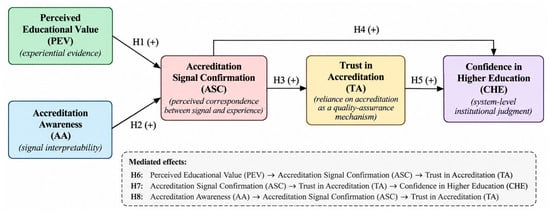
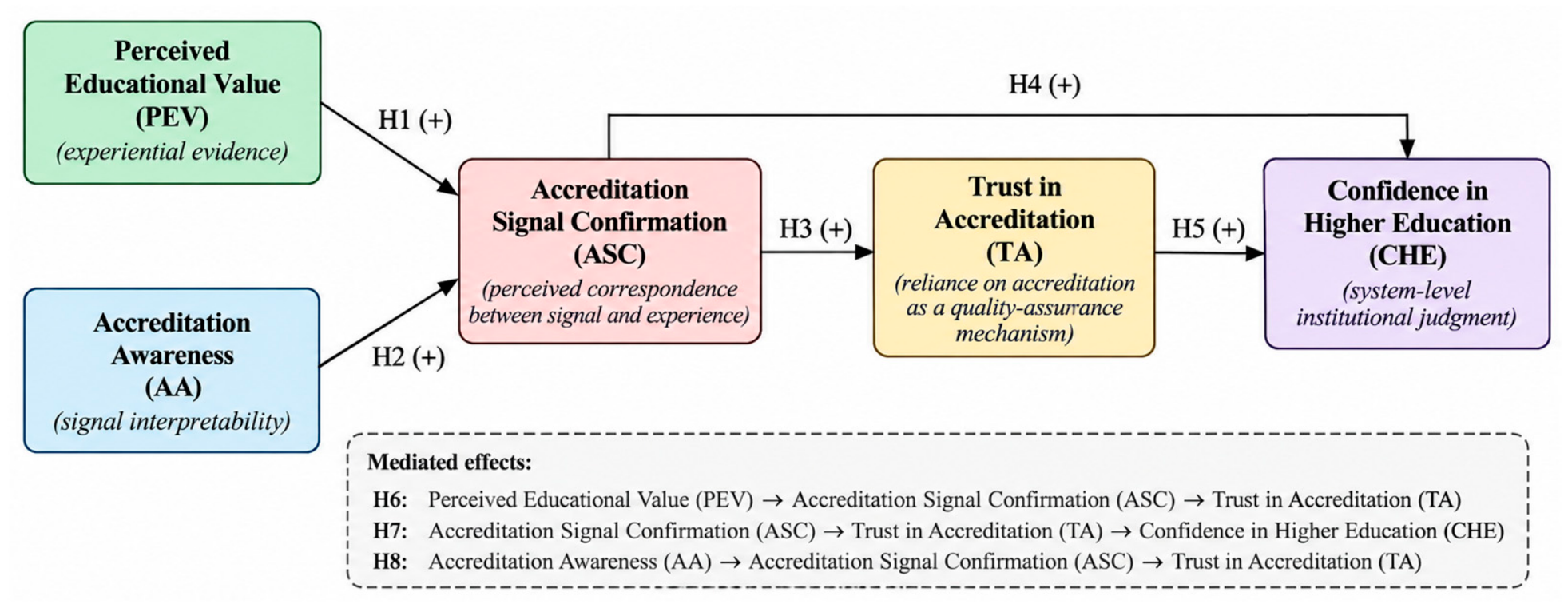
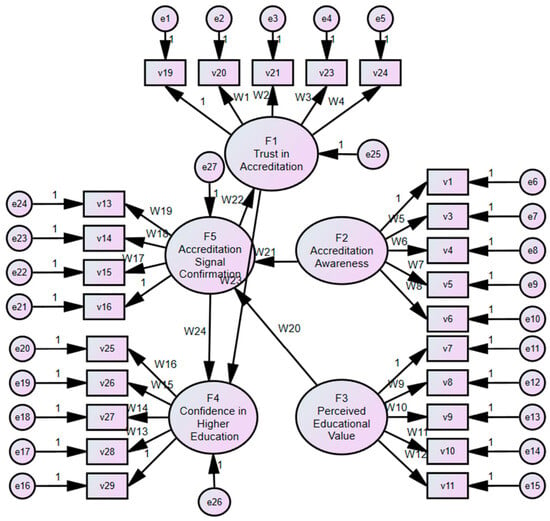
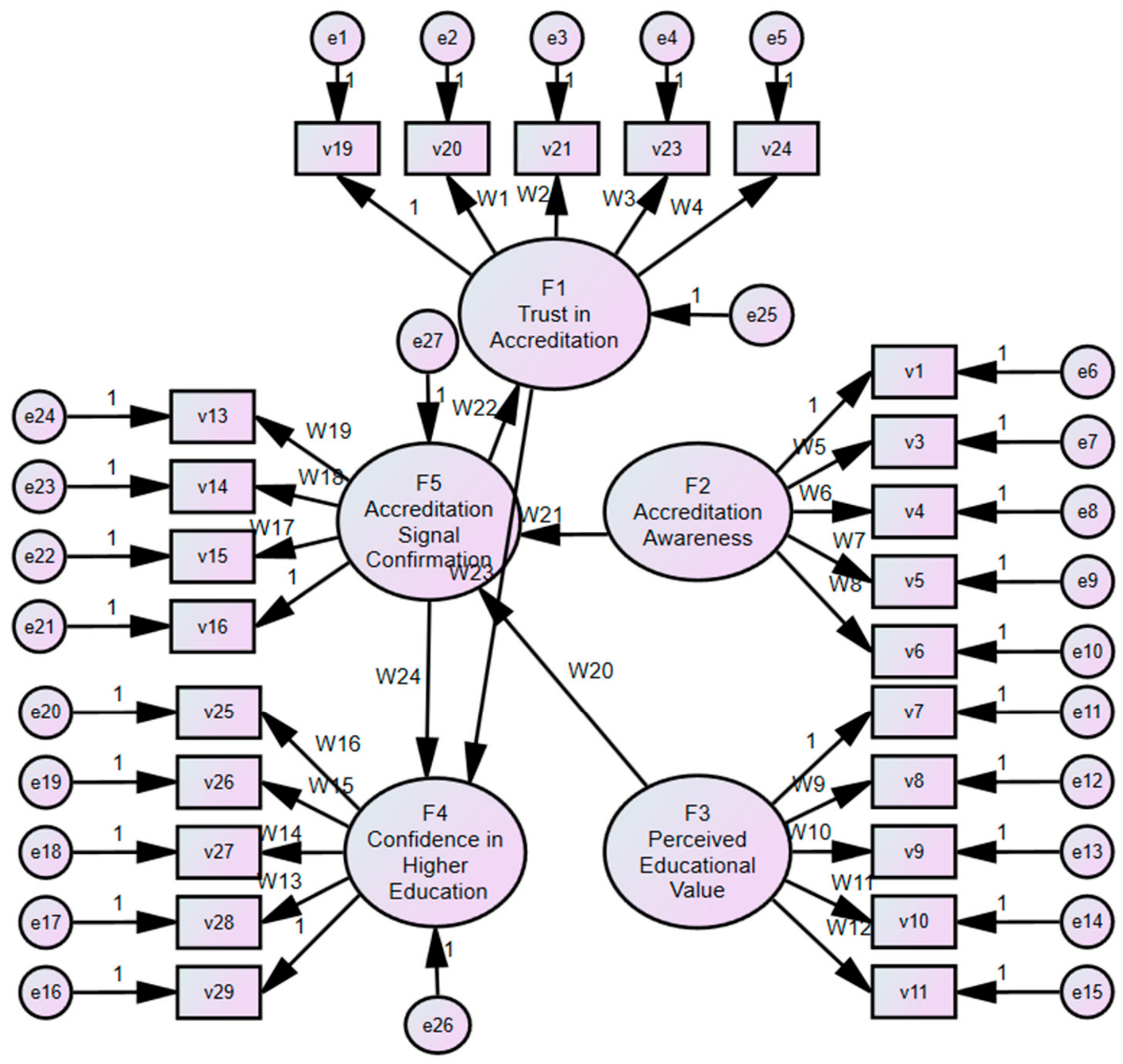
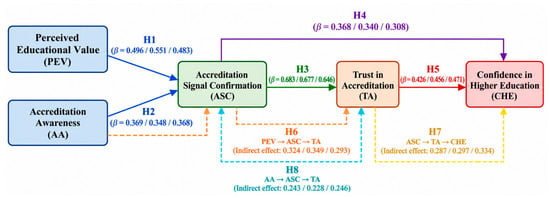
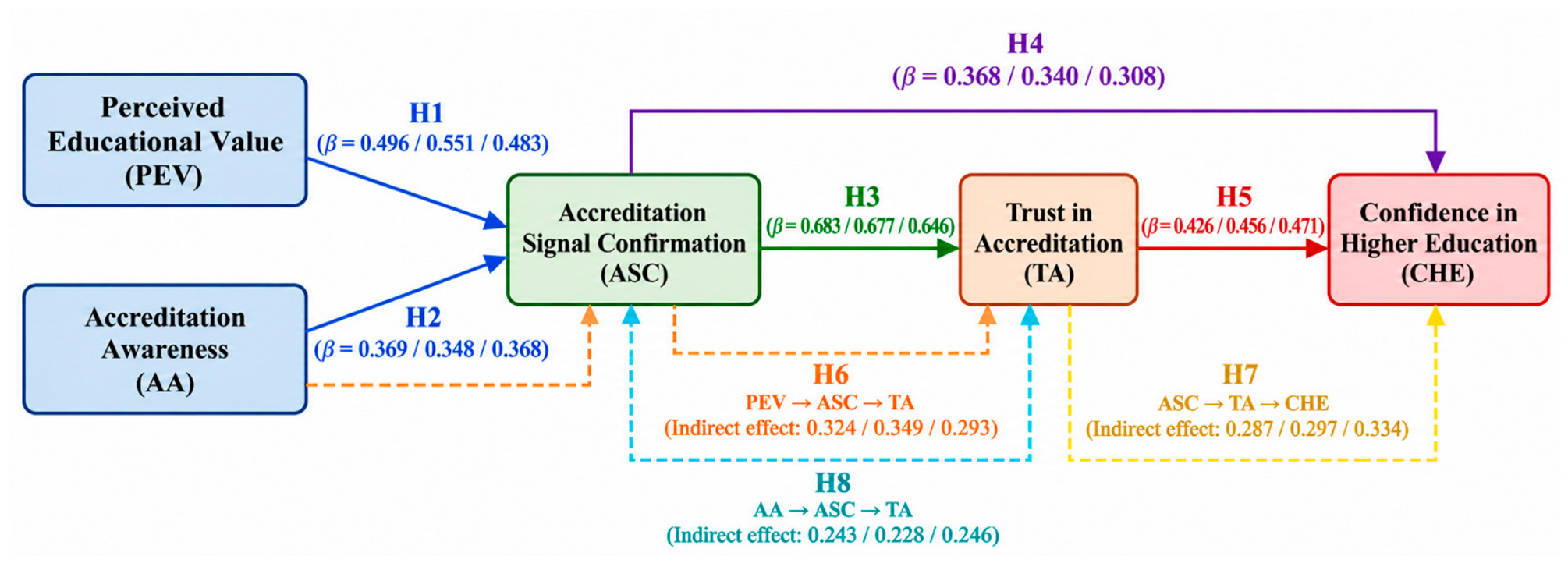

Disclaimer/Publisher’s Note: The statements, opinions and data contained in all publications are solely those of the individual author(s) and contributor(s) and not of MDPI and/or the editor(s). MDPI and/or the editor(s) disclaim responsibility for any injury to people or property resulting from any ideas, methods, instructions or products referred to in the content. |
© 2026 by the authors. Licensee MDPI, Basel, Switzerland. This article is an open access article distributed under the terms and conditions of the Creative Commons Attribution (CC BY) license.