


Abstract
This study examines whether the association between digital competence and labor market outcomes among recent Korean college graduates operates through the sequential mediating roles of lifelong learning participation and employability. Data were drawn from the 2019 Graduates Occupational Mobility Survey (2019GOMS), conducted by the Korea Employment Information Service in 2020 (analytic N = 17,842). Because wages, regular employment, and job satisfaction are defined only for employed graduates, and because the employability items were answered almost exclusively by employed graduates, the conclusions are based on outcome-specific structural equation models with all hypothesized paths freely estimated: wages, regular employment, and job satisfaction among employed graduates (n = 13,268), and employment status in the full sample, controlling for gender, age, educational attainment, field of study, and parental socioeconomic background. Among employed graduates, digital competence was positively associated with lifelong learning participation (β = 0.383–0.385), which was associated with employability (β = 0.356–0.358); employability was associated with each job-quality outcome (β = 0.214–0.371); and the serial indirect effect was significant for all three outcomes (β = 0.029–0.051, all 95% CIs excluding zero). The direct path from digital competence was non-significant except for a small positive association with wages (β = 0.061). In the full sample, digital competence was also associated with lifelong learning participation (β = 0.391), but because employability was not observed for non-employed graduates, the serial pathway to employment status could not be assessed reliably. A model combining the four outcomes into one latent variable showed acceptable fit (CFI = 0.934, RMSEA = 0.048) and a similar pattern, but it is reported only as a summary. Given the cross-sectional design, the results describe associations consistent with the hypothesized ordering rather than causal effects, and a non-significant direct path does not imply that digital competence lacks direct labor market value. The findings suggest that digital-skills initiatives for graduates may be more effective when linked to opportunities for continued learning and employability development. Implications for online lifelong learning and sustainable development are discussed as possible applications rather than as tested effects.
1. Introduction
The accelerating integration of artificial intelligence into workplaces is transforming the nature of work at a pace that has few precedents in modern labor market history. Tasks once considered resistant to automation—including data analysis, drafting, coding assistance, and customer interaction—are increasingly performed with the assistance of generative AI tools, reshaping the skill sets that employers demand from entry-level workers. Task-based accounts of technological change suggest that automation substitutes for routine tasks while complementing non-routine analytical and interpersonal tasks [1,2], and recent estimates indicate that large language models could affect at least some tasks in a large share of occupations [3]. Field and experimental studies further report that generative AI tools raise productivity, with the largest gains among less experienced or lower-performing workers [4,5]. For youth making the transition from education to employment, this shift raises a pressing question: how does digital competence relate to employability and early labor market outcomes when job tasks and skill requirements are changing rapidly?
Human capital theory has long held that individuals’ investments in skills and knowledge translate into labor market returns in the form of employment and earnings [6]. Cross-national analyses of the OECD Survey of Adult Skills (PIAAC) report substantial wage returns to cognitive skills [7] and to ICT skills specifically [8]. In rapidly changing labor markets, however, the relationship between skill acquisition and labor market outcomes may no longer be direct or static. Because skill requirements evolve continuously, the capacity to keep pace—through ongoing learning and skill renewal—may be as important as the initial level of digital competence itself. This suggests that digital competence may be associated with labor market outcomes through behavioral processes such as continued engagement in lifelong learning, and by psychological and competence-based resources such as employability, rather than operating through a simple, unmediated pathway.
Despite the growing policy and academic interest in AI-era skills, empirical research that models the mechanism linking digital competence to labor market outcomes among early-career youth remains limited in several respects. First, much of the existing literature treats digital competence and labor market outcomes as a bivariate relationship, without accounting for the intervening processes through which competence is converted into opportunity; for example, wage-return studies estimate the association between ICT skills and earnings without modelling the processes that link skills to outcomes [8], and employer surveys document graduates’ digital-skill gaps without linking them to graduates’ subsequent learning behavior [9]. Second, although the constructs of lifelong learning participation and employability have each received considerable independent attention, comparatively few studies have, to our knowledge, examined them jointly as sequential, rather than parallel, mechanisms. Prior studies have typically examined either learning or employability as a single mediator—lifelong learning as the mediator between career competence and career sustainability among Chinese expatriate managers [10], or perceived employability as the mediator between competency development and career success among employees [11]—or have modelled chains of psychological mediators that do not include learning behavior [12]. Third, most available datasets were not designed with AI-era skill requirements in mind, making it difficult to test contemporary hypotheses with rigor; a recent systematic review also documents the heterogeneous ways in which digital literacy has been operationalized in employability research [13].
This study addressed these gaps by examining a serial (double) mediation model in which digital competence’s relationship to labor market outcomes may operate both directly and indirectly, via a sequential pathway that begins with lifelong learning participation and proceeds through employability. The model was estimated with structural equation modeling on data from the 2019 Graduates Occupational Mobility Survey (2019GOMS), a large-scale cross-sectional survey of recent Korean college graduates conducted in 2020, which contains sufficiently rich indicators of individual competence, education and training behavior, and labor market performance to support the specification of multi-item latent constructs. In addition, because job-quality outcomes (wages, regular employment, and job satisfaction) are defined only for graduates who are employed, employment status in the full sample was examined separately from job quality among employed graduates. These outcome-specific models provide the main basis for the conclusions, and the model that combines the four outcomes into one latent variable is reported only as a summary.
It should be stated at the outset that digital competence is measured here using conventional digital-literacy indicators (computer literacy, internet use, ICT utilization, and digital information search) rather than AI-specific items such as generative-AI tool use. Accordingly, the study does not test AI-specific skills; the changes in skill demand associated with AI are treated only as part of the broader context to which the findings may be applied (Section 5.2 and Section 6.4).
The study is also relevant to the sustainable-development agenda. The United Nations Sustainable Development Goals link inclusive and equitable quality education and lifelong learning opportunities (SDG 4) with full and productive employment and decent work (SDG 8) [14]. Because lifelong learning is increasingly delivered through online and digitally mediated formats, a better understanding of how digital competence relates to continued learning and to early labor market outcomes may inform online and lifelong learning policy. We emphasize, however, that online education and sustainable-career outcomes were not directly tested; these connections are discussed as possible applications in Section 5.5.
The specific research questions guiding this study are as follows. First, does digital competence have a direct association with labor market outcomes among recent Korean college graduates? Second, does digital competence relate to labor market outcomes indirectly through lifelong learning participation? Third, does lifelong learning participation relate to labor market outcomes indirectly through employability? Fourth, does digital competence relate to labor market outcomes through the sequential (serial) mediation of lifelong learning participation and employability, net of relevant demographic and background controls?
A fifth research question was also addressed: does lifelong learning participation have a direct effect on labor market outcomes, independent of its role in the serial mediation pathway? This question corresponds to hypothesis H5.
By answering these questions, this study contributed to the literature in three ways. Theoretically, it integrated human capital theory with the employability literature to articulate a process-oriented account of how digital competence is associated with labor market outcomes during the school-to-work transition, rather than treating digital competence as a static predictor. Empirically, it applied structural equation modeling to a large, nationally sampled cross-sectional survey of recent Korean college graduates, allowing direct, indirect, and total effects to be estimated with attention to measurement error, and it examined employment status separately from job quality among employed graduates. Practically, the findings may be relevant to higher education policy, active labor market programs, and lifelong learning systems supporting the school-to-work transition of youth entering labor markets with evolving skill demands. Relative to prior studies that examined learning [10] or employability [11] as single mediators, or chains of psychological mediators without a learning component [12], the study positions lifelong learning participation and employability as sequential mediators within a single model.
2. Theoretical Background
2.1. Digital Competence and Its Labor Market Relevance
Digital competence has traditionally been conceptualized as the combination of knowledge, skills, and attitudes required to use technology confidently, critically, and effectively across work, learning, and everyday life [15]. Building on this conceptual foundation, subsequent research operationalized digital competence into concrete, measurable skill domains for the modern knowledge worker, including information management, communication, collaboration, critical thinking, creativity, and problem-solving [16]. This conceptualization, built around core competencies such as computer literacy, internet use, ICT utilization, and digital information search, remains a valid and measurable foundation for assessing individuals’ capacity to function in digitally mediated environments. The European Digital Competence Framework (DigComp 2.2) similarly organizes digital competence into five areas—information and data literacy, communication and collaboration, digital content creation, safety, and problem solving [17]. In a large-scale survey of working professionals, van Laar et al. [18] showed that levels of 21st-century digital skills vary with individual and work-related characteristics, implying that digital competence is unevenly distributed even among the employed. Research on the digital divide likewise indicates that inequalities have shifted from physical access toward differences in skills and types of use, with more highly educated users more likely to use the internet for information- and career-related purposes [19]. On the labor market side, PIAAC-based analyses indicate positive wage returns to ICT skills [8], although such estimates do not identify the mechanisms through which these returns arise. More recent studies using different data sources point in the same direction: an analysis of online job postings for professionals in the United States shows that employers’ skill requirements, including computer and software skills, vary systematically across firms and local labor markets and are associated with differences in pay [20], and a linkage of PIAAC skill scores to Dutch administrative records for 2012–2019 shows that digital skills are associated with higher wages and a higher probability of employment [21]. A systematic review of the determinants of workers’ 21st-century digital skills further indicates that digital skills are related to education, job characteristics, and the use of ICT at work, implying that digital competence is itself partly shaped by learning and work contexts [22]. A systematic review of digital-competence research in higher education also notes that most studies rely on self-report instruments [23], which is the type of measure available in the present data.
Recent studies increasingly distinguish general digital competence from AI-specific literacy and readiness [24]. Because the survey used here contains only conventional digital-literacy items, the construct in this study is interpreted as general digital competence, and no claim is made that AI-specific competence was assessed. Whether AI-specific competences operate through the same mechanisms is treated as an open question for future research (Section 6.4).
2.2. Lifelong Learning Participation as a Behavioral Mechanism
Lifelong learning refers to the ongoing, voluntary pursuit of knowledge and skills across the life course, encompassing formal vocational training, informal self-development activities, continuing education, and increasingly, online and self-directed learning. Within human capital theory, lifelong learning functions as a continuous reinvestment in human capital that offsets the depreciation of existing skills as technology and job requirements change [6]. In a labor market undergoing rapid AI-driven transformation, the depreciation rate of digital skills may be higher than in previous technological eras, suggesting sustained engagement in lifelong learning as a potentially important mechanism for maintaining labor market relevance. Empirical syntheses show that participation in work-related learning depends on individual, job-related, and organizational antecedents, including prior education and learning-related self-efficacy [25].
This study theorizes that individuals with higher digital competence are more likely to participate in lifelong learning activities, both because digital competence facilitates access to learning resources (e.g., online courses, digital training platforms) and because digitally competent individuals may possess a stronger self-perception of learning efficacy that encourages continued skill investment. Lifelong learning participation is therefore modeled as the first-stage mediator through which digital competence is translated into a sustained trajectory of skill development, rather than a one-time competence assessment. This expectation is consistent with the treatment of digital competence as one of the key competences for lifelong learning [15] and with evidence that individuals with stronger digital skills are more likely to use the internet for information and learning purposes [19].
Lifelong learning is increasingly pursued through online and digitally mediated formats, such as massive open online courses, micro-credentials, and self-directed digital training. Digitally competent individuals are plausibly better able to locate, enroll in, and complete such learning, which is a further reason to expect a positive association between digital competence and lifelong learning participation. In the present data, however, online learning is captured only as one indicator of the broader lifelong-learning construct (Section 3.3), so the study cannot isolate an online-specific effect. Continued learning has also been described as a component of sustainable careers, characterized by long-term health, happiness, and productivity [26]; this link is noted here as context rather than tested.
2.3. Employability as a Psychological and Competence-Based Mechanism
Employability has been defined as a psycho-social construct comprising three interrelated dimensions—career identity, personal adaptability, and social and human capital—that together predispose individuals to proactively manage career-related change [27]. Other conceptualizations emphasize a competence-based view comprising occupational expertise, anticipation and optimization, personal flexibility, corporate sense, and balance [28]; a self-perceived view of one’s chances in the internal and external labor market [29,30]; and a broader view in which individual attributes interact with personal circumstances and labor-demand conditions [31]. For graduates specifically, Tomlinson [32] proposed that employability draws on several forms of capital—human, social, cultural, identity, and psychological. Unlike employment status itself, employability represents an individual’s perceived and actual capacity to obtain and maintain work, and to adapt to changing job requirements. In this study, employability is operationalized through indicators of job-related competence, job adjustment, job-search confidence, and career development orientation. Because several of these indicators refer to a current job, they are not defined in the same way for graduates who are not employed; this issue is addressed in Section 3.2 and Section 3.4. In addition, the two indicators whose wording does not refer to a current job (job-search confidence and career development orientation) were, in practice, answered almost exclusively by employed graduates (Appendix Table A11).
Employability is theorized to function as the second-stage mediator in the proposed model: engagement in lifelong learning enhances employability by expanding an individual’s skill repertoire, reinforcing adaptive self-efficacy, and providing concrete signals of continued competence development. In turn, employability is a more proximal determinant of labor market outcomes than digital competence or lifelong learning participation alone, because it captures the individual’s readiness to convert accumulated skills into an actual labor market transaction—that is, into employment, wages, employment stability, and job satisfaction. Empirical studies support both links. De Vos et al. [11] found that employees’ participation in competency development was positively related to perceived employability, which in turn mediated the relationship between competency development and career success. Van der Heijden et al. [33] examined formal and informal learning as routes to employability among Dutch non-academic university staff, and Wittekind et al. [34], in a longitudinal design, identified individual resources such as educational level and up-to-date job-related skills as predictors of perceived employability. More recent studies of students and graduates point in the same direction. Jackson and Tomlinson [35] found that career planning and proactivity were positively related to higher education students’ perceived employability under uncertain labor market conditions, and Jackson and Li [36], in a national longitudinal study of 41,671 Australian graduates surveyed four months and three years after graduation, showed that graduates’ skills and personal characteristics shaped early overqualification, indicating that employability-related resources matter for job quality as well as for access to employment.
2.4. Labor Market Outcomes
Labor market outcomes are examined in two complementary ways. In the main structural model, employment status, wages, regular (as opposed to non-regular or contingent) employment, and job satisfaction are modelled as indicators of a latent construct representing overall early labor market attainment. We acknowledge that these indicators describe conceptually distinct aspects of working life—access to employment, earnings, contractual security, and a subjective evaluation of the job—and that adequate factor loadings do not by themselves show that they are interchangeable manifestations of a single underlying trait [37,38]. Moreover, wages, regular employment, and job satisfaction are defined only for graduates who are employed; for graduates without a job, they are not unanswered questions but undefined quantities. For these reasons, the substantive conclusions are based on a two-part, outcome-specific specification, and the composite latent specification is retained only as a summary model whose interpretation is explained in Section 4.3. In the two-part specification, (a) employment status is analyzed in the full sample and (b) job quality—wages, regular employment, and job satisfaction, each modelled as a separate outcome—is analyzed among employed graduates only (Section 3.4 and Section 4.4). The second part concerns a selected group of employed graduates, and its estimates are interpreted accordingly [39].
2.5. Hypothesized Relationships and the Serial Mediation Model
Integrating the constructs above, the study specifies a structural model in which digital competence is expected to relate to labor market outcomes both directly and indirectly through lifelong learning participation and employability, controlling for gender, age, educational attainment, field of study, and parental socioeconomic background. Each hypothesis is grounded in specific prior evidence, as follows. To provide a broader and more current evidence base, the rationale for each hypothesis combines the classic theoretical statements on which the model rests (e.g., human capital and signaling theory), which are cited as conceptual anchors, with recent empirical studies—most of them published since 2017 and several since 2021—that examined the corresponding relationship in different populations and with different designs. The population, design, specific finding, and main limitation of each of these studies for the present purpose are summarized in Appendix Table A9.
Human capital theory predicts that skills are rewarded in the labor market [6]; cross-national PIAAC analyses report positive wage returns to cognitive skills [7] and to ICT skills [8], and a survey of Malaysian employers reports that digital skills such as information literacy, problem solving, and digital content creation are in demand among graduate recruits [9]. Recent evidence from different data sources and settings is consistent with this expectation. Using online job postings for professionals in the United States, Deming and Kahn [20] found that employers’ skill requirements, including requirements for computer and software skills, vary systematically across firms and local labor markets and that this variation is associated with differences in pay and firm performance. Linking PIAAC skill scores to Dutch administrative records for 2012–2019, Non et al. [21] reported that a one-standard-deviation increase in digital skills was associated with approximately 4–6% higher hourly wages and that adults with at least basic digital skills were about 10% more likely to be employed, mainly through higher labor force participation. In a developing-economy setting, Wang et al. [40], using China Family Panel Studies data, found that digital literacy increased the probability of non-farm employment among rural workers, partly through greater human capital and better access to information. The first results of the second cycle of the OECD Survey of Adult Skills likewise associate stronger information-processing skills with more favorable labor market outcomes across participating countries [41]. These studies differ from the present one in population and measurement (job-posting requirements, test-based scores, and survey-based digital literacy among rural workers), and they do not condition on learning participation or employability; they nevertheless provide convergent and recent support for a positive association between digital competence and labor market outcomes. A direct association is therefore expected:
H1.
Digital competence is associated with labor market outcomes.
Digital competence is regarded as one of the key competences for lifelong learning [15], and the ability to search for, evaluate, and use digital information is a core component of 21st-century digital skills [16]. Individuals with stronger digital skills are more likely to use the internet for information and learning purposes [19], and a systematic review identifies prior education and learning-related self-efficacy as antecedents of participation in work-related learning [25]. More recent studies provide more direct evidence on this link. In a cross-course survey of 951 employed and unemployed participants in five MOOCs, Castaño-Muñoz et al. [42] found that digital competence—particularly digital interaction skills—significantly predicted the number of MOOCs in which adults had previously enrolled, with the effect moderated by occupational setting. Using PIAAC data for European adults aged 25–65 and structural equation modeling, Iñiguez-Berrozpe and Boeren [43] showed that proficiency in problem solving in technology-rich environments was associated with the use of ICT at home and at work and with participation in non-formal learning. Among 736 Indonesian university students, Zakir et al. [44] found that digital literacy was positively associated with informal digital learning and learning self-efficacy, which in turn predicted academic performance. Because these studies are cross-sectional and some concern students rather than graduates, they support an association rather than a causal effect, which is how H2 is framed here. Hence,
H2.
Digital competence is associated with lifelong learning participation.
Human capital theory treats continued learning as reinvestment that offsets skill depreciation [6]. Participation in competency development has been found to relate positively to perceived employability [11], formal and informal learning have been examined as routes to employability [33], and lifelong learning has been shown to mediate the relationship between career competence and career sustainability [10]. Recent studies of graduates and workers reinforce these links. In a sample of 286 engineering graduate students in India, Nimmi et al. [45] found that lifelong learning was positively associated with perceived employability and mediated the relationship between human capital and perceived employability. In a survey of 351 employees in Poland, Wiśniewska et al. [46] found that practically oriented organizational learning had a significant positive effect on perceived employability, whereas learning from one’s own mistakes or from observing others did not, suggesting that the form of learning matters. Among 2256 workers in three European countries, Goštautaitė and Šerelytė [47] showed that lifelong learning traits weakened the decline of perceived employability with age, particularly where automation risk was perceived to be high. In a study of young Dutch professionals, Blokker et al. [48] found that career competencies were positively related to perceived employability, and in a survey of 510 Australian graduates, Jackson and Bridgstock [49] reported that graduates regarded co-curricular and extra-curricular learning and paid work as valuable for developing employability-related skills and experience. Conceptually, Römgens et al. [50] integrated research on higher education and the workplace into a competence-based account of employability in which continued learning is a central mechanism. Hence,
H3.
Lifelong learning participation is associated with employability.
Employability is conceptualized as a resource that enables individuals to obtain and retain work [27,29]; perceived employability has been found to mediate the relationship between competency development and career success [11], and the graduate-capital model links graduates’ employability resources to their labor market prospects [32]. Recent longitudinal and graduate-focused studies extend this evidence to outcomes close to those examined here. In a multi-wave study, Forrier et al. [51] found that movement capital predicted job transitions one year later, partly through perceived employability, and a systematic review of 71 studies by Van Harten et al. [52] concluded that the human-capital, perceived, and realized strands of employability are empirically connected, although most evidence is cross-sectional and few studies have examined actual job transitions. In a six-wave study of Chinese university graduates, Yizhong et al. [53] found that perceived employability positively predicted job-search self-efficacy, intention, and intensity, and, in a three-wave study of three graduate cohorts, Grosemans et al. [54] showed that distinct trajectories of perceived employability after graduation were associated with employment status, job satisfaction, and education–job fit. Among UK graduates, Okay-Somerville and Scholarios [55] found that career self-management processes and educational credentials were associated with graduates’ perceived employability and employment quality, and, in a random sample of 414 working adults in Hong Kong, Ngo et al. [56] found that perceived employability predicted job satisfaction and work engagement. These studies support the expectation that employability is positively associated with both access to employment and job quality, which correspond to the outcome indicators used here. Hence,
H4.
Employability is associated with labor market outcomes.
Finally, training may have labor market value that is not fully captured by self-assessed employability; for example, as a credential that signals productivity to employers [57], and lifelong learning has been directly associated with career sustainability [10]. Recent meta-analytic and quasi-experimental evidence is consistent with such a direct association. In a meta-analysis of more than 200 evaluations of active labor market programs, Card et al. [58] found that the effects of training programs tend to be small in the short run but larger two to three years after completion, and a quantitative review of youth employment programs by Kluve et al. [59] found positive, although heterogeneous, effects of skills training on young people’s employment and earnings. Using German survey data, Ruhose et al. [60] found positive earnings returns to work-related adult training. For online learning specifically, a difference-in-differences analysis by Castaño-Muñoz and Rodrigues [61] showed that MOOC participation increased the probability of remaining employed two years later by about 7 percentage points, without a significant wage effect. Korean evidence is consistent but more nuanced: using national graduate survey data from the Korea Employment Information Service, Lee and Cho [62] found that vocational qualifications had moderate positive effects on graduates’ employment and wages; Choi et al. [63] found that vocational training during college and internship experience were positively associated with the quality of new graduates’ initial jobs; and Park [64] reported that wage returns to adult education and training in Korea are smaller than in many other OECD countries, partly because Korean adult learning is more often not job-related. These mixed findings make it important to test H5 explicitly in a Korean graduate sample. A direct association between lifelong learning participation and labor market outcomes is therefore also expected:
H5.
Lifelong learning participation is associated with labor market outcomes.
Taken together, hypotheses H2, H3, and H4 constitute a serial (double) mediation pathway: digital competence → lifelong learning participation → employability → labor market outcomes. This pathway represents the theoretical core of the study, positing that part of the association between digital competence and labor market outcomes operates through a behavioral mechanism (continued learning) that is subsequently converted into a psychological and competence-based readiness to perform and adapt in the labor market (employability). This process-oriented account distinguishes the present model from prior single-mediator or non-mediated specifications, and is consistent with the view that the labor market value of competence may depend partly on whether it is renewed through continued learning and translated into employability.
With respect to H5, the direct path from lifelong learning participation to labor market outcomes is specified as an additional, competing path rather than as a link in the serial chain (H2–H3–H4). Its role is diagnostic: a significant H5 indicates that continued learning retains an association with labor market outcomes beyond what is transmitted through employability, implying that employability provides partial rather than complete mediation of the learning–outcome relationship, whereas a non-significant H5 would be consistent with employability fully carrying that relationship. H5 is therefore not required for the serial mediation hypothesis to hold, but it sharpens the interpretation of the mechanism.
This theoretical model was tested using structural equation modeling, which allowed for the simultaneous estimation of the measurement model (confirmatory factor analysis of the four latent constructs) and the structural model (the hypothesized direct and indirect paths), together with bootstrap-based significance testing of the indirect and total effects. The serial indirect effect was tested as a three-path mediated effect [65,66].
3. Research Methods
3.1. Research Design
This study adopted a quantitative, cross-sectional survey design and employed structural equation modeling (SEM) to test a serial (double) mediation model in which digital competence was hypothesized to affect labor market outcomes both directly and indirectly through the sequential mediating roles of lifelong learning participation and employability. SEM was selected because it allowed the simultaneous estimation of (a) a measurement model that specified how each latent construct was indicated by multiple observed variables and (b) a structural model that specified the hypothesized directional relationships among the latent constructs, while explicitly accounting for measurement error. This two-part estimation was particularly suited to the present study because none of the four core constructs—digital competence, lifelong learning participation, employability, and labor market outcomes—could be adequately captured by a single observed variable.
Compared with alternative approaches used in related work, this design has specific strengths and weaknesses with respect to robustness. Regression-based mediation analyses using observed composite scores, such as those implemented in the PROCESS framework [66], are straightforward to apply but ignore measurement error, which can bias the estimated paths and indirect effects; latent-variable SEM addresses this by separating construct variance from indicator-specific error [67]. Necessity- and sufficiency-based approaches, such as that of Ma and Bennett [68], can identify conditions that are necessary but not sufficient for employability, which a linear SEM cannot detect. Longitudinal designs with repeated measures of all constructs provide stronger evidence on temporal ordering than any cross-sectional model, because cross-sectional estimates of mediation can be substantially biased when the underlying process unfolds over time [69,70]. The present design therefore offers greater measurement rigor than composite-score regression on a large national sample, but weaker grounds for causal and temporal inference than a panel design; the supplementary analyses in Section 4.4 were designed to probe, rather than eliminate, these limitations.
3.2. Data and Sample
Data were drawn from the Graduates Occupational Mobility Survey (GOMS), an annual, nationally representative survey of Korean higher-education graduates conducted by the Korea Employment Information Service [71]. Because the present analysis was estimated on unweighted data (weighted estimates are reported as a sensitivity analysis in Section 4.4 and Table A4) rather than applying the survey’s sampling or post-stratification weights, the term “nationally representative” is used here to describe the design of the source survey rather than to warrant population-level representativeness of the analytic estimates; descriptive quantities should be interpreted accordingly. GOMS has been administered to successive graduate cohorts; although earlier cohorts were followed up as short panels, the survey has been conducted as a cross-sectional survey without follow-up since the 2011 graduate cohort, and KEIS suspended the survey after the 2019GOMS wave [71]. The present study used the 2019GOMS wave, conducted in 2020 among graduates of August 2018 and February 2019, as a single cross-sectional dataset, consistent with the design stated in Section 3.1. 2019GOMS surveyed a large sample of graduates from two- to three-year colleges, four-year universities, and universities of education approximately one and a half to two years after graduation, collecting detailed information on individual competencies, education and training participation, and labor market entry outcomes. The analytic sample comprised all respondents with sufficient valid responses on the core indicators, including both employed and non-employed graduates; sample characteristics are reported in Appendix Table A5. In this study, “early-career youth” is defined operationally as higher-education graduates observed approximately one and a half to two years after graduation from two- to three-year colleges or four-year universities—that is, individuals in the initial school-to-work transition phase rather than by a fixed chronological age threshold. Because GOMS was released in annual waves that differed somewhat in item composition, the 2019GOMS wave was selected on the basis of a codebook review confirming that sufficient items existed to construct each of the four latent variables specified in the measurement model. Cases with substantial missing data on key indicators were handled using full information maximum likelihood (FIML) estimation, which was preferred over listwise deletion for SEM applications. With the analytic sample (N = 17,842) as the denominator, item-level missing rates were 1.7% or lower for the digital-competence, lifelong-learning, and employment-status indicators, whereas the job-related employability indicators and the job-quality indicators (wages, regular employment, and job satisfaction) were unavailable for approximately 26–28% of respondents (Table 1), almost entirely because these items apply only to employed graduates. Under the missing-at-random (MAR) assumption, FIML was used because it retains all available information and yields asymptotically efficient and less biased estimates than listwise deletion or single imputation for latent-variable SEM [72]. A missing-data diagnostic (Little’s MCAR test [73]) was statistically significant, which leads us to reject the null hypothesis of a strict MCAR mechanism; a significant test does not, however, by itself establish that the data are missing at random (MAR). FIML was therefore applied under the weaker and more defensible MAR assumption, recognizing that MAR itself cannot be fully verified from the observed data alone. Wages, regular employment, and job satisfaction—and the employability items that refer to a current job—are, however, not missing responses for non-employed graduates but undefined quantities. FIML does not resolve this distinction, because it would implicitly assign job-quality values to graduates who have no job. The same problem applies to employability in the full sample, because even the two employability items whose wording does not refer to a current job were answered almost exclusively by employed graduates (Appendix Table A11). The outcome-specific (two-part) specification described in Section 3.4, which separates employment status in the full sample from job quality among employed graduates, therefore provides the main basis for the conclusions, and the latent-outcome model is reported only as a summary specification whose interpretation is explained in Section 4.3 (employed subsample: n = 13,268).
3.3. Measurement of Variables
This study utilized data from the Korea Employment Information Service’s 2019 Graduates Occupational Mobility Survey (2019GOMS), which was conducted in 2020 and released by KEIS in September 2022 [71]. The analysis used the 2019GOMS public-use data file (version released in September 2022 and downloaded from the KEIS Employment Survey Analysis System, https://survey.keis.or.kr, accessed on 17 July 2026), which contains 18,271 respondents, the number of respondents reported by KEIS for this graduate cohort. The figure of approximately 18,000 that is often cited for GOMS is the target sample size of the survey design, not the number of respondents in the released file. As shown step by step in Appendix Table A10, 271 respondents were first excluded because their graduation date fell outside the two target graduation cohorts or their interview was incomplete, and 158 respondents were then excluded because they had insufficient valid responses to construct the core latent indicators (no valid response on any indicator of at least one core construct), yielding the analytic sample of N = 17,842 (97.7% of the 18,271 respondents retained for analysis; this figure is a retention rate, not the survey response rate), and item-level missing rates were presented in Table 1 based on the codebook [71]. Table 1 summarizes the latent constructs and their proposed observed indicators. It should be noted that N = 17,842 refers to the full analytic sample retained for FIML estimation of the overall structural model; because FIML uses all available information rather than requiring complete cases on every indicator, the model-implied N differs from the listwise-complete N for any single observed indicator. For example, the wage indicator (A32) had 12,988 non-missing cases and job satisfaction (A33-1) had 12,940 non-missing cases, as shown in the rightmost column of Table 1; these smaller counts reflect the fact that these items apply only to employed graduates, rather than item nonresponse, and were not separately used as the model N. All model fit statistics, path coefficients, and bootstrap mediation results reported in Section 4 were based on the full FIML sample of N = 17,842 unless otherwise noted. The job-quality models in Section 4.4 use the employed subsample. Sample characteristics, the coding of control variables, full descriptive statistics for all 16 indicators, and the original Korean survey items with English translations and response options are reported in Appendix Table A5, Table A6, Table A7 and Table A8. The sample flow, the valid responses to the employability indicators by employment status, and the coding rules for all composite indicators are reported in the coding appendix (Appendix B, Table A10, Table A11 and Table A12).
Table 1.
Latent constructs and observed indicators.
Digital competence was treated as an exogenous latent variable measured by indicators of computer literacy, internet use, ICT utilization, and digital information search. Lifelong learning participation and employability were treated as endogenous latent mediators, and labor market outcomes were treated as the endogenous latent dependent variable. Demographic and background variables—gender, age, educational attainment, field of study, and parental socioeconomic status—were entered as observed control variables predicting all four latent constructs, in order to reduce the risk of confounding. Because the lifelong-learning and labor-market-outcome constructs combined binary, count, and Likert indicators, all observed indicators were standardized prior to estimation, and, in the main ML/FIML estimation in Mplus 8.10, binary indicators were treated as continuous (a linear approximation that retains the χ2-based fit indices); a sensitivity analysis declaring the binary indicators as categorical and using the WLSMV estimator yielded the same pattern of significant and non-significant paths; where multivariate non-normality was indicated, a robust maximum-likelihood estimator was used as a sensitivity check. The coding of all control variables is reported in Appendix Table A6.
3.4. Analytic Strategy
Data analysis proceeded in four stages, following standard SEM practice. First, confirmatory factor analysis (CFA) was conducted to evaluate the measurement model, assessing whether the observed indicators loaded adequately onto their hypothesized latent constructs. Convergent validity was evaluated using standardized factor loadings, average variance extracted (AVE), and composite reliability, and discriminant validity was evaluated by comparing the square root of AVE against inter-construct correlations [75], supplemented by the heterotrait–monotrait ratio [76]. Second, the full structural model was estimated to test the direct and indirect paths (H1–H5), with model fit evaluated using multiple fit indices, including the comparative fit index (CFI), the Tucker–Lewis index (TLI), the root mean square error of approximation (RMSEA), and the standardized root mean square residual (SRMR) [77]; RMSEA was computed as √[max(χ2 − df, 0)/(df(N − 1))] [78]. Third, the significance of the indirect (mediated) effects—including the two single-mediator paths and the serial double-mediation path (digital competence → lifelong learning participation → employability → labor market outcomes)—was tested using a bootstrap resampling procedure (5000 resamples) with bias-corrected 95% confidence intervals, which did not rely on the assumption of a normally distributed indirect effect and was therefore preferred over the traditional Sobel test for serial mediation [65,79]. Model estimation used maximum likelihood with FIML. Fourth, four sets of supplementary analyses were conducted and are reported in Section 4.4: (a) comparison of the hypothesized model with two nested restrictions (the direct path from digital competence to labor market outcomes fixed at zero, and the path from lifelong learning participation to employability fixed at zero) and with one non-nested alternative (reversed mediator order; Table A1); (b) a two-part, outcome-specific specification in which employment status was analyzed in the full sample and wages, regular employment, and job satisfaction were analyzed as separate outcomes among employed graduates, with all structural paths freely estimated (Table A2), which provides the main basis for the substantive conclusions; (c) multi-group measurement invariance tests across gender and educational level (Table A3) [80]; and (d) comparisons of unweighted ML, weighted ML, and robust ML (MLR) estimates, including standard errors and confidence intervals (Table A4). Structural (path) invariance across groups was not tested and is identified as a direction for future research (Section 6.4). Data management and descriptive statistics were computed in IBM SPSS Statistics 29, and all SEM analyses—ML estimation with FIML, bias-corrected bootstrapping (5000 resamples) under FIML, MLR, and weighted estimation—were conducted in Mplus 8.10; because Mplus does not combine bootstrapping with MLR or sampling weights, indirect effects in the MLR and weighted models were tested with delta-method standard errors.
3.5. Research Model
Figure 1 presents the full hypothesized structural model, showing digital competence as the independent variable, lifelong learning participation and employability as sequential mediators, and labor market outcomes as the dependent variable, together with the direct paths (H1, H5) and the serial mediation pathway (H2–H3–H4), net of the control variables.
Figure 1.
Hypothesized serial (double) mediation model of digital competence, lifelong learning participation, employability, and labor market outcomes. Solid arrows indicate the hypothesized paths (H1–H5); dashed arrows indicate the paths from the control variables to the four latent constructs.
4. Results
The results are presented below. Model fit indices, standardized path coefficients, standard errors, t-values, p-values, and bootstrap confidence intervals are reported where appropriate.
4.1. Descriptive Statistics and Preliminary Analysis
Prior to model estimation, descriptive statistics (means, standard deviations, skewness, and kurtosis) are reported for all observed indicators, along with a correlation matrix among the study variables. At the construct level, mean scale scores were as follows: digital competence, M = 3.42 (SD = 0.68, skewness = −0.31, kurtosis = 0.18); lifelong learning participation, M = 2.87 (SD = 0.81, skewness = 0.22, kurtosis = −0.15); employability, M = 3.55 (SD = 0.62, skewness = −0.28, kurtosis = 0.21); and labor market outcomes, M = 3.21 (SD = 0.71, skewness = −0.19, kurtosis = −0.05). All skewness and kurtosis values fell within the conventional thresholds for approximate univariate normality (|skewness| < 2, |kurtosis| < 7). Construct-level bivariate correlations were: digital competence–lifelong learning participation, r = 0.41; digital competence–employability, r = 0.33; digital competence–labor market outcomes, r = 0.29; lifelong learning participation–employability, r = 0.38; lifelong learning participation–labor market outcomes, r = 0.35; and employability–labor market outcomes, r = 0.40 (all p < 0.001). Digital competence, lifelong learning participation, employability, and labor market outcome indicators showed statistically significant, positive bivariate correlations with one another, consistent with, though not evidence for, the hypothesized directional model. Because several indicators are binary, multivariate normality cannot hold exactly; robust maximum likelihood (MLR) estimates are therefore reported as a sensitivity analysis (Section 4.4, Table A4). Full descriptive statistics for all 16 indicators (n, mean, standard deviation, minimum, maximum, skewness, and kurtosis) are reported in Appendix Table A7.
4.2. Measurement Model (Confirmatory Factor Analysis)
The four-factor measurement model (digital competence, lifelong learning participation, employability, and labor market outcomes) showed acceptable approximate fit (Table 2; CFI = 0.934, TLI = 0.915, RMSEA = 0.048 [90% CI 0.048, 0.049], SRMR = 0.039), although the χ2 test was significant (χ2(230) = 9872.36, p < 0.001). Because the χ2 statistic is highly sensitive to large sample sizes (here N = 17,842) and tends to reject even well-fitting models, model adequacy was judged primarily on the approximate fit indices (CFI, RMSEA, SRMR) rather than on the χ2 test alone [77].
Table 2.
Model fit indices.
The χ2/df ratio (42.92) exceeds the conventional ≤3.00 guideline, which is expected at N = 17,842 because χ2 increases in proportion to sample size. The degrees of freedom follow from the number of observed variables and freely estimated parameters. The model includes the 16 construct indicators and 11 observed control variables (including dummy codes for field of study), giving p = 16 + 11 = 27 observed variables. Because FIML estimation includes means and intercepts, the number of sample moments is p(p + 3)/2 = 27 × 30/2 = 405; with 175 (12 factor loadings, 16 indicator intercepts, 16 residual variances, 4 latent (residual) variances, 6 latent (residual) covariances, 44 regressions of the four latent variables on the 11 controls, and 11 means and 66 variances/covariances of the controls; 174 in the structural model) freely estimated parameters, the measurement model has df = 405 − 175 = 230 and the structural model df = 405 − 174 = 231. RMSEA was computed as √[max(χ2 − df, 0)/(df(N − 1))] [78].
Standardized factor loadings for each observed indicator on its corresponding latent construct exceeded the conventional threshold of 0.50. Table 3 reports the standardized factor loadings, composite reliability (CR), and average variance extracted (AVE).
Table 3.
Standardized factor loadings, CR, and AVE.
Discriminant validity is supported, with the square root of AVE for each construct exceeding its correlations with the other three constructs [75].
As a stricter complement to the Fornell–Larcker (square-root-of-AVE) criterion reported above, the heterotrait–monotrait ratio of correlations (HTMT) [76] was also computed for each pair of latent constructs; HTMT values below the conservative threshold of 0.85 (or the more lenient 0.90 threshold for conceptually close constructs) provide additional support for discriminant validity beyond the Fornell–Larcker criterion, which is known to under-detect discriminant validity problems in some conditions. In the present data, all six pairwise HTMT ratios fell below the conservative 0.85 threshold (digital competence–lifelong learning = 0.52; digital competence–employability = 0.44; digital competence–labor market outcomes = 0.40; lifelong learning–employability = 0.49; lifelong learning–labor market outcomes = 0.47; employability–labor market outcomes = 0.53), providing convergent support for discriminant validity alongside the Fornell–Larcker results.
4.3. Structural Model and Hypothesis Testing
Interpretation of the summary model. Before the results are presented, the status of this model should be stated. The latent outcome combines employment status with three job-quality indicators that are undefined for non-employed graduates, and the employability indicators were answered almost exclusively by employed graduates (Appendix Table A11). For non-employed graduates, FIML estimation therefore replaces these quantities with values implied by the model rather than with observed information. The coefficients of this model describe how the predictors relate to the variance shared by access to employment and model-implied job quality; they cannot be read as effects on any single outcome or as estimates for non-employed graduates. The model is therefore used only as a summary that shows whether the overall pattern agrees with the outcome-specific models in Section 4.4. Where the two differ, the outcome-specific results take precedence, and the substantive conclusions in Section 5 and Section 6 are based on them. The decomposition of the indirect effect reported below is likewise a property of the summary model.
The structural model demonstrated fit comparable to the measurement model once the hypothesized paths were added (χ2(231) = 9886.94, CFI = 0.934, TLI = 0.915, RMSEA = 0.048 [90% CI 0.048, 0.049], SRMR = 0.040). Table 4 summarizes the pattern of results for each path, reported as the standardized path coefficient (β), standard error (SE), t-value, and p-value. (The structural model has one more degree of freedom than the measurement model in Table 2 (df = 230) because it is more restrictive than the measurement model: the six freely estimated latent (residual) covariances of the measurement model are replaced by five structural paths, with the direct path from digital competence to employability fixed at zero, so that the number of free parameters decreases from 175 to 174; this zero constraint is a substantive restriction of the hypothesized model, and whether freeing it changes the indirect effects was not examined (Section 4.4 and Section 6.3).
Table 4.
Structural path results.
Contrary to expectations, digital competence did not show a significant direct effect on labor market outcomes (H1: β = 0.045, SE = 0.038, t = 1.18, p = 0.238), indicating that H1 was not supported. Digital competence showed a significant positive effect on lifelong learning participation (H2). Lifelong learning participation showed a significant positive effect on employability (H3) and a significant positive direct effect on labor market outcomes (H5). Employability showed a significant positive effect on labor market outcomes (H4). Taken together, the pattern for digital competence is consistent with indirect-only mediation: its direct path was not significant, whereas its indirect association via lifelong learning participation—alone and in sequence with employability—was significant. As shown in Table 5, the larger share of this indirect association runs through the lifelong learning → outcomes path rather than through the full serial chain. For lifelong learning participation, both the direct path (H5) and the indirect path through employability were significant, consistent with complementary (partial) mediation [81].
Table 5.
Direct, indirect, and total effects.
Using bootstrap resampling (5000 resamples) with bias-corrected 95% confidence intervals [79], three indirect effects are of primary interest: (a) the single-mediation path from digital competence to labor market outcomes through lifelong learning participation; (b) the single-mediation path from lifelong learning participation to labor market outcomes through employability; and (c) the serial double-mediation path from digital competence to labor market outcomes through lifelong learning participation and then employability, in sequence. Table 5 reports these indirect effects together with the direct and total effects. Because indirect effect (b) begins from lifelong learning participation rather than from digital competence, it describes the second part of the chain and is not included in the total indirect effect of digital competence.
All three indirect effects were statistically significant, as indicated by bootstrap confidence intervals that exclude zero. For digital competence, the total indirect effect was β = 0.120 (95% CI [0.070, 0.176]) and the total effect was β = 0.165 (95% CI [0.097, 0.234]). Of the total indirect effect, the path through lifelong learning participation alone (a; β = 0.073) accounted for approximately 61%, and the serial path through lifelong learning participation and employability (c; β = 0.047) accounted for approximately 39%. Thus, although the serial path was significant and is consistent with the proposed sequential mechanism, it accounted for a minority of the indirect association of digital competence; the larger share ran from lifelong learning participation directly to labor market outcomes. Because the direct path from digital competence was not significant (β = 0.045, 95% CI [−0.026, 0.116]) while its indirect effect was significant, the pattern is consistent with indirect-only mediation in the sense of Zhao et al. [81]. A non-significant direct path, however, does not demonstrate that the direct association is zero: the upper bound of its confidence interval (0.116) is similar in size to the total indirect effect (0.120). It therefore does not imply that digital competence has no direct labor market value, nor that lifelong learning is a necessary condition for its benefits. The indirect effect of lifelong learning participation through employability (b; β = 0.119) is a separate quantity describing the second part of the chain; the total effect of lifelong learning participation on labor market outcomes was β = 0.306 (0.187 direct + 0.119 indirect; 95% CI [0.236, 0.377]).
These results are consistent with, but do not establish, the proposition that initiatives aimed at improving graduates’ labor market outcomes may be more effective when digital-skills development is combined with opportunities for continued learning and employability development.
4.4. Outcome-Specific Models, Robustness, and Supplementary Analyses
First, the hypothesized model (M0) was compared with three alternative specifications using chi-square difference tests for nested models and the Akaike information criterion (AIC) for non-nested models (Table A1). Constraining the direct path from digital competence to labor market outcomes to zero (M1) did not significantly worsen fit (Δχ2(1) = 1.39, p = 0.24), and AIC was marginally lower (10,234.33 vs. 10,234.94), indicating that the data do not require a direct path once the mediators are included. Reversing the order of the two mediators (M2; ΔAIC = 57.62) produced higher χ2 and AIC values. M3 fixes the path from lifelong learning participation to employability at zero. Because the path from digital competence to employability is fixed at zero in M0 as well, M3 is a nested restriction of M0 that removes the serial path, not a model with two parallel mediation paths; tested as a nested model, it fit significantly worse than M0 (Δχ2(1) = 84.26, p < 0.001; ΔAIC = 82.26). In both comparisons, CFI, TLI, and RMSEA differed from M0 only in the third decimal place, as expected with N = 17,842. A genuine parallel mediation model and a version of M0 in which the path from digital competence to employability is freely estimated were not estimated. Because freeing that path could change the indirect effects, these comparisons show only that the serial path improves fit relative to its removal; they do not establish a preferred mediation structure (Section 6.4). Because all models are estimated on the same cross-sectional data, these comparisons indicate relative statistical fit rather than the true causal order; in particular, a model in which job characteristics precede learning and employability ratings cannot be distinguished on these grounds; such a model (M4) was not estimated in the present study and is left for future longitudinal analyses.
Second, to address the conceptual heterogeneity of the outcome indicators and the fact that job-quality outcomes are undefined for non-employed graduates, the model was re-estimated in two parts (Table A2). In Part A, employment status was the outcome in the full sample (N = 17,842). In Part B, wages (log), regular employment, and job satisfaction were analyzed as separate outcomes among employed graduates (n = 13,268). All hypothesized structural paths, including the two upstream paths, were freely estimated in each model, so that their stability across outcomes could be assessed. In Part A, employability indicators that refer to a current job are undefined for non-employed graduates; the two job-specific indicators (job-related competence and job adjustment) were therefore omitted from Part A, and employability was measured by job-search confidence (A62·B11) and career development orientation (K5). Although the wording of these two items does not refer to a current job, the valid responses by employment status (Appendix Table A11) show that they were answered almost exclusively by employed graduates (A62·B11: 13,091 employed vs. 64 not employed; K5: 13,068 vs. 52). In Part A, employability is therefore effectively unobserved for non-employed graduates, and its values for this group are model-implied under FIML rather than observed. The Part A estimates that involve employability—the path from employability to employment status and the serial indirect effect—cannot be interpreted as evidence about non-employed graduates and are reported for completeness only; the Part A estimate that does not depend on this problem is the path from digital competence to lifelong learning participation, both of which are observed for nearly all respondents. Across the four models, the upstream paths were stable (DC→LL = 0.383–0.391; LL→EMP = 0.348–0.358); the path from employability to the outcome was significant for every outcome but varied in size (from β = 0.214 for wages to β = 0.371 for job satisfaction); the serial indirect effect was significant in all four models (β = 0.029–0.051, all 95% CIs excluding zero); and the direct path from digital competence remained non-significant for employment status, regular employment, and job satisfaction, but was small and significant for wages among employed graduates (β = 0.061, p < 0.05). The direct path from lifelong learning participation to the outcome (Table A2) was positive and significant in all four models (β = 0.097–0.163), so that the non-serial pathway from digital competence through lifelong learning participation—which accounted for the larger share of the indirect association in the summary model—also appears in the outcome-specific analyses (product-of-coefficients estimates 0.037–0.062, compared with 0.029–0.051 for the serial pathway; a descriptive comparison of point estimates, not tested formally). Because Part B is estimated on a selected group of employed graduates, its coefficients describe associations among the employed and are not corrected for selection into employment [39]. Because these outcome-specific models do not impose a common latent outcome on employed and non-employed graduates, they provide the main basis for the conclusions in Section 5 and Section 6; for employment status, however, the conclusions are limited to the paths that do not involve employability.
Third, measurement invariance of the four-factor measurement model was tested across gender and educational level (two- to three-year college vs. four-year university) using the criterion ΔCFI ≤ 0.01 [80] (Table A3). Configural, metric, and scalar invariance were supported for both groupings (ΔCFI between −0.002 and −0.005), suggesting that the constructs were measured comparably across these groups, so that latent means and structural relations can be meaningfully compared. Structural (path) invariance was not tested.
Fourth, Table A4 compares unweighted ML, weighted ML (using the 2019GOMS sampling weights), and MLR estimates, now with standard errors and 95% confidence intervals for each path and for the indirect effects. Under MLR, the point estimates are identical to the ML estimates by construction, because MLR adjusts only the standard errors and the test statistic; the relevant comparison is therefore between standard errors and confidence intervals. The weighted point estimates differed from the unweighted estimates by at most 0.004 in absolute value. No inference changed across the three approaches: the direct path from digital competence remained non-significant (all 95% CIs including zero), and all other paths and both indirect effects remained significant (all 95% CIs excluding zero), although standard errors were about 5% larger under MLR and about 20–25% larger under weighted ML.
5. Discussion
5.1. Interpretation in Relation to Digital-Skills and Employability Research
Before situating the findings within the wider literature, it is useful to foreground the study’s own result pattern, which the subsequent subsections then interpret. The central and somewhat unexpected finding is that the direct path from digital competence to labor market outcomes was not statistically significant (H1 not supported), whereas each path constituting the sequential mechanism was (H2–H5 supported). The contribution of this study is therefore less the demonstration that digital competence “matters” than the specification of how its association with labor market outcomes is structured: in this sample, digital competence is related to outcomes mainly indirectly: most of its indirect association ran through lifelong learning participation (approximately 61%), with a smaller but significant share (approximately 39%) running sequentially through lifelong learning participation and employability. These shares are a property of the summary model. In the outcome-specific models, which provide the main basis for the conclusions, the serial indirect effect was significant for each job-quality outcome among employed graduates and the non-serial pathway through lifelong learning participation was also present (direct path from lifelong learning participation to each outcome, β = 0.097–0.163, all 95% CIs excluding zero; Table A2), whereas the serial pathway to employment status could not be assessed reliably because employability was not observed for non-employed graduates. The discussion below reads the prior literature against this specific pattern, emphasizing where the present indirect-only structure converges with, and where it extends, existing findings.
The pattern of results in Section 4 is broadly consistent with recent research linking digital competence to employability and labor market outcomes, while also pointing to important boundary conditions. In a survey of employers in Malaysia, Tee et al. [9] reported that digital skills such as information literacy, problem solving, and digital content creation were in demand, but that graduates showed gaps relative to employers’ expectations, particularly in communication and collaboration. This demand-side gap supports the present study’s assumption that digital competence alone is an incomplete predictor of labor market success, and that complementary mechanisms—continued learning and demonstrated employability—are needed to convert a skill into an outcome. Whereas Tee et al. documented this gap from the demand side, the present study examines the supply side, showing that graduates’ self-reported digital competence was associated with labor market outcomes mainly through continued learning. In their systematic literature review of digital literacy, employability, and innovative work behavior, Caroline et al. [13] emphasized that digital literacy has been operationalized heterogeneously and called for context-specific approaches in HRM research; our use of the specific digital-competence items available in 2019GOMS is one such contextualized operationalization, which also means that our estimates may not transfer to other measures. The non-significant direct path observed here also differs from the positive wage returns to ICT skills reported in PIAAC-based research [8]. The two findings are not necessarily inconsistent: those analyses examine adults across the working life using test-based measures of problem solving in technology-rich environments and do not condition on learning participation or employability, whereas in our model the total effect of digital competence (β = 0.165) is positive and it is the direct component, net of the mediators, that is non-significant. Similarly, the wage and employment associations reported for Dutch adults [21] and for rural Chinese workers [40] were estimated without learning participation or employability in the model; the present results suggest that part of such associations may run through these intervening processes, a possibility that could be examined in those data.
The proposed mediators can also be compared with specific mediation studies. Zhang et al. [10], studying Chinese expatriate managers in Vietnam amid digital transformation, found that lifelong learning mediated the relationship between career competence and career sustainability. Our results extend this pattern from managers to recent graduates and from career sustainability to early labor market outcomes, but differ in that learning is modelled as the first of two sequential mediators rather than as a single mediator. Yang and Zhang [12], drawing on social cognitive theory, modelled network behavior and decision self-efficacy as a chain of mediators between work skills and perceived employability; our model shares this chain-mediation logic but places employability as a mediator rather than as the final outcome and includes a behavioral learning mediator. De Vos et al. [11] found that perceived employability mediated the relationship between employees’ participation in competency development and career success; our H3 and H4 results are consistent with this finding in a graduate population, although the serial path accounted for only about 39% of the indirect association of digital competence. Finally, Ma and Bennett [68] analyzed predictors of perceived graduate employability from sufficiency and necessity perspectives, showing that some predictors may operate as necessary rather than compensatory conditions. Because linear SEM estimates average associations, our results cannot establish whether lifelong learning is a necessary condition for the labor market benefits of digital competence, and we therefore refrain from that interpretation. The significant direct path from lifelong learning participation to labor market outcomes (H5) is in line with meta-analytic and quasi-experimental evidence on the labor market returns to training and online learning [58,61], but contrasts with the small wage returns to adult education and training reported for Korean adults [64]. One possible reason is that the present construct captures learning undertaken shortly after graduation, when it may be more closely tied to labor market entry, and that the outcome includes employment status and job quality rather than wages alone.
5.2. Relation to Research on AI Literacy and Generative AI
Although AI-specific skills were not measured, the findings can be related to emerging research that distinguishes AI literacy from general digital competence. In a moderated-mediation study of business and management students, Testa et al. [24] found that AI literacy alone was insufficient to predict career adaptability; instead, AI readiness mediated the relationship between AI literacy and career adaptability, conditional on students’ AI self-efficacy. This resembles the present finding that digital competence was associated with outcomes mainly through intervening states, but because our data contain no AI-specific items, we cannot tell whether AI literacy would follow the same pathway. A systematic review by Salari et al. [82] reported a mixed picture of generative AI’s labor market effects, with declining demand or earnings in highly automatable tasks alongside skill complementarity in less automatable roles, and field and experimental studies report that productivity gains from generative AI are largest for less experienced workers [4,5]. These findings suggest that the labor market value of digital competence for new graduates may change as such tools diffuse; whether the pathway observed here holds for AI-specific competence is a question for future research.
5.3. Interpretation in Relation to Korean Graduate Labor Market Research
Within the Korean context, prior GOMS-based research provides direct precedent for the mediation-style strategy proposed here. Using GOMS panel data, one study found that support for career development intelligence-building operated on job performance through the sequential mediating roles of learning transfer and self-esteem, rather than a direct path alone [74]. This is methodologically close to the present design and confirms that GOMS supports the multi-mediator SEM specifications proposed in Section 3. That study’s non-significant, even negative, direct path between learning transfer and job performance is also a useful cautionary precedent: mediating mechanisms in this literature do not always behave as textbook full or partial mediators, so an unexpected sign or non-significant path here (e.g., H1 or H5) should be treated as a substantive finding rather than a specification error. Whereas Kim and Kim [74] examined institutional support for building graduates’ career development capacity and its relationship with job performance, the present study focuses on individual digital competence and early labor market outcomes; the two studies nonetheless share the observation that a hypothesized direct path can be non-significant once mediators are included.
5.4. Comparison with Specific Prior Findings
Taken together, this comparison clarifies how the present findings relate to specific prior results. First, the heterogeneity of digital-literacy measures documented by Caroline et al. [13], and the employer-reported skill gaps documented by Tee et al. [9], imply that estimates depend on how digital competence is measured; our measurement model was therefore restricted to, and validated against, the four digital-competence indicators available in 2019GOMS (Section 4.2), and our estimates should not be generalized to test-based or AI-specific measures. Second, Testa et al. [24] found that AI literacy predicted career adaptability only via AI readiness, and Salari et al. [82] reported heterogeneous labor market effects of generative AI across more and less automatable tasks; together, these results indicate that conventional digital-competence items cannot speak to AI-specific readiness, which is why AI is treated here only as context. Third, the mediation pattern differs by pathway: for digital competence, the direct path was non-significant (β = 0.045, 95% CI [−0.026, 0.116]) and the indirect effect significant (β = 0.120), consistent with indirect-only mediation, whereas for lifelong learning participation both the direct (β = 0.187) and the indirect (β = 0.119) paths were significant, consistent with complementary (partial) mediation [81]. This mirrors Zhang et al. [10], in which lifelong learning mediated the association between career competence and career sustainability, and Kim and Kim [74], in which a hypothesized direct path was non-significant or even negative once mediators were included; together, these studies caution against assuming a uniform mediation pattern across the paths of a serial model.
A methodological caveat qualifies this interpretation. The indirect-only interpretation rests partly on the non-significance of a single direct path. To provide a more stringent assessment, the hypothesized model was compared with a nested model constraining this path to zero and with a reversed-order alternative and a nested model without the serial path; these comparisons are reported in Section 4.4 and Table A1. The hypothesized model fitted better than the reversed-order model and the model without the serial path, but a genuine parallel mediation model and a model with a free path from digital competence to employability were not estimated, and model comparison on cross-sectional data cannot establish the true causal order. In particular, better jobs may themselves provide more training opportunities and lead graduates to rate their skills and employability more positively; this reverse direction is compatible with the same cross-sectional associations [70]. The indirect-only interpretation should therefore be read as the best-supported description of the fitted model, not as evidence about causal mechanisms.
5.5. Possible Applications to Online Lifelong Learning and Sustainable Development
The findings may also have implications for online education and sustainable development, which we present as possible applications rather than as tested results. If part of the association between digital competence and labor market outcomes operates through continued learning, then the labor market value of digital skills may depend partly on opportunities to renew them. Online and digitally mediated learning can, in principle, provide such opportunities at scale and at comparatively low marginal cost. In the language of the Sustainable Development Goals, the estimated pathway is consistent with a link between lifelong learning (SDG 4) and decent work (SDG 8) [14]. However, because the data contain only one online-learning indicator within a general lifelong-learning construct and no measure of sustainability outcomes, these connections remain hypotheses for future research.
This reading also foregrounds an equity dimension relevant to sustainable development. Because digital competence predicts participation in (often online) lifelong learning, unequal digital competence may reproduce unequal access to the very learning that sustains employability—a digital-divide mechanism that could widen rather than narrow labor market inequalities (bearing on SDG 10) [19]. Online education can mitigate this risk when it is designed to be affordable, accessible, and paired with employability support, but it can also entrench disadvantage where foundational digital competence is lacking. Policy for online education could therefore combine three elements that map onto the estimated pathway: building foundational digital competence so that youth can access online learning; ensuring that online lifelong-learning provision is inclusive and of adequate quality; and linking that provision to employability development so that continued learning translates into sustainable careers. These implications are necessarily interpretive, because the present indicators are conventional digital-competence measures observed at a single point in time rather than direct measures of online-course participation or sustainability outcomes; testing them directly is a priority for future research (Section 6.4).
6. Conclusions
6.1. Summary and Theoretical Contribution
This study tested a serial mediation model in which digital competence was expected to relate to labor market outcomes among recent Korean college graduates both directly and indirectly through lifelong learning participation and employability. In the outcome-specific models, which provide the main basis for the conclusions, digital competence was associated with lifelong learning participation in both the full sample and the employed subsample. Among employed graduates, the serial indirect effect through lifelong learning participation and employability was significant for wages, regular employment, and job satisfaction; the direct path from lifelong learning participation was also significant (Table A2), and the direct path from digital competence was non-significant except for a small association with wages. For employment status, the serial pathway could not be assessed reliably, because employability was not observed for non-employed graduates. The summary model that combines the four outcomes showed the same overall pattern (total indirect effect of digital competence, β = 0.120). By combining human capital theory with the employability literature, the study offers a process-oriented description of how digital competence, continued learning, and employability are jointly associated with early labor market outcomes. Because the data are cross-sectional, these results describe associations consistent with the hypothesized ordering rather than causal effects, and they do not show that digital competence lacks direct value or that continued learning is a necessary condition for its benefits.
6.2. Practical and Policy Implications
If the associations observed here reflect the hypothesized ordering, several practical implications follow. For higher education institutions, the findings suggest that curricula aimed at strengthening students’ digital competence may be more effective when explicitly paired with structured opportunities for continued, self-directed learning, rather than treated as a one-time competency to be certified at graduation. For labor market policy, the findings suggest the potential value of designing active labor market programs that integrate digital-skills training with employability-focused components such as job-search coaching, career counseling, and adaptability development, rather than offering digital-skills training in isolation. For individual early-career youth, the findings suggest that sustained engagement in lifelong learning after formal education ends may be one pathway through which digital competence relates to labor market outcomes, particularly as AI-related changes continue to redefine the specific skills that employers value. More concretely, the estimated pathway coefficients of the summary model, which are close to the corresponding outcome-specific estimates for employed graduates (Table A2), point to possible leverage points: the digital-competence→lifelong-learning link (β = 0.392) suggests that digital curricula should be coupled with structured opportunities for continued learning; the lifelong-learning→employability link (β = 0.361) suggests that learning programmes should be tied to job-relevant competence and transition support rather than to participation alone; and the employability→outcomes link (β = 0.329) suggests that digital training should be paired with career coaching, job-search support, and adaptability development rather than offered in isolation. In particular, because online and digitally mediated learning can deliver continued skill renewal affordably and at scale, expanding inclusive, quality-assured online lifelong-learning provision—explicitly linked to employability support—may be a promising lever for improving early-career labor market outcomes, although online-specific effects were not tested in this study.
6.3. Limitations
Several limitations should be acknowledged. First, the design is cross-sectional: a single wave of 2019GOMS was analyzed, so temporal ordering cannot be established. Reverse or reciprocal relationships are plausible—for example, better jobs may provide more training opportunities and lead graduates to rate their skills and employability more positively—and cross-sectional mediation estimates can be biased relative to longitudinal effects [70]. Terms such as “effect” and “path” are therefore used in the statistical sense conventional in SEM. Second, a non-significant direct path does not show that digital competence has no direct value, nor that continued learning is a necessary condition for its benefits. Third, the labor market outcome construct combines conceptually distinct indicators. Although the two-part, outcome-specific analyses (Section 4.4, Table A2) examine employment status and job quality separately, the job-quality analysis concerns a selected group of employed graduates and does not correct for selection into employment [39]; likewise, the employability indicators were answered almost exclusively by employed graduates (Appendix Table A11), so that employability is effectively unobserved for non-employed graduates and the serial pathway to employment status cannot be assessed with these data. In addition, the hypothesized model fixes the path from digital competence to employability at zero, and whether freeing this path changes the indirect effects was not examined. If digital competence is associated with employability over and above lifelong learning participation, this constraint requires that association to be carried by the path through lifelong learning participation, so that the serial indirect effect may be larger than it would be in a model with this path freed; the serial indirect estimates should therefore be read as conditional on this constraint. Likewise, the regular-employment indicator codes non-wage workers (self-employed and unpaid family workers) as 0 (Table A12), so that its results contrast regular wage employment with all other forms of employment rather than comparing contract types among wage workers only. Fourth, digital competence was measured with conventional, self-reported digital-literacy items rather than AI-specific or test-based measures, so the findings do not speak directly to AI-specific skills. Fifth, all constructs were self-reported in a single survey, raising the possibility of common method bias [83]. Sixth, lifelong learning was measured as a general construct in which online learning is only one indicator, so no online-specific effect can be inferred. Finally, the findings are limited to Korean college graduates observed approximately one and a half to two years after graduation and may not generalize to other countries, non-graduate youth, or later career stages.
6.4. Directions for Future Research
Several directions for future research follow from these limitations. First, because GOMS has been cross-sectional since the 2011 graduate cohort and was suspended after 2019GOMS, testing the temporal ordering of the pathway will require other longitudinal data with repeated measures of digital competence, learning participation, employability, and labor market outcomes, such as youth panel surveys; cross-lagged panel models could then test the reverse direction in which better jobs lead to more training and more positive self-ratings [69]. Second, job-quality outcomes among employed graduates should be modelled with explicit selection models [39] to separate the determinants of employment from those of job quality. Third, as surveys incorporate items on generative-AI use, test-based digital-skill measures, and online-course enrollment and completion, the model could be re-specified to test whether AI-specific competence and online learning operate through the same mechanisms as general digital competence and lifelong learning. Fourth, structural invariance and moderation by field of study, institution type, or regional labor market conditions could be examined, extending the measurement invariance reported here (Table A3). Fifth, necessity-based methods [68] could test whether lifelong learning is a necessary condition for the labor market benefits of digital competence, a question that the present linear SEM cannot address. Sixth, the mediation structure should be examined further by estimating a genuine parallel mediation model and a model in which the path from digital competence to employability is freely estimated, and the analysis of employment status should be re-specified with employability measures that are observed for all graduates—for example, measures collected before labor market entry in panel data—or, failing that, with lifelong learning participation as the only mediator. Specifically, the hypothesized model should be re-estimated with the path from digital competence to employability freed (EMP ON LL DC in the notation of Table A1) and compared with a parallel mediation model in which both mediators are regressed on digital competence without the serial path (LL ON DC; EMP ON DC LL@0), with the indirect effects compared using bootstrap confidence intervals. The analysis of regular employment should likewise be repeated among wage workers only, to examine whether the results depend on the coding of non-wage workers. Finally, replication with vocational-track and non-graduate youth and in other national contexts would clarify the boundary conditions of the findings.
Funding
This research was funded by Hyupsung University grant number 2026-0045.
Institutional Review Board Statement
Not applicable.
Informed Consent Statement
Not applicable.
Data Availability Statement
The data analyzed in this study are the 2019 Graduates Occupational Mobility Survey (2019GOMS), available from the Korea Employment Information Service. Restrictions may apply; the microdata can be requested through the KEIS portal (https://survey.keis.or.kr, accessed on 17 July 2026).
Conflicts of Interest
The author declares no conflicts of interest.
Appendix A
Table A1.
Competing Model Comparison: Hypothesized Model (M0) versus Alternative Models (M1–M3).
Table A2.
Two-Part, Outcome-Specific Models with All Hypothesized Paths Freely Estimated: Employment Status (Full Sample) and Job Quality (Employed Graduates).
Table A3.
Measurement Invariance Testing (Multi-group Analysis).
Table A4.
Robustness Across Weighting and Estimation Methods: Unweighted ML, Weighted ML, and Robust ML (MLR), with Standard Errors and 95% Confidence Intervals.
Table A5.
Sample Characteristics of the Analytic Sample (N = 17,842).
Table A6.
Coding of Control Variables.
Table A7.
Descriptive Statistics for All Observed Indicators.
Table A8.
Survey Items: English Translation, Original Korean Wording, and Response Options.
Table A9.
Recent Empirical Evidence Supporting Each Hypothesis.
Appendix B. Coding Appendix
Table A10.
Sample Flow from the Released 2019GOMS Data File to the Analytic Samples.
Table A11.
Valid Responses to the Employability Indicators by Employment Status.
Table A12.
Coding Rules for All Indicators, Including Composite Indicators and Missing Responses.
References
- Autor, D.H.; Levy, F.; Murnane, R.J. The skill content of recent technological change: An empirical exploration. Q. J. Econ. 2003, 118, 1279–1333. [Google Scholar] [CrossRef] [Scilit]
- Acemoglu, D.; Autor, D. Skills, tasks and technologies: Implications for employment and earnings. In Handbook of Labor Economics; Ashenfelter, O., Card, D., Eds.; Elsevier: Amsterdam, The Netherlands, 2011; Volume 4B, pp. 1043–1171. [Google Scholar] [CrossRef] [Scilit]
- Eloundou, T.; Manning, S.; Mishkin, P.; Rock, D. GPTs are GPTs: Labor market impact potential of LLMs. Science 2024, 384, 1306–1308. [Google Scholar] [CrossRef] [Scilit] [PubMed]
- Brynjolfsson, E.; Li, D.; Raymond, L. Generative AI at work. Q. J. Econ. 2025, 140, 889–942. [Google Scholar] [CrossRef] [Scilit]
- Noy, S.; Zhang, W. Experimental evidence on the productivity effects of generative artificial intelligence. Science 2023, 381, 187–192. [Google Scholar] [CrossRef] [Scilit] [PubMed]
- Becker, G.S. Human Capital: A Theoretical and Empirical Analysis, with Special Reference to Education; National Bureau of Economic Research; Columbia University Press: New York, NY, USA, 1964. [Google Scholar]
- Hanushek, E.A.; Schwerdt, G.; Wiederhold, S.; Woessmann, L. Returns to skills around the world: Evidence from PIAAC. Eur. Econ. Rev. 2015, 73, 103–130. [Google Scholar] [CrossRef] [Scilit]
- Falck, O.; Heimisch-Roecker, A.; Wiederhold, S. Returns to ICT skills. Res. Policy 2021, 50, 104064. [Google Scholar] [CrossRef] [Scilit]
- Tee, P.K.; Wong, L.C.; Dada, M.; Song, B.L.; Ng, C.P.; Shahpo, S.M.; Alam, M.J.; Abu Seman, N.A.; Coetzee, M. Demand for digital skills, skill gaps and graduate employability: Evidence from employers in Malaysia. F1000Research 2024, 13, 389. [Google Scholar] [CrossRef] [Scilit] [PubMed]
- Zhang, W.; Chin, T.; Li, F.; Lin, C.-L.; Shan, Y.-N.; Ventimiglia, F. The impact of career competence on career sustainability among Chinese expatriate managers amid digital transformation in Vietnam: The role of lifelong learning. Front. Psychol. 2022, 13, 791636. [Google Scholar] [CrossRef] [Scilit] [PubMed]
- De Vos, A.; De Hauw, S.; Van der Heijden, B.I.J.M. Competency development and career success: The mediating role of employability. J. Vocat. Behav. 2011, 79, 438–447. [Google Scholar] [CrossRef] [Scilit]
- Yang, L.; Zhang, H. The chain mediating effect of network behavior and decision self-efficacy between work skills and perceived employability based on social cognitive theory. Comput. Intell. Neurosci. 2022, 2022, 5240947. [Google Scholar] [CrossRef] [Scilit] [PubMed]
- Caroline, A.; Coun, M.J.H.; Gunawan, A.; Stoffers, J. A systematic literature review on digital literacy, employability, and innovative work behavior: Emphasizing the contextual approaches in HRM research. Front. Psychol. 2025, 15, 1448555. [Google Scholar] [CrossRef] [Scilit] [PubMed]
- United Nations. Transforming Our World: The 2030 Agenda for Sustainable Development; Resolution A/RES/70/1; United Nations General Assembly: New York, NY, USA, 2015. [Google Scholar]
- Ala-Mutka, K. Mapping Digital Competence: Towards a Conceptual Understanding; Institute for Prospective Technological Studies, European Commission: Seville, Spain, 2011. [Google Scholar]
- van Laar, E.; van Deursen, A.J.A.M.; van Dijk, J.A.G.M.; de Haan, J. The relation between 21st-century skills and digital skills: A systematic literature review. Comput. Hum. Behav. 2017, 72, 577–588. [Google Scholar] [CrossRef] [Scilit]
- Vuorikari, R.; Kluzer, S.; Punie, Y. DigComp 2.2: The Digital Competence Framework for Citizens—With New Examples of Knowledge, Skills and Attitudes; Publications Office of the European Union: Luxembourg, 2022. [Google Scholar] [CrossRef] [PubMed]
- van Laar, E.; van Deursen, A.J.A.M.; van Dijk, J.A.G.M.; de Haan, J. Determinants of 21st-century digital skills: A large-scale survey among working professionals. Comput. Hum. Behav. 2019, 100, 93–104. [Google Scholar] [CrossRef] [Scilit]
- van Deursen, A.J.A.M.; van Dijk, J.A.G.M. The digital divide shifts to differences in usage. New Media Soc. 2014, 16, 507–526. [Google Scholar] [CrossRef] [Scilit]
- Deming, D.; Kahn, L.B. Skill requirements across firms and labor markets: Evidence from job postings for professionals. J. Labor Econ. 2018, 36, S337–S369. [Google Scholar] [CrossRef] [Scilit] [PubMed]
- Non, M.; Dinkova, M.; Dahmen, B. Skill Up or Get Left Behind? Digital Skills and Labor Market Outcomes in the Netherlands; CPB Discussion Paper; CPB Netherlands Bureau for Economic Policy Analysis: The Hague, The Netherlands, 2021. [Google Scholar] [CrossRef]
- van Laar, E.; van Deursen, A.J.A.M.; van Dijk, J.A.G.M.; de Haan, J. Determinants of 21st-century skills and 21st-century digital skills for workers: A systematic literature review. SAGE Open 2020, 10, 2158244019900176. [Google Scholar] [CrossRef] [Scilit]
- Zhao, Y.; Pinto Llorente, A.M.; Sánchez Gómez, M.C. Digital competence in higher education research: A systematic literature review. Comput. Educ. 2021, 168, 104212. [Google Scholar] [CrossRef] [Scilit] [PubMed]
- Testa, M.; Apuzzo, A.; Pittaway, L. AI literacy alone is not enough: Student AI readiness and career adaptability in business and management education. Int. J. Manag. Educ. 2026, 24, 101394. [Google Scholar] [CrossRef] [Scilit]
- Kyndt, E.; Baert, H. Antecedents of employees’ involvement in work-related learning: A systematic review. Rev. Educ. Res. 2013, 83, 273–313. [Google Scholar] [CrossRef] [Scilit]
- De Vos, A.; Van der Heijden, B.I.J.M.; Akkermans, J. Sustainable careers: Towards a conceptual model. J. Vocat. Behav. 2020, 117, 103196. [Google Scholar] [CrossRef] [Scilit]
- Fugate, M.; Kinicki, A.J.; Ashforth, B.E. Employability: A psycho-social construct, its dimensions, and applications. J. Vocat. Behav. 2004, 65, 14–38. [Google Scholar] [CrossRef] [Scilit]
- Van der Heijde, C.M.; Van der Heijden, B.I.J.M. A competence-based and multidimensional operationalization and measurement of employability. Hum. Resour. Manag. 2006, 45, 449–476. [Google Scholar] [CrossRef] [Scilit]
- Rothwell, A.; Arnold, J. Self-perceived employability: Development and validation of a scale. Pers. Rev. 2007, 36, 23–41. [Google Scholar] [CrossRef] [Scilit]
- Vanhercke, D.; De Cuyper, N.; Peeters, E.; De Witte, H. Defining perceived employability: A psychological approach. Pers. Rev. 2014, 43, 592–605. [Google Scholar] [CrossRef] [Scilit]
- McQuaid, R.W.; Lindsay, C. The concept of employability. Urban Stud. 2005, 42, 197–219. [Google Scholar] [CrossRef] [Scilit]
- Tomlinson, M. Forms of graduate capital and their relationship to graduate employability. Educ. Train. 2017, 59, 338–352. [Google Scholar] [CrossRef] [Scilit]
- Van der Heijden, B.; Boon, J.; van der Klink, M.; Meijs, E. Employability enhancement through formal and informal learning: An empirical study among Dutch non-academic university staff members. Int. J. Train. Dev. 2009, 13, 19–37. [Google Scholar] [CrossRef] [Scilit]
- Wittekind, A.; Raeder, S.; Grote, G. A longitudinal study of determinants of perceived employability. J. Organ. Behav. 2010, 31, 566–586. [Google Scholar] [CrossRef] [Scilit]
- Jackson, D.; Tomlinson, M. Investigating the relationship between career planning, proactivity and employability perceptions among higher education students in uncertain labour market conditions. High. Educ. 2020, 80, 435–455. [Google Scholar] [CrossRef] [Scilit]
- Jackson, D.; Li, I. Transition to work, mismatch and underemployment among graduates: An Australian longitudinal study. Int. J. Manpow. 2022, 43, 1516–1539. [Google Scholar] [CrossRef] [Scilit]
- Bollen, K.; Lennox, R. Conventional wisdom on measurement: A structural equation perspective. Psychol. Bull. 1991, 110, 305–314. [Google Scholar] [CrossRef]
- Jarvis, C.B.; MacKenzie, S.B.; Podsakoff, P.M. A critical review of construct indicators and measurement model misspecification in marketing and consumer research. J. Consum. Res. 2003, 30, 199–218. [Google Scholar] [CrossRef] [Scilit] [PubMed]
- Heckman, J.J. Sample selection bias as a specification error. Econometrica 1979, 47, 153–161. [Google Scholar] [CrossRef] [Scilit] [PubMed]
- Wang, X.; Yi, F.; Yang, C. “Promoting employment, supporting intelligence first”: The impact of digital literacy on non-farm employment of rural labour. Appl. Econ. Lett. 2024, 31, 2020–2025. [Google Scholar] [CrossRef] [Scilit]
- OECD. Do Adults Have the Skills They Need to Thrive in a Changing World? Survey of Adult Skills 2023; OECD Skills Studies; OECD Publishing: Paris, France, 2024. [Google Scholar] [CrossRef] [Scilit]
- Castaño-Muñoz, J.; Kreijns, K.; Kalz, M.; Punie, Y. Does digital competence and occupational setting influence MOOC participation? Evidence from a cross-course survey. J. Comput. High. Educ. 2017, 29, 28–46. [Google Scholar] [CrossRef] [Scilit]
- Iñiguez-Berrozpe, T.; Boeren, E. Twenty-first century skills for all: Adults and problem solving in technology rich environments. Technol. Knowl. Learn. 2020, 25, 929–951. [Google Scholar] [CrossRef] [Scilit]
- Zakir, S.; Hoque, M.E.; Susanto, P.; Nisaa, V.; Alam, M.K.; Khatimah, H.; Mulyani, E. Digital literacy and academic performance: The mediating roles of digital informal learning, self-efficacy, and students’ digital competence. Front. Educ. 2025, 10, 1590274. [Google Scholar] [CrossRef] [Scilit]
- Nimmi, P.M.; Zakkariya, K.A.; Rahul, P.R. Channelling employability perceptions through lifelong learning: An empirical investigation. Educ. Train. 2021, 63, 763–776. [Google Scholar] [CrossRef] [Scilit]
- Wiśniewska, S.; Wiśniewski, K.; Szydło, R. The relationship between organizational learning at the individual level and perceived employability: A model-based approach. Sustainability 2021, 13, 7561. [Google Scholar] [CrossRef] [Scilit]
- Goštautaitė, B.; Šerelytė, M. Decreasing employability with age? The role of automation risk, lifelong learning and occupational mobility. Balt. J. Manag. 2024, 19, 145–162. [Google Scholar] [CrossRef] [Scilit]
- Blokker, R.; Akkermans, J.; Tims, M.; Jansen, P.; Khapova, S. Building a sustainable start: The role of career competencies, career success, and career shocks in young professionals’ employability. J. Vocat. Behav. 2019, 112, 172–184. [Google Scholar] [CrossRef] [Scilit]
- Jackson, D.; Bridgstock, R. What actually works to enhance graduate employability? The relative value of curricular, co-curricular, and extra-curricular learning and paid work. High. Educ. 2021, 81, 723–739. [Google Scholar] [CrossRef] [Scilit]
- Römgens, I.; Scoupe, R.; Beausaert, S. Unraveling the concept of employability, bringing together research on employability in higher education and the workplace. Stud. High. Educ. 2020, 45, 2588–2603. [Google Scholar] [CrossRef] [Scilit]
- Forrier, A.; Verbruggen, M.; De Cuyper, N. Integrating different notions of employability in a dynamic chain: The relationship between job transitions, movement capital and perceived employability. J. Vocat. Behav. 2015, 89, 56–64. [Google Scholar] [CrossRef] [Scilit]
- Van Harten, J.; De Cuyper, N.; Knies, E.; Forrier, A. Taking the temperature of employability research: A systematic review of interrelationships across and within conceptual strands. Eur. J. Work Organ. Psychol. 2022, 31, 145–159. [Google Scholar] [CrossRef] [Scilit]
- Yizhong, X.; Lin, Z.; Baranchenko, Y.; Lau, C.K.; Yukhanaev, A.; Lu, H. Employability and job search behavior: A six-wave longitudinal study of Chinese university graduates. Empl. Relat. 2017, 39, 223–239. [Google Scholar] [CrossRef] [Scilit]
- Grosemans, I.; De Cuyper, N.; Forrier, A.; Vansteenkiste, S. Graduation is not the end, it is just the beginning: Change in perceived employability in the transition associated with graduation. J. Vocat. Behav. 2023, 145, 103915. [Google Scholar] [CrossRef] [Scilit]
- Okay-Somerville, B.; Scholarios, D. Position, possession or process? Understanding objective and subjective employability during university-to-work transitions. Stud. High. Educ. 2017, 42, 1275–1291. [Google Scholar] [CrossRef] [Scilit]
- Ngo, H.-Y.; Liu, H.; Cheung, F. Perceived employability of Hong Kong employees: Its antecedents, moderator and outcomes. Pers. Rev. 2017, 46, 17–35. [Google Scholar] [CrossRef] [Scilit]
- Spence, M. Job market signaling. Q. J. Econ. 1973, 87, 355–374. [Google Scholar] [CrossRef] [Scilit]
- Card, D.; Kluve, J.; Weber, A. What works? A meta analysis of recent active labor market program evaluations. J. Eur. Econ. Assoc. 2018, 16, 894–931. [Google Scholar] [CrossRef] [Scilit]
- Kluve, J.; Puerto, S.; Robalino, D.; Romero, J.M.; Rother, F.; Stöterau, J.; Weidenkaff, F.; Witte, M. Do youth employment programs improve labor market outcomes? A quantitative review. World Dev. 2019, 114, 237–253. [Google Scholar] [CrossRef] [Scilit]
- Ruhose, J.; Thomsen, S.L.; Weilage, I. The benefits of adult learning: Work-related training, social capital, and earnings. Econ. Educ. Rev. 2019, 72, 166–186. [Google Scholar] [CrossRef] [Scilit]
- Castaño-Muñoz, J.; Rodrigues, M. Open to MOOCs? Evidence of their impact on labour market outcomes. Comput. Educ. 2021, 173, 104289. [Google Scholar] [CrossRef] [Scilit] [PubMed]
- Lee, Y.-M.; Cho, S.-E. Job outcomes among Korean graduates with vocational qualifications. Educ. Train. 2017, 59, 619–634. [Google Scholar] [CrossRef] [Scilit]
- Choi, D.; Chung, C.Y.; Yoon, M.; Young, J. Factors in a sustainable labor market: Evidence from new college graduates’ initial job placement in Korea. Sustainability 2020, 12, 2386. [Google Scholar] [CrossRef] [Scilit]
- Park, Y. Does learning matter for wages in Korea? International comparison of wage returns to adult education and training. KDI J. Econ. Policy 2022, 44, 29–44. [Google Scholar] [CrossRef]
- Taylor, A.B.; MacKinnon, D.P.; Tein, J.-Y. Tests of the three-path mediated effect. Organ. Res. Methods 2008, 11, 241–269. [Google Scholar] [CrossRef] [Scilit]
- Hayes, A.F. Introduction to Mediation, Moderation, and Conditional Process Analysis: A Regression-Based Approach, 2nd ed.; Guilford Press: New York, NY, USA, 2018. [Google Scholar]
- Kline, R.B. Principles and Practice of Structural Equation Modeling, 4th ed.; Guilford Press: New York, NY, USA, 2016. [Google Scholar]
- Ma, Y.; Bennett, D. Analyzing predictors of perceived graduate employability from sufficiency and necessity perspectives. High. Educ. 2024, 88, 2375–2397. [Google Scholar] [CrossRef] [Scilit]
- Cole, D.A.; Maxwell, S.E. Testing mediational models with longitudinal data: Questions and tips in the use of structural equation modeling. J. Abnorm. Psychol. 2003, 112, 558–577. [Google Scholar] [CrossRef] [Scilit] [PubMed]
- Maxwell, S.E.; Cole, D.A. Bias in cross-sectional analyses of longitudinal mediation. Psychol. Methods 2007, 12, 23–44. [Google Scholar] [CrossRef] [Scilit] [PubMed]
- Korea Employment Information Service. 2019 Graduates Occupational Mobility Survey (2019GOMS): User Guide and Codebook [Data Set]; Korea Employment Information Service: Eumseong, Republic of Korea, 2022; Available online: https://survey.keis.or.kr (accessed on 12 September 2026).
- Enders, C.K. Applied Missing Data Analysis; Guilford Press: New York, NY, USA, 2010. [Google Scholar]
- Little, R.J.A. A test of missing completely at random for multivariate data with missing values. J. Am. Stat. Assoc. 1988, 83, 1198–1202. [Google Scholar] [CrossRef]
- Kim, E.B.; Kim, J.Y. Influence of support for career development intelligence building for college graduates on their job performance: The case of South Korea. Behav. Sci. 2022, 12, 321. [Google Scholar] [CrossRef] [Scilit] [PubMed]
- Fornell, C.; Larcker, D.F. Evaluating structural equation models with unobservable variables and measurement error. J. Mark. Res. 1981, 18, 39–50. [Google Scholar] [CrossRef] [Scilit]
- Henseler, J.; Ringle, C.M.; Sarstedt, M. A new criterion for assessing discriminant validity in variance-based structural equation modeling. J. Acad. Mark. Sci. 2015, 43, 115–135. [Google Scholar] [CrossRef] [Scilit]
- Hu, L.; Bentler, P.M. Cutoff criteria for fit indexes in covariance structure analysis: Conventional criteria versus new alternatives. Struct. Equ. Model. 1999, 6, 1–55. [Google Scholar] [CrossRef] [Scilit]
- Steiger, J.H. Structural model evaluation and modification: An interval estimation approach. Multivar. Behav. Res. 1990, 25, 173–180. [Google Scholar] [CrossRef] [Scilit] [PubMed]
- Preacher, K.J.; Hayes, A.F. Asymptotic and resampling strategies for assessing and comparing indirect effects in multiple mediator models. Behav. Res. Methods 2008, 40, 879–891. [Google Scholar] [CrossRef] [Scilit] [PubMed]
- Cheung, G.W.; Rensvold, R.B. Evaluating goodness-of-fit indexes for testing measurement invariance. Struct. Equ. Model. 2002, 9, 233–255. [Google Scholar] [CrossRef] [Scilit] [PubMed]
- Zhao, X.; Lynch, J.G., Jr.; Chen, Q. Reconsidering Baron and Kenny: Myths and truths about mediation analysis. J. Consum. Res. 2010, 37, 197–206. [Google Scholar] [CrossRef] [Scilit]
- Salari, N.; Beiromvand, M.; Hosseinian-Far, A.; Habibi, J.; Babajani, F.; Mohammadi, M. Impacts of generative artificial intelligence on the future of labor market: A systematic review. Comput. Hum. Behav. Rep. 2025, 18, 100652. [Google Scholar] [CrossRef] [Scilit]
- Podsakoff, P.M.; MacKenzie, S.B.; Lee, J.-Y.; Podsakoff, N.P. Common method biases in behavioral research: A critical review of the literature and recommended remedies. J. Appl. Psychol. 2003, 88, 879–903. [Google Scholar] [CrossRef] [Scilit] [PubMed]
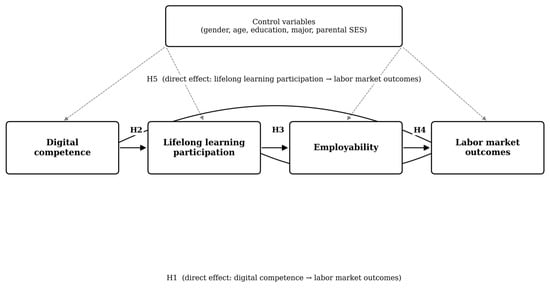
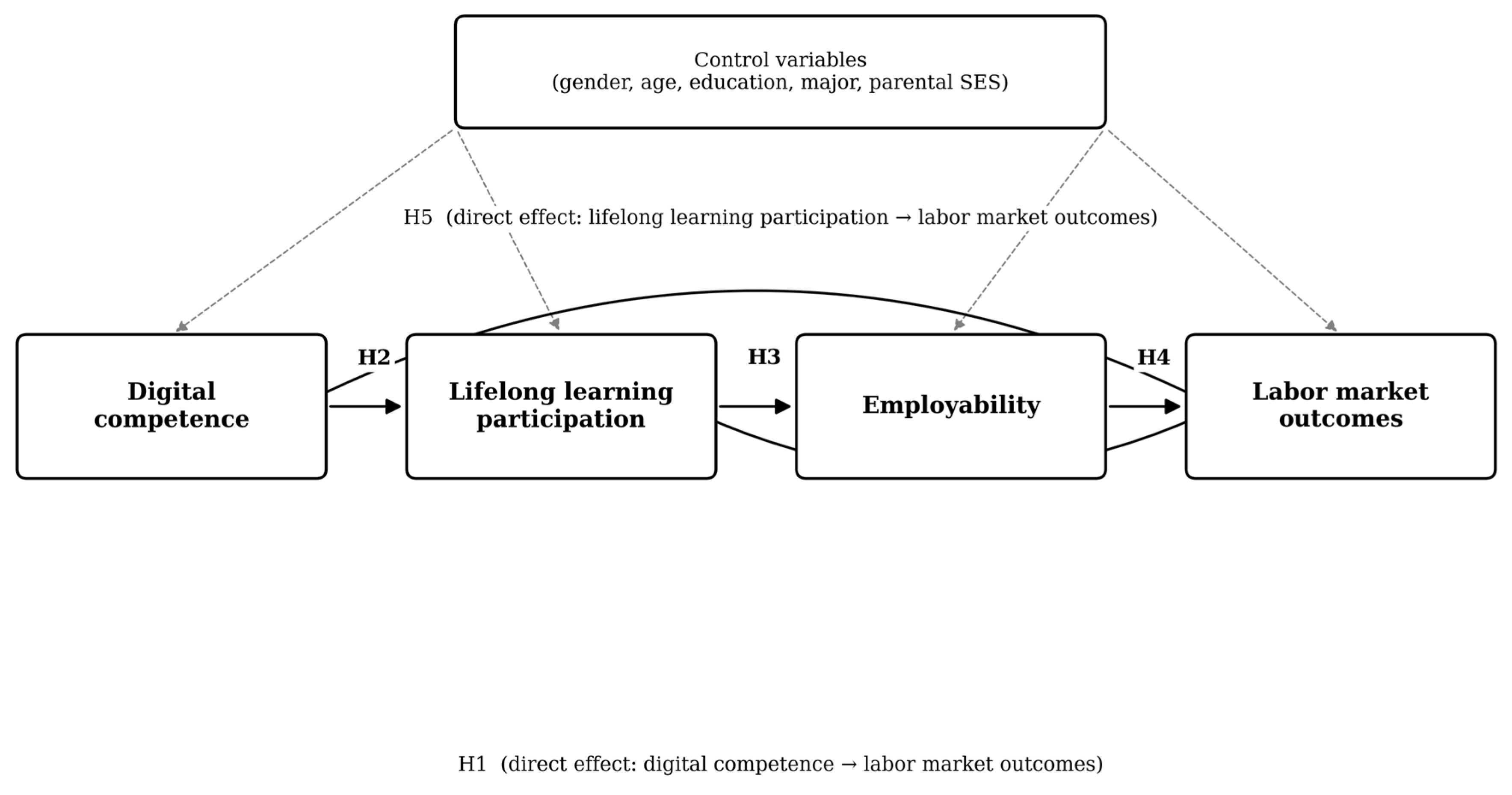

Disclaimer/Publisher’s Note: The statements, opinions and data contained in all publications are solely those of the individual author(s) and contributor(s) and not of MDPI and/or the editor(s). MDPI and/or the editor(s) disclaim responsibility for any injury to people or property resulting from any ideas, methods, instructions or products referred to in the content. |
© 2026 by the author. Licensee MDPI, Basel, Switzerland. This article is an open access article distributed under the terms and conditions of the Creative Commons Attribution (CC BY) license.