


Abstract
The hilly agroecosystems of north-western Maharashtra harbor rich agrobiodiversity, but agricultural intensification and widespread adoption of improved cultivars are accelerating the erosion of traditional crop landraces. However, comprehensive information on the current status of on-farm agrobiodiversity and the extent of ongoing genetic erosion in these tribal-dominated landscapes remains limited. This study assessed on-farm agri-horticultural diversity, landrace prevalence, genetic erosion, and indigenous conservation practices across Akole, Igatpuri, Shahada, and Dhadgaon. Field surveys, household interviews, and focus group discussions documented traditional crop landraces, wild edible species, and farmer-led conservation practices. Agrobiodiversity was evaluated using the Prevalence Index, Berger–Parker Index, Menhinick’s Diversity Index, and Shannon Diversity Index. More than 150 traditional landraces representing cereals, millets, pulses, oilseeds, vegetables, fruits, and legumes, together with over 35 wild edible plant species, were recorded. Hyacinth bean (PI = 10.00), mango (PI = 5.35), groundnut (PI = 5.25) and wheat (PI = 4.17) showed the highest prevalence in Akole–Igatpuri, whereas cowpea (PI = 2.50) and pigeonpea (PI = 2.33) predominated in Shahada–Dhadgaon. Shannon diversity values ranged from 0.69 to 3.01 and 1.01 to 2.17, indicating substantial variation in landrace diversity. Community seed banks and farmer-managed seed systems continue to support the conservation of locally adapted landraces despite ongoing varietal replacement. This study provides a comprehensive baseline for understanding the status of on-farm agrobiodiversity in north-western Maharashtra. It highlights the importance of integrating indigenous knowledge with community-based and policy-driven conservation strategies to strengthen the long-term resilience and sustainability of traditional farming systems.
1. Introduction
Global food systems are increasingly challenged by the combined impacts of climate change, rapid population growth, and the accelerating erosion of agrobiodiversity. Among these drivers, the loss of agrobiodiversity represents one of the most critical yet underappreciated threats to long-term food security, particularly in developing countries such as India, where agriculture remains strongly dependent on diverse traditional crop genetic resources [1].
Agrobiodiversity plays a fundamental role in enhancing food security, agricultural resilience, and the provision of ecosystem services. Diverse agroecological production systems enable farming communities to sustain agricultural productivity while adapting to climatic variability, economic uncertainties, and energy-related constraints [2]. By integrating advances in agricultural science with indigenous knowledge systems, such farming systems maintain a broad spectrum of crop diversity and management practices, thereby reducing vulnerability to pests, diseases, and environmental disturbances. Furthermore, agrobiodiversity contributes significantly to ecosystem functioning through the conservation of soil and water resources, maintenance of ecological balance, and enhancement of the long-term sustainability of agricultural production systems [3]. Consequently, the restoration and conservation of agrobiodiversity are increasingly recognized as essential components of resilient and sustainable food systems, necessitating substantial reforms in agricultural policies, research priorities, and resource management institutions.
The conservation of agrobiodiversity is intrinsically linked to traditional farming systems, which have historically served as dynamic reservoirs of crop genetic diversity. Through farmer-led processes such as cultivation, selection, storage, and exchange of seeds, traditional agricultural communities have continuously shaped and maintained locally adapted crop populations. These practices facilitate ongoing interactions between farmers and their environments, resulting in the evolution of farmer-developed varieties that constitute valuable genetic resources for adaptation to changing environmental conditions [4]. Indigenous and smallholder farming communities remain the principal custodians of traditional crop diversity. Their agricultural practices not only preserve genetic variation within crop species but also safeguard cultural traditions and ecological knowledge systems that underpin sustainable natural resource management [5].
India is globally recognized as a major center of crop diversity, with the Western Ghats representing one of its most ecologically significant and biodiversity-rich agroecological regions. The landscape supports extensive diversity of cultivated crops, crop wild relatives, and traditional agricultural systems. The hilly and tribal regions of the Western Ghats continue to maintain diversified farming systems comprising cereals, millets, pulses, vegetables, fruit crops, and medicinal plants. These agroecosystems function as important centers for the conservation, adaptation, and ongoing evolution of traditional crop landraces [6,7].
Despite their ecological and socioeconomic significance, traditional farming systems are undergoing rapid transformation. Agricultural modernization, widespread adoption of high-yielding cultivars, expansion of market-oriented agriculture, labor shortages, and increasing rural-to-urban migration have accelerated the replacement of traditional crop varieties. Simultaneously, climate variability and changing land-use patterns are intensifying genetic erosion and contributing to the progressive loss of indigenous knowledge associated with traditional agricultural practices [8].
In response to these challenges, on-farm conservation has emerged as a promising strategy for safeguarding crop genetic resources. It is increasingly recognized as a complementary approach to ex situ conservation, allowing crop populations to continue evolving under natural selection and farmer management while ensuring the long-term conservation of genetic resources [9]. Unlike ex situ conservation approaches, which preserve genetic materials outside their natural production environments, on-farm conservation enables landraces to continue evolving under local ecological and management conditions. This dynamic conservation approach simultaneously preserves genetic diversity, farmer knowledge, and community participation, thereby offering a holistic framework for maintaining agrobiodiversity in biodiversity-rich tribal landscapes [10,11].
Although agrobiodiversity has been documented across several regions of India, comprehensive assessments of on-farm agri-horticultural diversity in the tribal-dominated hilly agroecosystems of north-western Maharashtra remain scarce. Previous studies have largely focused on documenting crop landraces, individual crop diversity, or indigenous knowledge in isolation, with limited attention to the dynamics of crop diversity maintained by tribal communities, the relationships between cultivated landraces and wild edible plant resources, and the community-based mechanisms that sustain their conservation. Furthermore, systematic evaluations integrating landrace prevalence, ecological diversity indices, genetic erosion, and indigenous conservation practices are lacking for this region. Addressing these knowledge gaps is essential for developing evidence-based conservation strategies and strengthening the sustainable management of traditional crop genetic resources.
Against this backdrop, the present study was undertaken in the hilly agroecosystems of Ahmednagar, Nashik, and Nandurbar districts of Maharashtra to provide a comprehensive assessment of on-farm agri-horticultural diversity and its conservation. Specifically, the study aimed to: (i) evaluate the spatial distribution and prevalence of crop landrace diversity; (ii) quantify diversity, richness, and dominance using ecological diversity indices; (iii) identify the major socio-economic and agroecological factors contributing to genetic erosion; and (iv) document indigenous knowledge associated with crop landraces, wild edible species and traditional conservation practices. By integrating ecological diversity assessment with indigenous knowledge and community-based conservation practices, this study provides a comprehensive baseline for understanding the status of on-farm agrobiodiversity in north-western Maharashtra and offers scientific evidence to support conservation planning and sustainable agricultural policies.
2. Materials and Methods
2.1. Research Methods: Sampling and Data Collection
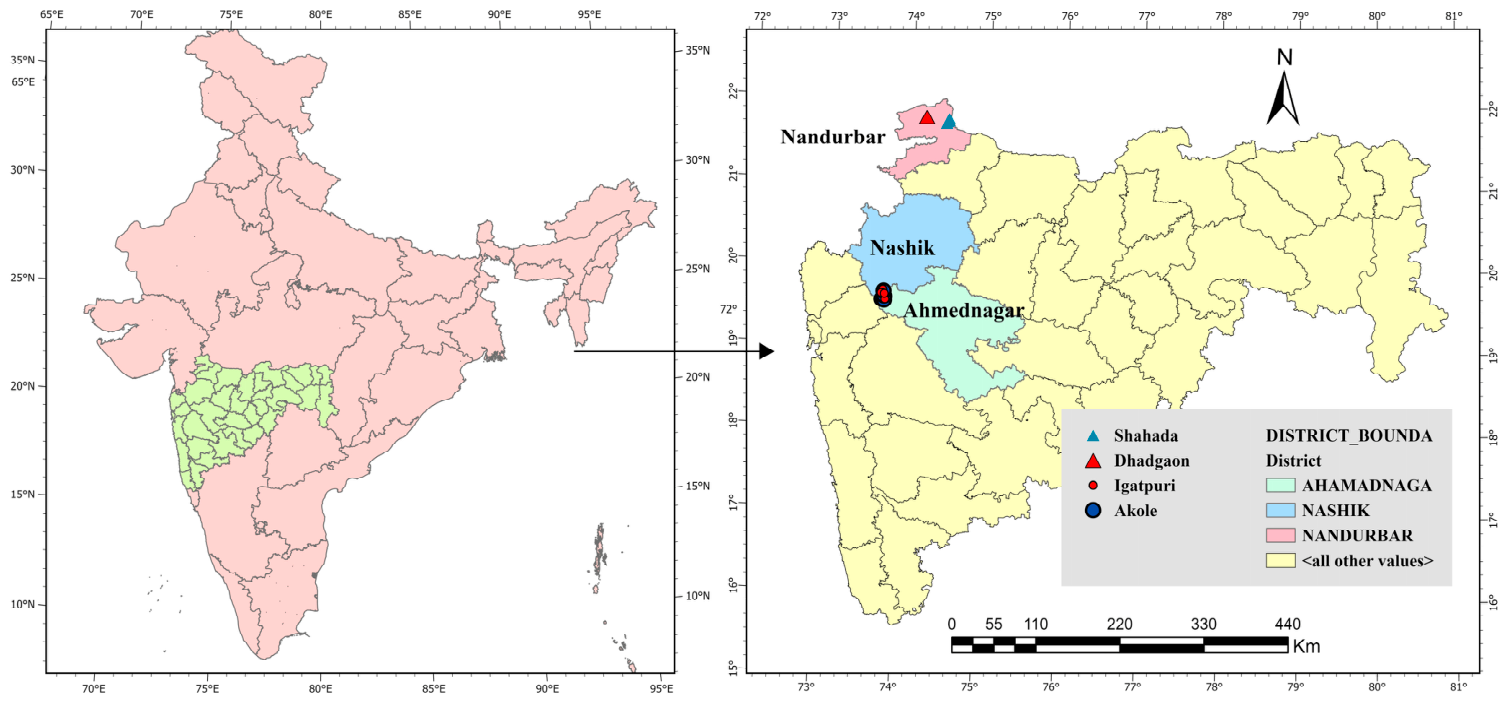
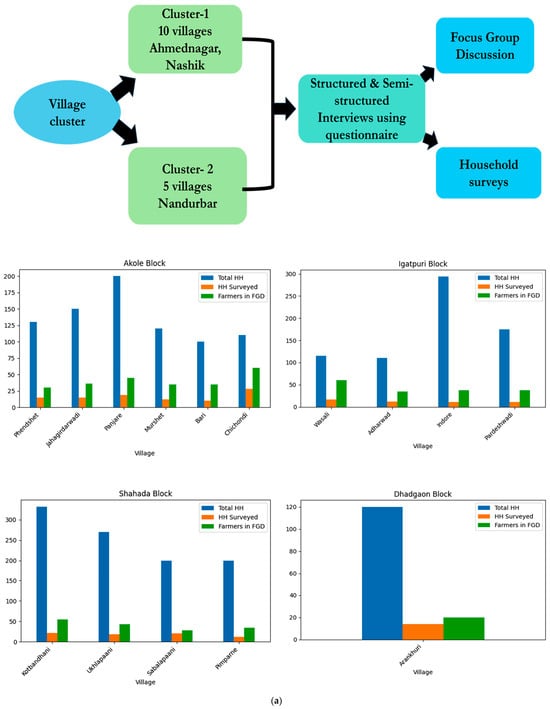
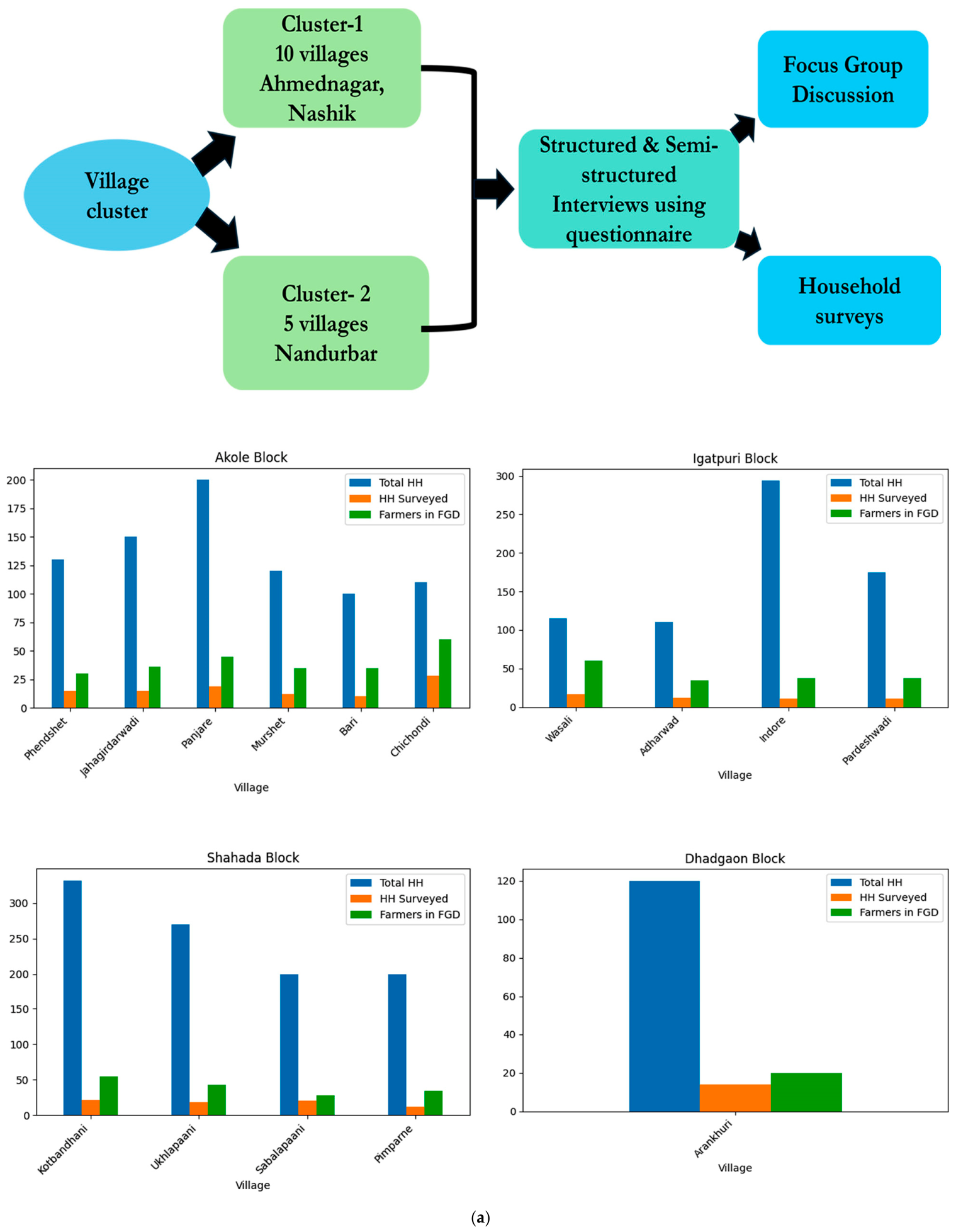
The present study was conducted in two village clusters comprising of 10 villages each from the Akole subdivision of Ahmednagar and the Igatpuri subdivision of Nashik, along with five villages each from Shahada and Dhadgaon subdivisions of Nandurbar district, Maharashtra (Figure 1). All GIS maps of the study areas were prepared using ArcGIS Pro version 3.6.0. To collect primary data, structured questionnaires were developed and administered through focus group discussions (FGDs) and household (HH) surveys to document agrobiodiversity resources, plant diversity dynamics, drivers of genetic erosion, and socioeconomic characteristics of farming communities and biodiversity custodians. Focus group discussions were conducted in each village with 25–30 participants, including women farmers, custodian farmers, and elderly community members possessing extensive traditional ecological knowledge. These discussions facilitated the documentation of traditional landraces, farmer-developed crop varieties, seed management practices, and local perceptions regarding changes in agrobiodiversity. In addition, household surveys covering approximately 10% of the total households in each village were undertaken to collect detailed information on demographic attributes, landholding patterns, cropping systems, crop and varietal diversity, seed sourcing and exchange mechanisms, household food security, indigenous traditional knowledge (ITK) and socioeconomic and agroecological factors influencing plant genetic resource (PGR) erosion and the adoption of agricultural technologies (Figure 2).
Figure 1.
Location of the study sites across three districts of Maharashtra, India.
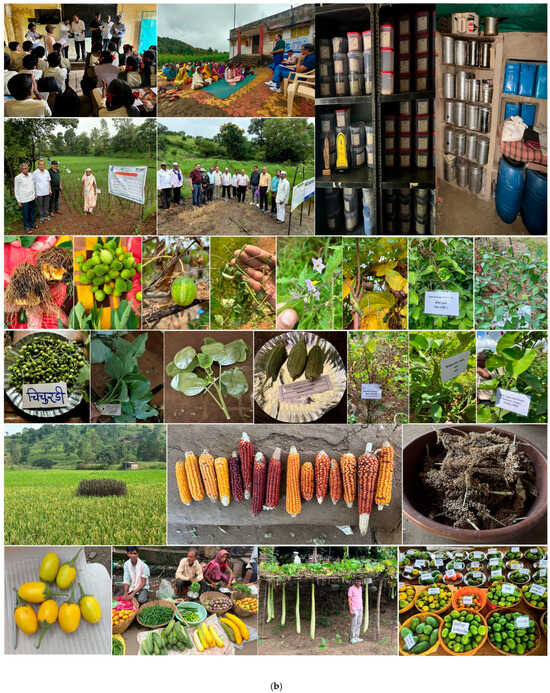
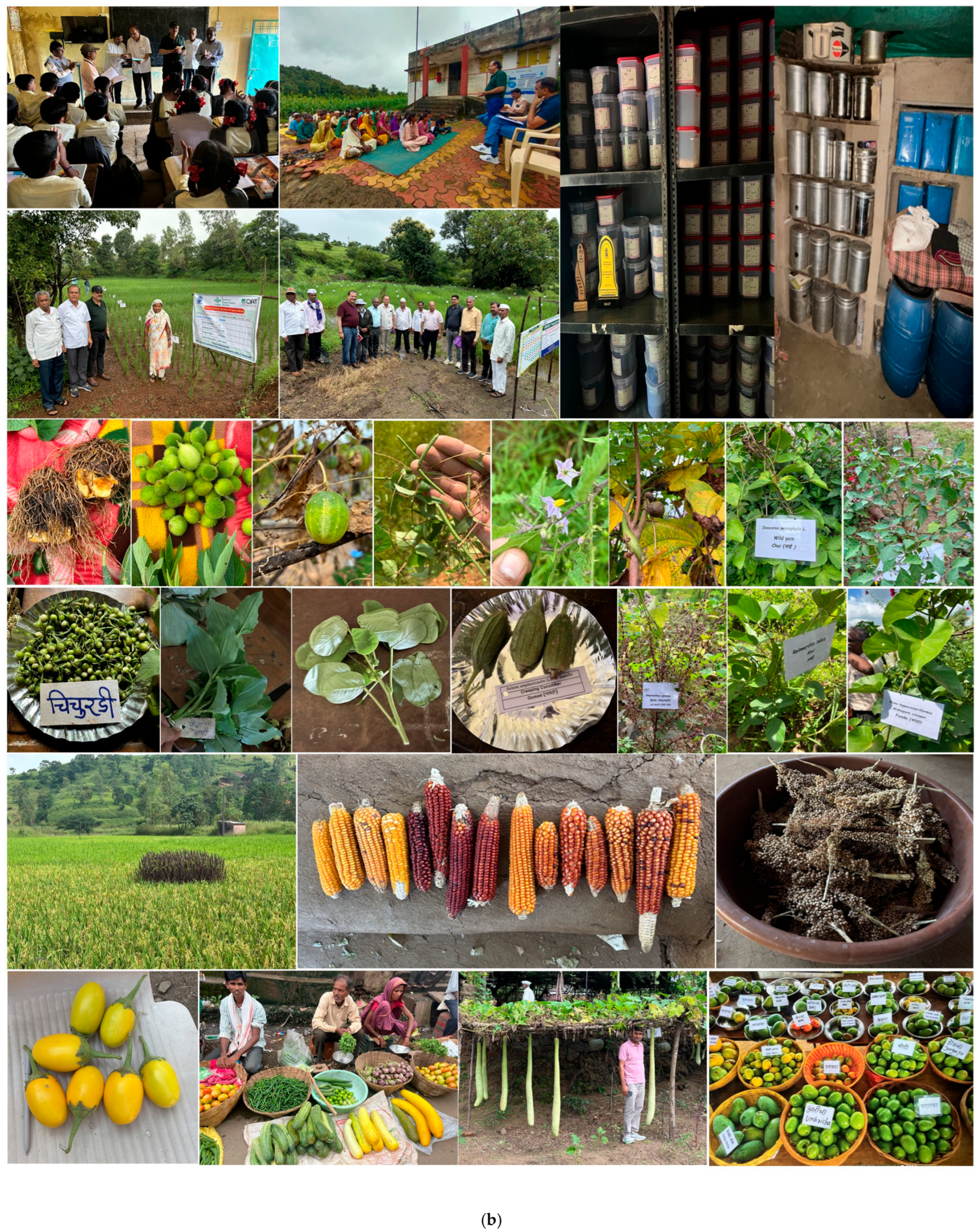
Figure 2.
(a) Study workflow and village-wise implementation of FGDs and household surveys; (b) Focus group discussions, mother trials and traditional agrobiodiversity conservation practices.
2.2. Description of the Study Area
The study areas in Ahmednagar and Nandurbar districts are characterized by hilly, undulating terrain with deep valleys and elevated hill ranges. Agricultural landholdings are small (0.1–0.5 acre) and highly fragmented. Akole and Igatpuri subdivisions lie within the Sahyadri Hills and receive high monsoonal rainfall, whereas Shahada and Dhadgaon subdivisions are located in the Satpura Range of northwestern Maharashtra [12].
2.3. Statistical Analysis
The distribution and diversity of crop landraces documented through household surveys and focus group discussions were evaluated using established ecological diversity metrics, including the Shannon Diversity Index, Berger–Parker Index, and Menhinick’s Index.
The Shannon Diversity Index (H′) was used to estimate species diversity and was calculated as:
where pi represents the proportion of individuals belonging to the ith landrace and S is the total number of landraces recorded [13].
The Berger–Parker Index was used to determine species dominance and was estimated as follows:
where Nmax is the abundance of the most dominant landrace, and N is the total abundance of all recorded landraces [14].
Species richness was evaluated using Menhinick’s Index, calculated as follows:
where s denotes the total number of landraces and N represents the total number of observations [15].
The prevalence and distribution of landraces were determined based on their frequency of occurrence across households and villages. Landrace prevalence was expressed as the percentage of households cultivating a particular landrace relative to the total households surveyed, while spatial distribution was assessed across different agroecological locations within the study area.
where PI is the prevalence of a landrace (%), Hl is the number of households cultivating a particular landrace, and Ht is the total number of households surveyed [16].
3. Results and Discussion
3.1. Socio-Ecological Characteristics of Study Area
The surveyed regions of Akole (Ahmednagar district) and Shahada (Nandurbar district) represent distinct yet complementary hilly agro-ecosystems of north-western Maharashtra. Akole is predominantly inhabited by tribal communities, particularly Bhil and Thakar tribes, whose livelihoods largely depend on subsistence agriculture supplemented by livestock rearing and the collection of minor forest products. The region experiences a predominantly hot and dry climate, with most rainfall received during the south-west monsoon season, while the higher elevations remain relatively cooler during summer.
Shahada, the largest tehsil in Nandurbar district, is situated within the Tapi River basin and forms part of the northern Deccan Plateau. The region is characterized by a generally dry climate, interrupted by monsoon rainfall and a relatively mild winter season extending from December to February. Fertile black cotton soils dominate much of the landscape, supporting diverse agricultural activities. Agriculture constitutes the primary source of livelihood, complemented by dairy farming and small ruminant husbandry.
The coexistence of irrigated, rainfed and hill agroecosystems within the study region creates a highly heterogeneous agricultural landscape that appears to underpin the persistence of agri-horticultural diversity. Variations in climate, soil properties, topography and farmer management practices generate a mosaic of ecological niches that favor the maintenance of indigenous landraces and locally adapted crop populations. Such socio-ecological complexity likely promotes the continuous adaptation, evolution and conservation of traditional crop genetic resources, highlighting the critical role of on-farm management systems in sustaining agrobiodiversity under changing environmental conditions [17].
3.2. Existing On-Farm Conservation Efforts and Germplasm Status
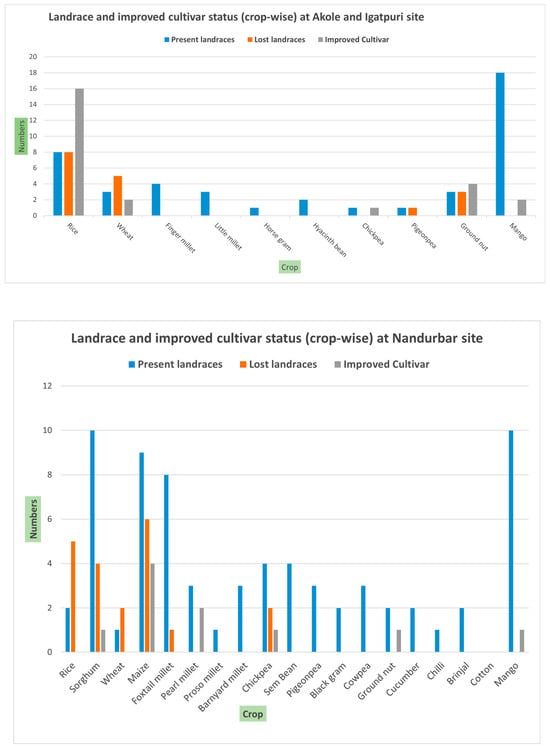
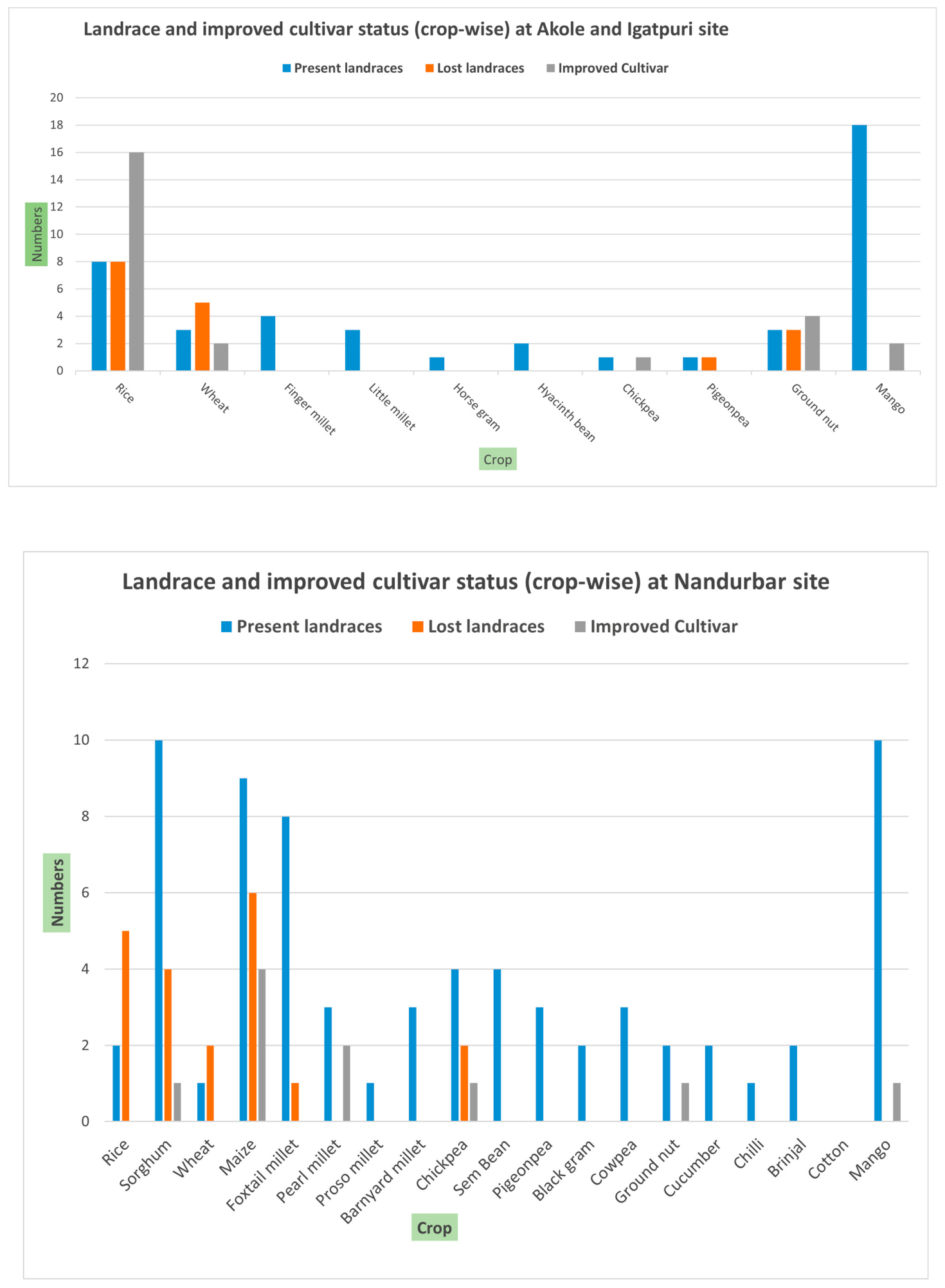
The present study revealed dynamic patterns of agrobiodiversity change characterized by the simultaneous occurrence of conservation, varietal replacement, and genetic erosion. The overall landrace erosion status observed across the study area is summarized in Figure 3, while crop-wise details are provided in Supplementary file S1.
Figure 3.
Crops and varietal diversity, erosion of landraces and replacement of varieties in Akole/Igatpuri (Ahmednagar) and Shahada/Dhadgaon (Nandurbar).
Persistence index analysis demonstrated marked differences among crop groups, with rice, wheat, groundnut, and pigeonpea retaining only 50% of their documented landrace diversity (PI = 0.50), whereas the traditional sorghum variety was completely lost from cultivation. Rice exhibited the highest replacement ratio (RR = 2.0), indicating a substantial shift from traditional landraces to improved cultivars. Similar, albeit less pronounced, replacement trends were observed in wheat and groundnut. Beyond varietal substitution, the study also documented broader transformation of cropping systems, evidenced by the disappearance of climate-resilient crops such as barnyard millet, foxtail millet, proso millet, sesame, and safflower, alongside the introduction of market-oriented crops including strawberry, cherry tomato, mushroom, and spineless cactus. In contrast, traditional millets, pulses and indigenous mango varieties displayed complete persistence (PI = 1.0), underscoring the important role of farmer-managed production systems in maintaining locally adapted crop genetic resources. These findings highlight the dual influence of agricultural modernization and traditional stewardship in shaping the contemporary agrobiodiversity landscape of the studied region.
Community-based conservation initiatives were evident in the study area through the operation of seed banks at Jahagirdarwadi and Sainit villages. The Kalsubai Biryane Sanvardhan Samiti and the community seed bank managed by Genome Saviour Award recipient Mrs. Mamta Bai Bhamre have been actively involved in the conservation, multiplication, and exchange of traditional crop varieties. Similar observations have been reported by earlier studies in the region, which highlighted the role of community seed banks in safeguarding local genetic resources and facilitating farmer-to-farmer seed exchange [18,19]. Comparable community-based seed conservation initiatives have also been reported from Nepal, Ethiopia, and Ghana, where farmer-managed seed systems play a central role in conserving locally adapted landraces, strengthening seed security, and enhancing resilience to climatic and socio-economic changes [18,19,20,21]. The consistency of these findings across diverse smallholder farming systems suggests that community-led conservation approaches have broad applicability beyond the present study region. The continued functioning of these institutions further highlights their importance in strengthening on-farm conservation and enhancing the resilience of traditional farming systems.
Farmer-led experimentation and participatory conservation efforts were also evident in the study area. For example, Mrs. Manda Bai Bharat Padmare was actively conducting mother trials involving traditional rice and millet landraces, along with nutrient and fertilizer evaluation trials in rice. Similar farmer-participatory approaches have been reported to play an important role in the identification, evaluation, and conservation of locally adapted crop genetic resources under on-farm conditions [20,22].
The presence of community seed banks, traditional seed management practices, and farmer-led varietal evaluations demonstrates that on-farm conservation remains an active and dynamic process in the study region.
On-farm conservation in the study area complements ex-situ conservation rather than functioning as an independent system. Community seed banks maintain dynamic conservation through continued cultivation, seed multiplication, and farmer-to-farmer seed exchange, while long-term conservation of crop genetic resources is strengthened through their collection and storage in formal ex situ repositories such as the Indian National Gene Bank (ICAR-NBPGR). Technical support for maintaining seed quality, varietal purity, and documentation is provided through the BAIF Development Research Foundation funded by Alliance Bioversity and CIAT. These complementary approaches collectively contribute to the long-term conservation of crop genetic diversity [9].
3.3. Germplasm Exploration and Spatial Distribution of Crop Diversity
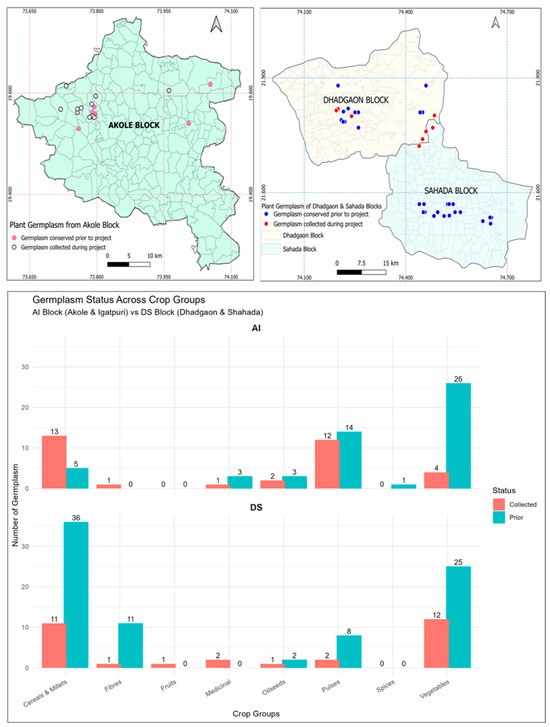
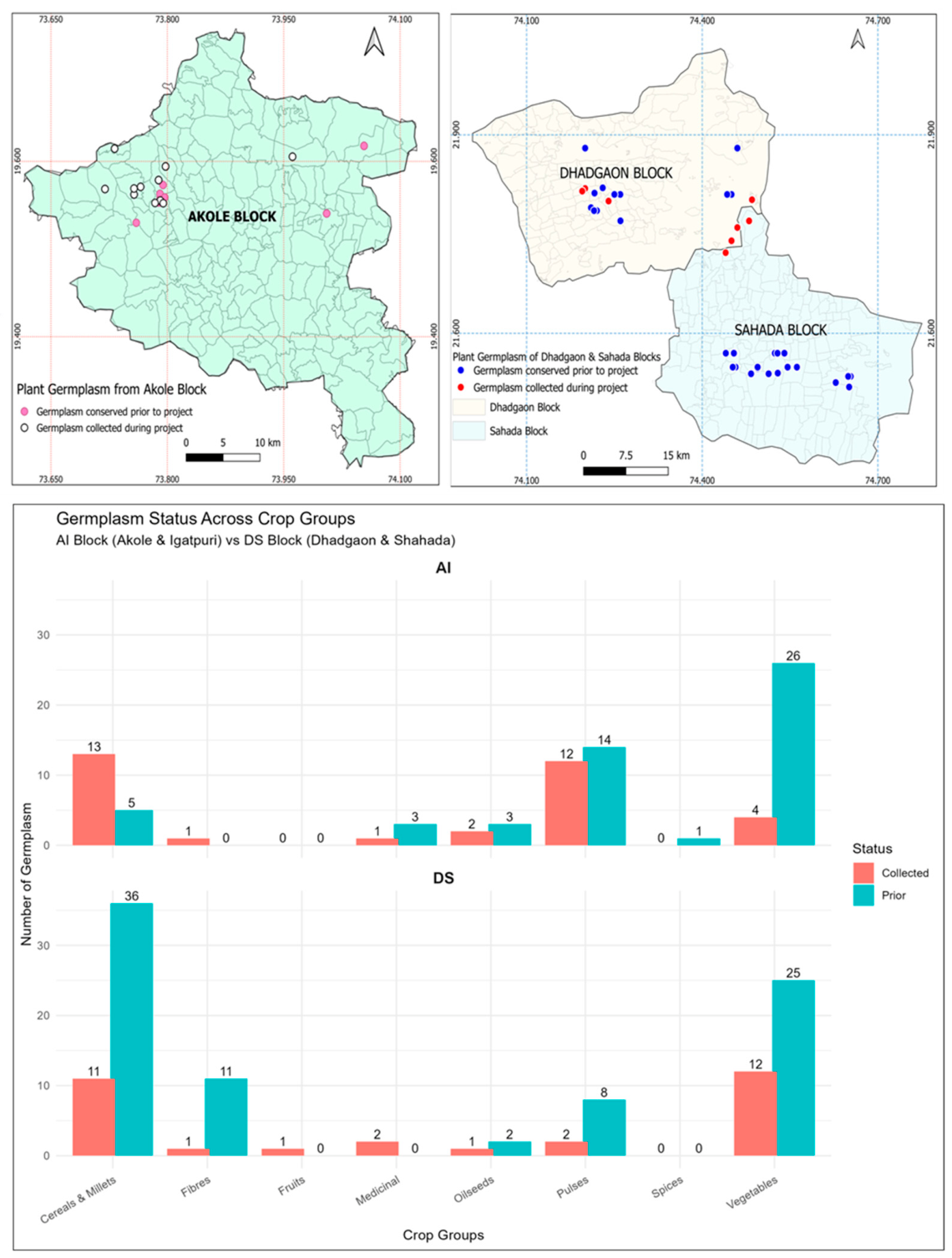
Prior to undertaking germplasm exploration, a gap analysis was conducted using records of previous collection missions in the studied districts to avoid duplication of accessions in the National Genebank and optimize collection efforts. The analysis revealed limited representation of the region’s agri-horticultural diversity, with only 44 accessions representing 19 crop species conserved from the project area (Table 1). To strengthen ex situ conservation, systematic germplasm exploration was undertaken across the study area. The ex-situ conservation status of the traditional landraces documented during the present study is summarized in Figure 4, which illustrates the proportion of landraces already collected and conserved in the Indian National Gene Bank (ICAR-NBPGR), thereby complementing ongoing on-farm conservation efforts.
Table 1.
Spatial distribution of agri-horticultural crop diversity across surveyed villages of north-western Maharashtra.
Figure 4.
Spatial distribution of crops/varietal diversity and germplasm status (Crop group wise) at the project site.
This highlighted the need for systematic exploration of hilly agroecosystems of north-western Maharashtra. Field surveys revealed considerable spatial variation in crop diversity across villages. The Akole region exhibited higher representation of traditional millets, pulses, and oilseeds, whereas Shahada and Dhadgaon maintained diverse landraces of sorghum, maize, millets, and vegetable crops (Table 1). Finger millet, little millet, horsegram, niger, and chickpea were frequently grown in hilly villages of Akole, while sorghum, maize, blackgram, and cucumber landraces were more prominent in Shahada and Dhadgaon. A complete inventory of crop species and vernacular landraces documented during the survey is provided in Supplementary File S2. The observed distribution patterns reflect adaptation to local agroecological conditions and the influence of farmer-managed seed systems.
3.4. Characterization of Unique Landraces
The survey documented a diverse assemblage of traditional landraces characterized by unique adaptive, culinary, and socio-cultural attributes (Table 2 and Table 3). Sustained through generations of farmer-mediated selection and adaptation to local agroecological environments, these landraces represent important reservoirs of crop genetic diversity and locally adapted germplasm. Many of these traditional landraces represent underutilized genetic resources that remain largely absent from formal crop improvement programs despite possessing valuable adaptive, nutritional, and cultural attributes. Their continued cultivation contributes not only to crop genetic diversity but also to the conservation of regional biocultural diversity.
Table 2.
Selected unique landraces documented in Akole taluk and their notable traits.
Table 3.
Selected unique landraces documented in Shahada and Dhadgaon taluks and their notable traits.
3.4.1. Climate-Resilient and Stress-Tolerant Landraces
Several traditional landraces were identified by farmers as possessing traits associated with adaptation to marginal environments and climatic stresses. Rice landraces such as Kolpi and Takia were reported to perform well under low-moisture conditions and require relatively less water. Similarly, Kathiya wheat was recognized for its drought tolerance, Mutaki finger millet for its suitability to low-rainfall environments, and Kodwal hyacinth bean for its tolerance to water stress. In Shahada and Dhadgaon regions, traditional sorghum landraces such as Olmund and Mani Jowar were reported to be cultivated under drought-prone and severe moisture-deficit conditions. These observations highlight the potential of farmer-maintained landraces as valuable sources of climate-resilient traits. However, systematic phenotypic and genetic evaluations are required to validate their adaptive potential and facilitate their utilization in climate-resilient crop improvement programs. Similar patterns have been documented across traditional agroecosystems, including Nepal, where farmer-maintained rice landraces possess valuable drought-adaptive traits and function as dynamic reservoirs of adaptive genetic diversity, thereby strengthening the resilience of farming systems to climatic variability and environmental stressors [23,24].
3.4.2. Landraces with Nutritional and Culinary Importance
Culinary preferences and perceived nutritional qualities are widely recognized as important determinants of cultivation and conservation of traditional crop varieties in indigenous farming systems [25]. The survey revealed that several landraces continue to be maintained because of their superior taste, processing qualities, and cultural significance. Among rice landraces, Kaal Bhaat, Kamod, and Raibhog were highly valued for their aroma, taste, and suitability for preparing traditional foods such as kheer, sweets, and fermented products. Similarly, indigenous horse gram landraces (Lal Hulga and Safed Hulga) were preferred for traditional culinary preparations, while groundnut landraces such as Ghungrya and Pundya were appreciated for their desirable taste and market acceptability. The continued cultivation of these landraces highlights the significant role of farmer preferences, local food cultures, and traditional dietary practices in sustaining on-farm agrobiodiversity. Similar observations have been reported in Nepal, where neglected and underutilized crops continue to provide nutritional security while conserving valuable crop genetic resources adapted to marginal environments [26].
3.4.3. Socio-Cultural and Traditional Significance of Landraces
In addition to agronomic performance, adaptive traits and culinary value, several traditional landraces continue to be maintained because of their cultural and spiritual significance within local communities. Survey revealed that rice landrace named as Nazarbhat is traditionally cultivated owing to indigenous beliefs regarding its ability to protect crops from diseases and other negtaive influences. Similarly, black maize was reported to play an important role in ritual and ceremonial practices, particularly during Pitrapaksha. Despite widespread availability of improved cultivars, these culturally important landraces have been conserved across generations, highlighting influence of traditional knowledge systems, cultural values and customary practices on maintenance of crop genetic diversity. These findings reinforce the view that sociocultural factors can serve as important drivers of on-farm conservation alongside agronomic and economic considerations [23,27].
3.5. Indigenous Traditional Knowledge and Utilization of Wild Edible Plants
The indigenous communities inhabiting Akole and Igatpuri regions, including Pawara, Bhil, Thakar and Koli tribes, possess rich indigenous traditional knowledge (ITK) related to identification, collection, and utilization of wild edible species. These communities continue to rely on surrounding forest ecosystems for food, healthcare, and other livelihood needs. The present study documented 38 wild edible plant species that are commonly utilized by local communities for diverse nutritional, medicinal, and subsistence purposes (Table 4), highlighting the important role of traditional ecological knowledge in sustaining food security and biodiversity conservation.
Table 4.
Indigenous traditional knowledge associated with selected wild edible and medicinal plant species recorded in Akole and Igatpuri.
The study area harbored a rich diversity of wild edible vegetables, reflecting extensive ethnobotanical knowledge preserved by tribal communities. A total of 33 wild edible vegetable species representing diverse taxonomic groups were documented during the survey. Prominent species included Momordica dioica, Celosia argentea, Amaranthus spinosus, Garuga pinnata, Achyranthes aspera, Corchorus olitorius, and Dioscorea hispida. These species constitute an important component of local food systems, providing seasonal dietary supplements, particularly in remote areas where access to cultivated vegetables is often limited.
Classification based on edible plant parts indicated that fruit-bearing species constituted the largest category (45%), followed by leafy vegetables (25%), while roots/tubers and whole plants each accounted for 15% of the recorded species (Table 5). Leafy vegetables such as Amaranthus spinosus, Celosia argentea, Portulaca oleracea and Achyranthes aspera are widely consumed as cooked greens and serve as valuable sources of micronutrients. Similarly, fruit-bearing species including Momordica dioica, Carissa carandas, Solanum anguivi and several wild cucurbits contribute substantially to dietary diversity and seasonal nutrition. Tuberous species such as Dioscorea bulbifera, Dioscorea hispida and Arisaema murrayi function as important supplementary food resources, particularly during periods of food scarcity.
Table 5.
Classification of documented wild edible vegetable species by edible plant parts.
The continued utilization of wild edible vegetables underscores their critical role in enhancing household food and nutritional security among tribal communities. The predominance of fruit- and leafy vegetable species highlights their contribution to dietary diversification and seasonal nutrient supplementation. Similar patterns have been reported from other tribal and forest-dependent regions, where wild edible plants provide essential vitamins, minerals, antioxidants, and other bioactive compounds, particularly during agricultural lean periods and episodes of food shortage [28,29,30]. The sustained use of species such as Momordica dioica, Amaranthus spinosus, Celosia argentea and Dioscorea spp. further demonstrates the enduring importance of indigenous knowledge systems in supporting nutritional resilience and the conservation of biocultural diversity. Together with traditional crop landraces, these wild edible species form an integral component of the region’s biocultural diversity, illustrating the close interdependence between biological resources, indigenous knowledge and traditional food systems. This finding is consistent with studies from indigenous farming systems in the Bolivian Andes, where native crops and traditional food systems have been shown to strengthen resilience to climate change while conserving biocultural diversity [31]. Comparable observations have also been reported from mountain farming communities in Nepal and Ethiopia, where wild edible plants contribute substantially to dietary diversity, micronutrient intake, and livelihood resilience, further reinforcing the broader relevance of integrated biocultural conservation across smallholder agricultural systems [26,32].
3.6. Prevalence and Distribution of Crop Landraces
The prevalence index (PI) was calculated to assess distribution and occurrence of crop landraces across surveyed villages. Since crop composition differed considerably between Akole–Igatpuri and Shahada–Dhadgaon regions, prevalence patterns were analysed separately for these two agroecological zones (Table 6). Ten villages distributed across four administrative blocks, Akole (Ahmednagar district), Igatpuri (Nashik district), and Dhadgaon and Shahada (Nandurbar district), were surveyed to assess the prevalence of traditional crop landraces. Owing to differences in cropping patterns and varietal preferences between Akole–Igatpuri and Shahada–Dhadgaon, prevalence indices (PI) were calculated separately for the two regions.
Table 6.
Distribution and Prevalence of landraces in major crops across surveyed regions.
In Shahada and Dhadgaon, cowpea and pigeonpea exhibited the highest prevalence (PI > 2), with landraces such as Mothi Chowlya and Gavrani Safed Tuar occurring across multiple villages, indicating broad adaptation and local importance. Moderate prevalence (PI ≈ 1.5–2.0) was recorded for rice, sorghum, chickpea, finger millet and foxtail millet, represented by landraces such as Halbhat, Doodhmogra and Mani Jowar. In contrast, little millet, barnyard millet, maize and blackgram displayed low prevalence (PI ≈ 1.0–1.2), with landraces restricted to one or two locations, suggesting localized distribution and greater vulnerability to genetic erosion.
In Akole and Igatpuri, the highest prevalence indices (PI ≥ 4) were observed for groundnut, mango, and hyacinth bean. Landraces such as Godwal, Kodwal, Dongarya, Gotee, Lal Gotee, and Ghungariya were recorded across most surveyed villages, reflecting their wide adaptability, farmer preference, and cultural significance. Rice, wheat, finger millet, and little millet exhibited moderate prevalence (PI = 3.0–3.7), with distinct landraces dominating individual villages, indicating strong local adaptation and village-specific selection. Pigeonpea showed relatively low prevalence (PI = 2.17), suggesting a narrower distribution and potential susceptibility to genetic erosion. Similar observations were reported by Puneeth et al. [22] in the Central Western Ghats, where many landraces occurred at only one or a few conservation sites, indicating that prevalence is an important indicator of conservation status. The restricted distribution of several landraces in the present study likewise suggests increased vulnerability to genetic erosion and underscores the importance of community-based conservation initiatives.
3.7. Diversity Patterns of Crop Landraces Across Surveyed Regions
To understand the structure of on-farm agrobiodiversity, multiple diversity indices were calculated for the documented landraces of studied crops across surveyed regions. The Berger-Parker Index was used to assess landrace dominance, while Menhinick’s Diversity Index and Shannon Diversity Index were used to evaluate richness and overall diversity, respectively. Together, these indices provide complementary insights into the distribution, abundance, and conservation status of traditional crop landraces (Table 7).
Table 7.
Diversity assessment of major crops across surveyed areas using multiple diversity indices.
3.7.1. Landrace Dominance (Berger-Parker Index)
Identifying dominant landraces is an important step in prioritizing crop genetic resources for conservation [33]. Accordingly, the Berger–Parker Index (d) was used to assess the dominance structure of major crop landraces across the study area [14]. In Akole and Igatpuri, pigeonpea, groundnut and hyacinth bean exhibited high dominance (d > 0.40), indicating the predominance of a single landrace and a relatively uneven distribution. Wheat, finger millet and little millet showed intermediate dominance (d ≈ 0.30), whereas rice and mango displayed lower dominance values (d < 0.25), reflecting greater landrace diversity and more even distribution. In Shahada and Dhadgaon, pigeonpea (d = 0.57) and chickpea (d = 0.50) were highly dominated by a single landrace, suggesting strong farmer preference, local adaptation, or economic importance. Cowpea exhibited moderate dominance (d = 0.40), while rice, foxtail millet, sorghum, and little millet showed comparatively low dominance values (d = 0.17–0.21), indicating the maintenance of multiple landraces within farming systems. Blackgram and barnyard millet displayed intermediate dominance (d = 0.25–0.29).
The observed variation in dominance patterns highlights substantial differences in the distribution and conservation status of crop landraces across regions. High dominance values may indicate reduced intra-crop diversity and greater vulnerability to genetic erosion, whereas lower dominance values suggest the continued maintenance of diverse landrace assemblages driven by local adaptation, cultural preferences, and multiple end uses. Nevertheless, the Berger–Parker Index captures only the abundance of the most dominant landrace; therefore, additional diversity indices are required to provide a more comprehensive assessment of landrace diversity and distribution patterns (Table 7).
3.7.2. Landrace Richness (Menhinick’s Diversity Index)
Menhinick’s Diversity Index (Dmn) was calculated to estimate diversity among landraces of different crops across different sites in the Akole and Igatpuri blocks and Sahada block of Nandurbar. In the Akole and Igatpuri blocks, mango exhibited high diversity (1.78), with its landraces occurring across multiple sites, indicating rich genetic variability. Moderate diversity was observed in rice, little millet, pigeonpea and groundnut, reflecting several landraces with relatively balanced occurrences. Low diversity was recorded for wheat, finger millet and hyacinth bean, with hyacinth bean (0.45) particularly vulnerable to genetic erosion, as only a few landraces are widely distributed (Table 7). In Sahada, maize exhibited high diversity (3.84), indicating strong genetic variability. Moderate diversity was observed in sorghum, barnyard millet, foxtail millet, little millet, blackgram, chickpea, and rice, reflecting a reasonably balanced distribution of landraces across the surveyed sites. In contrast, pigeonpea (1.13) and cowpea (1.26) showed low diversity, indicating limited variation. Conservation efforts may be necessary for less diverse crops, as the risk of genetic erosion is higher for these, whereas moderately to highly diverse crops are comparatively less vulnerable [34].
3.7.3. Shannon Diversity Index
The Shannon Diversity Index (H′), which integrates both richness and evenness, is widely used to assess biological diversity and has been extensively applied in agrobiodiversity research to evaluate the conservation status and distribution of crop genetic resources [35]. Higher H′ values indicate greater diversity and a more equitable distribution of landraces within a crop.
In Akole and Igatpuri, H′ values ranged from 0.69 to 3.01, revealing substantial variation in landrace diversity among crops (Table 7). Wheat (H′ = 3.01) and rice (H′ = 2.14) exhibited the highest diversity, reflecting both high landrace richness and relatively even distribution. Finger millet (H′ = 1.37) and little millet (H′ = 1.55) displayed moderate diversity, whereas pigeonpea (H′ = 1.20), groundnut (H′ = 1.04), hyacinth bean (H′ = 0.91) and mango (H′ = 0.69) showed comparatively lower diversity, indicating dominance by a limited number of landraces. Overall, cereal crops maintained greater landrace diversity than legumes and fruit crops in the region.
A similar pattern was observed in Shahada and Dhadgaon, where H′ values ranged from 1.01 to 2.17. Sorghum (H′ = 2.17), foxtail millet (H′ = 2.08) and maize (H′ = 2.00) exhibited the highest diversity, indicating the maintenance of multiple landraces with relatively balanced distribution across cultivation sites. Barnyard millet (H′ = 1.95), chickpea (H′ = 1.91), blackgram (H′ = 1.79), rice (H′ = 1.79) and little millet (H′ = 1.61) displayed moderate diversity, suggesting the coexistence of several locally adapted landraces. In contrast, pigeonpea (H′ = 1.01) and cowpea (H′ = 1.36) showed lower diversity, reflecting the predominance of a few preferred landraces within local farming systems.
Overall, the higher Shannon diversity observed in cereals and millets highlights their importance as key reservoirs of on-farm genetic diversity. This pattern likely reflects the combined effects of local adaptation, farmer selection, traditional seed exchange and cultural preferences that collectively sustain landrace diversity within traditional farming systems. Comparable patterns have been reported from biodiversity-rich smallholder farming systems in India and other regions of the world, where traditional cereals, millets and other underutilized crops continue to maintain high levels of on-farm agrobiodiversity while enhancing resilience to climate variability and environmental change [11,22,36].
4. Conclusions
This study provides a comprehensive assessment of on-farm agri-horticultural diversity in the tribal-dominated hilly agroecosystems of north-western Maharashtra. The findings reveal that these farming systems continue to harbor a rich diversity of traditional landraces and wild edible plant species, supported by indigenous knowledge, community seed systems, and farmer-led conservation practices. However, agricultural modernization, varietal replacement, changing cropping patterns, and broader socio-economic transformations are accelerating the erosion of traditional crop genetic resources. The diversity analyses further demonstrated contrasting conservation patterns among crops, with some maintaining high genetic diversity while others exhibited restricted distribution and greater vulnerability to genetic erosion.
Overall, this research demonstrates that the region’s agrobiodiversity is being shaped by the dual forces of agricultural modernization and traditional farming systems, with community-led conservation serving as a critical mechanism for sustaining locally adapted crop diversity. Strengthening these community-based approaches will therefore be essential for enhancing the resilience of traditional farming systems and ensuring long-term agrobiodiversity conservation.
Based on these findings, the following actions are recommended:
Policy level: Strengthen support for community seed banks, recognize and register traditional landraces to safeguard farmers’ rights and promote climate-resilient traditional crops through targeted conservation and incentive programs.
Community level: Strengthen farmer-led seed exchange networks, encourage participatory conservation initiatives and integrate indigenous knowledge into conservation, extension and educational programs.
Research level: Expand the characterization and long-term monitoring of landrace diversity and genetic erosion, and promote value addition and niche markets for traditional landraces to enhance their conservation and sustainable utilization. Overall, these measures will strengthen community-centered conservation strategies and support resilient and sustainable food systems in the face of climate change and ongoing agricultural transformation. Although this study focuses on north-western Maharashtra, the findings have broader relevance for biodiversity-rich smallholder agroecosystems worldwide, highlighting the importance of integrating indigenous knowledge, underutilized crops and community-based conservation into agricultural policies to safeguard biocultural diversity and enhance long-term resilience.
Supplementary Materials
The following supporting information can be downloaded at: https://www.mdpi.com/article/10.3390/su18178988/s1.
Author Contributions
Conceptualization, P.K.S., S.P.A. and K.C.B.; methodology, P.K.S., S.P.A., K.C.B. and P.K.M.; software, M.J.; validation, P.K.S., S.P.A. and K.C.B.; formal analysis, M.J.; investigation, P.K.S., S.P.A., K.C.B., P.K.M. and M.J.; resources, S.G., V.K. and S.P.; data curation, P.K.S., S.P.A., K.C.B., D.P.S., P.K.M., M.J., P.K.K., S.L., N.S.P. and O.P.D.; writing—original draft preparation, M.J., P.K.M. and S.L.; writing—review and editing, M.J., P.K.M., S.L., P.K.S., K.C.B., S.P.A., P.K.K., D.P.S., S.G., V.K., S.P., R.B. and J.C.R.; visualization, P.K.S. and S.P.A.; supervision, P.K.S. and S.P.A.; project administration, P.K.S. and S.P.A.; funding acquisition, J.C.R. All authors have read and agreed to the published version of the manuscript.
Funding
This research was funded by the Alliance of Bioversity International and CIAT through the research project “NATURE+: Nature-Positive Solutions for Shifting Agrifood Systems to More Resilient and Sustainable Pathways” (Project Code: 1015485; Scheme Code: 40555). The APC was funded by The Alliance of Bioversity International and CIAT.
Institutional Review Board Statement
Ethical review and approval were waived for this study due to that the study comprised field surveys, household interviews, focus group discussions, participatory rural appraisal (PRA), and documentation of traditional knowledge pertaining to crop landraces, wild edible plants, agrobiodiversity conservation, and community seed systems. The research was observational and non-interventional in nature and did not involve any clinical procedures, biomedical experimentation, invasive interventions, collection of human biological specimens, or collection ofsensitive personal information.
Informed Consent Statement
Informed consent was obtained from all subjects involved in the study.
Data Availability Statement
The data supporting the findings of this study are available within the article and its Supplementary Materials. Additional data are available from the corresponding author upon reasonable request.
Acknowledgments
The authors gratefully acknowledge the BAIF Development Research Foundation (BAIF) team for their valuable assistance during field surveys, focus group discussions, household surveys, and data collection. The authors thank the Director, ICAR-National Bureau of Plant Genetic Resources (ICAR-NBPGR), New Delhi, and the Indian Council of Agricultural Research (ICAR) for providing institutional support, research facilities, and technical assistance. The authors further express their sincere gratitude to the custodian farmers and local communities for their invaluable contributions to the conservation of traditional landraces and associated indigenous knowledge. We also thank the executive members of the community seed bank (Kalsubai Parisar Biyane Savardhan Sanstha, Akole, Ahilyanagar (Ahmednagar), Maharashtra).
Conflicts of Interest
The authors declare no conflicts of interest.
References
- Seidler, R.; Gavai, P.; Bawa, K.S. Rethinking agrobiodiversity for agricultural sustainability. Front. Sustain. Food Syst. 2025, 9, 1639264. [Google Scholar] [CrossRef] [Scilit]
- Hailu, F. The role of agrobiodiversity and diverse causes of its losses and methods of conservation: A review. Food Humanit. 2025, 4, 100500. [Google Scholar] [CrossRef] [Scilit]
- Altieri, M.A.; Funes-Monzote, F.R.; Petersen, P. Agroecologically efficient agricultural systems for smallholder farmers: Contributions to food sovereignty. Agron. Sustain. Dev. 2012, 32, 1–13. [Google Scholar] [CrossRef] [Scilit]
- Altieri, M.A.; Toledo, V.M. The agroecological revolution in Latin America: Rescuing nature, ensuring food sovereignty and empowering peasants. J. Peasant. Stud. 2011, 38, 587–612. [Google Scholar] [CrossRef] [Scilit]
- Malapane, O.L.; Musakwa, W.; Chanza, N. Indigenous agricultural practices employed by the Vhavenda community in the Musina Local Municipality to promote sustainable environmental management. Heliyon 2024, 10, e33713. [Google Scholar] [CrossRef] [Scilit] [PubMed]
- Myers, N.; Mittermeier, R.A.; Mittermeier, C.G.; da Fonseca, G.A.B.; Kent, J. Biodiversity hotspots for conservation priorities. Nature 2000, 403, 853–858. [Google Scholar] [CrossRef] [Scilit] [PubMed]
- Gadgil, M.; Krishnan, B.J.; Ganeshaiah, K.N.; Vijayan, V.S.; Borges, R.; Sukumar, R.; Noronha, L.; Nayak, V.S.; Subramaniam, D.K.; Varma, R.V.; et al. Report of the Western Ghats Ecology Expert Panel; Ministry of Environment and Forests, Government of India: New Delhi, India, 2011.
- Kuchimanchi, B.R.; de Boer, I.J.; Ripoll-Bosch, R.; Oosting, S.J. Understanding transitions in farming systems and their effects on livestock rearing and smallholder livelihoods in Telangana, India. Ambio 2021, 50, 1809–1823. [Google Scholar] [CrossRef] [Scilit] [PubMed]
- Almekinders, C.; de Boef, W.; Engels, J. Synthesis between crop conservation and development. In Encouraging Diversity: The Conservation and Development of Plant Genetic Resources; Almekinders, C., de Boef, W., Eds.; Intermediate Technology Publications: London, UK, 2000; pp. 330–338. [Google Scholar]
- Sthapit, B.; Padulosi, S. On-farm conservation of neglected and underutilized species. In On Farm Conservation of Neglected and Underutilized Species: Status, Trends and Novel Approaches to Cope with Climate Change: Proceedings of an International Conference, Friedrichsdorf, Frankfurt, 14–16 June 2011; Biodiversity International: Rome, Italy, 2012; p. 31. [Google Scholar]
- Bellon, M.R.; Van Etten, J. Climate change and on-farm conservation of crop landraces in centres of diversity. In Plant Genetic Resources and Climate Change; Jackson, M., Ford-Lloyd, B., Parry, M., Eds.; CABI: Wallingford, UK, 2014; pp. 137–150. [Google Scholar]
- Uttamrao, D.J. Crop diversification in Akole Tahsil (Ahmednagar District, Maharashtra, India). Int. J. Res. 2019, 8, 3. [Google Scholar]
- Shannon, C.E. A mathematical theory of communication. Bell Syst. Tech. J. 1948, 27, 379–423. [Google Scholar] [CrossRef] [Scilit]
- Berger, W.H.; Parker, F.L. Diversity of planktonic foraminifera in deep-sea sediments. Science 1970, 168, 1345–1347. [Google Scholar] [CrossRef] [Scilit] [PubMed]
- Menhinick, E.F. A comparison of some species-individuals diversity indices applied to samples of field insects. Ecology 1964, 45, 859–861. [Google Scholar] [CrossRef] [Scilit]
- Jarvis, D.I.; Myer, L.; Klemick, H.; Guarino, L.; Smale, M.; Brown, A.H.D.; Sadiki, M.; Sthapit, B.; Hodgkin, T. A Training Guide for In Situ Conservation On-Farm, Version 1; International Plant Genetic Resources Institute (IPGRI): Rome, Italy, 2000. [Google Scholar]
- Sthapit, B.R.; Shrestha, P.; Upadhyay, M. On-Farm Management of Agricultural Biodiversity in Nepal: Good Practices; NARC: Kathmandu, Nepal; LIBIRD: Pokhara, Nepal; Bioversity International: Rome, Italy, 2006. [Google Scholar]
- Vernooy, R.; Mulesa, T.H.; Gupta, A.; Jony, J.A.; Koffi, K.E.; Mbozi, H.; Singh, P.B.; Shrestha, P.; Tjikana, T.T.; Wakkumbure, C.L.K. The role of community seed banks in achieving farmers’ rights. Dev. Pract. 2020, 30, 561–574. [Google Scholar] [CrossRef] [Scilit]
- Ngaiwi, M.E.; Buritica, A.; Gonzalez, C.; Dejene, M.K.; Bomdzele, E.J.; Gotor, E.; Castro-Nunez, A.C. Impact of community seed banks on seed security and food access outcomes in Ethiopia. Discov. Sustain. 2026, 7, 895. [Google Scholar] [CrossRef] [Scilit]
- Issah, A.R.; Agyare, R.Y.; Suraj, M.M.; Burton, G.P.; Ryan, P.; Idun, I.; Gutaker, R.M.; Chater, C.; Adjebeng-Danquah, J.; Banful, B.K. Preserving crop genetic diversity through traditional seed systems: Insights from farmer-saved fonio (Digitaria exilis (Kippist) Stapf) landraces in Northern Ghana. Genet. Resour. Crop Evol. 2026, 73, 194. [Google Scholar] [CrossRef] [Scilit]
- Maharjan, S.; Maharjan, K. Roles and contributions of community seed banks in climate adaptation in Nepal. Dev. Pract. 2018, 28, 292–302. [Google Scholar] [CrossRef] [Scilit]
- Puneeth, G.M.; Gowthami, R.; Katral, A.; Laxmisha, K.M.; Vasudeva, R.; Singh, G.P.; Archak, S. On-farm crop diversity, conservation, importance and value: A case study of landraces from Western Ghats of Karnataka, India. Sci. Rep. 2024, 14, 10712. [Google Scholar] [CrossRef] [Scilit] [PubMed]
- Yadav, P.; Padaria, R.N.; Burman, R.R.; Sarkar, S.; Biswas, A.; Yadav, R.; Kumar, S.N.; Shravani, K.; Roy, S.K.; Gorai, S.; et al. Preserving agrobiodiversity: Socio-cultural and economic drivers of landrace conservation in Odisha, India. Front. Sustain. Food Syst. 2026, 10, 1769950. [Google Scholar] [CrossRef] [Scilit]
- Shrestha, P.; Kandel, B.P.; Dhakal, M.; Karanjit, R.; Shrestha, P.; Poudel, A. Evaluation of drought tolerance performance of rice landraces in the mid-hills of Nepal using drought tolerant indices. Discov. Appl. Sci. 2026, 8, 272. [Google Scholar] [CrossRef] [Scilit]
- Rijal, D. Role of food tradition in conserving crop landraces on-farm. J. Agric. Environ. 2010, 11, 107–119. [Google Scholar] [CrossRef] [Scilit]
- Panthi, B.; Shrestha, S.; Kunwar, P. Enhancing neglected and underutilized crop species (NUCS) in Nepal: Unlocking their potential for climate resilience, food security, and agrobiodiversity. Adv. Agric. 2026, 2026, 5986312. [Google Scholar] [CrossRef] [Scilit]
- Demongeot, M.; Doncieux, A.; Cardenas, T.; Porcuna-Ferrer, A.; Aumeeruddy-Thomas, Y.; Caillon, S.; Locqueville, J.; McKey, D.B.; Reyes-García, V.; Renard, D. Farmers hold diverse and connected values towards crops. PNAS Nexus 2025, 4, 390. [Google Scholar] [CrossRef] [Scilit] [PubMed]
- Jha, M.; Hajong, S.; Srivastava, V.; Sangma, T.T.A.; Longkumer, S.; Ahlawat, S.P.; Bhatt, K.C.; Singh, P.K. Wild edible vegetables of Garo Hills of Meghalaya, Northeast India: Ethnobotanical study and implications for biodiversity conservation. Genet. Resour. Crop Evol. 2026, 73, 160. [Google Scholar] [CrossRef] [Scilit]
- Lalmuanpuii, R.; Zodinpuii, B.; Bohia, B.; Zothanpuia; Lalbiaknunga, J.; Singh, P.K. Wild edible vegetables of ethnic communities of Mizoram (Northeast India): An ethnobotanical study in thrust of marketing potential. J. Ethnobiol. Ethnomed. 2024, 20, 58. [Google Scholar] [CrossRef] [Scilit] [PubMed]
- Misra, S.; Maikhuri, R.K.; Kala, C.P.; Rao, K.S.; Saxena, K.G. Wild leafy vegetables: A study of their subsistence dietetic support to the inhabitants of Nanda Devi Biosphere Reserve, India. J. Ethnobiol. Ethnomed. 2008, 4, 15. [Google Scholar] [CrossRef] [Scilit] [PubMed]
- Keleman Saxena, A.; Cadima Fuentes, X.; Gonzales Herbas, R.; Humphries, D.L. Indigenous food systems and climate change: Impacts of climatic shifts on the production and processing of native and traditional crops in the Bolivian Andes. Front. Public Health 2016, 4, 20. [Google Scholar] [CrossRef] [Scilit] [PubMed]
- Gebre, A.; Gitima, G.; Berhanu, Y. Ethnobotanical study of wild edible plants in Goba District, Southwest Ethiopia. Sci. Rep. 2025, 15, 27689. [Google Scholar] [CrossRef] [Scilit] [PubMed]
- Brush, S.B. In situ conservation of landraces in centers of crop diversity. Crop Sci. 1995, 35, 346–354. [Google Scholar] [CrossRef] [Scilit]
- Salgotra, R.K.; Chauhan, B.S. Genetic diversity, conservation, and utilization of plant genetic resources. Genes 2023, 14, 174. [Google Scholar] [CrossRef] [Scilit] [PubMed]
- Jha, M.; Pandey, C.D.; Arya, L.; Yadav, P.; Bajpai, A.; Abhishek, G.J.; Sureja, A.K.; Singh, A.K.; Archak, S.; Verma, M.; et al. Deciphering morpho-molecular diversity and population structure in ridge gourd (Luffa acutangula (L.) Roxb.) germplasm for breeding applications. S. Afr. J. Bot. 2026, 193, 15–23. [Google Scholar] [CrossRef] [Scilit]
- Jarvis, D.I.; Brown, A.H.; Cuong, P.H.; Collado-Panduro, L.; Latournerie-Moreno, L.; Gyawali, S.; Tanto, T.; Sawadogo, M.; Mar, I.; Sadiki, M.; et al. A global perspective of the richness and evenness of traditional crop-variety diversity maintained by farming communities. Proc. Natl. Acad. Sci. USA 2008, 105, 5326–5331. [Google Scholar] [CrossRef] [Scilit] [PubMed]

Disclaimer/Publisher’s Note: The statements, opinions and data contained in all publications are solely those of the individual author(s) and contributor(s) and not of MDPI and/or the editor(s). MDPI and/or the editor(s) disclaim responsibility for any injury to people or property resulting from any ideas, methods, instructions or products referred to in the content. |
© 2026 by the authors. Licensee MDPI, Basel, Switzerland. This article is an open access article distributed under the terms and conditions of the Creative Commons Attribution (CC BY) license.