


Abstract
Digital innovation has become a key enabler of the circular economy, yet existing research on SMEs remains fragmented across technological, organizational, and institutional perspectives. This study addresses this gap through a bibliometric analysis and systematic literature review of 87 peer-reviewed articles published between 2017 and 2025. The review synthesizes the evolution of digital research, identifies its theoretical foundations, key barriers, enabling factors, and performance outcomes, and develops a multi-level conceptual framework linking micro-, meso-, macro-, and ecosystem-level perspectives. The findings suggest that successful digital innovation-enabled circular transformation depends on the interaction of digital capabilities, organizational resources, institutional support, and stakeholder collaboration. The study further reveals that financial constraints, limited digital capabilities, and weak institutional support remain major barriers, whereas Industry 4.0 technologies, leadership commitment, and ecosystem collaboration serve as critical enablers. By integrating fragmented theoretical perspectives into a coherent framework, this review advances the understanding of digital adoption in SMEs and provides a structured research agenda together with practical implications for managers and policymakers seeking to accelerate sustainable digital transformation.
1. Introduction
The transition from a traditional linear economic model of take-make-dispose to circular economy (CE) is increasingly recognized as a fundamental imperative for global sustainability [1]. A debate has since emerged regarding how to enable this transition, particularly focusing on the twin transitions including green and digital as a core strategy for modern enterprises [2]. The CE is broadly defined as an economic model that aims to keep products, components, and materials at their highest utility and value always [3]. Digital innovation (DI), powered by technologies like the internet of things (IoT), big data, and AI, has recently become a recognized key enabler for overcoming the barriers to CE implementation. DI refers to the use of digital technologies to create or substantially modify products, services, operational processes, and business models. It therefore emphasizes specific innovation activities and outcomes enabled by technologies such as the Internet of Things, cloud computing, artificial intelligence, big-data analytics, and digital platforms. By contrast, digital transformation refers to more continuous process, structure, and stage. In this review, DI is retained as the focal construct because the analysis concentrates on how digitally enabled innovations support circular economy practices and outcomes in SMEs. While large firms are leveraging these technologies, SMEs are recognized as facing distinct and significant challenges in adopting DI for circularity [4,5].
The application of CE remains nascent and highly fragmented on them. Information system scholars focus on some advanced technology such as IoT and blockchain, while operation management examines the process such as sustainable supply chain, and entrepreneurship research looks at the business model [6]. Due to organizational structure issues, small business focuses mainly on entrepreneurial orientation without considering its link to circular outcomes and sustainability [7,8]. Furthermore, the pandemic has accelerated digital transformation, and enterprises have become significantly more reliant on intelligent and automated solutions for CE [9]. Despite the use of various theoretical perspectives, including the technology acceptance model, innovation diffusion theory, and humanistic framework, to explain the adoption and performance of the circular economy, there is no comprehensive framework for how SMEs can leverage digital transformation at different levels to achieve organizational goals and how to overcome the unique challenges of this dual transformation.
Reviews of digital technologies and the circular economy primarily classify technological functions, circular strategies, and application areas, but generally examine mixed firm populations or concentrate on manufacturing settings rather than the distinctive resource constraints of SMEs [10,11]. Conversely, reviews of digital transformation in SMEs address broad sustainability outcomes, organizational characteristics, and Industry 4.0 adoption, without specifically explaining how digital innovation enables circular value retention, resource-loop closure, or circular business model development [12,13]. Consequently, the unresolved gap is not simply a shortage of studies on SMEs, digital technologies, or the circular economy, but a lack of theoretical integration across these research streams. These limitations prevent the literature from explaining not only whether digital technologies support circularity, but also how, under what conditions, and through which cross-level mechanisms such effects occur. Thus, unlike other existing literature reviews on digitalization, this research adopted a systematic approach, not only focusing on DI [14], but on the background of CE. This study will fill this gap.
In the Industry 4.0 era, IoT, big data analytics, and cloud computing technologies have been widely adopted and are generating synergistic effects for sustainable development [15,16]. Policy support of digital tools, financial assistance and technical training are the driving forces [17]. SMEs must continuously integrate drivers and explore digital innovation and transformation solutions. For instance, IoT sensors can resolve information asymmetry in supply chain system, while AI, as a tool, can optimize product design into the circular economy. It also provides new pathways for implementing CE models, such as using digital platforms to support reverse logistics and resource tracking, thereby enhancing operational efficiency. Furthermore, standardized data sharing protocols are crucial for effective circular practices and cybersecurity. Lastly, SMEs can create new circular business models, save costs through resource efficiency, enhance their operational resilience, and gain a significant competitive advantage [18,19]. The current circular situation of SMEs is shown in Figure 1.
Figure 1.
Current Scenario of DI-CE in SMEs. Source: produced by the author.
SMEs form the backbone of the global economy, accounting for most of all businesses and employment worldwide. Researchers have highlighted that both CE adoption and digital transformation lag far behind for small business [20,21]. SMEs, often are defined as firms with fewer than 250 employees, including a lack of financial resources, limited access to digital skills and knowledge [22]. Distinct from the challenges of large firms, SMEs barriers are often more structural. Research identified reuse-recycling-remanufacturing, waste management, and materials and energy efficiency as key issues. They typically lack the capability to track product lifecycles due to information asymmetry and struggle to manage the high complexity of business network [23]. They not only fail to capture new circular value such as from remanufacturing or servitization models but also remain locked into resource-intensive and high-waste models [24]. They are becoming increasingly vulnerable to rising raw material costs and stricter environmental regulations. Thereafter, they tend to focus more on short-term survival and neglect long-term strategic investment in the circular economy.
The research questions of this study are as follows.
- What are the current state and research trends regarding the DI-CE in SMEs?
- What are the theoretical foundations on DI-CE in SMEs?
- What are the key barriers and enablers influencing the implementation of DI–CE in SMEs?
- What are the key mechanisms influencing the implementation of DI–CE in SMEs?
- What are the main outcomes and future agenda of DI-CE in SMEs?
The structure of this study is as follows. Section 1 introduces the background of the topic. Section 2 details the systematic literature review methodology, including the search strategy, inclusion and exclusion criteria, and the final article sample. Section 3 provides an in-depth thematic analysis of the core literature, structured around the research questions, to systematically synthesize how DI acts as an enabler, the key barriers, and the performance outcomes of CE implementation in SMEs. Section 4 further discusses these findings, based on which an integrated conceptual framework is developed. Section 5 concludes key insights, highlighting the theoretical and managerial implications, limitations, and proposing a specific agenda for future research.
2. Research Methodology
2.1. Research Design
This study utilizes a bibliometric analysis and systematic literature review methodology. It is essential for mapping a nascent, interdisciplinary field and reducing potential researcher bias [25]. The integration of these two methods can reveal the research patterns, emerging trends, the frequency of key words’ appearance, and the relationships among key concepts. To achieve the research objectives, a heterogeneous collection is systematically compiled and analyzed to provide multidisciplinary knowledge from Information System, operations management, and sustainability science. Since Scopus has strict journal selection criteria, consistent citation indexing, and extensive coverage of high-quality journals, it was chosen as the main data source for this study. Search process is transparent and replicable. Data analysis and visualization techniques can provide a clearer understanding of current trends, conceptual relationships, and knowledge classifications in DI research. Therefore, this study used Biblioshiny for bibliometrix (version 4.3.2; K-Synth Srl, Naples, Italy) and VOSviewer (version 1.6.20; Centre for Science and Technology Studies, Leiden University, Leiden, The Netherlands) for analysis, which are scientifically effective bibliometric tools to focus on citation networks, collaborator networks, and topic clustering.
2.2. Data Selection
This study aims to analyze the main thematic trends, theoretical frameworks and research directions in this field from 2017 to 2025. This period encompasses the origin and development about the topic. This selection process step by step includes defining research objectives, selecting appropriate databases, and formulating search strings of Boolean operators for topics including title, abstract and keywords. The literature search was conducted in the Scopus database on 5 April 2026. Thereby 405 articles are selected. All authors independently reviewed the titles, abstracts, and full texts, resolved disagreements finally through cross validation. We exclude the empirical samples that only include large enterprises and those studies that cannot identify research focused on SMEs. Following the PRISMA reporting guidelines, records were screened through a four-stage process comprising identification, screening, eligibility assessment, and final inclusion [26]. Studies were additional included if they (1) were topics of business, management and accounting, (2) were peer-reviewed and review articles, (3) were form Journal, and (4) were published in English. Conference papers, editorials, book chapters, studies focusing exclusively on large enterprises, non-English publications, duplicates, and inaccessible full-text records were excluded. Finally, 87 articles are for the next stage to analyze, as shown in Figure 2. The bibliographies of all 87 documents based on the analysis are shown in Appendix B.
Figure 2.
Process of searching literature. Note: The asterisk (*) denotes a wildcard operator used to retrieve different word variants. Source: produced by the author.
3. Results
3.1. Descriptive Overview
The bibliometric profile indicates that research at the intersection of DI, CE, and SMEs is expanding rapidly but has not yet reached full intellectual maturity (Figure 3). The dataset comprises 87 publications across 42 sources between 2017 and 2025, with more than 80% appearing in the final four years. Together with an annual growth rate of 41.68% and an average document age of only 2.8 years, this concentration suggests that the field has been shaped by a recent convergence of technological, environmental, and organizational pressures rather than by the gradual development of a long-established research tradition. In particular, the diffusion of Industry 4.0 technologies, post-pandemic demands for supply chain resilience, and stronger pressure to operationalize circular business models have shifted digitalization from an efficiency-oriented tool toward an infrastructure for resource traceability, reverse logistics, and circular value creation. Prior research similarly identifies digital technologies as important enablers of supply chain visibility and circular coordination, while emphasizing that their value depends on complementary organizational capabilities and ecosystem support [27].
Figure 3.
Descriptive bibliometric analysis. Source: produced by the author.
The authorship structure further reflects the systemic character of this domain. The 87 publications involve 286 authors, only six single-authored papers, an average of 3.48 co-authors per document, and an international co-authorship rate of 50.57%. Such collaboration is not merely a sign of research productivity; it reflects the need to combine expertise from information systems, operations management, entrepreneurship, sustainability, and public policy. It may also indicate that DI–CE challenges transcend national boundaries because circular supply chains, technological standards, and institutional conditions are internationally interconnected.
The average citation rate of 81.71 citations per document suggests that several early contributions have become influential reference points across adjacent disciplines. Nevertheless, this figure should be interpreted cautiously because citation averages may be inflated by a small number of highly cited foundational studies and differences in publication age. Combining the publication year and the citation rate, this demonstrates an uneven distribution of the peak in this field. Overall, the evidence portrays a fast-growing and collaborative field that is gaining scholarly influence but remains theoretically dispersed. This pattern reinforces the need for an integrative framework explaining how technological resources, organizational capabilities, institutional conditions, and ecosystem relationships jointly shape DI-enabled circular transformation in SMEs.
3.2. Annual Scientific Production
The annual publication trajectory from 2017 to 2025 reflects the progressive institutionalization of research on digital innovation-enabled circular economy practices in SMEs (Figure 4). The low output recorded between 2017 and 2020 suggests that early studies treated digitalization and circularity largely as separate research domains. During this exploratory stage, attention was mainly directed toward eco-innovation, entrepreneurship, and general environmental management, with limited consideration of how digital technologies could systematically support circular business processes [28].
Figure 4.
Annual scientific article production. Source: produced by the author.
The marked growth after 2020 can be explained by the convergence of several forces. The COVID-19 pandemic exposed the vulnerability of conventional supply chains and accelerated SMEs’ reliance on digital platforms, data analytics, and remote coordination [29,30]. At the same time, the diffusion of Industry 4.0 technologies and stronger regulatory and stakeholder pressure for resource efficiency made the integration of digital and circular strategies more practically relevant. Consequently, research shifted from examining isolated technology adoption toward investigating digital capabilities, circular supply chain coordination, and sustainable business model transformation. The decline in 2023 should be interpreted cautiously. Given the small annual publication base, short-term fluctuations may reflect normal publication cycles, screening boundaries, or database coverage rather than a genuine weakening of scholarly interest. The subsequent increase in 2024 and 2025 instead indicates that the field is entering a more application-oriented phase.
Theoretically, this trajectory signals a transition from technology-centric explanations toward capability-, institution-, and ecosystem-based perspectives. Practically, it reflects growing demand for evidence on how SMEs can convert digital investments into traceability, waste reduction, resilience, and circular value creation. Future research should therefore prioritize longitudinal and comparative studies that distinguish temporary digital adoption from sustained organizational transformation.
3.3. Three-Field-Plot
The three-field plot reveals that knowledge production in the DI–CE–SME domain is geographically concentrated but thematically interconnected (Figure 5). The United Kingdom, India, and China occupy the most prominent positions, although their prominence likely reflects different research drivers. In the United Kingdom, attention is closely associated with sustainability policy, circular business models, and institutional support. By contrast, the strong presence of India and China may be linked to the practical urgency of reconciling industrial growth, resource constraints, and the digital upgrading of large SMEs populations. This contrast suggests that the field develops through both regulation-driven and necessity-driven pathways.
Figure 5.
Three-field-plot [affiliation-country-keywords]. Source: produced by the author.
The linkages between institutions, countries, and keywords also show that “circular economy,” “Industry 4.0,” “sustainability,” and “SMEs” function as shared conceptual anchors rather than isolated themes. Digital technologies are therefore increasingly framed not as standalone technical solutions but as coordination mechanisms that connect resource monitoring, operational redesign, and circular value creation [31]. However, the weaker visibility of governance, data standards, cybersecurity, and social outcomes indicates that current research remains more focused on technological enablement than on the institutional conditions required for implementation.
Theoretically, this pattern supports a shift from firm-level technology adoption models toward multi-level explanations that combine organizational capabilities with institutional and ecosystem conditions. Practically, it implies that SMEs require not only access to digital tools but also policy support, interoperable data infrastructures, and cross-border knowledge networks to convert digitalization into sustained circular outcomes.
3.4. Tree Map
The tree map indicates that the intellectual structure of DI–CE research in SMEs is organized around two dominant poles: sustainability and Industry 4.0, each accounting for 11% of the keywords (Figure 6). Sustainability represents the normative objective of circular transformation, whereas Industry 4.0 represents the technological means through which SMEs attempt to achieve it. For instance, IoT, artificial intelligence, and data analytics can improve resource visibility, lifecycle monitoring, and reverse-flow coordination [32,33,34].
Figure 6.
Tree map. Source: produced by the author.
Scholars are increasingly examining how digital tools reshape resource allocation, value creation, and managerial choices. However, the relatively limited visibility of terms such as resource efficiency, supply chains, blockchain, and data analytics suggests that operational mechanisms remain less developed than broad strategic narratives [35]. For instance, they rarely explain how such digital capabilities are subsequently integrated into reverse logistics, remanufacturing, or closed-loop resource recovery. This disconnect indicates that the operational mechanisms linking digital innovation to circular value creation remain insufficiently theorized [36,37].
Theoretically, this imbalance calls for stronger integration between capability-based perspectives and process-level explanations linking digital resources to circular business model reconfiguration. Practically, SMEs should avoid treating AI or Industry 4.0 as isolated investments. Their value depends on whether technologies are embedded in decision routines, supply chain coordination, and resource-recovery processes. Future studies should therefore examine the organizational conditions under which digital technologies translate into sustained environmental and economic performance.
3.5. Trend Terms
The temporal distribution of keywords indicates a substantive shift in how DI–CE research in SMEs has been framed (Figure 7). Early terms such as “local,” “providers,” “pyramid,” and “ethical” suggest that the initial literature was concerned with context-specific access, inclusion, and the social implications of technology adoption. This reflects an early stage in which digitalization was examined primarily as an external support mechanism rather than as an embedded organizational capability.
Figure 7.
Trend Terms. Note: Lines indicate keyword duration, and bubble size represents frequency of occurrence. Source: produced by the author.
From 2021 onward, the appearance of “organizational,” “application,” and “digitalization” marks a transition toward implementation-oriented questions. Research increasingly examined whether SMEs possessed the routines, skills, and managerial readiness required to convert digital tools into operational change. It also requires a leadership-driven cultural transformation to align digital strategies with ecological innovation [38,39]. Importantly, multi-stakeholder collaboration within supply chains is both a driver and a prerequisite for CE practices [40,41]. The subsequent prominence of “supply chain,” “model,” and “performance” indicates a further shift from adoption to value realization. At this point, digital innovation serves as an intermediary mechanism that reshapes the collaboration among enterprises, business models, and performance outcomes.
The most recent concentration of “business,” “digital,” “green,” and “sustainability” suggests that the field is now integrating economic and environmental objectives more explicitly. Theoretically, this progression supports a move from technology-adoption models toward capability and ecosystem perspectives. Practically, it implies that SMEs should evaluate digital initiatives not by adoption alone, but by whether they improve supplier coordination, resource traceability, and measurable circular performance.
3.6. Thematic Map
Rather than representing independent research clusters, the thematic map reveals different stages of theoretical development within the DI–CE literature (Figure 8). The positioning of SMEs, Industry 4.0, and sustainable development as motor themes indicates that these concepts have evolved into the dominant research paradigm, reflecting broad consensus that digitalization is a strategic enabler of circular transformation. However, this consensus has developed more rapidly than the supporting theoretical explanations.
Figure 8.
Thematic map. Note: Bubble size represents frequency of occurrence. Source: produced by the author.
Artificial intelligence, circular economy, and decision making remain basic themes because they are widely connected across studies but lack conceptual convergence. Existing research assigns AI multiple roles from predictive maintenance and supply chain optimization to business model innovation without establishing consistent theoretical mechanisms explaining when and how these functions contribute to circular performance.
In contrast, resource efficiency, big data, and data analytics occupy the niche quadrant because their development has largely occurred within operations and supply chain management. For example, empirical studies have shown that IoT-enabled analytics improve product traceability and predictive maintenance, yet these operational mechanisms remain weakly integrated into broader theories of organizational capability and circular business model innovation. The role of big data in CE validates that the level of digitalization determines an enterprise’s ability to implement closed-loop systems and real-time monitoring [42]. Finally, smart manufacturing and digital transformation remain emerging themes because evidence is concentrated in large manufacturing firms, whereas SME-specific mechanisms and boundary conditions remain comparatively underexplored.
3.7. Cluster Map
The keyword co-occurrence network demonstrates that the DI–CE literature has evolved through several relatively independent knowledge communities rather than a unified theoretical tradition (Figure 9). Cluster colors indicate thematic group membership rather than chronological development or relative importance. The agrifood cluster is closely associated with life cycle assessment and greenhouse gas emissions, indicating that agriculture has become an empirical testing ground where circular outcomes can be directly quantified through environmental indicators. This explains why early empirical evidence on DI-enabled circularity is concentrated in food systems, where material flows and environmental impacts are more readily observable than in other SME contexts [43].
Figure 9.
Cluster map. Source: produced by the author.
In contrast, the construction–blockchain cluster reflects a different research trajectory centered on lifecycle information management rather than production efficiency. Recent studies on digital product passports show that blockchain is increasingly combined with material passports and building information modelling to preserve material identity across multiple reuse cycles, shifting research attention from product traceability to material circularity [44].
The emergence of the ecosystem governance cluster further indicates that the theoretical unit of analysis is expanding from individual firms to inter-organizational ecosystems [45]. Digital infrastructures create circular value only when supported by coordinated data governance, interoperable standards, and supply-chain orchestration rather than technological adoption alone.
The five clusters reveal a progressive expansion in the theoretical scope of DI–CE research rather than isolated application domains. Early studies concentrated on sector-specific problems, particularly in agri-food SMEs, where measurable resource losses and short product life cycles enabled researchers to validate digital interventions under real operational conditions. Especially in the case studies of India and China, as emerging economies facing severe resource shortages, the adoption of Industry 4.0 is regarded as a necessary choice for enhancing resource efficiency and reducing costs [46,47,48].
Subsequent research shifted toward supply-chain digitalization, reflecting growing recognition that circular value depends on information continuity across organizational boundaries rather than firm-level optimization alone [49]. This transition is consistent with empirical evidence showing that blockchain, digital product passports, and interoperable data platforms improve material recovery only when upstream and downstream actors coordinate resource information throughout product lifecycles [50]. Moreover, the USA, Germany, and Brazil as established technological frontrunners, underscore the intellectual authority in advancing agriculture 4.0 to Industry 5.0 frameworks [51,52,53]. Regarding the emerging digital expansion, digital resource leverage reconceptualizes competitive advantage as the ability to access, recombine, and mobilize distributed digital resources through platforms, networks, and collaborative infrastructures rather than through proprietary asset accumulation. This perspective explains why digitalization, scale-ups, and complex adaptive systems co-evolve within the same knowledge community, suggesting that circular entrepreneurship increasingly depends on dynamic resource reconfiguration instead of static resource possession [54]. Different clusters are shown in Figure 10.
Figure 10.
Grouping of clusters. Source: produced by the author.
3.7.1. Sectoral Applications in Agri-Food SMEs
Sectoral studies show that agri-food SMEs constitute a prominent application domain for DI–CE because they face simultaneous pressures related to waste reduction, resource efficiency, food loss, and emissions. In this cluster, DI is not treated as a generic technological upgrade, but as a means of improving traceability, monitoring material flows, and supporting circular practices in food processing, agroindustry, and short supply chains. Studies on CE and digital capabilities in SMEs show that additive manufacturing technologies can help smaller firms create customer value from circular business models [55]. In agri-food contexts, this logic is particularly important because circularity depends on coordinating biological resources, by-products, packaging, logistics, and waste streams [56]. Therefore, this cluster reflects a practical, sector-specific stream.
3.7.2. Technology-Enabled Circular Supply Chains
The second cluster focuses on how digital technologies enable circular supply chains by improving visibility, coordination, and lifecycle control. The literature emphasizes technologies such as IoT, AI, blockchain, cloud computing, and data analytics as mechanisms for tracking resources, predicting demand, optimizing reverse logistics, and increasing transparency across supply chain actors [57,58]. Almanza et al. examined how digital tools became especially relevant during disruption contexts such as COVID-19 [59]. Similarly, Chaudhuri et al. show that SMEs can use digital capabilities to support green innovation and cultural innovation [60]. This cluster therefore moves DI–CE beyond internal firm operations and positions DI as an infrastructure for circular coordination, where supply chains are transformed from linear flows of production and consumption into data-enabled closed-loop systems [61].
3.7.3. Digital Transformation and Start-Up Dynamics
The third cluster links digital transformation with entrepreneurial and start-up dynamics. Start-ups and young SMEs often operate with fewer legacy systems and greater flexibility, allowing them to experiment with digital circular business models more quickly than established firms. In this stream, digitalization supports entrepreneurial opportunity recognition, rapid prototyping, platform-based scaling, and new circular value propositions [62,63]. Smaller firms can combine digital tools with circular strategies to create differentiated customer value. At the same time, studies on entrepreneurial ecosystems and sustainable DI highlight the role of ecosystem support, stakeholder networks, and entrepreneurial capabilities in improving sustainable business performance among SMEs [64,65].
3.7.4. Sustainability Integration and Ecosystem Governance
The fourth cluster concerns the integration of sustainability objectives with ecosystem-level governance. DI–CE implementation requires more than adopting isolated digital tools; it depends on aligning firms, suppliers, customers, regulators, and knowledge institutions around circular goals. Governance becomes essential because circular systems involve shared data, cross-sector collaboration, regulatory incentives, and collective responsibility for material recovery [66,67]. Studies on SMEs show that digitalization and commitment to sustainability are important antecedents of CE implementation. Broader work on circular business ecosystem strategies further argues that SMEs need ecosystem coordination to overcome resource limitations and implement circular business models [68].
3.7.5. Data-Driven Sustainability and Agriculture
The fifth cluster highlights the role of data in linking DI, sustainability, and agricultural circularity. Agriculture and agri-food systems generate complex data on inputs, production, waste, emissions, soil conditions, and supply chain movements [69]. Digital tools can transform these data into actionable knowledge for resource optimization, lifecycle management, and circular decision-making [70]. Data-driven sustainability research in SMEs emphasizes that analytics can support ESG reporting, operational diagnosis, and managerial decision-making [71,72,73]. This cluster therefore shows that DI–CE is not only technology-enabled but also data-dependent. The quality, integrity, and usability of data determine whether SMEs can translate digital tools into measurable circular and sustainability outcomes [74,75].
3.8. Theoretical Review of DI-CE
This study synthesizes related theories into a multi-level explanatory architecture linking external pressures, managerial agency, internal capability development, ecosystem collaboration, and system-level transformation.
For the internal aspect, behavioral perspectives explain how managerial cognition, entrepreneurial orientation, and improvisational capacity influence SMEs’ interpretation of digital and circular opportunities. External pressures do not automatically produce substantive organizational change. They must first be recognized and translated into strategic responses by organizational decision-makers [76,77,78]. The knowledge-based view (KBV) complements this behavioral explanation by showing how digital technologies enable SMEs to acquire, integrate, and transform dispersed information into knowledge applicable to circular innovation. The resource-based view (RBV), natural-resource-based view (NRBV), and dynamic capability theory form a complementary capability-building sequence [79]. RBV identifies digital infrastructure, data, employee expertise, and relational networks as strategically relevant resources. However, resource possession alone cannot explain circular transformation, particularly in rapidly changing technological and regulatory environments. NRBV provides the environmental direction of this reconfiguration by specifying pollution prevention, resource efficiency, product stewardship, and sustainability-oriented capabilities as strategically valuable outcomes. Socio-technical systems theory further qualifies these capability-based perspectives by demonstrating that technological resources generate circular outcomes only when they are aligned with organizational structures, employee practices, production routines, and material-flow systems [80]. Accordingly, socio-technical alignment constitutes the implementation mechanism through which internal digital capabilities become operational circular practices. This perspective prevents technological determinism by recognizing that technology adoption alone does not necessarily produce circular transformation. The absorptive capacity plays a knowledge-related facilitating role in the broader process of dynamic capability development. The dynamic capability involves a broader perception, grasp and reconfiguration of organizational resources.
For the overall situation, institutional theory, stakeholder theory, and open innovation explain different dimensions of SMEs’ external environment (Table 1). Institutional theory accounts for coercive, normative, and mimetic pressures arising from regulation, industry standards, professional norms, and competitor behavior. Stakeholder theory complements this perspective by identifying the heterogeneous actors including customers, governments, suppliers, investors, employees, and local communities whose expectations influence the direction and perceived legitimacy of DI–CE adoption [81]. Open innovation theory then explains how SMEs respond to resource constraints by accessing external knowledge, technologies, and complementary assets through digital platforms, supply-chain partnerships, universities, and innovation networks.
Table 1.
Theoretical connections to DI-CE. Source: produced by the author.
These theoretical relationships also contain important tensions I have made the revisions and confirmed. First, institutional compliance does not necessarily lead to genuine capability development. SMEs may adopt visible digital or circular practices symbolically to satisfy regulatory and stakeholder expectations without substantially changing resource use or business operations. Institutional theory therefore explains conformity and legitimacy, whereas RBV and dynamic capability theory distinguish symbolic adoption from capability-based transformation. Second, RBV emphasizes the protection and appropriation of valuable firm-specific resources, while open innovation requires knowledge sharing and inter-organizational collaboration. SMEs must consequently balance value appropriation against the openness needed to access external circular knowledge. Third, digitalization may increase operational efficiency while simultaneously generating rebound effects, additional energy consumption, electronic waste, cybersecurity risks, and dependence on digital infrastructure. Socio-technical and NRBV perspectives are therefore necessary to assess whether digital efficiency improvements produce net circular outcomes rather than merely shifting environmental burdens. Finally, stakeholder demands may be conflicting. Customers may prioritize affordability and convenience, regulators environmental compliance, and investors short-term financial returns. These competing expectations can constrain the scope and pace of circular transformation.
Circular business model and sustainability transition perspectives connect these firm- and ecosystem-level mechanisms to broader systemic change. Circular business model theory explains how digitally enabled capabilities are translated into new configurations of value creation, delivery, and capture, including product-as-a-service, sharing, reuse, remanufacturing, and closed-loop recovery. Sustainability transition theory expands the unit of analysis by positioning SMEs and their circular innovations within interactions among niche experiments, established industry regimes, and wider policy and societal environments. Firm-level experimentation can contribute to systemic transition, but prevailing regulations, infrastructure, consumer practices, and linear industry arrangements may also restrict the scalability of circular innovations. Hence, circular business models represent the organizational expression of DI–CE, whereas sustainability transition theory explains the conditions under which such innovations accumulate, diffuse, and contribute to regime-level change [82]. Therefore, the synthesis suggests that DI–CE in SMEs is neither solely a technology-adoption process nor an internal capability issue. It is a multi-level transformation shaped by the interaction and occasional misalignment among agency, resources, institutions, collaborative ecosystems, and broader socio-technical systems. Table 2 presents the main theoretical contributions. The specific literature information can be found in the Appendix A.
Table 2.
Theoretical overview of DI-CE. Note: ✓ indicates that the study applies the corresponding theoretical perspective; blank cells indicate otherwise. Source: produced by the author.
3.9. Factors of DI-CE
So far, relying solely on knowledge and theoretical perspectives might be too simplistic to capture the unpredictable variables inherent in real-world environments. Previous literature more focused on the antecedents of DI adoption, which carried the risk of being technology-centered and ignored factors such as organizations and strategies, further restricting the process, results and impacts [93]. To address this issue, next section will analyze multiple theoretical backgrounds and provides an overall view of the DI mechanism. It conducts a detailed analysis from the micro to macro levels, bridging the gap between the ecosystem level and the organizational level.
3.9.1. Barriers of DI-CE
The implementation of DI-CE in SMEs faces a multifaceted set of barriers that can be categorized across technological, organizational, financial, and external dimensions. Technologically, SMEs often struggle with digital readiness, lack of interoperability between legacy systems and Industry 4.0 solutions, and insufficient IT infrastructure, which constrain their ability to integrate circular processes effectively [94]. Organizational barriers further exacerbate these challenges, with limited managerial knowledge of CE principles, low absorptive capacity, and insufficient human capital to support digital transition [95]. Financial constraints are also significant, as SMEs typically face restricted access to capital and high upfront investment costs associated with digital technologies and CE-oriented business model innovations [96]. Moreover, external and institutional barriers, including weak policy incentives, fragmented supply chains, lack of stakeholder engagement, and insufficient market demand for circular products, restrict SMEs’ process to achieve sustainable CE adoption [97,98]. Collectively, these barriers demonstrate that the successful deployment of DI-CE in SMEs is contingent upon a holistic approach addressing technological capability, organizational preparedness, financial feasibility, and institutional support [99]. Recognizing and mitigating these barriers is thus essential for fostering a resilient, innovation-driven CE within the SMEs sector [100,101].
3.9.2. Drivers of DI-CE
The successful adoption and deployment of DI-CE in SMEs is strongly influenced by a set of enabling factors spanning technological, organizational, financial, and external domains. Technologically, the presence of advanced digital infrastructures, interoperability of systems, and access to Industry 4.0 tools such as IoT, AI, and cloud computing facilitate the integration of circular processes and enhance operational efficiency [102]. Organizational enablers, including strong managerial commitment, employee skills development, collaborative culture, and strategic alignment between DI and CE objectives, are critical for sustaining long-term adoption and innovation within SMEs [103,104]. Financial support mechanisms, such as subsidies, access to green financing, and cost-sharing initiatives for technology investments, significantly reduce the entry barriers and promote proactive engagement with DI-CE initiatives [105]. Furthermore, external factors, including supportive government policies, regulatory incentives, partnerships with knowledge institutions, and active participation in circular business networks, enhance SMEs’ absorptive capacity and encourage knowledge exchange for circular innovation [106,107]. Collectively, these enabling factors underscore that SMEs’ capability to leverage DI-CE depends on the interplay between internal resources, managerial vision, financial viability, and a conducive institutional environment, suggesting that strategic coordination across these dimensions is essential [108].
3.9.3. Factor Structure of DI-CE
Some systematic literature reviews related to this field focus on different research questions. In terms of technologies, the practical applications of various IoT tools and explored the risks and sustainability benefits of the CE for stakeholders [109]. From an industry perspective, Bag et al. explored Industry 4.0 framework, identifying the interrelationships between institutional pressures, tangible resources, and human skills through the social impacts of factory environmental pollution [110]. For macroscopic ecosystem, Ching et al. focused on value creation and economic models in manufacturing, explaining how and in what order various functions operate using a sustainable manufacturing roadmap [111]. Barriers and enabling factors shape SMEs’ adoption of DI-CE, as these determinants underpin the effectiveness and scalability of such transformations. Therefore, it is essential to systematically identify and structure underlying influencing factors. Scholars identify financial constraints, lack of policy frameworks, resistance to change, lack of technical skills and expertise, and a fear of failure as the primary obstacles. Conversely, top management support, proactive leadership, government initiatives, and customer pressure are cited as critical drivers. However, the concepts remain scattered. Figure 11 presents all influencing factors of DI-CE.
Figure 11.
Key structure of DI-CE. Source: produced by the author.
3.10. Outcomes of DI-CE
The implementation of DI-CE in SMEs has been shown to generate multidimensional performance improvements, spanning individual, organization and ecosystem (Table 3). Environmentally, DI-CE adoption contributes to significant reductions in waste generation, resource consumption, and carbon emissions through enhanced material efficiency, process optimization, and product lifecycle management [112]. Economically, SMEs leveraging DI-CE report improved cost savings, revenue growth, and competitive advantage, primarily driven by enhanced product differentiation, market responsiveness, and the monetization of circular business models [113]. From an operational perspective, DI-CE fosters process flexibility, real-time decision-making, and supply chain resilience, enabling SMEs to adapt swiftly to changing market conditions while maintaining sustainable production practices. Socially, DI-CE facilitates stakeholder engagement, strengthens customer loyalty, and promotes sustainable value co-creation through enhanced transparency, traceability, and collaboration within business networks [114]. Overall, SMEs have achieved comprehensive benefits in terms of digital technology for the CE.
Table 3.
Process and Outcomes of DI-CE. Source: produced by the author.
4. Implications
Existing studies have often examined digital technologies, organizational capabilities, circular practices, and institutional pressures as separate antecedents of sustainability. The proposed framework integrates these elements by explaining how digital–circular transformation emerges from their alignment across micro, organizational, ecosystem, and institutional levels. This distinction helps explain why similar digital investments can produce different environmental and economic outcomes across SMEs. For example, IoT, analytics, AI, and blockchain display different levels of maturity and suitability, which depends on the circular function they perform.
In addition, the synthesis reveals two important boundary conditions: sector and firm size. Manufacturing SMEs operate through material-intensive value chains and therefore require technologies that support product traceability, predictive maintenance, eco-design, resource optimization, quality assessment of returned products, and reverse logistics. In contrast, service SMEs generally possess fewer direct material flows; their circular contribution is more likely to arise through asset-sharing, demand aggregation, digital marketplaces, repair and maintenance services, dematerialization, and access-based or product–service models. Digital platforms can enable reuse, leasing, sharing, lifecycle tracking, and coordination among distributed actors, but their value depends on platform governance and an economically viable value-capture model. Firm size introduces an additional contingency.
Micro and small enterprises usually benefit from managerial proximity, flexibility, and rapid experimentation but face acute constraints in finance, specialist knowledge, infrastructure, and bargaining power. Medium-sized enterprises may possess greater investment capacity and formalized routines, but their transformation requires stronger system interoperability, cross-functional coordination, cybersecurity, and organizational change. Consequently, “SMEs” should not be treated as a homogeneous analytical category. The appropriate DI–CE configuration depends jointly on sectoral materiality, organizational scale, digital maturity, circular ambition, and ecosystem dependence. This configurational interpretation represents a more precise theoretical explanation than a universal technology-adoption model.
Overall, for micro and small enterprises, policymakers should prioritize low-entry-cost instruments, including digital and circular diagnostic services, training vouchers, demonstration projects, shared technology centers, standardized assessment tools, and access to cloud-based platforms. Funding should cover not only technology acquisition but also employee training, process redesign, data preparation, and external technical assistance. These complementary investments are important because the acquisition of technology without sufficient absorptive capacity rarely produces sustained organizational change. For medium-sized enterprises, support may be directed toward collaborative research and development, system interoperability, digital product passports, reverse-logistics infrastructure, cybersecurity, and supply-chain integration.
5. Future Directions
As digital innovation is an important enabler of circular economy practices, future research should examine which configurations of technologies, capabilities, business models, and institutional conditions generate outcomes for different types of SMEs.
First, future research should clarify the mechanisms connecting digital investments with multidimensional performance. Research should examine moderating conditions such as leadership commitment, data quality, employee skills, financial slack, supply-chain power, environmental regulation, customer acceptance, and ecosystem readiness. Combining symmetric methods with fsQCA may be particularly valuable because high circular performance may result from several equifinal configurations rather than a single net-effect relationship.
Second, greater attention should be devoted to the temporal process through which SMEs move from experimentation to scaled transformation. Much of the literature relies on cross-sectional surveys or single-stage case studies, which cannot explain how digital and circular capabilities are accumulated, sequenced, abandoned, or recombined over time. Research should also identify the conditions under which pilot projects become embedded organizational routines rather than remaining isolated technological experiments.
Third, the geographical coverage of DI–CE studies should be broadened. Evidence remains concentrated in manufacturing firms and relatively formal business environments, while service SMEs, microenterprises, rural businesses, informal enterprises, and firms in emerging economies remain comparatively underexamined. These contexts are theoretically important because limited infrastructure and institutional support may increase the role of frugal innovation, informal networks, shared technologies, and community-based circular models.
Finally, DI–CE research should extend its unit of analysis beyond the focal SME. Dyadic, supply-chain, and network-level studies are therefore needed to examine data ownership, interoperability, trust, power asymmetry, value appropriation, and responsibility for recovered products. Digital platforms warrant particular attention because they can connect geographically dispersed resource loops, but they also introduce challenges related to platform dependence, participation incentives, critical mass, governance, and equitable value distribution.
The research questions summarized in the following Figure 12 are organized around four complementary domains (theoretical mechanisms, boundary conditions, research contexts, and emerging themes) and provide a structured roadmap for developing more cumulative and con-text-sensitive knowledge.
Figure 12.
Future Agenda of DI-CE in SMEs. Source: produced by the author.
6. Discussion and Conclusions
The findings highlight that DI–CE serves as a transformative mechanism, enabling SMEs to overcome traditional resource limitations while promoting sustainable business practices. This systematic literature review has examined the role of DI in advancing the CE within SMEs, synthesizing insights from 87 peer-reviewed studies. The analysis identified four key theoretical pillars such as technology, organization, institution, and ecosystem that collectively frame the adoption and implementation of DI–CE. Despite the potential, SMEs face several barriers, including high implementation costs, technological complexity, lack of skilled human resources, and organizational inertia. Conversely, enabling factors such as leadership support, stakeholder collaboration, digital capabilities, and regulatory incentives significantly facilitate DI–CE integration. From the perspective of the industry, manufacturing and service SMEs differ in their resource flows, asset intensity, customer interfaces, regulatory exposure, and dependence on supply-chain partners. Similarly, micro, small, and medium-sized enterprises differ in decision centralization, financial capacity, employee specialization, and access to digital infrastructure. The specific pathway should differ across SME categories. For resource-constrained small firms, participation in shared platforms and partnerships may be more viable than owning advanced infrastructure. Medium-sized firms can pursue deeper integration but should avoid implementing blockchain, AI, or robotics without a clearly identified traceability, prediction, automation, or verification problem.
Importantly, the performance and outcomes of DI–CE adoption span environmental, economic, operational, and social domains, illustrating the multifaceted value creation of combining digital technologies with circular business strategies. Managers should scale successful pilots by embedding them in organizational routines, performance systems, business models, and partner relationships. Scaling may require employee training, interoperable data standards, supplier agreements, take-back arrangements, data-access protocols, and revised revenue models. Digital integration should therefore progress from local efficiency gains to organizational reconfiguration and, ultimately, ecosystem-level closed-loop value creation. The synthesis of theoretical insights, barriers, enablers, and performance outcomes provides a holistic guidance for future research. The final part presents theoretical and practical directions, enriching the existing literature in the field. This all has answered the study’s five research question.
7. Limitations and Recommendations
Despite the comprehensive synthesis provided in this review, several limitations should be acknowledged. First, the study is based primarily on 87 peer-reviewed articles published in English, which may have led to the exclusion of relevant research published in other database or languages literature. This selection bias could limit the generalizability of the findings across different geographical and institutional contexts. Second, most of the reviewed studies employed qualitative case studies or conceptual frameworks, with relatively few empirical investigations using longitudinal or large-scale quantitative data. As a result, the causal relationships between DI, CE practices, and performance remain underexplored. Third, while the DI–CE framework proposed here integrates multiple theoretical lenses including technological, organizational, and stakeholder perspectives. The heterogeneity of SMEs across sectors and sizes means that some enablers, barriers, or performance outcomes may not uniformly apply to all contexts. Therefore, DI-CE is not merely about technological upgrades, it also needs to consider more strategic driving factors in SMEs. Further studies are recommended to explore longitudinal impacts, emerging industry applications, and cross-regional comparisons to deepen the understanding of DI–CE transformative potential.
Author Contributions
Conceptualization, Y.C. and U.H.A.K.; methodology, Y.C. and U.H.A.K.; software, Y.C.; validation, Y.C. and U.H.A.K.; formal analysis, Y.C.; investigation, Y.C.; resources, Y.C.; data curation, Y.C.; writing—original draft preparation, Y.C.; writing—review and editing, Y.C. and U.H.A.K.; visualization, Y.C.; supervision, U.H.A.K.; project administration, Y.C. All authors have read and agreed to the published version of the manuscript.
Funding
This research received no external funding.
Data Availability Statement
Data in support of the findings within this study are available from the corresponding author upon reasonable request.
Conflicts of Interest
The authors declare no conflicts of interest.
Abbreviations
The following abbreviations are used in this manuscript:
| DI | Digital Innovation |
| CE | Circular Economy |
| SMEs | Small and Medium Enterprises |
| AI | Artificial Intelligence |
| IoT | Internet of Things |
| ESG | Environmental, Social, and Governance |
| RBV | Resource-Based View |
| NRBV | Natural Resource-Based View |
| KBV | Knowledge-Based View |
| IT | Information Technology |
| Agri | Agriculture |
| DID | Difference-in-Differences |
| fsQCA | Fuzzy-Set Qualitative Comparative Analysis |
Appendix A
Table A1.
Theoretical Foundations and Key References for DI-CE in SMEs.
Appendix B
Table A2.
Detailed Information on the 87 Analyzed Publications.
References
- Geissdoerfer, M.; Savaget, P.; Bocken, N.M.; Hultink, E.J. The Circular Economy—A new sustainability paradigm? J. Clean. Prod. 2017, 143, 757–768. [Google Scholar] [CrossRef] [Scilit]
- Silander, D. The European Commission and Europe 2020: Smart, sustainable and inclusive growth. In Smart, Sustainable and Inclusive Growth; Edward Elgar Publishing: Cheltenham, UK, 2019; pp. 2–35. Available online: https://www.elgaronline.com/edcollchap/edcoll/9781788974080/9781788974080.00006.xml (accessed on 3 May 2026).
- MacArthur, E. Towards the circular economy. J. Ind. Ecol. 2013, 2, 23–44. [Google Scholar]
- Gennari, F. The transition towards a circular economy. A framework for SMEs. J. Manag. Gov. 2023, 27, 1423–1457. [Google Scholar] [CrossRef] [Scilit]
- Neri, A.; Negri, M.; Cagno, E.; Franzò, S.; Kumar, V.; Lampertico, T.; Bassani, C.A. The role of digital technologies in supporting the implementation of circular economy practices by industrial small and medium enterprises. Bus. Strategy Environ. 2023, 32, 4693–4718. [Google Scholar] [CrossRef] [Scilit]
- Kristoffersen, E.; Blomsma, F.; Mikalef, P.; Li, J. The smart circular economy: A digital-enabled circular strategies framework for manufacturing companies. J. Bus. Res. 2020, 120, 241–261. [Google Scholar] [CrossRef] [Scilit]
- Le, T.T.; Behl, A.; Pereira, V. Establishing linkages between circular economy practices and sustainable performance: The moderating role of circular economy entrepreneurship. Manag. Decis. 2024, 62, 2340–2363. [Google Scholar] [CrossRef] [Scilit]
- Dey, P.K.; Malesios, C.; De, D.; Budhwar, P.; Chowdhury, S.; Cheffi, W. Circular economy to enhance sustainability of small and medium sized enterprises. In Supply Chain Sustainability in Small and Medium Sized Enterprises; Routledge: London, UK, 2022; pp. 10–45. Available online: https://www.taylorfrancis.com/chapters/edit/10.4324/9781003018551-2/circular-economy-enhance-sustainability-small-medium-sized-enterprises-prasanta-kumar-dey-chrisovaladis-malesios-debashree-de-pawan-budhwar-soumyadeb-chowdhury-walid-cheffi (accessed on 3 May 2026).
- Agarwal, P.; Swami, S.; Malhotra, S.K. Artificial intelligence adoption in the post COVID-19 new-normal and role of smart technologies in transforming business: A review. J. Sci. Technol. Policy Manag. 2024, 15, 506–529. [Google Scholar] [CrossRef] [Scilit]
- Chauhan, C.; Parida, V.; Dhir, A. Linking circular economy and digitalisation technologies: A systematic literature review of past achievements and future promises. Technol. Forecast. Soc. Change 2022, 177, 121508. [Google Scholar] [CrossRef] [Scilit]
- Awan, U.; Sroufe, R.; Shahbaz, M. Industry 4.0 and the circular economy: A literature review and recommendations for future research. Bus. Strategy Environ. 2021, 30, 2038–2060. [Google Scholar] [CrossRef] [Scilit]
- Chaudhary, S.; Alshaghdali, N.O.; Sasso, P.; Caputo, F.; Papa, A. Leveraging digital capabilities for circularity in SMEs: A natural resource-based view to examine organizational resilience. Rev. Manag. Sci. 2025, 19, 1–30. [Google Scholar] [CrossRef] [Scilit]
- Ancillai, C.; Sabatini, A.; Gatti, M.; Perna, A. Digital technology and business model innovation: A systematic literature review and future research agenda. Technol. Forecast. Soc. Change 2023, 188, 122307. [Google Scholar] [CrossRef] [Scilit]
- Geissdoerfer, M.; Savaget, P.; Bocken, N.; Hultink, E.J. Prototyping, experimentation, and piloting in the business model context. Ind. Mark. Manag. 2022, 102, 564–575. [Google Scholar] [CrossRef] [Scilit]
- Müller, J.M.; Kiel, D.; Voigt, K.-I. What drives the implementation of Industry 4.0? The role of opportunities and challenges in the context of sustainability. Sustainability 2018, 10, 247. [Google Scholar] [CrossRef] [Scilit]
- Lukács, E. The economic role of SMEs in world economy, especially in Europe. Eur. Integr. Stud. 2005, 4, 3–12. [Google Scholar]
- Ghobakhloo, M. Determinants of information and digital technology implementation for smart manufacturing. Int. J. Prod. Res. 2020, 58, 2384–2405. [Google Scholar] [CrossRef] [Scilit]
- Zuofa, T.; Ochieng, E.G.; Ode-Ichakpa, I. An evaluation of determinants influencing the adoption of circular economy principles in Nigerian construction SMEs. Build. Res. Inf. 2023, 51, 69–84. [Google Scholar] [CrossRef] [Scilit]
- Zheng, M.; Li, T.; Ye, J. The Confluence of AI and Big Data Analytics in Industry 4.0: Fostering Sustainable Strategic Development. J. Knowl. Econ. 2024, 16, 5479–5515. [Google Scholar] [CrossRef] [Scilit]
- Bai, C.; Zhou, H.; Sarkis, J. Evaluating Industry 4.0 technology and sustainable development goals—A social perspective. Int. J. Prod. Res. 2023, 61, 8094–8114. [Google Scholar] [CrossRef] [Scilit]
- Logeswaran, K.; Savitha, S.; Suresh, P.; Prasanna Kumar, K.R.; Gunasekar, M.; Rajadevi, R.; Dharani, M.K.; Jayasurya, A.S. Unifying Technologies in Industry 4.0: Harnessing the Synergy of Internet of Things, Big Data, Augmented Reality/Virtual Reality, and Blockchain Technologies. In Topics in Artificial Intelligence Applied to Industry 4.0, 1st ed.; Ragab AL-Refaey, M., Tyagi, A.K., AL-Malaise AL-Ghamdi, A.S., Kukreja, S., Eds.; Wiley: Hoboken, NJ, USA, 2024; pp. 127–147. [Google Scholar] [CrossRef] [Scilit]
- Chaudhuri, A.; Subramanian, N.; Dora, M. Circular economy and digital capabilities of SMEs for providing value to customers: Combined resource-based view and ambidexterity perspective. J. Bus. Res. 2022, 142, 32–44. [Google Scholar] [CrossRef] [Scilit]
- Rizos, V.; Behrens, A.; Van der Gaast, W.; Hofman, E.; Ioannou, A.; Kafyeke, T.; Flamos, A.; Rinaldi, R.; Papadelis, S.; Hirschnitz-Garbers, M. Implementation of circular economy business models by small and medium-sized enterprises (SMEs): Barriers and enablers. Sustainability 2016, 8, 1212. [Google Scholar] [CrossRef] [Scilit]
- Fink, A. Conducting Research Literature Reviews: From the Internet to Paper; Sage Publications, Inc.: Los Angeles, CA, USA, 2019; Available online: https://books.google.com/books?hl=en&lr=&id=0z1_DwAAQBAJ&oi=fnd&pg=PP1&dq=Fink,+2019&ots=16Nsh3WQgF&sig=em4cuHfSaM8kuS8X4j28eKBiraQ (accessed on 3 May 2026).
- Singh, V.K.; Singh, P.; Karmakar, M.; Leta, J.; Mayr, P. The journal coverage of Web of Science, Scopus and Dimensions: A comparative analysis. Scientometrics 2021, 126, 5113–5142. [Google Scholar] [CrossRef] [Scilit]
- Pham, X.-L.; Le, T.T. Bibliometric analysis and systematic review of research on expert finding a PRISMA-guided approach. Int. Arab. J. Inf. Technol. 2024, 21, 661–674. [Google Scholar] [CrossRef] [Scilit]
- Tranfield, D.; Denyer, D.; Smart, P. Towards a Methodology for Developing Evidence-Informed Management Knowledge by Means of Systematic Review. Br. J. Manag. 2003, 14, 207–222. [Google Scholar] [CrossRef] [Scilit]
- Snyder, H. Literature review as a research methodology: An overview and guidelines. J. Bus. Res. 2019, 104, 333–339. [Google Scholar] [CrossRef] [Scilit]
- Xiao, Y.; Watson, M. Guidance on Conducting a Systematic Literature Review. J. Plan. Educ. Res. 2019, 39, 93–112. [Google Scholar] [CrossRef] [Scilit]
- Centobelli, P.; Cerchione, R.; Chiaroni, D.; Del Vecchio, P.; Urbinati, A. Designing business models in circular economy: A systematic literature review and research agenda. Bus. Strategy Environ. 2020, 29, 1734–1749. [Google Scholar] [CrossRef] [Scilit]
- Lacy, P.; Long, J.; Spindler, W. The Circular Economy Handbook: Realizing the Circular Advantage; Palgrave Macmillan: London, UK, 2020. [Google Scholar] [CrossRef] [Scilit]
- Perrez, F.X. The role of the United Nations Environment Assembly in emerging issues of international environmental law. Sustainability 2020, 12, 5680. [Google Scholar] [CrossRef] [Scilit]
- Cherrafi, A.; Chiarini, A.; Belhadi, A.; El Baz, J.; Chaouni Benabdellah, A. Digital technologies and circular economy practices: Vital enablers to support sustainable and resilient supply chain management in the post-COVID-19 era. TQM J. 2022, 34, 179–202. [Google Scholar] [CrossRef] [Scilit]
- Aboelmaged, M. The drivers of sustainable manufacturing practices in Egyptian SMEs and their impact on competitive capabilities: A PLS-SEM model. J. Clean. Prod. 2018, 175, 207–221. [Google Scholar] [CrossRef] [Scilit]
- Bag, S.; Yadav, G.; Dhamija, P.; Kataria, K.K. Key resources for industry 4.0 adoption and its effect on sustainable production and circular economy: An empirical study. J. Clean. Prod. 2021, 281, 125233. [Google Scholar] [CrossRef] [Scilit]
- Centobelli, P.; Cerchione, R.; Del Vecchio, P.; Oropallo, E.; Secundo, G. Blockchain technology for bridging trust, traceability and transparency in circular supply chain. Inf. Manag. 2022, 59, 103508. [Google Scholar] [CrossRef] [Scilit]
- Centobelli, P.; Cerchione, R.; Esposito, E. Pursuing supply chain sustainable development goals through the adoption of green practices and enabling technologies: A cross-country analysis of LSPs. Technol. Forecast. Soc. Change 2020, 153, 119920. [Google Scholar] [CrossRef] [Scilit]
- Bressanelli, G.; Adrodegari, F.; Perona, M.; Saccani, N. Exploring how usage-focused business models enable circular economy through digital technologies. Sustainability 2018, 10, 639. [Google Scholar] [CrossRef] [Scilit]
- Akhavan, P.; Philsoophian, M. Human resource management theory and the circular economy: Digital technologies and improvisation. Manag. Decis. 2025, 1–28, ahead-of-print. [Google Scholar] [CrossRef] [Scilit]
- Chen, Y.; Li, J.; Zhang, J. Digitalisation, data-driven dynamic capabilities and responsible innovation: An empirical study of SMEs in China. Asia Pac. J. Manag. 2024, 41, 1211–1251. [Google Scholar] [CrossRef] [Scilit]
- Ullah, M.R.; Tahir, S.H.; Shahzadi, H.; Kamran, H.W. Digital pathways to success: The transformative power of digitalization and digital capabilities on SMEs’ financial performance. iRASD J. Econ. 2023, 5, 465–485. [Google Scholar] [CrossRef] [Scilit]
- Florek-Paszkowska, A.; Ujwary-Gil, A. The Digital-Sustainability Ecosystem: A conceptual framework for digital transformation and sustainable innovation. J. Entrep. Manag. Innov. 2025, 21, 116–137. [Google Scholar] [CrossRef] [Scilit]
- Suljic, V. Strategic leadership in AI-driven digital transformation: Ethical governance, innovation management, and sustainable practices for global enterprises and SMEs. SBS J. Appl. Bus. Res. 2025, 13, 17–35. [Google Scholar] [CrossRef] [Scilit]
- Inês, A.; Diniz, A.; Moreira, A.C. Driving eco-innovation in supply chains through multi-stakeholder collaboration: A review and research agenda. J. Open Innov. Technol. Mark. Complex. 2025, 11, 100472. [Google Scholar] [CrossRef] [Scilit]
- Gurzawska, A. Towards Responsible and Sustainable Supply Chains–Innovation, Multi-stakeholder Approach and Governance. Philos. Manag. 2020, 19, 267–295. [Google Scholar] [CrossRef] [Scilit]
- Bag, S.; Pretorius, J.H.C.; Gupta, S.; Dwivedi, Y.K. Role of institutional pressures and resources in the adoption of big data analytics powered artificial intelligence, sustainable manufacturing practices and circular economy capabilities. Technol. Forecast. Soc. Change 2021, 163, 120420. [Google Scholar] [CrossRef] [Scilit]
- Liu, Z.; Liu, J.; Osmani, M. Integration of digital economy and circular economy: Current status and future directions. Sustainability 2021, 13, 7217. [Google Scholar] [CrossRef] [Scilit]
- Götz, T.; Berg, H.; Jansen, M.; Adisorn, T.; Cembrero, D.; Markkanen, S.; Chowdhury, T. Digital Product Passport: The Ticket to Achieving a Climate Neutral and Circular European Economy? University of Cambridge Institute for Sustainability Leadership: Cambridge, UK, 2022; Available online: https://epub.wupperinst.org/frontdoor/index/index/docId/8049 (accessed on 29 July 2026).
- Bag, S.; Telukdarie, A.; Pretorius, J.C.; Gupta, S. Industry 4.0 and supply chain sustainability: Framework and future research directions. Benchmarking Int. J. 2021, 28, 1410–1450. [Google Scholar]
- Despoudi, S.; Sivarajah, U.; Spanaki, K.; Charles, V.; Durai, V.K. Industry 4.0 and circular economy for emerging markets: Evidence from small and medium-sized enterprises (SMEs) in the Indian food sector. Ann. Oper. Res. 2025, 350, 453–491. [Google Scholar] [CrossRef] [Scilit]
- Sonar, H.; Ghag, N.; Singh, R.K.; Daim, T.U.; Agrawal, S. Digitalization of operations for sustainable value creation by SMEs: Analysis of barriers in the era of Industry 4.0. J. Knowl. Manag. 2025, 29, 2018–2045. [Google Scholar] [CrossRef] [Scilit]
- Mondal, S.; Singh, S.; Gupta, H. Green entrepreneurship and digitalization enabling the circular economy through sustainable waste management—An exploratory study of emerging economy. J. Clean. Prod. 2023, 422, 138433. [Google Scholar] [CrossRef] [Scilit]
- Nudurupati, S.S.; Budhwar, P.; Pappu, R.P.; Chowdhury, S.; Kondala, M.; Chakraborty, A.; Ghosh, S.K. Transforming sustainability of Indian small and medium-sized enterprises through circular economy adoption. J. Bus. Res. 2022, 149, 250–269. [Google Scholar] [CrossRef] [Scilit]
- Gavrila Gavrila, S.; De Lucas Ancillo, A. Spanish SMEs’ digitalization enablers: E-Receipt applications to the offline retail market. Technol. Forecast. Soc. Change 2021, 162, 120381. [Google Scholar] [CrossRef] [Scilit] [PubMed]
- Provensi, T.; Sehnem, S.; Lopes De Sousa Jabbour, A.B. Towards circularity in supply chains: The case of agtechs. Comput. Ind. Eng. 2025, 201, 110684. [Google Scholar] [CrossRef] [Scilit]
- Khanzode, A.G.; Sarma, P.R.S.; Mangla, S.K.; Yuan, H. Modeling the Industry 4.0 adoption for sustainable production in Micro, Small & Medium Enterprises. J. Clean. Prod. 2021, 279, 123489. [Google Scholar] [CrossRef] [Scilit]
- Kumar, R.; Singh, R.K.; Dwivedi, Y.K. Application of industry 4.0 technologies in SMEs for ethical and sustainable operations: Analysis of challenges. J. Clean. Prod. 2020, 275, 124063. [Google Scholar] [CrossRef] [Scilit] [PubMed]
- Bag, S.; Routray, S.; Srivastava, S.K.; Roubaud, D.; Benabdellah, A.C.; Grebinevych, O. Utilizing artificial intelligence for stakeholder engagement and social innovation in addressing climate change: A conceptual framework and future research agenda. J. Glob. Inf. Manag. (JGIM) 2024, 32, 1–31. [Google Scholar]
- Martinsuo, M.; Luomaranta, T. Adopting additive manufacturing in SMEs: Exploring the challenges and solutions. J. Manuf. Technol. Manag. 2018, 29, 937–957. [Google Scholar] [CrossRef] [Scilit]
- Varbanovaa, M.; Dutra, D.; Kirovac, M.; De, S.; Gellyncka, X. Industry 4.0 implementation factors for agri-food and manufacturing SMEs in Central and Eastern Europe. Serb. J. Manag. 2023, 18, 167–179. [Google Scholar] [CrossRef] [Scilit]
- Ahmed, M.; Al Amareen, O.S.; Arafat, Y. Harnessing Big Data for Reverse Logistics and Waste Management: Pathways to Sustainable Supply Chains. In Enhancing Sustainability in Global Supply Chains with Big Data Analytics; IGI Global Scientific Publishing: Hershey, PA, USA, 2026; pp. 175–210. Available online: https://www.igi-global.com/chapter/harnessing-big-data-for-reverse-logistics-and-waste-management/404519 (accessed on 3 May 2026).
- Rodrigues, S.P.; Gomes, L.C.; Peres, F.A.P.; Correa, R.G.F.; Baierle, I.C. A framework for leveraging digital technologies in reverse logistics actions: A systematic literature review. Logistics 2025, 9, 54. [Google Scholar] [CrossRef] [Scilit]
- Almanza Junco, C.A.; Pulido Ramirez, M.D.P.; Gaitán Angulo, M.; Gómez-Caicedo, M.I.; Mercado Suárez, Á.L. Factors for the implementation of the circular economy in Big Data environments in service companies in post pandemic times of COVID-19: The case of Colombia. Front. Big Data 2023, 6, 1156780. [Google Scholar] [CrossRef] [Scilit] [PubMed]
- Zhang, Q.; Ullah, A.; Ashraf, S.; Abdullah, M. Synergistic impact of internet of things and big-data-driven supply chain on sustainable firm performance. Sustainability 2024, 16, 5717. [Google Scholar] [CrossRef] [Scilit]
- Abideen, A.Z.; Pyeman, J.; Sundram, V.P.K.; Tseng, M.-L.; Sorooshian, S. Leveraging capabilities of technology into a circular supply chain to build circular business models: A state-of-the-art systematic review. Sustainability 2021, 13, 8997. [Google Scholar] [CrossRef] [Scilit]
- Mele, G.; Del Vecchio, P.; Passiante, G. Platform-based ecosystems and knowledge management for the circular economy: An in-depth analysis of Italian cases. J. Knowl. Manag. 2025, 29, 3011–3030. [Google Scholar] [CrossRef] [Scilit]
- Yordanova, Z.; Shotarov, A. From Resource Scarcity to Digital Leverage: A Framework for Sustainable Technology and Circular-Economy-Oriented Social Entrepreneurship. Sustain. Technol. Entrep. 2025, 5, 100127. [Google Scholar] [CrossRef] [Scilit]
- Bărbulescu, O.; Nicolau, C.; Munteanu, D. Within the entrepreneurship ecosystem: Is innovation clusters’ strategic approach boosting businesses’ sustainable development? Sustainability 2021, 13, 11762. [Google Scholar] [CrossRef] [Scilit]
- Bischoff, K.; Volkmann, C.K. Stakeholder support for sustainable entrepreneurship—A framework of sustainable entrepreneurial ecosystems. Int. J. Entrep. Ventur. 2018, 10, 172–201. [Google Scholar] [CrossRef] [Scilit]
- Swarnakar, V.; Eltoukhy, A.E.E.; Omar, M.; Acquaye, A.; Alawadi, K.; Khalfan, M. Unlocking circular economy potential in construction and demolition: An empirical analysis of success factors, failure drivers, benefits, and emerging technologies. Smart Sustain. Built Environ. 2025, 1–21, ahead-of-print. [Google Scholar] [CrossRef] [Scilit]
- Suchek, N.; Ferreira, J.J.M.; Fernandes, P.O. Industry 4.0 and global value chains: What implications for circular economy in SME? Manag. Decis. 2024, 62, 2915–2936. [Google Scholar] [CrossRef] [Scilit]
- Wiśniewska-Sałek, A. Managing a Sustainable Supply Chain–Statistical Analysis of Natural Resources in the Furniture Industry. Manag. Syst. Prod. Eng. 2021, 29, 227–234. [Google Scholar] [CrossRef] [Scilit]
- Huynh, P.H. Enabling circular business models in the fashion industry: The role of digital innovation. Int. J. Prod. Perform. Manag. 2022, 71, 870–895. [Google Scholar] [CrossRef] [Scilit]
- Le, T.T.; Tran, P.Q.; Dhar, B.K. Circular economy and social life cycle assessment: The role of corporate renewable energy strategies, environmental justice, and environmental impacts. J. Clean. Prod. 2024, 485, 144387. [Google Scholar] [CrossRef] [Scilit]
- Mehmood, K.; Kautish, P.; Rashid, M.; Joshi, Y.; Iftikhar, Y. Digitalization in the circular economy: Synergistic impact of big data analytics, green internet of things, and ambidextrous green innovation. J. Clean. Prod. 2025, 509, 145610. [Google Scholar] [CrossRef] [Scilit]
- Appiah-Kubi, E.; Koranteng, F.O.; Dura, C.C.; Mihăilă, A.A.; Drigă, I.; Preda, A. Green financing and sustainability reporting among SMEs: The role of pro-environmental behavior and digitization. J. Clean. Prod. 2024, 478, 143939. [Google Scholar] [CrossRef] [Scilit]
- Xie, Z.; Tian, G.; Tao, Y. A Multi-Criteria Decision-Making Framework for Sustainable Supplier Selection in the Circular Economy and Industry 4.0 Era. Sustainability 2022, 14, 16809. [Google Scholar] [CrossRef] [Scilit]
- Mihai, L.-S.; Sitnikov, V.V.; Sichigea, M.; Vasilescu, L.; Băndoi, A.; Sitnikov, C.; Mănescu, L.-G. A Bibliometric Analysis of the Role of Digitalization in Achieving Sustainability-Oriented Innovation. Sustainability 2025, 17, 5822. [Google Scholar] [CrossRef] [Scilit]
- Mügge, J.; Seegrün, A.; Hoyer, T.-K.; Riedelsheimer, T.; Lindow, K. Digital Twins within the Circular Economy: Literature Review and Concept Presentation. Sustainability 2024, 16, 2748. [Google Scholar] [CrossRef] [Scilit]
- Hart, S.L. A Natural-Resource-Based View of the Firm. Acad. Manag. Rev. 1995, 20, 986. [Google Scholar] [CrossRef] [Scilit]
- Orlikowski, W.J. The Duality of Technology: Rethinking the Concept of Technology in Organizations. Organ. Sci. 1992, 3, 398–427. [Google Scholar] [CrossRef] [Scilit]
- Freeman, R.E.; Phillips, R.A. Stakeholder theory: A libertarian defense. Bus. Ethics Q. 2002, 12, 331–349. [Google Scholar] [CrossRef]
- Barney, J.B. Firm resources and sustained competitive advantage. J. Manag. 1991, 17, 99–120. [Google Scholar] [CrossRef] [Scilit]
- Teece, D.J.; Pisano, G.; Shuen, A. Dynamic capabilities and strategic management. Strateg. Manag. J. 1997, 18, 509–533. [Google Scholar] [CrossRef] [Scilit]
- DiMaggio, P.J.; Powell, W.W. The iron cage revisited: Institutional isomorphism and collective rationality in organizational fields. Am. Sociol. Rev. 1983, 48, 147–160. [Google Scholar] [CrossRef] [Scilit]
- Geels, F.W. Technological transitions as evolutionary reconfiguration processes: A multi-level perspective and a case-study. Res. Policy 2002, 31, 1257–1274. [Google Scholar] [CrossRef] [Scilit]
- Bocken, N.M.P.; Short, S.W.; Rana, P.; Evans, S. A literature and practice review to develop sustainable business model archetypes. J. Clean. Prod. 2014, 65, 42–56. [Google Scholar] [CrossRef] [Scilit]
- Vial, G. Understanding digital transformation: A review and a research agenda. J. Strateg. Inf. Syst. 2019, 28, 118–144. [Google Scholar] [CrossRef] [Scilit]
- Khan, S.A.R.; Piprani, A.Z.; Yu, Z. Digital technology and circular economy practices: Future of supply chains. Oper. Manag. Res. 2022, 15, 676–688. [Google Scholar] [CrossRef] [Scilit]
- Grant, R.M. Toward a knowledge-based theory of the firm. Strateg. Manag. J. 1996, 17, 109–122. [Google Scholar] [CrossRef] [Scilit]
- Chesbrough, H.W. Open Innovation: The New Imperative for Creating and Profiting from Technology; Harvard Business School Press: Boston, MA, USA, 2003. [Google Scholar]
- Freeman, R.E. Strategic Management: A Stakeholder Approach; Pitman: Boston, MA, USA, 1984. [Google Scholar]
- Srisathan, W.A.; Worrakittikul, W.; Rattanapon, K.; Hongto, T.; Phrommasakha Na Sakhonnakon, A.; Naruetharadhol, P. Digitalisation to zero-waste: The interplay of open eco-innovation and the circular economy in agricultural enterprises. Int. J. Sustain. Eng. 2025, 18, 1–21. [Google Scholar] [CrossRef] [Scilit]
- Kayikci, Y.; Kazancoglu, Y.; Gozacan-Chase, N.; Lafci, C.; Batista, L. Assessing smart circular supply chain readiness and maturity level of small and medium-sized enterprises. J. Bus. Res. 2022, 149, 375–392. [Google Scholar] [CrossRef] [Scilit]
- Farace, B.; Tarabella, A. Exploring the role of digitalization as a driver for the adoption of circular economy principles in agrifood SMEs–An interpretive case study. Br. Food J. 2024, 126, 409–427. [Google Scholar] [CrossRef] [Scilit]
- Gazzola, P.; Grechi, D.; Iliashenko, I.; Pezzetti, R. The evolution of digitainability in the fashion industry: A bibliometric analysis. Kybernetes 2024, 53, 101–126. [Google Scholar] [CrossRef] [Scilit]
- Rodríguez-Espíndola, O.; Cuevas-Romo, A.; Chowdhury, S.; Díaz-Acevedo, N.; Albores, P.; Despoudi, S.; Malesios, C.; Dey, P. The role of circular economy principles and sustainable-oriented innovation to enhance social, economic and environmental performance: Evidence from Mexican SMEs. Int. J. Prod. Econ. 2022, 248, 108495. [Google Scholar] [CrossRef] [Scilit]
- Putri, A.N.A.; Hermawan, P.; Mirzanti, I.R.; Meadows, M.; Sadraei, R. Exploring Green Growth in SMEs: Global Trends, Challenges, and Future Directions. Foresight STI Gov. 2025, 19, 16–31. [Google Scholar] [CrossRef] [Scilit]
- Järvenpää, A.-M.; Jussila, J.; Kunttu, L.; Kunttu, I. Organizational Learning Practices to Develop Digitalization Capabilities in Circular Economy SMEs. J. Circ. Econ. 2025, 3. [Google Scholar] [CrossRef] [Scilit]
- Garay-Rondero, C.L.; Martinez-Flores, J.L.; Smith, N.R.; Caballero Morales, S.O.; Aldrette-Malacara, A. Digital supply chain model in Industry 4.0. J. Manuf. Technol. Manag. 2019, 31, 887–933. [Google Scholar] [CrossRef] [Scilit]
- Gao, J.; Wang, L.; Li, K. A Bibliometric Review on Eco-Innovationin SMEs: Current Status, Developmentand Future Directions. Pol. J. Environ. Stud. 2025, 34, 1083–1107. [Google Scholar] [CrossRef] [Scilit] [PubMed]
- Ali, K.; Johl, S.K. Driving forces for industry 4.0 readiness, sustainable manufacturing practices and circular economy capabilities: Does firm size matter? J. Manuf. Technol. Manag. 2023, 34, 838–871. [Google Scholar] [CrossRef] [Scilit]
- Perotti, F.A.; Dhir, A.; Ferraris, A.; Kliestik, T. Investigating digital technologies’ implementation in circular businesses: Evidence from the going circular path. J. Manag. Organ. 2024, 30, 421–451. [Google Scholar] [CrossRef] [Scilit]
- Narkhede, G.; Dohale, V.; Mahajan, Y. Darker side of industry 4.0 and its impact on triple-bottom-line sustainability. Sustain. Dev. 2024, 32, 5999–6016. [Google Scholar] [CrossRef] [Scilit]
- Pisupati, A.; Boivin, A.; Beigbeder, A.; Méndez-Rial, R.; Le Goff, R. Applicability of circularity protocols to extend the lifetime of a thermoplastic pultrusion line: A case study. Manuf. Lett. 2024, 42, 56–60. [Google Scholar] [CrossRef] [Scilit]
- Huang, Z.; Shahzadi, A.; Khan, Y.D. Unfolding the Impact of Quality 4.0 Practices on Industry 4.0 and Circular Economy Practices: A Hybrid SEM-ANN Approach. Sustainability 2022, 14, 15495. [Google Scholar] [CrossRef] [Scilit]
- Caballero-Morales, S.-O.; Cuautle-Gutiérrez, L.; Cordero-Guridi, J.-J.; Alvarez-Tamayo, R.-I. Six-Sigma Reference Model for Industry 4.0 Implementations in Textile SMEs. Sustainability 2023, 15, 12589. [Google Scholar] [CrossRef] [Scilit]
- Awan, U.; Shamim, S.; Khan, Z.; Zia, N.U.; Shariq, S.M.; Khan, M.N. Big data analytics capability and decision-making: The role of data-driven insight on circular economy performance. Technol. Forecast. Soc. Change 2021, 168, 120766. [Google Scholar] [CrossRef] [Scilit]
- Bag, S.; Pretorius, J.H.C. Relationships between industry 4.0, sustainable manufacturing and circular economy: Proposal of a research framework. Int. J. Organ. Anal. 2022, 30, 864–898. [Google Scholar] [CrossRef] [Scilit]
- Ching, N.T.; Ghobakhloo, M.; Iranmanesh, M.; Maroufkhani, P.; Asadi, S. Industry 4.0 applications for sustainable manufacturing: A systematic literature review and a roadmap to sustainable development. J. Clean. Prod. 2022, 334, 130133. [Google Scholar] [CrossRef] [Scilit]
- Lu, J.; Ren, L.; Zhang, C.; Rong, D.; Ahmed, R.R.; Streimikis, J. Modified Carroll’s pyramid of corporate social responsibility to enhance organizational performance of SMEs industry. J. Clean. Prod. 2020, 271, 122456. [Google Scholar] [CrossRef] [Scilit]
- Findik, D.; Tirgil, A.; Özbuğday, F.C. Industry 4.0 as an enabler of circular economy practices: Evidence from European SMEs. J. Clean. Prod. 2023, 410, 137281. [Google Scholar] [CrossRef] [Scilit]
- Tanveer, U.; Kremantzis, M.D.; Roussinos, N.; Ishaq, S.; Kyrgiakos, L.S.; Vlontzos, G. A fuzzy TOPSIS model for selecting digital technologies in circular supply chains. Supply Chain. Anal. 2023, 4, 100038. [Google Scholar] [CrossRef] [Scilit]
- Yaroson, E.V.; Chowdhury, S.; Mangla, S.K.; Dey, P.K. Unearthing the interplay between organisational resources, knowledge and industry 4.0 analytical decision support tools to achieve sustainability and supply chain wellbeing. Ann. Oper. Res. 2024, 342, 1321–1368. [Google Scholar] [CrossRef] [Scilit]
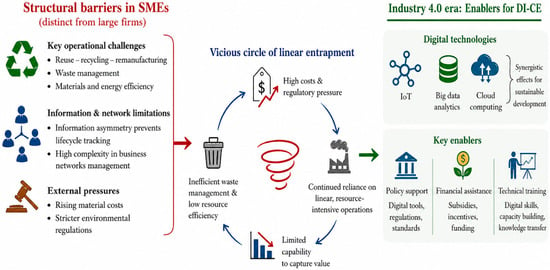
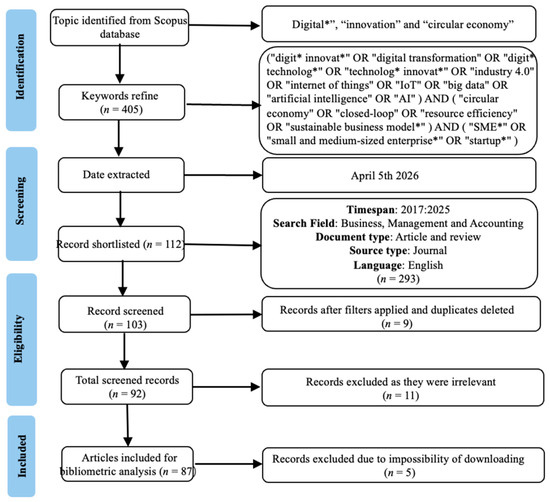
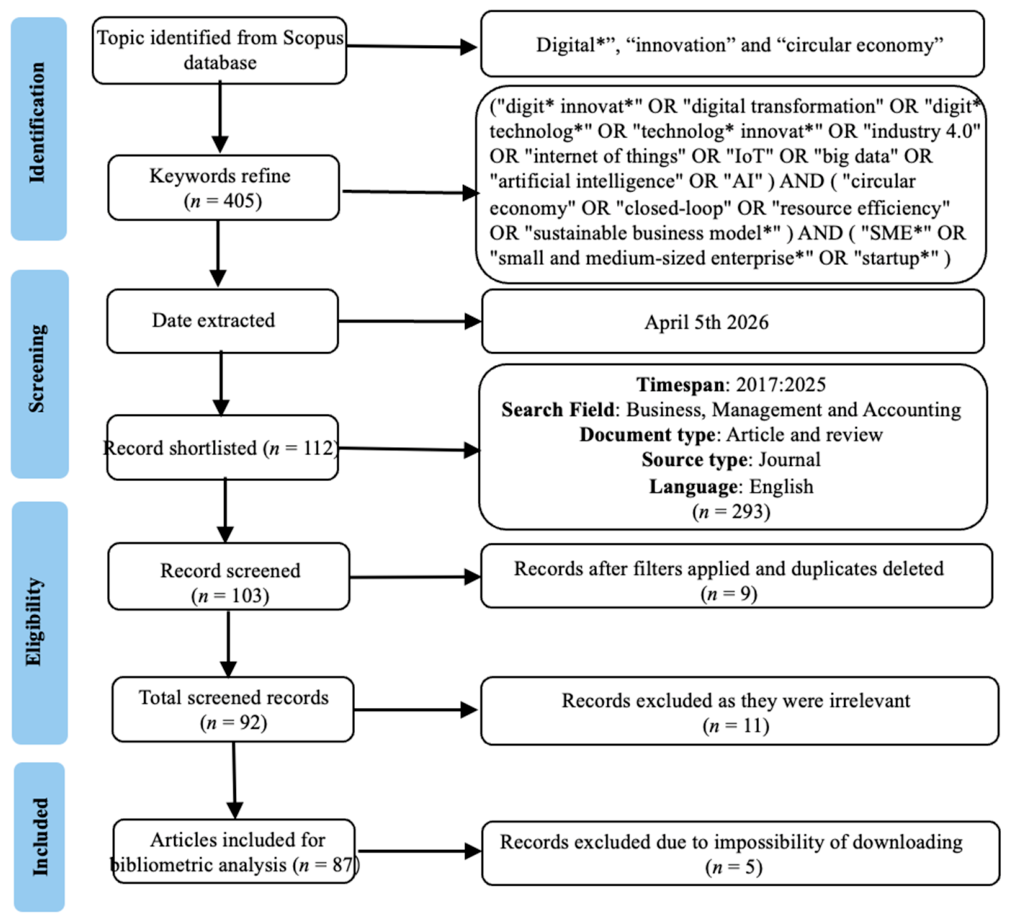
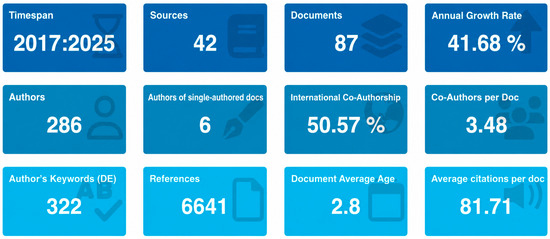
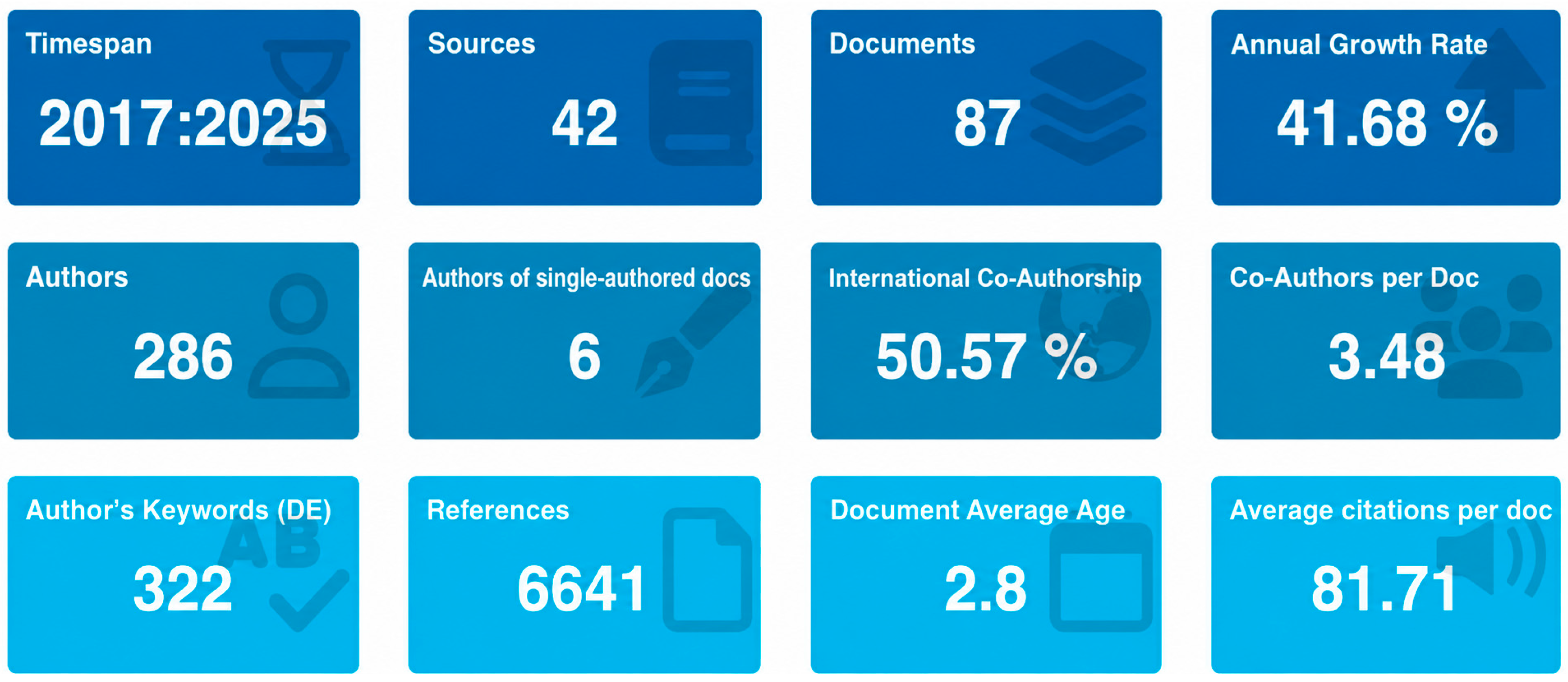
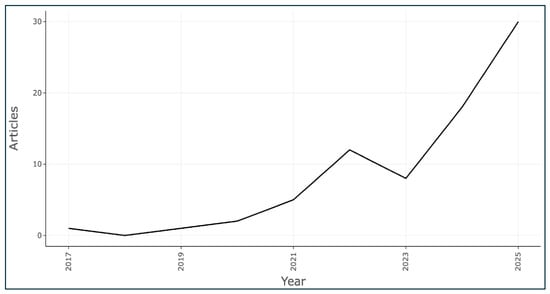
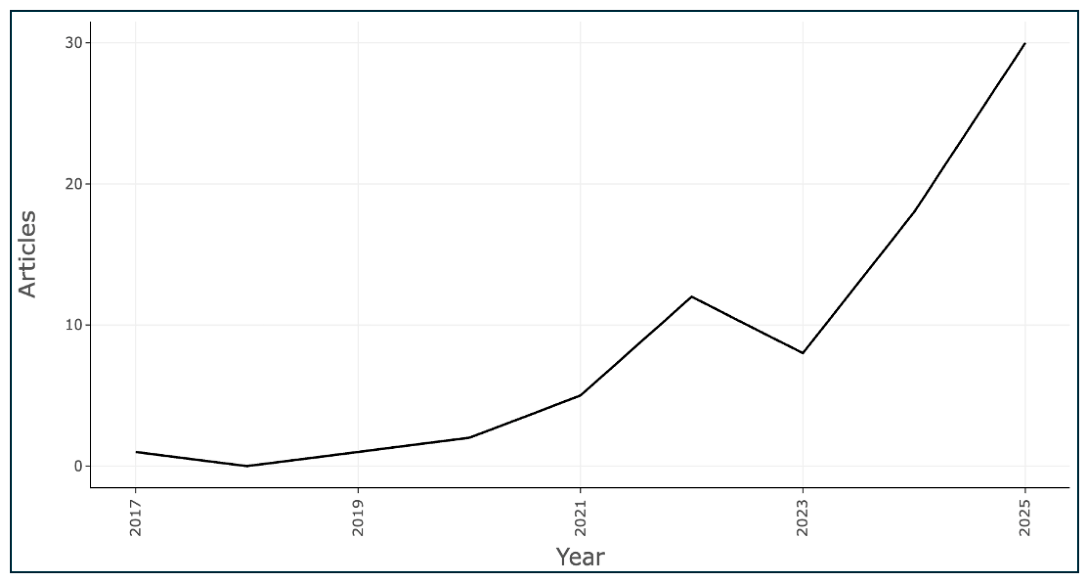
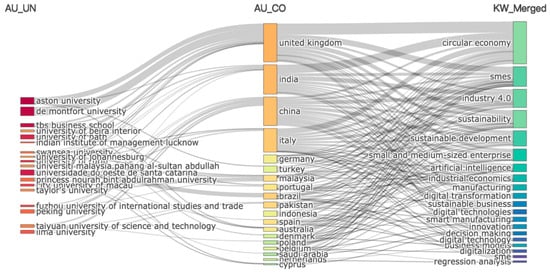
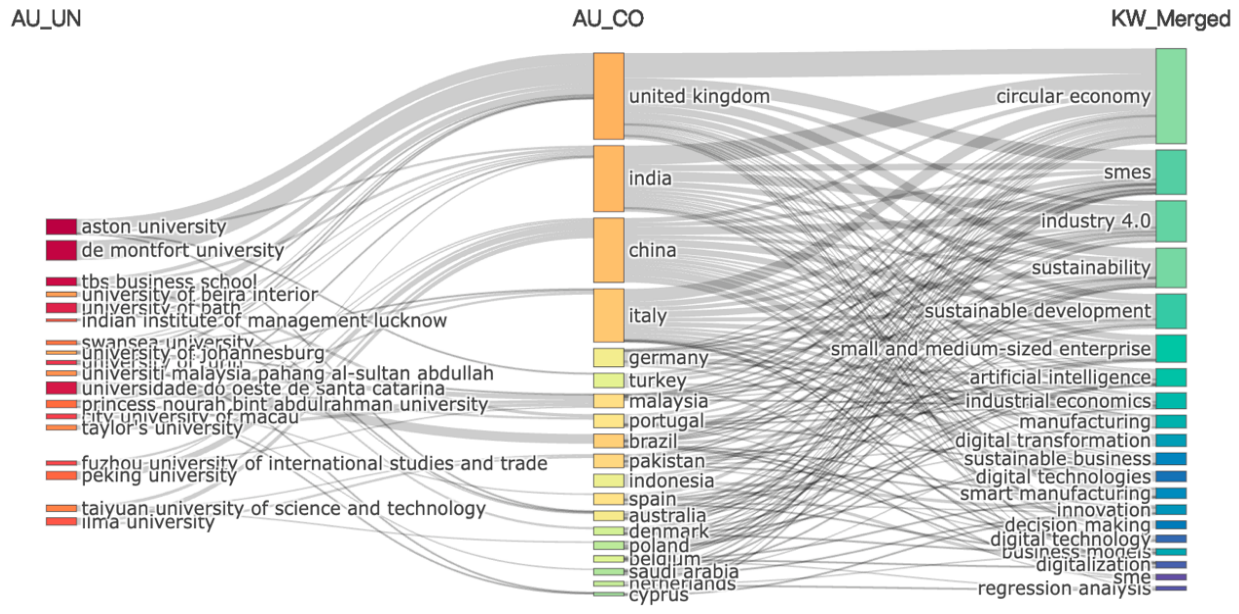
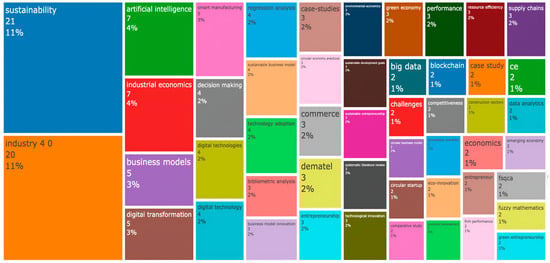
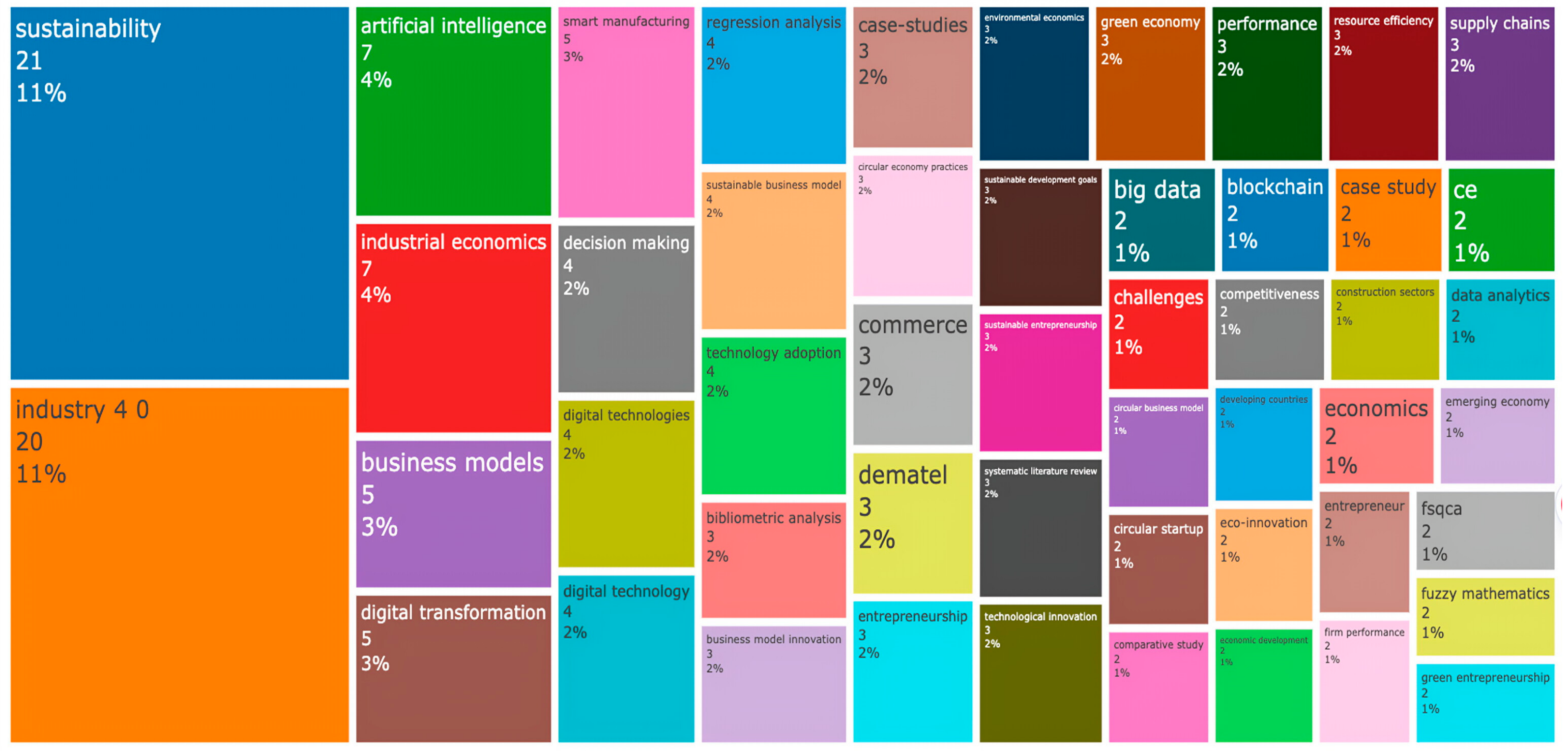
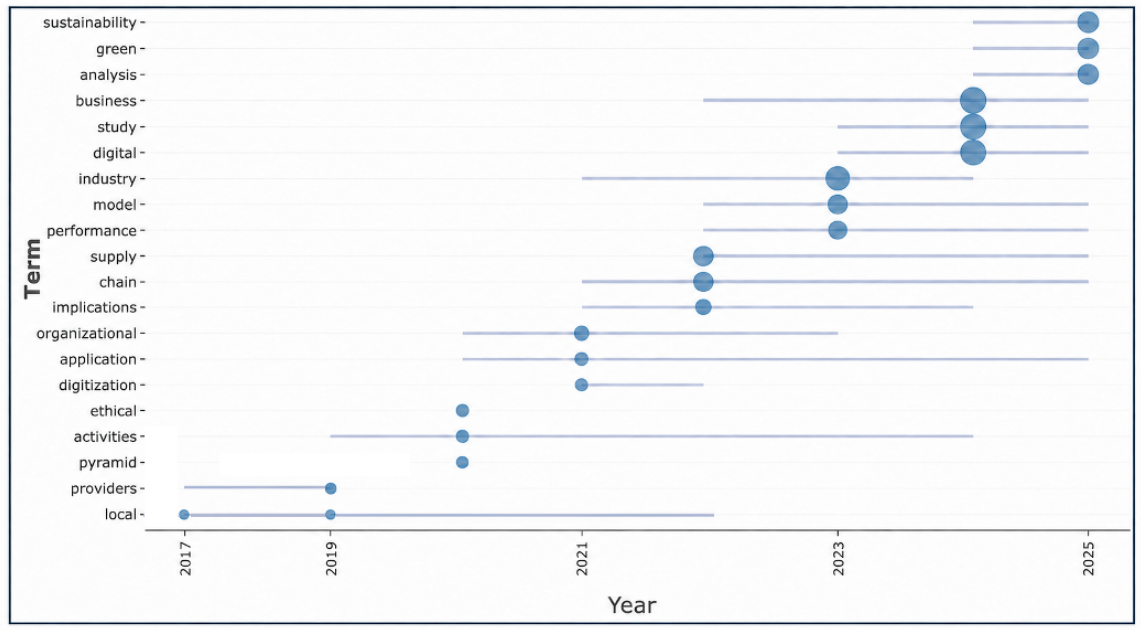
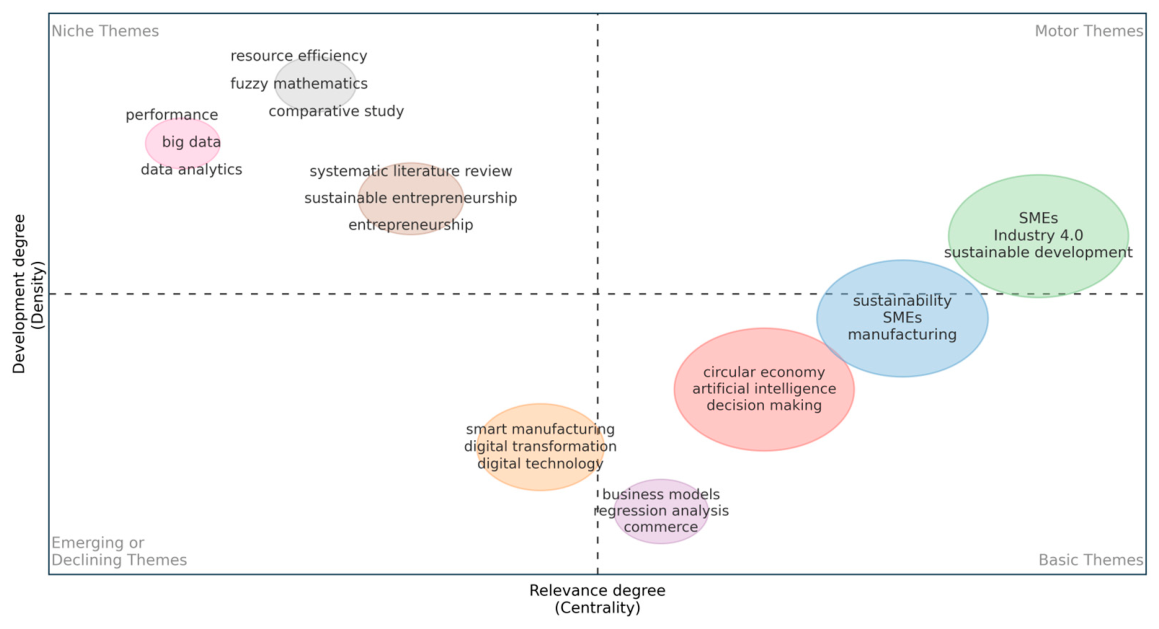
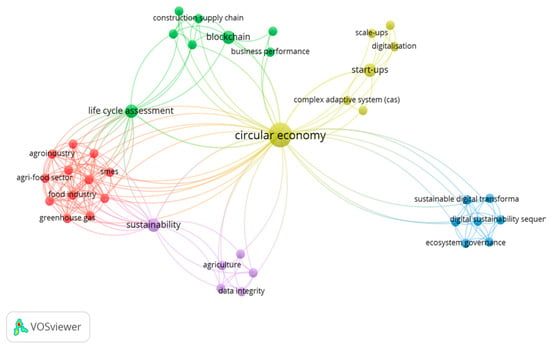
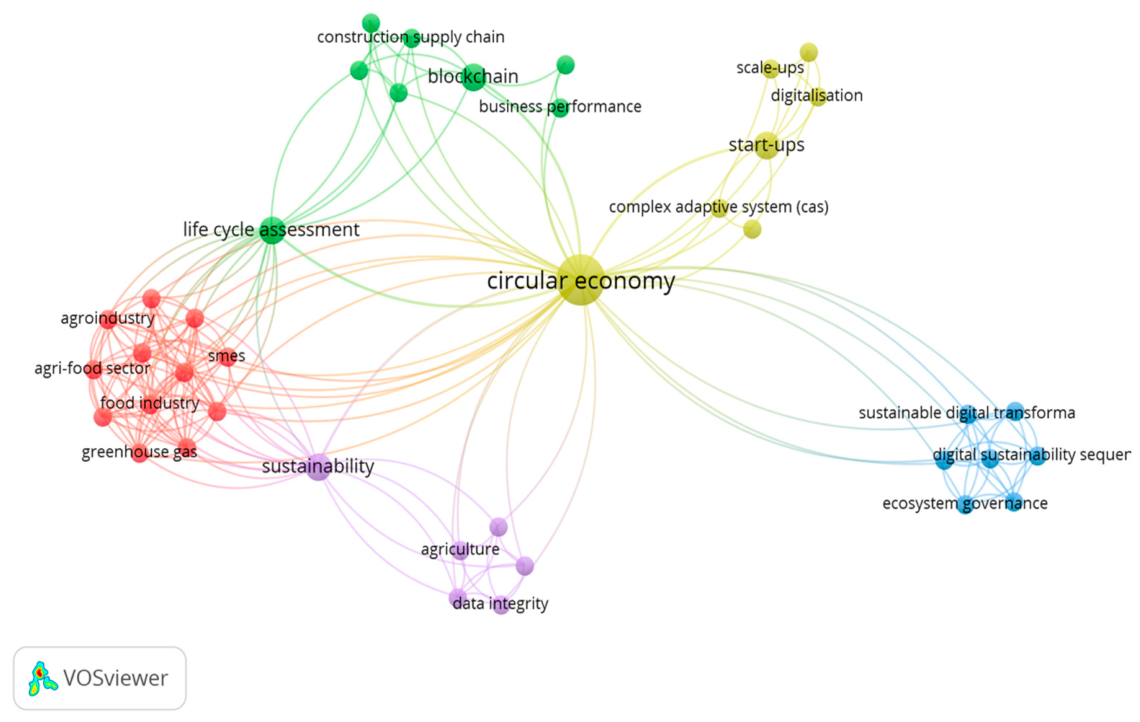


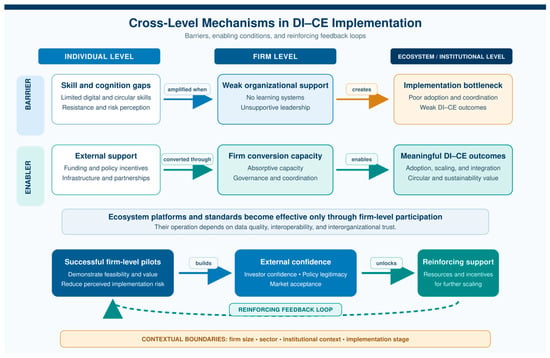
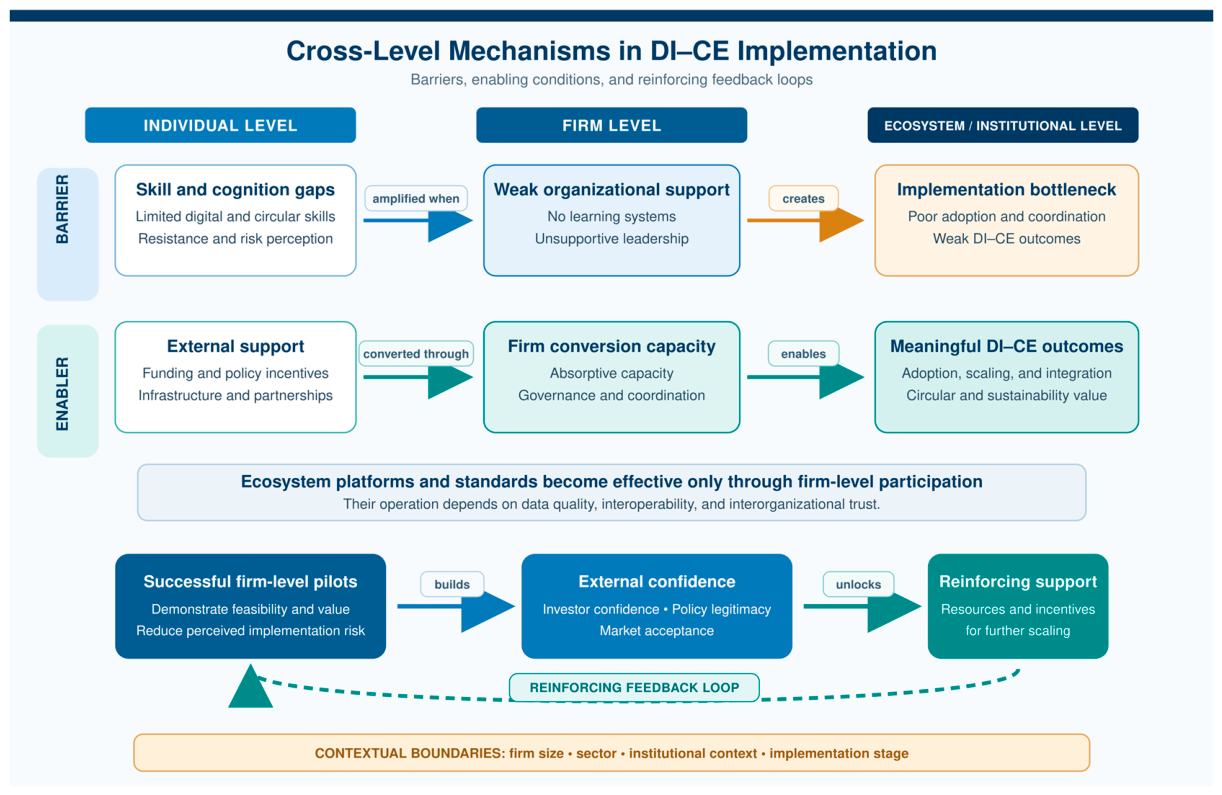
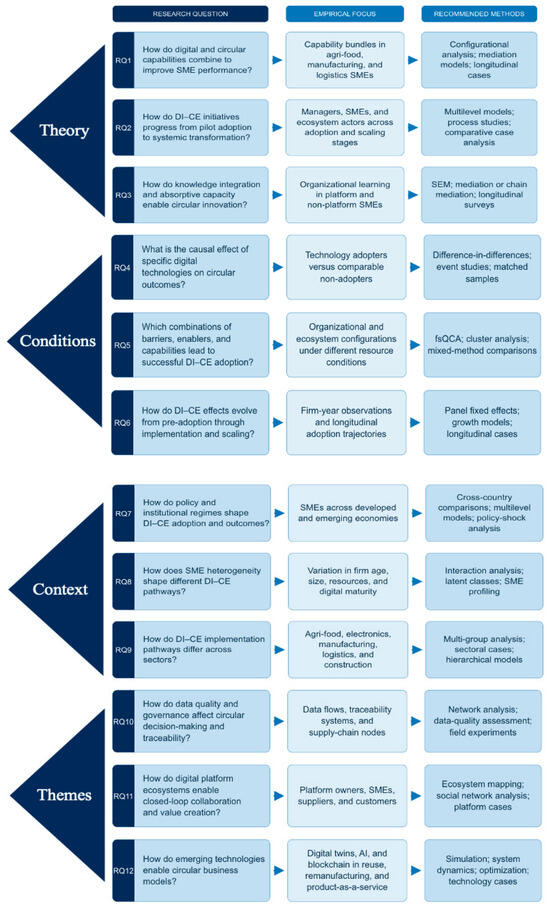
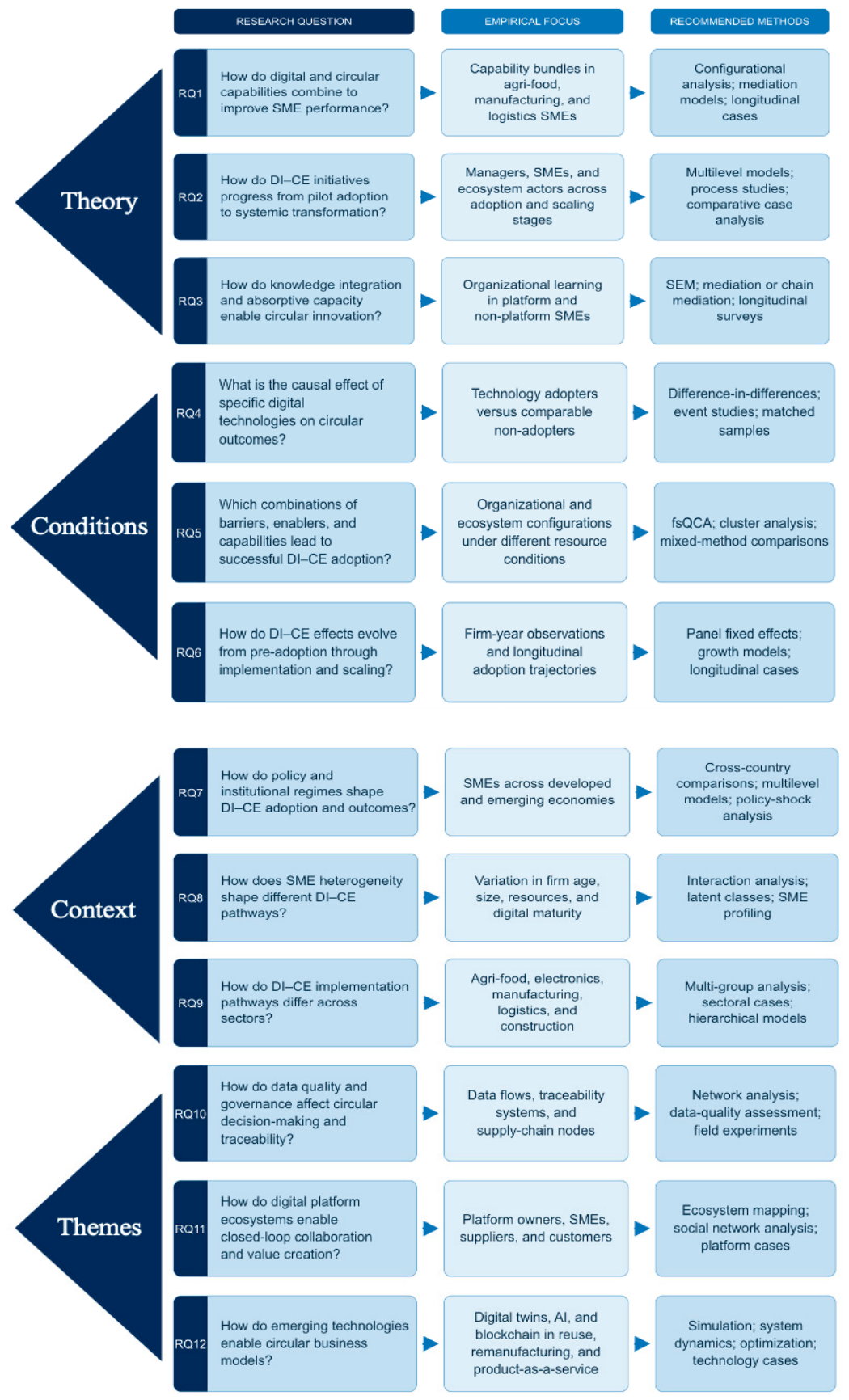

Disclaimer/Publisher’s Note: The statements, opinions and data contained in all publications are solely those of the individual author(s) and contributor(s) and not of MDPI and/or the editor(s). MDPI and/or the editor(s) disclaim responsibility for any injury to people or property resulting from any ideas, methods, instructions or products referred to in the content. |
© 2026 by the authors. Licensee MDPI, Basel, Switzerland. This article is an open access article distributed under the terms and conditions of the Creative Commons Attribution (CC BY) license.