


Abstract
This paper investigates multiple shocks from climate policy uncertainty (CPU) and green finance (GF) to carbon prices (CAPs) using the joint impulse response function (jIRF) method. The empirical findings indicate that jIRF estimates of CPU and GF on CAPs are more accurate compared to the simple sum of generalized impulse response functions, primarily due to the consideration of cross-correlations among simultaneous shocks. This highlights GF’s potential to alleviate the effects of CPU over the entire study period. Moreover, this study focuses on the post-pandemic era and reveals a positive association between GF and CAPs, indicating the evolving role of ecological governance. A key contribution lies in the introduction of the jIRF, which captures the interdependencies among concurrent shocks and underscores the evolving role of GF both before and after the COVID-19 pandemic. This study enhances the theoretical foundation of GF by illustrating its adaptation to changing macroeconomic conditions. Consequently, this study underscores the imperative for China to sustain economic growth, ensure consistency in climate policies, and bolster market-oriented reforms in green financing and carbon markets.
1. Introduction
Frequent extreme climatic events including droughts and floods have severely hindered sustained progress of global ecology, economy and society [1,2]. Against this global backdrop, China has actively taken responsibility for international climate governance. Since the release of the National Program for Addressing Climate Change in 2007 [3], China has steadily fulfilled its climate governance commitments [4]. It further proposed the Dual Carbon Goals in 2020 to realize carbon peaking by 2030 and carbon neutrality by 2060 [5], and issued relevant climate action documents in 2021 to stress ecological collaboration and pollution abatement [6]. From 1992 to 2022, over 50 Chinese governmental departments jointly issued 229 relevant climate policies, forming a complete and systematic policy governance framework [7]. Nevertheless, the frequent rollout of dense climate policies inevitably gives rise to climate policy uncertainty (CPU) to a certain degree.
Such uncertain policy environments pose tangible obstacles to enterprises, investors and policymakers, restraining their low-carbon investment decisions, weakening carbon emission reduction incentives [8], and ultimately generating profound impacts on carbon prices (CAPs) [9]. China is the major global carbon emitter, and it has long been committed to constructing and improving emission trading mechanisms. Local pilot carbon markets were launched in 2011 under the guidance of national strategic planning, yet early-stage mechanisms restricted cross-regional carbon quota transactions [10]. The central government launch of the unified national carbon market in 2021 marked a key leap in the construction of China’s carbon mitigation system [11]. It has newly incorporated high-emission industrial sectors to expand market coverage and enhance regulatory capacity in recent years; even so, prevailing low carbon prices and limited industrial coverage still restrict the emission reduction effectiveness of the national carbon trading system [12].
Under this circumstance, green finance (GF) has increasingly emerged as a vital instrument to ease such practical predicaments by virtue of its economic benefits, ecological value and policy support attributes [13,14]. GF serves as a core tool for climate governance, which can effectively fill the financing shortage within the traditional financial system for low-carbon transformation [15]. By early 2023, China had ranked first globally in green bond issuance with a scale exceeding 200 billion US dollars, while its green loan volume surpassed 3.5 trillion US dollars [16], fully demonstrating China’s solid progress in green financial development and its important status in global climate governance. Moreover, GF is inherently eco-oriented, and its capital is mainly channeled into carbon emission reduction initiatives and low-carbon technological innovation projects [17,18]. Such capital allocation may change the actual demand for carbon quotas, trigger supply–demand imbalance in the carbon market, and further drive carbon price volatility.
Accordingly, this paper addresses the following research question: what are the interactive linkages between CPU and GF, and how do they jointly affect the functioning of China’s carbon market? Based on the research question, this study investigates the divergence or convergence shocks of CPU and GF on CAPs, using joint impulse response functions (jIRFs). The empirical findings reveal several key insights. Initially, from a single-impulse-response perspective, the study observes a positive response of CAPs to CPU, suggesting that uncertainty in policy environments does not favor carbon markets. Secondly, through the joint impulse response analysis, it is found that CAPs negatively respond to both CPU and GF in the full sample, indicating that GF mitigates the adverse effects of CPU. Moreover, the combined effect of GF and CPU positively impacts the carbon market. Finally, by dividing the sample into pre-pandemic and post-pandemic samples, we find that the role of GF changes from positive to negative, demonstrating that COVID-19 produces significant influences on the macro-economic environment and hinders the function of GF.
This work delivers meaningful contributions to both academic theories and empirical practices of prior studies. First, this paper constructs a refined analytical framework that incorporates green finance into the research nexus of CPU and CAPs. Existing studies generally examine the separate effects of CPU [10,19,20] or green finance [21,22,23] on the carbon market, but seldom integrate the three factors into a unified analytical system. Filling this research gap, this study systematically discusses the interaction between CPU and GF, as well as their synergistic impacts on carbon price dynamics. This framework supplements and improves the theoretical system of carbon price influencing factors, offering solid theoretical support for relevant empirical and governance research in the climate and green finance field. Second, this study employs a novel joint impulse response function under the VAR framework, optimizing the conventional empirical paradigm for carbon market research. Most prior studies adopt the generalized impulse response function (gIRF), which fails to isolate the independent shocks of core variables and is susceptible to interference from cross-correlated simultaneous shocks [24,25,26]. By contrast, the applied method can effectively identify the respective impacts of CPU and green finance on carbon price fluctuations, eliminate estimation bias arising from variable correlation, and produce more robust empirical results. It also provides a reliable methodological reference for quantitative research on carbon market dynamics. Third, this study delivers differentiated and targeted policy implications for diverse stakeholders, complementing the practical findings of existing studies. Most extant studies neglect the phased heterogeneity of green finance’s carbon governance effect before and after the COVID-19 pandemic, leading to one-sided policy recommendations [27,28,29]. This study distinguishes the distinct role of GF in stabilizing carbon prices across pre-pandemic and post-pandemic periods. It further proposes tailored strategies for governments, firms and investors to cope with uncertainties of climate policy and promote low-carbon development. The conclusions provide practical decision-making guidance for multi-stakeholder climate governance and carbon market optimization.
This study’s remaining sections are organized as follows: An overview of the pertinent literature is covered in Section 2. The influencing method is disclosed in Section 3. The combined impulse response function approach is described in Section 4. Data are explained in Section 5. The findings of the empirical analysis are shown in Section 6. The results and their ramifications are discussed in Section 7.
2. Literature Review
2.1. Climate Policy (Uncertainty) and Carbon Market
Several studies argue that climate policy (uncertainty) is essential to solving environmental problems, particularly within carbon markets. Ozturk et al. [30] highlight that uncertainty in climate policy is a major cause of price variations in carbon markets. Yan and Cheung [10] discovered that CPU and coal price exert varying impacts on carbon prices. Banerjee et al. [31] indicate that climate policy initiatives serve as a transmitter of interconnectedness among variables such as carbon risk and green finance. Chen et al. [32] demonstrate that technological innovation and effective climate policies are pivotal in mitigating carbon emissions in agriculture. However, differing perspectives exist regarding the impact of climate policy. Wang et al. [33] illustrate that CPU is a risk receiver and passively absorbs shocks from energy, green finance, and carbon markets. Candelon and Hasse [34] compare the performance of the Kyoto Protocol, the Swedish carbon tax, and the EU ETS, concluding that carbon tax successfully decreases carbon emissions over time. Sun et al. [35] examine the implementation sequence of national and local governments’ different climate policies, highlighting concerns regarding their effectiveness in reducing carbon emissions.
In China, numerous studies delve into the linkage between CPU and the carbon market. Dong et al. [36] and Wu et al. [37] assert that China’s “bottom-up” climate policies, such as the low-carbon city pilot (LCCP), effectively reduce carbon emissions and emission intensity. However, not all climate policies yield carbon reduction benefits. Zhang et al. [38] argue that neither the CO2 intensity of GDP nor per capita CO2 emissions at the city level were significantly affected by the LCCP. Chai et al. [39] discovered that the carbon market and carbon tax policies result in the best emission reduction but have the biggest financial expenses, and are thus not viable in the long term. Ren et al. [40] discovered that the Carbon Intensity Reduction Target policy effectively decreases carbon emission, but the Energy Intensity Reduction Target policy produces less dependable results. Wang et al. [41] revealed that CPU mostly has a detrimental influence on corporate social responsibility and environmental regulations, which impedes attempts to reduce emissions.
2.2. Environmental Governance of Green Finance
Numerous studies specifically look at how green financing contributes to reducing carbon emissions. Xu and Lin [14] demonstrate that green finance exerts an inverted U-shaped influence on urban carbon intensity, with a stronger carbon reduction effect at later stages. Zhao et al. [17] establish that green finance effectively reduces carbon output, especially in businesses with significant local marketization and high capital intensity. Dill [42] finds that green bonds contribute to reducing carbon emissions but do not directly influence carbon prices. Su et al. [18] highlight green finance’s important contribution to reduced carbon emissions at the province level through improved industrial structures and greener energy. Huang et al. [43] confirmed a significant reduction in CO2 emissions brought about by green financial growth, especially in Eastern and Central China. Additionally, Wang et al. [44] revealed that green finance produces a negative impact on sulfur dioxide intensity and significantly reduces regional pollutant emissions.
Furthermore, several studies explore how green finance moderates environmental governance. Ran and Zhang [45] revealed that green financing can effectively curb carbon emission levels by optimizing industrial structure and stimulating green innovation. Behera et al. [46] demonstrate that there are 14 developing nations’ carbon emissions that are greatly reduced via green finance. Yadav et al. [47] found that green finance reinforces the negative nexus between CO2 emissions and renewable energy investment. Hu et al. [48] argue that green finance effectively promotes technological innovation, thereby restraining CO2 emissions, especially in regions with high environmental quality. Sharif et al. [49] illustrate that economic growth intensifies environmental degradation, yet green finance mitigates this impact, particularly on CO2 emissions. However, contrasting views exist. Sethi et al. [50] argued that alongside advanced green technologies and sound institutional systems, the moderating role of green finance exerts merely trivial influences on carbon emission levels.
The current literature extensively discusses the nexus between CPU and the carbon market, as well as the environmental governance role of green finance [2,38,39]. However, several points warrant improvement. First, few studies incorporate green finance directly into the analytical framework alongside CPU and the carbon market, neglecting its potentially variable role in different macroeconomic environments. Second, the existing literature often examines green finance in isolation, overlooking its synergistic or antagonistic effects when interacting with other variables. Lastly, the COVID-19 pandemic has exerted far-reaching influences on investment and financing activities within the green finance sector, yet few studies explore its implications for the relationship between CPU and the carbon market. To address these gaps, this study uses a joint impulse response function and splits the sample into pre- and post-epidemic phases. The approach aims to elucidate how CPU and green finance collectively influence the carbon market, acknowledging the time-varying nature of green finance’s role and offering nuanced policy insights.
3. Theoretical Basis
The reduction in CO2 emissions and the broader transition to low-carbon practices are fundamental objectives of sustainable development, closely intertwined with climate policy and green finance.
3.1. Transmission Mechanism of CPU’s Effect on Carbon Prices
CPU affects carbon prices mainly by changing high-carbon enterprises’ production and emission decisions, showing distinct short-term and long-term heterogeneous effects [51]. In the short term, heightened policy uncertainty increases corporate environmental compliance risks and potential penalty costs [52]. To reduce expenditure on carbon quotas, enterprises actively cut high-energy production and carbon emissions [53], lowering short-term market carbon demand and suppressing CAPs. Meanwhile, financial institutions tend to tighten credit constraints for high-carbon industries under uncertain policy conditions [54], further curbing production activities and carbon demand.
In the long run, sustained CPU drives fundamental adjustments in corporate low-carbon strategies. To hedge persistent policy uncertainty, enterprises increase investment in clean energy substitution and low-carbon technological innovation [55,56]. The continuous optimization of production and emission structures reduces industrial carbon dependence, leading to a lasting decline in carbon quota demand. Unlike temporary short-term production adjustments, long-term micro behavioral transformation reshapes the carbon market’s supply and demand structure, exerting persistent downward pressure on carbon prices.
3.2. Transmission Mechanism of GF’s Effect on Carbon Prices
GF influences carbon prices primarily by alleviating enterprises’ low-carbon financing constraints and guiding green resource allocation [57]. High-carbon enterprises generally face high financing costs and insufficient long-term funds for industrial upgrading, which hinder emission reduction progress [58]. As key green financial tools, green bonds and green loans fit the long-cycle characteristics of green innovation, effectively expanding corporate financing channels and filling the funding gap of low-carbon transformation [59]. Additionally, green financing delivers positive environmental signals to the market, reducing corporate risk premiums and further lowering comprehensive financing costs [60].
Improved financing conditions enable enterprises to invest in equipment upgrading, energy substitution and green technology R&D, thereby reducing their reliance on carbon allowances [61]. Similarly, GF presents heterogeneous effects across different time horizons. In the short term, it solves the capital shortage of corporate incremental emission reduction behaviors, promotes immediate emission cuts, reduces short-term carbon quota demand and triggers temporary carbon price fluctuations [62]. In the long term, continuous green capital injection accelerates industrial low-carbon restructuring, fundamentally reduces the market’s effective carbon allowance demand, and forms a stable long-term inhibitory effect on carbon prices.
4. Methodology
4.1. Generalized Impulse Response Function (gIRF)
This paper first provides a brief overview of the Vector Autoregressive (VAR) model and impulse response functions (IRFs) to establish terminology and concepts. The VAR(p) model is constructed as follows:
where the constant vector is shown by , the coefficient matrix is denoted by , and the multiple-dimension shock vector is presented by . The vector moving average (VMA) representation of the VAR(P) is as follows:
where c and represent a constant vector and the coefficient matrix.
The gIRF, developed by Koop et al. [63] and Pesaran and Shin [64], is used to overcome the difficulty of the components of not being independent. The gIRF at time t + h is defined as the difference between the conditional expectations of with and without a shock to variable j:
where is the information set at time t − 1, and is the magnitude of the shock to variable j. Assuming the multivariate normality of , the unscaled gIRF can be expressed in terms of , the covariance matrix in terms of . Following the one-standard-deviation (OSD) convention , the final expression for the gIRF is obtained. The detailed derivation is provided in Appendix A.
4.2. Joint Impulse Response Function (jIRF)
Unlike the gIRF, which considers a single shock at a time, the jIRF considers simultaneous shocks from a set of variables (a subset of the K variables in the system). The jIRF at time t + h is defined analogously:
where is the vector of shock to the variables .
Under multivariate normality, the jIRF can be written using , , a selection matrix , and the shock vector . Adopting OSD scaling for each shock in (e.g., for each ), the final jIRF expression is obtained.
Additionally, the joint forecast error variance decomposition (jFEVD) for variable i with respect to shocks from set is defined as the proportion of the H-step-ahead prediction error variance of variable i that can be attributed to simultaneous shocks from .
All intermediate equations and final expressions for the jIRF and jFEVD are presented in Appendix B.
The jIRF method offers distinct advantages over conventional impulse response approaches [65]. Unlike gIRF, which evaluates shocks one at a time, the jIRF simultaneously models multiple correlated uncertainties, capturing their realistic joint effects. It explicitly accounts for shock covariance, eliminating the overestimation bias of simple aggregation. Free from variable ordering dependence, the jIRF ensures stable, reliable results. It also produces narrower confidence intervals, enhancing estimation precision. Overall, the jIRF better reflects complex real-world interactions, yielding more accurate and policy-relevant inferences.
5. Data and Descriptive Analysis
The sample range for this study spans from January 2014 to December 2025. The establishment of the Shanghai carbon emission trading market at the end of 2013 marked the beginning of utilizing “economic leverage” to manage carbon emissions. Concurrently, the green bond (GB) market’s growth was formalized in 2014 with the publication of the Green Bond Principles. Throughout the sample period, significant events such as the formal signing of the Paris Agreement in April 2016 and the outbreak of the COVID-19 epidemic in 2020 led to pronounced fluctuations in climate policy.
The first variable is climate policy uncertainty (CPU). Referring to Ma et al. [66], we construct the CPU index as follows.
(1) Data Collection: This study collects raw textual data from six authoritative mainstream Chinese newspapers, including People’s Daily, Guangming Daily, Economic Daily, Global Times, Science and Technology Daily, and China News Service. The relevant source comes from the WiseNews database.
(2) Data Cleaning: All articles are systematically preprocessed. Titles and texts are merged, while punctuation, URLs, spaces, duplicates, and invalid entries are removed to produce a clean corpus.
(3) Manual Auditing and Annotation: Climate policy uncertainty (CPU) is defined as news with uncertainty about policy formulation, timing, content, or outcomes. Forty-eight graduate students label articles as CPU-related (1) or not (0); each article is triple-reviewed, with discrepancies rechecked.
(4) MacBERT Model Training and Classification: The Chinese pre-trained MacBERT model is used to avoid rule-based subjectivity. Labeled data are split into 70% training and 30% testing, optimized via cross-entropy loss. The model achieves 97.83% accuracy and an F1-score of 98.40%, then classifies all unlabeled articles for CPU relevance.
(5) CCPU Index Calculation: The CCPU index is constructed following a standardized aggregation process. First, the raw ratio Xit is calculated as the proportion of CPU-related articles to the total number of articles for each newspaper i in month t. Next, each Xit is standardized by dividing it by its time-series standard deviation σi to eliminate newspaper-specific bias. Finally, the standardized values are averaged across all newspapers to derive the monthly CCPU index.
The second variable is the Green Bonds Index (GBI). This index encompasses a diverse range of bonds issued by various entities, providing a comprehensive gauge of the market’s status. In China, policy support, including the Interim Measures for the Management of Green Finance Labels (2019) and the Green Bond Endorsed Project Catalogue (2021), has driven robust market expansion. By 2024, its yearly issuance scale hit 681.4 billion yuan, ranking China as the second largest green bond market across the globe. Previous research mainly explores its pricing mechanisms and ecological outcomes, verifying that such financial instruments are capable of mitigating operational and climate-related risks. [67]. Given the rapid development and substantial scale of the green bond market, this paper adopts it as a proxy for green finance, and this indicator has been widely recognized in academic research [68,69].
The third variable, the carbon price (CAP), is derived from the Shanghai Environment and Energy Exchange Carbon Emission Quota (SHEA). The Shanghai emission trading pilot program, leading in both volume and market stability within China, serves as a reliable indicator of the country’s emission trading market performance [70,71].
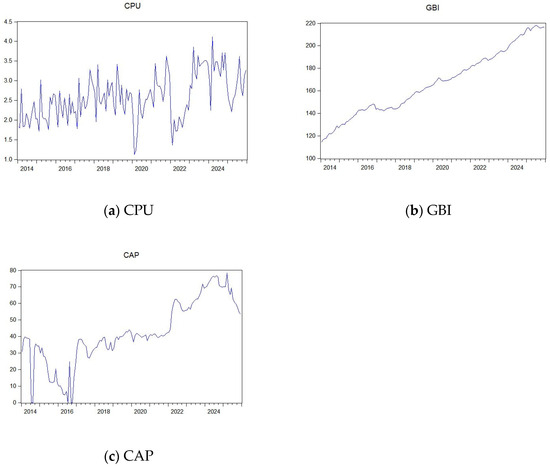
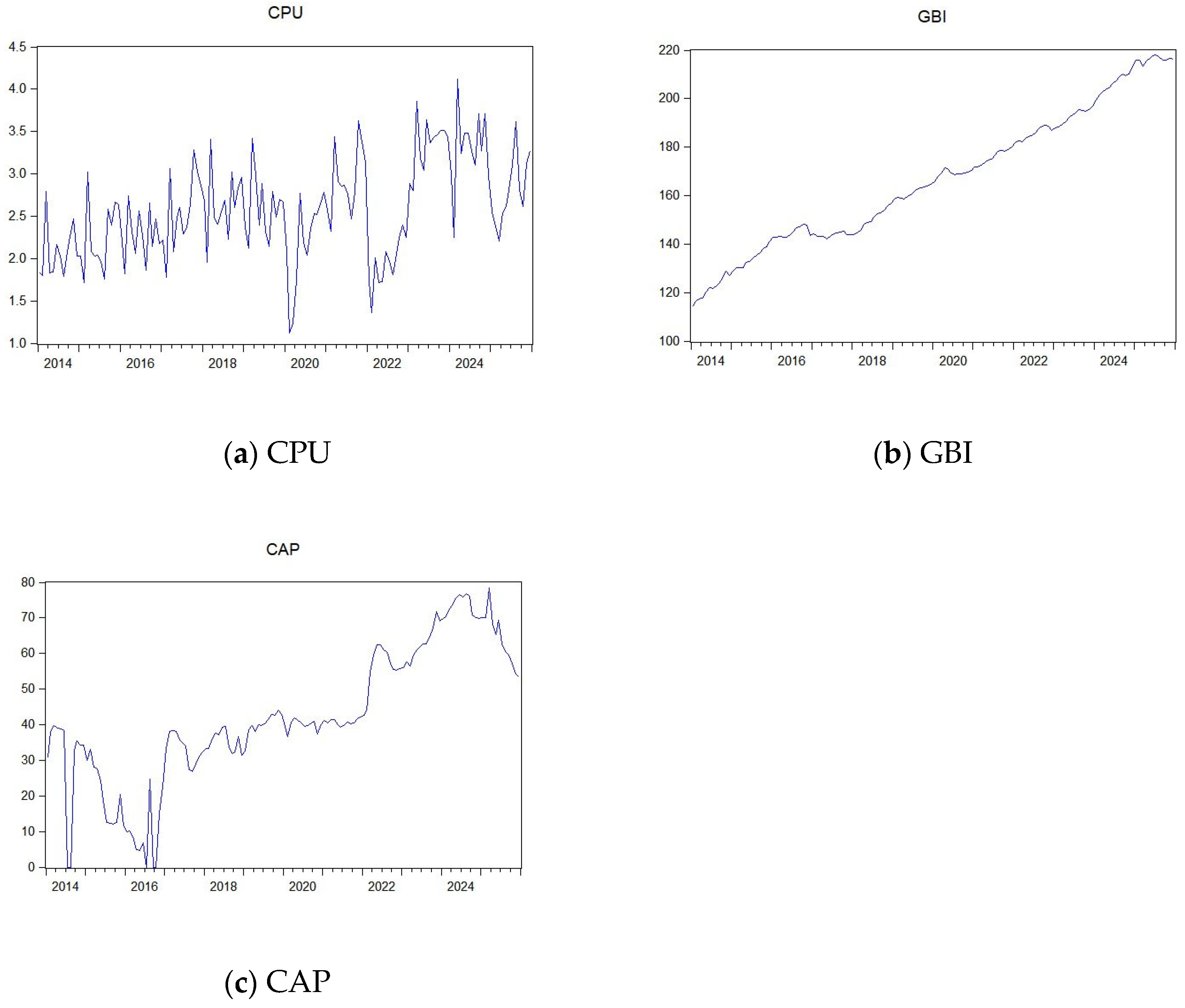
Figure 1 shows the fluctuations of CPU, GBI, and CAPs. CPU presents substantial volatility throughout the period. Global average sea surface temperatures hit an unprecedented peak in 2014, which further drove adjustments to relevant climate governance policies. China and the US played pivotal roles in advancing the Paris Climate Agreement, which was signed in 2015 and jointly ratified on the eve of the 2016 G20 Summit in Hangzhou. However, China’s climate policies faced increased uncertainty following the US withdrawal from the agreement in November 2020. The Sino-French Joint Declaration in April 2023 clarified aspects of climate cooperation, thereby reducing uncertainty surrounding China’s climate policies. The GBI generally stays stable with slight oscillations, and the launch of Green Bond Principles in 2014 delivered a prominent driving force for its growth. In 2017, the market for green bonds in China was momentarily affected by the Federal Reserve’s interest rate rise, causing a short-term drop in the GBI. In 2020, China shifted the issuance mechanism of corporate bonds toward a registration-based regime, easing issuance conditions and encouraging green bond issuance to some extent. CAPs show significant variability, marked by notable shifts. In April 2016, in light of the Paris Agreement, China implemented stringent environmental policies aimed at curbing carbon dioxide emissions, leading to a sharp decline in CAPs. Subsequent national policies and regulations accelerated implementation, fostering more stable CAP development. In February 2022, enforcement measures following the First Compliance Cycle of the National Carbon Market Notice penalized non-compliant emission units, encouraging greater corporate participation in carbon trading and contributing to slight CAP growth.
Figure 1.
The trend of CPU, the GBI and CAPs.
Table 1 presents descriptive statistical results for CPU, the GBI, and CAPs. The mean values indicate concentrations around 2.575 for CPU, 166.797 for the GBI, and 42.028 for CAPs. CAPs exhibit the highest volatility based on the standard deviation values. Skewness values greater than 0, except for CAPs, indicate that the distributions of CPU and the GBI are right-skewed. Furthermore, CAPs’ kurtosis being less than 3 suggests that they follow a platykurtic distribution. As shown from the Jarque–Bera test, all three variables are normally distributed.
Table 1.
Descriptive statistics.
6. Empirical Results
6.1. Basic Analysis
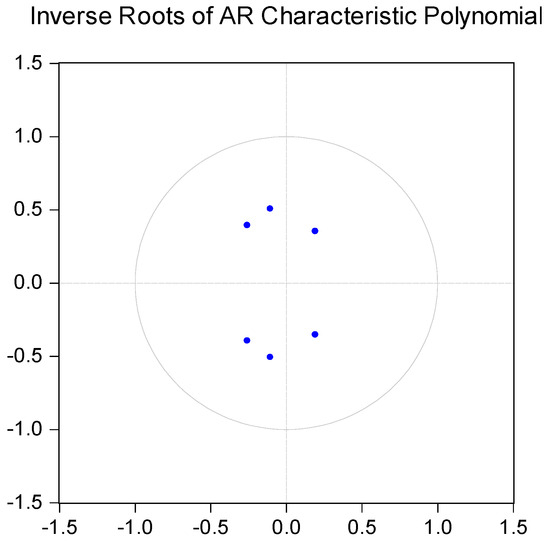
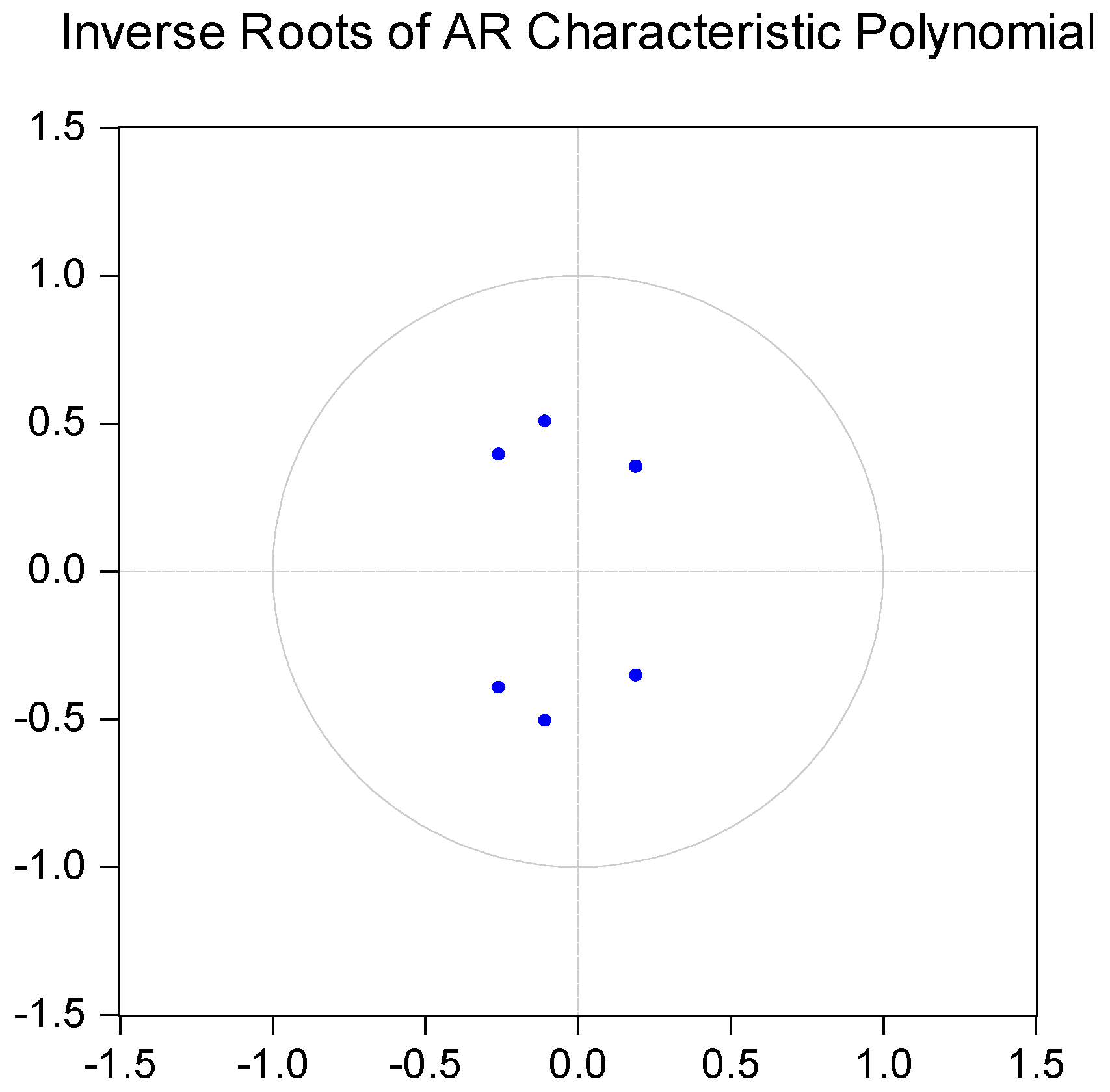
This paper initially employs unit root tests, specifically the ADF [72] and PP [73] tests, to assess the stationarity of the original data. The null hypothesis for tests is that the time series contains unit roots. As indicated in Table 2, the time series for CPU, the GBI, and CAPs fail to reject the null hypothesis, suggesting that they are non-stationary. However, after applying first-order differencing, CPU, the GBI, and CAPs become stationary at the 1% significance level. Consequently, this study utilizes the first-order differenced sequences of these variables. Figure 2 provides the diagnostic test results of the VAR model. All inverse characteristic roots fall inside the unit circle, which verifies the stability of the constructed VAR model. Further, Table 3 shows the results of lag order selection; after verification, the determination of the optimal lag length is 1.
Table 2.
Unit root test.
Figure 2.
Inverse roots of characteristic polynomial.
Table 3.
Lag order selection.
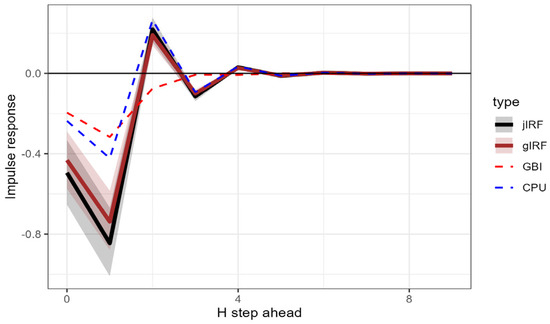
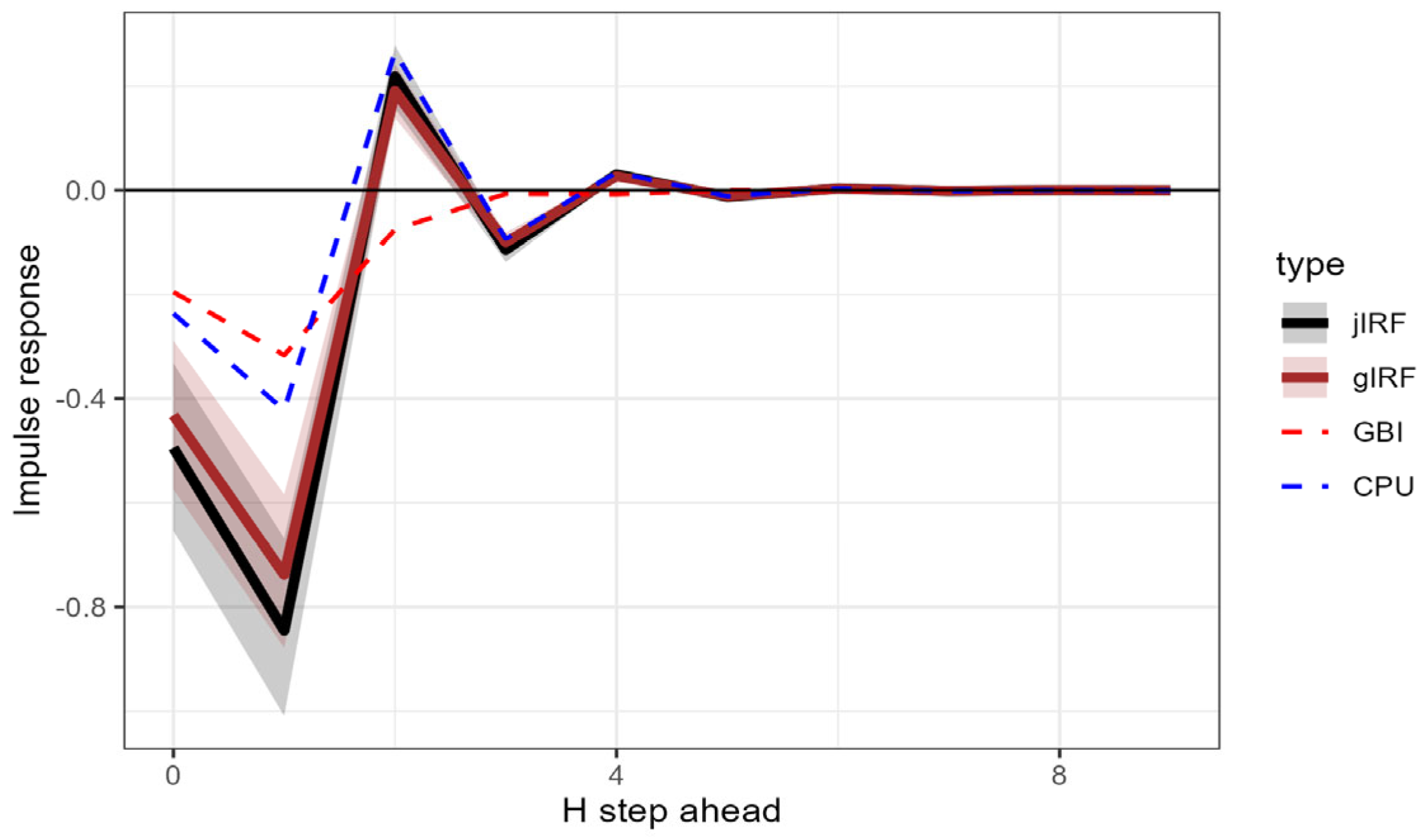
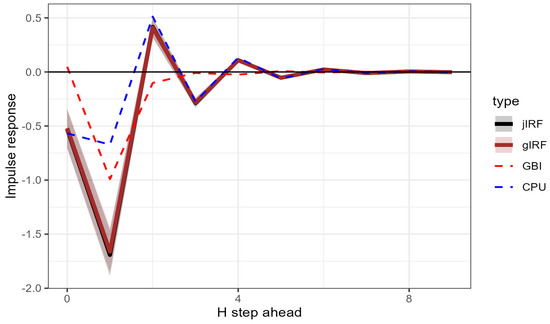
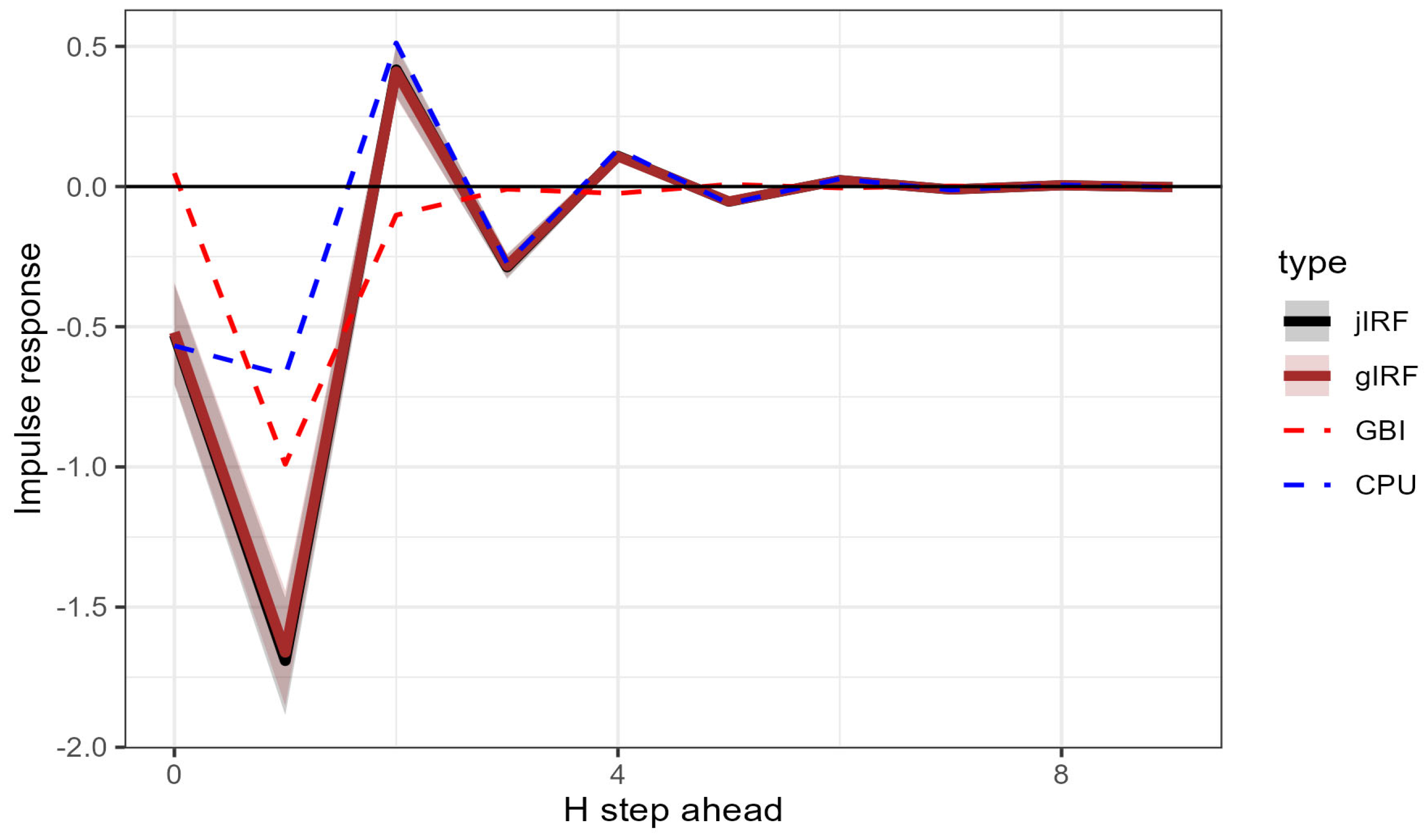
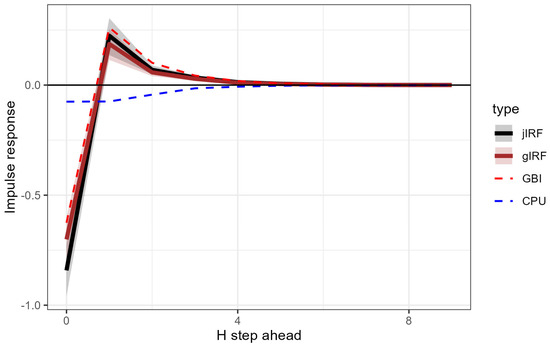
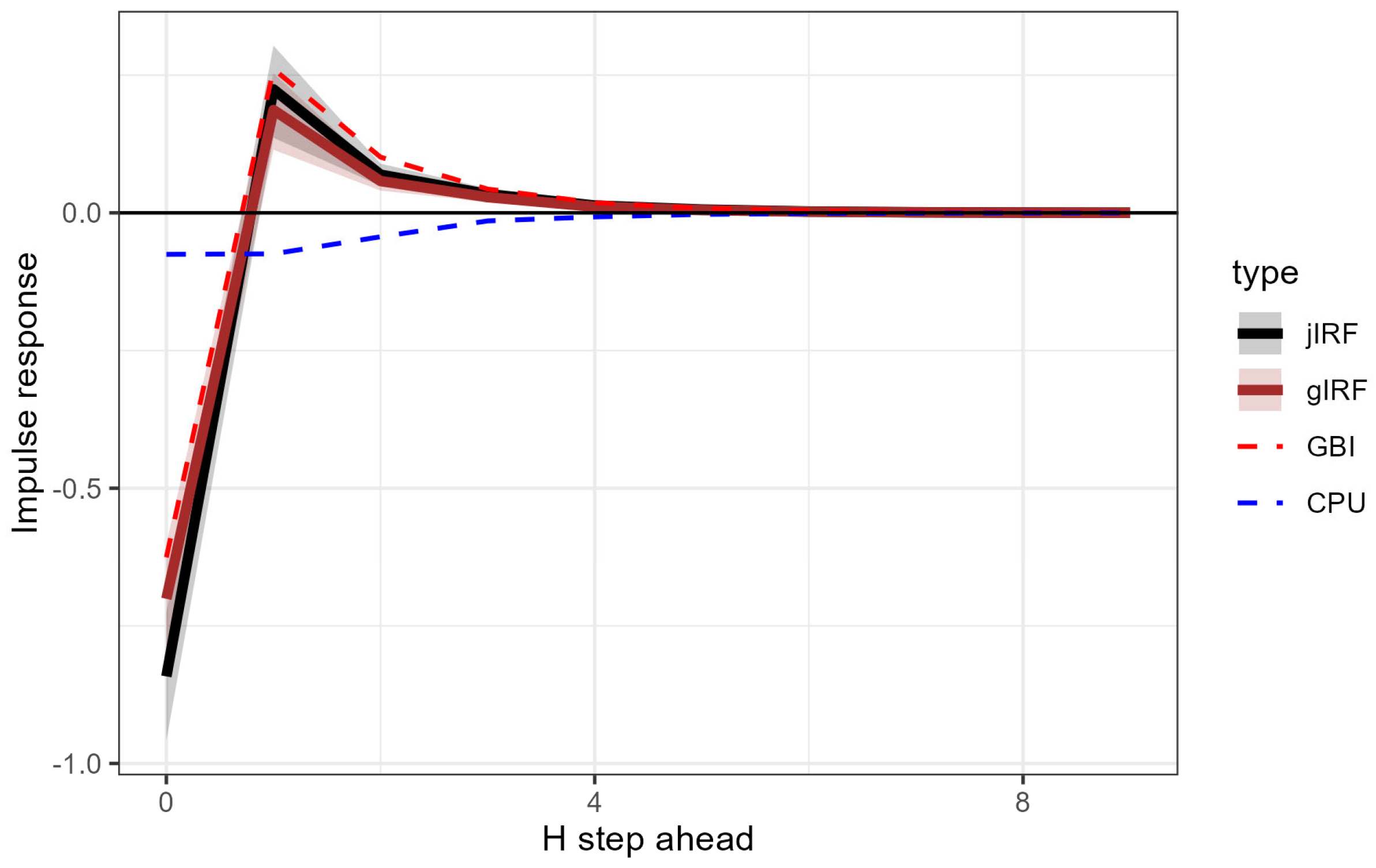
In Figure 3, the generalized impulse response function (gIRF) traces the dynamic reactions of CAPs to isolated CPU and GBI shocks. The blue dashed line represents CAPs’ positive response to a CPU shock, showing that increased climate policy uncertainty exerts lasting upward pressure on carbon prices. When future regulations become less predictable, firms face greater ambiguity over compliance costs and penalties, which discourages long-term low-carbon investments and emission reductions. Instead, they prioritize short-term operational stability, leading to sustained or even higher carbon emissions. This boosts market needs for carbon emission permits, and with limited supply, carbon prices rise accordingly. Moreover, uncertain regulatory prospects influence market expectations and investor sentiment, further intensifying price volatility. In contrast, the red dashed line illustrates CAPs’ negative response to a GBI shock, confirming that green finance helps stabilize and lower carbon prices. As a key green finance instrument, green bonds channel capital into renewable energy, green innovation, energy efficiency, and industrial decarbonization. By easing financing constraints for low-carbon projects, they enable firms to expand emission reduction efforts, lower carbon intensity, and reduce overall emissions. Weaker emissions lead to falling demand for carbon allowances, easing upward price pressure. Additionally, the growth of green finance signals strong policy commitment to the low-carbon transition, enhances market confidence, directs capital toward sustainable development, and indirectly dampens excessive carbon price swings driven by policy uncertainty.
Figure 3.
Impulse response of CAP in full sample.
Furthermore, the solid brown line in Figure 3 plots the aggregated generalized impulse response function (aggregated gIRF), which sums the individual gIRFs of CPU and the GBI, while the shaded brown area represents its 80% confidence interval. The black line, by contrast, illustrates the joint impulse response function (jIRF), capturing CAPs’ dynamic adjustments to simultaneous, interdependent shocks from both CPU and the GBI; the gray shaded area shows the corresponding 80% confidence interval. Visibly, the absolute magnitude of the aggregated gIRF is substantially larger than that of the jIRF. From an econometric standpoint, this discrepancy is rooted in a fundamental limitation of the aggregated gIRF: it treats CPU and GBI shocks as independent and additive, failing to account for their inherent cross-correlation and interactive relationship. As established in our theoretical framework, CPU directly shapes the expectations and resource allocation of green finance, creating an endogenous linkage between the two variables. Ignoring this covariance structure leads to the double-counting of overlapping shock effects, resulting in significant upward bias and inflated estimates of the combined impact. In contrast, consistent with the theoretical premise of joint shock transmission, the jIRF explicitly incorporates the covariance between CPU and the GBI, effectively disentangling their independent and interactive effects, thus yielding more accurate, unbiased estimates that better reflect real-world economic dynamics.
Moreover, aligning with the theoretical view that GF advances the low-carbon transition through capital re-allocation and industrial restructuring, China’s green bond marketplace has undergone rapid expansion and acts as a vital propeller for sustainable development. By the end of 2022, cumulative issuances hit 1.9 trillion yuan, ranking second globally and underscoring the system’s scale and dynamism [74]. Green finance policies have also spurred innovation, with the number of green patents rising from 16,000 in 2006 to 223,000 in 2017, reflecting finance–technology linkages [75]. Theoretically, green finance optimizes energy structures via low-cost funding and preferential rates, reducing clean energy capital costs [33]. Supported by policies, it eases financing constraints for new-energy firms, boosting investment and deployment [76]. Empirically, renewable energy allocation efficiency rose by 32.7% from 2008 to 2019, with green finance contributing 16.5% [77]. Consistent with theory, a 1% increase in green innovation investment cuts CO2 emissions by 0.025%, while a 1% rise in renewable power generation improves emission efficiency by 0.038–0.66% [78]. These results confirm that green finance drives energy structure optimization, innovation, and emission reductions, supporting its role in mitigating climate policy uncertainty.
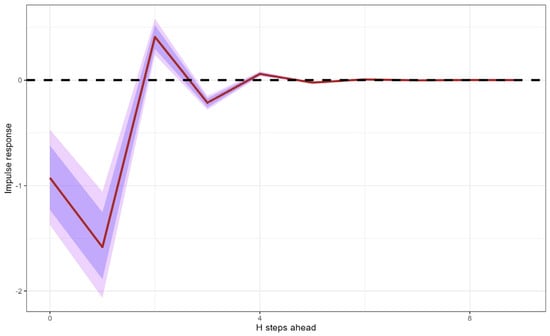
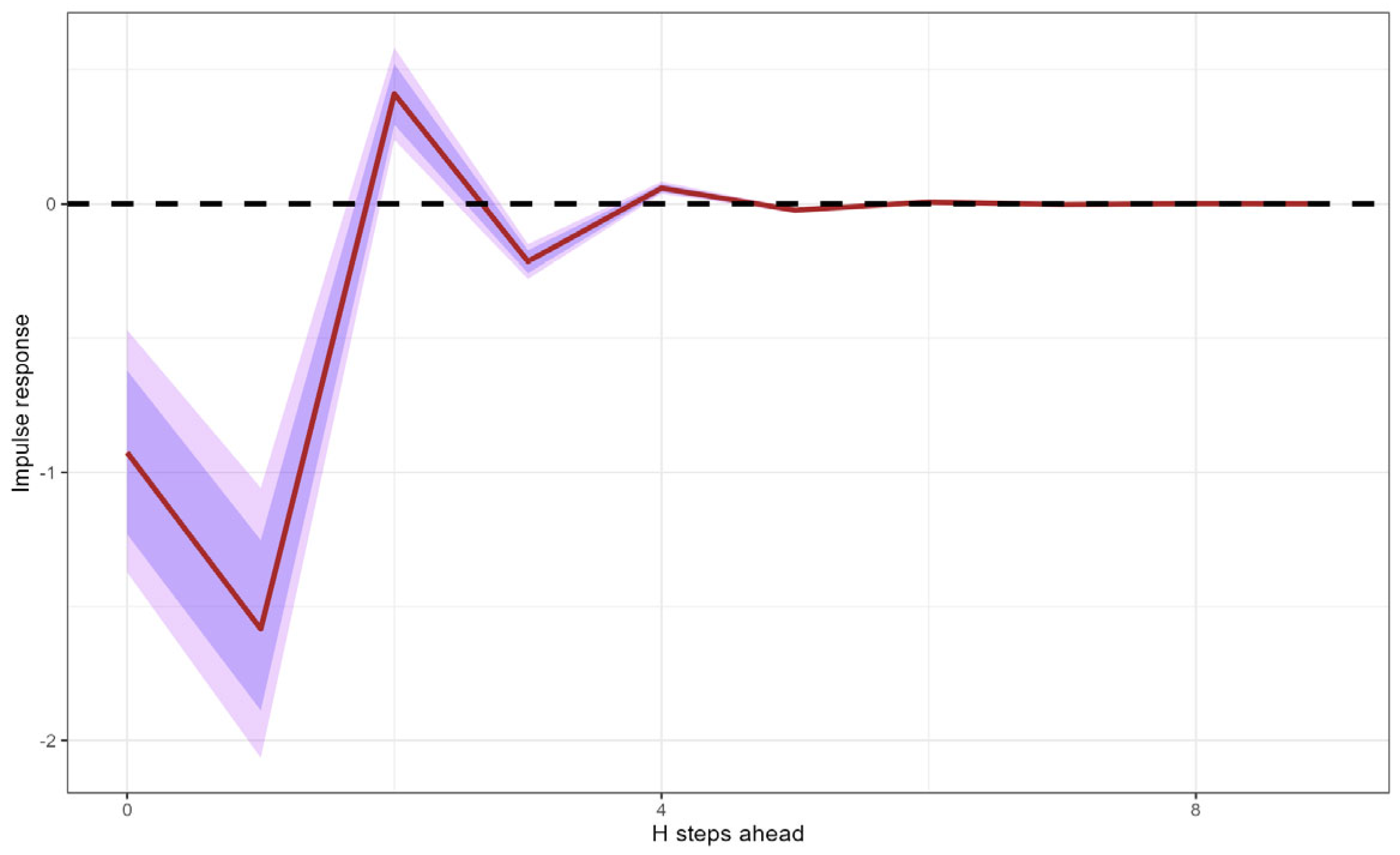
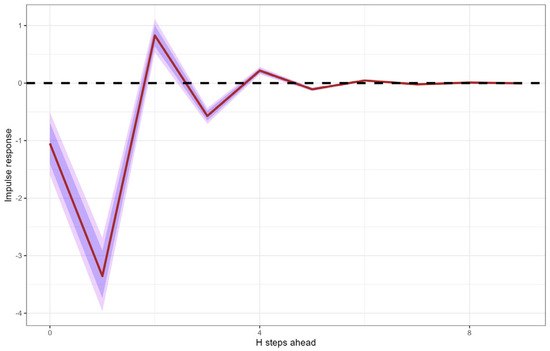
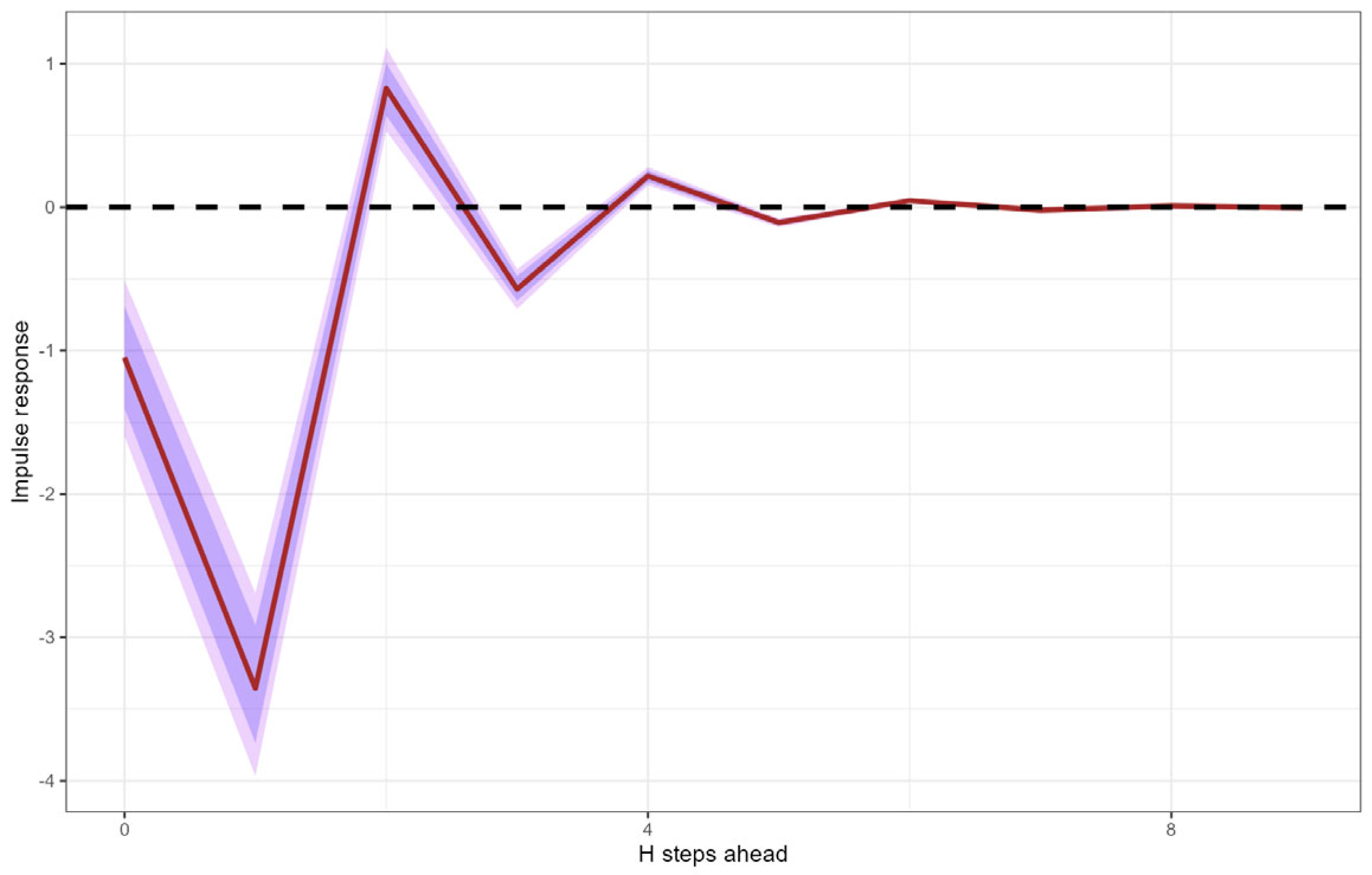
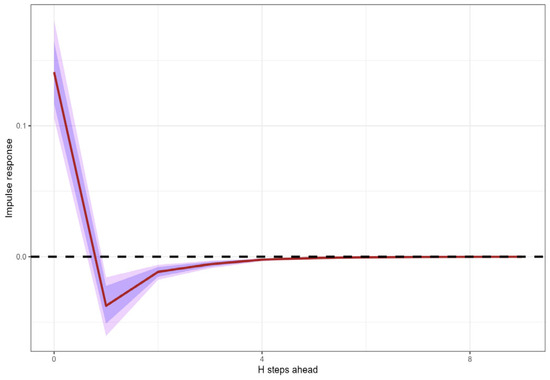
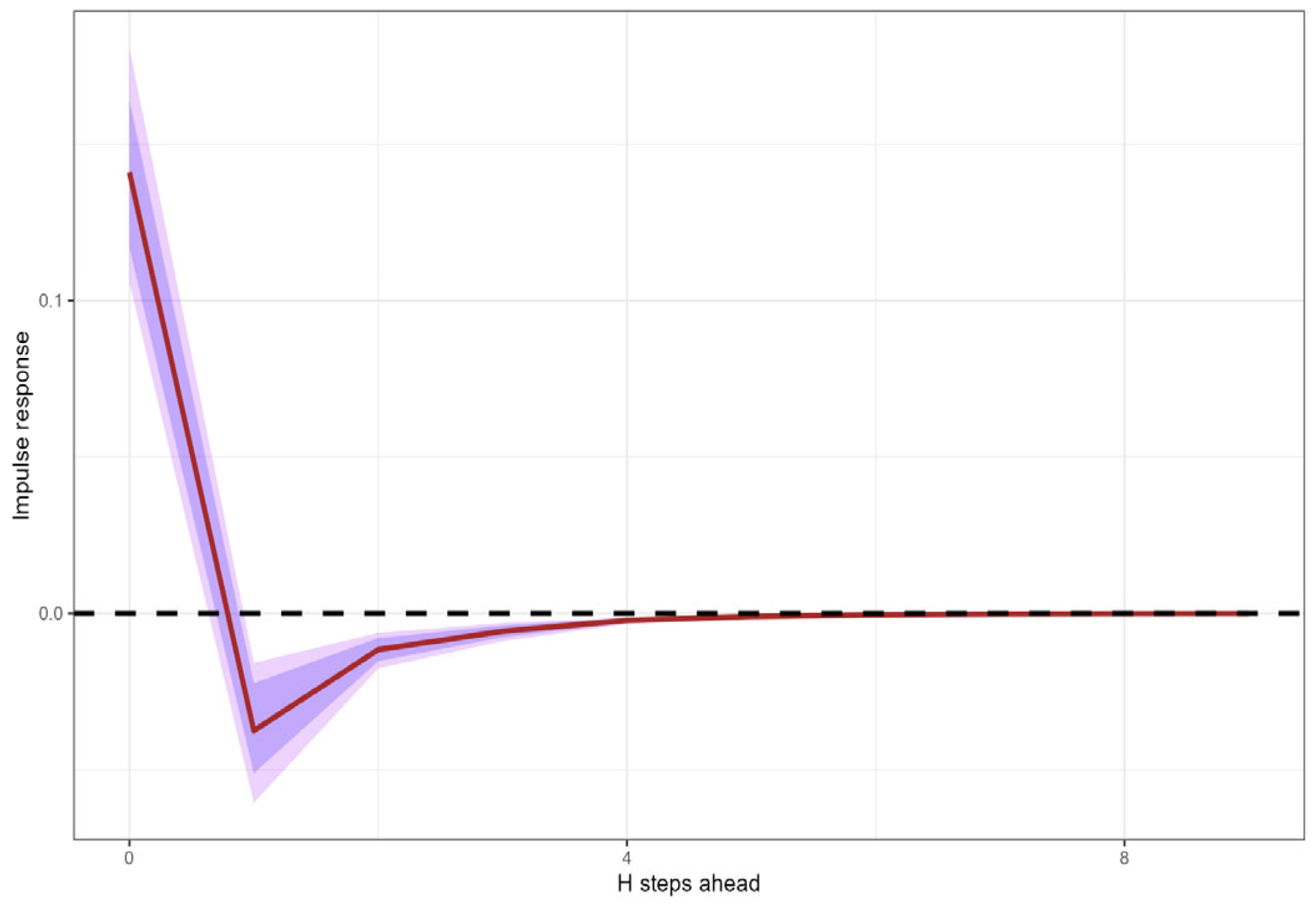
Furthermore, to formally verify whether the sum of gIRFs systematically overestimates the simultaneous shocks from CPU and the GBI, we construct confidence intervals for the difference between the aggregated gIRF and the jIRF. This step directly addresses the econometric concern that ignoring cross-shock correlation may lead to biased inference, as emphasized in our theoretical framework and raised in the reviewer’s comments. Figure 4 plots this difference as purple lines, contrasting it with the aggregated gIRF (brown line) and the jIRF (black line) from Figure 3. Dark purple represents the 80% confidence interval, and light purple denotes the 95% confidence interval. The shaded purple areas denote the 80% and 90% bootstrap confidence intervals, derived via resampling to ensure statistical robustness and account for sampling uncertainty. Our results confirm that the difference between the aggregated gIRF and jIRF is statistically significant at the 90% confidence level at the one-period horizon (h = 1). This significance arises because CPU and GBI shocks are not independent, as theoretically posited: their inherent correlation creates overlapping effects that simple summation fails to isolate, leading to upward bias. Collectively, these findings validate the theoretical premise that joint shock transmission differs fundamentally from additive individual effects. They also underscore the critical need to adopt the jIRF framework when analyzing multiple interdependent shocks, as it yields more reliable, theoretically consistent estimates of how climate policy uncertainty and green finance jointly shape carbon price dynamics.
Figure 4.
Difference between sum of gIRFs and jIRF in full sample (Dark purple represents the 80% confidence interval, and light purple denotes the 95% confidence interval). The red line is the value for the difference between sum of gIRFs and jIRF. Dashed line marks 0 value.
6.2. Robustness Test
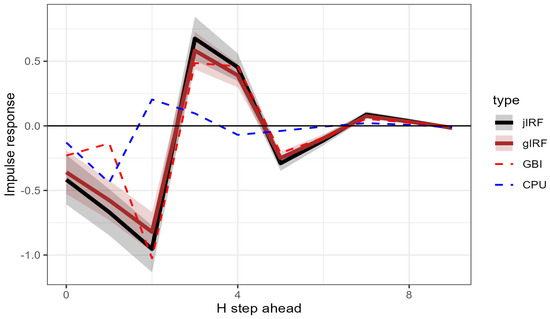
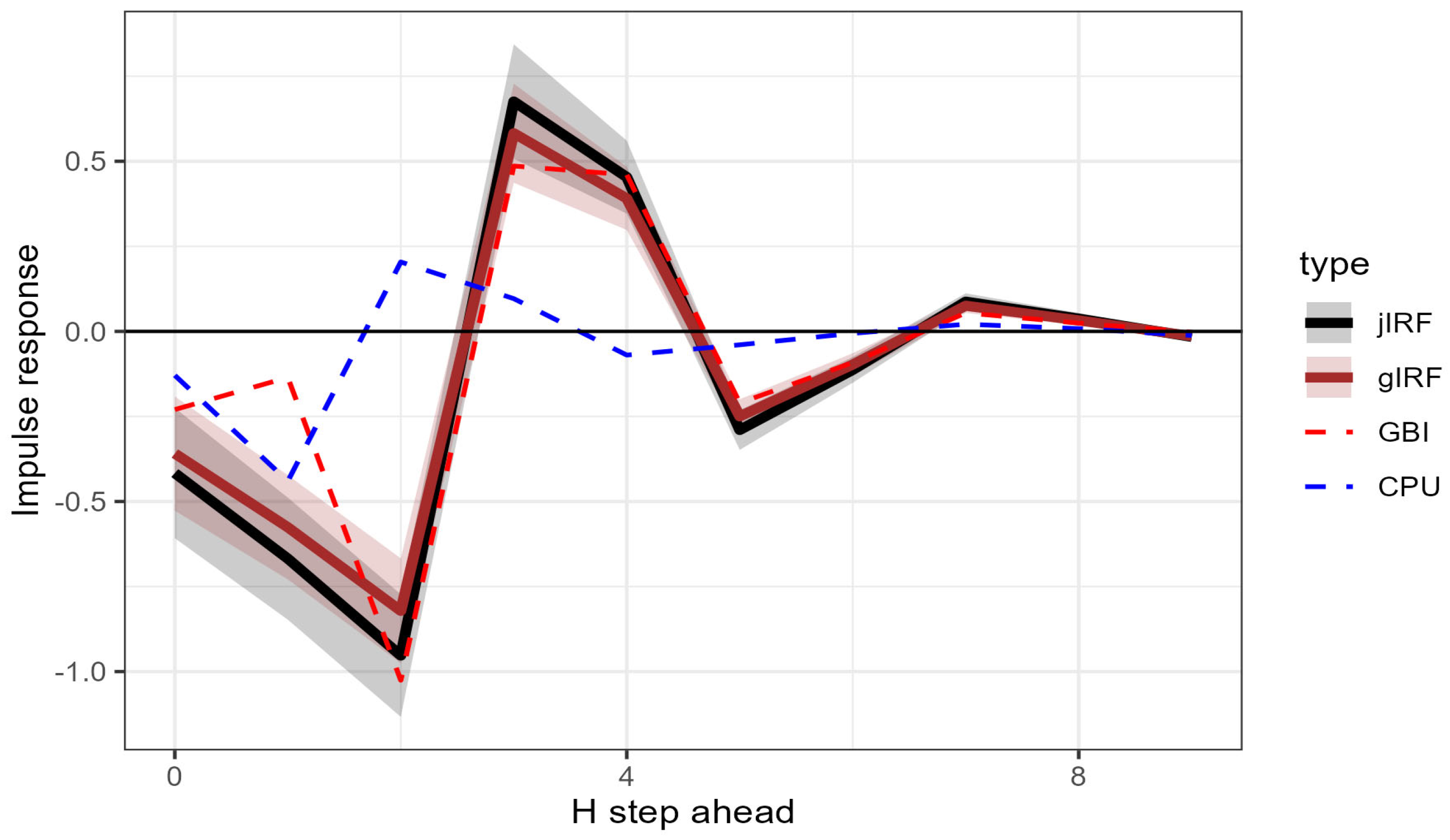
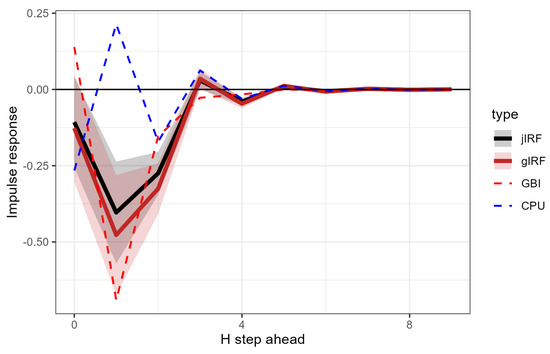
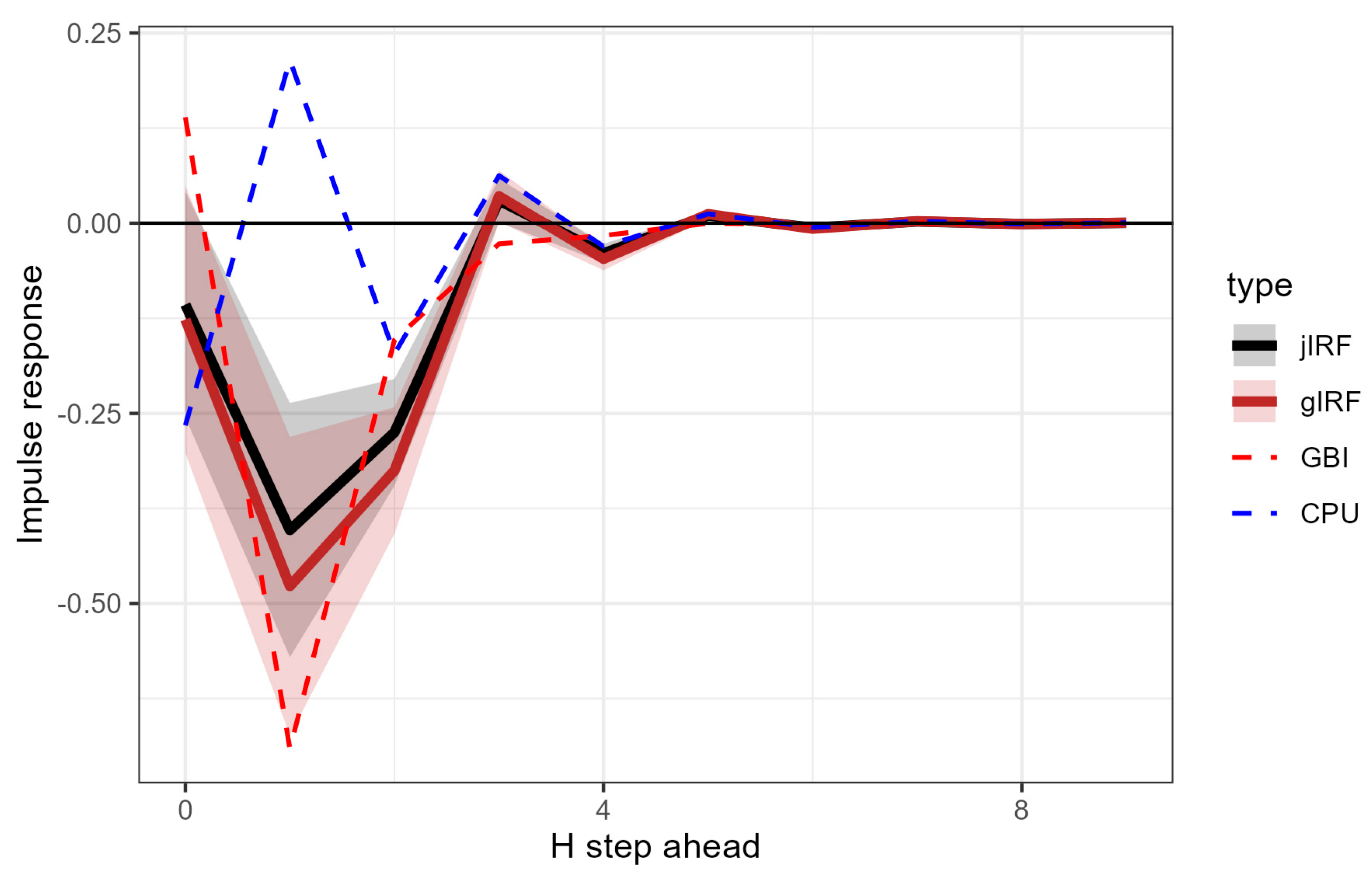
To guarantee the reliability of empirical findings, this study adopts two strategies for robustness verification. Firstly, we reset the model lag length to 2. As illustrated in Figure 5, the re-estimated outcomes align closely with baseline estimates, which verifies the stability of core findings. Secondly, we adopt the climate policy uncertainty indicator constructed by Yan and Cheung [10] as an alternative proxy to substitute the original measurement. Relevant results presented in Figure 6 also match the benchmark conclusions. Overall, the revised estimation trends are highly consistent with the original results in Figure 3, thereby solidifying the reliability and validity of our research conclusions.
Figure 5.
The lag order is 2.
Figure 6.
The new CPU measurement.
6.3. Further Analysis
The World Health Organization (WHO) officially designated COVID-19 as a Public Health Emergency of International Concern in January 2020 [79]. The outbreaks triggered a severe global health and economic crisis, disrupting global industrial production, household consumption and financial market operations, with persistent market impacts observable even after the WHO formally ended the public health emergency in 2024 [80]. For example, in 2020, global GDP per capita registered its first sharp decline since the 2008 financial crisis [81]. To capture structural breaks in the dynamic CPU-GBI-CAP nexus and address reviewer concerns over time-varying shock effects, this study splits the full sample into pre-pandemic (January 2014–December 2019) and post-pandemic (January 2020–December 2025) subsamples. In China, stringent zero-COVID policies effectively contained viral transmission but induced notable economic costs, including supply chain disruptions, weak domestic demand, slowed growth, and tightened housing and credit conditions [82]. Theoretically, such macroeconomic shocks reshape firms’ low-carbon investment decisions and resource allocation behaviors, changing the carbon market’s sensitivity to climate policy uncertainty and green finance signals. Consistent with the study’s theoretical framework and full-sample results, Figure 7 and Figure 8 confirm that pre-pandemic carbon prices respond positively to CPU shocks and negatively to GBI shocks. Dark purple represents the 80% confidence interval, and light purple denotes the 95% confidence interval. Methodologically, the conventional gIRF persistently overestimates the joint impact of CPU and GBI shocks on CAPs compared with the jIRF. This bias stems from the gIRF’s assumption of independent shocks and neglect of their inherent cross-correlation. By contrast, the jIRF incorporates the covariance structure between CPU and the GBI, eliminates estimation bias, and validates its methodological superiority for assessing multi-shock interactions in carbon markets.
Figure 7.
Impulse response of CAP in pre−pandemic sample.
Figure 8.
Difference between sum of gIRFs and jIRF in pre−pandemic sample (Dark purple represents the 80% confidence interval, and light purple denotes the 95% confidence interval). The red line is the value for the difference between sum of gIRFs and jIRF. Dashed line marks 0 value.
Furthermore, amid profound post-pandemic macroeconomic restructuring and shifting market operational logic, this study further investigates the time-varying interactive mechanism among CPU, the GBI, and CAPs, addressing reviewer concerns regarding heterogeneous stage-specific effects anchored in the core theoretical transmission logic of this research. Unlike the stable empirical patterns observed in full and pre-pandemic samples, Figure 9 and Figure 10 clearly show that the response magnitude of the jIRF significantly exceeds the aggregated effect of individual gIRFs, reflecting a structural failure of green finance’s expected theoretical stabilization and emission reduction function. Dark purple represents the 80% confidence interval, and light purple denotes the 95% confidence interval. Specifically, CAPs produce a distinct positive response to GBI shocks starting at the second-period horizon, indicating that green finance completely lost its effective emission reduction and carbon market regulation capacity in the post-pandemic era. The COVID-19 crisis triggered systemic, far-reaching shocks to global economic and financial markets, causing the most severe economic recession since World War II and leaving enduring long-term repercussions on industrial operation and resource allocation [83,84]. China’s economy suffered a historic 6.8% year-on-year GDP contraction in the first quarter of 2020, marking an unprecedented short-term economic downturn [85]. Notably, China maintained stable and consistent climate governance and policy frameworks throughout the post-pandemic period, avoiding drastic regulatory shifts and effectively stabilizing policy-driven low-carbon market expectations. However, the green finance market experienced prominent functional volatility and operational distortion that severely undermined its original emission control efficiency. Post-pandemic economic stimulus policies mainly prioritized rapid economic recovery rather than high-quality green transition, with no targeted incentive measures to accelerate renewable energy substitution or scale up industrial low-carbon transformation [86]. Additionally, the nationwide economic downturn triggered a sharp decline in the market prices of traditional fossil energy sources [87]. Faced with uncertain economic prospects and operational pressure, enterprises actively shifted their operational preferences toward low-cost fossil fuels and significantly reduced capital investment in high-cost green technological innovation and clean energy projects [88,89]. Collectively, although China’s green finance sector continues to maintain scale expansion, it obviously deviates from the theoretical low-carbon transmission mechanisms in the special post-pandemic context, and thus fails to effectively curb industrial carbon emissions or stabilize abnormal carbon price fluctuations.
Figure 9.
Impulse response of CAP in post−pandemic sample.
Figure 10.
Difference between sum of gIRFs and jIRF in post−pandemic sample (Dark purple represents the 80% confidence interval, and light purple denotes the 95% confidence interval). The red line is the value for the difference between sum of gIRFs and jIRF. Dashed line marks 0 value.
In summary, comparisons based on the advanced jIRF method confirm that the conventional gIRF approach substantially overestimates the joint impacts of CPU and GBI shocks on CAPs in the full sample, addressing reviewer concerns about estimation bias from isolated shock analysis. This overestimation originates from the critical limitation of the gIRF framework, which assumes independent CPU and GBI shocks and ignores their endogenous correlation and interactive effects. Consistent with the study’s core theoretical convergence mechanism, mature green finance can effectively offset the adverse carbon market disturbances caused by climate policy uncertainty; this mitigating effect is omitted by simple gIRF superposition, leading to inflated and biased estimation results. Considering the profound exogenous impact of the COVID-19 pandemic on macroeconomic operations, this study conducts a sub-sample analysis to explore the time-varying nexus among the three variables. Unlike the full-sample overestimation, the post-pandemic period presents an opposite bias, where the aggregated gIRF significantly underestimates the true joint shocks of CPU and the GBI on CAPs. This cross-period divergence is driven by two key factors. First, China maintained stable and consistent climate policies during post-pandemic recovery, stabilizing the CPU transmission path and its influence on the carbon market. Second, post-pandemic economic restructuring triggered drastic fluctuations in traditional energy prices, suppressed corporate low-carbon investment, and weakened green transition confidence. Although China’s green finance market continues to expand in scale, its capital allocation and emission reduction efficiency are severely impaired amid adverse macro conditions. It thus fails to generate effective synergies with climate policies, creating a mismatch between scale growth and practical low-carbon effects. Such structural changes reshape the interactive relationship among CPU, the GBI, and CAPs, leading to the unique post-pandemic underestimation bias.
7. Conclusions and Policy Implications
This study investigates the combined impact of CPU and GF on carbon prices in China spanning from January 2014 to December 2025 by comparing gIRF and jIRF methods. This method improves upon existing generalized IRF approaches by simultaneously considering shocks from many variables in a VAR framework, rather than isolating shocks from individual variables. The key empirical findings are detailed below. Firstly, during the entire sample period, the shocks from CPU and the GBI are overestimated due to the neglect of cross-correlations among variables. This oversight arises because the GBI can partially mitigate the effects of CPU, leading to a convergence in outcomes. Secondly, the sample is split between time periods prior to and during the COVID-19 epidemic in the article. The substantial changes in the global economic landscape during the pandemic reveal that the GBI does not effectively contribute to emission control or increase carbon prices in the post-pandemic period. This divergence from CPU underscores the challenges in aligning green finance initiatives with climate policy objectives amidst dynamic economic conditions. The primary contribution of this study lies in demonstrating that the jIRF outperforms the gIRF by enabling several variables’ shocks to occur simultaneously inside a VAR framework, thereby offering a more comprehensive analysis of the interrelationships among CPU, the GBI, and carbon prices.
Based on the findings that GF alleviates CPU and their post-pandemic synergy has weakened, this study proposes three coordinated recommendations: stabilizing climate policy expectations, improving green finance incentives, and strengthening carbon market–green finance linkages to enhance policy effectiveness.
First, the government should enhance the stability, consistency and transparency of climate policy to anchor market expectations and reduce uncertainty. It should maintain a firm and consistent commitment to carbon neutrality, minimize abrupt policy adjustments, and provide clear, forward-looking policy signals. Under the frameworks of the Paris Agreement and the UNFCCC COP process, China should also deepen international climate cooperation, which helps consolidate domestic policy credibility and strengthens the systemic capacity to address climate change. Stable and predictable climate policies are a necessary foundation for green finance to function effectively.
Second, China should develop an open, transparent and well-regulated carbon trading system and build effective linkages between the carbon market and green finance. This requires strengthening mandatory information disclosure, improving market liquidity and price discovery mechanisms, and reducing information asymmetry. In doing so, carbon pricing signals can be better transmitted to financial markets, enabling green finance products to more accurately reflect climate risks and low-carbon benefits. Integrating carbon market mechanisms into green finance design will help restore and reinforce their synergies, which have weakened post pandemic, and improve the overall efficiency of climate governance.
Third, the green bond market and broader green finance system should adopt a more market-oriented and incentive-compatible framework. Policymakers should improve incentive mechanisms to encourage green bond issuance and scale up green financing instruments, so as to meet the large funding needs of green transition. Establishing unified, clear standards for environmental benefit disclosure and promoting market-based pricing practices can further enhance the credibility and attractiveness of green finance. When green finance is better incentivized and aligned with carbon market signals, it can more effectively absorb policy uncertainty shocks and support a stable, low-carbon development path for China’s financial institutions and real economy alike.
Author Contributions
Writing—original draft: Y.S.; Formal analysis and project administration: K.-H.W.; Visualization and Supervision: S.V. All authors have read and agreed to the published version of the manuscript.
Funding
This work was supported by a grant from the Romanian Ministry of Research, Innovation and Digitalization, the project with the title “Economics and Policy Options for Climate Change Risk and Global Environmental Governance” (CF 193/28.11.2022, Funding Contract no. 760078/23.05.2023), within Romania’s National Recovery and Resilience Plan (PNRR)—Pillar III, Component C9, Investment I8 (PNRR/2022/C9/MCID/I8)—Development of a program to attract highly specialized human re-sources from abroad in research, development and innovation activities.
Data Availability Statement
The data will be available upon request from the authors.
Conflicts of Interest
The authors declare no conflicts of interest.
Appendix A. Derivation of the gIRF
Starting from the VMA representation and the conditional expectation under multivariate normality:
where is a selection vector and is the variance of . The unscaled gIRF is as follows:
Setting (one standard deviation) gives the following:
This is the final expression used in the main text.
Appendix B. Derivation of the gIRF
Under multivariate normality, the conditional expectation for a set of shocks is as follows:
where is a section matrix. Thus, the jIRF is as follows:
With OSD scaling, , where , then . The jIRF is then written as
The joint forecast error variance decomposition (jFEVD) for variable i with respect to is as follows:
where is a selection vector for variable i. This measures the proportion of the H-step prediction error variance of variable i accounted for by simultaneous shocks from .
References
- Alharbey, M.; Ben-Salha, O. Does climate policy uncertainty predict renewable energy stocks? A quantile-based (a)symmetric causality analysis. Energy Strategy Rev. 2024, 54, 101465. [Google Scholar] [CrossRef] [Scilit]
- Wu, H.; Zhou, Y.; Wang, X.; Hu, X.; Zhang, S.; Ren, Y.; Liu, J.; Liu, Y.; Tao, S. The climate, health, and economic outcomes across different carbon pricing policies to achieve China’s climate goals. Appl. Energy 2024, 368, 123498. [Google Scholar] [CrossRef] [Scilit]
- Niu, S.; Zhang, J.; Luo, R.; Feng, Y. How does climate policy uncertainty affect green technology innovation at the corporate level? New evidence from China. Environ. Res. 2023, 237, 117003. [Google Scholar] [CrossRef] [Scilit]
- Wang, K.; Li, S. Achieving carbon reduction amidst China’s provinces: An energy security perspective. Energy Effic. 2026, 19, 36. [Google Scholar] [CrossRef] [Scilit]
- Razzaq, A.; Sharif, A.; Ozturk, I.; Yang, X. Central inspections of environmental protection and transition for low-carbon Chinese cities: Policy intervention and mechanism analysis. Energy Econ. 2023, 124, 106859. [Google Scholar] [CrossRef] [Scilit]
- Irfan, M.; Razzaq, A.; Sharif, A.; Yang, X. Influence mechanism between green finance and green innovation: Exploring regional policy intervention effects in China. Technol. Forecast. Soc. Change 2022, 182, 121882. [Google Scholar] [CrossRef] [Scilit]
- Wu, H.; Hao, Y.; Ren, S. How do environmental regulation and environmental decentralization affect green total factor energy efficiency: Evidence from China. Energy Econ. 2020, 91, 104880. [Google Scholar] [CrossRef] [Scilit]
- Wang, K.; Li, S.; Lobonţ, O.; Moldovan, N. Is green innovation the “Golden Ticket” in achieving energy security and sustainable development? Econ. Anal. Policy 2025, 87, 297–314. [Google Scholar] [CrossRef] [Scilit]
- Su, C.; Wei, S.; Wang, Y.; Tao, R. How does climate policy uncertainty affect the carbon market? Technol. Forecast. Soc. Change 2024, 200, 123155. [Google Scholar] [CrossRef] [Scilit]
- Yan, W.; Cheung, A. The dynamic spillover effects of climate policy uncertainty and coal price on carbon price: Evidence from China. Financ. Res. Lett. 2023, 53, 103400. [Google Scholar] [CrossRef] [Scilit]
- Sun, L.; Wang, Z.; Kong, S.; Xia, X. Correlation and spillover effects between the carbon market and China’s stock market: Evidence from wavelet and quantile coherency network analysis. Int. Rev. Econ. Financ. 2024, 93, 1175–1196. [Google Scholar] [CrossRef] [Scilit]
- Zhou, X.; Gao, Y.; Wang, P.; Zhu, B. Examining the representativeness heuristic and anchoring effects in China’s carbon markets. J. Clean. Prod. 2023, 428, 139079. [Google Scholar] [CrossRef] [Scilit]
- Shi, R.; Zhou, H.; Li, X.; Miao, X.; Zhao, X. Green finance, investor preferences, and corporate green innovation. Financ. Res. Lett. 2024, 66, 105676. [Google Scholar] [CrossRef] [Scilit]
- Xu, B.; Lin, B. How can green finance effectively promote low-carbon cities? Evidence from 237 cities in China. J. Environ. Manag. 2024, 365, 121641. [Google Scholar] [CrossRef] [Scilit]
- Dong, X.; Wang, K.; Tao, R.; Sorana, V.; Moldovan, N. Is there a relationship between climate policy uncertainty and green finance? Evidence from bootstrap rolling window test. Econ. Anal. Policy 2024, 82, 277–289. [Google Scholar] [CrossRef] [Scilit]
- Yu, B.; Liu, L.; Chen, H. Can green finance improve the financial performance of green enterprises in China? Int. Rev. Econ. Financ. 2023, 88, 1287–1300. [Google Scholar] [CrossRef] [Scilit]
- Zhao, X.; Benkraiem, R.; Abedin, M.Z.; Zhou, S. The charm of green finance: Can green finance reduce corporate carbon emissions? Energy Econ. 2024, 134, 107574. [Google Scholar] [CrossRef] [Scilit]
- Su, X.; Qiao, R.; Xu, S. Impact of green finance on carbon emissions and spatial spillover effects: Empirical evidence from China. J. Clean. Prod. 2024, 457, 142362. [Google Scholar] [CrossRef] [Scilit]
- Yu, X.; Li, J.; Ren, G.; Jiang, M. Carbon price responses to climate and economic policy uncertainty. Appl. Econ. Lett. 2025. [Google Scholar] [CrossRef] [Scilit]
- Li, H.; Gao, F.; Zuo, N.; Gao, X.; Shao, T.; Pan, X. Forecasting China’s carbon prices using a TVFEMD-DLinear framework incorporating climate policy uncertainty. Environ. Impact Assess. Rev. 2026, 117, 108242. [Google Scholar] [CrossRef] [Scilit]
- Bouteska, A.; Harasheh, M.; Marzo, M. Carbon prices and green bond markets: Global insights from quantile connectedness. Financ. Res. Lett. 2025, 84, 107752. [Google Scholar] [CrossRef] [Scilit]
- Wang, K.; Li, S. Green bonds and carbon prices: A dynamic relationship revealed. Environ. Dev. Sustain. 2025, 27, 28995–29018. [Google Scholar] [CrossRef] [Scilit]
- Ullah, O.; Tan, B.Y.; Zeb, A.; Gui, H.B. Policy pathways to renewable energy affordability: Machine learning evidence on artificial intelligence, carbon pricing, and green finance in advanced economies. Renew. Energy 2026, 268, 125789. [Google Scholar] [CrossRef] [Scilit]
- Chien, M.; Liu, S. The impacts of global liquidity on international housing prices. Int. J. Hous. Mark. Anal. 2022, 16, 354–373. [Google Scholar] [CrossRef] [Scilit]
- Hu, W.; Zhou, J. Measuring and forecasting financial system resilience under multiple shocks: A survival analysis approach. Pac.-Basin Financ. J. 2025, 94, 102966. [Google Scholar] [CrossRef] [Scilit]
- Payne, J.E.; Nazlioglu, S.; Koncak, A.; Ewing, B.T. U.S. climate policy uncertainty shocks and the growth in renewable energy production. J. Commod. Mark. 2025, 39, 100493. [Google Scholar] [CrossRef] [Scilit]
- Yu, X.; Xu, Q.; Jiang, M. Guiding capital to carbon neutrality pressure: Comparing market-driven green finance and government-led fiscal policy. Financ. Res. Lett. 2026, 92, 109476. [Google Scholar] [CrossRef] [Scilit]
- Yang, J.J.; Deng, W.; Kharuddin, S. Green finance and carbon intensity in OECD economies-Mediating roles of industrial structure upgrading and green technology innovation. Energy Environ. 2026, 0958305X251410136. [Google Scholar] [CrossRef] [Scilit]
- Lou, Y. Green finance market and carbon neutralization capacity in China. Humanit. Soc. Sci. Commun. 2026, 12, 261. [Google Scholar] [CrossRef] [Scilit]
- Ozturk, S.S.; Demirer, R.; Gupta, R. Climate uncertainty and carbon emissions prices: The relative roles of transition and physical climate risks. Econ. Lett. 2022, 217, 110687. [Google Scholar] [CrossRef] [Scilit]
- Banerjee, A.K.; Boubaker, S.; AI-Nassar, N. Climate policy initiatives, green finance, and carbon risk interconnectedness. Financ. Res. Lett. 2024, 67, 105776. [Google Scholar] [CrossRef] [Scilit]
- Chen, Y.; Feng, A.; Mi, J.J. Does climate policy uncertainty drive the extreme spillovers of carbon-energy-shipping markets? J. Environ. Manag. 2024, 366, 121737. [Google Scholar] [CrossRef] [Scilit]
- Wang, K.; Wang, Z.; Yunis, M.; Kchouri, B. Spillovers and connectedness among climate policy uncertainty, energy, green bond and carbon markets: A global perspective. Energy Econ. 2023, 128, 107170. [Google Scholar] [CrossRef] [Scilit]
- Candelon, B.; Hasse, J. Testing for causality between climate policies and carbon emissions reduction. Financ. Res. Lett. 2023, 55, 103878. [Google Scholar] [CrossRef] [Scilit]
- Sun, W.; Hao, X.; Zhang, X. Climate policy interactions: Capturing game signals in carbon markets. Renew. Sustain. Energy Rev. 2024, 198, 114385. [Google Scholar] [CrossRef] [Scilit]
- Dong, Z.; Wu, Y.; Xu, Y. The increasing climate inequalities of urban carbon emissions: The distributional effect of low-carbon city pilot policy. Urban Clim. 2023, 52, 101718. [Google Scholar] [CrossRef] [Scilit]
- Wu, Q.; Sun, Z.; Jiang, L.; Jiang, L. “Bottom-up” abatement on climate from the “top-down” design: Lessons learned from China’s low-carbon city pilot policy. Empir. Econ. 2024, 66, 1223–1257. [Google Scholar] [CrossRef] [Scilit]
- Zhang, H.; Maria, C.D.; Ghezelayagh, B.; Shan, Y. Climate policy in emerging economies: Evidence from China’s Low-Carbon City Pilot. J. Environ. Econ. Manag. 2024, 124, 102943. [Google Scholar] [CrossRef] [Scilit]
- Chai, J.; Zhang, X.; Zhang, X.; Wang, Y. Effects of scenario-based carbon pricing policies on China’s dual climate change mitigation goals: Does policy design matter? J. Manag. Sci. Eng. 2023, 8, 167–175. [Google Scholar] [CrossRef] [Scilit]
- Ren, Z.; Zheng, J.; He, M.; Coffman, D.; Wang, S. The effect of the multi-target energy and climate policy on carbon emissions: County-level evidence from China. Energy 2024, 291, 130436. [Google Scholar] [CrossRef] [Scilit]
- Wang, C.; Wang, H.; Bai, Y.; Shan, J.; Nie, P.; Chen, Y. The impact of climate policy uncertainty on corporate pollution Emissions--Evidence from China. J. Environ. Manag. 2024, 363, 121426. [Google Scholar] [CrossRef] [Scilit] [PubMed]
- Dill, H. Carbon pricing initiatives and green bonds: Are they contributing to the transition to a low-carbon economy? Clim. Policy 2024, 24, 529–544. [Google Scholar] [CrossRef] [Scilit]
- Huang, J.; He, W.; Dong, X.; Wang, Q.; Wu, J. How does green finance reduce China’s carbon emissions by fostering green technology innovation? Energy 2024, 298, 131266. [Google Scholar] [CrossRef] [Scilit]
- Wang, L.; Yang, X.; Cai, Q. Influence mechanism of green finance on regional emission reduction. Heliyon 2024, 10, e23861. [Google Scholar] [CrossRef] [Scilit]
- Ran, C.; Zhang, Y. The driving force of carbon emissions reduction in China: Does green finance work. J. Clean. Prod. 2023, 421, 138502. [Google Scholar] [CrossRef] [Scilit]
- Behera, B.; Behera, P.; Sethi, N. Decoupling the role of renewable energy, green finance and political stability in achieving the sustainable development goal 13: Empirical insight from emerging economies. Sustain. Dev. 2023, 32, 119–137. [Google Scholar] [CrossRef] [Scilit]
- Yadav, A.; Gyamfi, B.A.; Asongu, S.A.; Behera, D.K. The role of green finance and governance effectiveness in the impact of renewable energy investment on CO2 emissions in BRICKS economies. J. Environ. Manag. 2024, 358, 120906. [Google Scholar] [CrossRef] [Scilit]
- Hu, J.; Chen, H.; Dinis, F.; Xiang, G. Nexus among green finance, technological innovation, green fiscal policy and CO2 emissions: A conditional process analysis. Ecol. Indic. 2024, 154, 110706. [Google Scholar] [CrossRef] [Scilit]
- Sharif, A.; Sofuoglu, E.; Kocak, S.; Anwar, A. Can green finance and energy provide a Glimmer of hope towards sustainable environment in the midst of chaos? An evidence from Malaysia. Renew. Energy 2024, 223, 11992. [Google Scholar] [CrossRef] [Scilit]
- Sethi, L.; Behera, B.; Sethi, N. Do green finance, green technology innovation, and institutional quality help achieve environmental sustainability? Evidence from the developing economies. Sustain. Dev. 2023, 32, 2709–2723. [Google Scholar] [CrossRef] [Scilit]
- Ding, Q.; Huang, J.; Zhang, H. Time-frequency spillovers among carbon, fossil energy and clean energy markets: The effects of attention to climate change. Int. Rev. Financ. Anal. 2022, 83, 102222. [Google Scholar] [CrossRef] [Scilit]
- Chu, Z.; Tan, W.; Ren, B.; Xia, Z. Assessing the effect of climate policy uncertainty on corporate carbon cost leadership strategy: Evidence from China. Energy Econ. 2026, 154, 109118. [Google Scholar] [CrossRef] [Scilit]
- Yue, Z.; Fu, X. Green actions in policy fog: Climate policy uncertainty and corporate carbon emission. Int. Rev. Econ. Financ. 2026, 105, 104802. [Google Scholar] [CrossRef] [Scilit]
- Cheng, Z.; Chen, X. Exploration of credit risk contagion characteristics and mechanism under climate policy uncertainty. Financ. Res. Lett. 2025, 85, 107987. [Google Scholar] [CrossRef] [Scilit]
- Bian, Z.; Luo, M. Impact of climate policy uncertainty on enterprises’ green technology innovation: Based on growth option theory. Sustain. Futures 2025, 10, 101305. [Google Scholar] [CrossRef] [Scilit]
- Zhao, L.; Liu, Z.; Xie, C.; Chen, X. Climate policy uncertainty and corporate carbon performance: Evidence from transportation enterprises. J. Environ. Manag. 2025, 390, 126346. [Google Scholar] [CrossRef] [Scilit] [PubMed]
- Wang, T.; Liu, X.; Wang, H. Green bonds, financing constraints, and green innovation. J. Clean. Prod. 2022, 381, 135134. [Google Scholar] [CrossRef] [Scilit]
- Li, Z.; Wang, X.; Wu, Z. Can green finance reform and innovation policies promote corporate carbon performance? Financ. Res. Lett. 2024, 62, 105203. [Google Scholar] [CrossRef] [Scilit]
- Zhang, R.; Li, Y.; Liu, Y. Green bond issuance and corporate cost of capital. Pac.-Basin Financ. J. 2021, 69, 101626. [Google Scholar] [CrossRef] [Scilit]
- Fan, M.; Liu, W.; Yao, D. The impact of green finance reform and innovation pilot zones on corporate pollution and carbon reduction: From the perspective of dual objective constraints. J. Environ. Manag. 2025, 389, 126110. [Google Scholar] [CrossRef] [Scilit]
- Xu, P.; Wang, Y.; Yao, H.; Hou, H. An exploratory analysis of low-carbon transitions in China’s construction industry based on multi-level perspective. Sustain. Cities Soc. 2023, 92, 104460. [Google Scholar] [CrossRef] [Scilit]
- Wang, K.; Xu, Y. Development of the green finance market, carbon emission trading, and corporate environmental responsibility. Financ. Res. Lett. 2025, 79, 107277. [Google Scholar] [CrossRef] [Scilit]
- Koop, G.; Pesaran, M.H.; Potter, S.M. Impulse response analysis in nonlinear multivariate models. J. Econom. 1996, 74, 119–147. [Google Scholar] [CrossRef] [Scilit]
- Pesaran, H.; Shin, Y. Generalized impulse response analysis in linear multivariate models. Econ. Lett. 1998, 58, 17–29. [Google Scholar] [CrossRef] [Scilit]
- Li, X.; Su, C. Evaluating the impact of multiple uncertainty shocks on China’s airline stocks volatility: A novel joint quantile perspective. J. Air Transp. Manag. 2024, 121, 102688. [Google Scholar] [CrossRef] [Scilit]
- Ma, Y.; Liu, Z.; Ma, D.; Zhai, P.; Guo, K.; Zhang, D.; Ji, Q. A news-based climate policy uncertainty index for China. Sci. Data 2023, 10, 881. [Google Scholar] [CrossRef] [Scilit]
- Zhang, Z.; Jiang, F. From financing to innovation: How green bond issuance promotes corporate green innovation in China. Financ. Res. Lett. 2025, 86, 108642. [Google Scholar] [CrossRef] [Scilit]
- Su, C.; Ding, Y.; Wang, K. The dynamic connectedness in the carbon-clean energy-climate poli-cy-green finance-innovation system. Econ. Change Restruct. 2025, 58, 69. [Google Scholar] [CrossRef] [Scilit]
- Wang, B.; Zhang, D.; Xue, J.; Wang, Q. Multi-timescale resilience of China′s green finance market to climate policy uncertainty shock: Does environmental policy stringency matter? J. Environ. Manag. 2025, 394, 127339. [Google Scholar] [CrossRef] [Scilit]
- Zhou, X.; Gao, Y.; Wang, P. Examining the overconfidence and overreaction in China’s carbon markets. Econ. Anal. Policy 2022, 75, 472–489. [Google Scholar] [CrossRef] [Scilit]
- Wu, X.; Jiang, Z. Time-varying asymmetric volatility spillovers among China’s carbon markets, new energy market and stock market under the shocks of major events. Energy Econ. 2023, 126, 107004. [Google Scholar] [CrossRef] [Scilit]
- Dickey, D.A.; Fuller, W.A. Distribution of the estimators for autoregressive time series with a unit root. J. Am. Stat. Assoc. 1979, 74, 427–431. [Google Scholar]
- Phillips, P.C.B.; Perron, P. Testing for a unit root in time series regression. Biometrika 1988, 75, 335–346. [Google Scholar] [CrossRef]
- Kong, F.; Gao, Z.; Stan, C.O. Green bond in China: An effective hedge against global supply chain pressure? Energy Econ. 2023, 128, 107167. [Google Scholar] [CrossRef] [Scilit]
- Yu, C.; Wu, X.; Zhang, D.; Chen, S.; Zhao, J. Demand for green finance: Resolving financing constraints on green innovation in China. Energy Policy 2021, 153, 112255. [Google Scholar] [CrossRef] [Scilit]
- Lee, C.; Wang, C.; He, Z.; Xing, W.; Wang, K. How does green finance affect energy efficiency? The role of green technology innovation and energy structure. Renew. Energy 2023, 219, 119417. [Google Scholar] [CrossRef] [Scilit]
- Liang, S.; Wang, P.; Jia, C.; Zhu, J. Studying green financing, factor allocation efficiency, and regional productivity growth in renewable energy industries. Renew. Energy 2023, 214, 130–139. [Google Scholar] [CrossRef] [Scilit]
- Sun, J.; Dong, F. Decomposition of carbon emission reduction efficiency and potential for clean energy power: Evidence from 58 countries. J. Clean. Prod. 2022, 363, 132312. [Google Scholar] [CrossRef] [Scilit]
- Mawla, B.E.; Igalens, J.; Selmane, N. ESG and financial performance: Link intensity during the COVID-19 pandemic. Int. Rev. Econ. Financ. 2026, 107, 105164. [Google Scholar] [CrossRef] [Scilit]
- Wiesen, T.F.P.; Beaumont, P.M. Ajoint impulse response function for vector autoregressive models. Empir. Econ. 2024, 66, 1553–1585. [Google Scholar] [CrossRef] [Scilit]
- Lee, H.; Kurbatskii, A.N.; Mironenkova, M.V. The impact of brain drain on economic growth: A comparative analysis of Pre- and Post-outbreak of Covid-19 periods. Sustain. Futures 2026, 10, 101083. [Google Scholar] [CrossRef] [Scilit]
- Li, Q.; Yuan, Z.; Tao, R. The political economy of COVID-19 in China. China Econ. Rev. 2024, 85, 102143. [Google Scholar] [CrossRef] [Scilit]
- Raza, S.A.; Khan, K.A. Climate policy uncertainty and its relationship with precious metals price volatility: Comparative analysis pre and during COVID-19. Resour. Policy 2024, 88, 104465. [Google Scholar] [CrossRef] [Scilit]
- Dunz, N.; Essenfelder, A.H.; Mazzocchetti, A.; Monasterolo, I.; Raberto, M. Compounding COVID-19 and climate risks: The interplay of banks’ lending and government’s policy in the shock recovery. J. Bank. Financ. 2023, 152, 106306. [Google Scholar] [CrossRef] [Scilit]
- Guo, F.; Huang, Y.; Wang, J.; Wang, X. The informal economy at times of COVID-19 pandemic. China Econ. Rev. 2022, 71, 101722. [Google Scholar] [CrossRef] [Scilit]
- Feng, Y.; Xiao, Z.; Zhou, J.; Ni, G. Asymmetrically examing the impact of green finance and renewable energy consumption on environmental degradation and renewable energy investment: The impact of the COVID-19 outbreak on the Chinese economy. Energy Rep. 2023, 9, 5458–5472. [Google Scholar] [CrossRef] [Scilit]
- Wang, K.; Jiang, X.; Tang, Y. Artificial intelligence, cloud computing, blockchain and the energy market in the era of energy transition. Energy Econ. 2025, 151, 108975. [Google Scholar] [CrossRef] [Scilit]
- Shen, J.; Yu, J.; Khoso, W.M. Green Finance as a Driver for Environmental and Economic Resilience Post-COVID-19: A Focus on China’s Strategy. Heliyon 2024, 98, e35519. [Google Scholar] [CrossRef] [Scilit]
- Ma, W.; Wang, K.; Li, X. Revolutionizing green finance: The synergistic spillover effects of AI, cloud computing, and blockchain. Technol. Soc. 2025, 83, 103030. [Google Scholar] [CrossRef] [Scilit]

Disclaimer/Publisher’s Note: The statements, opinions and data contained in all publications are solely those of the individual author(s) and contributor(s) and not of MDPI and/or the editor(s). MDPI and/or the editor(s) disclaim responsibility for any injury to people or property resulting from any ideas, methods, instructions or products referred to in the content. |
© 2026 by the authors. Licensee MDPI, Basel, Switzerland. This article is an open access article distributed under the terms and conditions of the Creative Commons Attribution (CC BY) license.