


Abstract
Historic districts possess significant cultural value, yet visitors with disabilities, particularly wheelchair users, often encounter substantial barriers to physical access. Previous studies have highlighted a gap in the assessment of walking routes utilized by wheelchair users in these districts. Therefore, this study aims to assess the extent to which historic districts’ walking routes are physically accessible for wheelchair users in the Jeddah Historic District, a UNESCO World Heritage site in Saudi Arabia. As a method, we developed a wheelchair accessibility assessment checklist (consisting of 14 assessment indicators) to evaluate 14 walking routes in the Historic District of Jeddah, accompanied by an observation strategy (consisting of five questions) to understand wheelchair users’ behavior using these routes. Our results reveal that the walking route assessments show inconsistent accessibility for wheelchair users, with the lowest rating for the indicator of route crossing signals, followed by route connectivity, the width of wheelchair parking space, accessibility to surrounding buildings, route crossing treatment, route ramp slope, and route ramp pavement quality. These findings offer valuable insights for local authorities to improve regulations and enforce wheelchair accessibility standards, promoting social sustainability and equal access for all. It also helps to underscore the necessity of prioritizing physical accessibility in the design of urban open spaces within historic districts to improve social sustainability. Ultimately, this study offers a practical and cost-effective method for other similar cities around the world to assess wheelchair inclusion in their cultural heritage sites.
1. Introduction
Historic districts, as one form of cultural heritage sites, are invaluable resources that vividly exemplify multifaceted and historically significant cultures. These sites have rapidly become one of the most attractive destinations and a growing sector in the tourism industry [1,2,3]. However, many of these sites worldwide are not fully accessible to people with disabilities, significantly limiting their ability to explore and appreciate the historical and cultural significance of these locations [4,5].
According to the World Health Organization (WHO), approximately 1% of the global population (80 million people) rely on wheelchairs for mobility. The number of wheelchair users continues to rise due to various factors such as armed conflicts, aging populations, and chronic health conditions [6]. WHO defines a wheelchair user as “a person who has difficulty in walking or cannot walk, and uses a wheelchair for their mobility” [6]. This definition encompasses individuals who may use a wheelchair full time, occasionally, or during periods of limited mobility due to health conditions [6].
To enhance the quality of life for wheelchair users, the WHO emphasizes four key principles that must be integrated into the built environment. First, it is essential to ensure access to suitable wheelchairs for individuals in need. Second, the provision of wheelchairs should be regarded as a fundamental component of health coverage. Third, wheelchair services must be made available equitably to all individuals requiring assistance regardless of their age, gender, geographical location, or any other distinguishing factors. Finally, it is crucial to actively involve wheelchair users and their representatives in all aspects of service planning, product design, policy making, and workforce training. This engagement is vital to ensure equitable and effective access to wheelchair services [6].
Ensuring accessibility for individuals with disabilities is a fundamental component of social sustainability in urban spaces and buildings [7]. The relationship between facilitating physical access for wheelchair users and social sustainability is multifaceted. Social sustainability is defined as the process of creating successful and sustainable spaces that enhance well-being by integrating the design of the physical environment with the understanding of the needs of individuals in their living, working, and recreational spaces. This process supports social amenities, fosters engagement, encourages spatial development, and enriches social and cultural life [8]. Therefore, the emphasis on improving physical accessibility for wheelchair users as a means to promote social sustainability has been highlighted in various contexts within built environments [7].
In the tourism sector, several initiatives have been proposed to enhance accessibility and promote social sustainability for people with disabilities, particularly wheelchair users. Notable examples include the Bali Declaration on Barrier-Free Tourism for People with Disabilities (2000) and the United Nations Convention on the Rights of People with Disabilities (2006) [9], both of which aim to promote, protect, and reaffirm the rights and opportunities of individuals with disabilities. These initiatives have led to a significant body of scientific research and the development of various policies, standards, principles, and guidelines, such as the recent Wheelchair Provision Guidelines [6].
Additionally, concepts such as “accessible tourism” and “universal design” have emerged to address the accessibility needs of a diverse population, including wheelchair users. Studies indicate that implementing universal design enables individuals with physical disabilities to navigate urban spaces and tourist sites independently [10,11,12]. While many cities in developed countries have successfully adopted universal design strategies to make their public spaces and historic districts accessible, other nations continue to lag in these important efforts.
In Saudi Arabia, approximately 7.1% of the population lives with some form of disability, with mobility, physical, and visual impairments being the most prevalent categories [13]. The Saudi Disability Welfare Law defines individuals with disabilities as “any person suffering from a permanent, total, or partial impairment affecting their senses, physical, mental, communicative, learning, or psychological abilities to an extent that reduces their ability to perform daily activities compared to a non-disabled person” [14]. The Saudi government has ratified the United Nations (UN) convention and established laws, programs, and guidelines to protect and support the rights of persons with disabilities, including those who rely on wheelchairs, as stated in Article 27 of the Basic Law and Royal Decree No. M/37 of 2000.
As part of its “Vision 2023” initiative, the Saudi government is committed to achieving sustainable development across all sectors, including tourism and the preservation of cultural heritage landscapes. Significant strides have been made in protecting and promoting the country’s historical, cultural, and natural sites. This includes eight locations inscribed on the UNESCO World Heritage List, with at least fourteen additional sites currently on the tentative list. To further stimulate tourism and attract a diverse range of visitors, including wheelchair users, the government recently introduced a new tourist visa program. Furthermore, a Higher Council for Tourism has been established to enhance the tourism sector by implementing regulations and upgrading services at cultural and historical sites to meet the needs of both domestic and international tourists, including those with disabilities.
To improve the accessibility in Saudi Arabia, the King Salman Center for Disability Research published the guidelines called “Universal Accessibility Guidelines.” These guidelines cover four areas, including the built environment, land transportation, marine transportation, and destinations and accommodations, including tourism sites [15]. They provide general and technical guidelines for establishing universal accessibility measures tailored to the needs of individuals with disabilities, particularly those who rely on wheelchairs. However, the guidelines for universal accessibility do not specifically address guidelines for historic districts, where limitations imposed on construction and adaptation form the major challenges to improving accessibility.
Additionally, the enforcement of accessibility standards within the Saudi urban context lacks adequate documentation and evaluation. Studies on disability and wheelchair users in Saudi Arabia are limited and mostly focus on the medical aspects [16]. Therefore, this study aims to assess the extent to which walking routes at historic districts are physically accessible and practical for wheelchair users in the Jeddah Historic District, a UNESCO World Heritage site in Saudi Arabia. This study contributes to ongoing efforts to overcome accessibility challenges in public spaces that involve heritage sites and tourist areas. The findings can inform policies, design guidelines, and best practices to enhance the accessibility and inclusivity of heritage sites and urban areas.
2. Literature Review
Public spaces serve as venues for social and cultural interactions that greatly impact the quality of life of an individual. Therefore, these spaces should be designed to ensure equal opportunities for all members of society [17]. There is a growing body of literature indicating that individuals who rely on wheelchairs for mobility face various social, urban, and environmental challenges, including physical barriers and inadequate accessibility to public spaces [18,19]. Many cities globally lack appropriate accessibility infrastructure that enables wheelchair users to access services and participate in activities [20,21]. Consequently, wheelchair users are often unable to fully exercise their rights to access and enjoy urban public spaces [22].
Previous studies have demonstrated that people with disabilities are at a higher risk of experiencing mental distress [23]. For instance, studies indicate that individuals with physical disabilities are more likely to exhibit signs of depression [24]. Furthermore, another study revealed that people with disabilities experience depression and anxiety due to the isolation they encounter [25]. These mental health issues significantly affect the quality of life of disabled individuals, undermining their sense of security, physical well-being, and emotional well-being.
Accessibility and inclusivity are critical in the preservation and enjoyment of cultural heritage sites and public spaces, which offer visitors unique cultural, educational, entertainment, and authentic experiences [26,27]. For instance, Beale et al. [28] developed a geographic information system (GIS) network model to create accessibility maps tailored to wheelchair users in urban areas. The study employed methods such as Digital Elevation Models and field surveys to identify and quantify navigation barriers, such as slope and surface type, which are more challenging for wheelchair users compared to able-bodied pedestrians. The key outcome was a GIS application with a user-friendly interface that defines and calculates accessible routes, which could assist both new and existing users and help urban planners design more inclusive environments.
Evcil [29] examined the experiences of wheelchair users at the Sultanahmet Square heritage site in Istanbul, Turkey. A questionnaire-based study found that this popular tourist attraction was insufficiently equipped to accommodate wheelchair users, highlighting the need to raise awareness of accessibility constraints among designers and service providers in the tourism industry. The study emphasized that applying universal design principles could lead to better design solutions.
Baris and Uslu [30] investigated the accessibility of the built environment for disabled individuals living in Ankara, Turkey, and their challenges in participating in urban activities. The study focused on visually impaired, walking-impaired, and wheelchair-dependent individuals. The researchers used a combination of qualitative and quantitative methods, including document analysis, interviews, observations, and questionnaires. The findings indicated that people with disabilities in Ankara face significant physical barriers that limit their independent movement and social engagement, leading to feelings of exclusion. These results are expected to raise social awareness and guide efforts to enhance equal participation in urban life for disabled individuals in Ankara.
More recently, Bakhsh et al. [31] evaluated the feasibility of the Path Environment Audit Tool (PEAT) and explored wheelchair accessibility in five public parks in Riyadh, Saudi Arabia. This descriptive study assessed the process, resources, and management aspects of the PEAT measure. The researchers used eight of the thirty-six indicators of the PEAT to evaluate wheelchair accessibility features, including path characteristics, obstacles, safety considerations, and amenities across the five parks. The results showed that while PEAT was user friendly, the audits were time consuming. The analysis identified positive features, such as adequate bollard and gate clearance, and variable aspects, such as path slope and surface condition, which could impact wheelchair accessibility and physical activity participation. This study offers valuable insights into wheelchair accessibility in public parks in Saudi Arabia and can inform future large-scale studies and environmental modifications to promote physical activity for wheelchair users. Table 1 summarizes the previous studies on wheelchair users’ accessibility in different urban settings.
Table 1.
Previous accessibility assessment studies for people with disabilities, including wheelchair users, in cultural heritage sites and other urban settings.
Previous studies highlight the growing recognition of the importance of accessibility for people with disabilities at cultural heritage sites. However, these studies reveal several limitations that need to be addressed to ensure equitable access and participation for wheelchair users in historic districts. One specific limitation is the lack of comprehensive assessments that consider the entire walking route, from the designated wheelchair parking to the desired destination. Furthermore, there is a dearth of measurable tools to assess multiple indicators along the route, including crossing points, access to surrounding buildings, and the quality of route surfaces and ramps. They also did not investigate wheelchair users’ behavior while using walking routes to highlight the actual level of accessibility. Therefore, this study develops a method for comprehensively evaluating existing walking infrastructure used by wheelchair users and applies it to assess several walking routes within a historic district in Saudi Arabia.
3. Materials and Methods
3.1. Study Area and the Selection of Wheelchair Routes
We selected Historic Jeddah as the study location due to its status as a UNESCO World Heritage site since 2014. Situated south of the modern city of Jeddah, Saudi Arabia, the site covers an area of one square kilometer. Following its inscription, the city administration, in collaboration with the Saudi Commission for Tourism and Antiquities (SCTA), initiated extensive conservation and enhancement projects within the Jeddah Historic Center. These efforts included improving public spaces to make them more walkable and accessible for all users. Additionally, the city has begun hosting an annual event, the Historic Jeddah Festival, which has become a significant tourist attraction during the Jeddah Season. As a result, the number of visitors to Jeddah city has significantly increased, with over six million domestic and international tourists attending the Jeddah Season in 2022, according to the Saudi Press Agency [39].
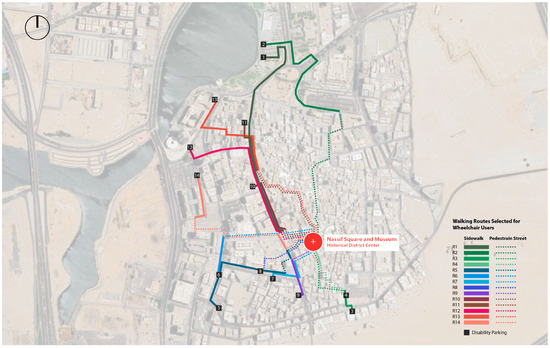
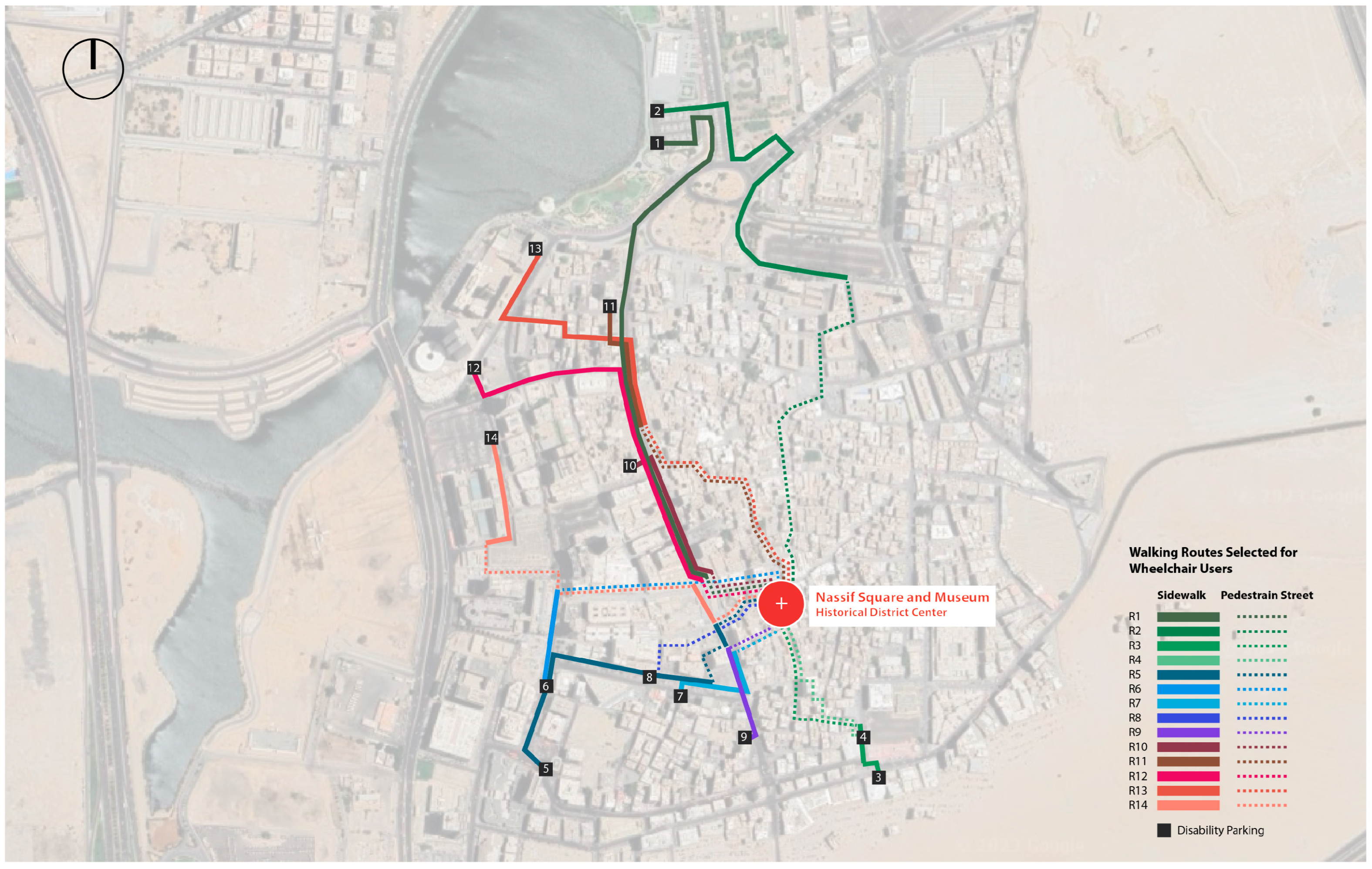
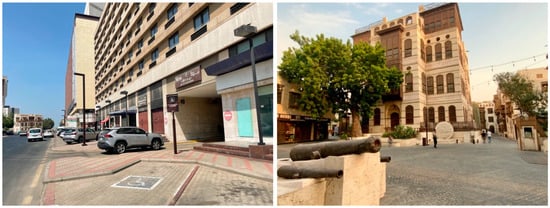
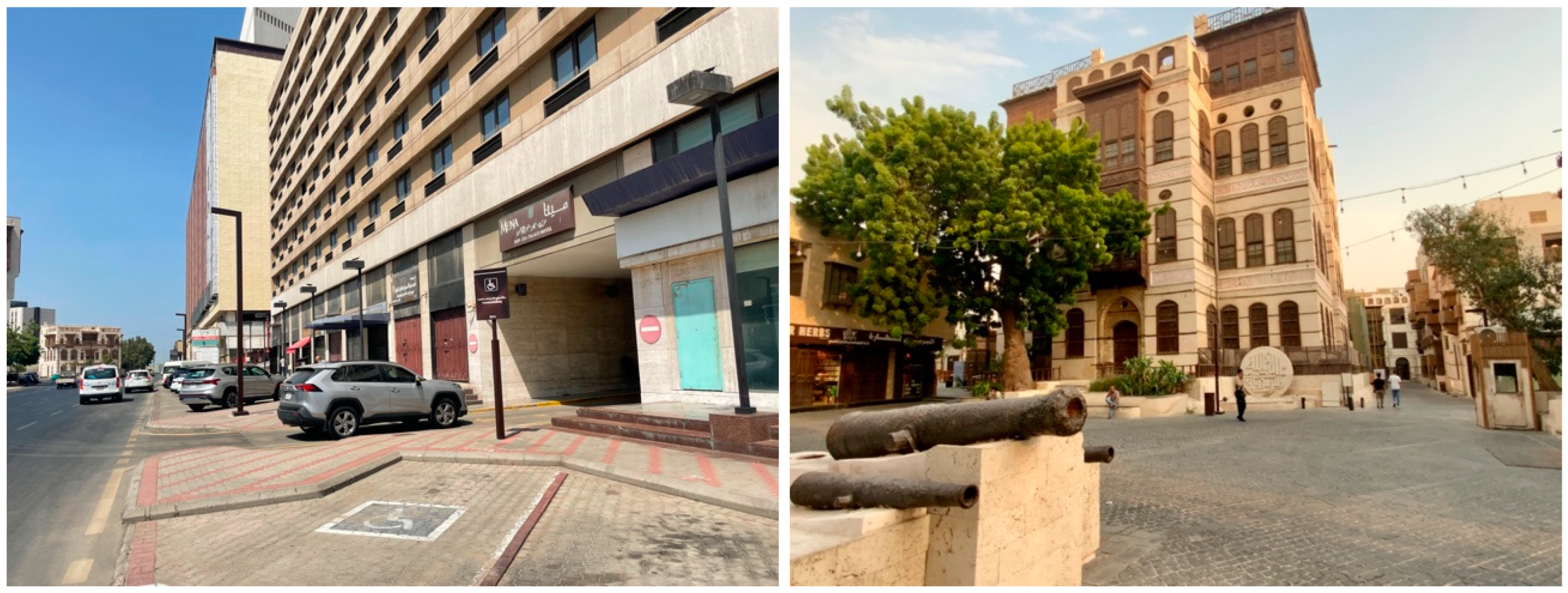
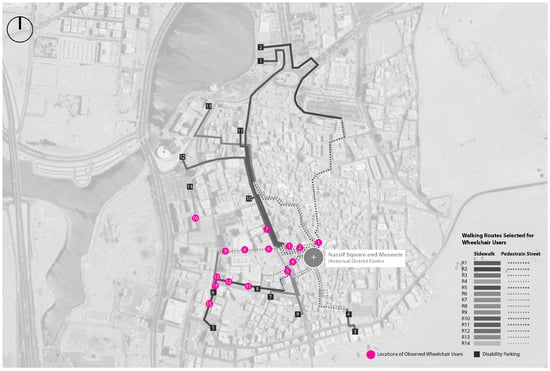
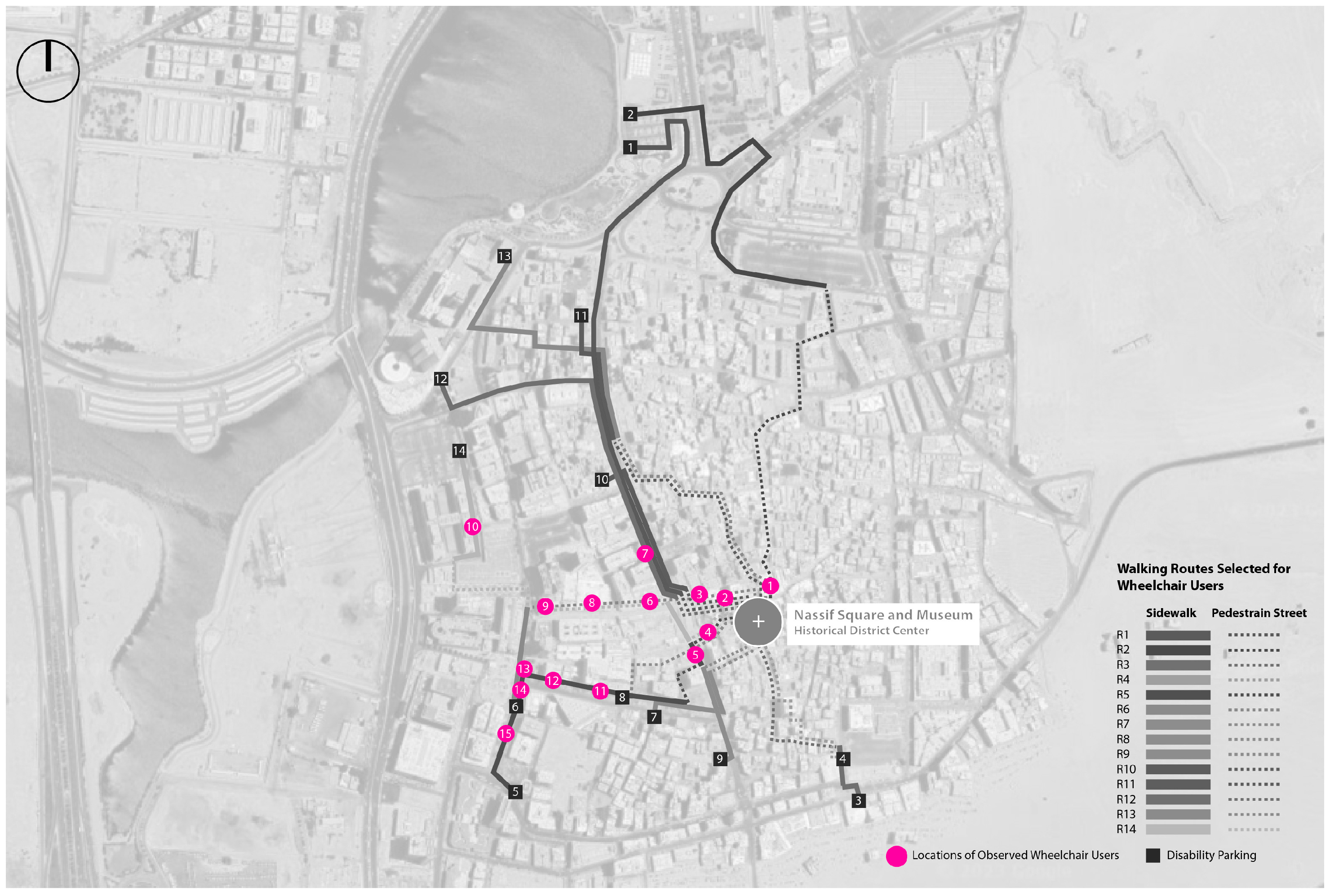
In this study, we focused on identifying wheelchair-accessible routes within the Jeddah Historic District, beginning with direct observations to locate designated wheelchair parking spaces, marked by accessibility signs. We identified a total of 16 parking spaces throughout the district, located both on streets and in parking lots. We used Google Maps, with the wheelchair accessibility option enabled, to determine the shortest routes for wheelchair users based on the existing walking infrastructure. We mapped these routes from the designated wheelchair parking spaces to the Jeddah Historic Center, specifically targeting the Nassif Museum as a key destination. For routes that overlapped, alternative paths suggested by Google Maps (an open-source data application) were selected to ensure a comprehensive assessment. However, we excluded two of the sixteen parking spaces with their routes from the study due to their redundancy with other routes, which would have made their assessment unnecessary. Here, we employed Google Maps to select the most appropriate routes, as predicting the exact paths taken by wheelchair users was challenging. Figure 1 illustrates the 14 selected walking routes for assessment. Each walking route starts from a wheelchair designated parking space and crosses through several sidewalks and pedestrian streets (car-free zones) before reaching the center of the Jeddah Historical District. Figure 2 shows one of the fourteen locations of the wheelchair user parking spaces and the center of the Jeddah Historic District. Detailed information on the 14 walking routes is presented in Table 2.
Figure 1.
Historical Jeddah and the 14 selected walking routes proposed for wheelchair users in this study.
Figure 2.
The image on the left shows one of 14 designated disability parking spaces (starting point), while the image on the right shows the center of the Jeddah Historic District, where Nassif’s Square and Museum are located (end point).
Table 2.
Details of the 14 walking routes selected for wheelchair users in this study.
3.2. Developing a Wheelchair Accessibility Checklist
Employing observations as a descriptive research method can yield valuable insights by systematically recording and collecting information at a specific site or area. Observations are particularly effective for understanding how designed spaces are utilized, their characteristics, and their overall performance [40]. In this study, we adopted an observational approach to assess the 14 routes proposed by Google Maps for wheelchair users in the Jeddah Historic District.
We reviewed various international wheelchair mobility standards and walkability tools, as wheelchair users primarily rely on walking infrastructure. Based on this review, we developed a Wheelchair Accessibility Checklist (WAC), featuring 14 indicators to thoroughly and consistently assess the selected routes through direct observations. The WAC includes the following indicators: the pavement quality of the wheelchair user parking space, the width of the wheelchair user parking space, route connectivity, route crossing treatment, route crossing signals, route width, route surface slope, route pavement type, route pavement quality, route physical obstacles, route ramp slope, route ramp width, route ramp pavement quality, and accessibility to the surrounding buildings. Table 3 presents a detailed explanation of each indicator, while Table 4 illustrates the assessment levels of each indicator.
Table 3.
The 14 indicators according to the Wheelchair Accessibility Checklist developed in this study.
Table 4.
Levels of the 14 indicators used in the Wheelchair Accessibility Checklist (WAC) developed for this study.
We evaluated the 14 WAC indicators using two-point and five-point scales, which provided precision in selecting the most appropriate rating for each indicator. This research approach has been validated by previous studies and audit tools focused on walkability and physical accessibility in various settings [43,44,45].
3.3. Overall Accessibility Rating and Route Analysis
Each route’s overall accessibility rating represents the average of the 14 indicators developed to assess the walking route connecting designated wheelchair parking with the center of Historic Jeddah. We calculated the rating using the following equation:
where I1, I2, I3, … In are the respective assessment scores of the first, second, third, and last indicators in the WAC, and n is the total number of indicators (14 in WAC).
Mean of walking route rating = [I1 + I2 + I3 +,…,+ In]/n
The analysis focused on identifying the highest and lowest ratings among the 14 indicators. Ratings were categorized as follows: any rating < 2 was classified as very low, a rating ≥ 2 and <3 as low, a rating ≥ 3 and <3.5 as intermediate, and a rating > 3.5 as high. This rating classification aims to highlight indicators that did not meet the minimum standards, thereby emphasizing the importance of maintaining high-quality accessibility for users.
3.4. Understanding Wheelchair Users’ Behaviors
We studied the behaviors of 15 wheelchair users throughout the study area while assessing the selected walking routes. As sampling criteria, we included all the wheelchair users (n = 15) who were located using one or more of the 14 walking routes with accompanying persons or alone during the fieldwork conducted on Saturday, 28 December 2024, during nighttime and fine weather. The selection of the entire number of wheelchair users made our sample unbiased regarding age, gender, or ethnicity.
As a procedure, we used five investigation questions to understand wheelchair users’ behavior and whether the current infrastructure of walking routes enhances their mobility. These questions included the following: (1) Was the wheelchair user using the street sidewalk, street lane, or pedestrian street while moving? (2) Was the wheelchair user receiving support from an accompanying person? (3) Did the wheelchair user recently switch from using the walking route (sidewalks or pedestrian streets) to moving along the street lane or vice versa for the next 20 m or less? (4) What issues related to the walking route may have prevented the wheelchair user from using it and continuing along the street lane? (5) Could the wheelchair user easily access the surrounding buildings where they were observed?
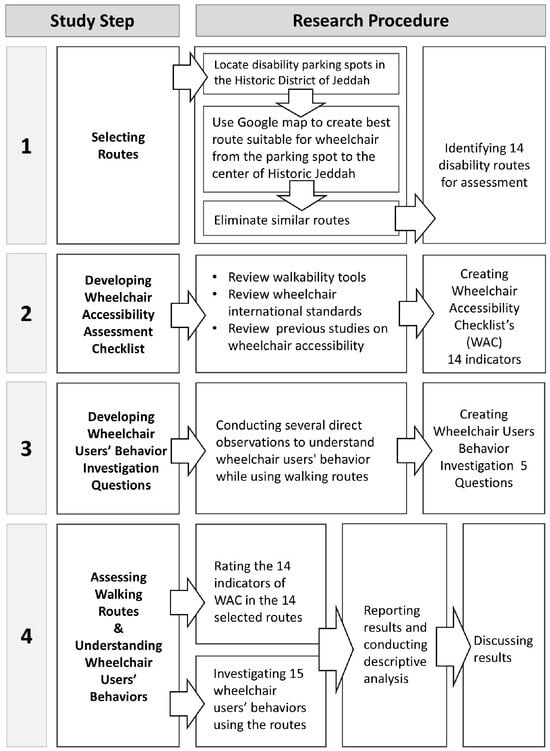
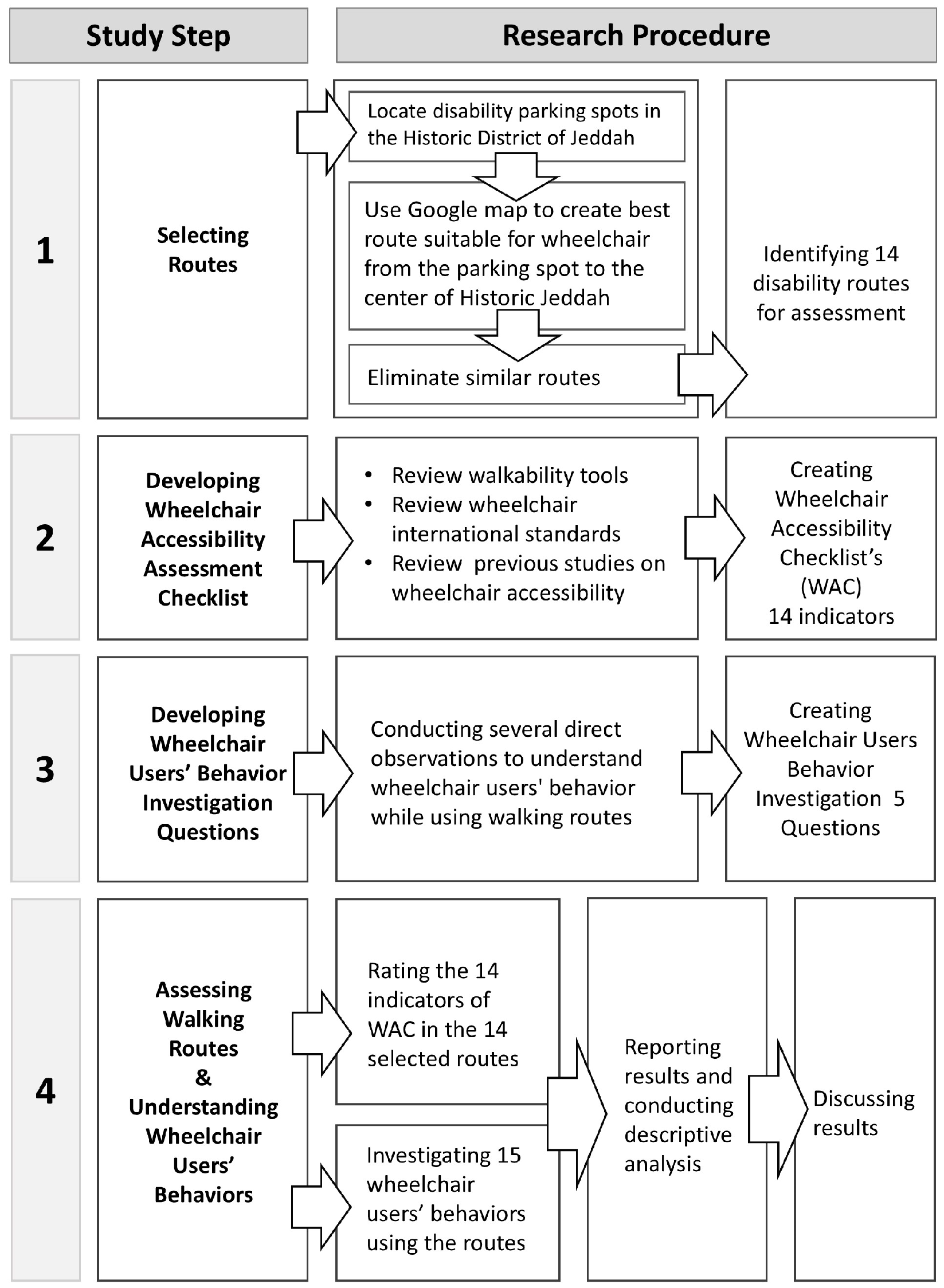
The authors of this study investigated these five questions through the direct observations of wheelchair users without conducting interviews. Observations were conducted from a distance to ensure wheelchair users’ privacy was respected and their mobility decisions were not influenced or interrupted. Figure 3 summarizes the methodology employed in this study.
Figure 3.
A four-step methodology.
4. Results
4.1. Wheelchair Accessibility Checklist (WAC) Indicator Ratings
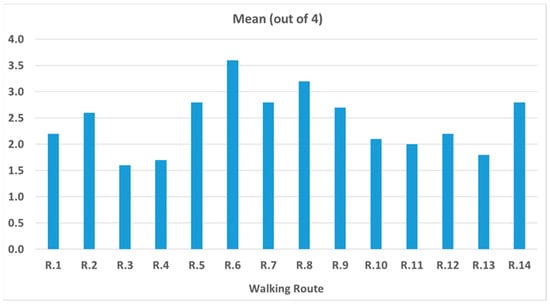
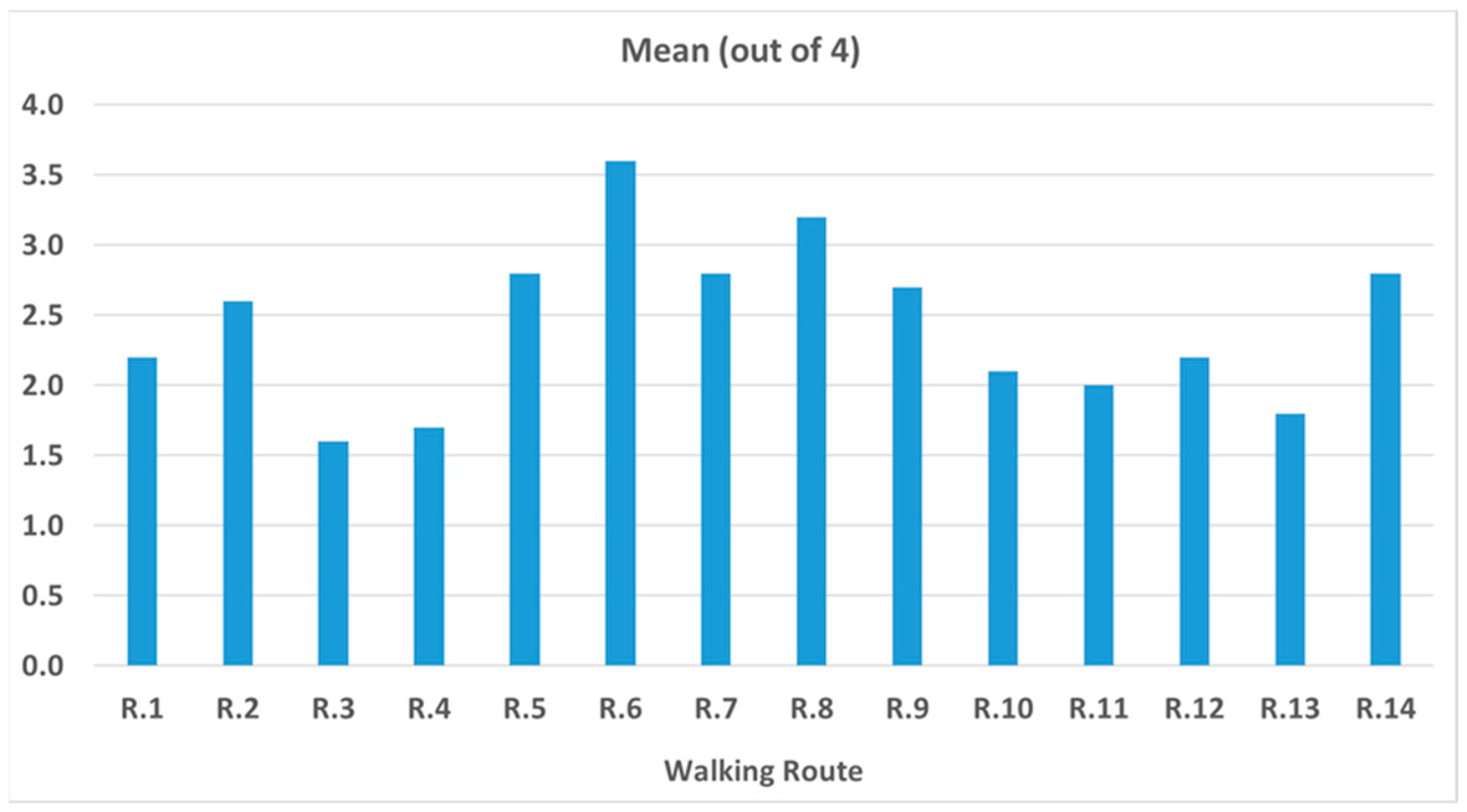
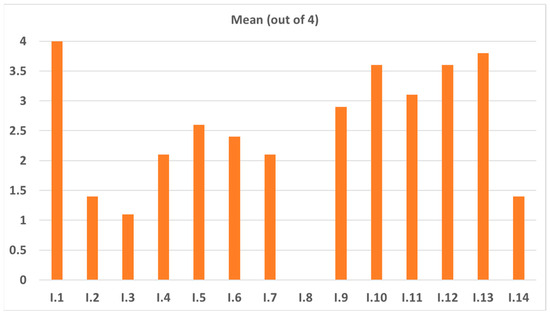
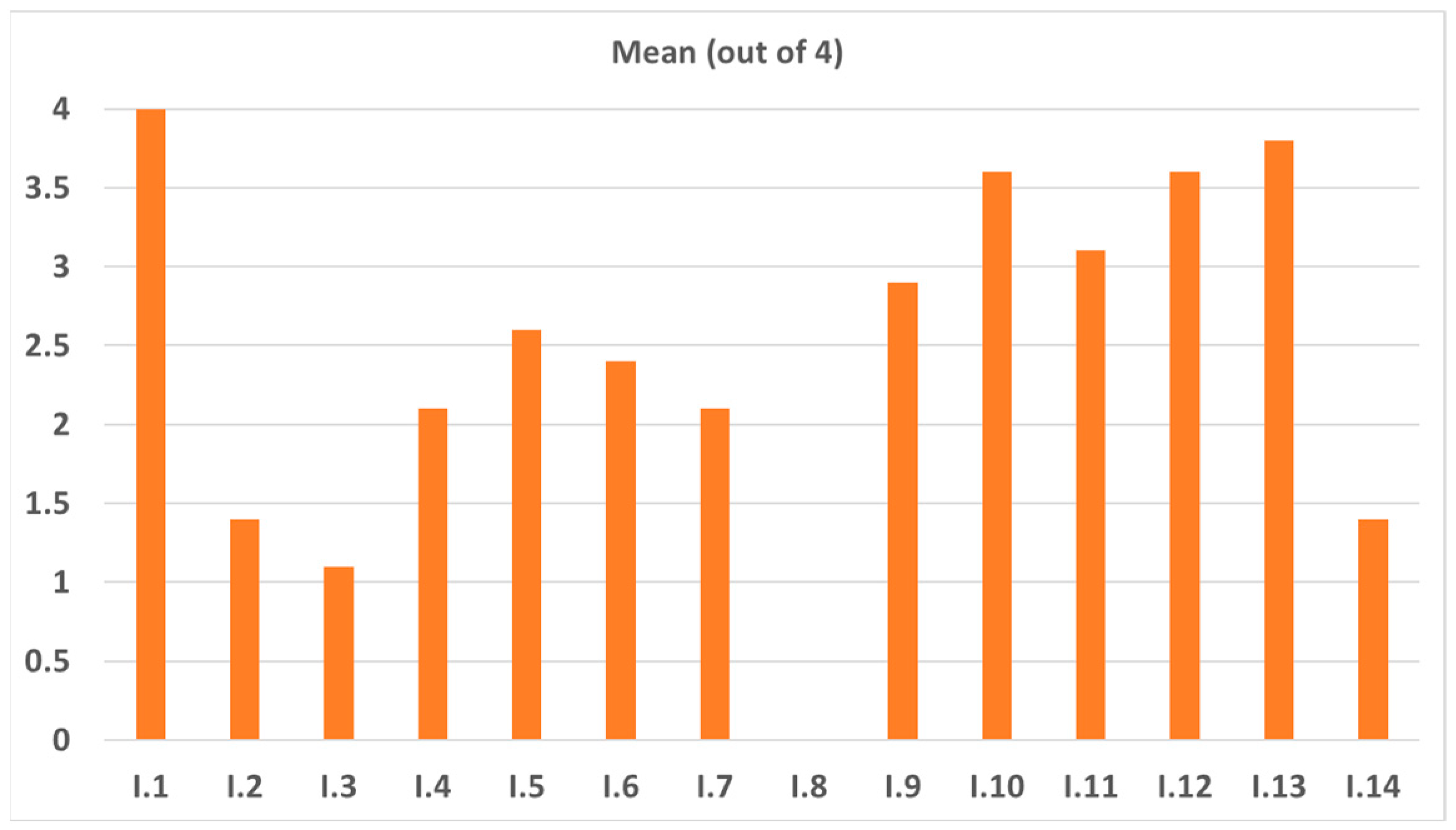
Table 5 summarizes the ratings for the 14 WAC indicators across the 14 walking routes evaluated in this study for wheelchair users, while Table 6 presents the statistical analysis of each WAC indicator across the 14 walking routes. Table 7 illustrates the findings from direct observations aimed at understanding the behaviors of 15 wheelchair users while utilizing the walking routes, whereas Figure 4 shows the locations of the observed wheelchair users. Figure 5 compares the total average rating of the 14 routes, while Figure 6 illustrates the average rating of the 14 WAC indicators.
Table 5.
Ratings for the 14 indicators of the Wheelchair Accessibility Checklist (WAC) across the 14 walking routes for wheelchair users.
Table 6.
Statistical analysis of the 14 indicators in the Wheelchair Accessibility Checklist (WAC) across the 14 walking routes for wheelchair users.
Table 7.
Summary of findings of direct observations for understanding wheelchair users using the selected walking routes.
Figure 4.
Locations of wheelchair users being observed in this study.
Figure 5.
Illustration of the average dataset for the 14 routes selected in this study.
Figure 6.
Illustration of the average dataset for the 14 WAC indicators used to assess the selected walking routes in this study.
Our analysis revealed significant variability in accessibility across the 14 routes, with most routes scoring relatively low. Route 6 achieved the highest overall rating, scoring 3.6 out of 4, whereas Route 3 received the lowest rating of 1.6 out of 4. Among the 14 WAC indicators, the highest rating was for the pavement quality of the wheelchair user parking space with a perfect score of 4 out of 4, followed closely by the rating for physical obstacles on routes at 3.8 out of 4. Conversely, route crossing signals received the lowest rating, 0 out of 4, followed by route connectivity, with a rating of 1.1 out of 4.
Our observations of the 15 wheelchair users revealed that 7 out of 15 were spotted in the pedestrian streets (car-free zones) of the Jeddah Historic District, while 8 out of 15 were observed moving along the district streets. Here, more than half (five out of eight) of the wheelchair users recorded in the streets of the Jeddah Historic District were using street lanes instead of sidewalks. This was due to persistent barriers such as the absence of curb ramps, narrow sidewalks, and the presence of vertical obstacles on sidewalks (e.g., lamp posts, signs, etc.). Moreover, most observed wheelchair users (14 out of 15) depended on accompanying persons, indicating a systemic reliance on assistance to navigate public spaces. Lastly, physical accessibility to surrounding buildings was considered a significant issue, as 12 wheelchair users out of 15 were recorded in completely inaccessible surroundings. Even the other wheelchair users (3 out of 15) were also recorded in mostly inaccessible surroundings.
4.2. Descriptive Analysis
Direct observations during the assessment of the 14 walking routes proposed for wheelchair users by Google Maps in the Jeddah Historic District identified three primary zones in the journey from designated parking spaces to the historic center: (1) moving along sidewalks or street lanes, or both; (2) crossing streets, service lanes, or both; (3) moving along car-free pedestrian streets.
The analysis revealed several accessibility issues with the proposed walking routes for wheelchair users. A significant issue was found with route crossing signals (I.8), which received the lowest rating of 0%. Pecchini and Giuliani [46] noted that crossing streets is more arduous for wheelchair users compared with people who have other disabilities. The absence of crossing signals, crucial for alerting drivers from a distance and providing wheelchair users sufficient time to cross safely [47], poses a serious safety risk as users navigate curb ramps and cross streets or service lanes. This challenge is exacerbated by the low rating of route crossing treatment (I.7) at 52.5%, highlighting the inadequacy of safety features necessary for creating secure pathways for wheelchair users [48].
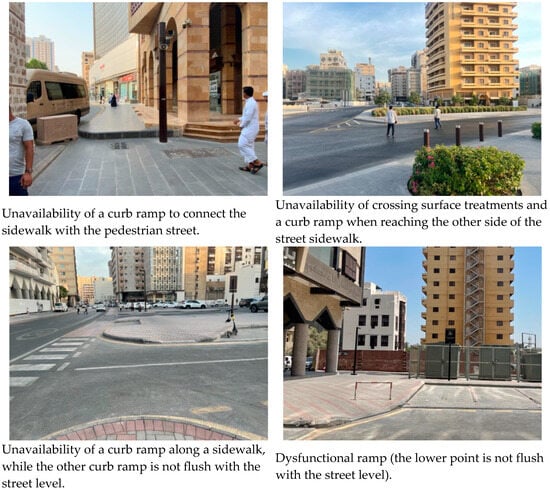
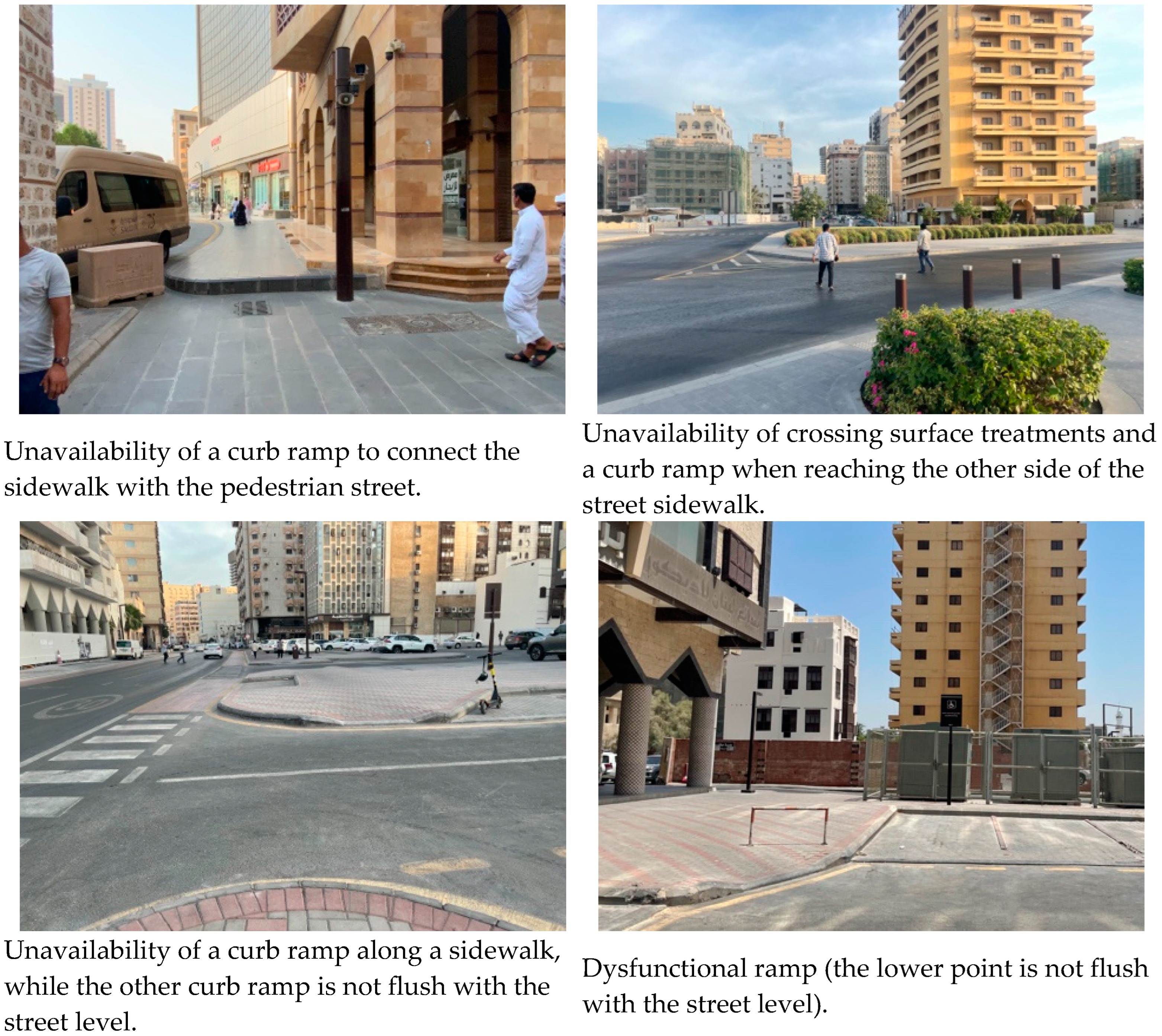
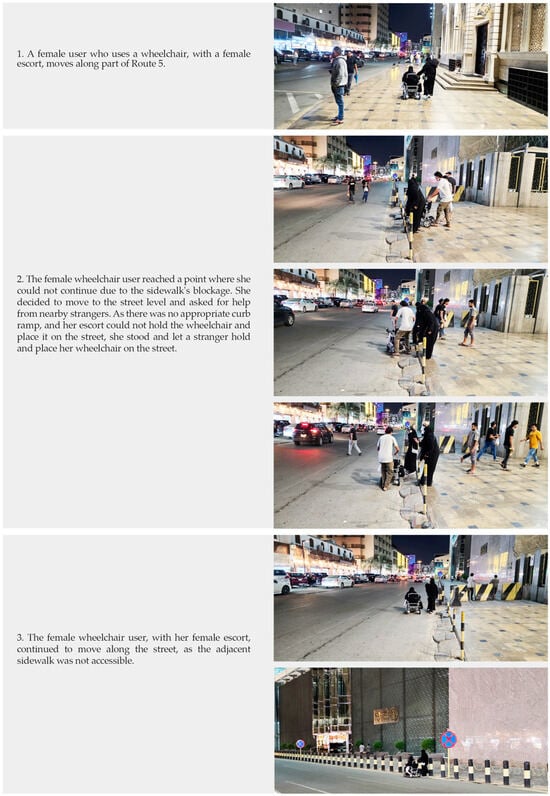
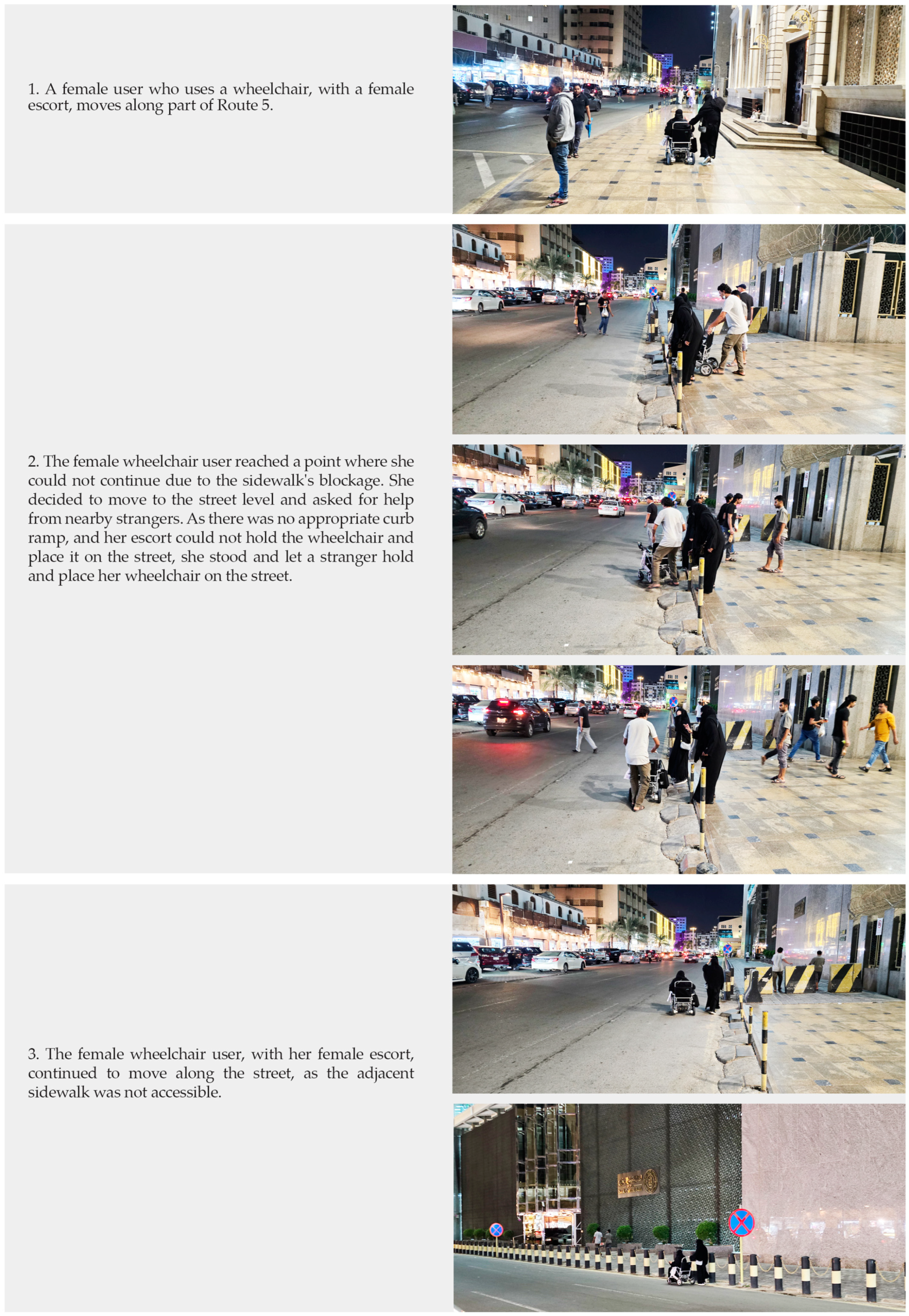
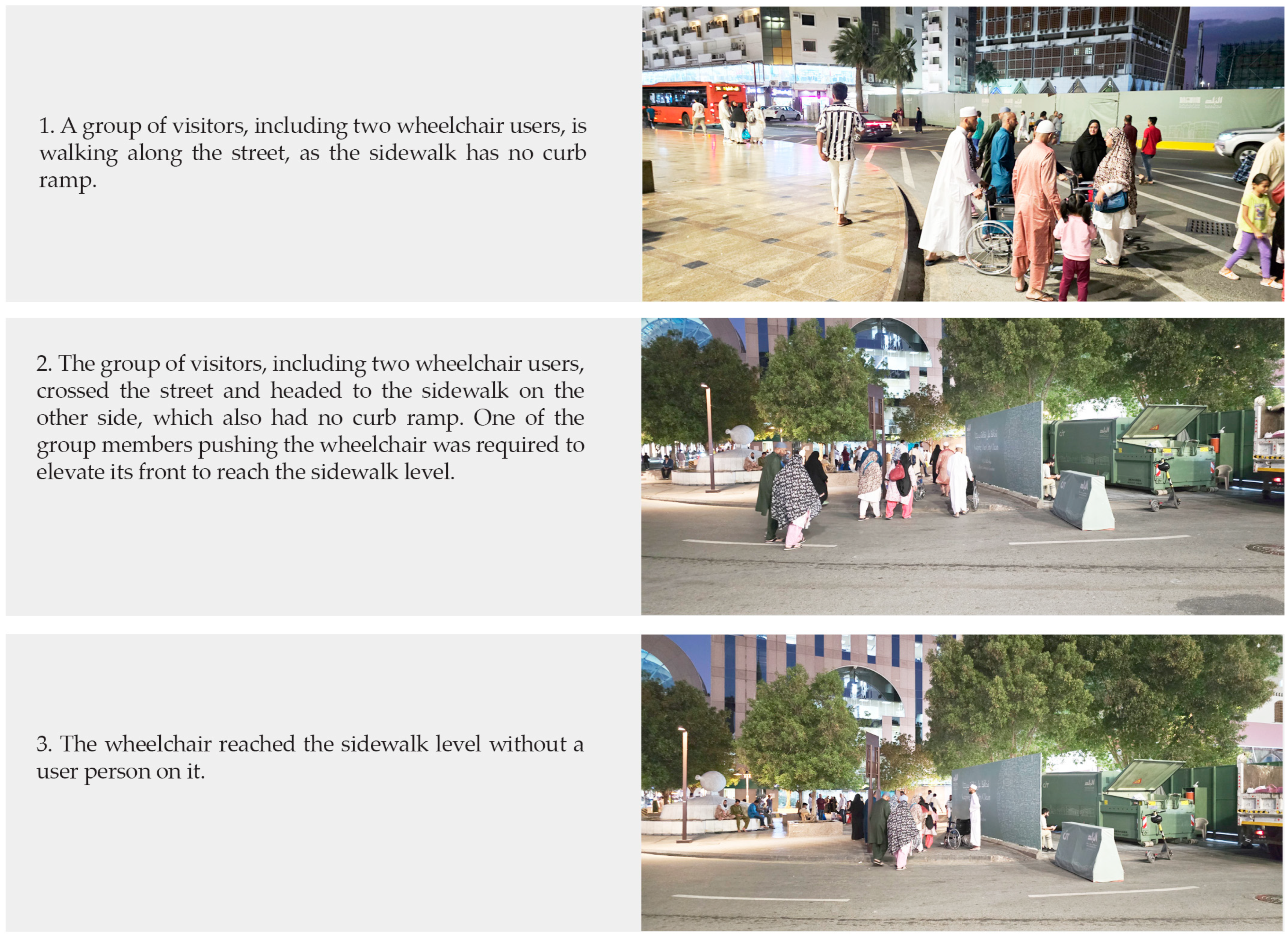
Another major issue identified was route connectivity (I.3), which received a very low rating of 27.5%. Connectivity issues were recorded in seven main forms: (1) the availability of a single curb ramp on a sidewalk crossed by a service lane, preventing further movement; (2) the unavailability of curb ramps at both ends of a sidewalk separated by a service lane; (3) the absence of curb ramps at main crossing points; (4) dysfunctional curb ramps where the lower part is not flush with the street surface; (5) poorly implemented curb ramps that are not safe to use; (6) the blockage of sidewalks with vertical obstacles; (7) the changing of the sidewalk’s width to the level where it becomes difficult to pass a wheelchair user (Figure 7). These connectivity issues significantly impede the ease of movement along sidewalks [49], forcing wheelchair users, as recorded in the case n 11–15 (Table 7), to use street lanes, which increases the risk of traffic injuries (Figure 8 and Figure 9). Furthermore, route ramp slopes (I.4) obtained a low rating of 52.5%, indicating that half of the ramps, including curb ramps, are not designed to ease mobility. Therefore, even routes with appropriate connectivity, such as R.8, are impacted by inappropriate ramp slopes. This situation can force wheelchair users to navigate street lanes instead of sidewalks if they do not receive support from an accompanying person. Furthermore, the low ratings for route ramp pavement quality (I.6) and route ramp width (I.5) at 60% and 65%, respectively, further exacerbate accessibility issues (Figure 10).
Figure 7.
Examples of route connectivity issues in Historic Jeddah.
Figure 8.
An example of poor connectivity due to the presence of large concrete bollards at Walking Route 5, putting wheelchair users at risk of traffic injury.
Figure 9.
Another example of poor connectivity that affects wheelchair users’ mobility at a main street intersection with no curb ramps on both sides.
Figure 10.
Examples of non-compliance with accessibility standards for ramp slope, width, and pavement quality.
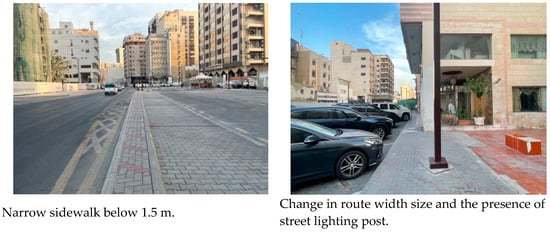
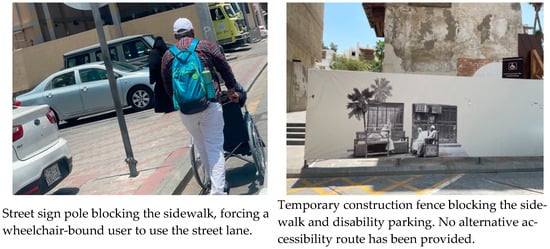
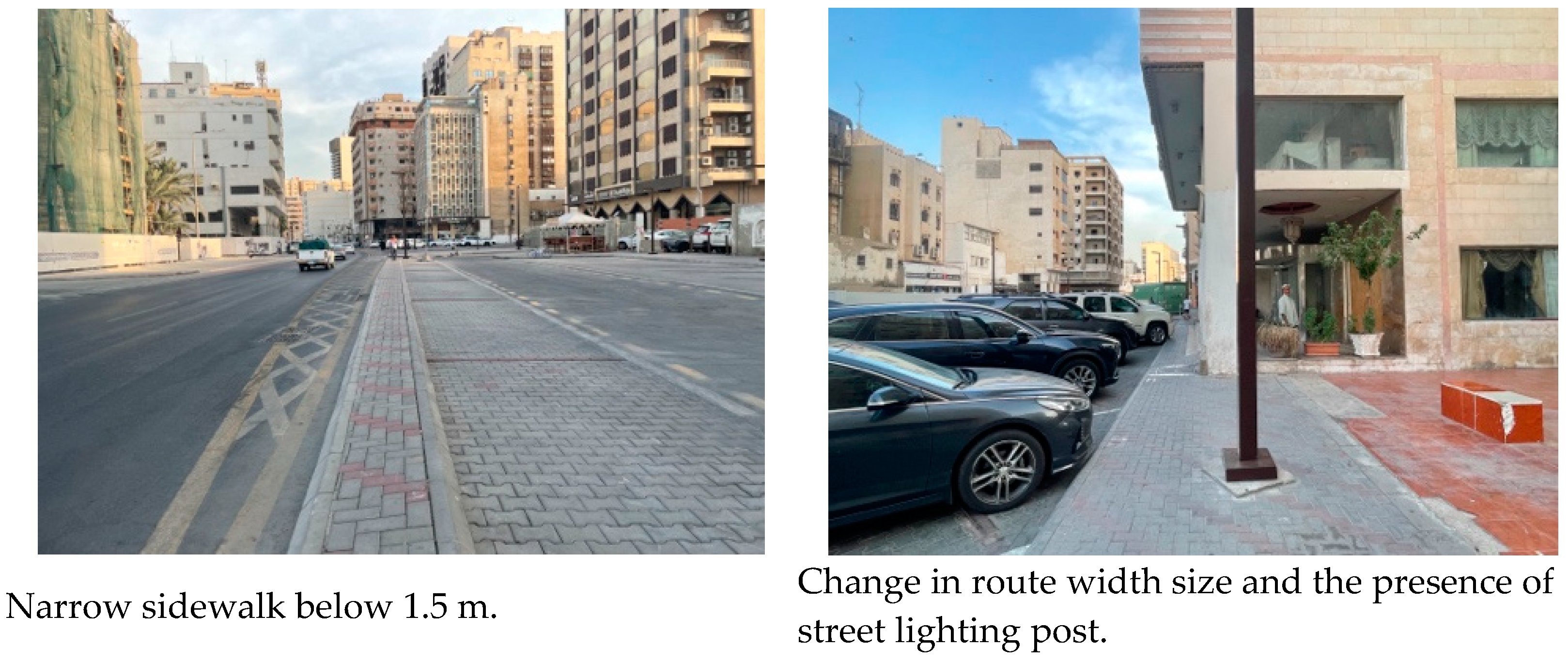
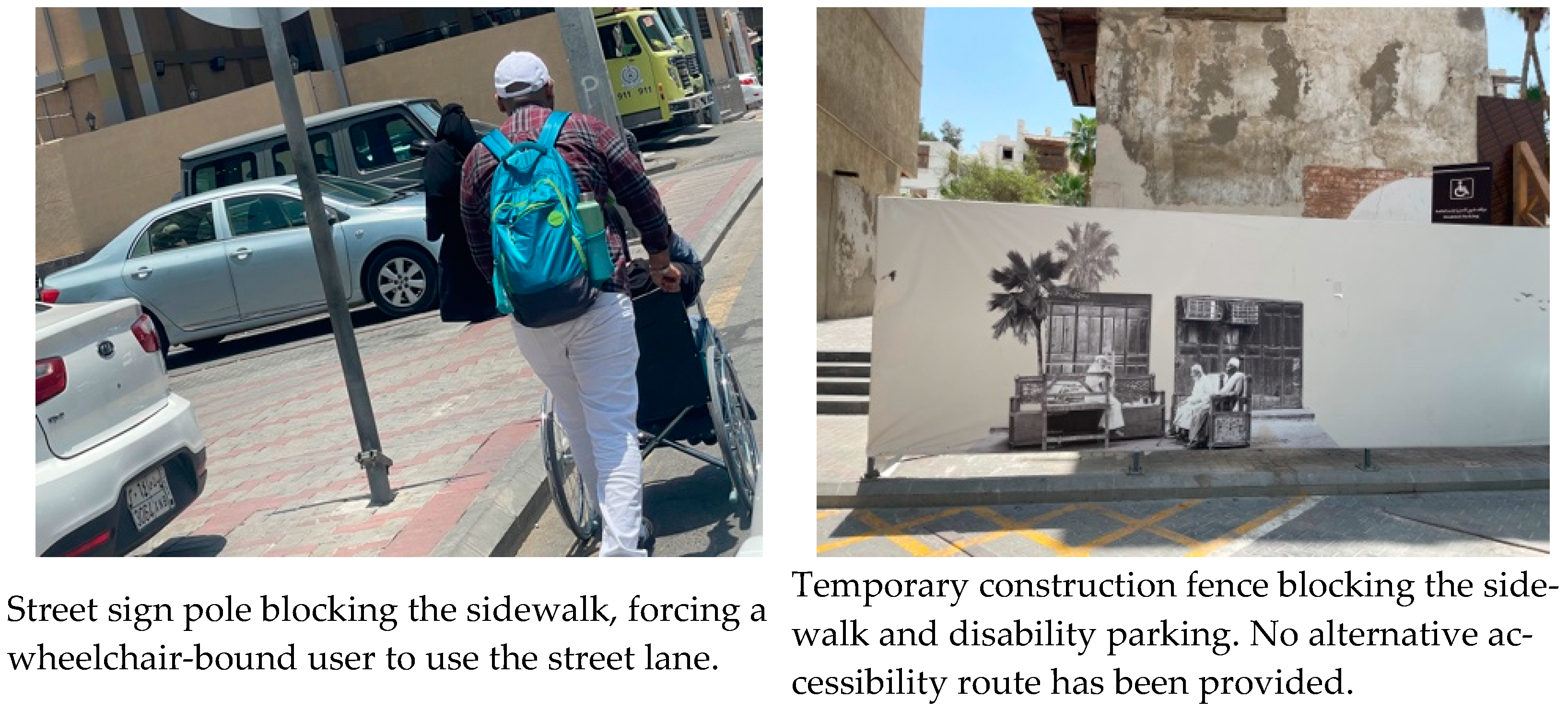
The route width indicator (I.9) in the Jeddah Historic District received a low rating of 72.5%. To ensure a safe and comfortable route for pedestrians and wheelchair users, a minimum width of 1.5 m is recommended [41]. However, assessments revealed inconsistencies in the path width; some areas exceed 3 m, while others narrow to less than 1 m, which prevents wheelchair users from utilizing them as recorded in the case n 11 (Table 7). Additionally, even where the width meets accessibility standards, sidewalk vertical obstacles, such as street lighting posts and sign poles, and the placement of construction fences on segments of sidewalks, force wheelchair users to use street lanes (Figure 11).
Figure 11.
Examples of walking route width and vertical obstacle issues in Historic Jeddah.
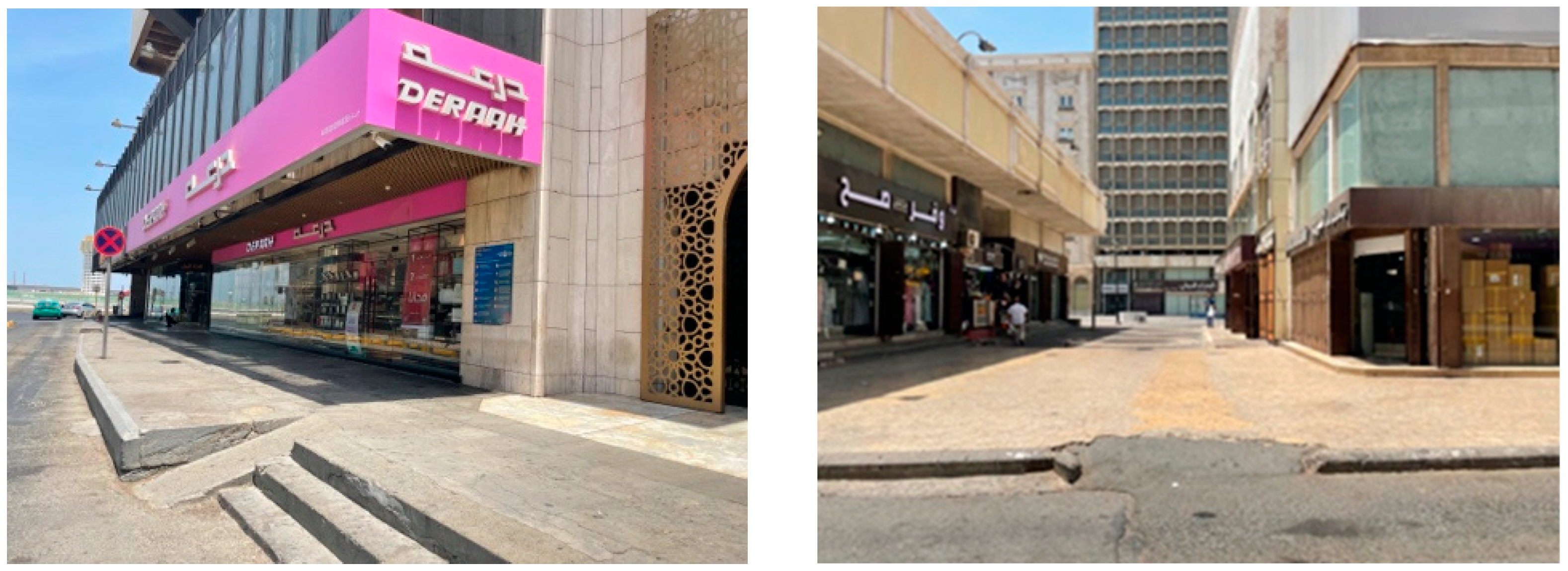
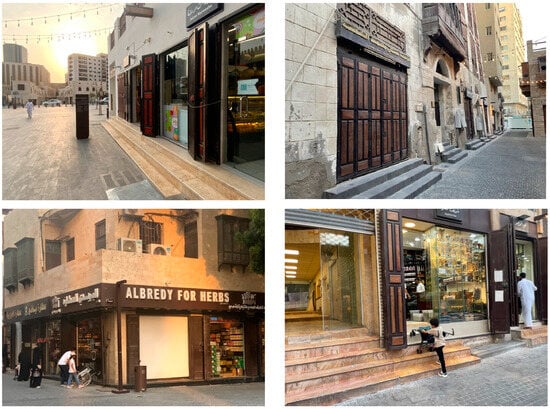
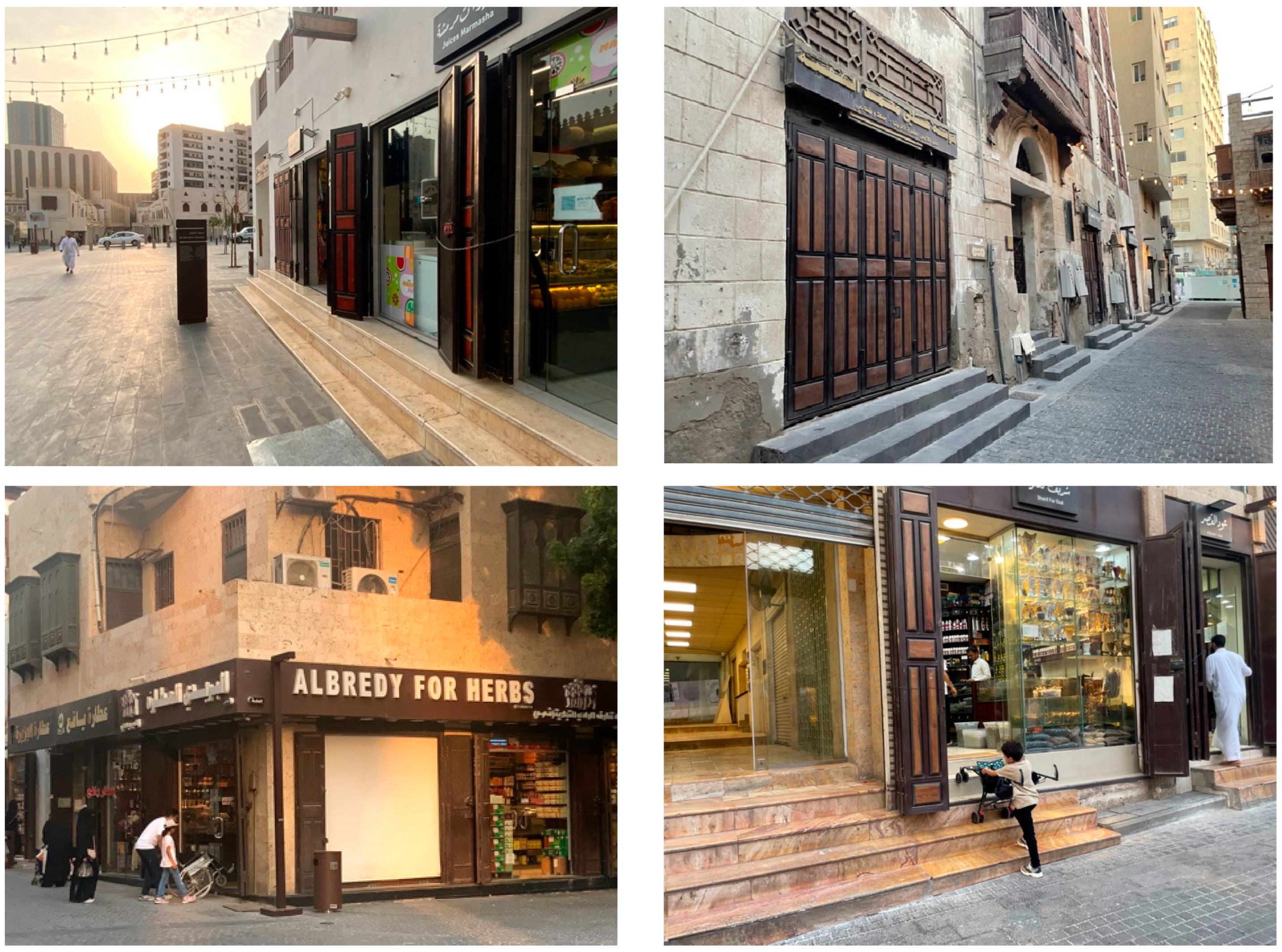
The inaccessibility to surrounding buildings is also concerning. The accessibility to surrounding buildings indicator (I.14) received a very low rating of 35%, as entering most of the historical district buildings and retail shops relies on stairs. This study recorded 11 out of 15 wheelchair users (Table 7) who did not have physical access to the surrounding buildings where they were spotted. Here, some wheelchair users were recorded waiting outside of the retail shops on the ground floor of the surrounding buildings while their accompanying relatives enjoyed shopping and engaging in other activities that happened inside. The inaccessibility issue minimized wheelchair users’ interactions with activities that occurred inside the surrounding buildings. According to the WHO [9], urban areas that rely solely on stairs and escalators are not considered accessible. The issue with building physical access to the Jeddah Historic District generally manifests in two cases: (1) entrances with a single step and (2) entrances with two or more steps. While the first case can often be managed with the help of an accompanying person who lifts the wheelchair over the step, this becomes challenging when multiple steps are involved or when the step exceeds the recommended maximum standard of 15 cm (Figure 12).
Figure 12.
Examples of accessibility issues for surrounding buildings, highlighting the absence of ramps for access to shops.
Another concern is the inadequate width of wheelchair user parking spaces (I.2), which also received a very low rating of 35%. Direct observations indicated that the current standard varies, with widths ranging from a minimum of 3.6 m to below the standard at 2.9 m in 9 out of 14 parking spaces. The lack of adherence to minimum width requirements makes these spaces difficult to use, particularly when getting in or out of a car, leading some wheelchair users to avoid these facilities as noticed during the assessment.
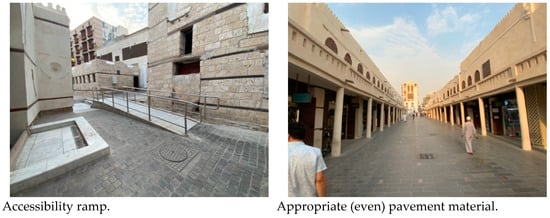
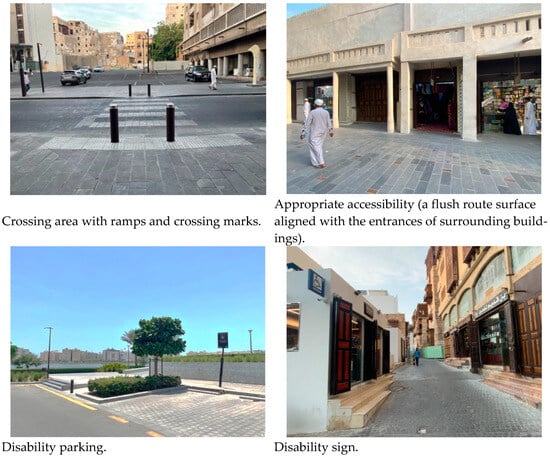
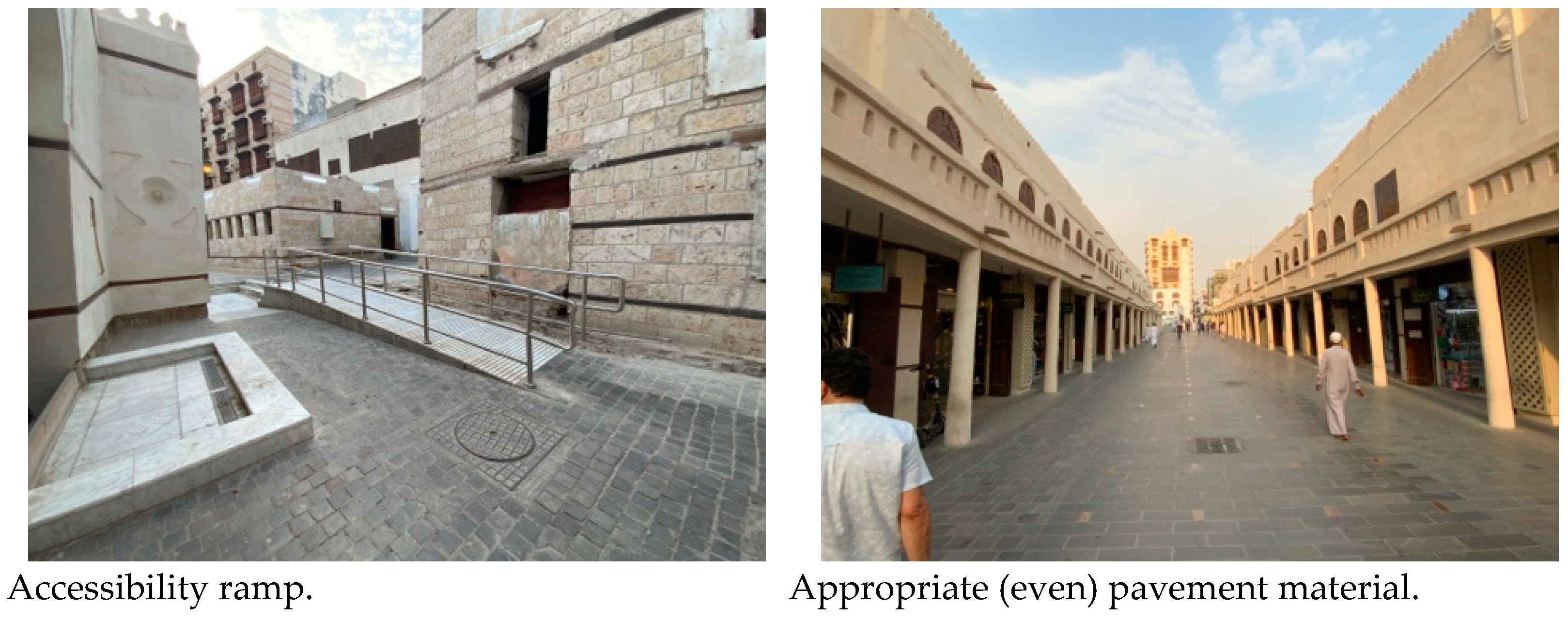
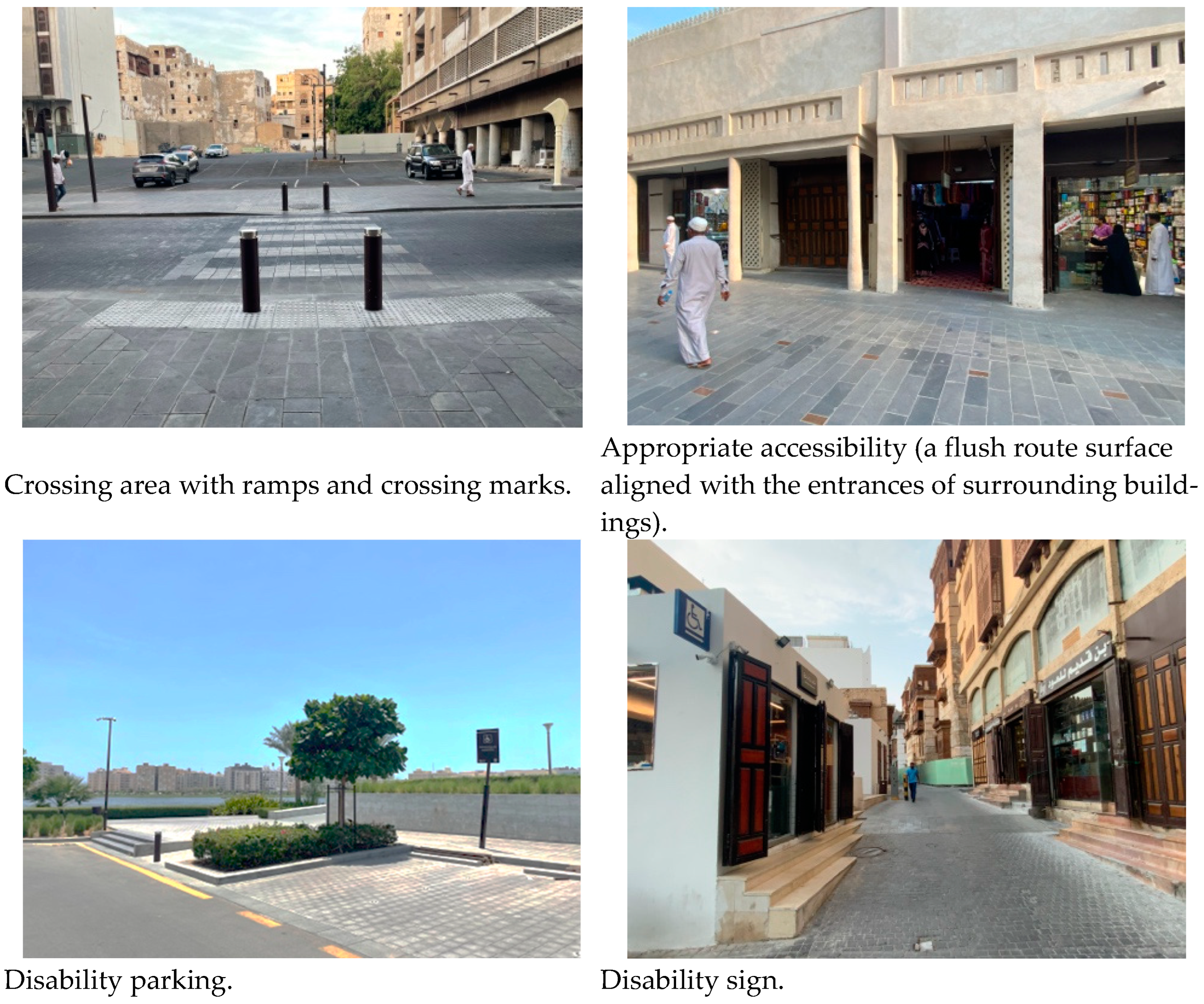
Although the accessibility assessment indicates that Historic Jeddah is not fully accessible to wheelchair users, it is important to recognize some best practices observed at the site. Several mosques and public restrooms within Historic Jeddah are equipped with accessibility ramps that meet appropriate standards. The pavement on some major routes is suitable for wheelchair users, and a few crossing areas are equipped with curb ramps, crossing marks, and signs. Additionally, few commercial buildings are accessible to wheelchair users through ramps or, in some cases, by removing the stairs and making the floor on the same level as the pathway (Figure 13).
Figure 13.
Examples of accessibility features for individuals with disabilities in Historic Jeddah.
5. Discussion
The findings of this study highlight the significant limitations in accessibility within the walking routes of the Jeddah Historic District, a culturally significant heritage site, for wheelchair users. The study reveals that the poor accessibility of walking routes can greatly hinder the mobility of wheelchair-bound visitors, adversely affecting their social sustainability. This study identifies several critical issues, including inconsistencies in parking space width standards, a lack of route connectivity, the poor implementation of proper ramp slope, ramp width, and pavement quality, the absence of crossing treatments and signals, narrow route widths, and poor accessibility to surrounding buildings. These issues result in impractical and unsafe physical access.
This study method extends the literature on wheelchair route assessments, particularly focusing on the journey from designated parking spaces to desired destinations. Such assessments are essential, as a wheelchair trip, similar to a walking trip, typically begins from a parking area and extends to the final destination, particularly in cities with ineffective public transportation systems. While previous studies [30,31,37] focused on certain aspects of accessibility, they did not provide a comprehensive assessment or rating for the entire route used by wheelchair users. This study addresses this gap by applying a method that includes two research strategies. First, it develops the WAC, which includes 14 indicators to systematically assess and rate accessibility across four key physical components utilized by wheelchair users during their trip—from parking to reaching the Jeddah Historic Center. The four components include the following: (1) accessibility of wheelchair parking; (2) accessibility of walking routes; (3) accessibility of crossing areas; (4) accessibility to surrounding buildings. Second, it investigates wheelchair users’ behavior while using the walking routes through a direct observation strategy to understand if these routes are practical and ease their mobility. It is a step to validate the results that are produced by the assessment of the 14 indicators.
Compared with other assessment methods, as indicated previously, WAC is designed to include 14 assessment indicators to assess only the physical accessibility of walking routes that wheelchair users use during their mobility trips from designated parking spaces to any desirable destinations in historic centers. In contrast, the PEAT assessing method [31], for example, includes 36 items to assess the suitability of walking paths for different activities and users. Compared to WAC, the PEAT was not created to assess mobility trips from one destination to another. Although the PEAT is comprehensive, it is considered time consuming compared with WAC, which is a focused, practical, and easy-to-use tool. WAC is also distinguished from PEAT by including the assessment of wheelchair users’ accessibility to surrounding buildings. WAC can also provide an overall rating for its 14 indicators, which is a useful index for comparisons. Additionally, WAC can be considered a cost-effective, practical, and easy-to-use method compared to GIS-based tools. This is because the latter requires intensive training and special personnel to deal with advanced technical applications.
To achieve “universal accessibility” standards, designated wheelchair parking must be situated near accessible and well-maintained walking infrastructure to ensure safe and comfortable access. For example, wheelchair users intending to park in spaces linked to routes R.3, R.4, and R.13—which received very low ratings (1.6, 1.7, and 1.8 out of 4, respectively)—may find it challenging to reach destinations further within the historic district. This issue could either deter these users from visiting the historical destination altogether or lead to increased cruising behavior in search of closer parking, thereby exacerbating traffic congestion and CO2 emissions, and creating an unhealthy environment [45,50]. Such an increase in air pollution could deteriorate building facades and significantly shorten the lifespan of building materials [51], further affecting Jeddah’s historic buildings, which are already experiencing physical degradation.
Another essential factor in achieving “barrier-free movement” for effective wheelchair accessibility is ensuring total connectivity, meaning that the walking route network should be free from any segments that impede a wheelchair user’s mobility. A key element of connectivity is the availability of a properly designed ramp system, with satisfactory slope, width, and surface quality. This study found that some segments in walking routes such as R.5 and R.6 lack ramps and thus lead wheelchair users to use street lanes, as illustrated in Figure 8 and Figure 9. Additionally, most of the existing ramp slopes, widths, and pavement quality along the routes do not meet international standards, rendering them unsafe. For example, the below-standard ramp slopes along routes R.8, R.11, and R.13 could increase the risk of fall-related injuries. Moreover, other route-related issues—such as inappropriate ramp surfaces, poor pavement quality, narrow route widths due to improper street and path design, and the presence of vertical obstacles—could discourage wheelchair use and force individuals to navigate street lanes instead, as recorded in wheelchair user n 11 (Table 7), posing significant traffic hazards. The behavior study confirmed the issue of connectivity as most wheelchair users (14 out of 15) were accompanied by relatives to help them navigate the Historic District of Jeddah. Therefore, a comprehensive accessibility plan should encompass all routes within the historic area as a unified project rather than as isolated efforts. Table 8 presents practical strategies for enhancing accessibility in historic districts based on this study’s results.
Table 8.
Planning strategies for enhancing accessibility in historic districts.
Our findings and method reinforce the Saudi Disability Welfare Law [14] that emphasizes the importance of developing engineering and architectural specifications that meet the needs of disabled individuals in public spaces, as highlighted in Article 3 and the Saudi “Universal Accessibility Guidelines.” Here, our findings draw attention to the fact that Saudi Disability Law and Universal Accessibility Guidelines must develop specific guidelines for enhancing the accessibility of disabled individuals, including wheelchair users, in heritage sites. These guidelines must be comprehensive to rectify the current local practices that insufficiently achieve wheelchair users’ accessibility in such sites. The developed guidelines should think practically about actual wheelchair users’ mobility trips in public spaces, from designated parking spots and bus or light rail stops to desirable destinations within heritage sites and historic centers. Before approval, they should be tested on historic districts and sites to identify issues and frustrations that possibly affect their implementation or effectiveness.
City departments responsible for managing historic districts and cultural heritage sites have a significant opportunity to improve physical accessibility for wheelchair users. One practical approach is to involve wheelchair users in identifying accessibility issues within these areas using an easy-to-use online version of the WAC tool. Another way is to link WAC with Google Maps and allow wheelchair users to pinpoint problematic locations on such an application; ongoing feedback can be utilized to identify areas of concern. This process enables responsible departments to collect comprehensive data, allowing them to address these issues expeditiously and effectively.
Additionally, the managers of historic sites can learn from global case studies to explore potential solutions that balance accessibility and inclusivity with heritage conservation. For example, in 2015, Historic England published two guidelines for improving access to historic buildings and landscapes [52,53]. These guidelines emphasized the right of disabled people to access historical sites and demonstrated how good accessibility can enhance our understanding and appreciation of the historical environment while simultaneously promoting heritage conservation. This approach is clearly stated by Historic England in their publication: “In its search for a more inclusive approach to the historic environment Historic England is keen to celebrate access solutions that combine conservation with excellent and innovative modern design” [52].
Regardless of the findings of this study, there will be other concerns to be addressed. Questions on whether improving wheelchair accessibility can attract more people to visit the district, if wheelchair users feel safe navigating the streets of the Jeddah Historic District, if wheelchair users are willing to travel the necessary distance from the designated parking areas to the historic center, and if the integration of technologies such as Google Maps can enhance the accessibility and overall experience for wheelchair users. While these are significant concerns, they fall outside of the scope of this study.
Lastly, the method and findings of this study are applicable to other historic districts with limited wheelchair accessibility, particularly those lacking appropriate walking infrastructure for such a group of users.
6. Conclusions
This study highlights the limited accessibility of the Jeddah Historic District walking routes for wheelchair users through the assessment of 14 routes, commencing from designated wheelchair parking areas to the historic district center, and the understanding of wheelchair users’ behavior while using these routes. This study contributes to the literature in three key ways. First, it advances the literature on assessment methods by offering a practical approach to assessing the walking infrastructure available for wheelchair users. Second, it enhances our understanding of the challenges related to public accessibility for wheelchair users in historic districts. Finally, it adds to the Saudi literature and practices that improve wheelchair accessibility in historical districts, ensuring that these locations are better equipped to serve vulnerable populations, enhance their experience, and minimize social isolation.
Although the present study reveals important findings, it has several limitations. First, it focused solely on assessing physical accessibility and related aspects, such as connectivity, safety, and comfort for wheelchair users on existing walking routes, but did not evaluate other aspects, such as the adequacy of lighting for safely guiding wheelchair users at night. Second, it did not examine existing design interventions to assist wheelchair users in moving from outdoor spaces to the surrounding indoor buildings. Third, the study did not consider the visual impact of wheelchair facilities and features (e.g., ramps, handrails, slopes) on the esthetics of historic district buildings. Fourth, the studying of wheelchair users’ behaviors was conducted only on 15 users as they were rarely seen in the historic district. Fifth, we used Google Maps to predict the wheelchair user routes as there were no designated routes. However, Google Maps highlighted the available wheelchair routes based on the shortest walking distance without taking into consideration the route’s quality and users’ behavior. Also, Google Maps might introduce inaccuracies in determining actual user paths and obstacles. Lastly, the assessment did not include other disability groups, such as those with visual or hearing impairments. Future research should explore the suitability of the current walking infrastructure for a broader range of disabilities to ensure that historic districts are accessible to all visitors. Additionally, triangulating data with in-person surveys and using higher-resolution spatial data in future research is recommended.
Author Contributions
Conceptualization, A.H. and N.A.; methodology, N.A.; validation, A.H.; formal analysis, N.A. and A.H.; investigation, A.H. and N.A.; resources, N.A.; data curation, N.A. and A.H.; writing—review and editing, A.H. and N.A.; visualization, A.H.; funding acquisition, A.H. All authors have read and agreed to the published version of the manuscript.
Funding
This research was funded by the Deanship of Scientific Research (DSR) at King Abdulaziz University, Jeddah, Saudi Arabia, grant number (GPIP:769-137-2024).
Institutional Review Board Statement
Not applicable.
Informed Consent Statement
Not applicable.
Data Availability Statement
Data are contained within the article.
Conflicts of Interest
The authors declare no conflicts of interest. The funders had no role in the design of the study; in the collection, analyses, or interpretation of data; in the writing of the manuscript; or in the decision to publish the results.
References
- Timothy, D.J.; Nyaupane, G.P. (Eds.) Cultural Heritage and Tourism in the Developing World: A Regional Perspective; Routledge: Abingdon, UK, 2009. [Google Scholar]
- Abram, S.; Waldren, J. Introduction: Tourists and tourism—Identifying with people and places. In Tourists and Tourism; Routledge: Abingdon, UK, 2021; pp. 1–11. [Google Scholar]
- Lim, C.K.; Tan, K.L.; Farid, A.M. Conservation of Culture Heritage Tourism: A Case Study in Langkawi Kubang Badak Remnant Charcoal Kilns. Sustainability 2023, 15, 6554. [Google Scholar] [CrossRef] [Scilit]
- Israeli, A.A. A Preliminary Investigation of the Importance of Site Accessibility Factors for Disabled Tourists. J. Travel. Res. 2002, 41, 101–104. [Google Scholar] [CrossRef]
- Darcy, S.; McKercher, B.; Schweinsberg, S. From tourism and disability to accessible tourism: A perspective article. Tour. Rev. 2020, 75, 140–144. [Google Scholar] [CrossRef] [Scilit]
- World Health Organization. Wheelchair Provision Guidelines. 2023. Available online: https://www.who.int/publications/i/item/9789240074521 (accessed on 20 July 2024).
- Zainol, H.; Isa, H.; Sakip, S.; Azmi, A. Social sustainable accessibility for people with disabilities at public transport stations through sustainable development goals in Malaysia. Environ.-Behav. Proc. J. 2018, 3, 89–94. [Google Scholar] [CrossRef] [Scilit]
- Woodcraft, S.; Bacon, N.; Caistor-Arendar, L.; Hackett, T. Designing for Social Sustainability: A Framework for Creating Thriving New Coumunities. 2012. Available online: https://www.social-life.co/media/files/DESIGN_FOR_SOCIAL_SUSTAINABILITY_3.pdf (accessed on 20 July 2024).
- United Nations. Convention on the Rights of Person with Disabilities; United Nations: New York, NY, USA, 2006. [Google Scholar]
- Darcy, S.; Dickson, T.J. A Whole-of-Life Approach to Tourism: The Case for Accessible Tourism Experiences. J. Hosp. Tour. Manag. 2009, 16, 32–44. [Google Scholar] [CrossRef] [Scilit]
- Iwarsson, S.; Ståhl, A. Accessibility, Usability and Universal Design—Positioning and Definition of Concepts Describing Person–Environment Relationships. Disabil. Rehabil. 2003, 25, 57–66. [Google Scholar] [CrossRef] [Scilit] [PubMed]
- Imrie, R.; Hall, P. Inclusive Design: Designing and Developing Accessible Environments; University of London: London, UK, 2001. [Google Scholar]
- Saudi Statistics Authority. 2017 Rights of People with Disabilities. Digital Government Authority. Available online: https://www.my.gov.sa/wps/portal/snp/careaboutyou/RightsOfPeopleWithDisabilities (accessed on 20 July 2024).
- Disability Welfare Law. Royal Decree No. M/37. 19 December 2000. Official Translation. Available online: https://laws.boe.gov.sa/Files/Download/?attId=e33f9a17-b692-4f52-8f31-adbb011306cc (accessed on 20 July 2024).
- King Salman Center for Disability Research. Universal Accessibility Guidelines: Riyadh, Saudi Arabia. 2010. Available online: https://kscdr.org.sa/index.php/en/universal-accessibility-guidelines (accessed on 20 July 2024).
- Al-Jadid, M.S. Disability in Saudi Arabia. Saudi. Med. J. 2013, 34, 453–460. [Google Scholar]
- Patrick, M.; McKinnon, I. Co-creating Inclusive Public Spaces: Learning from four Global Case Studies on Inclusive Cities. J. Public Space 2022, 7, 93–116. [Google Scholar] [CrossRef] [Scilit]
- Francis, L. Understanding disability civil rights non-categorically: The Minority Body and the Americans with Disabilities Act. Philos. Stud. 2018, 175, 1135–1149. [Google Scholar] [CrossRef] [Scilit]
- Imrie, R. Responding to the Design Needs of Disabled People. J. Urban Des. 2000, 5, 199–219. [Google Scholar] [CrossRef] [Scilit]
- Abberley, P. The concept of oppression and the development of a social theory of disability. Disabil. Handicap. Soc. 1986, 2, 5–19. [Google Scholar] [CrossRef] [Scilit]
- Manley, S. Walls of Exclusion: The Role of Local Authorities in Creating Barrier-Free Streets. Landsc. Urban Plann. 1996, 35, 137–152. [Google Scholar] [CrossRef] [Scilit]
- Yousefi, M.; Fardi, R. Physical Responding of the Urban Public Space to Citizens’ Rights. Mediterr. J. Soc. Sci. 2016, 7, 167–172. [Google Scholar] [CrossRef] [Scilit]
- Viemerö, V.; Krause, C. Quality of Life in Individuals with Physical Disabilities. Psychother. Psychosom. 1998, 67, 317–322. [Google Scholar] [CrossRef] [Scilit] [PubMed]
- Okoro, C.A.; McKnight-Eily, L.R.; Strine, T.W.; Crews, J.E.; Holt, J.B.; Balluz, L.S. State and local area estimates of depression and anxiety among adults with disabilities in 2006. Disabil. Health J. 2011, 4, 78–90. [Google Scholar] [CrossRef] [Scilit]
- Cree, R.A. Frequent Mental Distress Among Adults by Disability Status, Disability Type, and Selected Characteristics—United States 2018. MMWR 2020, 69, 1238–1243. [Google Scholar] [CrossRef] [Scilit]
- Garrod, B.; Fyall, A. Heritage tourism: A question of definition. Ann. Tour. Res. 2001, 28, 1049–1052. [Google Scholar] [CrossRef] [Scilit]
- Lee, Y.J. Creating memorable experiences in a reuse heritage site. Ann. Tour. Res. 2015, 55, 155–170. [Google Scholar] [CrossRef] [Scilit]
- Beale, L.; Field, K.; Briggs, D.; Picton, P.; Matthews, H. Mapping for Wheelchair Users: Route Navigation in Urban Spaces. Cartogr. J. 2006, 43, 68–81. [Google Scholar] [CrossRef] [Scilit]
- Evcil, A.N. Barriers and preferences to leisure activities for wheelchair users in historic places. Tour. Geogr. 2017, 20, 698–715. [Google Scholar] [CrossRef] [Scilit]
- Baris, M.E.; Uslu, A. Accessibility for the disabled people to the built environment in Ankara, Turkey. Afr. J. Estate Prop. Manag. 2020, 7, 1–14. [Google Scholar]
- Bakhsh, H.R.; Chippendale, T.; Al-Haizan, N.; Bin Sheeha, B.H. Assessment of park paths and trails to promote physical accessibility among wheelchair users in Saudi Arabia. Hong Kong J. Occup. Ther. 2024, 37, 42–51. [Google Scholar] [CrossRef] [Scilit] [PubMed]
- Lwoga, N.B.; Mapunda, B.B. Challenges Facing Accessible Tourism in Cultural Heritage Sites: The Case of Village Museum in Tanzania. J. Tour. Stud. Res. Tour. 2017, 24, 45–54. [Google Scholar]
- Vardia, S.; Khare, A.; Khare, R. Universal Access in Heritage Site: A Case Study on Jantar Mantar, Jaipur, India. In Transforming Our World Through Design, Diversity and Education; IOS Press: Amsterdam, The Netherlands, 2018; pp. 67–77. [Google Scholar]
- Santana-Santana, S.B.; Peña-Alonso, C.; Espino, E.P.C. Assessing physical accessibility conditions to tourist attractions. The case of Maspalomas Costa Canaria urban area (Gran Canaria, Spain). Appl. Geogr. 2020, 125, 102327. [Google Scholar] [CrossRef] [Scilit]
- Rebernik, N.; Marek, S.; Alfonso, B.; Barbara, G.M. Measuring Disability Inclusion Performance in Cities Using Disability Inclusion Evaluation Tool (DIETool). Sustainability 2020, 12, 1378. [Google Scholar] [CrossRef] [Scilit]
- Marín-Nicolás, J.; Sáez-Pérez, M.P. An Evaluation Tool for Physical Accessibility of Cultural Heritage Buildings. Sustainability 2022, 14, 15251. [Google Scholar] [CrossRef] [Scilit]
- Budiatiningsih, M.; Rojabi, S.H. Accessibility Study For Persons With Disabilities In Tourism Destinations: A Case Study in the Malioboro Area, Yogyakarta. Int. J. Tour. Bus. Res. 2023, 2, 27–36. [Google Scholar] [CrossRef] [Scilit]
- Kruczek, Z.; Katarzyna, G.; Danuta, Z.; Karolina, K.; Karolina, N. Accessibility of Cultural Heritage Sites for People with Disabilities: A Case Study on Krakow Museums. Sustainability 2024, 16, 318. [Google Scholar] [CrossRef] [Scilit]
- Saudi Press Agency. With Six Million Visitors and a New Success Story, the Jeddah Season 2022 Concludes Its Activities. 2022. Available online: https://www.spa.gov.sa/2367287 (accessed on 24 September 2023).
- Deming, E.; Swaffield, S. Landscape Architecture Research: Inquiry, Strategy, Design; John Wiley & Sons, Inc.: Hoboken, NJ, USA, 2011. [Google Scholar]
- United Nations. Accessibility for the Disabled—A Design Manual for a Barrier Free Environment. 2003. Available online: https://www.un.org/esa/socdev/enable/designm/index.html (accessed on 20 July 2024).
- US Access Board. ADA Accessibility Guidelines. 2002. Available online: https://www.access-board.gov/adaag-1991-2002.html# (accessed on 14 July 2024).
- Shaaban, K. Assessing Sidewalk and Corridor Walkability in Developing Countries. Sustainability 2019, 11, 3865. [Google Scholar] [CrossRef] [Scilit]
- Alhajaj, N.; Daghistani, F. Hybrid method for measuring the accessibility and safety of students’ walking routes in car-dominated campuses. Urban Des. Int. 2021, 26, 53–66. [Google Scholar] [CrossRef] [Scilit]
- Alhajaj, N. Assessment of Walkability of Large Parking Lots on University Campuses Using Walking Infrastructure and User Behavior as an Assessment Method for Promoting Sustainability. Sustainability 2023, 15, 7203. [Google Scholar] [CrossRef] [Scilit]
- Pecchini, D.; Giuliani, F. Street-crossing behavior of people with disabilities. J. Transp. Eng. 2015, 141, 04015022. [Google Scholar] [CrossRef] [Scilit]
- US Department of Transpiration. Accessible Sidewalks and Street Crossings: An Informational Guide. 2003. Available online: https://rosap.ntl.bts.gov/view/dot/16137 (accessed on 28 July 2024).
- Ferreira, M.A.; da Penha Sanches, S. Proposal of a sidewalk accessibility index. J. Urban Environ. Eng. 2007, 1, 1–9. [Google Scholar] [CrossRef]
- Odame, P.K.; Amoako-Sakyi, R.O. Sidewalk accessibility and pedestrian safety among students with physical disability in the University of Cape Coast. Current Res. J. Soc. Sci. Hum. 2019, 2, 109–122. [Google Scholar] [CrossRef] [Scilit]
- Shoup, D. The High Cost of Free Parking; Planners Press: Florence, KY, USA, 2011. [Google Scholar]
- Register, R. Ecocities: Rebuilding Cities in Balance with Nature, Revised ed.; New Society Publishers: Gabriola Island, BC, Canada, 2006. [Google Scholar]
- English Heritage. Easy Access to Historic Buildings. 2015. Available online: https://historicengland.org.uk/images-books/publications/easy-access-to-historic-buildings/ (accessed on 1 April 2025).
- English Heritage. Easy Access to Historic Landscapes. 2015. Available online: https://historicengland.org.uk/images-books/publications/easy-access-historic-landscapes/ (accessed on 1 April 2025).

Disclaimer/Publisher’s Note: The statements, opinions and data contained in all publications are solely those of the individual author(s) and contributor(s) and not of MDPI and/or the editor(s). MDPI and/or the editor(s) disclaim responsibility for any injury to people or property resulting from any ideas, methods, instructions or products referred to in the content. |
© 2025 by the authors. Licensee MDPI, Basel, Switzerland. This article is an open access article distributed under the terms and conditions of the Creative Commons Attribution (CC BY) license (https://creativecommons.org/licenses/by/4.0/).