


Abstract
Entrepreneurial defection, which leads to the loss of core talents and key resources, poses a severe threat to the innovation capacity and sustainable development of entrepreneurial enterprises. However, the mechanism through which it influences ambidextrous innovation—a key driver of sustainability comprising exploitative (short-term optimization) and exploratory (long-term breakthrough) activities—remains empirically unclear. Grounded in the Conservation of Resources Theory, this study analyzes 553 questionnaires from entrepreneurial enterprises (≤8 years old) to investigate the impact of entrepreneurial defection on ambidextrous innovation, focusing on the chain mediating roles of entrepreneurial learning and organizational change. The findings reveal that (1) Entrepreneurial defection does not directly promote ambidextrous innovation; its positive effect is fully mediated by entrepreneurial learning, organizational change, and their sequential path. (2) Significant heterogeneity exists in this mediating effect: the path via entrepreneurial learning is stronger for exploitative innovation, whereas the path via organizational change exerts a weak negative interference on exploratory innovation, though the positive effect of learning remains dominant. (3) Entrepreneurial learning is the core mediator, accounting for over 70% of the total indirect effect, and facilitates a “learning-change-innovation-sustainability” cycle. This study fills a critical empirical gap and extends the application of Conservation of Resources Theory. It offers practical insights for entrepreneurs: by strengthening learning and guiding organizational change, the pressure of resource loss can be transformed into a driver for dual innovation, enabling a transition from crisis recovery to sustainable development capability upgrading.
1. Introduction
Entrepreneurial defection, a phenomenon where employees leave to establish or join competing ventures using resources acquired from their former employer [1], poses a direct threat to entrepreneurial enterprises through the loss of critical knowledge, technology, and customer relationships. This resource erosion challenges a firm’s very survival and its capacity for sustainable development. In highly uncertain environments, where continuous innovation is paramount for growth, understanding how firms respond to such disruptive events is a critical research imperative.
While existing research, notably by Zhou Yubin et al. [1], has laid a conceptual foundation for entrepreneurial defection, a significant empirical gap remains. The theoretical progression of the field now demands rigorous empirical testing, particularly concerning its impact on core strategic outcomes like innovation. Concurrently, the literature on ambidextrous innovation has identified numerous antecedents but has yet to formally integrate and test entrepreneurial defection as a potential trigger. This study bridges these two streams by empirically examining how entrepreneurial defection influences a firm’s ambidextrous innovation—the balance between exploitative (refining existing knowledge) and exploratory (pursuing new knowledge) activities [2,3].
A pivotal, unresolved question is why and how firms choose innovation as a strategic response to defection. The Conservation of Resources (COR) Theory [4] provides a foundational lens, positing that individuals strive to acquire, retain, and protect valued resources. Entrepreneurial defection represents a significant resource loss, generating stress and motivating actions to mitigate further depletion and recover losses. However, COR theory alone does not fully explain why innovation, a resource-intensive activity, becomes the preferred strategic mechanism over alternatives like retrenchment.
We extend this logic by arguing that in knowledge-intensive competitive contexts, innovation serves as the paramount strategic mechanism for resource reconstitution. The loss of key knowledge resources creates a critical gap that can be most effectively addressed either by generating new knowledge to build new competitive advantages or by optimizing the application of existing knowledge to enhance efficiency and extract greater value from remaining assets. This perspective positions ambidextrous innovation not merely as a desirable outcome but as a necessary strategic response to knowledge-based resource loss.
Furthermore, we deepen the connection to the paper’s core theme of sustainable development. We conceptualize the two facets of ambidextrous innovation as direct drivers of distinct yet complementary dimensions of sustainability. Exploitative innovation, with its focus on efficiency, refinement, and short-term performance, is a primary driver of economic sustainability by ensuring operational viability and the capacity for immediate survival. Conversely, exploratory innovation, which involves boundary-spanning search and the development of new capabilities, is fundamental to building long-term organizational resilience and adaptability, thereby securing enduring sustainability [5]. Together, they form the core of a sustainable development paradigm that balances present needs with future viability.
To unravel the process through which defection translates into innovation, we introduce entrepreneurial learning and organizational change as sequential mediators. From a resource-based perspective, entrepreneurs, as key agents, are likely to engage in learning to acquire new knowledge and capabilities to counter resource loss [6]. This learning, in turn, provides the cognitive foundation and justification for initiating organizational change, which structurally reconfigures the firm to support new innovation activities. Thus, we propose a chain-mediation model (entrepreneurial defection → entrepreneurial learning → organizational change → ambidextrous innovation) to elucidate the complete transmission mechanism.
In summary, this study makes several contributions. It fills an empirical gap in the entrepreneurial defection literature by testing its impact on a crucial strategic outcome. It enriches innovation research by introducing a significant yet under-explored antecedent. Theoretically, it extends COR theory by specifying innovation as a key resource-reconstitution mechanism and clarifies the sequential process linking a resource shock to strategic renewal. Practically, it provides a structured pathway—learning followed by change—for entrepreneurial firms to convert the crisis of defection into an opportunity for bolstering both short-term and long-term sustainable development capabilities.
2. Research Design
2.1. Research Hypotheses
2.1.1. Entrepreneurial Defection and Ambidextrous Innovation
Existing research has found that an increase in environmental dynamism and competitiveness drives corporate innovation activities, and higher environmental turbulence favors companies that increase investment in innovation and adopt proactive innovation strategies to gain market position [7]. Therefore, as uncertainty in the corporate environment intensifies and enterprises face greater competition due to entrepreneurial defection, it becomes increasingly necessary for them to adopt innovative measures to actively respond.
For entrepreneurs, entrepreneurial defection, as an important source of work-related stress, enhances the likelihood of corporate innovative decision-making and actions. This study argues that innovative behavior is a crucial resource conservation strategy adopted by entrepreneurs to address resource depletion and acquire more resources. The resource conservation theory posits that individuals actively strive to maintain, protect, and build resources, and resource depletion leads to increased stress [8]. Consequently, when entrepreneurs perceive themselves to be experiencing entrepreneurial defection, the direct consequence is a depletion of individual resources, resulting in a significant increase in stress. In such situations, entrepreneurs strive to preserve their remaining resources and actively take proactive actions to mitigate the impact of resource loss. Among these actions, innovative behavior decisions are an important strategic approach for companies to enhance their competitiveness. This is because corporate innovation activities are crucial channels for acquiring external resources, and adopting an ambidextrous innovation strategy can significantly compensate for resource losses caused by defection. As a result, when making strategic decisions for business development, entrepreneurs tend to prefer innovative approaches to protect or compensate for their resources. Furthermore, the resource conservation theory also suggests that in the face of increased stress due to resource depletion, individuals should not only take passive measures to prevent and mitigate losses but also actively invest in resource adjustment. This is especially true for individuals with scarce resources, who are more vulnerable to resource loss and often find that the most effective way to cope with such losses is to further increase resource investment [8]. To address resource damage and its associated emotional, financial, and property losses for entrepreneurs, they will invest more resources, fully utilize internal and external resources, and innovate to cope with the pressure, thereby preventing further losses and enhancing enterprise competitiveness. In summary, the more severe the loss perceived by entrepreneurs due to entrepreneurial defection, the more likely they are to innovate to prevent further resource losses, protect existing resources, and enhance the uniqueness of their resources. They will actively acquire new resources, create resource increments, and explore new markets and gain more market share through the introduction of new products and technologies. This leads to entrepreneurs being more inclined to vigorously implement innovation strategies after experiencing entrepreneurial defection. On one hand, this manifests in a more active utilization of existing resources for innovation, i.e., exploitative innovation, to quickly produce new products to compensate for resource losses in the short term. On the other hand, it manifests in actively exploring new knowledge for innovation, i.e., exploratory innovation, to cultivate the fundamental innovation capabilities of the enterprise and enhance its long-term development potential.
Based on the above analysis, this study adopts an exploratory perspective on the relationship between entrepreneurial defection and corporate ambidextrous innovation, positing that there may be a positive correlation between them. Accordingly, the following exploratory hypotheses are proposed:
H1A.
Entrepreneurial defection may have a positive impact on exploitative innovation.
H1B.
Entrepreneurial defection may have a positive impact on exploratory innovation.
It is important to supplement that the core logic underlying the proposed exploratory hypotheses lies in focusing on the potential path through which entrepreneurial defection indirectly drives corporate innovation by triggering resource depletion and stress perception. The subsequent discussion section will further clarify that the positive impact of entrepreneurial defection on both exploitative and exploratory innovation is not a direct effect, but is fully transmitted through the learning and change processes—i.e., the generation of this positive effect is entirely dependent on the mediating mechanism, with no direct effect existing.
2.1.2. The Mediating Role of Entrepreneurial Learning
Entrepreneurial learning serves as an intermediary variable between entrepreneurial defection and the ambidextrous innovation of an enterprise. This study argues that entrepreneurial defection first influences organizational learning, and subsequently impacts the exploratory and exploitative innovation of the enterprise. Entrepreneurship, as a continuous learning process, is supported by organizational learning [9]. Entrepreneurial learning refers to the learning behavior of entrepreneurs acquiring and developing entrepreneurial knowledge and skills from external sources through organizational learning, in order to promote the better growth of new ventures [10]. Entrepreneurial learning is a crucial aspect for entrepreneurs to overcome external challenges in their entrepreneurial activities [11,12], enhancing their decision-making capabilities and bringing better performance to the enterprise.
The learning orientation lays a strategic foundation for acquiring and successfully utilizing new knowledge, serving as a crucial factor for the survival and growth of new ventures, and a source of sustainable competitiveness for enterprises [13]. For new ventures, the learning orientation is particularly significant [14], and entrepreneurs lacking a learning orientation find it difficult to lead their ventures to achieve high performance levels [15]. Existing research unanimously agrees that organizational learning is an important antecedent variable for technological innovation, but there are differences in research conclusions regarding the heterogeneity of organizational learning’s impact on exploratory and exploitative innovation. Some studies have shown that organizational learning has a positive impact on both types of innovation [16], while others argue that there are differences in the role of organizational learning on ambidextrous innovation, such as promoting exploitative innovation while having an inverted U-shaped relationship with exploratory innovation [17].
Entrepreneurial learning plays a pivotal role in new ventures’ opportunity identification and utilization, resource acquisition and utilization, as well as the development of entrepreneurial capabilities [18]. Therefore, engaging in proactive entrepreneurial learning activities can help enterprises compensate for resource losses and facilitate the acquisition, integration, and utilization of externally sourced resources. The learning orientation of entrepreneurs reflects their emphasis on knowledge resources [19]. Learning specialized technical knowledge from outside the organization can enrich a company’s knowledge base, enhance its potential for novel knowledge integration, and increase the chances of achieving breakthrough innovations [20]. Through the knowledge spillover effect, organizational learning can assist enterprises in acquiring external knowledge and ideas, further transforming them into innovative resources and skills. In essence, organizational learning serves as a crucial pathway for enterprises to achieve successful innovation [21]. Particularly in volatile external environments, organizational learning enables enterprises to identify new opportunities in uncertainty, maintain or even enhance their current operational level, and strengthen their innovation capabilities [22]. The learning orientation possesses a forward-looking characteristic, effectively enhancing an enterprise’s ability to respond to external uncertainties and minimizing losses caused by external shocks [23]. Additionally, entrepreneurial learning assists entrepreneurs in overcoming negative emotions, enabling them to recover quickly after setbacks, maintain confidence in their ventures, and engage in proactive entrepreneurial actions [24]. Furthermore, entrepreneurial learning and innovative activities are behavioral responses to positive emotions in enterprises. Entrepreneurs with a high learning orientation, after enduring resource losses due to entrepreneurial turnover, are more likely to bring new knowledge and other resources to the enterprise through a series of proactive learning activities, providing a sufficient knowledge base for the enterprise’s ambidextrous innovation activities, thereby facilitating the subsequent development of such activities.
A high learning orientation reflects entrepreneurs’ emphasis and support for learning, fostering a corporate culture that encourages knowledge creation. This, in turn, motivates employees to actively engage in learning, enriching the enterprise’s existing knowledge base and resource accumulation. It enhances the conversion and utilization efficiency of knowledge and resources, ultimately leading to better innovation performance for the enterprise [13]. Entrepreneurial learning not only facilitates new ventures’ acquisition and development of new knowledge, but also promotes their application and refinement of existing knowledge [25]. The former provides a knowledge foundation for exploratory innovation, while the latter lays the groundwork for exploitative innovation. In essence, entrepreneurial learning plays a positive role in both exploratory and exploitative innovations. Therefore, we believe that entrepreneurs who experience entrepreneurial turnover and possess a high learning orientation are more inclined to actively organize learning activities to acquire external knowledge and resources, which can further facilitate exploratory and exploitative innovations.
Based on the above, the following hypotheses are proposed:
H2A.
Entrepreneurial turnover has a positive impact on exploitative innovation through entrepreneurial learning.
H2B.
Entrepreneurial turnover has a positive impact on exploratory innovation through entrepreneurial learning.
2.1.3. The Mediating Role of Organizational Change
Organizational change serves as an intervening variable in the impact of entrepreneurial turnover on a firm’s ambidextrous innovation. This study argues that entrepreneurial turnover first affects an organization’s organizational change, which then influences its exploratory and exploitative innovations. Entrepreneurial turnover events in startups can lead to emotional and financial losses for entrepreneurs at the individual level, loss of both tangible and intangible resources for the company, impairment of competitiveness at the corporate level, increased competition from peers with similar resource endowments at the industry level, and exposure of internal process and knowledge protection deficiencies at the institutional level. According to social identity theory, entrepreneurs perceive such pressures or deficiencies as a challenge to their identity, motivating them to adopt value-oriented behaviors [26], creating an internal drive for change. In the context of turnover, significant changes occur in a firm’s internal and external environments. To address these issues, adapt to the new environment, and regain competitive advantage, organizational change becomes imperative [27]. Organizational change can be categorized into structural change, process change, and incentive change [28]. Structural change refers to changes in personnel allocation, job division, and organizational structure oriented towards specific goals. Process change involves market-oriented and customer-centric process changes based on information technology. Incentive change pertains to changes in leadership and employee motivation.
The traditional goal of organizational structure design is to reduce operational costs and enhance efficiency [29]. However, in the context of employee turnover, beyond those goals, enterprises must classify personnel according to security levels, reassign them, strengthen job responsibilities and confidentiality education, enhance knowledge protection, and prevent further loss of core technologies and knowledge. Additionally, when turncoats establish or join competing companies, they compete with the original enterprise for customers based on similar or identical resources, resulting in decreased business performance. To stabilize or improve performance, entrepreneurs will review and optimize the organizational structure, implementing necessary changes to address competition [27]. Reasonable structural changes can positively contribute to organizational learning and the development of a learning organization [30], thereby promoting organizational innovation [31].
To adapt to drastic environmental changes, enterprises need to overcome innovation inertia [32], break rules and conventions [33], and embrace change. Organizational process change involves realigning various business nodes to enhance operational efficiency [34]. Given that companies tend to recruit employees primarily from their local regions, defectors who start businesses in the same industry are likely to prioritize local operations. Similar businesses and resources can lead to the clustering of local industries, intensifying competition and causing significant changes in the business environment. To cope with such complex environmental changes, entrepreneurs need to implement organizational changes, improve operational efficiency, accelerate innovation, enhance competitiveness, and promote the development of the organization towards ecological and sustainable directions [35].
According to social network theory, employees who leave their jobs based on their experiences within the company tend to form their own interpersonal networks through work and daily life. Their reasons for leaving, which might stem from interests or interpersonal factors, could be partly recognized by some remaining employees, creating instability and potentially leading to group turnover. In such cases, to stabilize the team and mitigate the negative impacts of turnover, entrepreneurs need to make changes in organizational incentives, such as enhancing personnel training to quickly fill talent gaps, building a talent pipeline to prevent sudden departures, reforming compensation plans to retain talent, and adopting humane management practices to enhance employee morale [36]. Additionally, employee incentives have a significant positive impact on a company’s technological innovation [37,38].
Existing research has confirmed the impact of organizational change on enterprise innovation. For instance, Chen Xiaochun et al. [39] argue that organizational change can effectively address organizational inertia and achieve breakthroughs in technological and product innovation. Ni Qingping [34] believes that organizational structural change can improve existing organizational mechanisms and adapt to environmental changes. Xie Xuemei and Wu Yonghui’s [40] research shows that organizational change can significantly promote organizational innovation performance. Yu Wei et al. [27] hold that organizational change can positively affect innovation capabilities and organizational creativity. Other scholars believe that organizational structural change can foster open innovation [41], enhance innovation capabilities, overcome innovation inertia [42], improve corporate adaptability, and increase enterprise performance [43]. Implementing process changes in enterprises can break through the constraints of old knowledge and experience, build new knowledge systems, enhance innovation capabilities, and drive product or service innovation [44,45]. Implementing incentive changes in enterprises significantly promotes organizational creativity [46] and can also inspire employees’ work enthusiasm, thereby discovering more opportunities and growth points, and promoting exploratory innovation in enterprises [47].
The Resource Conservation Theory posits that individuals strive to acquire, maintain, utilize, and develop resources when faced with the loss of valuable resources [4]. Both exploitative and exploratory innovations are effective strategic measures for enterprises to obtain external resources. Entrepreneurs who are willing to embrace change will endeavor to adopt innovative strategies to develop and utilize resources, compensating for resource losses in the face of entrepreneurial defections. Passionate entrepreneurs are more sensitive to the external environment and better at identifying potential market opportunities [48,49], acquiring and allocating resources for opportunity development, thus promoting enterprise innovation. Consequently, entrepreneurial defections pose challenges to the survival and development of entrepreneurs and their enterprises. Unwilling to accept failure, entrepreneurs will take proactive measures to address losses caused by defections, tending to adopt innovative strategies to compensate for losses and create new revenue. This includes both exploitative innovation, which integrates and makes minor innovations based on current knowledge, and exploratory innovation, which goes beyond the enterprise’s existing knowledge base to make significant innovations. Therefore, entrepreneurial defections can positively influence ambidextrous innovation behaviors in enterprises through entrepreneurs’ organizational changes.
Based on this, the following hypotheses are proposed:
H3A.
Entrepreneurial defections positively influence exploitative innovation through organizational change.
H3B.
Entrepreneurial defections positively influence exploratory innovation through organizational change.
2.1.4. The Serial Mediating Utility of Entrepreneurial Learning and Organizational Change
This study argues that entrepreneurial defections also indirectly influence organizational change by promoting entrepreneurial learning. Defectors take away the company’s knowledge, technology, and other resources, undermining the cohesion of the organization through negative role modeling and deteriorating the internal environment. Meanwhile, defectors’ involvement in similar businesses or employment in the same industry locally intensifies industry competition. To cope with the changes in internal and external environments resulting from defections, entrepreneurs need to increase their entrepreneurial learning to enhance their cognitive abilities and undertake reforms to adapt to new situations [50]. Through learning, entrepreneurs can refine their mental models, transform rigid old patterns or routines, further improve the organization’s knowledge management capabilities, and effectively promote strategic transformation [51]. Learning also enables entrepreneurs to identify and correct deficiencies in existing strategies and behaviors, ensuring the success of organizational change [52]. Entrepreneurial learning is the core of organizational learning, and entrepreneurs’ learning can fundamentally change the organizational learning atmosphere, promote organizational learning [53], facilitate the innovation of existing knowledge or the acquisition of new knowledge, and disseminate it throughout the organization, ultimately reflected in product or service capabilities [54]. The essence of organizational learning is to reduce the harm caused by environmental uncertainty, adjust the behavior of organizational members, enhance the organization’s adaptability to the environment, and seize opportunities brought by environmental changes [55].
Entrepreneurial learning is conducive to organizational change and serves as a prerequisite and condition for such change [55]. In the context of defections, the internal and external environments of the organization undergo changes, necessitating adjustments to organizational elements to adapt to new survival and development needs. May et al. [56] argue that organizational learning facilitates the alignment of employees’ ideas, reduces resistance to change, and drives organizational transformation, while the benefits of successful change further stimulate learning enthusiasm, leading to continuous learning and transformation. Liu Junying [57] found that organizational learning significantly and positively promotes strategic change, thereby enhancing organizational performance. Ma Li [58] believes through her research that organizational learning plays a crucial role in every stage of organizational change, determining its success or failure. Tu Huiwen [59] discovered that change managers primarily drive change through organizational learning and determine the direction and approach of change through exploratory learning.
It is evident that entrepreneurial learning is crucial for organizational change. Specifically, in adversity caused by entrepreneurial defections, entrepreneurs acquire crucial external knowledge and other resources through learning, driving organizational change and laying the foundation for ambidextrous innovation in the enterprise. This helps the enterprise address losses caused by entrepreneurial defections and gain sustainable competitiveness. Thus, we argue that the stronger the entrepreneurial learning, the more conducive it is to promoting organizational change. Entrepreneurial defections will facilitate organizational change by stimulating entrepreneurs’ learning, ultimately influencing their innovative behavior decisions.
Based on the above, the following hypotheses are proposed:
H4.
Entrepreneurial defections have a positive impact on organizational change through entrepreneurial learning.
H5A.
Entrepreneurial learning and organizational change play a positive chain-mediating role between entrepreneurial defections and exploitative innovation.
H5B.
Entrepreneurial learning and organizational change play a positive chain-mediating role between entrepreneurial defections and exploratory innovation.
In summary, this study constructs a conceptual model of the chain-mediating effect of entrepreneurial defections on exploitative and exploratory innovation. The specific model and hypotheses are illustrated in Figure 1.
Figure 1.
Specific model.
3. Measurement of Variables
For the measurement of entrepreneurial defections, this paper primarily refers to the article by Zhou Yubin et al. [1,60]. Following expert advice and consulting with 10 entrepreneurs who have experienced defections, the initial classification of entrepreneurial defections was divided into three dimensions: emotional damage, work impairment, and financial loss, totaling 12 items. Through questionnaire collection and factor analysis using SPSS, version 26.0 (IBMCorp., Armonk, NY, USA), we found that the 12 items were significant across two dimensions. After eliminating items with a loading factor less than 0.6, the final definition was established as the emotional damage dimension and financial loss dimension of entrepreneurial defections, each retaining 3 items (see Table 1). Additionally, confirmatory factor analysis using AMOS demonstrated that the two-dimensional model had the most significant goodness-of-fit (χ2/df = 1.72, RMSEA = 0.036, GFI = 0.992, IFI = 0.994, TLI = 0.989, CFI = 0.994).
Table 1.
Frequency Analysis of Demographic Variables.
For the measurement of entrepreneurial learning, the study primarily refers to the organizational learning disposition scale proposed by Sinkula et al. [19]. According to the Upper Echelons Theory, entrepreneurs, as the core personnel of start-up companies, significantly influence the firm’s performance based on their cognitive abilities and prior experiences [61]. Therefore, entrepreneurs, as the core of the organization, can largely represent the organizational learning disposition through their learning tendencies. Wang Yongwei et al. [62] conducted an empirical analysis using the scale proposed by Sinkula et al. [19] and found it to have good reliability and validity. Based on the organizational learning disposition scale, this study retains six items with high relevance to entrepreneurs (see Table 1) and conducts reliability and validity tests. The results indicate good goodness-of-fit with χ2/df = 2.112, RMSEA = 0.045, GFI = 0.992, IFI = 0.996, TLI = 0.992, CFI = 0.996.
For the measurement of organizational change, the initial framework was proposed by Du Qiwang [28], which comprises four dimensions: organizational structure change, personnel change, cultural change, and technological change. However, in their study of agricultural technology enterprises, Sun Huaiping et al. [28] argued that cultural change did not significantly differentiate from the other three dimensions in the context of enterprise research, and the consistency of items was poor. Therefore, they retained three dimensions, which exhibited good reliability and validity. Yu Wei et al. [27], when studying the impact of organizational change on organizational performance, cited this scale and achieved satisfactory reliability and validity. Based on this foundation, considering the context of defections, this study, after reliability and validity tests and expert advice, ultimately retained five items (see Table 2). The results showed good goodness-of-fit with χ2/df = 0.688, RMSEA = 0.000, GFI = 0.997, IFI = 1.002, TLI = 1.003, CFI = 1.000, indicating excellent outcomes.
Table 2.
Reliability and Validity Testing of Measurement Scales.
The measurement of ambidextrous innovation was originally developed by Jansen et al. [63] and later refined for the Chinese context by Li Yi, Si Youhe [11], and Fu Xiao et al. [64]. This study primarily refers to the scale developed by Fu Xiao et al. [64] and conducts reliability and validity tests. Ultimately, three items are retained for each of the two dimensions of exploitative innovation and exploratory innovation (see Table 2), achieving good goodness-of-fit with χ2/df = 1.563, RMSEA = 0.032, GFI = 0.993, IFI = 0.997, TLI = 0.994, CFI = 0.997.
Considering that individuals with different genders, ages, and educational backgrounds may have varying emotions and reactions to defection events; the level of technological advancement in different industries affects the protection of company knowledge and technology as well as their value in industry competition; enterprises of different sizes have varying risk-resistance capabilities; and individuals with different attributes may have different perceptions and feelings towards defection, we adopt gender, age, education, industry, size, and personnel attributes as control variables.
Except for some control variables, all the aforementioned variables are measured using a Likert 5-point scale.
4. Questionnaire Design and Sample Analysis
4.1. Questionnaire Design
The research questionnaire primarily focuses on the impact of employee defection in start-up enterprises on enterprise innovation, targeting entrepreneurs who have the strongest feelings and closest interests regarding defection events [1]. However, two issues were encountered during the actual survey process: (1) inconsistent understanding of the concept and scope of entrepreneurial defection; (2) limited samples, as such internal defections are often negative news within companies, making it difficult to identify if similar events have occurred before conducting detailed investigations, thus hindering the collection of a sufficient sample for effective research.
To address the first issue, this study references the research by Zhou Yubin et al. [1,60] in designing the questionnaire, introducing the concept of entrepreneurial defection and clarifying the purpose of the survey by referencing news and cases similar to defection events. To address the second issue, this study employs two methods: recall priming and scenario immersion, encouraging respondents to recall their entrepreneurial experiences and immerse themselves in potential defection scenarios.
After addressing the aforementioned issues, this study further employs scenario immersion or memory enhancement techniques before measuring variables. For example, before measuring entrepreneurial defection, a prompt is given: “To measure the degree of loss suffered by Boss A after a defection event, including emotional or financial losses, please express your true feelings from Boss A’s perspective or through scenario immersion based on your personal experience. Please answer the following questions accordingly.” Similarly, before measuring ambidextrous innovation, a prompt is provided: “Faced with the loss of resources such as technology, knowledge, and customers due to employee defection, how would you respond? Would you reflect, strive forward, or remain trapped in pain and regret? Should you forget the past, face the future, continue learning, research new technologies, and explore new markets? Do you need to learn new knowledge and skills? Please answer the following questions.”
4.2. Sample Analysis
The target respondents of this research comprised three main groups: the first consisted of start-up enterprises located in the TJ University Science and Technology Park and the Shanghai LG University Science and Technology Park; the second comprised MBA and EMBA students from TJ University; and the third comprised the first author’s company and its upstream and downstream affiliated enterprises. The formal survey phase was conducted from January 2022 to February 2022, resulting in 728 responses. Among these, 553 questionnaires from start-up enterprises with a company age of 8 years or less were retained, with no further deletions to ensure authenticity. A one-way ANOVA analysis of the samples based on personnel attributes showed no significant differences in the variables, indicating the effectiveness of the memory enhancement and scenario immersion methods used in this study.
The basic information of the sample is as follows: Among the 553 valid questionnaires, the male-to-female ratio was 51.5% and 48.5%, respectively. Those aged 30 and below accounted for 30.7%, those aged 31 to 40 accounted for 38.9%, those aged 41 to 50 accounted for 25.0%, and those aged 51 and above accounted for 5.4%. In terms of education, 17.2% had a high school diploma or below, 20.3% had a college degree, 25.5% had a bachelor’s degree, and 37.1% had a master’s degree or above. The proportion of technology-oriented enterprises was 29.5%, while non-technology enterprises accounted for 70.5%. In terms of company size, 30.2% had fewer than 30 employees, 28.9% had 31 to 100 employees, 7.1% had 101 to 200 employees, and 33.8% had more than 200 employees. See Table 1 for details.
5. Empirical Analysis
5.1. Reliability and Validity Test
The statistical analysis in this study was conducted using Amos21 and Spass22 to examine the reliability and validity of the measurement scales. This scale is derived with reference to the scale construction of entrepreneurial defection damage developed by Zhou Yubin [60], as presented in Table 2. The Cronbach’s α values for all variables exceeded 0.7, indicating a high degree of reliability for the survey and suitability for SEM analysis. The factor loadings of the variables ranged from 0.585 to 0.87, all above 0.5; the composite reliability (CR) values ranged from 0.808 to 0.913, all above 0.7; and the AVE values ranged from 0.522 to 0.690, all above 0.5. These results demonstrate the high reliability and validity of the measurement scales [65].
5.2. Common Method Bias Test
To mitigate common method bias, this study employed measures such as item reversal and anonymous measurement [66]. Following the approach of Huang Binbin et al. [67], a Harman’s one-factor test was conducted on the data. The results of the unrotated exploratory factor analysis showed four factors with eigenvalues greater than 1, and the largest factor explained 35.04% of the variance (less than 40%), indicating no severe common method bias in this study. Additionally, referring to the method of Liu Lingling et al. [68], a confirmatory factor analysis was performed to test for common method bias in all measurement items. The results revealed poor model fit, with χ2/df = 11.417, RMSEA = 0.137, GFI = 0.639, IFI = 0.643, TLI = 0.606, and CFI = 0.642, further confirming the absence of severe common method bias.
5.3. Descriptive Statistical Analysis and Correlation Test
The results of descriptive statistical analysis and the correlation coefficient test for the main variables (see Table 3) show that the mean values of all variables range from 3.163 to 3.939, the standard deviations range from 0.593 to 0.705, and the correlation coefficients range from 0.225 to 0.707 (p < 0.01). These findings indicate that entrepreneurial defection, entrepreneurial learning, and organizational change are all positively correlated with either exploratory innovation or exploitative innovation. These results are basically consistent with the hypotheses of this study and provide preliminary evidence for exploring the influence mechanism of entrepreneurial defection on ambidextrous innovation.
Table 3.
Descriptive Statistics and Correlation Coefficients of Variables.
6. Test of Mediation Effects
6.1. Examination of the Mediation Effect of Entrepreneurial Learning
To examine the impact of entrepreneurial defection on ambidextrous innovation through entrepreneurial learning, the Bootstrap method was adopted with a sample size of 5000 and a 95% confidence interval.
First, using exploitative innovation as the dependent variable, a mediation analysis of entrepreneurial learning was conducted. The results (see Table 4) indicate that the direct effect of entrepreneurial defection on exploitative innovation is 0.06, with a confidence interval of [0.003, 0.118] that excludes 0, suggesting a significant positive direct impact, albeit relatively low. The indirect effect of entrepreneurial defection on exploitative innovation through entrepreneurial learning is 0.153, with a confidence interval of [0.098, 0.209] that excludes 0, indicating a significant partial mediation role of entrepreneurial learning between entrepreneurial defection and exploitative innovation. This suggests that entrepreneurial defection can positively and significantly influence exploitative innovation through the mediation of entrepreneurial learning, thus validating research hypothesis H2A.
Table 4.
The mediation effect test results of entrepreneurial learning (with exploitative innovation as the dependent variable).
Next, a mediation effect test of entrepreneurial learning was conducted with exploratory innovation as the dependent variable. The results (see Table 5) show that the direct effect of entrepreneurial defection on exploratory innovation is −0.095, with a confidence interval of [−0.169, −0.021] that excludes 0, indicating a significant result. The indirect effect of entrepreneurial defection on exploratory innovation through entrepreneurial learning is 0.109, with a confidence interval of [0.07, 0.156] that excludes 0, also indicating a significant result. This suggests that entrepreneurial learning partially mediates the relationship between entrepreneurial defection and exploratory innovation, meaning that entrepreneurial defection can positively and significantly influence exploratory innovation through the mediation of entrepreneurial learning. This validates research hypothesis H2B.
Table 5.
The mediation effect test results of entrepreneurial learning (with exploratory innovation as the dependent variable).
6.2. Examination of the Mediation Effect of Organizational Change
Using the Bootstrap method with a sample size of 5000 and a 95% confidence interval, we tested the mediation effect of organizational change.
First, with exploitative innovation as the dependent variable, the test results (see Table 6) indicate that the direct effect of entrepreneurial defection on exploitative innovation is 0.036, with a confidence interval of [−0.032, 0.104] that includes 0. This suggests that in the model with organizational change as a mediator, entrepreneurial defection has no significant direct effect on exploitative innovation. However, the indirect effect of entrepreneurial defection on exploitative innovation through organizational change is 0.177, with a confidence interval of [0.121, 0.238] that excludes 0. This indicates that organizational change fully mediates the relationship between entrepreneurial defection and exploitative innovation, suggesting that entrepreneurial defection can positively and significantly influence exploitative innovation through the mediation of organizational change. This validates research hypothesis H3A.
Table 6.
The mediation effect test results of organizational change (with exploitative innovation as the dependent variable).
Next, we conducted a mediation effect test of organizational change with exploratory innovation as the dependent variable. The results (see Table 7) reveal that the direct effect of entrepreneurial defection on exploratory innovation is −0.073, with a confidence interval of [−0.157, 0.010] that includes 0. This indicates that in the model with organizational change as a mediator, entrepreneurial defection has no significant direct effect on exploratory innovation. However, the indirect effect of entrepreneurial defection on exploratory innovation through organizational change is 0.087, with a confidence interval of [0.056, 0.128] that excludes 0. This suggests that organizational change fully mediates the relationship between entrepreneurial defection and exploratory innovation, meaning that entrepreneurial defection can positively and significantly influence exploratory innovation through the mediation of organizational change. This validates research hypothesis H3B.
Table 7.
The mediation effect test results of organizational change (with exploratory innovation as the dependent variable).
6.3. Examination of the Joint Mediation Effects of Entrepreneurial Learning and Organizational Change
Utilizing the Bootstrap method, we tested the combined mediation effect of organizational change and knowledge protection, selecting a sample size of 5000 and setting the confidence interval at 95%.
Firstly, with exploitative innovation as the dependent variable, the results (see Table 8) revealed that the combined mediation effect of entrepreneurial learning and organizational change was significant, with an effect size of 0.179 and a confidence interval of [0.120, 0.245] that excluded 0. The mediation effect of entrepreneurial learning alone was also significant, with an effect size of 0.129 and a confidence interval of [0.083, 0.186] excluding 0. Similarly, the mediation effect of organizational change was significant, with an effect size of 0.026 and a confidence interval of [0.008, 0.052] excluding 0. After controlling for the combined mediation effect of both mediators, the direct effect of entrepreneurial defection on exploitative innovation was not significant, with an effect size of 0.034 and a confidence interval of [−0.025, 0.093] including 0. This indicates that the influence of entrepreneurial defection on exploitative innovation is fully mediated by entrepreneurial learning and organizational change, supporting a complete mediation model. Further calculation of the ratio between indirect and total effects revealed that the mediation effect of entrepreneurial learning accounted for 72.07% of the total effect, while the chained mediation effect of entrepreneurial learning and organizational change contributed 13.41%, and the mediation effect of organizational change accounted for 14.53% of the total effect. This suggests that the majority of the total mediation effect originates from the contribution of the entrepreneurial learning mediator.
Table 8.
The Results of the Joint Mediating Effect Test for Entrepreneurial Learning and Organizational Change (with Exploitative Innovation as the Dependent Variable).
Next, this study conducts a mediating effect test with exploratory innovation as the dependent variable, presenting the results in accordance with the logical framework of total effect, direct effect, and indirect effect, interpreting the negative mediating mechanism by integrating the Threat-Rigidity Theory, and elaborating on the specific chained mediating pathways in detail (as shown in Table 9). The total effect of entrepreneurial defection on exploratory innovation is not significant (effect size = 0.014, SE = 0.041, 95% confidence interval [−0.068, 0.095] including 0), indicating that the overall impact of entrepreneurial defection on exploratory innovation has not passed the direct statistical test, and its role must be realized through the transmission of mediating variables. Subsequently, after controlling for the mediating effects of entrepreneurial learning and organizational change, the direct effect of entrepreneurial defection on exploratory innovation is also not significant (effect size = −0.075, SE = 0.039, 95% confidence interval [−0.152, 0.001] including 0). This result is consistent with the insignificance of the total effect, demonstrating that entrepreneurial defection cannot directly affect exploratory innovation and must rely entirely on mediating pathways to exert its influence, which further supports the establishment of a complete mediation model; therefore, Hypothesis H1B is not supported. Furthermore, the combined mediating effect of entrepreneurial learning and organizational change on the relationship between entrepreneurial defection and exploratory innovation is significant (effect size = 0.089, SE = 0.023, 95% confidence interval [0.046, 0.137] excluding 0), and the two types of individual mediating effects exhibit heterogeneous characteristics. Specifically, the individual mediating effect of entrepreneurial learning is positive and significant (effect size = 0.643, SE = 0.062, 95% confidence interval [0.522, 0.764] excluding 0), serving as the core positive driving factor in the mediating mechanism. This indicates that the resource depletion pressure caused by entrepreneurial defection will prompt entrepreneurs to accumulate new knowledge and integrate new skills through active learning, thereby providing capability support for exploratory innovation. In contrast, the individual mediating effect of organizational change is negative and significant (effect size = −0.126, SE = 0.058, 95% confidence interval [−0.240, −0.012] excluding 0). This negative effect can be interpreted by integrating the Threat-Rigidity Theory: as a typical organizational threat event, entrepreneurial defection triggers a defensive rigidity response within the organization—managers tend to maintain the existing organizational structure and operational model to reduce uncertainty and avoid risks, adopting a conservative attitude towards radical organizational change, and even responding to the threat by shrinking resource investment and restricting organizational process adjustments. This “threat-rigidity” logic hinders the effective advancement of organizational change; instead, it inhibits the development of exploratory innovation due to process rigidity and conservative decision-making, ultimately resulting in a negative mediating effect. Specifically, the chained mediating mechanism consists of three specific pathways with distinct effect characteristics and operational logics: Path 1 (Entrepreneurial Defection → Entrepreneurial Learning → Exploratory Innovation) exhibits a significant positive mediating effect (effect size = 0.127, SE = 0.028, 95% confidence interval [0.078, 0.187] excluding 0), which is the main source of the total mediating effect. The core logic is that the resource loss and competitive threat caused by entrepreneurial defection stimulate entrepreneurs’ learning motivation, and they improve their innovation capabilities by acquiring external knowledge and internalizing lessons learned, thereby promoting exploratory innovation (such as new product development and new market exploration). Path 2 (Entrepreneurial Defection → Organizational Change → Exploratory Innovation) shows a significant negative mediating effect (effect size = −0.020, SE = 0.012, 95% confidence interval [−0.051, −0.001] excluding 0). Based on the Threat-Rigidity Theory, the threat perception brought about by entrepreneurial defection plunges the organization into a rigid state of “maintaining the status quo,” hindering the progress of organizational change. However, exploratory innovation requires a flexible organizational structure and an institutional environment that tolerates trial and error; the rigid organizational model and the negative transmission of change ultimately inhibit exploratory innovation. Path 3 (Entrepreneurial Defection → Entrepreneurial Learning → Organizational Change → Exploratory Innovation) presents a significant negative chained mediating effect (effect size = −0.018, SE = 0.011, 95% confidence interval [−0.044, −0.001] excluding 0). The negative effect of this pathway stems from the transmission obstruction between “learning and change”: although entrepreneurial learning provides a knowledge foundation for organizational change, the organizational defensive tendency induced by “threat-rigidity” weakens the transformation efficiency of learning outcomes into change actions—entrepreneurs accumulate the cognitive capabilities required for change through learning, but the risk-averse mindset at the organizational level still hinders the implementation of change, ultimately leading to a negative effect of the chained pathway. In summary, the combined effect of the three mediating pathways forms a significant total mediating effect (0.089), among which the positive mediating effect of entrepreneurial learning dominates the direction and intensity of the total mediating effect, while the direct negative mediating effect of organizational change and the negative chained mediating effect partially offset the positive effect without altering the positive characteristics of the total effect. This result not only reveals the complex mediating mechanism through which entrepreneurial defection affects exploratory innovation but also provides a reasonable theoretical explanation for the negative mediating effect by introducing the Threat-Rigidity Theory, enriching the understanding of the relationship between threat events and organizational innovation.
Table 9.
The Results of the Joint Mediating Effect Test for Entrepreneurial Learning and Organizational Change (with Exploratory Innovation as the Dependent Variable).
6.4. Examination of the Serial Mediating Effects of Entrepreneurial Learning and Organizational Change
To test the serial mediating effect of entrepreneurial learning and organizational change, we employed the Bootstrap method with a sample size of 5000 and a confidence interval set at 95%. The results (as shown in Table 9 or Table 10) indicate that the direct effect of entrepreneurial defection on organizational change is significant, with an effect size of 0.156 and a confidence interval [0.102, 0.211] excluding 0. Additionally, the mediating pathway of entrepreneurial learning is significant, with an effect size of 0.144 and a confidence interval [0.088, 0.206] excluding 0, suggesting that entrepreneurial learning partially mediates the relationship between entrepreneurial defection and organizational change. Consequently, Hypothesis H4 is supported.
Table 10.
The Results of the Serial Mediation Effect and Path Difference Test (with Exploitative Innovation as the Dependent Variable).
Firstly, we analyzed the mediating effect of exploitative innovation as the dependent variable (see Table 10). Compared to the other two mediating pathways, the serial mediating pathway of entrepreneurial learning and organizational change is significant. Its impact on exploitative innovation is smaller than the mediating role of entrepreneurial learning but greater than that of organizational change. The effect size is 0.036, and the confidence interval [0.009, 0.077] excludes 0, thus supporting Hypothesis H5A.
A comparative analysis of these three pathways reveals that the mediating effect of entrepreneurial learning differs significantly from the serial mediating effect, with a confidence interval for the difference [0.058, 0.169] excluding 0. It also differs significantly from the mediating effect of organizational change, with a confidence interval for the difference [0.047, 0.166] excluding 0. However, there is no significant difference between the serial mediating effect and the mediating effect of organizational change, with a confidence interval for the difference [−0.018, 0.014] including 0.
Next, this study conducted an analysis with exploratory innovation as the dependent variable (see Table 11). Specifically, the direct effect of entrepreneurial defection (ED, independent variable X) on exploratory innovation (dependent variable Y2) was not significant (effect size = −0.075, SE = 0.039, t value = −1.945, 95% confidence interval [−0.152, 0.001] including 0), while the total mediating effect of the multi-path system composed of entrepreneurial learning (EL, mediating variable M1) and organizational change (OC, mediating variable M2) was significant (effect size = 0.089, SE = 0.023, 95% confidence interval [0.046, 0.137] excluding 0). Among the three specific mediating paths, the chain-mediated path (X→M1→M2→Y2) was significant with a negative effect (effect size = −0.018, 95% confidence interval [−0.044, −0.001] excluding 0), which was inconsistent with the original Hypothesis H5B; the path of entrepreneurial learning alone (X→M1→Y2) showed a significant positive mediating effect (effect size = 0.127, SE = 0.028, 95% confidence interval [0.078, 0.187] excluding 0); and the path of organizational change alone (X→M2→Y2) exhibited a significant negative mediating effect (effect size = −0.020, SE = 0.012, 95% confidence interval [−0.051, −0.001] excluding 0). Furthermore, the path difference test results indicated that there were significant differences between the mediating effect of entrepreneurial learning and the chain-mediated effect (95% confidence interval [0.085, 0.228] excluding 0) as well as between the mediating effect of entrepreneurial learning and that of organizational change (95% confidence interval [0.087, 0.225] excluding 0), while no significant difference was found between the chain-mediated effect and the mediating effect of organizational change (95% confidence interval [−0.008, 0.019] including 0). In addition, the direct effect of entrepreneurial defection on organizational change (X→M2) was significant and positive (effect size = 0.156, SE = 0.028, t value = 5.65, 95% confidence interval [0.102, 0.211] excluding 0), and the mediating effect of the path X→M1→M2 was also significant and positive (effect size = 0.144, SE = 0.030, 95% confidence interval [0.088, 0.206] excluding 0).
Table 11.
The Results of the Serial Mediation Effect and Path Difference Test (with Exploratory Innovation as the Dependent Variable).
Regarding the inconsistency between the empirical results and the original Hypothesis H5B, this study conducted in-depth discussions with several experts in the entrepreneurship field from Tianjin University and peers, and reviewed relevant literature on ambidextrous innovation, providing the following explanations based on resource-related theories. On the one hand, according to the “loss spiral” mechanism in resource research, individuals with scarce resources have weaker risk resistance and are more vulnerable to resource losses; when suffering losses, they tend to increase resource investment but often fall into a spiral of accelerated resource depletion [63]. For startups, coping with resource losses caused by entrepreneurial defection requires devoting a large amount of energy, time, and resources—while such resource input can prevent further losses in the short term, it will crowd out the limited resources of new ventures, leading to constraints on funds, personnel, time, and other key resources that are essential for exploratory innovation (which typically requires higher resource investment). Entrepreneurs have limited time and energy; facing market competition and internal turmoil brought by defectors, their response space is relatively limited, so they tend to prioritize incremental innovation to address existing competition for technology, markets, and other resources, while postponing or suspending exploratory innovation aimed at seeking new development opportunities. As the impact of defection intensifies, entrepreneurs gradually perceive the increasing loss of technical and knowledge resources, intensified market competition, and growing damage degree; to prevent further resource loss and deterioration of the situation, they will focus on protecting existing knowledge and technology, boosting team morale, retaining core talents, strengthening self-learning, and promoting internal changes, while allocating limited resources to incremental innovation that can bring short-term benefits. This resource allocation strategy centered on immediate interests will lead to the neglect of the cultivation of long-term innovation capabilities, ultimately undermining the enterprise’s long-term sustainable competitiveness [69].
On the other hand, the defensive response tendency under resource scarcity proposed by the Conservation of Resources (COR) Theory provides another theoretical explanation: when facing resource scarcity, individuals tend to adopt defensive measures to protect existing resources and avoid further losses [70]. Similarly, when encountering the resource loss threat caused by entrepreneurial defection, entrepreneurs will also tend to take more defensive measures to protect existing resources [71] and reduce aggressive offensive actions. Overwhelmed by addressing the immediate competition and resource losses brought by defection, entrepreneurs are more inclined to focus on exploitative activities rather than exploratory ones—this means that when choosing innovative strategies to compensate for losses, entrepreneurs affected by defection will increase investment in incremental innovation (a typical exploitative activity) and reduce input in exploratory innovation activities, which directly leads to the significant negative effect of the chain-mediated path (X→M1→M2→Y2) and the inconsistency with the original hypothesis.
7. Discussion and Implications
7.1. Discussion
This study empirically examined the relationship between entrepreneurial defection and ambidextrous innovation, as well as the chain mediating effect of entrepreneurial learning and organizational change, and arrived at the following conclusions:
First, entrepreneurial defection cannot directly exert a significant positive impact on firms’ ambidextrous innovation; its role in promoting ambidextrous innovation must be fully realized through entrepreneurial learning, organizational change, and the chain mediating path formed by the two. This conclusion responds to the call of Zhou Yubin et al. [1] for empirical research on the consequences of entrepreneurial defection, as their conceptual framework identified entrepreneurial defection as a critical event affecting entrepreneurial behavior but failed to verify its specific impact on innovation. While prior studies based on the Conservation of Resources Theory [4,8] have confirmed that resource depletion triggers proactive resource compensation behaviors, this study extends the theory’s application scenarios from individual-level stress response to firm-level sustainable innovation, enriching research on the indirect impact mechanism of negative organizational events on ambidextrous innovation [3]. Unlike existing studies that focus on direct antecedent variables of ambidextrous innovation (e.g., organizational structure [41], leadership style [64]), this study reveals the “indirect transmission” characteristic of entrepreneurial defection’s impact, providing a key logic for entrepreneurial firms to maintain their sustainable development capabilities amid crises: although entrepreneurial defection may lead to the loss of core resources such as knowledge and talents, and exert short-term impacts on the stability of firm operations, firms can convert “pressure from resource loss” into “innovation-driven momentum” through mediating variables, thereby avoiding interruptions to the sustainable development process caused by defection incidents. Exploitative innovation ensures short-term sustainable benefits by optimizing the efficiency of existing resources, while exploratory innovation builds long-term sustainable competitiveness by breaking through technological and market boundaries [3,11]. The indirect correlation between ambidextrous innovation (as the core support for firms’ sustainable development) and entrepreneurial defection implies that firms can proactively manage mediating paths to transform crises into “catalysts” for sustainable innovation, which enriches the theoretical understanding of the relationship between negative organizational events and innovation outcomes.
Second, the chain mediating effect of entrepreneurial learning and organizational change is significant, and there is heterogeneity in their impacts on exploratory innovation and exploitative innovation. This heterogeneity supplements the research on the antecedent heterogeneity of ambidextrous innovation. Prior studies have noted that different antecedents may have asymmetric impacts on the two dimensions of ambidextrous innovation [11,17], but few have explored how the same negative event (entrepreneurial defection) affects them through differentiated mediating paths. This heterogeneity is directly related to the balance between “short-term stability” and “long-term breakthrough capability” in firms’ sustainable development. Specifically, the mediating effect of entrepreneurial defection on exploitative innovation through entrepreneurial learning is stronger, which aligns with Sinkula et al.’s [19] finding that learning orientation promotes incremental optimization of existing knowledge—it can quickly promote firms to optimize existing technologies, processes, and services; improve the efficiency of resource recycling; reduce operational costs; and ensure short-term sustainable benefits. However, its impact on exploratory innovation is slightly negatively interfered with by the organizational change path (e.g., due to the priority allocation of resources to short-term recovery, which crowds out investment in exploratory activities), which is consistent with the Threat-Rigidity Theory’s explanation that organizational threat events may trigger defensive rigidity [32]. Nevertheless, the positive mediating role of entrepreneurial learning still dominates, supporting firms in gradually exploring new technologies and markets and accumulating momentum for long-term sustainable transformation. This suggests that entrepreneurial firms should design differentiated mediating path management strategies based on their phased goals for sustainable development: if enhancing short-term sustainability is the priority, firms can focus on accelerating exploitative innovation through entrepreneurial learning; if laying out long-term sustainable competitiveness is the goal, they need to optimize the direction of organizational change (e.g., establishing special resource pools for exploratory innovation) on the basis of entrepreneurial learning to mitigate its negative interference with exploratory innovation.
Third, among all mediating paths, entrepreneurial learning has the highest proportion of mediating effect. This finding reinforces the core value of entrepreneurial learning in entrepreneurial research. Politis [11] and Wang et al. [12] have emphasized that entrepreneurial learning is a key driver of venture growth, but this study further quantifies its contribution in the crisis response context, verifying that it is the most critical “bridge” between entrepreneurial defection and innovation. The essence of firms’ sustainable development lies in responding to internal and external environmental changes and compensating for resource losses through continuous learning [22,55]. Entrepreneurial learning not only helps firms quickly absorb lessons from defection incidents (e.g., improving knowledge protection mechanisms and optimizing talent development systems) but also accumulates technological, management, and market knowledge required for sustainable innovation [20,25], providing directional and capability support for organizational change. This extends Crossan’s [54] organizational learning cycle theory to the crisis management scenario, forming a closed loop of “learning-change-innovation-sustainable development.” For entrepreneurial firms with scarce resources and weak risk resistance, taking entrepreneurial learning as the core means to respond to defection and maintain sustainable development can help them repair resource losses and enhance innovation capabilities at lower costs, avoiding falling into the vicious cycle of “resource loss-passive defense-weakened sustainability.” described by Halbesleben et al. [70].
In summary, this study not only fills the empirical gap in the relationship between entrepreneurial defection and ambidextrous innovation [1] but also provides a crisis response logic for entrepreneurial firms from the perspective of sustainable development: when facing entrepreneurial defection, firms do not need to overfocus on resource losses themselves. Instead, they should strengthen entrepreneurial learning to accumulate sustainable innovation capabilities, supplement it with targeted organizational change to optimize resource allocation, balance the investment rhythm between exploitative and exploratory innovation, and ultimately realize the transformation from “crisis recovery” to “upgrading of sustainable development capabilities.”
7.2. Implications
This study offers several managerial insights, primarily focusing on:
- The importance of acknowledging the impact of entrepreneurial defection and addressing its consequences with proactive measures. Entrepreneurial defection can cause significant losses to entrepreneurs in terms of emotions, finances, and work. The greater the extent of damage, the more profound its impact on entrepreneurs and their companies. Responding effectively to such crises is crucial for enterprises. By adopting appropriate and proactive countermeasures, entrepreneurs can potentially transform the crisis into an opportunity, breaking through current limitations and achieving technological, market, and capability breakthroughs through innovation, thereby gaining sustainable competitiveness. It is worth emphasizing that, during times of significant crisis, entrepreneurs who settle for mediocrity will not achieve innovation or capability breakthroughs. Only through perseverance in learning and a willingness to embrace change can such advancements be realized.
- Entrepreneurs should emphasize the importance of learning for the survival and development of their businesses. When experiencing losses due to entrepreneurial defection, entrepreneurs should leverage the power of learning to mitigate losses and enhance competitiveness. The enhancement of corporate competitiveness relies on innovation, which, in turn, relies on continuous learning. Entrepreneurs passionate about the future development of their enterprises value organizational learning. Organizational learning serves as a crucial path for enterprises to achieve innovation and development after suffering losses from entrepreneurial defection. Therefore, after enduring losses caused by entrepreneurial defection, entrepreneurs should engage in serious reflection and strive to increase their own and their team members’ investment in learning, as this is a vital approach to effectively mitigate losses and achieve leapfrogging development.
- In the face of entrepreneurial defection, entrepreneurs need to initiate organizational changes. The key to effectively containing losses and achieving further development after a defection event lies in entrepreneurs’ ability to promote effective organizational changes. Entrepreneurs should drive structural reforms in the enterprise and strengthen knowledge protection measures to prevent further loss of intellectual property, technology, and other resources. They should also promote process reforms to enhance communication efficiency and optimize workflows, addressing the increasingly fierce industry competition following defections. Additionally, entrepreneurs should promote incentive reforms to spark creativity, boost morale, and increase innovation efforts, leveraging both exploratory and exploitative innovation to drive the upgrading and development of the enterprise.
8. Limitations and Feature Research
- The primary samples of this study were entrepreneurial ventures that had experienced entrepreneurial defection. Given that the definition of entrepreneurial defection relies on the subjective judgment of entrepreneurs, there may be some errors in sample selection. Moreover, this study surveyed participants and employees of entrepreneurial ventures during a specific time period, without conducting long-term follow-up surveys. The development of exploratory and exploitative innovation in enterprises is a dynamic process, and the degree of these two types of innovation may vary at different stages of enterprise development. This study did not explore the impact of dynamic changes in samples and research variables on the research results. In future studies, long-term follow-up investigations of samples and research variables are needed to further explore the mechanisms of how entrepreneurial defection affects ambidextrous innovation in enterprises.
- While this study empirically explored the direct and indirect impacts of entrepreneurial defection on firms’ ambidextrous innovation, it lacks case study analysis to a certain extent. This makes it difficult to illustrate the research results with actual case examples, resulting in the proposed strategic recommendations and management insights being somewhat generic. In future research, it is advisable to build upon the research approach of this study by conducting case studies to further explore the relationship between entrepreneurial defection and firms’ ambidextrous innovation. This will help better summarize and generalize the theoretical contributions and practical implications of this paper, and further enhance the relevance and reference value of its research findings.
- This study adopts the “memory priming method” and “scenario immersion method” to address the sensitive topic of entrepreneurial defection. However, it is important to clarify that recall bias and social desirability bias are inherent limitations of such research methods in the context of this study, which may exert potential impacts on the accuracy of data collection.
- The samples of this study are mainly derived from university-affiliated groups such as science and technology parks and MBA students, which to a certain extent limits the generalizability of the research findings to a broader group of entrepreneurial enterprises. For future research, it is advisable to collaborate with industry associations or utilize more extensive commercial databases to obtain samples so as to improve the diversity and representativeness of samples and thereby enhance the external validity of the research.
- This study did not consider the impact of different social contextual factors. In future research, more attention needs to be paid to the influence of various environments on entrepreneurial defection and firms’ ambidextrous innovation. Firstly, under a relatively stable market environment with less intense competition, the degree of decline in organizational resource capabilities, the extent of changes in firm heterogeneity, and the impact on firm innovation caused by defection events may differ from those in a more volatile market environment. Therefore, future research could consider introducing variables such as industry variability and competitiveness for a deeper analysis. Secondly, further examination is required to determine whether entrepreneurs in different countries, regions, and religious beliefs have consistent attitudes towards defection. Under these diverse cultural backgrounds, different levels of tolerance for defection may lead to varying emotional responses or decision-making processes, which can significantly influence the extent of damage caused by defection. Consequently, the cultural environment could be a variable for future research to consider.
Author Contributions
Methodology, H.G.; validation, Y.Z. (Yuchen Zhang), writing—original draft preparation, H.G., Y.L. and Y.Z. (Yubin Zhou); writing—review and editing, Q.F. All authors have read and agreed to the published version of the manuscript.
Funding
This research received no external funding. The authors bear all costs associated with the study.
Institutional Review Board Statement
The study was conducted in accordance with the Declaration of Helsinki, and approved by the Institutional Review Board of Tongji University (School of Economics and Management) (2025-09-07-001 on 7 September 2025).
Informed Consent Statement
Informed consent was obtained from all subjects involved in the study.
Data Availability Statement
Data will be made available on request.
Conflicts of Interest
The authors declare no conflicts of interest.
References
- Zhou, Y.; Zhang, Y.; Liao, K. Entrepreneurial Defection: Implicit Characteristics, Theoretical Framework, and Research Prospects. Foreign Econ. Manag. 2021, 43, 19–37. [Google Scholar]
- Benner, M.J. Exploitation, Exploration, and Process Management: The Productivity Dilemma Revisited. Acad. Manag. Rev. 2003, 28, 238–256. [Google Scholar] [CrossRef] [Scilit]
- March, G. Exploration and Exploitation in Organizational Learning. Organ. Sci. 1991, 2, 71–87. [Google Scholar] [CrossRef] [Scilit]
- Hobfoll, S.E. Conservation of resources: A new attempt at conceptualizing stress. Am. Psychol. 1989, 44, 513–524. [Google Scholar] [CrossRef]
- Gibson, C.B.; Birkinshaw, J. The Antecedents, Consequences, and Mediating Role of Organizational Ambidexterity. Acad. Manag. J. 2004, 47, 209–226. [Google Scholar] [CrossRef] [Scilit]
- Politis, D. The Process of Entrepreneurial Learning: A Conceptual Framework. Entrep. Theory Pract. 2005, 29, 399–424. [Google Scholar] [CrossRef] [Scilit]
- Cai, L.; Liu, Q.; Deng, S.; Cao, D. Entrepreneurial orientation and external technology acquisition: An empirical test on performance of technology-based new ventures. J. Bus. Econ. Manag. 2014, 15, 544–561. [Google Scholar] [CrossRef] [Scilit]
- Hobfoll, S.E. The Influence of Culture, Community, and the Nested-Self in the Stress Process: Advancing Conservation of Resources Theory. Appl. Psychol. 2025, 50, 337–421. [Google Scholar] [CrossRef] [Scilit]
- Minniti, M.; Bygrave, W. A Dynamic Model of Entrepreneurial Learning. Entrep. Theory Pract. 2001, 25, 5–16. [Google Scholar] [CrossRef] [Scilit]
- Ma, H.; Wu, J.; Lang, C. The Mechanism of Transition from Improvisation to Routine in Start-ups: An Entrepreneurial Learning Perspective. Foreign Econ. Manag. 2018, 40, 116–128. [Google Scholar]
- Li, Y.; Si, Y. Exploratory Innovation, Exploitative Innovation and Performance: Influence of Business Strategies and Environment. Nankai Busi. Rev. 2010, 1, 297–316. [Google Scholar] [CrossRef] [Scilit]
- Wang, C.L.; Chugh, H. Entrepreneurial Learning: Past Research and Future Challenges. Int. J. Manag. Rev. 2014, 16, 24–61. [Google Scholar] [CrossRef] [Scilit]
- Zhang, X.; Zhang, K. Learning Orientation and Startup Performance: The Chain-Medium Effect of Absorptive Capacity. Manag. Sci. 2021, 34, 16–27. [Google Scholar]
- Yang, J.; Tang, L.; Yu, X. Entrepreneurial Networks, Entrepreneurial Learning and Start-up Growth. Manag. Rev. 2013, 25, 24–33. [Google Scholar]
- Deutscher, F.; Zapkau, F.B.; Schwens, C.; Baum, M.; Kabst, R. Strategic orientations and performance: A configurational perspective. J. Bus. Res. 2016, 69, 849–861. [Google Scholar] [CrossRef] [Scilit]
- Xu, H.; Li, W. An Empirical Study on the Relationship Between Organizational Learning and ambidextrous innovation in High-Tech Enterprises. Manag. Sci. 2013, 26, 35–45. [Google Scholar]
- Wei, Z.; Yi, Y.; Yuan, C. Bottom-up learning, organizational formalization, and ambidextrous innovation. J. Organ. Change Manag. 2011, 24, 314–329. [Google Scholar] [CrossRef] [Scilit]
- Cai, L.; Cai, L.; Ma, Y.; Gao, X. A Study on the Relationship between Entrepreneurial Learning, Entrepreneurial Competence and New Firm Performance. Sci. Stud. 2014, 32, 1189–1197. [Google Scholar]
- Sinkula, J.M.; Baker, W.E.; Noordewier, T. A Framework for Market-Based Organizational Learning: Linking Values, Knowledge, and Behavior. J. Acad. Mark. Sci. 1997, 25, 305–318. [Google Scholar] [CrossRef] [Scilit]
- Gilsing, V.; Nooteboom, B.; Vanhaverbeke, W.; Duysters, G.; Van Den Oord, A. Network embeddedness and the exploration of novel technologies: Technological distance, betweenness centrality and density. Res. Policy 2008, 37, 1717–1731. [Google Scholar] [CrossRef] [Scilit]
- Chen, F.; Fu, L.; Zhang, L.; Yu, X. A Longitudinal Case Study from Integration Perspective: How Do the Individual Learning and Organizational Learning Interactively Influence the Firms’ Innovation Behaviors? Manag. World 2020, 36, 142–164. [Google Scholar]
- Dodgson, M. Organizational Learning: A Review of Some Literatures. Organ. Stud. 1993, 14, 375–394. [Google Scholar] [CrossRef] [Scilit]
- Styles, C.; Gray, S.; Kropp, F.; Lindsay, N.J.; Shoham, A. Entrepreneurial, market, and learning orientations and international entrepreneurial business venture performance in South African firms. Int. Mark. Rev. 2006, 23, 504–523. [Google Scholar] [CrossRef] [Scilit]
- Zhu, X.; Zhang, J.; Xiao, X. An Analysis of the Evolution of Overseas Entrepreneurship Learning and Research: Current Status and Future Outlook. Foreign Econ. Manag. 2013, 35, 20–30. [Google Scholar]
- Zhu, X.; Kong, X.; Bao, M. Learning Orientation and New Firm Competitive Advantage: An Examination of the Mediating Role of Dual-Mode Entrepreneurial Learning. Res. Dev. Manag. 2014, 26, 9–16. [Google Scholar]
- Su, X.; Xiao, J.; Chen, J. Entrepreneurs’ Social Identity Perception and Innovation in Startups. South. Econ. 2020, 108–124. [Google Scholar]
- Yu, W.; Shibilin; Yu, Y. A Study on the Mechanism of Organizational Change’s Impact on Organizational Performance: Based on the Mediating Role of Organizational Innovation Inertia. Corp. Econ. 2022, 41, 112–122. [Google Scholar]
- Sun, H.; Duan, Z.; Wang, L. A Study on the Impact of Organizational Change in Agricultural Technology Enterprises on Innovation Capabilities: A Case Study of Enterprises in Jiangsu Province. Res. Sci. Technol. Manag. 2017, 37, 150–157. [Google Scholar]
- Hu, B.; Yee, L.C. Characteristics, Issues and Methods of Enterprise Organisational Management in the Internet of Things Environment. China Manag. Sci. 2018, 26, 127–137. [Google Scholar]
- Hu, X.; Wan, D.F. An Empirical Analysis of the Influencing Factors and Change Patterns of Corporate Organisational Change: A Case Study of Start-up Technology Enterprises. Math. Stat. Manag. 2005, 15–20. [Google Scholar]
- Chen, G.; Wang, X. Organizational Learning and Organizational Performance: The Moderating Role of Environmental Dynamism. Res. Dev. Manag. 2012, 24, 52–59. [Google Scholar]
- Rindova, V.; Ferrier, W.J.; Wiltbank, R. Value from gestalt: How sequences of competitive actions create advantage for firms in nascent markets. Strateg. Manag. J. 2010, 31, 1474–1497. [Google Scholar] [CrossRef] [Scilit]
- Chen, D.; Wang, Z. The Impact of Employee Role Overload in Organizational Change: A Moderated Mediation Model. J. Zhejiang Univ. (Humanit. Soc. Sci. Ed.) 2015, 45, 143–157. [Google Scholar]
- Ni, Q. The role of management change in securing management information technology in growing firms. Bus. Econ. 2006, 26–28. [Google Scholar]
- Li, L. Path Selection and Guarantee Measures for the Reform of China’s Service-oriented Enterprises in the Internet Era. Bus. Econ. Res. 2016, 101–103. [Google Scholar]
- Li, H.; Ye, Y. A Study of Performance Management in Universities Based on Organisational Change Theory. Heilongjiang High. Educ. Res. 2012, 30, 32–34. [Google Scholar]
- Cai, S.; Lü, Z. An Empirical Study on the Impact of R&D Personnel Incentive Systems on Corporate Technological Innovation Capabilities: A Case Study of Technology-Based Small and Medium-Sized Enterprises. Ind. Technol. Econ. 2015, 34, 144–149. [Google Scholar]
- Ma, W.; Hou, Y.; Zhu, G. The Mechanism of Investment and Personnel Incentives on Innovation Performance: A Comparative Study of Emerging and Traditional Industries. Sci. Stud. Sci. Technol. Manag. 2013, 34, 58–68. [Google Scholar]
- Chen, X.; Lu, Y.; Ruan, W. How Companies Can Respond to Disruptive Technological Innovation. Townsh. Econ. 2006, 27–29. [Google Scholar]
- Xie, X.; Wu, C. Corporate Collaborative Innovation Culture and Innovation Performance: A Moderating Effect Model Based on Team Cohesion. Res. Manag. 2013, 34, 66–74. [Google Scholar]
- Helfat, C.E.; Quinn, J.B. Open Innovation: The New Imperative for Creating and Profiting from Technology; Academy of Management Perspectives: Valhalla, NY, USA, 2006. [Google Scholar]
- Wang, X.; Dai, L. A Study on the Causes of Technological Innovation Inertia in Cluster Networks and Strategies for Overcoming It. Res. Sci. Manag. 2014, 32, 20–23. [Google Scholar]
- Wei, J.; Feng, J.; Wang, H. Adaptive Growth Pathways for Domestic Enterprises in China’s Institutional Transition Period: An Empirical Study Based on Haier’s Discontinuous Innovation. J. Manag. Stud. 2011, 8, 493–503. [Google Scholar]
- Akgün, A.E.; Lynn, G.S.; Byrne, J.C. Antecedents and Consequences of Unlearning in New Product Development Teams. J. Product. Innov. Manag. 2006, 23, 73–88. [Google Scholar] [CrossRef] [Scilit]
- Xu, K.; Tension. Empirical Study on Conceptual and Process Innovation, Social Network Forgetting, and Autonomous Innovation Behavior: Moderated by Idle Resources and Social Capital. Technol. Adv. Countermeas. 2015, 32, 87–92. [Google Scholar]
- Ma, X.; Zhong, G.; Yan, S. A Study on the Mechanism of Organizational Motivation and Leadership Style Synergy’s Impact on Organizational Creativity. Manag. Rev. 2018, 30, 153–167. [Google Scholar]
- Gao, Z.; Zhao, C.; Fu, Y.; Liu, C. A Study of the Multi-Layer Chaining Influence Mechanisms of Worried Leadership on Role Performance in a Team Context. Manag. World 2020, 36, 186–201, 216, 202. [Google Scholar]
- Wilson, N.C.; Stokes, D. Managing creativity and innovation: The challenge for cultural entrepreneurs. Jrnl Small Bus. Ente Dev. 2005, 12, 366–378. [Google Scholar] [CrossRef] [Scilit]
- Cardon, M.S.; Gregoire, D.A.; Stevens, C.E.; Patel, P.C. Measuring entrepreneurial passion: Conceptual foundations and scale validation. J. Bus. Ventur. 2013, 28, 373–396. [Google Scholar] [CrossRef] [Scilit]
- Argyris, C.; Schön, D.A. Organizational Learning: A Theory of Action Perspective. Reis 1997, 345–348. [Google Scholar] [CrossRef] [Scilit]
- Rui, M.; Hu, J.; Zhang, L. Analysis of the Efficacy of Organizational Learning in Corporate Strategic Transformation. Res. Dev. Manag. 2005, 99–104, 118. [Google Scholar]
- Liu, J. An empirical analysis of the relationship between organisational learning, strategic change and organisational performance. Explor. Econ. Issues 2010, 53–59. [Google Scholar]
- Guo, R.; Han, M.; Li, S. Customer Orientation, Entrepreneurial Learning and Digital New Business Opportunity Iteration. Sci. Res. 2023, 41, 1661–1670. [Google Scholar]
- Crossan, M.M. Review of The Knowledge-Creating Company: How Japanese Companies Create the Dynamics of Innovation. J. Int. Bus. Stud. 1996, 27, 196–201. [Google Scholar] [CrossRef] [Scilit]
- Zhang, X.; Yang, Z. Change and Transformation: Organizational Change in the Knowledge Economy from an Organizational Learning Perspective. Jiangsu Social. Sci. 2006, 54–58. [Google Scholar]
- May, D.; Kettelhut, M.C. Managing human issues in reengineering projects—ProQuest. J. Syst. Manag. 1996, 47, 4. [Google Scholar]
- Liu, J. Organisational learning, strategic change and organisational performance: An analysis based on the SEM approach. Henan Social. Sci. 2011, 19, 109–111. [Google Scholar]
- Ma, L. A study of organisational learning based on corporate organisational change. Hebei Univ. Technol. 2005. [Google Scholar]
- Tu, H. A Study on the Relationship Between Organizational Learning and Psychological Empowerment Based on the Characteristics of Change Drivers. Doctoral Dissertation, Zhejiang University, Hangzhou, China, 2010. [Google Scholar]
- Zhou, Y.; Zhang, Y.; Fu, Q. Entrepreneurial Defection Damage: Conceptual Framework, Dimension Construction, and Scale Development. Technol. Adv. Countermeas. 2025, 42, 106–115. [Google Scholar]
- Hambrick, D.C.; Mason, P.A. Upper Echelons: The Organization as a Reflection of Its Top Managers. Acad. Manag. Rev. 1984, 9, 193–206. [Google Scholar] [CrossRef] [Scilit]
- Wang, Y.; Ma, J.; Wu, X.; Liu, S. A Study on the Relationship Among Transformational Leadership Behavior, Organizational Learning Propensity, and Organizational Practice Renewal. Manag. World 2012, 110–119. [Google Scholar]
- Jansen, J.J.P.; Bosch, F.A.J.V.D.; Volberda, H.W. Exploratory Innovation, Exploitative Innovation, and Performance: Effects of Organizational Antecedents and Environmental Moderators. Manag. Sci. 2006, 52, 1661–1674. [Google Scholar] [CrossRef] [Scilit]
- Pui, L.C.; Pak-chiu, C. The impact of paternalistic leadership on managerial innovation: An integrative model. Sci. Res. 2014, 32, 622–630, 638. [Google Scholar]
- Liao, K.C.; Zhang, Y.; Leng, Z. A Multiple Mediation Model of Collective Horizontal Competition and Supply Chain Agility. Res. Manag. 2020, 41, 14–24. [Google Scholar]
- Zhou, H.; Long, L. Statistical Testing and Control Methods for Common Method Bias. Adv. Psychol. Sci. 2004, 942–950. [Google Scholar]
- Huang, B.; Zou, S.; Wu, X.; Liu, C. The relationship between fathers’ collaborative parenting behaviours and adolescent peer attachment: The mediating role of father-child attachment and the moderating role of adolescent emotionality. Psychol. Dev. Educ. 2019, 35, 176–183. [Google Scholar]
- Liu, L.; Tian, L.M.; Guo, J. Parent-child relationship effects on adolescent risk-taking behaviour: A moderated mediation model. Psychol. Dev. Educ. 2019, 35, 210–218. [Google Scholar]
- Gao, T. A Study on the Mechanism of Workplace Exclusion’s Impact on Employees’ Knowledge Concealment Behavior. Master’s Thesis, Hunan University, Changsha, China, 2020. [Google Scholar]
- Halbesleben, J.R.B.; Neveu, J.-P.; Paustian-Underdahl, S.C.; Westman, M. Getting to the “COR”. J. Manag. 2014, 40, 1334–1364. [Google Scholar] [CrossRef] [Scilit]
- Wang, X.; Wang, C. Entrepreneurial Stress and Exit Intentions: The Mediating Role of Entrepreneurial Passion and the Moderating Effect of Social Support. Econ. Manag. 2020, 42, 40–54. [Google Scholar]
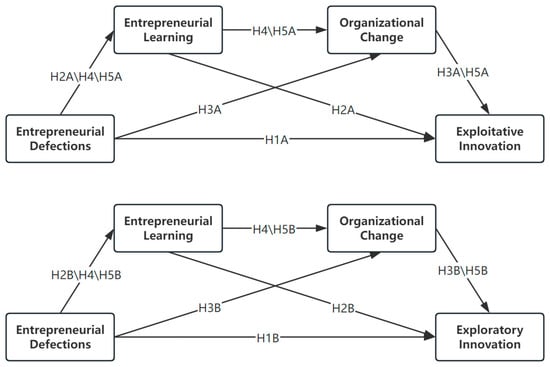

Disclaimer/Publisher’s Note: The statements, opinions and data contained in all publications are solely those of the individual author(s) and contributor(s) and not of MDPI and/or the editor(s). MDPI and/or the editor(s) disclaim responsibility for any injury to people or property resulting from any ideas, methods, instructions or products referred to in the content. |
© 2025 by the authors. Licensee MDPI, Basel, Switzerland. This article is an open access article distributed under the terms and conditions of the Creative Commons Attribution (CC BY) license (https://creativecommons.org/licenses/by/4.0/).