Article

Can Green Product Design Promote Corporate ESG Performance? Evidence from China

1
SUNPURE TECHNOLOGY CO., LTD., Hefei 200031, China
2
Industrial Culture Development Center, Ministry of Industry and Information Technology, Beijing 100846, China
3
School of Management Science & Real Estate, Chongqing University, Chongqing 400044, China
*
Author to whom correspondence should be addressed.
Sustainability 2025, 17(23), 10749; https://doi.org/10.3390/su172310749
Submission received: 3 November 2025 / Revised: 25 November 2025 / Accepted: 27 November 2025 / Published: 1 December 2025
(This article belongs to the Special Issue Green Supply Chain and Sustainable Economic Development—2nd Edition)

Abstract

As a core component in constructing a green manufacturing system, green product design has become an essential strategy for promoting enterprises’ green transformation. This study aims to investigate the causal impact of green product design implementation on corporate environmental, social, and governance (ESG) performance, addressing a critical gap in understanding how design-level interventions drive sustainable development. Based on panel data of China’s A-share listed firms from 2015 to 2022, this study employs the officially released list of green product design enterprises as a quasi-natural experiment and applies a multi-period difference-in-differences model to address this research objective. The empirical results show that, first, green product design significantly and robustly enhances corporate ESG performance. Second, mechanism analysis reveals that green product design promotes ESG performance mainly through three channels: driving green technological innovation, optimizing supply chain governance, and improving operational efficiency. Third, heterogeneity analysis shows that the positive impact is more pronounced in regions with a higher degree of marketization, in firms with lower financing constraints, and in firms receiving greater media attention. This research contributes novel insights by establishing a comprehensive analytical framework that integrates multiple transmission mechanisms and contextual moderators, thereby advancing the theoretical understanding of green design efficacy. This study not only provides micro-level empirical evidence for the effectiveness of the green manufacturing system but also offers important implications for policymakers and enterprises aiming to achieve sustainable development through green design practices.

1. Introduction

With the rapid progress of global industrialization, environmental pollution has become increasingly severe. According to the United Nations Environment Programme, over two billion tons of municipal solid waste are generated annually worldwide, with only 55% managed within formal waste treatment systems (See: https://wedocs.unep.org/bitstream/handle/20.500.11822/46051/Beyond-an-age-of-waste.pdf?sequence=1&isAllowed=y, accessed on 5 October 2025). Against this backdrop, green product design has emerged as a strategic approach for mitigating environmental impacts at the source. However, a significant gap exists in understanding its micro-level impacts on firms, particularly its effect on corporate environmental, social, and governance (ESG) performance and the underlying mechanisms.
This study accordingly addresses three central questions: Can green product design enhance corporate ESG performance? Through which mechanisms does this effect occur? And what are the boundary conditions that moderate this relationship? Drawing on the resource-based view (RBV), we posit that green product design cultivates distinctive green capabilities, which subsequently improve ESG performance via green technological innovation, supply chain governance, and operational efficiency [1,2,3].
Existing research has extensively examined the conceptual foundations, drivers, and supply chain applications of green product design. It is defined as a systematic approach that incorporates environmental considerations into the product development phase, aiming to harmonize ecological efficiency with product functionality [4,5,6]. Numerous studies have demonstrated that supply chain relationships and policy pressures are major drivers of green design adoption [7,8,9]. Nonetheless, large-sample empirical evidence establishing a causal link between green product design and corporate ESG outcomes remains scarce. This study addresses this gap by leveraging a quasi-natural experiment in China. As the world’s leading manufacturing economy, China has instituted a national green manufacturing system and has, since 2017, released official annual lists of enterprises certified for green product design. Using panel data from 2015 to 2022, this research employs a difference-in-differences (DID) model to identify causal effects.
This study is motivated by both theoretical and practical considerations. First, the previous literature has not yet systematically uncovered the pathways through which green product design affects ESG performance. This study seeks to fill that gap and provide a new perspective for integrating research on green product design and ESG performance. Second, as the world’s largest manufacturing country, China faces both resource constraints and emission reduction pressures and urgently needs to achieve industrial upgrading through green product design. Simultaneously, China’s publication of green product design certification lists provides a robust quasi-experimental setting.
The contributions of this study are threefold. First, it extends existing literature on green product design in several ways. In terms of content, previous studies have mainly focused on conceptual frameworks and supply chain implications [6]. This research is among the first to integrate green product design and corporate ESG performance into a unified analytical framework, thereby expanding the boundaries of research on green supply chain management and sustainable corporate practices. Methodologically, in contrast to earlier works relying on theoretical modeling or surveys [4,5,8], this study strengthens causal inference via a quasi-natural experiment and DID design. Empirically, by concentrating on China, it supplies valuable insights for emerging economies developing green manufacturing systems.
Second, grounded in the RBV, the study constructs a framework linking green product design and corporate ESG performance. While previous studies have extensively examined topics such as green innovation, corporate social responsibility, and sustainability [10,11,12], this research conceptualizes green product design as a strategic green capability. By elucidating the mediating roles of green technological innovation, supply chain optimization, and operational efficiency, it reveals the mechanisms through which green design affects ESG outcomes, offering theoretical and empirical insights for managers and policymakers pursuing sustainable transformation.
Third, the study provides actionable guidance for policymakers and enterprises to accelerate the transition to a green economy. For policymakers, the findings supply micro-level evidence to refine environmental regulations and incentive structures. For firms, the results highlight the strategic value of embedding green product design within ESG management systems. Notably, these implications are not confined to China but are also relevant to other industrializing economies undergoing similar transitions.

2. Literature Review and Hypothesis Development

2.1. Literature Review

With the growing global concern over climate change and environmental sustainability, green product design has emerged as a crucial pathway for enterprises to achieve sustainable and high-quality development. This approach integrates environmental considerations throughout the entire product life cycle, from raw material extraction and manufacturing to usage and end-of-life recycling, to minimize resource consumption and environmental pollution.
The core idea of green product design lies in incorporating environmental factors at the earliest stage of product development. Ko (2020) proposed the theory of green DNA, which integrates green technologies, materials, and manufacturing into a systematic design methodology, offering a logical framework for transforming conventional products into sustainable alternatives [4]. Bai et al. (2020) extended the methodological system of green design by applying the BioTRIZ multi-contradiction resolution method to address complex design conflicts [5]. Similarly, Li et al. (2023) introduced knowledge-push and green-filtering mechanisms into conceptual design, establishing mappings between green attributes and inventive principles to enhance the synergy between functionality and environmental performance [6]. While these methodological contributions provide valuable systematic frameworks, they remain largely conceptual or based on case studies. A major limitation is the absence of large-scale empirical validation of their practical effectiveness and economic feasibility across diverse industrial settings, revealing a significant gap between theoretical propositions and real-world implementation.
Green product design is not an isolated corporate activity but is closely linked to supply chain structures and inter-organizational collaboration. Shen et al. (2020) demonstrated, from a quality differentiation perspective, that a dual product-line strategy is more advantageous in environmentally conscious markets, with the quality gap between green and non-green products being a critical factor in strategy effectiveness [13]. He et al. (2023) explored how blockchain technology influences product line design, finding that manufacturers are more inclined to adopt green product strategies under conditions of information transparency [14]. Yao et al. (2024) analyzed green design strategies in supply chains with varying channel leadership structures and found that manufacturer-led channels are more conducive to promoting green innovation when the cost of green design is relatively low [15]. Furthermore, Du et al. (2020) examined green design games under competitive environments and showed that the relative balance between demand suppression and stimulation determines whether firms adopt green strategies [16]. Niu et al. (2023) investigated manufacturers’ green procurement strategies under delivery time pressure, suggesting that in-house purchasing can isolate material risks but may weaken responsiveness to green design [17]. Although this body of literature excels in modeling strategic interactions, it is characterized by a key limitation: heavy reliance on restrictive theoretical assumptions, such as perfect rationality and complete information, which often limits the generalizability of the findings. Moreover, these models are rarely integrated with empirical data to assess their predictive accuracy in complex, dynamic markets, creating a disconnect between theoretical predictions and actual corporate behavior.
The effectiveness of green product design is jointly influenced by internal capabilities and external environmental factors. From the internal perspective, Ma et al. (2018) emphasized that business model design centered on novelty or efficiency can strengthen the positive effect of green product innovation on firm performance [18]. Borah et al. (2025) found that the green dynamic capabilities of enterprises can significantly promote green product innovation [19]. Mahmood et al. (2025) further revealed that green process innovation and corporate green image, respectively, play mediating and moderating roles between ecological design and the success of new products [20]. However, research in this stream often treats these internal capabilities as monolithic. A critical gap lies in the insufficient understanding of the micro-foundations, the specific routines, processes, and managerial cognitions that constitute these dynamic capabilities and enable their effective deployment in green design.
From an external perspective, consumer preferences, policy incentives, and market competition collectively influence corporate green design decisions. Xue et al. (2021) compared firms’ green design behaviors under different government subsidy schemes, concluding that differentiated subsidies more effectively encourage manufacturers to improve product greenness [21]. Xuan et al. (2024) applied sentiment and topic analysis to online product reviews and found that consumer environmental expectations vary across different product life cycle stages, providing guidance for accurately identifying green design requirements [22]. He et al. (2024) explored green design from an aesthetic perspective, suggesting that classical aesthetics suit non-symbolic green products, whereas expressive aesthetics are more appropriate for symbolic ones, revealing the moderating effect of product positioning on design strategy [23]. Despite these insights, existing research tends to examine external drivers in isolation, failing to capture their synergistic or antagonistic interactions. For example, how policy incentives interact with shifting consumer preferences remains underexplored.
Based on this critical review, the contribution of our study becomes evident. Although existing studies have produced valuable insights into green product design methods and strategies, several research gaps remain. First, in terms of methodology, most studies rely on theoretical modeling or case studies, creating a pressing need for large-sample empirical verification to establish generalizable causal claims. Second, in terms of research scope, the current literature primarily focuses on manufacturing sectors with limited cross-industry comparison, thus failing to reveal how industry-specific characteristics moderate the outcomes of green design. Third, in terms of research content, little attention has been paid to the multifaceted effects of green product design on firms, especially in the Chinese context, where causal identification regarding its impact on comprehensive ESG performance, beyond mere environmental metrics, is still scarce. This study is designed to address these gaps by providing a large-sample empirical analysis of the impact of green product design on corporate ESG performance within China’s distinctive institutional and market setting.

2.2. Institutional Background

As one of the world’s major manufacturing powers, China faces the dual challenges of intensive resource consumption and severe environmental pollution. To achieve a coordinated balance between high-quality economic growth and ecological protection, China has systematically integrated the green development philosophy into its industrial policy system. The Made in China 2025 strategy released in 2015 explicitly called for the establishment of a green manufacturing system and promoted the green transformation of the entire industrial life cycle. Within this context, constructing a green manufacturing system serves not only as a strategic response to international green trade barriers but also as a critical pathway for industrial upgrading and fulfilling national carbon emission commitments.
In 2016, China officially launched the construction of its green manufacturing system. The government successively issued the Industrial Green Development Plan (2016–2020) and the Guidelines for the Implementation of the Green Manufacturing Project (2016–2020), followed by the Notice on Carrying Out the Construction of the Green Manufacturing System, which initiated nationwide pilot projects. This system centers on four key components: green factories, green products, green parks, and green supply chains, supported by complementary standards, evaluation mechanisms, and service platforms. Specific measures include establishing green product evaluation criteria, promoting life-cycle management, implementing third-party certification, and providing financial and fiscal incentives such as industrial upgrading funds and green credit programs to encourage corporate participation.
Green product design constitutes a foundational element of this system, aiming to minimize resource use and environmental impact at the source. It embodies the principle of source prevention and full-chain greening. The core of green product design is the integration of ecological design concepts throughout R&D, requiring firms to maximize energy savings, emission reduction, low-carbon operations, and circular use in every process, from material selection and production to packaging, transportation, and recycling. Green product design not only enhances corporate brand reputation and market competitiveness but also supports supply-side structural reform, encourages green consumption, and enables compliance with global green trade standards.
By driving transformation through design, green product design is shifting China’s manufacturing model from end-of-pipe pollution control to integrated, process-level greening. At present, China has established a multi-industry, multi-regional green manufacturing system. Since 2017, multiple batches of national demonstration lists have been released, with the scope of green product design categories continuously expanding, and several types of products have already achieved large-scale commercialization.

2.3. Research Hypothesis

According to the RBV, a firm’s sustainable competitive advantage stems from resources and capabilities that are valuable, rare, inimitable, and non-substitutable [24]. Green product design represents a strategic reconfiguration of firm resources, aligning closely with RBV logic. First, green design capability is valuable, as it helps firms reduce environmental compliance risks, improve resource efficiency, and meet increasingly stringent environmental regulations and consumer preferences [25]. Second, it is rare and inimitable, since it depends not only on technological accumulation but also on cross-departmental collaboration, supply chain integration, and an embedded environmental management culture that competitors cannot easily replicate [26]. Third, it is non-substitutable, particularly under the global carbon neutrality agenda, where green products serve as vital credentials for firms seeking international market access, policy support, and green financing. Therefore, from the RBV perspective, green product design constitutes a strategic resource for building sustained competitive advantage, transcending mere environmental compliance.
Since 2016, China’s construction of the green manufacturing system has explicitly positioned green products as the ultimate manifestation of this framework, emphasizing life-cycle greening. Under this institutional design, China has regularly published official lists of certified green products since 2017, recognizing those that meet national green design standards. This policy aligns with RBV principles in several ways. First, inclusion in the list grants firms institutional resources in the form of government-endorsed green credibility, which carries strong signaling effects in asymmetric markets and enhances brand trust and reputation [27]. Second, green product design requires firms to integrate R&D, production, and supply chain resources, fostering technological and managerial innovation, an embodiment of organizational capabilities emphasized by RBV. Third, the government strengthens firms’ resource acquisition capacity through complementary incentives such as fiscal rewards and green credit programs [28]. Thus, the green product design list functions not only as an environmental policy but also as an institutional platform that provides firms with differentiated resources and competitive advantages.
Building on RBV and China’s institutional context, green product design is expected to improve corporate ESG performance through three dimensions. In the environmental dimension, it optimizes material selection, energy use, and waste treatment, reducing carbon footprints and pollution while improving resource recycling efficiency [24]. In the social dimension, green products focus more on consumer health and safety, aligning with the public’s demand for sustainable lifestyles, which enhances corporate reputation and stakeholder relations [27]. In the governance dimension, green design encourages the establishment of stricter internal control systems, environmental disclosure mechanisms, and supply chain management standards, thereby improving transparency and governance efficiency [28]. Moreover, China’s green manufacturing framework provides firms with standardized guidance, evaluation mechanisms, and service platforms, reducing institutional barriers to green transformation and enhancing the operability of ESG practices. Therefore, green product design serves as both a product strategy and an integrated pathway to ESG improvement.
We also acknowledge potential alternative explanations and boundary conditions. For example, the effectiveness of green product design in boosting ESG performance may vary with firm size, industry attributes, or regional institutional development. Additionally, while RBV highlights resource distinctiveness, institutional or stakeholder theories might attribute green adoption primarily to external pressures. Nonetheless, RBV provides a coherent and empirically applicable framework for understanding how green product design fosters ESG outcomes within China’s structured green manufacturing system.
Based on this, this study proposes the following hypothesis:
Hypothesis 1.
Green product design significantly enhances corporate ESG performance, particularly within institutional environments that support green manufacturing.


3. Research Design

3.1. Model and Variables

We classify firms listed in China’s official green product design catalogs (issued annually since 2017) as the treatment group, with all other firms constituting the control group. Based on a quasi-natural experimental design, we employ a multi-period DID model to estimate the causal effect of green product design on corporate ESG performance. The baseline regression model is specified as Equation (1):
ESG i , t + 1   =   α   +   β GPD i , t   +   γ Controls i , t   +   μ t   +   δ i   +   ε i , t
where α is the intercept term, μ t represents year fixed effects, δ i represents individual fixed effects, and ε i , t is the error term. To alleviate the endogeneity issue, the dependent variable was adjusted to the leading period, that is, the T + 1 period. At the same time, this means that both the explanatory variable and the control variables lag behind by a period, that is, the T period.
ESG i , t + 1 is the dependent variable, denoting corporate ESG performance, which is measured using third-party ESG ratings. First, we employ ESG rating data from Bloomberg as the main measure. Second, to ensure robustness, we use FTSE Russell ESG ratings as an alternative measure in subsequent tests.
GPD i , t is the core explanatory variable representing green product design, measured using the multi-period DID approach. Specifically, if a firm is included in the green product design catalog in year t, all subsequent observations are assigned a value of 1, and all previous observations are assigned 0. Firms never listed in the catalog have all observations coded as 0.
Controls i , t is a set of control variables that may affect corporate ESG performance [29]. We include variables from four dimensions: firm characteristics, financial performance, governance structure, and regional factors. First, for firm characteristics, we control for firm size (Size) and years since listing (Ltime), reflecting scale and life-cycle effects. Second, for financial performance, we control for firm leverage ratio (LEV) and return on assets (ROA) to capture the effects of capital structure and profitability. Third, regarding governance structure, we control for board size (Board), the proportion of independent directors (Ind_r), ownership concentration of the largest shareholder (Top1), and ownership type (SOE). Finally, for regional factors, we control for regional GDP (GRP) and the share of secondary industry in regional output (Industry), which reflect local economic development and industrial structure.
We note that the validity of the DID estimator hinges on critical assumptions, including parallel trends and no confounding shocks. Furthermore, potential methodological issues, such as imbalanced sampling between groups, could bias the results. To address these concerns, we implement a series of robustness checks, including a dynamic effects test, a PSM-DID approach to alleviate sample selection bias, and alternative measurements of key variables, thereby strengthening the reliability of our causal inferences.
Table 1 reports the measurement and descriptive statistics of all variables. The mean value of ESG is 33.991, with a maximum of 71.18, reflecting generally low ESG performance among sampled firms. The mean value of GPD is 0.016, suggesting that only 1.6% of firm-year observations correspond to post-certification periods, implying that the diffusion of green product design in China still has room for expansion. Other control variables exhibit expected distributions.

3.2. Sample and Data

The sample comprises Chinese A-share listed companies from 2015 to 2022. The selection of A-share firms is justified by their relatively high listing standards, stable operations, and wide ESG coverage in Bloomberg ratings. The eight-year panel (effectively seven years of lag-adjusted data) enables the examination of dynamic treatment effects over time, thereby improving causal identification.
The sample is screened as follows: (1) Financial and banking firms are excluded because of differences in business models and financial structures. (2) Firms with leverage ratios equal to or exceeding 1 are removed, and exclude the observed values of firms in the year of listing and before to mitigate volatility bias. (3) Observations with missing values in Bloomberg ESG data or any control variables are excluded. After filtering, the final dataset contains 1181 firms and 7035 firm-year observations.
Data on ESG ratings are sourced from Bloomberg. Financial data came from the China Stock Market & Accounting Research (CSMAR) database. Regional indicators were obtained from the China Statistical Yearbook. All data were processed and analyzed using STATA 17.0.

4. Empirical Results and Analysis

4.1. Dynamic Effect Test

Prior to estimating the average treatment effect of green product design using a multi-period DID model, we first verify the parallel trends assumption. Following prior studies, this paper constructs a dynamic effect model to provide reference evidence, as shown in Equation (2):
ESG i , t + 1   =   α   +   Min Max β t Periods i , t   +   γ Controls i , t   +   μ t   +   δ i   +   ε i , t
where Min and Max represent the minimum and maximum year differences between the observation year and the year when the firm in the treatment group obtained green product design certification. Based on these values, a series of dummy variables ( Periods i , t ) are defined. For firms that have never been included in the green product design catalog, all Periods i , t are assigned a value of 0.
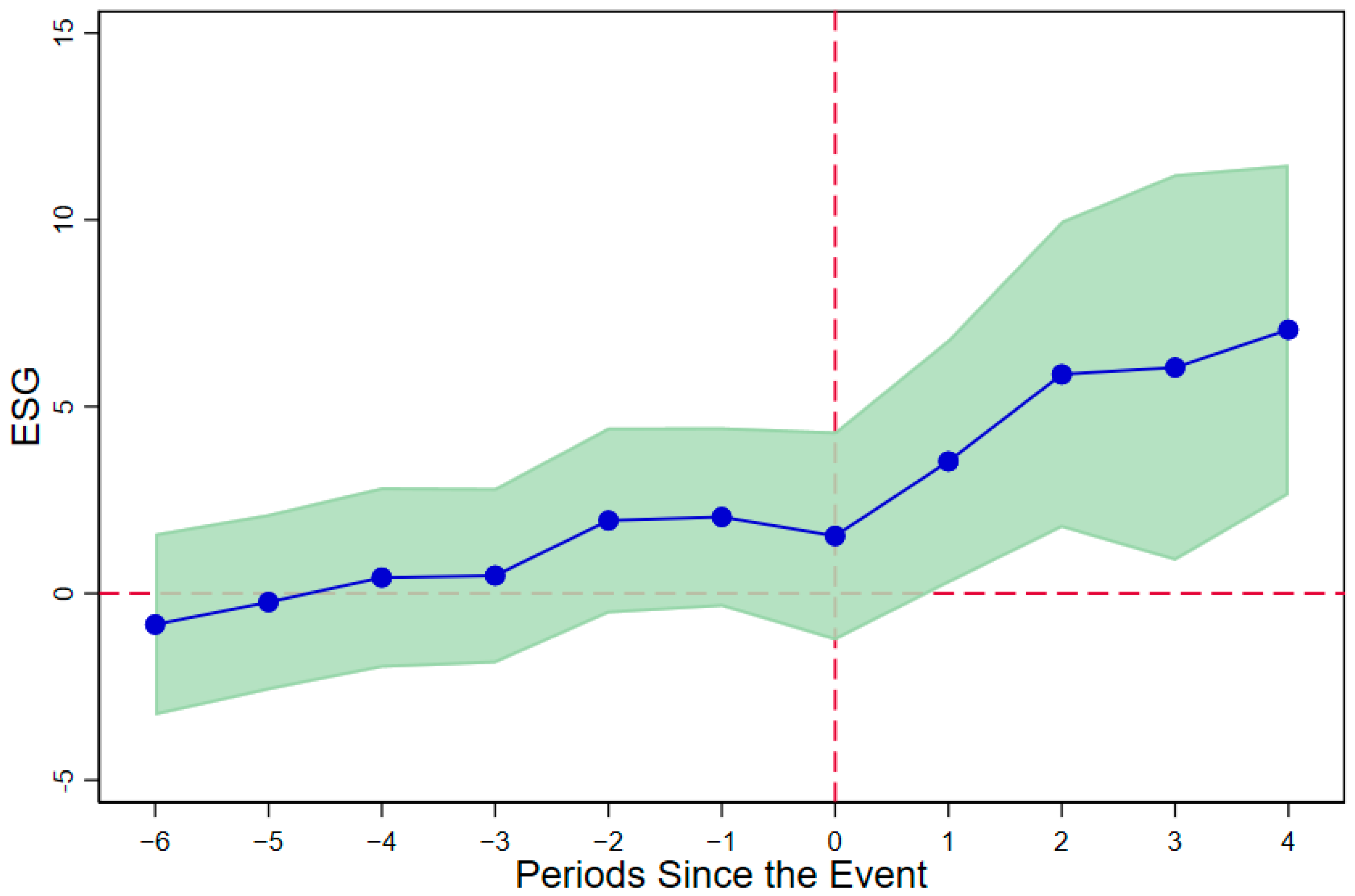
Figure 1 plots the estimated coefficients and confidence intervals, using the earliest year before certification as the baseline period. All pre-treatment coefficients are statistically indistinguishable from zero, indicating no systematic pre-existing differences between treatment and control groups before the policy intervention. After certification, the coefficients increase significantly and reach the 0.05 significance level from the first post-treatment period onward. These findings confirm that the parallel trend assumption is satisfied and provide preliminary evidence that green product design improves firms’ ESG performance.
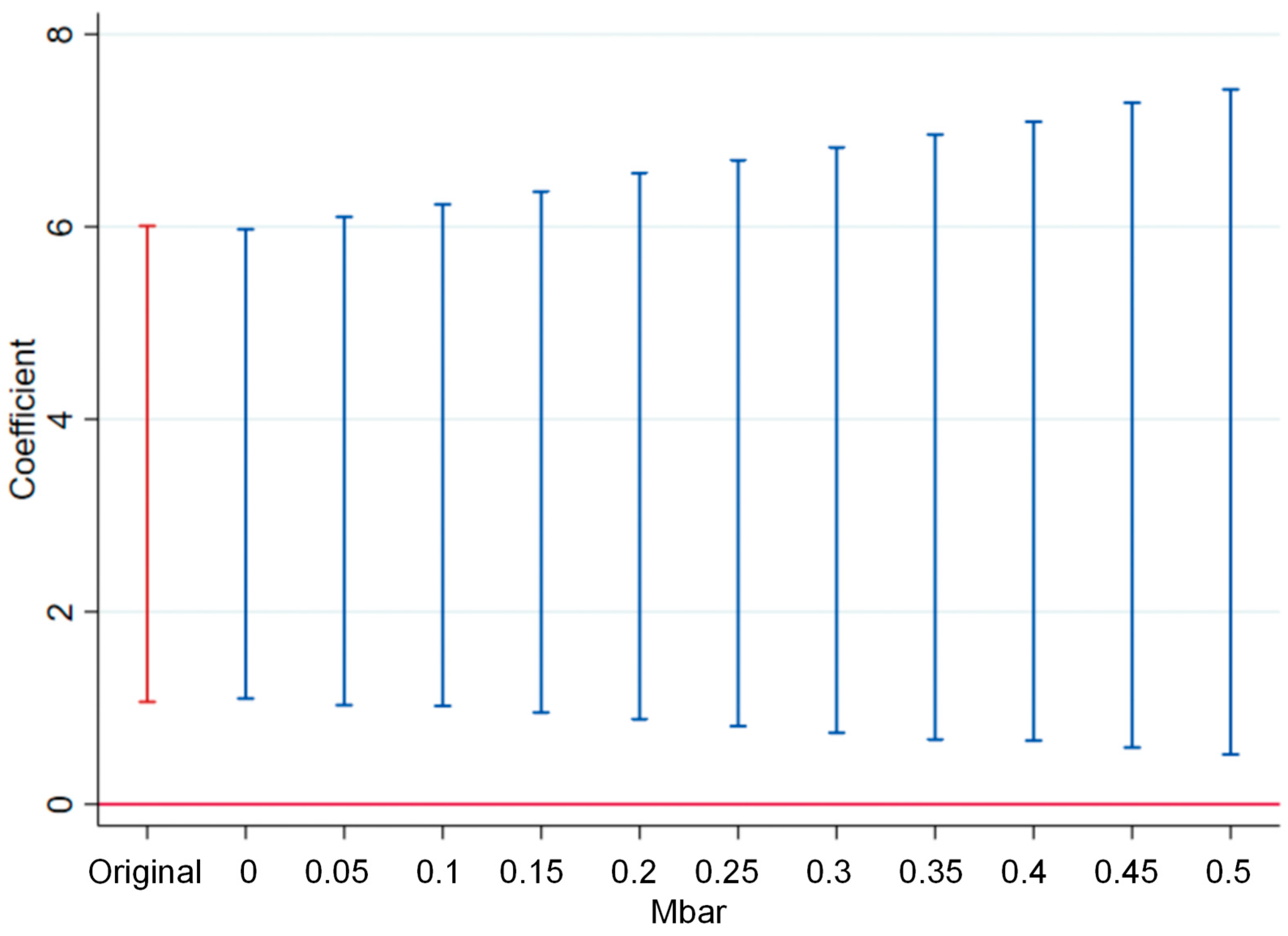
To further address potential concerns regarding the validity of the parallel trends assumption and to examine possible anticipatory effects or heterogeneous trends, we supplement our conventional dynamic effect test with the Honest DID sensitivity framework developed by Rambachan & Roth (2023) [30]. This approach systematically quantifies the robustness of treatment effect estimates to violations of the parallel trends assumption by allowing post-treatment trends to deviate from pre-treatment trends within a bounded range parameterized by M ¯ bar. The method evaluates how large such deviations would need to be to overturn the original conclusions.
Our implementation of the Honest DID method proceeded as follows. We specified a range of plausible M ¯ bar values, representing the maximum allowable ratio between post-treatment and pre-treatment trend differences. As illustrated in Figure 2, the results demonstrate that our primary finding of a statistically significant positive effect of green design on ESG performance remains robust to moderate violations of the parallel trends assumption. Specifically, the confidence intervals for the treatment effect exclude zero even when permitting post-treatment trend deviations ( M ¯ bar) up to 0.5 times the maximum pre-treatment trend difference. This analysis strengthens the credibility of our causal interpretation by showing that the main conclusion is not unduly sensitive to potential violations of the standard parallel trends condition.

4.2. Baseline Regression Results

Table 2 reports the estimation results of the baseline regression examining the effect of green product design on corporate ESG performance. Column (1) reports estimates without control variables, showing a positive and statistically significant coefficient for GPD. After incorporating the full set of control variables in column (2), the coefficient remains significantly positive. These results indicate that, ceteris paribus, green product design significantly enhances corporate ESG performance, thereby supporting Hypothesis 1.
Theoretically, these results align with and extend the RBV, suggesting that proactive environmental innovation represents a valuable, rare, and difficult-to-imitate resource that strengthens a firm’s non-financial competitive advantage. From a practical standpoint, this implies that managers and policymakers should view investments in green product development as strategic initiatives for enhancing sustainability outcomes, rather than as mere regulatory compliance costs.
In addition, among the control variables, firm size (Size), profitability (ROA), and the proportion of independent directors (Ind_r) exhibit positive relationships with ESG performance, whereas higher leverage (LEV) is negatively related. From a regional perspective, firms in regions dominated by secondary industries (Industry) tend to show lower ESG scores, reflecting structural challenges in sustainable industrial upgrading. These patterns are consistent with existing literature on green policies and corporate strategies [31,32]. Similar to Deng et al. (2024), who documented that directors with environmental backgrounds enhance ESG outcomes [33], our results confirm the positive role of board independence in green governance. Furthermore, the negative association with secondary industry share corroborates You et al. (2024)’s observation that industrial structure constraints impede sustainable development [34].

4.3. Endogeneity and Robustness Tests

4.3.1. Sensitivity Analysis of Omitted Variables

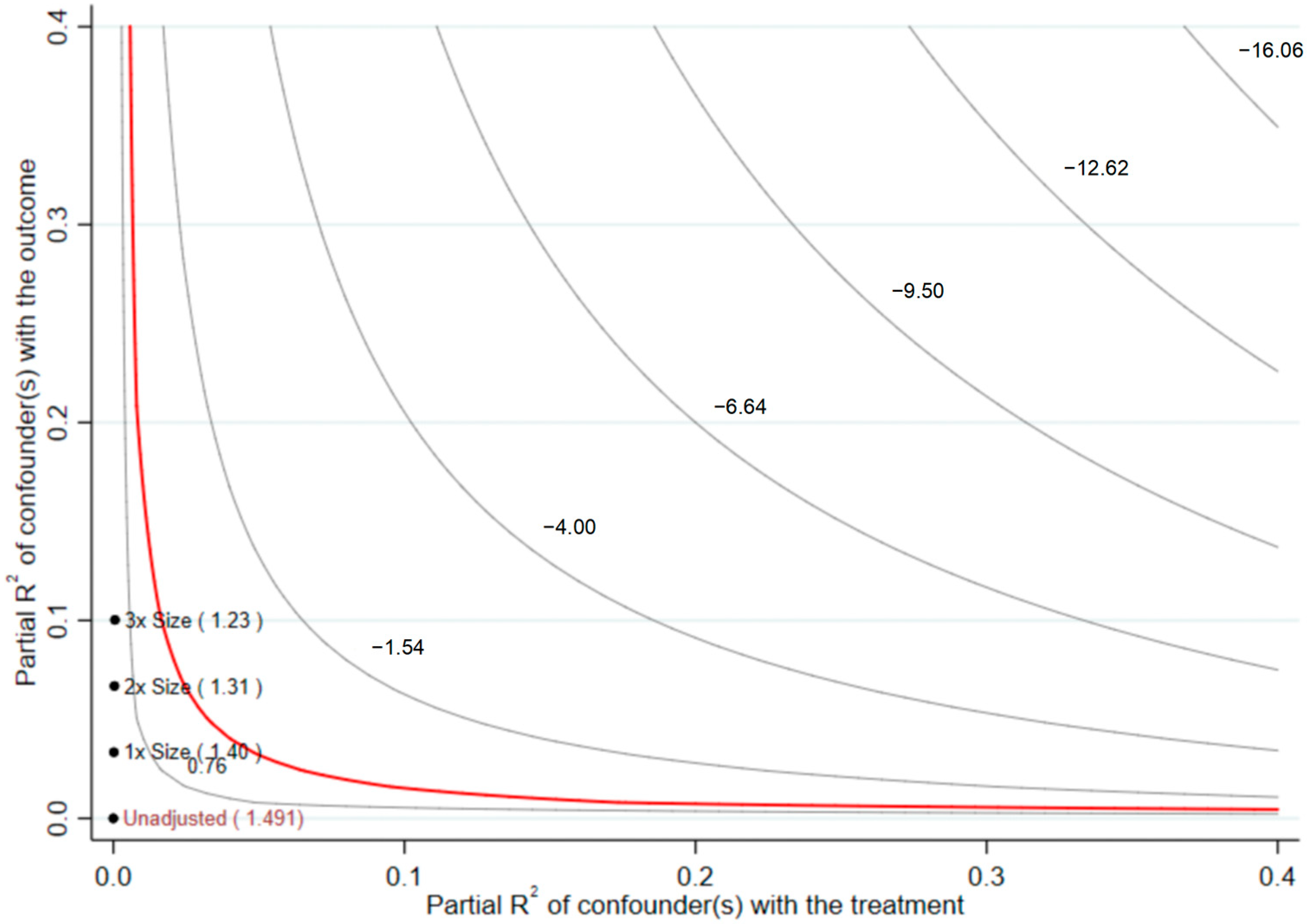
Although the DID design mitigates endogeneity concerns to some extent, potential omitted variable bias remains a key challenge. To assess the sensitivity of our results to unobserved confounders, we employ the method proposed by Cinelli et al. (2024) [35], using the Sensemakr package to quantify the robustness of our estimates. We select firm size (Size), the control variable with the strongest association with ESG performance, as the benchmark for comparison.
As shown in Figure 3, the results show that an unobserved confounder would need to be at least three times as influential as firm size to nullify the estimated effect. Given that firm size is widely recognized as a major determinant of ESG performance, the existence of such a strongly correlated omitted variable is highly unlikely. This analysis substantially strengthens the credibility of our causal interpretation.

4.3.2. Propensity Score Matching (PSM)

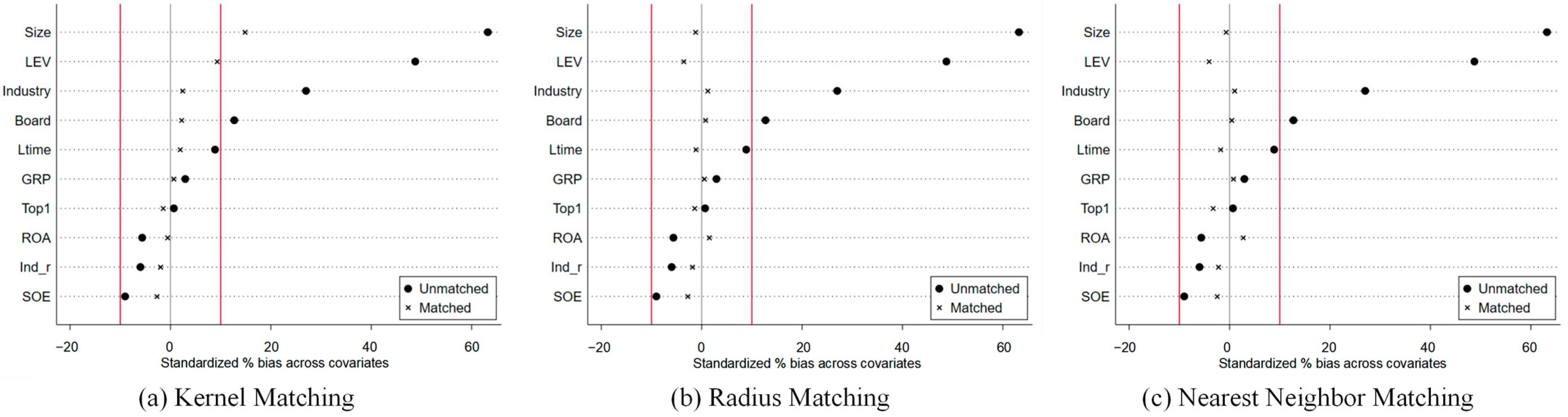
In addition, this study may also encounter endogeneity issues such as uneven sample selection or bias. It is possible that firms obtaining green product certification are those already performing better in environmental protection and social responsibility, potentially introducing selection bias. To address this concern, we combine PSM with the DID approach (PSM-DID). We estimate propensity scores using all control variables and apply three matching algorithms, including kernel matching, radius matching, and nearest-neighbor matching [36].
Figure 4 shows that after matching, the standardized mean differences of all covariates are substantially reduced, with most falling below 10%, confirming that the matched samples are well balanced. Table 3 reports the PSM-DID estimation results. Regardless of the matching method used, the coefficient of GPD remains positive and statistically significant, demonstrating that the findings are robust to selection bias.

4.3.3. Placebo Test

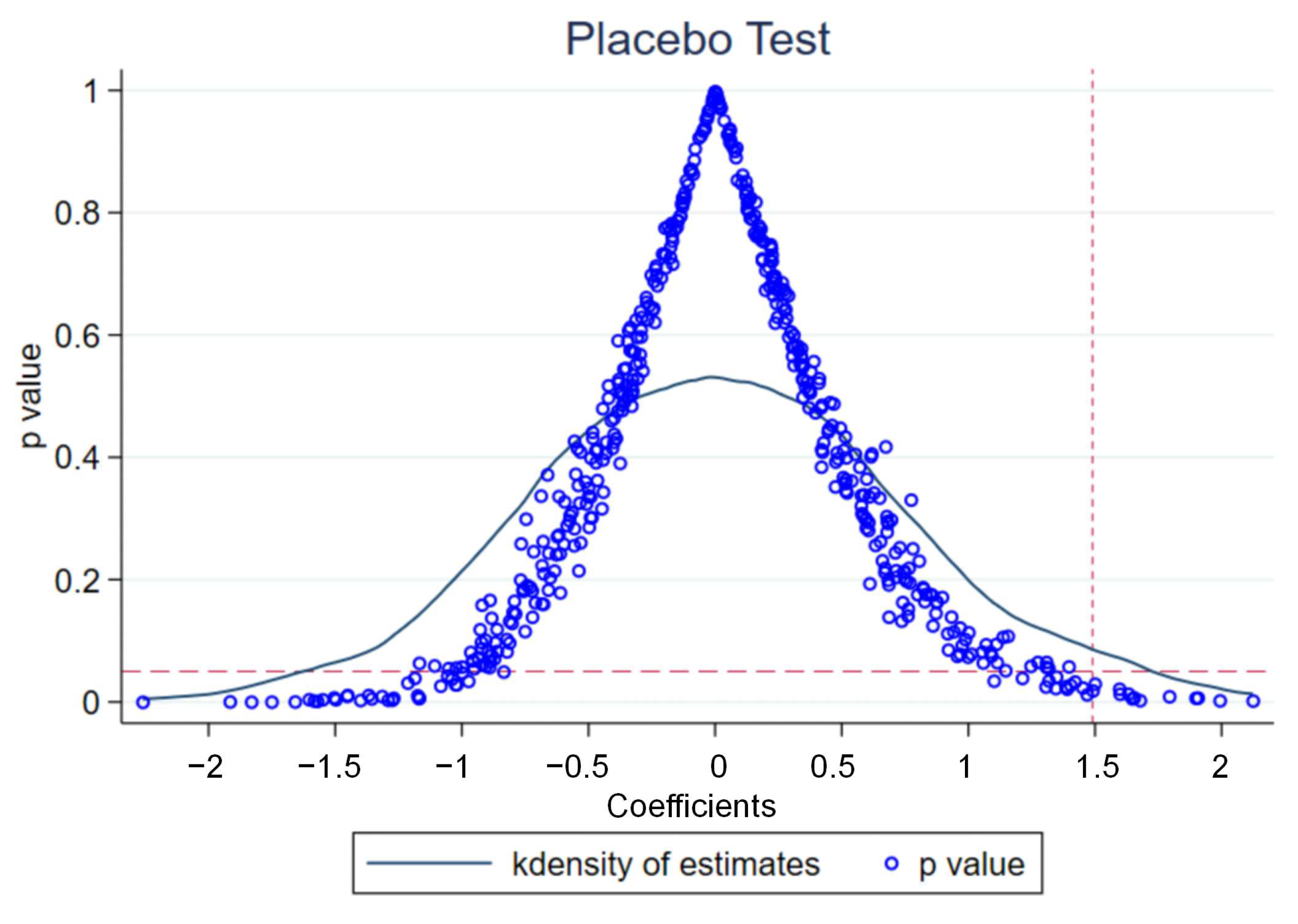
Beyond selection bias, unobserved firm-, region-, or year-specific shocks may confound the estimated effects. To mitigate this issue, we conduct placebo tests following Zhu et al. (2025) [37]. We randomly assign pseudo-treatment status to firms in each policy year, matching the size of the actual treatment group, and re-estimate the model. This process is repeated 500 times, and the resulting coefficients and p-values are analyzed.
Figure 5 displays the distribution of the resulting placebo coefficients. The simulated estimates are approximately normally distributed around zero, and the vast majority are smaller than the actual estimated treatment effect and statistically insignificant. The true estimate (vertical dashed line) lies far outside this distribution, suggesting that it is unlikely to result from unobserved confounding factors.

4.3.4. Heterogeneous Treatment Effect

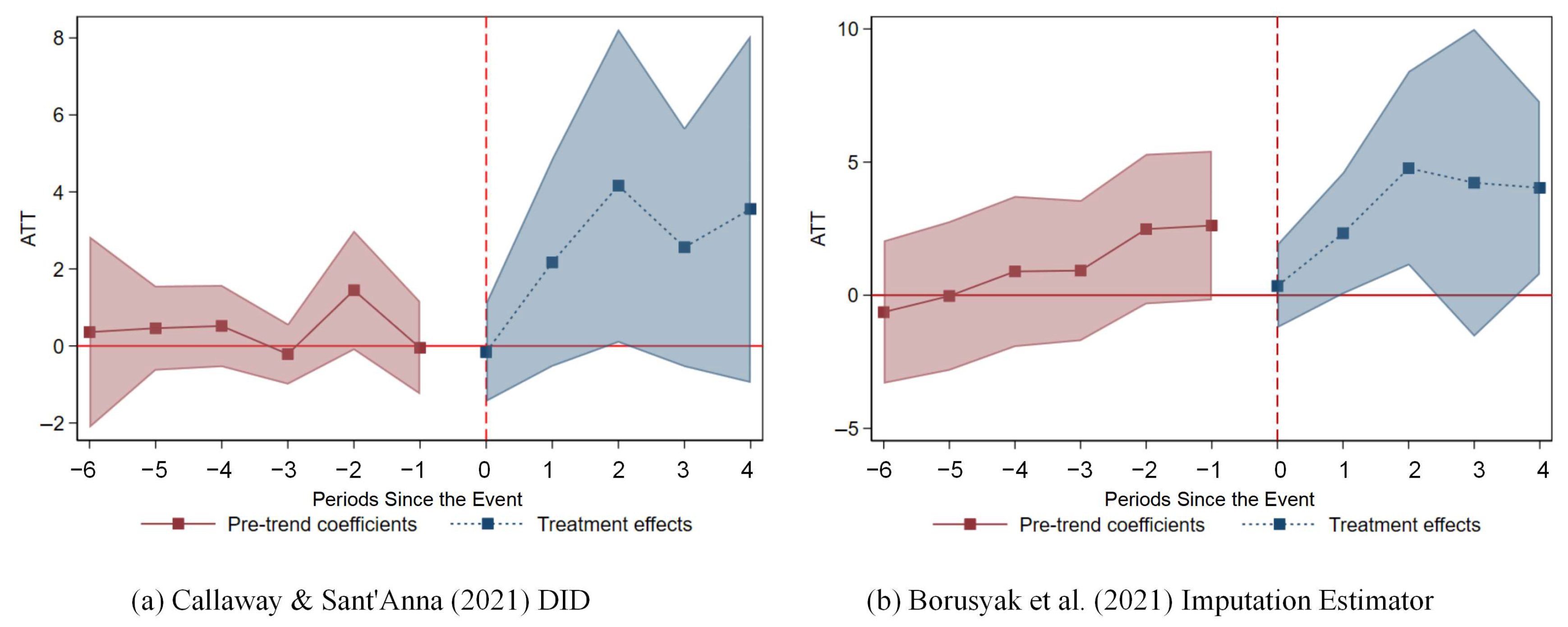
Multi-period DID estimators may yield biased estimates when treatment effects are heterogeneous across cohorts [38,39,40]. To address this concern, two alternative estimators are employed. First, we apply the Callaway and Sant’Anna (2021) estimator [41] using the csdid command, which computes group-time average treatment effects on the treated (ATT). Second, we use the imputation-based estimator by Borusyak et al. (2021) [42] implemented via the did_imputation command.
As shown in Figure 6, both estimation methods yield results consistent with the dynamic effect test. Before certification (period 0), the estimated ATT values are not significantly different from zero. After green product design certification, they increase markedly and become statistically significant, reinforcing the main conclusion that green product design improves ESG performance.

4.3.5. Controlling for Other Policies Impacts

To ensure that the estimated effect of green product design is not confounded by concurrent policy shocks, we further include control variables representing other environmental and financial reforms implemented during the same period. Three major national policies are considered.
First, we control the impact of the energy consumption rights trading Reform (ECR) implemented in China. Piloted in Zhejiang, Fujian, Henan, and Sichuan since 2017, this market-based policy aims to reduce energy use. We construct a DID-based policy variable ECR and include it in the model. Second, we control for the green finance reform and innovation pilot zone (GFR) policy [43]. Launched in 2017 in five provinces and expanded later, this policy promotes green investment. We generate a multi-period DID variable GFR and add it as a control. Third, we control for the environmental protection tax (EPT) reform. Implemented nationwide in 2018, this tax replaced earlier pollution discharge fees. Using firm-level tax records, we construct a DID variable EPT for firms subject to the tax.
As reported in Table 4, the coefficient of GPD remains positive and significant after including these policy controls. Notably, GFR and EPT also show significantly positive coefficients, consistent with prior evidence that these policies improve corporate ESG performance.

4.3.6. Additional Robustness Tests

To further confirm the robustness of the findings, we conduct two additional tests. First, we recognize that different ESG rating systems have methodological differences and coverage limitations. To address potential measurement bias, we replace Bloomberg ESG ratings with FTSE Russell ESG ratings, which, despite covering fewer Chinese firms, provide an independent and credible ESG assessment framework. As shown in column (1) of Table 5, the coefficient of GPD remains positive and significant. This has, to some extent, alleviated the concerns caused by ESG measurement errors.
Second, to mitigate the influence of outliers, we apply Winsorization at the 1% and 99% percentiles to all continuous variables. As shown in column (2), the estimated effect remains stable after eliminating extreme values. Overall, these robustness tests confirm that the positive relationship between green product design and ESG performance is consistent and reliable across different specifications.

5. Further Analysis

5.1. Mechanism Analysis

To examine the impact mechanism of green product design on the ESG performance of enterprises, this study referred to Di Giuli & Laux (2022) [44] to construct the following model:
Mechanism i , t   =   α   +   β GPD i , t   +   γ Controls i , t   +   μ t   +   δ i   +   ε i , t
in Equation (3), Mechanism i , t represents the mechanism variables, which include green technological innovation, supply chain governance, and operational efficiency. β represents the impact of green product design on these mechanisms. The other variables and symbols are the same as those in Equation (1).
ESG i , t + 1 = α + β Mechanism _ fit i , t + γ Controls i , t + μ t + δ i + ε i , t
in Equation (4), Mechanism _ fit i , t represents the mechanism variables after being fitted by Equation (3). β indicates the impact of these mechanisms on the ESG performance of the enterprise. The other variables and their symbols are the same as those in Equation (1).

5.1.1. Green Technological Innovation

This study identifies green technological innovation as a key mechanism through which green product design enhances corporate ESG performance. Grounded in the RBV, meeting green product design standards necessitates resource allocation into new knowledge domains, directly driving R&D in environmental technologies such as clean production and pollution control. Moreover, such innovation activities exhibit path dependence and social complexity, forming scarce, difficult-to-imitate resources once established. Extensive literature confirms that stringent yet flexible environmental regulations effectively stimulate corporate innovation [45].
Following existing research [46,47], we measure corporate green technological innovation using the number of green patents granted. Compared with patent applications, granted patents are more stable and typically represent higher-quality technological outputs. Given the distributional features of patent data, we take the logarithm of green patents granted plus one (Patent). Column (1) of Table 6 shows that green product design significantly increases the number of granted green patents, while column (2) indicates a significant positive correlation between green patents and ESG performance.
Additionally, drawing on prior work, this study employs corporate green investment as an alternative measure of green technological innovation [43]. Sourced from the CSMAR database, this variable reflects capital expenditures aimed at achieving environmentally friendly production. Compared to patents, these investments often represent relatively straightforward technological upgrades, such as installing filtration systems at waste discharge points. Although their technical threshold is lower, they are more readily monetized and compared. We standardize the total green investment by the firm’s total assets (Invest). As shown in column (3) of Table 6, green product design significantly promotes green investment, and column (4) demonstrates a significant positive relationship between green investment and ESG performance.
High-quality green technological innovation, particularly green invention patents, not only directly enhances environmental performance but also signals long-term sustainability potential to investors and rating agencies, thereby enhancing evaluations in corporate governance and social responsibility [48]. Consequently, green product design, as a strategic orientation, shapes firms’ innovation trajectories, channeling resources into green technology domains and building a knowledge-based competitive advantage that translates into superior ESG performance.
However, we also note the lengthy application cycles, high uncertainty, and sustained R&D investment required for green invention patents. For firms facing severe financing constraints, maintaining such long-term, uncertain innovation activities can be challenging. Therefore, enhancing environmental performance through green investments, characterized by shorter cycles, lower risk, and quicker returns, represents a viable strategic alternative for some enterprises.

5.1.2. Supply Chain Governance

This study contends that optimizing supply chain governance is another key mechanism through which green product design exerts a positive impact. The requirements of green product design span the entire product life cycle, and the environmental impacts of upstream stages such as raw material acquisition, component production, and logistics are particularly critical. This compels firms to extend environmental management beyond internal production to the entire supply chain. From an RBV perspective, the capability to govern a green supply chain is a vital dynamic capability. To secure inputs that meet green standards, firms must identify and engage new, environmentally certified suppliers, which naturally reduces reliance on a limited set of traditional partners, thereby lowering supplier concentration. At the same time, firms must build close relationships with new suppliers and improve ESG performance across the supply chain through environmental audits and knowledge sharing [49].
We use supply chain concentration to measure a firm’s governance capability over the chain. Lower concentration indicates that the firm holds stronger bargaining power over upstream suppliers and downstream customers and can influence the operation of the entire chain through its own behavior and decisions. We measure supplier concentration (Supplier) by the ratio of purchases from the largest supplier to total purchases, and customer concentration (Consumer) by the ratio of sales to the largest customer to total sales. Columns (1) and (3) of Table 7 show that green product design significantly reduces supplier concentration but does not significantly affect customer concentration. Furthermore, column (2) indicates that lower supply chain concentration is significantly associated with higher ESG performance.
Consistent with our analysis, green product design imposes distinctive and standardized environmental requirements on upstream supply chains, prompting firms to actively seek qualified green suppliers and thereby reducing supplier concentration and procurement risk. This process not only improves environmental performance along the value chain but also fulfills broader community responsibilities through knowledge spillovers and collaborative innovation. A more diversified supplier structure mitigates contagion risks arising from environmental violations by any single supplier and strengthens supply chain resilience, which itself reflects sound governance. In contrast, customer purchasing behavior and concentration are influenced primarily by market demand, competitive dynamics, and a firm’s sales strategy. Thus, green product design acts as an external driver, pushing firms to reconfigure supplier networks and embed environmental standards into procurement, thereby constructing a more transparent, resilient, and responsible supply chain system.

5.1.3. Operational Efficiency

This study argues that green product design enhances operational efficiency, which in turn improves corporate ESG performance. A core principle of green design is increasing resource productivity, which directly drives process optimization and efficiency gains. Viewed through the RBV lens, green design embodies not only an environmental ethos but also a lean production philosophy. It helps firms identify and eliminate process waste, such as excessive energy consumption and material loss, thereby reducing operating costs. Hart (1995) explicitly points out that pollution and waste are manifestations of inefficient resource utilization, and that by preventing pollution and minimizing waste, firms can achieve both environmental and economic benefits [25]. Improved operational efficiency is reflected in lower costs and expenses per unit of output and reduced downside performance risk. These favorable financial and operational conditions provide solid internal funding support for continued ESG investment.
We analyze operational capability from two aspects: sales capability and downside performance risk. Stronger sales capability implies lower business risk, a competitive market position, and more stable and sustainable operations. We use the sales expense ratio (Sale_fee) to measure sales capability and construct a downside risk indicator (Risk) following Miller & Leiblein (1996) [50], as shown in Equations (5) and (6):
RER i , t   =   1 5 t = 1 5 ( ROA i , t 1     indROA i , t 1 ) 2
Risk i , t = RER i , t ,   ROA i , t 1 indROA i , t 1   <   0 0 ,   ROA i , t 1 indROA i , t 1     0
where indROA i , t 1 denotes the industry average ROA in year t − 1, which is the target performance, and ROA i , t 1 denotes the firm’s actual ROA in year t − 1. RER i , t measures the gap between actual and target performance. To reflect operational continuity, we adopt a five-year window and compute the root mean square of expected gaps over the past five years. Risk i , t is the downside performance risk, equal to RER i , t when actual performance is below the industry benchmark, and zero otherwise. Columns (1) and (3) of Table 8 show that green product design significantly reduces both the sales expense ratio and downside risk, indicating a stronger competitive edge and greater operational stability. Columns (2) and (4) further demonstrate that reductions in the sales expense ratio and downside risk significantly contribute to improved ESG performance.
Within ESG rating frameworks, firms that utilize resources efficiently and demonstrate strong profitability and financial health receive higher scores in governance and social dimensions related to long-term sustainability. Improvements in operational efficiency also directly correlate with better environmental performance. Therefore, green product design drives refined internal process management and optimal resource allocation, establishing an efficiency-based cost advantage. This enhances corporate resilience and lays a solid foundation for comprehensive ESG improvement.

5.2. Heterogeneity Analysis

5.2.1. Marketization Level

We measure regional marketization using the index reported in the Provincial Marketization Index of China 2024 and split the sample each year at the median into two groups. As shown in columns (1) and (2) of Table 9, the positive impact of green product design on ESG performance is significant only in regions with higher marketization levels.
Two factors may explain this finding. First, in highly marketized regions, a more complete legal system, transparent information, and intense competition make green product design an effective market signal. Consumers more readily recognize it, and investors are more likely to favor it, motivating firms to allocate resources to ESG practices. Second, intense competition in these regions compels firms to translate efficiency gains from green design into competitive advantages. Consequently, improving operational efficiency and optimizing the supply chain becomes a necessary choice for coping with competition, which directly and forcefully promotes ESG performance.

5.2.2. Financing Constraints

Following Whited and Wu (2006) [51], we construct the WW index to measure financing constraints, as shown in Equation (7):
WW i , t   =   0.091   ×   CF i , t     0.062   ×   Div i , t   +   0.021   ×   LLEV i , t     0.044   ×   Size i , t   +   0.102   ×   ISG i , t     0.035   ×   SG i , t
where CF i , t is the ratio of net cash flows generated from operating activities to total assets of an enterprise. Div i , t is a dummy equal to 1 if the firm paid cash dividends in the current period and 0 otherwise. LLEV i , t is the ratio of long-term liabilities to total assets. Size i , t is the natural logarithm of total assets. ISG i , t is the average industry sales growth rate, and SG i , t   is the firm’s sales growth rate. A larger WW i , t indicates stronger financing constraints.
We split the sample each year at the median WW value into two groups. Observations below the median are classified as the weak constraint group, and those above as the strong constraint group. Columns (3) and (4) of Table 9 show that the positive effect of green product design on ESG performance is significant only among firms with weaker financing constraints.
This can be attributed to the following reasons. First, green product design is a strategic investment with a long payback period and substantial upfront costs, involving R&D, supply chain restructuring, and market promotion. Firms with weaker financing constraints generally possess stronger internal cash flows and better access to external capital, enabling them to sustain the necessary investments throughout the uncertain green transition. Second, such firms typically exhibit higher credit quality and stronger market connections, allowing their green achievements to transmit more credible and positive signals to stakeholders. This facilitates customer acceptance and investor confidence, creating a virtuous cycle wherein green investments lead to market recognition and subsequent performance gains. Notably, this finding corroborates our earlier conjecture regarding the green technological innovation mechanism; financing constraints significantly limit firms’ capacity to undertake large-scale innovation and green investments. Thus, the observed heterogeneity strengthens the proposed mediating role of green technological innovation.

5.2.3. Media Attention

We measure media attention by the annual count of online news headlines mentioning the firm’s name and split the sample each year at the median. Columns (5) and (6) of Table 9 show that the positive impact of green product design on ESG performance is significant only among firms with higher media attention.
Two primary mechanisms underlie this result. First, the media acts as a key information intermediary that reduces information asymmetry. For firms with high media visibility, green product design practices are widely reported and disseminated and thus serve as strong positive signals. This substantially increases the visibility and credibility of green behavior in the eyes of consumers, investors, and regulators and directly pushes up ESG performance. Second, high media attention imposes ongoing public and normative oversight [52], which acts as a soft constraint compelling firms to adhere to their green commitments. This scrutiny motivates improvements in internal governance and disclosure mechanisms, leading to tangible advancements across ESG dimensions. At the same time, media attention can be a double-edged sword; while it amplifies the benefits of genuine green practices, it also increases the reputational and market risks associated with environmental failures or greenwashing allegations. Consequently, firms under heightened media scrutiny tend to implement green strategies more cautiously and substantively.

6. Discussion

This study empirically demonstrates that green product design enhances corporate ESG performance in the Chinese context and elucidates its underlying mechanisms. These findings not only confirm the strategic value of green product design but also engage in a meaningful dialogue with existing literature, prompting deeper reflection on its theoretical implications and practical boundaries.
First, this study provides large-scale empirical evidence supporting the positive impact of green product design, thereby addressing a key gap in the existing literature. While most prior research focuses on methodological exploration [4] or model deduction based on rigid assumptions [13,16], our quasi-natural experimental approach confirms that green product design exerts a robust and significant positive effect on corporate ESG performance. This finding suggests that green product design is not merely a theoretical ideal or context-specific strategy, but an effective strategic activity that enhances sustainable development performance even in complex, dynamic market environments.
Second, at the mechanism level, the three pathways identified, green technological innovation, supply chain governance, and operational efficiency, collectively form a systematic and coherent explanatory framework for how green design creates value. This discovery aligns with the green dynamic capabilities emphasized by Borah et al. (2025) [19] and the role of green process innovation highlighted by Mahmood et al. (2025) [20], yet our framework advances further. It not only affirms the importance of internal capabilities, but also integrates internal optimization with external collaboration, delineating a complete value chain that begins with internal technological breakthroughs, extends to external network management, and culminates in comprehensive performance improvement. This partially addresses the fragmented perspectives in prior studies that overemphasized either internal capabilities [18] or external interactions [15], revealing that green product design drives ESG performance through multiple reinforcing mechanisms rather than a single pathway.
Third, regarding heterogeneity, our findings strongly indicate that the effectiveness of green product design is highly contingent on firms’ internal and external environments, offering key insights into the varied outcomes of green transformation across firms. These heterogeneous results closely align with Xue et al. (2021)’s [21] research on government subsidy effectiveness and He et al. (2023)’s [23] findings on information transparency. Together, they demonstrate that the success of green product design is not universal but deeply embedded in specific contexts shaped by institutional environments, resource endowments, and social supervision. This underscores the need for policymakers and managers to avoid one-size-fits-all approaches and instead adopt tailored, context-sensitive strategies when promoting and implementing green design.
Finally, we also acknowledge potential side effects of green product design on ESG performance, particularly the risk of greenwashing. Some scholars argue that firms may use superficial environmental commitments to mask inadequate performance, a symbolic response to external pressure rather than genuine transformation [53]. However, our results show that green product design significantly promotes substantive corporate actions, such as green technology innovation and environmental investment, rather than remaining at a symbolic level. Moreover, our findings resonate with Li & Zhu (2024) [29], who note that firms may adopt ESG greenwashing under performance pressure. Yet we observe that green product design meaningfully improves operational efficiency, indicating that such environmental practices are grounded in tangible improvements rather than mere strategic responses to performance pressure.

7. Conclusions, Policy Implications and Limitations

7.1. Conclusions

Our study provides robust evidence that green product design serves as a strategic catalyst rather than merely a compliance tool in corporate green transformation. Using panel data on Chinese listed firms from 2015 to 2022, this study builds a quasi-natural experimental design based on China’s green product design lists and constructs a multi-period DID model to examine the effect of green product design on corporate ESG performance.
The findings reveal three key insights with theoretical and practical significance. First, green product design has a significant positive effect on corporate ESG performance. This result remains unchanged after a series of tests, including PSM DID, placebo tests, multi-period DID heterogeneous treatment effect corrections, and controls for other policy interventions, indicating that the positive impact is highly robust.
Second, we establish a comprehensive mechanism framework showing that green product design enhances ESG performance through an interconnected triad of mechanisms, including fostering substantive green technological innovation and investment, optimizing supply chain governance through both collaborative and coercive pressures, and driving operational efficiency gains that create financial value alongside environmental benefits.
Third, the heterogeneity analysis reveals that the ESG benefits of green product design are not uniformly distributed but are contingent on critical moderating factors. The effect is substantially stronger in regions with higher marketization levels, firms with lower financing constraints, and firms with higher media attention, suggesting that institutional environments and firm-specific resources significantly shape the returns on green design investments.

7.2. Policy Implications

We propose targeted interventions that address the specific mechanisms and boundary conditions identified in our study. For policymakers seeking to enhance the effectiveness of green manufacturing systems, we recommend a shift from universal support to precision targeting that accounts for the heterogeneous effects revealed in our analysis. Specifically, rather than one-size-fits-all approaches, first, policies should establish differentiated support mechanisms based on regional marketization levels: in less developed regions, focus on building institutional capacity through regional technology transfer centers and supply chain leader programs, while in advanced regions, strengthen market-based incentives. Second, policies should directly address the financing constraints identified as a critical barrier through targeted financial products for green design certification, with streamlined approval processes particularly tailored for SMEs. Third, policies should leverage media attention as a policy amplifier by creating transparent ESG disclosure platforms and recognition programs that reward genuine green design achievements rather than symbolic compliance.
For corporate managers, our findings suggest that green product design should be reconceptualized as a strategic capability rather than a compliance burden. Specifically, first, firms should adopt a proactive approach integrating green principles at the R&D stage to develop modular, recyclable products with extended lifecycles, thereby controlling environmental risks and costs at source. Second, firms should strategically leverage green design to optimize supply chain relationships, cultivating diversified environmentally compliant suppliers to enhance resilience while meeting environmental standards. Third, firms should actively utilize the identified mechanisms, particularly the operational efficiency gains and innovation benefits, to build business cases for green design investments, while using ESG disclosure as a strategic tool to communicate authentic sustainability performance to stakeholders.
For other developing countries and emerging economies, China’s experience offers nuanced lessons beyond simple policy transfer. First, the critical importance of sequencing reforms, beginning with establishing credible certification systems and transparency mechanisms before introducing more complex market-based instruments. Second, the need to foster green finance markets alongside product market reforms to ensure firms can access necessary capital for green transitions. Third, the strategic value of harnessing digital technologies to simultaneously advance green and digital transformations, creating synergistic effects that accelerate sustainable development. Our analysis specifically cautions against direct policy transplantation without adaptation to local institutional contexts, particularly regarding regional development disparities and financial market maturity.

7.3. Limitations and Future Research

While this study employed rigorous methods to address endogeneity concerns, several limitations warrant acknowledgment and present opportunities for future research.
First, regarding ESG measurement, we acknowledge the inherent limitations of current ESG rating systems, including methodological inconsistencies across agencies, subjective assessment components, and incomplete coverage of Chinese enterprises. Although we conducted robustness tests with alternative ESG measures, the fundamental conceptual and measurement challenges in capturing authentic corporate sustainability performance persist. Future research should develop more nuanced ESG assessment frameworks that better capture the substantive aspects of sustainability performance, particularly in emerging economy contexts.
Second, our sample limitation to Chinese listed companies restricts the generalizability of findings. The unique institutional environment of China’s state-influenced market economy may limit direct extrapolation to other contexts. Future research should undertake comparative cross-national studies to examine how the relationship between green product design and ESG performance varies across different institutional regimes, particularly comparing state-led versus market-driven environmental governance systems.
Third, our methodological approach, while robust for identifying causal effects, has limitations in capturing the complex implementation processes of green product design within organizations. Future research could employ qualitative case studies or mixed-methods approaches to illuminate the organizational dynamics, implementation challenges, and managerial cognition aspects that quantitative methods cannot fully capture. Additionally, investigating potential negative consequences or unintended consequences of green product design mandates would provide valuable balance to the current literature.

Author Contributions

Conceptualization, F.Z. and C.Z.; methodology, C.Z.; validation, F.Z. and L.S.; formal analysis, F.Z. and L.S.; data curation, L.S. and C.Z.; writing—original draft preparation, F.Z., L.S. and C.Z.; writing—review and editing, F.Z., L.S. and C.Z. All authors have read and agreed to the published version of the manuscript.

Funding

This research received no external funding.

Institutional Review Board Statement

Not Applicable.

Informed Consent Statement

Not Applicable.

Data Availability Statement

The initial data of the variables in this study were all from public websites, but some of the variables were calculated by the authors based on this. Therefore, researchers interested in this study can contact the corresponding author to obtain the data.

Conflicts of Interest

Author Fangqiushi Zou was employed by the company “SUNPURE TECHNOLOGY CO., LTD.”. The remaining authors declare that the research was conducted in the absence of any commercial or financial relationships that could be construed as a potential conflict of interest.

References

  1. Chen, Y.-S.; Chang, T.-W.; Lin, C.-Y.; Lai, P.-Y.; Wang, K.-H. The influence of proactive green innovation and reactive green innovation on green product development performance: The mediation role of green creativity. Sustainability 2016, 8, 966. [Google Scholar] [CrossRef]
  2. Li, B.; Wang, Y.; Wang, Z. Managing a closed-loop supply chain with take-back legislation and consumer preference for green design. J. Clean. Prod. 2021, 282, 124481. [Google Scholar] [CrossRef]
  3. Gao, J.; Xiao, Z.; Wei, H.; Zhou, G. Active or passive? Sustainable manufacturing in the direct-channel green supply chain: A perspective of two types of green product designs. Transp. Res. Part D Transp. Environ. 2018, 65, 332–354. [Google Scholar] [CrossRef]
  4. Ko, Y.-T. Modeling an innovative green design method for sustainable products. Sustainability 2020, 12, 3351. [Google Scholar] [CrossRef]
  5. Bai, Z.; Mu, L.; Lin, H.-C. Green product design based on the BioTRIZ multi-contradiction resolution method. Sustainability 2020, 12, 4276. [Google Scholar] [CrossRef]
  6. Li, X.; Zhang, K.; Zhao, W.; Zeng, K. A Knowledge Push Approach to Support the Green Concept Design of Products. Processes 2023, 11, 2891. [Google Scholar] [CrossRef]
  7. Ghazali, I.; Abdul-Rashid, S.H.; Dawal, S.Z.M.; Huda, N.; Shariff, A.H.M.; Herawan, S.G.; Ho, F.H.; Sakundarini, N. Guidelines for designing green products considering customers’ cultural preferences. Sustainability 2021, 13, 673. [Google Scholar] [CrossRef]
  8. Fadavi, A.; Jolai, F.; Taleizadeh, A.A. Green product design in a supply chain with considering marketing under competition and coordination. Environ. Dev. Sustain. 2022, 24, 11721–11759. [Google Scholar] [CrossRef]
  9. Li, Z.-T.; Zhang, C.-H.; Kong, W.; Lyu, R.-X. The optimal product-line design and incentive mechanism in a supply chain with customer environmental awareness. J. Ind. Manag. Optim. 2023, 19, 730–759. [Google Scholar] [CrossRef]
  10. Yuan, M.; Wang, X.; Lin, H.; Wu, H.; Yu, M.; Chen, X. Crafting enviropreneurial marketing through green innovation: A natural resource-based view. IEEE Trans. Eng. Manag. 2023, 71, 4548–4557. [Google Scholar] [CrossRef]
  11. Bhandari, K.R.; Ranta, M.; Salo, J. The resource–based view, stakeholder capitalism, ESG, and sustainable competitive advantage: The firm’s embeddedness into ecology, society, and governance. Bus. Strat. Environ. 2022, 31, 1525–1537. [Google Scholar] [CrossRef]
  12. Alkaraan, F.; Elmarzouky, M.; Hussainey, K.; Venkatesh, V.G.; Shi, Y.; Gulko, N. Reinforcing green business strategies with Industry 4.0 and governance towards sustainability: Natural–resource–based view and dynamic capability. Bus. Strat. Environ. 2024, 33, 3588–3606. [Google Scholar] [CrossRef]
  13. Shen, B.; Cao, Y.; Xu, X. Product line design and quality differentiation for green and non-green products in a supply chain. Int. J. Prod. Res. 2020, 58, 148–164. [Google Scholar] [CrossRef]
  14. He, Y.; He, D.; Xu, Q. Optimal product line design strategy for green and non-green products with blockchain technology. Ann. Oper. Res. 2023, 1–30. [Google Scholar] [CrossRef]
  15. Yao, F.; Yan, Y.; Liu, L.; Sun, J. Green design strategies for sustainable supply chain considering channel leadership. RAIRO Oper. Res. 2024, 58, 1735–1757. [Google Scholar] [CrossRef]
  16. Du, P.; Yang, X.; Xu, L.; Tan, Y.; Li, H. Green design strategies of competing manufacturers in a sustainable supply chain. J. Clean. Prod. 2020, 265, 121853. [Google Scholar] [CrossRef]
  17. Niu, B.; Zeng, F.; Shen, Z.; Jin, J.Y. In-house purchasing for green design products when the manufacturer’s promised-delivery-time matters. Ann. Oper. Res. 2023, 1–39. [Google Scholar] [CrossRef]
  18. Ma, Y.; Yin, Q.; Pan, Y.; Cui, W.; Xin, B.; Rao, Z. Green product innovation and firm performance: Assessing the moderating effect of novelty-centered and efficiency-centered business model design. Sustainability 2018, 10, 1843. [Google Scholar] [CrossRef]
  19. Borah, P.S.; Dogbe, C.S.K.; Marwa, N. Green dynamic capability and green product innovation for sustainable development: Role of green operations, green transaction, and green technology development capabilities. Corp. Soc. Responsib. Environ. Manag. 2025, 32, 911–926. [Google Scholar] [CrossRef]
  20. Mahmood, S.; Iqbal, A.; El-Kenawy, E.-S.M.; Eid, M.M.; Alhussan, A.A.; Khafaga, D.S. The impact of green technology innovation, pro-environmental behavior and eco-design on green new product success: Examine the moderating role of green corporate image. Environ. Res. Commun. 2025, 7, 015028. [Google Scholar] [CrossRef]
  21. Xue, K.; Sun, G.; Wang, Y.; Niu, S. Optimal pricing and green product design strategies in a sustainable supply chain considering government subsidy and different channel power structures. Sustainability 2021, 13, 12446. [Google Scholar] [CrossRef]
  22. Xuan, Y.; Zhang, L.; Bao, H.; Hu, J. How to obtain product green design requirements based on sentiment analysis and topic analysis: Using washing machine online reviews as an example. J. Environ. Manag. 2024, 365, 121454. [Google Scholar] [CrossRef]
  23. He, L.; Lin, M.; Liang, S.; Geng, L.; Chen, Z. Which aesthetics works, classical or expressive? How and when aesthetic appearance enhances green consumption. Asia Pac. J. Mark. Logist. 2024, 36, 2483–2501. [Google Scholar] [CrossRef]
  24. Barney, J.B. Firm resources and sustained competitive advantage. J. Manag. 1991, 17, 99–120. [Google Scholar] [CrossRef]
  25. Hart, S.L. A natural-resource-based view of the firm. Acad. Manag. Rev. 1995, 20, 986–1014. [Google Scholar] [CrossRef]
  26. Russo, M.V.; Fouts, P.A. A resource-based perspective on corporate environmental performance and profitability. Acad. Manag. J. 1997, 40, 534–559. [Google Scholar] [CrossRef]
  27. Tan, F.; Li, X.; Agarwal, R.; Joshi, Y.; Yaqub, M.Z. Does multilingual packaging influence purchasing in retail segment? Evidence from multiple experiments. J. Retail. Consum. Serv. 2024, 79, 103878. [Google Scholar] [CrossRef]
  28. Nielsen, I.; Majumder, S.; Szwarc, E.; Saha, S. Impact of strategic cooperation under competition on green product manufacturing. Sustainability 2020, 12, 10248. [Google Scholar] [CrossRef]
  29. Li, Y.; Zhu, C. Regional digitalization and corporate ESG performance. J. Clean. Prod. 2024, 473, 143503. [Google Scholar] [CrossRef]
  30. Rambachan, A.; Roth, J. A more credible approach to parallel trends. Rev. Econ. Stud. 2023, 90, 2555–2591. [Google Scholar] [CrossRef]
  31. Guo, L.; Ding, Y.; Li, D. Stopgap or sustainable strategy? The impact of China’s green credit guidelines policy on corporate ESG performance. Sustain. Account. Manag. Policy J. 2024, 16, 1303–1330. [Google Scholar] [CrossRef]
  32. Wang, B.; Shen, Z. The impact of green public procurement on corporate ESG performance. J. Environ. Manag. 2025, 391, 126394. [Google Scholar] [CrossRef]
  33. Deng, C.; Peng, W.; Dou, Z.; Zhang, Q. Environmental Background Directors and ESG Performance: A Perspective on Green Governance. Sustainability 2024, 16, 10559. [Google Scholar] [CrossRef]
  34. You, Z.; Chen, D.; Fang, C.; Gao, M.; Cheng, J. How green governance empowers high-quality development: An EKC framework-based analysis of ESG and green total factor productivity. Sci. Prog. 2024, 107, 00368504241288782. [Google Scholar] [CrossRef] [PubMed]
  35. Cinelli, C.; Ferwerda, J.; Hazlett, C. Sensemakr: Sensitivity Analysis Tools for OLS in R and Stata. Obs. Stud. 2024, 10, 93–127. [Google Scholar] [CrossRef]
  36. Li, J.; Zhu, C. Can Green Supply Chain Management Improve Supply Chain Resilience? A Quasi-Natural Experiment from China. Sustainability 2025, 17, 7481. [Google Scholar] [CrossRef]
  37. Zhu, C.; Cheng, Z.; Li, J. Is it Possible for Government Intervention to Support Low-Carbon Transition in Agriculture through Agri-Environmental Protection? Evidence from the Waste Agricultural Film Recycling Pilot. Pol. J. Environ. Stud. 2025, 34, 1973–1993. [Google Scholar] [CrossRef]
  38. Athey, S.; Imbens, G.W. Design-based analysis in difference-in-differences settings with staggered adoption. J. Econ. 2022, 226, 62–79. [Google Scholar] [CrossRef]
  39. Baker, A.C.; Larcker, D.F.; Wang, C.C. How much should we trust staggered difference-in-differences estimates? J. Financ. Econ. 2022, 144, 370–395. [Google Scholar] [CrossRef]
  40. Goodman-Bacon, A. Difference-in-differences with variation in treatment timing. J. Econ. 2021, 225, 254–277. [Google Scholar] [CrossRef]
  41. Callaway, B.; Sant’aNna, P.H. Difference-in-differences with multiple time periods. J. Econ. 2021, 225, 200–230. [Google Scholar] [CrossRef]
  42. Borusyak, K.; Jaravel, X.; Spiess, J. Revisiting event-study designs: Robust and efficient estimation. Rev. Econ. Stud. 2024, 91, 3253–3285. [Google Scholar] [CrossRef]
  43. Cheng, Z.; Zhu, C. Positive impacts of green finance on environmental protection investment: Evidence from green finance reform and innovations pilot zone. Heliyon 2024, 10, e33714. [Google Scholar] [CrossRef] [PubMed]
  44. Di Giuli, A.; Laux, P.A. The effect of media-linked directors on financing and external governance. J. Financ. Econ. 2022, 145, 103–131. [Google Scholar] [CrossRef]
  45. Porter, M.E.; Linde, C.V.D. Toward a new conception of the environment-competitiveness relationship. J. Econ. Perspect. 1995, 9, 97–118. [Google Scholar] [CrossRef]
  46. Du, Z.; Zhu, C.; Zhou, Y. Increasing quantity or improving quality: Can soil pollution control promote green innovation in China’s industrial and mining enterprises? Sustainability 2022, 14, 14986. [Google Scholar] [CrossRef]
  47. Li, Y.; Zhu, C. Unlocking the Value of Data: The Impact of Market Allocation of Data Elements on Corporate Green Innovation. Pol. J. Environ. Stud. 2025, 34, 5669–5686. [Google Scholar] [CrossRef]
  48. Amore, M.D.; Bennedsen, M. Corporate governance and green innovation. J. Environ. Econ. Manag. 2016, 75, 54–72. [Google Scholar] [CrossRef]
  49. Zhu, Q.; Sarkis, J.; Geng, Y. Green supply chain management in China: Pressures, practices and performance. Int. J. Oper. Prod. Manag. 2005, 25, 449–468. [Google Scholar] [CrossRef]
  50. Miller, K.D.; Leiblein, M.J. Corporate risk-return relations: Returns variability versus downside risk. Acad. Manag. J. 1996, 39, 91–122. [Google Scholar] [CrossRef]
  51. Whited, T.M.; Wu, G. Financial constraints risk. Rev. Financ. Stud. 2006, 19, 531–559. [Google Scholar] [CrossRef]
  52. Chen, H.; Zhu, C.; Cheng, Z.; Feng, J.; Zhao, B. Can industry-education integration enhance enterprise employee safety and health levels? Front. Public Heal 2025, 13, 1607953. [Google Scholar] [CrossRef] [PubMed]
  53. Zioło, M.; Bąk, I.; Spoz, A. Literature review of greenwashing research: State of the art. Corp. Soc. Responsib. Environ. Manag. 2024, 31, 5343–5356. [Google Scholar] [CrossRef]
Figure 1. Dynamic Effect Test. Note: The blue dots represent the estimated coefficients, while the green shaded area indicates the 95% confidence interval. The horizontal dashed line represents zero, and the vertical dashed line indicates the event year (t = 0).
Sustainability 17 10749 g001
Figure 2. Sensitivity analysis of the relative deviation degree. Note: The red line represents the original estimation result, and the blue line represents the estimation result when the parallel trend deviates from the Mbar times.
Sustainability 17 10749 g002
Figure 3. Sensitivity Analysis. Note: The contour lines represent how the estimated treatment effect varies with the strength of a hypothetical omitted variable. The red line indicates the threshold where the treatment effect becomes zero. The four labeled points correspond to scenarios with no omitted variable, an omitted variable with the same influence as Size, one with twice the influence, and one with three times the influence, with their respective coefficients reported in parentheses.
Sustainability 17 10749 g003
Figure 4. Balance Test. Note: The crosses and dots indicate standardized biases of covariates before and after matching, respectively. The gray vertical line represents a standardized deviation of 0, the red vertical line to its left represents a standardized deviation of −10, and the red vertical line to its right represents a standardized deviation of 10.
Sustainability 17 10749 g004
Figure 5. Placebo Test. Note: Hollow blue dots represent 500 simulated coefficients, plotted against their p-values. The solid line indicates the kernel density of coefficients. The vertical dashed line marks the true estimated coefficient from Table 2, while the horizontal dashed line marks the 0.05 significance threshold.
Sustainability 17 10749 g005
Figure 6. Heterogeneous Treatment Effects. Note: The squares represent estimated ATT values; the shaded areas depict 95%confidence intervals. The red line represents the trend before the event occurs, and the blue line represents the trend after the event occurs [41,42].
Sustainability 17 10749 g006
Table 1. Variable Measurement and Descriptive Statistics.
VariablesMeasurementMeanStd. Dev.MinMax
ESGBloomberg ESG33.9918.28717.64471.18
GPDDID method0.0160.12601
SizeTotal assets (Ln)23.3611.30318.31628.636
LtimeYears since its listing (Ln)2.520.69803.401
LEVDebt-to-assets ratio0.4810.1980.0080.995
ROAReturn on assets0.0410.125−3.1647.445
BoardNumber of board members (Ln)2.1620.2031.0992.833
Ind_rProportion of independent directors0.3780.0590.2310.8
Top1Share ratio of the largest shareholder0.3660.1580.0340.9
SOEIf the enterprise is a state-owned enterprise, it is 1; otherwise, it is 0.0.5040.501
GRPGross regional production (Ln)10.5430.7436.93411.731
IndustryProportion of the gross regional product of the secondary industry0.3830.0910.1580.505
Table 2. Baseline Regression Result.
(1)(2)
ESGESG
GPD1.654 ***1.491 **
(0.640)(0.598)
Size 2.245 ***
(0.211)
Ltime 0.370
(0.355)
LEV −3.005 ***
(0.685)
ROA 1.035 ***
(0.338)
Board 0.018
(0.663)
Ind_r 3.143 *
(1.821)
Top1 −0.956
(1.421)
SOE −0.324
(0.463)
GRP −0.487
(0.574)
Industry −7.226 **
(3.064)
_cons33.965 ***−10.825
(0.046)(7.501)
Individual FEYesYes
Year FEYesYes
N70357035
R20.8260.833
Note: The table reports coefficient estimates. ***, ** and * indicate statistical significance at the 0.01, 0.05 and 0.1 levels, respectively. Robust standard errors are shown in parentheses.
Table 3. PSM-DID Results.
Kernel MatchingRadius MatchingNearest Neighbor Matching
(1)(2)(3)
ESGESGESG
GPD1.341 **1.354 **1.259 **
(0.598)(0.605)(0.606)
ControlsYesYesYes
Individual FEYesYesYes
Year FEYesYesYes
N656563385804
R20.8340.8340.840
Note: The table reports coefficient estimates. ** indicates statistical significance at the 0.05 level. Robust standard errors are shown in parentheses.
Table 4. Controlling for Other Policies Impacts.
Control ECRControl GFRControl EPT
(1)(2)(3)
ESGESGESG
GPD1.492 **1.489 **1.471 **
(0.598)(0.597)(0.598)
ECR0.135
(0.243)
GFR 0.363 *
(0.216)
EPT 0.359 *
(0.200)
ControlsYesYesYes
Individual FEYesYesYes
Year FEYesYesYes
N703570357035
R20.8330.8330.833
Note: The table reports coefficient estimates. ** and * indicate statistical significance at the 0.05 and 0.1 levels, respectively. Robust standard errors are shown in parentheses.
Table 5. Additional Robustness Tests.
Replacement MeasureWinsorization
(1)(2)
ESGESG
GPD0.091 *1.381 **
(0.052)(0.597)
ControlsYesYes
Individual FEYesYes
Year FEYesYes
N21557035
R20.8650.832
Note: The table reports coefficient estimates. ** and * indicate statistical significance at the 0.05 and 0.1 levels, respectively. Robust standard errors are shown in parentheses.
Table 6. Green Technological Innovation Mechanism Tests.
Green PatentGreen Invest
(1)(2)(3)(4)
PatentESGInvestESG
GPD0.389 *** 0.040 *
(0.073) (0.023)
Patent_fit 3.830 **
(1.537)
Invest_fit 37.565 **
(15.075)
ControlsYesYesYesYes
Individual FEYesYesYesYes
Year FEYesYesYesYes
N7035703570357035
R20.8440.8330.4600.833
Note: The table reports coefficient estimates. ***, ** and * indicate statistical significance at the 0.01, 0.05 and 0.1 levels, respectively. Robust standard errors are shown in parentheses.
Table 7. Supply Chain Governance Tests.
Supplier GovernanceConsumer Governance
(1)(2)(3)
SupplierESGConsumer
GPD−1.632 ** 0.338
(0.824) (1.218)
Suuplier_fit −0.914 **
(0.367)
ControlsYesYesYes
Individual FEYesYesYes
Year FEYesYesYes
N703570357035
R20.7550.8330.872
Note: The table reports coefficient estimates. ** indicates statistical significance at the 0.05 level. Robust standard errors are shown in parentheses.
Table 8. Operation Capacity Mechanism Tests.
Sale CapabilityDownside Risk
(1)(2)(3)(4)
Sale_feeESGRiskESG
GPD−0.007 *** −0.009 ***
(0.002) (0.003)
Sale_fee_fit −202.240 **
(81.160)
Risk_fit −158.016 **
(63.412)
ControlsYesYesYesYes
Individual FEYesYesYesYes
Year FEYesYesYesYes
N7035703570357035
R20.9160.8330.6370.833
Note: The table reports coefficient estimates. *** and ** indicate statistical significance at the 0.01 and 0.05 levels, respectively. Robust standard errors are shown in parentheses.
Table 9. Heterogeneity Analysis.
Marketization LevelFinancing ConstraintsMedia Attention
(1) Lower(2) Higher(3) Lower(4) Higher(5) Lower(6) Higher
ESGESGESGESGESGESG
GPD1.1191.948 *3.514 ***−0.591−0.2411.927 **
(0.689)(1.062)(0.989)(0.674)(0.820)(0.913)
ControlsYesYesYesYesYesYes
Individual FEYesYesYesYesYesYes
Year FEYesYesYesYesYesYes
N371733033301344733773343
R20.8330.8470.8500.8490.8170.863
Note: The table reports coefficient estimates. ***, ** and * indicate statistical significance at the 0.01, 0.05 and 0.1 levels, respectively. Robust standard errors are shown in parentheses.
Disclaimer/Publisher’s Note: The statements, opinions and data contained in all publications are solely those of the individual author(s) and contributor(s) and not of MDPI and/or the editor(s). MDPI and/or the editor(s) disclaim responsibility for any injury to people or property resulting from any ideas, methods, instructions or products referred to in the content.