Article

The Smart Shift: A Knowledge Management and Industrial–Organizational Psychology Perspective on Digital Transformation and Sustainable Well-Being Among SMEs

by
Ziaulhaq Sabawon
* and
Dilber Caglar Onbaşıoğlu
Faculty of Business and Economics, Girne American University, 99428 Kyrenia, Cyprus
*
Author to whom correspondence should be addressed.
Sustainability 2025, 17(22), 10338; https://doi.org/10.3390/su172210338
Submission received: 17 October 2025 / Revised: 12 November 2025 / Accepted: 14 November 2025 / Published: 19 November 2025

Abstract

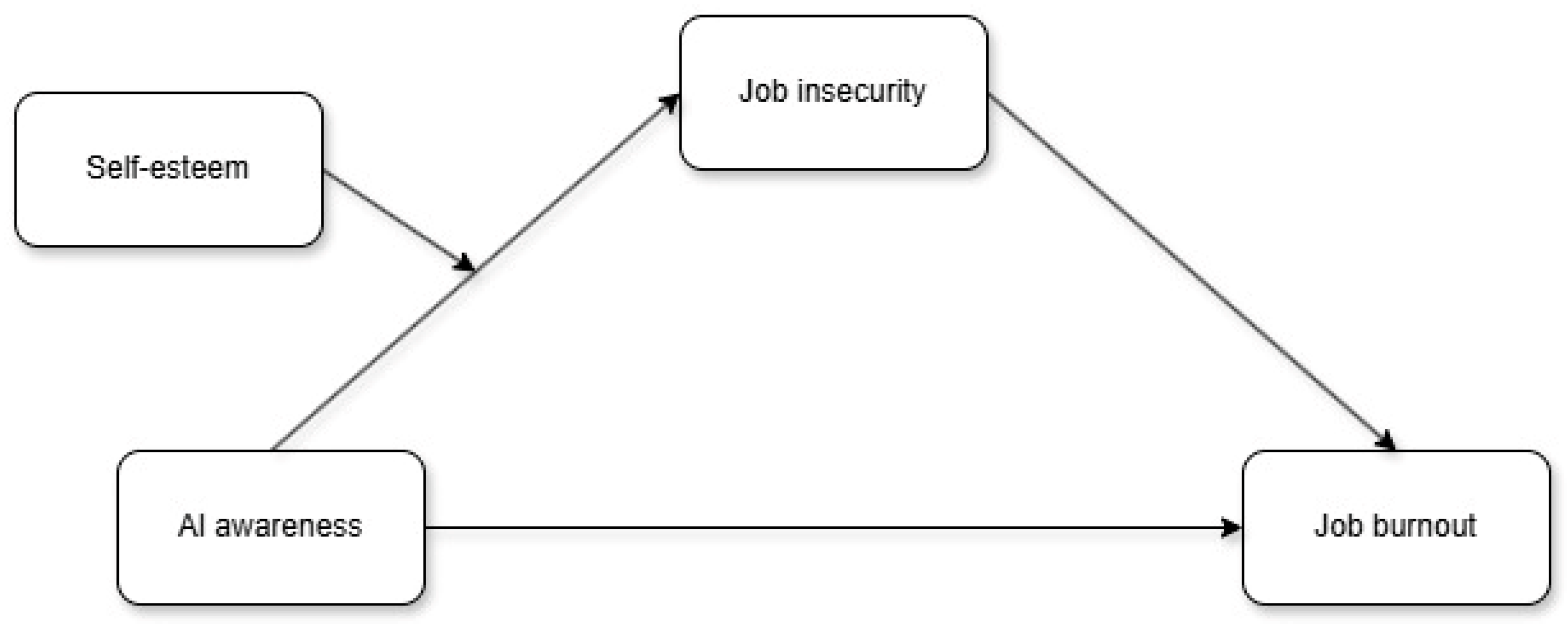
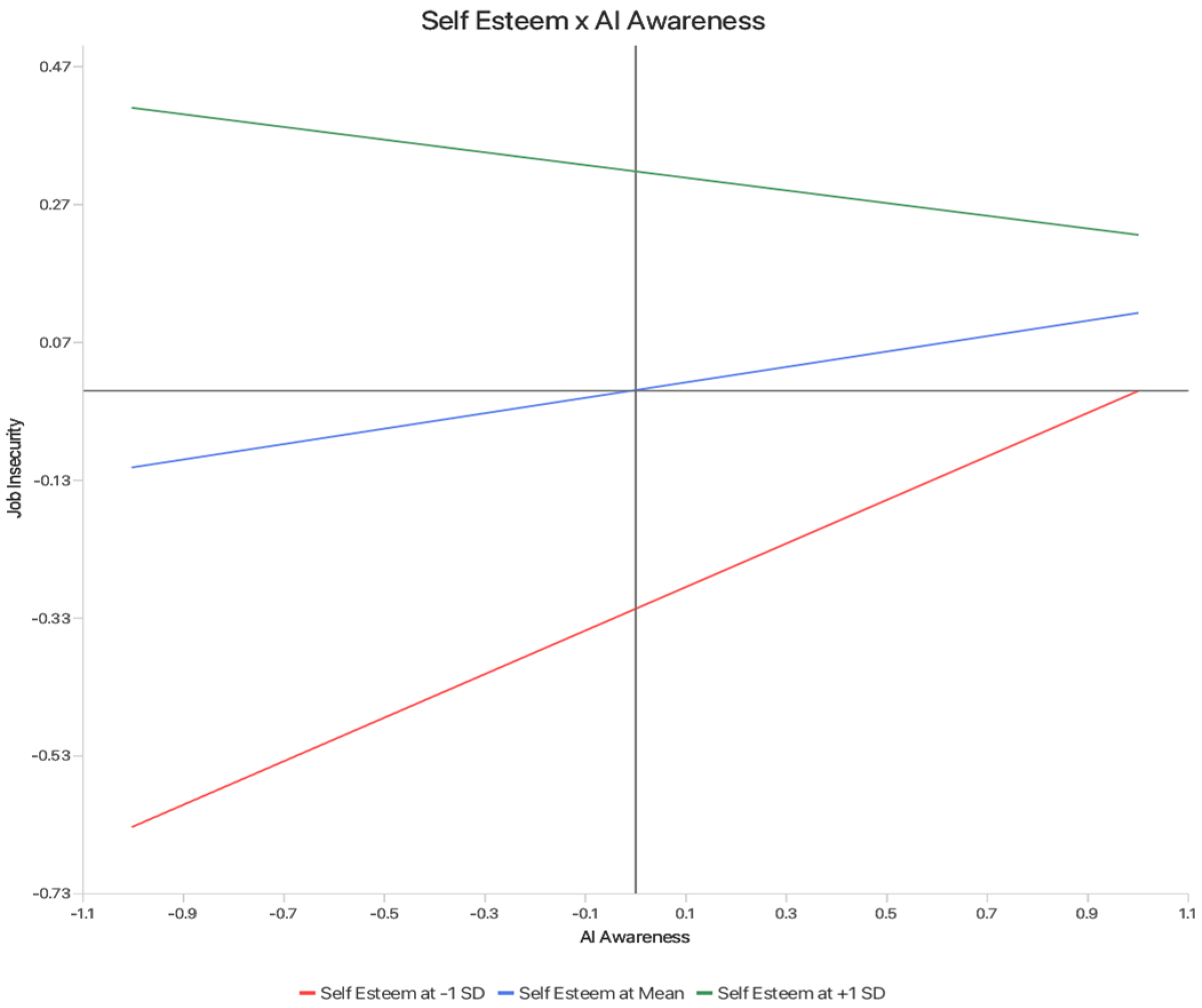
Artificial Intelligence (AI) has become a fundamental driver of digital transformation, reshaping organizational management, leadership behavior, and the sustainability of human work systems. Despite its potential to improve performance, few studies have explored how executives psychologically respond to AI awareness and its implications for sustainable well-being. Drawing upon Knowledge Management (KM) theory and Industrial–Organizational (I–O) Psychology, this study examines how senior executives’ awareness of AI (AIA) affects job burnout, with job insecurity serving as a mediator and self-esteem as a moderator. Data were collected from 615 CEOs and senior managers of small and medium-sized enterprises (SMEs) in the United Arab Emirates (UAE) and analyzed using structural equation modeling (Smart PLS 4). The results reveal that higher AI awareness intensifies burnout primarily through increased perceptions of job insecurity; however, executives with higher self-esteem demonstrate resilience to these effects. By framing AIA within the Knowledge Management (KM) theory, this study contributes to the existing KM literature by revealing how organizations create, maintain, and use knowledge assets in the digital transformation environment. Our findings underscore the necessity for organizations to set up innovative initiatives, flexible organizational structures, targeted training, and mental health support while adopting AI technologies. Overall, this study highlights the critical intersection between digital Knowledge Management and the mental health of executives, aligning with Sustainable Development Goal 3 (Good Health and Well-Being).
Keywords: industrial–organizational psychology; AI awareness; burnout; job insecurity; self-esteem; knowledge management; digital transformation; sustainable workforce; SMEs; SDG; executive well-being industrial–organizational psychology; AI awareness; burnout; job insecurity; self-esteem; knowledge management; digital transformation; sustainable workforce; SMEs; SDG; executive well-being