Article

Optimizing Residential Energy Usage with Smart Devices: A Case Study on Energy Efficiency and Environmental Sustainability


1
Program in Integrated Science, Multidisciplinary and Interdisciplinary School, Chiang Mai University, Muang, Chiang Mai 50200, Thailand
2
Research Unit for Energy Economics & Ecological management, Multidisciplinary Research Institute, Chiang Mai University, Muang, Chiang Mai 50200, Thailand
3
Department of Industrial Engineering, Faculty of Engineering, Chiang Mai University, Muang, Chiang Mai 50200, Thailand
4
Department of Geography, Faculty of Social Sciences, Chiang Mai University, Muang, Chiang Mai 50200, Thailand
*
Authors to whom correspondence should be addressed.
Sustainability 2025, 17(14), 6359; https://doi.org/10.3390/su17146359
Submission received: 15 May 2025 / Revised: 2 July 2025 / Accepted: 4 July 2025 / Published: 11 July 2025

Abstract

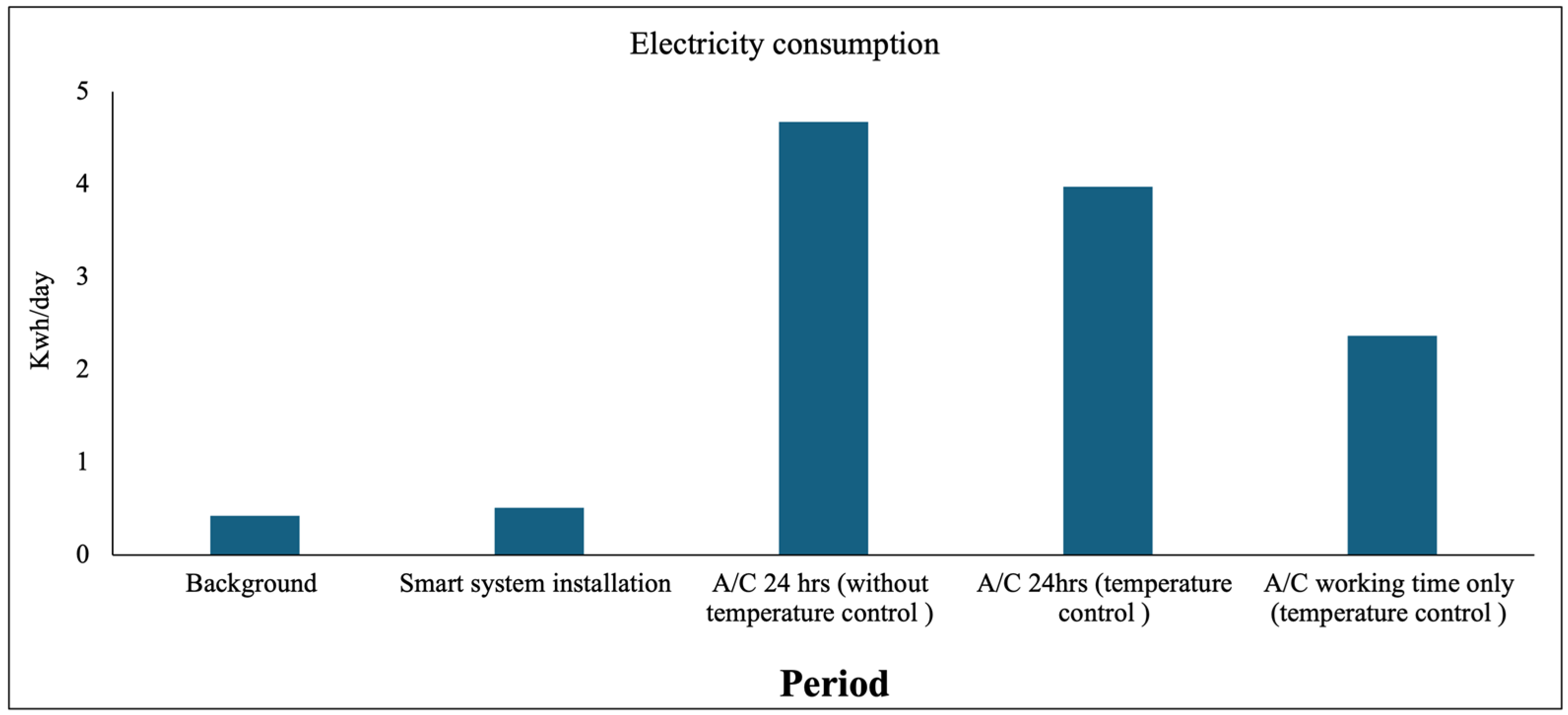
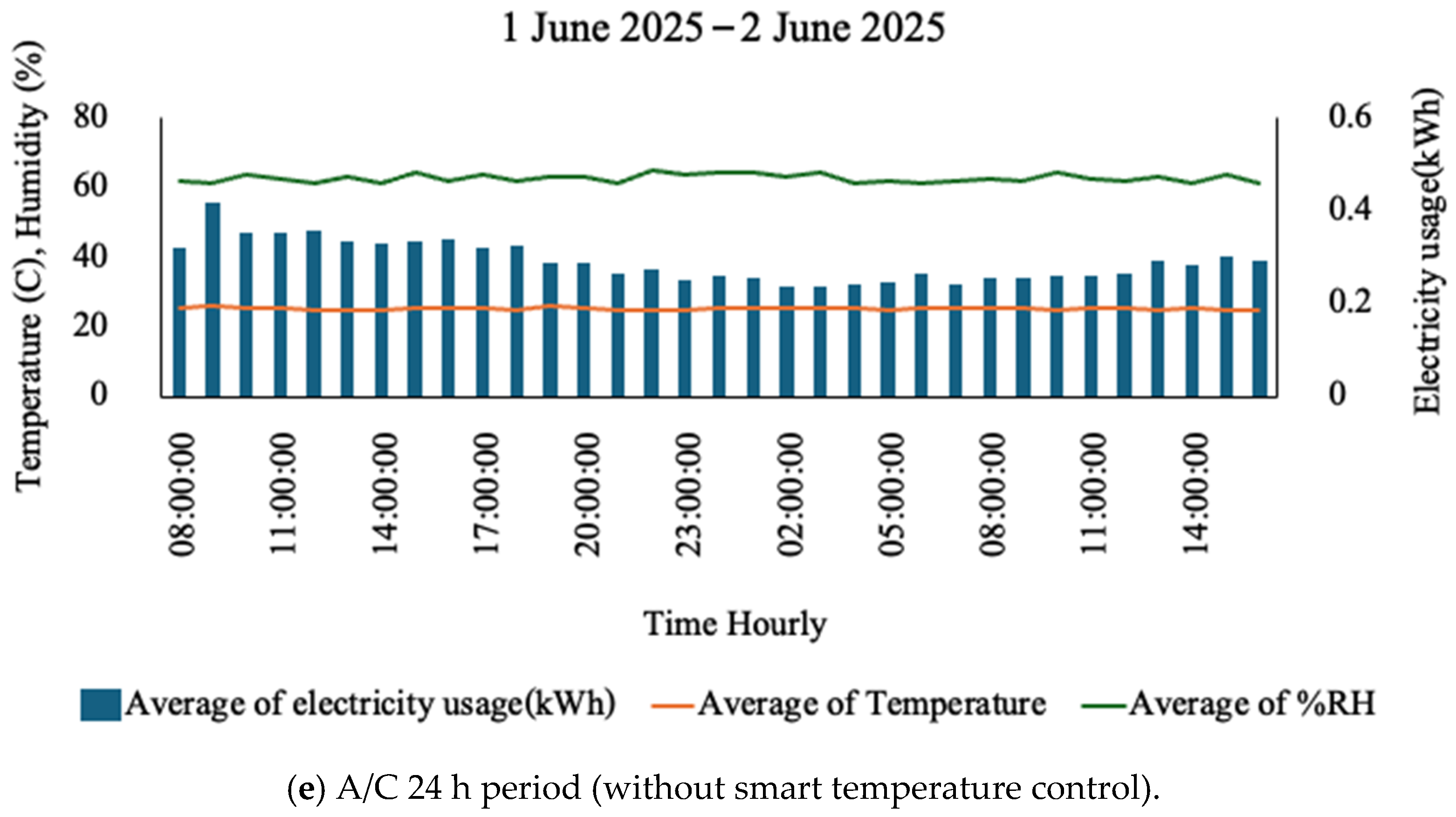
In this study, we examined the impact of an intelligent system and air conditioning control on power consumption. The experiment was carried out during five distinct time periods: (1) background room usage, (2) smart system setup, (3) air conditioning control to maintain room temperature at no more than 27 °C, (4) air conditioning temperature control during working hours, and (5) air conditioning operated continuously to maintain the room temperature at 27 °C. For each time period, the daily power consumption was evaluated, and outliers were identified and eliminated using a threshold derived from the hourly average. The findings demonstrated that the smart system setup period and air conditioning control resulted in lower usage compared to continuously operated air conditioning with substantial spikes in demand. The impacts of the novel system and air conditioning control on energy consumption were revealed through statistical analysis, which included regression models and hypothesis tests. According to this study’s findings, it is essential to regulate spikes and guarantee proper operation to reduce the carbon footprint while maintaining a comfortable atmosphere. Notably, the integration of the smart system and optimized scheduling resulted in a substantial decrease in greenhouse gas emissions, with annual carbon emissions reduced by up to 65% compared to continuously operated air conditioning without smart control. Moreover, these systems can optimize energy use.
Keywords: energy consumption; smart system; air conditioning control; electricity usage optimization; environmental sustainability energy consumption; smart system; air conditioning control; electricity usage optimization; environmental sustainability