Article

Evaluating Mineral Matter Dynamics within the Peatland as Reflected in Water Composition

Geological Survey of Slovenia, Dimičeva ulica 14, 1000 Ljubljana, Slovenia
*
Author to whom correspondence should be addressed.
Sustainability 2024, 16(11), 4857; https://doi.org/10.3390/su16114857
Submission received: 25 March 2024 / Revised: 30 May 2024 / Accepted: 3 June 2024 / Published: 6 June 2024

Abstract

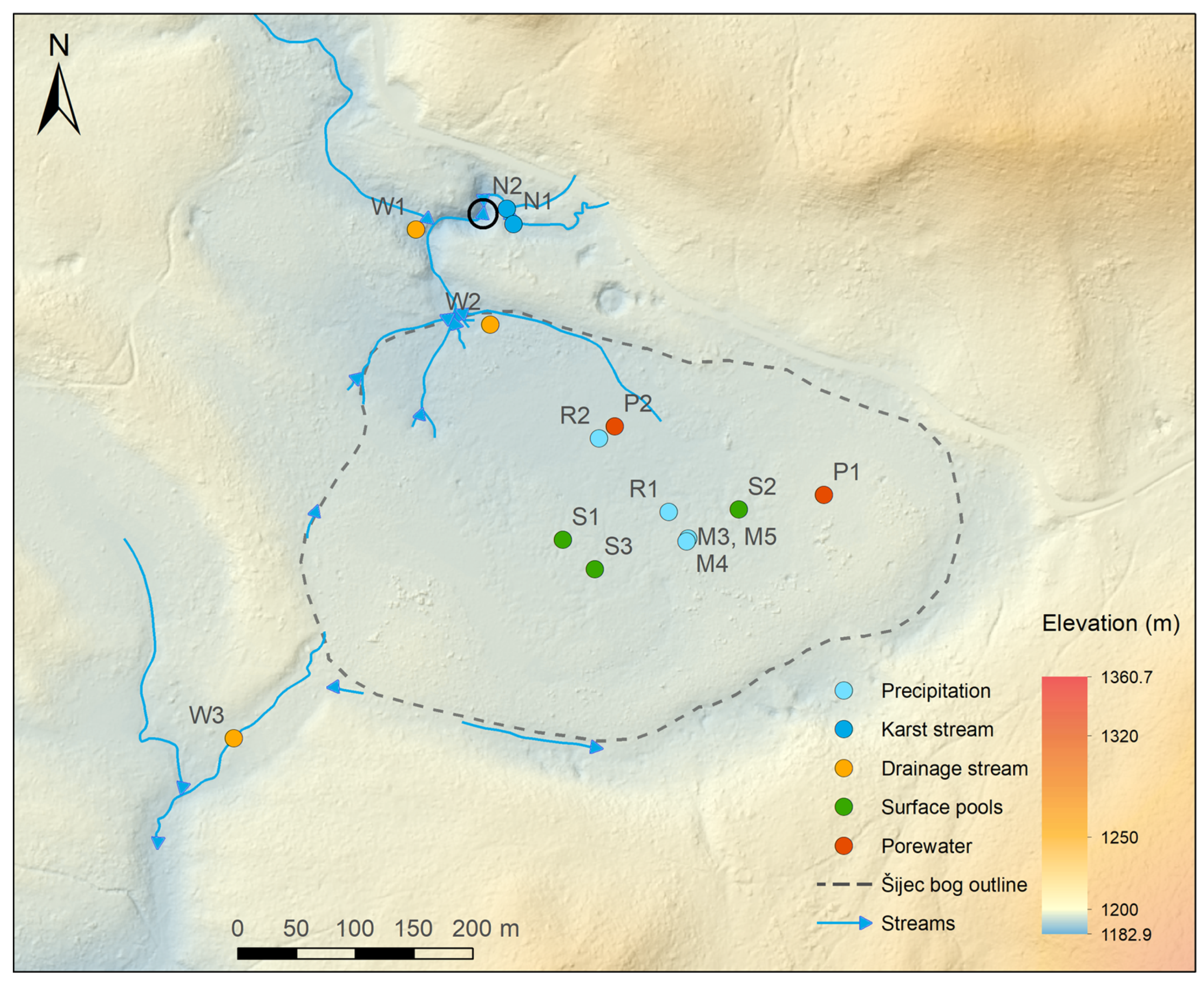
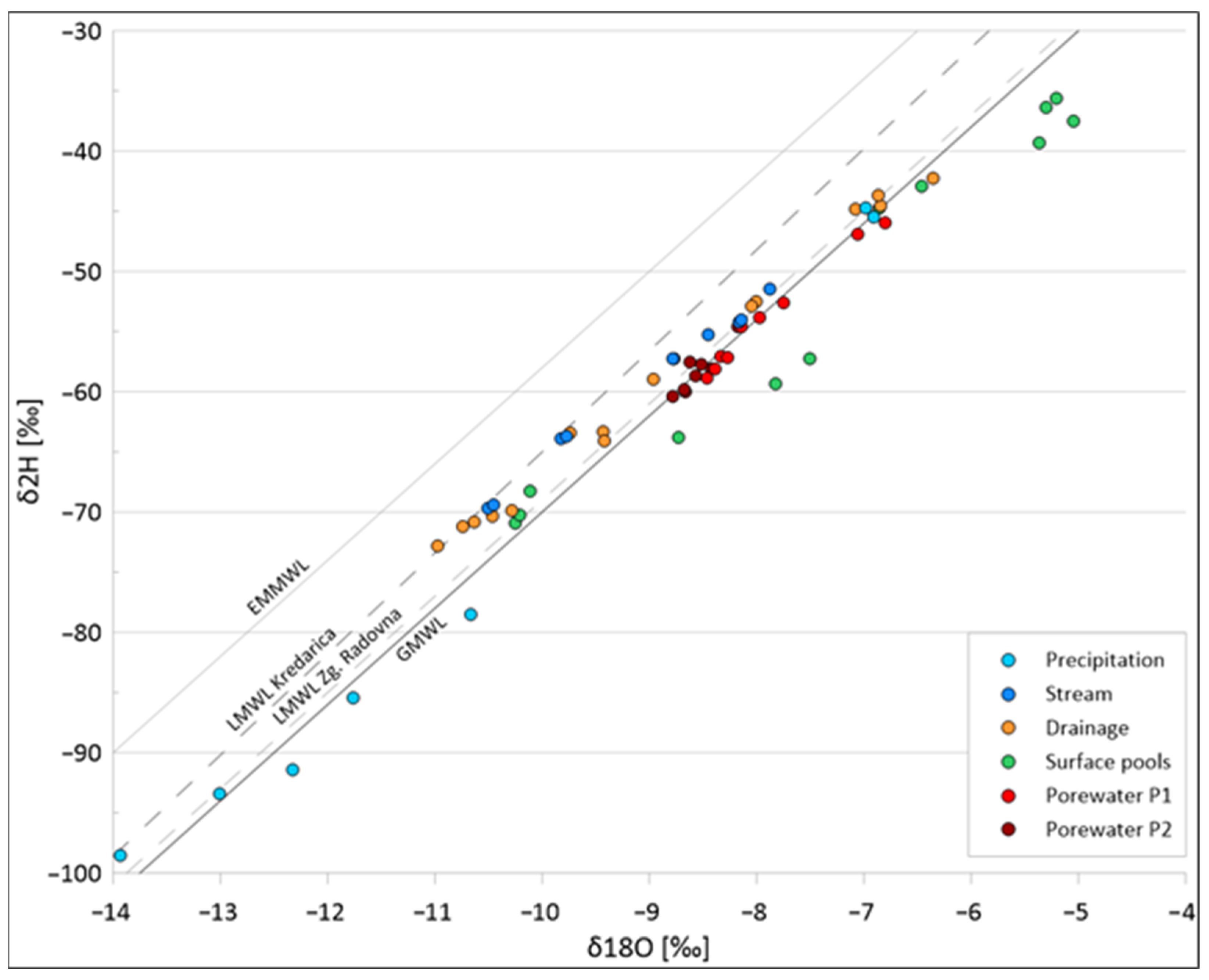
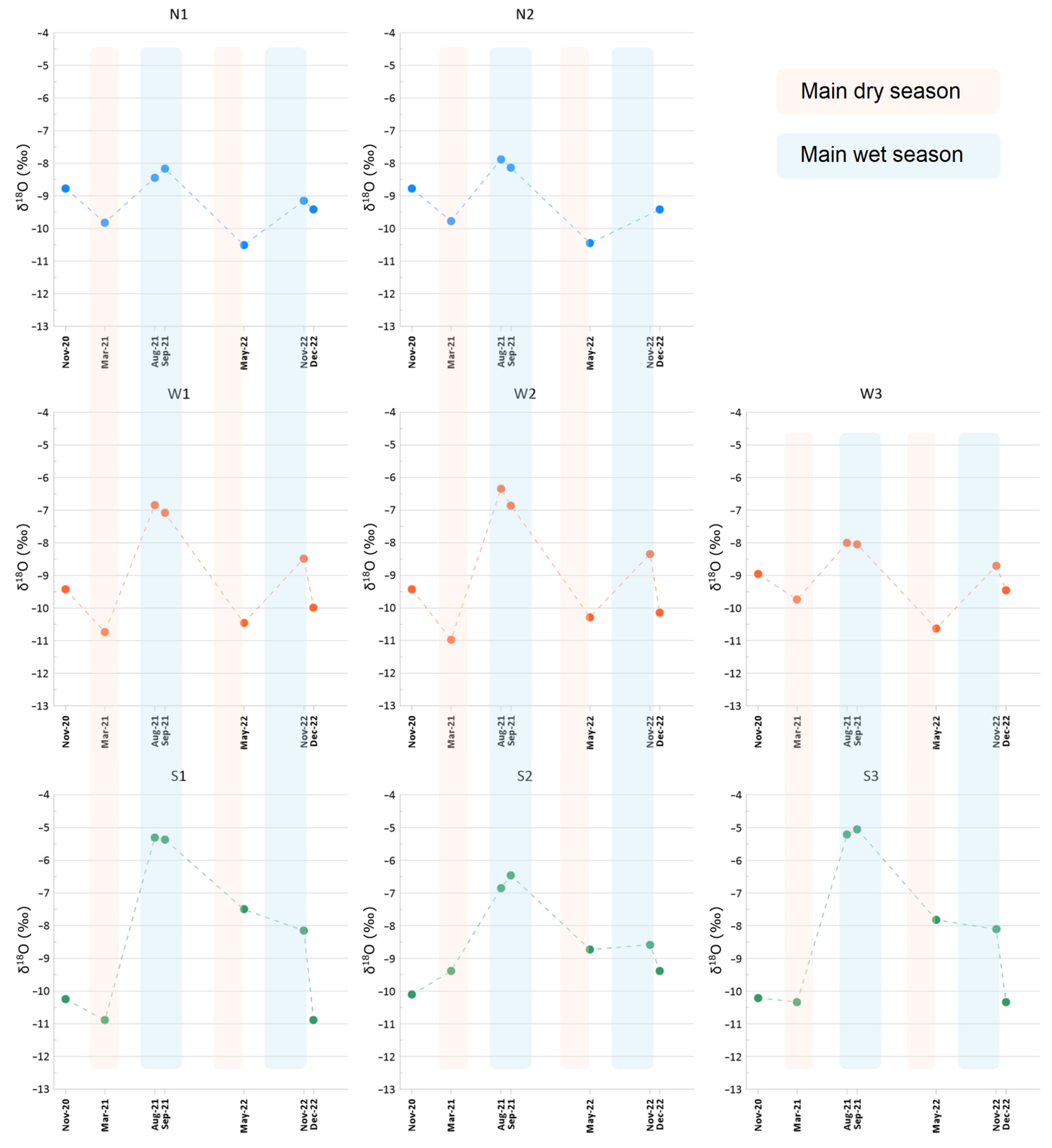
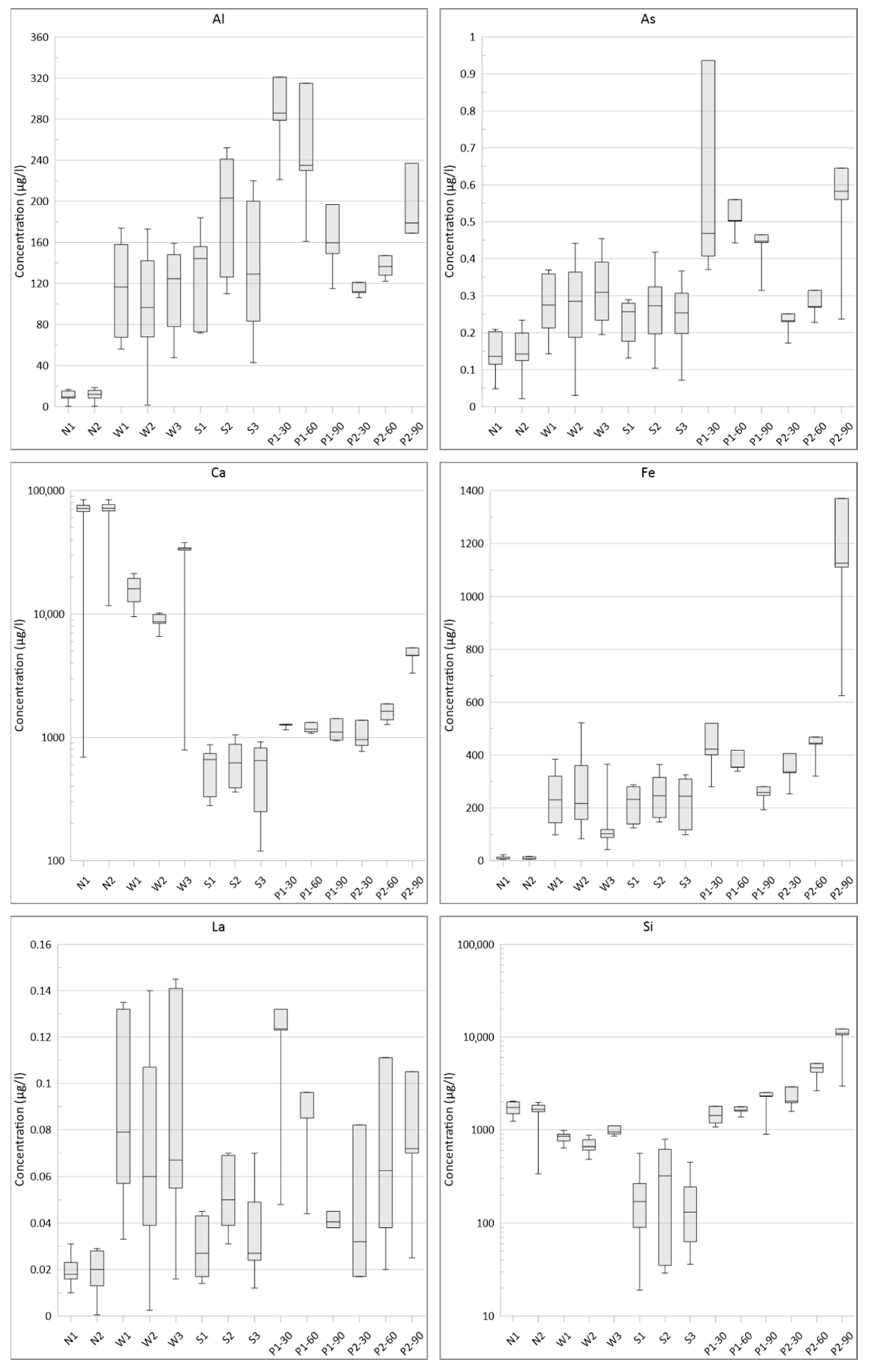
Peatland hydrology plays an important role in preserving or changing the record in any consideration of past atmospheric deposition records in peat bogs. The Šijec bog, located on the Pokljuka plateau in Slovenia, is one of the largest ombrotrophic peatlands. We sampled the surface pools, pore water, drainage from the peatland, and karst streams not connected to the peatland. Additionally, we sampled the precipitation, as ombrotrophic peatlands receive mineral matter solely from the atmosphere. The results of the evaluation of the chemical and isotopic composition indicated different origins of dissolved mineral matter in different water types. The components originating from the bedrock and surrounding soils (Ca, Mg, Al, Si, Sr) predominated in the streams. The chemical composition of the peatland drainage water revealed the significant removal of major components from the peatland, particularly elements like Al, Fe, and REE, and metals that are readily dissolved in an acidic environment or mobile in their reduced state. Despite their solubility, concentrations of metals (As, Cr, Cu, Fe, Ni, Pb, Ti) and REE in surface pools remained higher than in the drainage due to incomplete elimination from the peatland. The composition of pore water reflects variations among the W and E parts of the peatland, indicating a heterogenous hydrological structure with different dynamics, such as an additional source of water at approximately 90 cm depth in the NW part. The chemical composition and isotope signature (18O and 2H) of pore water additionally indicated a heterogeneous recharge with residence times of less than a year. The overall analysis indicated a predominantly ombrotrophic type and a small part in the NW area of the peatland as a minerotrophic type of peat.
Keywords: peatland; hydrogeochemistry; isotopes peatland; hydrogeochemistry; isotopes